“Blackheath is an example of a formerly more extensive area of dry lowland heath and acid grassland on the Bargate and Folkstone Beds of the Lower Greensand. The area of heathland has suffered a 40% decline in Britain since 1950, but at this site conservation management has maintained open heath, and restored other areas which were becoming partially or totally shaded-out by Scots pine, or birch scrub.
The heathland is dominated by ling Calluna vulgaris with bell heather Erica cinerea, crossleaved heath E. tetralix and dwarf gorse Ulex minor. Among these plants there are dense growths of bryophytes (mosses) and lichens, including Cladonia spp.” Nature England SSSI specification.
So you would expect there to be some British Lichen Society or National Biodiversity Network records for Cladonia spp. at Blackheath Common; but there are none.
Here are the National Biodiversity Network atlas (Cladonia genus) and British Lichen Society interactive species map (all species) for the Blackheath area and there are no records for Cladonia spp. on either database; in fact there are no lichen records at all for Blackheath Common
British Biodiversity Network Atlas
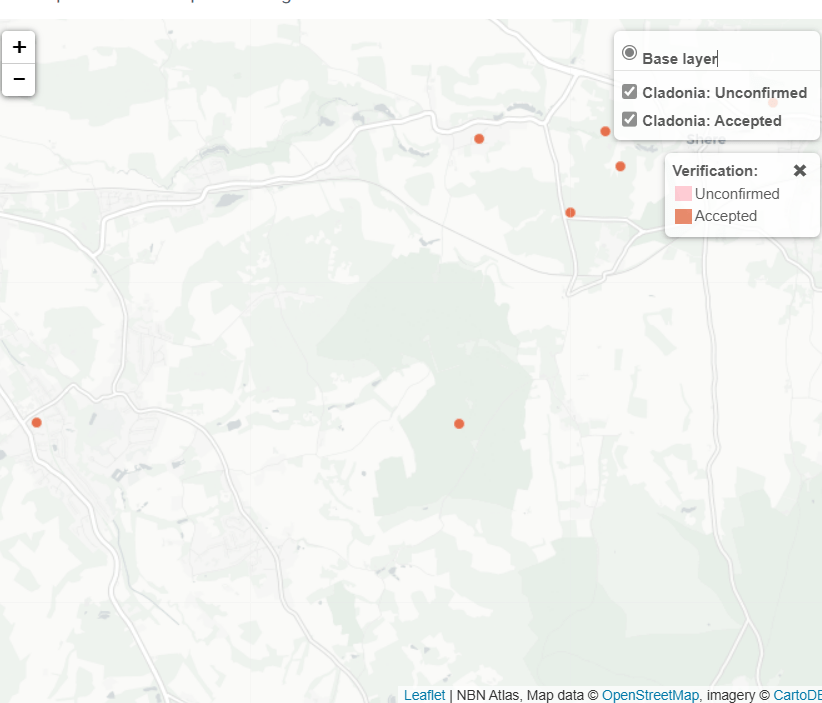
Lichen Society Interactive Species map
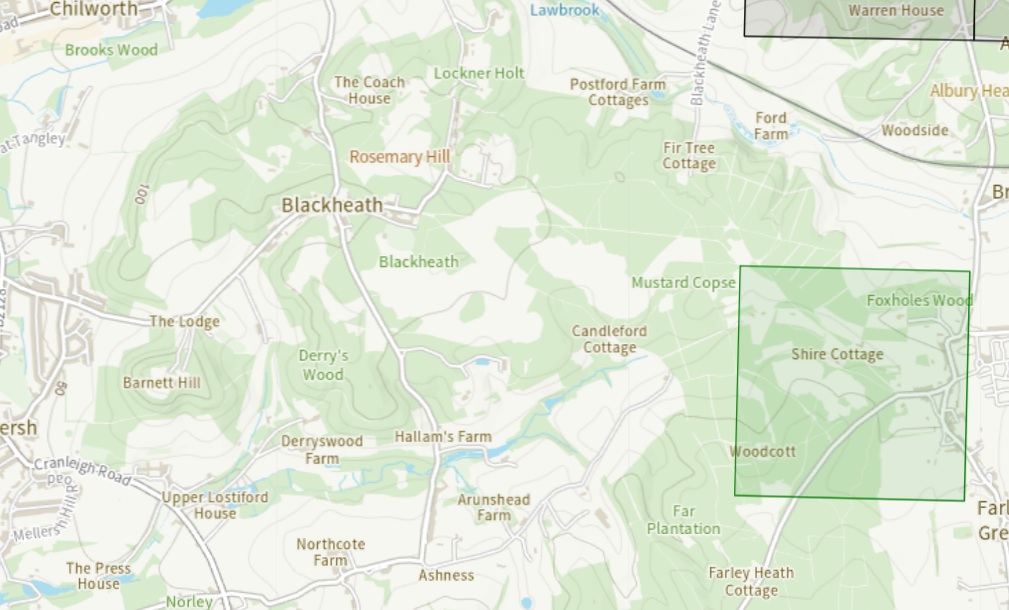
So, my mission yesterday was to record as many lichens as I could, and send them in to the BLS. This what I found:
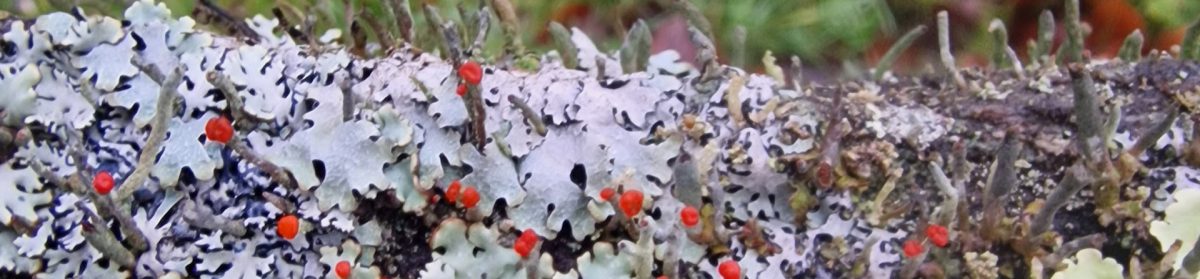
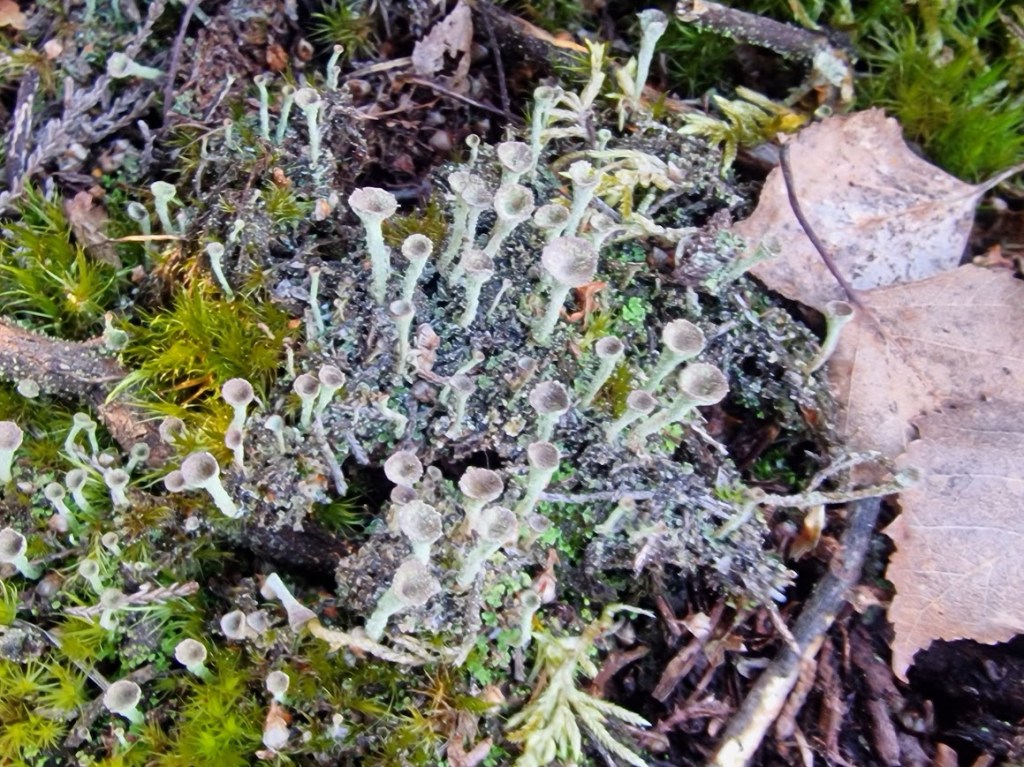
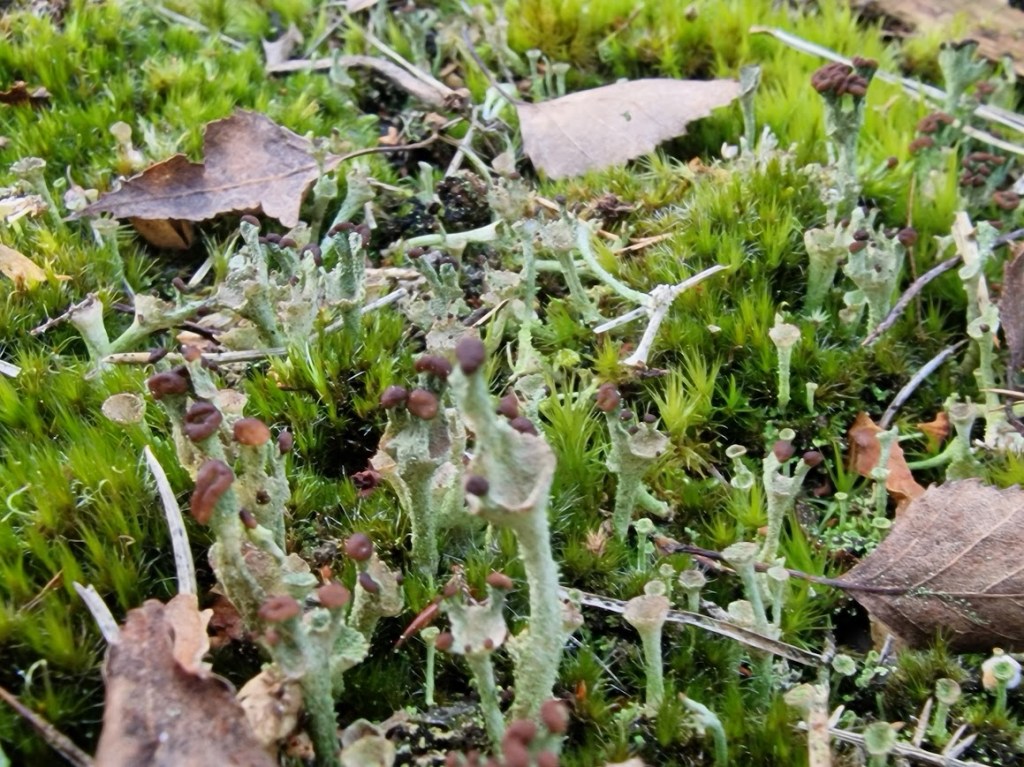
Cladonia fimbriata; Cladonia coniocraea; Cladonia subulata; Caldonia chlorophaea; Cladonia ramulosa;
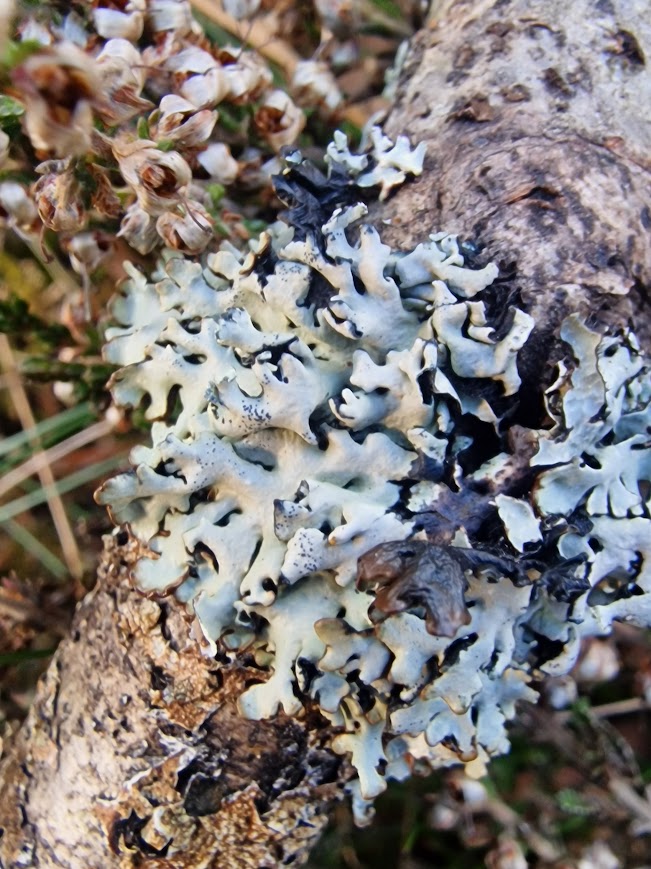
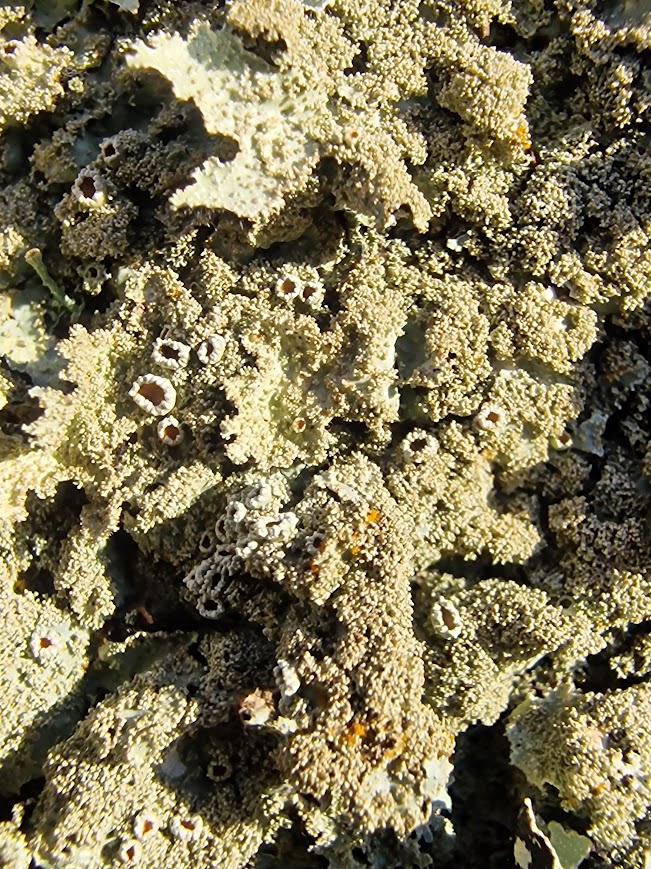
Lepraria incana; Parmotrema perlatum; Parmelia saxatalis; Flavoparmelia cperata; Parmelia sulcata, Evernia prunastri; Hypogymnia physodes, Hypotrachyna afrorevoluta; Hypotrachyna revoluta
Some photos
Ramalina farinacea; Hypogymnia physodes; Cladonia fimbriata
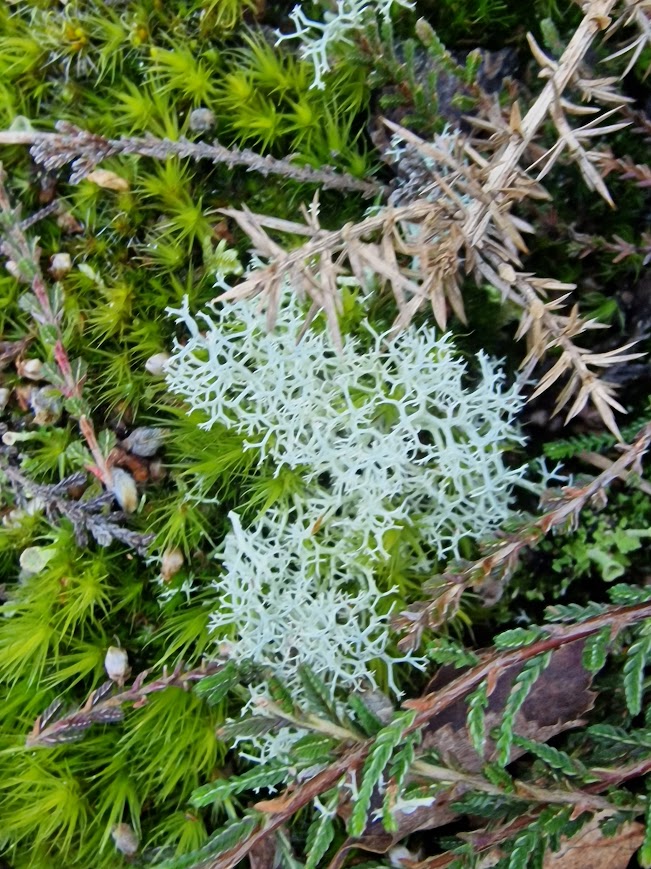
Cladonia portentosa; Cladonia gracilis; Parmelia saxitalis
Cladonia coniocrea; Everia prunastri; Cladonia subulata

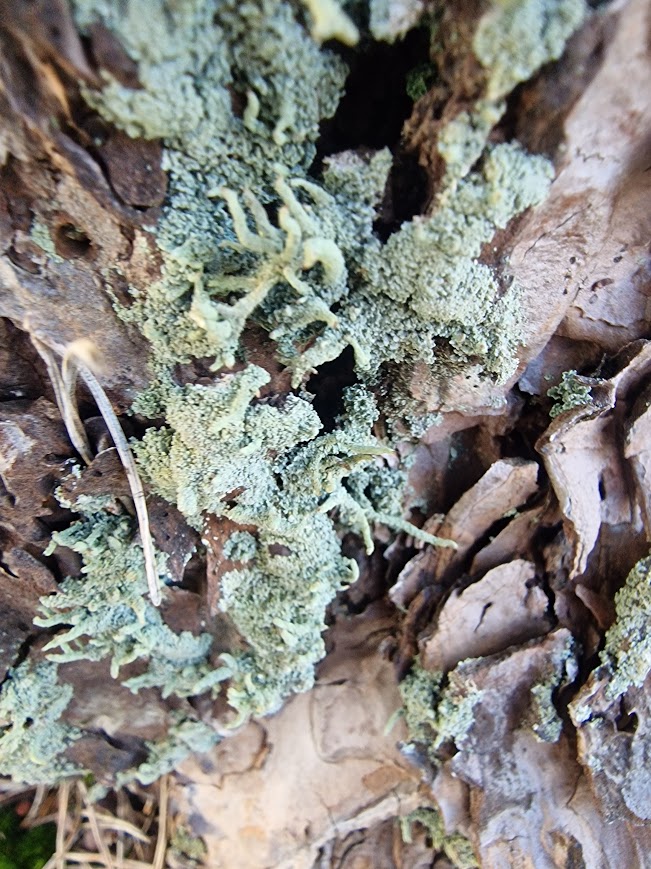
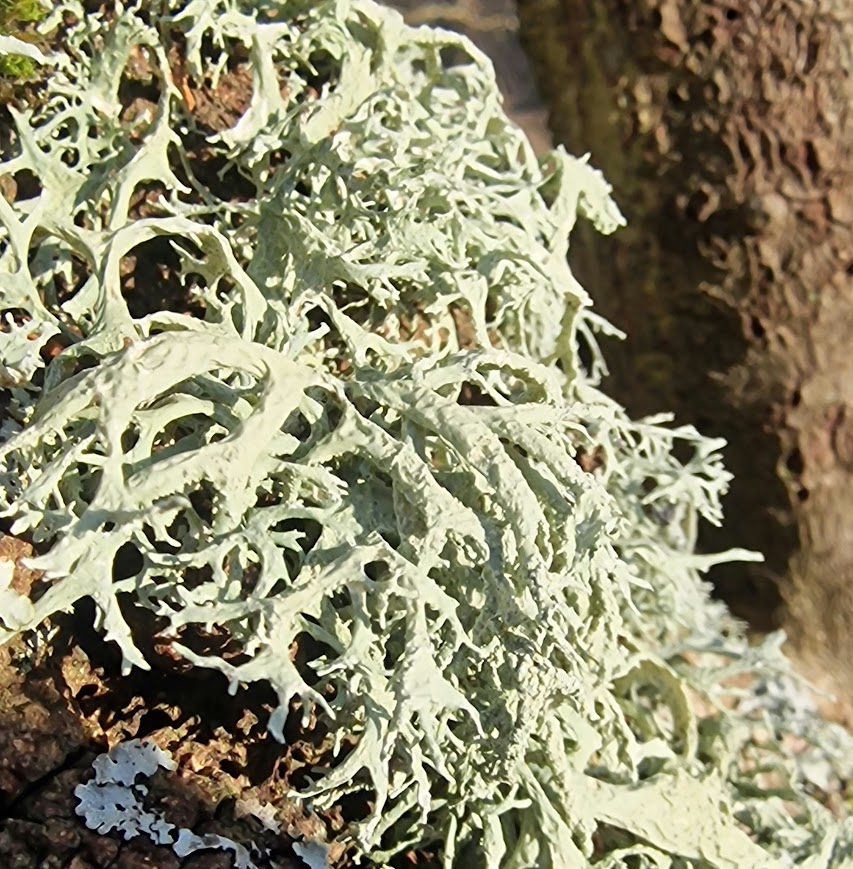
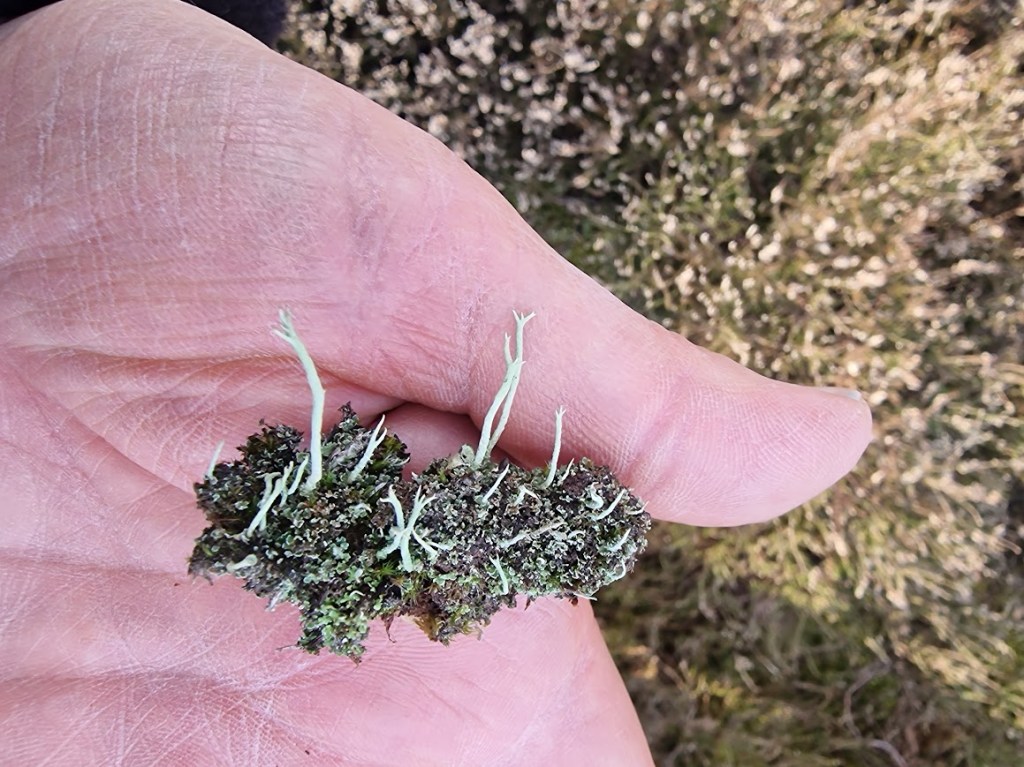
I saw some Stinking Heelibore, Helleborus foetidus. It is a rare plant now in the wild; some “wild” plants are naturalised garden escapees
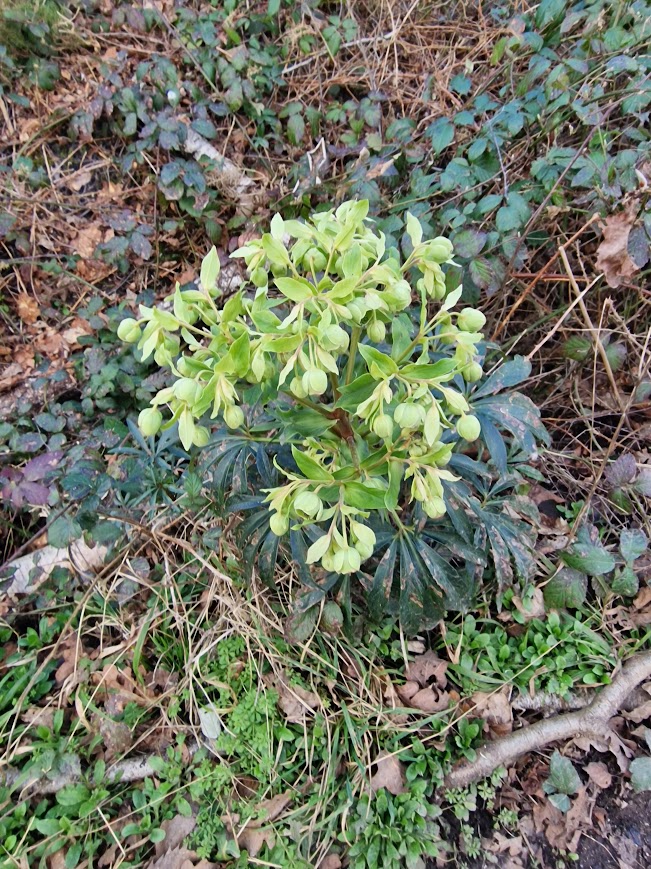
“The green flowers of the Stinking Hellebore can be a pleasant surprise amidst a dusting of snow.
You might think Stinking Hellebore is a garden escapee, but this is not the case! Although populations may have become obscured by such varieties, the Stinking Hellebore is a native through and through.
Be cautious: every part of this wild flower is poisonous and will induce vomiting and delirium if ingested, if not death.
In the past, Stinking Hellebore was used as a hazardous remedy for worms. The 18th century naturalist Gilbert White said this about this “cure”: “Where it killed not the patient, it would certainly kill the worms; but the worst of it is, it will sometimes kill both”.
The name “Stinking” Hellebore could be considered undeserved. Sniffing the flowers won’t make you want to hold your nose, although crushing the leaves can produce an odour often described as “beefy” Plantlife Stinking Helibore

 Sim's Nature Notes