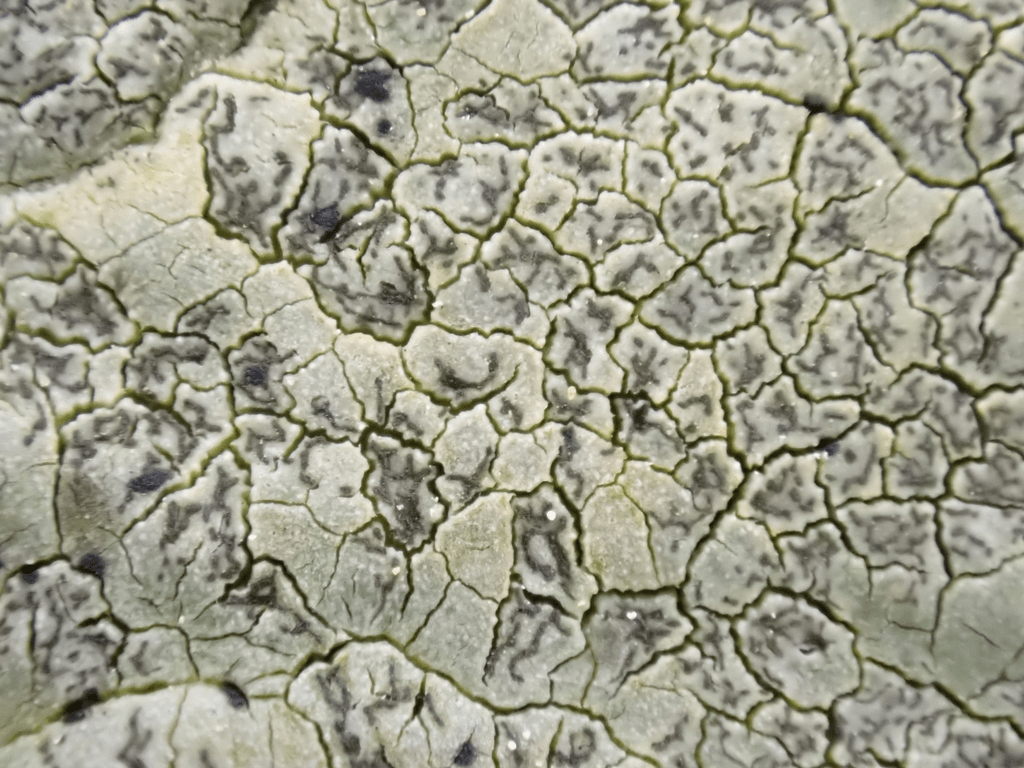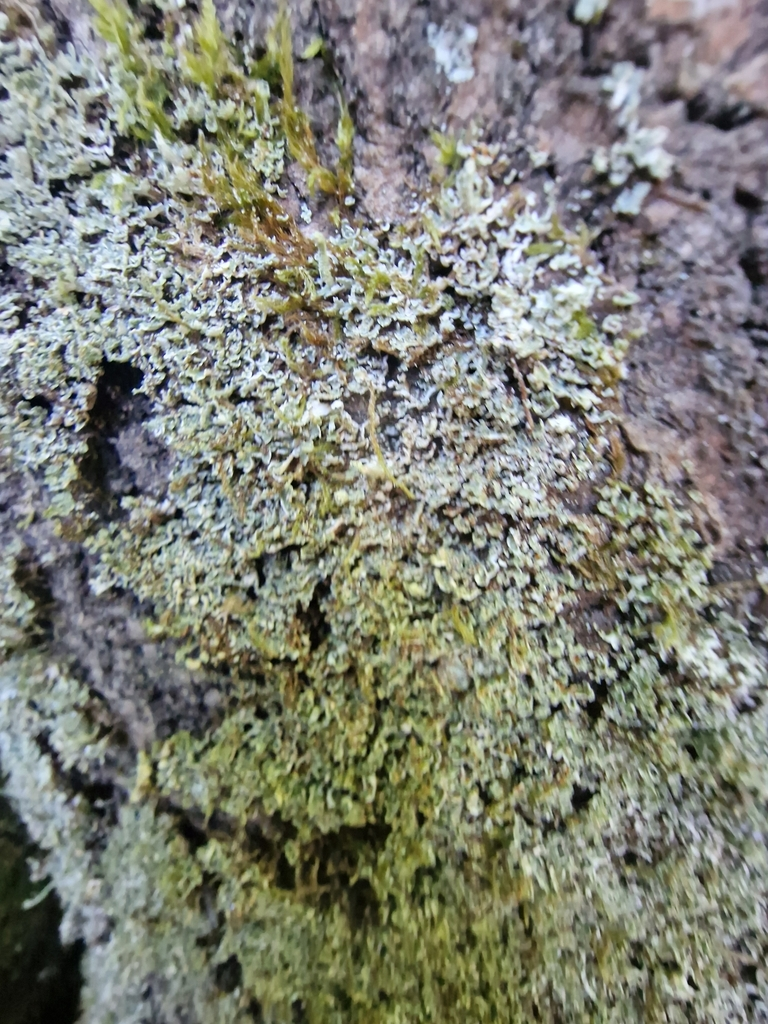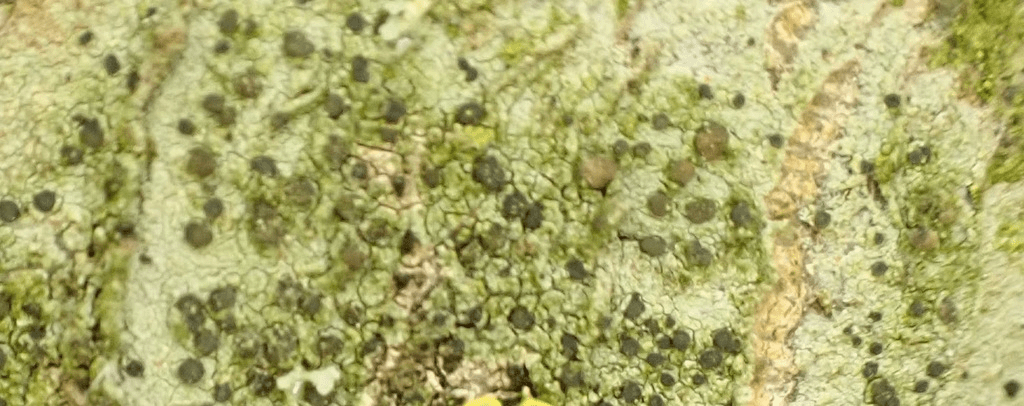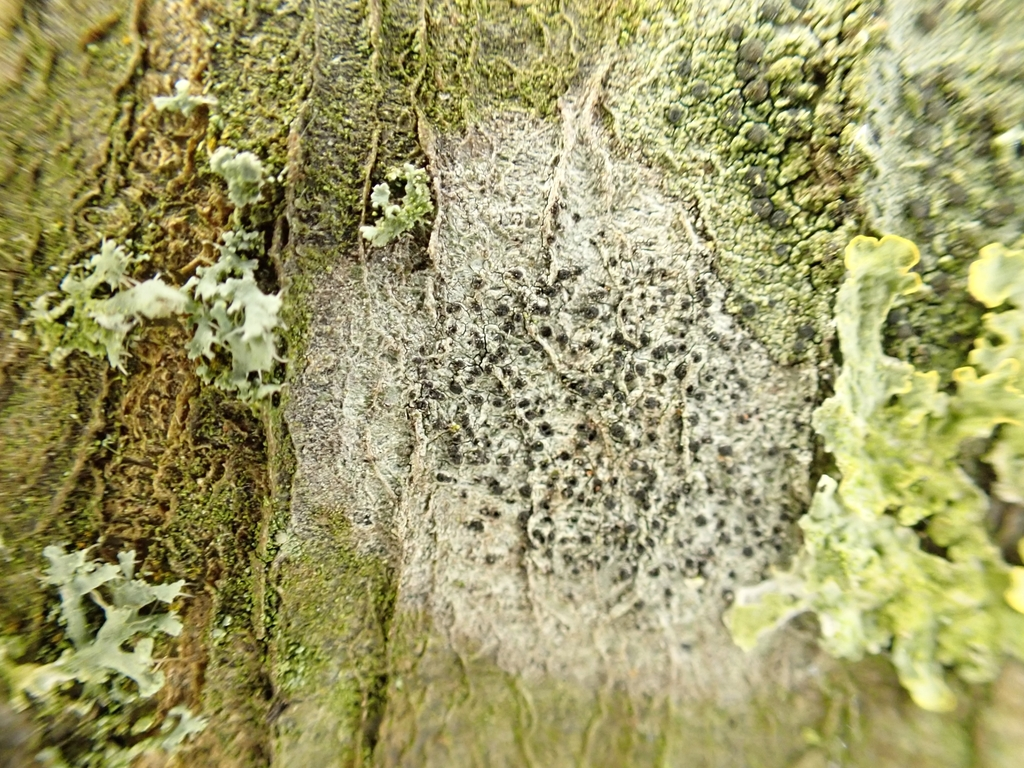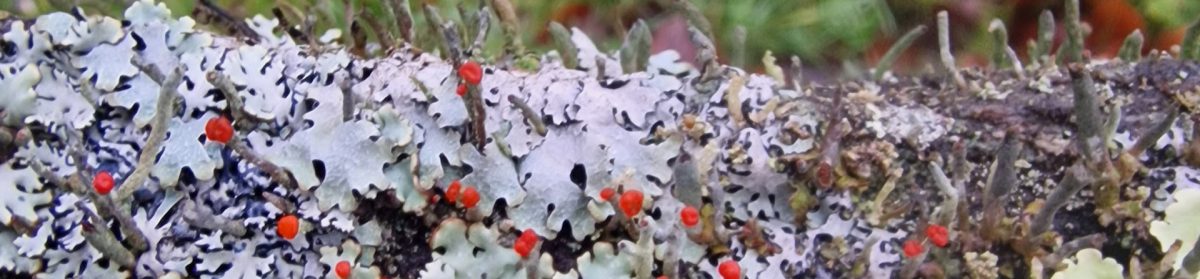
Rare and common lichens on urban road trees in the Bristol Estate, East Brighton, and native pre-estate downland Elms. May 2026

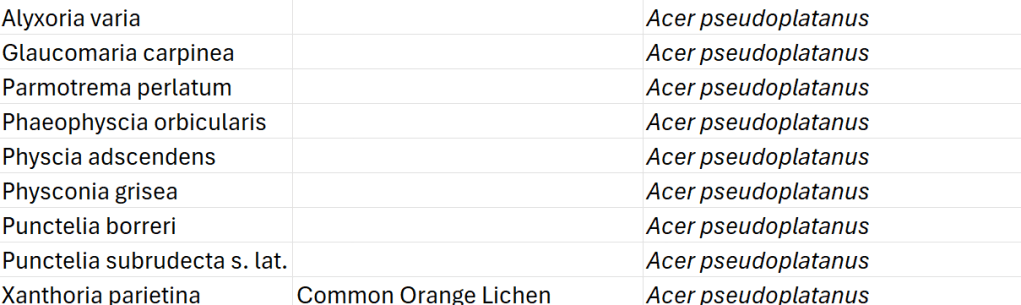
When you look at the records of lichens the British Lichen Society holds for Sussex the vast majority come from countryside locations (woods, parks etc.) or churches; none come from trees in towns and cities. But its worth surveying urban trees, as lichens are abundant on the trunks of them, and rare lichens can be found on them

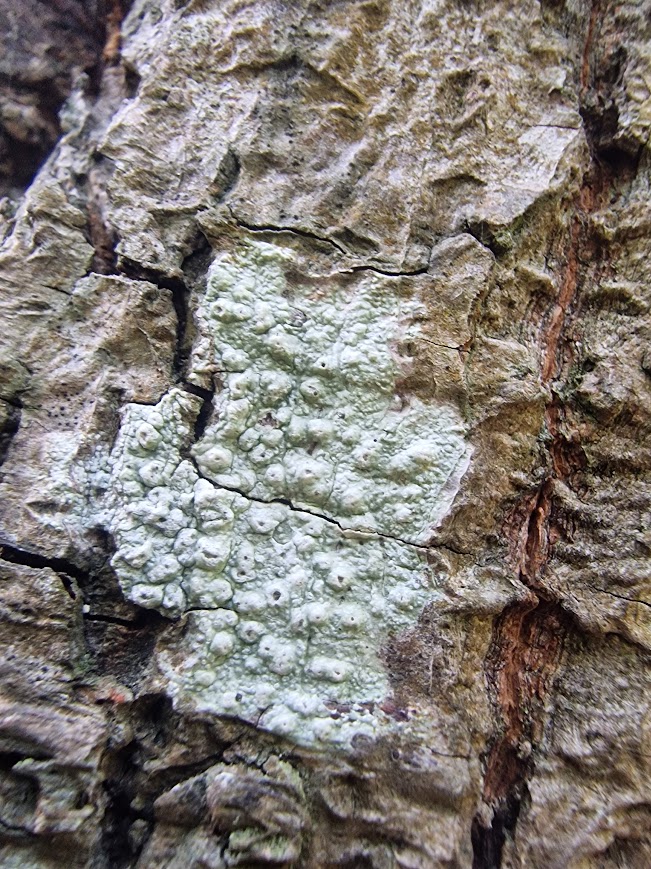
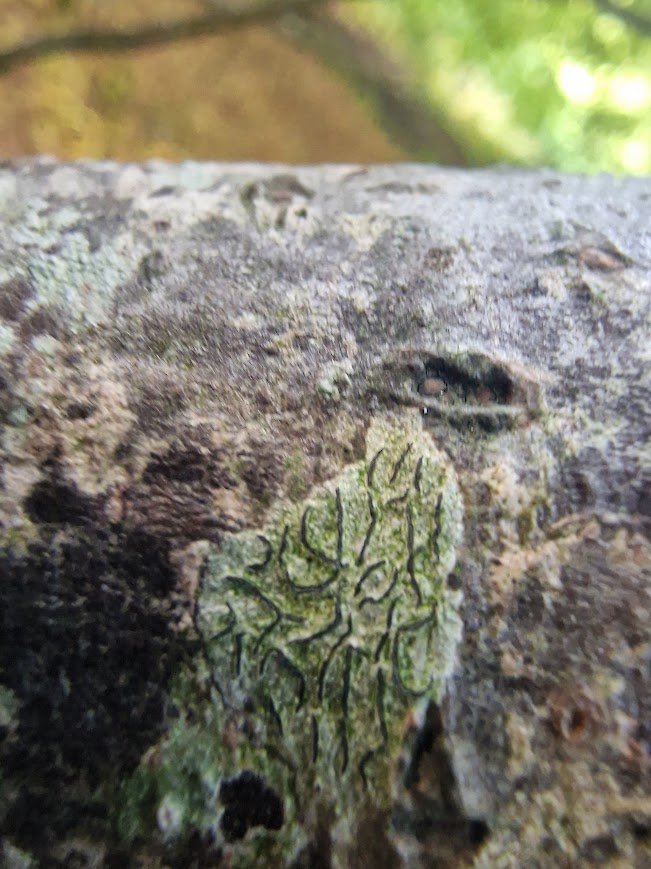
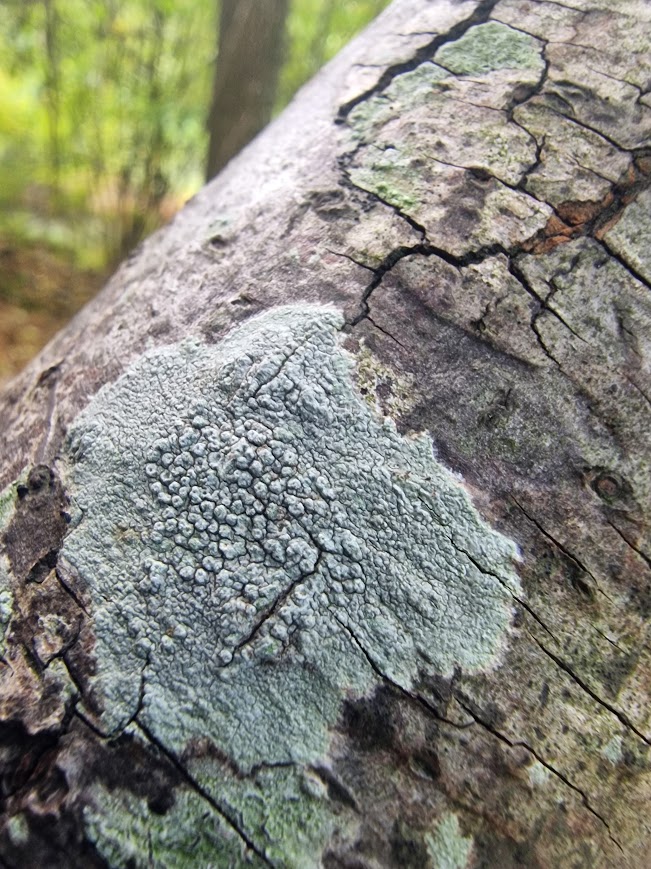
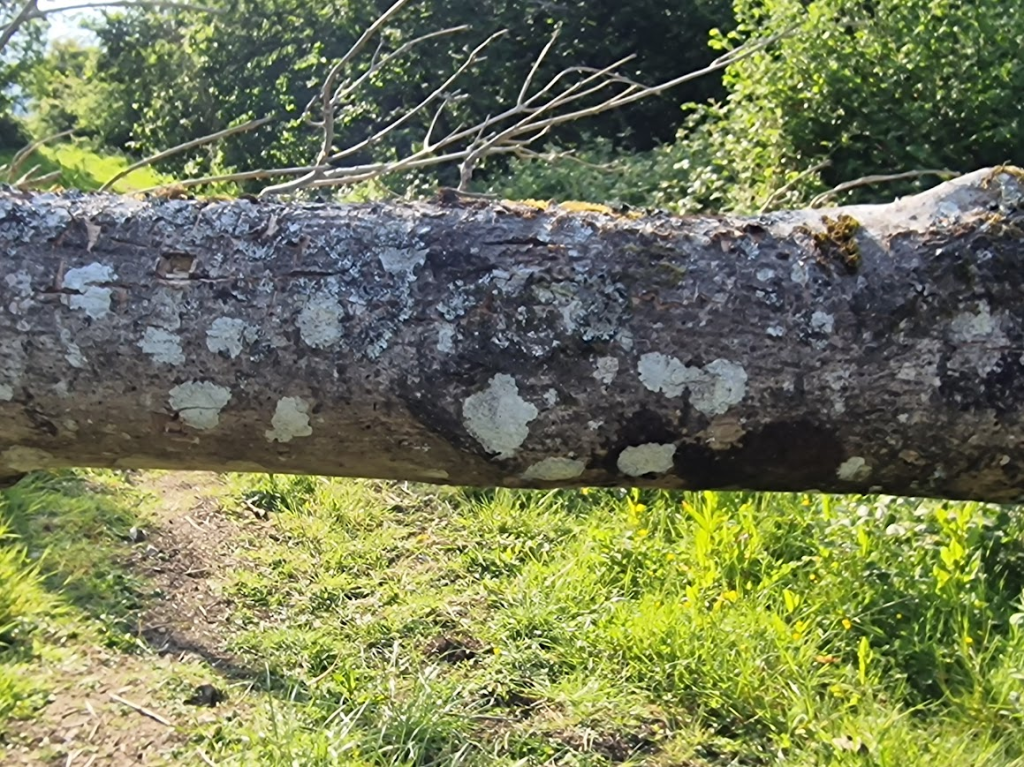
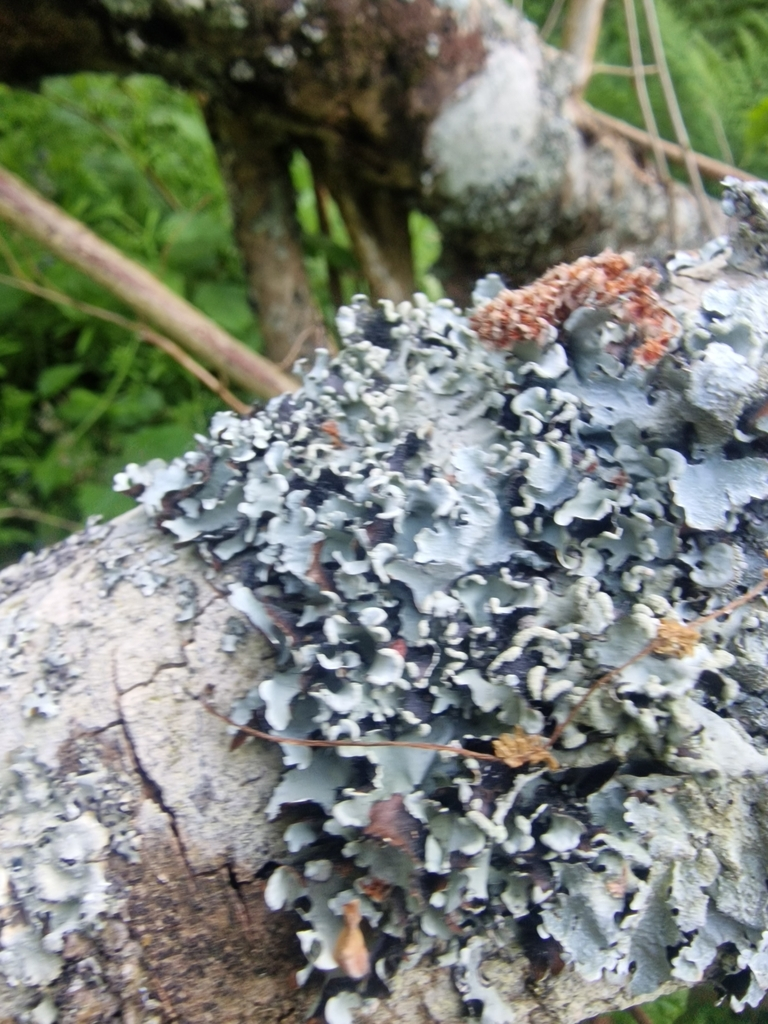
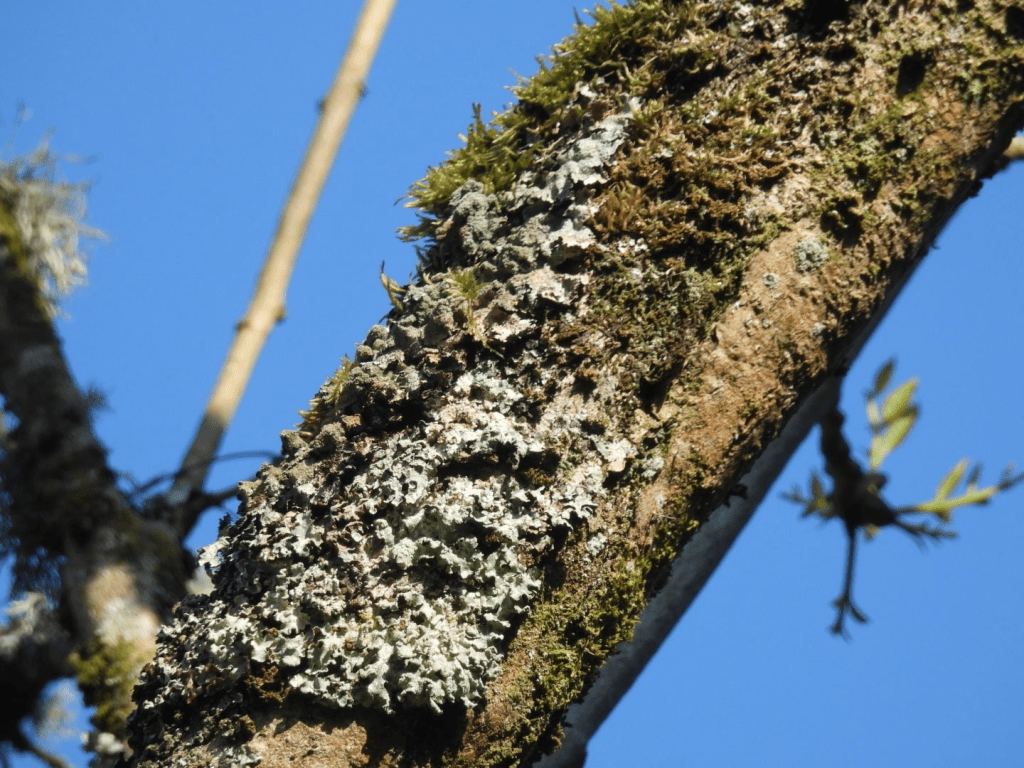
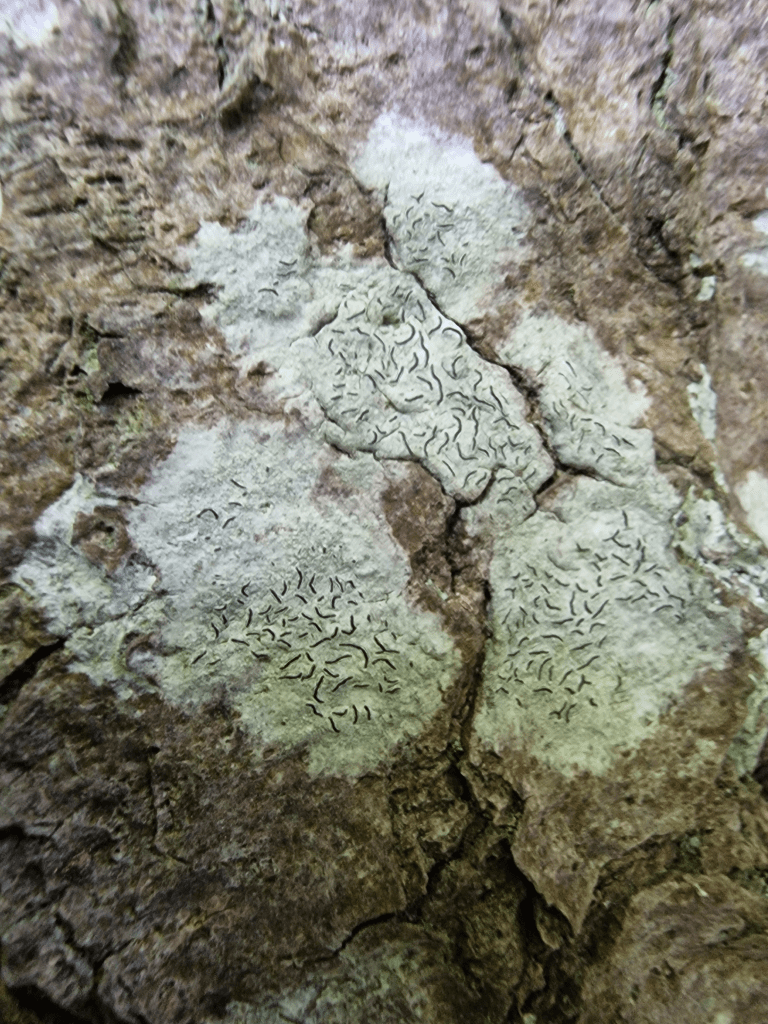
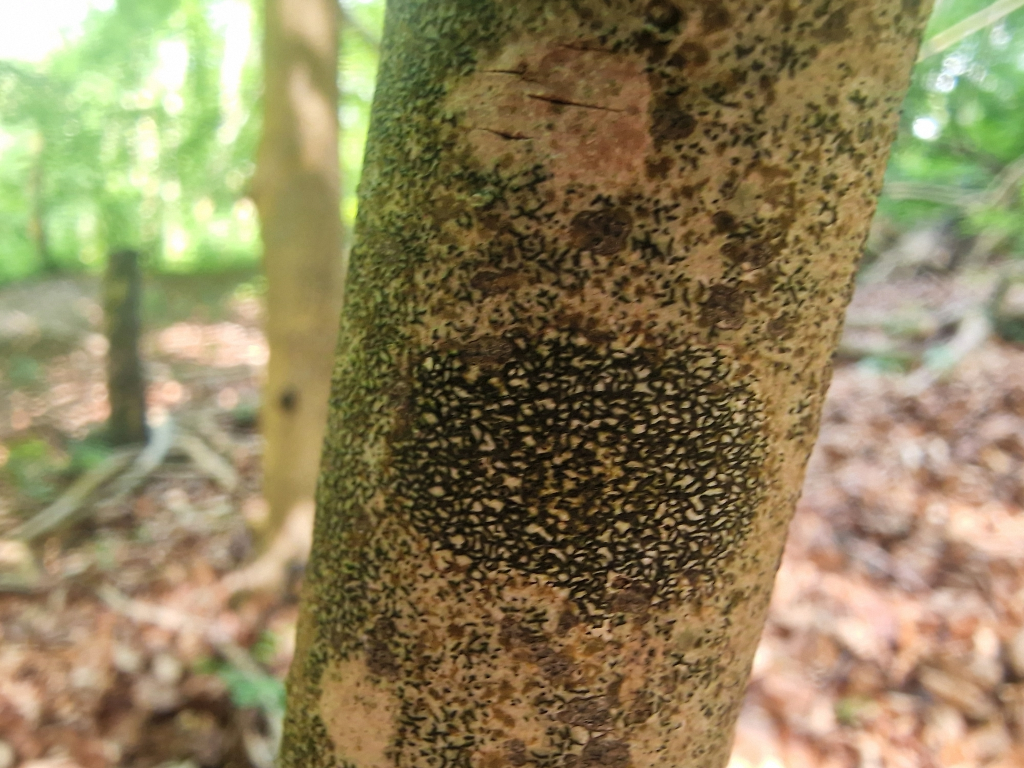
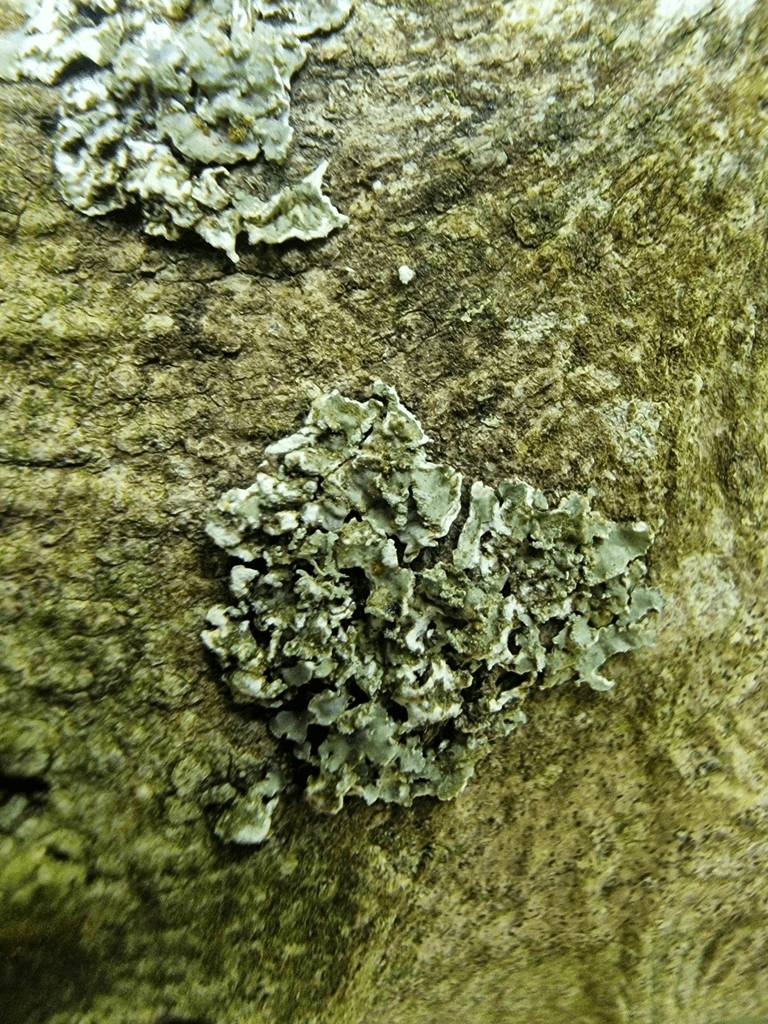
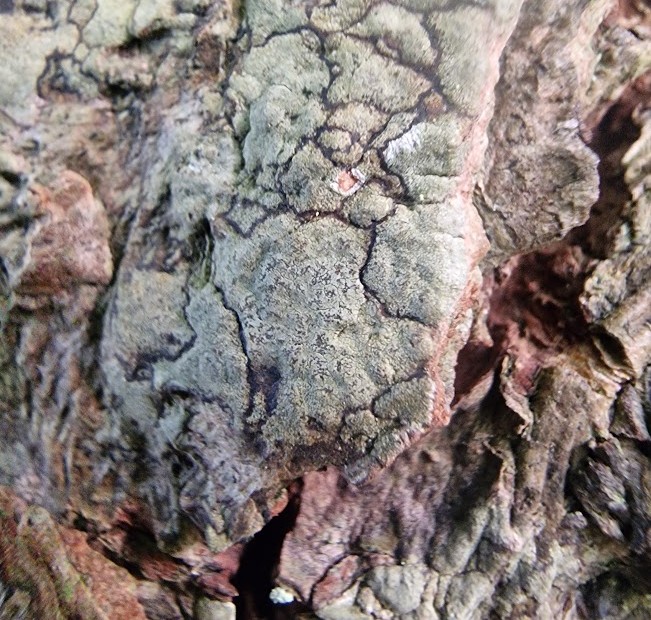
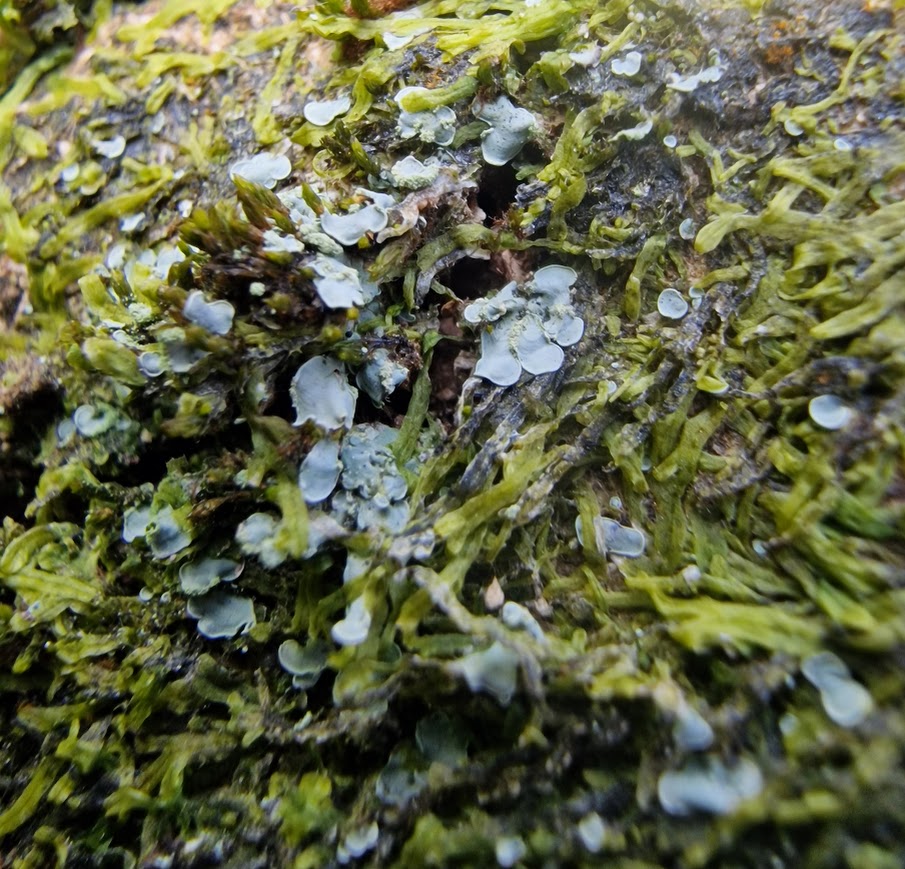
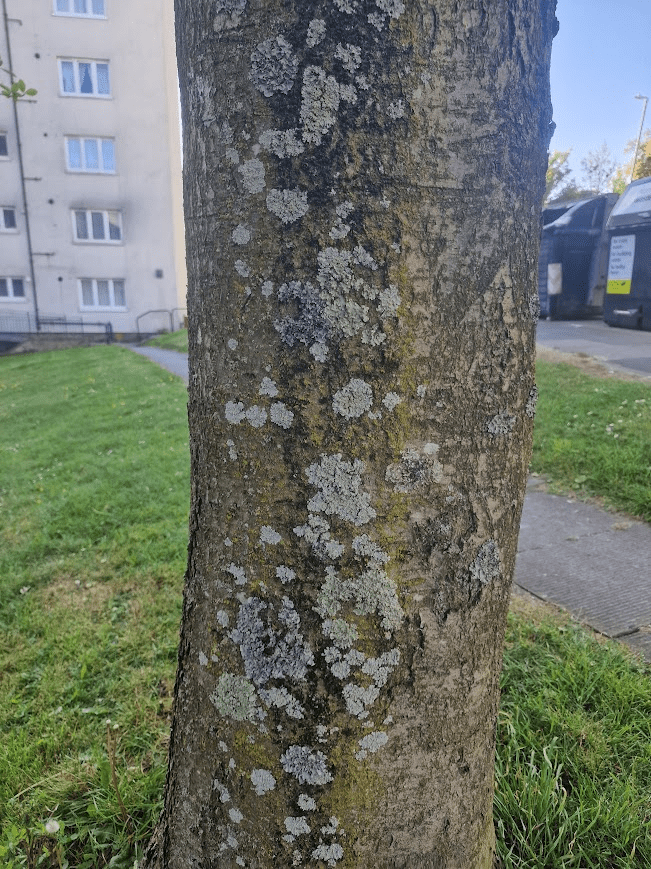
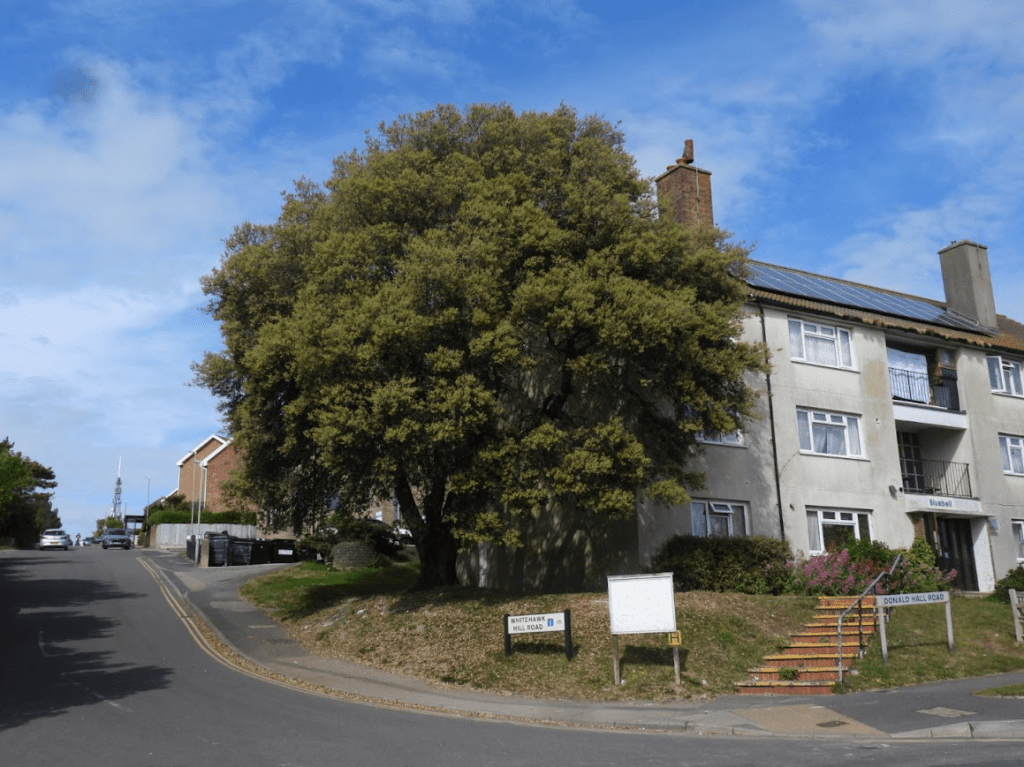
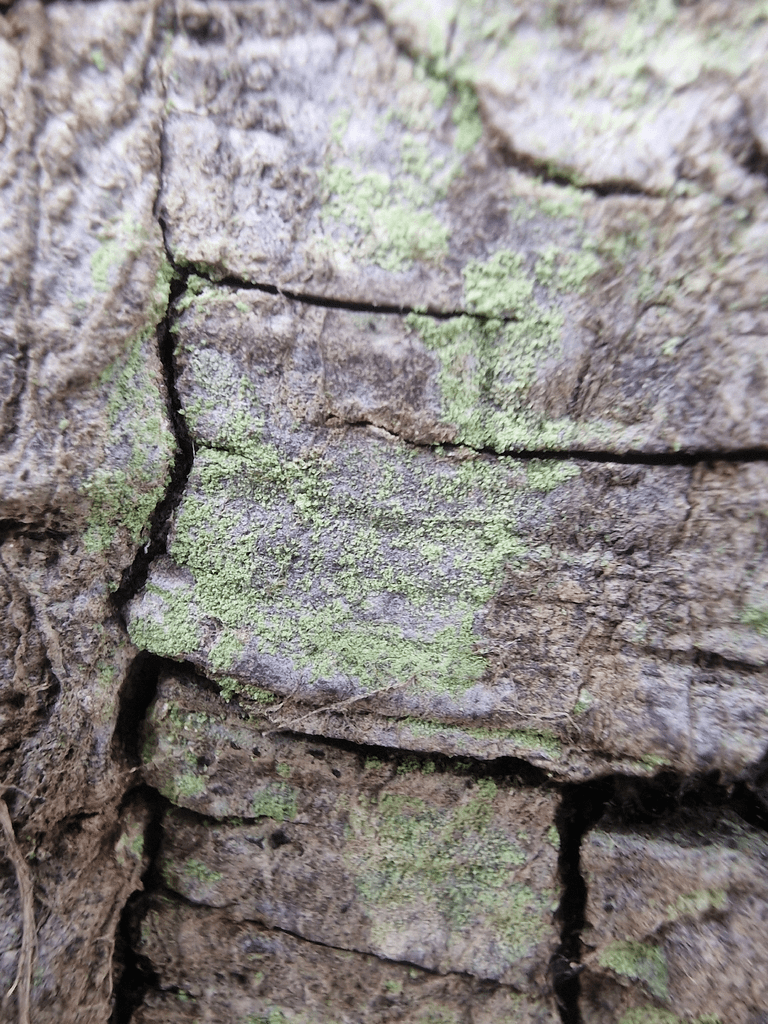
The trunk of a Swedish Whitebeam in Donald Hall Road, Bristol Estate (social housing) with lichens, including the rare Physcia tribacioides
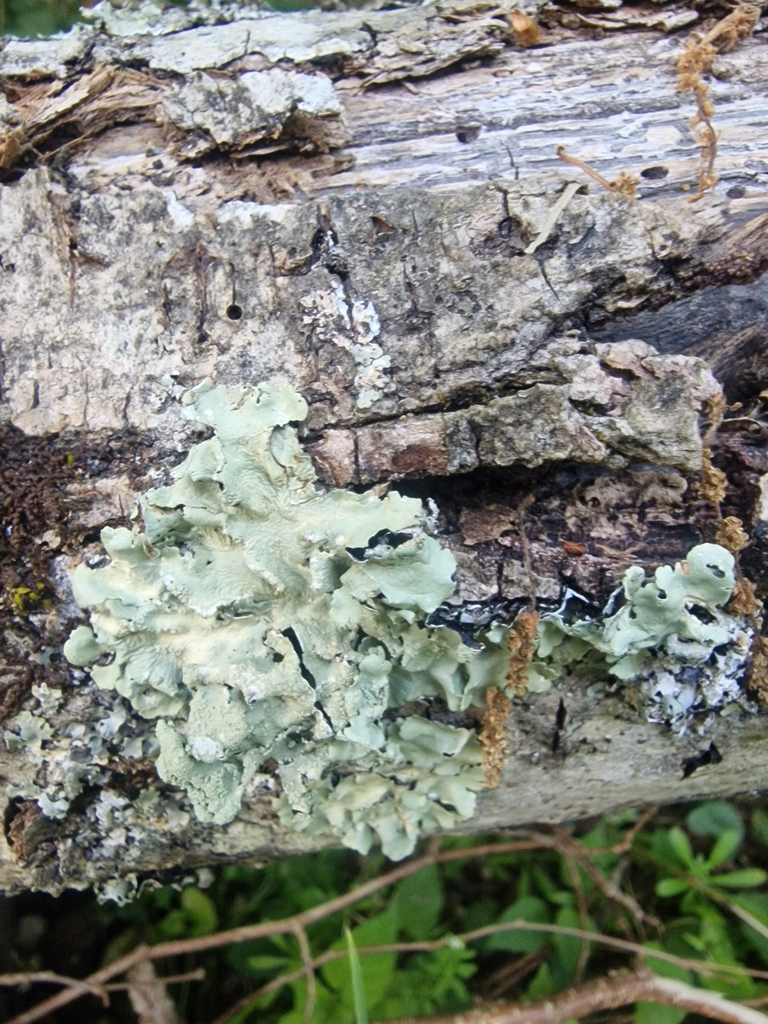
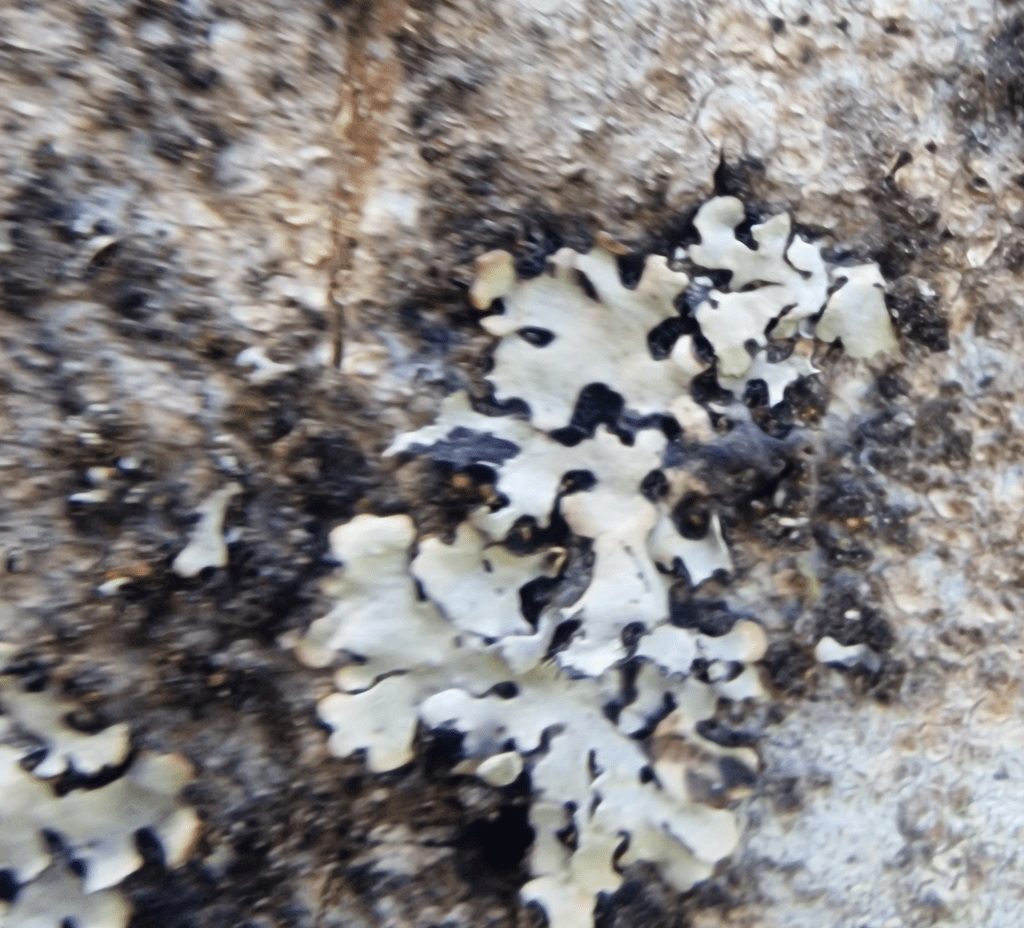
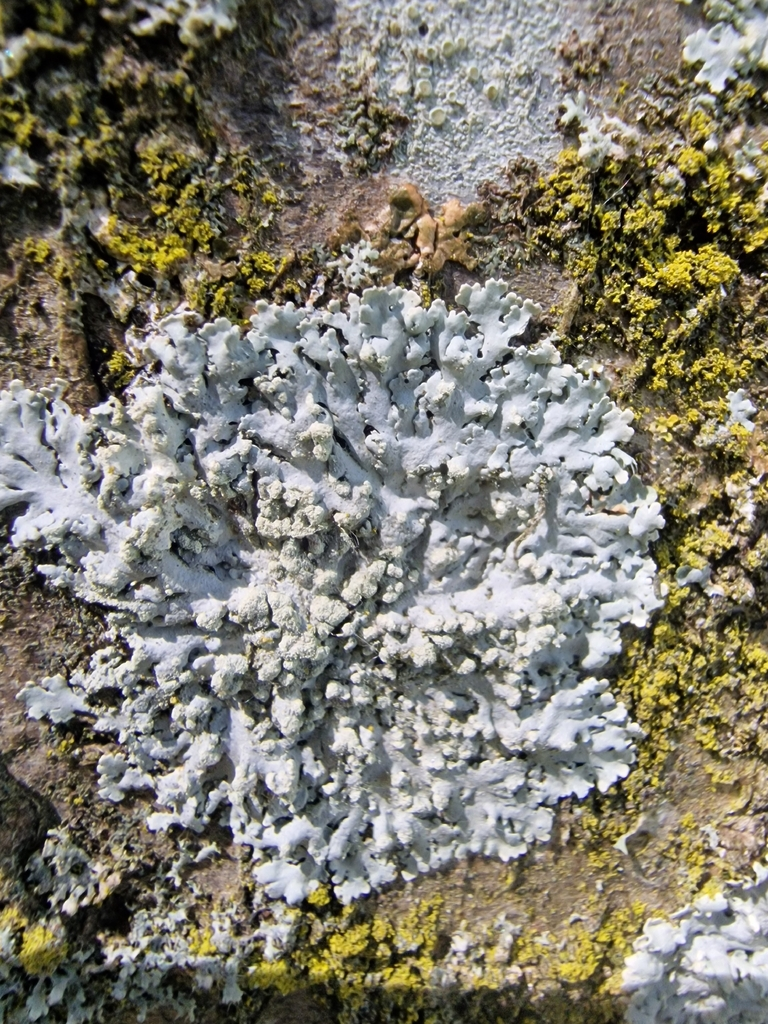
Physcia tribacioides on this tree
An urban forest includes all trees and shrubs within the parks, gardens, streets, woodland and open spaces of a town or city as well as the wildlife living amongst them. This also includes any trees that are planted on land belonging to private landowners, institutions, and local authorities.

Urban forest data, covering trees in public/private urban spaces, reveals that UK canopy cover averages ~17% What is the urban forest? – Forest Research

Total tree canopy cover in rural Great Britain is approximately 16.7%, including both established woodlands and scattered trees. England’s Urban Forests – Using tree canopy cover data to secure the benefits of the urban forest – Forest Research

So, you are equally likely, on average, to encounter trees in urban and rural spaces; although the place you are most likely to meet trees is in a wood, be it countryside wood e.g. Plashett Wood between Lewes and Uckfield, or an urban wood like Brighton’s Stanmer Great Wood. However, in towns and cities, in roads and parks there are many trees; but almost none of these trees have been surveyed for epiphytic lichens. This brings into question the validity of statistical measures of abundance and the identification of critical species to protect (e.g. the International Union for Conservation of Nature Red lists of lichens)

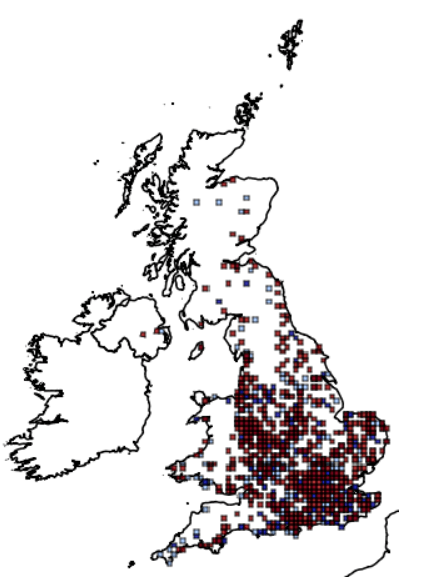
Our statistical knowledge of lichen distribution and abundance is greatly impaired by sampling bias; the dislike of walking around urban areas to look at lichens. Even with countryside lichens there are very few recent observations of lichens in Sussex. The map below is from the British Lichen All species interactive map; only monads (1km x 1km squares) with boxes have some lichen records; many monads have no lichen records

All species interactive map | The British Lichen Society
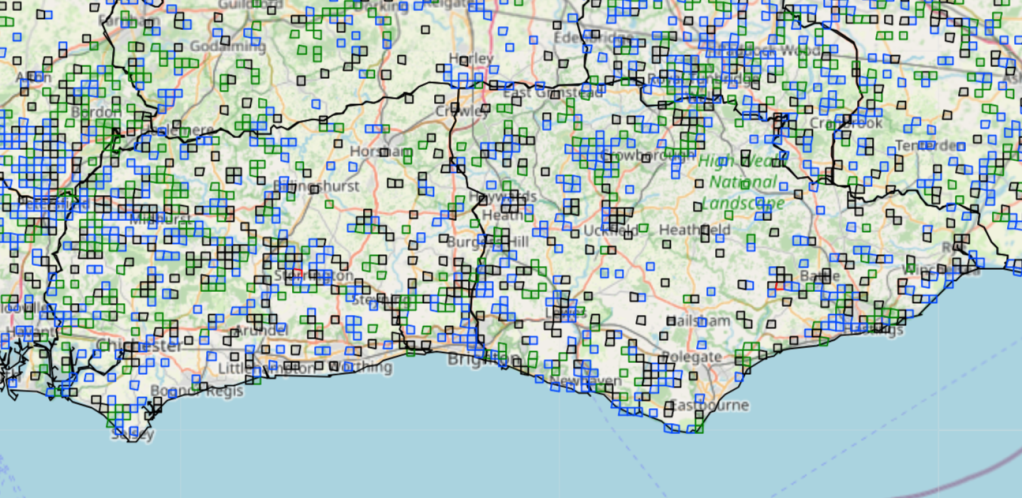
The British Lichen Society records for Sussex are an observational, opportunistic dataset, as is the National Diversity Network; observational, opportunistic datasets have significant limitations for biodiversity analysis. However, they are all we have, and most records are the result of amateur naturalists making observation and submitting records in their own time. I would urge lichen recorders to spend more time in urban settings.

Captioned screen shot of Google maps satellite view of the Bristol Estate with the main areas of trees on the estate that I looked at for lichens (not all the trees on the estate)
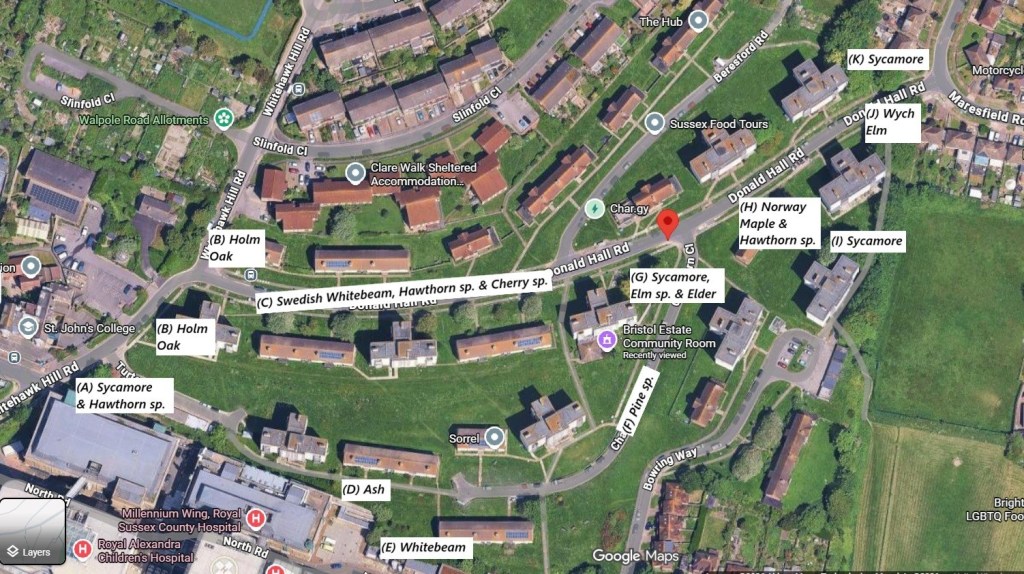
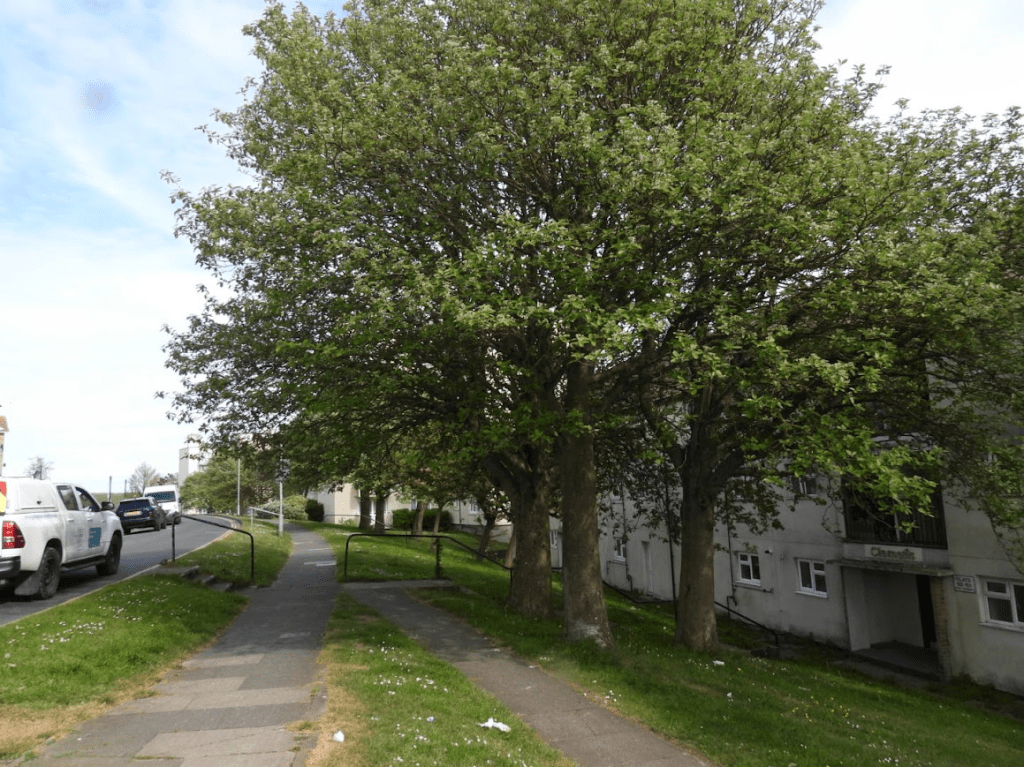
The Swedish Whitebeam Sorbus intermedia, Hawthorn Crataegus monogyna (probably a C. monogyna cultivar), Cherry sp. Prunus sp. (probably a P. avium cultivar), Norway Maple, Acer platanoides and Holm Oak Qurcus ilex look like they were planted at the time of the building of the estate, commissioned by the County Borough of Brighton in the 50s, as they are located in lines along the roads or at the end of housing blocks. The Ash Fraxinus excelsior and Pine sp. (probably Austrian Pine, P. nigra), look as if they were planted much more recently, and they also follow road/path lines.

The Sycamore Acer pseudoplatanus, Whitebeam Sorbus aria and Elder Sambucus nigra could have been planted, but more likely self-seeded, as they seem randomly located. Wych Elm, Field Elm, Whitebeam and Sycamore are native to the South Downs

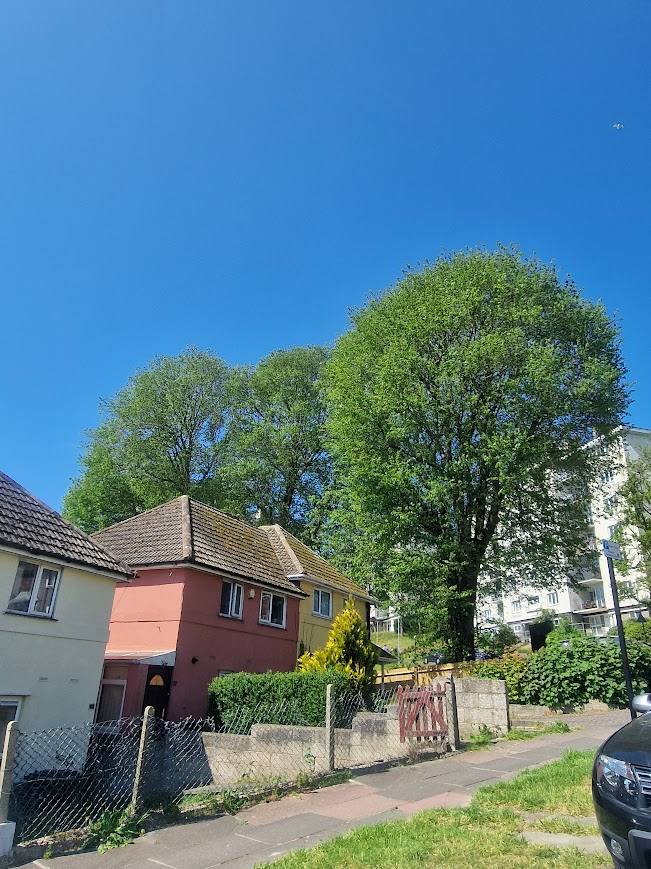
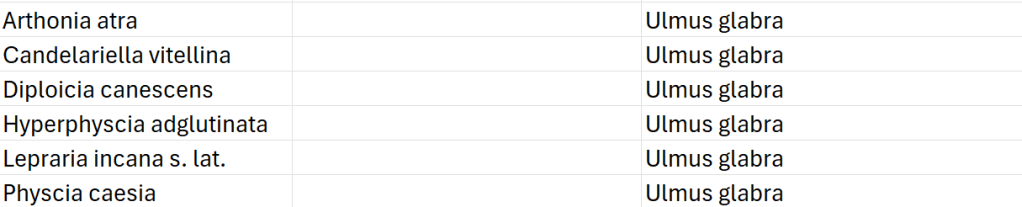
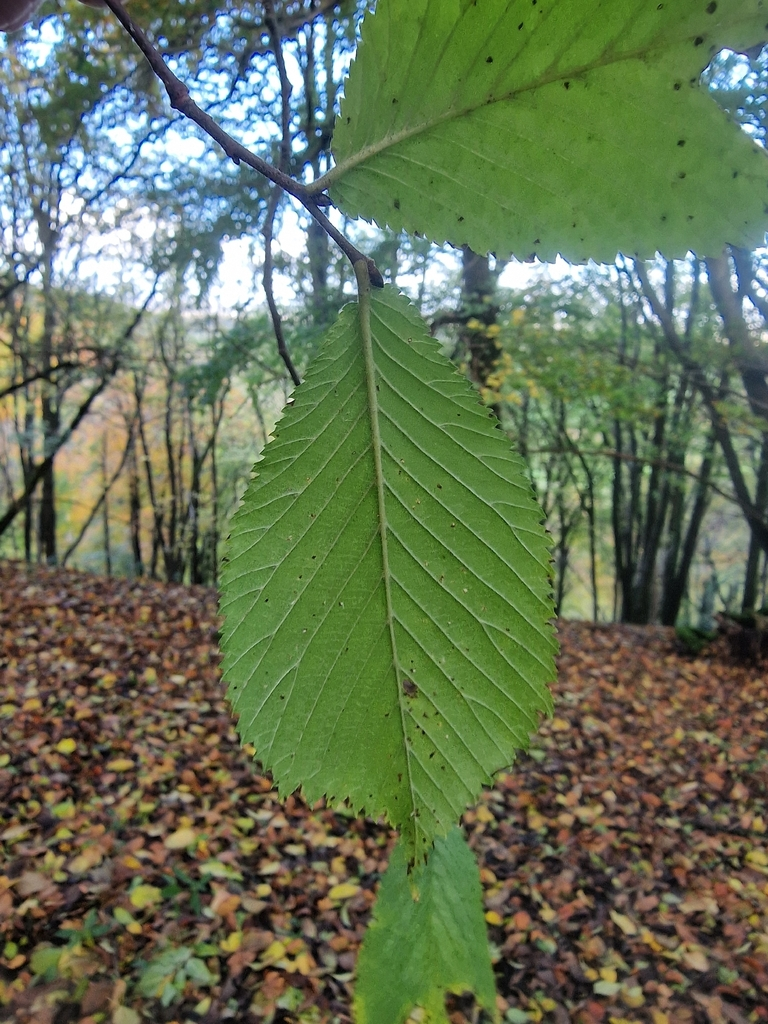
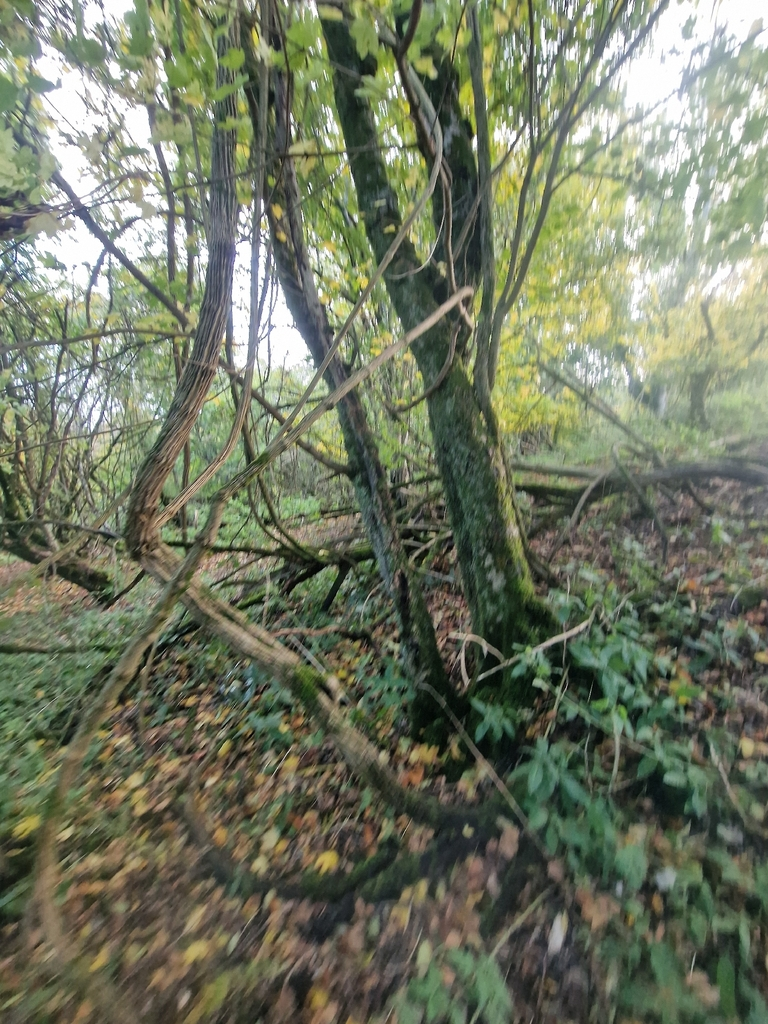
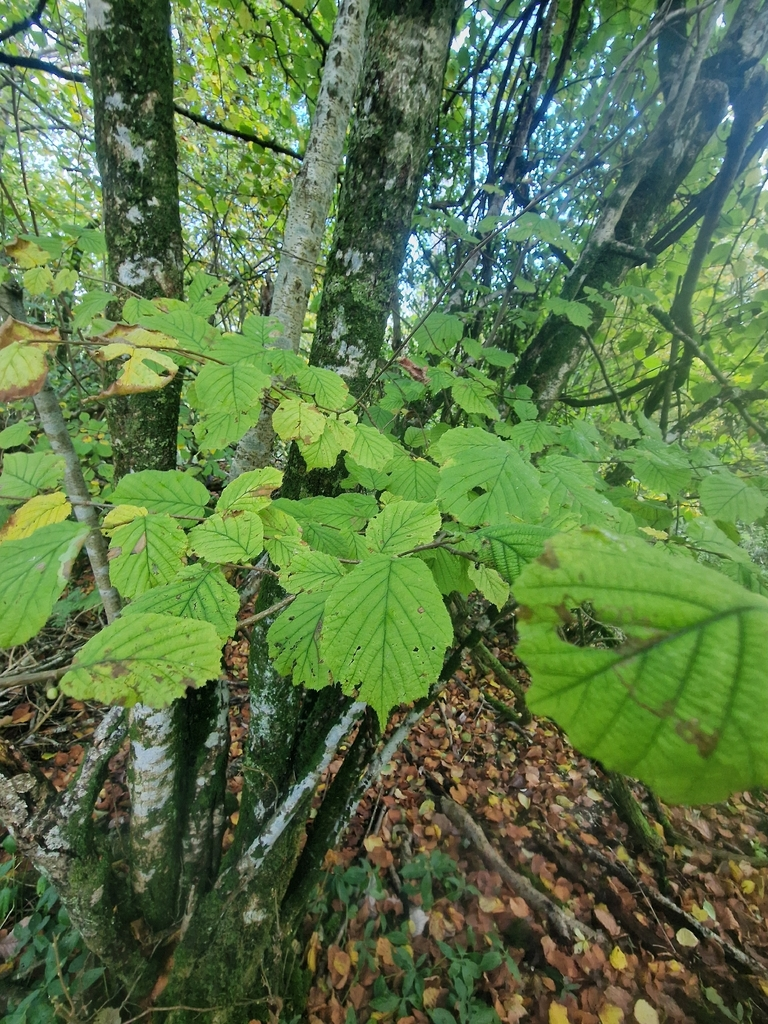
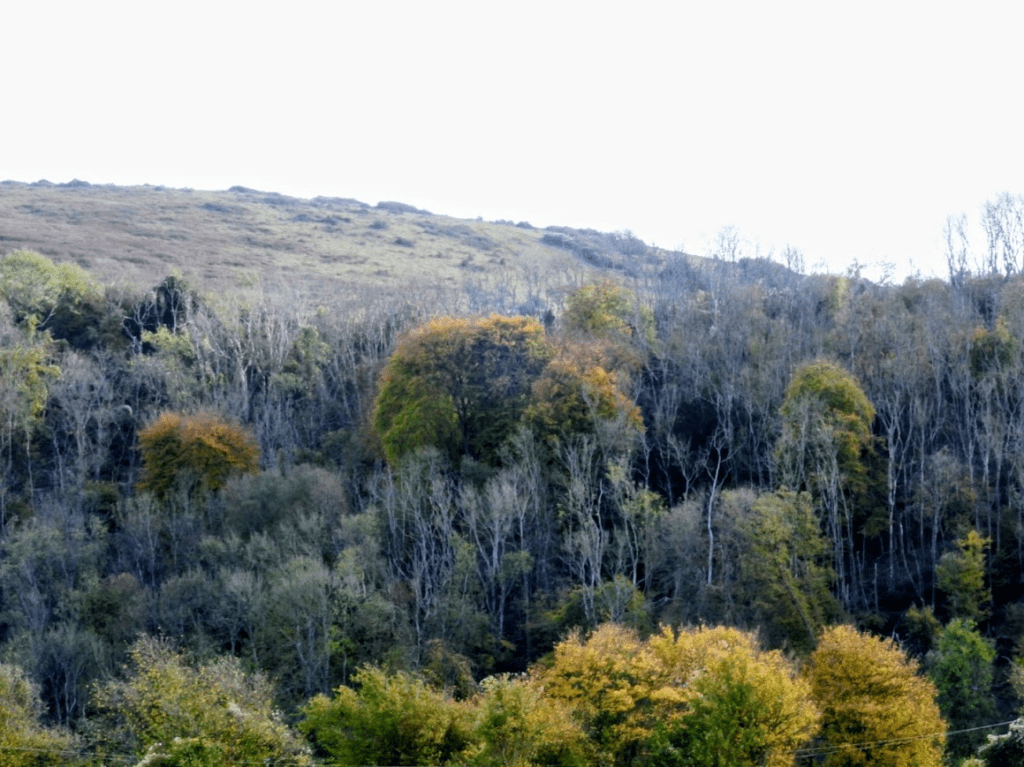
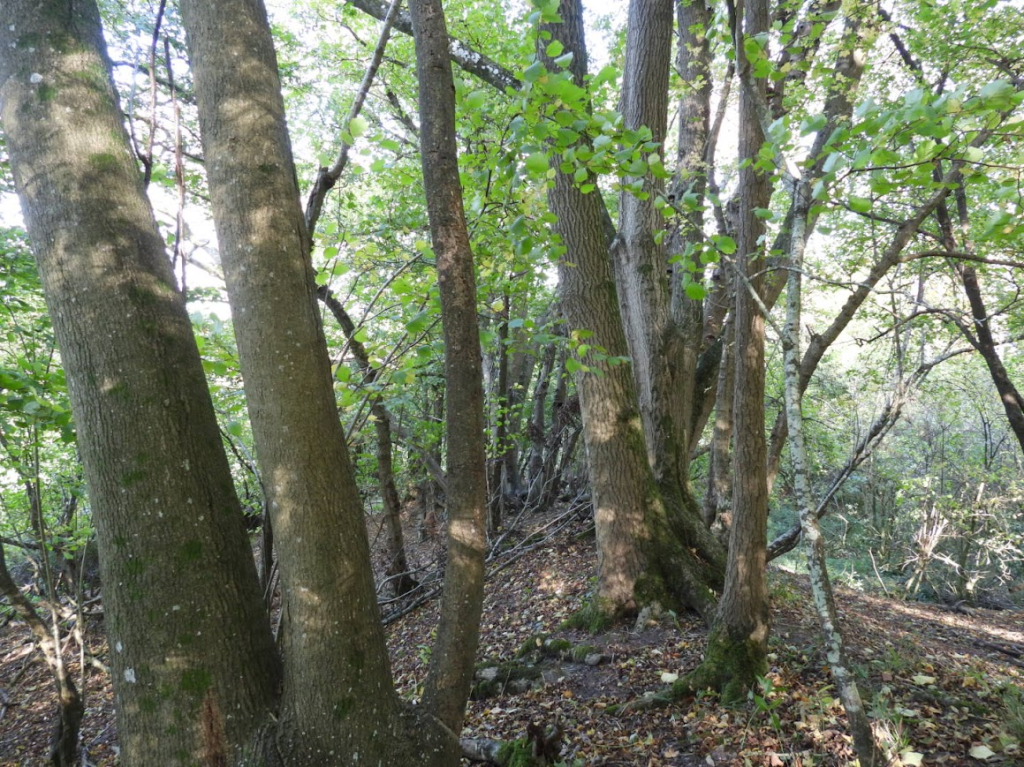
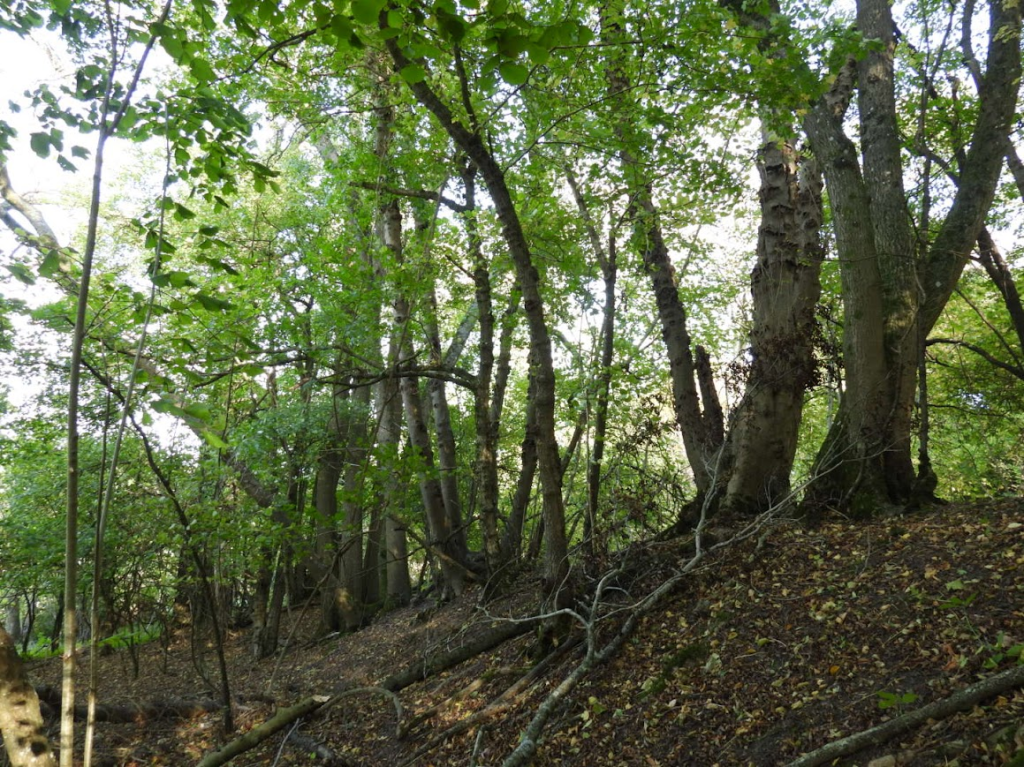
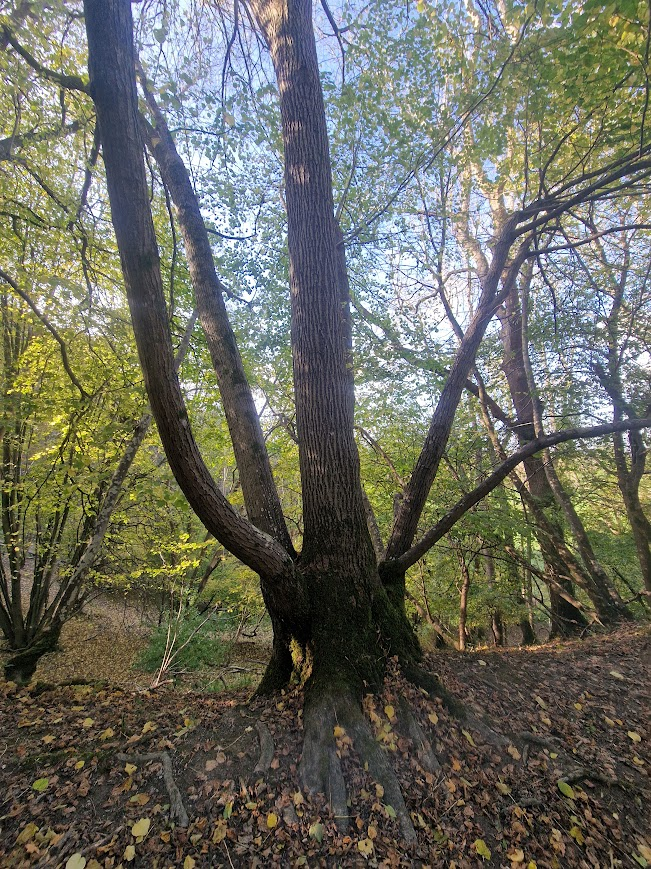
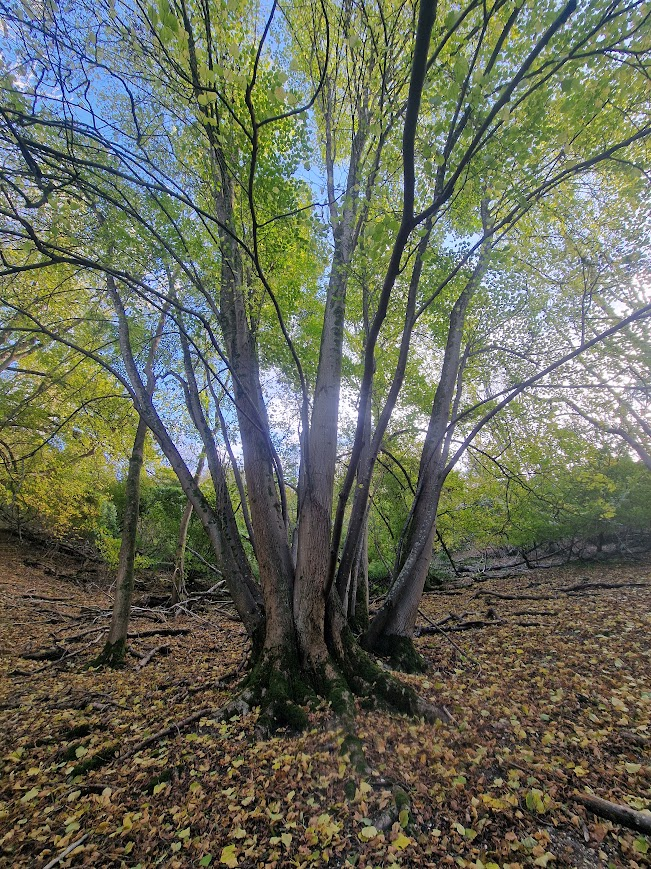
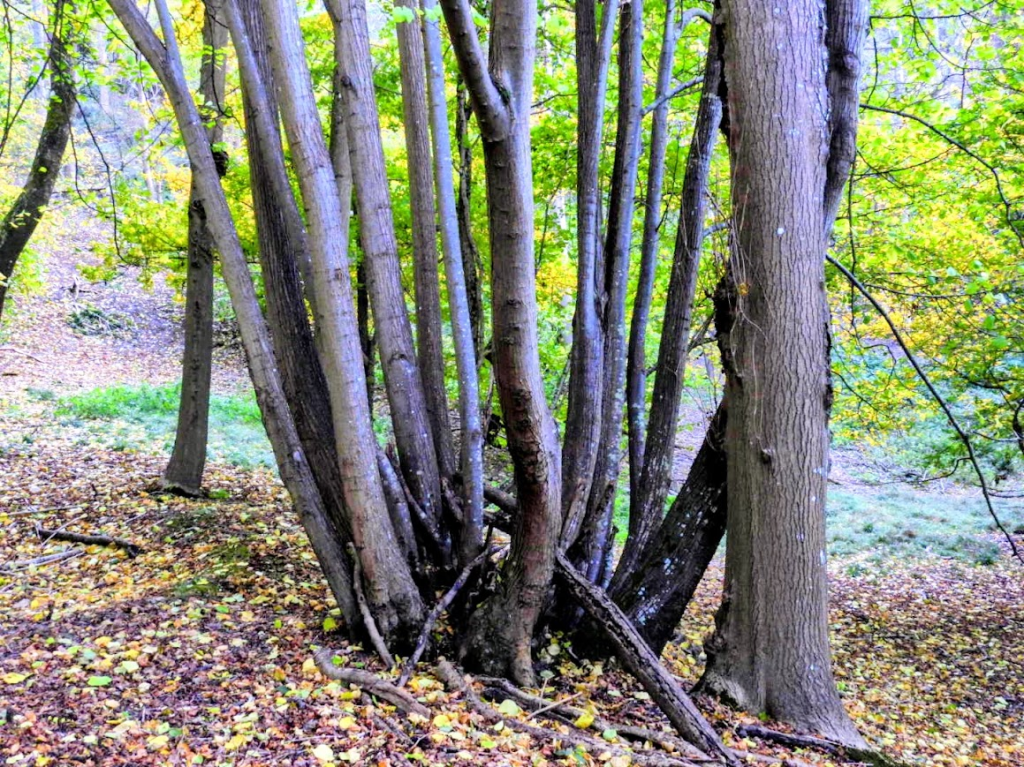
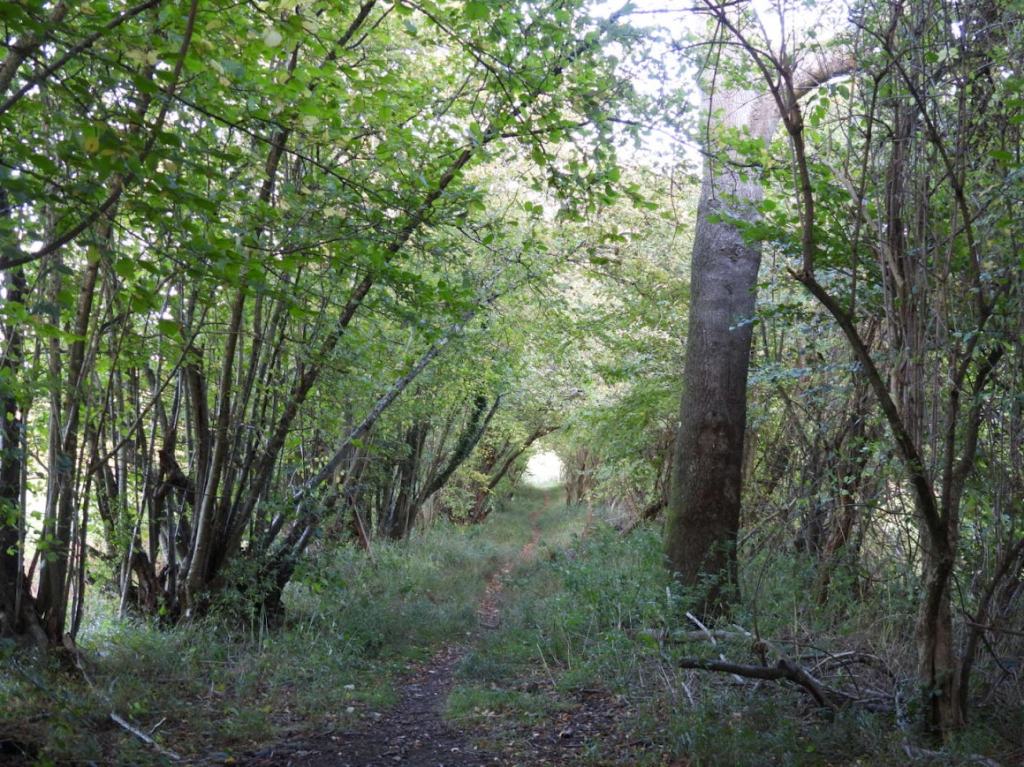
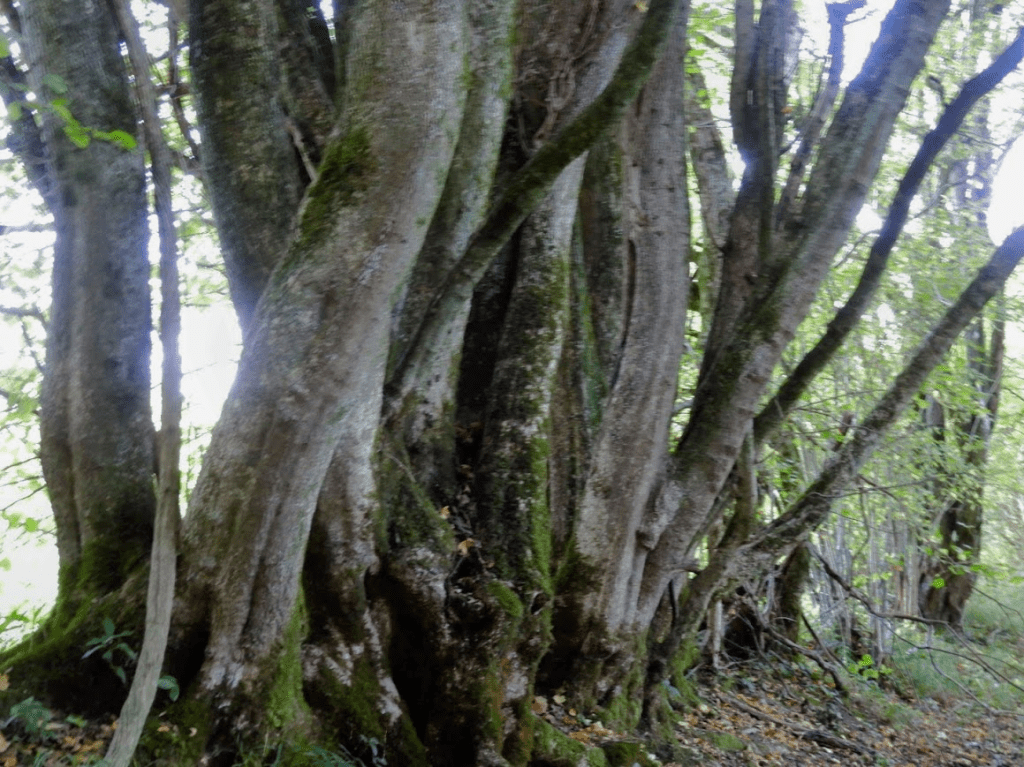
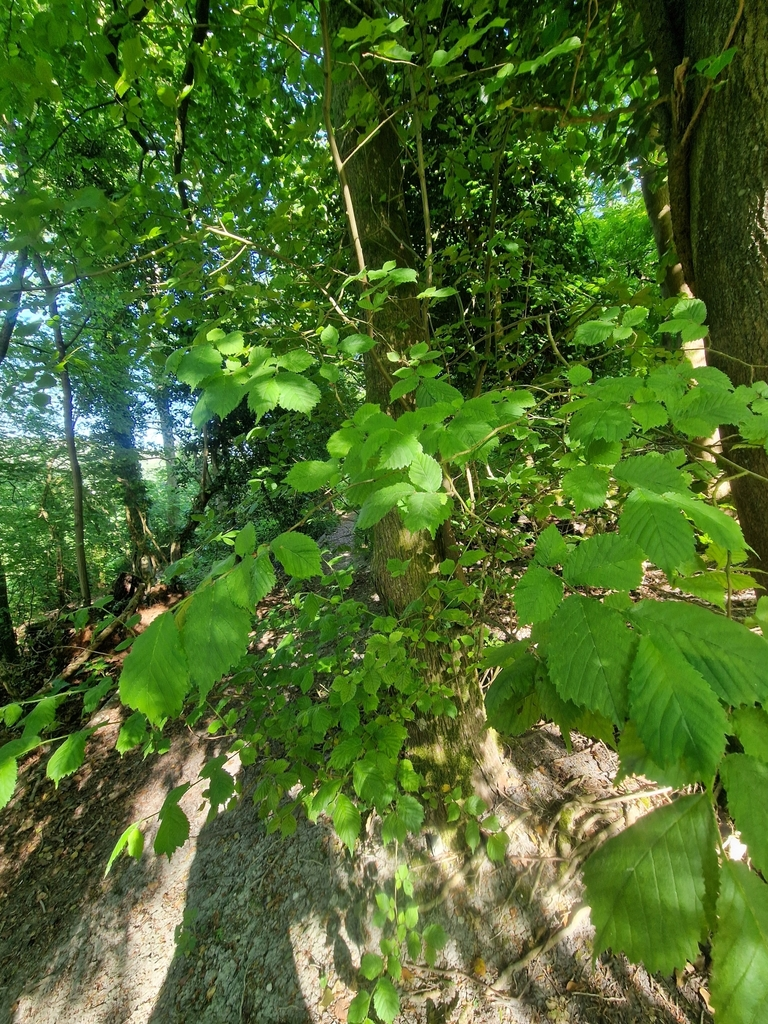
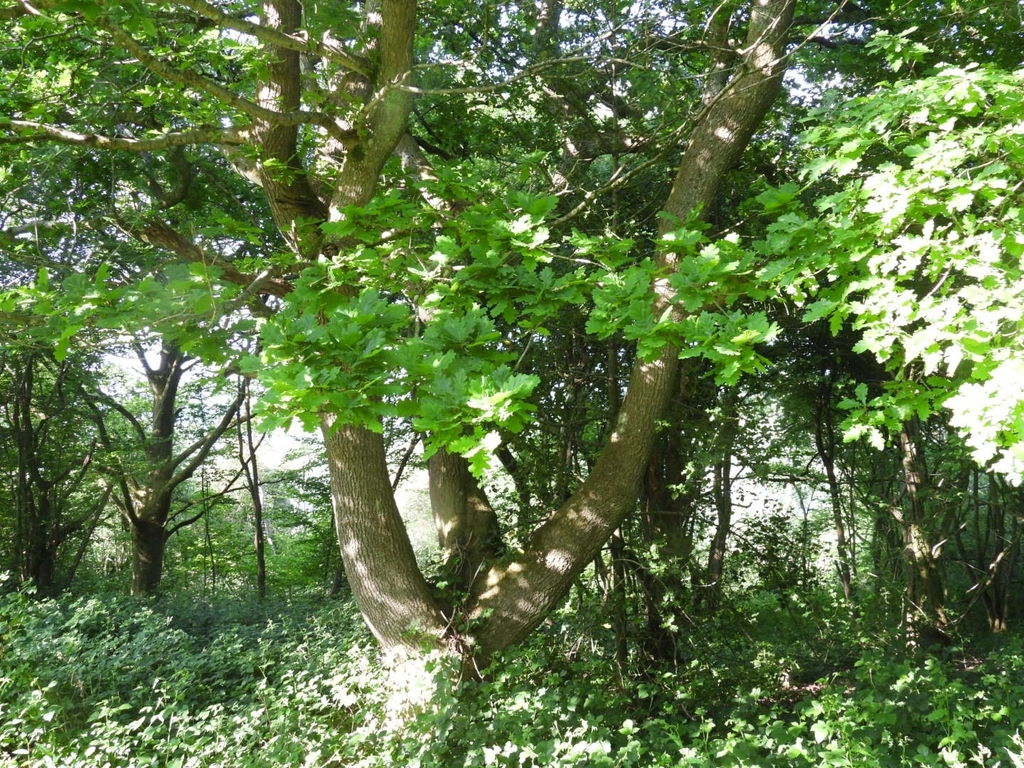
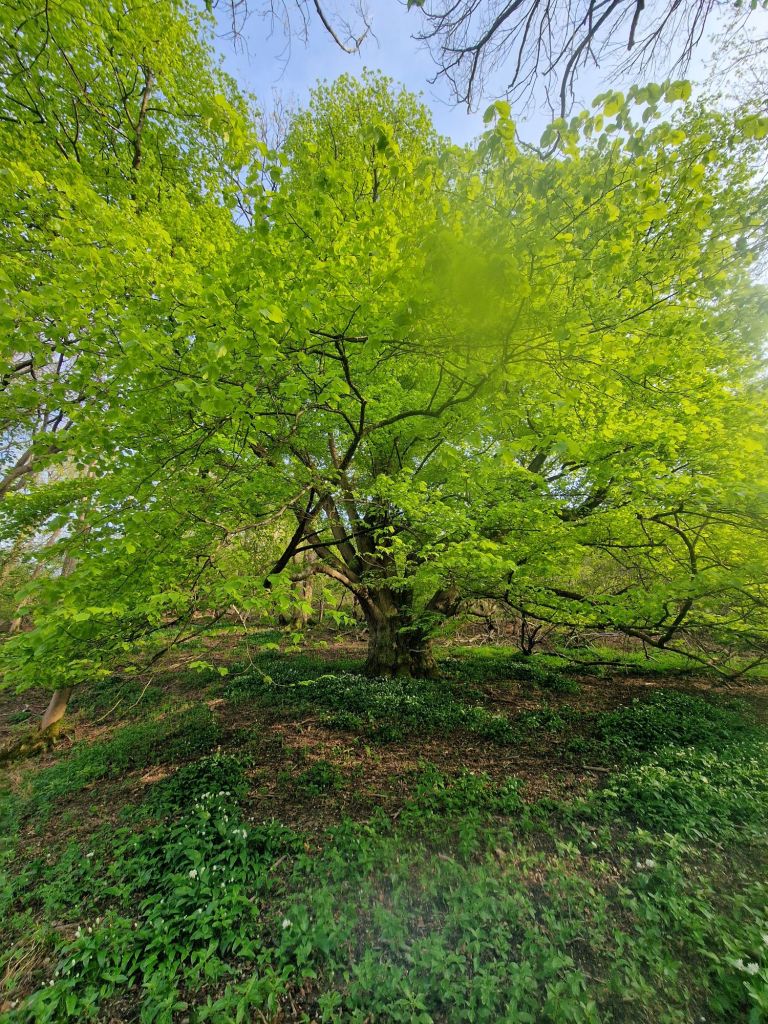
The Elms Ulmus spp. (Wych Elm Ulmus glabra & probably Field Elm U. minor) look much older than the estate and were probably native Elms on the dip-slope of the down on which the estate was built. Because they are within the Brighton & Hove City Council control area, they were spared infection by Elm Disease. The majority of the Ems in the Brighton and Hove National Elm Collection are trees planted by Victorians and Edwardians in roads and public parks; but the Elms of the Bristol Estate (along with the solitary Field Elm at the bottom of the Craven Vale Estate) appear to be native Elms that have survived development around them and Elm Disease; they are very precious trees, and very under-appreciated.

The Bristol Estate is perched high above Brighton between the Downs and the sea with stunning views of land and sea. It was built in post war Britain to a cutting edge design of tower blocks and low rise flats. There were no houses on the development, but lots of nice green space. The first resident moved into Donald Hall Road in 1957, and a number of The Marquess of Bristol’s estate was Bristol Estate developments | Bristol Estate | My Brighton and Hove

The estate is named after the Marquess of Bristol. In 1828, Frederick William Hervey, First Marquess of Bristol 1769 -1859 bought a double house plot at the North West corner of Sussex Square, enabling him to build a house four times the volume of other houses in the square. ... The Marquess owned an extensive estate in Brighton stretching from the rear of Sussex Square to the racecourse and beyond north to Bear Road and west to the site of the Royal Sussex County Hospital. The Hervey family seat was, until 1998, at Ickworth, Suffolk. The Kemp Town Estate – Who’s been living in my house?

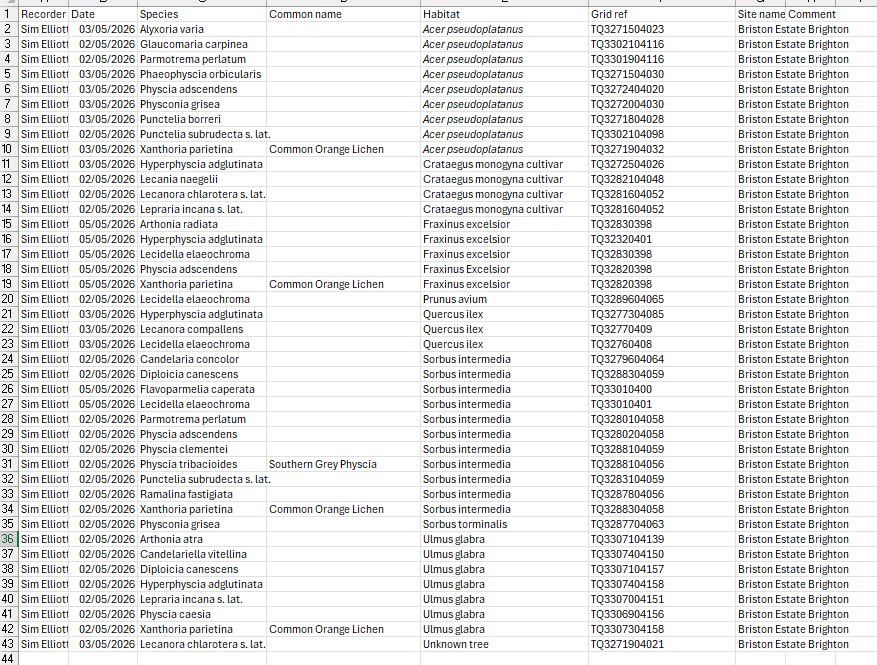
The lichens on trees which I recorded; there are undoubtedly more lichens on the trees than those I recorded; with photographs of some of them.

Sycamore
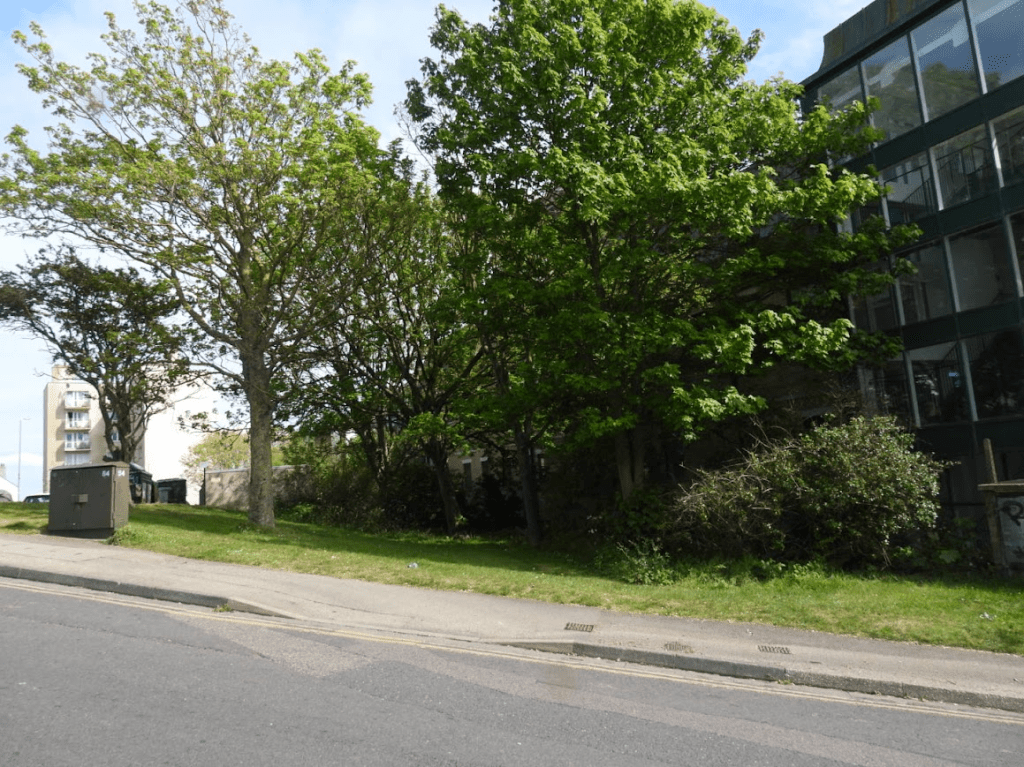
Puncetlia borreri
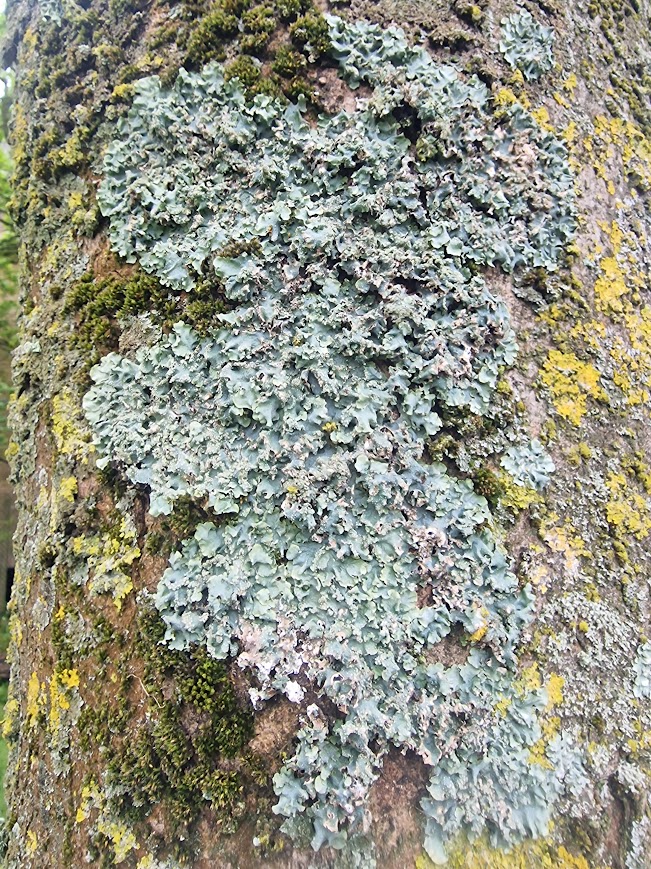
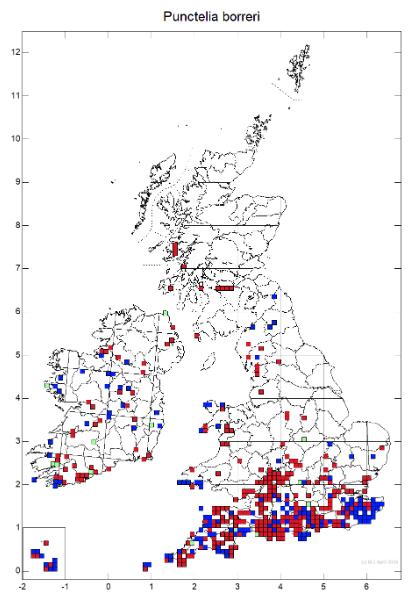
A very southern lichen

Phaeophyscia orbicularis
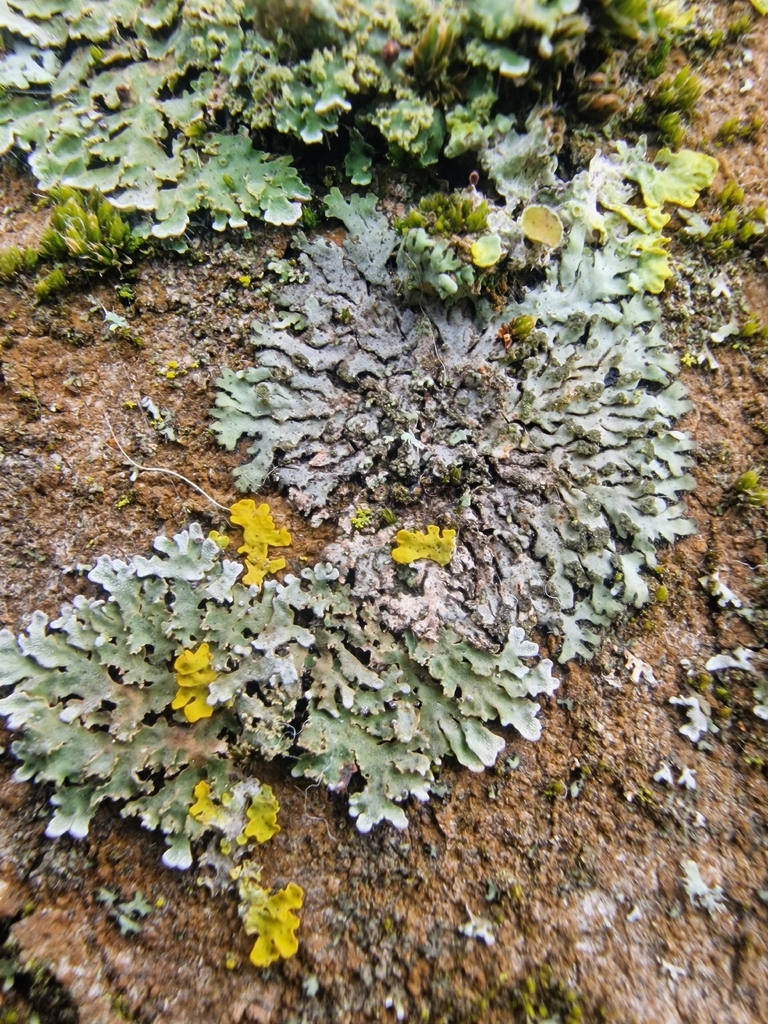
A common lichen on urban areas

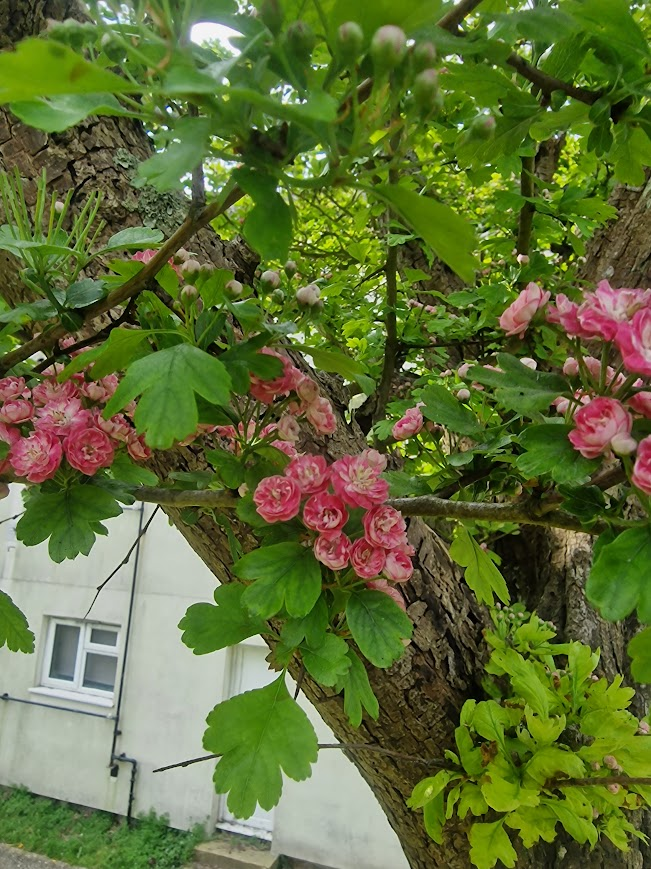
Hawthorn

A cultivar
Hyperphyscia adglutinata
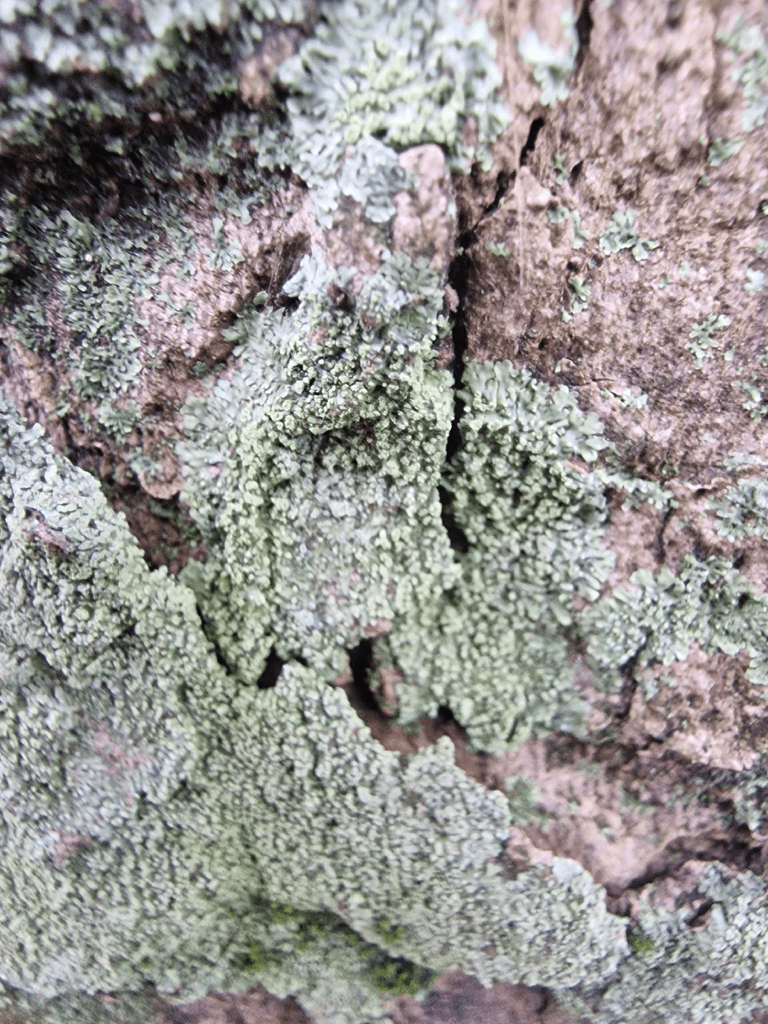
A common lichen on nutrient-enriched shaded trees in urban areas; very difficult to see as its very small

Lecanora chlarotera sensu latu
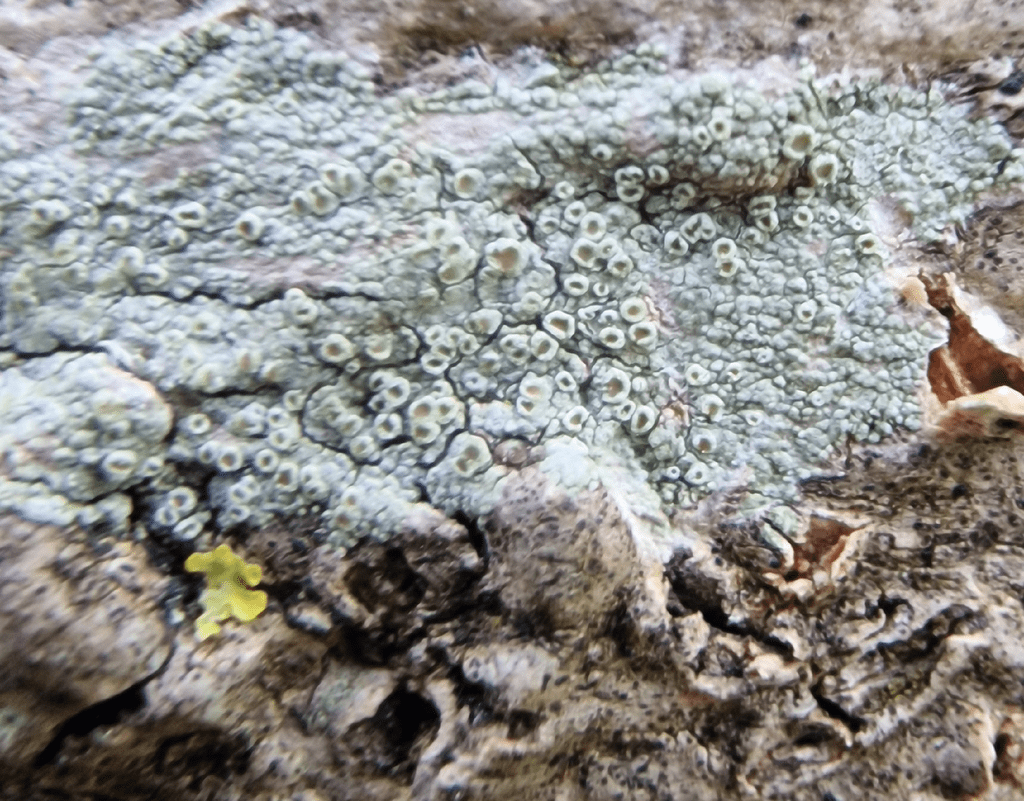
Lecanora chlarotera is impossible to separate from Lecanora hybocarpa without microscopy so I have recorded this is sensu lato “in a broad sense”; a term used commonly used in biology, to indicate that a scientific name is being used in a wide, inclusive sense, encompassing all its subordinate taxa or close relatives, rather than a narrow definition

Ash
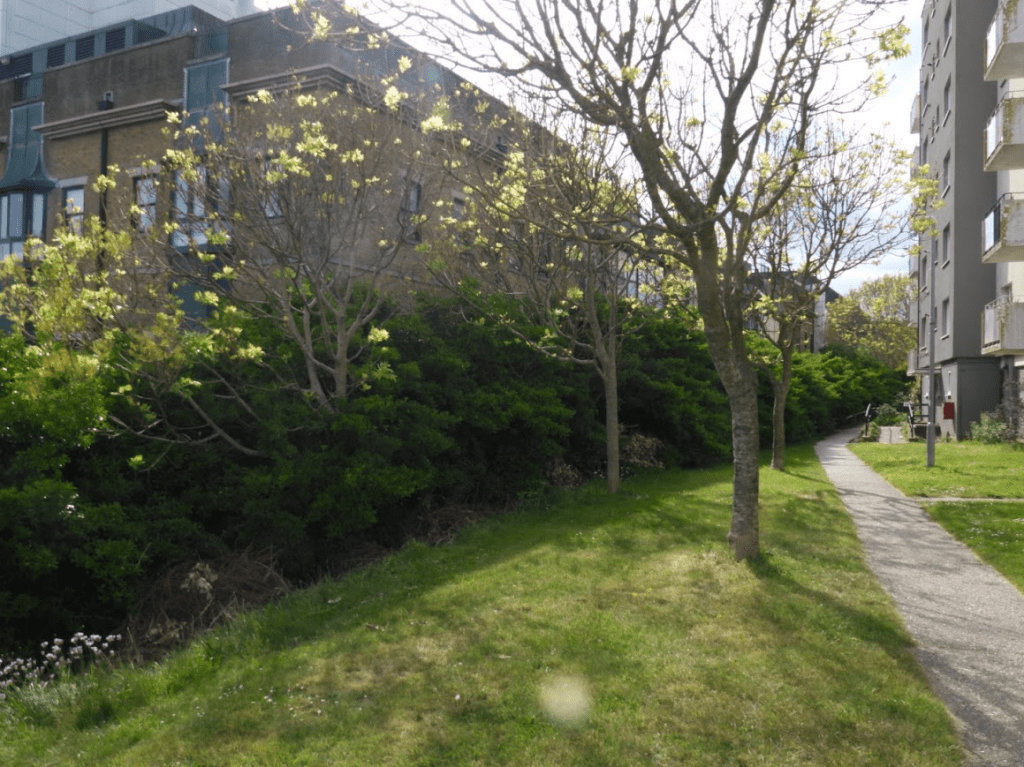
Arthonia radiata
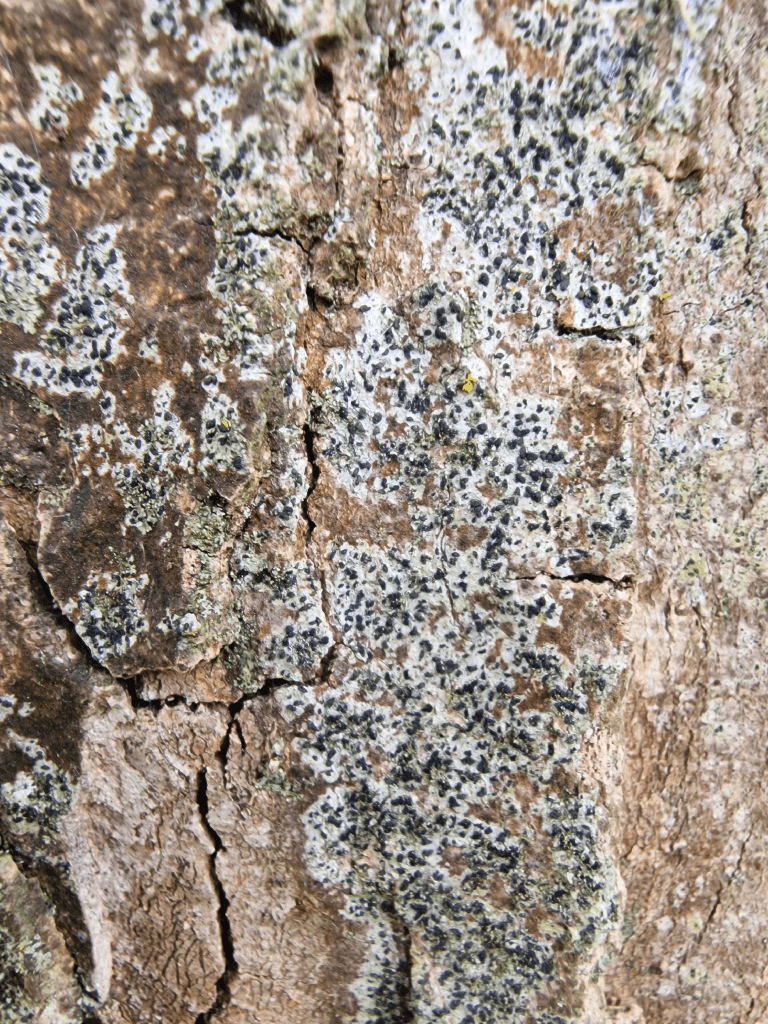
Arthonia radiata is a common pioneer species on twigs of smooth barked trees. It often grows with Lecidella elaeochroma and Lecanora chlarotera.

Cherry
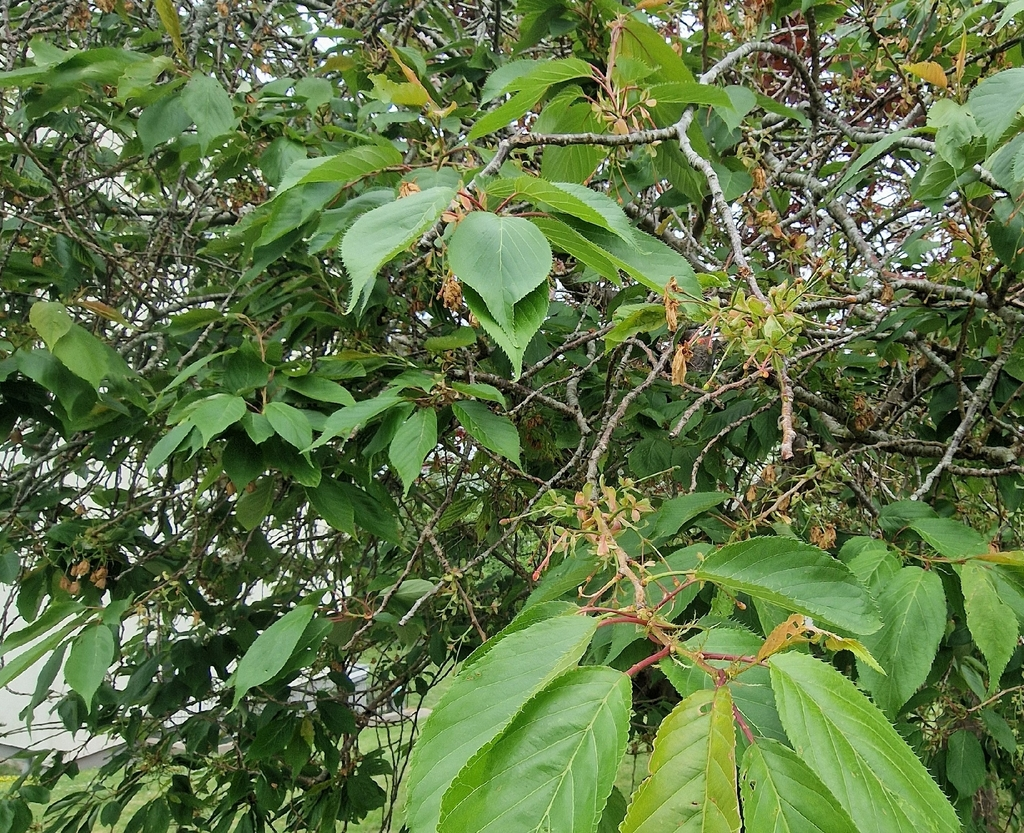
Lecidella elaeochroma
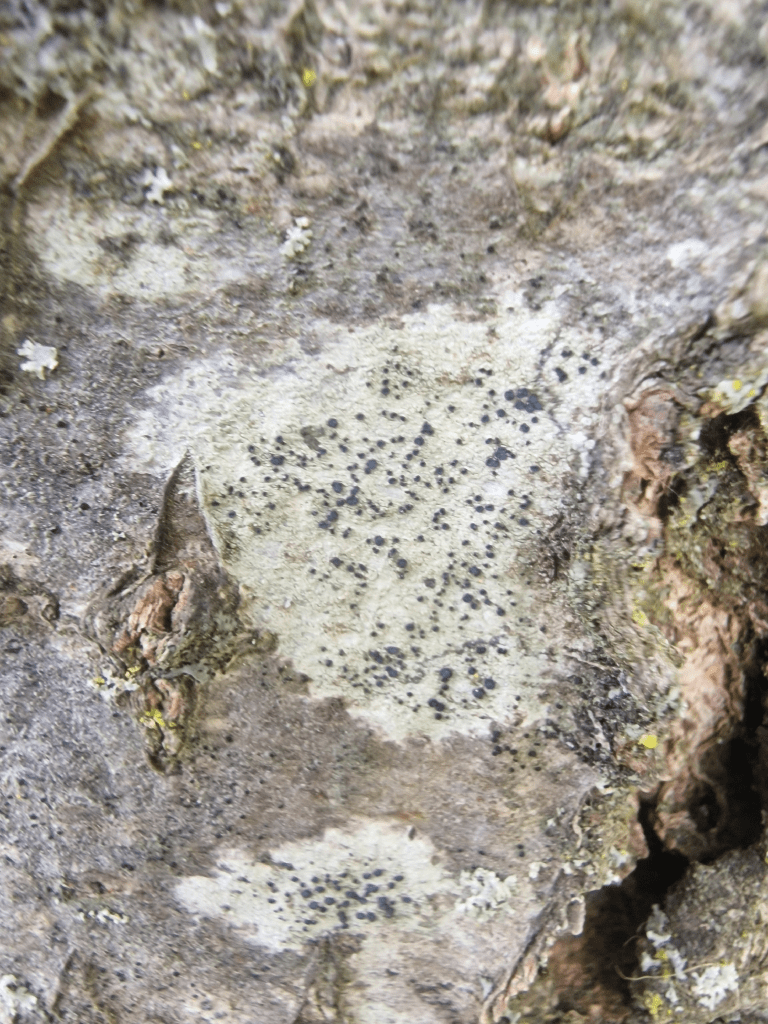
Very common on well-lit smooth bark, especially twigs and small branches, often forming mosaics; moderately tolerant of both sulphur dioxide and ammonia pollution.

Holm Oak

A non-native evergreen Oak planted frequently by local authorities in urban settings; notoriously low in epiphyte diversity

Lecanora compallans
Lecanora compallans is very similar L. expallens and L. barkmaniana and can only be separated by chemical reagent spot testing, which I did.

Swedish Whitebeam

A small deciduous tree, widely planted as a street tree as well as in gardens and parks, spreading by seed and frequently self- or bird-sown in woodlands, cliffs, hedges, rocky pastures, limestone pavements and waste ground, usually on base-rich soils. The occurrence of old trees at remote locations in Scotland has led some to consider that it may have colonized naturally from Scandinavia, with the seeds having been dispersed by migrating thrushes. Sorbus intermedia (Ehrh.) Pers. in BSBI Online Plant Atlas 2020
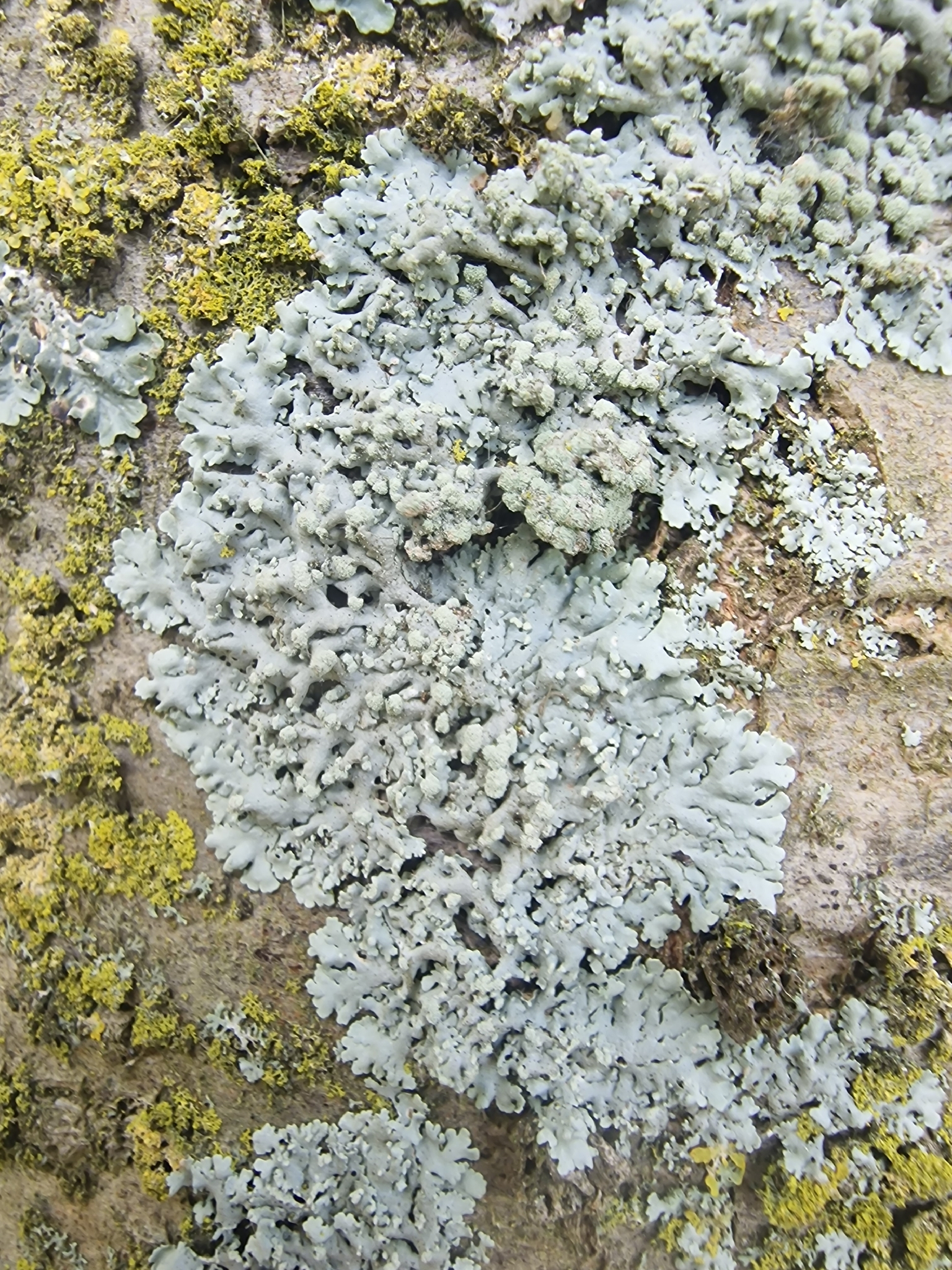
Physcia tribacioides

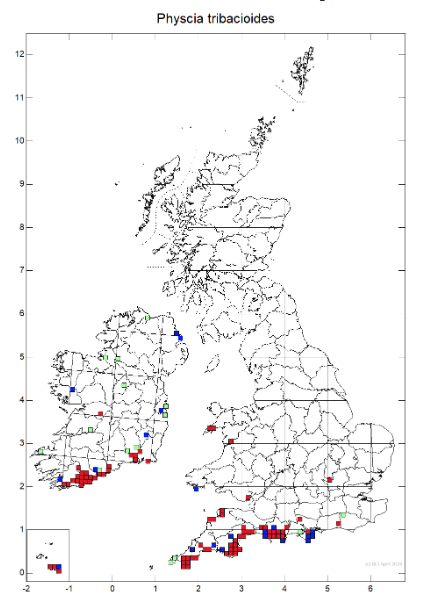
Four patches noted. Only one 19th century record of this lichen in Sussex.

ICUN red list status: Vulnerable, thus a section 41 species afforded special protection. British Lichen Society Status: Nationally Scarce

Found on sheltered, nutrient-rich bark and on +/- vertical walls and rocks. Most frequent in southern Britain.

Individual narrow, strap-like, convex, pale grey thalli lobes are small but can mass to extend over wide areas. The upper surface lacks the white flecks seen in Physcia caesia or marginal cilia seen in some other species. The marginal lobes can flare out to produce crenately incised apices. The soralia are mostly laminal, convex and can be so abundant as to cover parts of the thallus. The medulla reacts yellow when potassium hydroxide is applied. There is no reaction in the medulla of the similar P. tribacia. Physcia tribacioides | Lichens of Wales mainly in coastal areas in the south of the UK
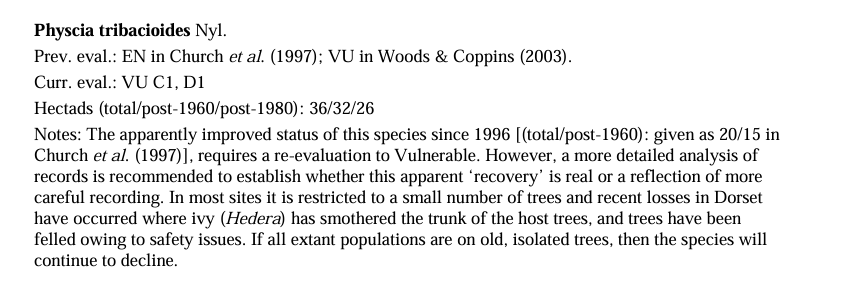
A conservation Evaluation of British Lichens and Lichenicolous Fungi
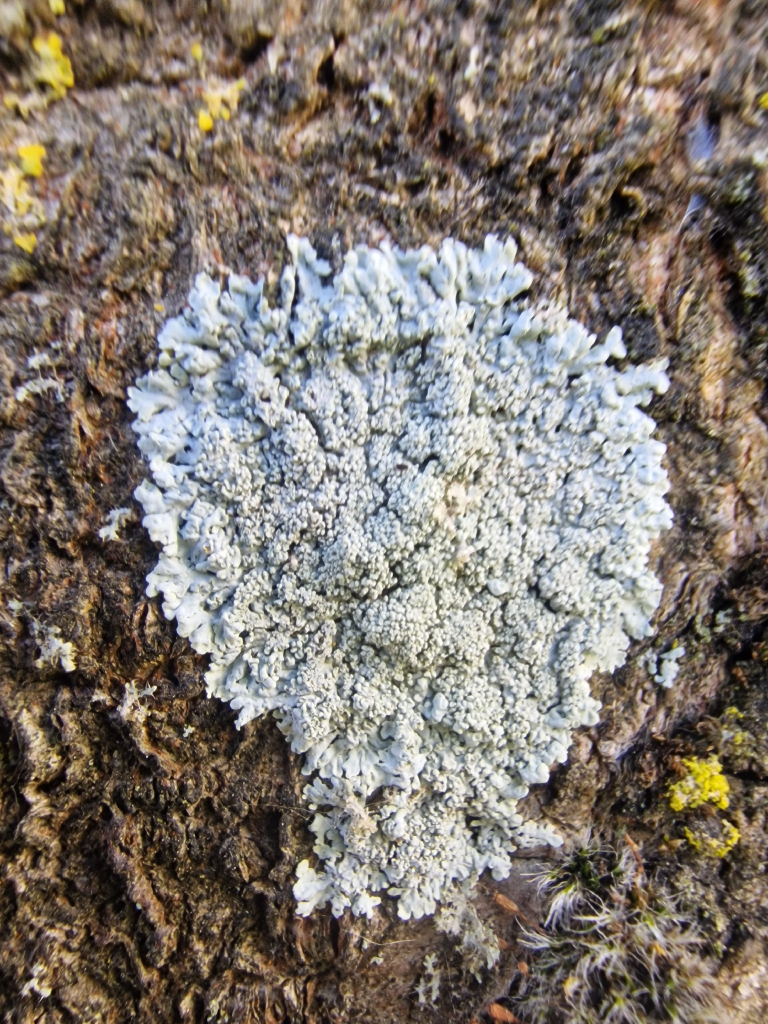
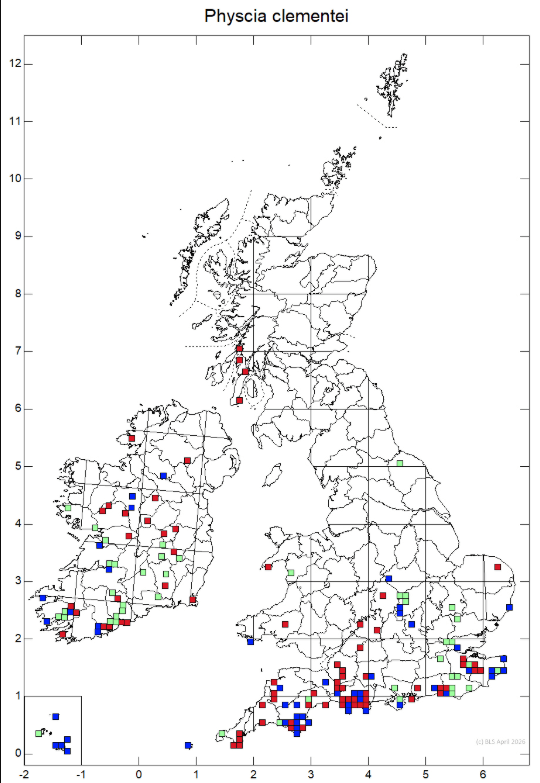
Physcia clementei

Closely adpressed pale-grey or whitish thallus with narrow, overlapping lobes. White undersurface with pale rhizines. Centre of thallus densely covered with short, granular isidia that can break down and become coarsely sorediate. Infrequently fertile in Britain Irish lichens – Physcia clementei

Seen on two trees

Also very rare in Sussex; but more common in the south than anywhere else ICUN red list status: Near Threatened; British Lichen Society Status: Nationally Scarce
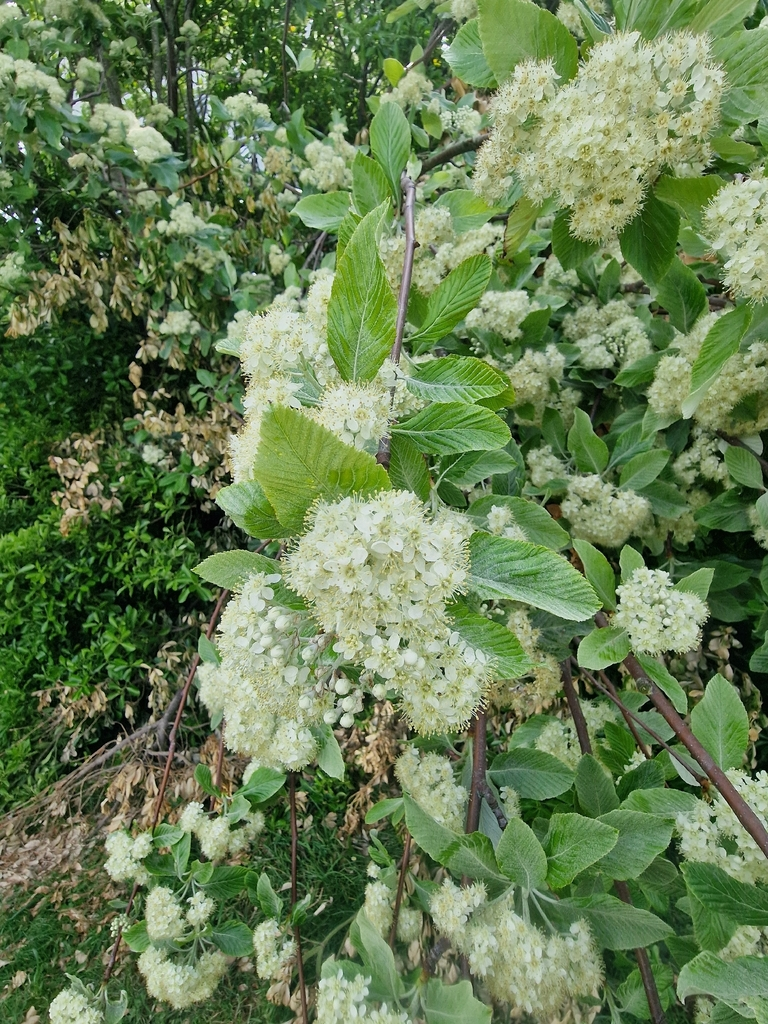
Whitebeam

A small to medium-sized tree, native in scrub and open woodland on well-drained soils over chalk, limestone, and occasionally more acid substrates, and widespread as an introduction. A variable sexual diploid, responsible for driving evolution of many British endemics. Sorbus aria (L.) Crantz in BSBI Online Plant Atlas 2020

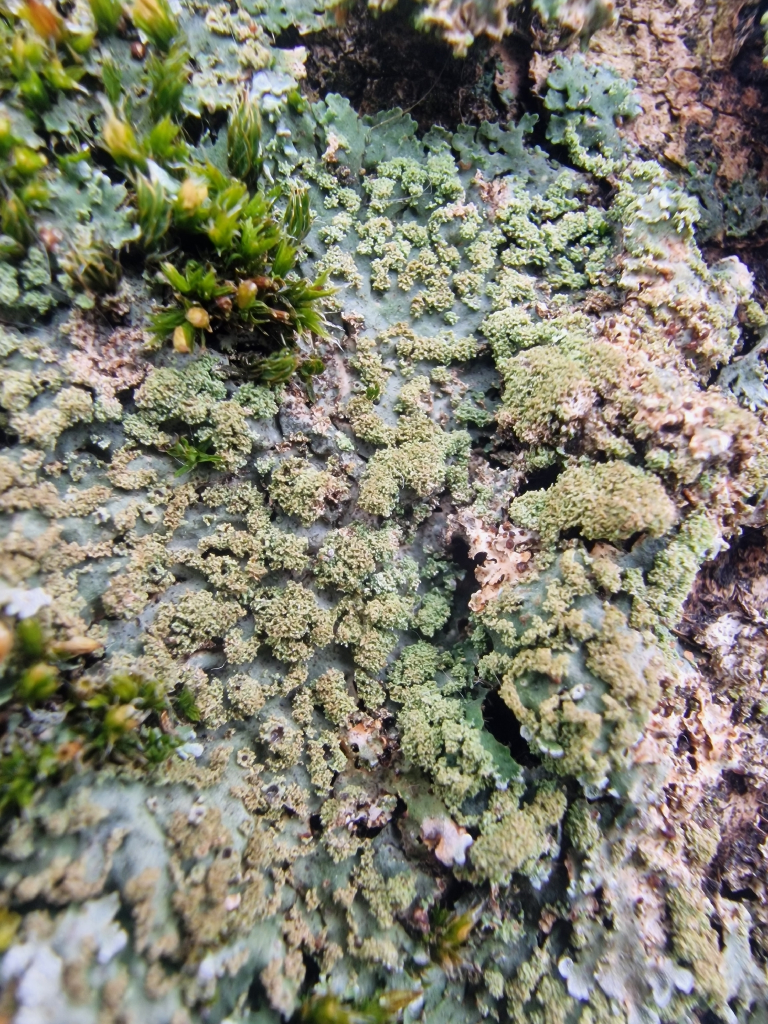
Very common on Brighton street trees.

Physconia grisea
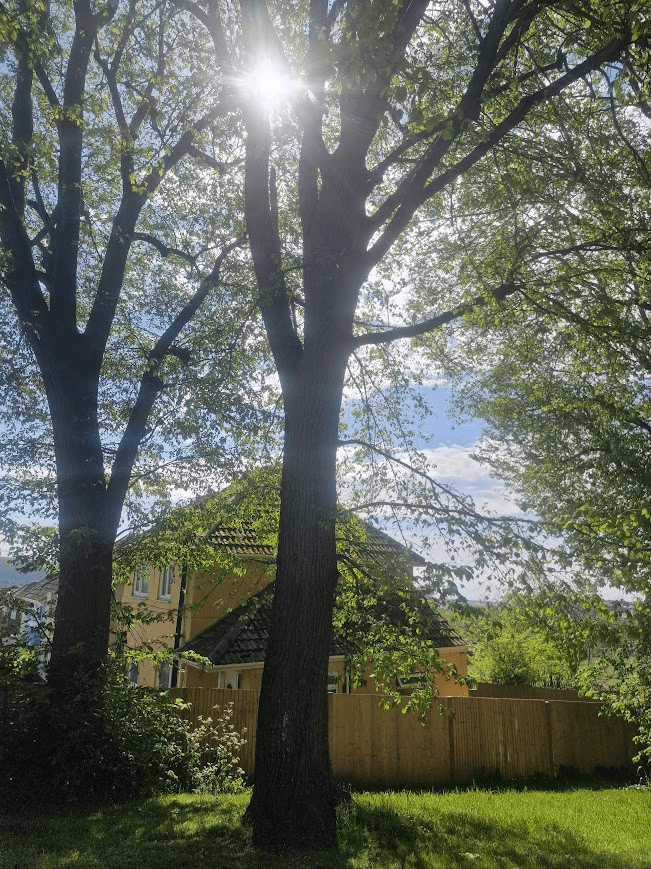
Wych Elm

A long-lived, deciduous tree of woodlands, especially on the upland fringe in northern Britain. It also occurs in hedges, field-borders and streamsides. It usually occurs in small numbers, typically forming mixed woodland with ash and sycamore on limestone and other base-rich soils. Unlike other British elms it is non-suckering and regularly produces fertile seed. It is a colonist of ungrazed grassland, rocky ground and waste and spoil heaps. This species hybridizes freely with U. minor in England, forming complex patterns of variation. It has declined locally as a result of Dutch Elm Disease in most regions since the 1970s, with few mature trees survivingUlmus glabra Huds. in BSBI Online Plant Atlas 2020
Physcia caesia
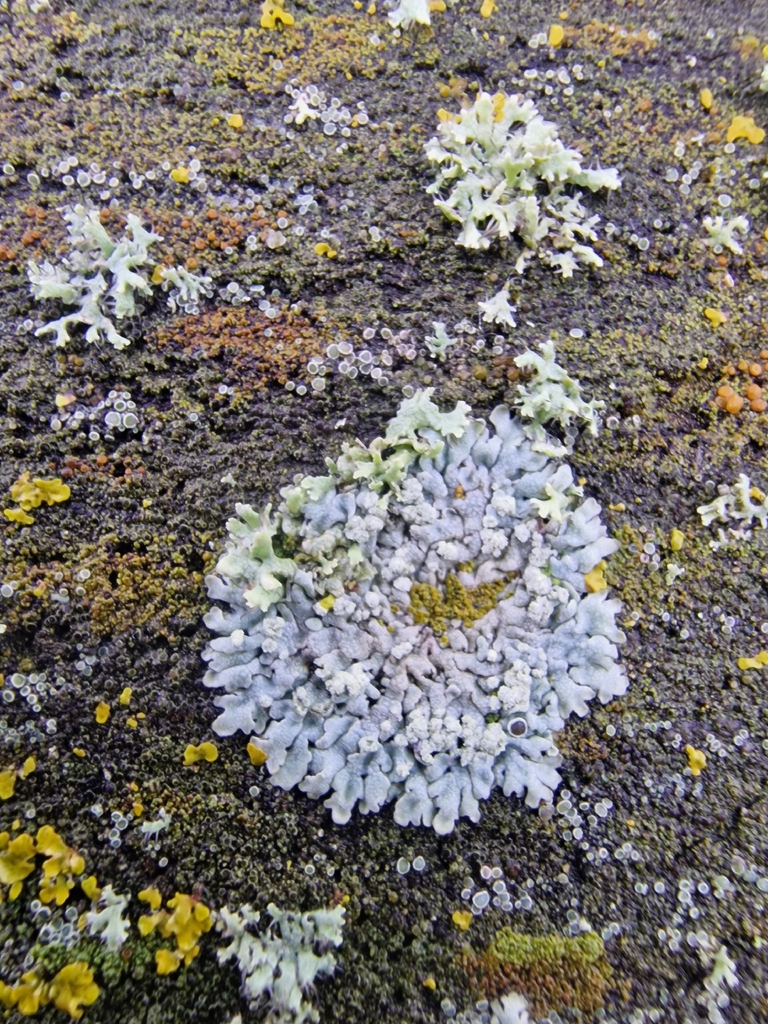
The bluish-grey thalli are roughly circular, up to 7 cm in diameter, and lie very close to the substrate. Lobes up to 1 mm wide are more obvious near the margin and are covered with white mottling. Light grey, powdery soralia occur as mounds on the surface, particularly towards the centre. Apothecia are rare. Physcia caesia

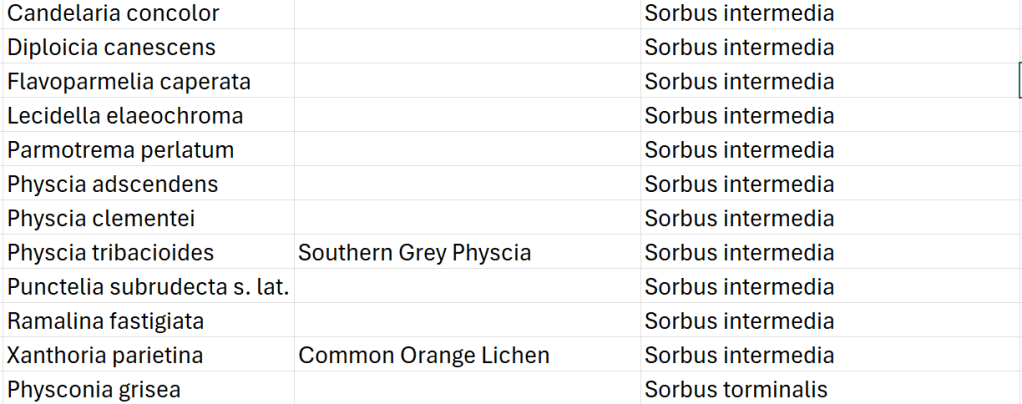
All the lichens I saw on the Bristol Estate
Sullington, West Sussex. The wonders of chalk. Bryophytes, lichens and invertebrates predominately found in chalk landscapes. 25.01.26

These organisms were found on a British Bryological Society South East Group (Sussex Bryophytes) field meeting. I would really recommend attending these meetings; they are very friendly and very accommodating of beginner bryologists (like me!). With us yesterday was pan-species listing guru Graeme Lyons. The bryologists Ben Bennat, Sue Rubinstein and Brad Scott made all the bryophyte identifications. My specific interests in natural history are birds and lichens; but I am trying to take a pan-species listing approach. No one can be an expert in everything so taking a pan-species listing approach is also an opportunity for social natural history; learning from others who know much more about specific areas of biology than you. My interest in pan-species listing is not the opportunity it provides for listing large numbers of species, but the opportunity it provides to learn more about your own patch and thus travel less, and thus minimise your carbon omissions. Local pan-species listing in your own patch means there will always be more things to find without having travel miles.

Lichens of southerly downland churches: Sullington St Mary’s Church

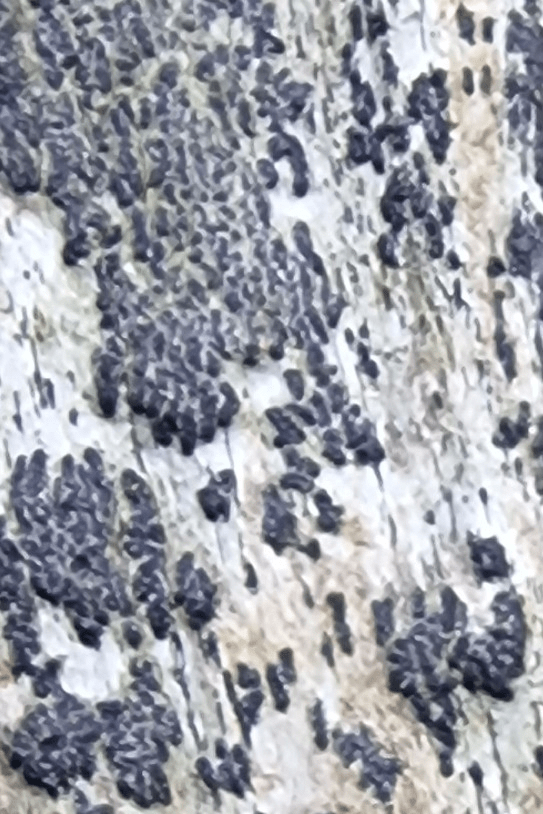
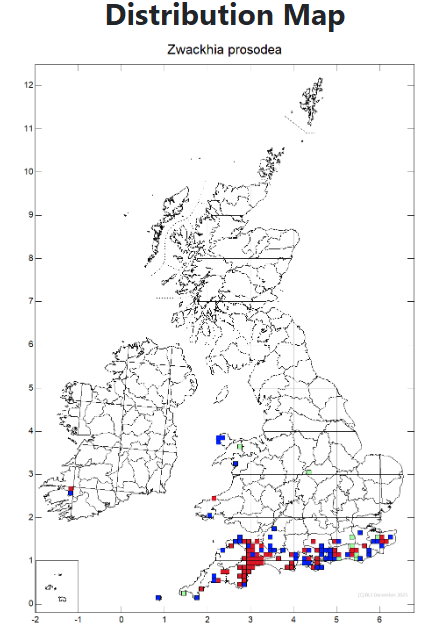
Zwachhia prosodea on ancient yew. A Near Threatened (Red List) Nationally Scarce lichen. This is not a species specifically of chalk but it is very much a species of the south. It grows on ancient trees – mostly Pedunculate Oak and Yew; but I have only seen in on Yew, all in church yards – East Chiltington, Coldwalhtam and Sullington. It is a Graphidaceae family lichen. Typically this family of lichens can only be identified by spore microscopy; but Z. prosodea has such distinct lirellate apothecia (writing-like fruiting bodies) it can be identified morphologically.

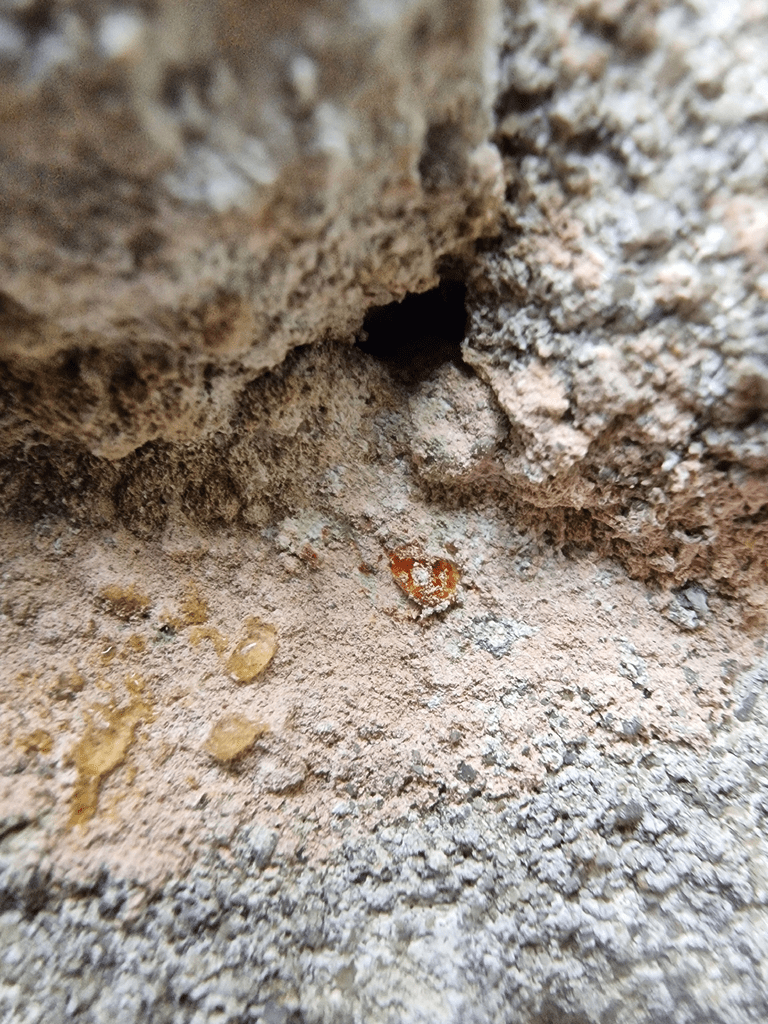
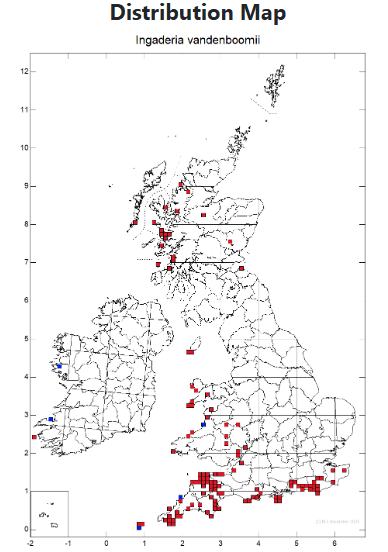
Ingaderia vandenboomii on north wall of church. Again not a species of chalk but a species of the far south. A Nationally Scare lichen but I find it quite often on the north walls of Sussex flint and mortar churches near the coast; I have seen it on the north walls of St Peter’s, Southease; St Thomas à Becket’s, Pagham; St Nicholas Church, Bramber; and St Mary the Virgin, Stopham. Identification of this lichen is by spot reagent chemical tests. It doesn’t react to potassium hydroxide (left drops on photo); but turns red immediately to sodium hypochlorite (centre drop on photo)

Lichens of Chalk Downland

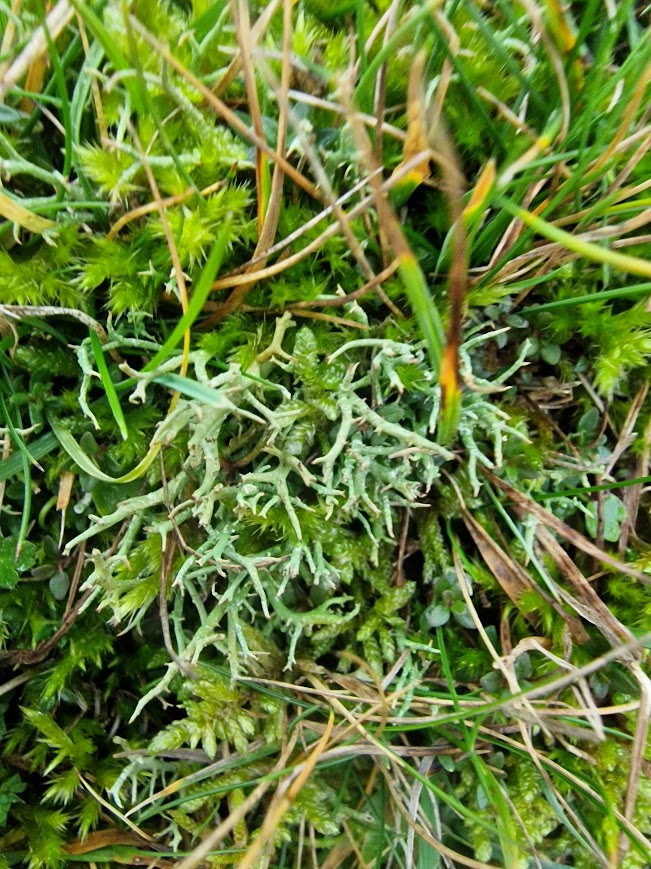
Cladonia furcata. Not a species specifically of chalk, but one of the few Cladonia species found on chalk grassland.

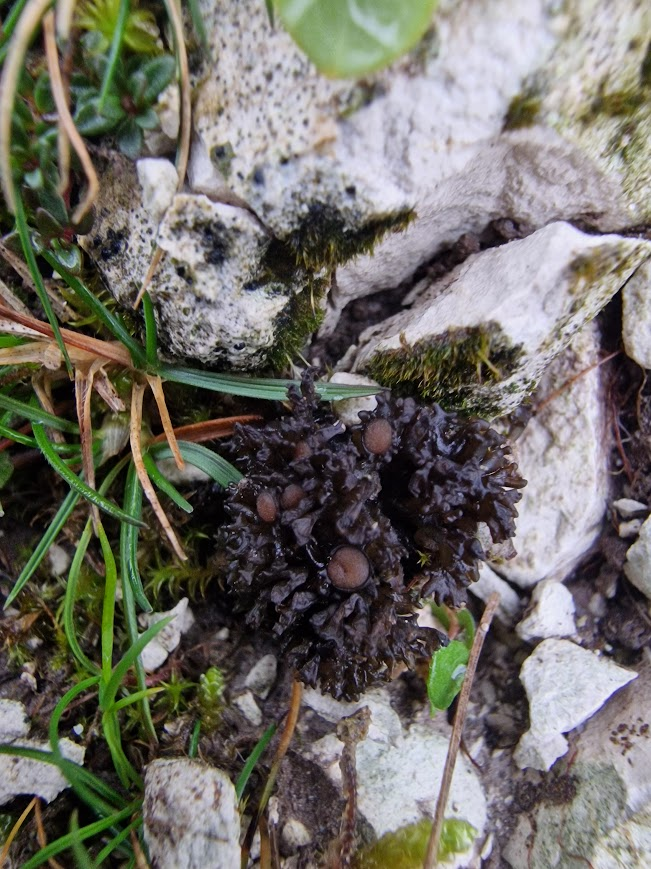
Enchylium tenax Distributed throughout the British and Ireland but more common in the south. Not a lichen specific to chalk; but one of the few jelly lichens that grow on chalk

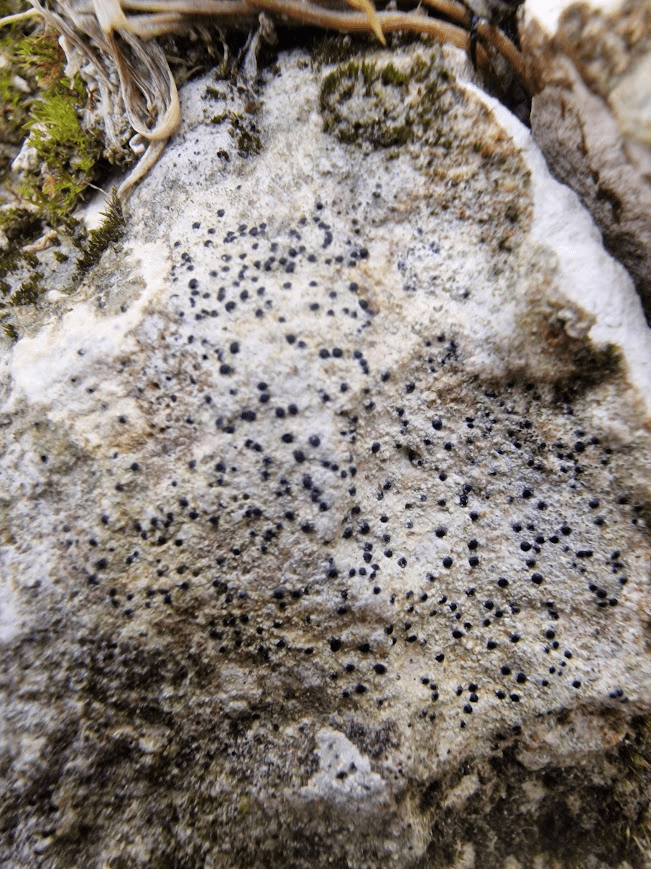
Verrucaria muralis Very widely distributed. Not a lichen specific to chalk; but one of the few lichens that grow on chalk pebbles, and is abundant on chalk pebbles. Oliver L. Gilbert (1993). The Lichens Of Chalk Grassland Lichenologist 25(4): 379-414 is one of the very few articles on lichens of chalk. This is a provisional identification as spore microscopy is required to confirm the identification; but its morphology and its abundance on chalk pebbles according to Gilbert make it highly likely that this is V. muralis

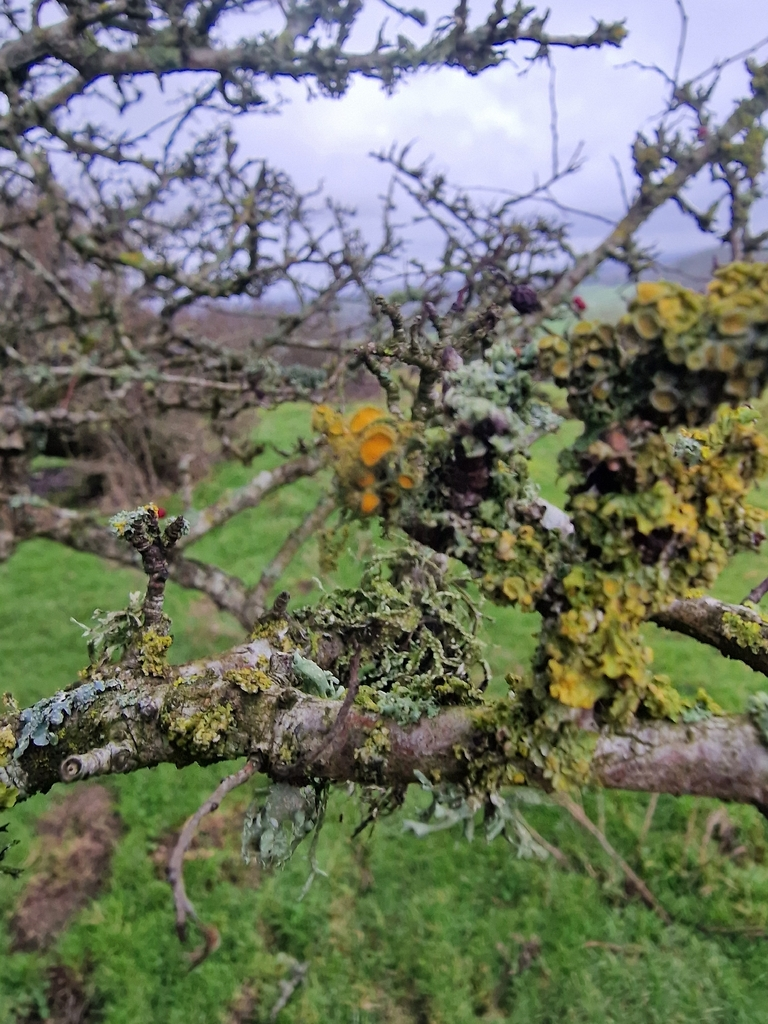
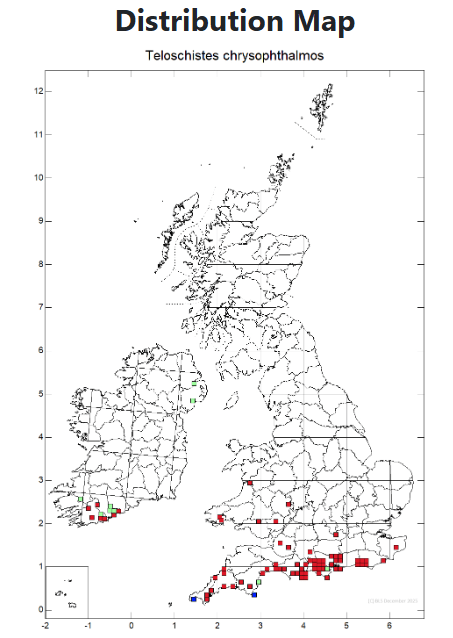
Teloschistes chrysophthalmus Golden-eye Lichen on Hawthorn. I see Golden-Eye frequently on Hawthorns of the South Downs, particularly on the downs north of Brighton and Lewes

Confined mostly to Chalk Downland Hawthorns in the south. See my blog post of two years ago 12 Golden-Eye Lichens on one Hawthorn. The resurgence of the once-thought-extinct Teloschistes chrysophthalmus on the South Downs. 06.04.24 This is from my blog: Sim Elliott: Nature in Sussex: nature journeys made by public transport 2020-2024. Whilst I do not publish new posts to this blog the blog posts are still available; to act as a compendium of nature sites that can be visited in Sussex by public transport

Chalkland bryophytes

None of these identifications were made by me; they were all made by Ben Bennat, Sue Rubinstein and/ Brad Scott

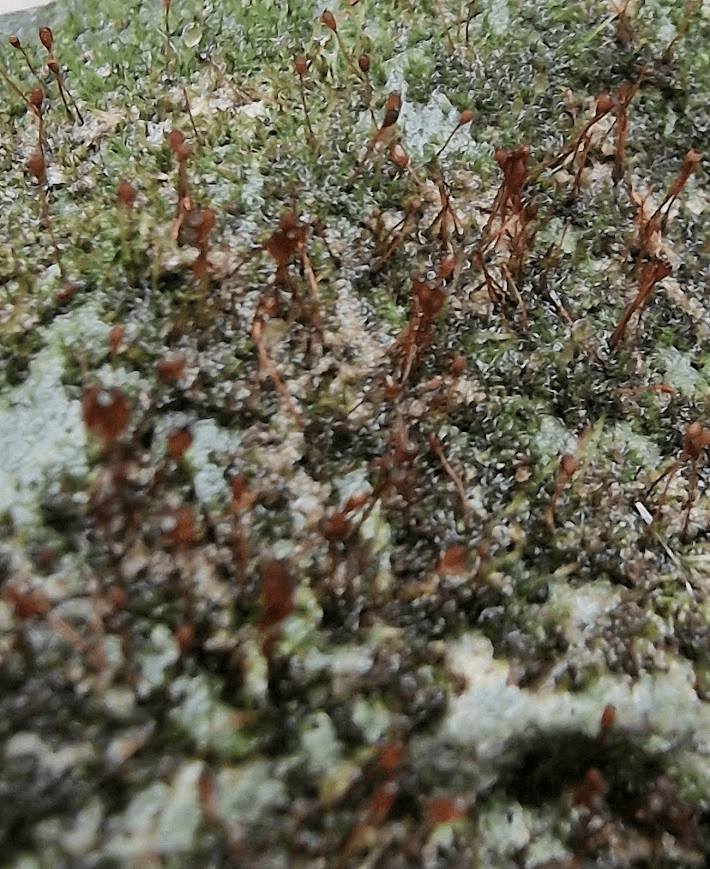
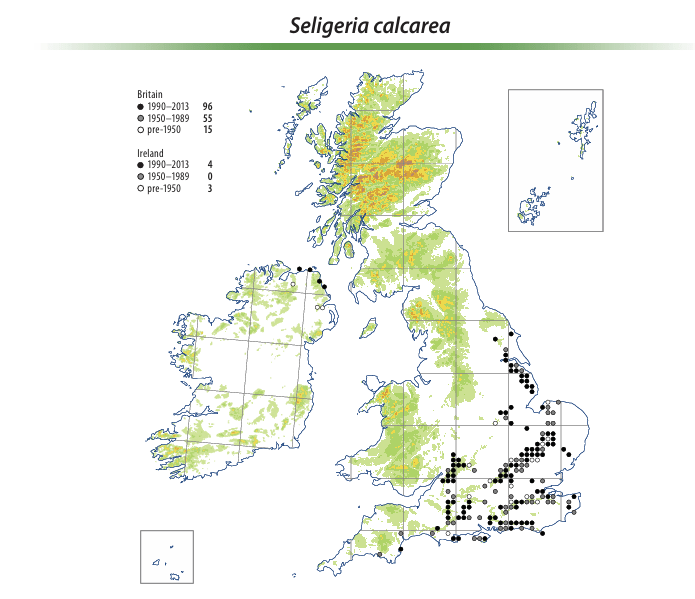
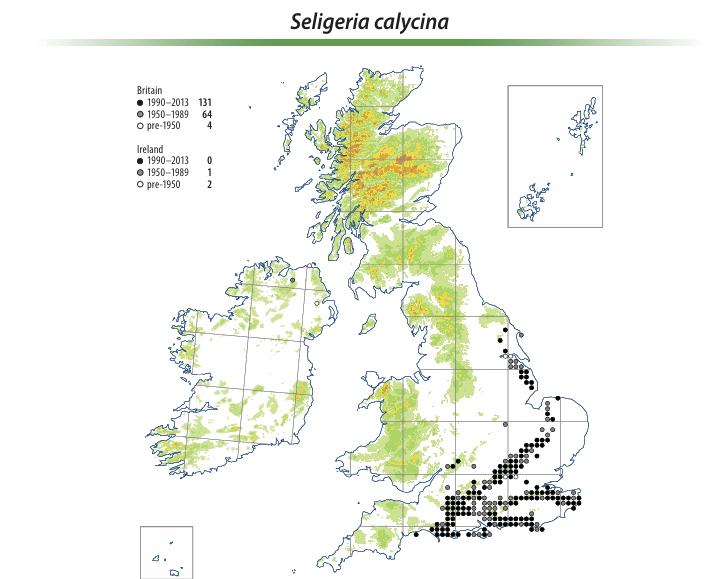
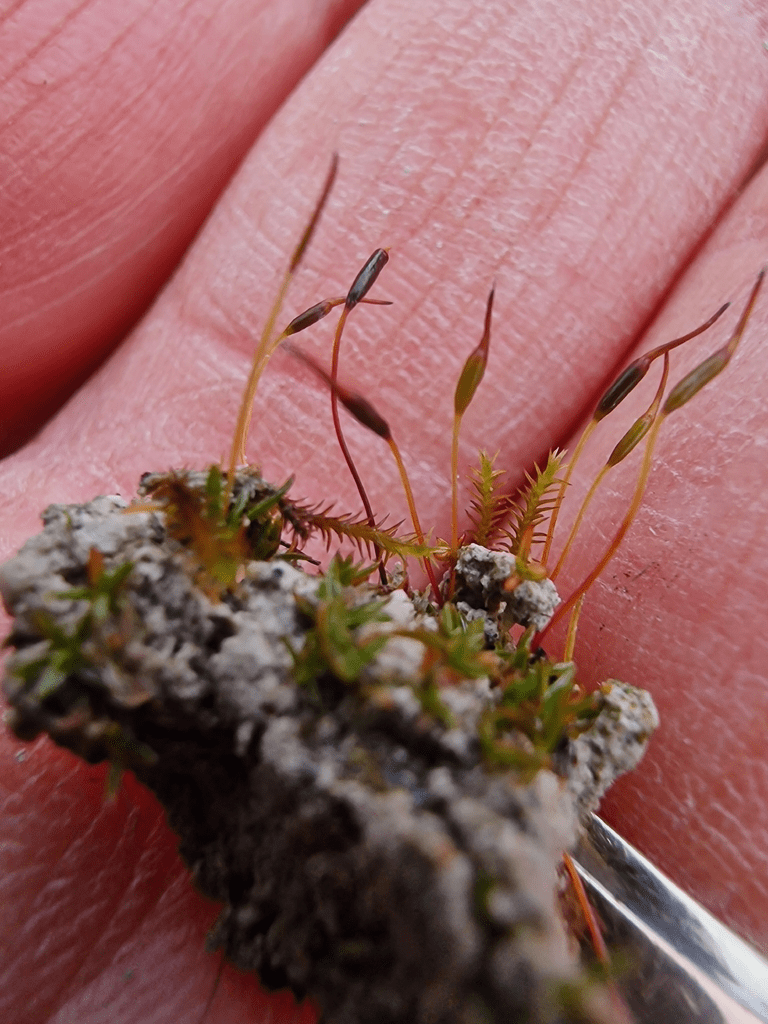
Seligeria calcarea Chalk Rock-Bristle or S. calycina English Rock-bristle – to be confirmed. on a shaded chalk bank in a holloway bostal

A Seligeria on chalk fragments in a sheltered place, such as a north-facing holloway bank or a woodland floor, is almost certainly going to be either this species or S. calycina. Because the plants are so small, this species pair is not always easy to separate in the field, unless dehisced capsules are present (usually March to April). Then you will easily see that the capsule of S. calcarea is widest at the mouth. Capsules of S. calycina characteristically narrow a little at the mouth when mature. Beware though – like many mosses, capsule shape does not develop fully until the spores are ripe. British Bryological Society Seligeria calcarea

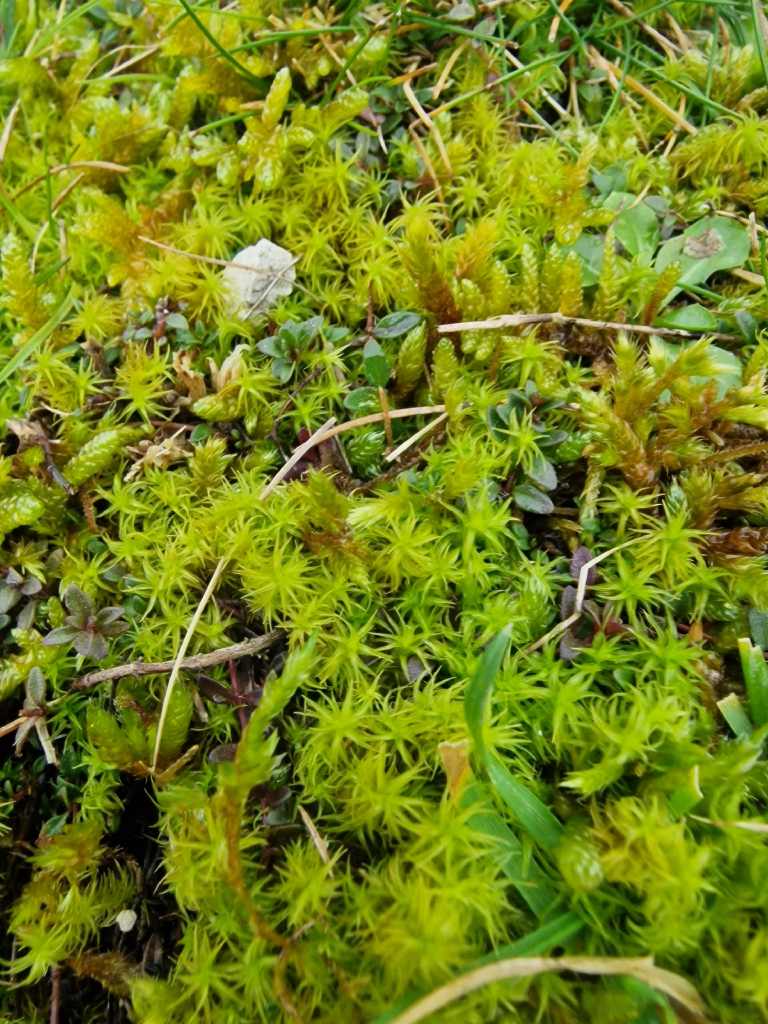
Aloina aloides Common Aloe-Moss

Not solely chalk but A species of bare but not regularly disturbed ground and
soil in a variety of situations, usually base-rich, but occasionally on ground that appears to be circumneutral. The most characteristic habitat is in old pits and quarries on chalk and limestone, growing on the floor or on earthy rock ledges, but it is also frequent in some districts on old or weathered mortar on walls and ruined buildings. .. It is occasionally found on bare patches in calcareous grassland and on soil on natural rock outcrops; other habitats include chalky and earthy banks by lanes, coastal slopes and cliffs, clay in brick pits, calcareous dune sand and gravel, and path edges and earthy rubble (here often only as a temporary colonist).
British Bryological Society Aloina aloides

Pleurochaete squarrosa Side-fruited Crisp-moss

Grows loosely tufted or scattered and mixed with other plants on sandy or calcareous ground. Usually found in unshaded habitats in sand dunes, maritime grassland on cliffs, chalk and limestone grassland, and in chalk and limestone quarries. British Bryology Society Pleurochaete squarrosa

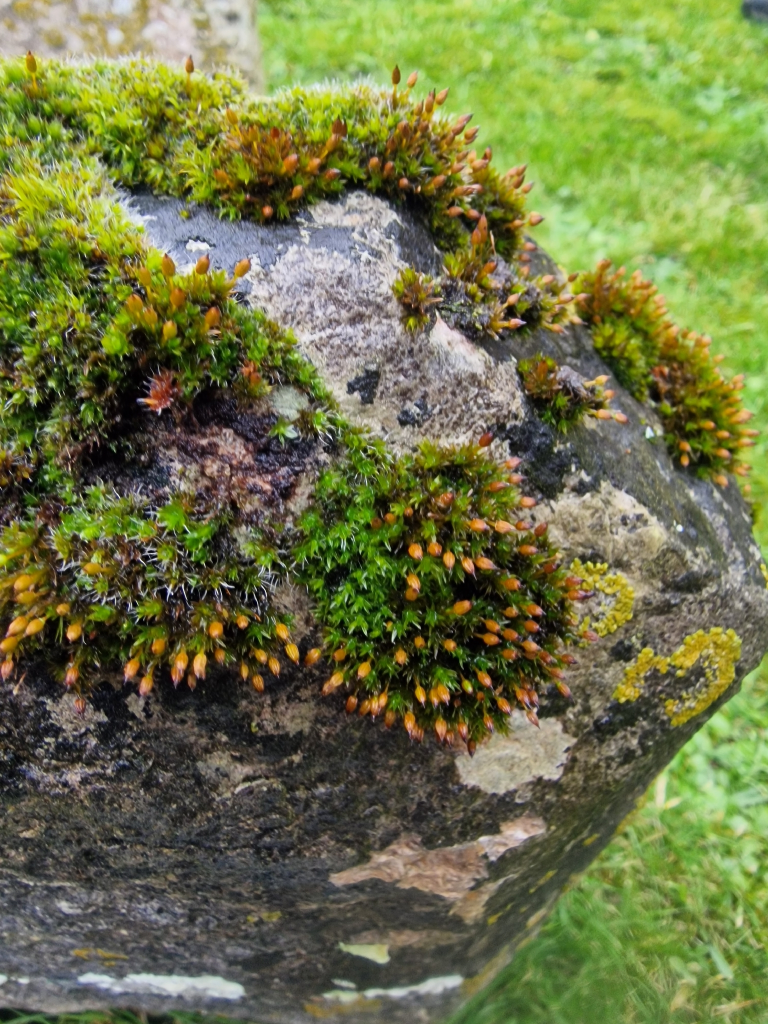
Orthotrichum anomalum Anomalous Bristle-Moss

OK! Not a chalk moss; but what a beauty; on a tomb stone in Sullington churchyard. more or less ubiquitous on concrete, gravestones, wall tops and other man made structures except in the most polluted parts of Britain. Also common on exposed limestone, but absent from chalk. British Bryology Society Orthotrichum anomalum

Invertebrates

All identified by Graeme Lyons


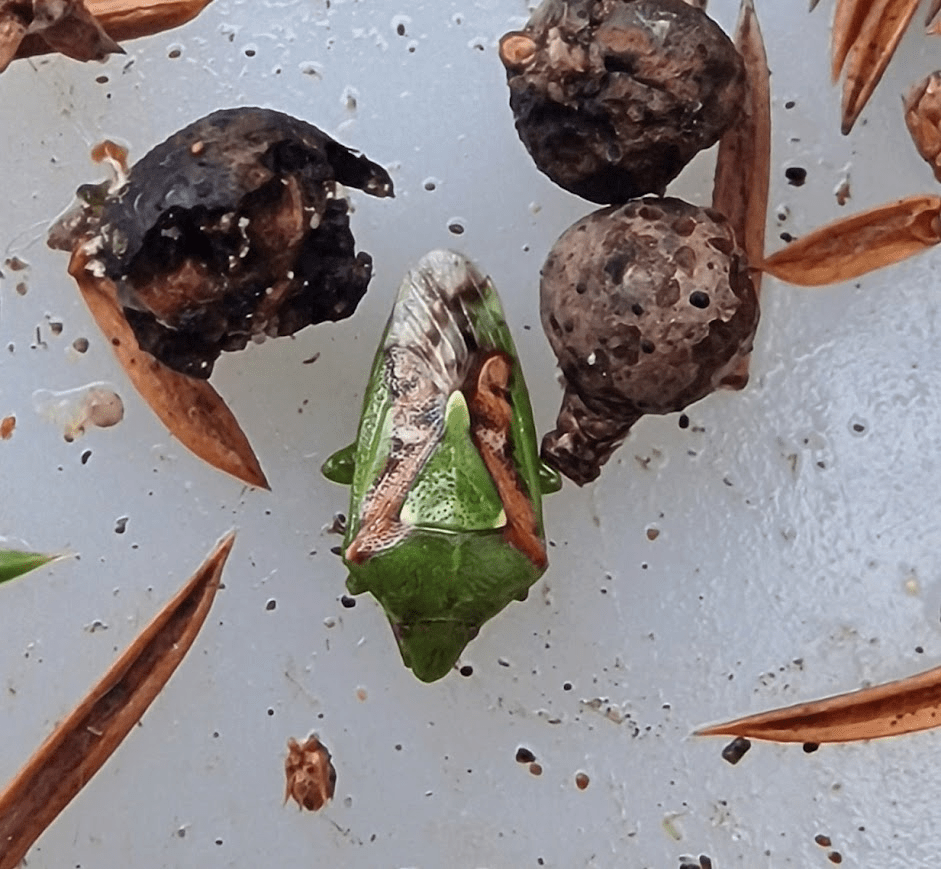
Cyphostethus tristriatus
 
Junipers Shield Bug.

Formerly a southern shieldbug but has had a significant range extension of late. Formerly restricted to Juniper woods in southern England, the Juniper Shieldbug (Cyphostethus tristriatus) is now common across southern and central England, having colonised planted Junipers and Cypresses in gardens. It has also been recorded on native Juniper in northern England and Scotland. North West Invertebrates, Juniper Shieldbug

Distribution map from National Biodiversity Network Atlas

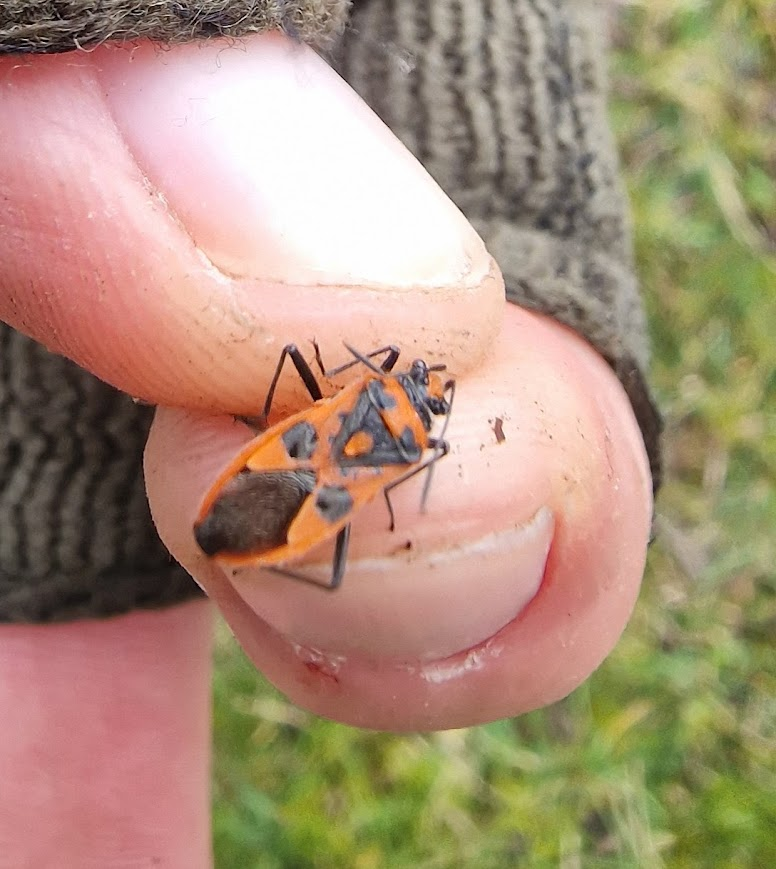
Corizus hyoscyami Cinnamon Bug

Although historically confined to the coasts of southern Britain, this species is now found inland throughout England and Wales as far north as Yorkshire. It is associated with a range of plants, and overwinters as an adult, the new generation appearing in August-September. Nymphs are yellow/red-brown in colour and also rather hairy. British Bugs Corizus hyoscyami

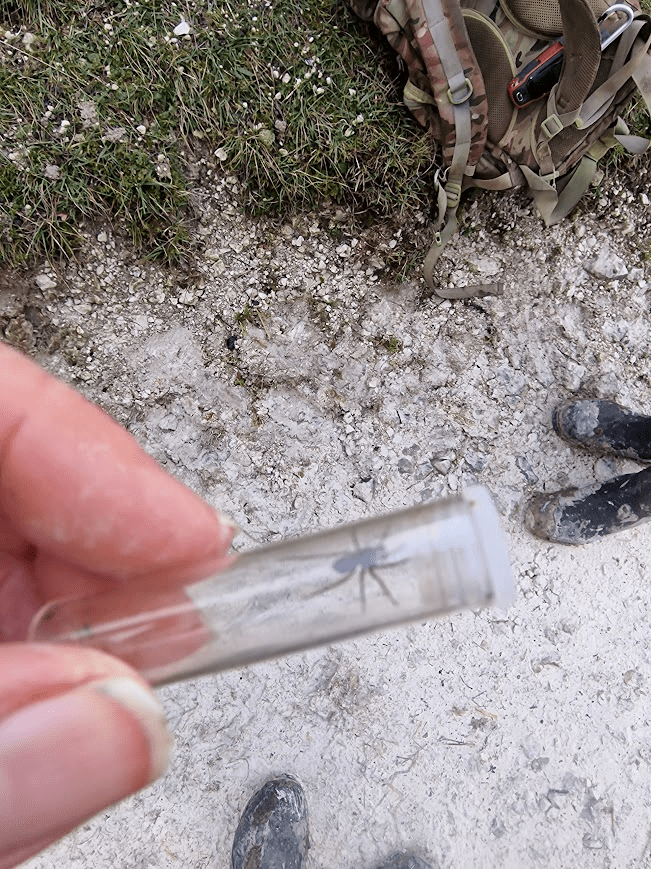
and Graeme made this extraordinary find

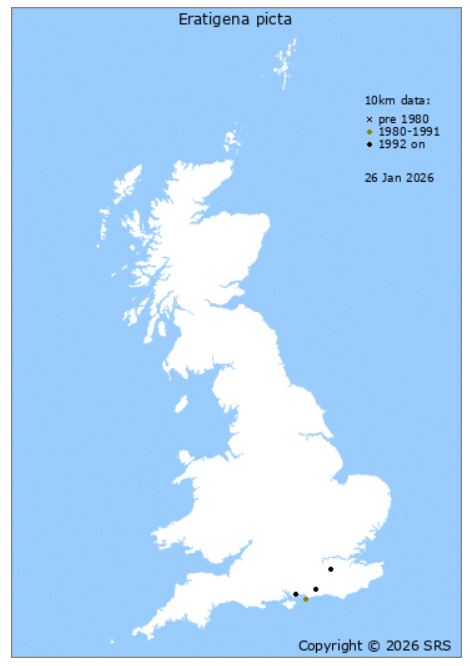
Eratigena picta

Distribution map from Spider and Harvestman Recording Scheme website

IUCN Red List status Vulnerable (VU) 

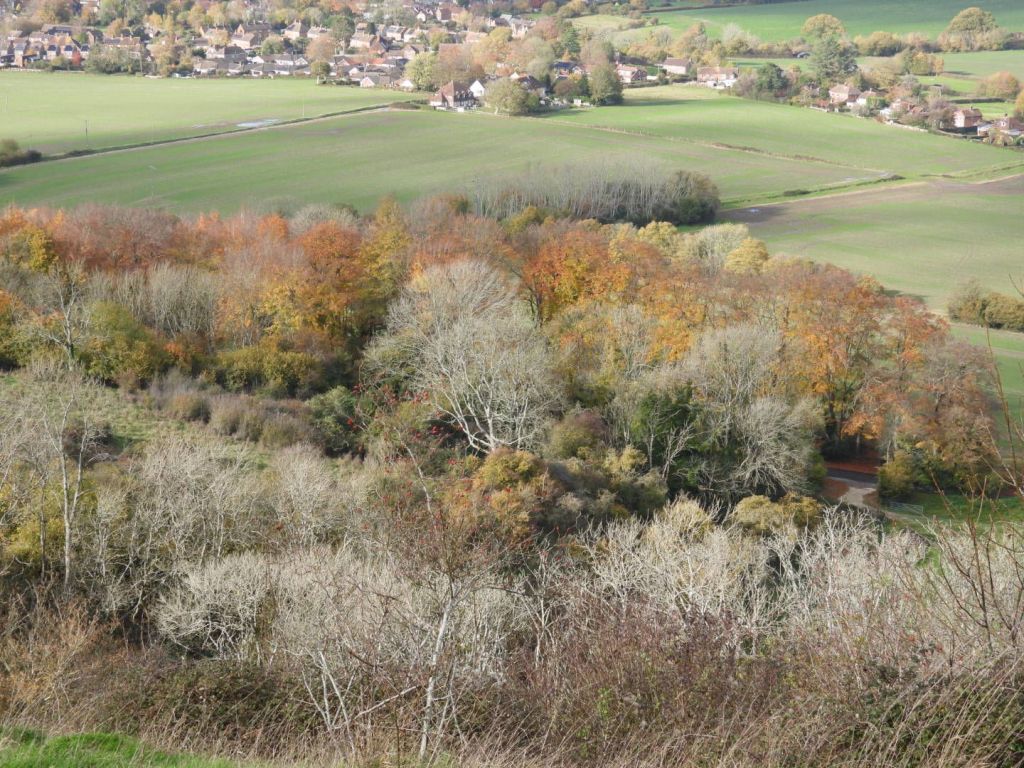
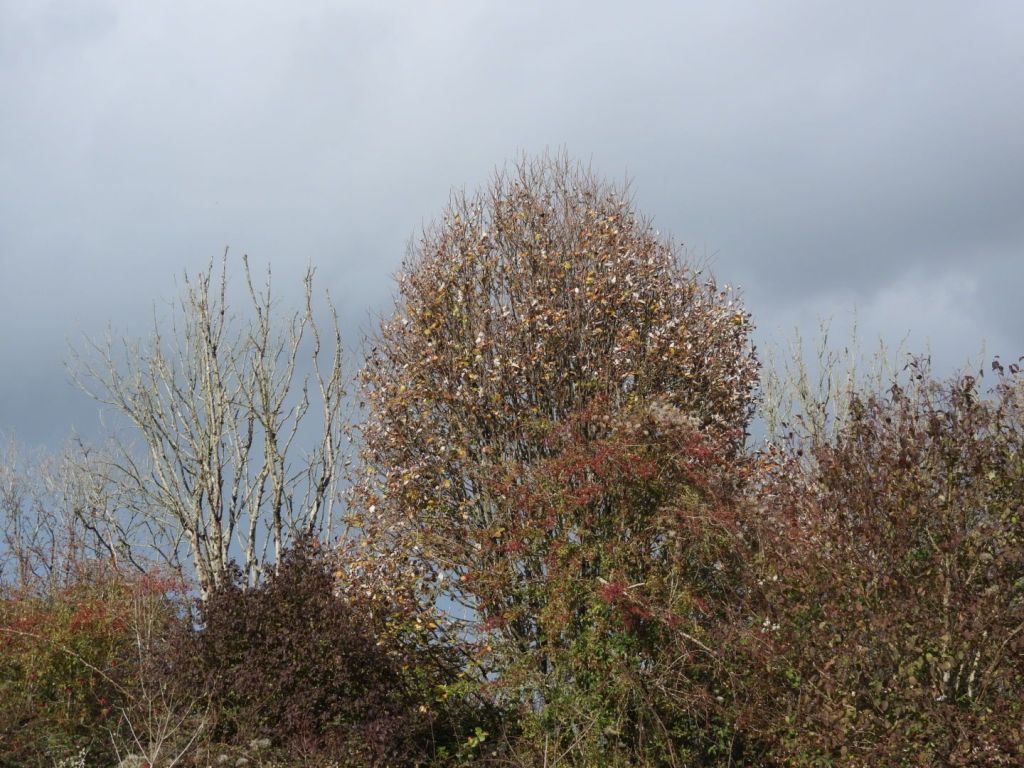
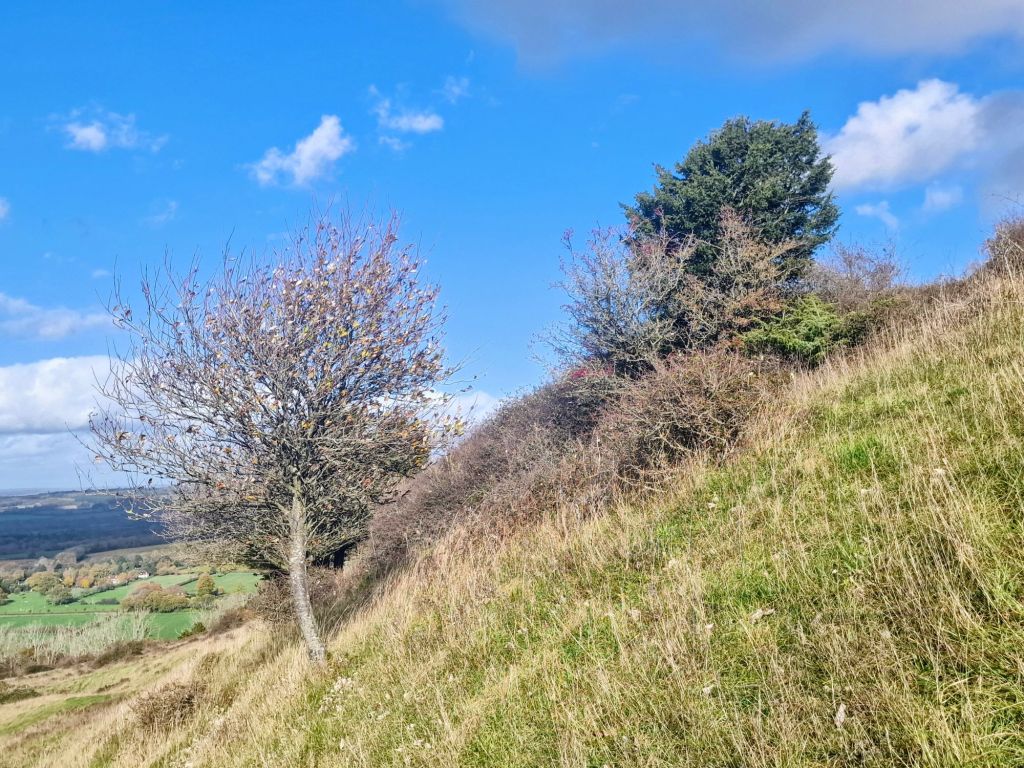
Autumn Colour on the western South Downs: views of trees from Harting Down SSSI. 01.11.25

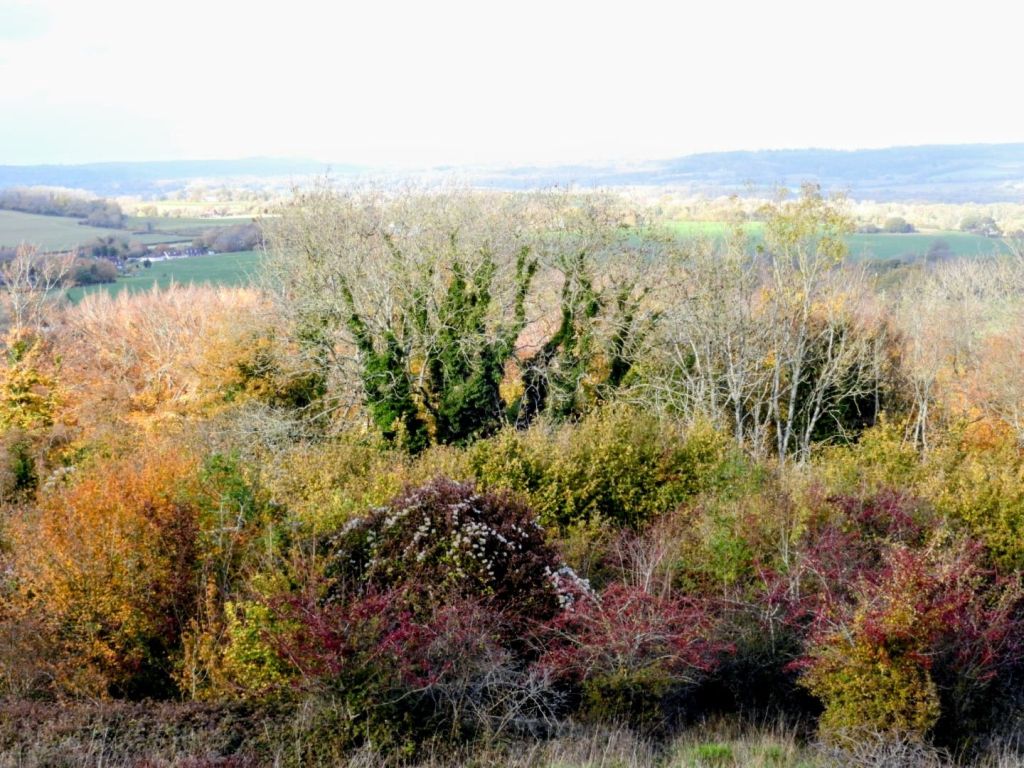
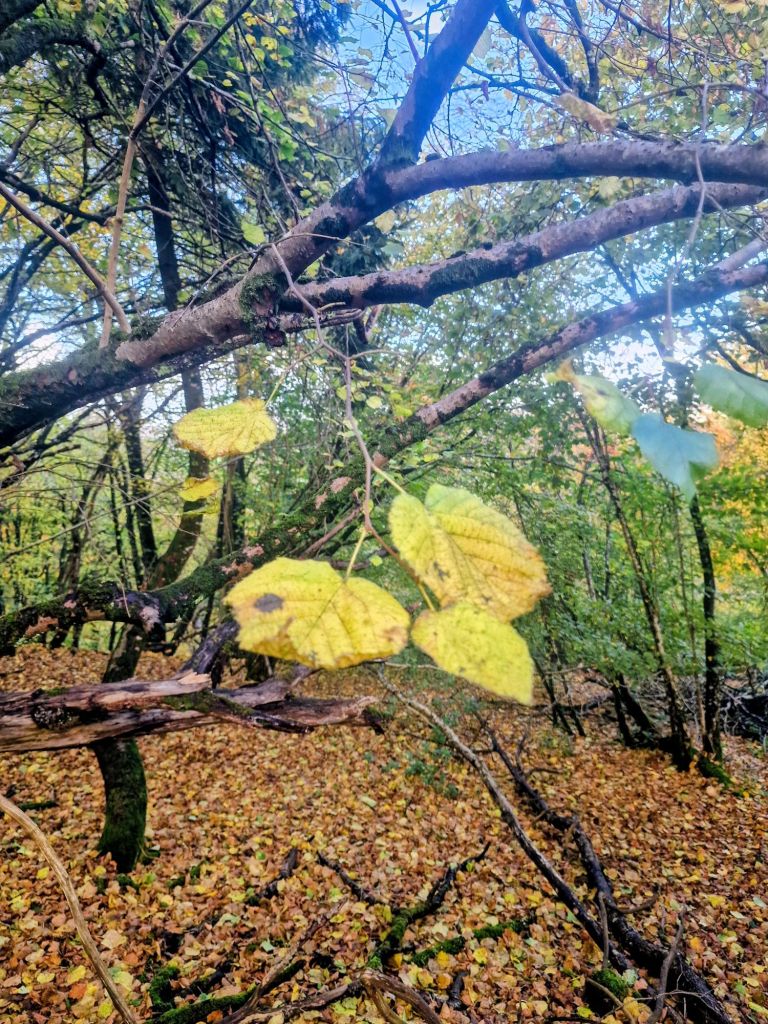
Yesterday on Harting Down, there were beautiful skies; the sun with showers forecast turned out to be mostly sunny. The sky was deep blue, and the sun’s beams lit up the gold, yellow, green and red colours of the autumn leaves.

The bostal path up to Harting Down

Probably Quercus faginea, Portuguese Oak; a non-native introduction to a small estate on the escarpment south of South Harting.

On/From the South Harting SSSI summit/plateau

De Stijl Neo-Plasticism. South of South Harting. Green diagonal stripes: Ivy growing up dying Ash. White diagonal stripes: Old Man’s Beard growing up Hawthorn.

Grey and orange. Ash and Beech

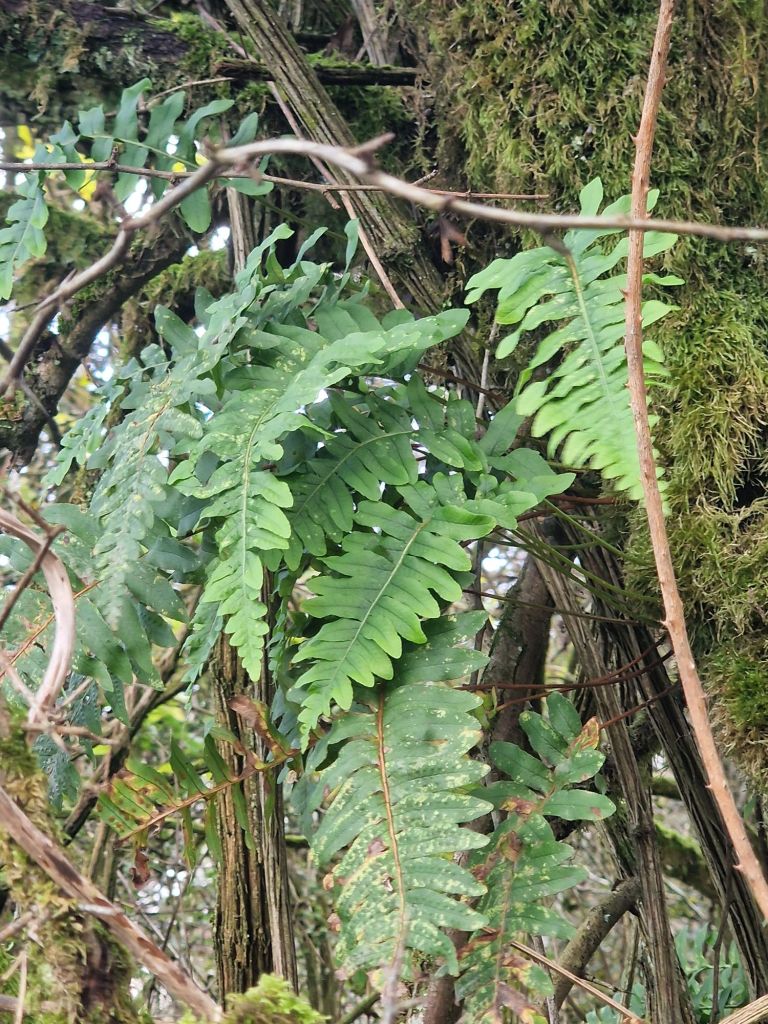
Elder with Polypody Fern

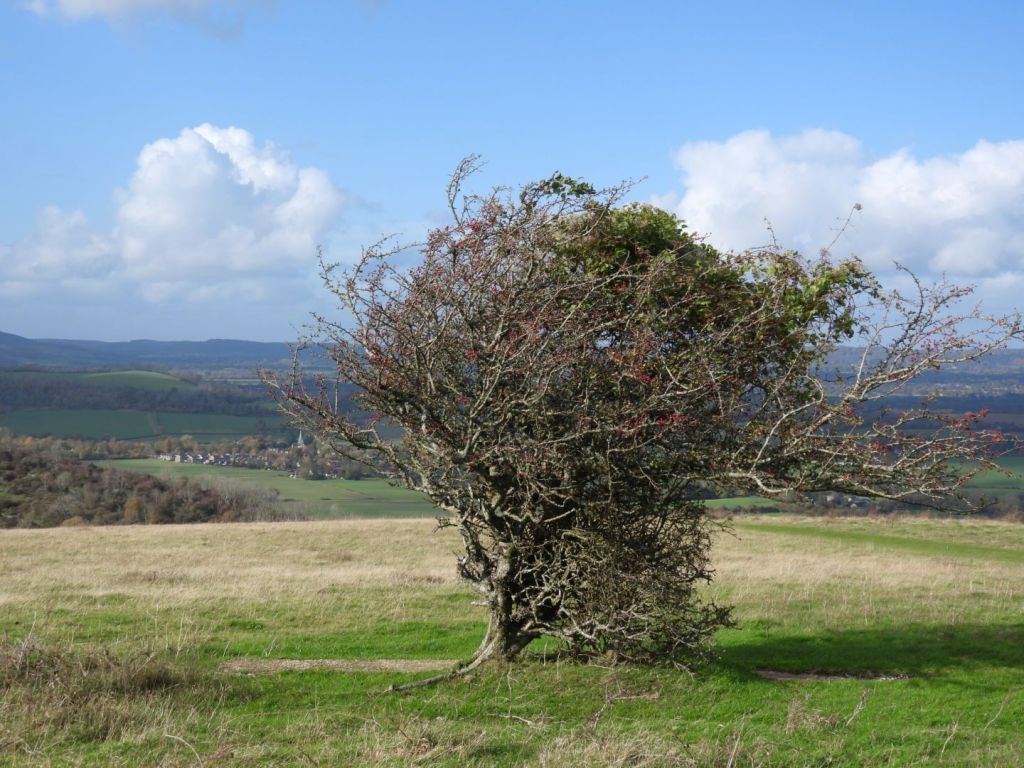
Hawthorn and Stonechat

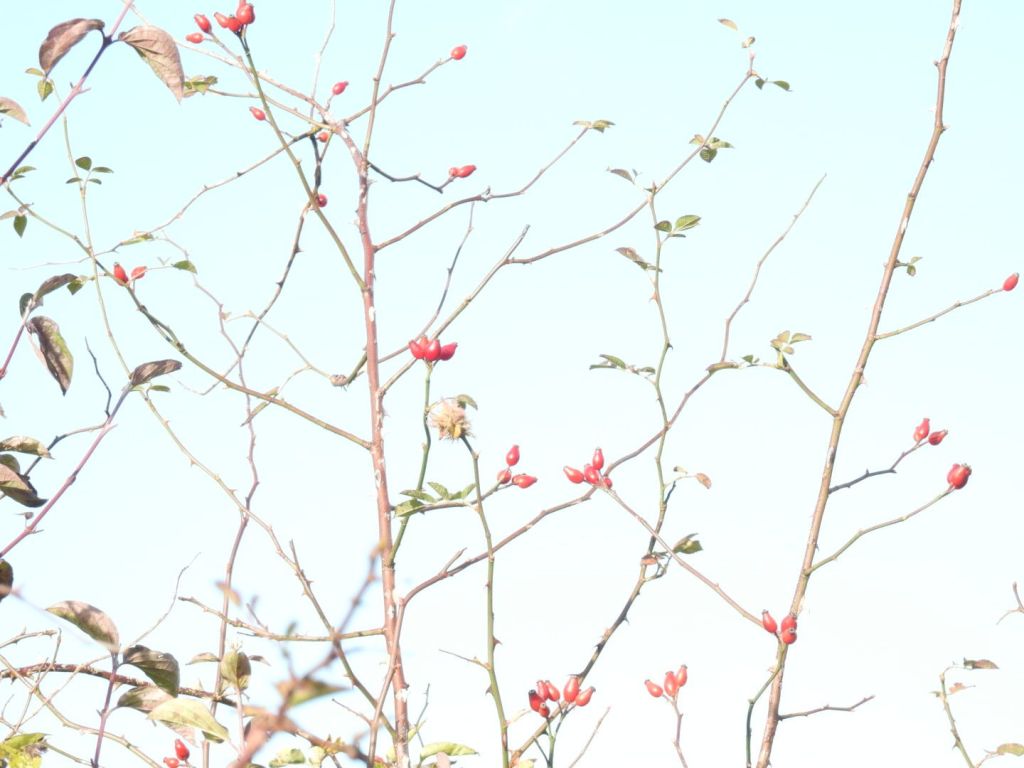
Dog Rose

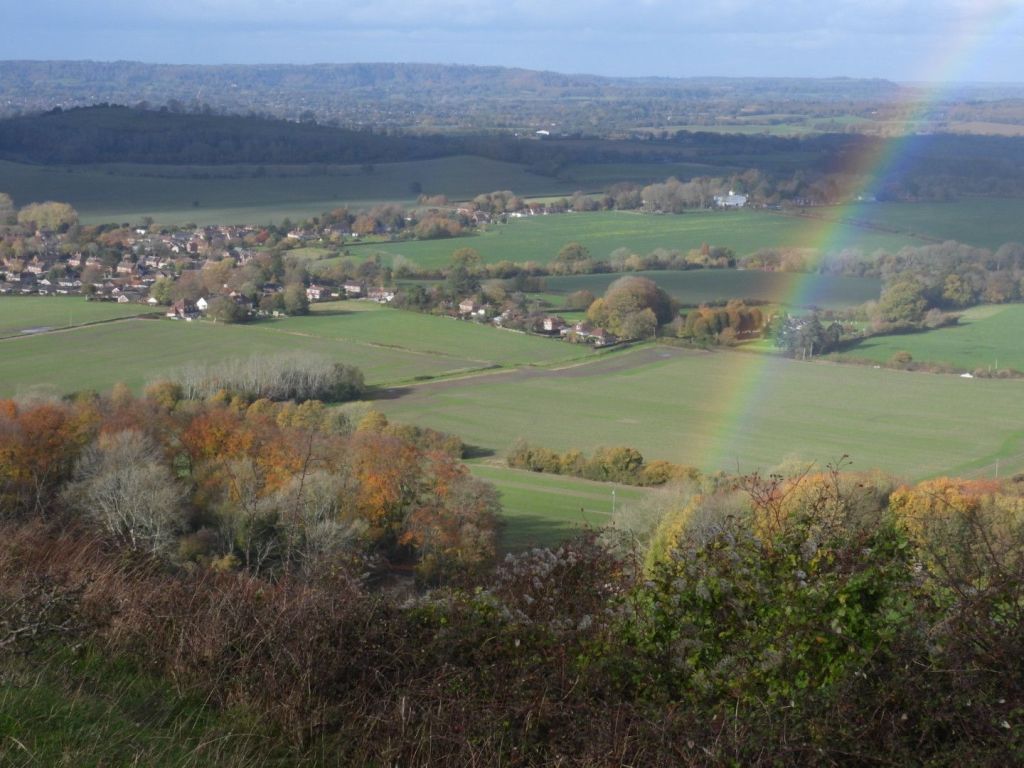
Rainbow

Whitebeam, Ash, Yew, Beech

Hawthorn

Ash, Whitebeam, Hawthorn

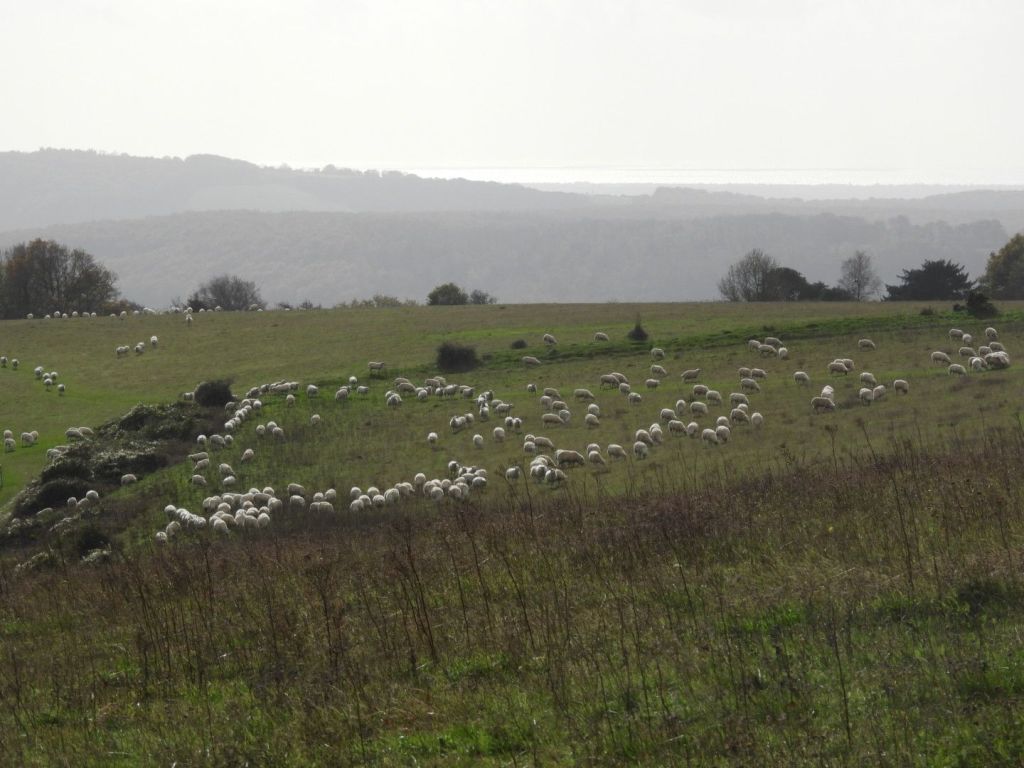
Sheep

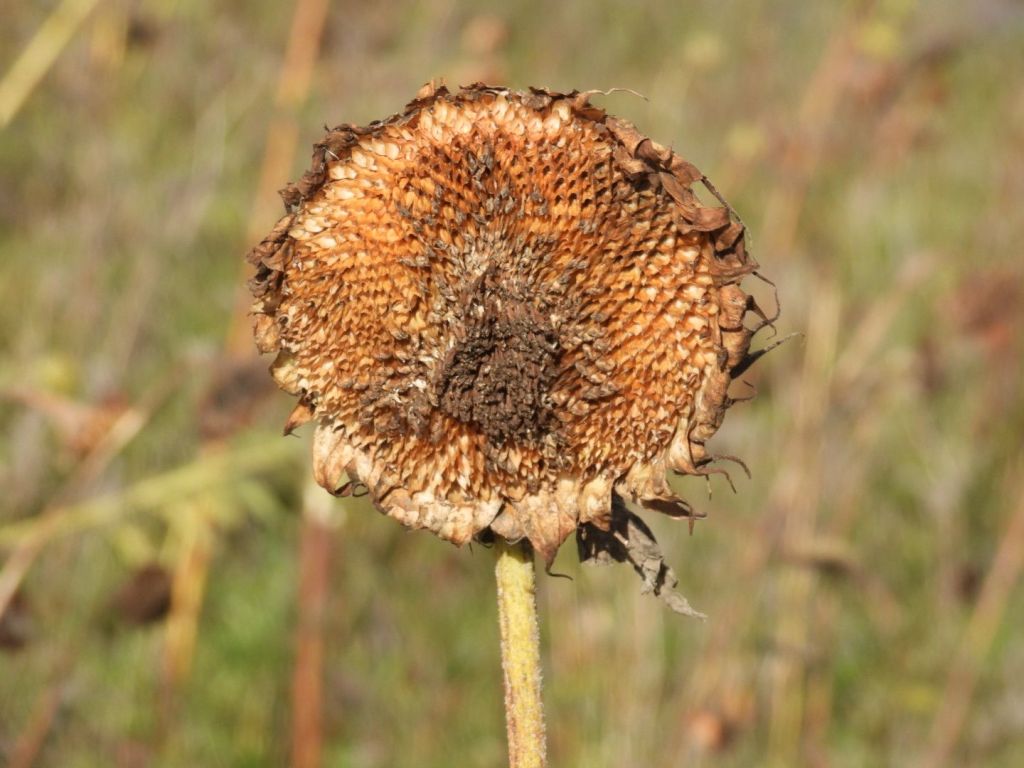
Sunflower

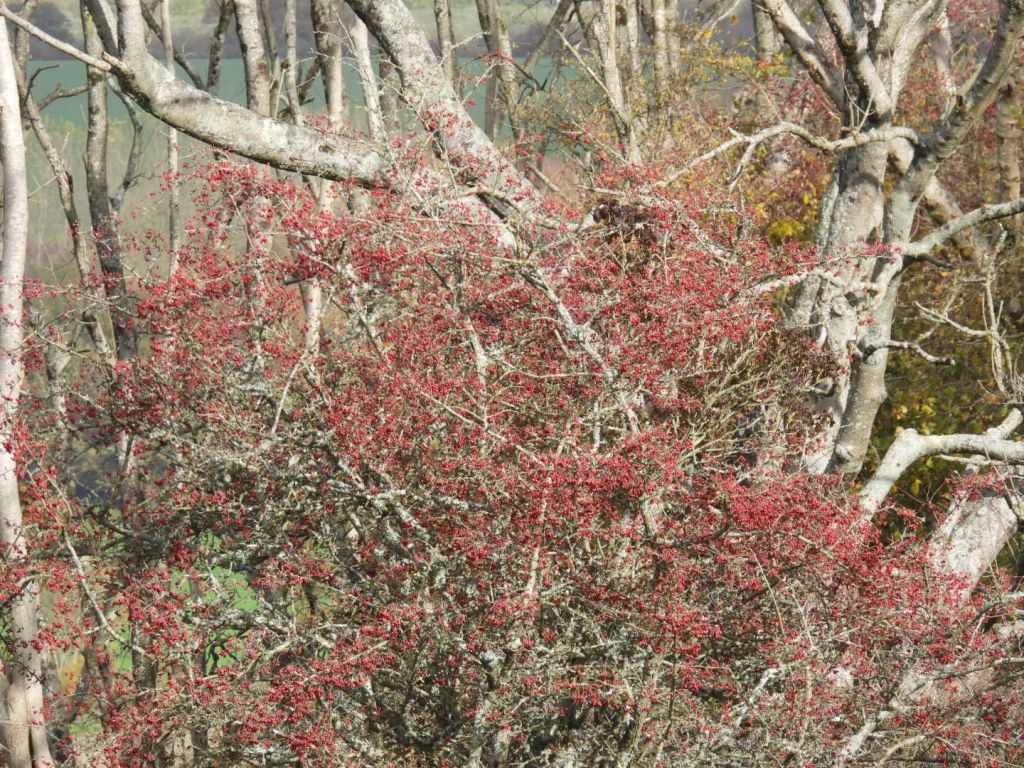
Hawthorn

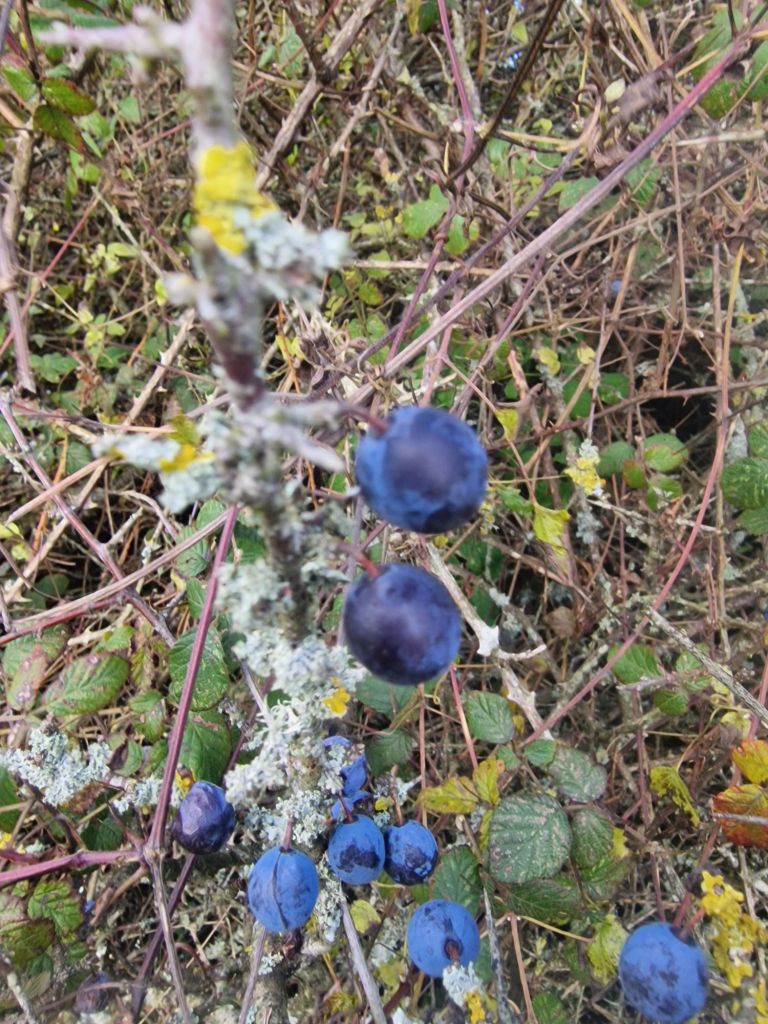
Blue Blackthorn sloes

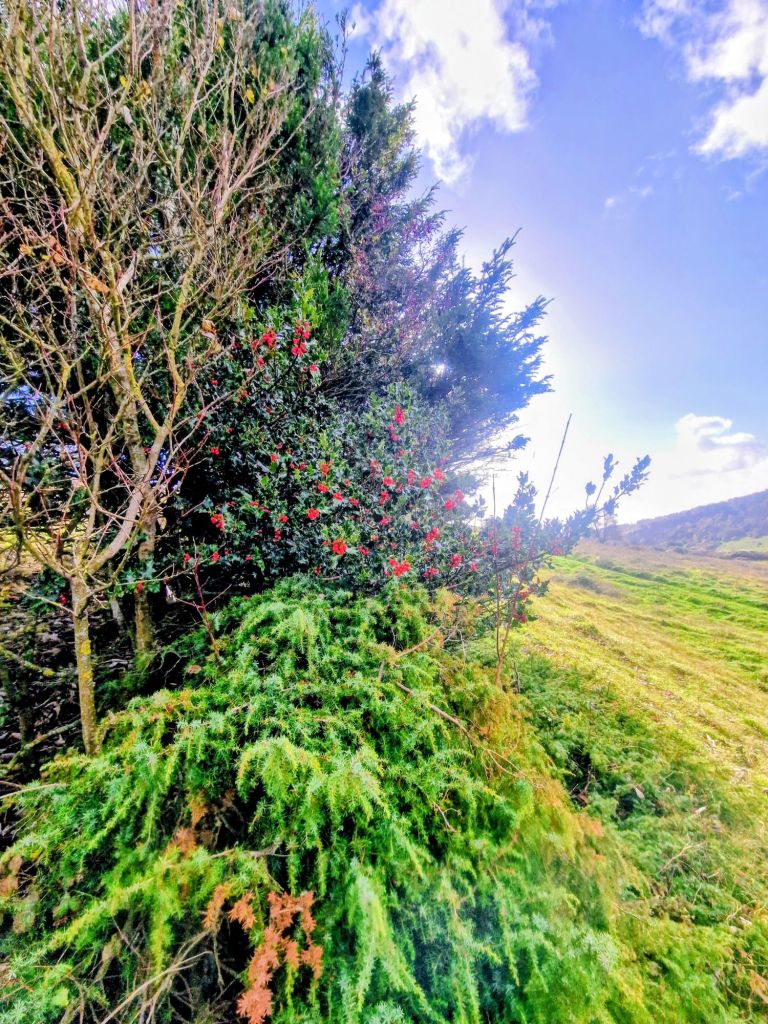
Juniper

Whitebeam, Hawthorn, Dog Rose, Juniper, Yew

Holly with Juniper and Yew

Scarp-slope ancient woodland (Rook Clift SSSI)

Gold wedge. Beech

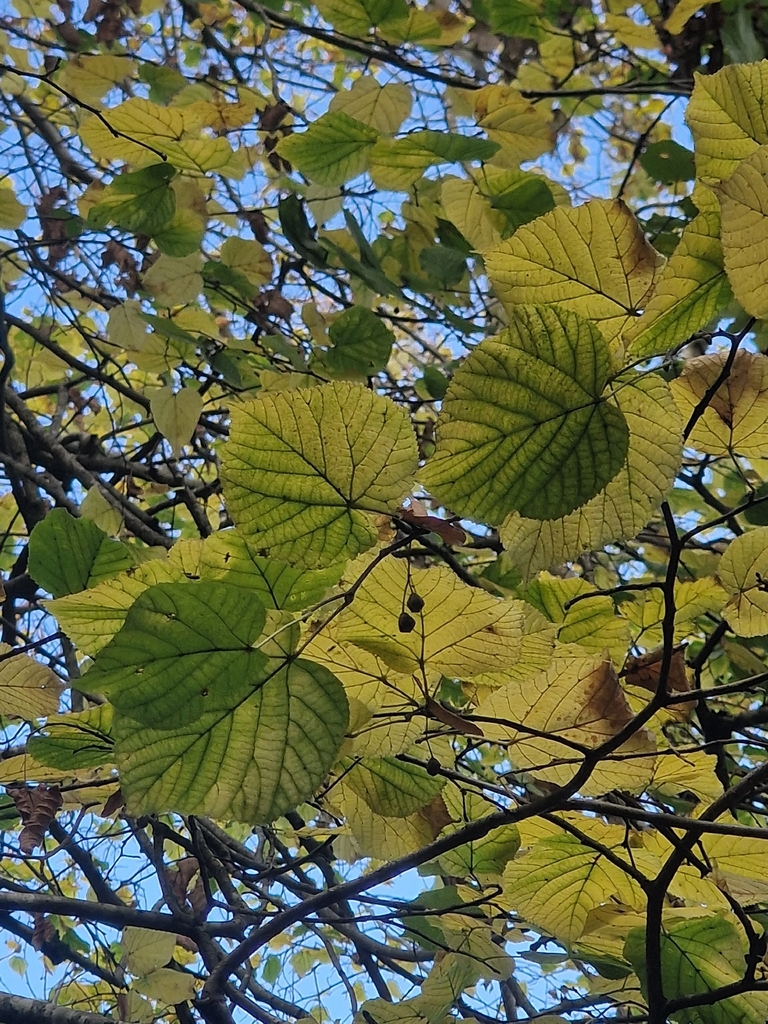
Large-Leaved Lime

Wych Elm

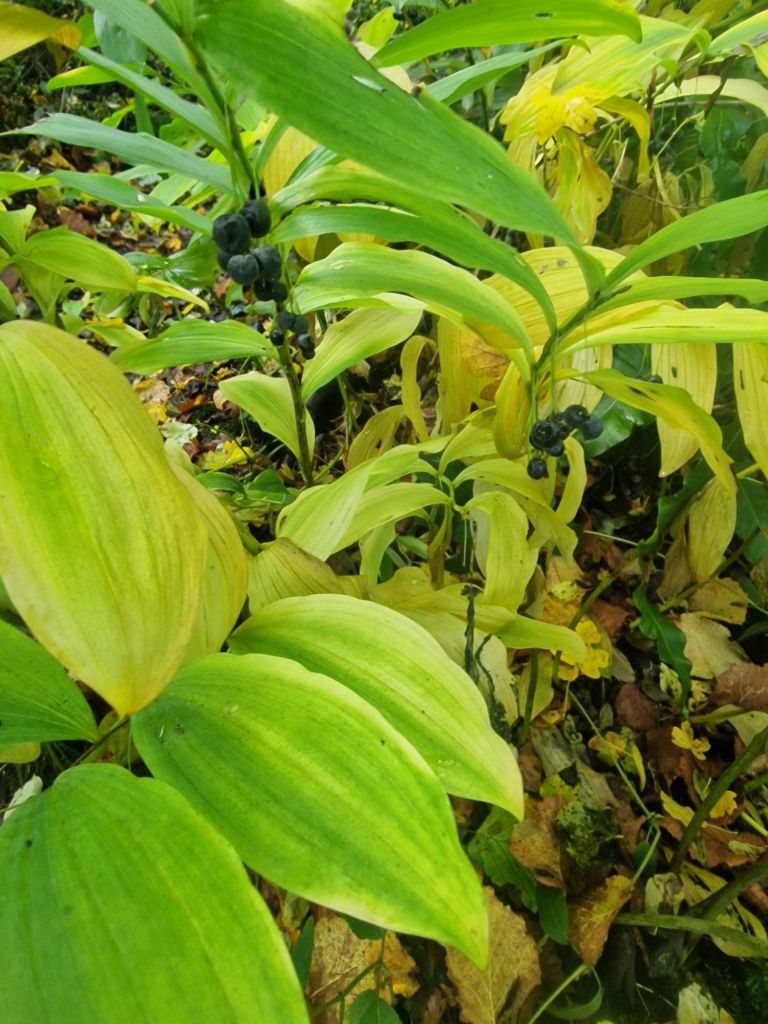
Solomon’s Seal

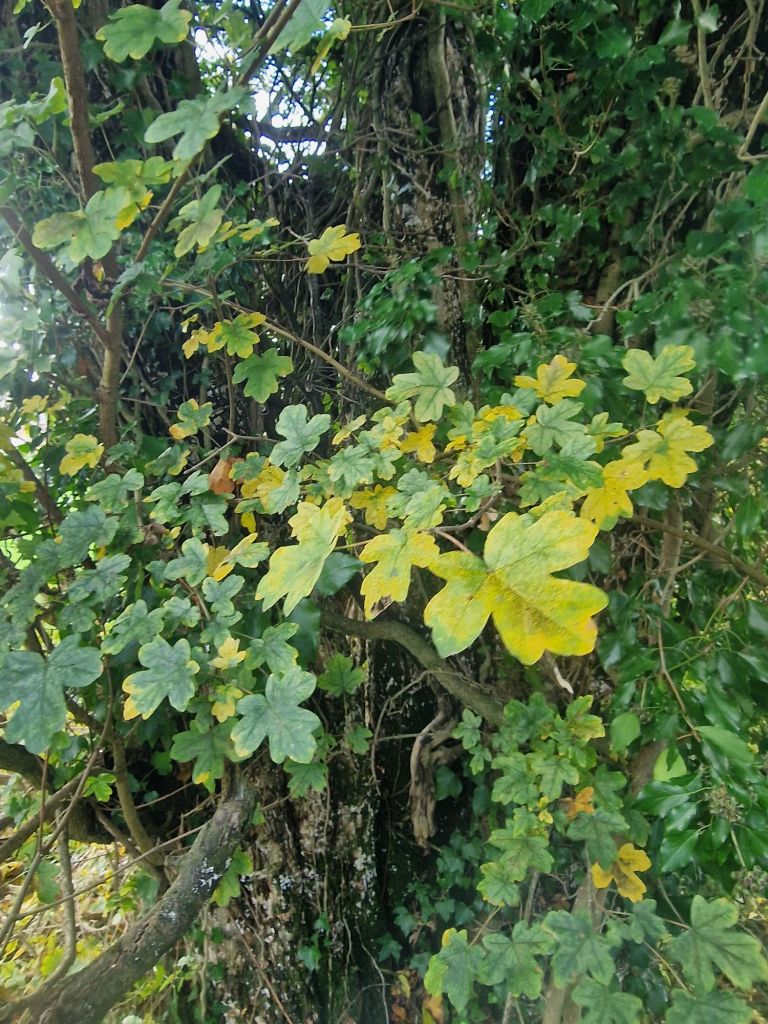
Field Maple

Large-leaved Lime and Wych Elm at Rook Clift, nr. South Harting, West Sussex. Part II 01.11.25

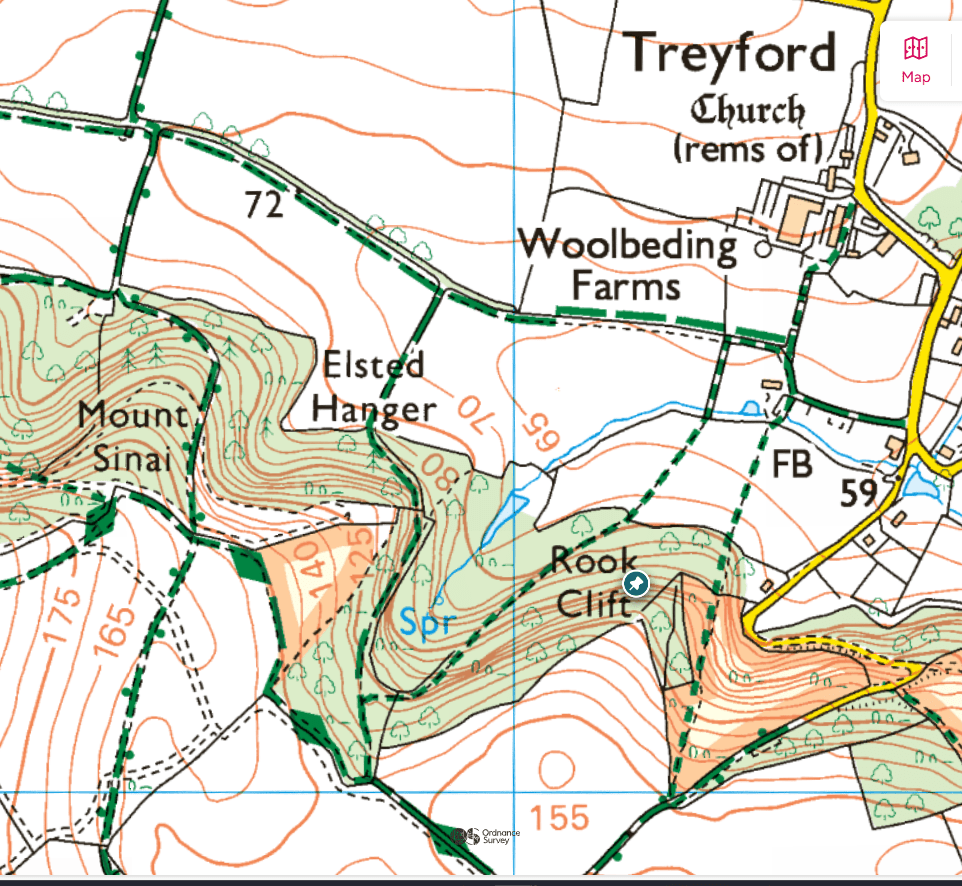
This is the follow up to my post of 28.10.25 Large-leaved Lime and Wych Elm at Casey’s Copse and Rook Clift, nr. South Harting, West Sussex. Part I Today I visited the group of Large-Leaved Limes at Rook Clift at SU821182 that I didn’t have time to visit on 28.10.25; listed in the Sussex Rare Plant Register as ca. 80-100 stool and maidens, at SU 822183, in agreement with Rose’s 1991 enumeration. They are to the east of the main path. But it is necessary to walk nearly to the the top of the main path, then walk east then north above the main path. There is a large ditch with a very steep slope between the main path and where the cluster of Large-leaved Limes are.

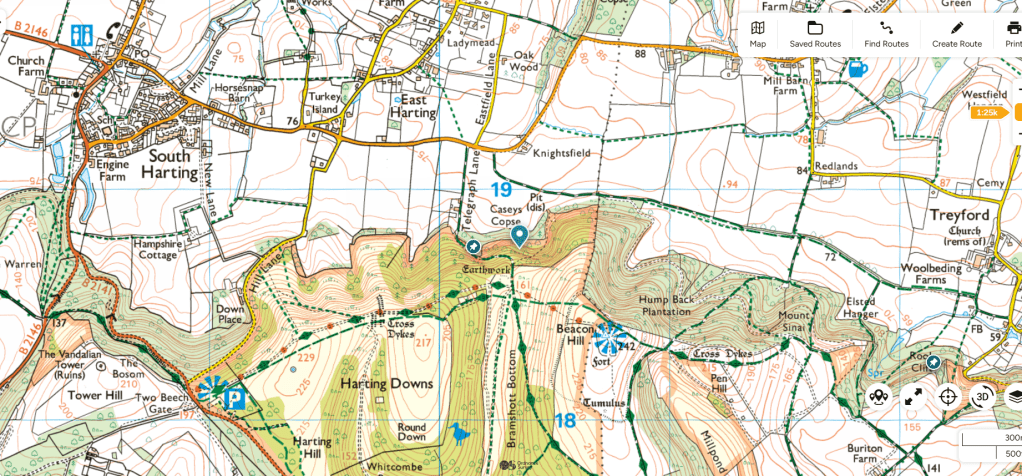
The pin shows the location of the cluster.

I could not find anywhere near 80-100 Large-Leave Limes; I found far less. There may have been much change since they were first recorded, or may be I didn’t see the extent of the stand

It is worth quoting all of what Francis Rose says of Large-leaved Lime in The Habitats and Vegetation of Sussex (1991) Booth Museum of Natural History, Borough of Brighton

Tilia platyphyllos is now known to occur in at least 16 separate populations along the lower part of the escarpment of the western South Downs, from the Hampshire border (where one ancient tree exists on the actual bank of the ancient county boundary at the Miscombe) east to Springhead Hill southwest of Storrington (TQ 070127), in ten tetrads. It occurs always in ancient, former coppice woodlands, within ancient boundary banks along the lower part of the scarp, never in the (often quite mature) secondary woodland on what was former opensheepwalk. Most of the trees are ancient coppice stools, though on a few sites, what look like ancient pollards occur. Dr Donald Pigott, the authority on Tilia, has visited several of the populations with me, and says that the trees have the characters of the native form of T. platyphyllos, and some of the huge stools may be upwards of 1000 years old. Tilia cordata appears to be absent from the Sussex Chalk scarp in natural situations (though it does occur further west on the Hampshire Chalk).

The best locality so far discovered for T. platyphyllos is at Rook Clift, south of Treyford (SU 822183) where between 50 and 80 trees occur in an almost pure stand, alongside Wych Elm (Ulmus glabra), Field Maple (Acer campestre), Hazel (Corylus avellana) and Whitebeam (Sorbus aria). There is little Ash (Fraxinus excelsior) and Beech and Yew are rare and marginal. This type of Tilia-Ulmus-Acer-Corylus woodland was possibly the dominant tree cover of the South Downs escarpment and of other Chalk scarps in southern England in early, perhaps pre-Neolithic times, though then of course, as high forest not coppice; pollen evidence strongly suggests that the present abundance of Beech is comparatively recent and much of it on the Chalk scarps today may derive from earlier plantings.

Whilst there was little Ash, Beech and Yew within the stand of Long-leaved Lime, Wych Elm, Field Maple; there is much Ash, Beech and Yew within the wider area of Rook Clift. I saw no Whitebeam within the stand. From my experience there is little Whitebeam in the lower parts of ancient scarp-face woodland; it is now mostly towards the top of scarp-face woodland and as isolated trees or small groups on the short-grass pasture on the summit areas of the west South downs.

Large-leaved Lime

Wych Elm

Field Maple

Hazel

Large-leaved Lime and Wych Elm at Casey’s Copse and Rook Clift, nr. South Harting, West Sussex. Part I 28.10.25

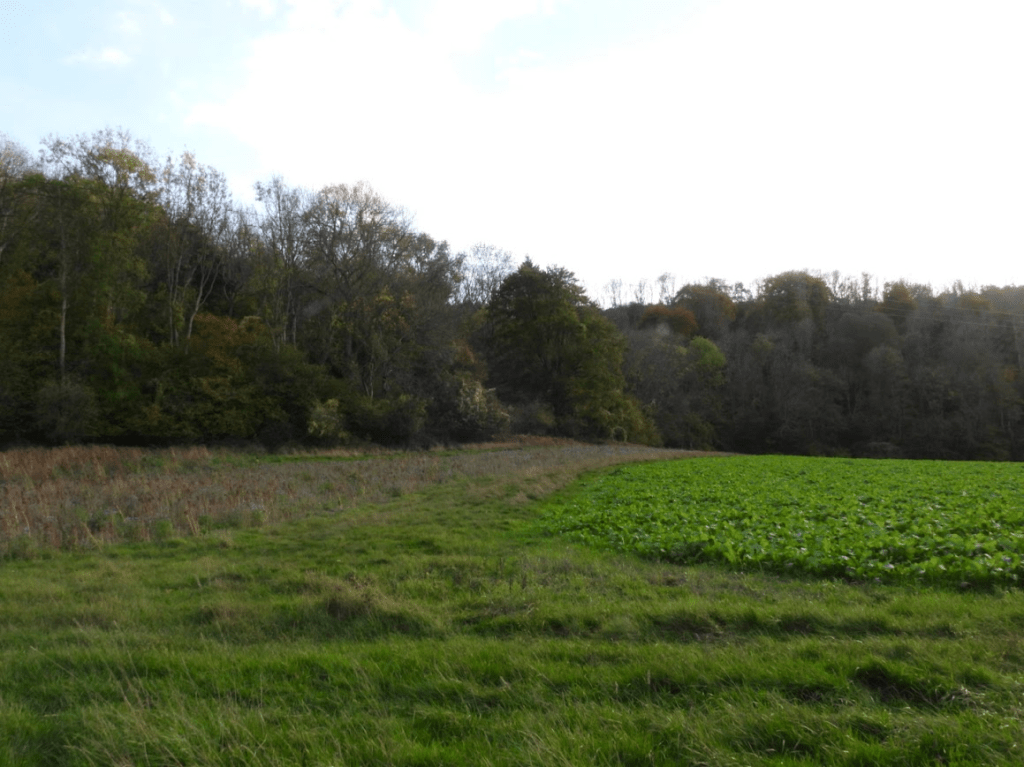
Casey’s Copse from footpath

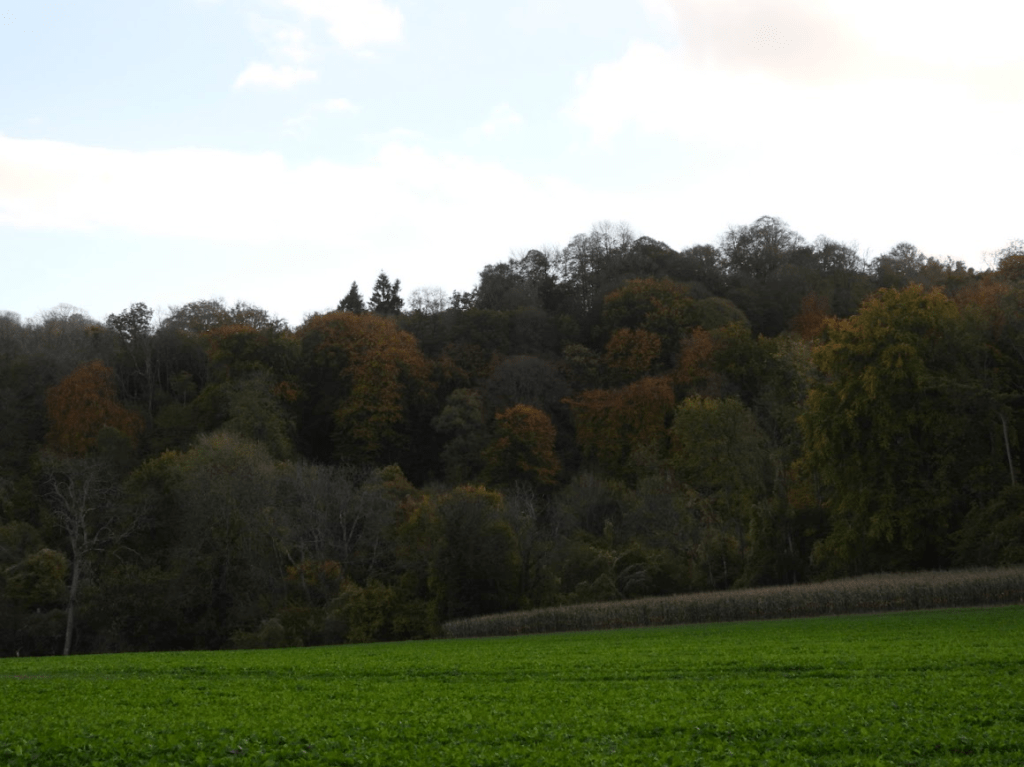
Rooks Clift from footpath

I have visited Casey’s Copse and Rook Clift several times this year; in the Spring, the Summer and now the Autumn. Theses sites were new discoveries for me this year. They will join my list of favourite sites in Sussex, that I love so much, I visit them every season every hear e.g. The Mens, Ebernoe Common, Eridge Rocks, Eridge Park, Newtimber Holt. I first visited Casey’s Copse with a friend who knew the site.

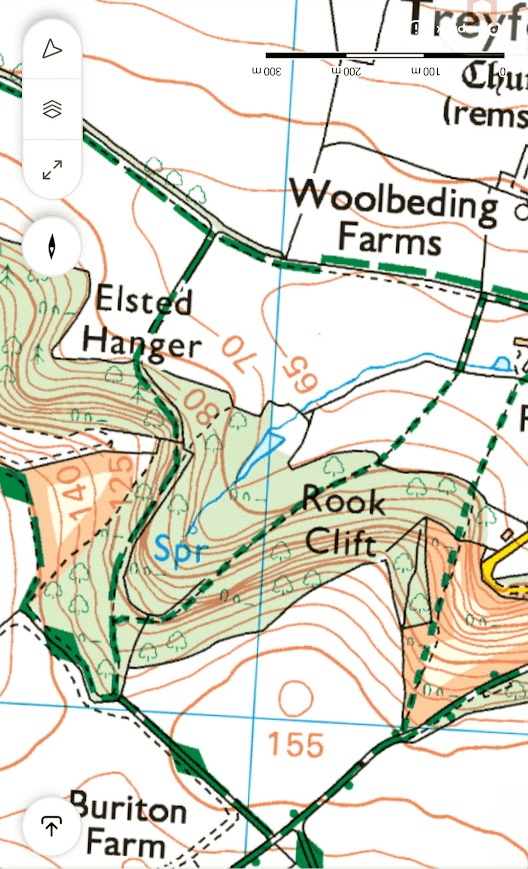
OS Maps © Crown copyright as accessed 22/10/25

I reached these woods by bus and train. I get the train to Chichester and then the 54 bus to South Harting. The South Harting bus only goes 5 times a day; so careful planning is needed! It is about an hour walk from South Harting to the bottom of Rooks Clift; I walk along the footpaths and trackways along the flat arable fields of the scarp foot (from road just before Knightsfield). It is possible to reach Rooks Clift along he South Downs Way, but that takes about three hours as the walk is extremely undulating. The 54 bus will drop you off where the B2141 crosses the South Downs Way; whilst it is not an official stop most drivers will drop you off there.

These sites are west South Downs escarpment ancient woodland. Some of these western scarp wood appear to be very old, possibly primary, from such evidence is available. South-East of East Harting ancient woodland (with Ash, Wych Elm and Large Leaved Lime …) occur. Francis Rose (1995) The Habitats and Vegetation of Sussex. The Booth Museum of Natural History, Brighton Borough Council p.9

Rose’s comment that these scarp woods are possibly primary, suggested that this woodland may have been part of the “wildwood” that covered the Downs until the dip slope woods were cleared for sheep farming, from the neolithic (ca. 5000-4000 BCE) onwards. see: Peter Brandon (1998) The South Downs

Until the late 1980s Large-leaved Lime was regarded as introduced in Sussex, but is now thought by Francis Rose and others to be native on the downland scarp in West Sussex. … Since 1987, when coppiced T. platyphyllos stools were discovered at Springhead as detailed in Briggs (1990), around 30 sites have been found on the scarp in Hampshire and W. Sussex. Most trees are within ancient copses surrounded by wood banks towards the foot of the scarp. Some border old tracks and a number perch upon ancient parish boundaries. The Sussex Rare Plant Register of Scarce & Threatened Vascular Plants, Charophytes, Bryophytes and Lichens (2001) Mary Briggs, Paul Harmes and Alan Knapp et. al pp. 100-101 Available on line Sussex Botanical Recording Society

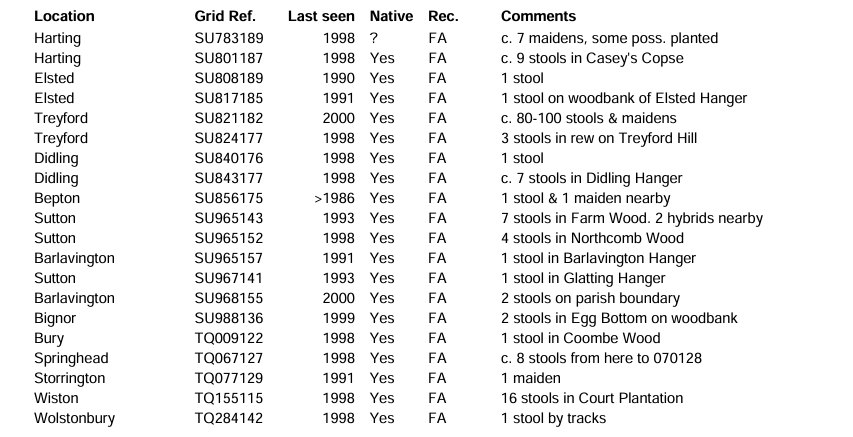
List of native Large-Leaved Limes from the Sussex Rare Plant Register:

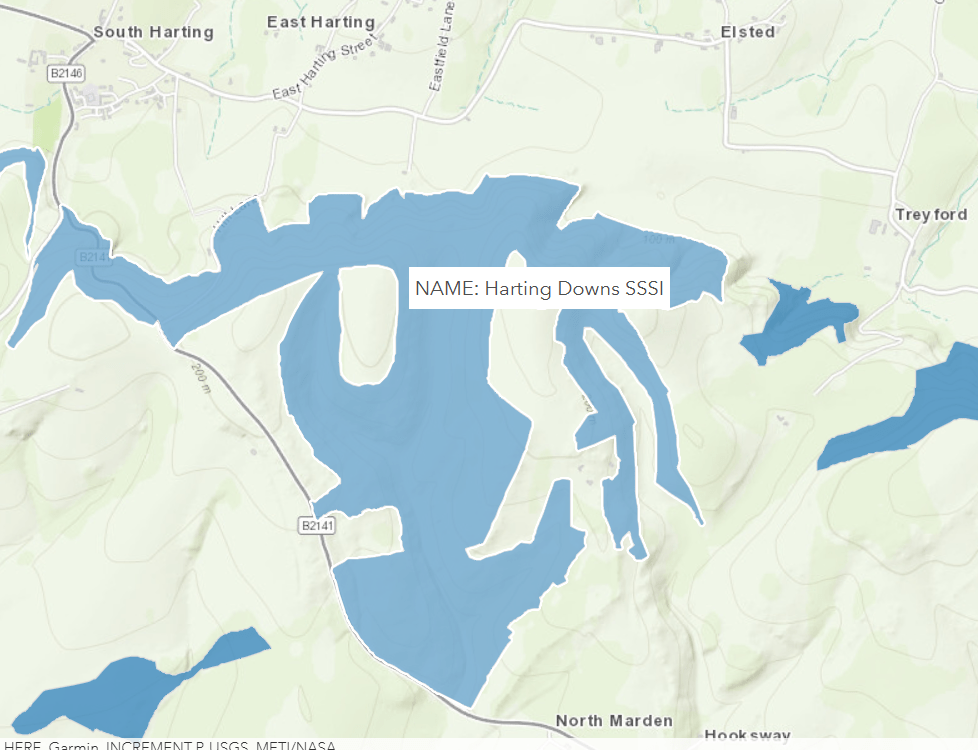
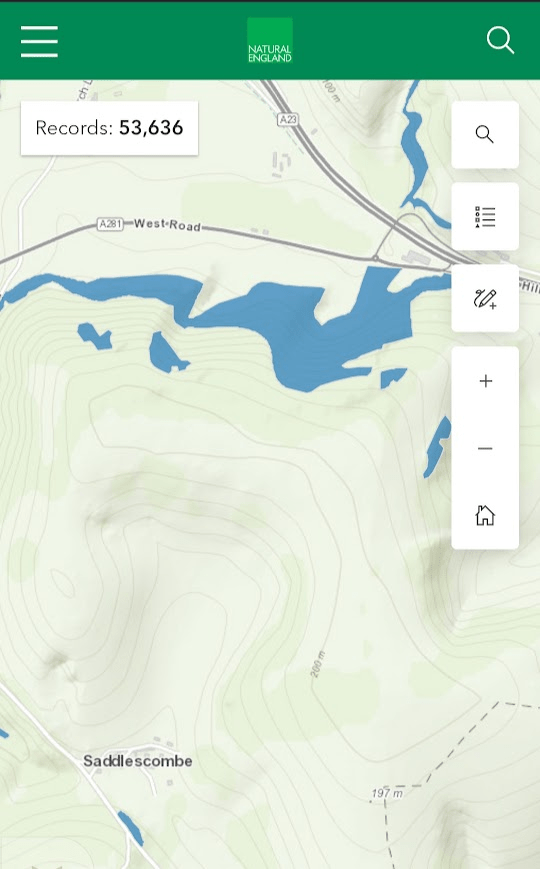
Map from Natural England Open Data Sites of Special Scientific Interest England

Casey’s Copse is within the Harting Down SSSI; Rook Clift is its own SSSI, just to the east of Harting Down SSSI near Treyford

The SSSI citation for Harting Down does not mention the presence of Large-Leaved Lime; but the citation was last revised in 1980; 45 years ago. Many SSSI specifications are very old now, and don’t represent current knowledge of sites. The Rooks Clift citation is much more accurate, and is more recent (1997); although it misses out the huge amount of Solomon’s Seal on the slopes of the stream valley.

From South Harting SSSI specification: Longer-established woodland occurs throughout the site, with a varied composition according to soil type and aspect. Beech Fagus sylvatica is common and becomes dominant on the scarp-face and valley sides. Oak Quercus robur and ash occur with yew on the deeper valley loams. The ground flora is quite sparse beneath the densest canopies, but
elsewhere includes bramble Rubus fruticosus, ivy Hedera helix, dog’s mercury Mercurialis perennis and false-brome Brachypodium sylvaticum.

From the Rook Clift SSSI specification Rook Clift is a small wooded combe on the scarp slope of the South Downs. The soils are predominantly calcareous in nature, overlying the chalk of the Downs. Deeper soils occur at the foot of the slope, and also the course of a stream, arising within the wood. This site is an ancient woodland which remains in a semi-natural condition. Large leaved lime Tilia platyphyllos dominates the canopy, together with ash Fraxinus excelsior and some beech Fagus sylvatica. Large leaved lime is a nationally scarce tree, with its natural range concentrated on the limestones of the Wye Valley and Peak District. Thus the high concentration of mature coppice stools, occurring on chalk, make this site nationally important and unique within West Sussex and the South Downs Natural Area. The canopy of large leaved lime, together with some beech casts a heavy shade, and as a result the shrub layer is poorly developed with scattered whitebeam Sorbus aria and yewTaxus baccata.

The field layer is dominated by vernal species such as ramsons Allium
ursinum and bluebell Endymion non-scripta, or shade tolerant species including dog’s mercury Mercurialis perennis, spurge laurel Daphne laureola and sanicle Sanicula europaea. The steep sided valley around the steam is more open with a canopy dominated by ash and wych elm Ulmus glabra. Here the field and ground layers are more developed with stands of hart’s tongue fern Phyllitis scolopendrium and soft shield fern Polystichum setiferum abundant, and opposite-leaved golden-saxifrage Chrysosplenium oppositifolium common along the stream side.

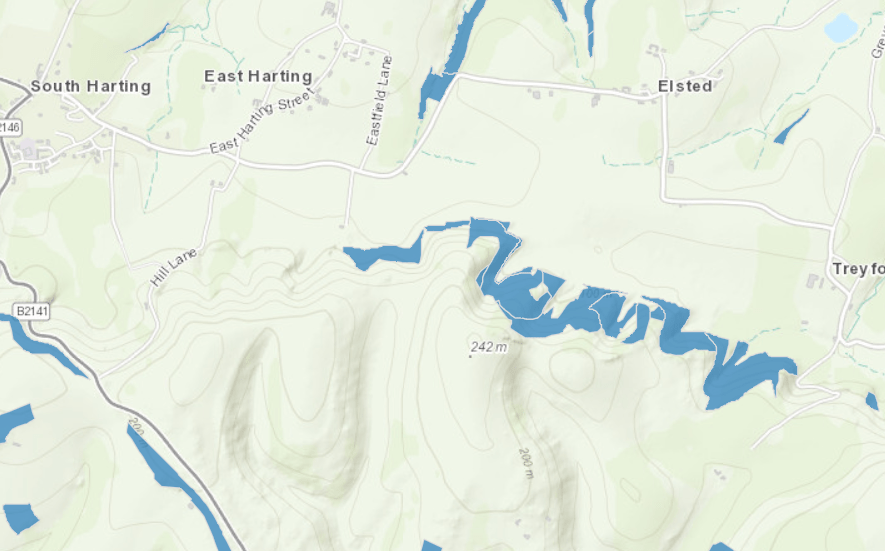
Both Casey’s Copse and Rooks Clift are designated by Nature England as ancient and semi-natural woodland. Looking at the Nature England ancient woodlands maps, it is clear that ancient woodland on the South Downs is mostly confined to the escarpments. There is much woodland in the Harting Down SSSI, but the dip slope woodland is not ancient.

Map from Natural England Open Data Ancient Woodland

Looking up to the scape-slope woodland before reaching Casey’s Copse, green-orange Beech and dark green Yew stand out from the dying Ash.

Casey’s Copse

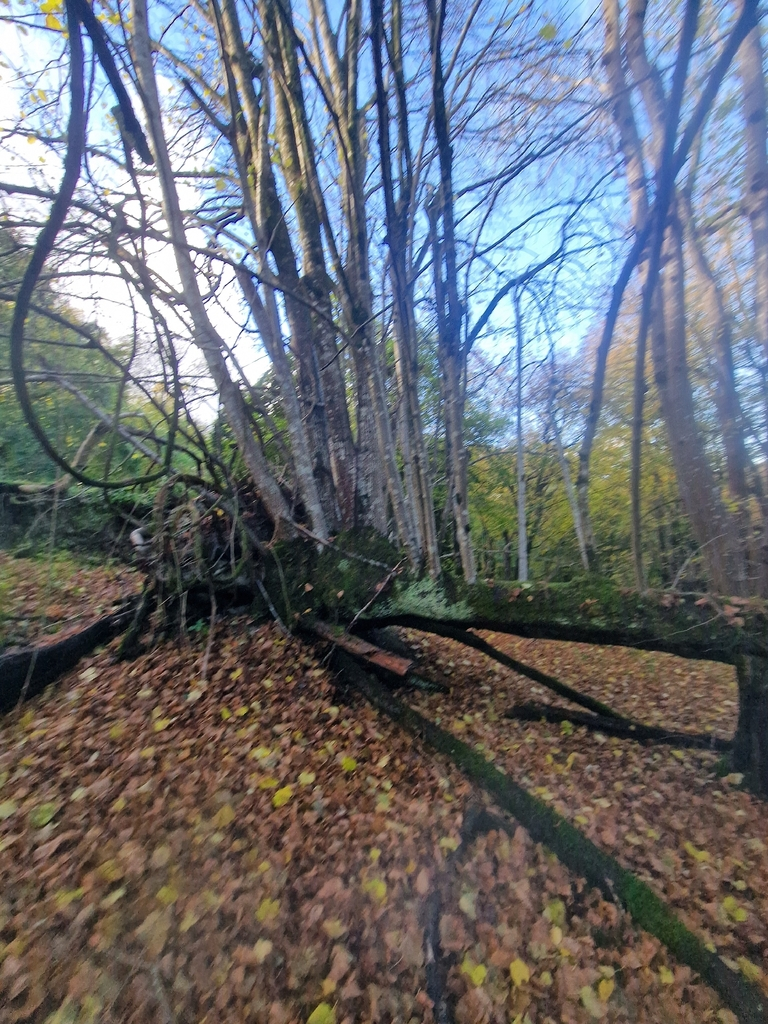
The boundary bank at the scarp foot of mostly coppiced Ash. Scarp foot coppiced Ash seems to be less effected by Ash dieback than the maidens on the scarp slopes. Features like this tell us that most ancient woodland included much human intervention

Some of the coppiced Large-Leaved Limes:

Looking through dead/dying Ash maidens toward Beech:

Coppiced lime with a maiden Ash next to it

Looking though Soft Shield Fern at Beech

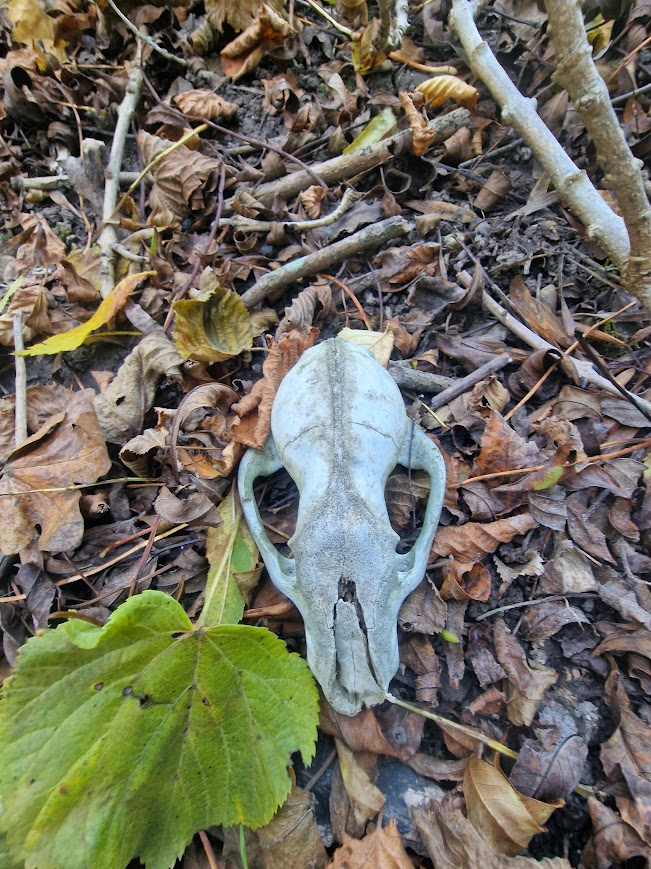
A Fox Skull next to a Long-leaved Lime leaf. In English folklore Long-Leaved Limes are associated with love, fertility, and justice. I hope the fox had lots of cubs!

A seemingly very ancient coppiced Long-Leaved Lime

Some of the lichens on this lime: Pertusaria leioplaca, Graphis scripta s.l. (Writing Lichen); Pertusaria pertusa (Pepper Pot Witing). All of these are common on smooth-barked trees like Beech, Sweet Chestnut and Lime

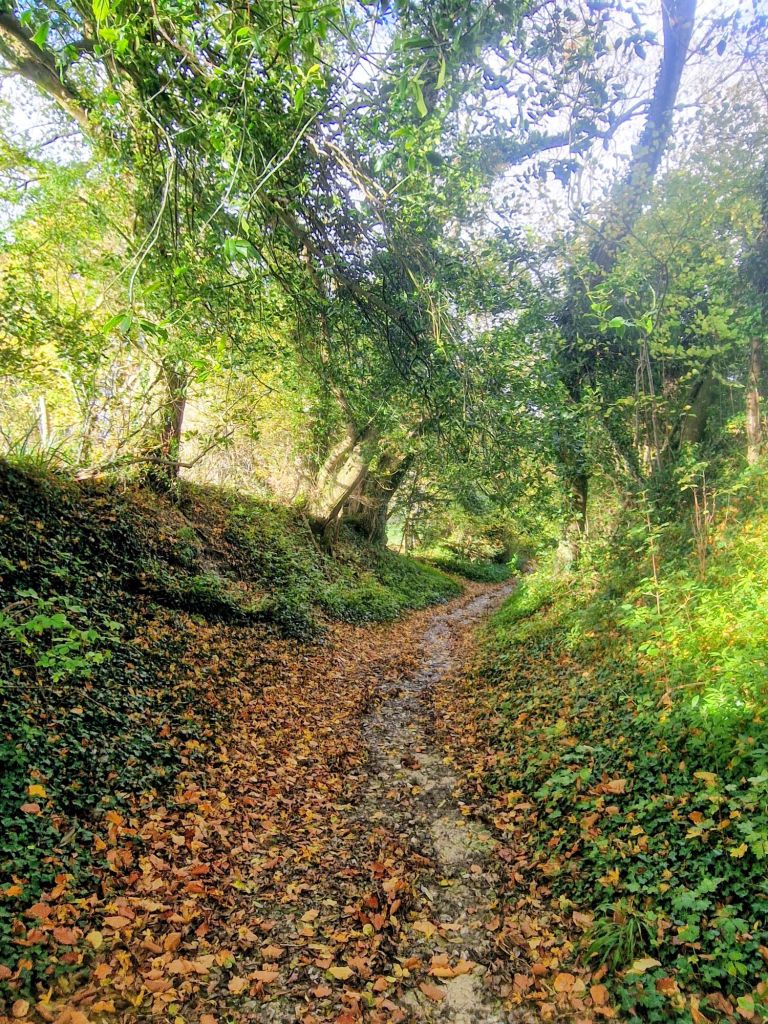
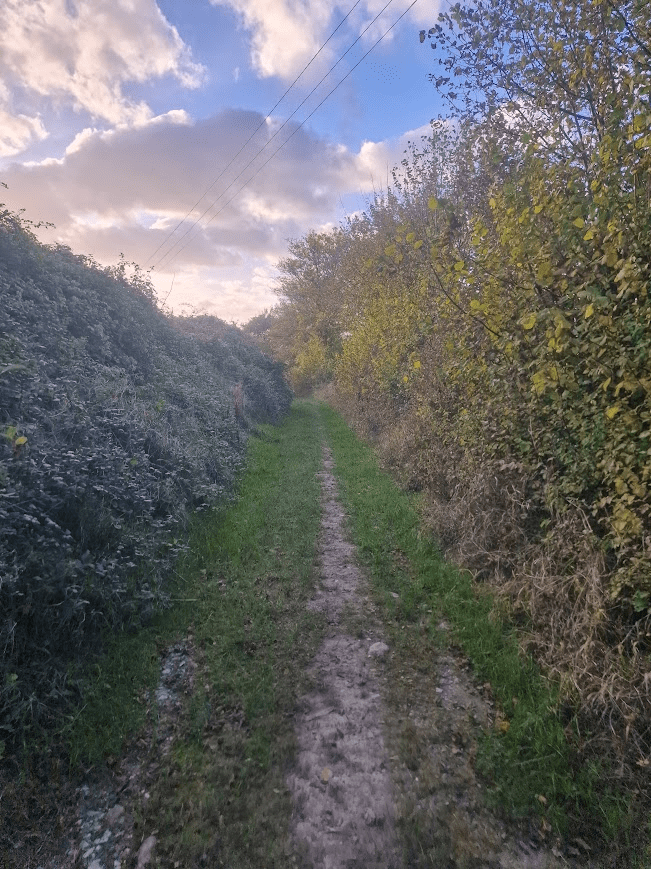
Walking along a hollow-way trackway at the foot of the downs, on gault clay. Trees: Hawthorn, Field Maple, Hazel

Hedgerow, from when the hollow-way ends.

One of a flock of about eight Yellow Hammers in the hedgerow

Path to the base of the bostal up Rooks Clift

Coppiced Ash along the path

Rooks Clift

Trackway up the north side pf the clift (variant of cleft, geographical: meaning a fissure or break)

Beech on the edge of the steep slope into the valley (clift) formed by a stream fed by a chalk spring

Yew

Soft Shield Fern

Beech

False Brome

Dogs Mercury

Fungus (probably Armillaira sp.) in the process of deliquescing

Going down the south side of the clift

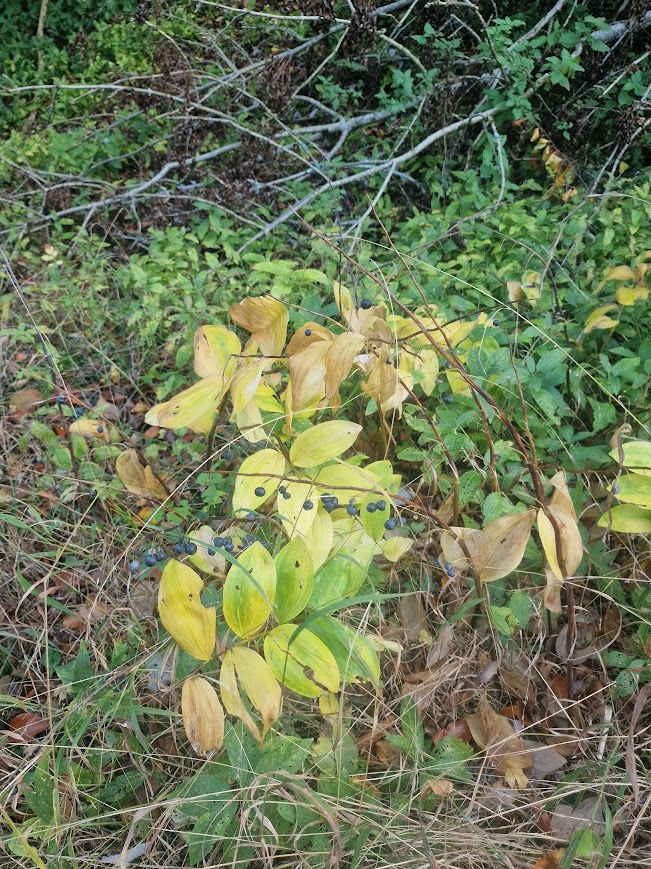
Solomon’s Seal – extremely abundant

At this point if I had turned south and walked on I would have come to the grove of ca. 80 Long-Leaved Limes; but if I had done that I would have had to have walked back to South Harting as it got dark; that did not feel safe, so I am returning to Rook Clift on Saturday – watch out for Part II of this post!!!

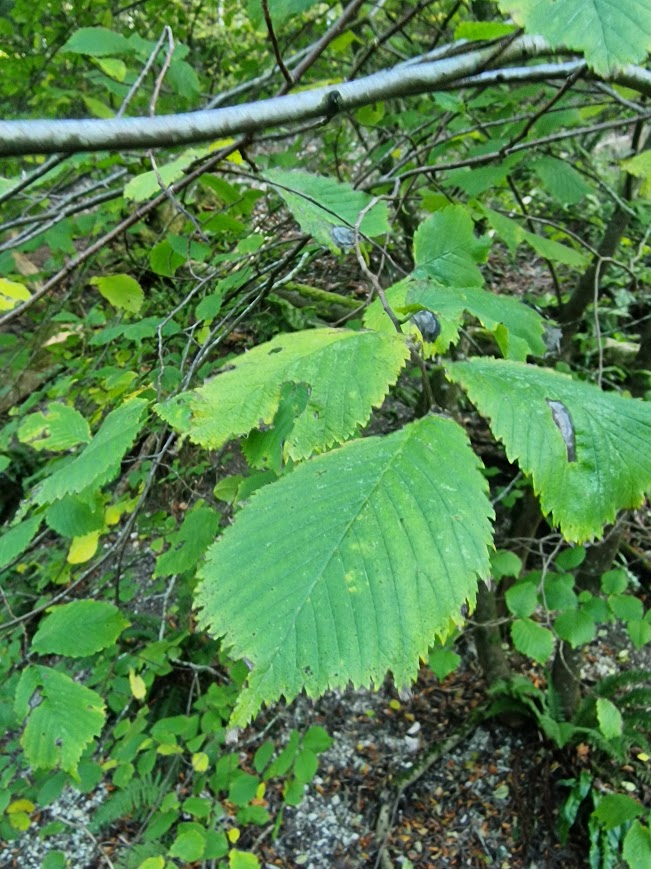
Wych Elm

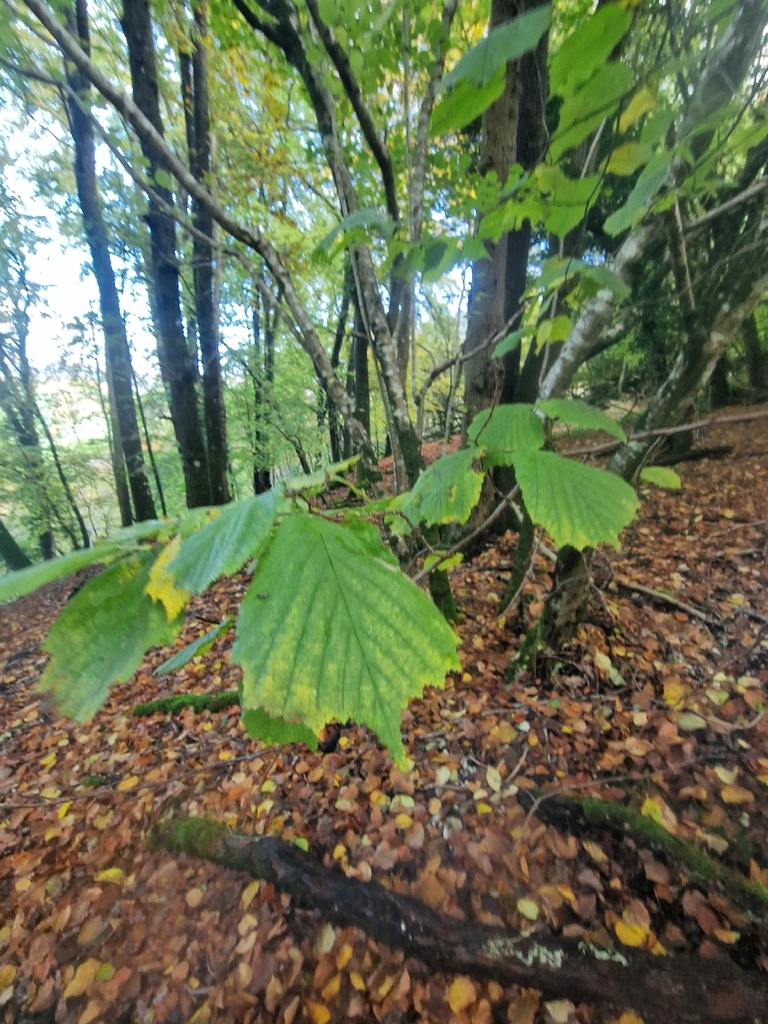
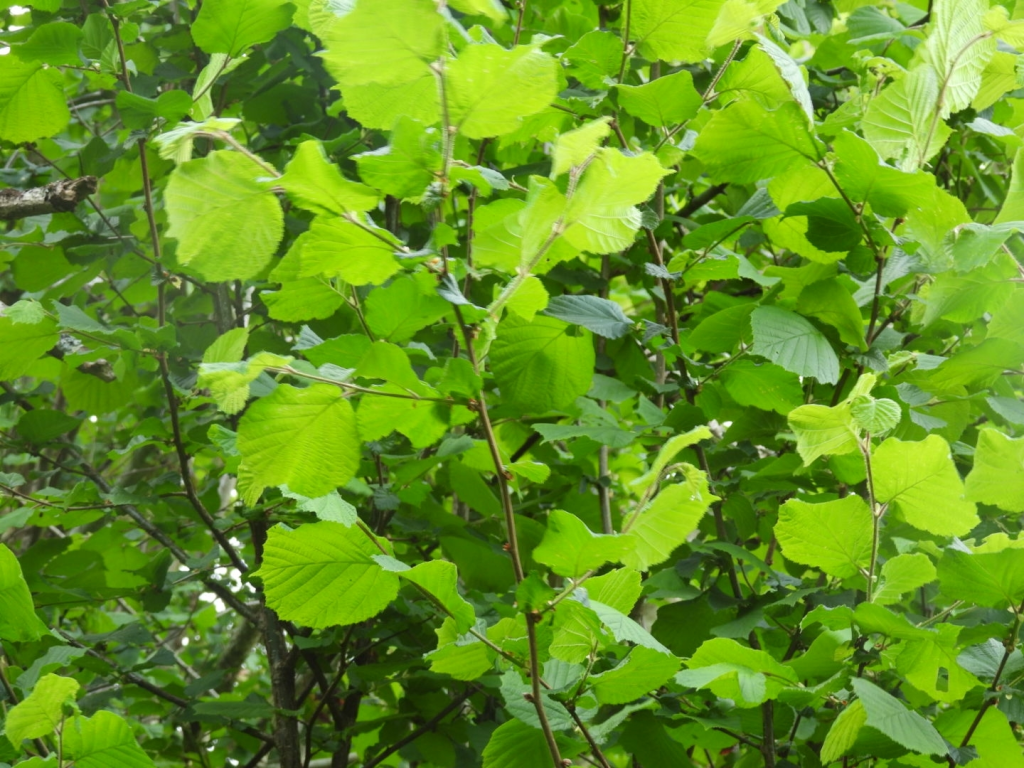
young Wych Elm tree (leaves to left; leaves on right, Hazel))

View from the south side f Rooks Clift to the north side: Beech and dying Ash

Hazel

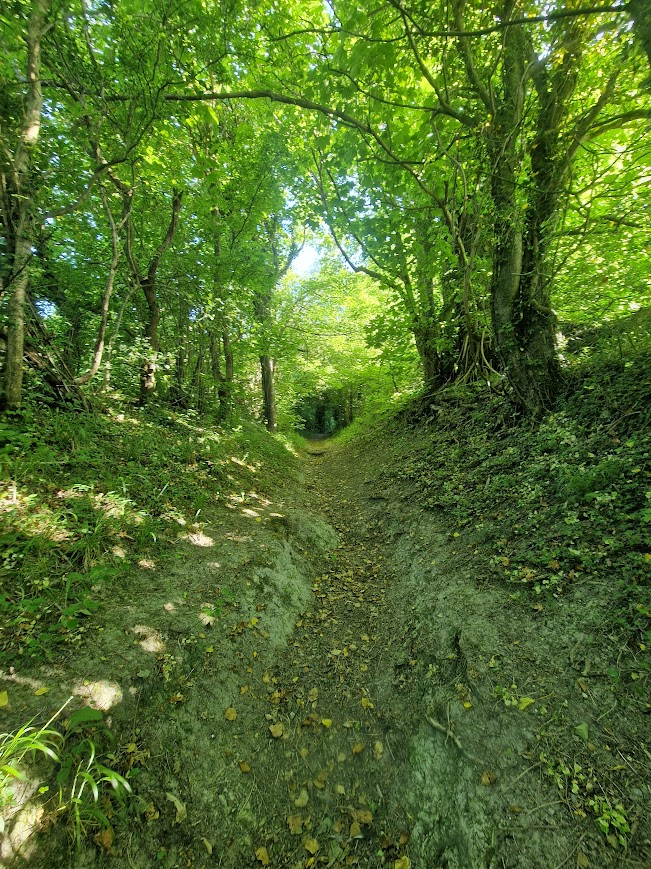
Sunken trackway bedside the path on south side of clift

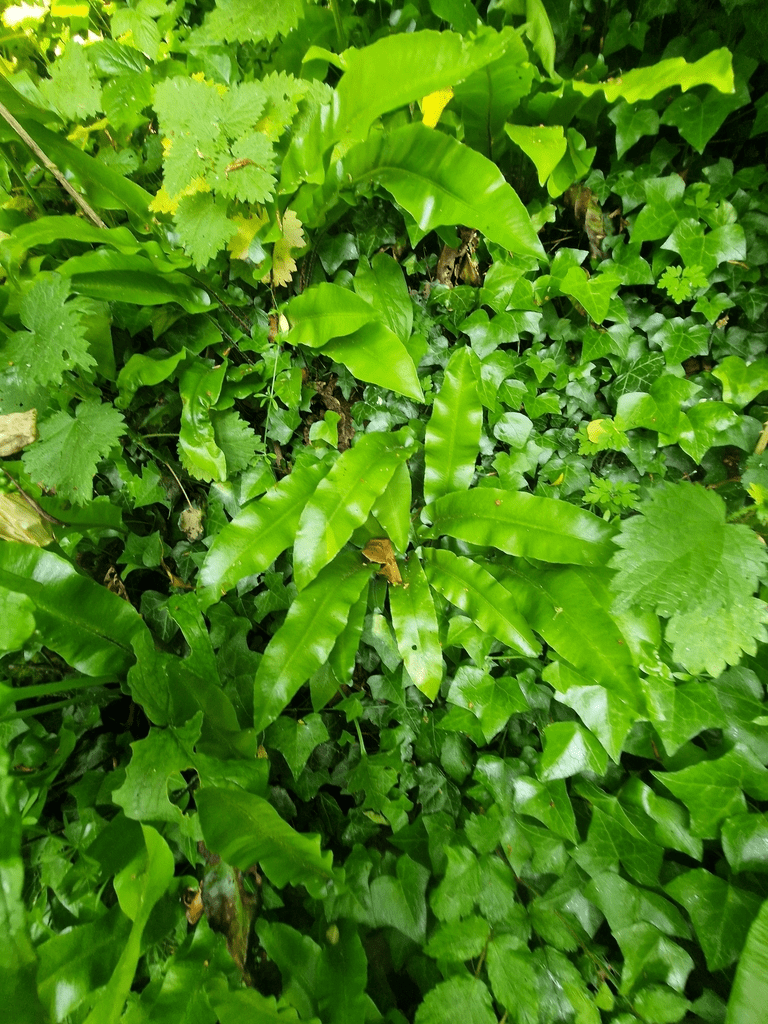
full of Harts-tongue Fern; extremely abundant, as in many South Downs hanger woods

Bank of sunken trackway with coppiced Beech

Back to the scarp foot path

White Poplar

Getting dark – back along the hedged trackway

Getting darker -past a field of Sunflowers

Terrible photo of a Raven at dusk

For most of the afternoon I had heard Ravens kwaaking overhead; it gave Rooks Clift a more Poe-like Ravens Clift feel!

Vascular plants and Lichens at Newtimber Holt, South Downs scarp face ancient woodland, West Sussex, nr. Brighton. 17.05.25

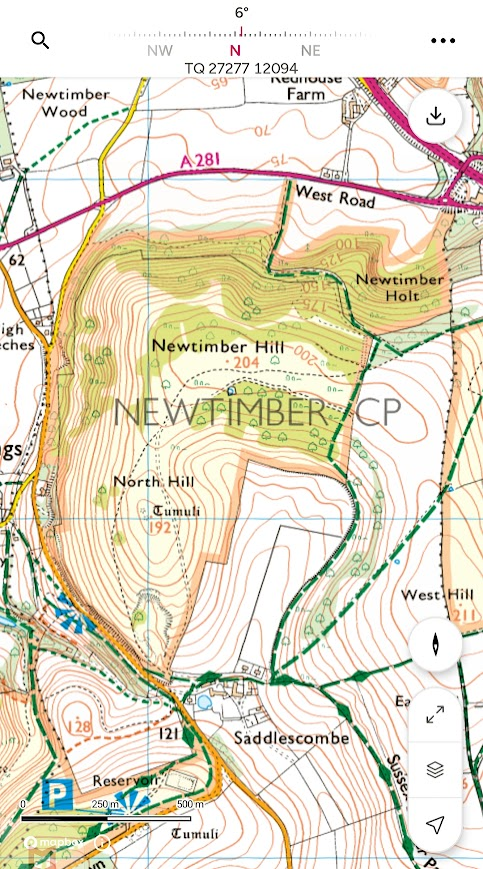
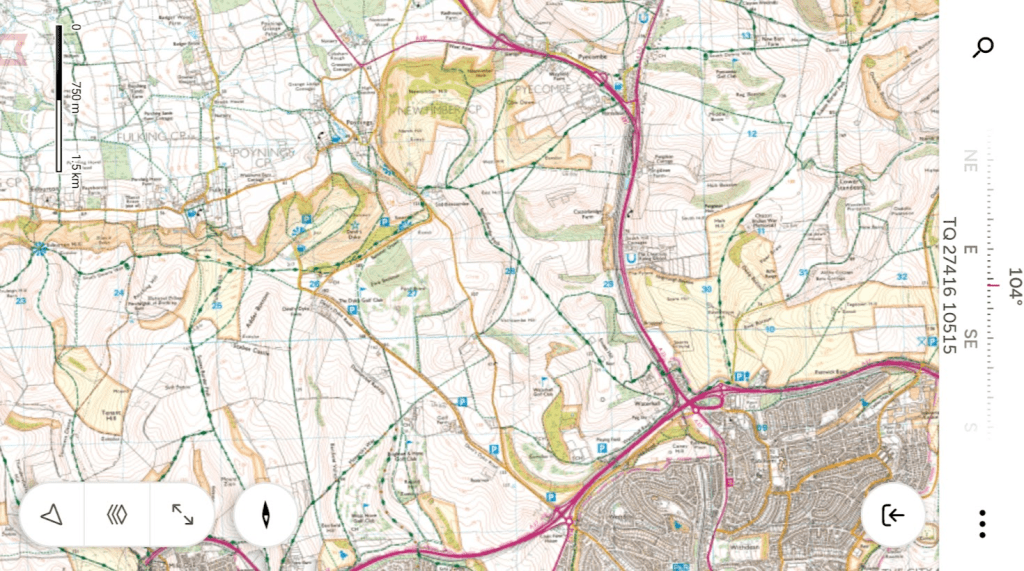
Newtimber Holt is a small but very biological interesting area of ancient woodland on Newtimber Hill. It is owned by the National Trust and managed by Saddlescombe Farm. It is probably the most interesting chalk scarp face ancient wood along the eastern South Downs. It is easily reachable by Stagecoach bus 17 stops Newtimber, Redhouse Farm or Newtimber, Beggar’s Lane Stagecoach 17 Timetable

When we think of ancient woodland, many people may think about our Temperate Rain Forest (Atlantic Woodland) in northwest Scotland, north Wales of the West Country. Or we may think of our nationally famous medieval royal deer parks, e.g. the New Forest, Hatfield Forest, or Windsor Great Park (pasture woodland).

Or if we’re in Sussex, we may think of our High Weald ancient Ghyll Woods, which have microclimates similar to Atlantic woodland; or Sussex’s medieval deer parks (pasture woodland) e.g. Parham Park, or the (very rare) chalk dry valley woods, e.g., East Dean Park Wood (itself once a Medieval deer park) or the very rare dip slope ancient woodland of Pad’s Wood. Or perhaps we may think the numerous small ancient woods, some tiny, relict stands, of the Sussex Low Weald; although much ancient woodland in the Low Weald has been lost to development, especially new housing, especially in the Brighton to Crawley corridor of Hassocks, Burgess Hill and Haywards Heath.

The ancient woodland of the scarp slopes of the South Downs relicts of the former wider woodland that covered the South Downs, which was cleared and then grazed by sheep in the distant past, are probably least known ancient woodland in the UK. When we think of the Down’s we think of its historic sheep gazed short calcareous grassland that supports rare vascular plants and invertebrates; it is biologically magnificent and of national ecological importance, and itself rare now that business arable and pastoral farming has taken so much of the short grassland. But “23% of the South Downs National Park is covered by woodland, [but only half of this [11.5%] has been there for over 400 years [ancient woodland]. “ Trees of the South Downs

Only 4% of the South Downs is calcareous short grassland;  almost exactly the same percentage as when the national park came into being. When we think of the South Downs we think of rolling hills of short calcareous grassland; but very little of it is that; most of it is farmed arable land, and 23% is woodland (with only half of that being ancient woodland).

It is important to separate ancient woodland from ancient trees. Woodland classed as Ancient Semi-Natural Woodland, which are mainly made up of trees and other vascular plants native to the site, that have constantly regenerated for over 500 years, some have very few or no ancient trees; they are just areas that have been wooded continuously since at least 1600. Very few trees in ancient woodland are themselves ancient; although some might be.

Many notable, veteran, and ancient trees can be found not in ancient woods but in pasture, former deer parks or hedges. For example, many of the most ancient Pendunculate Oaks, Quercus robur, of the Low Weald are in grazing pasture, probably relicts of former woodland that was cleared for pasture and left for shelter for livestock, or planted as field, parish or other boundaries in hedgerows

At Newtimber Holt there are some magnificent ancient trees in ancient Woodland

This post attempts to refocus our attention  on the ancient woodland of the scarp faces of the South Downs. There are areas of ancient woodland on the dip slopes of South Downs in West Sussex; but most of these are replanted ancient woodland, replanted with conifers or Sweet Chestnut. There are a few notable exceptions, such as Pads Wood (private), which is still ancient and semi-natural woodland.

An ancient Drovers Route through Newtimber Holt

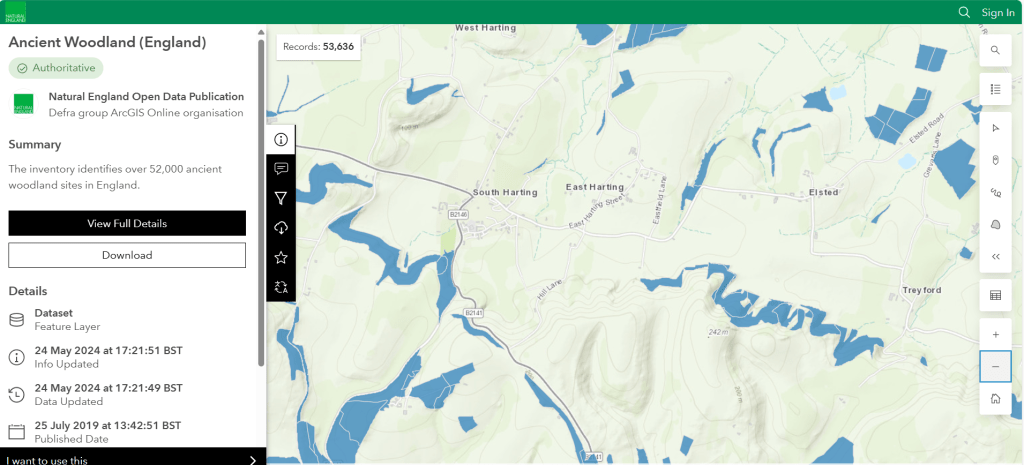
Natural England’s, Ancient Woodland map

from: https://naturalengland-defra.opendata.arcgis.com/datasets/a14064ca50e242c4a92d020764a6d9df

Screen captures Ordnance Survey Map App and Nature England Ancient Woodland online map © Crown Copyright

Ancient Woodland Indicator Vascular Plants at Newtimber Halt

Ancient Woodland Indicator Vascular Plants are listed in Francis Rose Indicators of ancient woodland – the use of vascular plants in evaluating ancient woods for nature conservation, British Wildlife 10.4 April 1999

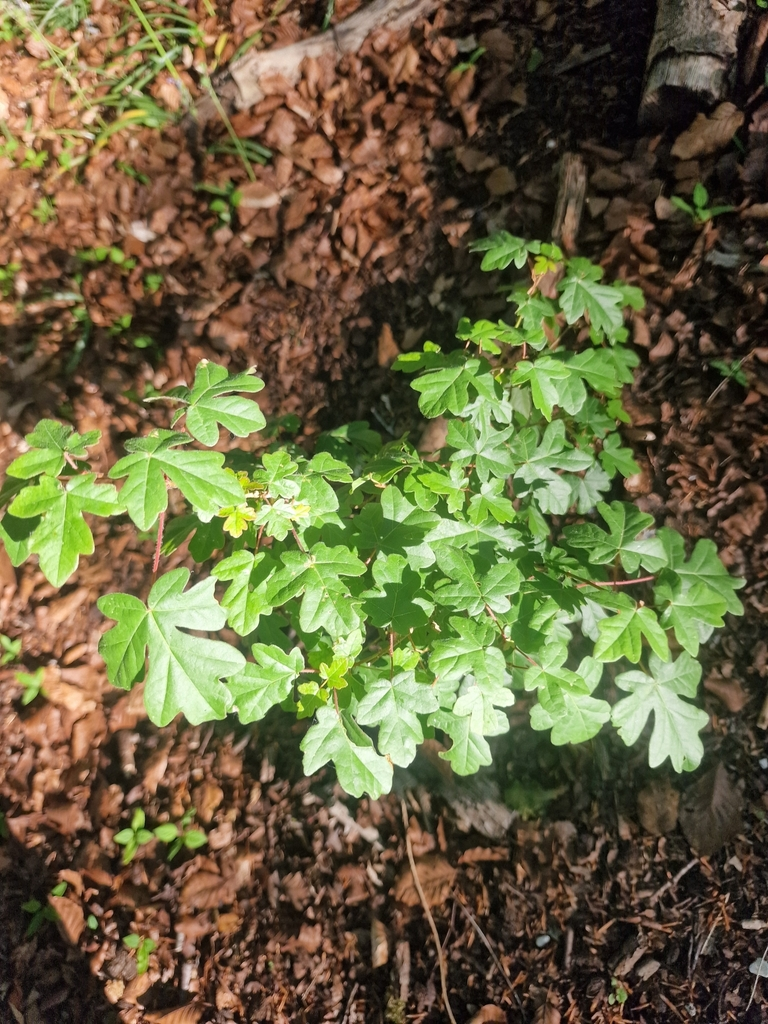
Acer campestre Field Maple

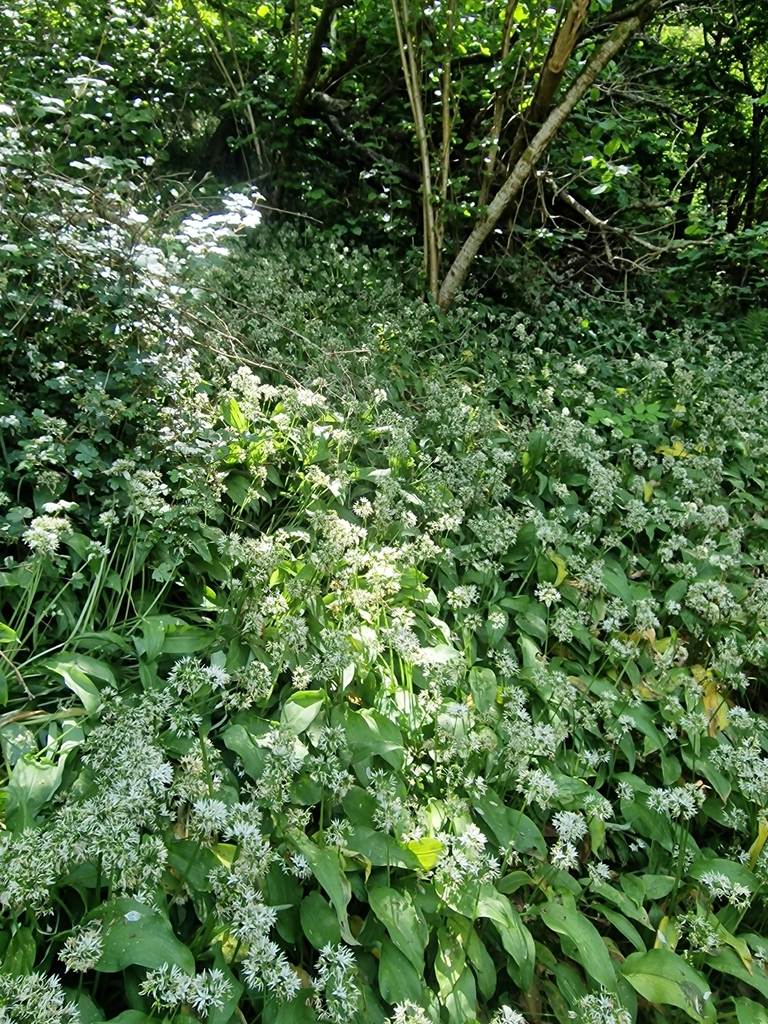
Allium ursinum Ramsons

Asplenium scolopendrium Hart’s-tongue Fern

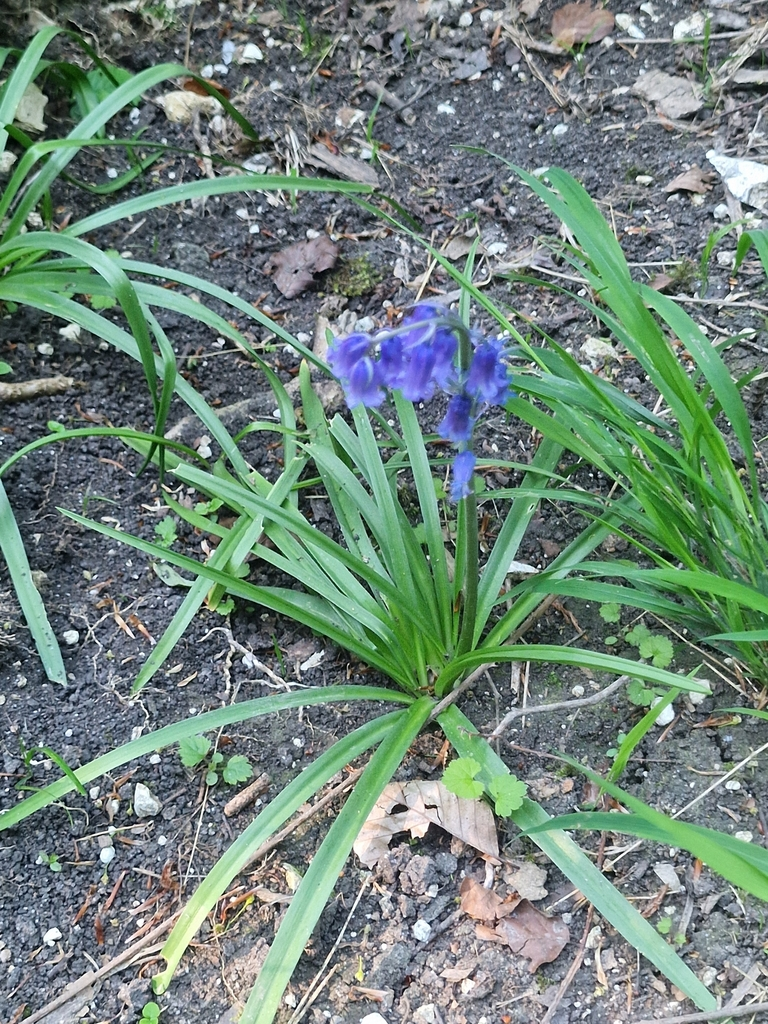
Hyacinthoides non-scripta Bluebell

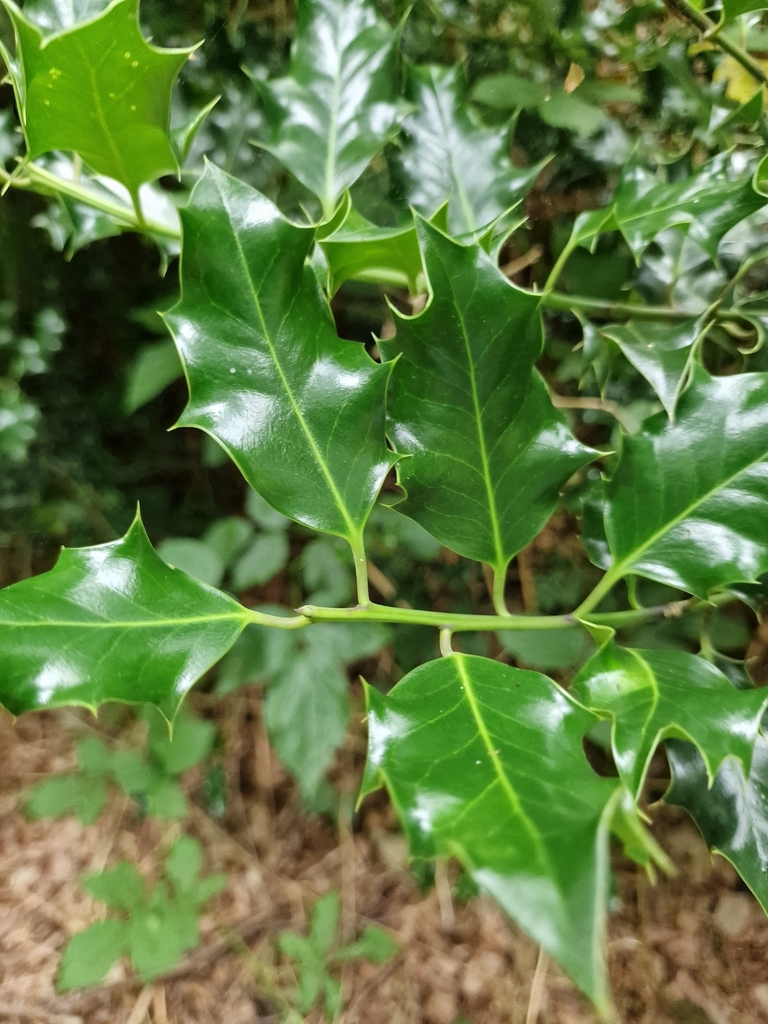
Ilex aquifolium European Holly

Lamium galeobdolon Yellow Archangel

Melica uniflora Wood Melick

Mercurialis perennis Dog’s Mercury

Polystichum setiferum Soft Shield Fern

Sanicula europaea Sanicle

Ulmus glabra Wych Elm

Veronica montana Wood Speedwell

Other vascular plants

Fragaria vesca Wild Strawberry

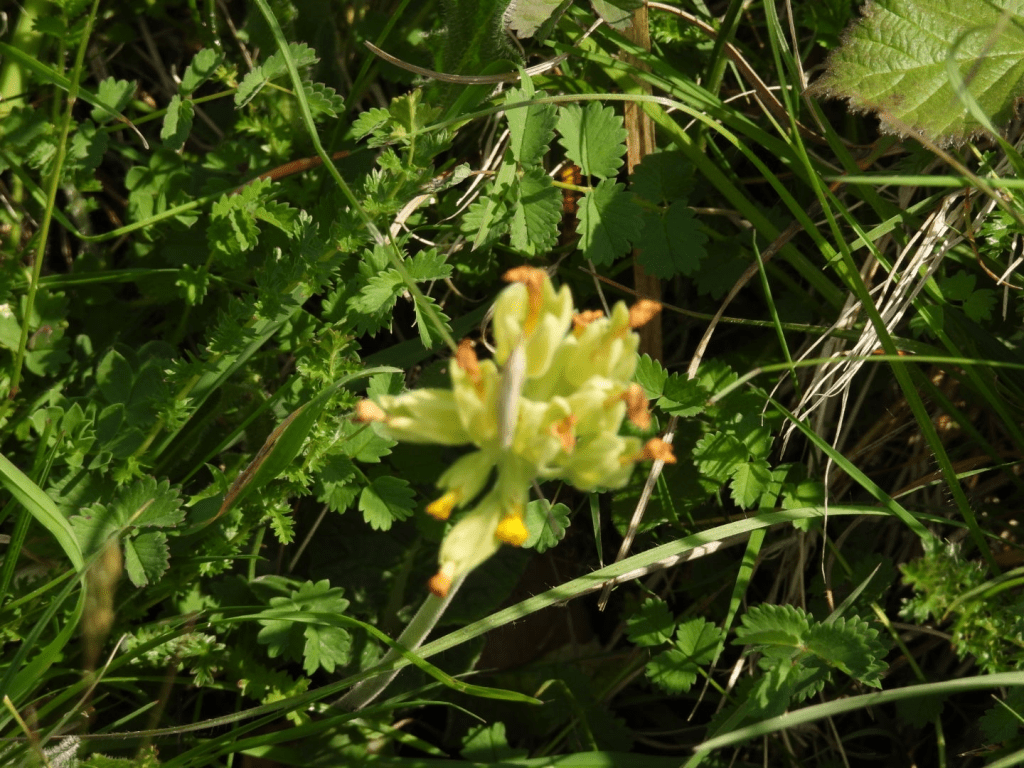
Primula veris Cowslip

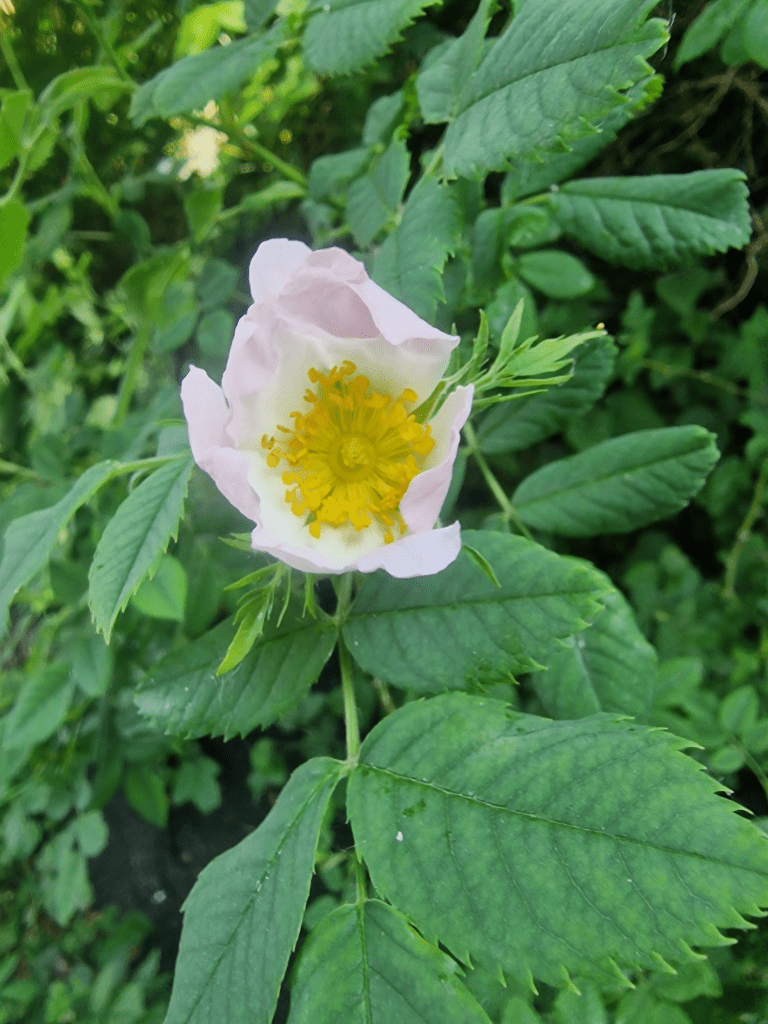
Rosa canina Dog-Rose

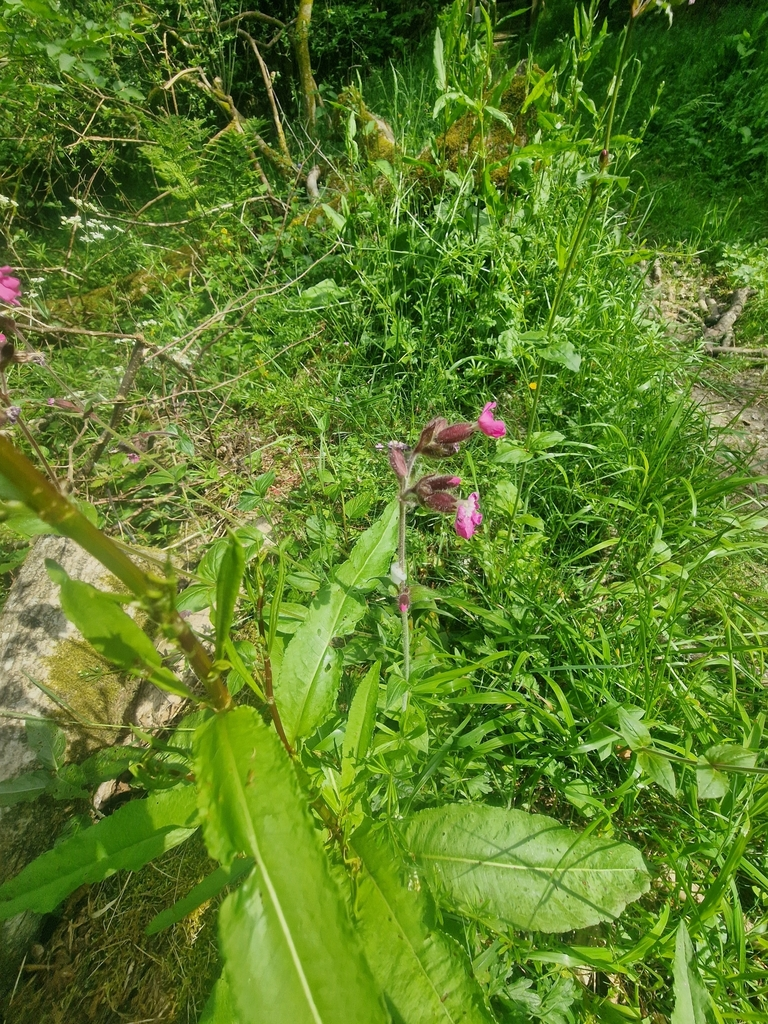
Silene dioica Red Campion

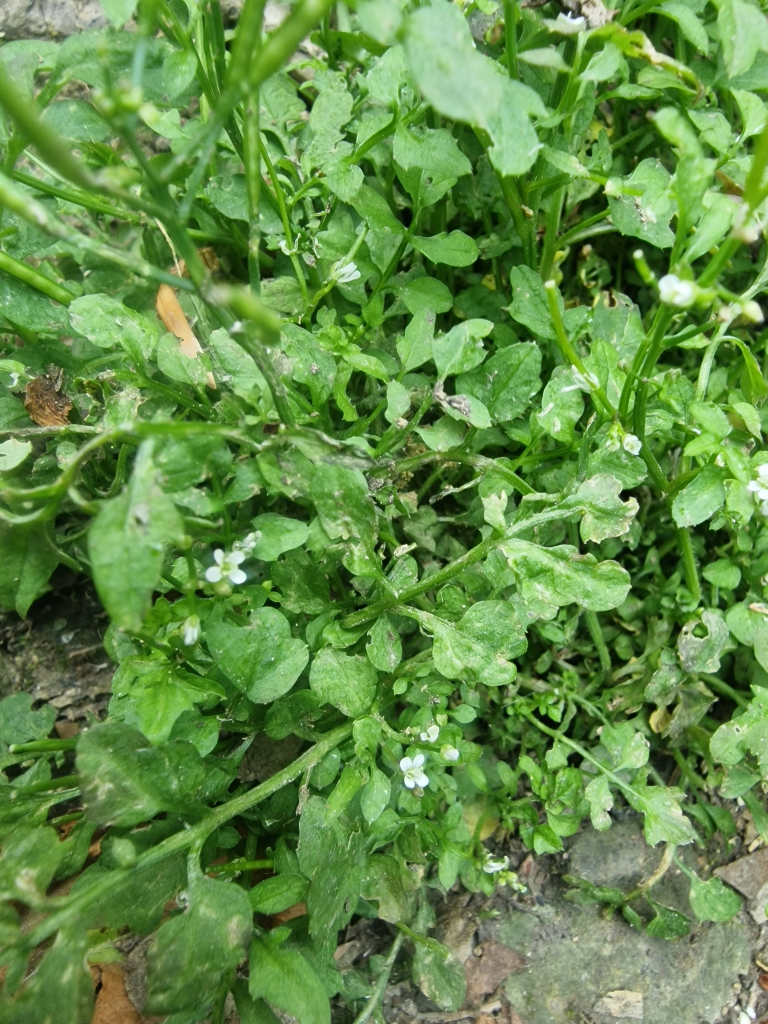
Cardamine flexuosa Wavy Bittercress

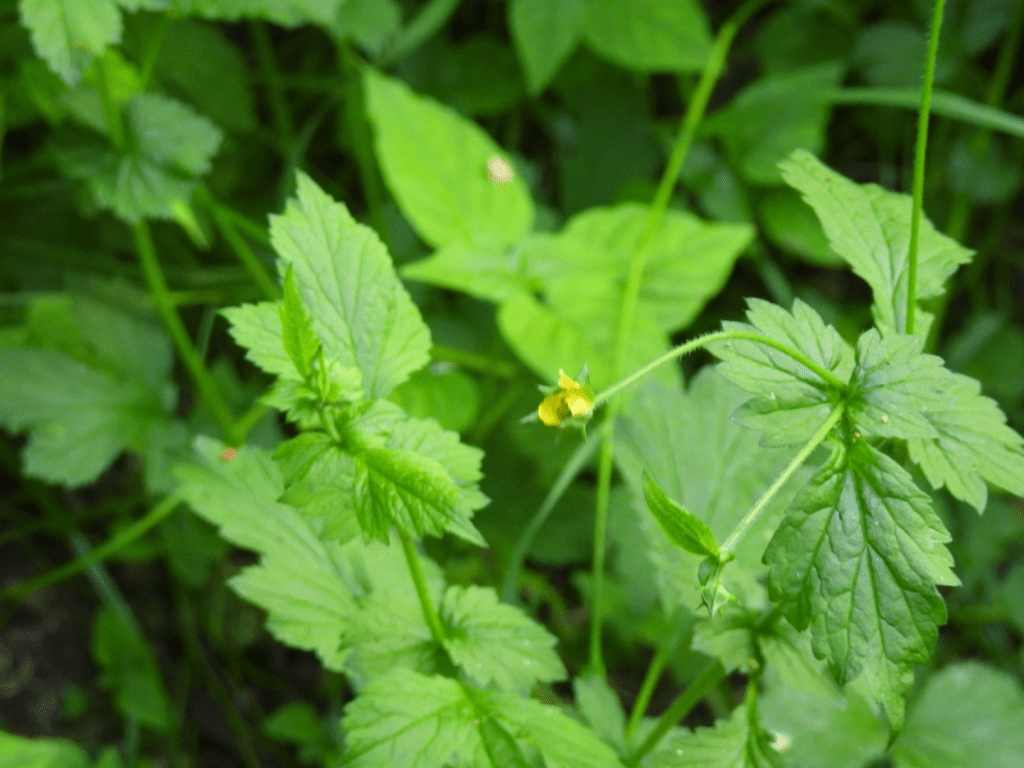
Geum urbanum Wood Avens

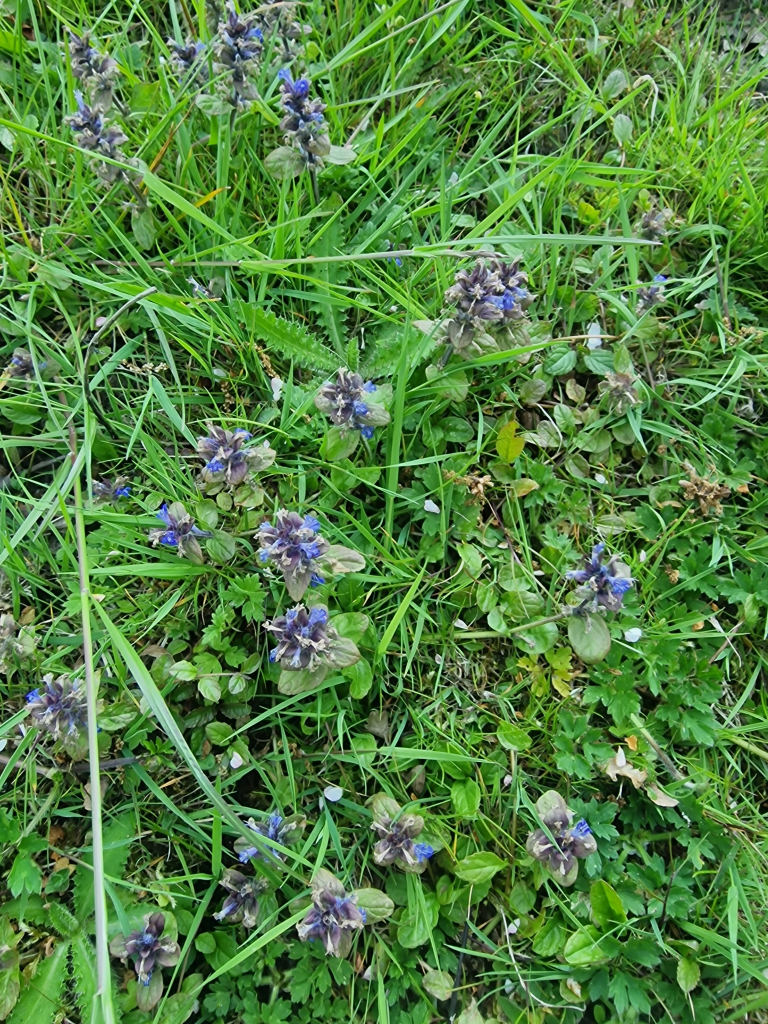
Ajuga reptans Bugle

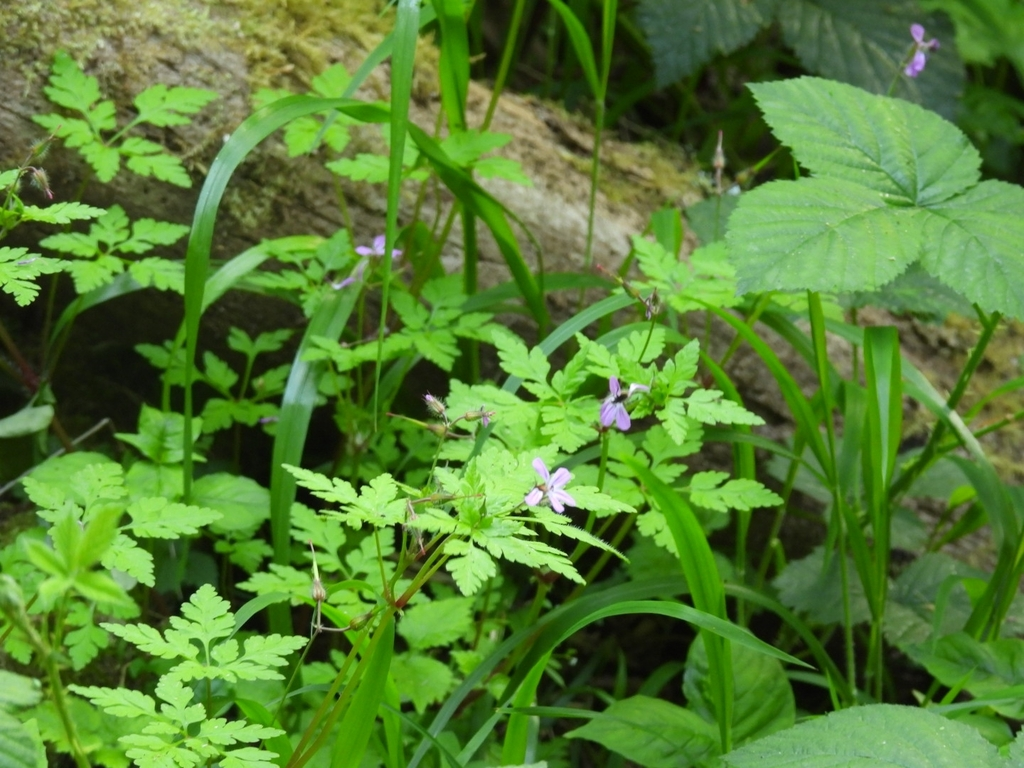
Geranium robertianum Herb Robert

Genus Rubus Brambles

Lithospermum officinale Common Gromwell

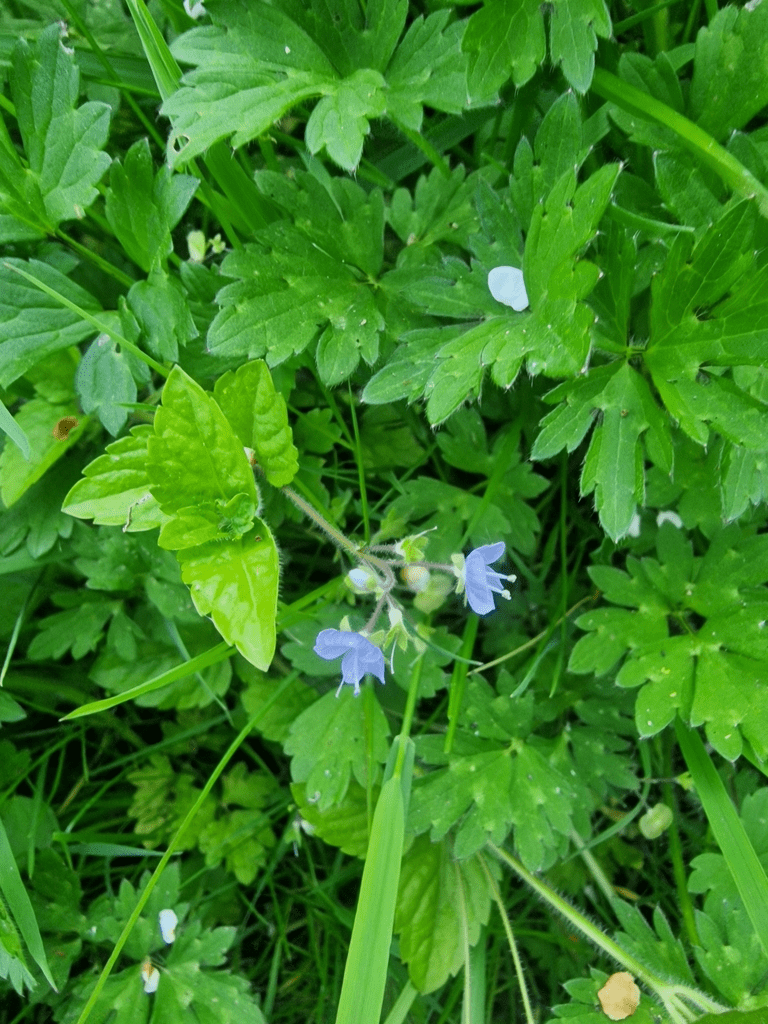
Veronica chamaedrys Germander Speedwell

Sanguisorba minor Salad Burnet

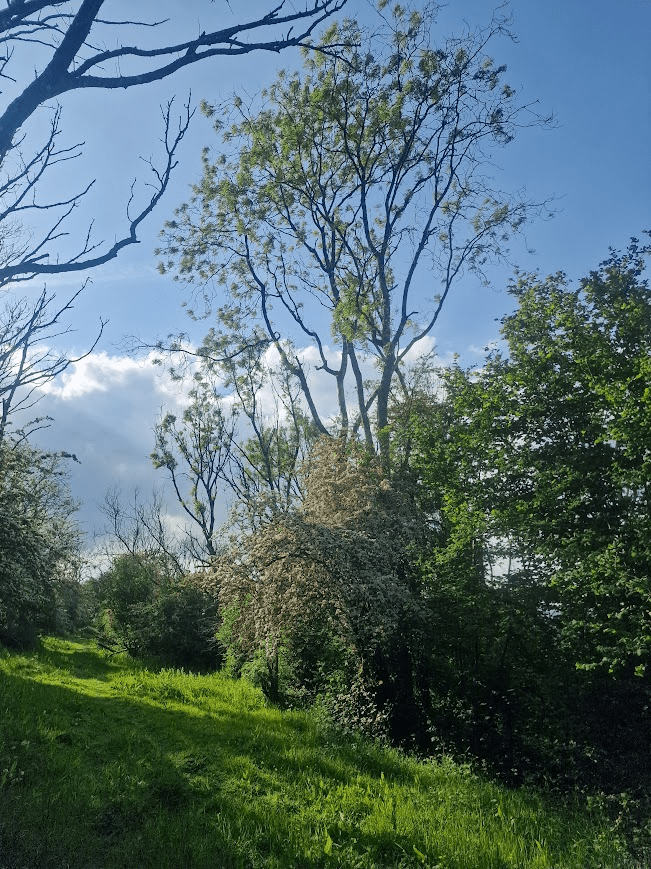
A view of a woodland glade in Newtimber Holt

Arum maculatum Cuckoo-Pint

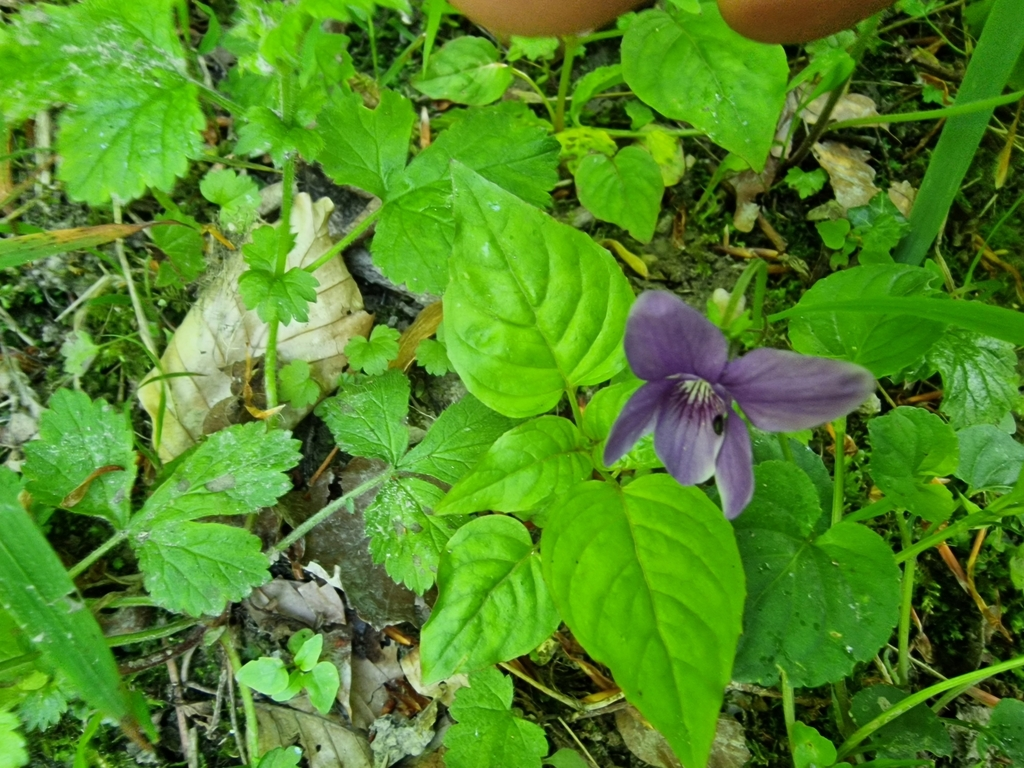
Viola riviniana Common Dog-Violet

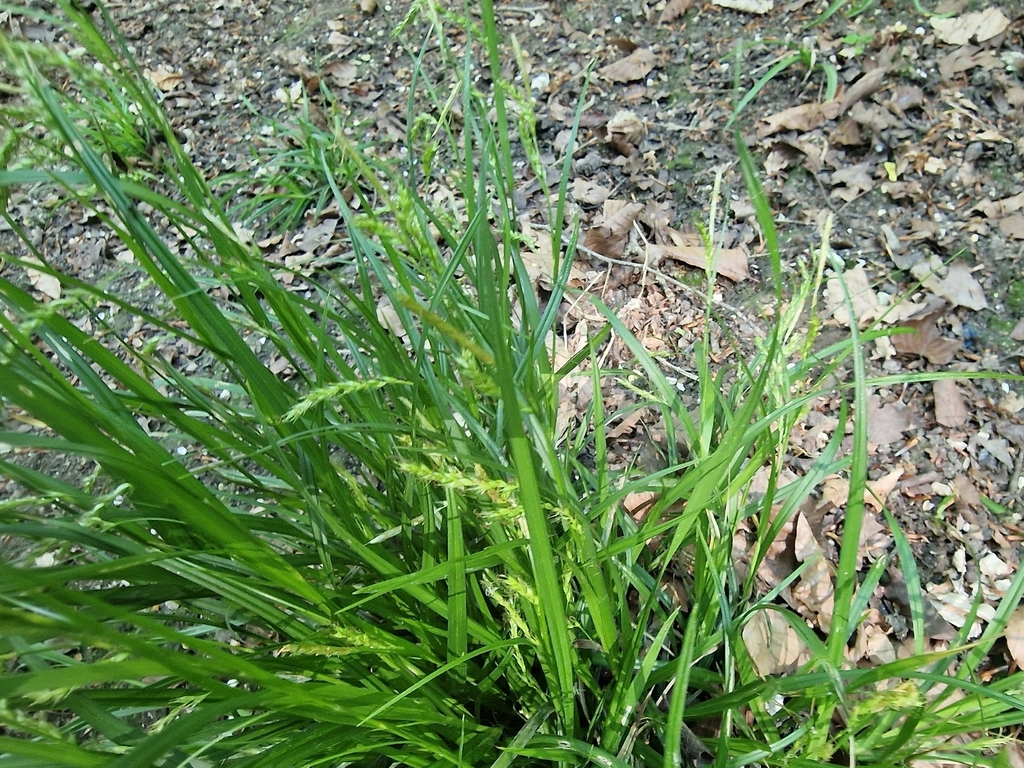
Carex sylvatica Wood Sedge

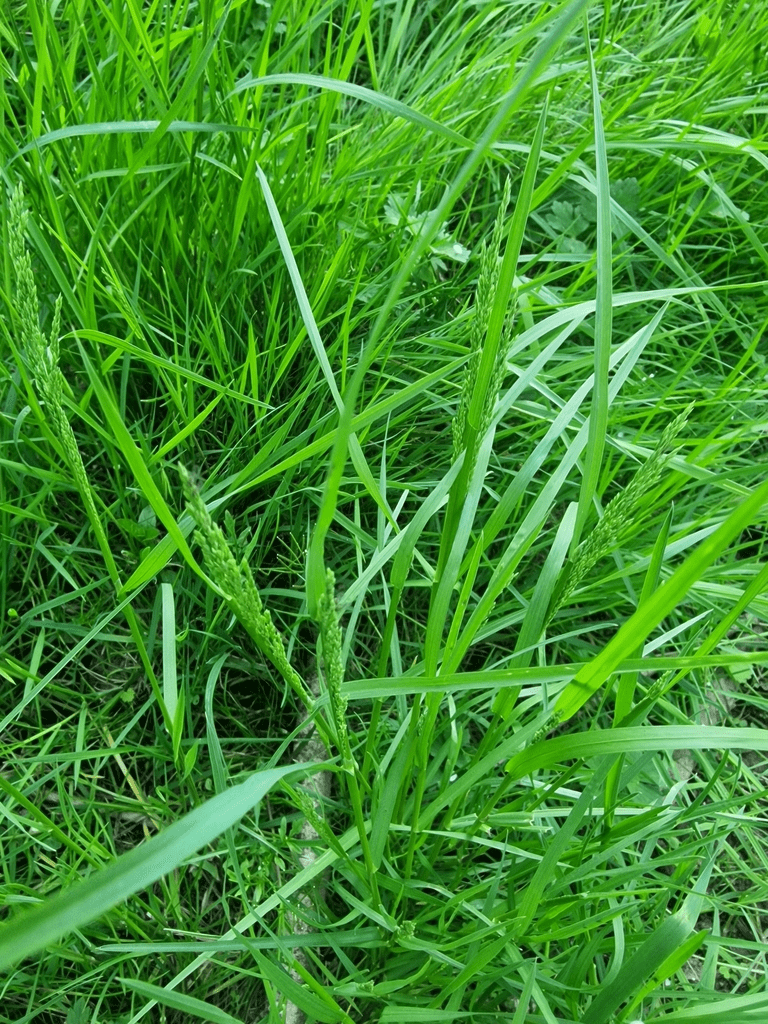
Poa trivialis Rough Meadow-Grass

Rumex sanguineus Wood Dock

Ranunculus repens Creeping Buttercup

Creeping Buttercup, Wood Dock and Rough Meadow Grass

Trees

Tilia platyphyllos Large-leaved Lime

Large leaved lime is the rarest [of the Limes] and although planted for several hundred years most ancient trees are confined to woodland coppice on chalk or limestone soils. Woodland Trust Ancient Tree Inventory

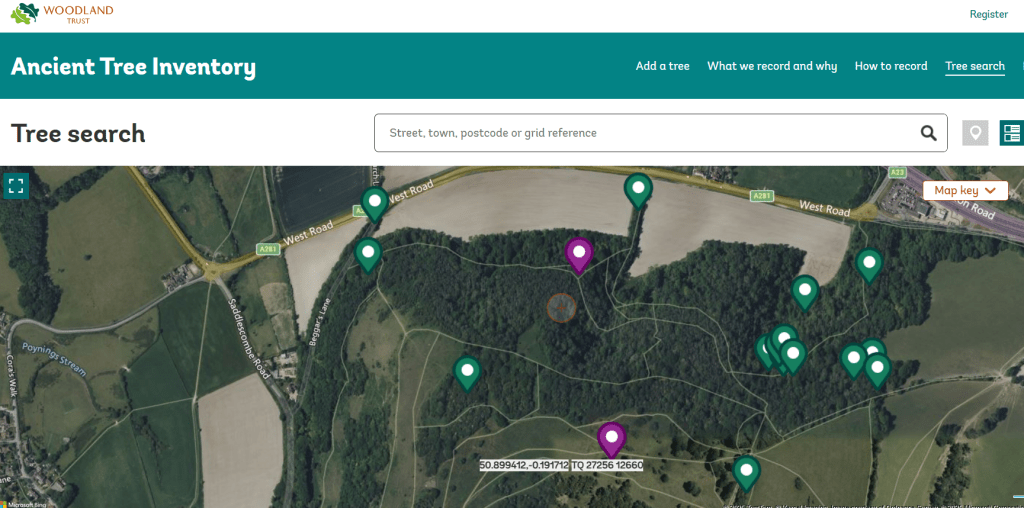
The Woodland Trust Ancient Tree Inventory, shows these veteran (green flags) at Newtimber Hold.

To search the Ancient Tree Inventory for you area, click here.

Screen shot of https://ati.woodlandtrust.org.uk/tree-search/?v=2775353&ml=map&z=16&nwLat=50.90261902476064&nwLng=-0.20810587989501528&seLat=50.89620438008731&seLng=-0.1753185568969684

Fraxinus excelsior Ash

Quercus robur English Oak

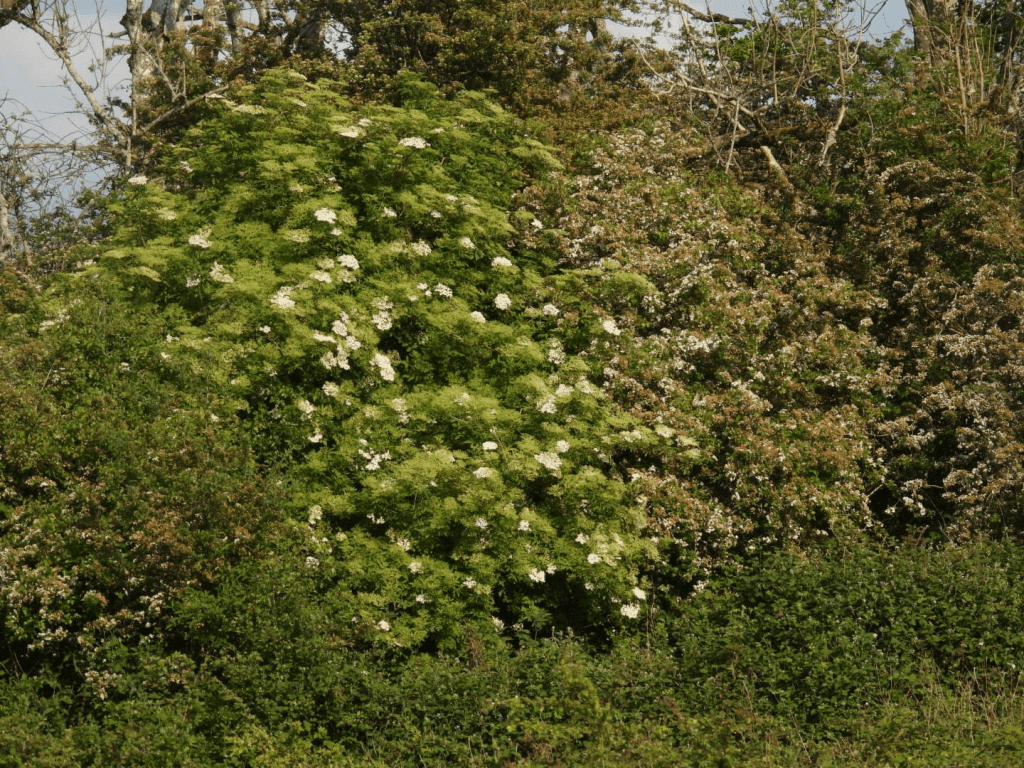
Sambucus, nigra Elder and Hawthorn, Crataegus monpgyna

Corylus avellana Hazel

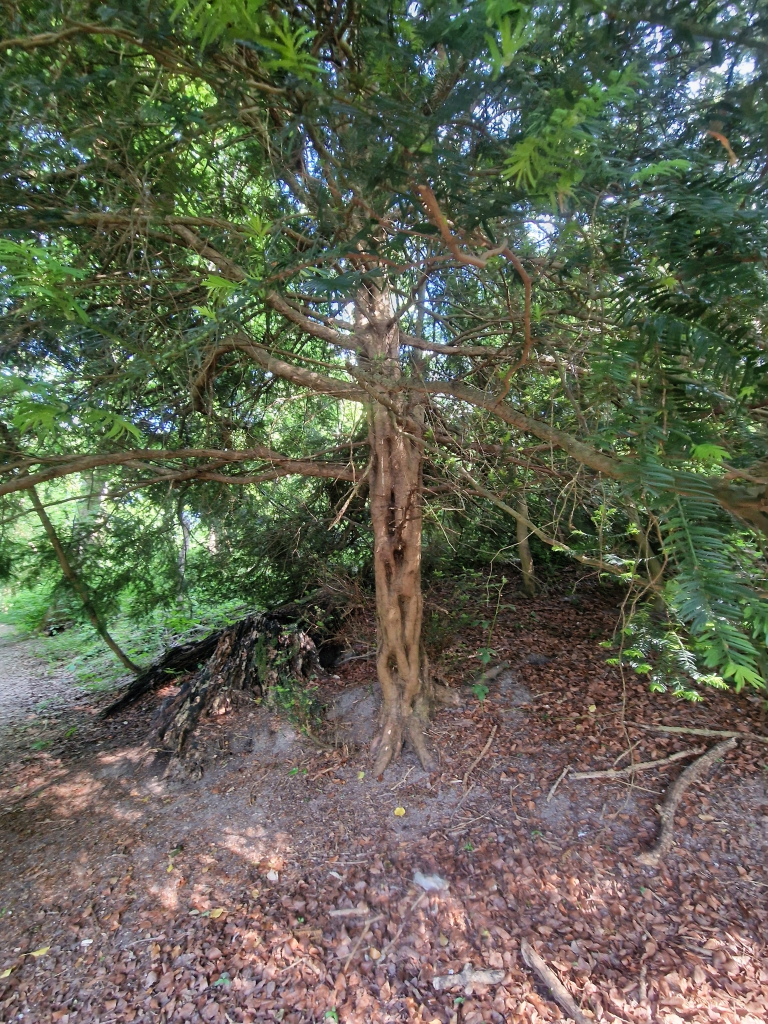
Taxus baccata English Yew

Fagus sylvatica Beech There are several veteran Beech at Newtimber

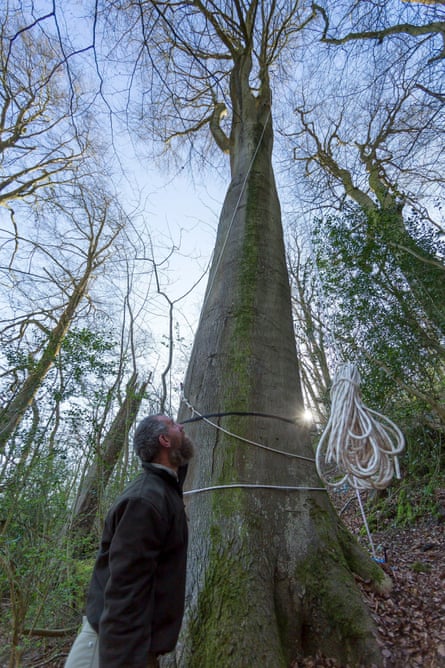
 144ft beech in Sussex named Britain’s tallest native tree

A beech tree on the South Downs in West Sussex is thought to be almost 200 years old and beat the previous champion by 3ft

A beech tree standing 144ft (44 metres) high has been declared the tallest native tree in Britain.

The tree, which is thought to be almost 200 years old, stands in Newtimber Woods on the National Trust’s Devil’s Dyke Estate in West Sussex, in the South Downs landscape.
The discovery of a new record for the tallest native tree title was made by Owen Johnson, the honourable registrar for the Tree Register, a charity which holds records of more than 200,000 exceptional trees in Britain and Ireland.

He was alerted to the possible new champion, one of a clump of trees planted together which has achieved its great height by continued competition to reach the light and being allowed to grow unmanaged for 90 years, by dendrologist Peter Bourne.

Beech tree standing 144 feet (44 metres) high has been declared the tallest native tree in Britain
The full height of Britain’s champion native tree. Photograph: John Miller/National Trust/PA

Dr Johnson said: “I didn’t quite believe Peter when he said the tallest tree in the woods could be 44 metres tall as I know the South Downs so well. When I finally got around to visiting I found my scepticism entirely unjustified. Guardian 15.04.2915 Press Association
Lichens

On Large Leaved Lime

Lepraria finkii Fluffy Dust Lichen

Phlyctis argena Whitewash Lichen

On Beech

Enterographa crassa

Enterographa crassa is often found in the bases of old beech trees, but it is very difficult to see as it is very small. Their Apothecia (fruiting bodies, in this species, tiny black dots are usually very numerous, brown-black, deeply immersed, without a rim, minutely punctiform or ± broadly elliptical in surface view, 0.1–0.25 × 0.05–0.1 mm, often in dotted or thread-like lines British Lichen Society Enterographa crassa

Cladonia caespiticia Stubby-stalked Cladonia

Fuscidea lightfootii

Lecidella elaeochroma Lecidella Lichen

Xanthoria parietina Golden Shield Lichen

On Ash

Flavoparmelia caperata Common Greenshield Lichen

Parmotrema perlatum Black Stone Flower

Punctelia jeckeri Powdered Speckled Shield Lichen

Hypotrachyna afrorevoluta

Parmelia sulcata Netted Shield Lichen

On Hazel

Probably Graphis scripta Common Script Lichen; very common on Hazel and other smooth-barked trees. The Graphidaceae (script lichen) family can only be definitively identified to species level with microscopy of spores.

Arthonia atra

Unknown Tree

Punctelia subrudecta Powdered Speckled Shield Lichen

Rooks Clift, Harting Downs, West Sussex. 13.05.25

This is the most beautiful area of downland ancient woodland I have ever visited. It is a “hanger wood”; a wood of the steep slopes of an escarpment. Ancient woodland is much rarer on the South Downs than in the Low and High Wealds of Sussex, due to historic sheep gazing; although the short calcareous grassland that supports rare vascular plants and invertebrates because of that grazing is biologically magnificent and of national ecological importance. Sadly, short calcareous grassland makes up only 4% of the South Downs.

Most of the remaining ancient woodland of the South Downs is on the scarp face of the Downs; such as at Newtimber Holt, and the scarp from Steyning to just south of Washington, and Rooks Clift. Although there are some very rare examples of chalk dry valley ancient woodland e.g. East Dean Park Wood SSSI (in the Goodwood Estate, private) and dip slope ancient woodland e.g. Pads Wood SSSI (in the Uppark Estate, private)

The extent of the coppiced Large-Leaved Lime, and ground flora including abundant Solomon’s Seal and Ramsons was extraordinary.

Large Leaved Lime, Tilia platyphyllos

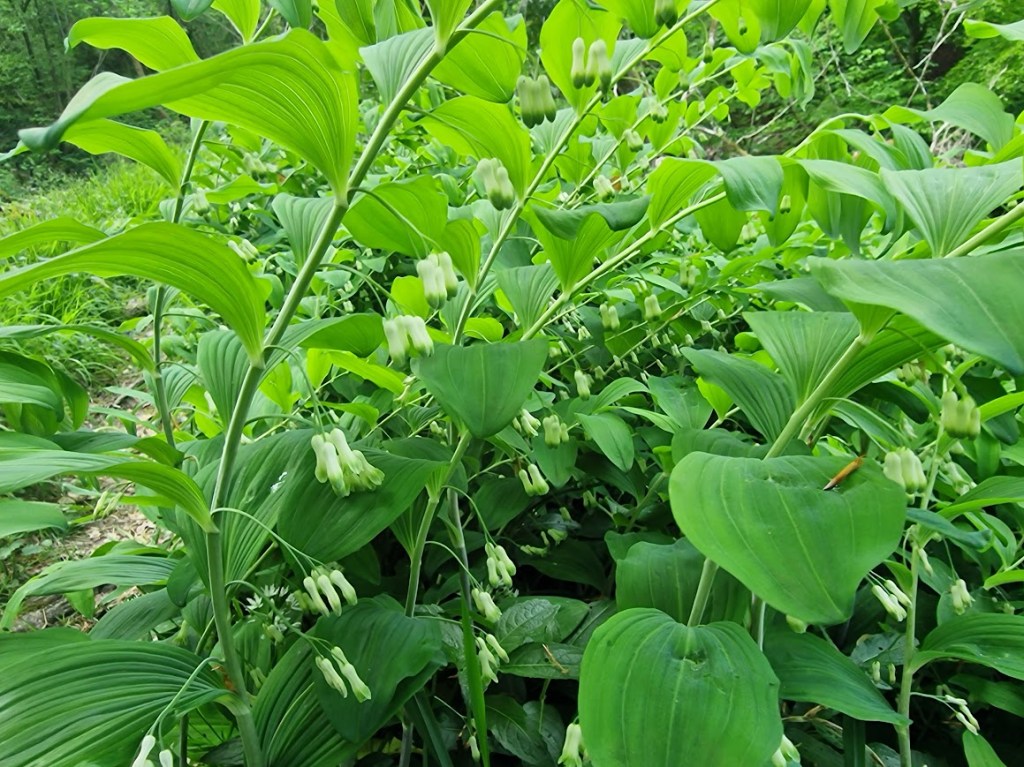
Ramsons, Allium ursinum, and Solomon’s Seal, Polygonatum multiflorum

Rook Clift is a small wooded combe on the scarp slope of the South Downs. …
This site is an ancient woodland which remains in a semi-natural condition. Large leaved lime Tilia platyphyllos dominates the canopy, together with ash Fraxinus excelsior and some beech Fagus sylvatica. Large leaved lime is a nationally scarce tree, with its natural range concentrated on the limestones of the Wye Valley and Peak District. Thus the high concentration of mature coppice stools, occurring on chalk, make this site nationally important and unique within West Sussex and the South Downs Natural Area.
… The field layer is dominated by vernal species such as ramsons Allium ursinum and bluebell Endymion non-scripta, or shade tolerant species including dog’s mercury Mercurialis perennis, spurge laurel Daphne laureola and sanicle Sanicula europaea.

The steep sided valley around the steam is more open with a canopy dominated by ash and wych elm Ulmus glabra. Here the field and ground layers are more developed with stands of hart’s tongue fern Phyllitis scolopendrium and soft shield fern Polystichum setiferum abundant, and opposite-leaved golden-saxifrage Chrysosplenium oppositifolium common the stream side.
Helicodonta obvoluta and several which are indicative of ancient woodland
Rooks Clift Nature England SSSI specification

There are many ancient woodland indicator species in Rooks Clift. Aside from Large-Leaved Lime, Ramsons, and Solomons Seal, I saw Yellow Archangel, Wood Spurge, Wych Elm, and Enterographa Crassa (a relatively common lichen in old Southern woodlands, but on the indices of Ecological Continuity for Scotland). The wood also has Spurge-Laurel; but I didn’t find any.

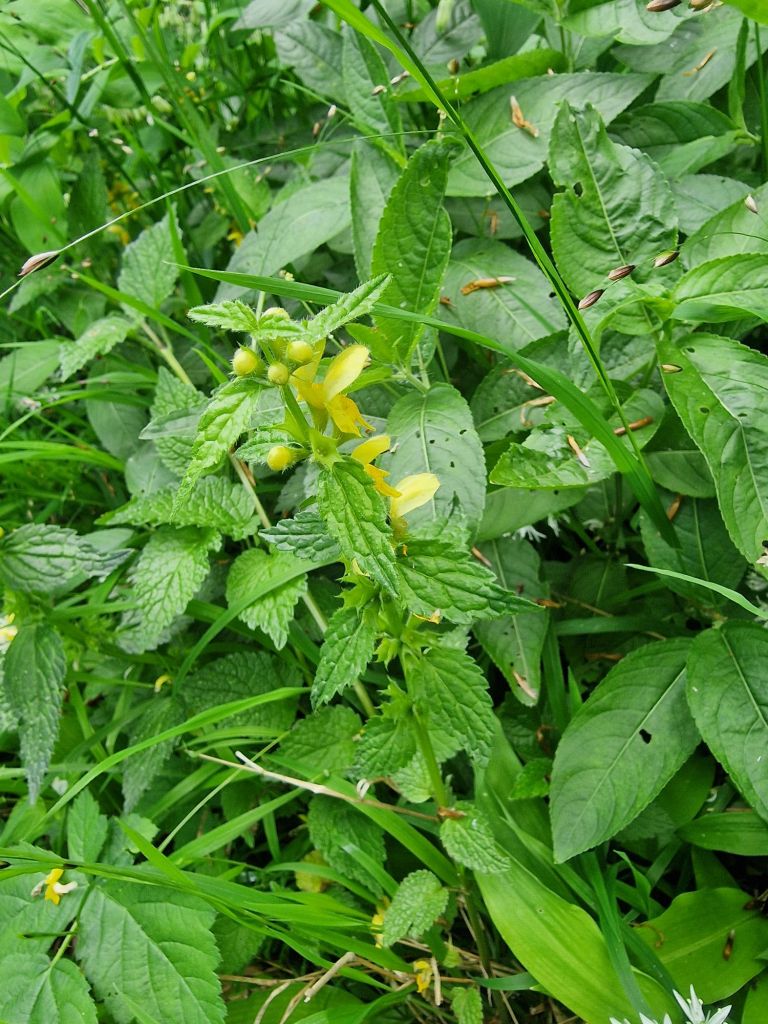
Yellow Archangel, Lamium galeobdolon

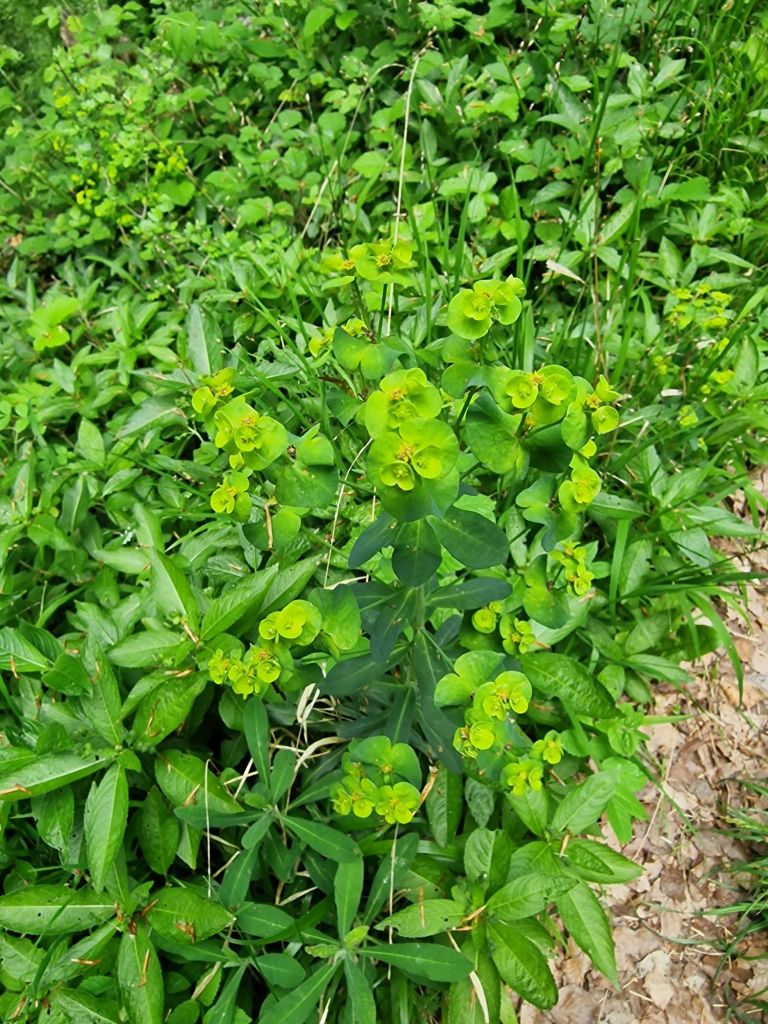
Wood Spurge, Euphorbia amygdaloides

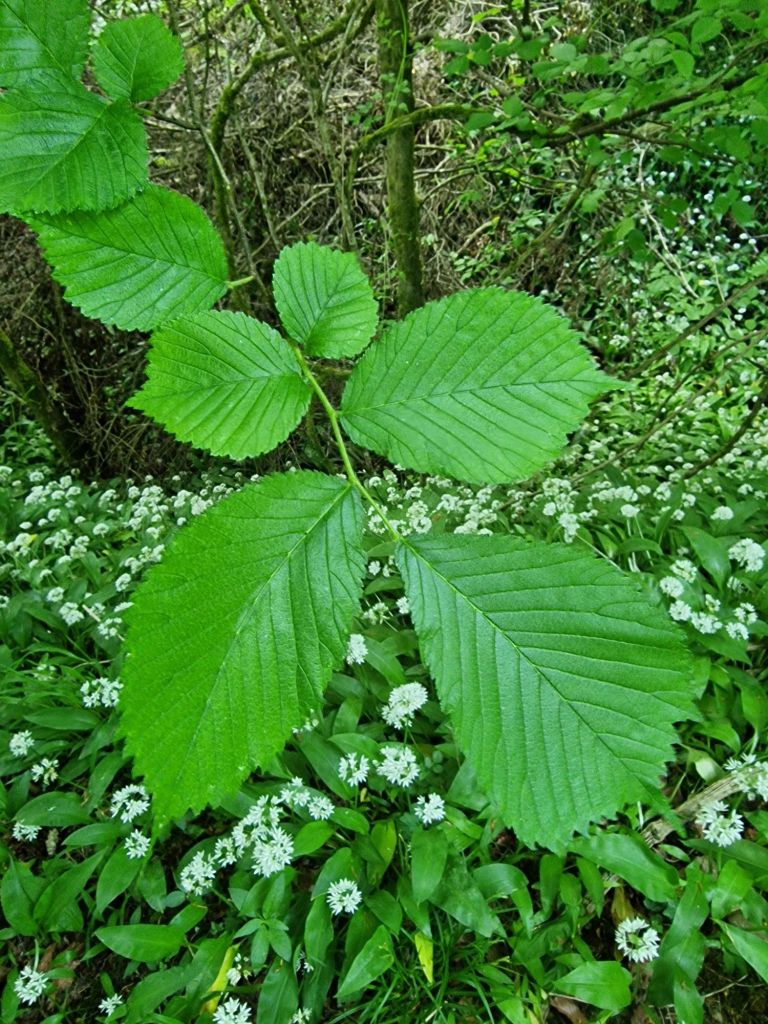
Wych Elm, Ulmus glabra

Enterographa crassa lichen

on Large Leaved Lime

Dog’s Mercury, Mercurialis perennis

Eld Ear Lichen, Normandina pulchella, on the liverwort Forked Veilwort, Metzgeria furcata. Elf Ear lichen always grows on bryophytes (mosses and liverworts)

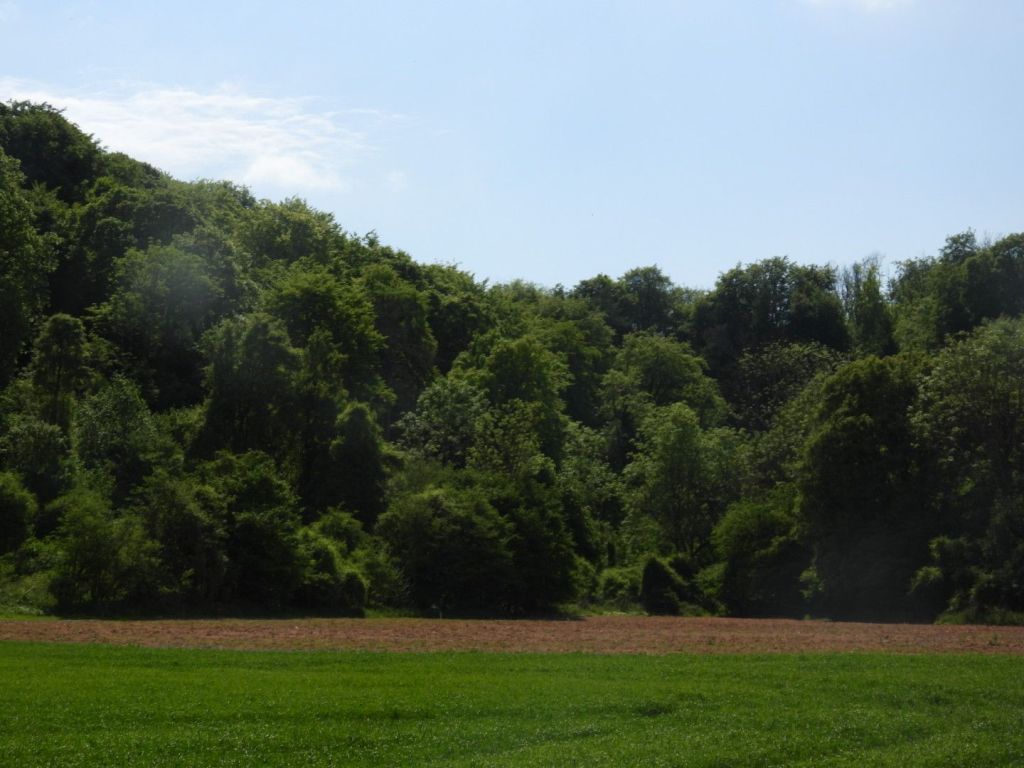
Looking up at Rooks Clift from the Greensand fields of the Low Weald.

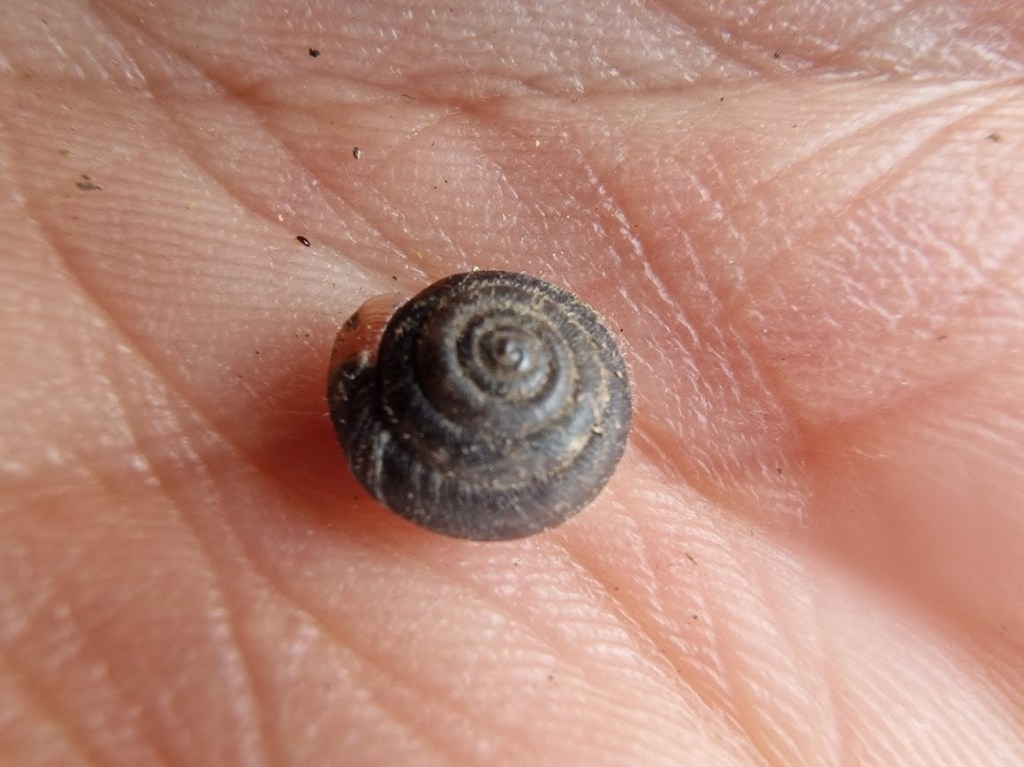
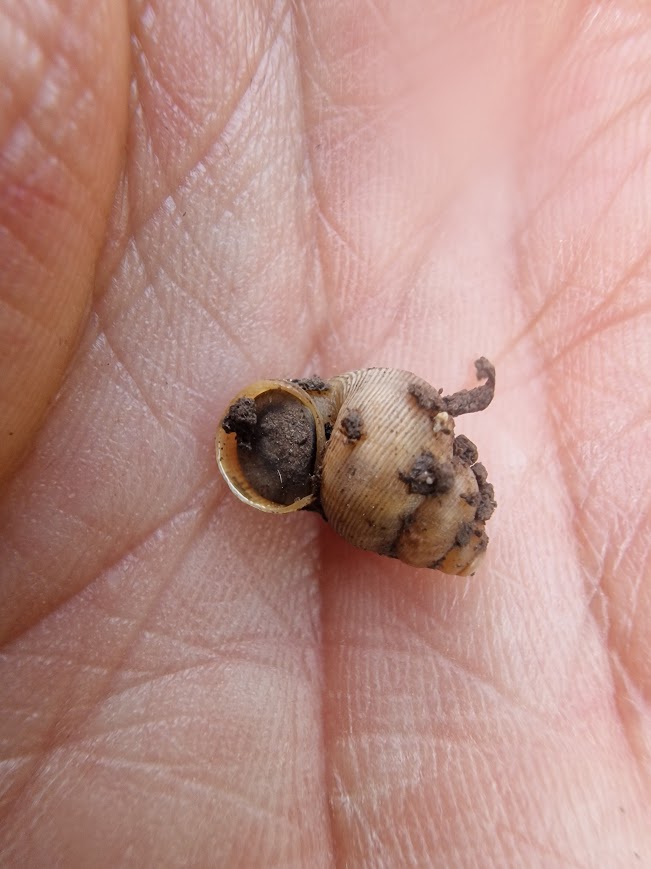
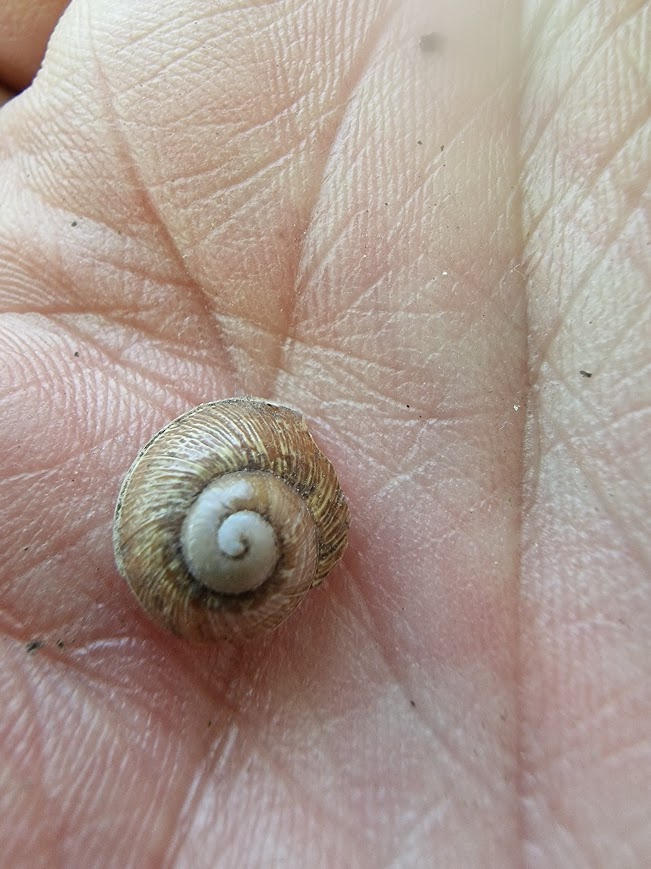
This wood also supports a rich mollusc fauna including the Red Data Book species Helicodonta obvoluta and several which are indicative of ancient woodland. [SSSI specification]. On a visit the week before, focussed on molluscs, with a friend and mollusc expert, we didn’t find Helicodonta obvoluta, but we did find these common snails:

Hairy Snail, Trochulus hispidus Genus Hemicycla;  Round-mouthed Snail Pomatias elegans

Possibly Macrogastra ventricosa  in the family Clausiliidae, the door snails

Looking up to Rooks Clift from the farmland at the bottom (lower greensand of the Low Weald)

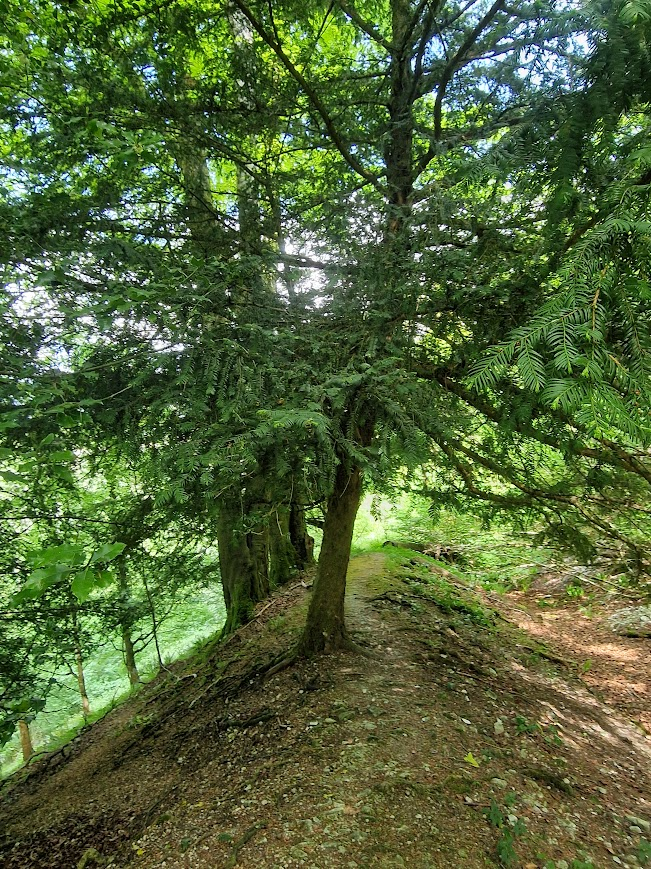
Looking down the footpath, with native Yew Taxus baccata, a native South Downs Tree. The path follows a ancient bostal, a Sussex dialect word referring to medieval track running up the scarp slops in the South Downs, typically diagonally to reduce the gradient.

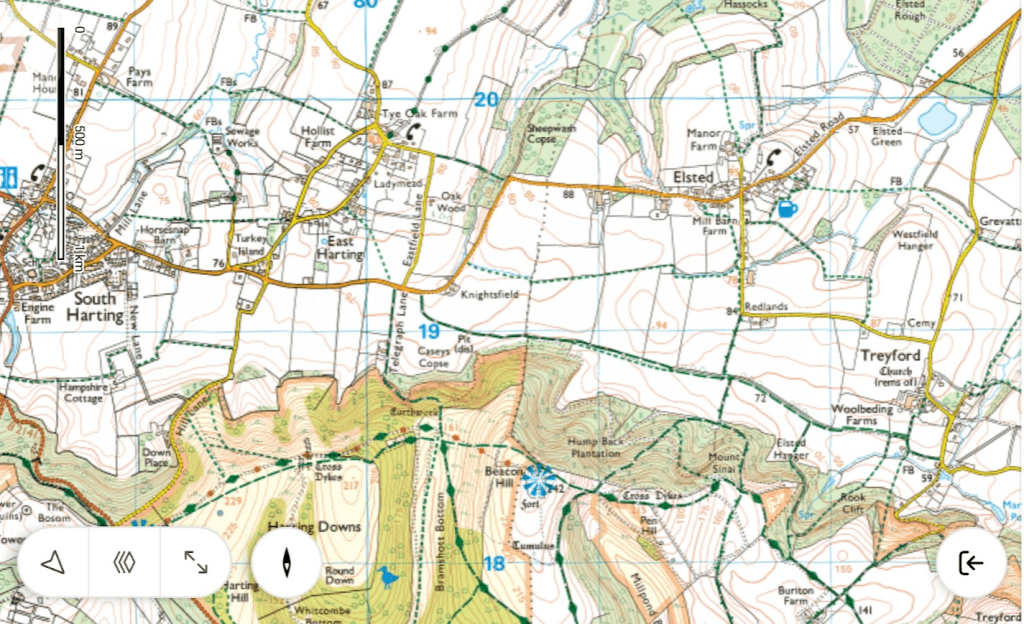
Location: near South Harting, West Sussex, between Chichester and Petersfield

Screen captures Ordnance Survey Map App from the © Ordnance Survey Crown Copyright

I got to Rook Clift by public transport. Train to Chichester then Stagecoach bus to South Harting 54 Bus Timetable It is a very irregular bus service with only 5 busses a day; so plan carefully!