Rare and common lichens on urban road trees in the Bristol Estate, East Brighton, and native pre-estate downland Elms. May 2026

When you look at the records of lichens the British Lichen Society holds for Sussex the vast majority come from countryside locations (woods, parks etc.) or churches; none come from trees in towns and cities. But its worth surveying urban trees, as lichens are abundant on the trunks of them, and rare lichens can be found on them

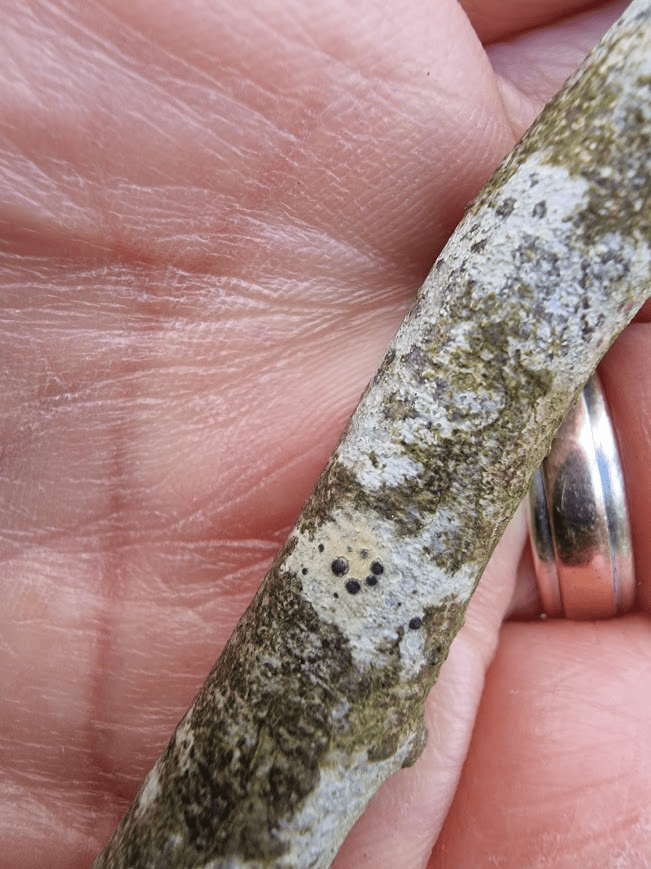
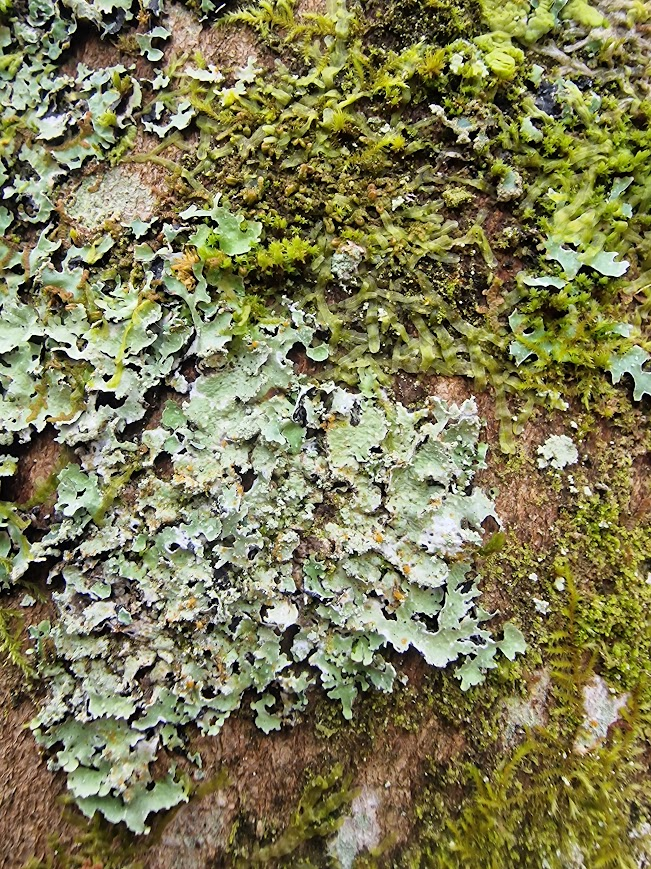
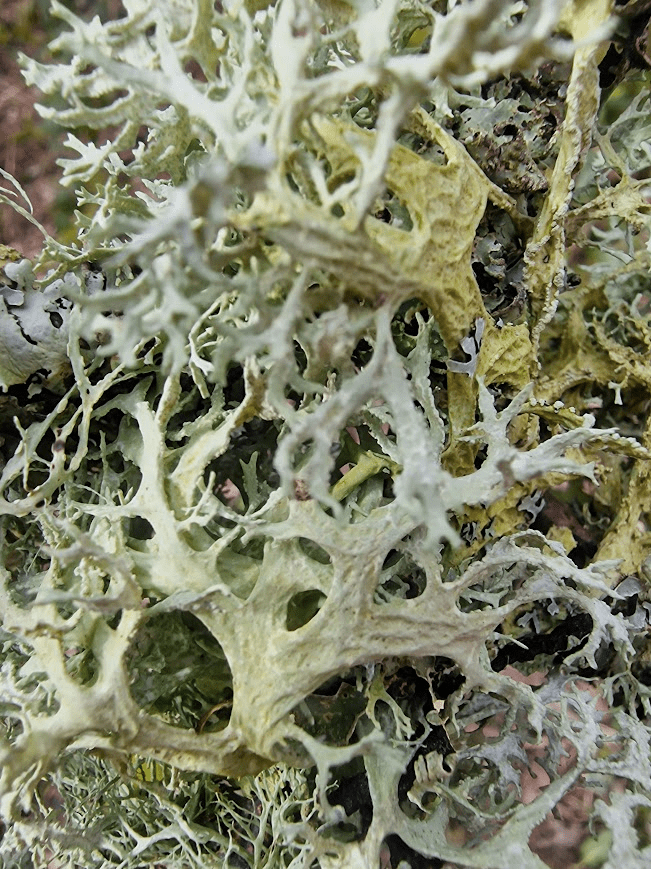
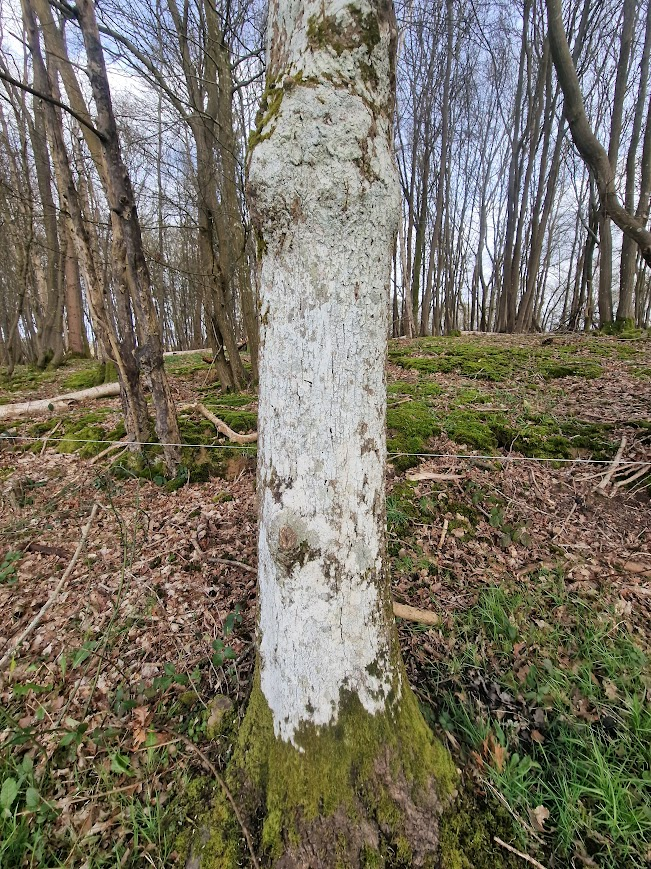
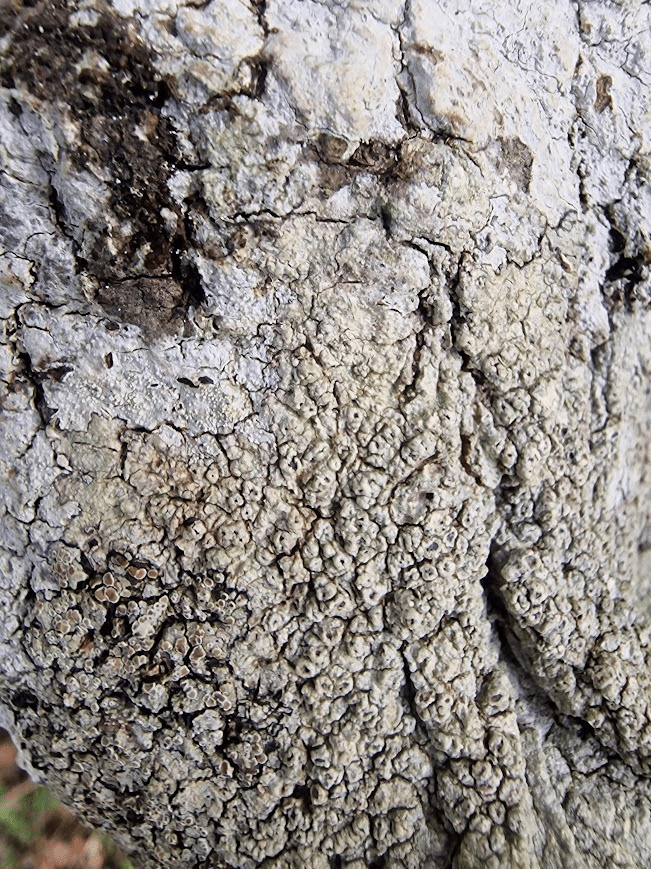
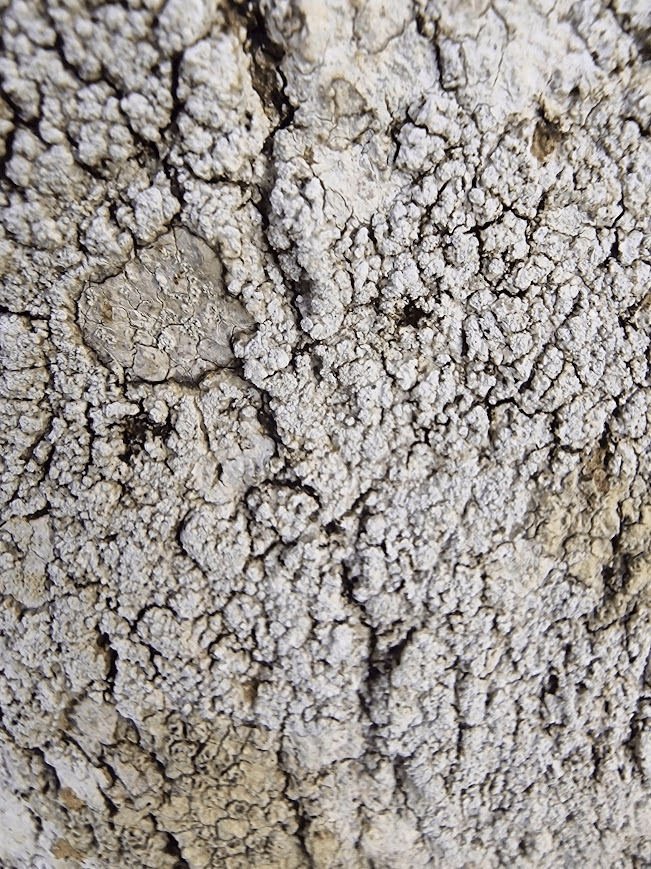
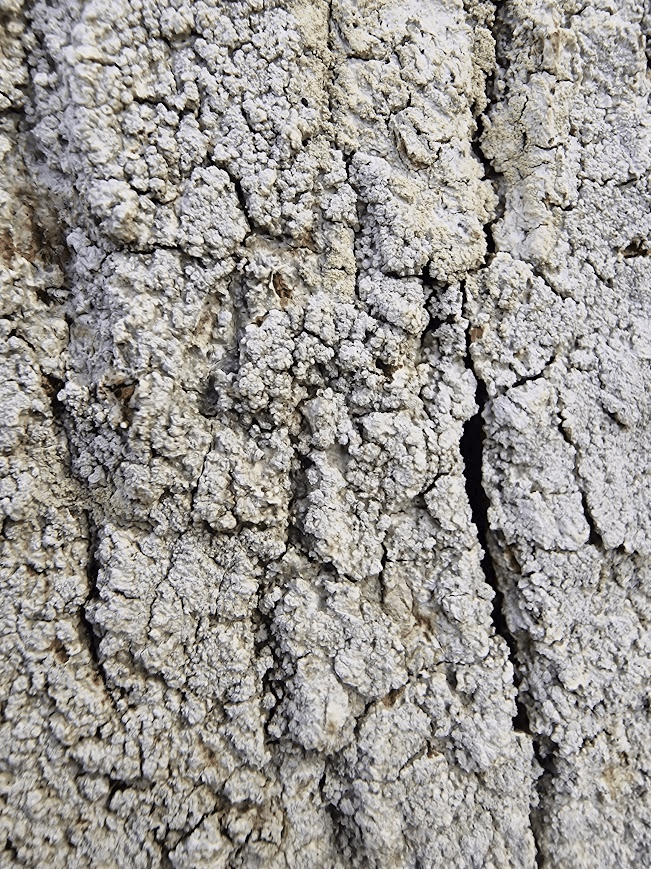
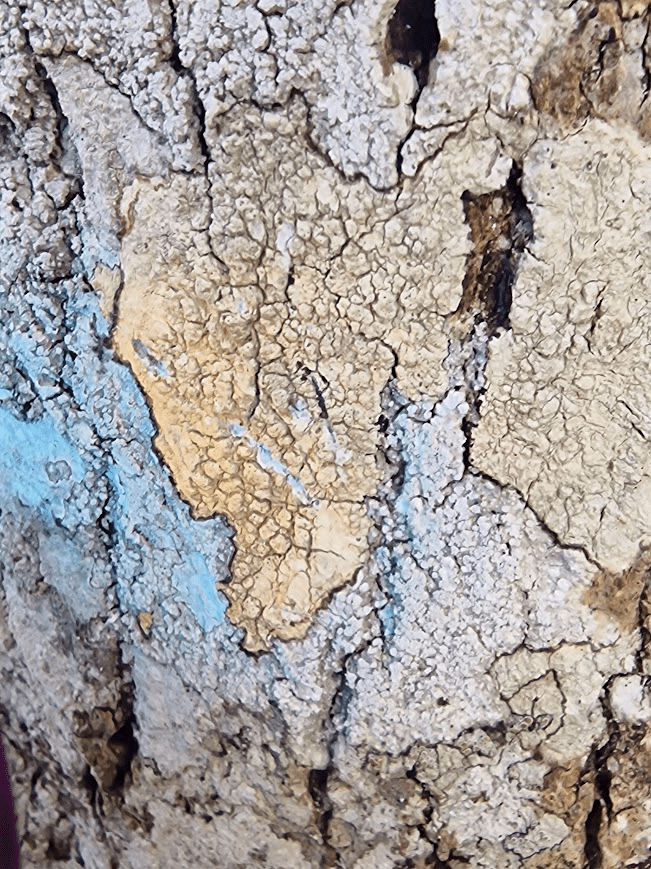
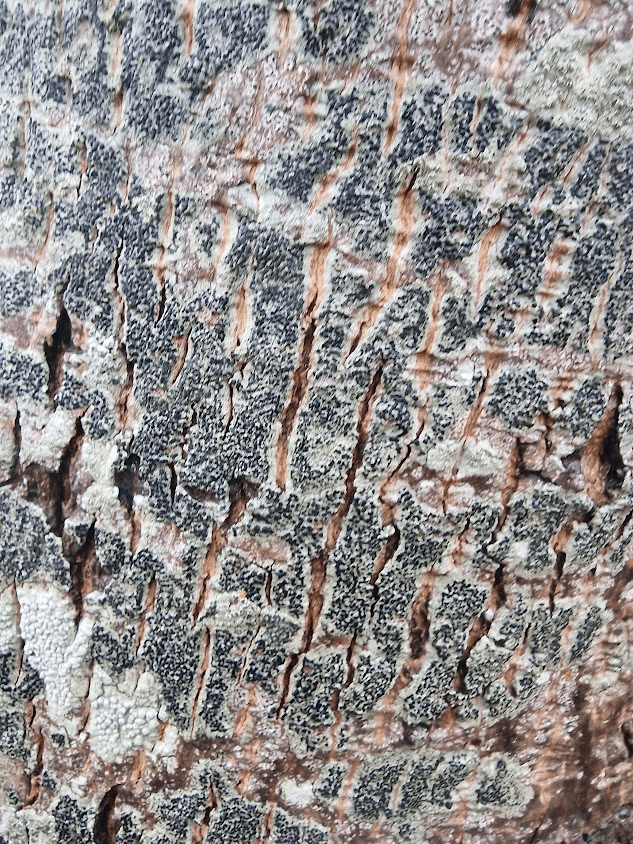
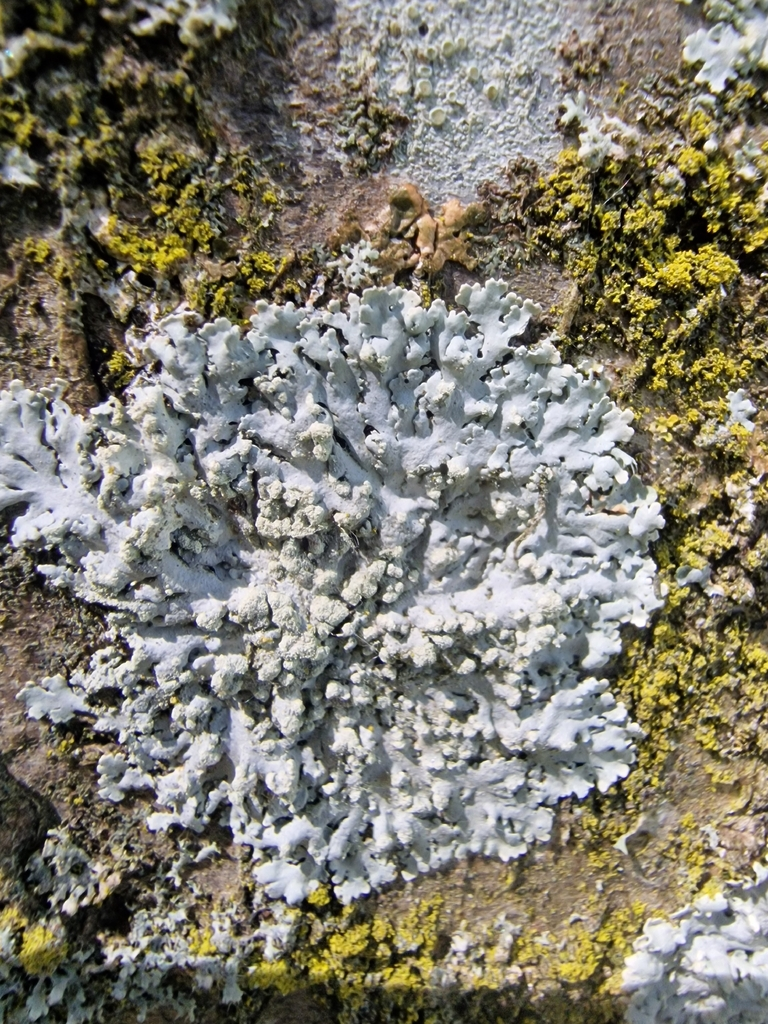
The trunk of a Swedish Whitebeam in Donald Hall Road, Bristol Estate (social housing) with lichens, including the rare Physcia tribacioides
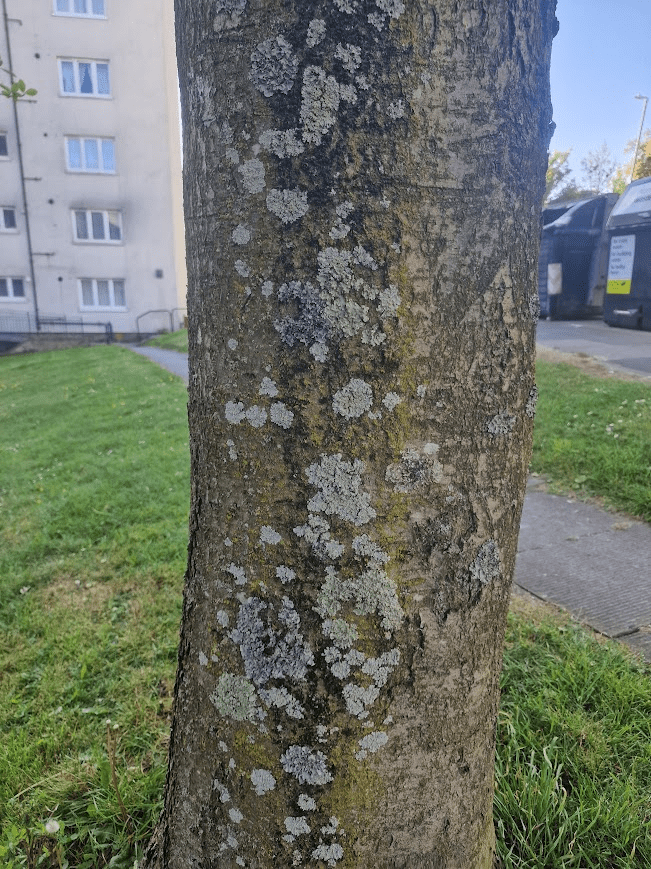
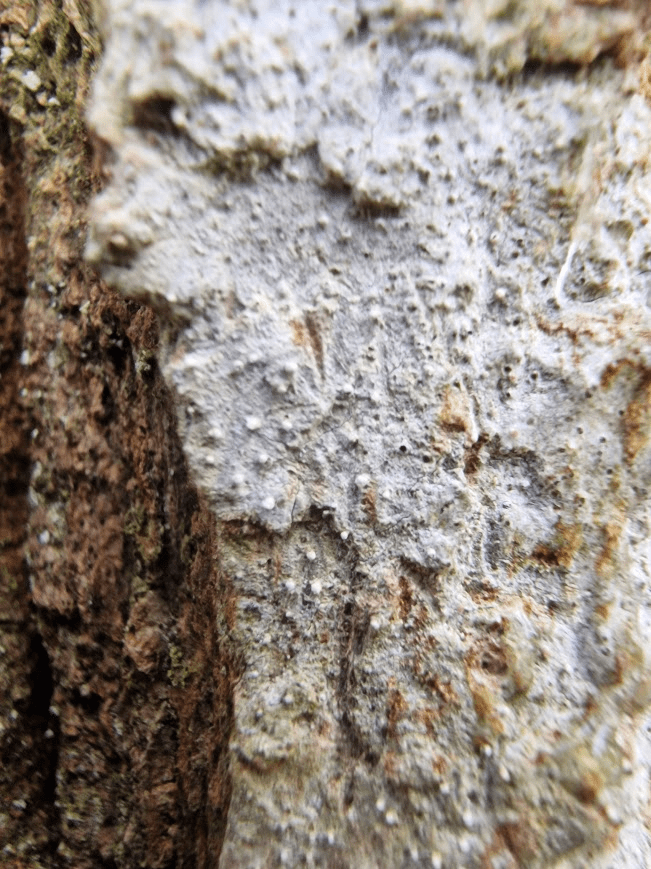
Physcia tribacioides on this tree
An urban forest includes all trees and shrubs within the parks, gardens, streets, woodland and open spaces of a town or city as well as the wildlife living amongst them. This also includes any trees that are planted on land belonging to private landowners, institutions, and local authorities.

Urban forest data, covering trees in public/private urban spaces, reveals that UK canopy cover averages ~17% What is the urban forest? – Forest Research

Total tree canopy cover in rural Great Britain is approximately 16.7%, including both established woodlands and scattered trees. England’s Urban Forests – Using tree canopy cover data to secure the benefits of the urban forest – Forest Research

So, you are equally likely, on average, to encounter trees in urban and rural spaces; although the place you are most likely to meet trees is in a wood, be it countryside wood e.g. Plashett Wood between Lewes and Uckfield, or an urban wood like Brighton’s Stanmer Great Wood. However, in towns and cities, in roads and parks there are many trees; but almost none of these trees have been surveyed for epiphytic lichens. This brings into question the validity of statistical measures of abundance and the identification of critical species to protect (e.g. the International Union for Conservation of Nature Red lists of lichens)

Our statistical knowledge of lichen distribution and abundance is greatly impaired by sampling bias; the dislike of walking around urban areas to look at lichens. Even with countryside lichens there are very few recent observations of lichens in Sussex. The map below is from the British Lichen All species interactive map; only monads (1km x 1km squares) with boxes have some lichen records; many monads have no lichen records

All species interactive map | The British Lichen Society
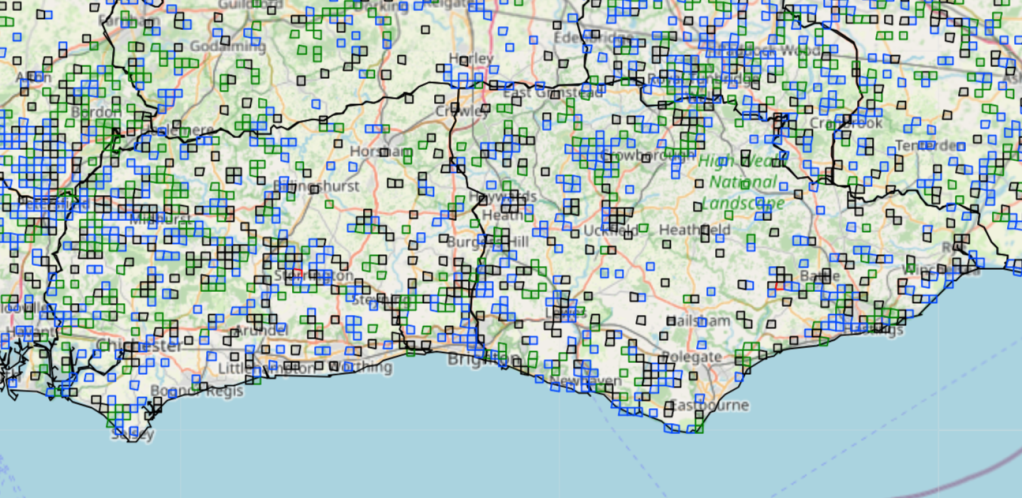
The British Lichen Society records for Sussex are an observational, opportunistic dataset, as is the National Diversity Network; observational, opportunistic datasets have significant limitations for biodiversity analysis. However, they are all we have, and most records are the result of amateur naturalists making observation and submitting records in their own time. I would urge lichen recorders to spend more time in urban settings.

Captioned screen shot of Google maps satellite view of the Bristol Estate with the main areas of trees on the estate that I looked at for lichens (not all the trees on the estate)
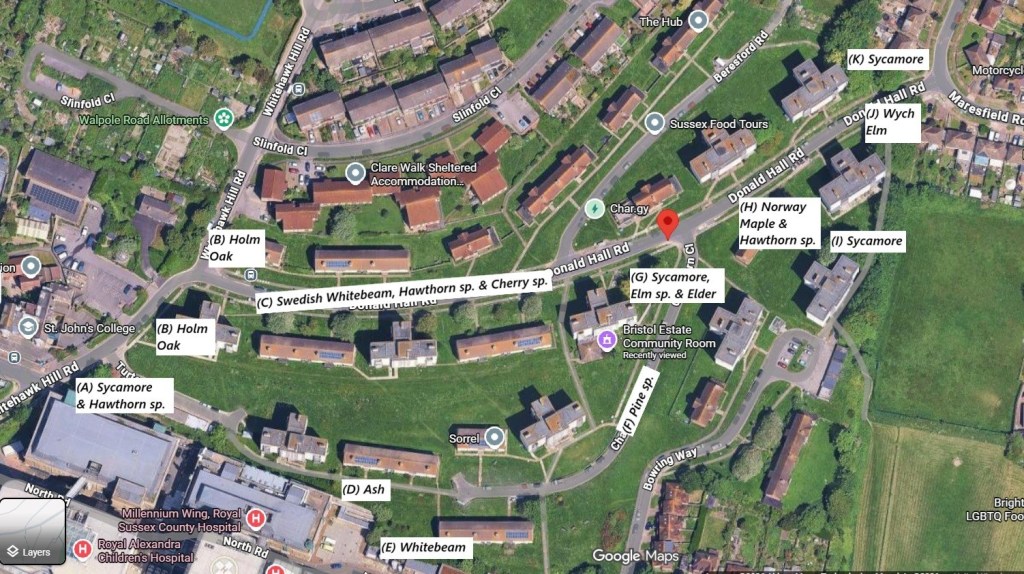
The Swedish Whitebeam Sorbus intermedia, Hawthorn Crataegus monogyna (probably a C. monogyna cultivar), Cherry sp. Prunus sp. (probably a P. avium cultivar), Norway Maple, Acer platanoides and Holm Oak Qurcus ilex look like they were planted at the time of the building of the estate, commissioned by the County Borough of Brighton in the 50s, as they are located in lines along the roads or at the end of housing blocks. The Ash Fraxinus excelsior and Pine sp. (probably Austrian Pine, P. nigra), look as if they were planted much more recently, and they also follow road/path lines.

The Sycamore Acer pseudoplatanus, Whitebeam Sorbus aria and Elder Sambucus nigra could have been planted, but more likely self-seeded, as they seem randomly located. Wych Elm, Field Elm, Whitebeam and Sycamore are native to the South Downs

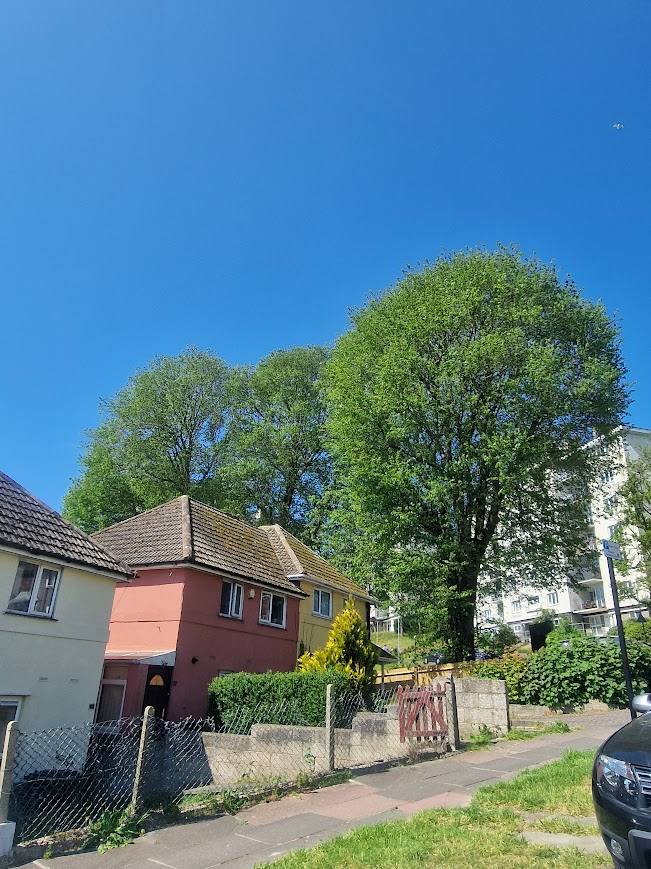
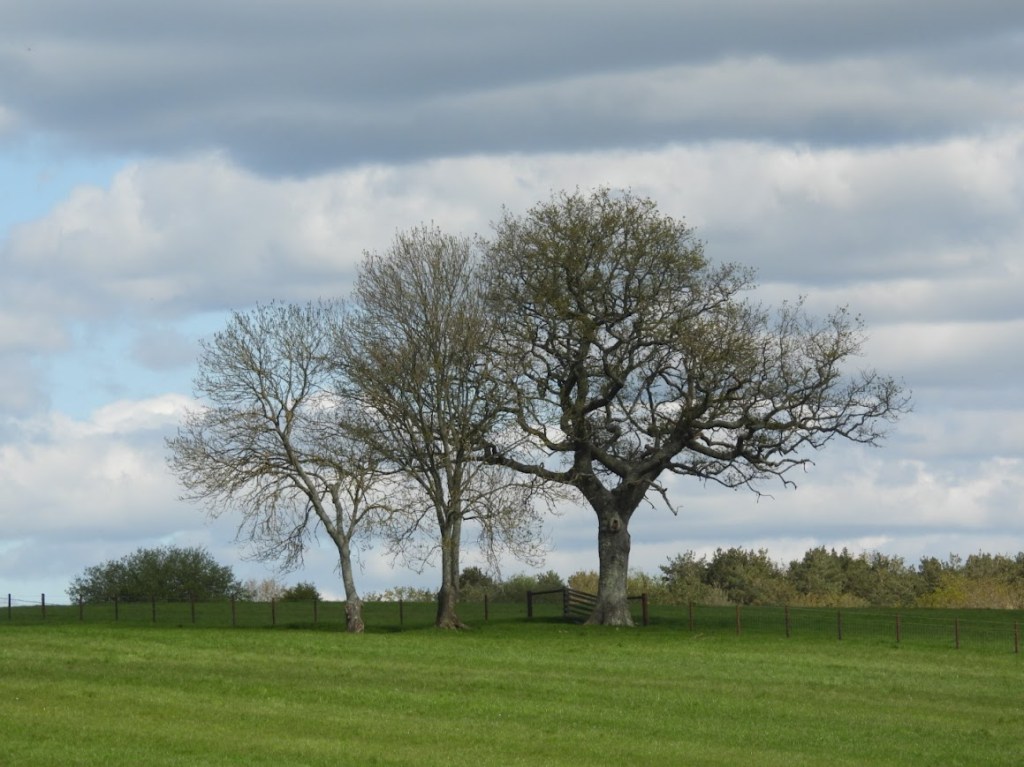
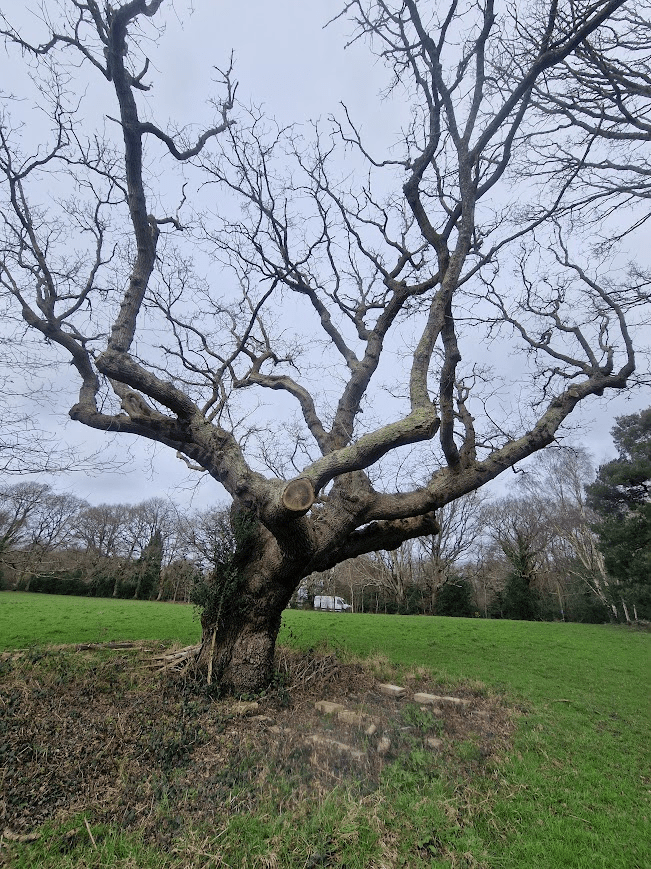
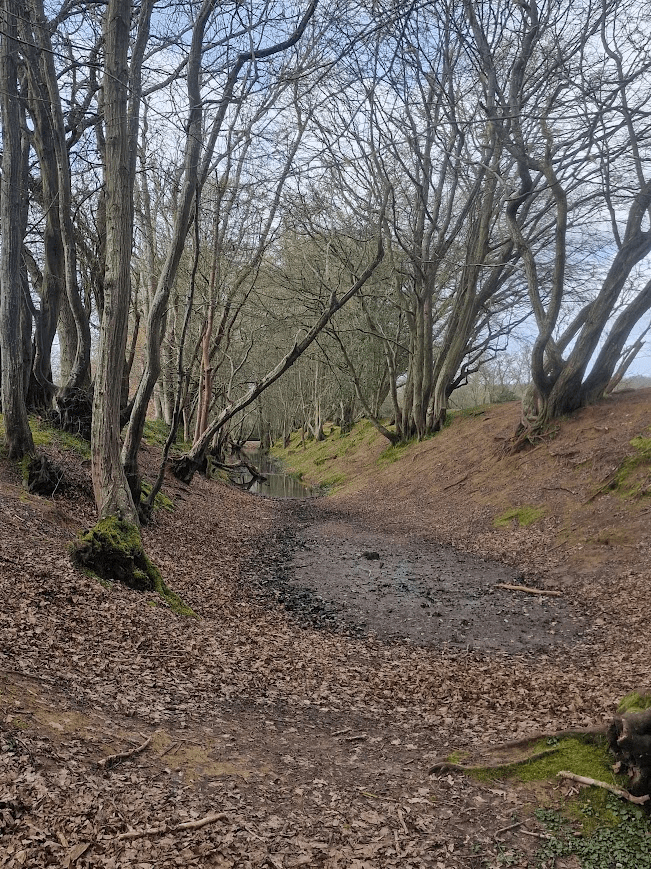
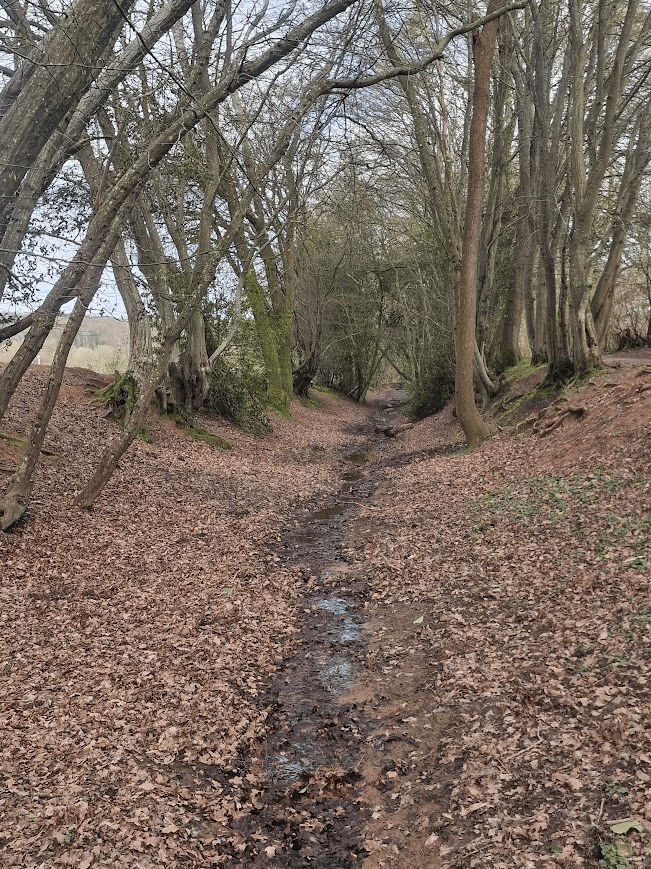
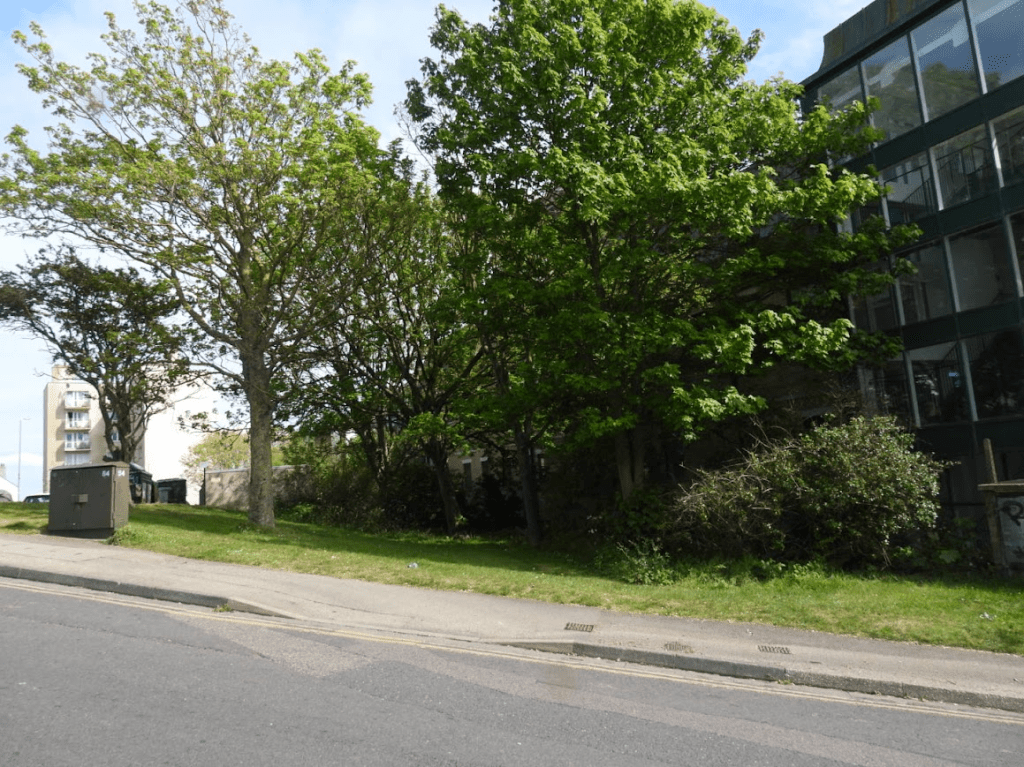
The Elms Ulmus spp. (Wych Elm Ulmus glabra & probably Field Elm U. minor) look much older than the estate and were probably native Elms on the dip-slope of the down on which the estate was built. Because they are within the Brighton & Hove City Council control area, they were spared infection by Elm Disease. The majority of the Ems in the Brighton and Hove National Elm Collection are trees planted by Victorians and Edwardians in roads and public parks; but the Elms of the Bristol Estate (along with the solitary Field Elm at the bottom of the Craven Vale Estate) appear to be native Elms that have survived development around them and Elm Disease; they are very precious trees, and very under-appreciated.

The Bristol Estate is perched high above Brighton between the Downs and the sea with stunning views of land and sea. It was built in post war Britain to a cutting edge design of tower blocks and low rise flats. There were no houses on the development, but lots of nice green space. The first resident moved into Donald Hall Road in 1957, and a number of The Marquess of Bristol’s estate was Bristol Estate developments | Bristol Estate | My Brighton and Hove

The estate is named after the Marquess of Bristol. In 1828, Frederick William Hervey, First Marquess of Bristol 1769 -1859 bought a double house plot at the North West corner of Sussex Square, enabling him to build a house four times the volume of other houses in the square. ... The Marquess owned an extensive estate in Brighton stretching from the rear of Sussex Square to the racecourse and beyond north to Bear Road and west to the site of the Royal Sussex County Hospital. The Hervey family seat was, until 1998, at Ickworth, Suffolk. The Kemp Town Estate – Who’s been living in my house?

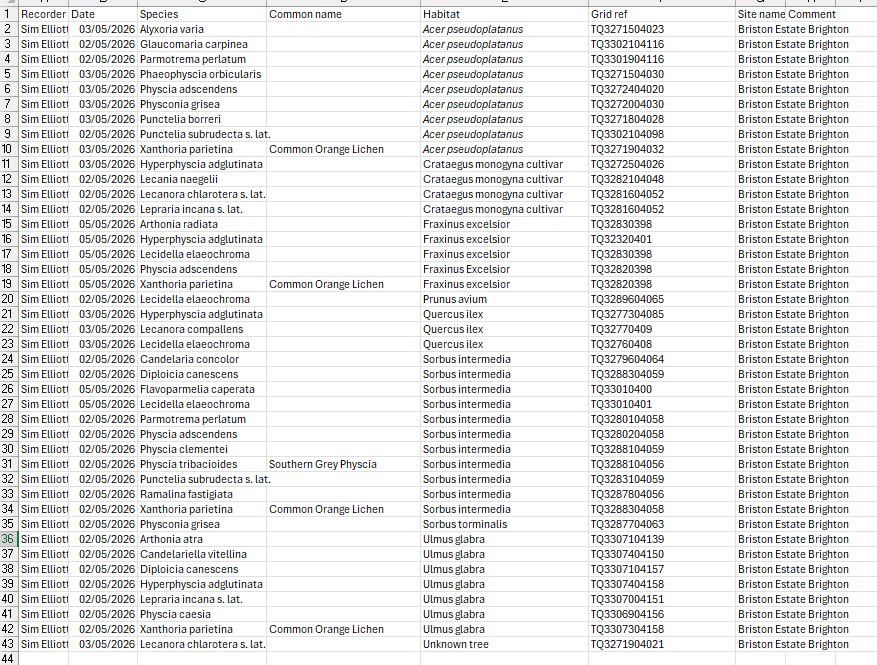
The lichens on trees which I recorded; there are undoubtedly more lichens on the trees than those I recorded; with photographs of some of them.

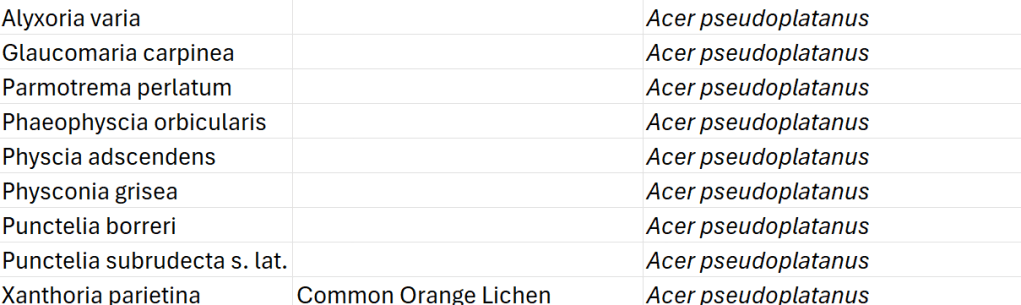
Sycamore
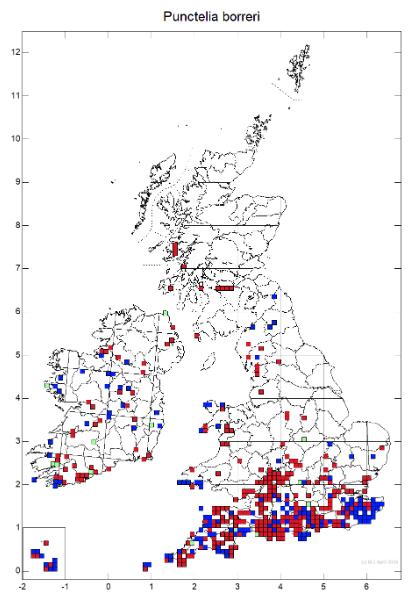
Puncetlia borreri
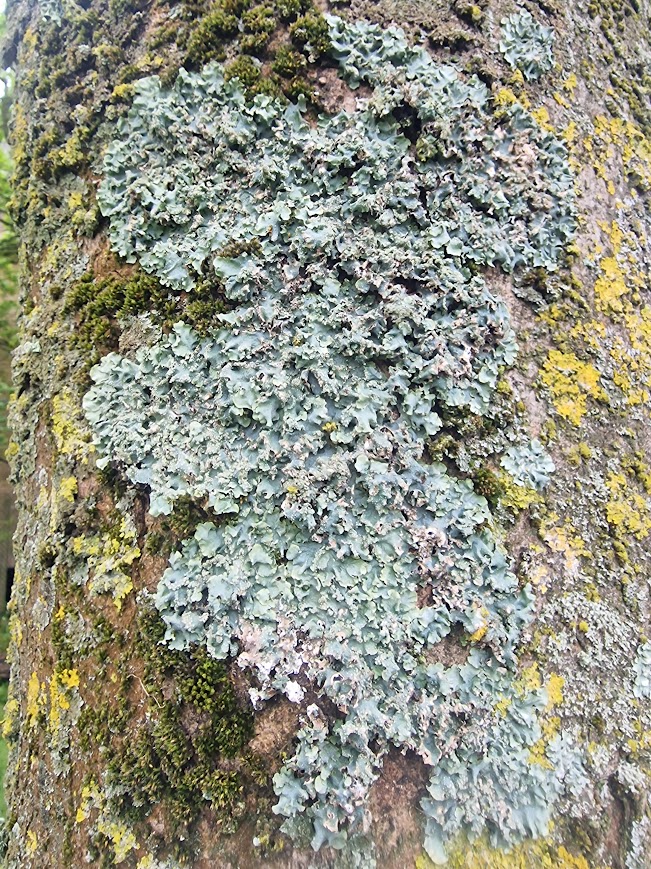
A very southern lichen

Phaeophyscia orbicularis
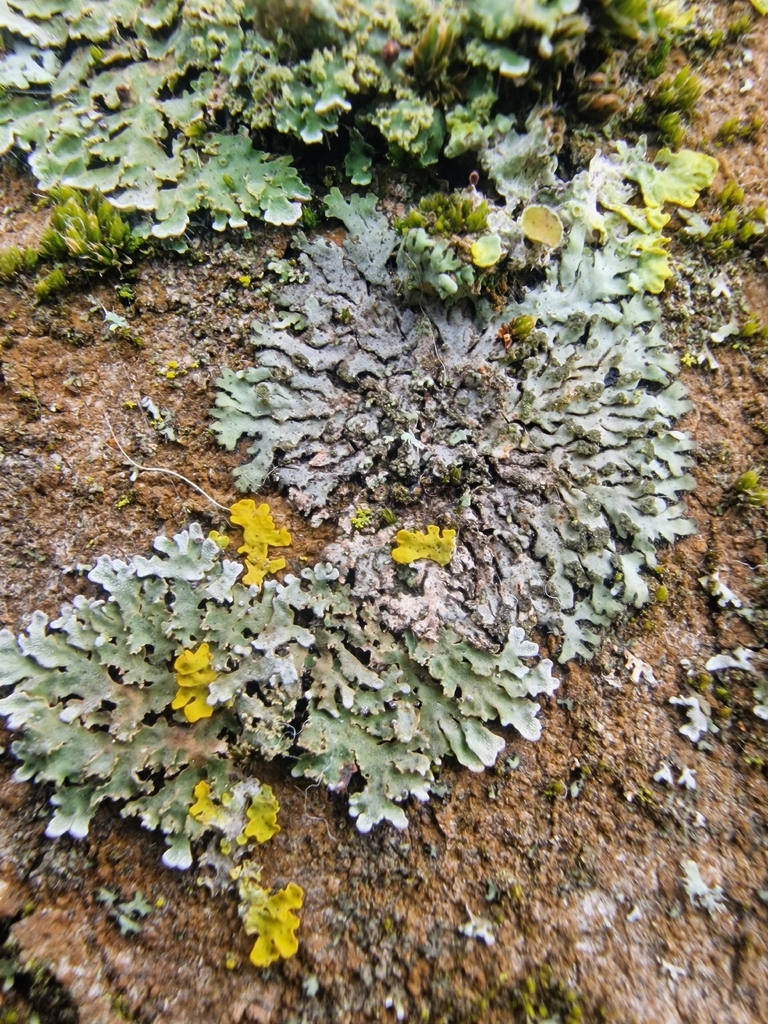
A common lichen on urban areas

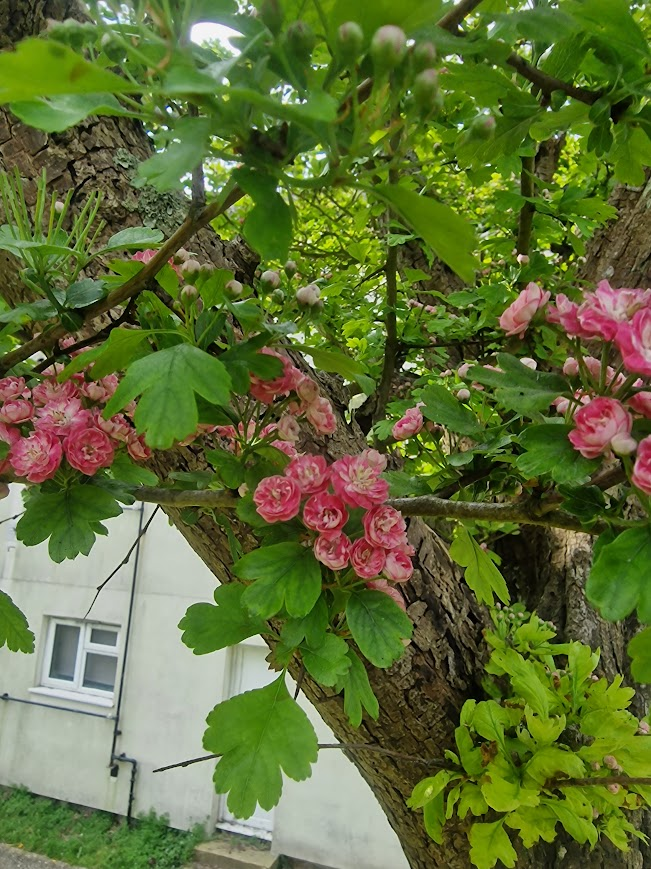
Hawthorn

A cultivar
Hyperphyscia adglutinata
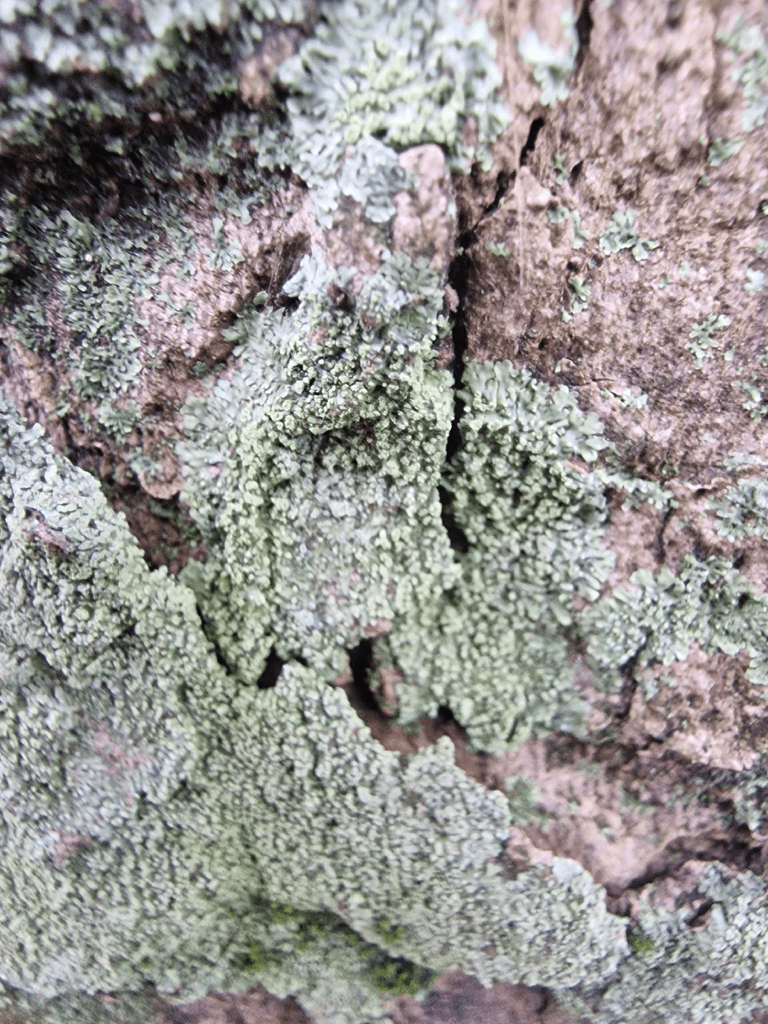
A common lichen on nutrient-enriched shaded trees in urban areas; very difficult to see as its very small

Lecanora chlarotera sensu latu
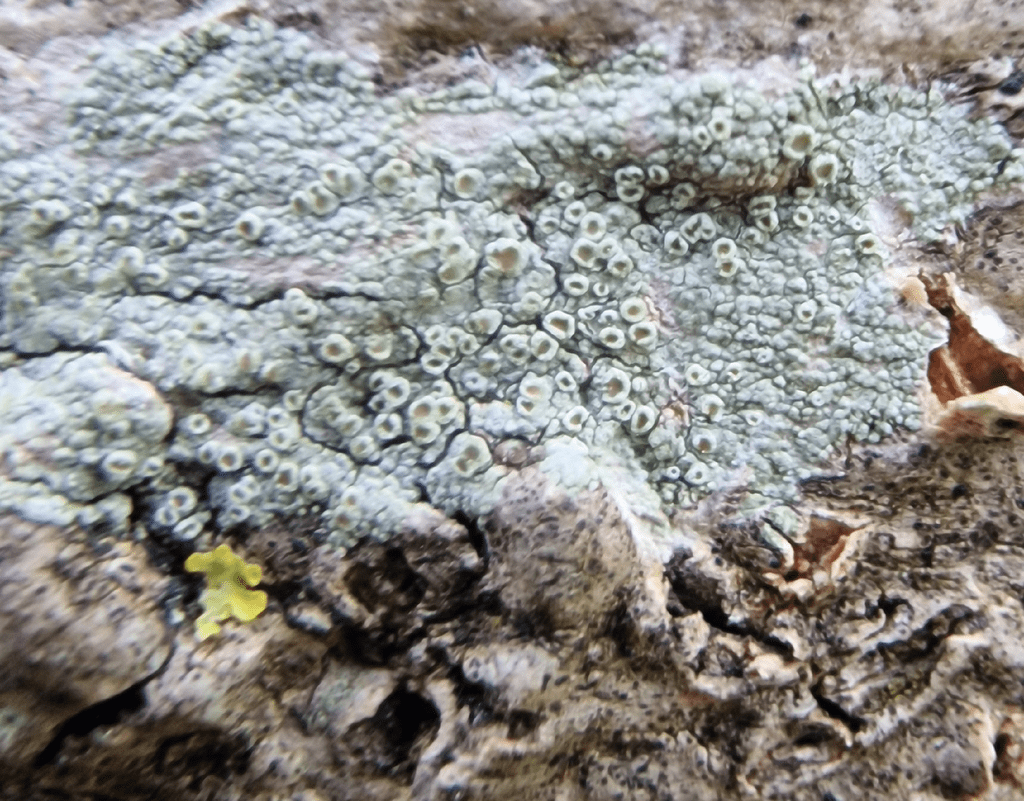
Lecanora chlarotera is impossible to separate from Lecanora hybocarpa without microscopy so I have recorded this is sensu lato “in a broad sense”; a term used commonly used in biology, to indicate that a scientific name is being used in a wide, inclusive sense, encompassing all its subordinate taxa or close relatives, rather than a narrow definition

Ash
Arthonia radiata
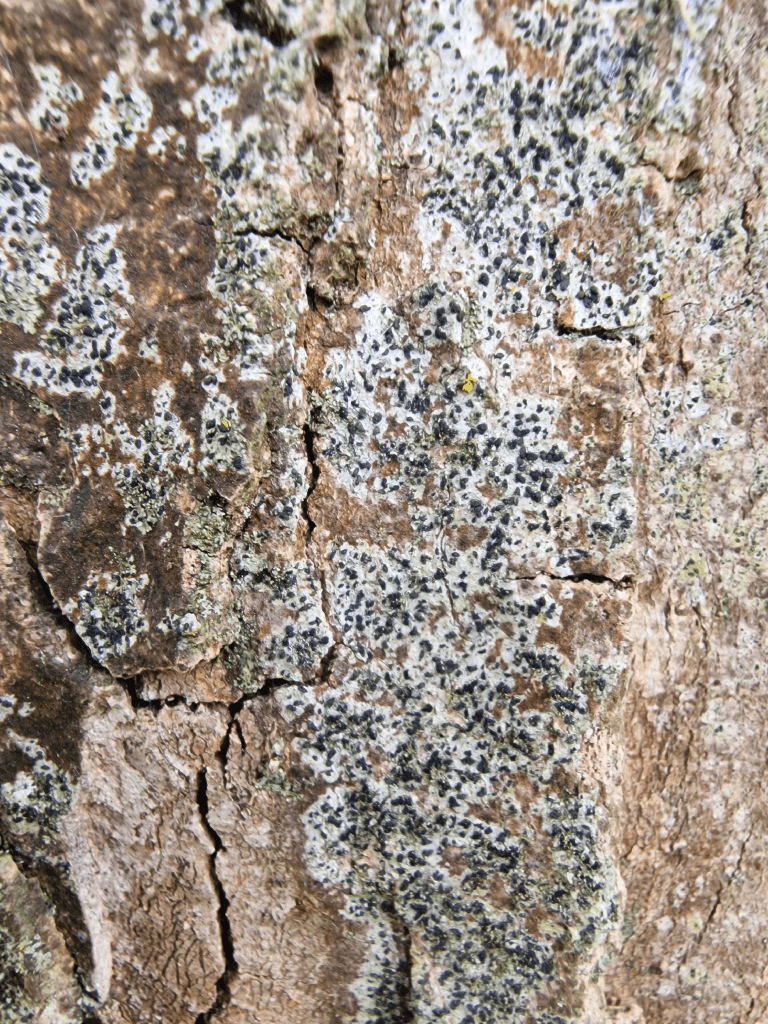
Arthonia radiata is a common pioneer species on twigs of smooth barked trees. It often grows with Lecidella elaeochroma and Lecanora chlarotera.

Cherry
Lecidella elaeochroma
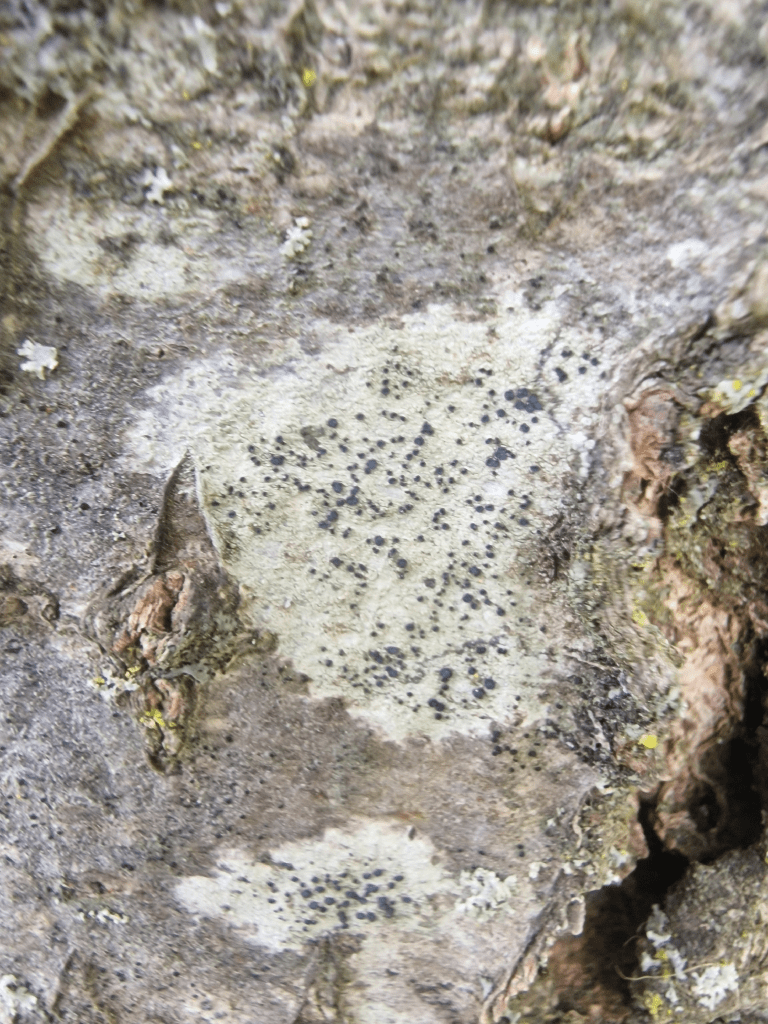
Very common on well-lit smooth bark, especially twigs and small branches, often forming mosaics; moderately tolerant of both sulphur dioxide and ammonia pollution.

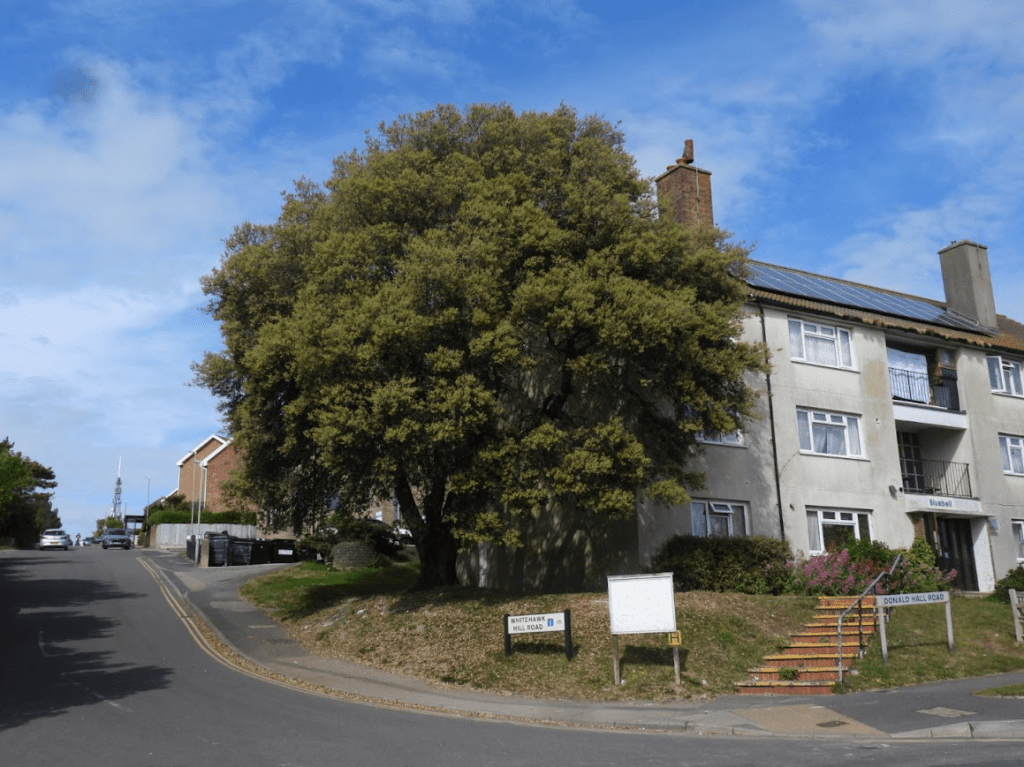
Holm Oak

A non-native evergreen Oak planted frequently by local authorities in urban settings; notoriously low in epiphyte diversity

Lecanora compallans
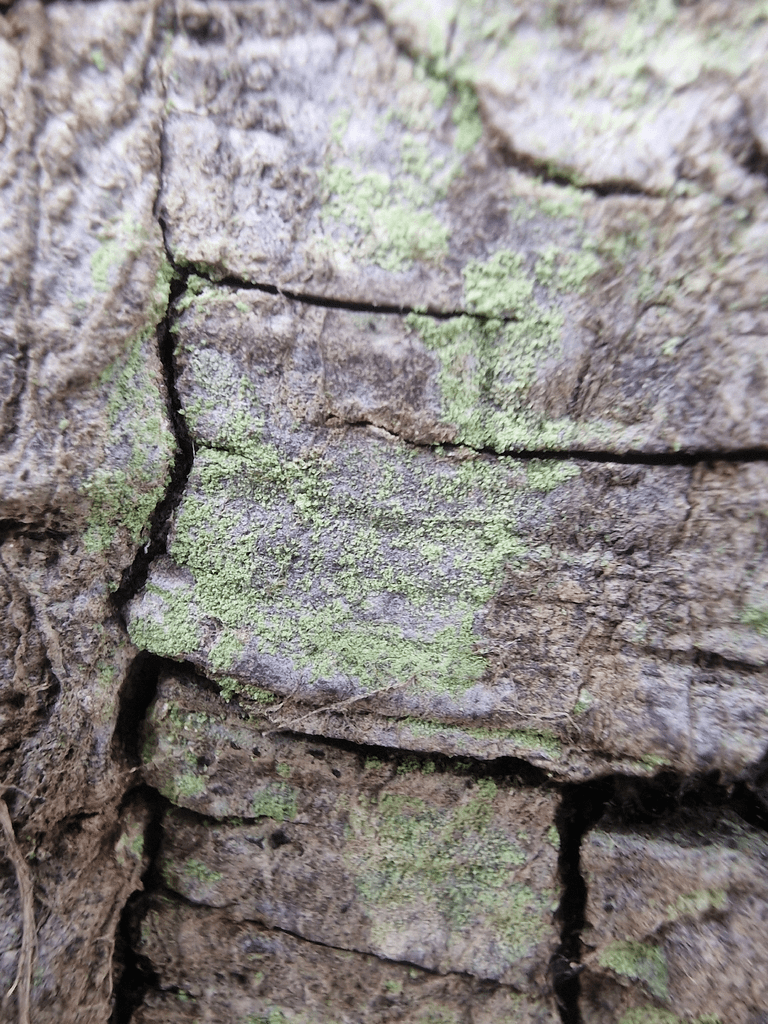
Lecanora compallans is very similar L. expallens and L. barkmaniana and can only be separated by chemical reagent spot testing, which I did.

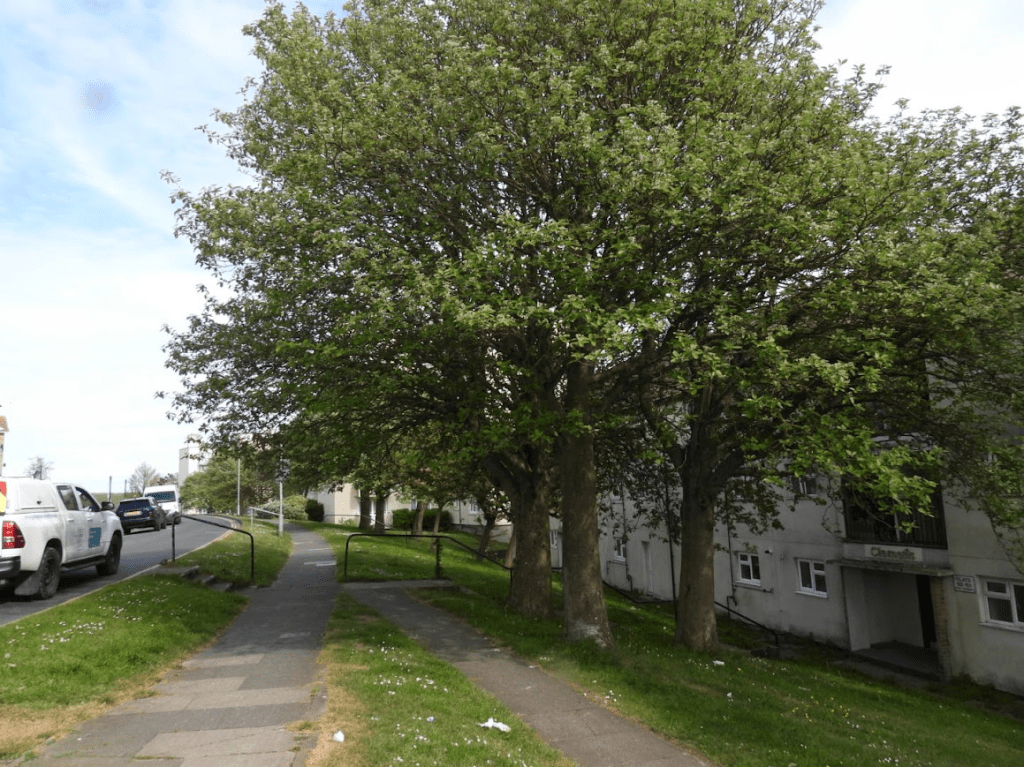
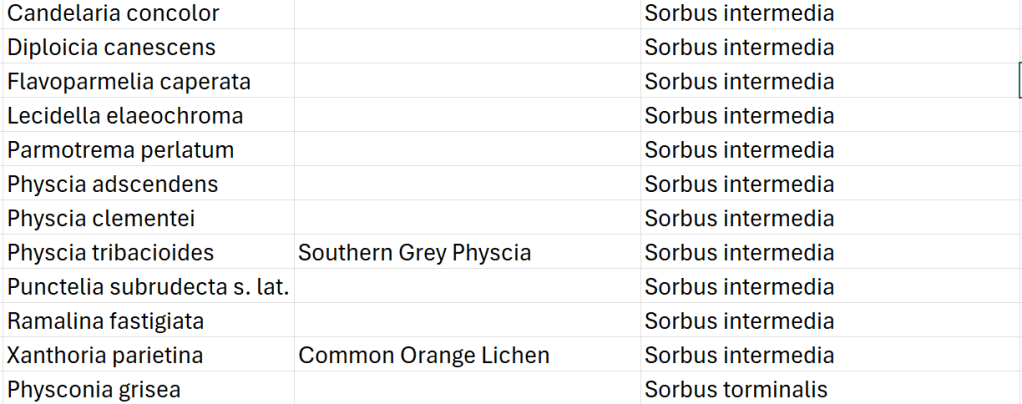
Swedish Whitebeam

A small deciduous tree, widely planted as a street tree as well as in gardens and parks, spreading by seed and frequently self- or bird-sown in woodlands, cliffs, hedges, rocky pastures, limestone pavements and waste ground, usually on base-rich soils. The occurrence of old trees at remote locations in Scotland has led some to consider that it may have colonized naturally from Scandinavia, with the seeds having been dispersed by migrating thrushes. Sorbus intermedia (Ehrh.) Pers. in BSBI Online Plant Atlas 2020
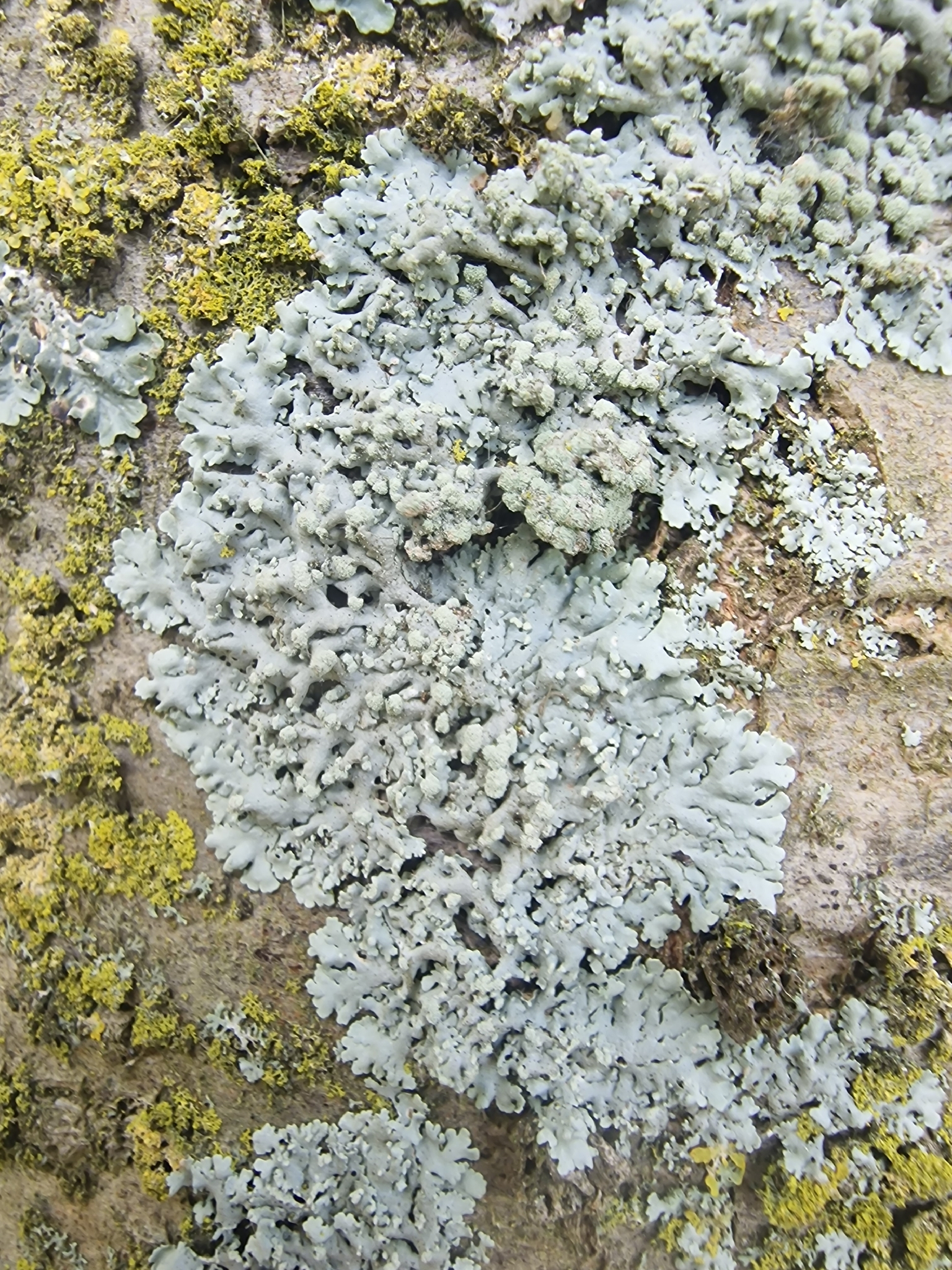
Physcia tribacioides

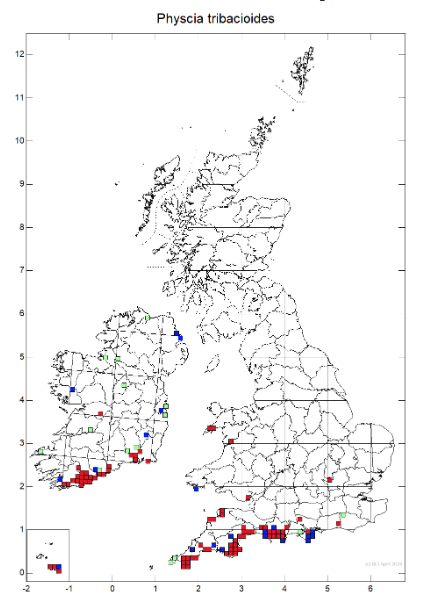
Four patches noted. Only one 19th century record of this lichen in Sussex.

ICUN red list status: Vulnerable, thus a section 41 species afforded special protection. British Lichen Society Status: Nationally Scarce

Found on sheltered, nutrient-rich bark and on +/- vertical walls and rocks. Most frequent in southern Britain.

Individual narrow, strap-like, convex, pale grey thalli lobes are small but can mass to extend over wide areas. The upper surface lacks the white flecks seen in Physcia caesia or marginal cilia seen in some other species. The marginal lobes can flare out to produce crenately incised apices. The soralia are mostly laminal, convex and can be so abundant as to cover parts of the thallus. The medulla reacts yellow when potassium hydroxide is applied. There is no reaction in the medulla of the similar P. tribacia. Physcia tribacioides | Lichens of Wales mainly in coastal areas in the south of the UK
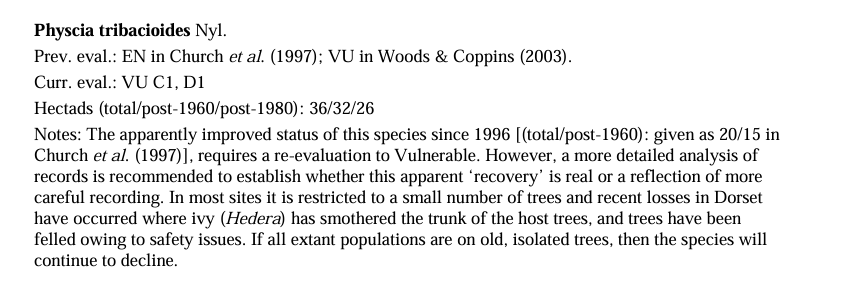
A conservation Evaluation of British Lichens and Lichenicolous Fungi
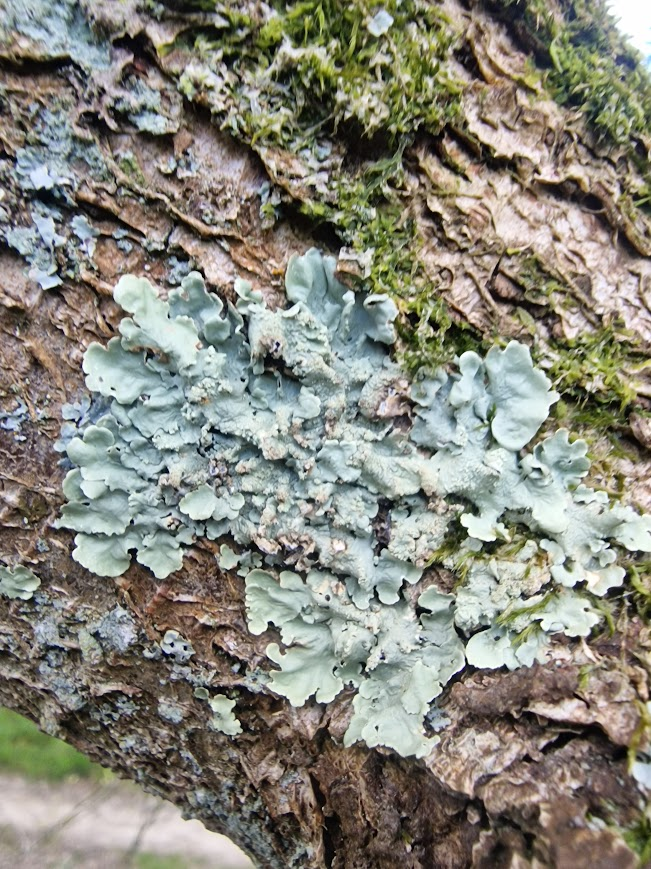
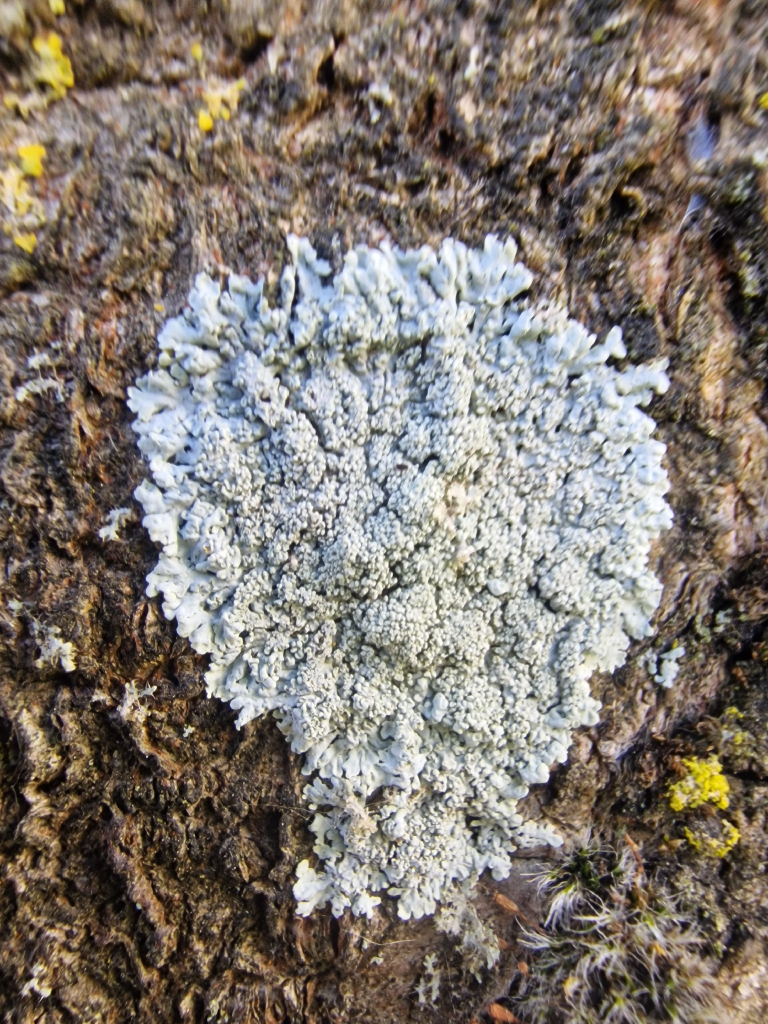
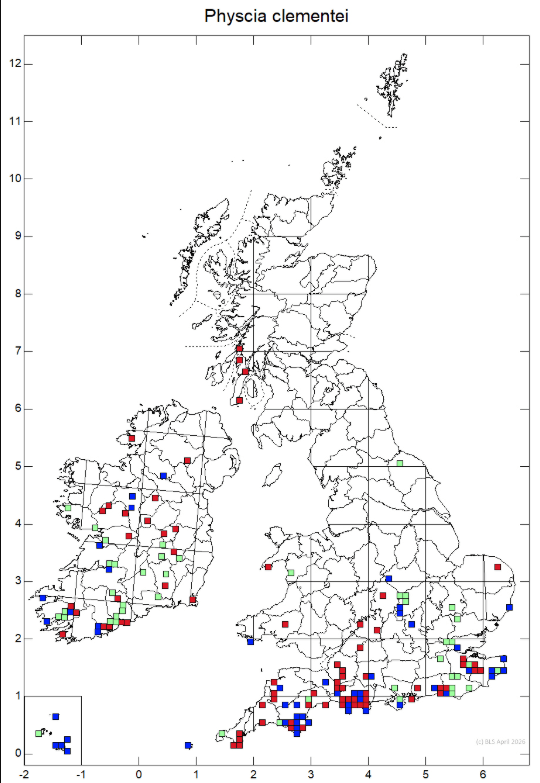
Physcia clementei

Closely adpressed pale-grey or whitish thallus with narrow, overlapping lobes. White undersurface with pale rhizines. Centre of thallus densely covered with short, granular isidia that can break down and become coarsely sorediate. Infrequently fertile in Britain Irish lichens – Physcia clementei

Seen on two trees

Also very rare in Sussex; but more common in the south than anywhere else ICUN red list status: Near Threatened; British Lichen Society Status: Nationally Scarce
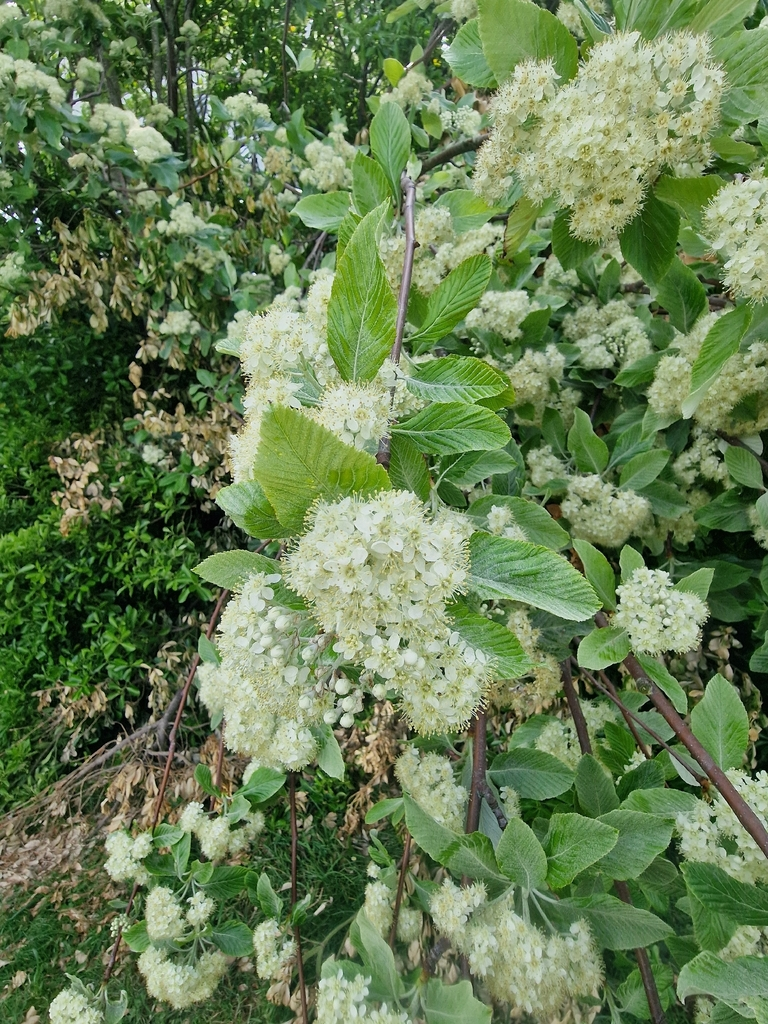
Whitebeam

A small to medium-sized tree, native in scrub and open woodland on well-drained soils over chalk, limestone, and occasionally more acid substrates, and widespread as an introduction. A variable sexual diploid, responsible for driving evolution of many British endemics. Sorbus aria (L.) Crantz in BSBI Online Plant Atlas 2020

Very common on Brighton street trees.

Physconia grisea
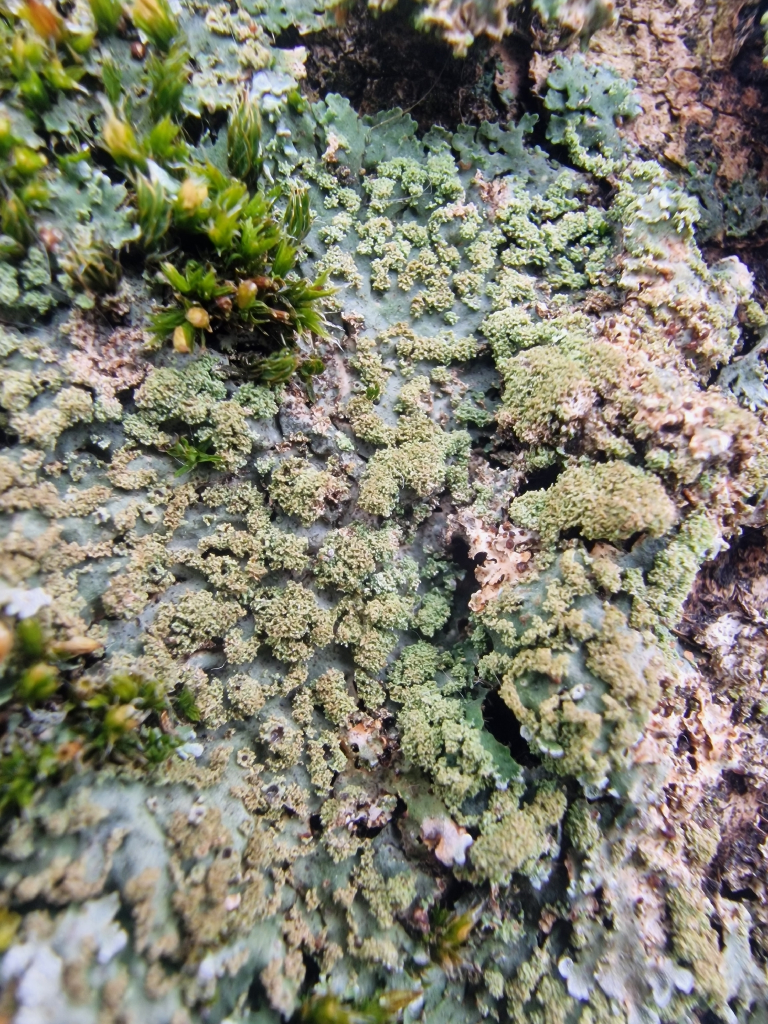
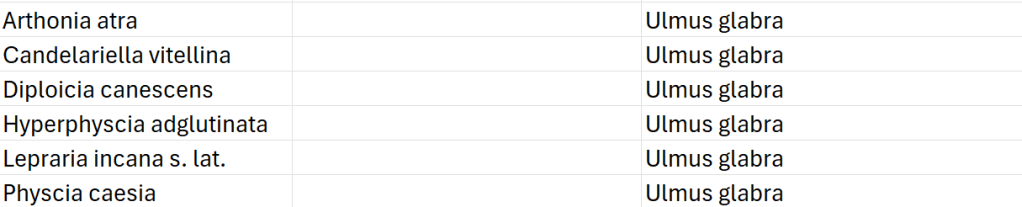
Wych Elm

A long-lived, deciduous tree of woodlands, especially on the upland fringe in northern Britain. It also occurs in hedges, field-borders and streamsides. It usually occurs in small numbers, typically forming mixed woodland with ash and sycamore on limestone and other base-rich soils. Unlike other British elms it is non-suckering and regularly produces fertile seed. It is a colonist of ungrazed grassland, rocky ground and waste and spoil heaps. This species hybridizes freely with U. minor in England, forming complex patterns of variation. It has declined locally as a result of Dutch Elm Disease in most regions since the 1970s, with few mature trees survivingUlmus glabra Huds. in BSBI Online Plant Atlas 2020
Physcia caesia
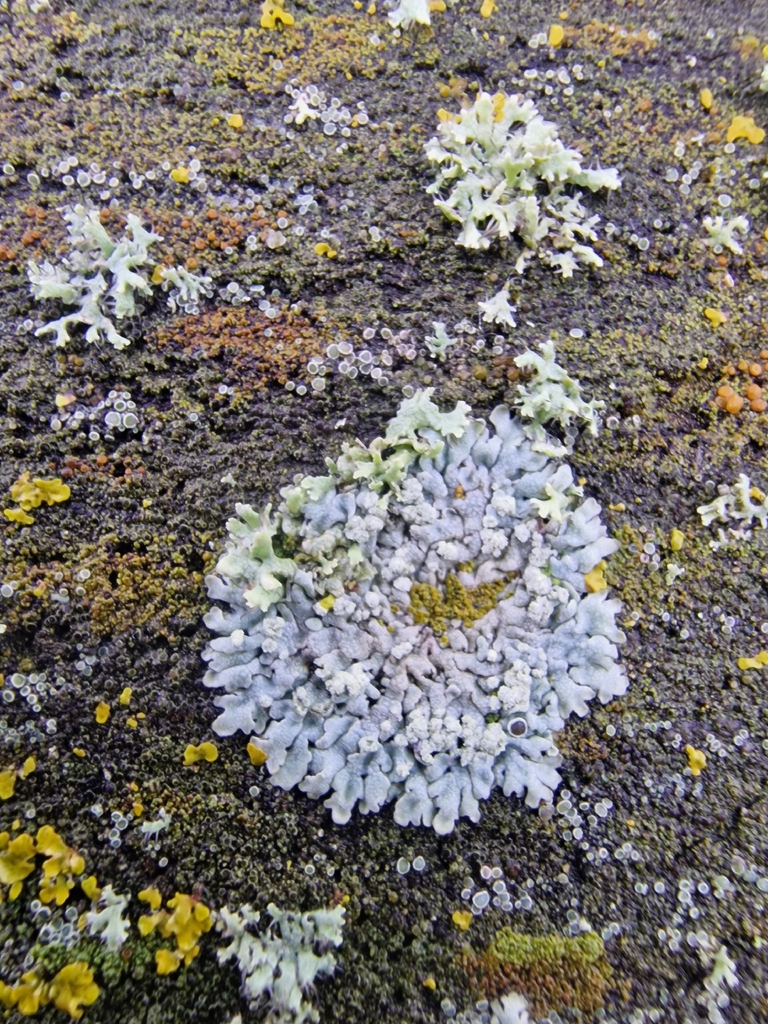
The bluish-grey thalli are roughly circular, up to 7 cm in diameter, and lie very close to the substrate. Lobes up to 1 mm wide are more obvious near the margin and are covered with white mottling. Light grey, powdery soralia occur as mounds on the surface, particularly towards the centre. Apothecia are rare. Physcia caesia

All the lichens I saw on the Bristol Estate
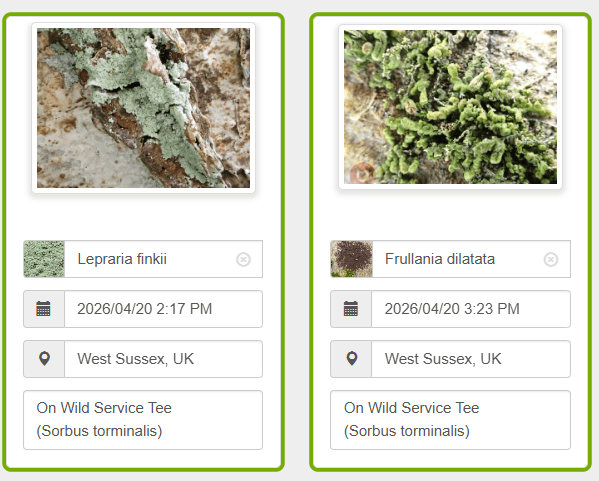
Ancient Low Weald Woodland and Well-Being: a hike through the woods east of Ashington, West Sussex to find Wild Service Trees (to record their lichens) and other ancient woodland indicator species. 20.04.26

My prime motivation for this walk was to record the lichens on the Wild Service Trees, Sorbus torminalis, in this area, as the British Lichen Society has no lichen records linked to Wild Service Trees. I have been recording the lichens on Wild Service Trees for two years now. Another motivation was to maintain my wellbeing. For the last 40 years I have had intermittent periods of poor metal health (mainly depression related to Obsessive Compulsive Disorder, with which I was diagnosed 25 years ago). But I live well, as a result of previous good therapeutic support (Mindfulness-Based Cognitive Therapy), anxiolytic medication (an SSSI), having a loving partner and friends, and undertaking volitional activities that I know boost my well-being i.e. walking in nature, having nature-based interests (species identification) that distract me from troubling thoughts and leads to a sense of purpose and meaning. I am aware that I have sufficient income to have stopped work early and have the time and resources to spend time in nature. That is a privilege. I was born in 1962 and was able to buy a house with my partner in 1991 (which we still live in, mortgage paid off) and I had a job (a local authority teacher) form which I could retire at 55 (with actuarial reduction). My well-being is in part because I have sufficient income; I am very aware that many people do not have sufficient income and time to do the volition activities that might support their well-being. I am doing my best through political volunteering to address that injustice.

The Woodland Trust’s Ancient Tree Inventory is a great way of finding out where Wild Service Trees are across the country; especially now that the Lost Woods of the High Weald and Downs volunteer tree recorders have added many trees to the inventory for the Low Weald. I volunteer for the Lost Woods as a lichen-walk leader. I also volunteer for the RSPB Pagham Harbour as a lichen-walk leader and ranger. Communicating information about nature in Sussex to others is I think very meaningful. Nature and mental health are ecological systems; mutualism is the most useful interaction; helping others know more about nature helps them and my (and hopefully their) mental health.

David Bangs’ (2018) The Land of the Brighton Line: A field guide to the Middle Sussex and South East Surrey Weald has an excellent map of the location of Wild Service Trees around Cowfold; and fascinating information about the history of the Low Weald

Sorbus torminalis is a rare tree now, and is an ancient woodland indicator species. Climate change (global heating) and the loss of wild graving (boar, domestic pig, and cattle) may be significant factors in the loss of Wild Service Trees

P. Roper The distribution of the Wild Service Tree, Sorbus torminalis
(L.) Crantz, in the British Isles.
Watsonia, 19, 209-229 (1993)
Retrieved from the BSBI Achive 22.04.26: Although the fruit is avidly devoured by birds, Wild Service seems only rarely to be bird-sown (the seed, with its thin testa, is probably digested in the bird’s gut) (Prime 1960). In large, lowland forests wild boar and other animals, including domestic pigs and cattle, may well have been important agents for the dispersal and burial of Wild Service seed: wild boar are known to like the fruit and the effects of their trampling on woodland ecology have been well-documented (Conwentz 1895; Darling & Morton Boyd 1969; Goodwin 1975; Tansley 1968). Elsewhere seed was, and still is, extensively predated by birds, small animals and invertebrates so that almost none remains (Corbetm1974; Janzen 1970; Tansley 1968; Termena 1972).

The wild boar as well as burying much seed by rooting and trampling, destroyed many small rodents (Tansley 1968) as did the much higher numbers of predatory animals and birds that were formerly widespread. Populations of voles and mice have increased substantially as predators have declined and animals like rabbits, grey squirrels and pheasants (all of which eat seeds or seedlings of Wild Service) have been introduced and have spread.

Like many trees and shrubs within the family Rosaceae, Wild Service seeds need a period of some three months of near freezing temperatures before germination will take place (Gordon 1982). In places where winters are longer and colder than in much of Britain, germination will normally take place in the first spring following seed formation whereas in Britain two or more years are often needed and the seed is at risk for far longer. This is true of many tree seeds, but the first spring germination that would have taken place more regularly during periods when the climate was colder could have helped the Wild Service to reproduce from seed in slightly larger numbers in those days.

While a cooler, less continental, climate and increased seed and seedling predation coupled with other factors may have reduced populations of the Wild Service and prevented recolonisation, its survival in ancient hedges and woodlands has been helped by its ability to reproduce from suckers.

Wild Services live a long time: Mitchell (pers. comm., 1975) has estimated the age of large old treesto be around 200 years and many of these may themselves have arisen from suckers produced from an earlier generation of trees. Some mature populations – that in Epping Forest, for example – have been shown to originate largely from suckers (Uoyd 1977) and O. Buckle (pers. comm., 1975) was of the view that virtually all the Wild Services that he knew of in West Sussex (for which he wasB.S.B.I. vice-county recorder) had originated from suckers. No one knows how far back these sequences may have extended since the original seeds germinated, but it is clear that the species can survive for long periods before conditions recur in which seeds germinate freely. Sust beneath the soil surface).

More evidence has come to light to show that the tree was formerly more abundant than today, though probably never common in most areas. There is no doubt that the species is found almost exclusively in ancient woodlands and hedges or on rocky outcrops, unless planted, and its value as an indicator of primary woodland is confirmed.

Wild Service Trees of the Low Weald

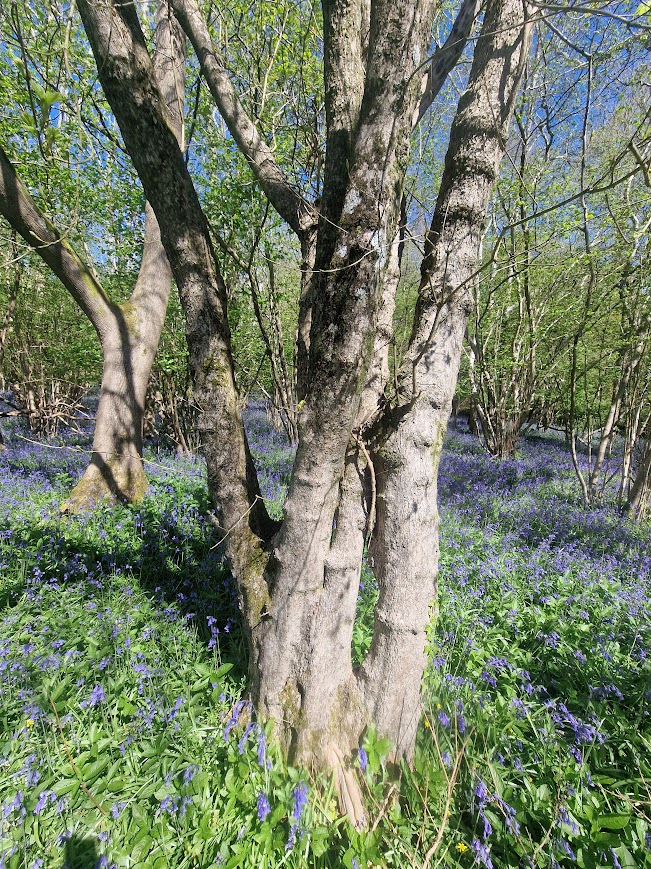
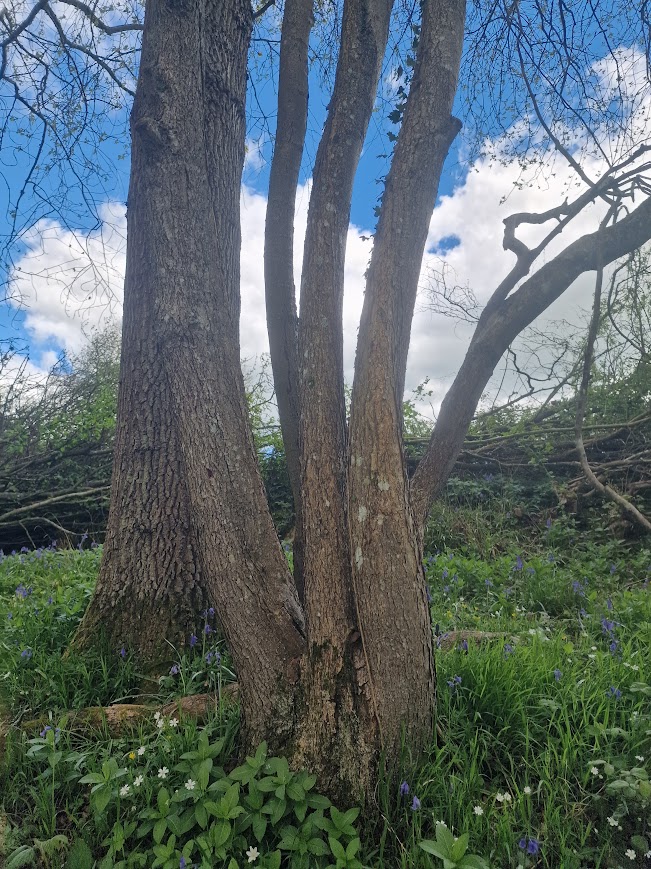
Whilst Wild Service Trees are rare nationally, the Low Weald of Sussex is one of their strongholds; so you can discover them on your own when you know what you are looking for. In my experience most Wild Service Trees in Sussex are multi-stem trees (historically coppiced many years ago)

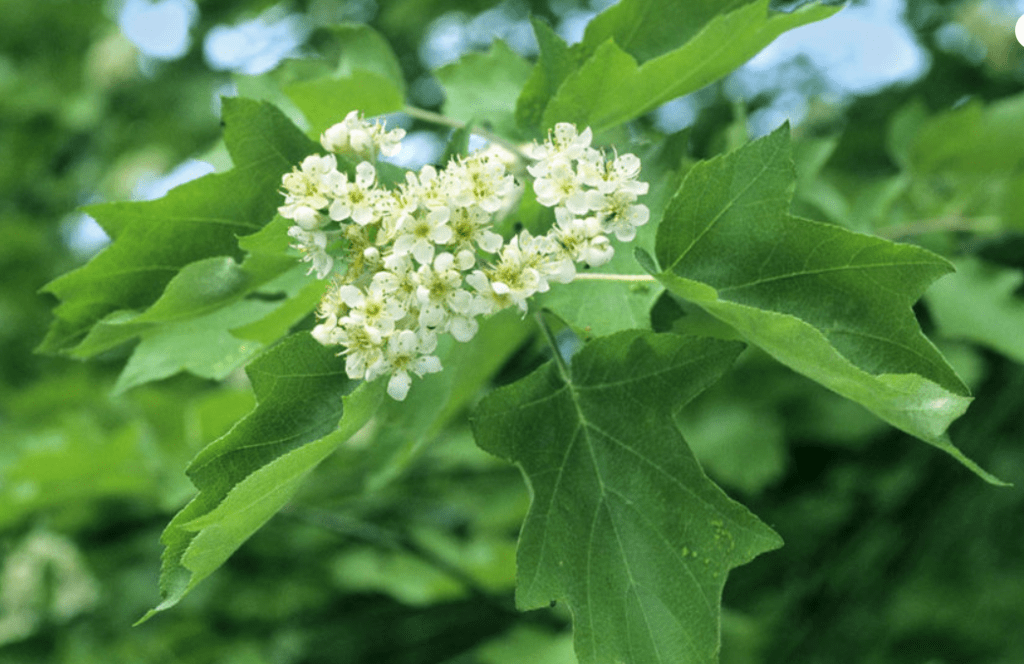
In early May their flowers are characteristic:

Photo from the Woodland Trust:Wild Service Tree (Sorbus torminalis) – Woodland Trust 5-petalled flowers arranged in loose, flat-topped clusters (up to 12cm across). All the other photos in the post were taken by me

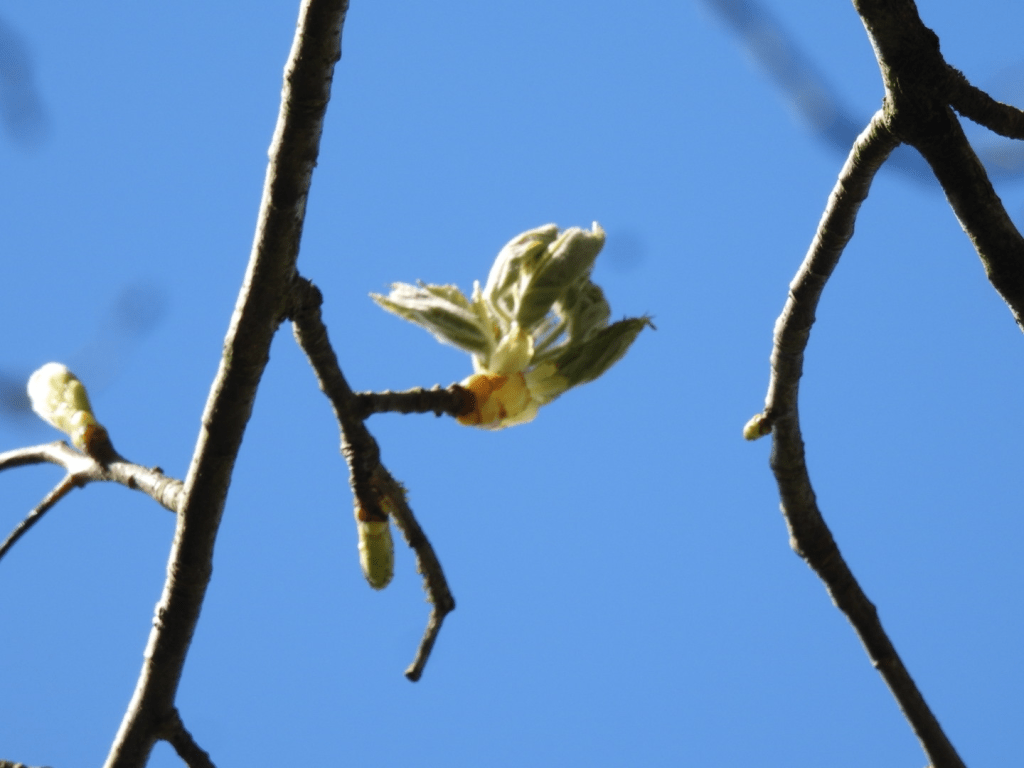
Leaf buds

A tree north west of Cowfold, found using Dave Bangs’ map, on 16th April 2024

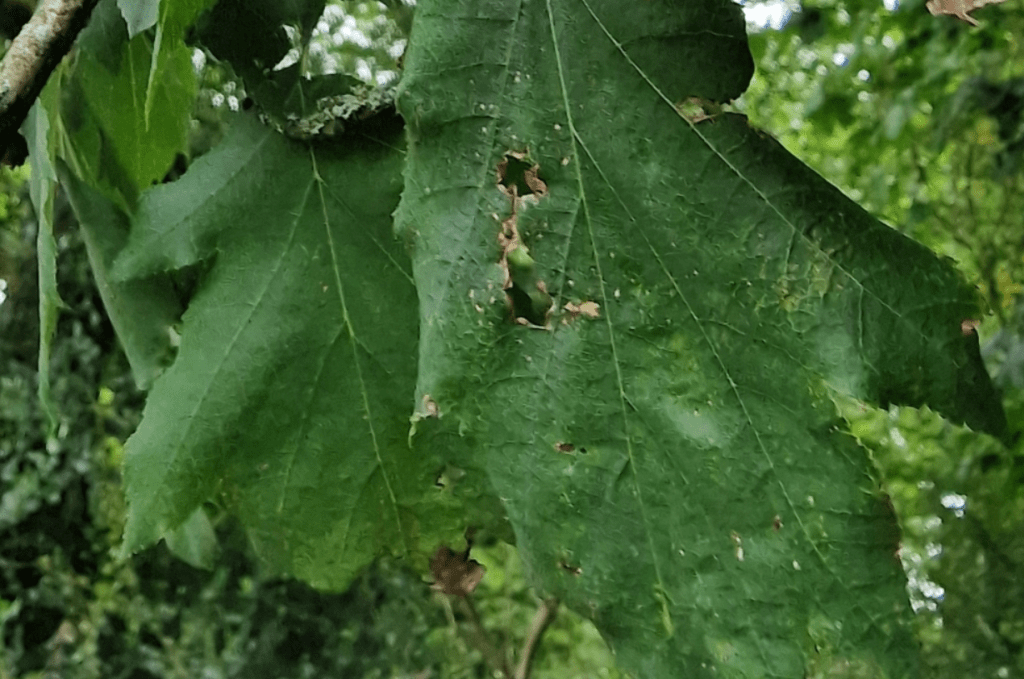
As Wild Service Trees only flower for a few weeks, sometime between late May and early June, for most of the year look for the characteristic leaf shape is the probably the most reliable way of identifying them

A tree in Staffhurst Wood SSSI on 30th July 2025.  Surrey, near the Kent border, in the Surrey part of Low Weald, approximately 3 miles south of Limpsfield and close to Oxted

Leaves emerging. Photo form 20.07.26. Capite Wood

Leaves emerging. Photo form 20.07.26. Capite Wood

The leaves are broad and angular, similar to field maples or hawthorn. Some lower lobes may sit almost at right angles to the leaf stalk. They are dark green on both sides, though they may have a slightly paler, velvety appearance underneath. Young leaves are covered in silvery, glistening hairs, which disappear to leave a shiny surface. The leaves are arranged alternately on the twig. 

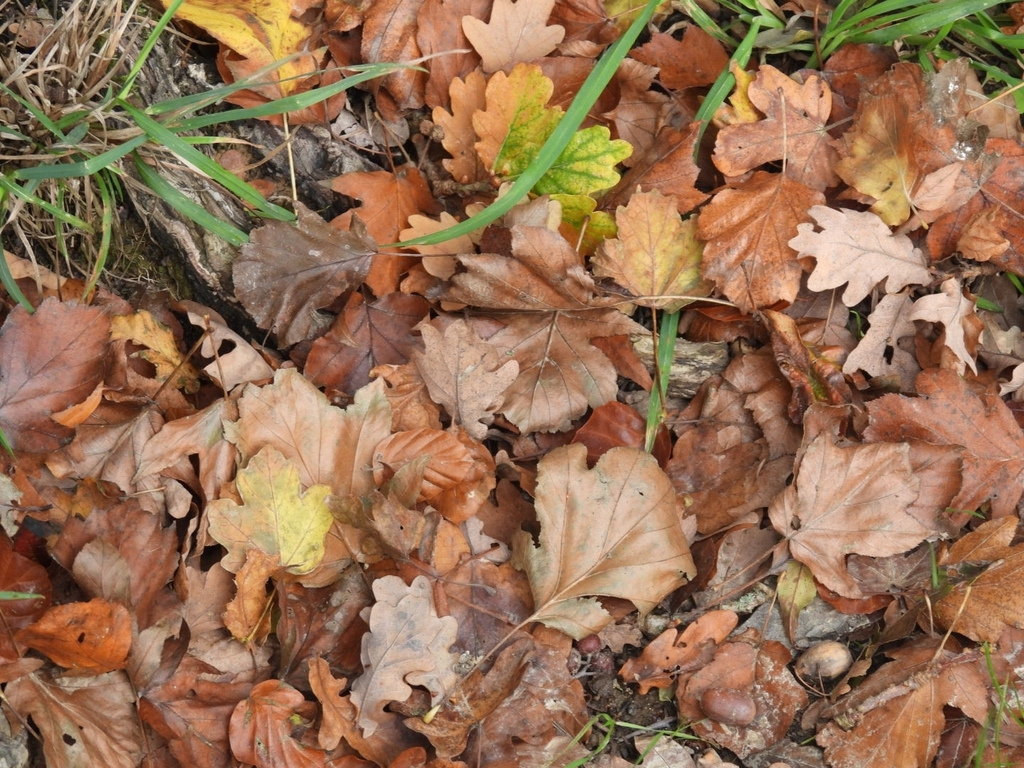
Autumn Leaves, a Cowfold Tree, 25th October 2025. Looking at the ground may help you identify Wild Service Trees in Autumn and Winter. A photo from the base of a Wild Service Tree near Cowfold

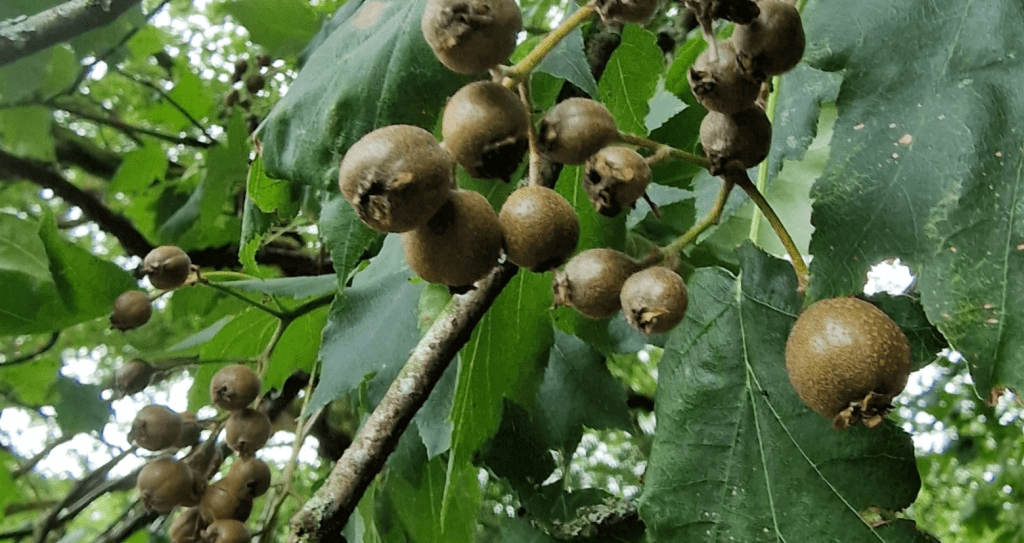
In late Summer their fruit, “chequers”, are very characteristic. A photo from Staffhurst Wood

In Sussex and Kent the chequers were used to flavour beer called Chequers Ale, and children used to eat the berries after drying them

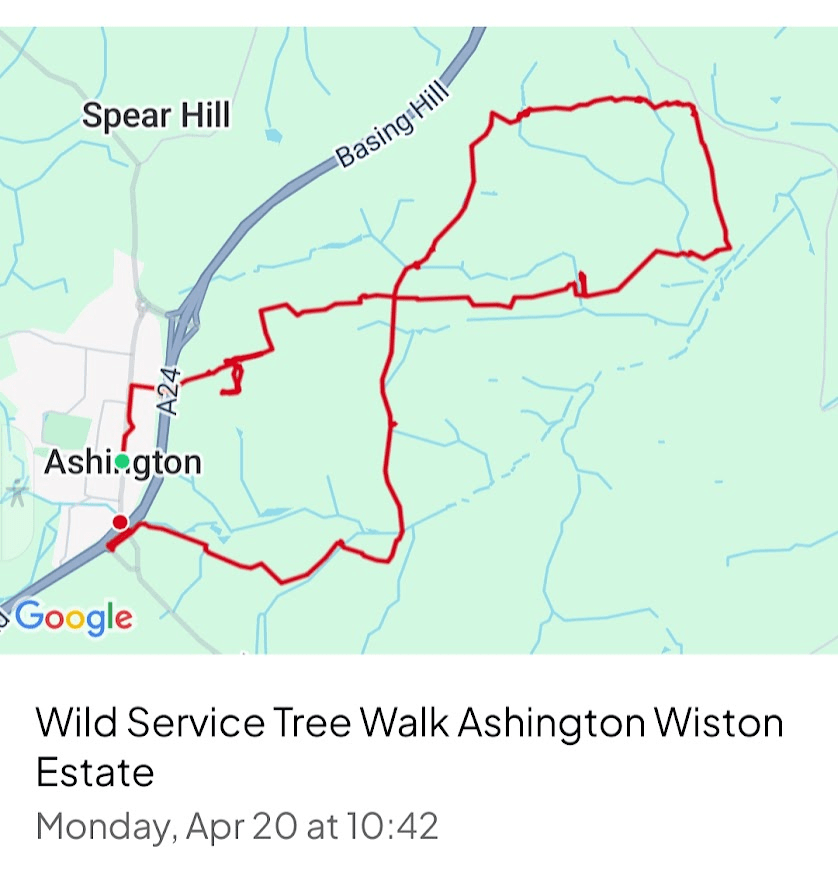
To get to Ashington I took the train from Brighton to Worthing, and then got the Metrobus 23 bus to Ashington (every 30 minutes, journey time 30 minutes). Here is a map of my walk

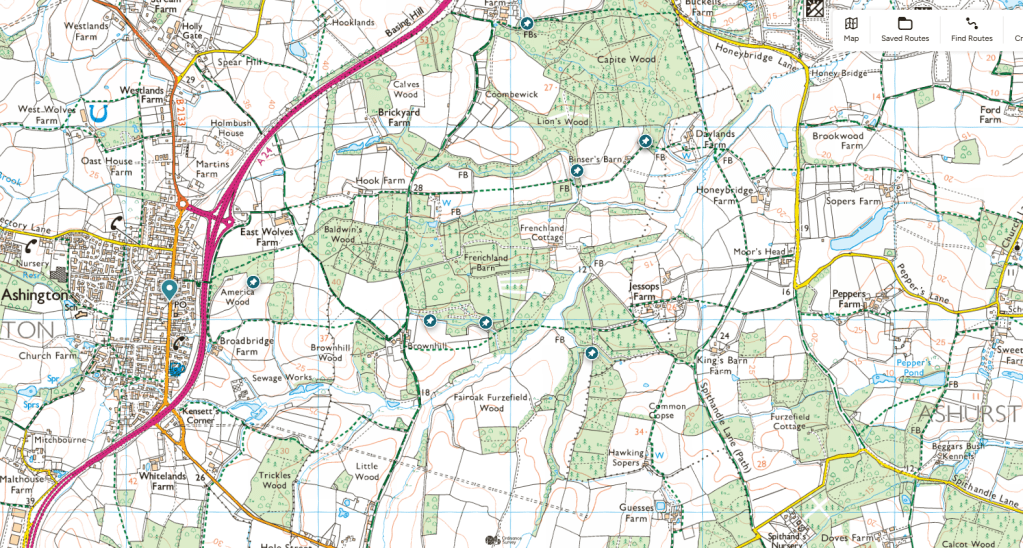
The location of Wild Service Trees I found through accessing the Woodland Trust Ancient Tree Inventory accessed online 19.04.26 and filtering for Wild Service Trees. This inventory can be accessed for free. To search for trees click here: tree search page

Here are the Wild Service Trees I found through the Ancient Tree Inventory, transferred to OS pins, from grid references given by the Ancient Tree Inventory. This is a screen shot from the on-line OS explore retrieved 23/04/26 © Crown copyright and database rights 2025 Ordnance Survey under license 1156 0223 8260 7202. It is necessary to purchase a subscription to access OS maps online. I would recommend purchasing a subscription for all the OS maps in the UK, as you can access this on a Smart Phone or your laptop or tablet, and the GPS tracker tells you where you are; important if you get lost. I found these trees by having the OS App running on my smart phone whilst walking in the woods and occasionally looking at the GPS pointer to tell me where I was in relation to the trees.

Some of the Wild Service Trees I saw (shown on the map above)

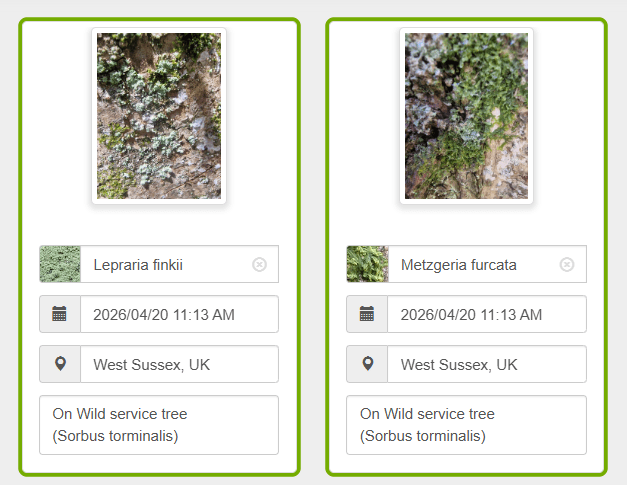
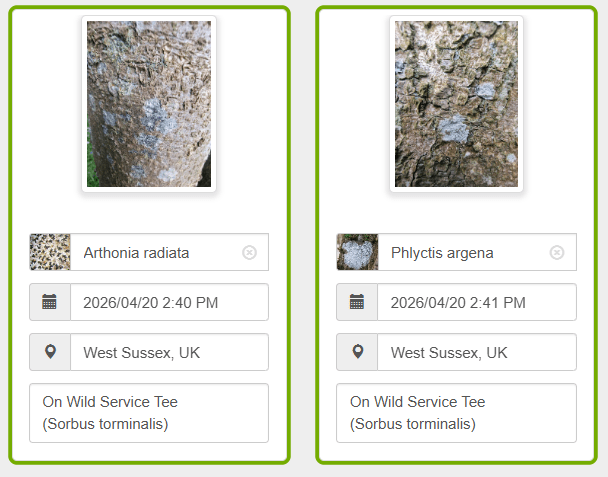
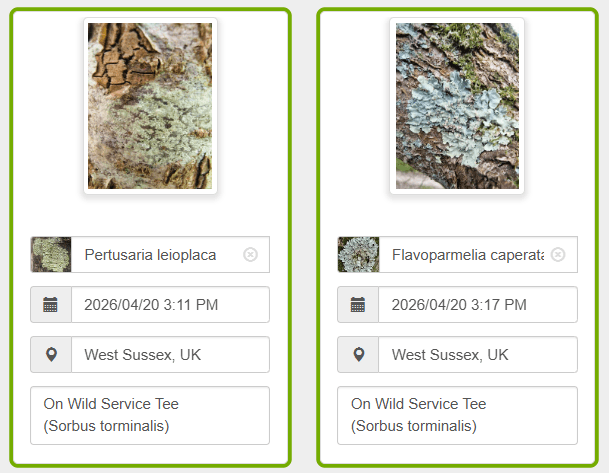
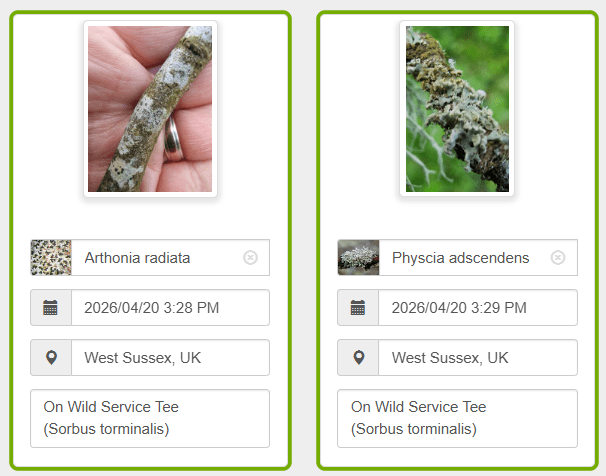
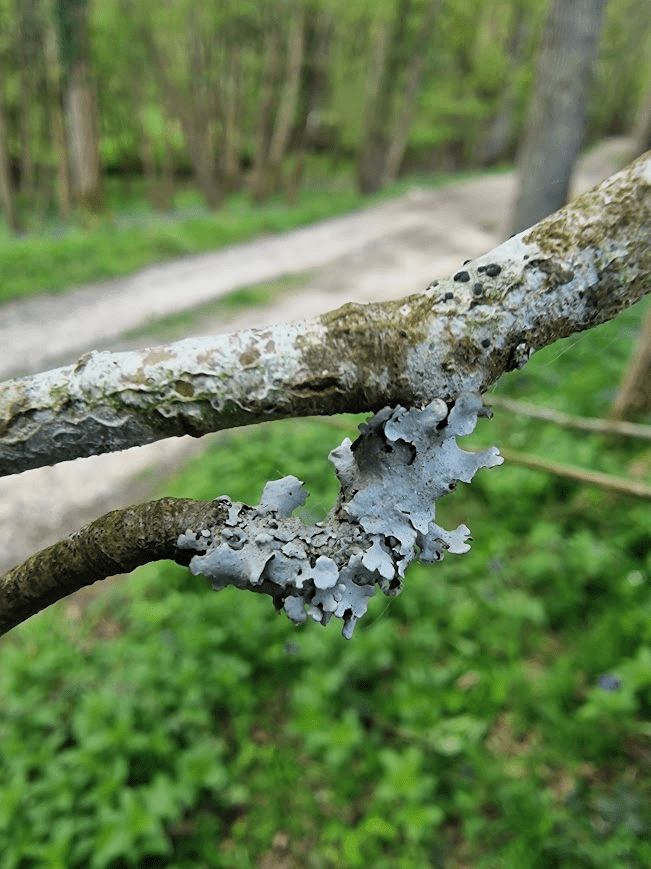
Some of the epiphytes on the these Wild Service Trees.

A note on my recording. The lichens below are all iNaturalist records. For all species I use iRecord as well as iNaturalist. I am a pan-species naturlaist. However, as there is currently no county recorder for lichens for West and East Sussex, iRecord records for lichens submitted by are not verified and they don’t go anywhere and can’t be accessed by the general public.. The British Lichen Society do not accept records from iRecord or iNaturalist; records have to be sent directly to the British Lichen Society using their spread sheet. I do this and send a copy of the spread sheet to the Sussex Biodiversity Record Centre

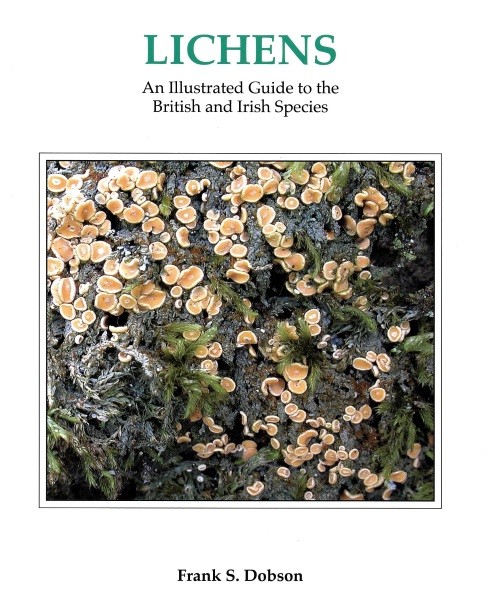
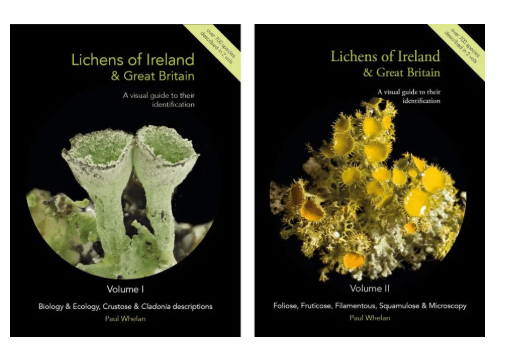
I use iNaturalist to record lichens (and everything I see) as it makes my records easily available to the general public. I do not use iNaturalist AI photo recognition, I use my knowledge and these lichen field guides and flora.

You can purchase at Books & Guides | The British Lichen Society

You can purchase at: Lichens of Ireland & Great Britain: A Visual Guide to Their Identification (2-Volume Set) | NHBS Field Guides & Natural History

This is the standard flora of Lichens in Great Brighton and Ireland. It is out of print and extremely difficult to buy second-hand, but the keys to genera from this volume are now available as a downloadable pdfs on the Lichens of Great Britain and Ireland webpage for free: https://britishlichensociety.org.uk/identification/lgbi3

All of these records are lichens except Metzgeria furcata and Frullania dilatata which are liverworts. N.B If you take a photo of anything with a Smart Phone with the Google Photos app installed on your phone Google (if GPS tracking is turned on) adds the X (Easting) and Y (Northing) of the international Cartesian coordinate system, and a visible Google Maps location. You can use Grid Reference Finder to covert X (Easting) Y (Northing) to a British OS grid reference if you find that easier. So you can find out where I have seen my sightings.

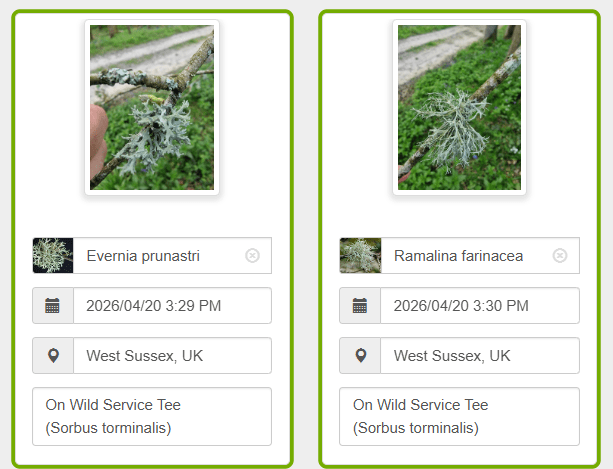
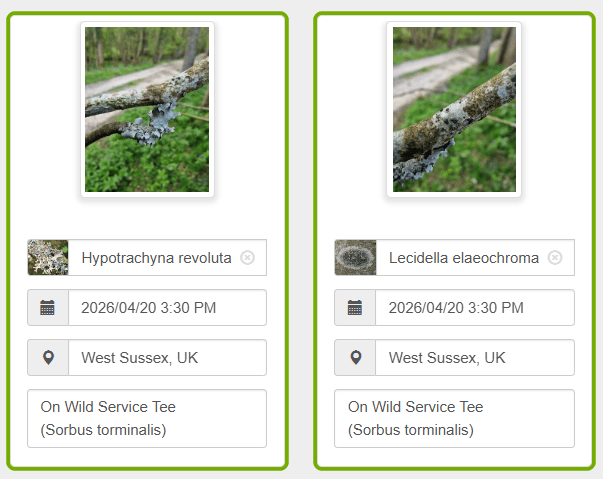
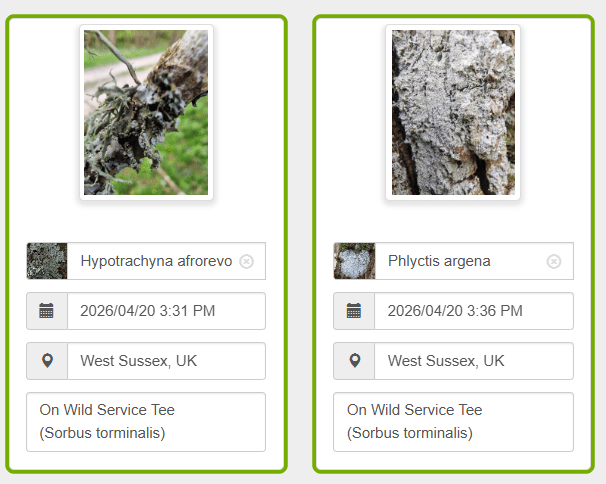
Bigger photos of some of the records above. These are very common lichens you may see on Wild Service Trees in Sussex

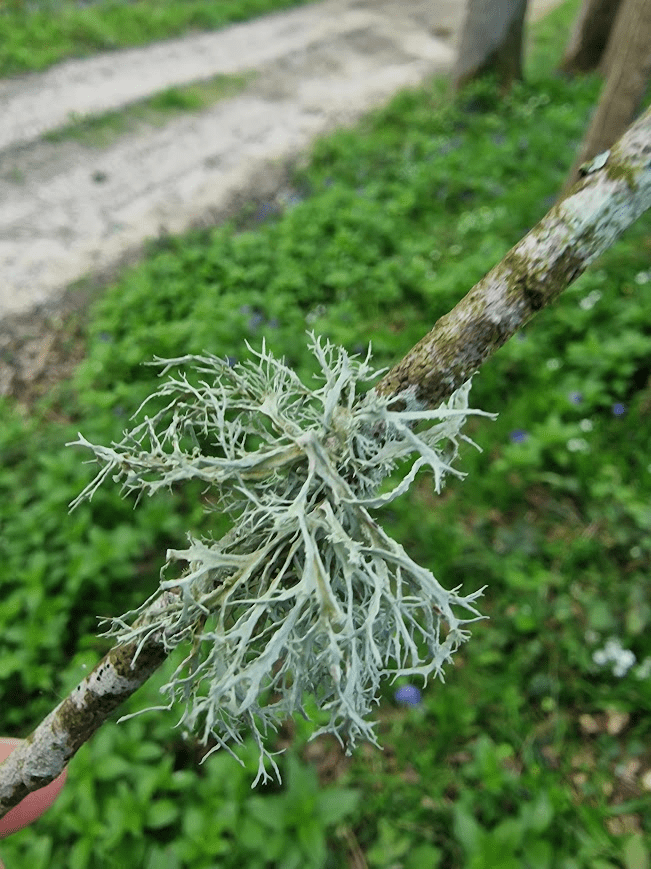
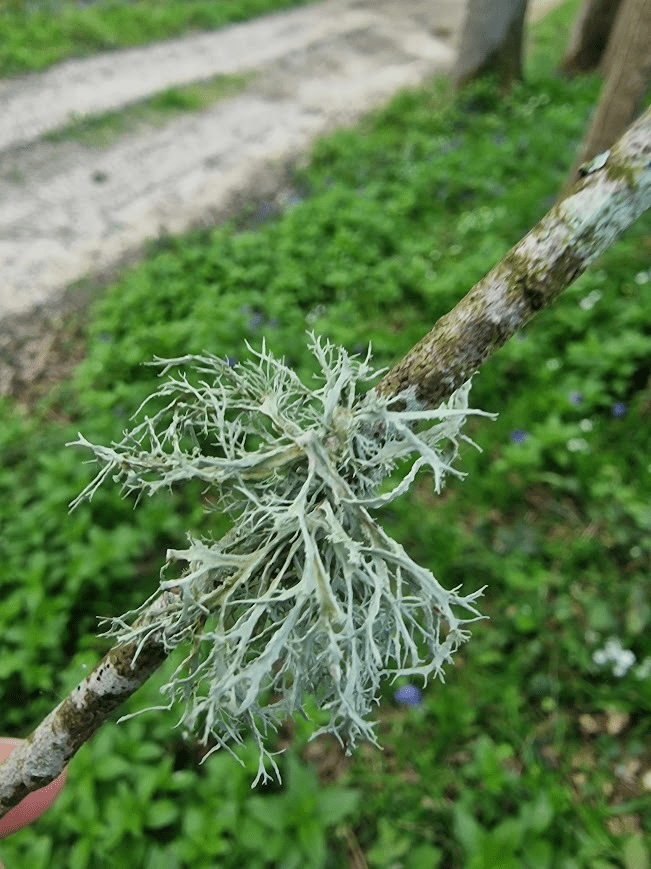
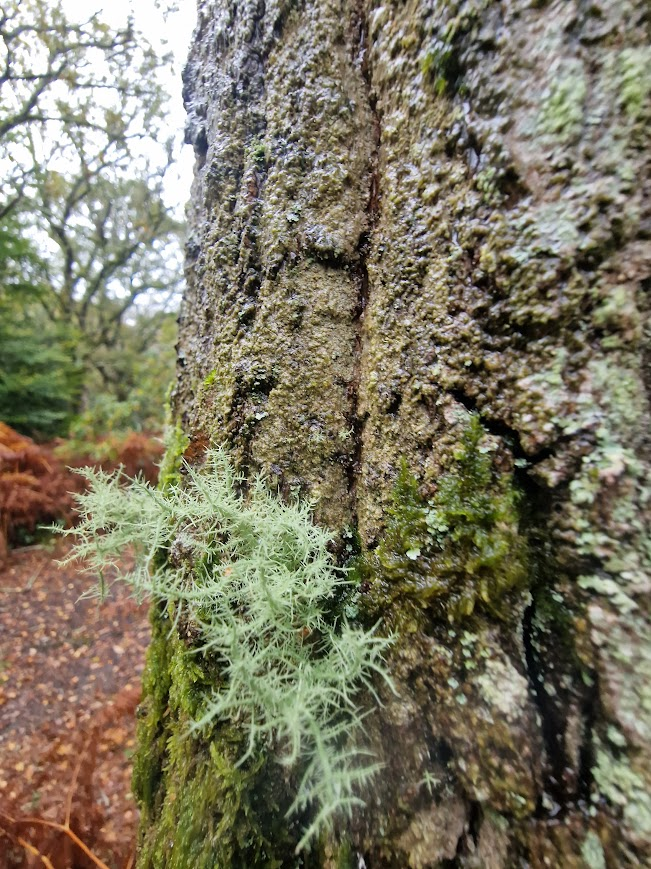
Evernia prunastri Oak Moss (rubbish vernacular name as it’s a lichen not a moss, and it doesn’t just grow on Oaks)

Hypotrachnya revoluta, Powdered Loop Lichen

Ramalina farinacea, Dotted Ramalina

Lecidella elaeochroma Lecidella Lichen

Flavoparmelia caperata Common Greenshield Lichen

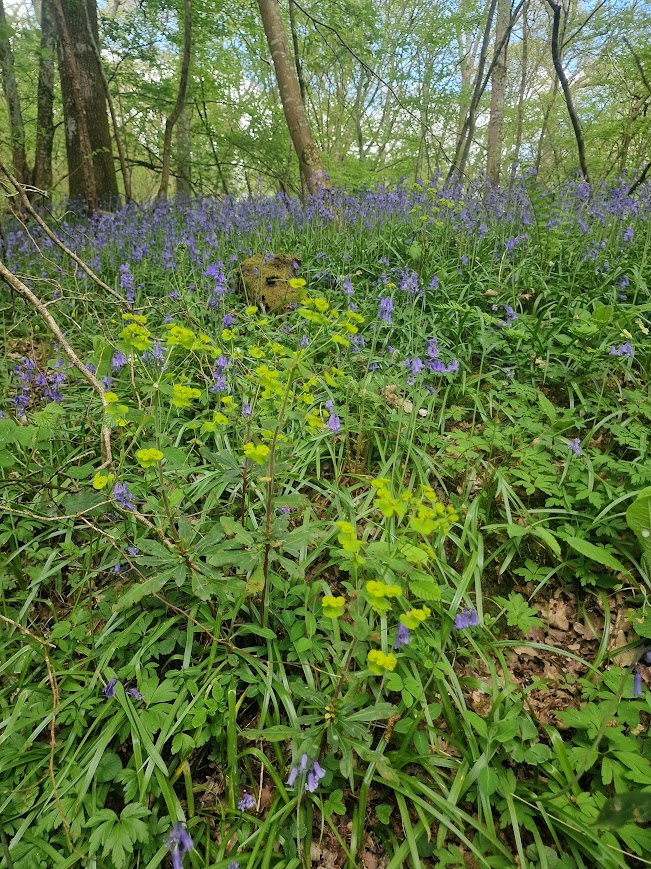
Bluebell Woodlands and Colour Field Paining

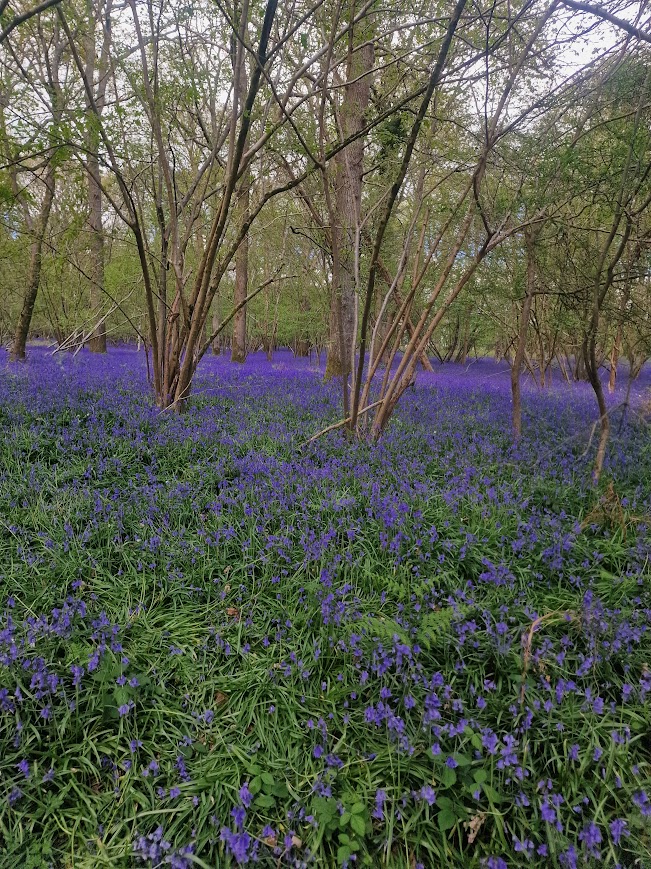
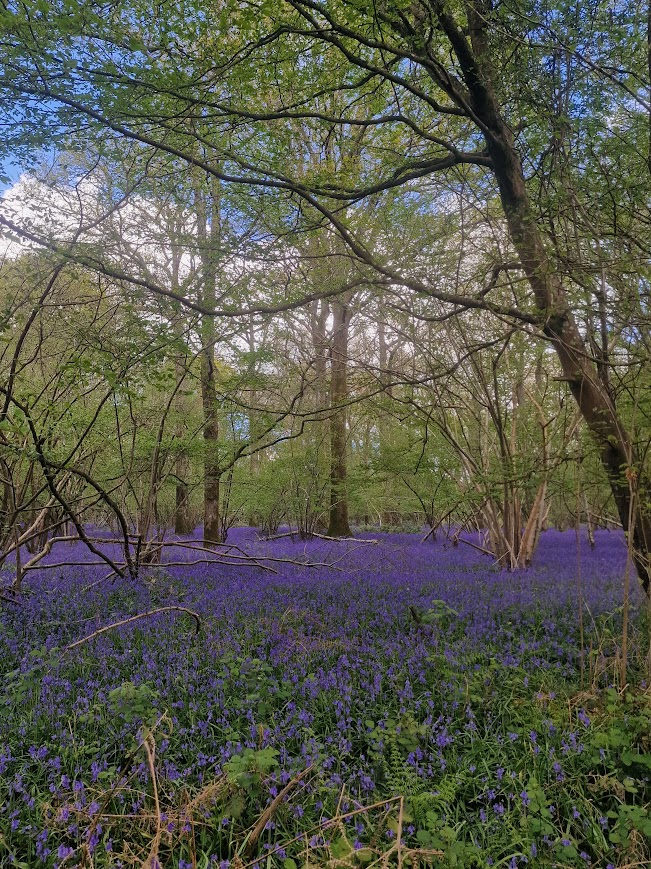
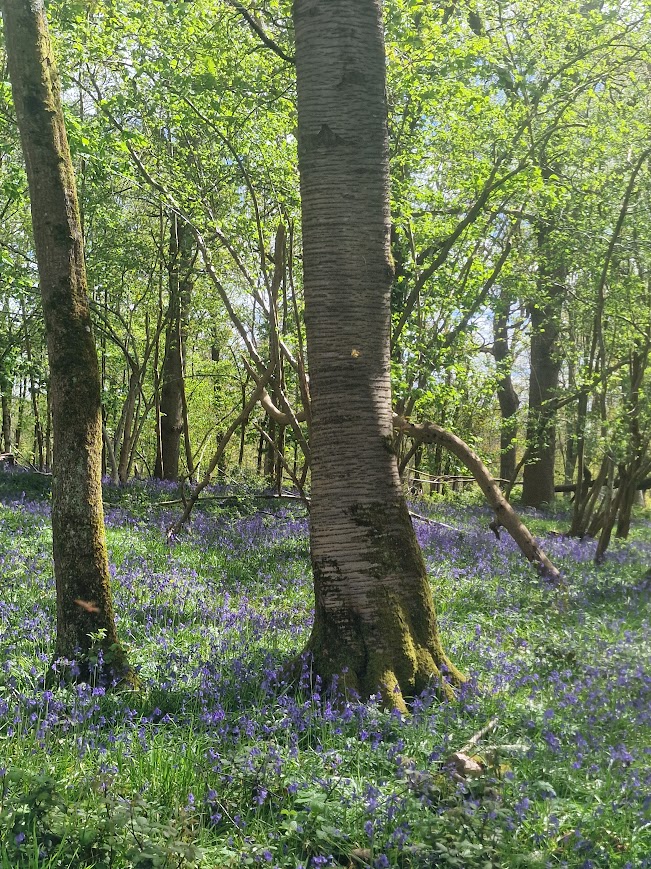
An aspect of my well-being is experiencing visual pleasure in nature and visual art. I find blocks of colour in nature and art very pleasing!

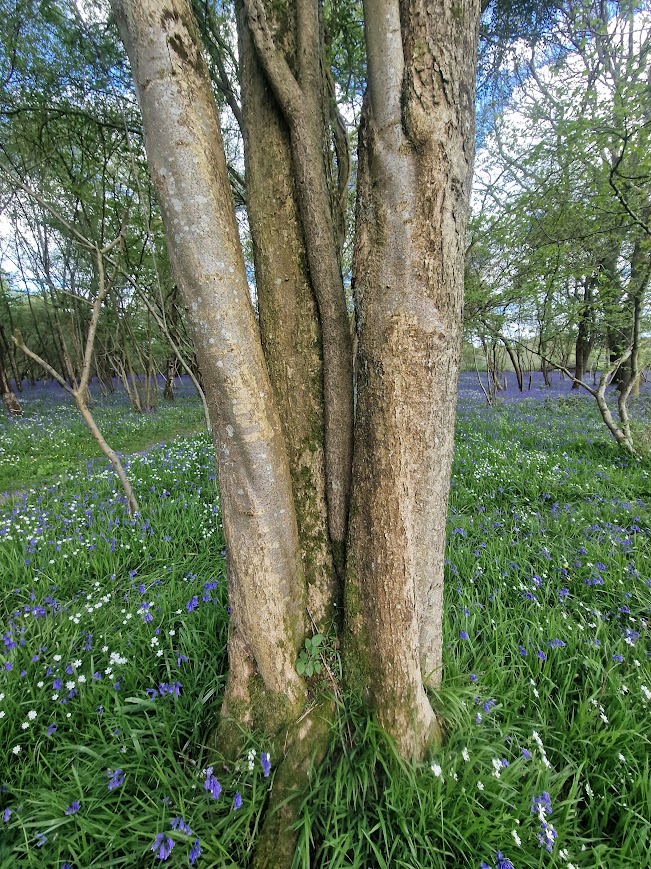
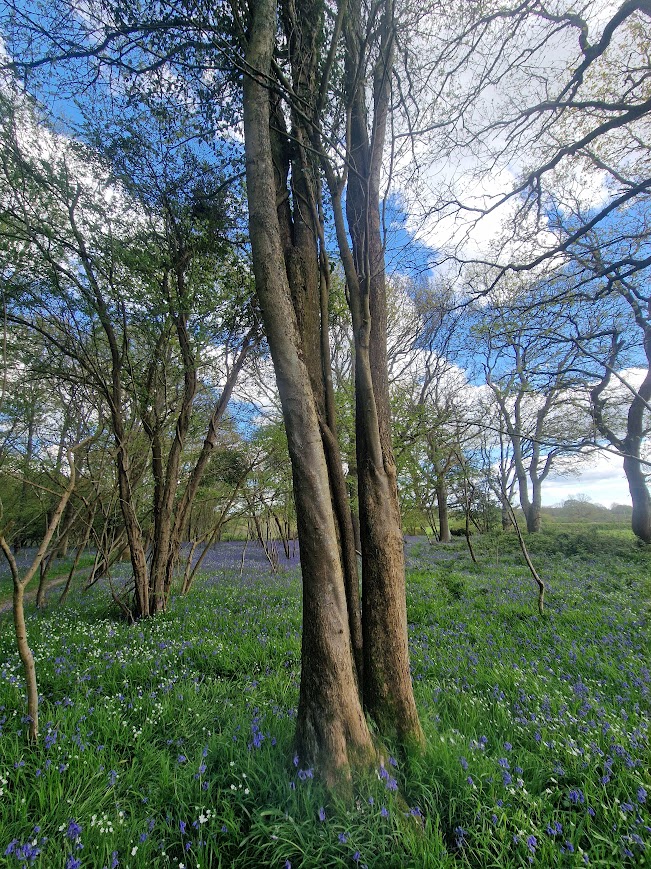
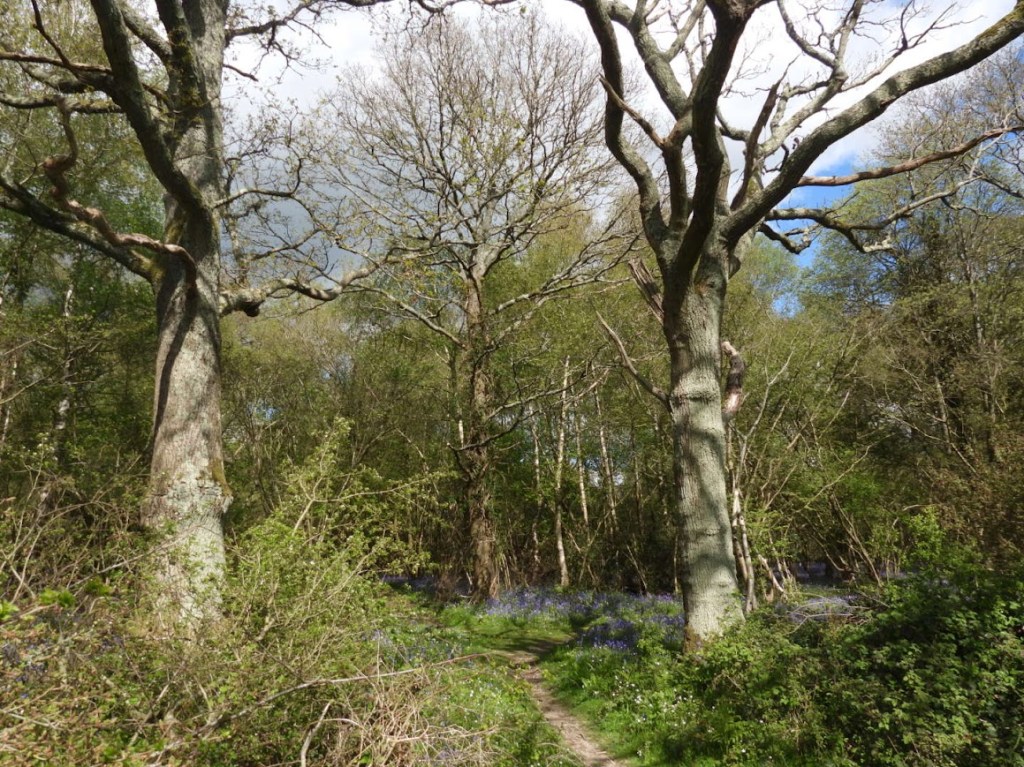
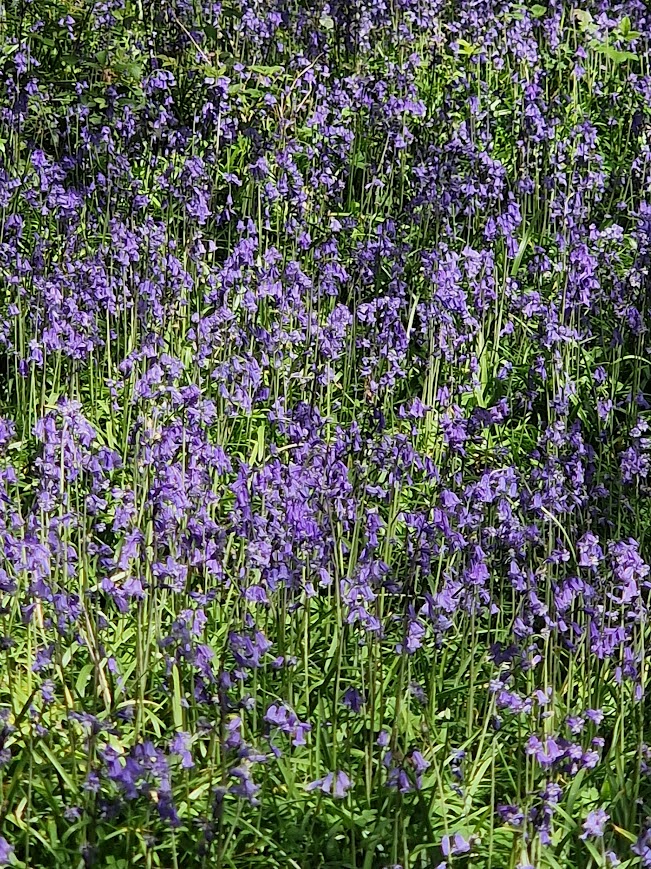
Bluebells are an ancient woodland indicator species; they are extremely abundant in the Low Weald at the moment (April 2026)

Jill Campbell, Summer Blue n.d.

Mark Rothko No. 61 (Rust and Blue) 1953

Ronnie Landfield, Rite of Spring, 1985

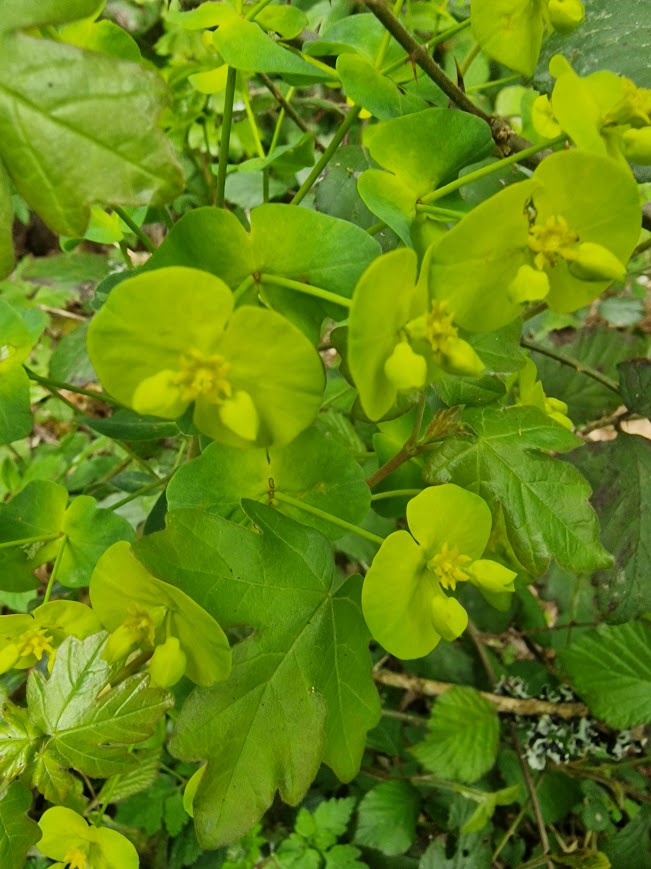
with Wood Spurge, anther ancient woodland indicator species, in front

Ray Penn Colour Field Series #7 Painting, 2018

A musical interlude.

I felt full of positive emotion walking round these woods on Monday; it felt a wonderful world.

But, in 1967, when What a Wonderful World was written, and when Louis Armstrong sang it in 1968, the world wasn’t wonderful: the Vietnam War;,the Six-Day War between Israel Egypt, Jordan, and Syria, and Nigerian Biafra Civil War were leading to many deaths.

Perhaps a message of the first two verses of What a Wonderful World is that focussing on nature (and other positive things) – a volitional slef-control of what you focus upon, whatever is going in the world, can lead to positive emotion, and thus increased resilience. Positive emotion can reinvigorate energy, and develop the courage, needed to stand up against wrongs e.g. war and climate change.

For me focussing on nature makes me feel good; but it does not lead me to deny that terrible things are happening, including global heating change and habitat loss; it increases my resilience and energy to try and do something about that. It is about balance; having positive experiences in nature means I am happier and more able to fight for nature; and Nature really needs our help; see Chris Packham’s introduction to the National Emergency Briefing on climate & nature

And good things did happen in 1967. Muhammad Ali refused induction into the U.S. Army, citing his religious beliefs as a Nation of Islam minister and his opposition to the Vietnam War; although, as a result, he was stripped of his heavyweight boxing title, had his boxing license suspended, and was convicted of draft evasion (which was eventually overturned). Living well does not always entail continuous pleasure.

Walking around these woodlands slowly and attentively certainly created positive emotion for me, and this enhanced my resilience; that’s one of the reasons I do it – A LOT! But it is not just the visual pleasure, and the focussed attention to nature, that enhances my well-being; recording nature, so that what is out there is known to as many as possible, feels meaningful and congruent with my values; well-being is an outcome of meaning and purpose.

I don’t want lots of people not to have know what we had in nature untll after its gone

Other Ancient Woodland Indicator Species

Dog’s Mercury

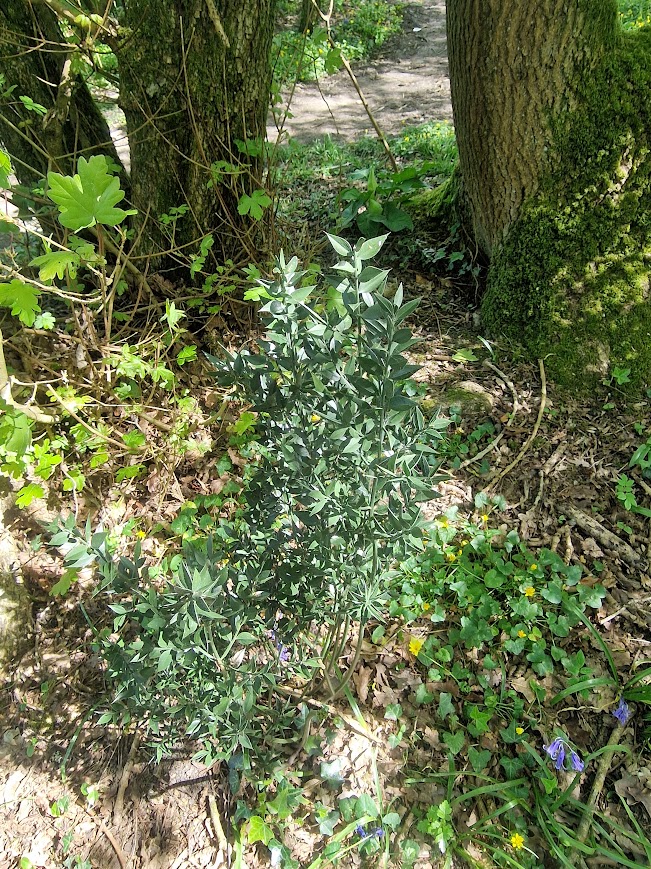
Butcher’s Broom

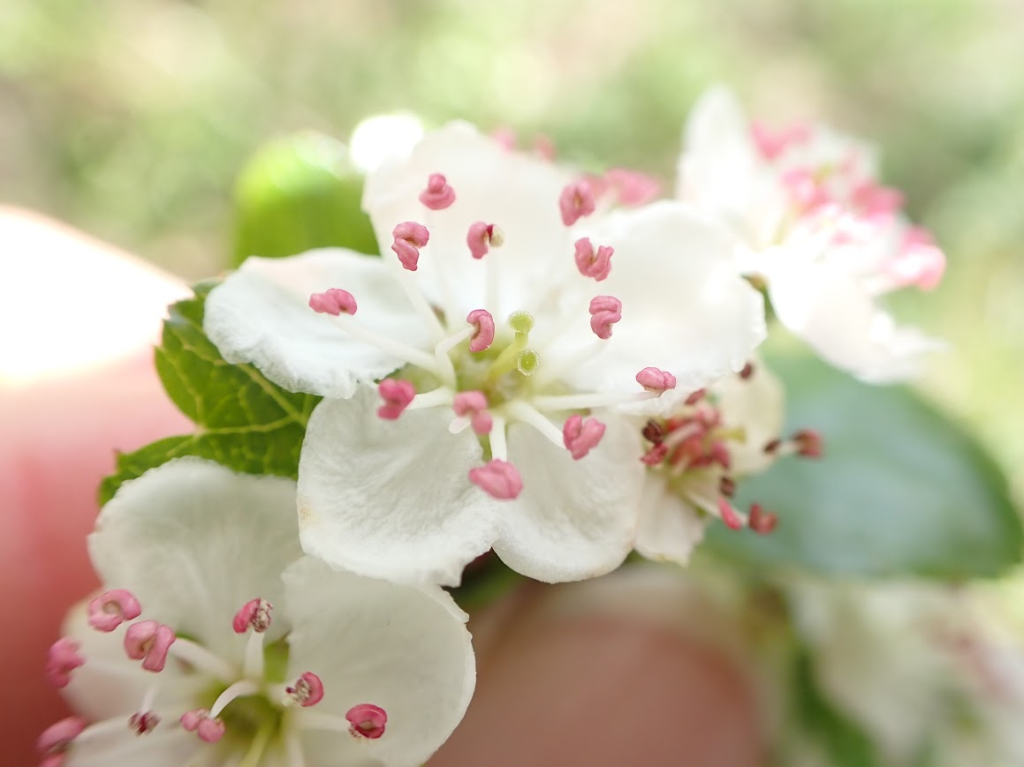
Midland Hawthorn

How to differentiate between Midland Hawthorn and Common Hawthorn: Midland hawthorn tends to flower one to two weeks earlier than common hawthorn. It has twin stigmas in the flowers and twin seeds in the haws. Midland hawthorn has shallowly lobed leaves – cut less than half way to the mid-rib. Whereas common hawthorn leaves are deeply lobed, cut more than half way to the mid-rib. Midland Hawthorn (Crataegus laevigata) – Woodland Trust In flower, it’s ease – two stigmas (green sticky-up bits) = Midland Hawthorn –

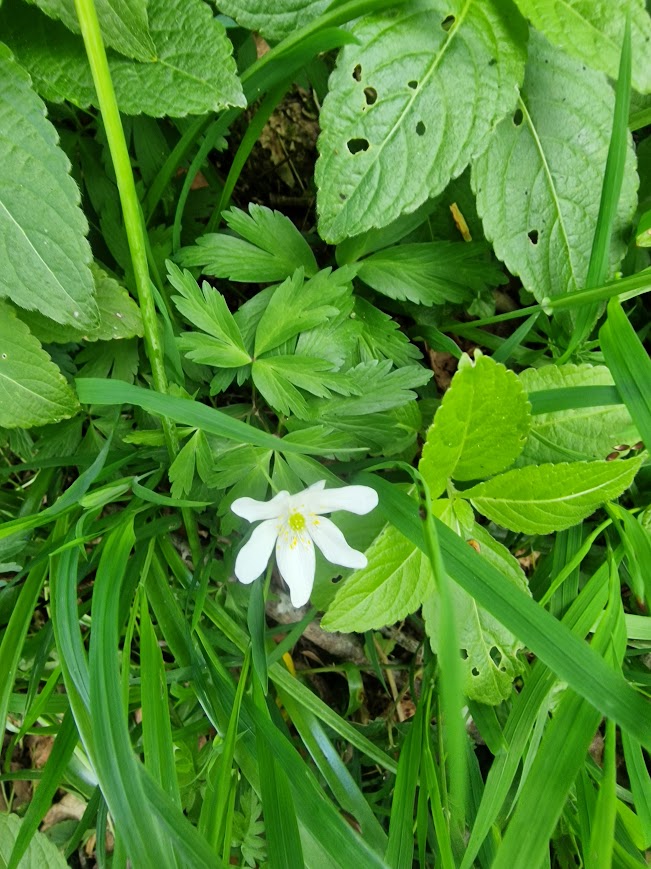
Wood Anemone

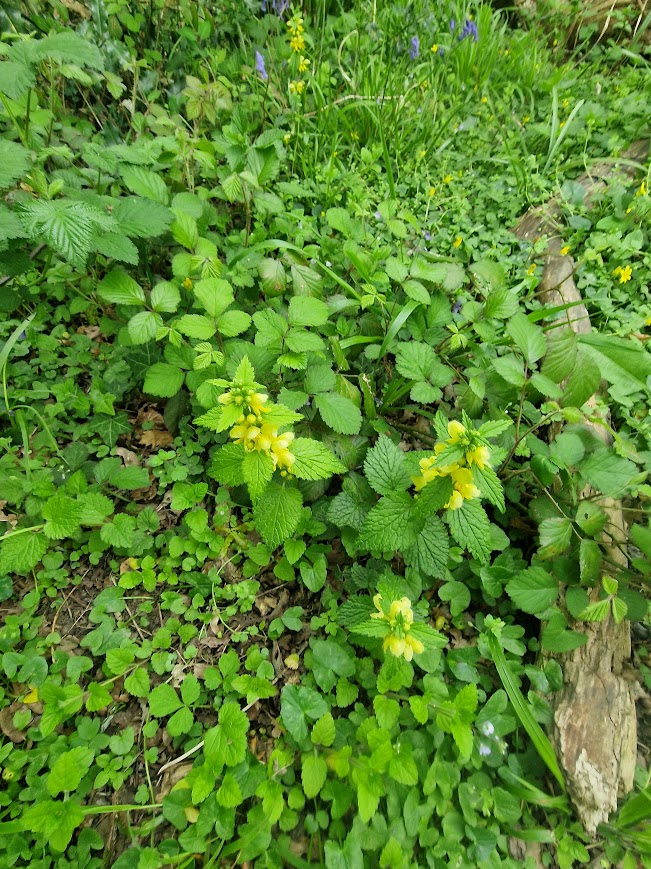
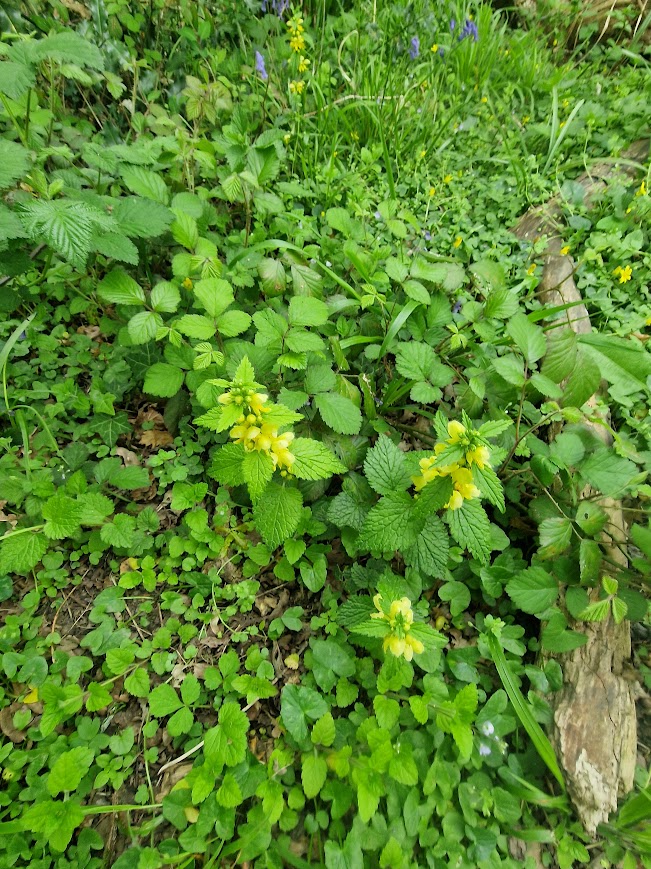
Yellow Archangel

Pendulous Sedge

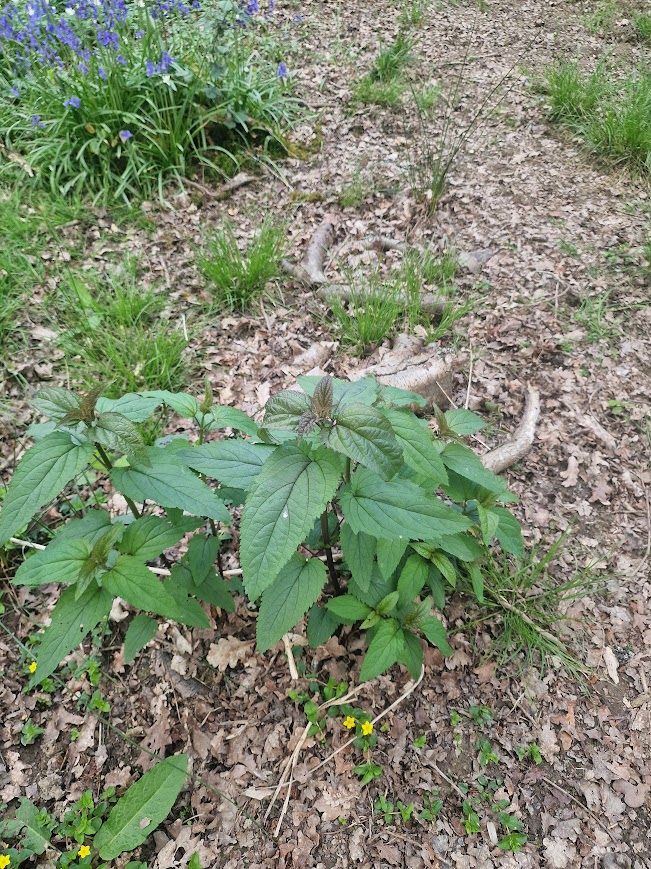
Wood Spurge

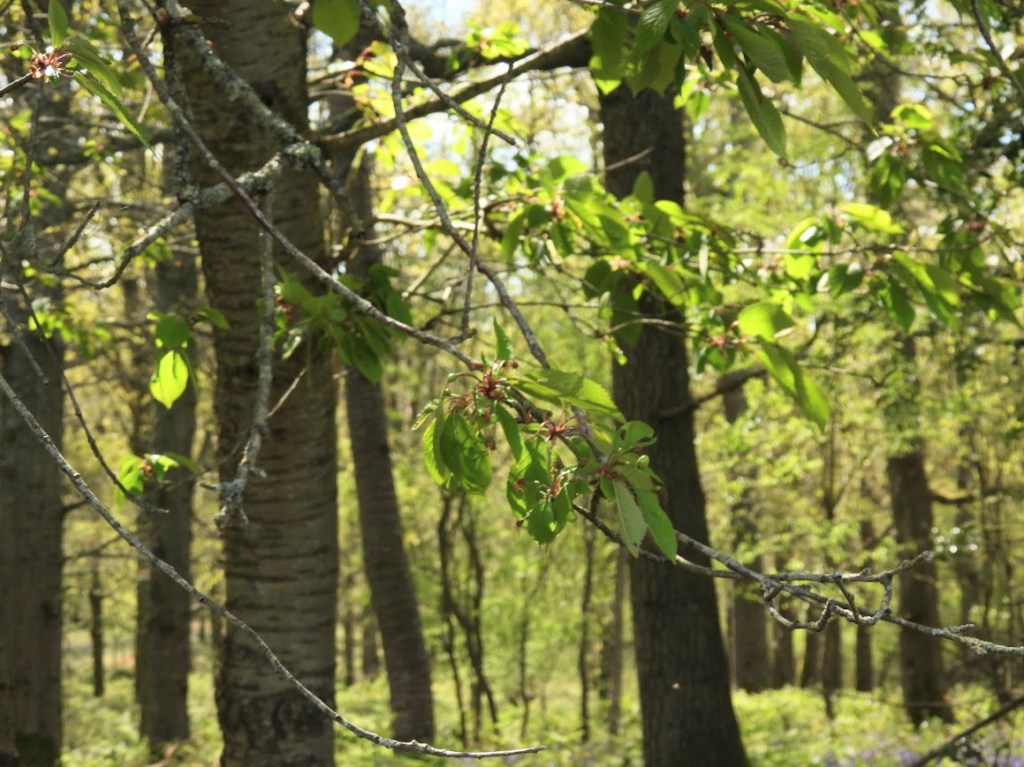
Wild Cherry

Other Vascular Plants

Figwort, surrounded by Tormentil

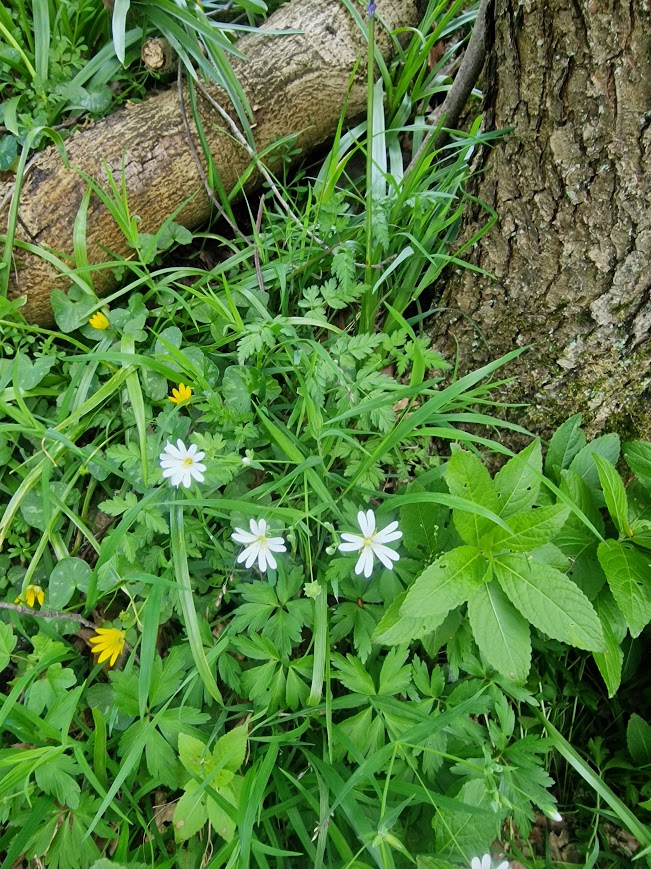
Greater Stichwort

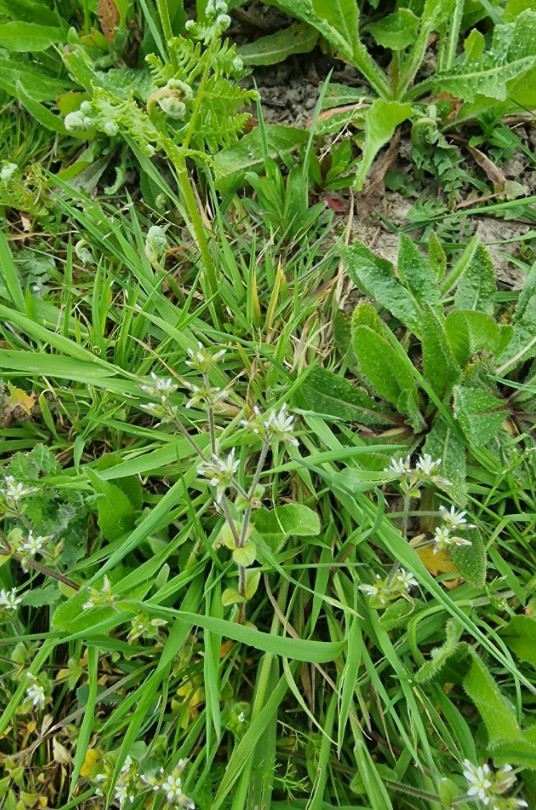
Little Mouse Ear

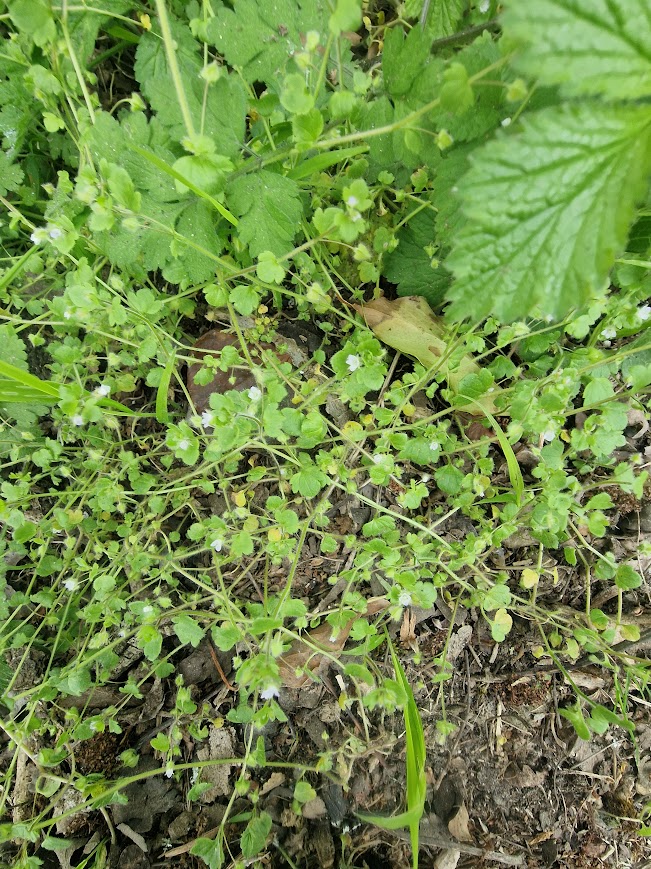
Pink Ivey-leaved Speedwell

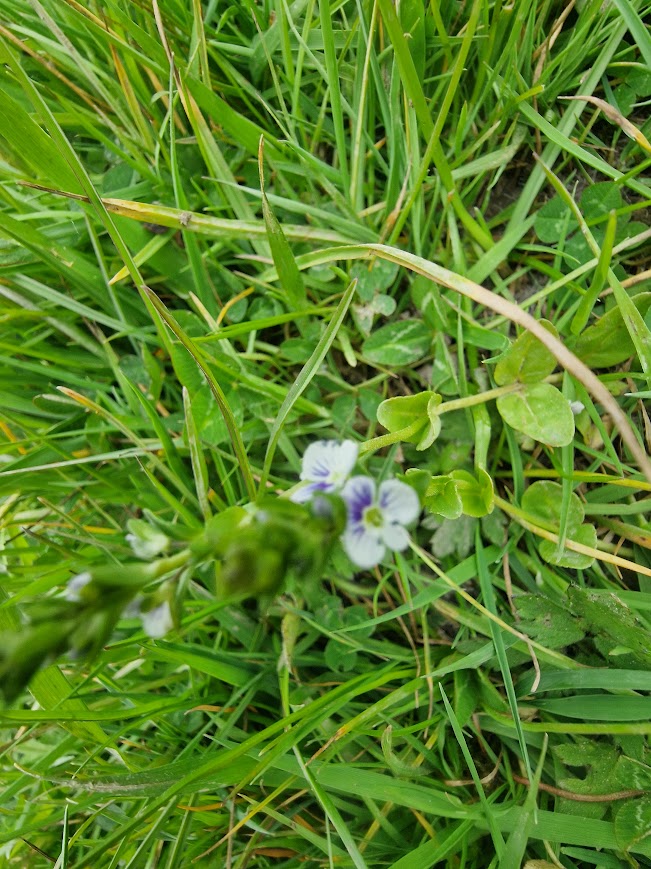
Thyme-leaved Speedwell

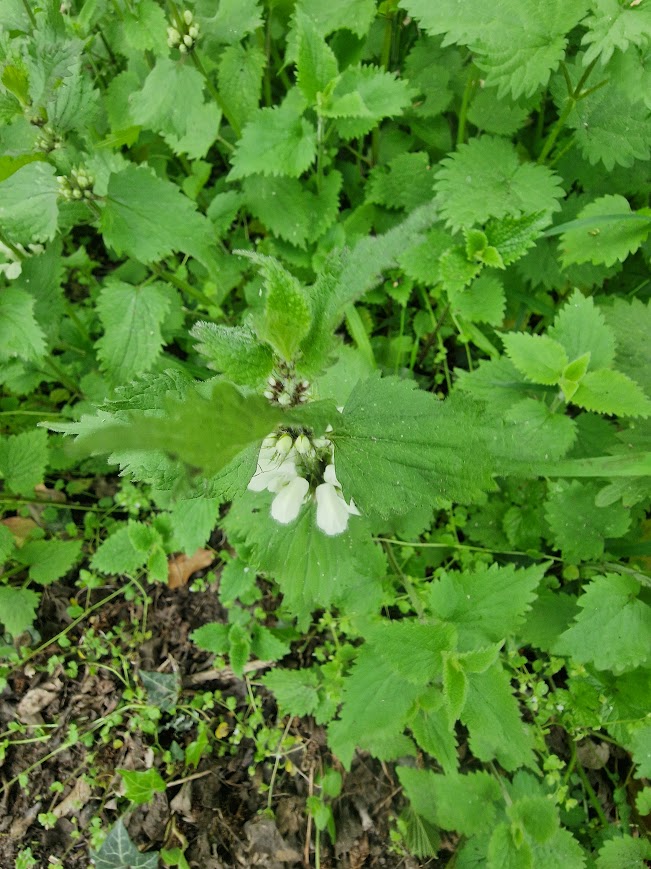
White Dead Nettle

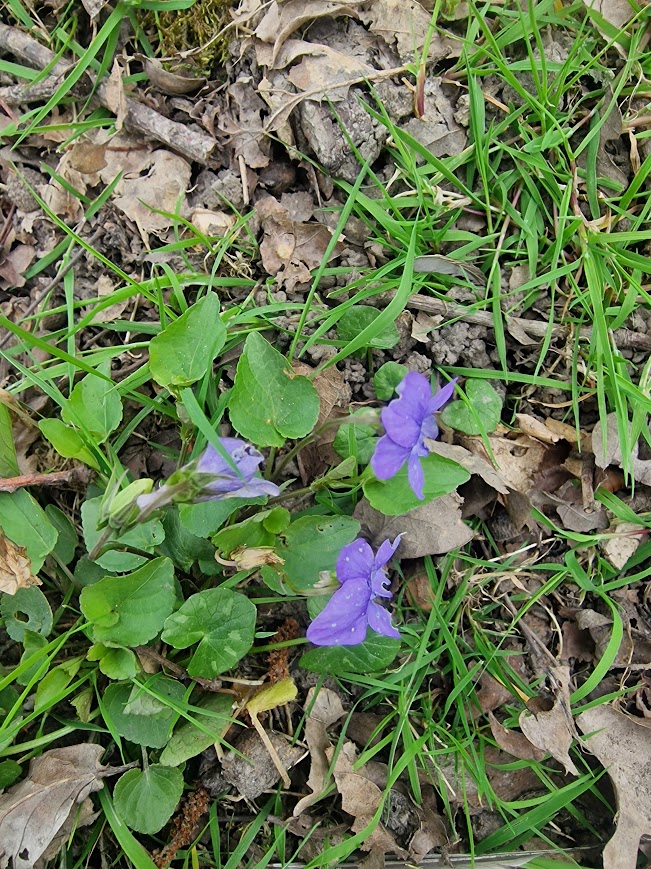
Common Dog Violet

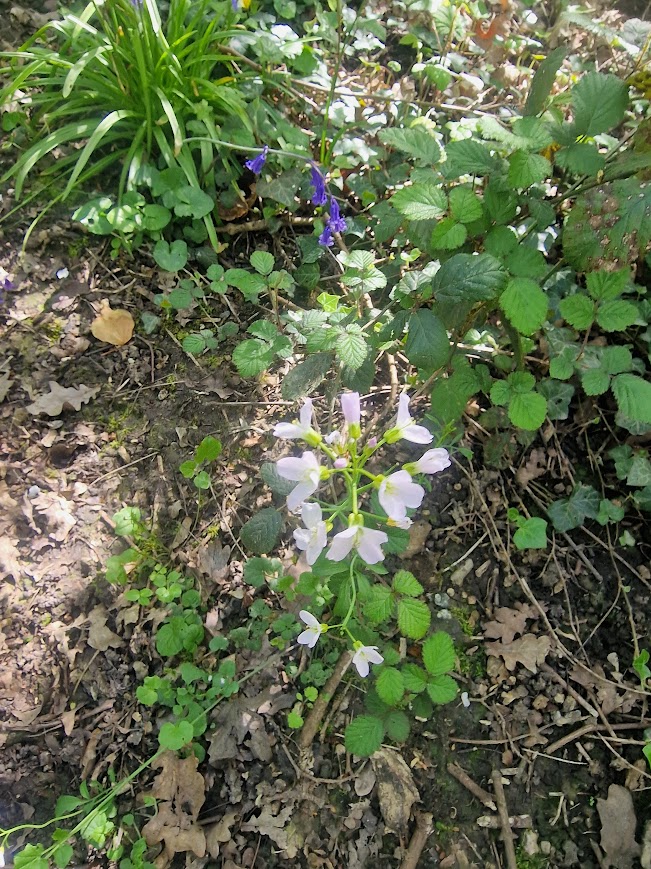
Cuckooflower / Lady’s-Smock

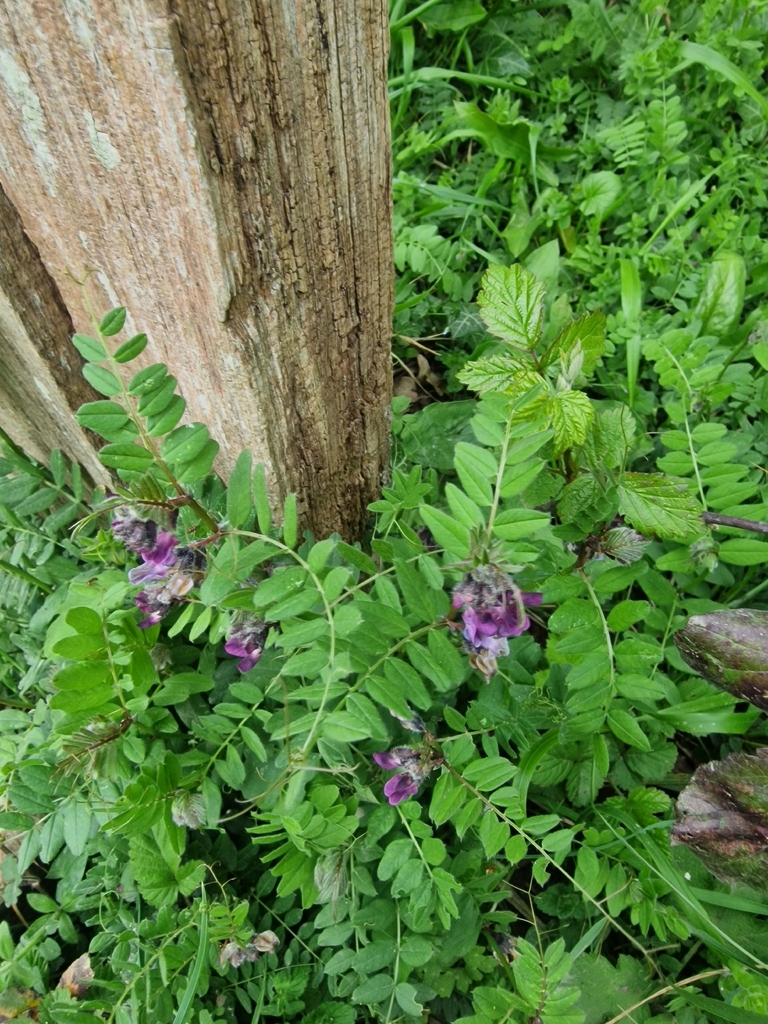
Bush Vetch

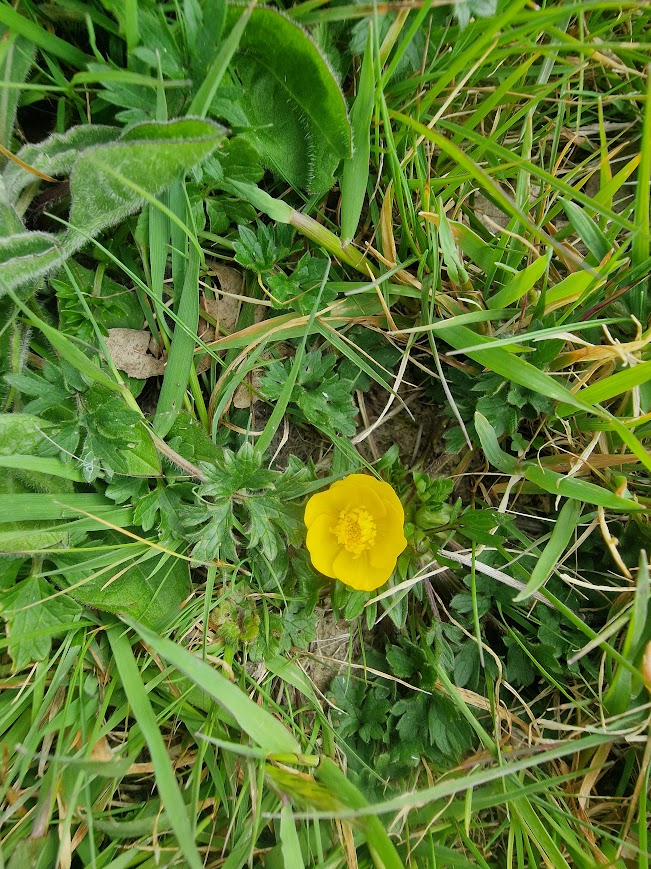
Bulbous Buttercup

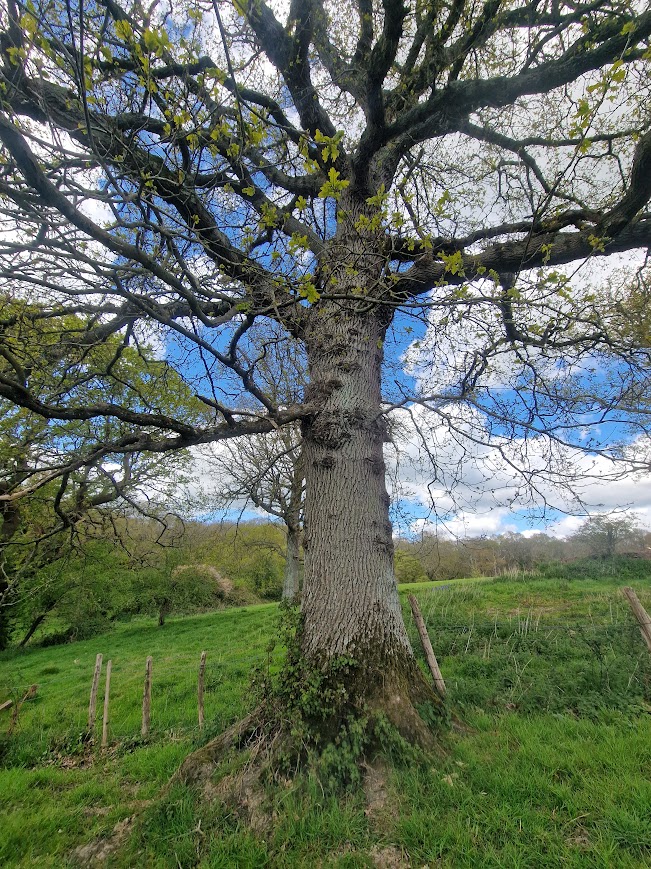
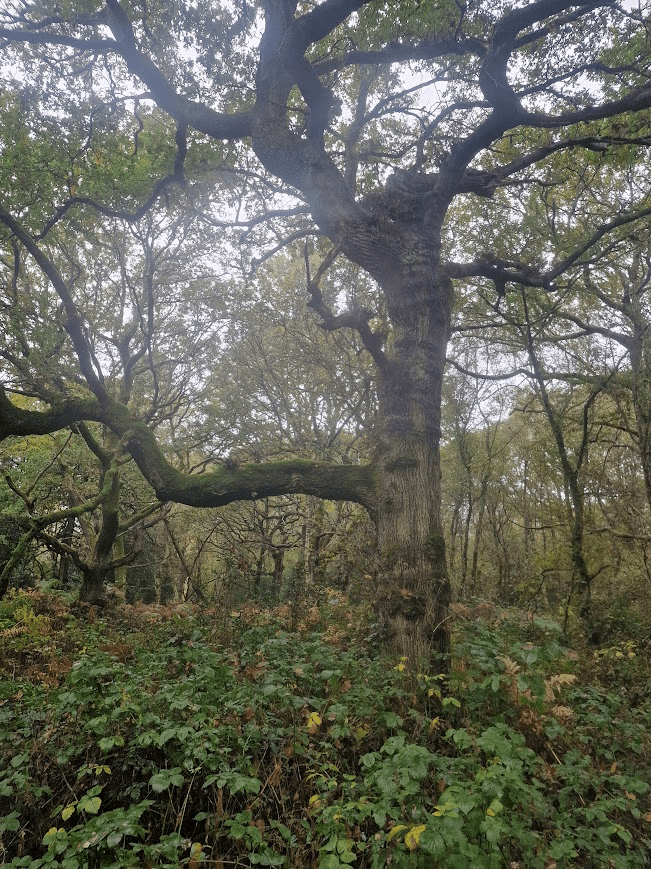
Pedunculate Oak

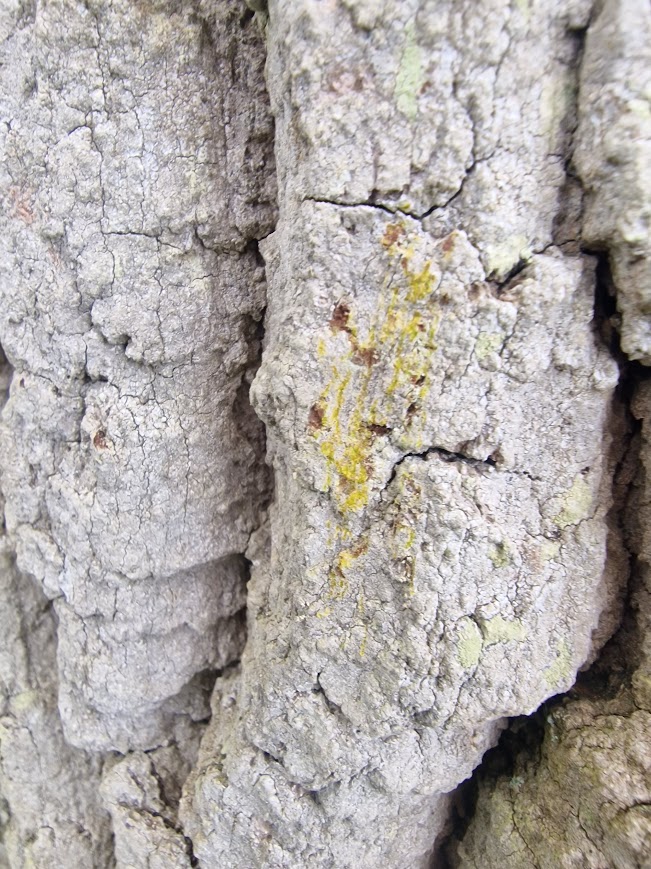
Covered in the lichen Dendrographa decolorans

More Pedunculate Oaks

with Gold Dust Lichen, Chrysothrix candelaris

Huge Pedunculate Oaks in an ancient hedgerow; ancient hedgerows are more likely to have large ancient oaks than ancient woodlands. In ancient woodland tt is the ecological continuity of the use of land as woodland that is ancient (leading to the presence of ancient indicator vascular plants, that take 100s of years to spread) not necessarily individual current trees that that are ancient

Some useful on-line resources for identifying vascular plants

Identification guides – BSBI Website

How to Identify Trees: A Simple Guide – Woodland Trust

Species Archive – Plantlife

And here’s two insects:

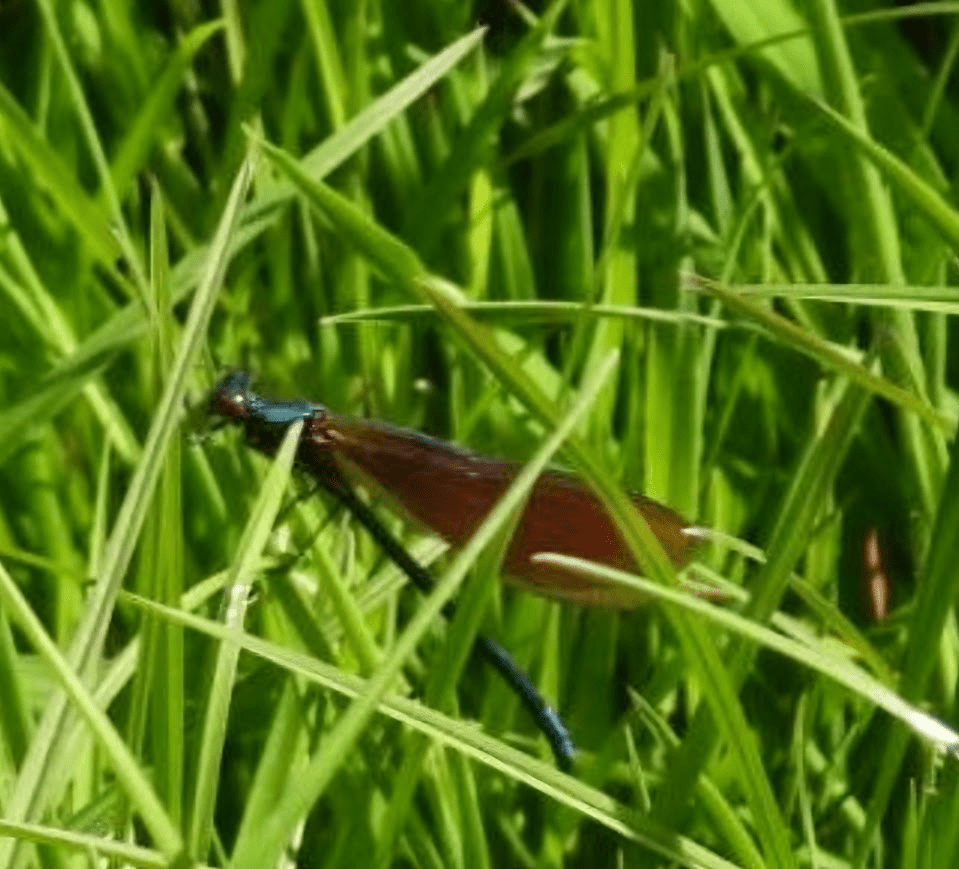
Beautiful Demoiselle (female, brown wings)

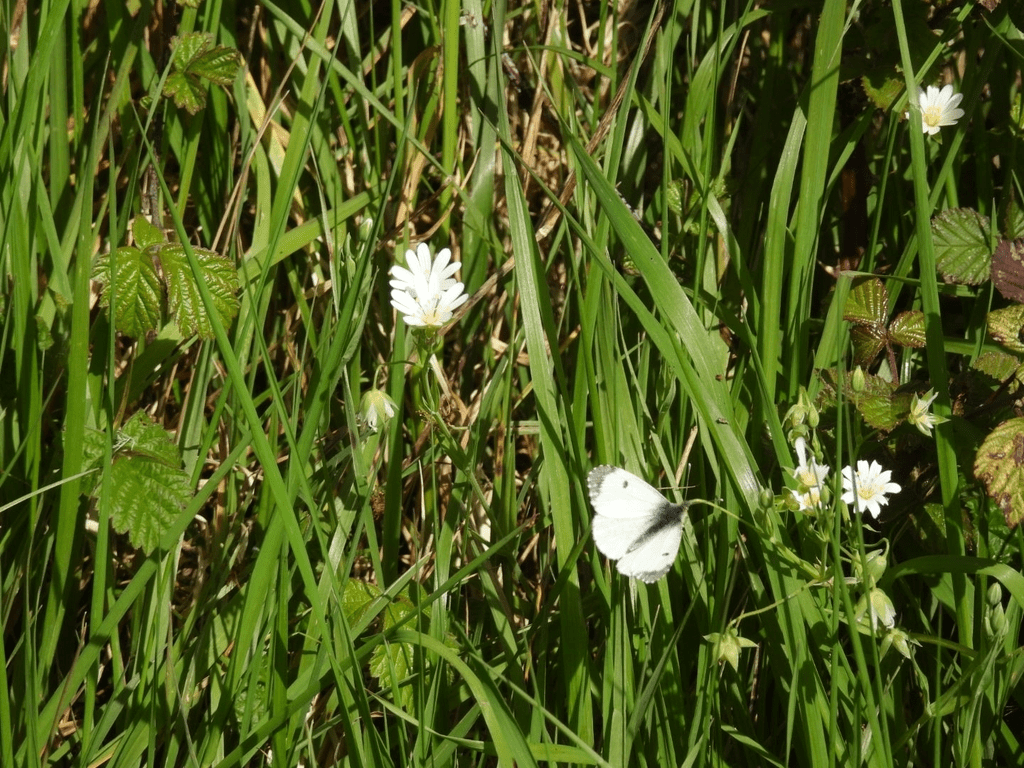
Orange-Tip Butterfly (female, wing tips not orange)

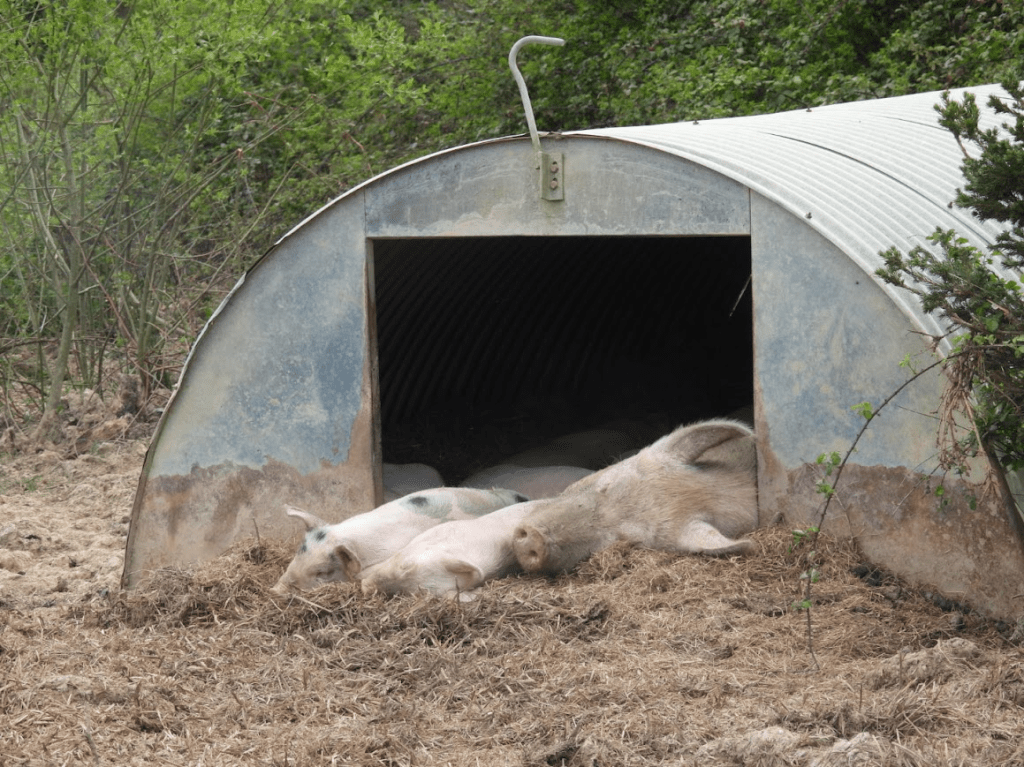
and finally pigs. I love pigs. I used to muck out pigs when my grandfather was an agricultural worker on the farm of the former St Mary’s convent in Rottingdean. That made me a vegetarian.

These pigs are free range, living the best life they can as livestock, on a small farm on the Wiston Estate. This farm has mixed livestock and arable, run by a tenant farmer who produces food and protects nature through nature-friendly farming. In a time of food insecurity and habitat loss this is the sort of farming we need. We don’t need huge agri-business farms putting profit above nature, and, in my humble opinion, we don’t need more rich landed gentry “rewilding” their farms to provide high-cost meat that few people can afford, and selling safaris to see nature that few people can afford, when you can see nature for free by walking in it and protect nature and produce affordable food in small nature friendly farming, but that requires governments financial support and that requires macro economic policies that redistribute not just wait for growth.

All opinions in the blog are my own and not those of any organisation I volunteer for

Sim Elliott BMus, PGCE, MA (History of Art), MSc (Applied Positive Psychology)

A walk from Newick to Scaynes Hill. Low Weald to High Weald. Pasture, woods & commons. Trees, lichens, wild flowers and building. 16.03.26

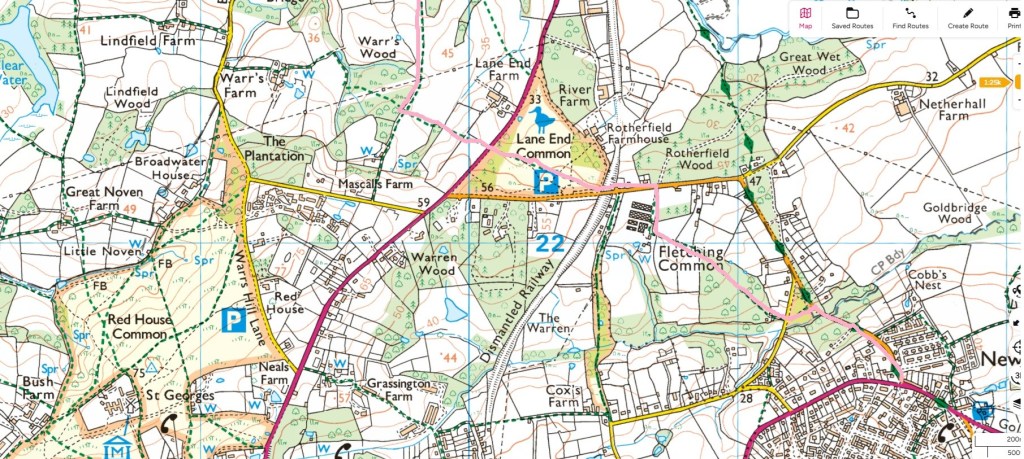
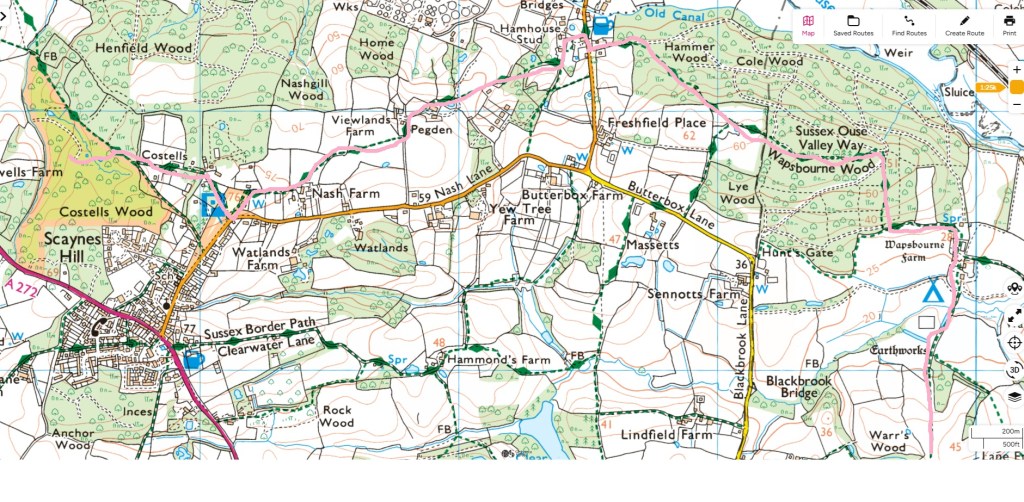
I took the Compass 121 bus to Newick from Lewes (having got to Lewes on a Brighton and Hove 29 bus) and from Newich I walked through Newick Common, Fletching Common, Lane End Common, Warr’s Wood, an unnamed wood, Wapsbourne Wood, Hammer Wood, Hamshaw Wood .Scayne’s Common, and Costells Wood to Scaynes Hill. At Scaynes Hill I took the Compass 31 bus to Uckfield, and retuned to Brighton on the 29.

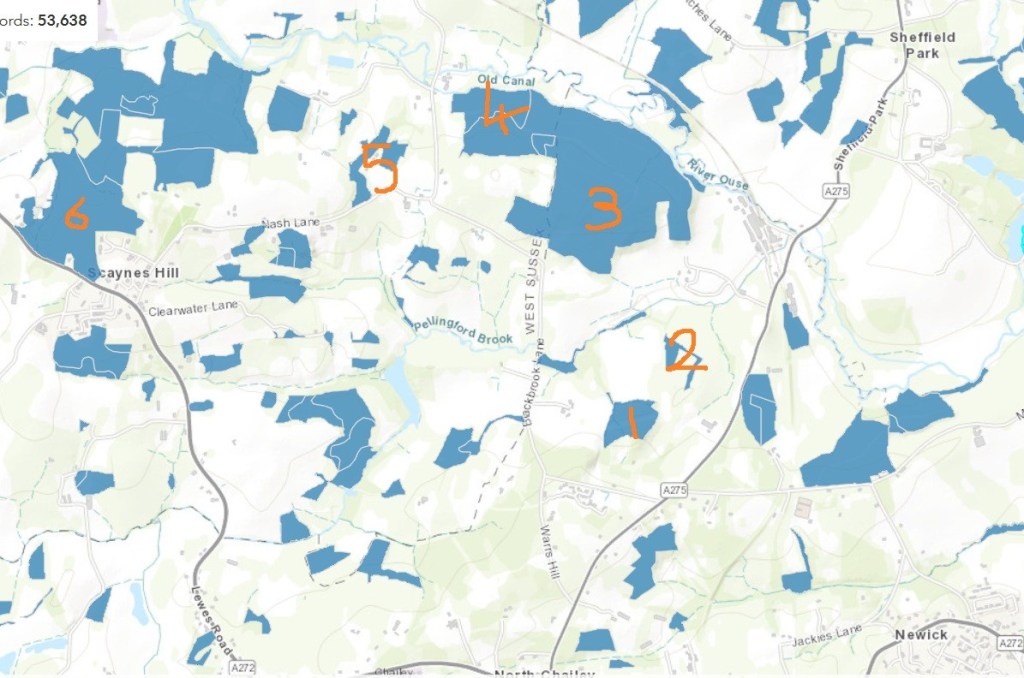
Warr’s Wood (1); the unnamed wood (2); Wapsbourne Wood (3); Hammer Wood (4); Hamshaw Wood (5), and Costells Wood (6) are all listed as ancient woodland by Nature England

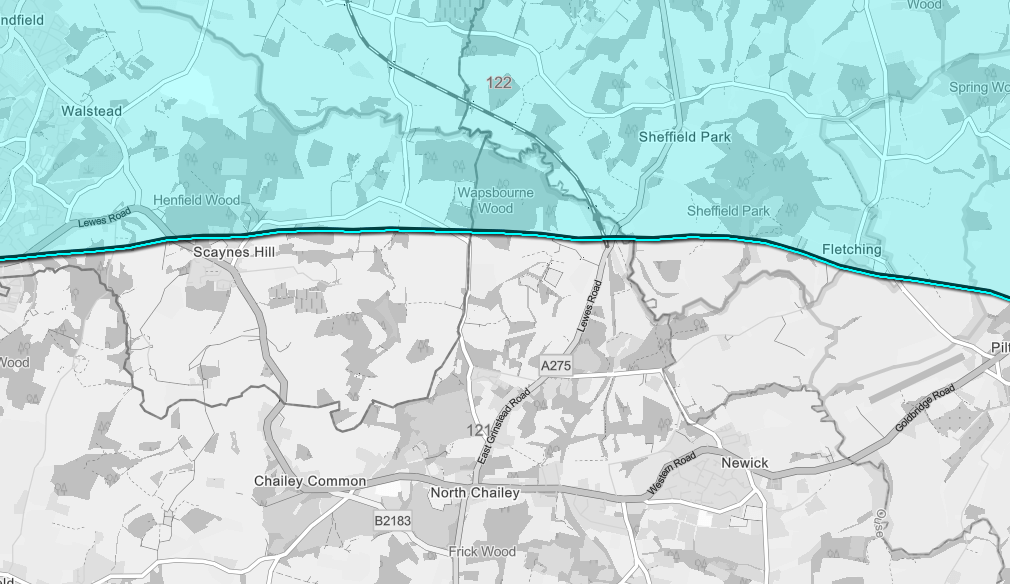
Most of the walk was in the Low Weald, but Costells Wood [and Wapsboune Woods], is just within the southern boundary of the High Weald National Character Area (NCA), where it meets the Low Weald NCA. Woodland Trust Costells Wood Management Plan

Extract from Nature England National Character Area High Weald Context Map showing the boundary between the High and Low Weald. In reality, here is no hard and fast boundary between High and Low. Warr’s Wood clearly has a low weald biological and landscape character and Costells Wood has a high weald biological and landscape character with its ghyll; Wapsbourne Wood, although technically feels more interstitial

Low Weald character: Land use is still predominantly agricultural, and largely pastoral owing to the heavy clay soils Most grassland has been agriculturally improved, but fragments of unimproved, floristically rich meadow and pasture are still present.

Fields are generally small and irregular, many formed by woodland clearance or ‘assarting’ in the medieval period and often bounded by shaws or formed from cleared land along woodland edges. Many of the especially species-rich hedgerows in this area may be remnants of larger woodland and often follow the pattern of medieval banks or ditches. …

Like the High Weald, the Low Weald is densely wooded … [with] Numerous and extensive blocks of ancient, semi-natural coppiced woodland … Oak is the principal tree and, despite centuries of clearances for settlement, transport and agriculture, significant areas of ancient woodland survive. Low Weald – National Character Area Profiles

Natural England on-line map of Ancient Woodland: Ancient Woodland (England) | Natural England Open Data Geoportal

Route taken from Newick to Warr’s Wood (pink line) OS online maps: Detailed maps & routes to explore across the UK | OS Maps

Route taken from Warr’s Wood to Scaynes Hill (pink line)

When I am walking I pay attention to whatever takes my eye so whilst this route was planned around visiting certain woodlands commons, I found interesting things on the paths between these.

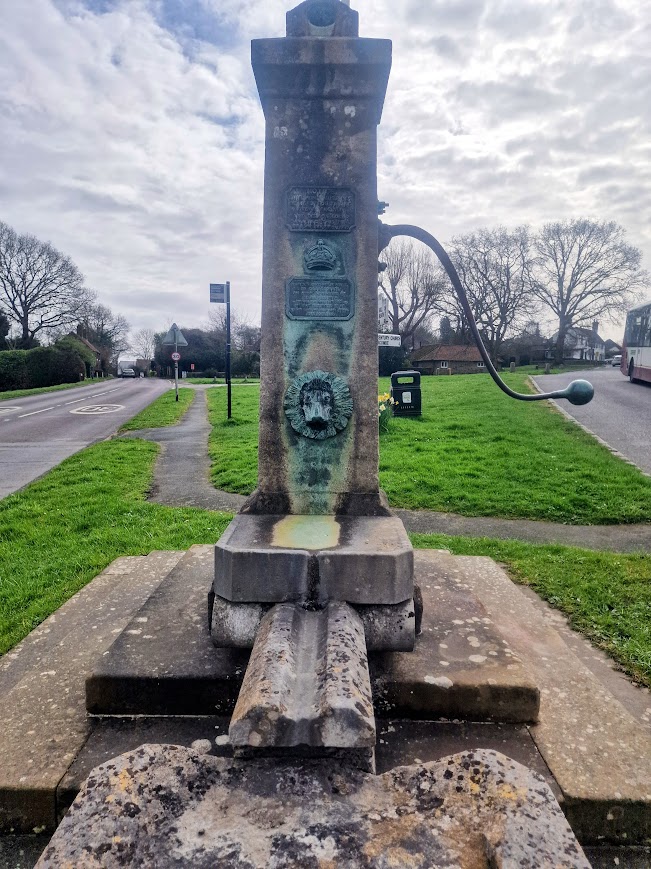
Newick

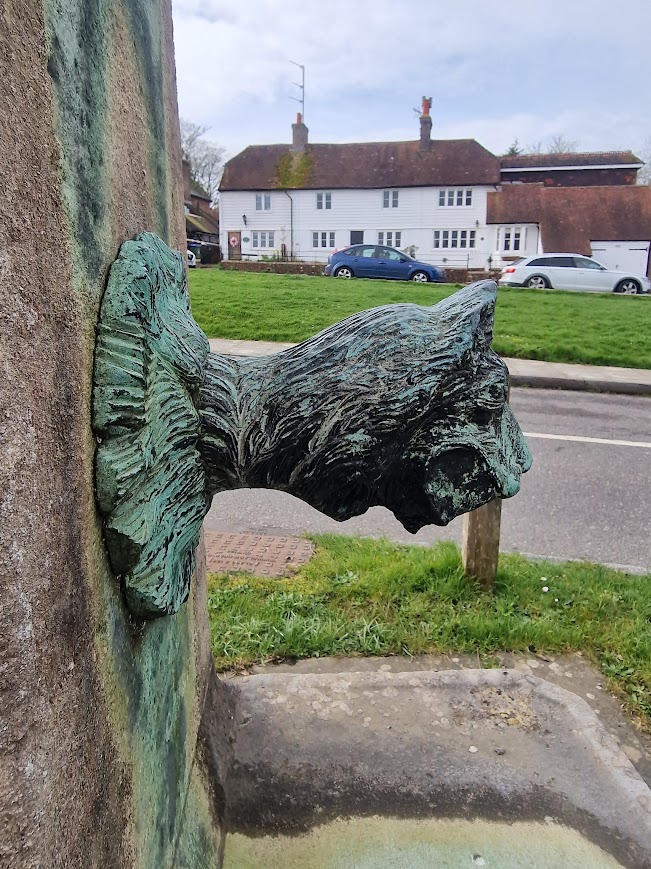
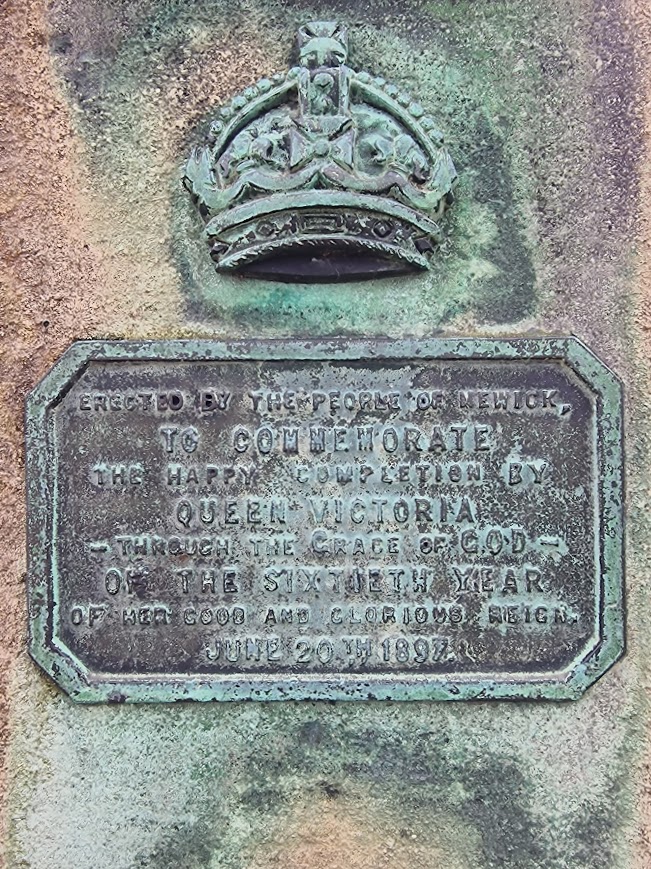
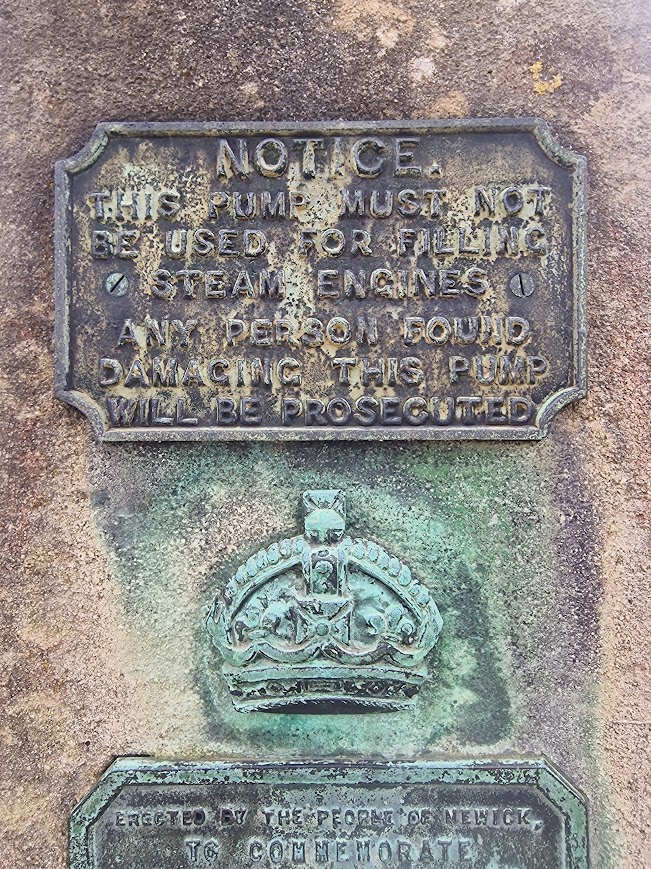
The Newick C19 Water Pump.

Newick Common

Current OS Map Detailed maps & routes to explore across the UK | OS Maps

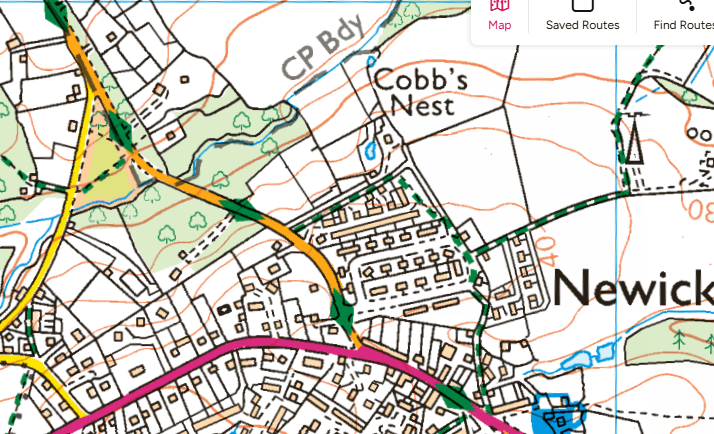
Not named on the map, Newick Common is the small lime-yellow triangle of land. Lime-Yellow in wooded areas of OS maps indicates areas of public access land. This may be National Trust, Woodland Trust or Forestry Commissions land, or it may be privately own land where there are still rights of common.

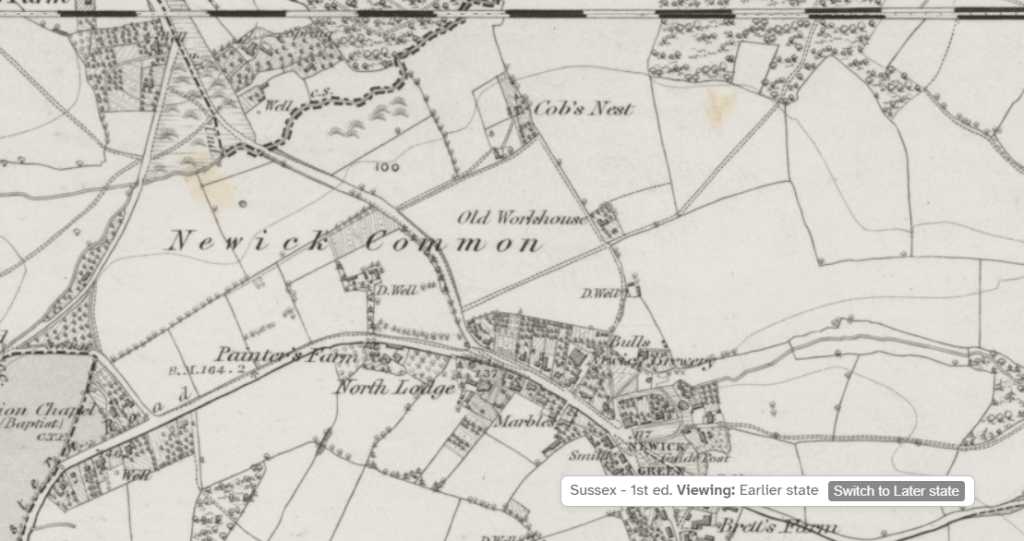
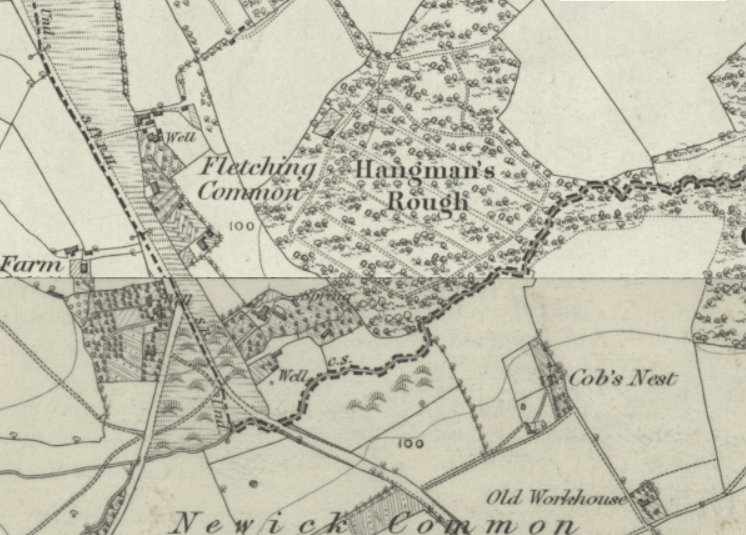
OS Six Inch Map 18302-1860 Georeferenced Maps viewer – Map images – National Library of Scotland Showing Newick Common as considerably larger than 2026

Newick Common is the triangle of land located between Newick Hill and Jackies Lane (outlined in red on the map below). It was originally much larger in extent, including a lot of the land between Jackies Lane and Western Road, but development over the years has meant that it has been reduced to its current size. A lot of small trees and scrub have grown up in this area, but we know from talking to people who grew up in the village that 50-60 years ago it used to be much more open. In conjunction with the Lewes District Council rangers, we are therefore trying to remove some of the trees and scrub, to restore a more varied habitat and increasae biodiversity Newick Rootz: Newick Common

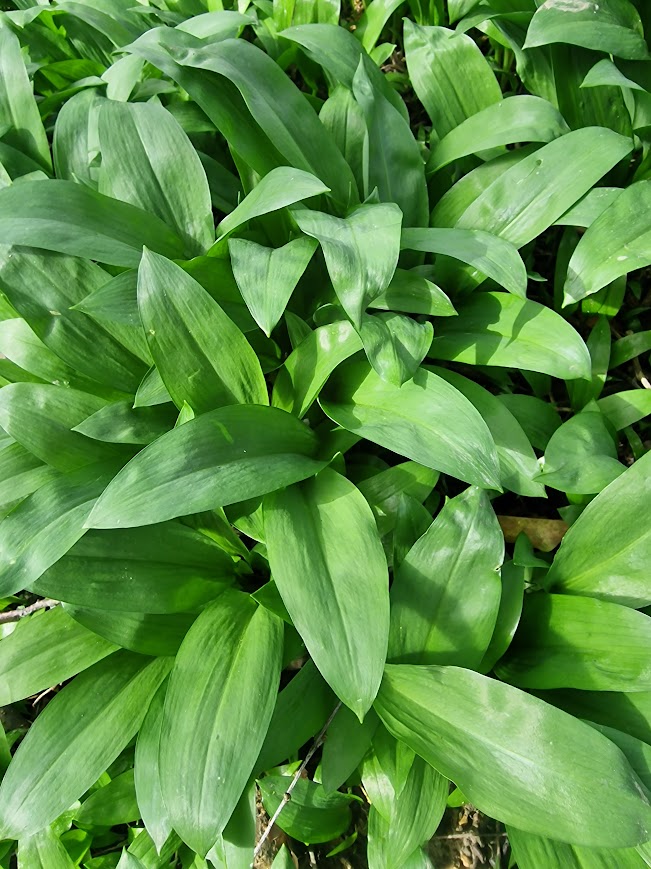
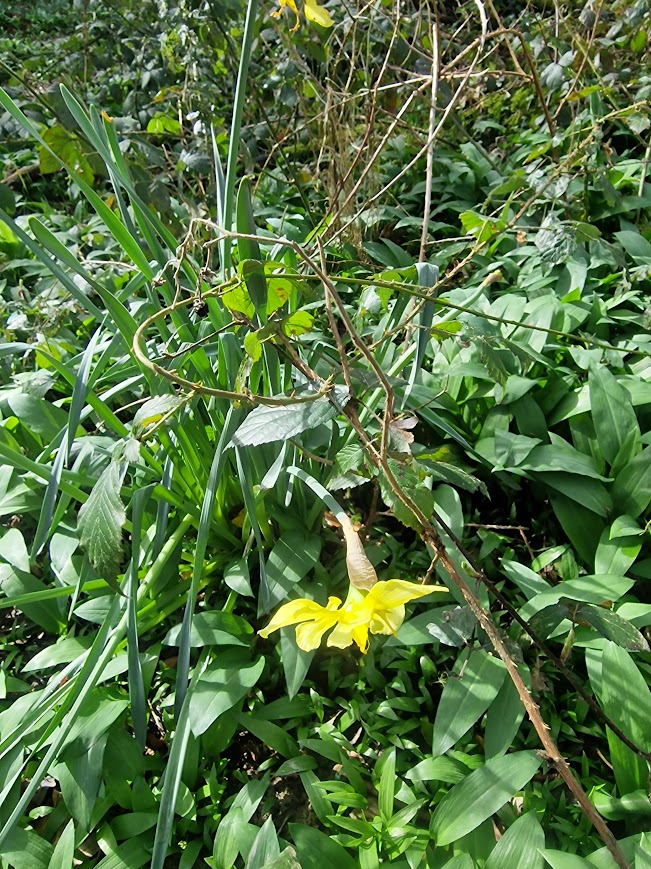
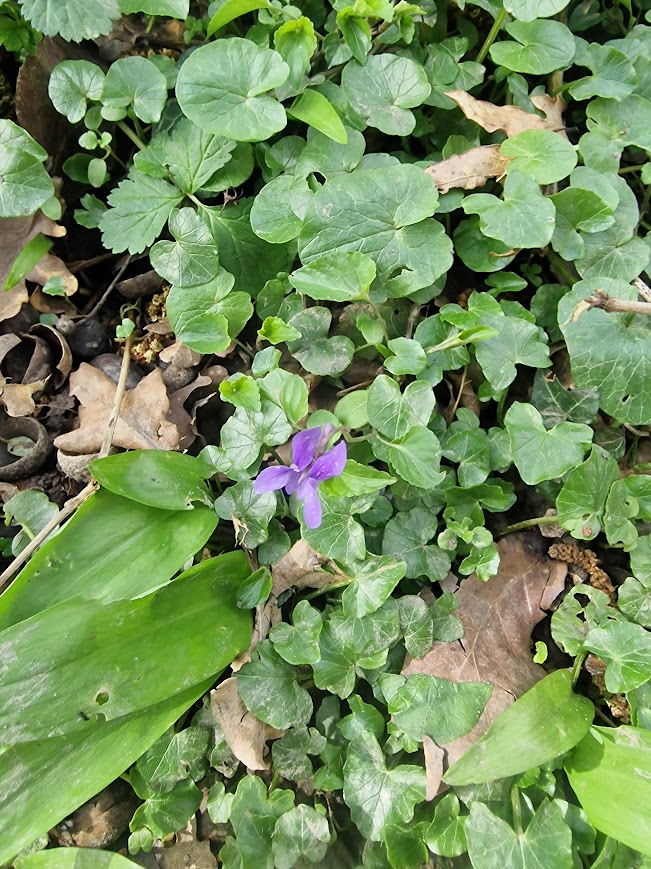
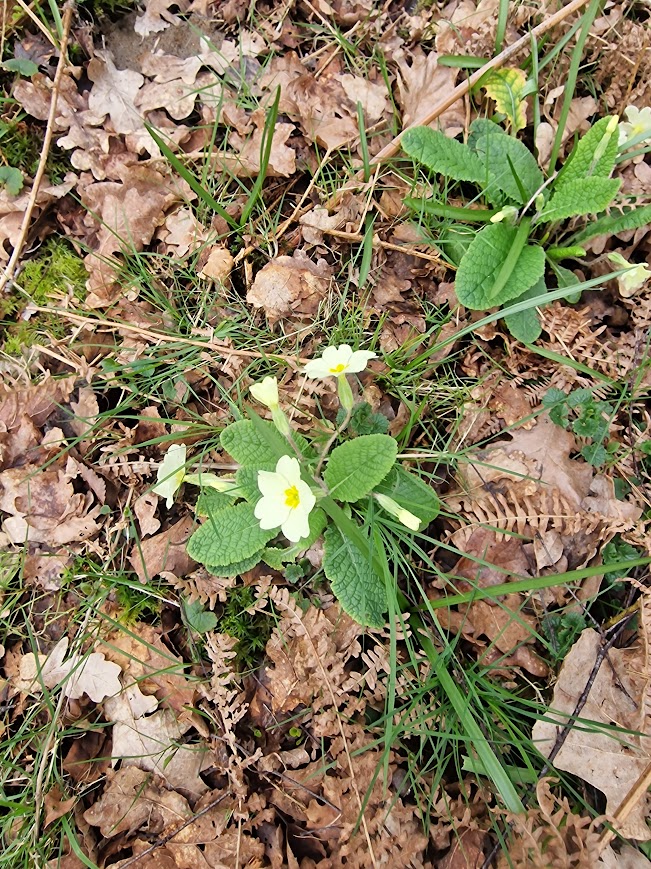
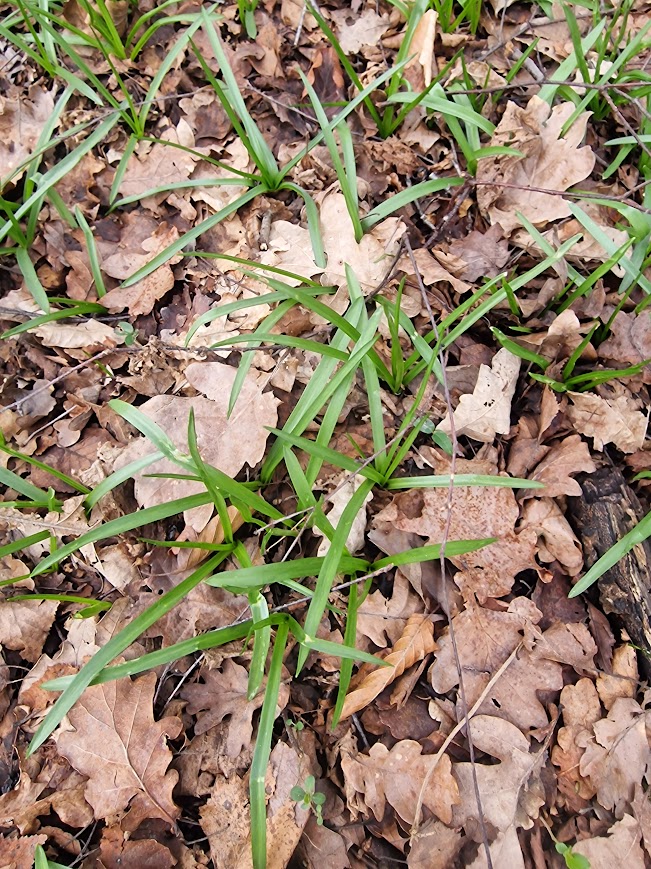
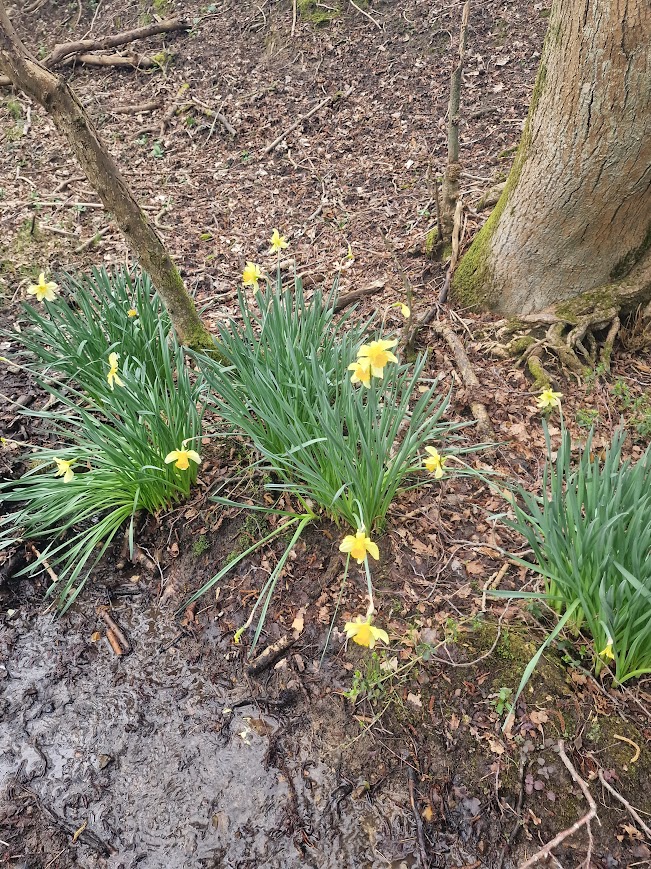
On the common, there was Wild Garlic. Wild Daffodils and Early Dog Violet; that are often associated with ancient woodland

Fletching Common

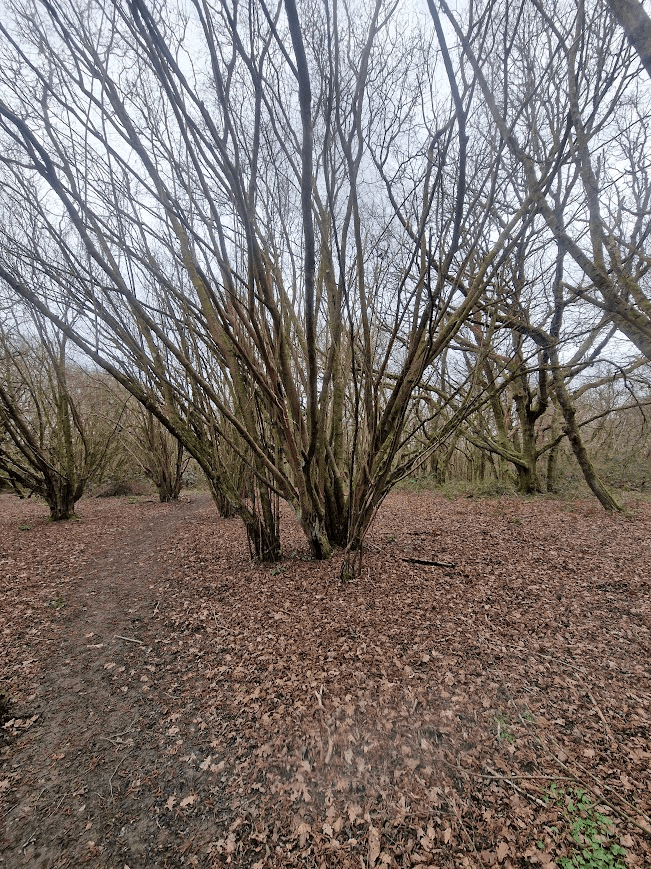
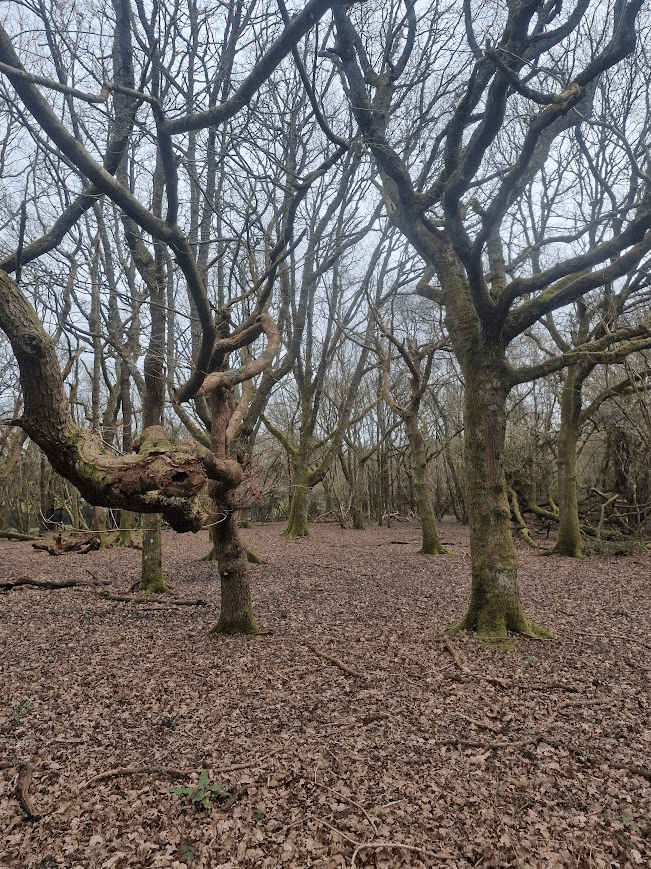
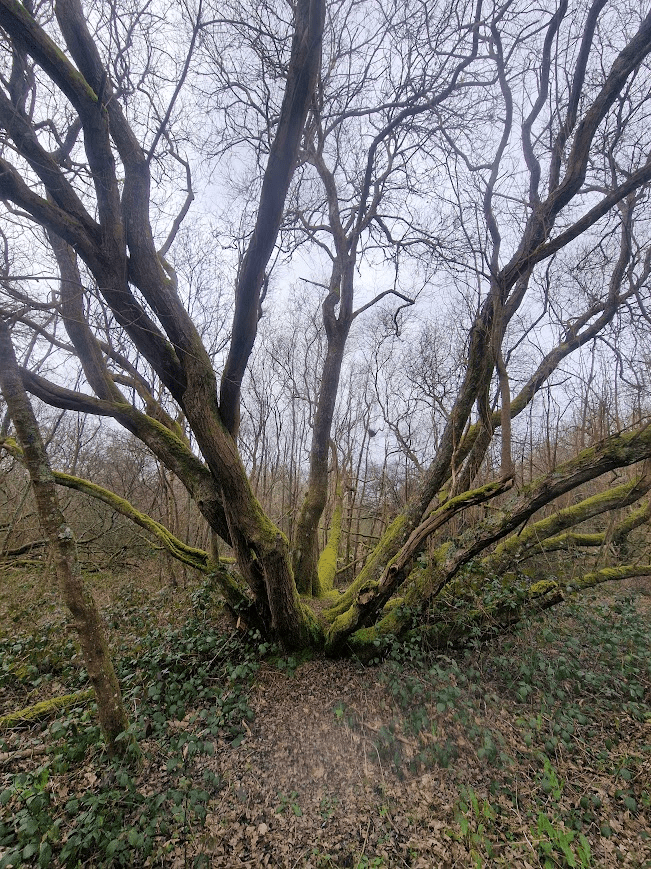
I can find little on the history of Fletching Common. It is now continuously wooded. Part of it now a campsite, Wyld Wood Campsite, part of it is just woodland. The trees in the woodland were previously managed; as their are many old coppice hazel stool, and pollarded Pedunculate Oak and, curiously, coppiced Pedunculate Oak, some which appear to have no main trunks.

Interestingly Fletching Common is listed on the Government’s database of commons Copy_Common_Land_CPHs.xlsx but Newick is not; but on the OS maps, Newick is marked as public access land but Fletching is not

OS Six Inch Map 18302-1860 Georeferenced Maps viewer – Map images – National Library of Scotland showing the woodland of Fletching Common as Hangman’s Rough; here is no historic provenance for the name Wyld Wood; presumably the owners of it didn’t fancy a Hangman’s Rough Campsite!

Coppiced Oak

Pollarded Oak

What looks like an old Coppiced Pedunculate Oak with no main trunk:

There was very limited ground flora. The lichen flora was the common lichens you would expect on Oak

Flavoparmelia caperata, Common Greenshield Lichen

Ramalina farinacea, Oak Moss Lichen

Between Fletching Common and North Lane Common

This stunning old Oak pollard was in a field. Often the most spectacular trees are not in woodlands but hedgerows and fields. Field old trees are possibly relicts of cleared woodland, when trees are left for shade for famed animals

Lane End Common

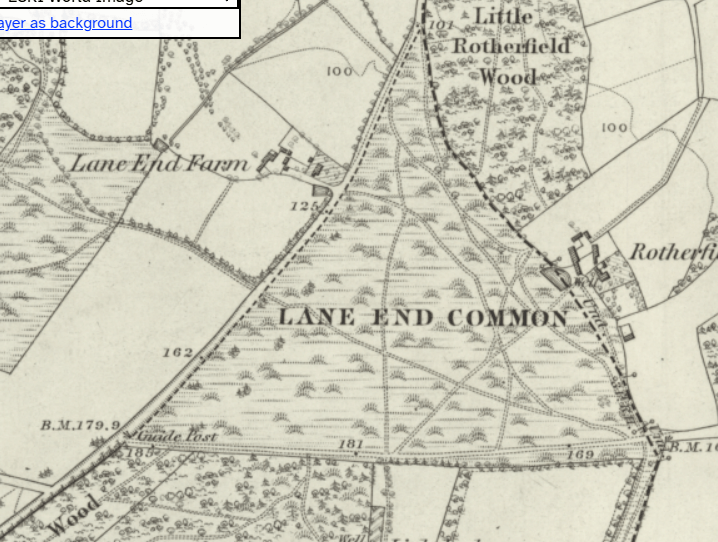
Lane End Common is one of the five Chailey Commons. A Compact and dry woodland heath rich in insects and wood ants. Chailey Commons Society Five Different Commons

Southern Wood Ant, Formica rufa

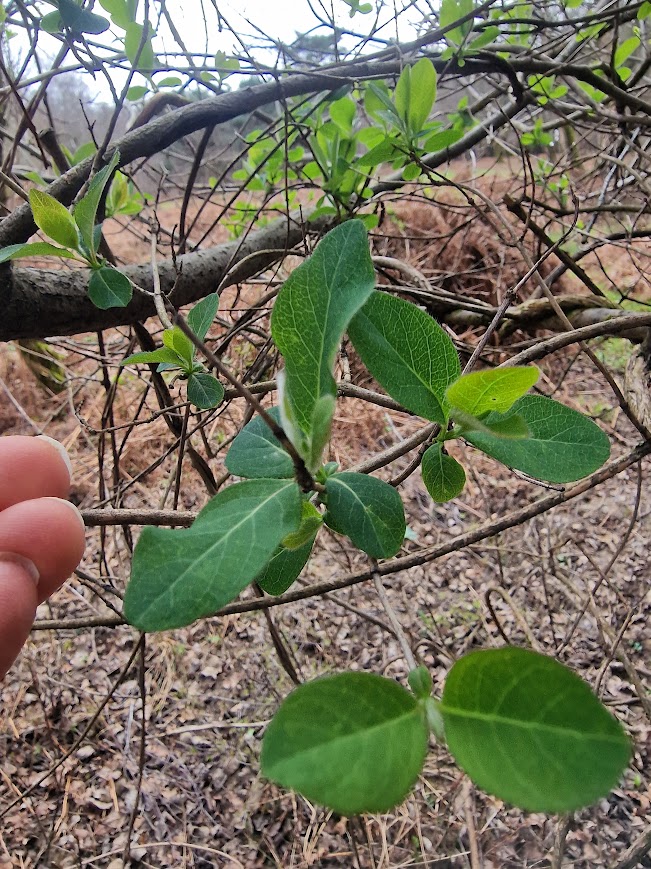
Whilst Lane End Common is not designated as ancient woodland, there were some ancient forest indicator species in the wooded parts of the common, including Primroses, Bluebells, Wild Daffodils and Honeysuckle

In North End Common there is a lot of archaeological interest, including the medieval route on the NE boundary of the Common – known in the 17th century as the ‘Lewes to Grinstead Way’, probably 14th century or earlier, shown on a 17th century estate map, and on 1st edition OS map running NW/SE on the NE boundary of the Common to the old Ouse crossing, thought to be between Wapsbourne and Sheffield Bridge. It runs SE to Red Gill, Jackies Lane, Oxbottom, Cockfield Lane and eventually to Lewes (known as the pack horse way)  (GR TQ 404205) Chailey Commons Society – Archaeology

Other archeolgical featires of the common include:

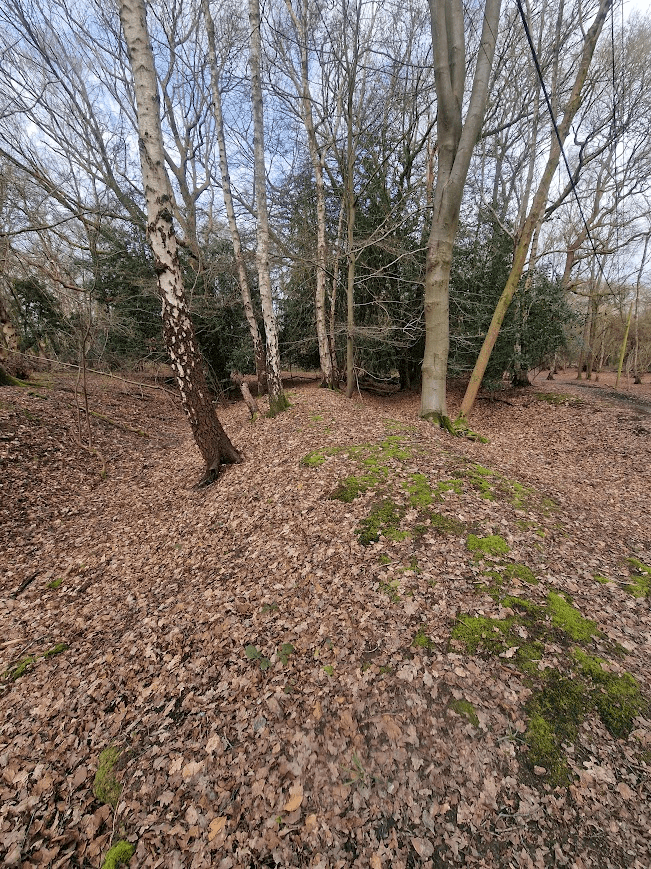
  • Sunken lanes/braided tracks – 5 x parallel banks and dips (running SE/NW), bisected by the railway cutting and are likely to be earlier than the Lewes to E Grinstead Way.   Possibly animal migratory routes and post-medieval track-ways. Disappear in the mid-area of the Common, but emerge on the same axis in the Northern triangle point(GR TQ 405223).
  • Boundaries on the NE edge show an established bank topped by overgrown multi stemmed hornbeam with signs of coppicing and pollarding, and a ditch on the Commons side.
  • Ridge and furrow towards the West boundary opposite Lane End Farm – 6 or more parallel umbrella shaped ridges and furrow dips (N/S), medieval(?), manmade and possibly a system for managing the cycle for harvesting brakes, fern and ling and allocating in rotation? (GR TQ 402223)
  • Sand quarry, indicated by sandy soil, a deep cleft and spoil heap on the S boundary W of the car-park. (GR TQ 402222) Chailey Commons Society – Archaeology

Theses relate to the ancient rights of common: rights to collect bracken, fern, twigs and ling (or matted heather) for thatching and fuel (discussed on earlier walks). Chailey Commons Society Archaeology

OS Six Inch Map 18302-1860 Georeferenced Maps viewer – Map images – National Library of Scotland seemingly showing the the SE-NW banks and dips; as well as the Lewes to Eeat Grinstead Way.  

There were several attempts by landowners to enclose Commons and deprive Commoners of their rights.  For example, in the mid 17th century ‘anger resulted in physical harm to persons, when inhabitants of Fletching pulled down the fences Sir Henry Compton had erected around part of Chailey Common.  His stewards followed the men home and wounded one by gunfire.  This dispute was settled in the Court of the Star Chamber.’ Brandon (2003) p121. Brandon P (2003) The Kent and Sussex Weald, Phillimore. Chailey Commons Society Archaeology

E.P. Thompson (1963) The Making of the English Working Class)described the parliamentary enclosure movement in 18th and 19th-century England as a “plain enough case of class robbery,” fundamentally transforming the relationship between land, law, and the working class. 

Braded Trackways:

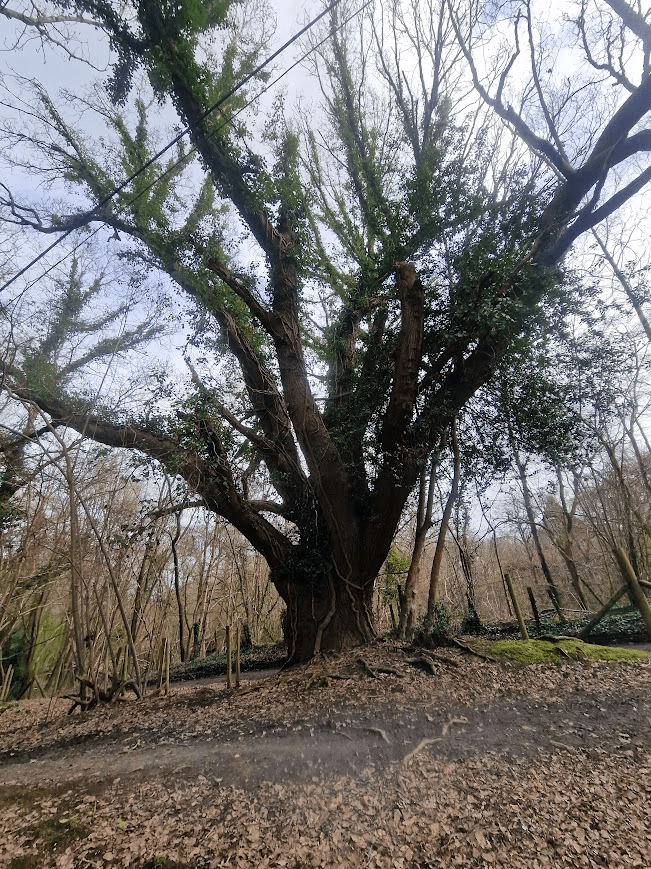
Huge Oak pollard:

Girth suggested an age of 300-400 years.

A completely decorticated dead Pedunculate Oak

Now a home for invertebrates:

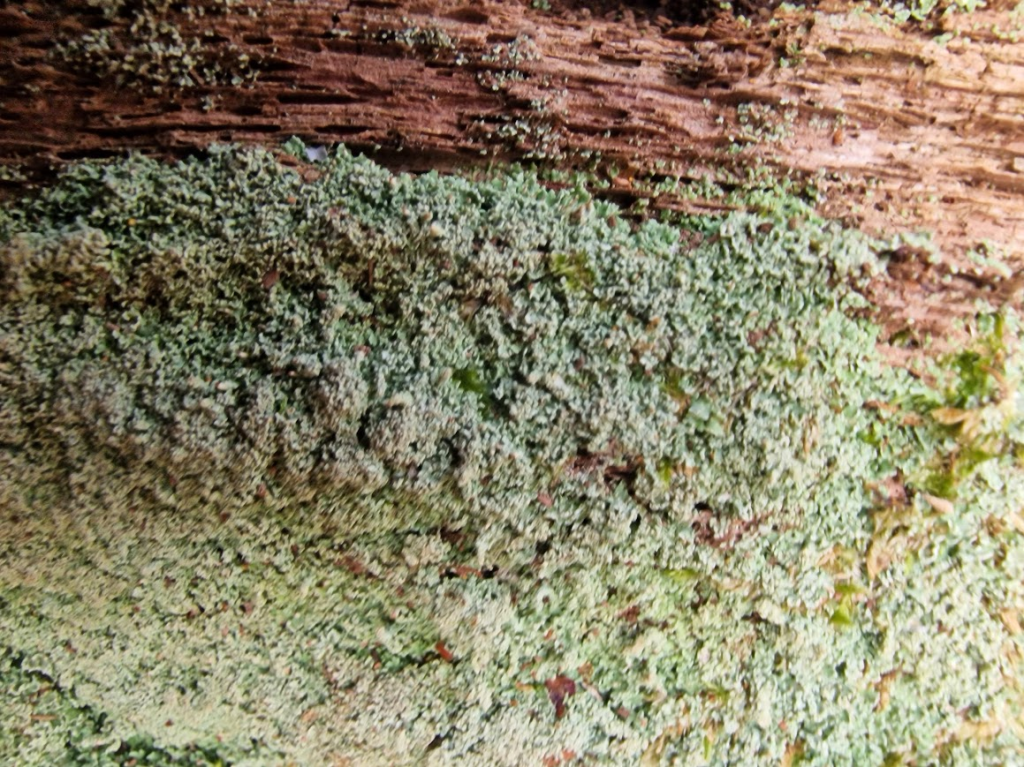
and Cladonia parasitica, a lichen of decorticated wood

Warr’s Wood

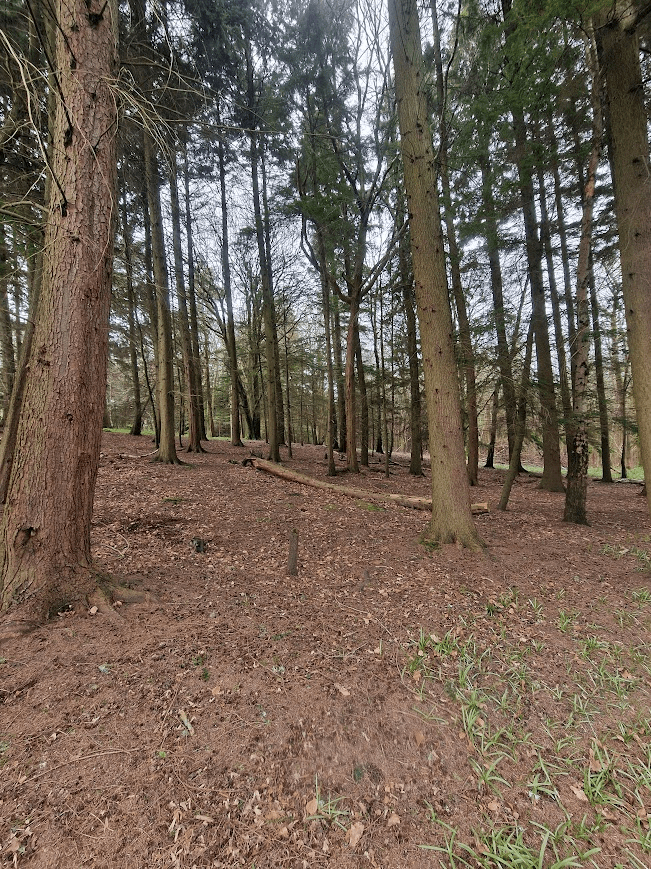
Warr’s Wood is an example of typical low weald coppiced Hornbeam ancient woodland with some Pedunculate Oak; a frequent type of low weald wood. The boundary bank around it has coppiced and pollarded Hornbeams. The ground flora (in spring) is dominated by Bluebells

Boundary Bank

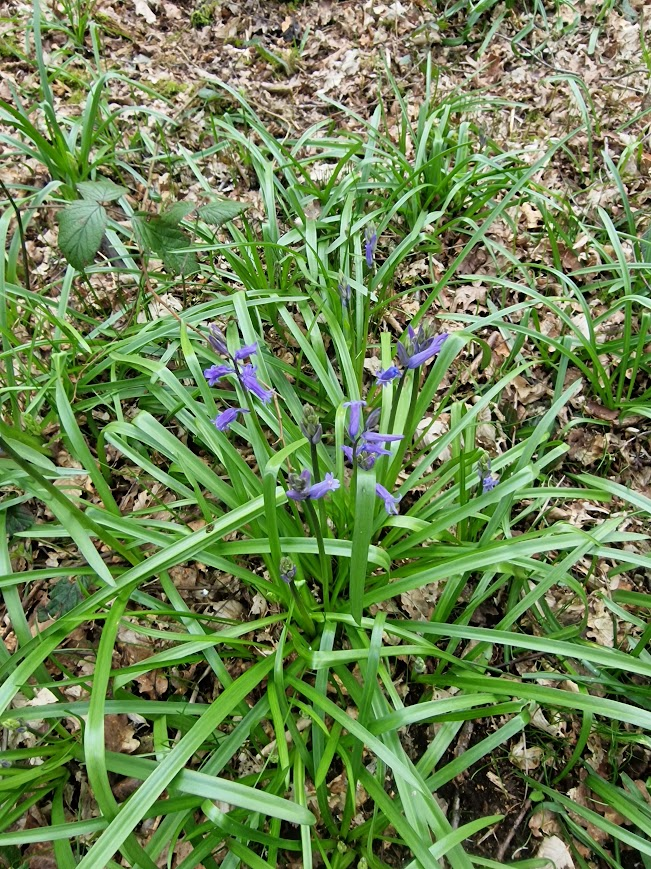
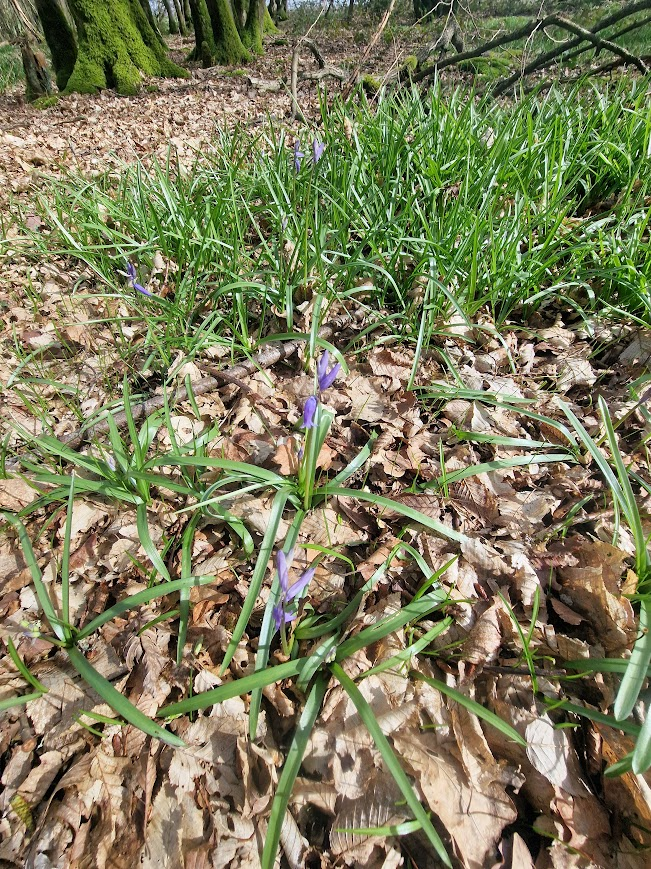
Bluebells

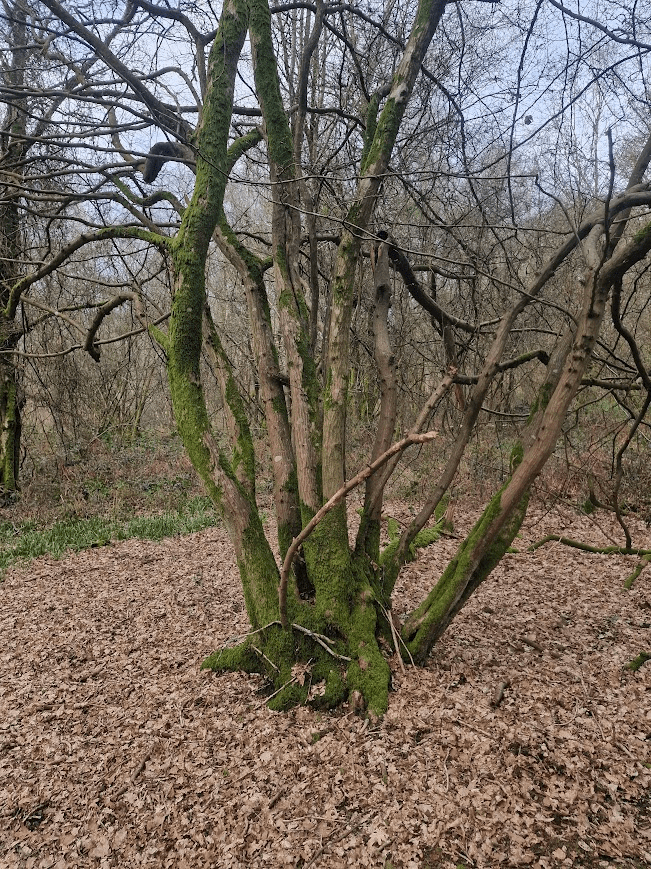
Coppiced Hornbeam

Lecanactis abietina, on Pedunculate Oak, an old woodland indicator lichen

Un-named Wood

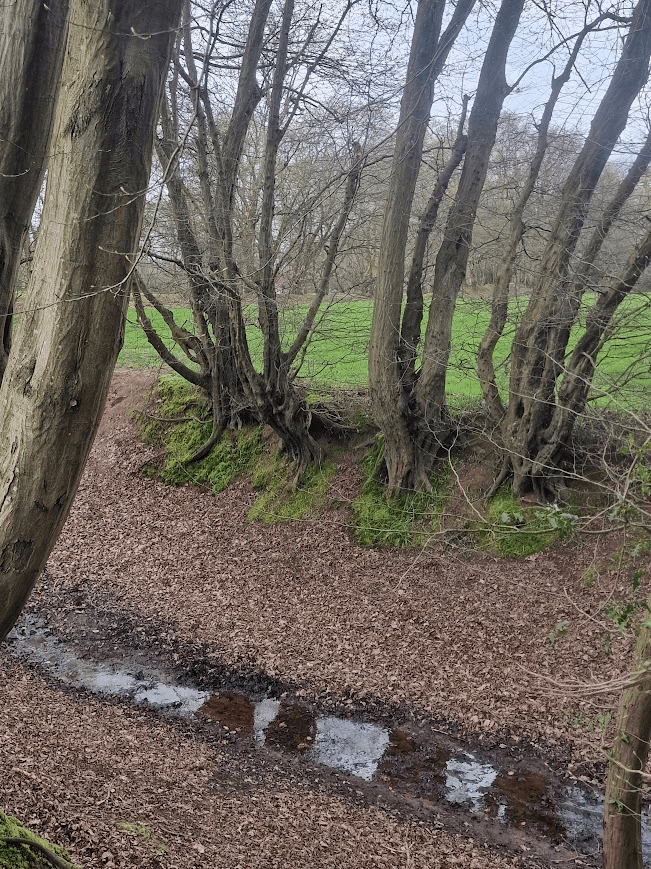
This is a tree on the edge of the wood.

This tree shows lichens of the Mature Mesic Bark Community (Pertusarietum amarae) on Oak

The Pertusarietum amarae are shade tolerant communities on rougher bark, with Pertusaria species dominant. They are particularly characteristic of Beech and Ash, but also on less damp Oak bark. The basic community is composed of widespread species particularly Pertusaria s. lat. species: Pertusaria albescens, Lepra amara (Pertusaria amara f amara), Pertusaria flavida, Pertusaria hymenea and Pertusaria pertusa along with Phlyctis argena and Ochrolechia subviridis. This is a common community in drier areas but gets displaced by moss dominated communities in strongly oceanic areas. . British Lichen Society Lichen Communities

On this tree I saw Lepra amara (previously Pertusaria amara), Pertusaria hymenea and Pertusaria pertusa; all very common, plus others I didn’t have time to fully investigate. I used my UV torch to search for Pertusaria flavida, as it reacts to  UV light with bright orange fluorescence. I only got the dull orange of Pertusaria hymenea and P pertusa. I also tested any likely candidates of Varicellaria hemisphaerica (previously Pertusaria hemisphaerica) with sodium hypochlorite spot tests; but I did not get the characteristic red reaction. I do these tests as I have found P. flavida and V. hemisphaerica on trees with Mature Mesic Bark Community elsewhere in Sussex

Pertussaria hymenea

Lepra amara

Pertusaria pertusa

Pertusaria pertusa biofluorescent dull orange with UV light

The blue florescent lichen(s) remains mysterious

Between the unnamed wood and Wapsbourne Wood

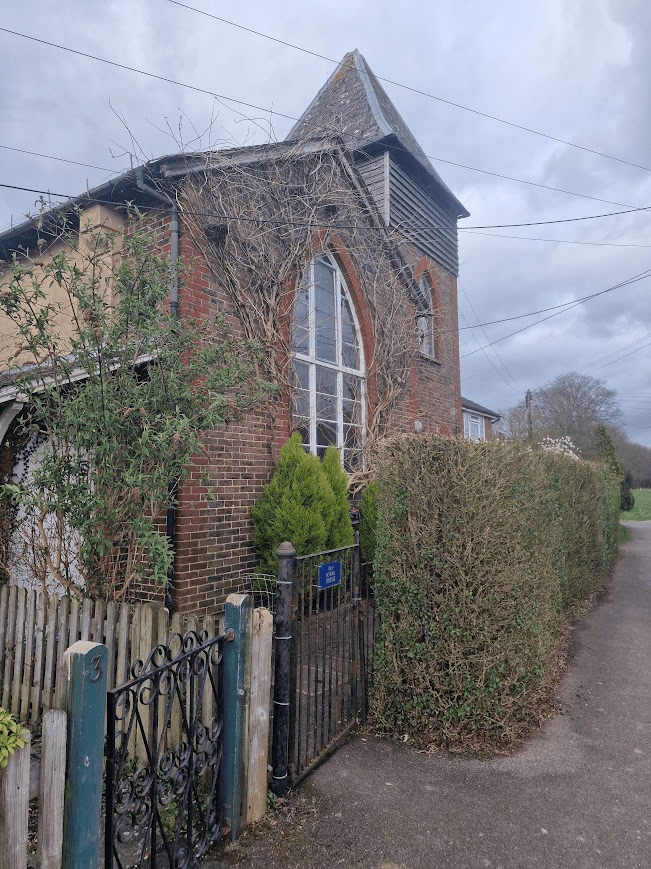
Ditches bordered by coppiced Hornbeam. What are they?

They are on the land of the WoWo campsite, part of Whaspsborne Manor Farm see. The name Wapsbourne is the modern version of the older Sussex names of Whapplesbourne, Werpplesborne and other derivatives. The name means ‘a track by the stream’. This track leads you from Lewes to East Grinstead, right past the Elizabethan Manor house built in the late 15th C. Wapsbourne was once part of the Sheffield Park Estate, auctioned into private hands in 1953 when the estate of several thousand acres was broken up. The Farm – Wowo Campsite
On the WoWo site there is a camping space called “Lower Moat” in the central field surrounded by a moat, this field also becomes home to the ‘WoWo village’ in the summer months. Wowo Campsite, Uckfield, East Sussex – 2026 from £24/nt

But it is not a moat; it is a Pondbay and Overspill Channel.

The monument south-west of Wapsbourne Farm includes a short length of earthen bank, a low-lying area beside the bank and a long L-shaped ditch leading eastwards and then northwards from the bank. These are the remains of an iron-working site dating to the 16th-18th centuries and perhaps earlier, where already-smelted iron was heated and beaten using water power to drive the bellows and hammers. The remains were formerly misinterpreted as those of a medieval moated site. The most distinctive feature of the monument is the well-defined L- shaped ditch which measures 270m in total length and which averages 12m from side to side. It is embanked on the more northerly side. The purpose of the ditch was to carry floodwaters safely away from the principal industrial area and to prevent erosion of the dam itself by overflowing water. At the western end of the ditch is a 20m stretch of earthen bank 12m wide at its base which increases in height as the land slopes downward, so achieving a constant level at its crest. This is the southern end of the pond bay which formerly extended across the shallow valley, damming the stream and ponding back sufficient water to drive a water-wheel. The northern five-sixths of this pondbay, outside the scheduled area, has been flattened to allow the cultivation of the field. Where the stream cuts through the former pondbay there is a marked basin which probably indicates the location of the principal water-wheel. The 20th century culvert at the western end of the ditch and the field drain outlet to the south of it are both excluded from the scheduling. Post-Medieval Pondbay and Overspill Channel, Wapsbourne Farm., Chailey – 1013405 | Historic England

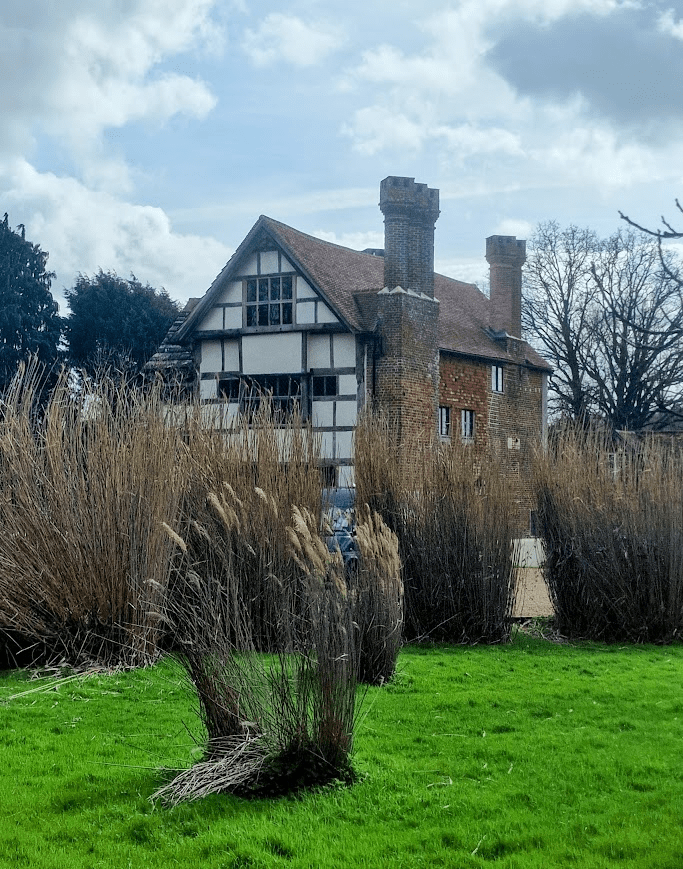
And just north of Pondbay and Overspill Channel, is the magnificent farm

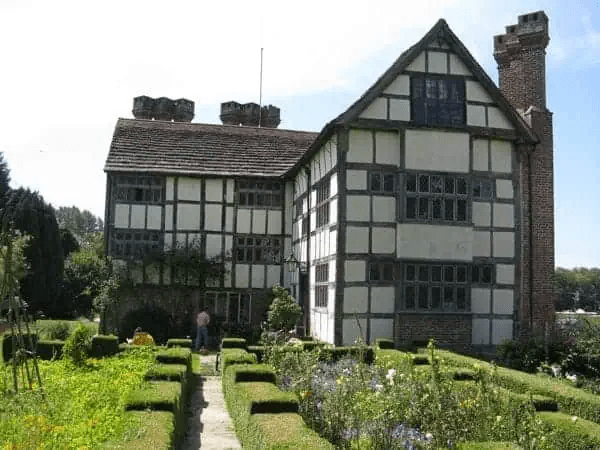
My photo does not do this building justice, so he is a photo from the WoWo website The Farm – Wowo Campsite

Probably the most interesting house in Chailey Parish. Early C17. The Victoria County History says that the date 1606 was once legible on the pendant of one of the gables. Tall L-shaped timber-framed building with squares of plaster infilling. The west and south walls are of red vitreous brick. Horsham slab roof. Casement windows with diamond-shaped leaded panes. The north gable end has a bay window on the ground and first floor, that on the first floor consisting of 2 tiers of 5 lights with old glass, and above an oversailing gable containing an attic window of 2 tiers of 4 lights. The east gable end has a carved pendant. The south wall has an immense brick projection consisting of 2 chimney breasts side by side, each with 3 diagonal brick stacks. These breasts were probably added in the mid C17. Three storeys. Not more than 2 windows to any front. Contemporary staircase. Wapsbourne, Chailey – 1352974 | Historic England

It is thought that there has been a building of some description on the site of Wapsbourne Farm since Anglo Saxon times. It was known at Domesday time as Werpesburn, which in Sussex vernacular later became Wapses Boorn. During the period known as the ‘second great rebuilding’ in the 17th century it was reduced in size and the timber framing on the South and West sides the weather fronts were covered with fine brickwork, with the magnificent chimney stacks erected. A notable feature of the chimney stacks is that they were constructed to present a corner angle to the prevailing wind. The Farm – Wowo Campsite For more information on the building see: The Manor House – Wowo Campsite

Wapsboune Wood

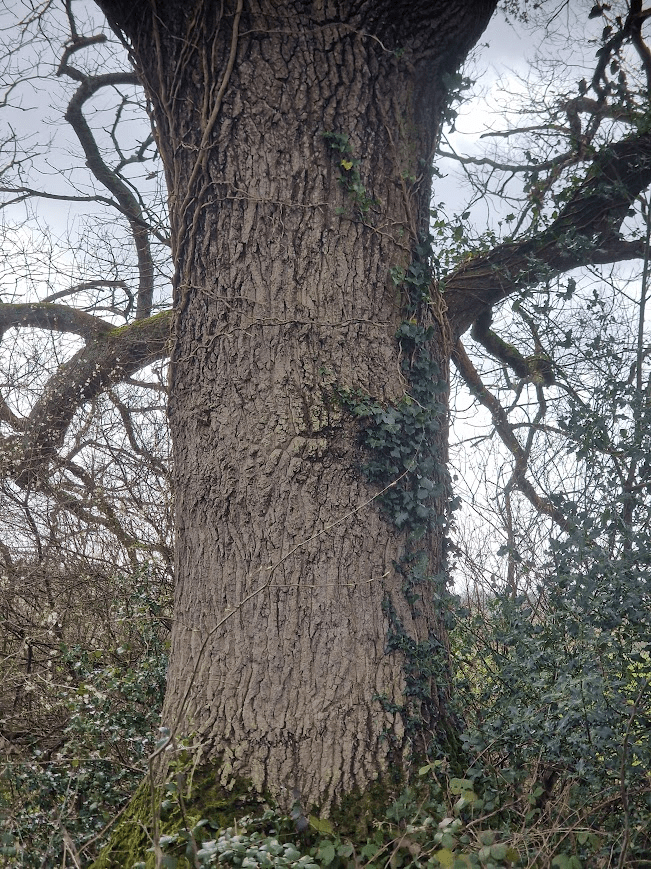
On entering Wapsbourne Wood, the feel of its ancient past remains; with some beautiful ancient Oaks

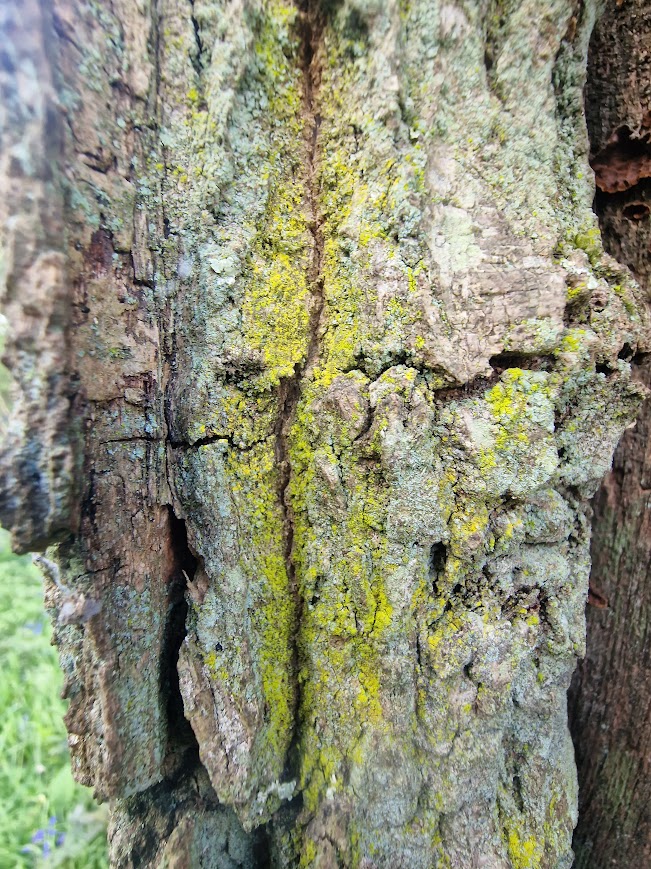
The mauve-grey of this Oak, is not the colour of its bark; it is the lichen Dendrographa decolorans

Dendrographa decolorans is the most widespread of a series of grey-brown to whitish usually sterile sorediate species that grown on dry bark in the south and west and probably depend on dew for a good deal of their water. These can be separated by subtle colour differences and by spot tests with Dendrographa decolorans lacking any positive spot tests. It is quite distinctive when younger, with mauve-grey to pale lilac-grey neat punctiform soralia on a slightly darker thallus. Dendrographa decolorans | The British Lichen Society It scatches Orange Photobiont: Trentepohlia (characterized by orange scars). Lichens marins – Dendrographa decolorans (Turner & Borrer ex Sm.) Ertz & Tehler = Schismatomma decolorans (Turner & Borrer ex Sm.) Clauzade & Vezda

The orange scratch test is not definitive as all the former Schismatomma genus lichens lichens scratch orange

Dendrographa decolorans was previously Schismatomma decolorans, the other former Scismatomma genera lichens i.e. Sporodophoron cretaceum; Snippocia nivea and Schizotrema quercicola, all scratch orand.

The only way to be 100% that this is Dendrographa decolorans would have been to use para-phenylenediamine spot test; it would have not responded But as para-phenylenediamine is mutagenic, allergenic and may be carcinogenic, I choose not to use it. I think trading off not being absolutely sure that this Dendrographa decolorans with potentially getting a cancer is a good trade off.

Much of the south part of Wapsbourne has Oaks, Hornbeams and Bluebells.

However, walking further north there is much replanting and the quality of the woodland declines as much of the wood is replanted.

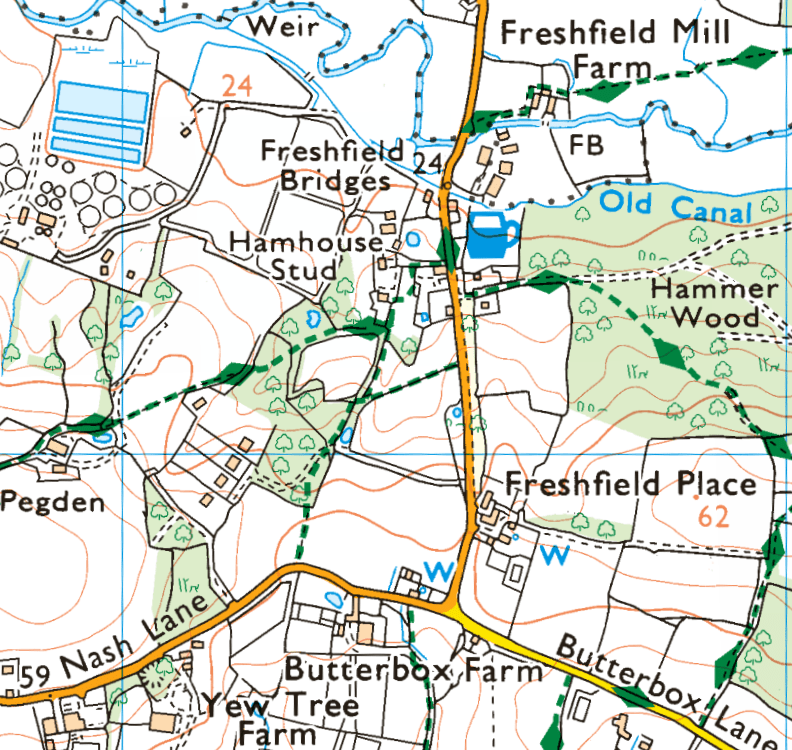
Hammer Wood on OS Map; but called part of Wapsbourne Wood on the Nature England database)

There are many Hammer Woods in the weald and the name indicates connection with the Weald iron industry. But most of this ancient woodland is replanted with conifers; as in many places in Sussex. The land owners of many ancient woodlands in Sussex are not primarily interested in stewarding ancient woodland; but in making money out of it.

Hamshaw Wood

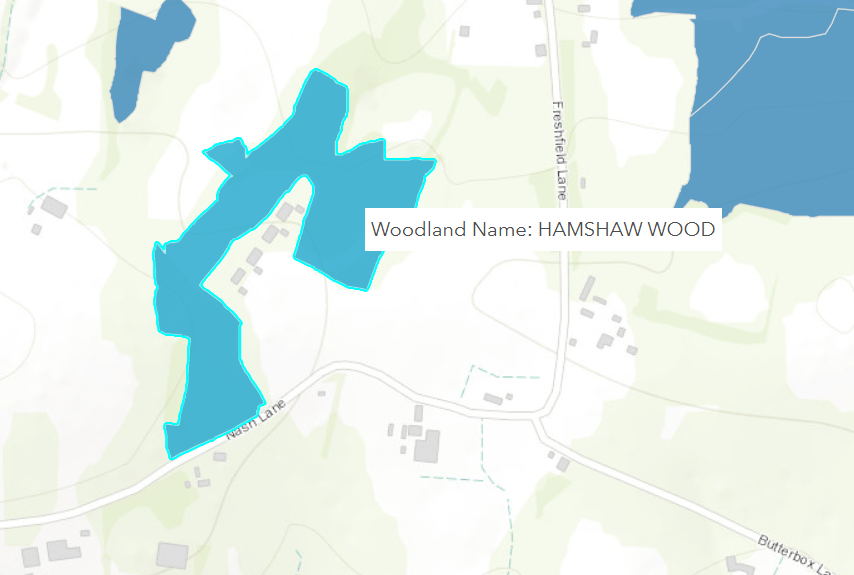
This not named on the OS map but is named on the Nature England Ancient Woodland; and is designated as ancient and semi-natural woodland

Ancient Woodland (England) | Natural England Open Data Geoportal

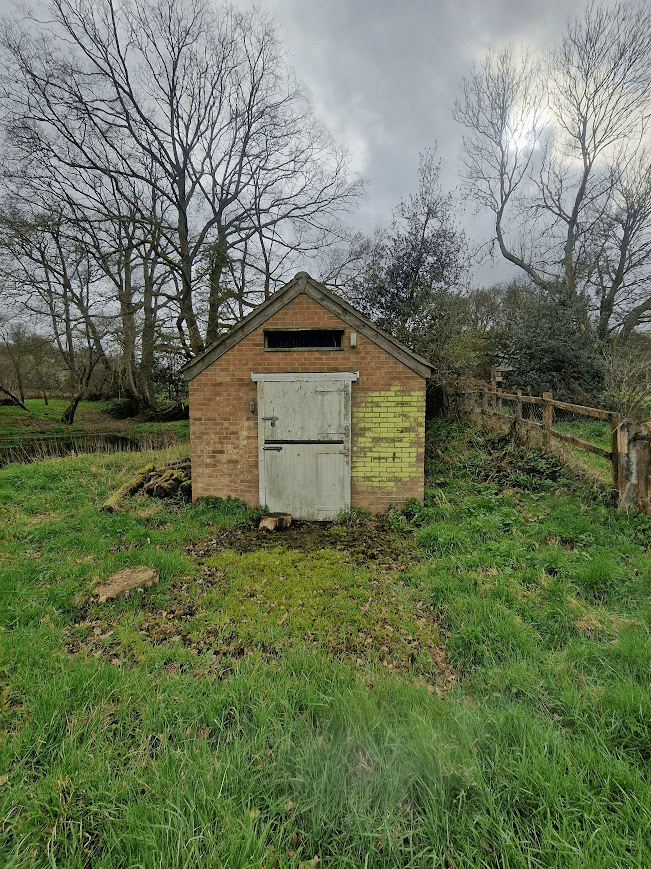
A stable at Hamshouse Stud with the right of the door covered in Psilolechia lucida lichen. Note that it here favours the chemical nature of the bricks not the mortar (abotioc zonation)

An old gate; a perfect substate for lichens that like worked wood. Hamshaw Wood behind
Cladonia parasitica, fertile with red apothecia (fruiting bodies) on the top of podetia (tubes of the thallus (body)) of the the lichen

Hypogymnia physodes Hooded Tube Lichen

Flavoparmelia caperata, Common Greenshield Lichen

Coppiced Ash

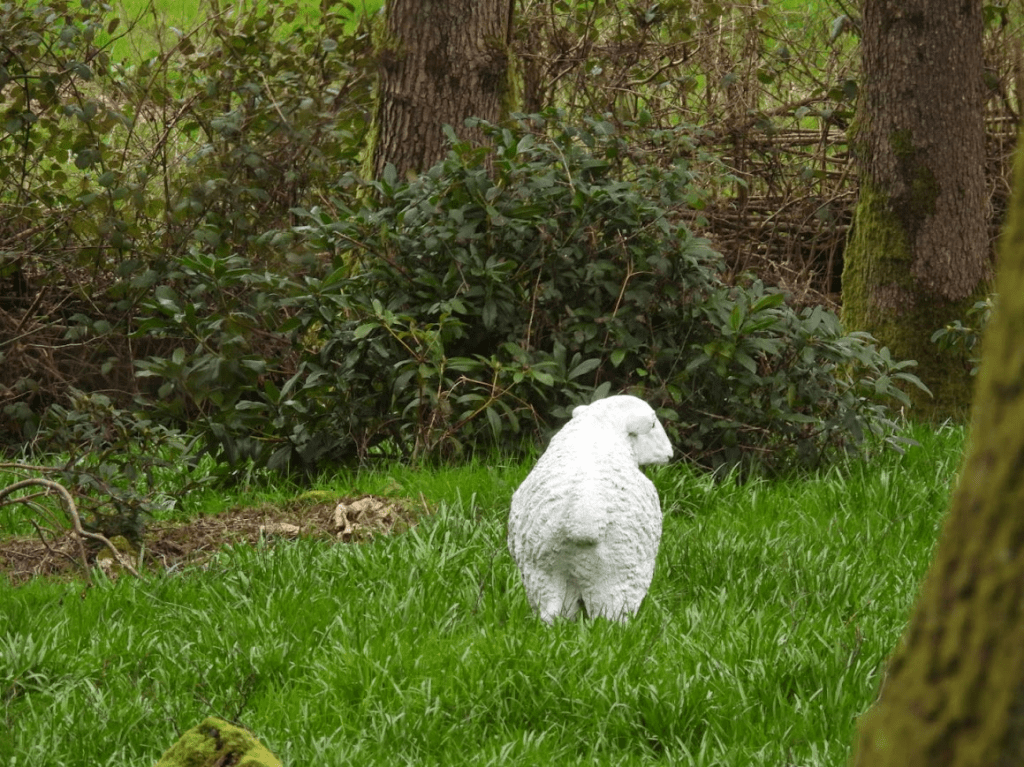
Wild Daffodils and a concrete sheep in part of the ancient woodland captured as the private garden of a large house

Concrete sheep amongst bluebells and planted (non-native ) rhododendron; how the High Weald is spoilt

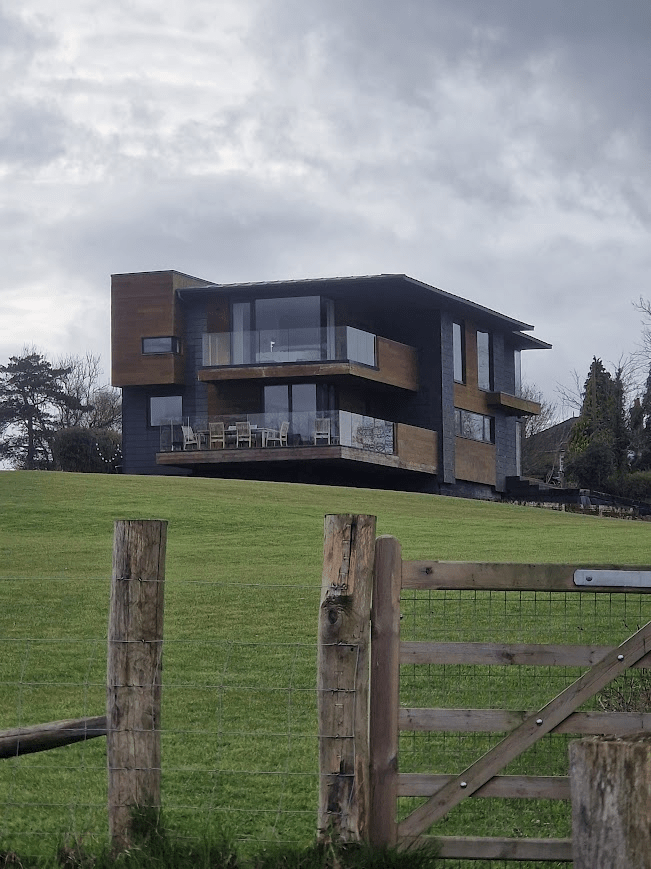
Much of the High Weald now feels like a middle class landscape of leisure rather than a landscaper of employment. This house would never have got planning permission if it wasn’t on the site of a previous building, presumably a farmhouse

Scaynes Hill Common

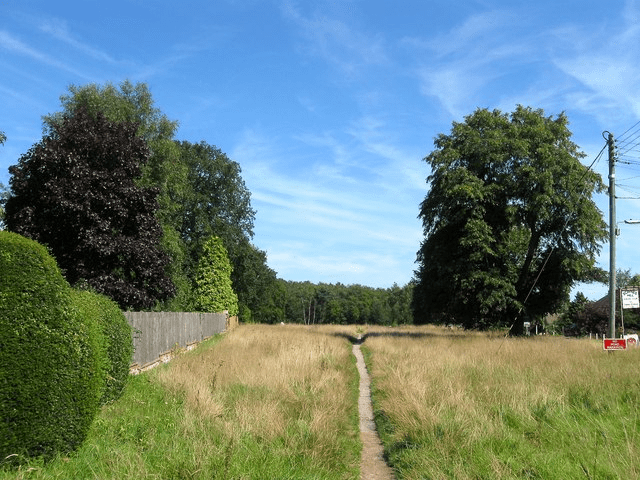
Photo © Simon Carey and licensed for reuse under a Creative Commons Licence from the Geograph Website

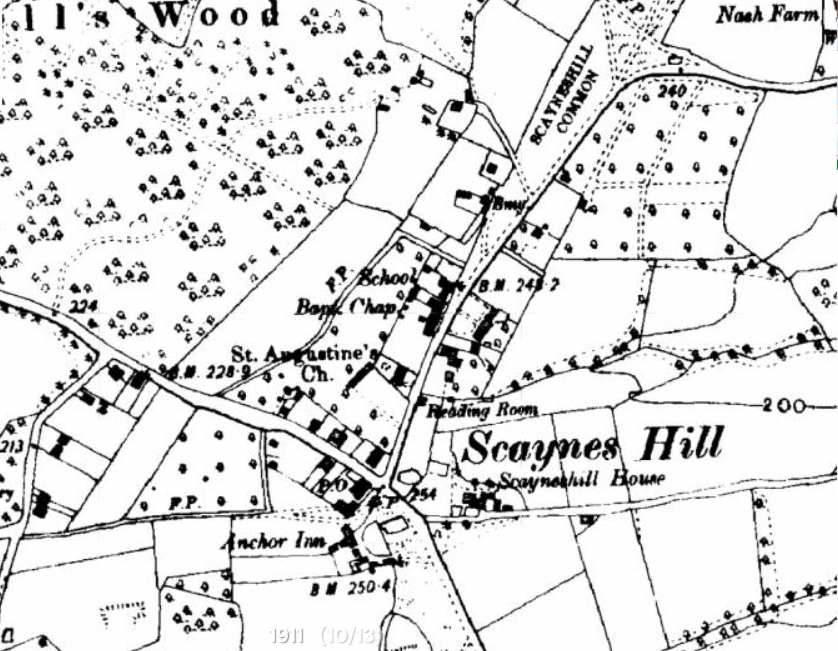
Map (n.d.) showing Common from Scaynes Hill Village Community Website

Much of the south of the common has been lost to development. Scaynes Hill Common used to be Henfield Common and looks like a typical edge green of a woodland common such as you still find in the New Forest. It retains an archaic acid grassland flora David Bangs (2018) The Land of the Brighton Line: A field guide to the Middle Sussex and South East Surrey Weald p.212.

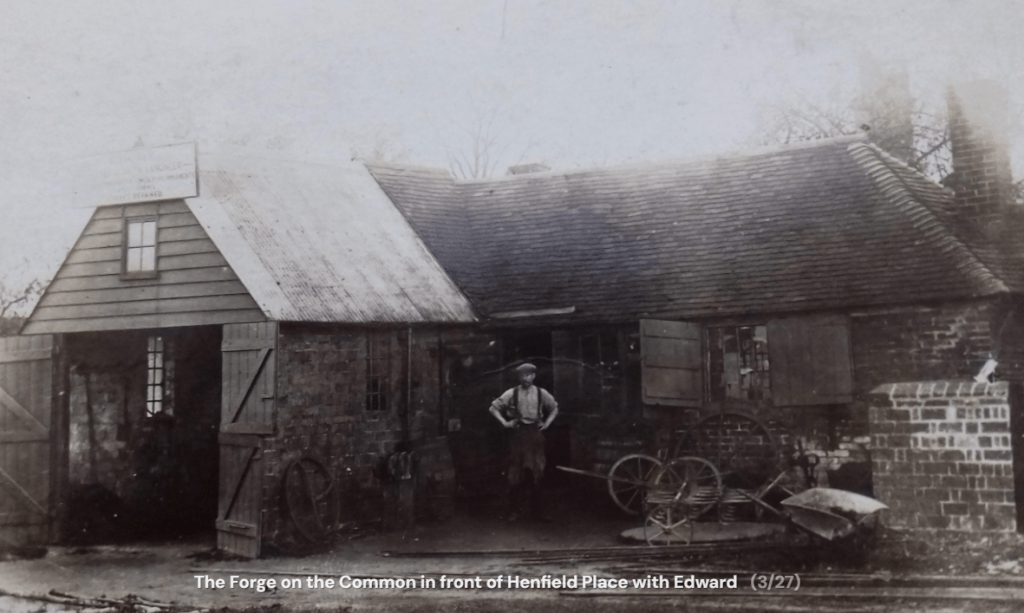
Forge on the common. Photo from Scaynes Hill Village Community Website

Old School House on the edge of Scaynes Hill Common

Costells Wood

Costells Wood is part of a larger continuous woodland that include Henfield and Nashgill Woods. It is the only part of the wood that had public access.

Costells Wood is a 21 hectare (53 acres) site on the edge of the village of Scaynes Hill, West Sussex, just within the southern boundary of the High Weald National Character Area (NCA), where it meets the Low Weald NCA. Woodland Trust Costells Wood Management Plan

An “avenue” of planted planted Pedunculate Oaks from Costells Manor into Costells Wood

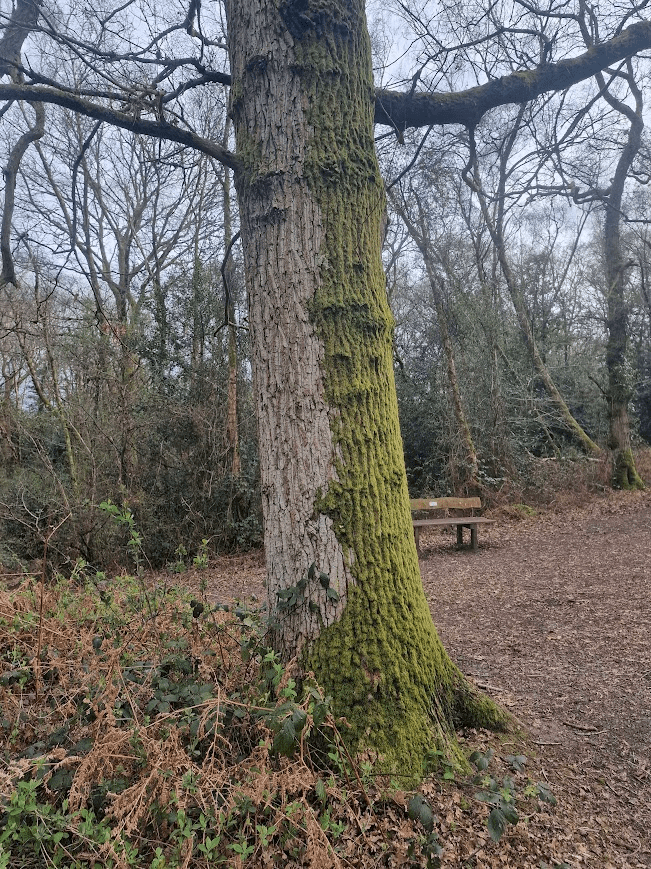
A very typical High Weald Oak: one side moss; the other, the lichen Lecanactis abietina, an old woodland lichen

Bluebells

Pedunculate Oak

Hornbeam

A Pedunculate Oak covered in Usnea cornuta

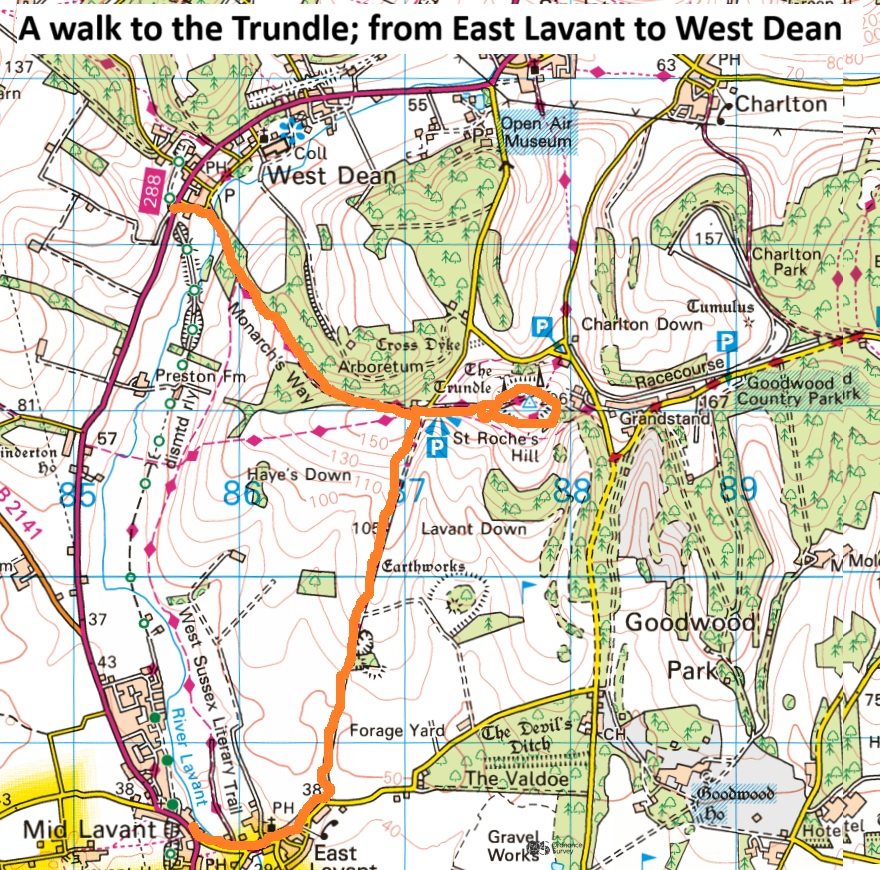
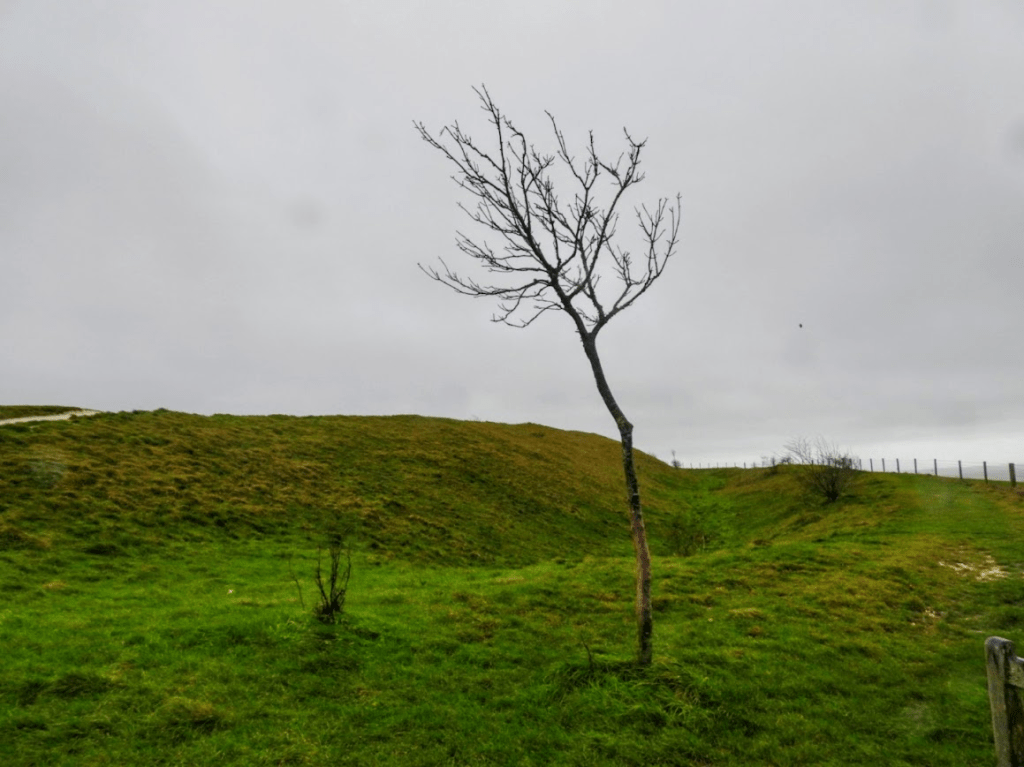
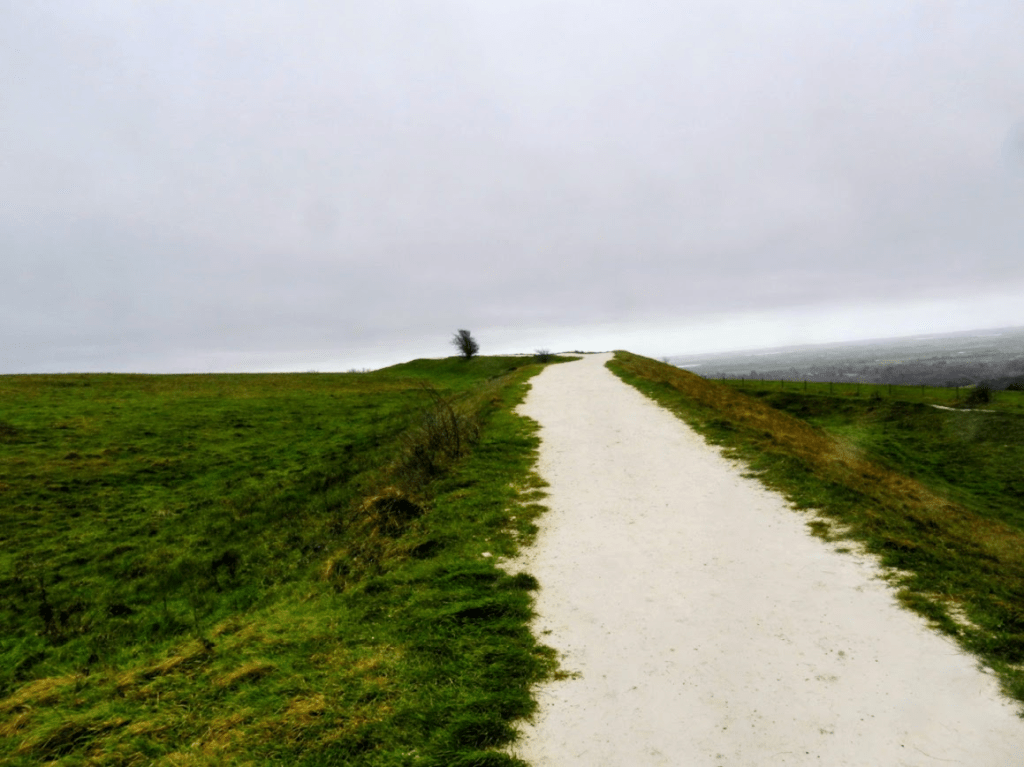
A walk to the Trundle; from East Lavant to West Dean. West Sussex. 01.12.25. A photographic study with no text.

Notes:

The photos are in chronological order.

Weather: 10 degrees; overcast; southerly wind of 35mph.

8.28 km; 3:24 hours; elevation gain: 186m

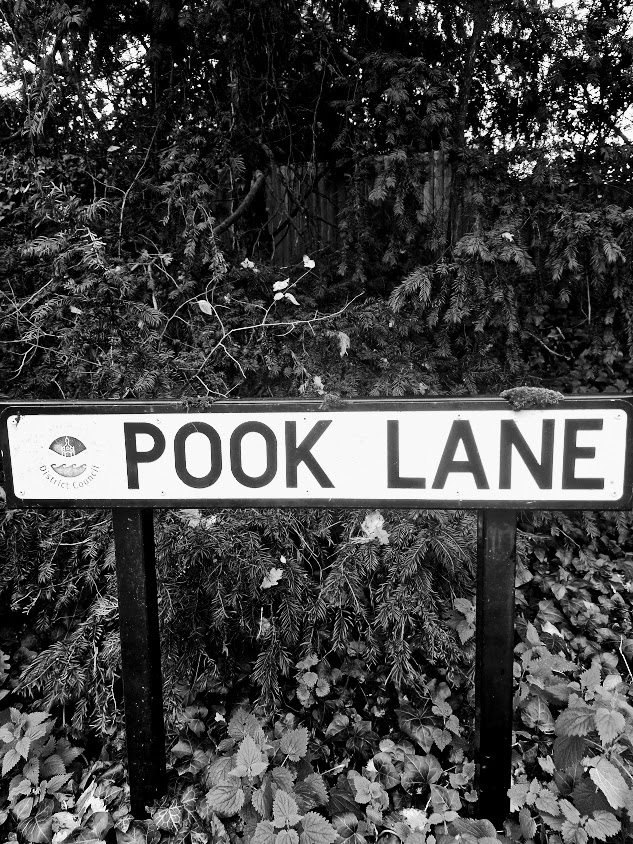
‘Puck’ or ‘Pook’ is a Sussex dialect word, derived from the Saxon word ‘Puca’, meaning a Goblin or Fairy.

East Lavant, or Loventone in the Domesday Book (1086), which along with Mid Lavant and West Lavant, make up the village of Lavant.

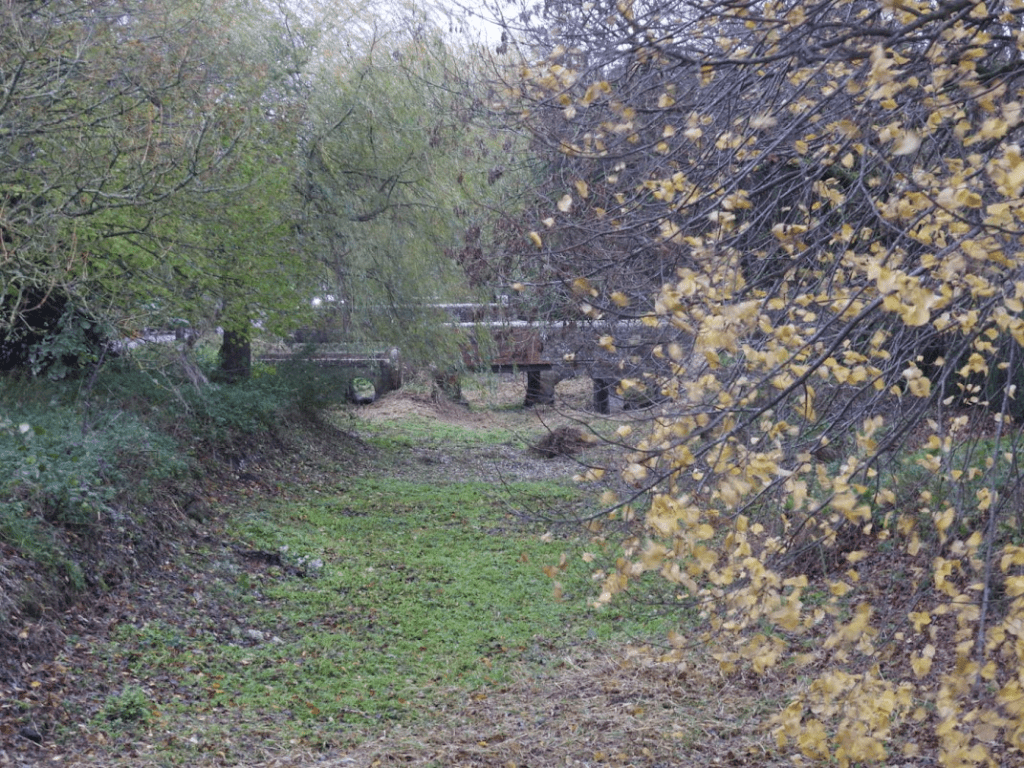
The River Lavant is a chalk stream winterbourne (a river that is dry during the summer months). It rises from a spring at East Dean and flows to Chichester. From east of Chichester its natural course was south to the sea at Pagham, but the Romans diverted it to flow around the southern walls of Chichester. Currently there is no water in it, there should be, as the draught from February to October of this year has lowered the water level in the chalk aquifer,

The Trundle is an Iron Age hillfort on St Roche’s Hill. It was built on the site of a causewayed enclosure. There was a chapel dedicated St Roche within the hillfort. It was demolished some time in the C16. A windmill, which burned down in 1773, is known to have existed on the hill. There was an open-air masonic lodge that included the Duke of Richmond, the Duke of Montagu, and Lord Baltimore which met at the top of the hill between 1717 and 1757. There was at one time a gibbet on the Trundle.

East Dean is in a valley in the South Down. In AD 689, Nunna, King of the South Saxons, gave 20 hides of land at “Hugabeorgum and Dene” to Eadberht, Bishop of Selsey. “Dene” has been identified as East Dean. In his will of AD 899 King Alfred the Great left East Dean to his youngest son Æthelweard (AD c. 880 – 920 or 922). The remains of a small deserted Medieval settlement have been found in East Dean Park. The buildings were 14th- and 16th-century.

Autumn Colour on the western South Downs: views of trees from Harting Down SSSI. 01.11.25

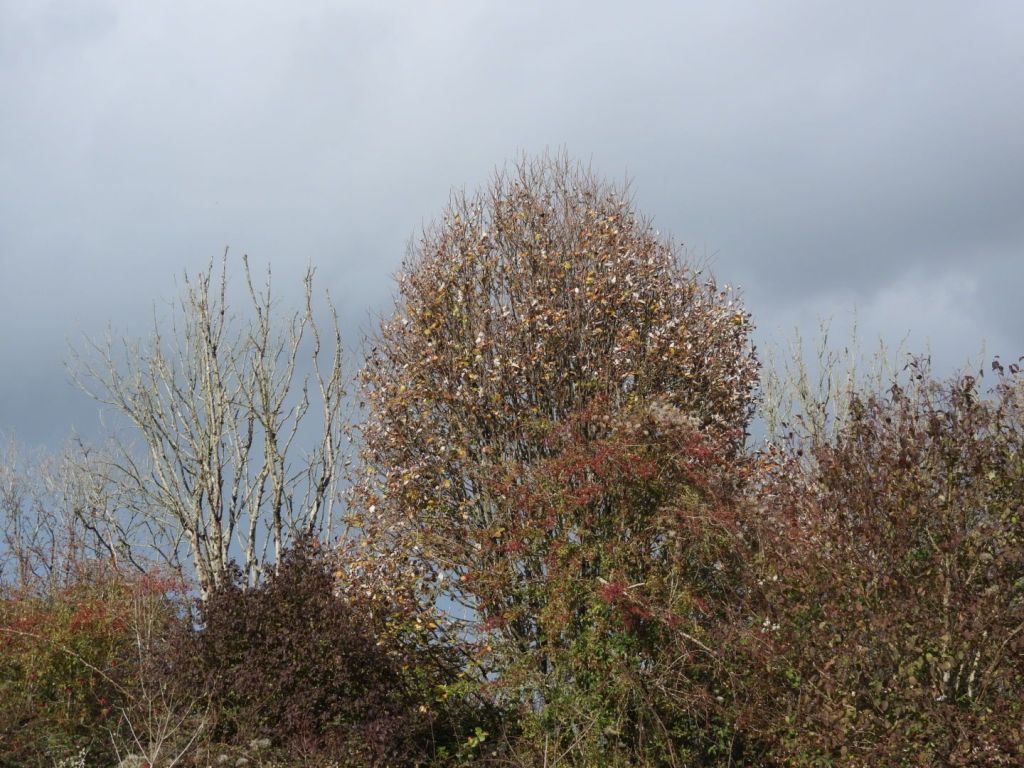
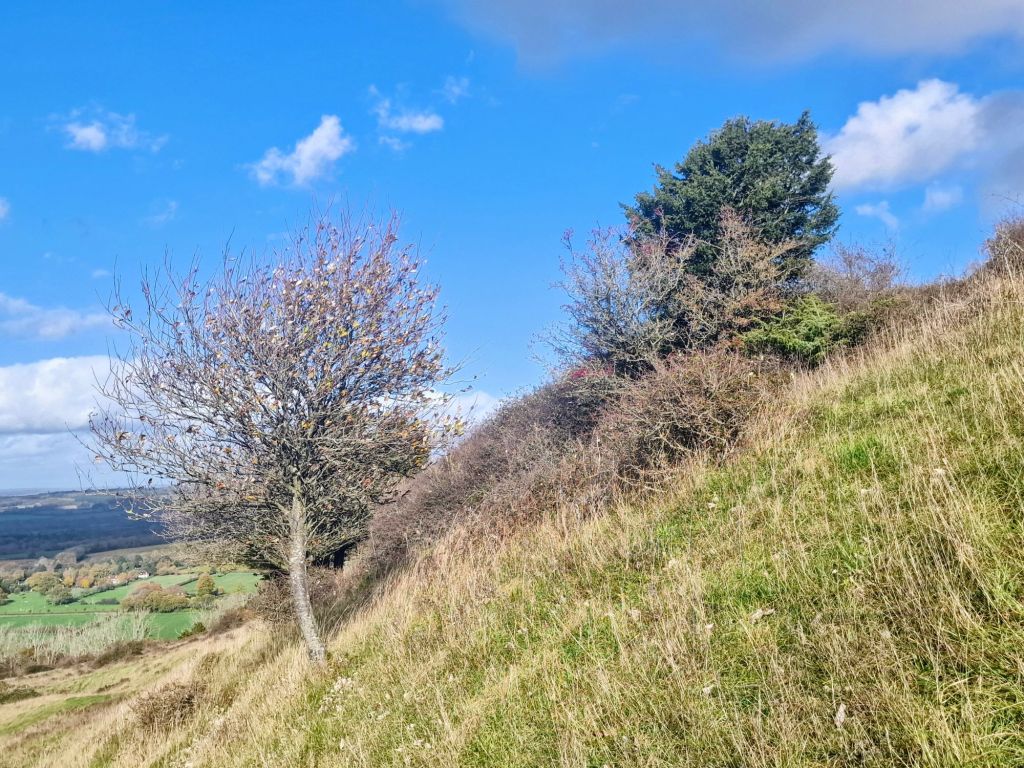
Yesterday on Harting Down, there were beautiful skies; the sun with showers forecast turned out to be mostly sunny. The sky was deep blue, and the sun’s beams lit up the gold, yellow, green and red colours of the autumn leaves.

The bostal path up to Harting Down

Probably Quercus faginea, Portuguese Oak; a non-native introduction to a small estate on the escarpment south of South Harting.
On/From the South Harting SSSI summit/plateau

De Stijl Neo-Plasticism. South of South Harting. Green diagonal stripes: Ivy growing up dying Ash. White diagonal stripes: Old Man’s Beard growing up Hawthorn.
Grey and orange. Ash and Beech

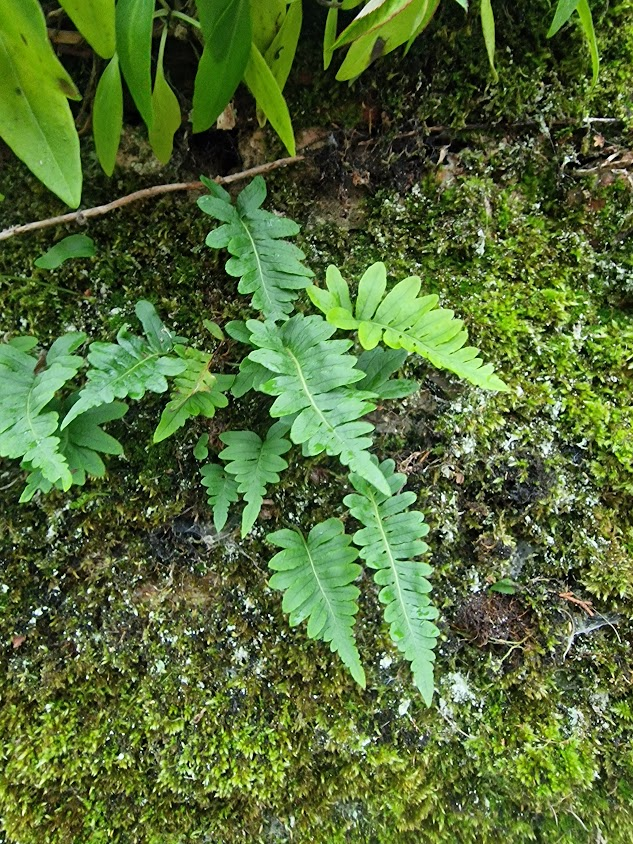
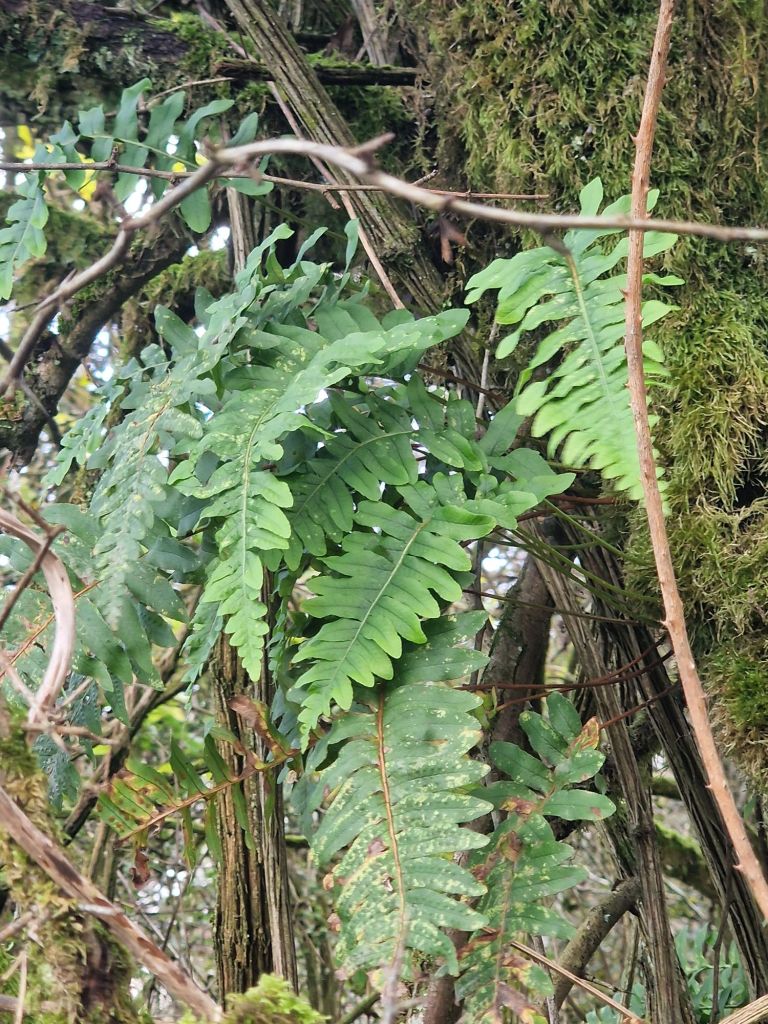
Elder with Polypody Fern

Hawthorn and Stonechat

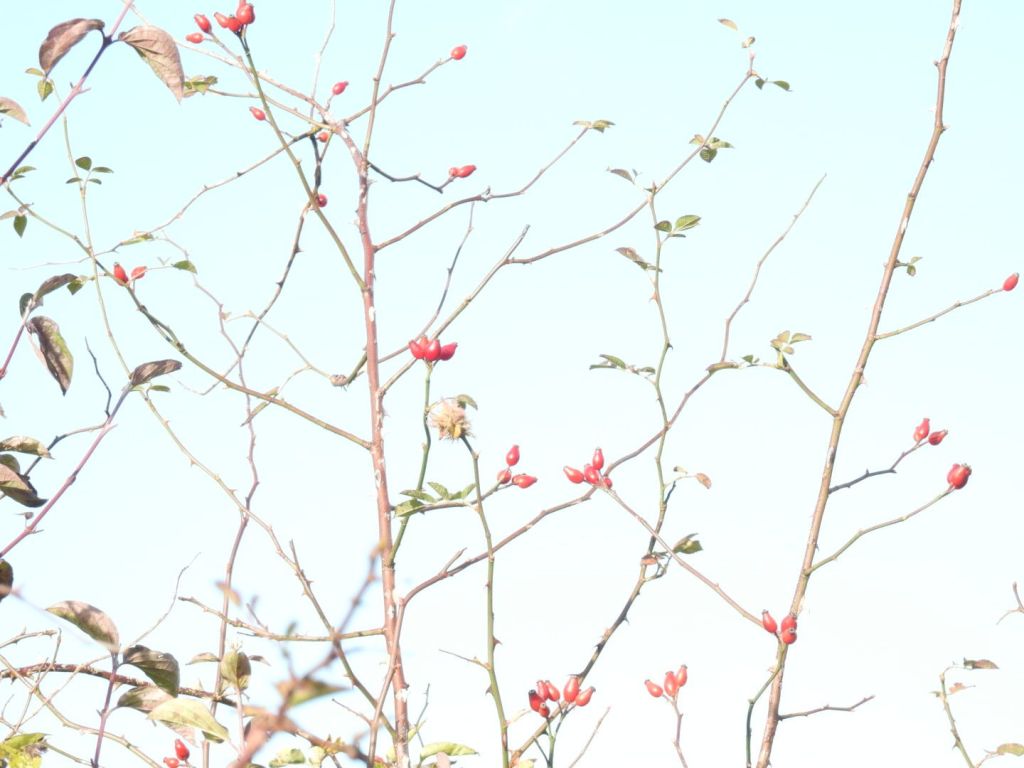
Dog Rose
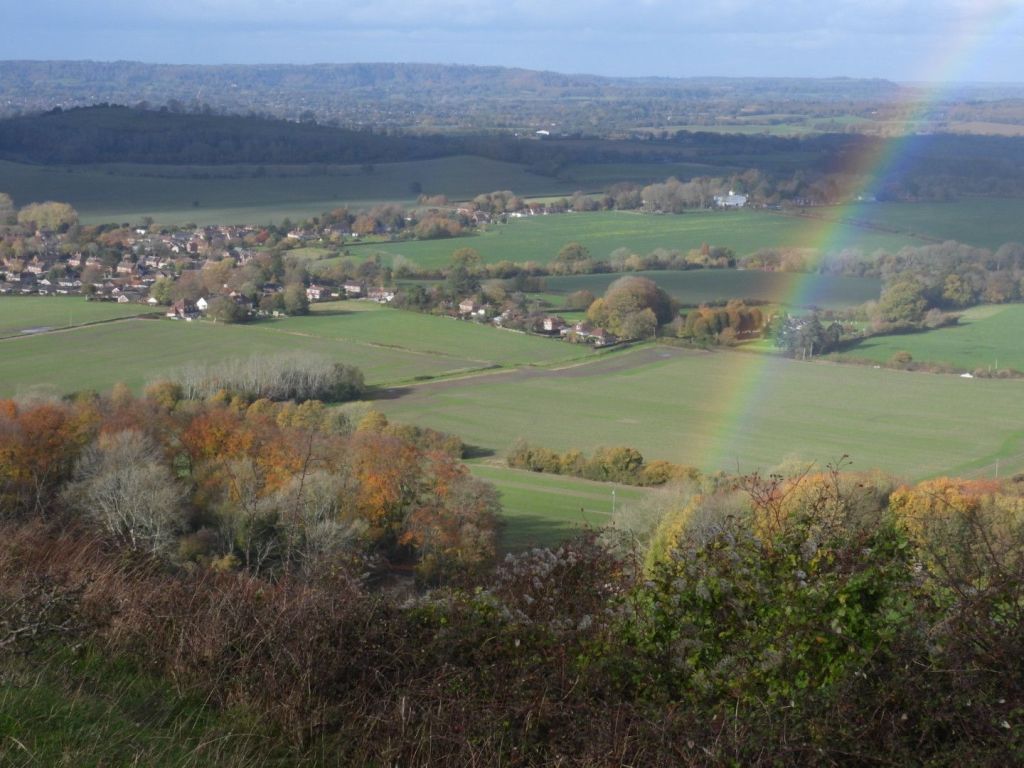
Rainbow

Whitebeam, Ash, Yew, Beech

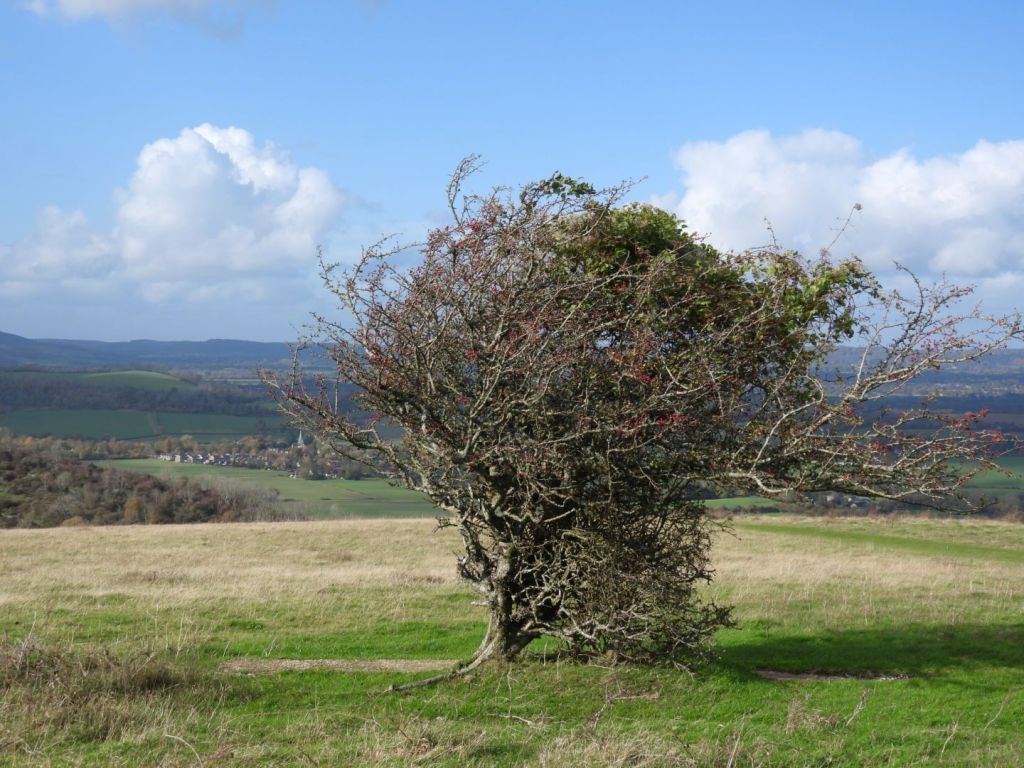
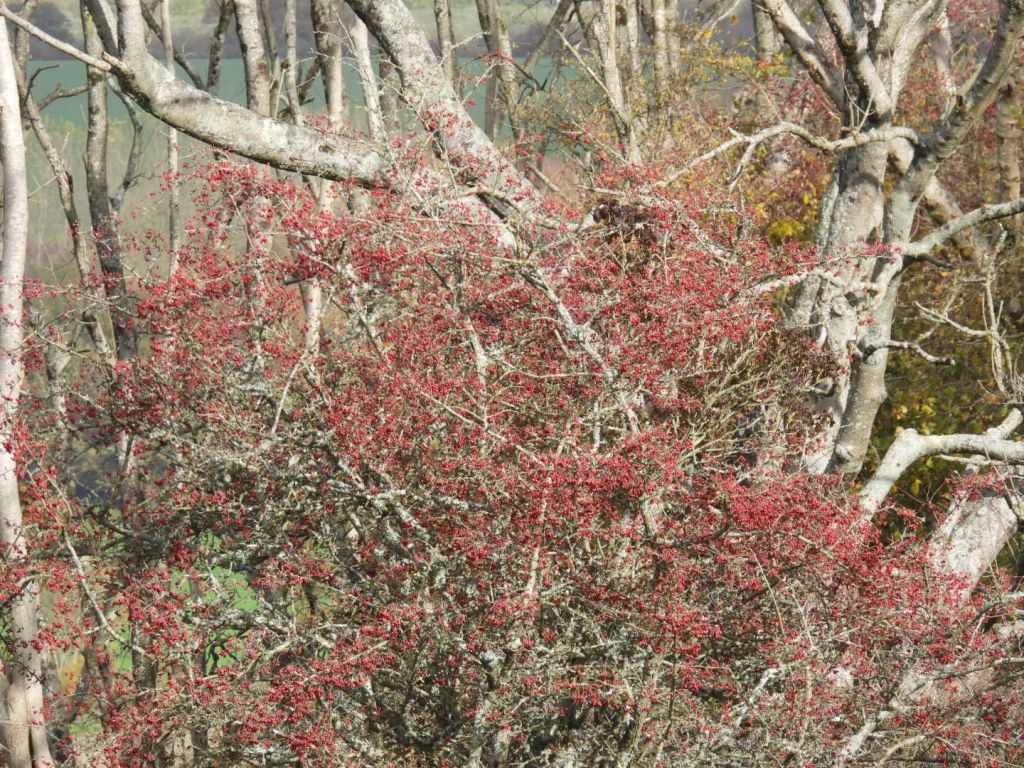
Hawthorn

Ash, Whitebeam, Hawthorn

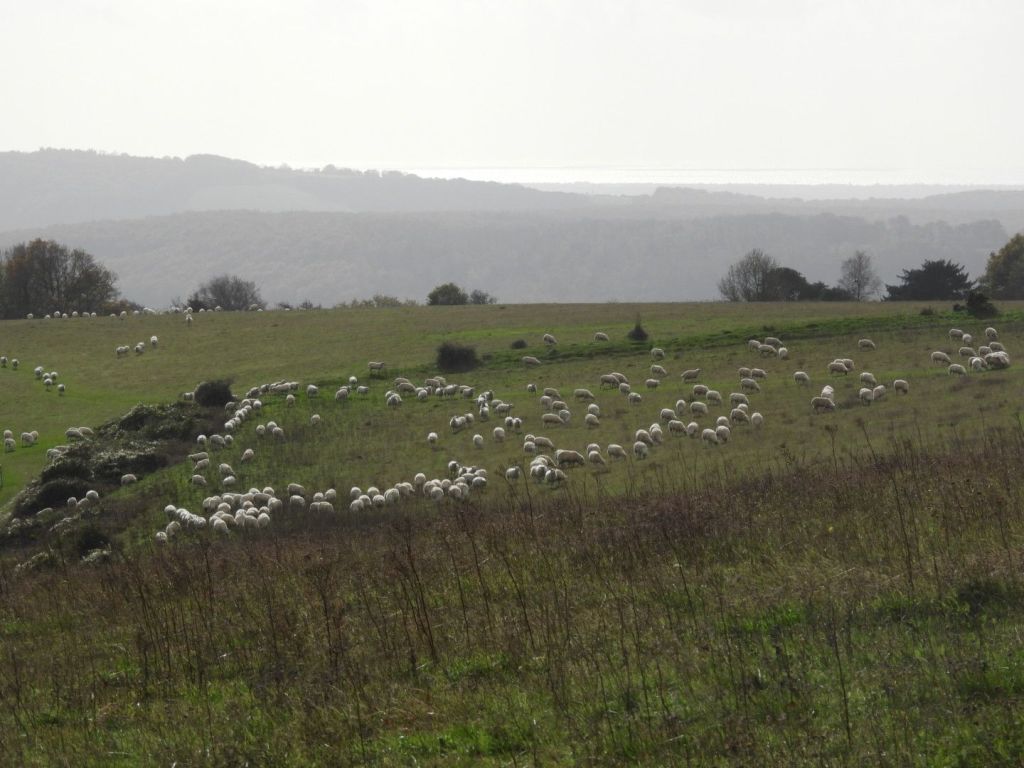
Sheep

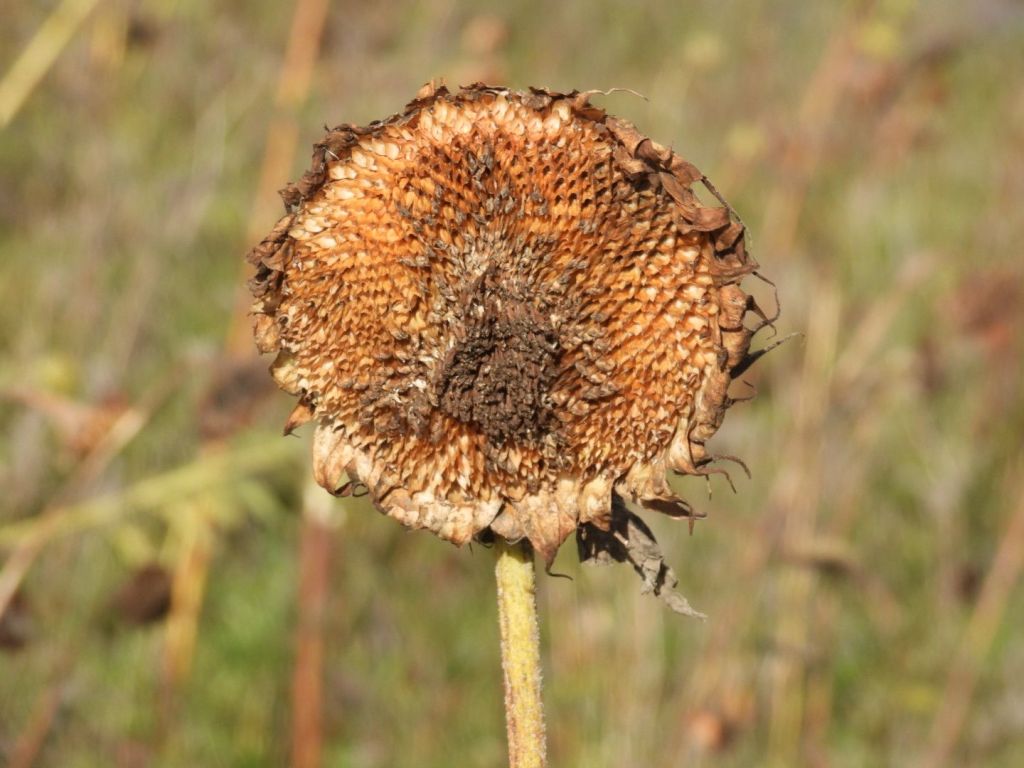
Sunflower

Hawthorn

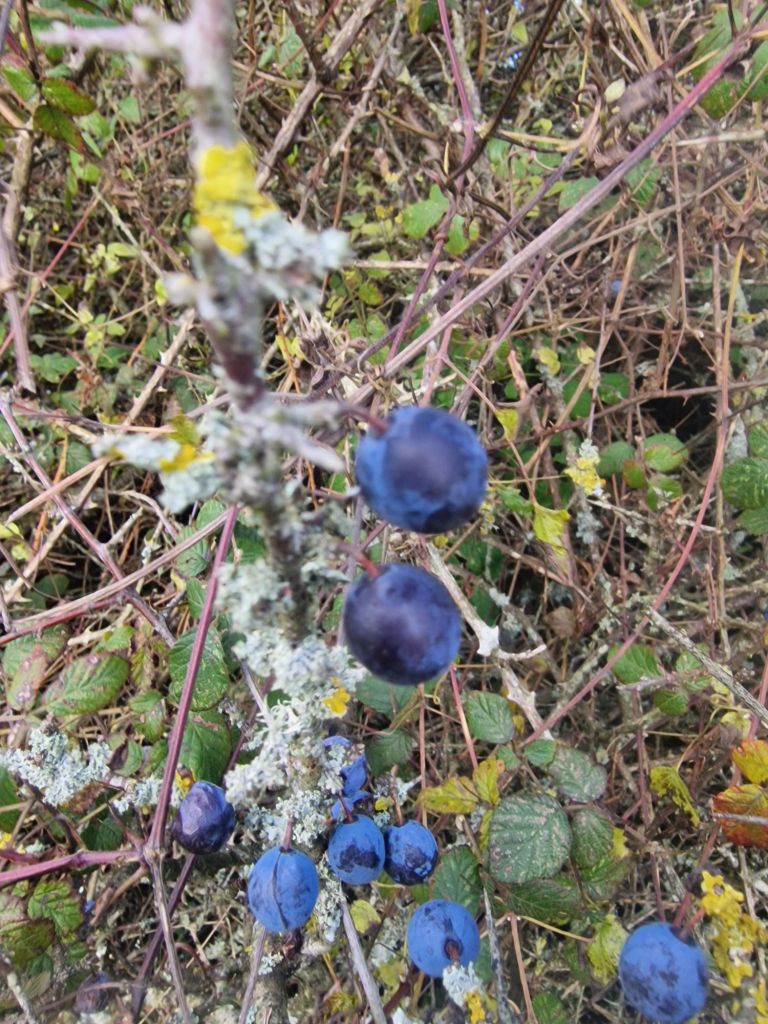
Blue Blackthorn sloes

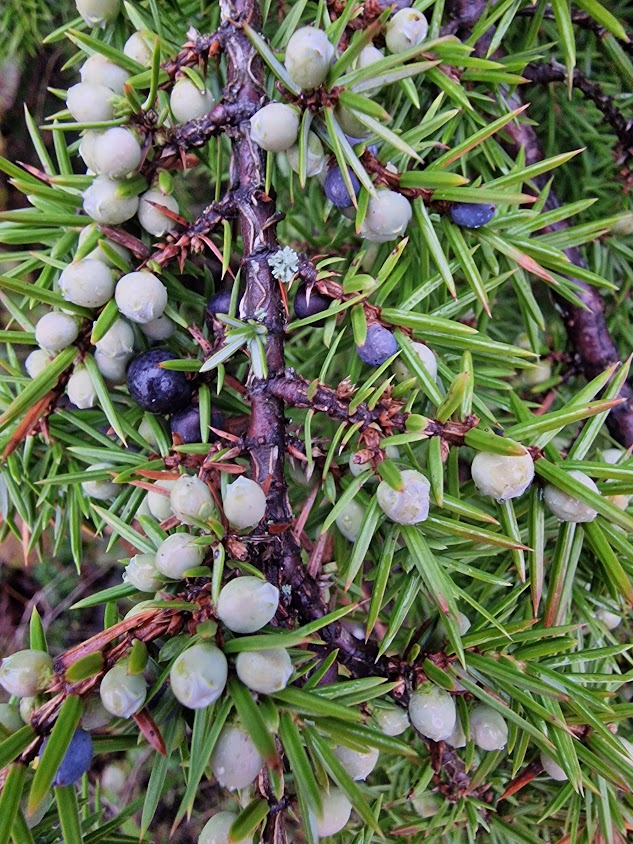
Juniper

Whitebeam, Hawthorn, Dog Rose, Juniper, Yew

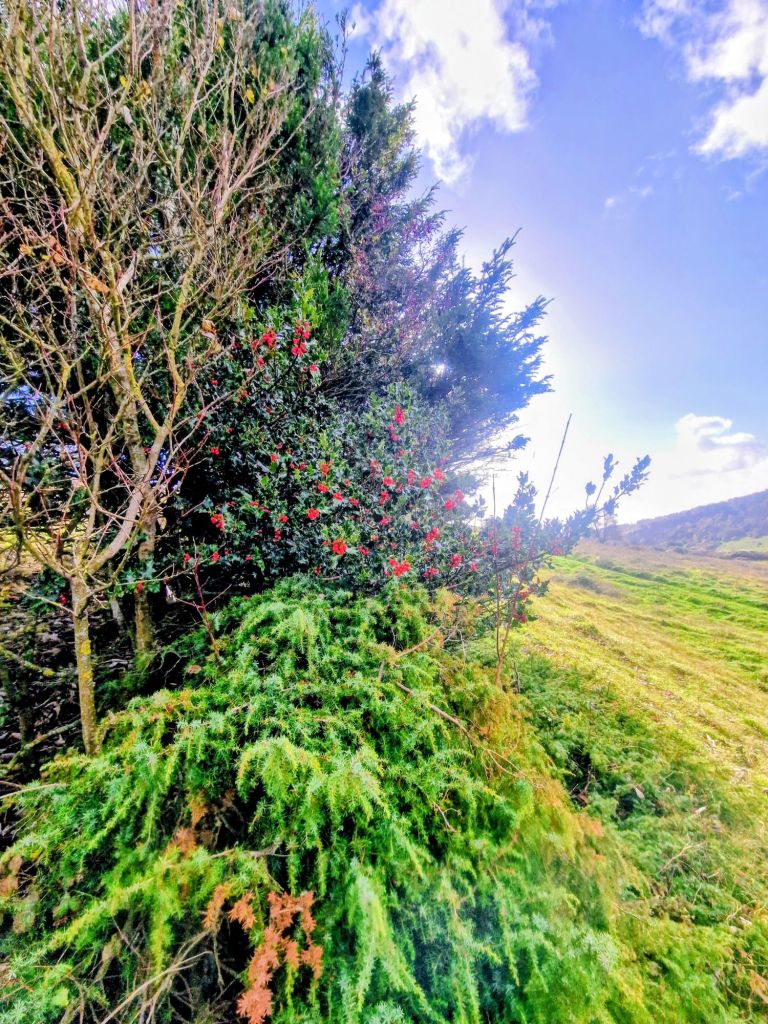
Holly with Juniper and Yew

Scarp-slope ancient woodland (Rook Clift SSSI)

Gold wedge. Beech

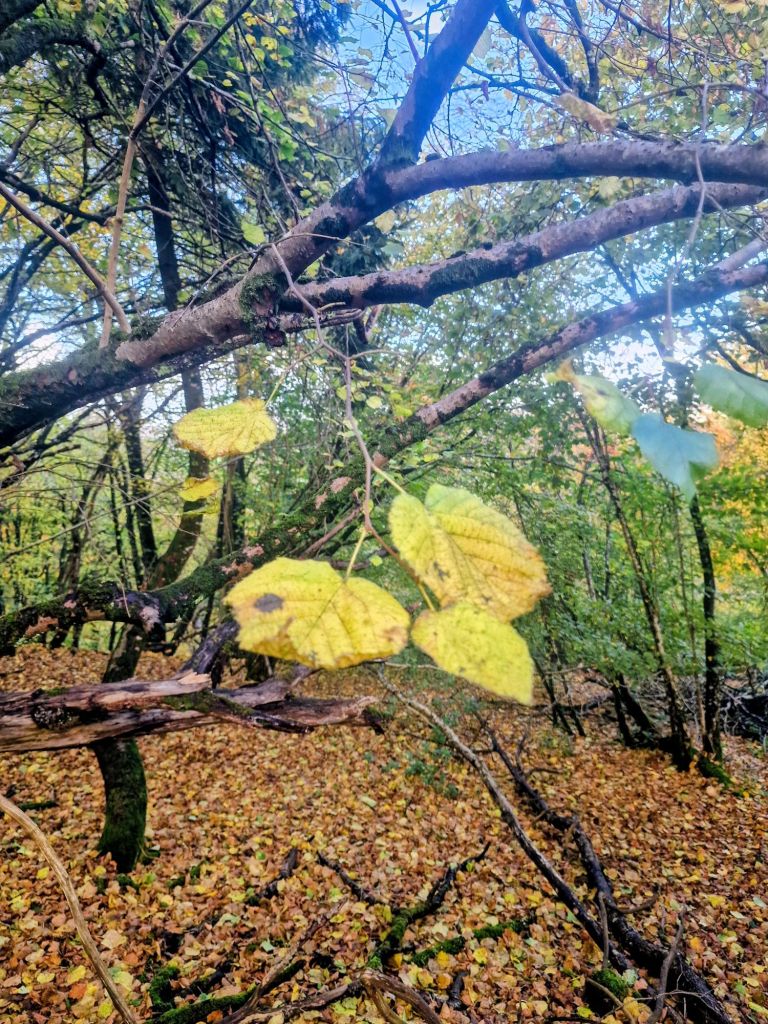
Large-Leaved Lime

Wych Elm

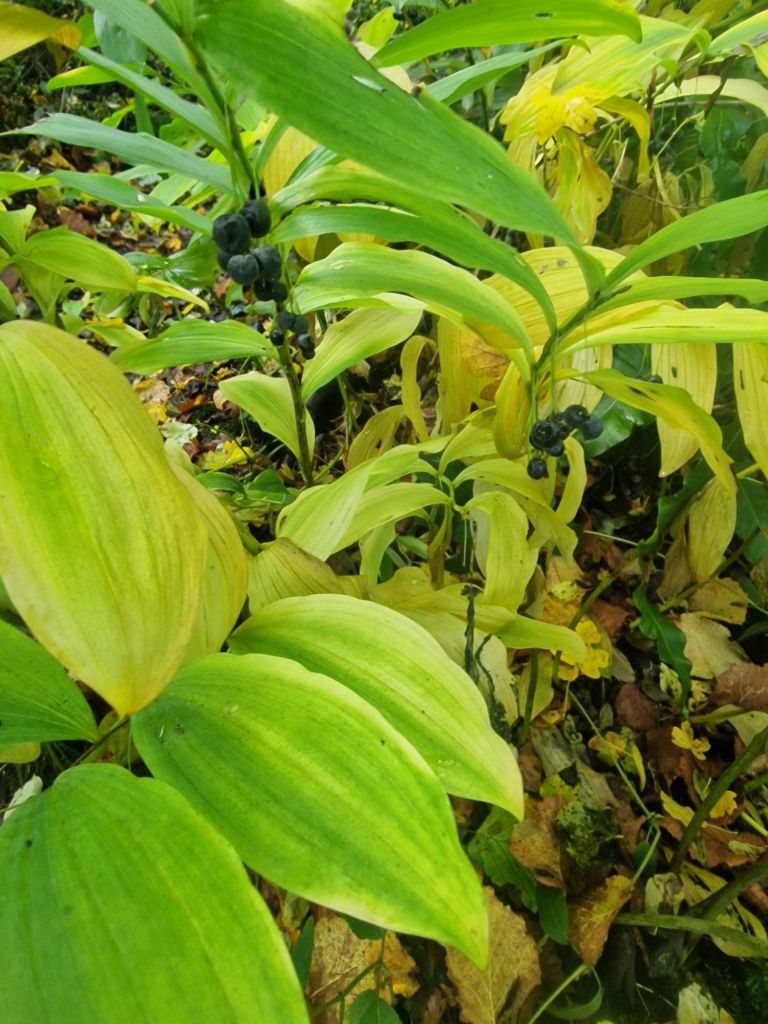
Solomon’s Seal

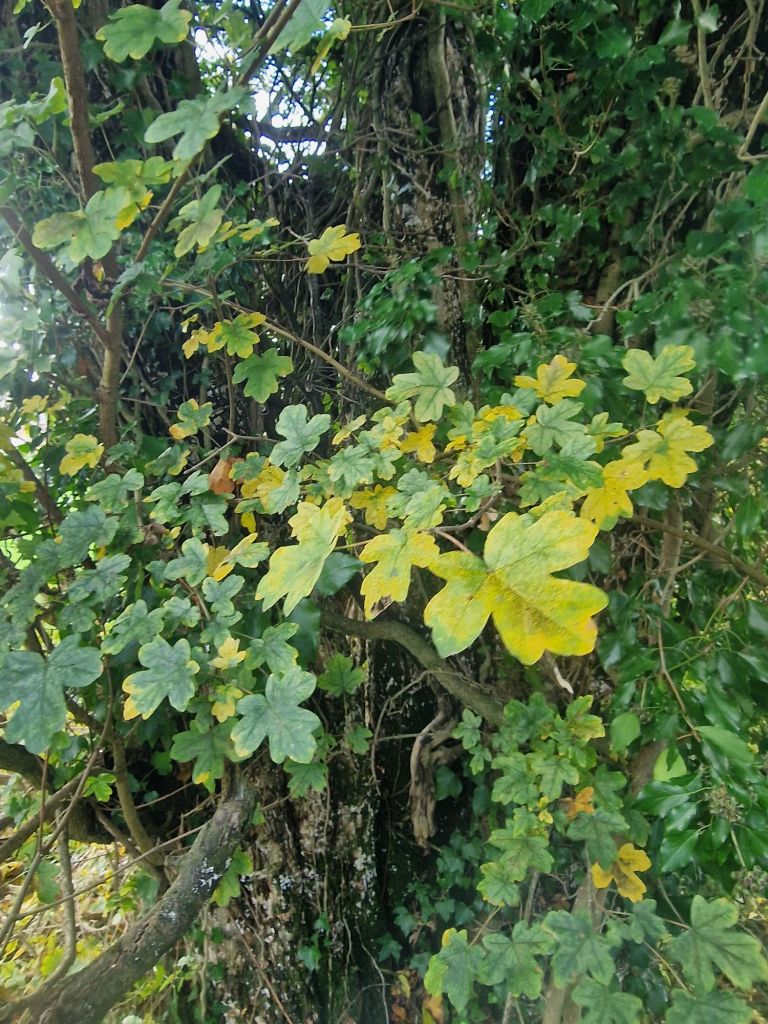
Field Maple