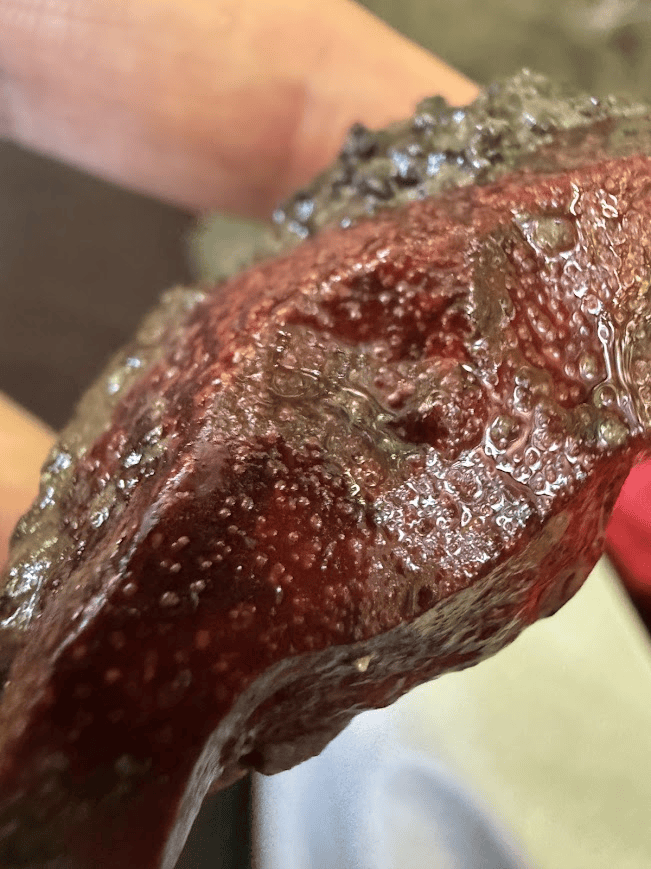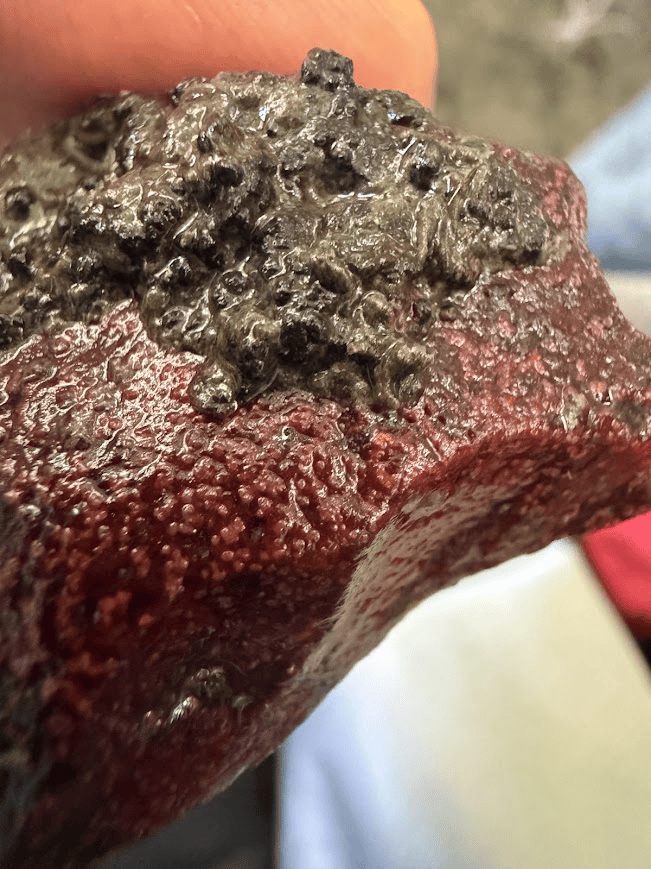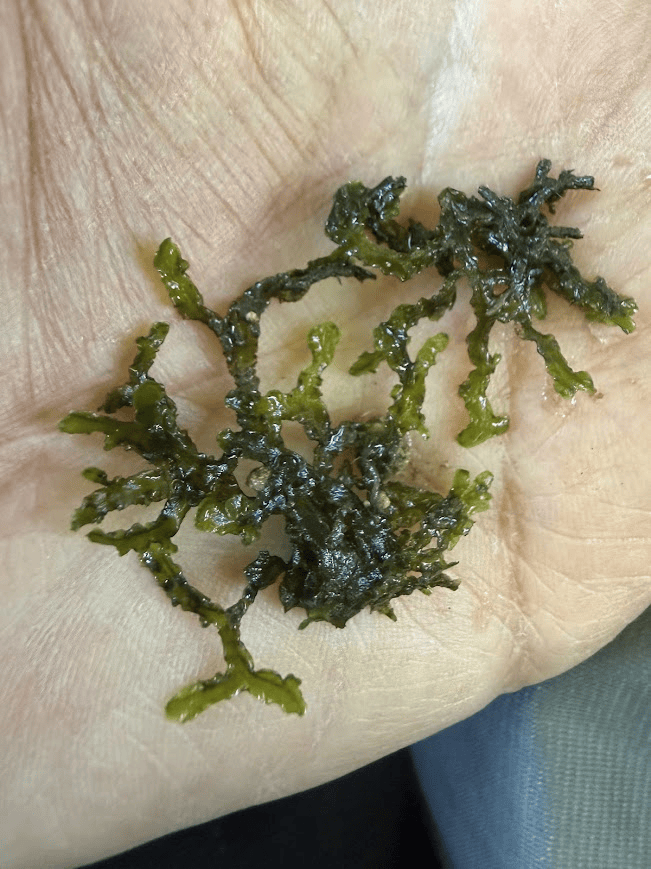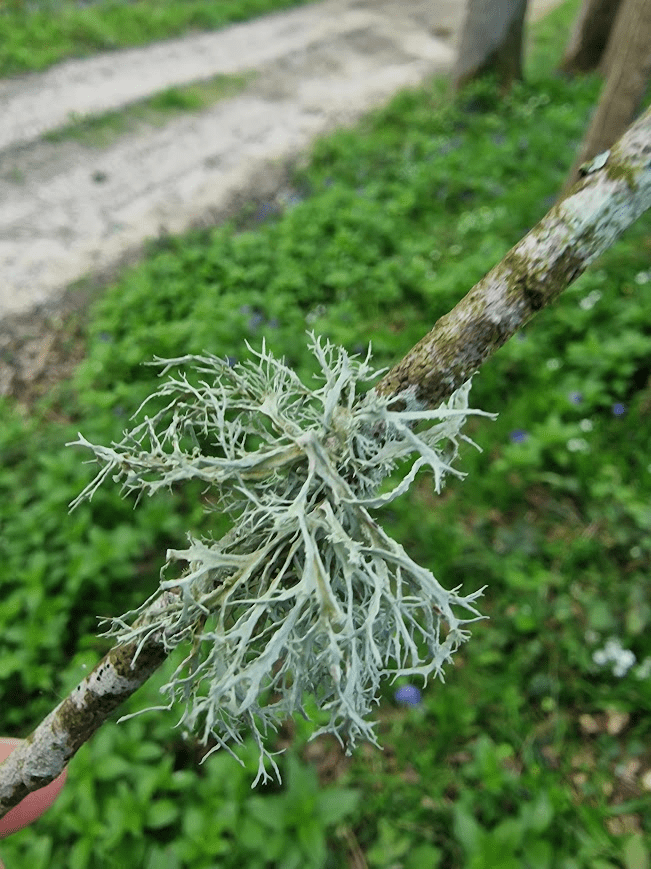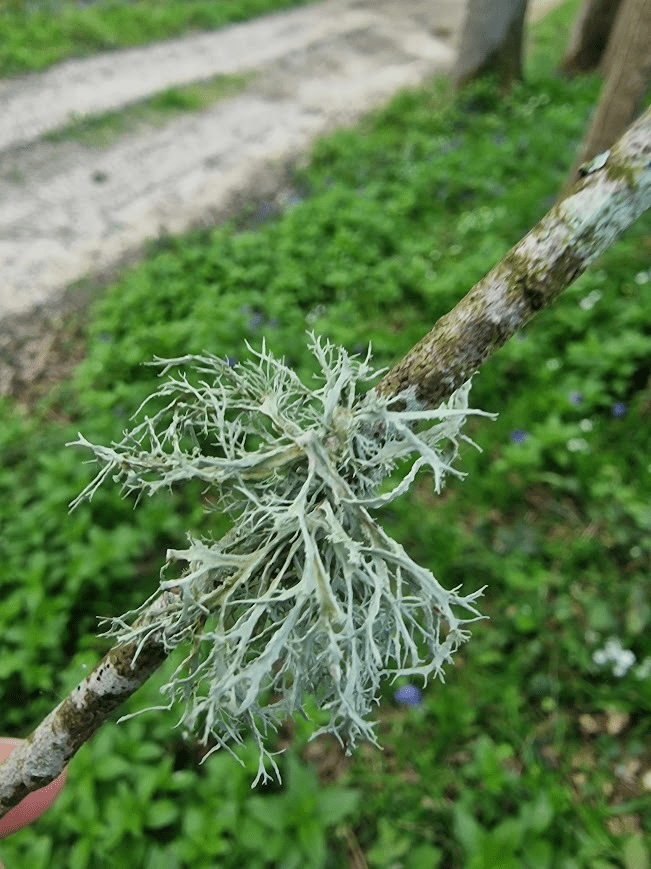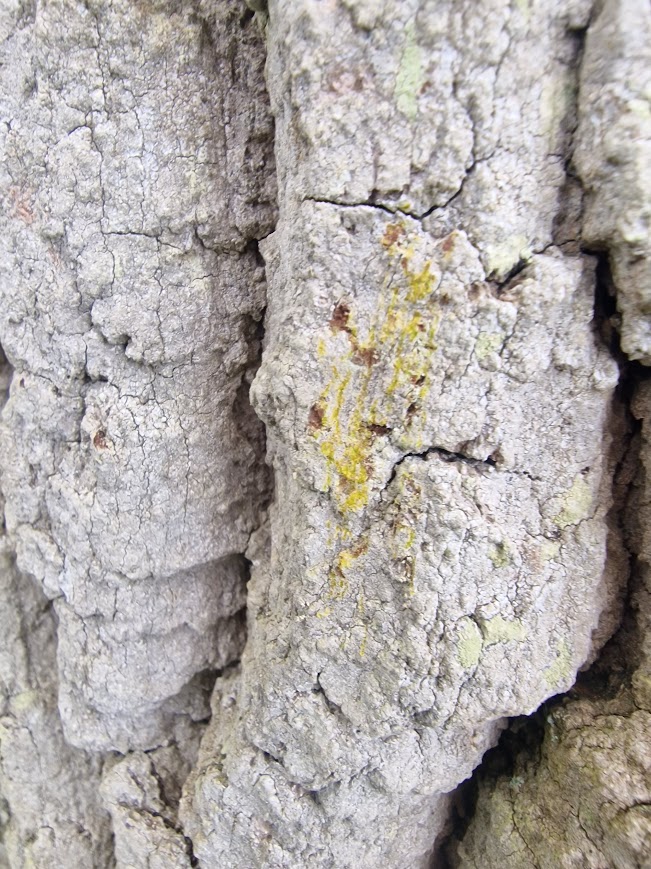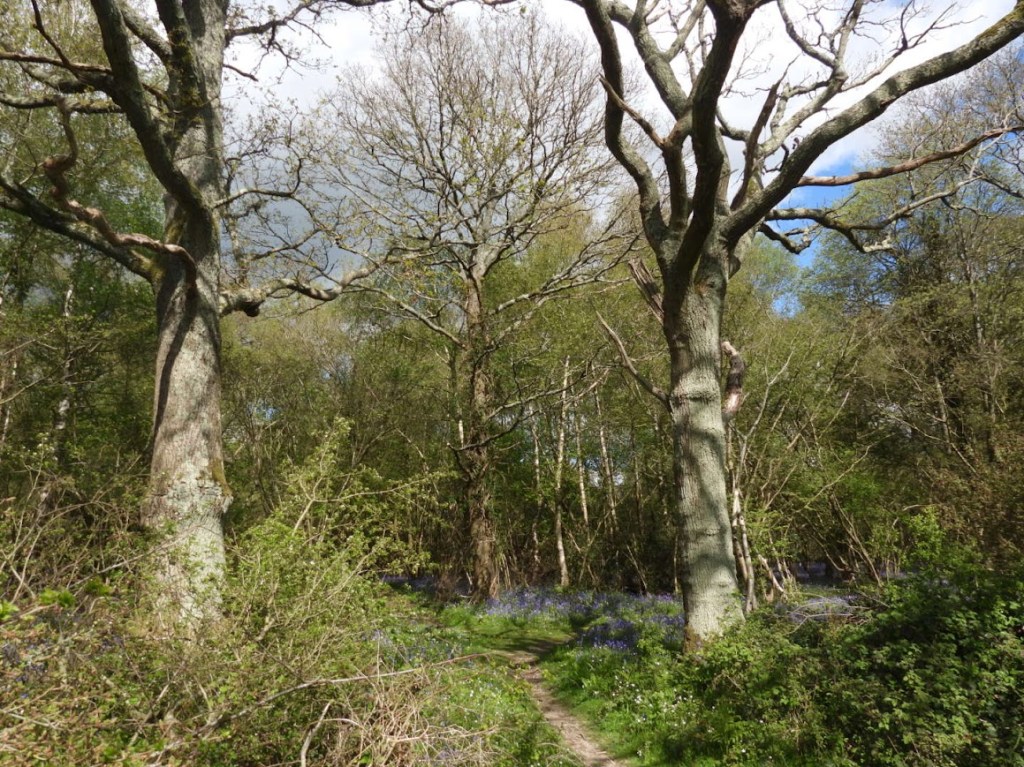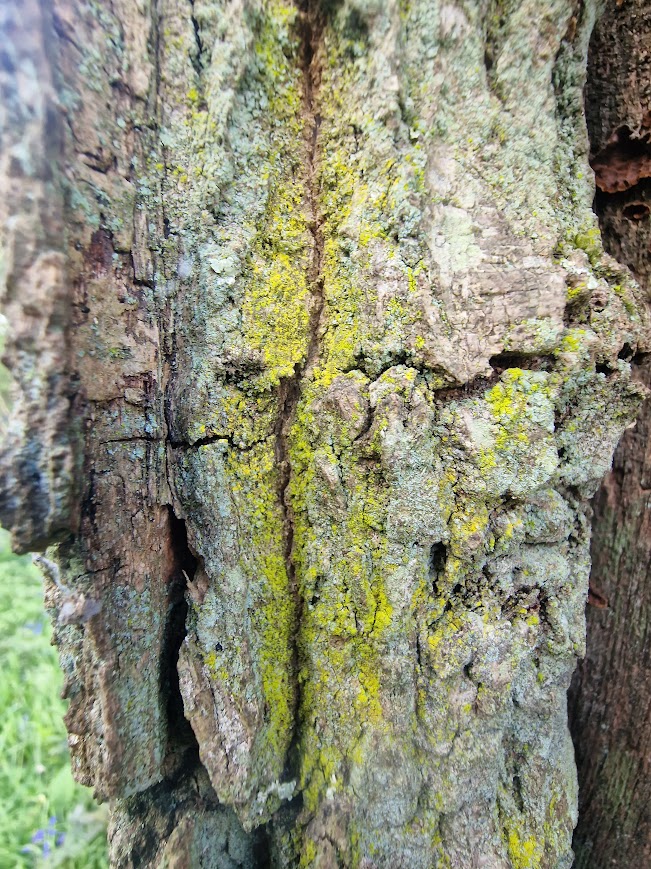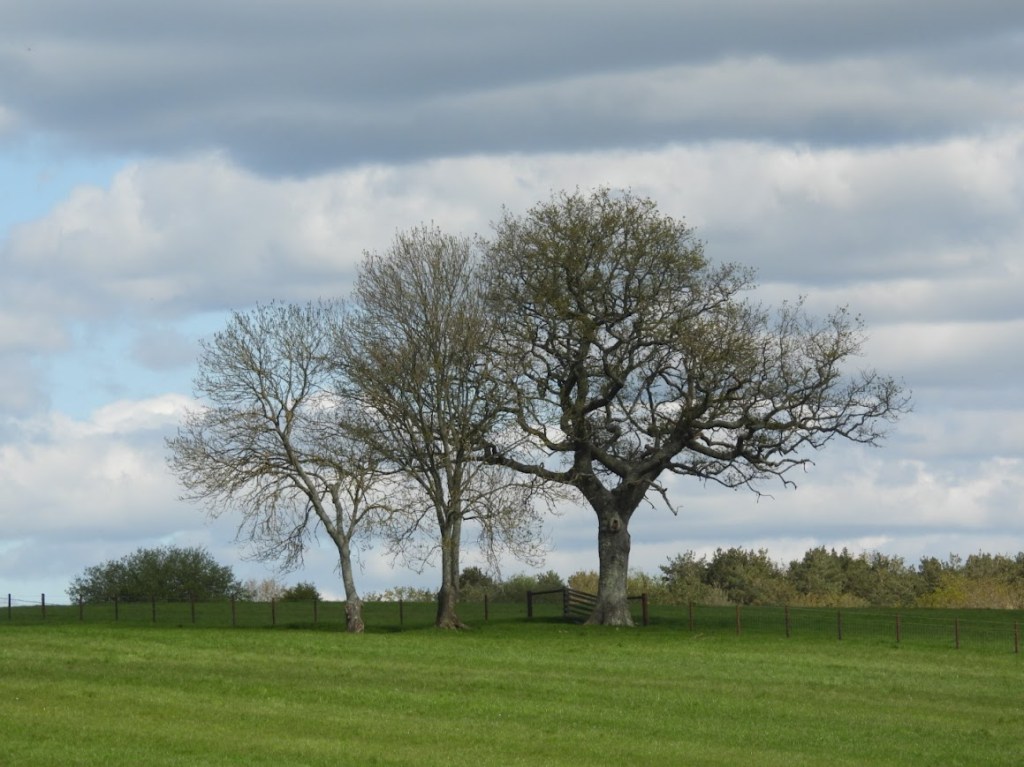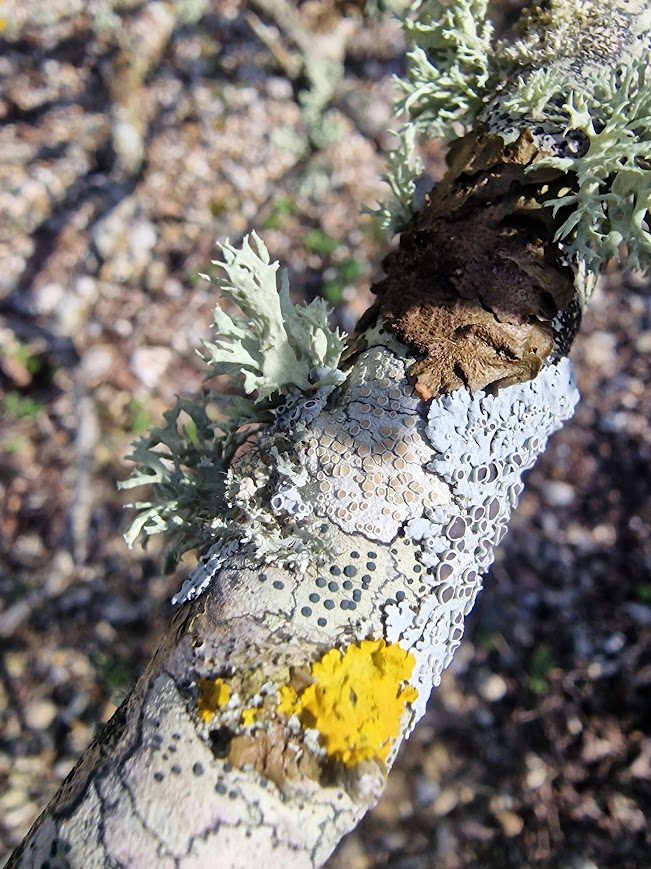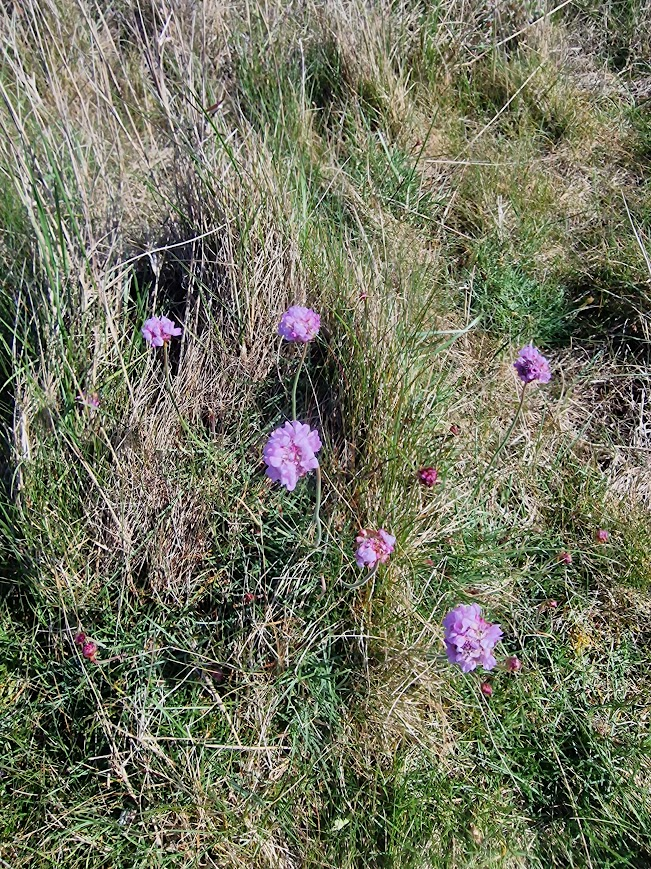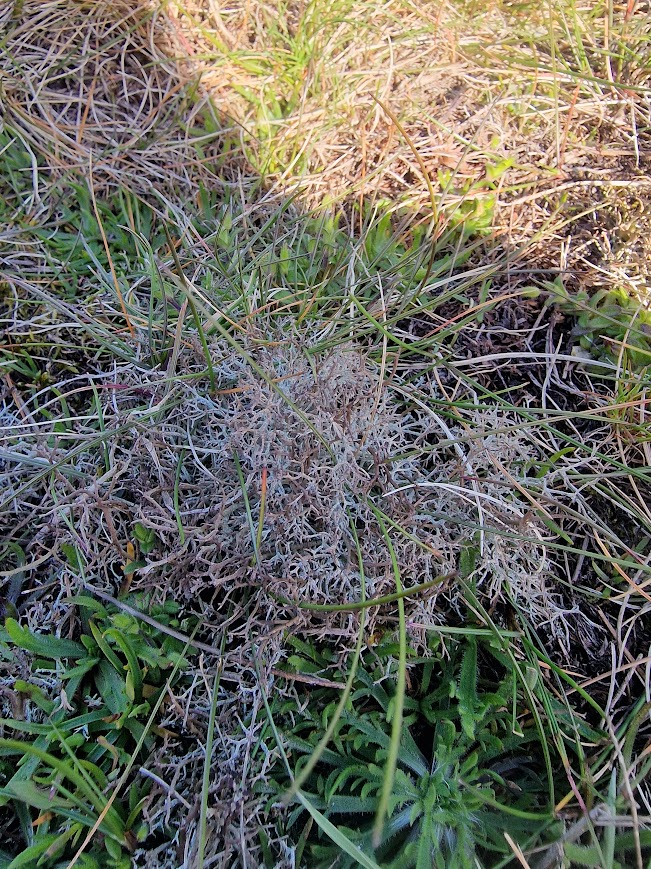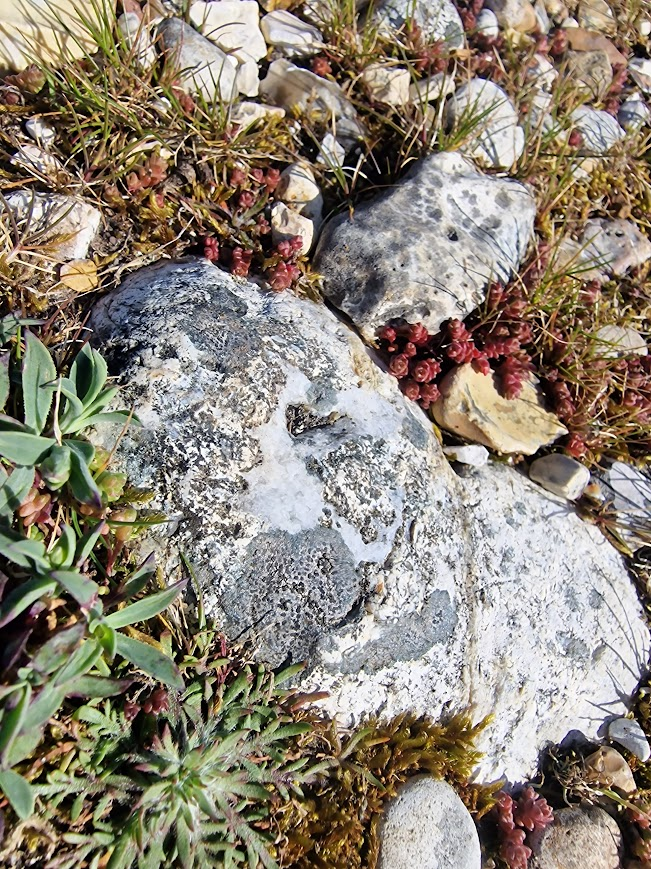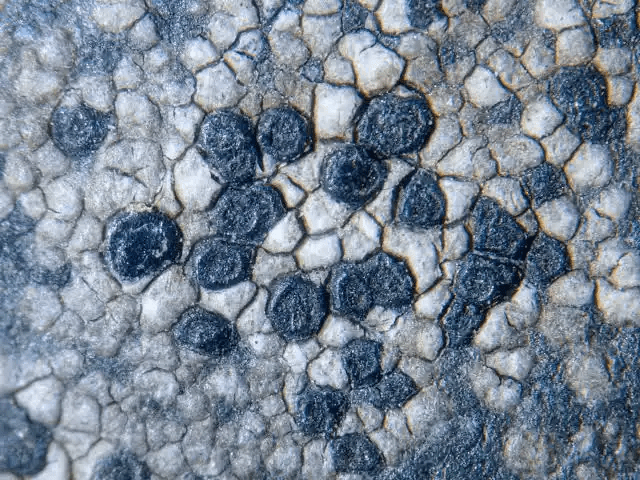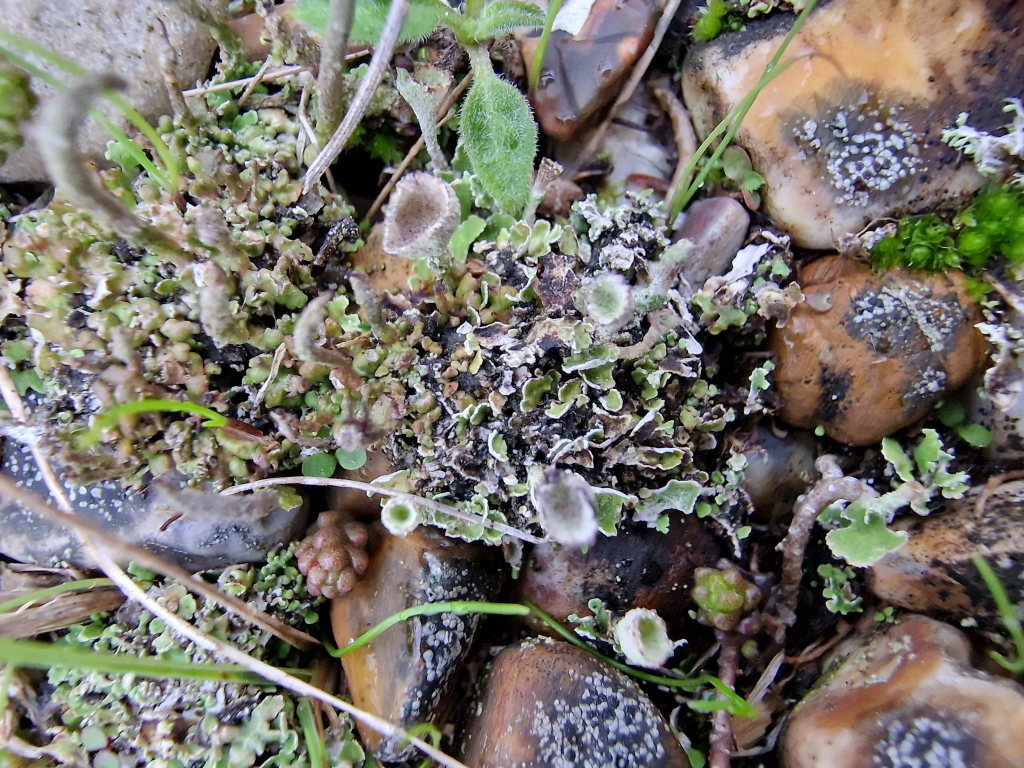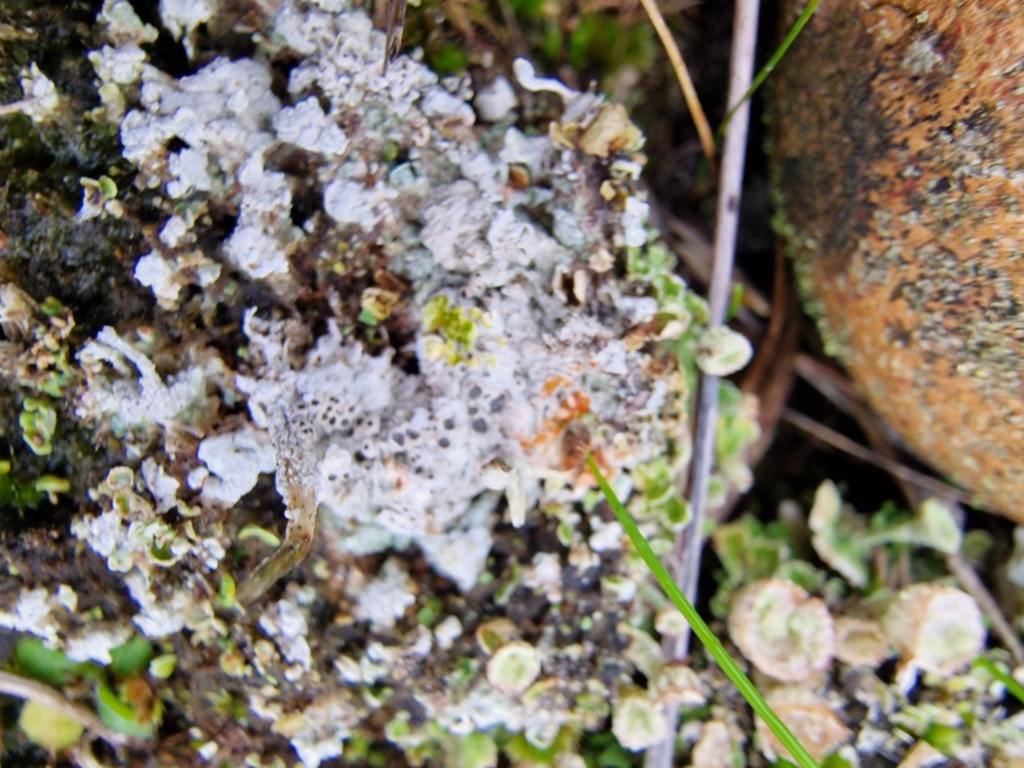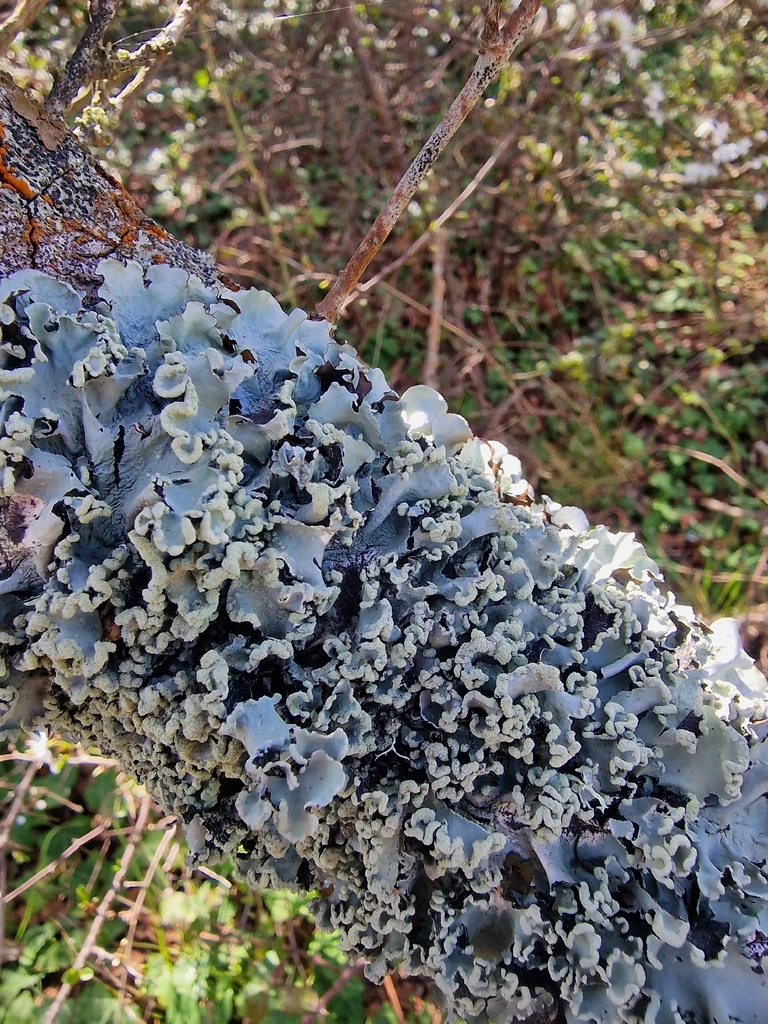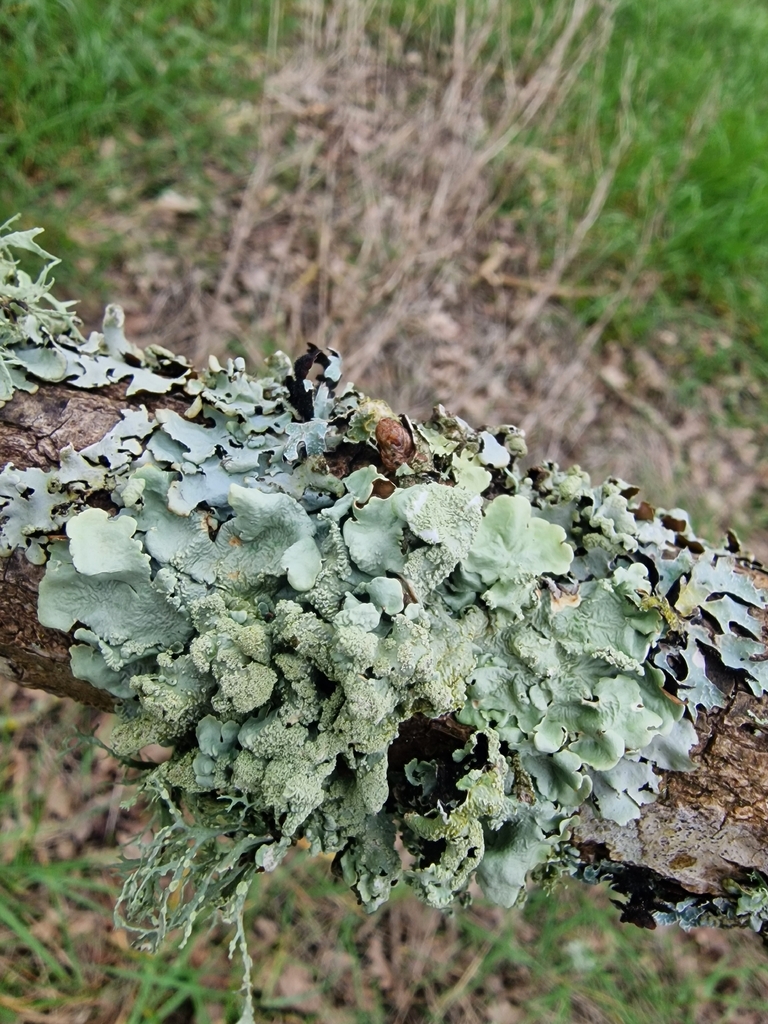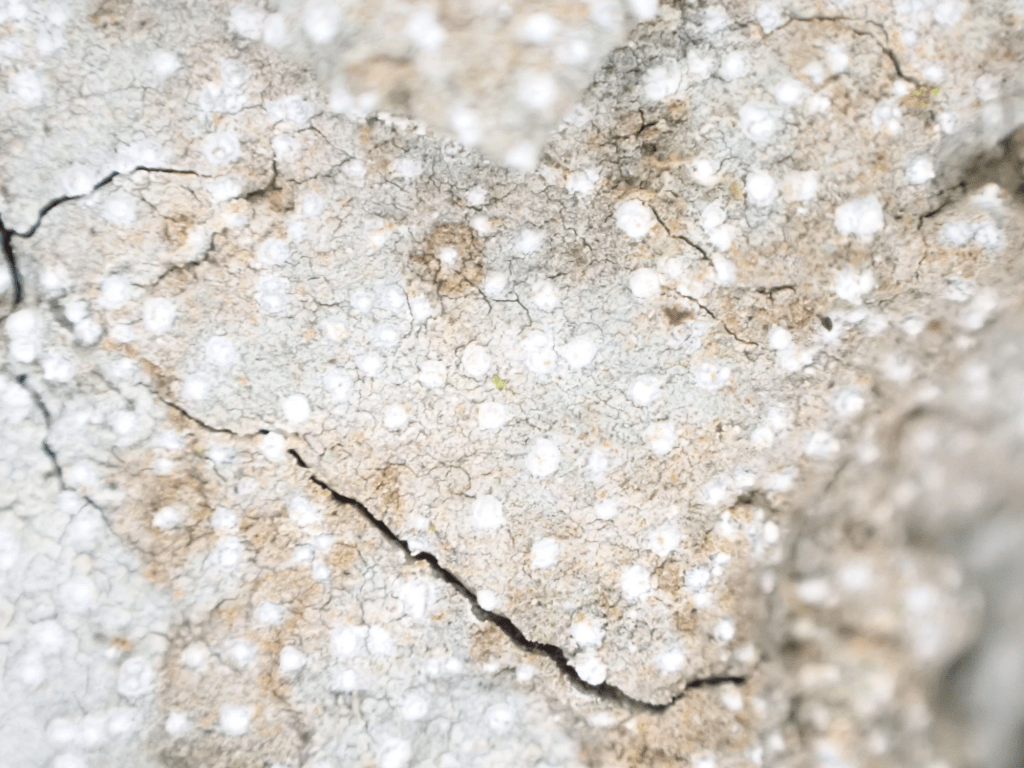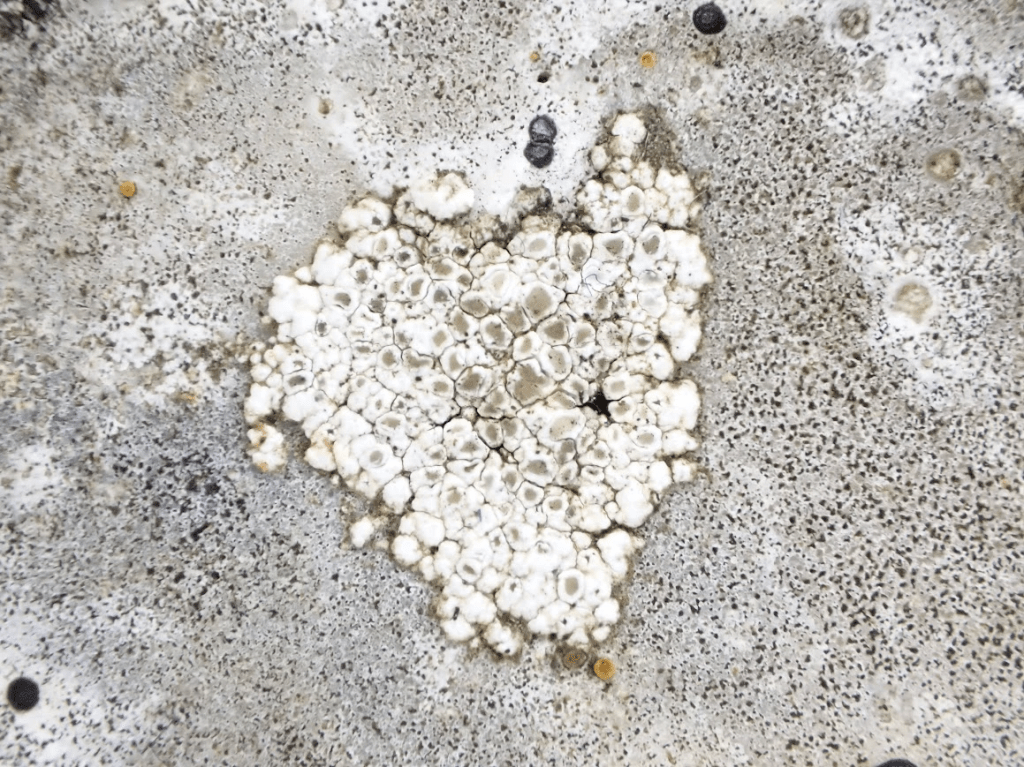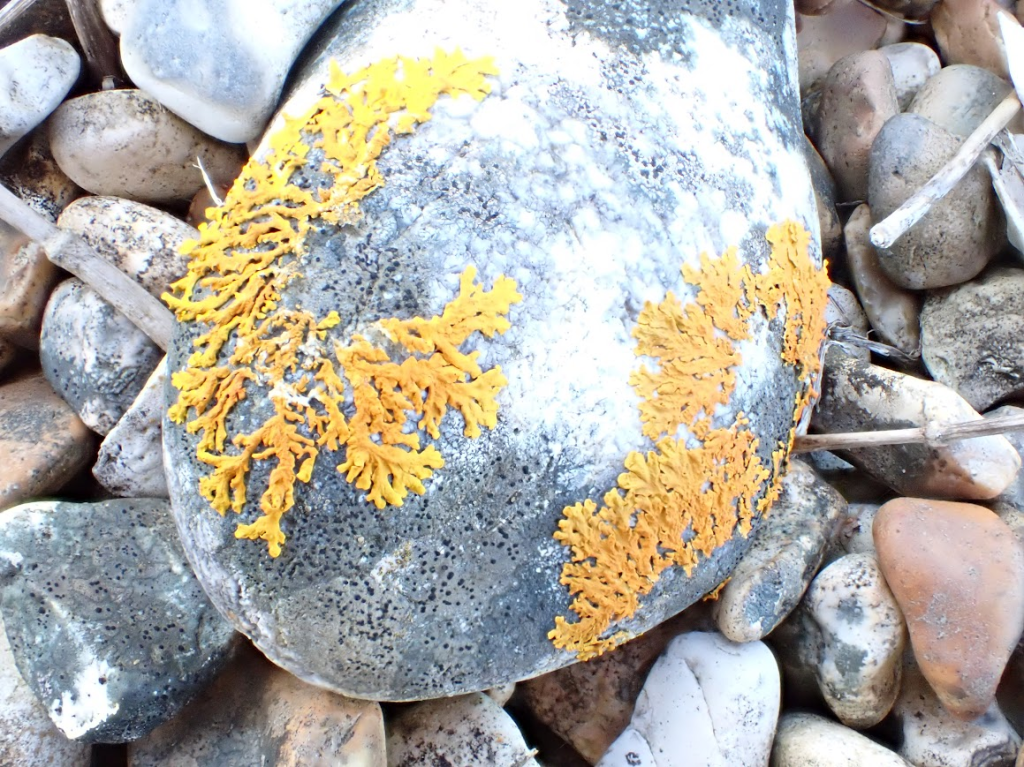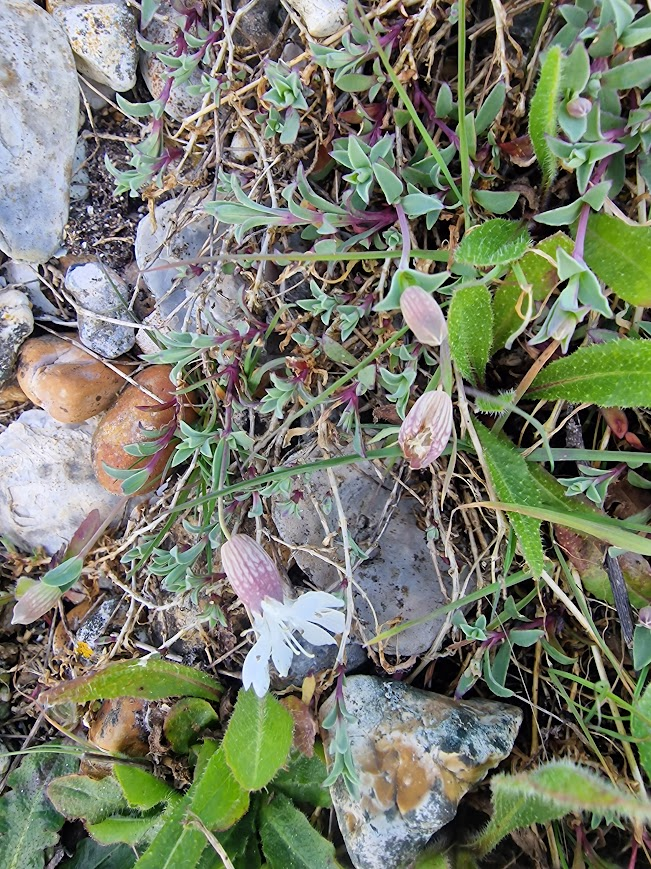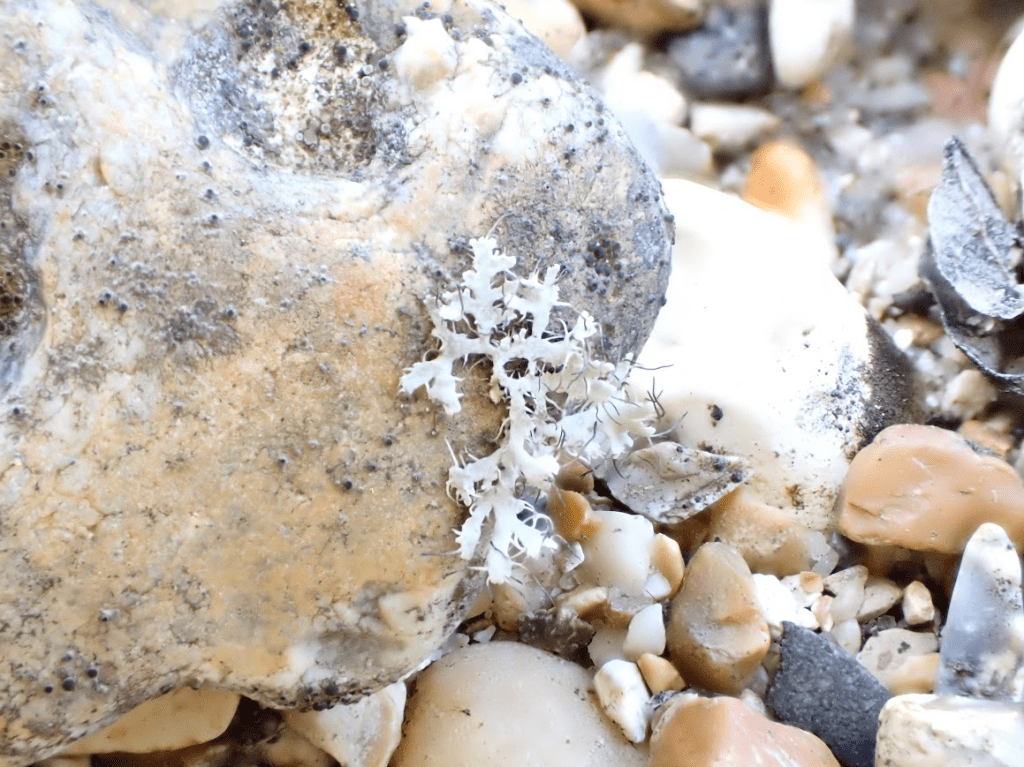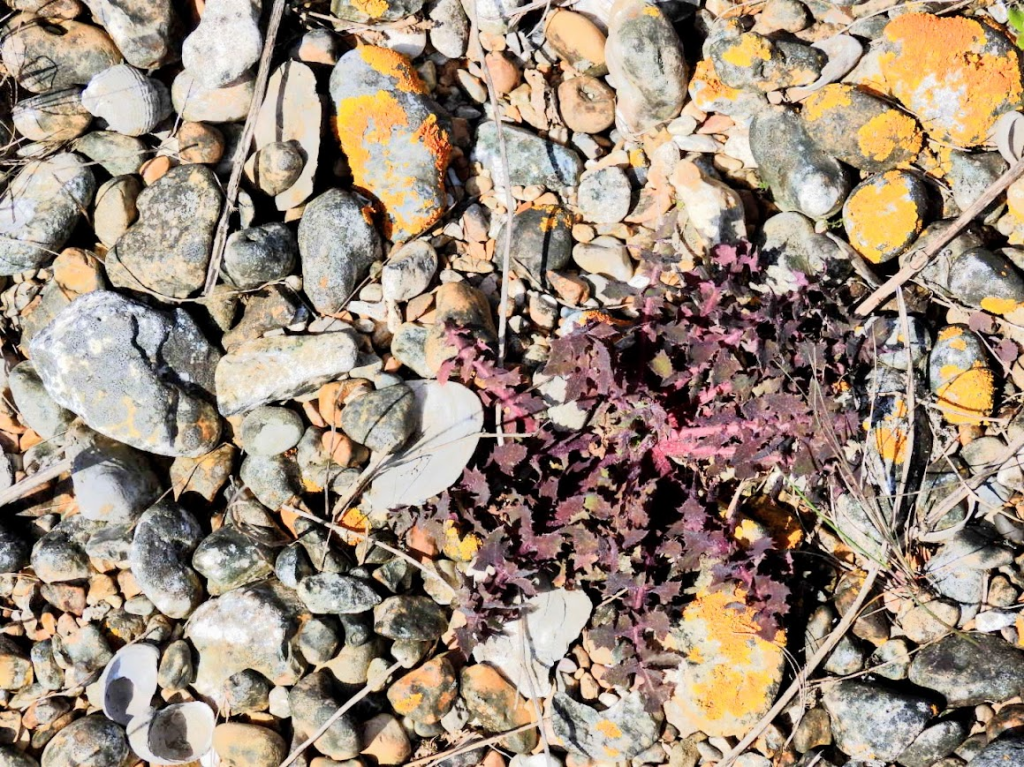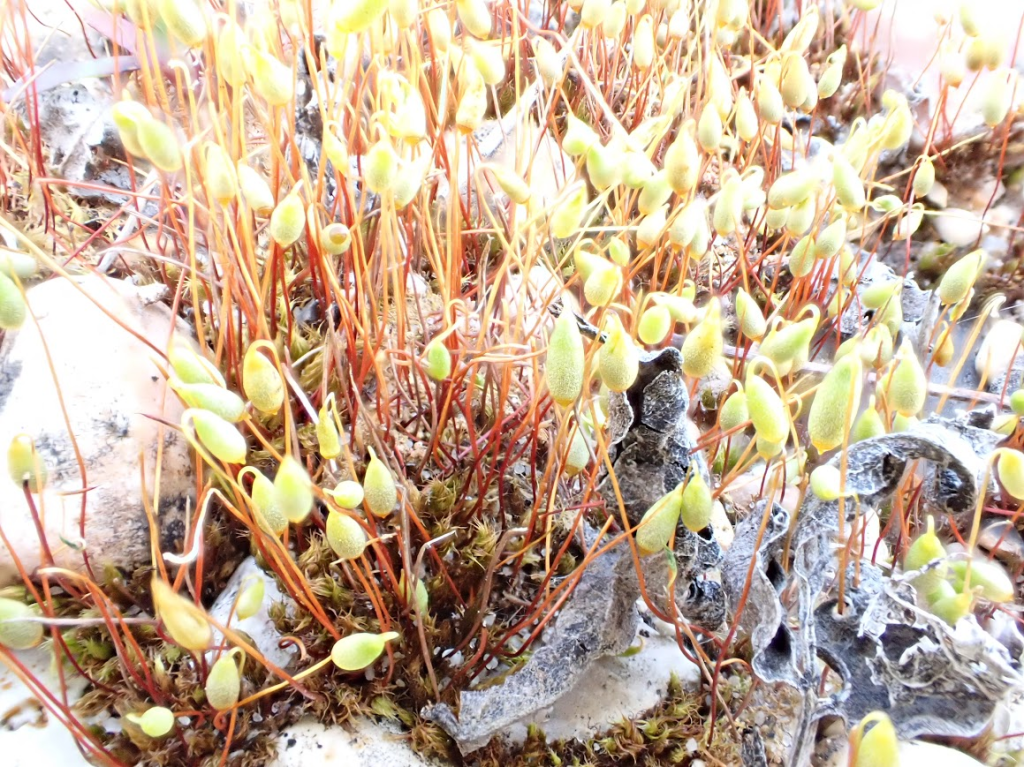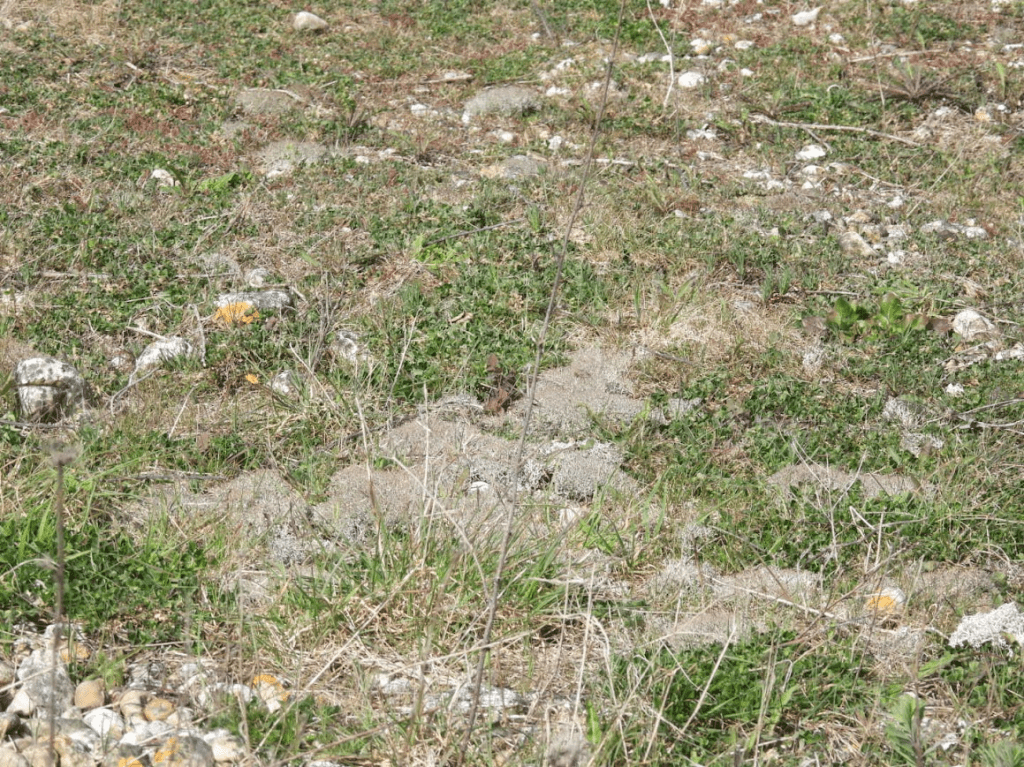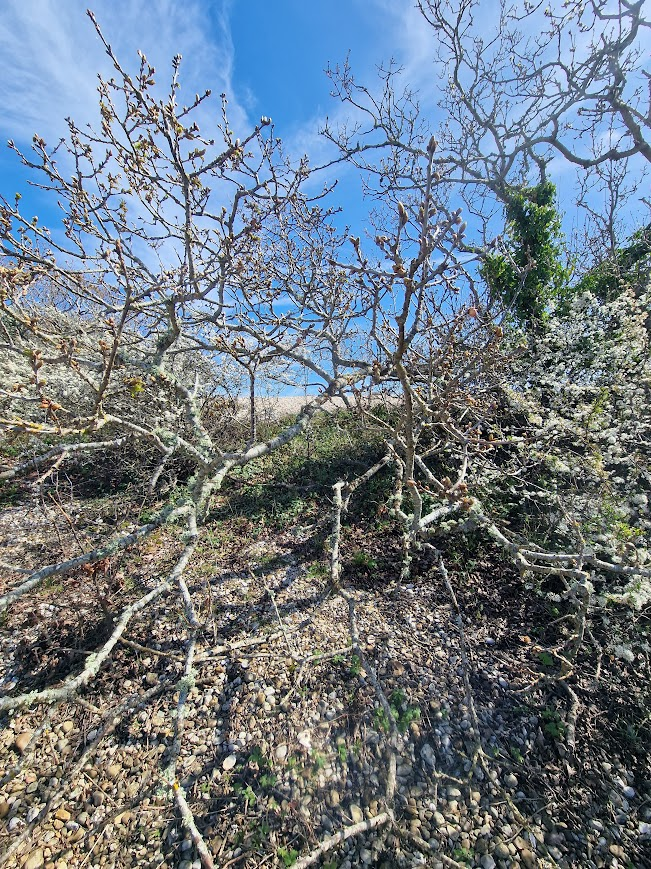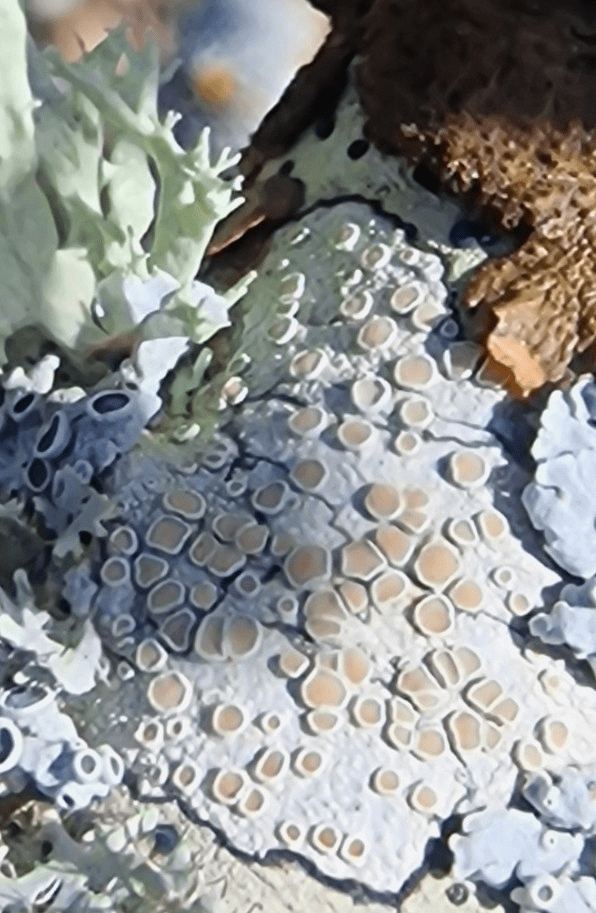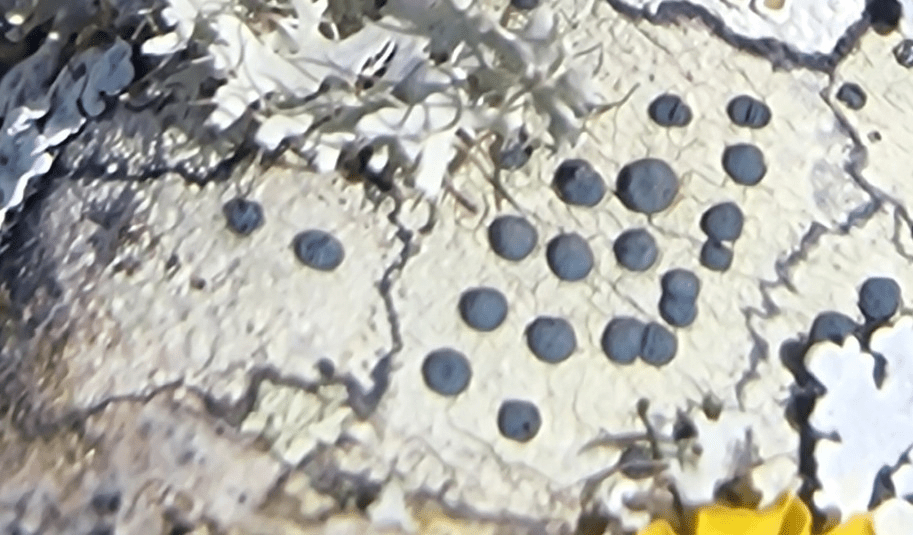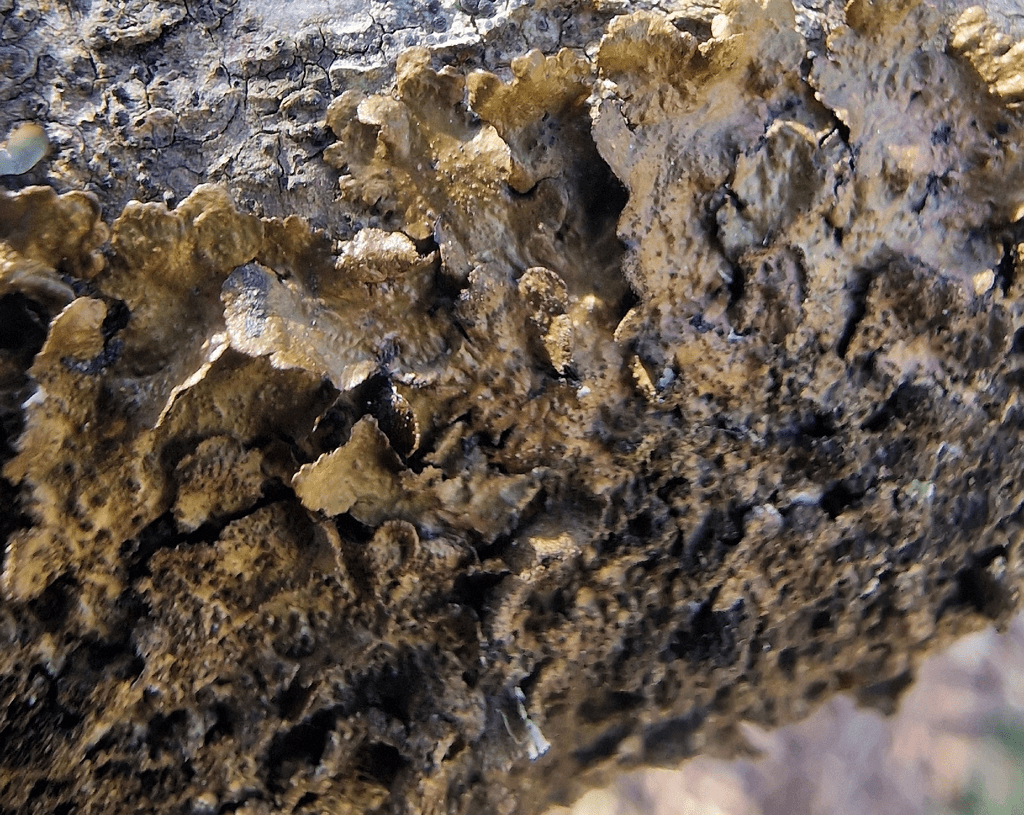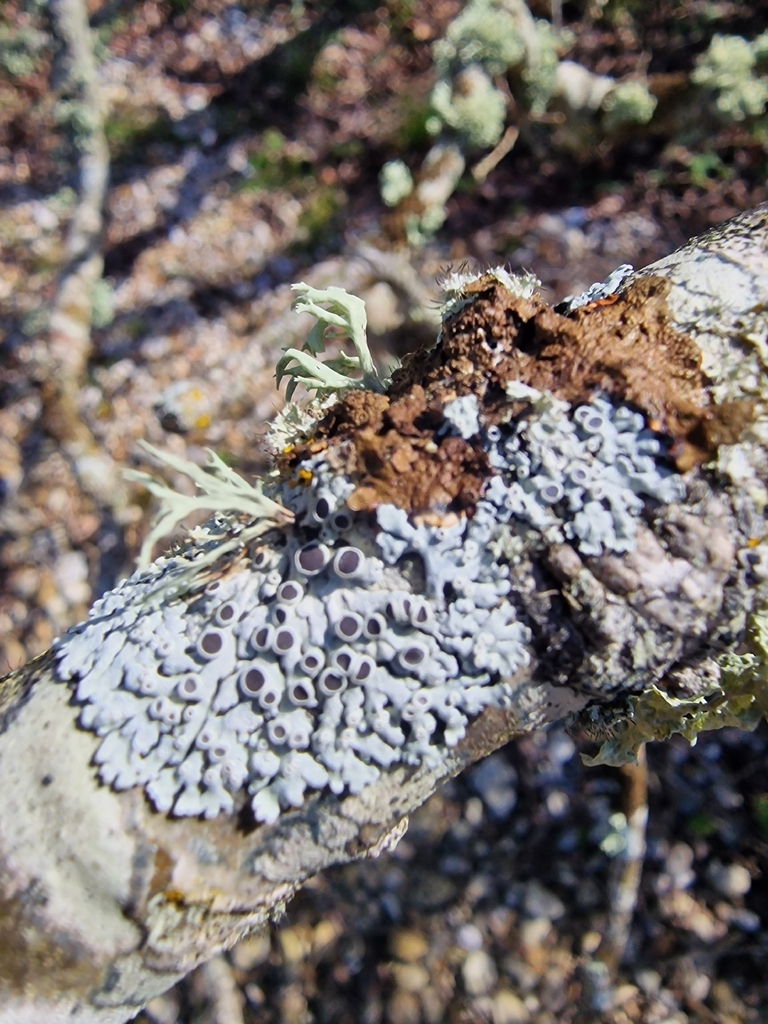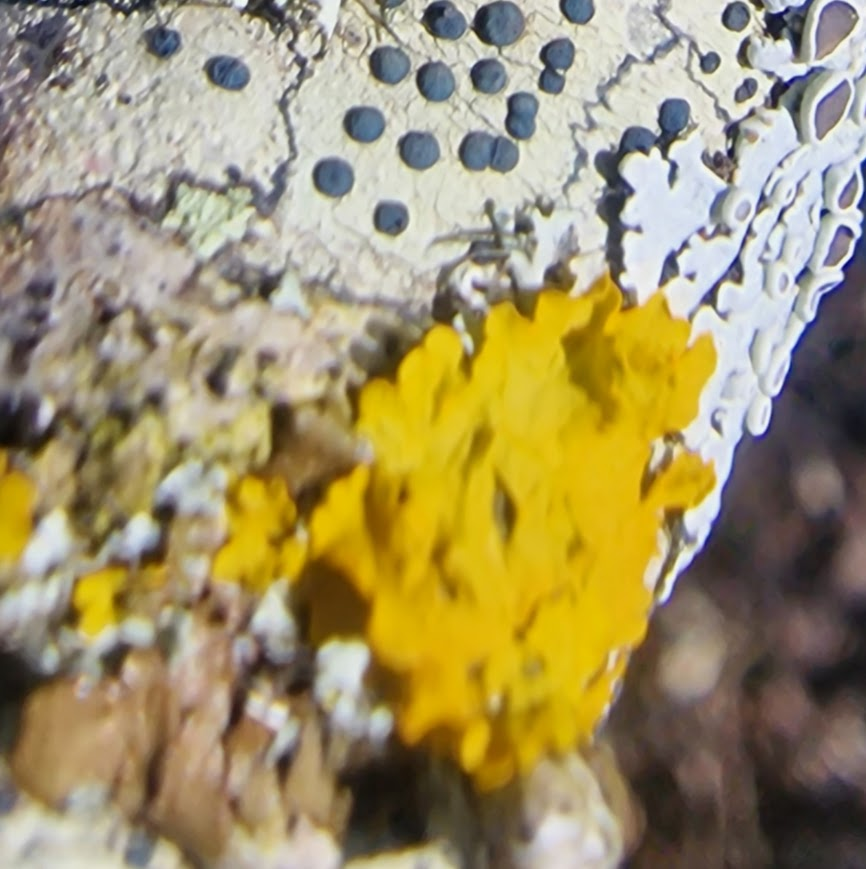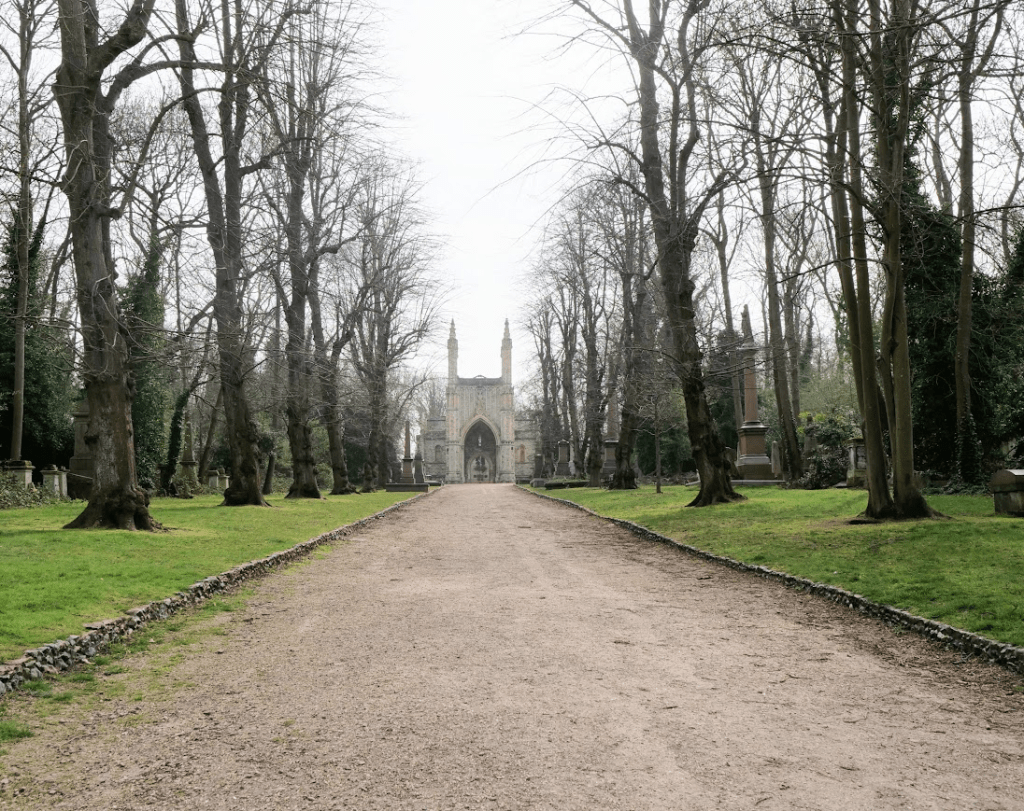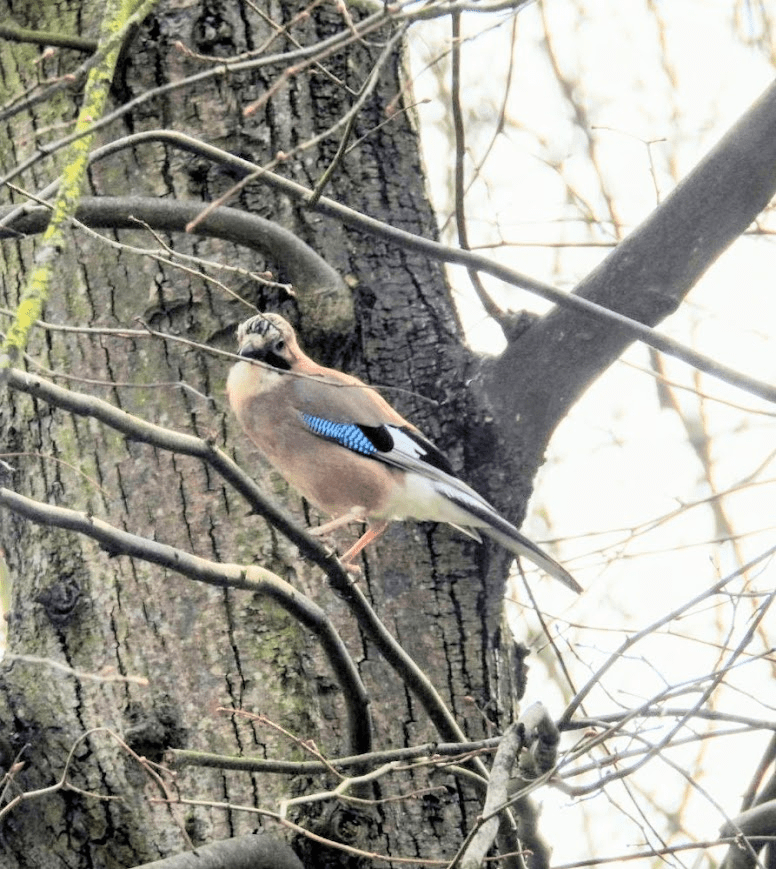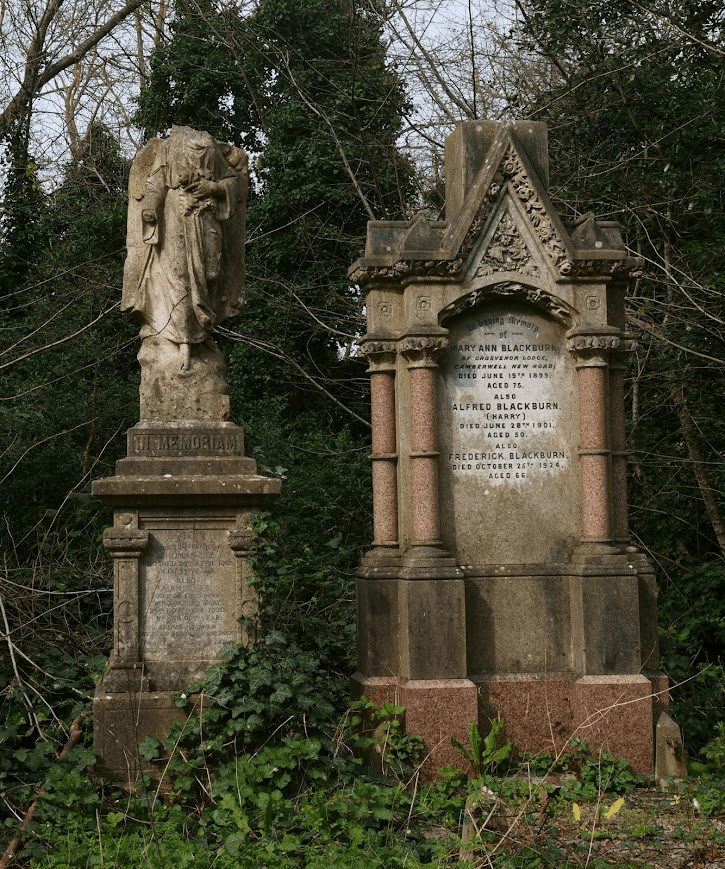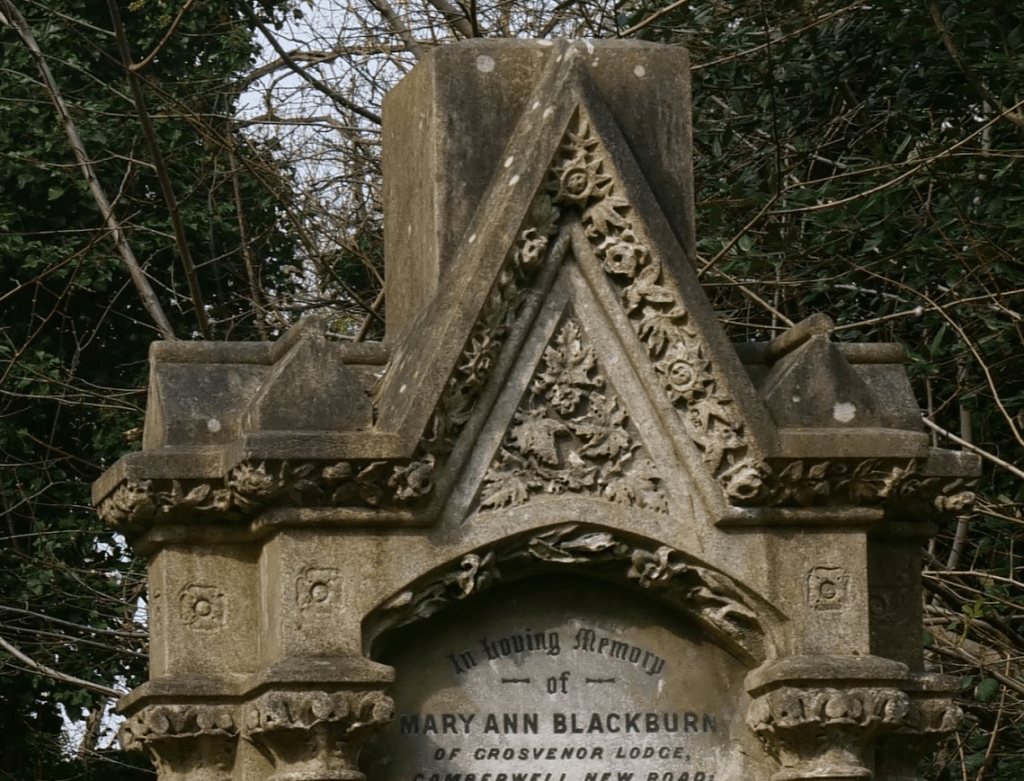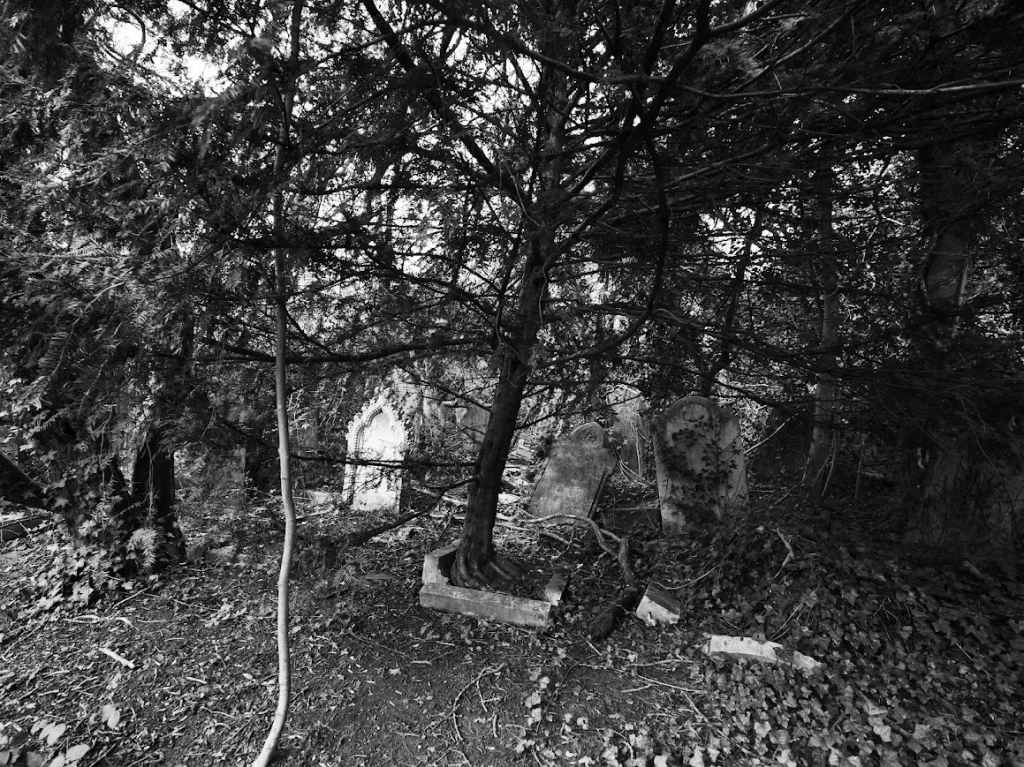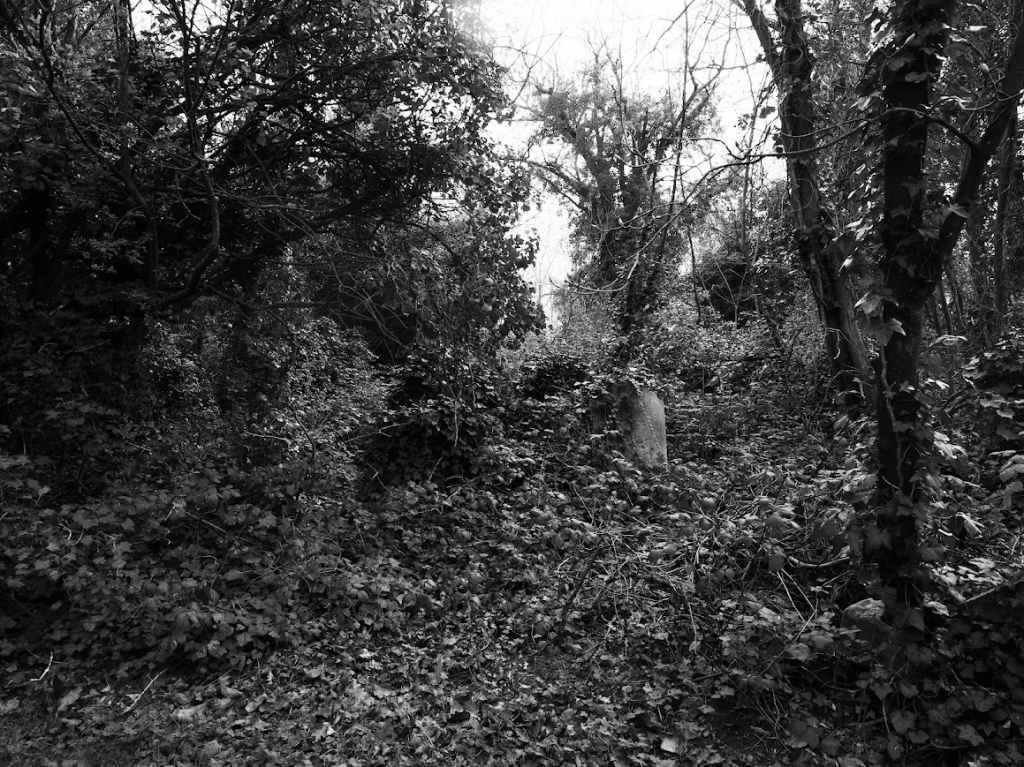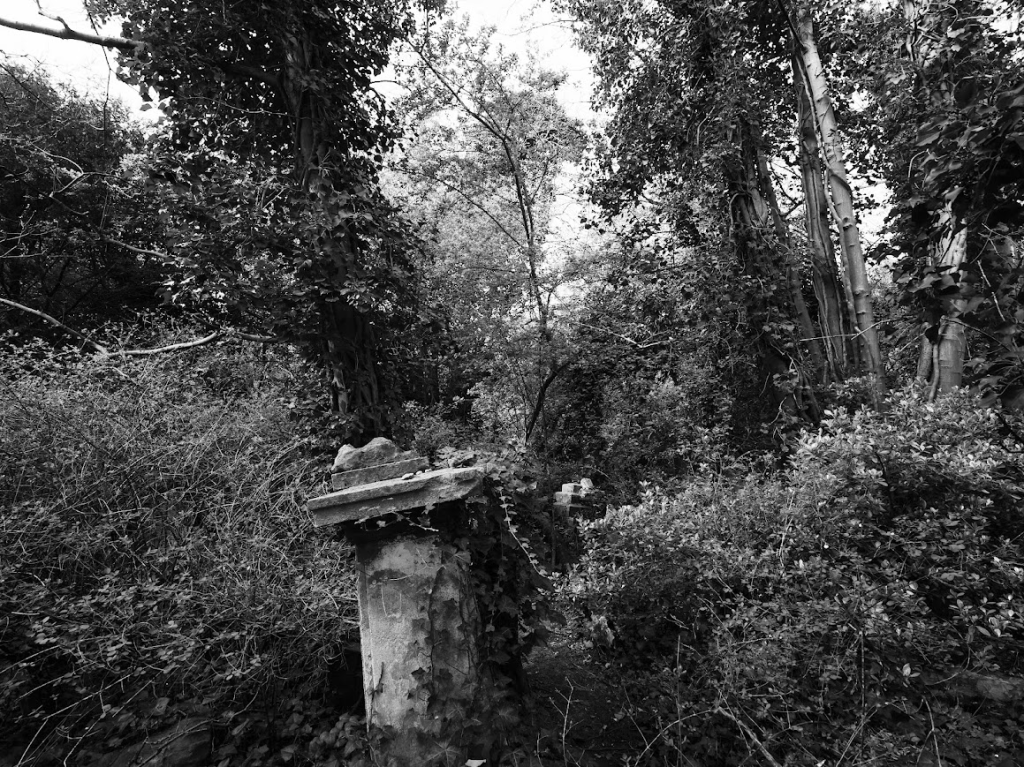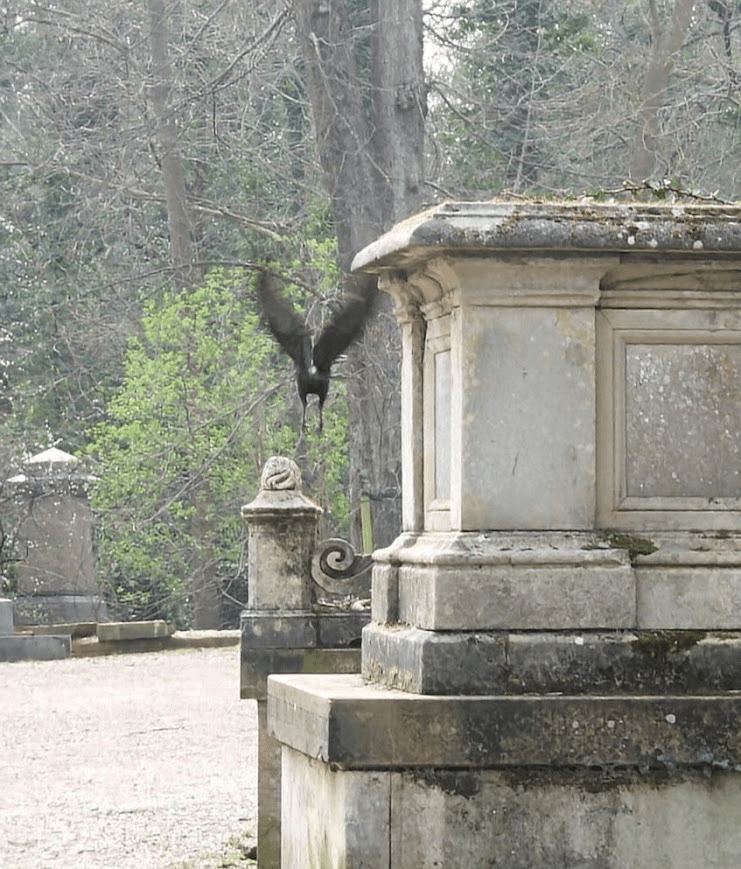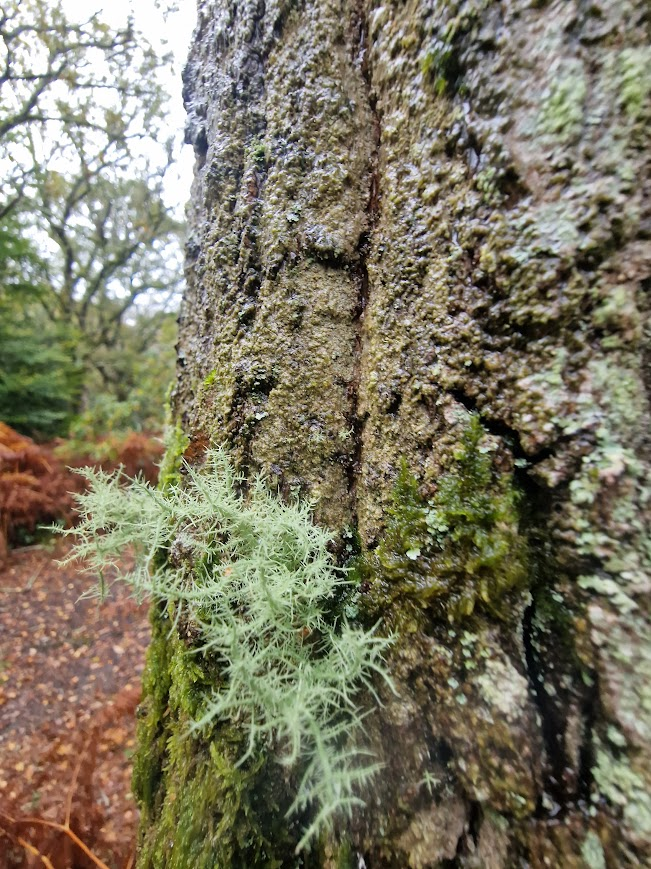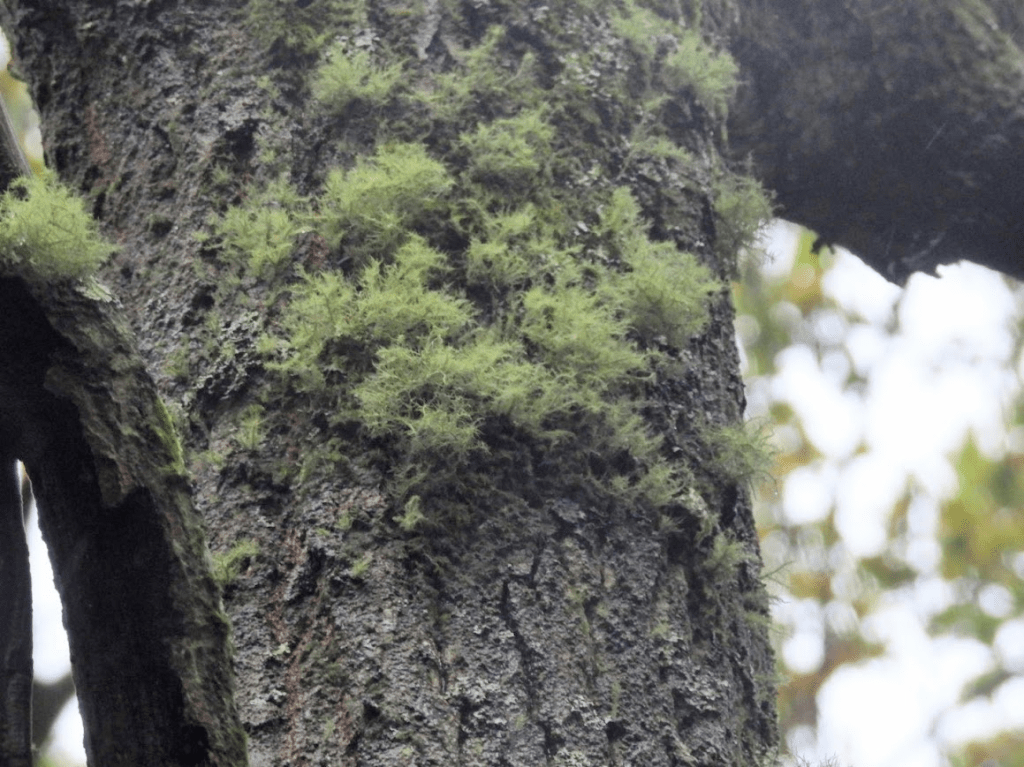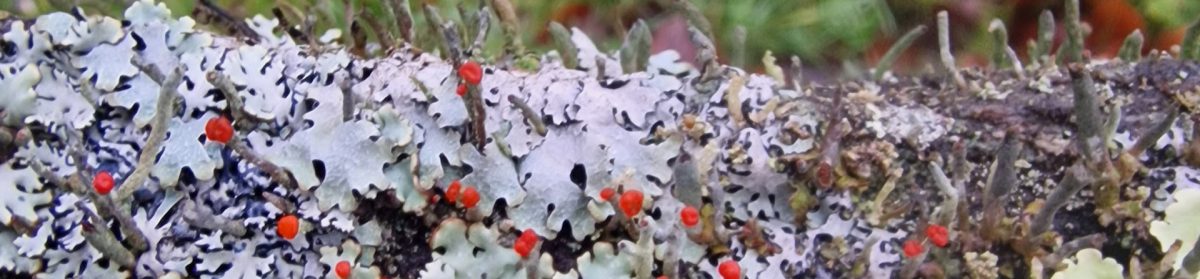
Friston Forest, Lullington Heath NNR and the Cuckmere Valley Churches; abundant Ingaderia vandenboomii (pink powder) and Usnea articulata (strings of sausages) 24.02,26

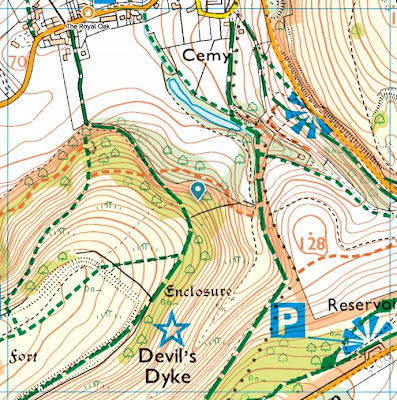
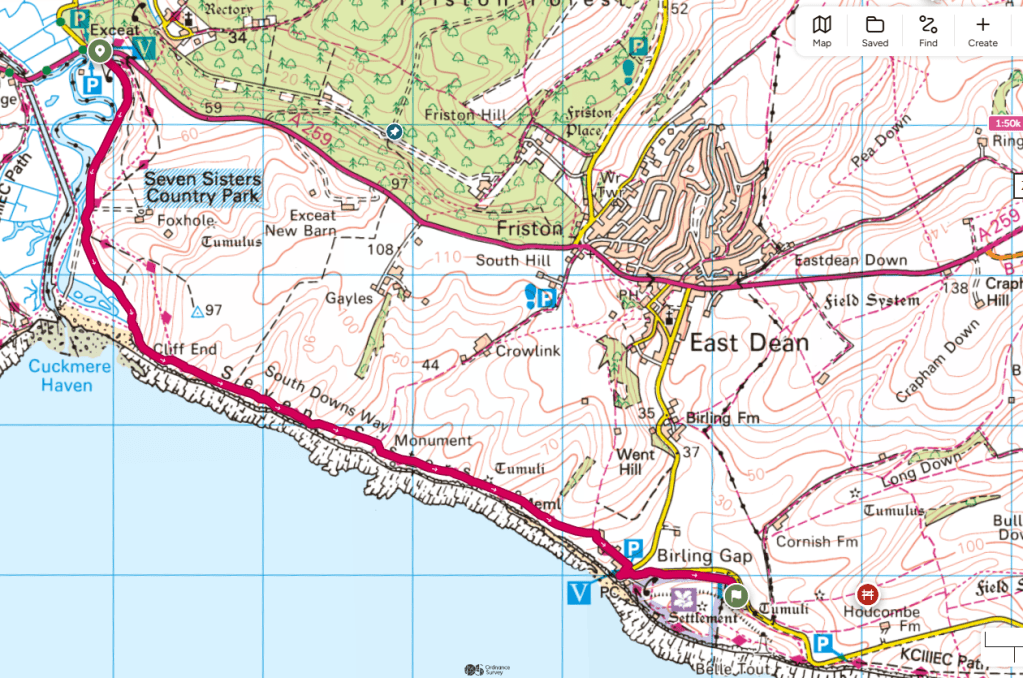
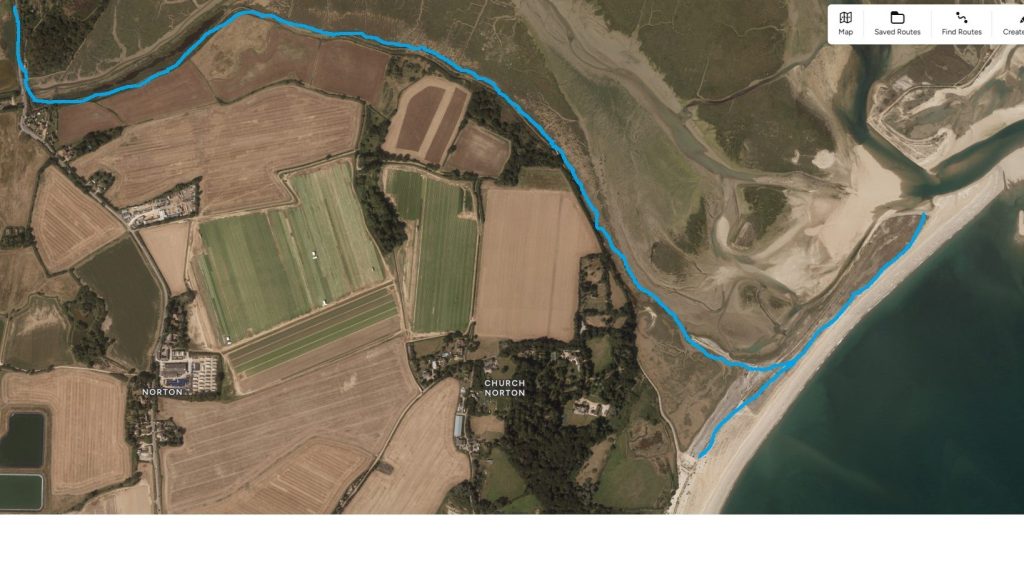
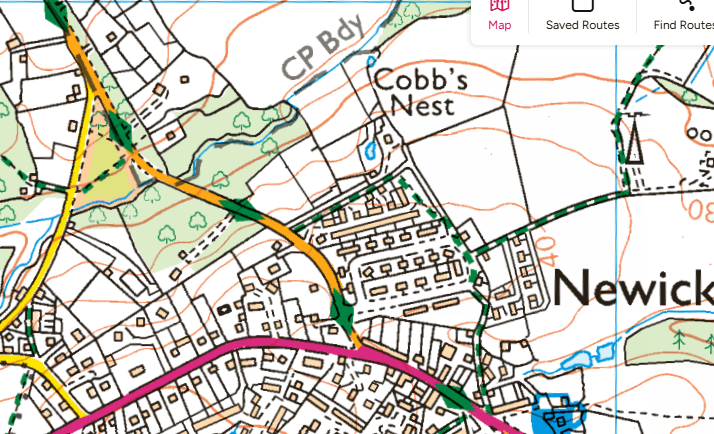
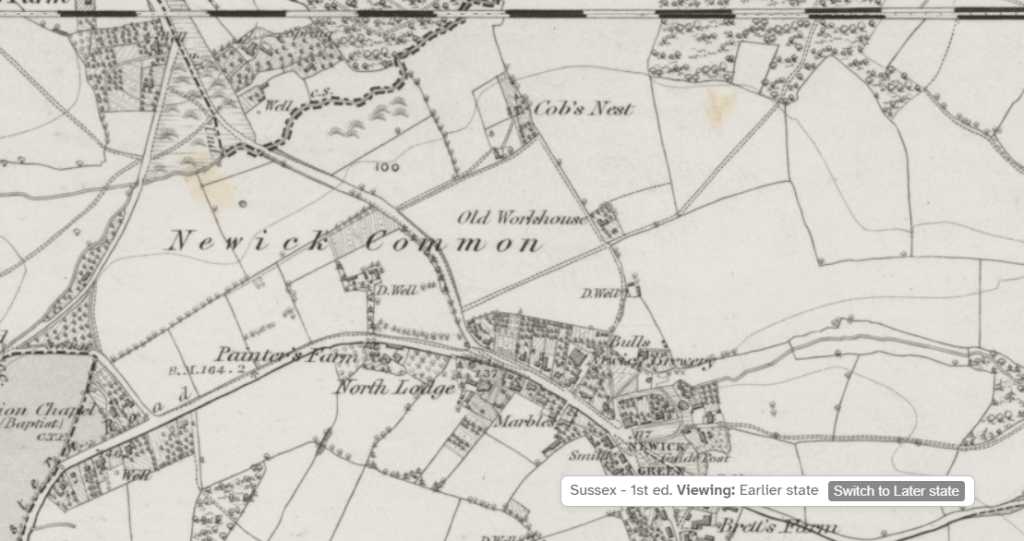
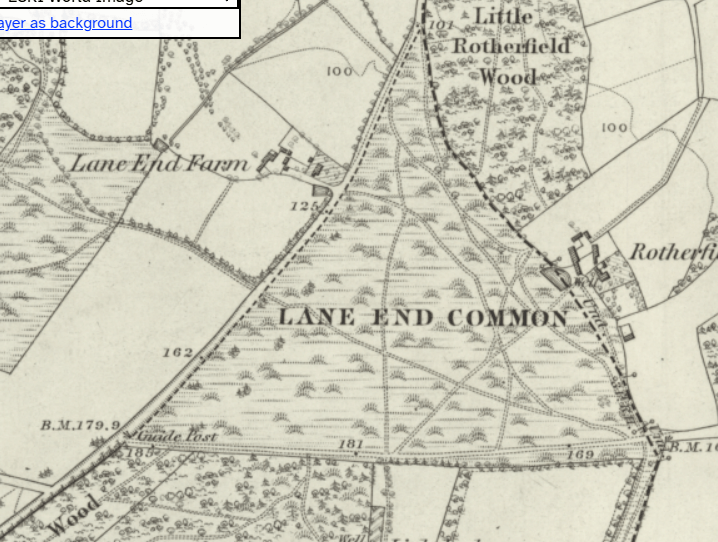
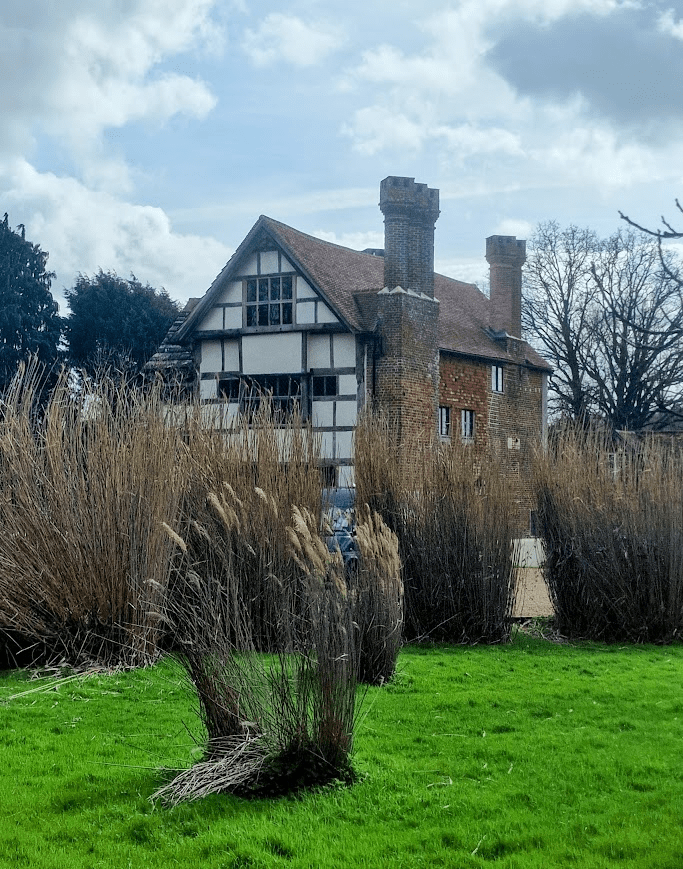
I went to the Seven Sisters Country Park visitors centre at Eceat on the Brighton and Hove 12 bus. From there I walked through Friston Forest to All Saints Chirch Westdean. I then walked further north through the forest to Lullington Heath, From the heath I walked down past the Lullington’s remote hillside Church of the Good Shepherd, then crossed the Cuckmere to visit Alfriston’s St Andrews, then crossed back over the Cuckmere and walked down the road from Litlington to Exceat, walking past t. Michael the Archangel Church, 

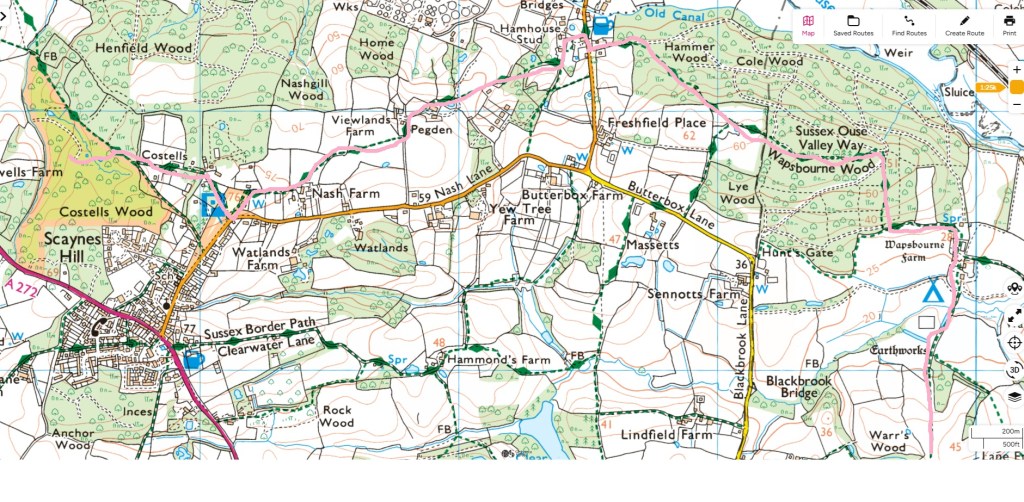
Google Maps

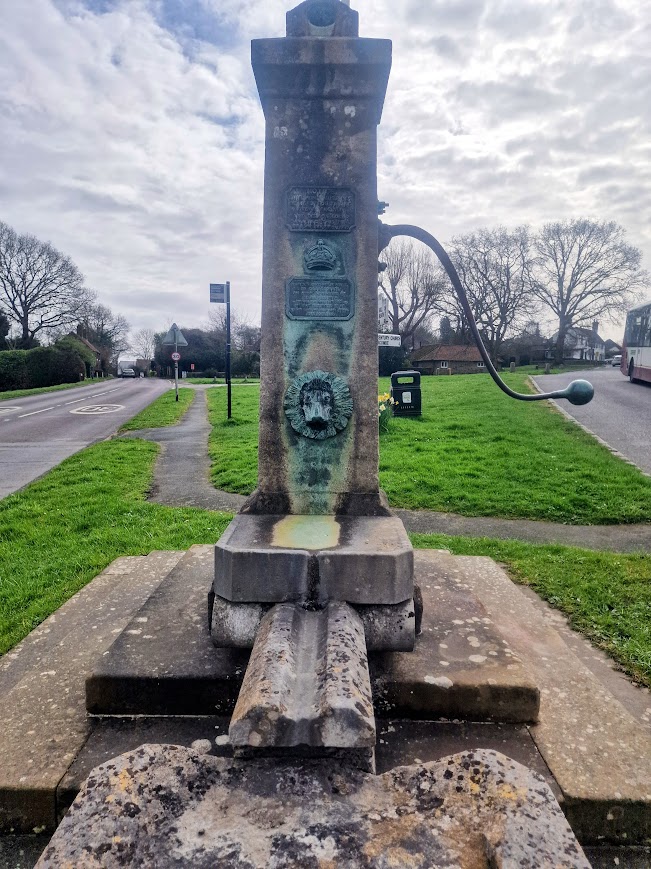
Explore OS Maps

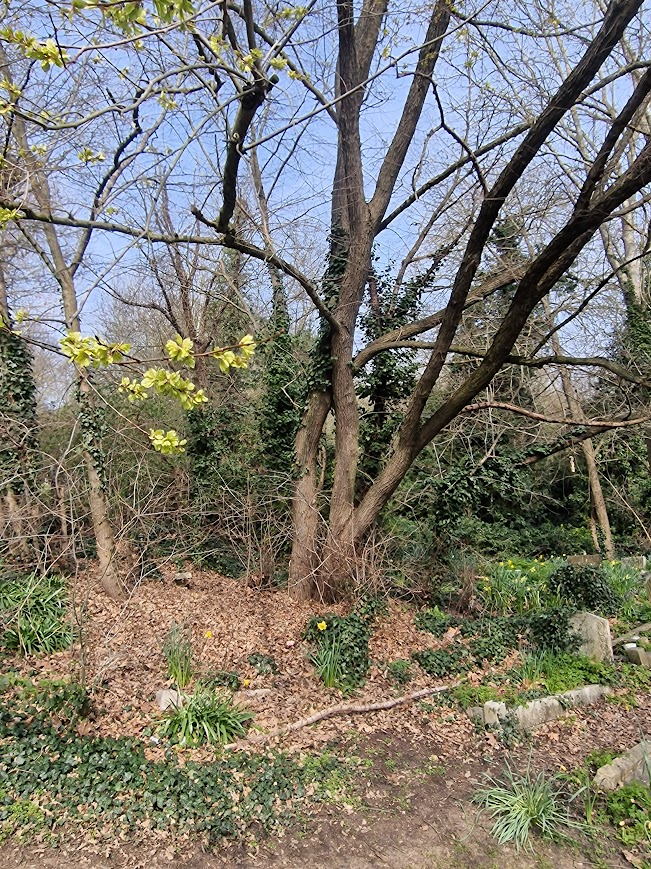
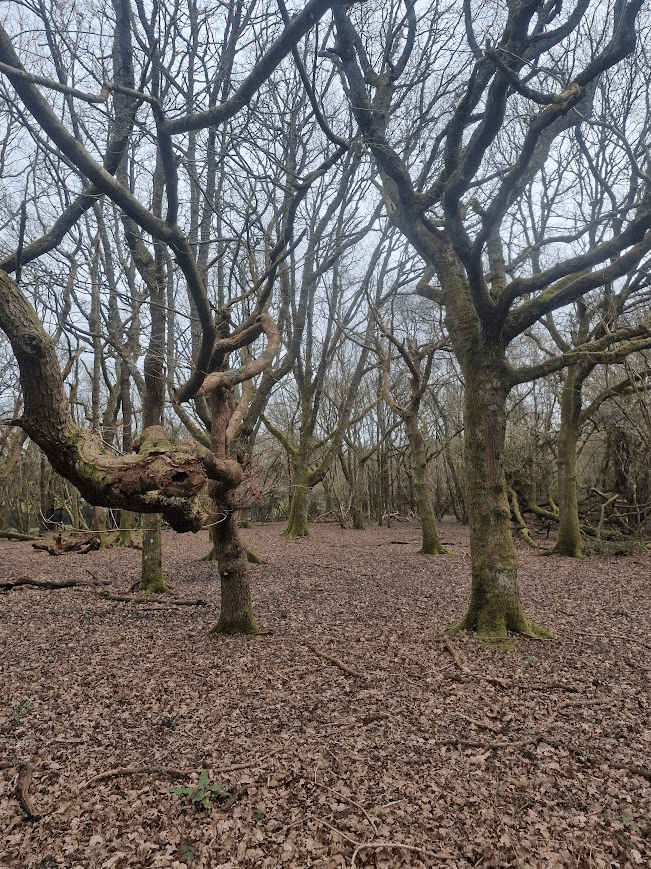
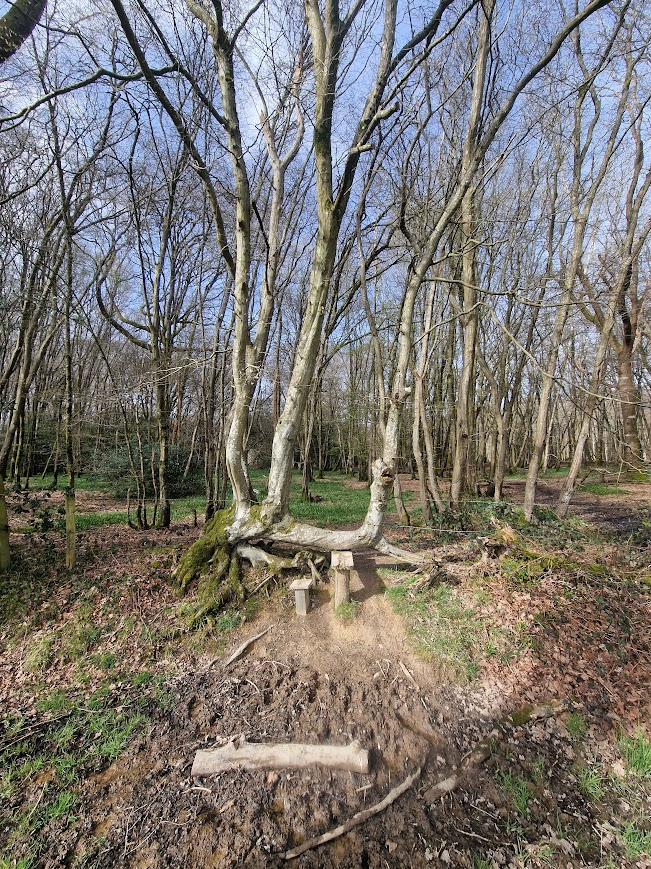
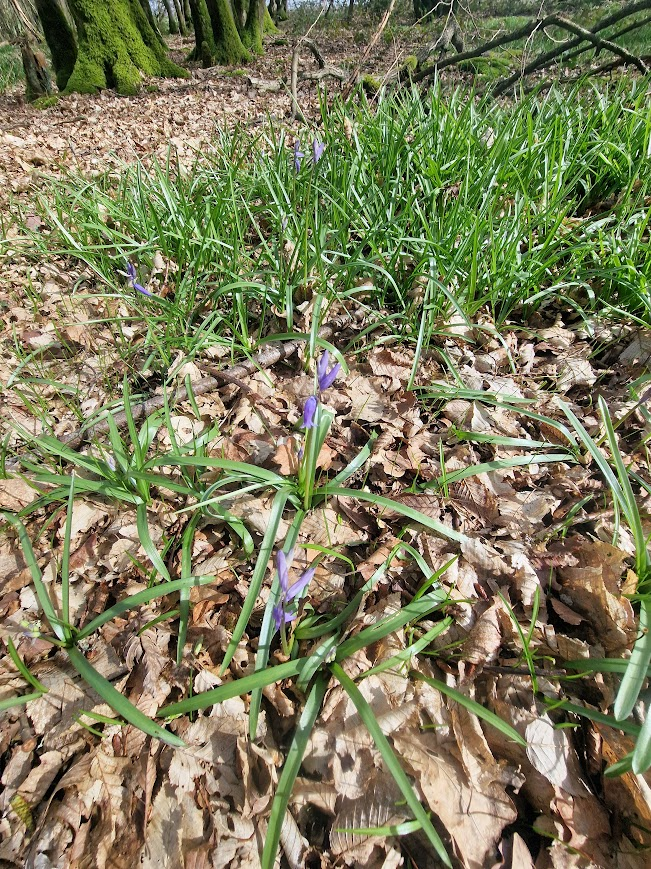
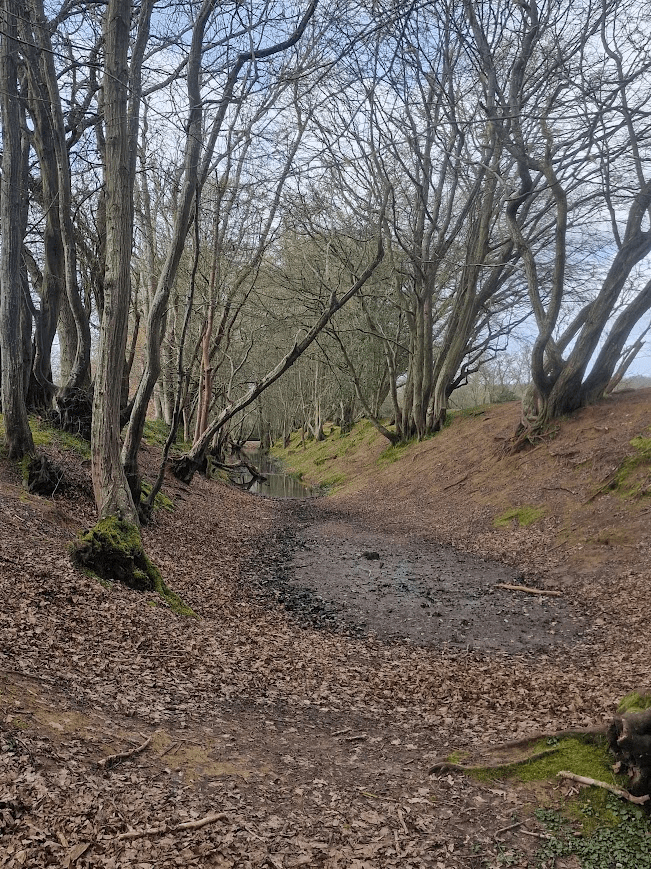
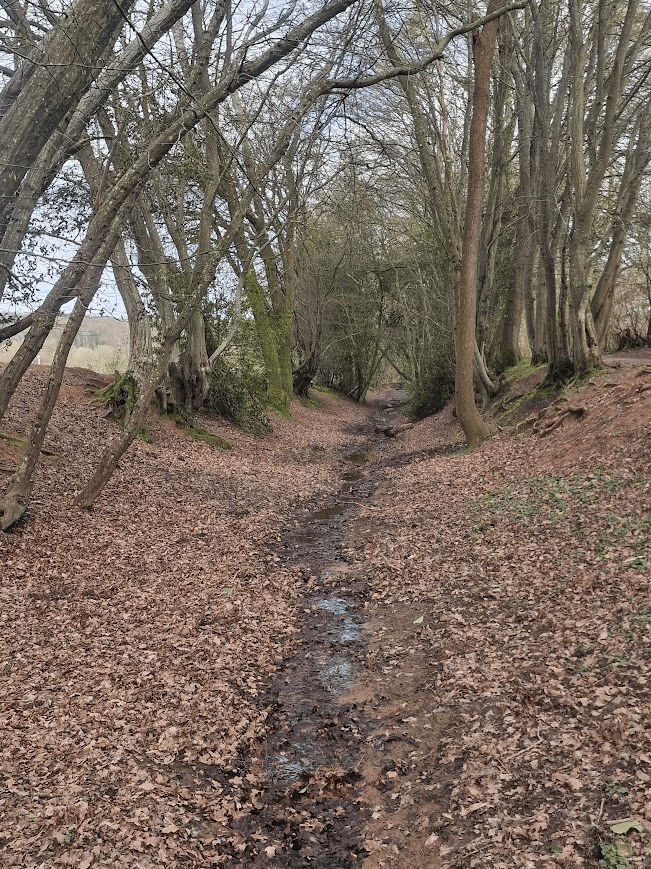
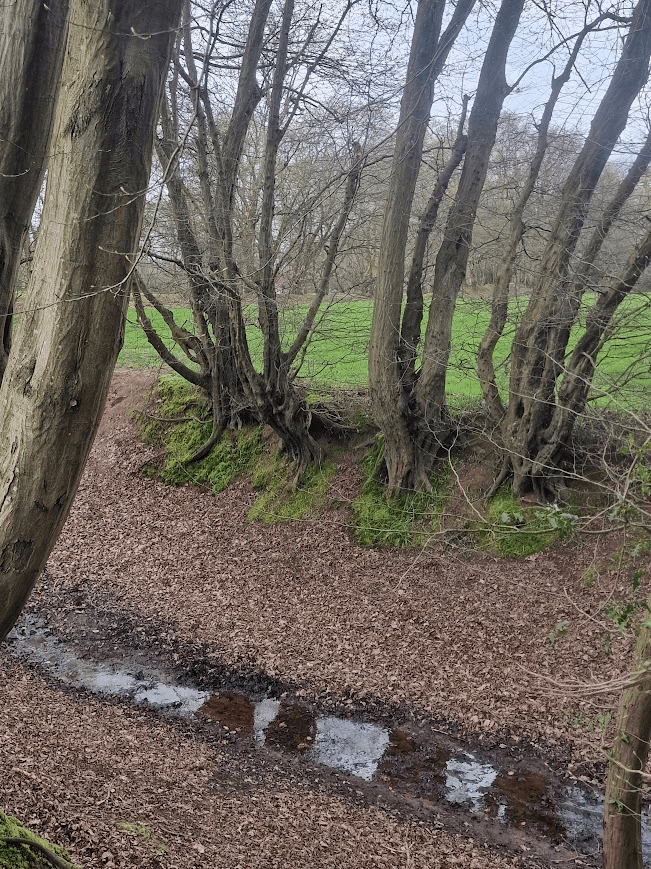
Friston Forest is a nearly 100 year old beech forest planted by the Forestry Commission; in the winter and early spring, when there are no leaves, it feels quite a barren landscape; but there are interesting things to see, including lots of red Elf Cups, Sarcoscypha sp. probably S. coccinea, Scarlet Elf Cup; looking lovely in the sun I see it a lot here in late winter/early spring.
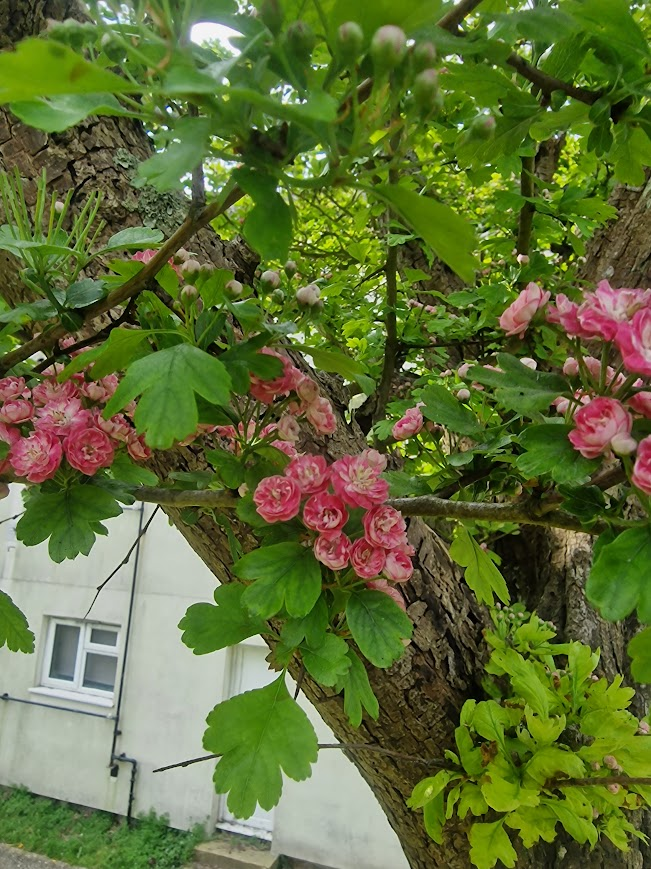


There was also lots of Jelly Ears, mostly on dead Elder

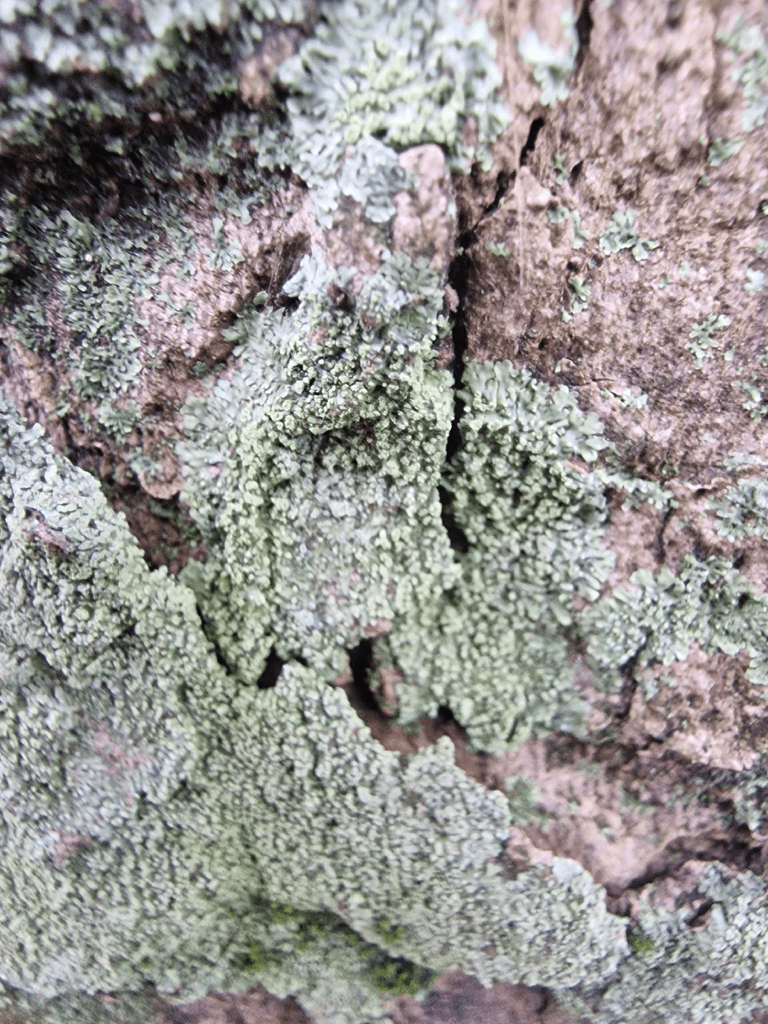
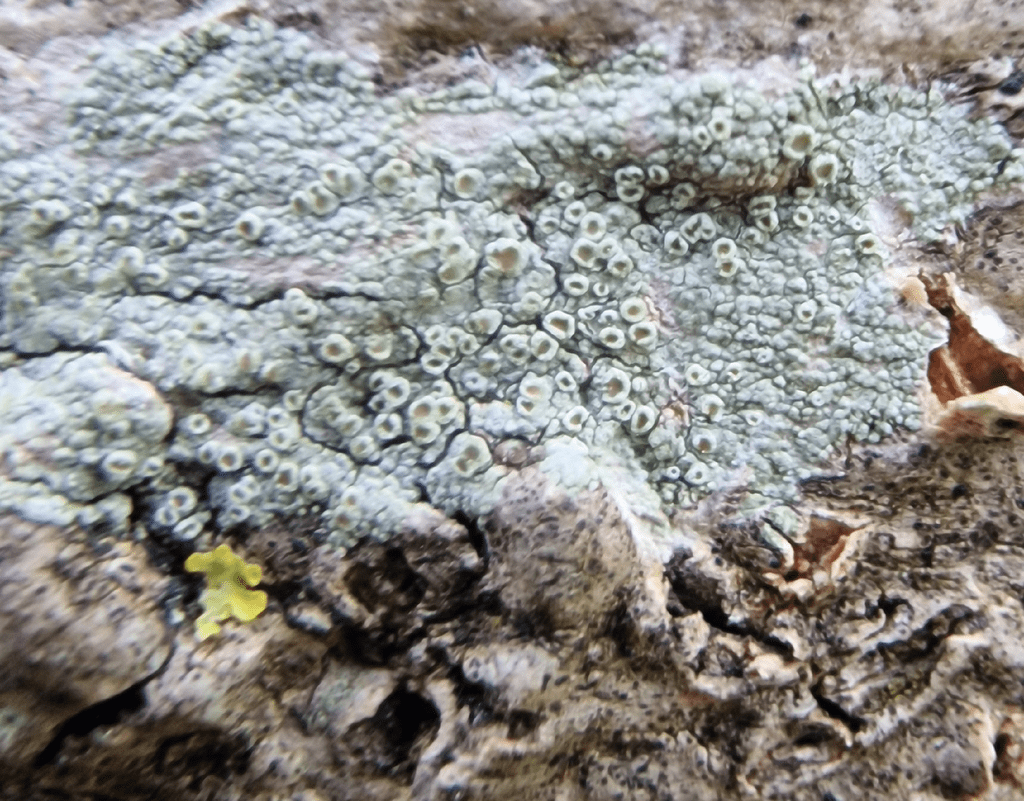
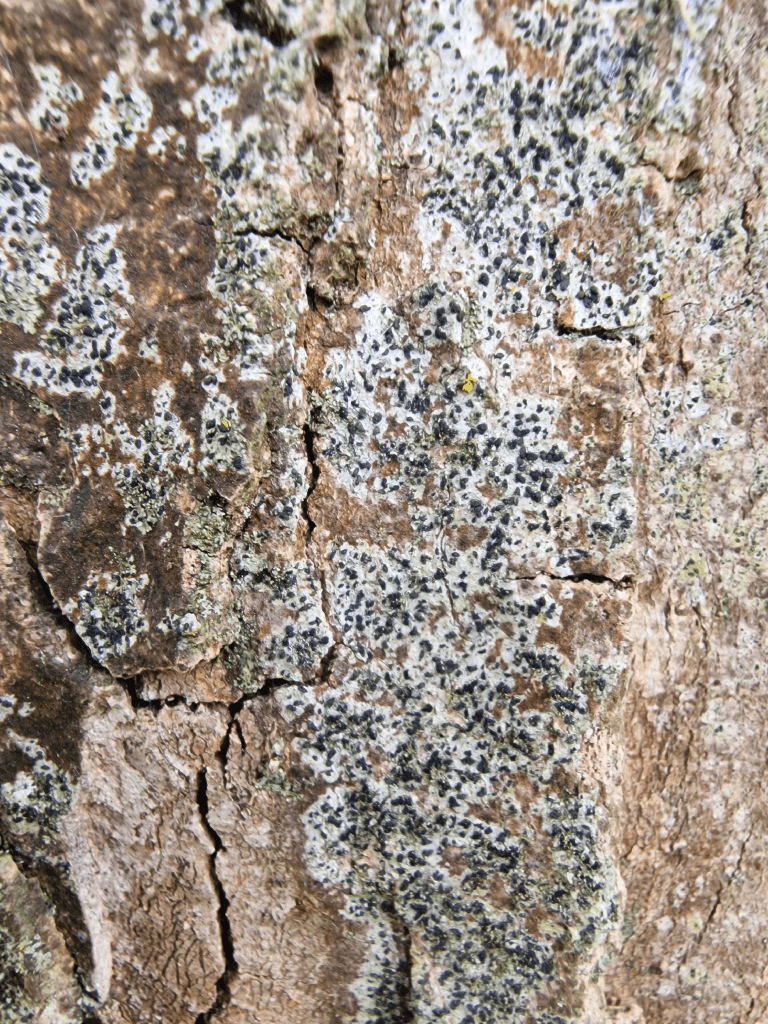
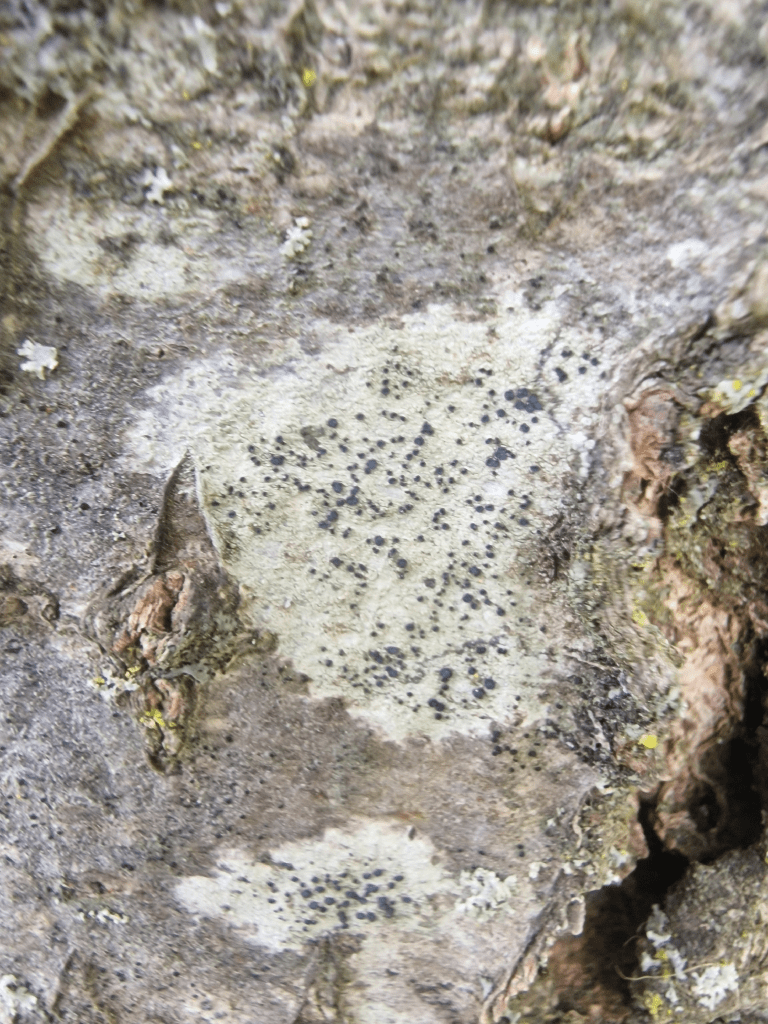
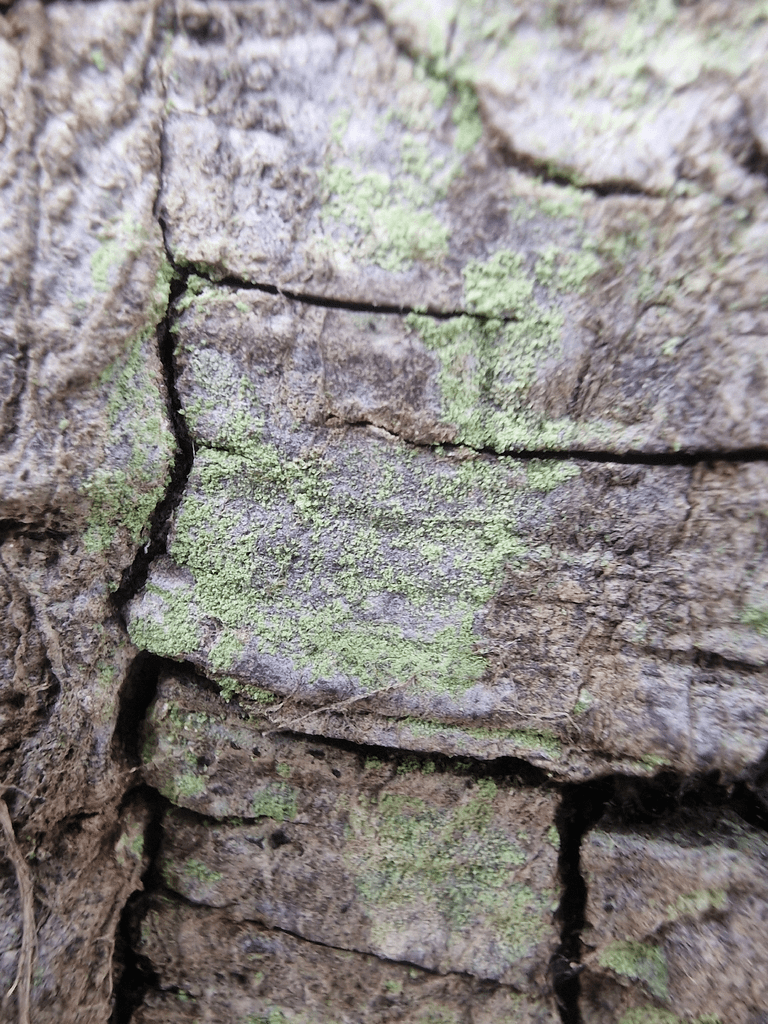
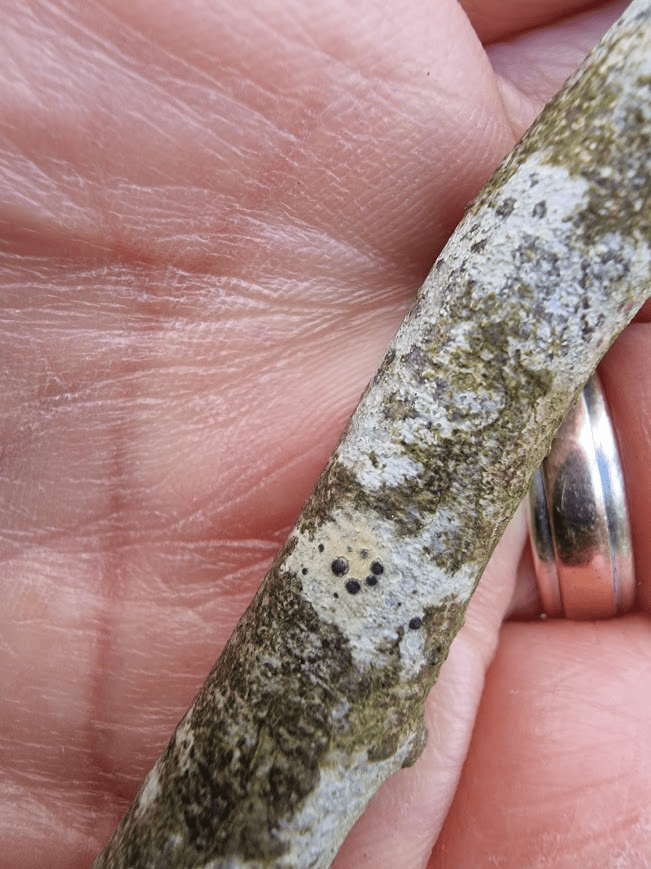
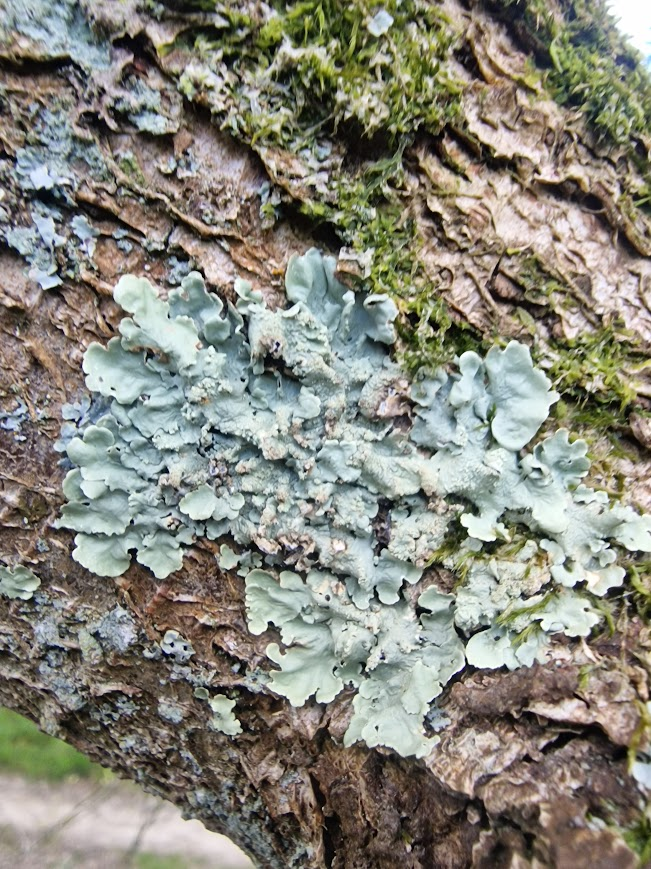
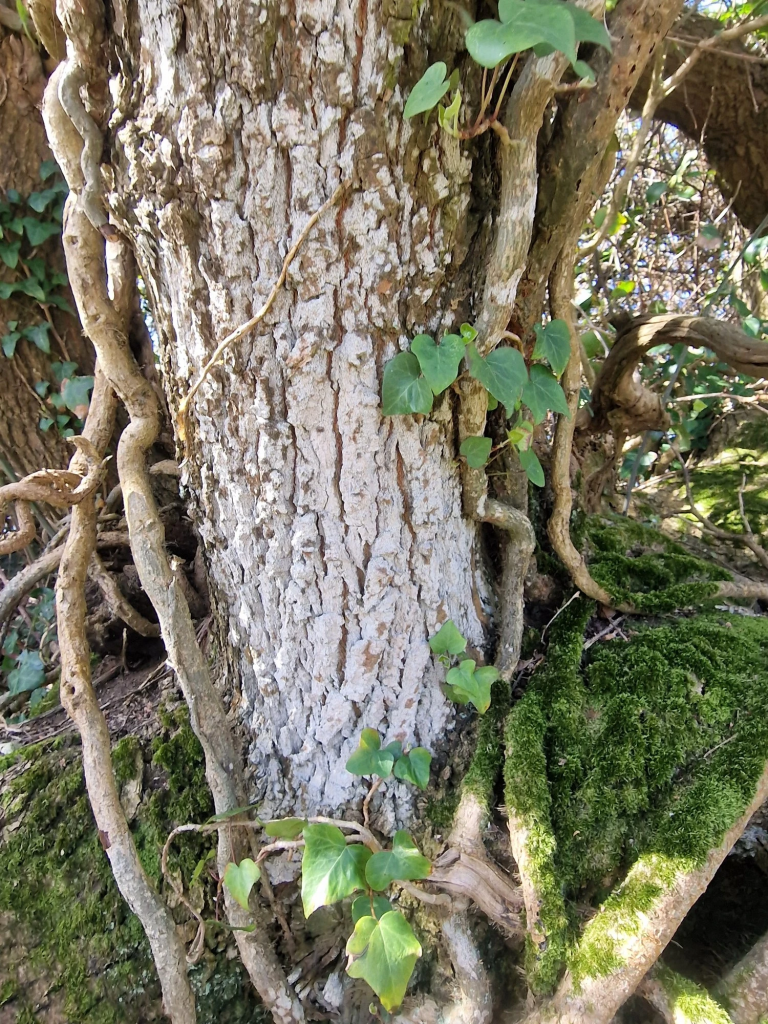
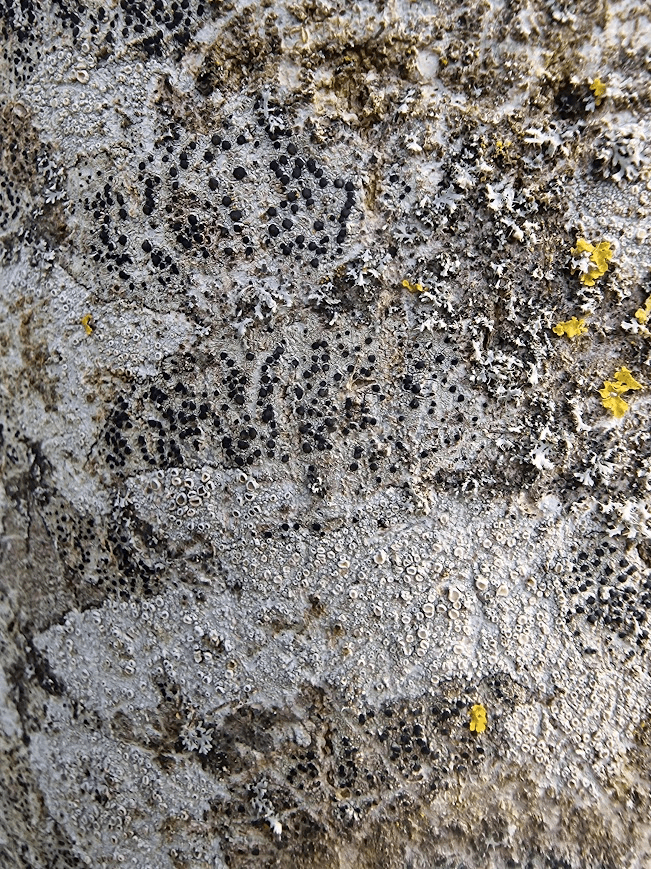
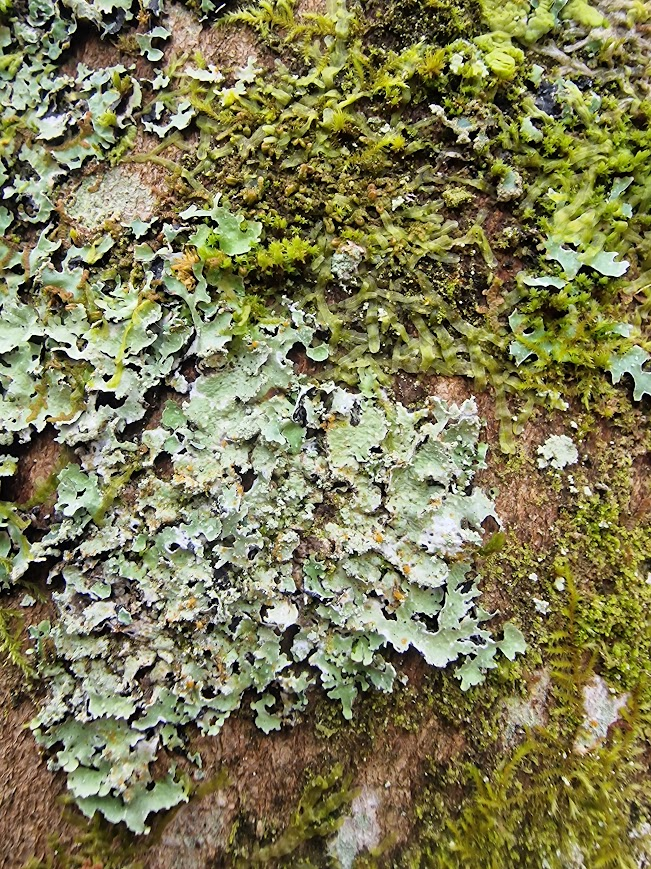
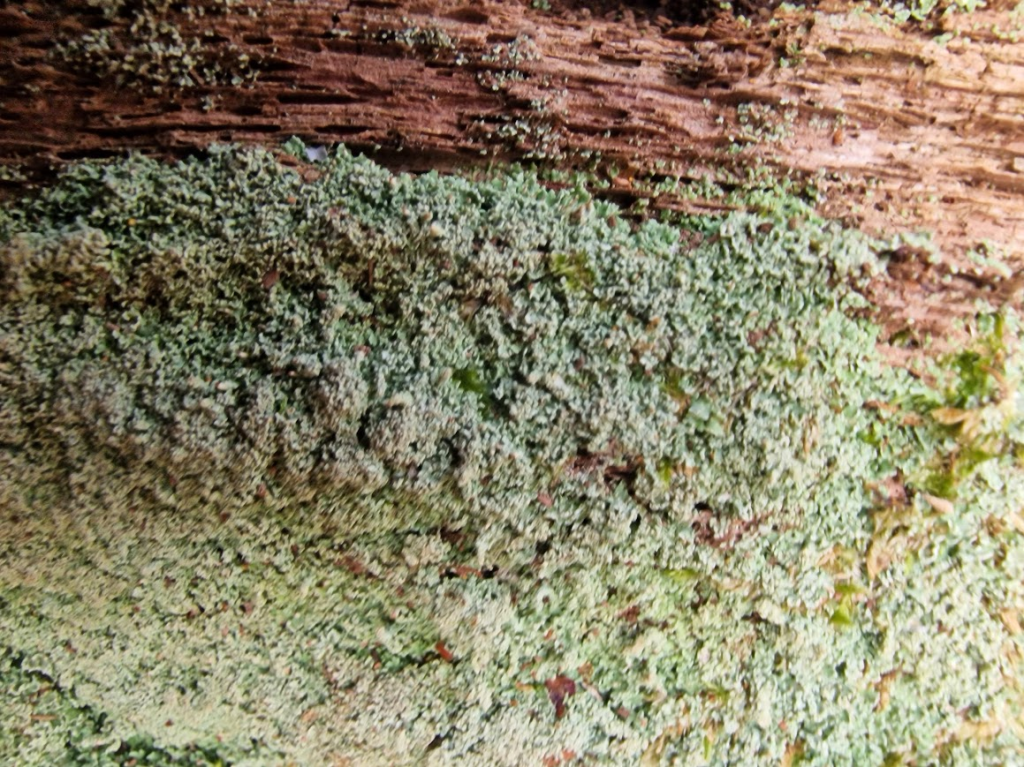
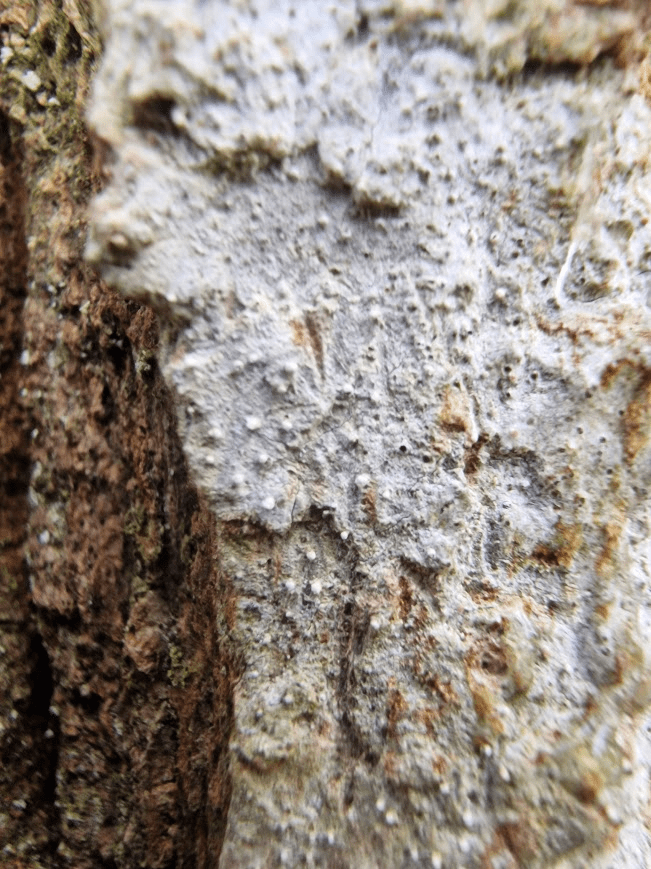
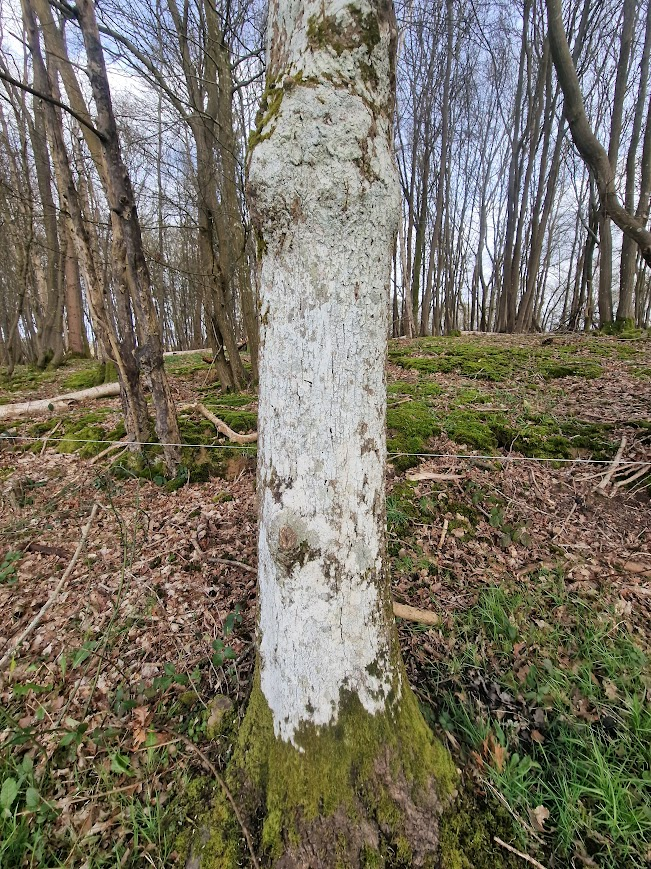
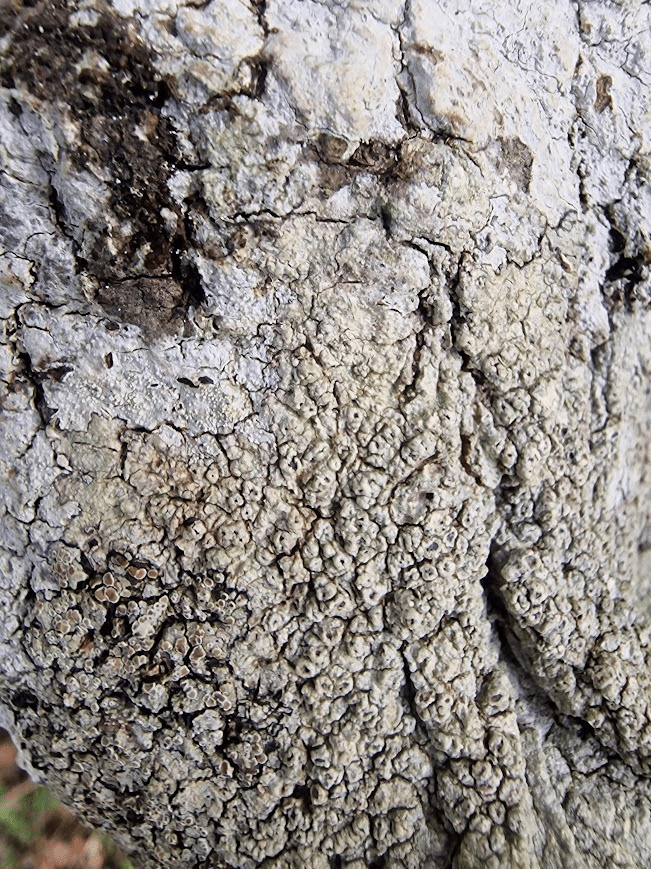
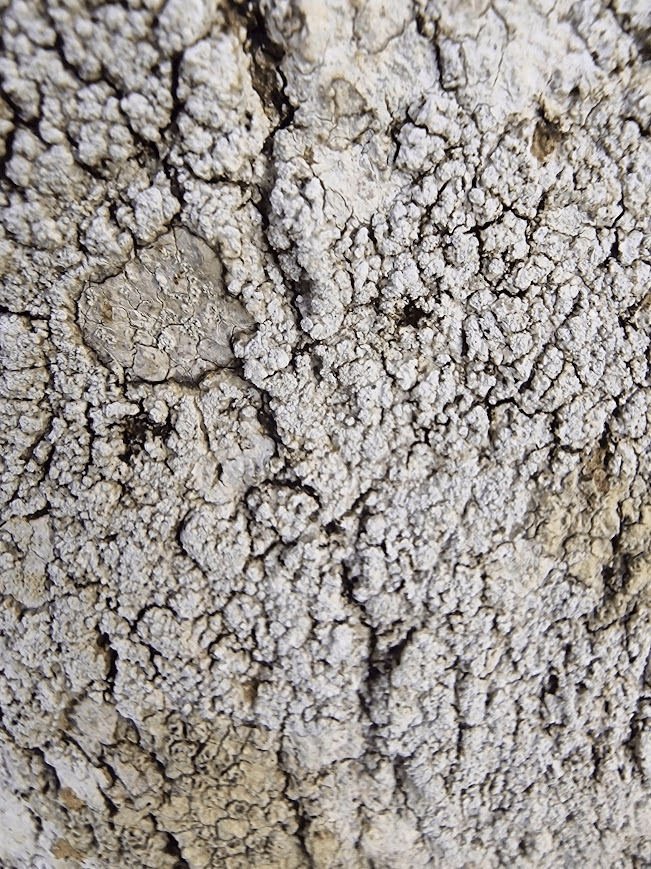
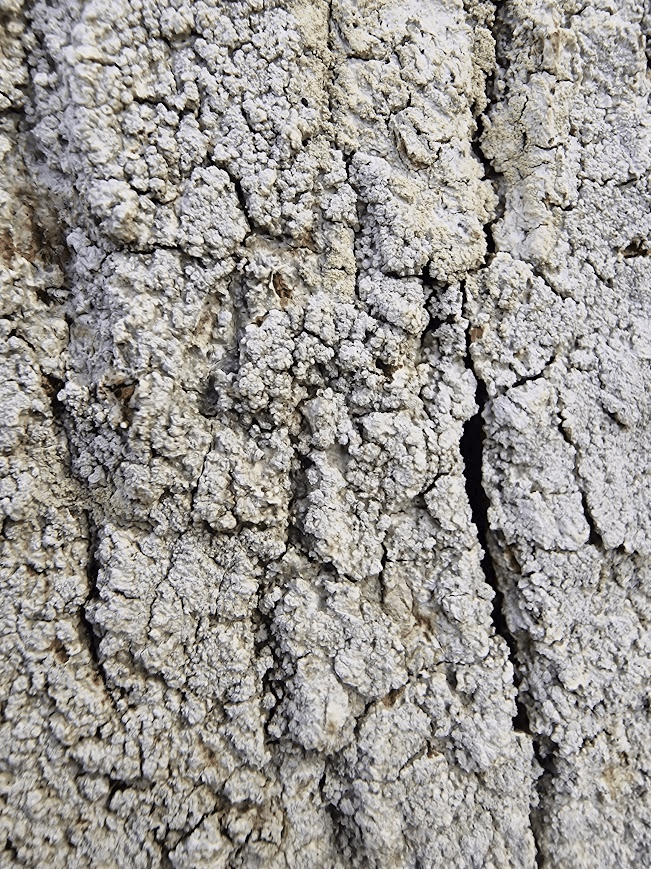
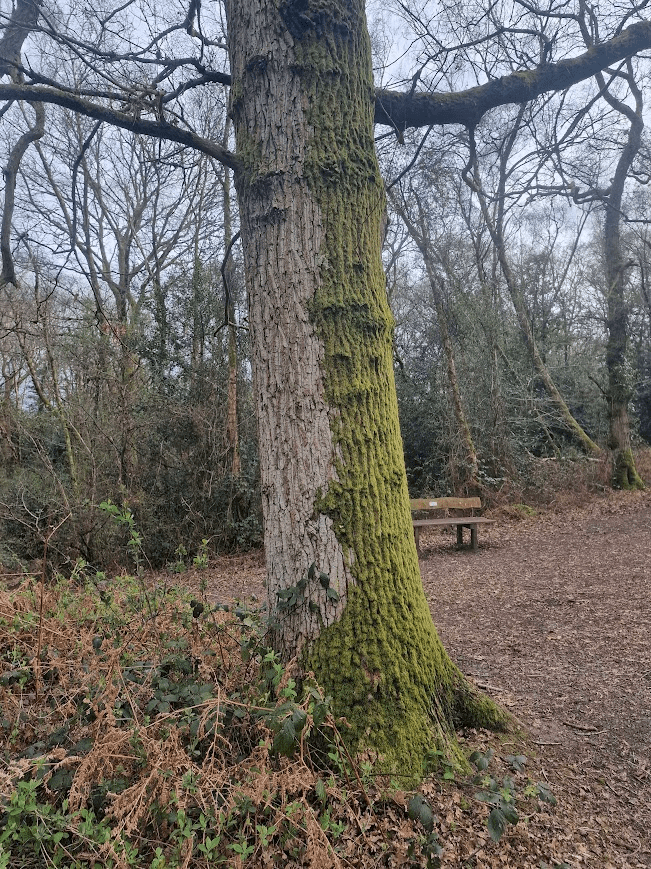
Many of the Beeches were covered in a green sorediate crust lichen. (Sorediate = covered in soredia, which are powdery, microscopic, asexual reproductive particles). Theses are impossible to differentiate between without doing chemical reagents tests. I use two common spot tests aqueous potassium hydroxide (K test) and calcium hypochlorite (C test).

There are the four lichens that look very similar

Lecanora expallens K+ yellow (i.e. the lichen reacts yellow to Potassium hypochlorite) , C+ deep yellow or orange-red,

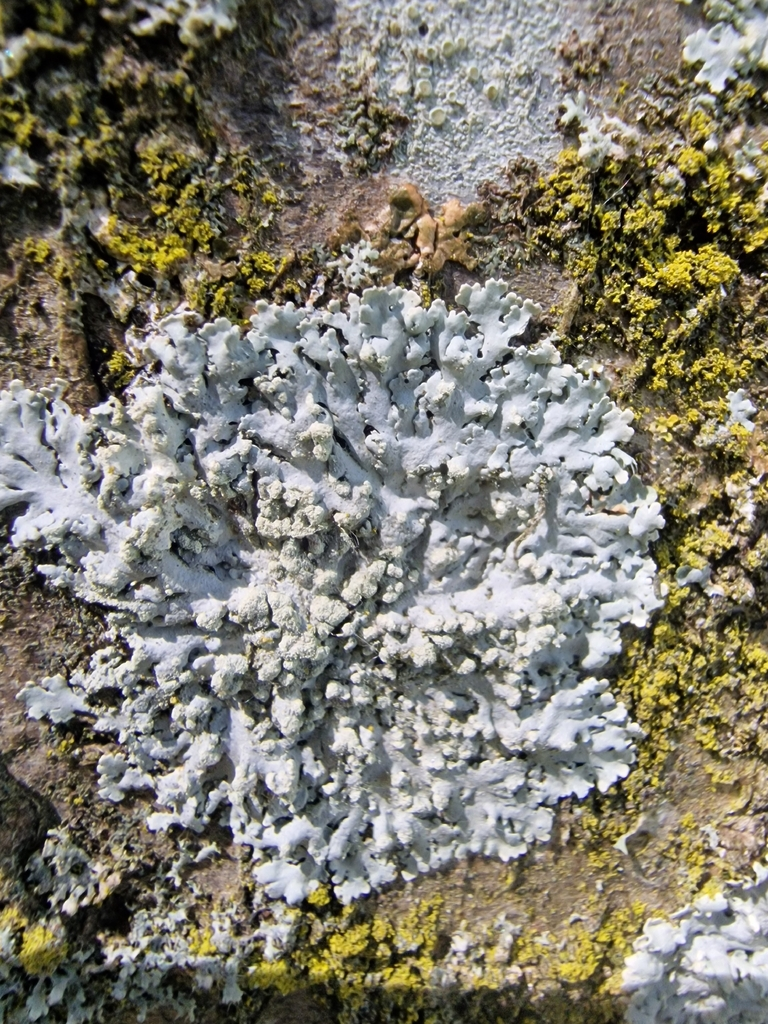
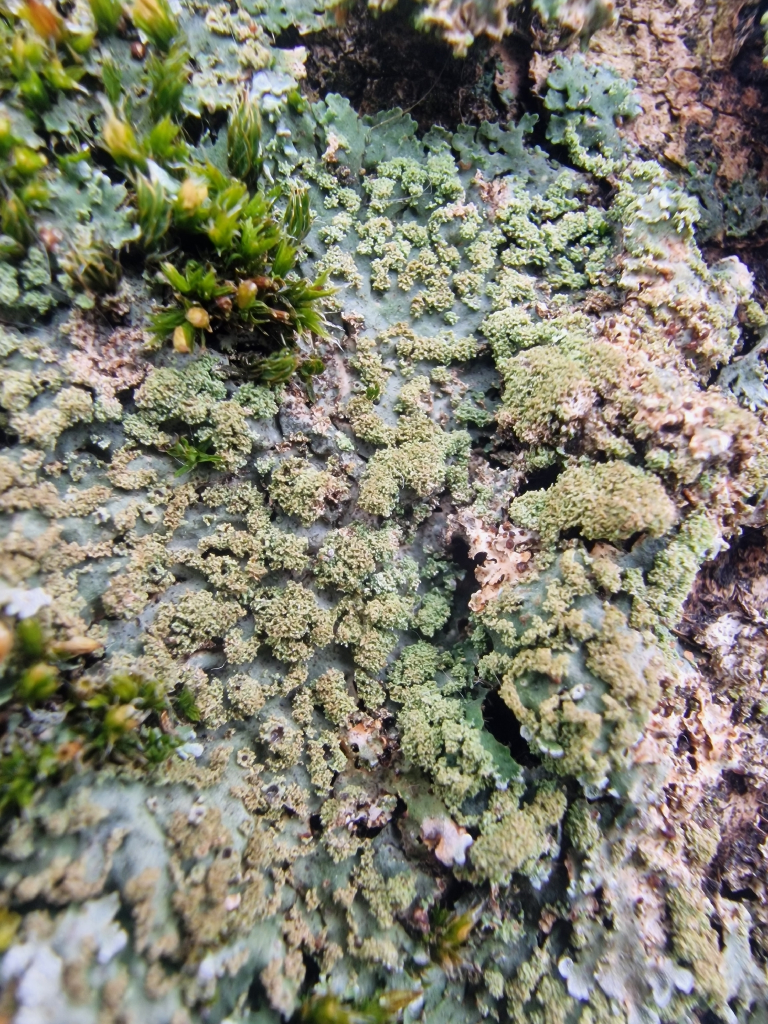
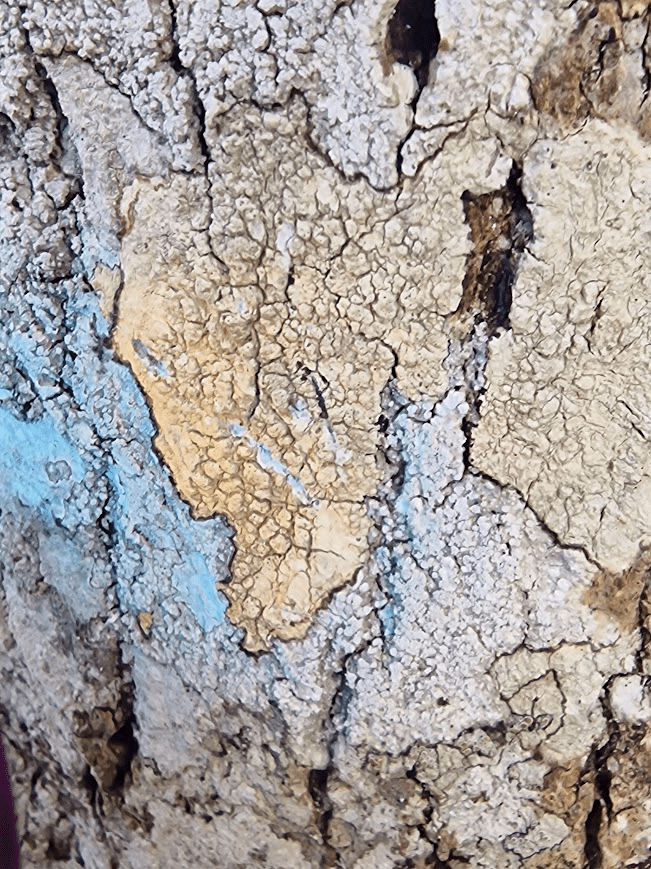
Pyrrhospora quernea K- (i.e. the lichen doesn’t react to Potassium hypochlorite, C+ orange (photograph of both below)

Lecanora barkmaniana K+ yellow, C-. 

Lecanora compallens K-, C-

These chemicals are caustic and should only be used if you know what you are doing see British Lichen Society Chemical Tests

Response K- (the green is from K making the surface of the lichen (fungi) transparent so you can see the green of the alga underneath) C+ orange so Pyrrhospora quernea 

On the way to the Westdean village; on the steps of a barn.

Lunularia cruciata, Crescent-cup Liverwort. When the gemma receptacles are present; Lunularia cruciata is obvious. Gemmae = small, clonal, haploid disc-shaped tissues for asexual reproduction, dispersed by raindrops, to grow into new, identical gametophytes.

All Saints and Ingaderia vandenboomii

Ingaderia vandenboomii doesn’t have a common English name, so I have made one up: pink powder

All Saints church (grade 1 listed) is of great antiquity with parts of the building dating back to Saxon times.  Most of the present structure is Norman, measuring 21m by 4.87m, and is constructed of flint and Eastbourne sandstone.  At the west end the square tower is covered by an unusual gable spire which John Betjeman in his Guide to English Parish Churches describes it as unique in Sussex.  It has been likened to a monk’s cowl and from a distance, the small high windows on the tower give the appearance of a face.  Cuckmere Churches, All Saints West Dean

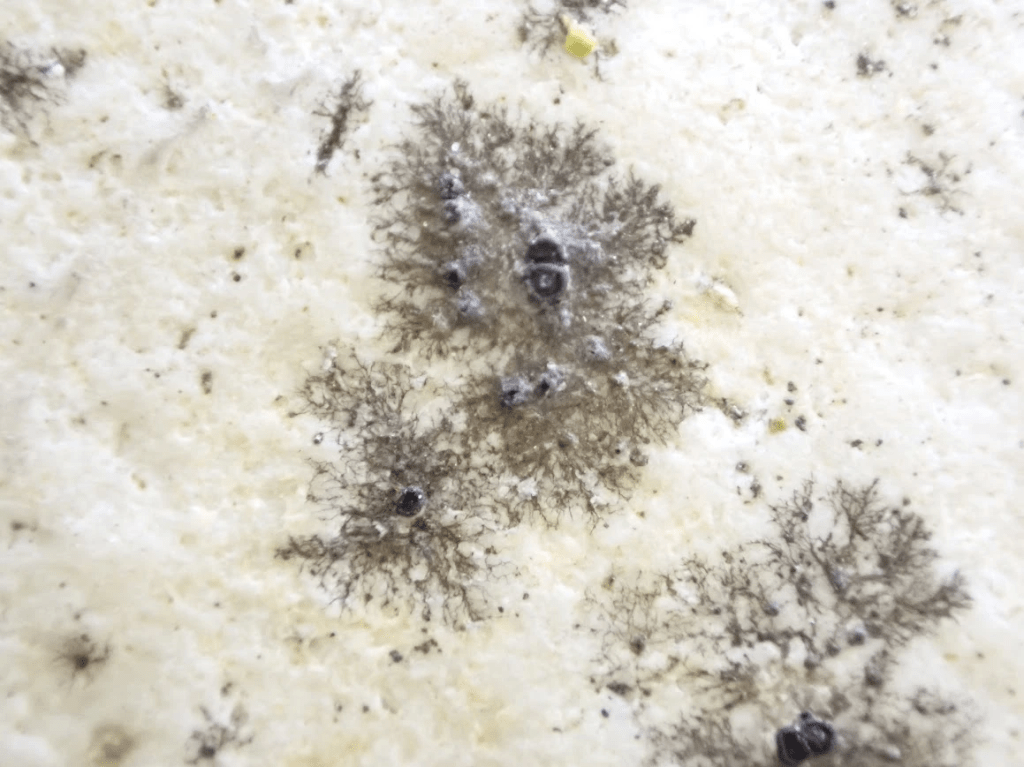
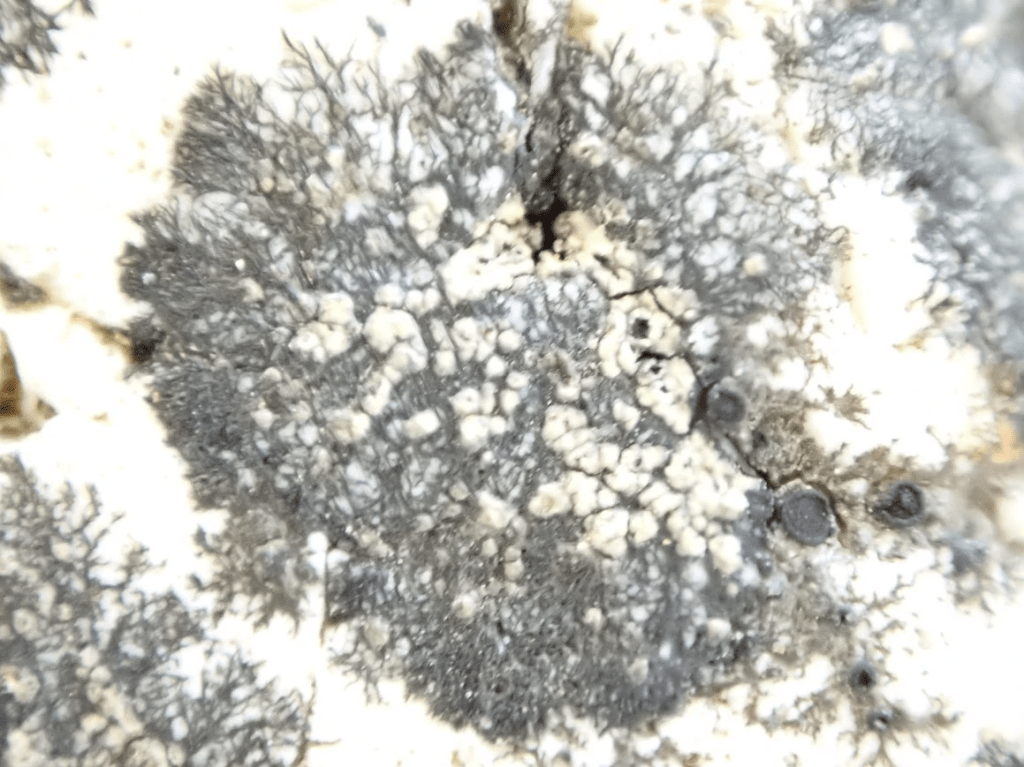
Ingaderia vandenboomii is a National Scarce lichen in the UK, but it is common on the north walls of Sussex coastal churches. Here, All Saints Church, Westdean, it covers ca. 50% of the entire north wall – flint & mortar

Bleak beech

Brightened with moss. Probably Brachythecium rutabulum, Rough-stalked Feathermoss.  B. rutabulum can be recognized by its pale glossy shoot tips, which some say look a little like fairy lights. British Bryological Society Brachythecium rutabulum

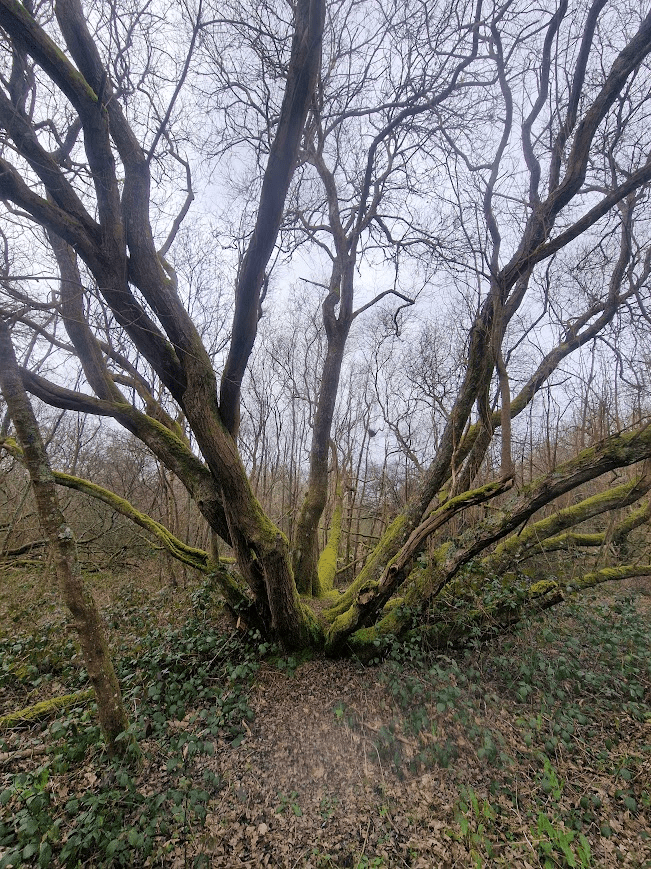
Oak and Hawthorn from the beech wood of Friston Forest

Looking over more beech – beginning to bud red – to Lullington Heath – with gorse and hawthorn.

Sheep in the fields between the forest blocks; sheep grazing the South Downs has been going on forca. 3,000-6,000 years

Rabbit grazing on the South Downs is also important to the ecology and biodiversity of chalk short-grass grassland

Rabbit populations declined by 64% in the UK between 1996 and 2018 and numbers of brown, mountain and Irish hares are also thought to have declined in some areas. As ecosystem engineers, the loss or reduction of these species can have major consequences, particularly for rabbit-dependent habitats. In their absence, the consequent changes in vegetation structure due to a lack of grazing can have further impacts on other wildlife, such as invertebrates. The NHBS Guide to UK Rabbit and Hare Identification

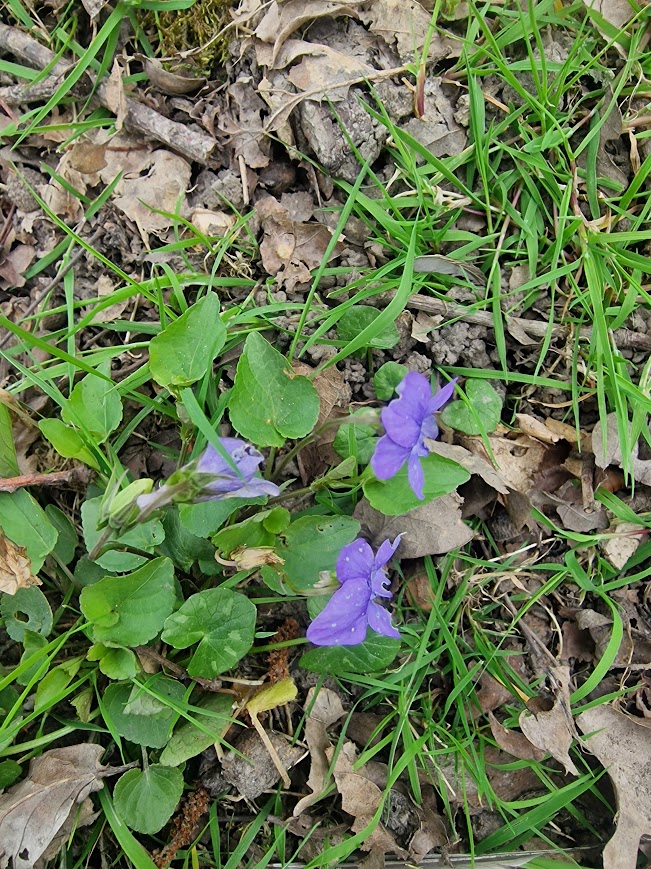
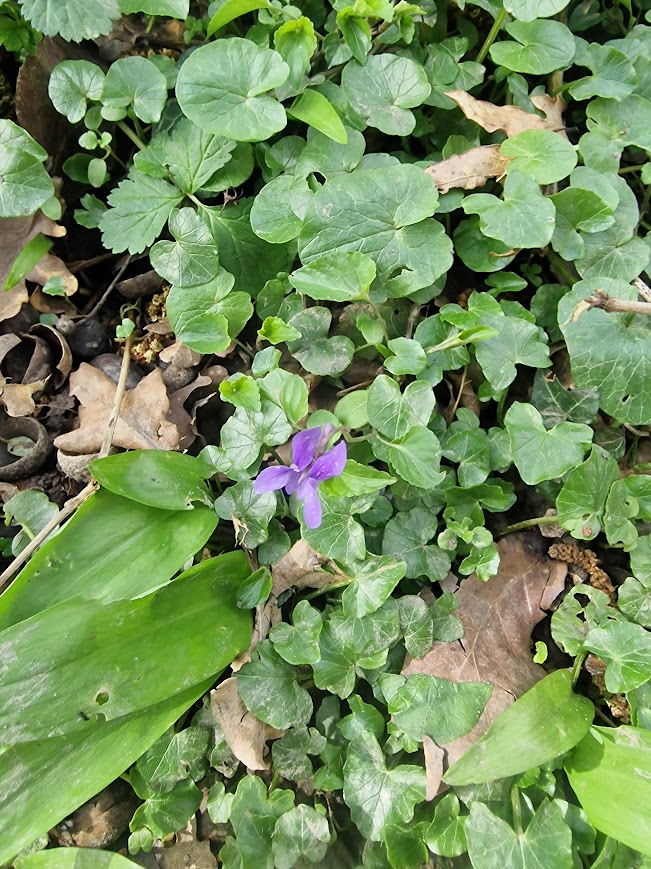
Sweet Violet

Romantic and showy, sweet violet grows on woodland edges, its flowers providing nectar for butterflies in early spring. Woodland Trust Sweet Violet

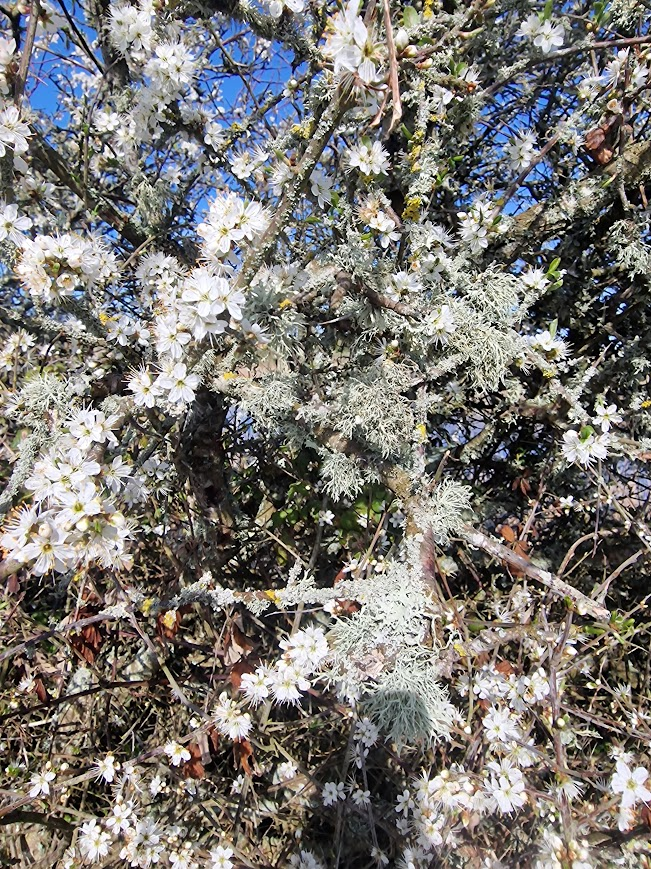
Hawthorne covered in Lichen

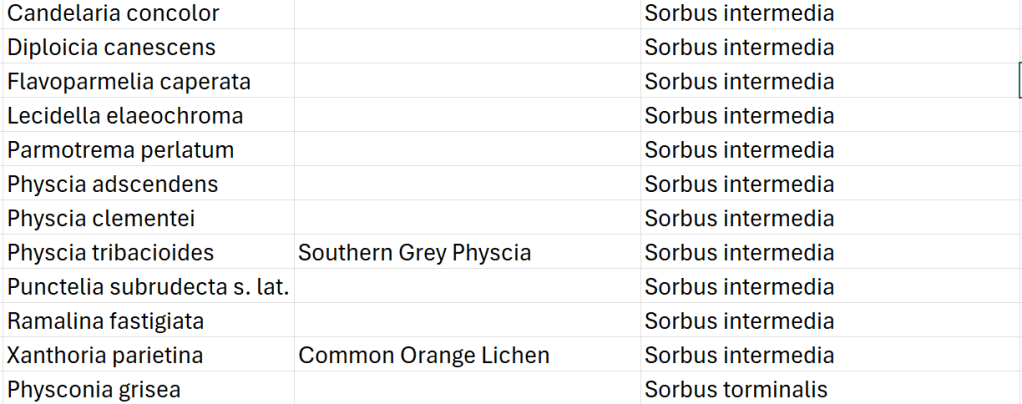
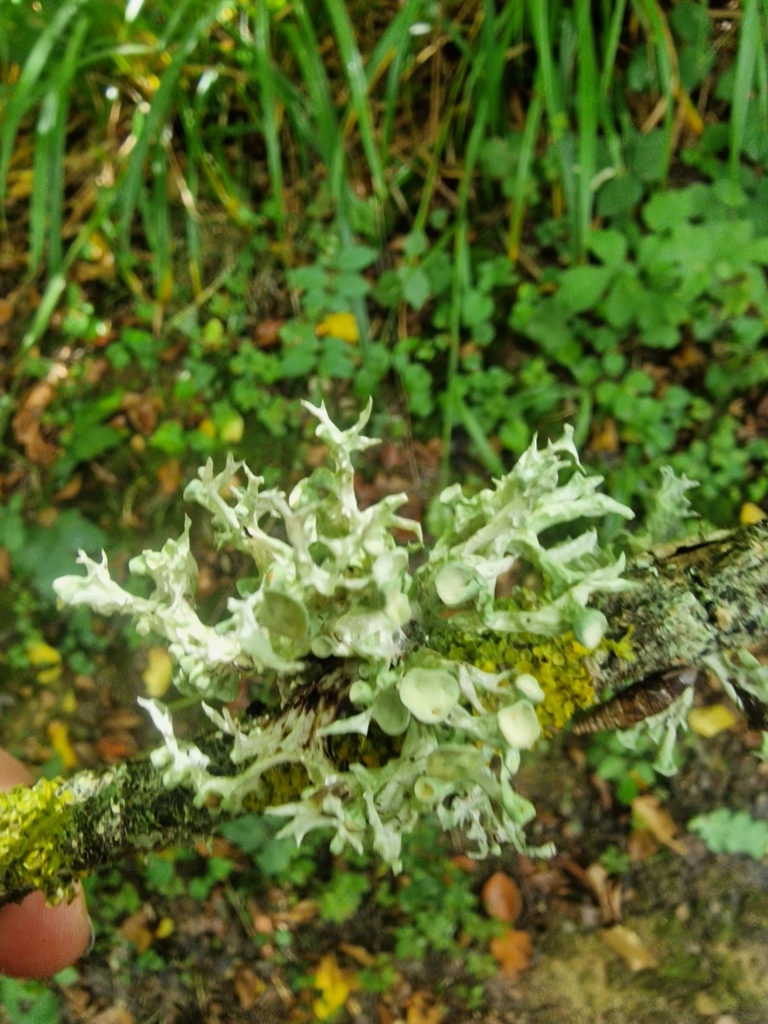
In Sussex, hawthorns are covered in lichens – but the lichen communities on coastal hawthorns is slightly different from inland hawthorns . Inland hawthorn have Usnea cornuta & Hypogymnia physodes (and on the top of Downs Teloschistes chrysophthalmus) which are absent on costal Hawthorns, but inland hawthorns don’t have Ramalina canariensis found on coastal lichens. On all hawthorn Ramalina farinacea, Ramalina fastigata, Evernia prunastri, Flavoparmelia caperata, Parmotrema perlatum, Parmelia sulcata and Lecidella eleachroma

Usnea cornuta

Hypogymnia physodes

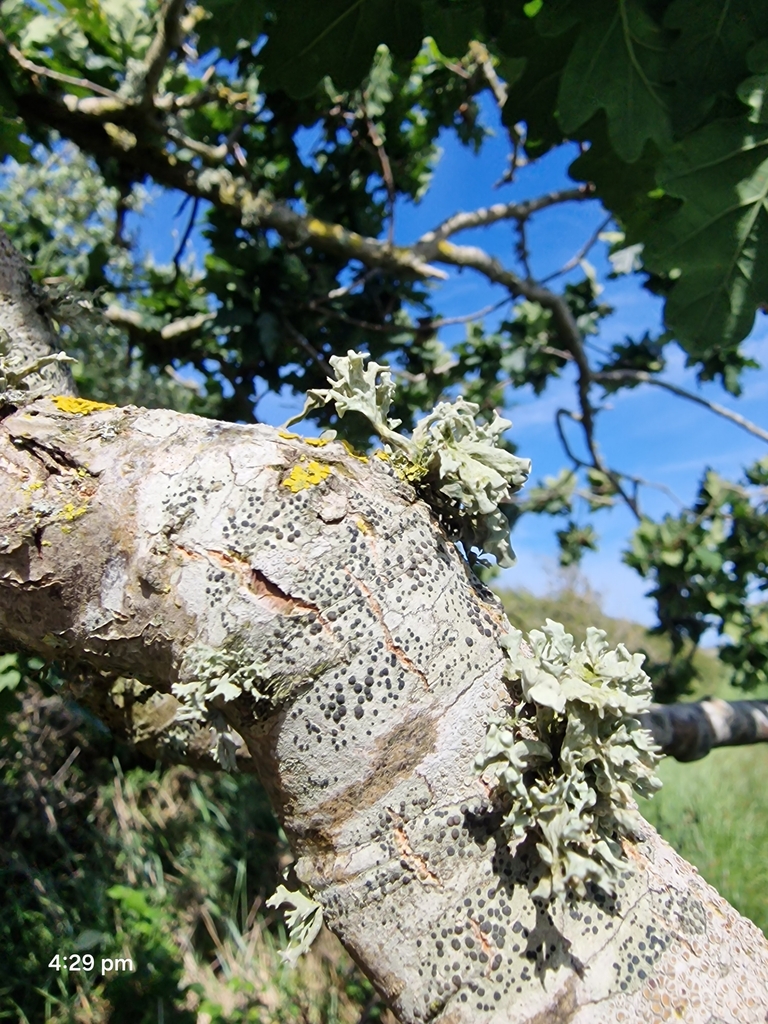
A felled ash

Sadly on the South Downs, I frequently see felled Ash, Fraxinus excelsior. Seen felled, you see what a wonderful substrate it is for lichens and bryophytes. The huge loss of Ash on the South Downs will have an impact on the ecology of the downs. Ash are very biodiverse holon ecosystems. Nearly every part of this Ash’s trunk & branches are covered in lichens & bryophytes. It’s harder to notice this continuous biodiversity along ash’s trunks when they are alive and standing. Ash is probably second only to Oak in terms of lichen diversity.

Lullington Heath NNR

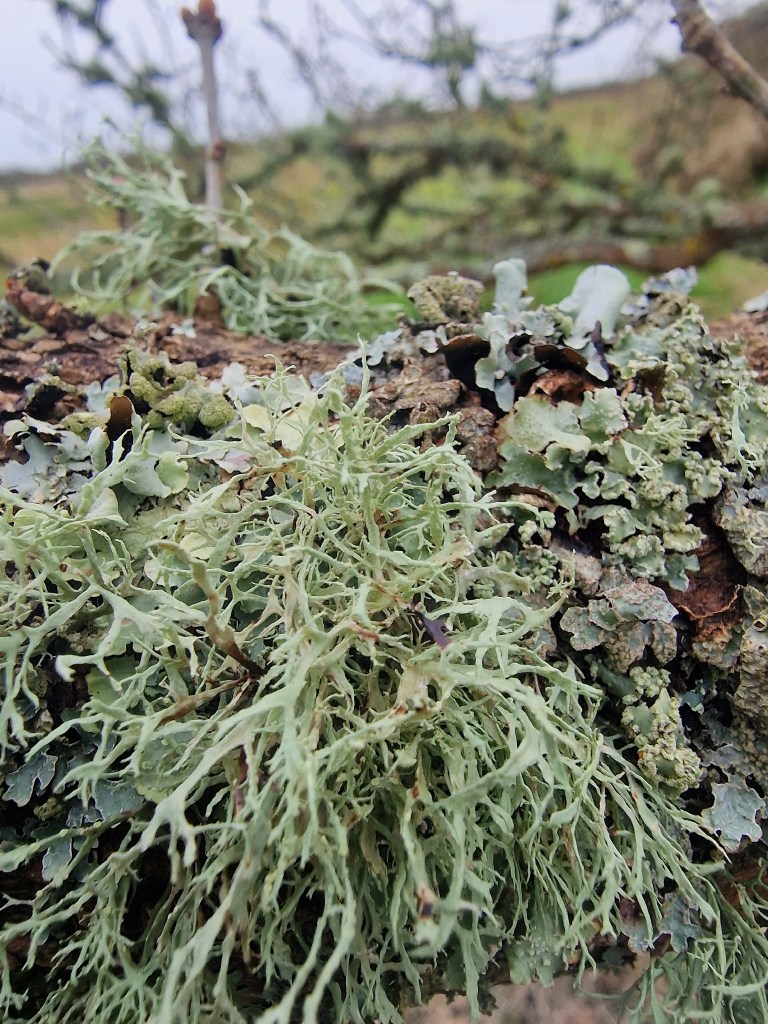
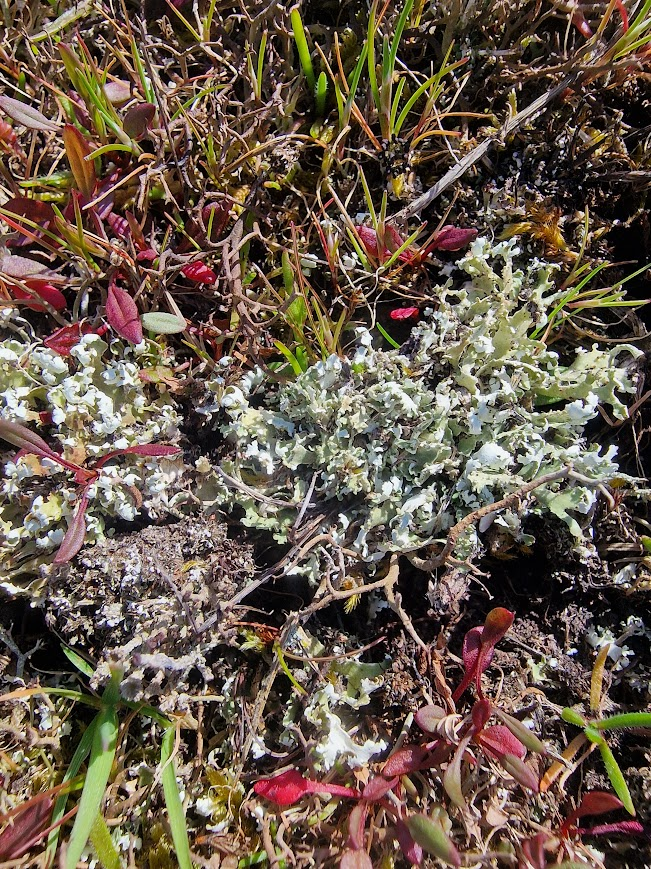
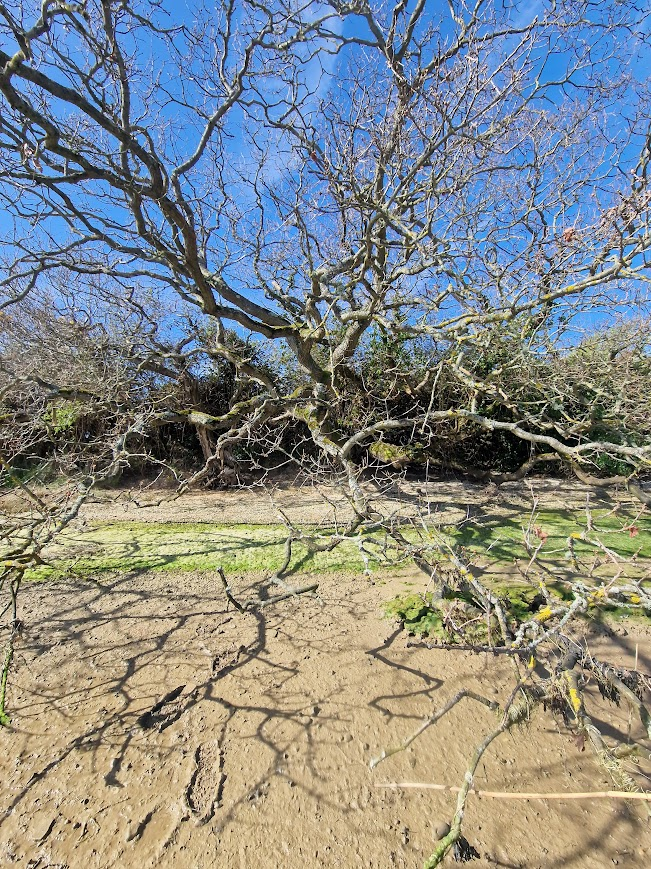
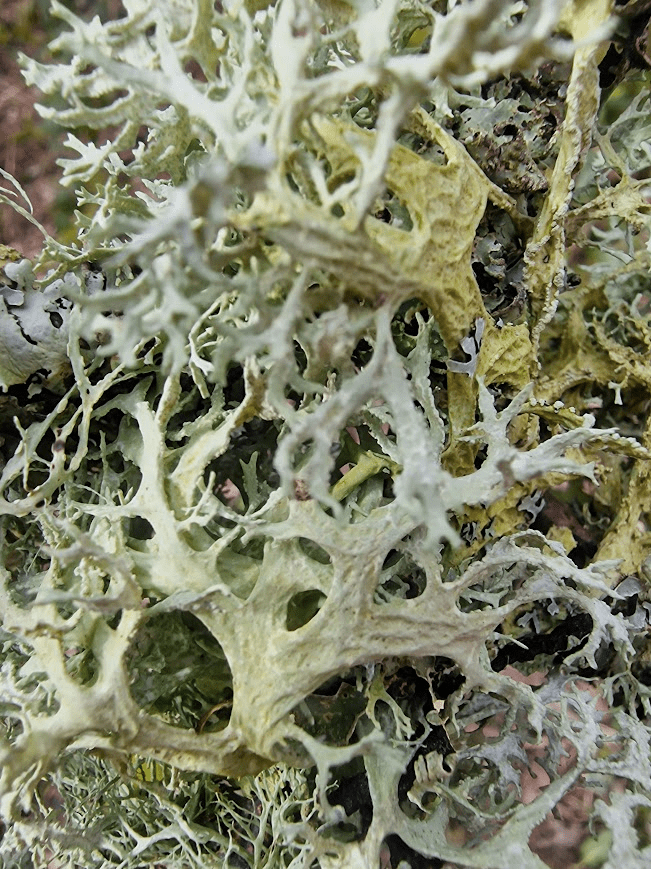
Trees with abundant Usnea spp. are not common in Sussex. But this Hawthorn in Lullington Heath NNR, chalk heath (loess: wind blown acid soil on chalk) has abundant Usnea right at its top. It looks very like U. articulata, String of Sausages; which is rare it Sussex; but it was too high up to get a sample.

Managing the growth of Gorse on the heath. Lullington Heath NNR is chalk heath; covered with acid loess (wind blown acid soil)

Lullington Church

The church of the Good Shepherd, Lullington stands on the side of the South Downs above the Cuckmere Valley, almost hidden amongst a clump of trees. Its white weather boarded belfry peeps above the foliage, and there are magnificent views.

It is the smallest church in Sussex, and one of the smallest churches in the country, being 16 feet square, and seating only about 20. There is no electricity and evening services are conducted by candlelight. The building is the remains of the chancel of a larger church, which is believed to have been razed by fire in Cromwellian times.

The church dates from the 13th century, and is of Early English style, with the list of vicars extending back to 1356. The original dedication is not known for sure, but may be to St Zita (a saint canonised not because of miraculous powers, but because of simple devotion and hard work). More latterly, and after a decision by the local community, the church was rededicated in 2000 to the Good Shepherd (one of the earliest Christian titles for Jesus), in keeping with agricultural practices of the area.

More recently, the church was the inspiration for the popular song ‘The Smallest Church in Sussex’ by the nationally acclaimed band British Sea Power.

Alfriston St Andrews

St Andrew across the Cuckmere River

It stands beside the Tye, a large green that may have served as a market in medieval times. In 1399 the church was granted to Michelham Priory. The church is built on a small mound, surrounded by a flint wall, suggesting that the site was a sacred place in the pre Christian period. The sheer scale of the church has led to its moniker ‘The Cathedral of the Downs’. The church seems to have been built in one go, also unusual, at a time when most churches evolved slowly over centuries.

There is no indication of who built the church, and indeed, Alfriston did not even have a lord of the manor at the time. All of which raises the question of why a small village without even a lord of the manor should have such a large and impressive church.

Like most Sussex churches, it is built of knapped flint, with greensand stone for quoins. The roof was originally topped with Horsham stone, but that proved too heavy and was replaced by clay tiles.

The layout is very simple; a cruciform plan with a central tower and no aisles. The nave and chancel are the same length, though the transepts are shorter, creating a traditional cross shape.

One of the best features of St Andrew’s is the timber roof, built to a crown post design. Most is original 13th century work, save only the south transept. On the north side of the chancel is an Easter Sepulchre, within which is a chest tomb. Atop the tomb are carved stone figures that originally decorated the 19th century reredos over the high altar. On the north wall of the nave is a funeral hatchment to Richard Vincent (d1733). Under the gallery stairs is an old bell, cast in 1587.

The font may be older than the church, but is at least 14th century, and is set atop a later base. There is a royal coat of arms to George I, dated 1725. The church contains a very pleasing mix of medieval and relatively modern glass. National Church Trust Alfriston St Andrew

 East Window by J Powell and Sons and designed by C E Powell, 1904 

Alfriston Congregational Church

… the building is a living memorial to the early nonconformists of Alfriston. Before 1801 a group of them had already broken away from the established church and were holding their meetings in a house known as the Urn, in North Street. The Old Chapel Centre Our History

Non-conformist chapels are generally rarer and less visible than established Church of England churches in Sussex, although they have a strong, distinct, and historically significant presence. Lewes was a centre for non-conformists. Non-conformists were often persecuted 16th-18th century England because they posed a perceived threat to the stability of the state, which relied on strict religious, social, and political uniformity through the Church of England. Dissenters were seen as seditious for refusing to attend parish churches.

Litlington St Michael the Archangel at dusk

A very good example of a Downland church, built of flint with stone dressings, a white painted weather boarded wooden belfry tower which supports a broach spire covered with wooden shingles.

The main part of the building is thought to have been erected in about 1150 AD, but there are windows in the chancel which may well be Norman, and the remains of two Norman window openings (since closed) are visible in the north wall of the nave. Interestingly, but inexplicably, the floor falls 13” from east to west. The massive beams which support the main roof are original. Once there were three, but the Victorians removed one close to the chancel arch, which caused the church to split apart – since rectified by the insertion of a steel tie-bar. National Church Trust St Michael the Archangel

The Cuckmere flooding its flood plain

The Litlington White Horse at dusk

The myth of Sussex’s Litlington White Horse is still in the making. The chalk was cut – possibly – by James Pagden of Frog Firle Farm, near Alfriston, along with his two brothers, and cousin William Ade, who thought to scratch a horse in chalk to commemorate the coronation of Queen Victoria. But the makers of the horse might also have been John Ade, a certain Mr. Bovis, and Eric Hobbis, cutting it under the full moon of 20 February 1924. Another story is that it was cut as a memorial to a local girl whose horse bolted along the brow of Hindover Hill, throwing her down the hill to her death. And yet another suggests the white horse originally depicted a dog, cut by a farm boy to mark the grave of his dog drowned in the Cuckmere river below. It was covered up in the Second World War so as not to alert the Luftewaffe, and has been cut and recut, cleared and re-defined ever since.

It is this re-cutting and re-defining that keeps it alive, on the hill and in literature and in all our imaginations. Archaeologists believe there may have been many more chalk ‘geolyphs’ across the Downs, for if they are not looked after, they are soon overgrown. The Litlington White Horse speaks to that other, more well-known Sussex landmark, the Long Man of Wilmington, carved into the grass across the valley. Both chalk monuments remind us of the geographical and mythical echoes we have inherited from those who have stood on this ground, walked these tracks before us, and by connecting to them, we connect to the old ways, and step forward with the past – whether wholesome or destructive, whether more, or less understood – informing all our futures. Rosa Magazine Litlington White Horse

Bed time for Rooks in a rookery

Clapham, South Downs, West Sussex. An ancient wood with abundant polypody, butchers broom, lichens & dogs abducted by UFOs (allegedly) and a Norman church with archangels by Morris & Tudor tombs. 23.02.26

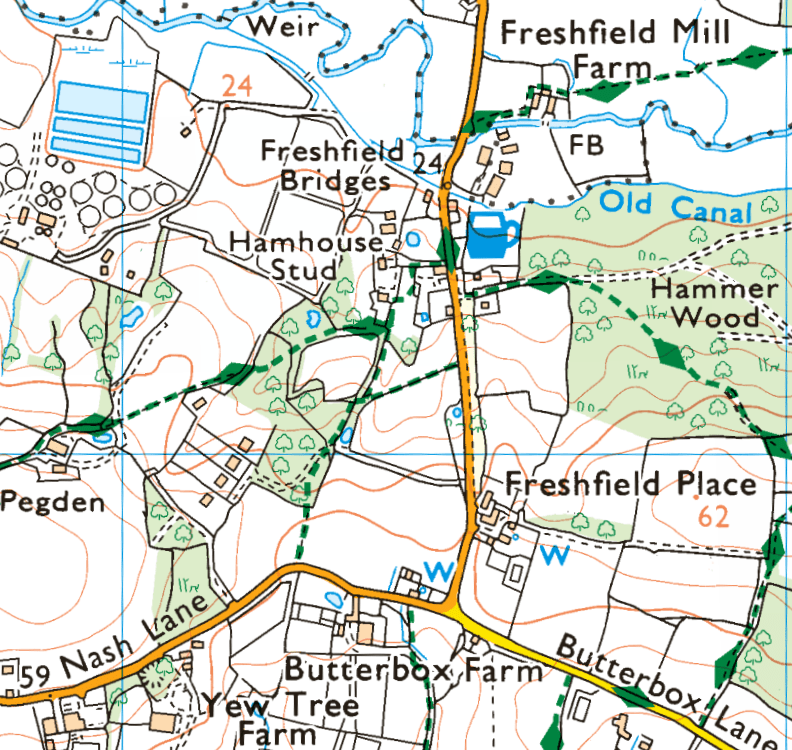
Clapham is not so easy to get to by public transport. It is possible to get the train to Goring-by-Sea and walk from there, but that entails walking along roads with no pavements. So I took the train to Worthing then took Metrobus 21 (every 30 minutes) to Findon Valley. I walked from Findon Valley Road to High Salvington Windmill; then walked on footpaths past West Hill to New Plantation, where I turned sharply south on the footpath into Richardson’s Wood above Clapham Wood

Screen shot of Google Maps Satellite View

Screen shot of Ordnance Survey Map from explore.osmaps.com

High Salvington Mill

High Salvington Windmill is a working post mill dating from approximately 1750.

Looking over to Cissbury Ring for High Salvington

Cissbury Ring is a Middle Iron Age hill fort in Sussex ca. 250BCE, with Neolithic mine, one of the first flint mines in Britain. There are about 270 shafts dug into Cissbury hill over around 300 years of use. See National Trust History of Cissbury Ring

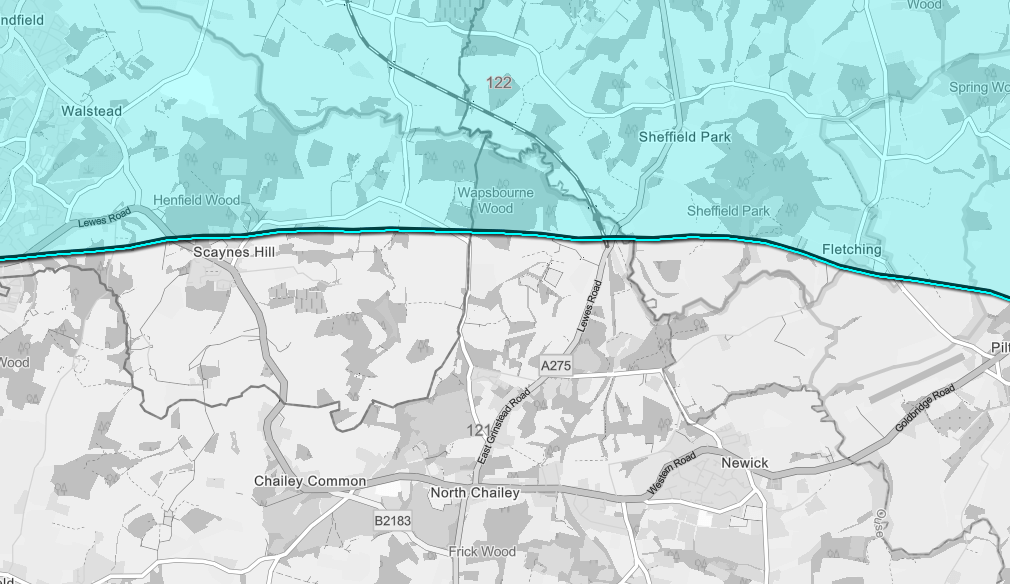
Clapham Wood is a Site of Nature Conservation Interest (SNCI). It is designated as Ancient Woodland by Natural England. Screen shot of Natural England Ancient Woodland (England) Natural England Open Data Publication

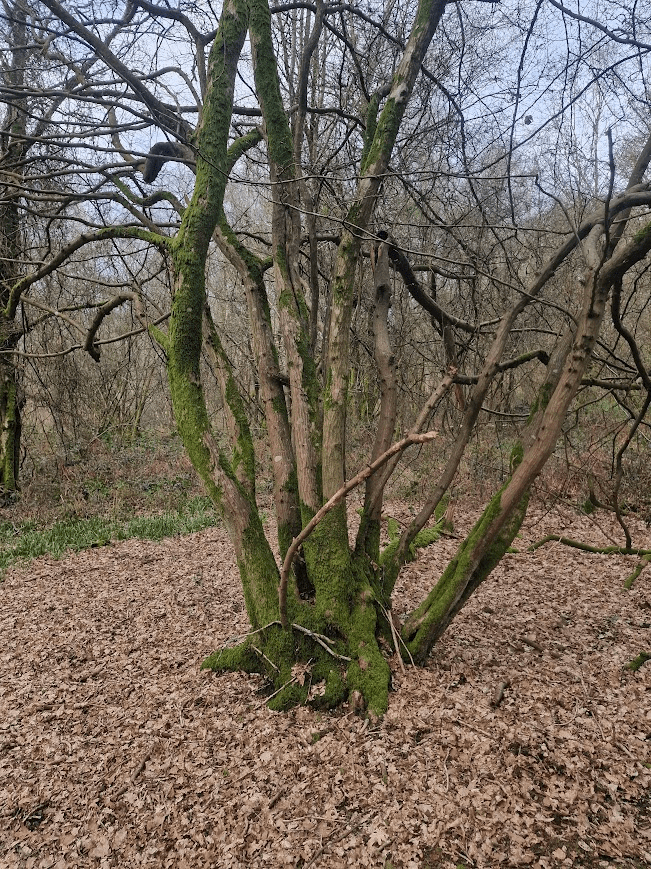
There is little ancient woodland left on the South Downs; the majority of that left is scarpe face woodland dominated by Ash, Beech, Hazel and Yew; Clapham Wood is a rare dip face wood dominated by Pedunculate Oak and Hazel, with some Beech and Yew and some introduced Sweet Chestnut. It is actively manged through coppicing; and it could be categorized as Hazel coppice with Oak standards; a traditional woodland management strategy.

Into the woods

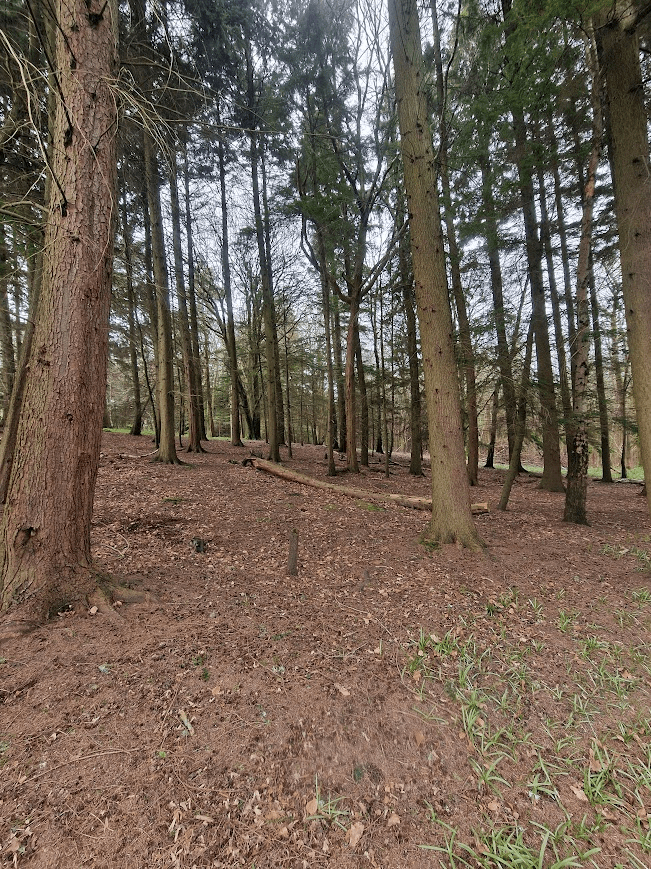
Walking North to South

Ancient Sweet Chestnut

Dogs Mercury, and ancient woodland indicator plant

Close up of flowers

Ash covered with lichens (mostly Ramalina fastigiata and Xanthoria parietina)

Fallen Sweet Chestnut

Pedunculate Oak covered in Polypody Fern; it is very unusual to see this much Polypody on a southern Oak. Polypodium spp. (any species) are ancient woodland indicators species in the south. See my post The ancient woodland of the Low Weald and Downs. Looking at plants. How do I know I am walking in ancient woodland? Butcher’s Wood, Lag Wood and Newer Copse (Wolstonbury Hill) 07.04.25 for more details

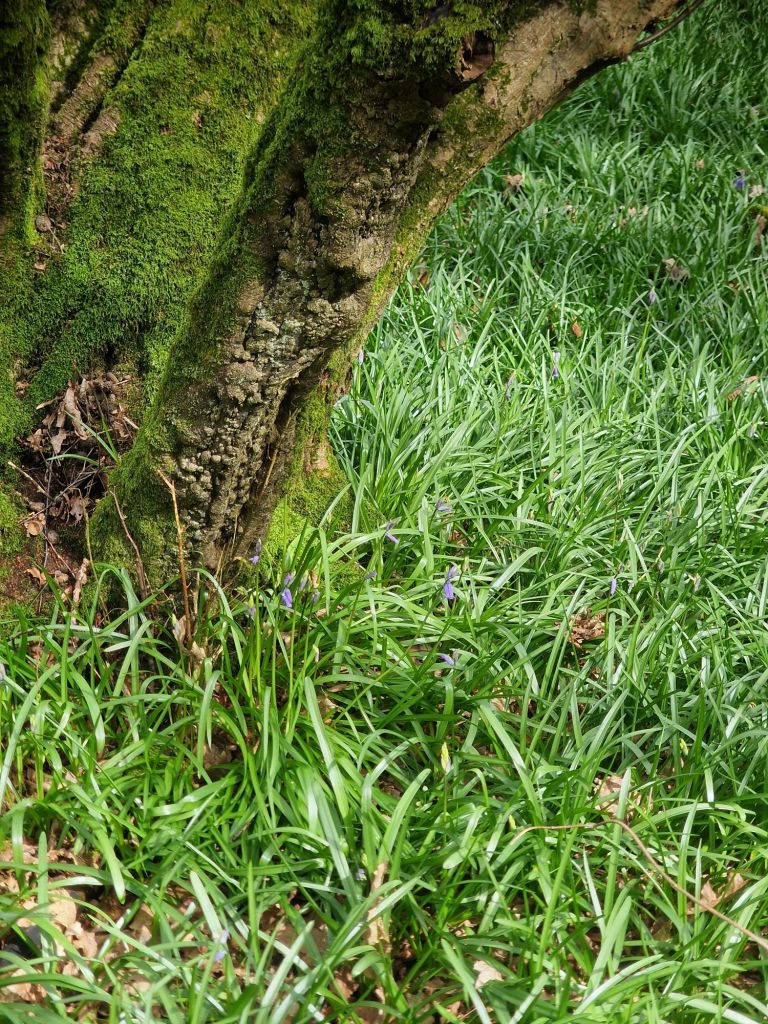
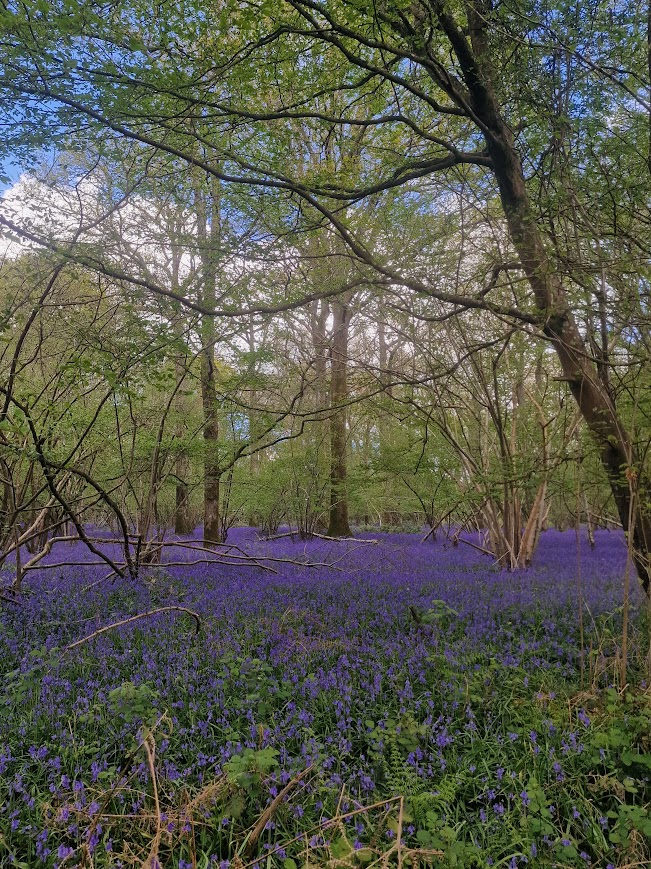
Coppiced Sweet Chestnut and Bluebells

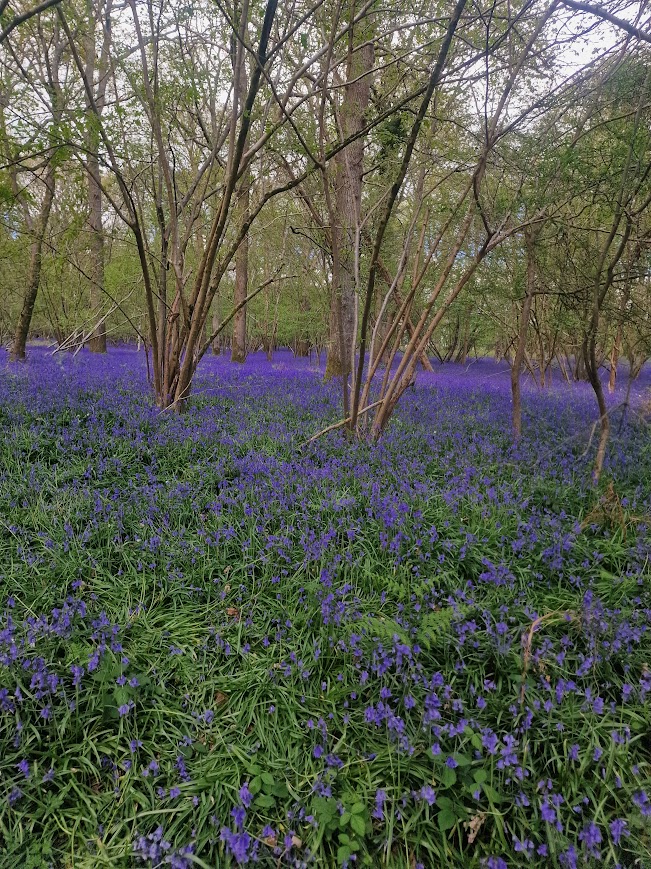
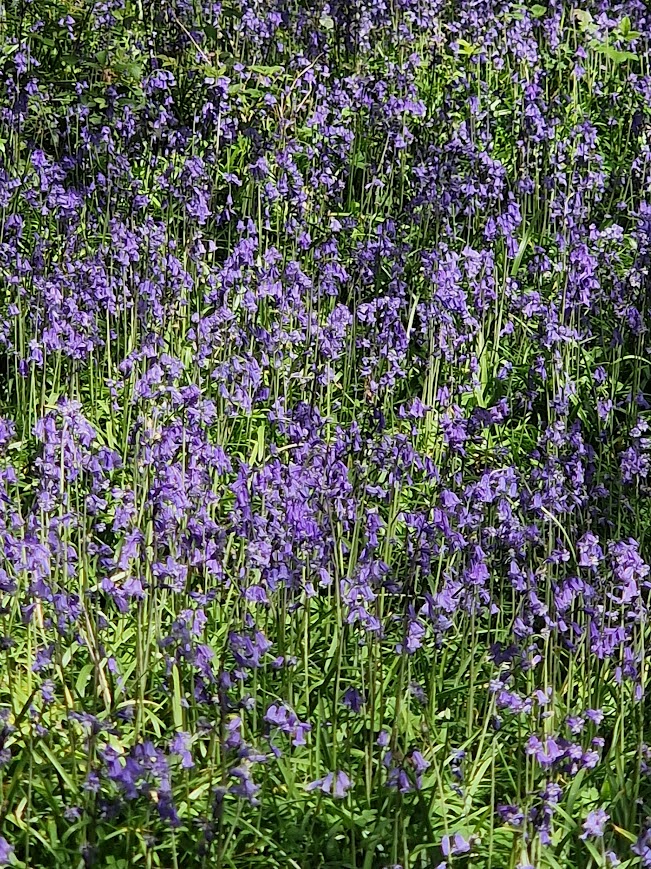
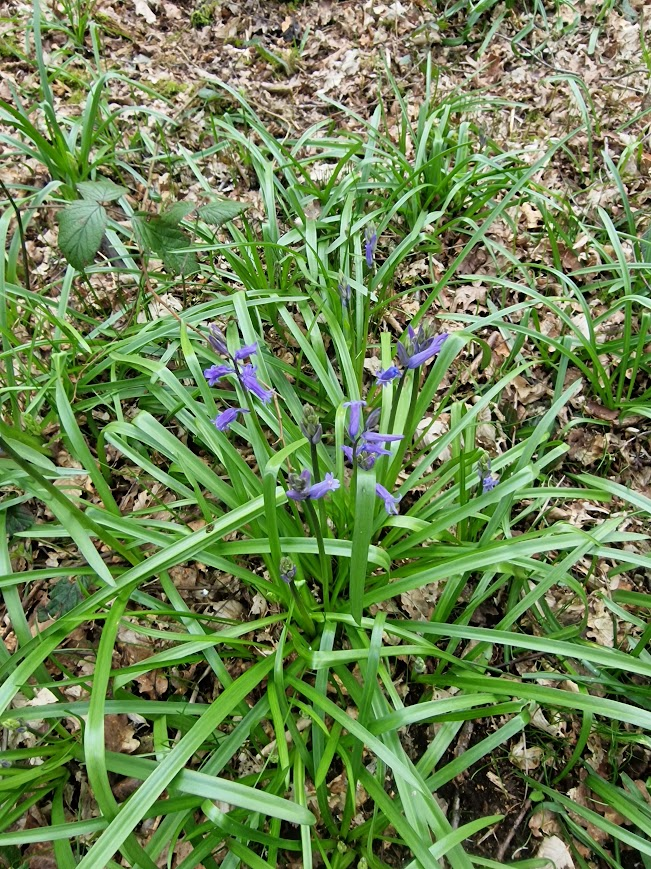
Bluebells emerging; an ancient woodland indicator plant

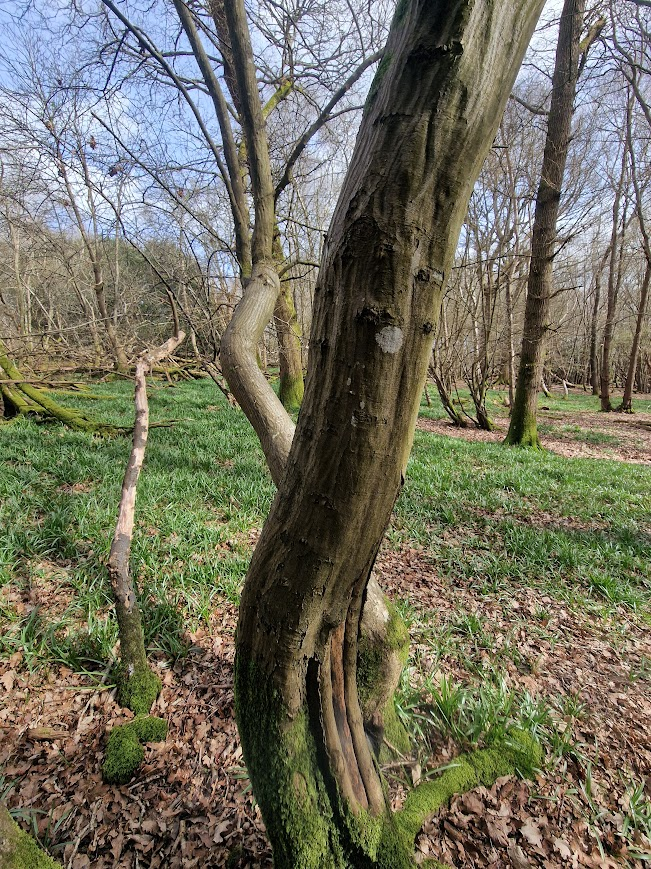
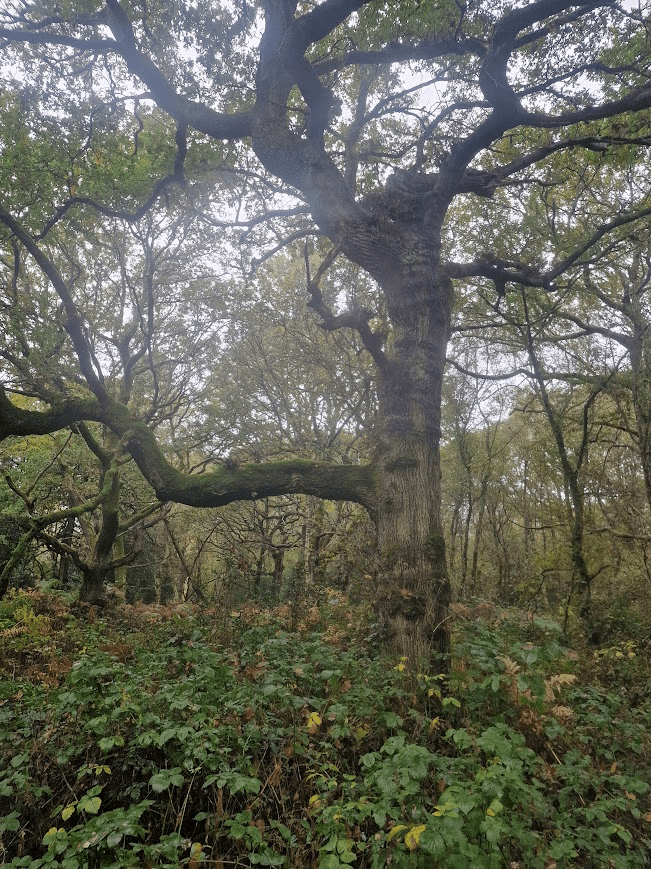
Maiden Pedunculate Oak and coppiced Hazel; a traditional way of managing ancient woodland

Maiden oaks are oak tree that has grown in its natural form, featuring a single, uninterrupted trunk for at least 1 meter above the ground and an unpollarded crown.

Huge boundary Oaks at the edge of a wood segment

Pedunculate Oaks on an ancient boundary bank

Keeper’s Cottage at Holt Farm in the hamlet of Holt (now just two cottages and the farm) on the edge of Clapham Wood. Grade II listed. Restored C17 or earlier timber-framed building with painted brick infilling. Hipped thatched roof with two “eyebrows” and pentice behind. Casement windows. Modern gabled weather-boarded porch. Two storeys. Three windows. Historic England: Keeper’s Cottage

The far-away Castle Goring (taken at x80 magnification) from the footpath running eat-west just south of Clapham Wood

The weird Palladian fronted, but Gothic on the north side (the view above) castle built by the poet Shelley’s grandfather, Sir Bysshe Shelley, about 1797-8. Built at the same date. …. The Palladian front was designed by Biagio Rebecca and is said to be a copy of a villa near Rome. It is of yellow brick. … The Gothic back is of flint and sandstone. Historic England Castle Goring List Entry

Part of the southern edge of Calpham Wood; with boundary maiden Pedunculate Oak prominent; behind maiden oaks and coppiced hazel.

Walking south to north

Pied Wagtail

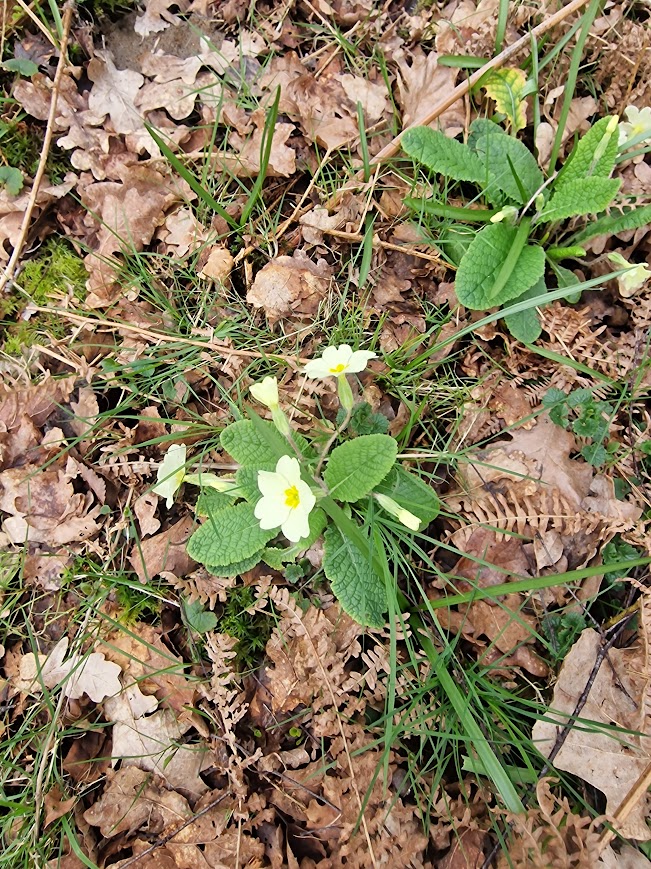
Primrose, an ancient woodland indicator plant

Butchers Broom, ancient woodland indictor plant

I love Butcher’s Broom and don’t see it often. When I do I am excited. It was very abundant in Clapham Wood’s Church Copse. It was in a fenced off area that was being coppiced by volunteers as part of a South Downs National Park Authority project see: https://www.southdowns.gov.uk/wp-content/uploads/2024/08/Role_profile_Church_Copse_2024.pdf

Butcher’s broom is a monocotyledon [a flowering plant with an embryo that bears a single cotyledon (seed leaf). Monocotyledons constitute the smaller of the two great divisions of flowering plants] of a most curious appearance. It is a multi-stemmed, evergreen shrub that rarely gets taller than one metre high, and appears to be covered in stiff, spiny leaf-like structures. However, closer examination shows that these structures cannot be true leaves; they sometimes bear tiny flowers, followed by spherical, bright-red, fleshy fruits, on their upper surfaces. The green structures are cladodes. Evolutionarily, cladodes are flattened stems that perform the same photosynthetic function as leaves. The true leaves are reduced to tiny, non-photosynthetic, papery scales associated with the flowers and the bases of the cladodes.

Butcher’s broom is native to southern England, and is the only British monocotyledonous shrub. It is slow growing and shade tolerant, and occurs naturally in dry, shaded woods and hedgerows. Outside of the Britain, is distributed north around the Mediterranean as far as northern France, Italy and Hungary, with scattered populations in North Africa. The species’ western limit is the Azores, whilst it extends through Turkey in the east.

Unusually for a stem-photosynthetic plant, butcher’s broom is highly shade tolerant and drought resistant with low transpiration rates and water storage in the cladodes. Stem-photosynthetic plants are usually associated with arid, high-light environments.

Butcher’s broom is dioecious, it has separate male and female plants with insect-pollinated flowers, apparently offering pollen as a reward. However, there is little direct evidence for either insects or wind having a role in pollen movement; this might explain the low levels of fruit and seed production found in natural populations. In addition, there is poor fruit dispersal despite the fruits having clear adaptations for bird and mammal dispersal. One idea to unite these apparent contradictions is that butcher’s broom is a relic of the tropical forests that covered parts of Europe during the Tertiary (2.58-65 million years ago). The ecological success of butcher’s broom populations today appears to be a consequence of vegetative reproduction. The plant has a deep, stout rhizome (horizontal underground stem) system.

The generic name derives from the Latin for a butcher’s broom, ruscum; this plant has traditionally been used for cleaning butcher’s chopping blocks. The specific epithet, aculeatus, is a reference to the plant’s spines. In antiquity, the plant had few medicinal uses, despite butcher’s broom containing a rich cocktail of steroidal saponins. These have been shown to have a wide range of potent medicinal effects; wild-collected material is particularly rich in these compounds. Oxford University Herbaria: Butcher’s Broom

Pedunculate Oak’s covered in “white” lichens; lichens of the Mature Mesic Bark Community (Pertusarietum amarae). The Community of Mature Mesic Bark often forms at the base of Oak and Ash on wayside trees (where they get much light) in Sussex

Moslty Pertusaria hymenea and

Pertusaria pertusa (Pepper Pot Lichen)

A whopper ancient pollarded Beech

An Ash covered in lichens

with much Lecanora chlarotera

Evernia prunastri (Oak Moss)

Pyrrhospora quernea

Flavoparmelia caperata (Common Greenshield Lichen)

Pertusaria hymenea . This P. hymenea is pretending to be a Lecanora sp. P. hymenea on shaded trees can form warts with more Lecanora-like apothecia, rather than its typical punctiform wart

A Graphidaceae family lichen probably Graphis scripta; Graphidaceae family lichens can not be definitively identified to species level without spore microscopy.

Sussex Reds in pasture woodland. A rare and declining cattle breed, in a form of pasture now rare in Sussex

Pollarded Oaks at the Northern Boundary of the wood

A 1975 segment from BBC’s Nationwide about alien dog abduction. Are these UFO hunters real, or are they pranksters. This would make an excellent 2026 comedy series with Toby Jones and Mackenzie Crook .

Sadly in the 1970s there were four dead bodies found in or near Clapham Woods, which resulted in conspiracy theories about satanists. An article from the Argos (a Sussex newspaper known for poor quality journalism) is at the end of this article.

This podcast from Folkways: The Folklore of Britain and Ireland, tells folk stories of Cissbury and Chanctonbury rings and Clapham Woods.

Clapham Church St Mary the Virgin

Clapham church stands in a wood north of the village, which has shrunk considerably in size since the Middle Ages.  The C12 nave has C13 aisles and a tower, whilst the restored chancel originated then.  There were further alterations in the C15 and C16 and a well documented restoration by Sir George G Scott with some good fittings and decoration Sussex Parish Churches Clapham – St Mary

From the outside, there are signs on the south side of what may have been an additional side chapel; there is also the remains of a low window, which legend has it was a ‘leper window’, through which lepers could receive communion and watch the service without infecting the congregation. National Churches Trust Clapham Church St Mary the Virgin

The writer of the blog John Ireland: music, people, places asserts: There was a medieval leper colony to the west of Harrow Hill, hence the story that lies behind Ireland’s tone poem. There are also a number of leper windows in the vicinity, including Clapham and Burpham parish churches, Presumably based on G. Palmer, Clapham Church (1952)

However, A History of the County of Sussex: Volume 6 Part 1, Bramber Rape (Southern Part). originally published by Victoria County History, London, 1980, available at BHO | British History Online, disputes this: Suss. Subsidies (S.R.S. x), 161. There is no evidence for the medieval leper settlement at Lee farm. mentioned by e.g. G. Palmer, Clapham Church (1952), 6.

On the inside, the chancel is not in a straight line with the nave; one theory goes that this was deliberate, and was supposed to imitate the angle of Christ’s head on the cross. … The church has an exceptional collection of 16th century brasses and monuments, in memory of the de Michelgrove and Shelley families. The other pride and joy of the church is the set of tiles behind the altar, depicting the four Archangels. These are from the workshop of William Morris, and are believed to have been made by Morris himself. National Churches Trust Clapham Church St Mary the Virgin

Tudor tombe to one of the Shelleys and his wife: William Shelley (1479-1548) and Alice Belknap (ca. 1475-1537), with seven daughters (one a nun) and seven sons

The Morris Reredos pf the archeangles

The tiles at Clapham benefitted from being produced at a time when the firm
had conquered the technical problems in glazing the hand-painted tiles and
therefore their original colouring is better preserved. Large rusty hooks above them
bear witness to the fact that they have almost certainly spent several years covered
by curtains, which may well have helped their preservation. Although the figures,
being placed immediately above the altar, are not as tall as the Findon tiles, they
shine with authority. The Morris tiling extends across the full width ofthe chancel.
In the centre, above the altar, is the main painted panel depicting four archangels- Gabriel, Michael, Raphael and Uriel- the four best known in Christian and
Jewish literature. Six-inch tiles have been used and the panel is six rows high by
fifteen rows wide. On either side to floor level are alternating rows oftiles showing
grapes, leaves and tendrils: this design has become known as the ‘Clapham Vine’.
Although the tiles show some irregularity and imperfections, they still complement
the strength and perfection of the archangels.
Tessa Kelly (n.d.) The Morris Reredoses at St. John the Baptist Church, Findon, and The Church of
The Blessed Virgin Mary, Clapham, West Sussex,
accessed online.

Clapham parish boundary from https://www.british-history.ac.uk/vch/sussex/vol6/pt1/pp10-21


John Ireland wrote Legend for Piano and Orchestra about Harrow Hill in the Clapham Parish 1933. It was first performed in 1934,  Inspired by a mystical experience on the South Downs, Orchestra of the Swan Bax/Ireland Piano Concertos CD with Mark Bebbington

Many of John Ireland’s works have strong Sussex connections: The Downland Suite, Equinox, Amberley Wild Brooks, the Cello Sonata inspired by a place on the Downs known as the Devil’s Jumps and, perhaps, most colourfully, Legend for Piano and Orchestra.

Harrow Hill is located high up on the Downs above and well to the south of Storrington. Access to Harrow Hill is by footpath – there is no public road. You are walking into a remote and mysterious region which one feels time has passed by. It was here that Ireland found the inspiration for Legend for Piano and Orchestra. It is based on two stories that were related by Norah Kirby : –

‘In the far distant past there had been a leper colony in a remote part of the Downs and there had been a steep path leading up to what was known as Friday’s Church because the clergyman attended it on Fridays for a service for the benefit of the lepers who were allowed to participate through a squint so that they shouldn’t contaminate the congregation. On one occasion John Ireland arose early, cut some sandwiches and chose Harrow Hill as the place for his picnic. Just as he was about to start eating, he noticed some children dancing around him in archaic clothing -very quiet, very silent, He was a little put out about having his peace invaded by children; he looked away for a moment, when he looked back they had disappeared. The incident made such an impression on him that he wrote about his experience to Arnold Machen whose books had greatly influenced much of his music. The reply he received was a postcard with the laconic message “So, you’ve seen them too!” ( See also Colin Scott Sutherland’s article John Ireland and Arthue Machen BMS News September 1995) John Ireland by Ian Lace retrieved form the John Ireland Charitable Trust website

Legend is beautiful, and its an example of English pastoral romantic music of the peculiar English type of English Music in the beginning of the 20th Century, totally anachronistic in an era of European modernisms.  Igor Stravinsky’s had disrupted the hegemony of the late romantic musical tradition with the premier of The Rite of Spring (Le Sacre du Printemps) on May 29 1934; but many English composers carried on as before

The tumulus at Harrow Hill is the site of many local legends. From The Sussex Folktale Centre (University of Chichester)  the last home of the fairies in England is said to be Harrow Hill, near Patching,  … Archaeologists discovered dozens of ox skulls buried here close to the Neolithic flint mines and a golden calf was believed to be buried at nearby Blackpatch Hill.

Older Sussex legends and the nonsense about the UFO-abducted dogs provided a context for fantasists to spin speculative stories of Satanism in Clapham Wood, here from The Argus, the home of very poor journalism

Quest to rid village of satanists, 23rd September 2002

Satanic rituals, animal sacrifice and UFO sightings seem more the stuff of Hollywood fiction than picturesque Sussex village life.

But the quiet village of Clapham, near Worthing, is thought to have been the home of a sinister black magic cult for more than 50 years.

That is, at least, according to supernatural investigator Charles Walker, who is determined to track down an occult group called the Friends of Hecate.

The chain-smoking 49-year-old retired council worker makes an unlikely-looking Fox Mulder, scouring the woods in his tracksuit and trainers.

But his tales of paranormal perils lurking amid the trees would easily fill an episode of the X-Files.

Now the glare of the media is back on Clapham Woods, 35 years after reports of dog disappearances and UFOs first put the village under the spotlight.

Cable channel LivingTV sent six young volunteers into the woods for a night as part of spooky new docusoap Scream Team.

Charles, of Western Place, Worthing, expects a revival of interest in the area’s mysterious past when the show is broadcast on Tuesday night.

But when that flash of curiosity fades, he will still be there – as he has been for the past 30 years.

He and colleague Wayne Lewis, spend every day looking for clues to the existence of the Friends of Hecate and stakes out the woods at night, once a month.

Charles believes the group has been using the woods for satanic ceremonies involving the sacrifice of animals.

He also links in four mysterious deaths in the Seventies, including that of retired Clapham vicar the Reverend Harry Neil Snelling.

The 65-year-old vicar went missing from his Steyning home on October 31, 1978.

His skeletal remains were found three years later near Wiston Barn on the South Downs. An inquest recorded an open verdict.

In their book The Demonic Connection, Charles and co-authors Toyne Newton and Alan Brown, suggest he was a victim of satanic foul play.

Clapham has borne a curse since 1288, when Robert Le Faulconer lost a case he brought against local parson Adam le Gest for alleged bodily harm.

Angered by the defeat, Le Faulconer pronounced: “I call upon She who knows to damn this accursed village and all its meagre holdings. May the priesthood of this false God soon come to know their fate.”

Charles started researching reports of missing dogs and UFO sitings in the early Seventies.

Other people have claimed to have felt sick, suffered stomach cramp, vertigo or felt an eerie presence, while in the woods.

A mysterious phone call one evening in 1978, was Charles’ first major breakthrough. Someone claiming to be from the Friends of Hecate summoned him to a meeting at a crossroads in the woods.

A booming voice addressed him from behind a bush, telling him the group was set up in Sussex 30 years earlier.

He was told how they met in Clapham Woods once a month and sacrificed animals, mostly dogs, to the Underworld goddess Hecate.

Charles said: “Maybe he was a dissatisfied member of the group who wanted it exposed. Or maybe he was warning me to go no further. “

In February 1996, Charles and an animal welfare campaigner found a well-constructed hide buried in the woods. A hidden door opened into two rooms which he thinks were used for rituals.

Charles has tried to work out which dates in the year are most likely to be marked with black magic rituals.

But he and his fellow investigators have never managed to time their woodland visits to coincide with a ceremony.

Charles said: “I want to find them, get photographic evidence and bring them to justice. They have to be stopped. I’ll keep doing this until the day I die.”

Ramalina fraxinea in a Brighton suburb: under-recording of (urban) Lichens. 27.01.26

Ramalina fraxinea

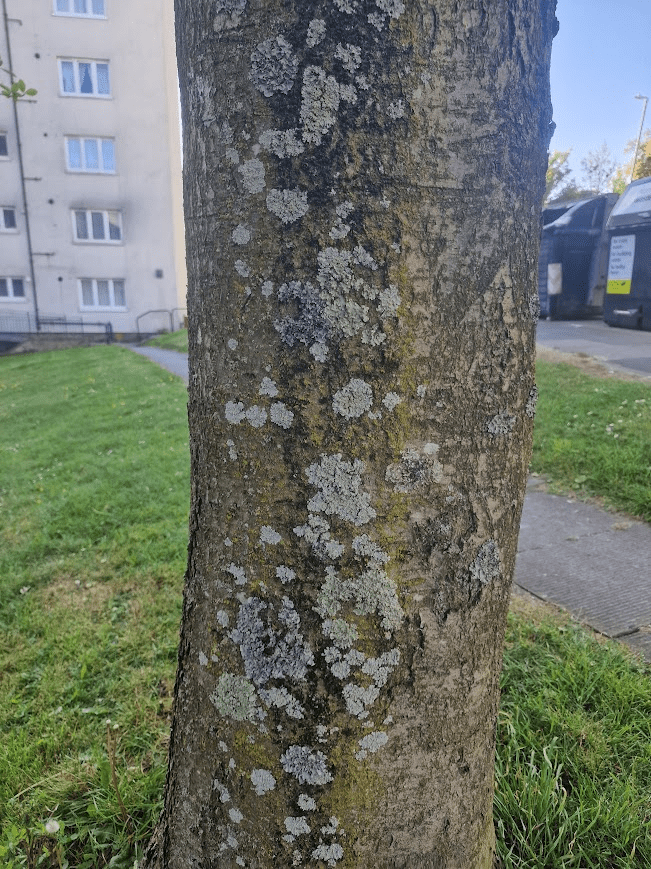
On Sycamore, on verge on Queensway, Craven Vale Estate, Brighton; surrounded by Xanthoria parietina, Lecanora chlarotera s.l., and Arthonia radiata

Habitat: Locally frequent on well-lit trees with basic bark. Now rare in many areas. Very sensitive to SO2 pollution and fertilizer-enrichment.

Distribution: East and South England (much decreased), northern England (increasing), Central and East Scotland and East Ireland.

Threats & Status: Declined in areas impacted by sulphur dioxide pollution in the 20th century, with limited recovery as yet, but some recolonisation has been noted

Britain: Notable and an International Responsibility species. British Lichen Society Ramalina fraxinea

The term “International Responsibility” (IR) refers to lichen species whose populations in a specific country (e.g. the UK) are internationally significant. Because the national population is so important to the overall survival of the species, the nation has a special responsibility to protect it from extinction or decline.

A country can only look after an IR species if we know where they are. This lichen is not on the BLS database yet (I will record it). But we don’t know where important lichens are because there is inadequate recording of lichens in the UK.

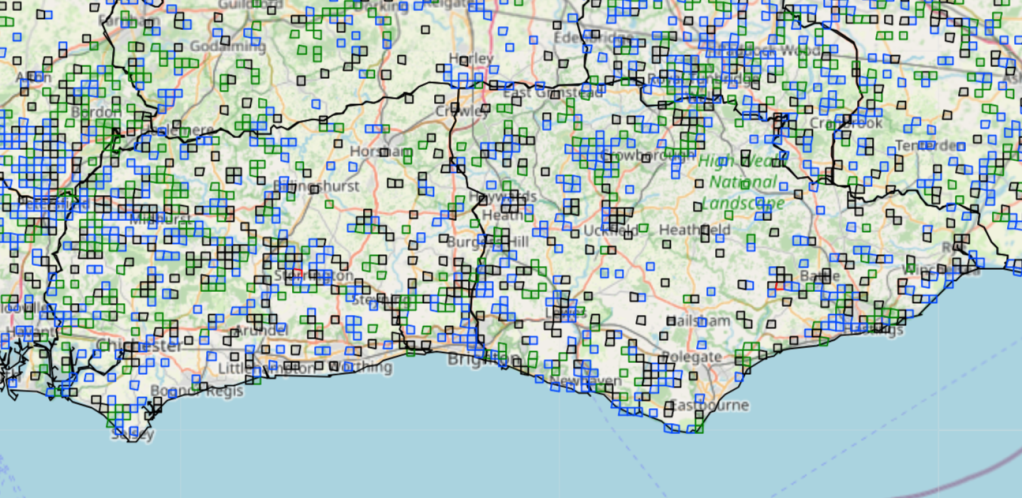
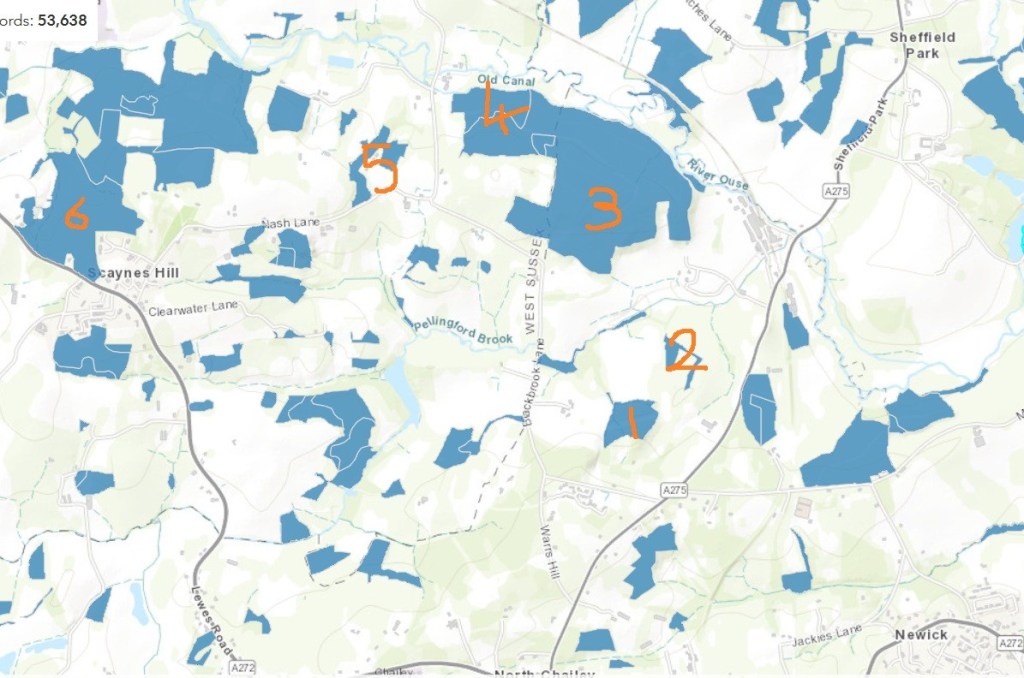
This map British Lichen Society’s all-species interactive map shows the monads (1k x 1k squares) for which there are records of lichens. Many of these monads have no records.

There are 62946 individual lichen records on the British Lichen Society’s database for East & West Sussex (as of 2022). All of these appear to be from rural areas; mostly woodlands, churches and deer parks; none of these records appear to come from urban areas. This is a result of an unconscious bias for rural areas and against urban area, that I am guilty of too. I would much rather walk around a beautiful ancient deer park or a wood or a churchyard than a town. I have seen R. fraxinea in two places in Sussex – in the High Weald countryside, on the Ashburnham Estate, and in the town, in the Craven Vale council estate, Brighton. From this statistically insignificant sample size; you could conclude that you are as likely to see R. fraxinea in an urban setting as a rural setting!

The British Lichen Society acknowledges these habitats for lichens Habits and Conversation: Churchyards, Coastal shingle, Freshwater, Gardens, Lowland heaths, Lowland grassland, Lowland rocks, Metal-rich habitats, Montane habitats, Monuments & Urban habitats, Parkland, Pasture woodlands, Seashore, Walls, Wayside trees and hedgerows.

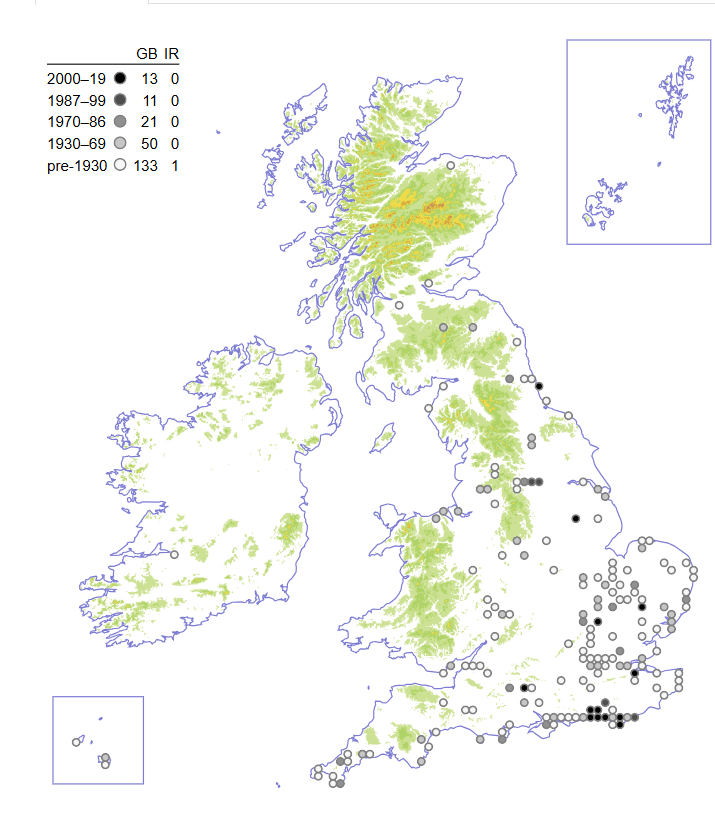
These are the Sussex records for Ramalina fraxinea. They are only 17 R. fraxinea records in 12 places; all of them rural.

I

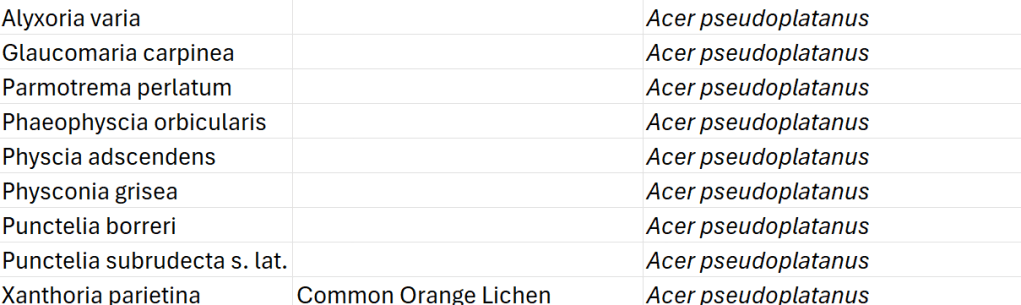
n one hour of walking round the Craven Vale estate this afternoon I saw 25 lichens, many in large abundance, on road trees, brick walls, recycled plastic (street signs), and worked wood (bollards and seats)

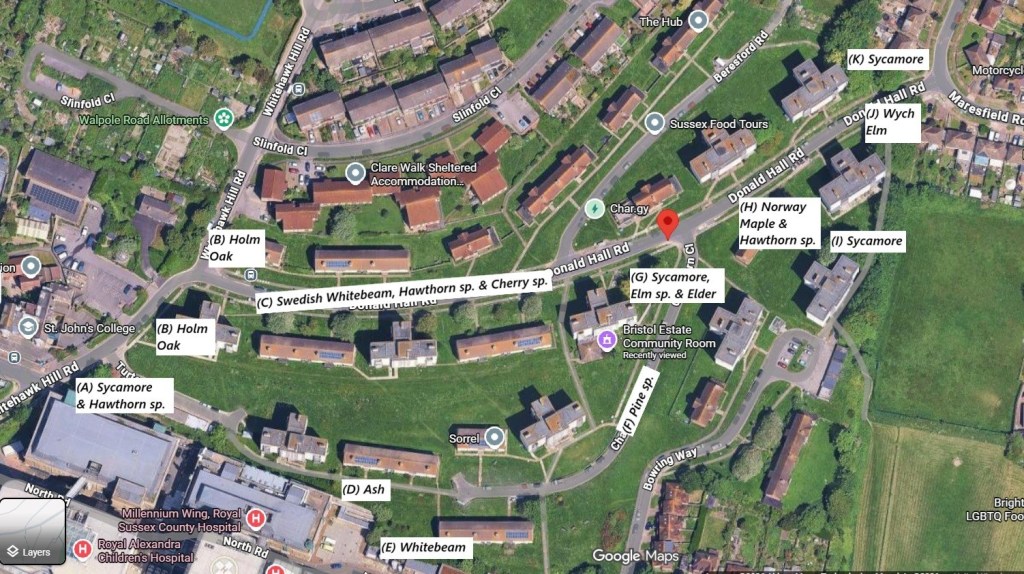
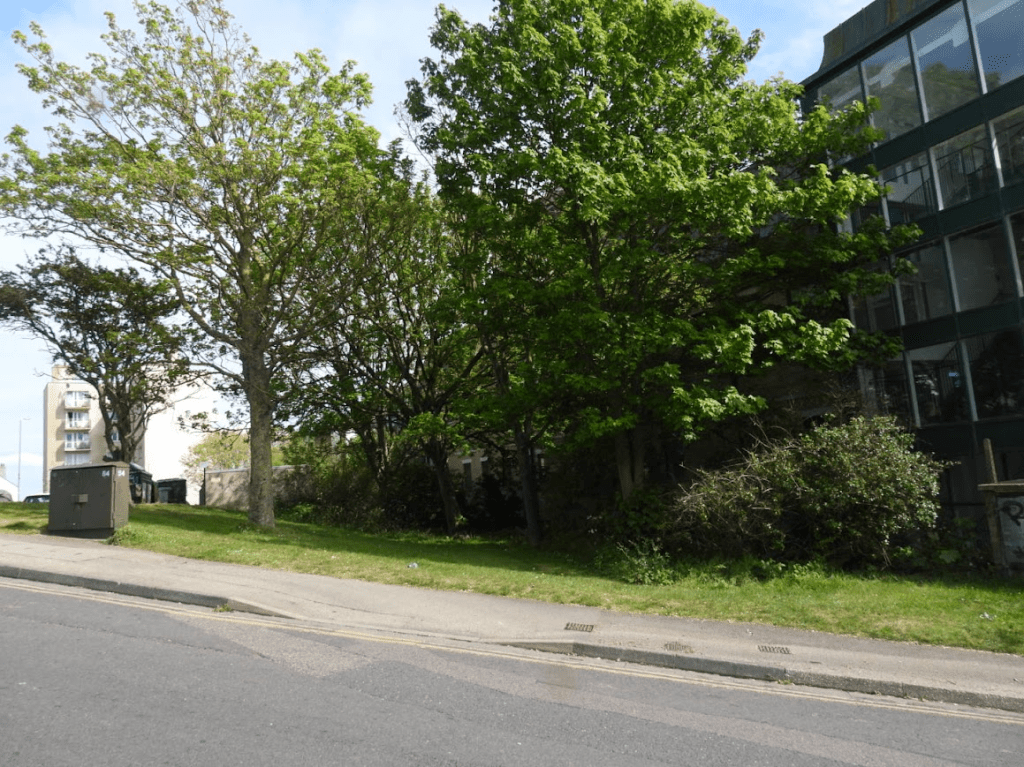
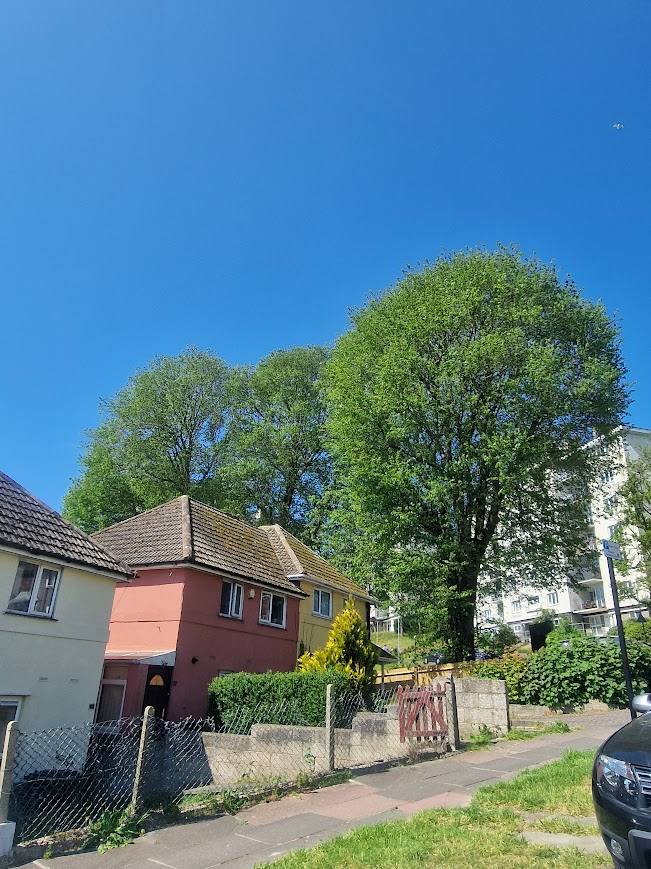
Looking up from my house. The large tree is an English Elm (Ulmus procera); these do not exist in the UK countryside any more as they have been killed by Elm Disease. It only survives because of the cordon sanitaire thrown around the town in 1970 by Brighton Borough Council. This tree started its life probably as a field tree, in the land enclosed in ca. 1825 as agricultural land called Bakers Bottom (now called Craven Vale) a coombe sculptured out Sheep Down (now called Race Hill) by glacial melt water. The tree survived the land being turned into municipal allotments in 1923 and the building of the housing estate in the 1950s. That tree was around when my grandparents and great grandparent grew up in East Brighton.

Lichens seen in Craven Vale:

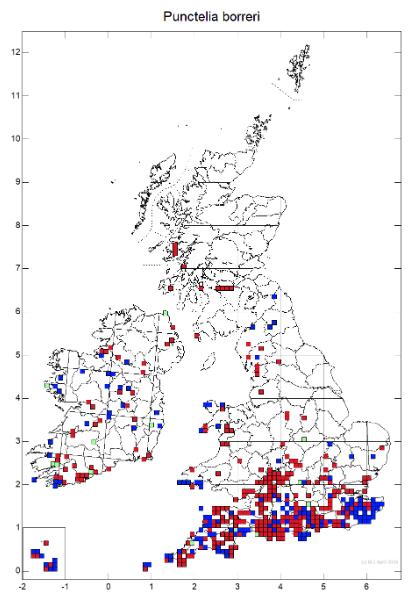
Physcia tenella; Xanthoria parietina; Physconia grisea; Hyperphyscia adglutinata; Physcia adscendens; Physcia caesia; Physconia grisea; Pheaophyscia orbiclaris; Lecanora chlarotera, Lecanora sp., Lecanora symmicta, Lecanora campestris, Myrolecis dispersa, Punctelia subrudecta, Punctelia borreri, Diploicia canescens, Lecidella stigmatea, Candelariella aurella, Candelariella vitellina, Protoparmeliopsis muralis, Micrarea denigrata, Ramalina fraxinea, Ramalina fastigiata, Arthonia radiata, Xanthoria parietina

Here are a few of these:

Candelariella vitellina – on wooden bollard

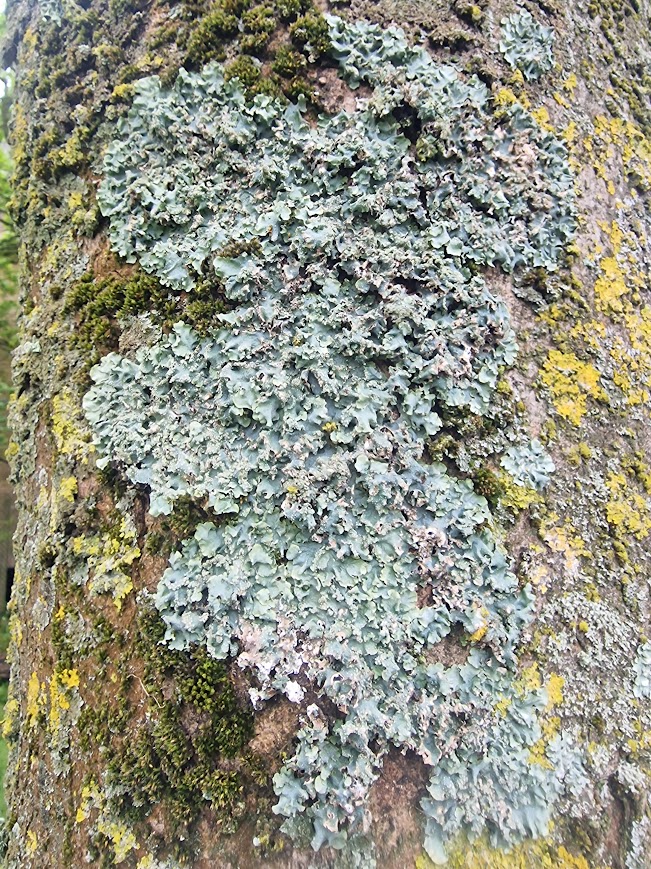
Punctellia subreducta – on tree

Leanora campestris -on brick wall

Lecanora chlarotera and Lecidella eleachroma on bench (worked wood)

Xanthoria parietina on recycled plastic road sign post

A liverwort and some lichens in Lake Wood, Uckfield, East Sussex. 26.01.26

Lake Wood is magical landscape. See my post Lake Wood, Uckfield. A “Picturesque” landscape. Trees, Rocks, Lichen & Bryophytes. 22.11.22 for its fascinating history.

Bazzania trilobata

This is the first time I have seen B. trilobata in Lake Wood

A calcifuge, particularly characteristic of western oak woodland, where in humid conditions it can be locally dominant in the bryophyte layer, forming large, deep cushions on banks, boulders, cliffs and rocky outcrops. Plagiochila spinulosa and Scapania gracilis are common associates. It also grows on deep humus and brown earth soils, especially in grazed woodland, as well as on logs; it is occasionally arboreal. In SE England it is mainly associated with sandstone rocks in shaded valleys. British Bryology Society Bazzabia trilobata

I have only seen B. trilobata in two other places in Sussex: Eridge Rocks and Chiddingly. All of these three locations are High Weald ghyll woods; a location which matches the humidity level of Atlantic Woodland because of its ghyll, despite lower precipitation.

Thelotrema lueckingii

Previously I thought this huge patch of Thelotrema on Quercus robur was  Thelotrema lepadinum but I hadn’t tested it with chemical reagents. Today I tested its thallus with potassium hydroxide; it was dark yellow. T. lepadinum tests negative to potassium hydroxide; but T. leuckingii tests red to potassium hydroxide. This tested dark yellow. So it may be Thelotrema lueckingii?

Cladonia polydactyla

On mossy bank (over Ardingly sandorck)

Pertusaria pertusa

On Hornbeam

Usnea cornuta

On Pedunculate Oak

Cladonia coniocraea

On dead tree stump; the most likely place you’ll see C. coniocraea in Sussex.

Evernia prunastri

On felled Oak branch

Sullington, West Sussex. The wonders of chalk. Bryophytes, lichens and invertebrates predominately found in chalk landscapes. 25.01.26

These organisms were found on a British Bryological Society South East Group (Sussex Bryophytes) field meeting. I would really recommend attending these meetings; they are very friendly and very accommodating of beginner bryologists (like me!). With us yesterday was pan-species listing guru Graeme Lyons. The bryologists Ben Bennat, Sue Rubinstein and Brad Scott made all the bryophyte identifications. My specific interests in natural history are birds and lichens; but I am trying to take a pan-species listing approach. No one can be an expert in everything so taking a pan-species listing approach is also an opportunity for social natural history; learning from others who know much more about specific areas of biology than you. My interest in pan-species listing is not the opportunity it provides for listing large numbers of species, but the opportunity it provides to learn more about your own patch and thus travel less, and thus minimise your carbon omissions. Local pan-species listing in your own patch means there will always be more things to find without having travel miles.

Lichens of southerly downland churches: Sullington St Mary’s Church

Zwachhia prosodea on ancient yew. A Near Threatened (Red List) Nationally Scarce lichen. This is not a species specifically of chalk but it is very much a species of the south. It grows on ancient trees – mostly Pedunculate Oak and Yew; but I have only seen in on Yew, all in church yards – East Chiltington, Coldwalhtam and Sullington. It is a Graphidaceae family lichen. Typically this family of lichens can only be identified by spore microscopy; but Z. prosodea has such distinct lirellate apothecia (writing-like fruiting bodies) it can be identified morphologically.

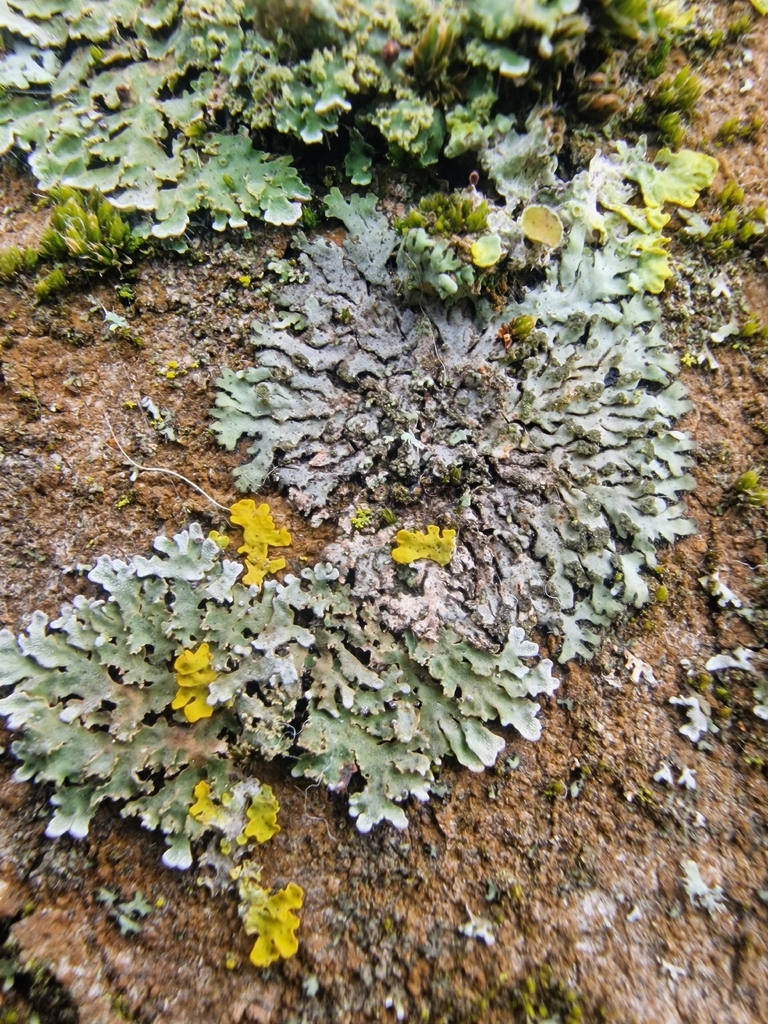
Ingaderia vandenboomii on north wall of church. Again not a species of chalk but a species of the far south. A Nationally Scare lichen but I find it quite often on the north walls of Sussex flint and mortar churches near the coast; I have seen it on the north walls of St Peter’s, Southease; St Thomas à Becket’s, Pagham; St Nicholas Church, Bramber; and St Mary the Virgin, Stopham. Identification of this lichen is by spot reagent chemical tests. It doesn’t react to potassium hydroxide (left drops on photo); but turns red immediately to sodium hypochlorite (centre drop on photo)

Lichens of Chalk Downland

Cladonia furcata. Not a species specifically of chalk, but one of the few Cladonia species found on chalk grassland.

Enchylium tenax Distributed throughout the British and Ireland but more common in the south. Not a lichen specific to chalk; but one of the few jelly lichens that grow on chalk

Verrucaria muralis Very widely distributed. Not a lichen specific to chalk; but one of the few lichens that grow on chalk pebbles, and is abundant on chalk pebbles. Oliver L. Gilbert (1993). The Lichens Of Chalk Grassland Lichenologist 25(4): 379-414 is one of the very few articles on lichens of chalk. This is a provisional identification as spore microscopy is required to confirm the identification; but its morphology and its abundance on chalk pebbles according to Gilbert make it highly likely that this is V. muralis

Teloschistes chrysophthalmus Golden-eye Lichen on Hawthorn. I see Golden-Eye frequently on Hawthorns of the South Downs, particularly on the downs north of Brighton and Lewes

Confined mostly to Chalk Downland Hawthorns in the south. See my blog post of two years ago 12 Golden-Eye Lichens on one Hawthorn. The resurgence of the once-thought-extinct Teloschistes chrysophthalmus on the South Downs. 06.04.24 This is from my blog: Sim Elliott: Nature in Sussex: nature journeys made by public transport 2020-2024. Whilst I do not publish new posts to this blog the blog posts are still available; to act as a compendium of nature sites that can be visited in Sussex by public transport

Chalkland bryophytes

None of these identifications were made by me; they were all made by Ben Bennat, Sue Rubinstein and/ Brad Scott

Seligeria calcarea Chalk Rock-Bristle or S. calycina English Rock-bristle – to be confirmed. on a shaded chalk bank in a holloway bostal

A Seligeria on chalk fragments in a sheltered place, such as a north-facing holloway bank or a woodland floor, is almost certainly going to be either this species or S. calycina. Because the plants are so small, this species pair is not always easy to separate in the field, unless dehisced capsules are present (usually March to April). Then you will easily see that the capsule of S. calcarea is widest at the mouth. Capsules of S. calycina characteristically narrow a little at the mouth when mature. Beware though – like many mosses, capsule shape does not develop fully until the spores are ripe. British Bryological Society Seligeria calcarea

Aloina aloides Common Aloe-Moss

Not solely chalk but A species of bare but not regularly disturbed ground and
soil in a variety of situations, usually base-rich, but occasionally on ground that appears to be circumneutral. The most characteristic habitat is in old pits and quarries on chalk and limestone, growing on the floor or on earthy rock ledges, but it is also frequent in some districts on old or weathered mortar on walls and ruined buildings. .. It is occasionally found on bare patches in calcareous grassland and on soil on natural rock outcrops; other habitats include chalky and earthy banks by lanes, coastal slopes and cliffs, clay in brick pits, calcareous dune sand and gravel, and path edges and earthy rubble (here often only as a temporary colonist).
British Bryological Society Aloina aloides

Pleurochaete squarrosa Side-fruited Crisp-moss

Grows loosely tufted or scattered and mixed with other plants on sandy or calcareous ground. Usually found in unshaded habitats in sand dunes, maritime grassland on cliffs, chalk and limestone grassland, and in chalk and limestone quarries. British Bryology Society Pleurochaete squarrosa

Orthotrichum anomalum Anomalous Bristle-Moss

OK! Not a chalk moss; but what a beauty; on a tomb stone in Sullington churchyard. more or less ubiquitous on concrete, gravestones, wall tops and other man made structures except in the most polluted parts of Britain. Also common on exposed limestone, but absent from chalk. British Bryology Society Orthotrichum anomalum

Invertebrates

All identified by Graeme Lyons


Cyphostethus tristriatus
 
Junipers Shield Bug.

Formerly a southern shieldbug but has had a significant range extension of late. Formerly restricted to Juniper woods in southern England, the Juniper Shieldbug (Cyphostethus tristriatus) is now common across southern and central England, having colonised planted Junipers and Cypresses in gardens. It has also been recorded on native Juniper in northern England and Scotland. North West Invertebrates, Juniper Shieldbug

Distribution map from National Biodiversity Network Atlas

Corizus hyoscyami Cinnamon Bug

Although historically confined to the coasts of southern Britain, this species is now found inland throughout England and Wales as far north as Yorkshire. It is associated with a range of plants, and overwinters as an adult, the new generation appearing in August-September. Nymphs are yellow/red-brown in colour and also rather hairy. British Bugs Corizus hyoscyami

and Graeme made this extraordinary find

Eratigena picta

Distribution map from Spider and Harvestman Recording Scheme website

IUCN Red List status Vulnerable (VU) 

Requiem for a Landscape: the destruction of Low Weald countryside around Freek’s Lane, Burgess Hill

Music composed by David Fanshawe for David Gladwell’s film 1975 Requiem for a Village.

Tree felling (out of sight) at the Oakhurst (Countryside Homes, The Hill Group) building site, Freek’s Lane.

A Pedunculate Oak that has thus far survived the felling; right outside the information kiosk/show home. I don’t think it will be felled, as it helps  Countryside Homes (The Hill Group) to delude people that they are not buying a house on a new estate that has destroyed Low Weald countryside; but they are buying a house in the countryside.

Lichens on this tree:

Oak trees have long had a reputation for supporting a lot of other species but until recently we had no idea just how many and what those species were. Recent work has listed 2300 species associated with oak, of which 320 are only found on oak and a further 229 species are rarely found on species other than oak. James Hutton Institute Decline of Oak

In the Oakhurst (Brookleigh, Countryside Homes, The Hill Group) information kiosk (in show home):

Me: how much is the cheapest house in Oakhurst?

Salesperson: £425,000

The average household income in Burgess Hill is £59,100 p.a. The cheapest house in Oakhurst is 7 x that; more than most mortgage lenders are prepared to lend. The average annual salary of agricultural worker in the South East of England is £25,000. The cheapest house in Oakhurst is 17 x that. In 2023, Andy [Hill, CEO of The Hill Group] remarkable achievements were recognised in the King’s New Year’s Honours List, in which he was awarded an OBE for services to affordable housing. https://www.aru.ac.uk/graduation-and-alumni/honorary-award-holders2/andy-hill#:

Me: I need to think about that.

Salesperson: You’d like it here; its like living in the countryside

The outline planning application was approved by Mid Sussex District Council in October 2019. Brookleigh will deliver approximately 3,500 new homes, 30% of which will be affordable. Delivering Growth & Prosperity, Burgess Hill

The Hill Groups accounts 2023-24

  • Turnover: Reached a record £1,145.9 million (compared to £716.1 million in 2022).
  • Profit Before Tax: A record £70.1 million (compared to £65.6 million in 2022).
  • Net Assets: Increased to £368.9 million as of March 31, 2024.
  • Net Cash: £86.4 million, with £70 million drawn from a £220 million revolving credit facility.
  • Operational Performance: Delivered 2,886 homes during the period.
  • Development Pipeline: Stands at over 27,000 units, with a potential revenue exceeding £10 billionhttps://www.reports.hill.co.uk/annual-review/2023-24/financial-overview/

Andy Hill’s, the CEO of the Hill Group, personal wealth is estimated at £520 million. And he has re-entered the UK rich list. Building.co.uk  https://www.building.co.uk/news/familiar-names-on-rich-list-as-housebuilder-remains-constructions-wealthiest-man/

Building Oakhurst:

David Gladwell’s 1975 film Requiem for a Village, a poetic meditation on how the modern world’s rapid acceleration buries the past and with it the traditions, skills and knowledge that were at the heart of British life and its relationship to the landscape and countryside.  Frank Collins 2011 British Cult Classics – Requiem for a Village / BFI Flipside Blu-ray Review

The film is currently available from on BFI Player (subscription required)

The destruction of the rural landscape of the Low Weald started with the coming of The London & Brighton railway, resulting in large population growth. The building of the railway started in 1838 and cut through several farms including Peppers Farm in Lye Lane (Leylands Road), Yew Tree Farm, Anchor Farm and Burgess Hill Farm. Between 1850 and 1880 the area changed from a relatively quiet rural backwater into a country town with a population of about 4500.From 1952, when Second World War (1939-1945) controls on building were lifted, and strict planning and building regulations came into force, large scale expansion once more began. This process has continued with no significant break to the present time. The population almost doubled to 14,000 between 1951 and 1961. Much of Burgess Hill’s residential housing dates from this time History of Burgess Hill, Burgess Hill Town Council retrieved 23.01.2026. Of late, the amount of development in the countryside around Burgess Hill has accelerated greatly, and will increase further with Labour’s obsession that empowering private developers to build, build, build, will produce affordable housing. It has not done so but Labour has facilitated building property developers; profits.

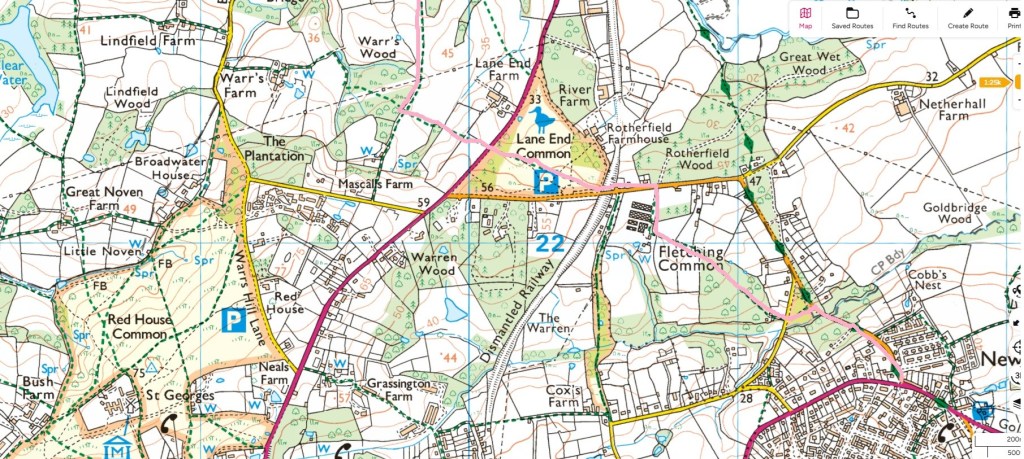
Today I walked along Freek’s Lane to the Oakhurst Estate; currently being built with some show homes open to view. But I could only get so far as the footpath (right of way), a former Roman Road – lined with hedgerow with superb ancient Pedunculate Oak – was closed to facilitate the building of the estate.

A restored barn nearby at Lowlands (formerly Freeks) – a name derived from the local rough woodland or Ferghthe as it was spelt when the land was first settled in the Anglo-Saxon period.

Earlier History, restored barn Lowlands Farm

All the land on the east part of the town, east of Keymer Road and Junction Road, was … . all part of the great wood of Frekebergh which stretched north to what is now Worlds End. It was privately owned and actively managed by the lords of Keymer and Ditchling manors. The earliest farms they allowed (from around 1250 onwards) were on either side of Folders Lane and along the edge of Ditchling Common. The rest remained as woodland and coppice for much longer. A small farm lay at its northern end, its land reaching up as far as Janes Lane, which the lord of the manor kept in hand. It was mentioned in 1580 as having ‘a little house’ in it and its old well is still there in two front gardens in Stirling Court Road. This connection with the lord of the manor gave rise today to the local school name, ‘Manor Field’. Old hedgerow oaks, remnants of this once enormous wood of Frekebergh are still a strong feature within the St. Andrew’s Road housing estate. A small brick and tile business had grown up by the early 1700s on a site near the top of Cants Lane – at a slight remove from where the Keymer Brick and Tile Company was later developed. Burgess Hill Heritage and History History Association: Earlier History

The are only a few fragment of the Frekebergh Wood left; one being the Bedelands LNR Big Wood (which is a minuscule fragment of the Anglo-Saxon wood). Until recently much of the area around Freek’s Lane was woodland and wet meadow. Now much of the land around the lower part of Freek’s Lane is homogenous, hideous, unaffordable housing for the rich

Freek’s Farmhouse Burgess Hill Heritage and History History Association: Earlier History

The housing developments that are currently being undertaken around Burgess Hill include:

  • Oakhurst at Brookleigh (Countryside Homes): Features 2, 3, and 4-bedroom homes designed for modern, energy-efficient living.
  • Brookleigh (Northern Arc): A massive, long-term development on the north side of town, incorporating new schools, community infrastructure, and road improvements.
  • Fairbridge Way (Places for People/Ilke Homes): A 307-home development focusing on sustainable, factory-built
  • Kings Way (Persimmon Homes): A 480-home site in development with 30% affordable units,
  • Kings Weald (Croudace Homes): Located at the former Keymer Tiles site, this 475-home project is well advanced, with phases 1 and 2 completed and phase 3 in progress.
  • Templegate (Thakeham): Located between Keymer Road and Folders Lane, offering 2-4 bedroom homes

The Ordnance Survey Map, for 1872-1914 shows the former woodland and farmland around the railway line. Reproduced with the permission of the National Library of Scotland https://maps.nls.uk/

What was left of farm and woodland around 20 years ago

Surviving relicts of this wooded landscape:

Medieval hedgerow with Hornbeam, Pedunculate Oak and Wild Service trees. (Bedelands LNR)

Bedelands retains a little of what has been lost.

Bedelands and Freek’s Farm’s meadows, lags (wet meadows), ancient woods, riverine hangars and glades have magic most of all where the Roman road fords the young Adur, TQ 316 211. It is just as the Romans would have known it, though the only emperors to be seen are Emperor Dragonflies, with red and blue damsels, and Beautiful and Banded Demoiselles.

Heavy, May-scented Wild Service blossoms overhang the almost-stilled little river that is guarded by steep, wooded clay banks above grassy riverside plats. It only lacks Wild Boar prints in

In Freek Farm Wood, TQ 316 210, overlooking the fording, the Wild Service Tree is the most frequent remember seeing it, clustered along the bank top. All around in the wood are very tall Sessile Oak poles. I am used to seeing Sessile Oak woods in the High Weald… but here? in the Wealden clay vale? The wood has been managed for its Oaks, though there are remnants of struggling coppice of Hazel, Hornbeam and Holly. It is a shady, tranquil wood of Bluebell and Anemone with many other old woodland plants, like Field Rose on the boundary with Freek’s Farm meadow, TQ 316 209, which is archaic and colourful,

Big Wood, Watford Wood, Long Wood, and Leylands Wood, all on the neighbouring Local Nature Reserve, have many of the qualities of Freek Farm’s woods, but benefit from the management of the District Council and the Friends of Burgess Hill Green Circle. The Bluebells of Big Wood are a wonder.

Freek’s Lane is the direct descendant of the ramrod straight it to weave in more relaxed fashion between huge old straight Roman road, but 1,800 years of traffic have led it to weave in more relaxed fashion between huge old oak trees and rich hedgerow. They prompt no complaint from me. I feel blessed to have spent time there, and angry that anyone even think of building on any of this complex, rich and ancient landscape (2013). Dave Bangs2018 Bedelands and Freek’s Lane’s Meadows and Wood Between Hayward’s Hath and Burgess Hill in The Land of the Brighton Line: A field guide to the Middle Sussex and South East Surrey Weald pp. 222-223

It is the farmland to the west of Freek’s Lane that is being built upon. The ancient woodland of the Big Wood (Bedelands Farm LNR) and Freek’s Farm Wood (marked with a flag) will be squeezed between the existing housing east of the railway line and the new development west of Freek’s Lane

Woodland around the top of Freek Lane; Freek’s Farm Wood

MID SUSSEX DISTRICT COUNCIL DISTRICT WIDE PLANNING COMMITTEE
4 OCT 2018 extract

The Councils Ecological Consultant goes on to state “There is likely to be a need for protected species licensing from Natural England for a range of species. However, subject to appropriate mitigation design then, if MSDC considers there to be an overriding public interest case for granting consent (including reasons of a social or economic purpose), then it is likely, in my opinion, that licences will be obtainable.” Given the fact that this site is allocated for housing development this is a clear case where there is an overriding public interest in granting consent.

The Councils Ecological Consultant has advised that there will be additional visitor pressure on Bedelands Local Nature Reserve and that mitigation for this may need to include financial contributions to assist in its management and monitoring of visitor pressure. It is considered that this could be properly controlled by a planning condition that requires details of a management plan to be submitted to the LPA for approval. If the management plan requires off site works at Bedelands Local Nature Reserve (which might involve financial contributions) there should be no reason why these can’t be carried out because the District Council is the landowner of Bedelands.

The Councils Ecological Consultant concludes by stating that in his opinion, there are no biodiversity policy reasons for refusal, subject to conditions. Your officer has no reason to dispute his conclusions. It is considered that a suitably worded condition can ensure that the necessary ecological protection, mitigation and compensation measures are provided thus complying with policies DP37 and DP38 in the DP and the aims of the SPD’s in the Masterplan.

So even if you disregard the value of the farmland to be built on, the development will impact upon protected species and will add visitor pressure on Bedelands Nature Reserve (an island of ancient woodland in the middle of urbanization) but according to Mid Sussex District Council this is a clear case where there is an overriding public interest in granting consent.

What is the public interest in building homes that no-one in Burgess Hill can afford and enrich already rich property developers at the expense of nature and farm land? If the state itself was building social housing for social rents there may be a public interest to build on farmland.

Local and central government disregard for nature was written about by Larkin in 1972

Going, Going, Philip Larkin, 1972

I  thought it would last my time –
The sense that, beyond the town,
There would always be fields and farms,
Where the village louts could climb
Such trees as were not cut down;
I knew there’d be false alarms

In the papers about old streets
And split level shopping, but some
Have always been left so far;
And when the old part retreats
As the bleak high-risers come
We can always escape in the car.

Things are tougher than we are, just
As earth will always respond
However we mess it about;
Chuck filth in the sea, if you must:
The tides will be clean beyond.
– But what do I feel now? Doubt?

Or age, simply? The crowd
Is young in the M1 cafe;
Their kids are screaming for more –
More houses, more parking allowed,
More caravan sites, more pay.
On the Business Page, a score

Of spectacled grins approve
Some takeover bid that entails
Five per cent profit (and ten
Per cent more in the estuaries): move
Your works to the unspoilt dales
(Grey area grants)! And when

You try to get near the sea
In summer . . .
It seems, just now,
To be happening so very fast;
Despite all the land left free
For the first time I feel somehow
That it isn’t going to last,

That before I snuff it, the whole
Boiling will be bricked in
Except for the tourist parts –
First slum of Europe: a role
It won’t be hard to win,
With a cast of crooks and tarts.

And that will be England gone,
The shadows, the meadows, the lanes,
The guildhalls, the carved choirs.
There’ll be books; it will linger on
In galleries; but all that remains
For us will be concrete and tyres.

Most things are never meant.
This won’t be, most likely; but greeds
And garbage are too thick-strewn
To be swept up now, or invent
Excuses that make them all needs.
I just think it will happen, soon.

Larkin predicts the Grey Belt; not an actual policy until Labour invented it: Labour’s “grey belt” policy, introduced in 2024, identifies low-quality, “under-utilised” areas within the protected Green Belt—such as disused car parks, neglected scrubland, and petrol stations—for accelerated housing development. This strategy aims to deliver up to 200,000 homes by easing planning restrictions on these specific sites. BBC 8 July 2024 What is the ‘grey belt’ and how many homes could Labour build on it?

In practice, the government’s “grey belt” policy has not been about building on petrol stations but an existential threat to the protections of the Green Belt. Our latest research shows that the policy is vague, subjective and misleading to the public. Its lack of clarity has been good news for large housebuilders but bad news for everyone who loves the countryside. Council for the Protection of Rural England 

“With Verdure Clad”: Carved foliate decoration in the Norman C12 St Mary de Haura church, Shoreham-by-Sea, West Sussex, 02.01.26, compared with C12 mosaics plants in the Komnenian Daphni Monastery, Athens, 15.12.25

The church of Mary de Haura [de havre; of the harbour] was built built between ca. 1125 to ca. 1219, with funds from the 2nd Baron of Bramber, when he returned from the First Crusade Sussex: West, Pevsner Architectural Guides, The Building of England revised (2019) by Williamson, Hudson, Musson & Nairns. The de Broase were the Barons of Briouze in Normany, made Barons of the Norman Rape of Bramber by William the Conqueror. The port fees from Shoreham harbour, built by the First Baron of Bramber also funded the long building of St Mary de Haura

The exterior of the church:

The port was of great importance to the new Norman rulers as Shoreham was one of the main ports for Normandy.  As a consequence, the Adur valley is aid to have been one of the three most densely populated parts of England (G Standing p93). , the river silted up and a new port was built on the coast, protected by the de Braoses of Bramber.  Its church … was granted to Saumur in 1096 (VCH 6(1) p168) to which the de Braoses had links through their foundation of Sele priory at Upper Beeding

The transepts, crossing and lower tower were built between about 1125 and 1140, followed by a mid-C12 nave of which less than a bay remains [most of the nave was demolished].  The upper tower followed shortly after and the choir was rebuilt, probably between 1180 and 1210.  Despite many puzzles, it contains some of the finest work of the period in England. Shoreham Sussex Parish Churches Mary de Haura, New Shoreham, retrieved 02.12.26.

The sculptured foliage which this post focusses on, are mainly in the choir. When I revisited St Mary de Haura in December 2025 (I have visited the church many times) what really struck me, was the sheer abundance of carved foliage in the choir.

The lyric with verdure clad from Haydn’s oratorio The Creation, popped into my head. The availability of that lyric to my memory was probably because discussion of the origins of the lyrics of The Creation formed a large part of my A level music lessons (1978-80) at Brighton and Hove VIth Form College as The Creation was one of the set compositions for the examination. The Creation was written between 1796 and 1798 and celebrates the creation of the world. The original English libretto by Johann Peter Salomon was given to Haydn in 1795. It is derived from the Book of Genesis (King James Version) and Milton’s Paradise Lost. The original English libretto was translated into German by Baron Gottfried van Swieten for Haydn. But the common English version sung today is a re-translation from that German translation, which leads to some clunky language e.g. with verdure clad the fields appear and straight opening her fertile womb, the earth obeys the word, and teems with creatures numberless, in perfect forms and fully grown. Cheerfully roaring, stands the tawny lion. With sudden leaps the flexible tiger appears.

The aria With verdure clad the fields appear is sung by the archangel Gabriel (typically by a woman a soprano soloist). It describes the creation of plant life on the third day, celebrating the beauty and abundance of nature, including fragrant herbs, healing plants, and fruit-laden boughs

With verdure clad the fields appear
delightful to the ravish’d sense;
by flowers sweet and gay
enhanced is the charming sight.
Here vent their fumes the fragrant herbs;
here shoots the healing plant.
By load of fruits th’expanded boughs are press’d;
To shady vaults are bent the tufty groves;
The mountain’s brow is crown’d with closed wood. Retrieved from The Choral  Art Alliance of Missouri. Haydn’s Creation Lyrics 03.01.26. You can listen to Emma Kirby’s performance of the aria with The Academy of Ancient Music conducted by Christopher Hogwood at https://www.youtube.com/watch?v=IqKGFtTGUXY&t=16s

My interest in how landscape and botany are represented in medieval churches was engendered by taking a module on Byzantine art during studying for an MA in History of Art at the University of Sussex, 2003-2005. This module was not about landscape or botany; it was about the iconology of Byzantine art and production techniques, particularly mosaics, but because I was always always interested in landscape (I did A levels in Geology and Geography as well as Music, and spent a lot of time walking round the countryside of Sussex on A level field trips, and walking on the Downs at weekends with my Grandfather, an agricultural labourer on a farm in Rottingdean). I ploughed a lonely furrow researching the representation of gardens and wildernesses in the 1316-1321 mosaics of the Annunciations to St Anna and St Joachim in the narthex (entrance area) in the Church of the Chora Monastery, as when I took my MA,  little research on landscape in Byzantine mosaics has been undertaken. The Chora Monastery is in Constantinople (now Istanbul). The Annunciation to St Anna and St Joachim is part of the cycle of representations of the life of the Theotokos (mother of god) and life of Christ that appears in all Byzantine (Greek Orthodox) churches. This scene is not typically depicted in western art, as its story derives from the apocryphal Protoevangelion of James, i.e. a text not accepted as canonical in western Christianity. In Byzantine iconology, Joachim is always presented in a wilderness (dessert) and Anna is shown in walled garden (a symbols of virginity in Medieval art). 

The Church of the Chora Monastery is renowned … for its well-preserved mosaics and frescoes. It presents important and beautiful examples of East Roman painting [and mosaics] in its last period [the Palaiologoi dynasty, 1259 to 1453]. … The name “Kariye” (Turkish …: village) originated from an ancient Greek word  Chora (χώρα) [which] means “in the fields” or “in the countryside” because the old church and monastery remained outside the walls of Constantinople. [The] Theodosian walls [were] built in 408-450. [T]he fact that the word Chora is written along with the names of both of them on the mosaics depicting Jesus and Mary inside the church shows that it has a mystical meaning too. [The] Chora Church was originally built in the early 4th century as part of a monastery complex … during the reign of Emperor Iustinianos [Justinian] in the 5th century. Kariye Mosque retrieved 03.01.26.

The Annunciation of Mary’s Birth to Anne,  The Greek inscription in the scene reads “Saint Anne is praying in the garden”

Photo from my visit to the Chora Monastery in Istanbul in 2014

I looked hard at how plants were represented in this mosaic version of the Annunciation, but I was unable to demonstrate any connection between plants in the Chora’s countryside location and the nature of the flora depicted; although The Protoevangelium of James sates that Anna went down to the garden to walk. And she saw a laurel, and sat under it, New Advent, retrieved 03.01.26. There also appears to be no connection between the carved foliage in St Mary de Haura and “real” flowers around Shoreham or anywhere. Flora in medieval religious art are not a representations of particular botanical species; flora, instead, symbolically represents core aspects of Christian belief; e.g. God’s creation, purity, resurrection, and eternal life. Some specific species did have set significations, e.g. Lilies of the Valley represented the Virgin and virginity. Although specific species were only rarely depicted in the medieval period; they become common in Western religious art in the Early Modern period of the Renaissance e.g. by Van Eyck, see Paul Van den Bremt (2011) translated by Lindsay Edwards A Garden Full of Symbols. Flora in the Paintings of Van Eyck retrieved 03.22.26

I am an atheist and do not believe in a creation of nature by god nor do I believe that plants have any religious meaning. However, I am very interested in how people construe nature in art. Symbolic religious interpretations of nature are part of the history of ideas in the religious art of both Western and Eastern Christianity. Christian symbolic motifs are very important to understanding the decoration of Medieval churches, in the eyes of those who designed and built them and worshiped in them.

Before Christmas, I went holiday to Athens with my husband; our first holiday abroad for 11 years. We went to the Monastery of Daphni, whose mosaics  were created ca. 1100 during the Byzantine Komnenoi dynasty

Again the plants in this mosaic are not identifiable as specific botanical species. The trees look a bit like Allepo Pines, Pinus halepensis, common in Athens suburb, more than Laurel, as mentioned Protoevangelion of James. The birds, Sparrows, are named as Sparrows in Protoevangelion: And gazing towards the heaven, she saw a sparrow’s nest in the laurel New Advent, retrieved 03.01.26. They do indeed look like sparrows; but it is impossible to determine whether they are House Sparrows, Passer domesticus or Tree Sparrows, Passer montanus; both common in Greece and the Levants; but when the Protoevangelion was written (mid-2nd century AD) a distinction between Domestic and Tree Sparrows may not have been known

Joachim’s wilderness bush:

could be Olive trees, Olea europaea, which are a ubiquitous feature of the landscape of the eastern Mediterranean

Sussex carved stone representations of foliage in C12 and early C13 Shoreham seem quite primitive compared with Byzantine mosaics of foliage in C12 Athens; but this is not an entirely fair judgement; mosaics partially look more sophisticated because they are made of brightly coloured glass and carved stone is grey; but it is only grey now because its original painting has been lost. In C12 and C13 churches, sculptures would have been painted in bright colours, see Tysoe Heritage Research Group. The recently repainted corbel heads in Boxgrove Priory Church, West Sussex nr. Chichester, give an impression of how colourful Sussex churches may have looked in Norman, Plantagenet and Tudor times, before Henry VIII’s reformation

However, to some degree Byzantine C12 mosaic foliage is more sophisticated than English sculpted foliage; as Byzantine mosaics attempt to represent specific plants (and specific people) figuratively (even if what they represent is mythical rather than real); whereas Norman masons crafted mostly decorative generic foliage patterns in English C12 not representation of specific plants, although they did produce foliate heads (Green Men), which attempt to represented mythic figures. However, both the generic foliage of the west and specific plants in the east signify ,same theological concept: purity, resurrection, the beauty of “Gods creation”.

James Kellaway Colling asserted in 1874 that Early English Foliage [in churches] probably culminated about the middle of the thirteenth century, but many excellent examples are as early as the end of the 12th century. It was evidently progressively developed from the foliage of the Norman era. … By the Perpendicular period [C14-C16 the final period of English Gothic Architecture]greater scope was given to sculpture than foliage, especially in large works. Shields and heraldic emblems were commonly used, and grotesque animals often took the place of foliage, but seldom, as heretofore, mixed with foliage. The beautiful richness of foliated surfaces, so charmingly begun in the Norman, was completely lost.

However closely we endeavour to trace the origin of Decorative Art, we find that it constantly originated in forms taken from Natural Foliage. No doubt simple cutting, or notching with a knife or other sharp tool, preceded the imitation of natural form, and for this reason the zigzag and its simple combinations were the earliest forms of ornamentation invented by man. The zigzag is found in the primitive work of nearly all nations — shewing that it was the first natural step in the attempt at ornamentation although no people ever developed its capabilities so much, or adhered to it so long, as the Normans. As soon as tools improved, and primitive workmen felt they were able to go beyond simple notches, they began to imitate natural objects ; and consequently the most simple leaves and flowers which were growing around them, as well as the forms of the animals with which they were familiar, were soon rendered by them and adapted to the decoration of their works. Now as this facility of imitation varied among different people, so their renderings from nature varied; and as early artists also copied from one another, these diverse manners of following nature became more confirmed and stereotyped as time advanced. Thus arose that highly conventional treatment of natural forms which appears so conspicuously in early works, giving great distinctness of character, and shewing marked difference in the manner of rendering even the same natural objects by various nations at different periods in the world’s history. p. 24

 ….in the transitional piers at New Shoreham church the abacus is round, and the foliage begins to assume the Early English type p.55 James Kellaway Colling F.R.LB.A., (1874) Examples of English Medieval Foliage and Coloured Decoration, Taken From Buildings Of The Twelfth To The Fifteenth Century: With Descriptive Letterpress. B. T. Downloadable at https://archive.org/details/examplesofenglis00coll, retrieved 10.12.25

The choir of St Mary de Haura is a riot of vegetation; a paradigmatic example of the importance of vegetation in Romanesque (C11-C12) churches; before vegetation was replaced by other imagery in the Perpendicular period.

The quadripartite aisle vaults, with roll-moulded ribs and small foliage-bosses (including three with a green man in the south aisle), may have been complete before the upper parts [of the church] were started.  … The triple shafts on the outer walls, with stiff leaf capitals, also look late C12 and are closest to the lower parts of the arcades.  The stiff leaf capitals on the alternating round and octagonal piers of the north arcade, with an outer order of foliage, recall Canterbury.  Either they were the work of masons from there or there was influence from Chichester, where Canterbury masons are known to have worked… The mouldings of the pointed arches are finer than those of the south arcade, where the piers have clustered shafts, each with a stiff leaf capital.  The innermost ones rise to the vault and, as the date differs little from the north arcade, despite the differences, are further confirmation that a vault was intended from the start.

The variation of forms characteristic of New Shoreham is most evident in the gallery, beneath which is a continuous band of quatrefoils that does not vary.  Earliest are the single eastern bays on the north side, which have moulded trefoiled heads and shafts with more stiff leaf.  The remaining three bays have double openings.  Like the openings of the south side, they have hook-corbels at the outer corners.  These are a New Shoreham characteristic; not perhaps the happiest of designs, it is commoner in Normandy than England.  Here, they contrast with the inner capitals, which have foliage, and there are two more at the springing of the vaulting shafts on the north side.  Sussex Parish Churches Mary de Haura, New Shoreham, retrieved 02.12.26

A quatrefoil is a symmetrical design with four overlapping, leaf-like lobes, resembling a four-leaf clover or a four-petal flower, derived from Latin for “four leaves”. Popular in Gothic architecture for windows and tracery, it symbolizes good luck, harmony, and the four Gospels in Christianity, appearing in art, heraldry, and luxury goods globally, from ancient Islamic art to modern fashion. In Christianity, the symbol was adopted to represent the four gospels of the bible: Matthew, Mark, Luke, and John, as well as also seen as a representation of the cross. In Native America, the quatrefoil is a representation of their ‘Holy four corners of the Earth- North, East, South and West’ Quatrefoils: A Closer Look at this Superb Architectural Element accessed 04.01.26

The leaf capitals of the componde columns of the choir

The blind arcade of arches (arches against a wall – decorative rather than structural) decorating the south wall of the choir (a typical feature of Romanesque architecture).

The voussoirs (wedge-shaped stones) of the blind arches are decorated with leaves – but each one leaf is different; showing remarkable creativity by the

Examples of leaf vosiers

The frieze across the blind arcade of the choir is also foliate

The capitals of piers of north arcade some round, some hexagonal, show a rich variety of geometrical foliage, as do the arches that the piers support.

Two of the bosses of the ribbed vault of the south aisle of the nave are decorated with foliated head (often called Green Men)

Green Men stir deep associations with the land and pre-Christian pagan worship of nature, but to use the phrase Gredn Men to describe these bosses is historically anachronistic as the label was coined by the folklorist Lady Raglan, Julian Somerset, in her 1939 article, “The ‘Green Man’ in Church Architecture.” Folklore, vol. 50, no. 1, 1939, pp. 45–57. JSTOR, http://www.jstor.org/stable/1257090. Accessed 4 Jan. 2026.

Whilst I would love to believe that foliate heads demonstrated a persistence of pagan beliefs (fertility cults etc.) in Christian spaces; I think it is much more likely that masons thought of foliate heads as Christian symbols. Kathleen Basford, a botanist and folklore historian, in 1978 book, The Green Man – the first academic monograph of Green Men – suggests that foliate heads had previous pagan symbolic significance; but when used in churches it is likely that foliate heads symbolize Christian themes. They represent a sort of vernacular Christianity according to Stephen Winick, a folklorist at the American Folklife Center of the Library of Congress, who suggests, in The Green Man, Vernacular Christianity, and the Folk Saint (Library of Congress blog 2022) accessed 04.01.23 that foliate heads symbolize the rebirth of Christ and the promise of eternal life; connection to the Tree of Life growing from Adam’s mouth and life’s cycle: the continuous cycle of nature, death, and renewal. Winick notes that more general sense, the idea of greenness, verdure, or viriditas has been part of Christian philosophy at least since the writings of Gregory the Great, specifically his treatise Moralia in Job, circa 580-595 CE. As Jeanette Jones has shown, Gregory posits greenness (viriditas) and plant growth in the book of Job to be a metaphor for the coming of Christ. It is probably this notion that underpins the use of green foliate ornamentation in Norman churches.

Foliate capitals of the quadripartite pillars supporting the cross of the choir, aisle and transects; thick so they can old up the tower above. Highly complex foliate forms made possible by the function of pillars: weight bearing.

The south side of the Norman font depicts stars, another aspect of the natural world. English Romanesque, Norman, architecture and art is known for its robust construction and distinctive ornamentation, including geometric patterns like the zigzag (chevron) and stars or rosettes.

But perhaps these are more than just patterns? Patterns are seen on the doorways of village churches, throughout greater churches and in secular buildings. Pattern-making was typical of traditional art, while geometry, symmetry and order were considered by theologians to reflect heavenly perfection. It is suggested that geometric patterns, sometimes described as rosettes, diaper, zigzag, scale and arcading, were used in English Romanesque sculpture in a coherent series to build up a cosmographic diagram. The comprehensive building programme that followed the Conquest allowed the language of geometric patterns to be used more intensively in England than appears to have been the case on the Continent. Wood, R. (2001). Geometric patterns in English Romanesque sculpture. Journal of the British Archaeological Association154(1), 1-39. Abstract

Whist foliage in the broadest sense symbolises life, in contrast, a memorial plaque (cartouche), on the west exterior wall of the church, signifies bodily death. The name of the person memorialised has eroded away by the salty westerly winds of the Channel. But its baroque style and the helmet suggest that this is a memorial to a now unknown C18 peer of the realm

Monochrome flora and fauna, blurring the boundaries between the real and the represented. Highgate Cemetery, London. 20.12.26

I reached Highgate Cemetery by taking the tube (Victoria Line) to Archway and then walking up Highgate Hill through Waterlow Park. You need to book a ticket to visit Highgate Cemetery, see: https://highgatecemetery.org/

A sculpted Dove

A Ladybird

Sculpted Oak

A Ring-necked Parakeet

Ferns

Upside-down cornucopia

Moss

Eagle

Mexican Fleabane

Lichen on Moss

Foliate grill on tome door

Tomb door

Blue Tit

Ivy

Ivy

Ivy

White Lipped Snail

Butcher’s Broom

Polypody Fern

Hart’s Tongue Fern

Roses

Roses

Juvenile Jay

Doves

Great Spotted Woodpecker

The viewable monumental trees of Fredville Park, Nonnington, Kent; the oldest trees (Majesty, Stately & Beauty) have no public access. 06.01.25

I reached Fredville Park from Brighton by train (4 trains: Brighton to Hamden Park, Hamden Park to Ashford International; Ashford International to Dover Priory, Dover Priory to Snowdown); three and half hours journey time. But it was well worth it; this is an outstanding medival deer park now ornamental parkland.

Originally given to Odo, Bishop of Bayeau and warrior knight, by William of Normandy (King William I, The Conqueror); it has been passed from aristocratic family to aristocratic family. It is still in private ownership. The fact that huge parts of England are still owned by the landed gentry, who inhereited or bought it from Norman Barons who were given land that wasn’t theirs, and they still prohibit the public from much of this land, is a national disgrace.

Map from the Woodland Trust Ancient Tree Inventory of notable, veteran and ancient trees in Fredville Park

Ordnance Survey Map showing public access to Fredville Park

On the Woodland Trust Ancient Tree Inventory map all but the trees next to the footpaths are marked as “no public access” but except for the woodland around Fredville House, which is fenced, I roamed freely off the the paths and got close to many of the trees that the Woodland Trust says has no public access. Toward the end of the afternoon a stream of 4x4s drove up the road into Fredville House. They were a hunting party, of shootists and game keepers (as I had heard shotguns being used all afternoon, close by, but not in Fredville Park); none of them challenged me and I was clearly off the public footpaths.

Map from Monumental Trees in Fredville Park

It is not possible to see the three large ancient oak trees, “Majesty”, “Stately”, and ”Beauty”probably 500 years old, including “Majesty” or “The Fredville Oak”, believed to have the largest girth in England, because they are in the fenced of grounds of the former mansion. This is another example of precious natural assets that should be viewable by the public, being shut off to the public.

STATEMENT OF SIGNIFICANCE from The Kent Compendium of Historic Parks and Gardens for Dover Fredville Park (2017) Kent Garden Trust, Dover District Council, and Kent County Council, retrieved 07.12.25 https://www.kentgardenstrust.org.uk/wp-content/uploads/2024/10/Fredville-Park.pdf

Fredville Park has many parkland trees. ,,, Not far from the former mansion are the remains of a Spanish chestnut avenue, planted at least 250 years ago. Many of these trees are still in very good condition (2017).

The boundary of the C18 pleasure ground enclosure is intact and encompasses
the remaining historic structures including the walled kitchen garden, stables and ice house as well as potential archaeological remains of the mansion. Of particular note, within the immediate grounds of the former mansion, are three large ancient oak trees, probably 500 years old, and a mid-late C19 Wellingtonia. One of these oaks, named “Majesty” or “The Fredville Oak”, is believed to have the largest girth in England.

Here are some drawing of these trees from The Old Parish of Nonington – The  Fredville Estate – The Trees of Fredville Park. More photos and drawings can be seen atL

“The Majestie” or Great Oak at Fredville drawn from life by Jacob George Strutt for his Sylva Britannica in 1824 from The Old Parish of Nonington – The Fredville Estate – The Trees of Fredville Park.

A tall oak at Fredville, believed to be “Stately”, drawn from life by Jacob George Strutt for his “Sylva Britannica in 1824 from The Old Parish of Nonington – The Fredville Estate – The Trees of Fredville Park.

Another tall oak at Fredville, believed to be “Beauty”, by Jacob George Strutt for his “Sylva Britannica in 1824 from The Old Parish of Nonington – The Fredville Estate – The Trees of Fredville Park.

The history of the estate:

CHRONOLOGY OF THE HISTORIC DEVELOPMENT from The Kent Compendium of Historic Parks and Gardens for Dover Fredville Park (2017) Kent Garden Trust, Dover District Council, and Kent County Council, retrieved 07.12.25 https://www.kentgardenstrust.org.uk/wp-content/uploads/2024/10/Fredville-Park.pdf

The origin of the name “Fredville” is not known for certain. Traditionally it is believed to be derived from the Old French: freide ville, meaning a cold place, vecause of its cold, wet, low position. It could, however, be derived from the Old English: frith, meaning the outskirts of a wooded area, plus vill, meaning a manor or settlement, giving “a manor next to the wooded area”.

Fredville House and park was originally part of Essewelle Manor. It is recorded in Domesday that in the time of Edward the Confessor it was held by a woman,  Molleve, but in 1086 it was held by Ralph de Courbepine from Bishop Odo. De Courbepine’s holdings passed to the Maminot family and in the late 1100’s to the Barony de Saye. By 1250 Essewelle had been divided into Esol and Freydevill. The spelling varied over the centuries: Frydewill (1338), Fredeule (1396),
Fredevyle (1407), Froydevyle (1430), ffredvile (1738).

Hasted lists the families who held Fredville from the Colkins, in the reign of Edward I, to the Boys, in the reign of Richard III. William Boys’ descendant, Major Boys, had many of his estates confiscated for being a Royalist, but Fredville remained in the Boys family until two of his sons sold it to Denzill, Lord Holles in 1673 in order to pay debts. In 1745, Thomas Holles sold it to Margaret, sister of Sir Brook Bridges, baronet of Goodnestone, which is nearby. Margaret Bridges married John Plumptre, a wool merchant of Nottinghamshire, in 1750, but they had no children. The estate passed to John Plumptre through the marriage. Margaret died in 1756 and her husband remarried in 1758 and had a son. John Plumptre rebuilt the manor as a Georgian house. Sir Brook Bridges’ daughter, Elizabeth, married the author Jane Austen’s brother, Edward.

Jane Austen’s letters (1796-1814) show that she was a regular visitor to the Bridges’ estate at Goodnestone and later to Edward’s new home at Godmersham. She was well acquainted with the Plumptres of nearby Fredville (Jane Austen letters to her sister Cassandra, September – October 1813 and March 1814). John Pemberton Plumptre was for a time a suitor of Jane’s niece Fanny. Jane Austen wrote “Anything is to be preferred or endured rather than marrying without Affection; and if his deficiencies of Manner &c &c strike you more than all his good qualities, if you continue to think strongly of them, give him up at once.” (Jane Austen letter to Fanny November 1814).

Fanny rejected John Pemberton. In the late 19th century the house was greatly enlarged, its 50 bedrooms accommodating the family of 11 children and the necessary staff. In 1921 Henry Western Plumptre built the much smaller “Little Fredville” nearby in the park as the family home and Fredville mansion was abandoned. It was requisitioned during WWII and occupied by a Canadian tank regiment. A fire destroyed most of the house in 1942 and after the war J H Plumptre, son of Henry Western, decided to demolish the building. Only the clock tower and some converted outbuildings now stand. The site remains in private ownership.

The visible trees of Fredville Park in the order that I saw them:

The parkland west of the wood surrounding Fredville House from outside the park

Roots and lower trunk of a felled Pedunculate Oak

Rotting felled Pedunculate Oak

Texture of its bark

Fallen chestnut

With deliquesced Chicken of the Woods, Laetiporous sulphureus

An ancient Beech

Notable Oriental Plane

Fallen Pedunculate Oak

The fungus Hypholoma fasciculare and the mosses Ptychostomum capillare and Grimmia pulvinata, and unidentified lichens, on this tree’s decorticated trunk

Yew, London Plane and Pedunculate Oak

Oriental Plane

Fruit and leaf of Oriental Plane

Hawthorn

Pedunculate Oak in front of two Sweet Chestnuts

Ancient Sweet Chestnuts

A Mycena sp. mushroom on the bark of one og these chestnuts

Ancient Sweet Chestnut

Ancient Yew

Hard to identify this as an ancient Yew, Taxus baccata, at first. It’s shape is nothing like the Yews of its native strongholds: chalk scarp-face woodland. It’s a pasture woodland Yew, sculpted by nibbling deer. Deer can tolerate Yew.

Pedunculate Oak

Lodge to Fredville Park

Historic England listing: Lodge to Fredville Park 11.10.63 II Gate lodge. Early C19. Painted brick with thatched roof. One storey and garret on plinth with dogtooth cornice to half-hipped roof with pierced bargeboards. Central stack with double polygonal flues. Single storey gabled porch with elliptical openings on all 3 sides, that to front with label hood. Arched 2 light wooden casements with label hoods either side of porch, with central four centred arched door with Gothick tracery. Canted bay with Gothick windows on left return front

A postscript

Right next to Fredville Park is the remains of the closed Snowdown Colliery.

The miners were on strike in 1984-85 and I remember well Brighton Trades unions collected food outside supermarkets to send to them. The strikers knew, as did we, that they were fighting the ruling class under Thatcher who wanted to close the pit. Forty years later, in 2025, a merchant banker has persuaded many working people in Kent that their enemy is migrants; but its the Tory ruling class that has impoverished them. The decline in class awareness and the ability of the ruling class to spin false narratives that are believed I find very sassy.  Wake up people.

A walk to the Trundle; from East Lavant to West Dean. West Sussex. 01.12.25. A photographic study with no text.

Notes:

The photos are in chronological order.

Weather: 10 degrees; overcast; southerly wind of 35mph.

8.28 km; 3:24 hours; elevation gain: 186m

‘Puck’ or ‘Pook’ is a Sussex dialect word, derived from the Saxon word ‘Puca’, meaning a Goblin or Fairy.

East Lavant, or Loventone in the Domesday Book (1086), which along with Mid Lavant and West Lavant, make up the village of Lavant.

The River Lavant is a chalk stream winterbourne (a river that is dry during the summer months). It rises from a spring at East Dean and flows to Chichester. From east of Chichester its natural course was south to the sea at Pagham, but the Romans diverted it to flow around the southern walls of Chichester. Currently there is no water in it, there should be, as the draught from February to October of this year has lowered the water level in the chalk aquifer,

The Trundle is an Iron Age hillfort on St Roche’s Hill. It was built on the site of a causewayed enclosure. There was a chapel dedicated St Roche within the hillfort. It was demolished some time in the C16. A windmill, which burned down in 1773, is known to have existed on the hill. There was an open-air masonic lodge that included the Duke of Richmond, the Duke of Montagu, and Lord Baltimore which met at the top of the hill between 1717 and 1757. There was at one time a gibbet on the Trundle.

East Dean is in a valley in the South Down. In AD 689, Nunna, King of the South Saxons, gave 20 hides of land at “Hugabeorgum and Dene” to Eadberht, Bishop of Selsey. “Dene” has been identified as East Dean. In his will of AD 899 King Alfred the Great left East Dean to his youngest son Æthelweard (AD c. 880 – 920 or 922). The remains of a small deserted Medieval settlement have been found in East Dean Park. The buildings were 14th- and 16th-century.