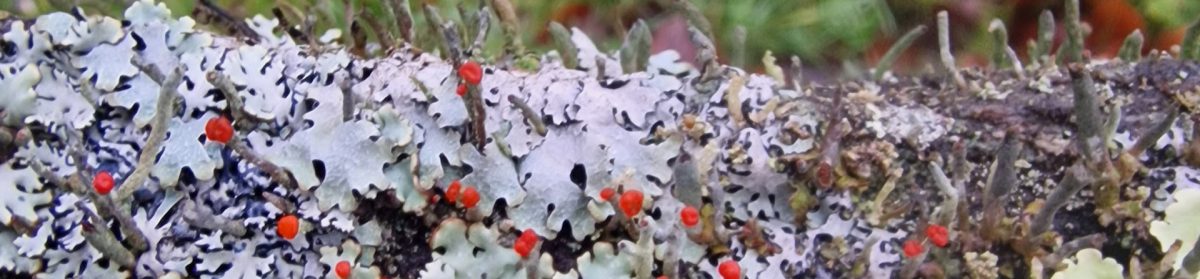
What I saw while being a volunteer RSPB ranger at Pagham Harbour on the path to Church Norton: fascinating lichens, and some vascular plants, as well as the birds. Easter Monday. 06.04.26

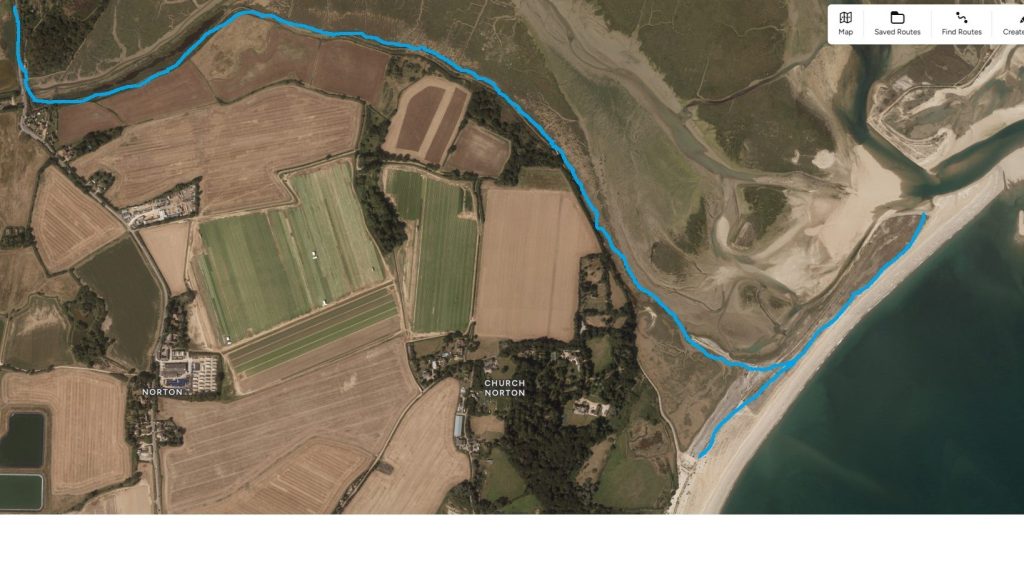
You can get to RSPB Pagham Harbour from Brightin, where I live, by taking the train from Brighton to Chichester (55 minutes, 2 fast an hour and 1 slow train an hour,1h 13m) then get the 51 bus from Chichester bus station, oppodite rail  station. The 51 bus from the bus station goes ditectly to outside the RSPB reserve (buses go evey 30 minutes, journwley time, 30mins).

It was a sunny but windy day, and there were many visitors. I chatted to about 45 people. The main objective was to remind visitors that the vegetated shingle part of Church Norton Spit (the harbour side) is now closed to visitors whilst the Ringer Plovers and Oystercatchers are nesting.
RSPB Wild Cards game (until 31st May 2026)
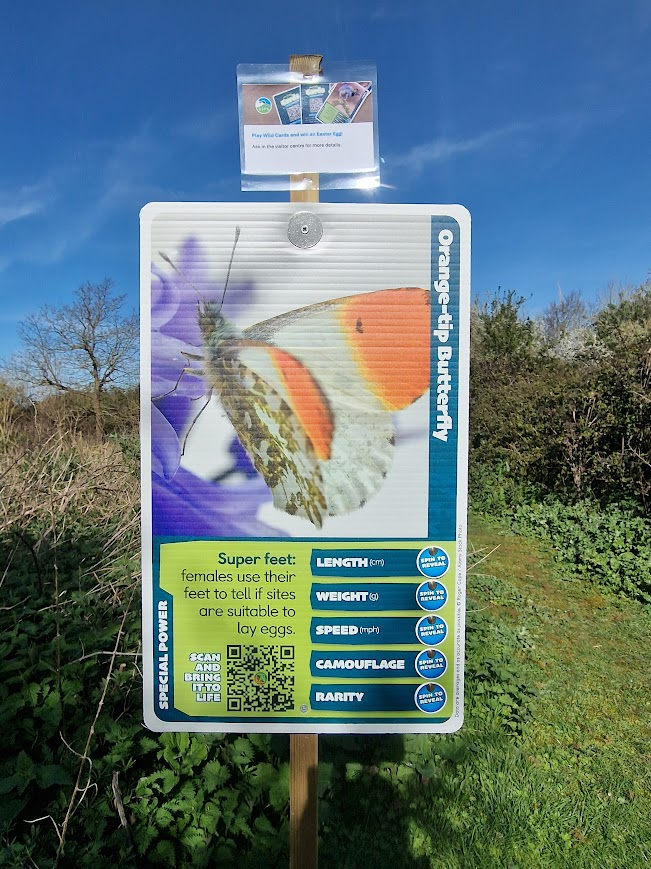
Egg‑splore the great outdoors with our new Wild Cards and uncover the hidden heroes of nature as you explore our nature reserves! From Easter until the end of May, pick up a special pack of playing cards (£3 at the reserve) to take on your adventure and compare the strengths, superpowers and fun facts of some of spring’s most familiar species. Track down the boards, play together to decide which creature will reign as the ultimate spring champion! Don’t forget to scan the codes and watch as amazing animals burst into life through augmented reality right before your eyes. RSPB Events

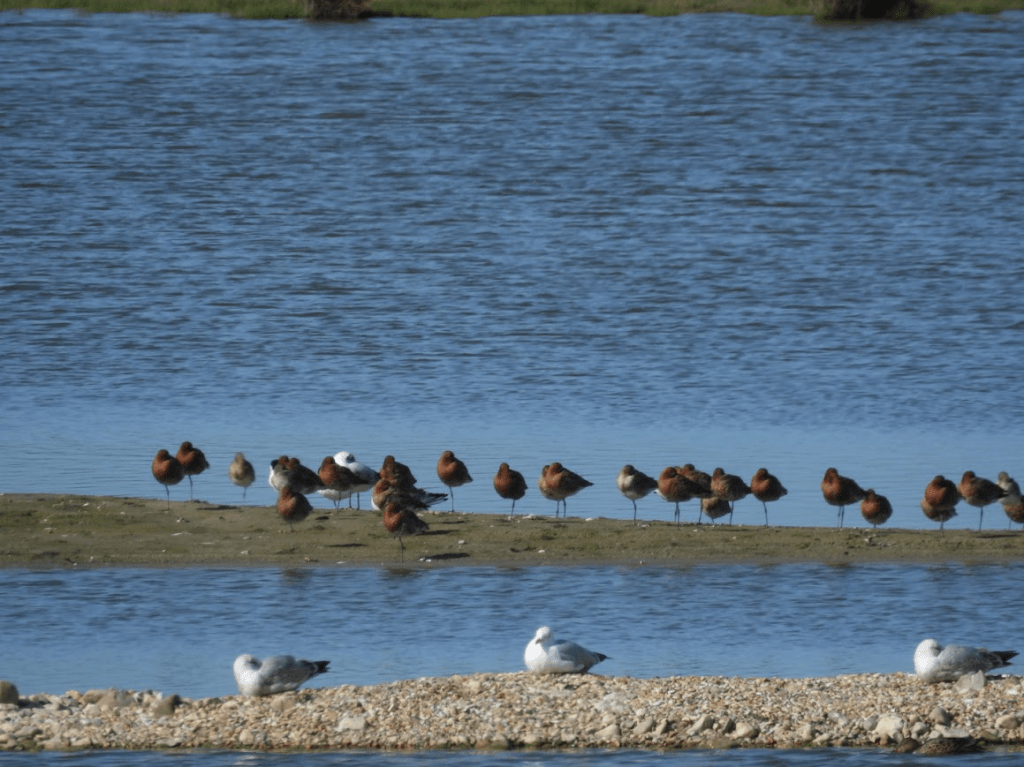
At a brief stop at the Ferry Pool. Black-Tailed Godwits (in blooming plumage ready for their rerun to Iceland), Shelducks, Avocets, Black-headed Gulls, Herring Gulls, and Shoveler Ducks were the most noticeable.

Black-Tailed Godwits & Herring Gulls
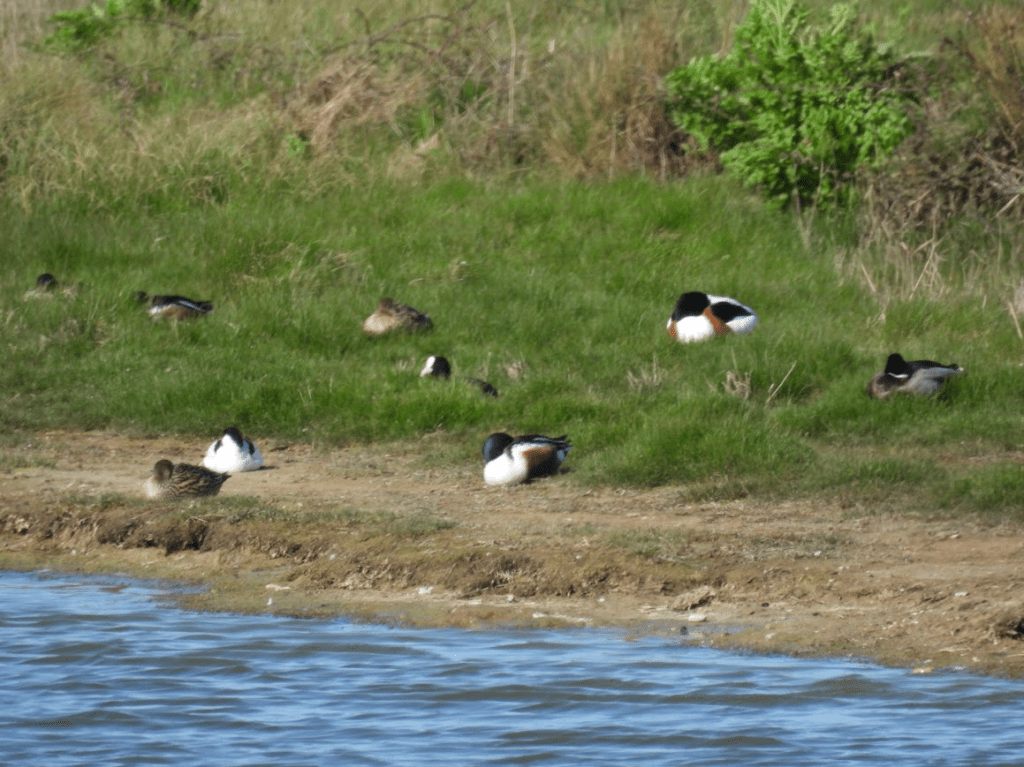
Mallards, an Avocet, a Shoveler and a Shelduck
Walking Down the path from the Ferry Pool to Church Norton

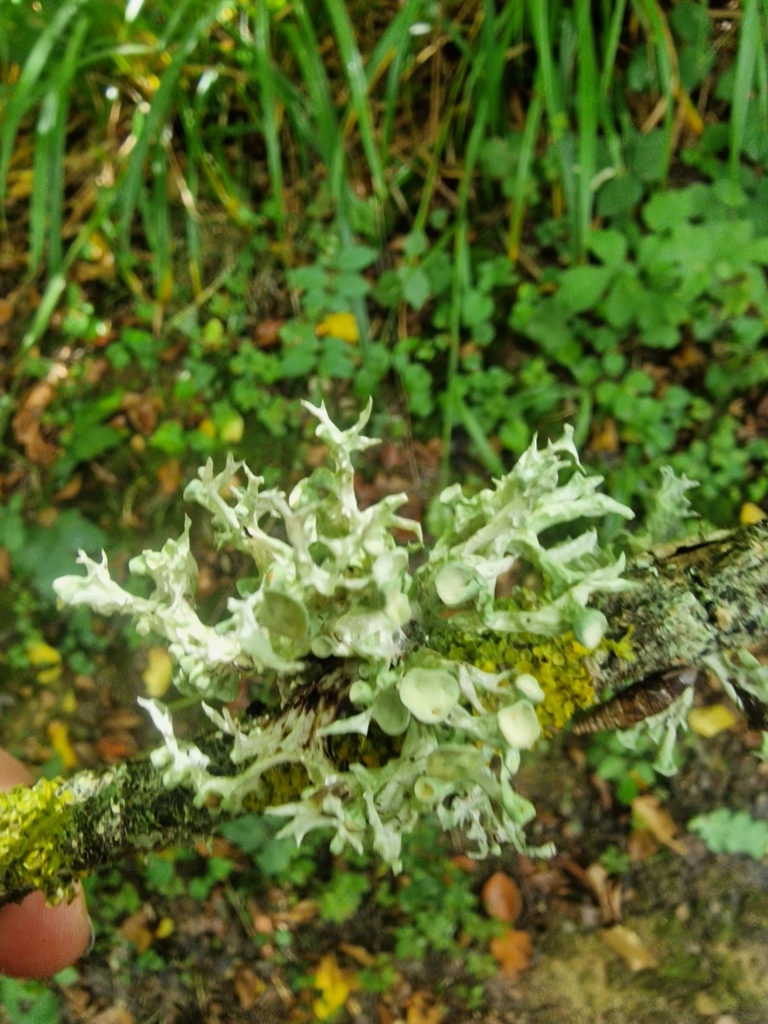
Blackthorn with buds and flowers are very prominent fruticose (dangly) lichens of the Ramalina genus
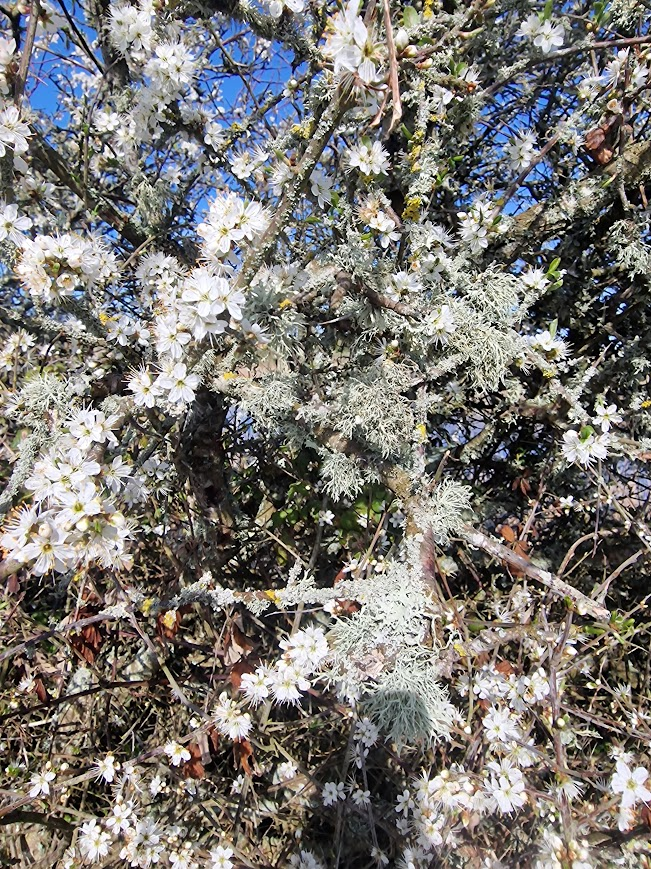
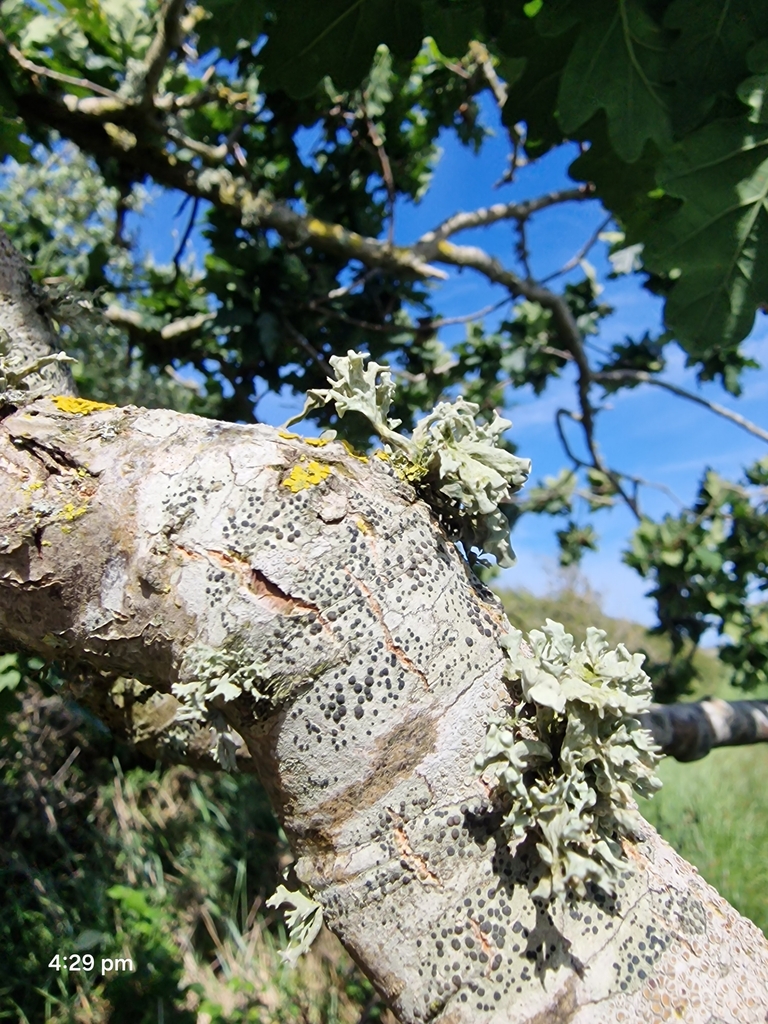
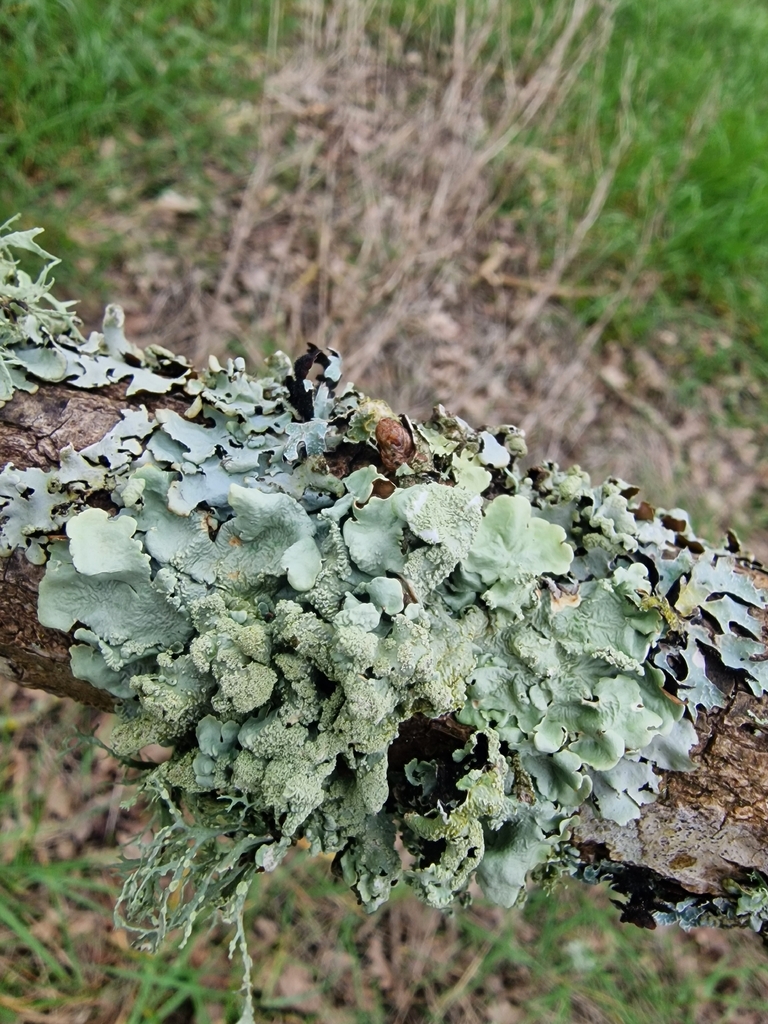
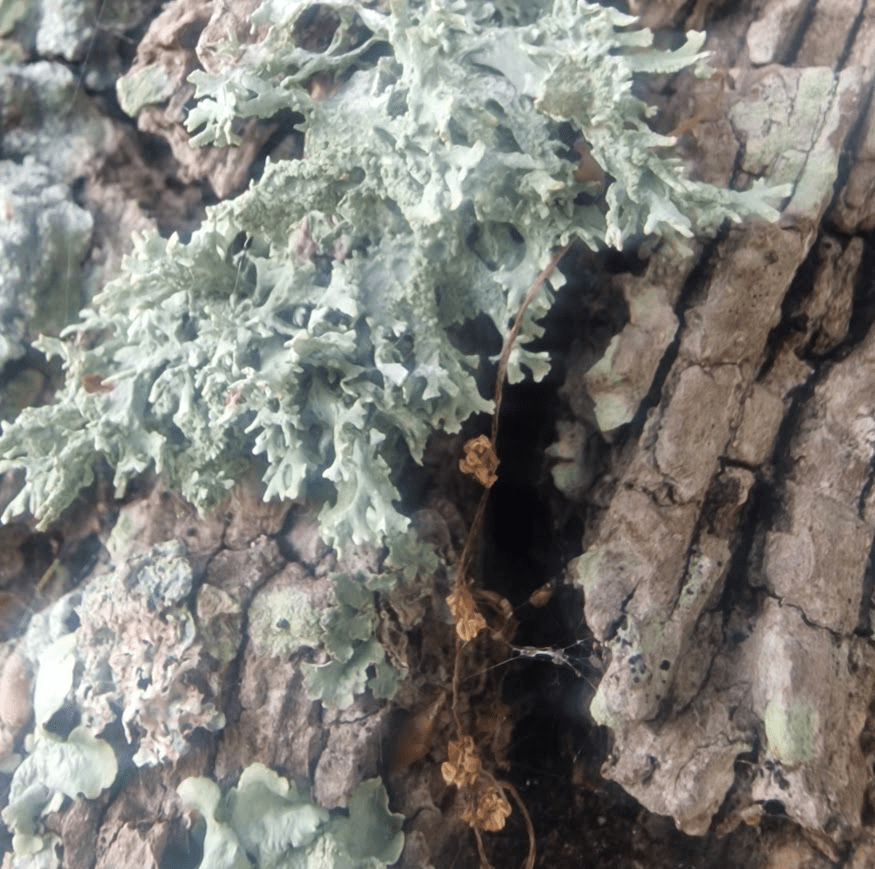
The Ramalina lichens in Blackthorn and Hawthorn are moslty R. farinacea and R. fastigiata – both very common, but easy to differentiate:

R. farinacea has whiteish splodges on their lobes (soredia: vegetative [non-sexual] reproductive propagules consisting of packets of fungal hyphae and the alga)

R. fastigiata has little satellite dishes at the ends of its lobes (apothecia: sexual reproductive propagules containing fungal spores)

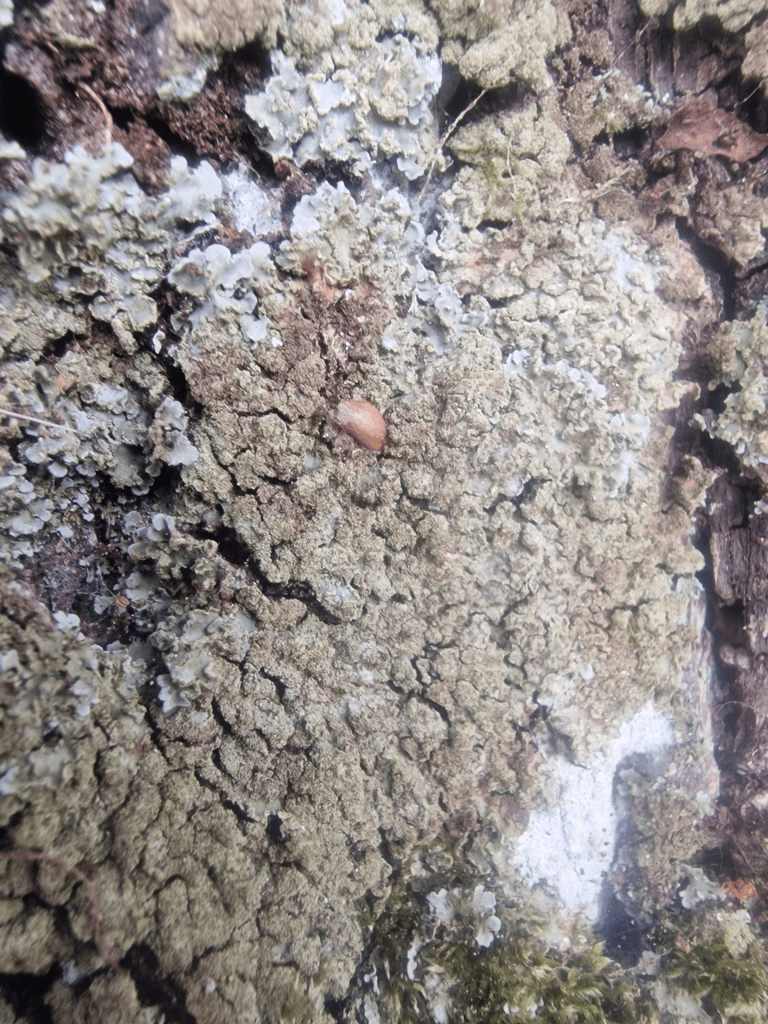
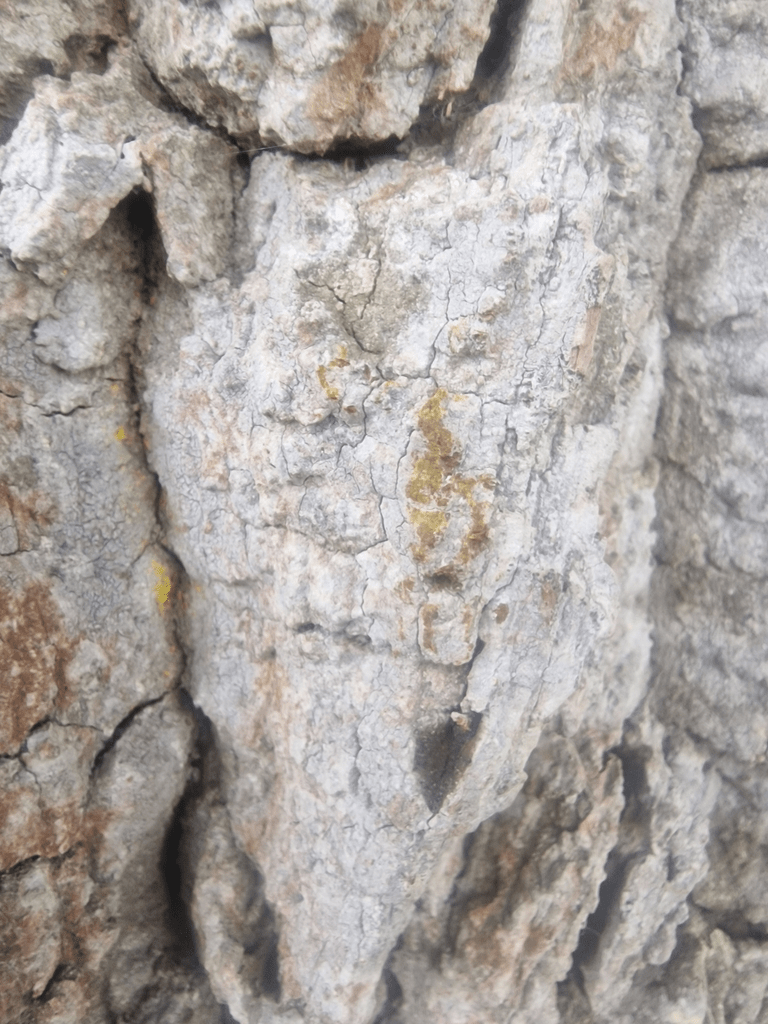
(photo 1) R. farinacea; (2) R. fastigiata (3); R. fastigiata with Lecidella eleachroma
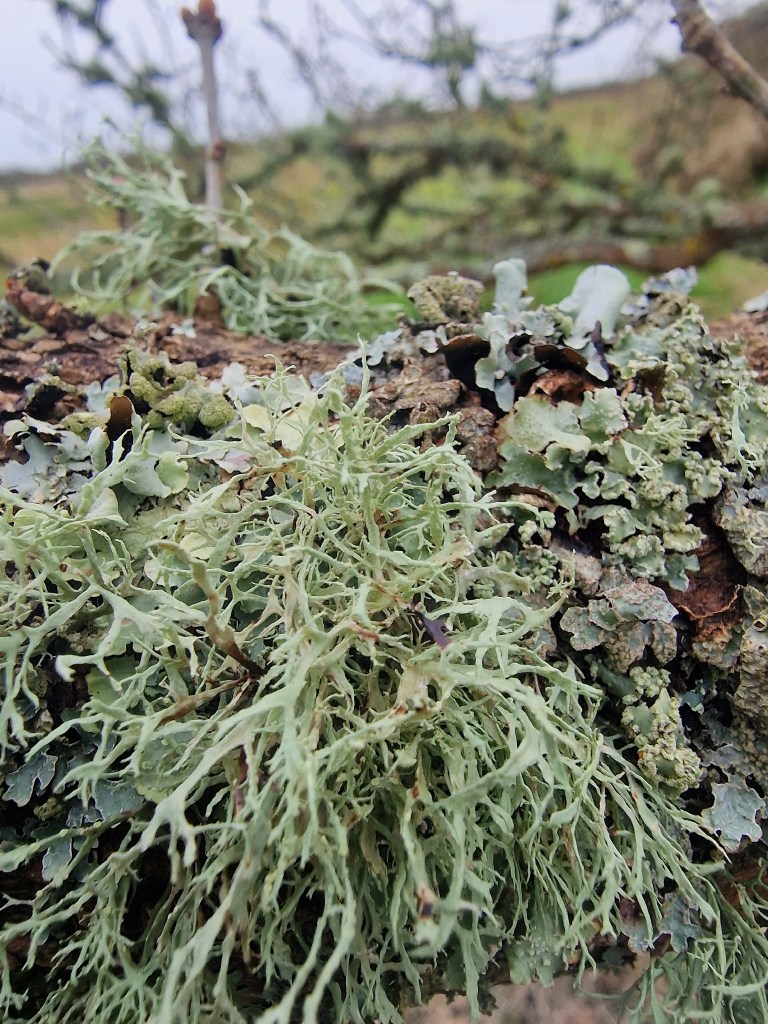
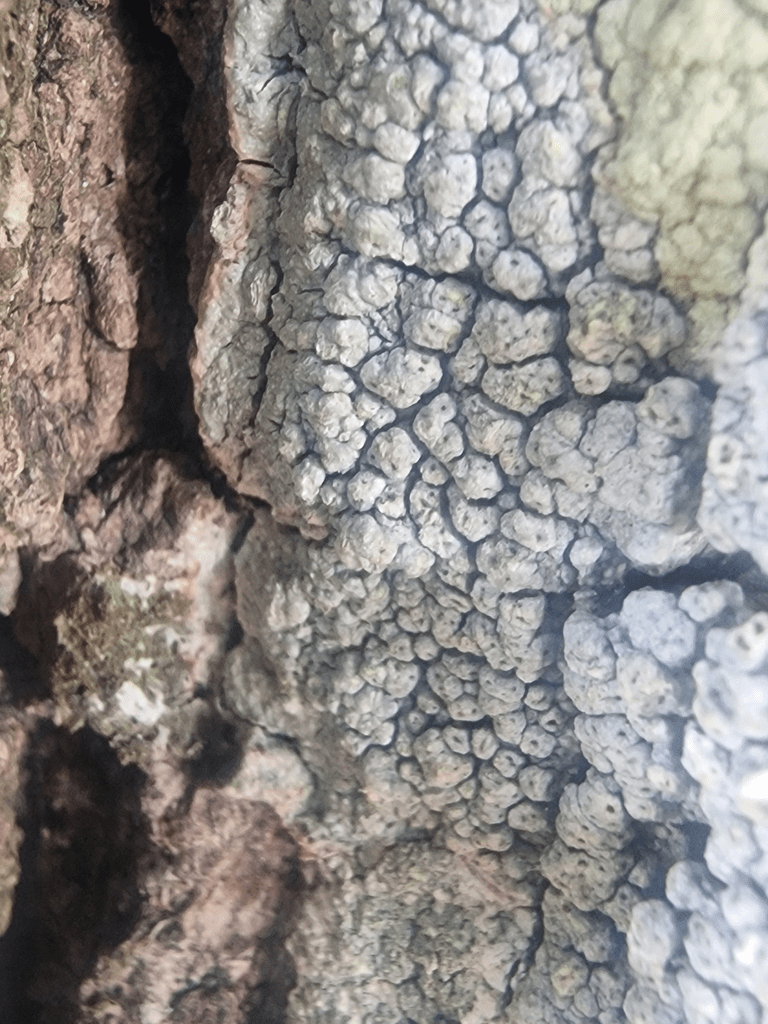
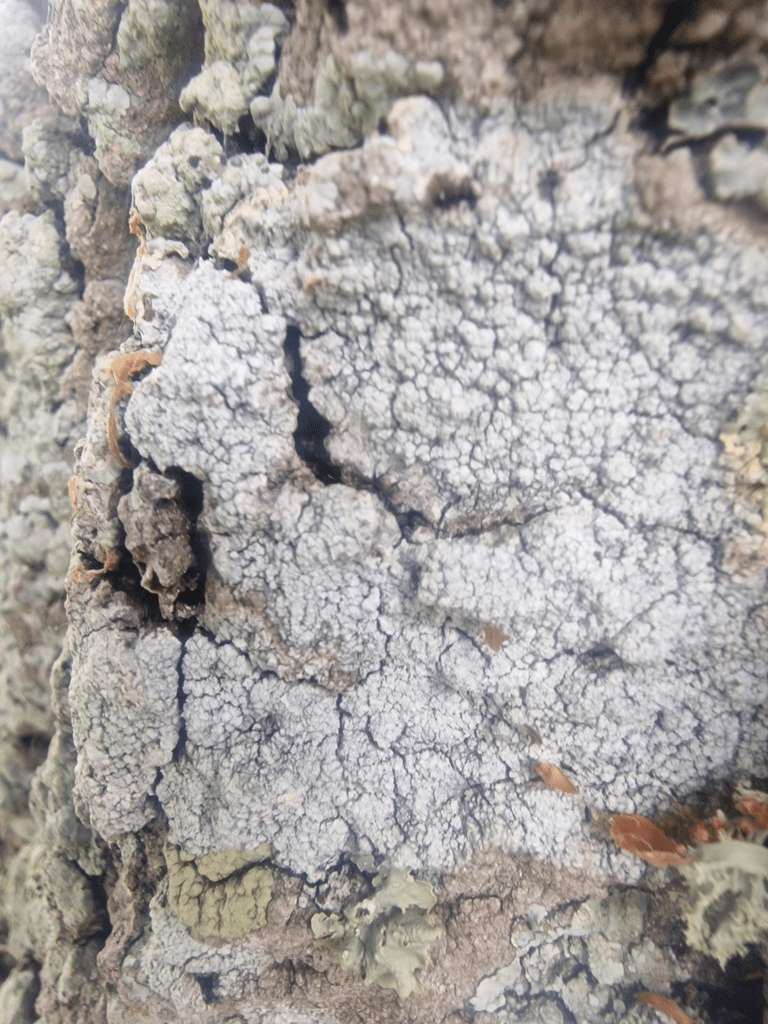
Lecidella eleachroma is extremely common on all Pagham Blackthorns and Hawthorns. It is a crustose lichen (a crust on a truck, branch or twig, although crustose liches grow on rocks/stones too, but not this one) with a pale grey thallus (body of the lichen) and little round black apothecia.

A lichen is not a single organism; it is a stable symbiotic association between a fungus and algae and/or cyanobacteria, called photobionts. The which can produce simple sugars by photosynthesis. In contrast, fungi are ‘heterotrophic’ and require an external source of food. The fungi build the structure of the lichen thallus, within which they provide conditions for a long term, stable association with their photobionts. What is a Lichen? | The British Lichen Society

On the vegetated shingle harbour-side path, before you get to the coastal Oaks:

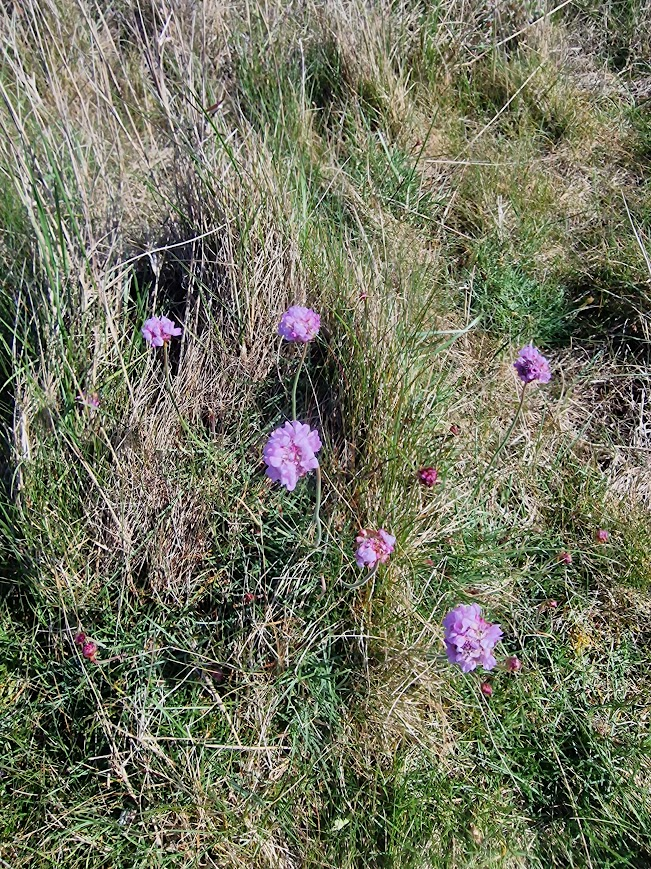
Thrift, clover-like and pink; a maritime plant of cliffs, shingle and sand dunes.
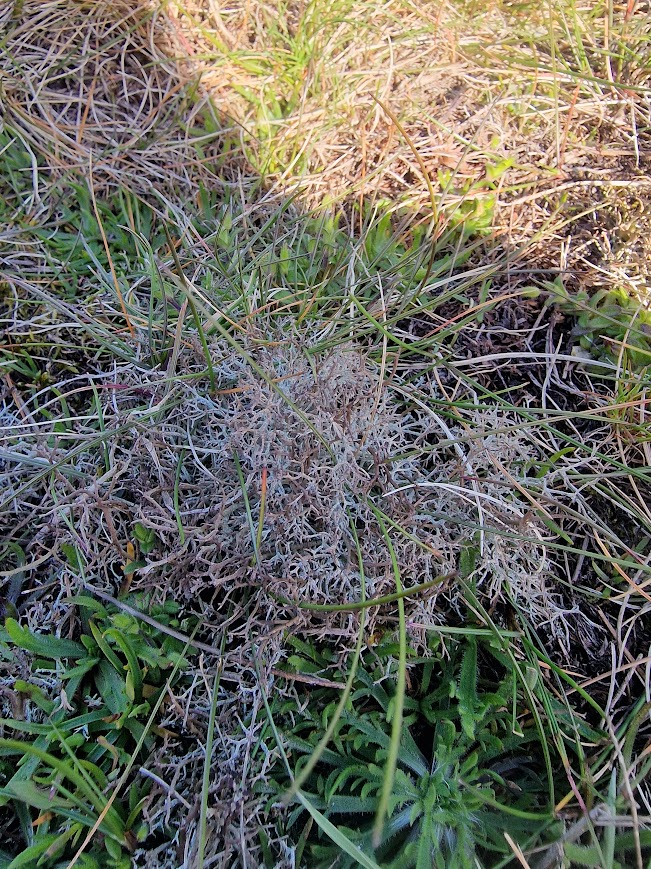
Cladonia rangiformis lichen, a false reindeermoss – looks like dried grass; grows in soil i.e. it is a terricolous lichen
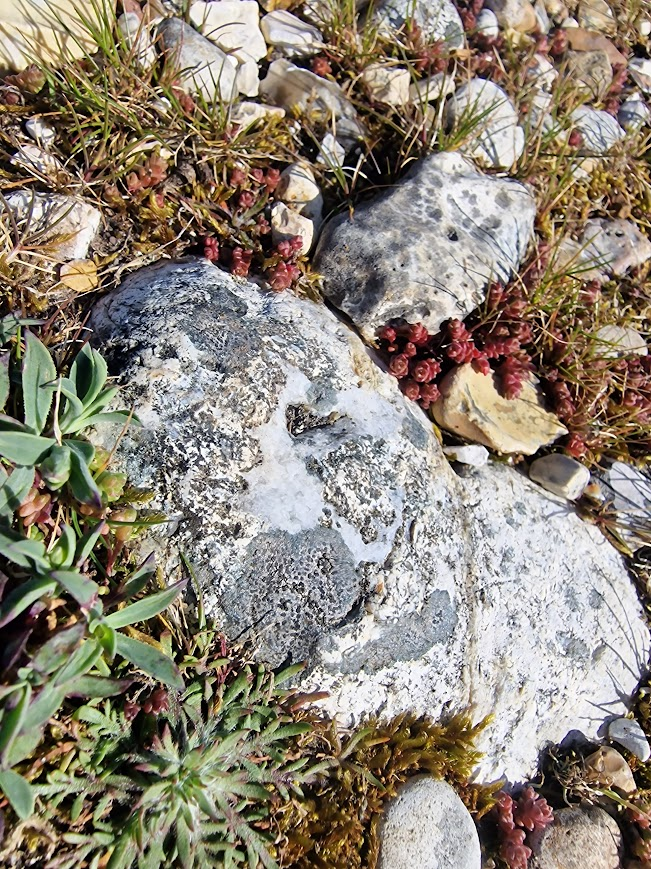
Under our feet at this point are pebbles covered in lichens that few people notice. On these pebbles there is lots of lichen Rhizocarpon reductum (grey thallus with black apothecia); a pioneer species of siliceous rock and pebbles. Flint is highly siliceous, so it gets lichens you would typically see on upland granite.
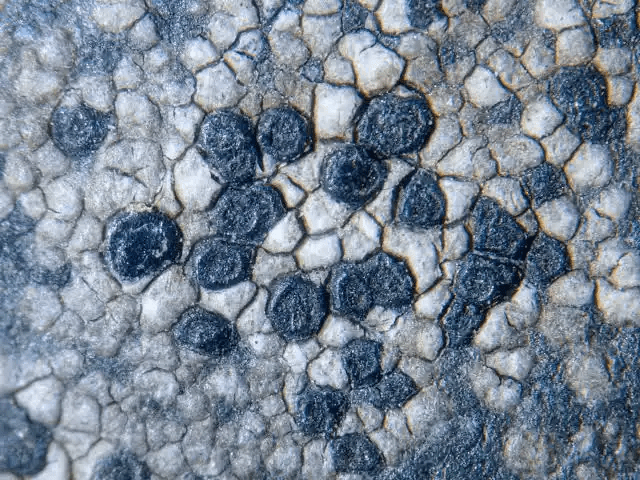
Detail below (photo from Rhizocarpon reductum – Aspen Ecology). The black blobs are apothecia; fungal fruiting bodies containing spores
On the pebbles there is a version of this lichen called Rhizocarpon reductum var. fimbriata which consist of mainly a black/dark green web-like prothallus (a thallus that is free of algae; just fungal hyphae) [thallus: the part of a lichen that is not involved in reproduction; the “body” or “vegetative tissue”] connected to apothecia. This is very common at Pagham on pebbles on the vegetated shingle of the paths and Church Norton Spit; but you need to pick up a pebble and look at it with a handlens
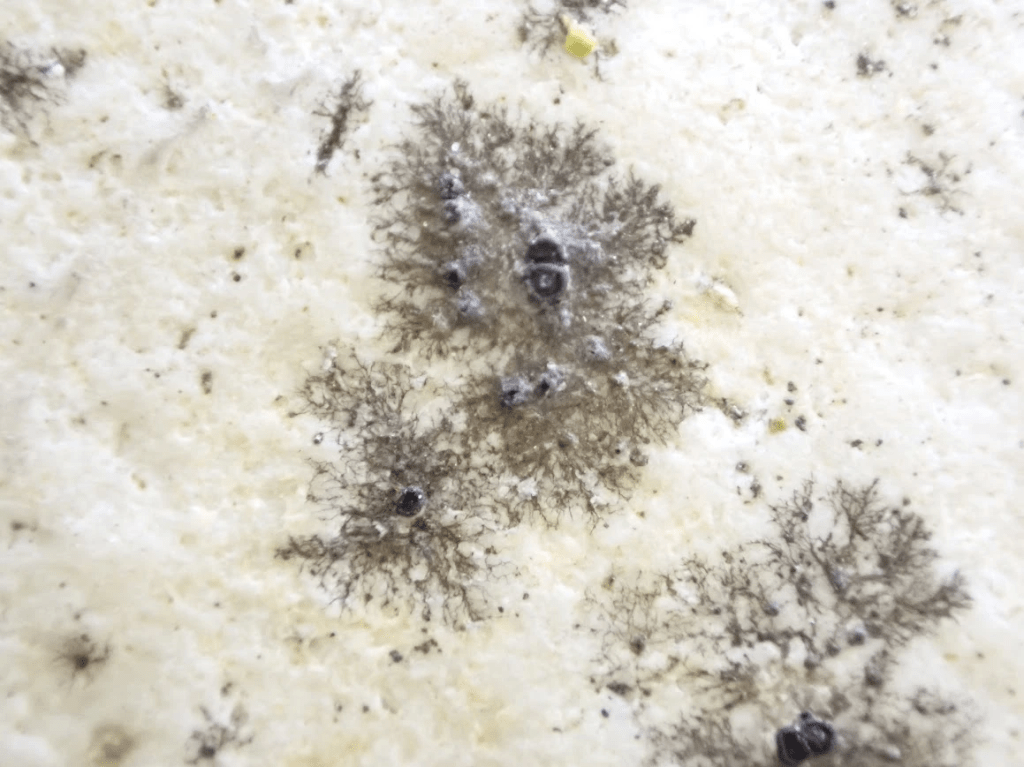
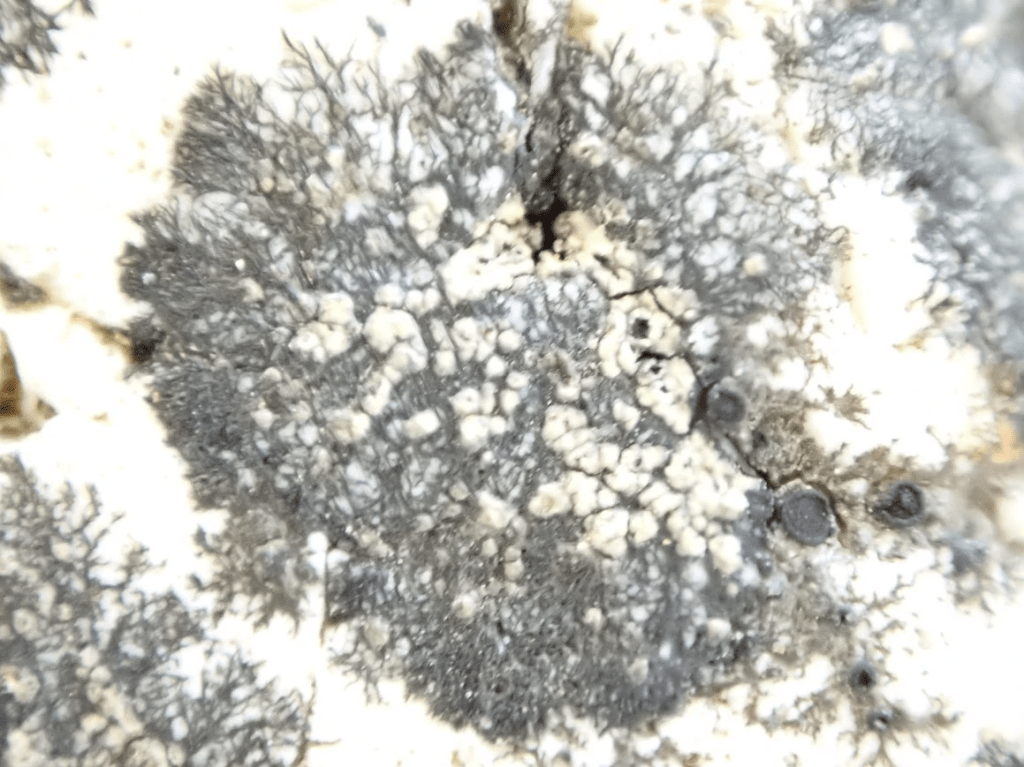
As a long term Dr Who nerd as well as lichen nerd, I wonder whether the designer of the Kaled Mutant in The Eve of The Daleks (2022) based the design on R. reductum var. fimbriata

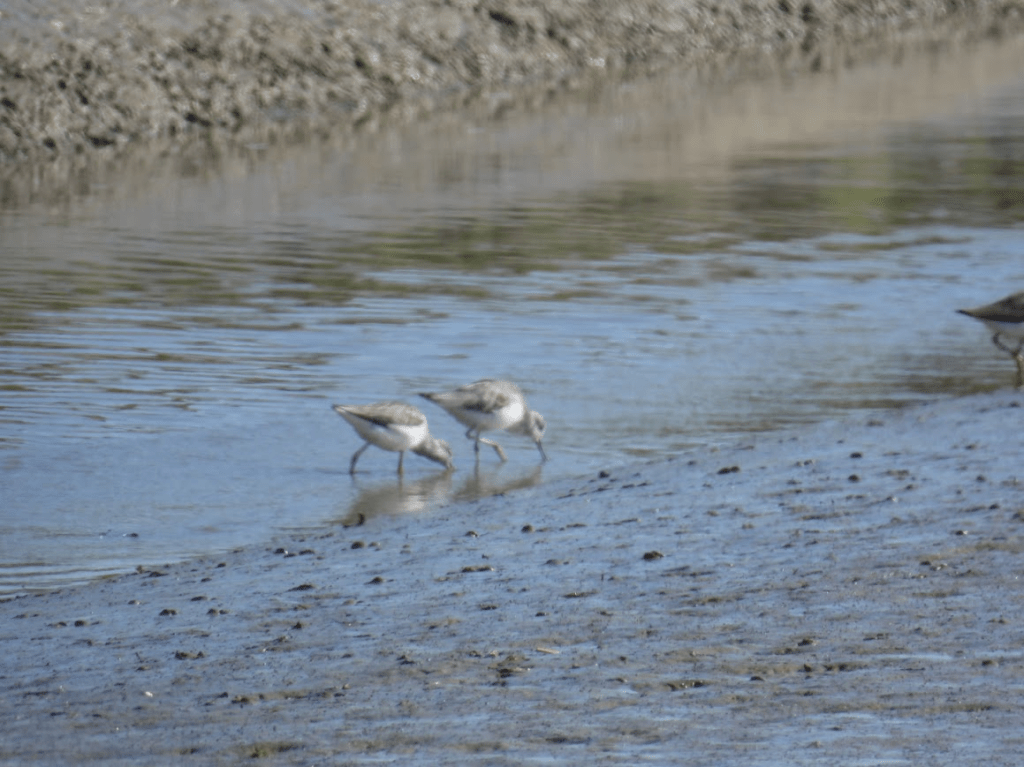
In a creek, some Greenshanks
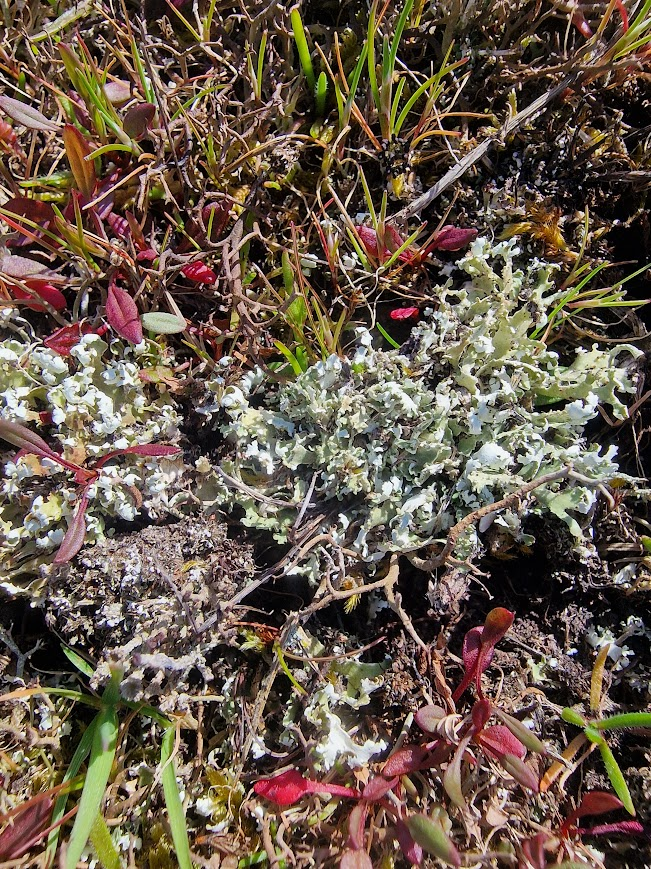
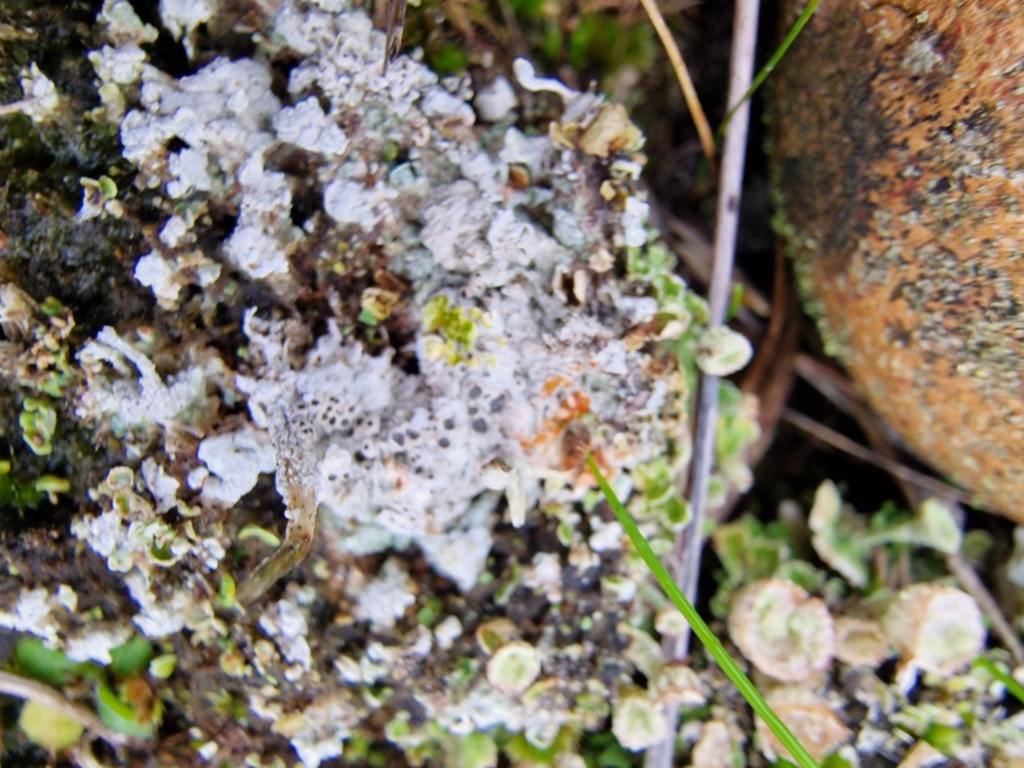
On the ground just to the west of a gorse, on the path to the coastal oaks, is Cladonia foliacea. In the UK it is a rarer lichen confined to coastal dunes and vegetated shingle. In the Netherlands it is is called Summer Snow lichen, as its squamules (basal leafy lobes) turn over when desiccated revealing their white undersides.
Pixie Cups (lichens of the genus Cladonia) grow in the soils between the pebbles. Probably Cladonia pyxidata Pebbled Pixie Cup. There are many pixie cup species in the genus Cladonia
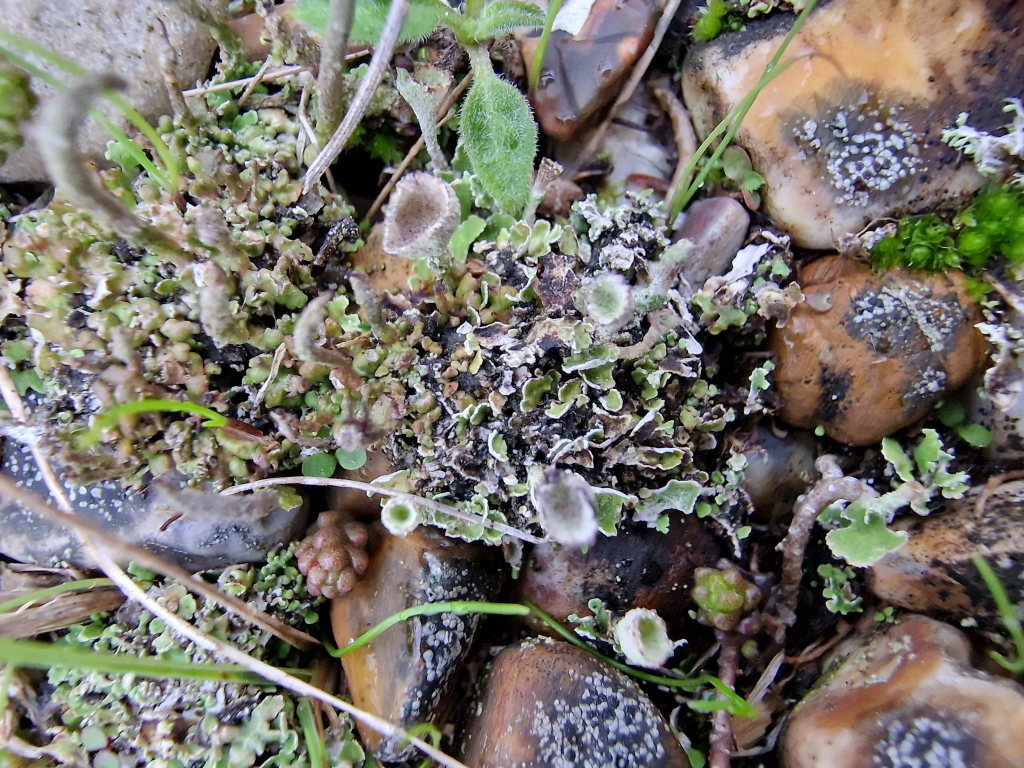
There are several pixie cups you can see at Pagham. I have seenL

  • Pebbled Pixie Cup (Cladonia pyxidata): One of the most widespread types, often found on bare soil or old trees. It is characterised by funnel-shaped cups that are typically coated with tiny, granular scales.
  • Mealy Pixie Cup (Cladonia chlorophaea): Frequently growing on rotting logs and acidic soil, this species is noted for having a “mealy” or powdery appearance due to fine soredia (reproductive granules) on its surface.
  • Gray’s Pixie Cup (Cladonia grayi): Highly similar to the mealy pixie cup but contains grayanic acid, which causes it to glow light blue under ultraviolet light.
  • Trumpet Lichen (Cladonia fimbriata): Known for its very slender stalks that flare abruptly into a neat, regular cup at the top, often described as looking like a miniature golf tee.
  • Madame’s Cup Lichen (Cladonia coccifera) Distinguished by yellowish to grey-green stalks and bright red fruiting bodies (apothecia) on the rim of the cup.

The above list was created by Google Gemini AI

On Church Norton Spit, in the part currently closed, I have seen Diploschistes muscorum, Cowpie Lichen. This is a lichen that parasitises mostly Pixie Cup lichens and the mosses around them. Parasitic symbiosis is a very rare relationship for lichens, mostly liches get all their energy from their photobiont (alga or cyanobacteria) (mutualistic symbiosis) not from another lichen
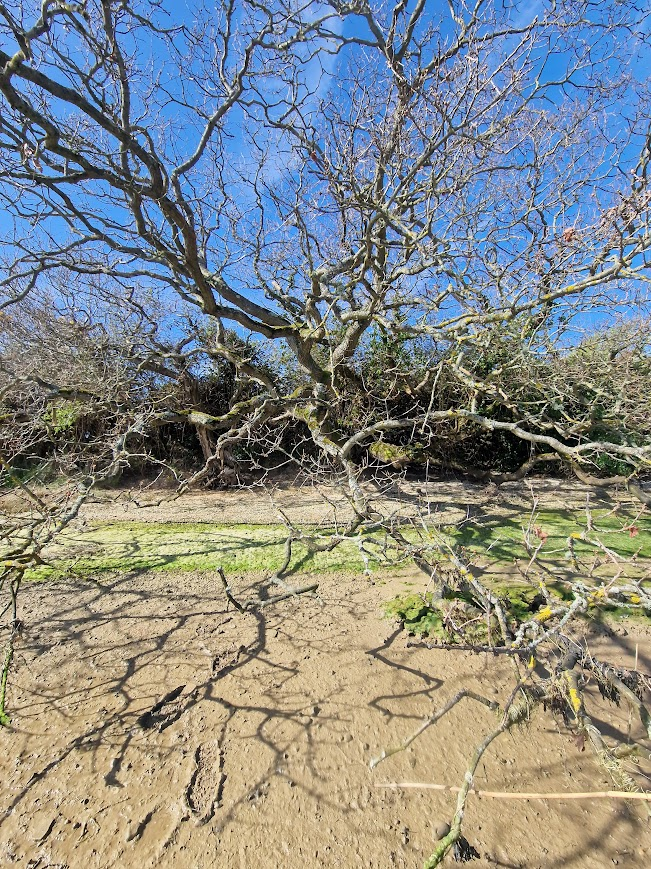
Lichens on the coastal Pedunculate Oaks

Presumably these Oaks started growing on more solid ground and the edge of the harbour has moved to meet them, as they would have got to this size if they started growing next to water.
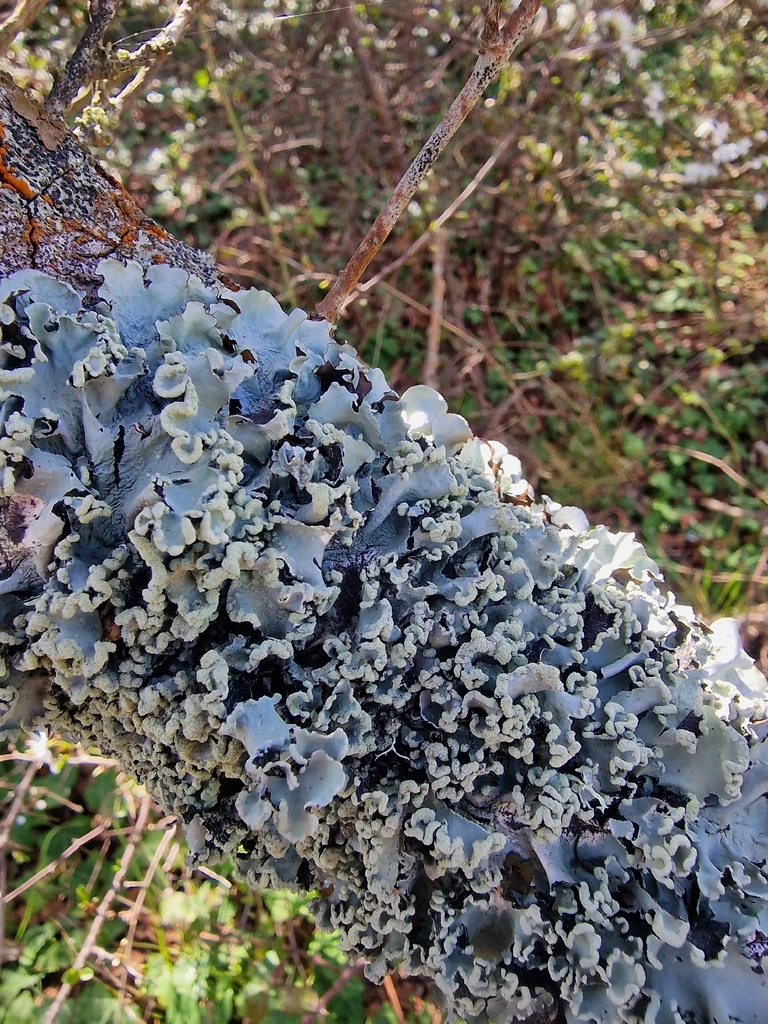
They have the very common lichens of Oak, especially Common Greenshield Lichen (Flavoparmelia caperata) and Black Stone Flower lichen (Parmotrema perlatum); one of the spices in biriyani sauce

Parmotrema perlatum; Flavoparmelia caperata
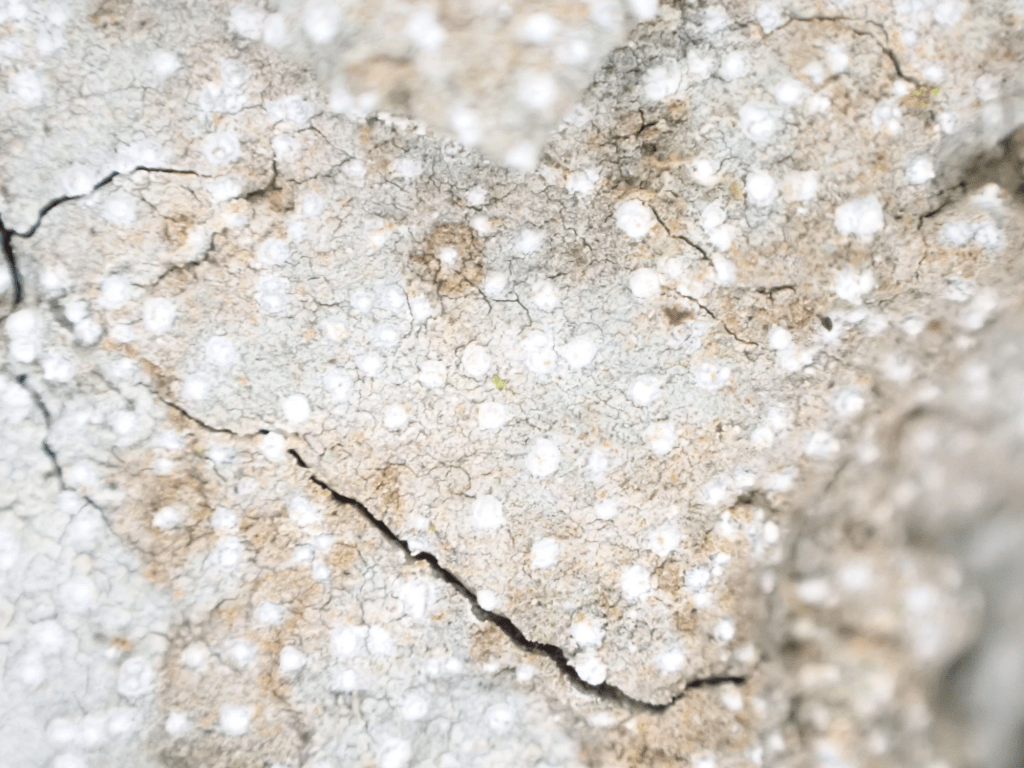
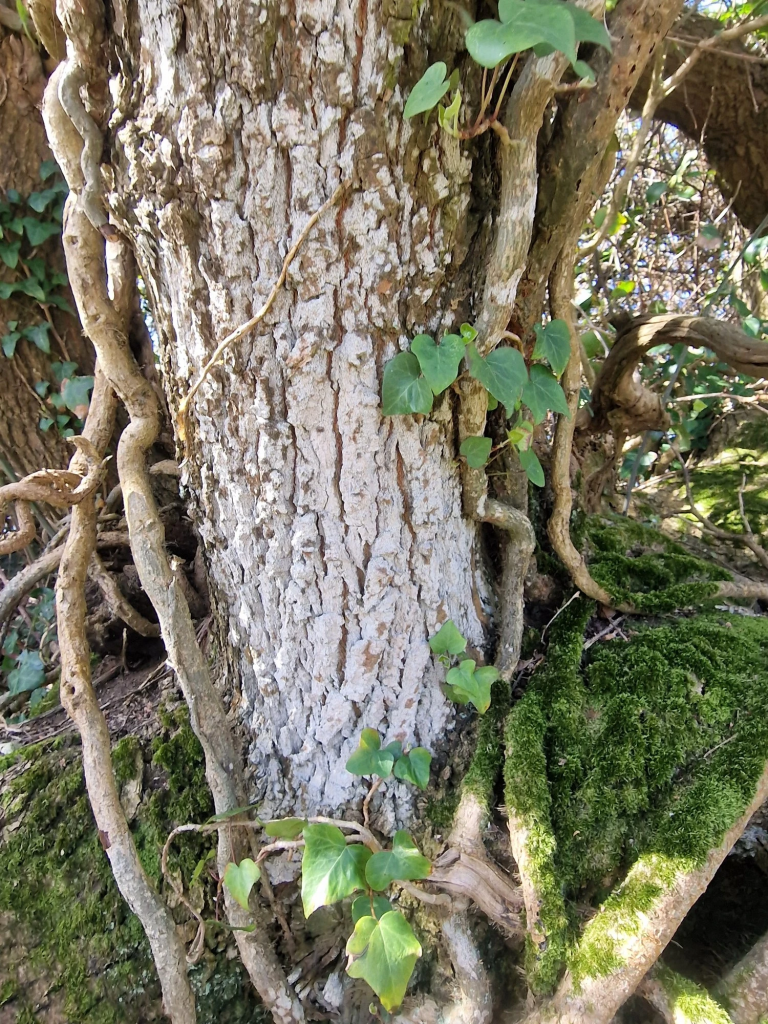
But they also have the very rare Inodema subabietinum on parts of their lower trunks, above the high water mark, and on the stems of the Ivy on the oaks. This rarer lichen can only be separated from other similar species with chemical reagent spot tests of their pycnidial pruina (the “dust” on the pycnidia ‘ pycnidia are small, flask-shaped, asexual reproductive structures produced by the fungal partner (mycobiont), that appear on the lichen surface; they look like acne in Inodema subabietinum & Lecanactis abietina). If the pruina do not go red in response to a drop of sodium hypochlorite, and response to potassium hydroxide turns lemon-yellow, the lichen is Inodema subabietinum not the more common Lecanactis abietina (whose pruina turn red in sodium hypochlorite). It’s distribution is mostly coastal, at the bottom of coastal oaks in the south. It’s an international responsibility lichen i.e. the UK has a significant proportion of the total global population.
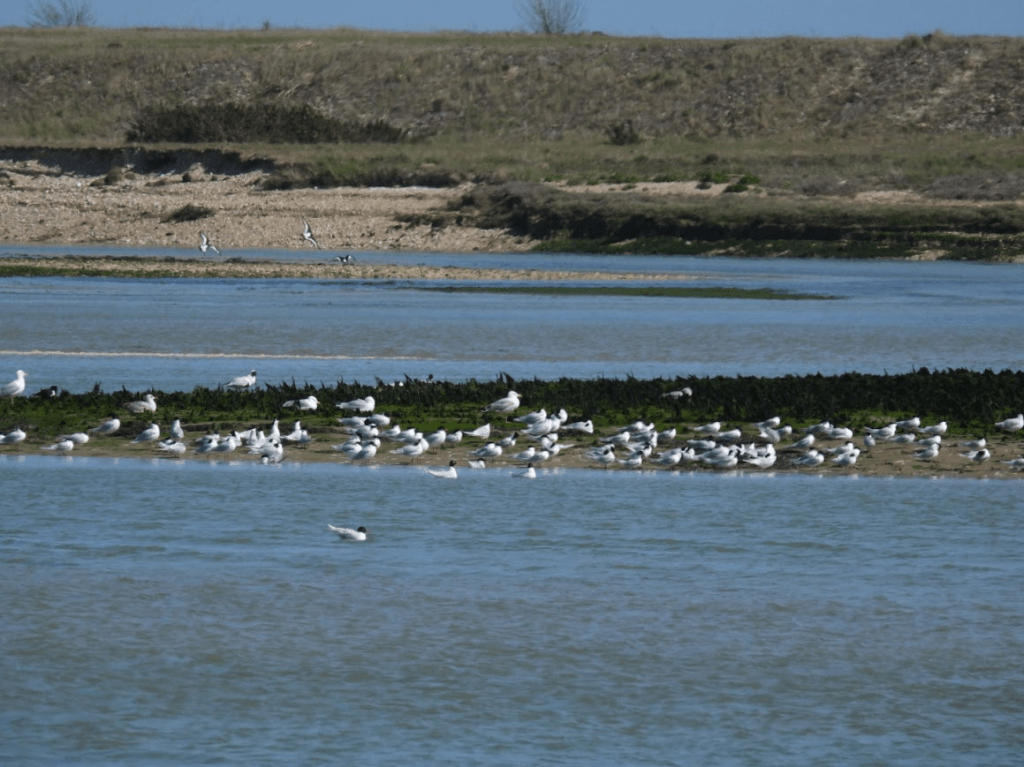
Just inside the harbour mouth I saw quite a few Sandwich Terns and a Little Tern (couldn’t get a photo of the Little Tern)
A collective art project titled ‘Looking Through’.
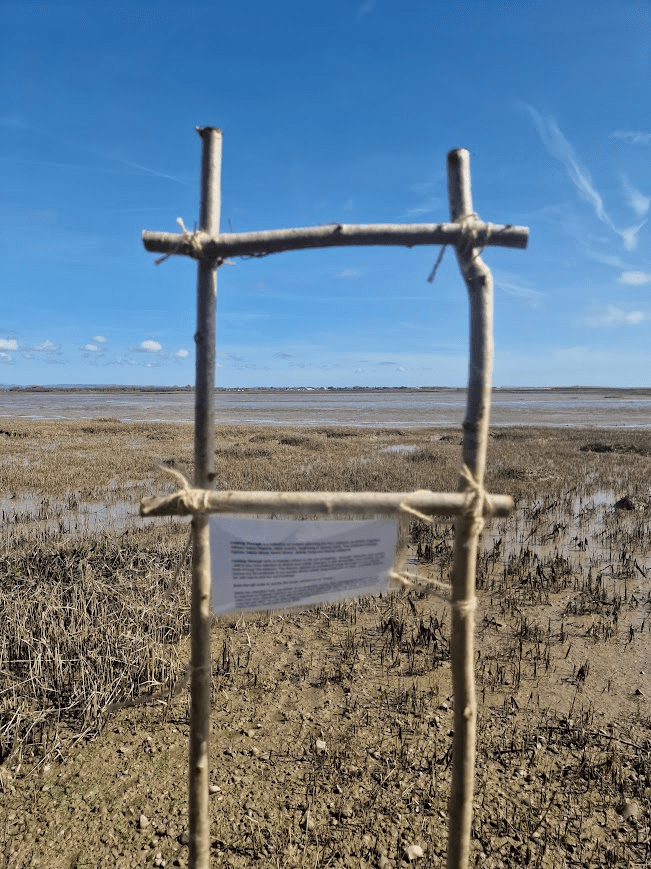
View finding frames have been placed at considered spots throughout the nature reserve, encouraging visitors to pay close attention to the details and subtle changes in the landscape and wildlife as we move through the seasons.

In the education hub, you can meet the four Sussex based artists leading this project. They will be exhibiting drawings, prints, film, photography and music exhibited, all in response to Pagham Harbour’s journey from Winter to Spring.

There will also be free workshops taking place where you can make you own view finders and concertina sketchbooks for keeping visual diaries of your walks around Pagham Harbour. 🎨 Art event at RSPB Pagham Harbour this… – RSPB Pagham Harbour | Facebook

On the spit.

As I walked on the spit to the east of the fenced-0ff area, there were lots of White Arses, Oenanthe oenanthe, on the fence posts. “Wheatear” is a Victorian change to the vernacular name because their historical vernacular name was deemed it too vulgar for polite society.
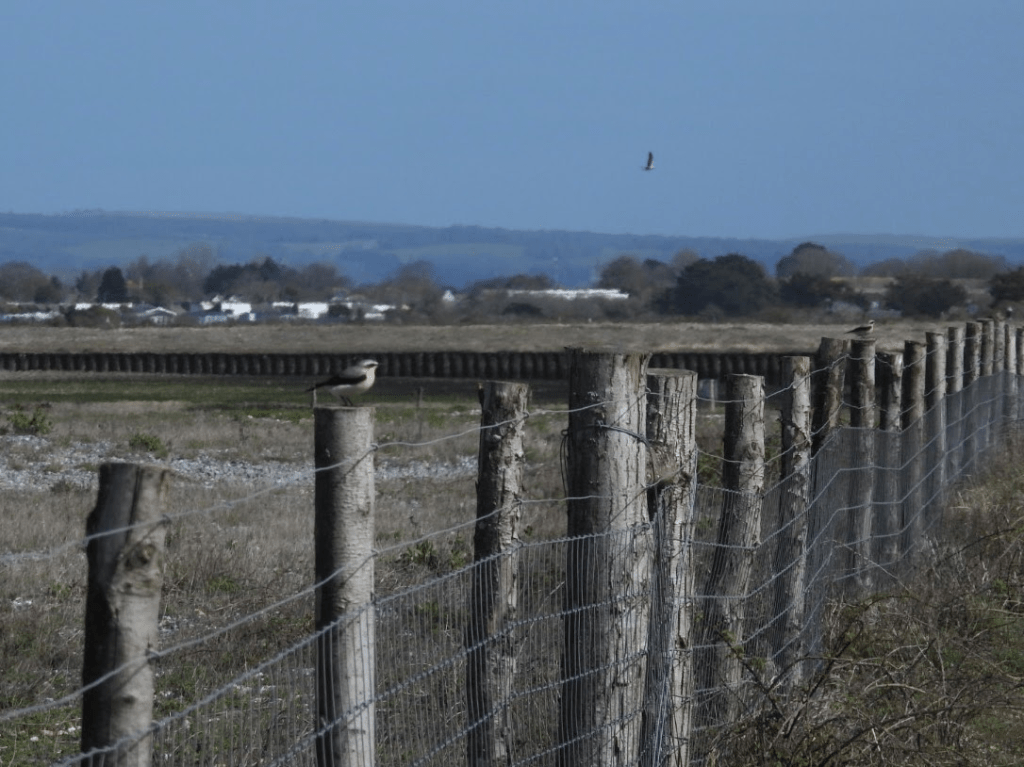
The bit of the spit that is fenced off is vegetated shingle, which is a very important habitats for lichens. But there is some vegetate shingle outside the exclusion area with many interesting lichens, including:

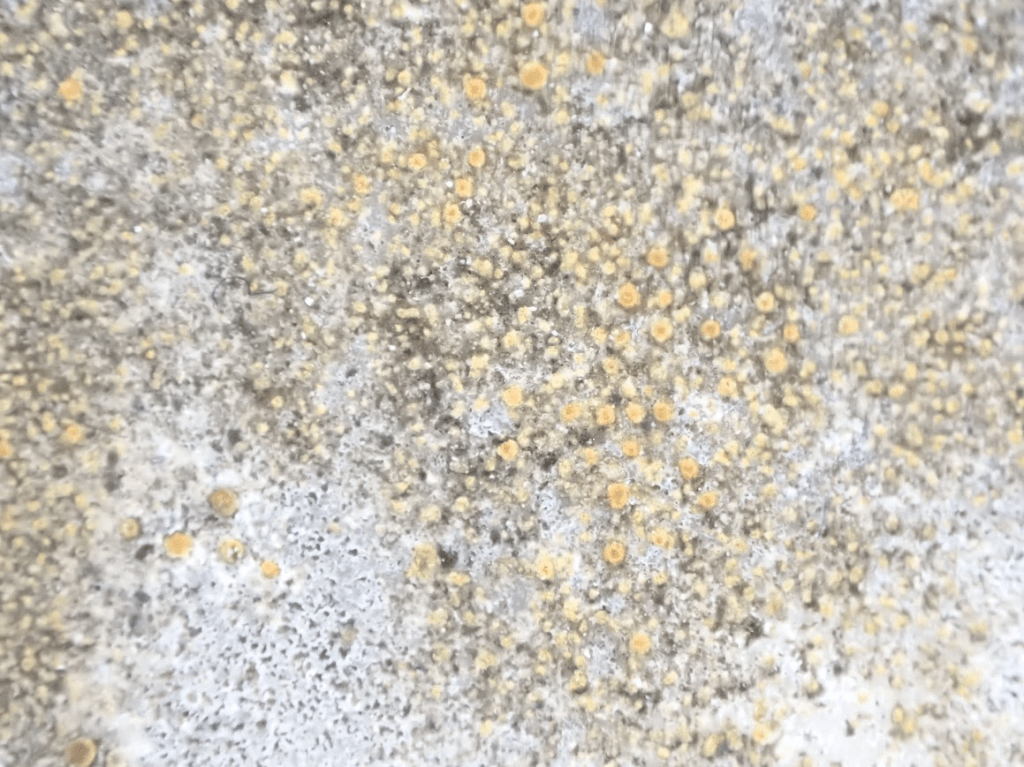
Oyster Shells on, with Candelariella spp. (Goldspeck) lichens, this is probably C. aurella.
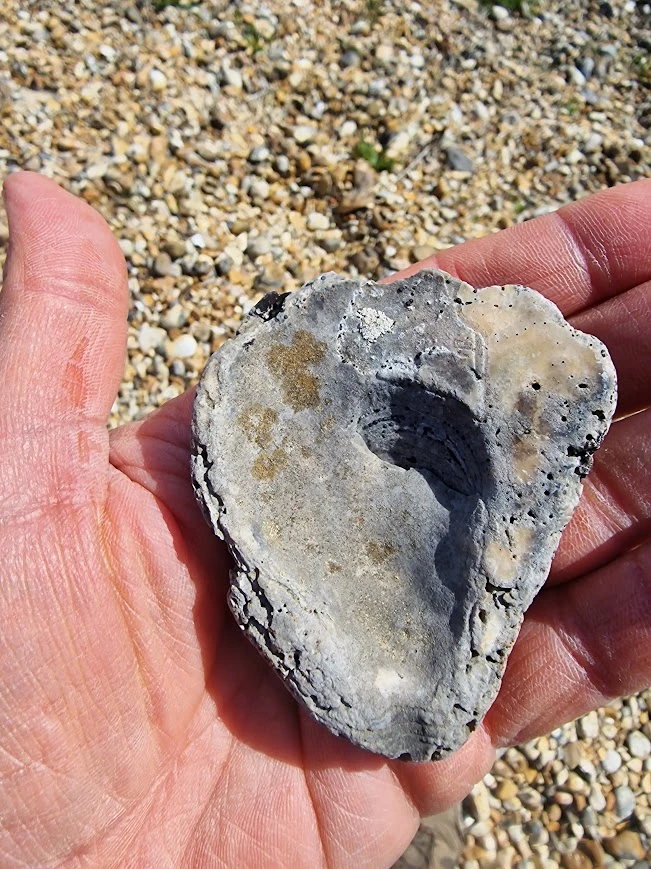
There is also Circinaria contorta on them – handlens needed for these two
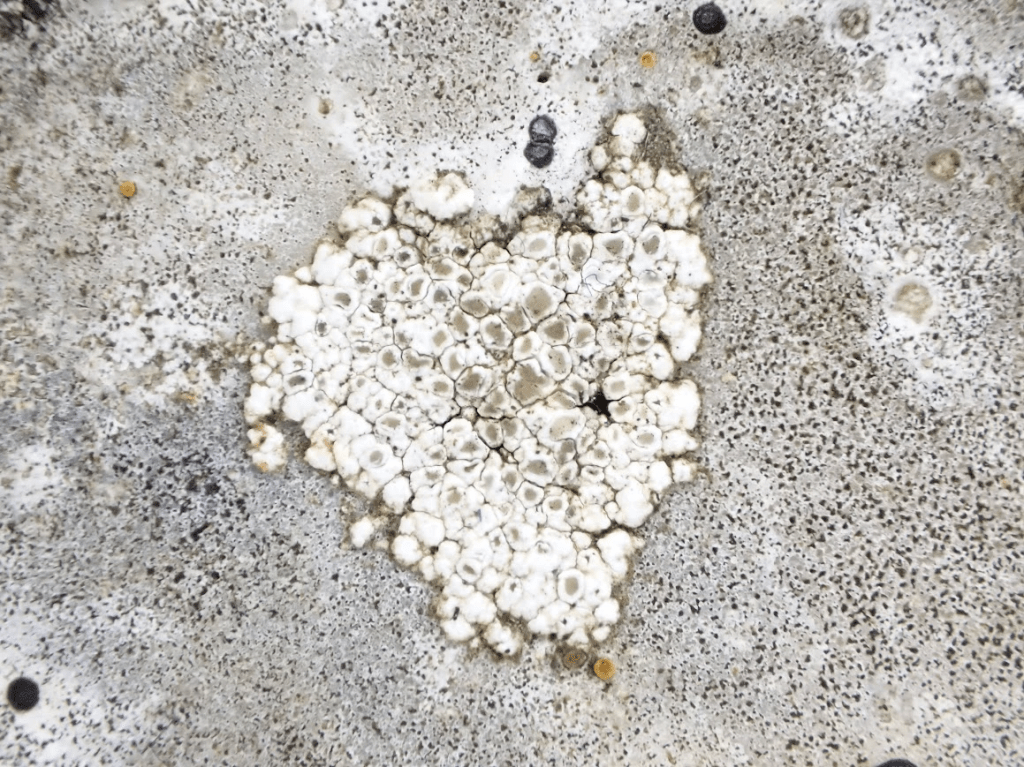
Both lichens are common on calcareous substrates (rocks, concrete etc). Oyster shells are ca. 35% calcium carbonate CaCO3.

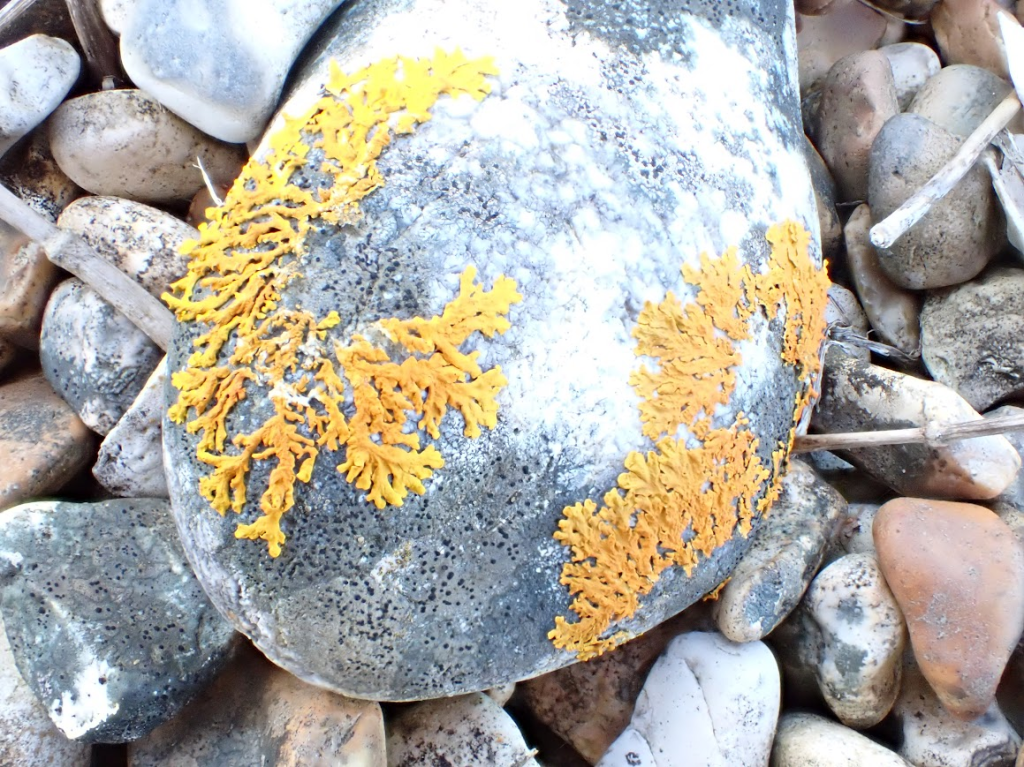
Pebble with Xanthoria aureola Seaside Sunburst Lichen
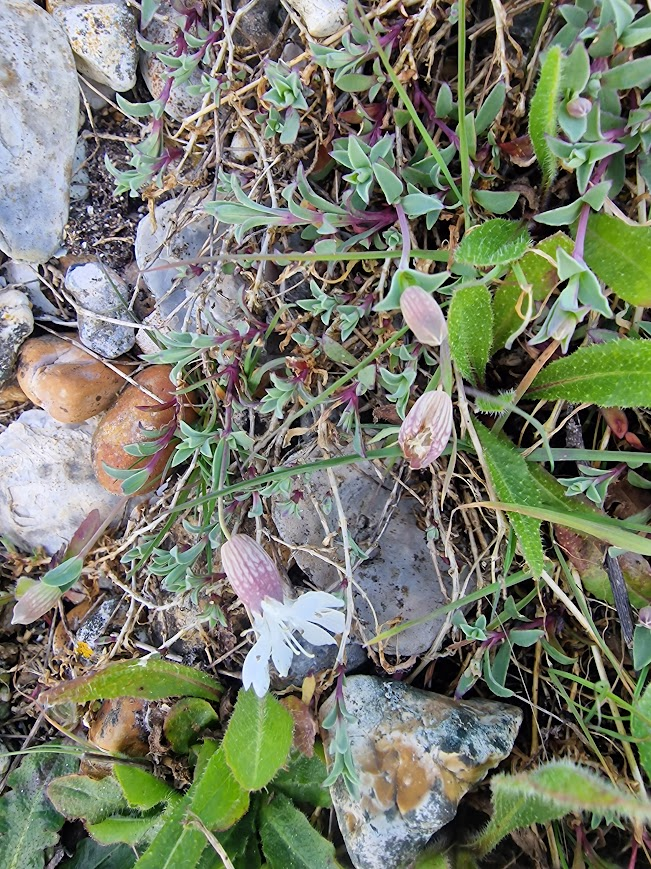
Sea Campion
Physcia adscendens
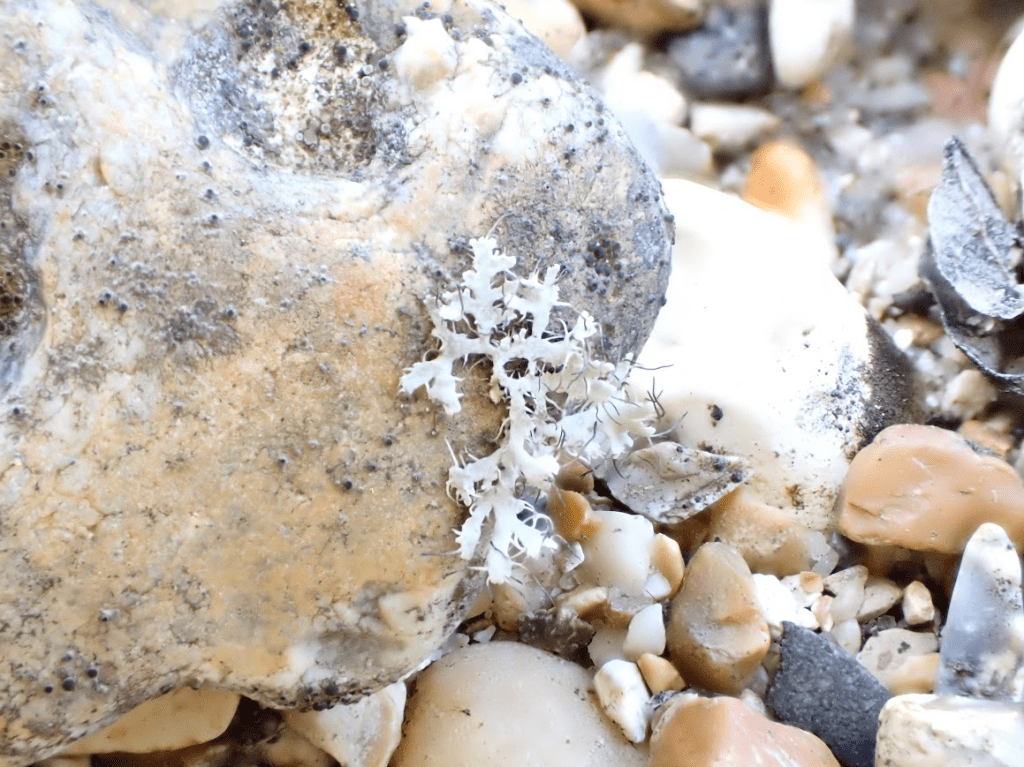
Typically a corticolous lichen i.e. a lichen of trees but also grows on vegetated shingle.

Purple, orange, black & grey
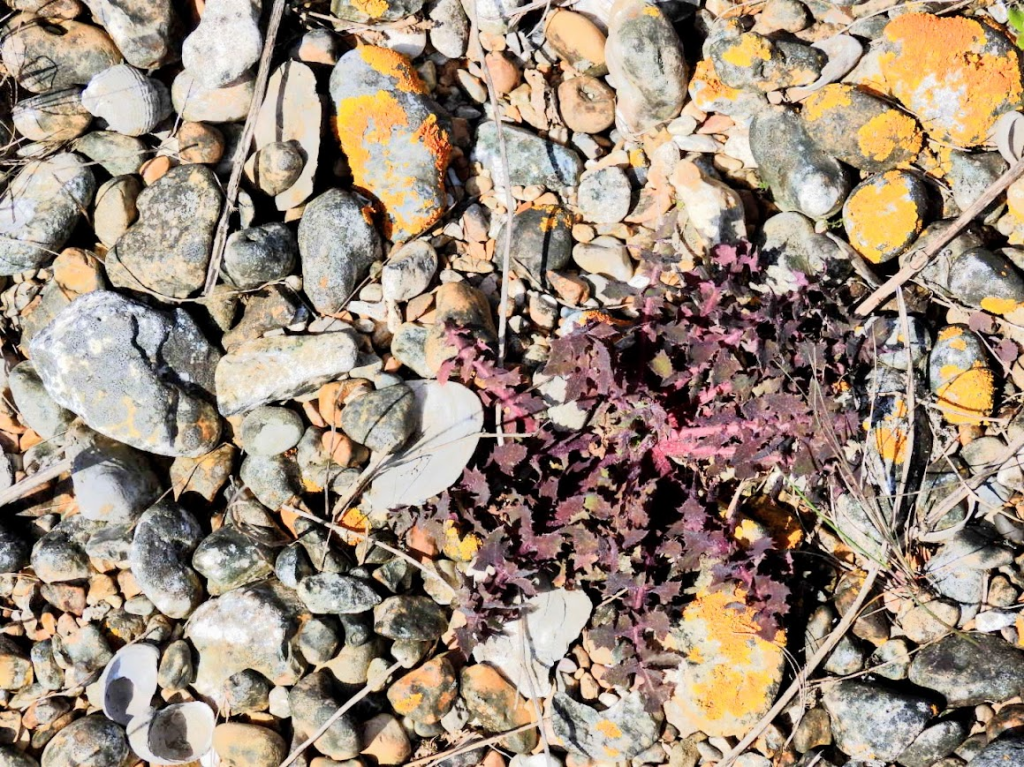
Sea Kale (purple when young), Xanthoria aureola and Rhizocarpon reductum

Sea Kale seems so abundant, as we see it a lot on the shingle of Pagham and Church Norton spits; but is nationally rare and on the Sussex Rare Plant Register

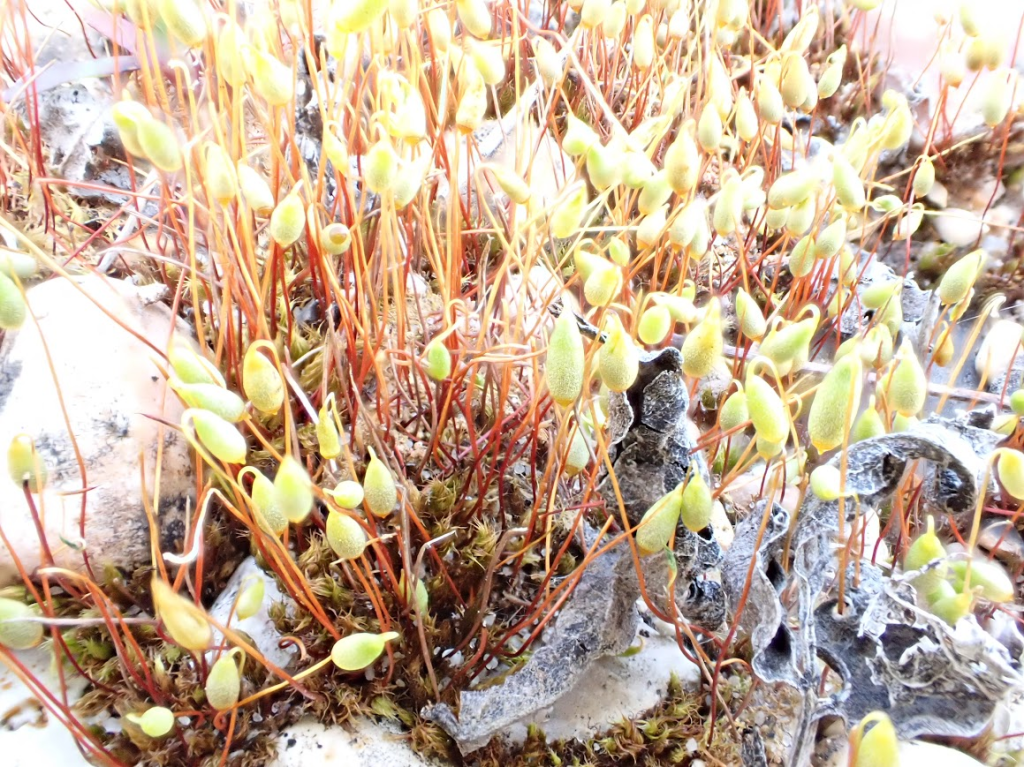
A forest of moss spore capsules on the vegetated shingle; probably a Bryum sp. moss
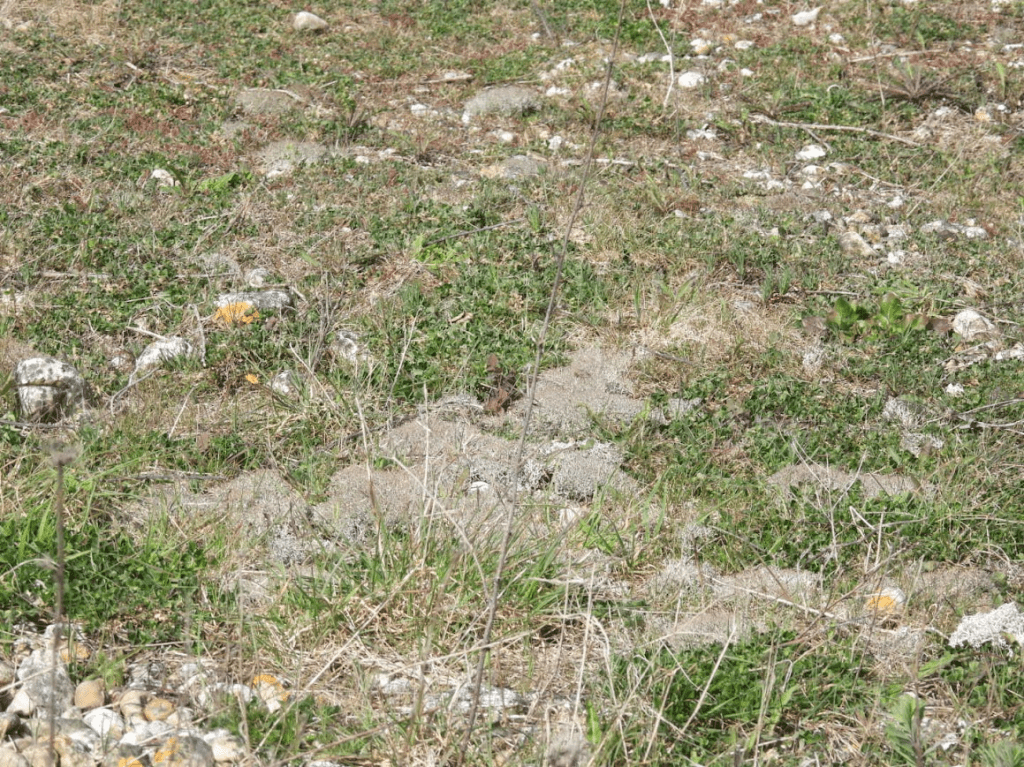
Balls of Cladonia rangiformis on the beach; they blow in the wind like tumble weed.
The stunted wind-blown Oaks gwoing toward the Severals are covered in lichens
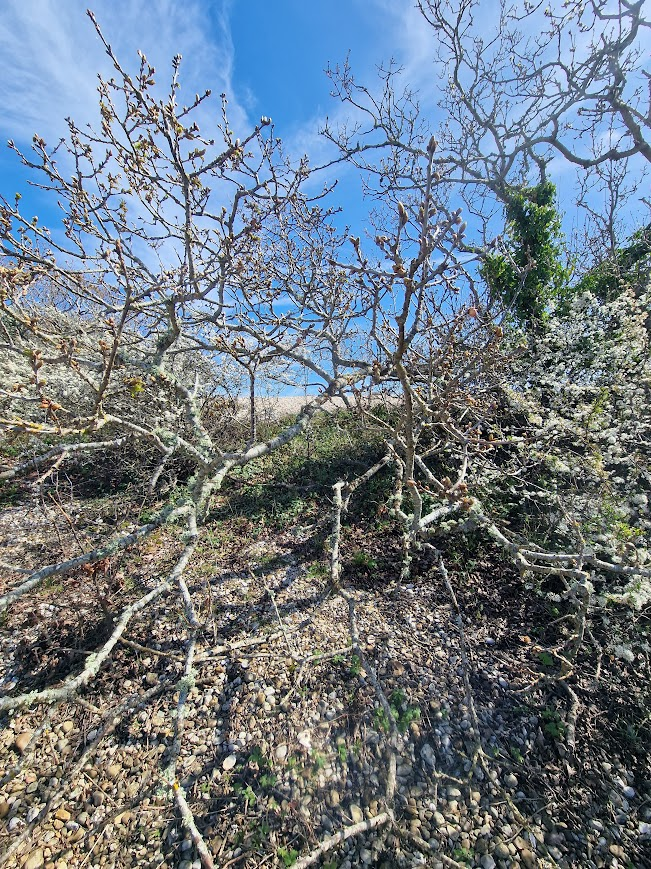
includingL

Ramalina fastigata and Lecanora chlarotera s.l. (s.l. = sensu lato i.e. in the broadest sense, either this lichen or a lichen very similar in the same genus)
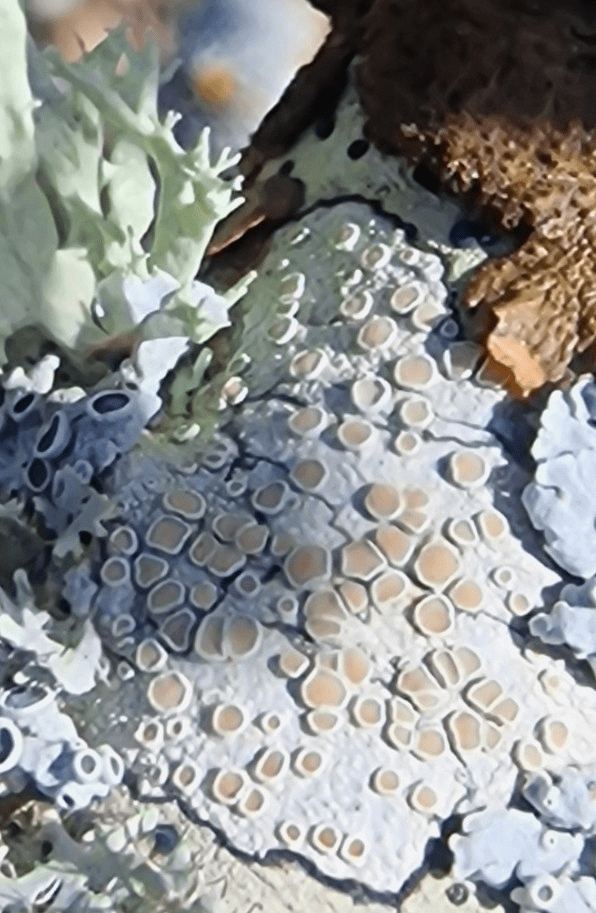
Lecidella eleachroma (with black “button” apothecia) and Physcia adscendens (top)
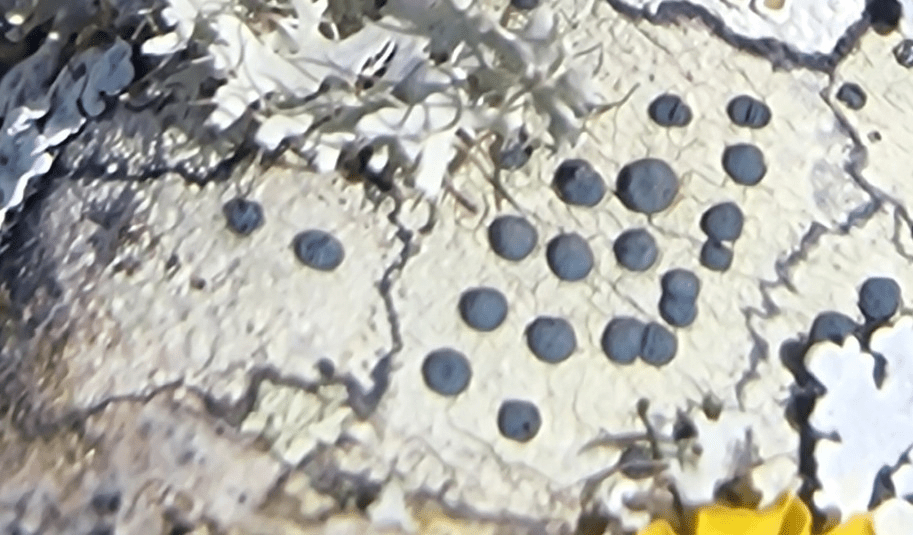
Melanelixia glabratula Polished Camouflage Lichen
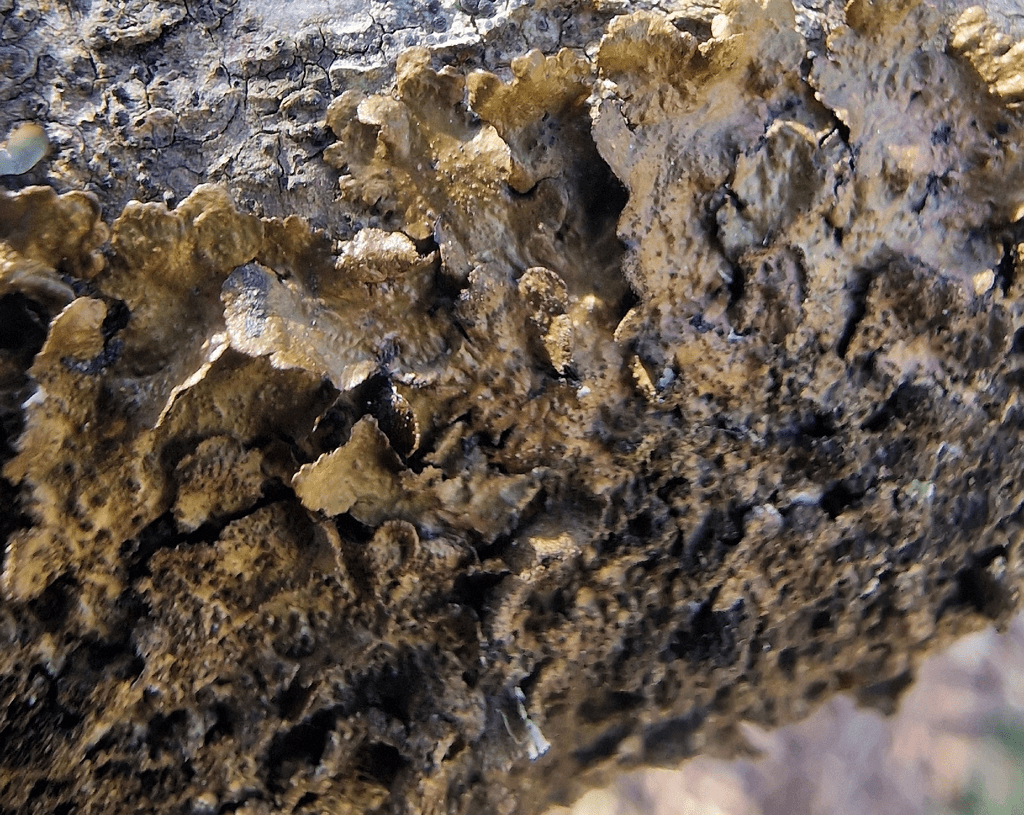
Physcia aipolia and Melanelixia glabratula
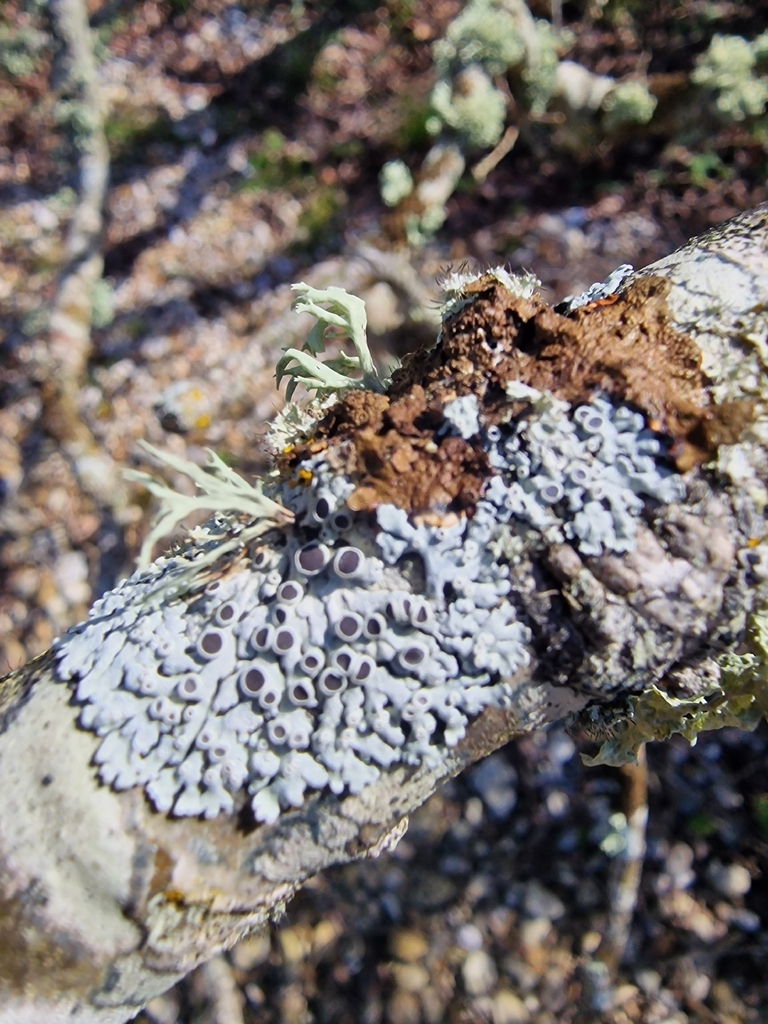
Xanthoria parietina (orange)
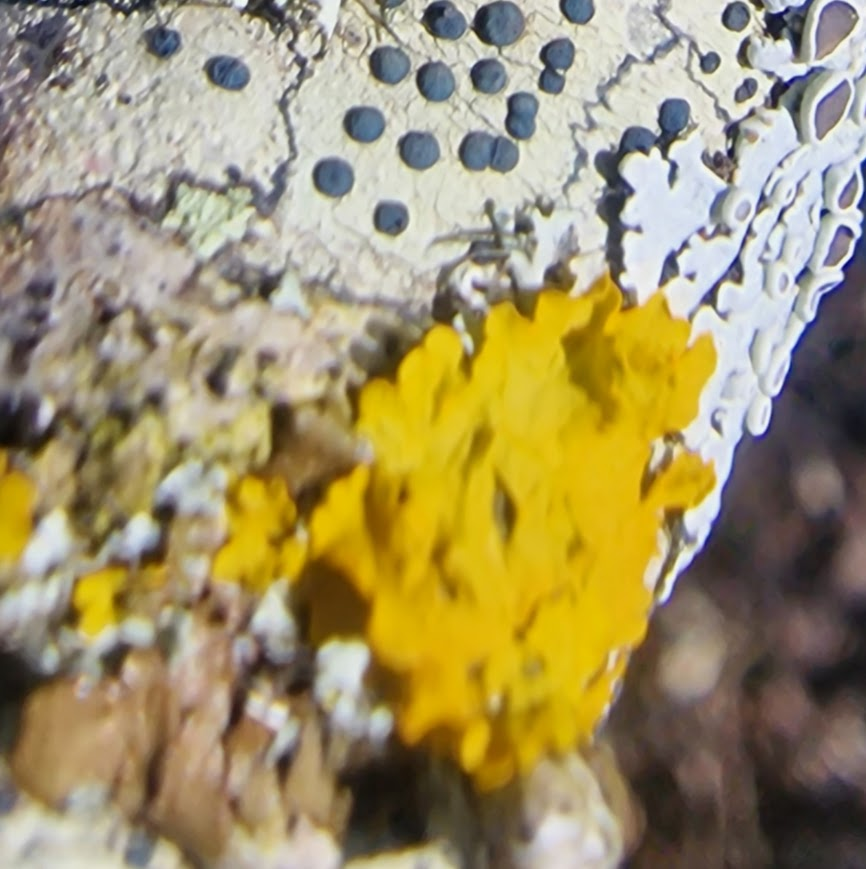
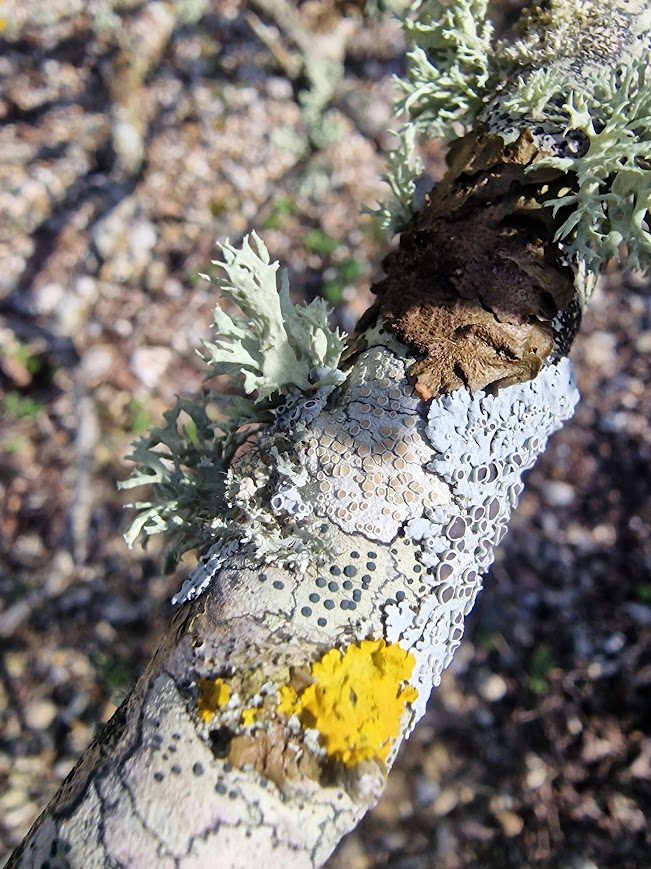
All of the above on one branch
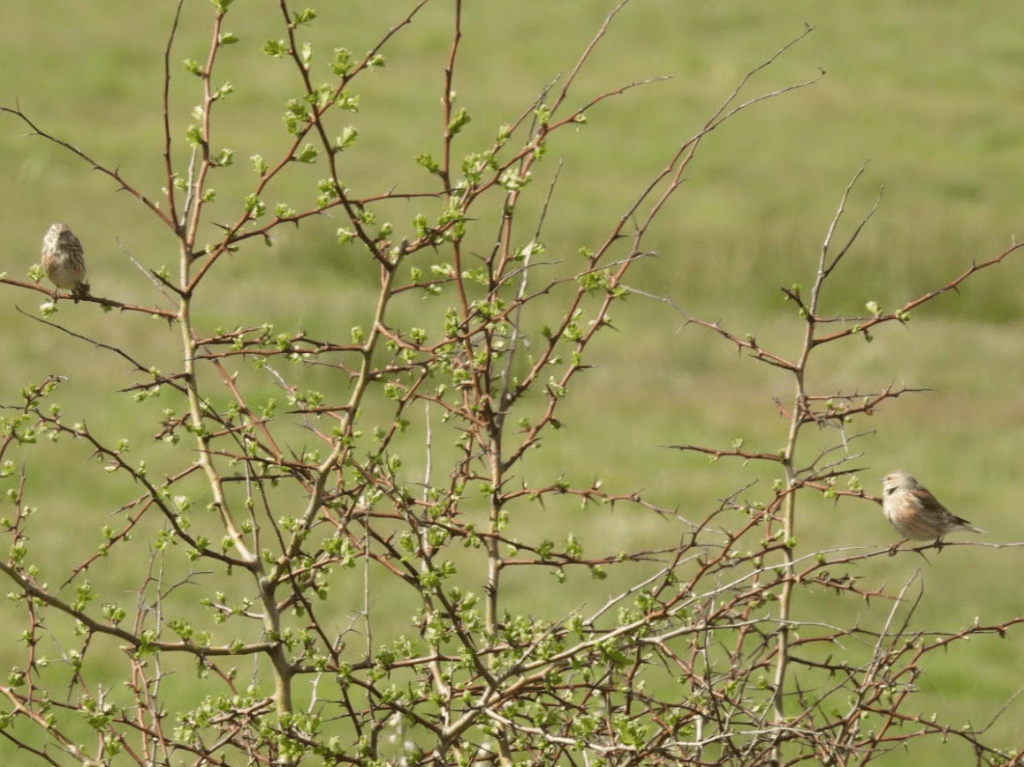
Linnets at the Severals
Walking back from Church Norton to the Ferry Pool

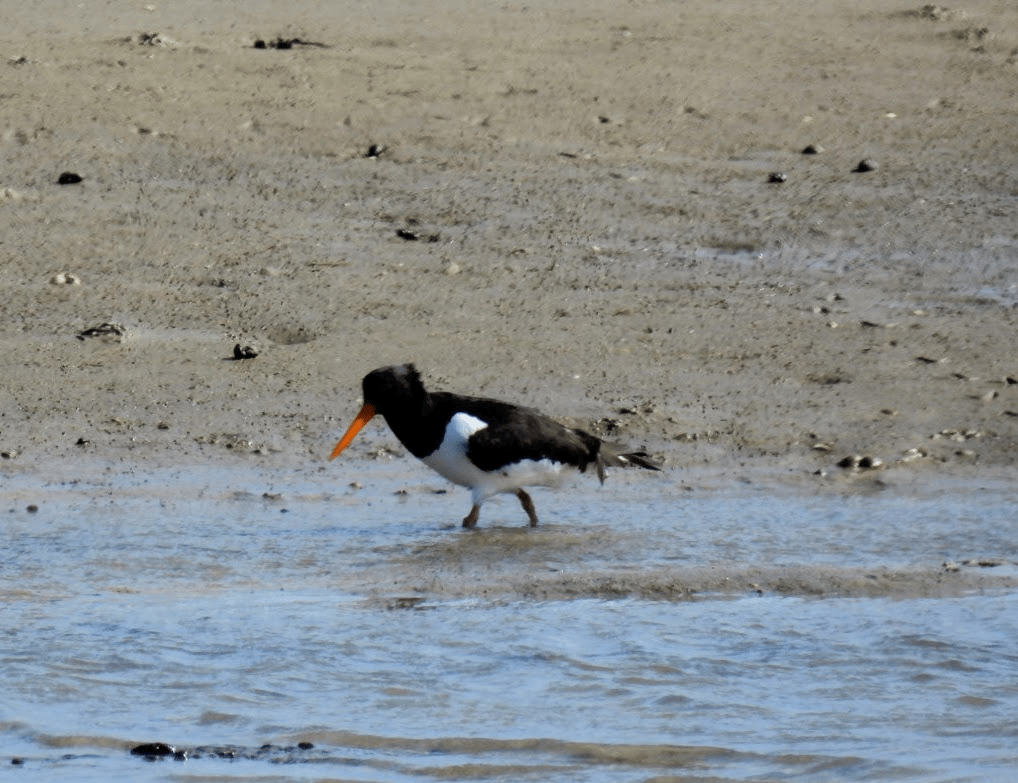
Oystercatcher
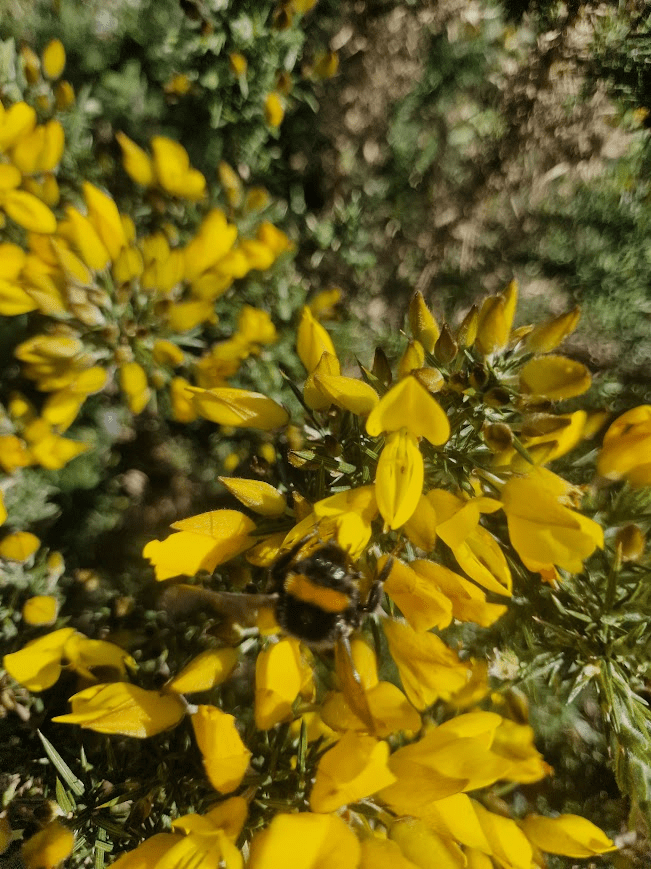
Spot the Buff-tailed Bumblebee on Gorse
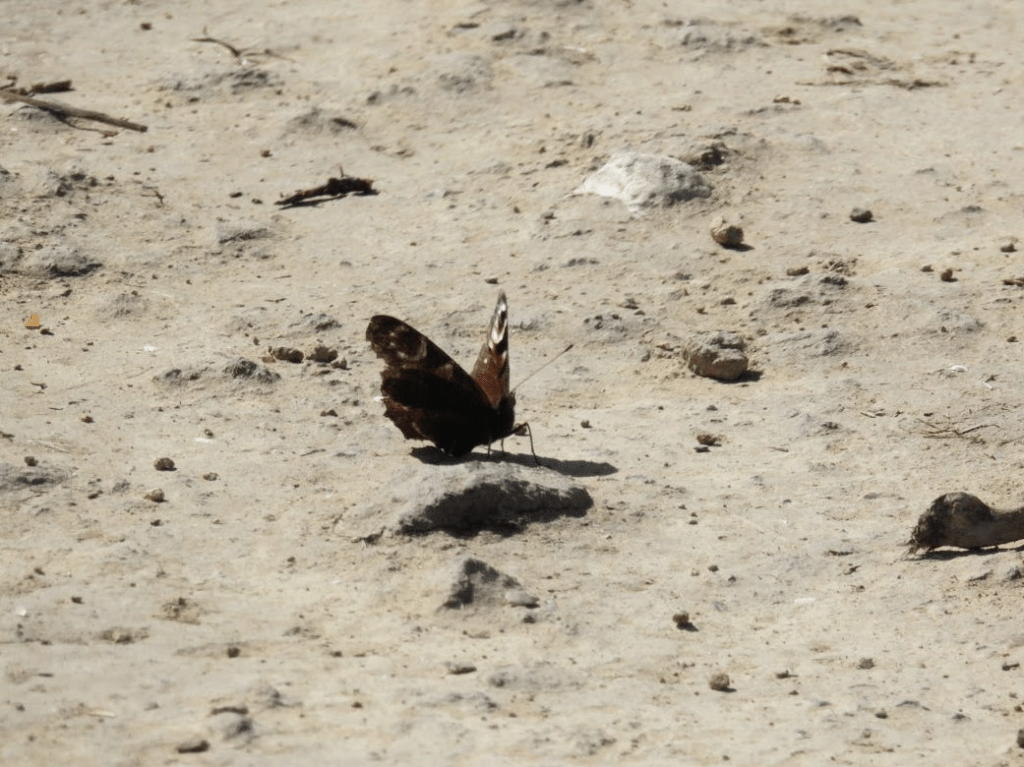
Peacock Butterfly
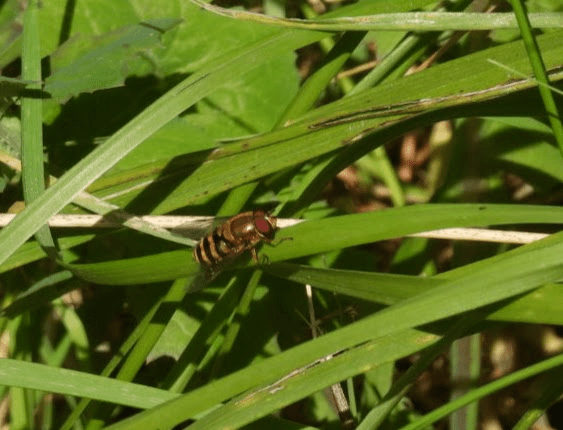
A Hoverfly possibly Syrphus torvus Hairy-eyed Flower Fly
Symbolic nature and real nature in Nunhead Cemetery, London. 23.03.26

Nunhead train station is next door to Nunhead Cemetery,  Linden Grove, SE15, so it is easy to get to.

Perhaps the least known, but most attractive, of the great Victorian Cemeteries of London. Consecrated in 1840, it is one of the seven great Victorian cemeteries established in a ring around the outskirts of London. It contains examples of the magnificent monuments erected in memory of the most eminent citizens of the day, which contrast sharply with the small, simple headstones marking common, or public, burials. It’s formal avenue of towering limes and the Gothic gloom of the original Victorian planting gives way to paths which recall the country lanes of a bygone era Nunhead Cemetery – Friends of Nunhead Cemetery
The burial grounds were laid out as a lawn cemetery with a linked scheme of gently curving hard paths, boundary plantings and scattered clumps of trees. Most of the original path system survives (2010) and although many memorials are overgrown with scrub, ivy and saplings, specimen trees from the original planting survive including holm oak, lime, plane, yew, beech and a gingko. Nunhead Cemetery (All Saints) , Non Civil Parish – 1000824 | Historic England

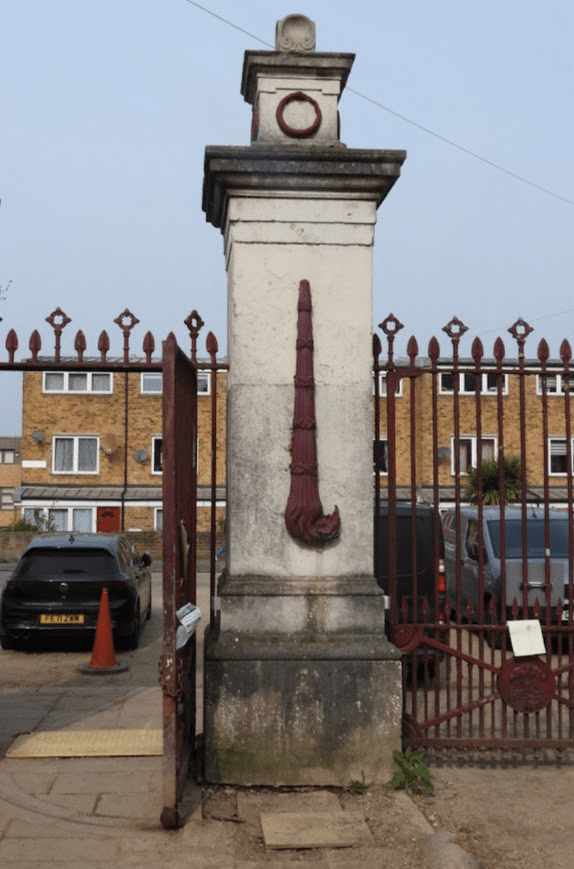
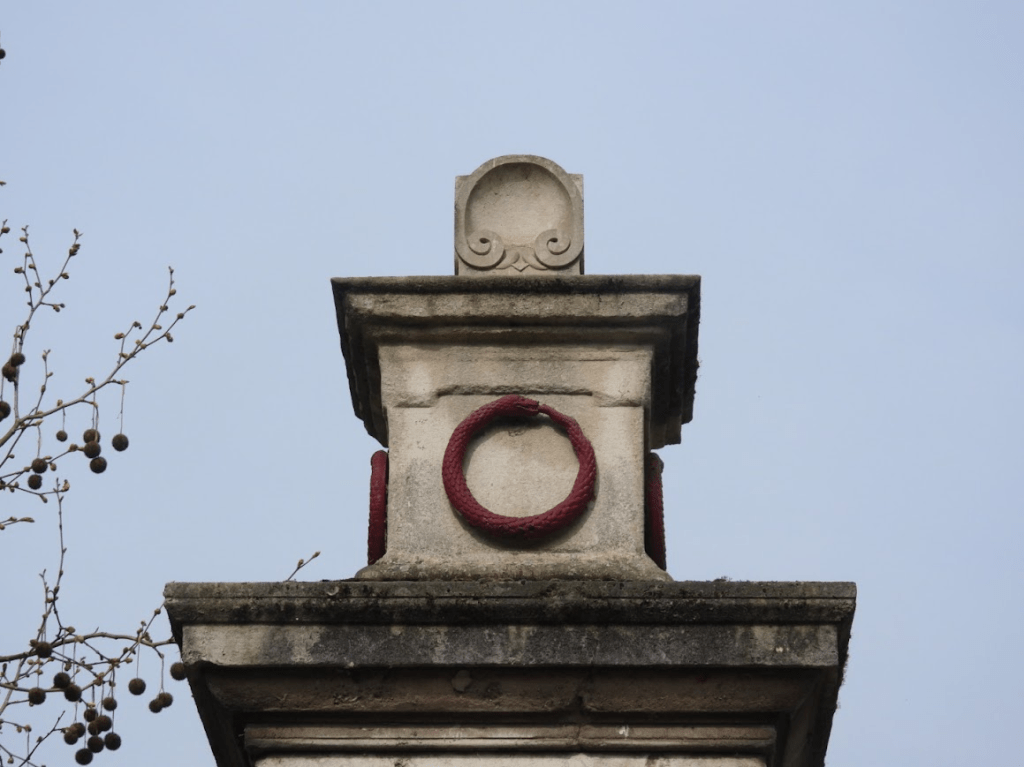
The first symbol you see arriving at Nunhead are serpents (ouroboroi) eating their own tails, representing eternal life, at the top of the pillars of the main entrance to the cemetery.

Since Roman times, the inverted torch has been a symbol of death https://pittsburghcemeteries.wordpress.com/2015/10/08/the-inverted-torch/

The inverted torch symbolizes death, and the burning flame, which would normally be extinguished when the torch was turned upside down due to a lack of oxygen, symbolizes the flame of eternal life and the Christian belief in resurrection. The soul of the deceased continues to exist in the next realm. Call Me Taphy Engraved: But the Soul Burns On…

The Friends on Nunhead Cemetery incorporates the ouroboros in their logo

But whilst ouroboroi may be used at Nunhead as a symbol of Christian resurrection, the origin of ouroboroi is pre-Christian.The first known use of an Ouroboros is on one of the shrines enclosing the sarcophagus of Tutankhamun

From Djehouty, CC BY-SA 4.0 https://creativecommons.org/licenses/by-sa/4.0, via Wikimedia Commons

The Oroboros is a key symbol in Gnosticism and Alchemy. A dragon-like ouroboros represented in a late medieval Byzantine alchemical manuscript written in Greek. Theodoros Pelekanos, Crete, 1478 (vellum)

Anonymous medieval illuminator; uploader Carlos Adanero, Public domain, via Wikimedia Commons

Whist Ouroboroi are often interpreted as representing eternal life, they also represent the transmigration of souls (from snakes’ ability to shed their skins) The snake biting its own tail is a fertility symbol in some religions: the tail is a phallic symbol and the mouth is a womb-like symbol. The Ouroboros is not traditionally a Christian symbol; it originated in ancient Egyptian iconography and Greek magical traditions. While sometimes adopted by Christian mystics to symbolize God’s eternity, it is primarily associated with Gnosticism, alchemy, and esoteric philosophies. I think it unlikely that  James Bunstone Bunning, the architect of the gates, didn’t know of the Egyptian and esoteric associations with the Ouroboros as he was a member of Society of Antiquaries of London

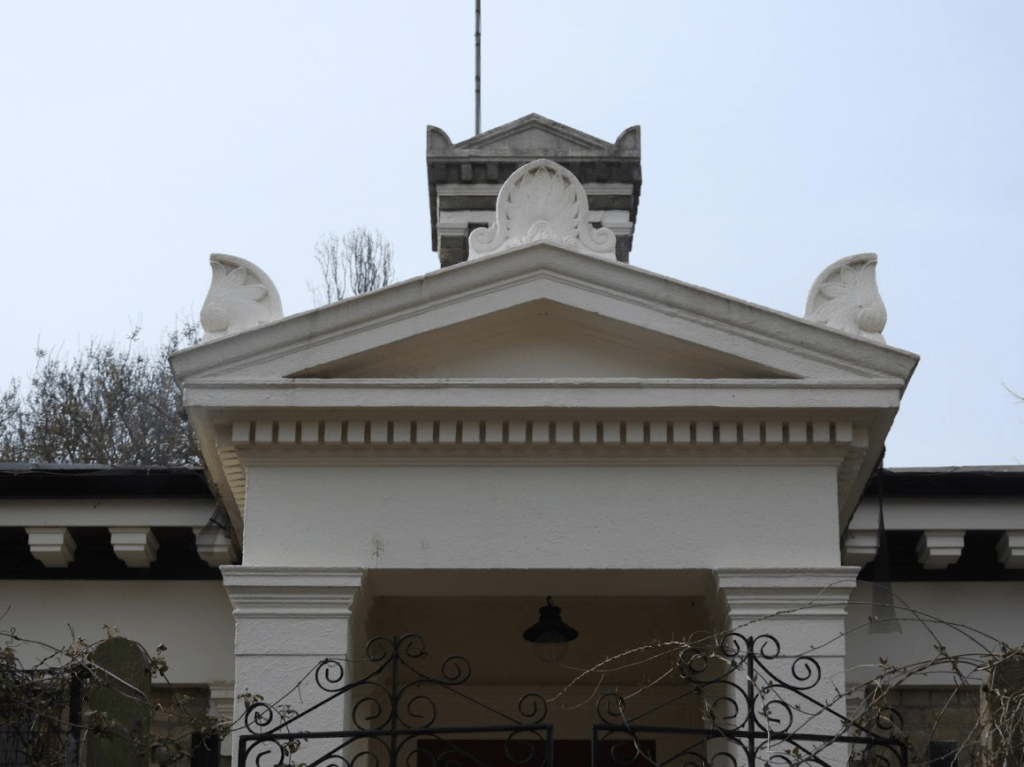
The East Lodge House. Two matching lodges to east and west, designed by Bunning c1840 and listed grade II, were built in neo-classical style inside the grounds adjacent to the gates. The two-storey lodges built from yellow brick face onto the main drive, steps leading up to the central doors on the first floors. Nunhead Cemetery (All Saints) , Non Civil Parish – 1000824 | Historic England

The three projections from the pediment are highly stylised leaves.

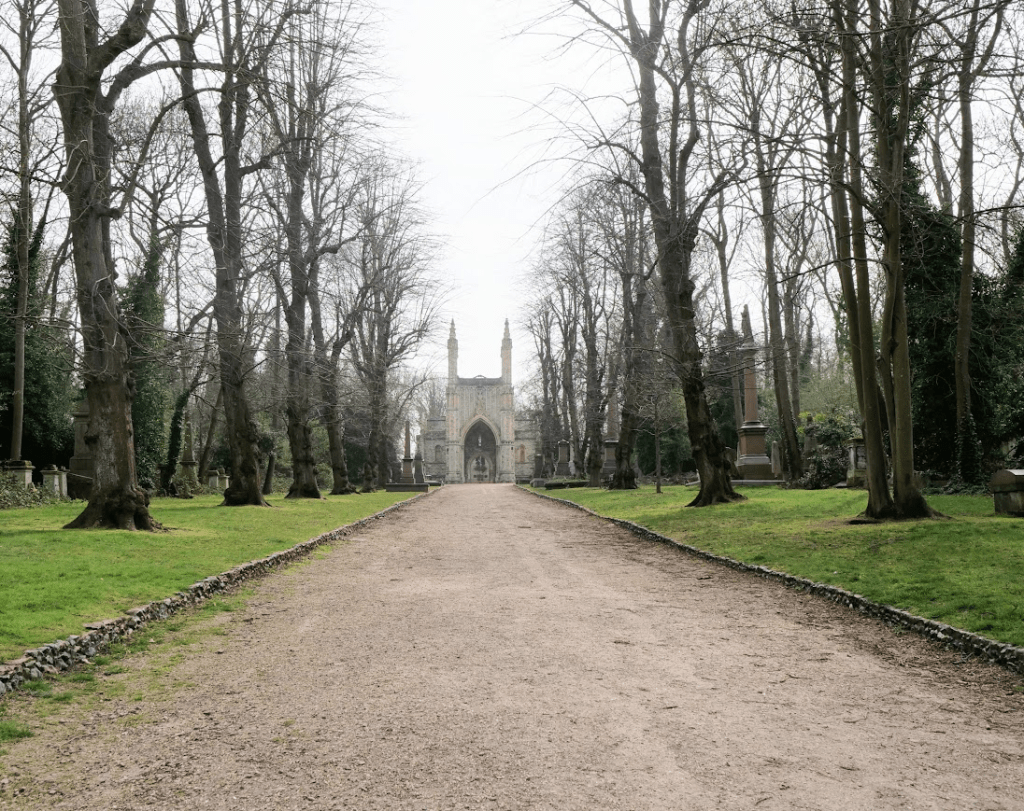
The Avenue of Limes is a defining feature of the cemetery, leading from the entrance to the Anglican Chapel. These are probably Common Lime (Tilia x europaea)

It leads main entrance gate is located on Linden Grove.

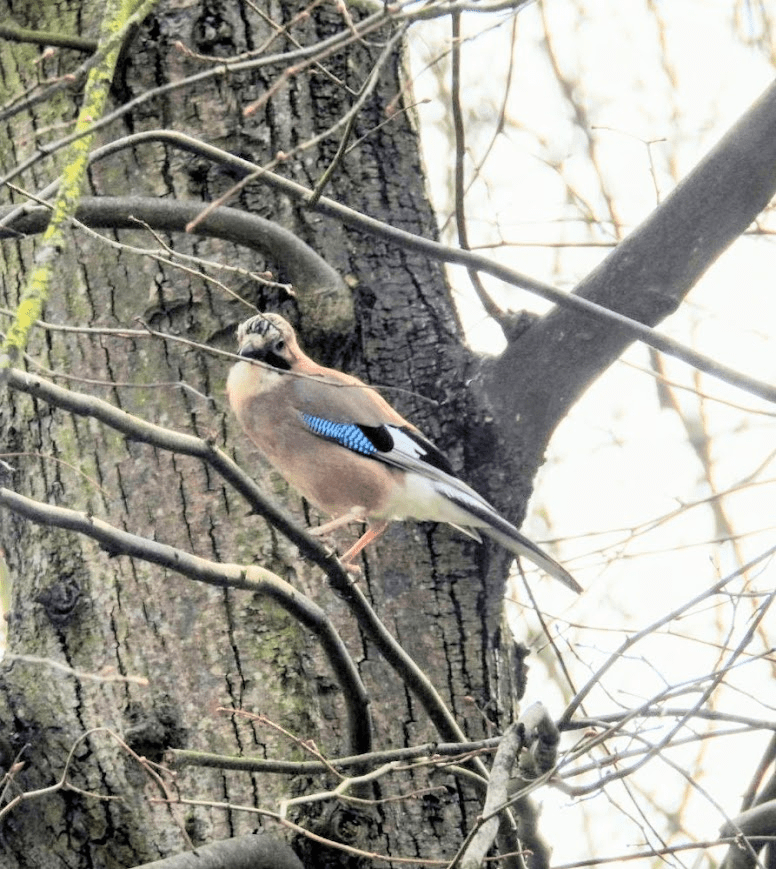
In one of the Limes was a Jay

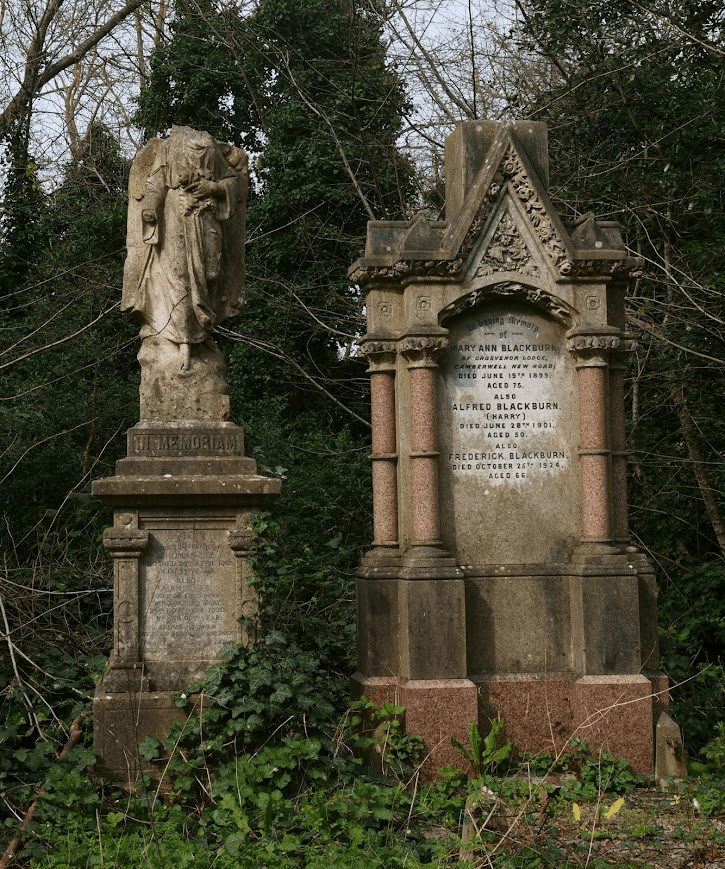
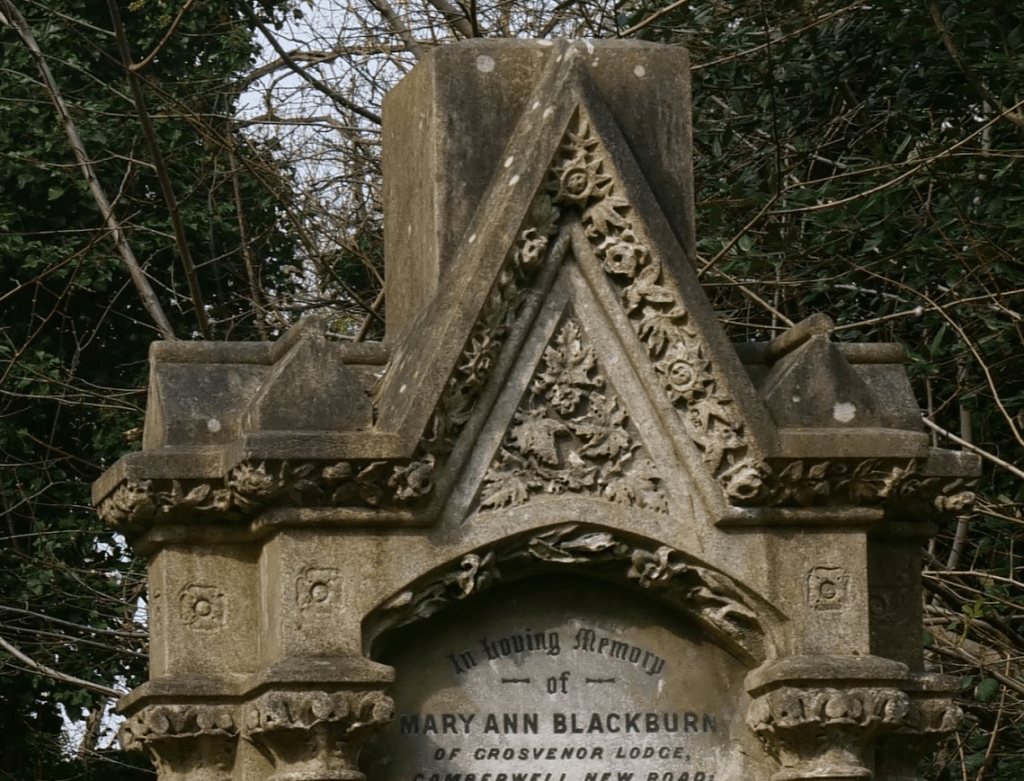
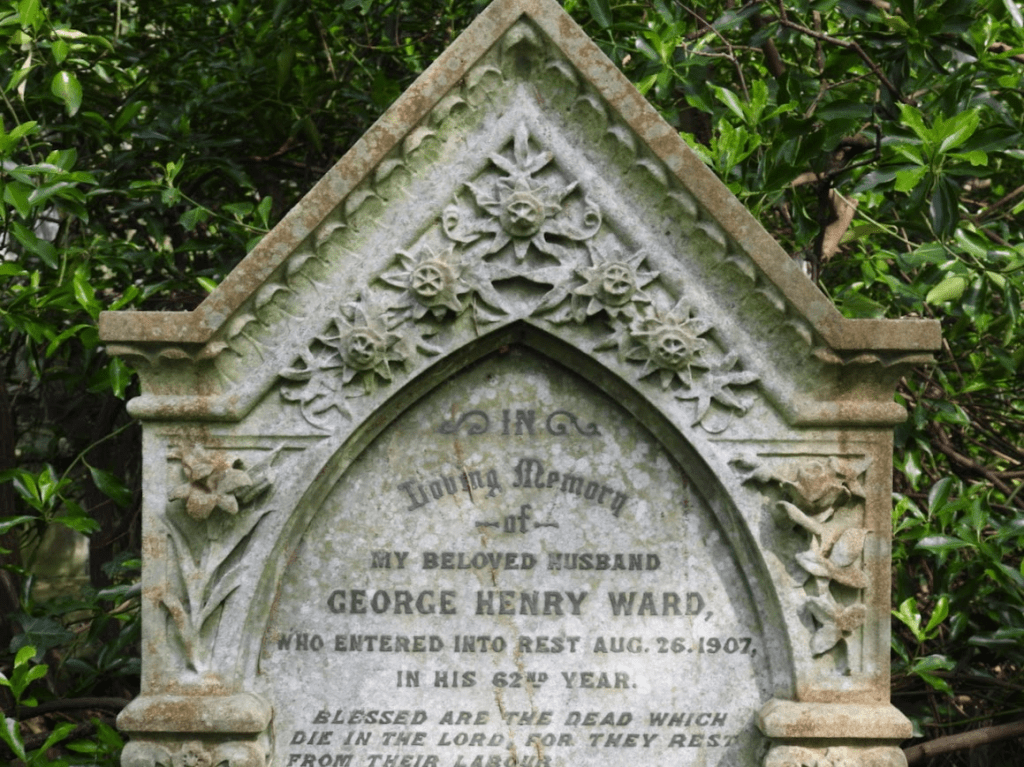
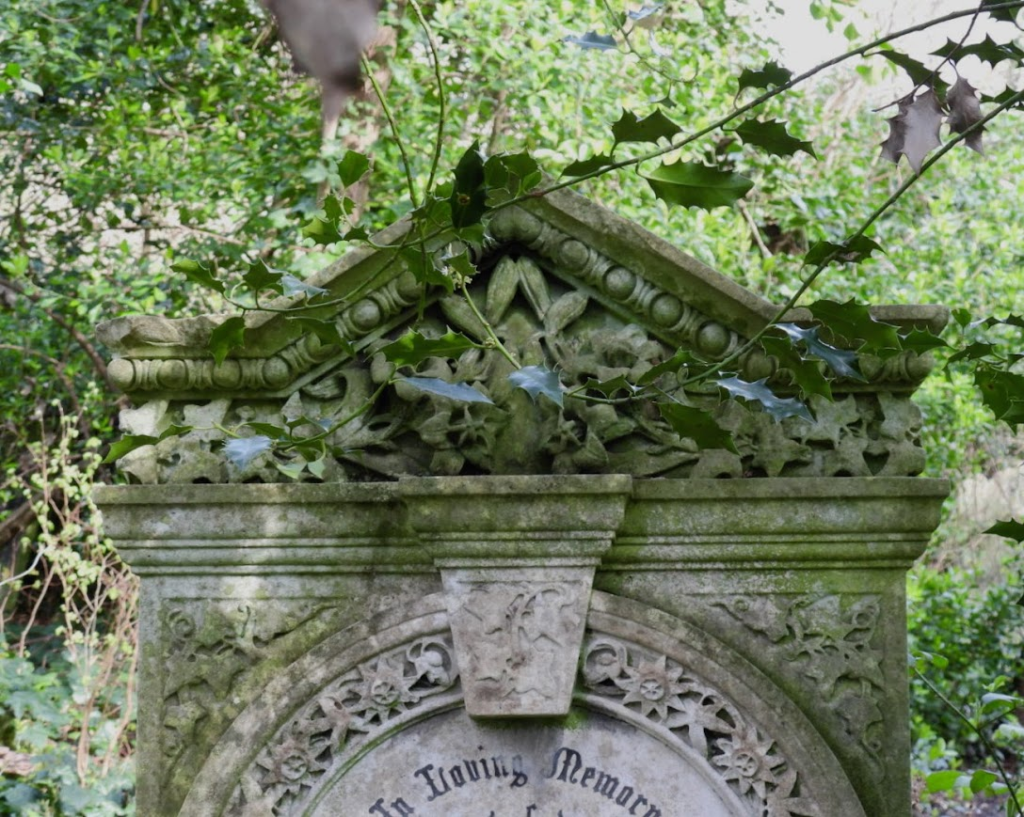
Two typical Victorian monuments:

Detail. The triangle at the top of the Gothic memorial is decorated with symbolic foliage

There are many planted Yews in the cemetry (and some self-seeded Yew)

Yew trees, darker and older in reputation, carried associations of immortality and eternal life. Frequently planted in churchyards in Britain, the yew’s longevity made it both sentinel and witness, a tree that outlived generations of the dead beneath it. The Language of the Dead: Victorian Mourning Flowers and the Gardens of Grief | by Kittie Paranormal | Feb, 2026 | Medium

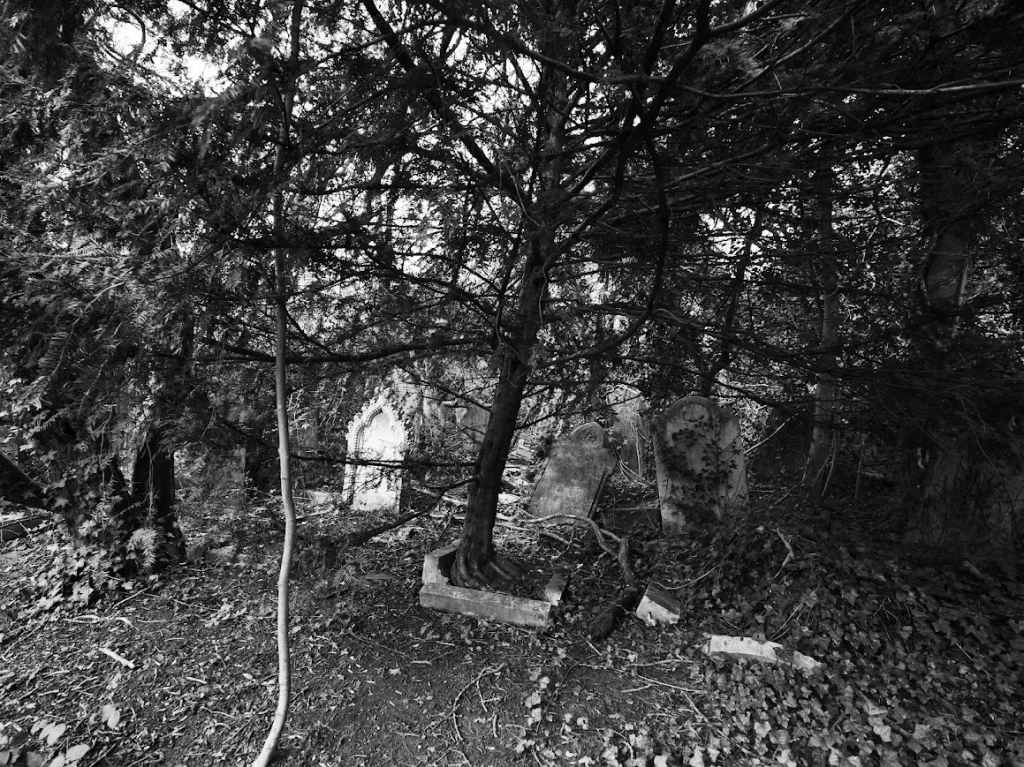
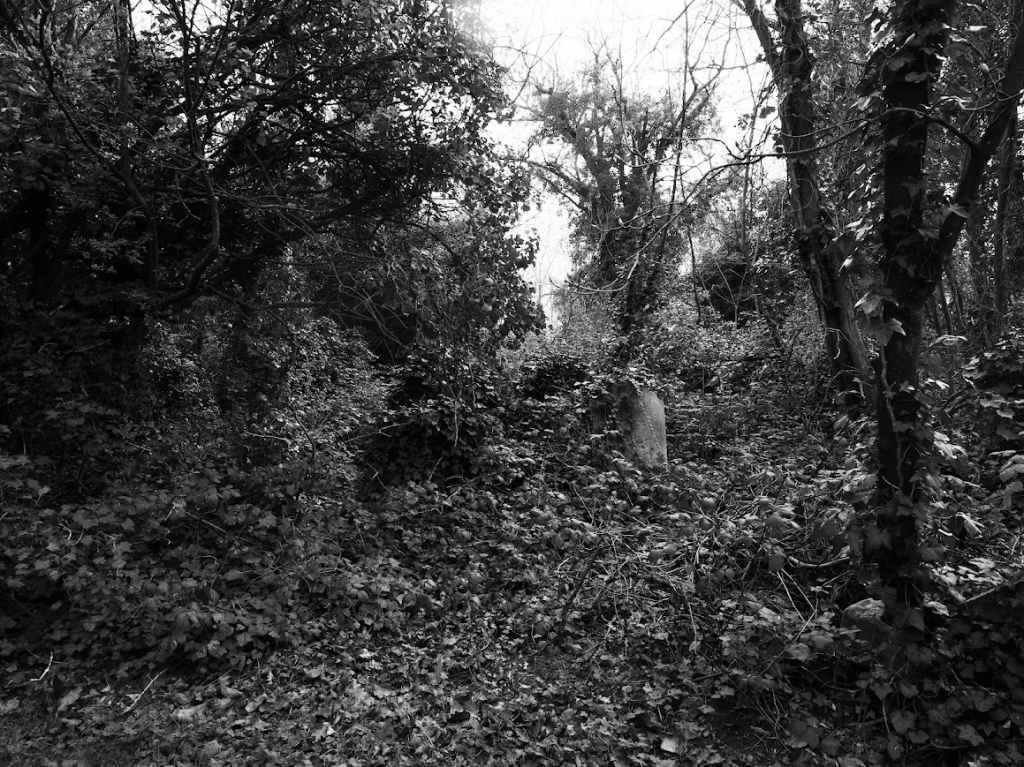
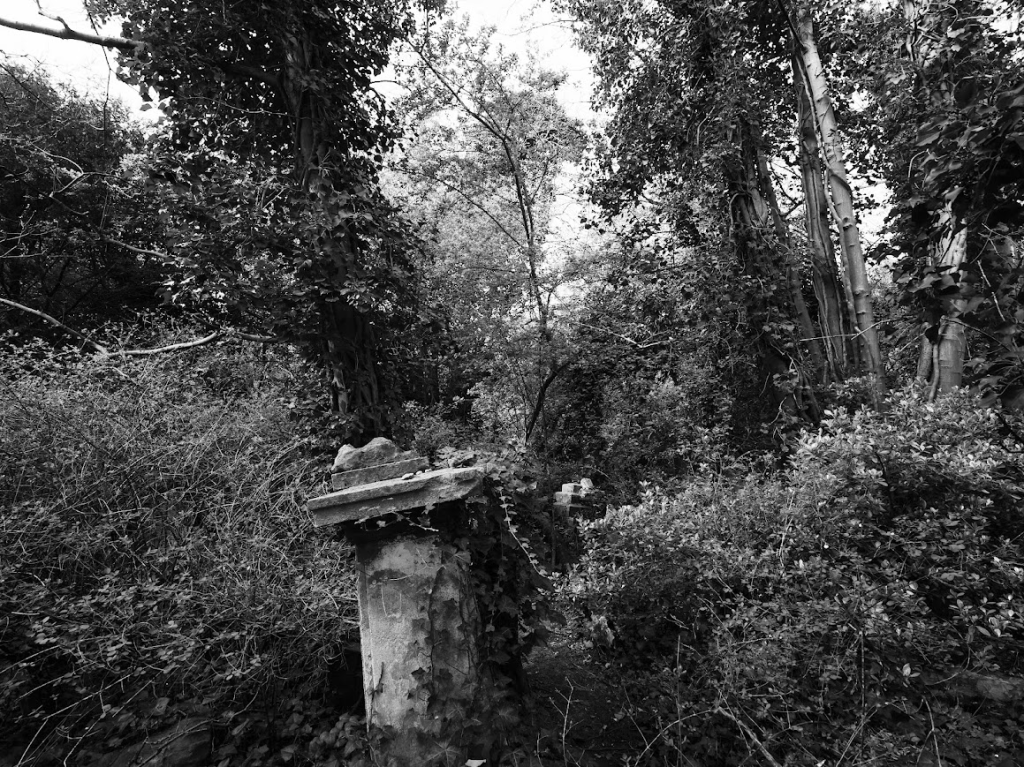
Many of the graves and memorials are covered in Ivy.

Ivy, clinging stubbornly to stone, symbolized attachment and eternal connection. Even in decay, it held fast. In Victorian cemeteries, these plants were not chosen randomly. They were messages rooted in soil. The Language of the Dead: Victorian Mourning Flowers and the Gardens of Grief | by Kittie Paranormal | Feb, 2026 | Medium

Whilst Yew and Ivy may have been planted the very overgrown nature of the cemetery now is not probably what its Victorian designers intended. Nunhead Cemetery was originally called the Cemetery of All Saints. It was designed by the architect James Bunstone Bunning, who later became architect to the City of London. His vision was for a garden cemetery, with a mix of lawn, tree-lined avenues and winding paths.

After the cemetery became full, its owner, the London Cemetery Company, faced spiralling maintenance costs. In 1969, the company ceased trading and Nunhead Cemetery closed its gates.Vandalism and decay meant many of Nunhead’s buildings and monuments were seriously damaged. Other parts of the cemetery became very overgrown, as nature reclaimed the space.To avoid the site being sold to developers, Southwark Council bought the cemetery in 1975. Since then the council and Friends of Nunhead Cemetery have worked together on maintenance.

Over time, parts of the cemetery have been restored, … The Anglican Chapel, damaged by Second World War bombs and then by an arson attack, has been stabilised.

But wandering off the main pathways can leave visitors feeling like they’ve stumbled into a woodland wilderness. One scientist has recorded more than 200 different insect species in the cemetery, including a number of rare beetles.Bird watchers have also noted dozens of different species in the grounds – among them tawny owls, wrens and the green parakeets familiar to south Londoners.

In 2003, Nunhead Cemetery was designated as a Local Nature Reserve. Nunhead Cemetery | London Museum

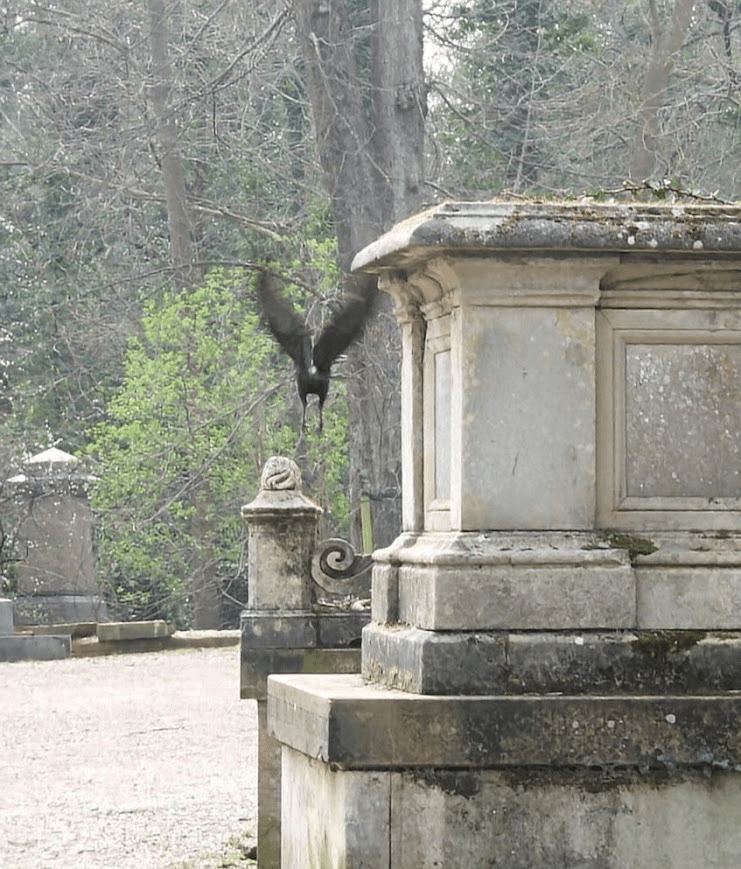
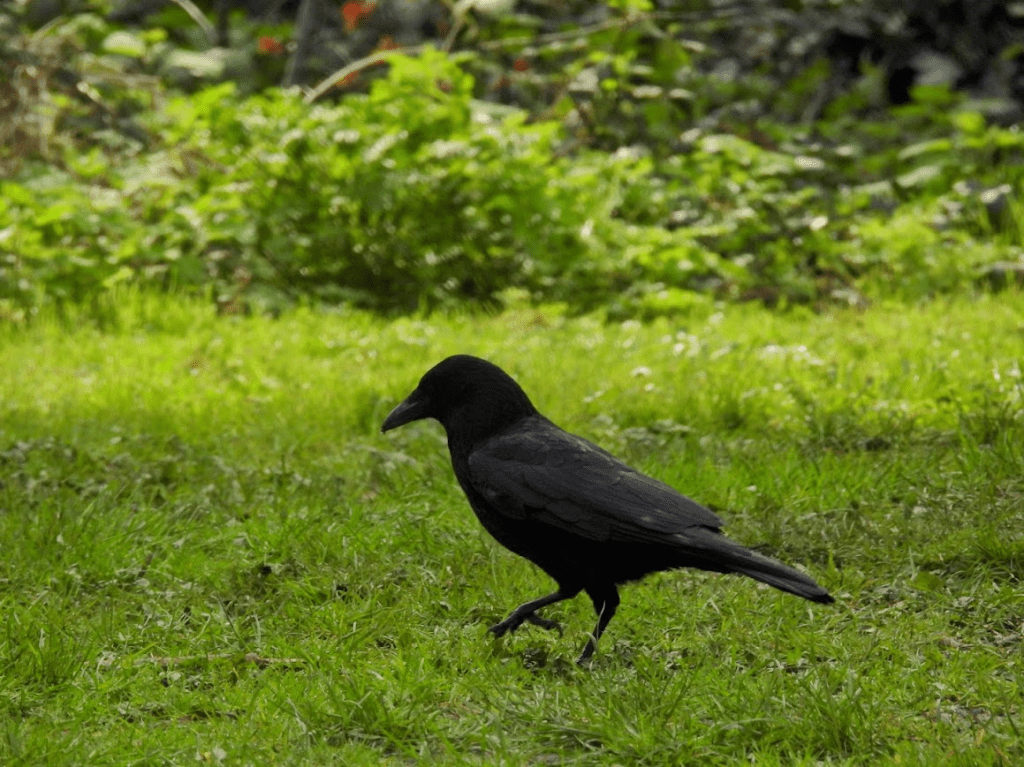
A Crow taking off

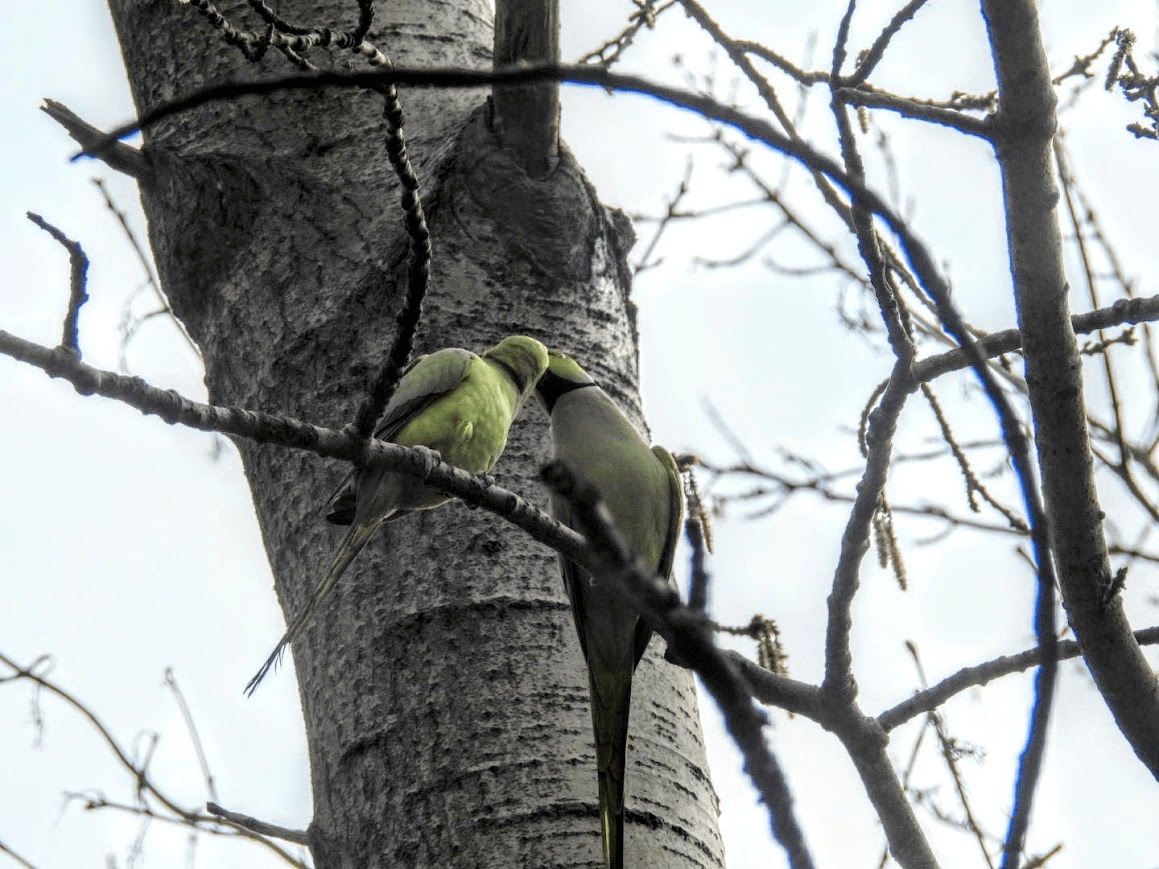
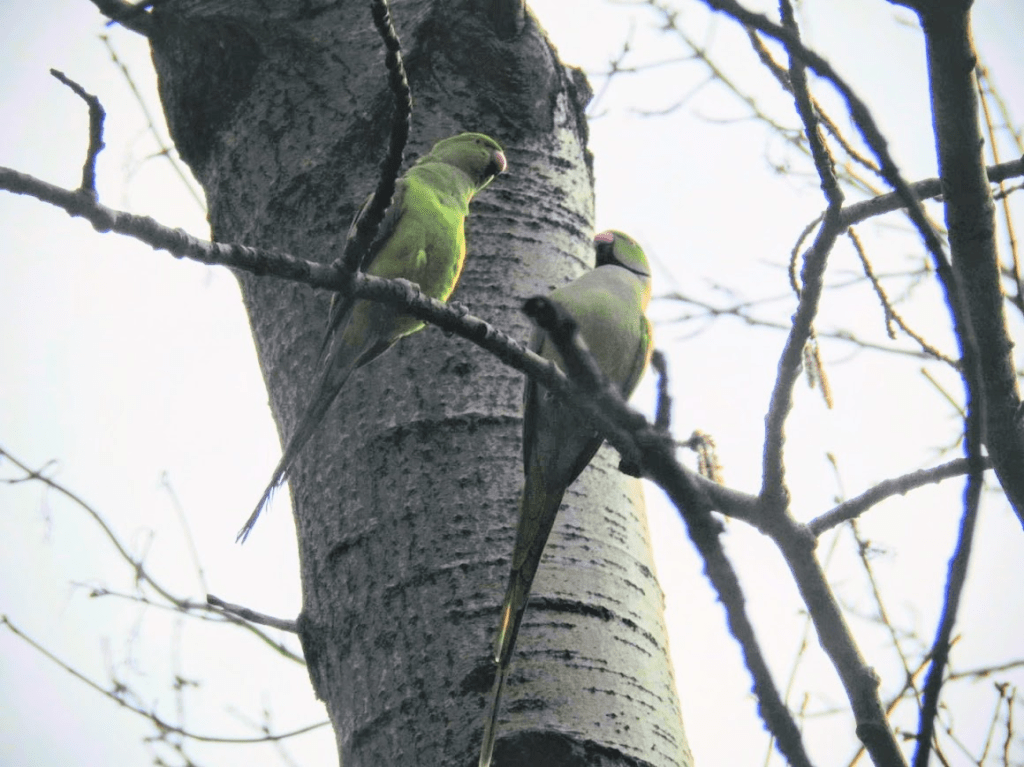
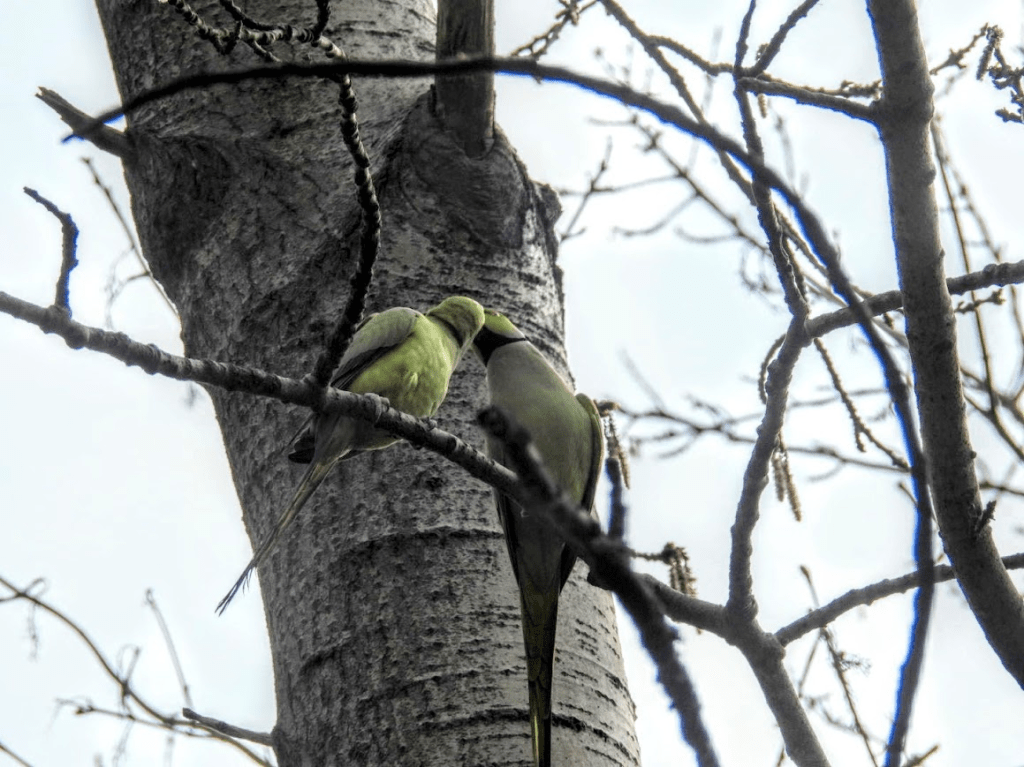
Love amongst the Ring-Necked (Green) Parakeets

The Anglican Chapel uses much foliage decoration.

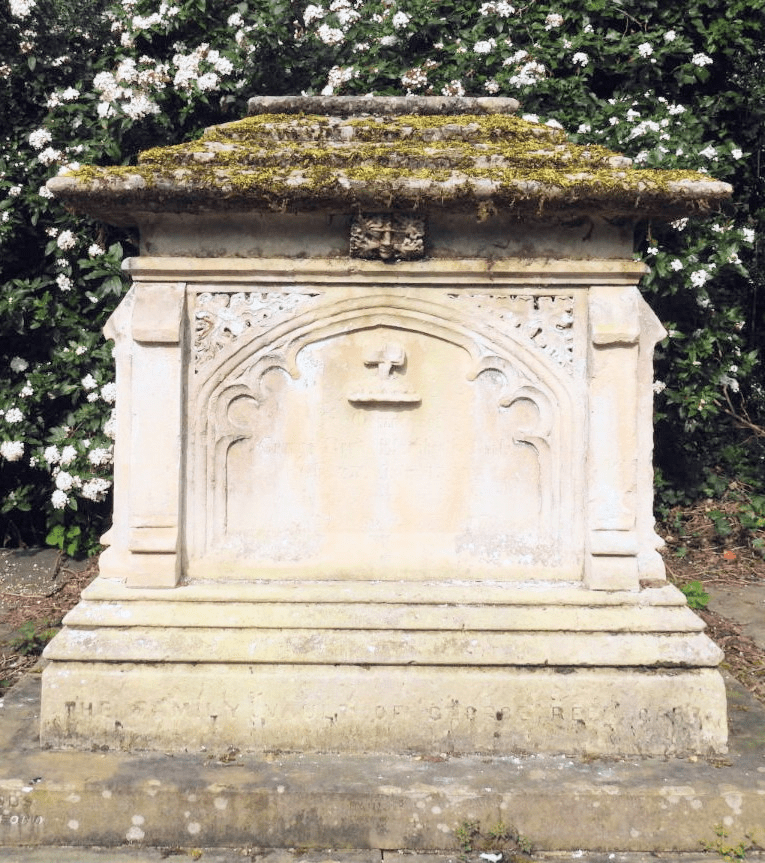
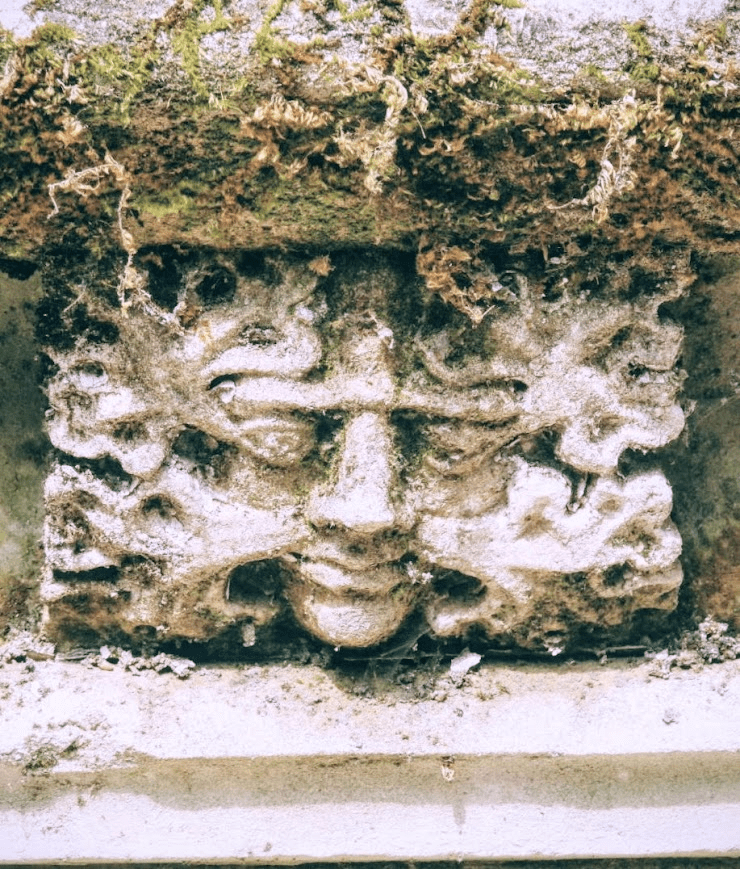
Chest tomb with a foliate head.

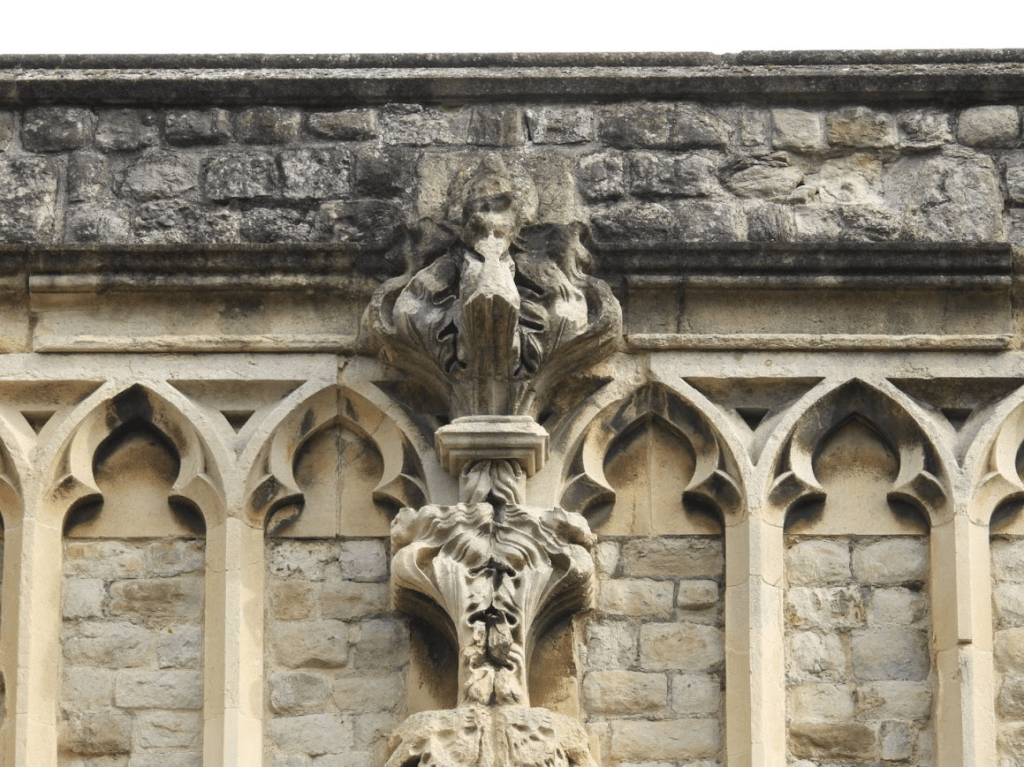
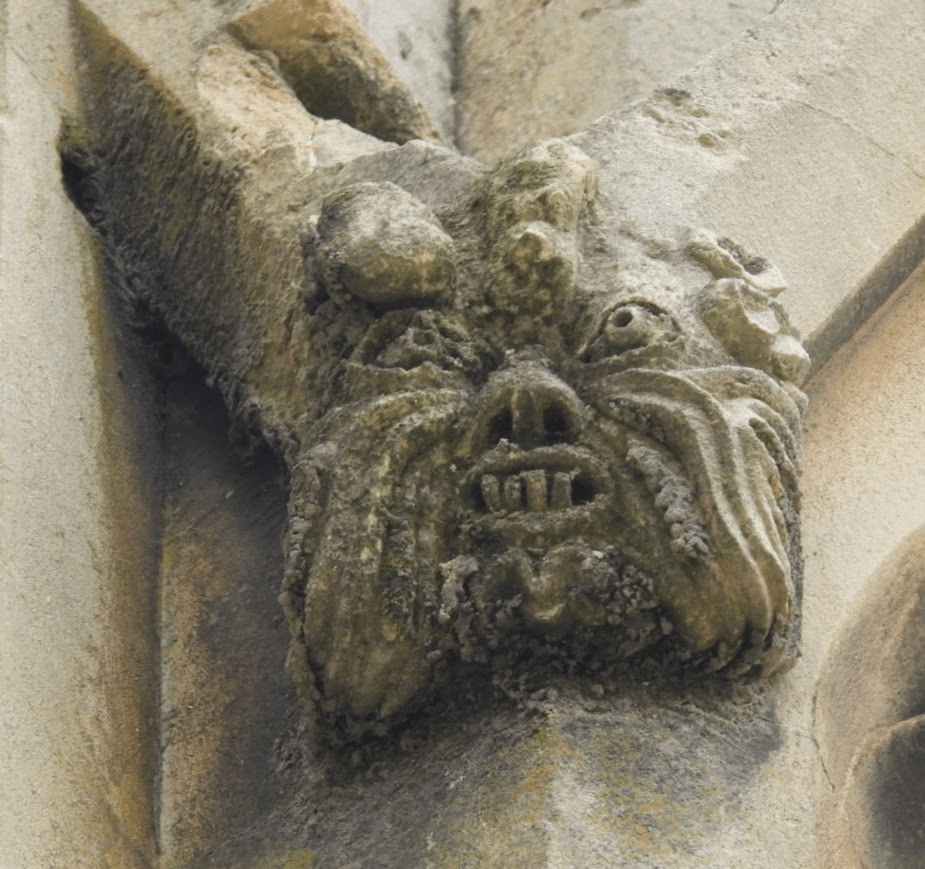
High-up round the top of the Anglican Chapel there are a serious of grotesques; one of them appears to be anpther foliate head:

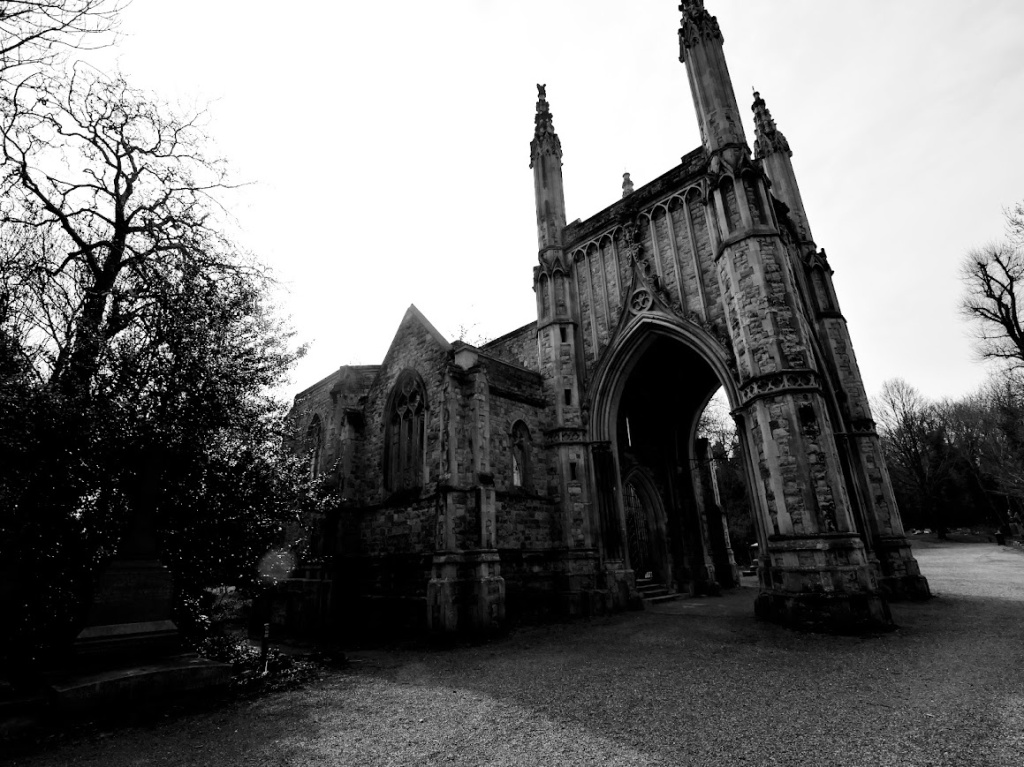
The Anglican Chapel

Whilst foliate heads are world-wide symbols; and are pre-Christian, it is likely that a foliate head on a tomb is a UK cemetery was intended as a Christian symbol: “disgorging foliate head motif” was part of a new repertoire imported into England from northern France after the Norman conquest. It is a Christian/Judaic-derived motif relating to the legends and medieval hagiographies of the Quest of Seth – the three twigs/seeds/kernels planted below the tongue of post-fall Adam by his son Seth (provided by the angel of mercy responsible for guarding Eden) shoot forth, bringing new life to humankind. The Christian history of the Green Man motif | Folklore and mythology | The Guardian

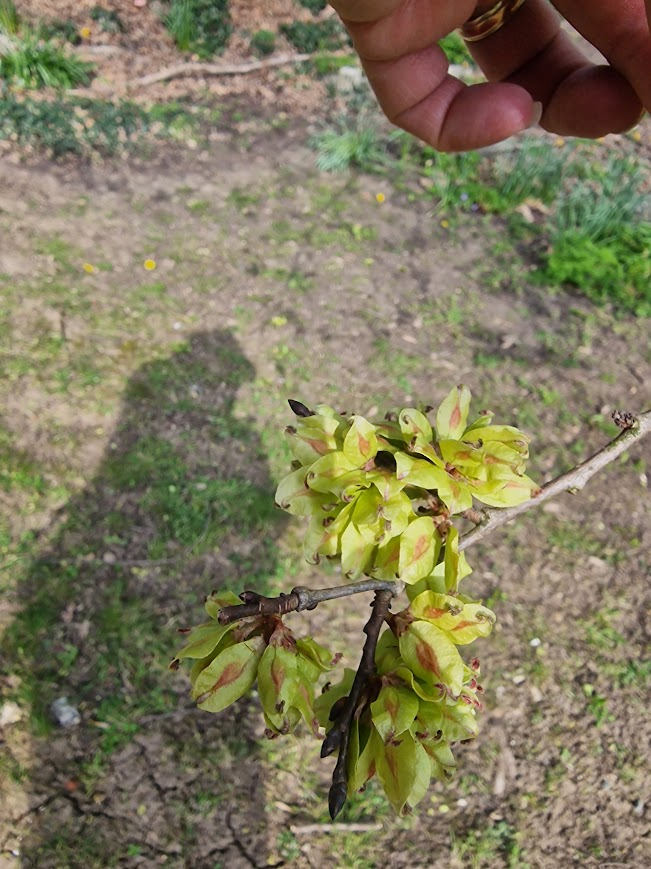
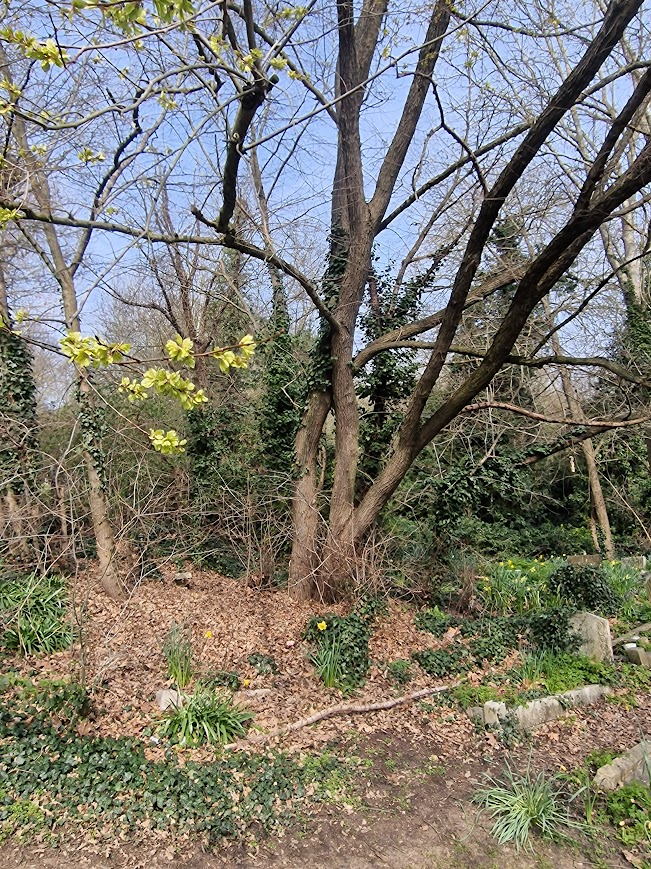
Field Elm

Apparently there are still approximately 4,000 Elms in Greater London. It is estimated that there are approximately 8.4 million trees in Greater London.

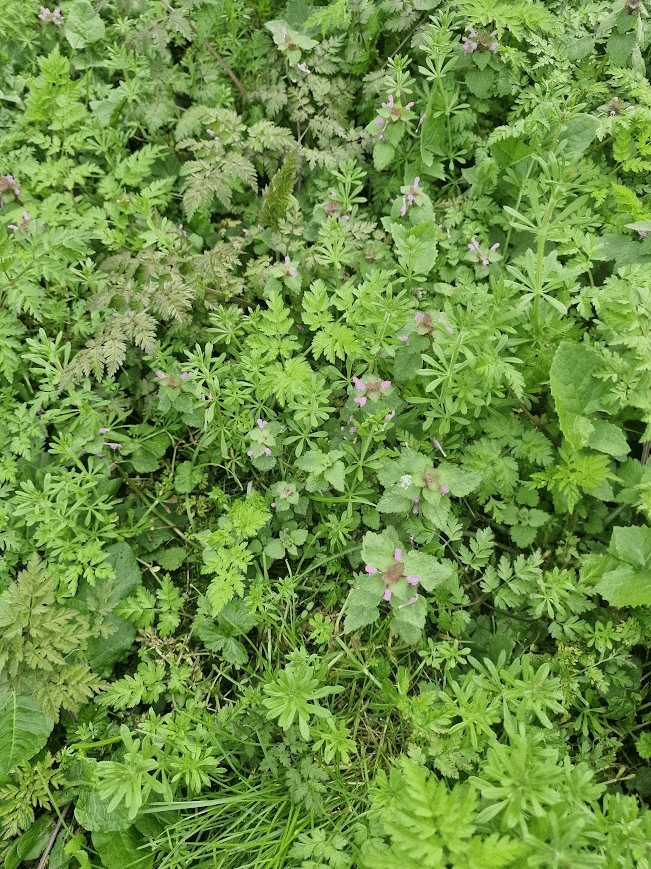
Red Dead Nettle

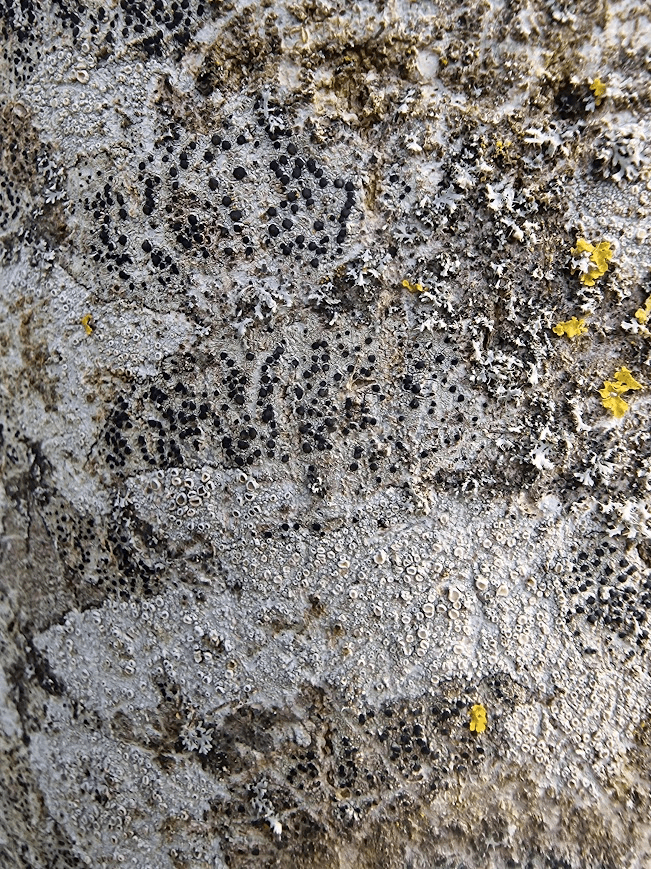
These Sycamore trees were covered in lichens, mainly Lecanora chlarotera, Lecidella eleachroma and Xanthoria partietina

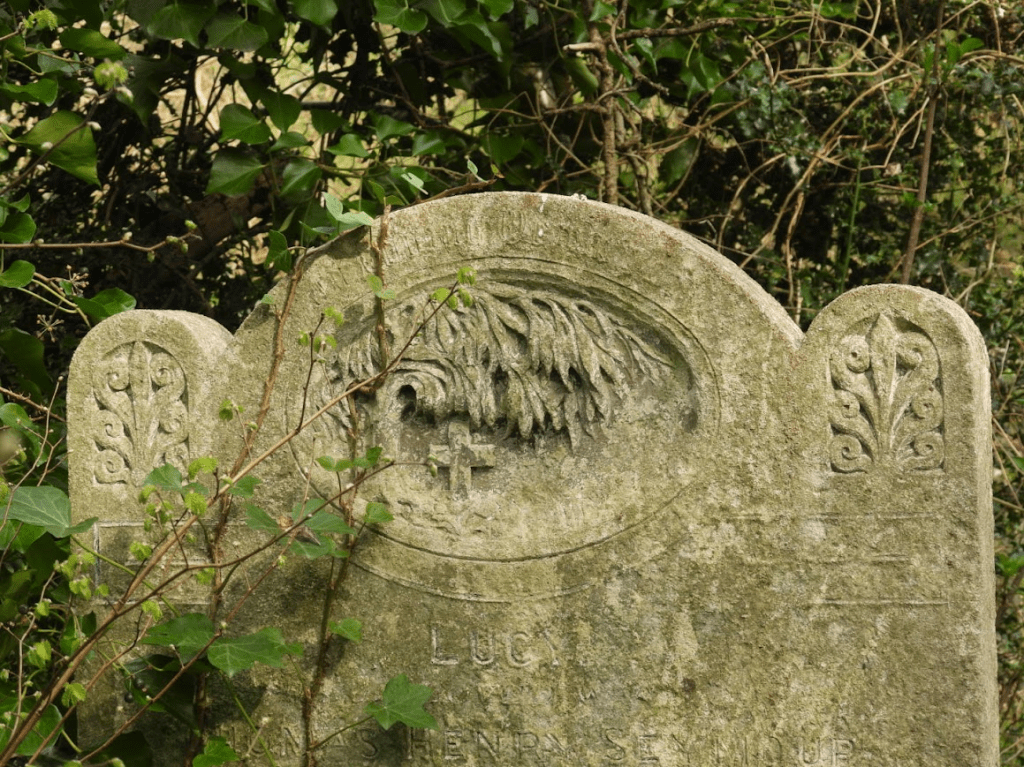
Palm on tombstone

The palm branch is a symbol of victory, triumph, peace and eternal life originating in the ancient Near East and the Mediterranean world. Gravestone Symbols- Meaning and Inspiration | Stoneletters

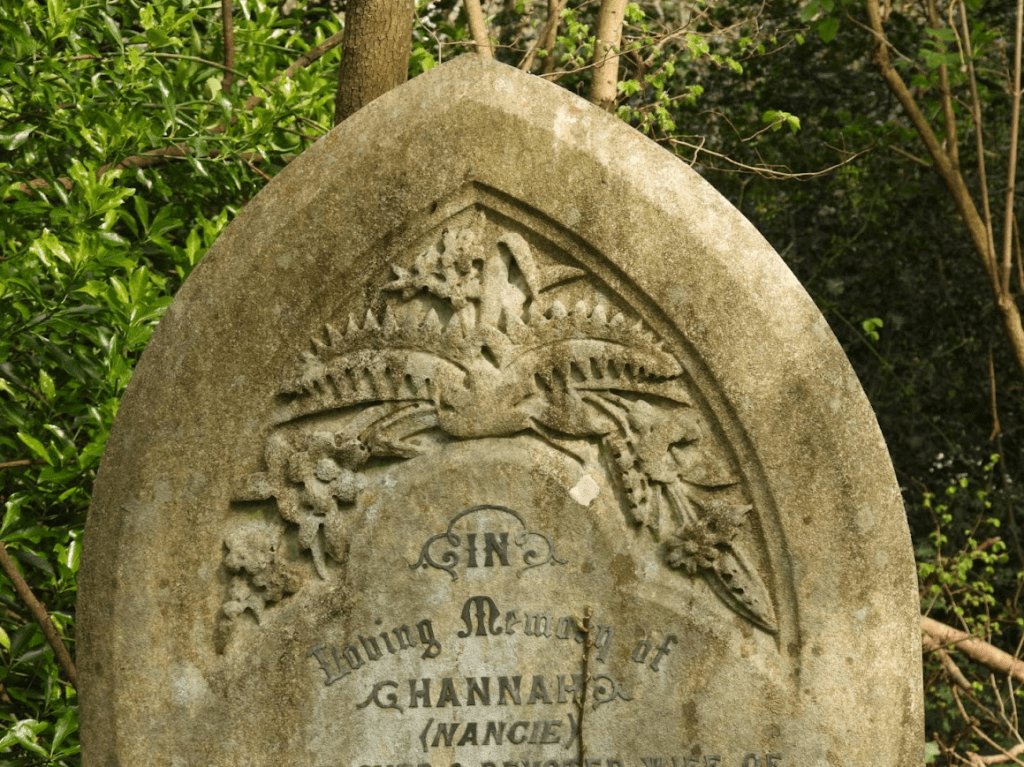
Fern on tombstone

Ferns symbolise sincerity and solitude, because they can be found in remote places. The Symbolism of Victorian Funerary Art – Undercliffe Cemetery

Passion Flowers

The passion flower is a trailing, climbing flower which lends itself to being carved on monuments and crosses. It is called a passion flower as it is believed to symbolise Christ’s suffering on the cross.

The Passion flower is a symbol of faith and suffering.  It is believed that it is so named, because of  Jacomo Bosio, a scholar in Rome, who was writing a treatise on the Crucifixion.  A Mexican friar showed him a passion flower and Jacomo included it in his work. Carole Tyrrell 2024 Symbol of the Month – the passionflower – shadows fly away

And on my way out of the cemetery I saw a Crow prancing

From their cleverness and adaptability to their association with transformation and psychic abilities, crows hold a special place in our collective consciousness. See: Crow Symbolism and Meaning: Exploring the Wise Bird | HowStuffWorks

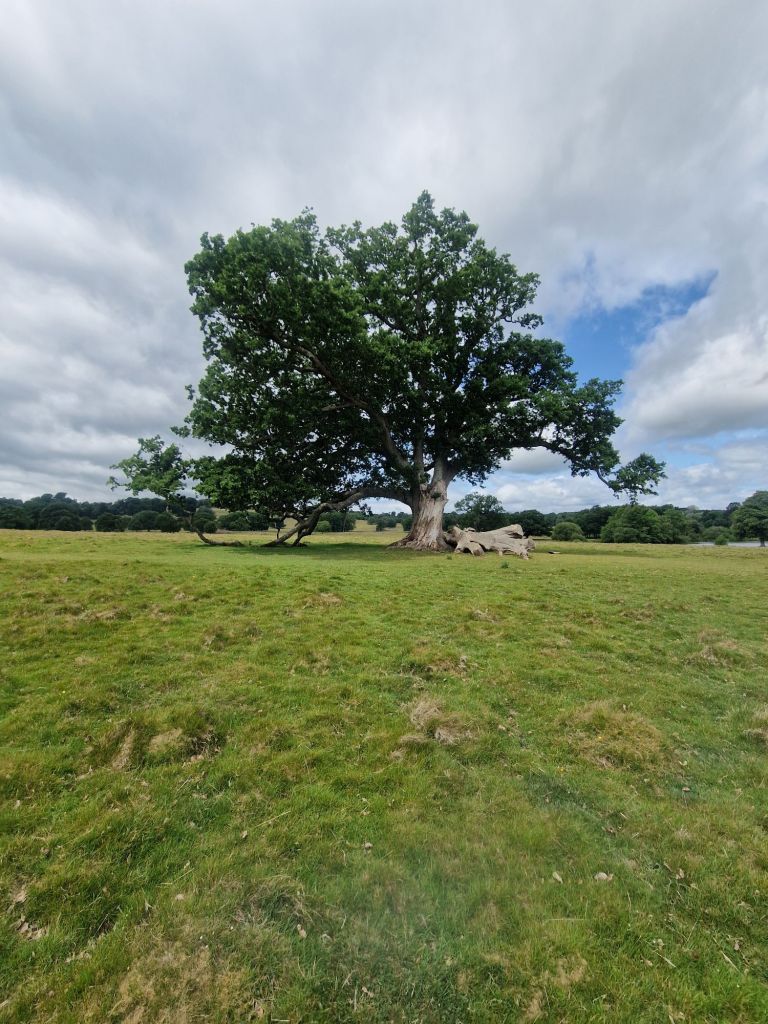
From a Scarce Silver-lines Moth to Fallow Dear, via Gold Dust Lichen and a Crow: an Ancient Pedunculate Oak and the biodiversity it supports. Petworth Park. 10.06.25

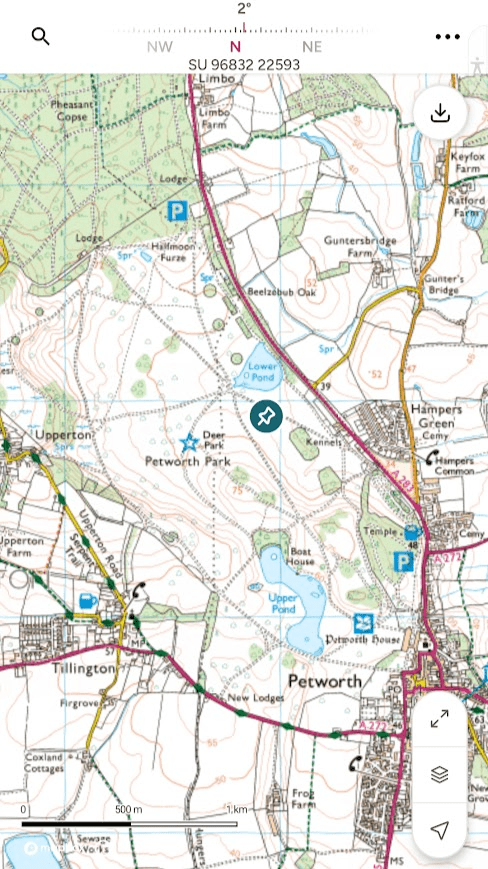
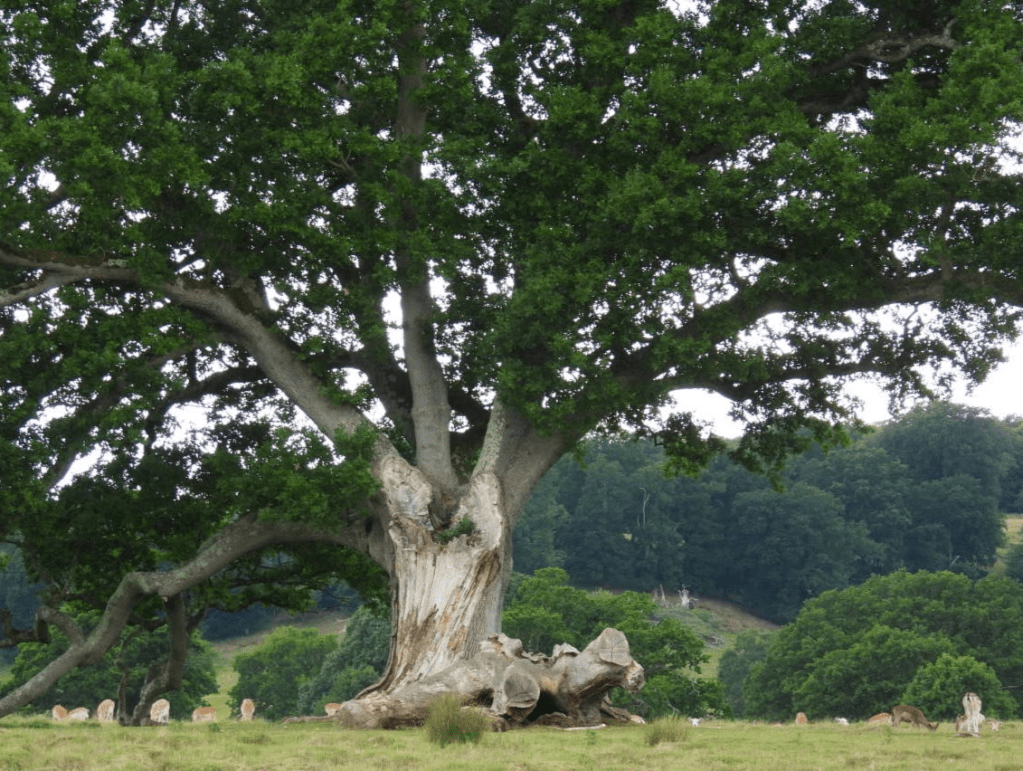
All the photos in the post were taken by me on one day (10.06.25). apart from the Great Spotted Woodpeckers, all the species photographed in this blog were living on, in or under a single Pendunculate oak at SU 96936 22927

I approached this Oak from a distance, walking through the pasture woodland of Petworth Park. Wood pasture is classified as a mosaic habitat valued for individual park-like trees particularly veteran and ancient, and the fauna, flora and fungi it supports, including a number of species that only occur in wood pasture and parkland. Grazing animals are fundamental to the habitats existence and many sites are also important historic landscapes. Woodland Trust Wood Pasture

SU 96936 22927 is the blue pin. What Three Words

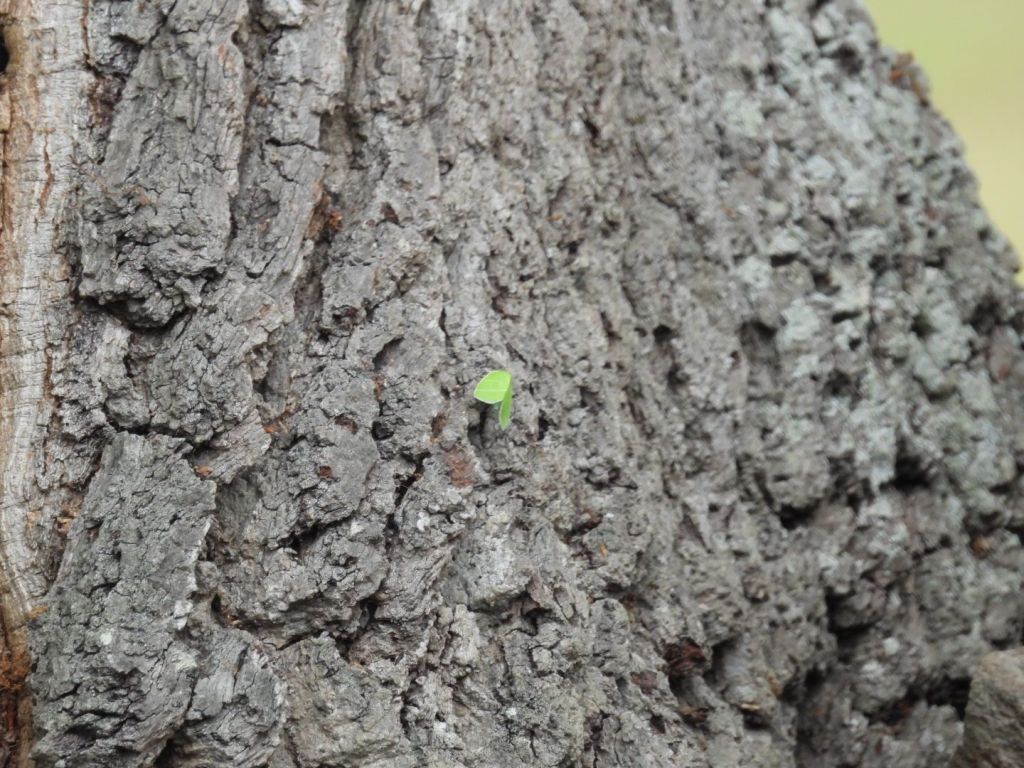
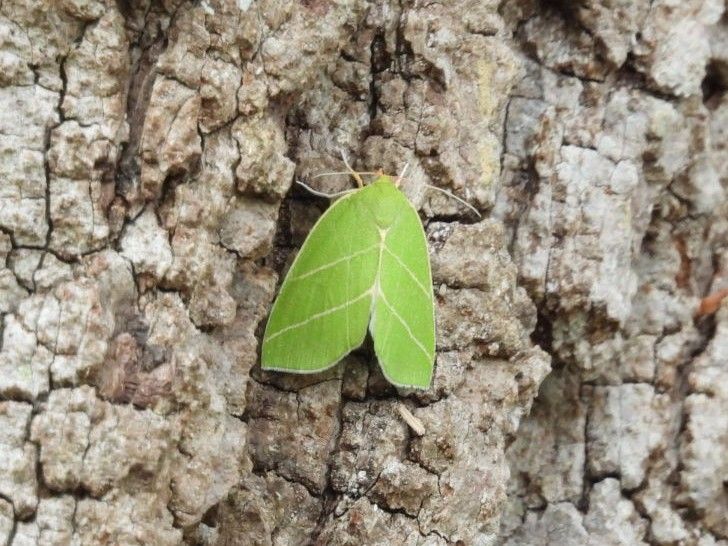
As I got near, I realised that there was a bright green shape on the trunk, highlighted by the grey of the oak’s trunk. As I got closer I realised it was a beautiful moth.

I used the Obsidenity App to make a preliminary identification in the field as I hadn’t seen this species of moth before. I then checked this identification in my field guide later. I used Obsidentify for all the invertebrates I saw around this Oak, and checked the observations with field guides at home. It is a Scarce Silver-lines Moth,  Bena bicolorana. The caterpillars feed on the leaves of oak (Quercus).

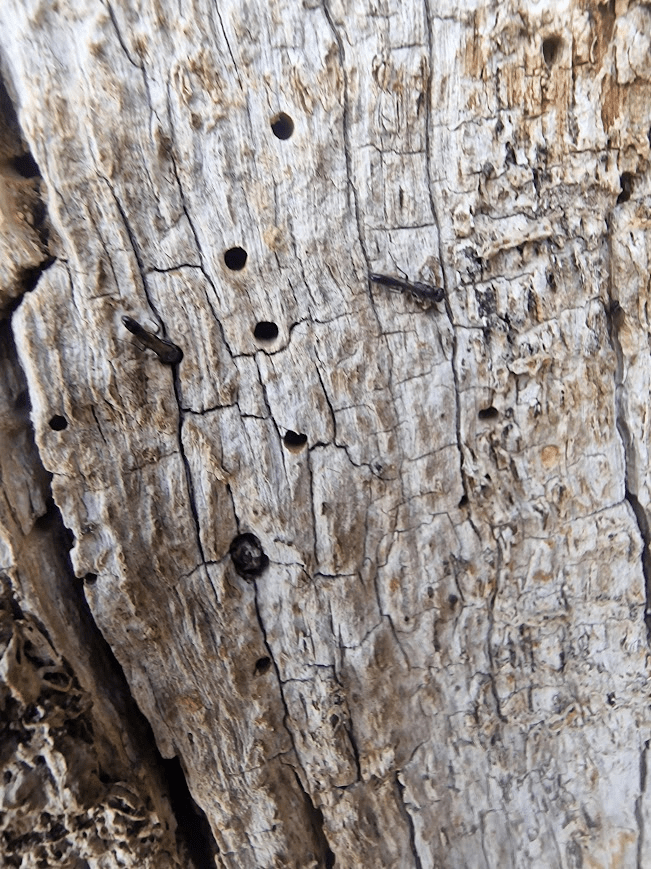
When I reached the Oak I could see that part of it was dead; this part appeared to have been killed, probably by heart-rot fungi. This is the way most Quercus robur die, but the process of dying is long. The decorticated decomposing heart wood had many holes.

Most of the known species dependent on oak trees are invertebrates, and a majority of these interact with the fungi in the tree in some way. Many make their homes and find their food where heart-rot decay fungi have been in action, leaving partially decayed material that is physically broken down by insects, creating mounds of composting wood mulch that creates further habitat for other invertebrates. Oaks and fungi in the UK.  R. Wright, J. Finch & N. Brown. 31/05/2022

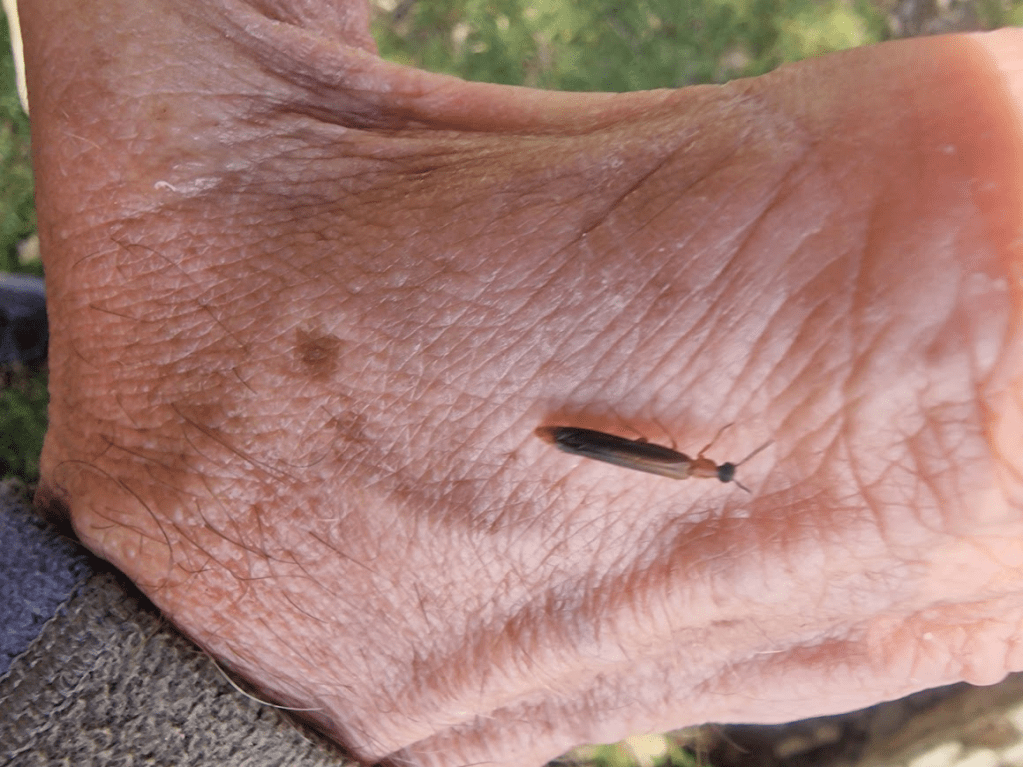
An insect landed on my hand. A believe it is a Lymexylon navale. A beetle belonging to the family Lymexylidae. The size of this beetle can vary a lot, between 8-15mm. Its yellow with black head and orange pronotum. The larval development take place in fresh oak wood in parts lost the bark. Saproxylic beetles

Saprolyxic organisms, especially insects, that are directly or indirectly dependent on dead or decaying wood for at least part of their lifecycleBuglife: Saprolyxic Invertebrates

Lymexylon navale, commonly known as the ship-timber beetle, is a type of wood-boring beetle that is associated with wood structures, including ships, houses, and trees. Specifically, its larvae are wood-boring and can damage both sapwood and heartwood in living and decaying trees, as well as timber structures like ships. 

An uncommon beetle in Britain it is which is currently designated as Red Data Book 2 (vulnerable). Nature Spot Lymexylon navale

The larvae of Lymexylon navale bore into wood, which can weaken and damage ship and other wooden structures. Lymexylidae, including Lymexylon navale, have a symbiotic relationship with certain fungi. The larvae create tunnels in the wood, and the fungi grow within these tunnels, providing a food source for the larvae. Ship-timber beetles have been found in ancient shipwrecks, indicating their long-standing association with human-made wooden structures. Lymexylidae also play a role in the ecosystem by helping to break down wood and are an important food source for other animals. Sources: Sônia A. CasariLarva of Atractocerus Brasiliensis (Lepeletier & Audinet-Serville, 1825) (Lymexylidae, Atractocerinae) Universidade de São Paulo, Museu de Zoologia , São Paulo, São Paulo, Brazil;  Cletus P. Kurtzman, Christie J. Robnett (2013) Alloascoidea hylecoeti gen. nov., comb. nov., Alloascoidea africana comb. nov., Ascoidea tarda sp. nov., and Nadsonia starkeyi-henricii comb. nov., new members of the Saccharomycotina (Ascomycota). FEMS Yeast Research 13: 423–432. doi: 10.1111/1567-1364.12044 (published in Spanish and English) and Piper, Ross 2007 Extraordinary animals : an encyclopaedia of curious and unusual animals.

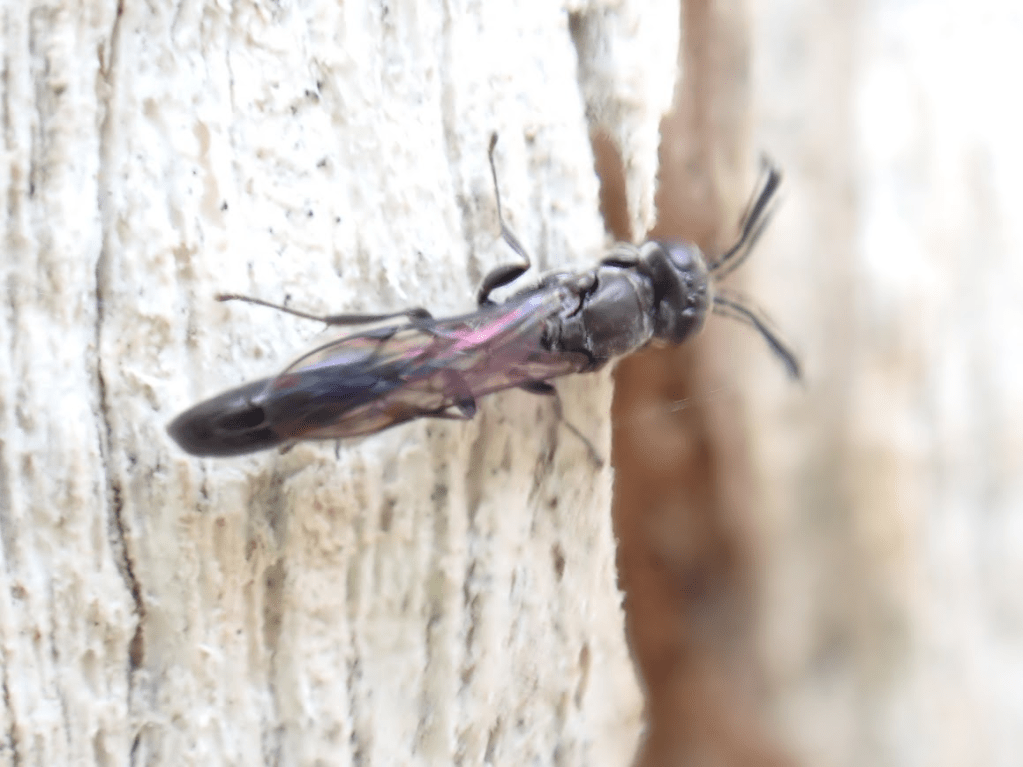
This Lymexylon navale (and its many mates) may have made the holes into which I saw, what I believe to be Trypoxylon attenuatum.

A widely distributed species recorded from much of Britain, including the Scilly Isles and the Channel Islands. Has been recorded from a variety of habitats including woodland, parkland, gravel pits, sandy sites, chalk grassland and heathland.On the wing between mid-May and mid-SeptemberNest burrows are stocked with small spiders such as Tetragnatha (Tetragnathidae) (Lomholdt, 1984).Nests are constructed in pre-existing cavities. Richards (1980).Richards (1980) gives a generalised overview of Trypoxylon nesting sites such as “Anobium burrows, cut stems, hollow roots, rarely in small holes in vertical earth-faces”, but T. attenuatum seems to nest “exclusively in hollow plant stems” (Lomholdt, 1984). Nests are constructed in cavities 2-4 mm in diameter (Tormos et al., 2005). Bees Wasps and Ants Recording Society Trypoxylon attenuatum..

So it sounds as if Oaks may not be a typical nesting sites for this solitary wasp.

I then moved on to looking at lichens – the primary purpose of my trip to Petworth Park.

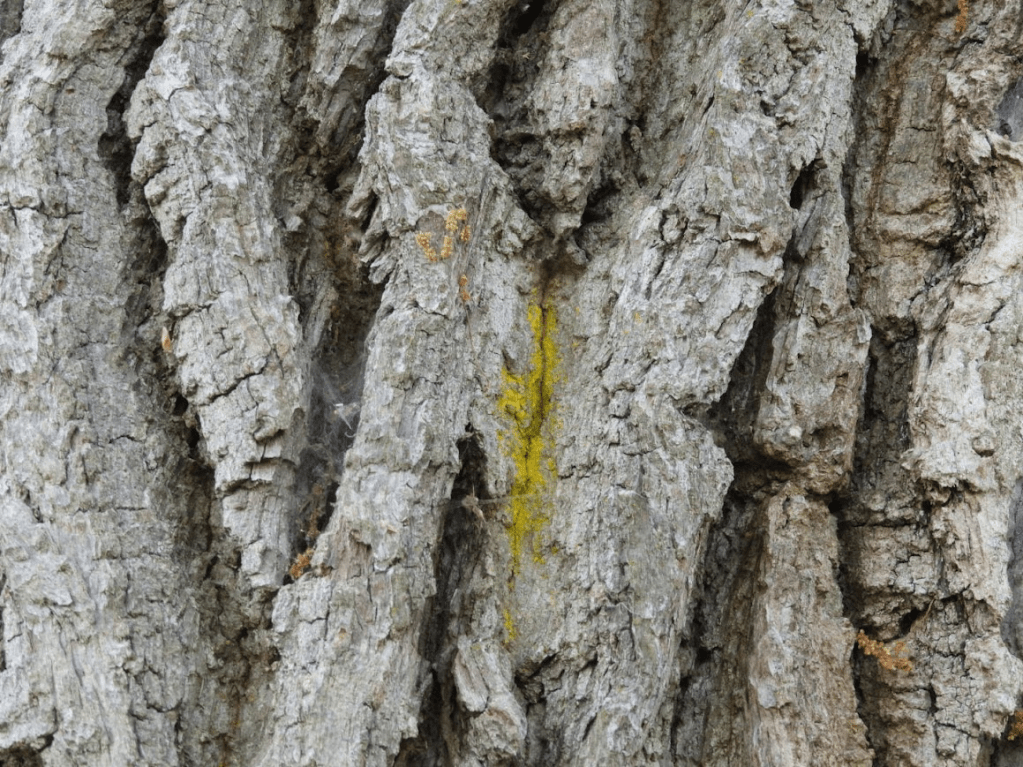
First I saw Gold Dust Lichen, Chrysothrix candelaris

I initially got very excited because I thought it may be the rare pin lichen Chaenotheca chrysocephala; which had been recorded on a specific Quercus robur nearby, but it wasn’t!

When I was looking at lichens on the bark I saw two more invertebrates. One on the bark next to a lichen I was examining, and one which fell on my jumper.

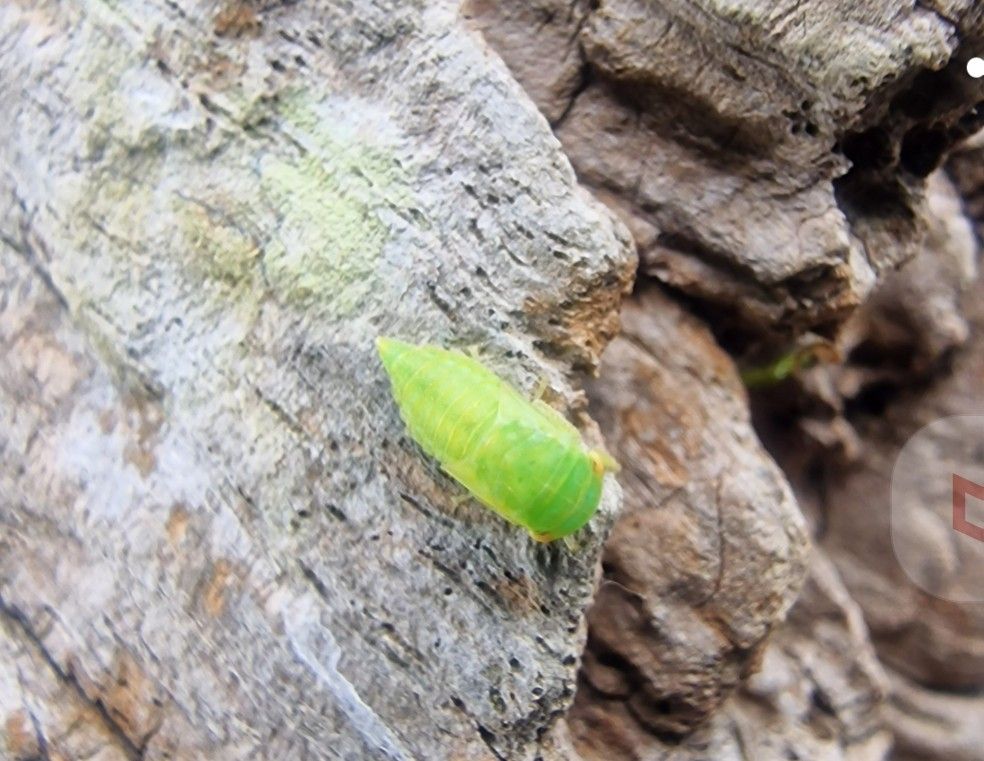
The one on the bark was Oak Leafhopper nymph, Iassus lanio. Leafhoppers are [sap sucking] insects belonging to the family Cicadellidae in the order Hemiptera. They are recognized by their piercing-sucking mouthparts and by the presence of rows of spine-like setae (hairs) in their hind tibiae. Dietich Leaferhopper Lab

The relatively short and broad form of this genus is characteristic; the head is wide (equal to the width of the pronotum) and the sides of the pronotum are shorter than the eye.In I. lanio the forewings vary in colour from green to pale brown and the vertex, pronotum and scutellum are heavily dark-mottled. The vertex is rounded and uniformly narrow from above. common on oak across the UK. Adult: June to OctoberLength 6.5-8 mm British Bugs: Iassus lanio

The insect that fell on my jumper:

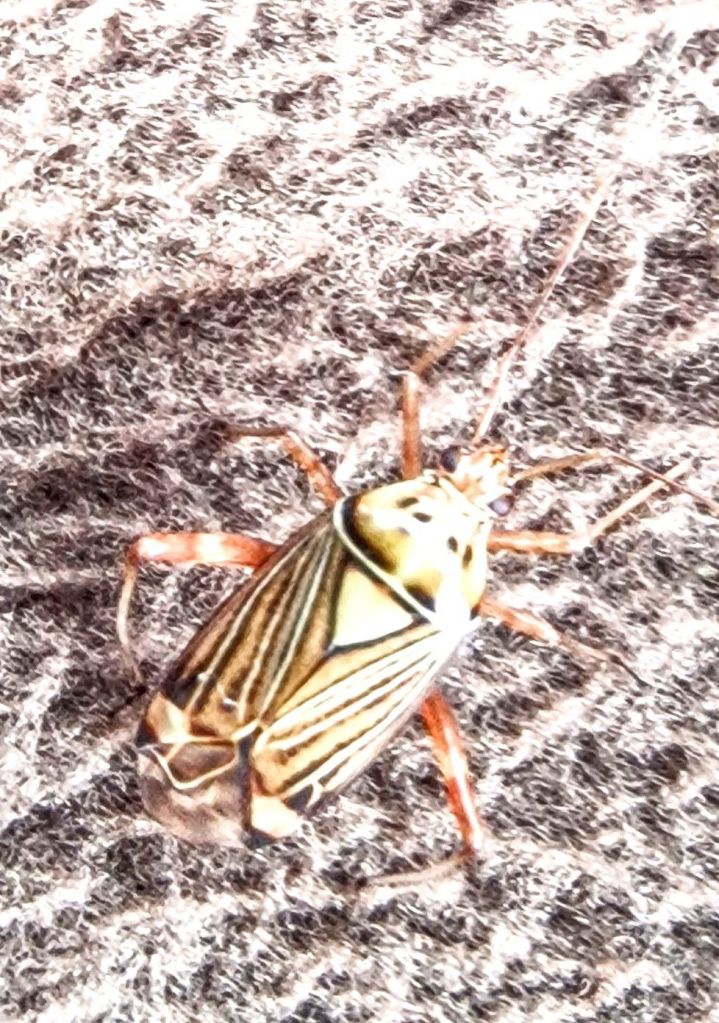
was a Striped Oak Bug, Rhabdomiris striatellus

A very striking bug which is frequently found on or near oak across Britain, but particularly in the south. Females are usually paler then males. The only possible confusion risk is the larger and more elongate Miris striatus, which has a completely yellow/orange cuneus and an entirely dark head. Overwintered eggs hatch in April, the larvae feeding on unripe catkins and becoming adult from mid-May onwards. Adult: May-July British Bugs: Rhabdomiris striatellus

There were many lichens on the Oak; here are few of them:

Physconia grisea Grey Frost Lichen

Dendrographa decolorans.

Thin whitish, lilac-grey or pinkish-grey thallus. When the surface (fungal hyphae) of the thallus is scratched, its photobiont (an alga of the orange Trentepohlia) is revealed.

Evernia prunastri. The vernacular name of this lichen is Oak Moss; even though it is not a moss! It is very common on Oaks, but it is common on other trees too.

Most of the lichens on this oak were of the Mature Mesic Bark Community (Pertusarietum amarae); shade tolerant communities on rougher bark, with Pertusaria species dominant. They are particularly characteristic of Beech and Ash, but also on less damp Oak bark. The basic community is composed of widespread species particularly Pertusaria s. lat. species British Lichen Society Lichen Communities

Pertusaria pertusa Sometimes called Pepper Pot lichen, for obvious reasons.

Pertusaria flavida; the orange part of this photo, which can only be identified (by turning orange) with UV light and/or a chemical spot reagent test, which reacts to lichen substances (mostly secondary metabolites). I did both the UV and the reagebts tests in the filed

Lepra amara The vernacular name of this lichen is Bitter Wart Lichen, because it tastes very butter if licked. I do not lick it to confirm its identification!

As I was identifying these lichens I head a Crow, Corvus corone, directly above my head. When I looked up a parent crow was feeding a juvenile. Here is the juvenile

Crows can nest almost anywhere, but they prefers well-covered trees with broad branches and solid tree forks, like Oaks

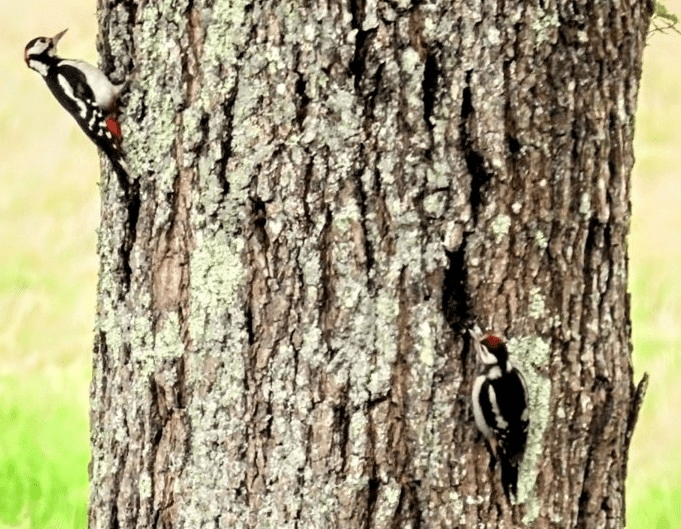
Crows are not the only birds to use Oaks. Earlier in the day I saw two Great Spotted Woodpeckers, Dendrocopos major, drumming on the trunk of another Pendunculate Oak. Great spotted woodpeckers can be found across mainland Britain, but are limited to the west of Ireland. Mature broadleaved woodland is prime habitat Woodland Trust Great Spotted Woodpeckers

At this point I walked into Petworth to get a coffee. When I came back I could see Fallow Deer under the tree. A social, elegant species with a signature speckled coat and mighty palmate antlers. First introduced by the Romans, fallow deer became extinct in Britain until they were reintroduced before the Norman Conquest around the year 1,000. Woodland Trust Fallow Deer

The herd of Fallow Deer have been at Petworth Park, according to the National Trust, for 500 years. The magnificent herd of fallow deer have called Petworth Park home for over 500 years; they were reportedly hunted by Henry VIII on his visit to Petworth in the 1520s. National Trust Petworth Park. There were probably Fallow Deer in the park since the land was gifted by Henry I (the fourth son of William the Conqueror) to Joscelin de Louvain, a Norman feudal baron. The pasture oaks of the deer park have provided shade for Fallow Deer for nearly 1000 years; this ancient oak has been shading deer for probably 400 years. The Fallow Deer I saw today are johnny-come-latelys!