Natural England and the Forestry Commission describes ancient woodland as:
any area that’s been wooded continuously since at least 1600 AD. It includes:
- plantations on ancient woodland sites – replanted with conifer or broadleaved trees that retain ancient woodland features, such as undisturbed soil, ground flora and fungi
- ancient semi-natural woodland mainly made up of trees and shrubs native to the site, usually arising from natural regeneration
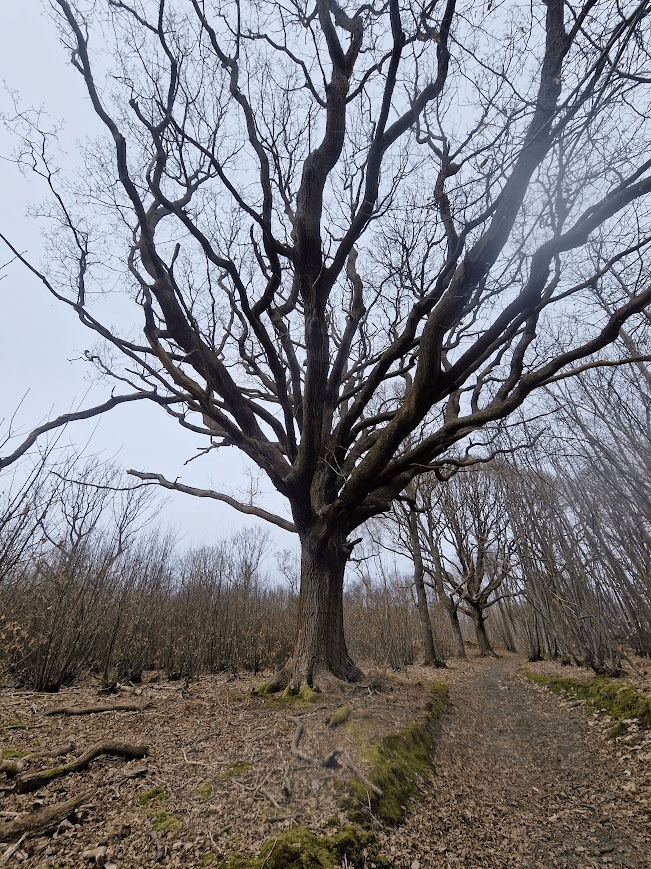
There is only one Ancient, Veteran or Notable tree listed in Fittleworth Wood in the Woodland Trust Ancient Tree Inventory; the “notable” Quercus robur above
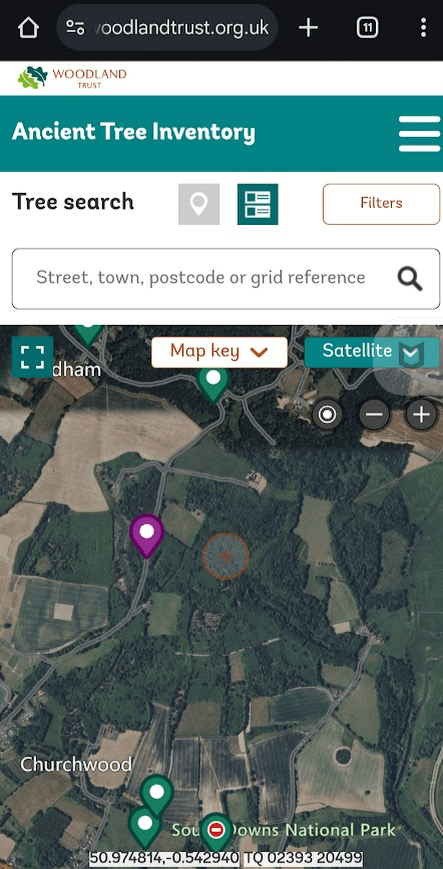
but there are other Oaks, Quercus robur, and Beech, Fagus sylvatica, amongst the mostly replanted Sweet Chestnut
Fittleworth Forest is designated by Natural England as mostly ancient semi-natural woodland, with compartments of replanted ancient woodland
Natural England Ancient Woodland Open Data
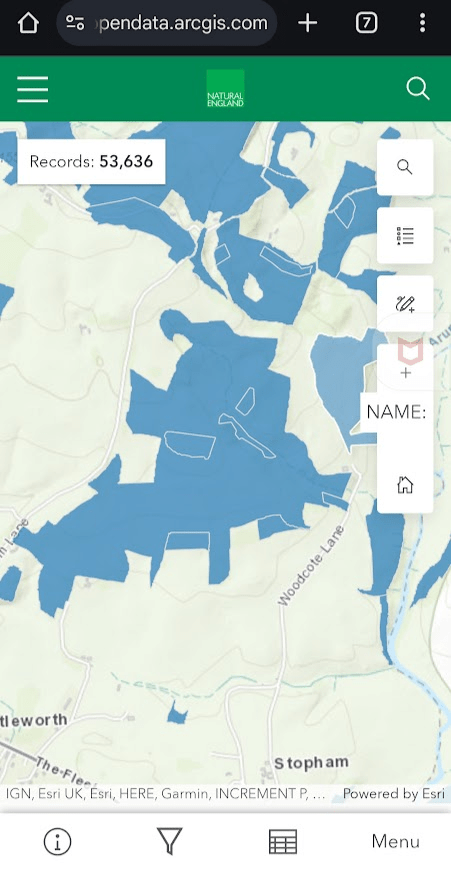
The smaller compartments are listed as Replanted Ancient Woodland; but all of the woodland looked to have been replanted to me, with a few relics of older trees.
The British Lichen Society has no records for the monads (1k x 1k squares) of Fittleworth Forest
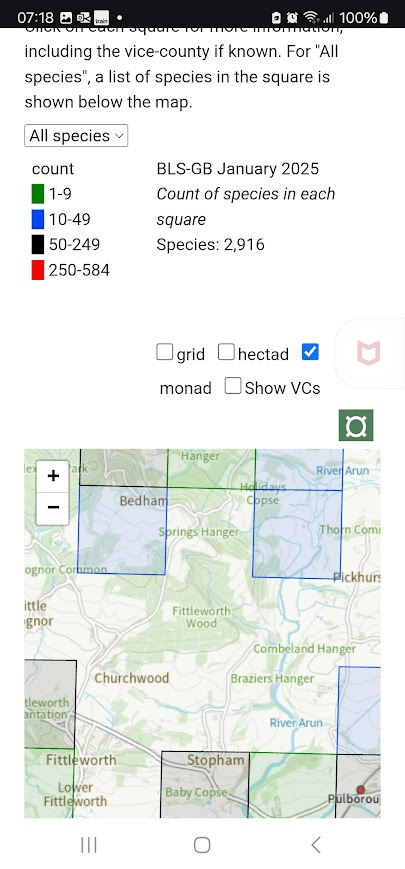
which suggests that it has not been of wood of significance for lichenologists; although there are many monads with no records, not because there of little lichenological interest but because there are very few lichen recorders.
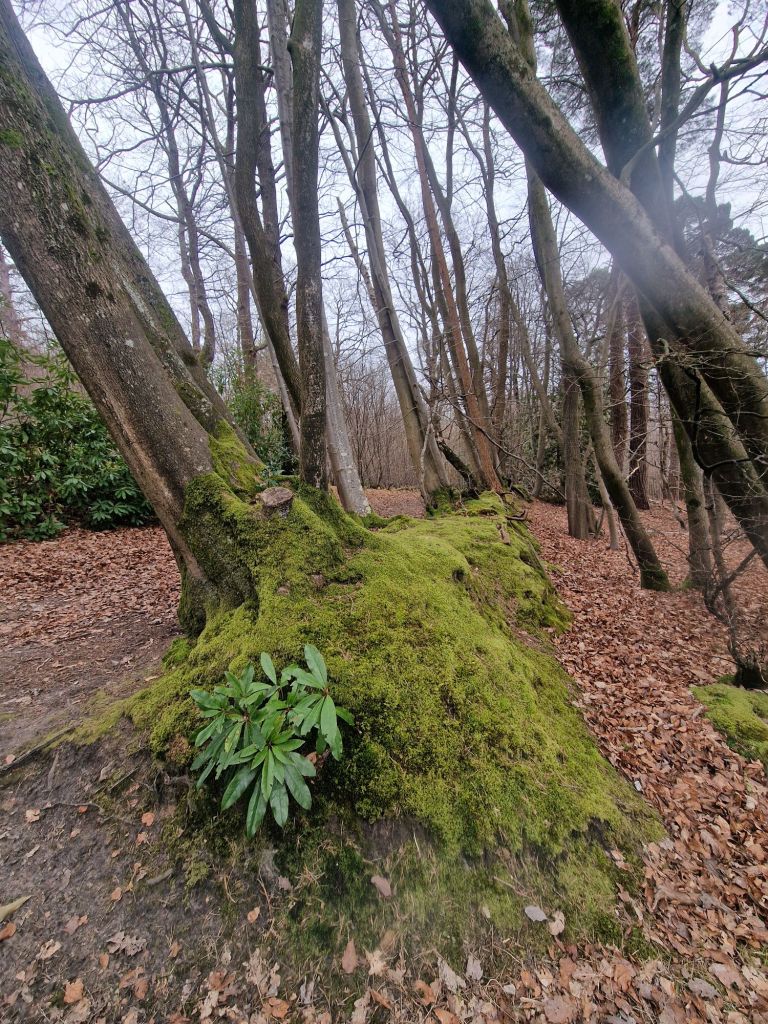
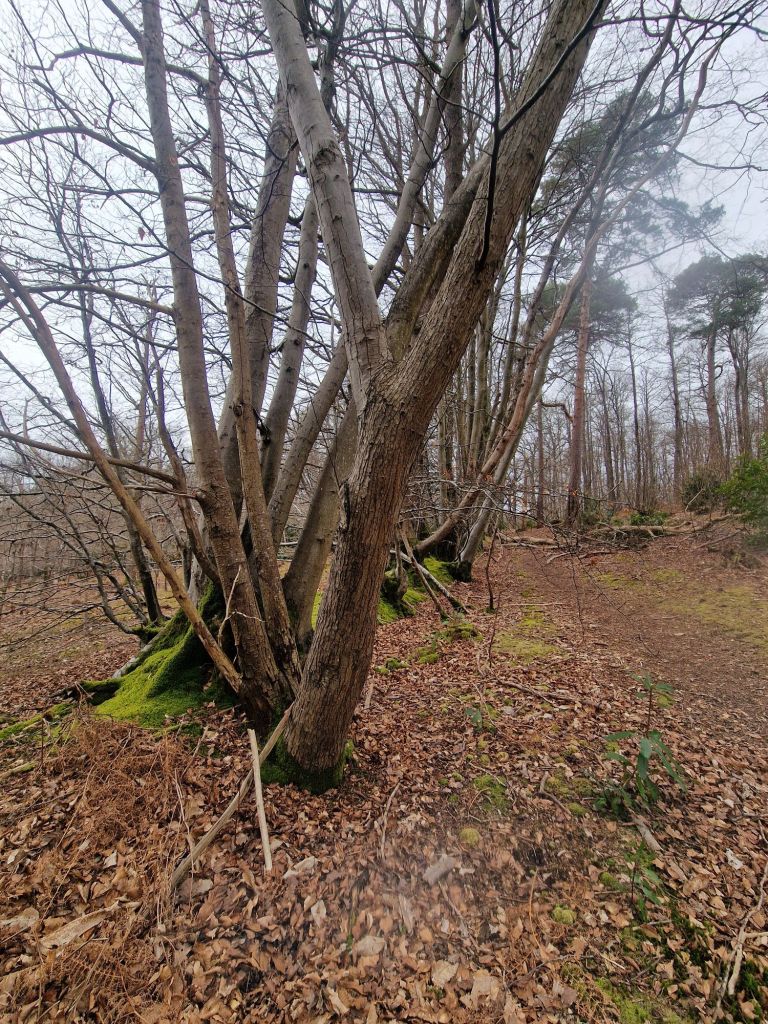
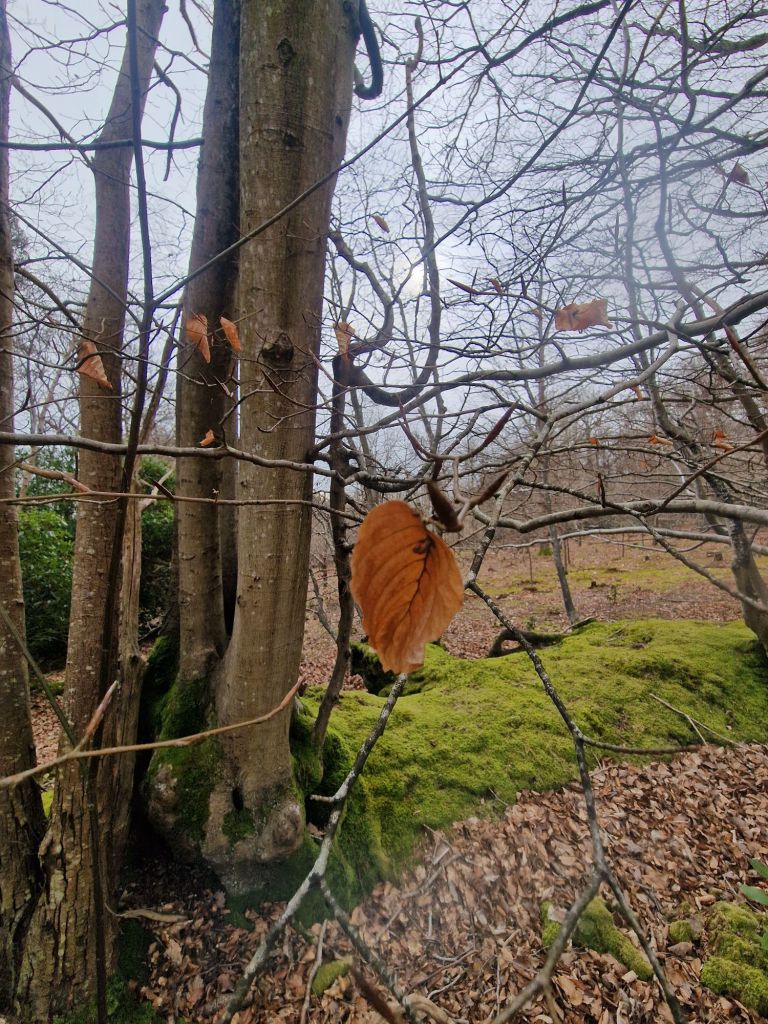
Some of the most beautiful tree relics – of the times before replanting occurred – are some ancient boundary banks of Oak, Quercus robur and Beech, Fagus sylvatica. Theses banks and trees are also a propitious habitat for bryophytes (mosses and liverworts)
There are some more notable Pendunculate Oak surviving amongst the huge area of coppiced Sweet Chestnut Castanea sativa
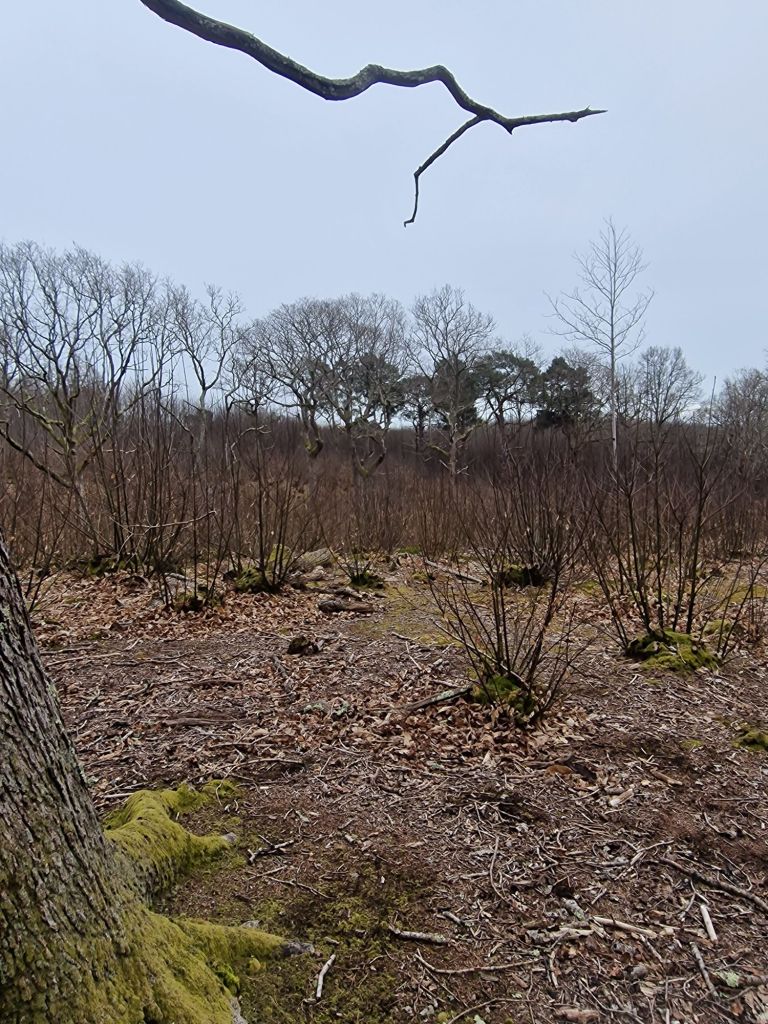

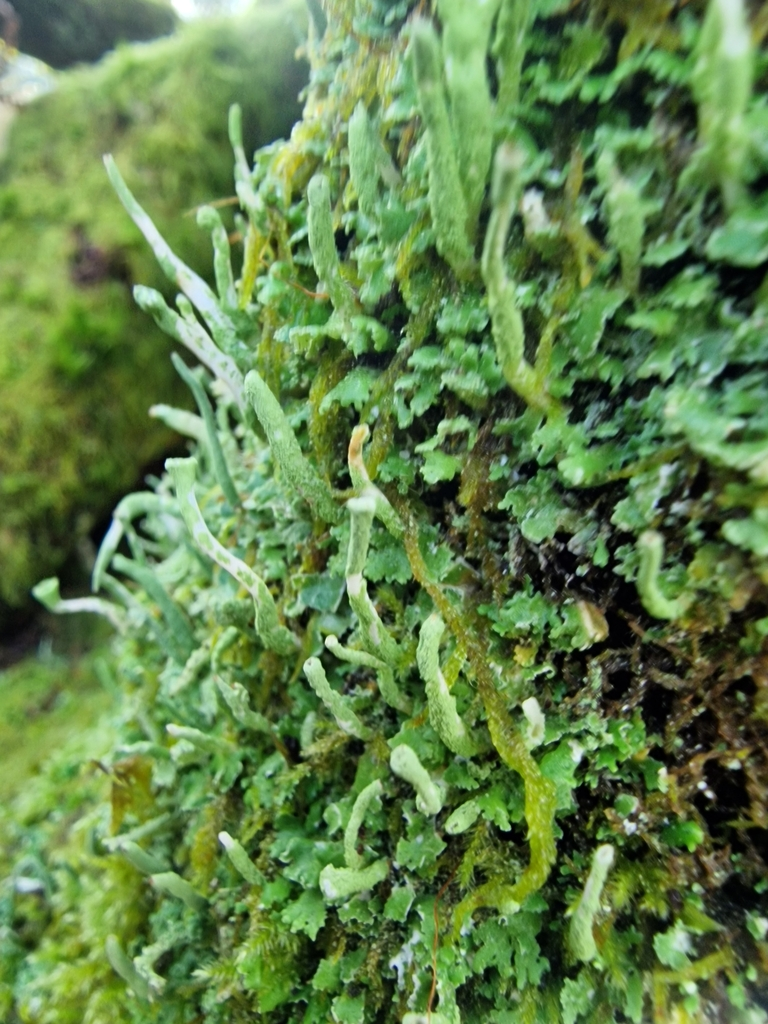
These Oaks are richer in terms lichens than the Sweet Chestnut; although very old stools of felled coppiced Sweet Chestnut can have rich assemblages of Cladonia spp. lichens; but the Sweet Chestnut in Fittleworth wood is to too young to have much lichen diversity, with only Cladonia coniocraea evident:
Many of the Oaks have much Common Greenshield Lichen, Flavoparmelia caperata.
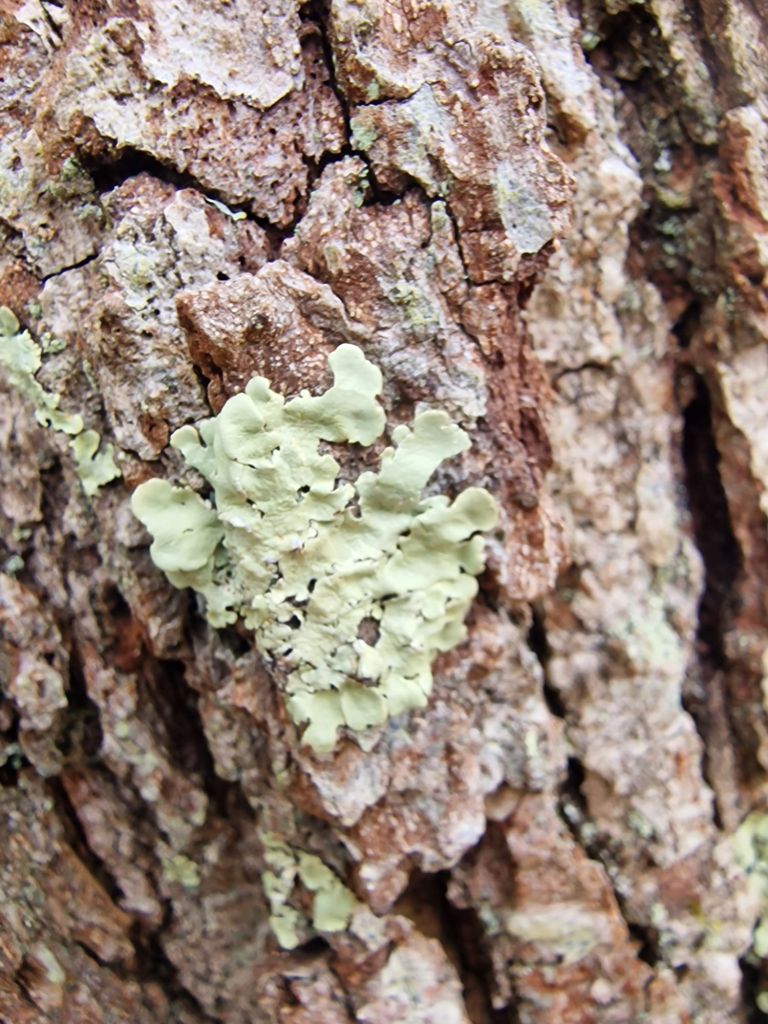
Flavoparmelia caperata is in the Parmelion community of lichens that demonstrate that a tree is probably older than 50 years.
Young coppiced Sweet Chestnut mostly have Pertusaria spp., especially Pertusaria leioplaca, and Graphidaceae family lichens e.g. Graphis sctipta sensu lato.
Sweet Chestnut
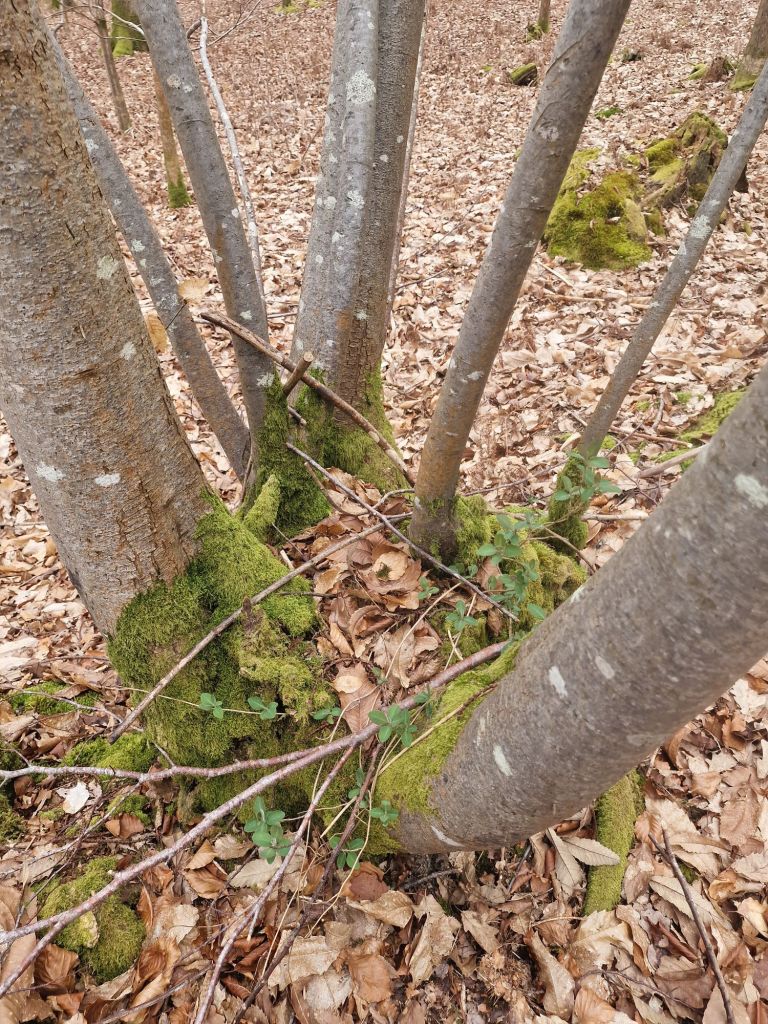
Pertusaria leioplaca
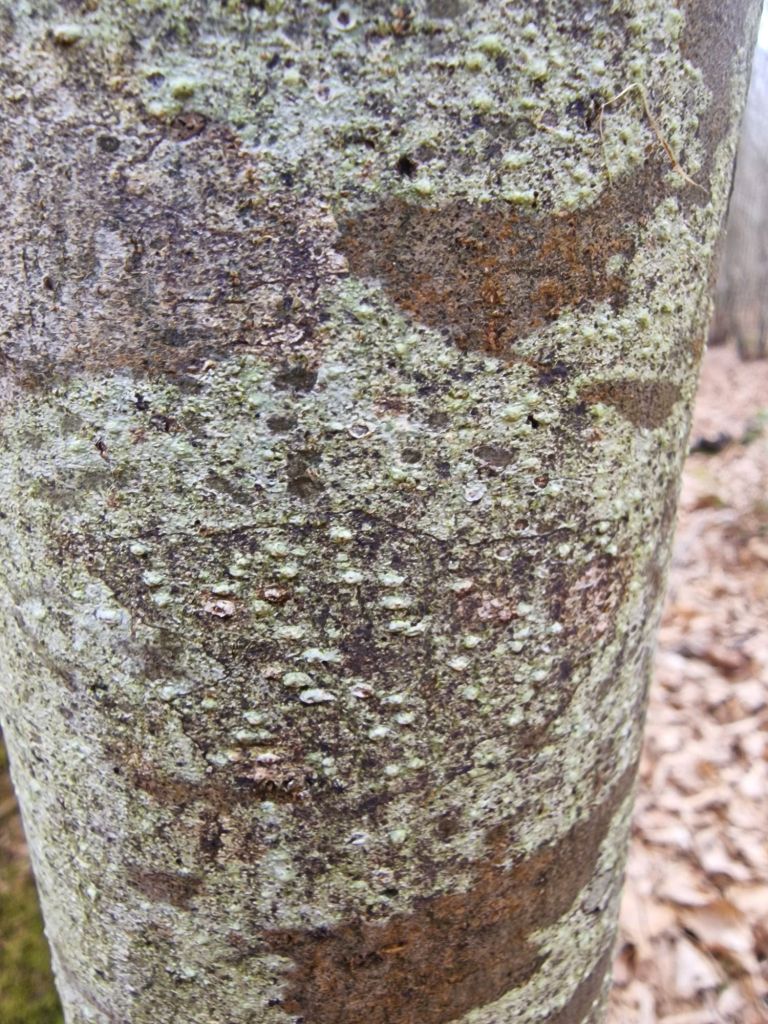
Probably Graphis scripta s.l.
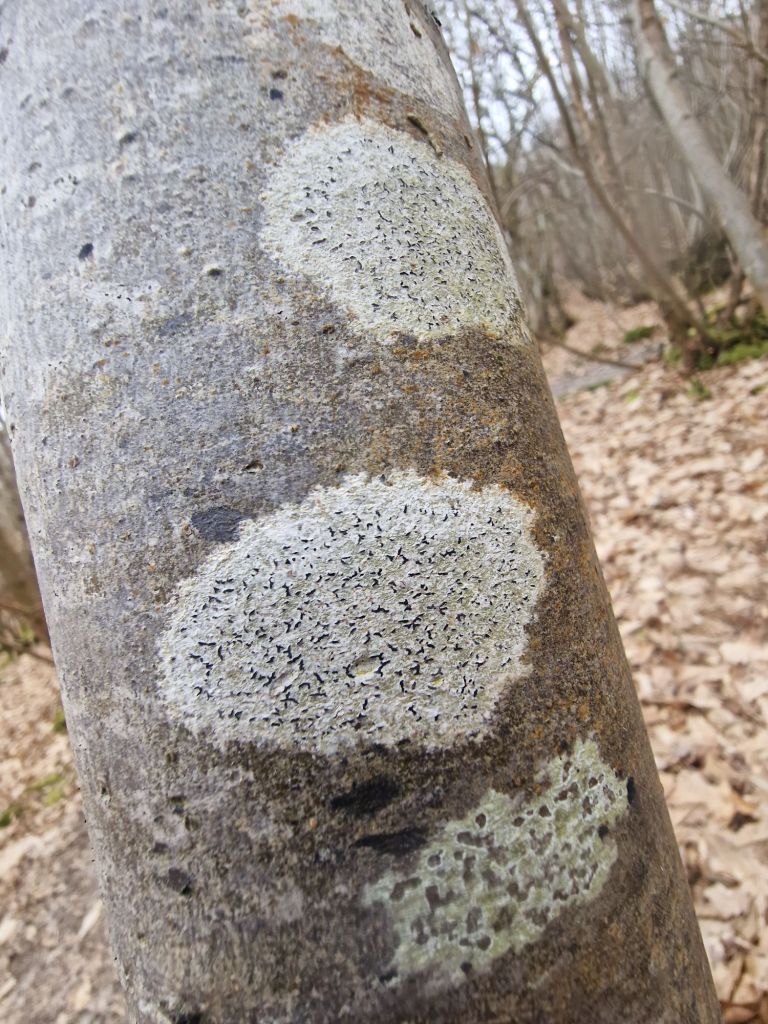
Script lichens are of the Graphidion community and start growing toward the end of the first year of a trunk’s life. The Graphidaceae family require spore microscopy to identify to species level.
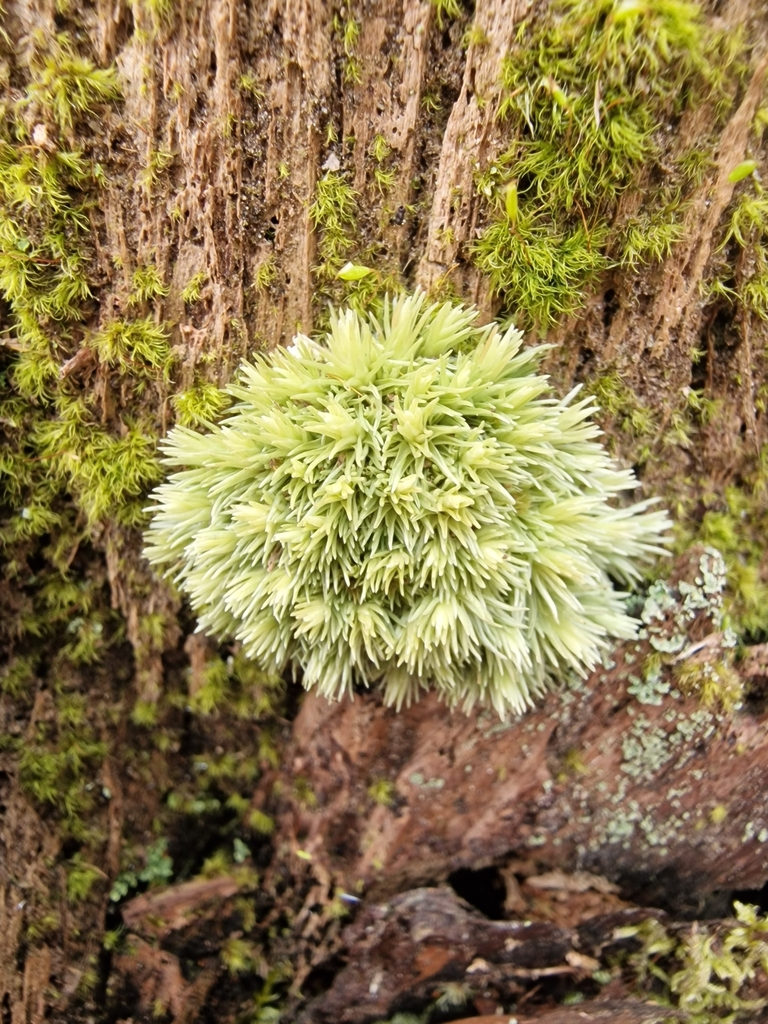
Amongst the sweet chestnut there were a lot of Leucobryum spp. mosses
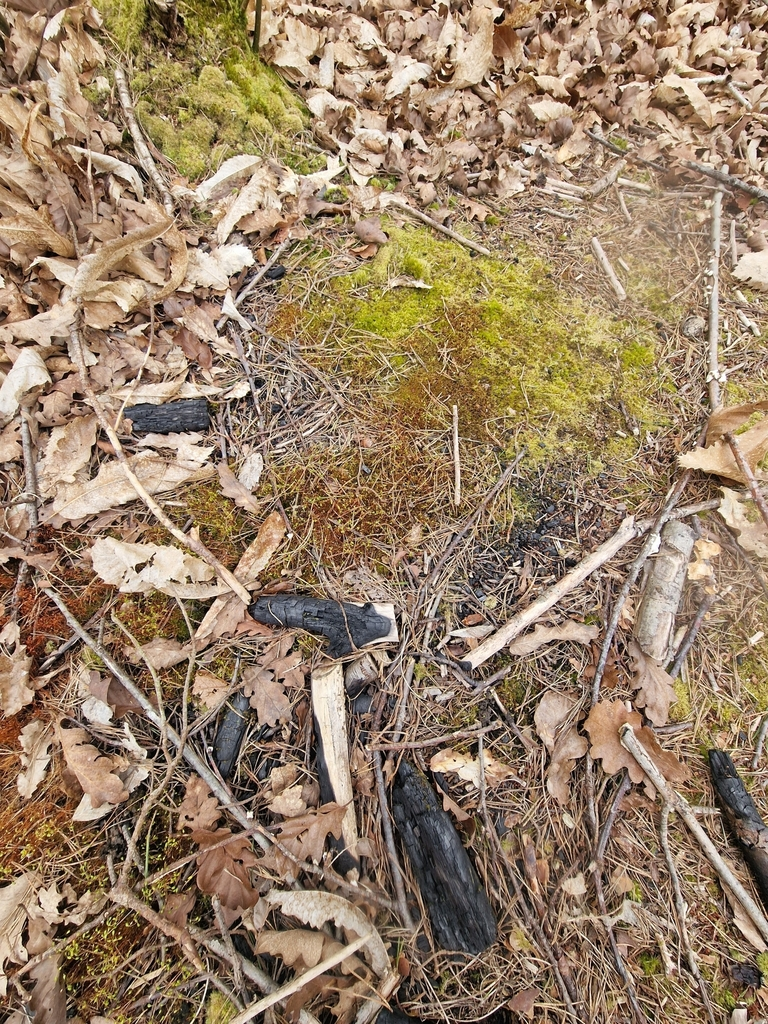
And where felled trees had been and burnt, there were areas of Funaria hygrometrica Bonfire Moss, as would be expected.
Funaria hygrometrica
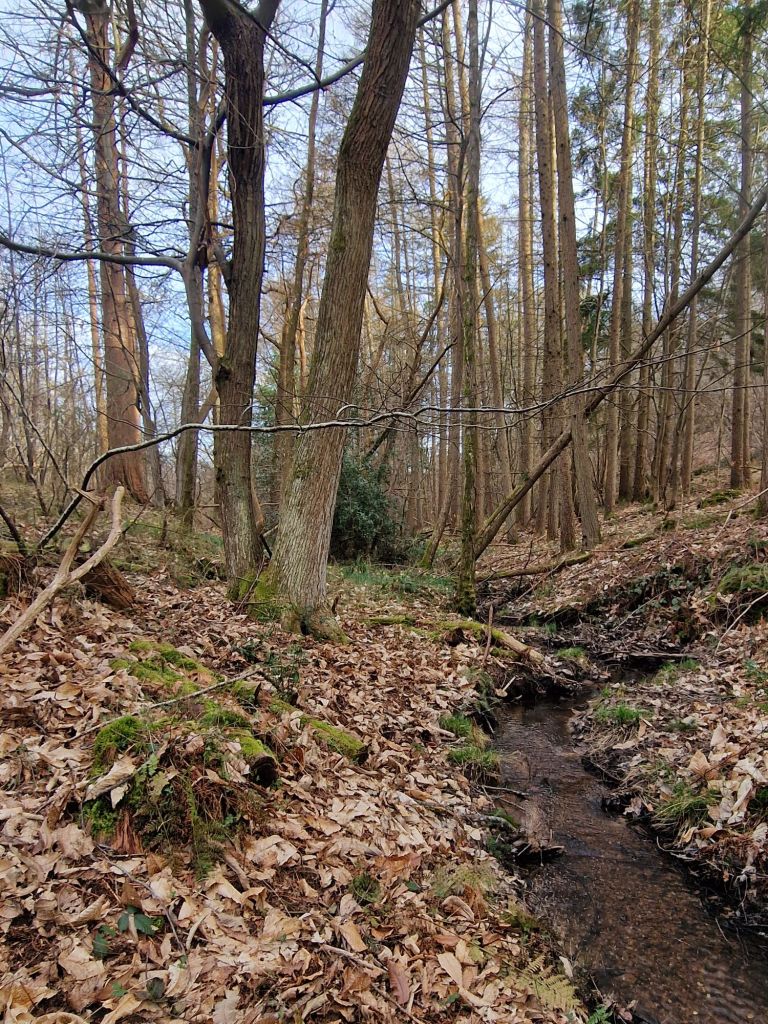
As I moved eastwards, and down from the higher ground of Fittleworth Wood, into the valley of Chance Copse, the ground flora seemed much more indicative of ancient woodland soil despite the presence still of much replanted woodland, but not dominated by Sweet Chestnut. Large amounts of replanted Sweet Chestnut does not seem propitious for the growth of ancient woodland ground flora from the seed bank of ancient woodland soil.
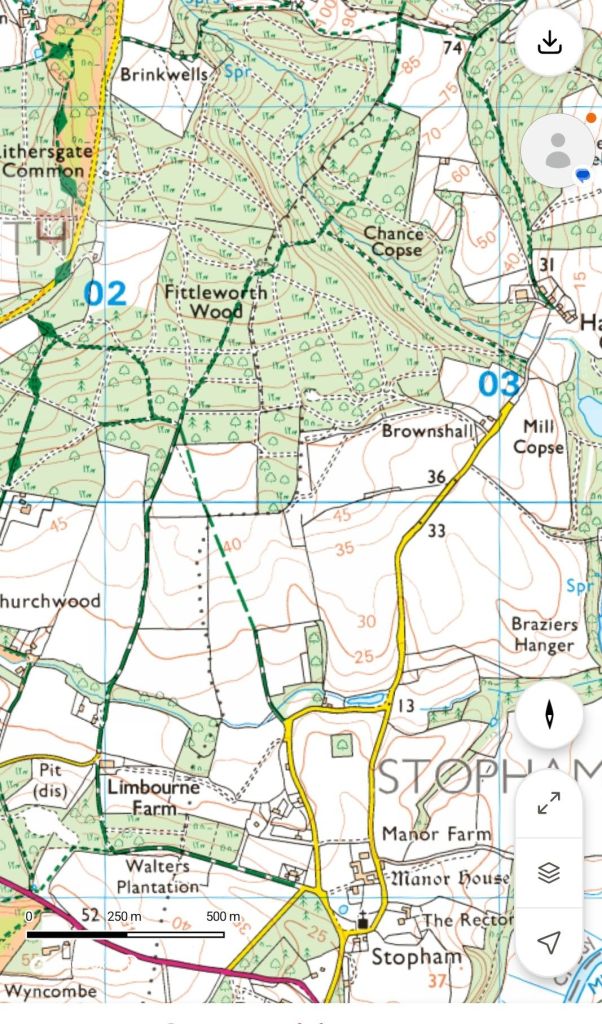
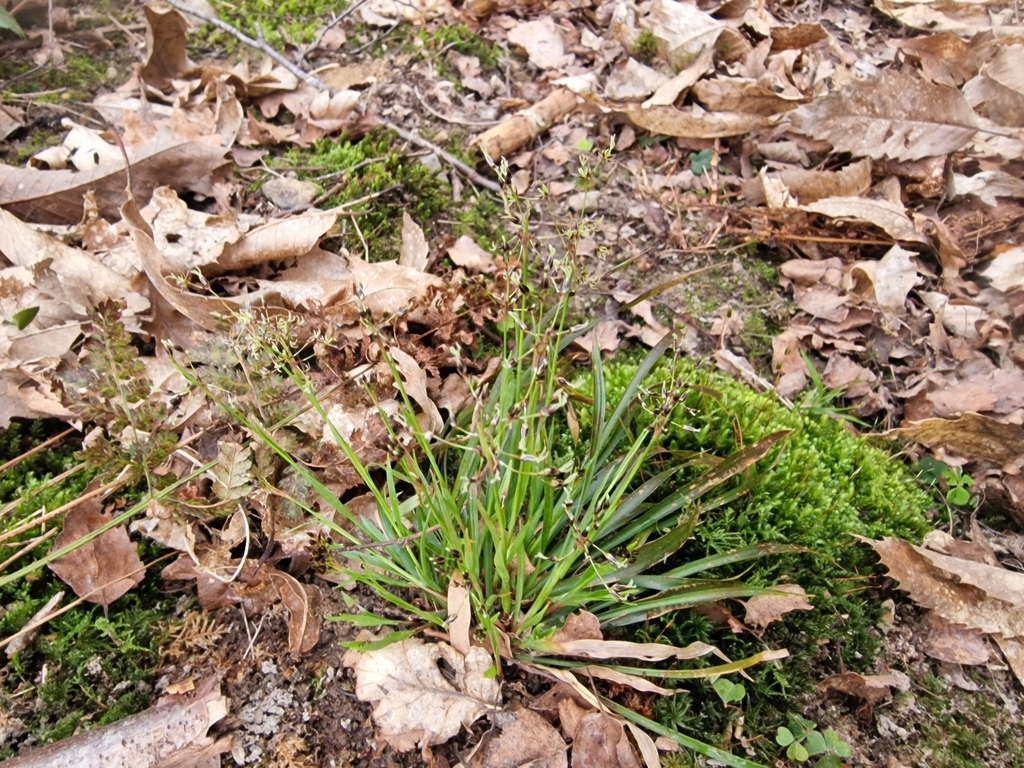
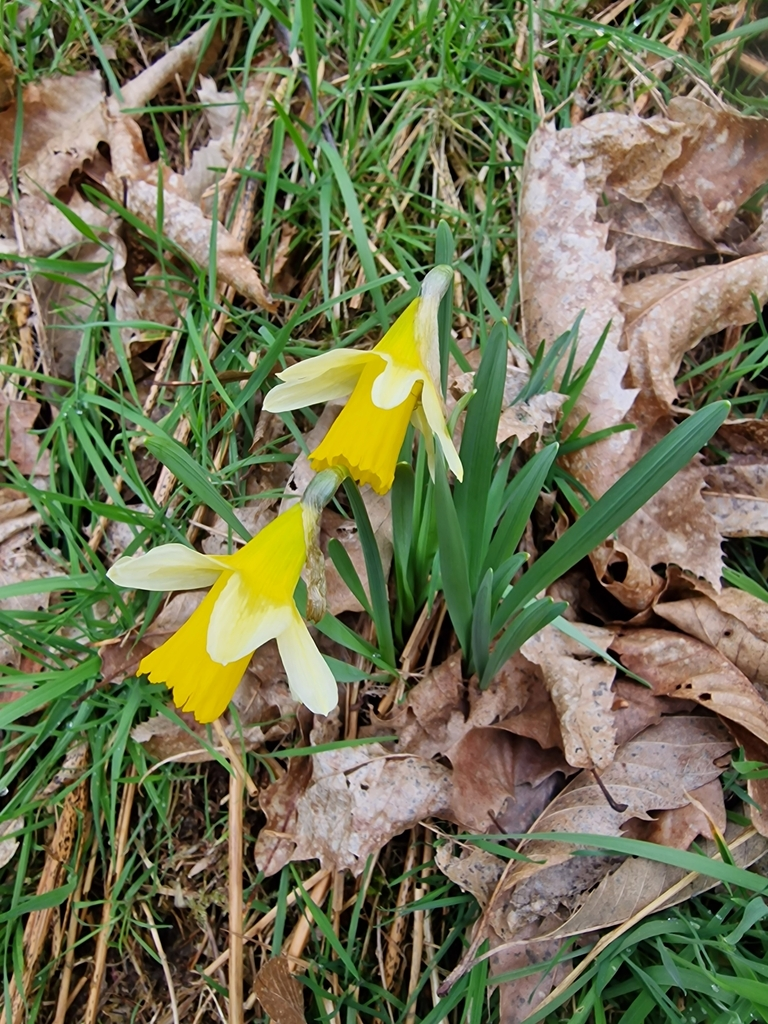
Plants like Hairy Woodrush, Luzula pilosa; Wildlife Daffodil, Narcissus pseudonarcissus and Primrose, Primula vulgaris in Chance Wood are ancient woodland indictor plants; these were absent in Fittleworth Wood.

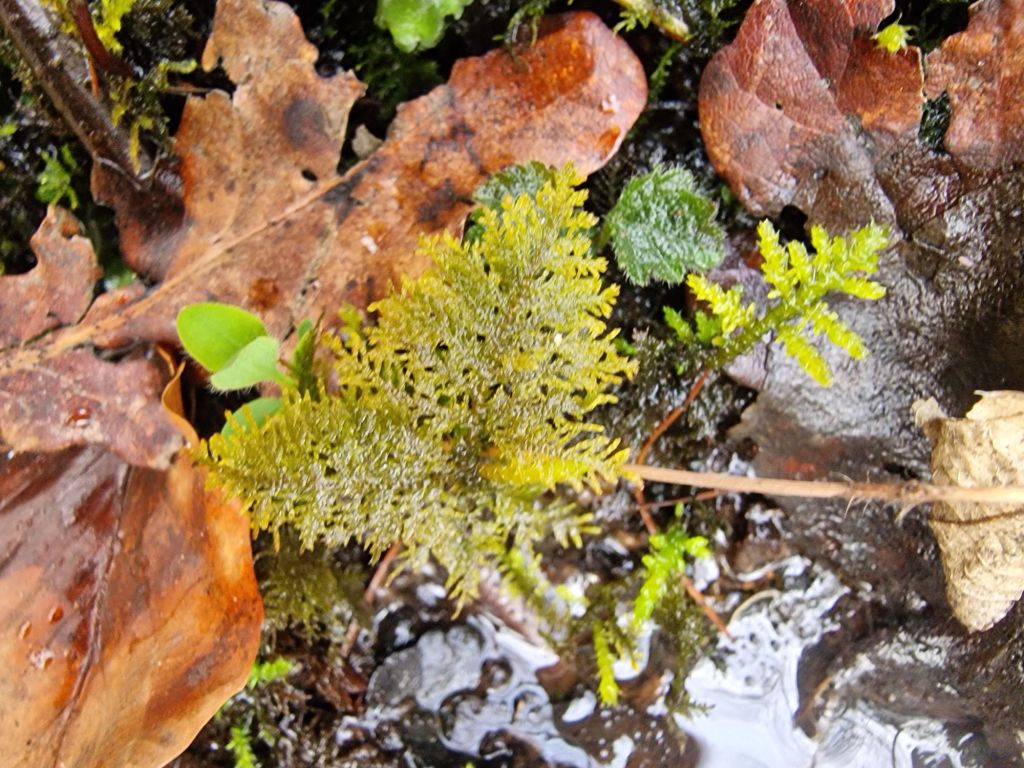
The banks of the stream in Chance Copse have many wet flushes arising from springs in the greensand; these are probably a good habitat for rare bryophytes, but I had little time as it was getting dark by the time I got to Chance Corpse I only found a few common bryophytes:

 Sim's Nature Notes