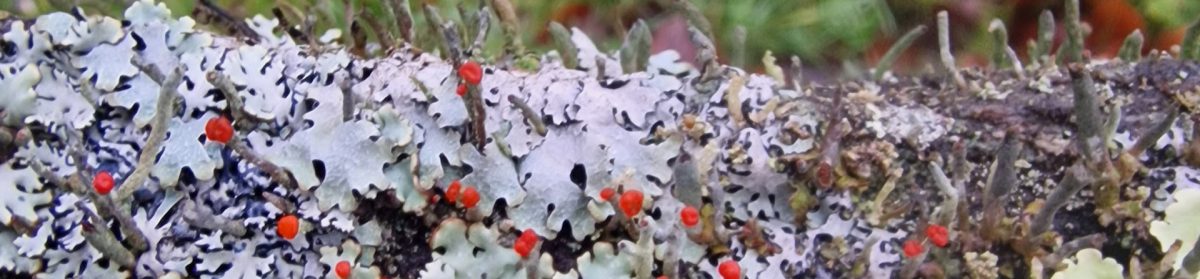
Home to myth and legend, where folk tales began. It fuelled our ancestors and still houses thousands of species. Ancient woodland has grown and adapted with native wildlife, yet what remains only covers 2.5% of the UK. Woodland Trust
This afternoon I walked through the ancient woodland of Butcher’s Wood (Woodland Trust), Lag Wood (private but with permissive access), both just south of Hassocks and Newer Copse (Wolstonbury Hill, National Trust) near Clayton. I am a volunteer with the Woodland Trust and Action for Rural Sussex’s Lost Woods of the Low Weald and Downs project and my particular biological interest is the lichens of woods, and I lead introduction to lichen walks. But in spring, my attention is drawn to the beauty of wild plants in ancient woodland.
This post is written for the general public; especially those new to wild plant identification.
All these woods are a short walk from Hassocks Rail Station or the Jack and Jill bus stop at Clayton (Metrobus 270, 271, 272, 273)
Butcher’s Wood and Lag Wood are woods of the Low Weald (and their underlying geology is the clay of the Gault Formation). Newer Copse, Wolstonbury Hill, is woodland of the South Downs (chalk of the West Melbury Marly Chalk Formation). Underlying geology determines soil type, and this affects which plants grow where. You can find out the geology of anywhere in the the UK by using the British Geology Survey Geology Viewer Viewer
Butcher’s Wood

I could find out if I was in ancient woodland simply by consulting Natural England’s index of ancient woodland; it’s map of ancient woodland can be explored here: Natural England Ancient Woodland; and these three woods are indeed Ancient Woodland (Ancient semi-natural woodland (ASNW))

Natural England classifies ancient woodland thus:
Firstly, woodland can be calassified as Ancient Semi-Natural Woodland; mainly made up of trees and shrubs native to the site, usually arising from natural regeneration. They are areas that have been wooded continuously since at least 1600. This does not mean the trees in ancient woodland are themselves ancient; although some might be.
Moreover, ancient trees can be found not in woods. Ancient Pendunculate Oaks, Quercus robur, can be found in Low Weald grazing pasture and hedge rows. These are probably relics of former woodland that was cleared for pasture and left for shelter for livestock or for ield boundaries.
The oldest trees in Sussex are polllarded pasture Oaks in ancient medieval Deer Parks; those in the Low Weald include Danny Park south of Hurspierpoint and Plashett Park north of Ringmer. There is only limited public access by public footpath to these parks
Alternatively, Natural Englsnd designates ancient woodland as Plantations on Ancient Woodland Sights (or Ancient Replanted Woodland) – replanted with conifer or broadleaved trees (e.g. Sweet Chestnut, Castanea sativa) that retain ancient woodland features, such as undisturbed soil, ground flora and fungi
Another way of determining whether you are in ancient woodland, without looking at the Natural England ancient woodland maps, is to look at the plants growing in the woodland you are walking through. Certain plants indicate that the wood you are walking through may be ancient; as these plants take a bery long time to establish themselves in woods.
This post illustrates the Ancient Woodland Indicator Plants that I found in Butcher’s Wood, Lag Wood and Newer Copse today. Ancient Woodland Indicator Plants are listed in Indicators Of Ancient Woodland – the use of vascular plants in evaluating ancient woods for nature conservation. Francis Rose, British Wildlife 10.4 April 1999, Pages 241-251. At the end of this post is a full list of the ancient woodland indicator plants listed by Rose
Resources that can help you identify wild plants:
Harrap’s Wild Flowers is an excellent and easy-to-use field guide, that uses photos with key identification features. Simon Harrap: Harrap’s Wild Flowers A Field Guide to the Wild Flowers of Britain & Ireland ( 2nd edition 2015)
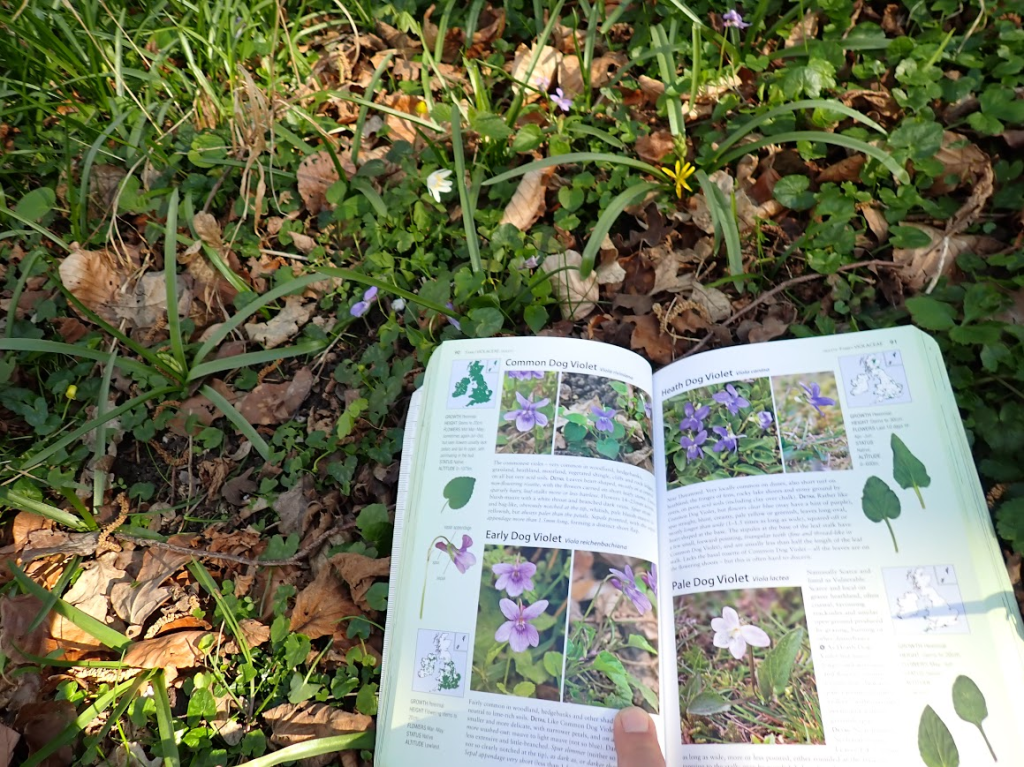
This is the most accurate of AI photo recognition App to support plant identification as it requires photos of the flower, leaves and the whole plant.
This also useful for identification and has the added advantage that it records your observations if you want to. Saved onservations are checked by others and records which reach “Research Grade” are submitted to county recorders and if agreed they will be added to the National Biodiversity Network Atlas . There are questions about the reliability of Research Grade verification; but iNaturalist is extremely useful for community projects as your records can be seen by anyone; and can be seen in “projects” e.g. the Henfield Nature Challenge . As you progress with identification, I would recommend that you use iRecord, as your plant records will automatically be seen and checked by the County Recorders for vascular plants and if verified they will be added to the Botanical Society of Britain and Ireland’s database and could appear in the next edition of the Sussex Plant Atlas. iRecord
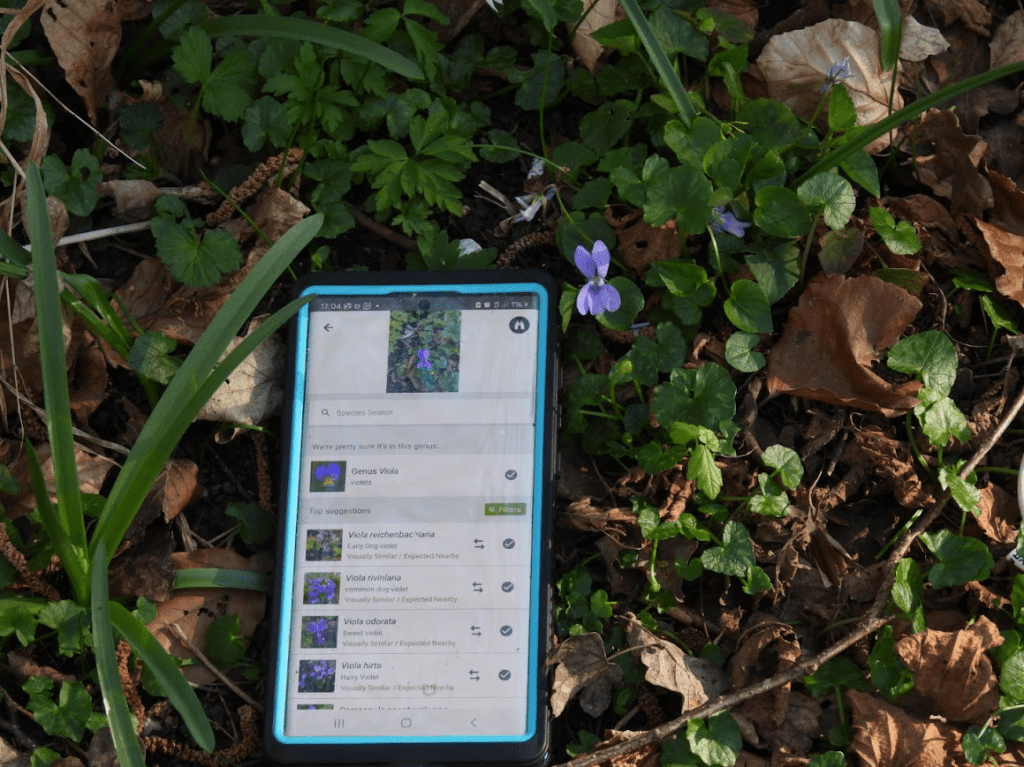
N.B. AI photo identification gets things wrong at times; always check an AI identification with a field guide or an expert botanist (if you know one!)
All of the photos in this post were taken today (07.04.25) in Butcher’s Wood, Lag Wood or Newer Copse; except for some examples of other indicator plants that can be found in other Low Weald woods (Butcher’s Broom and Wild Service Trees). All the photos in the post were taken by me.
Butcher’s Wood and Lag Wood (Low Weald)
Lonicera periclymenum Honeysuckle (Butchers Wood)

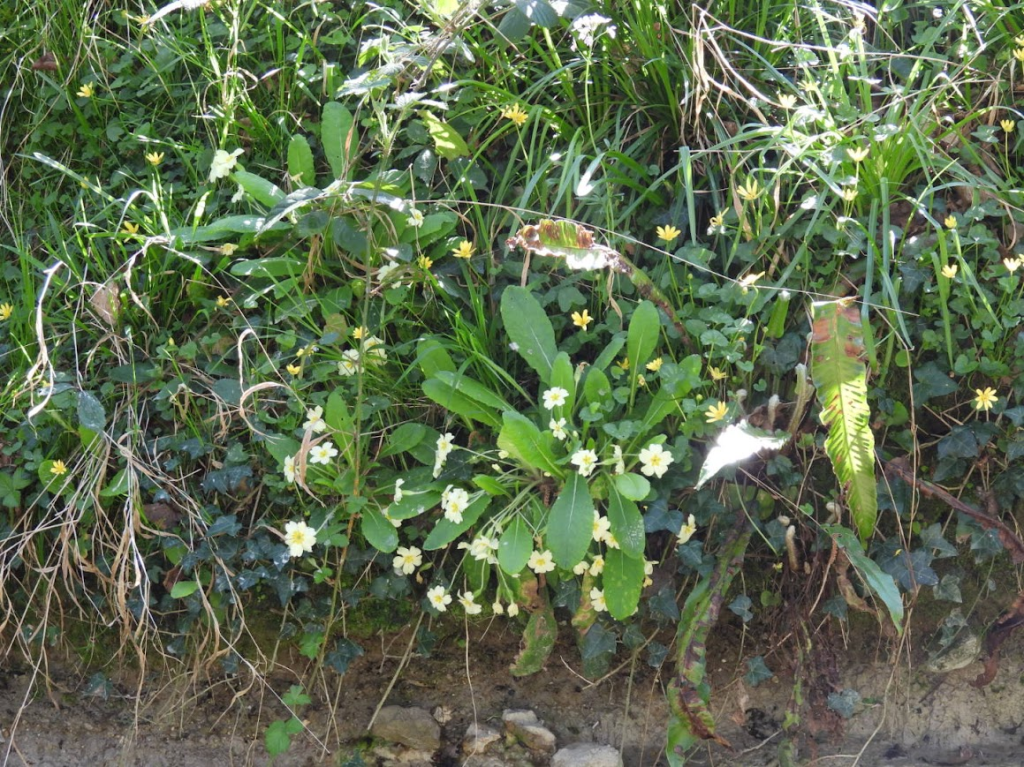
Primula vulgaris Primrose (Lag Wood)
Hyacinthoides non-scripta Bluebell (Butcher’s Wood)
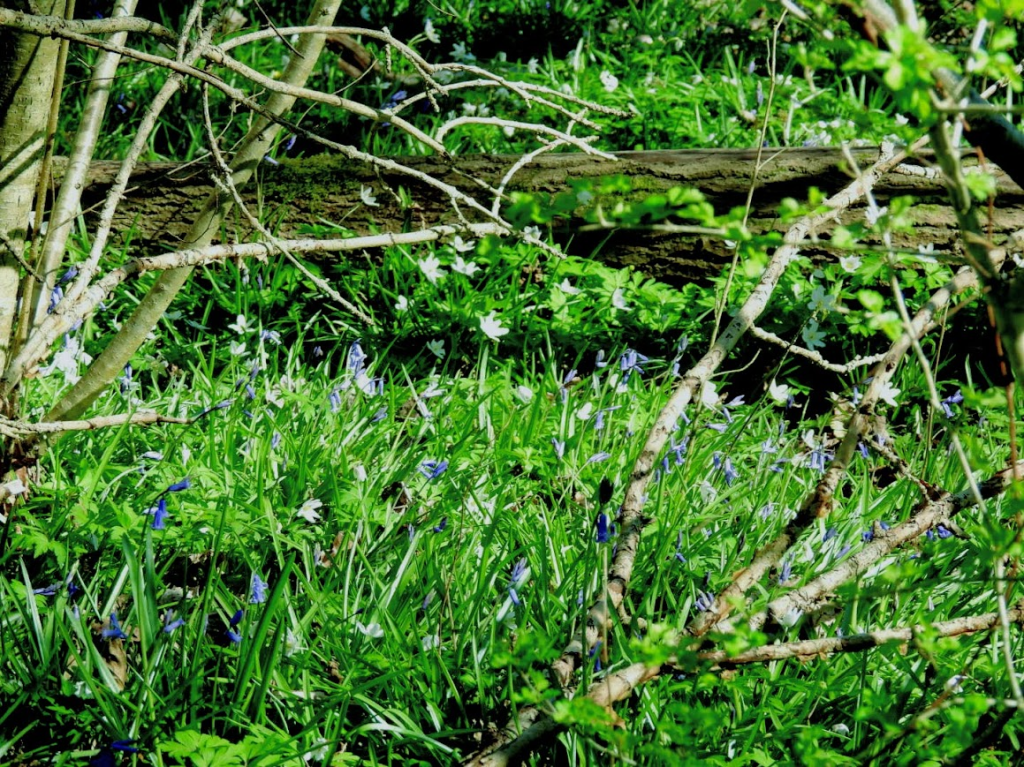
Anemonoides nemorosa Wood Anemone (Butcher’s Wood).

Wood Anemones turn their flowers to the direction of the sun. The yellow flowers are Lesser Celandine, Ficaria verna. It is not an ancient woodland indicator plant but is a very common flowering plant in woodland; and is one of the first flowers to bloom in spring, and so is very important to pollinating insects.
Ilex aquifolium European Holly
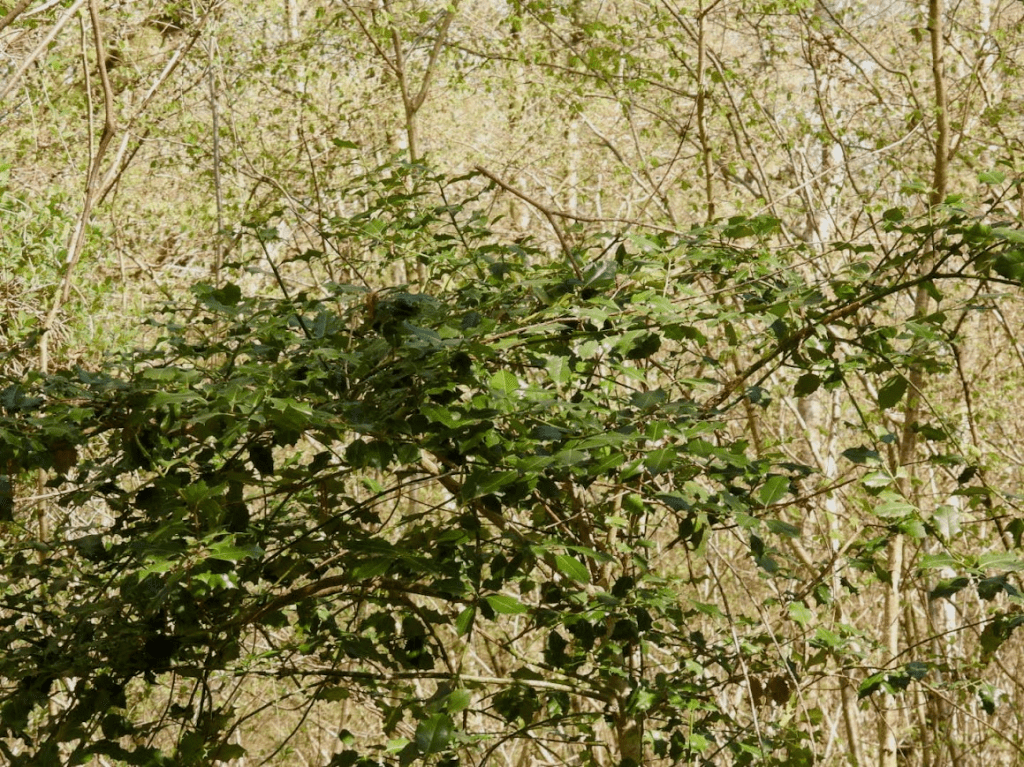
An ancient pollarded Carpinus betulus, European Hornbeam, within Lag Wood. Rose makes it clear in his list that Carpinus betulus should only be considered an ancient woodland indicator only if they occur well within the wood and do not appear to have been planted.

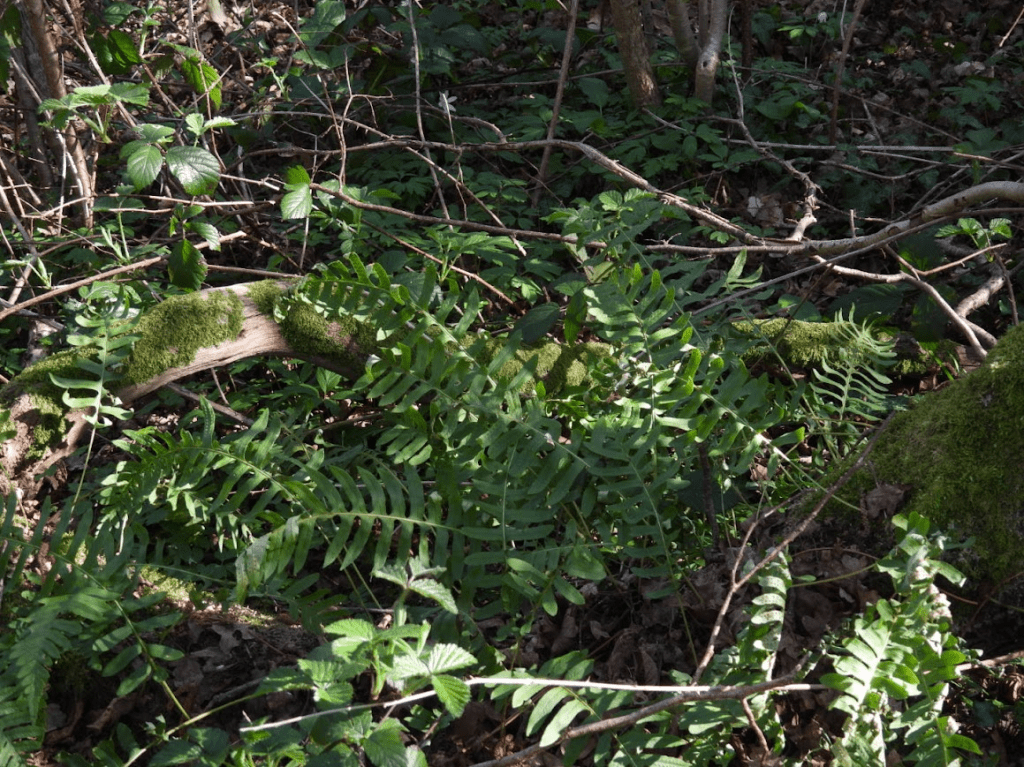
Polypodium sp., Polypody Fern (Lag Wood)
The exact species of polypodies is only determinable by microscopic inspection of their spore; but all species of Polypody Ferns are ancient woodland indicators.
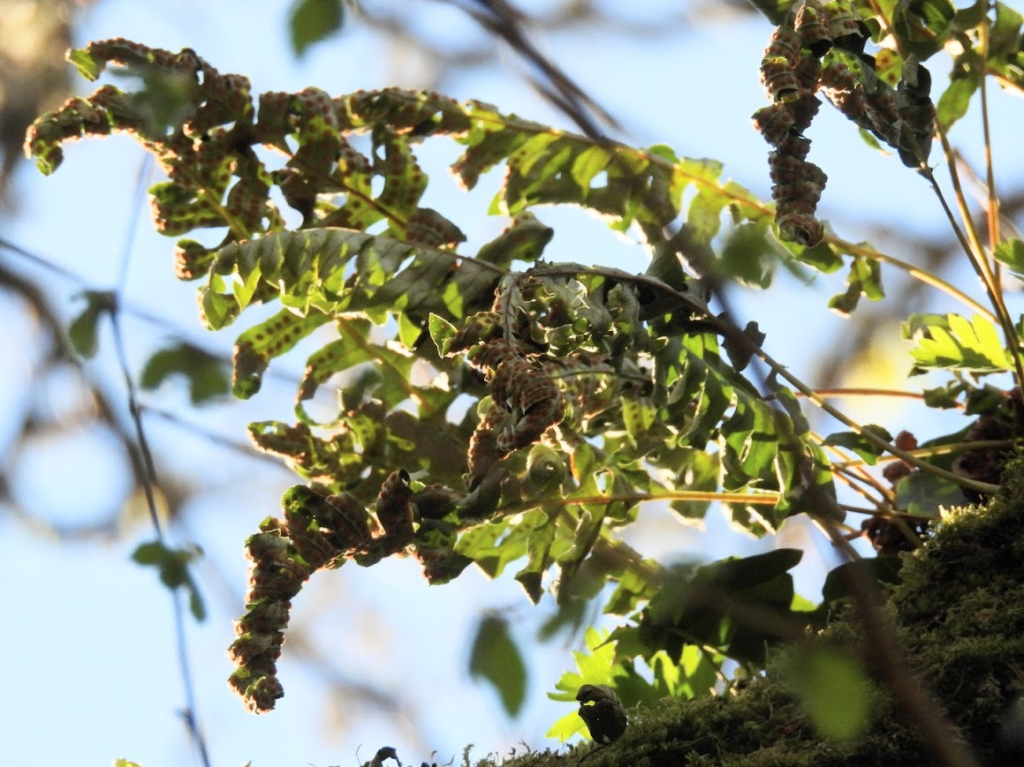
This epiphytic Polypody was growing at the top of a Pendunculate Oak, Quercus robur. It looks a bit shrivelled due to the lack of rain of late, and it is being exposed to the full sun while the Oak has no leaves. A branch had fallen from this tree, with Polypody on it; this look more like what Polypody typically looks like
Carex sylvatica, Wood-sedge (Butcher’s Wood)
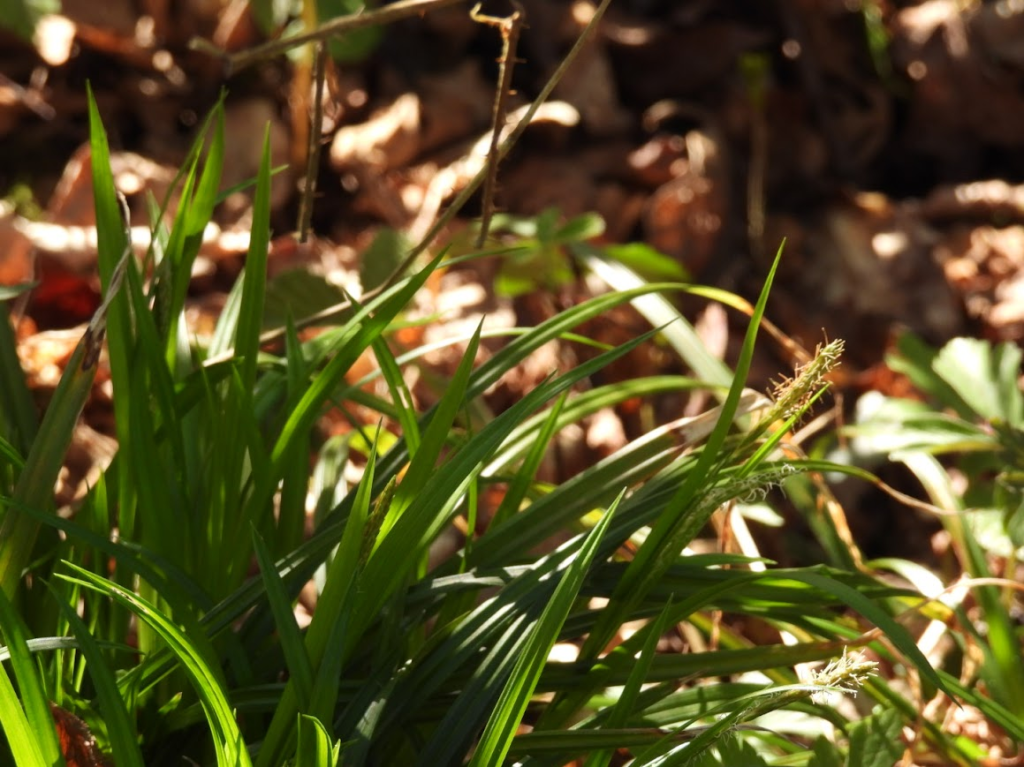
Carex pendula, Pendulous sedge (Lag Wood)
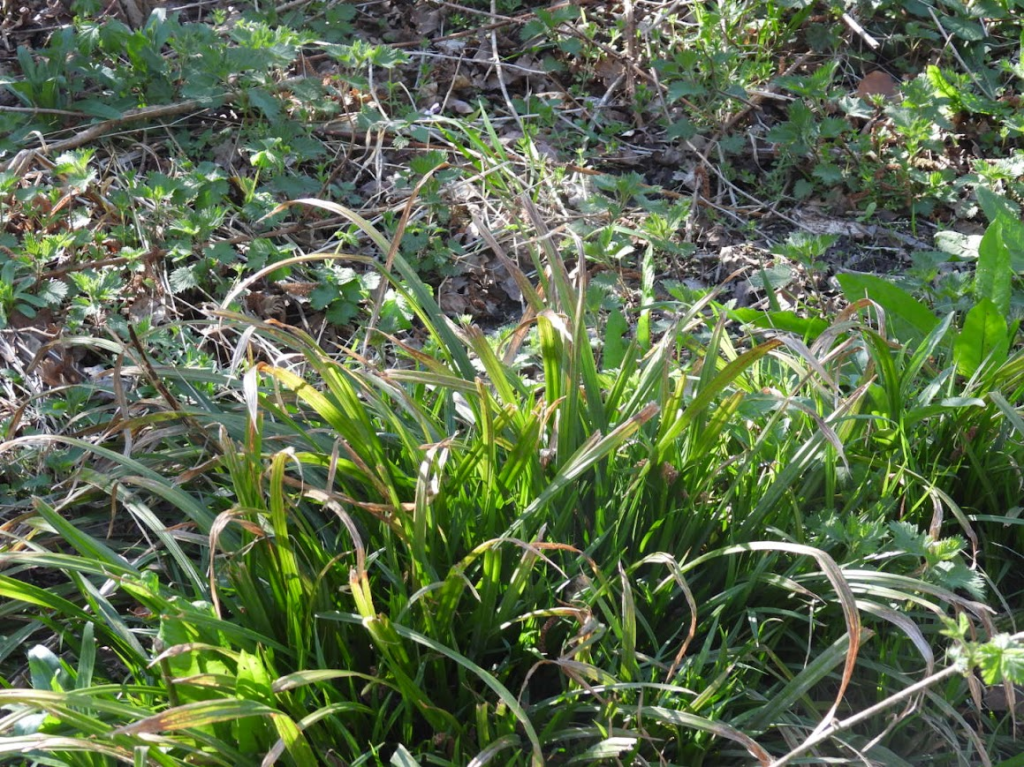
Theses sedges are a feature of Low Weald woodland, because clay is a soil type which retains water and these sedges grow in wet woodland.
In Lag Wood an ancient field boundary can be seen, consisting of a bank and coppiced Hornbeam. Ancient (medieval) field and wood boundaries often indicate that woodland is ancient.
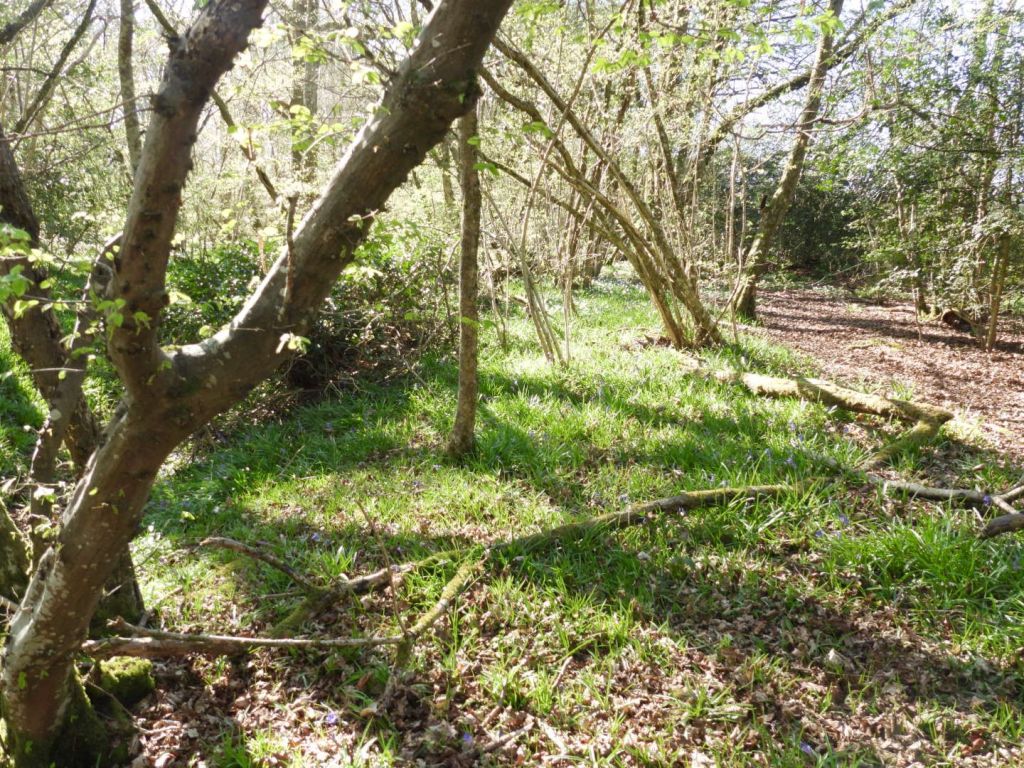
Ancient woodland has not been “wild” since the delopment of agriculture; since the Neolithic Revolution, between 3100 and 2900 BC. Ancient woodlands have been coppiced and pollarded for 1000s of years. The beauty and biodiversity of these woods comes from sensitive, appropriate human management.
Newer Copse (Wolstonbury Hill), South Downs
Many of the ancient woodland indicator plants of the clay Low Weald and found growing on chalk Downland and vice versa.
I saw Bluebells, Wood Anemones and Holly, in Newer Copse, but I also saw Early-Dog Violets, Moschatel, Yellow Archangel, Soft Shield Fern and Dog’s Mercury; all ancient woodland indicator plants. On other occasions, I have seen Ransoms, Spurge-Laurel Early Purple Orchids and Spurge-Laurel here, also ancient woodland indicator plants.
Viola reichenbachiana Early-Dog Violets
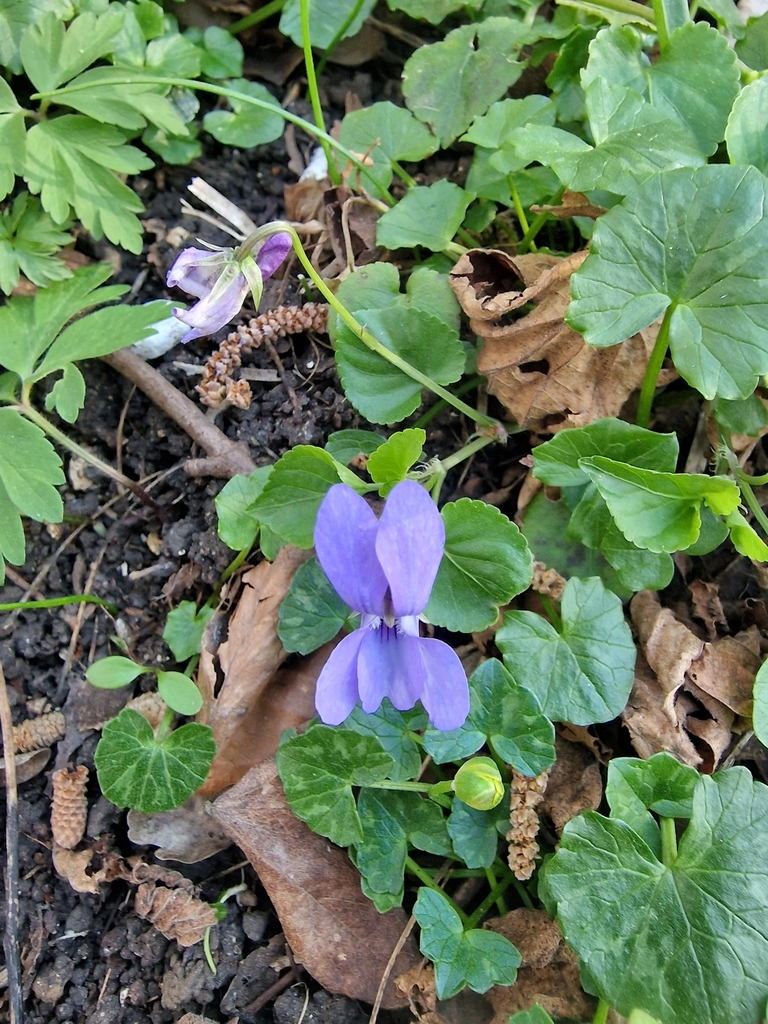
Early Dog Violets are difficult to separate from Common Dog Violets; the Early Dog-violet has a darker purple spur behind the petals. PlantLife: Early Dog Violet
Adoxa moschatellina Moschatel or Townhall Clock
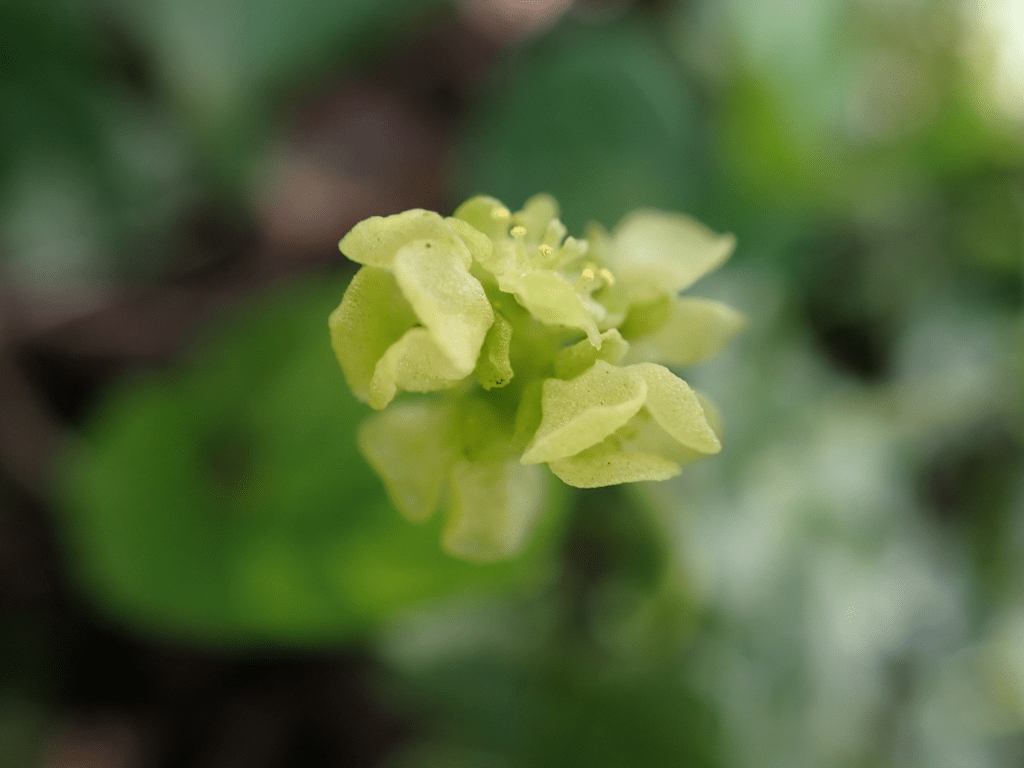
These are very small; and easy to overlook
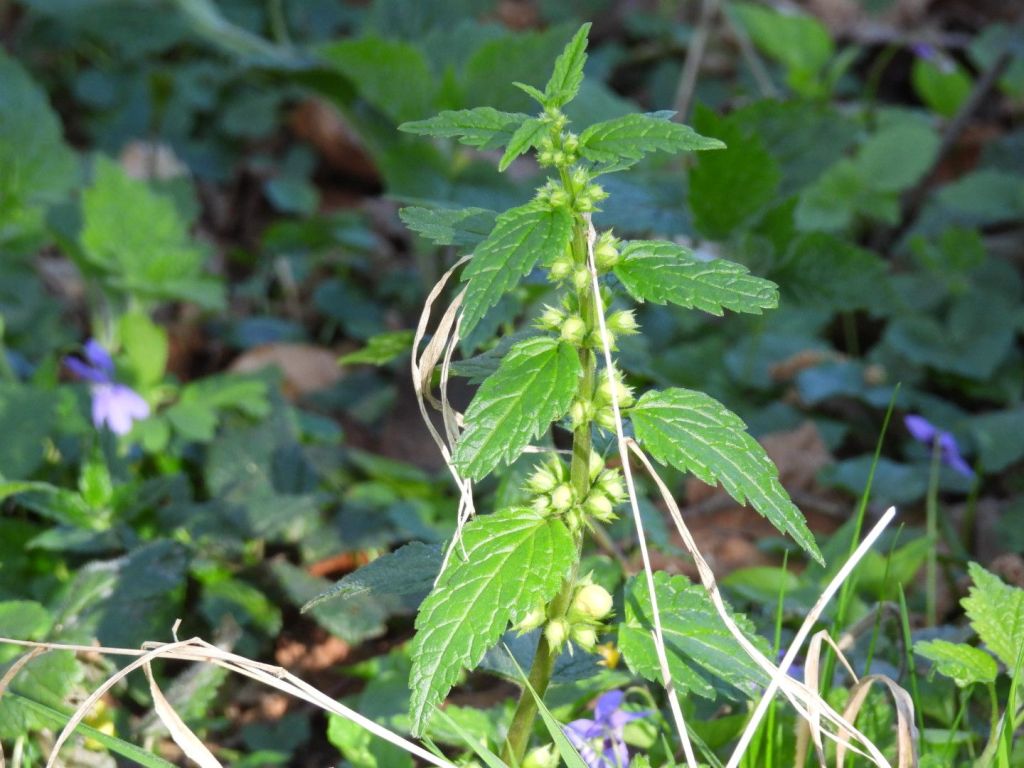
Laminate galeobdomon Yellow Archangel, not yet in flower.
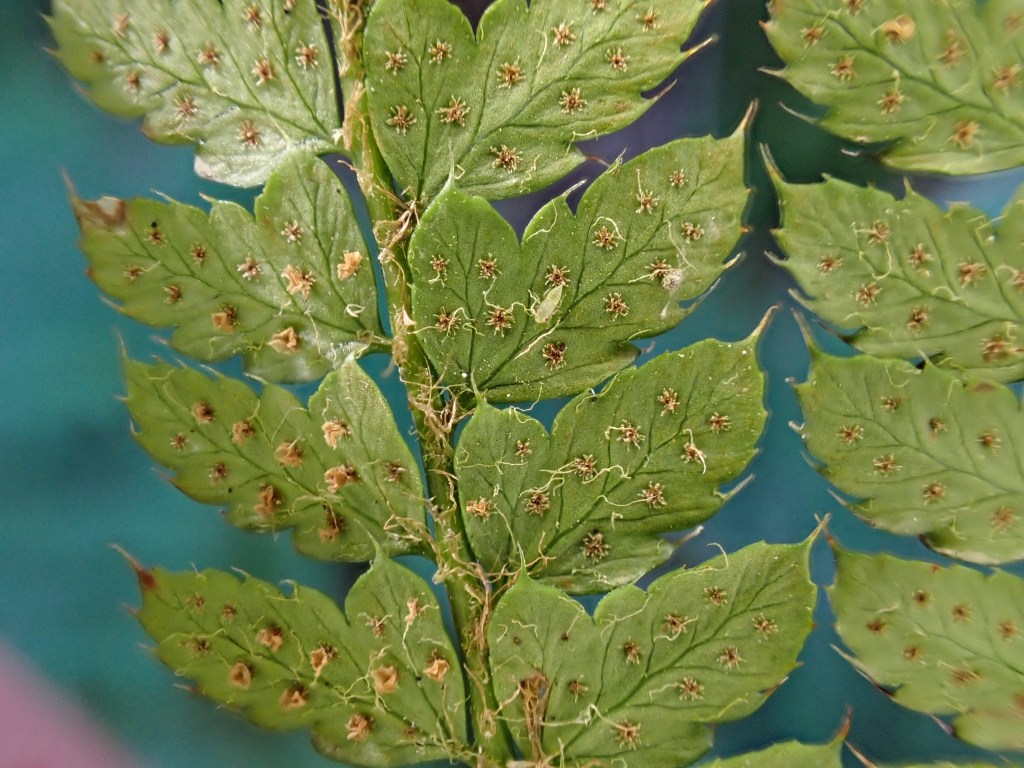
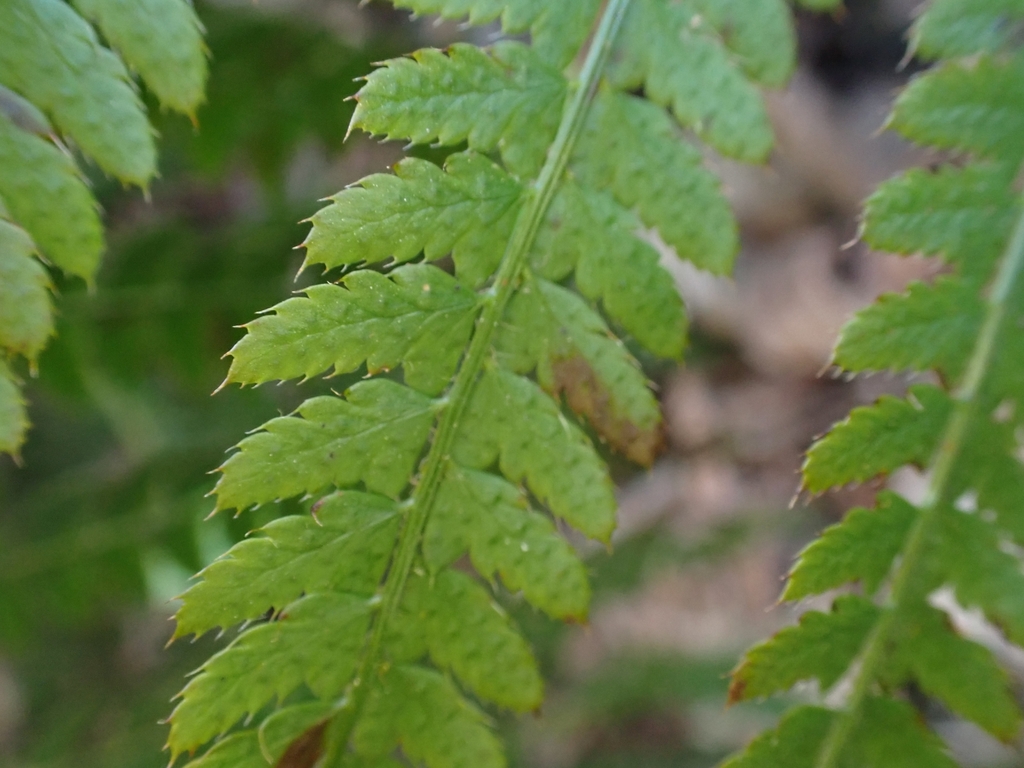
Polystichum setiferum, Soft Shield-fern
Ferns are difficult to identify, and differentiating between Soft and Hard Shield Fern is very difficult. But both species are indicators of ancient woodland. The shield ferns have this characteristic “thumb” on the leaflets of the fronds and the spores cover both the leaflets and the thumb – you can just about make this out in one or two of the leaflet British Wild Plants Polystichum setiferum
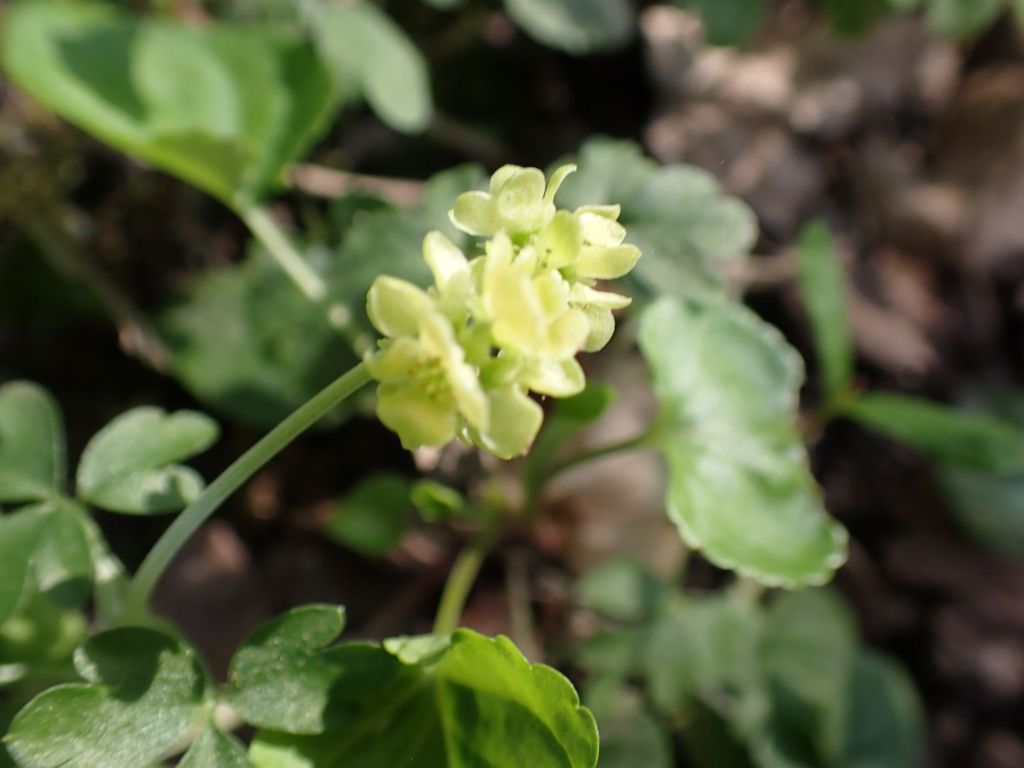
Mercurialis perennis Dog’s Mercury
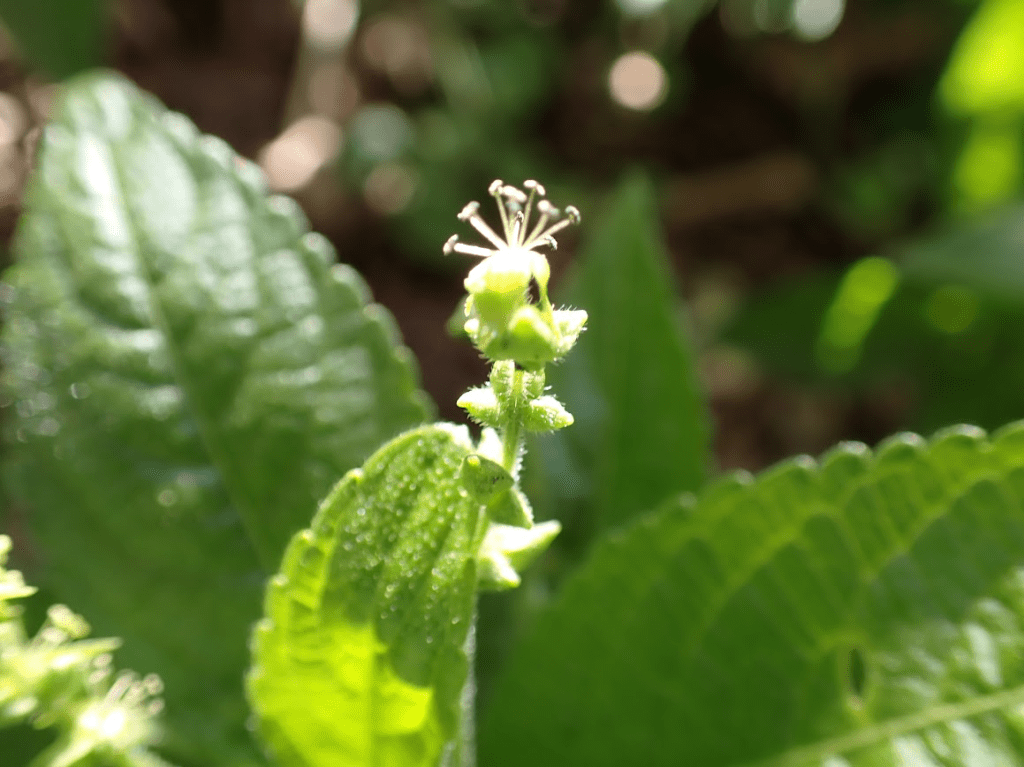
This is a greatly magnified photo; the flowers of Dog’s Mercury are VERY small!
Dog’s Mercury with no magnification.

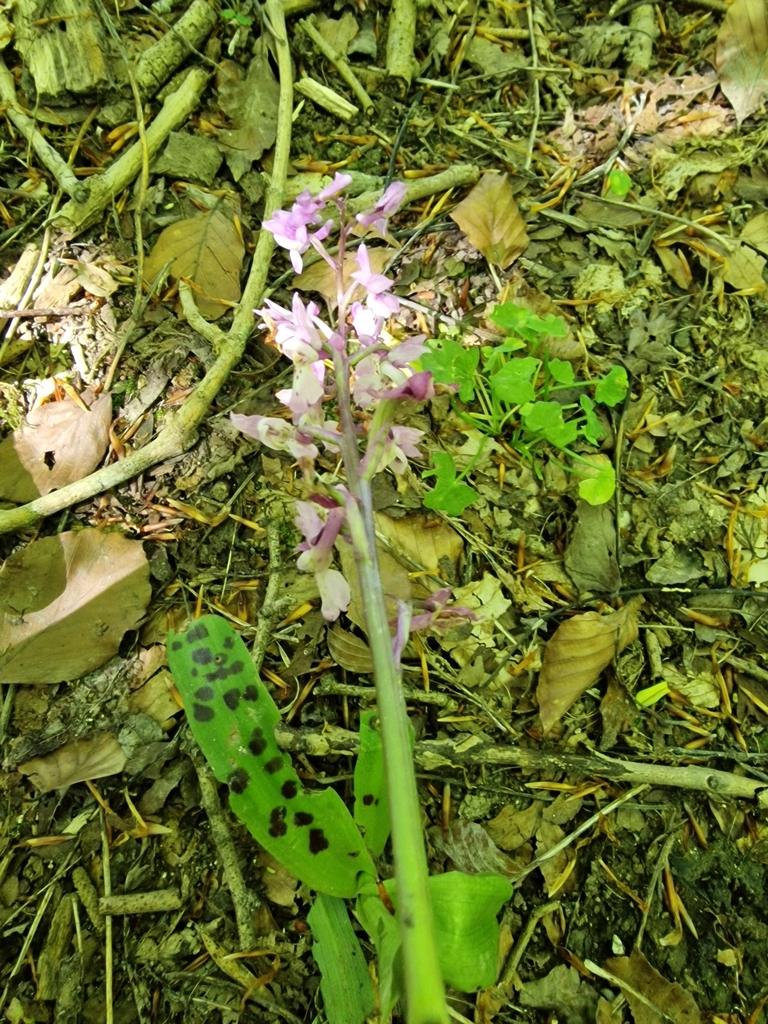
Orchis mascula Early Purple Orchid May 24, 2024 Newer Copse (Wolstonbury Hill)
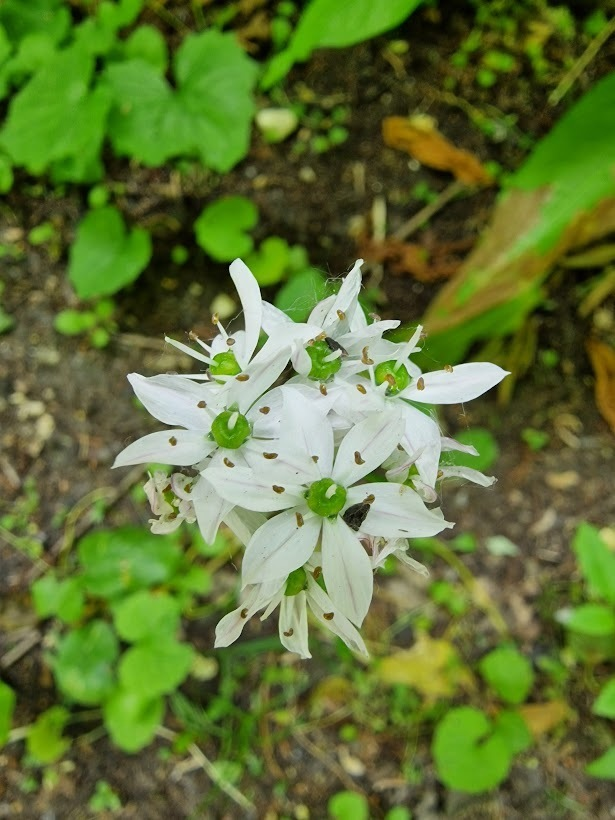
Allium ursinum Ramsons or Wild Garlic 30 May 2023 Newer Copse (Wolstonbury Hill)
Daphne laureola Spurge-Laurel May 24, 2024 Newer Copse (Wolstonbury Hill)
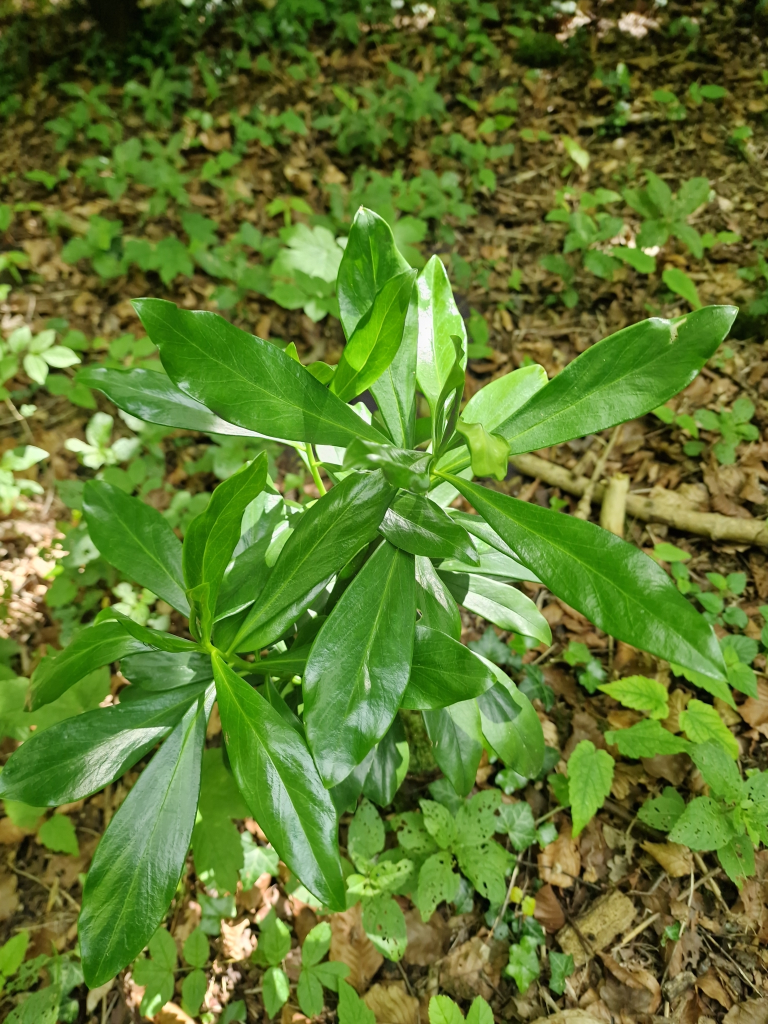
Spurge-Laurel is neither a spurge nor a laurel; it flowers shortly after Christmas.
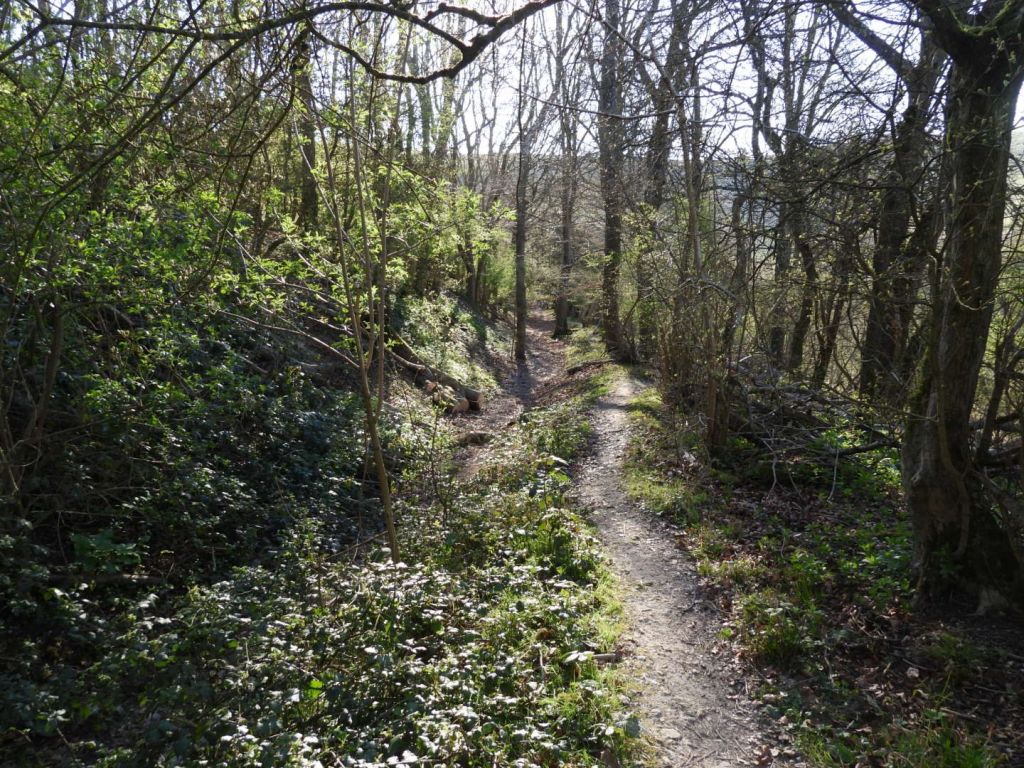
Newer Copse has a hollowway bostal running up Wolstonbury Hill. Bostals are ancient drover tracks, that generally go up the scarp (steep) slopes of Downs diagonally. It is a Sussex dialect word.
Other Low Weald ancient woodland indicator plants.
I have seen both Butcher’s Broom and Wild Service Trees in Low Weald woods; but not in Butchers Wood or Lag Wood
Ruscus aculeatus Butcher’s-Broom, Ebernoe Common
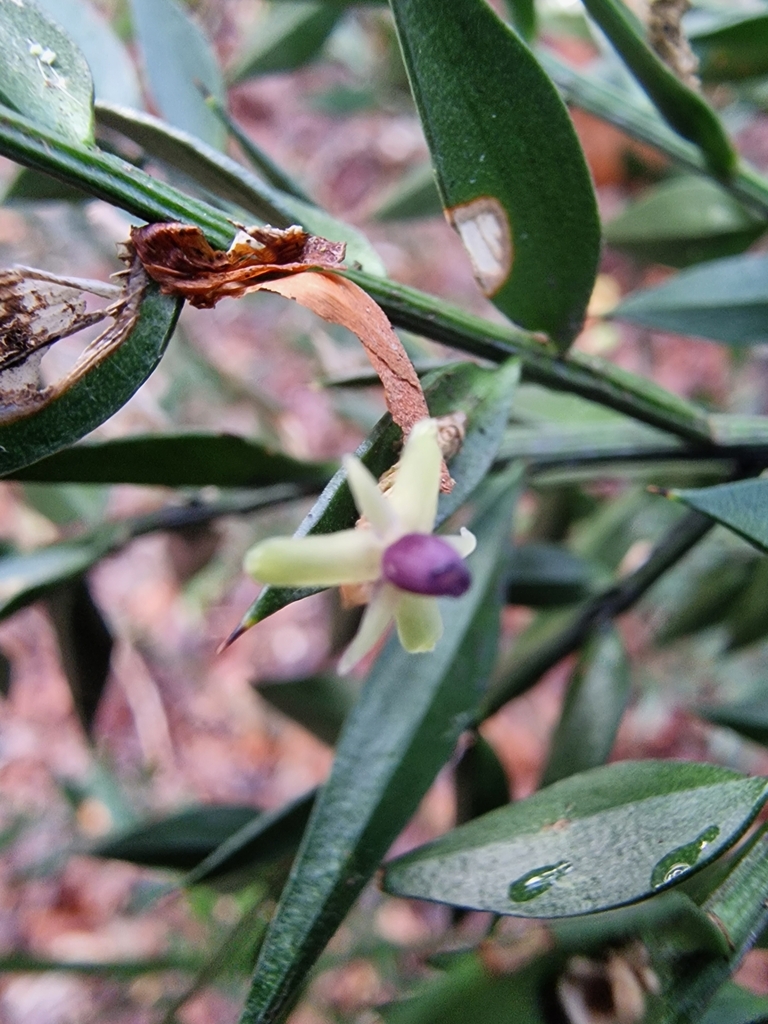
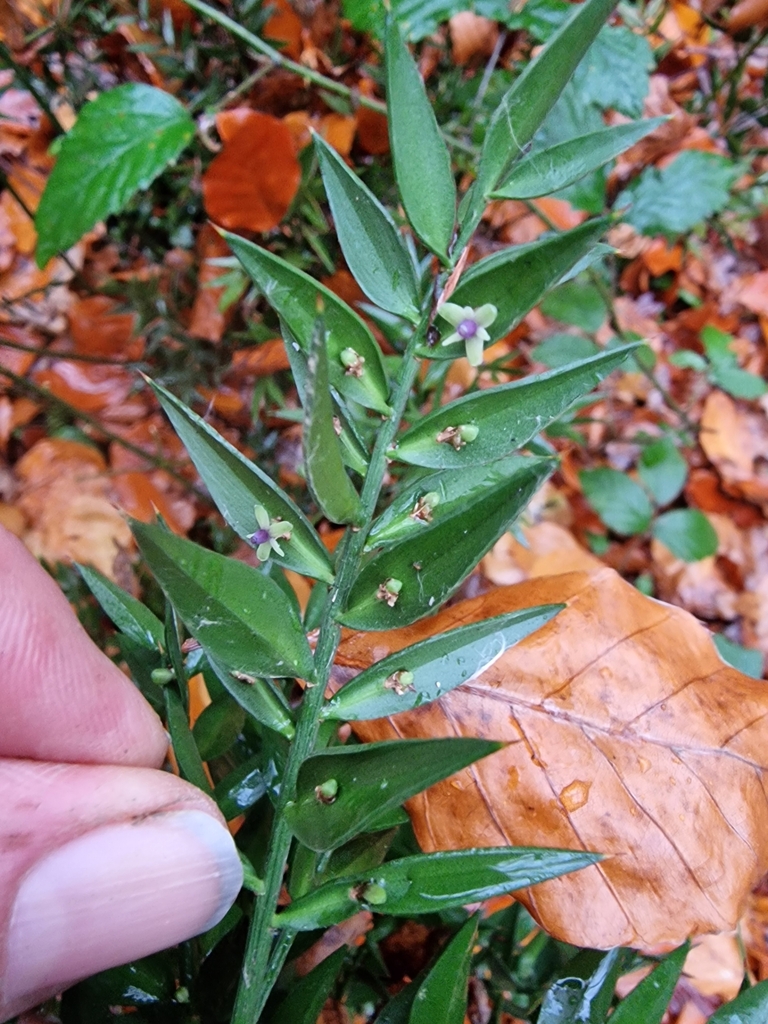
Butchers broom is uncommon in southern UK and gets rarer the further north you go. … [it] is rare on the chalk.
Butchers broom is known as an ‘ancient woodland indicator’. This is because it doesn’t colonise new habitats or spread easily to new woods; where it is growing, the wood has usually been there for a very long time.
Butchers broom is quite unlike any other British plant. It is a short evergreen bush growing up to about two feet high and all the leaves end in a pointed spike; one of its old English names is ‘knee holly’. In early spring, the tiny, pale green six-petalled flowers sit in the middle of the leaf and show that these leaves are, technically, flattened stems.
Butchers broom was used to scour butcher’s blocks until the nineteenth century. The spiky leaves seem ideal for getting into the cuts of old wooden blocks to clean them. https://www.newforestnpa.gov.uk/discover/plants-fungi/woodland-flowers/butchers-broom/
Torminalis torminalis Wild Service-Tree
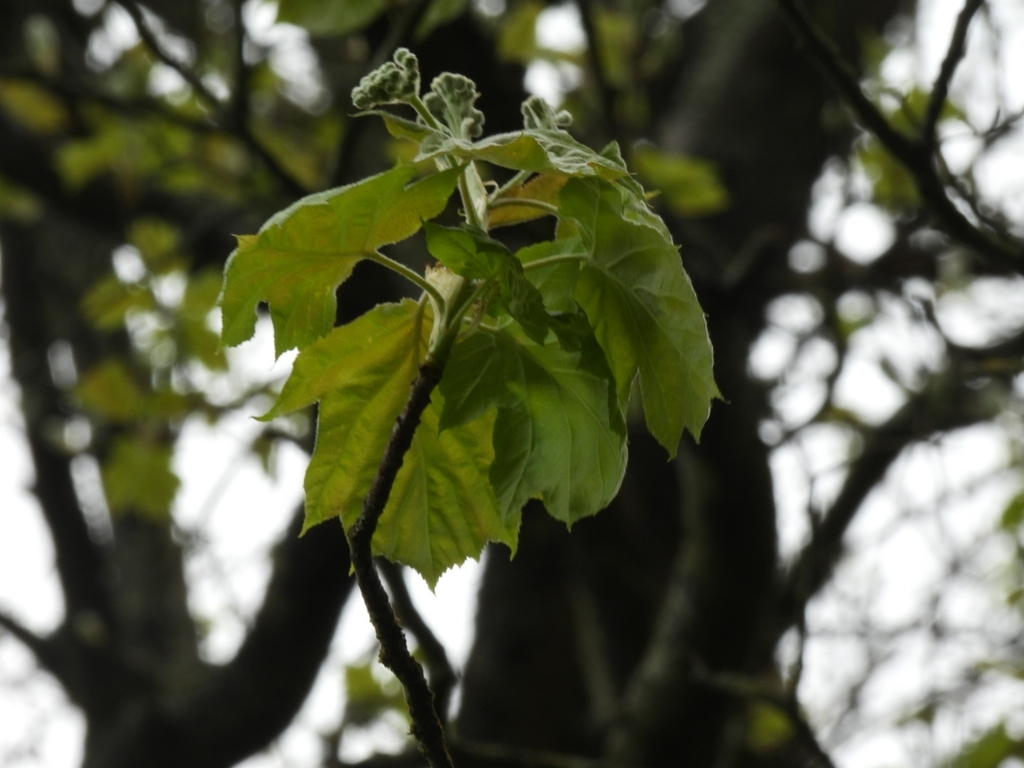
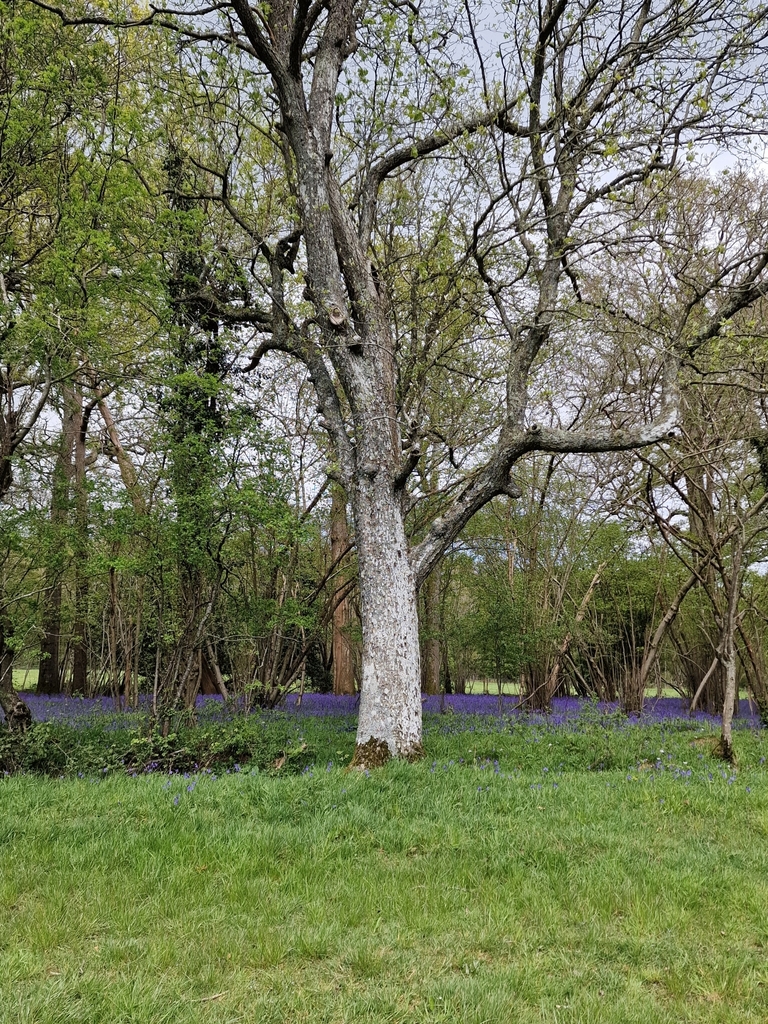
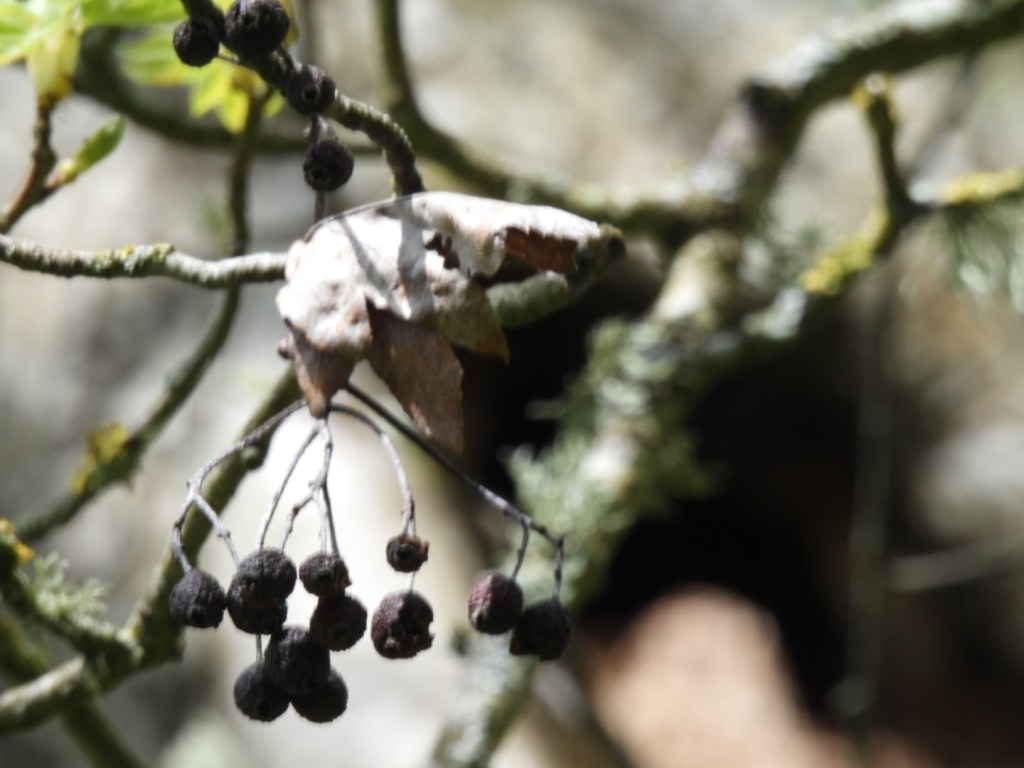
A true springtime stunner, it’s not so long ago that you could find wild-service fruit at a market. These days it’s rare and hard to find but it’s still a favourite with wildlife like the wood pigeon, whose gut softens its seeds for propagation.
The fruits, also known as chequers, are said to taste like dates and were given to children as sweets. They can be made into an alcoholic drink and it is thought they influenced the naming of ‘Chequers Inns’, although it is unclear which came first – the name of the fruit or the inns. https://www.woodlandtrust.org.uk/trees-woods-and-wildlife/british-trees/a-z-of-british-trees/wild-service-tree/
This is Francis Rose’s list of Ancient Woodland Indicator Plants (AWVP) for South East Woodland
Acer campestre*, Field Maple
Adoxa mosichatellina, Moschatel
Allium ursinum, Ramsons,
Anagallis minima, Chaffweed
Anemone memorosa, Wood Anemone
Aquilegia vulgaris*, Columbine
Blechnum spicant, Hard Fern
Bromopsis ramosa, Hairy-brome
Calamagrostis epigejos, Wood Small-reed
Campanula latifolia, Giant Bellflower
Campanula trachelium, Nettle-leaved Bellflower
Cardamine amara, Large Bitter-cress
Carex laevigat, Smooth-stalked Sedge
Carex pallescens, Pale Sedge
Carex pendiula*, Pendulous Sedge
Carex remota, Remote Sedge
Carex strigosa, Thin-spiked Wood-sedge
Carex sylvatica, Wood-sedge
Carpinus betulus*, Hornbeam
Ceratocapnos claviculata, Climbing Corydalis
Chrysosplenium oppositifolium, Opposite-leaved Golden-saxifrage
Colchicum autumnale, Meadow Saffron
Conopodium majus, Pignut
Convallaria majalis, Lily-of-the-valley
Crataegus laevigata, Midland Hawthorn
Daphne laureola*, Spurge-laurel
Dipsacus pilosus, Small Teasel
Dryopteris aemula, Hay-scented Buckler-fern
Dryopteris affinis, Scaly Male-fern
Dryopteris carthusiana, Narrow Buckler-fern
Elymus caninus, Bearded Couch
Epipactis helleborine, Broad-leaved Helleborine
Epipactis purpurata, Violet Helleborine
Equisetum sylvaticum, Wood Horsetail
Euonymus europaeus, Spindle
Euphorbia amygdaloides, Wood Spurge
Festuca gigantea, Giant Fescue
Frangula alnus, Alder Buckthorn
Galium odoratum, Sweet Woodruff
Gnaphalium sylvaticum, Heath Cudweed
Helleborus viridis*, Green Hellebore
Holcus mollis, Creeping Soft-grass
Hyacinthoidles non-scripta, Bluebell
Hypericum androsaemum, Tutsan
Hypericum pulchrum, Slender St John’s-wort
Ilex aquifolium, Holly
Iris foetidissima, Stinking Iris
Lamiastrum galeobdolon, Yellow Archangel
Lathraea squamaria, Toothwort
Lathyrus liniifolius, Bitter-vetch
Lathyrus sylvestris, Narrow-leaved Everlasting-pea
Luzula forsteri, Southern Wood-rush
Luzula pilosa, Hairy Wood-rush
Luzula sylvartica, Great Wood-rush
Lysimachia nemorum, Yellow Pimpernel
Malus sylvestris*, Crab Apple
Melampyrum pratense, Common Cow-wheat
Melica uniflora, Wood Melick
Milium effusum, Wood Millet
Moehringia trinervia, Three-veined Sandwort
Narcissus pseudonarcissus*, Wild Daffodil
Neottia nidus-avis, Bird’s-nest Orchid
Orchis mascula, Early Purple Orchid
Ophris purpurea, Lady Orchid
Oreopteris limbosperma, Lemon-scented Fern
Oxalis acetosella, Wood-sorrel
Paris quadrifolia, Herb-Paris
Phyllitis scolopendrium*, Hart’s-tongue
Pimpinella major, Greater Burnet-saxifrage
Platanthera chlorantha, Greater Butterfly-orchid
Poa nemoralis, Wood Meadow-grass
Polygonatum multiflorum
Polypodium spp., Solomon’s-seal
Polystichum aculeatum, Hard Shield-fern
Polystichum setiferum, Soft Shield-fern
Populus tremula, Aspen
Potentilla sterilis, Barren Strawberry
Primula vulgaris*, Primrose
Prunus avium, Wild Cherry
Pulmonaria longifolia, Narrow-leaved Lungwort
Quercus petraea*, Sessile Oak
Radiola linoides, Allseed
Ranunculus auricomus, Goldilocks Buttercup
Ribes nugrum, Black Currant
Ribes rubrum*, Red Currant
Rosa arvensis, Field-rose
Ruscus aculeatus, Butcher’s Broom
Sanicula europaea, Sanicle
Scutellaria minor, Lesser Skullcap
Scirpus sylvaticus, Wood Club-rush
Sedum telephium, Orpine
Serraula tintoria, Saw-wort
Solidago virgaurea, Golden-rod
Sorbus torminalis, Wild Service Tree
Stachys officinalis, Betony
Tamus communis, Black Bryony
Tilia cordata*, Small-leaved Lime
Ulmus glabra, Wych Elm
Vaccinium myrtillus, Bilberry
Veronica montana, Wood Speedwell
Viburnum lantana, Guelder Rose
Vicia sepium, Bush Vetch
Vicia sylvatica, Wood Vetch
Viola palustris, Marsh Violet
Viola reichenbachiana, Early Dog-violet
Wahlenbergia hederacea, Ivy-leaved Bellflower
* Consider these species only if they occur well within the wood and do not appear to have been planted.
It should be noted that when calculating Ancient Woodland Indicator Plants scores:
- A high AWVP score is a reliable indication of natural diversity.
- It also indicates ancient woodland, but does not on its own constitute proof.
- Some woods which are undoubtedly ancient have a low AWVP score. Study of other components of the woodland biodiversity such as lichens, or invertebrates in rotting wood, may give clearer indications of ancient woodland status. Quite often, ancient sites that are rich in AWVP’s will be poor in lichens and rotting wood invertebrates and vice-versa.
- Not all indicator species are strictly limited to ancient woodlands. For example, where secondary woodland adjoins older woodland, it will acquire species associated with older woods much more quickly than isolated secondary woods.
- Plants which are also cultivated in gardens (e.g. Wild Daffodil) should be used with great caution.
- Certain woodlands can credibly be established as being ‘ancient’ through the study of old historical records such as maps and estate records. Observations of landscape features such as banks, ditches and other topographical features within a wood will also give clues to previous land use. By surveying a number of these ‘proven’ ancient woodlands, species which are usually confined to this type of habitat can be identified. From: Countryside Information Ancient Woodland Indicator Species

 Sim's Nature Notes