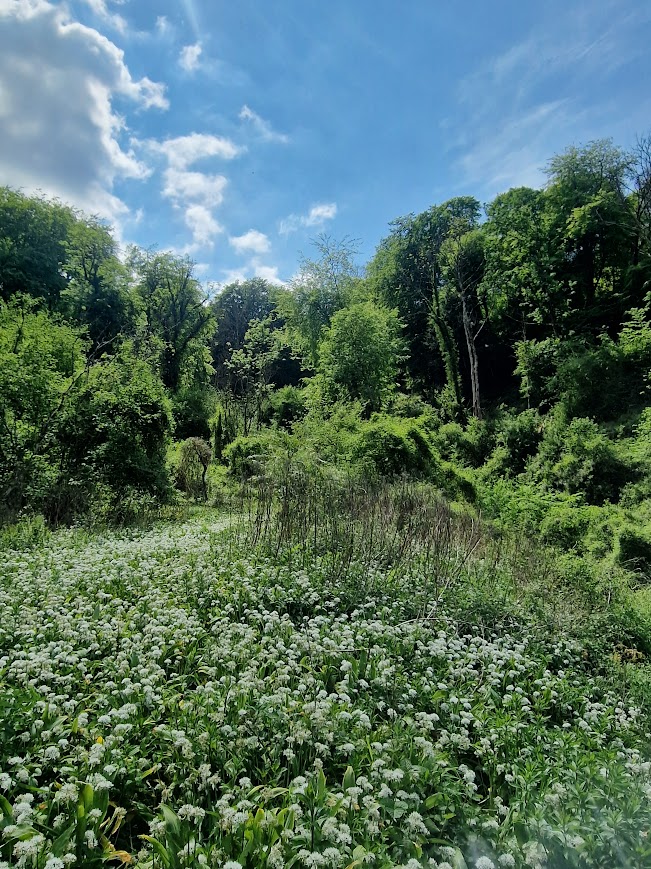
This is the most beautiful area of downland ancient woodland I have ever visited. It is a “hanger wood”; a wood of the steep slopes of an escarpment. Ancient woodland is much rarer on the South Downs than in the Low and High Wealds of Sussex, due to historic sheep gazing; although the short calcareous grassland that supports rare vascular plants and invertebrates because of that grazing is biologically magnificent and of national ecological importance. Sadly, short calcareous grassland makes up only 4% of the South Downs.
Most of the remaining ancient woodland of the South Downs is on the scarp face of the Downs; such as at Newtimber Holt, and the scarp from Steyning to just south of Washington, and Rooks Clift. Although there are some very rare examples of chalk dry valley ancient woodland e.g. East Dean Park Wood SSSI (in the Goodwood Estate, private) and dip slope ancient woodland e.g. Pads Wood SSSI (in the Uppark Estate, private)
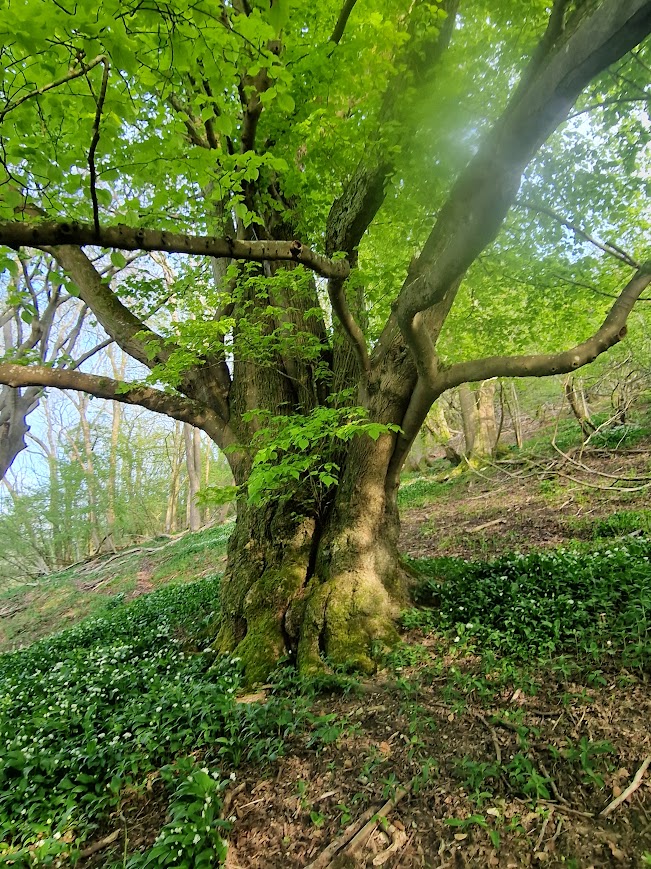
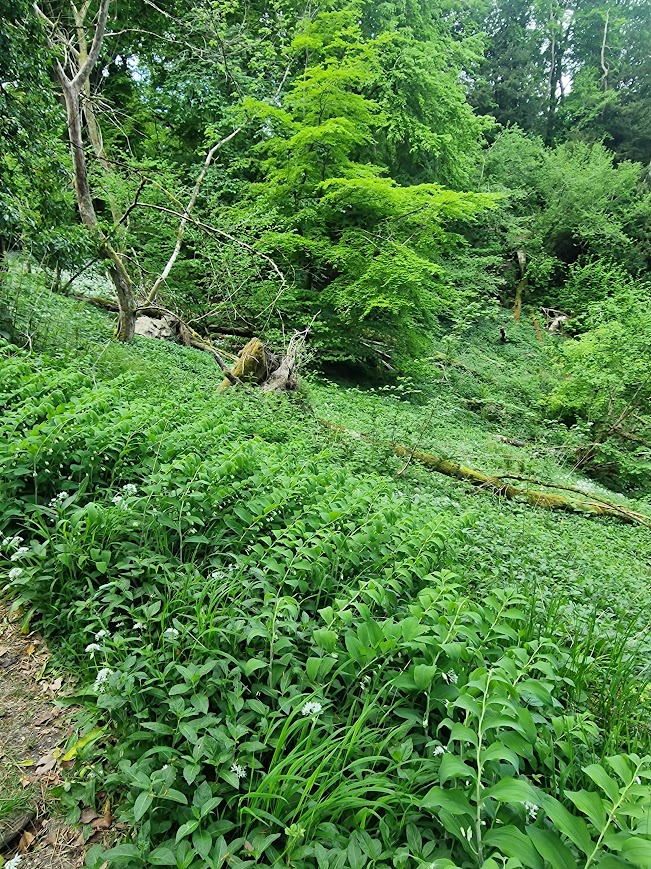
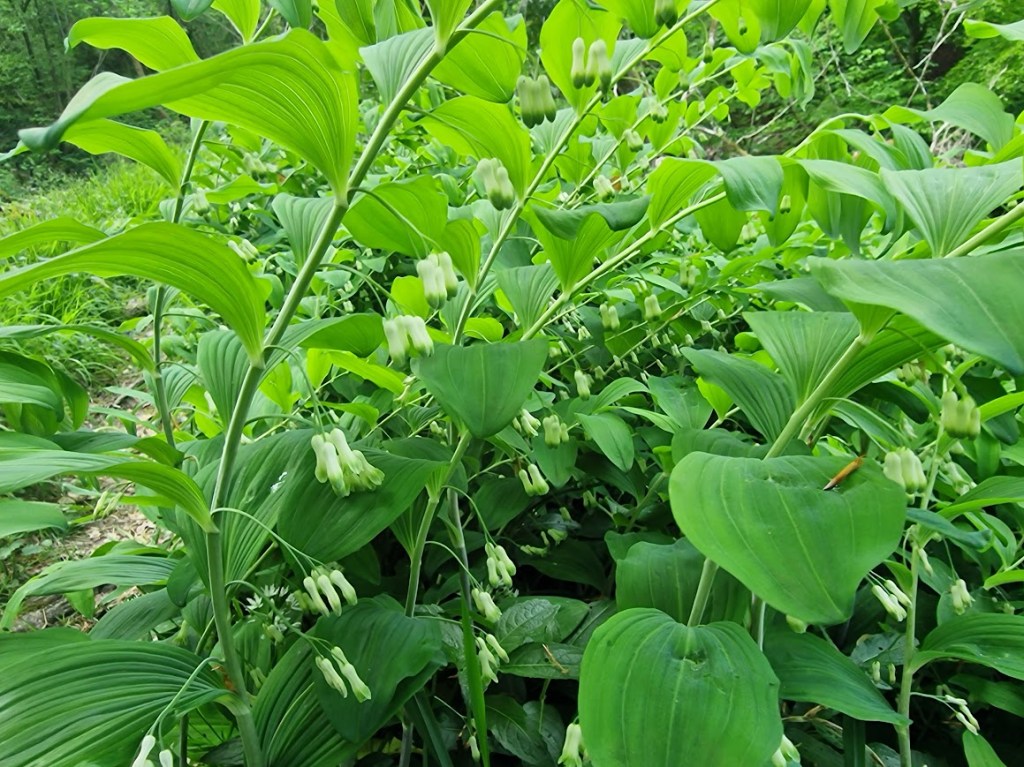
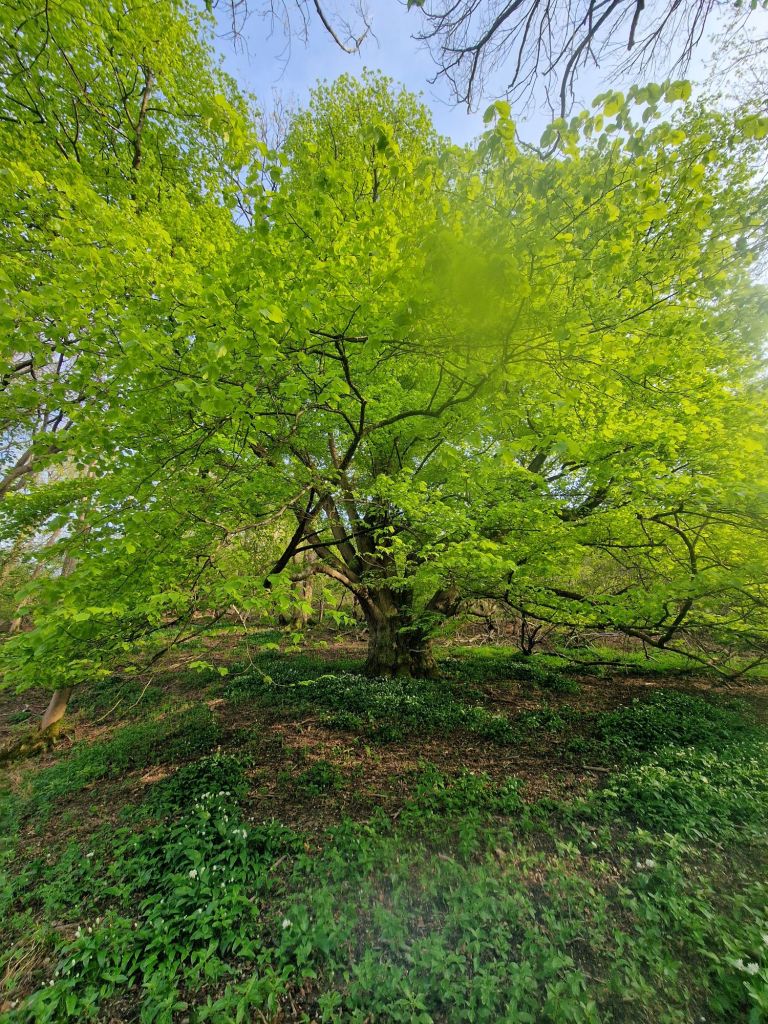
The extent of the coppiced Large-Leaved Lime, and ground flora including abundant Solomon’s Seal and Ramsons was extraordinary.
Large Leaved Lime, Tilia platyphyllos
Ramsons, Allium ursinum, and Solomon’s Seal, Polygonatum multiflorum
Rook Clift is a small wooded combe on the scarp slope of the South Downs. …
This site is an ancient woodland which remains in a semi-natural condition. Large leaved lime Tilia platyphyllos dominates the canopy, together with ash Fraxinus excelsior and some beech Fagus sylvatica. Large leaved lime is a nationally scarce tree, with its natural range concentrated on the limestones of the Wye Valley and Peak District. Thus the high concentration of mature coppice stools, occurring on chalk, make this site nationally important and unique within West Sussex and the South Downs Natural Area.
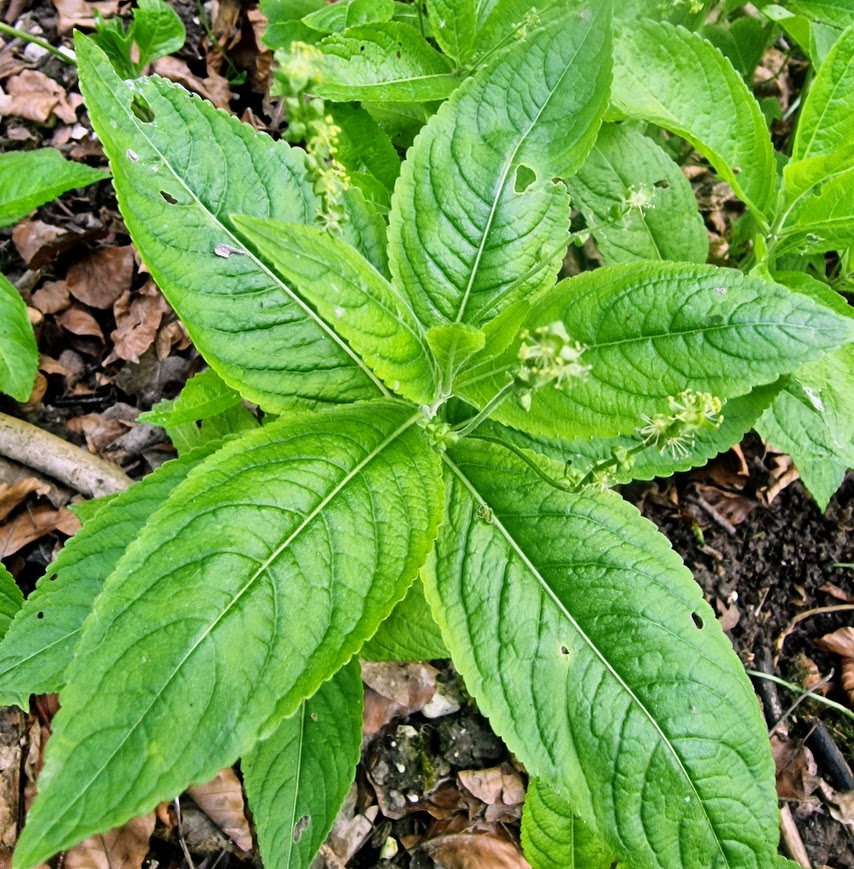
… The field layer is dominated by vernal species such as ramsons Allium ursinum and bluebell Endymion non-scripta, or shade tolerant species including dog’s mercury Mercurialis perennis, spurge laurel Daphne laureola and sanicle Sanicula europaea.
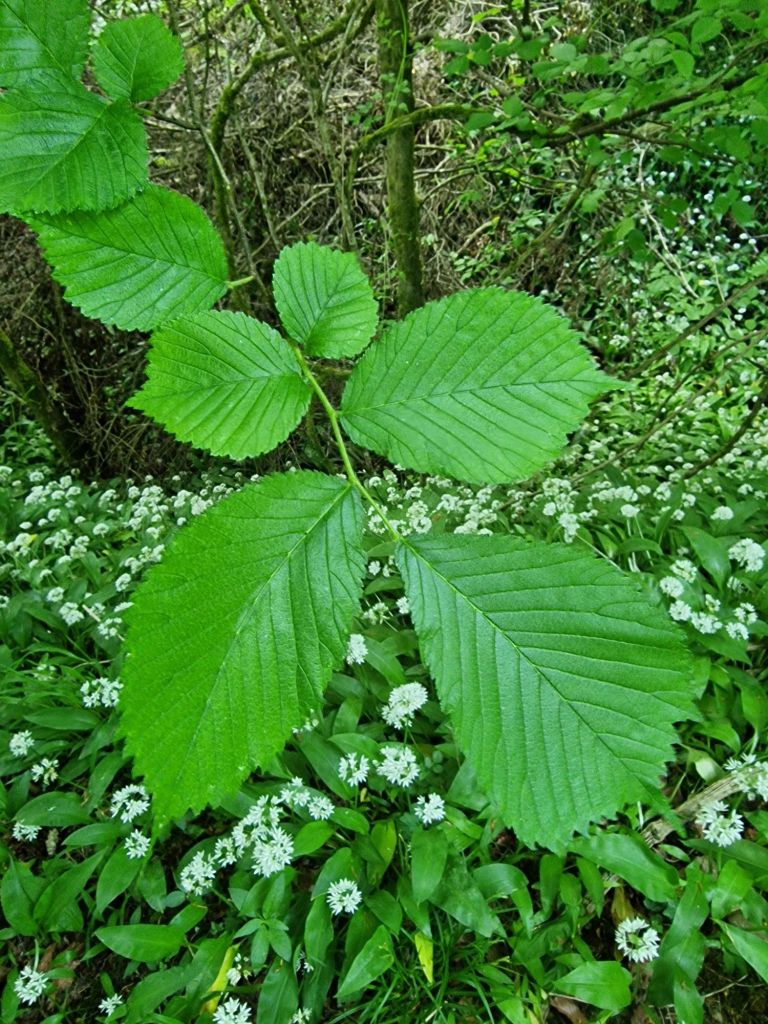
The steep sided valley around the steam is more open with a canopy dominated by ash and wych elm Ulmus glabra. Here the field and ground layers are more developed with stands of hart’s tongue fern Phyllitis scolopendrium and soft shield fern Polystichum setiferum abundant, and opposite-leaved golden-saxifrage Chrysosplenium oppositifolium common the stream side.
Helicodonta obvoluta and several which are indicative of ancient woodland Rooks Clift Nature England SSSI specification
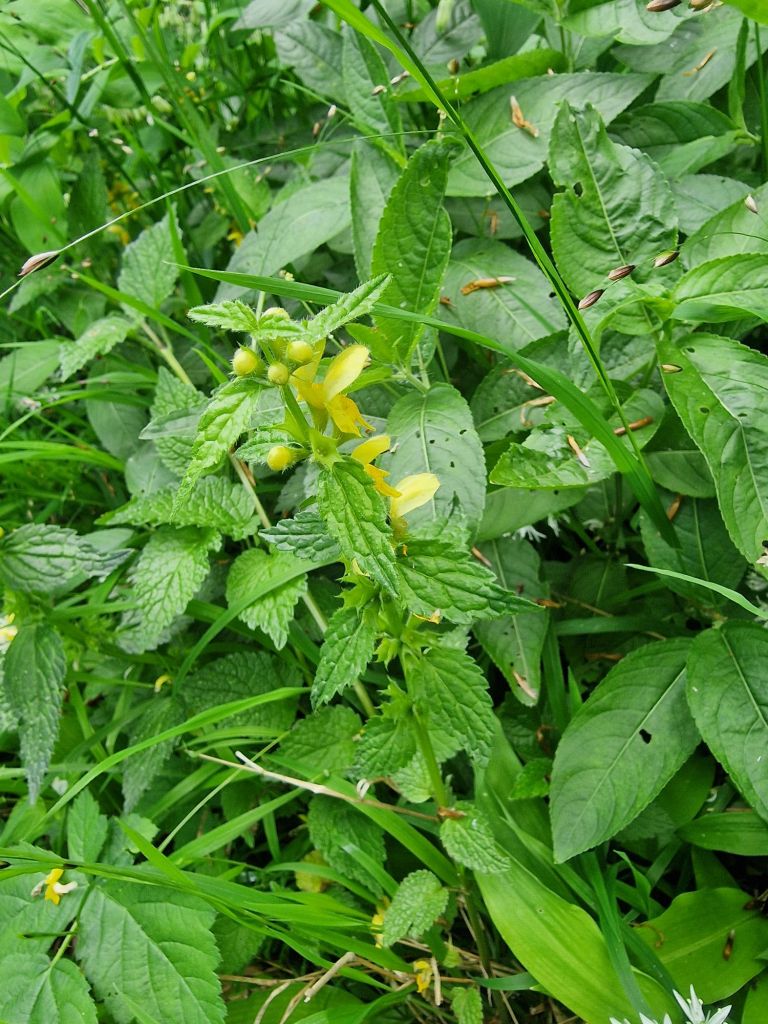
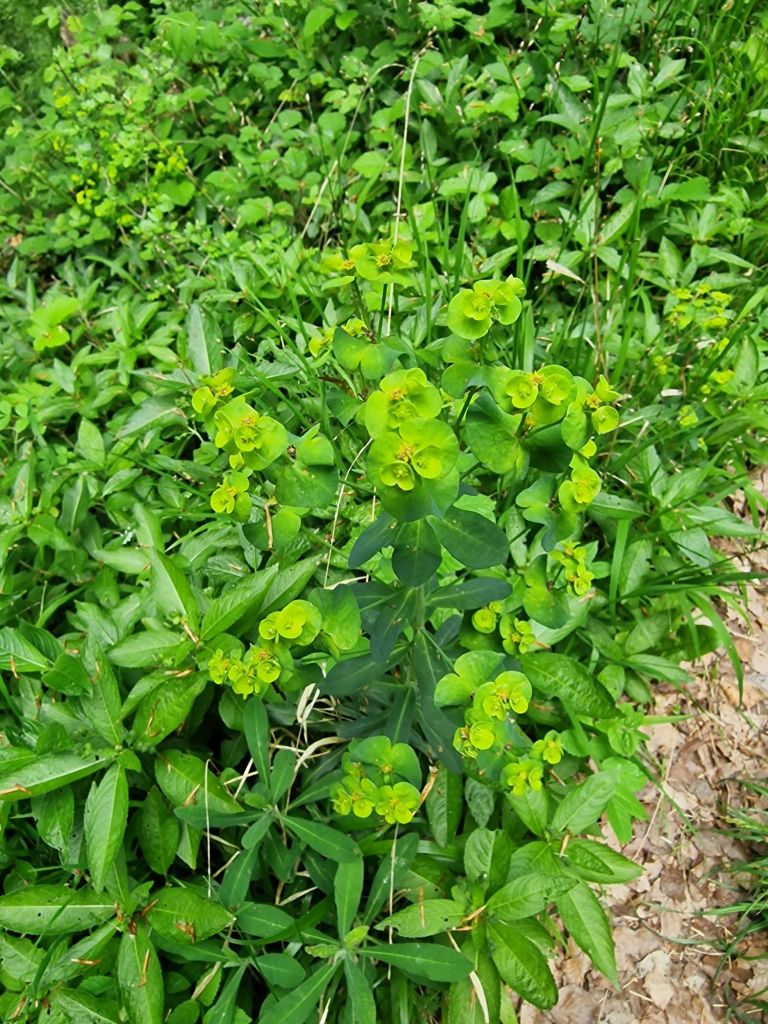
There are many ancient woodland indicator species in Rooks Clift. Aside from Large-Leaved Lime, Ramsons, and Solomons Seal, I saw Yellow Archangel, Wood Spurge, Wych Elm, and Enterographa Crassa (a relatively common lichen in old Southern woodlands, but on the indices of Ecological Continuity for Scotland). The wood also has Spurge-Laurel; but I didn’t find any.
Yellow Archangel, Lamium galeobdolon
Wood Spurge, Euphorbia amygdaloides
Wych Elm, Ulmus glabra
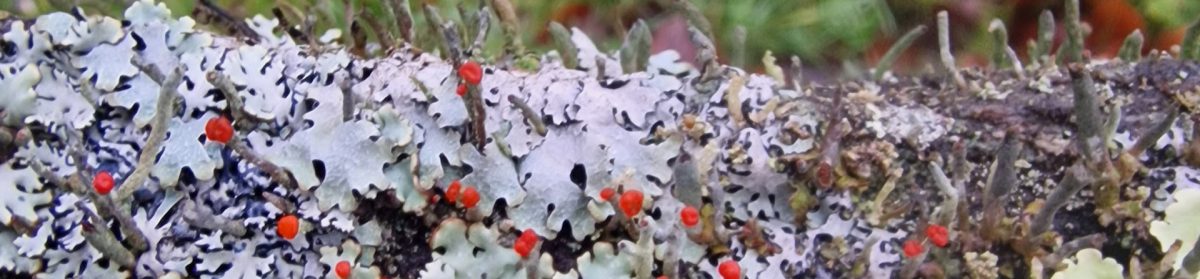
Enterographa crassa lichen
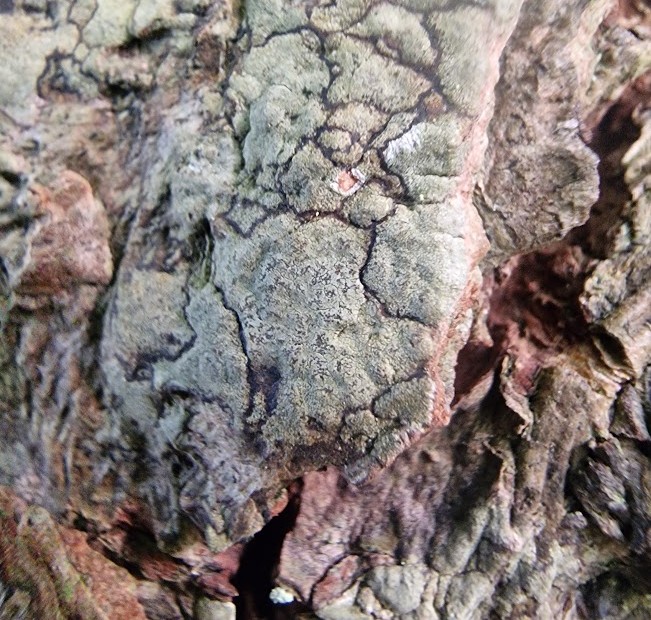
on Large Leaved Lime
Dog’s Mercury, Mercurialis perennis
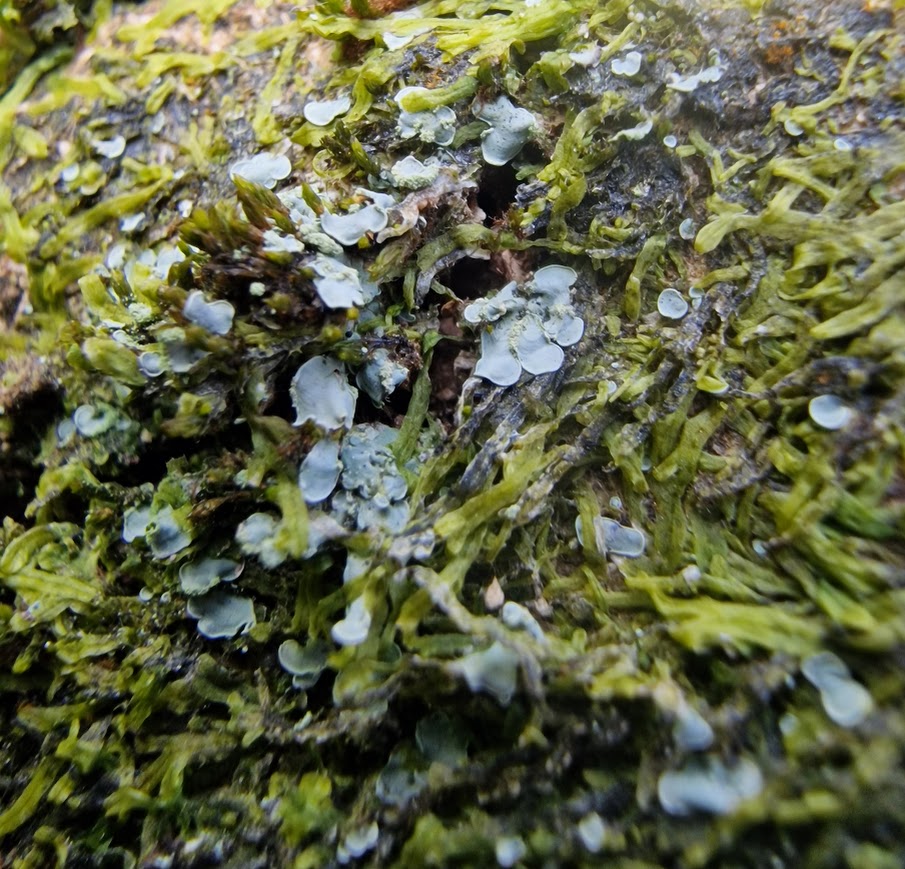
Eld Ear Lichen, Normandina pulchella, on the liverwort Forked Veilwort, Metzgeria furcata. Elf Ear lichen always grows on bryophytes (mosses and liverworts)
Looking up at Rooks Clift from the Greensand fields of the Low Weald.
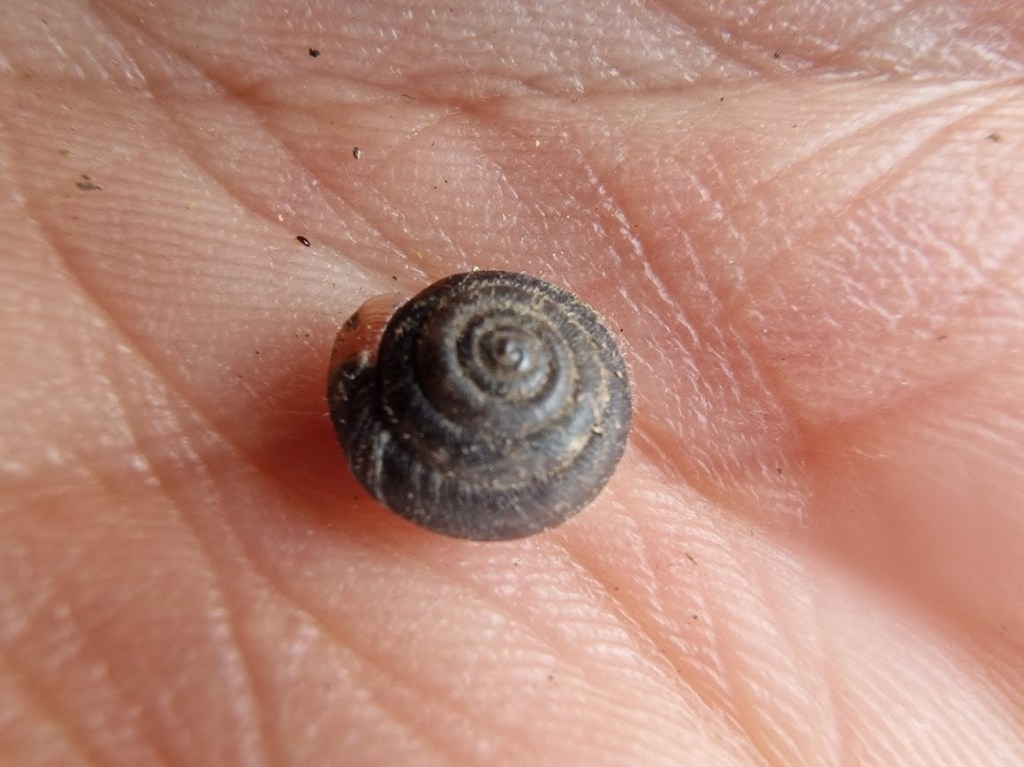
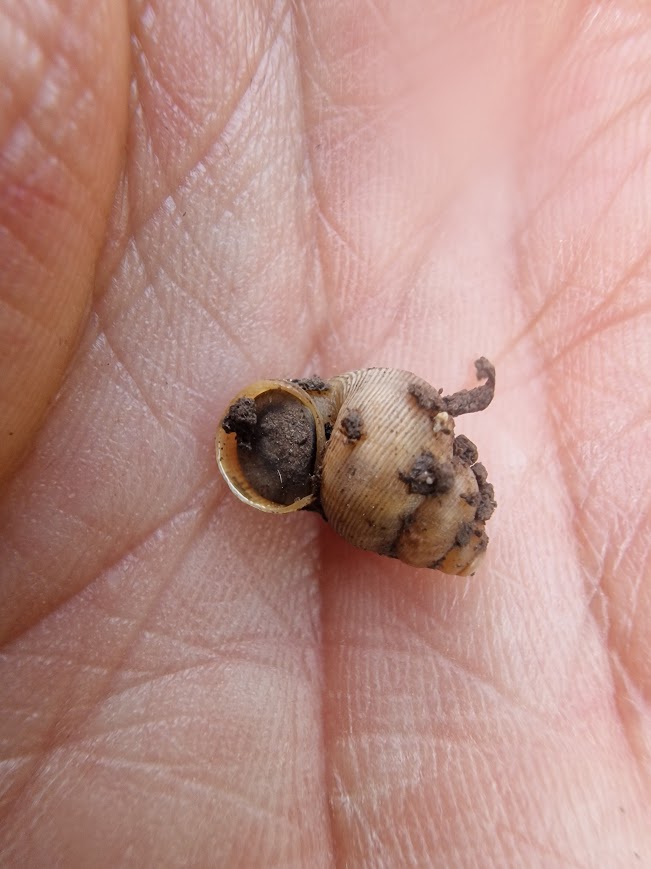
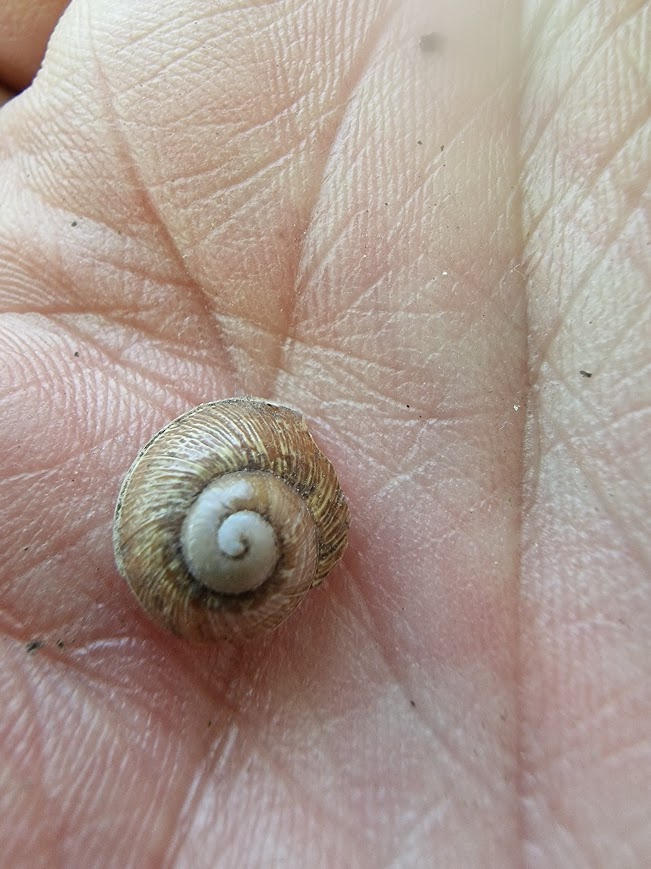
This wood also supports a rich mollusc fauna including the Red Data Book species Helicodonta obvoluta and several which are indicative of ancient woodland. [SSSI specification]. On a visit the week before, focussed on molluscs, with a friend and mollusc expert, we didn’t find Helicodonta obvoluta, but we did find these common snails:
Hairy Snail, Trochulus hispidus Genus Hemicycla; Round-mouthed Snail Pomatias elegans
Possibly Macrogastra ventricosa in the family Clausiliidae, the door snails

Looking up to Rooks Clift from the farmland at the bottom (lower greensand of the Low Weald)
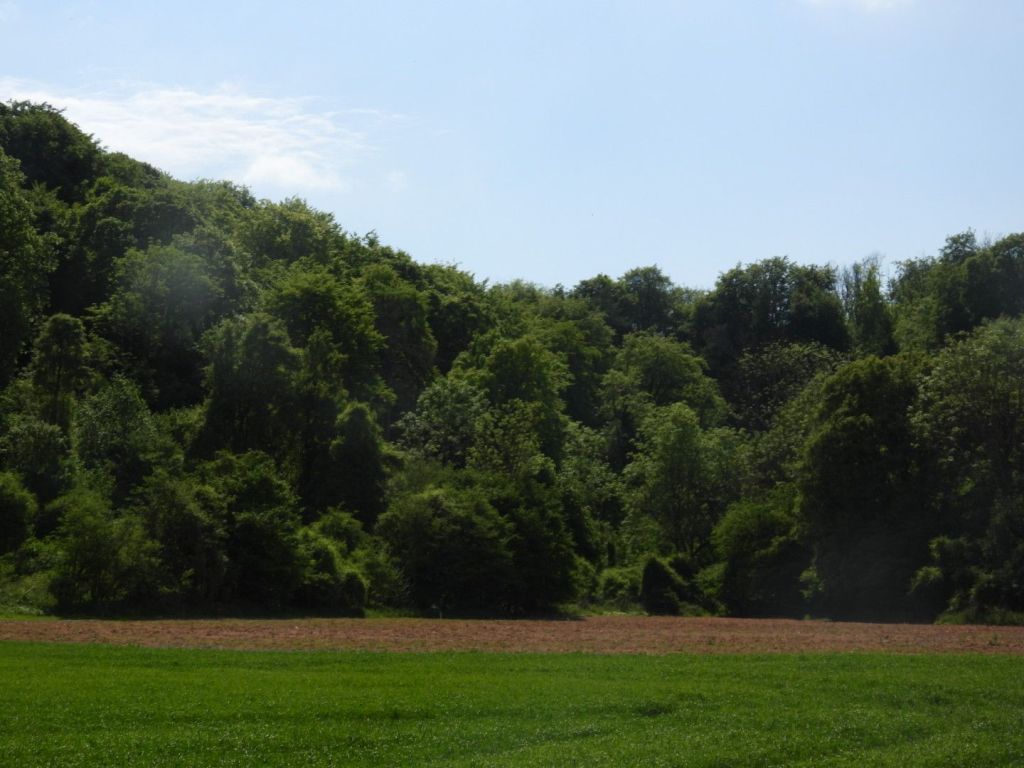
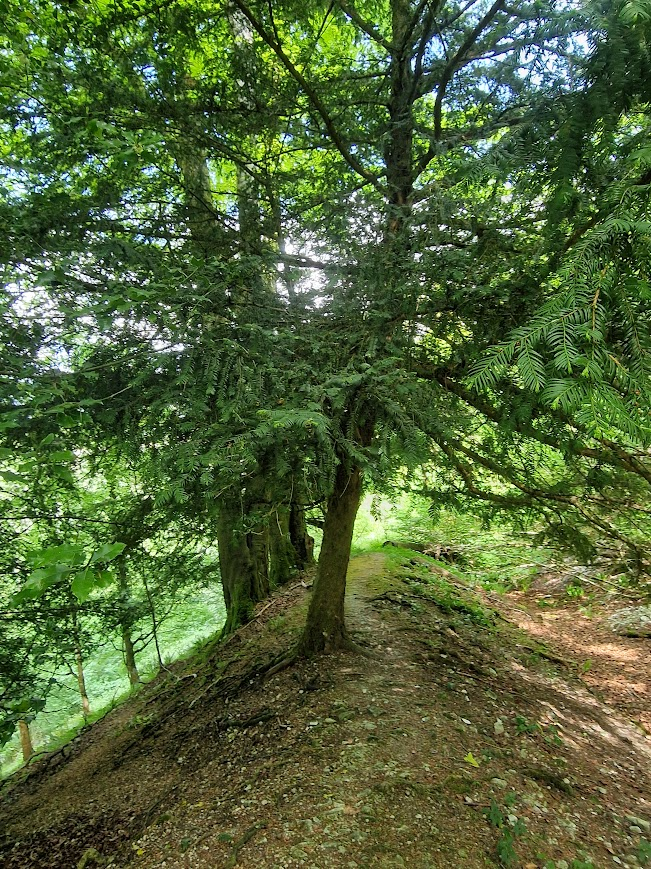
Looking down the footpath, with native Yew Taxus baccata, a native South Downs Tree. The path follows a ancient bostal, a Sussex dialect word referring to medieval track running up the scarp slops in the South Downs, typically diagonally to reduce the gradient.
Location: near South Harting, West Sussex, between Chichester and Petersfield
Screen captures Ordnance Survey Map App from the © Ordnance Survey Crown Copyright
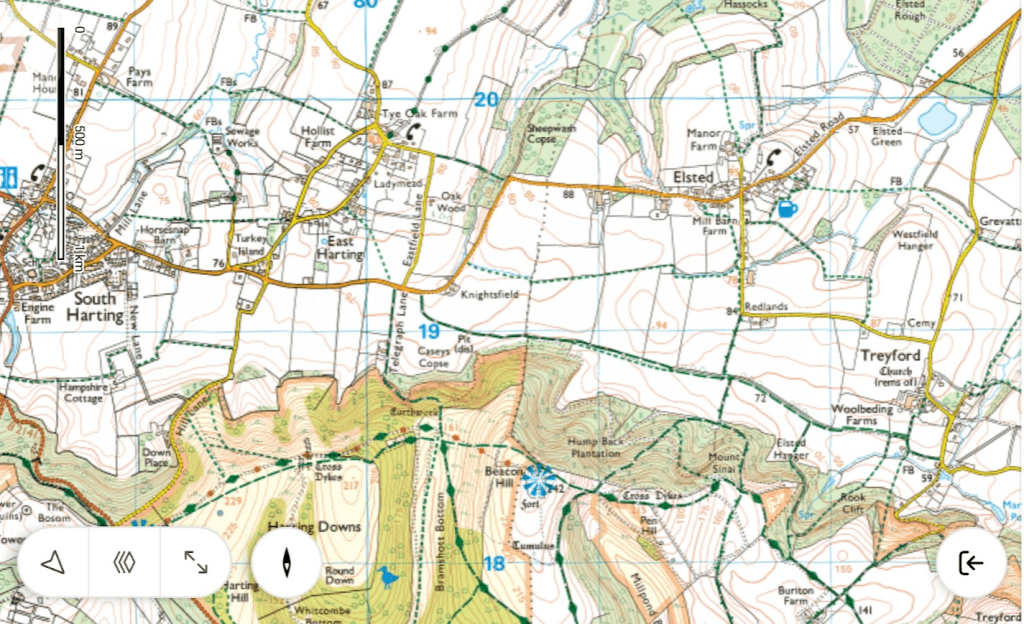
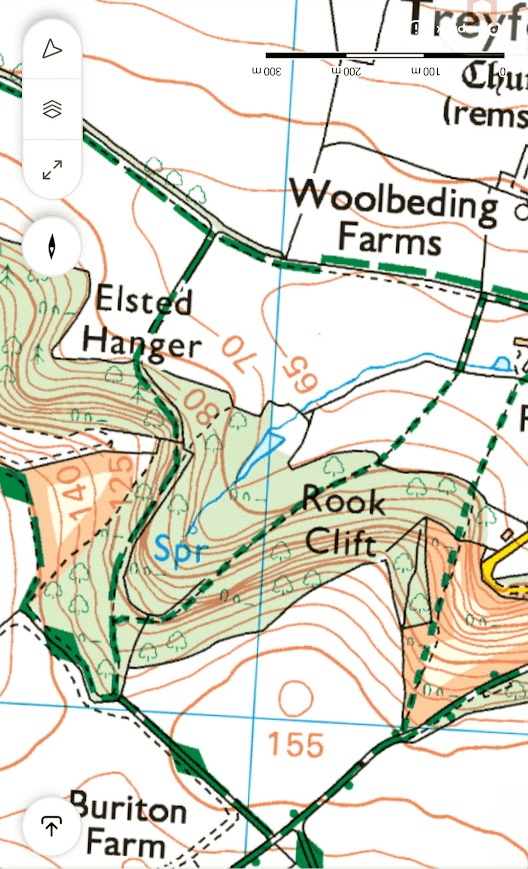
I got to Rook Clift by public transport. Train to Chichester then Stagecoach bus to South Harting 54 Bus Timetable It is a very irregular bus service with only 5 busses a day; so plan carefully!

 Sim's Nature Notes