Ashburnham Deer Park 16.06.25
On Monday morning 16.06.25 I walked from West Lodge, Steven’s Crouch (“Crouch” likely originates from the Old English word “crūc,” meaning “cross” and is common in the south-east Family Search: Crouch) to Tent Hill (different sources suggest that either the Norman or Saxon army camped on Tent Hill the night before the Battle of Hastings. The historically accepted battle site is Senlac Hill where Battle Abbey now stands. 1066 Walk Guide), along the 1066 Country Walk, through what I believe is the remains of Ashburnham’s Deer Park. The Ashbourne Place Historic England Listing suggests that this area is the Deer Park from West Lodge is a track through the deer park, running parallel to the A271 Ashburnham Place Historic England Listing. In the afternoon I visited the relicts of Ashbourne Furnace
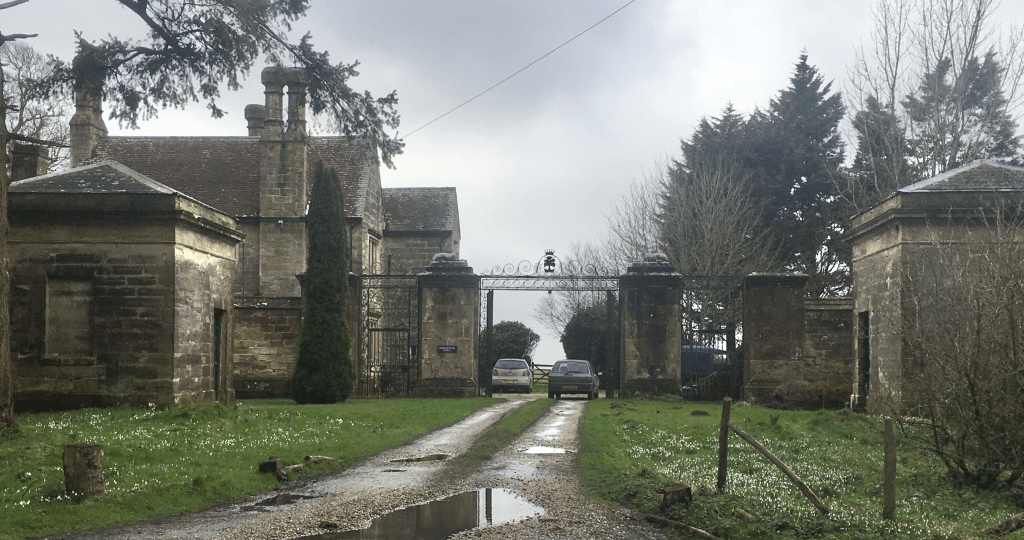
West Lodge, designed by Robert Adam in ca. 1780, is one of the gateways into Ashburnham Park. The central carriage drive has wrought iron double gates with an overthrow containing the design of a tree and a coronet. The gates are flanked by stone piers surmounted by couchant greyhounds in stone. On each side are pedestrian gates with overthrows and similar piers without the greyhounds on top. Historic England Listing
I got to Steven’s Crouch by public transport: train from Brighton to Bexhill, then bus from Bexhill to Steven’s Couch/Catsfield Road . Stagecoach 95 bus Bus Times. Steven’s Couch, where West Lodge is, is about a 20 minute walk west along the road from the Steven’s Couch bus stop.
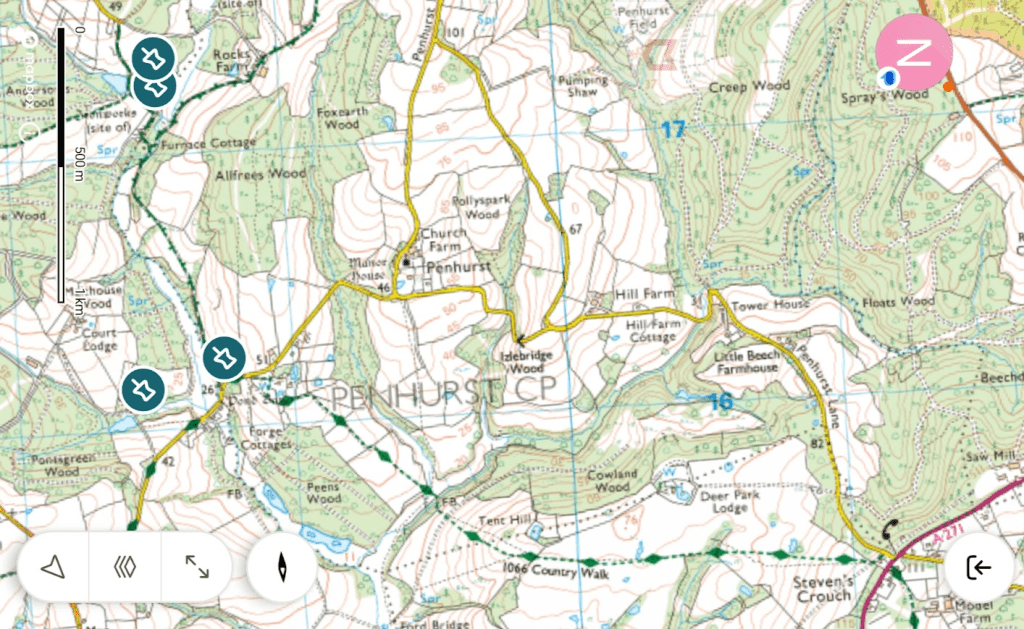
It is hard to know exactly where the historic deer park was; but the quality of lichens along the path, on a wayside Oak and a pollarded Ash, suggest ecological continuity suggestive of a medieval deer park, as mentioned in the Ashburnham Place SSSI specification. The SSSI includes Cowland Wood, just above the 1066 path. The north-west outlier of the SSSI, so it is probably likely that the 1066 path runs through the pasture woodland of the medieval deer park, even though it is not the SSSI
Deerpark Cottage (called Lodge on OS map) just south of Cowland Wood
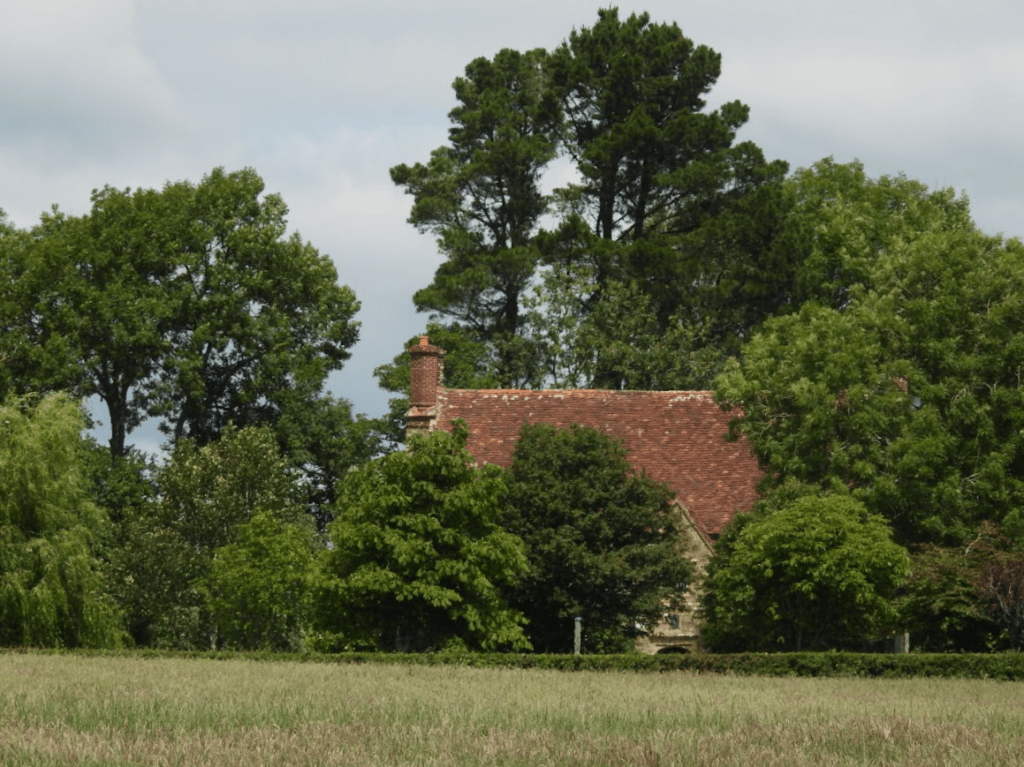
Deerpark Cottage, Ashburnham Place 3.8.61 II Early C17. 2 storeys. 3 windows. Ashlar. Tiled roof. Casement windows of 4-lights with stone mullions and dripstones over. In the centre is a gabled porch with a 4-centred doorway and a room over. At each end is a stepped chimney breast. Historic England Listing
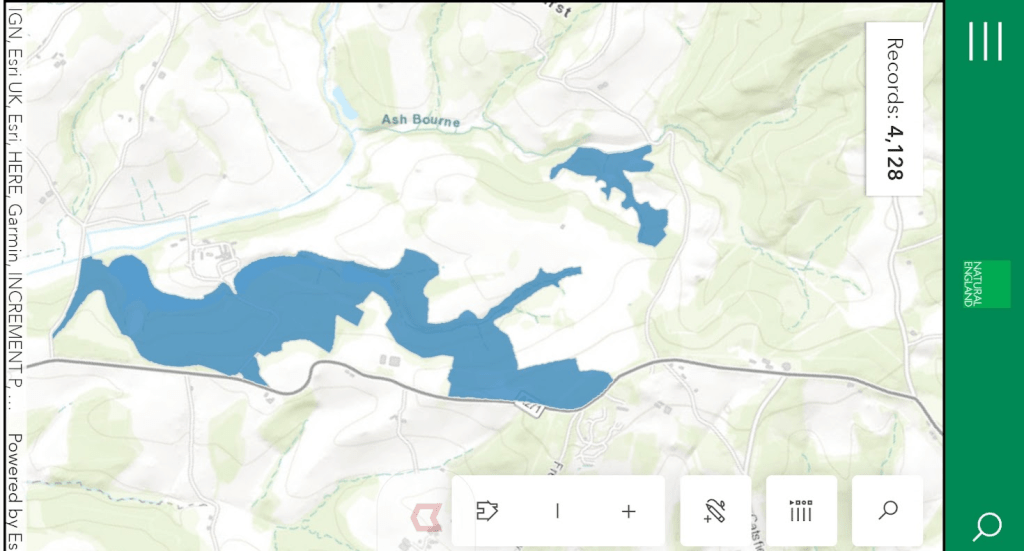
Location of Cowland Wood;the north-east outlier compartment of the SSSI on this SSSI map. I did not have time to explore Cowland Wood
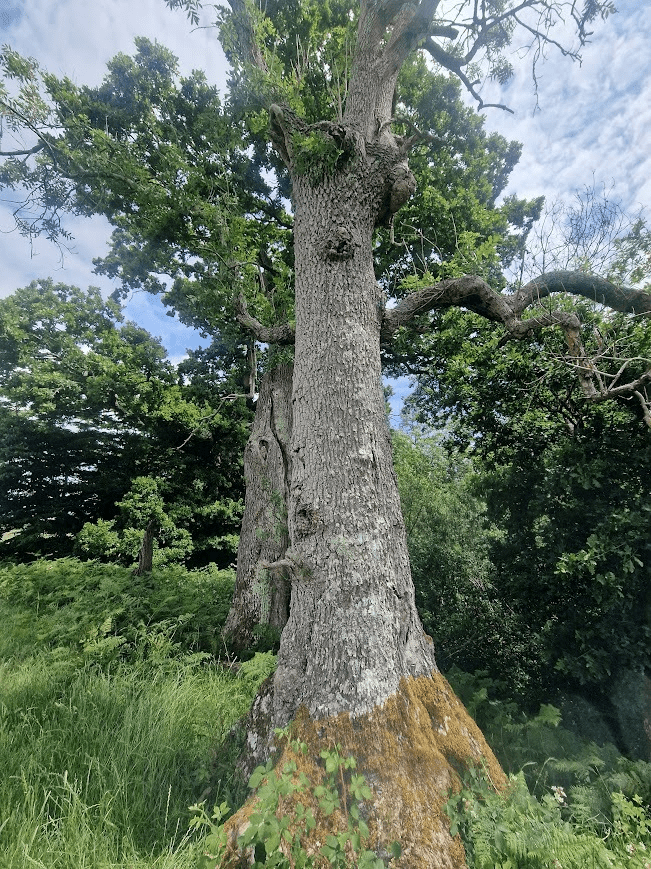
Quercus robur at the end of the strip of trees that points north-east toward Cowland of the main compartment of the SSSI
with Rinodina roboris

an International Responsibility lichen
Certain British lichen assemblages are rich compared with equivalents elsewhere in Europe, and are of international importance (Fryday 2002; Coppins and Coppins 2005). This is partly associated with our oceanic climate, but also results from the extent of semi-natural habitat with relatively clean unpolluted air, and significant numbers of old trees2 in parkland and old growth pasture woodland (e.g. Farjon 2017). This contrasts with large tracts of western Europe (Rose 1992). It is the assemblages of hyperoceanic lichens that are of greatest significance at a European scale, and these are largely confined to woodlands (2.1.1) and
Southern oceanic old growth woodland lichen assemblages are outstandingly well-developed in the south of Britain, especially from North Wales south to Devon and Cornwall and east to the New Forest (Map 2) (Rose and James 1974; Sanderson 2010). The range of lichen communities of interest is greater than in the rainforests, consisting of: base-rich bark (Lobarion pulmonariae and Agonimion octosporae), acid bark (Parmelion laevigatae), smooth mesic bark (Graphidetum scriptae and Pyrenuletum chlorospilae), rough mesic bark (Pertusarietum amarae), dry bark and lignum on veteran and dead trees (Lecanactidetum Lichen communities, such as the Lobarion pulmonariae and Parmelion laevigatae are found in particular niches, such as base-rich bark or dry overhanging rock. Several communities can co-occur in a habitat, or even on a single tree. Neil Sanderson, Tim Wilkins, Sam Bosanquet and David Genney 1018 Guidelines for the Selection of Biological SSSIs. Part 2: Detailed Guidelines for Habitats and Species Groups Chapter 13 Lichens and associated microfungi. Joint Nature Conservation Committee 2018
This Oak also had
Lepra amara
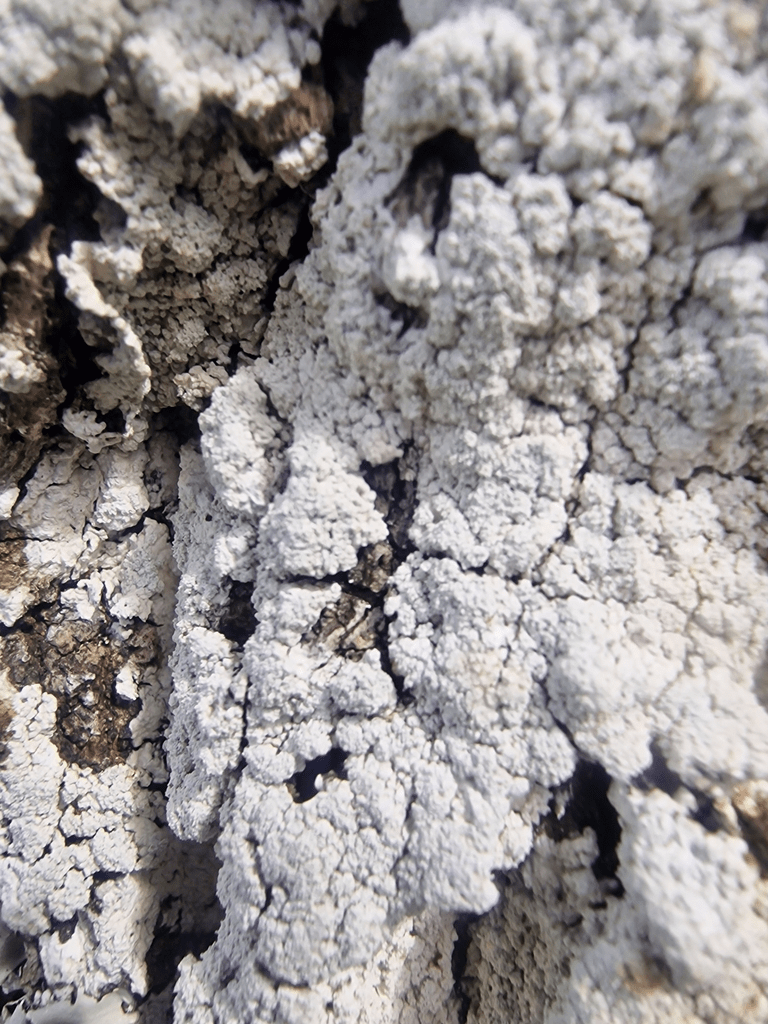
a characteristic species of the Mature Mesic Bark Community (Pertusarietum amarae).
and Ramalina farinacea
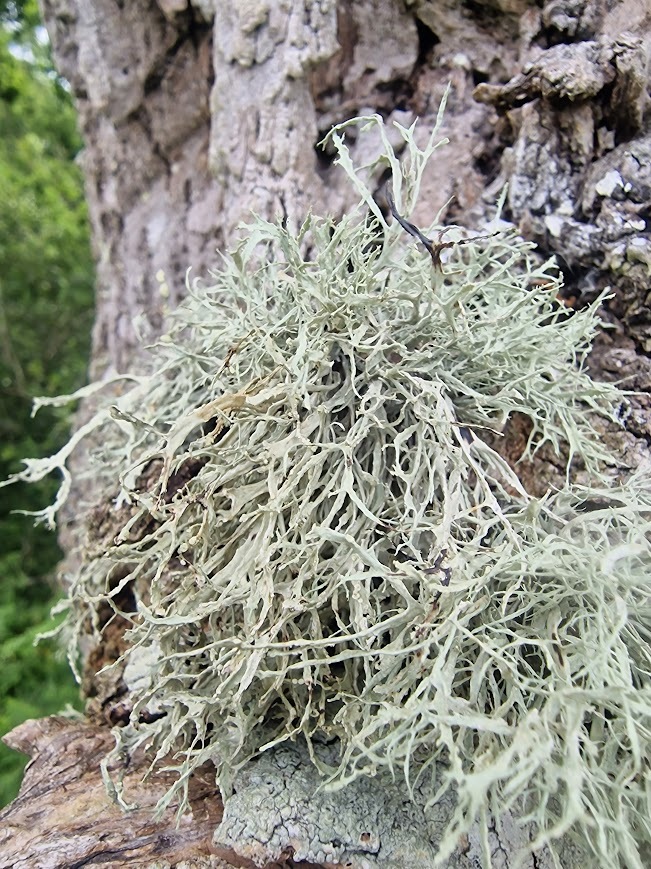
This exceptional pollarded ancient Ash Fraxinus sylvatica on Tent Hill
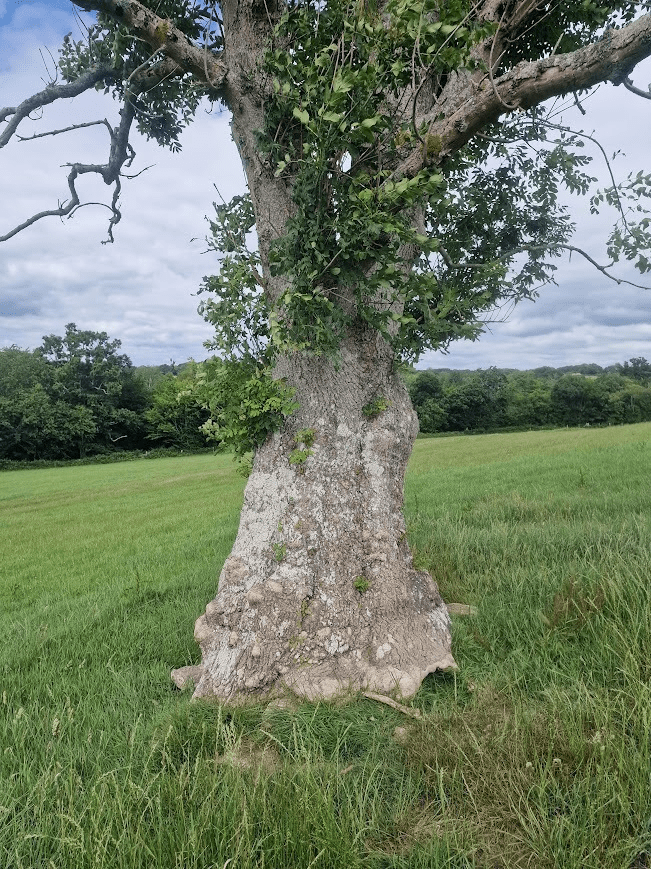
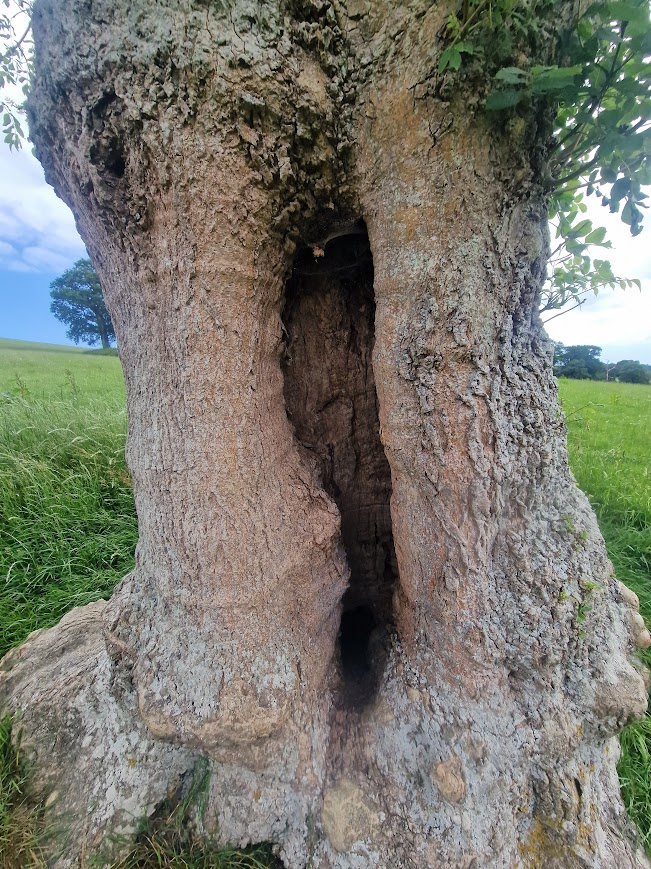
had Ramalina fraxinea, and International Responsibility lichen
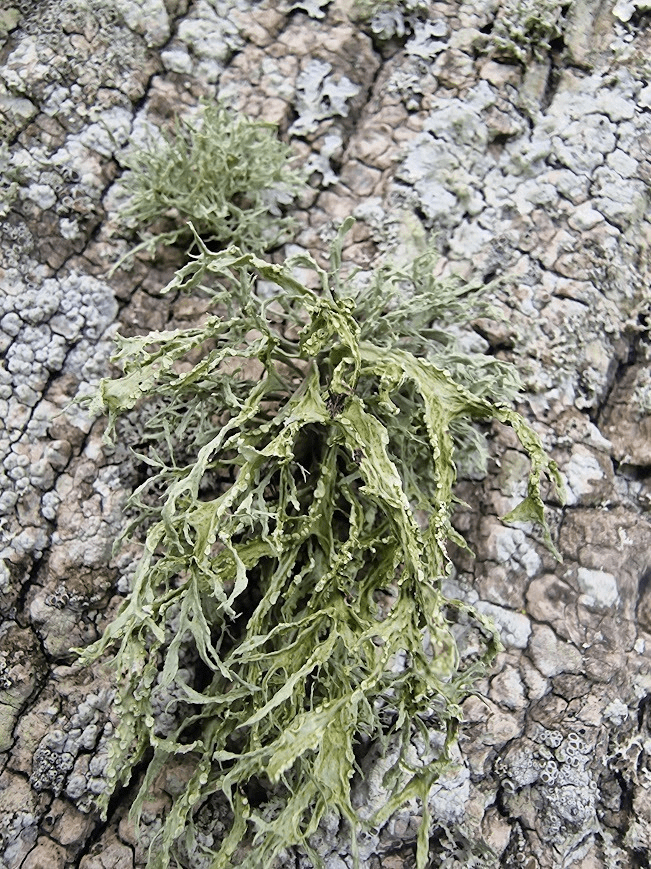
A fruticose species with distinctive long, pendant, strap-shaped lobes. Most branches are flat or slightly caniculate, but wrinkled, and widen from the base. Well-developed specimens display large, pale fawn apothecia along its entire thallus. Ramalina fraxinea can be distinguished from Ramalina fastigiata by its long, pendant lobes and the presence of apothecia along its entire lobes rather than only the apices. Scottish Lichens: Ramalina fraxinea
It’s ironic that it’s on Tent Hill; where William the Conqueror’s army slept before the Battle of Hastings. His win resulted in the establishment of the deer parks created on land given to his vassal barons, which resulted in the pasture woodland that rarer lichens love!
Also on this Ash was: Phaeophyscia orbicularis
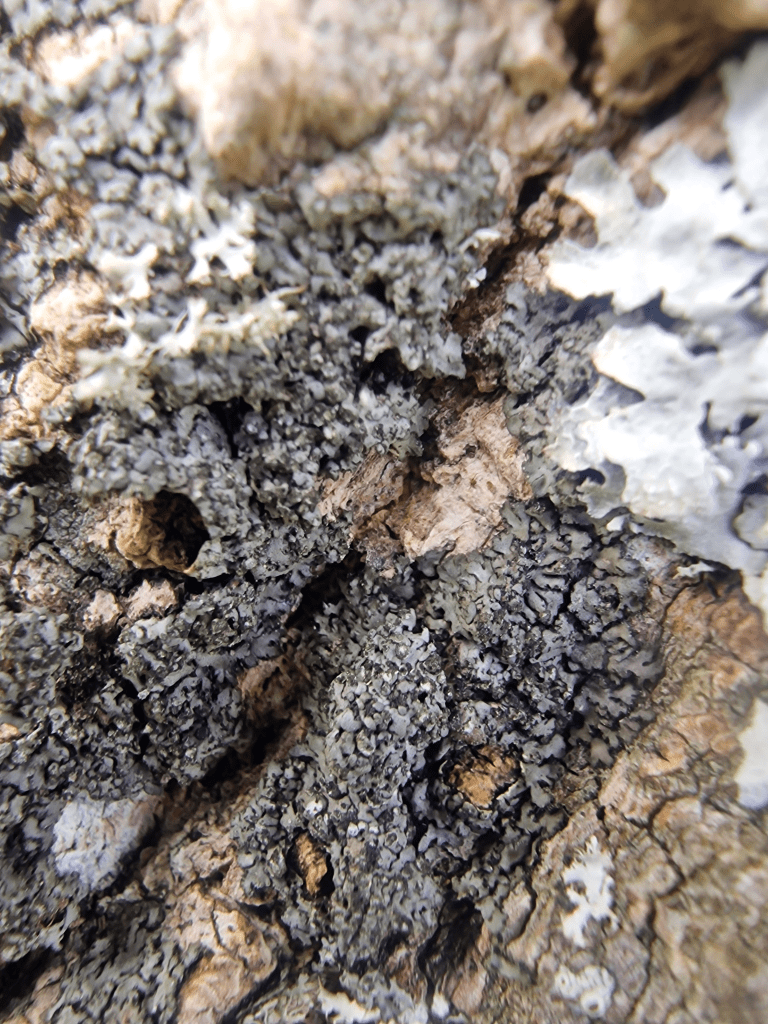
and Lecanora gangaleoides with Physcia adscendens over growing it

and Pertusaria pertusa
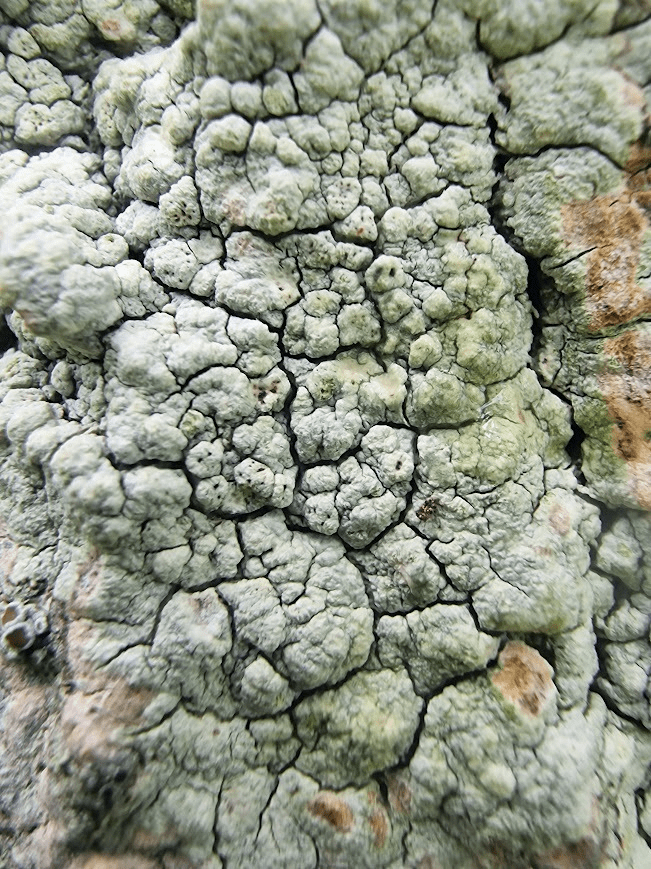
A characteristic species of the Mature Mesic Bark Community (Pertusarietum amarae).
The common ash, Fraxinus excelsior, is currently listed as Near Threatened on the IUCN Red List. This means that while it doesn’t currently qualify for threatened status, it is close to qualifying or is likely to qualify in the near future. The primary threat to ash trees is the fungal disease known as ash dieback, caused by Hymenoscyphus fraxineus. Kew Gardens I have noted that pasture woodland Ash, seem to be doing better than Ash in tall forest woodland; perhaps because the space between trees in pasture woodland reduces the risk of infection
Ashburnham Park on Tuesday 17.06.25
I made a further visit to Ashburnham Park on Tuesday 17.06.25 after visiting with two lichenologist fiends on 12.06.25. See:
This post only lists things that we didn’t see on Thursday, 12.06.25. This time, I travelled by public transport: train from Brighton to Polegate, then bus from Polegate to Ninfield. Stagecoach 53 bus Bus Times. The walk from Ninfield to the entry to Ashburnham Park takes 49 minutes.
Woods
On the Quercus robur on the edge of the woods by the road near the main entrance was Varicellaria hemisphaerica
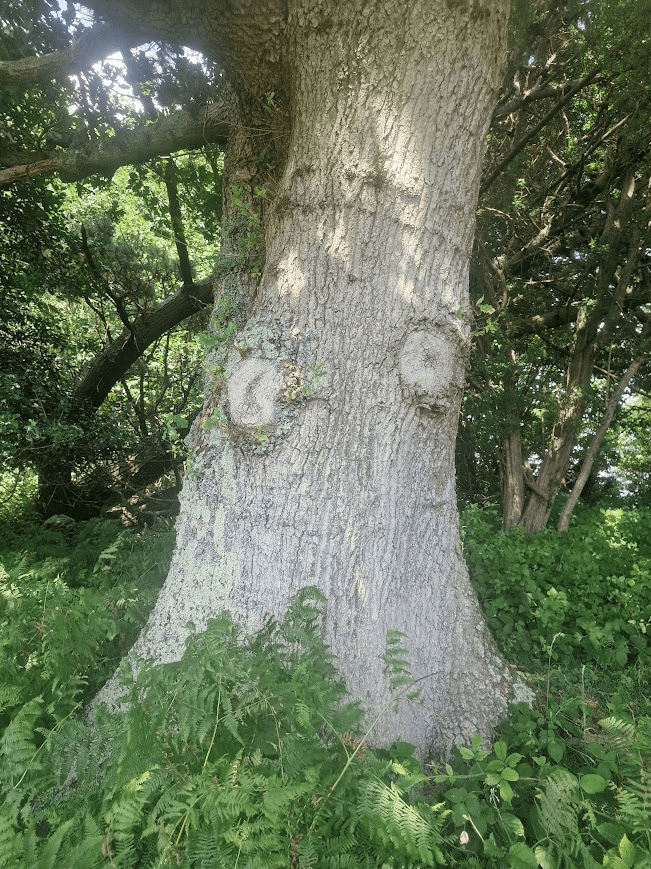
These Quercus robur have south facing trunks covered with lichens of the Pertusarietum amarae (mesic dry bark community): shade tolerant communities on rougher bark, with Pertusaria species dominant, and Varicellaria hemisphaerica
Varicellaria hemisphaerica
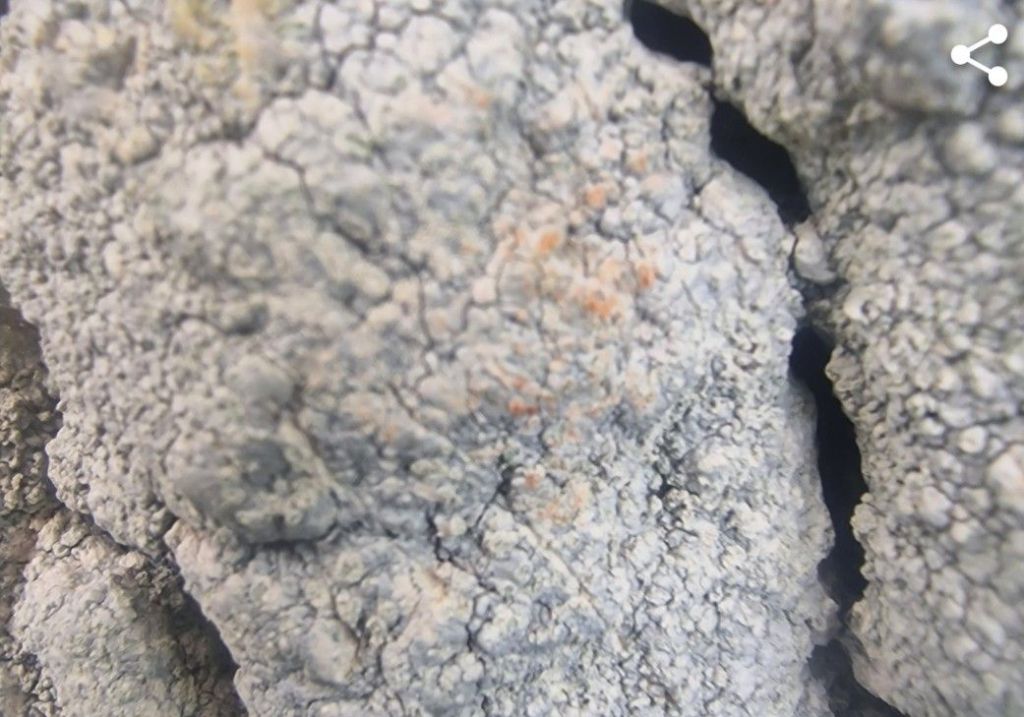
and it was also on an Oak in Walk Wood
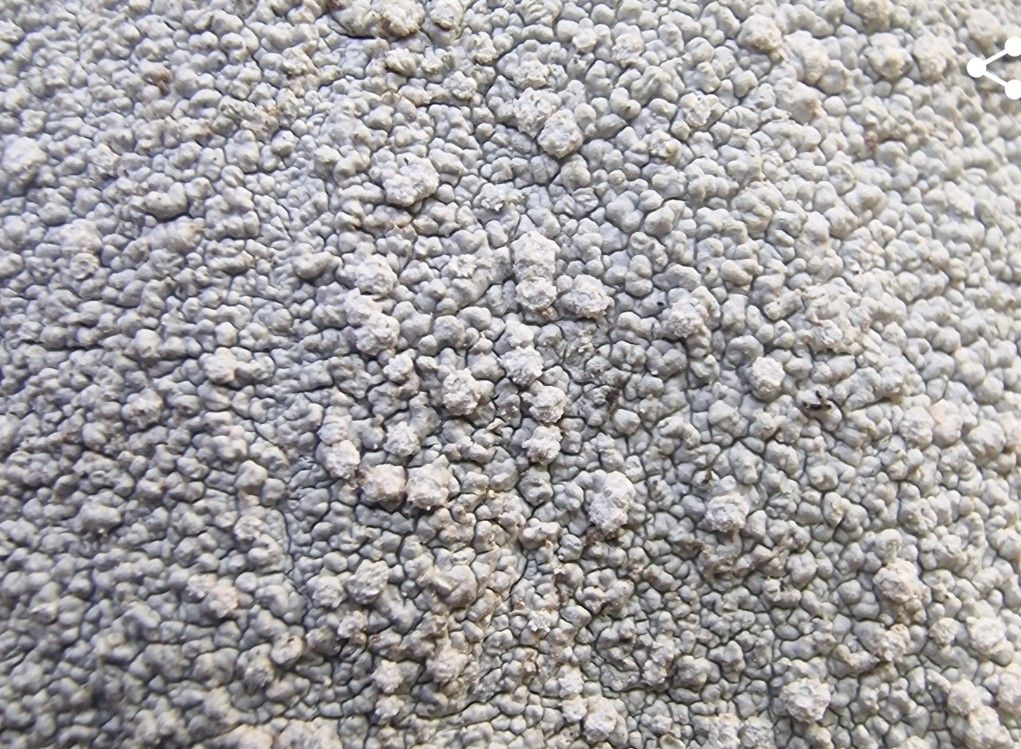
Chaenotheca ferrungea in bark grooves of a Quercus robur
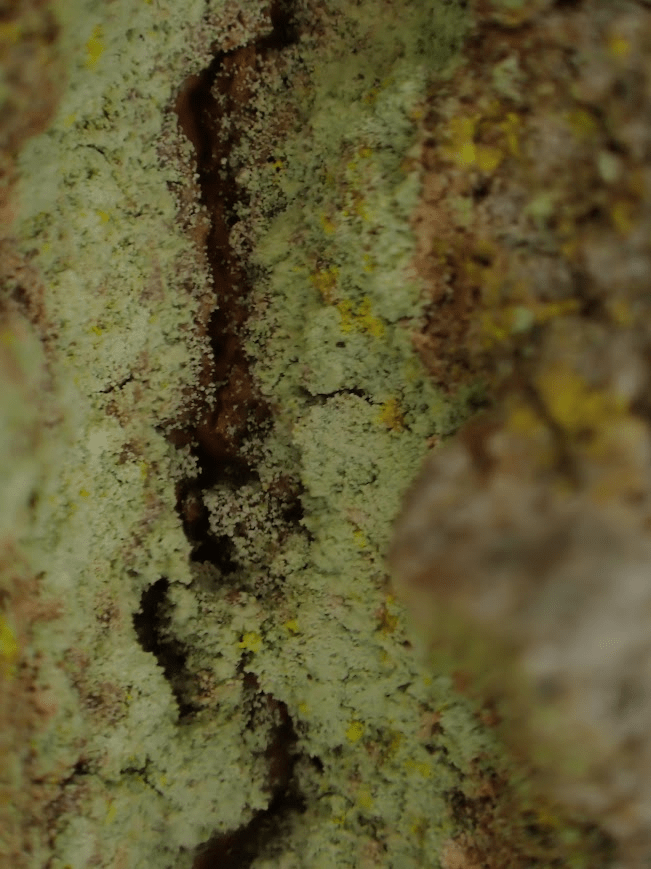
We saw this last Thursday; but not with pin-head apothecia; the pinheads were just visible of this example.
In Walk Wood there were a number of notable maiden Hornbeams, Carpinus betulus in the woods. Normally, when I see Hornbeams in Sussex, they’re coppiced and have few lichens (mostly Pertusaria leioplaca and the Graphidetum scriptae association with Graphis scripta). But the Hornbeams in Ashburnham Park were much older non-coppiced maidens, which seem to have lichens of the Pyrenuletum nitidae association (this is listed by James et al (1977) a continental association, the tail end of which is seen on ancient Beech and Hornbeam in south east England ….probably a separate southern oceanic community characterised by Pyrenula chlorospila with Enterographa crassa and Pyrenula macrospora) as well as of the Graphidetum scriptae association British Lichen Society Lichen Communities These hornbeam mosaics require more time than I had available to identify all their species.
This is probably Pyrenula chlorospila
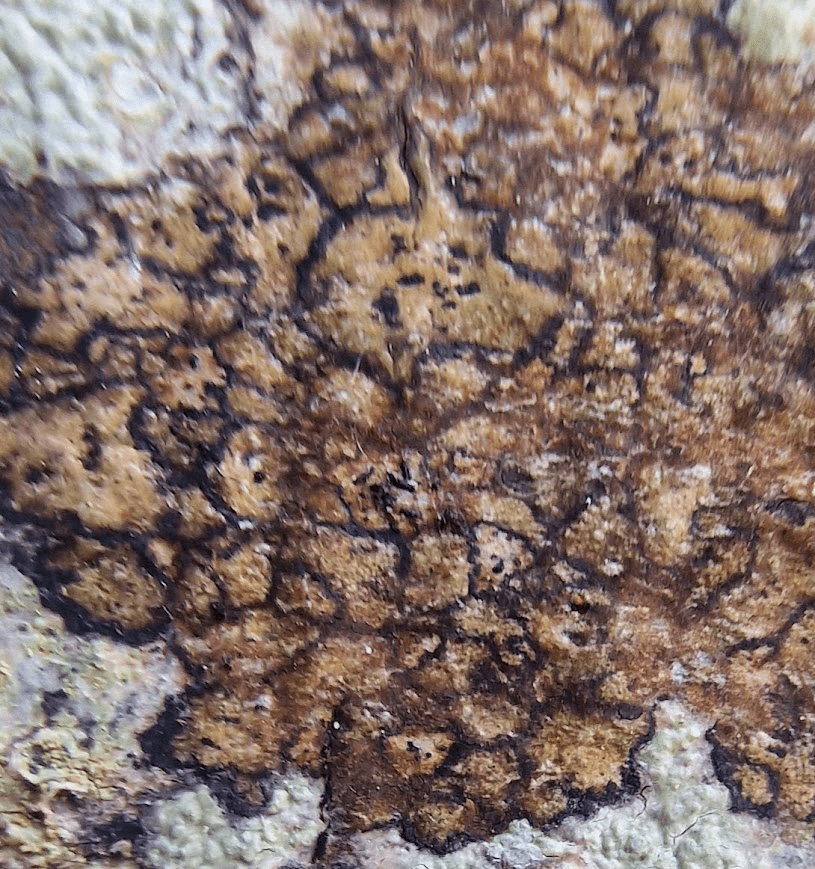
on this Hornbeam
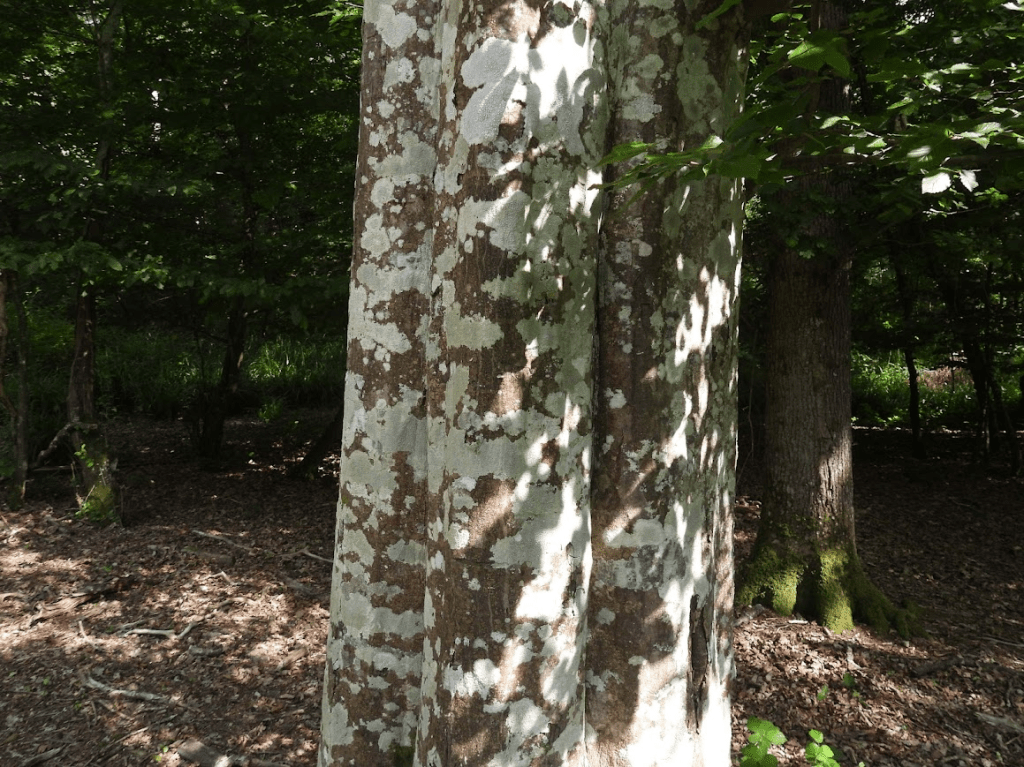
Possibly Enterographa crassa surrounded by Pertusaria hymenea & possibly Lecanora compallens
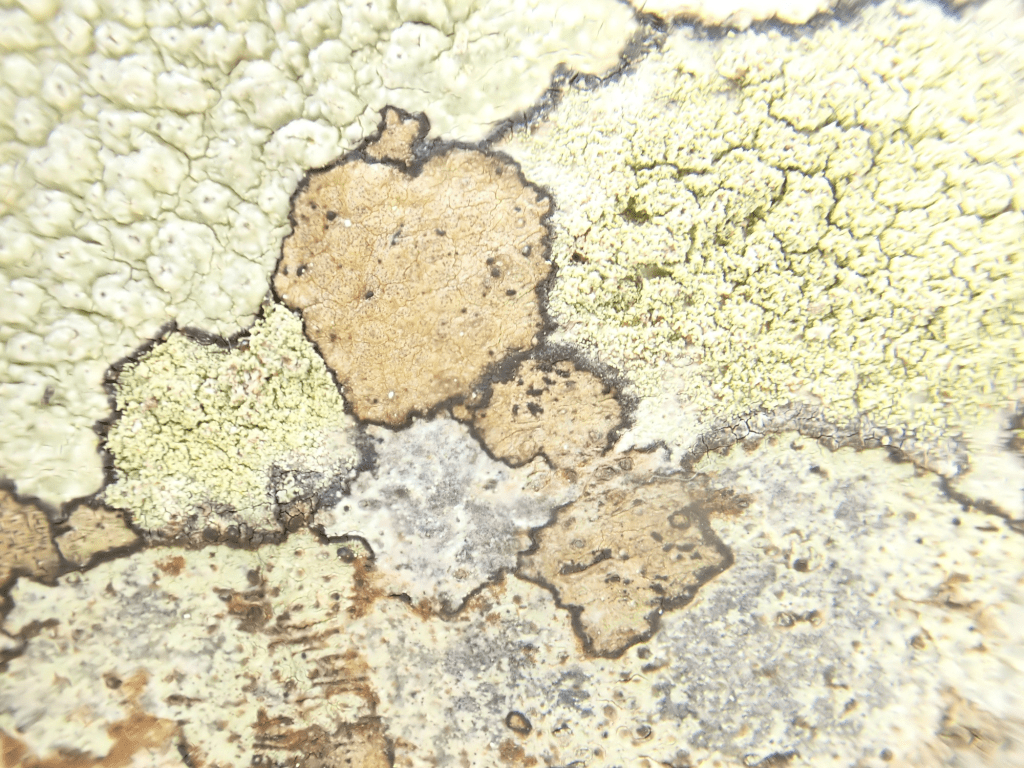
Pertusaria sp. surrounded by Graphis scripta sensu lato. The revision of the Graphidaceae lichens in the Lichens of Great Britain and Ireland III has split Graphis scripta into more than one species, and spore microscopy is required for definitive identification of Graphidaceae lichen
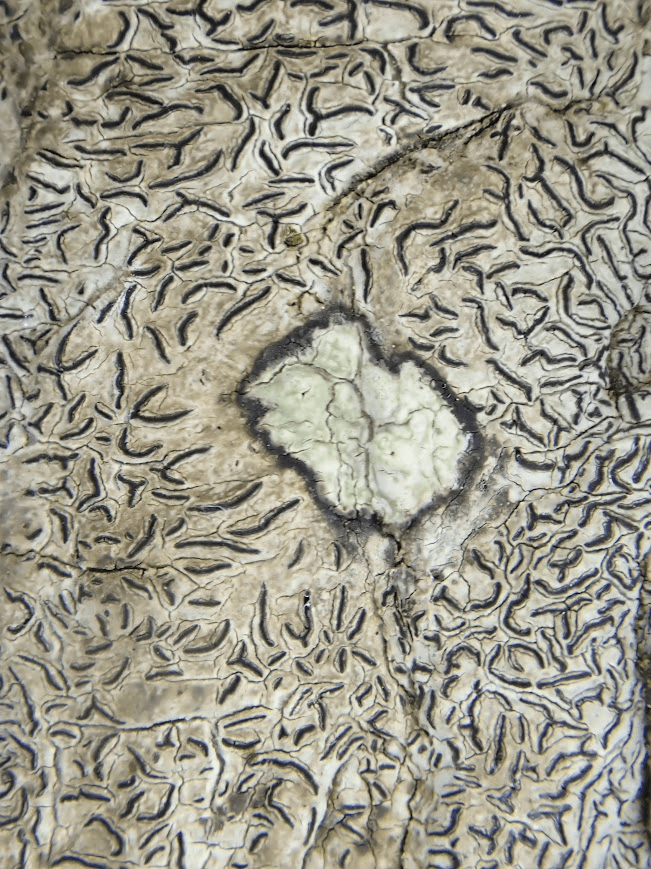
Lecanora chlarotera/hybocarpa (microscopy of the apothecia crystals with polarizing light is required to separate L. chlarotera from L. hybocarpa) was part of these Hornbeam mosaics.
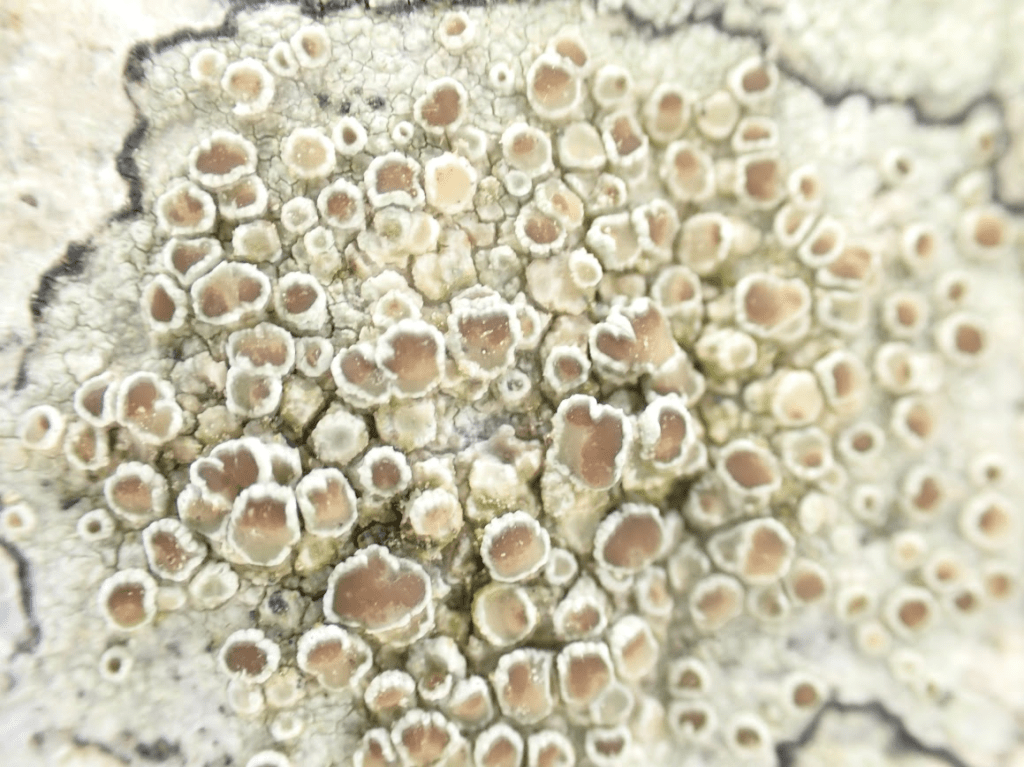
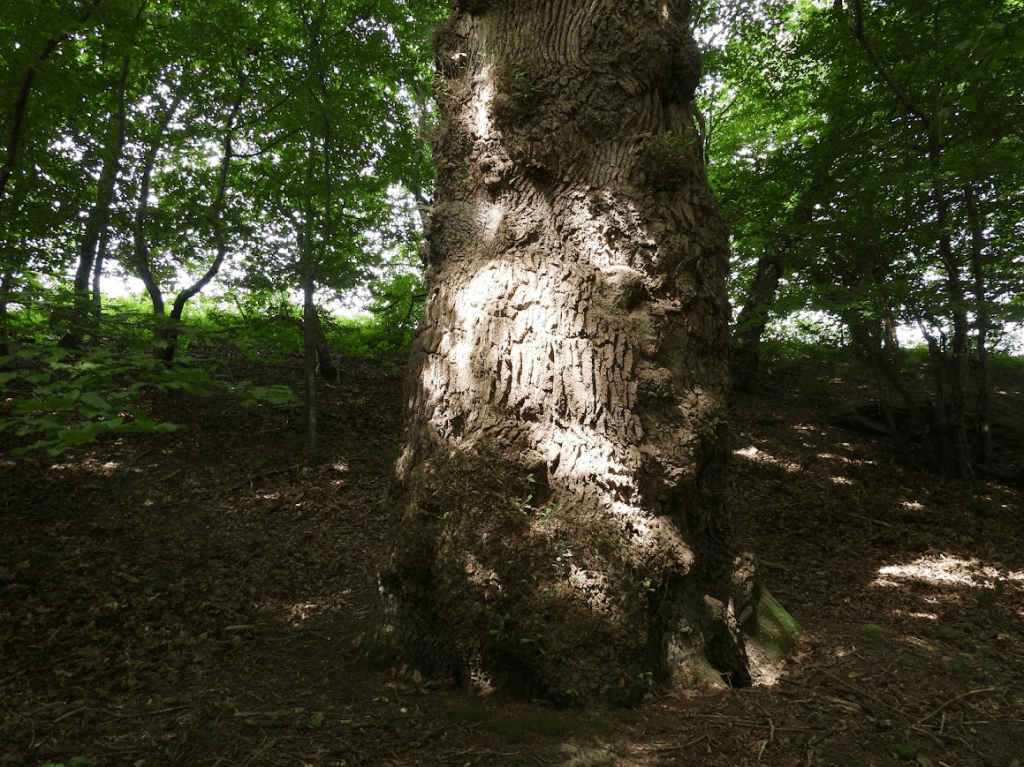
In the extreme north east of the wood around Reservoir Pond, where we hadn’t visited on Thursdays 12.06.25 there were several huge ancient Quercus robur near the perimeter fence, next to open parkland
which had quite a lot of Enterographa crassa on smooth patches around its base

The Terraces
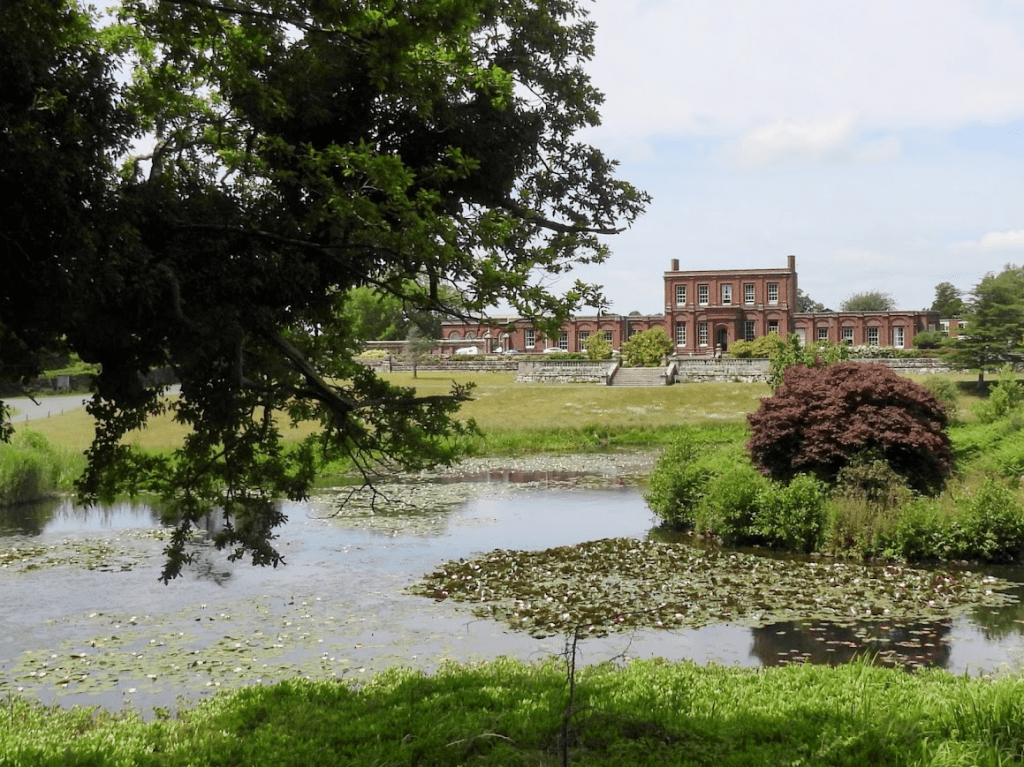
The terraces are on the front (south) of Ashburnham Place; they are approached by two central flights of steps bedecked with heraldic greyhounds. The terraces were designed by Neo-Classical architect George Dance in 1813.
Pyrenodesmia variabilis, previously Caloplaca variabilis an Terrace wall. Not common in Sussex and not recorded at Ashburnham despite being often surveyed as its an SSSI, probably because the terraces of the house are not in the SSSI blocks.
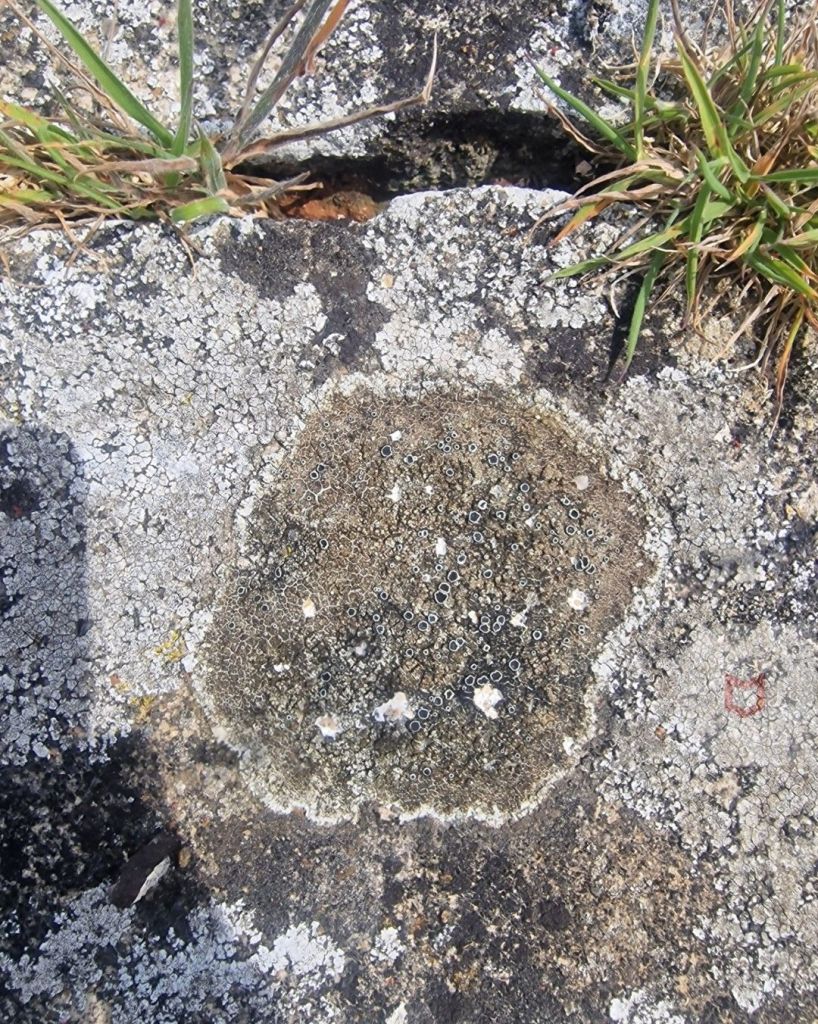
Kuettlingeria teicholyta, previously Caloplaca teicholyta, was abundant on the walls of the terraces and on the greyhound garden statutory on the pedestals next to the steps to the terraces
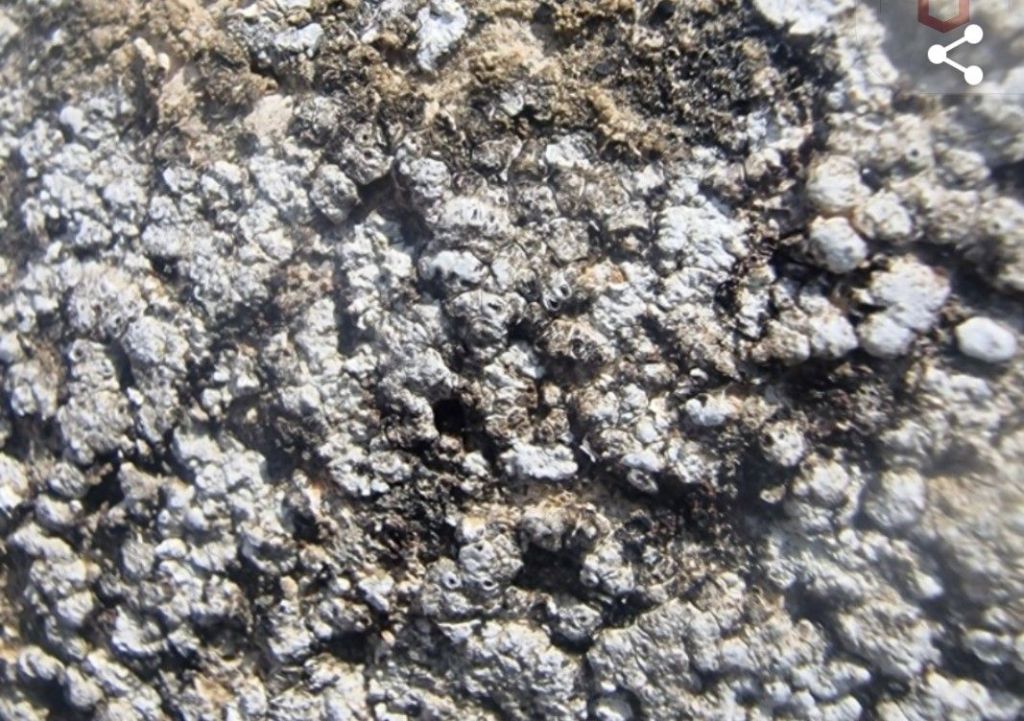
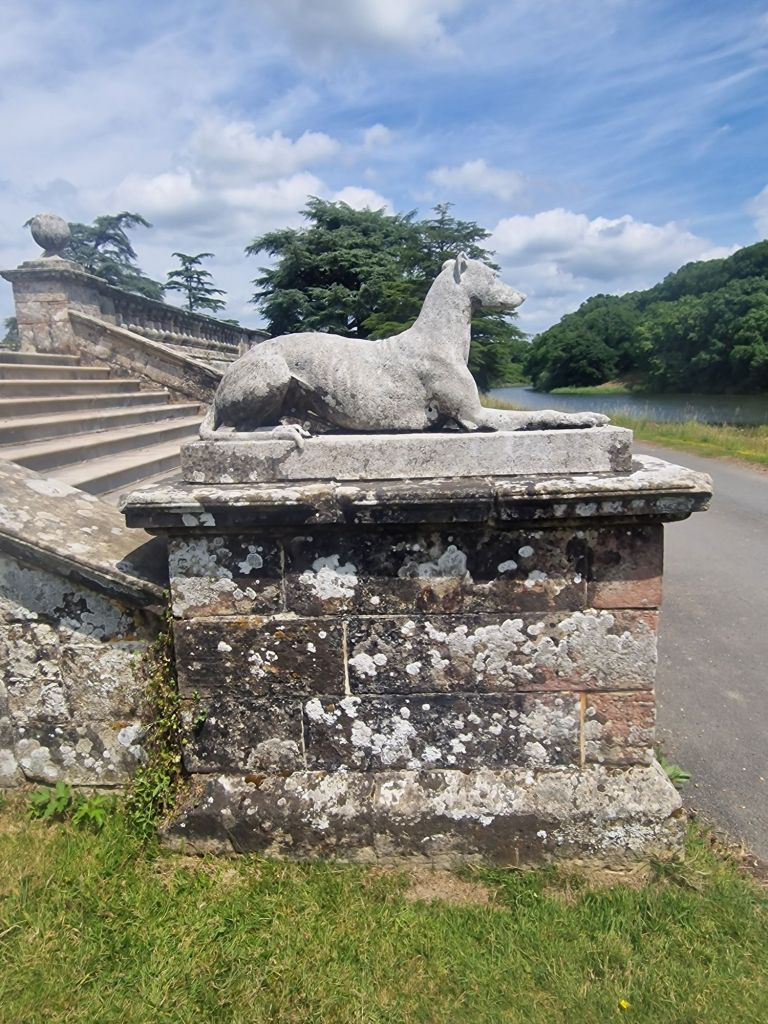
The limestone greyhounds were dominated by Kuettlingeria teicholyta and Circinaria contorta, with yellow flashes of Variospora flavescens
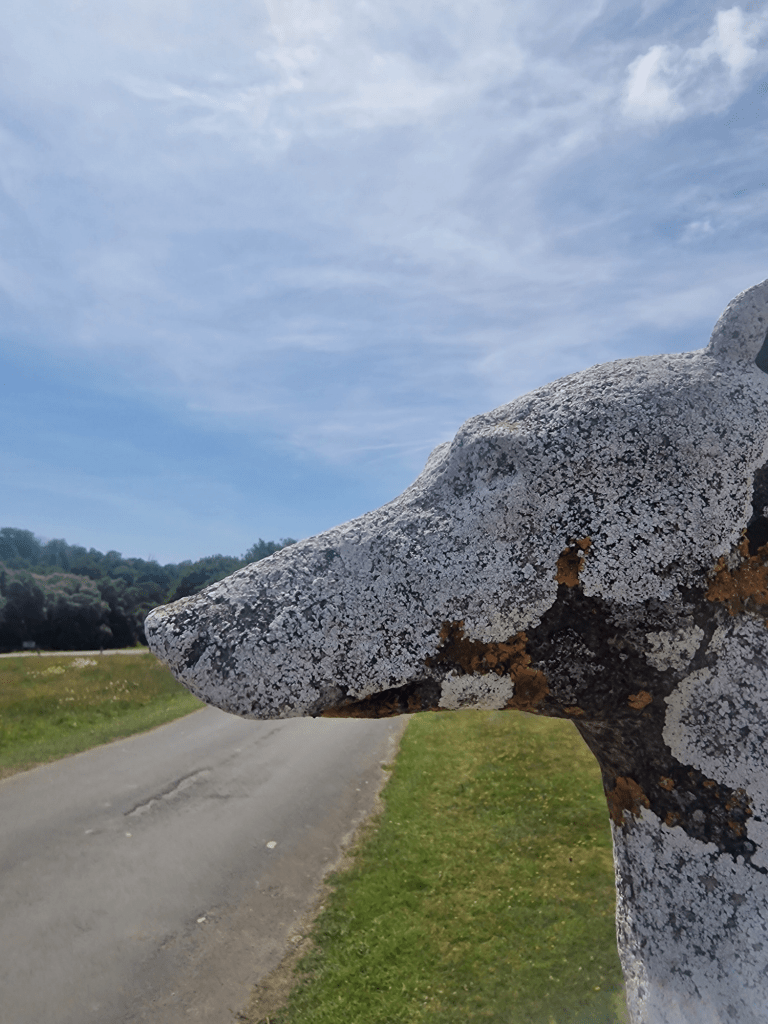
Many of the walls were dominated by Verrucaria nigrescens and Myriolecis albescens; all common on old walls.
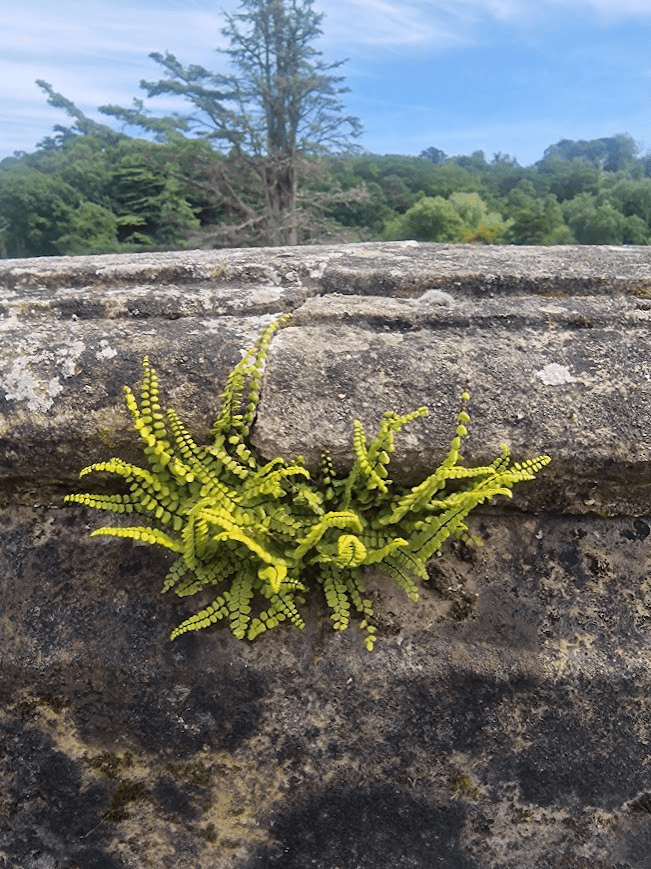
Maidenhair Spleenwort, Asplenium trichomanes, one of my favourite ferns. The moss Grimmia pulvinata, was also common on the walls, as it is on many Sussex old walls.
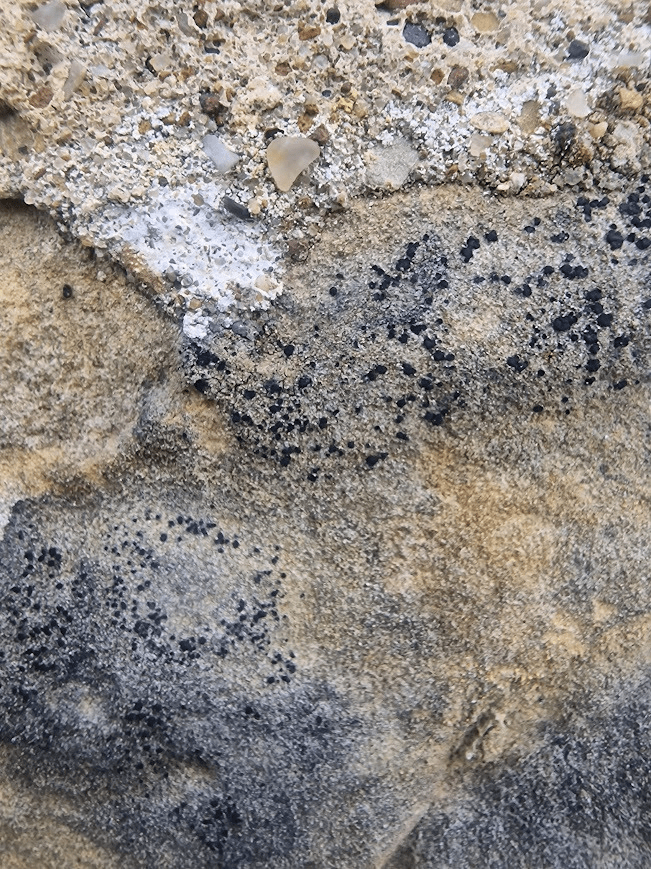
Lecidella stigmatea was also present on the walls

 Sim's Nature Notes