The first day of my five day holiday in Keswick – three of which I had planned to devote to exploring the constituent ancient woods of the NNR – started with initial disappointment. Due to the unprecedent levels of rain on the days before, the only Borrowdale bus (the Stagecoach 78) which runs between Keswick and Seaotoller) was suspended due to road flooding, and the Derwent Launch services were suspended too, because of the height of the water in Derwent Water; so there way of reaching where I wanted to go, Johnny’s Wood – by bus or boat. So, I decide to walk to Great Wood and Arnees Wood from Keswick. This is a 10 mile return walk – and it rained continuously – but it was worth it.
The footpath from Great Wood to Ashness Wood provided fantastic views of Derwent Water; however, as the footpath was an up-and-down path through the foothills of Castlerigg Fell, the footpath was more like a beck than a path. In some places, the water level was above my boots. However good your “waterproof” socks are, there is nothing to do about a top-down inundation. But once the water between your feet and your waterproof socks has warned up to body temperature, it’s fine, and when you are focusing hard on looking at nature you don’t notice your socks being like little swimming pools!
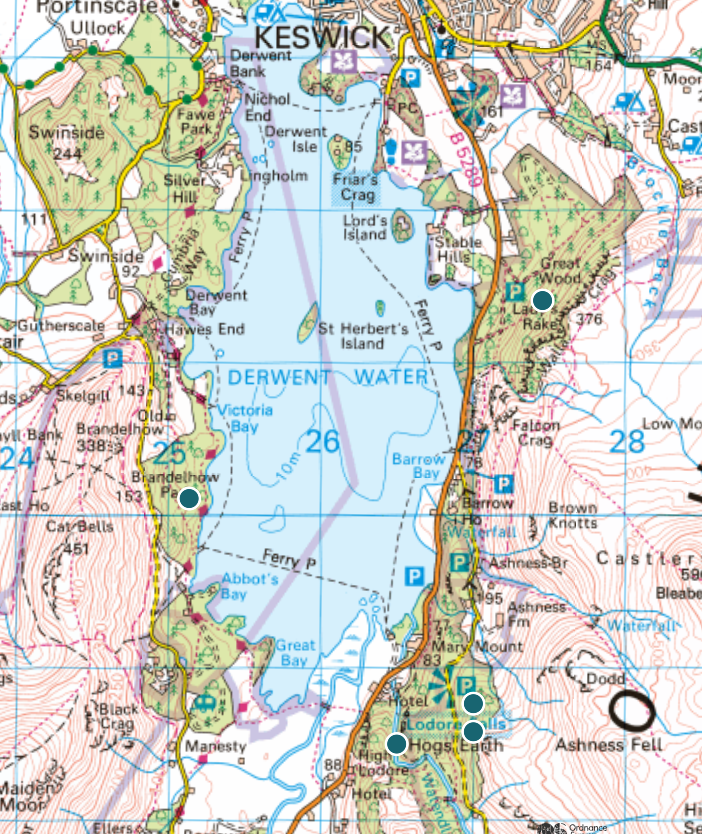
The blue circles mark the constituent woods of the new Borrowdale Rainforest NNR. There are more than those on this map.
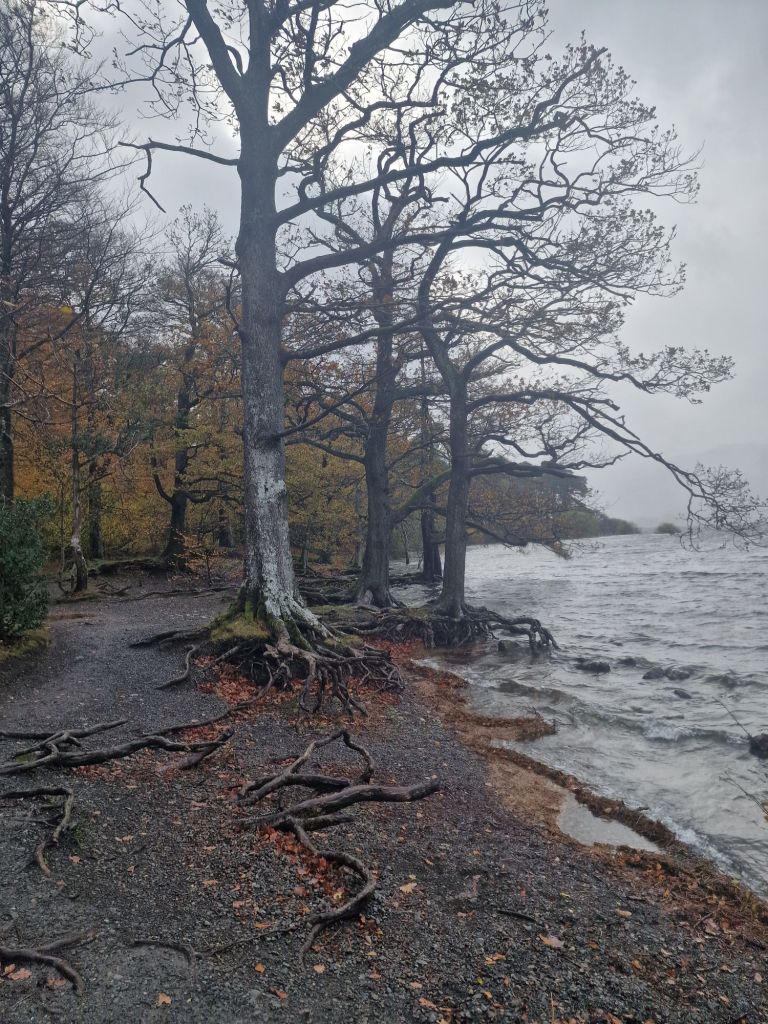
The walk along the lake from Keswick to the start of the path up Great Wood.
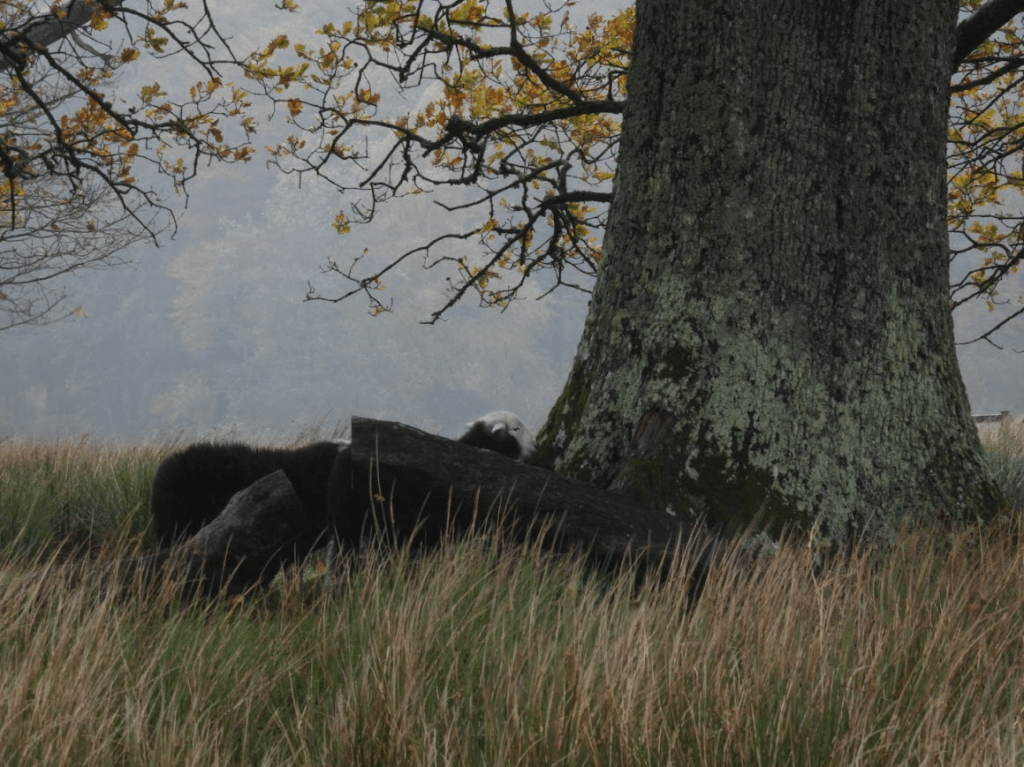
Herdwick sheep sheltering under a pollarded Sessile Oak
The water level was very high – these Larch were being engulfed by the rising water level
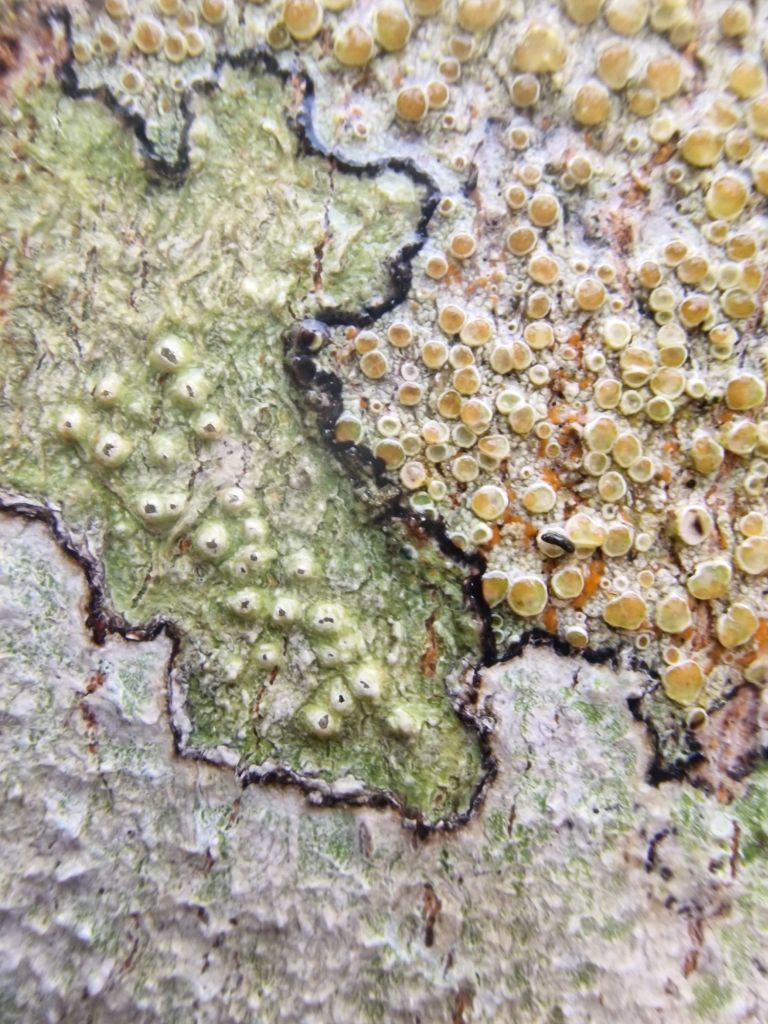
Lichen mosaic on Silver Birch. Lecanora chlarotera/hybocarpa and Putusaria hymenea shows the typical black lines of the “zone of antagonism”
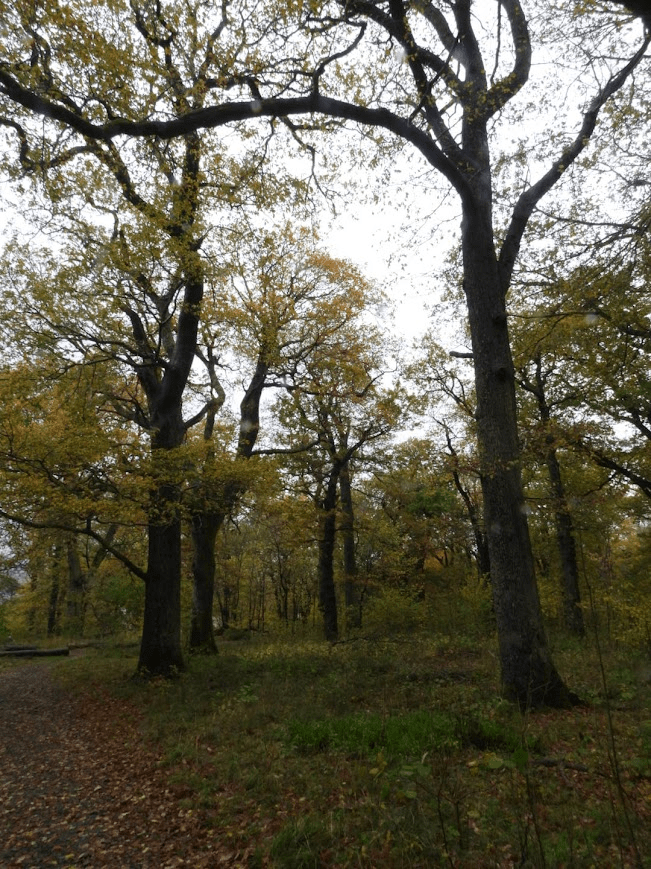
Great Wood
Sessile Oaks
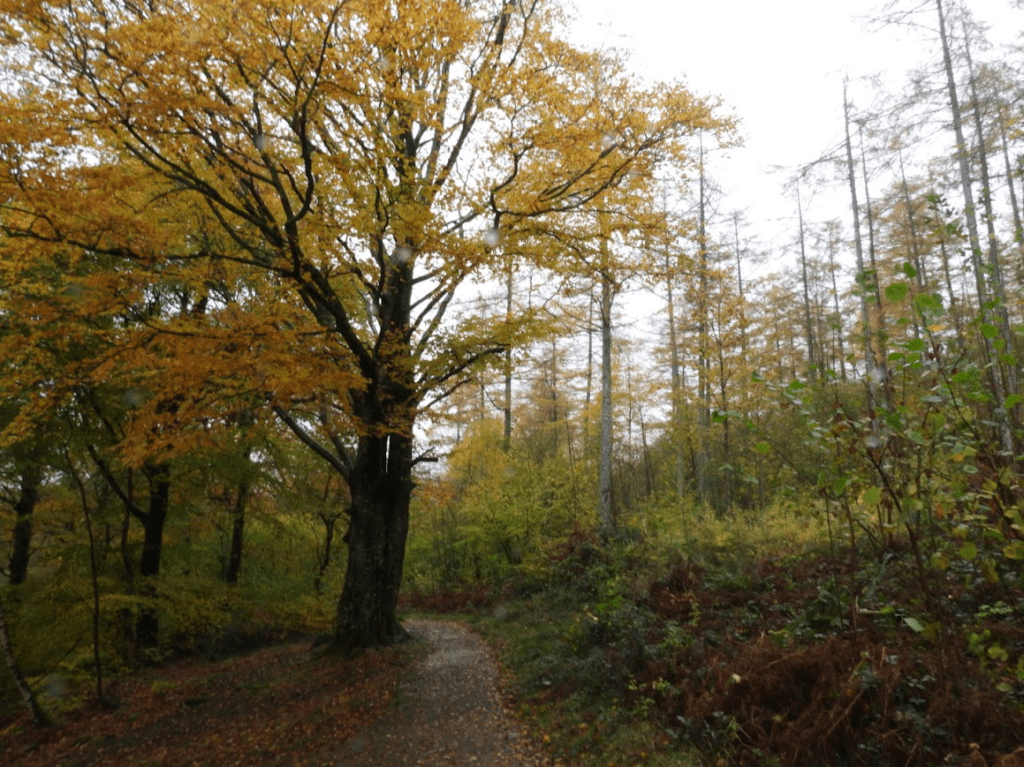
Beech
Polypody Fern on Sessile Oak; epiphytic polypody is characteristic of Atlantic woodland (temperate rain forest)
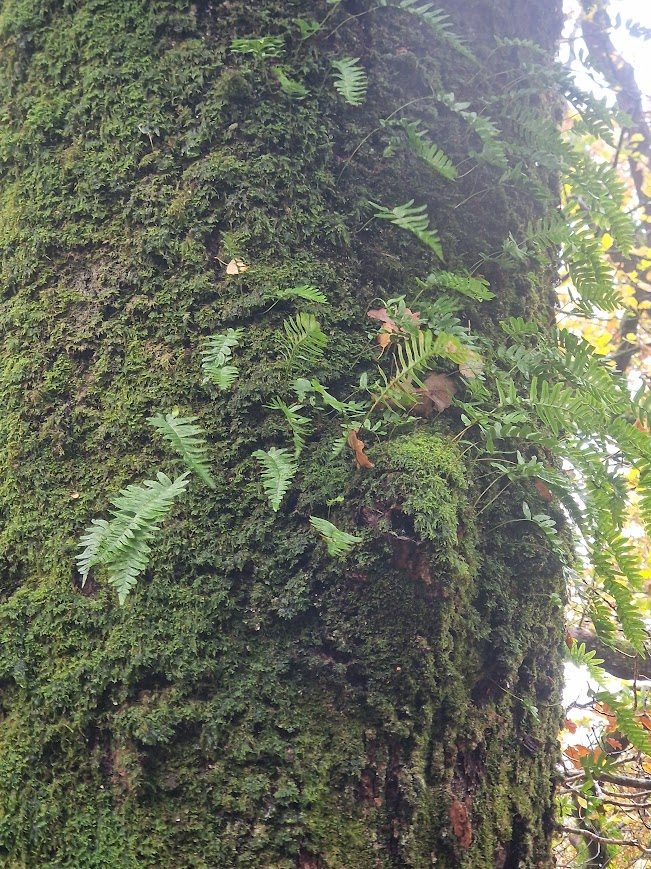
Overflowing beck next to this tree

Map lichen, Rhizocarpon geographicum (map lichen) on andesite outcrop; igneous rocks of the Borrowdale Formation; very common on hard siliceous rocks
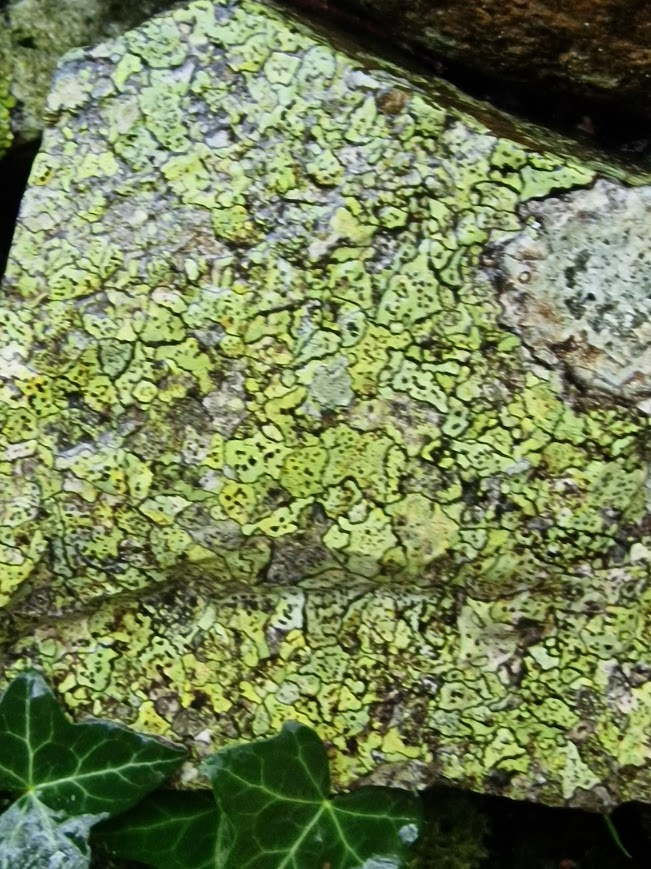
Path between Great Wood and Arshess Wood
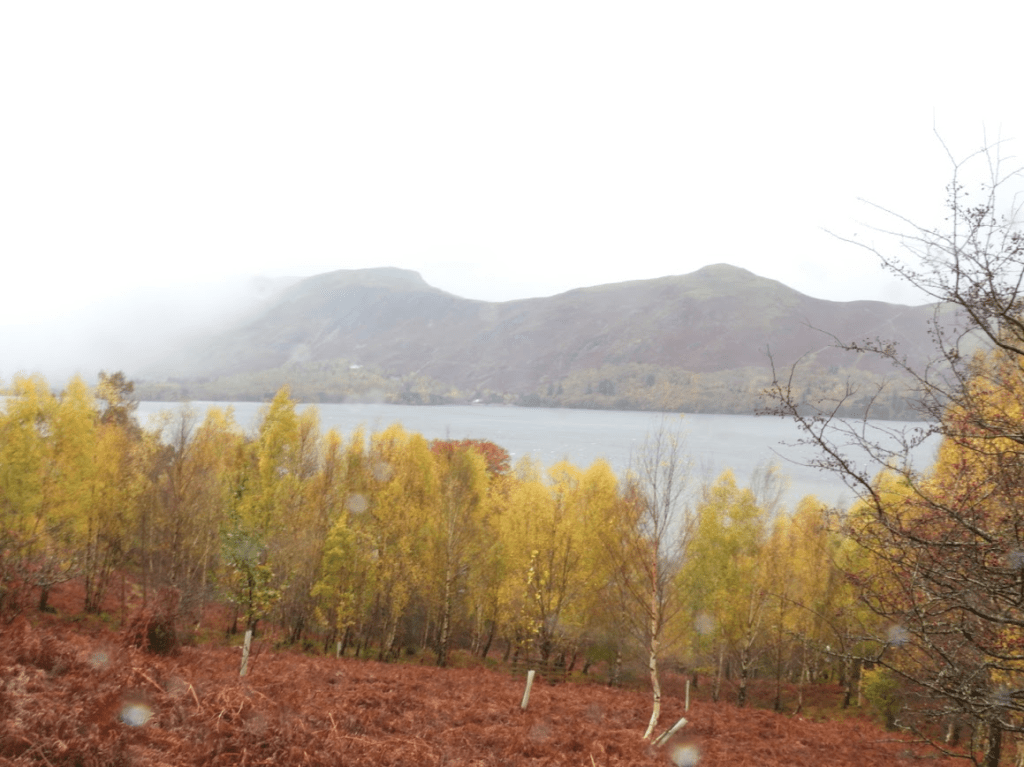
Silver Birch, looking across to the west side of Derwent Water to the Cat Bells fells
Ancient Hawthorn
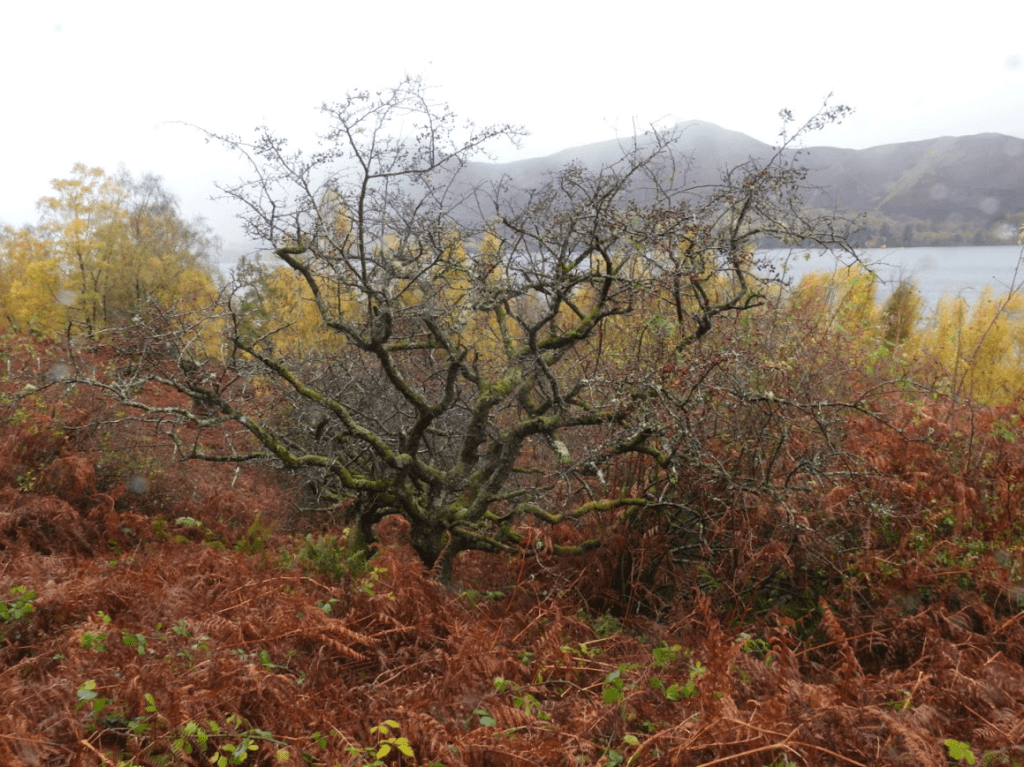
Lichens on this Hawthorn
Oak Moss, Evernea prunastri;
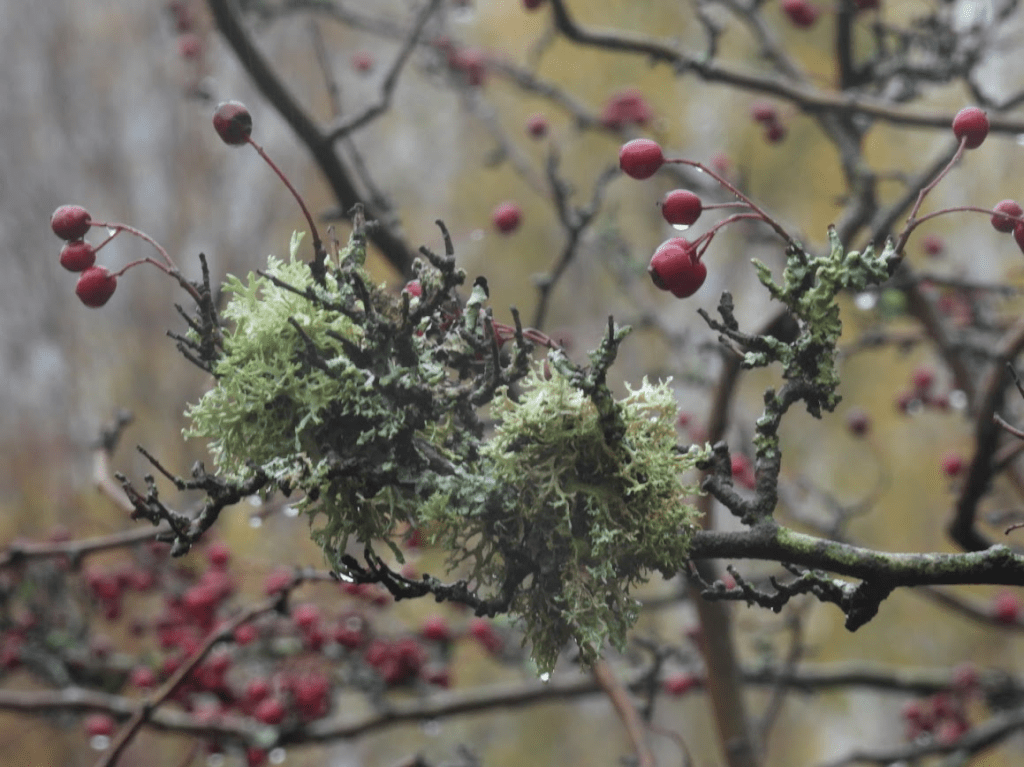
Usnea sp., probably U. cornuta

Usnea sp, probably U. subfloridana
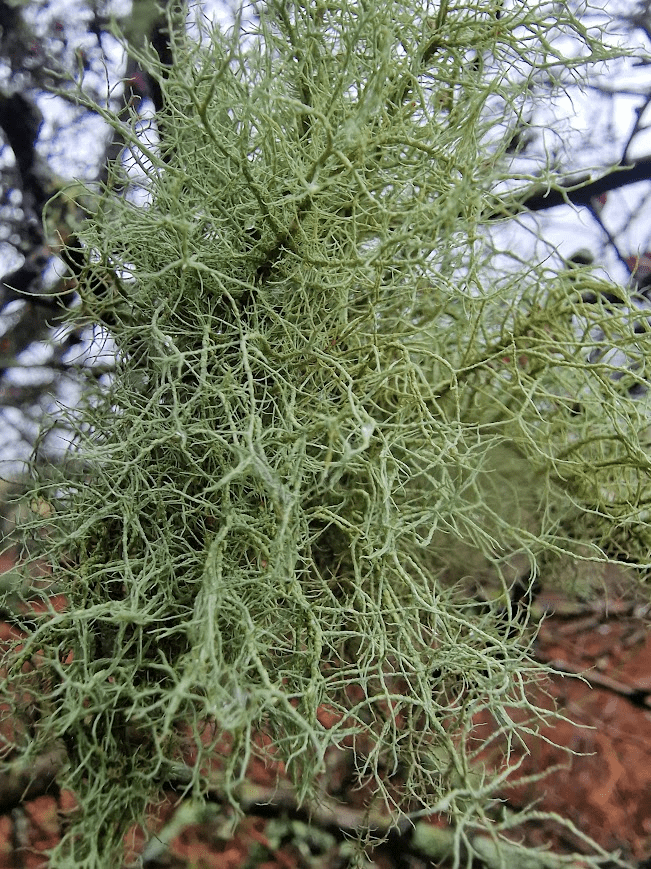
Platismatia glauca
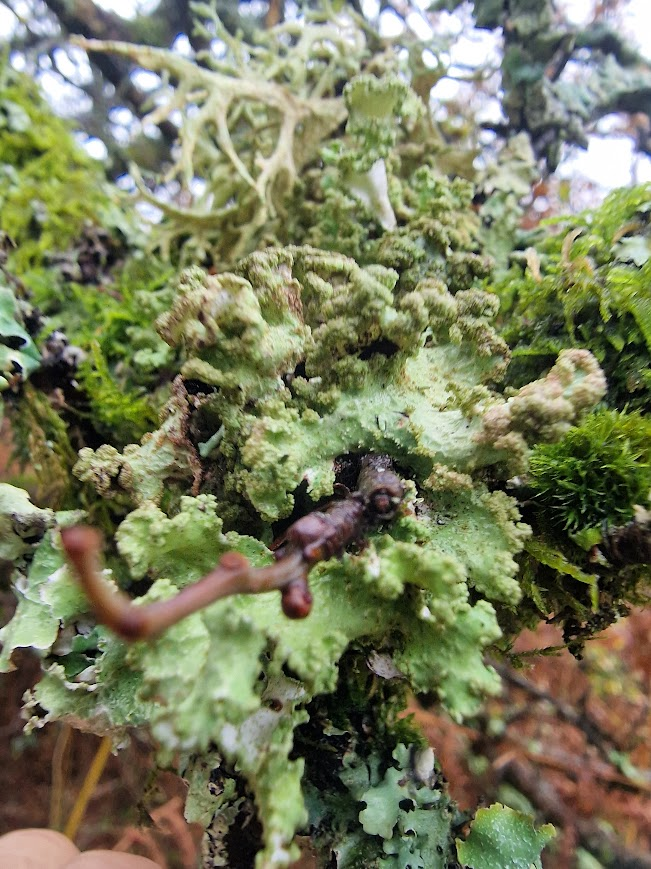
Boulders are always worth investigating in areas of upland siliceous volcanic rock as they are often covered in lichens and bryophytes
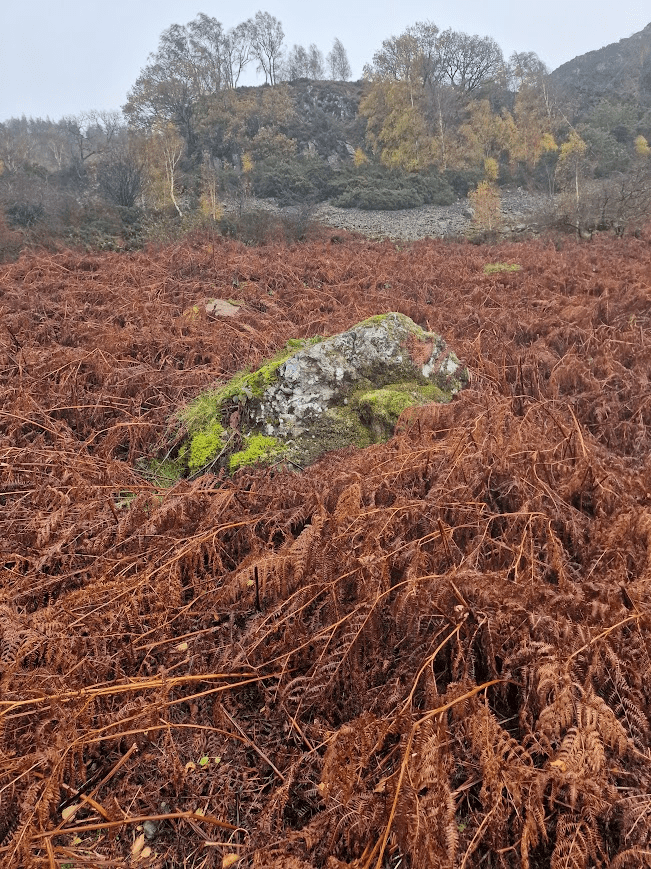
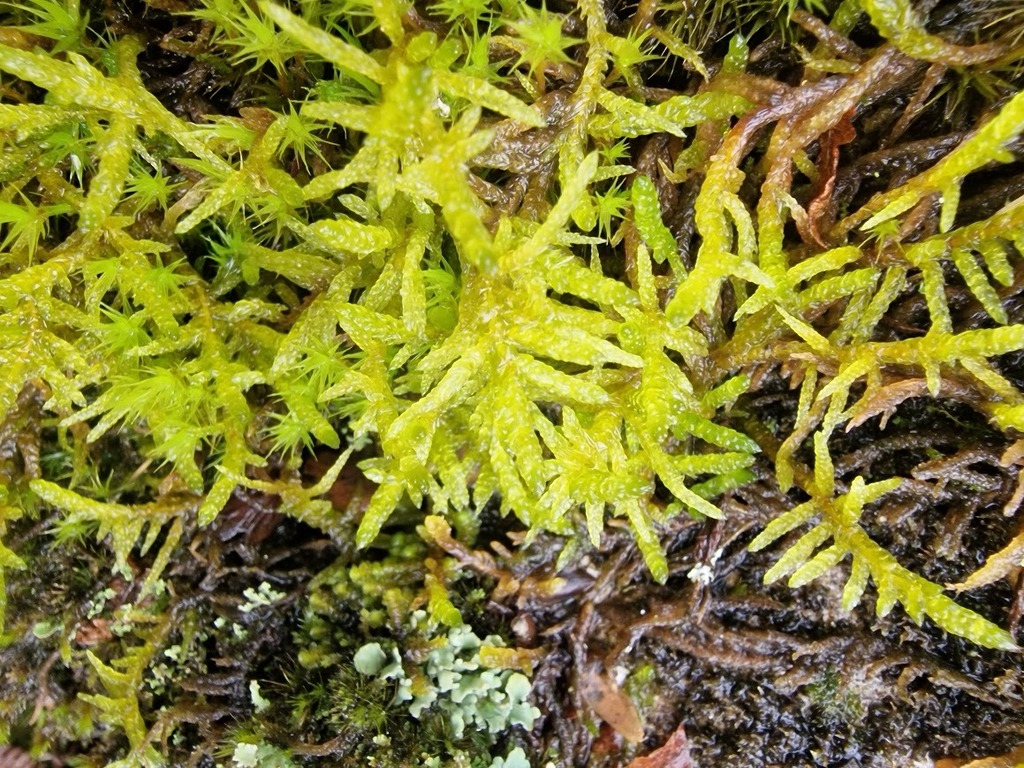
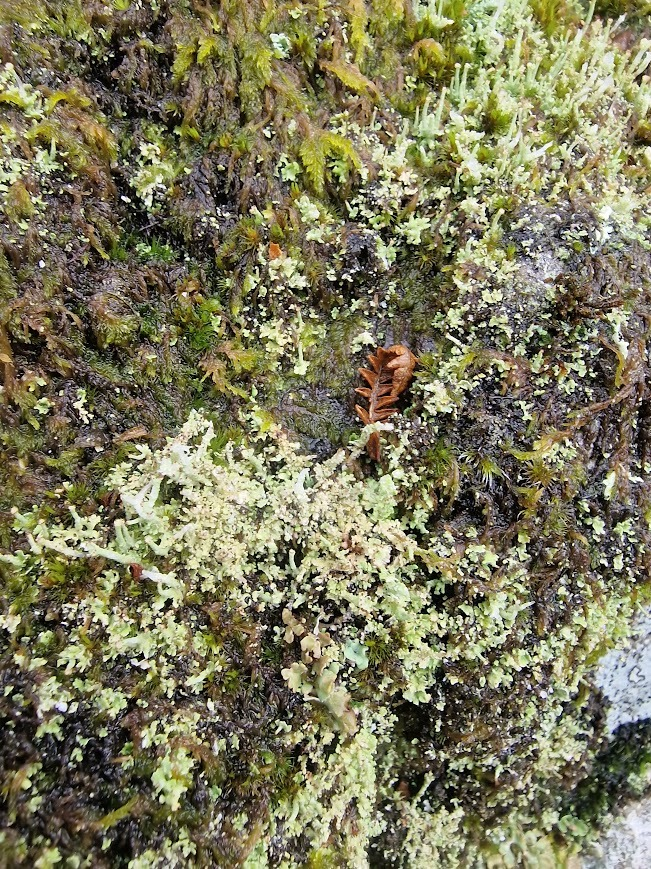
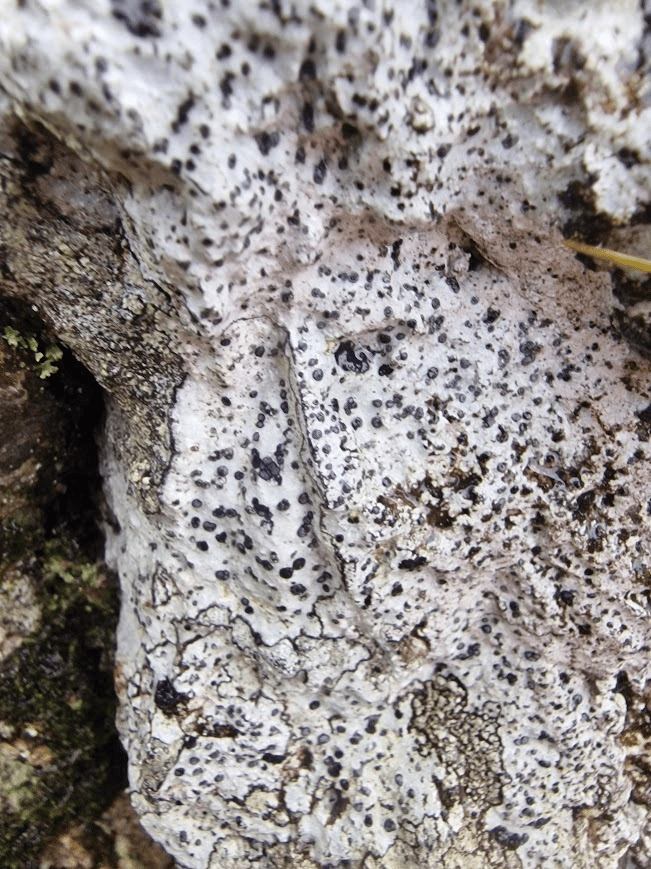
These are some of the species on this boulder
Cladonia strepsilis Olive Cladonia
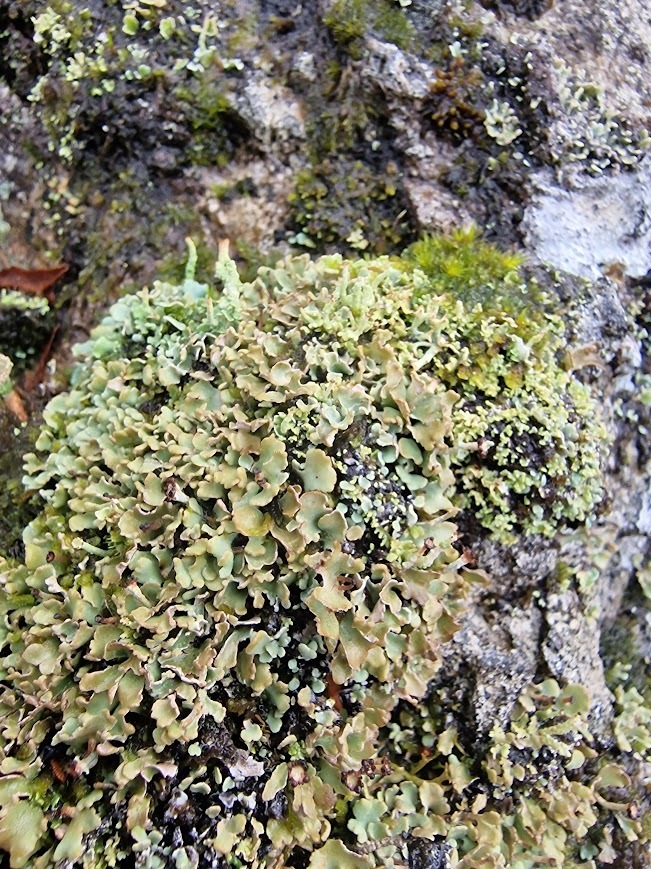
Pleurozium schreberi Red-stemmed Feather Moss
Cladonia ramulosa Branched Pixie-cup Lichen
Porpidia tuberculosa Boulder Lichen
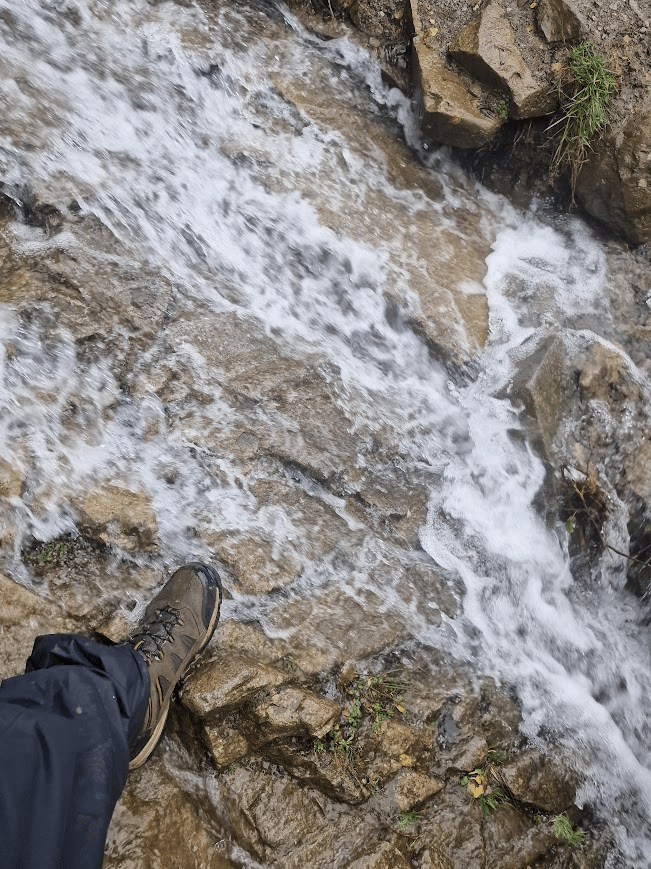
Frequently, it was necessary to cross mini-waterfalls crossing the path that were a consequence of the very high rain over the days proceeding my walk
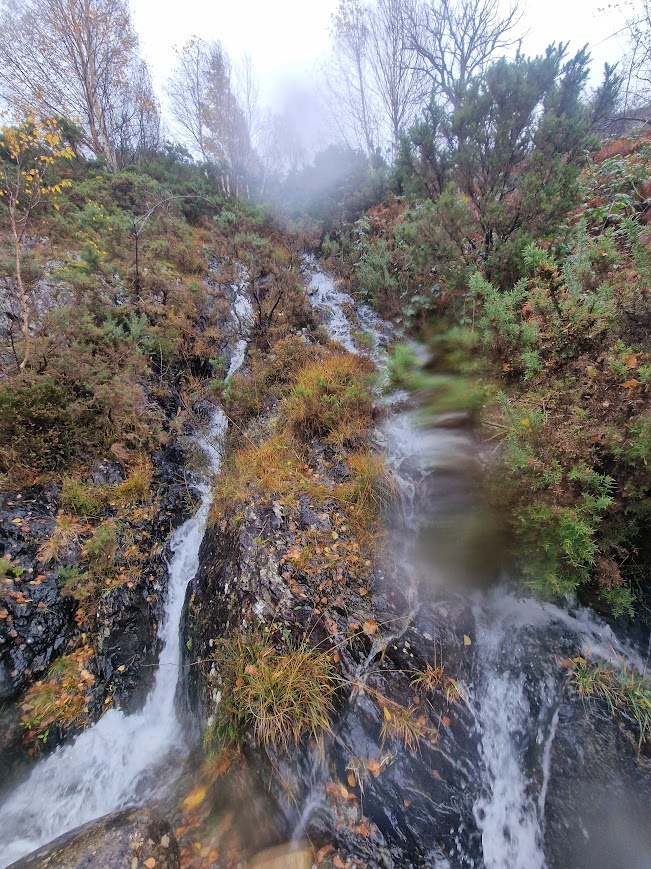
Looking up at temporary waterfalls caused by high rainfall – image blurred by heavy rain falling on the lens of my camera
Ashness Bridge
Over Barrow Beck
Its image is often seen to be adorning biscuit tins and tea towels Visits Keswick
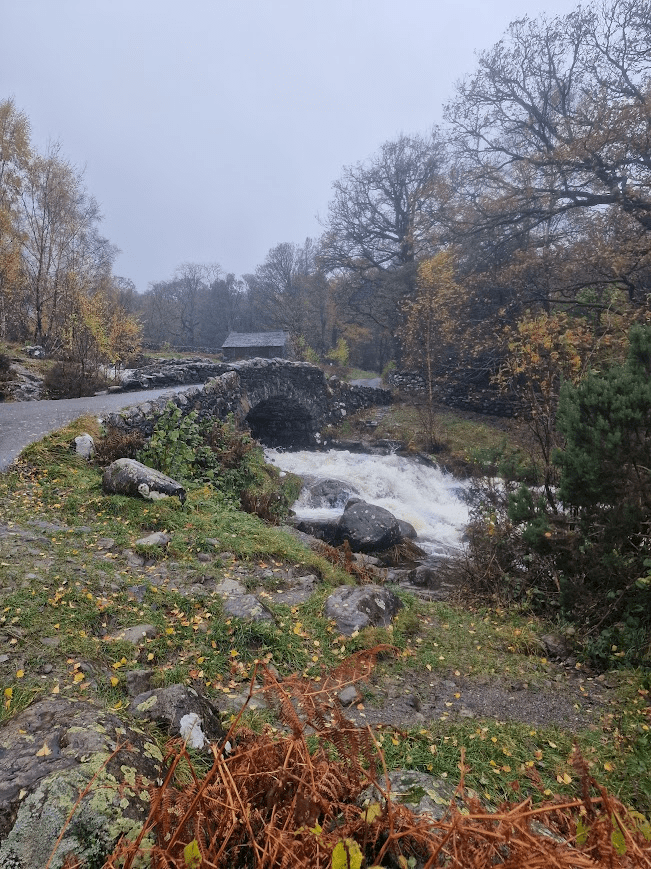
Barrow Beck above the bridge, with the bridge stones covered in Rhizocarpon geographicum; very common on upland igneous rocks
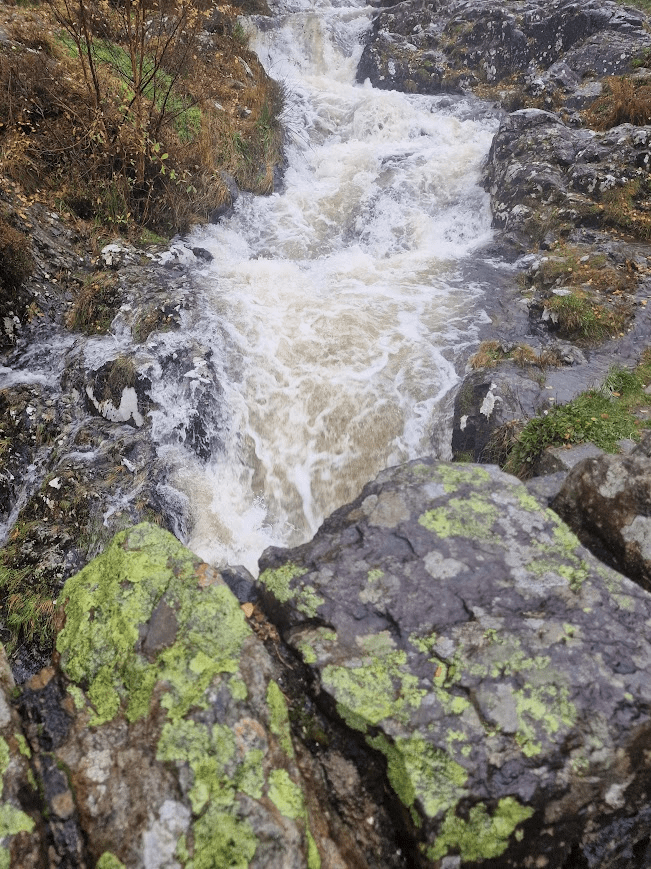
Ashness Wood
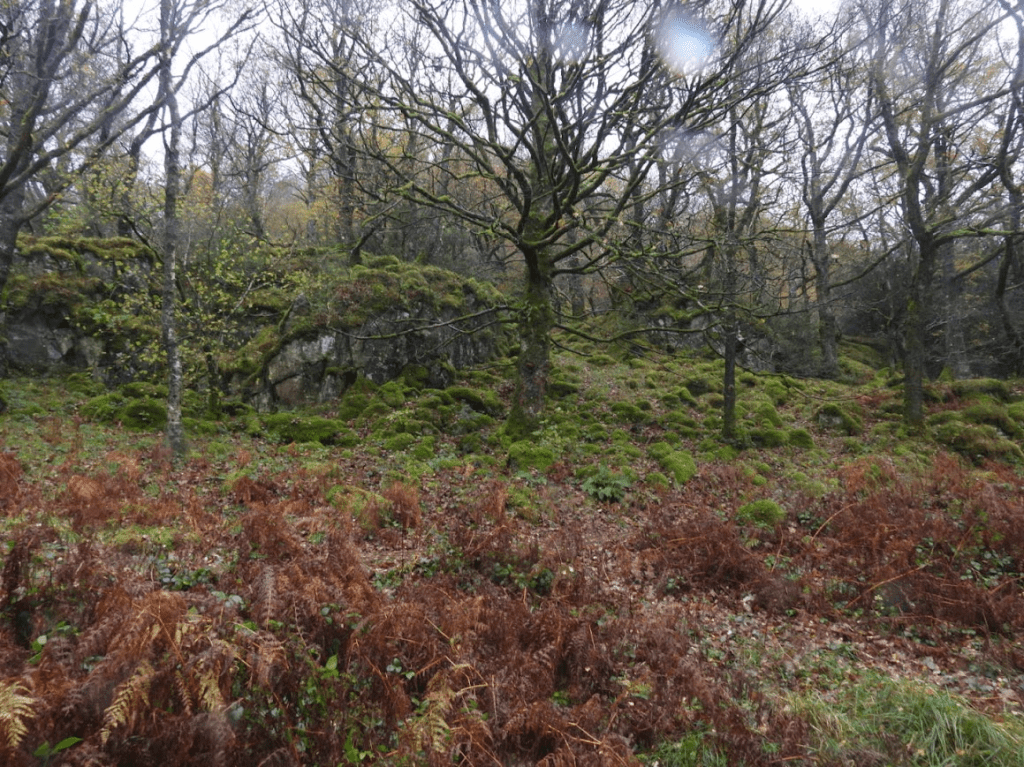
Characterised by Sessile Oak, Quercus petrea and outcrops of Grange Crags Andesite. Igneous bedrock formed between 458.4 and 449 million years ago during the Ordovician period. British Geological Survey Geology Viewer
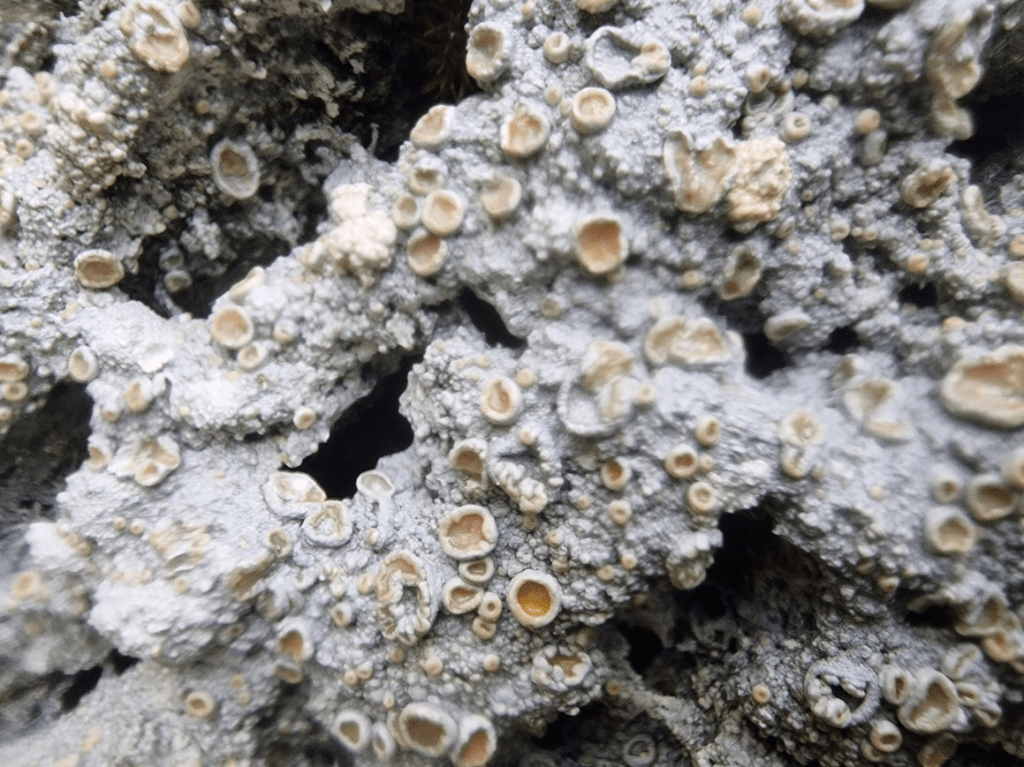
A large patch of fertile Ochrolechia androgyna with apothecia, on Sessile Oak. Apothecia are usually absent but when present have a pink-orange disc with a pale margin. British Lichen Society. O. androgyna is present it the southeast, but it is always infertile.
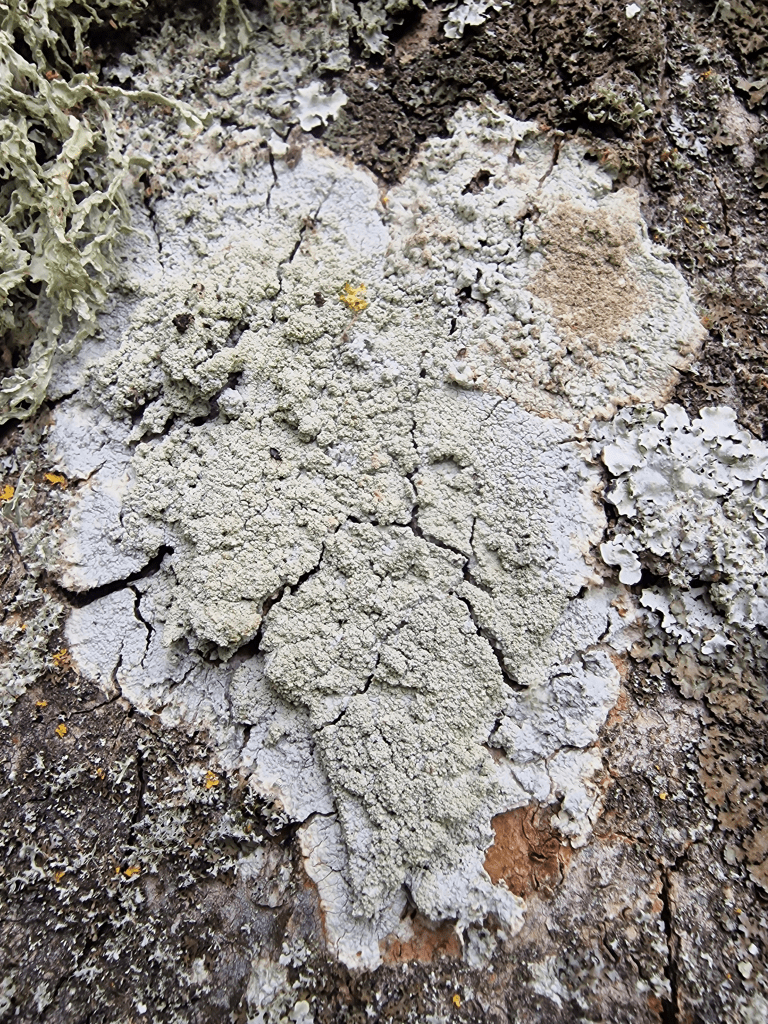
Infertile on Pedunculate Oak in Petworth Park, West Sussex
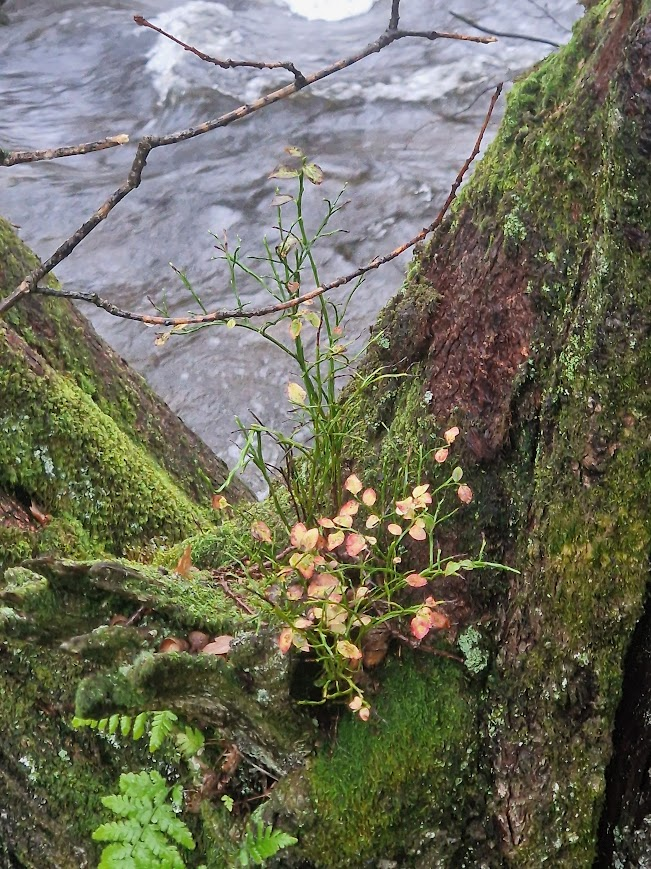
Billbury Vaccinium myrtillus, characteristic of upland heathland type H12 Calluna vulgaris – Vaccinium myrtillus heath British Plant Communities 1992 Cambridge University Press pp. 492 – 503
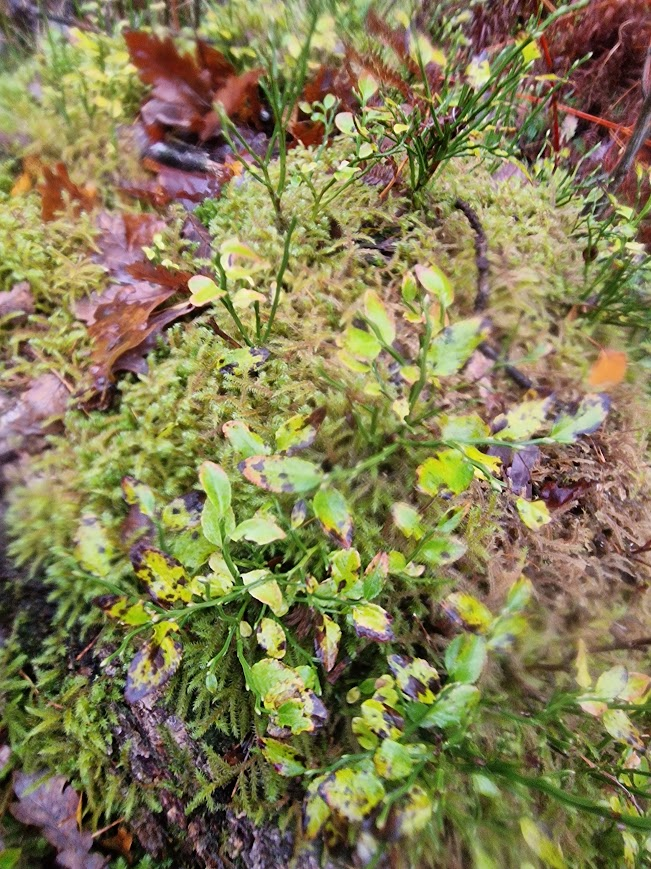
Billbury growing epiphytically on a coppiced Sessile Oak
Waterendlech Beck, behind the above Oak
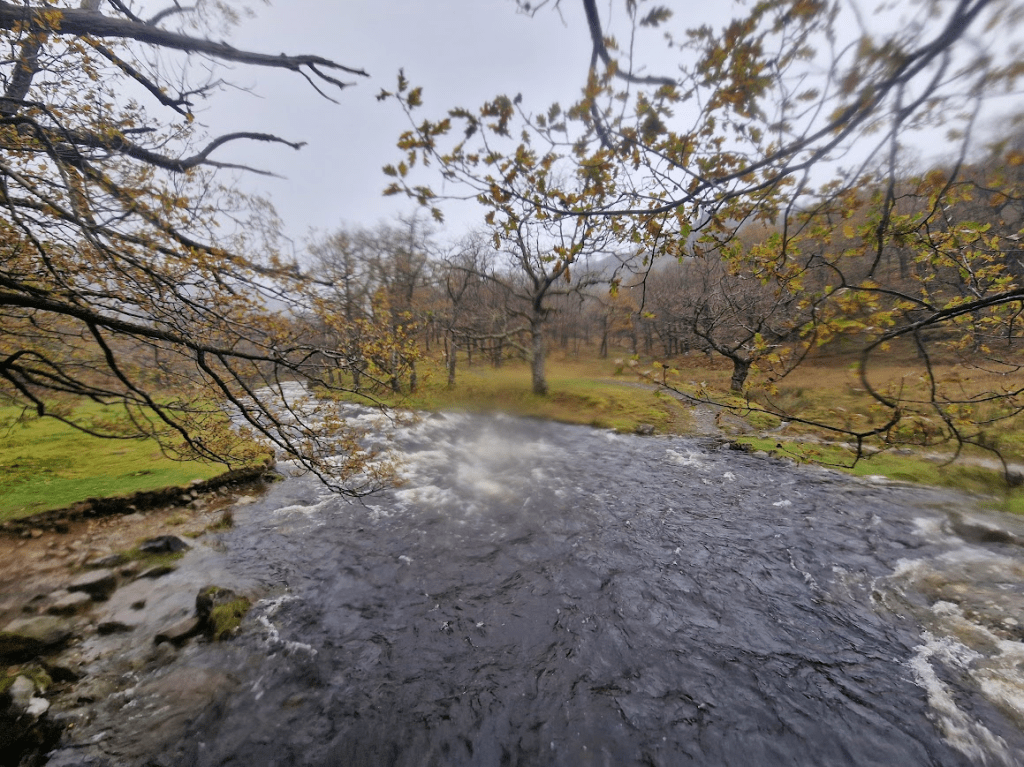
Beyond the beck, Ashness Wood becomes Mossmire Coppice. In Cumbria, “moss” can also mean mire or bog as well as a bryophyte
This part of the wood was upland heathland bog
Billbury with Sphagnum Moss possibly Sphagnum subnitens
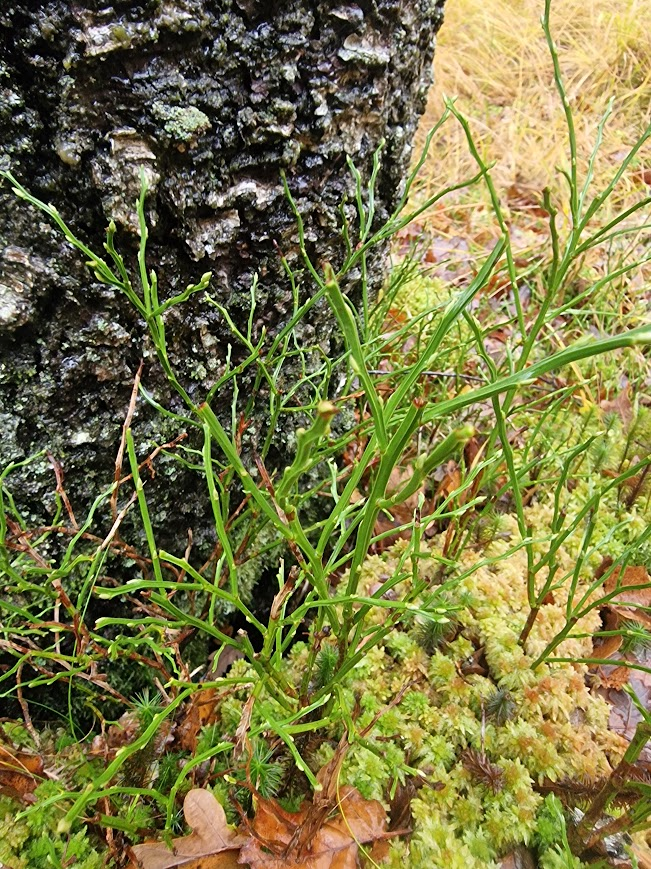
Possibly Sphagnum girgensohnii

Bog with trees
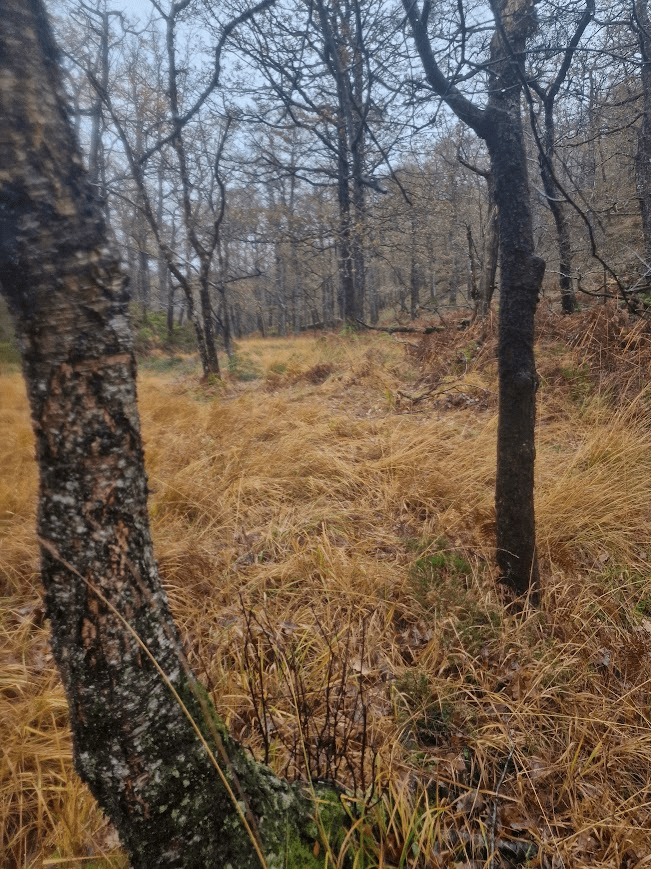
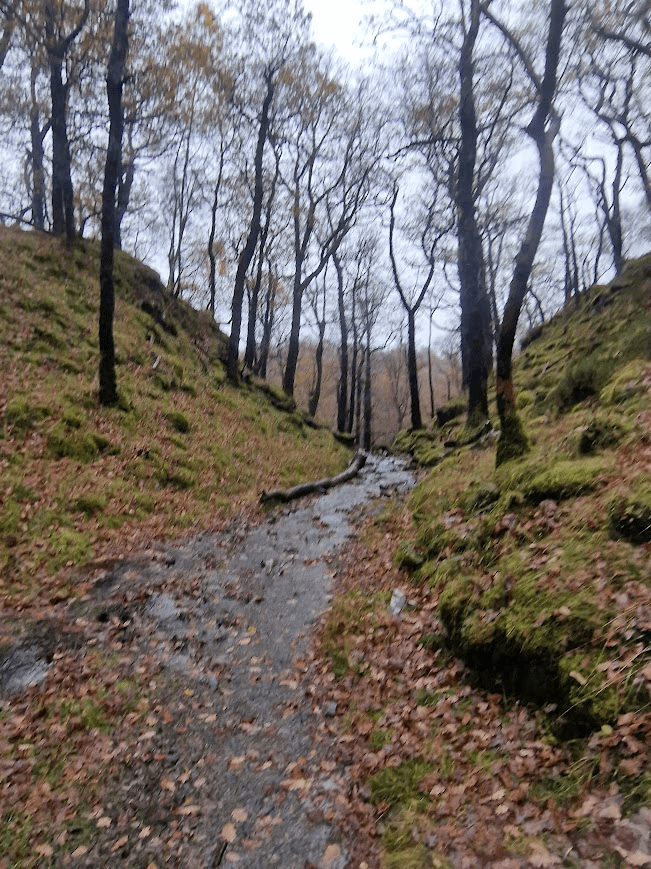
The path, like in so many places, had become a beck
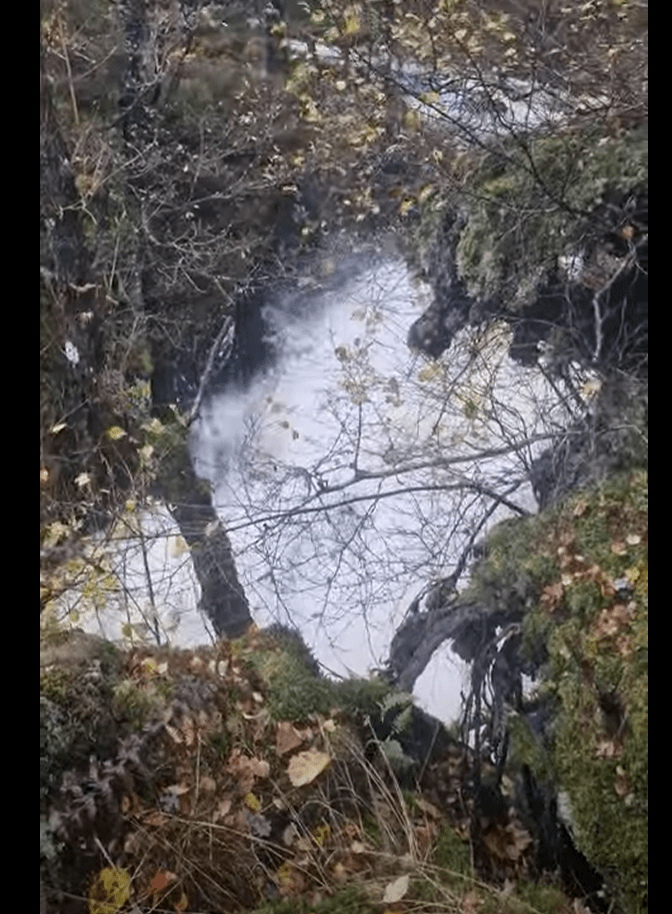
Waterendlath Beck at Ladder Brow
Walking back along the lakeside path to Keswick
A path completely flooded

A dry-stone wall at Calfclose Bay, just south of Keswick. Dry stone walls are always worth a look in Cumbria as they often have interesting lichens, bryophytes and ferns growing on them
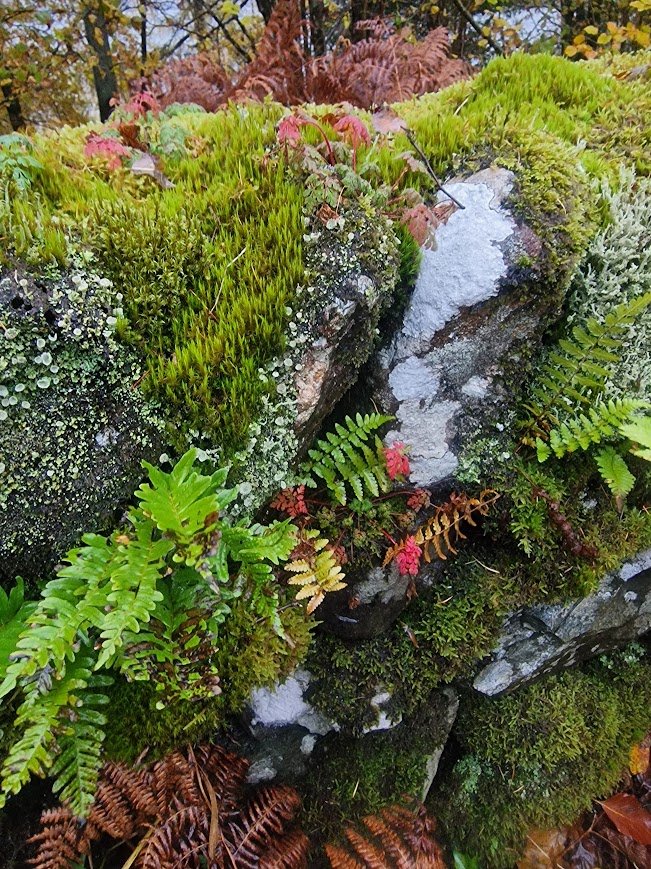

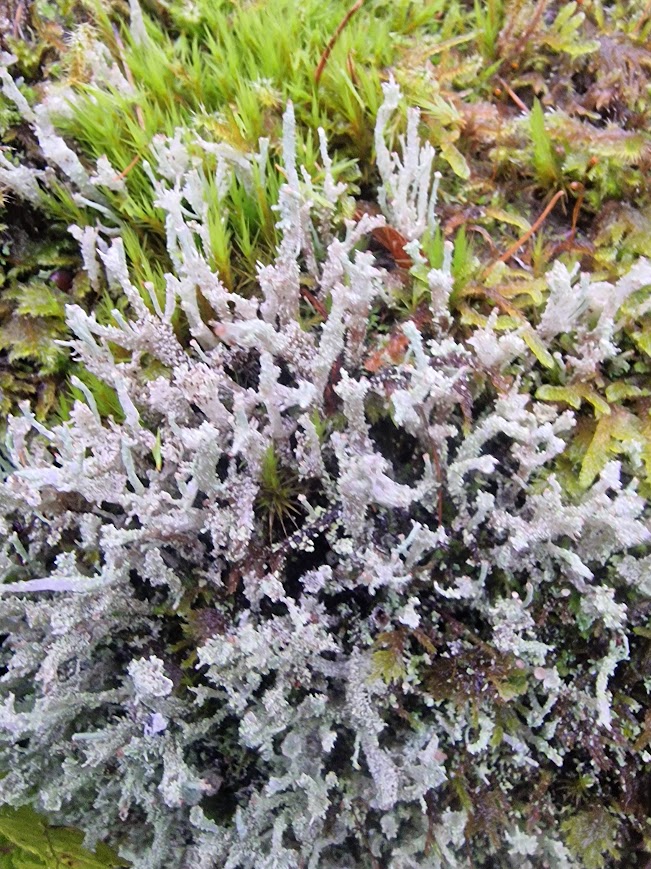
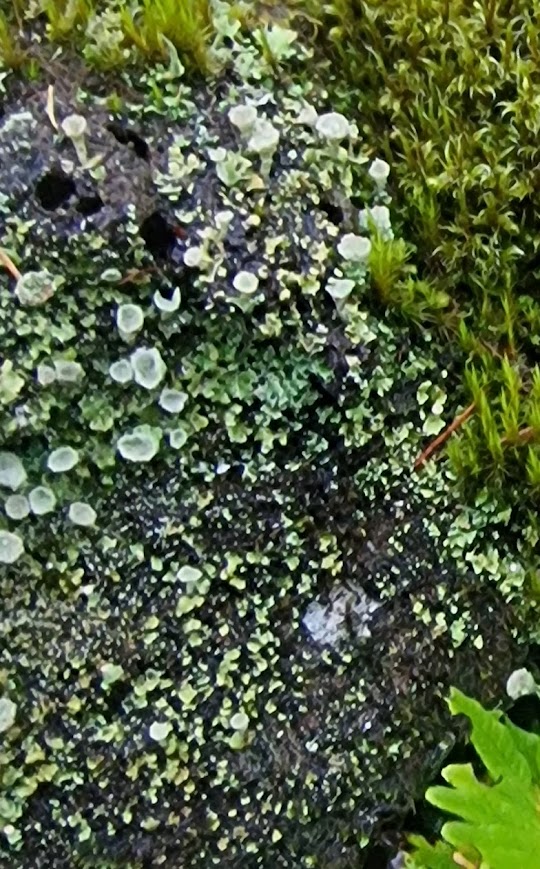
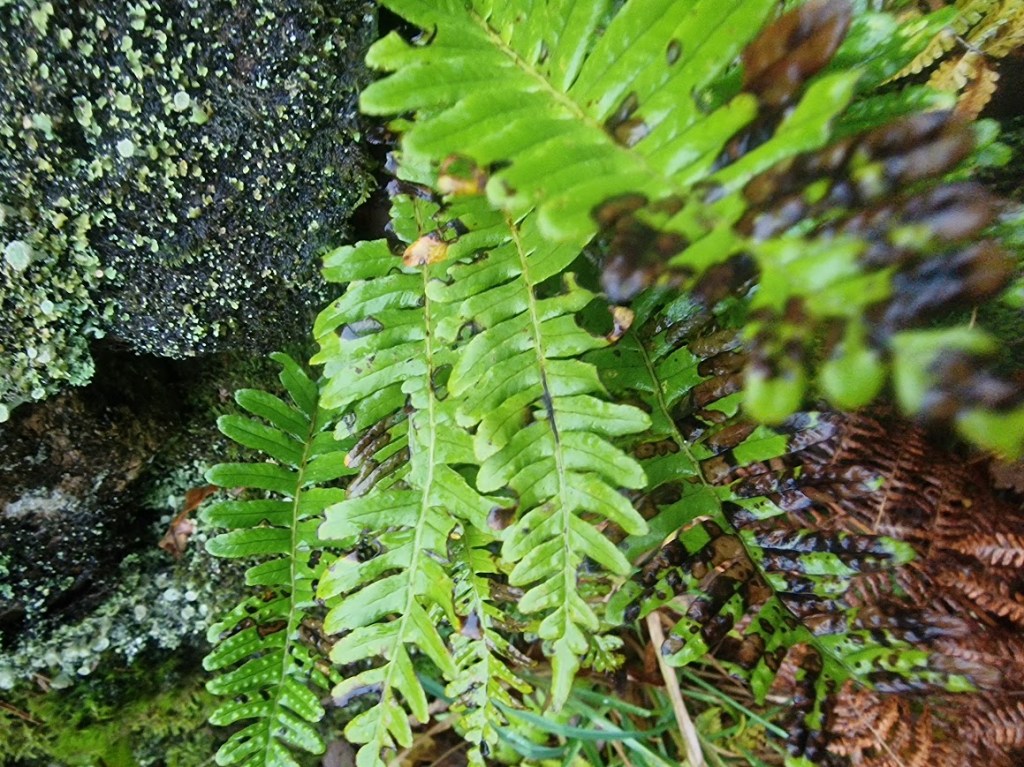

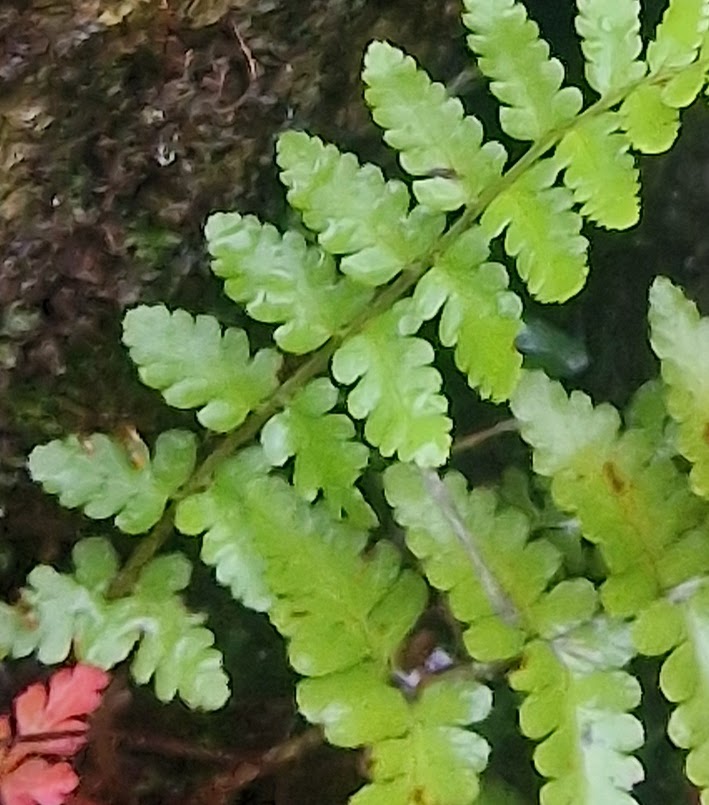
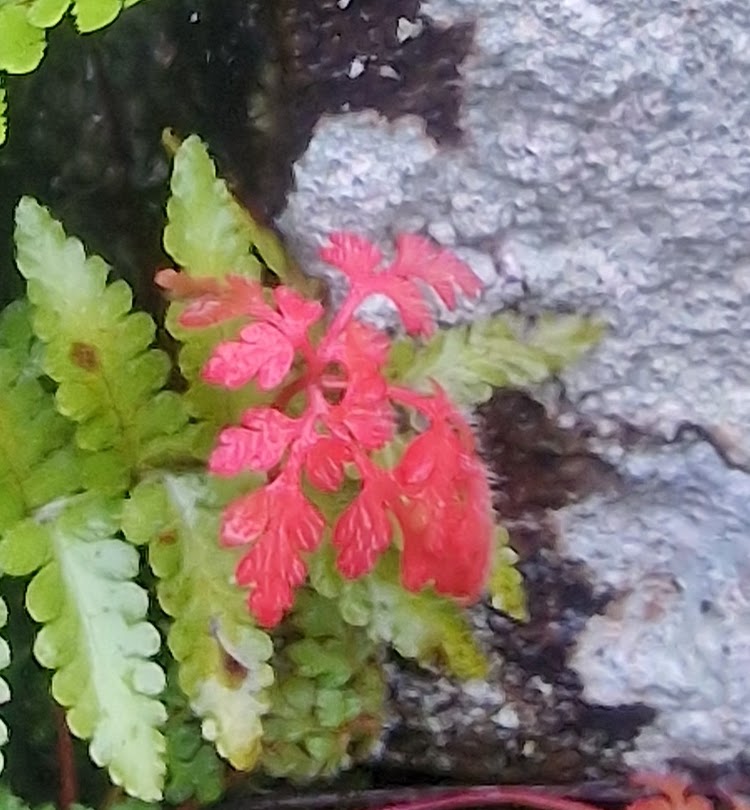
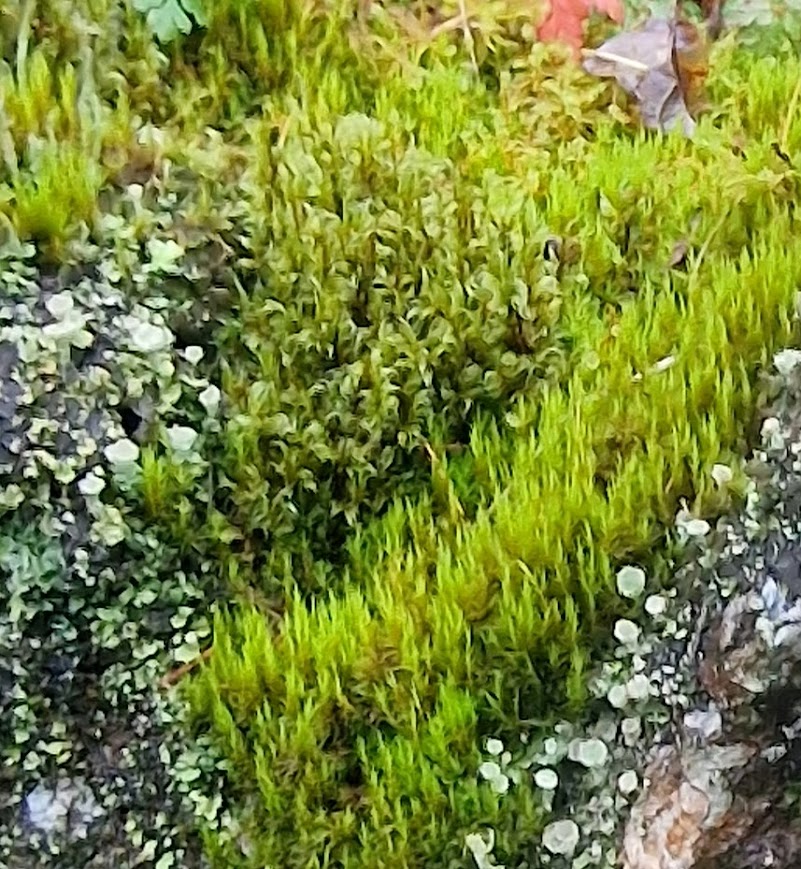
1 Dicranum scoparium Broom Forkmoss
2 Cladonia squamosa Dragon Horn
3 Cladonia chlorophaea Mealy Pixie Cup
4 Polypodium asp. Polypody Fern
5 Diploschistes scruposus Crater Lichen
6 Dryopteris filix-mas Male Fern
7 Geranium robertianum Herb Robert
8 Bryum pseudotriquetrum Long-leaved Thread Moss (middle) (with Dicranum scoparium)
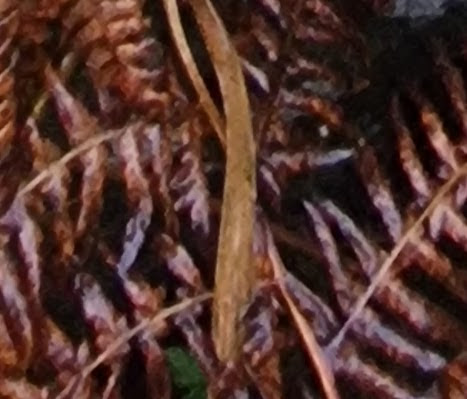
9 Pteridium aquilinum Common Bracken
I got back to Keswick just as the sun was setting and was very wet. Whilst it was a good day, arriving back in Keswick was not an unalloyed pleasure. Keswick is a simulacrum of former real Lakes town; it consists of 10+ outdoor shops selling overpriced outdoor items; pubs that charge a fortune for food, and tourist shops selling Beatrix Potter and William Wordsworth memorabilia; a triumph of consumerism over the intrinsic value of the beauty and culture of the Lakes. To capital everything about the Lakes is something to sell to tourists while paying retail and hospitality workers a pittance
I didn’t see any of the lichen species that Neil Sanderson, April Windle and Andy Acton (Atlantic Woodlands in Britain & Ireland .Temperate Rainforests and Southern Oceanic Woodlands) cites as typical of upland or lowland rainforest (see below). But I enjoyed what I did see; I like common beautiful things. Scarcity does not equate to beauty or enjoyment to me.
Upland Rainforest
Calicium lenticulare
Cetrelia olivetorum s. lat.
Graphina pauciloculata
Graphina ruiziana
Hypotrachyna endochlora
Hypotrachyna laevigata
Hypotrachyna sinuosa
Hypotrachyna taylorensis
Lecanora alboflavida
Menegazzia terebrata
Micarea alabastrites
Micarea stipitata
Parmelinopsis horrescens
Pertusaria ophthalmiza
Lowland Rainforest
Arthonia ilicinella
Arthopyrenia carneobrunneola
Arthopyrenia nitescens
Arthothelium macounii
Arthothelium lirellans
Bactrospora homalotropa
Crutarndina petractoides
Fissurina alboscripta (Graphis alboscripta)
Fuscopannaria sampaiana
Gabura fascicularis (Collema fasciculare)
Gomphillus calycioides
Leptogidium dendriscum (Polychidium
dendriscum)
Leptogium brebissonii
Leptogium burgessii
Leptogium cochleatum
Leptogium hibernicum
Parmeliella testacea
Pseudocyphellaria citrina
(Pseudocyphellaria crocata)
Pseudocyphellaria norvegica
Pyrenula hibernica
Stenocybe nitida
Thelotrema macrosporum
Some thoughts on the public information about Borrowdale Rainforest National Nature Reserve (NNR). I had to do lots of research to find where its constituent parts are. The National Trust website on the NNR doesn’t have a map and there is no Natural England visitors’ guide as there is for other NNRs. The only way I found out where the parts of the NNR were was by looking at the declaration of NNR map on the government’s website. I then had to cross reference this map with the OS map to find the names of the constituent woods of the NNR.
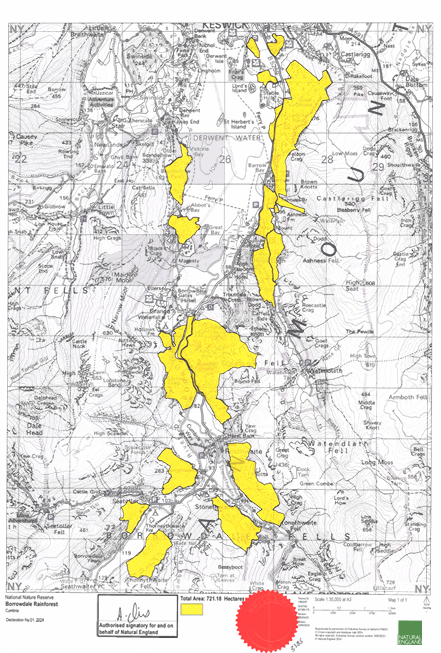
Borrowdale is a huge geographical area round Derwent and below, that includes ancient woodland, secondary woodland & conifer plantations. I know the difference between ancient woodland, secondary woodland & conifer plantations, but not everyone does. In Keswick Tourist Information, I asked about the Rainforest NNR, they knew nothing about it! The National Trust and Nature England need to get maps and public transport details online & in TICs otherwise few people will visit. You won’t widen participation without adequate information.

 Sim's Nature Notes