Lake Wood is magical landscape. See my post Lake Wood, Uckfield. A “Picturesque” landscape. Trees, Rocks, Lichen & Bryophytes. 22.11.22 for its fascinating history.
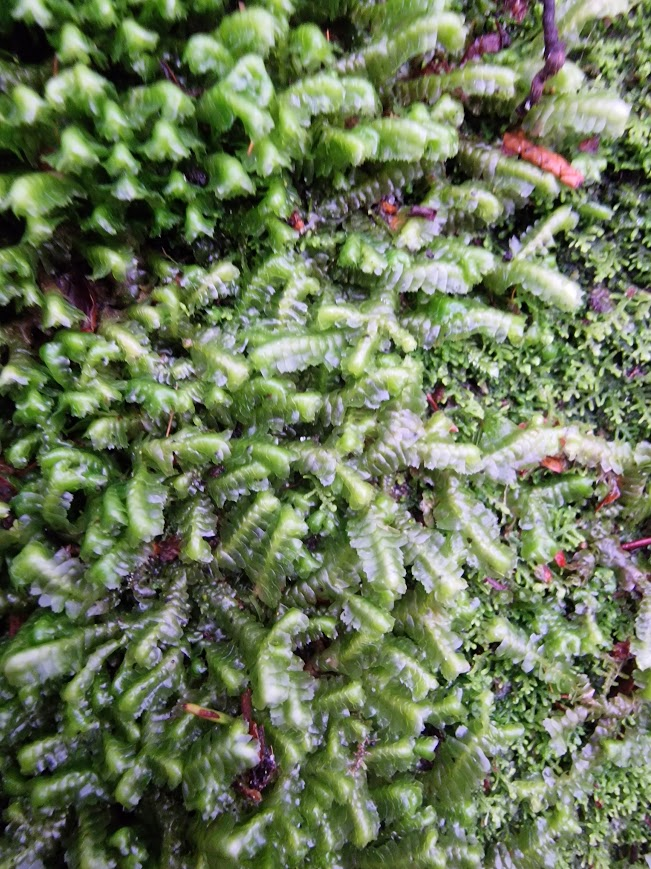
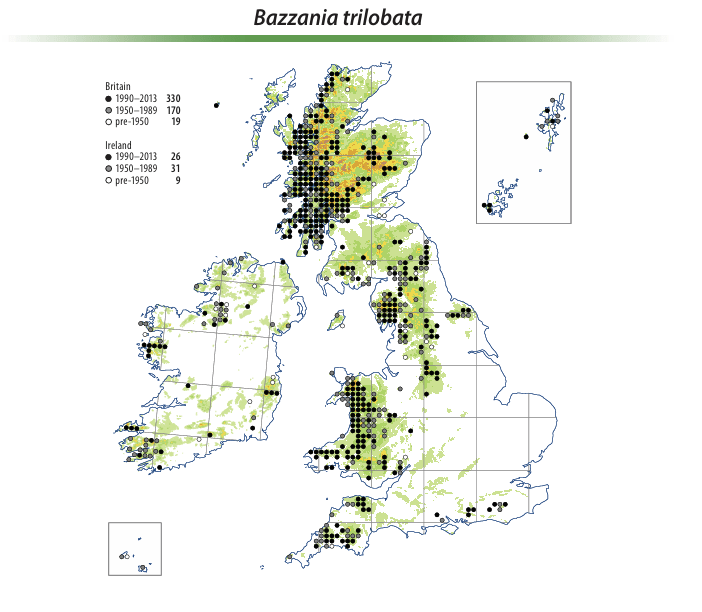
Bazzania trilobata
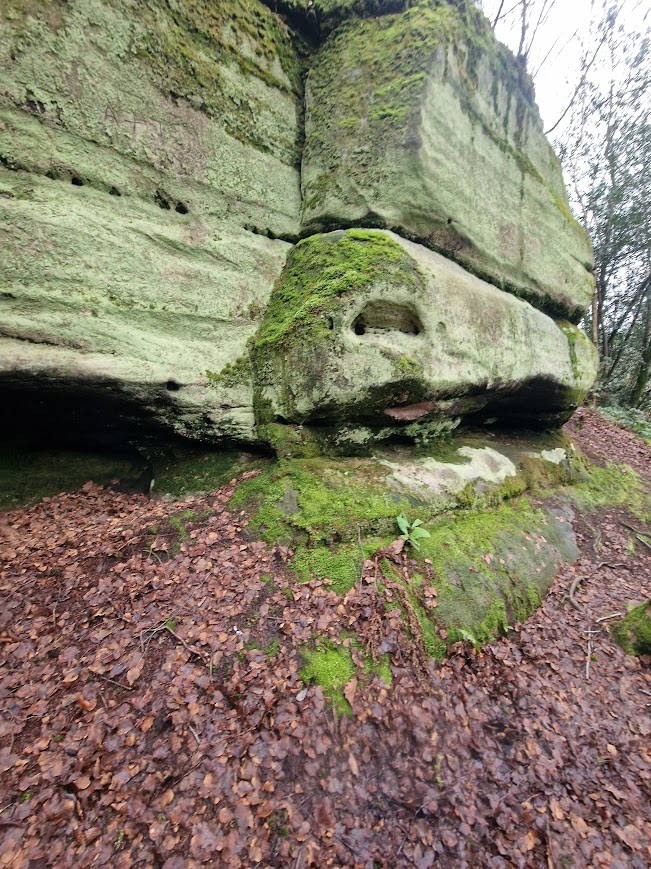
This is the first time I have seen B. trilobata in Lake Wood
A calcifuge, particularly characteristic of western oak woodland, where in humid conditions it can be locally dominant in the bryophyte layer, forming large, deep cushions on banks, boulders, cliffs and rocky outcrops. Plagiochila spinulosa and Scapania gracilis are common associates. It also grows on deep humus and brown earth soils, especially in grazed woodland, as well as on logs; it is occasionally arboreal. In SE England it is mainly associated with sandstone rocks in shaded valleys. British Bryology Society Bazzabia trilobata
I have only seen B. trilobata in two other places in Sussex: Eridge Rocks and Chiddingly. All of these three locations are High Weald ghyll woods; a location which matches the humidity level of Atlantic Woodland because of its ghyll, despite lower precipitation.
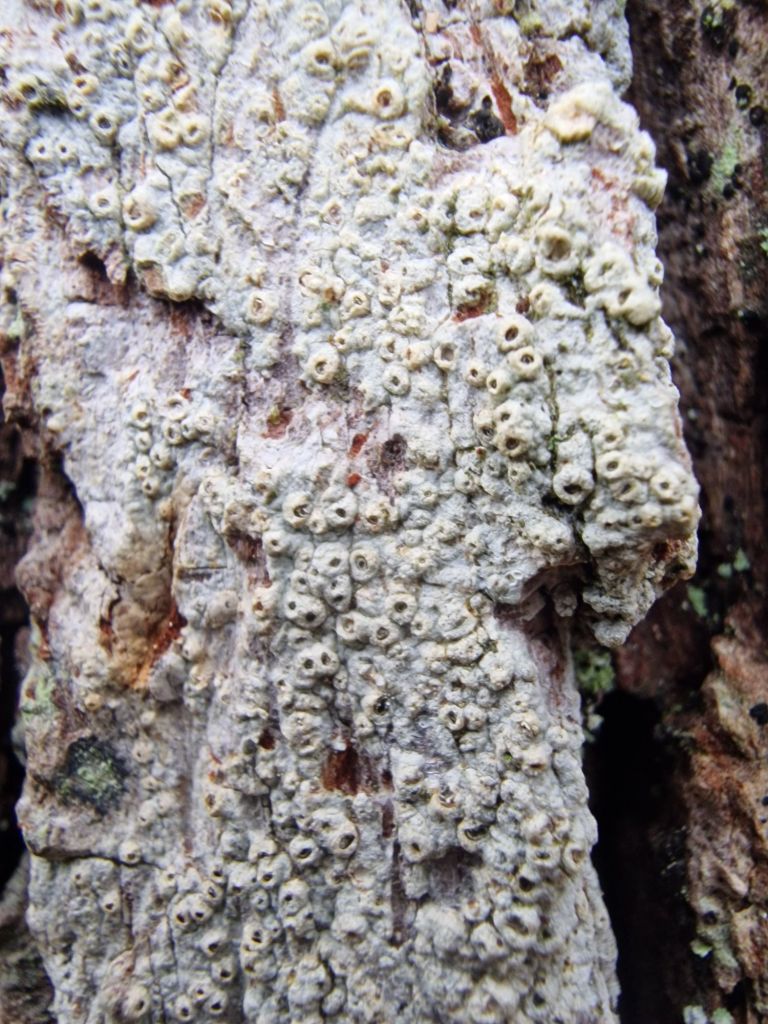
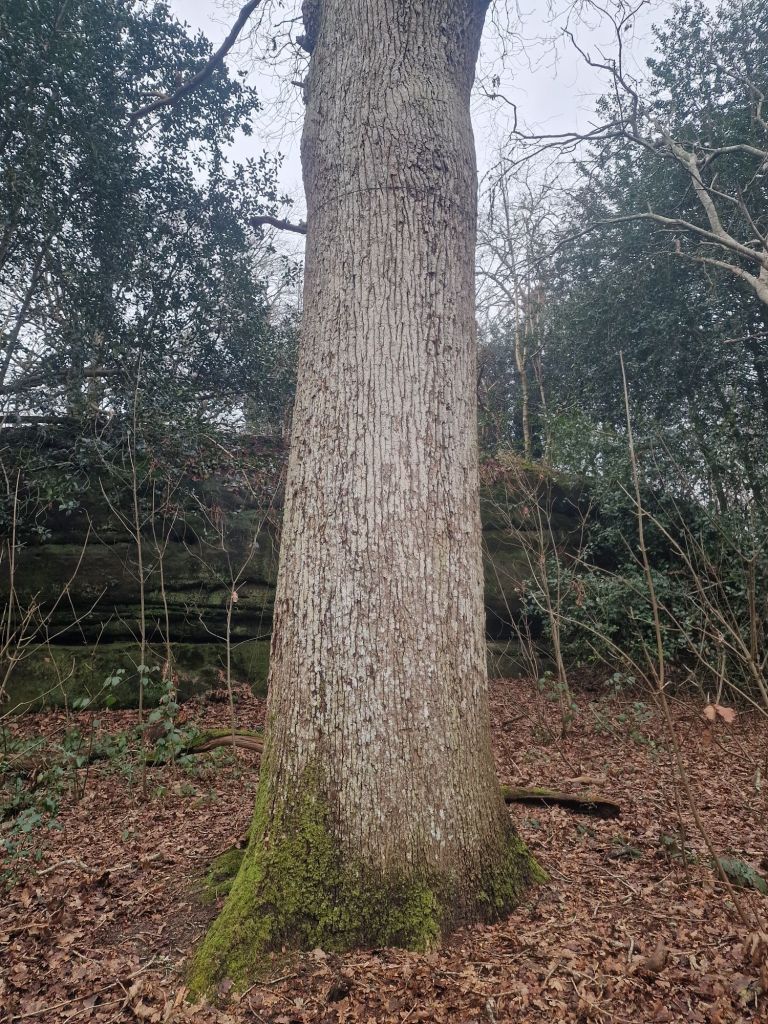
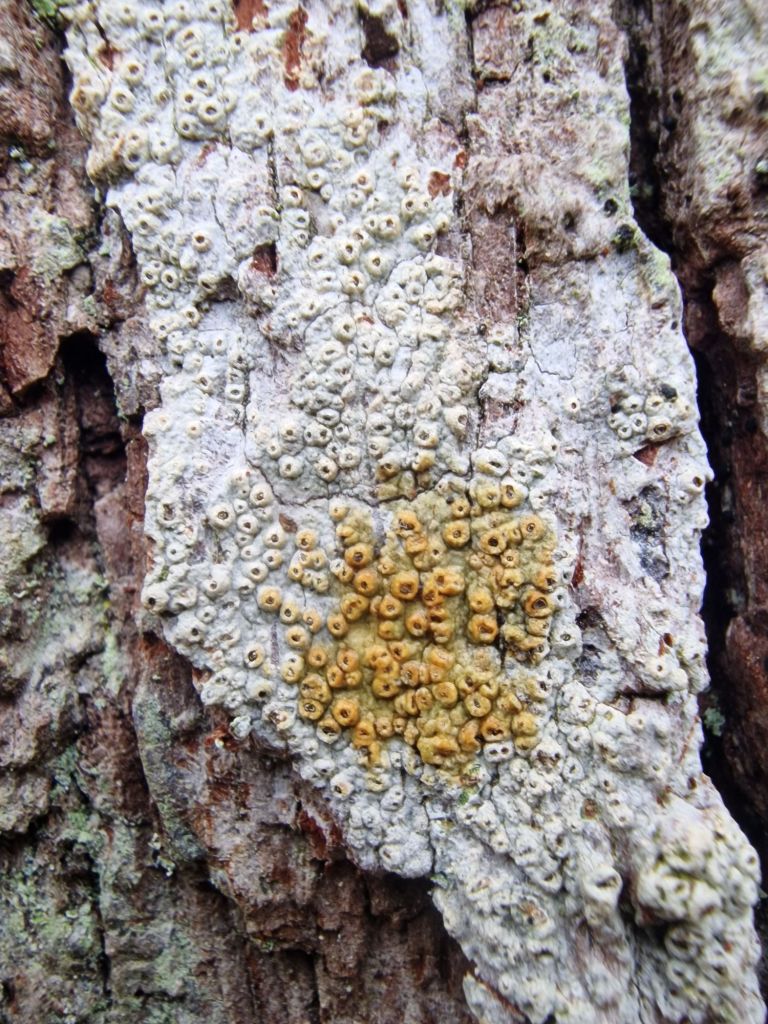
Thelotrema lueckingii
Previously I thought this huge patch of Thelotrema on Quercus robur was Thelotrema lepadinum but I hadn’t tested it with chemical reagents. Today I tested its thallus with potassium hydroxide; it was dark yellow. T. lepadinum tests negative to potassium hydroxide; but T. leuckingii tests red to potassium hydroxide. This tested dark yellow. So it may be Thelotrema lueckingii?
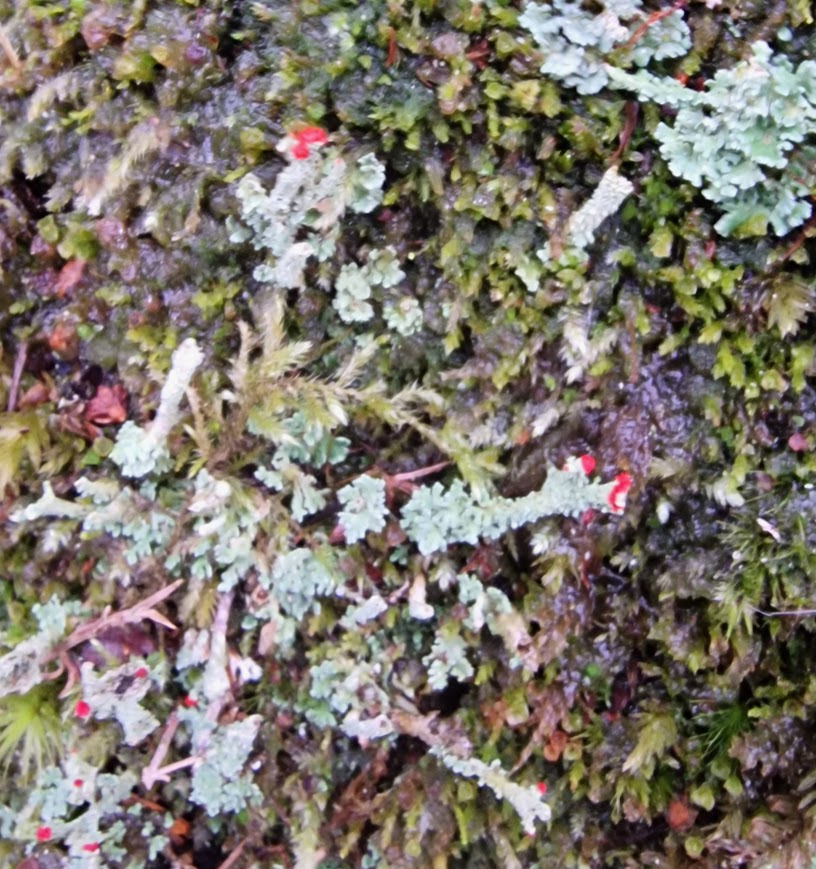
Cladonia polydactyla
On mossy bank (over Ardingly sandorck)
Pertusaria pertusa
On Hornbeam
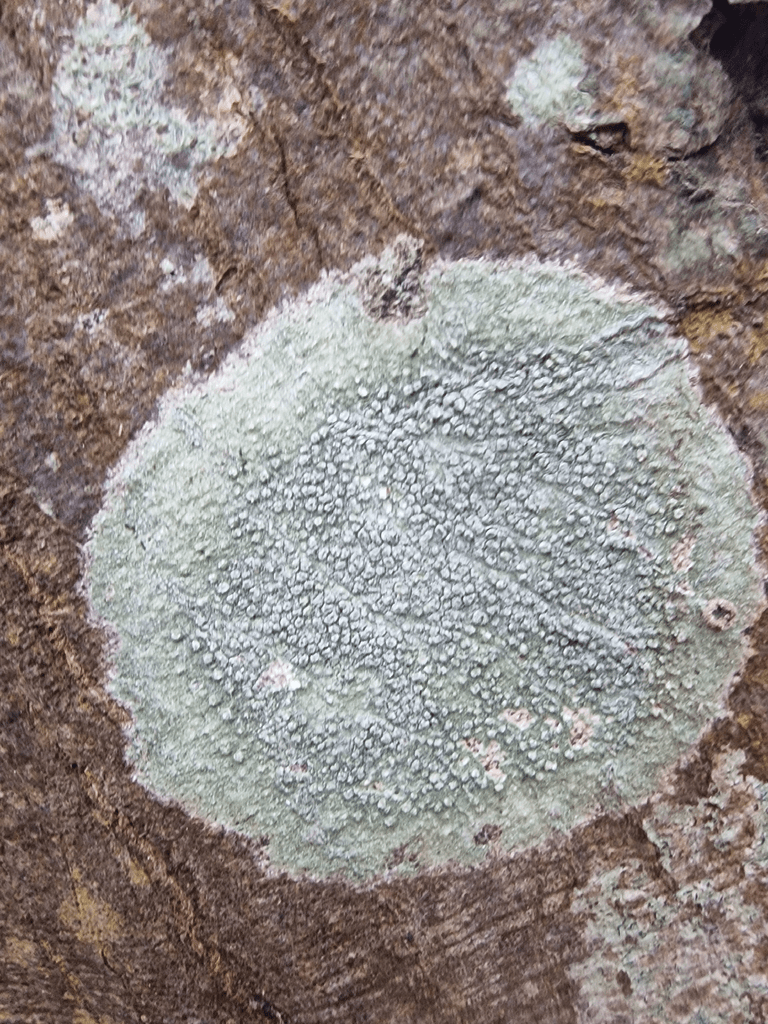
Usnea cornuta
On Pedunculate Oak
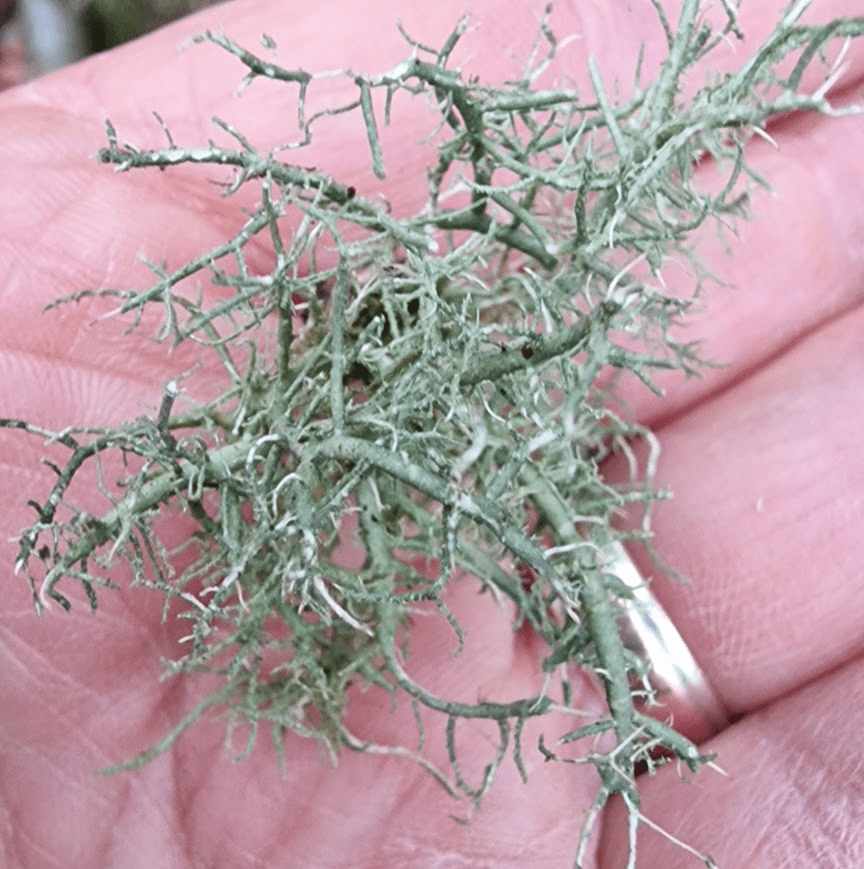
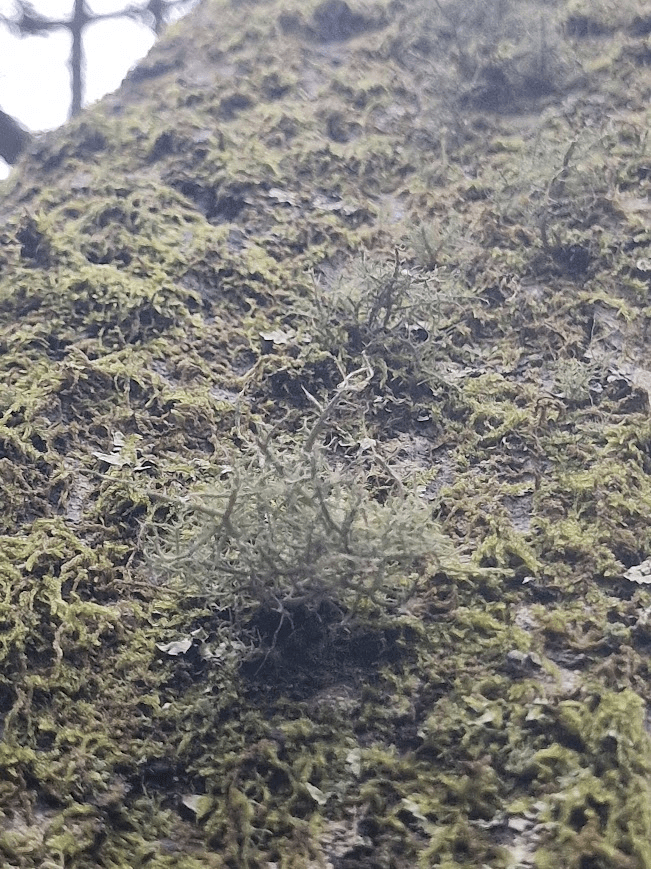
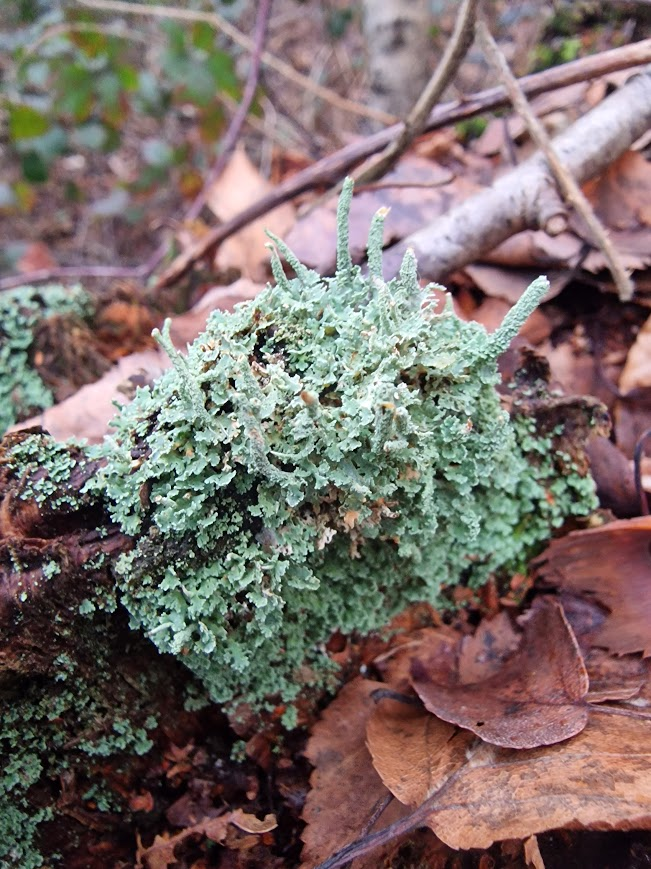
Cladonia coniocraea
On dead tree stump; the most likely place you’ll see C. coniocraea in Sussex.
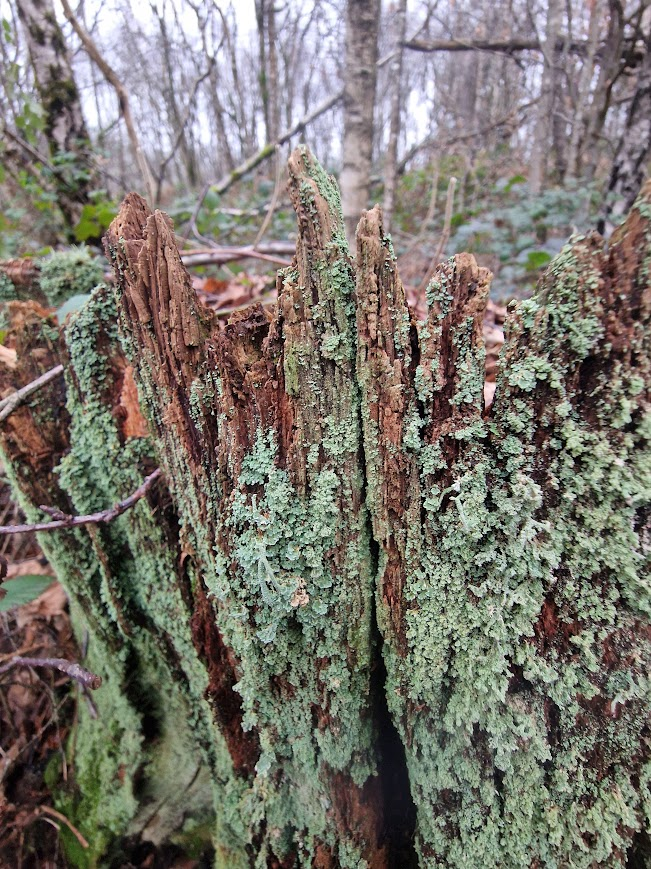
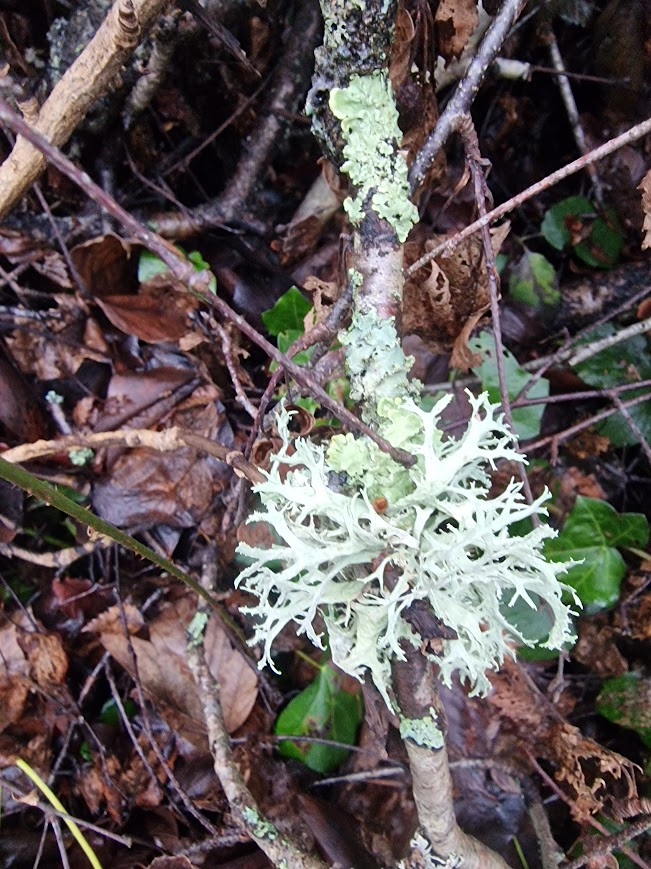
Evernia prunastri
On felled Oak branch

 Sim's Nature Notes