This is the follow up to my post of 28.10.25 Large-leaved Lime and Wych Elm at Casey’s Copse and Rook Clift, nr. South Harting, West Sussex. Part I Today I visited the group of Large-Leaved Limes at Rook Clift at SU821182 that I didn’t have time to visit on 28.10.25; listed in the Sussex Rare Plant Register as ca. 80-100 stool and maidens, at SU 822183, in agreement with Rose’s 1991 enumeration. They are to the east of the main path. But it is necessary to walk nearly to the the top of the main path, then walk east then north above the main path. There is a large ditch with a very steep slope between the main path and where the cluster of Large-leaved Limes are.
The pin shows the location of the cluster.
I could not find anywhere near 80-100 Large-Leave Limes; I found far less. There may have been much change since they were first recorded, or may be I didn’t see the extent of the stand
It is worth quoting all of what Francis Rose says of Large-leaved Lime in The Habitats and Vegetation of Sussex (1991) Booth Museum of Natural History, Borough of Brighton
Tilia platyphyllos is now known to occur in at least 16 separate populations along the lower part of the escarpment of the western South Downs, from the Hampshire border (where one ancient tree exists on the actual bank of the ancient county boundary at the Miscombe) east to Springhead Hill southwest of Storrington (TQ 070127), in ten tetrads. It occurs always in ancient, former coppice woodlands, within ancient boundary banks along the lower part of the scarp, never in the (often quite mature) secondary woodland on what was former opensheepwalk. Most of the trees are ancient coppice stools, though on a few sites, what look like ancient pollards occur. Dr Donald Pigott, the authority on Tilia, has visited several of the populations with me, and says that the trees have the characters of the native form of T. platyphyllos, and some of the huge stools may be upwards of 1000 years old. Tilia cordata appears to be absent from the Sussex Chalk scarp in natural situations (though it does occur further west on the Hampshire Chalk).
The best locality so far discovered for T. platyphyllos is at Rook Clift, south of Treyford (SU 822183) where between 50 and 80 trees occur in an almost pure stand, alongside Wych Elm (Ulmus glabra), Field Maple (Acer campestre), Hazel (Corylus avellana) and Whitebeam (Sorbus aria). There is little Ash (Fraxinus excelsior) and Beech and Yew are rare and marginal. This type of Tilia-Ulmus-Acer-Corylus woodland was possibly the dominant tree cover of the South Downs escarpment and of other Chalk scarps in southern England in early, perhaps pre-Neolithic times, though then of course, as high forest not coppice; pollen evidence strongly suggests that the present abundance of Beech is comparatively recent and much of it on the Chalk scarps today may derive from earlier plantings.
Whilst there was little Ash, Beech and Yew within the stand of Long-leaved Lime, Wych Elm, Field Maple; there is much Ash, Beech and Yew within the wider area of Rook Clift. I saw no Whitebeam within the stand. From my experience there is little Whitebeam in the lower parts of ancient scarp-face woodland; it is now mostly towards the top of scarp-face woodland and as isolated trees or small groups on the short-grass pasture on the summit areas of the west South downs.
I have visited Casey’s Copse and Rook Clift several times this year; in the Spring, the Summer and now the Autumn. Theses sites were new discoveries for me this year. They will join my list of favourite sites in Sussex, that I love so much, I visit them every season every hear e.g. The Mens, Ebernoe Common, Eridge Rocks, Eridge Park, Newtimber Holt. I first visited Casey’s Copse with a friend who knew the site.
I reached these woods by bus and train. I get the train to Chichester and then the 54 bus to South Harting. The South Harting bus only goes 5 times a day; so careful planning is needed! It is about an hour walk from South Harting to the bottom of Rooks Clift; I walk along the footpaths and trackways along the flat arable fields of the scarp foot (from road just before Knightsfield). It is possible to reach Rooks Clift along he South Downs Way, but that takes about three hours as the walk is extremely undulating. The 54 bus will drop you off where the B2141 crosses the South Downs Way; whilst it is not an official stop most drivers will drop you off there.
These sites are west South Downs escarpment ancient woodland. Some of these western scarp wood appear to be very old, possibly primary, from such evidence is available. South-East of East Harting ancient woodland (with Ash, Wych Elm and Large Leaved Lime …) occur. Francis Rose (1995) The Habitats and Vegetation of Sussex. The Booth Museum of Natural History, Brighton Borough Council p.9
Rose’s comment that these scarp woods are possibly primary, suggested that this woodland may have been part of the “wildwood” that covered the Downs until the dip slope woods were cleared for sheep farming, from the neolithic (ca. 5000-4000 BCE) onwards. see: Peter Brandon (1998) The South Downs
Until the late 1980s Large-leaved Lime was regarded as introduced in Sussex, but is now thought by Francis Rose and others to be native on the downland scarp in West Sussex. … Since 1987, when coppiced T. platyphyllos stools were discovered at Springhead as detailed in Briggs (1990), around 30 sites have been found on the scarp in Hampshire and W. Sussex. Most trees are within ancient copses surrounded by wood banks towards the foot of the scarp. Some border old tracks and a number perch upon ancient parish boundaries. The Sussex Rare Plant Register of Scarce & Threatened Vascular Plants, Charophytes, Bryophytes and Lichens (2001) Mary Briggs, Paul Harmes and Alan Knapp et. al pp. 100-101 Available on line Sussex Botanical Recording Society
List of native Large-Leaved Limes from the Sussex Rare Plant Register:
Casey’s Copse is within the Harting Down SSSI; Rook Clift is its own SSSI, just to the east of Harting Down SSSI near Treyford
The SSSI citation for Harting Down does not mention the presence of Large-Leaved Lime; but the citation was last revised in 1980; 45 years ago. Many SSSI specifications are very old now, and don’t represent current knowledge of sites. The Rooks Clift citation is much more accurate, and is more recent (1997); although it misses out the huge amount of Solomon’s Seal on the slopes of the stream valley.
From South Harting SSSI specification: Longer-established woodland occurs throughout the site, with a varied composition according to soil type and aspect. Beech Fagus sylvatica is common and becomes dominant on the scarp-face and valley sides. Oak Quercus robur and ash occur with yew on the deeper valley loams. The ground flora is quite sparse beneath the densest canopies, but elsewhere includes bramble Rubus fruticosus, ivy Hedera helix, dog’s mercury Mercurialis perennis and false-brome Brachypodium sylvaticum.
From the Rook Clift SSSI specificationRook Clift is a small wooded combe on the scarp slope of the South Downs. The soils are predominantly calcareous in nature, overlying the chalk of the Downs. Deeper soils occur at the foot of the slope, and also the course of a stream, arising within the wood. This site is an ancient woodland which remains in a semi-natural condition. Large leaved lime Tilia platyphyllos dominates the canopy, together with ash Fraxinus excelsior and some beech Fagus sylvatica. Large leaved lime is a nationally scarce tree, with its natural range concentrated on the limestones of the Wye Valley and Peak District. Thus the high concentration of mature coppice stools, occurring on chalk, make this site nationally important and unique within West Sussex and the South Downs Natural Area. The canopy of large leaved lime, together with some beech casts a heavy shade, and as a result the shrub layer is poorly developed with scattered whitebeam Sorbus aria and yewTaxus baccata.
The field layer is dominated by vernal species such as ramsons Allium ursinum and bluebell Endymion non-scripta, or shade tolerant species including dog’s mercury Mercurialis perennis, spurge laurel Daphne laureola and sanicle Sanicula europaea. The steep sided valley around the steam is more open with a canopy dominated by ash and wych elm Ulmus glabra. Here the field and ground layers are more developed with stands of hart’s tongue fern Phyllitis scolopendrium and soft shield fern Polystichum setiferum abundant, and opposite-leaved golden-saxifrage Chrysosplenium oppositifolium common along the stream side.
Both Casey’s Copse and Rooks Clift are designated by Nature England as ancient and semi-natural woodland. Looking at the Nature England ancient woodlands maps, it is clear that ancient woodland on the South Downs is mostly confined to the escarpments. There is much woodland in the Harting Down SSSI, but the dip slope woodland is not ancient.
Looking up to the scape-slope woodland before reaching Casey’s Copse, green-orange Beech and dark green Yew stand out from the dying Ash.
Casey’s Copse
The boundary bank at the scarp foot of mostly coppiced Ash. Scarp foot coppiced Ash seems to be less effected by Ash dieback than the maidens on the scarp slopes. Features like this tell us that most ancient woodland included much human intervention
Some of the coppiced Large-Leaved Limes:
Looking through dead/dying Ash maidens toward Beech:
Coppiced lime with a maiden Ash next to it
Looking though Soft Shield Fern at Beech
A Fox Skull next to a Long-leaved Lime leaf. In English folklore Long-Leaved Limes are associated with love, fertility, and justice. I hope the fox had lots of cubs!
A seemingly very ancient coppiced Long-Leaved Lime
Some of the lichens on this lime: Pertusaria leioplaca, Graphis scripta s.l. (Writing Lichen); Pertusaria pertusa (Pepper Pot Witing). All of these are common on smooth-barked trees like Beech, Sweet Chestnut and Lime
Walking along a hollow-way trackway at the foot of the downs, on gault clay. Trees: Hawthorn, Field Maple, Hazel
Hedgerow, from when the hollow-way ends.
One of a flock of about eight Yellow Hammers in the hedgerow
Path to the base of the bostal up Rooks Clift
Coppiced Ash along the path
Rooks Clift
Trackway up the north side pf the clift (variant of cleft, geographical: meaning a fissure or break)
Beech on the edge of the steep slope into the valley (clift) formed by a stream fed by a chalk spring
Yew
Soft Shield Fern
Beech
False Brome
Dogs Mercury
Fungus (probably Armillaira sp.) in the process of deliquescing
Going down the south side of the clift
Solomon’s Seal – extremely abundant
At this point if I had turned south and walked on I would have come to the grove of ca. 80 Long-Leaved Limes; but if I had done that I would have had to have walked back to South Harting as it got dark; that did not feel safe, so I am returning to Rook Clift on Saturday – watch out for Part II of this post!!!
Wych Elm
young Wych Elm tree (leaves to left; leaves on right, Hazel))
View from the south side f Rooks Clift to the north side: Beech and dying Ash
Hazel
Sunken trackway bedside the path on south side of clift
full of Harts-tongue Fern; extremely abundant, as in many South Downs hanger woods
Bank of sunken trackway with coppiced Beech
Back to the scarp foot path
White Poplar
Getting dark – back along the hedged trackway
Getting darker -past a field of Sunflowers
Terrible photo of a Raven at dusk
For most of the afternoon I had heard Ravens kwaaking overhead; it gave Rooks Clift a more Poe-like Ravens Clift feel!
This shaw has no name. I visit it frequently because it has a special charm; it encapsulates the essence of the small parcels of ancient woodland in the Low Weald; a landscape that has preserved its medieval patten of fields, hedgerows, shaws and woodlands. To get to it I walk through Bushygrove and Bakers shaws, named shaws of a similar character to this unnamed shaw. I take the 17 bus from Brighton to Cowfold to reach it.
A shaw is a strip of woodland usually between 5 and 15 metres wide. Shaws mostly form boundaries between fields. They are usually composed of semi-natural woodland and often have diverse woodland ground vegetation similar to other semi-natural woodlands in the area. In the Low Weald shaws may be the relicts of former larger woods, or they may have developed from narrower hedgerows. A look at the Natural England map of ancient woodland shows how many shaws in West Sussex are semi-natural ancient woodland
All sections of text in italics are quotations; sources given at the end of the quotes.
Most of the Wealden hedgerows – including shaws (narrow belts of woodland remaining when fields have been cut from woodlands) – are likely to date from the time of medieval assarts (fields derived from the general, unplanned clearance of woodlands and unenclosed commons by individuals). In Mid Sussex, as elsewhere in the Weald, there are relatively few hedgerows stemming from the formal enclosure of fields. The Weald appears to have a significant proportion of species rich/ancient hedgerows, revealed by the frequency of indicator species such as field maple, spindle and hazel. However, the data is not yet available to assess with any degree of accuracy the number, length and type of hedgerows in Sussex and its Districts. Mid Sussex District Council (2005) A Landscape Character Assessment For Mid Sussex.
Shaws are important relicts of long-lost woodland: In 1210 Beeding Manor had outlying farms in Cowfold and in 1256 the Bishop of Chichester’s chase extended down the whole East side of Cowfold Parish across to the Southwest corner and from there to near the centre of the northern boundary of the Parish. By 1257 the Cowfold tenants, customary and free, formed a distinct group. A large proportion of the Parish was woodland or orchards and remained so until the mid 18th century. Cowfold Parish Council. (2024) Cowfold Neighbourhood Plan 2019-2031. p.9
I am writing this post to “big-up” the biological importance of small, especially unnamed, shaws: to draw attention to the beauty of small patches of woodland. They are greatly under threat from development. There are many new housing development in-between the South Downs north of Brighton and the High Weald, in the Low Weald, transacted by the A281 (Pyecombe to Horsham) and the A273 (Pyecombe to Haywards Heath. As I travel on the 17 bus on the A281 or the buses 270,271, or 272 on the A273, I see the continuous building of new housing, and plans for housing are continually presented to planning authorities e.g. The Argus (21/02/25) Plans for dozens of homes near Cowfold are revealed
Sussex sits between two immovable features—the coast of the English channel and Greater London. In many places, it is the only ribbon of truly green land preventing unbroken concrete from connecting the two. … we have a legal commitment to net zero, but we are building homes in the middle of nowhere whose occupants are wholly reliant on a car to go anywhere. Andrew Griffith MP Arundel and South Downs Hansard Housing Developments: West Sussex Volume 679: debated on Monday 7 September 2020
The Low Weald lacks the higher level of protection of the South Downs, which is a National Park, and the High Weald, a National Landscape (area of outstanding natural beauty), not that that necessarily offers between protection in practice to the South Downs and High Weald
I became aware of this shaw from a map of Wild Service Trees
in Dave Bang’s excellent book.(2018) The Land of the Brighton Line: A Field Guide to the Middle Sussex and Southeast Surrey Weald 018 ISBN: 978095486382
This unnamed shaw has large maiden trees – Wild Service, Pedunculate Oak, and Ash – with an understory of Field Maple, Hazel, Hawthorn, Wild Cherry and Midland Thorn. Wild Service, Midland Thorn and Wild Cherry are ancient woodland indicators.
It’s ground flora includes the ancient woodland indicators Bluebells and Wood Anemone, in the Spring, and Butchers Broom, all year round. In a nearby stand Spurge-Laurel and Wood Spurge can be found.
This blog does not attempt to be a full survey of the vascular plants in this shaw; it is just the things I found particularly noticeable.
Ancient Woodland Indicators visible in Autumn
Sorbus torminalis Wild Service Tree
Trunk. This trunk of a maiden Wild Service Tree is covered in lichen so it hard to see the trunks morphology
Most Wild Service Trees have few lichens from my experience, but on the side which gets most light this tree had abundant lichens.
This trunk in the shaw shows the typical bark of Wild Service Tress; many Wild Service Trees in the Low Weald have been coppiced into two trunks. (e.g. the large Wild Service Tree in Furzefield Wood nr. West Grinstead and the numerous Wild Service Trees of West Wood nr. Burgess Hil)
Leaves and fruit
Crataegus laevigata, Midland Thorn
Trunk and leaves
Fruit
Midland Thorn has two (or more) seeds in their haws, whereas Hawthorns have only one
This Midland Thorn Flower on 29/04/25; with twin stigmas
Prunus avium Wild Cherry
Wild Cherries can be identified just by their trunk morphology which is so characteristic. However, in spring their white flowers are very characteristic; and in summer so are their berries. However, ripe berries are almost immediately eaten by birds; if you are lucky enough to see them, they make a very nice fruity snack on a walk
Wild Cherry flowers from a tree in Baker’s Shaw; 400m south of this (unnamed shaw) in the Spring
Malus sylvestris,Crab Apple – Fruit.
Theses crab apples trees were in Bushygrove Shaw. Crab Apples are easiest to identify in Autumn when their fruits are on the forest floor; just look up and you’ll see the tree(s) they came from. This autumn is a “mast year” when fruits from trees are abundant.
Ruscus aculeatusButchers Broom
Butchers broom is a shrub which grows under trees in ancient woodlands; it’s leaves and flowers are very characteristic. Butcher’s broom leaves are not true leaves but are actually flattened stems called cladodes, with sharp spikes on the ends of the cladodes. Its flowers bloom in very early spring; and female flowers produce berries in Summer, which persist into Autumn
Butchers broom is known as an ‘ancient woodland indicator’. This is because it doesn’t colonise new habitats or spread easily to new woods; where it is growing, the wood has usually been there for a very long time. … Look beneath the deciduous trees, even in the more shaded areas.
Butchers broom is quite unlike any other British plant. It is a short evergreen bush growing up to about two feet high and all the leaves end in a pointed spike; one of its old English names is ‘knee holly’. In early spring, the tiny, pale green six-petalled flowers sit in the middle of the leaf and show that these leaves are, technically, flattened stems.
Butchers broom was used to scour butcher’s blocks until the nineteenth century. The spiky leaves seem ideal for getting into the cuts of old wooden blocks to clean them.New Forest National Park Butchers Broom
Fruit:
Ancient Woodland Indicators seen on other visits:
Euphorbia amygdaloides Wood Spurge seen on 29.08.24 in Baker’s Shaw; 400m south of this (unnamed shaw)
Anemonoides nemorosaWood Anemone 16.04.25
Carex sylvatica Wood Sedge – seen on 29.08.24 in Baker’s Shaw; 400m south of this (unnamed shaw)
The locations of Bushygrove and Baker’s Shaws
Map above from iNaturalist community. Observation of Euphorbia amygdaloides from Cowfold, Sussex observed on 29/08. Exported from https://www.inaturalist.org on 25.10.25 showing Bushygrove and Bakers Shaw
Detail of Bushygrove and Bakers Shaw
Hyacinthoides non-scripta Bluebell in Spring 29.04.25
Daphne laureola Spurge-Laurel
In Baker’s Shaw; 400m south of this (unnamed shaw)
The large maidens, with “white” lichen-covered bark, are Ash, Pedunculate Oak (and Wild Service)
The understory is Hawthorn, Field Maple, Hazel, Holly (and Midland Thorne)
Quercus roburPedunculate Oak
Pedunculate Oaks leaves and acorns in autumn are very distinctive. In some areas of the Low Weald, especially on the Greensand Ridge there are Sessile Oaks, e.g. at Rakes Hanger, near Liss (hanger in West Sussex)
Trunk of Pedunculate Oak. The sides of trunks which receive most light are often covered in lichens. This maiden Oak is on the edge of the shaw
This Oak also has a beautiful fingus growing on it:
Phaeotremella foliacea Leafy Brain
Fraxinus excelsior Ash
This maiden Ash, on the edge of the Shaw, is typical of an Ash with Ash Dieback Disease, with no leaves (in October, whilst Ash is deciduous, you would except to see some leaves)
When Ash has leaves their leaves are very characteristic; as are their samaras.
Samaras are the winged, single-seeded fruits, commonly called “ash keys, that can be seen in Autumn and Winter within the shaw were healthier Ash showing these features:
Ash is an extremely important tree for lichens; it is the tree species with the second highest diversity of lichens, according to the British Lichen Society
Ash dieback will kill up to 80% of ash trees across the UK. At a cost of billions, the effects will be staggering. It will change the landscape forever and threaten many species which rely on ash.
Varicellaria hemisphaerica is a rare UK lichen, and it is on the Ash on the south-facing edge of the shaw; this Ash is dying
I walked this route twice; once on my own (4/10/25) and once with a friend (13/10/25). The first time I got the 29 bus from Brighton and got off at Perryman’s Lane and got on at Barnsgate manner.
The sighting I enjoyed most (on 13/10/25) was a Minotaur Beetle, Typhaeus typhoeus, on Devil’s-Fingers, Clathrus archeri, under Bracken beside the path. Clathrus archeri is also called Octopus Stinkhorn because is stinks of rotting organic matter, which attracted the Minotaur Beetle (a dung nettle) who then obligingly propagated the fungus’ spores. I had read about Clathrus archeri‘s ability to attract spore-disseminators through scent; but it was great to see this in the field. Minotaur beetles emerge as adults in the autumn. Males like this one, die after mating
Clathrus archeri is not native; it was accidentally introduced from New Zealand in materials sent to Britain from New Zealand for ANZAC stationed in the UK during WWI
The route we took is marked in pink. The route passes through the southern part of Ashdown Forest. British Geological Survey: Ashdown Formation – Sandstone and siltstone, interbedded. Sedimentary bedrock formed between 145 and 133.9 million years ago during the Cretaceous period. Rocks Wood, Furnace Wood, Payne’s Hill and Campfields Rough is designated by Nature England as Ancient and Semi-Natural Woodland
The yellow-green areas on the map are Access Land and are the parts of Ashdown Forest that still is common land. The resistance of the commoners to the enclosure of Ashdown Forest in the 17th century resulted in almost half the original Forest remaining as common land
The website First Nature – Fungi is extremely useful for identification and for information about UK fungi
This is not a complete list of all the fungi we saw; it is a list of the fungi I took a reasonable photo of!
04/10/25
Russula claroflava, Yellow Swamp Brittlegill, under Silver Birch
Lactarius quietus Oakbug Milkcap, under a Pendunculate Oak Oakbug milkcap is an important mycorrhizal species for oak trees, forming cooperative relationships with oak roots.Woodland Trust
Amanita muscaria Fly Agaric. Very common, often associated with Birch
This Fly Agaric has contorted to form a goblet shape (13/10/25)
Siberian use of fly agaric may have played a part in the development of the legend of Santa Claus too. At midwinter festivals the shaman would enter the yurt through the smoke hole and down the central supporting birch pole, bringing with him a bag of dried fly agaric. After conducting his ceremonies he would leave the same way he had come. Ordinary people would have believed the shaman could fly himself, or with the aid of reindeer which they also knew to have a taste for fly agaric. Santa is now dressed in the same colours as the fly agaric, carries a sack with special gifts, comes and goes via the chimney, can fly with reindeer and lives in the ‘Far North’.Trees for Life: Fly Agaric Folklore
Coprinus comatus Shaggy Inkcap
A somewhat sketchy sketch of a Shaggy Inkcap (Coprinus comatus) drawn using the ink produced by a fellow Shaggy Inkcap! by Jane Baxter
Amanita rubescens Blusher
Blushers are mycorhizal with hardwood and softwood trees; they are particularly abundant in many conifer forests on poor acidic soils, where they occur in small groups more often than singly. First Nature
Leccinum aurantiacum Orange Bolete
Widespread and abundant in Scandinavia and in Scotland, but it is increasingly rare further south, especially in lowland areas. … All Leccinum species are ectomycorrhizal, and most are found only with one tree genus. Leccinum aurantiacum is mycorrhizal most commonly with poplars and aspen (Populus species) and with oak trees (Quercus species); less often it occurs with other broadleaf trees including beech and birches.First Nature
Cortinarius violaceus Violet Webcap
In Britain and Ireland, where it is a very rare find, the Violet Cortinarius grows … rich woodland habitats mainly under Beeches and other broadleaf trees but also very occasionally with conifers. This is a mushroom of late summer and autumn.First Nature Red data list: near threatened. A mycorrhizal mushroom found in deciduous woodland
Amanita fulva Tawny Grisette
Initially egg-shaped, the cap expands to become flat but with a small raised central area (an umbo). The edge of the cap is striated (with comb-like radial ridges). Amanita fulva is mycorhizal with hardwood and softwood trees; it is commonly found beside woodland paths. First Nature
Amanita phalloides Deathcap
It is said that Agrippina murdered her husband, Roman Emperor Claudius, by mixing deathcap juice with Caesar’s mushrooms (Amanita caesarea). He died of poisoning a few days after the meal. Voltaire claimed that Charles VI died by deathcap poisoning.Woodland Trust
13.10.25
Clavulina cinerea Grey Coral Fungus. In leaf litter in Furncae Wood (Hornbeam, Oak a and Scots Pine) Considered to be mycorrhizal; on the ground beneath deciduous trees as well as conifers; usually where there is a build up of leaf litter. First Nature
Boletus edulis Penny Bun.
Weighty, fat cap like a crusty, well-baked bun. It is slugs (including the scarce lemon slug (Malacolimax tenellus), several species of mushroom fly, as well as other insects and their larvae. Mythology and symbolism. … In folklore it is said that the best time to hunt for penny bun and other ceps is when it’s a full moon. … They are called porcini (little pigs) in Italy, cep (trunk, because of the fat stem) in France and Steinpilz (stone mushroom) in Germany.Woodland Trust
Lactarius quietus Oakbug Milkcap, under Oak (Quercus robur)
Mycorrhizal with oak trees. Although Lactarius quietus could be confused with several other medium-sized pale brown milkcaps, the fact that it occurs only under oak trees is a great help in identifying this speciesFirst Nature
When identifying fungi, what trees thet are near too is very important to identification.
Lactarius torminosus Woolly Milkcap
Mycorrhizal, found under birch trees nearly always in damp places.First Nature
Datronia mollis Common Mazegill
Datronia is a genus of poroid crust fungi Datronia mollis fungi cause a white rot in broadleaf trees. It is saprobic fungus. saprobic fungus. Its is not a parastic fungis which live on or in a living host, and eventually kill it; saprobic fungi feed on dead material. Saprobic fungi play a major role in breaking down and recycling wood and other forest debris, creating healthy soil, and freeing up nutrients for microbes, insects, and growing plants. Mount Rainier Park Service
Mycena rosea Rosy Bonnet
Like many other species in the genus Mycena, the Rosy Bonnet is reported to be bioluminescent, emitting a weak green light (wavelength in the region of of 520 to 530 nanometres). … Saprobic, among leaf litter in deciduous woods and mixed woodland.First Nature
Suillellus queletii Deceiving Bolete
Occasional in southern Britain but increasingly rare further north. … Suillellus queletii is an ectomycorrhizal fungus; it is usually found growing on alkaline soil beneath hardwood trees, notably oaks but also beech and limesFirst Nature
Ectomycorrhizal fungi … are intimately associated with the roots of most temperate tree species. Hyphae, the thread-like filaments of fungi, wrap around the root tips of the tree and through them water uptake and nutrient exchange take place. The hyphae are also known to provide trees with a degree of resistance from drought and also serve as a protective barrier from diseases.
Ectomycorrhizal (ECM) fungi are intimately associated with most temperate tree species and have demonstrated important and rapid shifts in species composition and abundance in response to a range of environmental stresses (e.g. droughts, eutrophication and/or acidification of forest soils).
Monitoring of changes in ECM fungal communities might, as a result, serve as a sensitive early warning indicator of environmental change that has the potential to be disruptive to trees. This might develop where environmental change, such as the eutrophication of forest soils, interferes with the varied functional roles of ECM, including the vital roles of facilitating carbon, nutrient and water uptake in trees. Forest Research
Laccaria amethystina Amethyst Deceiver
During dry spells the caps and stems of Laccaria laccata become much paler and eventually almost white. The specimen seen here is not yet completely dry; its cap is becoming paler from the centre. Eventually, Amethyst Deceivers become pale buff, as do the common Deceivers. This makes identification of old specimens even more difficult. … Among leaf litter in all kinds of woodland but particularly plentiful under beech trees, with which it is ectomycorrhizal. First Nature
“Mycorrhizal” is a broad term for a symbiotic relationship between fungi and plant roots, while ectomycorrhizal is a specific type of mycorrhizal relationship where the fungus forms a sheath outside the root cells and does not penetrate them. The other main type, endomycorrhizal (also called arbuscular), involves the fungus penetrating and entering the root cell. sThe other main type, endomycorrhizal (also called arbuscular), involves the fungus penetrating and entering the root cells. Wenchen Song (2024) Ectomycorrhizal fungi: Potential guardians of terrestrial ecosystems
Paxillus involutus Brown Roll-Rim
Brown Rollrim is classified as a gilled member of the order Boletales, and like the boletes themselves it forms ectomycorrhizal relationships with tree. First Nature
Russula nigricans Blackening Brittlegill
Russula nigricans, the Blackening Brittlegill, is a very variable species in terms of its size, shape and colour: it changes in each of these respects quite markedly as it matures, eventually becoming black all over. … The Blackening Brittlegill is, like other Russula species, ectomycorrhizal.
The Weald (the High Weald, Low Weald and Greensand Ridge) was known, by Latin speakers, as Anderida Silva (Wood of Anderida), after Anderida (present-day Pevensey), a Saxon shore fort, as then woodland covered most of Sussex and surrounded Anderida. When the Saxons settled Sussex from the 5th century, the Weald was initially called just Andred (Saxon Chronicles 785 and 893); and then Andredesweald (Andred’s Wood) (Saxon Chronicles 1018). Following the Norman Conquest, the name was shortened just to TheWeald (used in the Doomsday Book 1068). Sources: Peter Brandon (2003) The Kent and Sussex Weald, Ch6. The Saxon and Jutish Andredesweald and Marc Morris (2021) The Anglo-Saxons: A History of the Beginnings of England: Ch1 The ruin of Britain
The geomorphology of the Weald is defined by its geology. See R W Gallois (1965) The Wealden district. British regional geology. 4th edition. London: HMSO’ accessible on-line at: https://webapps.bgs.ac.uk/memoirs/docs/B06880.html
The Low Weald is the eroded outer edges of the High Weald, largely coinciding with the outcrop of Weald Clay but with narrow bands of Gault Clay and the Lower and Upper Greensands which outcrop close to the scarp face of the South Downs. Natural England. National Character Area 121: Low Weald
All of the UK’s landscapes are under threat from development in a growth-focussed political climate, but the Low Weald is particularly vulnerable to development as it sandwiched between the High Weald National Landscape (previously called the High Weald Area of Outstanding National Beauty) and the South Downs National Park; both of which have higher levels of protection from development: HM Government: Areas of outstanding natural beauty (AONBs): designation and management. Counter-intuitively the area of low weald between Fittleworth and the Mens, mostly land in the parish of Fittleworth, is within the South Downs National Park. The vast majority of the low weald is not in the South Downs National Park. AONBs [now National Landscapes] … have the same legal protection for their landscapes as national parks, but don’t have their own authorities for planning control and other services like national parks do. Instead they are looked after by partnerships between local communities and local authorities. National Parks UK: National Parks Are Protected Information Sheet However, having planning determined by the South Downs Authority does not necessarily lead to the protection of nature. The SDNPA gave consent to the Towner Gallery’s plan to develop an arts centre on the Black Robin Farm site at Beachy Head, which is likely to harm nature through greatly increased carbon emissions from transport to and from this new venue.
The South Downs National Park Authority records the habitat types of the land in the Parish of Fittleworth, the parish through which my walk passed.
The dark green areas on this map are all, according to the South Downs habitat map, semi-natural broadleaf woodland. This is probably because the Natural England ancient woodland database says they are. But when you walk through them this is clearly not the case. The Mens and Hammonds Wood are Ancient Semi-Natural Woodland (ASNW), which is largely of natural origin; however Fittleworth Wood, owned by the Stopham Estate, is very clearly not, it is Ancient Replanted Woodland, as Natural England designates Felxham Park, which is exactly the same Sweet Chestnut planting as Fittleworth Wood.
When I travel on busses across the Low Weald, which I do frequently, I see large numbers of unaffordable housing developments which have destroyed ancient woodlands and archaic pastures of the Low Weald.
Being drawn toward the past
All cities are geological. You can’t take three steps without encountering ghosts bearing all the prestige of their legends. We move within a closed landscape whose landmarks constantly draw us toward the past. Chtcheglov, ‘Formulary for a New Urbanism’
In Fittleworth Wood: my heart sinks; but the past pokes through.
Walking north of Fittleworth along the Serpents Trail, you soon pass through the southwest part of Fittleworth Woods, around Sellings; owned by the Stopham Estate. There is no public access to this land apart from the paths that run through it; over and over again signs tell you that the woods are private
Here, as in many areas of Sussex, ancient oak, beech, hornbeam and other native trees have been felled and replanted with Sweet Chestnut. The main Chestnut area in Great Britain is concentrated in the southern counties of Kent and Sussex, where extensive stands of commercial coppice, amounting to some 18,000 hectares were planted in the mid 19th century. . Everyday Nature Trails: Sweet Chestnut
When I walk through this soulless replanted woodland, I try to imagine its former age-oldness
In this mostly monocultural desert, relicts of the past can still just be seen, and they help me imagine what this landscape was like. Medieval boundary banks, with Oak and Beech growing on them (naturally regenerated from previous planted Beech and Oak, coppiced as was the traditional practice in planted boundary banks) and a few maiden (un-pollarded) Pedunculate Oaks poke through the coppiced Sweet Chestnut monoculture.
Coppiced Sweet Chestnut monoculture:
Ancient boundary bank:
Maiden Oak amongst the Sweet Chestnuts
Lithersgate Commons
Walking north from Sellings/Fittleworth Wood, I walked through Lithersgate Common. There are no signs that tell you that you are walking through a common and can thus leave the path and wander; you can only know that by looking at the OS map and seeing its name and seeing it is marked as Access Land. Access Land in Woodland Areas is often land that still has common rights. But it is very hard for the general public to know what those rights are.
OS Map Key
All land in England and Wales, including common land, is privately owned. Indeed, larger areas of common land may have many different owners. It’s a widely-held misconception that citizens at large or “commoners” own common land. Instead, what makes the land “common” is the common rights attaching to it, not its ownership. Most common land is now “open access land” giving public right of access to it.
In many cases, rights of common do not just include access. The rights attaching to common land vary depending on the rights granted to the commoners in that particular place. These rights typically reflect the historical needs of the rural poor. They may include rights of:
Pasture for animals;
Pannage – the right to allow pigs to feed off acorns and beechnuts;
First enshrined in law in the Magna Carta in 1215, Common Land traditionally sustained the poorest people in rural communities who owned no land of their own, providing them with a source of wood, bracken for bedding and pasture for livestock. Over one-third of England’s moorland is common land.
At one time nearly half of the land in Britain was Common Land, but from the C16th onwards the gentry excluded Commoners from land which could be ‘improved’ through agriculture. That is why most Common Land is now found in areas with low agricultural potential, but areas which we know hold value for high conservation significance and natural beauty.
To find out what Rights of Common a common has, you need to make an appointment to see the Register of Common Land held by the Local Authority in which the land is located; for Lithergate Common that is West Sussex County Council. If I owned a few pigs and I wanted to take them to Lithersgate Common so they could munch acorn and beech mast in Autumn I would need to check the West Sussex Commons Register to see if I could do that!
Before the enclosure of lands (which started in the medieval period but greatly accelerated in the 17th and 18th centuries), there was much common land, and ordinary people knew their rights of local commons. Now there is little common land, and few people know where commons are and even fewer know what rights are attached to that common land and who can use those rights.
But even the tiny bit of land with common rights left is constantly threatened by modern-day enclosures. An online search revealed that the status of Lithersgate Common as a common was disputed in 1978 by Captain Sir Brian Walter de Stopham Barttelot, Baronet. The fact that Lithersgate Commons is still marked on the OS map as Common Access Land implies that Captain Sir Brian Walter de Stopham Barttelot’s dispute was not upheld.
The lands of the Bartelots of Stopham are a paradigmatic example of the continuity of aristocratic ownership from the Norman Conquest to the present day of much of the Sussex landscape.
… the Barttelots of Stopham have been ‘remarkably stationary both in place and condition’. It is more than likely that they descend from the Norman, Ralph, who held the manor at the time of the ‘Domesday’ survey in 1086. Stopham was one of numerous manors in Shropshire and Sussex granted by William the Conqueror to his close associate, Roger Montgomery. Roger had been keeping the peace at home at the time of the Conquest, but had been rewarded for his patience with the earldoms of Arundel and Shrewsbury. He in turn had distributed various manors among his own followers. Stopham was allotted to one Robert, who sub-let it to Ralph.Barttelot of Stopham and Westgate of Berwick, Men of Agincourt – A Quest for the Oldest Families in Sussex
The Stopham estate has degraded much of the ancient woodland it owns by replanting ancient woodland with Sweet Chestnut and vines; and they prevent public access to most of their estate, to promote game shooting of pheasant. Vineyards are monocultures reducing biodiversity, and use agrichemicals, as the South Downs National Park acknowledges Viticulture Growth Impact Assessment Aside from the immorality of shooting, the government classify pheasants as a species that cause ecological, environmental or socio-economic harm. Pheasants and partridges gobble up native vegetation, insects and reptiles, and they leave their droppings all over sensitive habitats. When they are dead, they are feeding foxes and scavengers, which then eat other protected species. Mark Avery, co-founder of Wild Justice quoted in Patrick Barkham (2020) The Guardian. Pheasant and partridge classified as species that imperil UK wildlife
What is the purpose of pheasant shooting and viticulture? Shooting days and English wine are expensive products that are only affordable to those on a high income; and the deliver profit to businesses owned by the landed gentry.
One might ask:
is it just for large areas of Sussex to be owned by the landed gentry simply because they have inherited it; especially when that land was originally taken from its previous owners/users a 1000 years ago
if you own ancient woodland should you be allowed to degrade it by replanting it for profit
if you own ancient woodland should you deny public access to it
As the South National Park Fittleworth Parish Habitat Survey, 2015, acknowledges, north of Fittleworth is very influenced by the estates which surround it; Barlavington, Stopham and Leconfield in the immediate vicinity, and beyond Cowdray, Goodwood and Arundel. All of these estates bar public access to much of their land, often because they run pheasant shoots.
In the words of Gerard Winstanley (1609 – 1676) leader of the “True Levellers” (Diggers): the Gentrye are all round; on each side they are found, there wisedomes so profound, to cheat us of our ground
AroundBrinkwells: melancholia and folklore
From Lithersgate Common I walked to Brinkwells and explored the land around it. Brinkwells lies to the north of Fittleworth, to the East of Bedham
This is the route to Brinkwells ,suggested by Elgar to a violinist friend, in a hand-drawn map of 1921. Map reproduced from Fittleworth Miscellanea. Map is in the collection of the Royal College of Music.
Brinkwells: Cottage. C17 or earlier timber-framed, refaced with stone rubble. Hipped thatched roof. Casement windows. Two storeys. … Sir Edward Elgar lived in this house from 1917-1919. He composed his cello concerto while living in the house.Historic England listing: Brinkwells He also composed there the Piano Quintet in A Minor, Op. 84 in 1919, the same year as he started the cello concerto.
[T]here’s a deeper side to Elgar’s music- a sense of introspection, loneliness, and even melancholy. This is what we hear most strikingly in the Cello Concerto in E minor, Op. 85. It was Elgar’s last significant work, written during the summer of 1919 at “Brinkwells,” his cottage near the village of Fittleworth, Sussex. The summer before, he had been able to hear the sound of distant artillery in the night, rumbling across the English Channel from France. The Listeners Club: Elgar’s Cello Concerto: Elegy for a Vanishing World.
I know Elgar’s cello concert well; Jacqueline du Pre’s recording was played by my parents in my childhood house often. The introspective and elegiac nature of the concerto is profound. Landscape landscape nature, contrasting with the grand, confident style of his earlier works.Elgar withdrew from London for the quiet of the Sussex countryside, where the natural landscape restored some of his peace of mind. There, in the summer of 1919, he produced a late flowering of chamber works along with the Cello Concerto, all marked by a new simplicity and restraint.Nashville Symphony Cello Concerto in E minor, Op. 85 Nature and landscape inspired Elgar’s music. Is the relationships between landscape and music bidirectional? Could our emotional experience of a location be influenced by our experience of music inspired by that location.
Just to the north of Brinkwells, the replanting of the ancient woodland with Sweet Chestnut was inhibited by an area of undulating land, produced by a series of streams emanating from natural springs, making replanting difficult, so veteran beeches and oaks are the dominant trees. Spring Farm just to the north of the springs takes its name from them but none of the land around the springs is farmed.
The landscape of this area of springs
Elgar’s wife Alice suggested in her diary that the Quintet was inspired by a local legend about impious Spanish monks who, having engaged in blasphemous rites, had been struck by lightning and turned into a grove of withered trees near the cottage. Alice speculated that the Quintet’s “wonderfully weird beginning” represented those sad and sinister trees. Elgar himself described the first movement as “ghostly stuff.” It begins with an eerie introduction: an austere piano motif that is interrupted repeatedly by muttering strings, followed by a sighing motif and a plaintive rising phrase from the cello. Barbara Leish Piano Quintet in A Minor, Op. 84 (1919): Program NotesSebago-Long Lake Music Festival
Human-tree transformations, as a result of human transgressions, are common in mythology, for example in Ancient Greece it was believed that the beautiful nymph Daphne who rejected the love of Apollo and is turned into a tree as a punishment. There are no Ancient Greek written sources for this myth, just later Hellenistic ones e.g. Parthenius, 1st century BCE and the more well-known Roman poet Ovid’s version in his Metamorphoses 8th century CE.
I can find no sources for a folklore tradition around Brinkwells concerning Spanish monks turned into trees. It is possible that Elgar’s wife created the story of impious Spanish Monks, in the context of long standing folklore traditions that trees were more than just biological components of the landscape. [I]n Anglo-Saxon culture, trees were more than just elements of the landscape. They were powerful symbols and played an active role in myth and ritual. Legends in the Leaves: Unveiling the Mystical Folklore of UK Trees
Extensive tree folklore, makes it is hard to approach trees in wooded landscapes, without the multiple uses of trees in folklore colouring our perception. On walks, we can be creative. When I see a particularly interesting tree sometimes I make up a story about it; those stories are always influenced by my knowledge of tree folklore; but you can always add a creative twist of your own, as probably Mrs Elgar and possibly Ovid did. As Sonia Overall, 2016, says: Sites where memory can no longer be directly accessed are such enigmatic places. These stories held in reserve require an interpreter. Someone willing to look at and interrogate place, to unpack and retell the stories.
Geology and landscape types of the weald
The perseverance of the small area of old woodland north of Brinkwells, that may have inspired Mrs Elgar to retell or create a legend, through the non-replanting with Sweet Chestnut there, is a function of the presence of the springs of that area, and their impact of the springs on the area’s geomorphology. Springs result from the particular geology of their location. An understanding of geology is essential to understanding the landforms of the weald.
Unusually diverse rocks and soils … underlie the exceptionally varied Sussex landscape. … Such are the rapid alterations in the geological canvas that even a short journey introduces the traveller to a number of individual scenes each with a different human imprint. These extend even to the finer details of domestic architecture or hedgerow patterns so that the study of the evolving Sussex landscape is like tracing every thread of a complicated tapestry. As S. W. Wooldridge lucidly demonstrated in The Weald, the geological map is “par excellence our guide and key” to the differing historical development of the traditional Sussex landscape. Peter Brandon (1974) The Sussex Landscape p. 19
Springs formed here north of Brinkwells where permeable sandstone (here sandstones of the Hythe Formation) meets impermeable clays (here the Atherfield Clay Formation); and they are common in the low and high weald.
If you want to know what the underling geology of where you are in Sussex, the days of getting out a paper geological map, as I did when I studied geology in 6th form (1978-80), have gone, and have been superseded by online maps that can be accessed from a smart phone anywhere you are: as long has you have reception: British Geological Survey: Geology Viewer
From Springs Farm to Bedham: Walking along a sunken trackway through the Greensand Ridge. in the footsteps, hoofsteps and trottersteps of medieval farmers and their livestock.
This part of a ‘C’ road that links Springs Farm with Bedham is a now metalled, but it is sunken trackway of medieval origin, with coppiced and pollarded beeches along its banks. Its physical depth may evoked a sense of deep time. A growing body of research suggests there are myriad psychological benefits to feeling small in the face of nature’s vastness: it dampens the ego, and can foster feelings of humility, reciprocity and generosity. Most of these studies have focused on the physical world – boundless landscapes or the enormity of the cosmos, for instance – but one recent paper, by Matthew Hornsey and colleagues, showed there are also upsides to experiencing smallness in time. Richard Fisher (2025) The benefits of thinking about deep time in psyhce online; accessed 10.10.25
Wealden Greensand landscape … is essentially a medieval landscape with a small scale, intimate and mysterious character which is in striking contrast to the openness of the rolling chalk hills of the neighbouring South Downs. Its varied and complex landscape is comprised of a combination of clays, sand and sandstones which have produced an undulating topography of scarp and dip slopes, well wooded with ancient mixed woodland of oak, ash, hazel, field maple and birch. … Many narrow winding lanes are distinctively deeply sunken lined with trees whose exposed twisting roots grip chunks of sandstone. These lanes evolved before road surfacing and were eroded through the ages by weathering and the passage of foot, hoof and trotter as farmers drove their pigs up to the High Weald’s woodlands to feed them on the abundance of acorns (examples of transhumance and the practice of pannage).THE WEST SUSSEX LANDSCAPE Character Guidelines Local Distinctiveness Wealden Greensand Character Area
The light and dark areas of this geological map show the greensand ridge; which produces the high ground on which Bedham sits
Bedham School: A picturesque ruin an a reminder of rural poverty and depopulation
Walking along the ancient route from Brinkwells to Bedham Manor Farm, on the summit of the Greensand Ridge, you reach the start of a footpath heading northward through Hammonds Wood. Just a little way down that footpath, on the left is the ruin of Bedham Church
Built in 1880 as a church and school, this Bedham Church was built as a place of worship and education for the remote hamlet of Bedham. At its peak it had 60 pupils and 3 teachers.Derelict Places: Bedham Church
Standing just over two miles to the east of the small town of Petworth, in West Sussex, is an English hamlet on lands that hide a haunting ruin of a building and the story of how it came to be vacant, and almost vanished. The name of this hamlet is Bedham, and on its lands there once stood a farm, a number of houses scattered among the trees, and a school, Victorian by design. … In the midst of this green woodlands, there barely stands a church. Its history began in 1880 with a man named William Townley Mitford. A Victorian Conservative Party politician by vocation, William is tagged as the man behind this Victorian church that is erected in honor of Saint Michael and All Angels. But besides serving as a church, this structure was also used as a school. … During Sundays, the school became a church. All of the school materials were removed, and the chairs were turned so that they faced east. Then came the rector of the small village of Fittleworth to hold the service. He was always accompanied by a lady who played the melodeon. The rest of the weekdays, the building took its regular role of a schoolhouse.
Back in the days, there were around 60 pupils–the younger pupils were children to the local charcoal burners–and no more than three teachers to take care of them. The interesting thing about this school is that it educated both children and adults. A mere curtain separated the groups. …This enchanted forests surround Bedham school and church. But over the years, the need for a school as well as a chapel slowly faded until it was no more. The end, according to some researchers, came around 1925.Brad SmithfieldVintage News: Bedham School and Church: A ghostly shell of Victorian days
The idea of the picturesque informs the way we see landscape. It is clear from the many internet blogs and articles on visits to Bedham church/school that it is a perceived as a picturesque landscape: Spooky but charmingSussex LiveReclaimed by nature, the ruins of Bedham Church and School are as beautiful as they are eerie. Experience Sussex
Seeing the ruined church school in stunning woods at Bedham is a picturesque visual pleasure; even if an eerie pleasure. It’s the sort of place that you might expect to find Sir Gerwain’s Green Knight, although the Green’s Knight’s Green Chapel was a barrow. (There are many Bronze Age burial barrows in Sussex, but they are found on the Downs not low weald; perhaps the most famous is Cissbury Ring)
In addition to a picturesque lens, Bedham Church could be seen through sociological lens. Rural depopulation in the late nineteenth century and early twentieth century, and rural poverty, was mostly a result of the end of the capital utility of previous forms of country employment. The psychogeography exposed by Sonia Overall in Walking Backwards: psychogeographical approaches to heritage, is based upon the political philosophy of Situationist International. Activities like walking the city aimlessly were reimagined as statements against a society that demanded production, The Art Story: Situationist International. You could see at the ruins of Bedham as a symbol of the savagery of the capitalist focus of production in causing poverty. The children left when their parents had no work and had to relocate because the capitalism had no need for the production of charcoal any more
West Sussex was a classic zone on the receiving end of the increasing economic divisions … Turmoil in rural Sussex had been rife at the turn of the century, marked by harvest failures, disorder and protest about food monopolies and inflated prices. Eric Richards ‘West Sussex and the rural south’, The genesis of international mass migration: The British case, 1750-1900 (Manchester, 2018; online edition, Manchester Scholarship Online, 19 Sept. 2019),https://doi.org/10.7228/manchester/9781526131485.003.0004, accessed 9 Oct. 2025.
Hammonds Wood (a cathedral of beech)
To reach the Mens from Bedham you walk through Hammonds Woods. This wood is mostly tall forest woodland of Beech and some Pedunculate Oak, with an understory of Hawthorn, Field Maple, Yew and a great deal of Holly. Hammonds Wood is part of the Natural England The Mens SSSI and is managed as part of the Sussex Wildlife Trust The Mens Nature Reserve. The Mens is a Nature Conservation Review site, Grade I and a Special Area of Conservation. An area of 166 hectares (410 acres).
A cathedral of trees is a oft-used metaphor to describe awe, reverence, and the natural beautify of woods. It also suggests that nature itself can be a sacred space. Walking through Hammond Wood did fill me with are of its natural beauty but it also felt physically like had a feel of walking along the nave and aisle of a Romanesque (Norman) cathedral.
Arriving in the Mens is always a pleasure, as there I feel there a deep connection to the medieval past, even though its present form is very different from its medieval past. Its name reveals its Saxon origins. The unusual name of this area comes from the Anglo-Saxon word ‘gemænnes’, meaning common land.Sussex Wildlife Trust The Mens
The Mens was previously wood pasture; probably mostly an area pannage in the medieval period. It was transformed to tall forest woodland from wood pasture when grazing ceased. The Sussex Wildlife Trust has not reintroduced grazing at the Mens. Historically, pannage is the legal right to pasture swine in woodland, a practice which was prevalent in mediaeval England. The right of common of mast, otherwise known as pannage, has been going on for a thousand years [and continues in the New Forest]. Curiously British: Pannage
As you start to wander through the reserve, you will begin to orientate yourself – there are old tracks and banks separating woodland compartments and heavily incised streams full of bryophytes that fracture and divide the site. Whilst there is much beech, as at Hammonds Wood, in the Mens there is much Pedunculate Oak too; Oaks of many different shapes and sizes form a more intimate atmosphere with typical ancient woodland trees such as Wild Service, Midland Hawthorn and Spindle.Sussex Wildlife Trust The Mens
Wild Service Tree in the Mens
Midland Hawthorn in the Mens
Hawthorn, Crataegus monogyna has single seed in its fruit (monogyna), while Midland Hawthorn,Crataegus laevigata, has two or more seeds in its fruit
We have always maintained a policy of non-intervention in the main woodlands and continue to monitor changes in tree growth and development, species diversity, succession and the extent of deadwood.Sussex Wildlife Trust The Mens Reserve This policy of non-intervention in the Mens makes sense in terms of leaving dead wood as a habitat to invertebrates and fungi, but it means that the Mens now will never again look like the Saxon gemænnes, as the landscape of Saxon Commons was a landscape formed by human intervention, mostly pannage; Whilst it is still ancient woodland, it is nothing like the pasture woodland that it was in medieval times. But glimpses of the past can be seen in the old tracks and banks. Most current ancient woodlands are little like their past former forms; but these woodlands are still important to conserve; with grazing, coppicing and pollarding. Ancient woodlands are not natural or wild in Sussex, nor are the anywhere; but they are very beautiful and of great ecological importance.
The wildwood, as discussed by Rackman (e.g the 1976. Trees and Woodland in the British Landscape), the natural forested landscape that developed across much of Prehistoric Britain after the last ice age, has gone (and probably never covered all of what is now the England as Rackham originally argued); from the start of the Neolithic period, people began to shape the land.
Whilst ancient woodland is important and needs preserving; we also need to think of the future of the landscape and consider how to preserve and promote nature recovery in a landscape that also needs to produce food in a sustainable way; food production that is democratic, collaborative and not driven by profit. The landscape of Sussex has not always been, and should not always be in the future, predominantly a landscape of woodland primarily used for cash cropping, business farming driven by profit and a middle class and aristocratic leisure landscape (hunting, private walking, playing golf). It could be a sustainable landscape of nature and regenerative community farming providing sustainable food and well-paid employment.
On the way back to Fittleworth; the sound of a pig
On the way back to Fittleworth from the Mens I walked dowm the lane to the west of the Serpents Trail
I heard a snuffling sound whilst walking down the lane, and looked over a hedge and saw a pig thoroughly enjoying acorns that had fallen from a pedunculate oak in a field. The pig was not in common pasture woodland; it was in a field; it was not a native species, it was probably a Vietnamese Pot-Bellied Pig; it was not livestock, it was probably a pet; but the sight and sound of a pig enjoying acorns from an Oak in the countryside paradoxically strangely drew me more toward the medieval past of the landscape than any other experience of the day.
This species, which usually occurs on window ledges on the north side of churches, was first found in Sussex by Francis Rose and Peter James on mortar on Pagham Church in 1990. Since then, it has been found at several other sites in Sussex. Its British headquarters is south-eastern England.
Location / Grid ref. / Last seen West Thorney Church SU769024 1990 Boxgrove Priory SU907075 1990 Pagham Churchyard SZ883976 1993 Bramber Churchyard TQ186106 2001 Hamsey Church TQ413121 2001 Rodmell Church TQ421062 1990 Pevensey Castle TQ644048 1990 Camber Castle TQ921184 1997
I had never heard if this lichen, so I looked it up. It is now called Paralecanographa grumulosa and it is considered Nationally Scarce by the British Lichen Society
There are many more interesting lichens on the walls of this church. I have detailed some of them here. This is very far from a complete survey of the lichens of the church; these are just what I found on a two-hour visit.
North Wall
Paralecanographa grumulosa in the surrounds of windows of north walls of churches.
The fact that its apothecia were large, roundish and elongate, black, and partially immersed. with grey pruina (see description in Dorset Lichens) made it obvious that this was P. grumulosa, even though I had never seen it before, as the description of its apothecia is unlike any other lichen I know. However, I did do a chemical reagent test, and a tiny drop of sodium hypochlorite turned its thallus red.
Also on the north wall was another rare lichen: Ingaderia vandenboomii. Rare, on vertical coastal siliceous rocks and on north facing church walls. BLS conservation evaluation: Least Concern but Nationally Scarce
When its thin, sightly uneven thallus is white-pink it is fairly easy to spot by overall appearance; but the thallus is not always white-pink. However, a tiny drop of sodium hypochlorite turned its thallus instantly red
Xanthoria parietina Golden Shield Lichen
Tephromela atra Black-eye Lichen
Myriolecis dispersa Mortar Rim Lichen
Variospora flavescensLimestone Lobed Firedot
West Wall
Variospora flavescens Limestone Lobed Firedot
Verrucaria nigrescens
Myriolecis albescens
South Wall
Verrucaria viridula
Myriolecis albescens
Variospora flavescensLimestone Lobed Firedot
Clauzadea monticola
East Wall
Sarcogyne regularis Frosted Grain-spored Lichen
Even if you are not interested in lichens, St Nicholas is a very beautiful example of early norman architecture sited in a spectacular location next to the ruined Norman Bramber Castle
Bramber church stands on the same mound as the ruined castle and William de Braose, Lord of the Rape of Bramber, founded both. … The finest C11 work is in the crossing .. The capitals are carved with volutes, heads and in one case the story of the fox and geese. George Zarnecki (Zarnecki (1951) sees their flat carving, which is subordinated to the shape of the capitals, as further evidence of their C11 date. Bramber St. Nicholas’ Sussex Parish Churches
I make an annual pilgrimage to see the Silver Studded Blue butterflies at Iping Common. The Silver-Studded Blue, Plebejus argus, fly from the beginning of June to the middle of August; so there is only a small time window to see them each year. In Sussex they are entirely restricted to heathland. I get to Iping by public transport: I take the train from Brighton to Chichester ; the bus (60) from Chichester to Midhurst and then the bus 92 from Midhurst to Iping Common. Silver-Studded Blues can be seen only be seen at Chapel Common, Iping Common, Stedham Common and Ashdown Forest (camp Hill).
But in addition to Silver-studied blues I saw a plethora of other insects: other butterflies & moths, bees, wasps, flies, grasshoppers & dragonflies at Iping Common and Iping Village
The sandy soils of the Lowland Heaths (commons) of the greensand of Western Sussex (and Surrey and Hampshire) provide an extremely propitious habitat for insects, particularly mining solitary bees and wasps
Butterflies and Moths (order Lepidoptera)
Plebejus argus Silver-studded Blue
Distribution map from Michael Blencowe and Neil Hume, 2017, The Butterflies of Sussex: A Twenty-First Century Atlas p.278
The Silver-studded Blue is now the only species of butterfly which is intimately associated with the heathlands of Sussex, being part of an iconic fauna which includes the Nightjar, Dartford Warbler and Adder. Despite a huge contraction in its range, through decades of habitat loss and neglect, this colonial species remains numerous in its last remaining strongholds. It has become emblematic of attempts to restore and reconnect the remnants of our lowland heaths and provides an excellent indicator species for such recovery programmes. Michael Blencowe and Neil Hume, 2017,The Butterflies of Sussex: A Twenty-First Century Atlas p.278
Section 41 species of principal importance under the NERC Act in England
GB Red List (2022): Vulnerable
Protected under Schedule 5 of the 1981 Wildlife and Countryside Act (for sale only
I saw about 40 individuals
Male
Female
Maniola jurtina Meadow Brown
Aricia agestis Brown Argus
Saturnia pavonia Emperor Moth
Solitary Wasps (orderHymenoptera)
Astata boops Shieldbug Digger Wasp
A parasitoid wasp Reuter used it [parasitoid] to describe the strategy where the parasite develops in or on the body of a single host individual, eventually killing that host, while the adult is free-living. Godfray, H. C. J. 1994 Parasitoids : behavioral and evolutionary ecology
Mainly sandy localities, such as inland heaths and coastal dunes.Flight period: Univoltine [one brood]; June to August.Prey collected Nymphs of pentatomid bugs [Shield Bugs or Stink Bugs] (Heteroptera).Nesting biology: According to Tsuneki (cited by Lomholdt, 1975-76) the nest is a burrow about 10 cm long terminating in one to three cells, which are placed one after the other as simple dilations of the tunnel. There are sometimes side branches, so that the nest may have as many as 12 cells. The female wasp flies the prey to the nest, where it is stored near the sealed nest entrance until there is sufficient to provision several cells. The egg is laid on the first stored bug in each cell.BWARS Astata boops
Hedychrum sp. A Jewel-Wasp, either H. nobile or H niemelai
Recorded from Cornwall to Kent and north to Oxfordshire, Norfolk and Lincolnshire. Also found in Jersey. … The name Hedychrum niemelai has been applied to both H. neimelai and H. nobile in the past. … Separation of specimens is difficult, but possible. Habitat: Open sandy localities: lowland heaths, coastal dunes, cliffs with sandy deposits, and other disturbed locations, for example sandpits, footpaths and railway cuttings. Adults fly in bright sunshine around nesting sites of the hosts and feed at the nectaries and extra-floral nectaries of flowering plants. Flight period: Probably univoltine; mainly during July and August, but also during June and September and rarely during May.BWARS Hedychrum niemelai
Hedychrum nobile (Scopoli) was a species new to Great Britain in 2016 when first recognised in south-east England from specimens dating back to 1998 and 2003. It has been moving northwards throughout Britain over the past 24 years and has successfully colonised eastern and central England. This brood-parasitic chrysidid wasp continues to spread northwards into the East and West Midlands following the distribution of its preferred host, Cerceris arenaria [Sand Tailed Digger Wasp – see below] (L.). In total, 57 specimens of this new colonist have been identified from the West Midlands during field sampling undertaken in 2022. …
Despite the morphological and habitat-specific similarities between H. nobile, H. niemelai and H. rutilans all species exhibit differences in their ecology and parasitic biology. As brood parasites, jewel-wasps will seek out the nesting cells of a specific host before entering into their underground chambers to lay an egg hidden within the walls of the cell. On hatching, the brood parasite’s egg develops into a parasitoid larva that consumes and subsequently destroys the mature larva or prepupa of its host (Polidori et al., 2010). Jewel-wasps are heavily armoured to carry out this clepto-parasitism and can adopt a rolled up defensive posture when threatened or disturbed (Fig. 2d) (Bolton & Gauld, 1988; Early, 2015). Aaron Bhambra 2023 The Range Expansion Of The Noble Jewel-Wasp, Hedychrum Nobile (Hymenoptera: Chrysididae), A Recent Colonist To Great Britain The British Journal of Entomology and Natural History 36: 2023
Genus Ammophila Thread-waisted Sand Wasps, possibly Ammophila sabulosam Red-belted Sand Wasp
Habitat: This wasp inhabits heathland, dunes and other coastal areas. Flight periodJune-September. Nesting biology A detailed study of the behaviour and ecology of marked A. sabulosa females has been made at a Breckland heathland site (Field, 1992). Nests usually occur at relatively low densities. Normally, a female digs a short burrow, ending in a horizontal cell, in bare or sparsely vegetated sand. Later, she temporarily closes the nest entrance using sand and tiny stones, then hunts for lepidopteran caterpillars in vegetation. About half of all cells are provisioned with just one large caterpillar, which is carried back on foot as it is sometimes more than ten times as heavy as the wasp. Other cells are provisioned with two to five smaller caterpillars (see Olberg, 1959). An egg is laid on the first caterpillar provisioned and rarely hatches before permanent closure of the nest burrow. After the last caterpillar has been interred the wasp permanently closes the burrow with a much deeper plug of sand, and camouflages the entrance with debris so that it is invisible to the human eye. All nests are unicellular. The whole nesting cycle, from searching for a digging site to closing the nest permanently after provisioning, takes an average of eight to ten hours of activity. Marked females each dug and provisioned up to ten nests during a summer.One of the most interesting aspects of this species’ behaviour is that almost all females, as well as digging their own burrows and hunting for prey, parasitise the freshly provisioned nests of other A. sabulosa. When a female detects a conspecific’s nest she digs through the closure plug and enters. If the nest is empty, she quickly comes out and re-closes it; but if it contains prey, she either steals one of the prey items, or eats the host’s egg, replacing it with her own (brood parasitism). Some 28% of eggs laid in their own nests are later destroyed by conspecific brood-parasites and prey thieves. Some nests are brood-parasitised up to four times, each time by a different female. Miltogrammine flies (Metopia spp.) destroy another 5% of A. sabulosa eggs, so that overall only about two-thirds survive to hatch. BWARS Ammophila sabulosa
Philanthus triangulum European Beewolf
Less than 20 years ago, this magnificent wasp, commonly known as the ‘bee wolf’ or ‘bee-killer’ was considered to be one of the great aculeate rarities in Britain. Records for the last few years indicate that currently the species is locally common to abundant in a steadily increasing number of sites in southern England, with a single record for north Wales (Else, 1993a, 1995a,b,e).
Habitat: Generally, sand dunes and lowland heaths. However, nesting aggregations have recently been found in a park in Ipswich, Suffolk, and on the Battersea Bridge roundabout, Greater London. Flight period: From early July to mid-September. In England there appears to be a single brood, but in central Europe a second generation is known (Lomholdt, 1975).
Prey collected: The major prey species throughout the world range of this wasp is the worker honey bee (Apis mellifera), and in some regions the wasp may greatly reduce the local populations (El-Borollosy, Wafa & El-Hefny, 1972). There are, however, reports of other bees being utilised: for example in Britain, Andrena flavipes and Lasioglossum zonulus (Smith, 1851a), and a Nomada sp. (C O’Toole, pers. comm.).
Nesting biology: This wasp nests in both level sandy exposures and in vertical soil faces. Some nesting aggregations may number as many as 15,000 burrows (Else 1995a,b). The main nest burrow may be up to 1 m in length, with 3-34 short lateral burrows at the end, each terminating in a cell (Lomholdt, 1975). The prey is paralysed by being stung through the articular membranes immediately behind the front legs (Rathmayer, 1962). Returning females, clutching the prey with their legs, often hover above the nest burrow before slowly descending to it.BWARS Philanthus triangulum
Flies (order Diptera)
Thyridanthrax fenestratus Mottled Bee-Fly
The Mottled Bee-Fly (Thyridanthrax fenestratus) is not something you see everyday. .. The Mottled Bee-Fly requires sandy or gravelly locations as it relies on the host wasp which creates its burrows in these areas. Damage to the burrows of the host wasp and loss of suitable habitats for the wasp has meant the Bee-Fly has previously been under threat. The Mottled Bee-Fly is a parasitoid of the sand wasp (Ammophila pubescens) or of the caterpillars gathered by the wasp for its larvae. This means that the bee-fly larvae develop inside either the larvae of the sand wasp or inside the caterpillars that the wasp collects; the host dies as a result of the development of the bee-fly.This is a ‘thermophilous’ (heat-loving) species, and occurs only in warm areas so this warm path in the summer sun was ideal. The adults feed on nectar, so a source of flowers is essential and the combination of heather and gravel or sand is the perfect combination.M. J Creighton 2015 New Forest Bee-Fly, Southampton Natural History Society
Solitary Bees (order Hymenoptera)
Anthophora bimaculata Green-eyed Flower Bee
Anthophora bimaculata is restricted to southern England, with the most northerly record being from Norfolk. In Sussex, A. bimaculata is strongly associated with the sandy soils of the Lower Greensand and the High Weald south of Tunbridge Wells. It is also frequently found along the coast between Peacehaven and Beachy Head, and between Pevensey Bay and the dunes at Camber Sands. ... It can be abundant in locations with sandy deposits. James Power, 2024, The Butterflies of Sussex: p.278
Andrena flavipes Yellow-legged Mining Bee
Andrena flavipes has increased in abundance in recent years and is now the most frequently recorded solitary bee in the county. It is ubiquitous, occurring in just about every area. it is found on chalk grasslands, meadows and pasture, coastal habitats, heathlands and open woodlands, as well as in gardens and parks.
A. flavipes often establishes dense aggregations that can cover a wide area, especially on south-facing dopes and banks. Edward Saunders, writing in 1879, reported finding a large colony sited “in a bank by the side of the road near Hollington”. The larger aggregations can contain thousands of individual bees, with hundreds of nests sited close together. The brood cells can be as much as 23 cm below ground.
Males often patrol rapidly just above the nest site, zigzagging rapidly as they search for a female before pouncing to mate. Both sexes mate several times during the flight season.
A. flavipes brood cells are targeted by Nomada fucata.This is one of a small number of species targeted by the bee-fly Bombylius discolor. Female flies mix their eggs with dust that has been gathered into a special chamber, coating the eggs with the dust before flicking them onto an area of ground being used by nesting bees. On hatching from an egg, a fly larva will attempt to locate an open cell and wait until the bee larva is almost fully developed. At this point the developing fly latches onto its host to feed on its fluids before pupating and emerging as an adult fly. James Power, 2024, The Butterflies of Sussex: p.242-243
Grasshoppers (order Orthoptera)
Myrmeleotettix maculatus Mottled Grasshopper
The species feeds on grasses, but also mosses and herbs. Myrmeleotettix maculatus colonizes especially gappy sandy grasslands, sandy open woodlands, more rarely also stony calcareous grasslands, dry moorland with open peat spots or stony pastures in the mountains. Myrmeleotettix maculatus can be found, for example, in the Valais still at 2500 meters above sea level!Myrmeleotettix maculatus is very early adult from early or mid-June and can still be observed in early October. The eggs are deposited according to literature superficially into the loose substrate. Orthoptera and their ecology Myrmeleotettix maculatus
Dragonflies (order Odonata)
Cordulegaster boltonii Golden-ringed Dragonfly
Libellula depressa Broad-bodied Chaser
Along the Rover Rother at Iping Village
Dragonflies (order Odonata)
As I was walking along the bank of the River Rother from Chithurst to Iping, about 50-100 Beautiful Demoiselles flew around me as I walked through the bracken (on the footpath) on which they were perched. Quite an extraordinary sight.
Mainly found along streams and rivers, particularly those with sand or gravel bottoms. The males rest on bank side vegetation waiting for females. British Dragonfly Society Beautiful Demoiselle
The River Rother of the West Sussex flows from west to east from Empshott in Hampshire, England, to Stopham in West Sussex, where it joins the River Arun. It runs though
On Monday morning 16.06.25 I walked from West Lodge, Steven’s Crouch (“Crouch” likely originates from the Old English word “crūc,” meaning “cross” and is common in the south-east Family Search: Crouch) to Tent Hill (different sources suggest that either the Norman or Saxon army camped on Tent Hill the night before the Battle of Hastings. The historically accepted battle site is Senlac Hill where Battle Abbey now stands. 1066 Walk Guide), along the 1066 Country Walk, through what I believe is the remains of Ashburnham’s Deer Park. The Ashbourne Place Historic England Listing suggests that this area is the Deer Park from West Lodge is a track through the deer park, running parallel to the A271 Ashburnham Place Historic England Listing. In the afternoon I visited the relicts of Ashbourne Furnace
West Lodge, designed by Robert Adam in ca. 1780, is one of the gateways into Ashburnham Park. The central carriage drive has wrought iron double gates with an overthrow containing the design of a tree and a coronet. The gates are flanked by stone piers surmounted by couchant greyhounds in stone. On each side are pedestrian gates with overthrows and similar piers without the greyhounds on top.Historic England Listing
I got to Steven’s Crouch by public transport: train from Brighton to Bexhill, then bus from Bexhill to Steven’s Couch/Catsfield Road . Stagecoach 95 bus Bus Times. Steven’s Couch, where West Lodge is, is about a 20 minute walk west along the road from the Steven’s Couch bus stop.
It is hard to know exactly where the historic deer park was; but the quality of lichens along the path, on a wayside Oak and a pollarded Ash, suggest ecological continuity suggestive of a medieval deer park, as mentioned in the Ashburnham Place SSSI specification. The SSSI includes Cowland Wood, just above the 1066 path. The north-west outlier of the SSSI, so it is probably likely that the 1066 path runs through the pasture woodland of the medieval deer park, even though it is not the SSSI
Deerpark Cottage (called Lodge on OS map) just south of Cowland Wood
Deerpark Cottage, Ashburnham Place 3.8.61 II Early C17. 2 storeys. 3 windows. Ashlar. Tiled roof. Casement windows of 4-lights with stone mullions and dripstones over. In the centre is a gabled porch with a 4-centred doorway and a room over. At each end is a stepped chimney breast.Historic England Listing
Location of Cowland Wood;the north-east outlier compartment of the SSSI on this SSSI map. I did not have time to explore Cowland Wood
Quercus robur at the end of the strip of trees that points north-east toward Cowland of the main compartment of the SSSI
with Rinodina roboris
an International Responsibility lichen
Certain British lichen assemblages are rich compared with equivalents elsewhere in Europe, and are of international importance (Fryday 2002; Coppins and Coppins 2005). This is partly associated with our oceanic climate, but also results from the extent of semi-natural habitat with relatively clean unpolluted air, and significant numbers of old trees2 in parkland and old growth pasture woodland (e.g. Farjon 2017). This contrasts with large tracts of western Europe (Rose 1992). It is the assemblages of hyperoceanic lichens that are of greatest significance at a European scale, and these are largely confined to woodlands (2.1.1) and
Southern oceanic old growth woodland lichen assemblages are outstandingly well-developed in the south of Britain, especially from North Wales south to Devon and Cornwall and east to the New Forest (Map 2) (Rose and James 1974; Sanderson 2010). The range of lichen communities of interest is greater than in the rainforests, consisting of: base-rich bark (Lobarion pulmonariae and Agonimion octosporae), acid bark (Parmelion laevigatae), smooth mesic bark (Graphidetum scriptae and Pyrenuletum chlorospilae), rough mesic bark (Pertusarietum amarae), dry bark and lignum on veteran and dead trees (Lecanactidetum Lichen communities, such as the Lobarion pulmonariae and Parmelion laevigatae are found in particular niches, such as base-rich bark or dry overhanging rock. Several communities can co-occur in a habitat, or even on a single tree. Neil Sanderson, Tim Wilkins, Sam Bosanquet and David Genney 1018 Guidelines for the Selection of Biological SSSIs. Part 2: Detailed Guidelines for Habitats and Species Groups Chapter 13 Lichens and associated microfungi. Joint Nature Conservation Committee 2018
This Oak also had
Lepra amara
a characteristic species of the Mature Mesic Bark Community (Pertusarietum amarae).
and Ramalina farinacea
This exceptional pollarded ancient Ash Fraxinus sylvatica on Tent Hill
had Ramalina fraxinea, and International Responsibility lichen
A fruticose species with distinctive long, pendant, strap-shaped lobes. Most branches are flat or slightly caniculate, but wrinkled, and widen from the base. Well-developed specimens display large, pale fawn apothecia along its entire thallus.Ramalina fraxineacan be distinguished from Ramalina fastigiata by its long, pendant lobes and the presence of apothecia along its entire lobes rather than only the apices.Scottish Lichens: Ramalina fraxinea
It’s ironic that it’s on Tent Hill; where William the Conqueror’s army slept before the Battle of Hastings. His win resulted in the establishment of the deer parks created on land given to his vassal barons, which resulted in the pasture woodland that rarer lichens love!
Also on this Ash was: Phaeophyscia orbicularis
and Lecanora gangaleoides with Physcia adscendens over growing it
and Pertusaria pertusa
A characteristic species of the Mature Mesic Bark Community (Pertusarietum amarae).
The common ash, Fraxinus excelsior, is currently listed as Near Threatened on the IUCN Red List. This means that while it doesn’t currently qualify for threatened status, it is close to qualifying or is likely to qualify in the near future. The primary threat to ash trees is the fungal disease known as ash dieback, caused by Hymenoscyphus fraxineus.Kew Gardens I have noted that pasture woodland Ash, seem to be doing better than Ash in tall forest woodland; perhaps because the space between trees in pasture woodland reduces the risk of infection
Ashburnham Park on Tuesday 17.06.25
I made a further visit to Ashburnham Park on Tuesday 17.06.25 after visiting with two lichenologist fiends on 12.06.25. See:
This post only lists things that we didn’t see on Thursday, 12.06.25. This time, I travelled by public transport: train from Brighton to Polegate, then bus from Polegate to Ninfield. Stagecoach 53 bus Bus Times. The walk from Ninfield to the entry to Ashburnham Park takes 49 minutes.
Woods
On the Quercus robur on the edge of the woods by the road near the main entrance was Varicellaria hemisphaerica
These Quercus robur have south facing trunks covered with lichens of the Pertusarietumamarae(mesic dry bark community): shade tolerant communities on rougher bark, with Pertusaria species dominant, and Varicellariahemisphaerica
Varicellaria hemisphaerica
and it was also on an Oak in Walk Wood
Chaenotheca ferrungea in bark grooves of a Quercus robur
We saw this last Thursday; but not with pin-head apothecia; the pinheads were just visible of this example.
In Walk Wood there were a number of notable maiden Hornbeams, Carpinus betulus in the woods. Normally, when I see Hornbeams in Sussex, they’re coppiced and have few lichens (mostly Pertusaria leioplaca and the Graphidetum scriptae association with Graphis scripta). But the Hornbeams in Ashburnham Park were much older non-coppiced maidens, which seem to have lichens of thePyrenuletum nitidae association (this is listed by James et al (1977) a continental association, the tail end of which is seen on ancient Beech and Hornbeam in south east England ….probably a separate southern oceanic community characterised by Pyrenula chlorospila with Enterographa crassa and Pyrenula macrospora) as well as of the Graphidetum scriptae association British Lichen Society Lichen Communities These hornbeam mosaics require more time than I had available to identify all their species.
Pertusaria sp. surrounded by Graphis scripta sensu lato. The revision of the Graphidaceae lichens in the Lichens of Great Britain and Ireland III has split Graphis scripta into more than one species, and spore microscopy is required for definitive identification of Graphidaceae lichen
Lecanora chlarotera/hybocarpa (microscopy of the apothecia crystals with polarizing light is required to separate L. chlarotera from L. hybocarpa) was part of these Hornbeam mosaics.
In the extreme north east of the wood around Reservoir Pond, where we hadn’t visited on Thursdays 12.06.25 there were several huge ancient Quercus robur near the perimeter fence, next to open parkland
which had quite a lot of Enterographa crassa on smooth patches around its base
The Terraces
The terraces are on the front (south) of Ashburnham Place; they are approached by two central flights of steps bedecked with heraldic greyhounds. The terraces were designed by Neo-Classical architect George Dance in 1813.
Pyrenodesmia variabilis, previously Caloplaca variabilis an Terrace wall. Not common in Sussex and not recorded at Ashburnham despite being often surveyed as its an SSSI, probably because the terraces of the house are not in the SSSI blocks.
Kuettlingeria teicholyta, previously Caloplaca teicholyta, was abundant on the walls of the terraces and on the greyhound garden statutory on the pedestals next to the steps to the terraces
The limestone greyhounds were dominated by Kuettlingeria teicholyta and Circinaria contorta, with yellow flashes of Variospora flavescens
Many of the walls were dominated by Verrucaria nigrescens and Myriolecis albescens; all common on old walls.
Maidenhair Spleenwort, Asplenium trichomanes, one of my favourite ferns. The moss Grimmia pulvinata, was also common on the walls, as it is on many Sussex old walls.
I went to Ashburnham Park with two lichen friends, Dave and Sarah, to look at its lichens. Ashburnham Park is a top site in Sussex for epiphytic 0lichens. This is not necessarily a representative account of the lichen diversity at Ashburnham as we only had time to walk aploound part of the SSSI; further visits to this outstanding site are required. All the identifications were made collaboratively and are based on morphological features. Lichens marked # require spore microscopy to confirm identification. Thus, some of these identifications are provisional
JAshburnham one Nettlefold tdr a former medieval deer park lying on Tunbridge Wells Sandstone and Wadhurst Clay. The ancient woodland is one of the largest remaining areas of its kind in the country and contains many overmature trees with outstanding lichen floras.
Overmature oaks and beeches occur throughout and support a great variety of epiphytic lichens with over 160 species recorded from the site as a whole. Holly is also an important host supporting a number of particularly interesting species which are not common this far east of the New Forest.
Ash Fraxinus excelsior is more frequent on calcareous soils in the west of the site while damp alder Alnus glutinosa woodland occupies the stream valleys and lake margins. Areas of coppiced hazel Corylus avellana, hornbeam Carpinus betulus and sweet chestnut Castanea sativa occur throughout the site, and there are also small mixed plantations and many scattered exotic species.
Woodland corticolous lichens
Usnea ceratina
Fallen from a Quercus robur (Pedunculate Oak), U. ceratina is one of the Southern Oceanic Woodland Index (SOWI) lichens of ecological continuity used to asses the quality of woodland sites for lichens (including determining which site might become SSSIs). At the end of this post is a table of all the SOWI lichens. Other SOWI lichens are marked SOWI.
A Quercus robur covered in Thelotrema sp. Bark Barnacle Lichen (SOWI). In the past there was only one Thelotrema sp., T. lepadinum but not it has been subdivide into two: T. lepadinum and
This is probably Thelotrema lueckingii SOWI, and Pertusaria leioplaca., on a Sweet Chestnut, Castanea sativa; one of a few planted in Ashburnham Park. When C. sativa is the main tree in replanted ancient woods it has only Graphidaceae lichens & Pertusaria spp. mostly P. leioplaca. But in here in semi-natural ancient woodland it is joined by a Thelotrema sp.
Similar to Thelotrema lepadinum in almost all details but deviating by the partly citrine yellow medulla (especially in the warts); the pigment reacts K+ red and darkens to an more orange colour when exposed. British Lichen Society Thelotrema luekingii
This is probably Cladonia floerkeana on lignum; red apothecia on podetia difficult to see in this photo
Cladonia caespiticia (SOWI) on Quercus robur
Cresponea premnea (SOWI) on Quercus robur
The dominant species of the Ancient Dry Bark Communities in souther oceanic woodlands (Lecanactidetumpremneae) on dry bark on old trees, often with Lecanographa lyncea
Lecanographa lyncea (SOWI) on Quercus robur
Enterographa crassa meeting Cresponea premnea on a smooth patch of Quercus robur. It is possible, but unlikely that this is Enterographa sorediata (SOWI)
Arthonia radiata # on Quercus robur
Phaeographis dendritica # (SOWI) on Quercus robur with Thelotrema sp.
Possibly Phaeographis smithii # on oak twig.
Chaenotheca ferruginea
Anisomeridium sp. # probably: A. biforme
Chrysothrix candelaris Gold Dust Lichen
Pyrrhospora quernea, on Quercus robur
Lecanactis abietina, on Quercus robur
Graphis scripta # on Castanea sativa
Saxicolous Lichens on Capability Brown Bridge
Tephromela atra Black-eye Lichen
Glaucomaria (lecanora) sulphurea
Lecanora sulphurea parasitising Tephromela atra . Very few lichens are parasitic but L. sulphurea is very fond of T. atra.
Saxicolous lichens on walls of church and gravestones of Ashburnham, St Peter
Blastenia crenularia
Calogaya (Caloplaca) decipiens (yellow) and to the right (pits) Verrucaria hochstetteri
Verrucaria muralis
Myriolecis (Lecanora) albescens
Flavoparmelia caperata Common Greenshield Lichen
Ochrolechia parella, surrounded by Glaucomaria (Leanora) sulphurea
Not a lichen but a moth lava surrounded by lichen! Probably Luffia lapidella, one of the bagworm moths, whose larvae make cases out of lichen, and eat lichen.
Francis Rose considered St Mary’s to be one of the best churches in Sussex for lichens. At present Stopham Church has the highest score, with over 130 lichens present Rose 1995 The Habitats and Vegetation of Sussex p.27. I didn’t have much time today for a good look today as I stopped off for just two hours in my journey back home from leading a bird walk; my total fell well short of 130!
The church stands on high ground near the confluence of the Arun and the Rother. Most houses are nearby, well away from the fine mainly C15 bridge (no longer used by through traffic), where the risk of flooding was too great.Sussex Parish Churches: Stopham
Churchyards are of supreme importance for lichen conservation, particularly where there are no natural outcrops of rock.Of the 2000 British species, over a third have been found in churchyards and more than 600 have been found growing on churchyard stone in lowland England.Many are scarce and some seldom, if ever, occur in other habitats. Many churchyards are found to have well over 100 species.Churchyards provide an excellent environment for the study of lichen biology and colonisation.British Lichen Society Churchyard Lichens
South-facing wall
Lecanora polytropa Granite-speck Rim Lichen
Haematomma ochroleucum
Porpidia soredizodes
Myriolecis albescens
Candelariella vitellina Common Goldspeck
West-facing Wall
Myriolecis albescens
Tephromela atra Black-eye Lichen
Cladonia chlorophaea
Cladonia pyxidata
North-facing Wall
Ingaderia vandenboomii
Psilolechia lucida Sulphur Dust Lichen
Glaucomaria sulphurea
Variospora flavescens Limestone Lobed Firedot
Diplotomma alboatrum
Leproplaca chrysodeta
East-facing wall
Circinaria calcarea Calcareous Rimmed Lichen
Tephromela atra being parasitised by Glaucomaria sulphurea
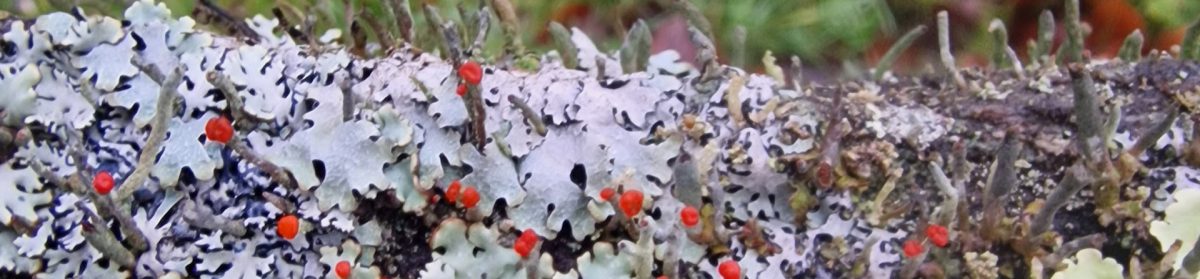
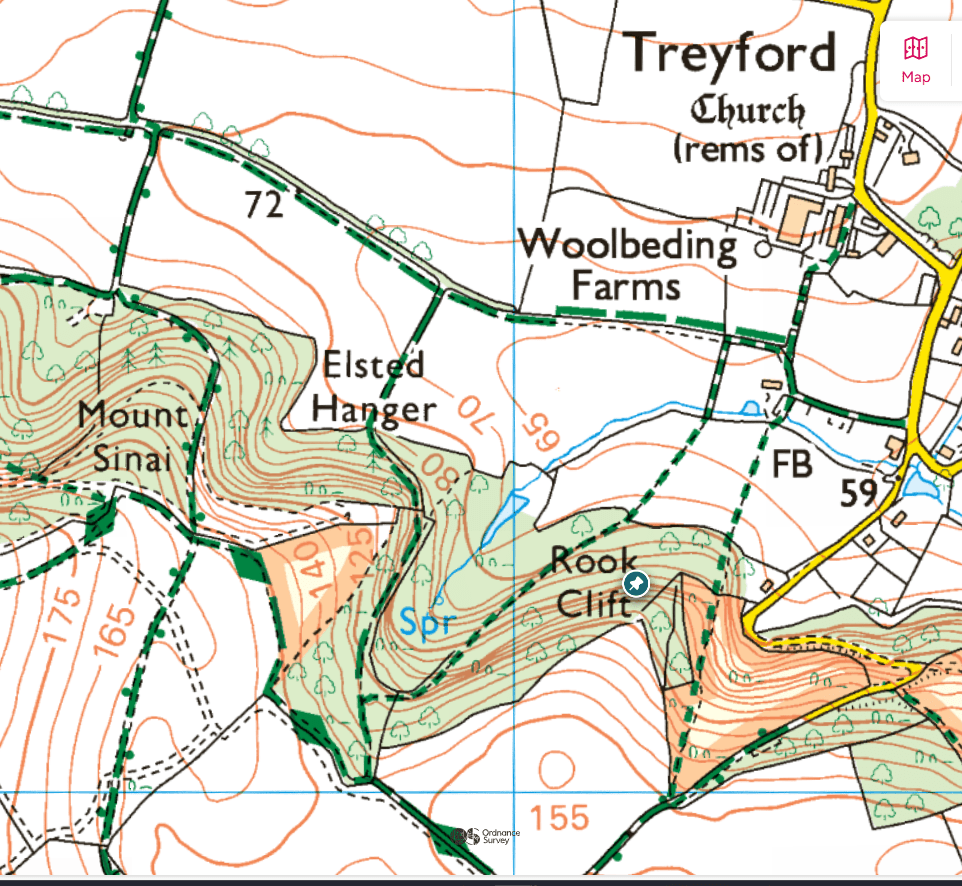


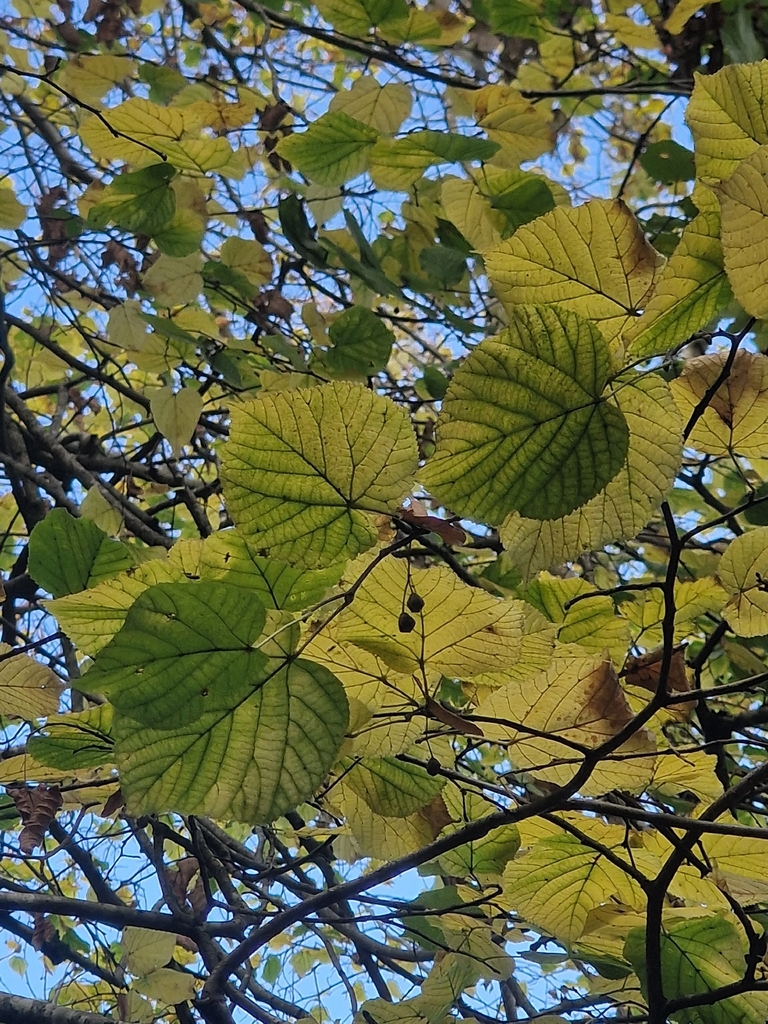
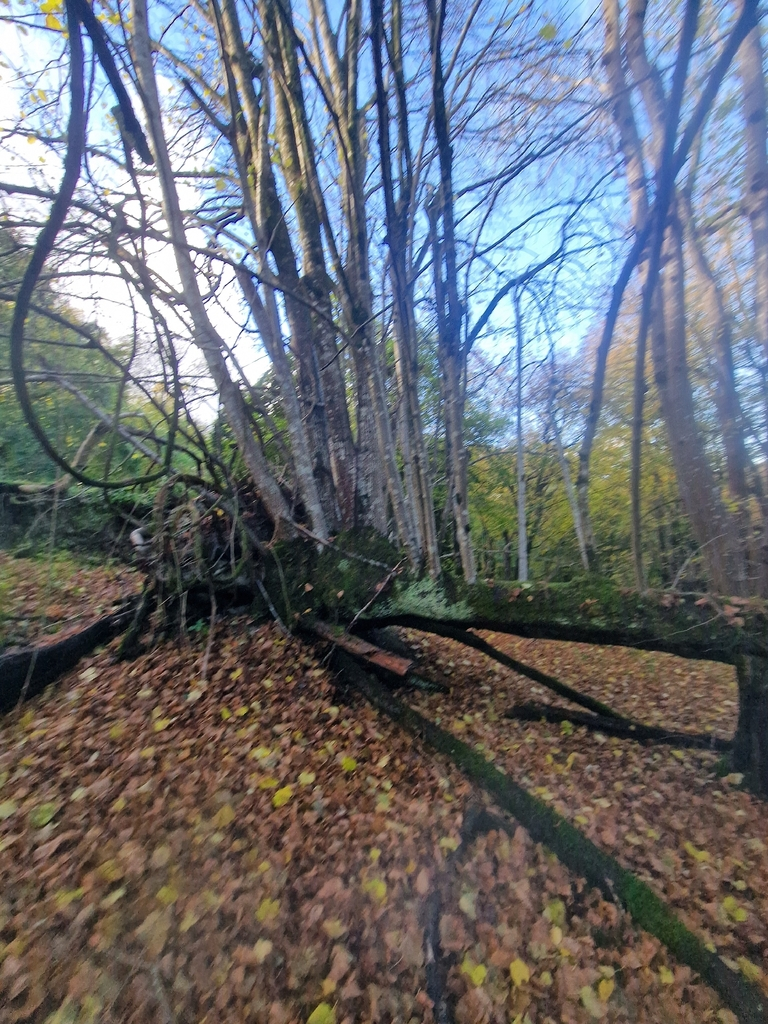
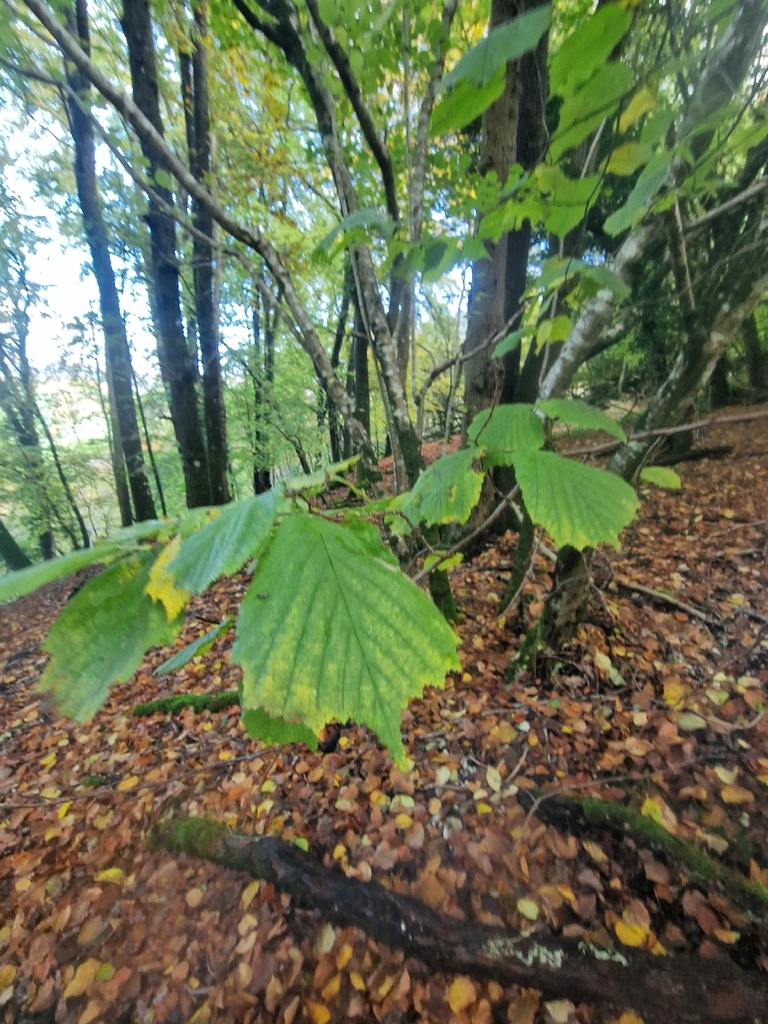
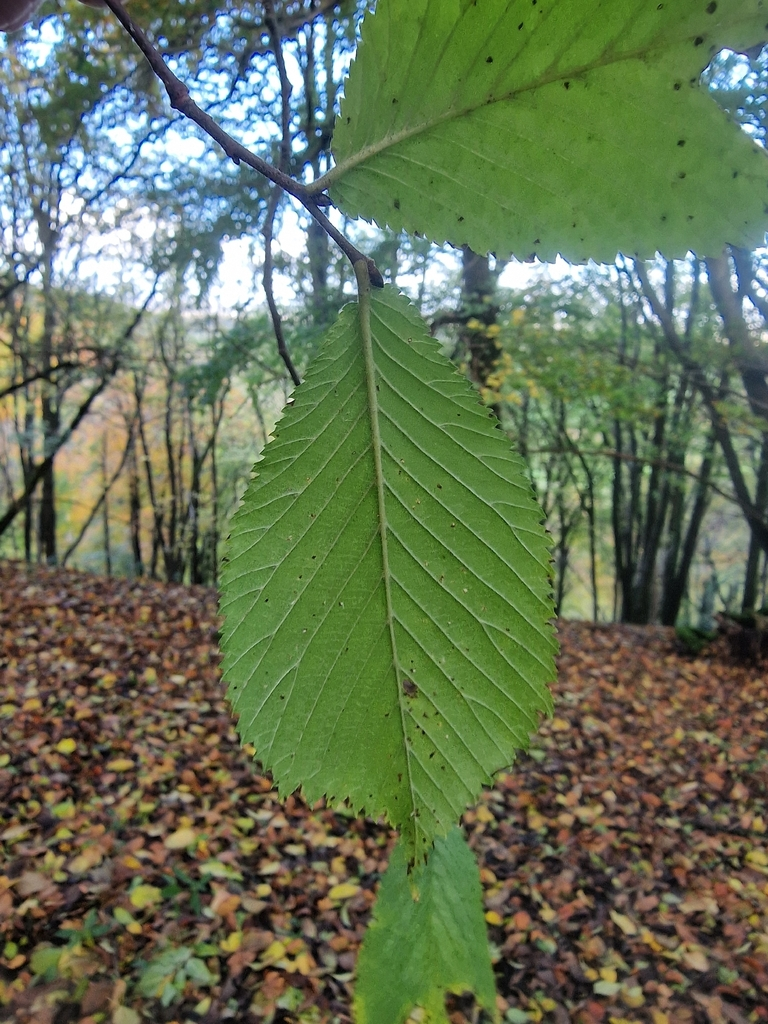

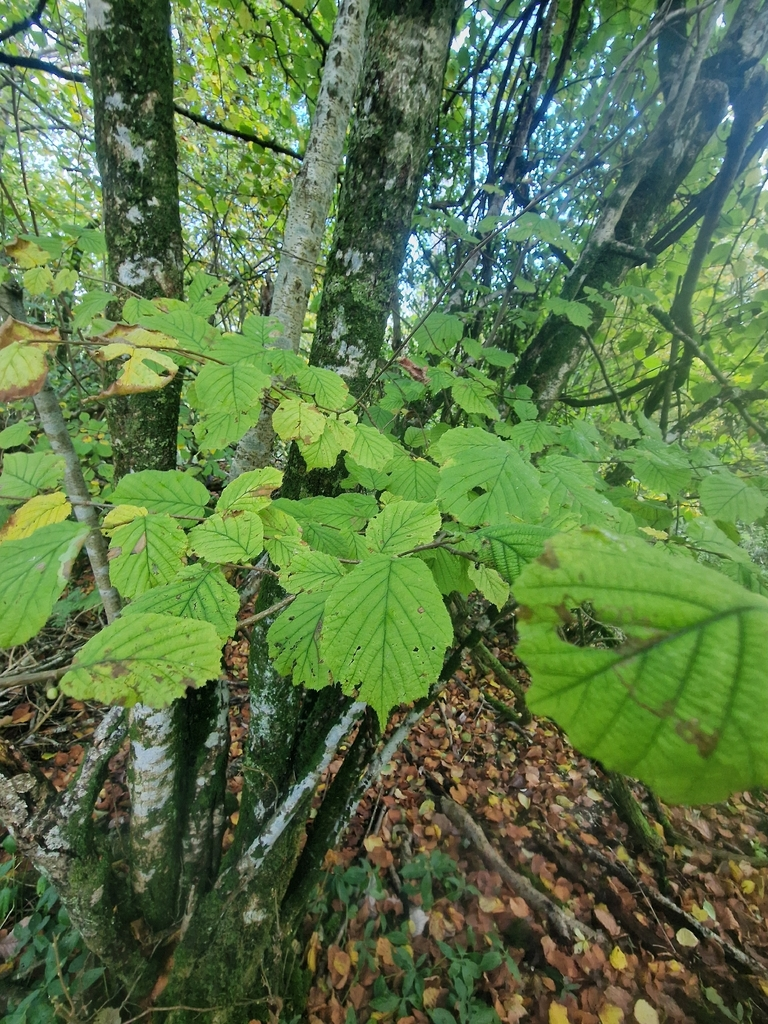
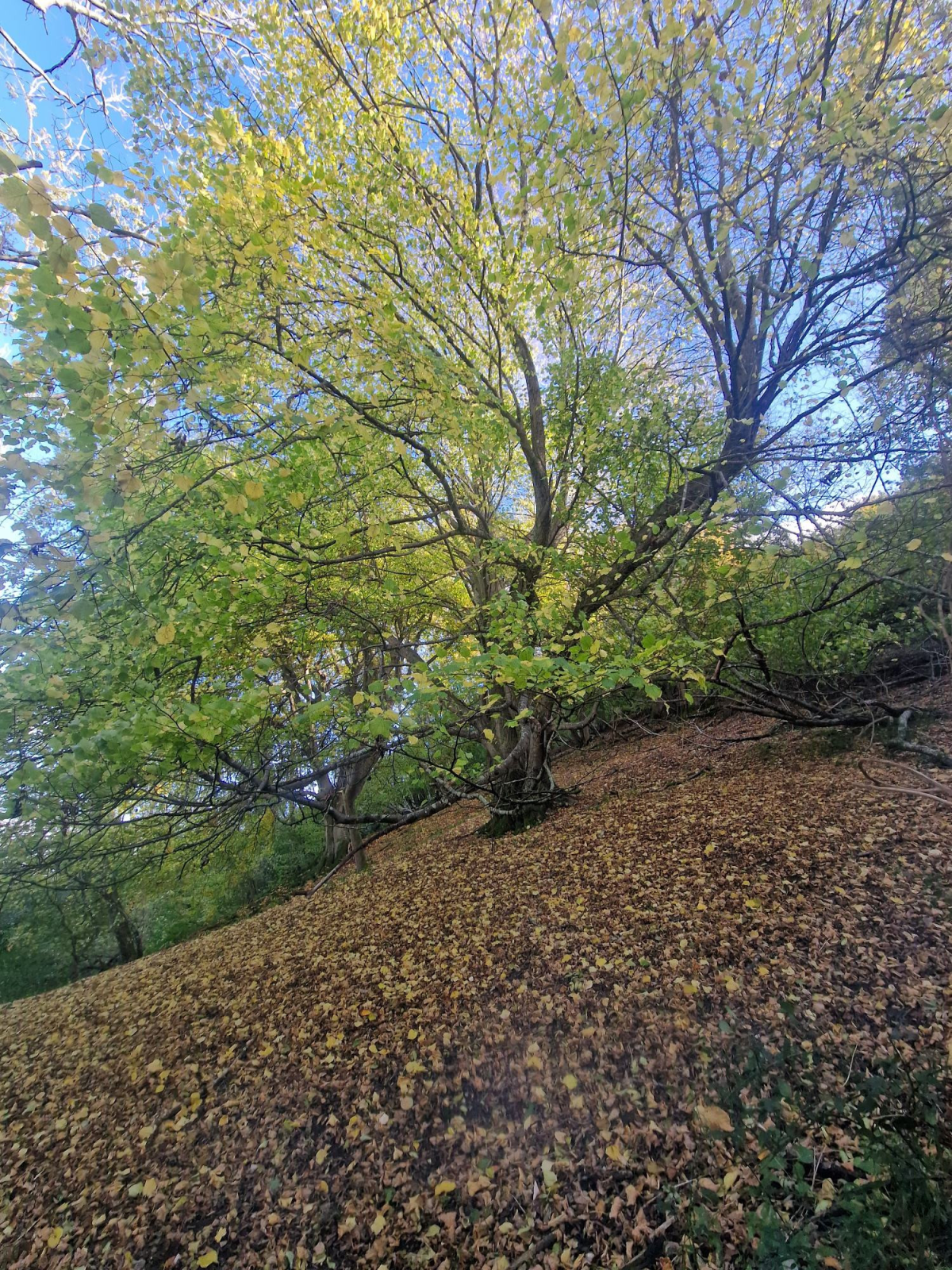
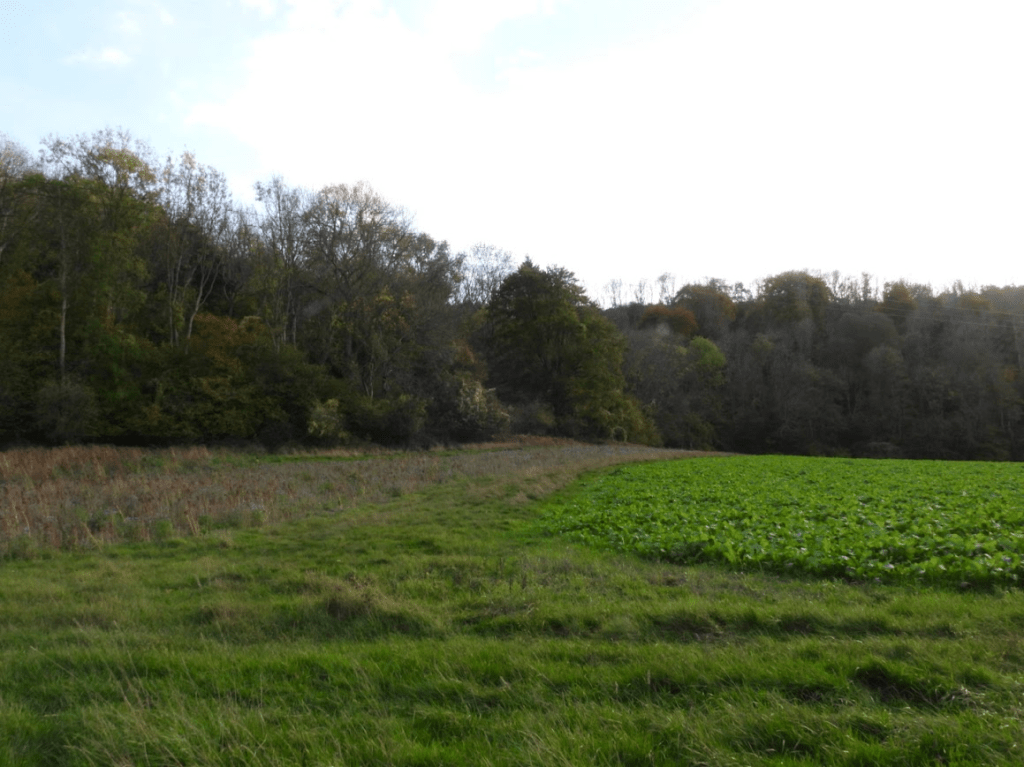
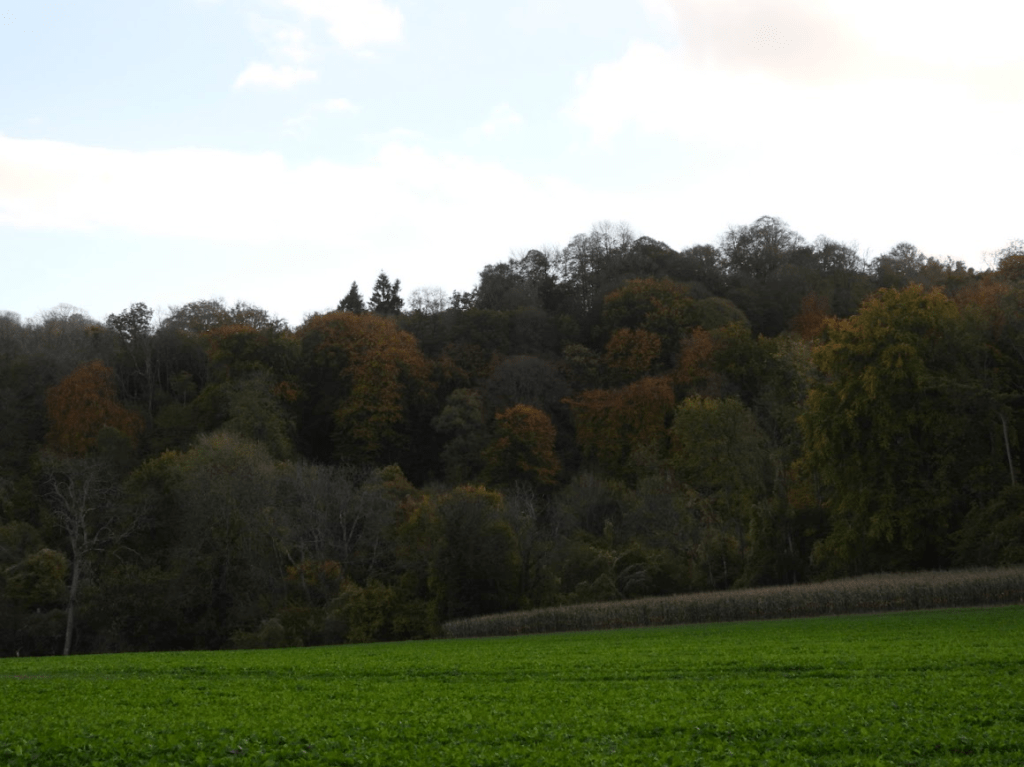
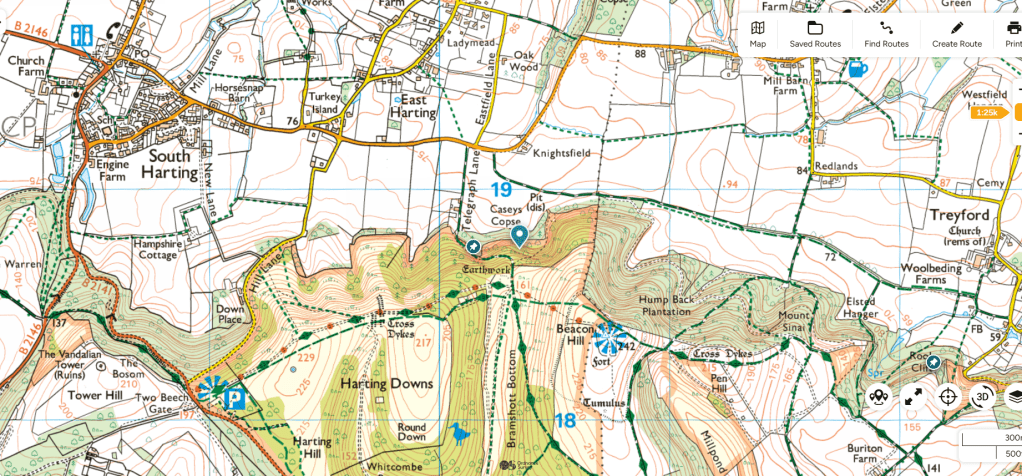
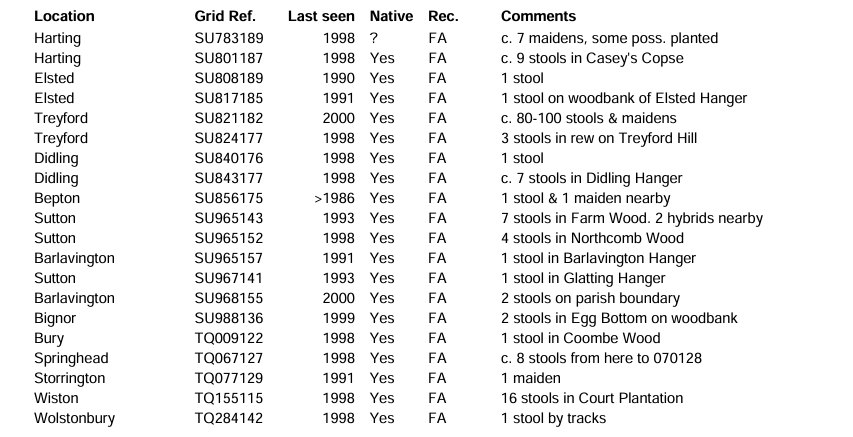
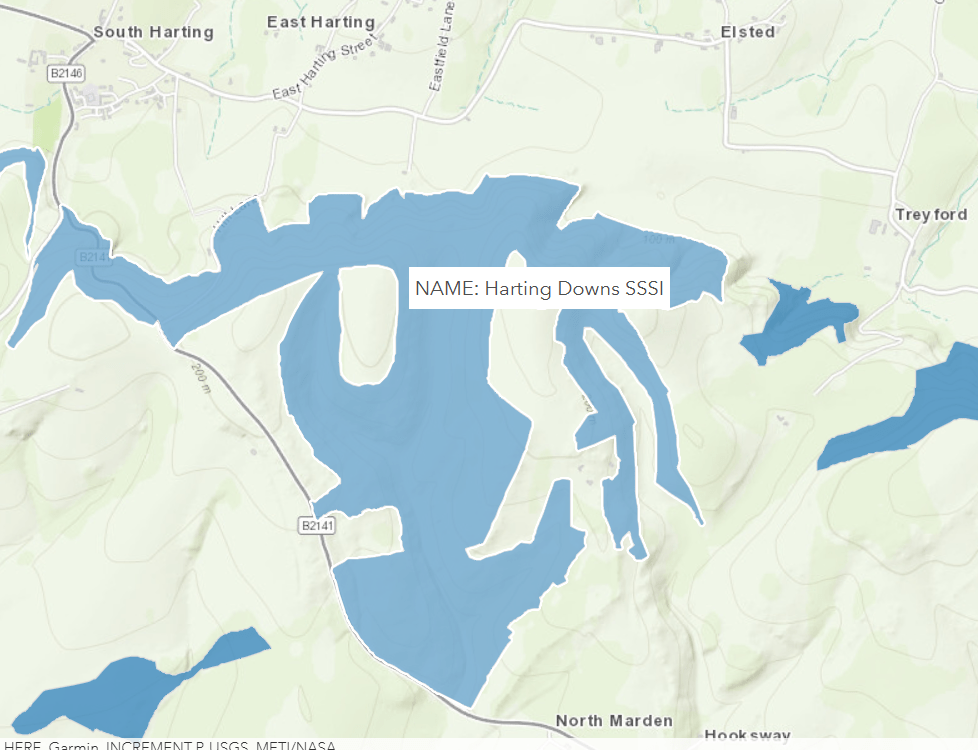
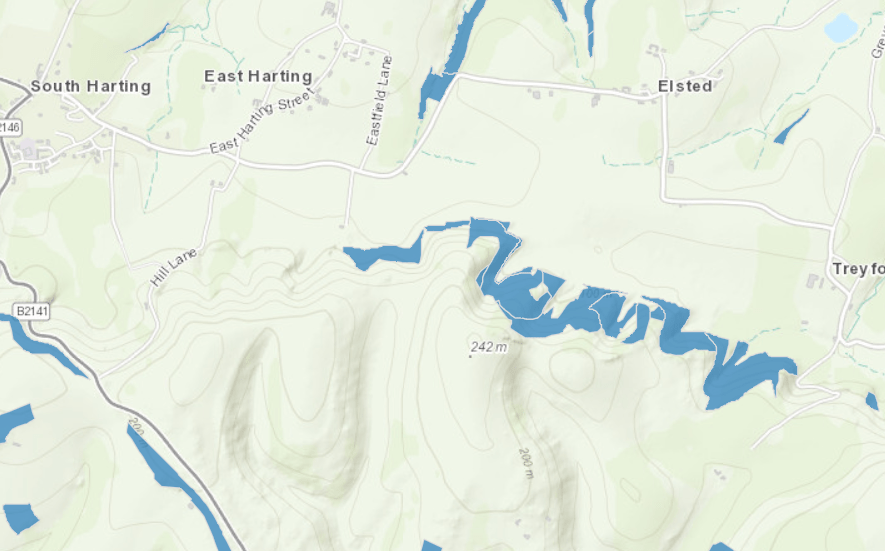
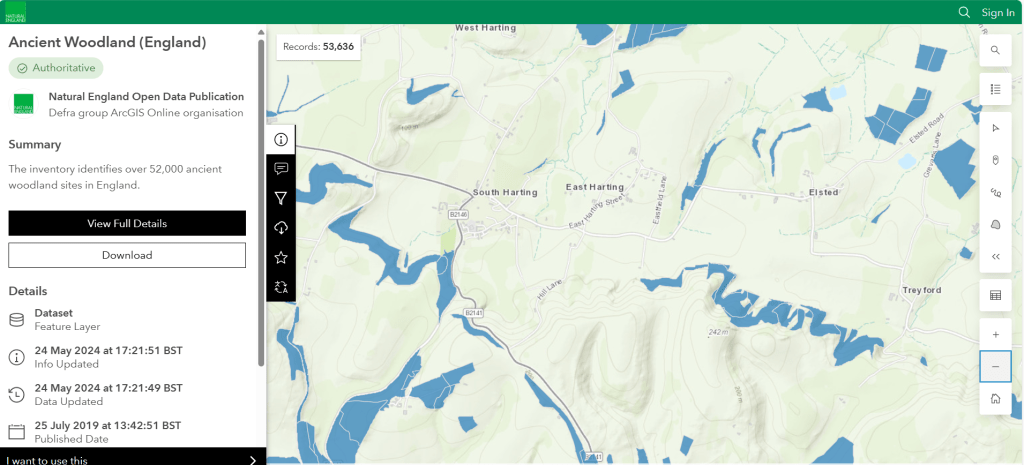
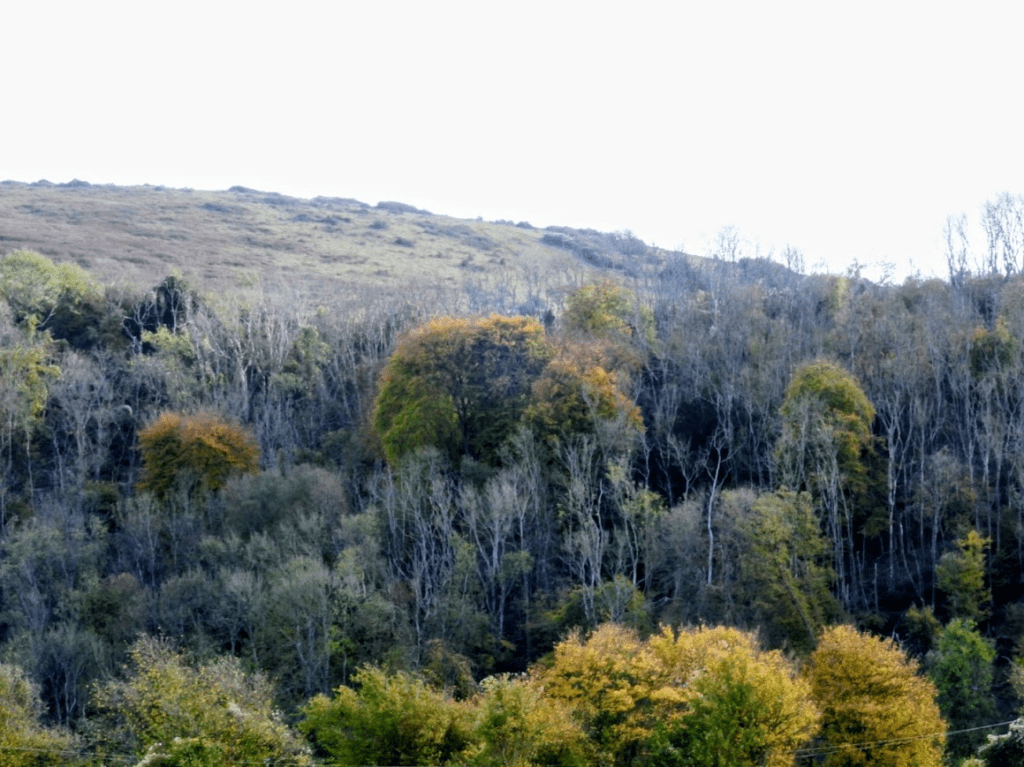
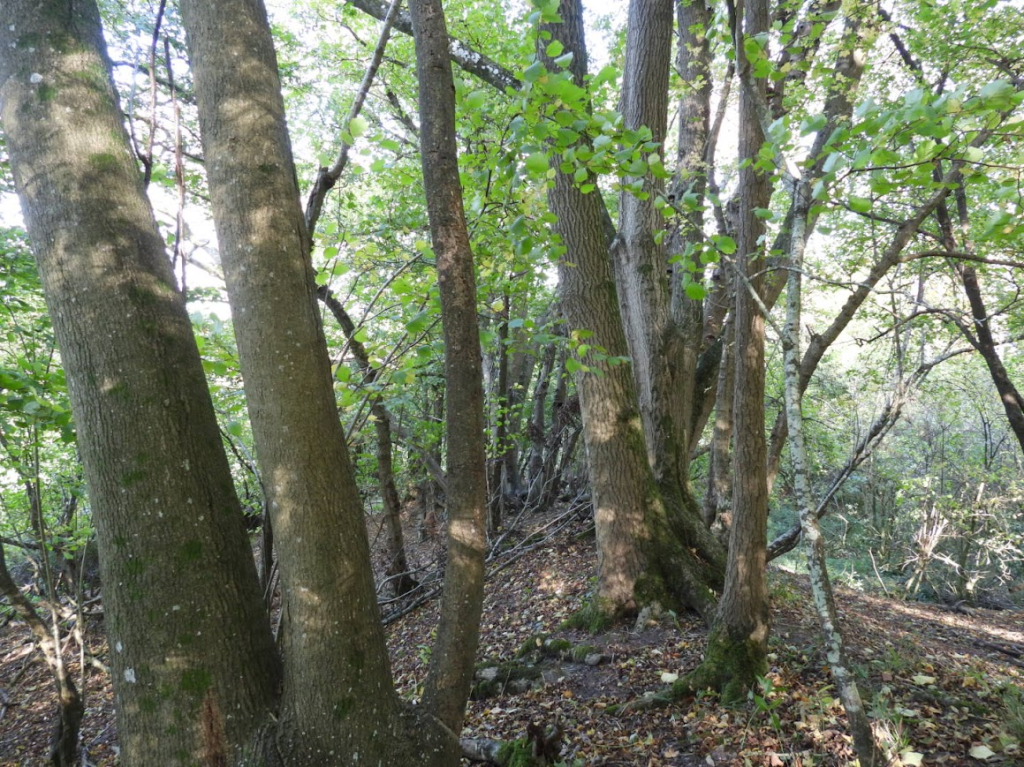
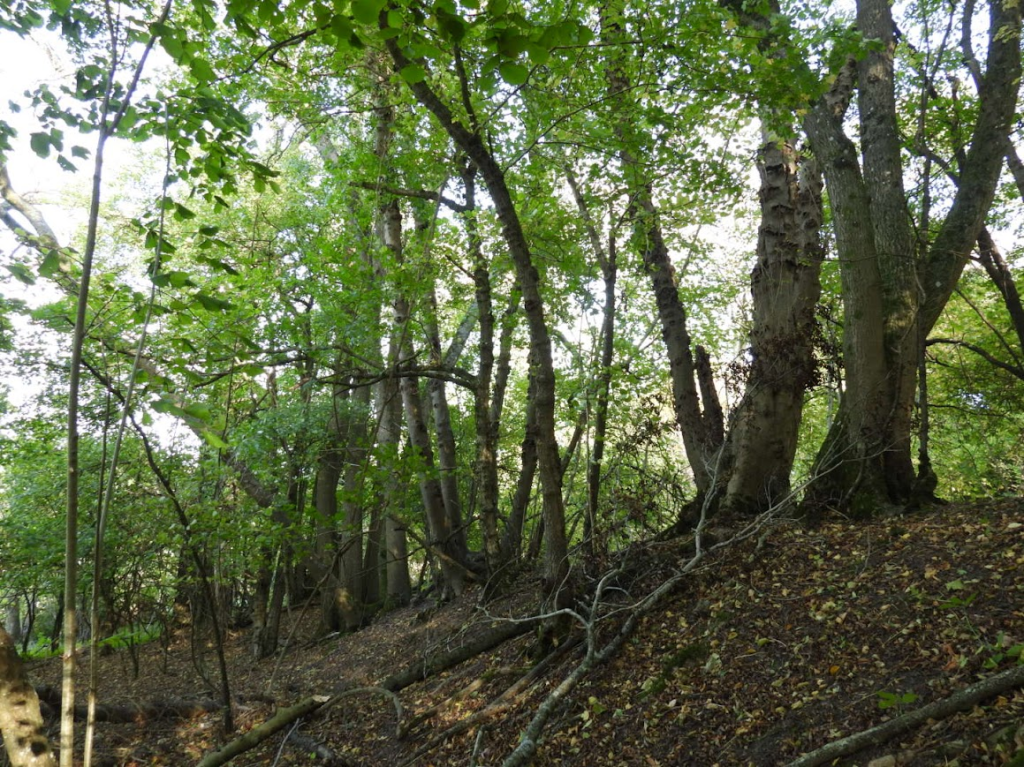
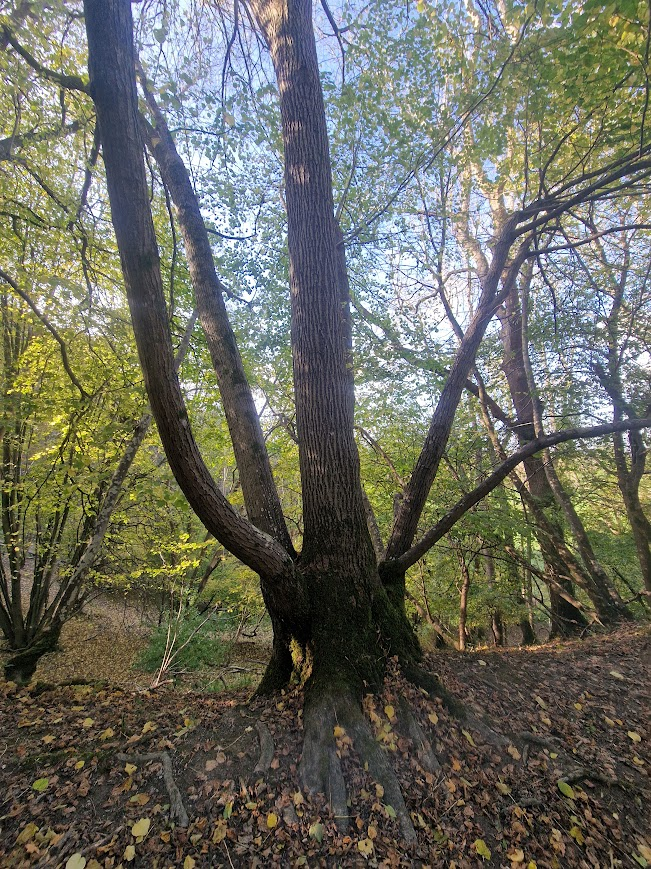
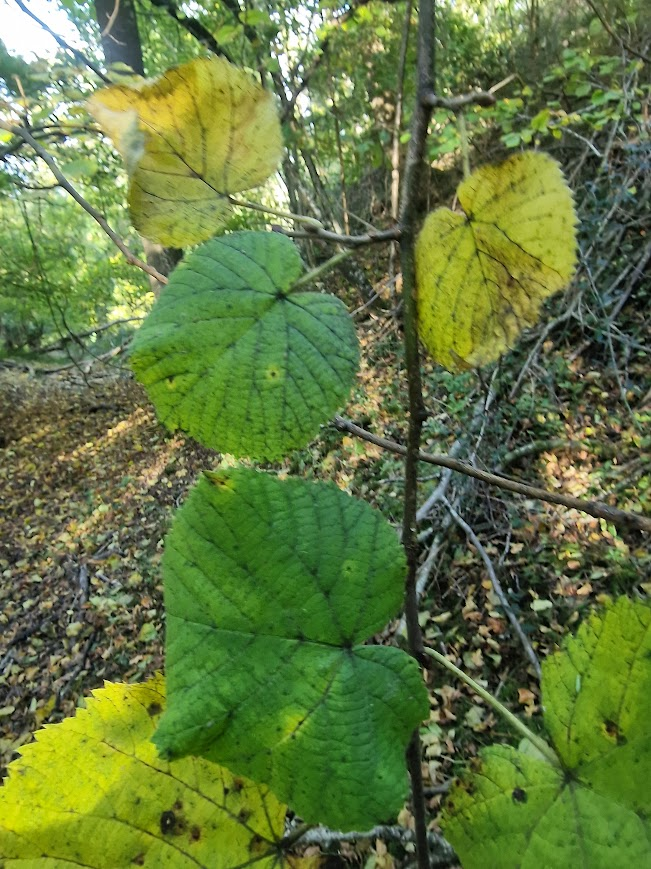

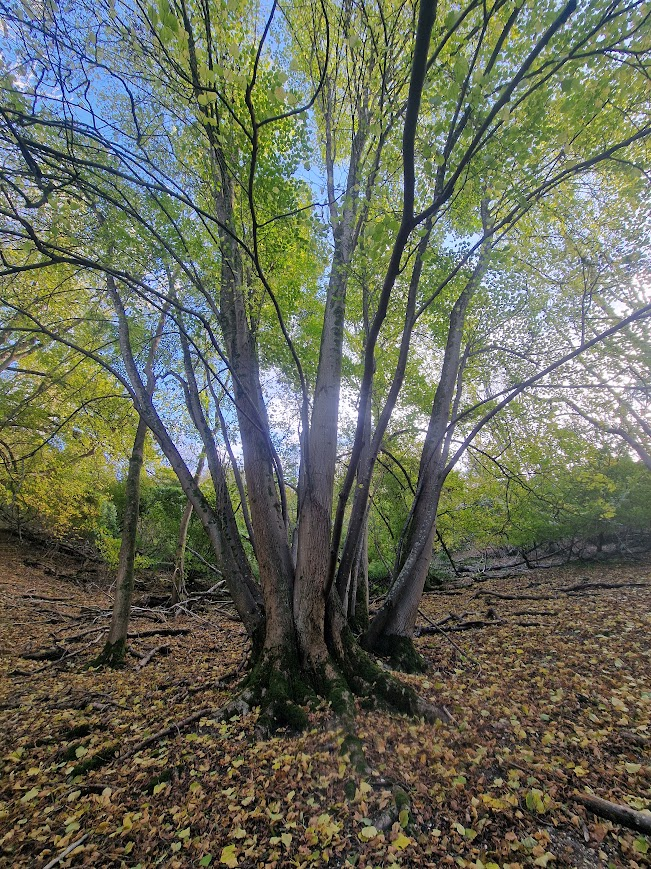
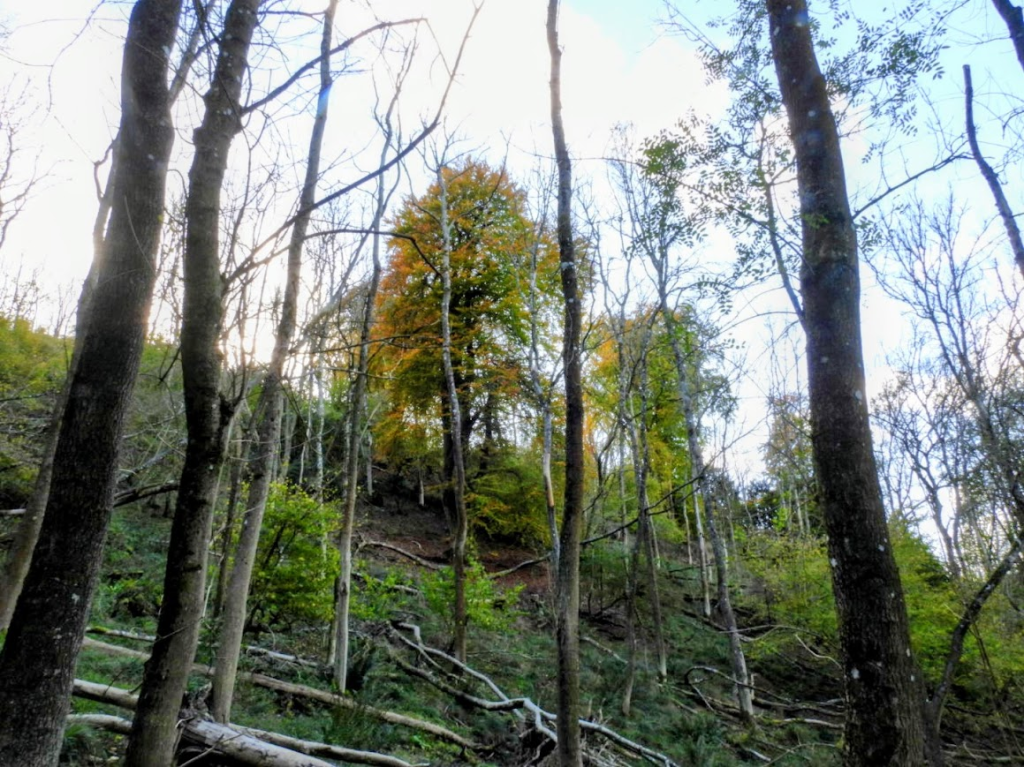
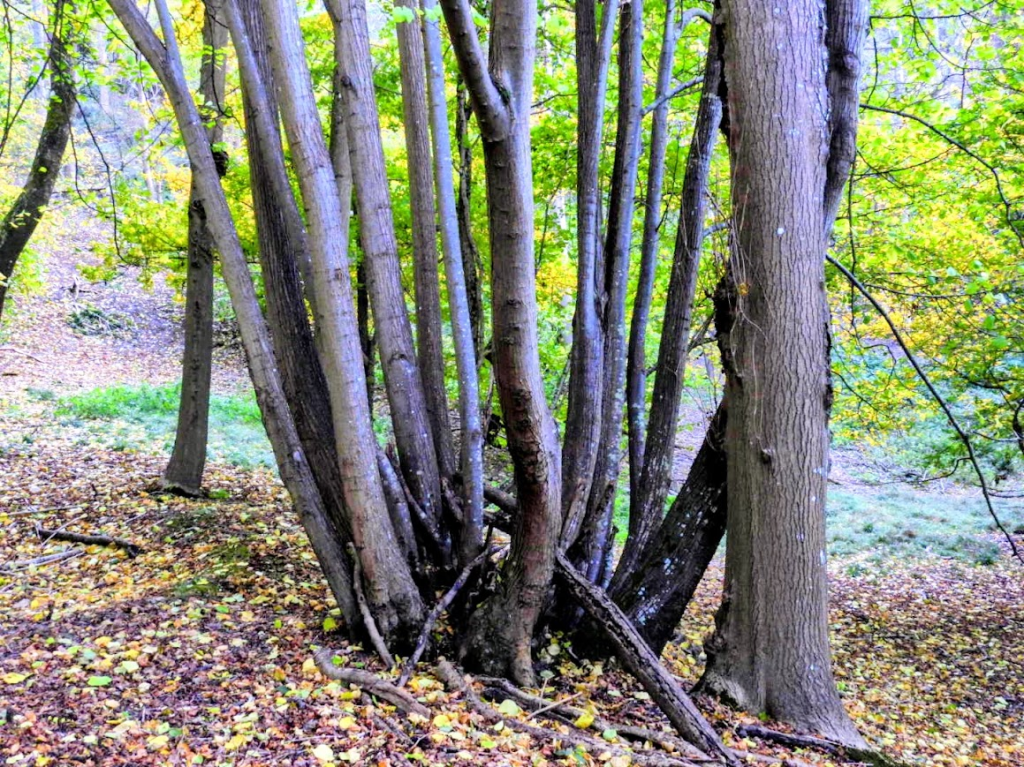
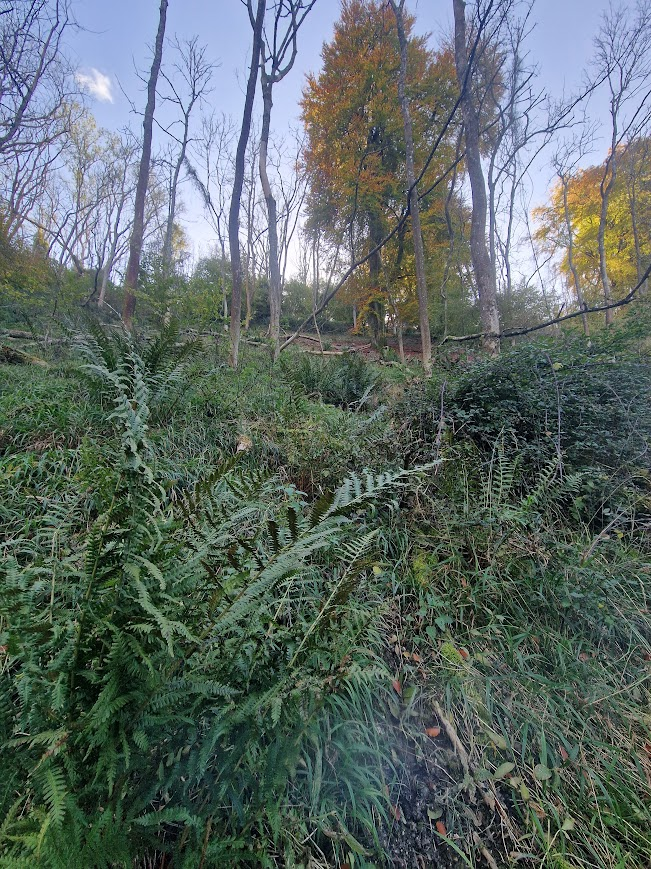
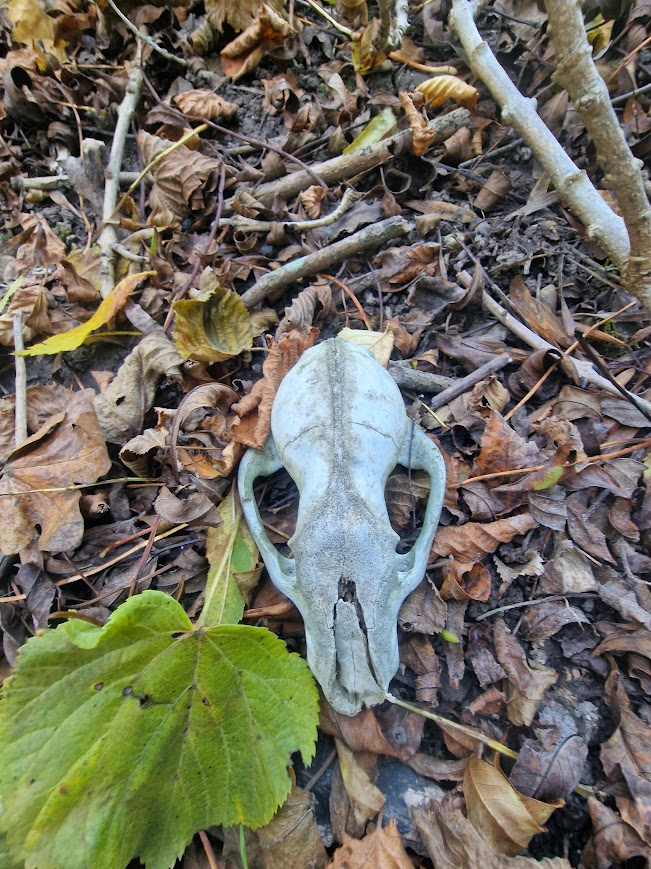

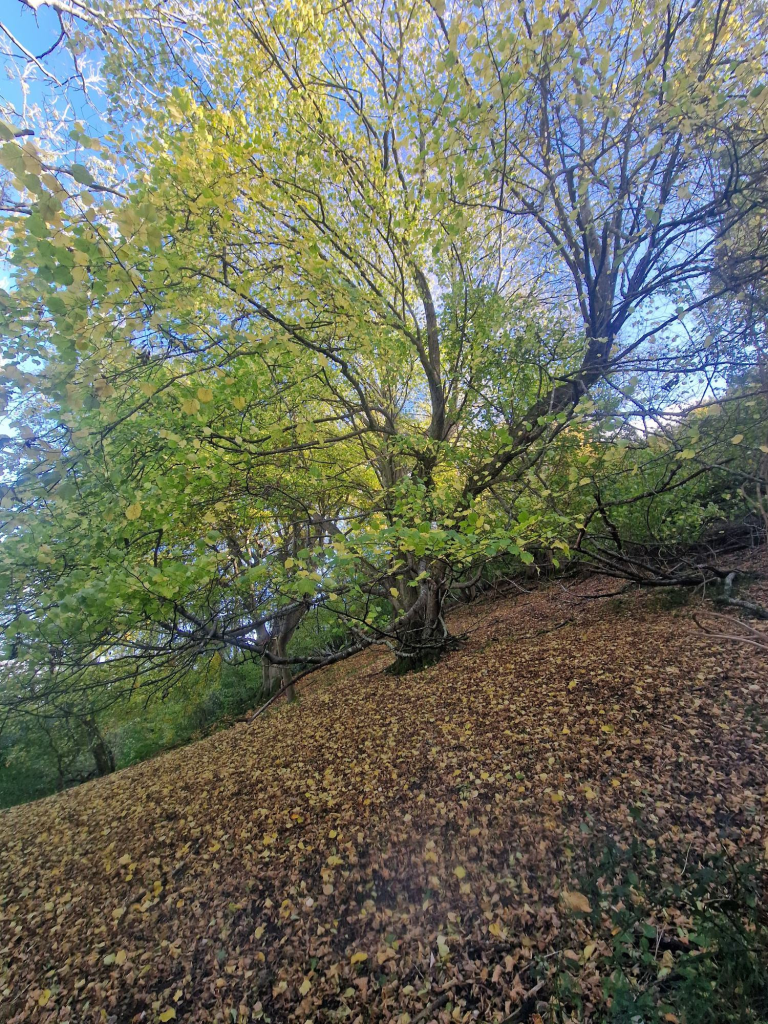
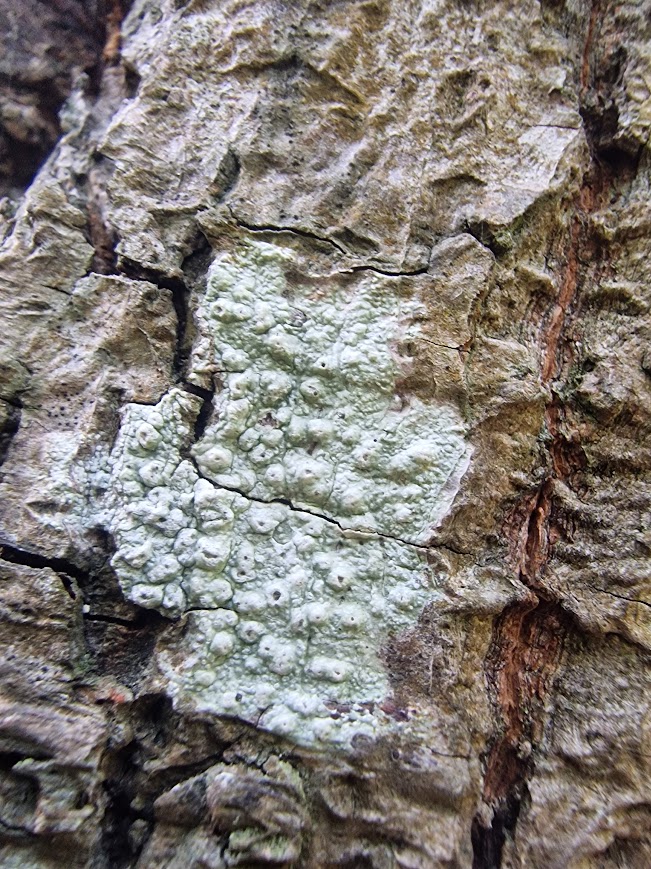
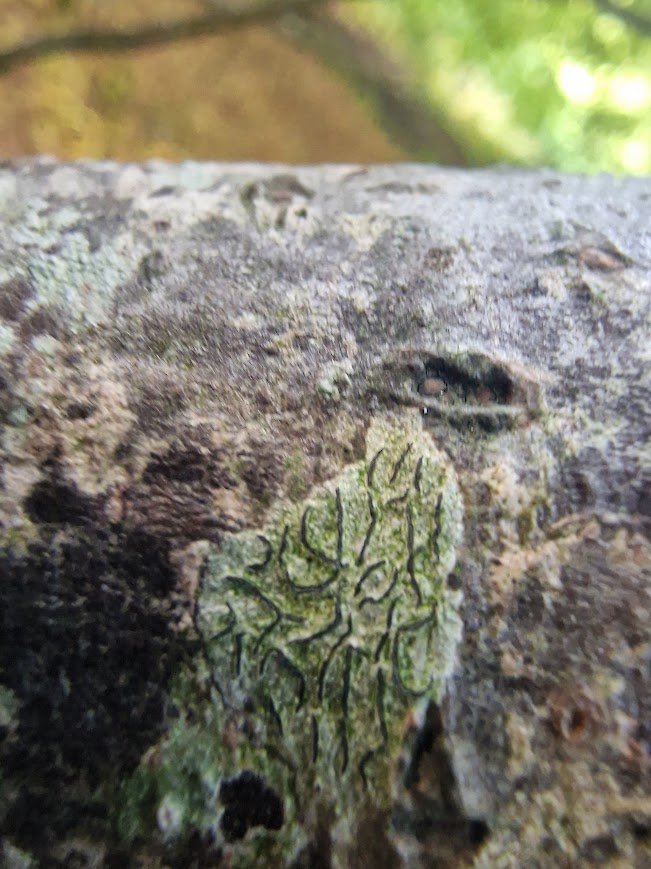
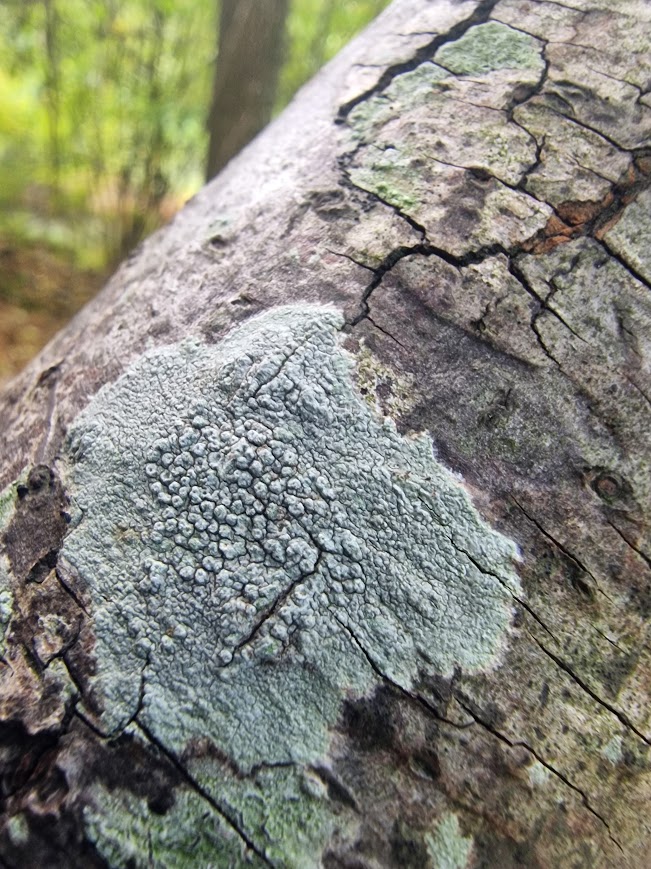

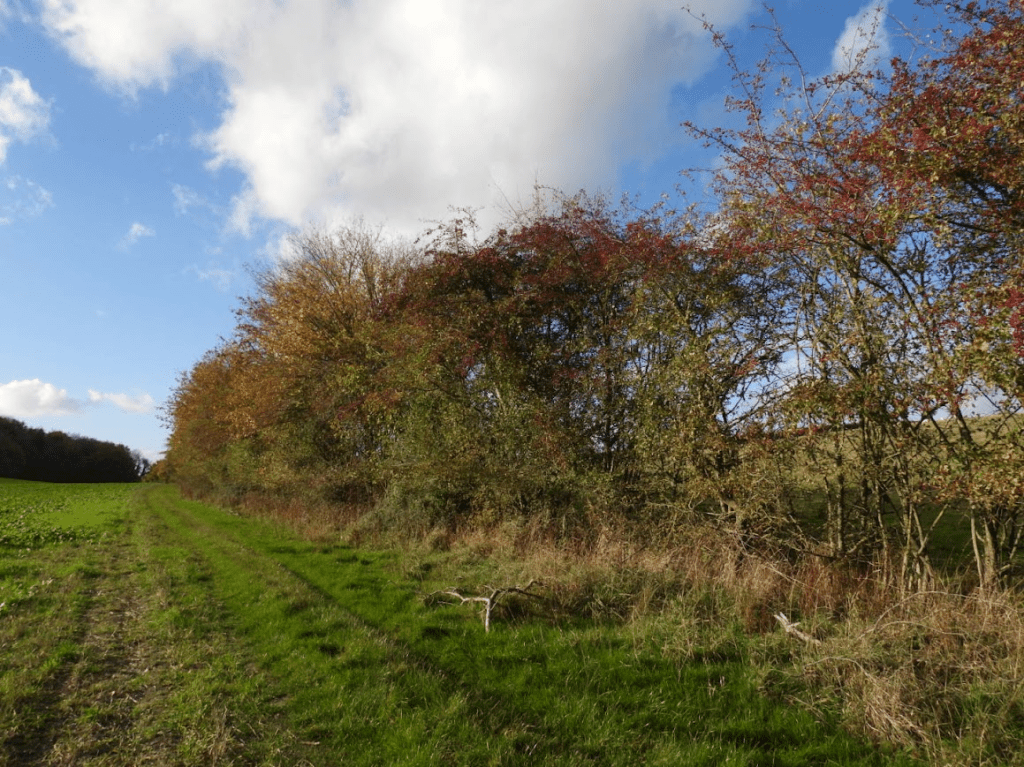
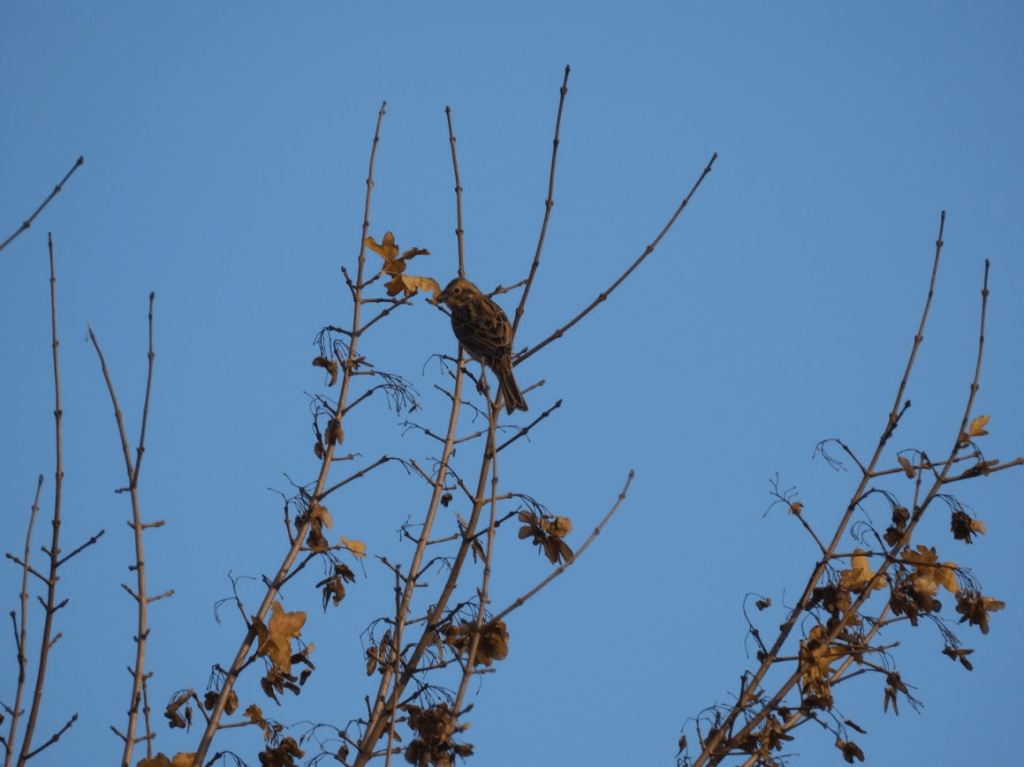
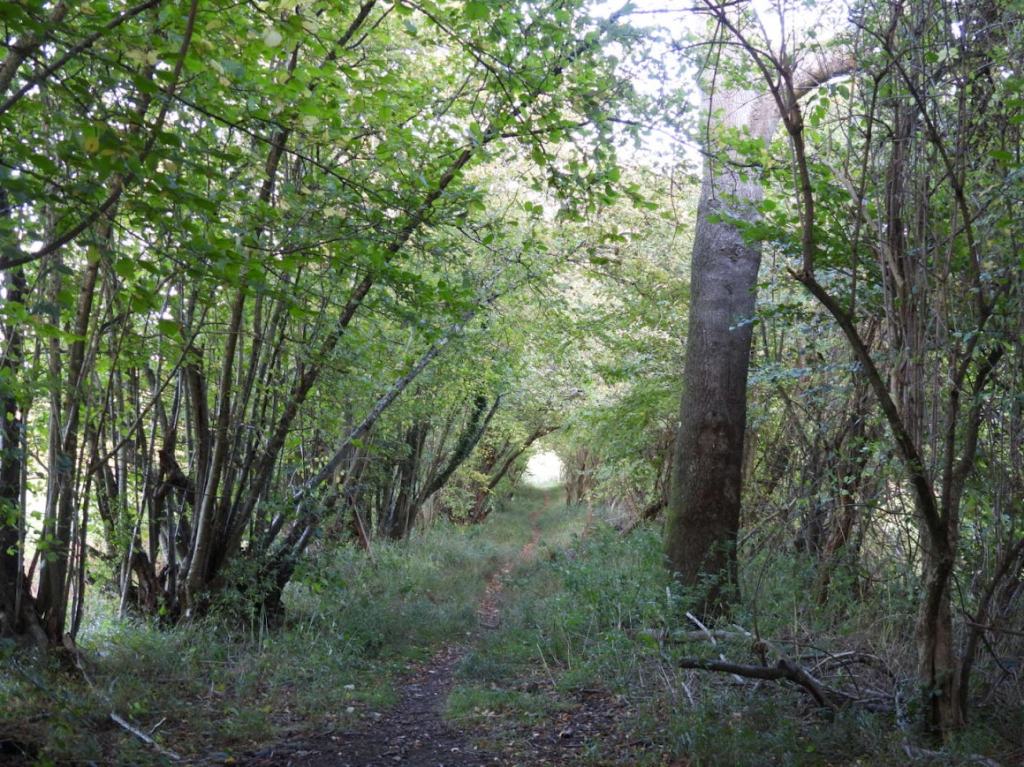
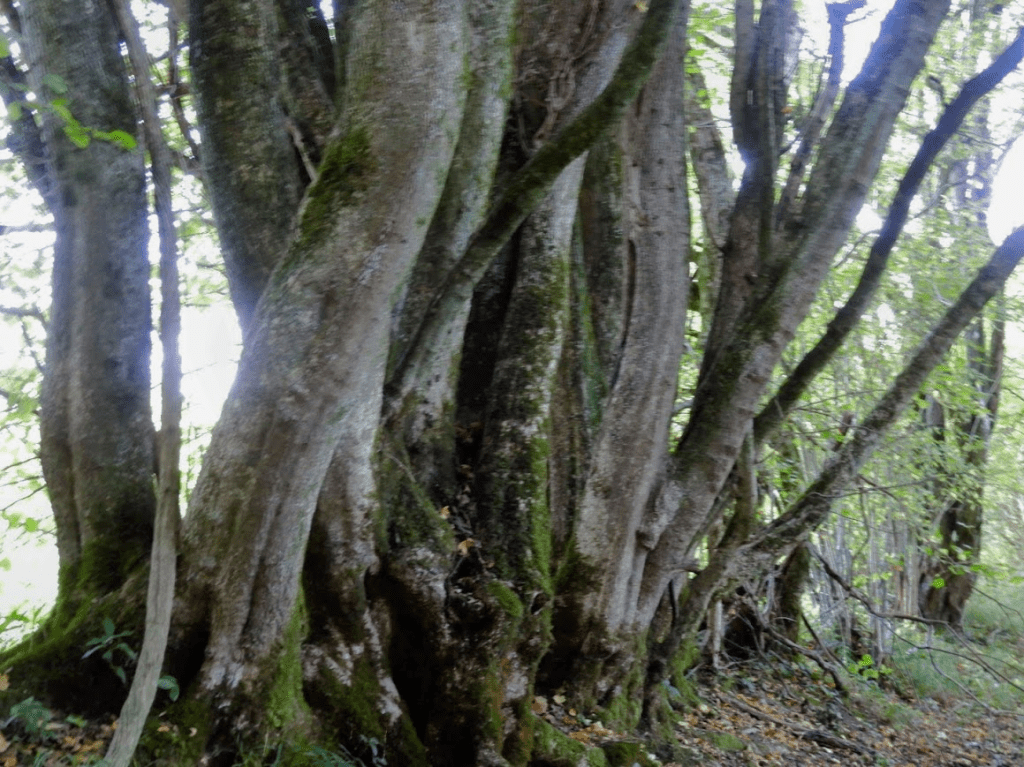
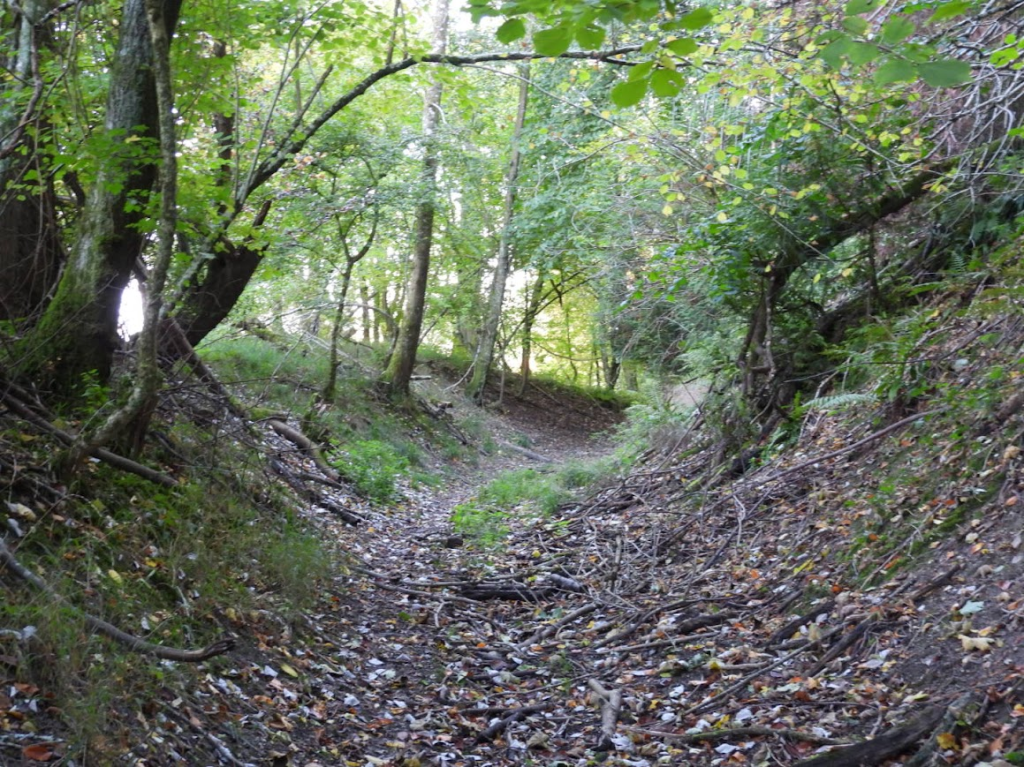
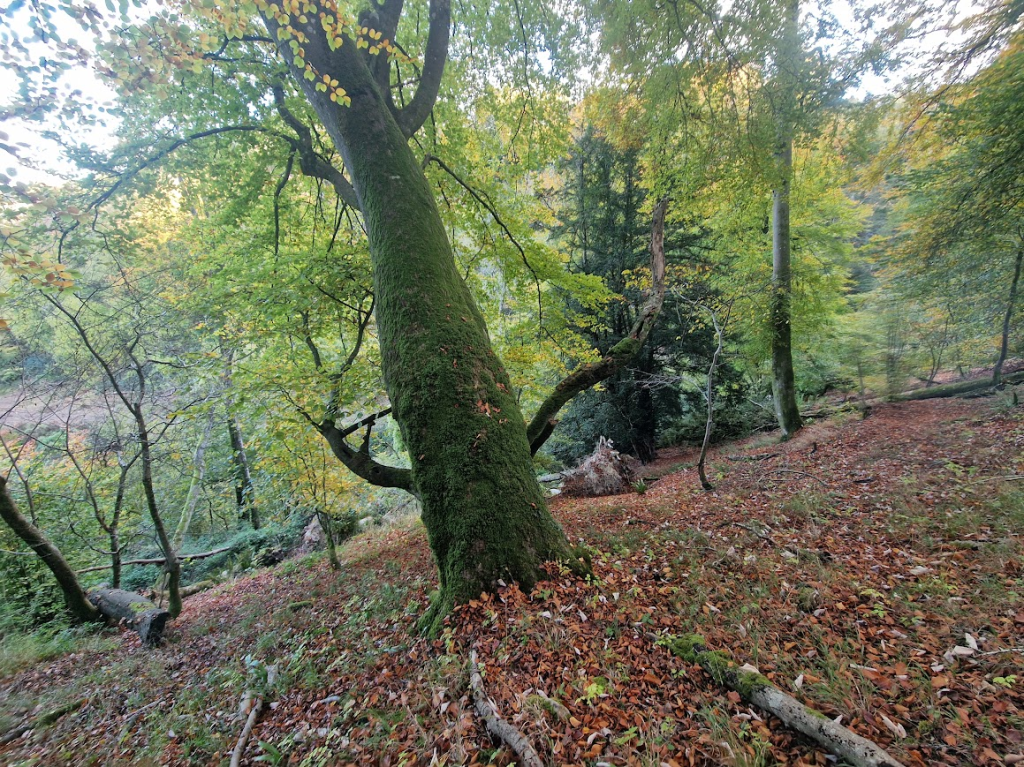
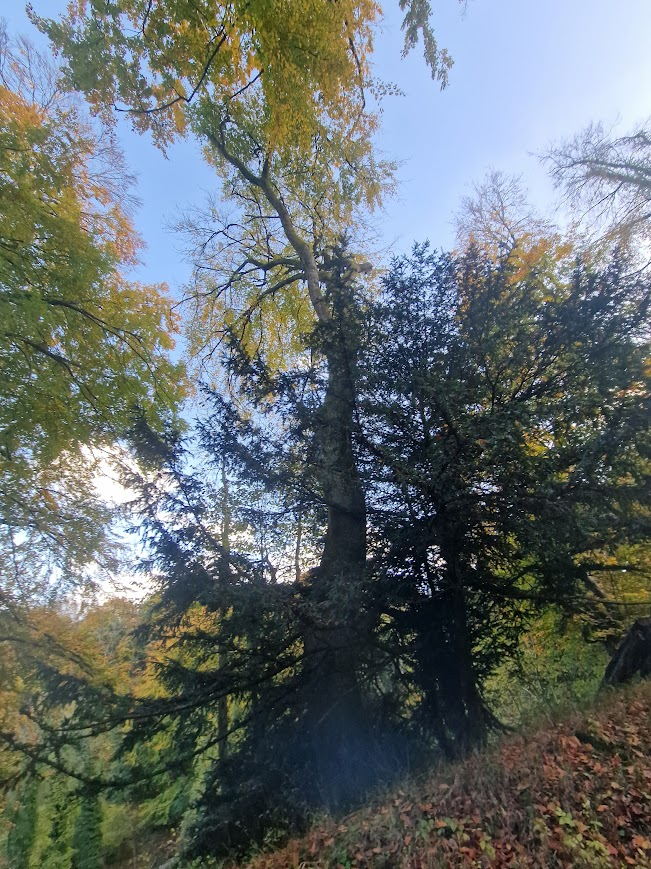
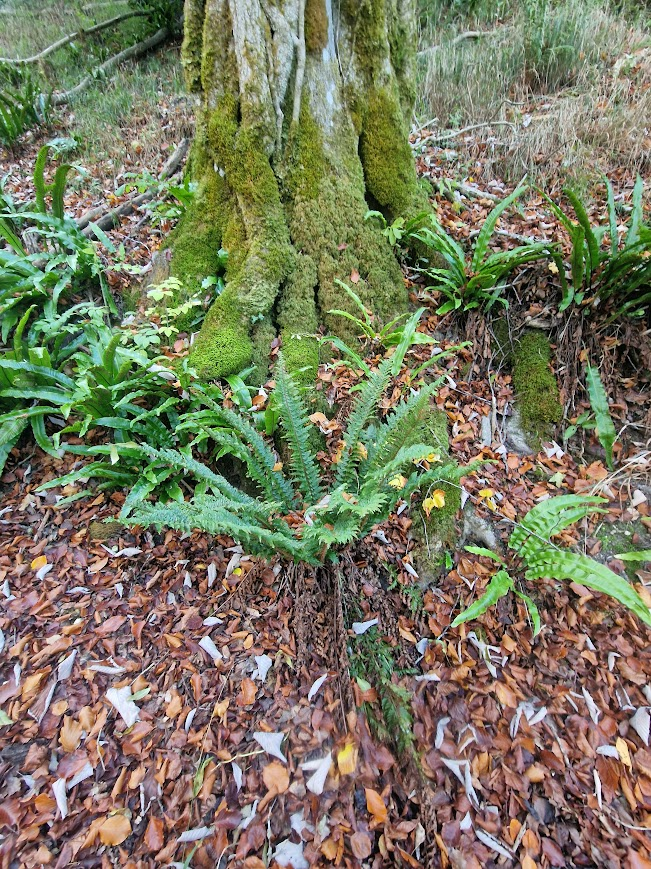
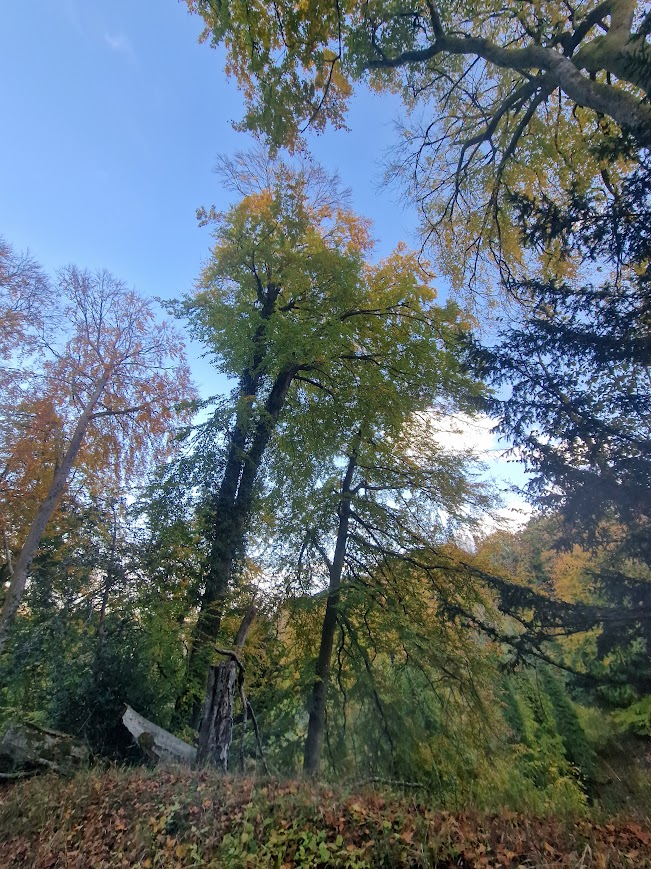
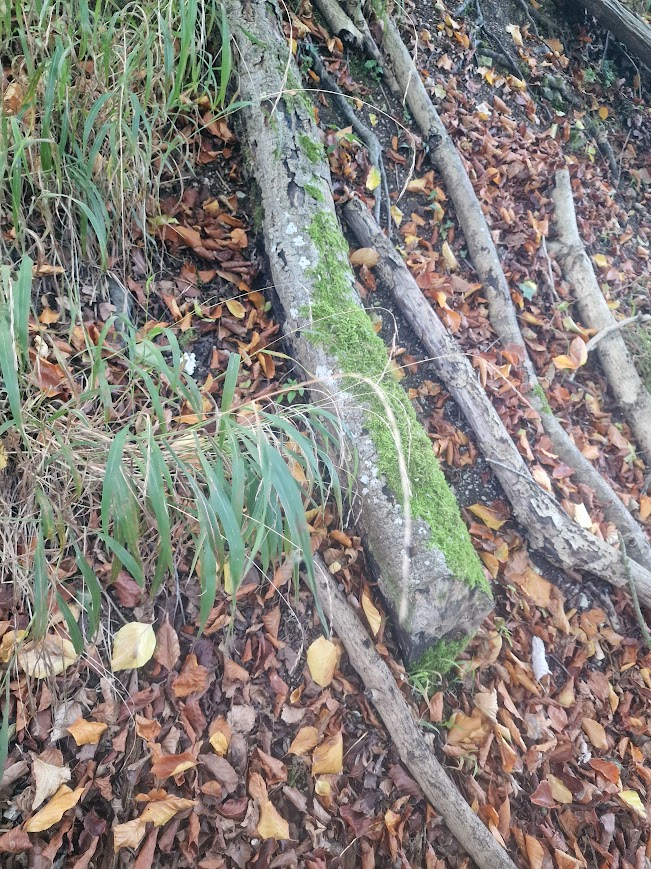
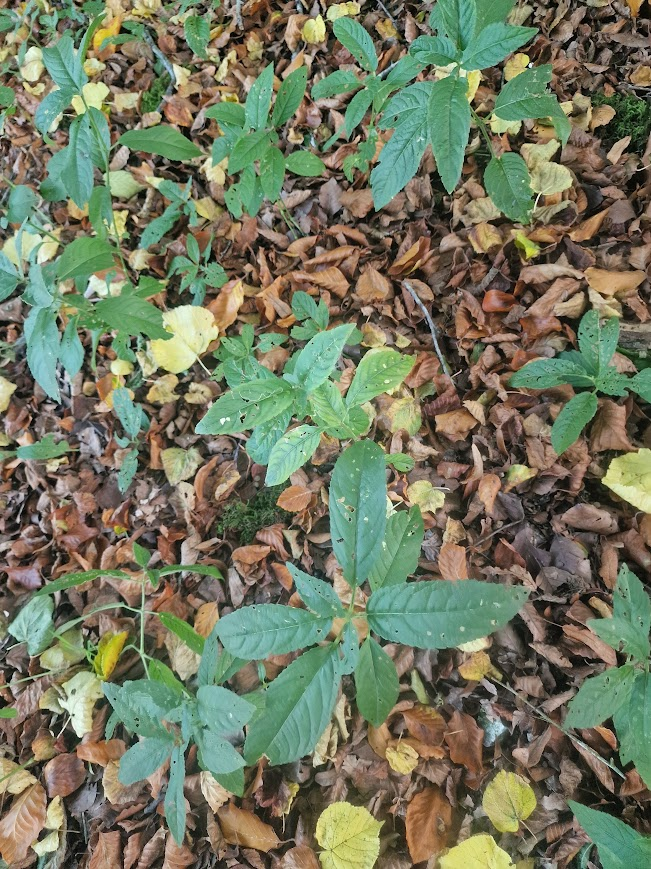
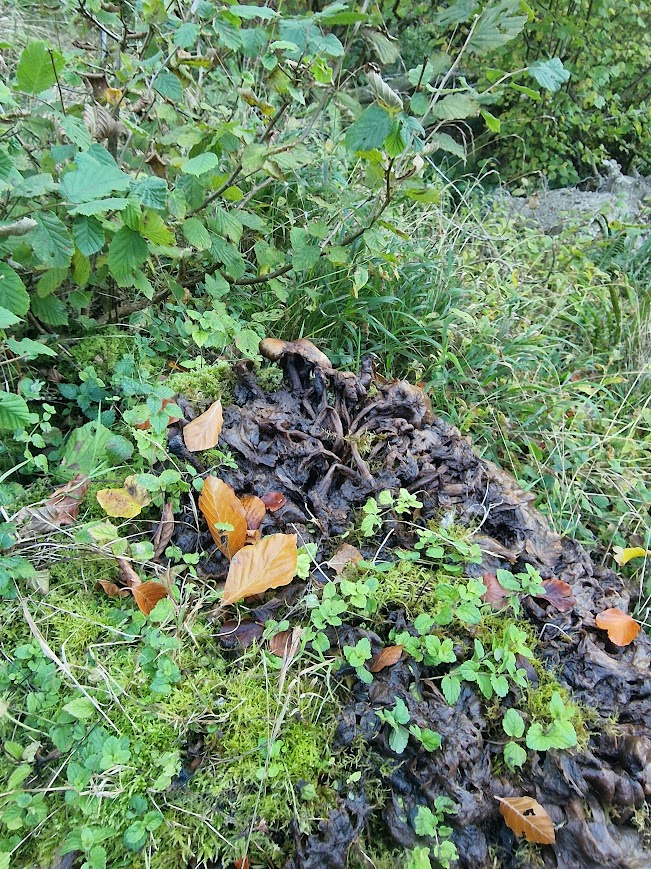
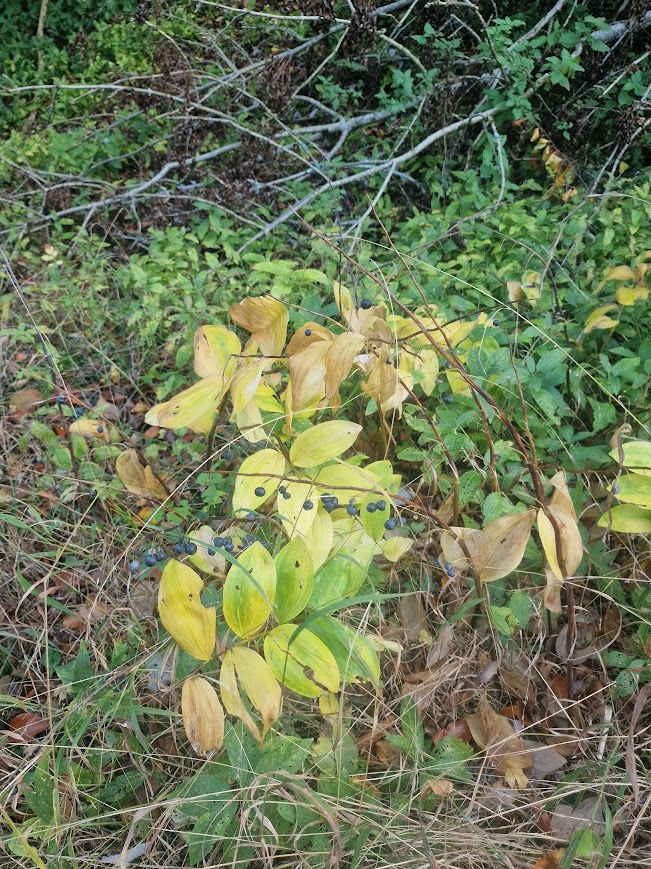
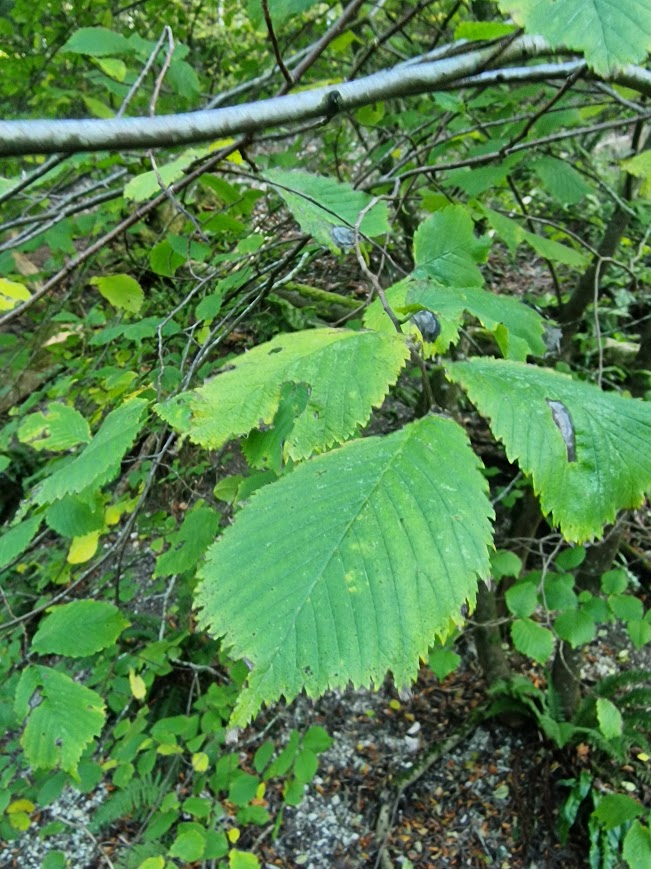
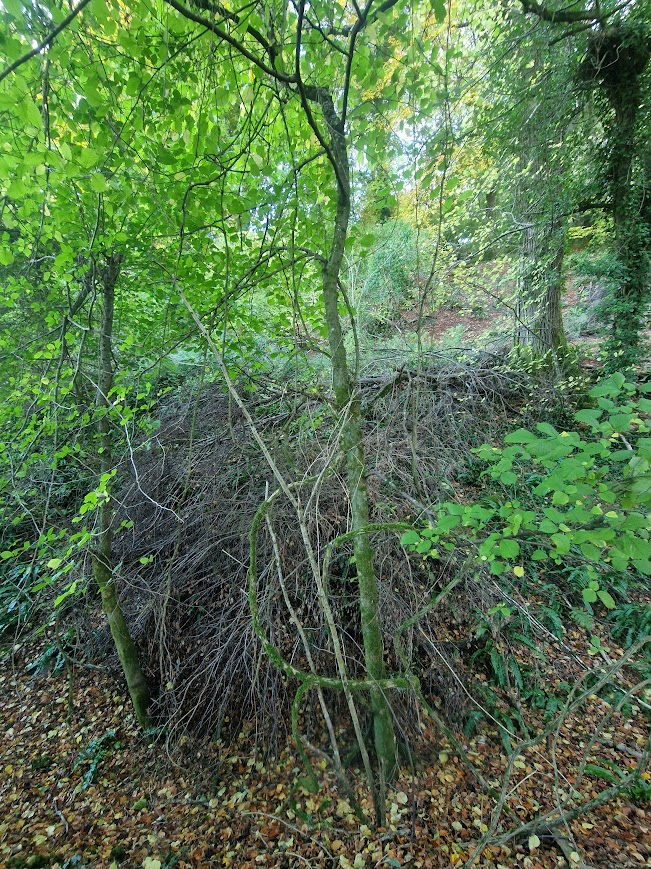
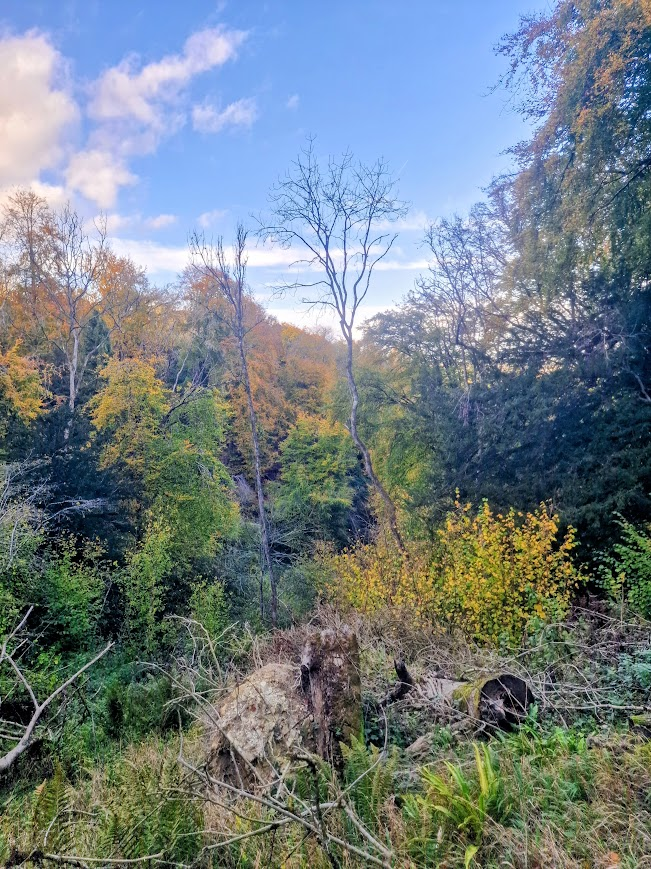
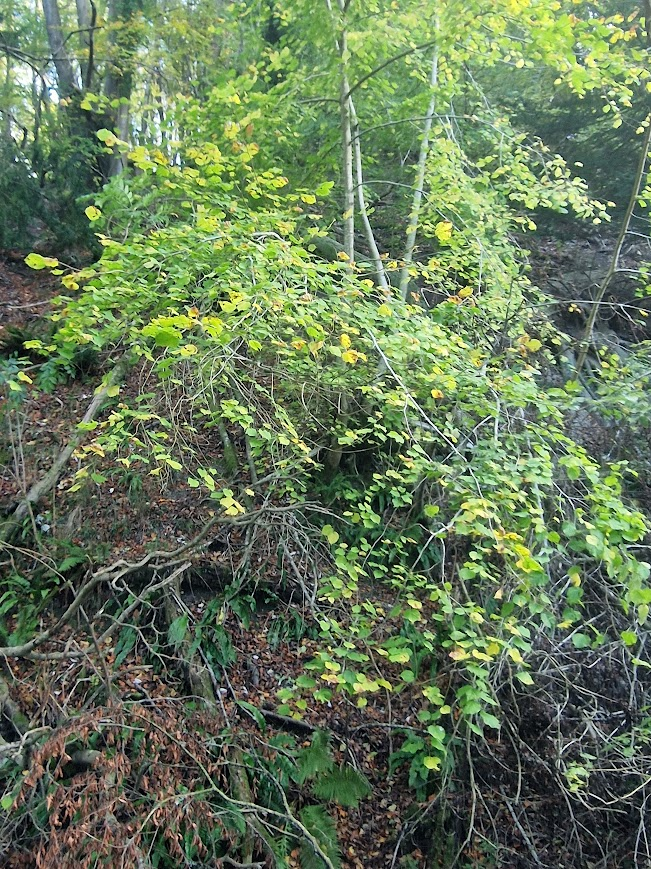

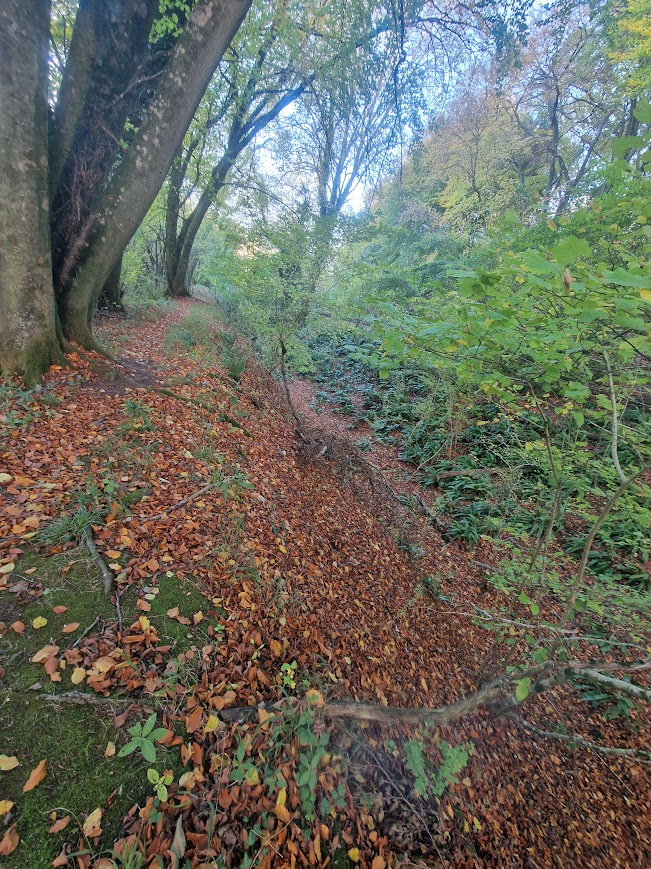
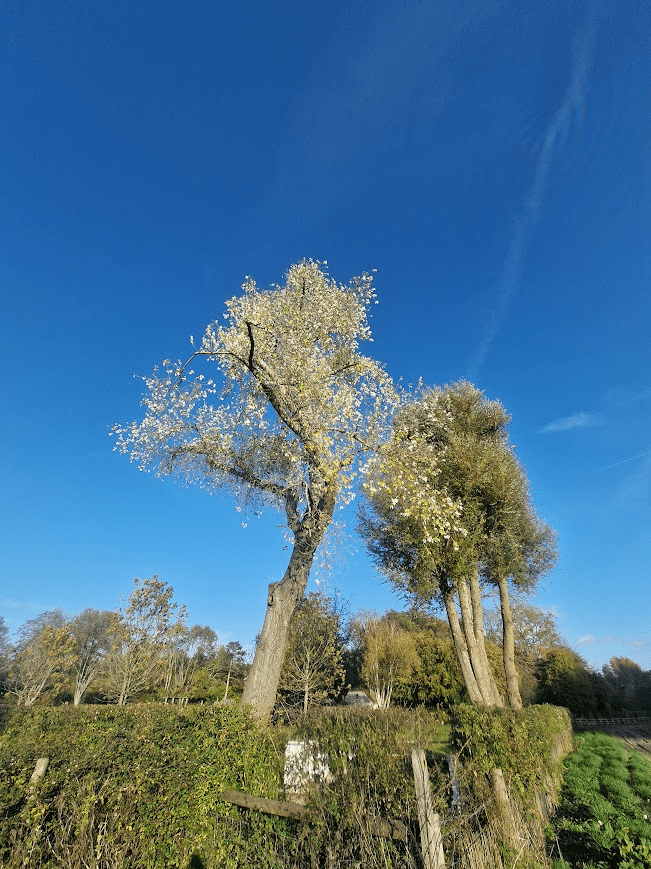
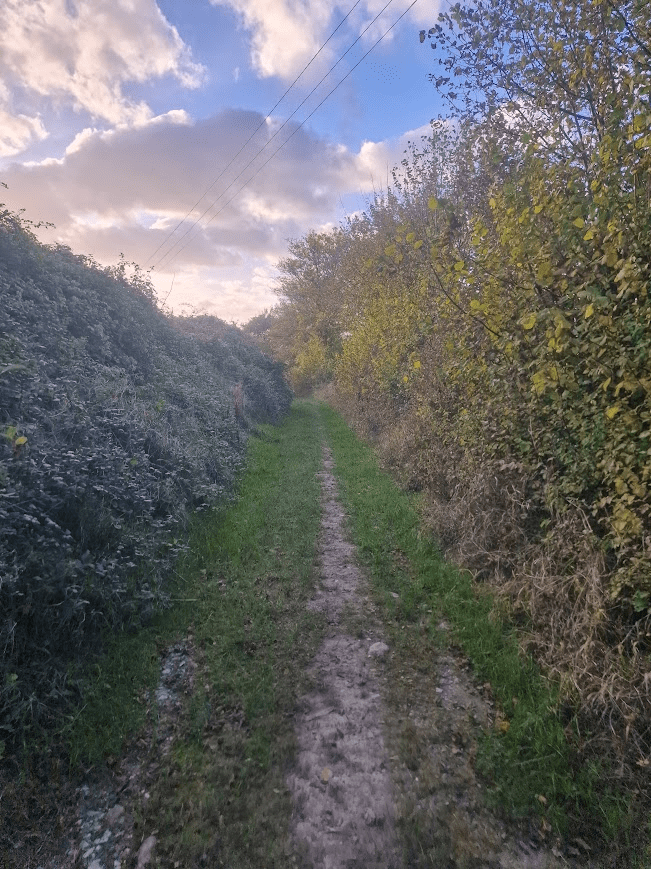
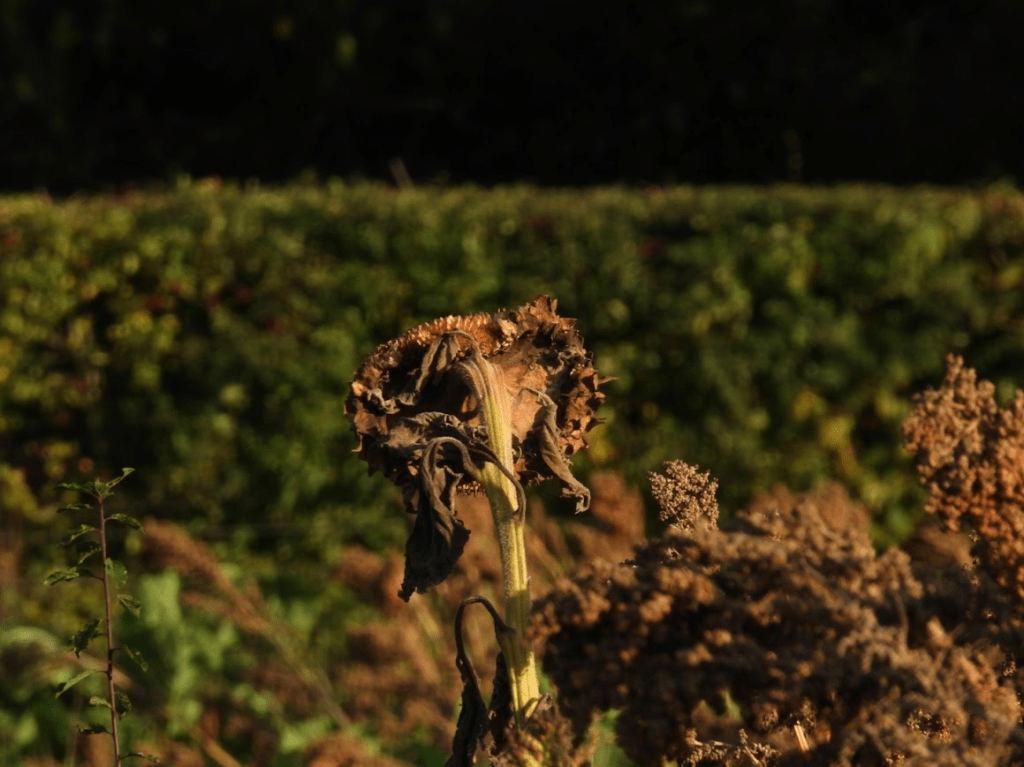

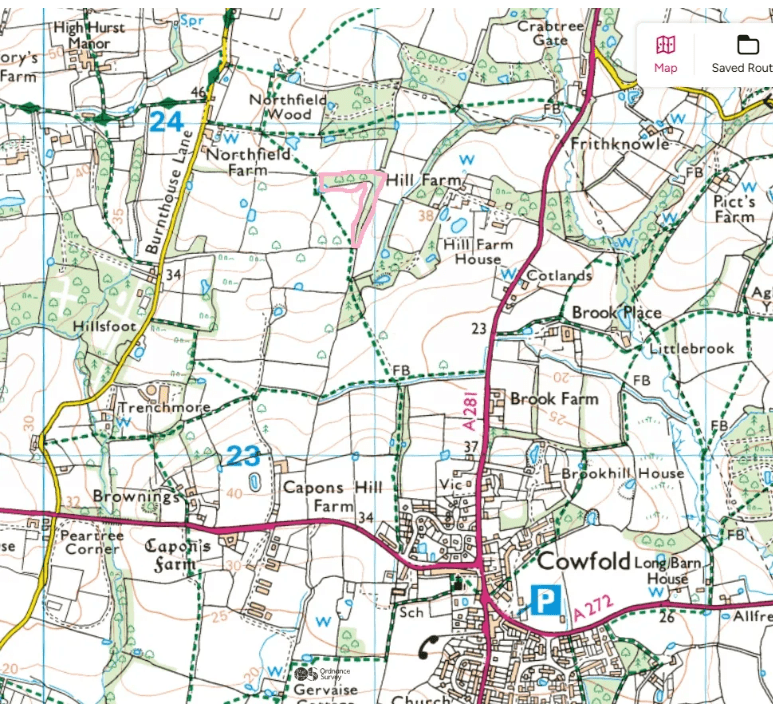
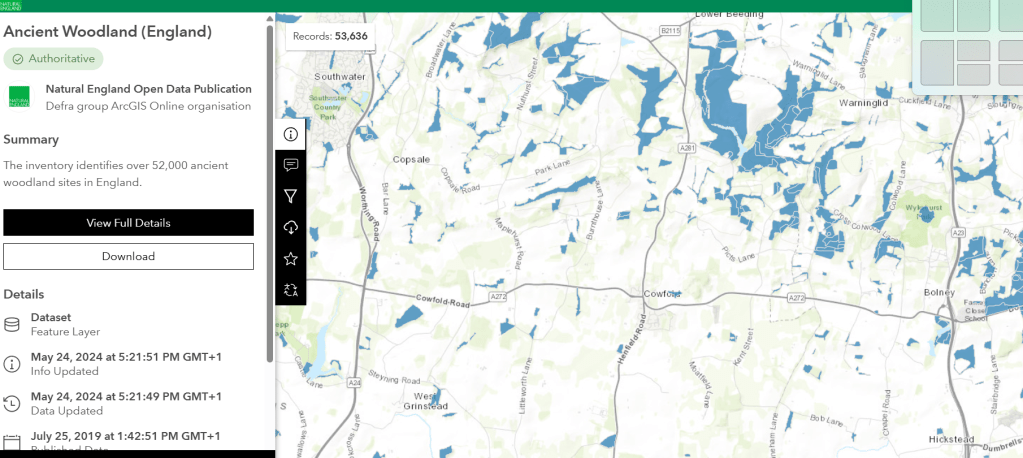


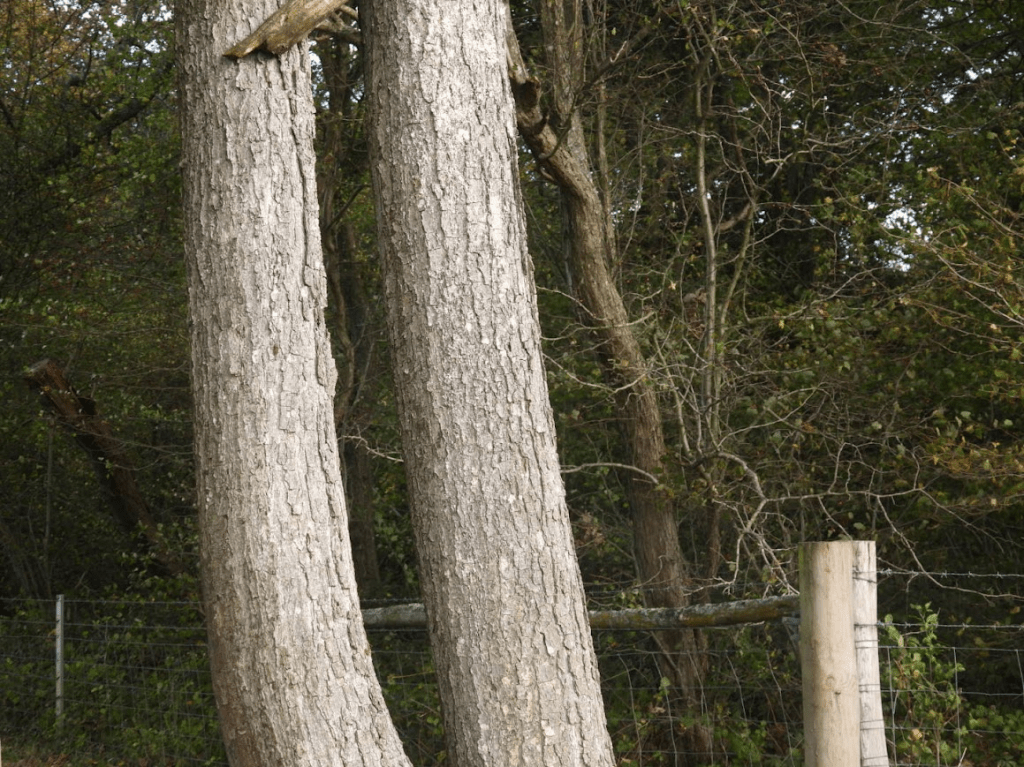
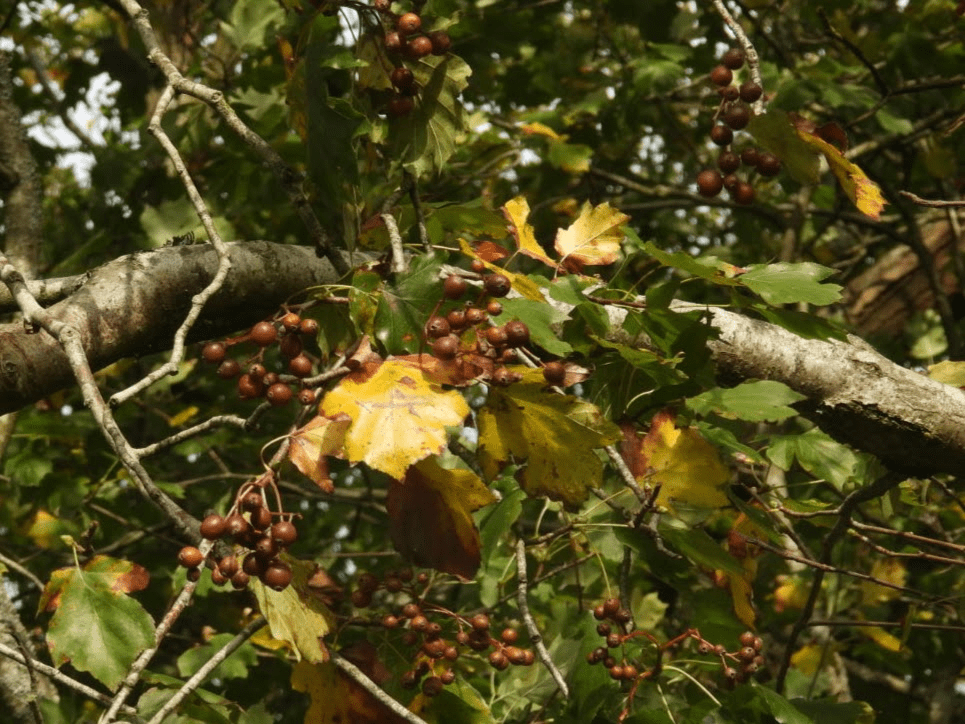
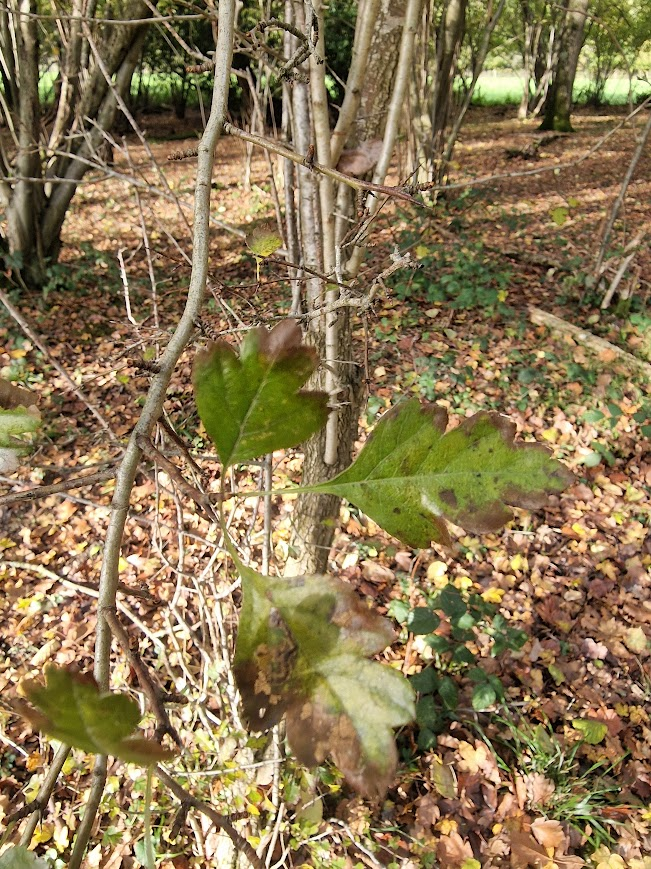

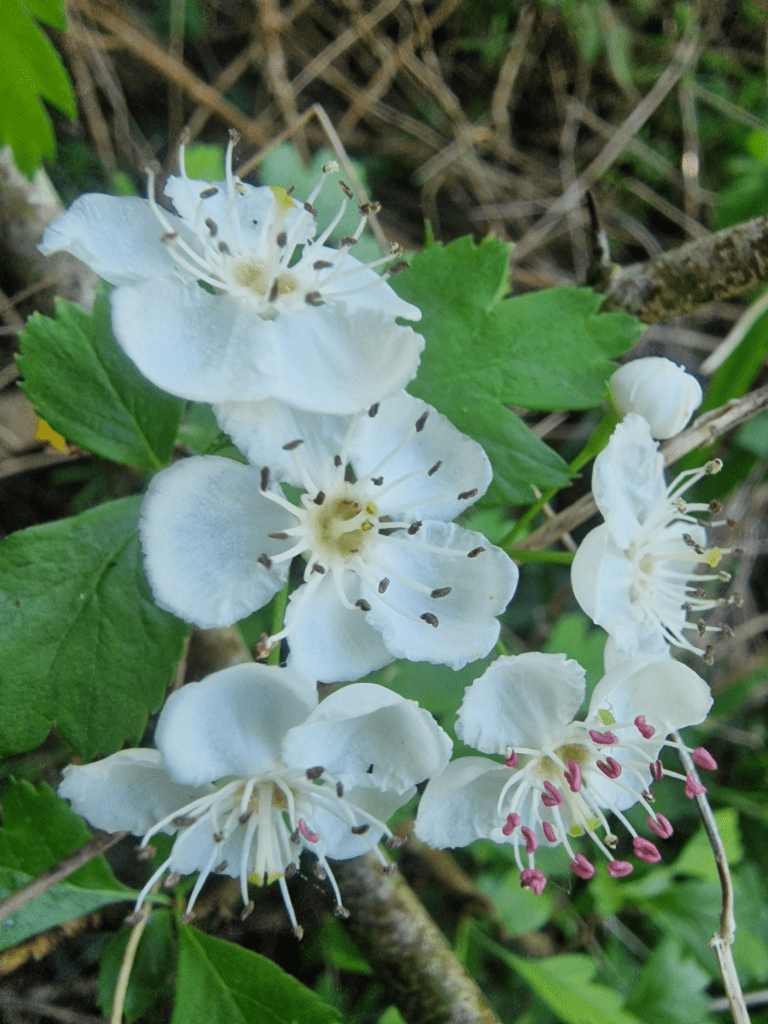
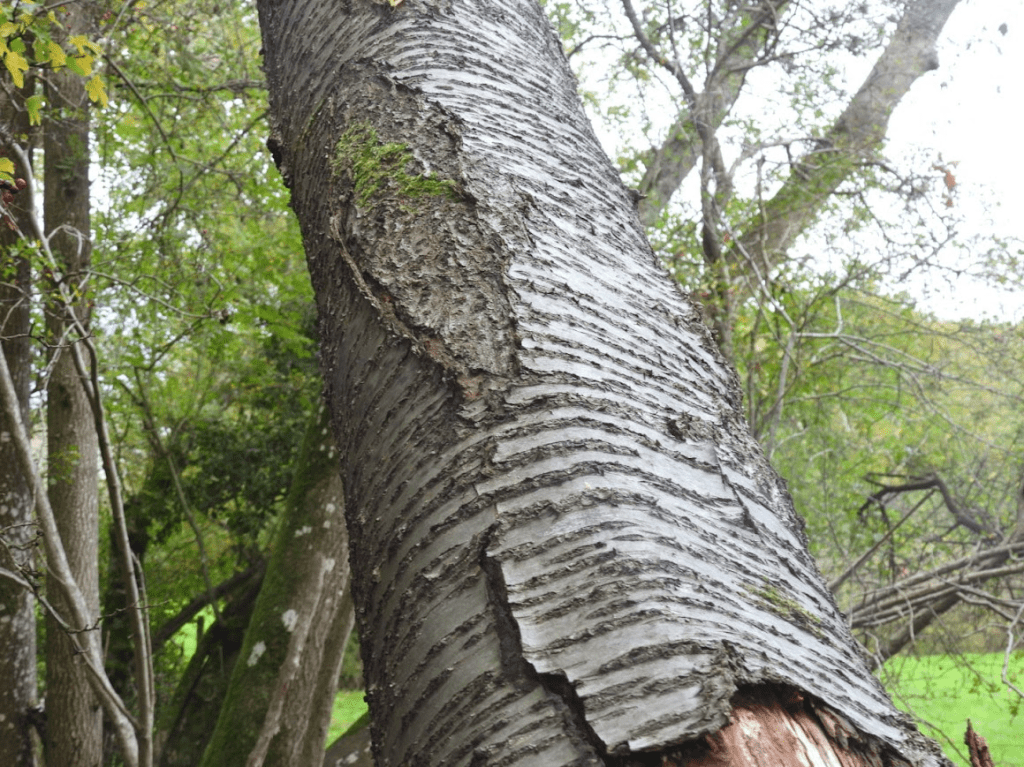
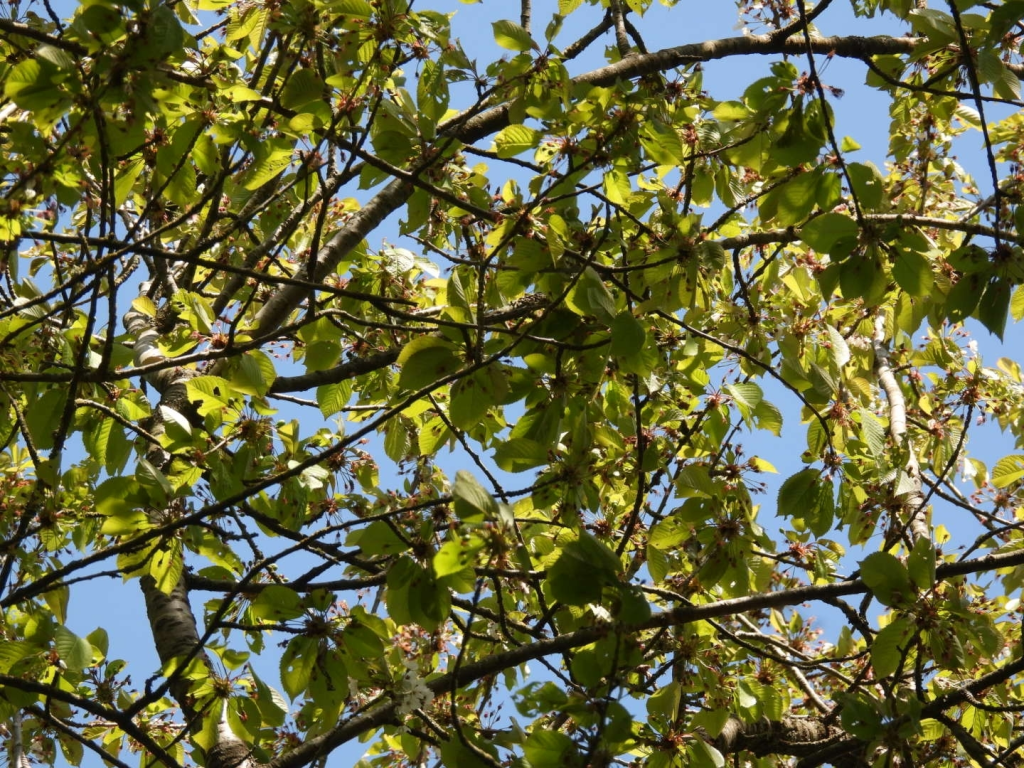
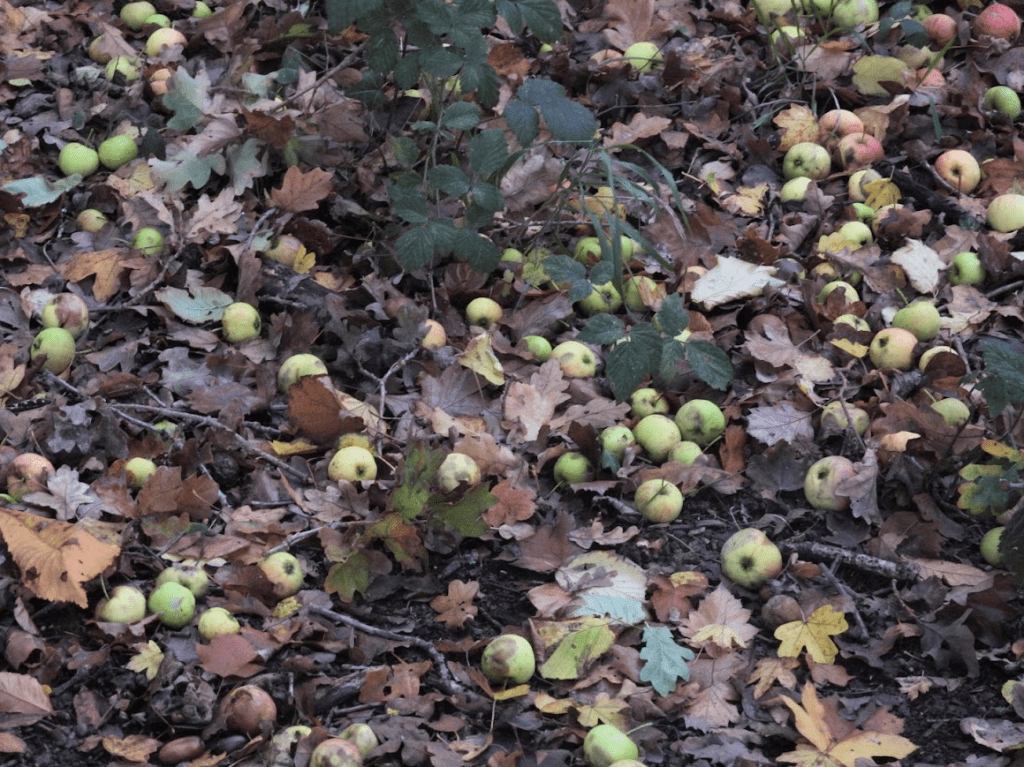
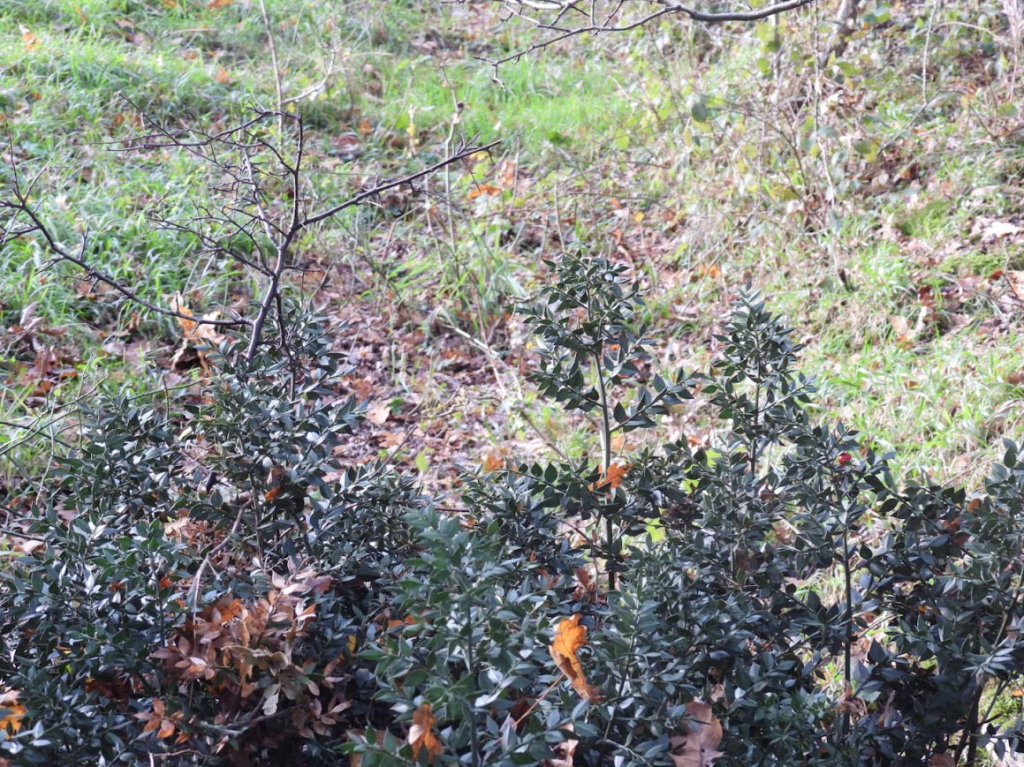
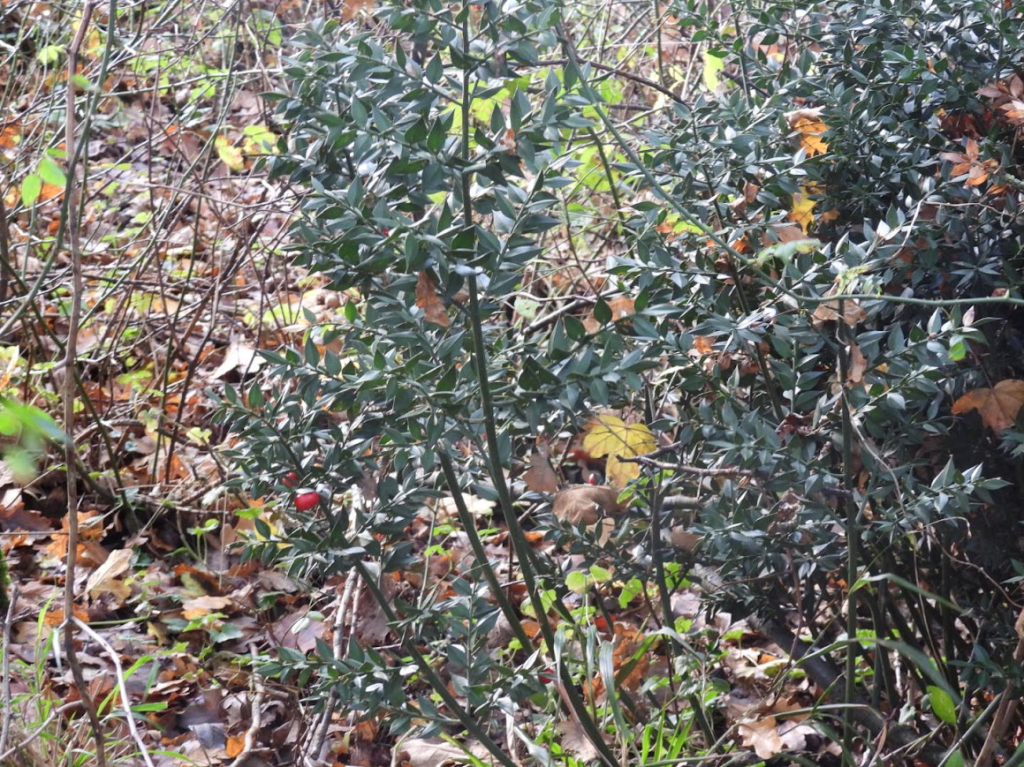
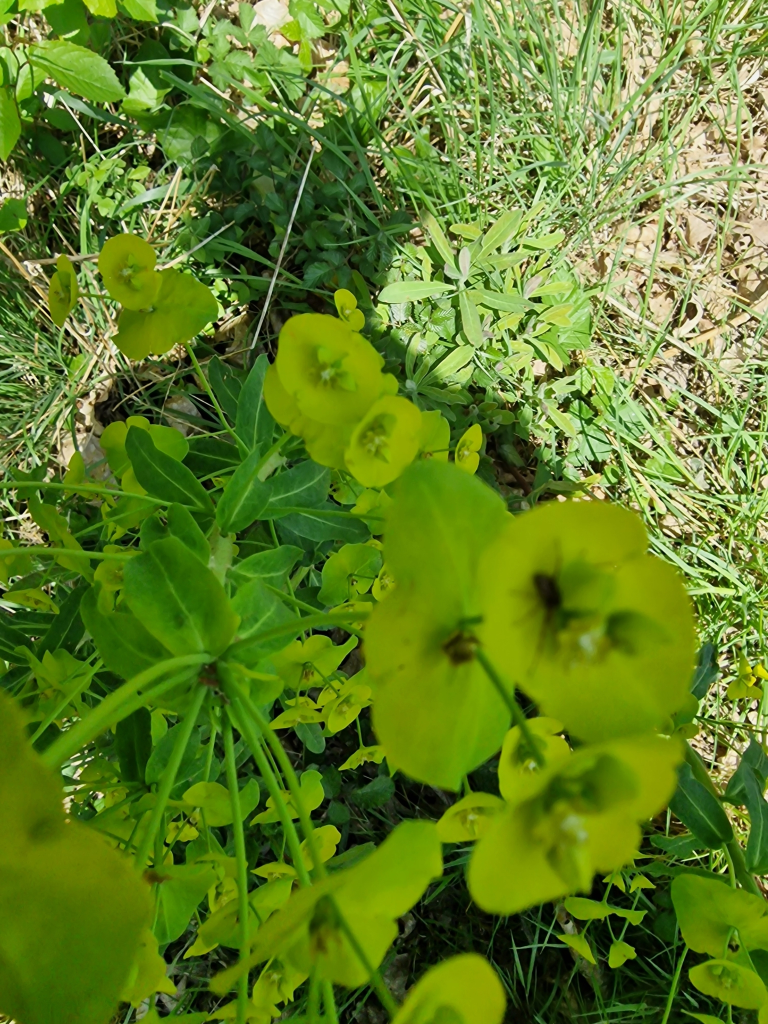
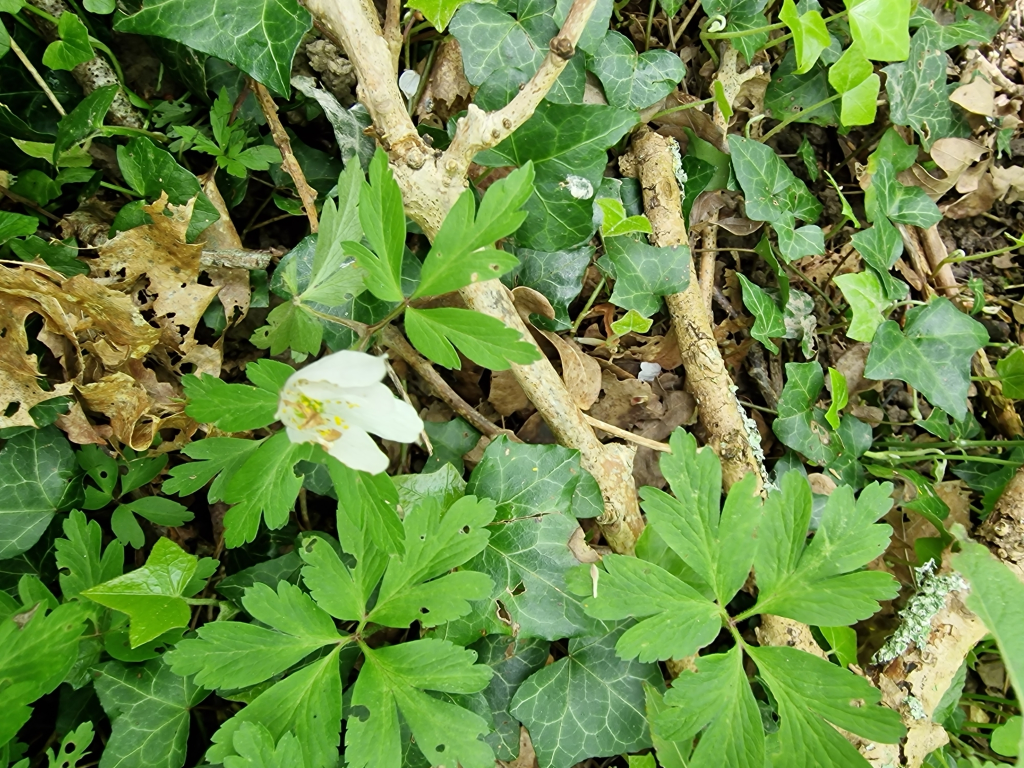
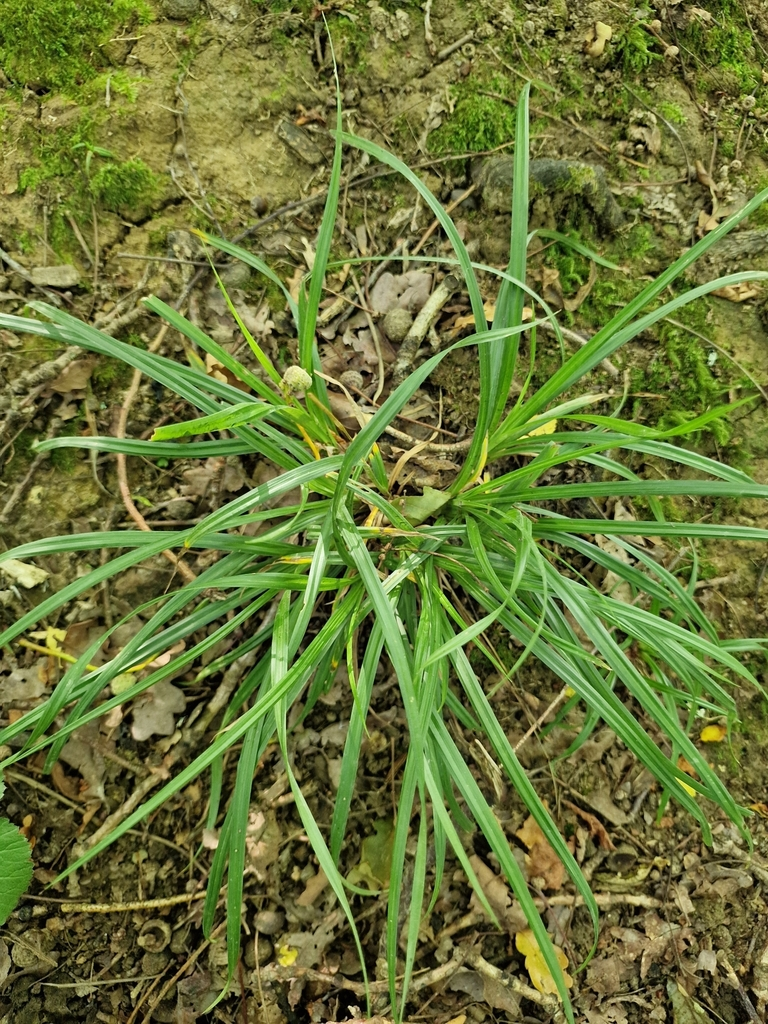
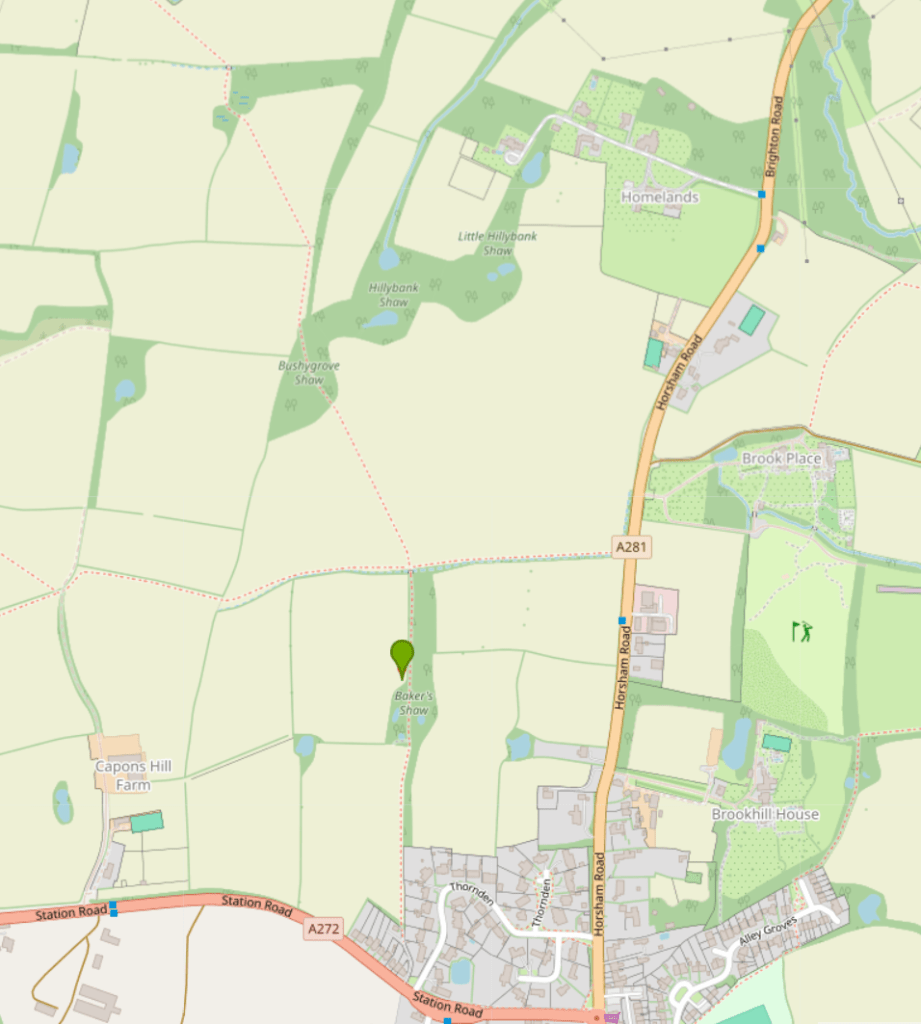
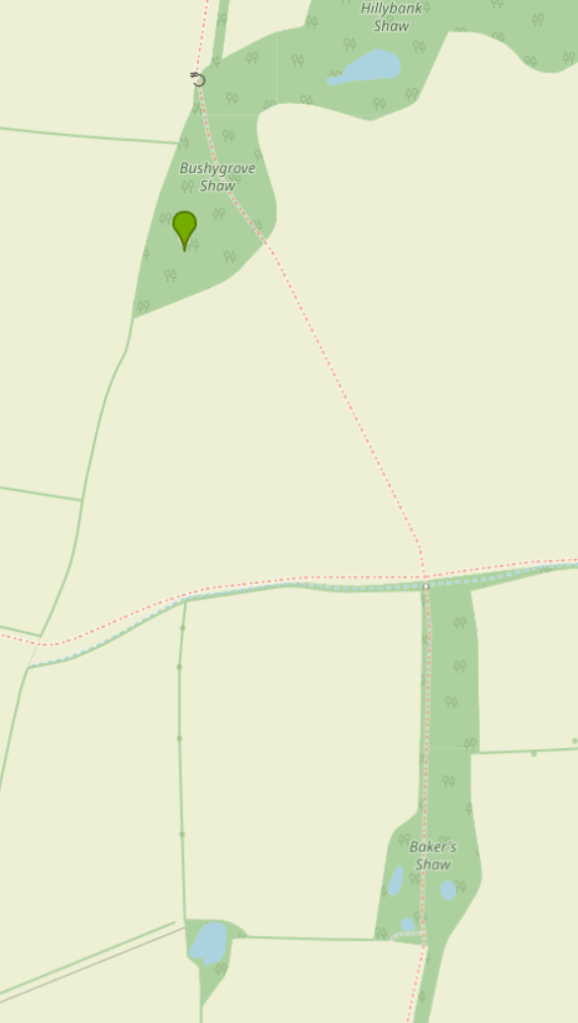
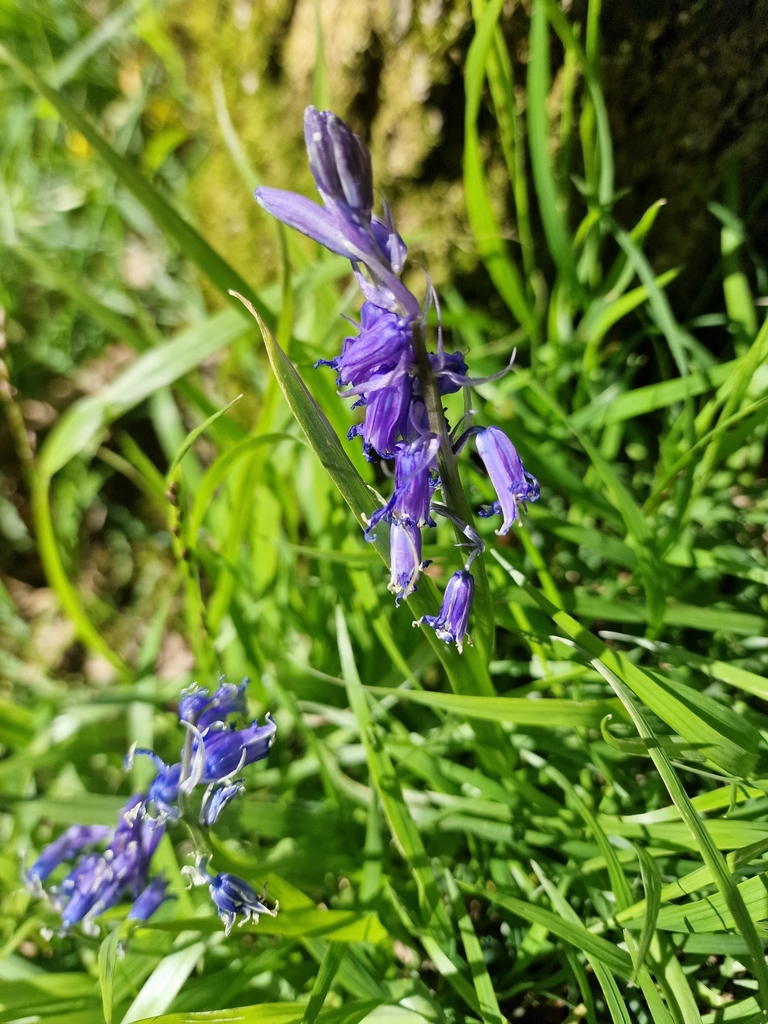
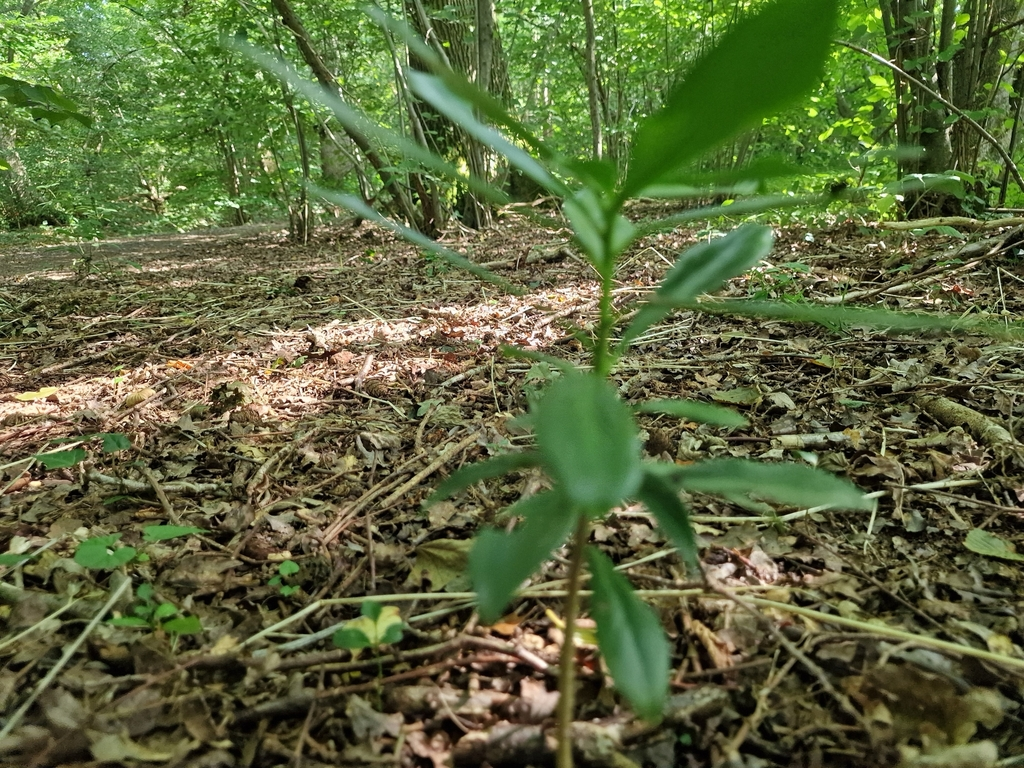

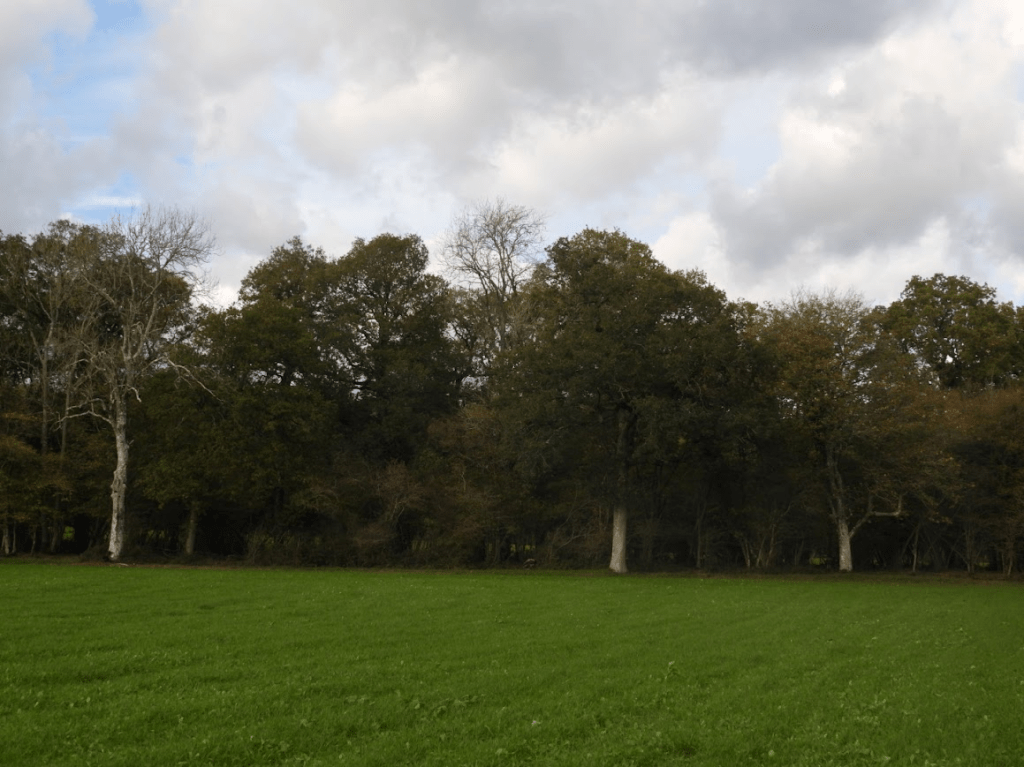
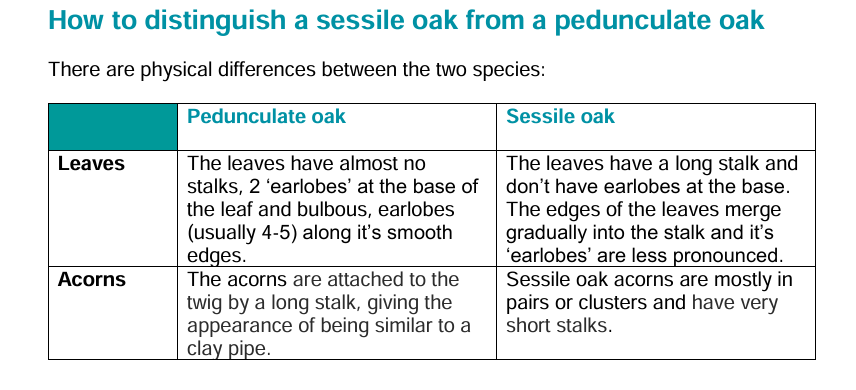
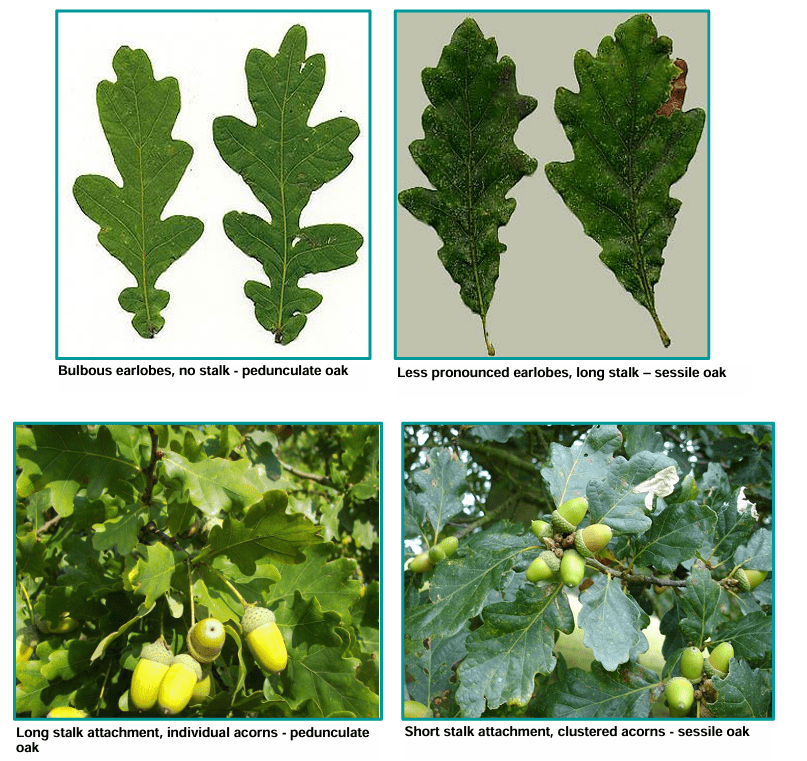
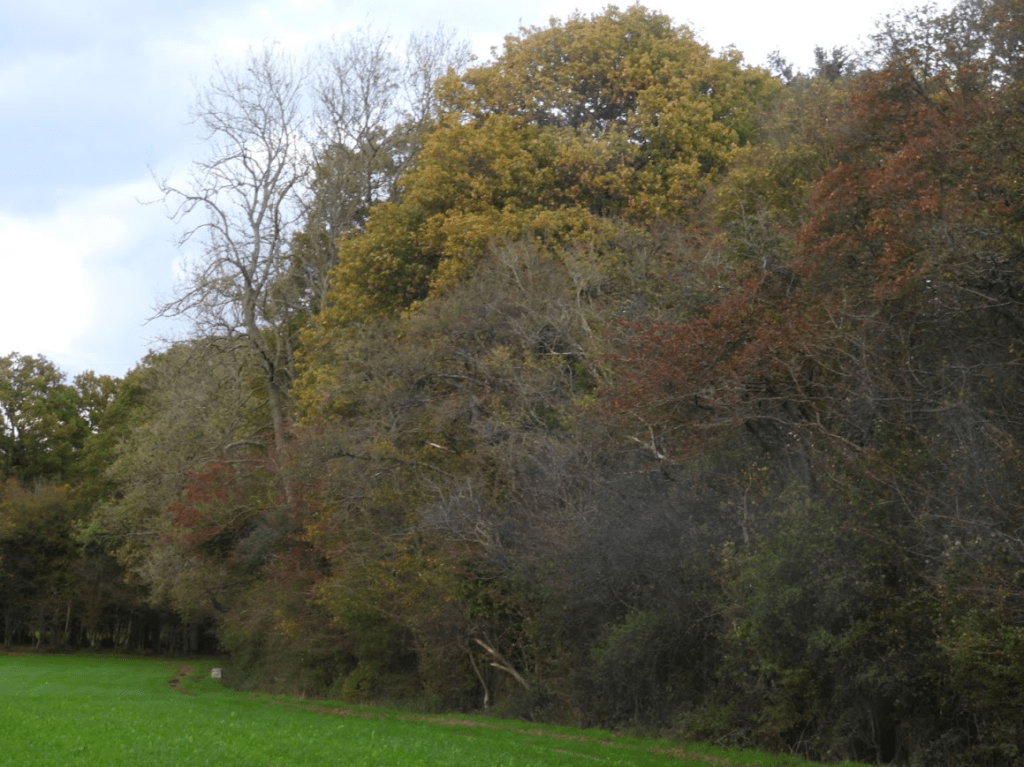
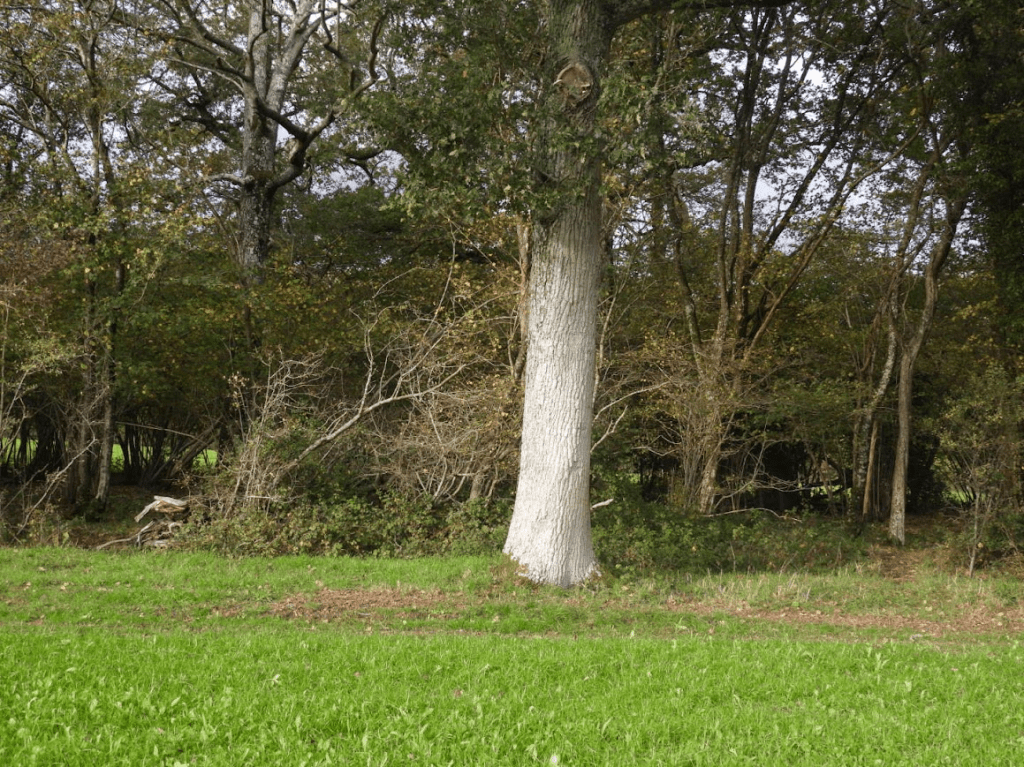
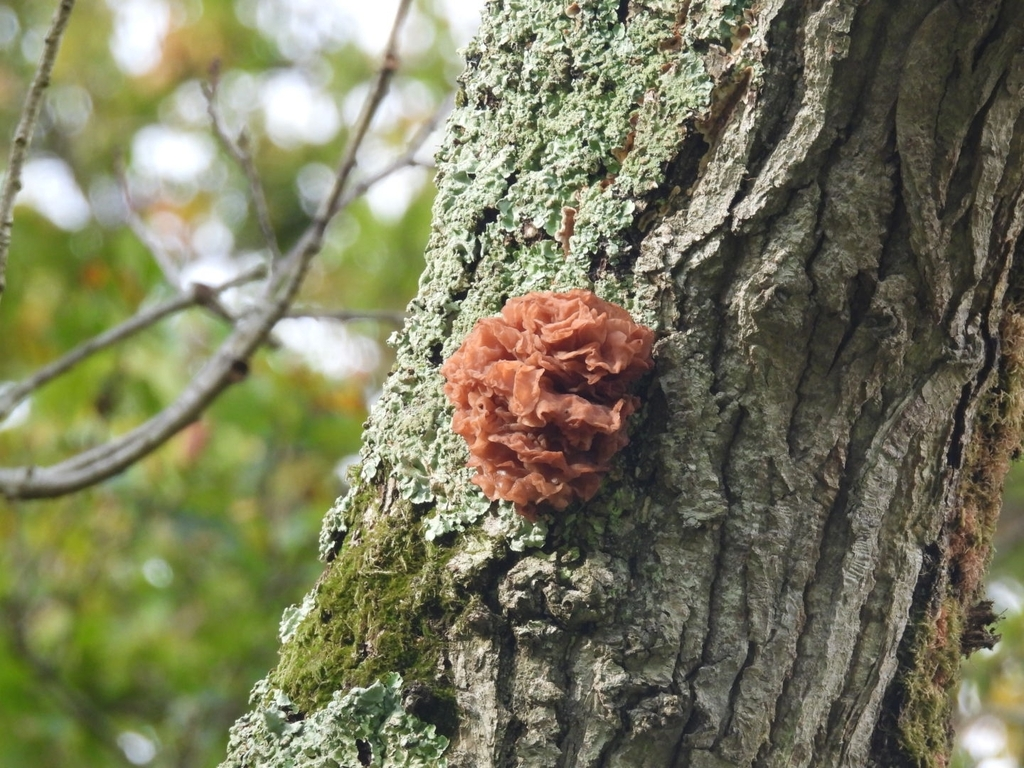
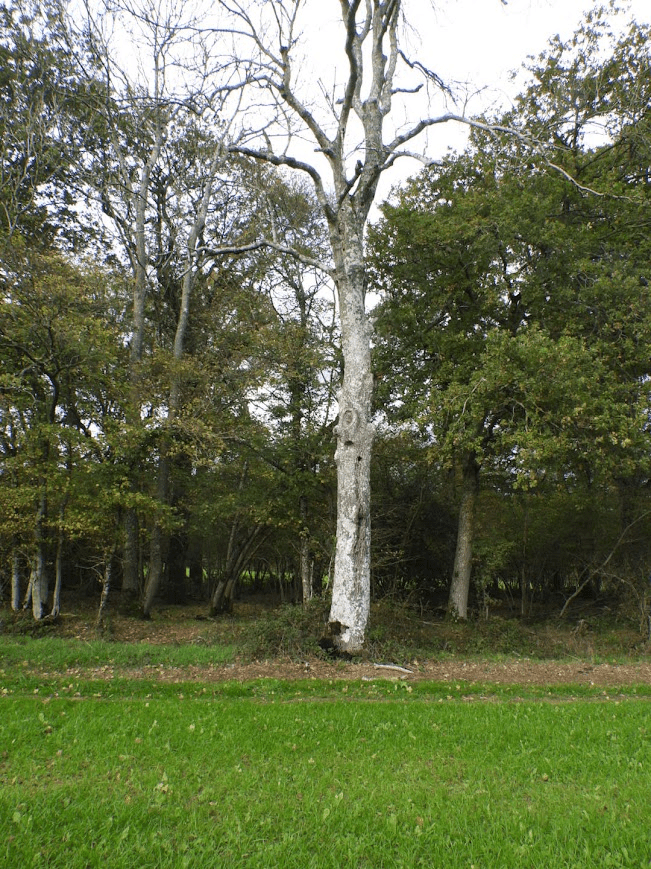
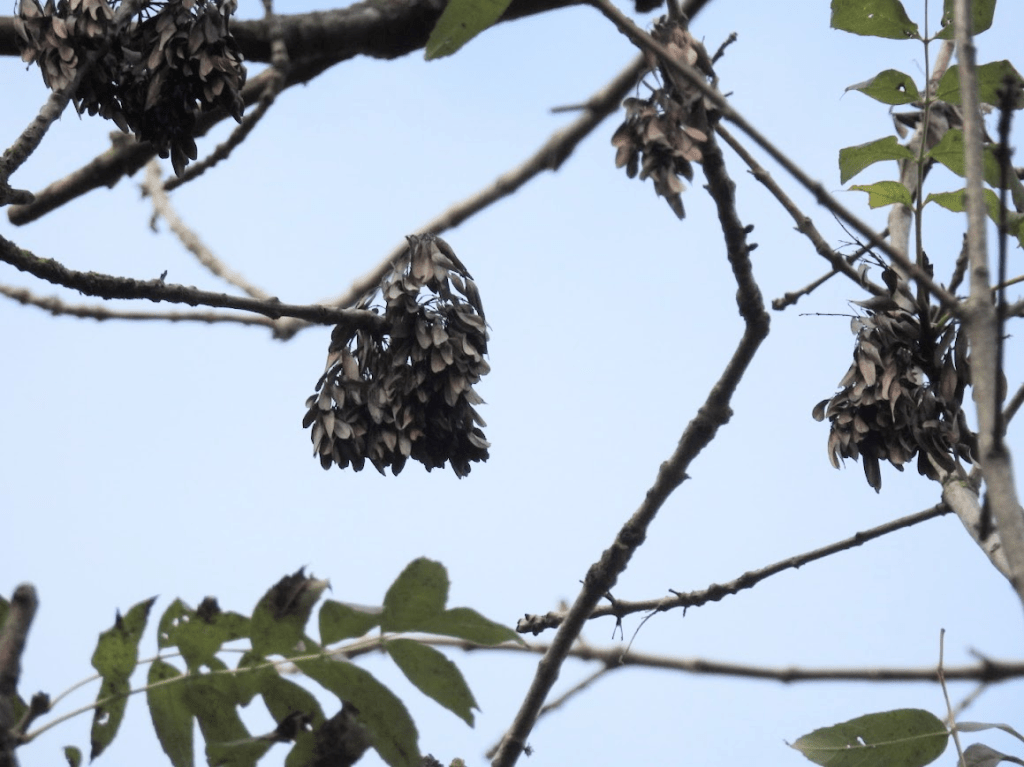
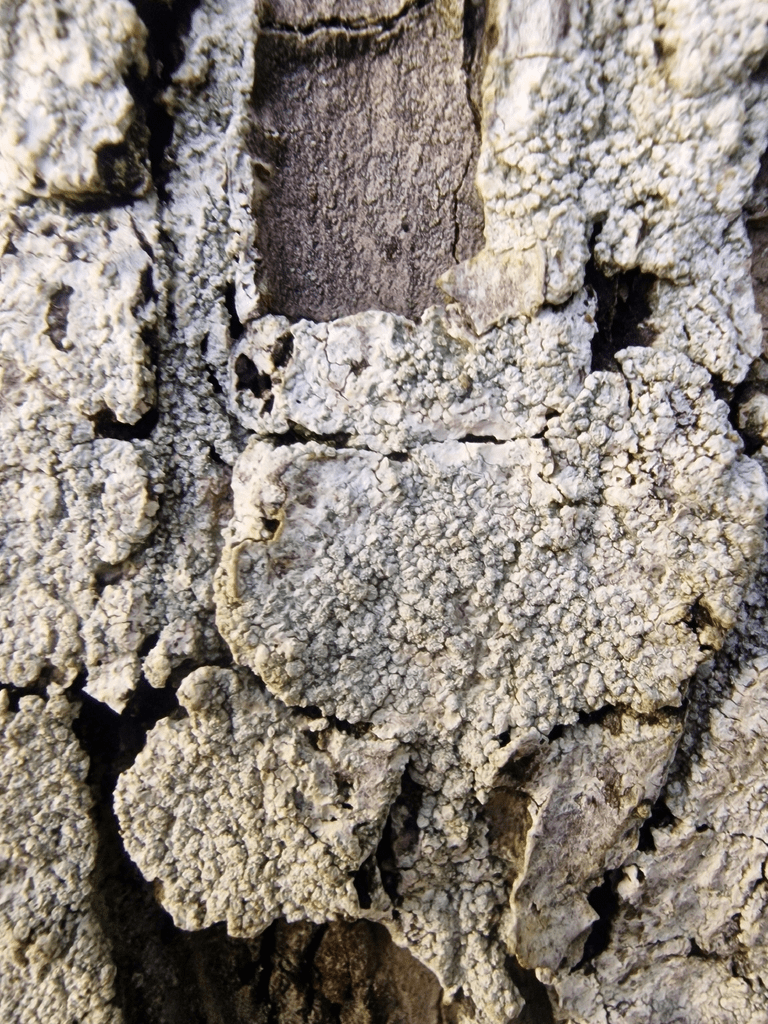
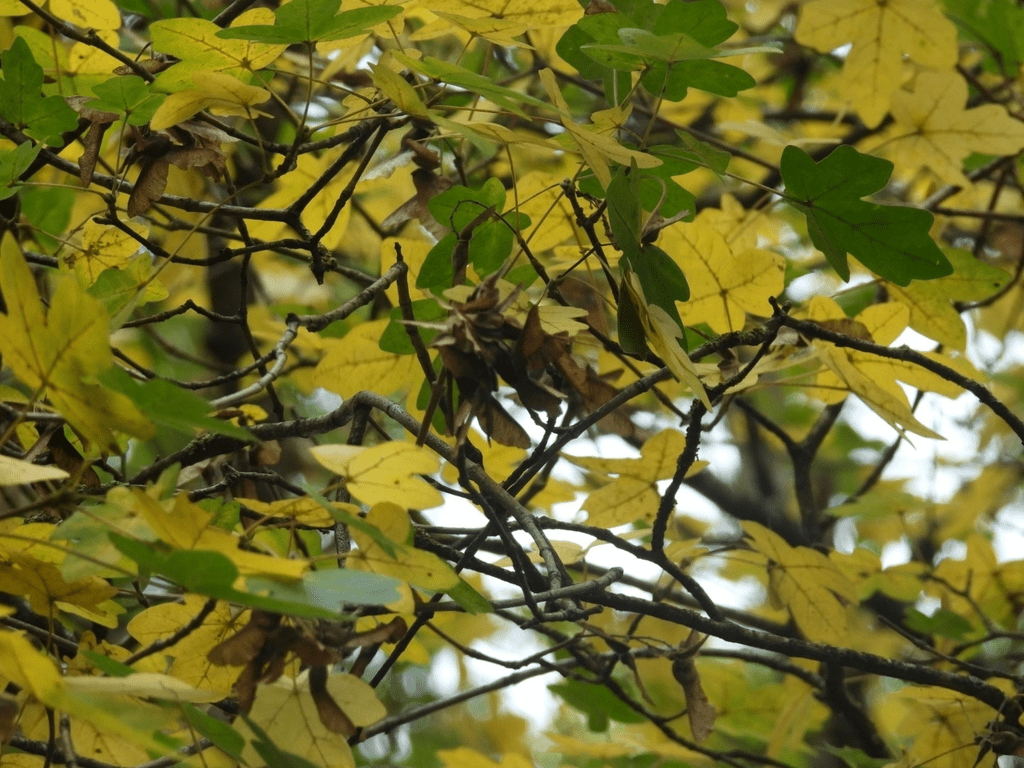
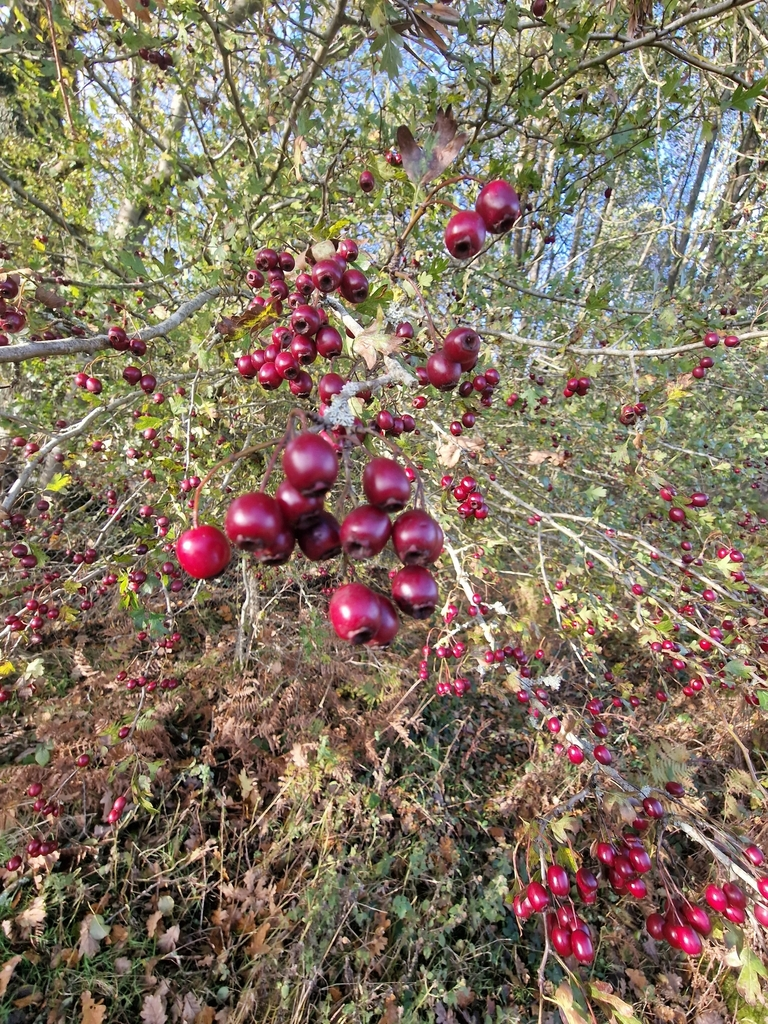
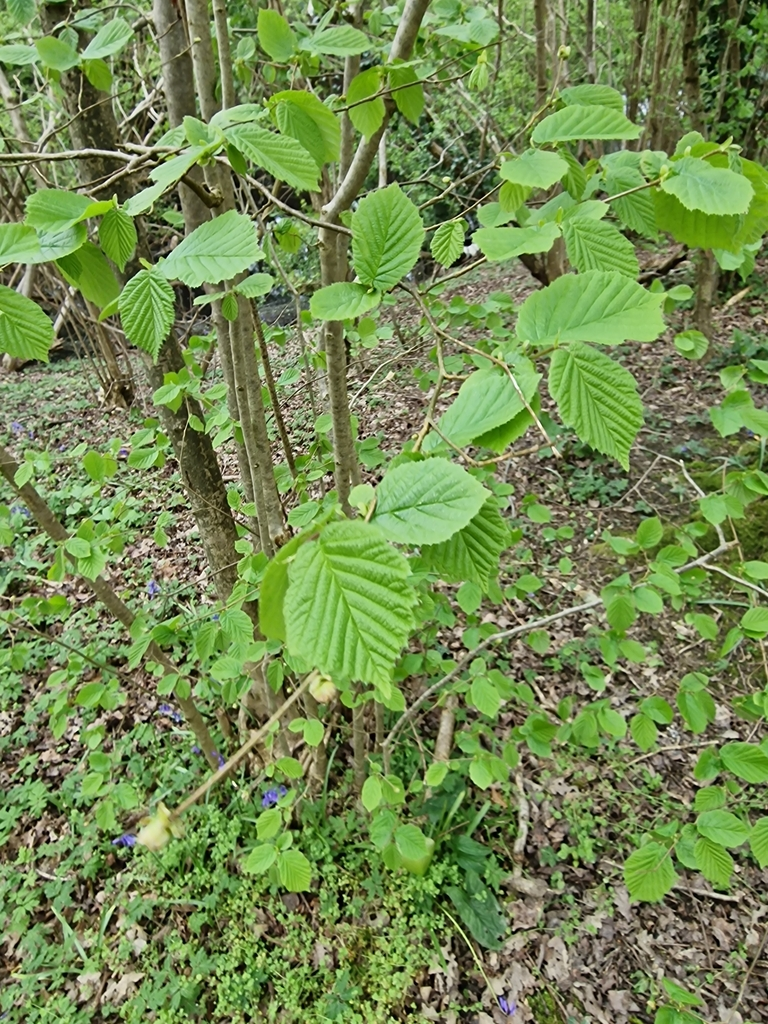
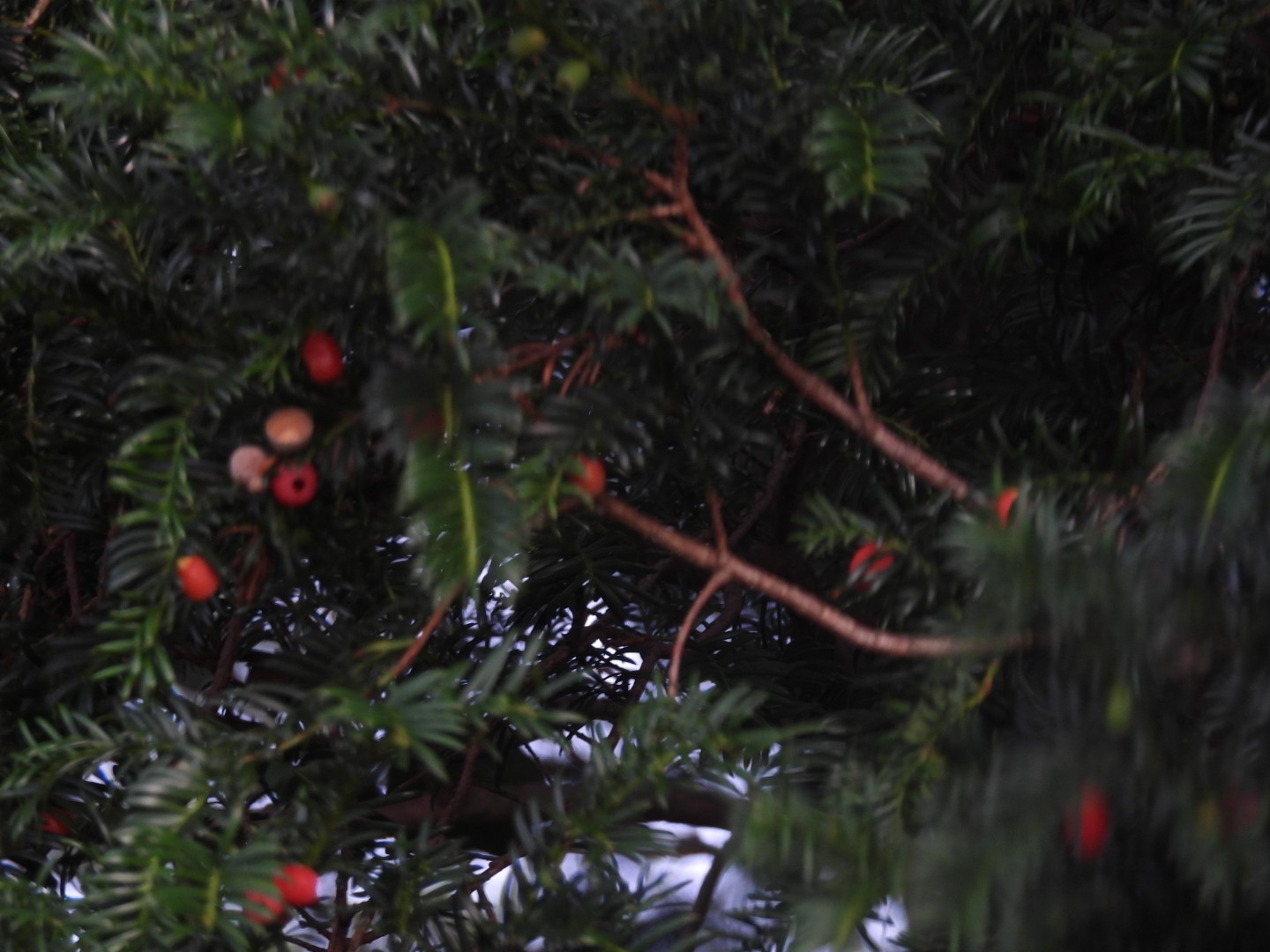
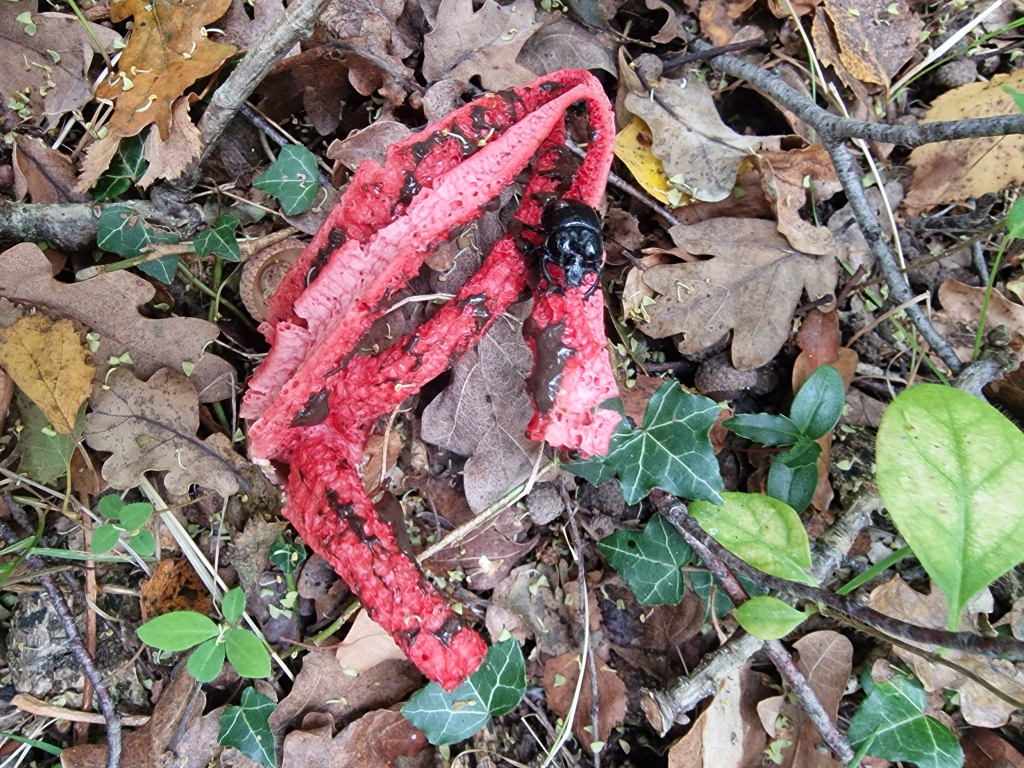
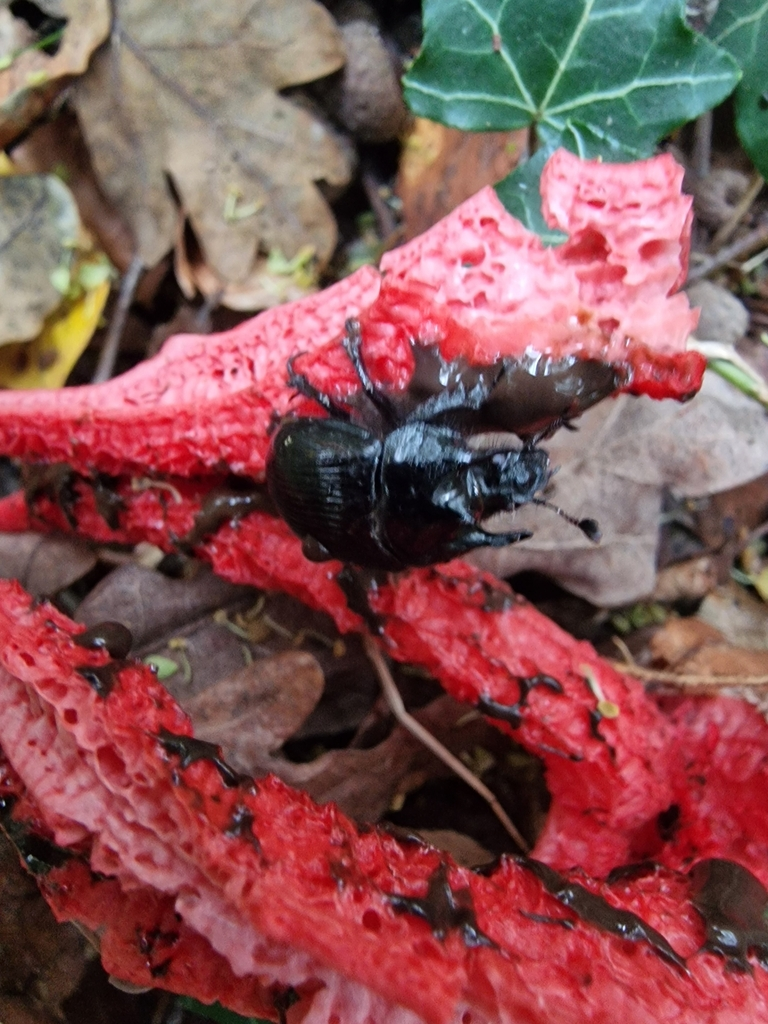
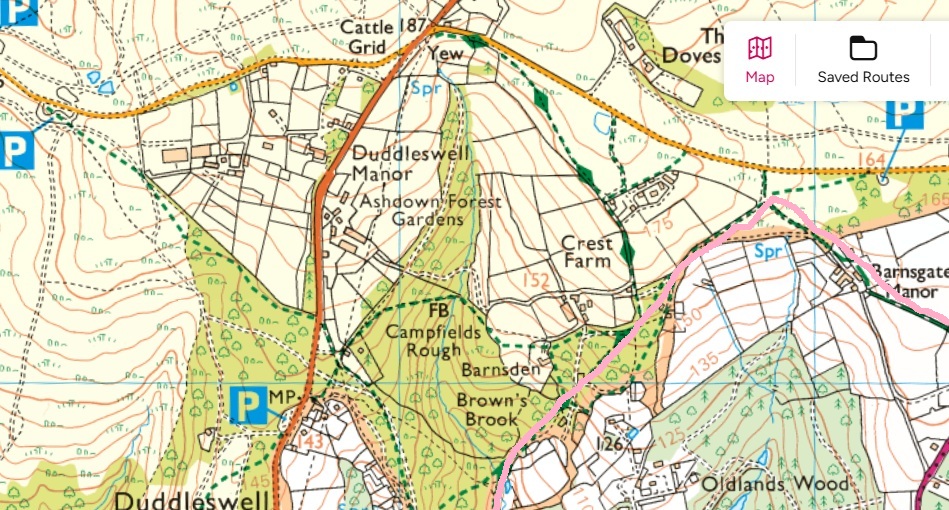
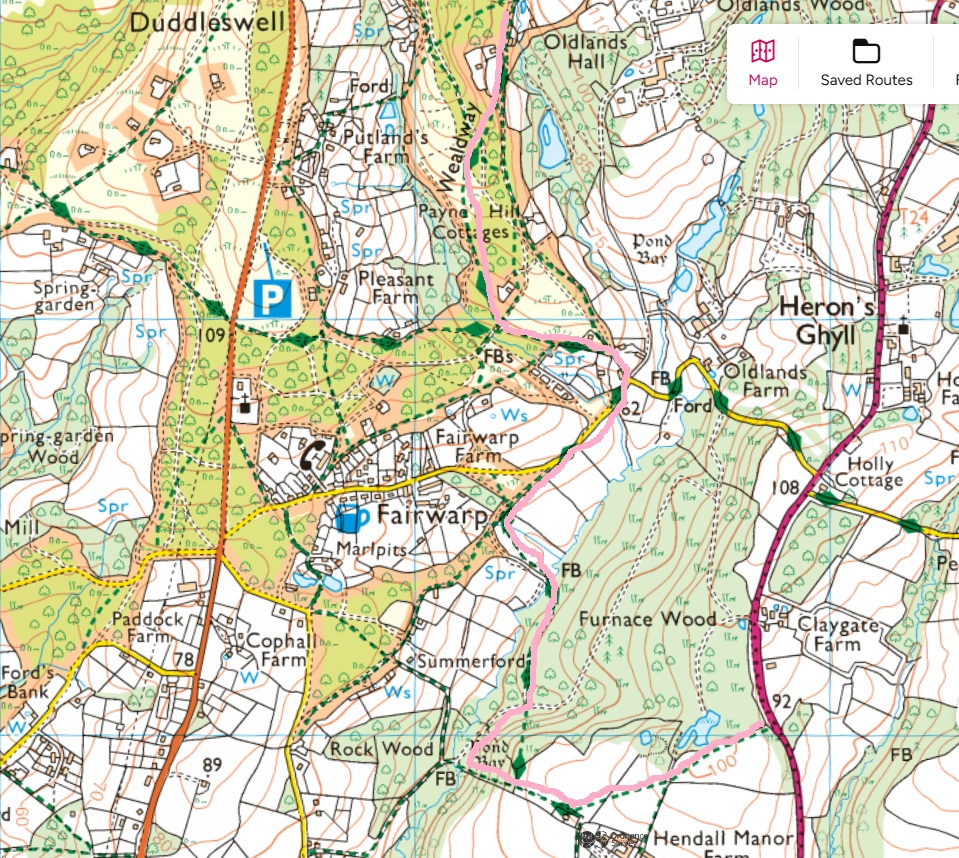
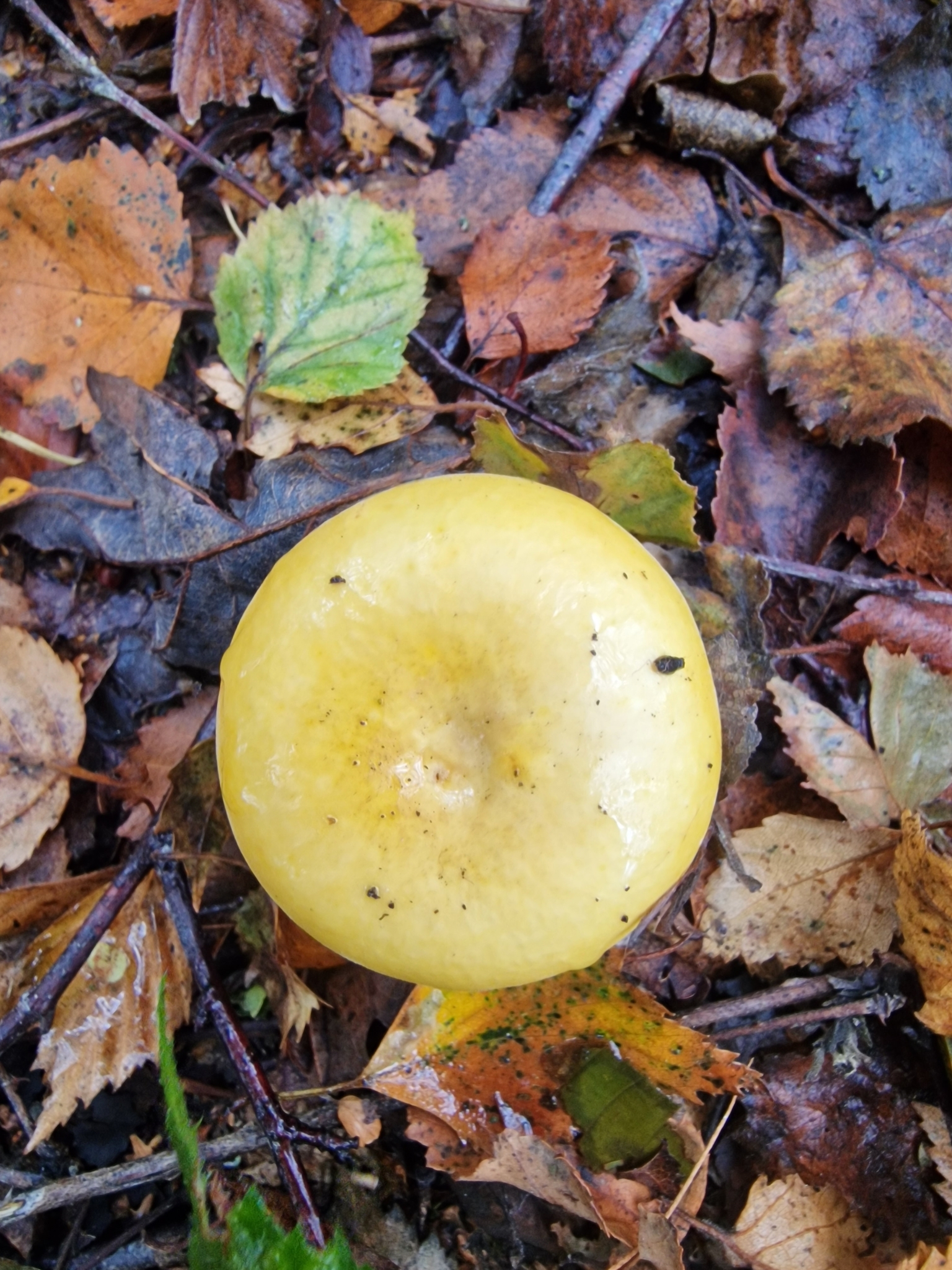
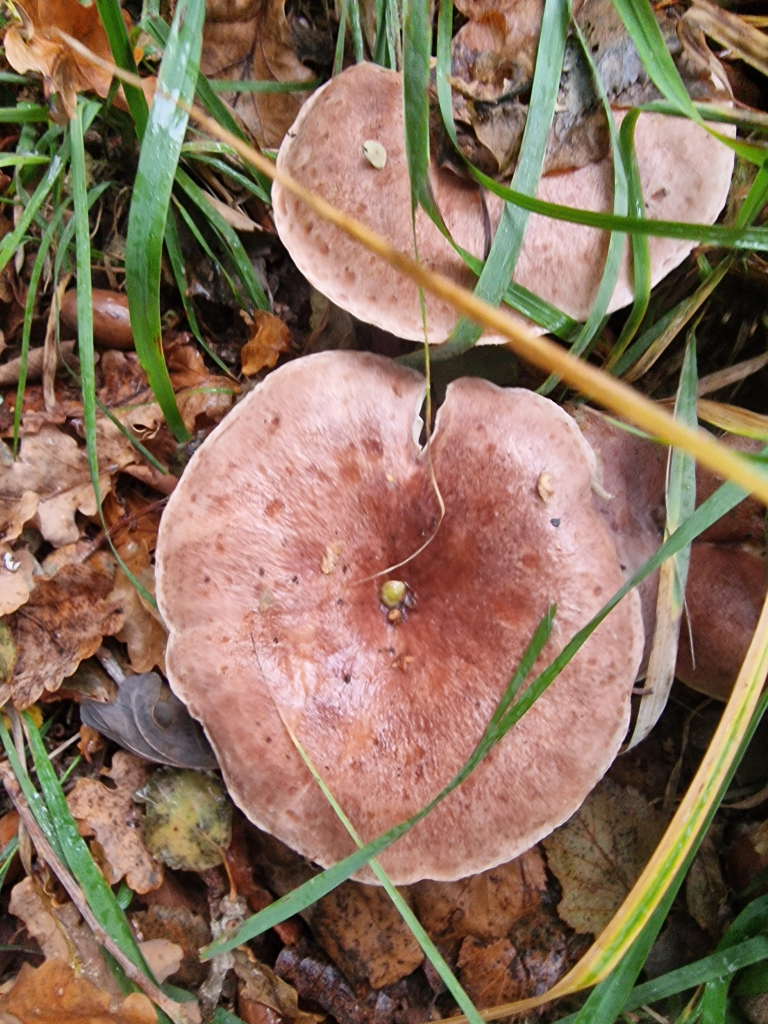
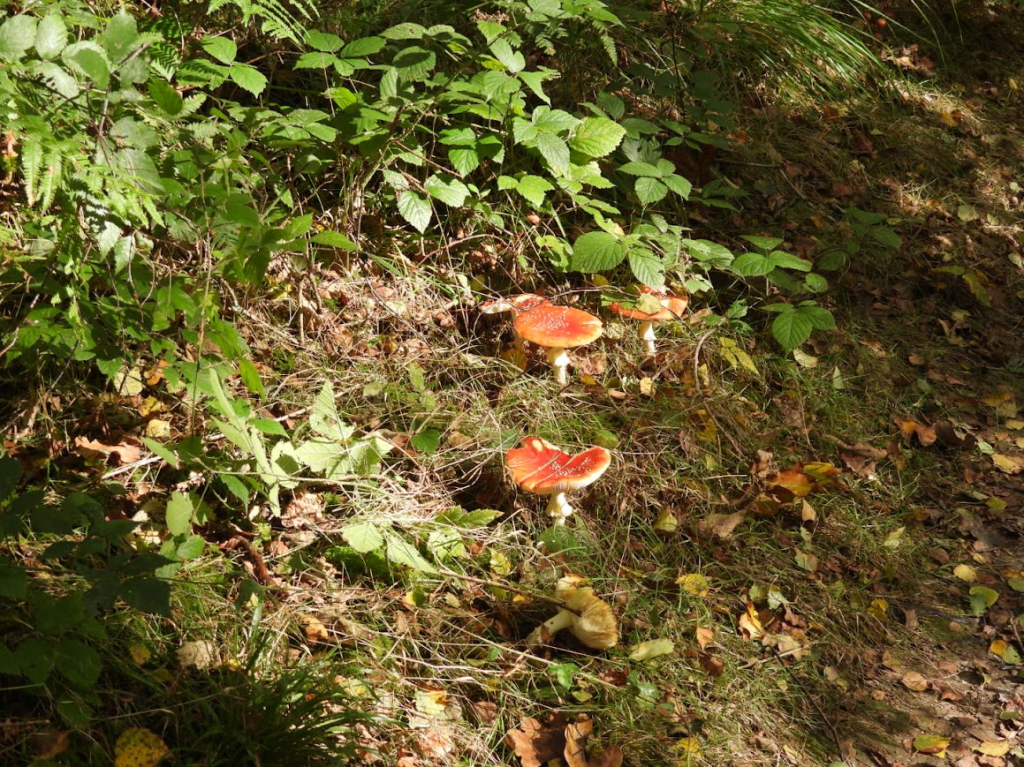
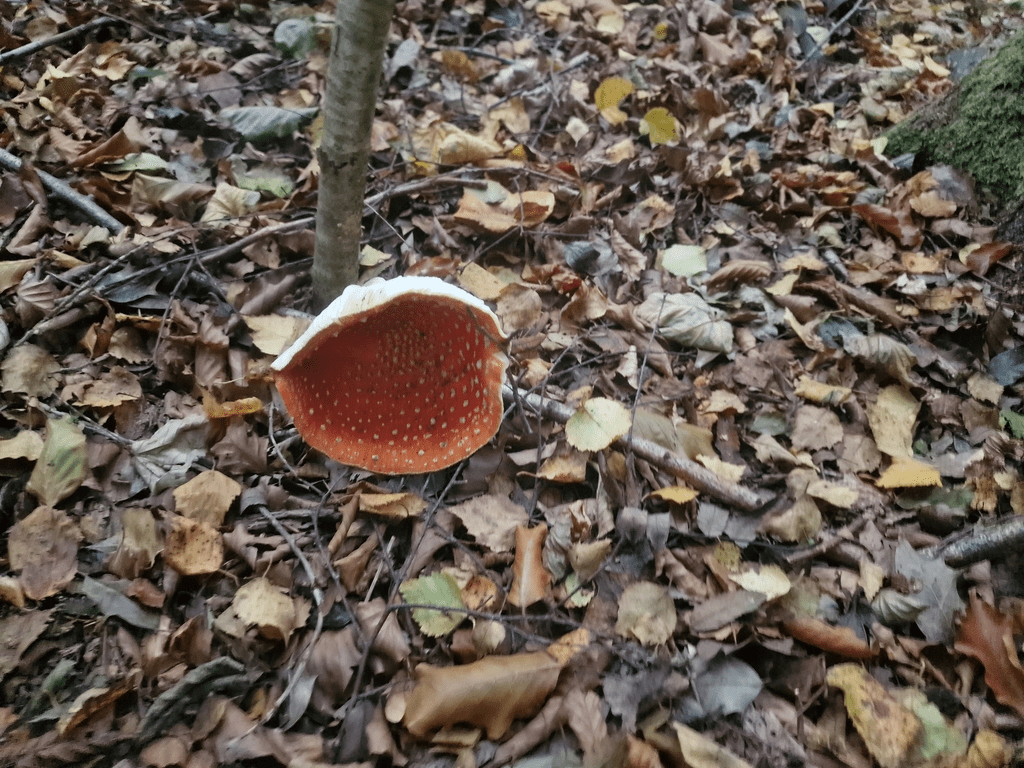
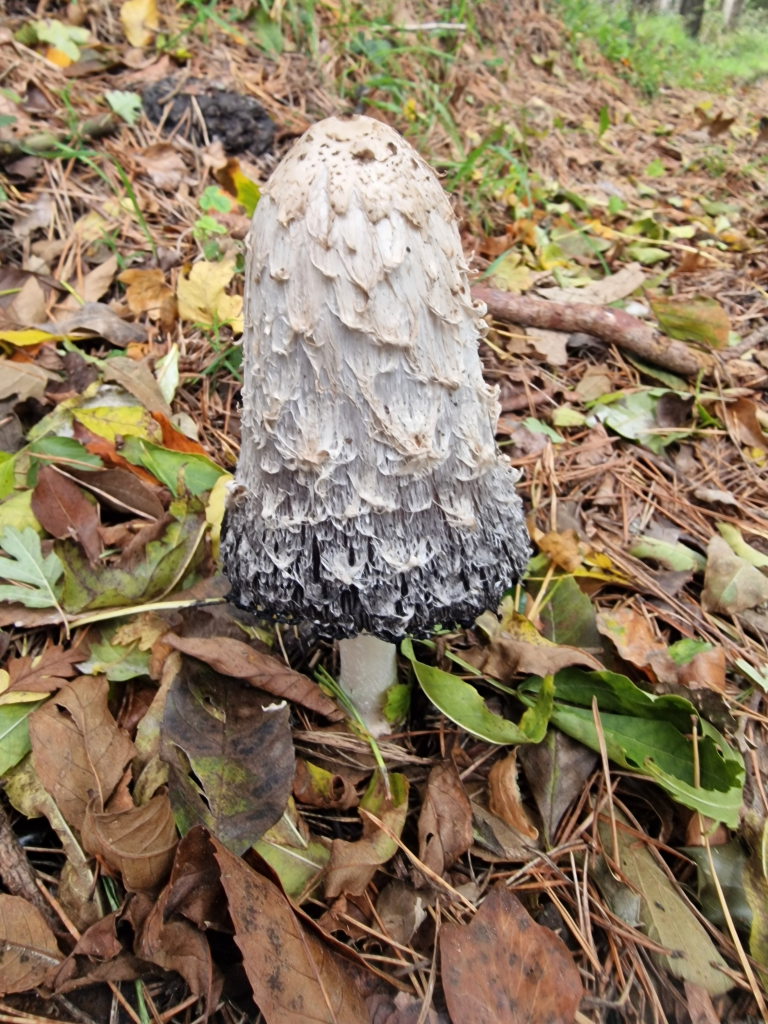
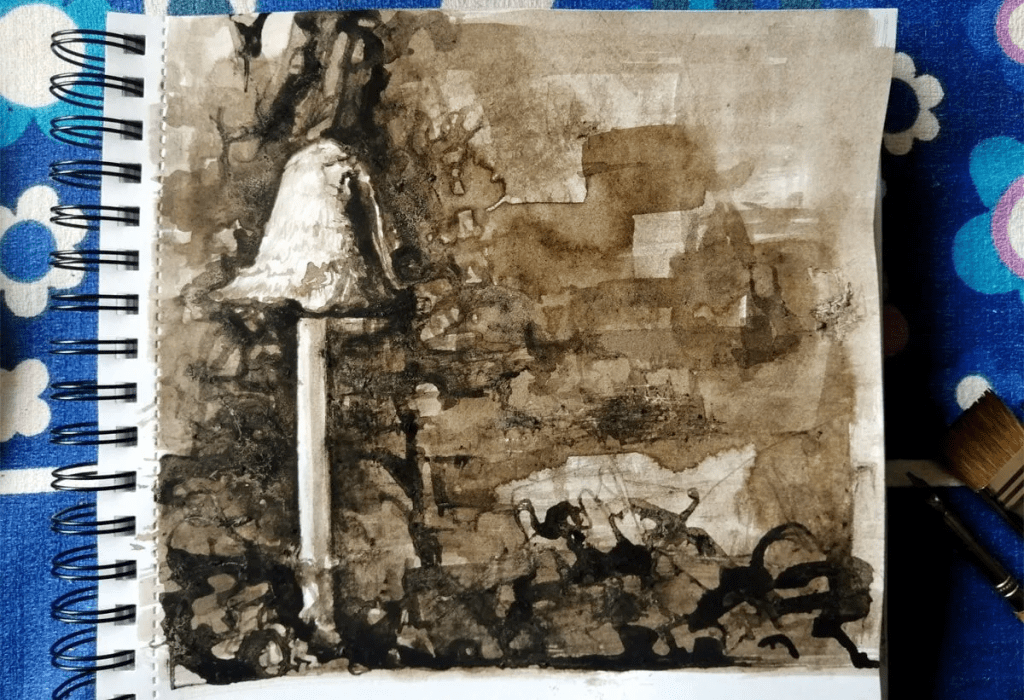
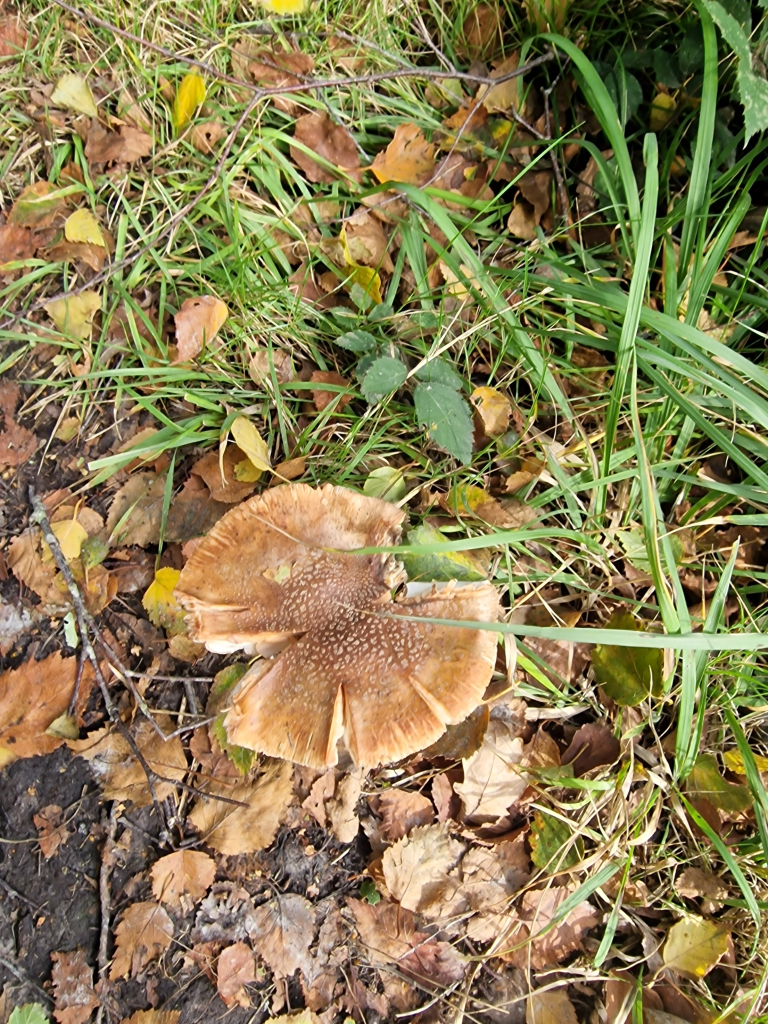
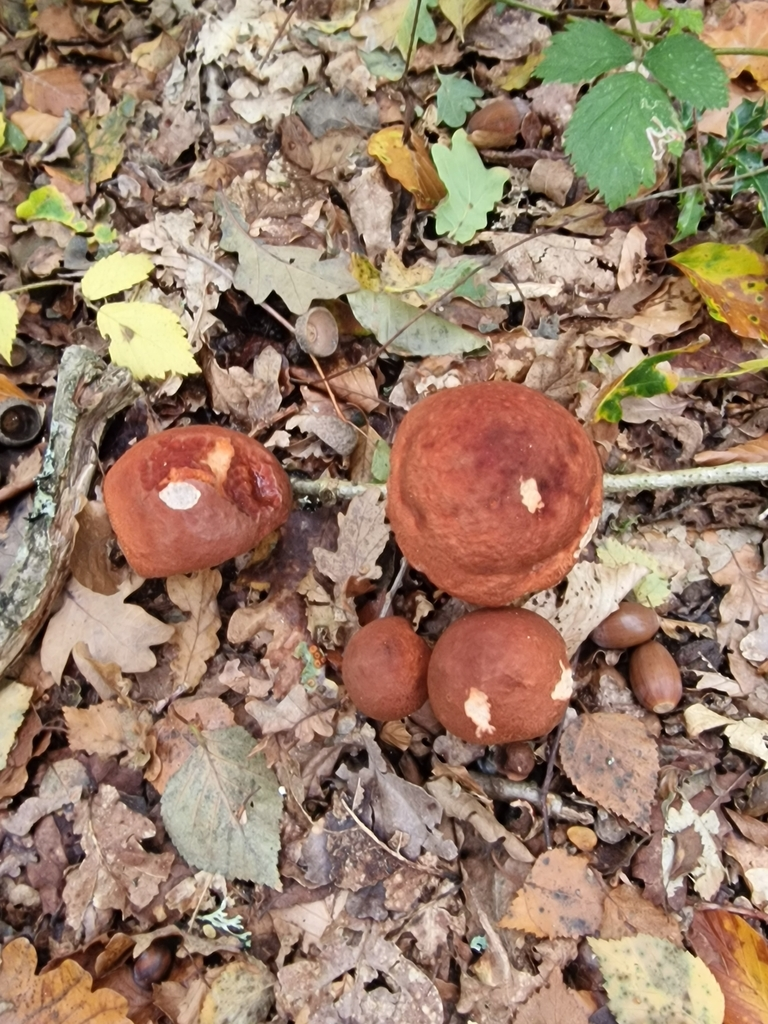
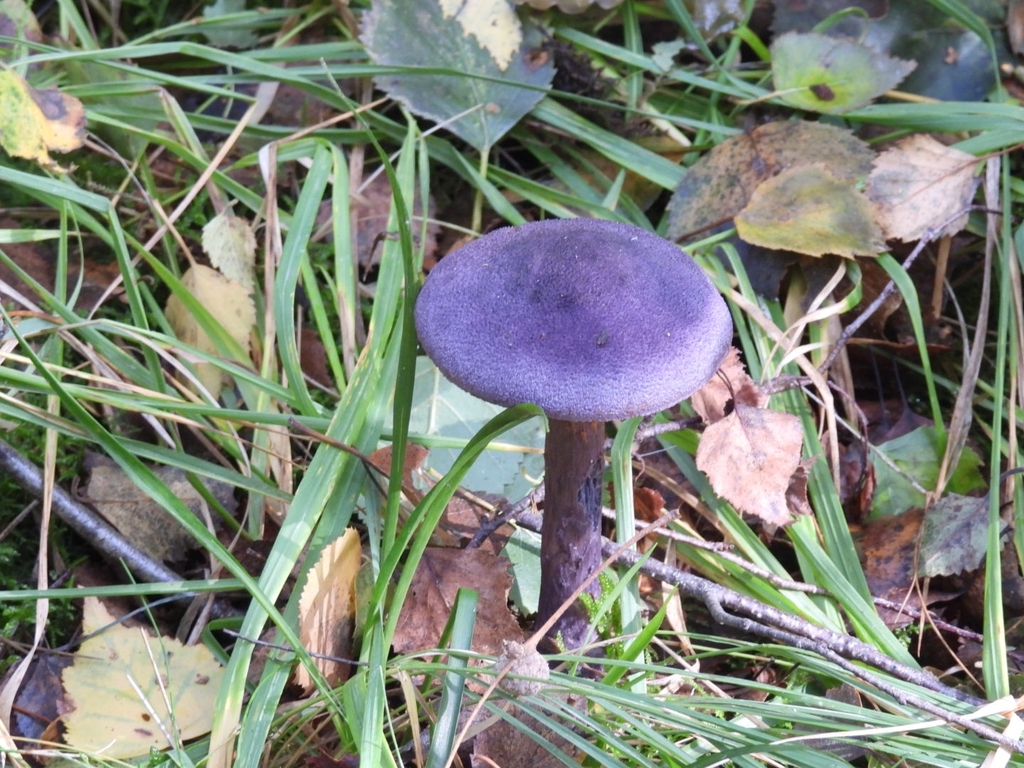
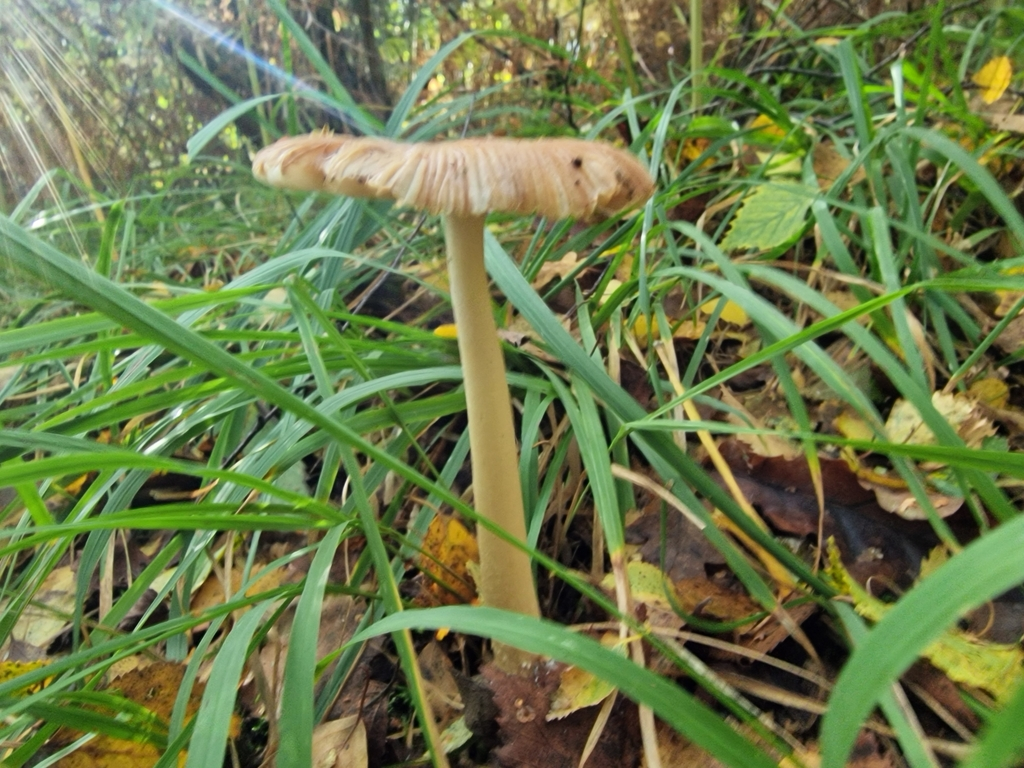
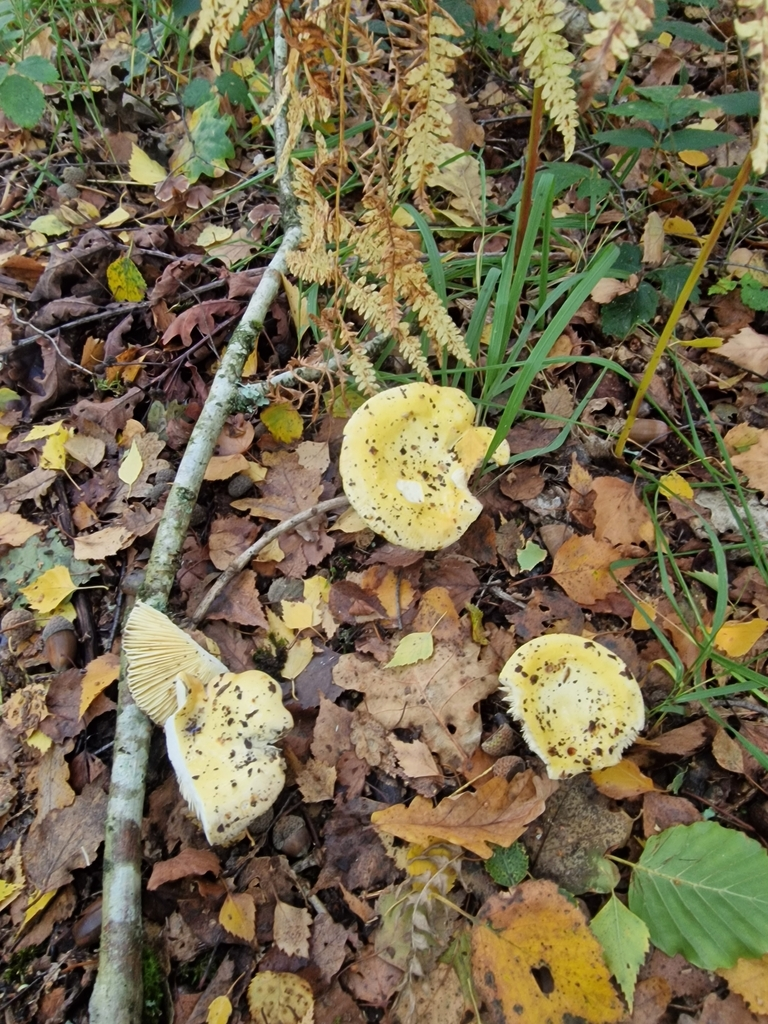
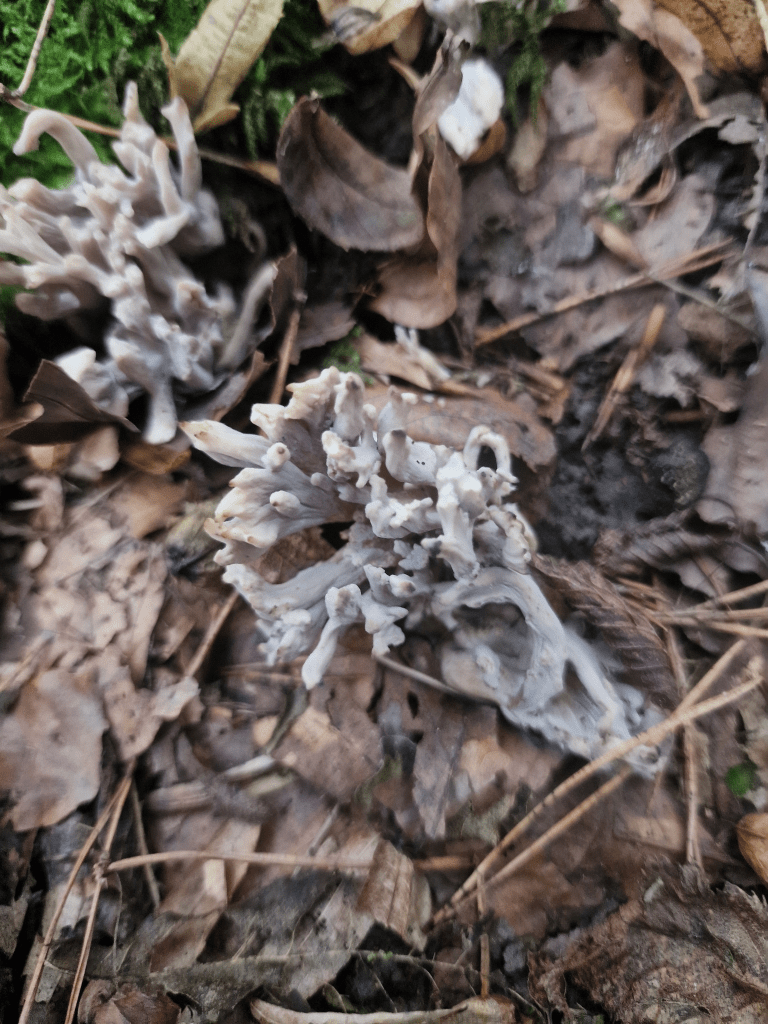
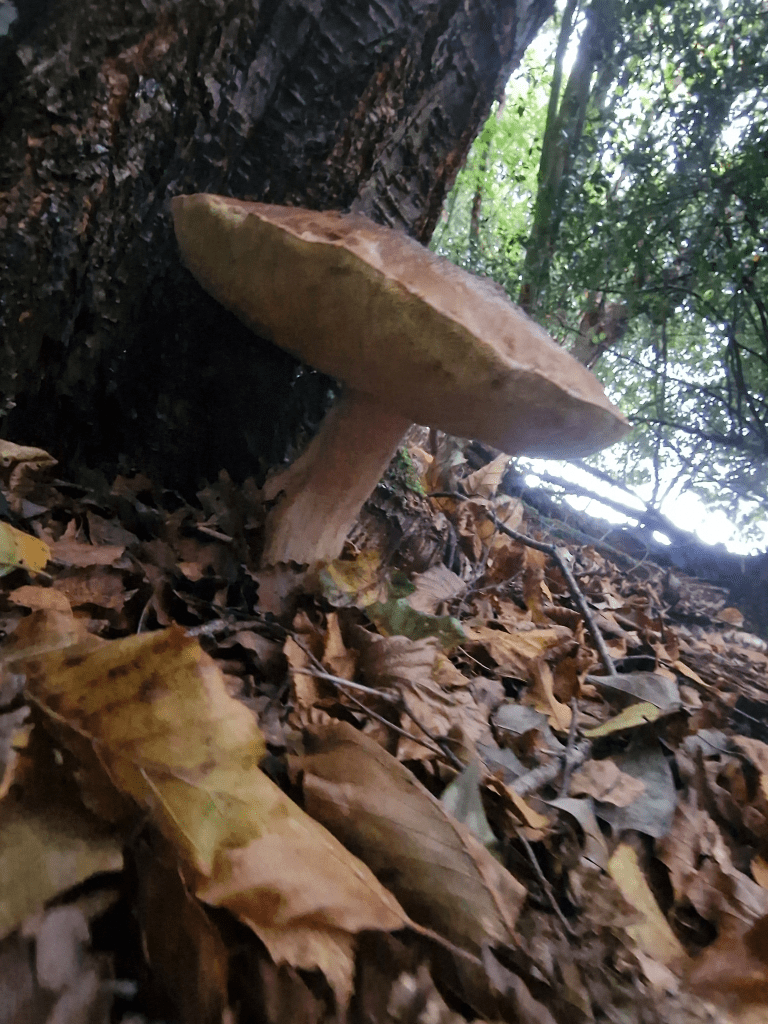
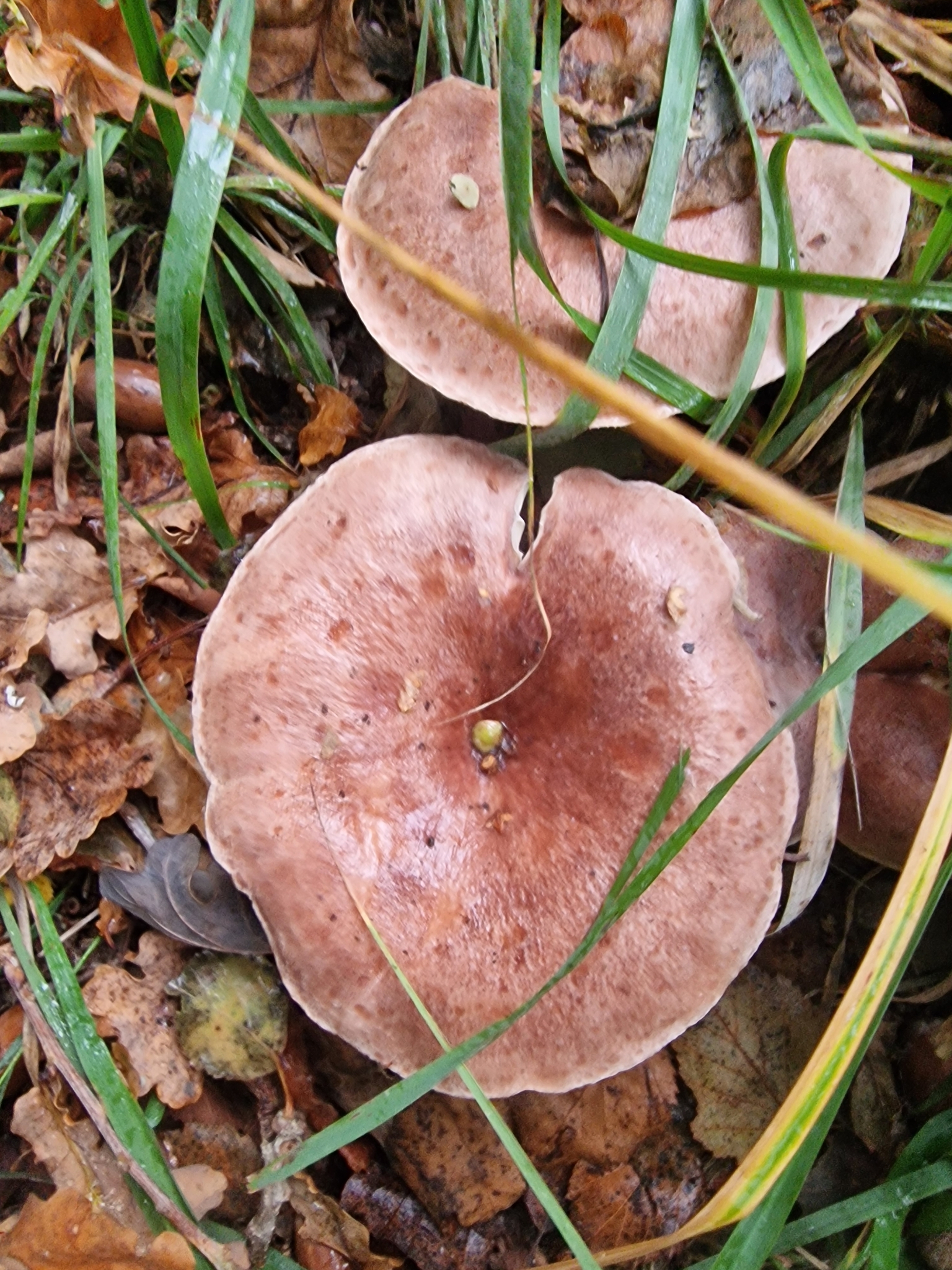
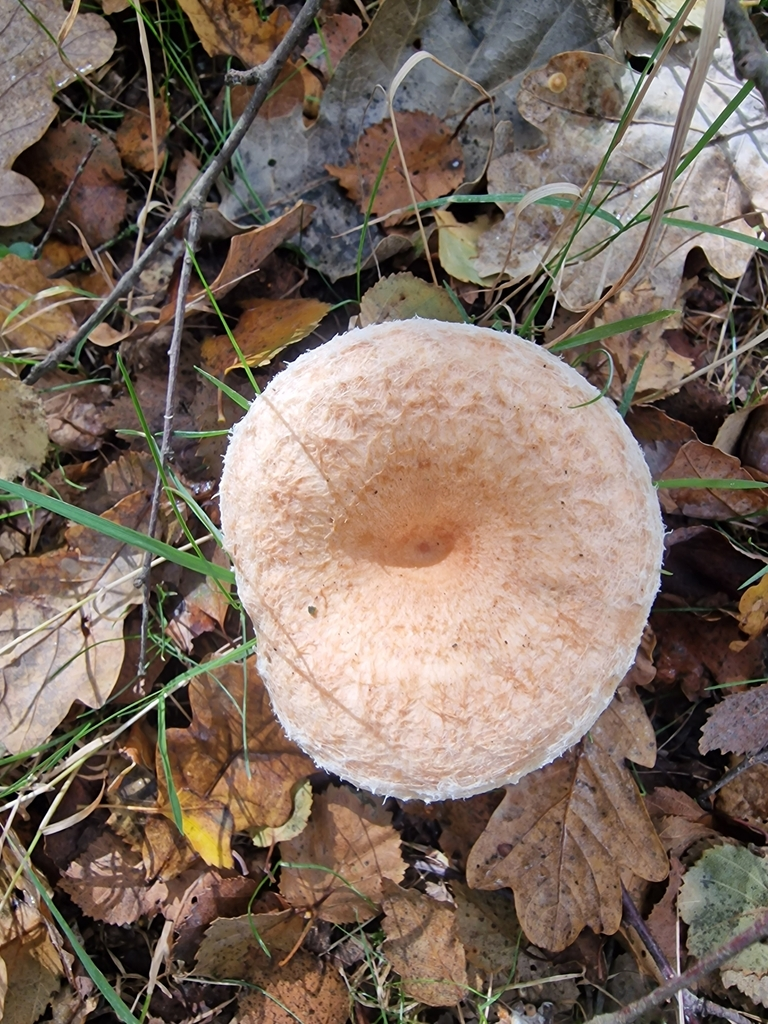
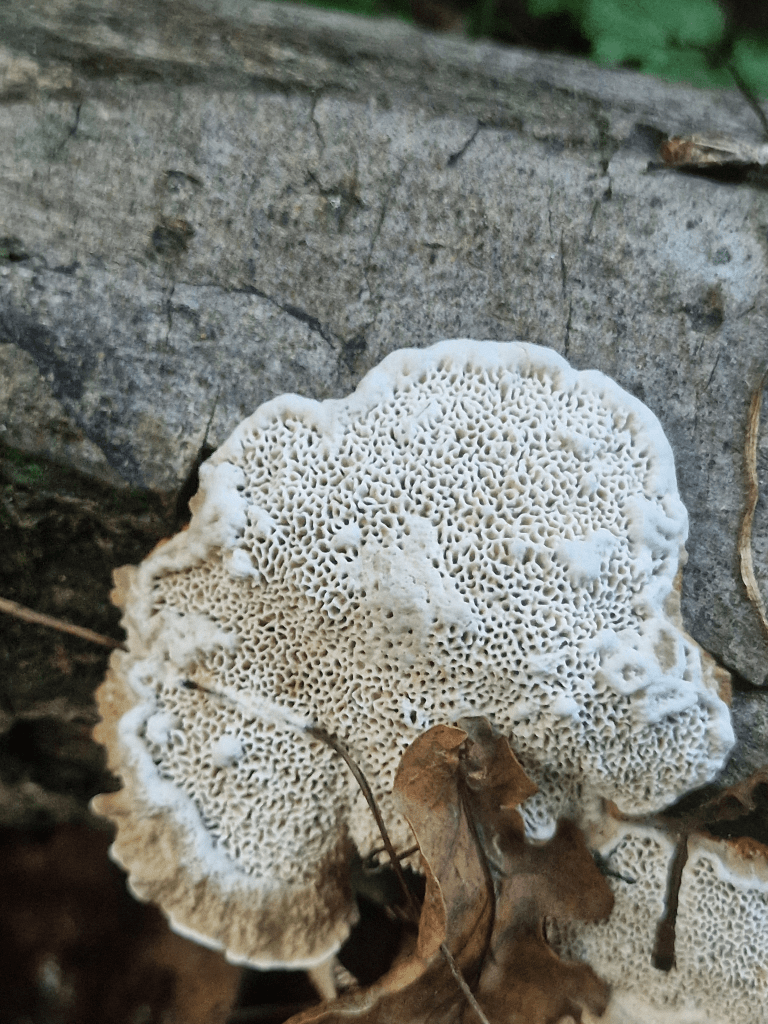
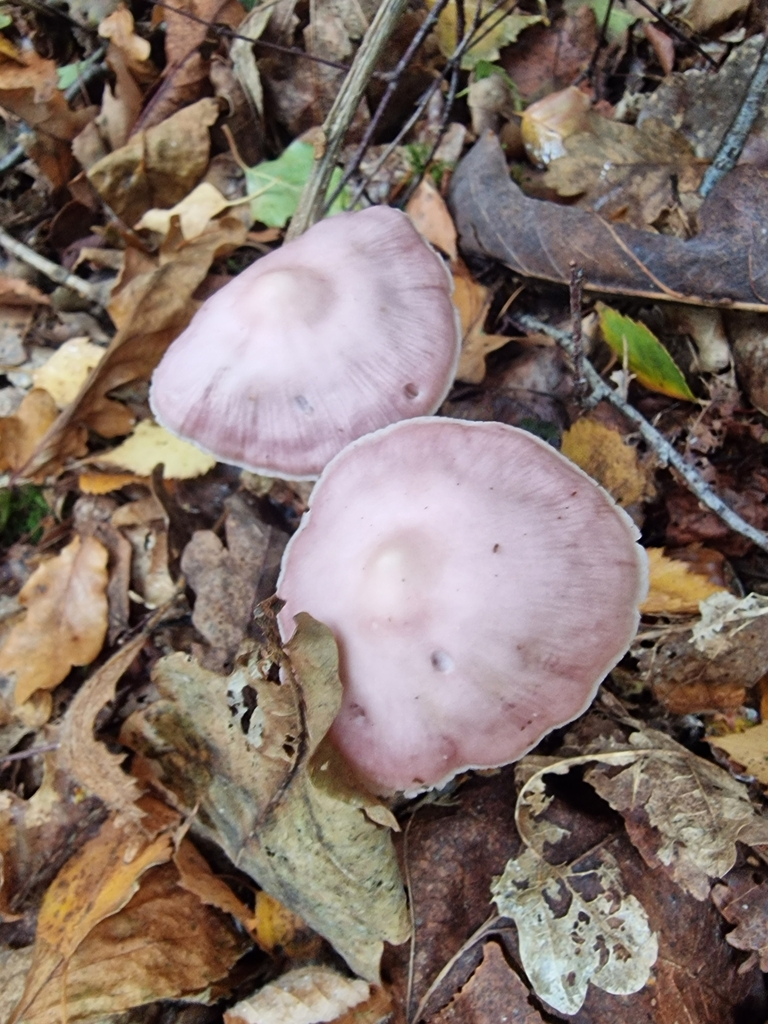
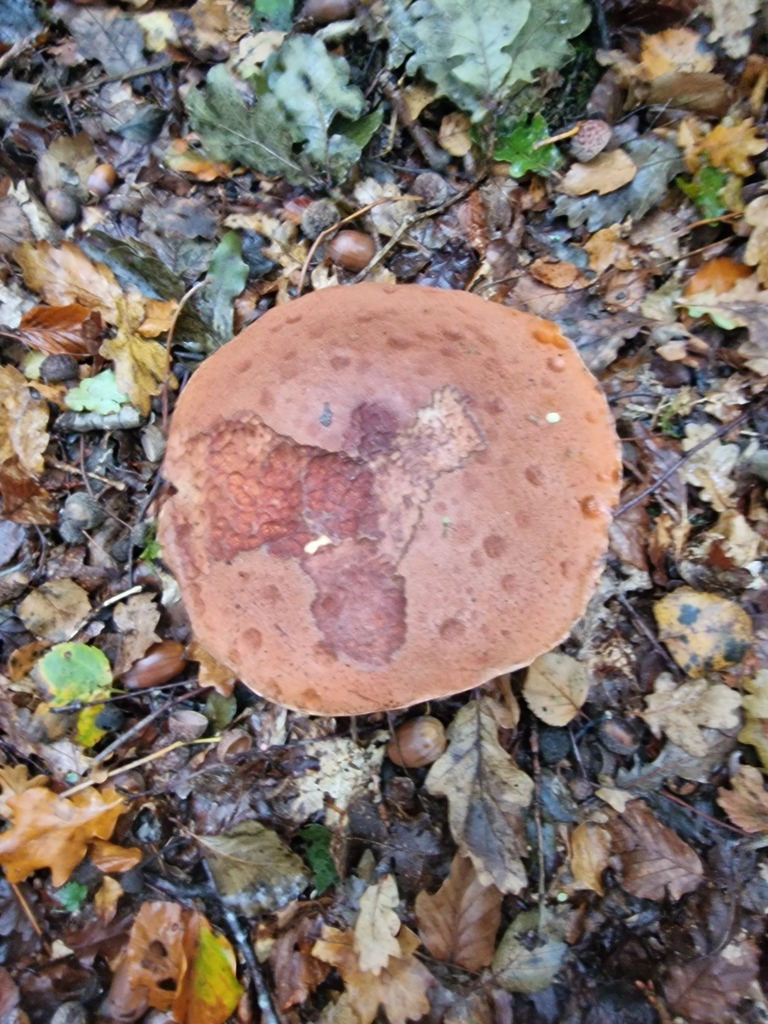
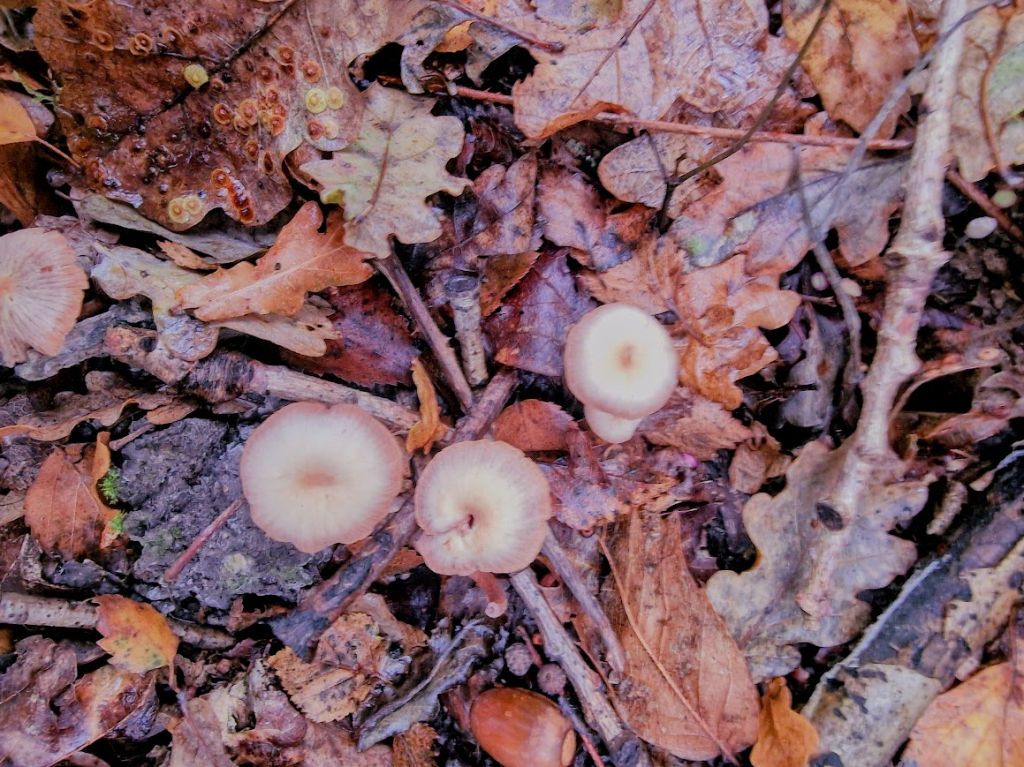
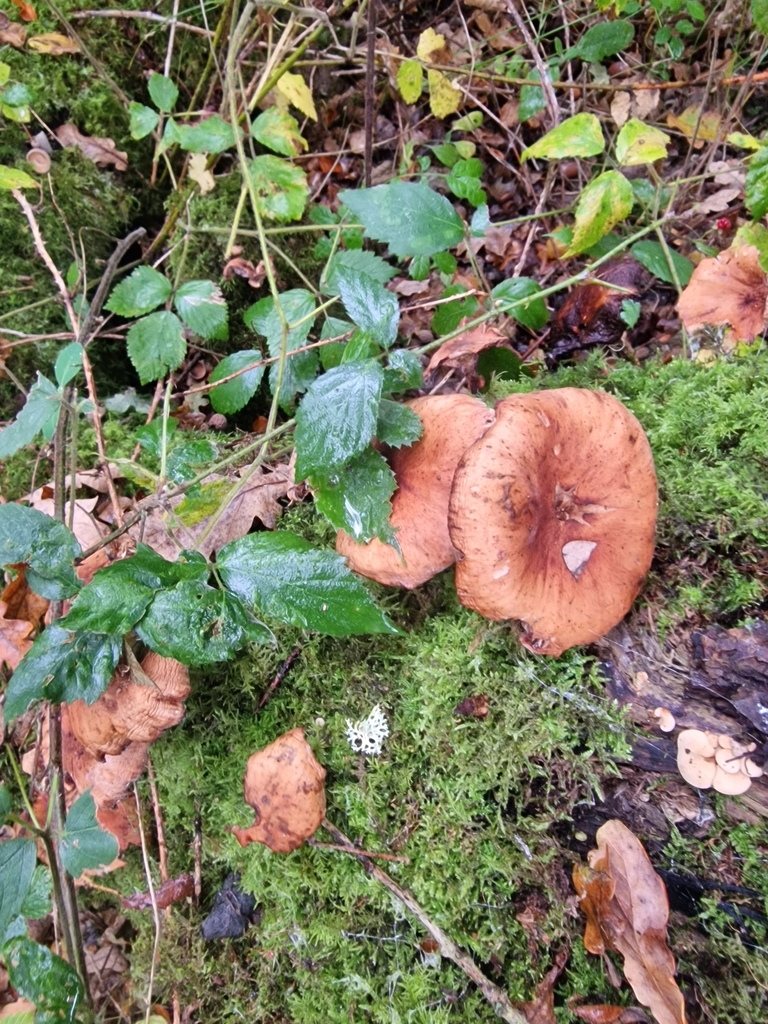
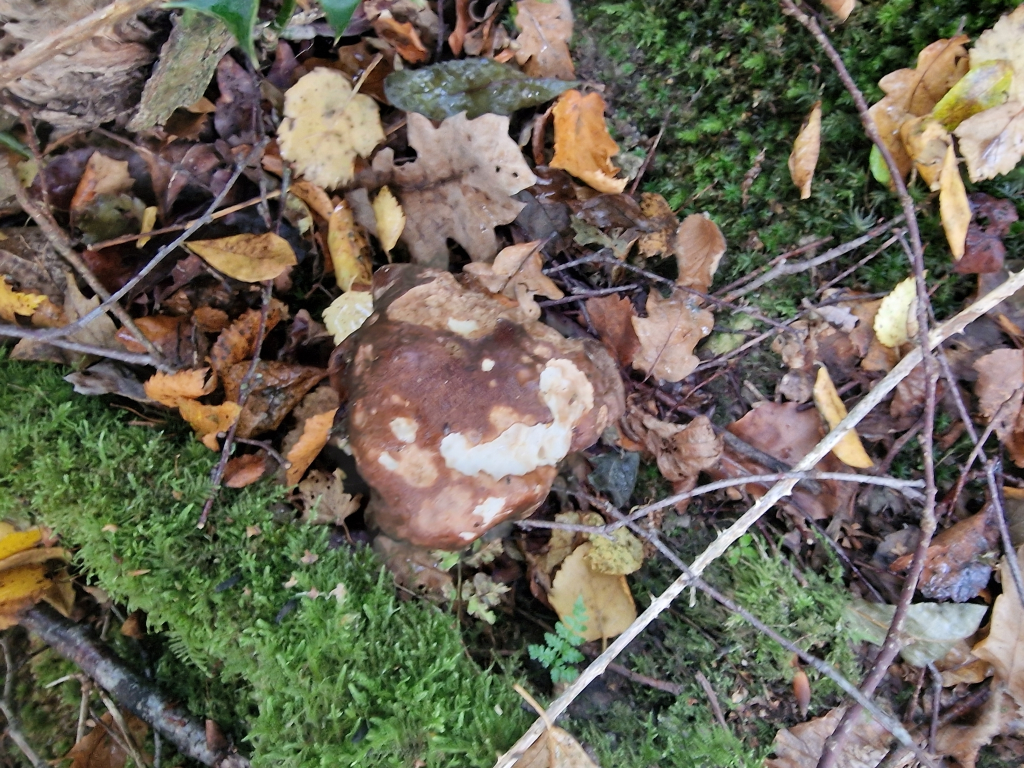
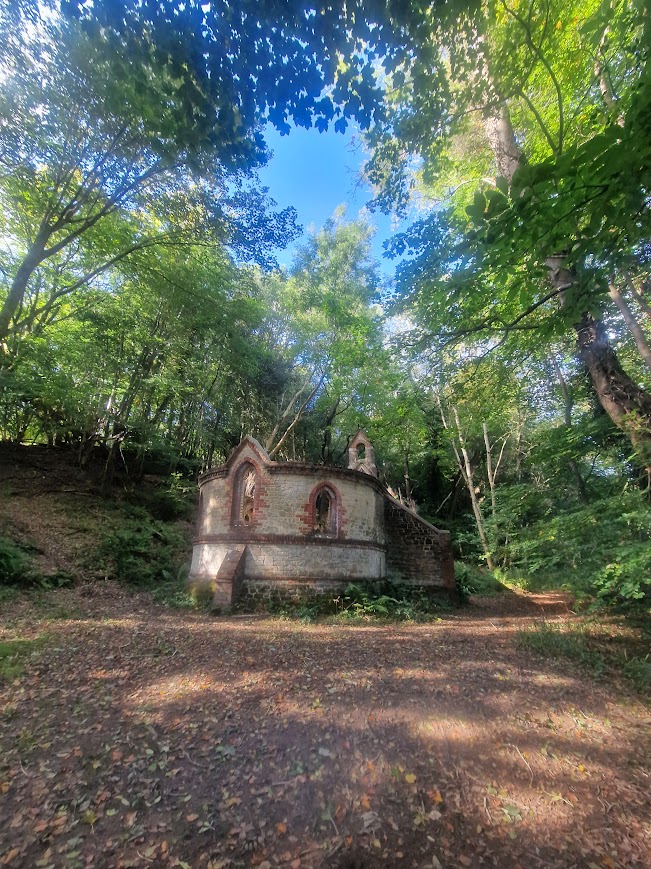
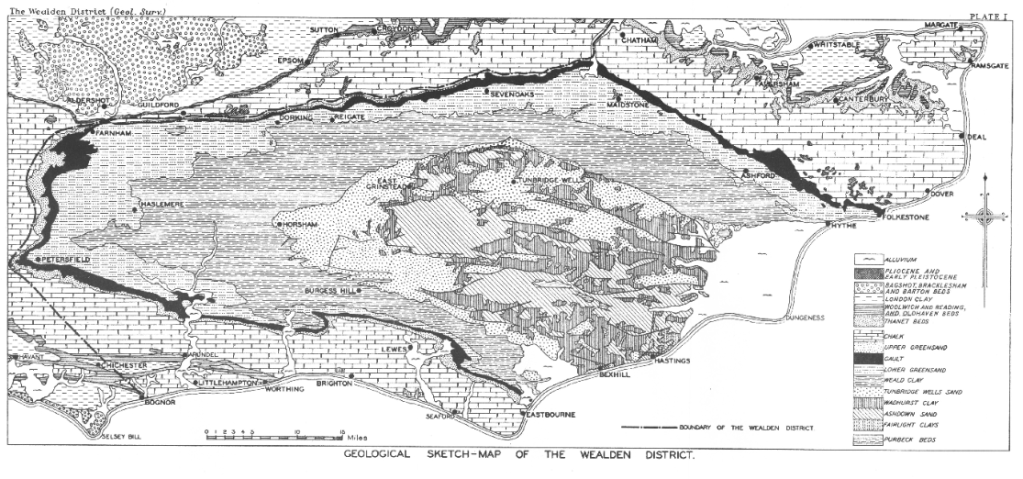
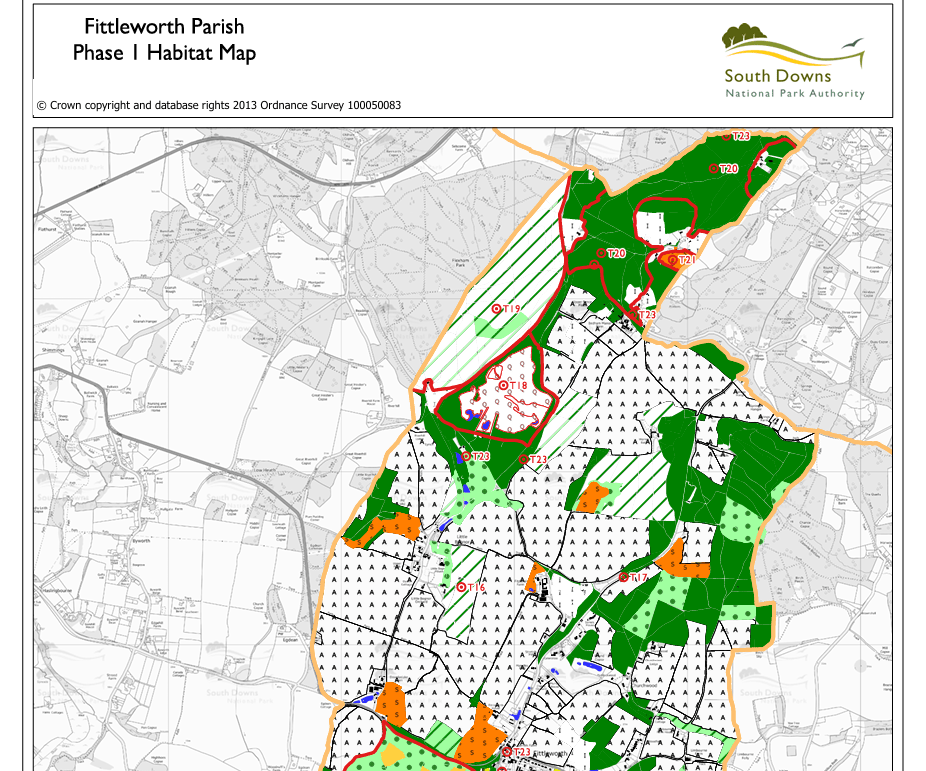

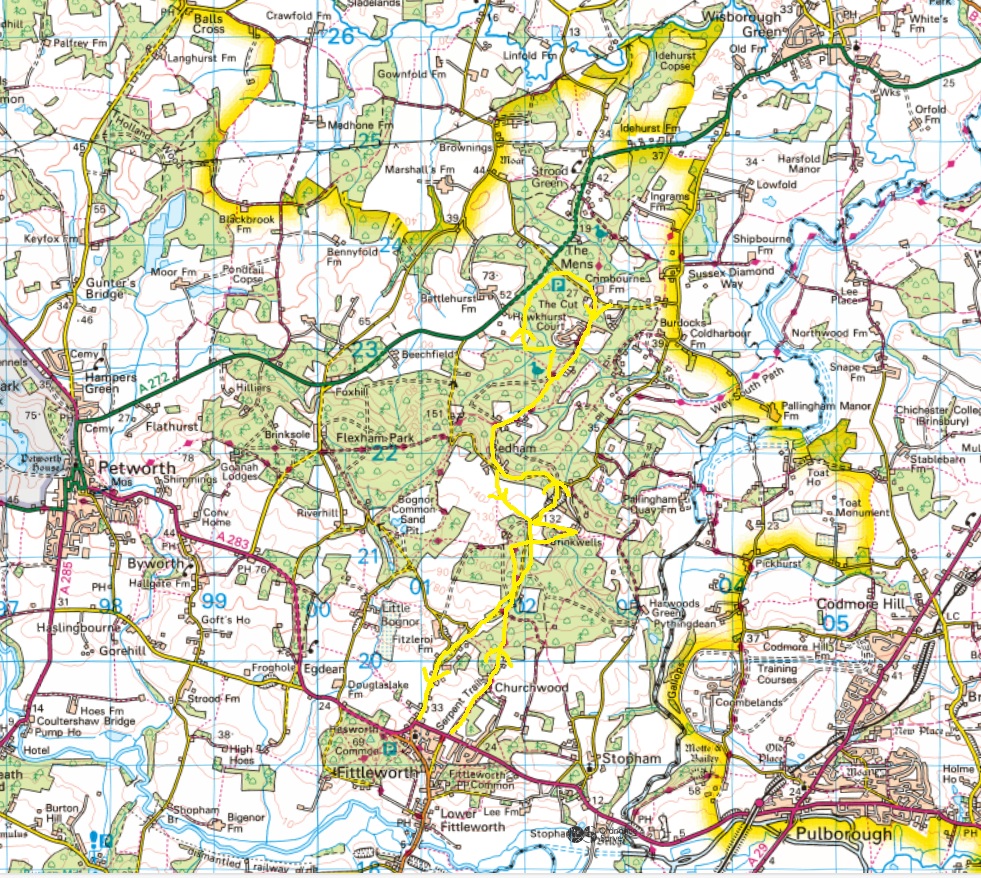
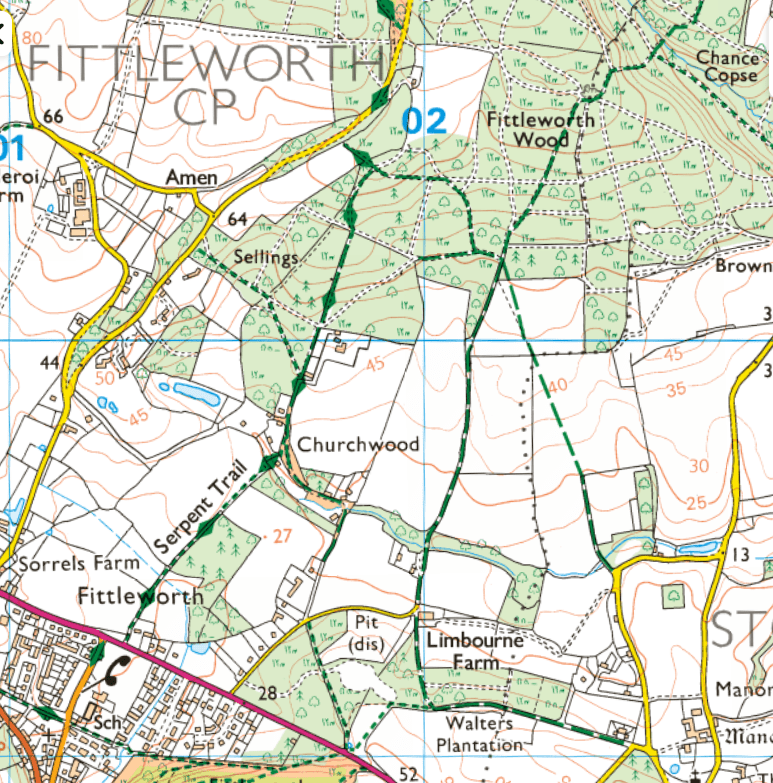
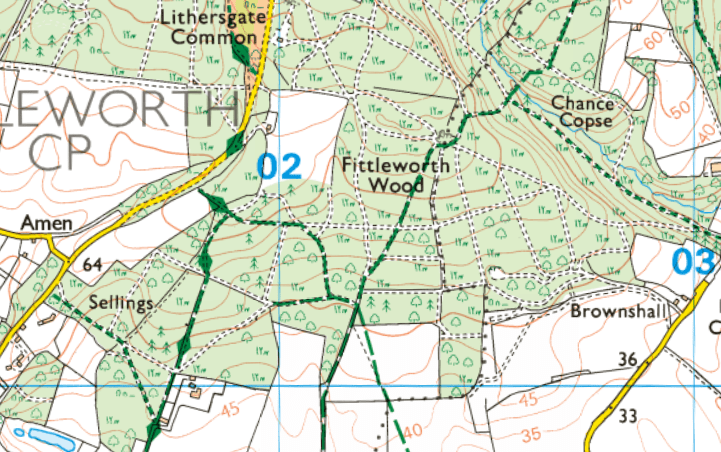

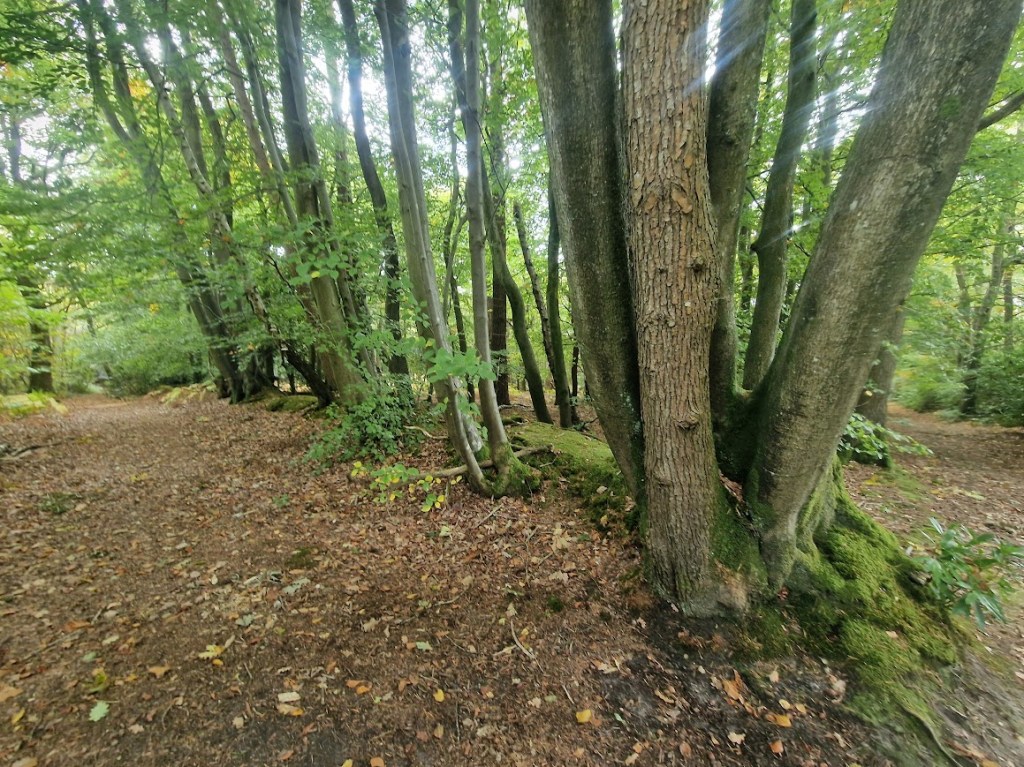
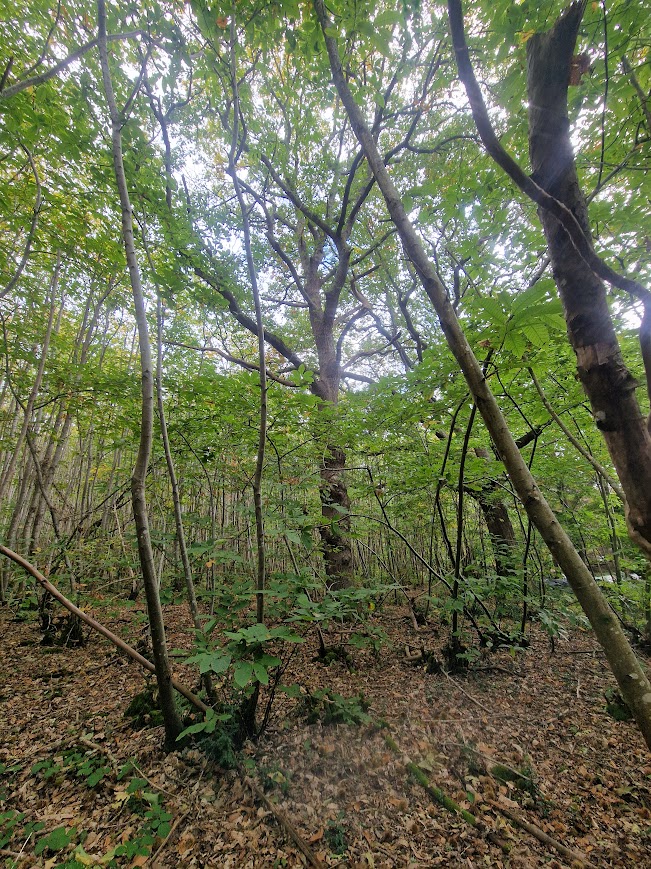
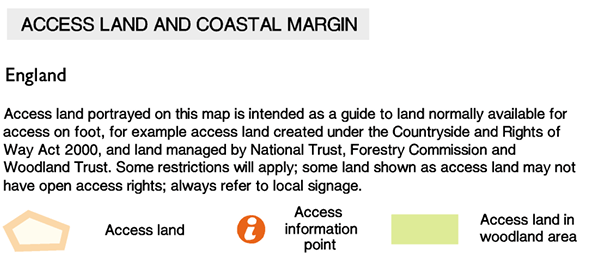
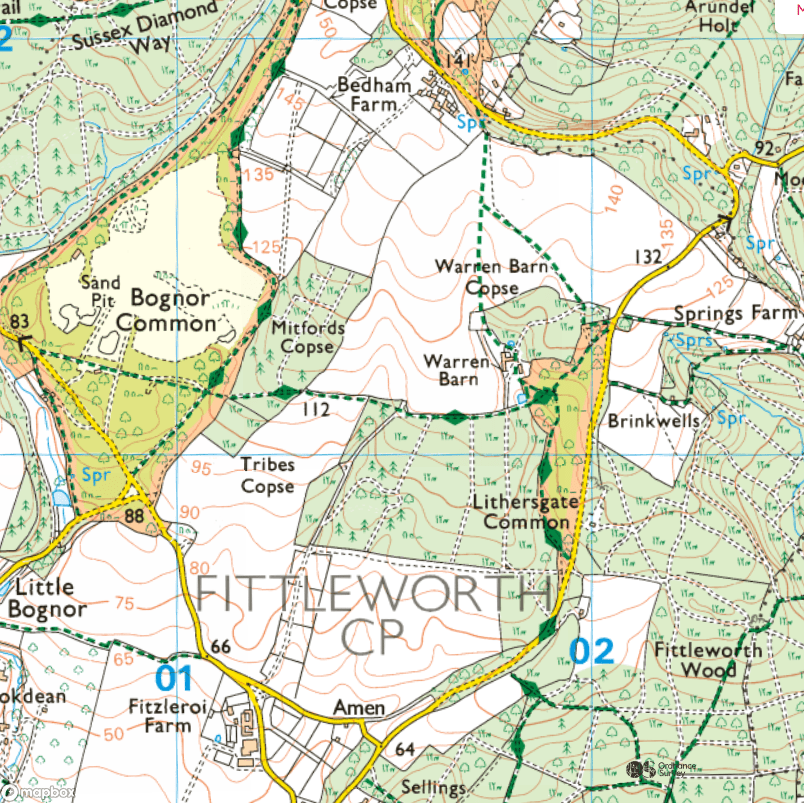
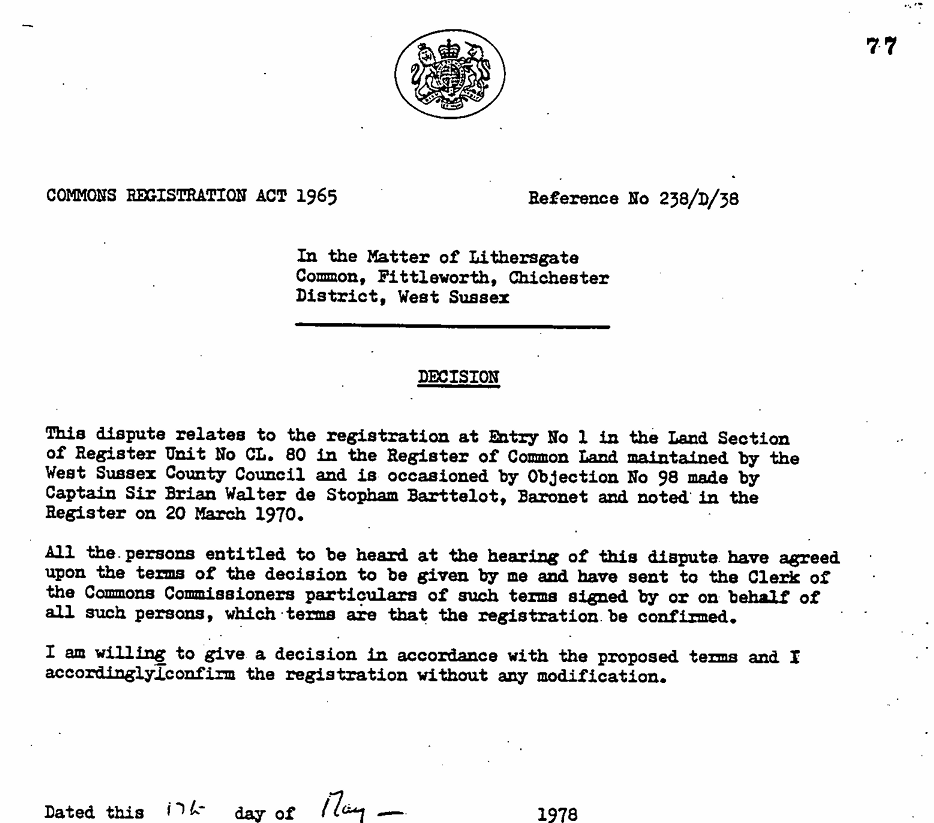

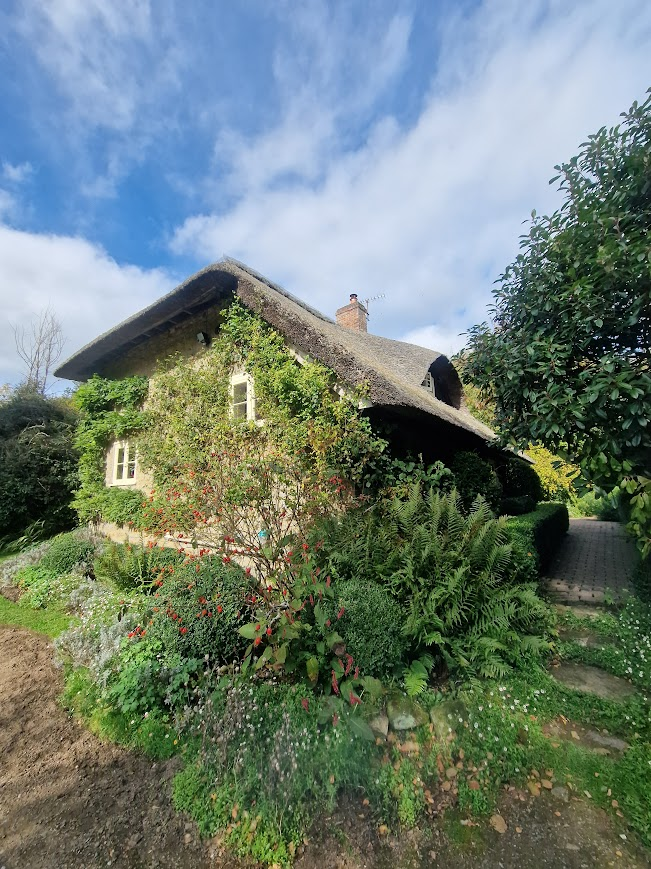
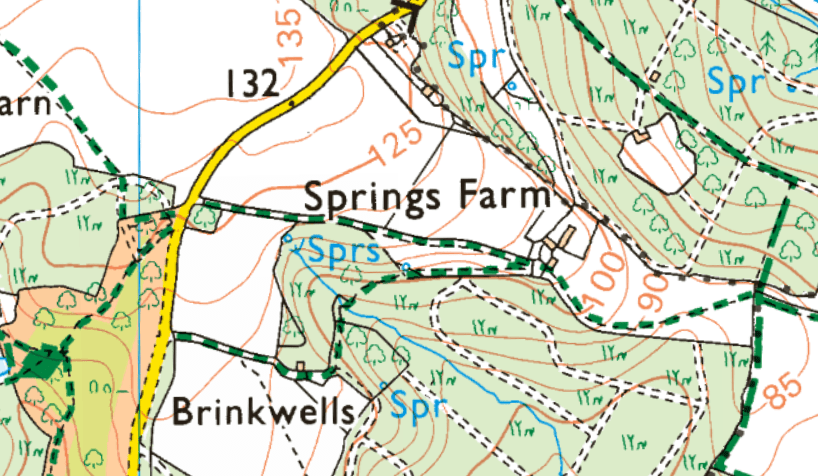
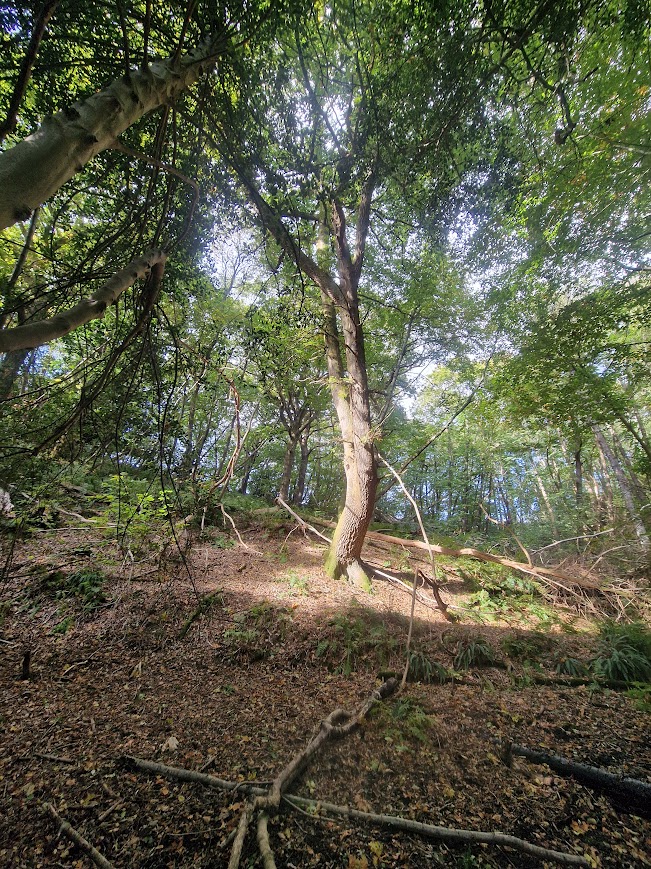
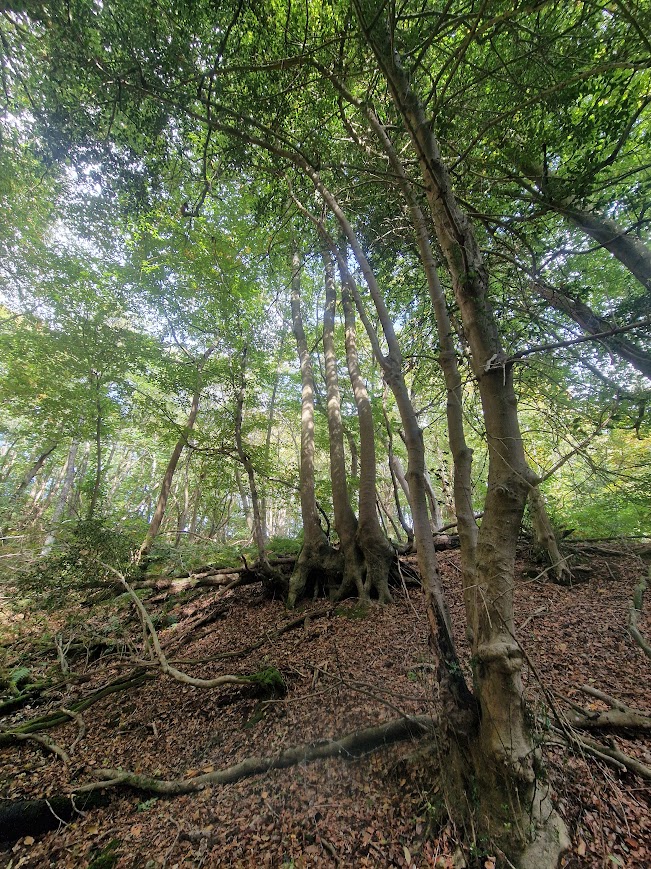
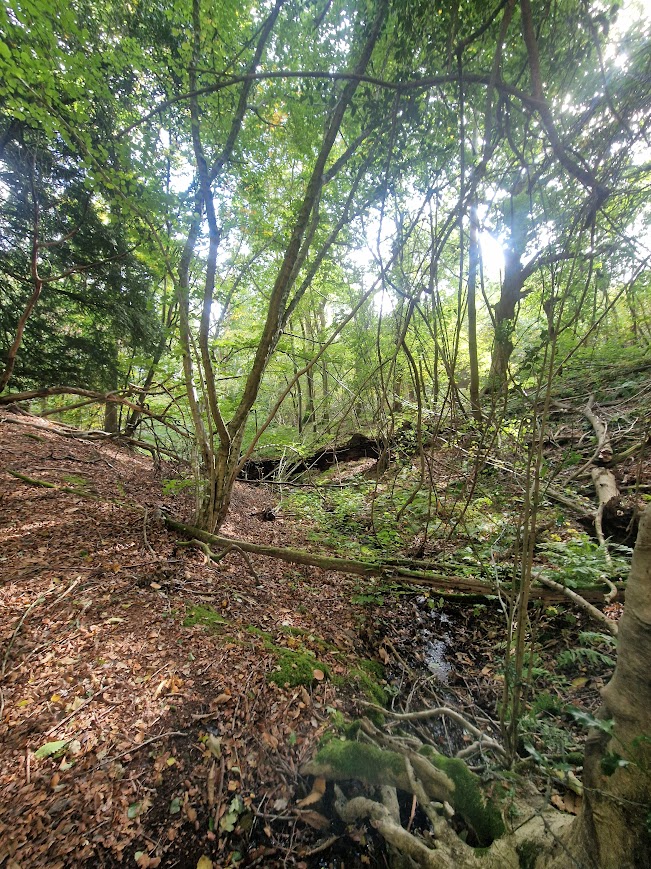
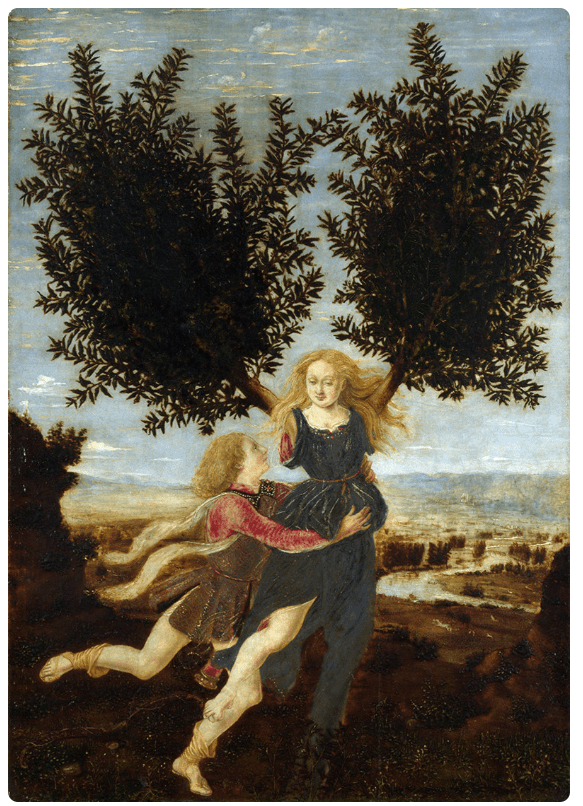
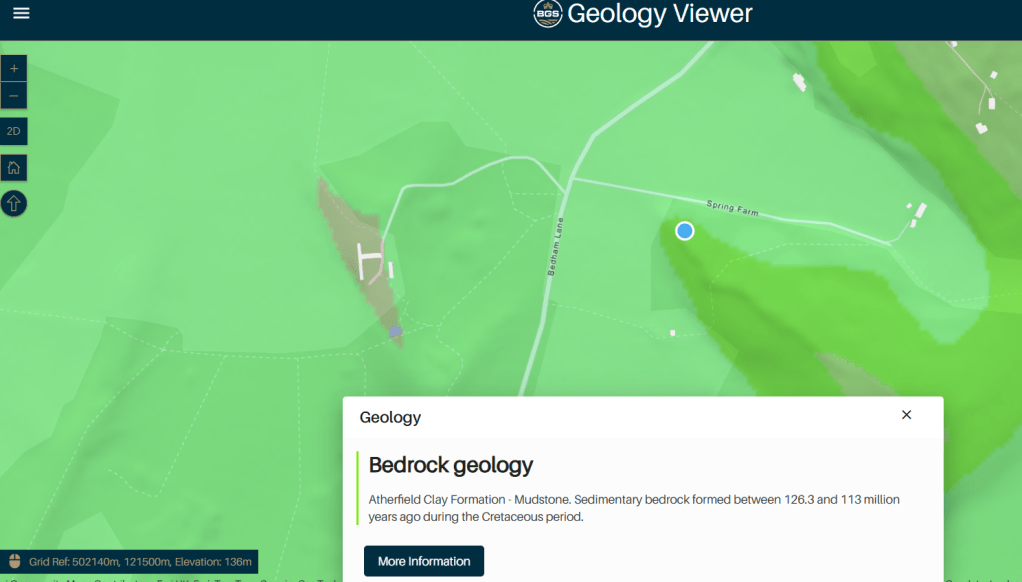
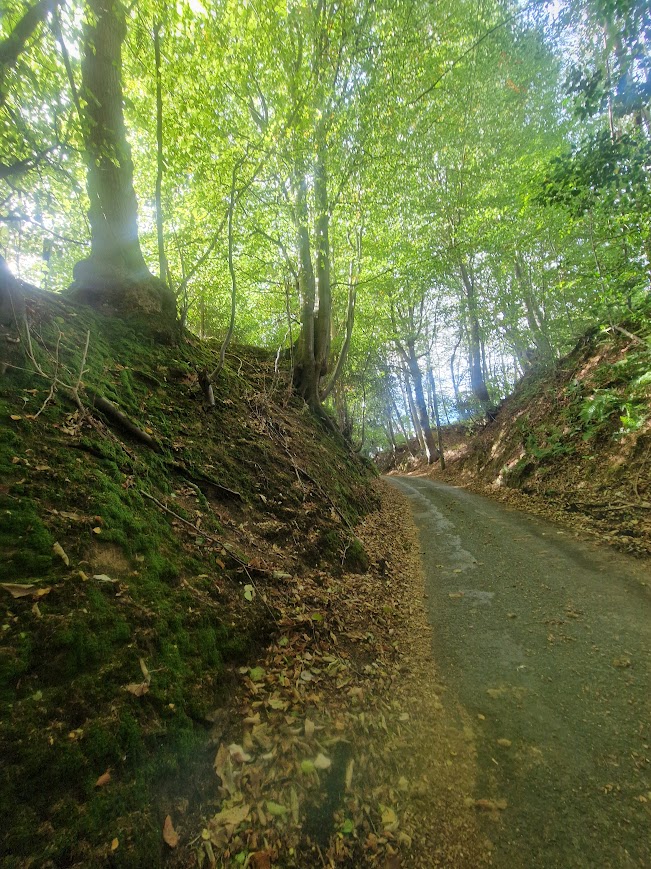
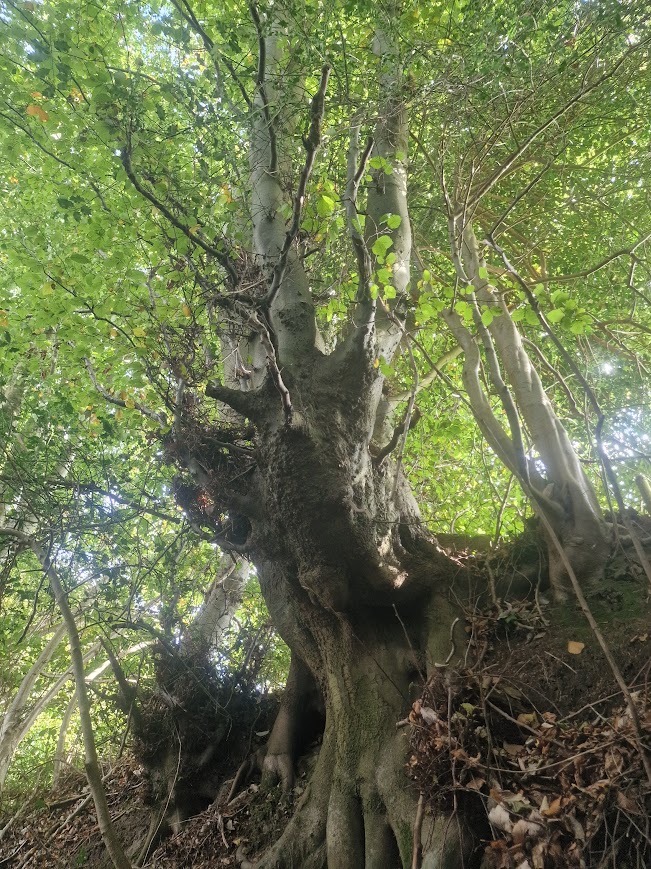
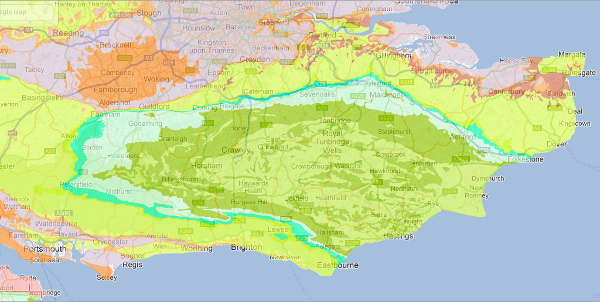

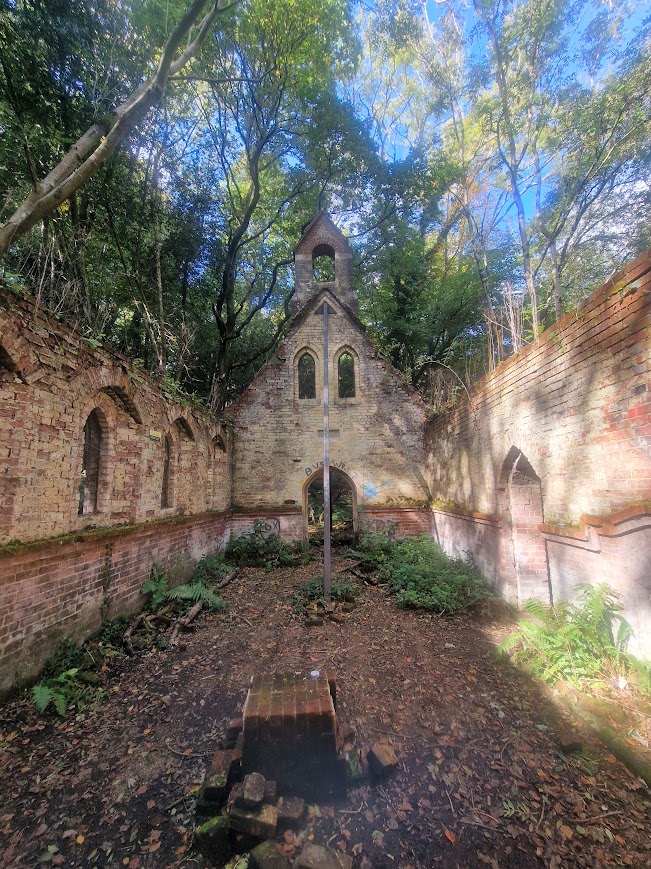
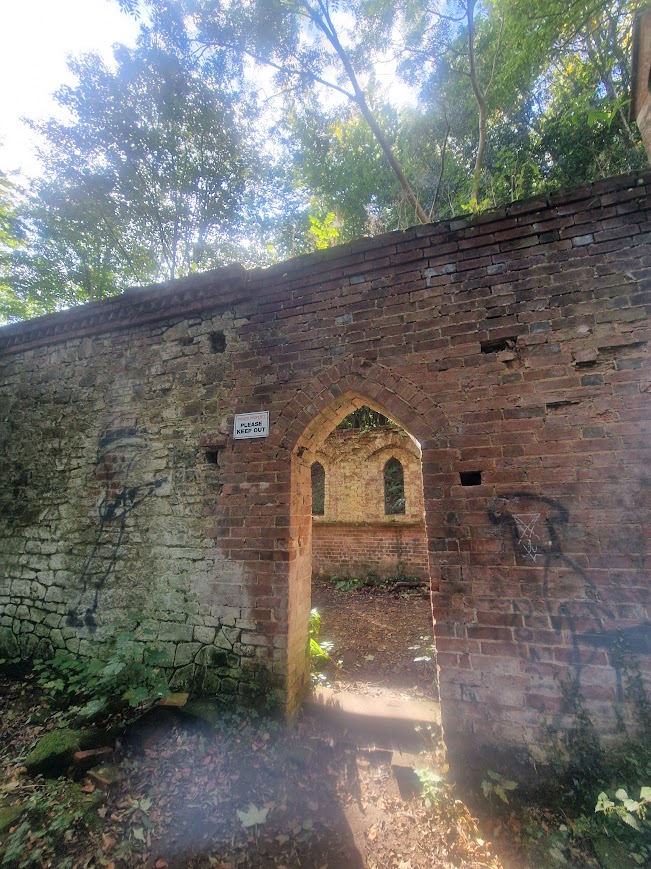
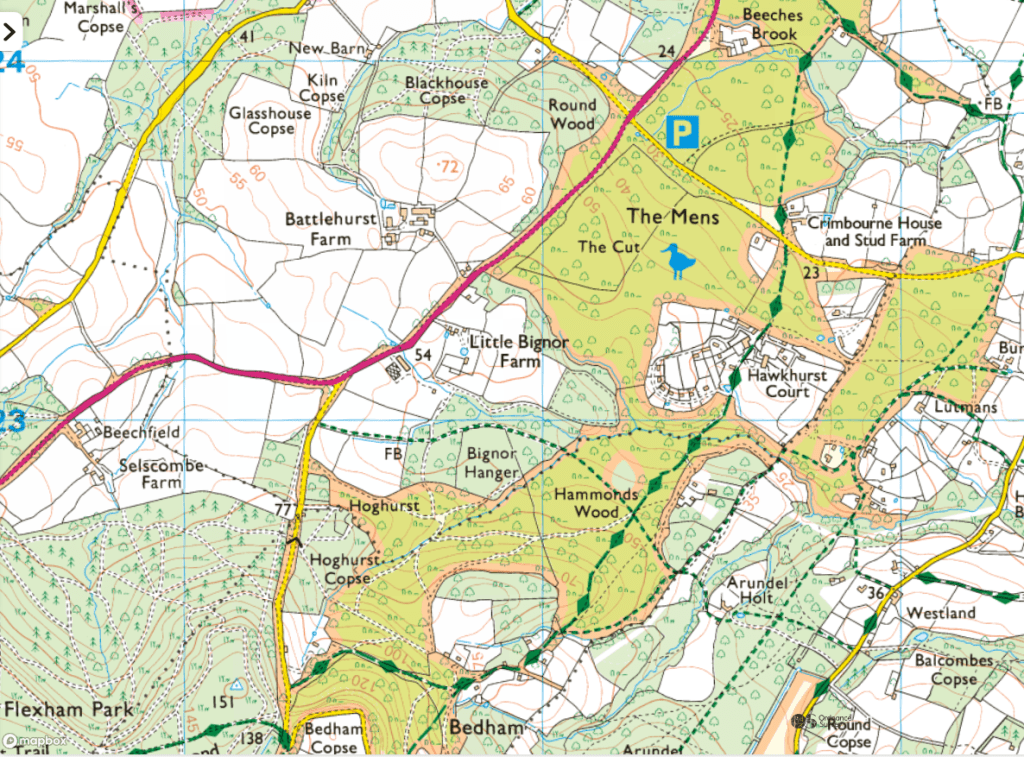
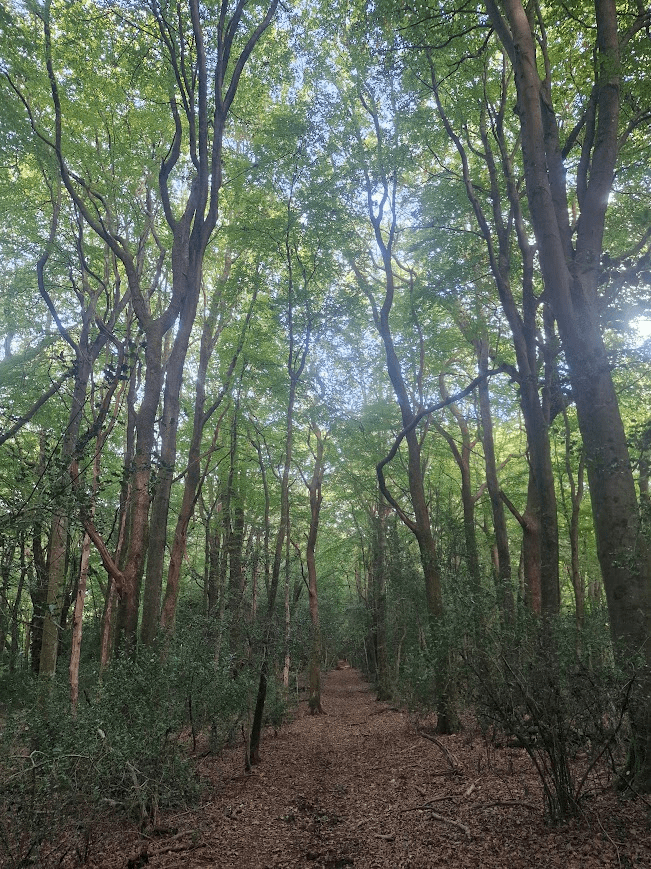
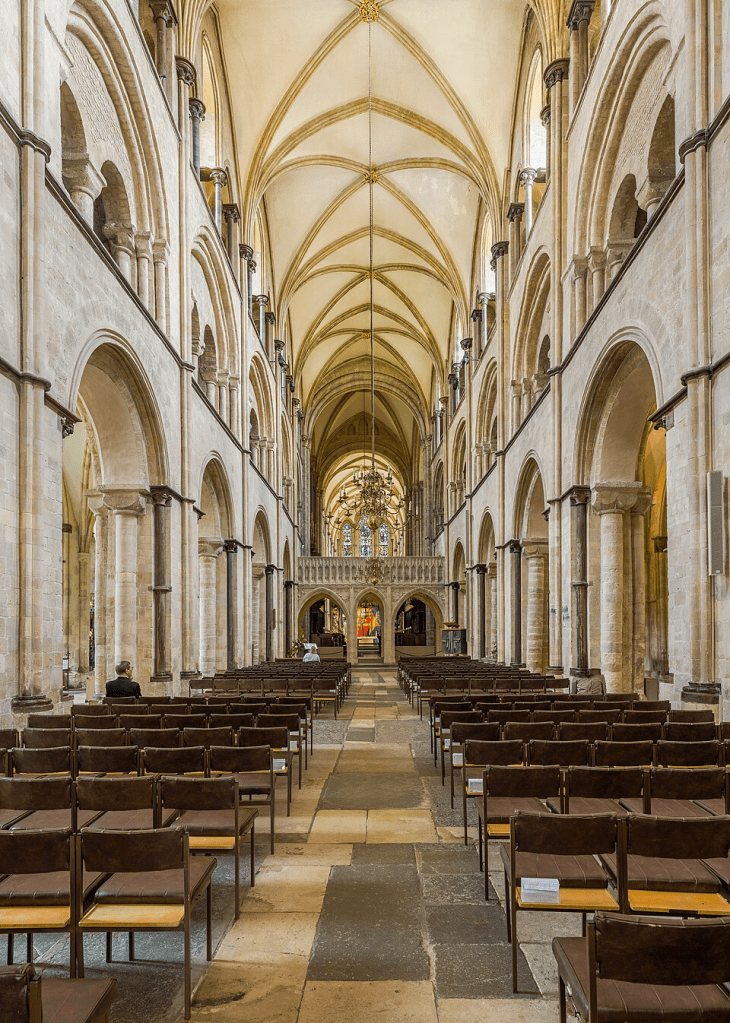

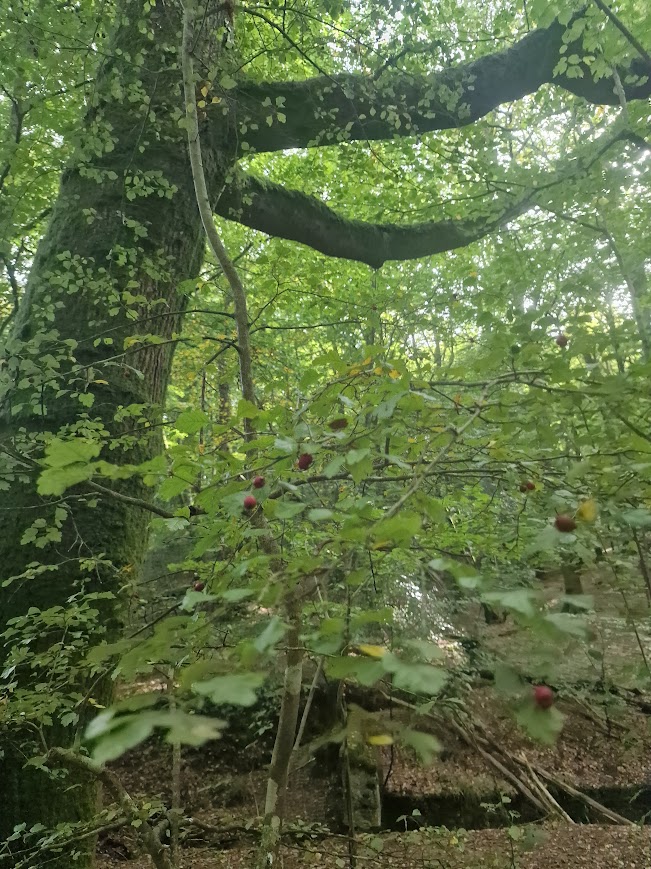

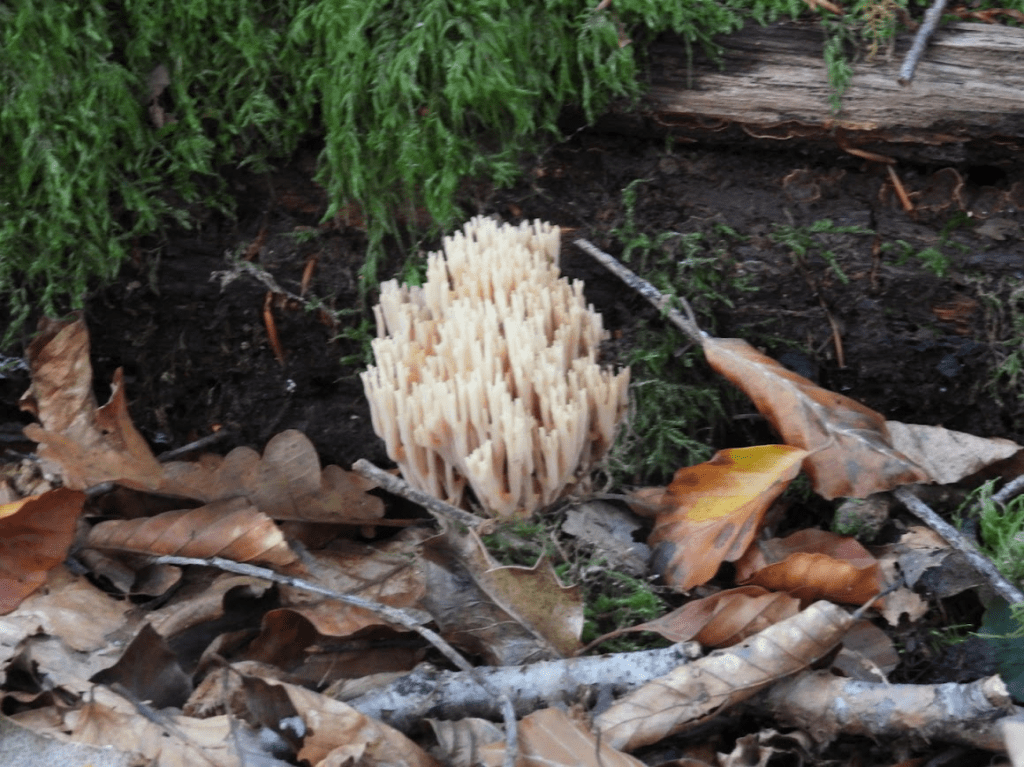
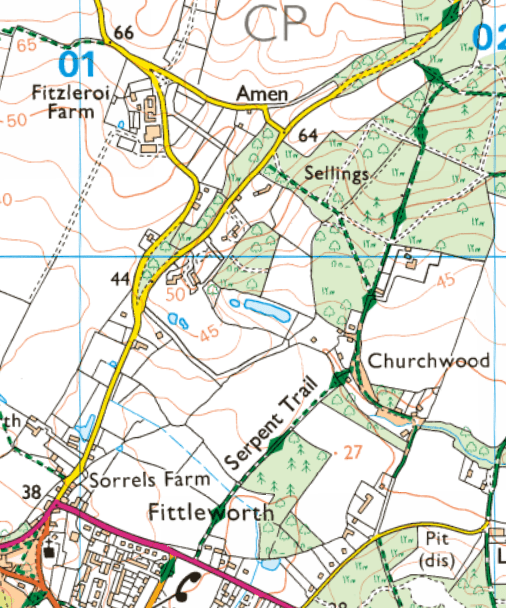
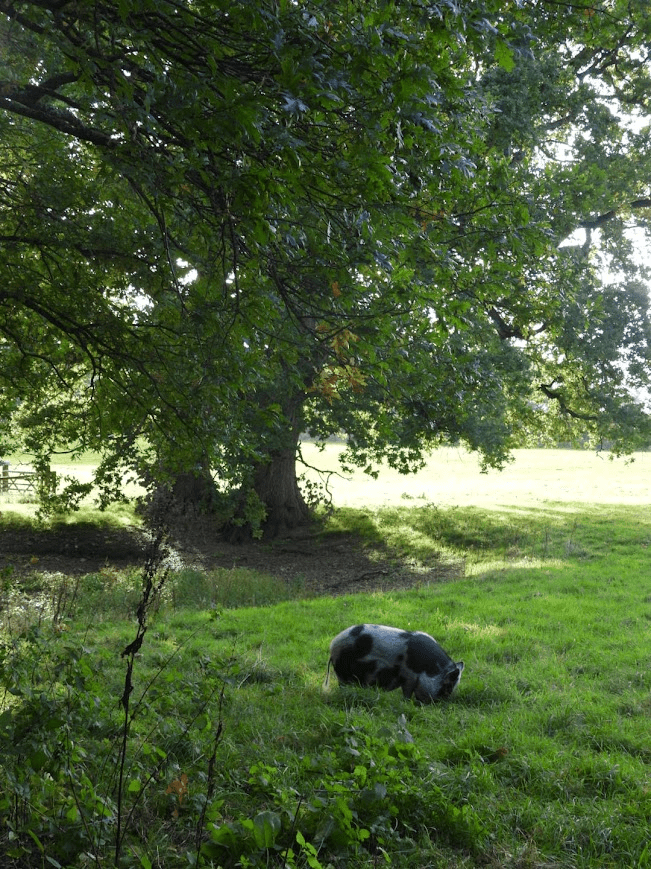
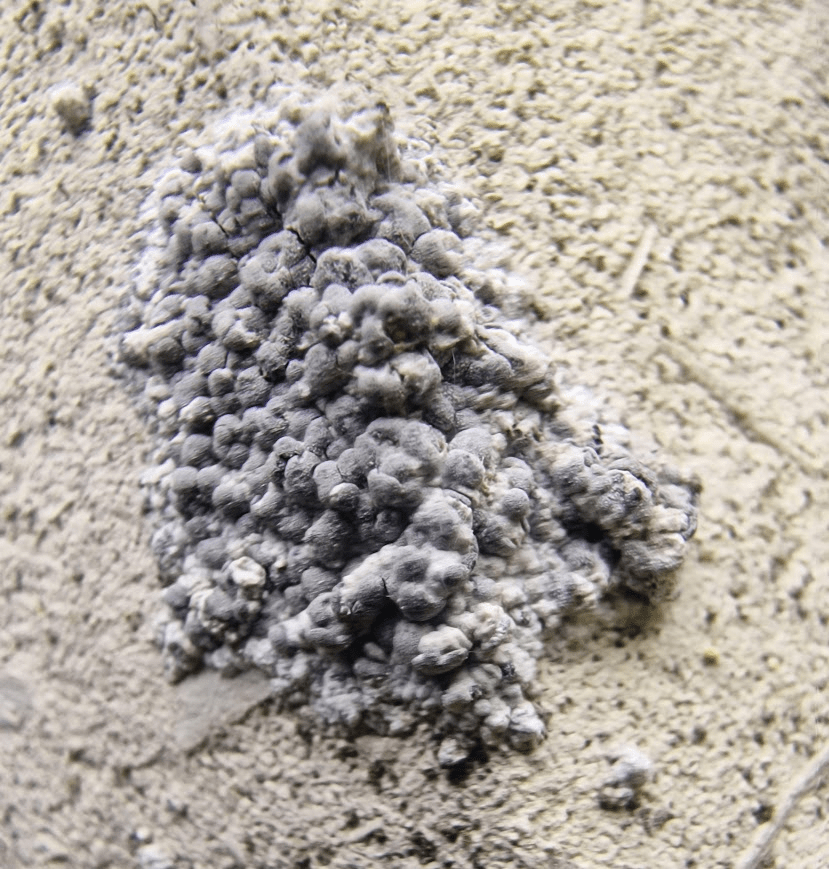
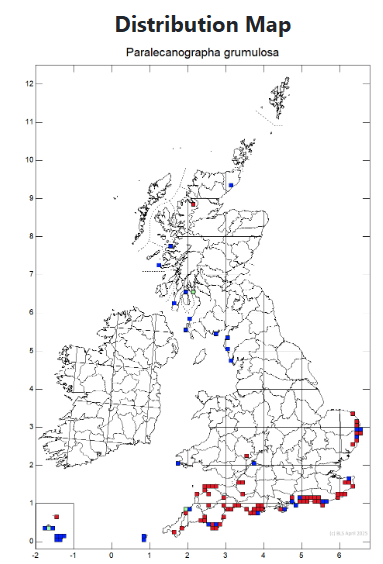


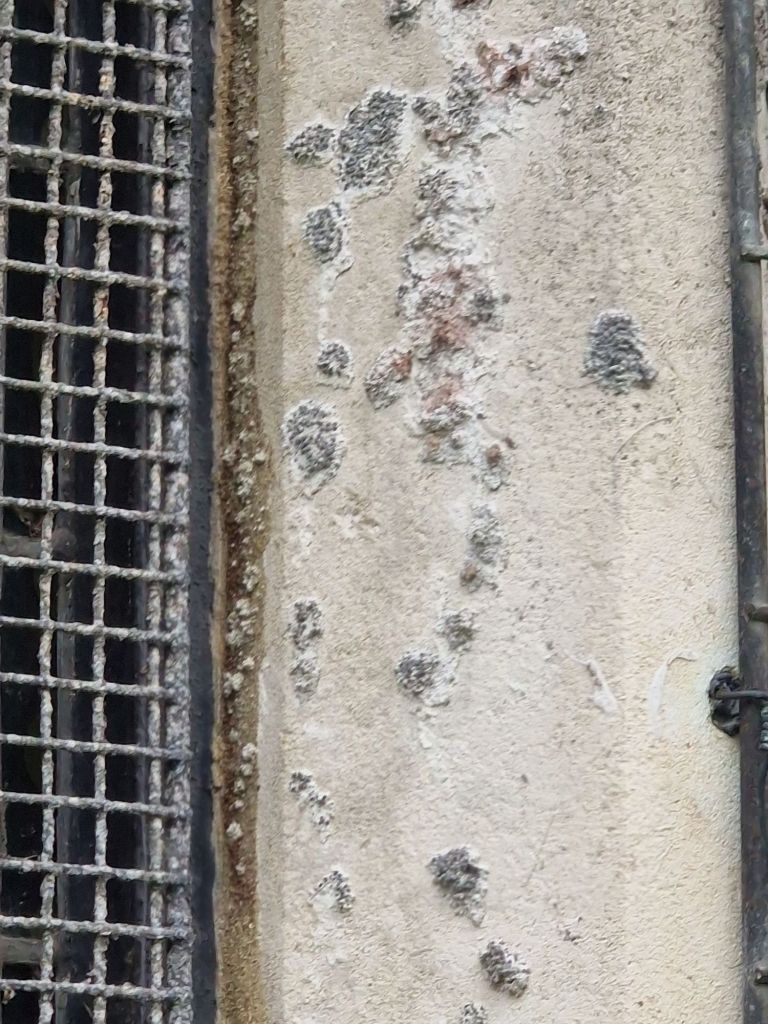
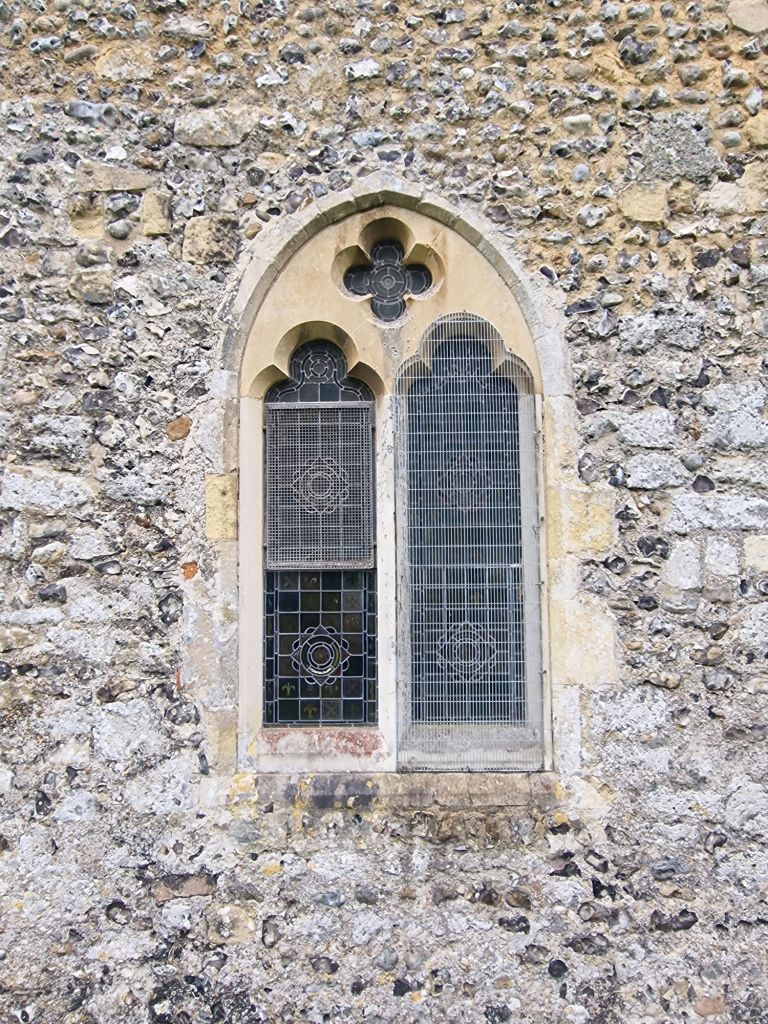
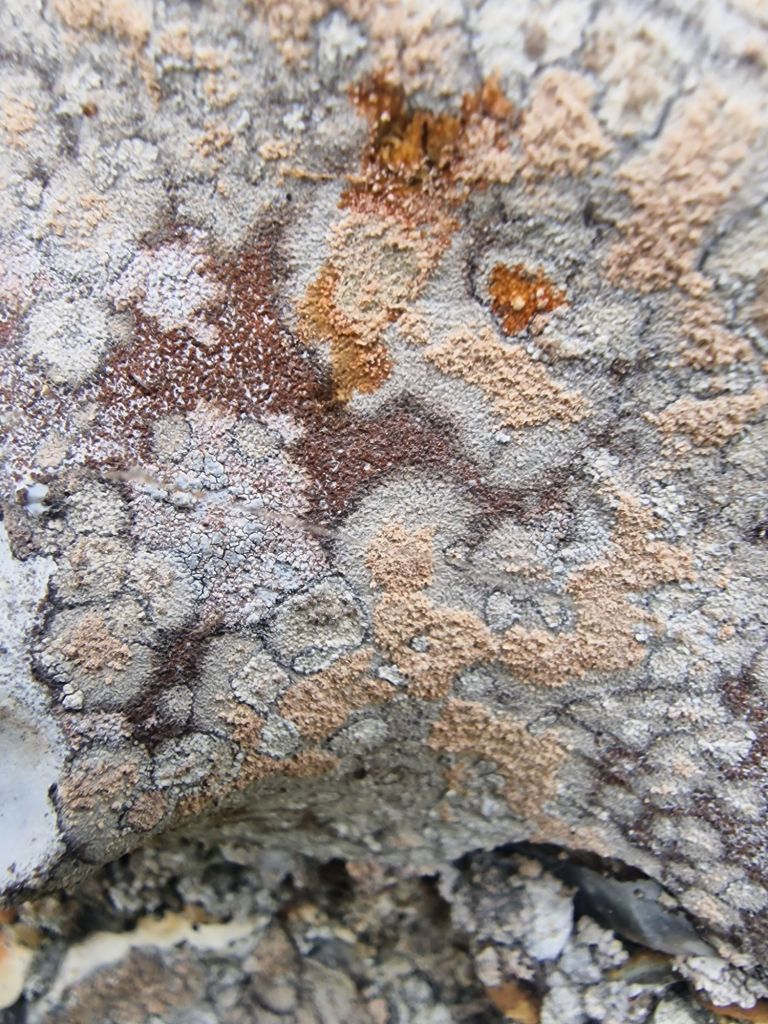
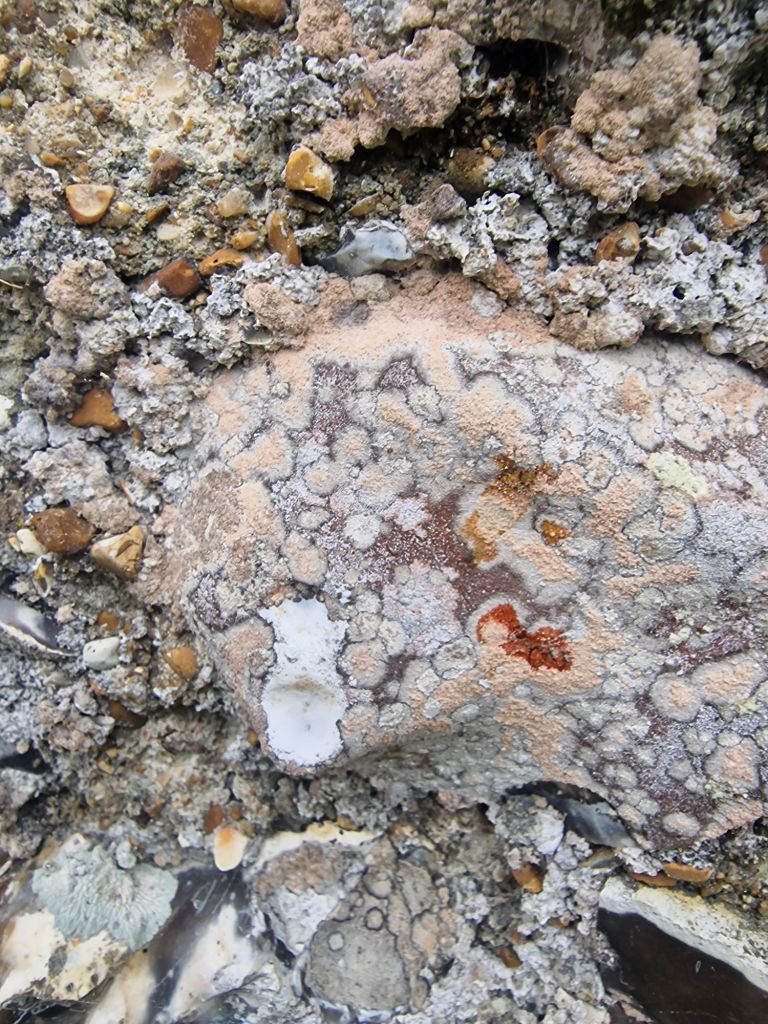
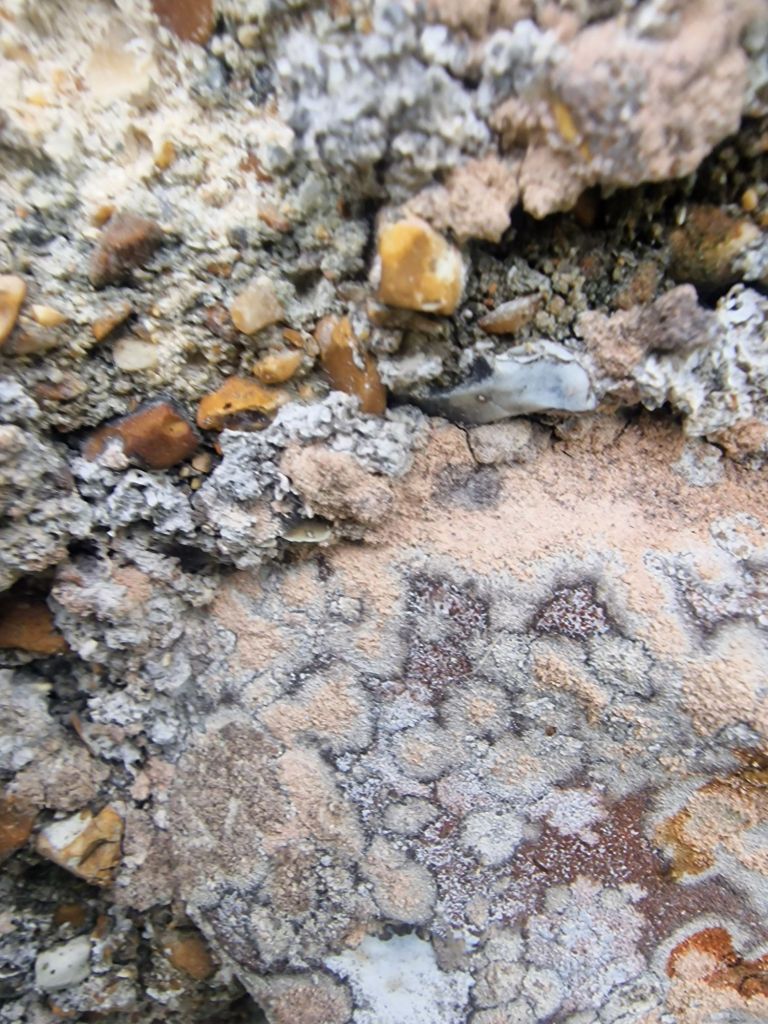
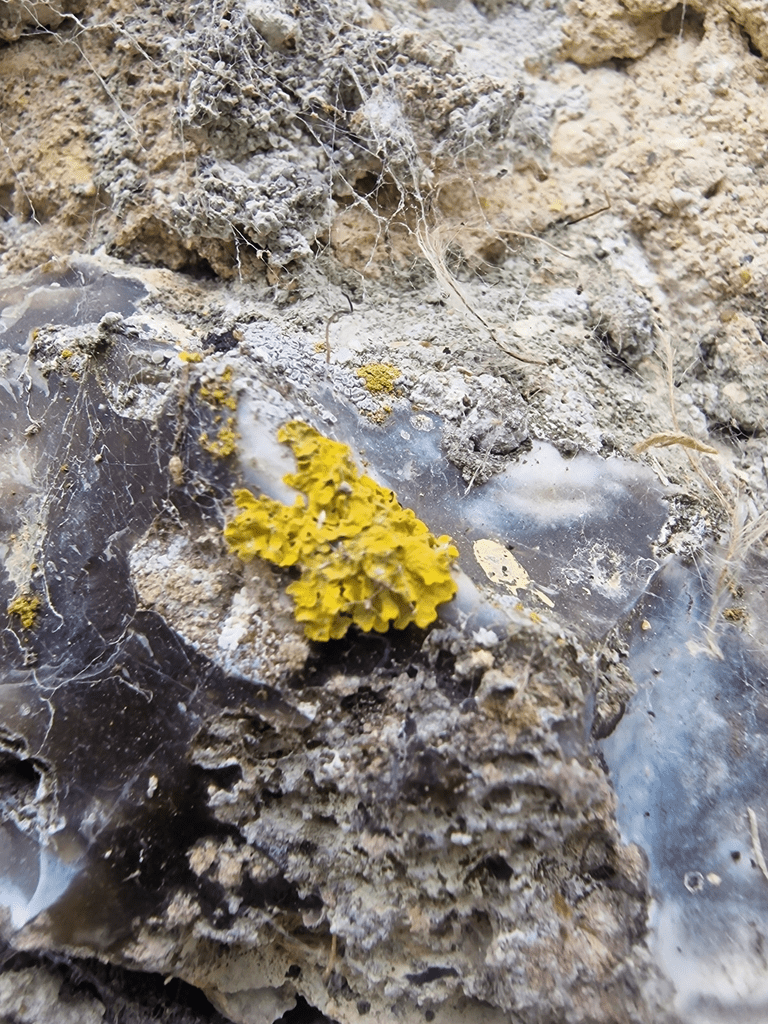
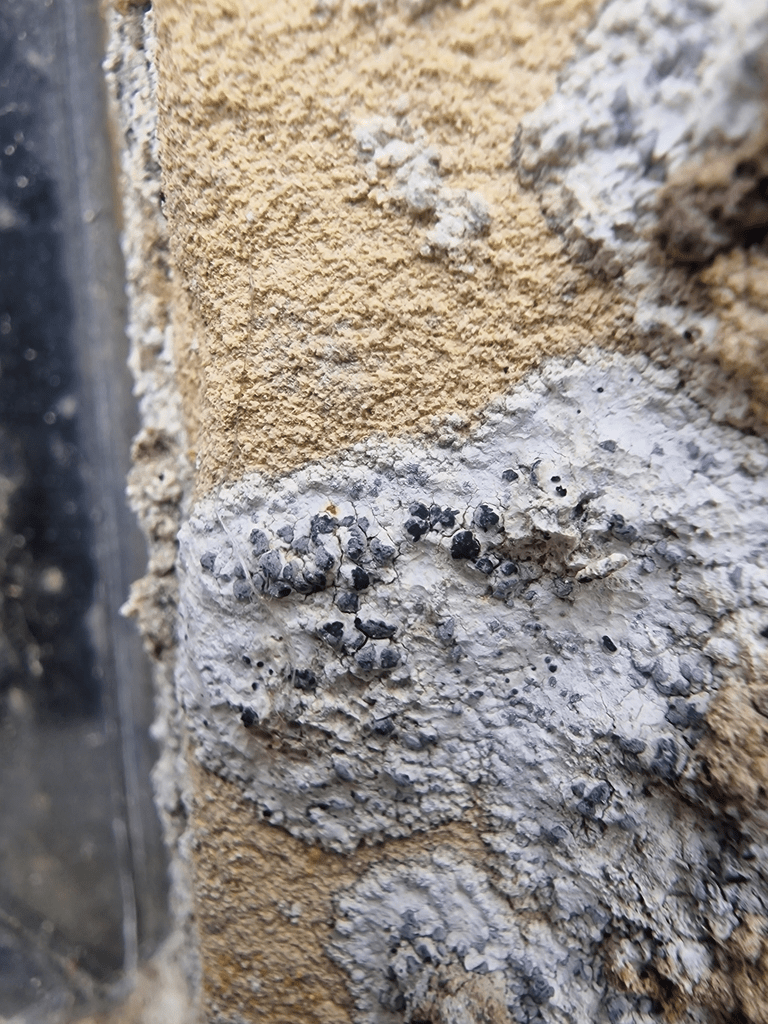
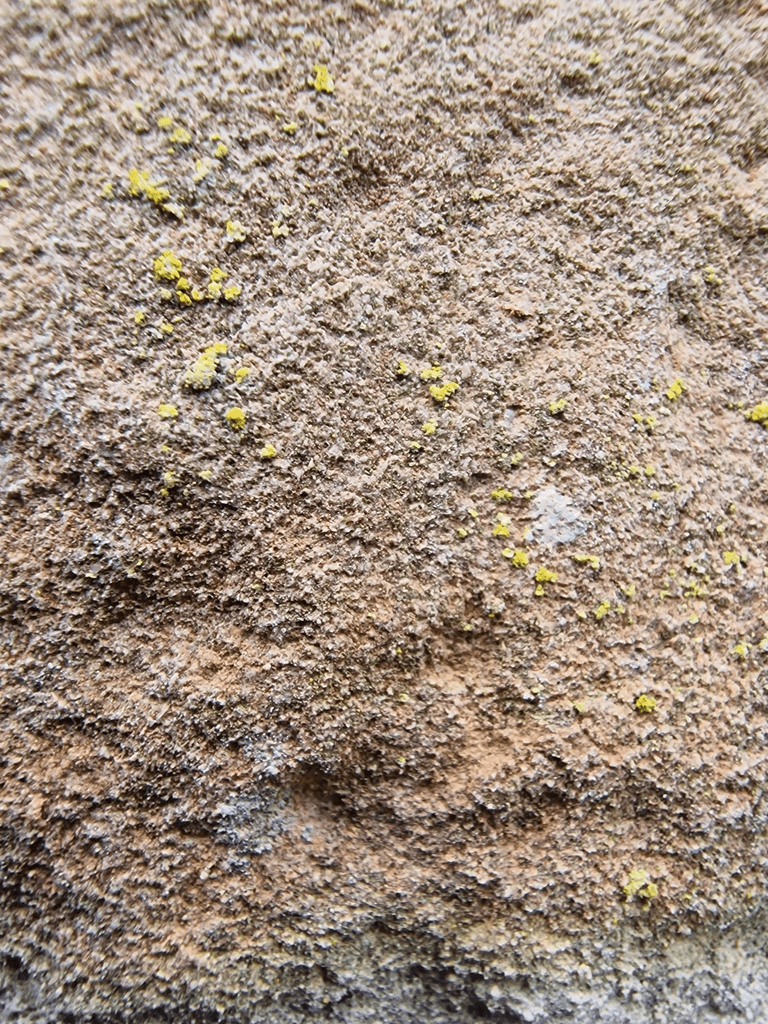
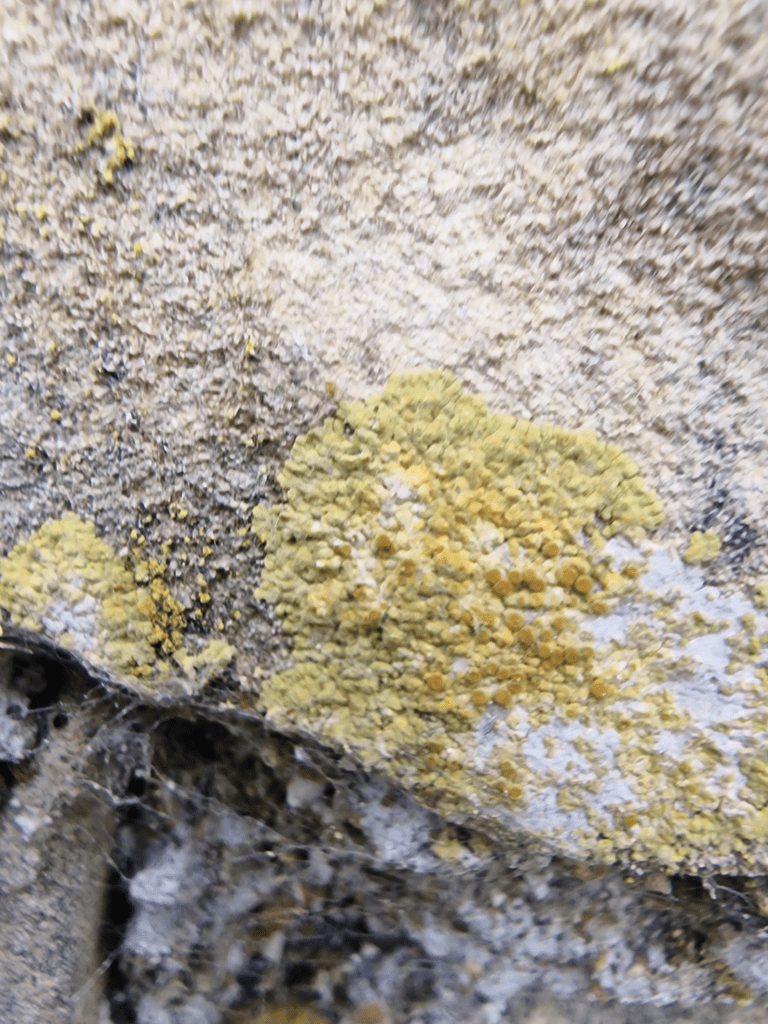
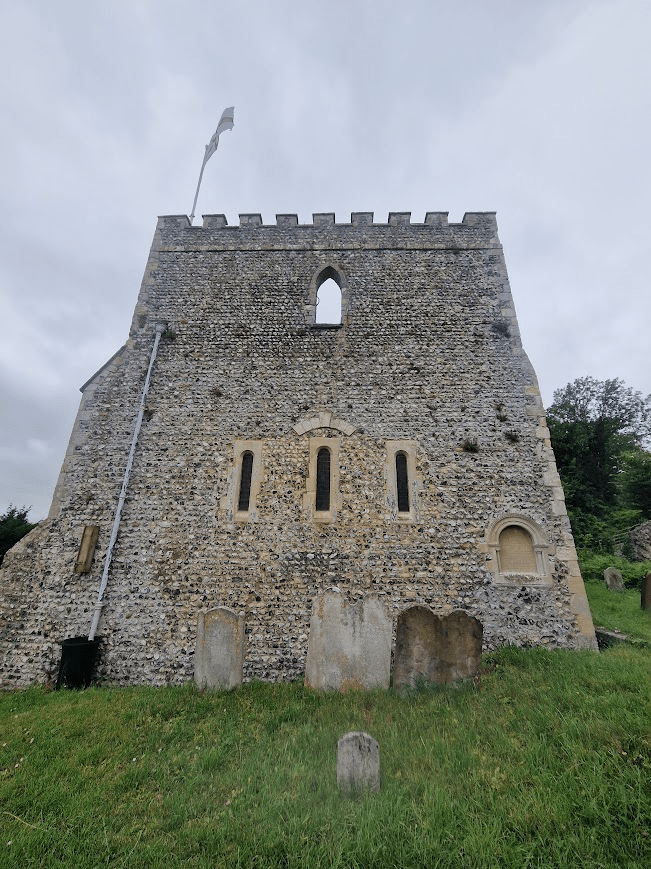
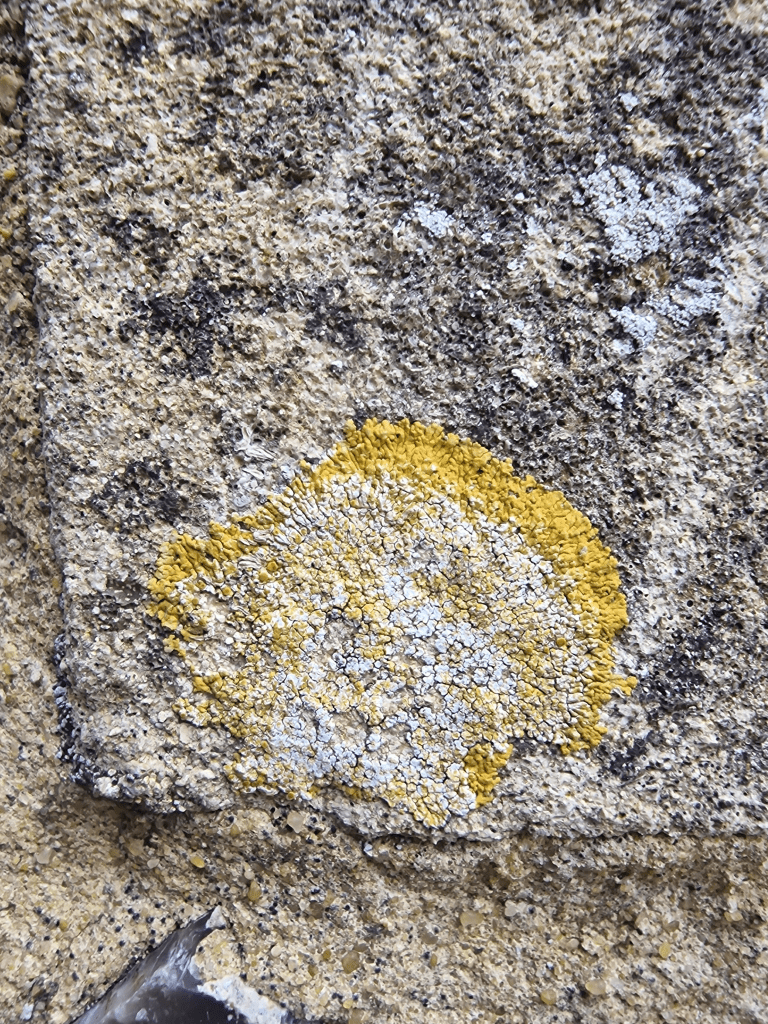
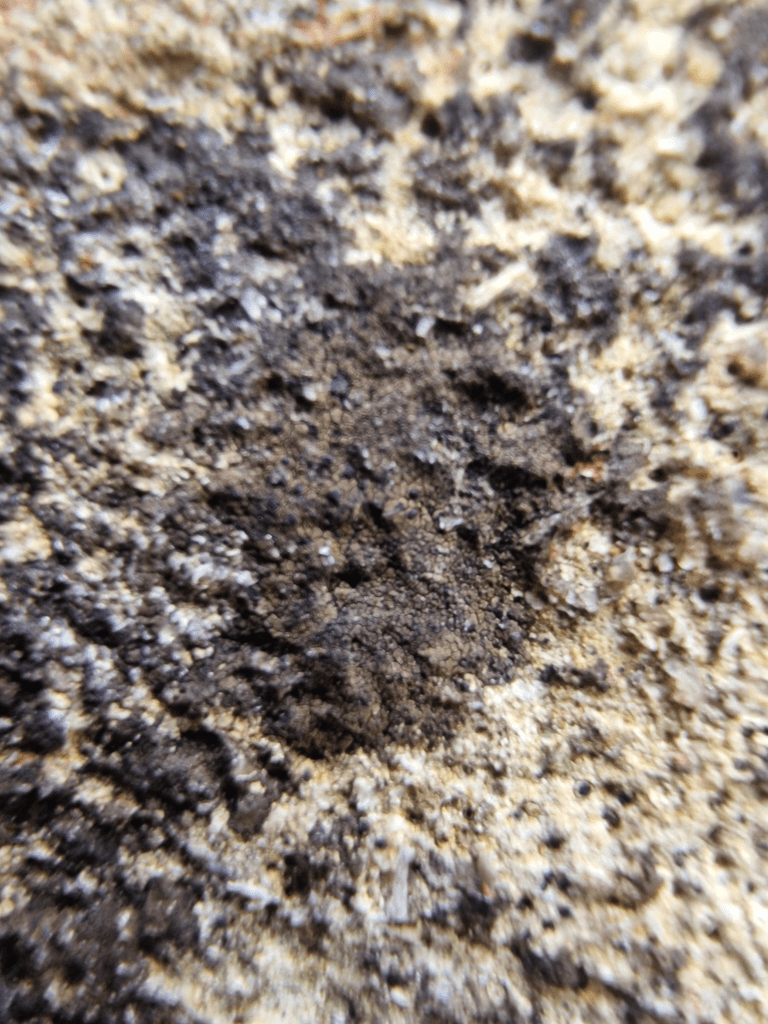
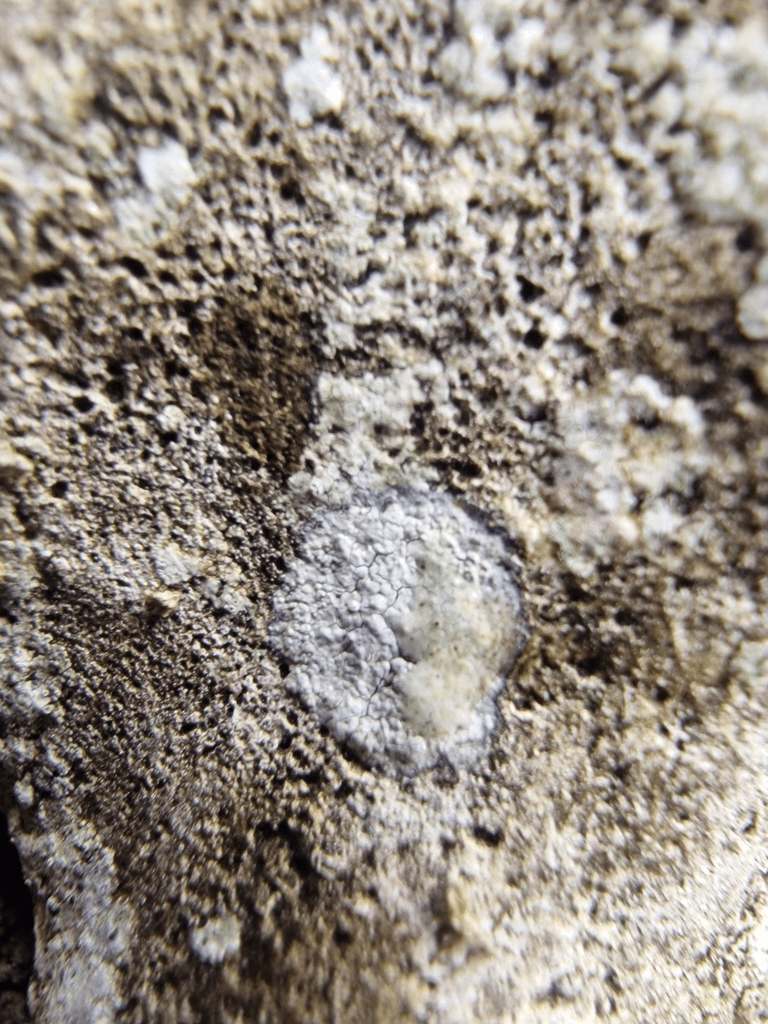
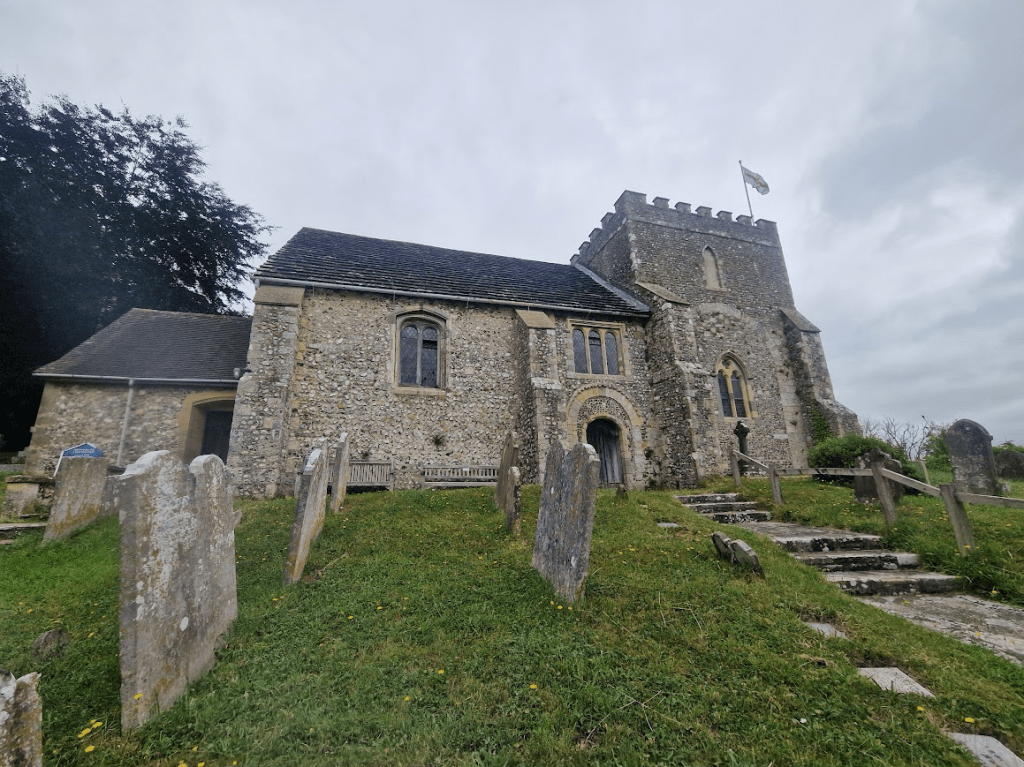
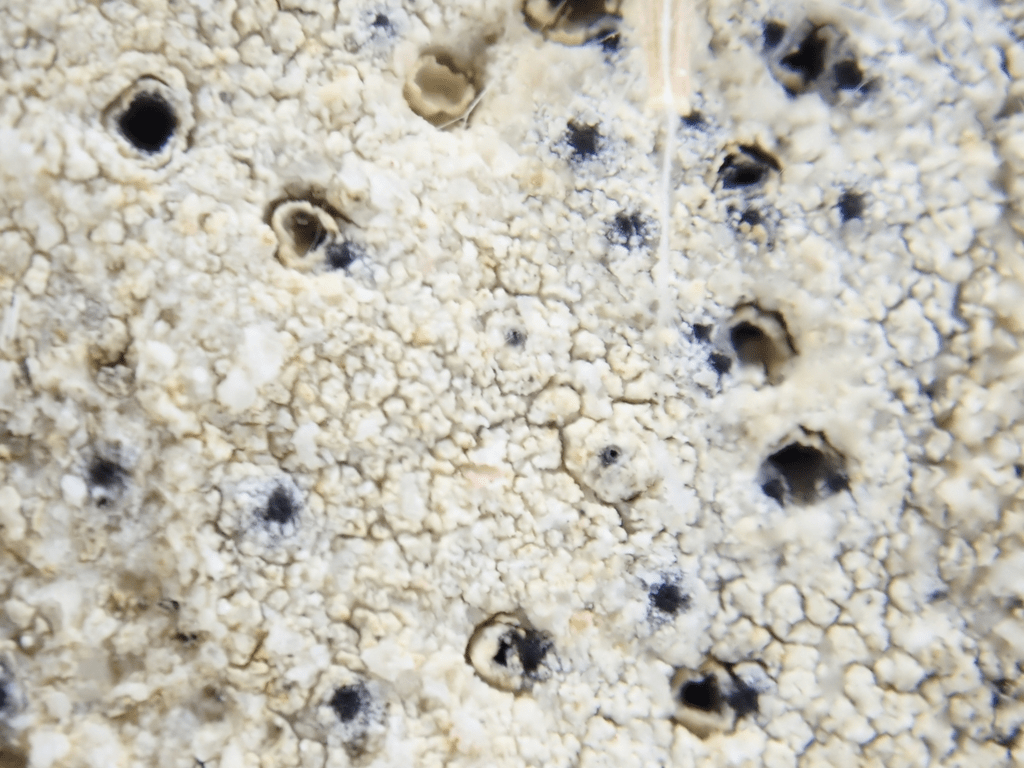
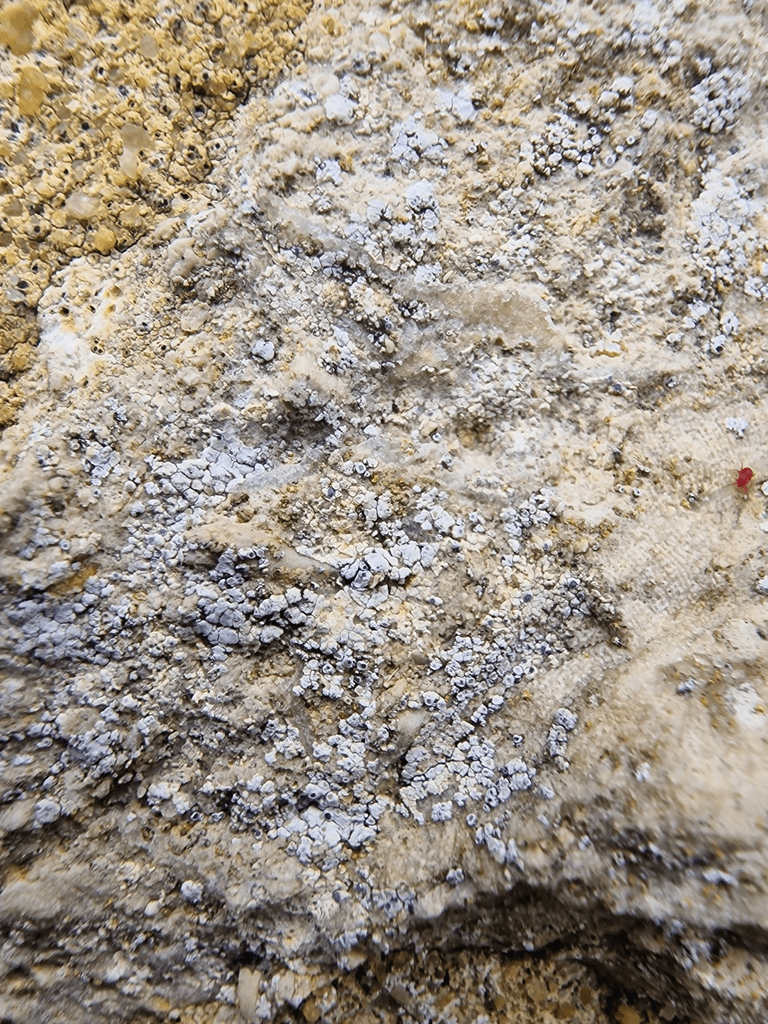
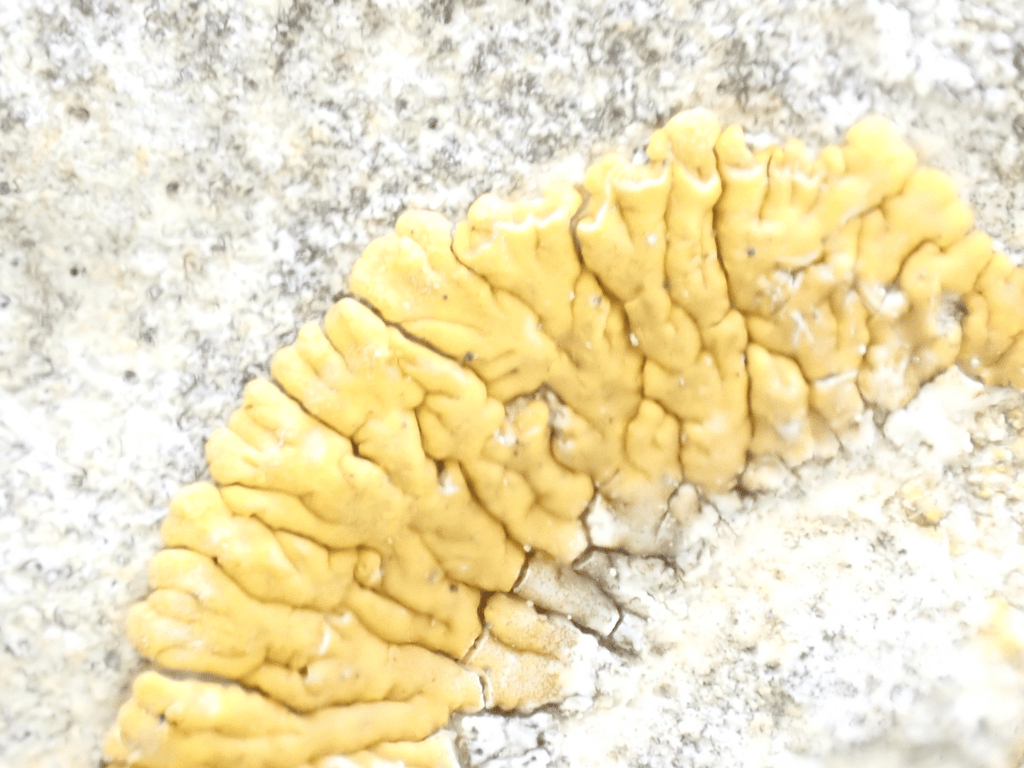
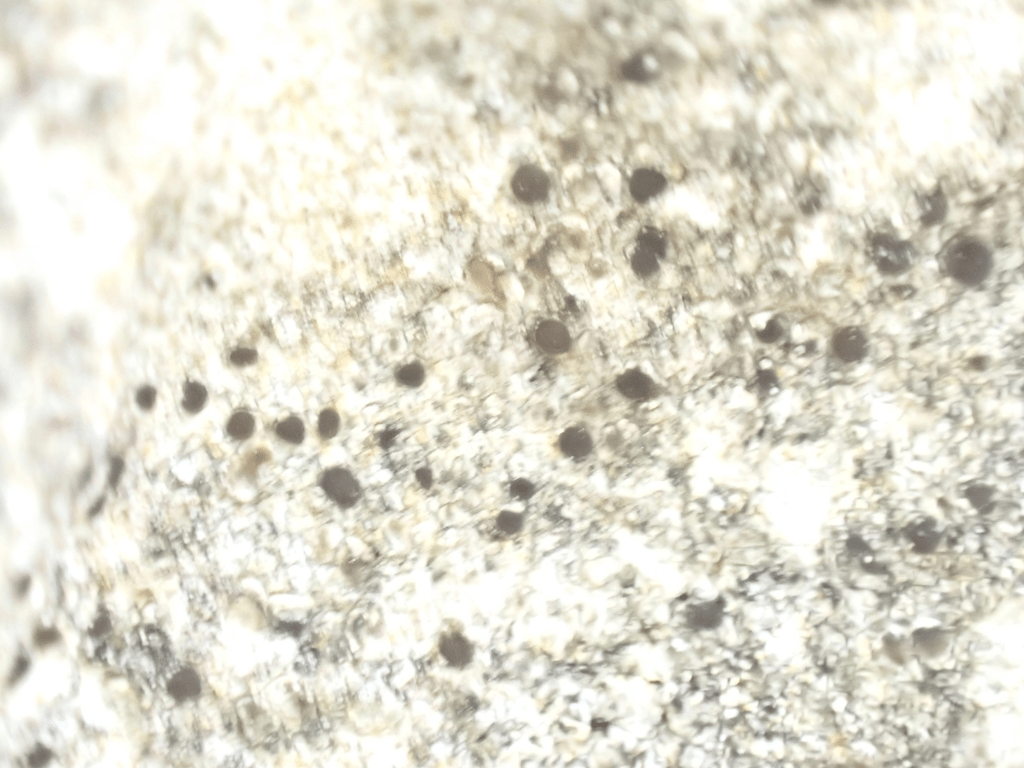
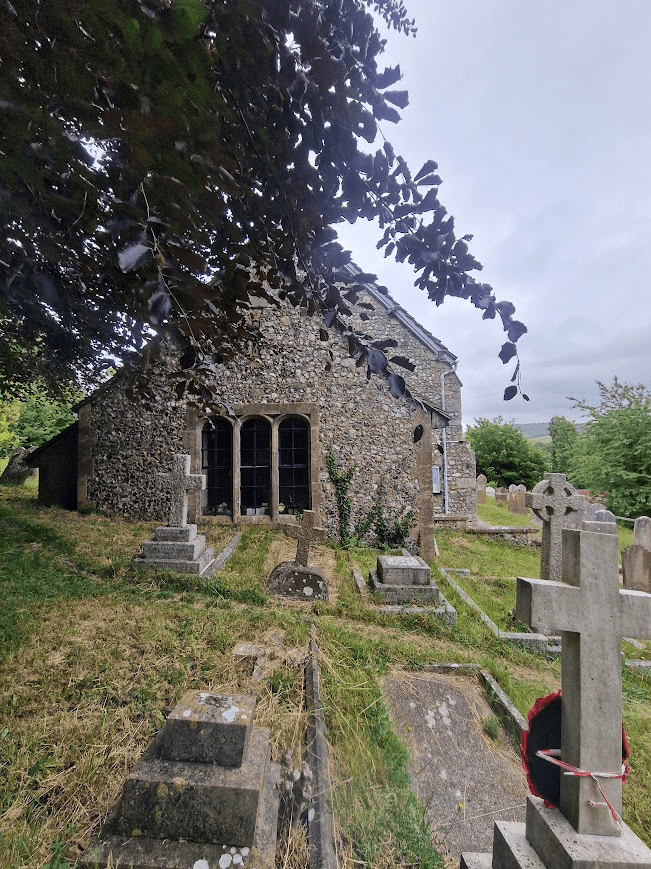

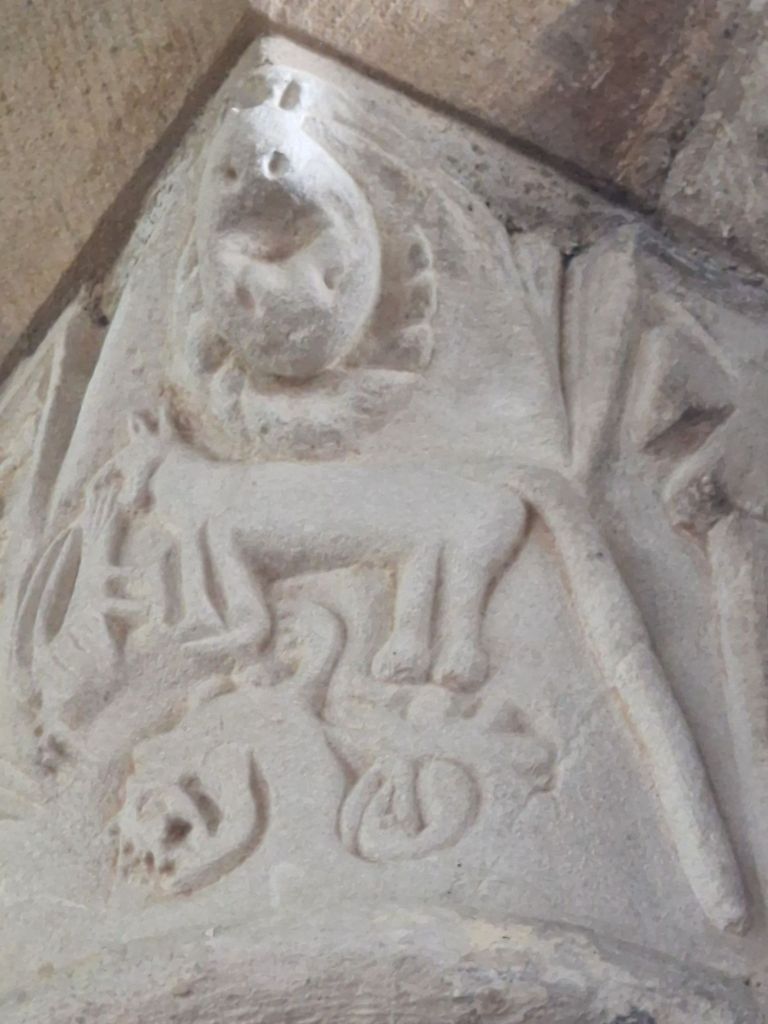
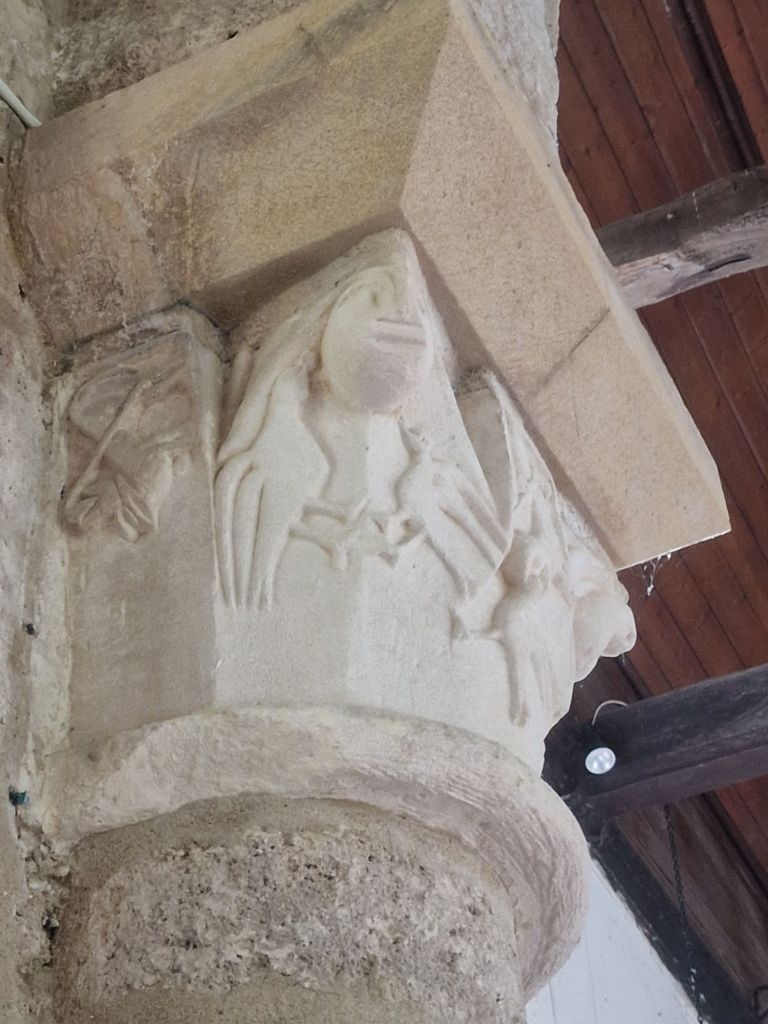
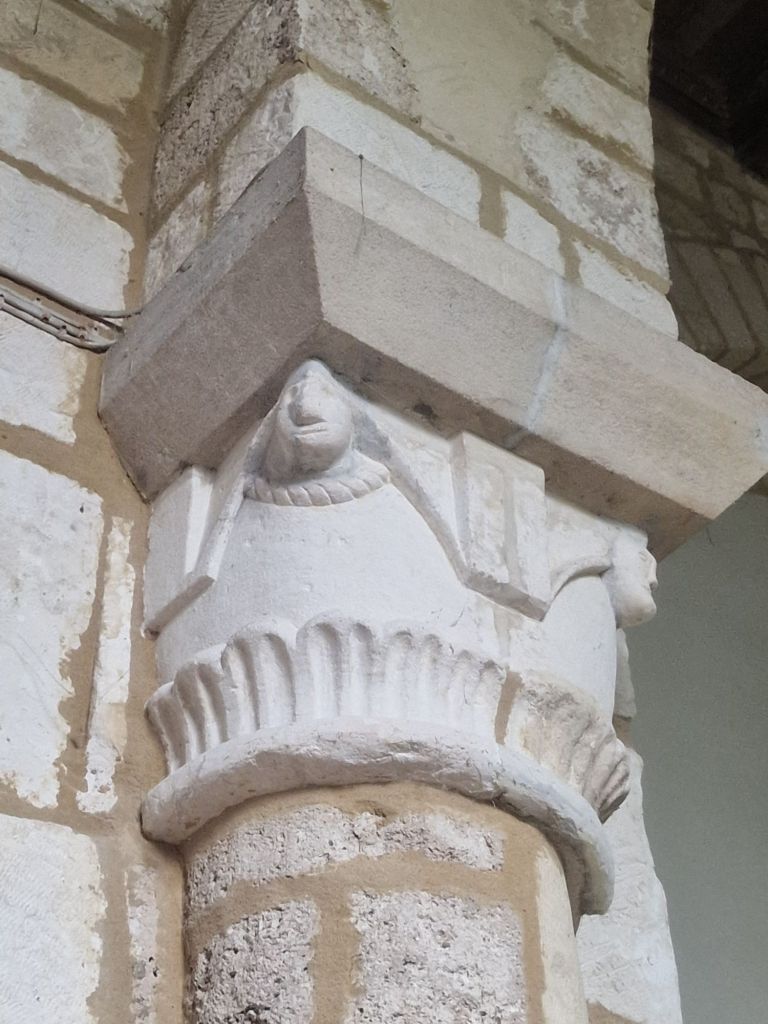
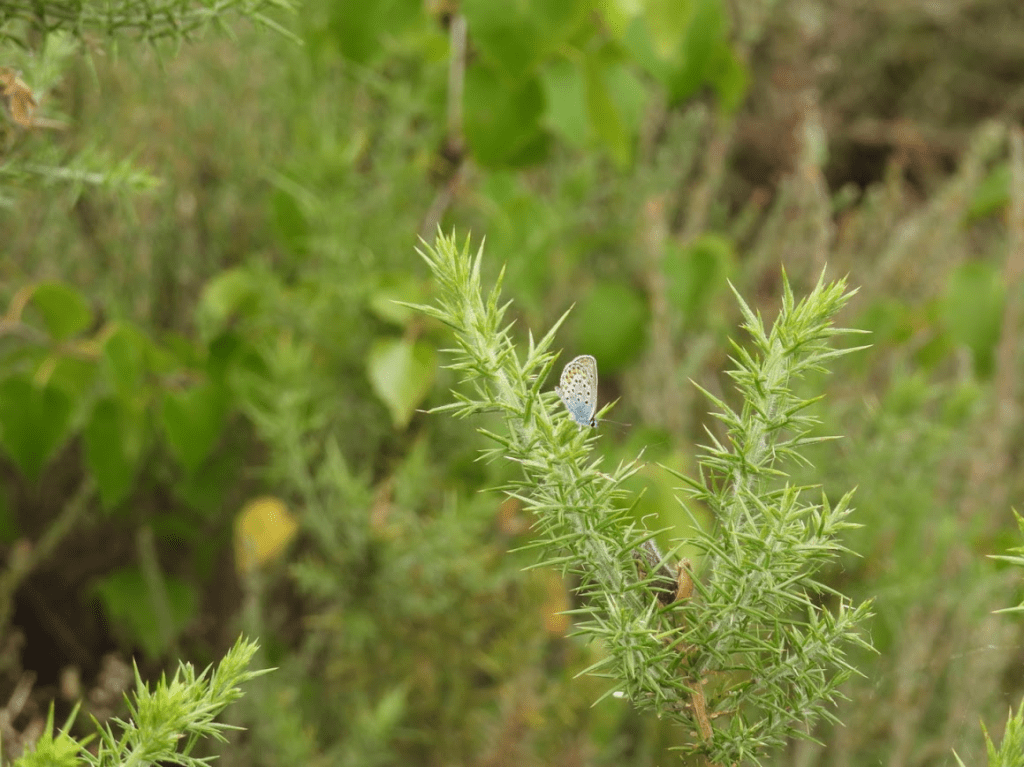
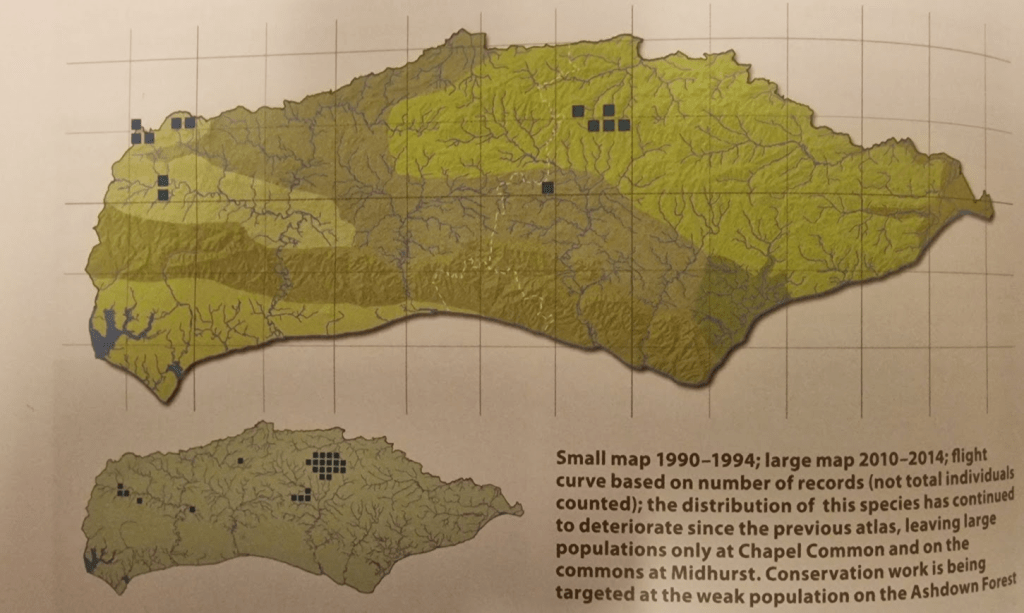
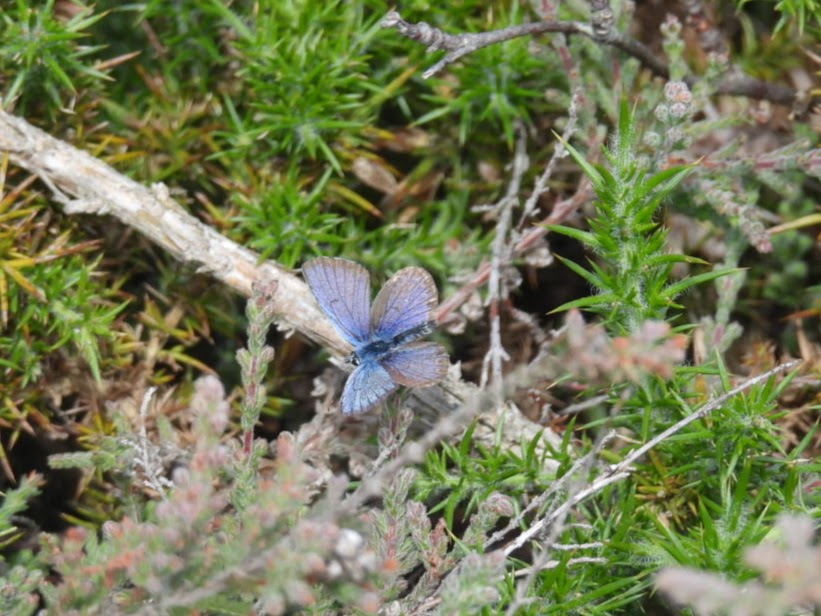
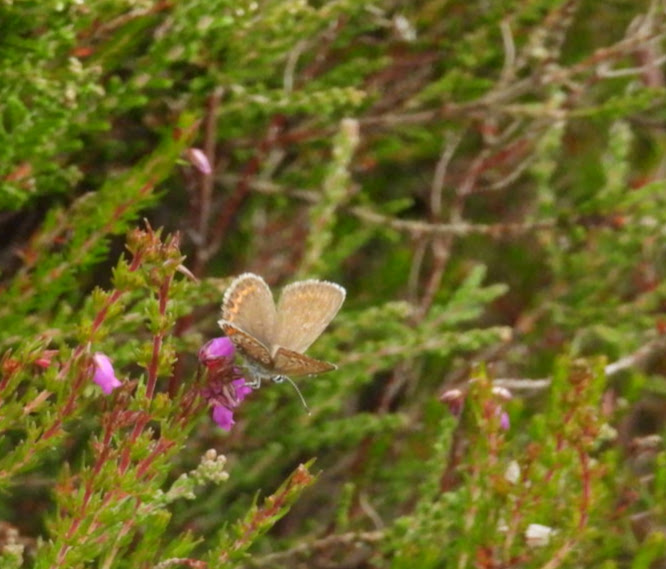
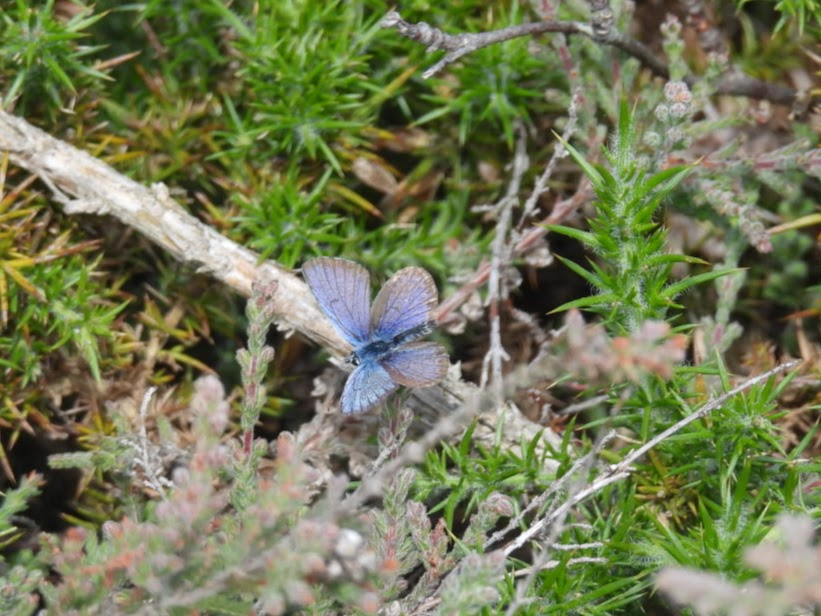
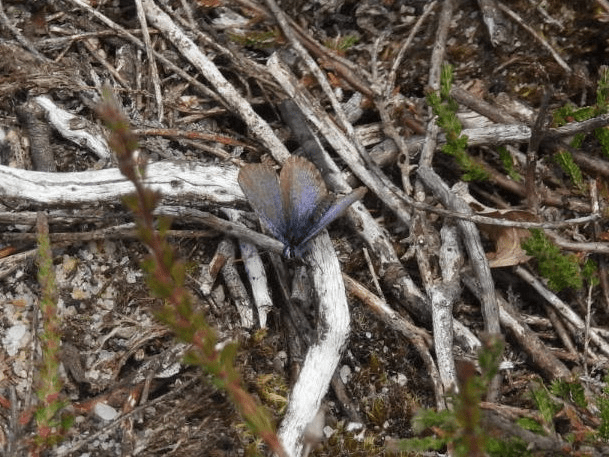
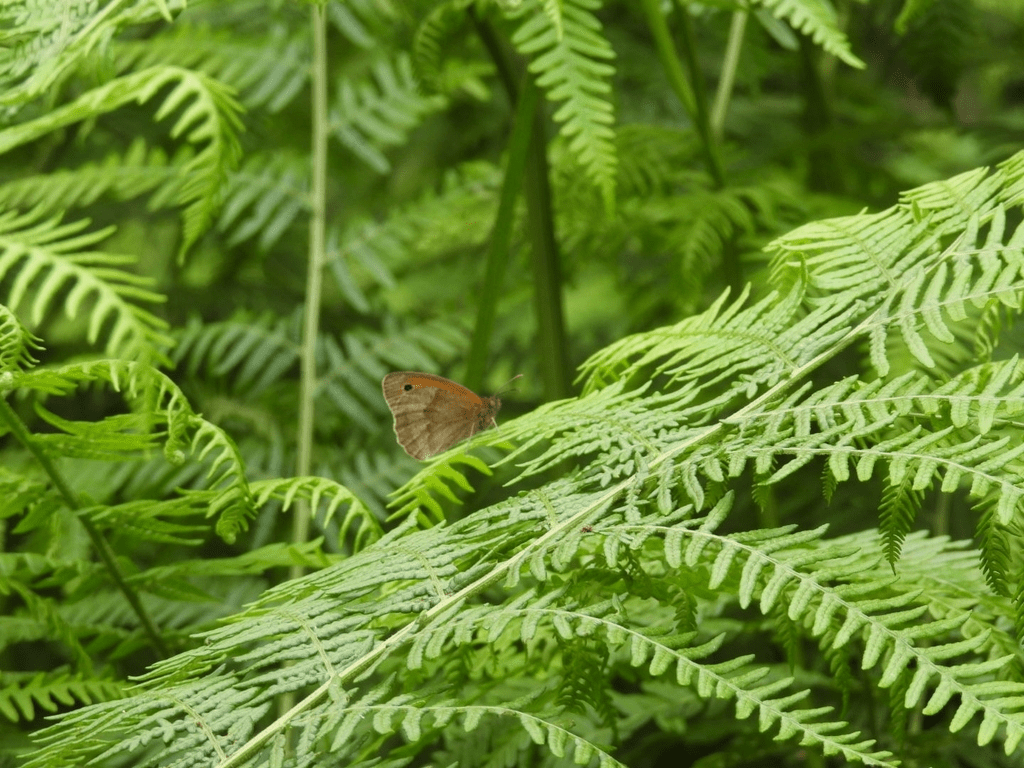

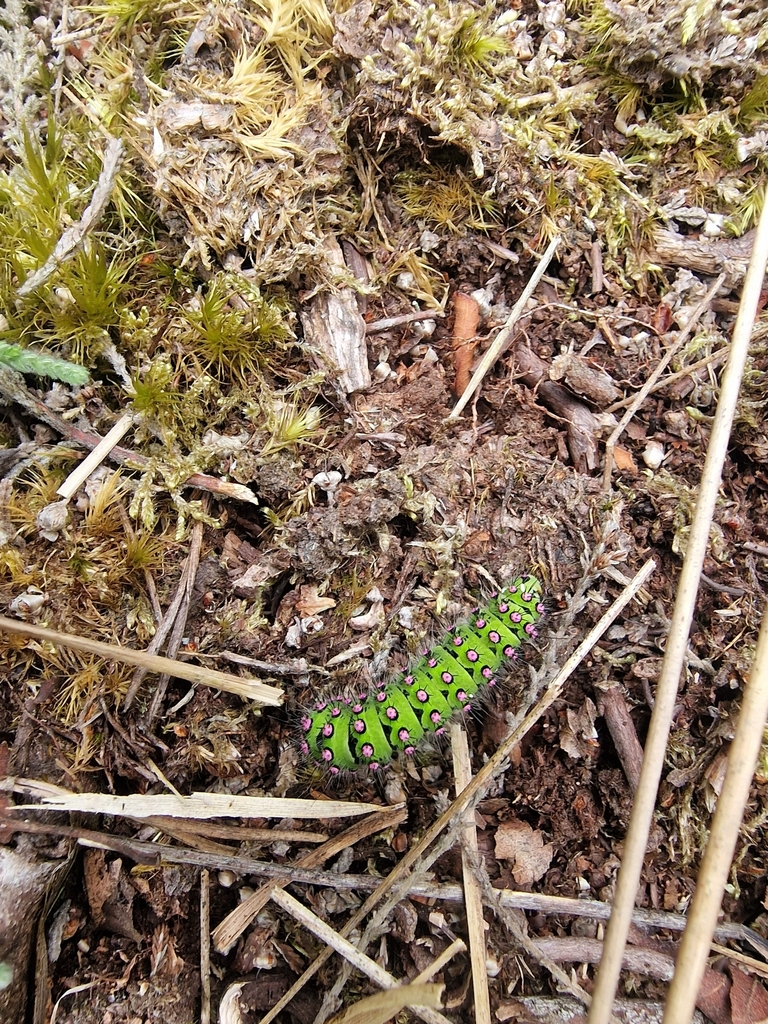
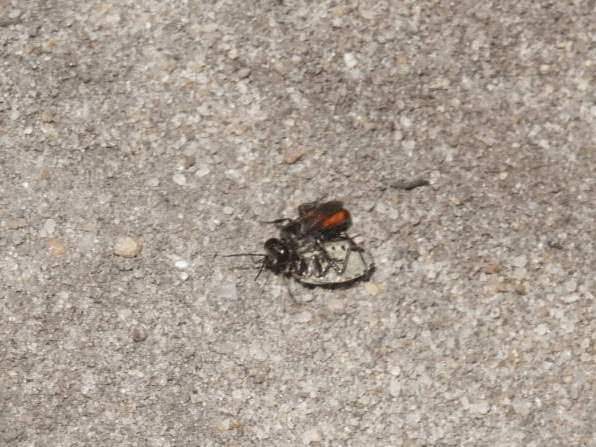
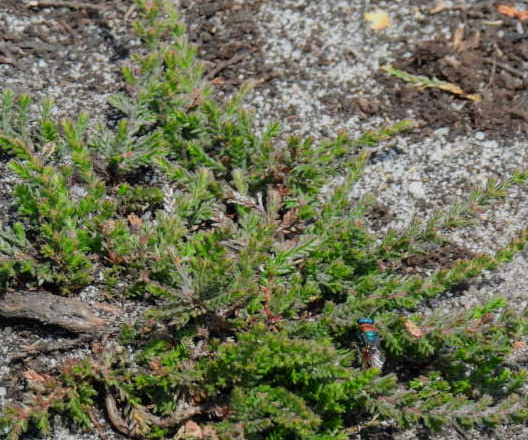
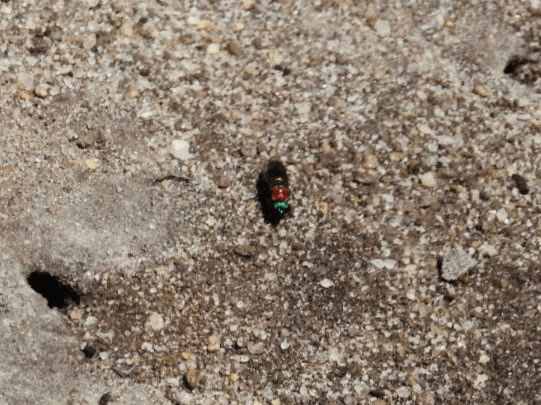
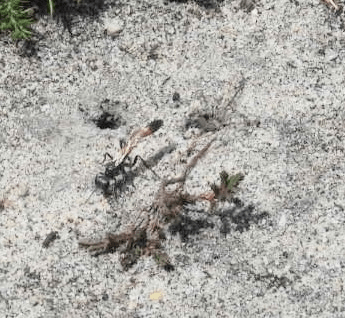
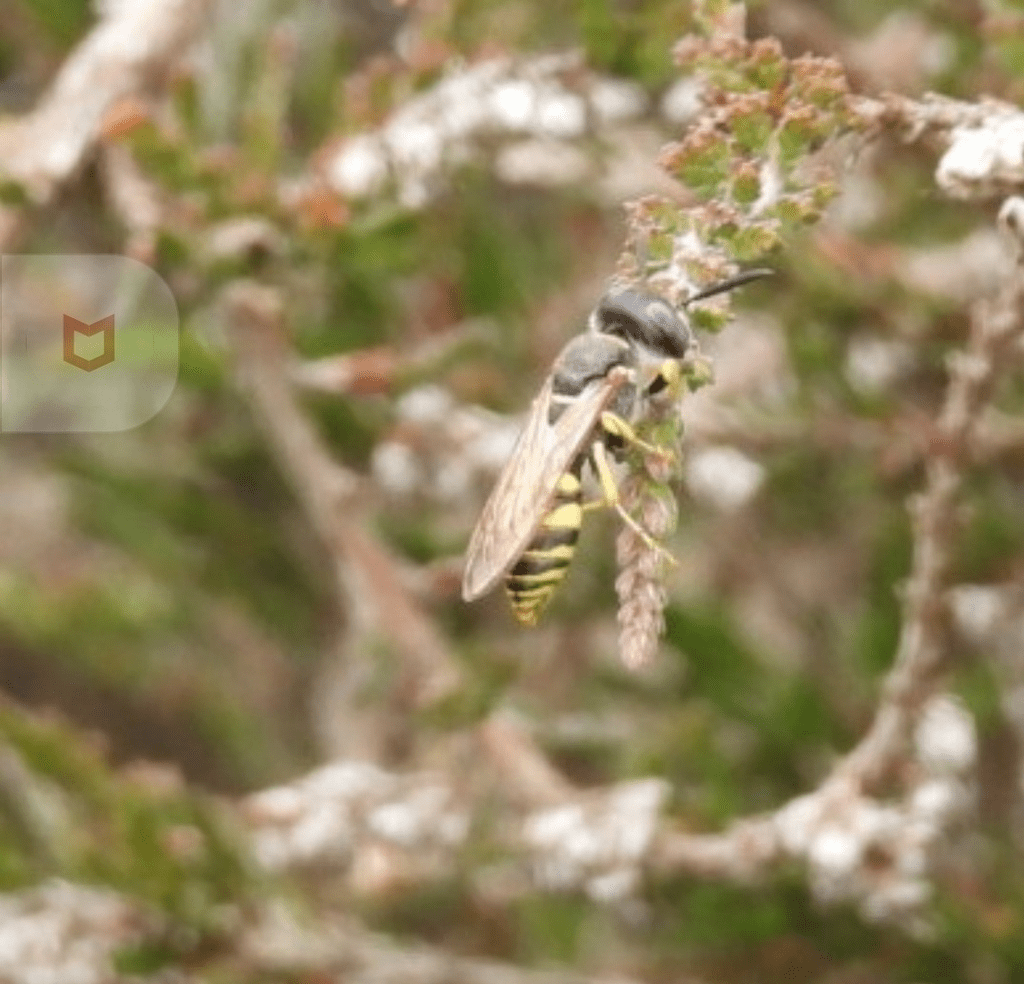
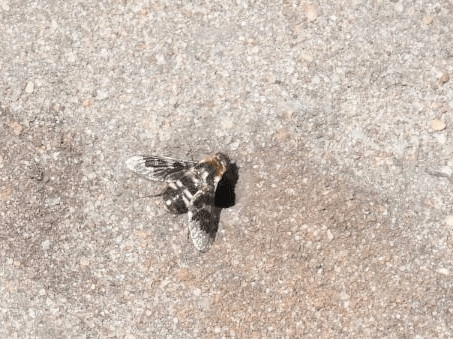
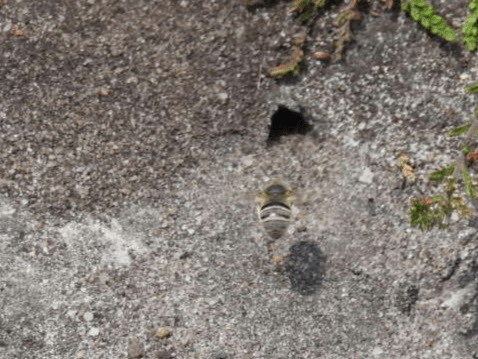
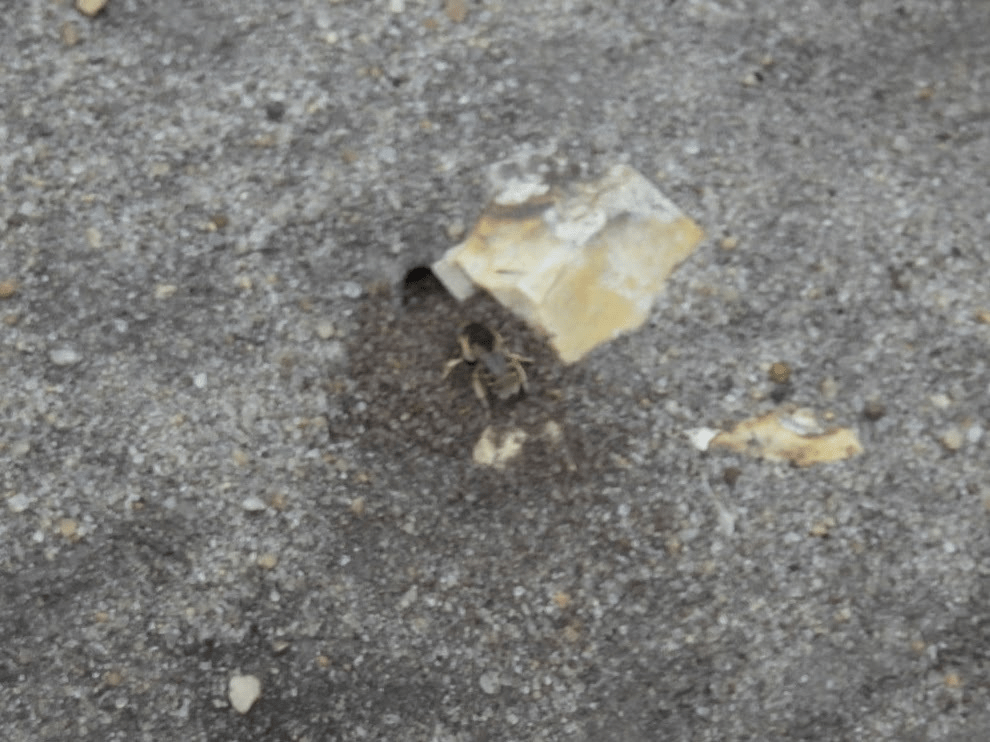
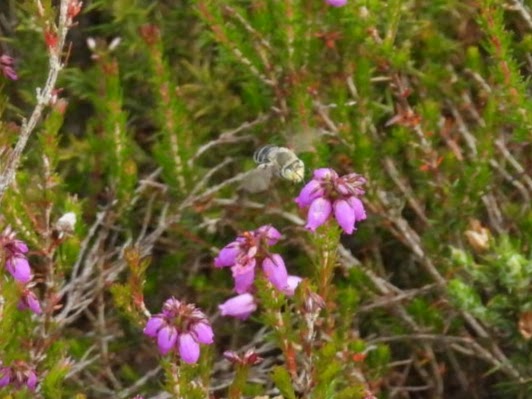
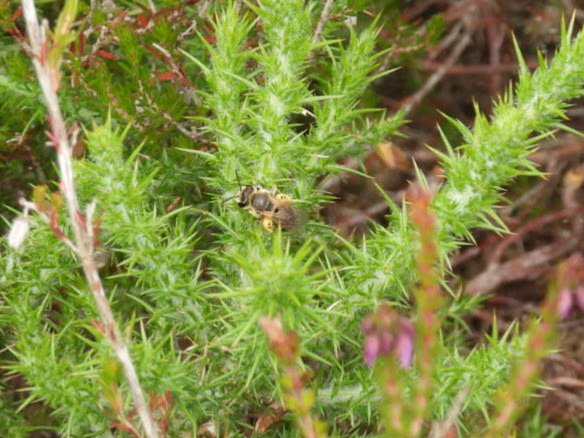
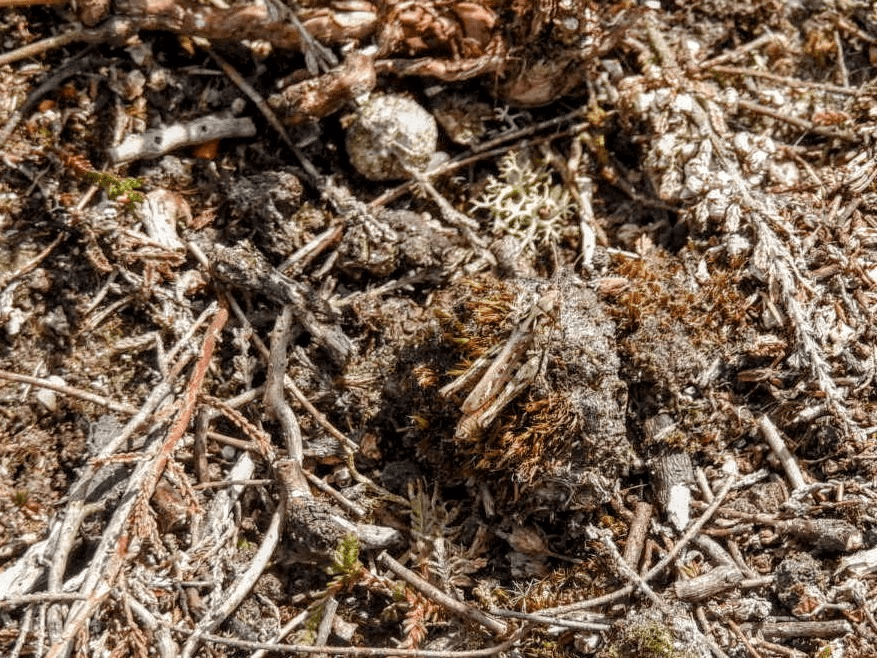
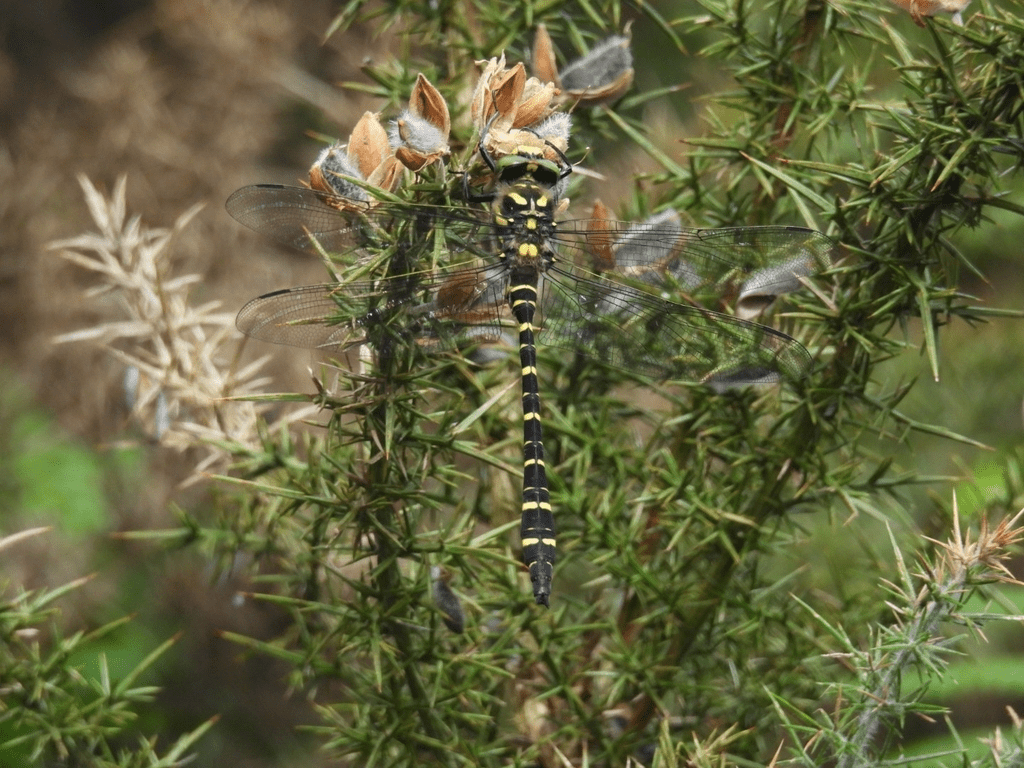
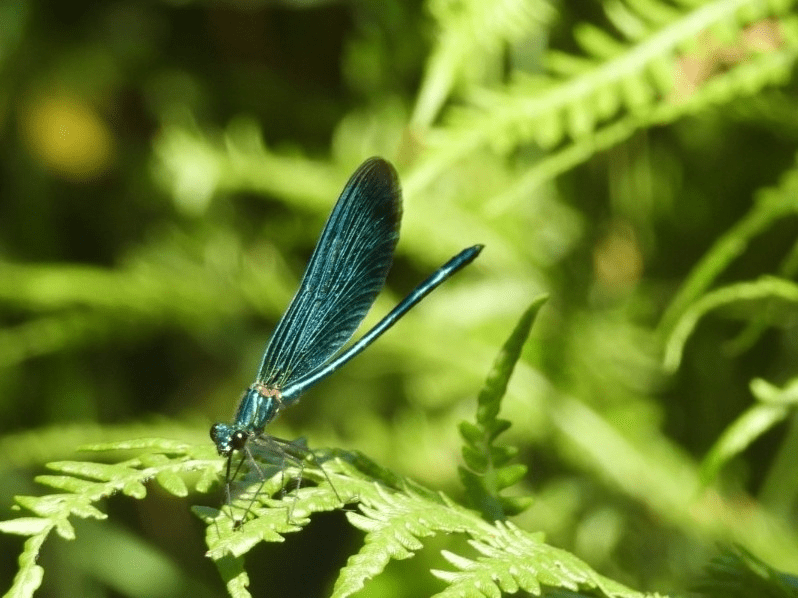
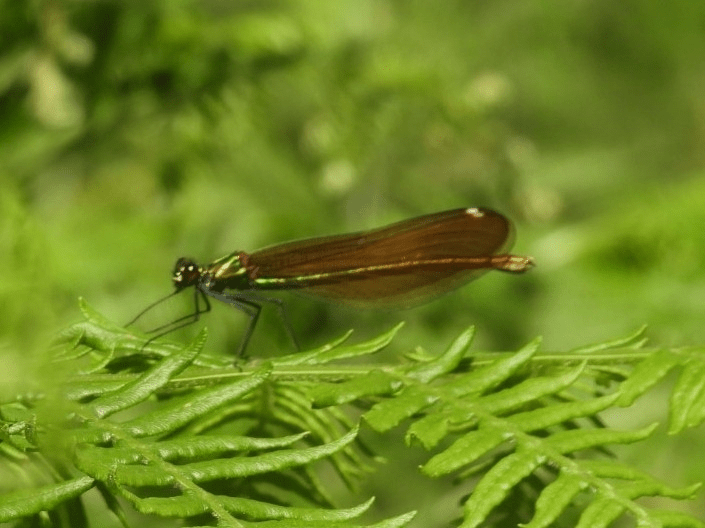
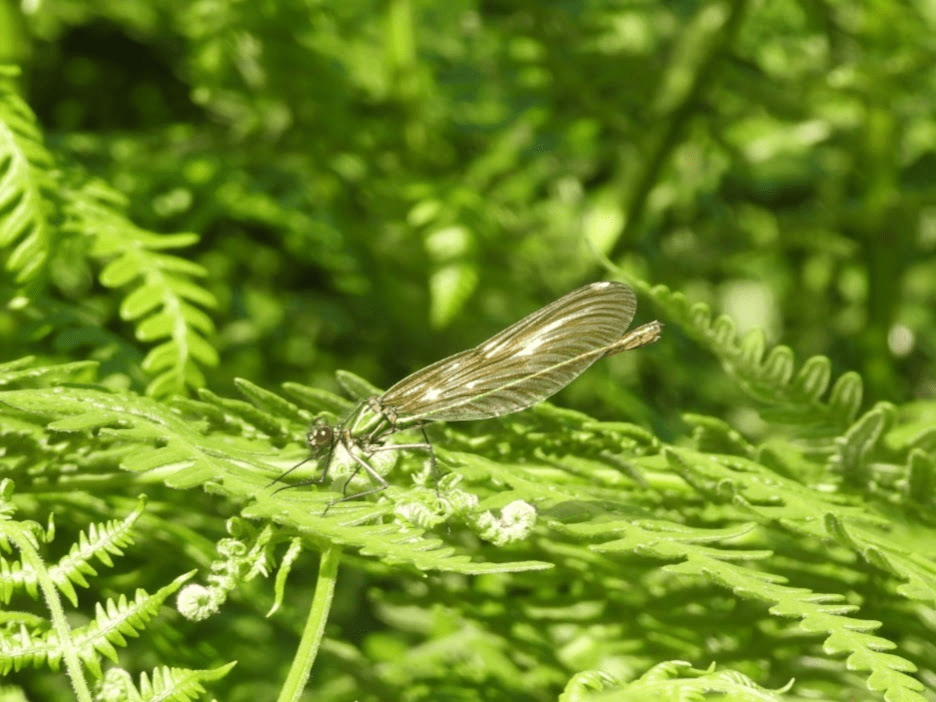
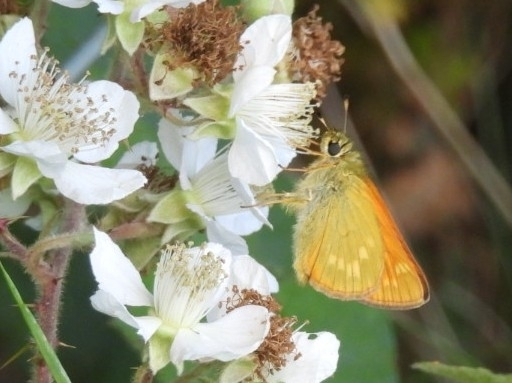
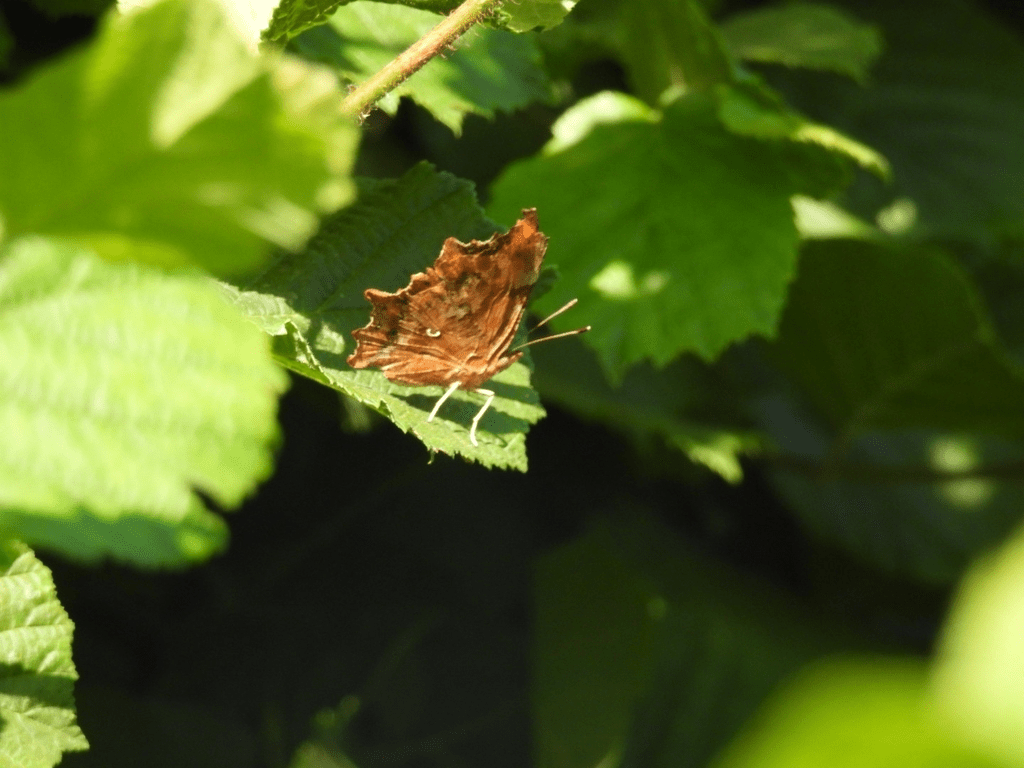
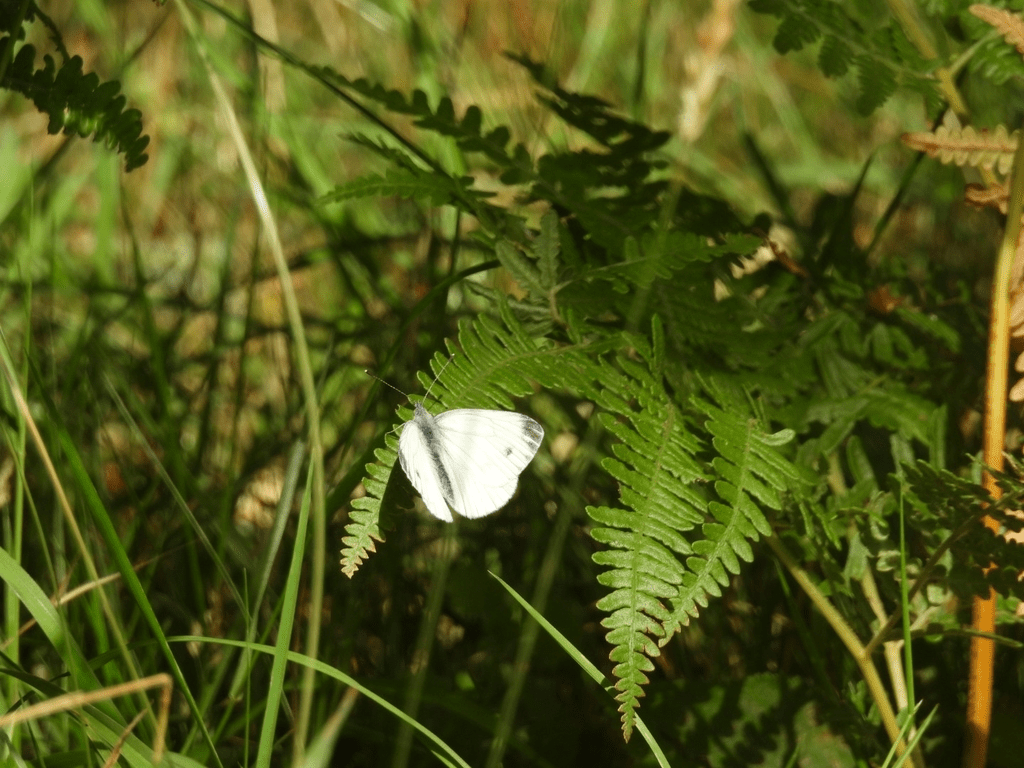
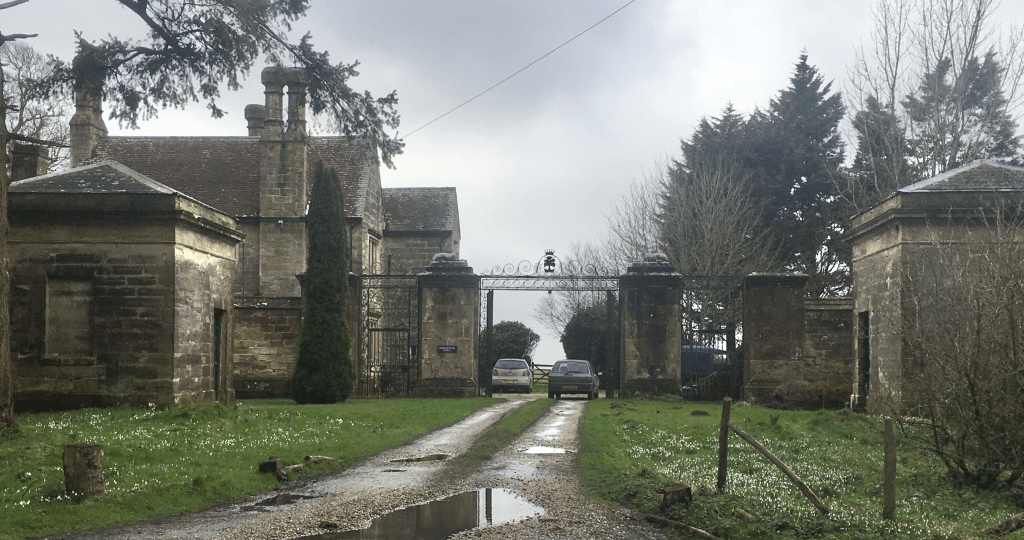
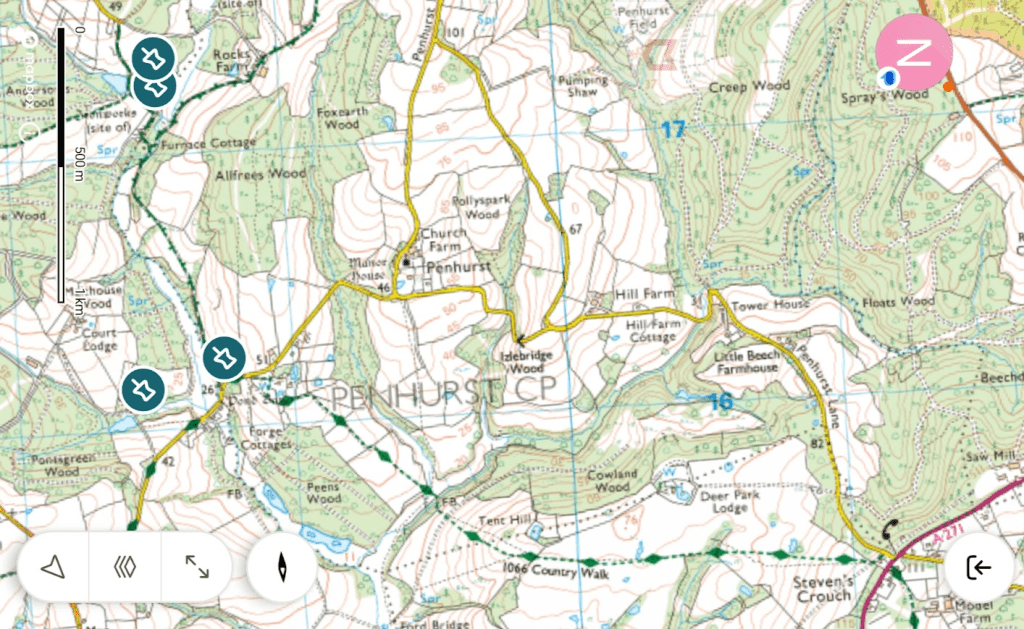
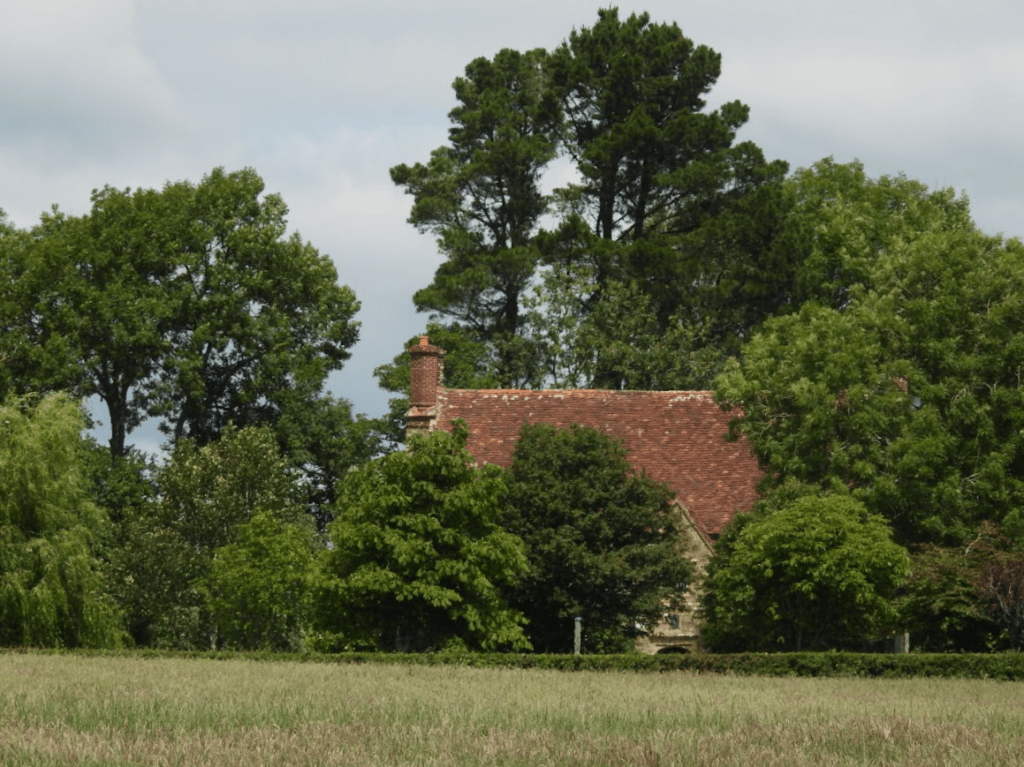
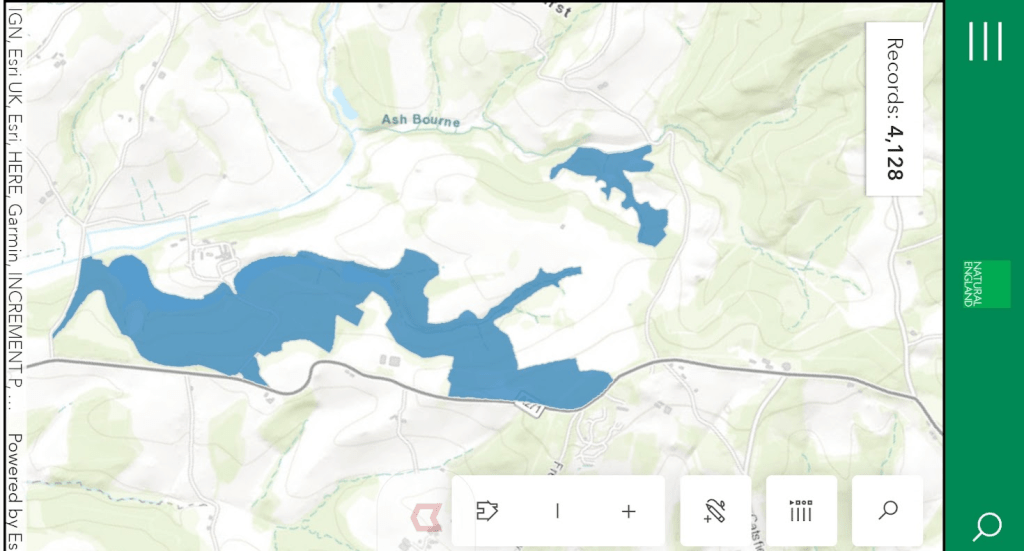
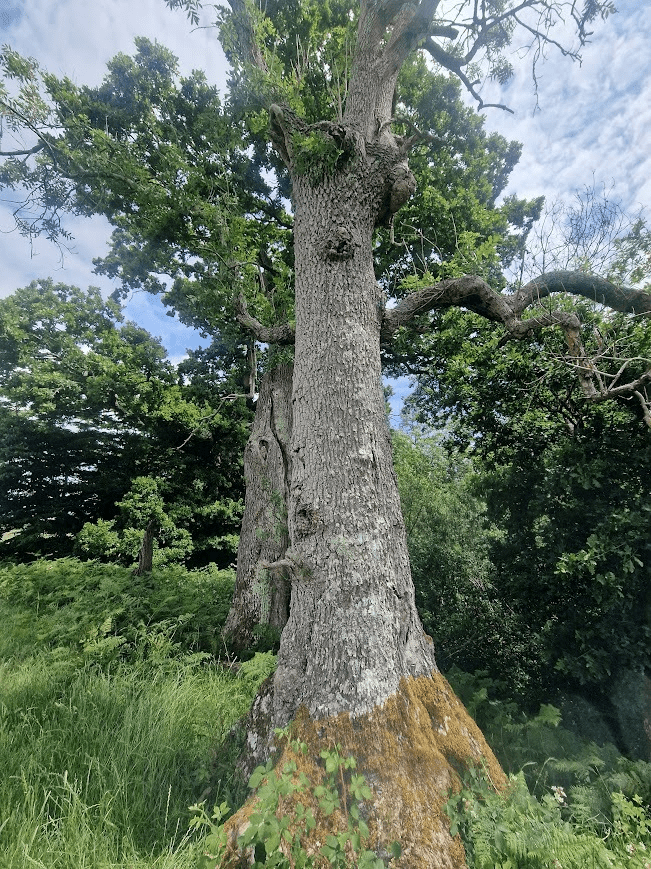

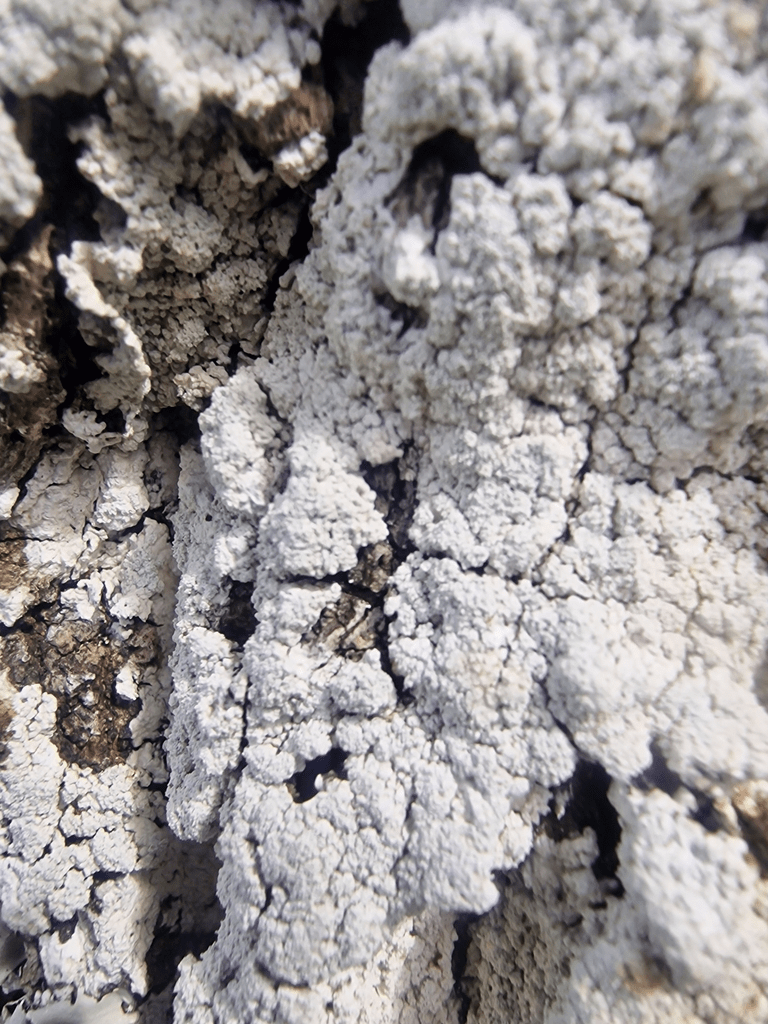
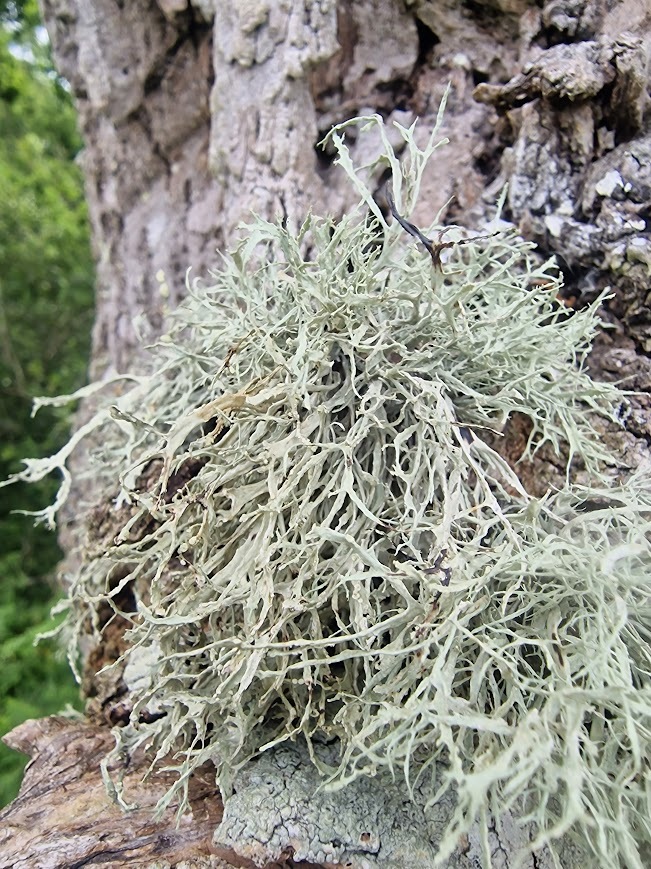
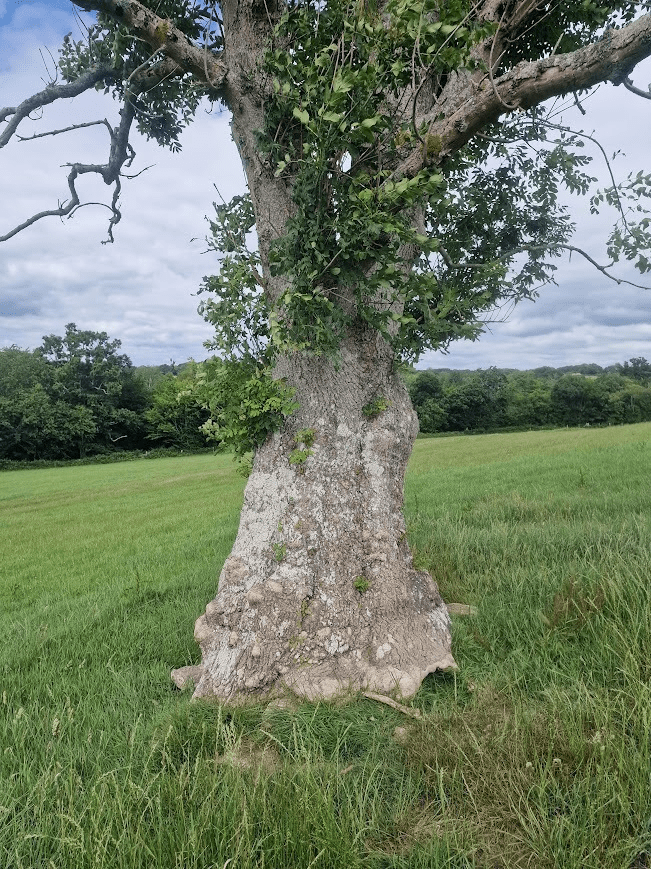
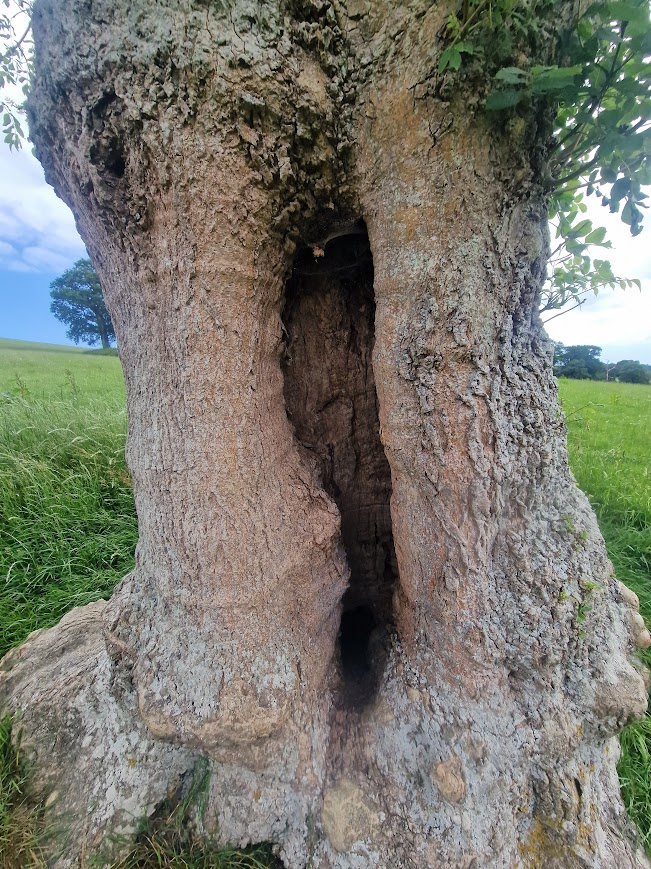
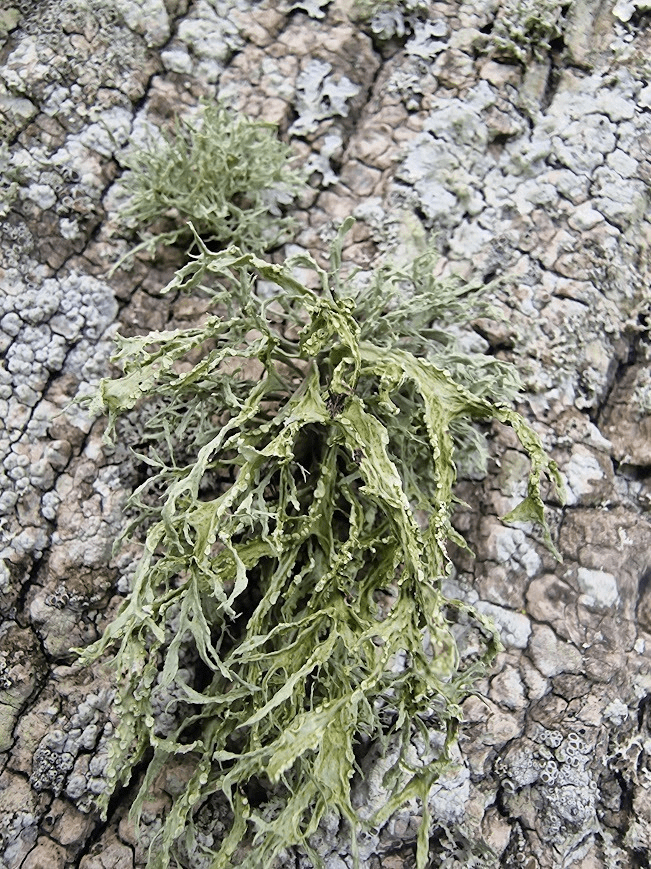
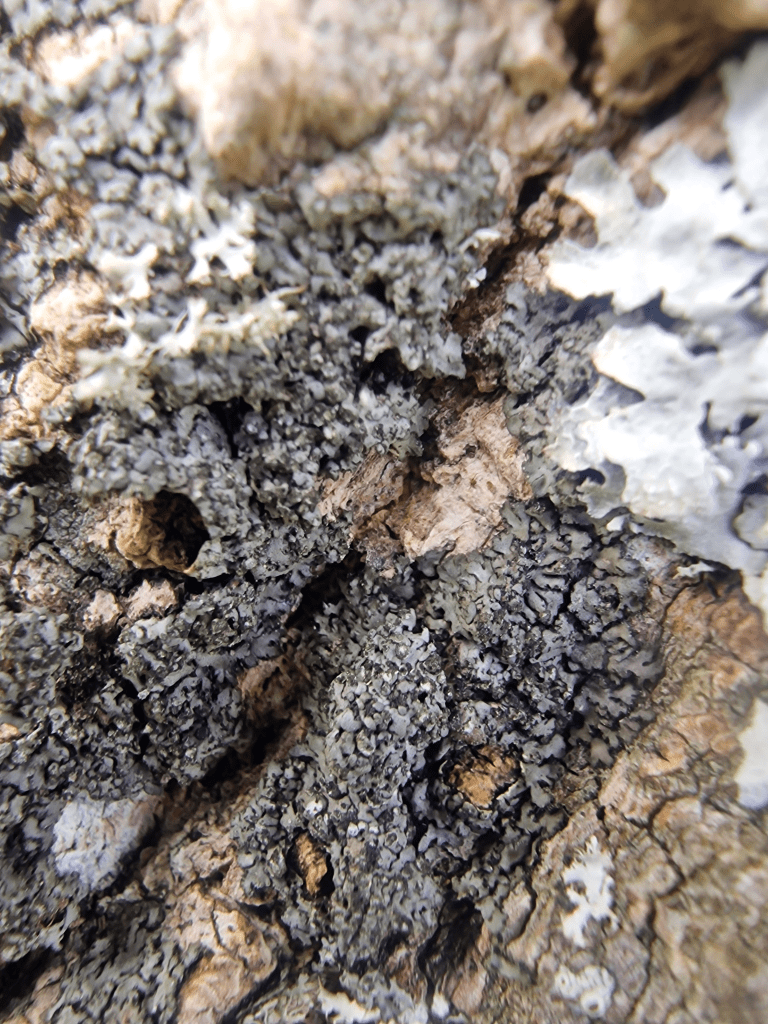

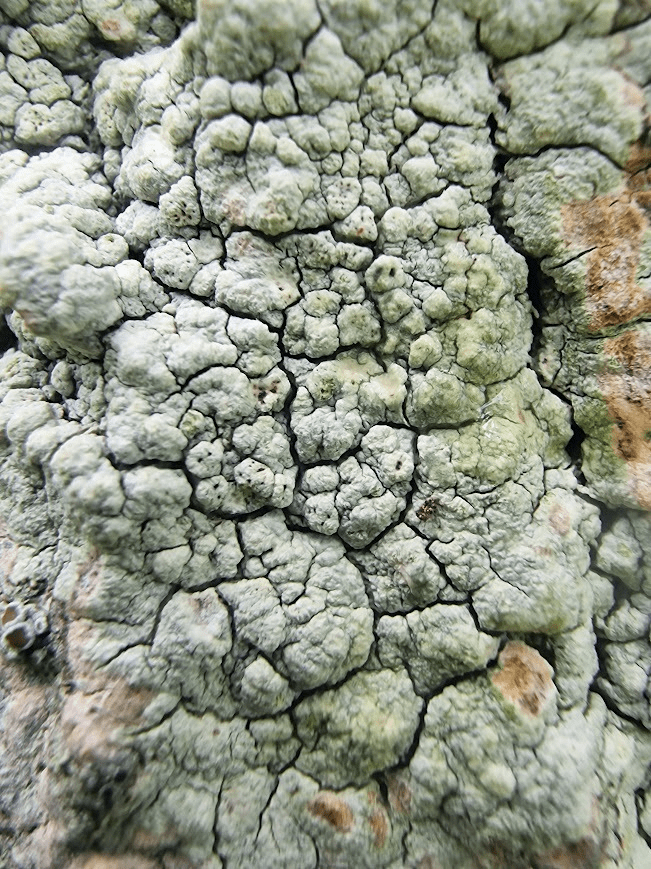
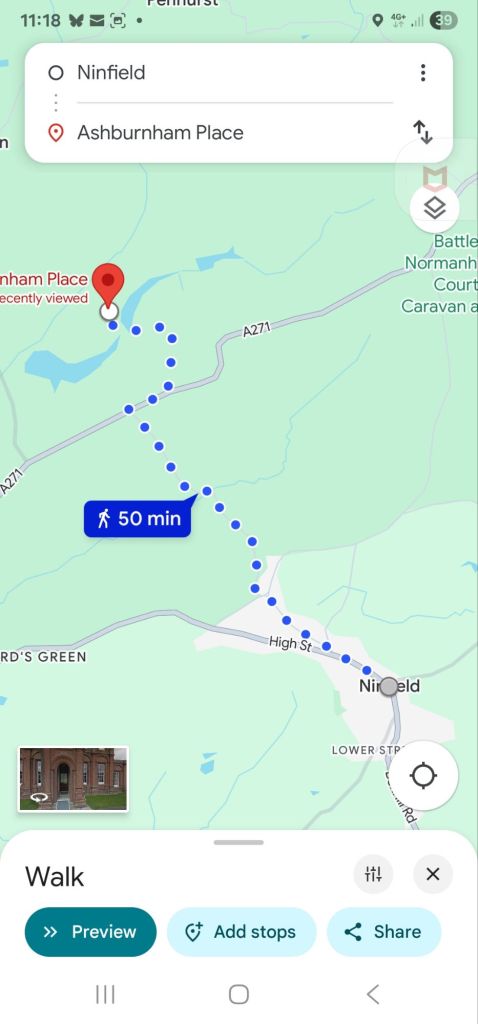
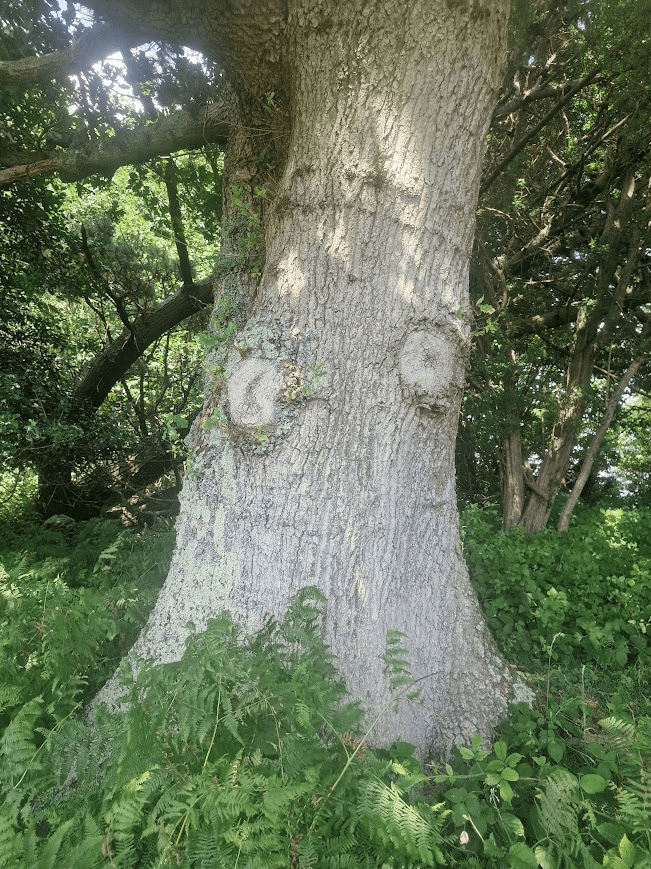
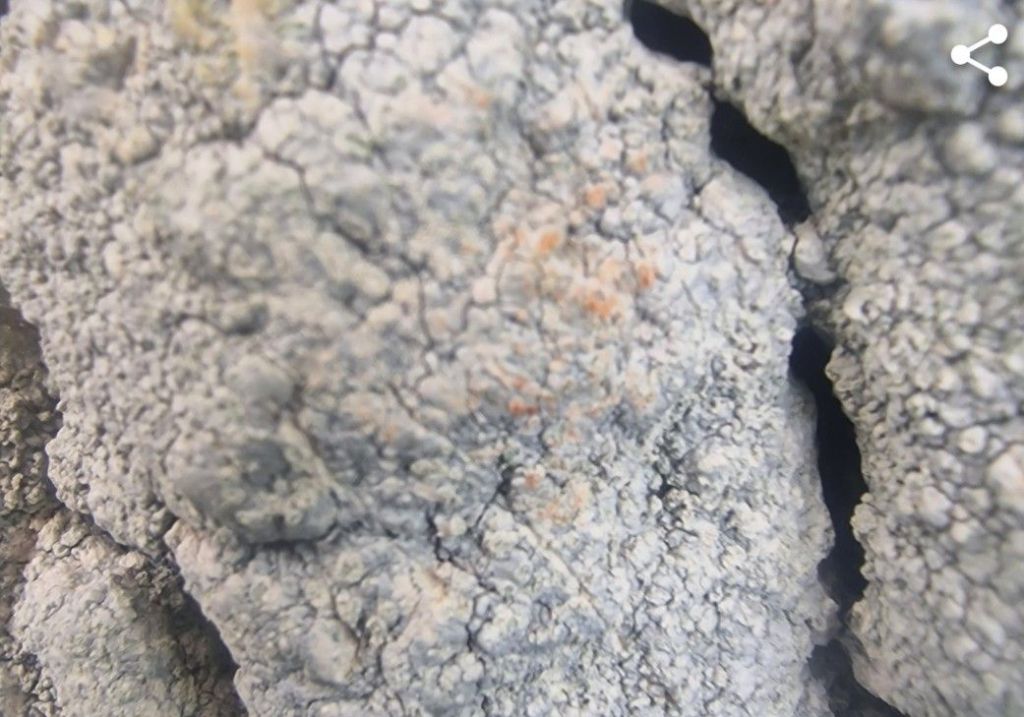
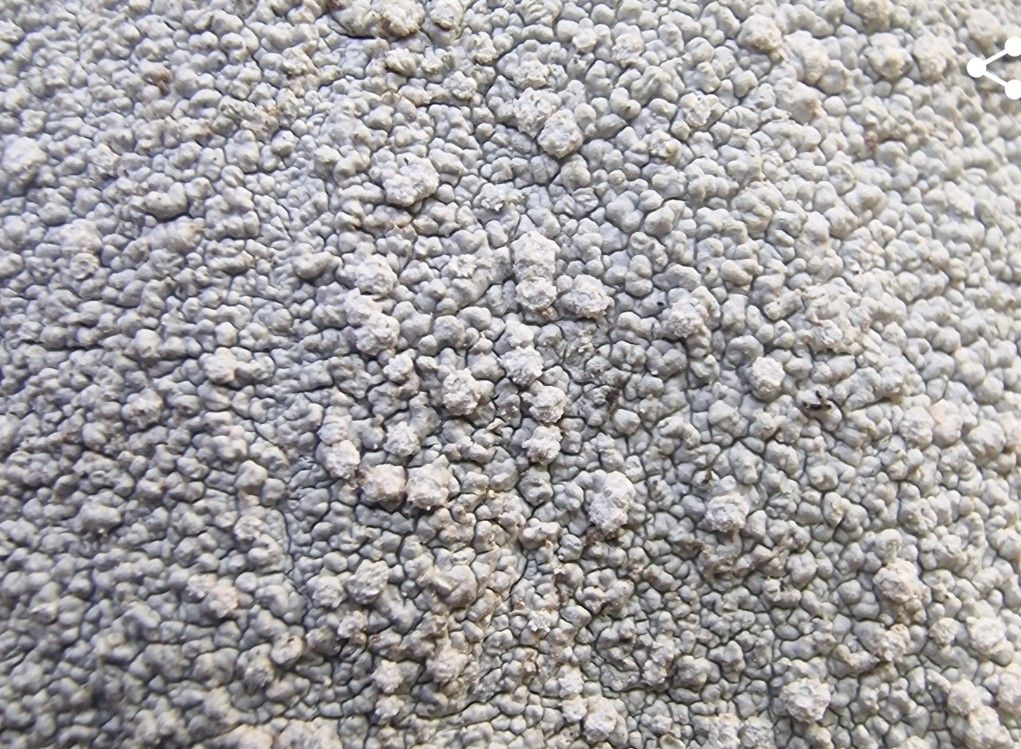
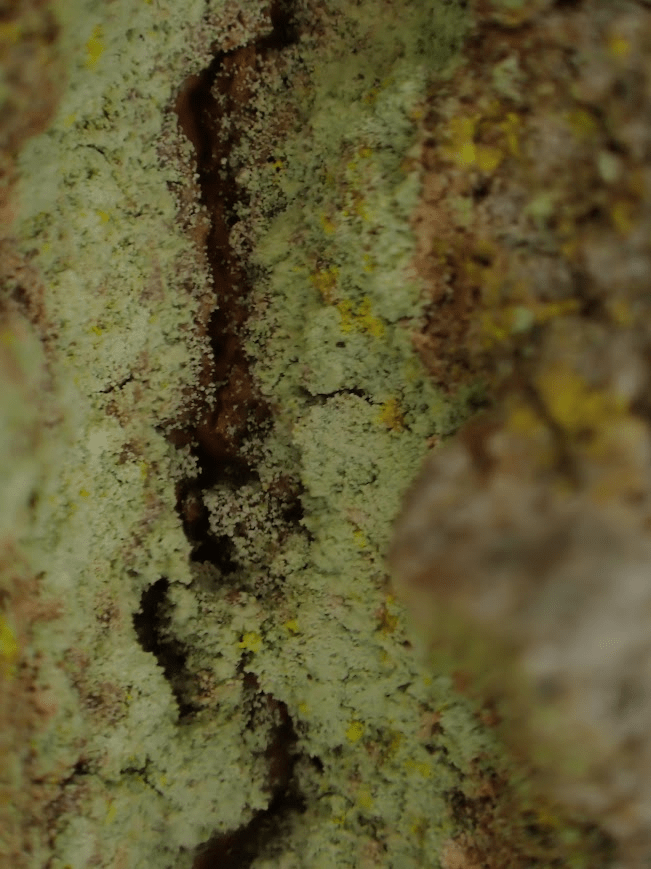
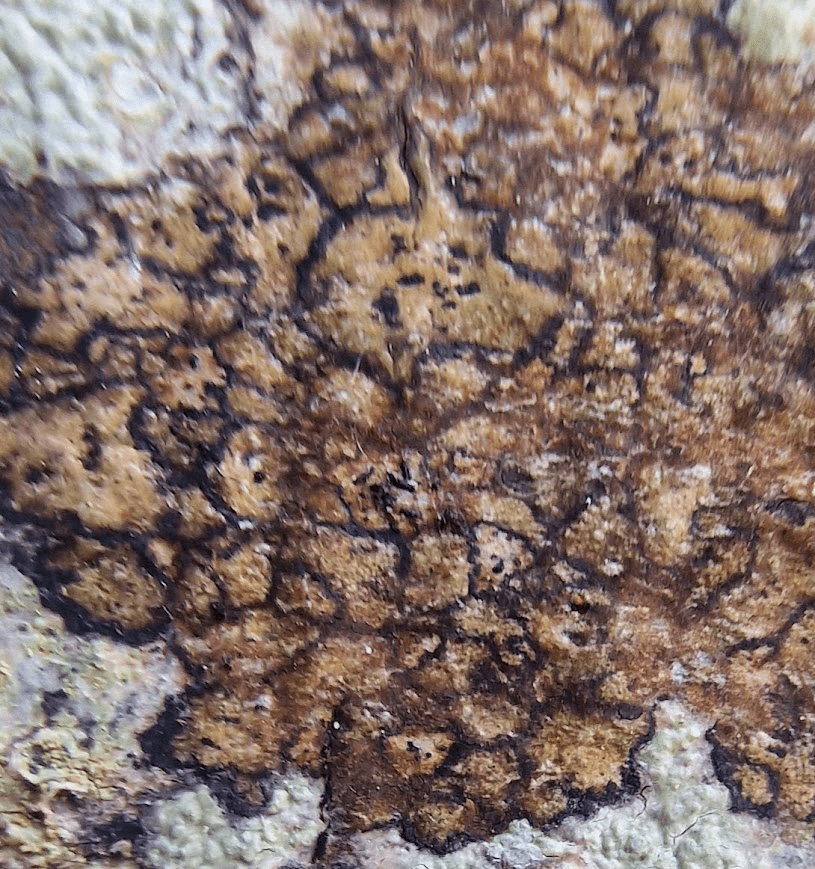
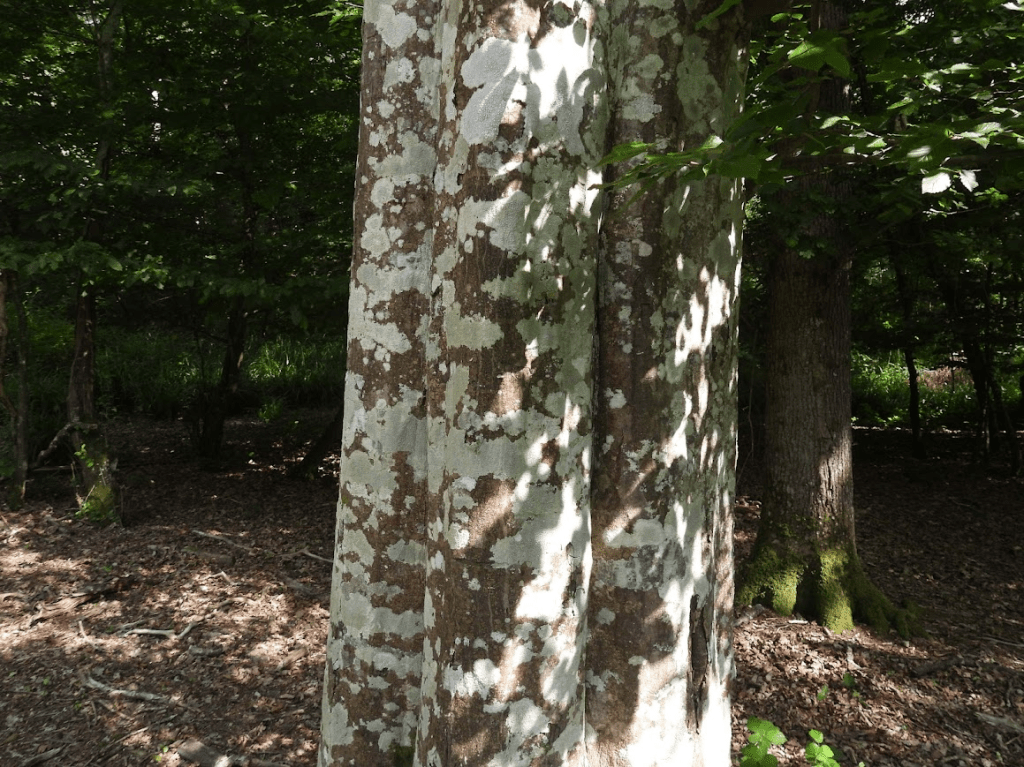
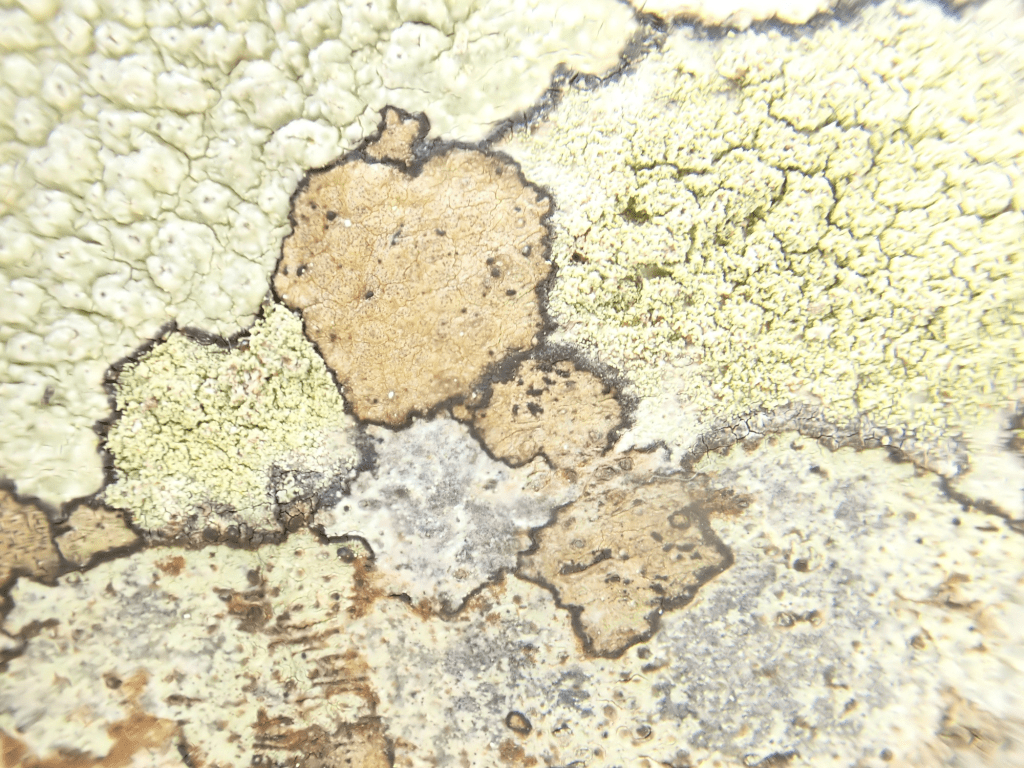
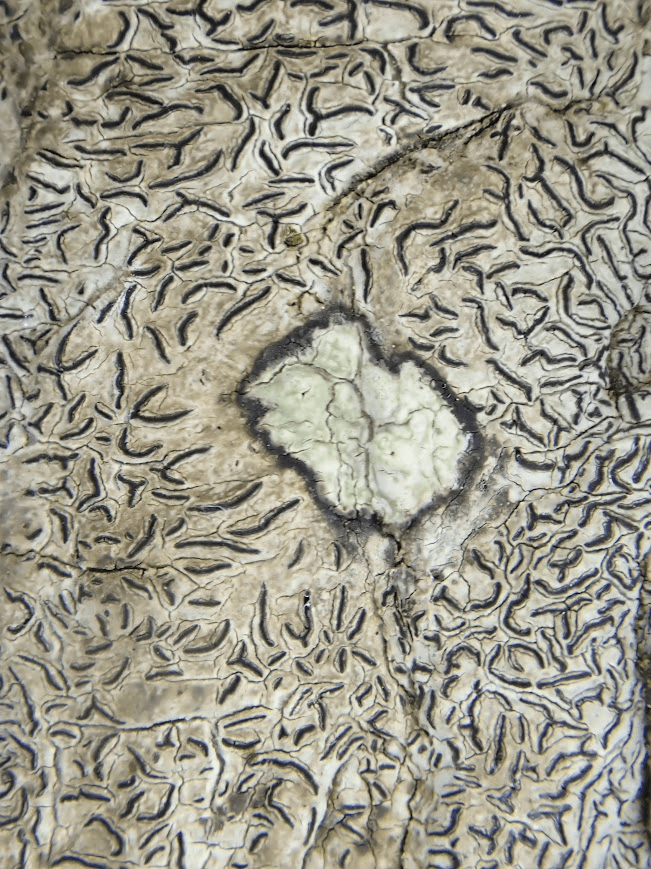
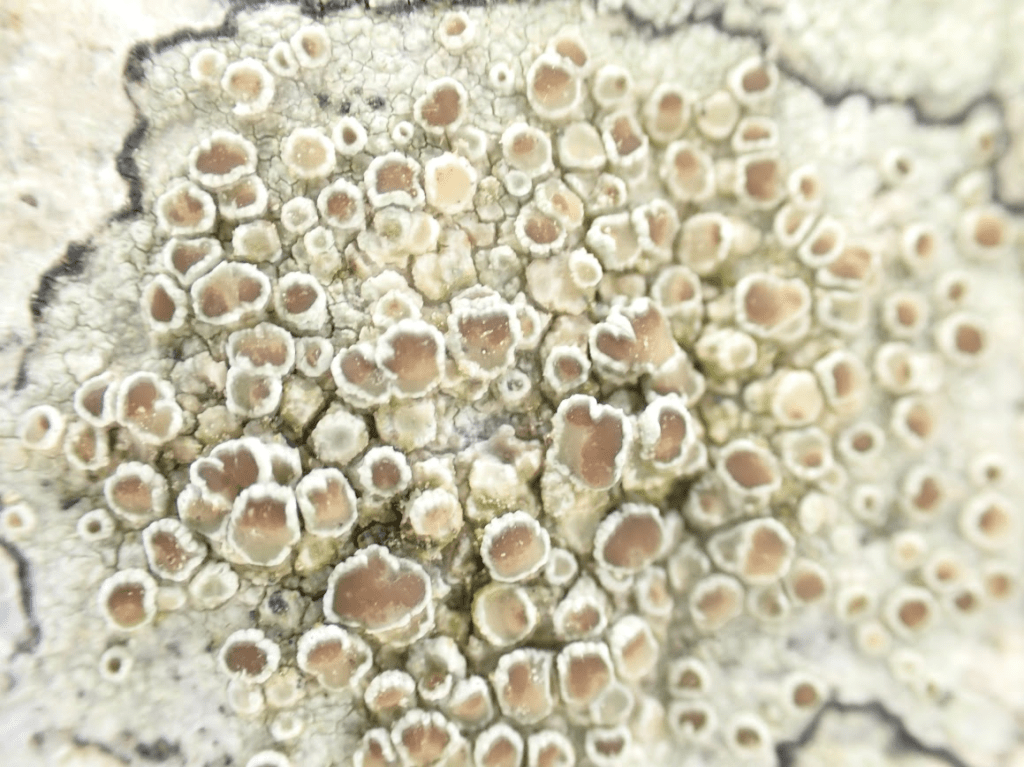
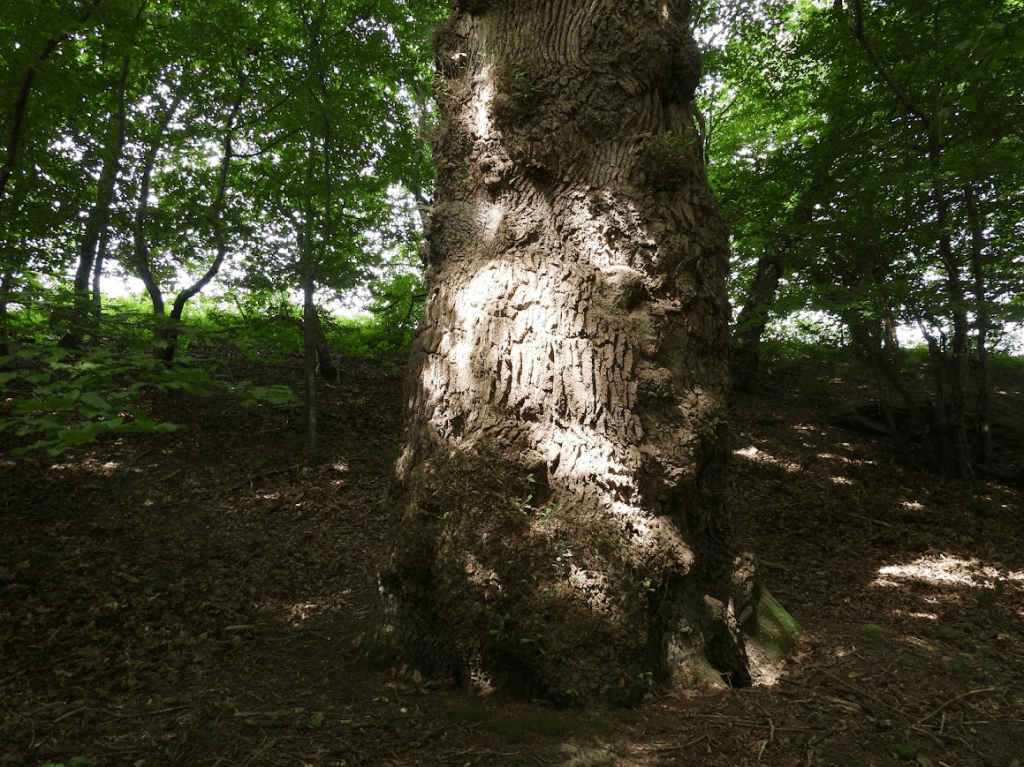

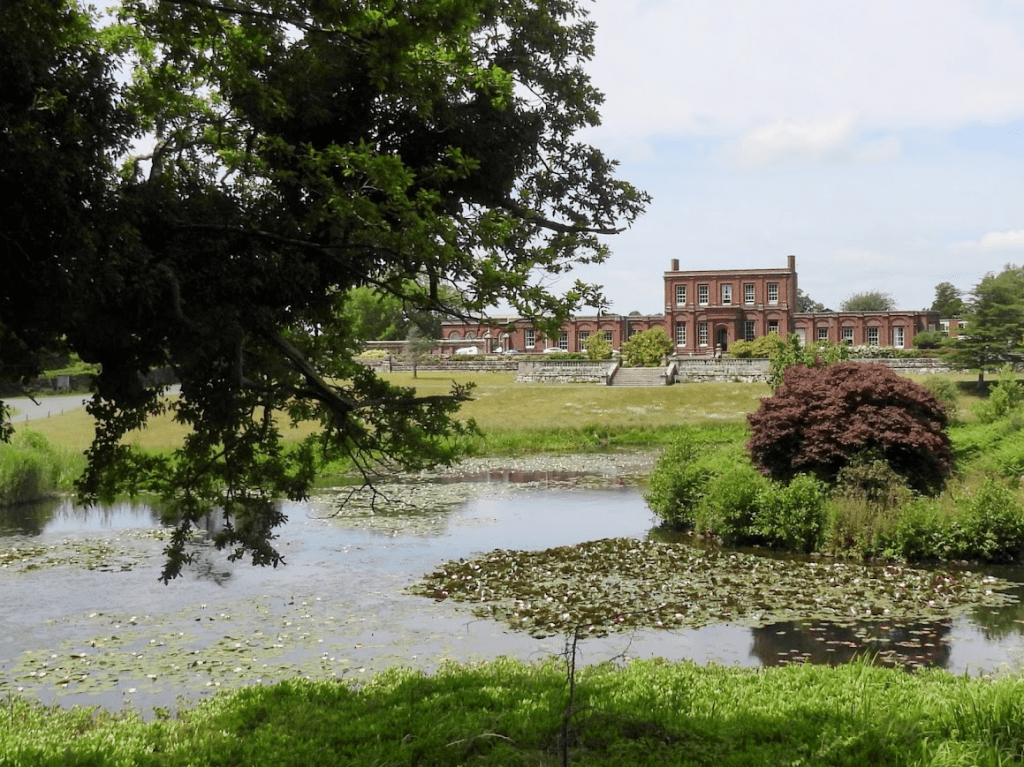
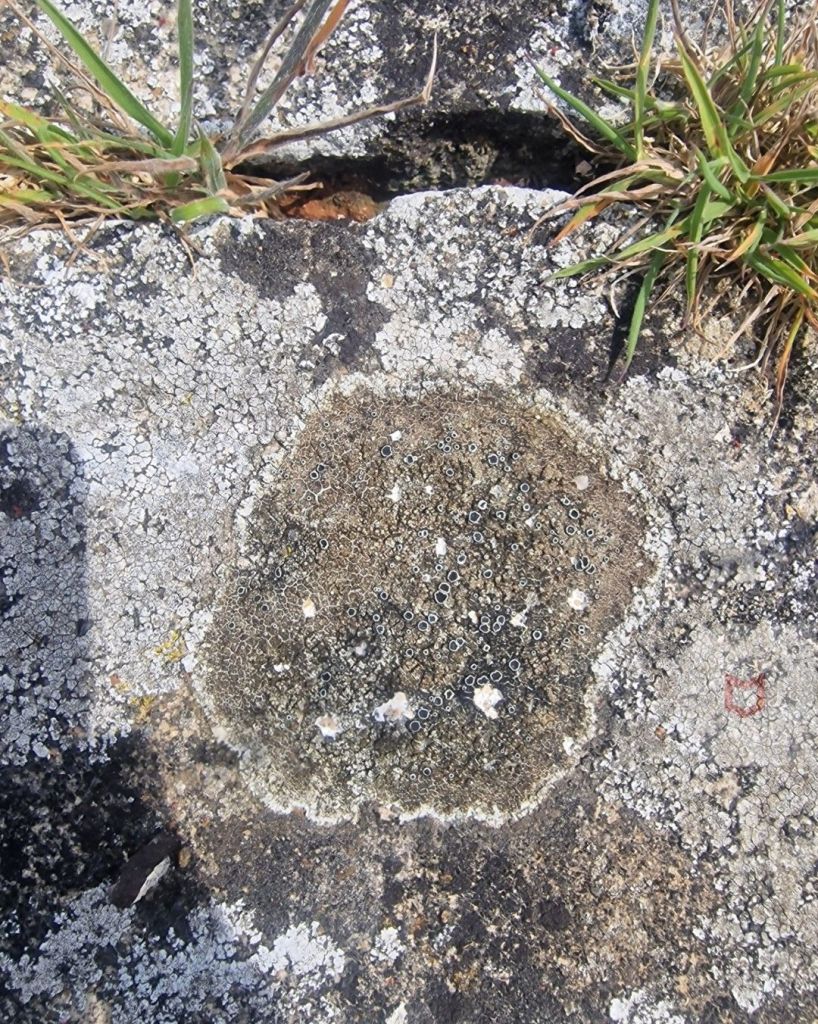
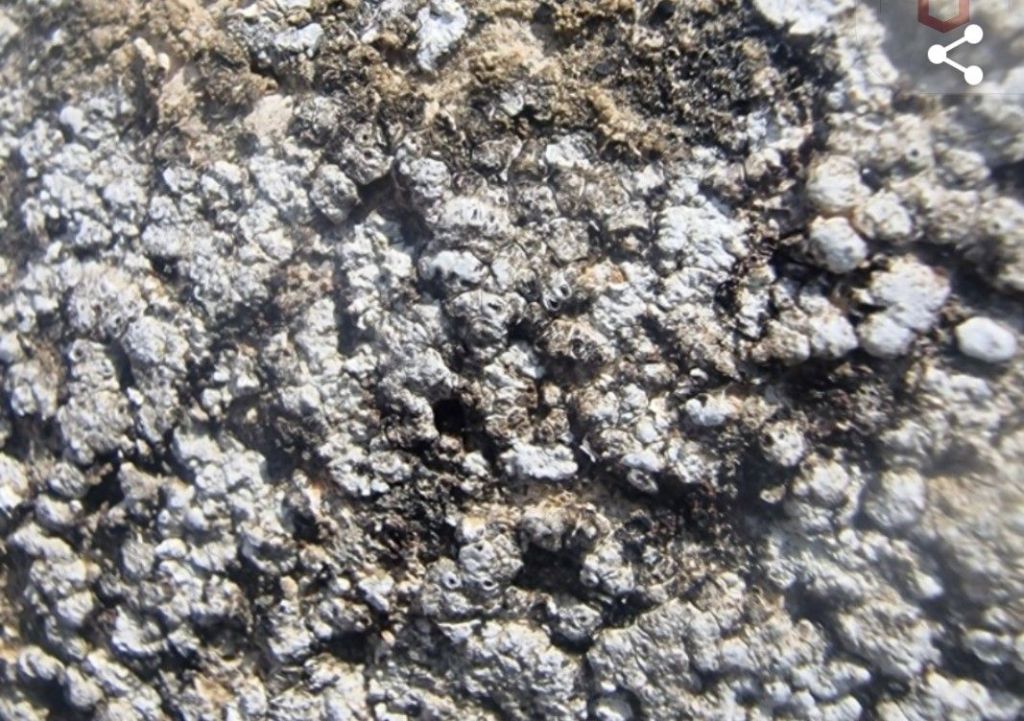
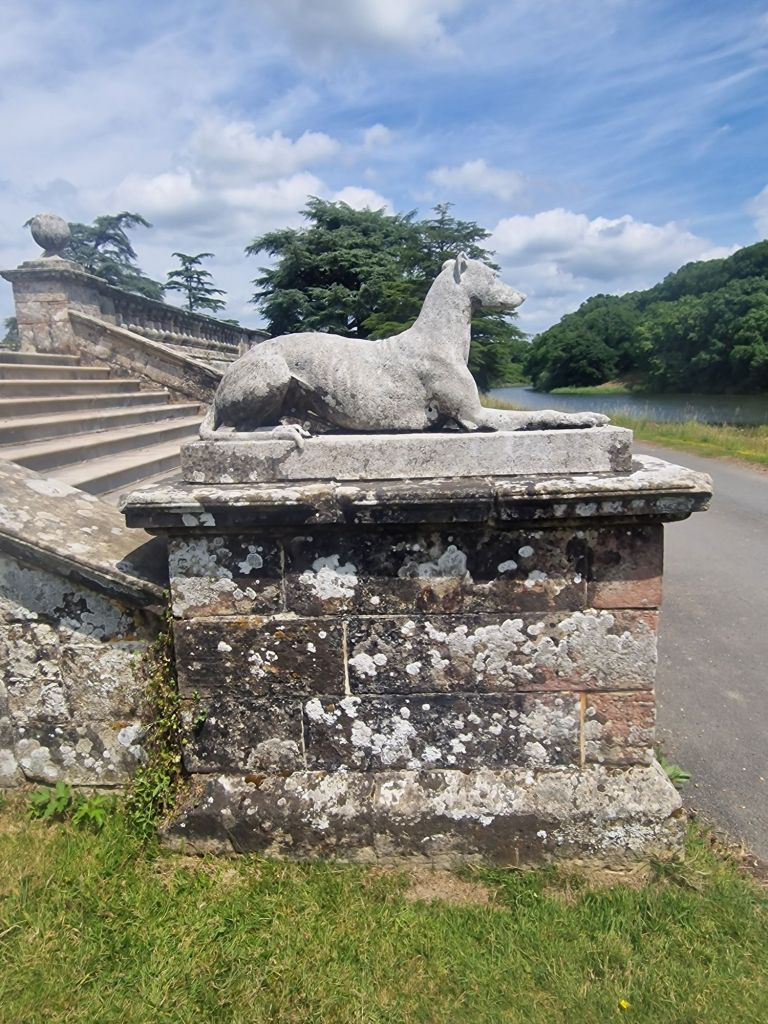
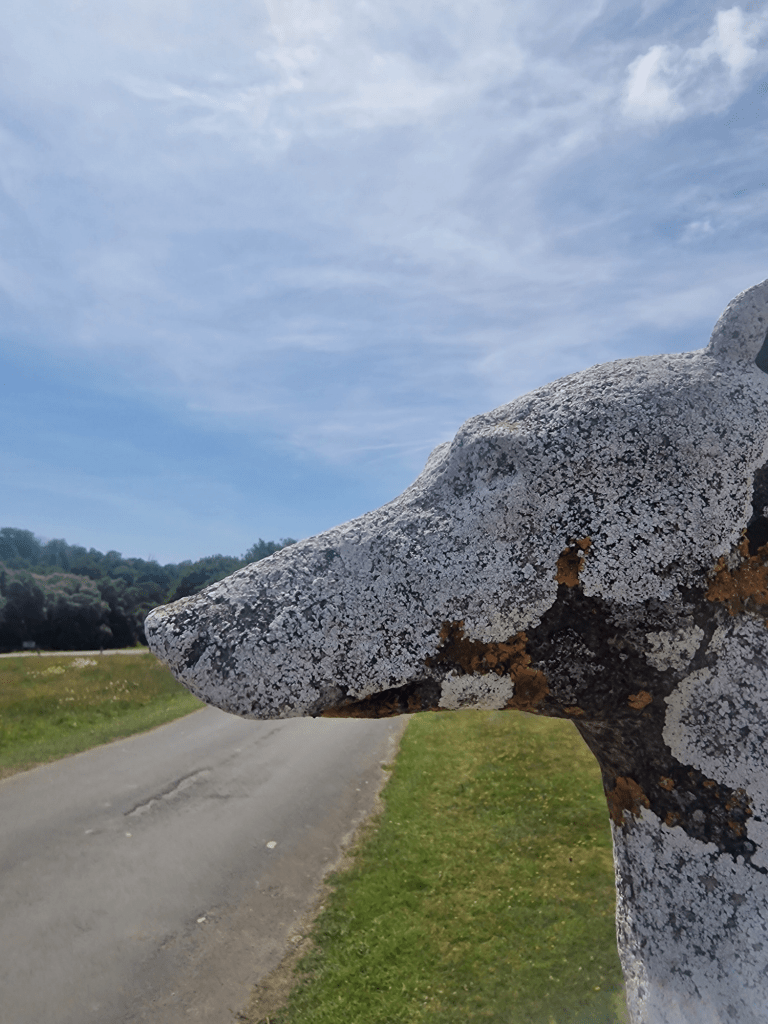
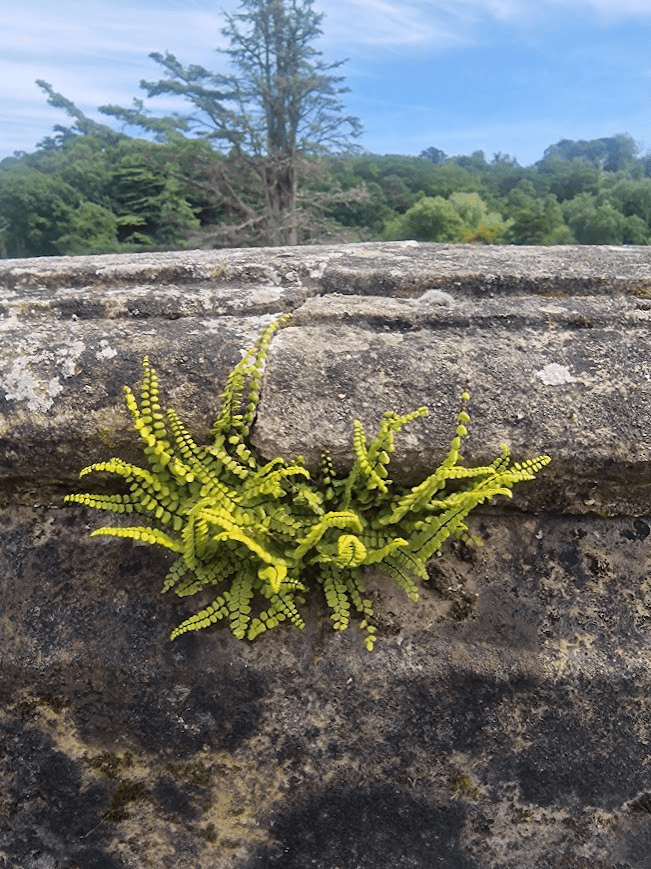
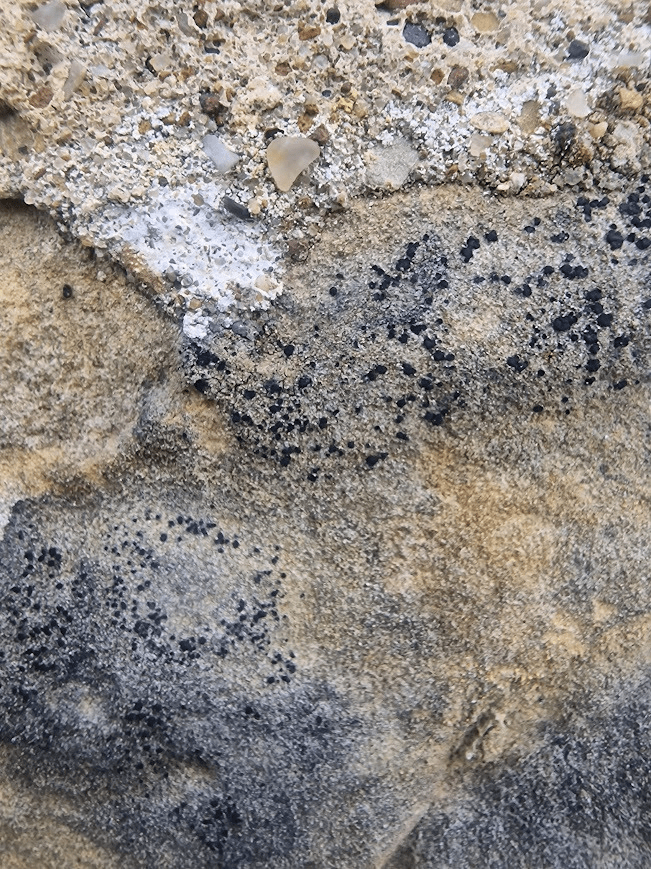
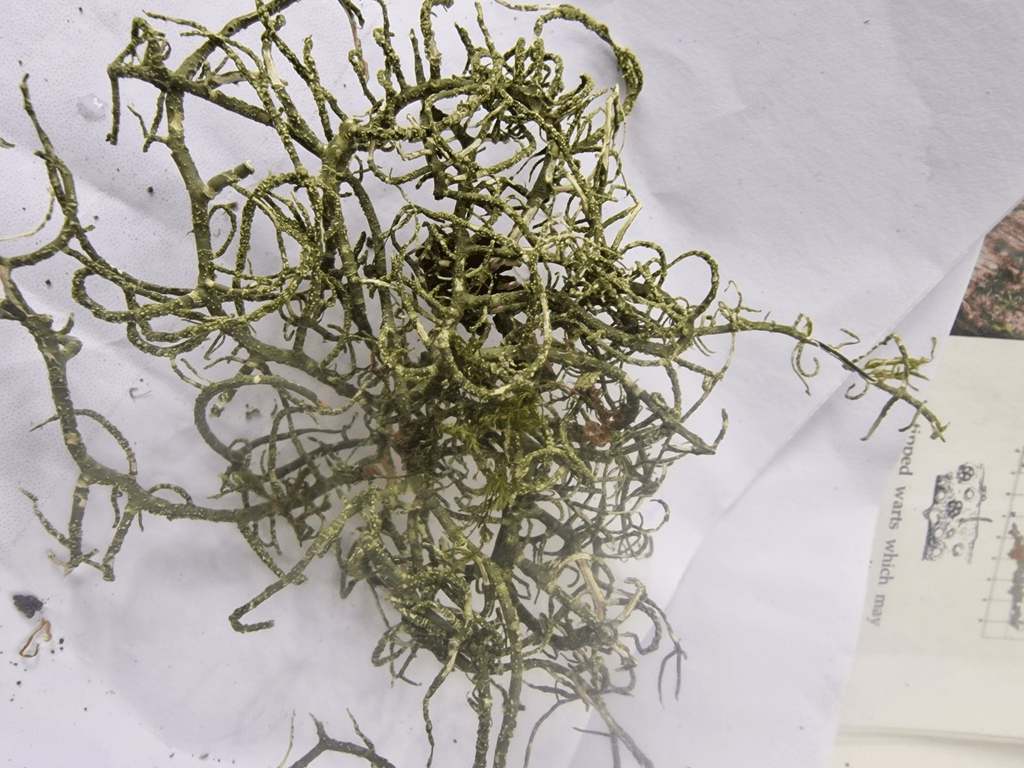
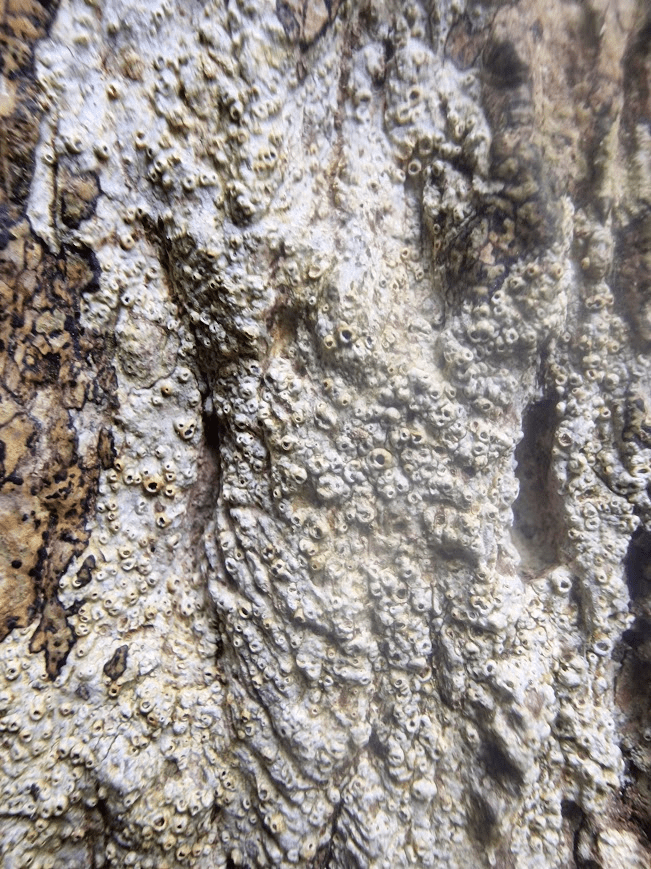
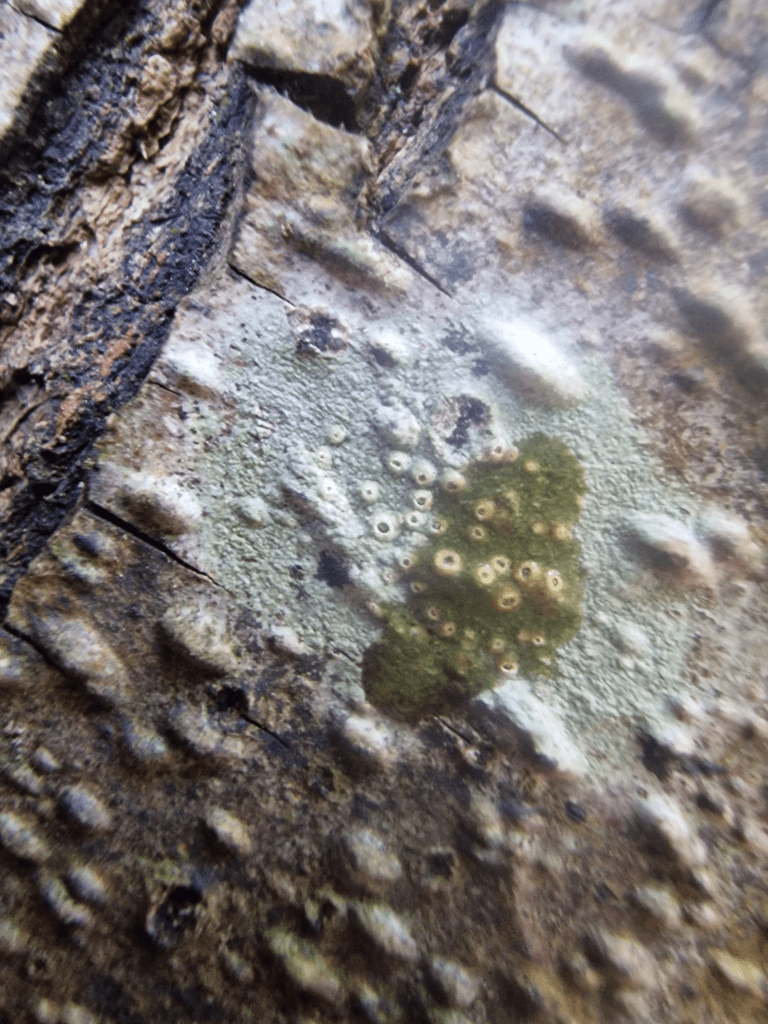
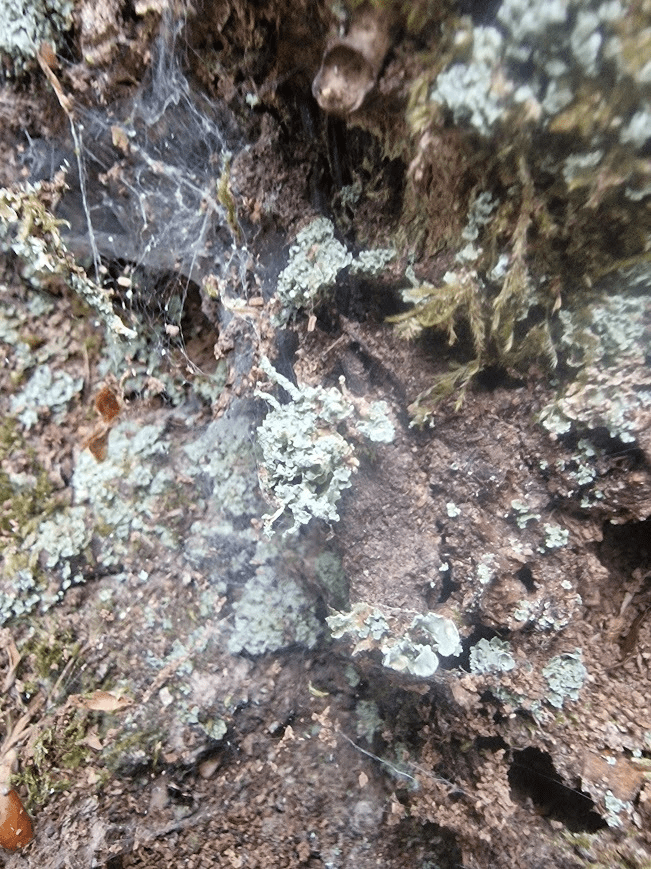
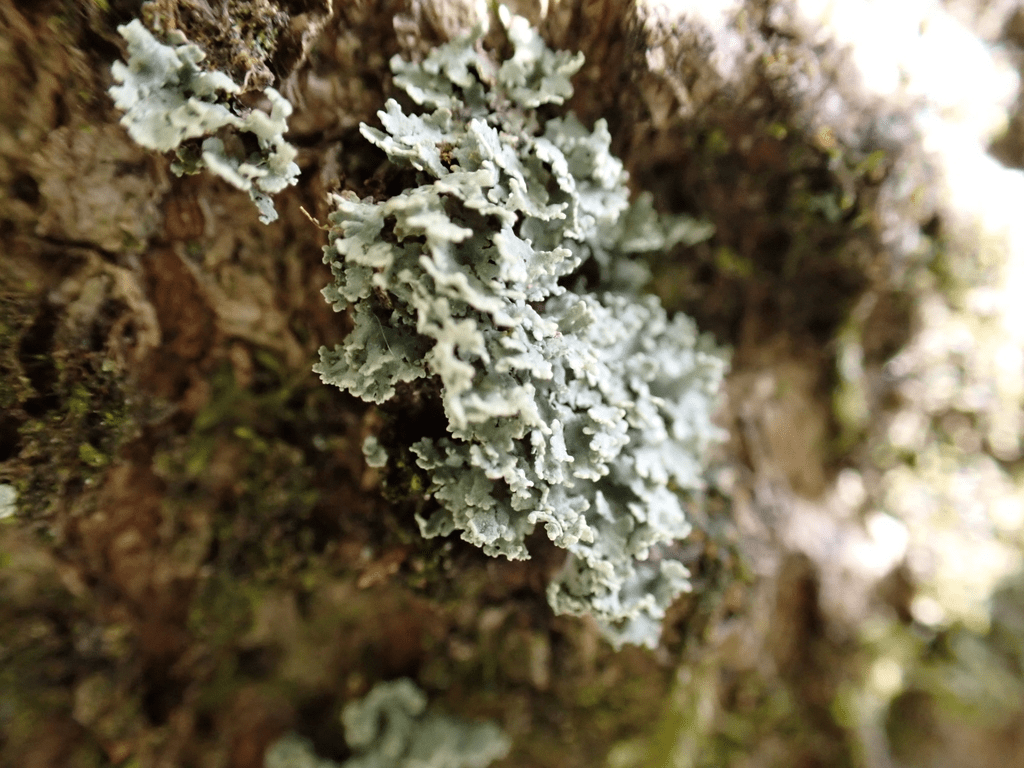
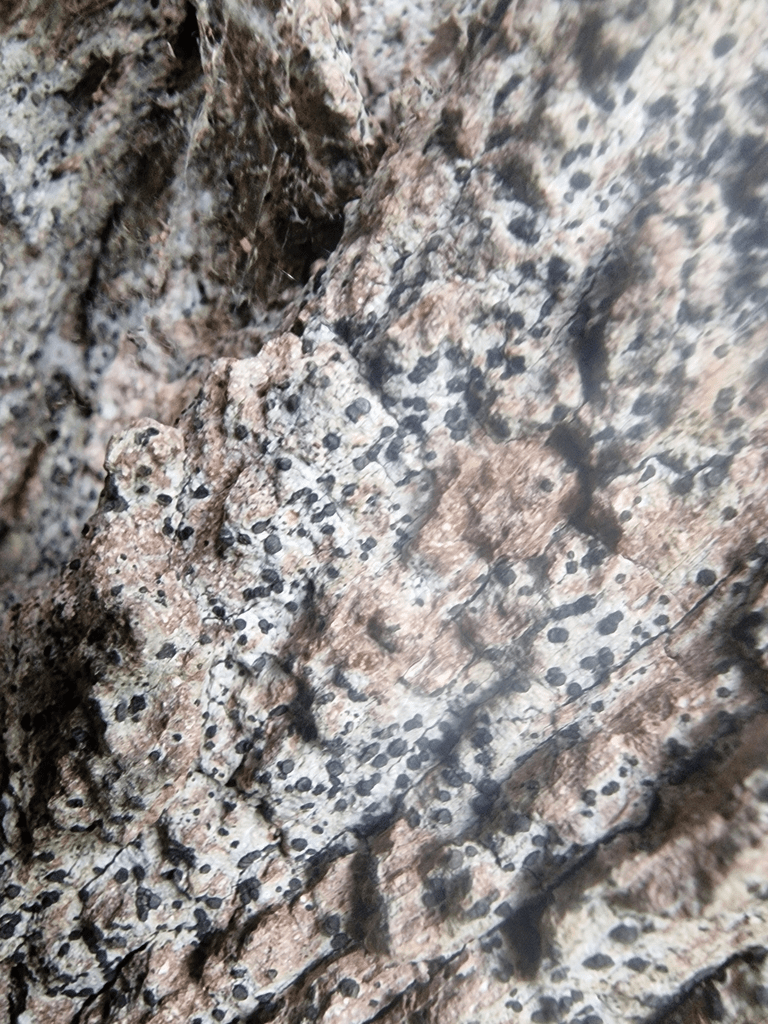
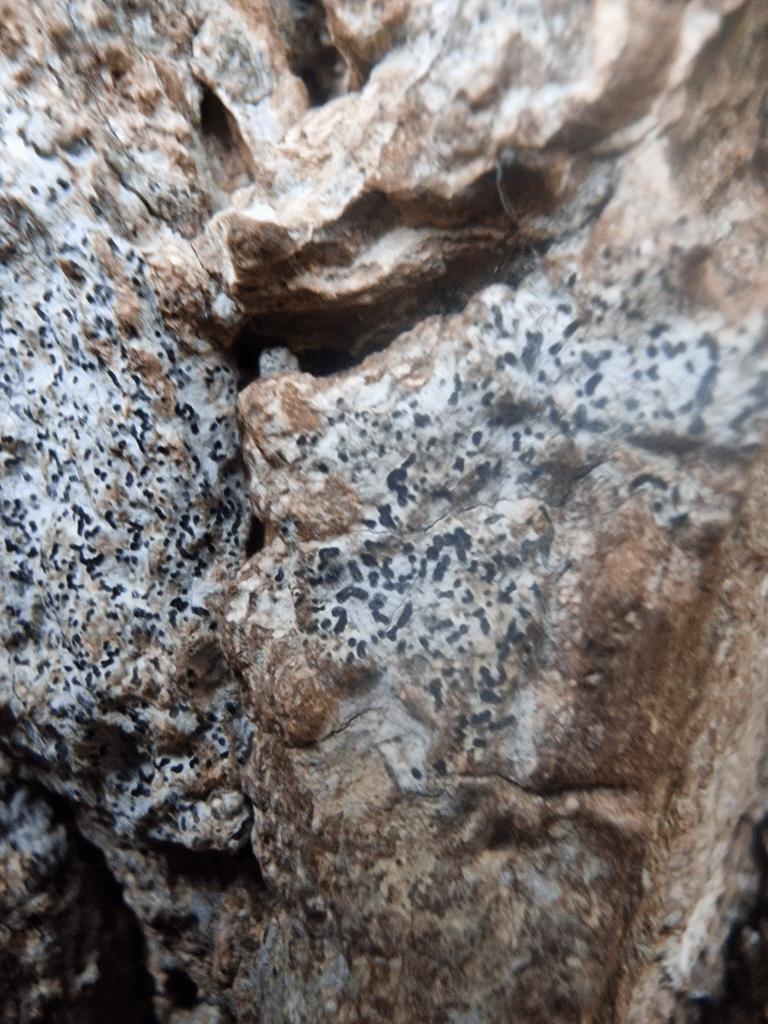
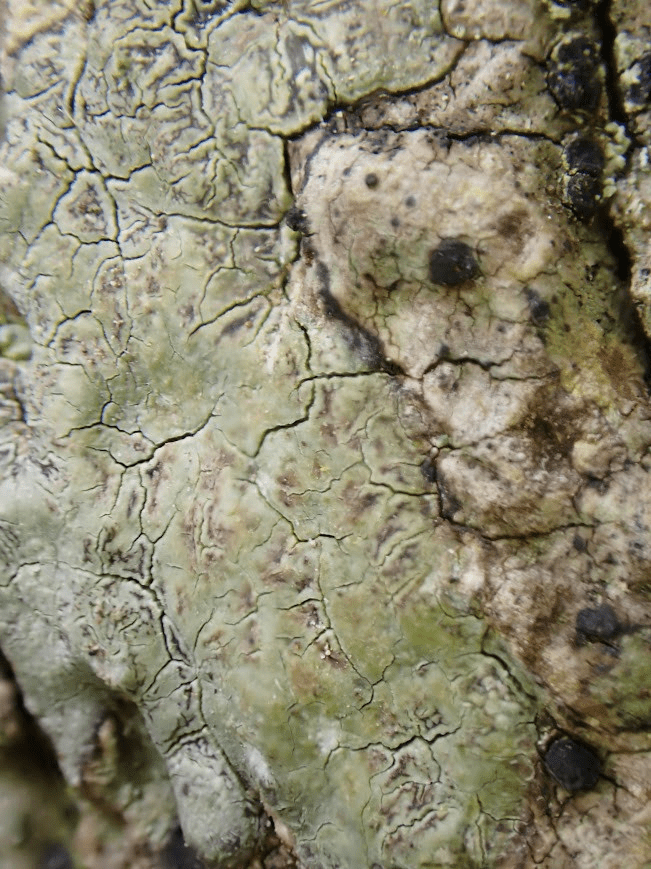
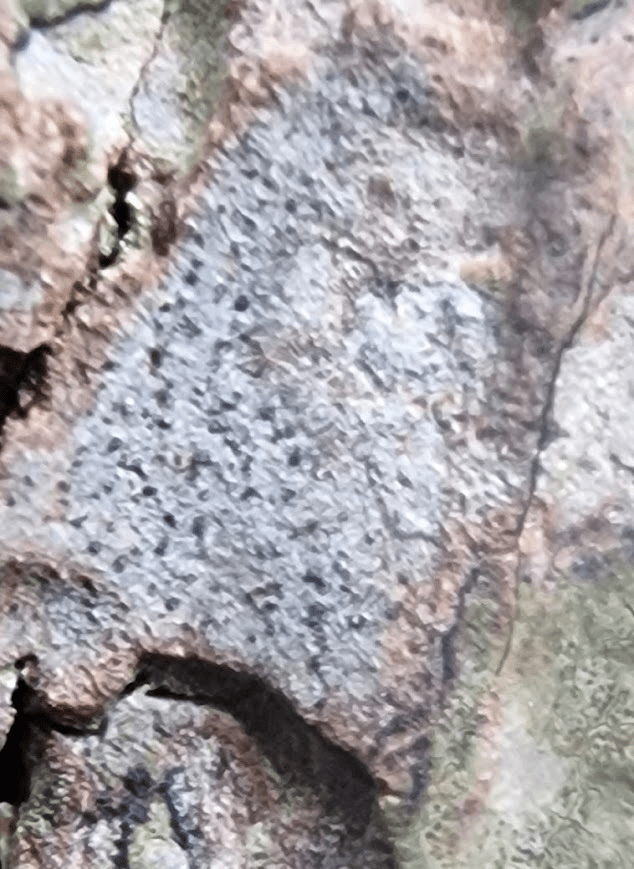
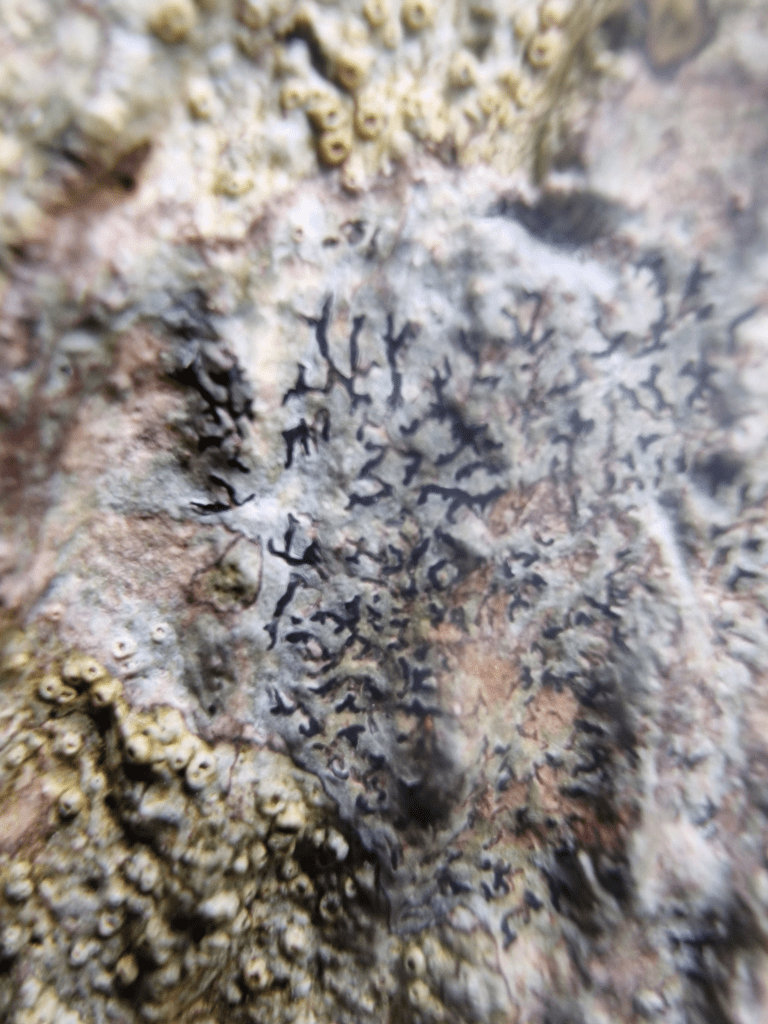
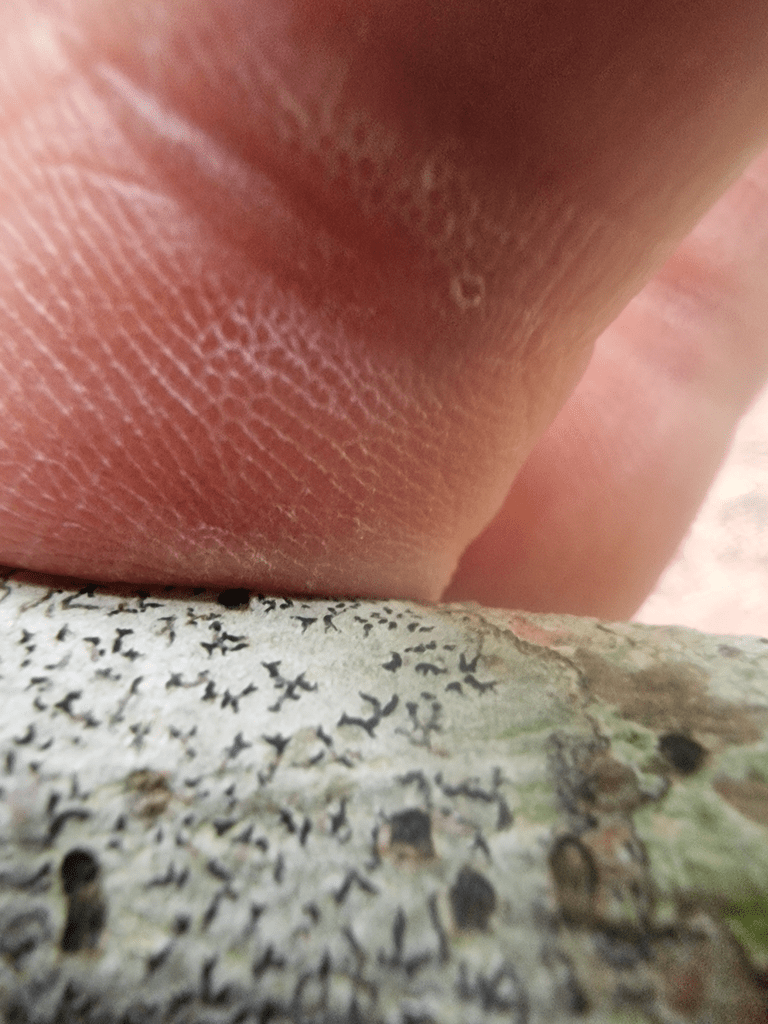
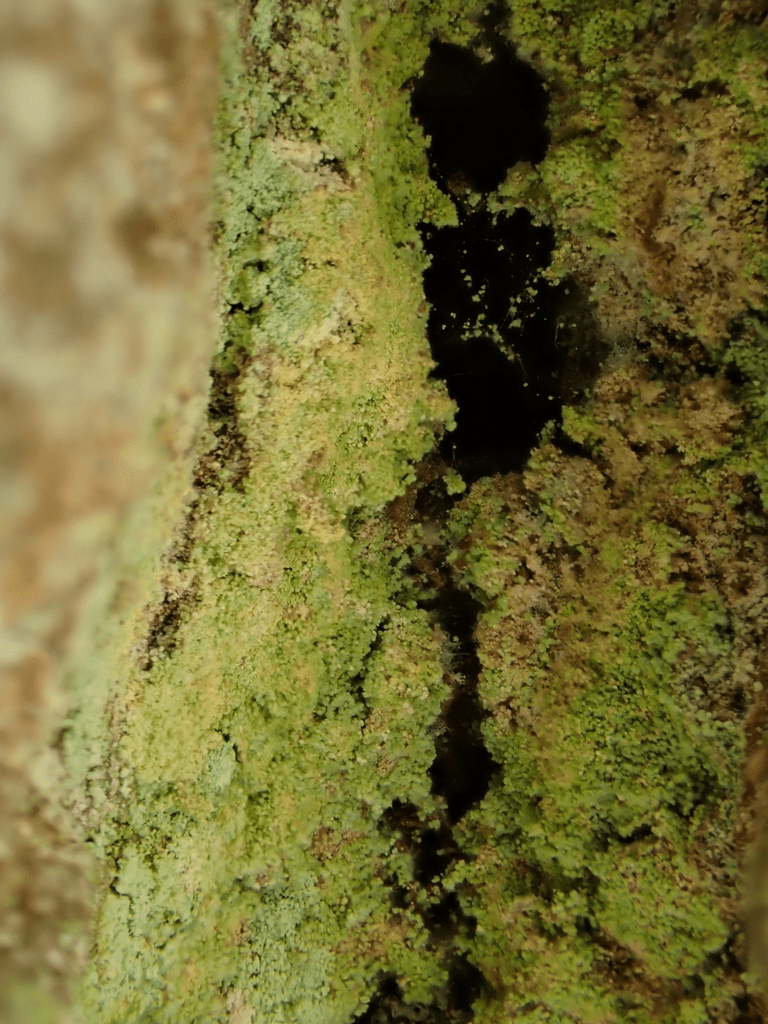
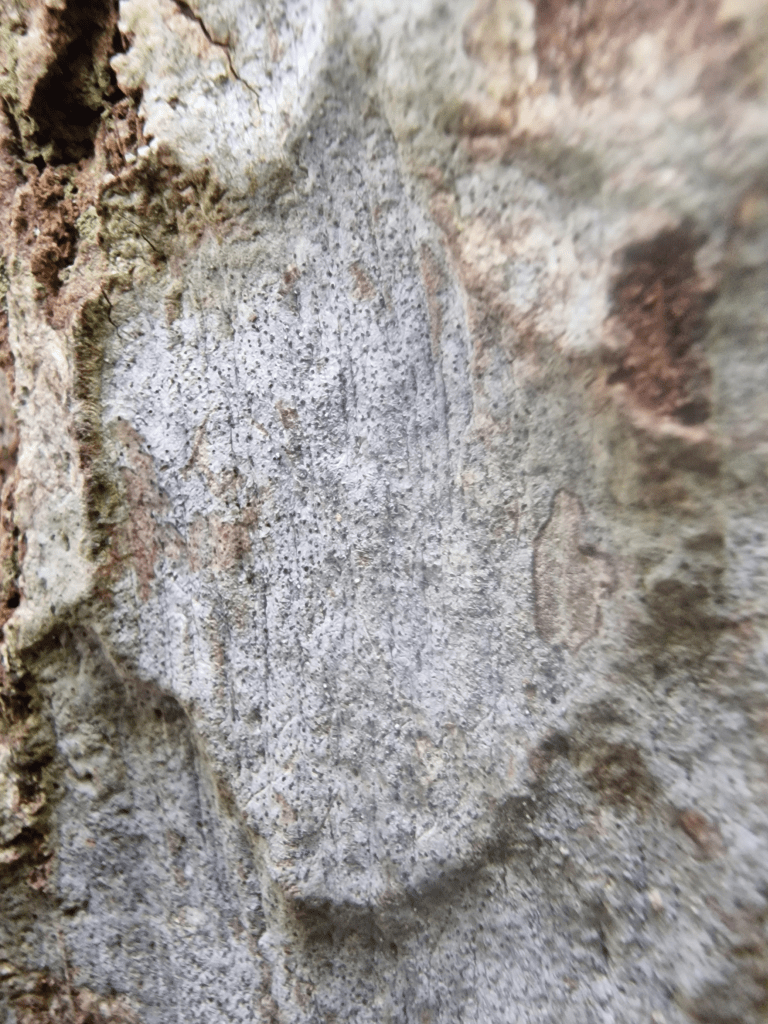
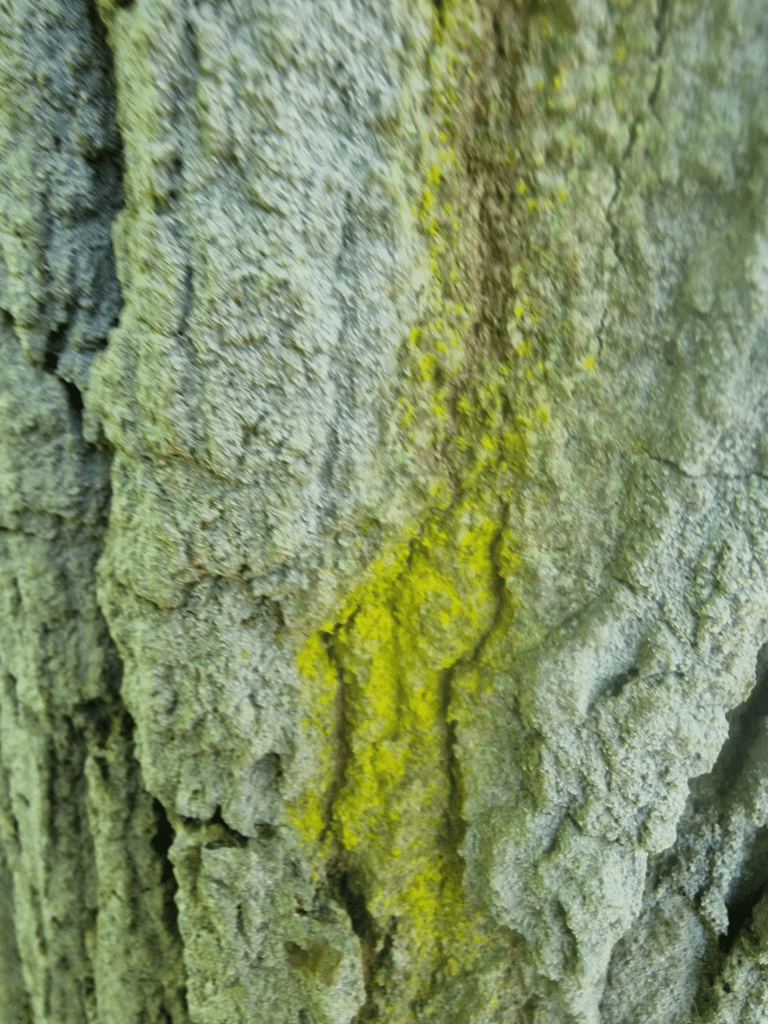
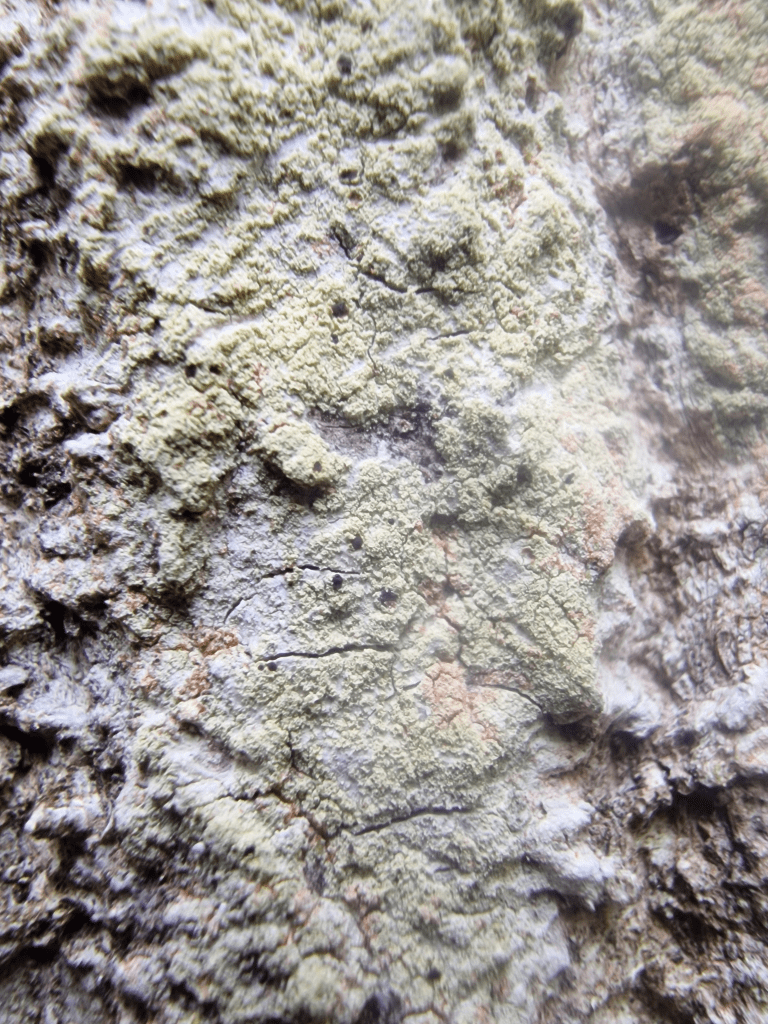
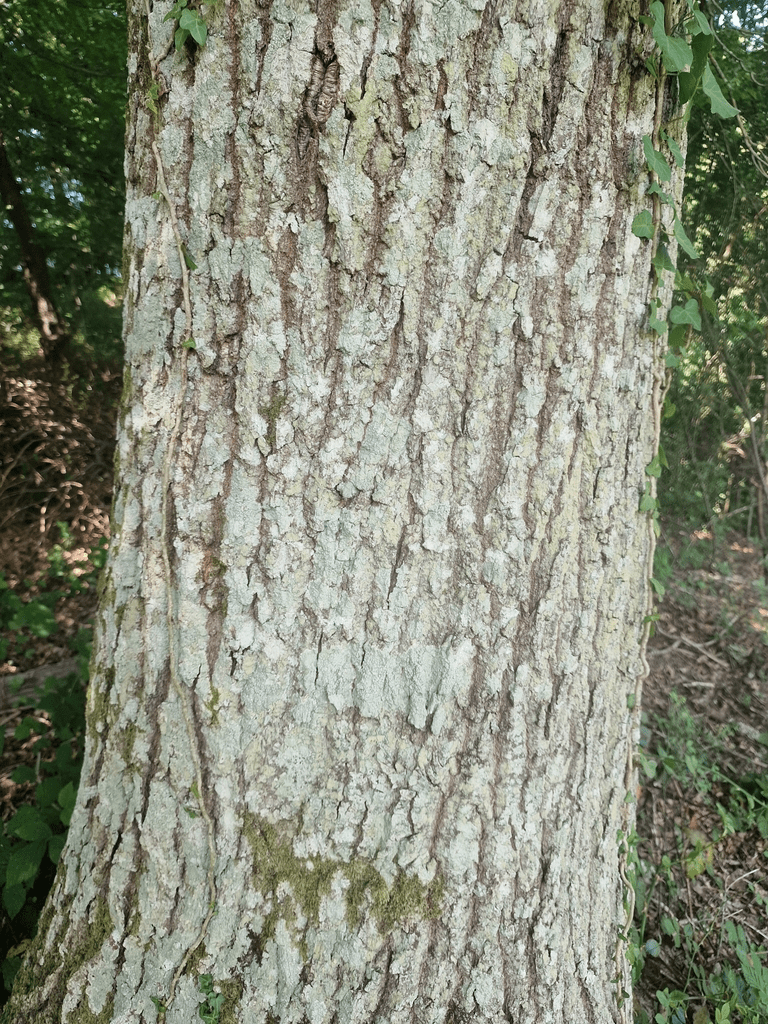
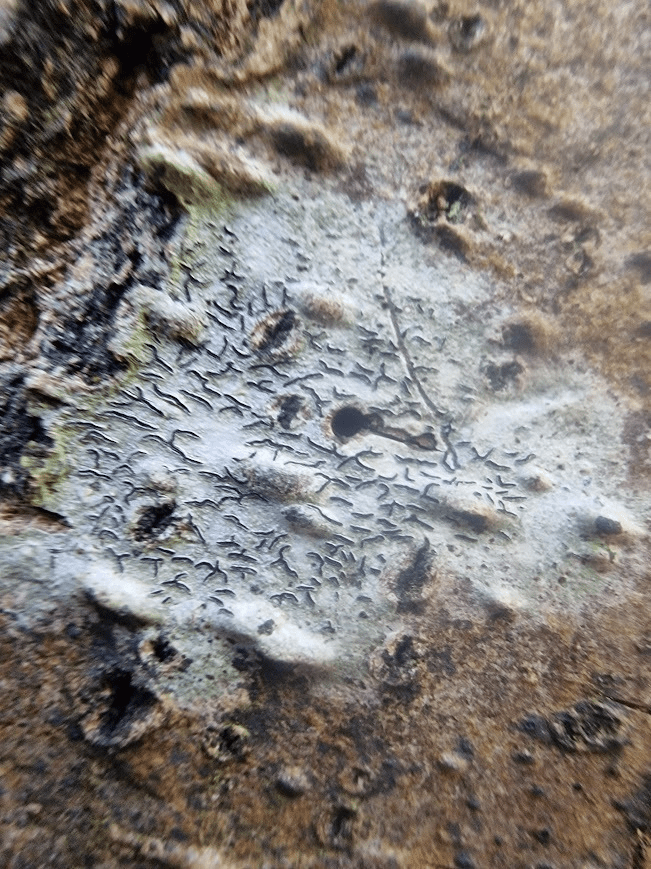

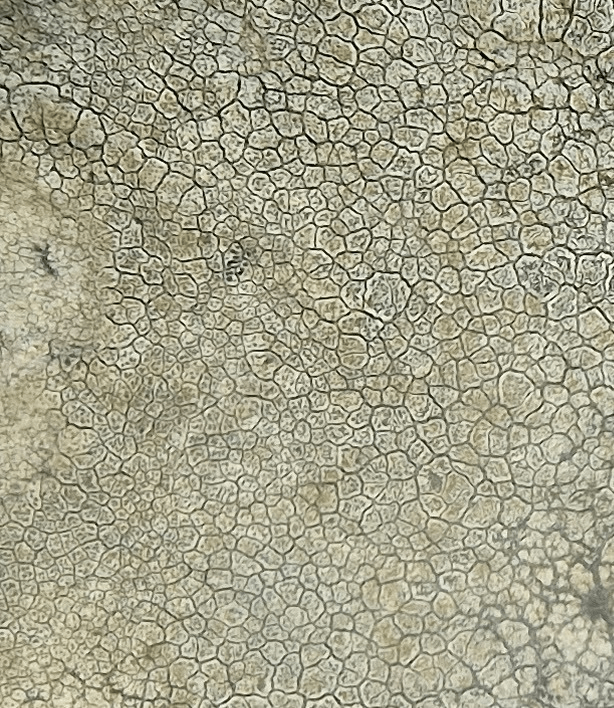
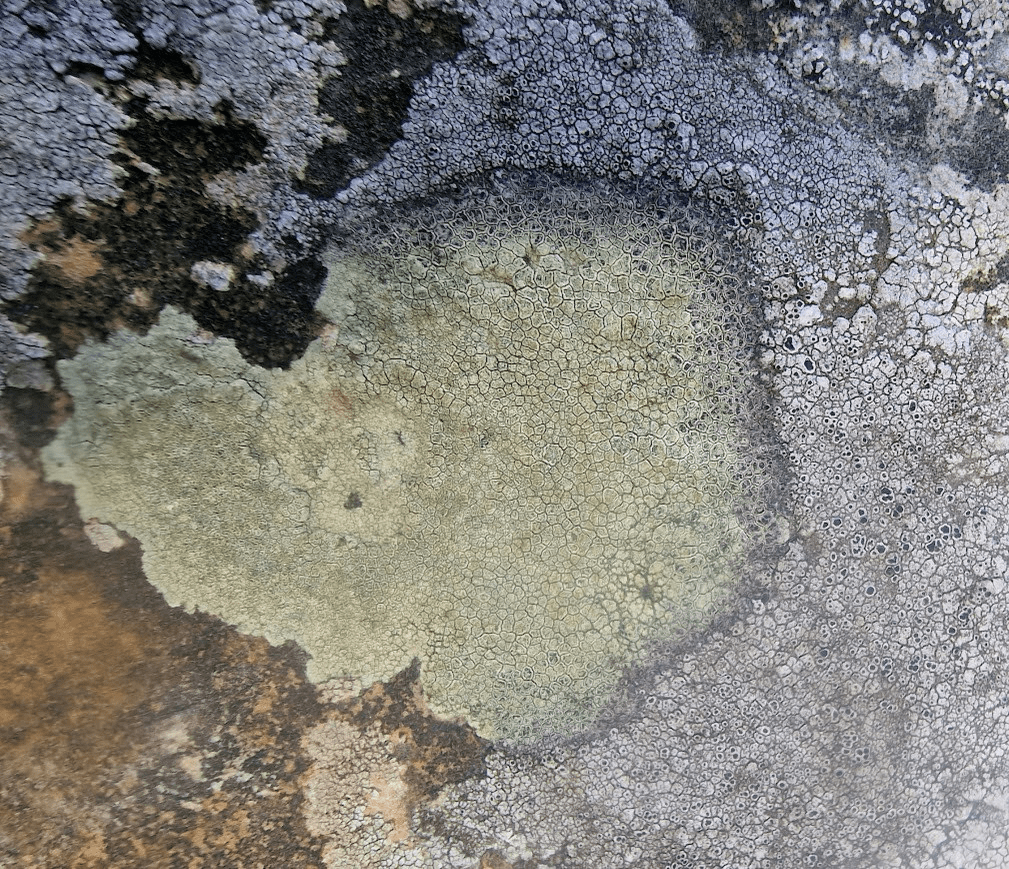



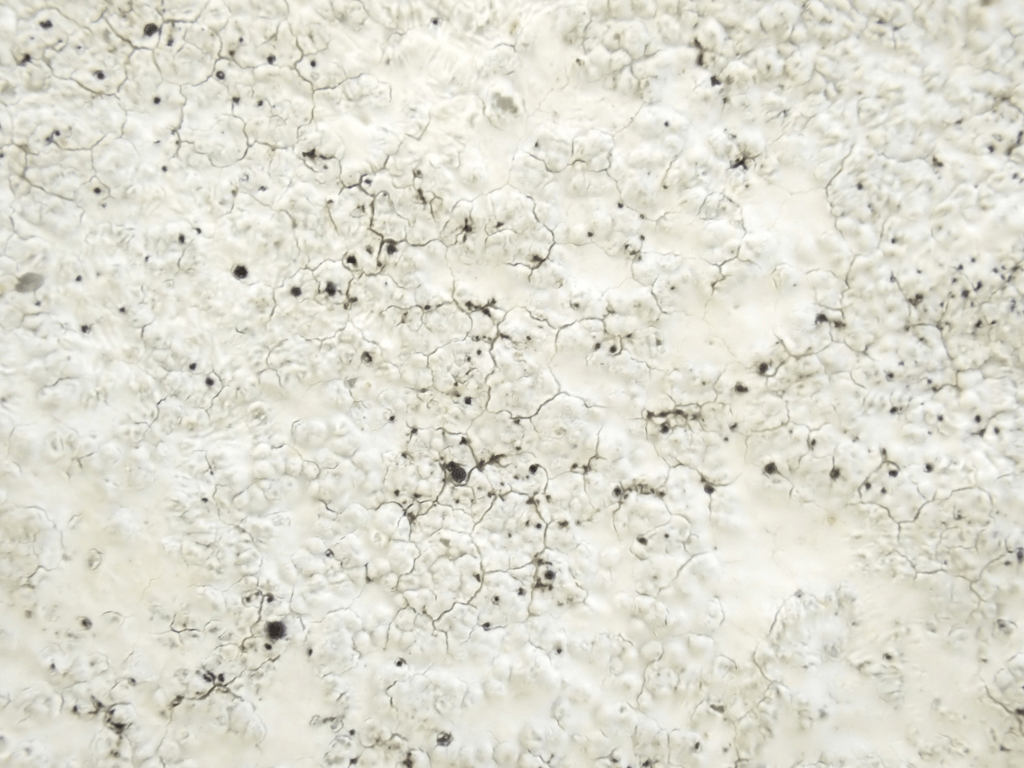
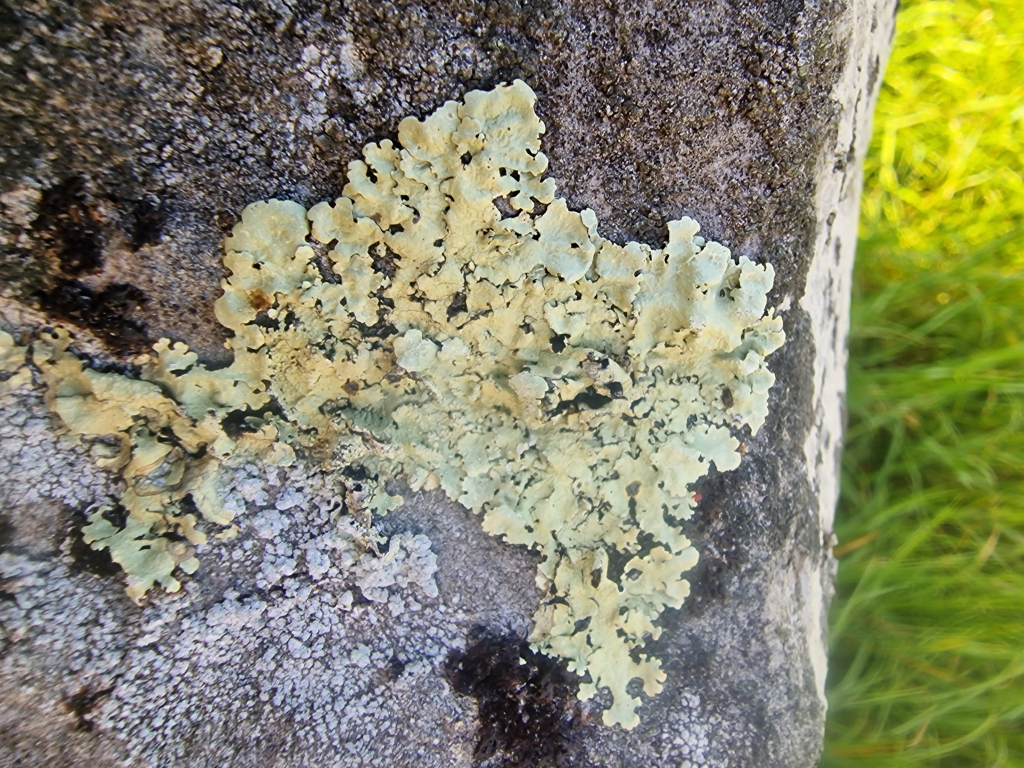
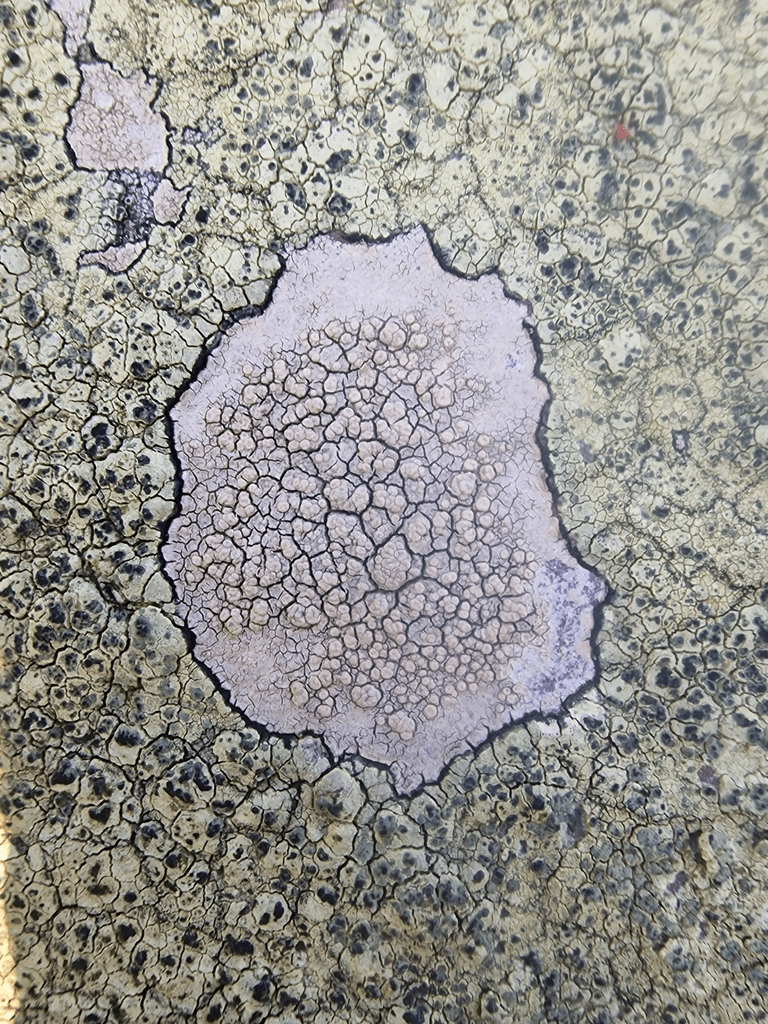
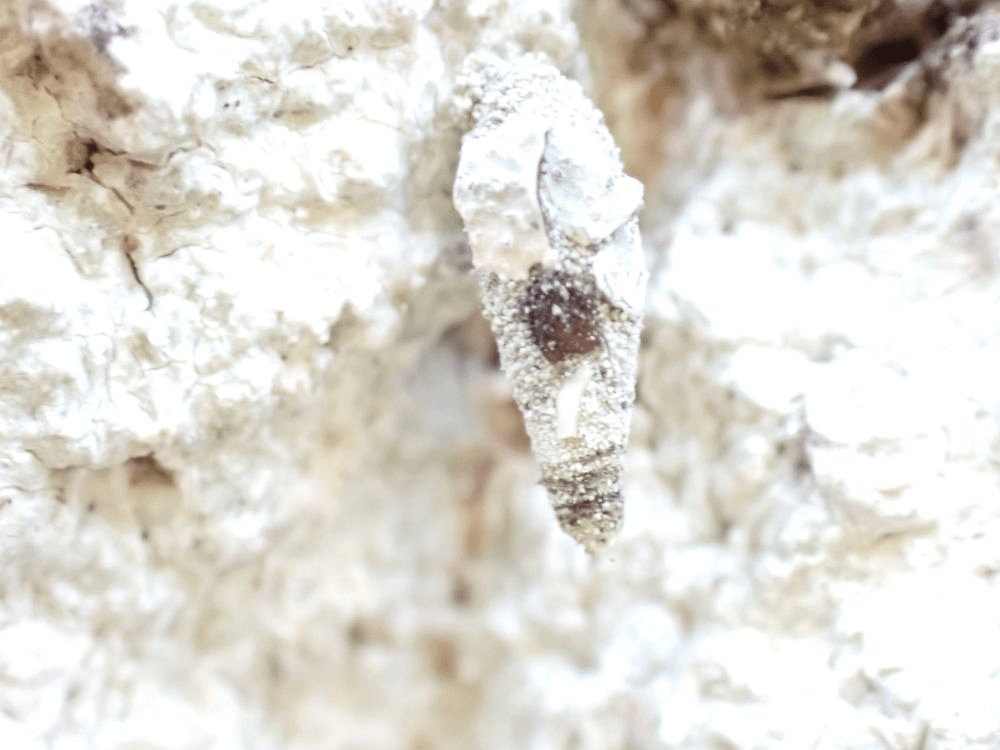
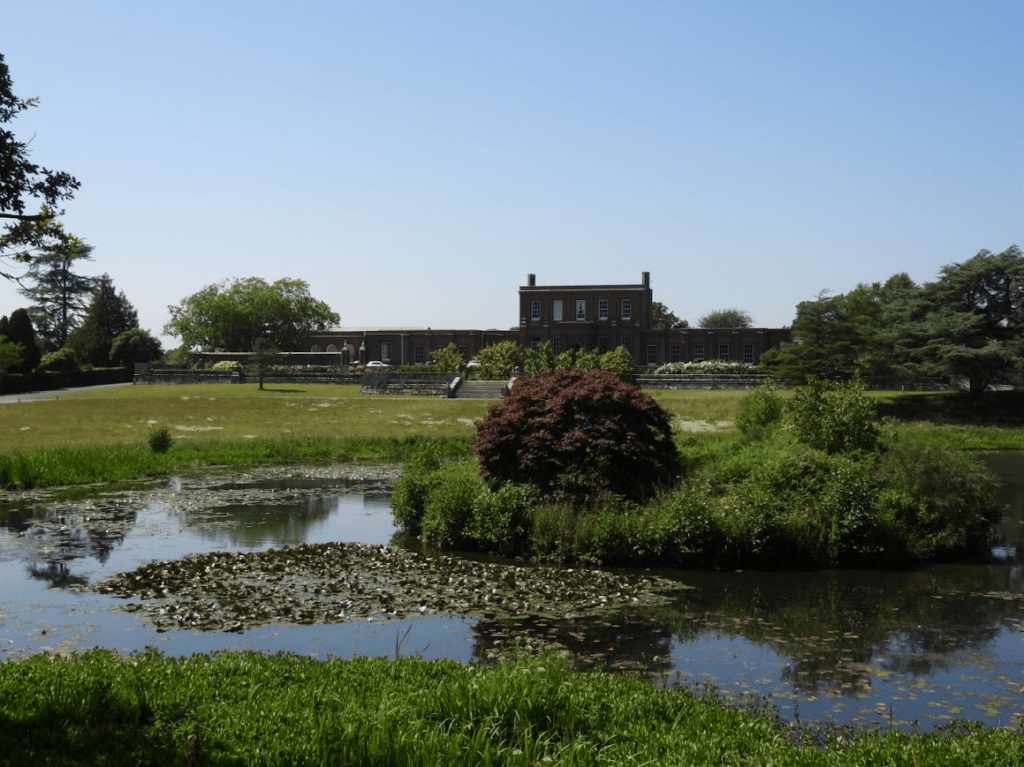
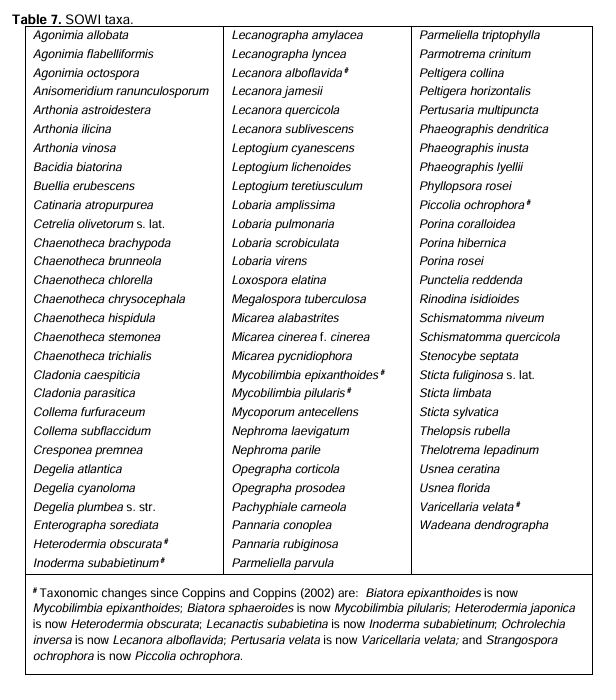
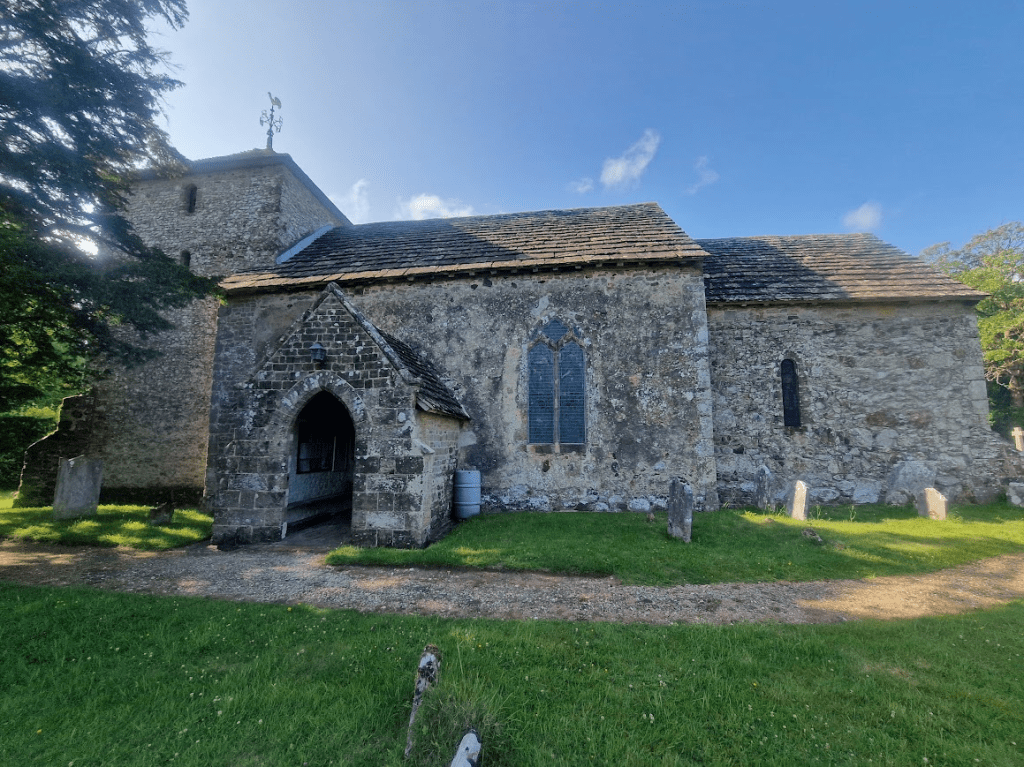
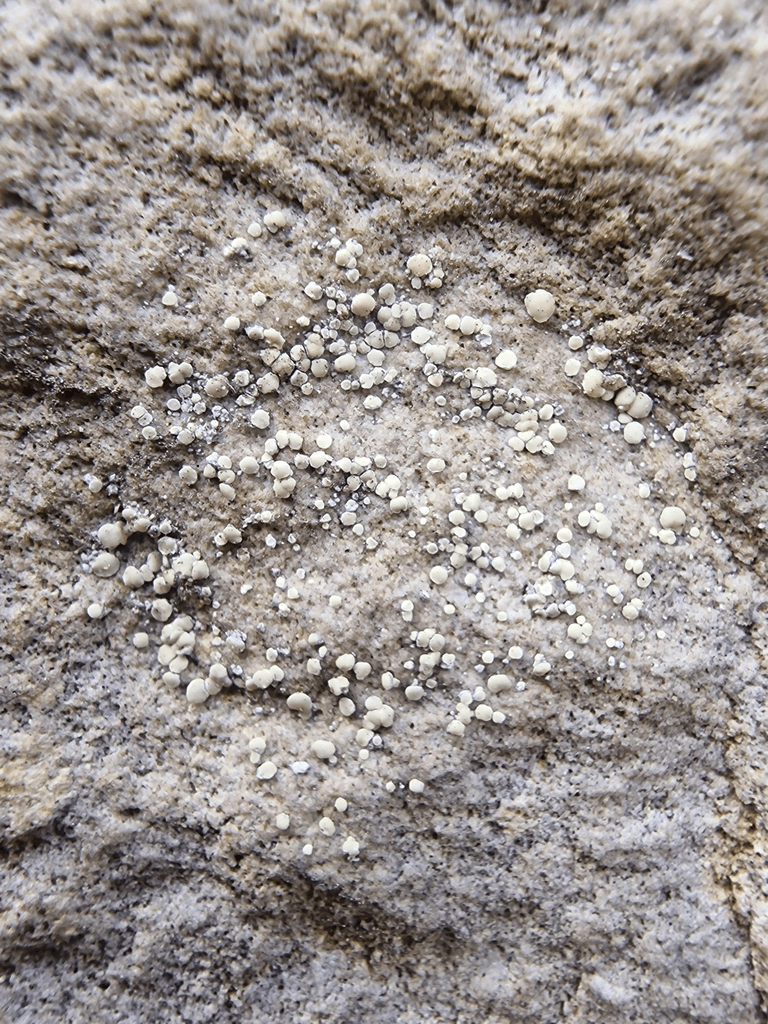
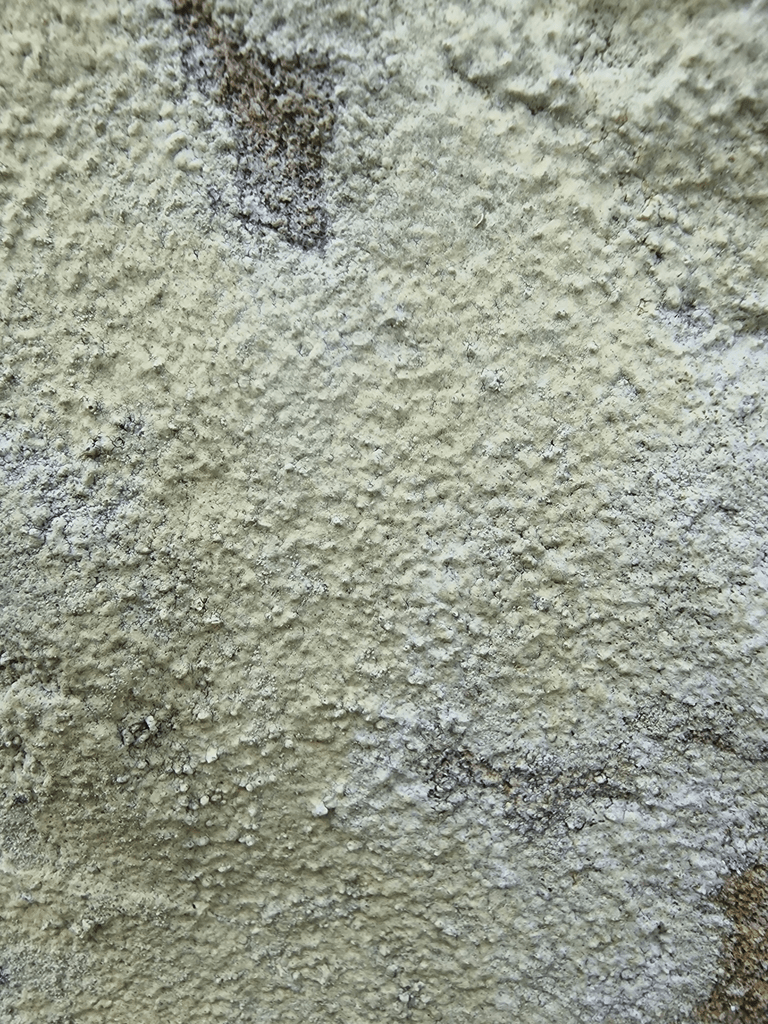
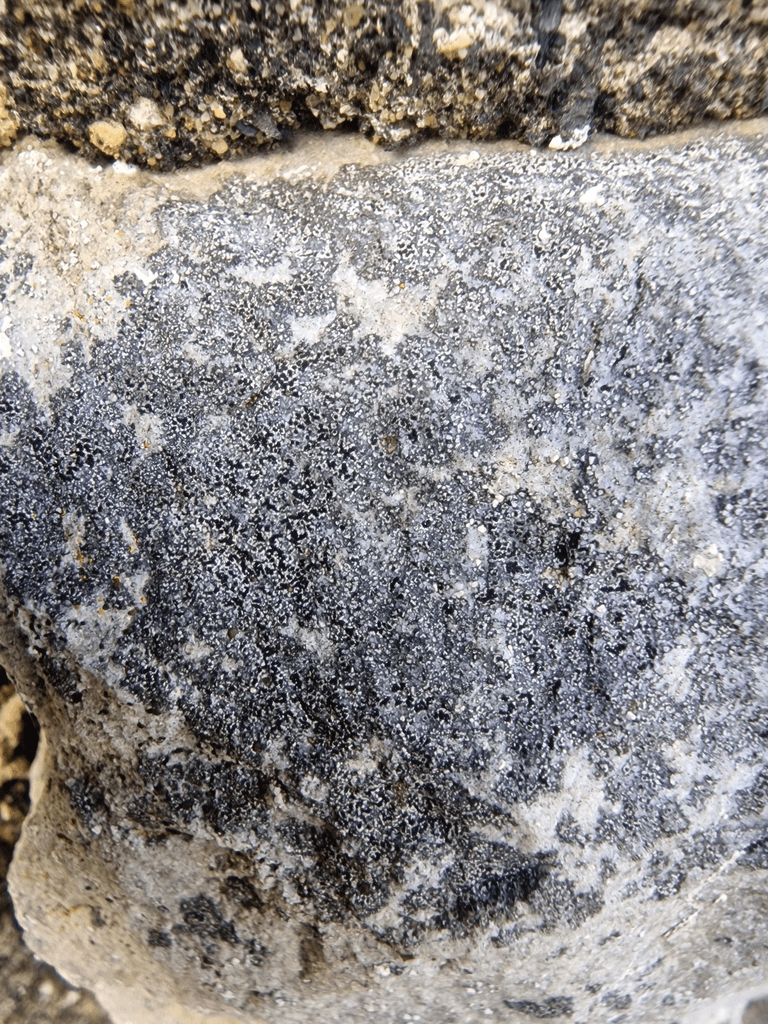
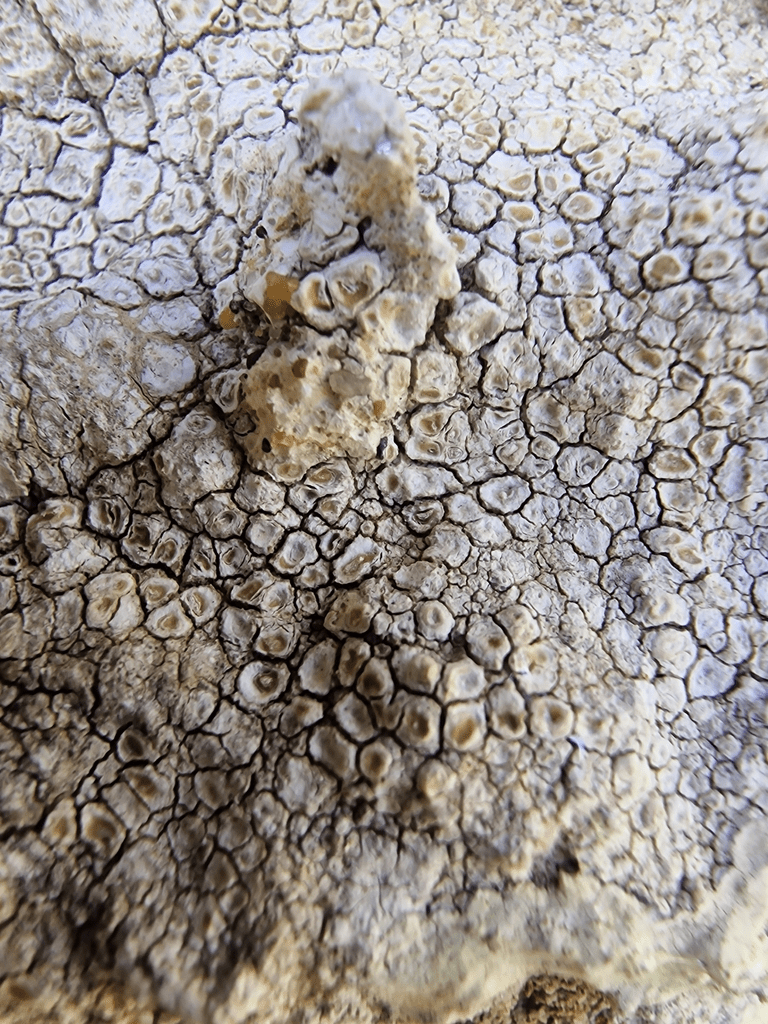
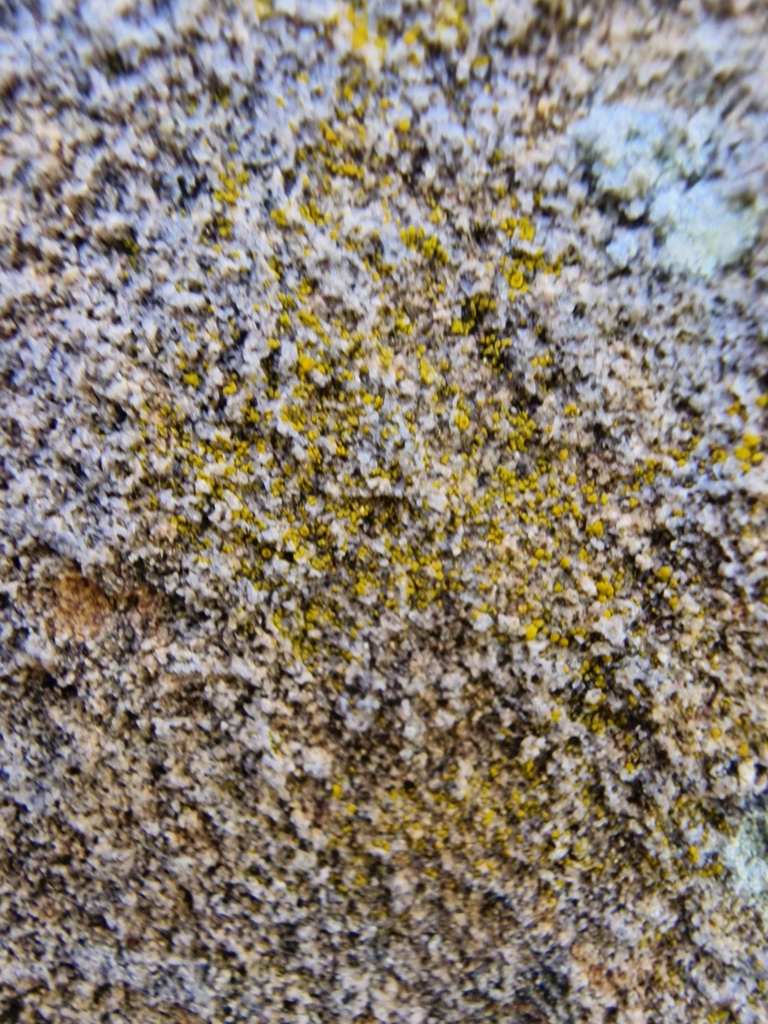
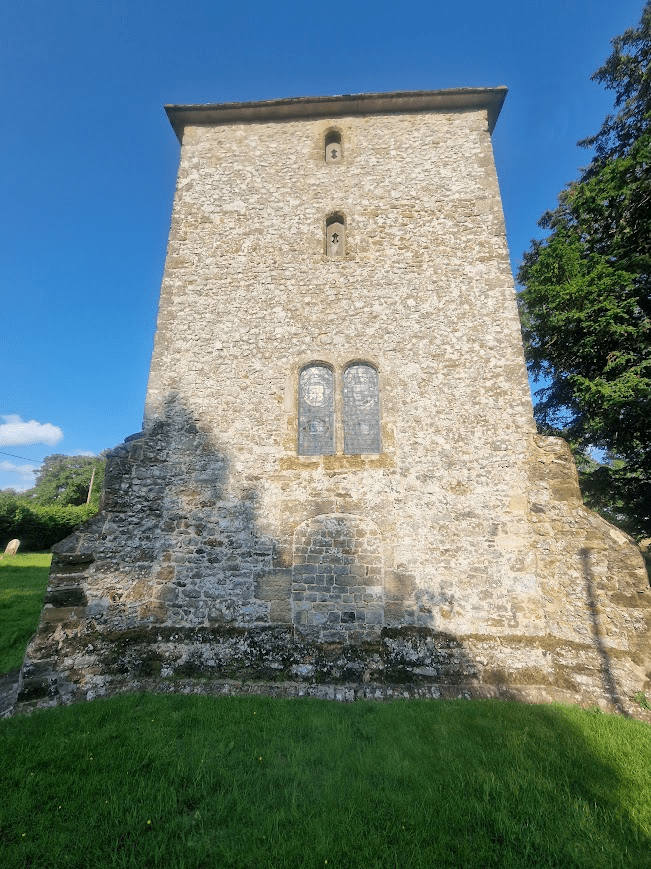
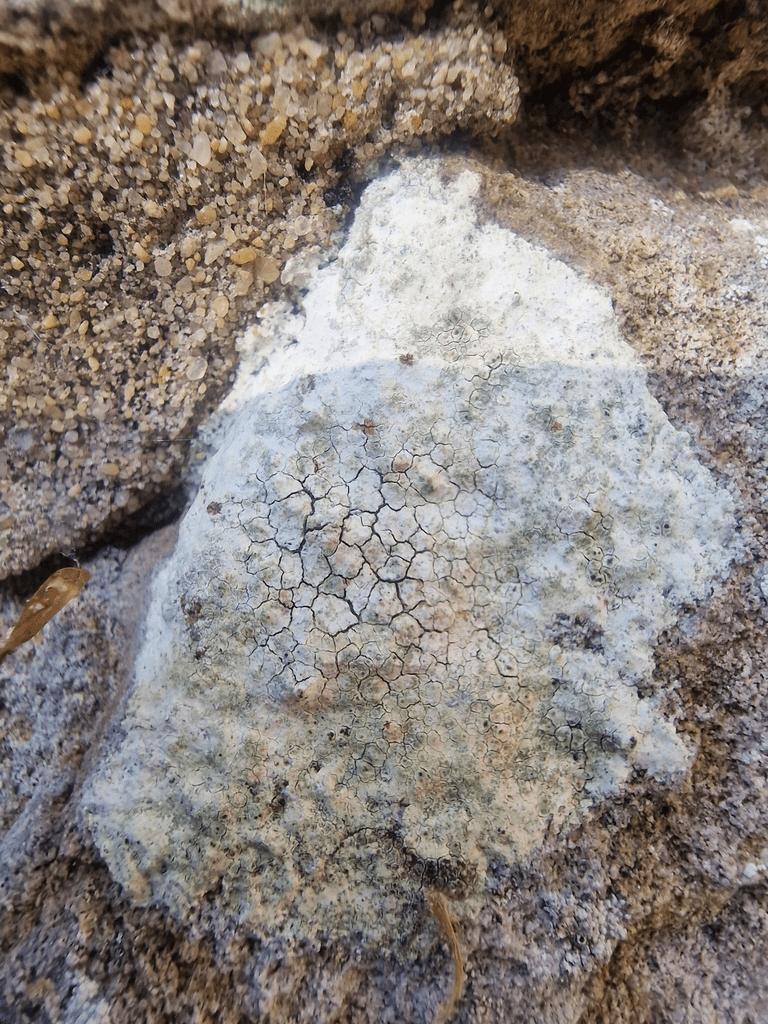
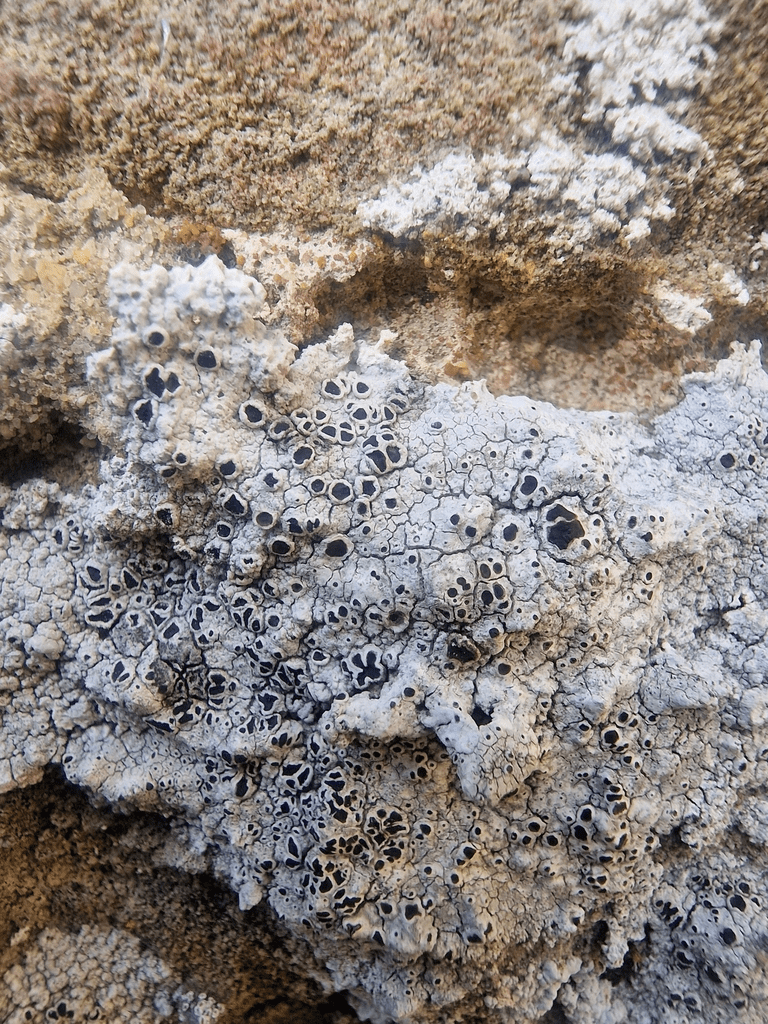

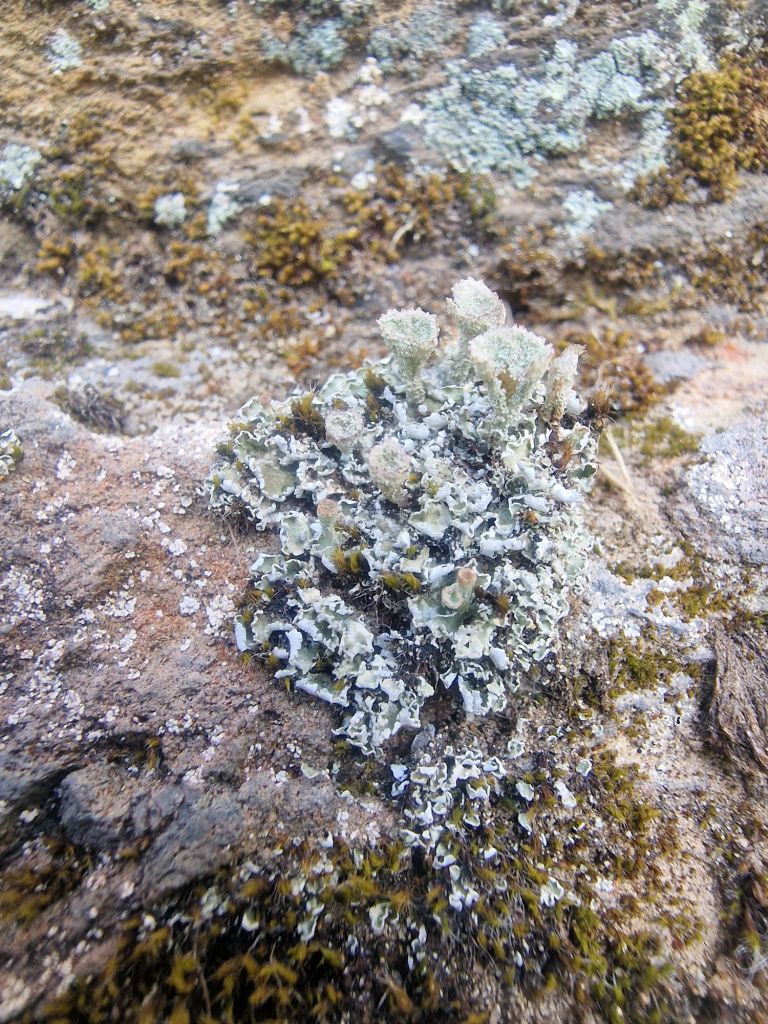

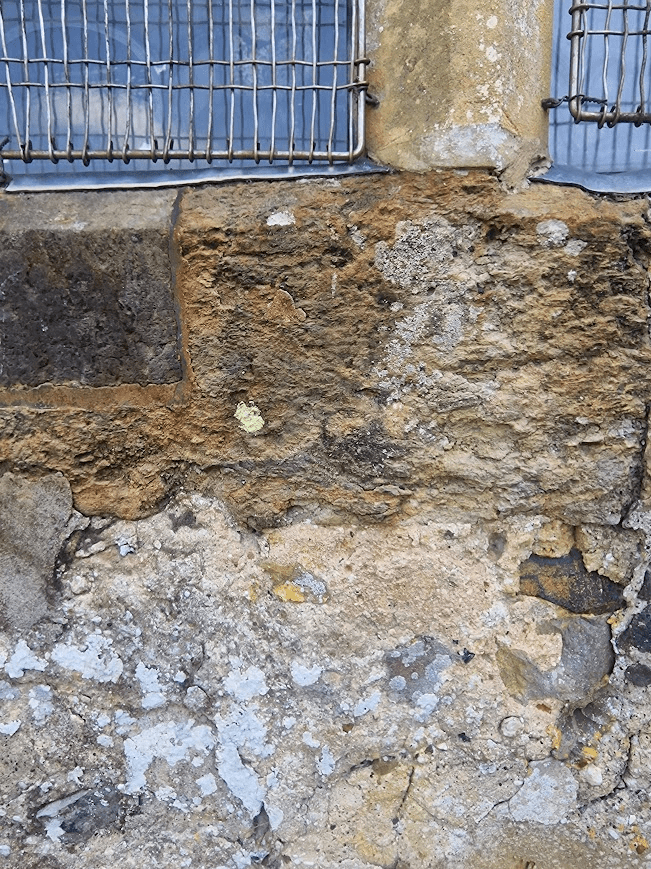
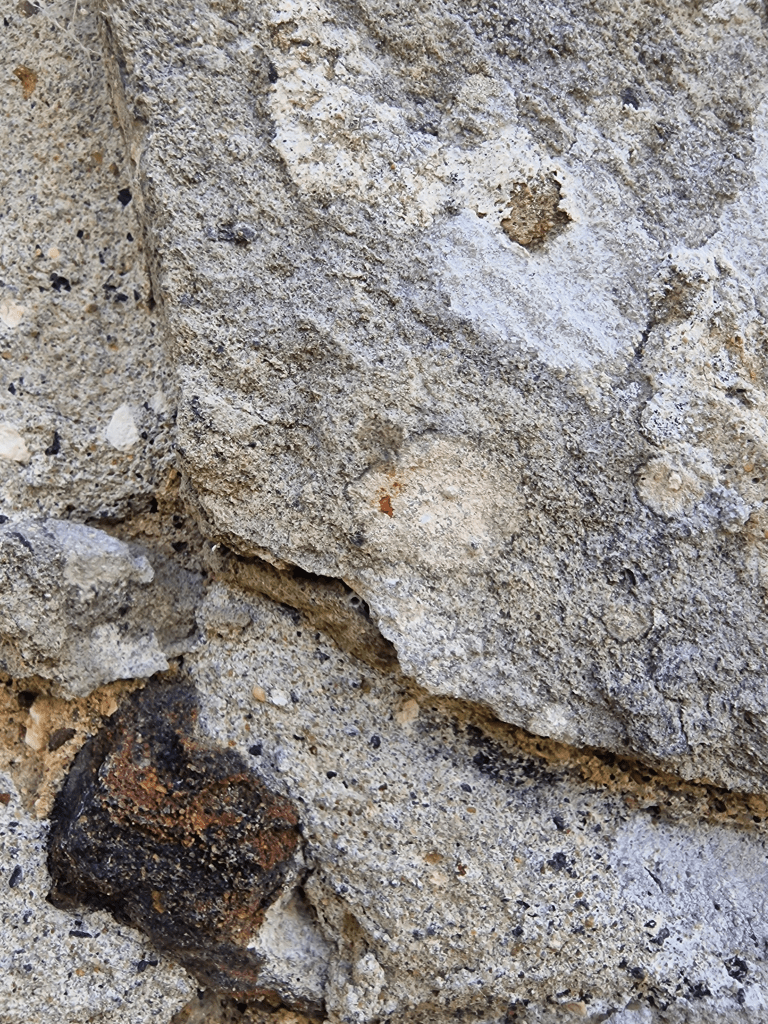
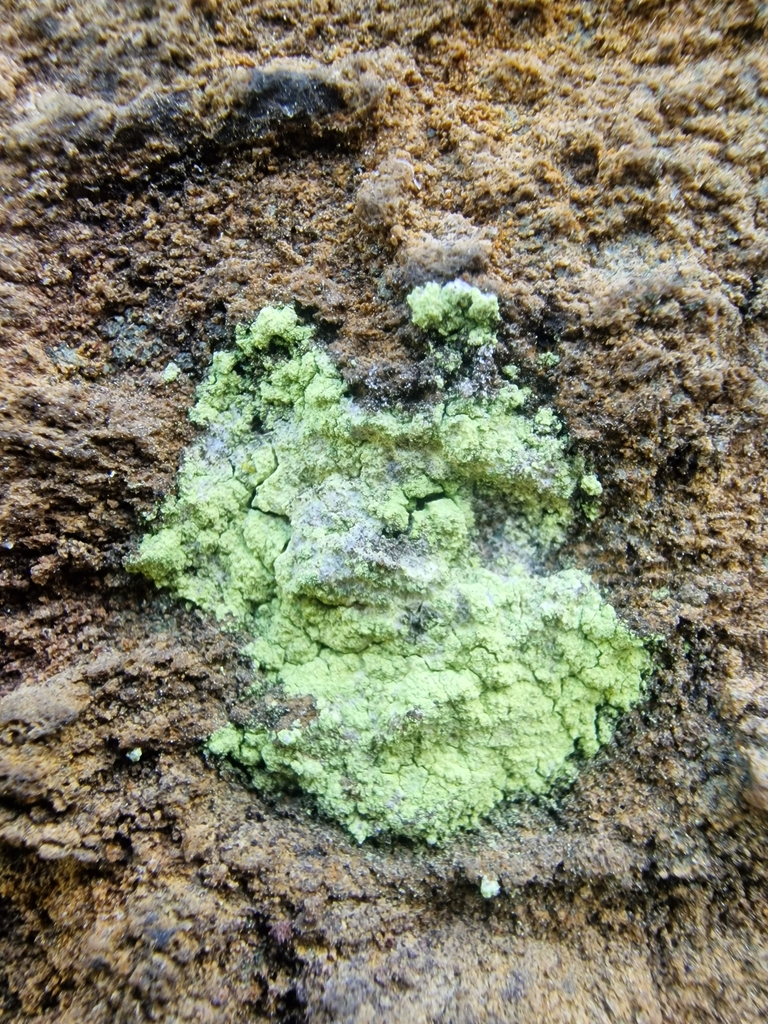
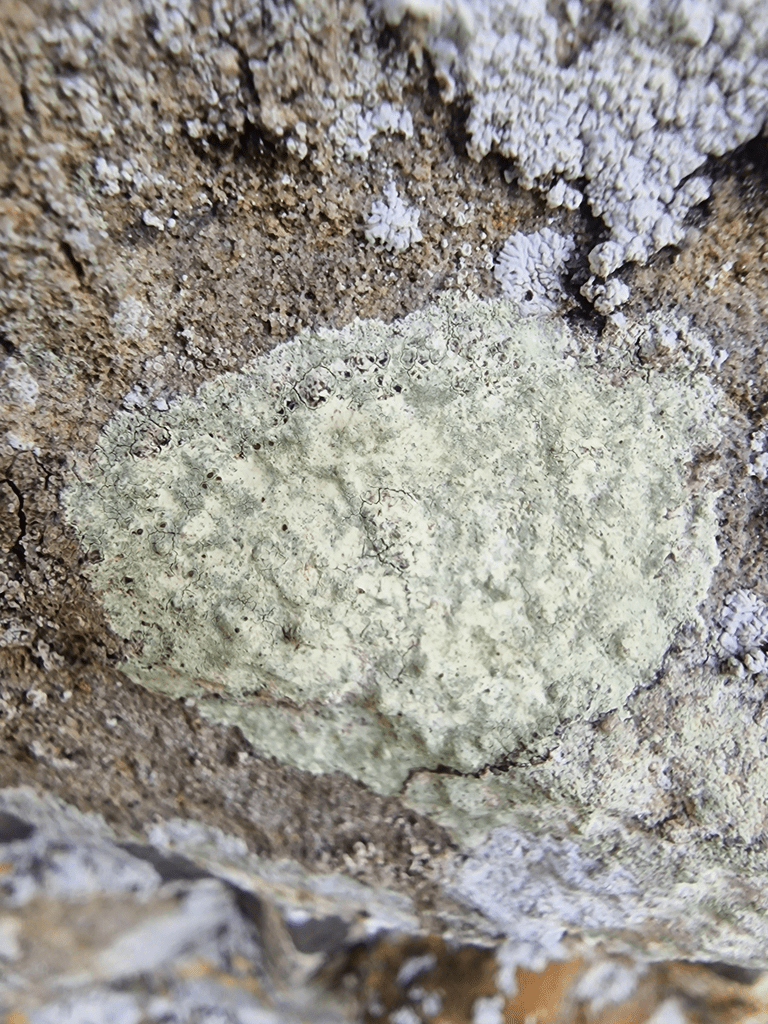
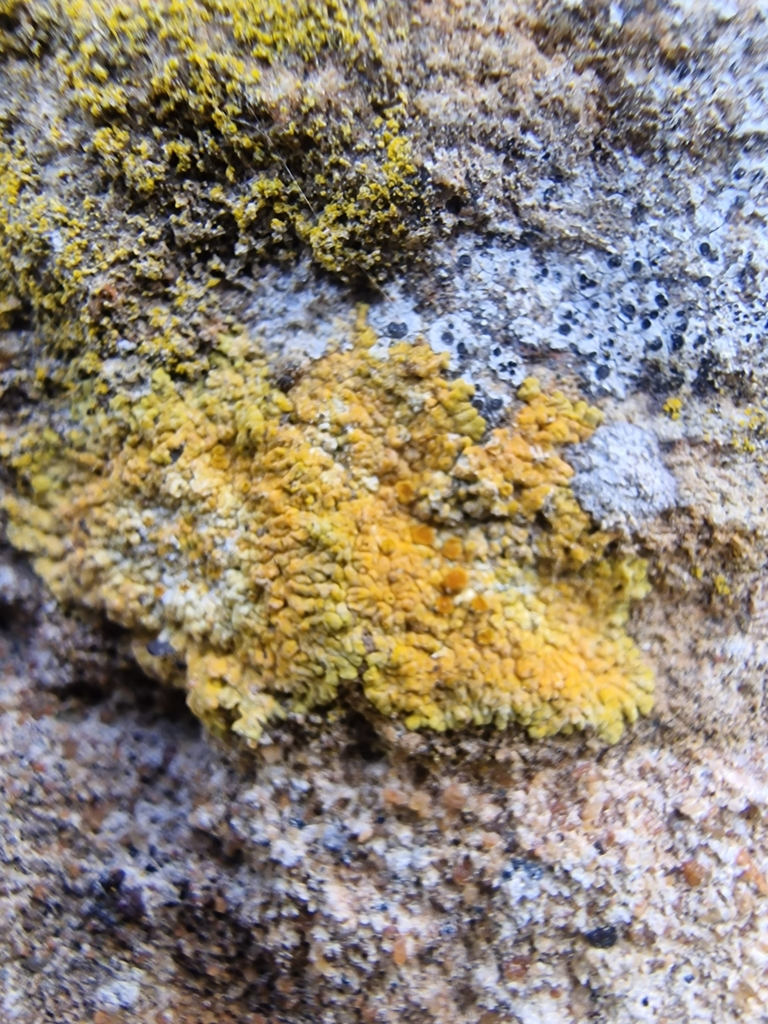
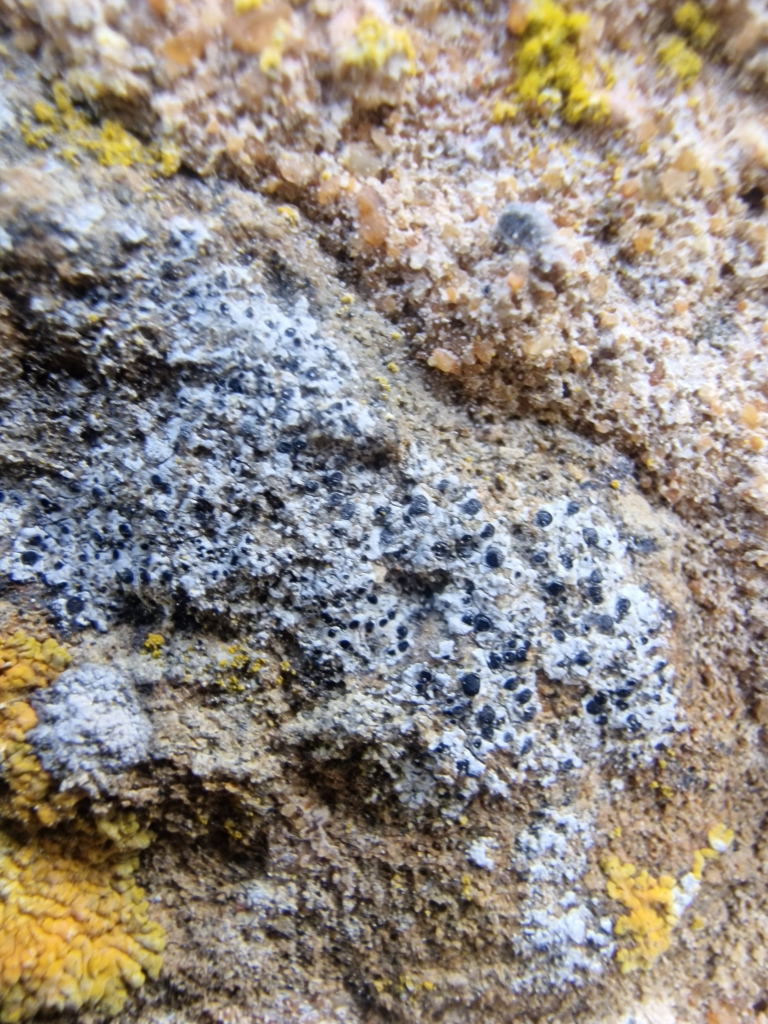
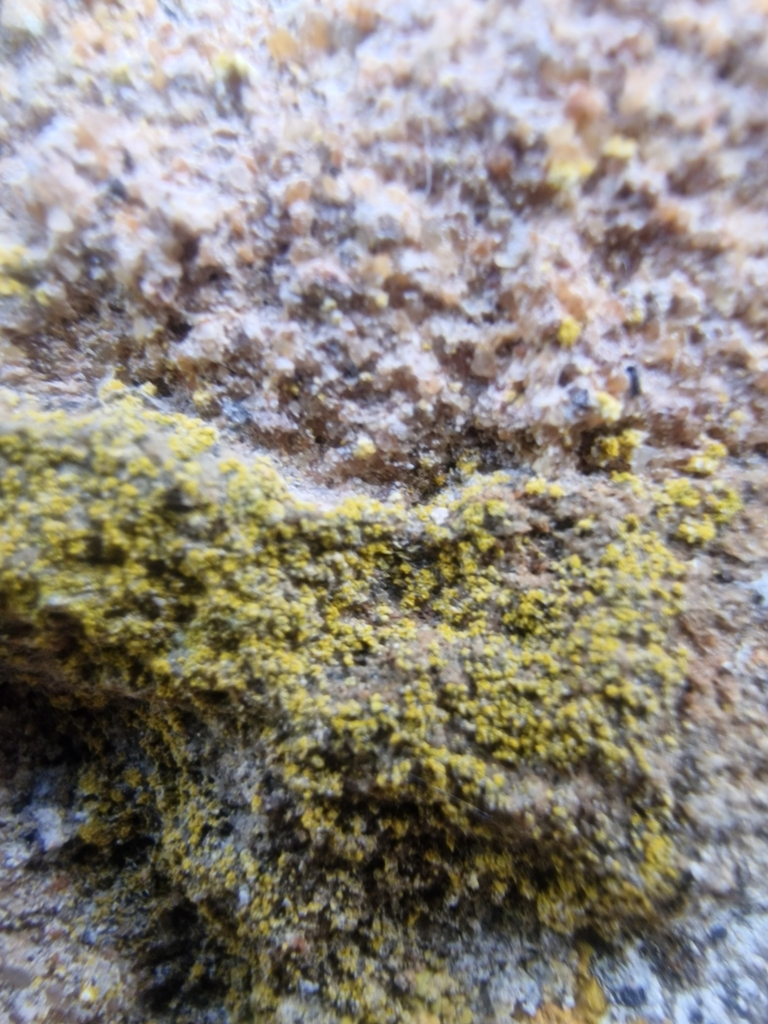
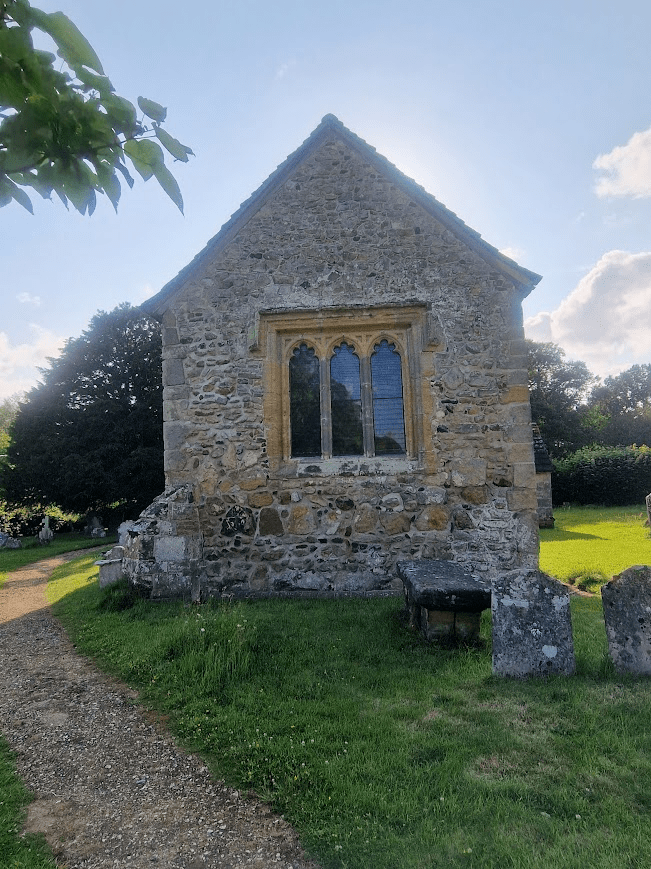
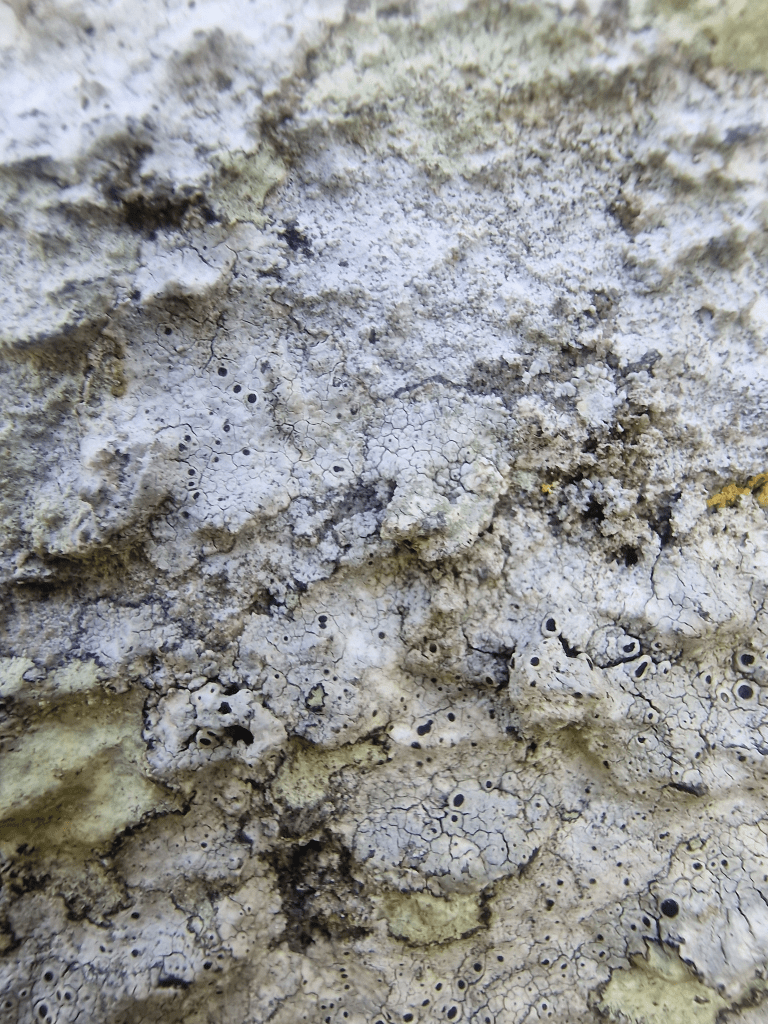
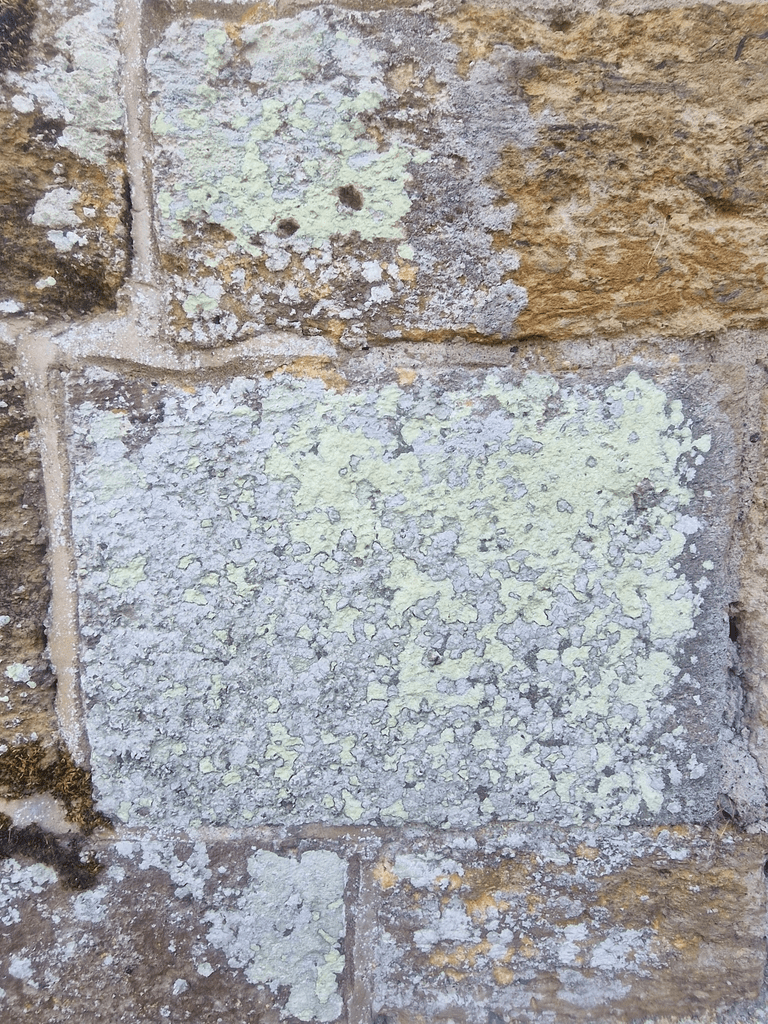
 Sim's Nature Notes