I walked this route twice; once on my own (4/10/25) and once with a friend (13/10/25). The first time I got the 29 bus from Brighton and got off at Perryman’s Lane and got on at Barnsgate manner.
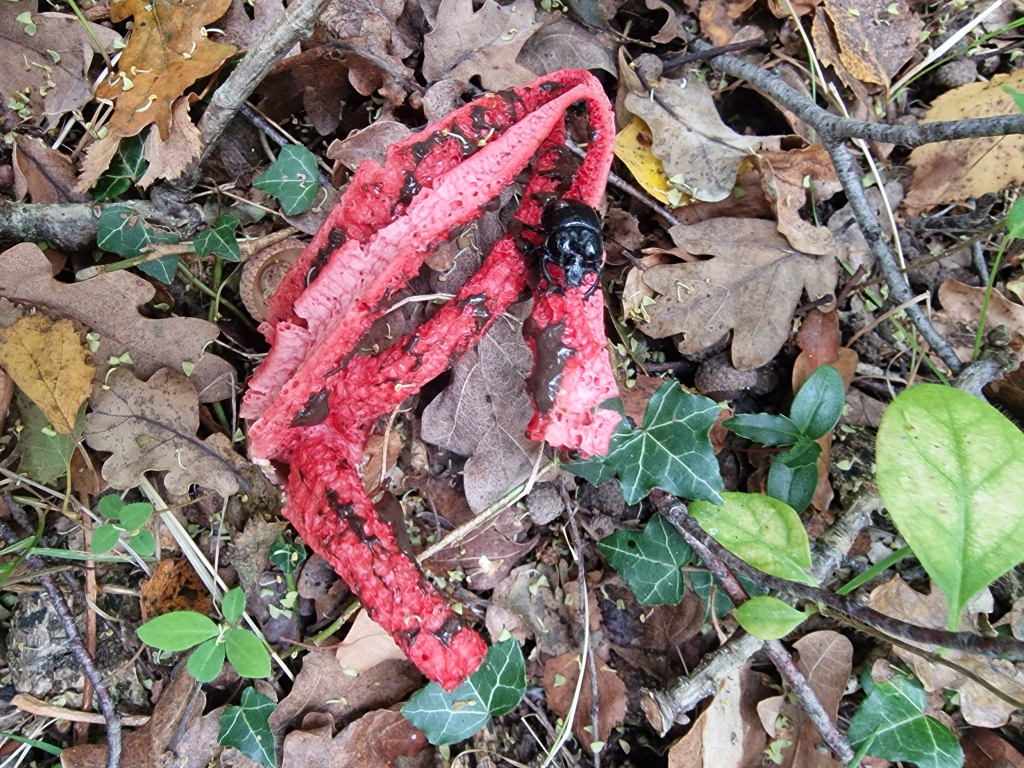
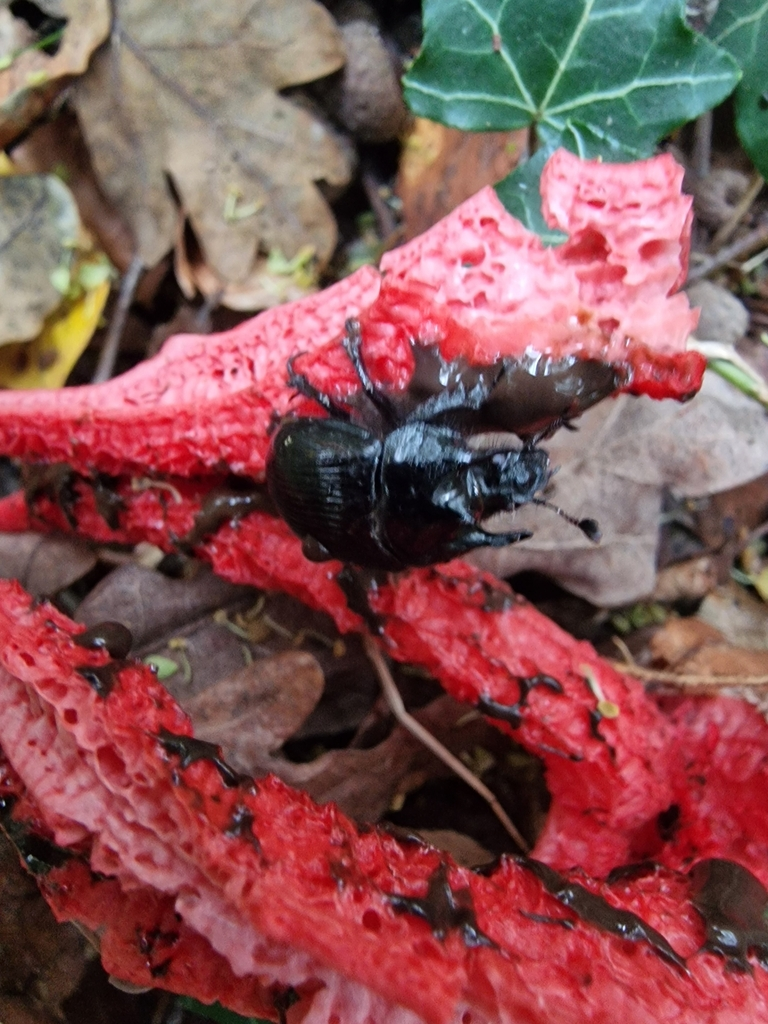
The sighting I enjoyed most (on 13/10/25) was a Minotaur Beetle, Typhaeus typhoeus, on Devil’s-Fingers, Clathrus archeri, under Bracken beside the path. Clathrus archeri is also called Octopus Stinkhorn because is stinks of rotting organic matter, which attracted the Minotaur Beetle (a dung nettle) who then obligingly propagated the fungus’ spores. I had read about Clathrus archeri‘s ability to attract spore-disseminators through scent; but it was great to see this in the field. Minotaur beetles emerge as adults in the autumn. Males like this one, die after mating
Clathrus archeri is not native; it was accidentally introduced from New Zealand in materials sent to Britain from New Zealand for ANZAC stationed in the UK during WWI
The route we took is marked in pink. The route passes through the southern part of Ashdown Forest. British Geological Survey: Ashdown Formation – Sandstone and siltstone, interbedded. Sedimentary bedrock formed between 145 and 133.9 million years ago during the Cretaceous period. Rocks Wood, Furnace Wood, Payne’s Hill and Campfields Rough is designated by Nature England as Ancient and Semi-Natural Woodland
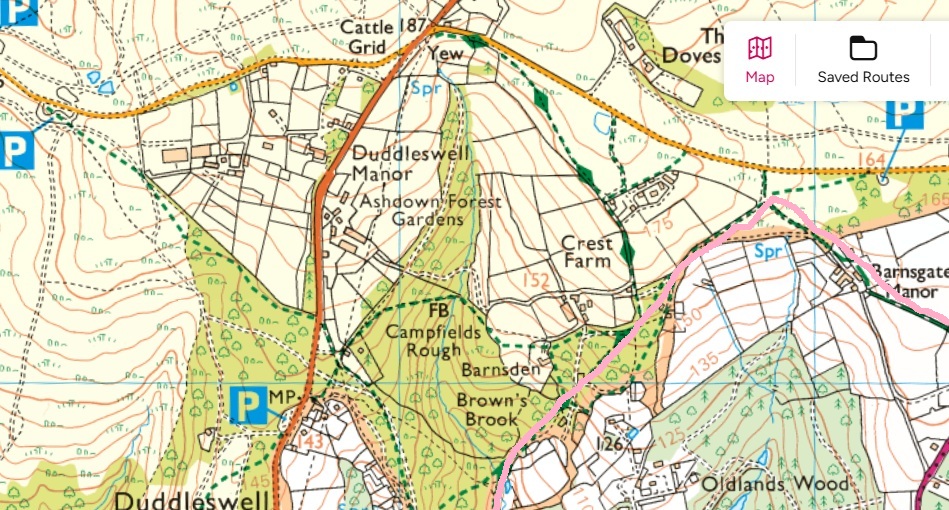
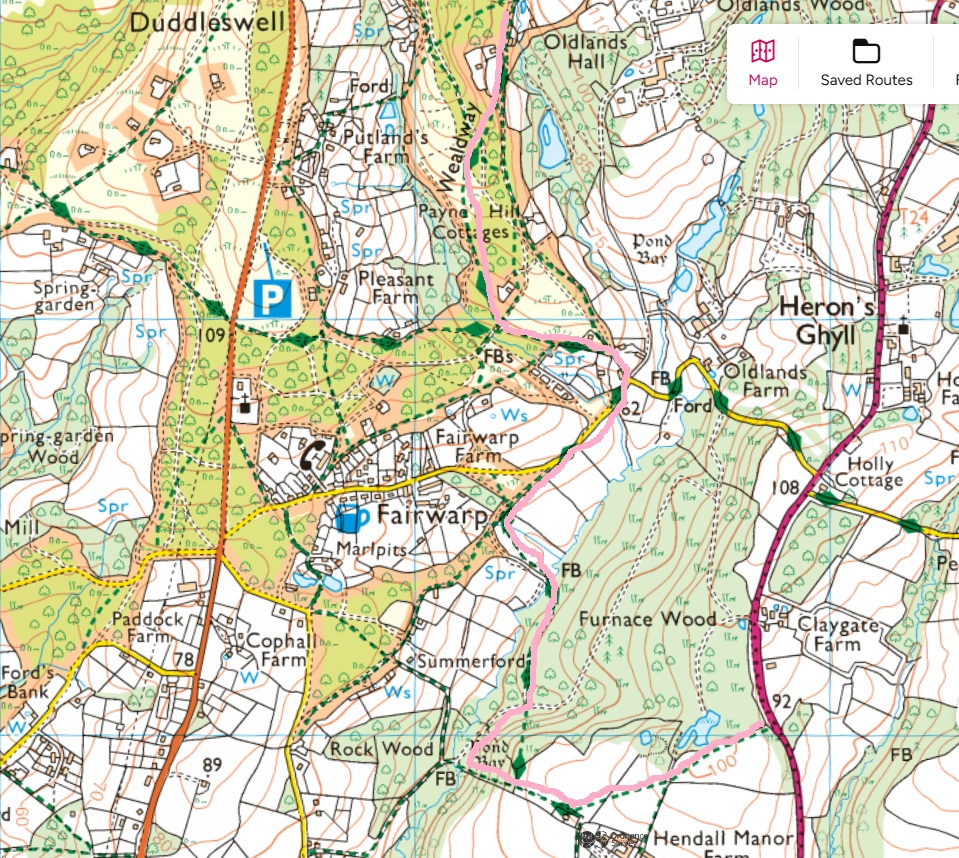
The yellow-green areas on the map are Access Land and are the parts of Ashdown Forest that still is common land. The resistance of the commoners to the enclosure of Ashdown Forest in the 17th century resulted in almost half the original Forest remaining as common land
Fungi are hard to identify. These field guides are evry useful Roger Philips (2005) Mushrooms and Bucazki , Shields and Ovenden (2012) Collins Fungi Guide. The smartphone App Obsidentify is also useful, but not infallible; always check its identification with a field guide. Some of my identifications for 04/10/25 may be wrong!
The website First Nature – Fungi is extremely useful for identification and for information about UK fungi
This is not a complete list of all the fungi we saw; it is a list of the fungi I took a reasonable photo of!
04/10/25
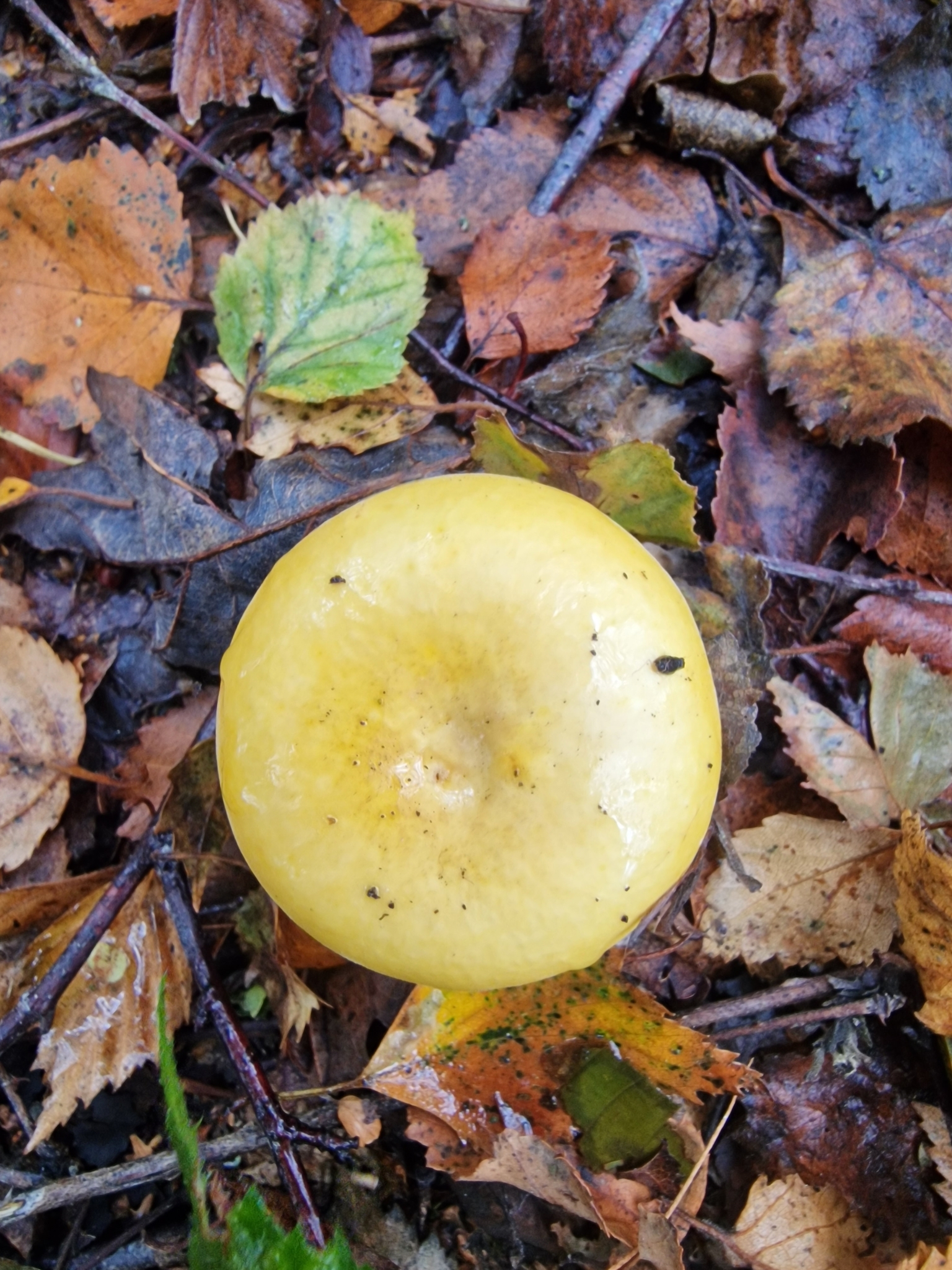
Russula claroflava, Yellow Swamp Brittlegill, under Silver Birch
Lactarius quietus Oakbug Milkcap, under a Pendunculate Oak Oakbug milkcap is an important mycorrhizal species for oak trees, forming cooperative relationships with oak roots. Woodland Trust
Amanita muscaria Fly Agaric. Very common, often associated with Birch
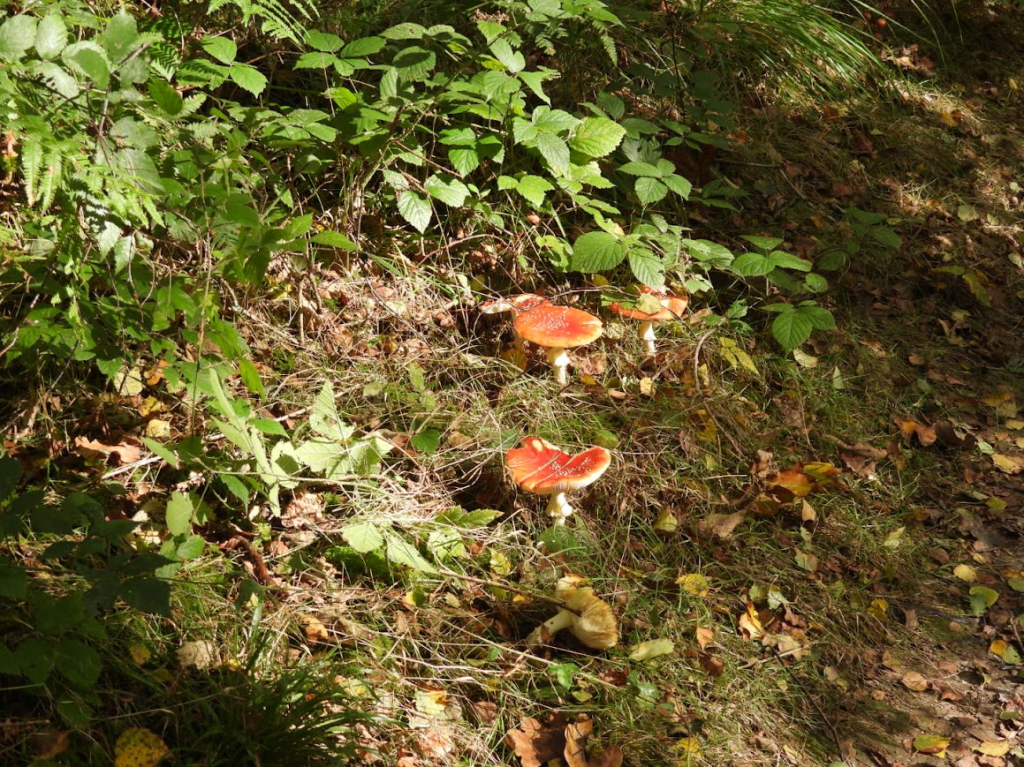
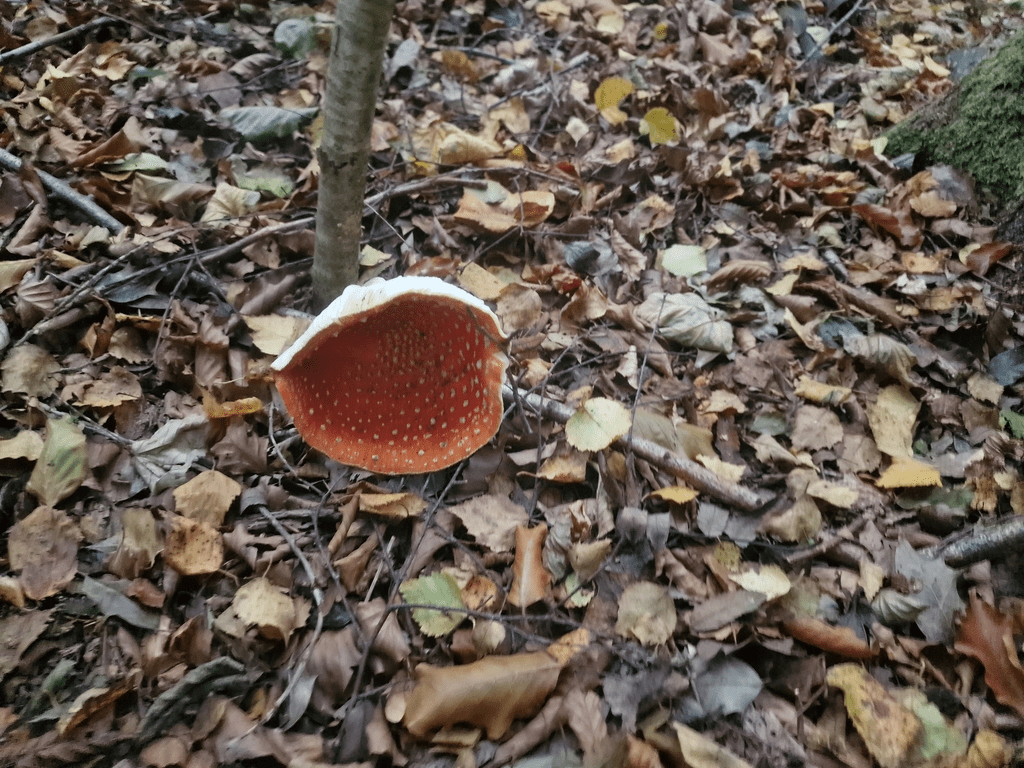
This Fly Agaric has contorted to form a goblet shape (13/10/25)
Siberian use of fly agaric may have played a part in the development of the legend of Santa Claus too. At midwinter festivals the shaman would enter the yurt through the smoke hole and down the central supporting birch pole, bringing with him a bag of dried fly agaric. After conducting his ceremonies he would leave the same way he had come. Ordinary people would have believed the shaman could fly himself, or with the aid of reindeer which they also knew to have a taste for fly agaric. Santa is now dressed in the same colours as the fly agaric, carries a sack with special gifts, comes and goes via the chimney, can fly with reindeer and lives in the ‘Far North’. Trees for Life: Fly Agaric Folklore
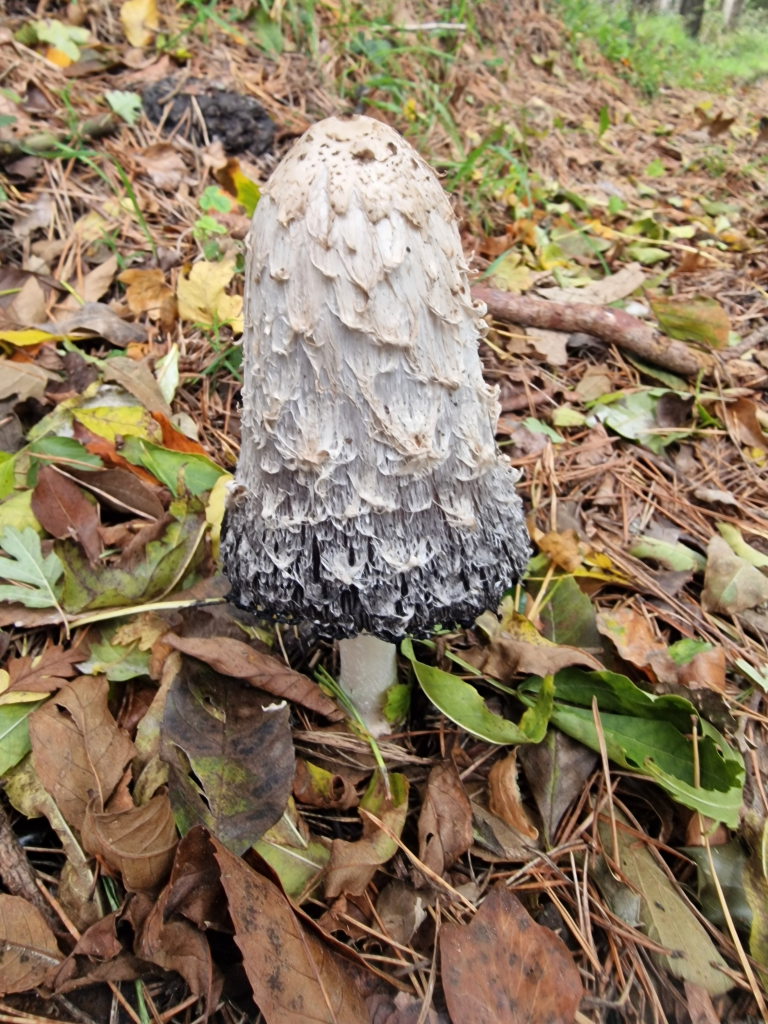
Coprinus comatus Shaggy Inkcap
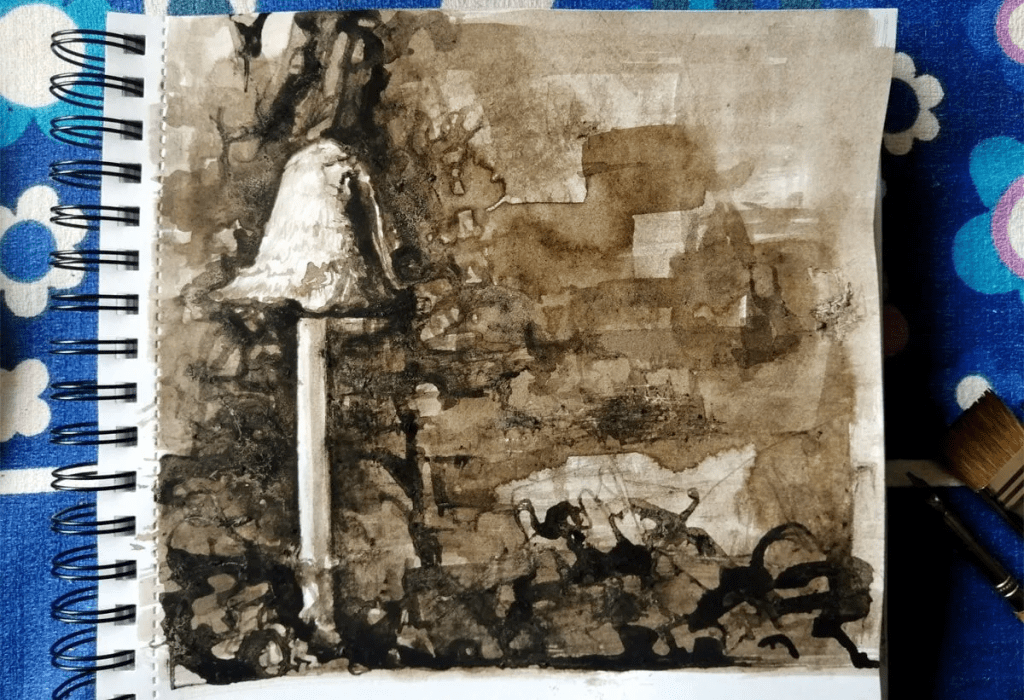
A somewhat sketchy sketch of a Shaggy Inkcap (Coprinus comatus) drawn using the ink produced by a fellow Shaggy Inkcap! by Jane Baxter
Amanita rubescens Blusher
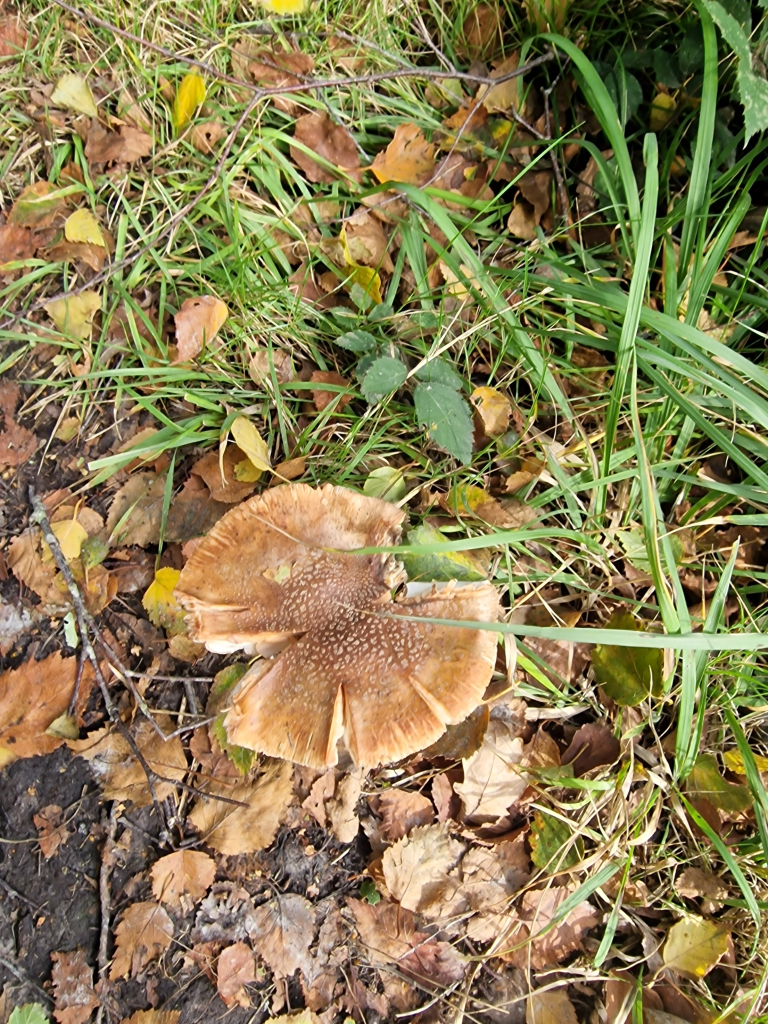
Blushers are mycorhizal with hardwood and softwood trees; they are particularly abundant in many conifer forests on poor acidic soils, where they occur in small groups more often than singly. First Nature
Leccinum aurantiacum Orange Bolete
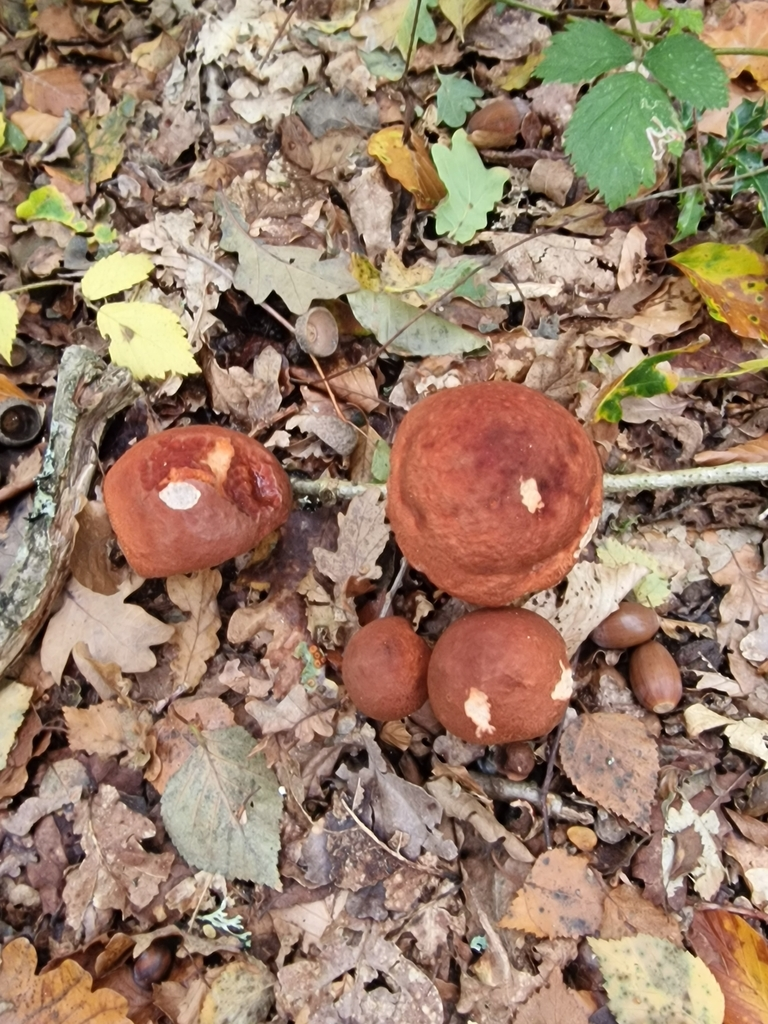
Widespread and abundant in Scandinavia and in Scotland, but it is increasingly rare further south, especially in lowland areas. … All Leccinum species are ectomycorrhizal, and most are found only with one tree genus. Leccinum aurantiacum is mycorrhizal most commonly with poplars and aspen (Populus species) and with oak trees (Quercus species); less often it occurs with other broadleaf trees including beech and birches. First Nature
Cortinarius violaceus Violet Webcap
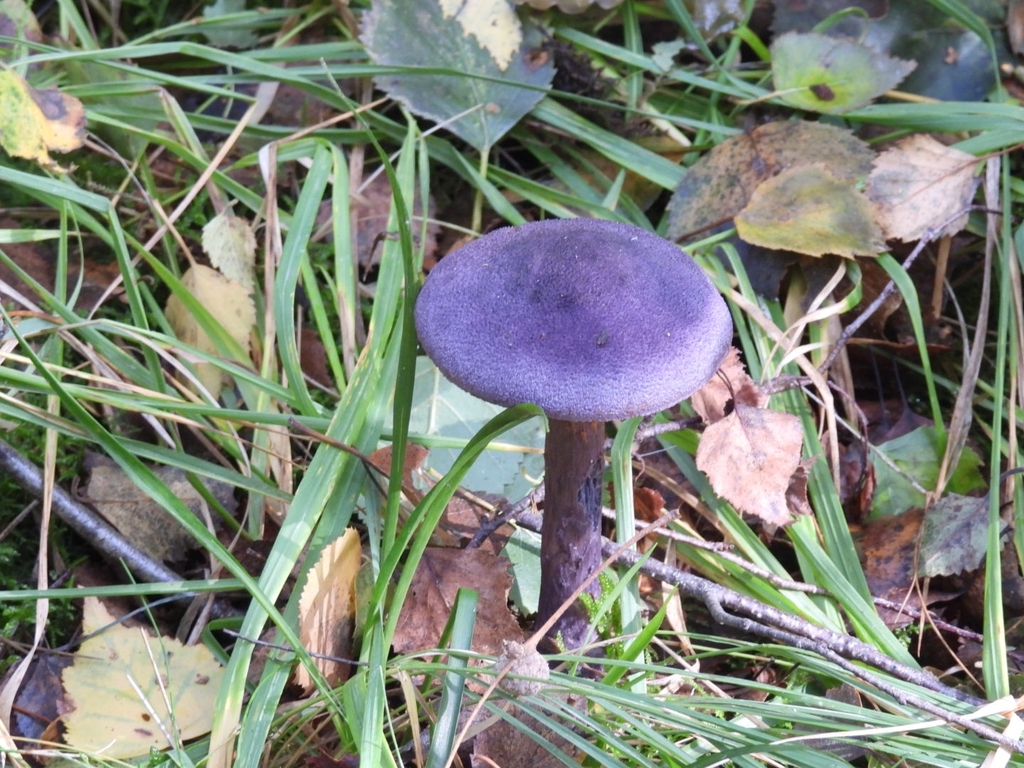
In Britain and Ireland, where it is a very rare find, the Violet Cortinarius grows … rich woodland habitats mainly under Beeches and other broadleaf trees but also very occasionally with conifers. This is a mushroom of late summer and autumn. First Nature Red data list: near threatened. A mycorrhizal mushroom found in deciduous woodland
Amanita fulva Tawny Grisette
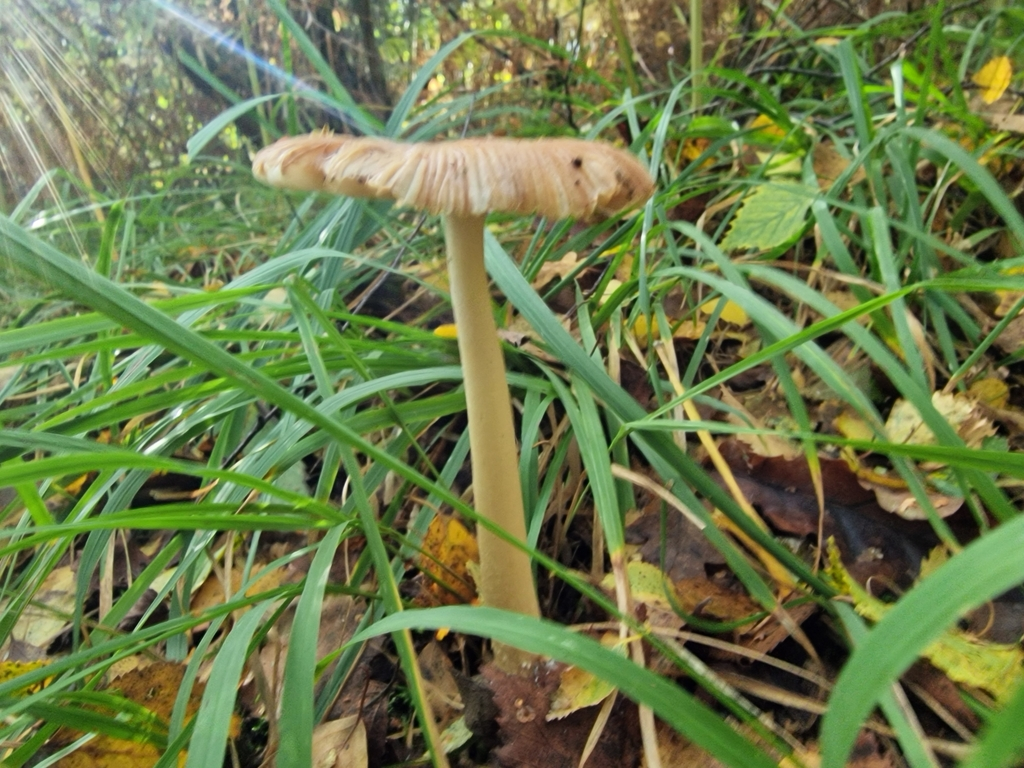
Initially egg-shaped, the cap expands to become flat but with a small raised central area (an umbo). The edge of the cap is striated (with comb-like radial ridges). Amanita fulva is mycorhizal with hardwood and softwood trees; it is commonly found beside woodland paths. First Nature
Amanita phalloides Deathcap
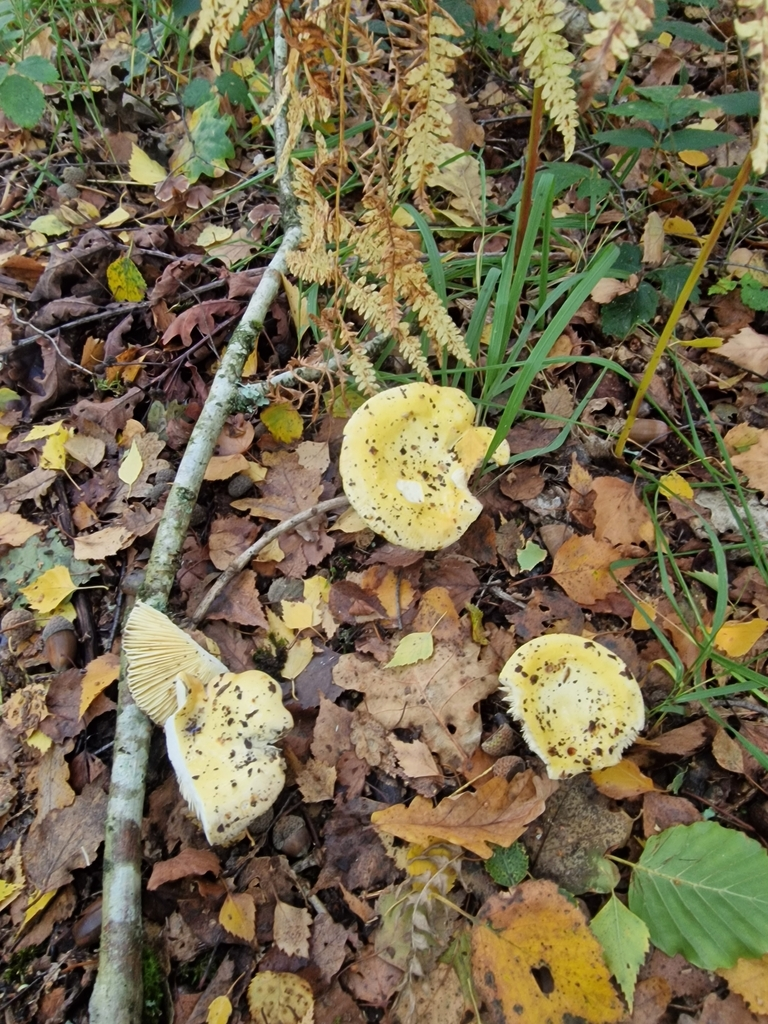
It is said that Agrippina murdered her husband, Roman Emperor Claudius, by mixing deathcap juice with Caesar’s mushrooms (Amanita caesarea). He died of poisoning a few days after the meal. Voltaire claimed that Charles VI died by deathcap poisoning. Woodland Trust
13.10.25
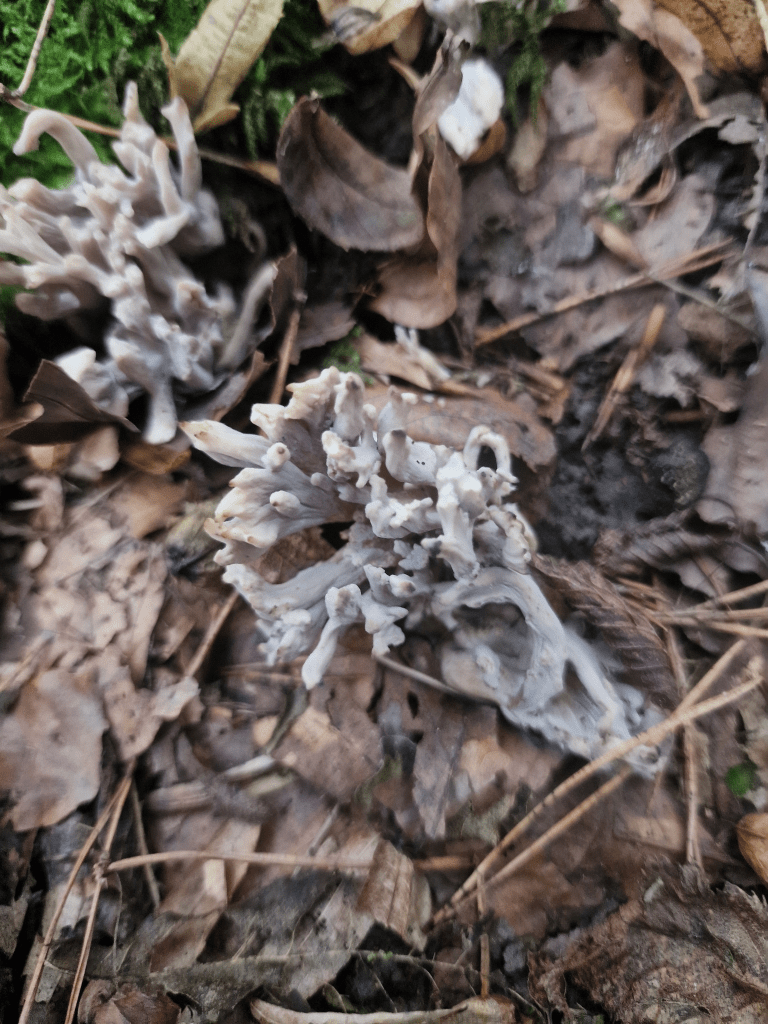
Clavulina cinerea Grey Coral Fungus. In leaf litter in Furncae Wood (Hornbeam, Oak a and Scots Pine) Considered to be mycorrhizal; on the ground beneath deciduous trees as well as conifers; usually where there is a build up of leaf litter. First Nature
Boletus edulis Penny Bun.
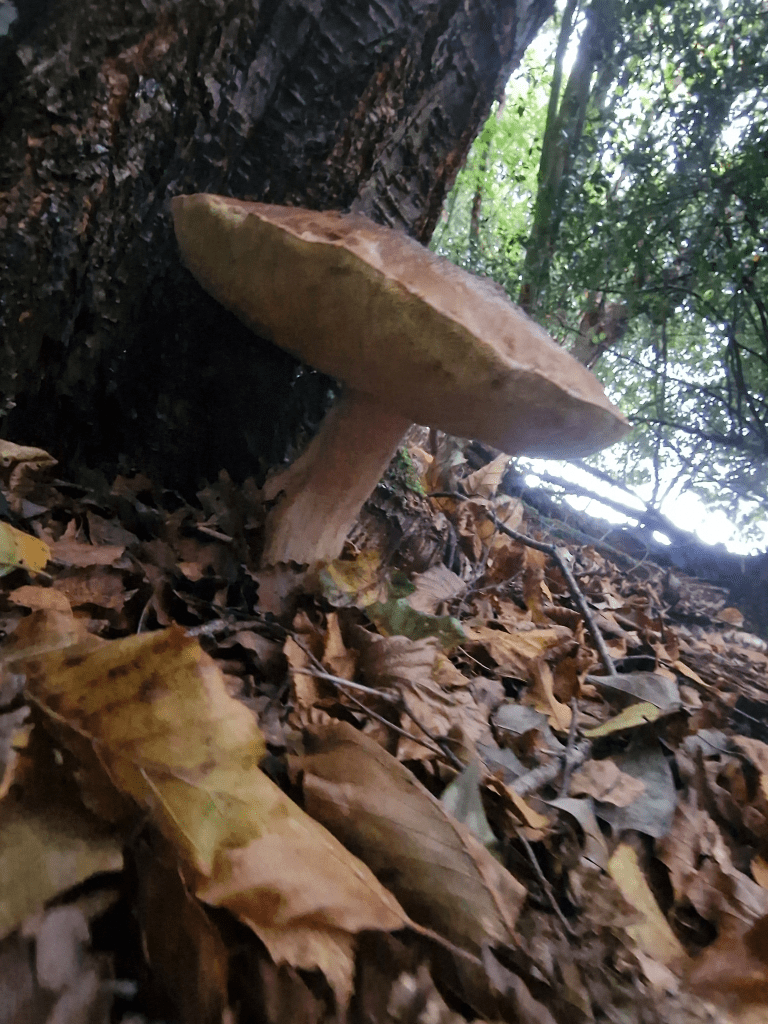
Weighty, fat cap like a crusty, well-baked bun. It is slugs (including the scarce lemon slug (Malacolimax tenellus), several species of mushroom fly, as well as other insects and their larvae. Mythology and symbolism. … In folklore it is said that the best time to hunt for penny bun and other ceps is when it’s a full moon. … They are called porcini (little pigs) in Italy, cep (trunk, because of the fat stem) in France and Steinpilz (stone mushroom) in Germany. Woodland Trust
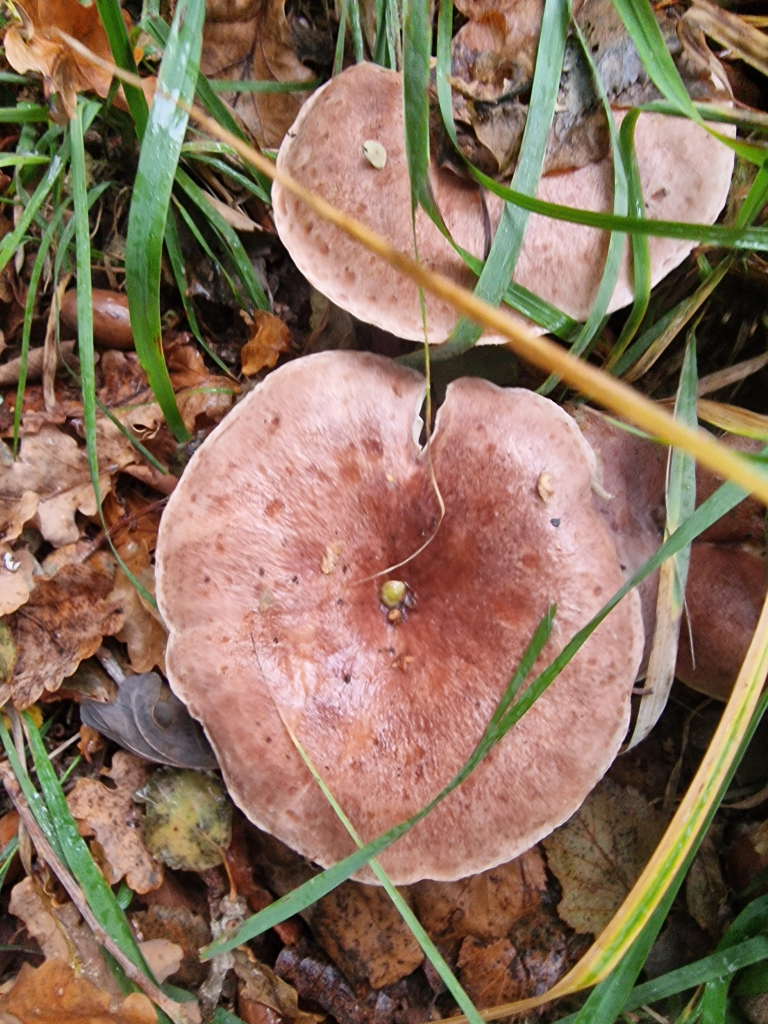
Lactarius quietus Oakbug Milkcap, under Oak (Quercus robur)
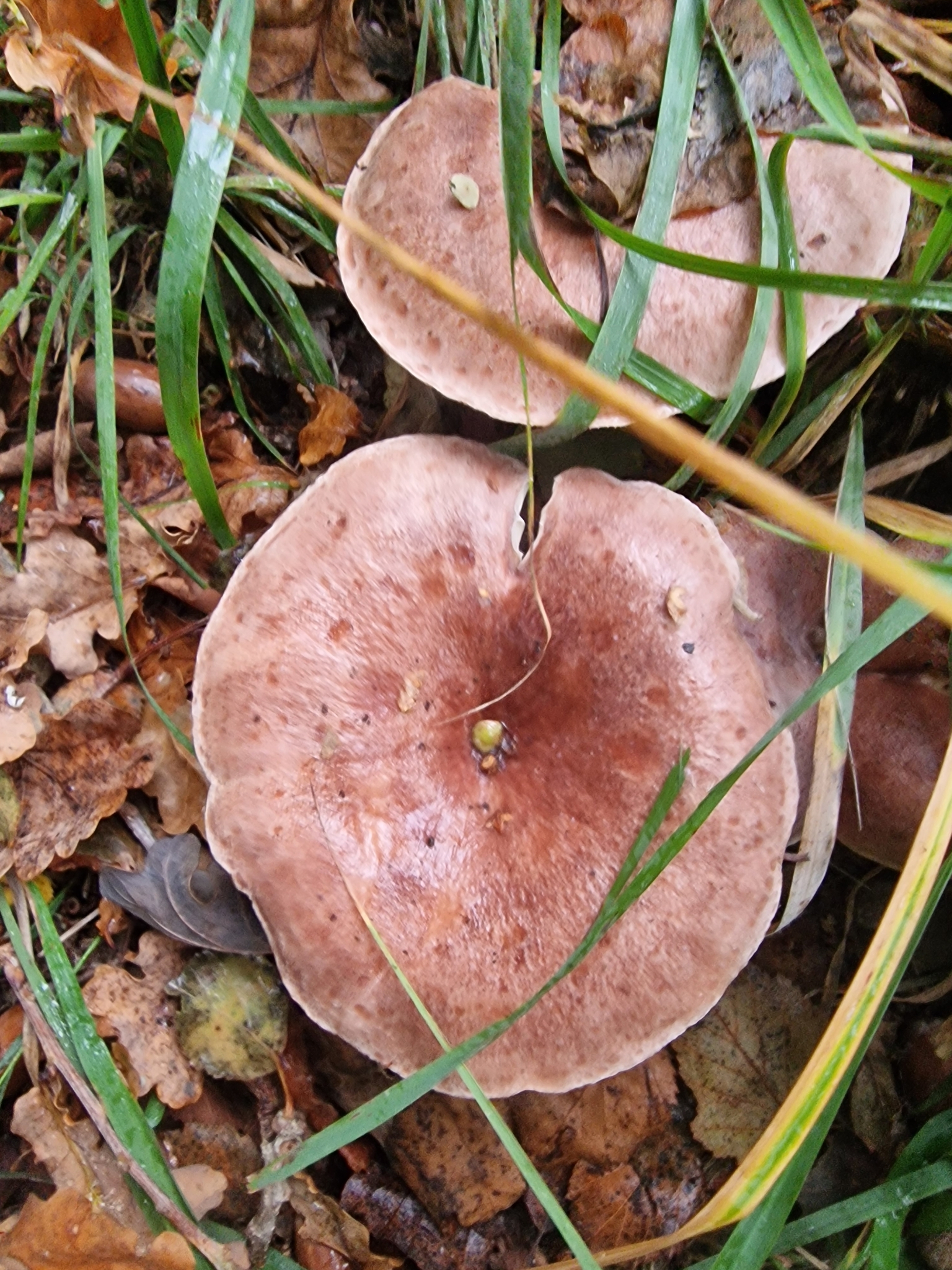
Mycorrhizal with oak trees. Although Lactarius quietus could be confused with several other medium-sized pale brown milkcaps, the fact that it occurs only under oak trees is a great help in identifying this species First Nature
When identifying fungi, what trees thet are near too is very important to identification.
Lactarius torminosus Woolly Milkcap
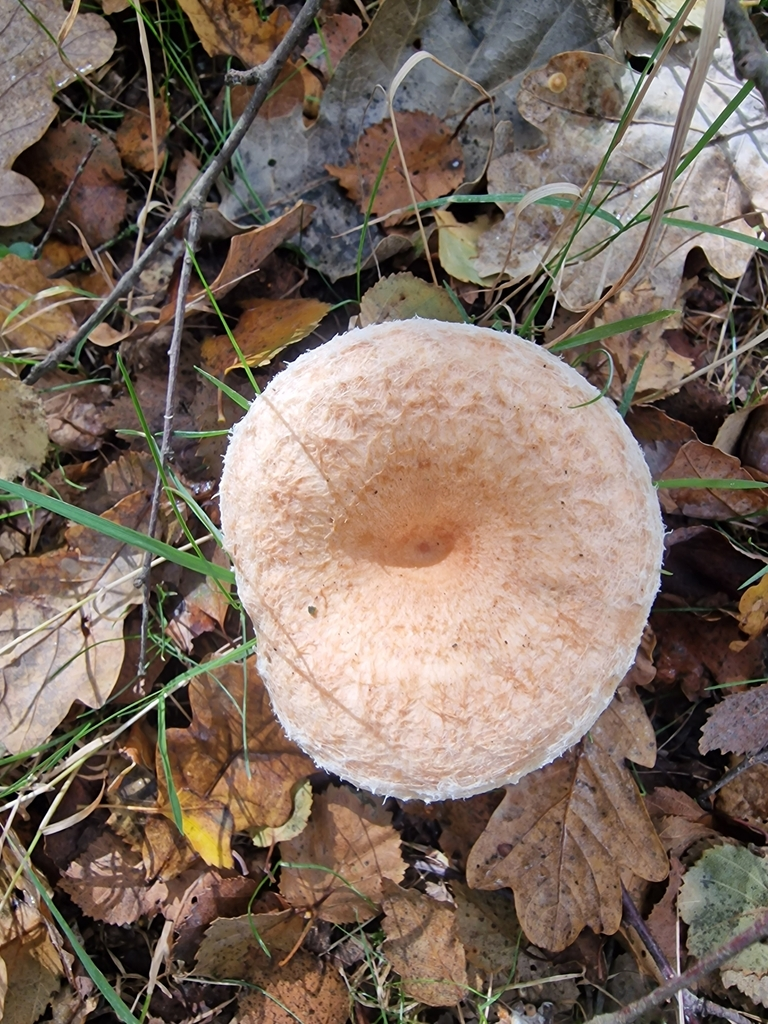
Mycorrhizal, found under birch trees nearly always in damp places. First Nature
Datronia mollis Common Mazegill
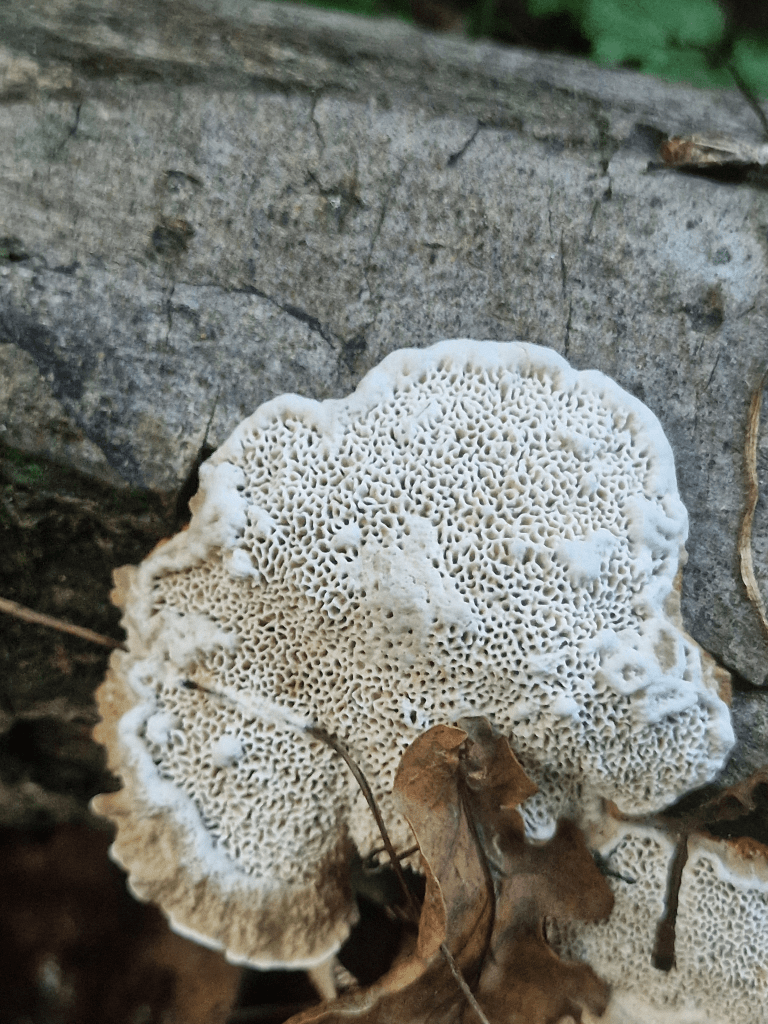
Datronia is a genus of poroid crust fungi Datronia mollis fungi cause a white rot in broadleaf trees. It is saprobic fungus. saprobic fungus. Its is not a parastic fungis which live on or in a living host, and eventually kill it; saprobic fungi feed on dead material. Saprobic fungi play a major role in breaking down and recycling wood and other forest debris, creating healthy soil, and freeing up nutrients for microbes, insects, and growing plants. Mount Rainier Park Service
Mycena rosea Rosy Bonnet
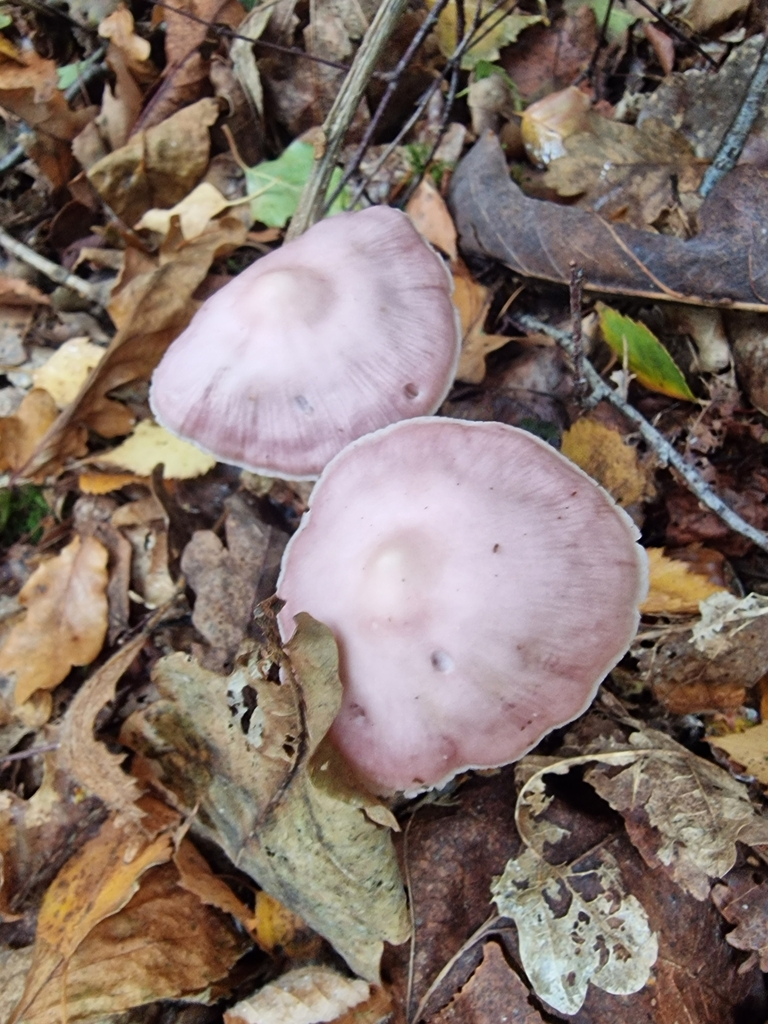
Like many other species in the genus Mycena, the Rosy Bonnet is reported to be bioluminescent, emitting a weak green light (wavelength in the region of of 520 to 530 nanometres). … Saprobic, among leaf litter in deciduous woods and mixed woodland. First Nature
Suillellus queletii Deceiving Bolete
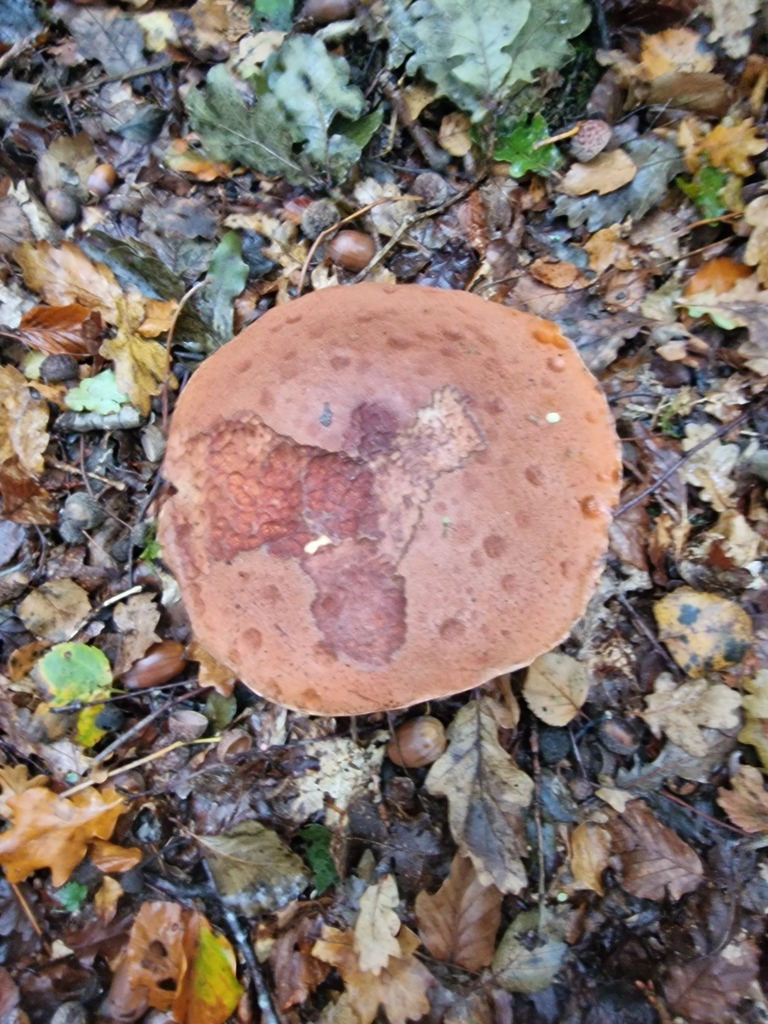
Occasional in southern Britain but increasingly rare further north. … Suillellus queletii is an ectomycorrhizal fungus; it is usually found growing on alkaline soil beneath hardwood trees, notably oaks but also beech and limes First Nature
Ectomycorrhizal fungi … are intimately associated with the roots of most temperate tree species. Hyphae, the thread-like filaments of fungi, wrap around the root tips of the tree and through them water uptake and nutrient exchange take place. The hyphae are also known to provide trees with a degree of resistance from drought and also serve as a protective barrier from diseases.
Ectomycorrhizal (ECM) fungi are intimately associated with most temperate tree species and have demonstrated important and rapid shifts in species composition and abundance in response to a range of environmental stresses (e.g. droughts, eutrophication and/or acidification of forest soils).
Monitoring of changes in ECM fungal communities might, as a result, serve as a sensitive early warning indicator of environmental change that has the potential to be disruptive to trees. This might develop where environmental change, such as the eutrophication of forest soils, interferes with the varied functional roles of ECM, including the vital roles of facilitating carbon, nutrient and water uptake in trees. Forest Research
Laccaria amethystina Amethyst Deceiver
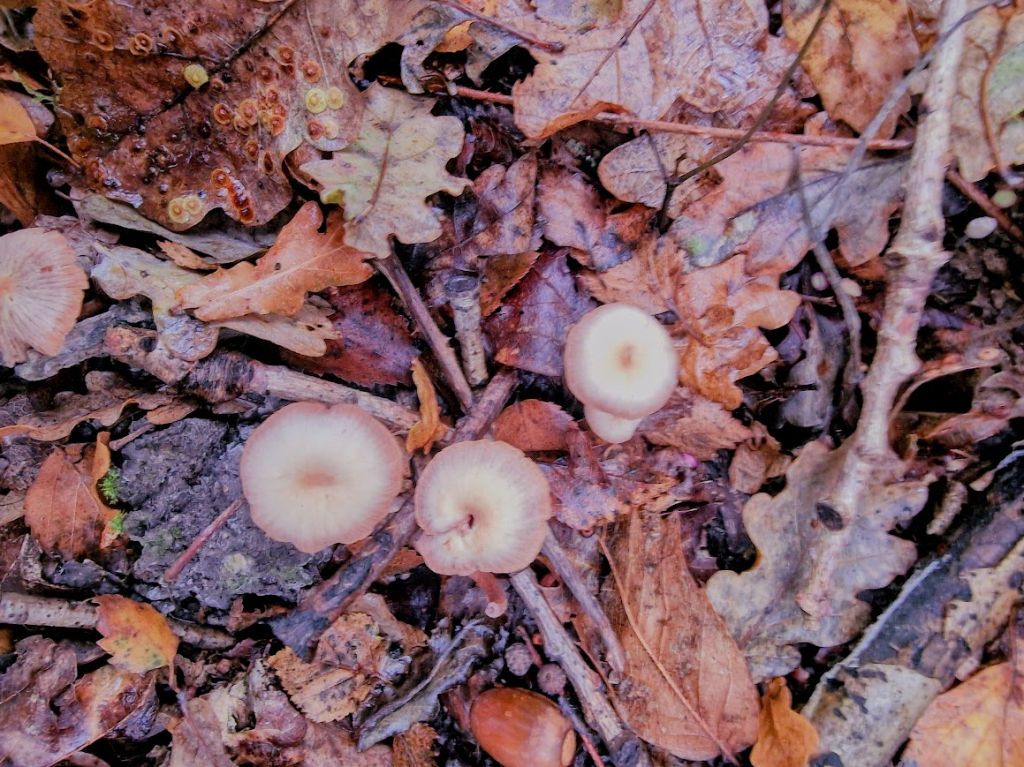
During dry spells the caps and stems of Laccaria laccata become much paler and eventually almost white. The specimen seen here is not yet completely dry; its cap is becoming paler from the centre. Eventually, Amethyst Deceivers become pale buff, as do the common Deceivers. This makes identification of old specimens even more difficult. … Among leaf litter in all kinds of woodland but particularly plentiful under beech trees, with which it is ectomycorrhizal. First Nature
“Mycorrhizal” is a broad term for a symbiotic relationship between fungi and plant roots, while ectomycorrhizal is a specific type of mycorrhizal relationship where the fungus forms a sheath outside the root cells and does not penetrate them. The other main type, endomycorrhizal (also called arbuscular), involves the fungus penetrating and entering the root cell. sThe other main type, endomycorrhizal (also called arbuscular), involves the fungus penetrating and entering the root cells. Wenchen Song (2024) Ectomycorrhizal fungi: Potential guardians of terrestrial ecosystems
Paxillus involutus Brown Roll-Rim
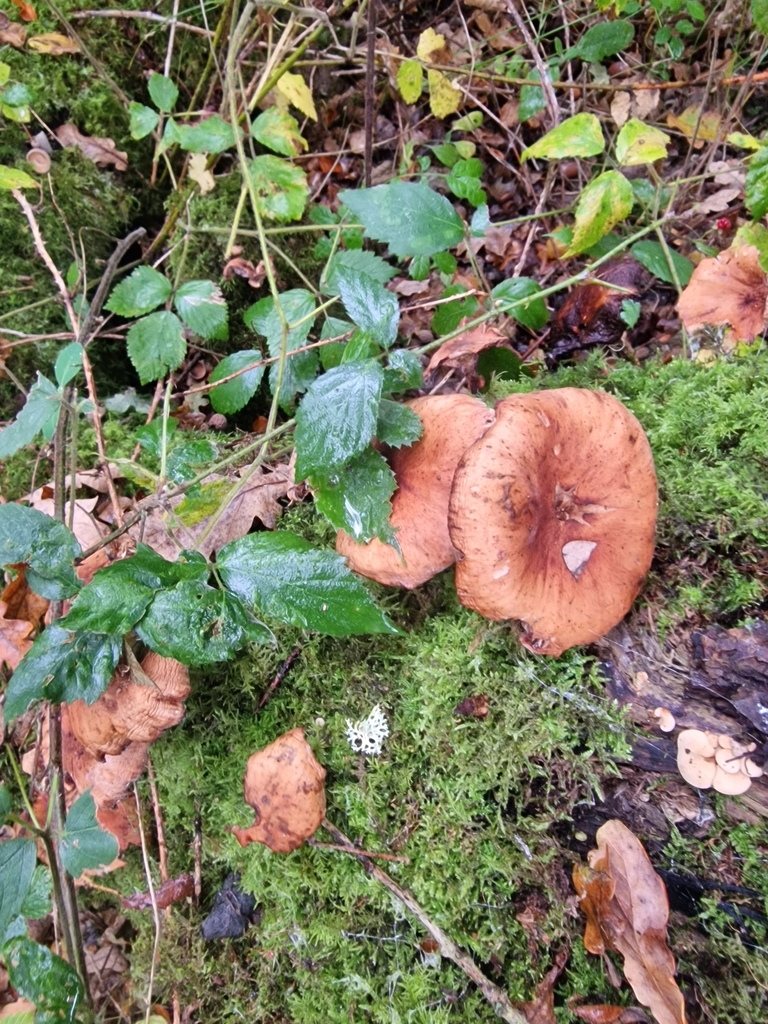
Brown Rollrim is classified as a gilled member of the order Boletales, and like the boletes themselves it forms ectomycorrhizal relationships with tree. First Nature
Russula nigricans Blackening Brittlegill
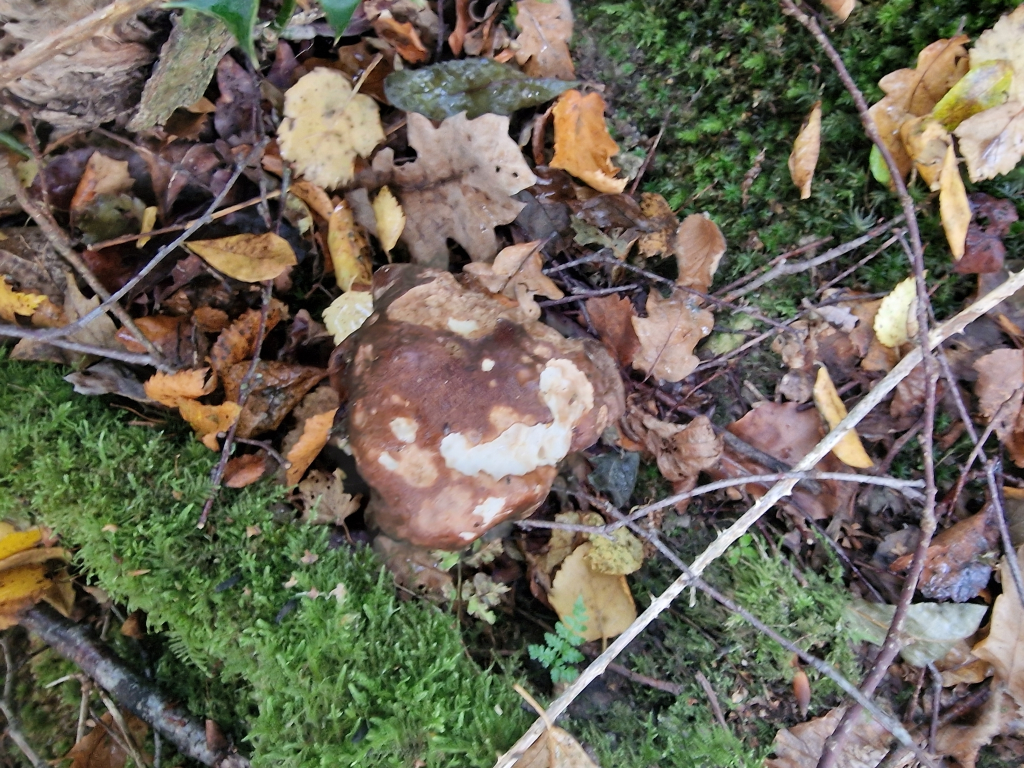
Russula nigricans, the Blackening Brittlegill, is a very variable species in terms of its size, shape and colour: it changes in each of these respects quite markedly as it matures, eventually becoming black all over. … The Blackening Brittlegill is, like other Russula species, ectomycorrhizal.
 Sim's Nature Notes