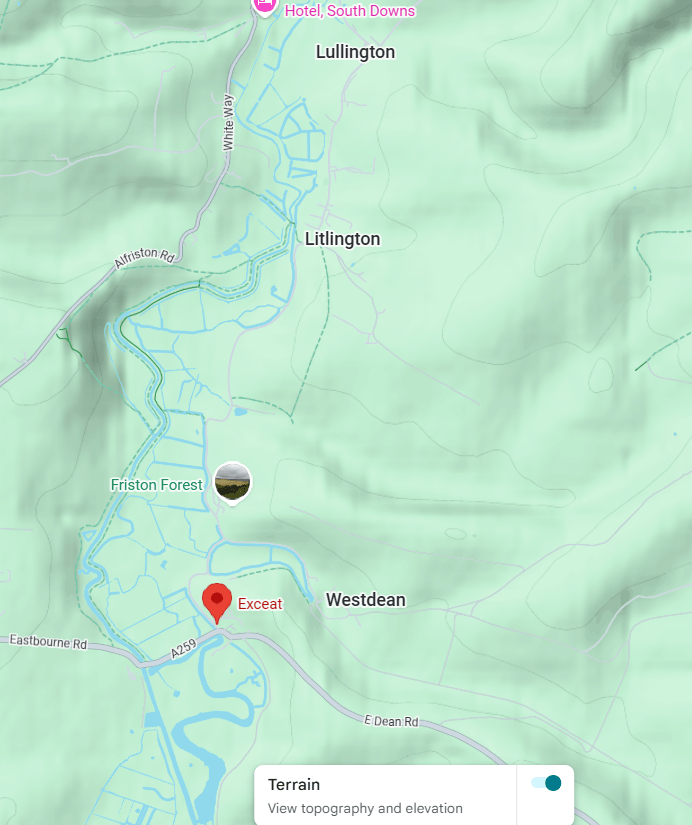
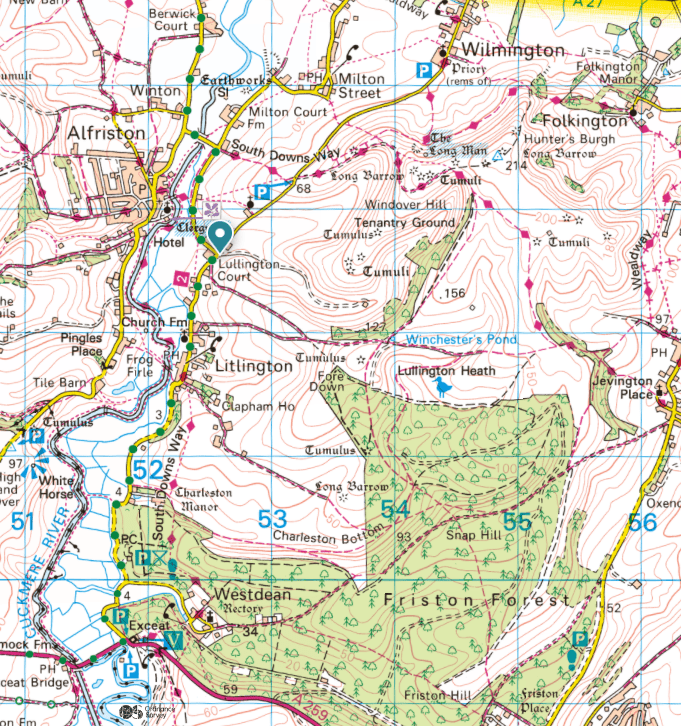
I went to the Seven Sisters Country Park visitors centre at Eceat on the Brighton and Hove 12 bus. From there I walked through Friston Forest to All Saints Chirch Westdean. I then walked further north through the forest to Lullington Heath, From the heath I walked down past the Lullington’s remote hillside Church of the Good Shepherd, then crossed the Cuckmere to visit Alfriston’s St Andrews, then crossed back over the Cuckmere and walked down the road from Litlington to Exceat, walking past t. Michael the Archangel Church,
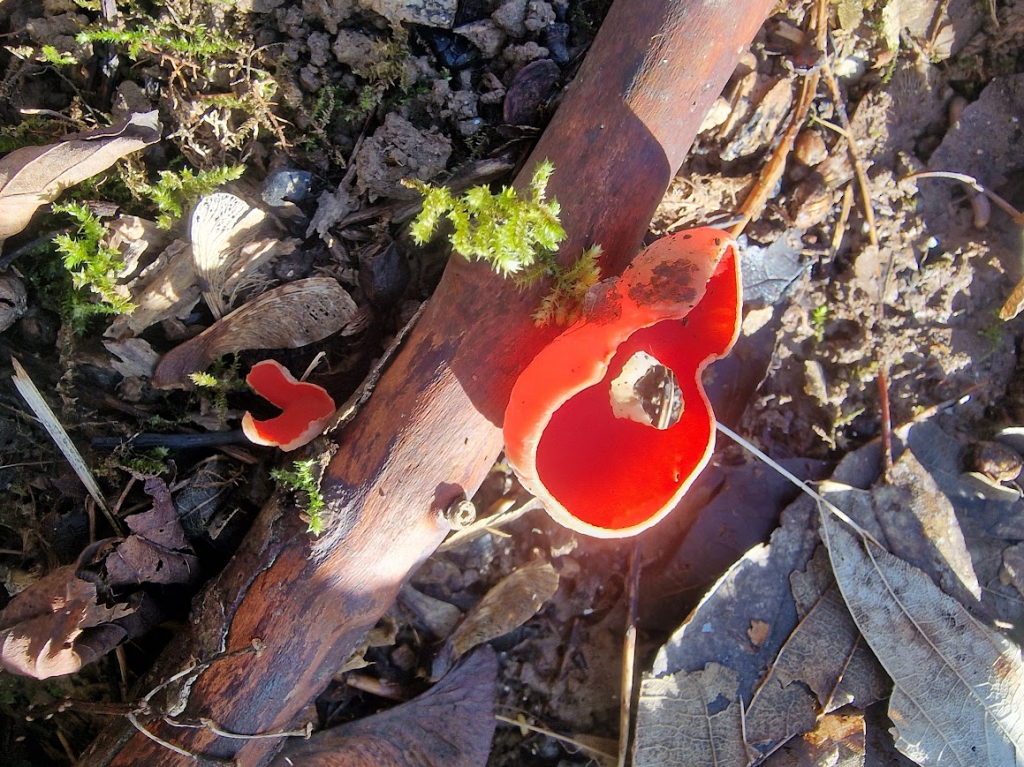
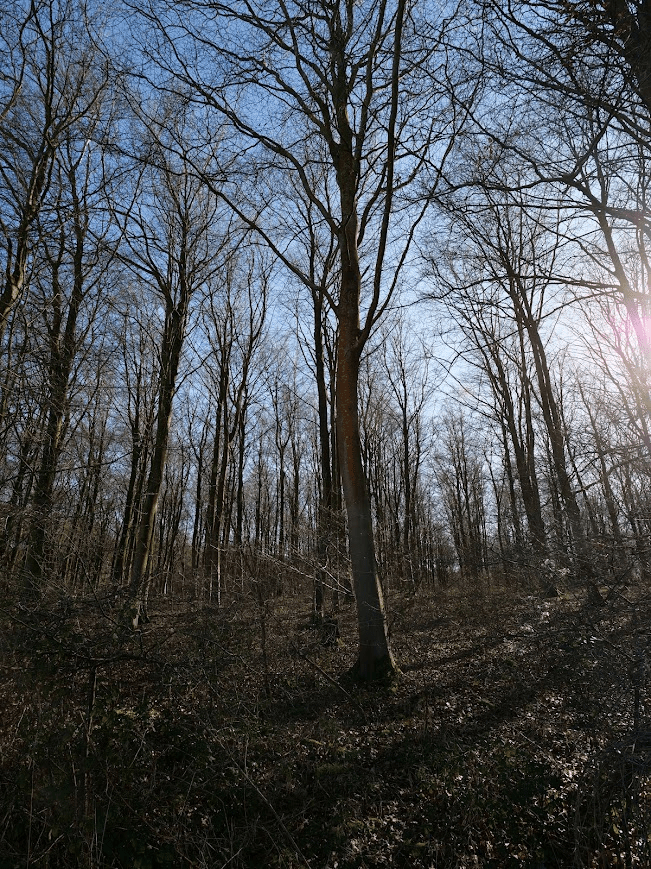
Friston Forest is a nearly 100 year old beech forest planted by the Forestry Commission; in the winter and early spring, when there are no leaves, it feels quite a barren landscape; but there are interesting things to see, including lots of red Elf Cups, Sarcoscypha sp. probably S. coccinea, Scarlet Elf Cup; looking lovely in the sun I see it a lot here in late winter/early spring.
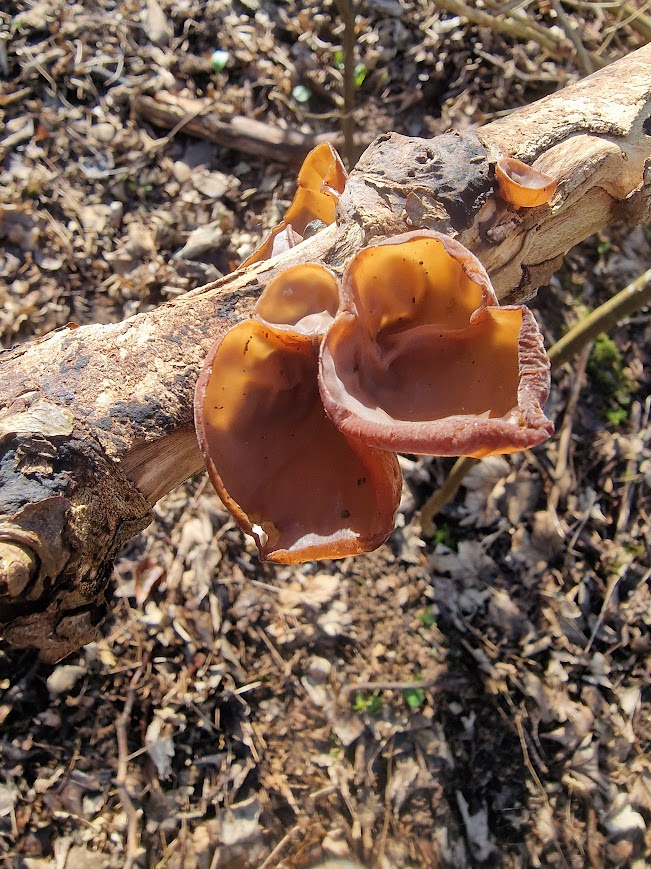
There was also lots of Jelly Ears, mostly on dead Elder
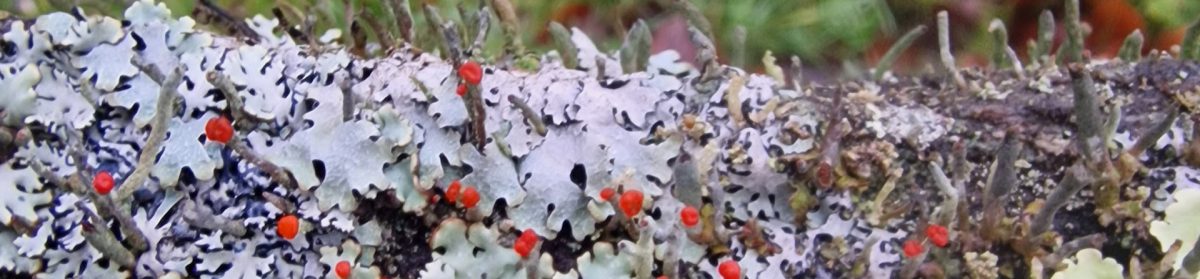
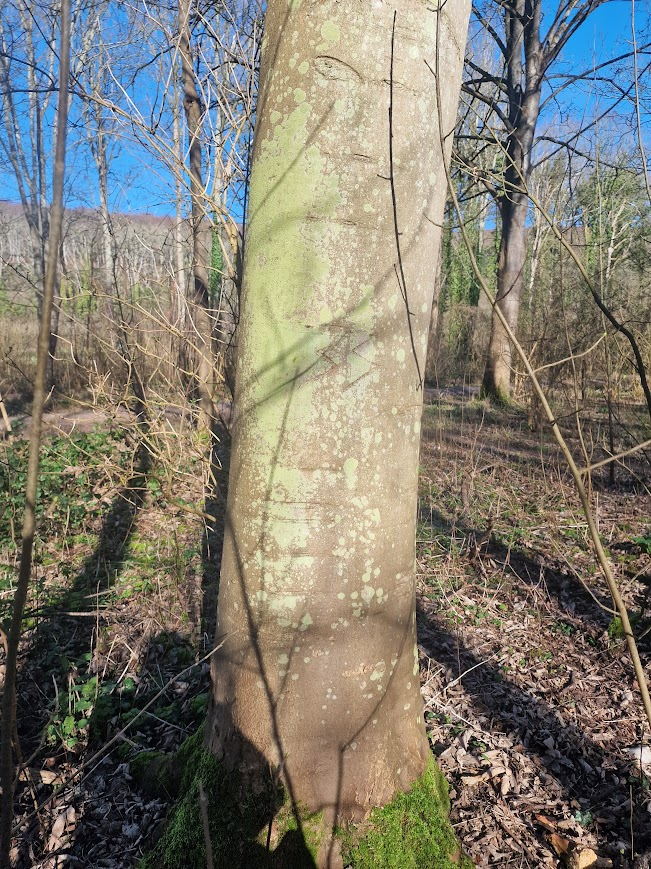
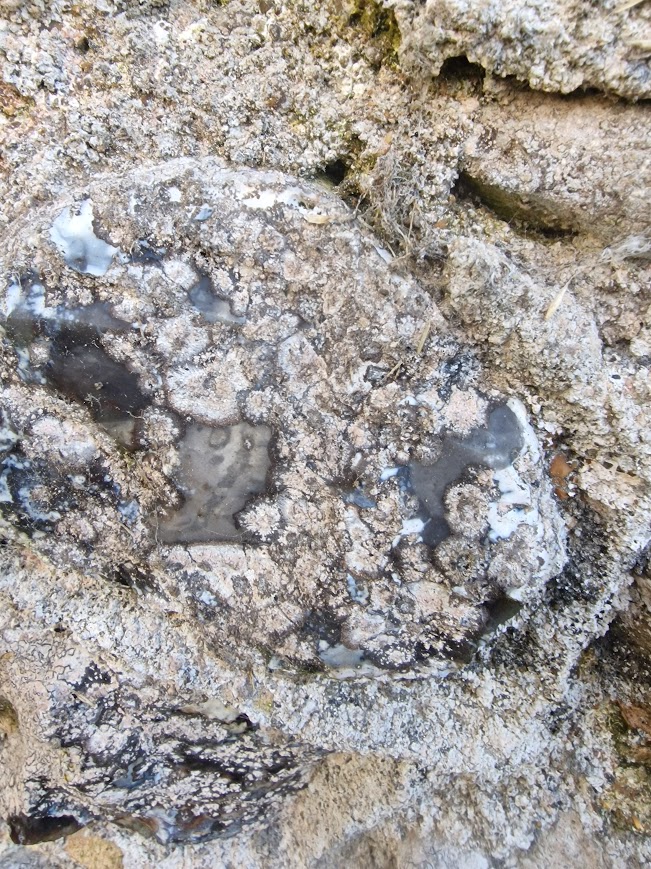
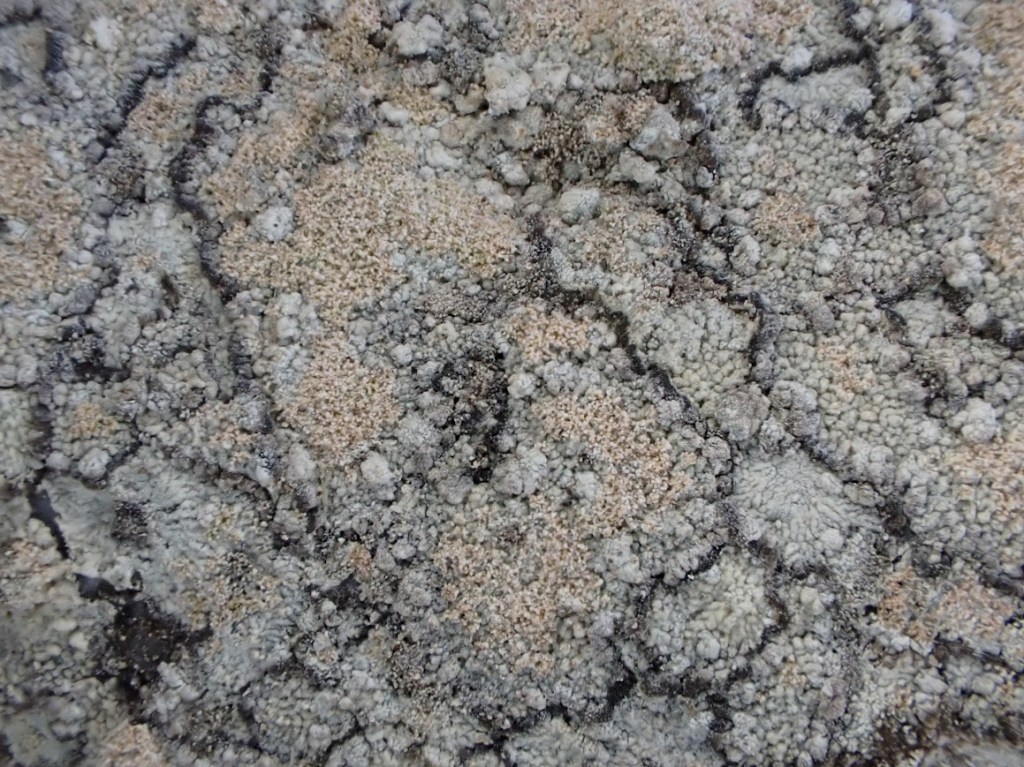
Many of the Beeches were covered in a green sorediate crust lichen. (Sorediate = covered in soredia, which are powdery, microscopic, asexual reproductive particles). Theses are impossible to differentiate between without doing chemical reagents tests. I use two common spot tests aqueous potassium hydroxide (K test) and calcium hypochlorite (C test).
There are the four lichens that look very similar
Lecanora expallens K+ yellow (i.e. the lichen reacts yellow to Potassium hypochlorite) , C+ deep yellow or orange-red,
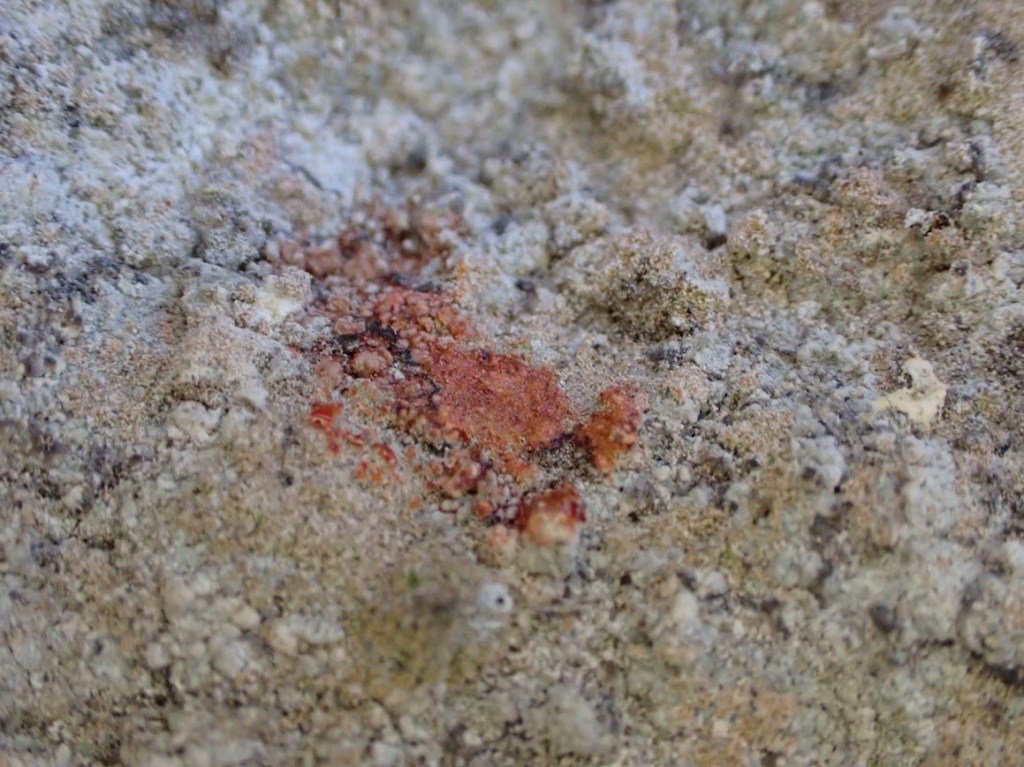
Pyrrhospora quernea K- (i.e. the lichen doesn’t react to Potassium hypochlorite, C+ orange (photograph of both below)
Lecanora barkmaniana K+ yellow, C-.
Lecanora compallens K-, C-
These chemicals are caustic and should only be used if you know what you are doing see British Lichen Society Chemical Tests
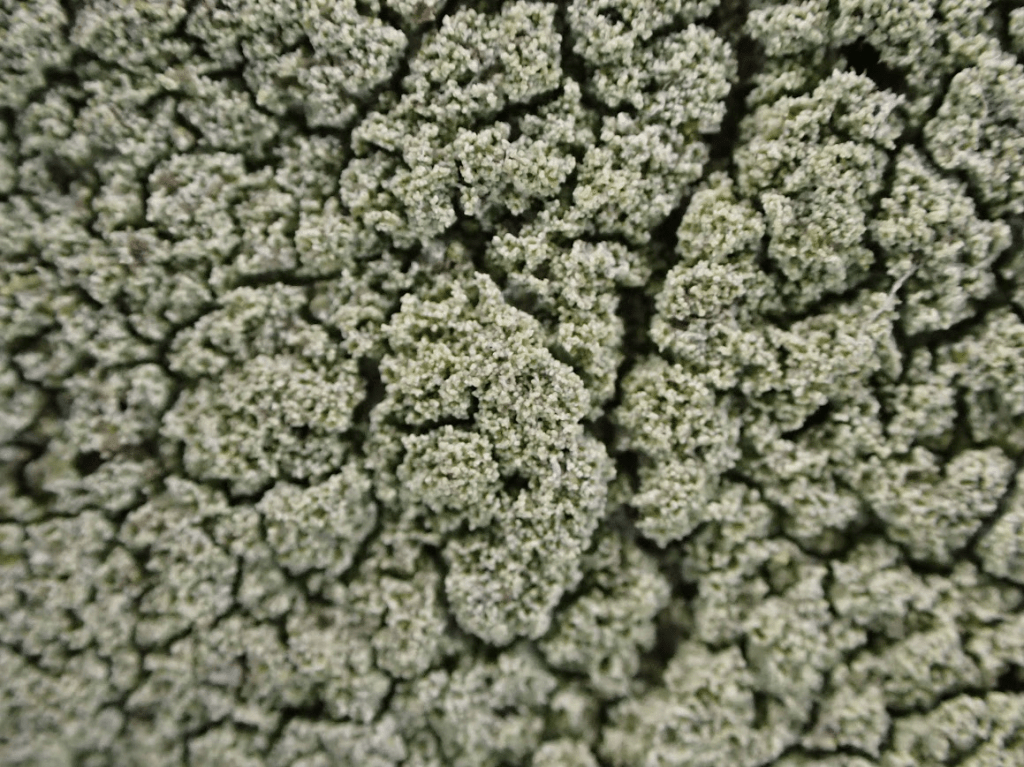
Response K- (the green is from K making the surface of the lichen (fungi) transparent so you can see the green of the alga underneath) C+ orange so Pyrrhospora quernea
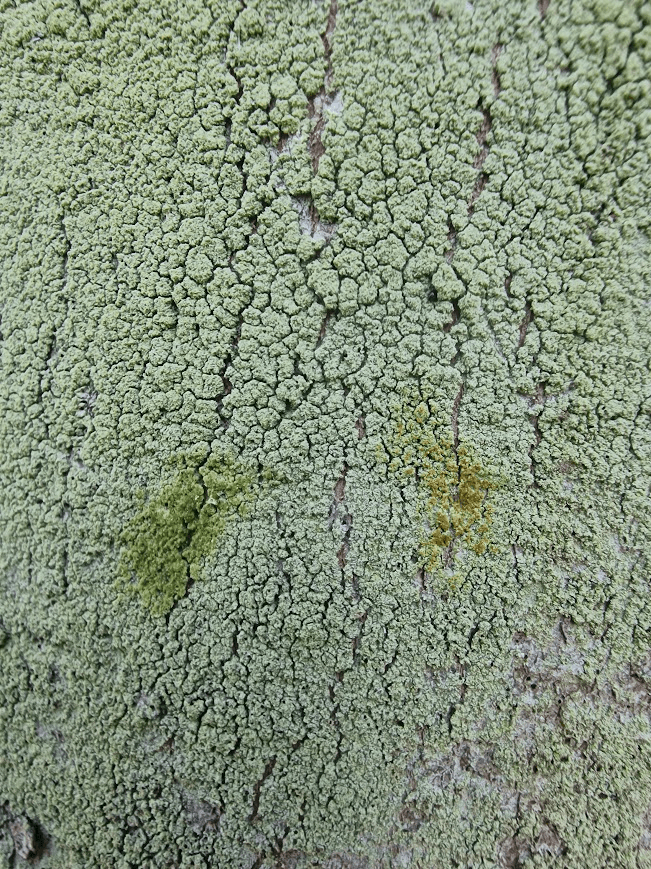
On the way to the Westdean village; on the steps of a barn.
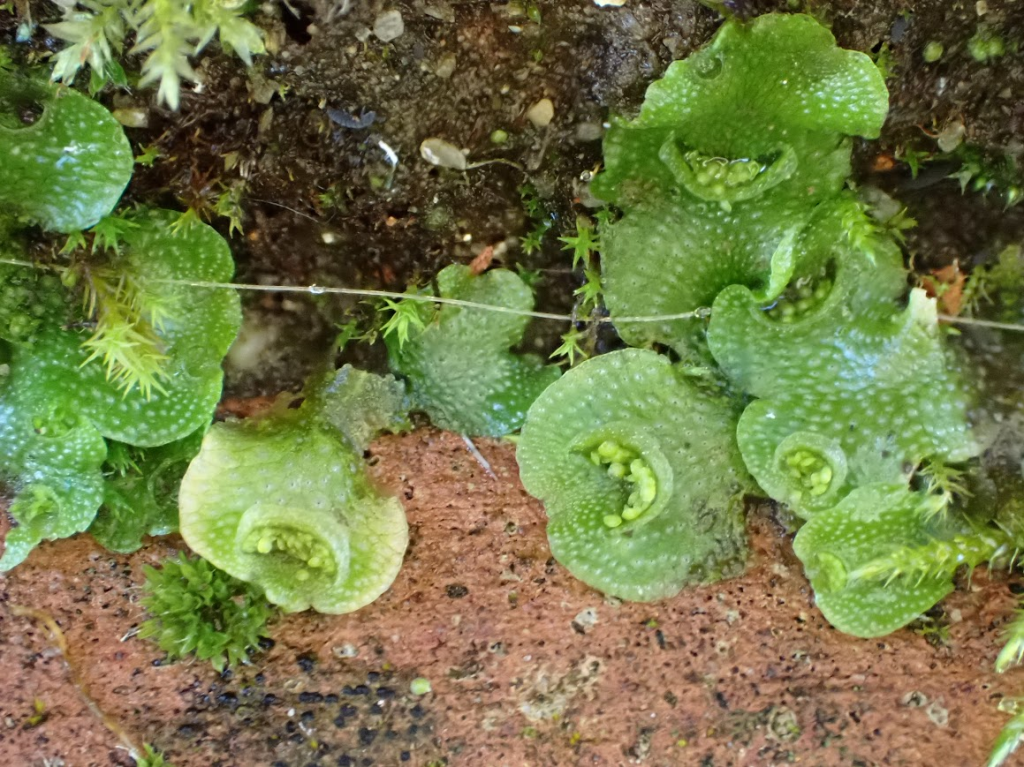
Lunularia cruciata, Crescent-cup Liverwort. When the gemma receptacles are present; Lunularia cruciata is obvious. Gemmae = small, clonal, haploid disc-shaped tissues for asexual reproduction, dispersed by raindrops, to grow into new, identical gametophytes.
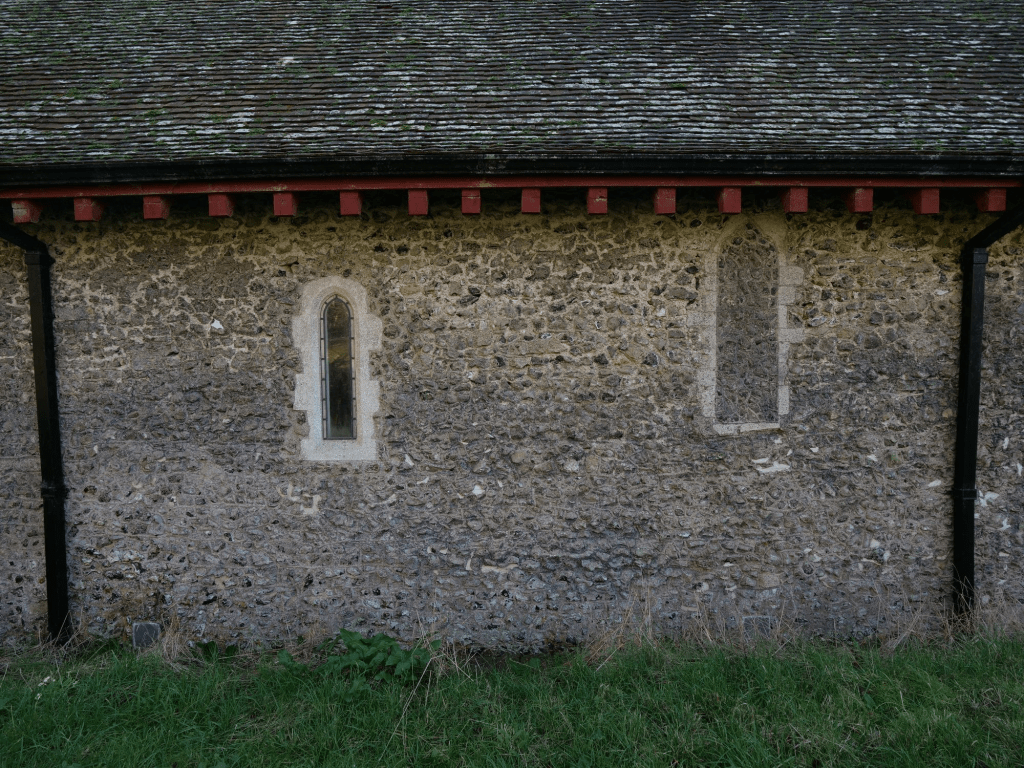
All Saints and Ingaderia vandenboomii
Ingaderia vandenboomii doesn’t have a common English name, so I have made one up: pink powder
All Saints church (grade 1 listed) is of great antiquity with parts of the building dating back to Saxon times. Most of the present structure is Norman, measuring 21m by 4.87m, and is constructed of flint and Eastbourne sandstone. At the west end the square tower is covered by an unusual gable spire which John Betjeman in his Guide to English Parish Churches describes it as unique in Sussex. It has been likened to a monk’s cowl and from a distance, the small high windows on the tower give the appearance of a face. Cuckmere Churches, All Saints West Dean
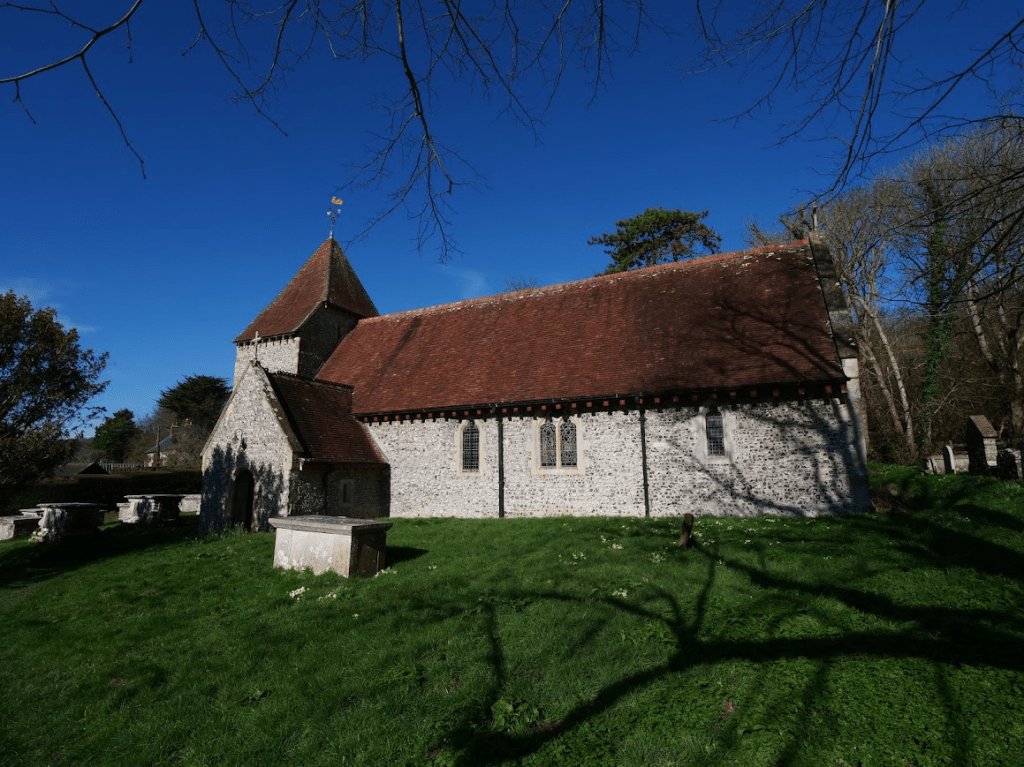
Ingaderia vandenboomii is a National Scarce lichen in the UK, but it is common on the north walls of Sussex coastal churches. Here, All Saints Church, Westdean, it covers ca. 50% of the entire north wall – flint & mortar
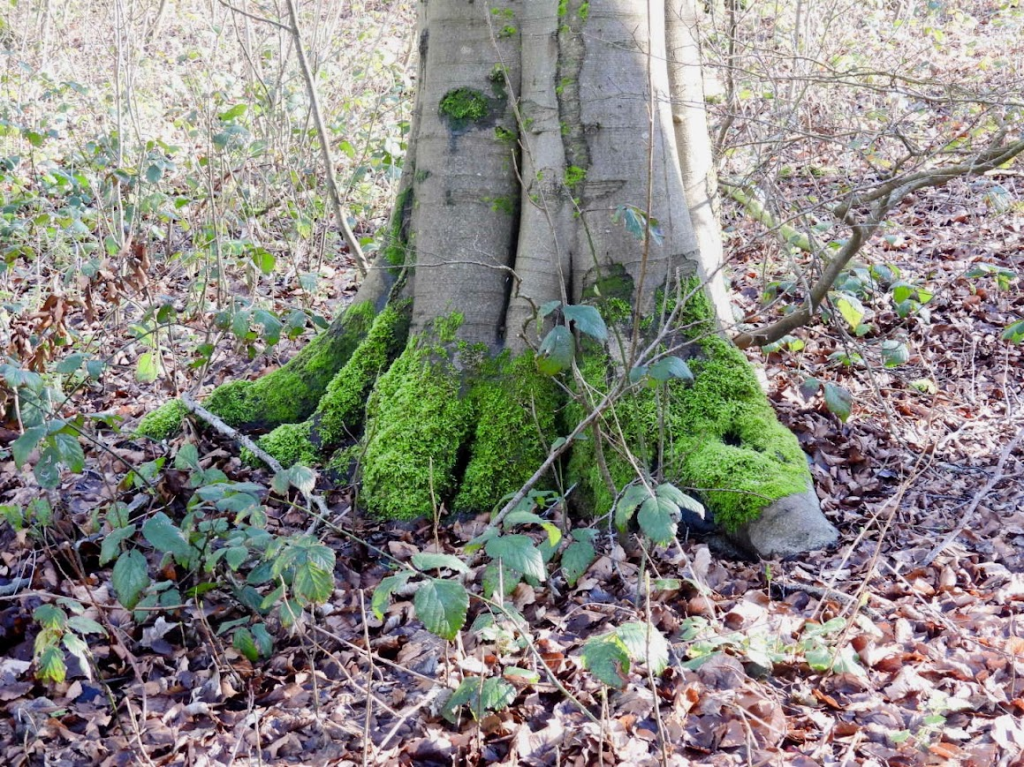
Bleak beech
Brightened with moss. Probably Brachythecium rutabulum, Rough-stalked Feathermoss. B. rutabulum can be recognized by its pale glossy shoot tips, which some say look a little like fairy lights. British Bryological Society Brachythecium rutabulum
Oak and Hawthorn from the beech wood of Friston Forest
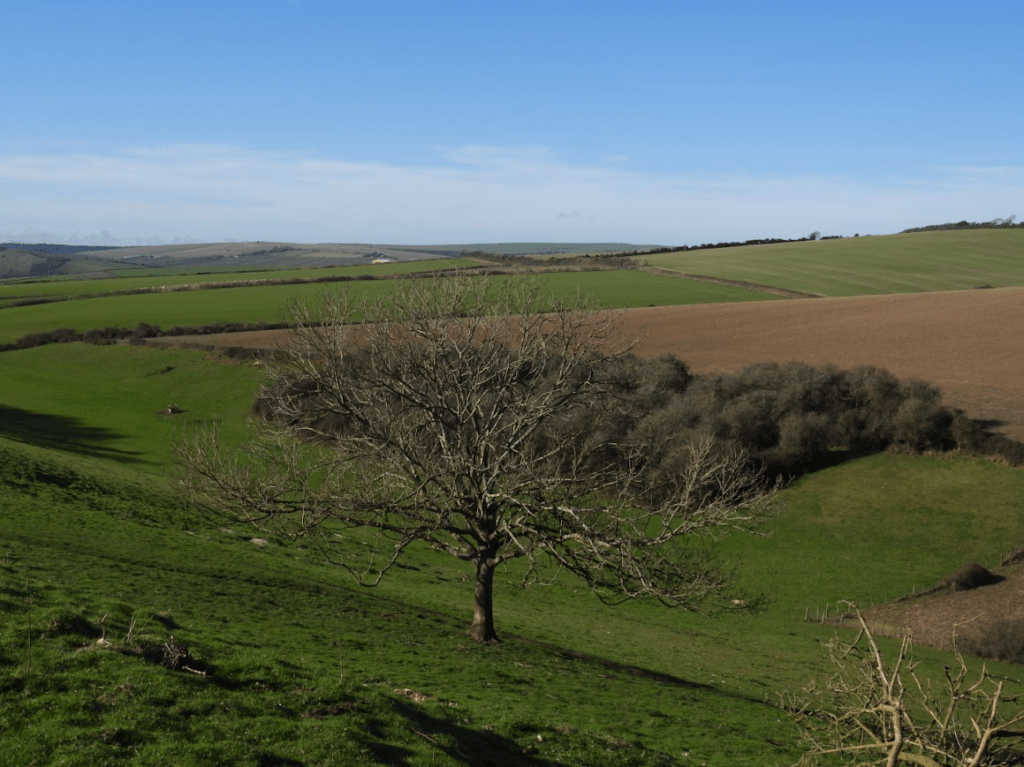
Looking over more beech – beginning to bud red – to Lullington Heath – with gorse and hawthorn.
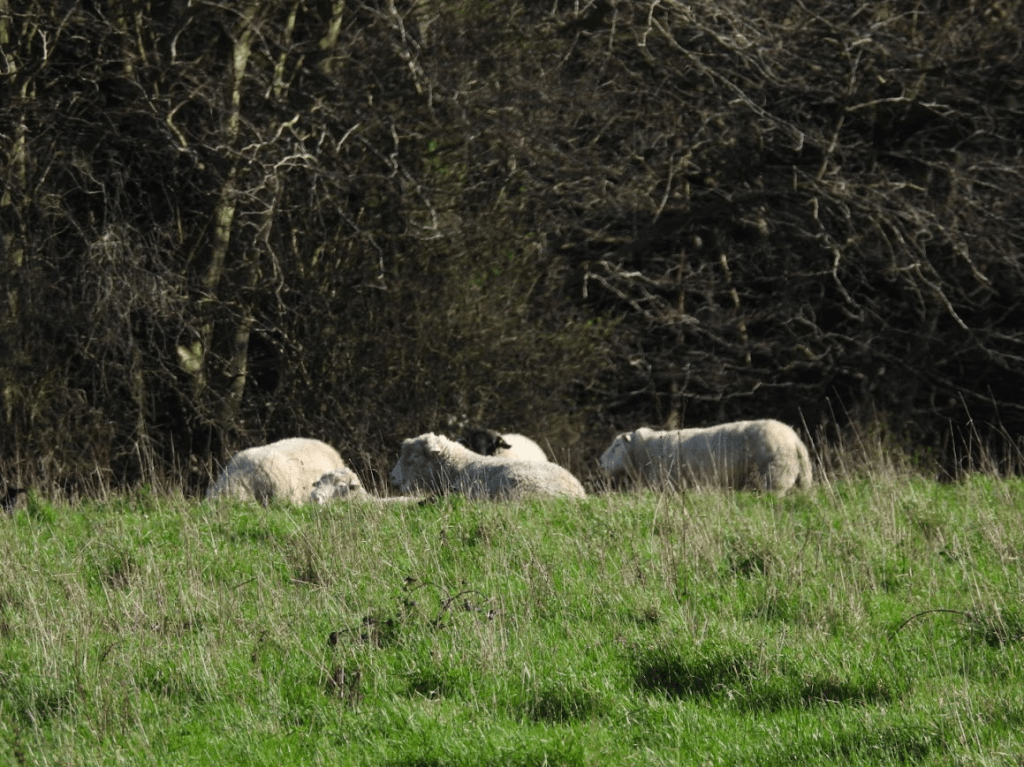
Sheep in the fields between the forest blocks; sheep grazing the South Downs has been going on forca. 3,000-6,000 years
Rabbit grazing on the South Downs is also important to the ecology and biodiversity of chalk short-grass grassland
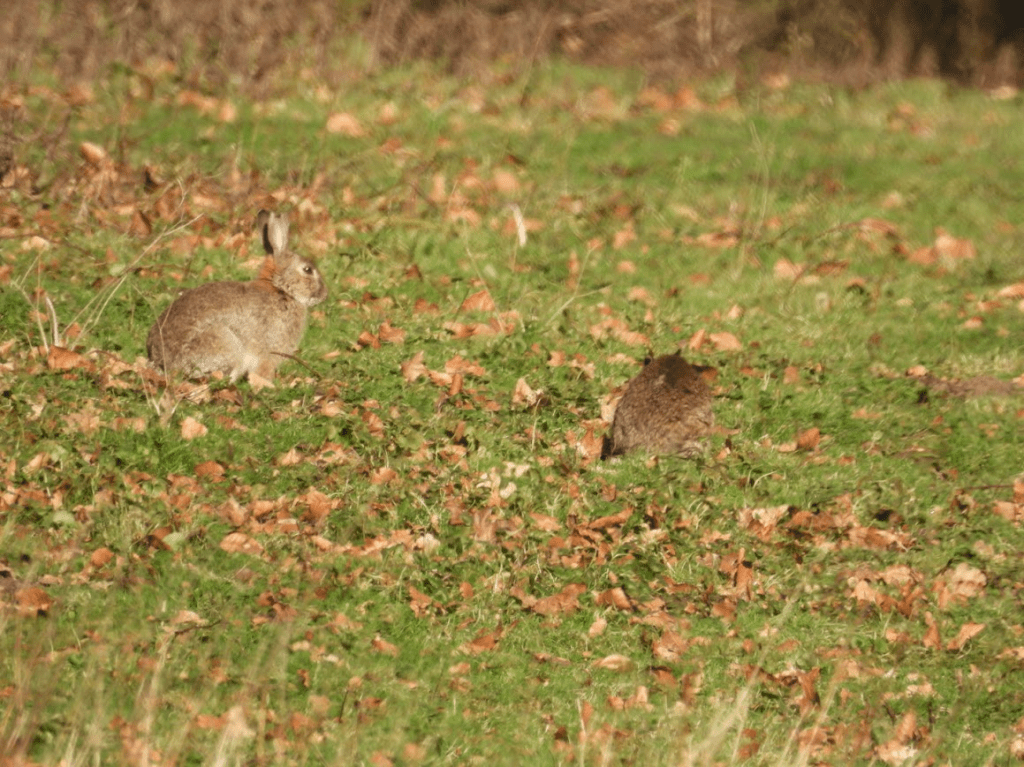
Rabbit populations declined by 64% in the UK between 1996 and 2018 and numbers of brown, mountain and Irish hares are also thought to have declined in some areas. As ecosystem engineers, the loss or reduction of these species can have major consequences, particularly for rabbit-dependent habitats. In their absence, the consequent changes in vegetation structure due to a lack of grazing can have further impacts on other wildlife, such as invertebrates. The NHBS Guide to UK Rabbit and Hare Identification
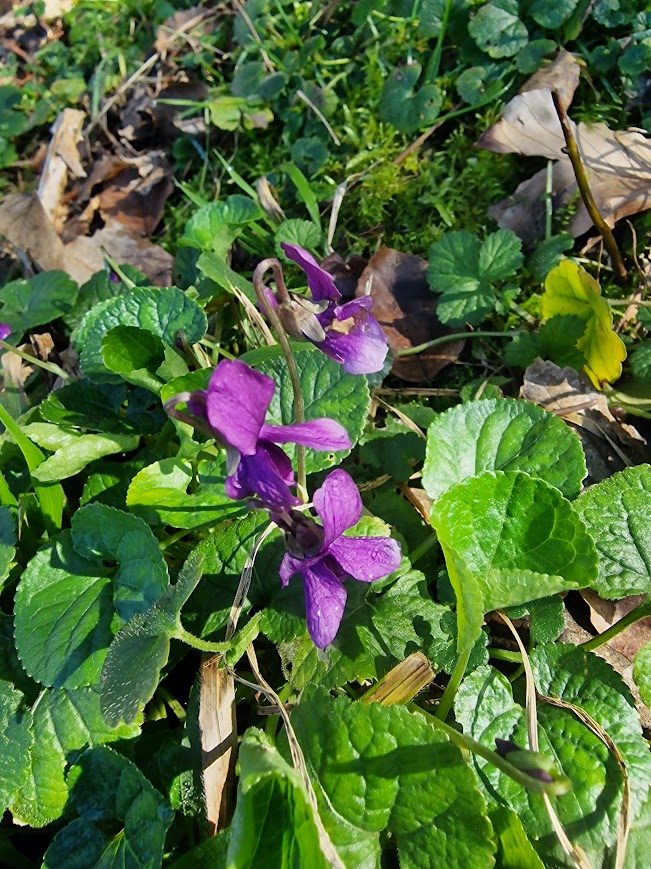
Sweet Violet
Romantic and showy, sweet violet grows on woodland edges, its flowers providing nectar for butterflies in early spring. Woodland Trust Sweet Violet
Hawthorne covered in Lichen
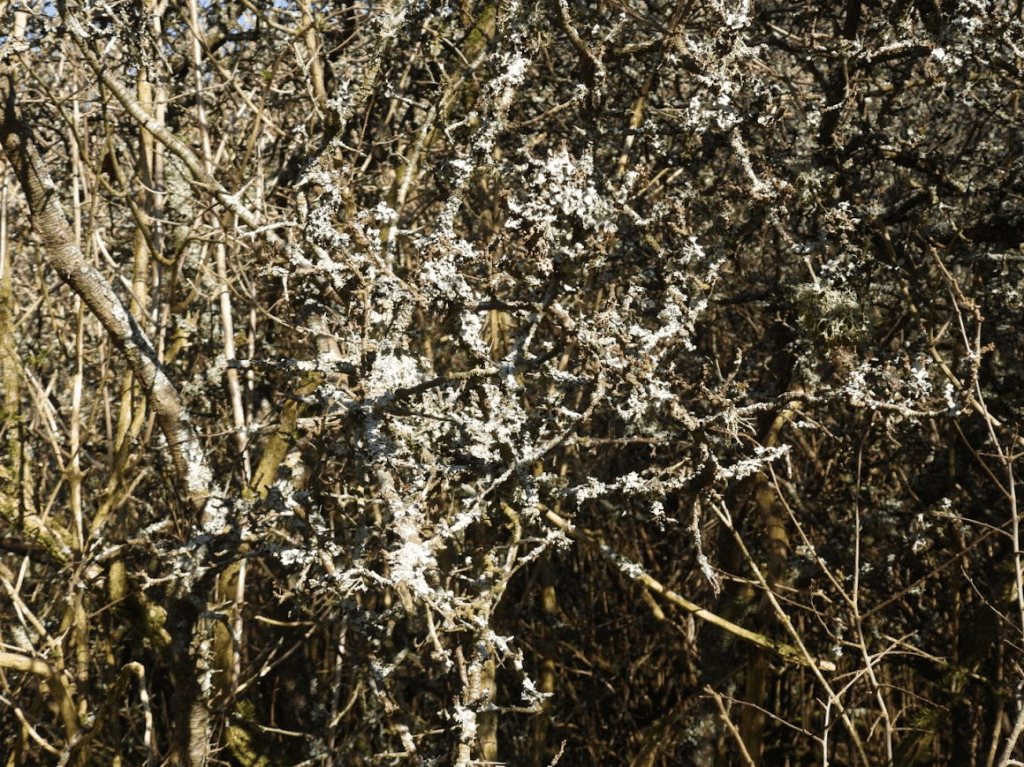
In Sussex, hawthorns are covered in lichens – but the lichen communities on coastal hawthorns is slightly different from inland hawthorns . Inland hawthorn have Usnea cornuta & Hypogymnia physodes (and on the top of Downs Teloschistes chrysophthalmus) which are absent on costal Hawthorns, but inland hawthorns don’t have Ramalina canariensis found on coastal lichens. On all hawthorn Ramalina farinacea, Ramalina fastigata, Evernia prunastri, Flavoparmelia caperata, Parmotrema perlatum, Parmelia sulcata and Lecidella eleachroma
Usnea cornuta
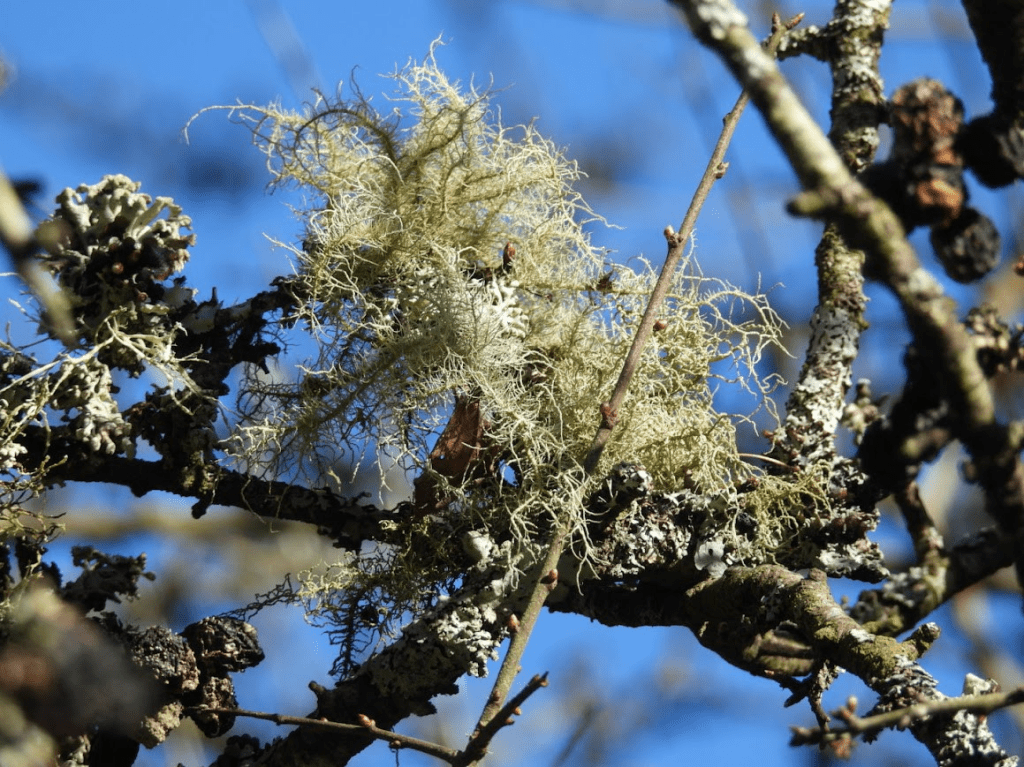
Hypogymnia physodes
A felled ash
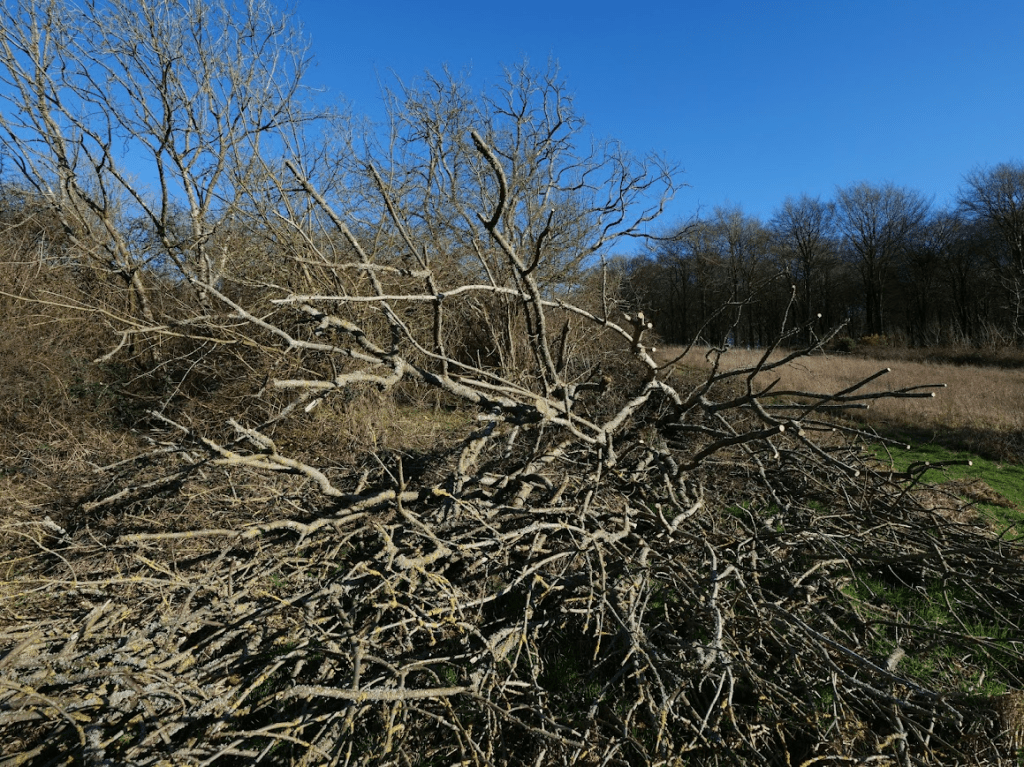
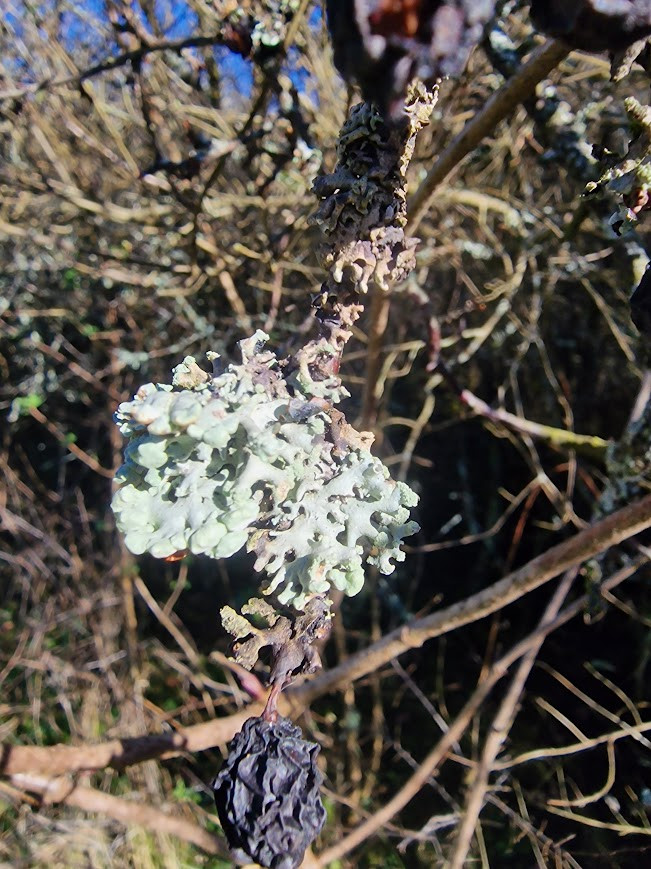
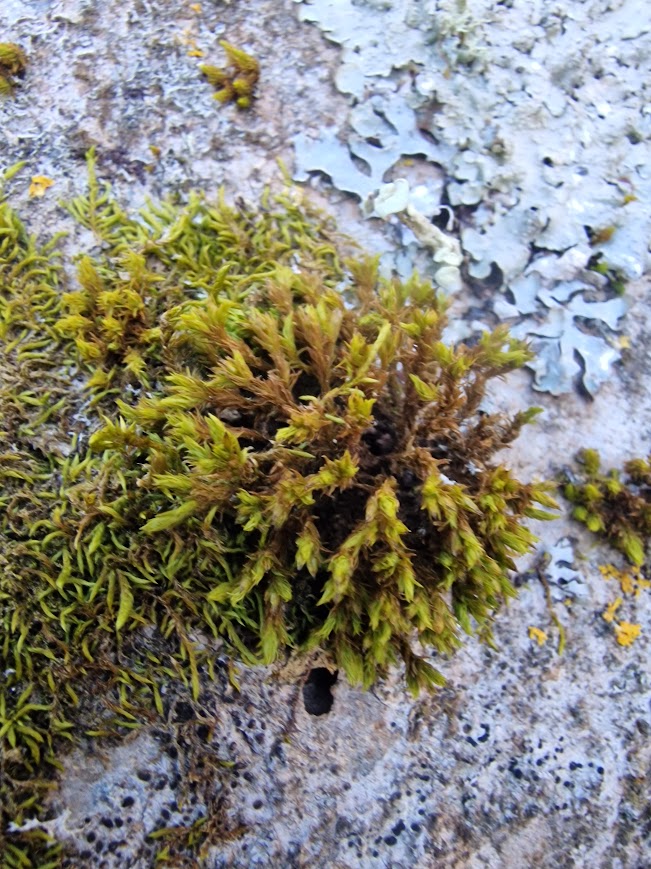
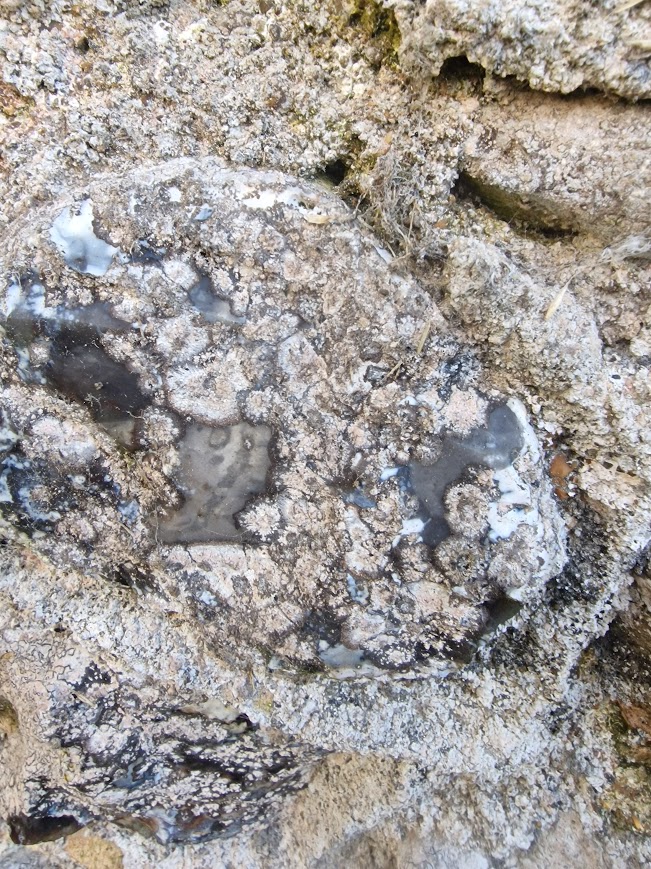
Sadly on the South Downs, I frequently see felled Ash, Fraxinus excelsior. Seen felled, you see what a wonderful substrate it is for lichens and bryophytes. The huge loss of Ash on the South Downs will have an impact on the ecology of the downs. Ash are very biodiverse holon ecosystems. Nearly every part of this Ash’s trunk & branches are covered in lichens & bryophytes. It’s harder to notice this continuous biodiversity along ash’s trunks when they are alive and standing. Ash is probably second only to Oak in terms of lichen diversity.
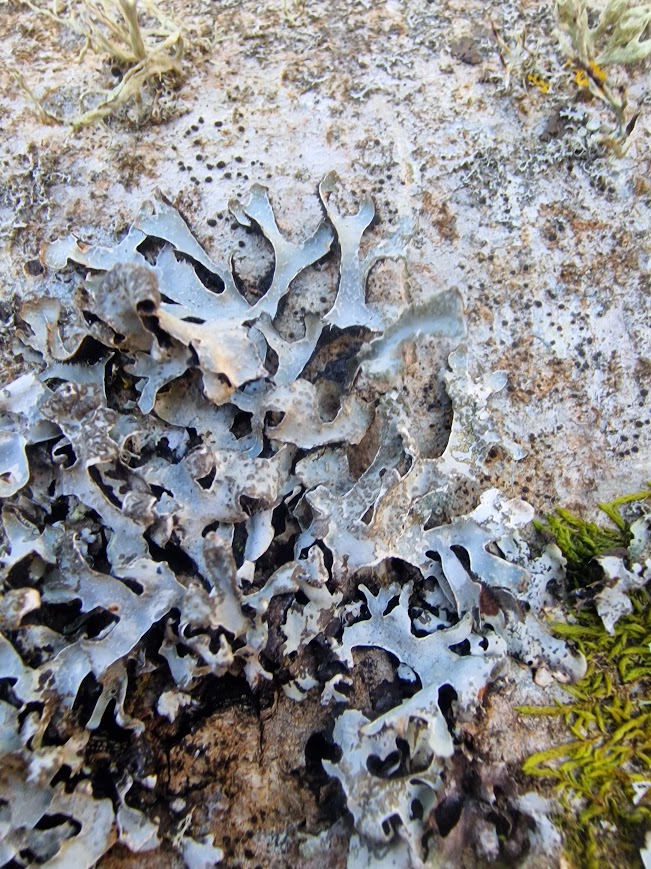
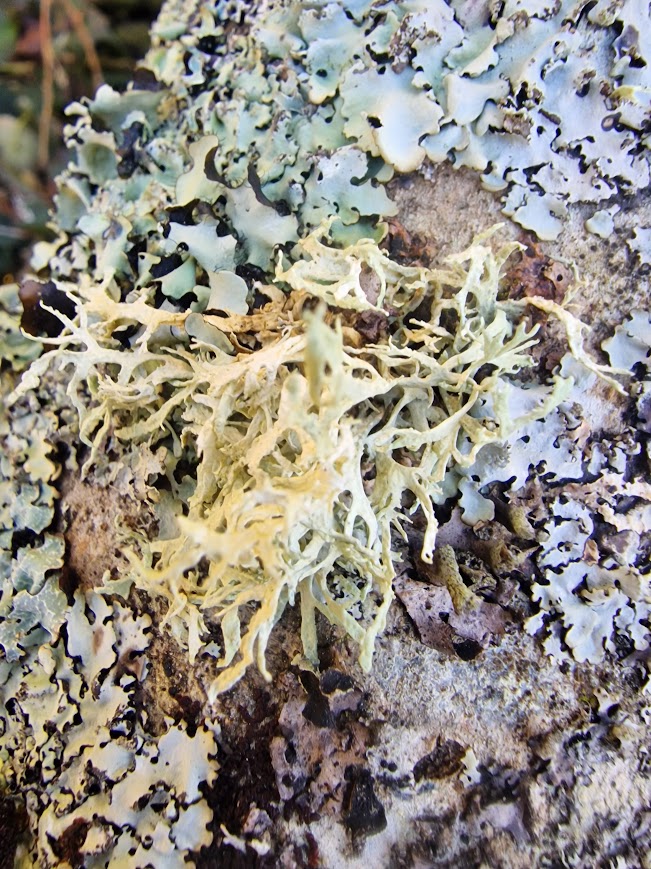
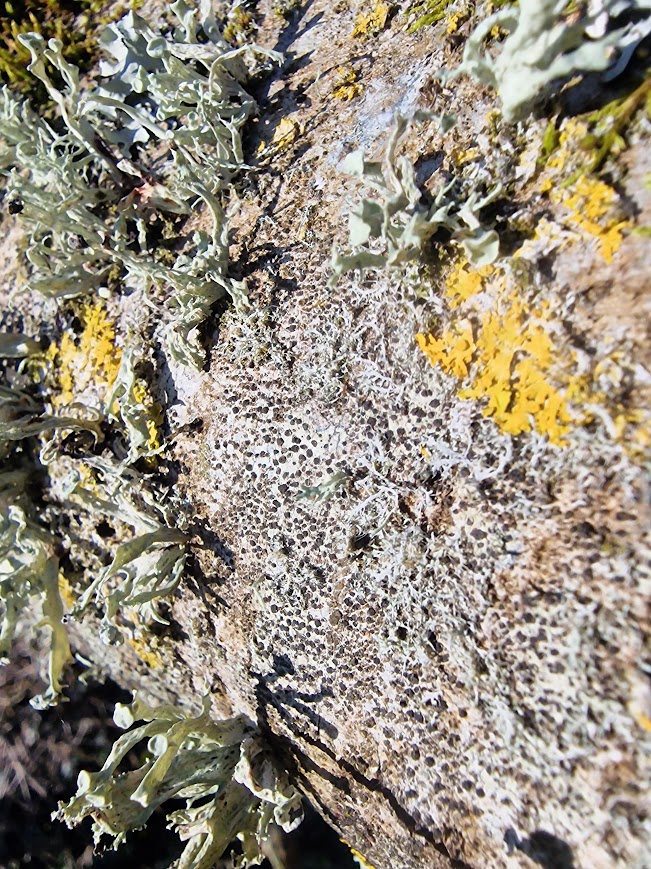
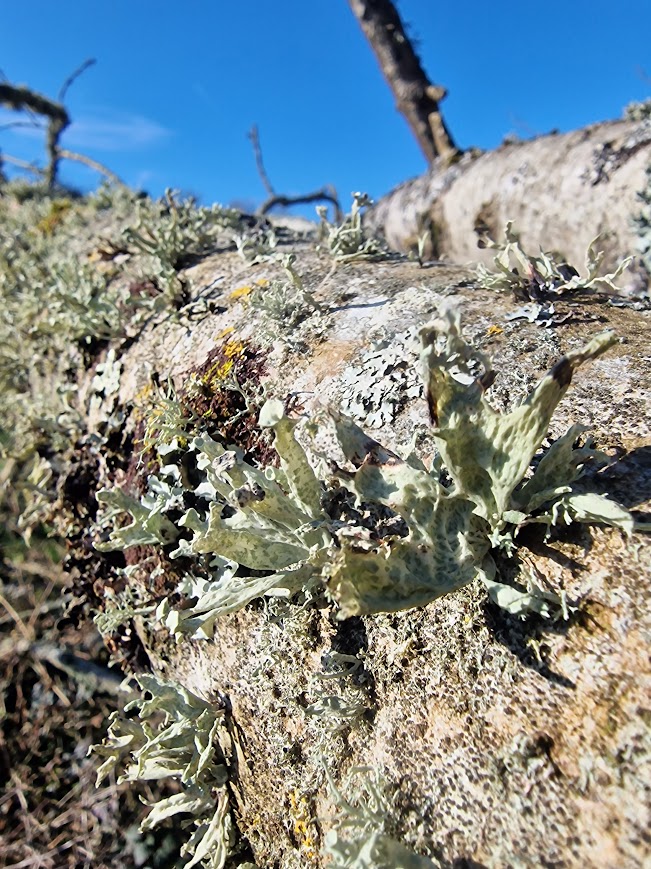
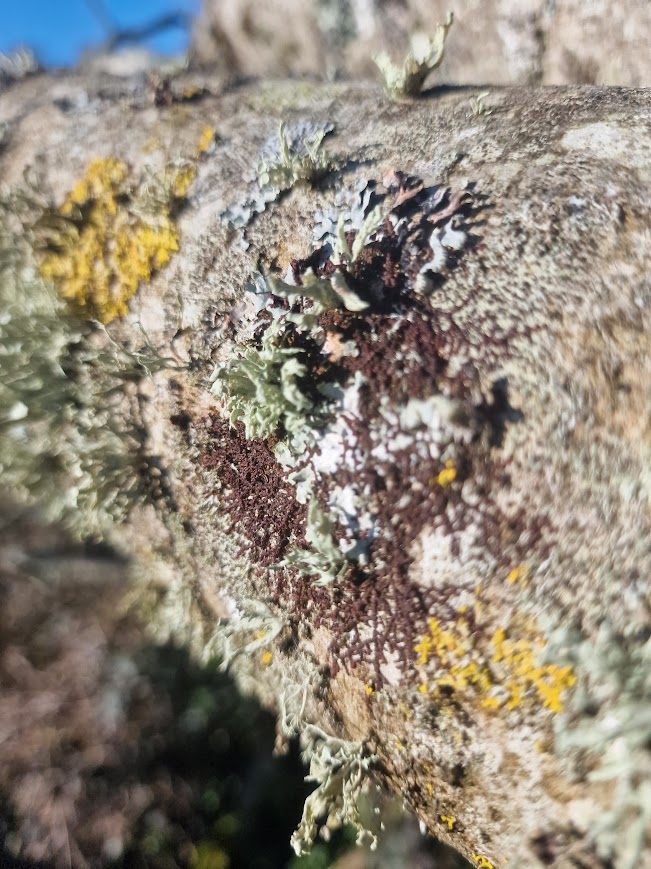
Lullington Heath NNR
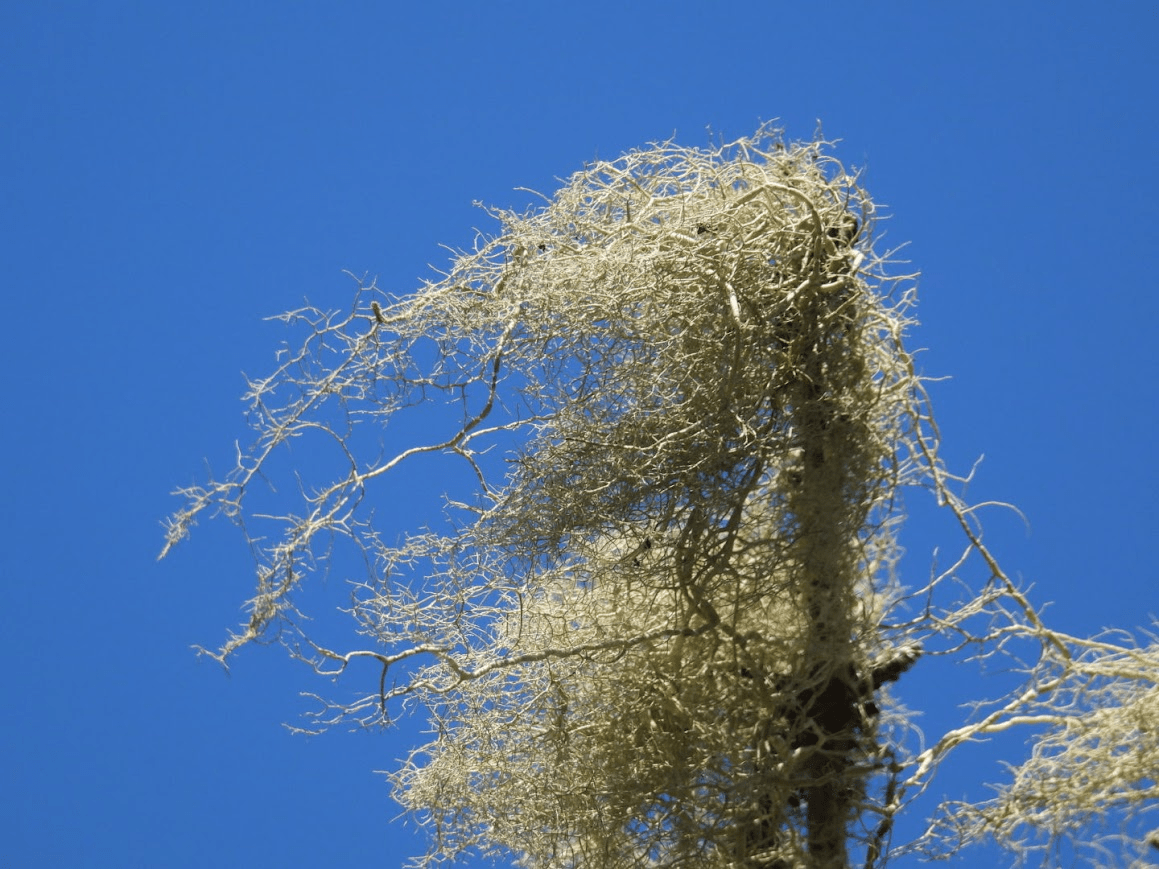
Trees with abundant Usnea spp. are not common in Sussex. But this Hawthorn in Lullington Heath NNR, chalk heath (loess: wind blown acid soil on chalk) has abundant Usnea right at its top. It looks very like U. articulata, String of Sausages; which is rare it Sussex; but it was too high up to get a sample.
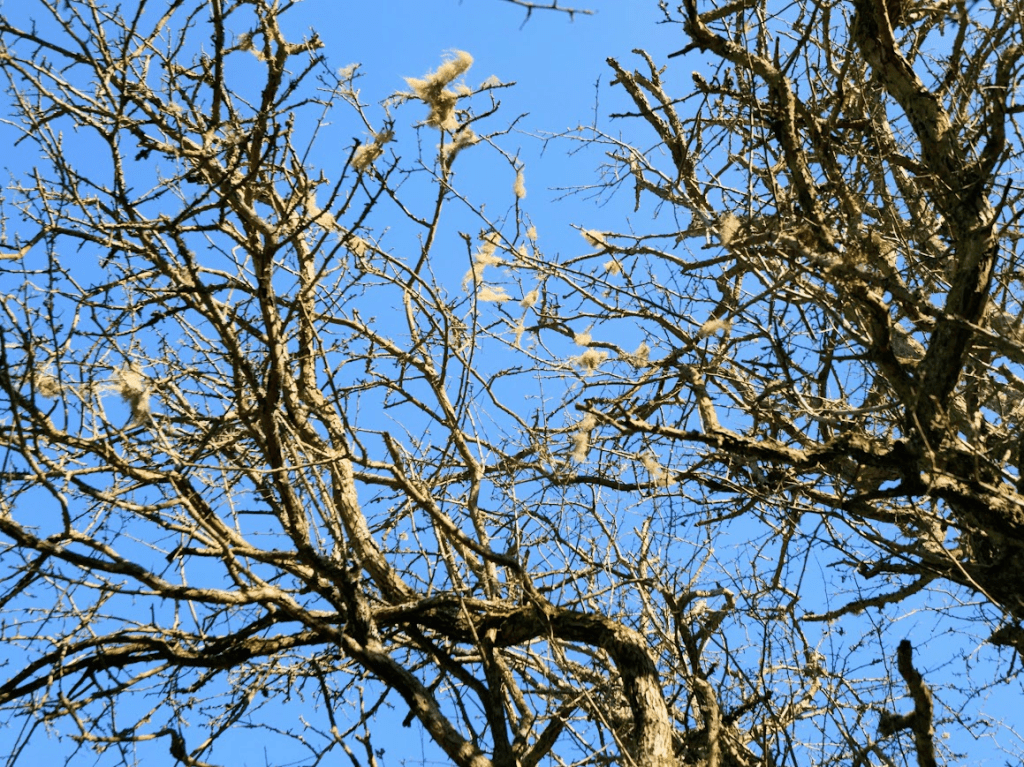
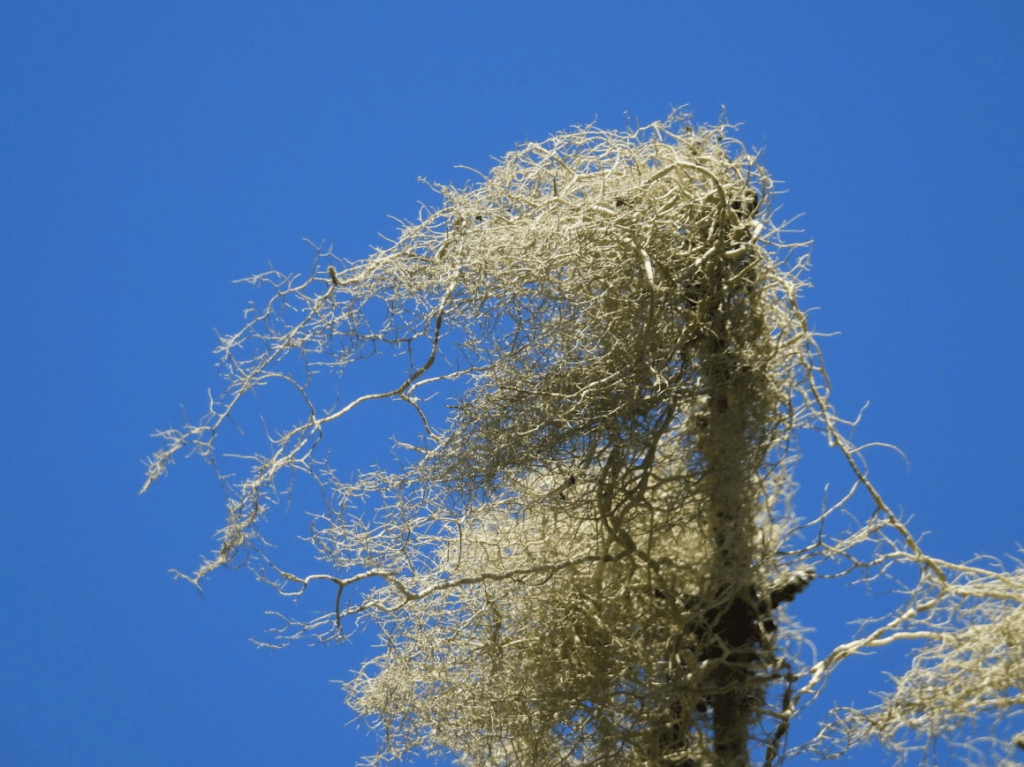
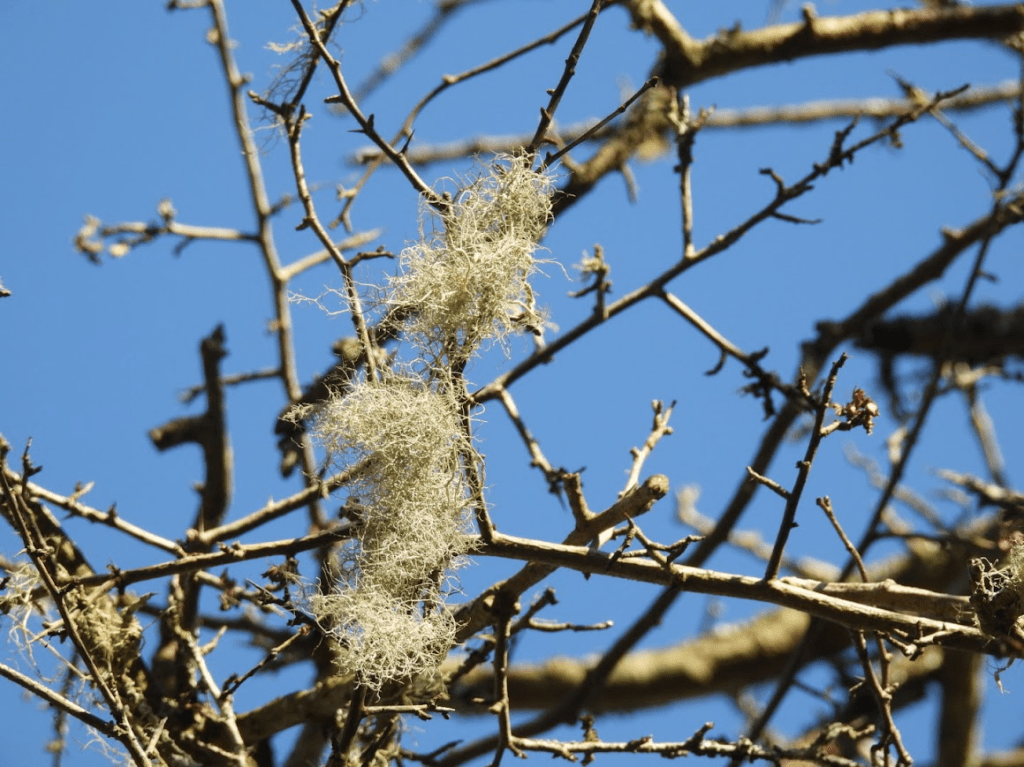
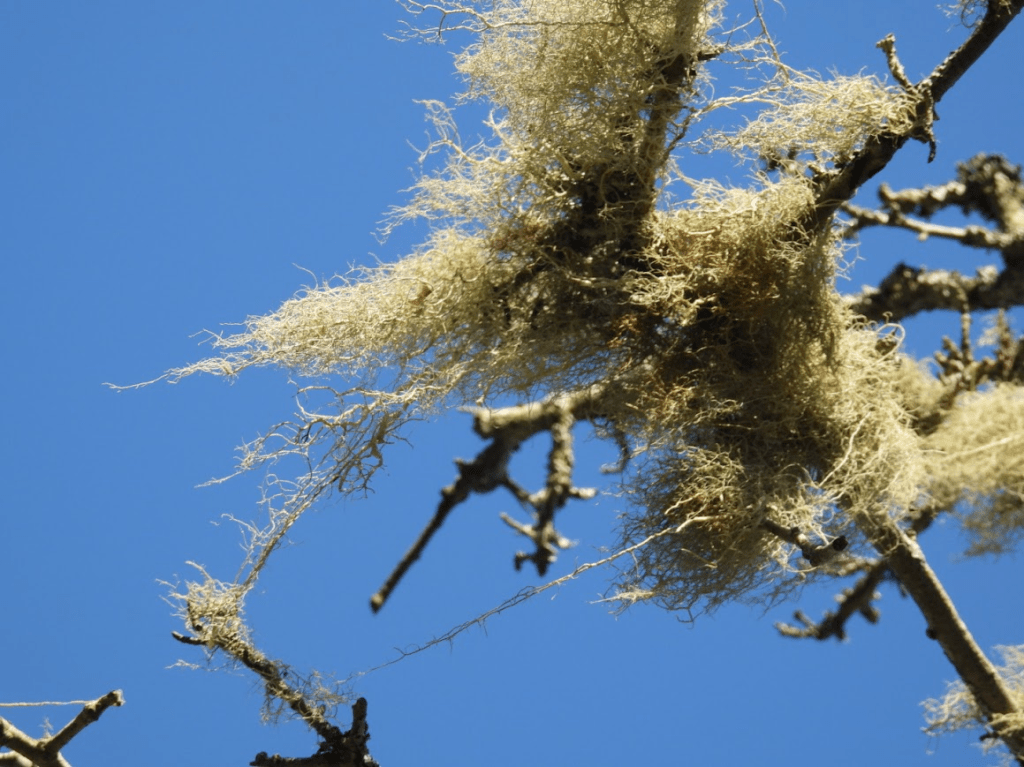
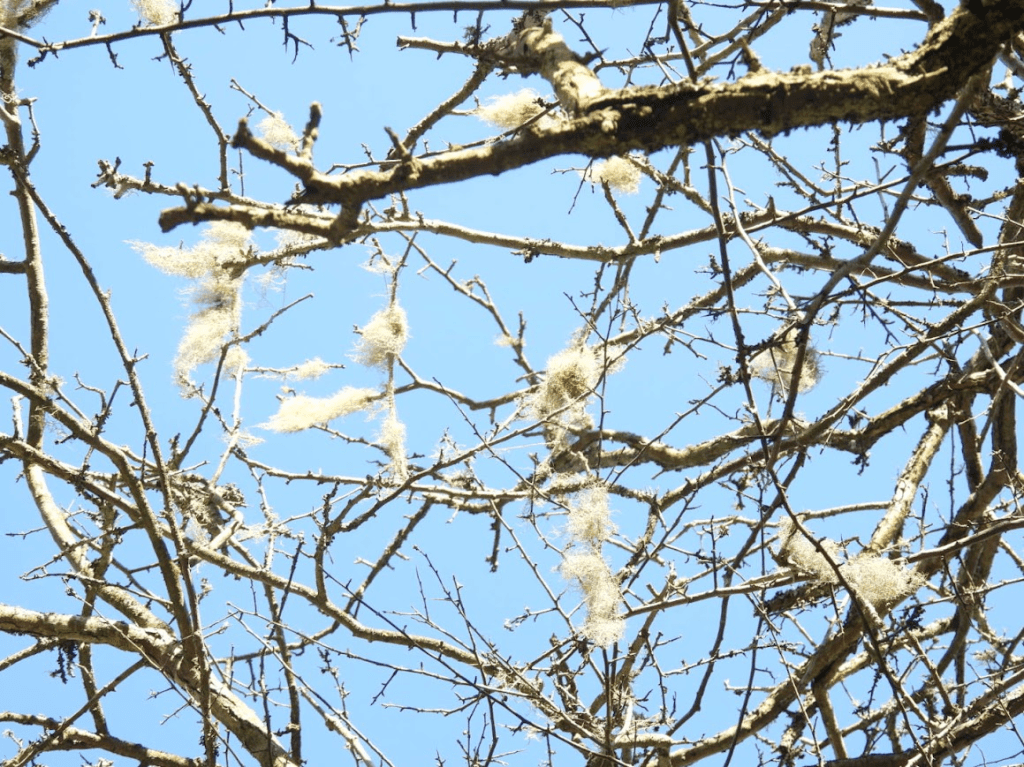
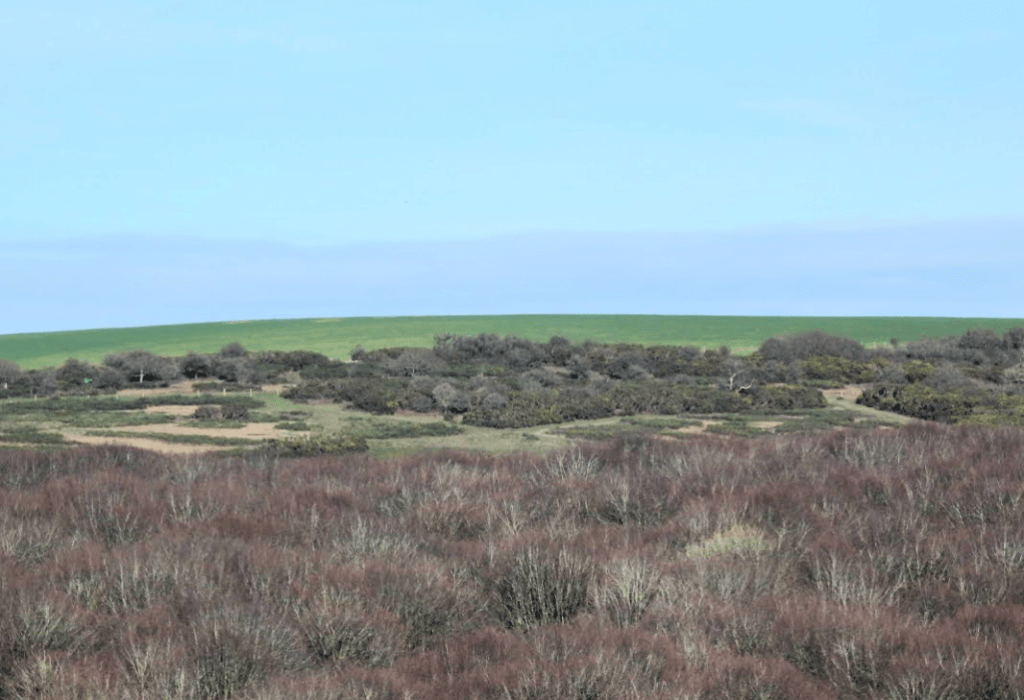
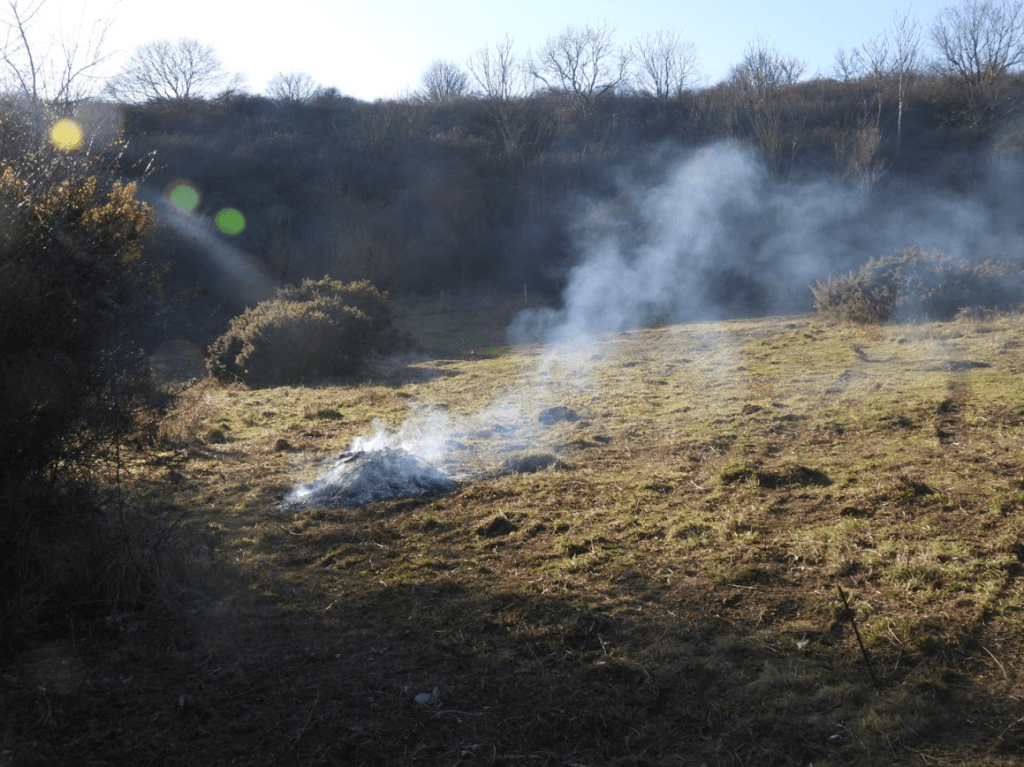
Managing the growth of Gorse on the heath. Lullington Heath NNR is chalk heath; covered with acid loess (wind blown acid soil)
Lullington Church
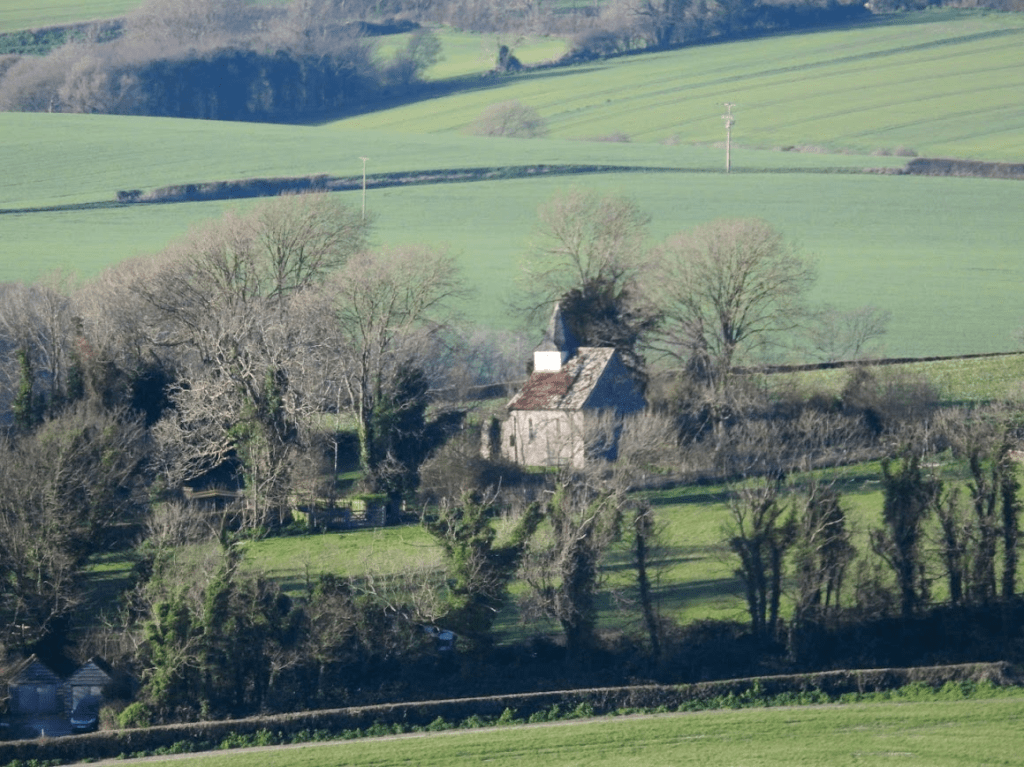
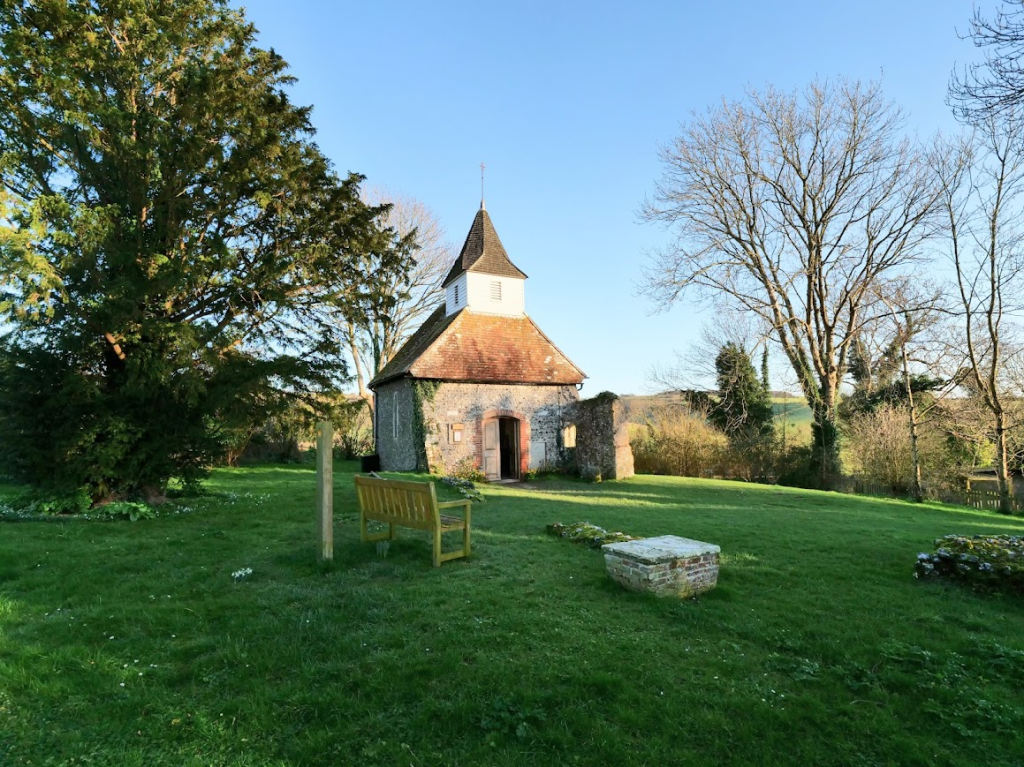
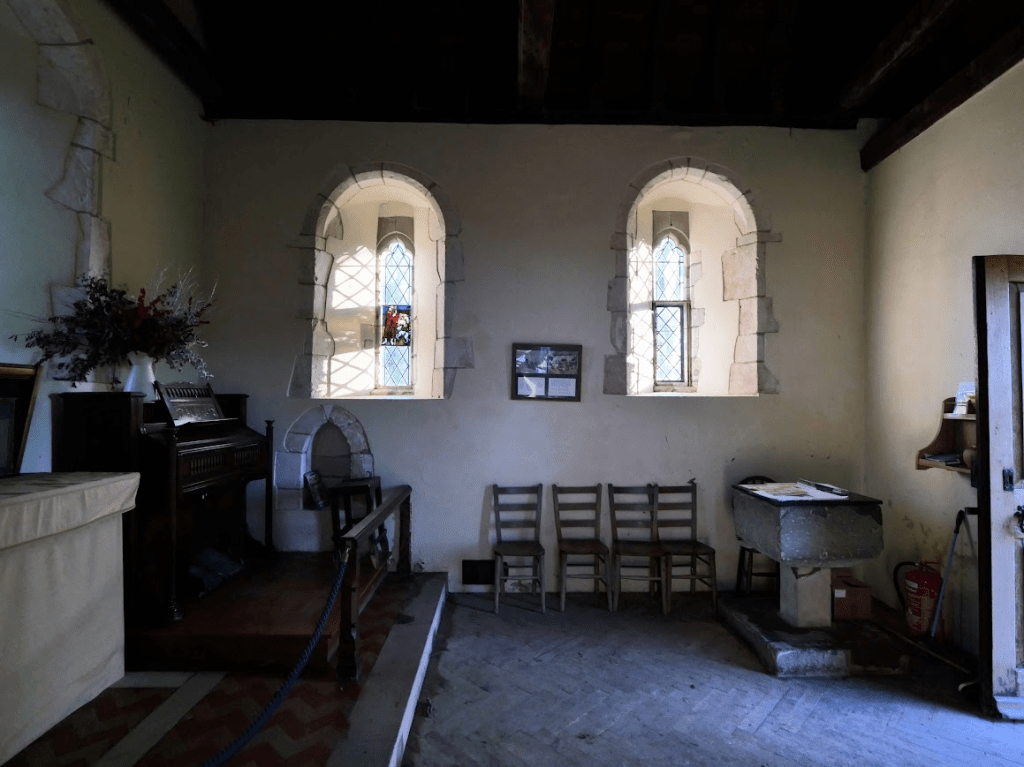
The church of the Good Shepherd, Lullington stands on the side of the South Downs above the Cuckmere Valley, almost hidden amongst a clump of trees. Its white weather boarded belfry peeps above the foliage, and there are magnificent views.
It is the smallest church in Sussex, and one of the smallest churches in the country, being 16 feet square, and seating only about 20. There is no electricity and evening services are conducted by candlelight. The building is the remains of the chancel of a larger church, which is believed to have been razed by fire in Cromwellian times.
The church dates from the 13th century, and is of Early English style, with the list of vicars extending back to 1356. The original dedication is not known for sure, but may be to St Zita (a saint canonised not because of miraculous powers, but because of simple devotion and hard work). More latterly, and after a decision by the local community, the church was rededicated in 2000 to the Good Shepherd (one of the earliest Christian titles for Jesus), in keeping with agricultural practices of the area.
More recently, the church was the inspiration for the popular song ‘The Smallest Church in Sussex’ by the nationally acclaimed band British Sea Power.
Alfriston St Andrews
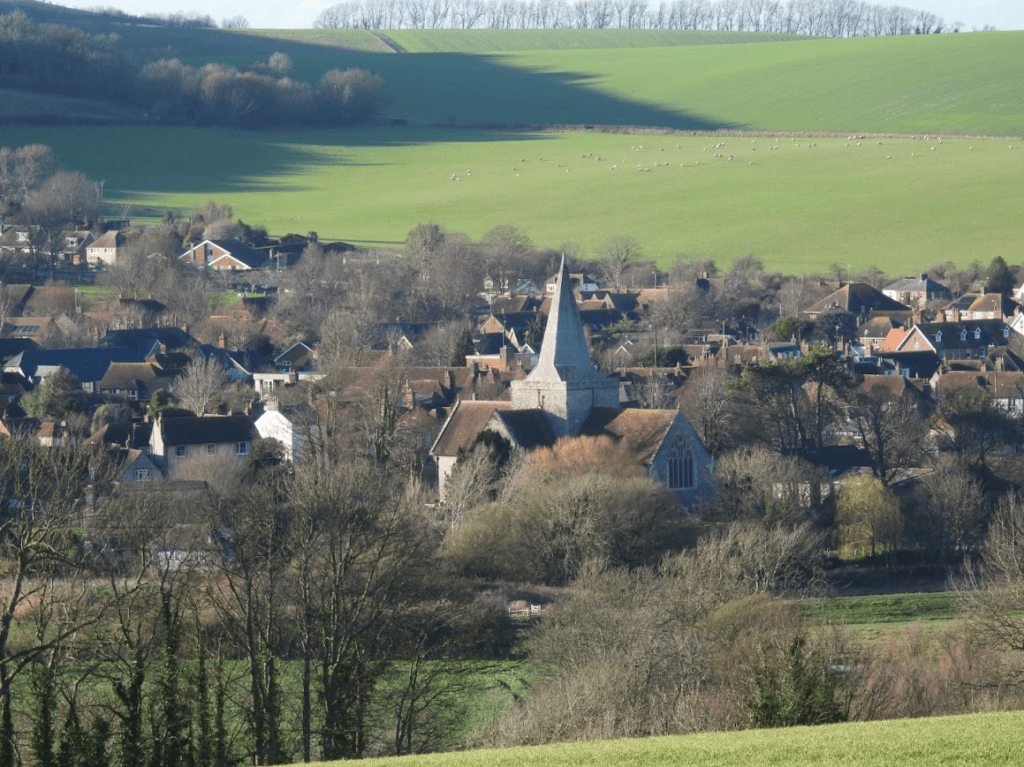
St Andrew across the Cuckmere River
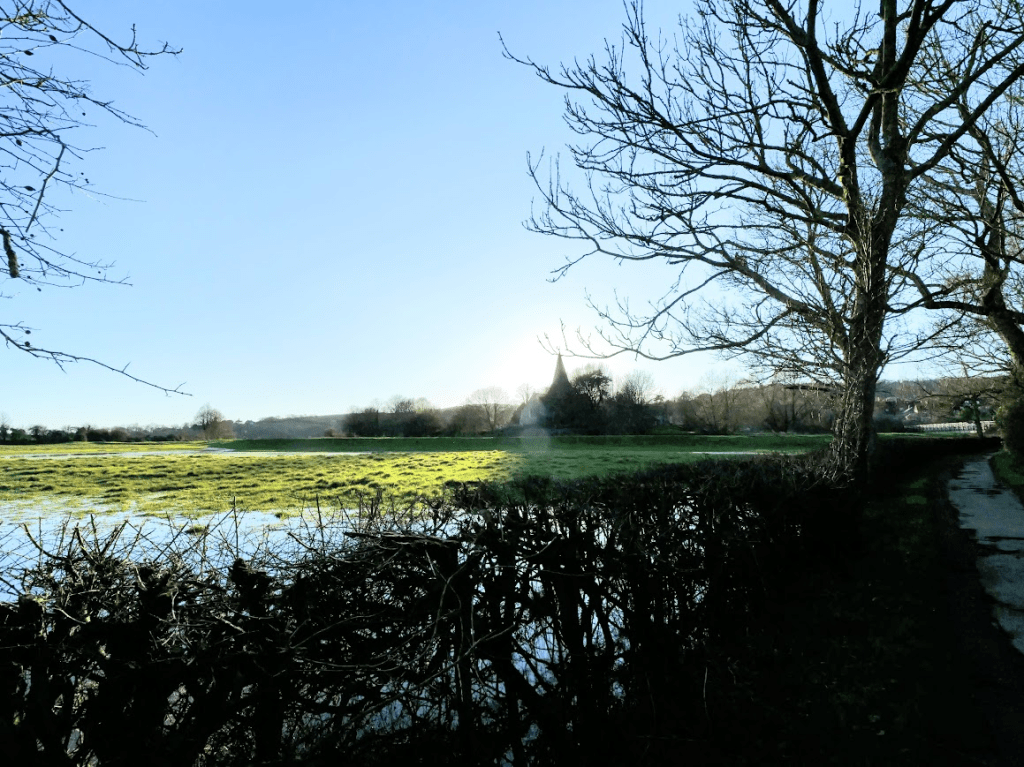
It stands beside the Tye, a large green that may have served as a market in medieval times. In 1399 the church was granted to Michelham Priory. The church is built on a small mound, surrounded by a flint wall, suggesting that the site was a sacred place in the pre Christian period. The sheer scale of the church has led to its moniker ‘The Cathedral of the Downs’. The church seems to have been built in one go, also unusual, at a time when most churches evolved slowly over centuries.
There is no indication of who built the church, and indeed, Alfriston did not even have a lord of the manor at the time. All of which raises the question of why a small village without even a lord of the manor should have such a large and impressive church.
Like most Sussex churches, it is built of knapped flint, with greensand stone for quoins. The roof was originally topped with Horsham stone, but that proved too heavy and was replaced by clay tiles.
The layout is very simple; a cruciform plan with a central tower and no aisles. The nave and chancel are the same length, though the transepts are shorter, creating a traditional cross shape.
One of the best features of St Andrew’s is the timber roof, built to a crown post design. Most is original 13th century work, save only the south transept. On the north side of the chancel is an Easter Sepulchre, within which is a chest tomb. Atop the tomb are carved stone figures that originally decorated the 19th century reredos over the high altar. On the north wall of the nave is a funeral hatchment to Richard Vincent (d1733). Under the gallery stairs is an old bell, cast in 1587.
The font may be older than the church, but is at least 14th century, and is set atop a later base. There is a royal coat of arms to George I, dated 1725. The church contains a very pleasing mix of medieval and relatively modern glass. National Church Trust Alfriston St Andrew
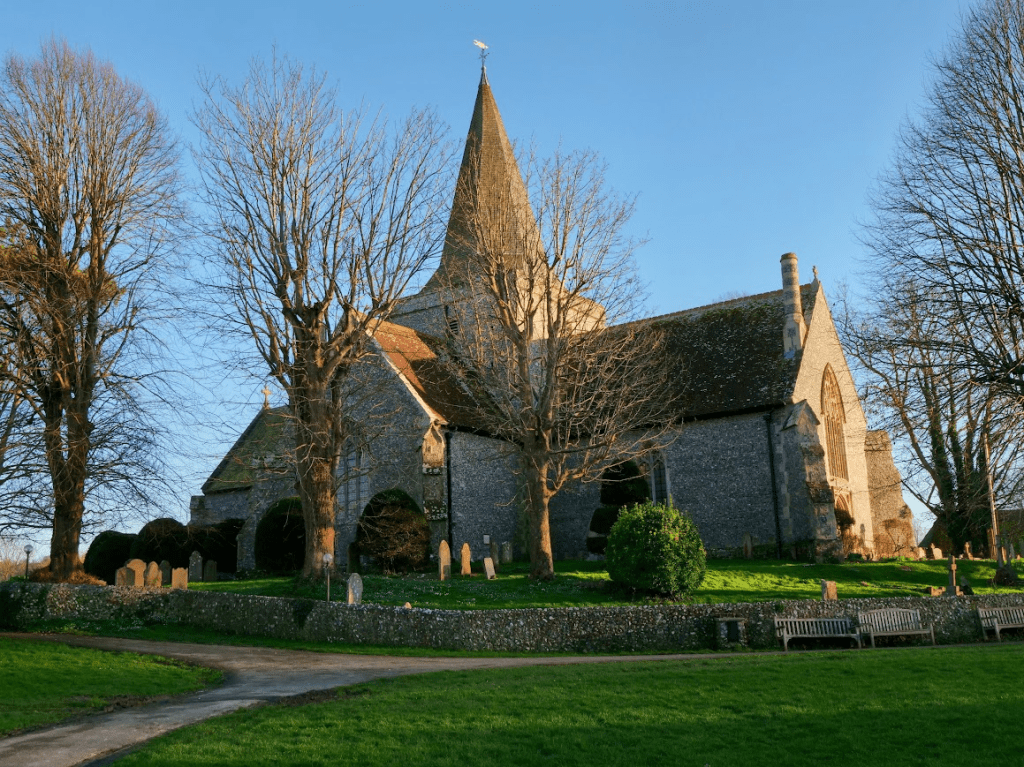
East Window by J Powell and Sons and designed by C E Powell, 1904
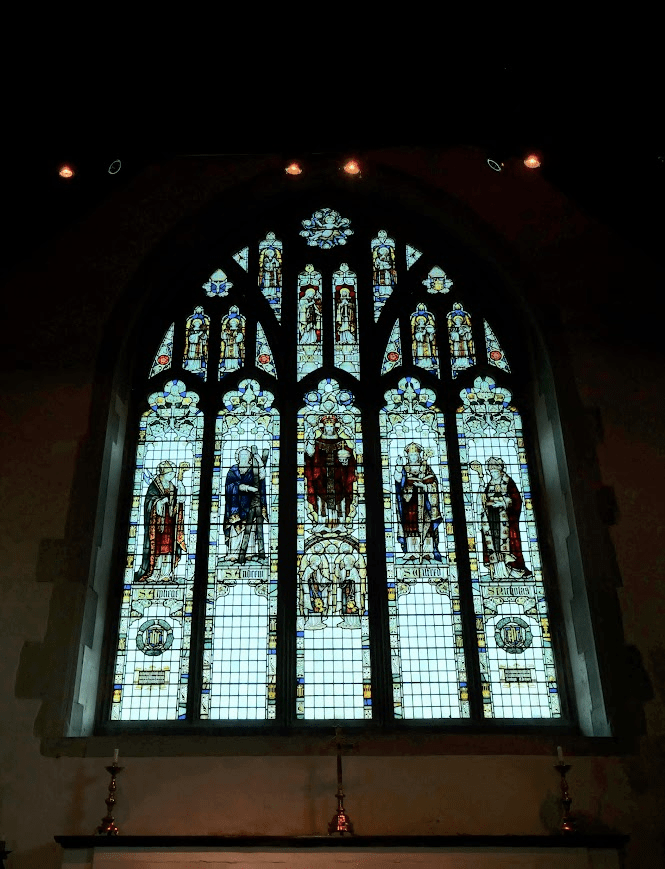
Alfriston Congregational Church
… the building is a living memorial to the early nonconformists of Alfriston. Before 1801 a group of them had already broken away from the established church and were holding their meetings in a house known as the Urn, in North Street. The Old Chapel Centre Our History
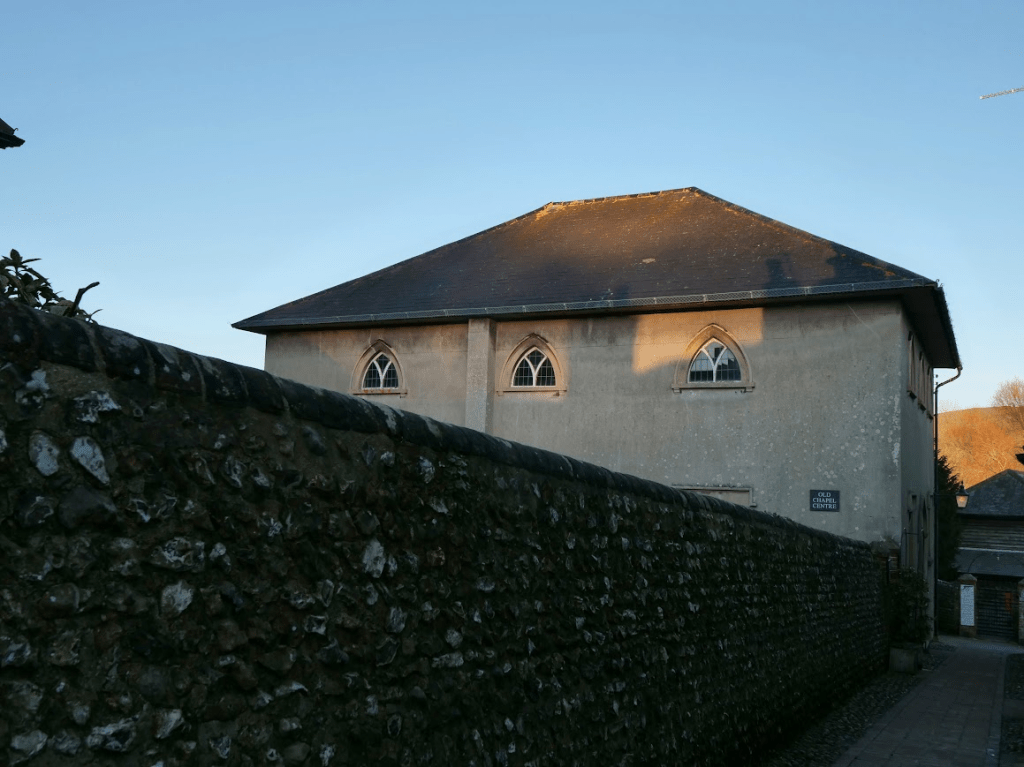
Non-conformist chapels are generally rarer and less visible than established Church of England churches in Sussex, although they have a strong, distinct, and historically significant presence. Lewes was a centre for non-conformists. Non-conformists were often persecuted 16th-18th century England because they posed a perceived threat to the stability of the state, which relied on strict religious, social, and political uniformity through the Church of England. Dissenters were seen as seditious for refusing to attend parish churches.
Litlington St Michael the Archangel at dusk
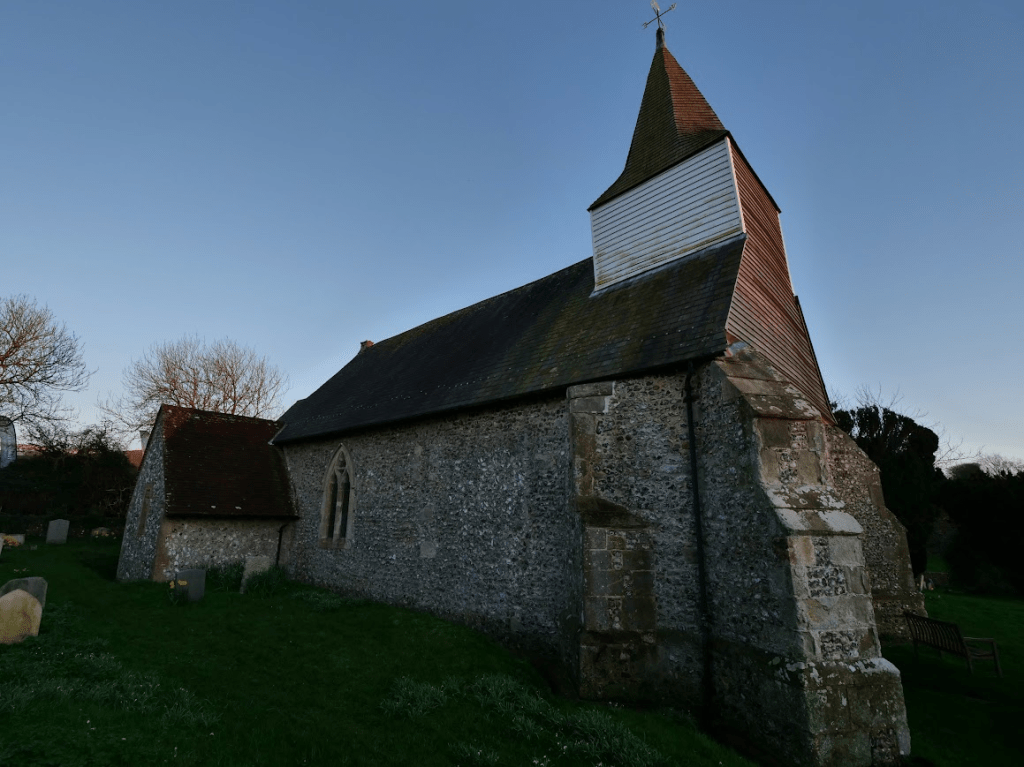
A very good example of a Downland church, built of flint with stone dressings, a white painted weather boarded wooden belfry tower which supports a broach spire covered with wooden shingles.
The main part of the building is thought to have been erected in about 1150 AD, but there are windows in the chancel which may well be Norman, and the remains of two Norman window openings (since closed) are visible in the north wall of the nave. Interestingly, but inexplicably, the floor falls 13” from east to west. The massive beams which support the main roof are original. Once there were three, but the Victorians removed one close to the chancel arch, which caused the church to split apart – since rectified by the insertion of a steel tie-bar. National Church Trust St Michael the Archangel
The Cuckmere flooding its flood plain
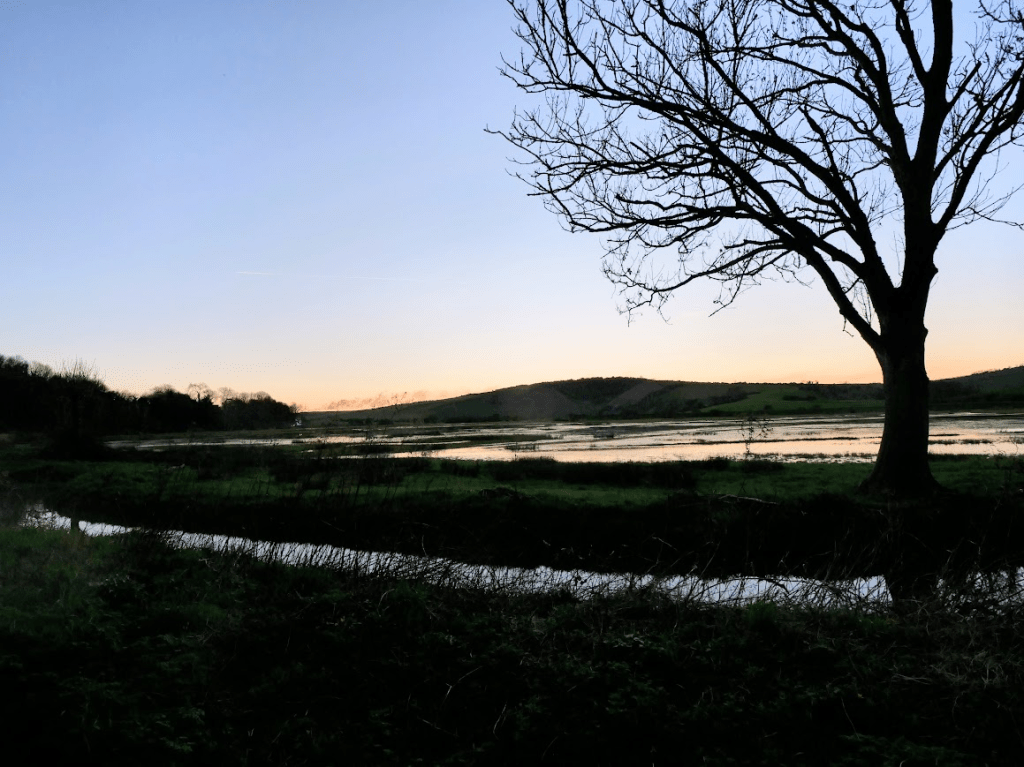
The Litlington White Horse at dusk
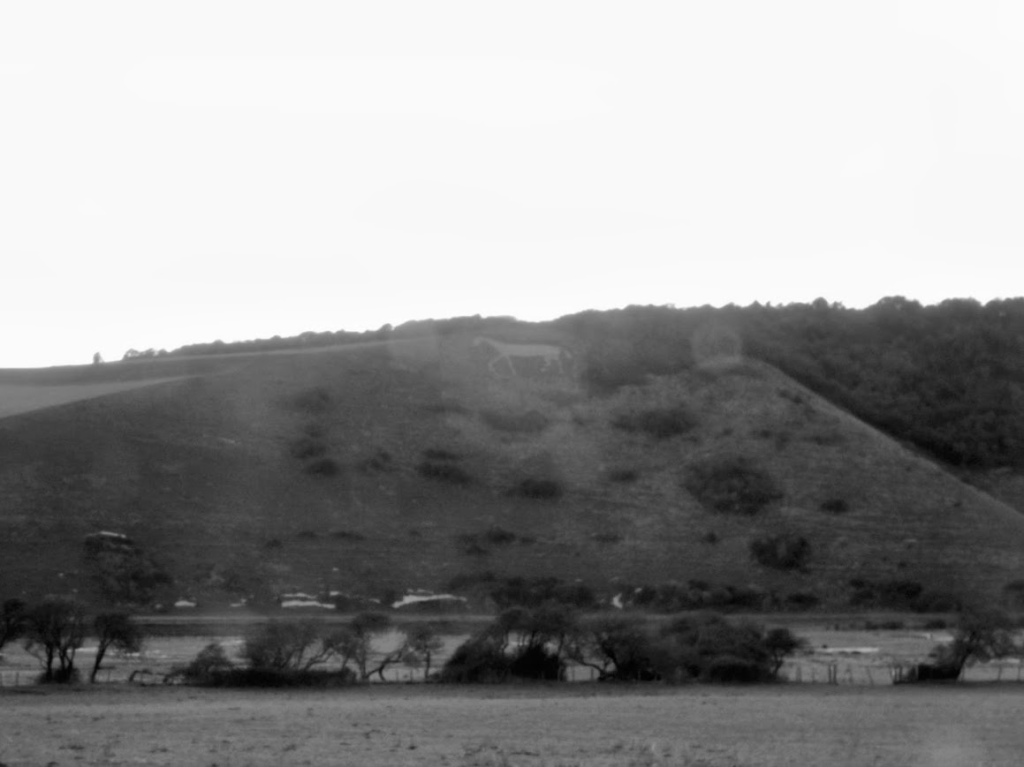
The myth of Sussex’s Litlington White Horse is still in the making. The chalk was cut – possibly – by James Pagden of Frog Firle Farm, near Alfriston, along with his two brothers, and cousin William Ade, who thought to scratch a horse in chalk to commemorate the coronation of Queen Victoria. But the makers of the horse might also have been John Ade, a certain Mr. Bovis, and Eric Hobbis, cutting it under the full moon of 20 February 1924. Another story is that it was cut as a memorial to a local girl whose horse bolted along the brow of Hindover Hill, throwing her down the hill to her death. And yet another suggests the white horse originally depicted a dog, cut by a farm boy to mark the grave of his dog drowned in the Cuckmere river below. It was covered up in the Second World War so as not to alert the Luftewaffe, and has been cut and recut, cleared and re-defined ever since.
It is this re-cutting and re-defining that keeps it alive, on the hill and in literature and in all our imaginations. Archaeologists believe there may have been many more chalk ‘geolyphs’ across the Downs, for if they are not looked after, they are soon overgrown. The Litlington White Horse speaks to that other, more well-known Sussex landmark, the Long Man of Wilmington, carved into the grass across the valley. Both chalk monuments remind us of the geographical and mythical echoes we have inherited from those who have stood on this ground, walked these tracks before us, and by connecting to them, we connect to the old ways, and step forward with the past – whether wholesome or destructive, whether more, or less understood – informing all our futures. Rosa Magazine Litlington White Horse
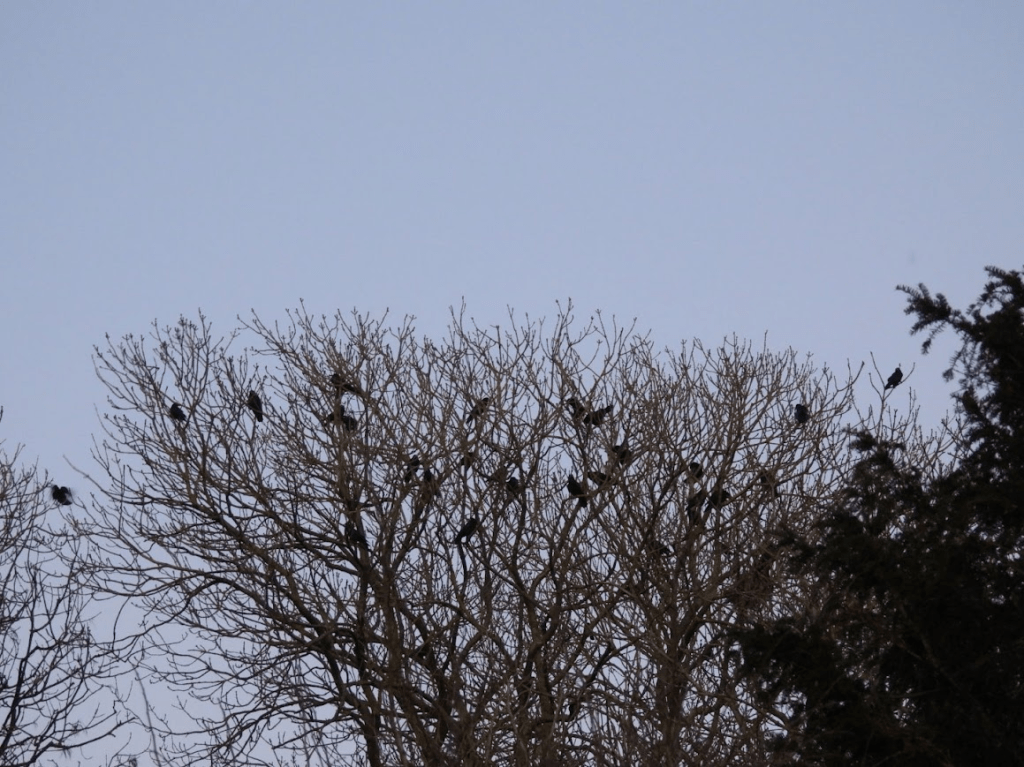
Bed time for Rooks in a rookery
 Sim's Nature Notes