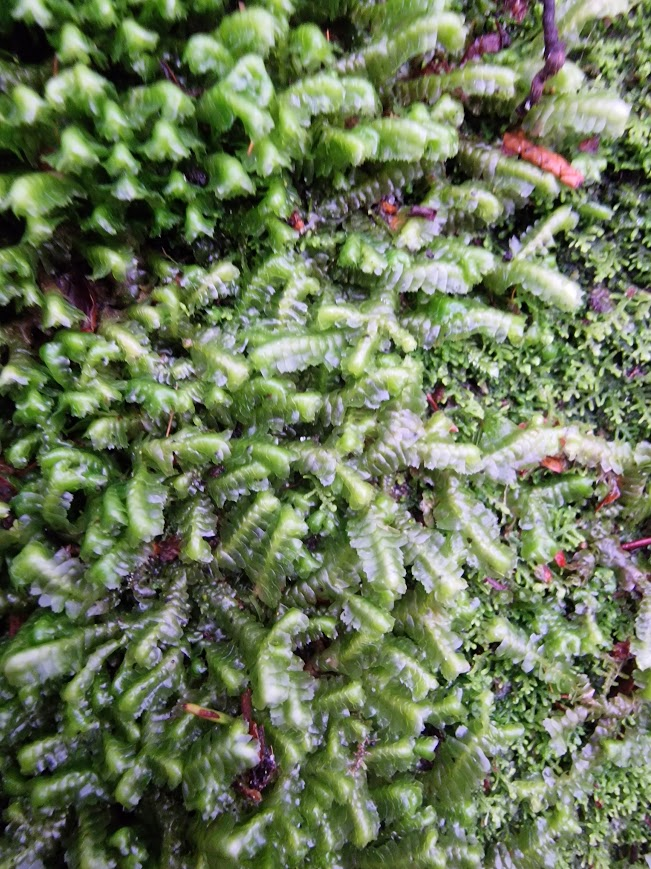
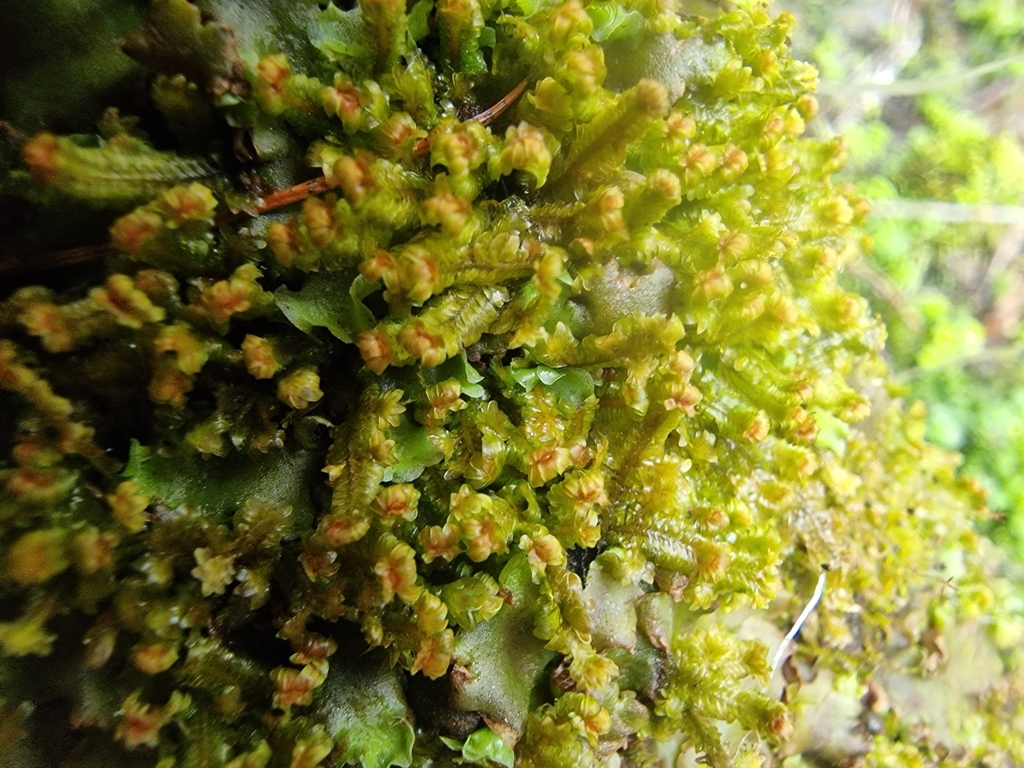
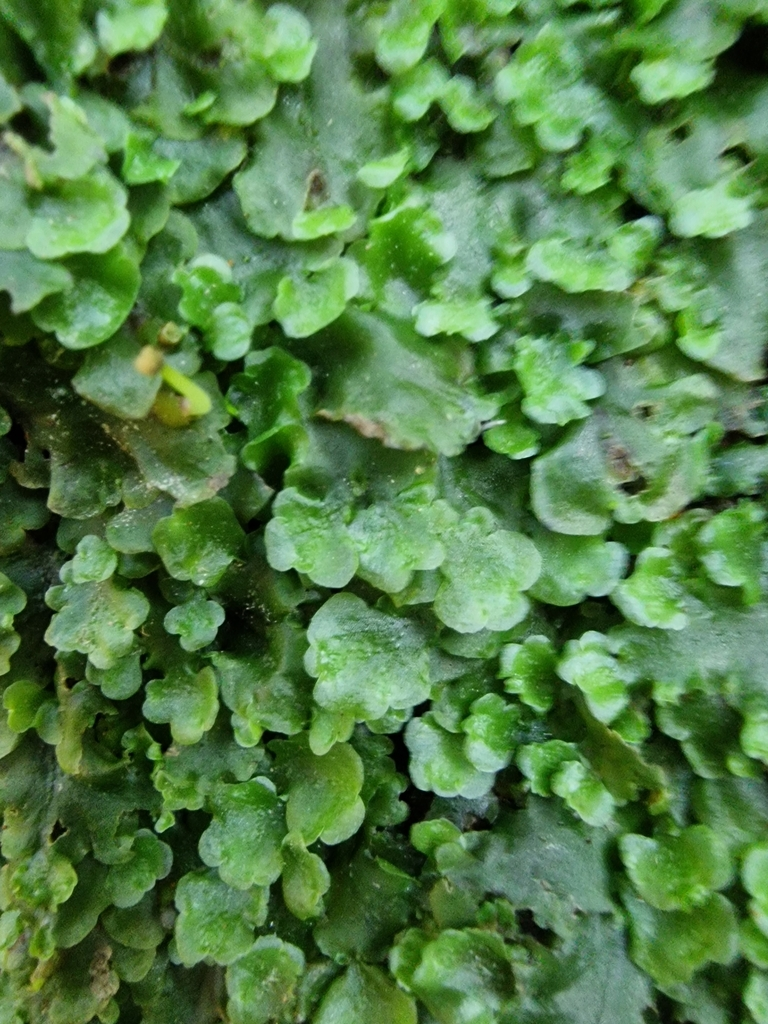
This is the first time I have seen B. trilobata in Lake Wood
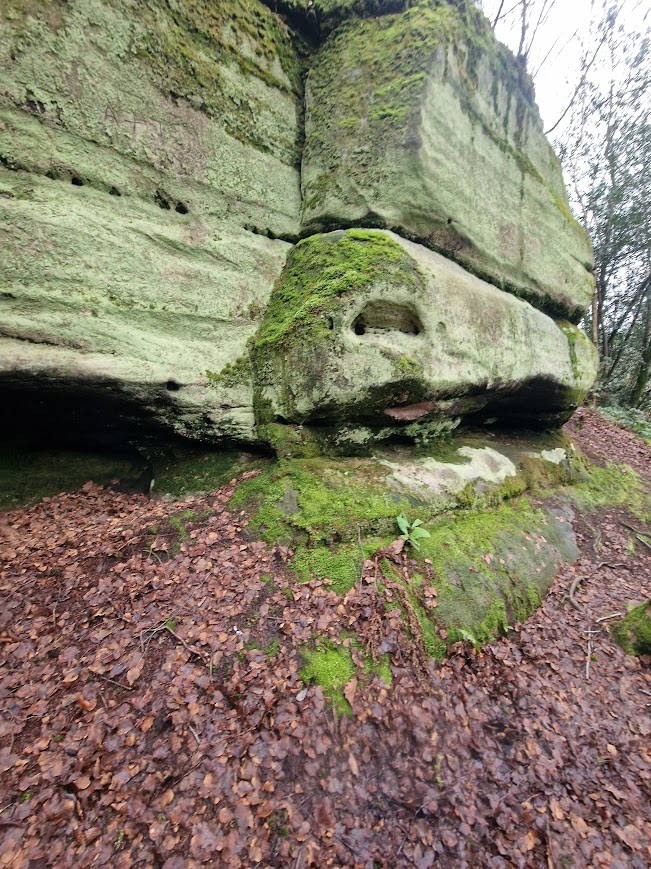
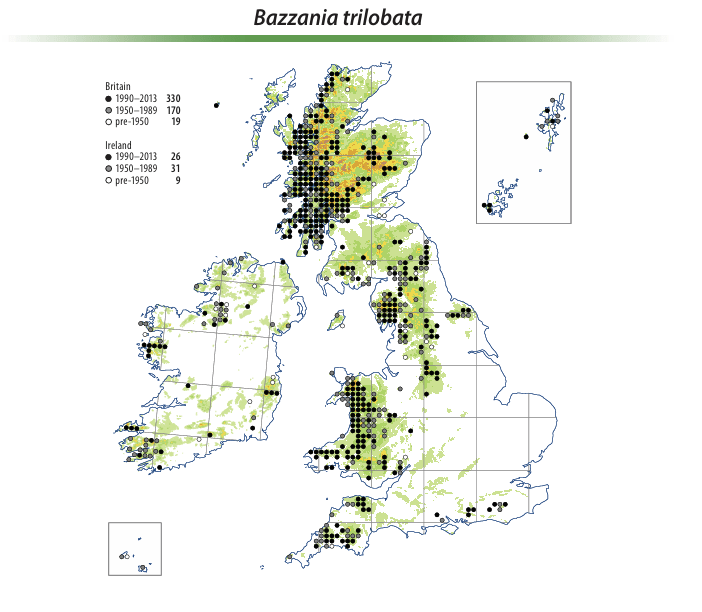
A calcifuge, particularly characteristic of western oak woodland, where in humid conditions it can be locally dominant in the bryophyte layer, forming large, deep cushions on banks, boulders, cliffs and rocky outcrops. Plagiochila spinulosa and Scapania gracilis are common associates. It also grows on deep humus and brown earth soils, especially in grazed woodland, as well as on logs; it is occasionally arboreal. In SE England it is mainly associated with sandstone rocks in shaded valleys. British Bryology Society Bazzabia trilobata
I have only seen B. trilobata in two other places in Sussex: Eridge Rocks and Chiddingly. All of these three locations are High Weald ghyll woods; a location which matches the humidity level of Atlantic Woodland because of its ghyll, despite lower precipitation.
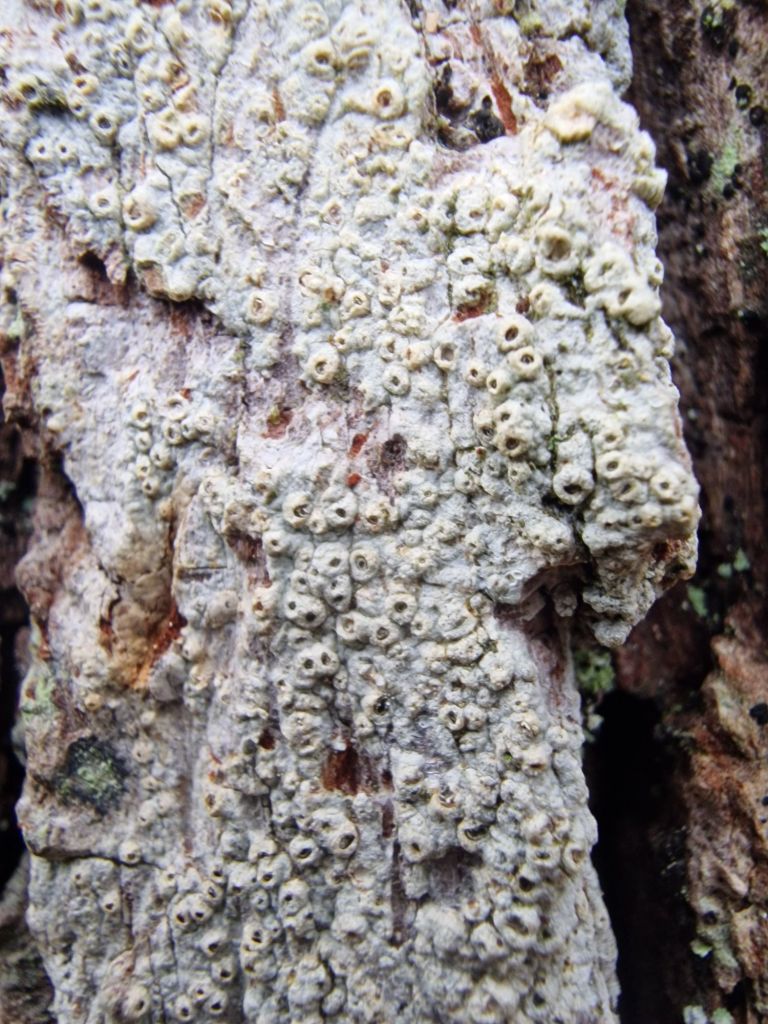
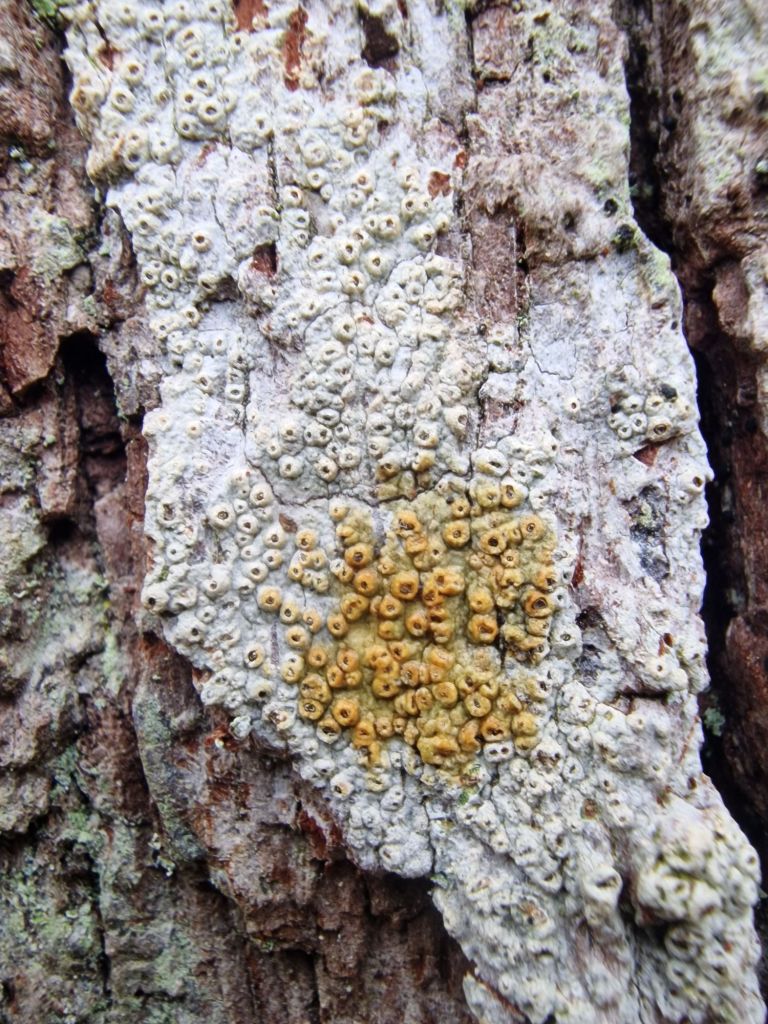
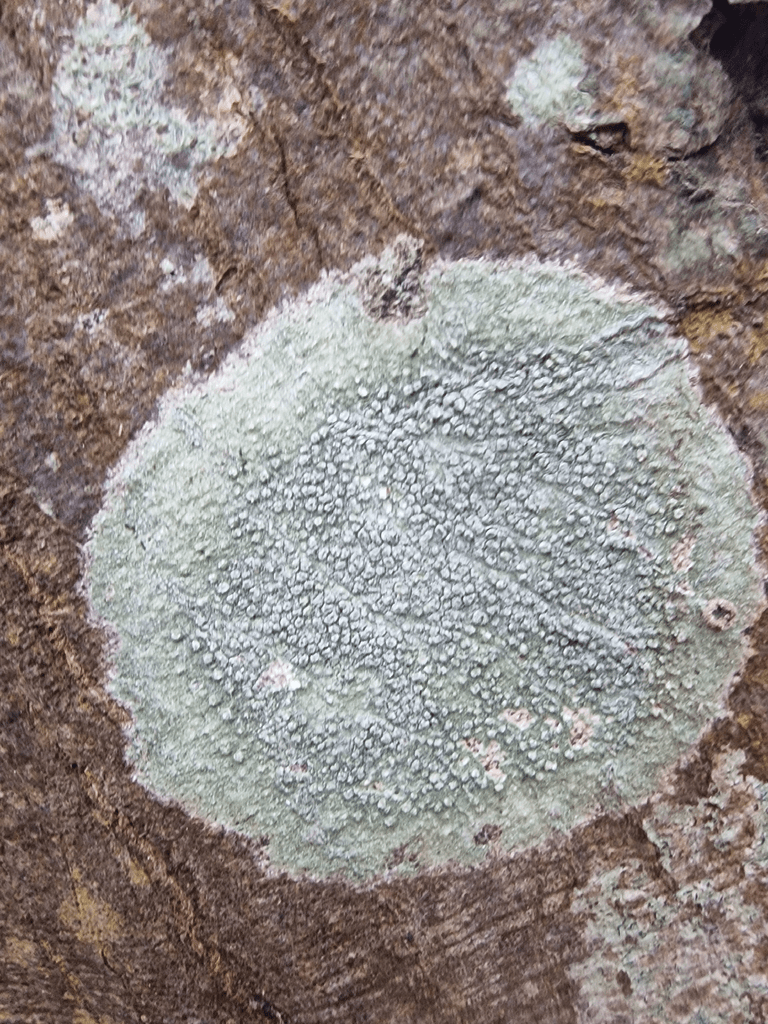
Thelotrema lueckingii
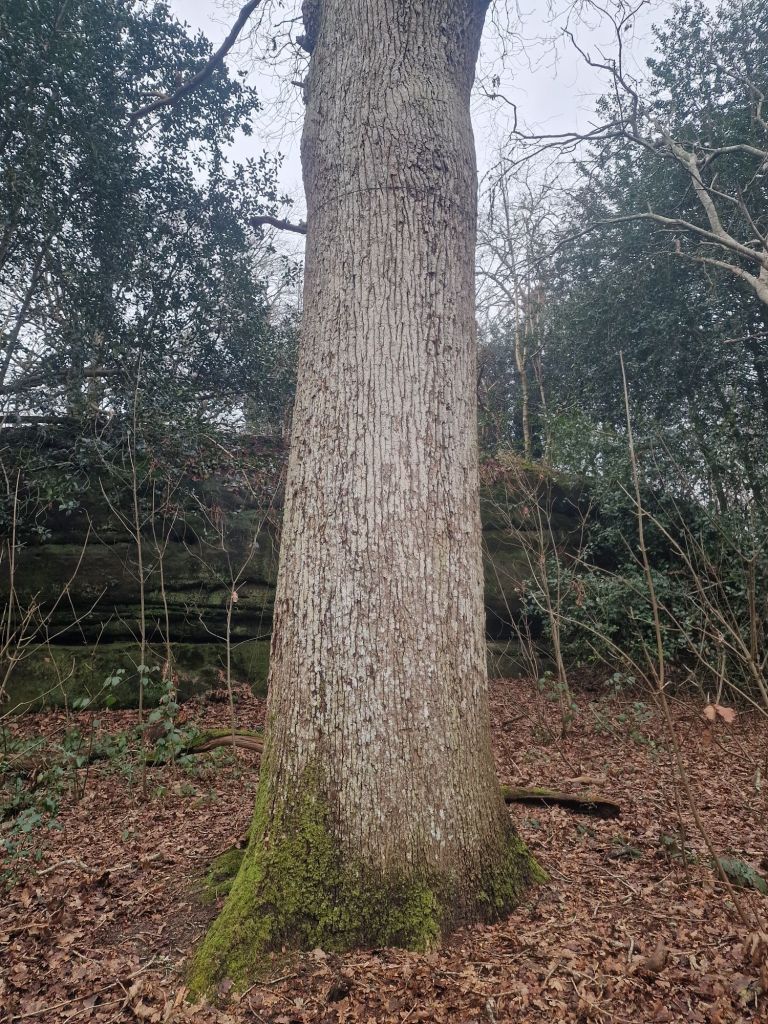
Previously I thought this huge patch of Thelotrema on Quercus robur was Thelotrema lepadinum but I hadn’t tested it with chemical reagents. Today I tested its thallus with potassium hydroxide; it was dark yellow. T. lepadinum tests negative to potassium hydroxide; but T. leuckingii tests red to potassium hydroxide. This tested dark yellow. So it may be Thelotrema lueckingii?
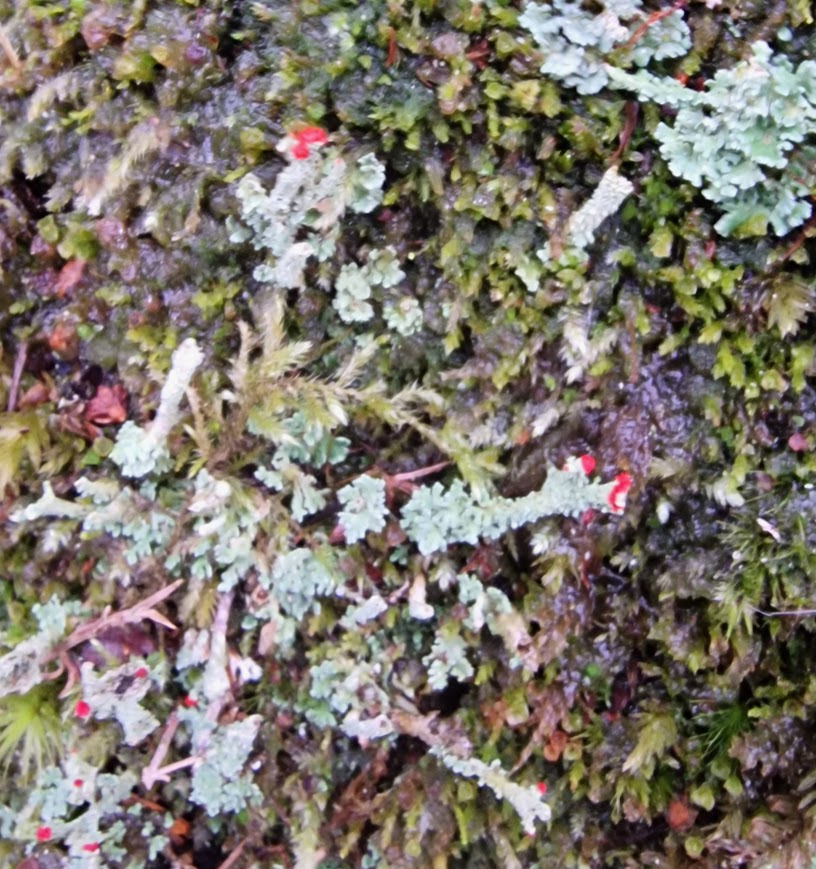
Cladonia polydactyla
On mossy bank (over Ardingly sandorck)
Pertusaria pertusa
On Hornbeam
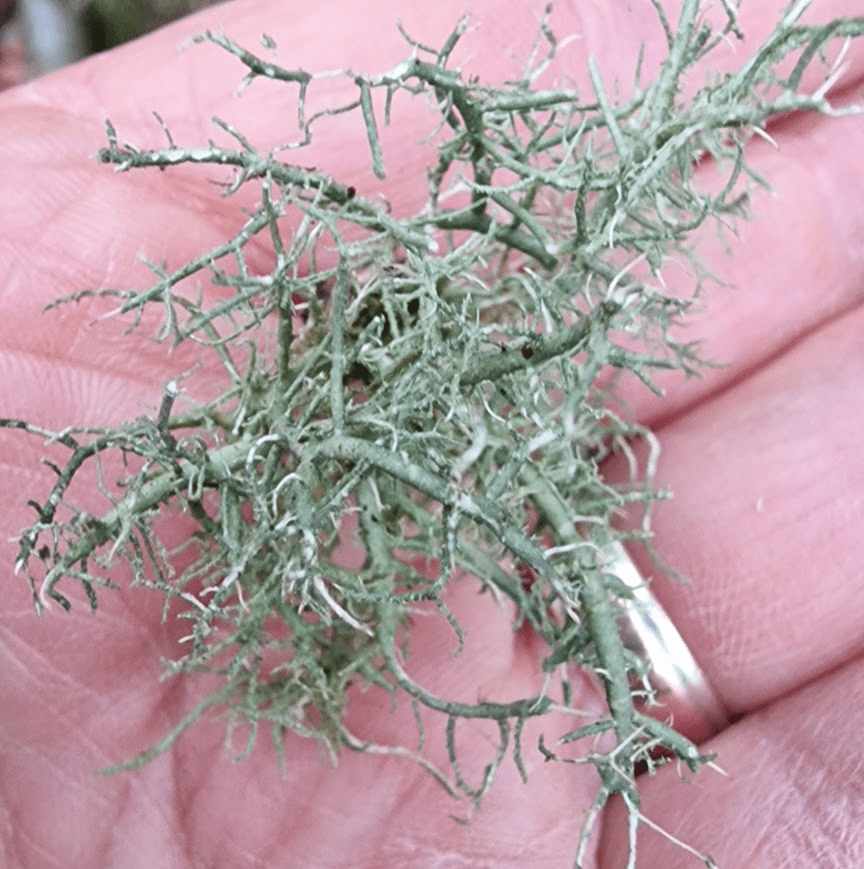
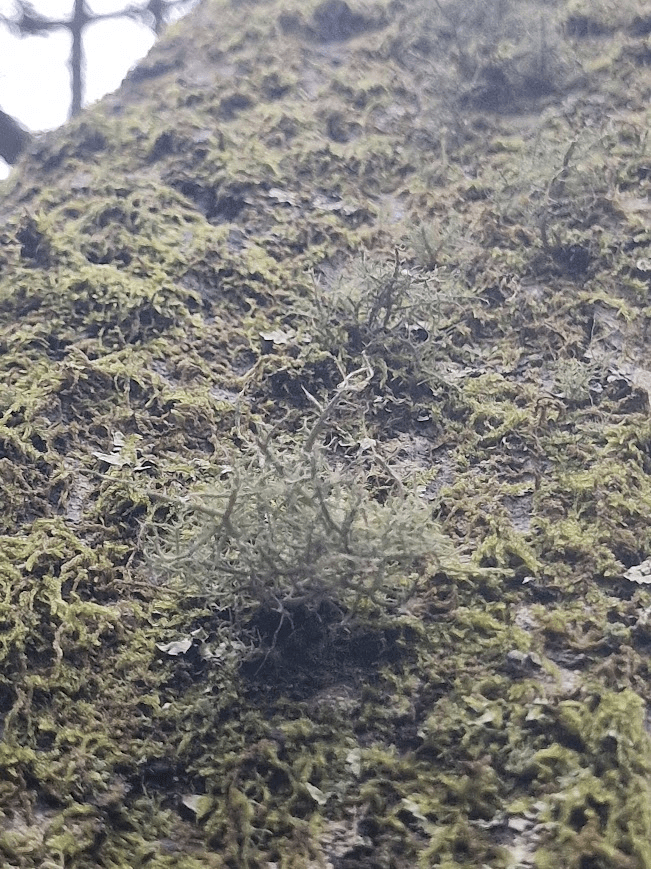
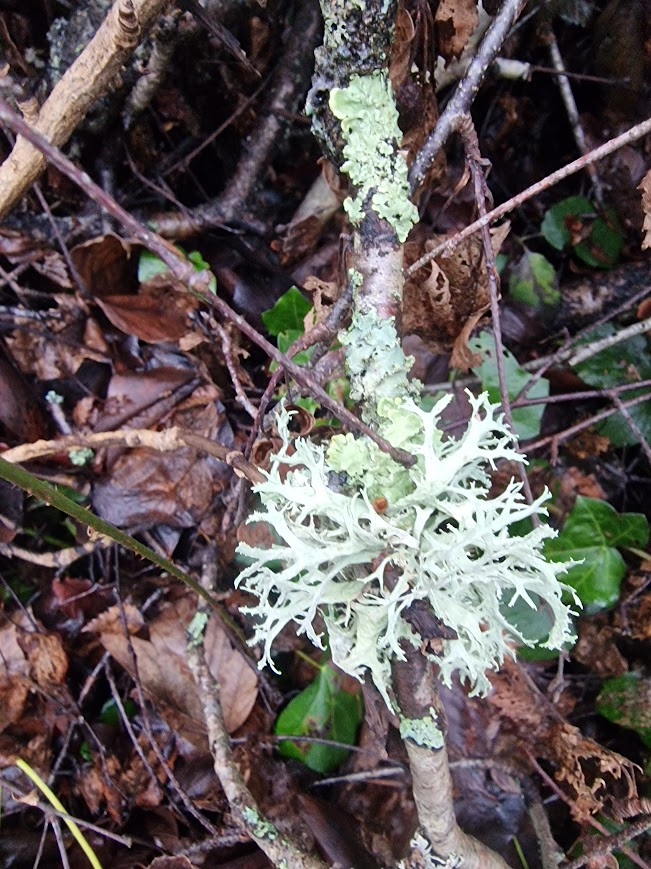
Usnea cornuta
On Pedunculate Oak
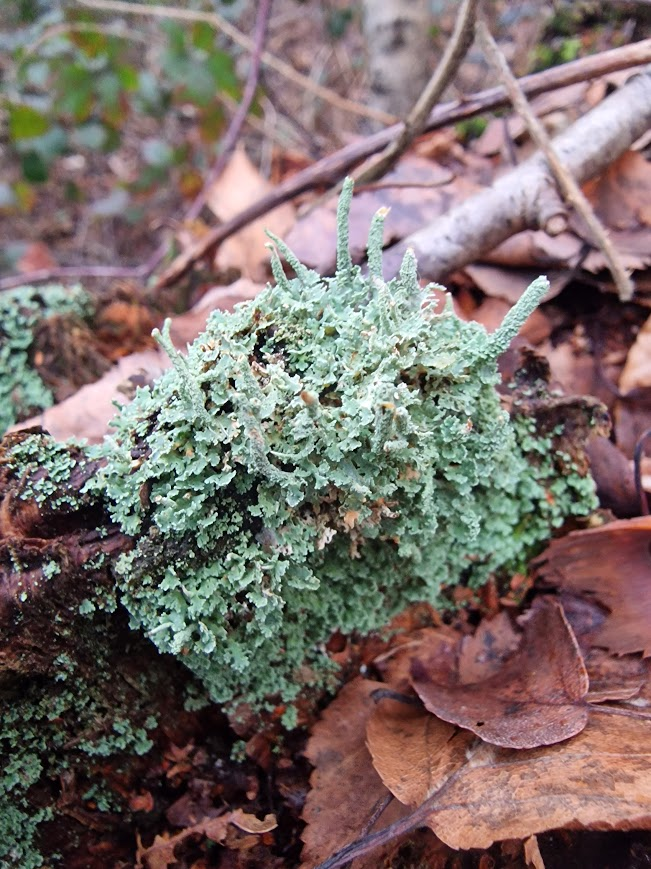
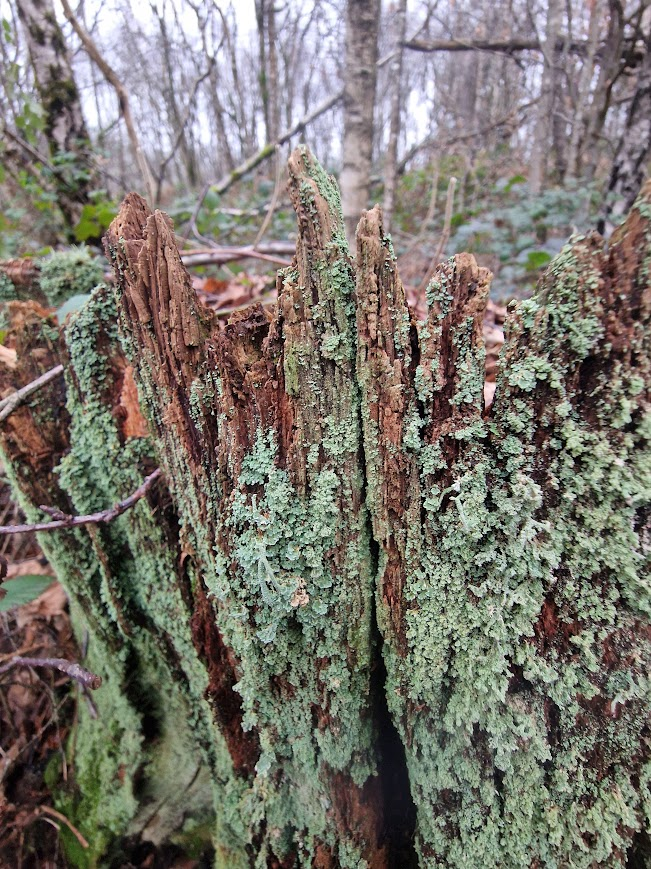
Cladonia coniocraea
On dead tree stump; the most likely place you’ll see C. coniocraea in Sussex.
This post illustrates the species of Ancient Woodland Indicator Plants that I found in Fore Wood that are listed in Indicators Of Ancient Woodland – the use of vascular plants in evaluating ancient woods for nature conservation. Francis Rose, British Wildlife 10.4 April 1999, Pages 241-251
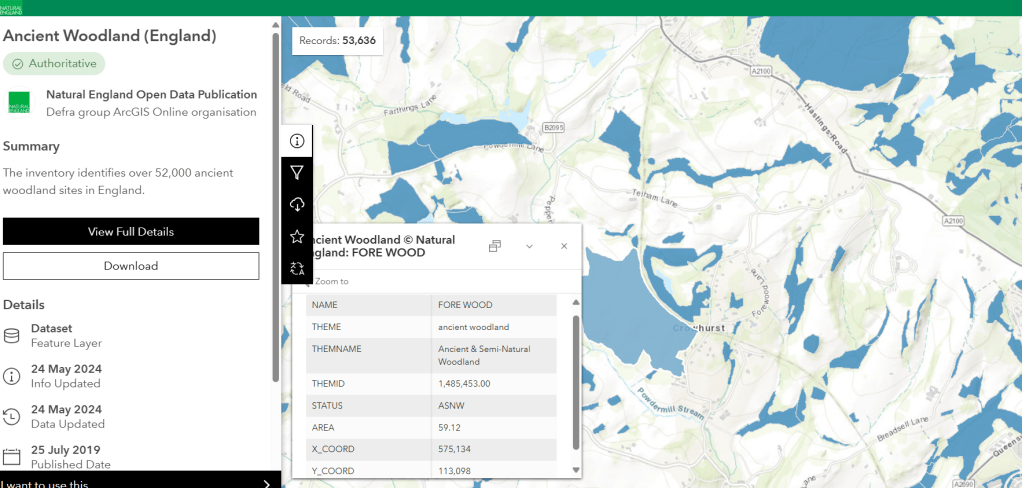
Natural England classifies ancient woodland as either:
(a) (ASNW) Ancient Semi-Natural Woodland mainly made up of trees and shrubs native to the site, usually arising from natural regeneration
or
(b) (PAWS) Plantations on Ancient Woodland Sights (or Ancient Replanted Woodland) – replanted with conifer or broadleaved trees (e.g. Sweet Chestnut, Castanea sativa) that retain ancient woodland features, such as undisturbed soil, ground flora and fungi
Fore Wood is designated by Natural England as Ancient Semi-Natural Woodland, but it does have some small areas of planted Sweet Chestnut which the RSPB is removing.
Fore Wood is managed by the RSPB:
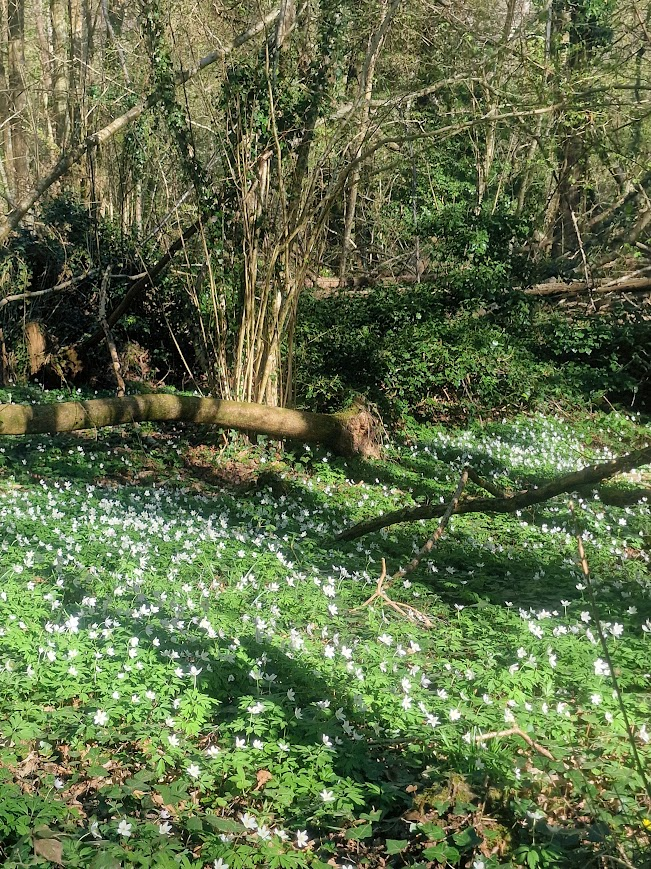
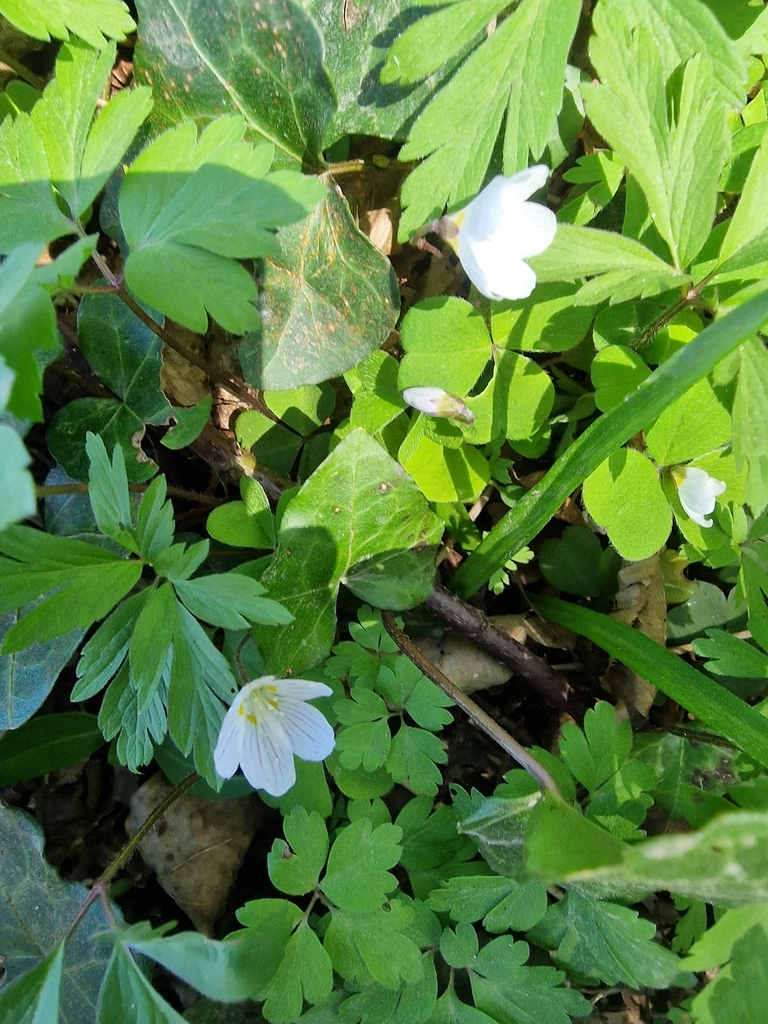
Fore Wood is a stretch of peaceful woodland near Crowhurst, dotted by gyhlls – steep-sided little ravines in the sandstone where rare ferns grow and wildlife thrives. In the spring, Fore Wood is a riot of Bluebells and Wood Anemones, with Early Purple Orchids adding to the show, an ideal place for East Sussex walks.
This ancient woodland is a mix of Hornbeam, oak and Sweet Chestnut trees. We carefully manage the woodland for the benefit of the wildlife using coppicing – a traditional woodland management practice. RSPB Fore Wood
Fore Wood is designated as a Site of Special Scientific Interest: SSSI citation
Here are the Ancient Woodland Indicator Plants that I saw:
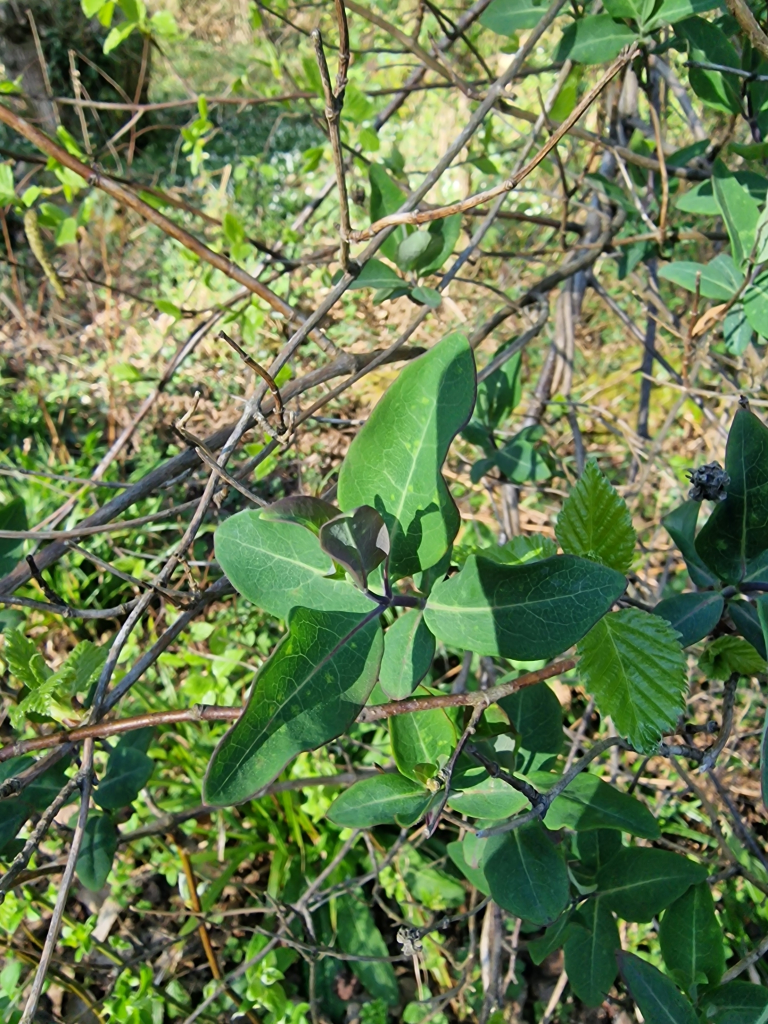
Lonicera periclymenum Honeysuckle
Oxalis acetosella Wood-Sorrel
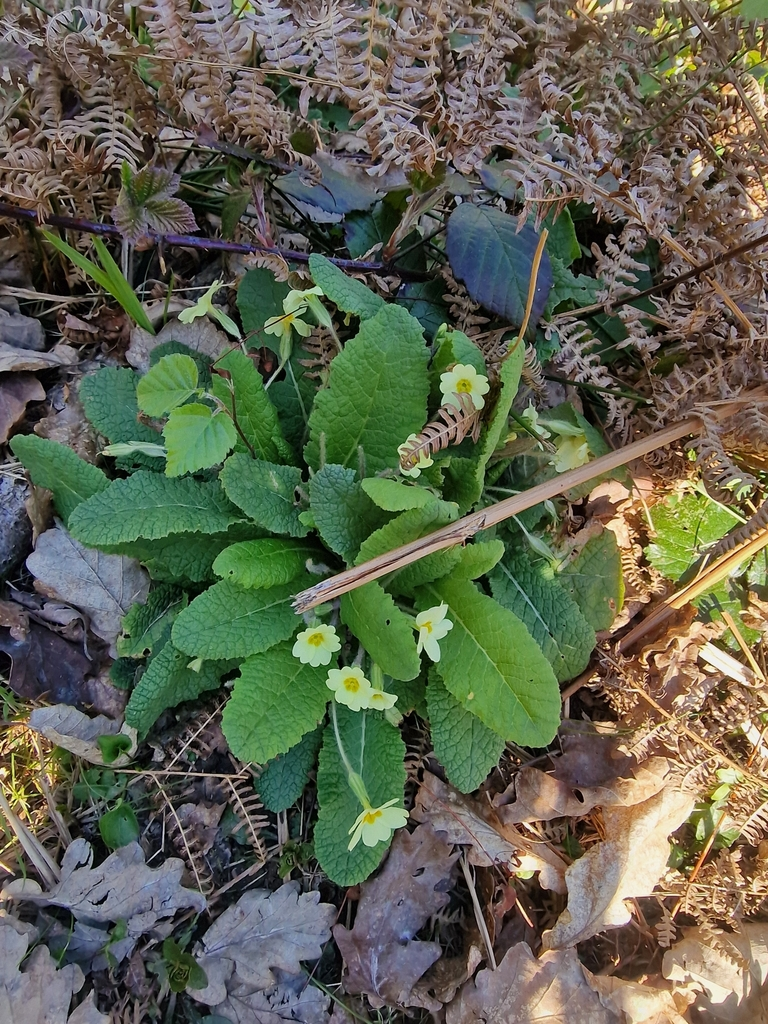
Primula vulgaris Primrose
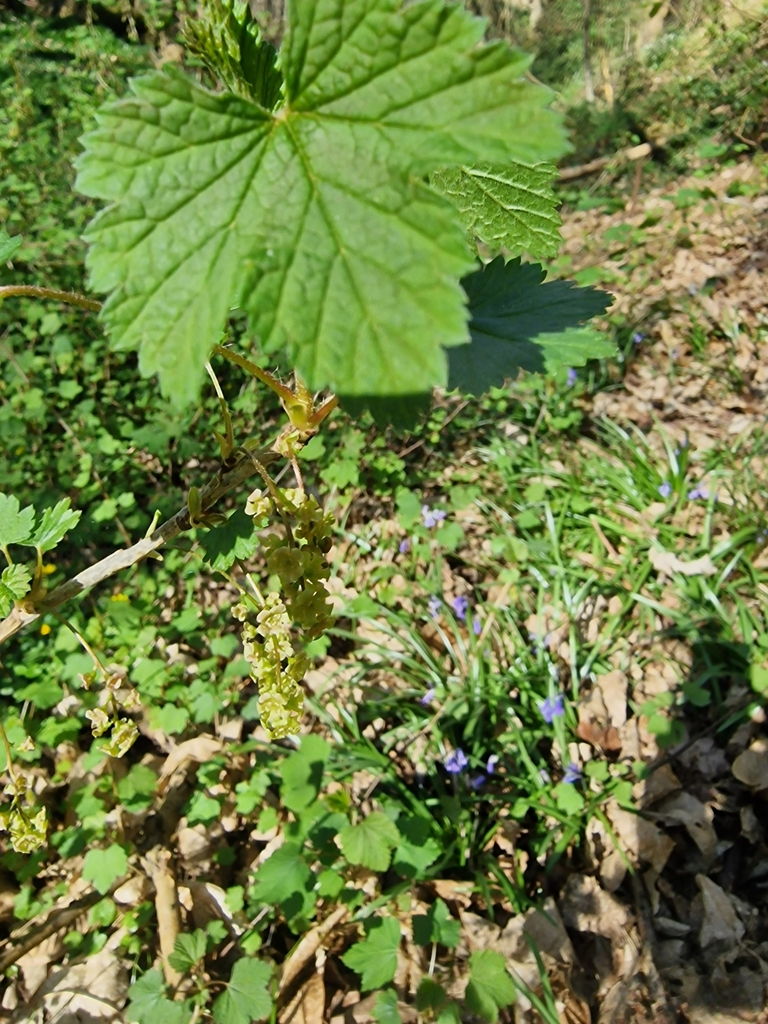
Ribes rubrum Red Currant, by one of the ghylls
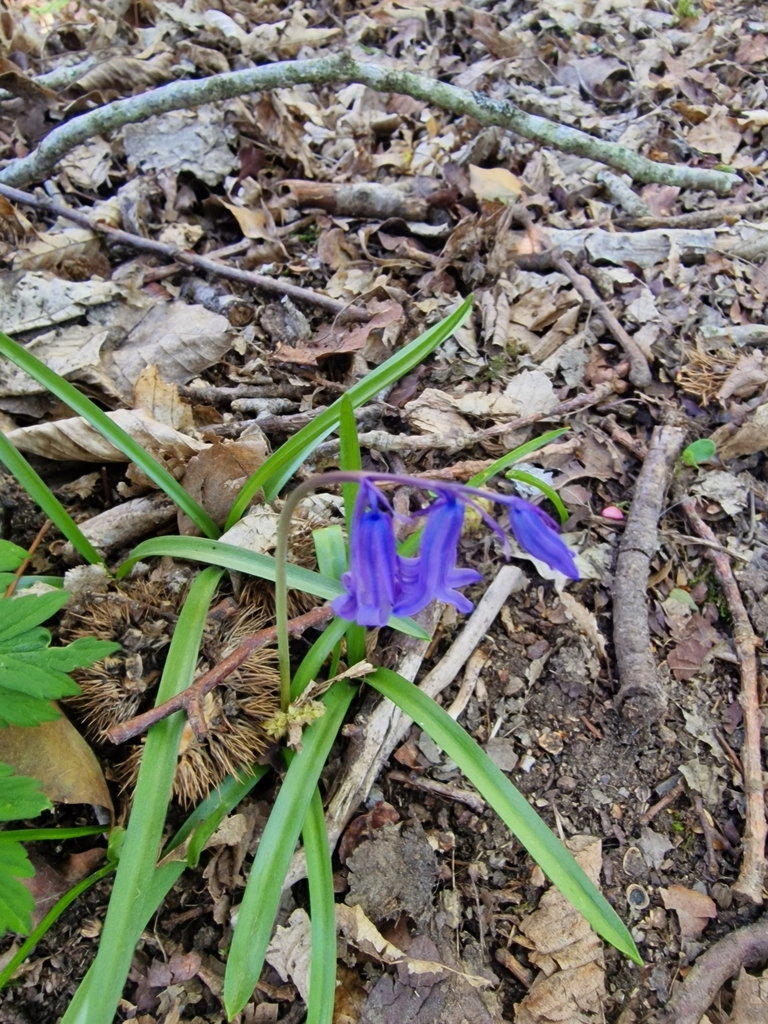
Hyacinthoides non-scripta Bluebell
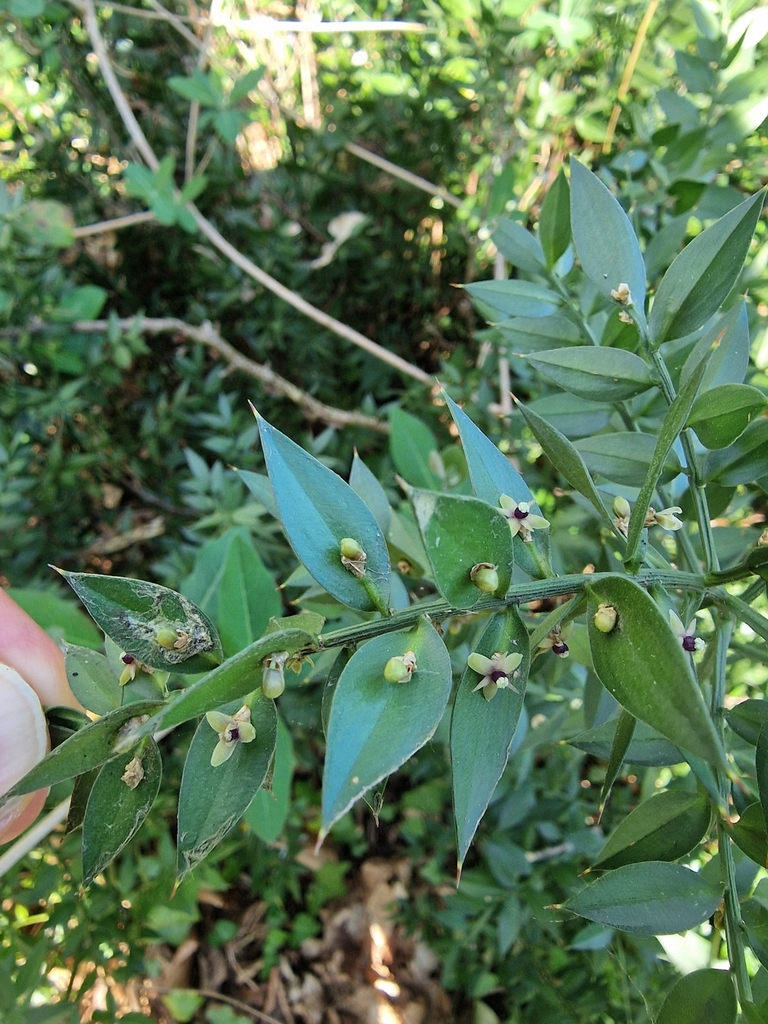
Ruscus aculeatus Butcher’s-Broom
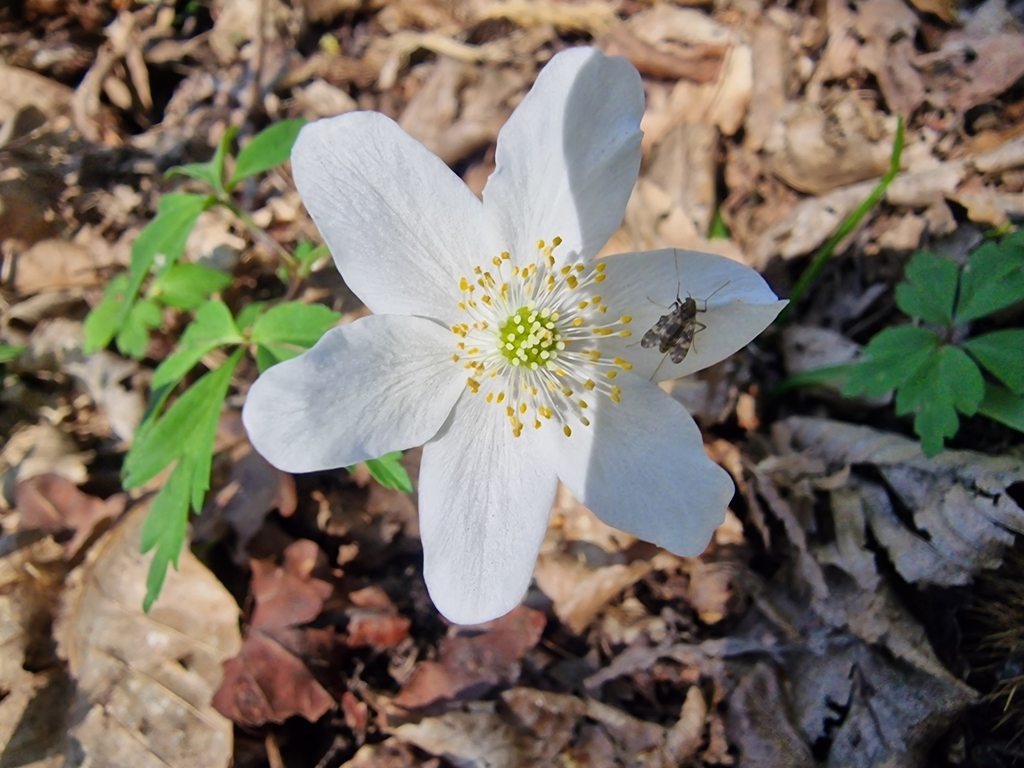
Anemonoides nemorosa Wood Anemone
with Psectrotanypus varius a species of non biting midge.
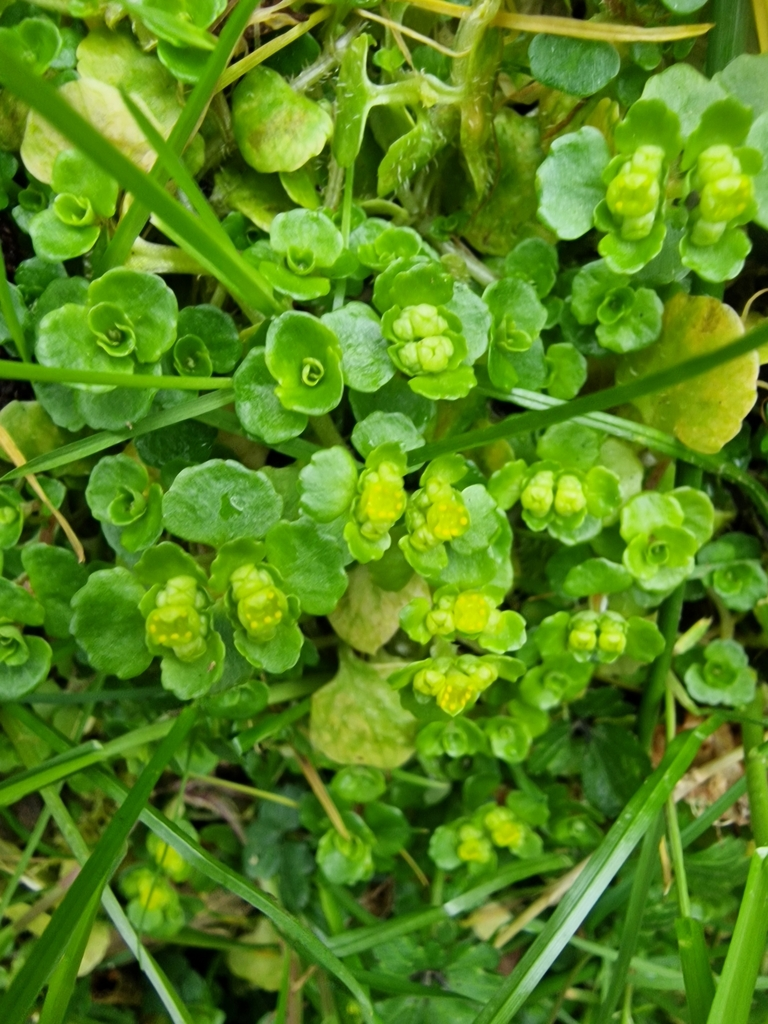
By one of the ghylls; Opposite-leaved Golden-Saxifrage is mostly a plant of damp stream/ghyll sides, or wet flushes
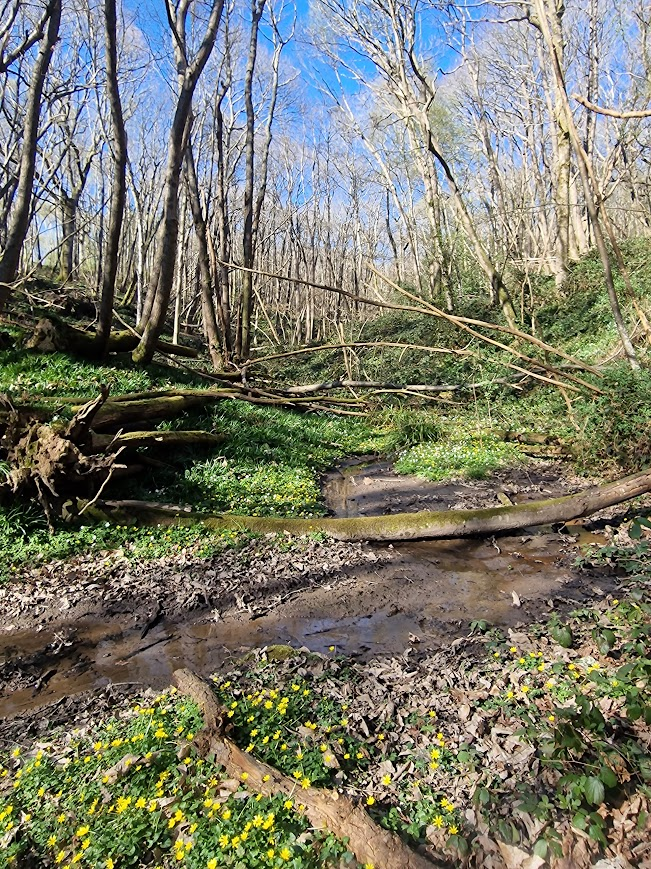
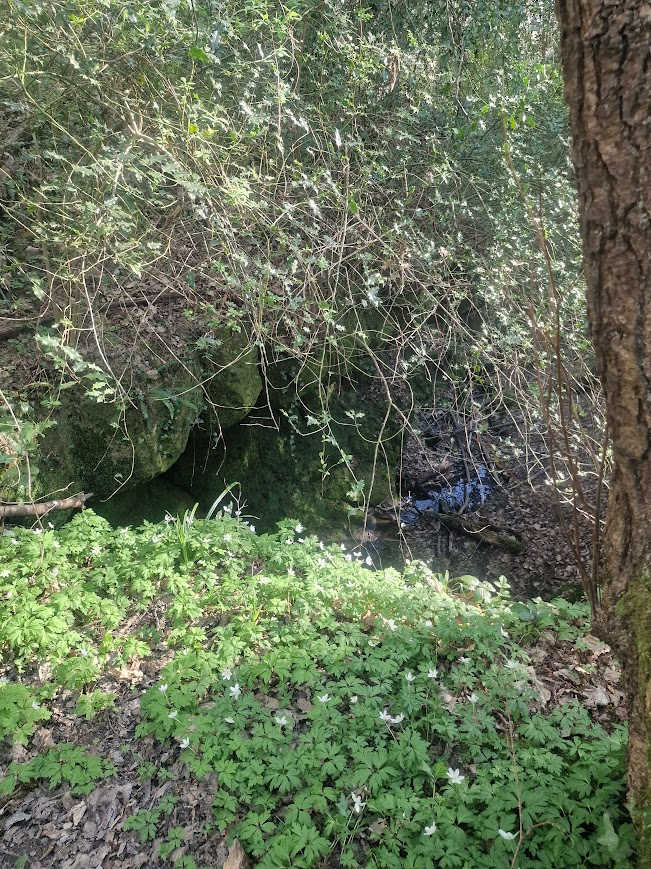
A view of one of the ghylls with Lesser Celandine, Ficaria verna. Lesser Celandine is not an AWVP indicator but it is a very important early source of pollen for pollinators. There are two ghyll is Fire Wood – this one has shallow sides
but the other ghyll has much steeper sides and is more typical of the upper reaches of ghylls in High Weald Ghyll Woods, like Fore Wood.
Ardingly Sandrock can be seen in this photograph. Where the porous Ardingly Sandrock meets the impervious Wadhurst Clay springs are formed that feed the ghylls. Global heating is a great threat to the survival of the internationaly important ghyll wood habitat of the High Weald.
In the south-east of England mean annual temperatures have increased by approximately 1.7°C over the past 50 years,(UKCIP 2013). Average rainfall remained unchanged during the same period, but patterns of precipitation did change with mean rainfall levels decreasing in the spring and summer months, but increasing in the autumn and winter. Over the same period the average annual and seasonal levels of relative humidity fell by up to 5% in the south and east of England (UKCIP 2013). The presence of regionally and nationally important vascular and non-vascular plant communities within the Wealden ghylls is attributed to the cool, humid microclimatic conditions associated with the ghyll valleys (Paton 1956, Ratcliffe 1968, Rose and Patmore 1997). The rising temperature levels coupled with the existence within the ghyll woodlands is closely related to a cool, humid ghyll microclimate.
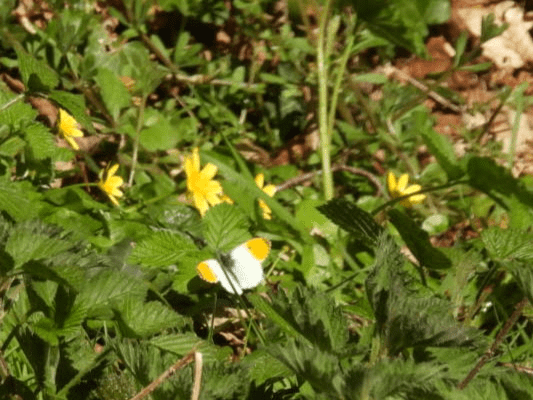
Orange-Tip Butterfly, Anthocharis cardamines, a butterfly of damp places, on Lesser Celandine
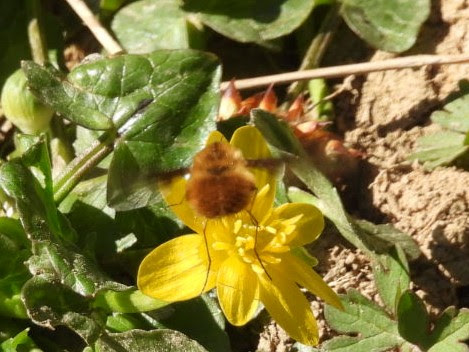
Bee-Flies and Orange Tip Butterflies are some of the earliest pollinators to appear in spring; but they have finished in the adult flying form by May/June; although Orange Tip Butterflies sometimes have a second brrod
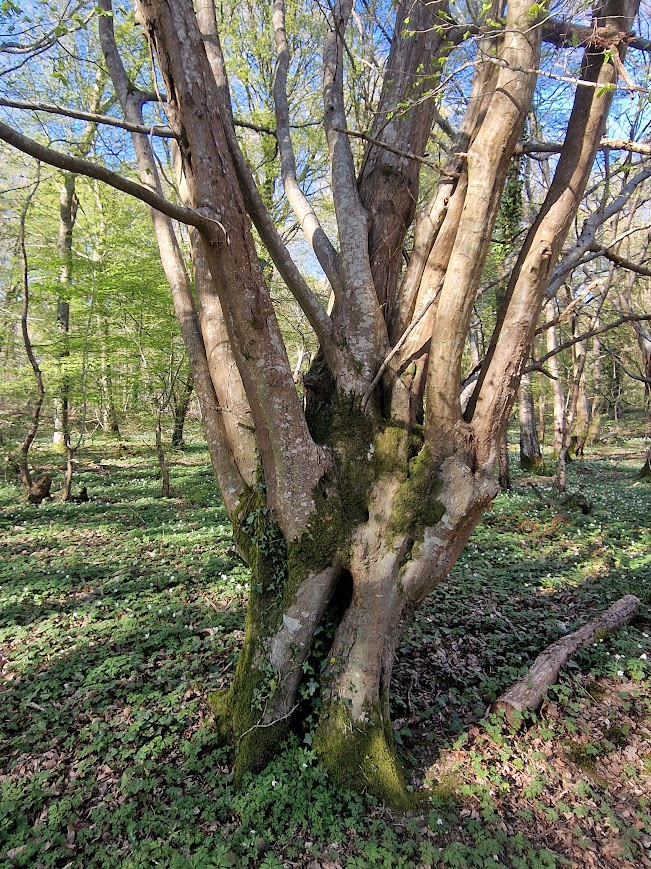
An ancient pollarded Carpinus betulus European Hornbeam within the wood. Rose makes it clear in his list that Carpinus betulus should only be considered an AWVP indicator only if they occur well within the wood and do not appear to have been planted.
Theses Hornbeams form a boundary around the wood; whilst theses trees as species can not be considered as AWVP indicators; the structure of the ancient boundary (raised bank with coppiced trees) is probably an indicator of ancient woodland.
This is Francis Rose’s list of Ancient Woodland Indicator Plants (AWVP) for South East Woodland
* Consider these species only if they occur well within the wood and do not appear to have been planted.
It should be noted that when calculating Ancient Woodland Indicator Plants scores:
A high AWVP score is a reliable indication of natural diversity.
It also indicates ancient woodland, but does not on its own constitute proof.
Some woods which are undoubtedly ancient have a low AWVP score. Study of other components of the woodland biodiversity such as lichens, or invertebrates in rotting wood, may give clearer indications of ancient woodland status. Quite often, ancient sites that are rich in AWVP’s will be poor in lichens and rotting wood invertebrates and vice-versa.
Not all indicator species are strictly limited to ancient woodlands. For example, where secondary woodland adjoins older woodland, it will acquire species associated with older woods much more quickly than isolated secondary woods.
Plants which are also cultivated in gardens (e.g. Wild Daffodil) should be used with great caution.
Certain woodlands can credibly be established as being ‘ancient’ through the study of old historical records such as maps and estate records. Observations of landscape features such as banks, ditches and other topographical features within a wood will also give clues to previous land use. By surveying a number of these ‘proven’ ancient woodlands, species which are usually confined to this type of habitat can be identified. From: Countryside Information Ancient Woodland Indicator Species
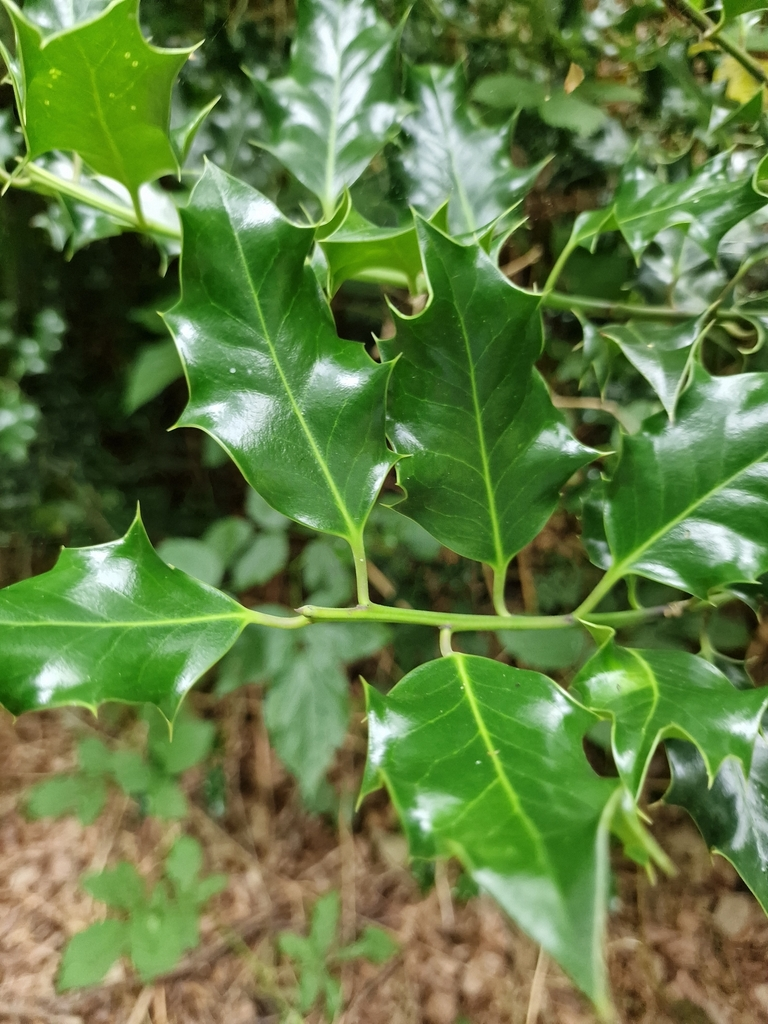
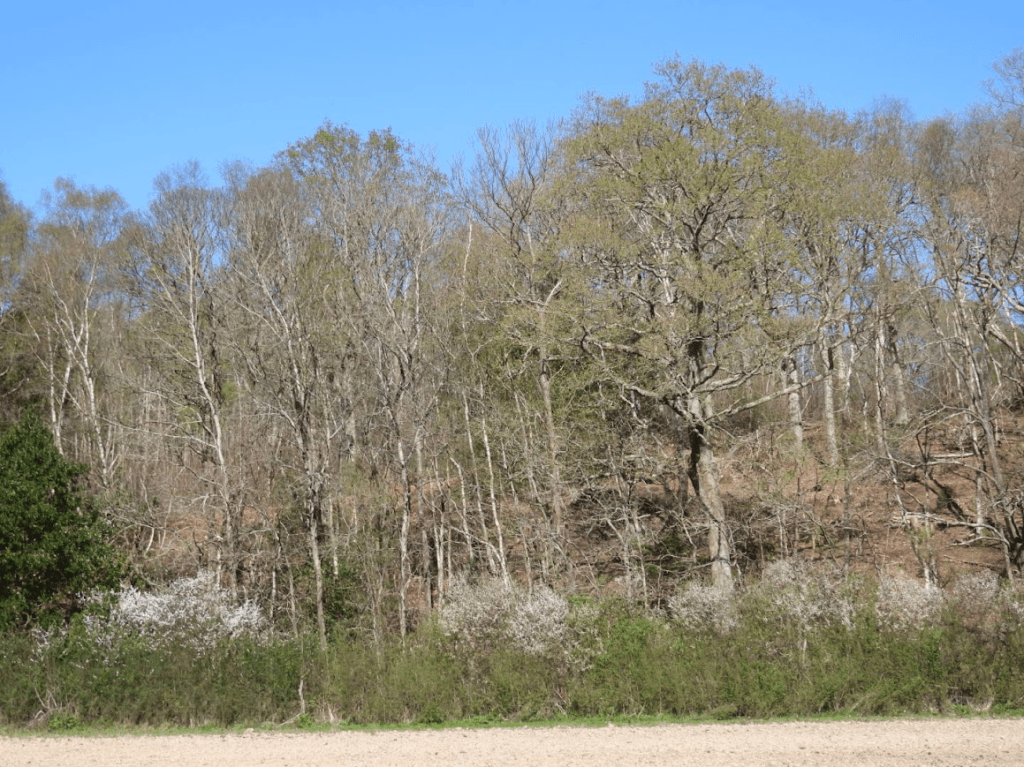
The edge of Fore Wood, with Blackthorn, Prunus spinosa, in blook, and behind Pedunculate Oak, Quercus robur, Silver Birch, Betula pendula and Holly, Ilex aquifolium
I visited with a friend, and fellow naturalist, a high weald ghyll wood to explores its bryophytes and lichens. This ghyll had the features of most high weald ghyll woods; a ghyll fed by springs from the sides of the ghyll valley. The springs form where the porous Tunbridge Wells sands, meet the Wadhurst Clay, of the impervious Wealden Group. These springs produce wet flushes which are a highly propitious habitats for bryophytes. Ghyll woods often have outcrops of Ardingly Sandrock, where bryophytes, ferns and lichens grow.
Most Ghyll Woodlands have ancient, veteran and notable tress; often Pedunculate Oaks Quercus robur, and Beech, Fagus sylvatica. This wood did, but only around the ghyll; other parts of the ancient woodland have been replanted with pines, often Scots Pines, Pinus sylvestris, and other trees for ornamental purposes and timber. Unfortunately much of the ancient woodland of the High Weald have been replanted either for landscaping or timber.
“Due to their isolation and enclosed nature, Ghylls have a unique microclimate, often rich in bryophytes and other moisture loving plant species. Ghyll woodlands are found in the extreme upper reaches of rivers, where springs and streams first form in small, steep, wooded valleys. The steep sided nature of Ghylls has also ensured that many Ghyll woodlands have remained untouched and undisturbed by human activity. Ghyll woodlands have an unusual micro-climate and they are therefore unique.
The flora found in these sites is very characteristic of former Atlantic conditions – including lush growths of ferns (such as Hay Scented Buckler Fern), mosses and liverworts. Many are likely to be primary woodland sites (potentially dating from the ice-age) and some have received relatively little disturbance, pollution or management. Ghylls provide an important function within the wider river catchment. They help to capture and slow down rainfall and overland run-off which would otherwise have a high capacity for erosion in these steep areas. They also provide shade and protection from sunlight, which provides a kind of ‘thermostatic regulation’ to downstream areas of river by cooling down water temperatures. Cool river temperatures are particularly important for the reproduction of a number of fish species.
Over 6% of the High Weald in Sussex is classed as ‘Ghyll’ woodland. This rare habitat type is a unique landscape feature of this part of Sussex and of the UK. Ghyll woodland in these terms specifically applies to the woodland found in the Sandstone and Hastings beds of the High Weald. There is currently no agreed definition of the riverine/floodplain limits at which Ghyll woodland becomes a floodplain woodland, and as such it is difficult to assign an accurate figure to the known area of Wealden and non Wealden Ghyll woodlands in Sussex.”Sussex Wildlife Trust – Wet Woodland
Bryophytes
Bryophytes are a group of plants that include mosses, liverworts and hornworts. Currently (January 2021), there are 1098 species of bryophyte in Britain and Ireland, which represents around 58 percent of the total European flora. Conversely, our islands have less than 20 per cent of the European flowering plants.
Like the ‘higher’ plants (flowering plants and ferns) the majority of bryophytes make their own food via photosynthesis and because they contain chlorophyll, the majority are green. However, bryophytes lack proper roots, structural strength and an advanced vascular system to move water and dissolved substances around efficiently and so are size-limited.
The mosses, liverworts and hornworts are believed to have evolved from ancestral green algae and are thought to comprise the earliest lineages of plants. Because of their unassuming nature and small stature, bryophytes are easily overlooked or even dismissed as boring, but their beauty and complexity under the microscope easily puts them on a par with their higher plant relatives.British Bryological Society – what are bryophytes
… bryophytes can’t grow very big because they have no way to efficiently move water from their base to the rest of the plant. Instead, they grow close to the ground and absorb water directly from the environment into their cells.
Despite their preference for damp habitats, bryophytes can live for a long time without water. Some plants … survive droughts by storing water, but bryophytes have a different strategy. They go into a state of dormancy, or suspended animation, and simply wait. Water … isn’t just important for hydration. Bryophytes rely on it to reproduce as well. … bryophyte sperm has to “swim” to an egg cell to fertilize it.
… mosses have a midrib in the middle of each leaf, whereas liverworts have no midrib. Liverworts are relatively flat in comparison to mosses because their leaves are in two parallel rows, whereas mosses tend to have a more spiral shape, with leaves emerging from all sides of the stem. … . Another feature to consider if you’re trying to distinguish mosses and liverworts is the presence of lobed leaves, or leaves with protuberances off the main leaf … Some liverworts (but not all) have lobed leaves, but no mosses do.. With mosses … one of the first questions to ask is whether it’s pleurocarpous or acrocarpous. Pleurocarp mosses … tend to have highly branching stems and grow in sprawling patches. The stems of acrocarp mosses, meanwhile, have little or no branching and grow mostly vertically, often forming tight clumps.
With Liverworts, one of the first question to ask whether its a thalloid of leafy liverwort; thallose liverwort, set apart from so-called leafy liverworts by the presence of thallus (a ribbon-like structure) instead of leaves. … Interestingly, liverworts also have a distinctive smell, sharp and earthy. The scent can be so strong that you might sometimes smell liverworts before you see them. Duke University Research BlogInto the Damp, Shady World of the Bryophytes
Some of the mosses and liverworts of this high weal wood:
Pleurocarp mosses:
Thamnobryum alopecurum Fox-tail Feather-Moss.
Growing at the base of a Pedunculate Oak
A shade-tolerant species which occurs in several distinct habitats. It grows on the ground, on exposed tree roots and tree bases in woodland and on the banks of ditches and sheltered lanes, occurring on mildly acid, neutral or basic soils but in particular abundance in woods over chalk, limestone and calcareous boulder clay. BBS Thamnobryum alepercurum
Acrocarp mosses:
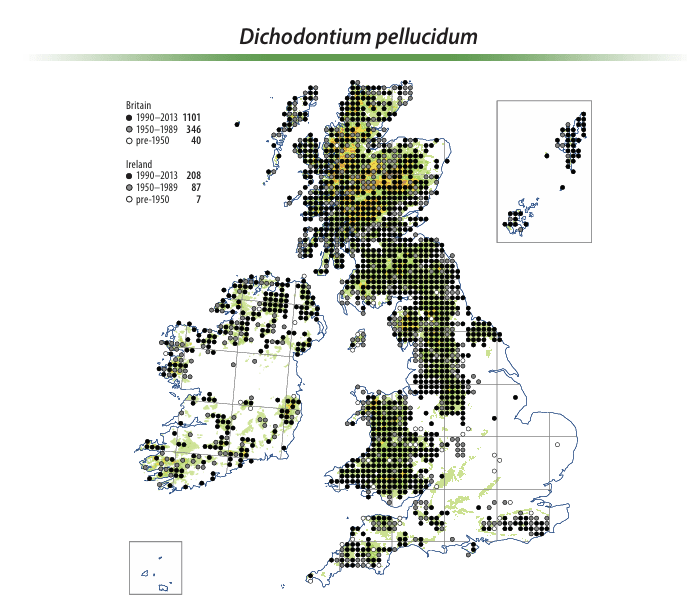
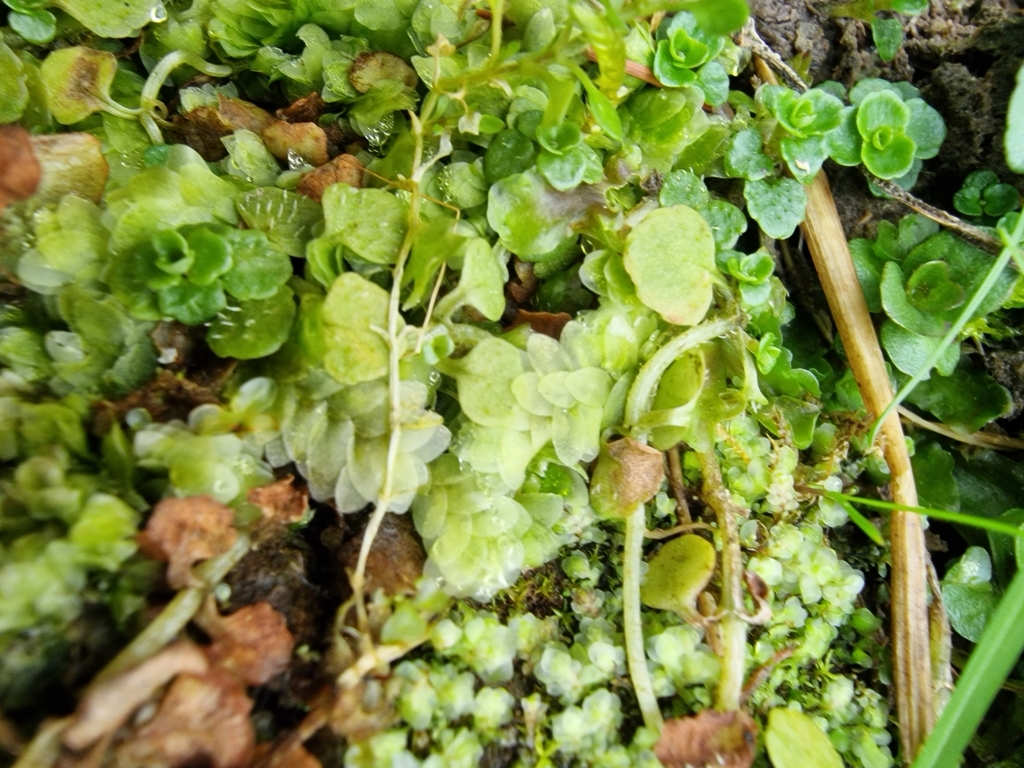
Dichodontium pellucidum Transparent Fork-Moss
D. pellucidum is a moss often growing on rocks by streams and rivers in the North and West (Atlantic Woodlands); but it is also found in the High Weald
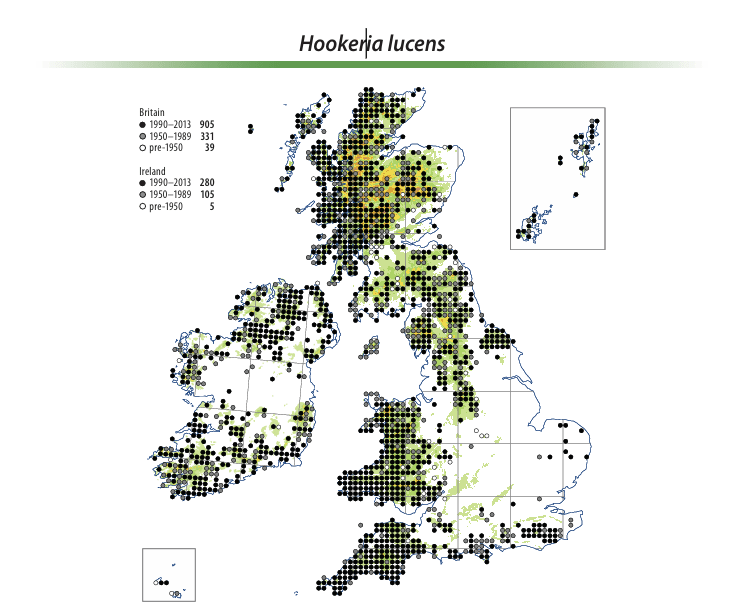
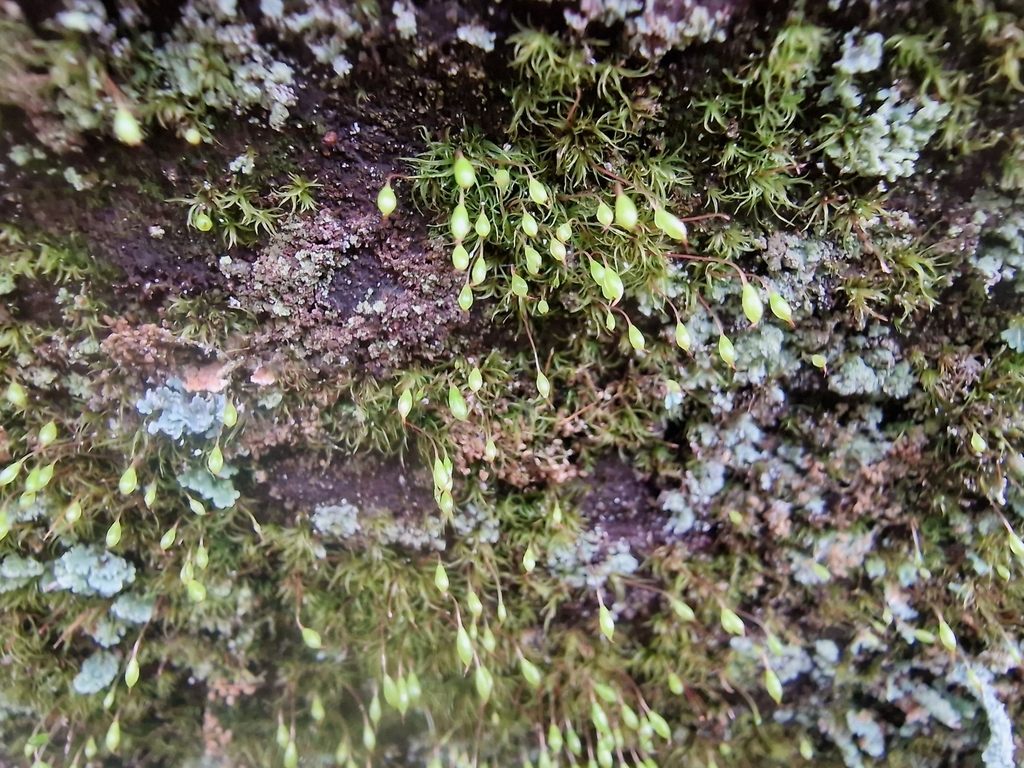
Hookeria lucens Shining Hookeria
A plant of shaded, moist, humid sites, found in flushes on woodland banks and on streamsides and riversides, of North and West (Atlantic Woodlands); but it is also found in the High Weald
Those who have not encountered Hookeria before are wowed by its beauty and distinctiveness but because it’s very complanate and quite large, may assume it is a leafy liverwort. However, it lacks complicate-folded leaves, underleaves, trigones, oil bodies and any of the other features that are often present in the leafy liverworts.BBS Hookeria luncens
Orthodontium lineare Cape Thread-Moss
Pogonatum aloides, Aloe Haircap
Although very common in the uplands, the species has declined in C and E England from the loss of suitably open acid substrates, although many of these loses are of long standing.BBS Pognotum aloides
This moss emerges from a low, persistent, vividly green protonemal felt.
The protonema is the first part of the moss that develops from the germinating spore. Its filamentous form is remarkably similar to green algae. This photosynthetic colonizer lies flat against its substrate, making it seem as if the rock or tree it grows on is painted green. University of British Columbia Introduction to moss morphology
Mala Rhizomnium punctatum Dotted Thyme-Moss
Its shoots come in two forms – sterile and fertile. The sterile shoots of Plagiomnium lie flat or low to the ground (procumbent or arcuate) and look somewhat flattened (complanate). Stem leaves are toothed. Sterile shoots of Rhizomnium are erect, and stem leaves are entire. In both genera the fertile shoots are erect.
Plants are dioicous and male plants of R. punctatum are particularly striking and resemble small flowers
This is one of the commonest leafy liverworts to be found on rocks and other surfaces in watercourses and lakes where it usually grows at least partially submerged. You’re unlikely to find it in chalk or limestone streams or in other base-rich water as it prefers water with a pH of 6.5 or less.BBS Chiloscyphus polyanthos
Diplophyllum albicans White Earwort
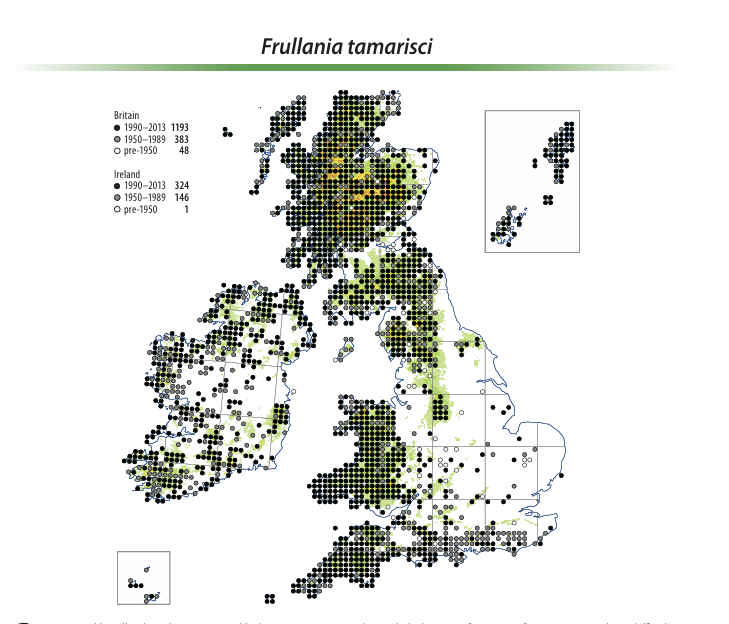
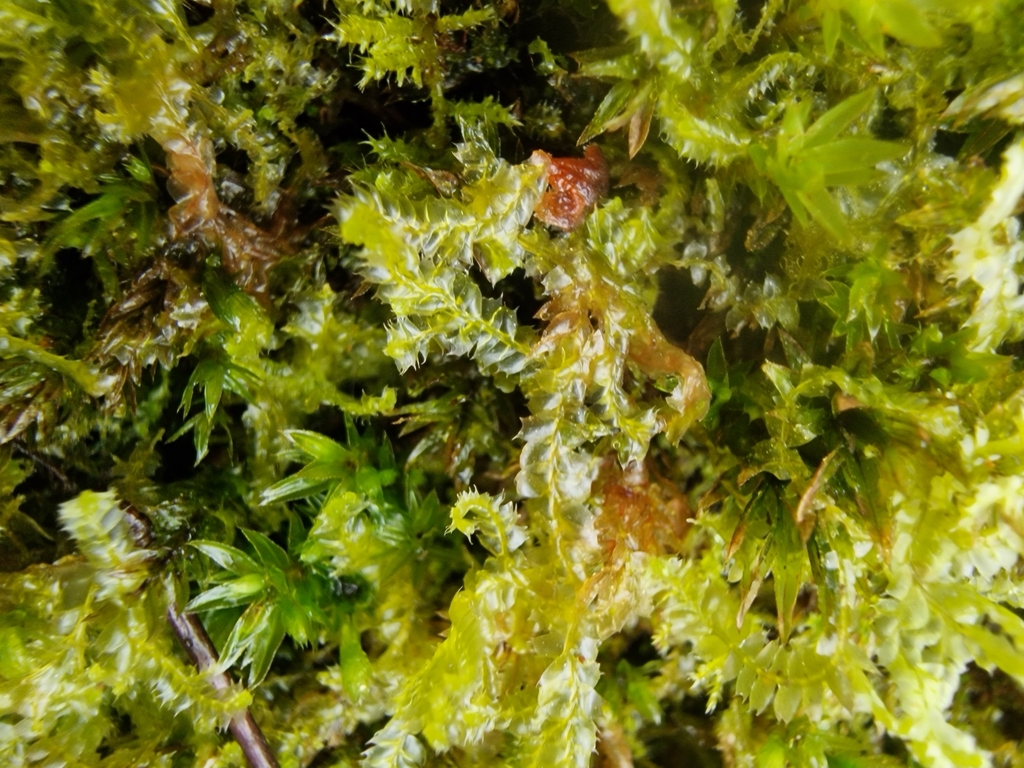
Frullania tamarisci Tamarisk Scalewort
Growing on an Oak.
Frullania dilitata, Dilated Scalewort, is very common epiphytic liverwort in Sussex, and can bee seen on may trees in most landscape types in Sussex.
Ftamarisci; it is primarily a liverwort of western Atlantic woodland, and is rare in Sussex. Ftamarisci has more “body” and grows slight “out” of the tree; whereas F. dilitata grows flat and is adpressed to the tree trunk.
It is a humidity-demanding species and sheltered valley or ravine woodlands in western areas will often have a substantial population on trees and boulders. It’s usually easily picked out from F. dilatata by its glossiness (when dry) and by the way the shoots grow away from the substrate.BBS Frullania tamarisci
Lophocolea bidentata Bifid Crestwort
This is likely to be the first leafy liverwort you will encounter as a beginner, since it is very common and occurs in almost any habitat. Look at it closely, the first few times you find it as it is very beautiful and has some interesting features. All of the leaves are conspicuously bilobed and of a pale green, translucent hue. The underleaves are large, bilobed and with each lobe itself bearing a side-tooth.BBS Lophocolea bidentata
Lophozia ventricosa Tumid Notchwort
Common in Sussex in High Weald ghylls, but not anywhere else in Sussex
Aery common species wherever acid soil or peaty ground is found, so rare only in the more calcareous lowlands of England and Ireland.BBS Lophozia ventricosa
Male Metzgeria furcata Forked Veilwort
Forked Veilwort is an extremely common epiphytic liverwort in Sussex, and can bee seen on many trees in most landscape types in Sussex.
Metzgeria furcata is dioicous and so plants will either be male or female but not both. Reproductive structures are found in bud-like, highly modified branches that more or less enclose the archegonia (female) or antheridia (male) on the underside of the thallus. Male branches have a costa, which gives them a stripy appearance.
Scapania undulata Water Earwort
Solenostoma gracillimum Crenulated Flapwort
Thalloid Liverworts
Conocephalum conicumsensu lato, Great Scented Liverwort
This, along with Pellia epiphylla, Common Pellia and Pellia endiviifolia, Endive Pellia, are extremely common in Sussex often on the banks of ghylls and streams in the low or high weald
The cone shaped structures are the female archegonia, multicellular structure or organ of the gametophyte phase liverworts of certain producing and containing the ovum (female gamete) The corresponding male organ is called the antheridium. . Archegonia are typically located on the surface of the plant thallus. Conocephalum conicum is complex (aggregate) of various similar species.
Pellia epiphylla, Common Pellia
This is hard to distinguish from Pellia endiviifolia, Endive Pellia; it is easier to distinguish between the two in winter when Endive Pellia had “frilly” edges to its thalli.
Pellia endiviifolia, Endive Pellia
This is a picture of Endive Pellia from Tilgate Forest, not the location visited on 23.03.24; because it clearly shows the frilly thalli.
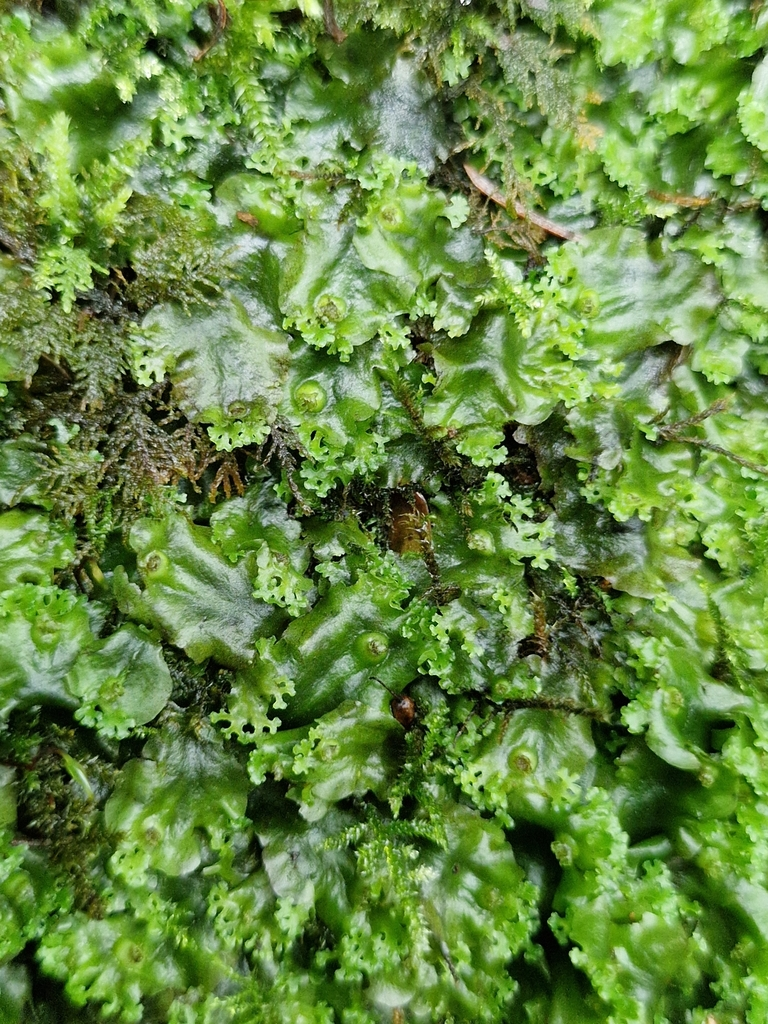
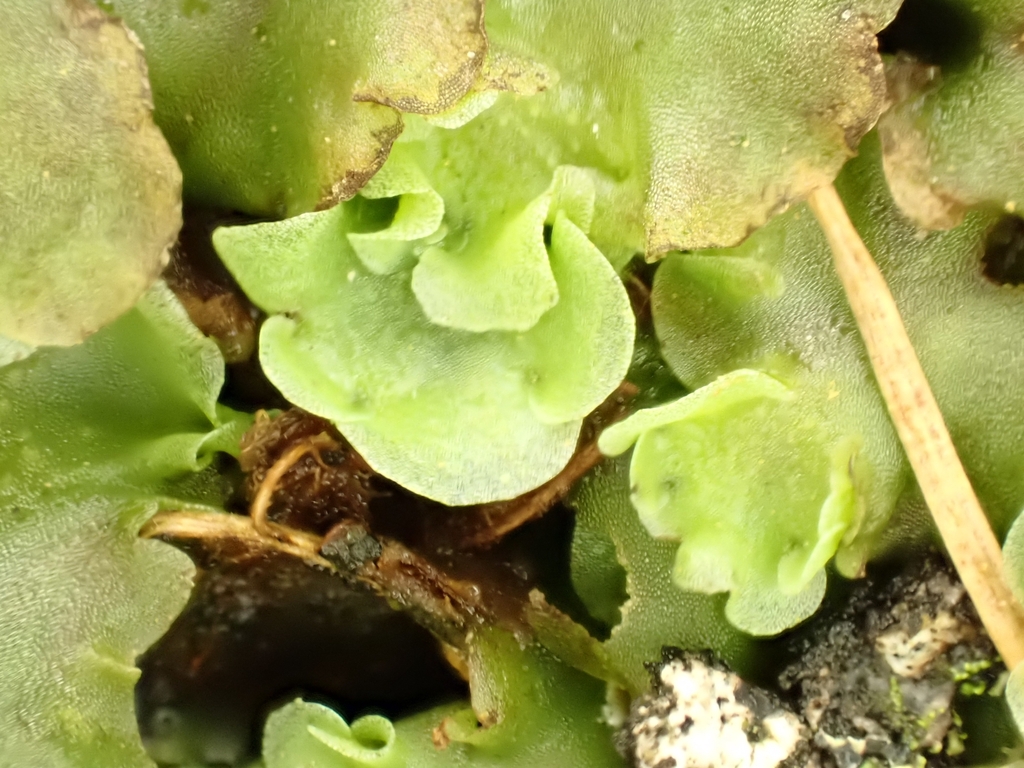
Pellia neesiana Ring Pellia
One of two dioicous species of Pellia – the other is P. endiviifolia – and there is no problem identifying it with confidence when female thalli with more or less untoothed involucral flaps are present, usually in spring.
Male plants are a little more challenging. If antheridial pits extend nearly to the apex of the thallus and there is no involucral flap [after fertilization, the capsule starts to develop and is protected by an involucre] then it is unlikely to be P. epiphylla, our only monoicous species . But how to separate from male P. endiviifolia if the thalli are unbranched? There are two good ways. Firstly, the antheridial pits [antheridia are haploid structure or organ producing and containing male gametes (sperm)] of P. neesiana always look very conspicuous because there are raised, papilliform cells surrounding the pit aperture (see Claire’s excellent close-up images of this feature below). P. endiviifolia does not have these conspicuous cells and so its antheridial pits are less obvious.BBS Pellia neesiana
N.B. Monoecious bryophytes (and other plants) have have both male and female sex organs. Dioecious species have only one (either male or female) sex organ.
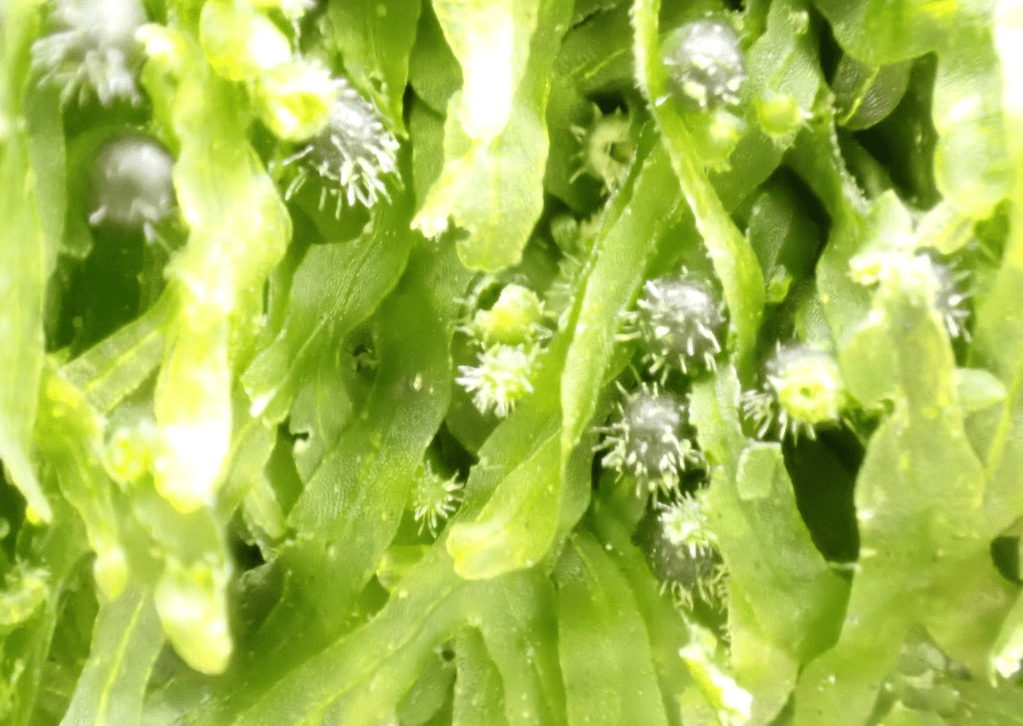
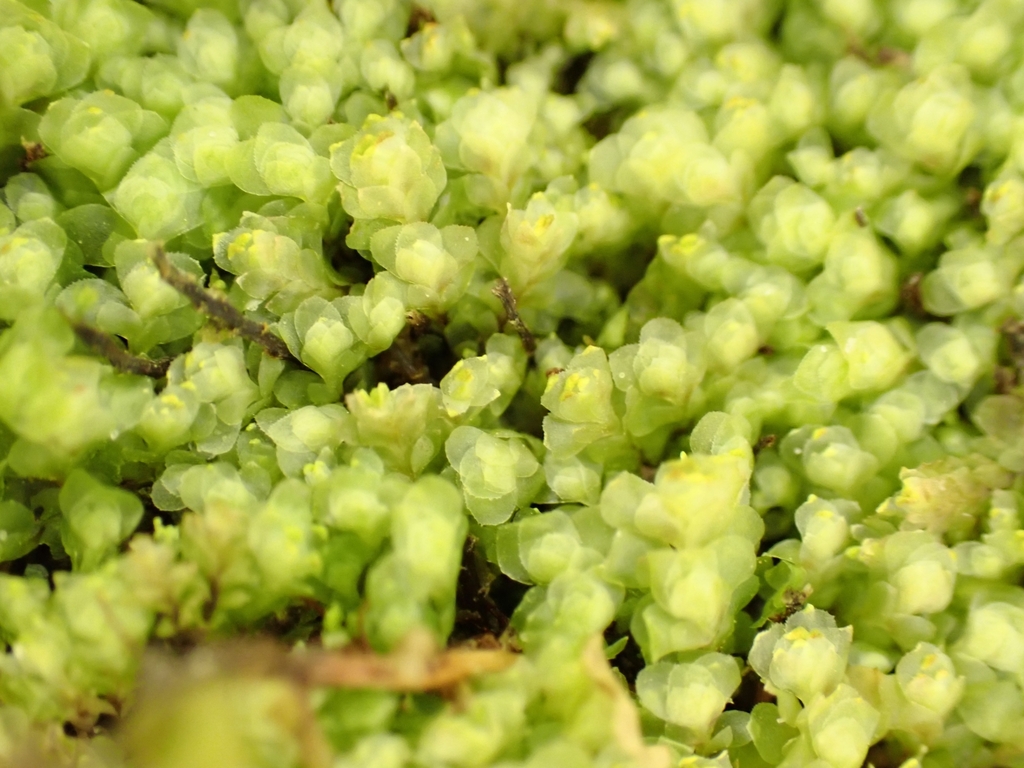
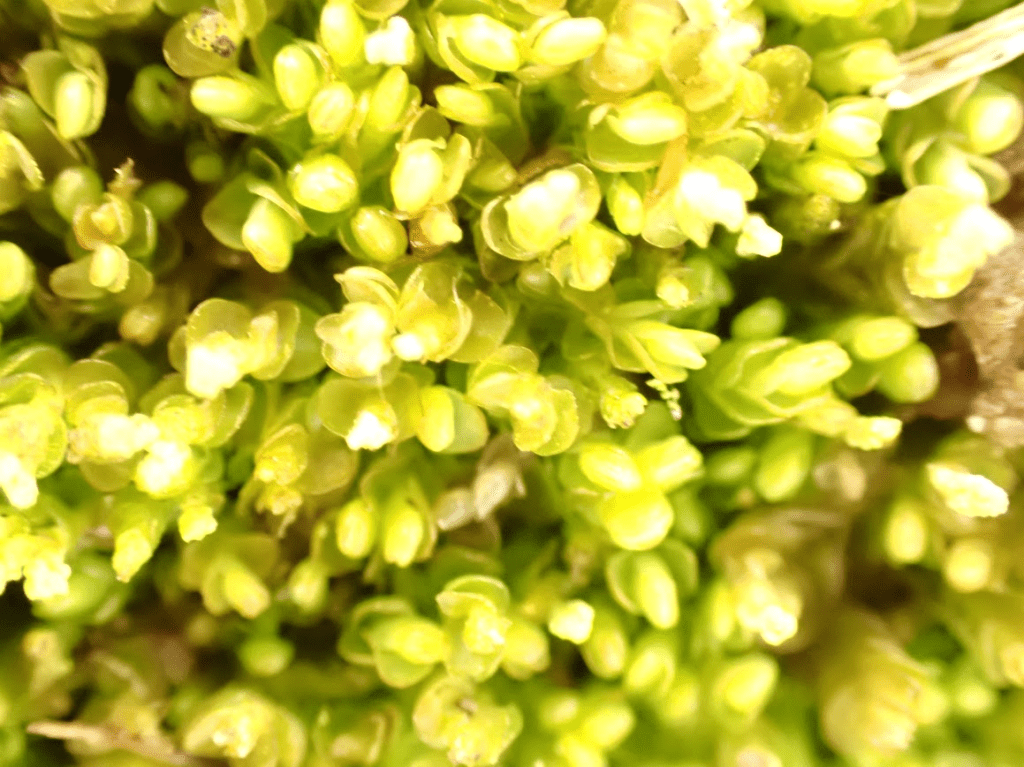
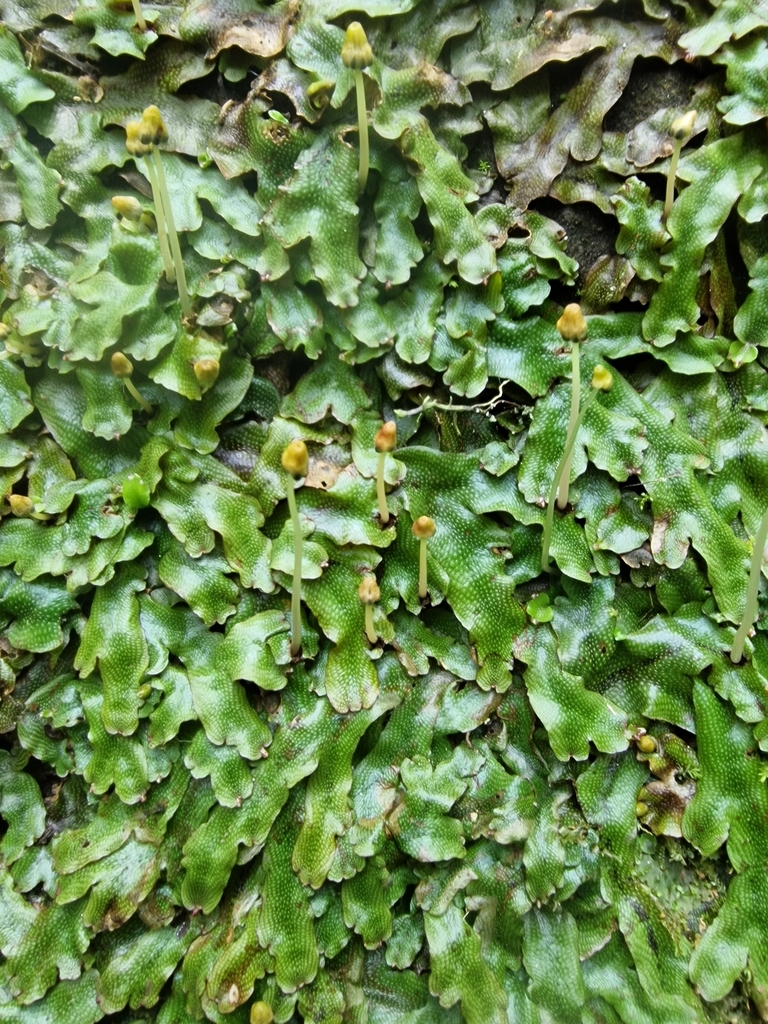
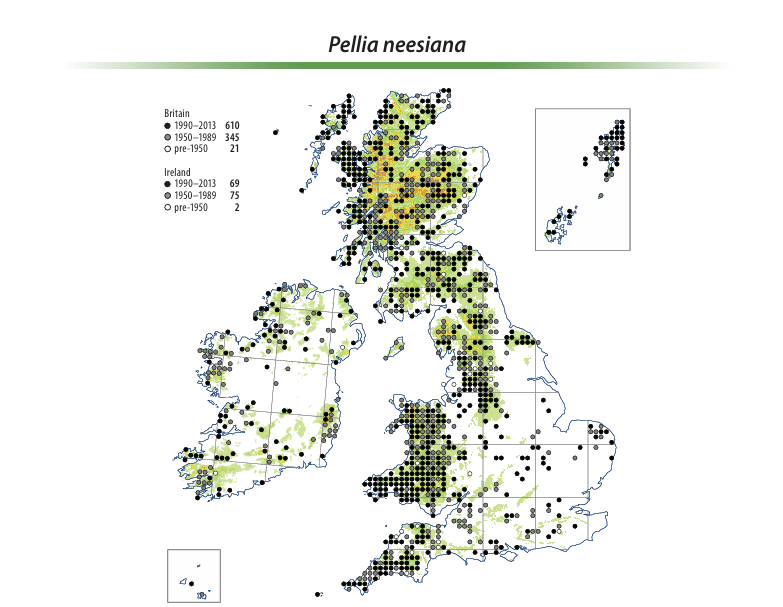
Pellia neesiana is much rarer in Sussex that the other Pellia spp. and is predominantly a liverwort of Western Atlantic woodland; it is only found in Sussex in the high weald.


 Sim's Nature Notes