On this Tuesday, I was expecting to go to the southern Borrowdale woods that I hadn’t been able to see the day before, due to the bus being cancelled all day due to flooding. But the bus to Seatoller was still cancelled again due to flooding, so I decided to take the bus to Ambleside to change busses for Skelwith Bridge, where there was some interesting woods; but the bus to Skelwith Bridge was also cancelled due to flooding. The only place I could go to to see some woods, was to take the bus that goes back to Keswick and get off at Rydal.
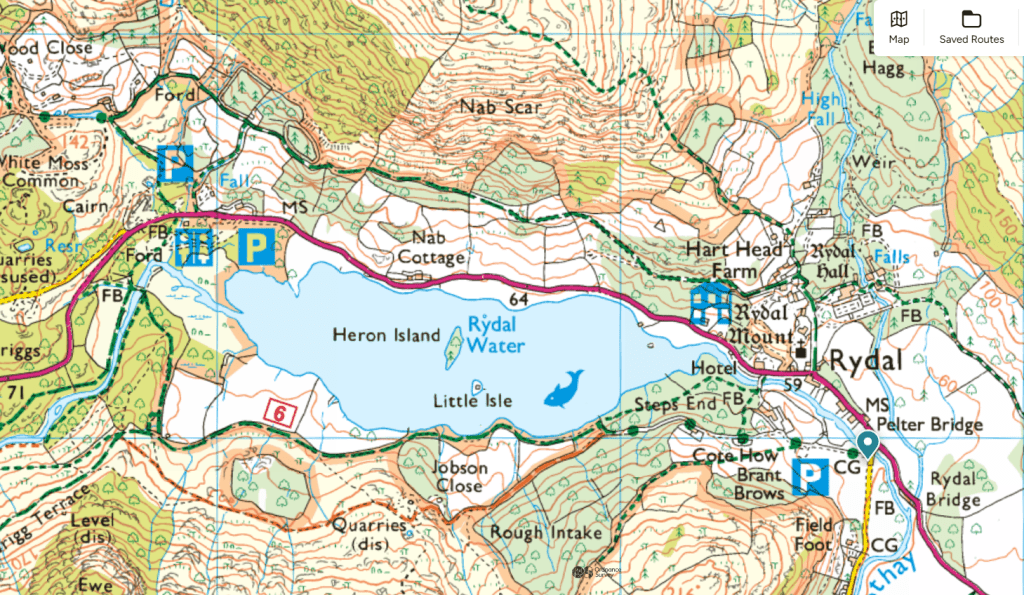
Rydal has Wordsworth’s House, the famous Rydal Falls and some unnamed broadleaf woodlands that I had noted on the OS map that could be interesting. Some of the most beautiful trees I have seen have been in woods unnamed on maps.
First, I visited the National Trust’s Dora’s Field; a field named by William Wordsworth after his daughter who died at a young age.
Next to Rydal Church stands a field known locally as ‘The Rashfield’. This was originally a wet field where rushes (“rashes”) grew and it later became known as ‘Dora’s Field’. The field was purchased in 1825 by William Wordsworth.
Provoked by the threat of eviction by his landlady Lady Anne Le Fleming who planned to replace the Wordsworth family with a member of her own family, Wordsworth bought the Rashfield, drained it and declared that he intended to build on it. … but Lady Anne withdrew the threat of eviction & Wordsworth remained at Rydal Mount until his death there in 1850.
Having already lost two children in infancy Wordsworth and his wife suffered a third blow when Dora, her father’s favourite, died aged 43 of tuberculosis in 1847. The poet never recovered from the loss of this daughter and, after Dora’s death Wordsworth, his wife Mary, sister Dorothy and a gardener planted the daffodils as a permanent memorial. A Rydal Guide: Dora’s Field
Dora’s field contained some beautiful coppiced and pollarded Sessile Oaks

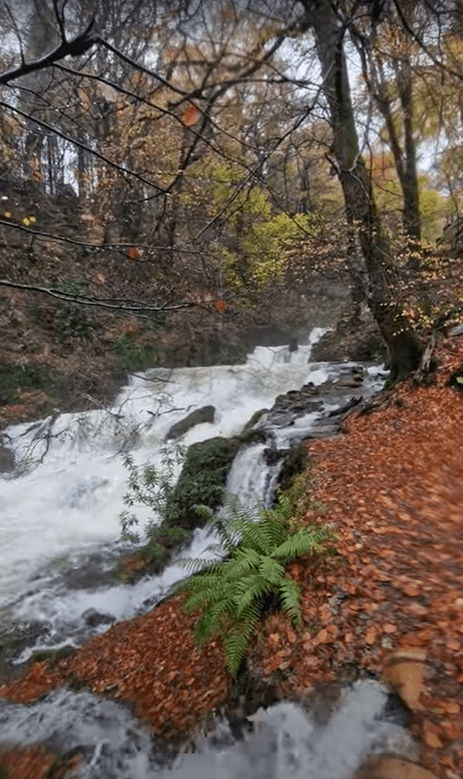
Then I walked about 500m to visit the Rydal Falls; in the woodland behind Rydal Hall. A few meters aways is Rydal Mount, the “cottage” in which Wordsworth lived. Rydal Falls and Rydal Mount were very popular destination for Victorian tourists
There is not anywhere in England a drive so full of that mingled natural and human interest which makes scenery so impressive. It is well-nigh impossible for sensitive minds not to feel something of ‘the light that never was on sea or land’ as they pass the thresholds of the good and great, whose thoughts have helped our England to be pure. In this coach drive to Keswick they not only go by the homes of the thinkers and poets and philosophers, but their foreheads feel the wind and rain that gave such freshness to the seers of the last generation; the sunlight on lake or mountain head that filled their minds with glory fills ours today. The woods and waterfalls that speak to us upon our way spoke also to them. We can in fancy see their familiar forms upon the road, and, as in eastern travels the ‘weli’ or way-side tomb made the journey’s stage rememberable [sic], so we find in this pilgrim stage through poet-land that the great dead lend it a kind of solemn sweetness, and the dust of two laureates hallows the wonder-giving way. Rawnsley, A Coach-Drive at the Lakes : Windermere To Keswick (1891) , pp. 3–4 quoted in Christopher Donaldson, Ian N. Gregory, Patricia Murrieta-Flores, Mapping ‘Wordsworthshire’: A GIS Study of Literary Tourism in Victorian Lakeland, Journal of Victorian Culture, Volume 20, Issue 3, 1 September 2015, Pages 287–307.
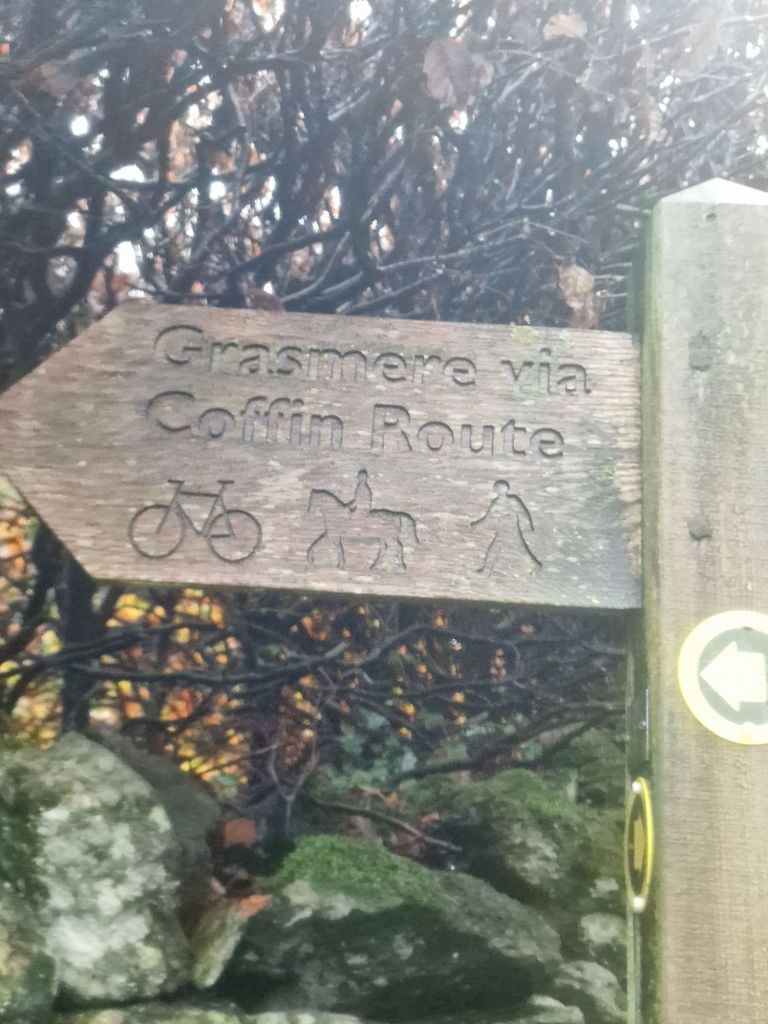
I then took the Coffin Road above Rydal Mount through the unnamed woods.
… at a higher-level running through the meadows of Rydal Park and across the slopes of Nab Scar, is an … [old] track. It dates back a very long time and is called locally, the Coffin Road, due to the fact that the only consecrated ground for burial in the area was the grave yard at St Oswalds in Grasmere and it was therefore used to convey coffins on their final journey. Visit the Lake District – Ambleside to Grasmere – ‘The Coffin Route’
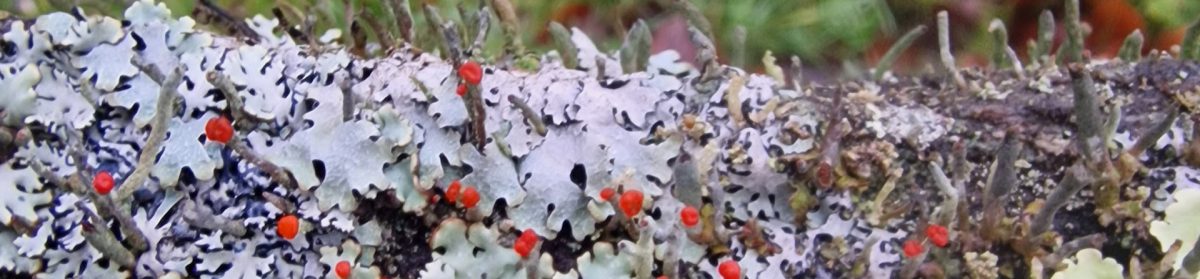
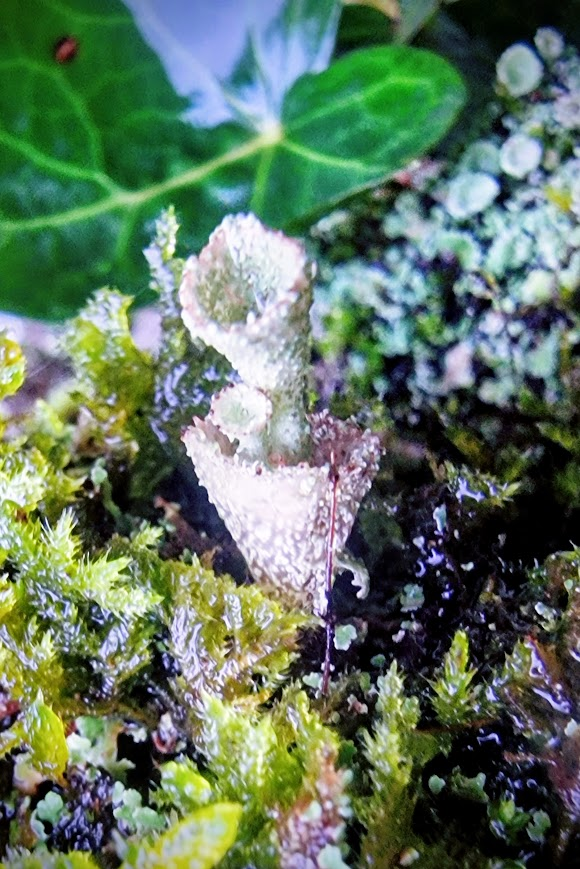
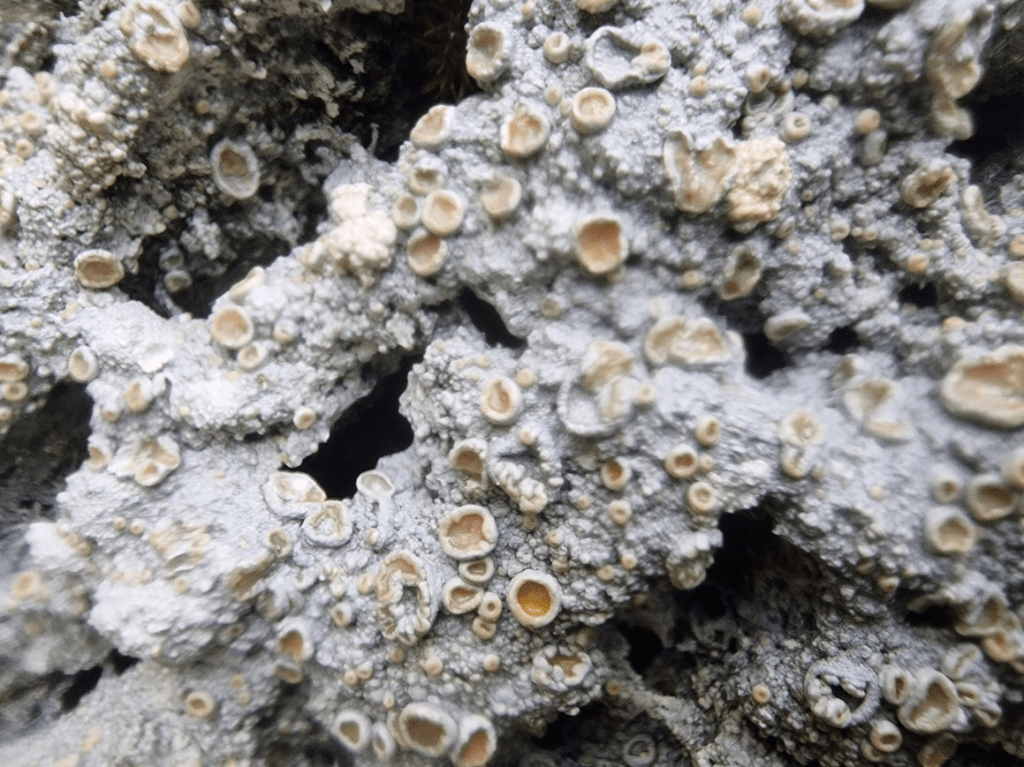
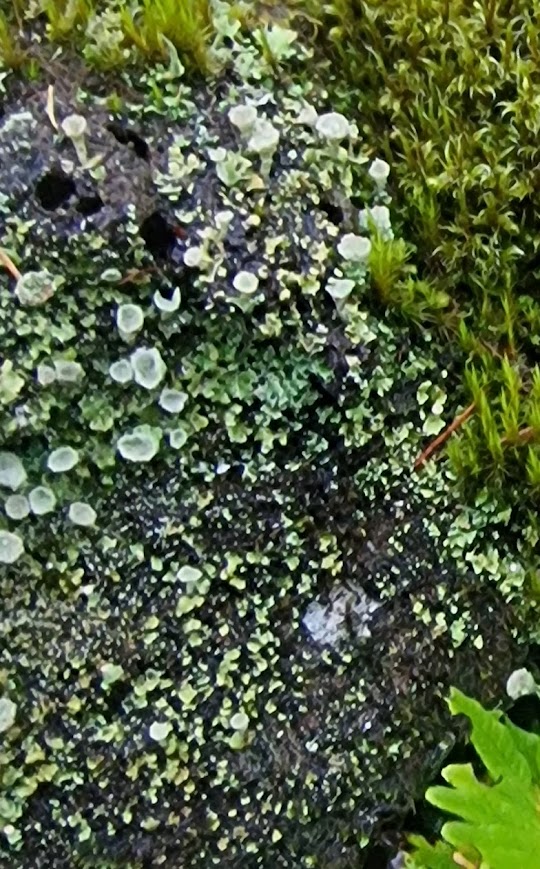
On a drystone wall next to the beginning of the route was this multi-cup “Pixie Cup” Cladonia sp. lichen, possibly C. chlorophaea s.l. (one of the C. chlorophaea aggregate). It was a veritable “Pixie Champagne Fountain”. Maybe a Pixie Wedding occurred there.
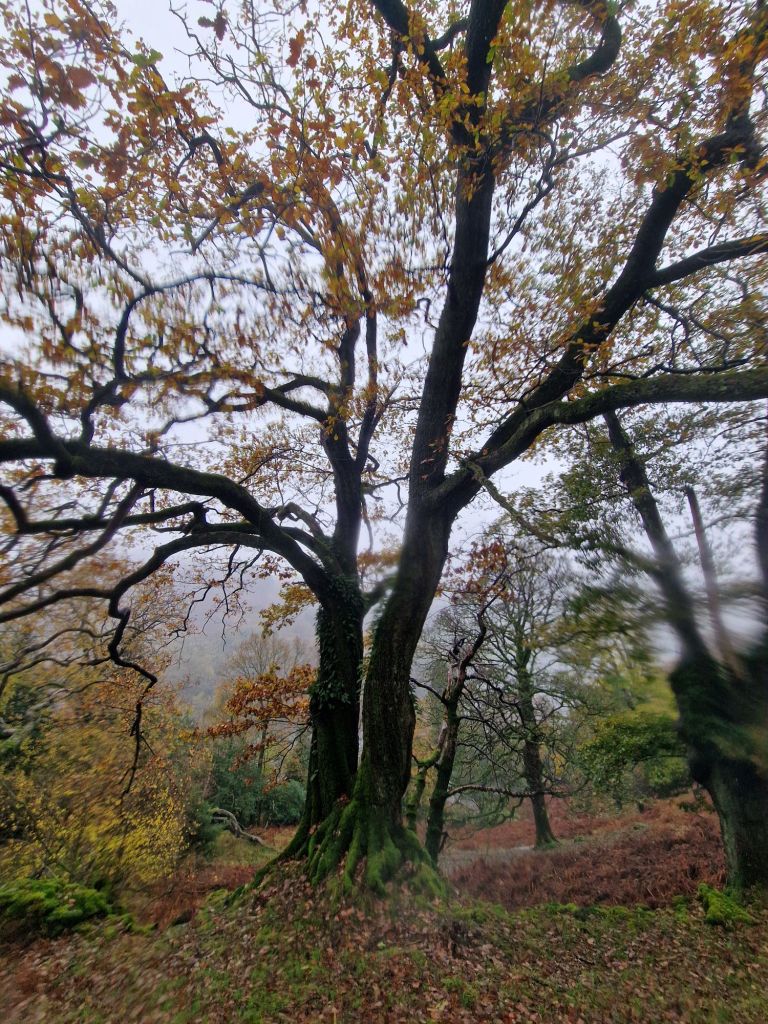
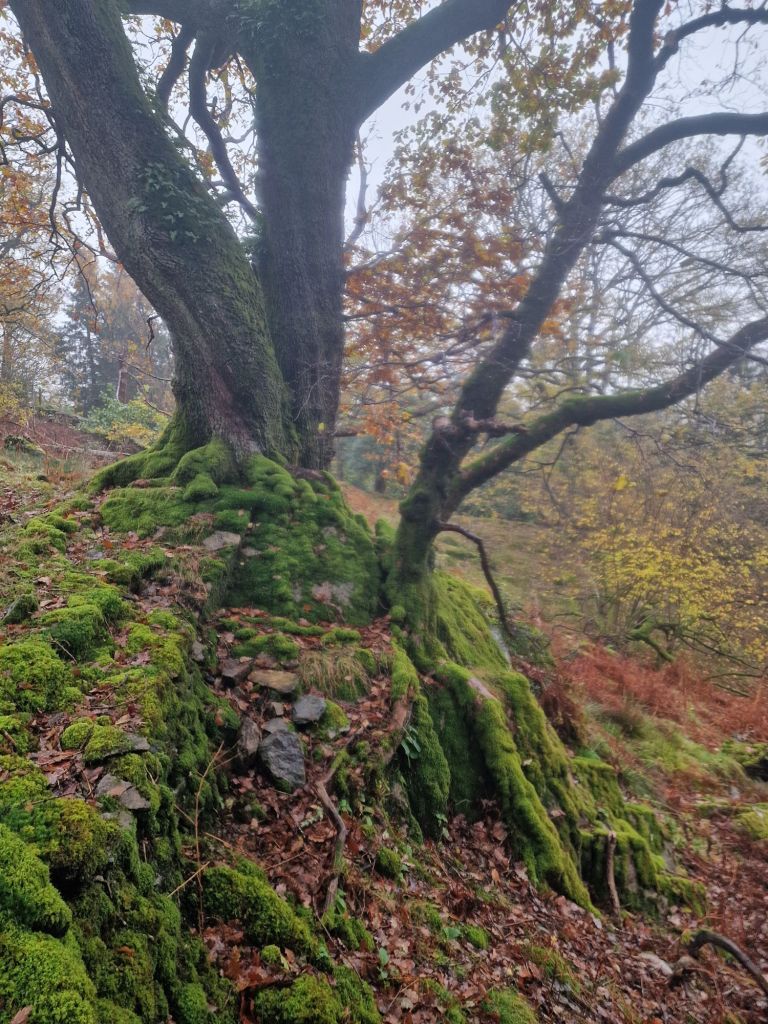
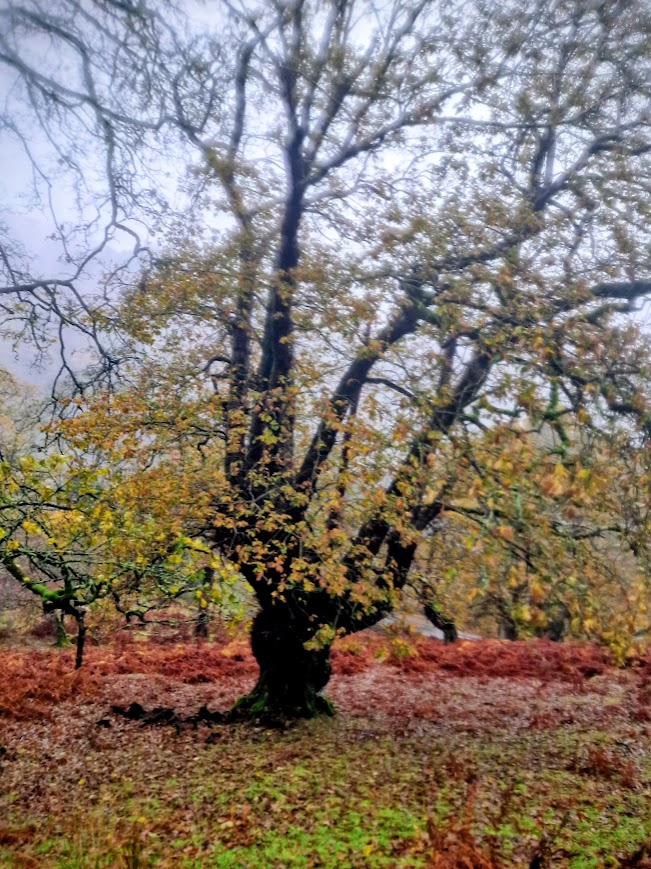
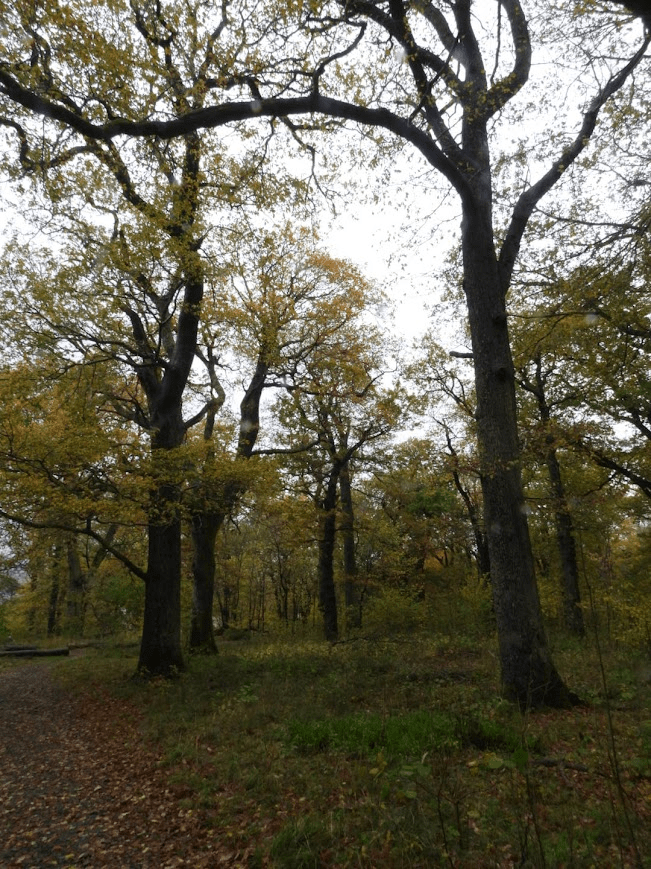
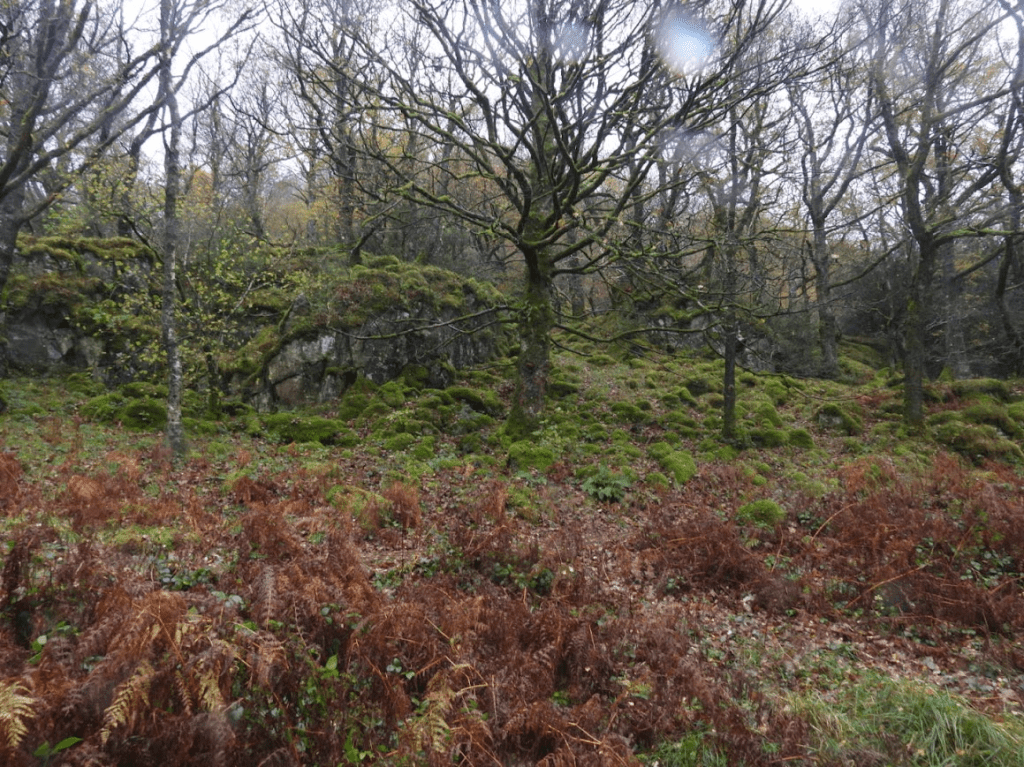
The pollarded Sessile Oaks the wood unnamed on the OS map; this looks like pasture woodland but I can find out nothing about this woodland on line

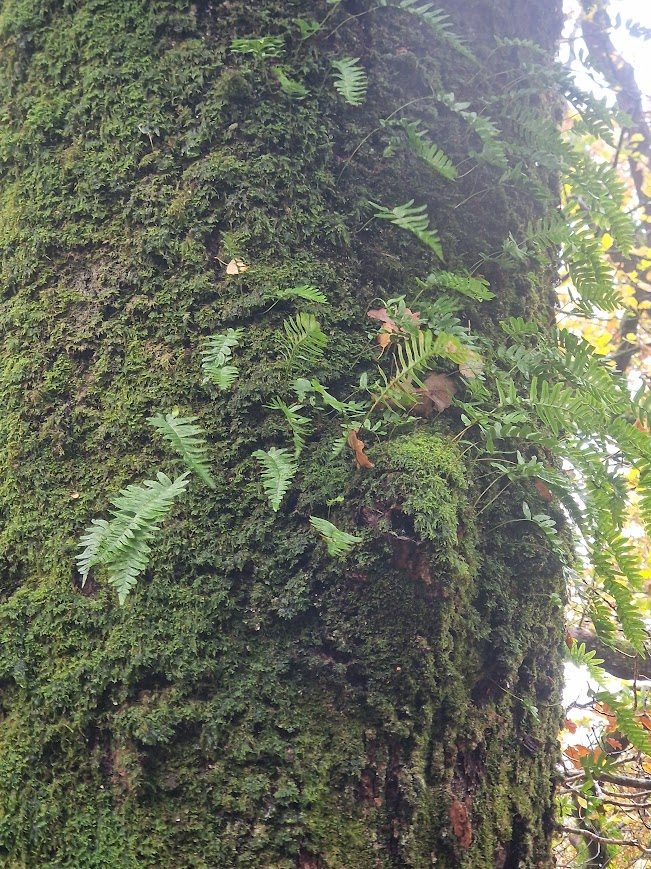
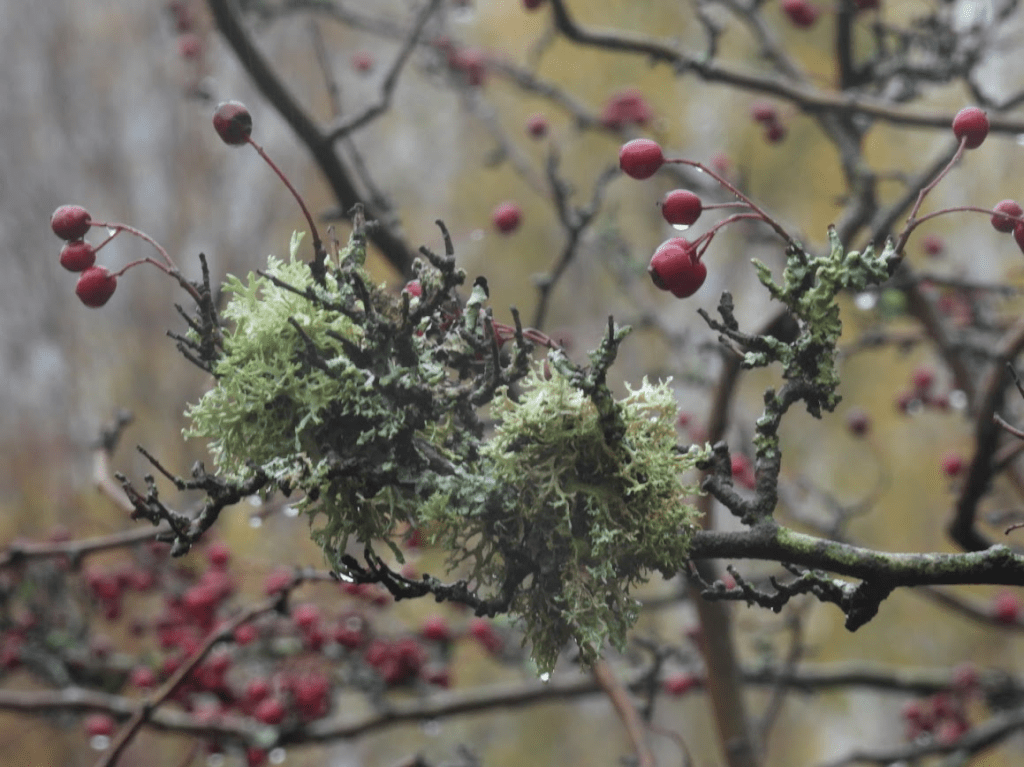
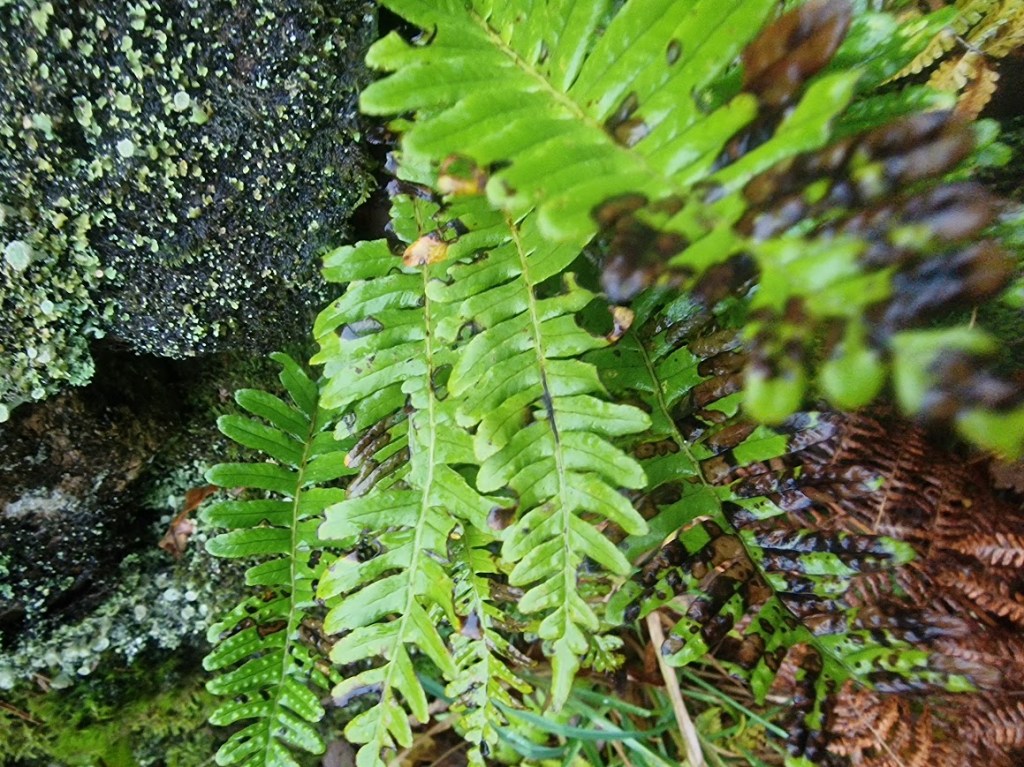
This Hawthorn had epiphytic Polypody fern
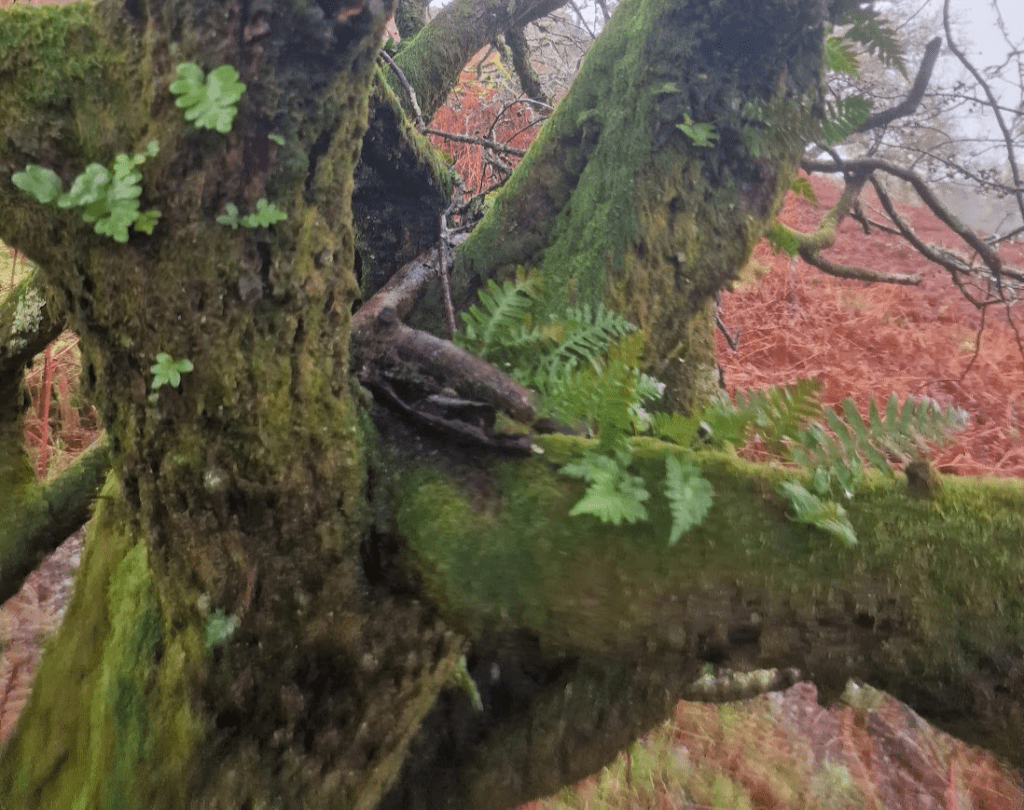
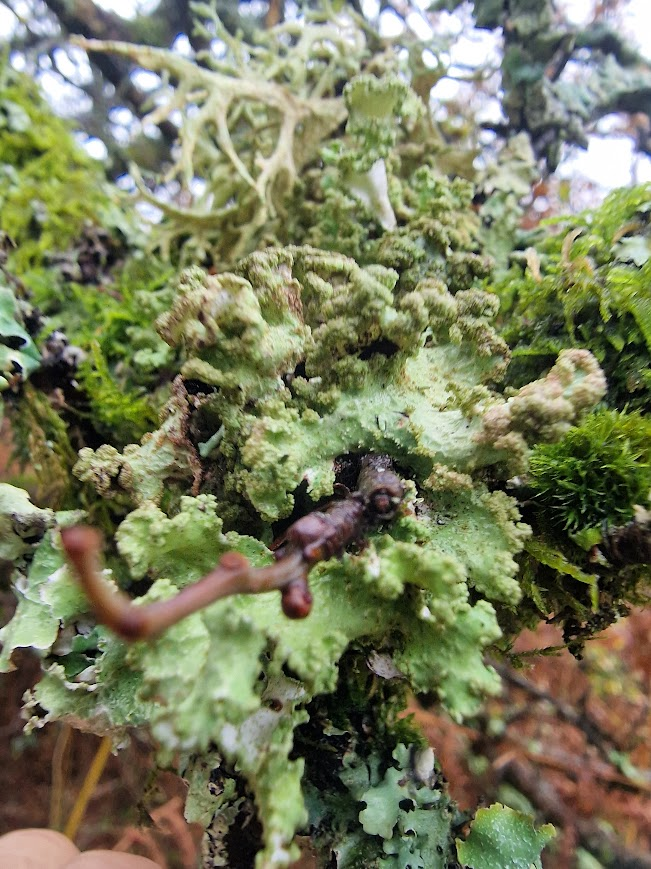
and some beautiful epiphytic lichens
Ramalina farinacea
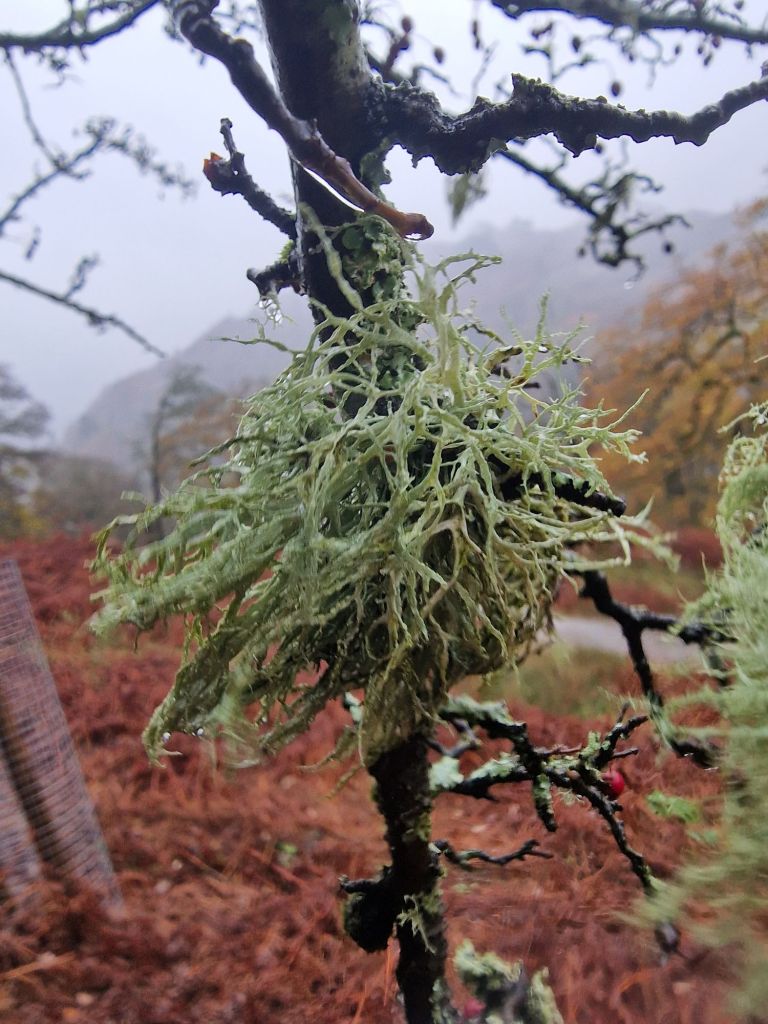
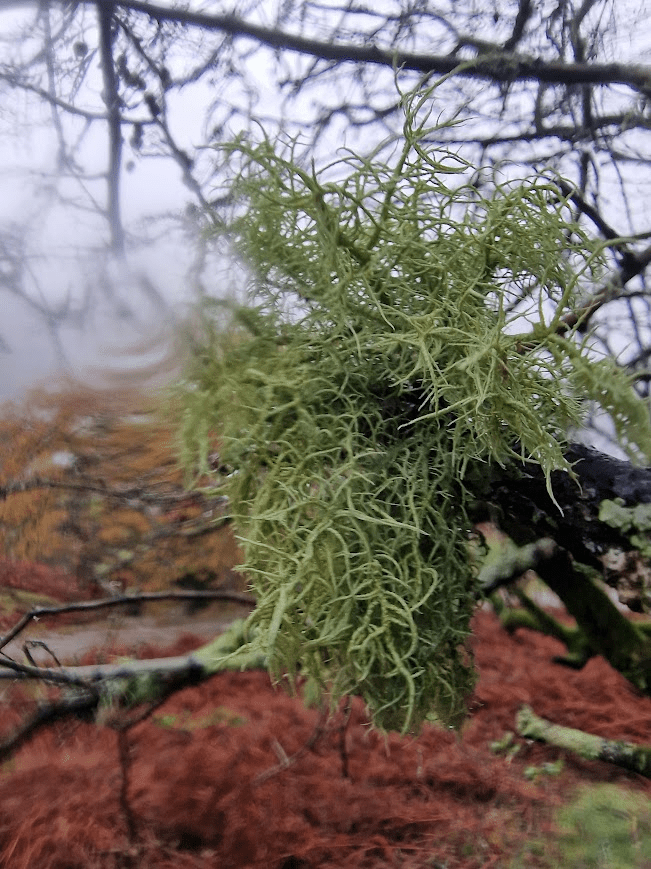
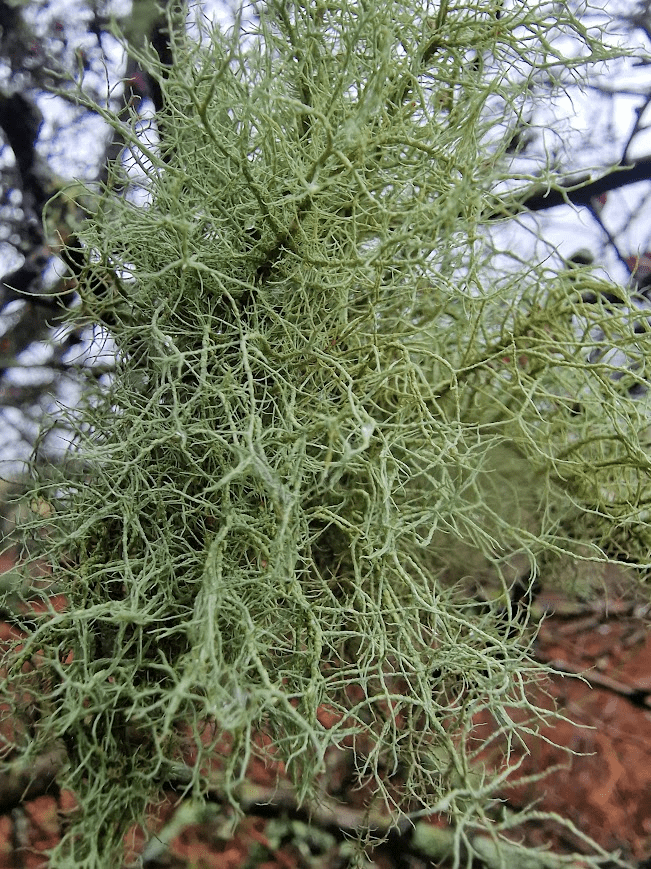
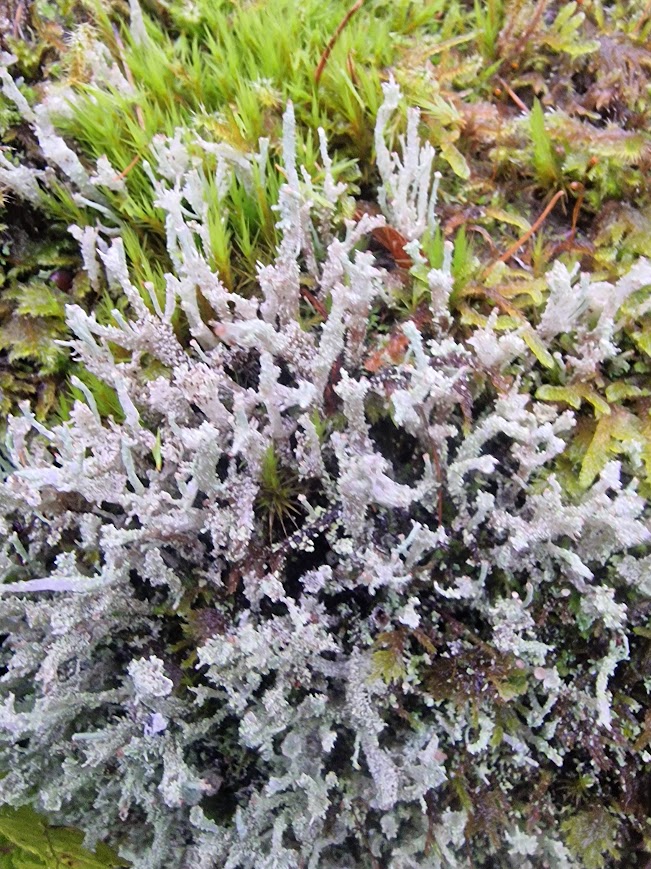
Ramalina farinacea above can look very similar to Usnea (beard) lichens; the way to spot R arinacea is that it has prominent flour-like (farine (French) flour in farinacea) blobs (soredia) on its lobes; Usneas mostly mostly don’t have soredia, but some do, like Usnea subfloridana. Lichen are just hard.
Usnea subfloridana
Usnea ceratina
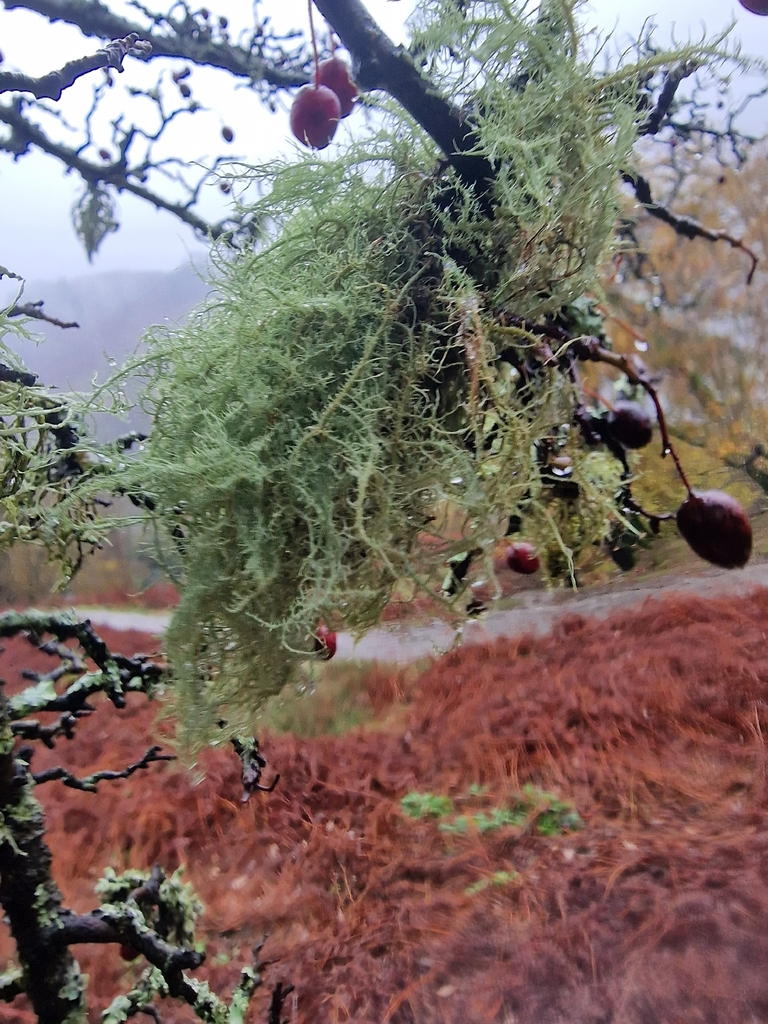
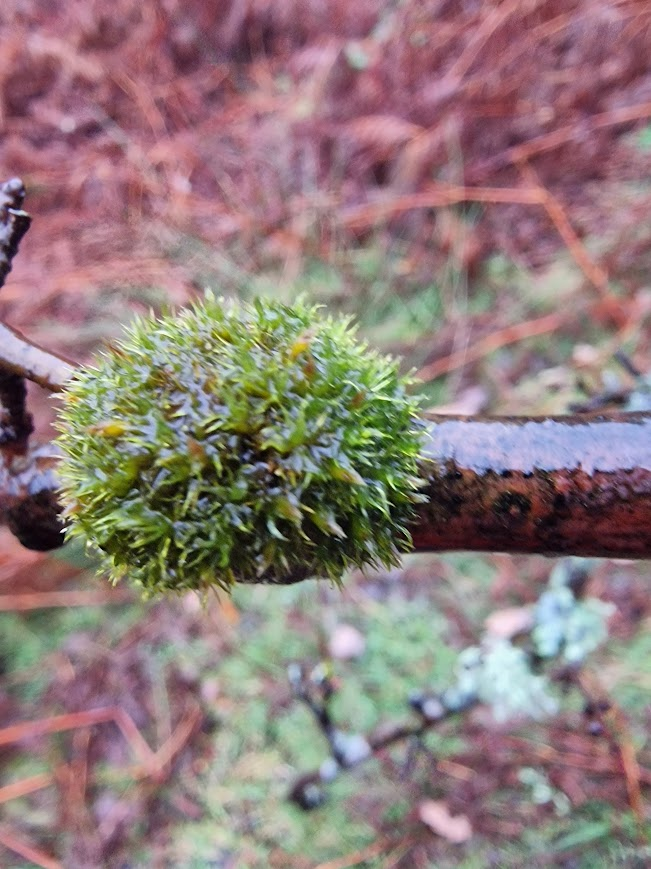
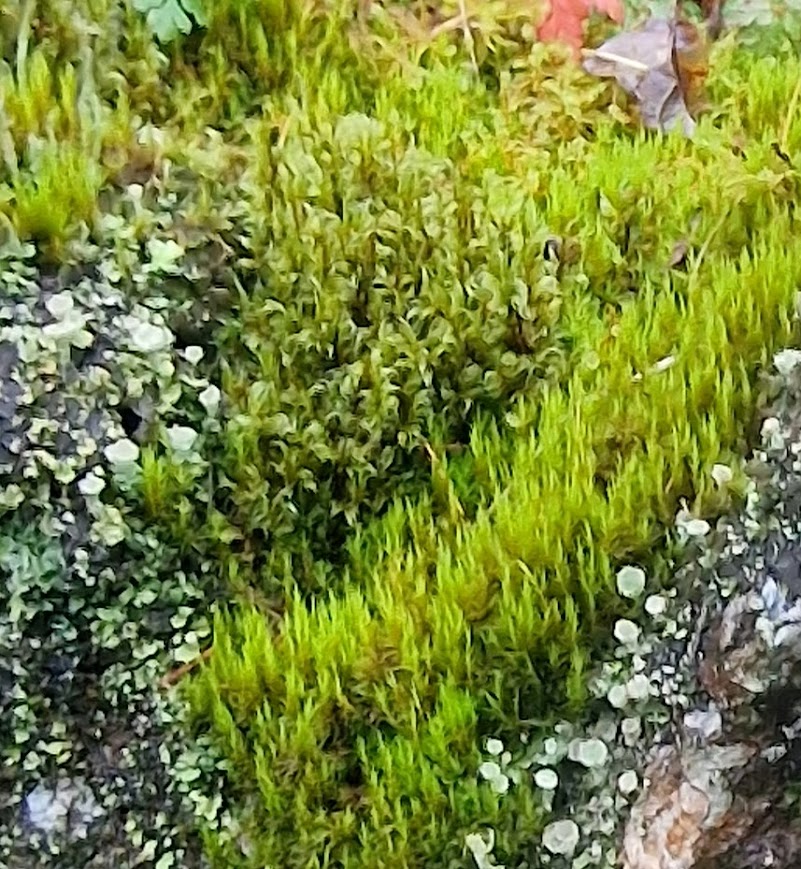
and this rain-soaked moss, Ulota bruchii. Bruch’s Pincushion
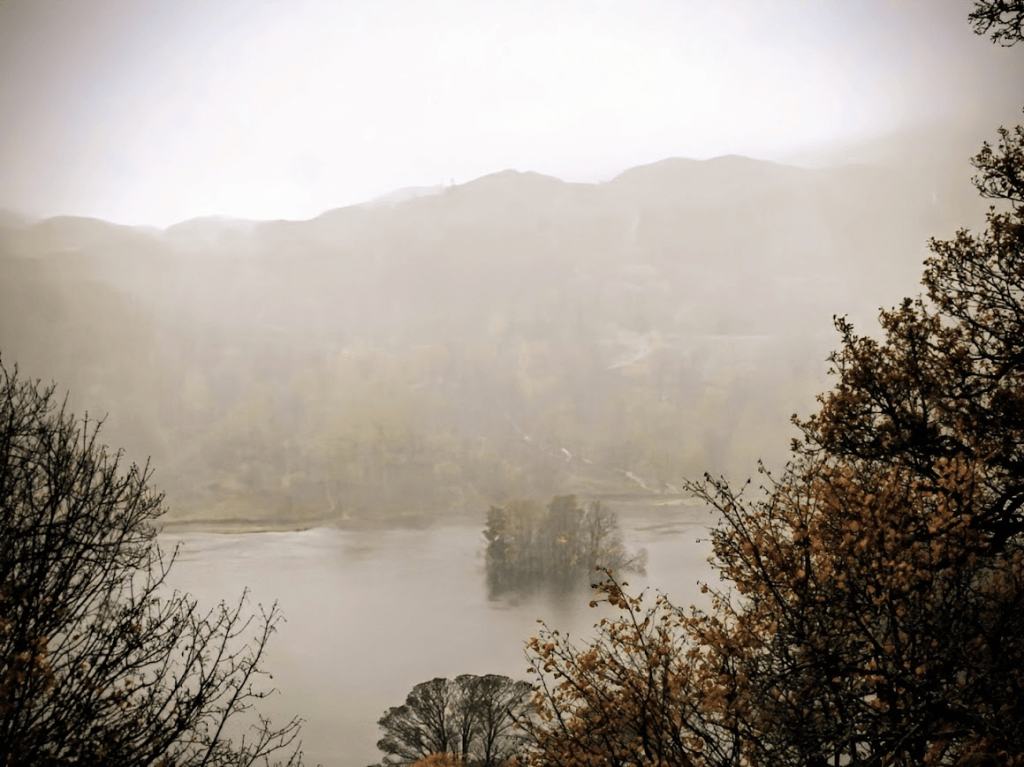
From the path it appeared as if Little Isle in Rydal Water was being engulfed by the rising water of the lake, like the medieval French legend of Ys, which was engulfed by the sea and rises occasionally; beautifully evoked in Debussy’s La Cathedrále Engloutie prelude Click: La Cathedrále Engloutie to listen.
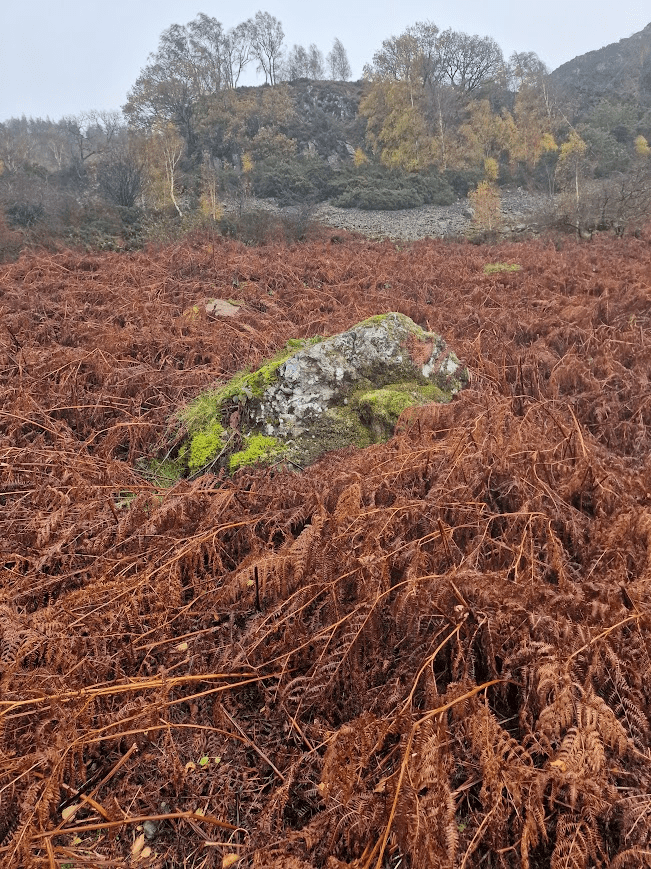
I then walked on further west, along a dry stone wall above woodland (unnamed) under the fell Lord Crag, with fabulous views of Rydal Water

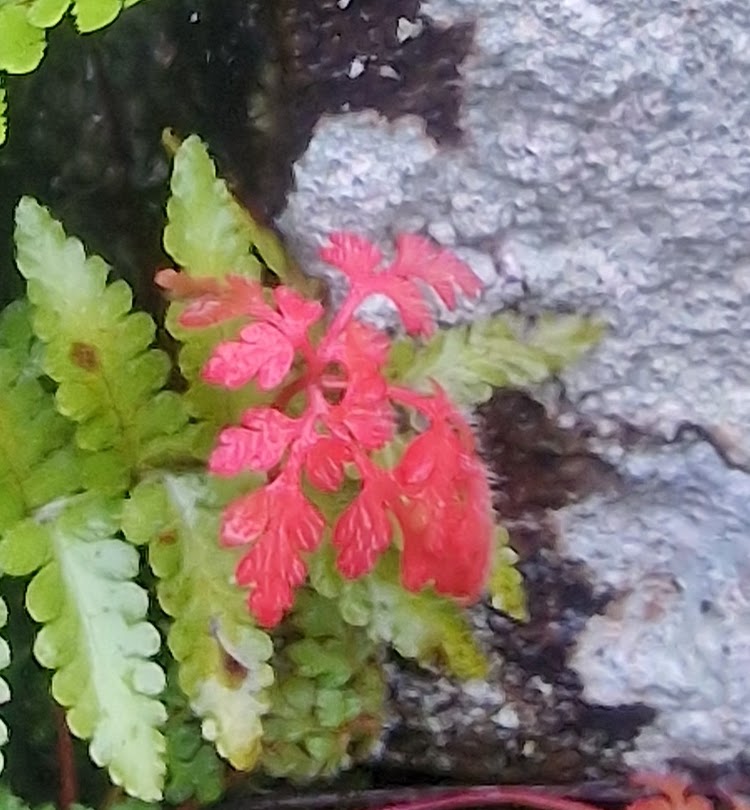
The very red apothecia (fruiting bodies) of this Peltigera sp. lichen, poss. P. horizontalis, really stood out on a dark and rainy afternoon on the very wet dry stone wall

Looking up Lord Crag, pollarded Sessile Oaks. The spots are rain drops on my camera lens
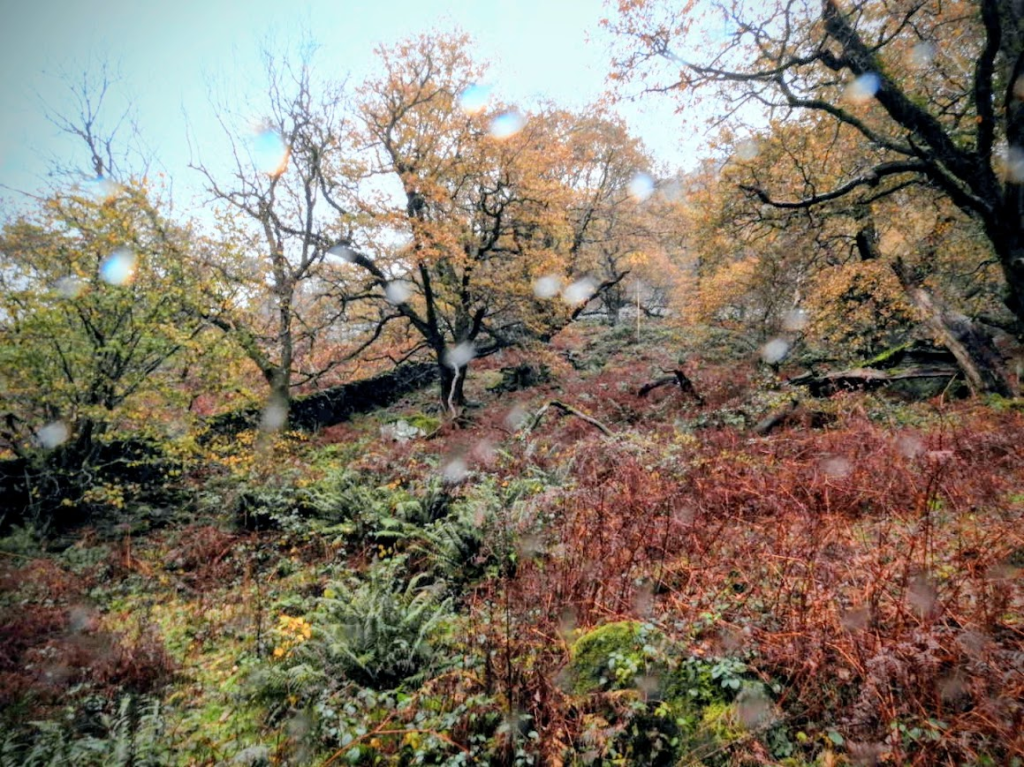
Theses lonely oaks on the foothills of Lords appear “wild”; but pollarding is a human intervention; so even these “wild” veteran trees have been managed across time.
Water pouring over a dry stone wall. It rained all day this Tuesday as it did the day and weekend before
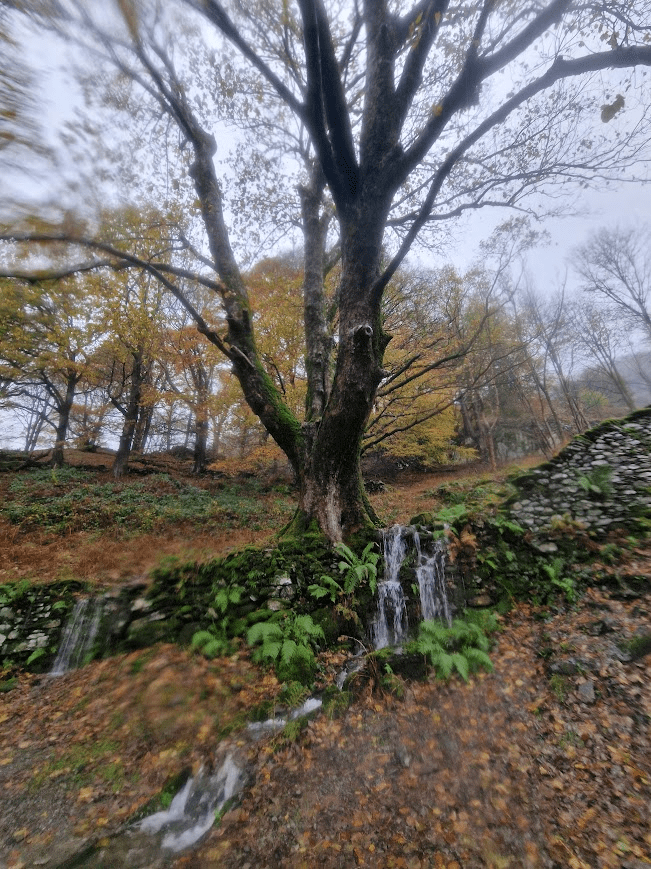
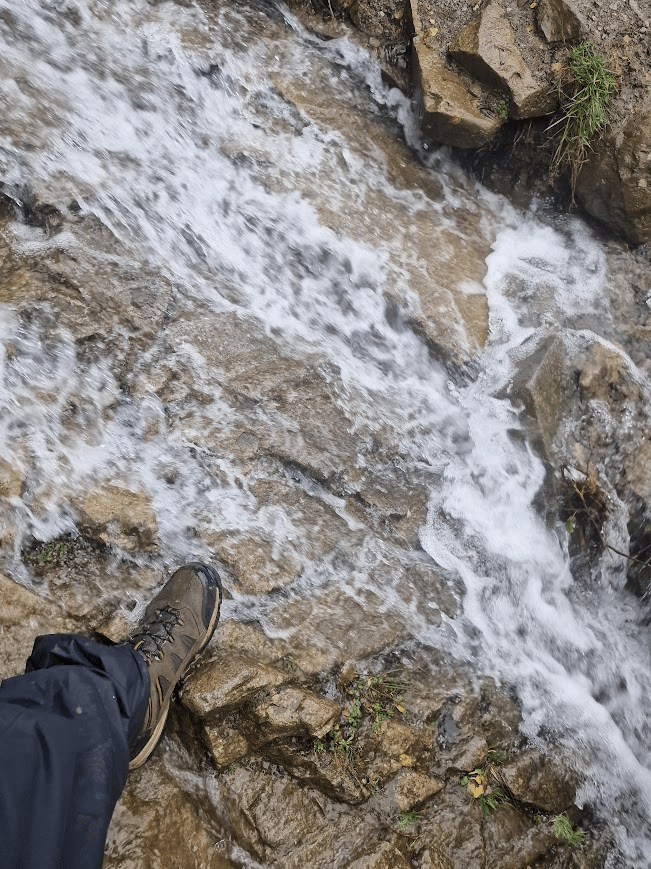
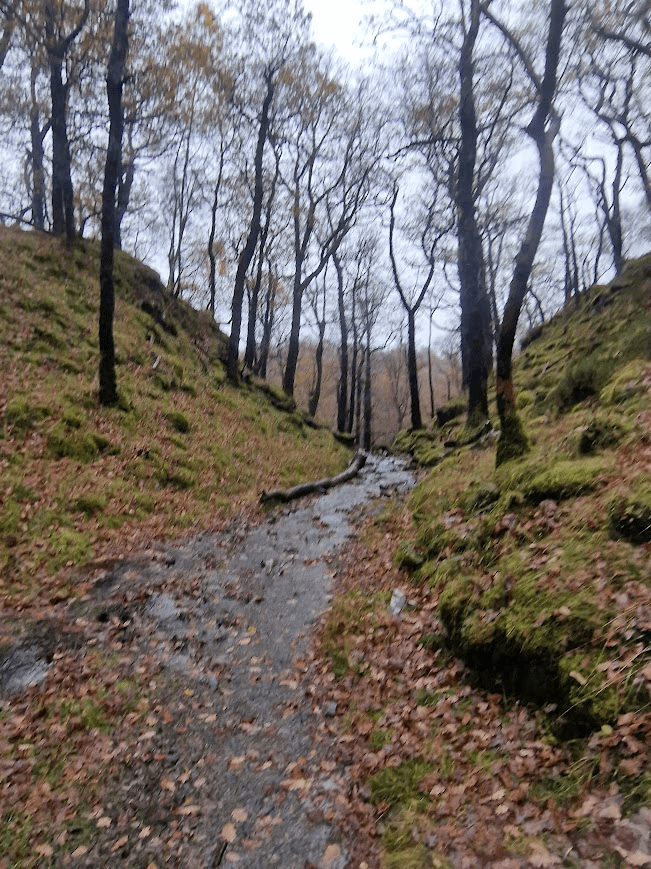
This is the public footpath down to Rydal Water not a waterfall
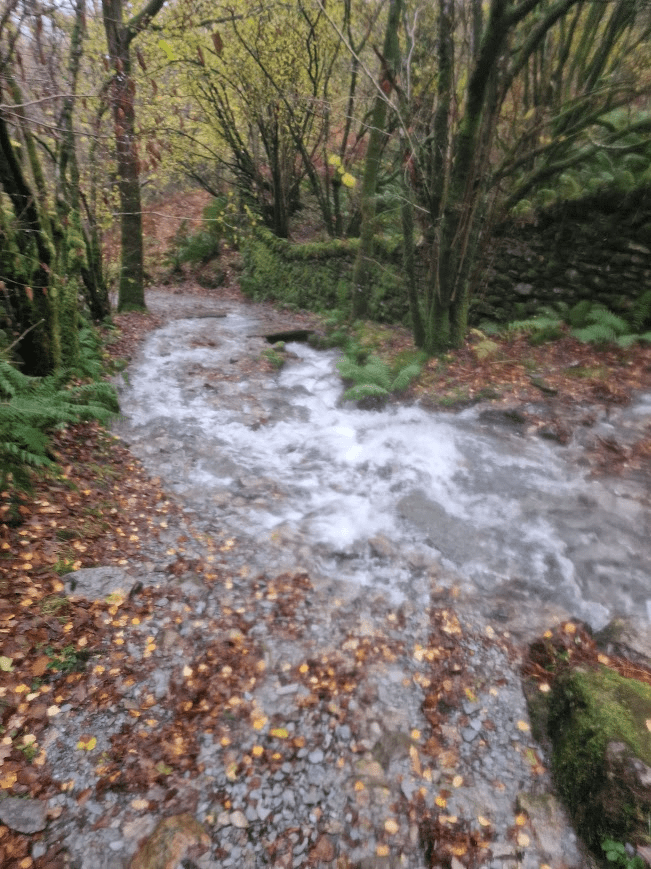
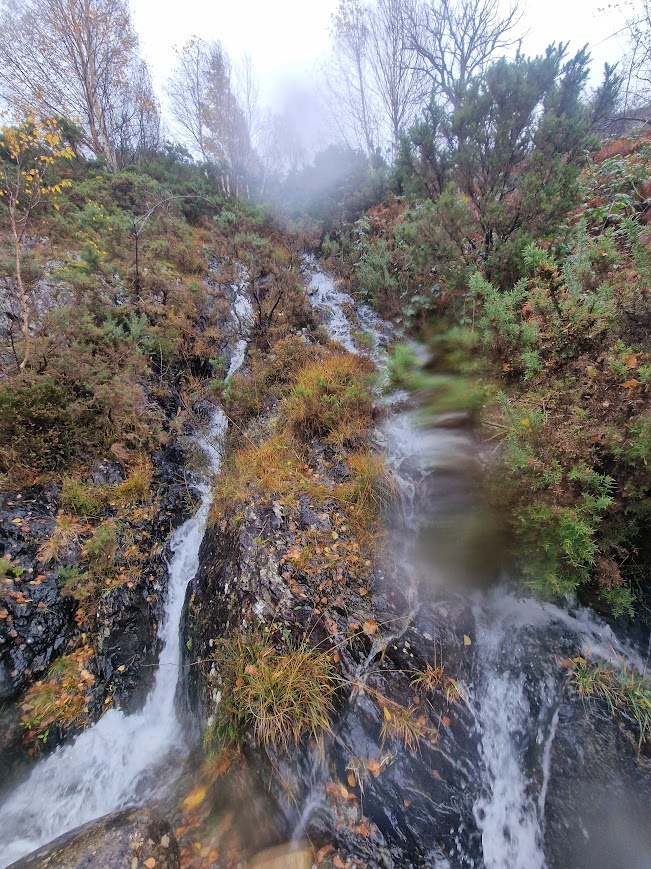
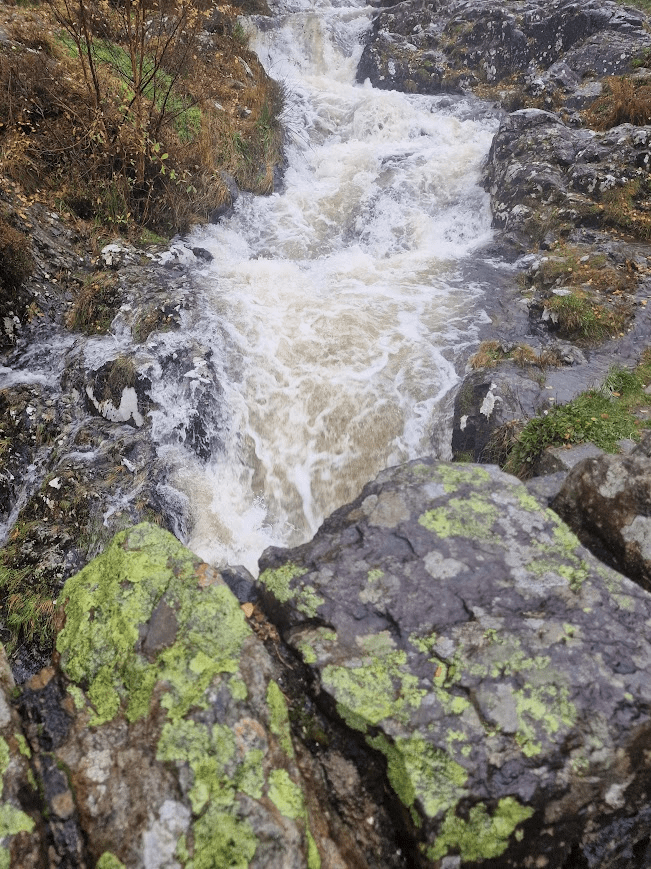
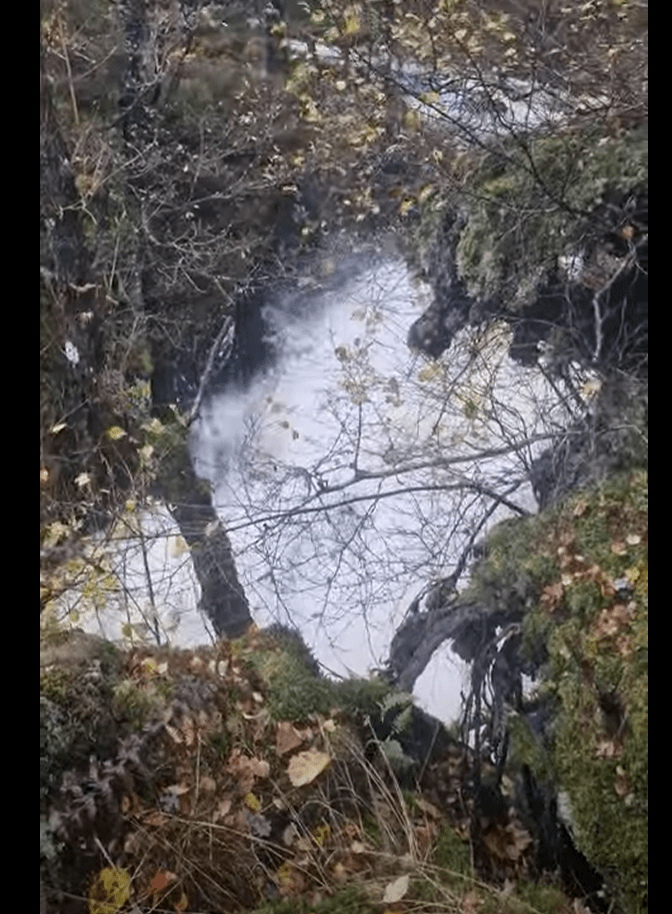
This is a unnamed waterfall just marked on the OS map as “fall”
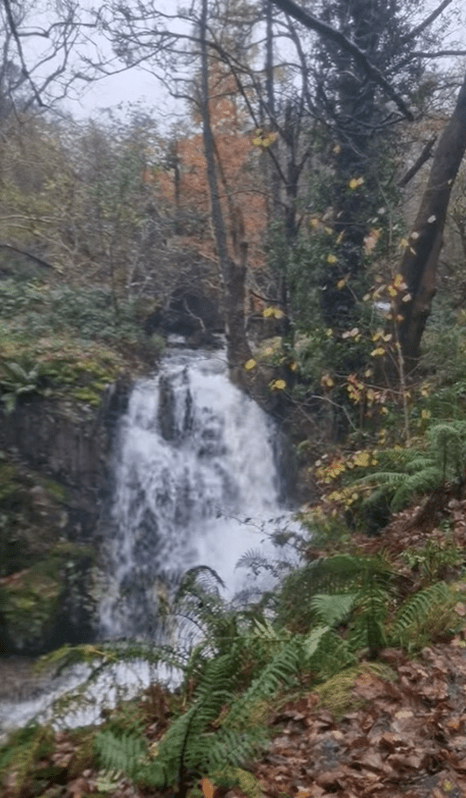
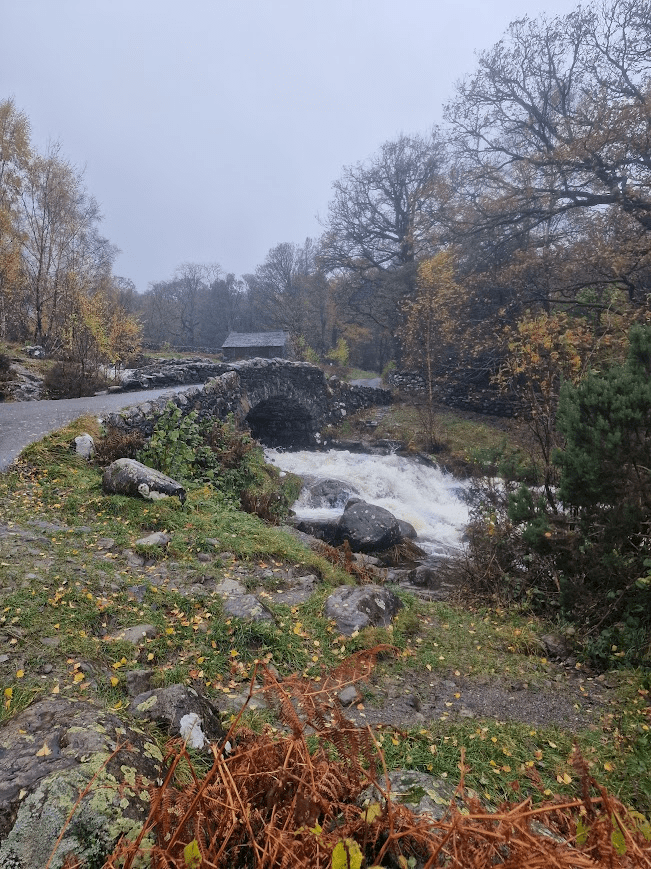
From the car park next to the waterfall I got the bus back to Keswick
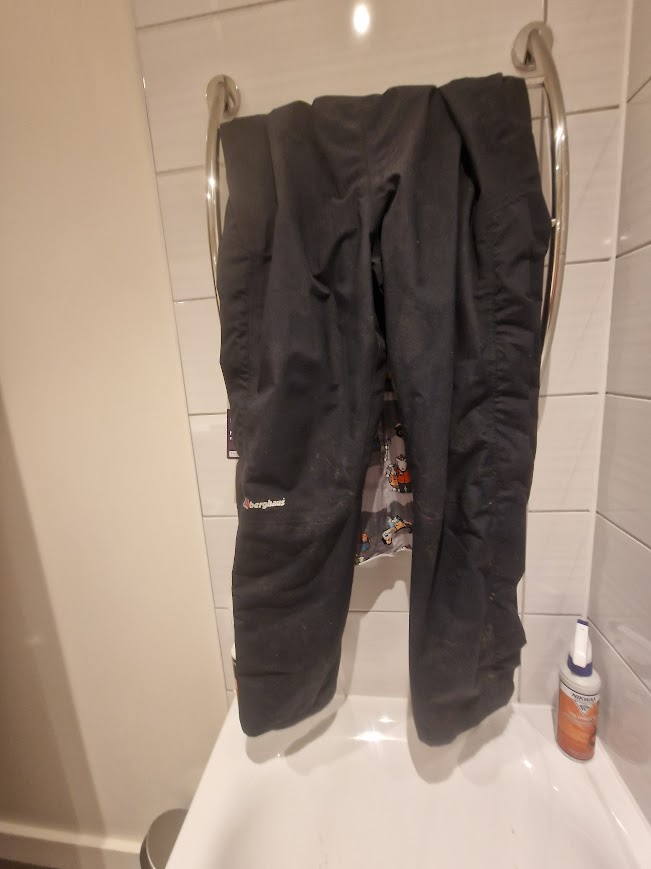
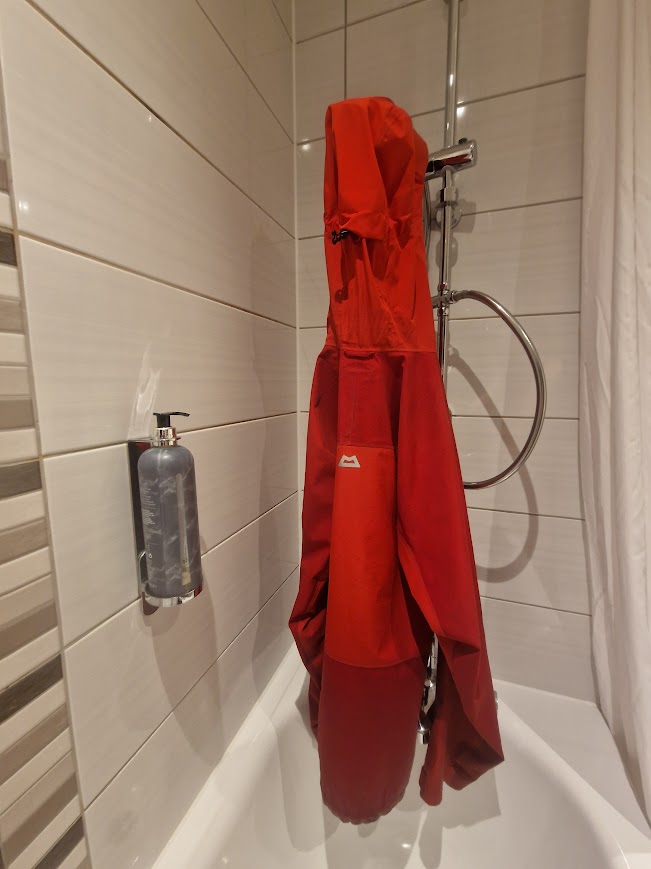
My waterproof trousers and jacket, that had given up repelling water, drying in the hotel room bathroom; after being sprayed with Durable Water Repellent. Durable Water Repellent is available in nearly the gazillion outdoor shops in Ambleside (where I bought mine) and Keswick






 Sim's Nature Notes