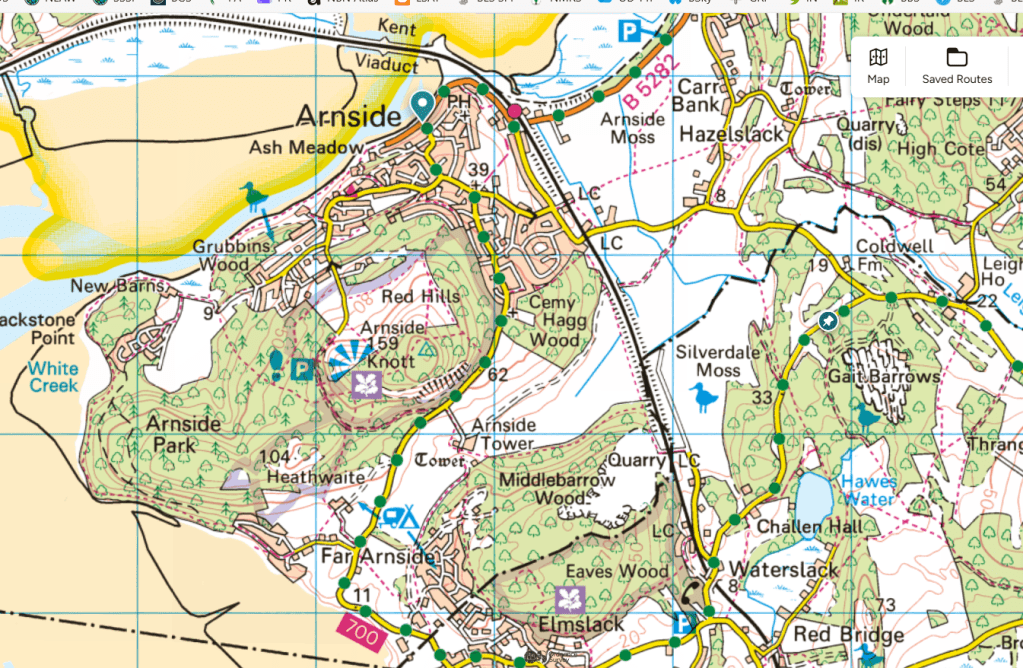
To get to Arnside I took the bus from Keswick (where I was staying) to Penrith; then a train from Penrith to Lancaster then a train from Lancaster to Arnside.
I went to Arnside and Gait Barrows because I knew about Lancaster Whitebeam and wanted to see it; and I wanted to visit a limestone pavement for the first time.
The Arnside and Silverdale area is a National Landscape (Area of Outstanding National Beauty); although I didn’t find that out until after I had visited.
I was welcomed to Arnside by a Herring Gull dressed as a witch eating spiders outside the local chippy.

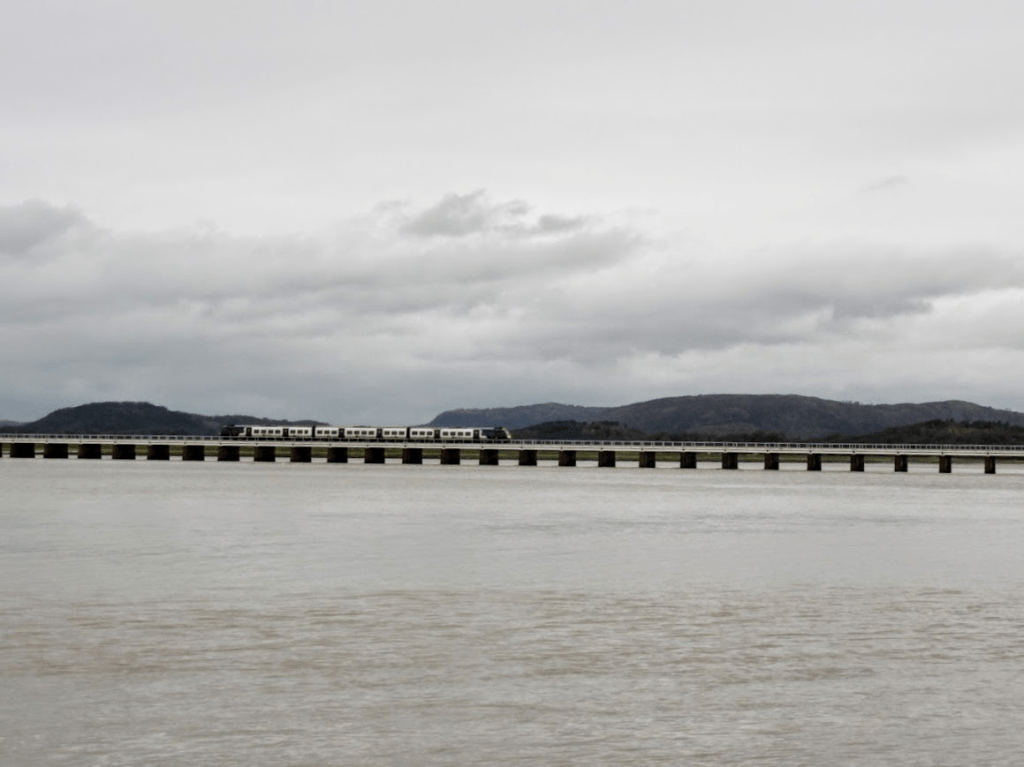
I arrived just before high tide, just as the tidal bore swept up to the Kent Estuary rail bridge. It was fascinating to watch

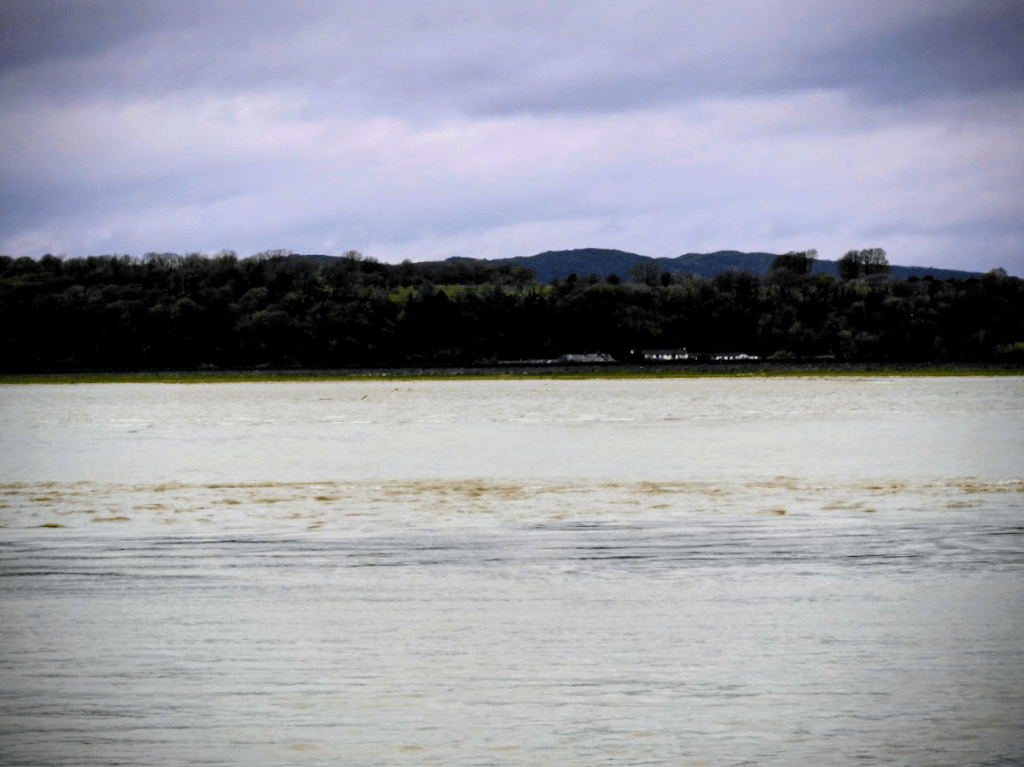
On the highest tides, a most unusual sight can be seen in the Kent Estuary in Morecambe Bay called the Arnside Bore. This is one of about twenty tidal bores that occurs in the UK and is named after the village of Arnside. It is quite a spectacle and often draws crowds of onlookers.
The source of the Kent is the Kentmere Valley near Ambleside and the river then flows down through Kendal to Morecambe Bay … When conditions are right, the siren also serves as an indication that the Arnside Bore is approaching from Morecambe Bay. The first blast typically occurs about 15-20 minutes before the wave arrives and the second as it passes New Barns Bay near Blackstone Point. The speed and power of the wave can be most impressive to see. Usually it dissipates on reaching the viaduct but sometimes it travels further inland to Sandside and the mouth of the River Bela Meteo Writer The Arnside Bore in Morecambe Bay
Kent Estuary Rail Bridge
Morecombe Bay is extremely dangerous: The combination of fast tides, quicksands, draining rivers, shifting channels and sheer unpredictability has trapped the unwary for centuries. … 19 Chinese cockle pickers drowned when they were caught by the tide as they laboured for a pittance on Red Bank, two and a half miles from the shore near Boulton-le-Sands. The Guardian Why is Morecombe Bay so dangerous.
The tide was too high to explore the trees on the shoreline of Grubbins Wood, where the Cumbria Wildlife Trust reports Lancashire Whitebean to be. I had to dive straight inland to the wood. Where I was greeted by some friendly bullocks conservation grazing

The wood is dominated by Yew, Sessile Oak and Hazel
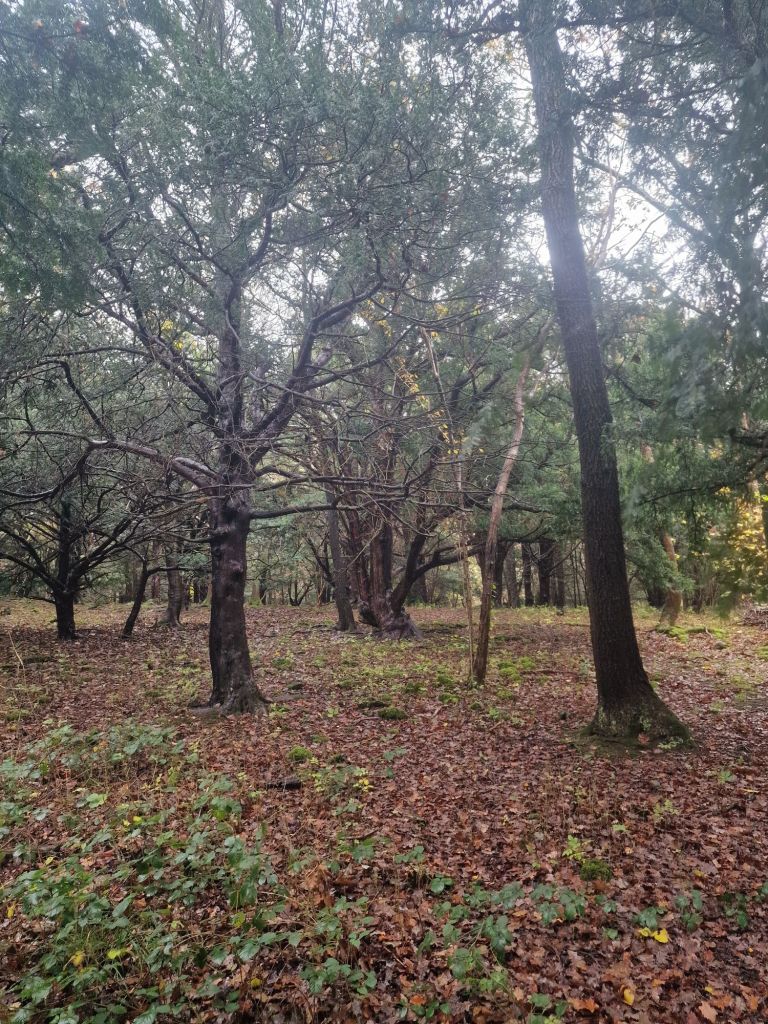
Ancient Yew
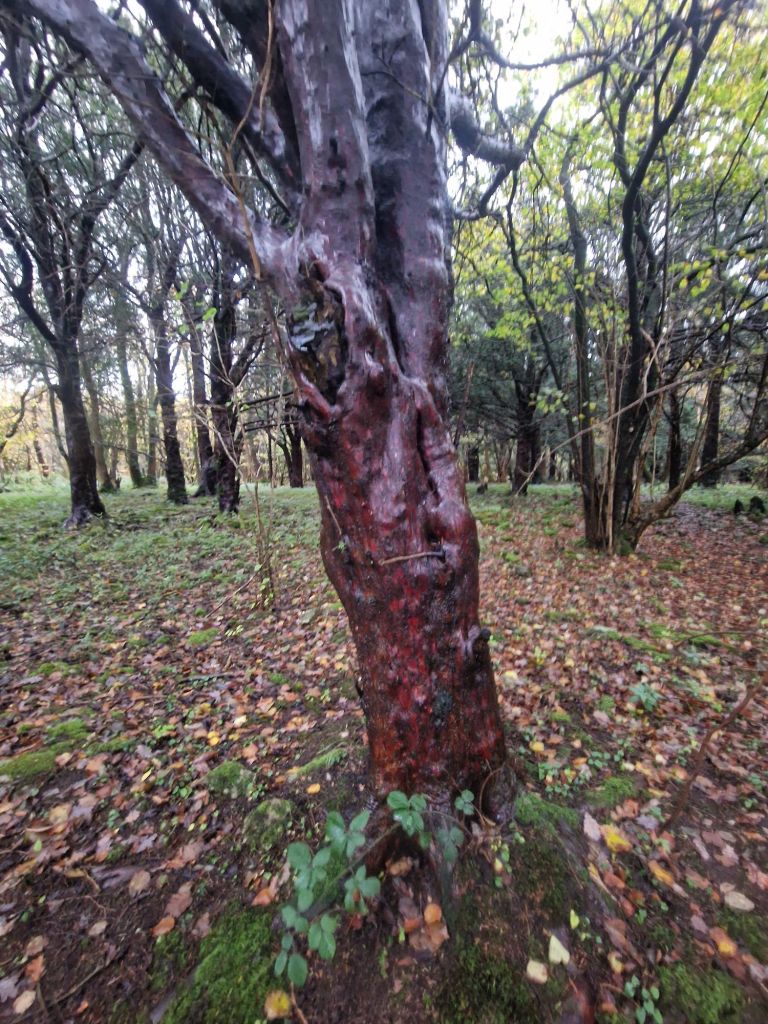
Peeking through the trees, I saw two Red-Breated Mergansers
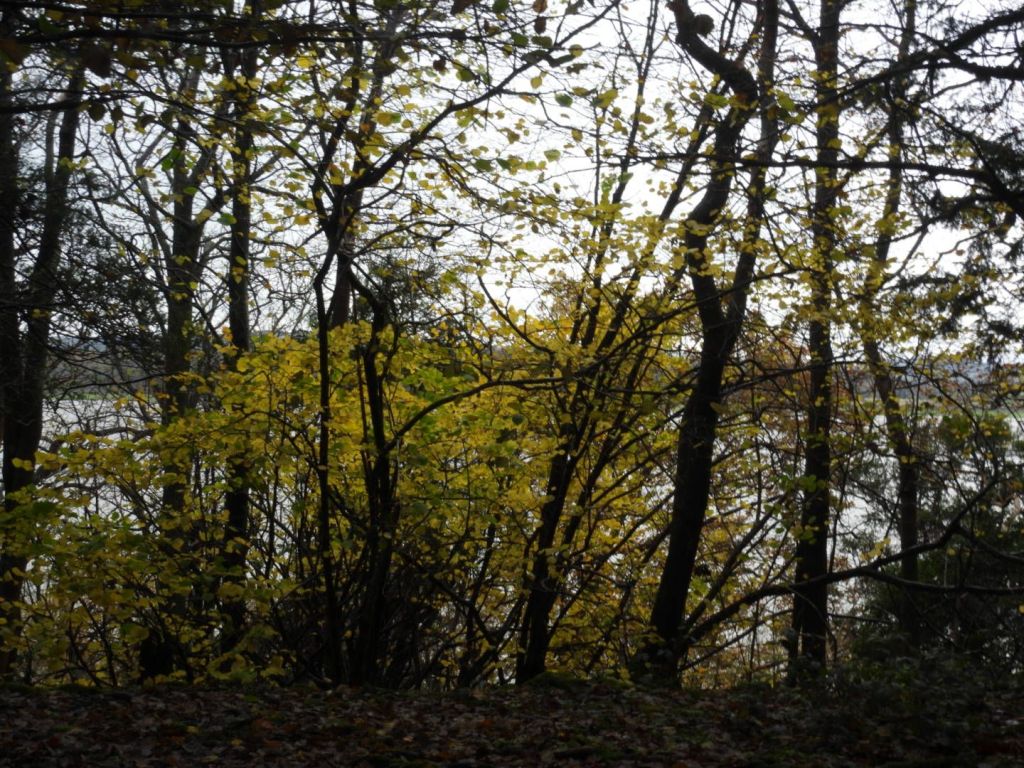

To get back to the village of Arnside I had to walk through Copridding Woods and Red Hills
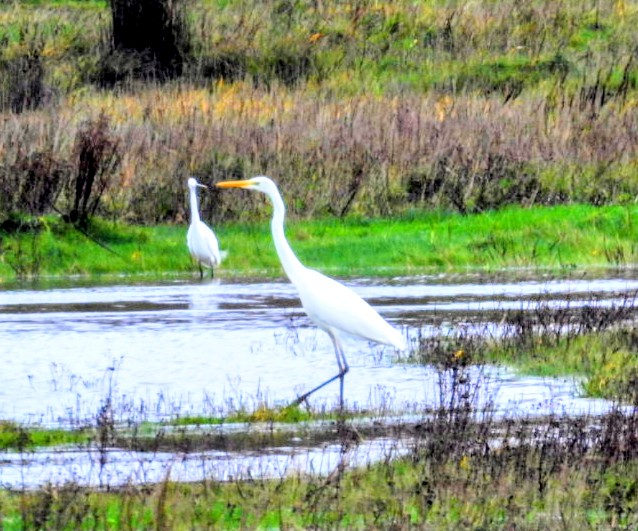
And as I walked out of Grubbins Woods via New Barns, I saw a Great White Egret and Little Egret in foraging in tidal pools
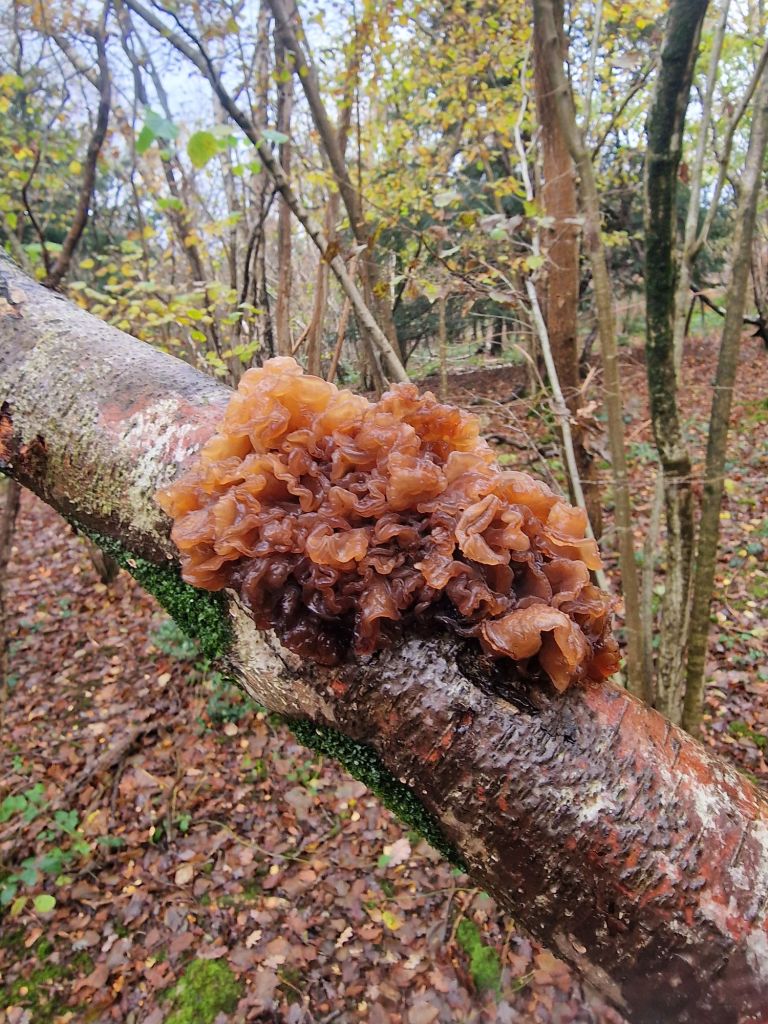
In Copridding Wood, I saw this interesting fungus, Phaeotremella frondosa
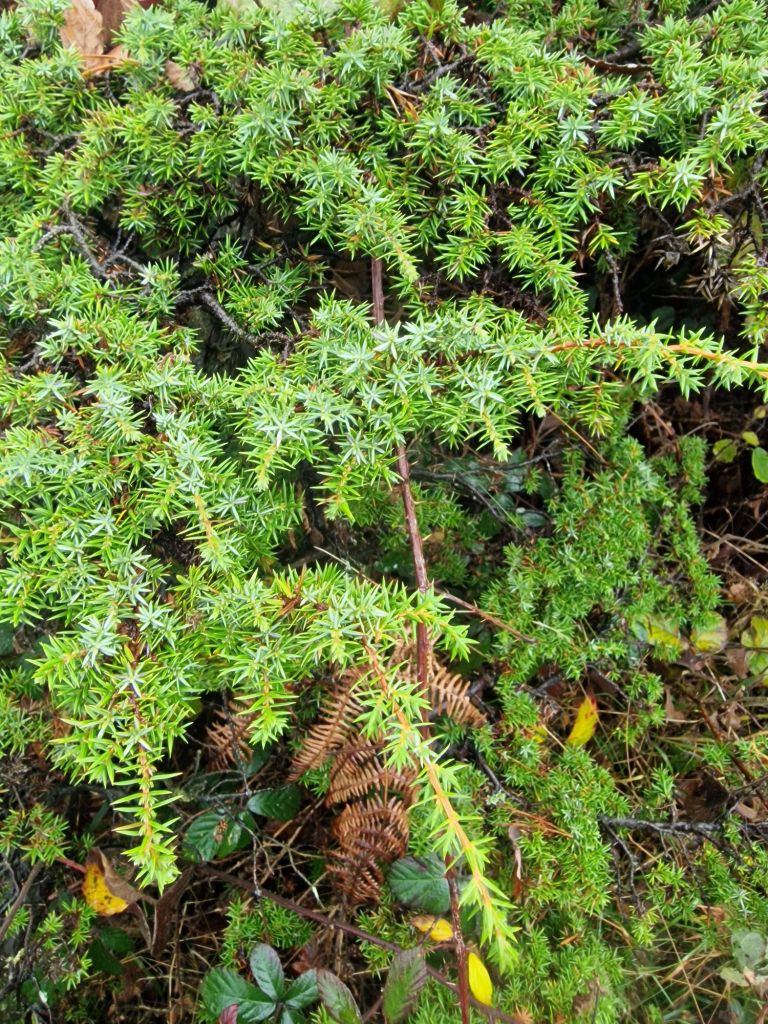
Red Hills is acidic limestone heathland with a prodigious number of juniper trees.
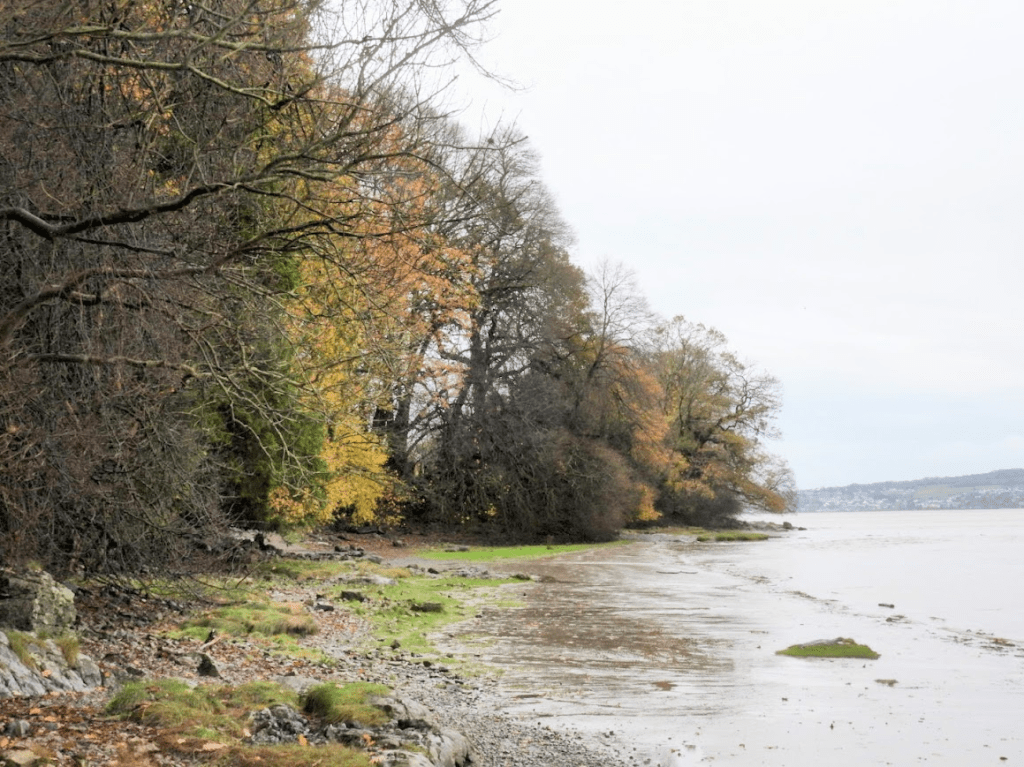
After I walked through the woodland to the east of Arnside, I returned to the north of Arnside, where I had initially entered from the train station. By then the tide had receded sufficiently enough for me to walk along the shoreline in front of Grubbins Wood; and I found the Lancaster Whitebeam
Sorbus lancastriensis Lancaster Whitebeam
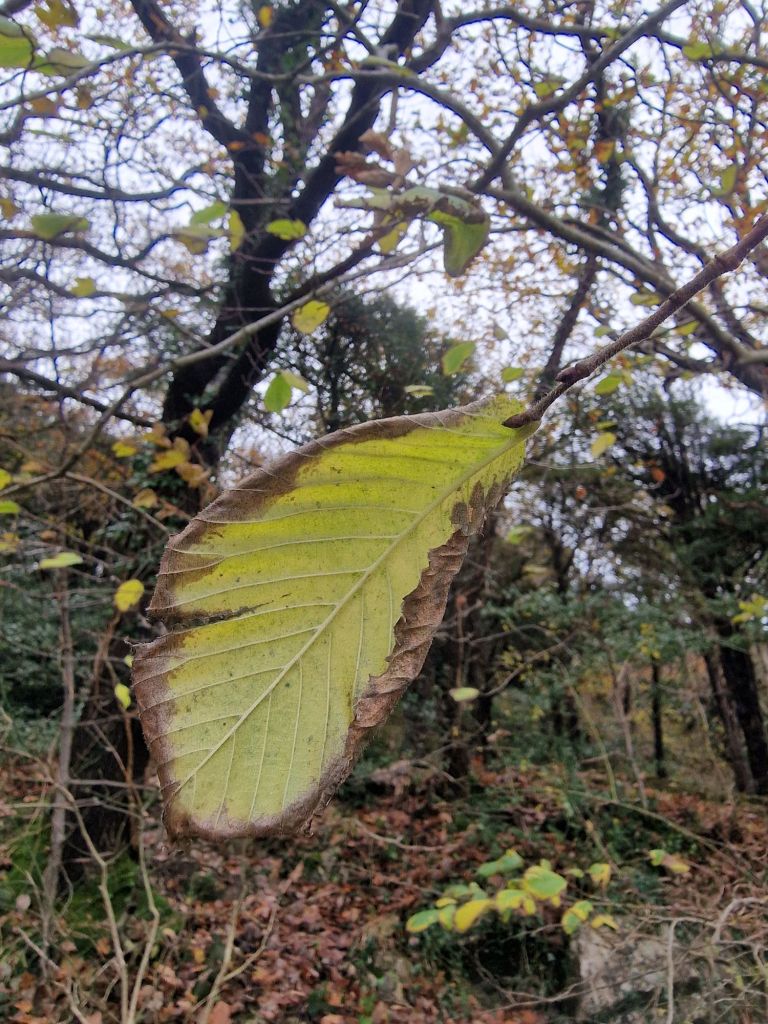
Sadly with no fruit, its leaf morphology was key to identification
The leaves are broadly oval with a slightly toothed margin and a distinctive pale underside. They are usually unlobed or only faintly lobed near the base, with around 6–8 pairs of lateral veins. The upper surface is dark green, and the underside is whitish and felted – a key feature of whitebeams. In autumn, the foliage turns a muted yellow or brown before falling. Habitat: Cliffs, rocky places, woodland Wild Flower Web Lancaster Whitebeam
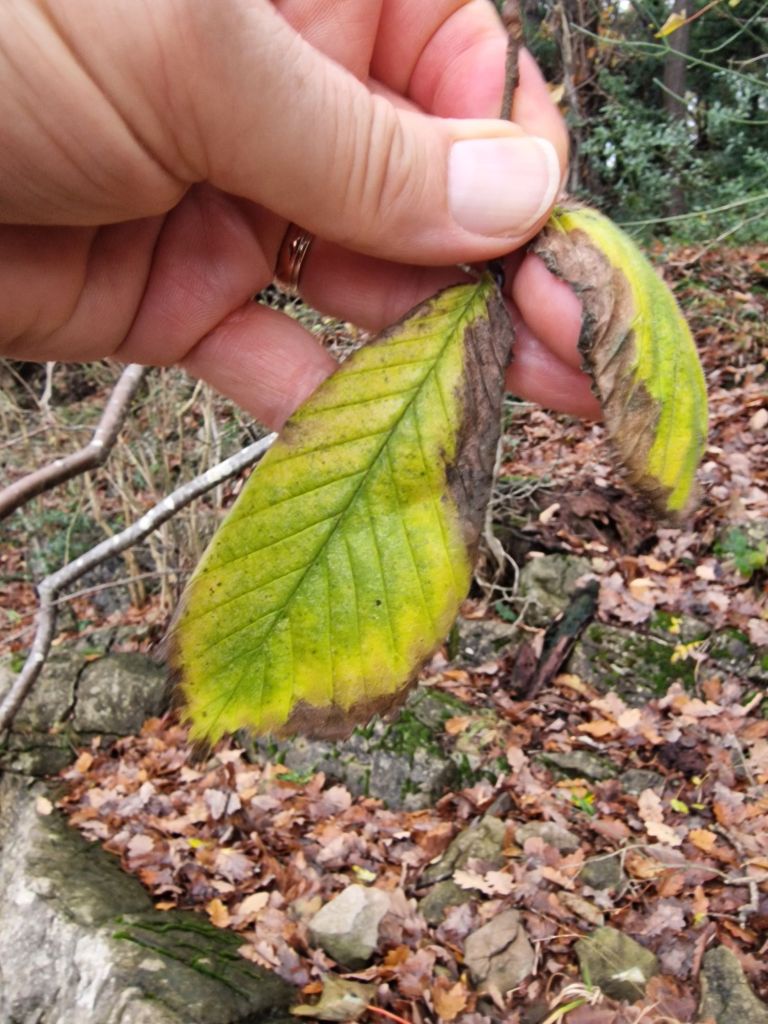
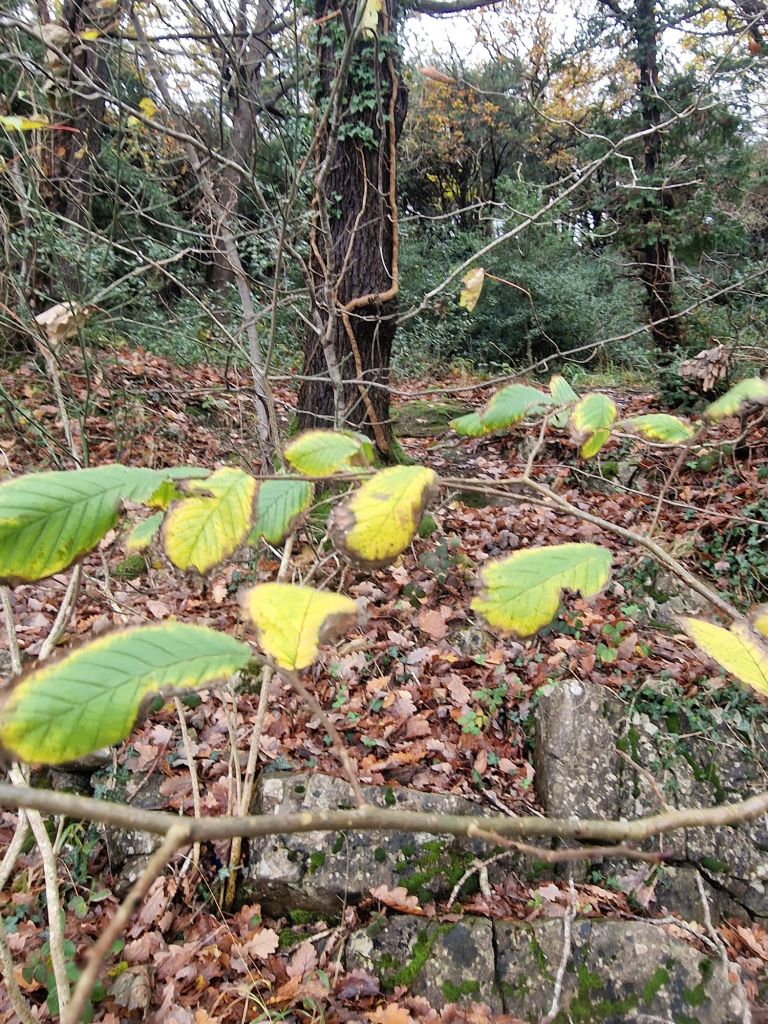
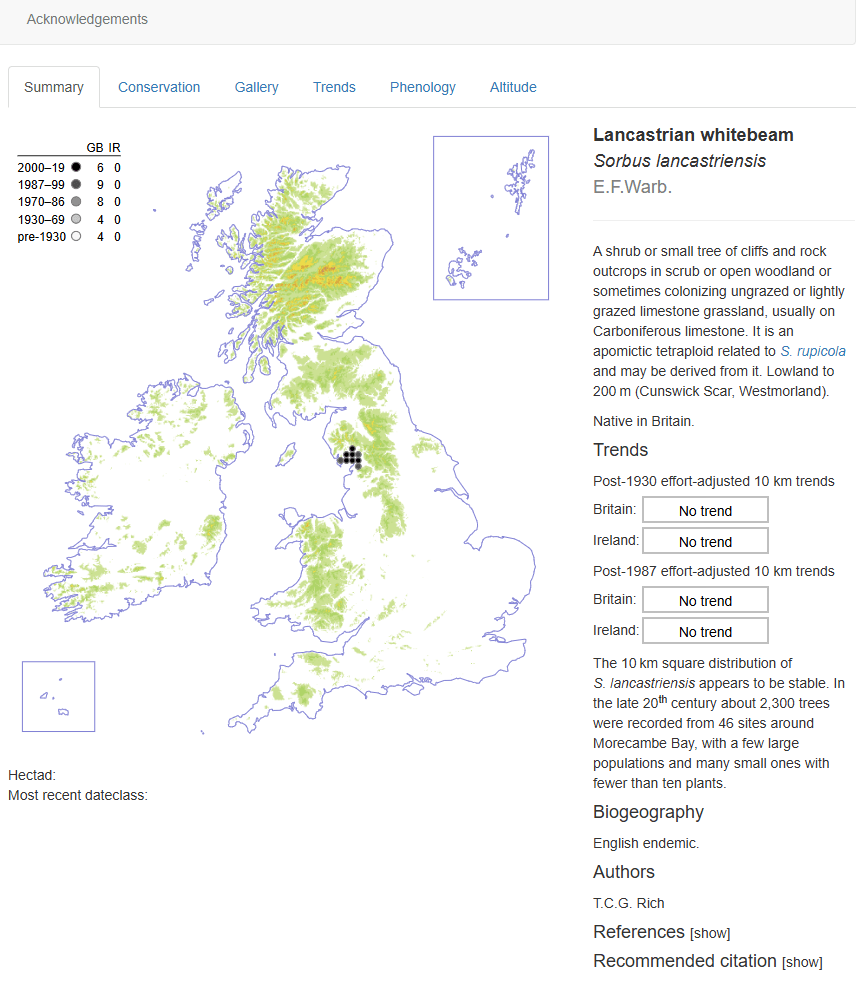
Screen shot from BSBI Plant Atlas online
Wild Flower Web blog: Lancaster Whitebeam: A Unique and Endangered Tree:
The Lancaster Whitebeam (Sorbus lancastriensis) is a species of tree that is native to England and Wales. It is a species of whitebeam, a group of trees that are closely related to the rowans or mountain ashes. The Lancaster Whitebeam is unique in its appearance and is easily distinguishable from other whitebeams.
One of the most notable features of the Lancaster Whitebeam is its leaves, which are large, lobed, and have a distinctive, glossy appearance. The leaves are also a rich green color, making the tree a beautiful addition to any landscape. Another distinct characteristic of the Lancaster Whitebeam is its fruit, which are large clusters of orange-red berries that are popular with birds and other wildlife.
Despite its beauty, the Lancaster Whitebeam is a threatened species, and its population has been declining in recent years. The main reason for its decline is habitat loss, as the tree’s natural habitats have been destroyed or altered for human development. The tree is also threatened by diseases and pests, which can weaken its health and reduce its ability to produce fruit.
Conservation efforts are underway to protect the Lancaster Whitebeam and its habitat. The tree has been designated as a priority species under the UK Biodiversity Action Plan, which means that action is being taken to conserve and protect it. This includes planting new trees and restoring habitats, as well as monitoring the tree’s population and health.
The Lancaster Whitebeam is a unique and beautiful species of tree that is in danger of disappearing. Its distinctive appearance, attractive fruit, and importance to wildlife make it a valuable addition to the English and Welsh landscape. With proper conservation efforts, it is possible to protect this tree and ensure that future generations can enjoy its beauty.
In addition to its conservation status, the Lancaster Whitebeam has also been found to have potential medicinal uses. The tree’s leaves and bark have been used in traditional medicine for centuries to treat a variety of ailments, including digestive problems and skin conditions. In recent years, there has been growing interest in the potential health benefits of whitebeam species, including the Lancaster Whitebeam. Studies have shown that the tree’s leaves and bark contain compounds that have anti-inflammatory, antibacterial, and antiviral properties, making it a promising source of natural remedies.
Despite this potential, there is still much to be learned about the Lancaster Whitebeam and its medicinal properties. Further research is needed to fully understand its potential health benefits and to determine the most effective ways to use its compounds in medicine.
In addition to its conservation status and potential medicinal uses, the Lancaster Whitebeam is also an important part of the local culture and heritage in England and Wales. The tree has been associated with folklore and legends for centuries, and is considered a symbol of the region’s history and identity.
Overall, the Lancaster Whitebeam is a fascinating and important species of tree that deserves our attention and protection. Its unique appearance, potential medicinal uses, and cultural significance make it a valuable addition to the natural world, and we should work to ensure that it is preserved for future generations to enjoy.
It’s also worth noting that the Lancaster Whitebeam is not just a valuable species in its own right, but also provides important ecosystem services. As a keystone species, it supports a wide range of other species in its ecosystem, from the insects and birds that feed on its fruit, to the fungi and bacteria that decompose its leaves and bark. By preserving the Lancaster Whitebeam, we are also helping to maintain the overall health and diversity of the ecosystem in which it is found.http://www.wildflowerweb.co.uk/plant/1510/lancaster-whitebeam
Next to the Whitebeam was a Spindle Tree, an ancient woodland indicator species.
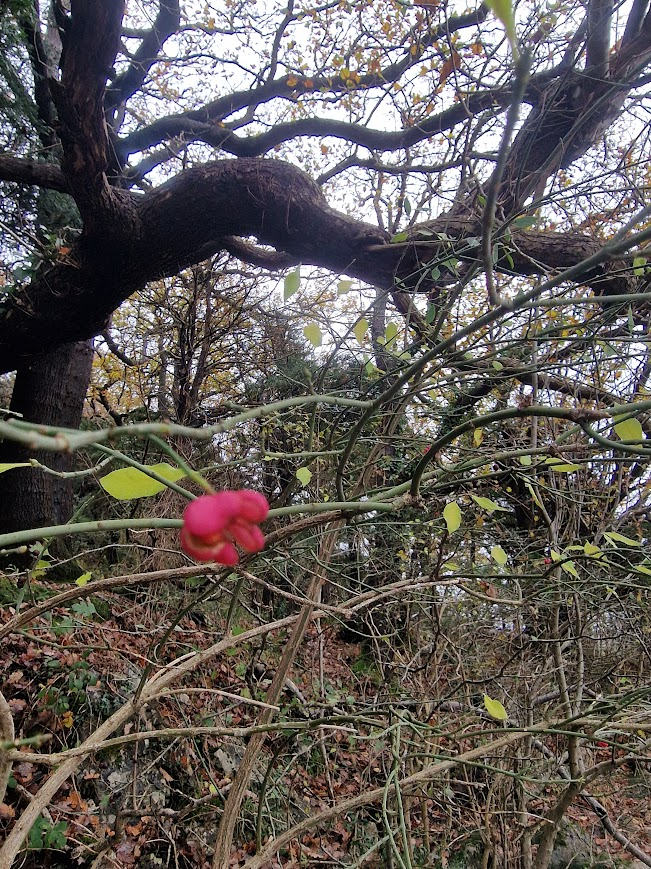
The coastal rocks were covered in lichess
Tephromella atra with free-living aga living on the thallus. Not especially maritime, … but also rather common in the aerohaline zone [the above the area reached by direct wave action.] Lichens Marines
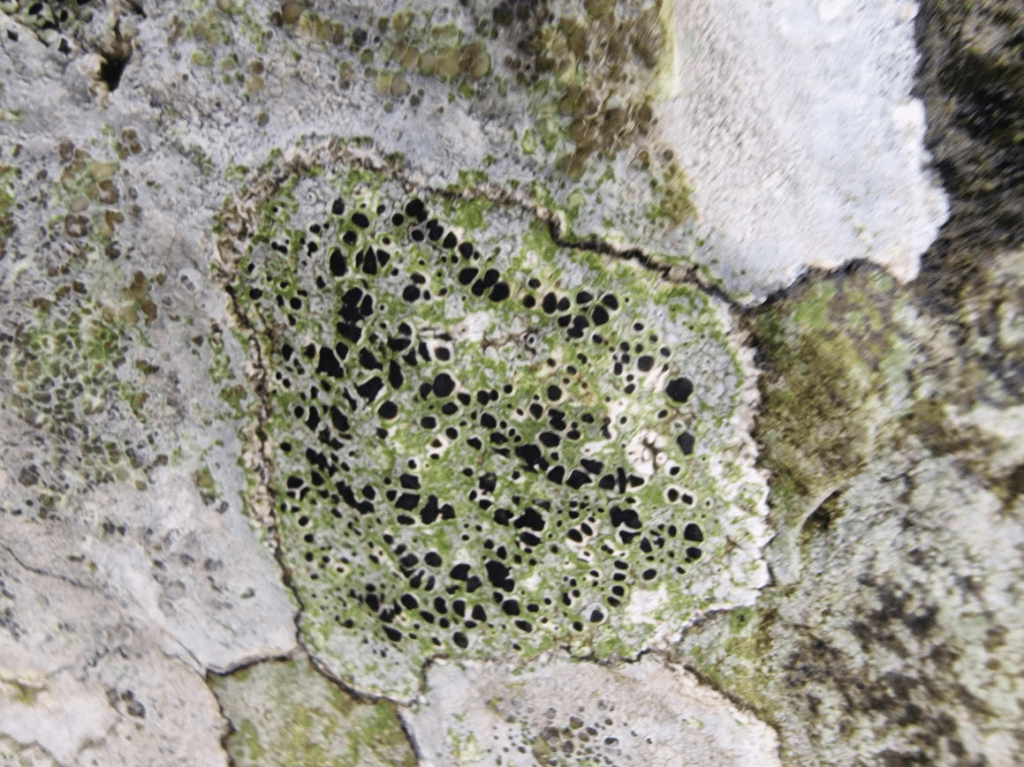
Gait Barrows NNR
I then walked three mikes through lanes to Gait Barrows National Nature Reserve. The lanes I walked through passed several mosses i.e. lowland bogs.
Whilst I studied Limestone Pavements in A level geology in 1978-80 at school in Brighton, we never visited one as to do so would have been too long a field trip. Moreover, as I only use public transport it is not easy to visit the north where they are. I’ve had a forty-five year wait to see a Limestone Pavement. And it was worth the wait.
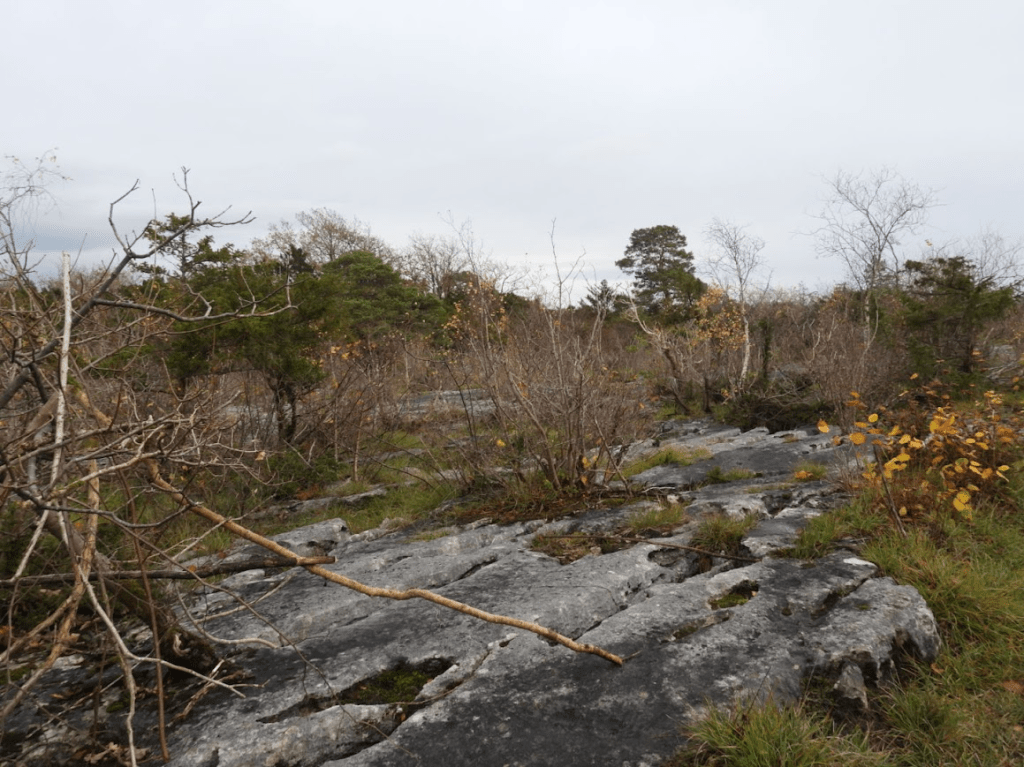
A landscape moulded by time.
The landscape at Gait Barrows has been shaped over many thousands of years.
Much of the nature reserve lies on ancient Carboniferous limestone which was laid down in warm tropical seas some 300 million years ago. With the influence of more recent mountain building periods that created mountain ranges like the Alps, this bedrock has been flexed and uplifted to give the low hills and crags of the limestone landscape that we are familiar with today.
In the last Ice Age some 14,000 years ago, deep ice covered this part of Northern
England and Hawes Water Basin was formed by the deeply scouring ice sheet as
it passed from what today are the Cumbrian high fells to the Irish Sea. This deep trough in the limestone was then filled with groundwater to create the Hawes Water we know today.
The intricate features of the limestone pavements have been shaped and modified by glacial action in the last Ice Age, and more recently by rainfall and groundwater.
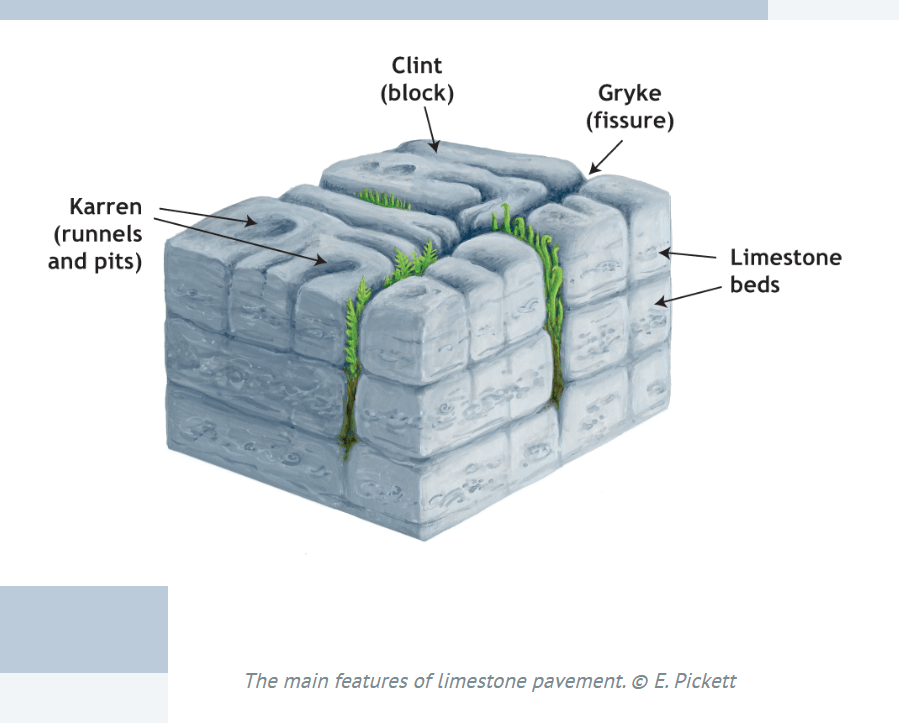
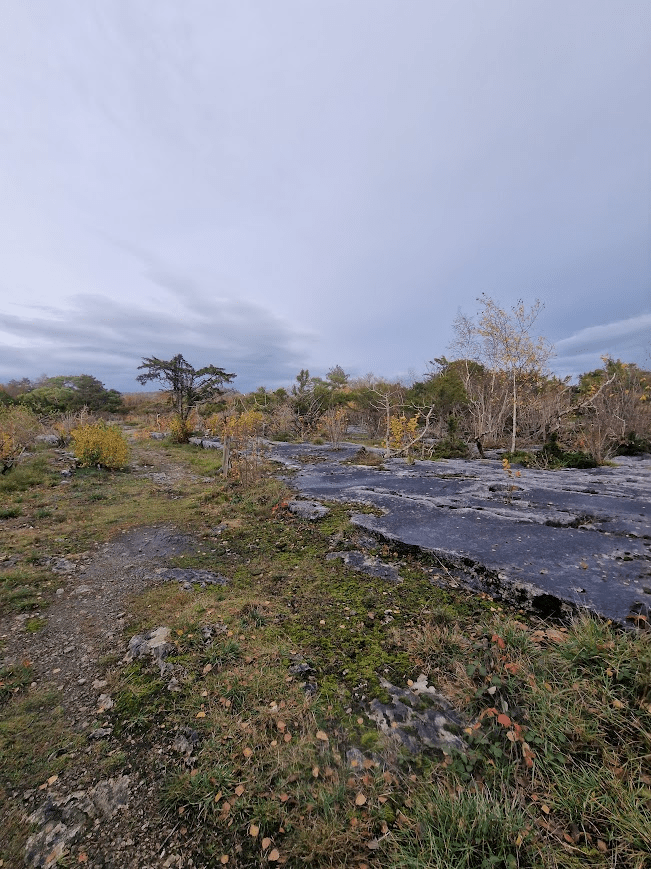
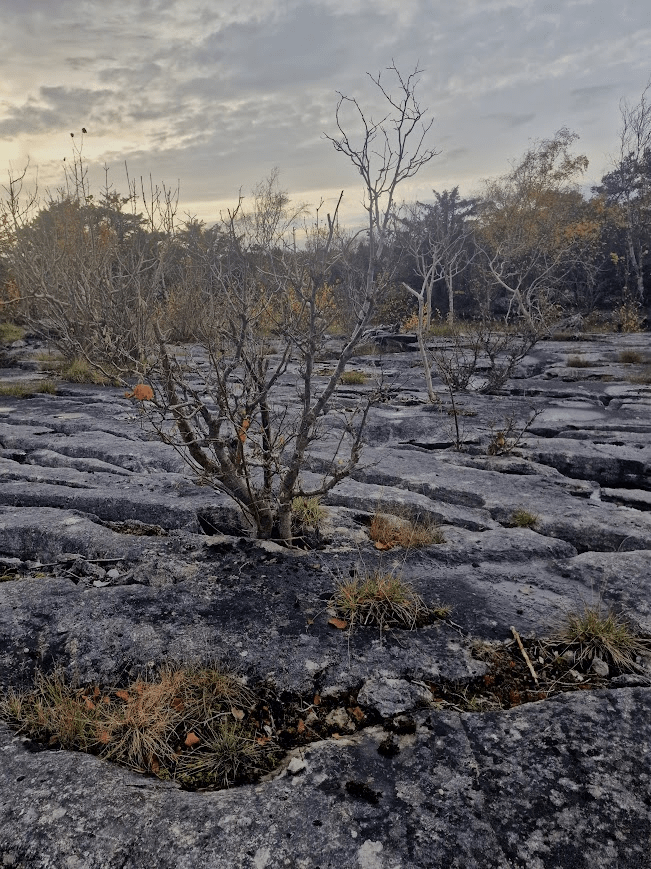
On the open pavements you will see wide flat blocks called clints, separated by deep fissures known as grikes. Lying on the clint surfaces are shallow gutter-like runnels and pan-like solution cups, which collect and funnel rainwater from the rock surface. Nature England Gait Barrows National Nature Reserve
A Yew. Limestone pavement produces stunted trees due to the paucity of soil in the grykes
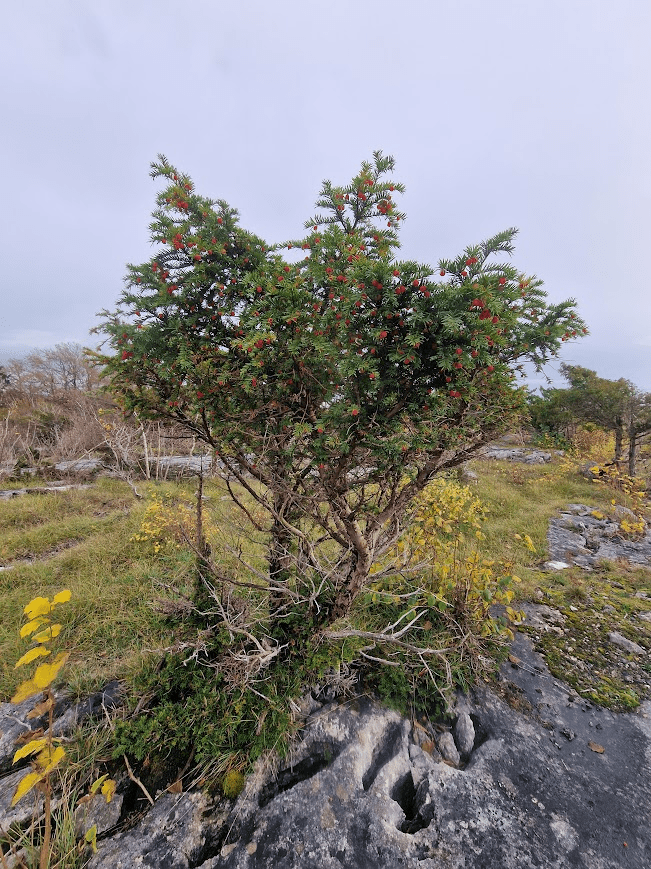
Diagram from Limestone Country
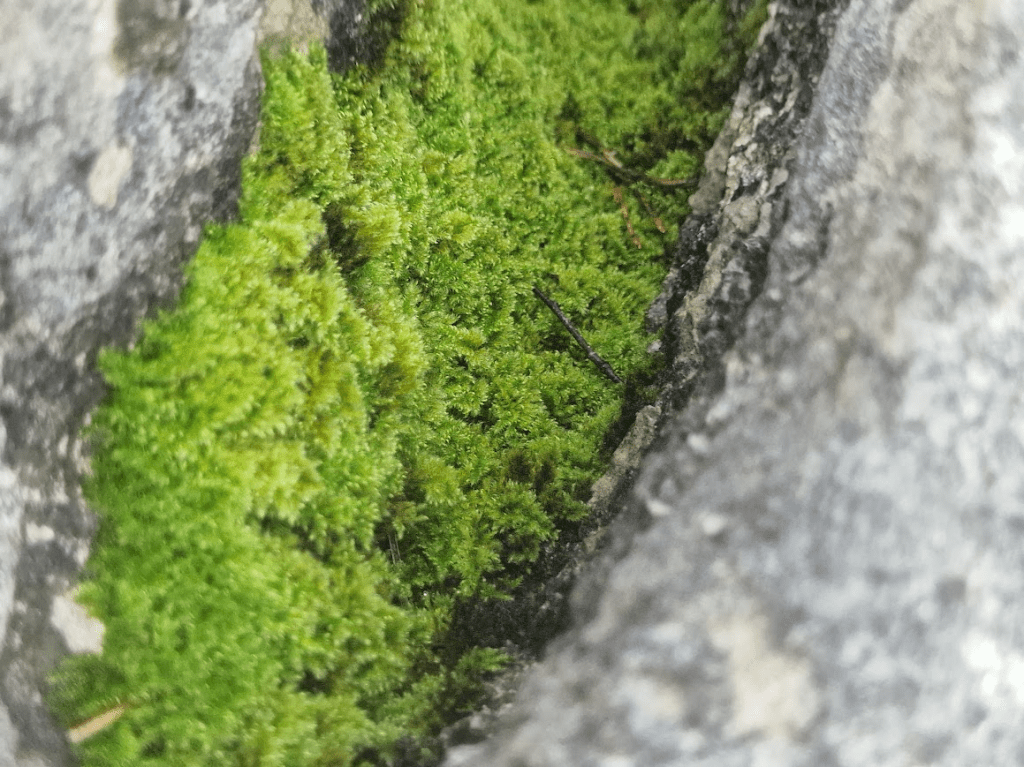
Ctenidium molluscum Comb-Moss
Yew, Hazel, Beech and Silver Birch
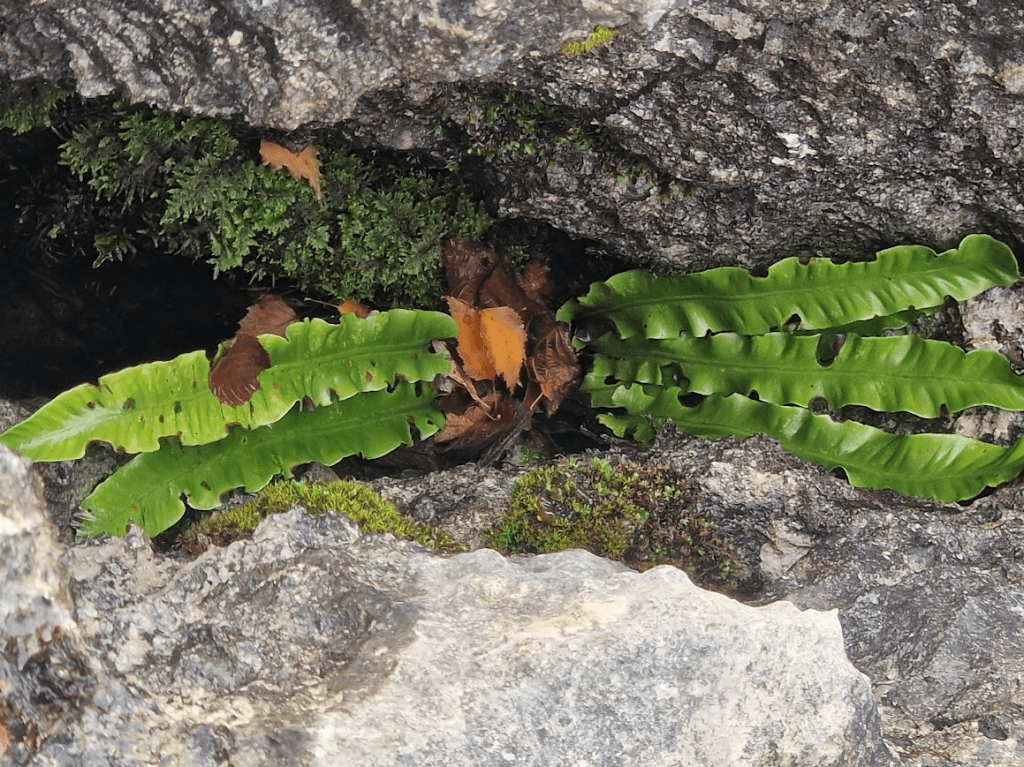
Hart’s -Tongue Fern
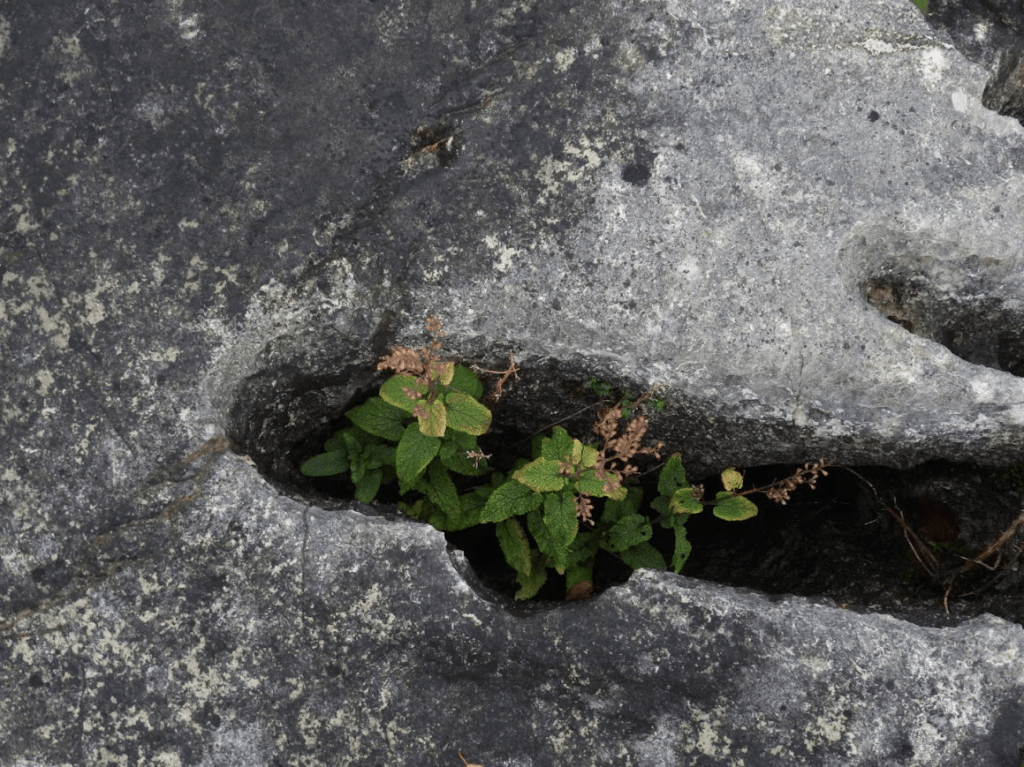
Wood Sage
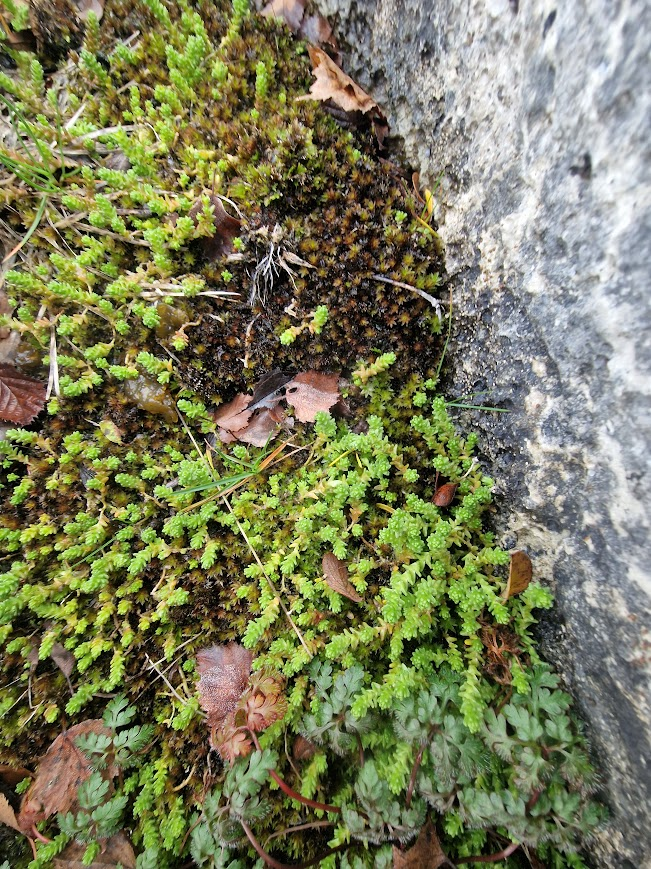
White Stonecrop
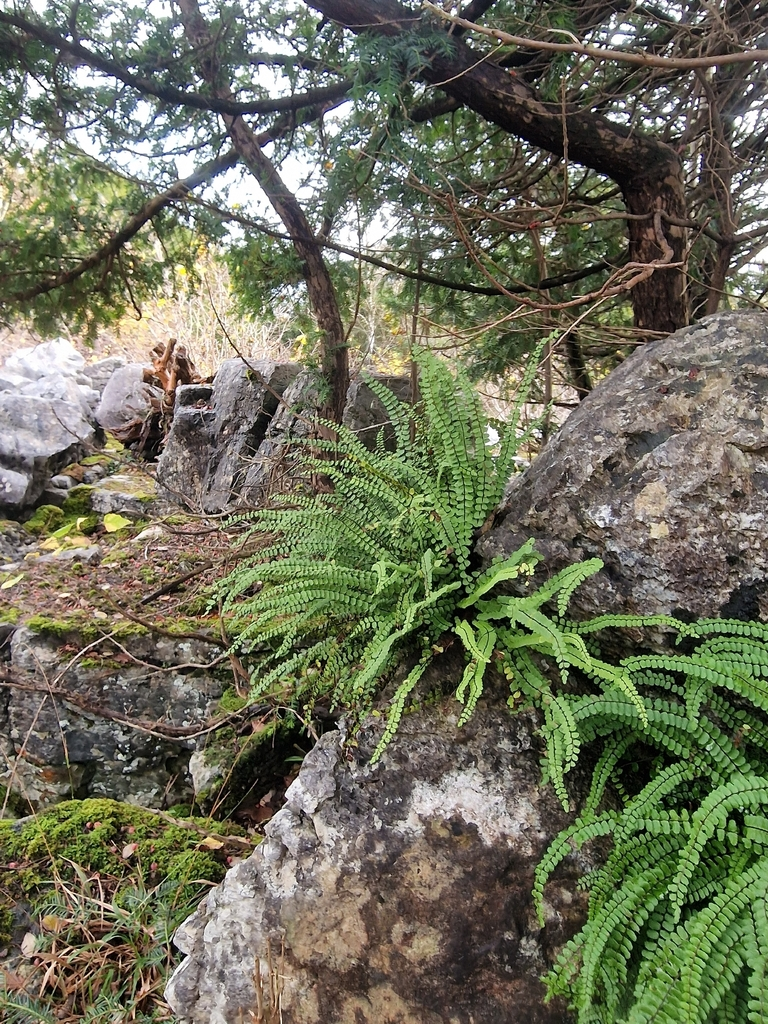
Maidenhair Spleenwort
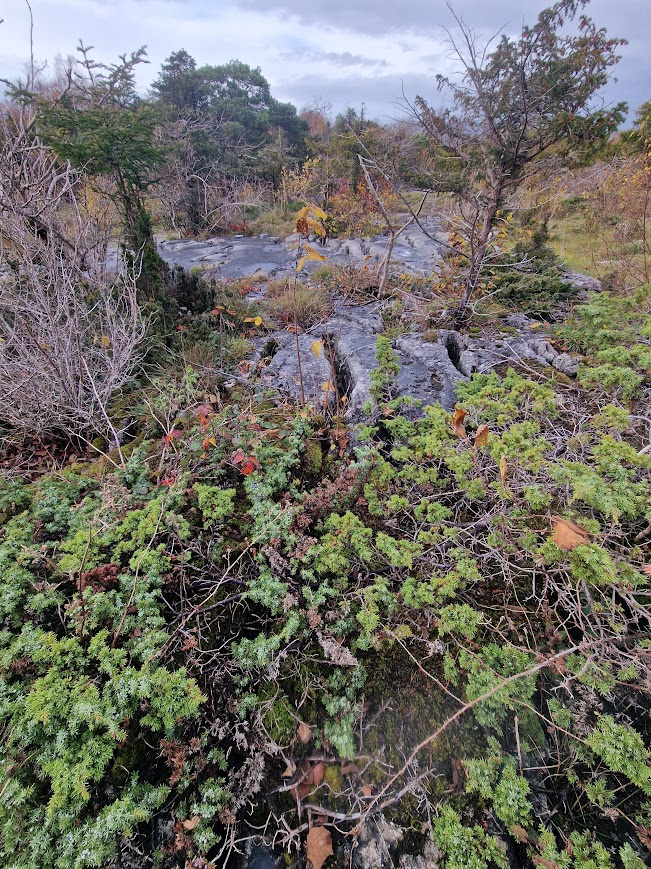
Juniper

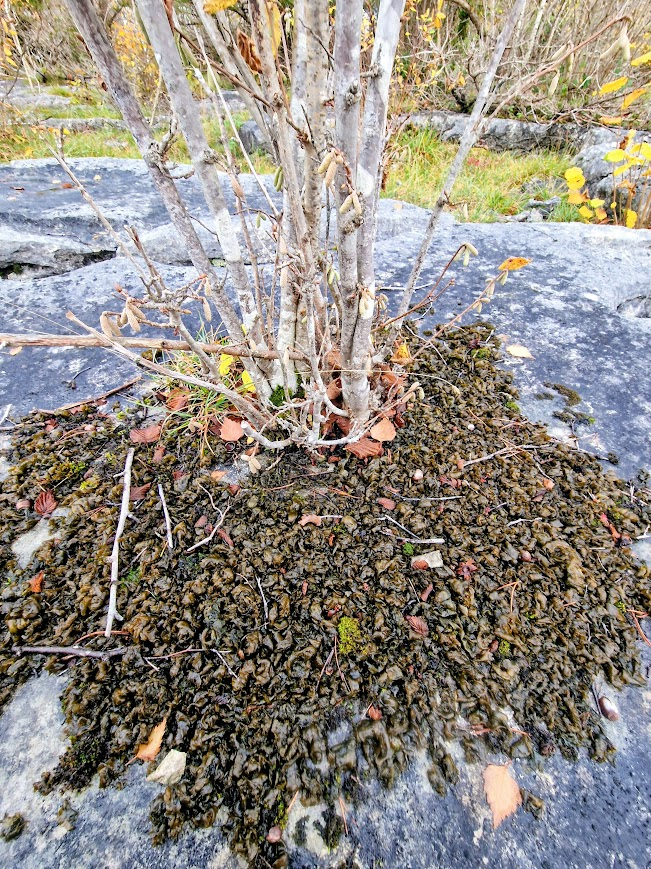
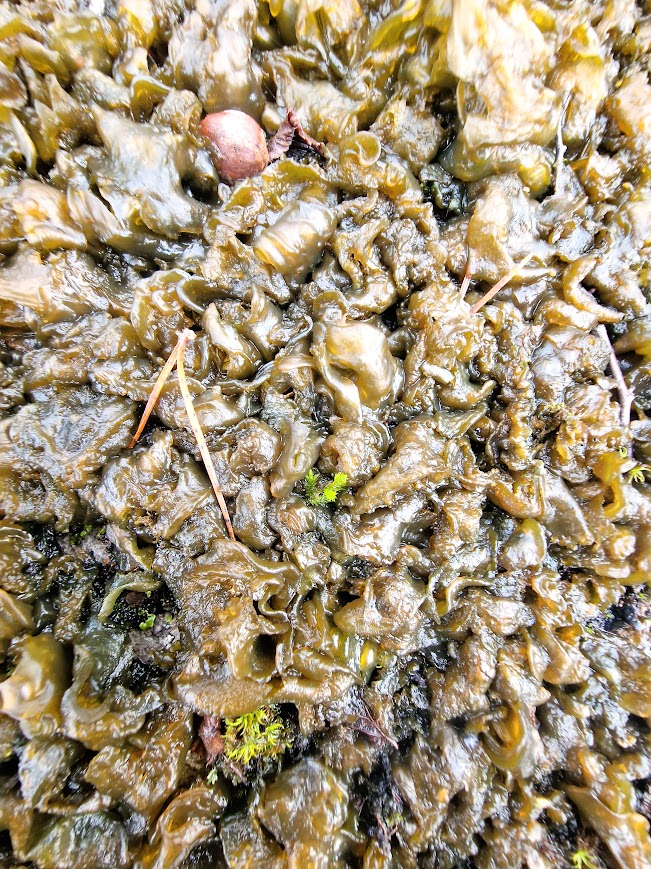
There was lots of Nostoc commune; a cyanobacteria (blue-green algae), concentrated into brownish or greenish clumps, on the limestone pavement aften around vascular plants
Views at dusk
As the sun began to fade I walked quickly to Silverdale Railway situation to return to Keswick
You need to be careful at Gait Barrows with clints and grikes trying to break your legs and every direction looking the same. Gait Barrows is a great place to get completely lost. Wild Flowers Lancastrian Whitebeam
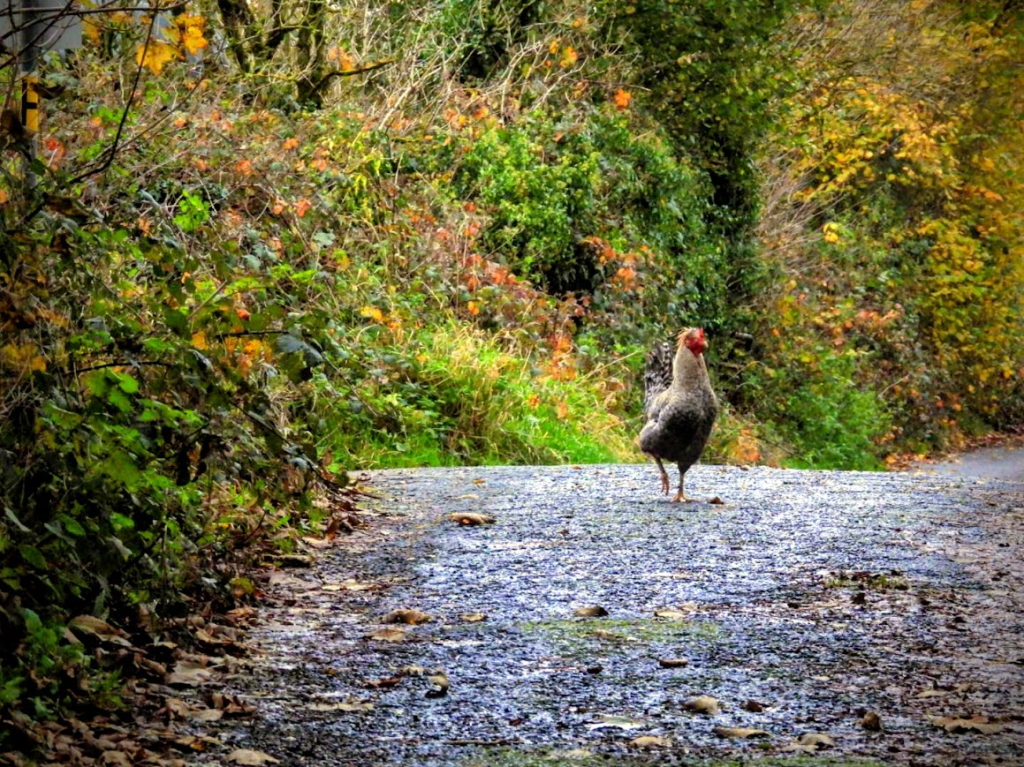
I met this Cockerel on the walk to Silverdale Station!
 Sim's Nature Notes