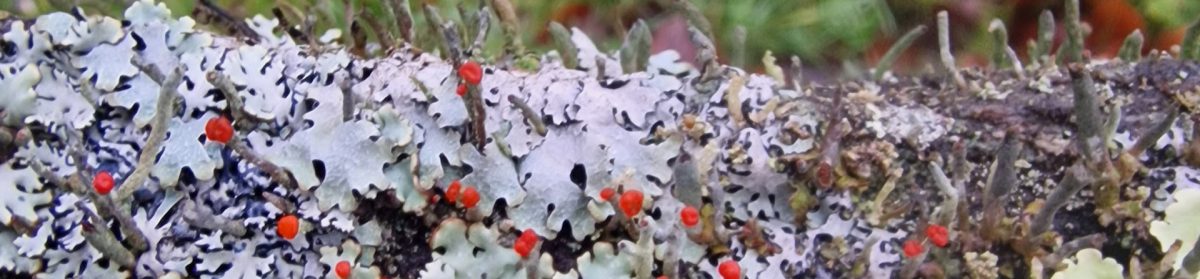
I took the photos in this blog post to bring your attention to some marvellous things in nature, in Sussex, that are hidden from the public. I will not name the Sussex wood I trespassed in to take these photos.
If you go down to the woods today, you’re in for a big surprise: a third of England’s woodlands are owned by just a thousand landowners.
That’s the central finding of my new investigation into who owns England’s woods. The analysis also raises questions how private woods are used – with many of them kept off-limits to the general public in order to maintain them as pheasant shoots, despite receiving public subsidies. https://whoownsengland.org/2020/11/02/who-owns-englands-woods/ Guy Shrubsole accessed 16.11.15
The ownership of land in Sussex
Much land in Sussex is in private ownership and walking in significant amounts of that land is currently prohibited by signs denying public access; often this is associated with pheasant shooting. But pheasant shooting also effects land with public access as well as private land where shooting occurs. I recently walked through a public-access SSSI scarp-face ancient wood in West Sussex, adjoining a private wood used for pheasant shooting. I saw and heard many pheasants in this wood I was walking through. I had a lunchtime half pint of cider in the nearest pub to the wood, and in the pub there was a group of pheasant shootists there bragging (loudly) about how many pheasants they had shot. The existence of private woodland for pheasant shooting has a negative impact on much woodland – private and public.
For many years, we have been concerned with the impacts of two of the most intensive forms of shooting: driven grouse, and the high-density release of Pheasants and Red-legged Partridge for shooting. Our studies have identified that various key practices are causing particular ecological harm, with implications for both biodiversity and the climate emergency. The big issues: the illegal killing of birds of prey, the use of lead ammunition, the burning of peatland habitats and the release of millions of non-native Pheasants and Red-legged Partridges into the natural environment. RSPB The Facts about Intensively-Managed Game-Bird Shooting. RSPB The facts about intensively-managed gamebird shooting
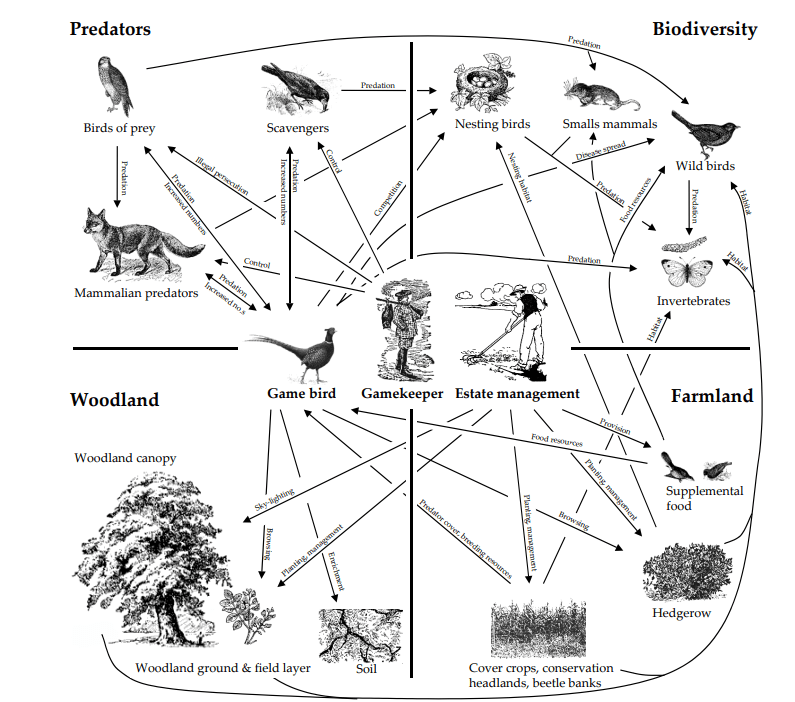
Many of the potential impacts of gamebird releasing are poorly studied and understood, and are often under-represented in the peer-reviewed scientific literature. A common theme emerging from these reviews is that the ecological impacts of gamebird releasing appear to be strongly polarised, with potential negative effects associated with the released birds (e.g. enhanced predator abundance and predation, increased disease transmission, altered habitat structure, reduced invertebrate abundance. Mason, L.R., Bricknell ,J.E., Smart, J. & Peach, W. J. (2020) The impacts of non-native gamebird releasein the UK: an updated evidence review. RSPB Research Report No, 66 RSPB Centre for Conservation Science, Sandy UK. Downloadable from RSBP Game bird shooting – laws and impact
Screenshot from Mason, et. al (2020)
Here is an indication of how much land is in public ownership in the Western (West Sussex) South Downs. Of the top five owners of land in Sussex by acreage owned, only one is a public body. (The wood that these photos were taken in is not in West Sussex). These data are from Guy Shrubsole & Anna Powell-Smith’s excellent Who Owns England: Who Owns the South Down https://whoownsengland.org/2018/02/16/who-owns-the-south-downs/ accessed 16.11.25
1) Viscount Cowdray – Cowdray Estate: 16,500 acres
… the current 4th Viscount Cowdray … has donated £65,000 over the past decade to UKIP, the Conservatives and Vote Leave …
2) Duke of Norfolk – Arundel & Angmering Estates: 16,000 acres
… “Since William rose and Harold fell, / There have been Earls at Arundel.” So reads a plaque in the shadow of the magnificent Arundel Castle, stronghold of the Earls of Arundel, whose proximity to power down the centuries eventually also earned them the Dukedom of Norfolk. ..
“When the 15th Duke stood on the battlements of his newly repaired keep in 1910, he would have had the satisfaction of knowing that almost everything he could see in all directions belonged to him.” Although the Ducal estate is thought to have diminished in size since then, it is still… The Estate’s origins go back to the Norman Conquest.”
3) National Trust properties across the South Downs: 15,151 acres
4) Baron Leconfield (Lord Egremont) – Leconfield (Petworth) Estate: 14,000 acres
…his family estate also includes 3,000 acres in Cumbria ….
5) Duke of Richmond – Goodwood Estate: 11,500 acres
As the [Independent, Sean O’Grady Thursday 30 July 2009. Earl of March: A glorious example of the landed classes; says [The Duke of Richmond] has “leverage[d] Goodwood’s formidable competitive advantages – the things that cannot be replicated elsewhere (except by other landed families, presumably): vast (and beautiful) space and a magnificent stately home”. But these modern businesses depend on owning land inherited down the centuries: “Even if they wanted to, it is difficult to imagine any company, oligarch or Middle Eastern princeling acquiring such an enormous chunk of southern England [nowadays].”
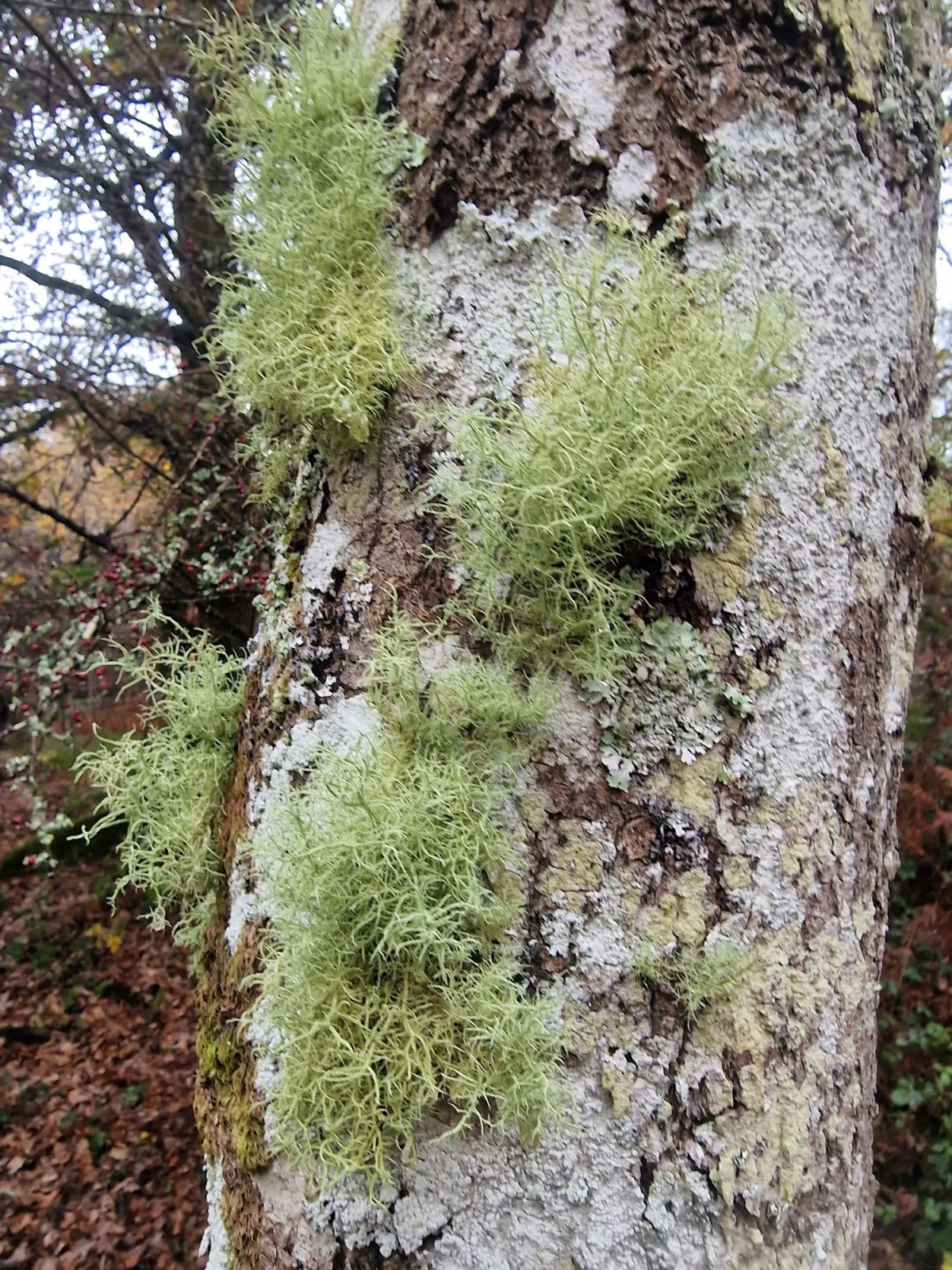
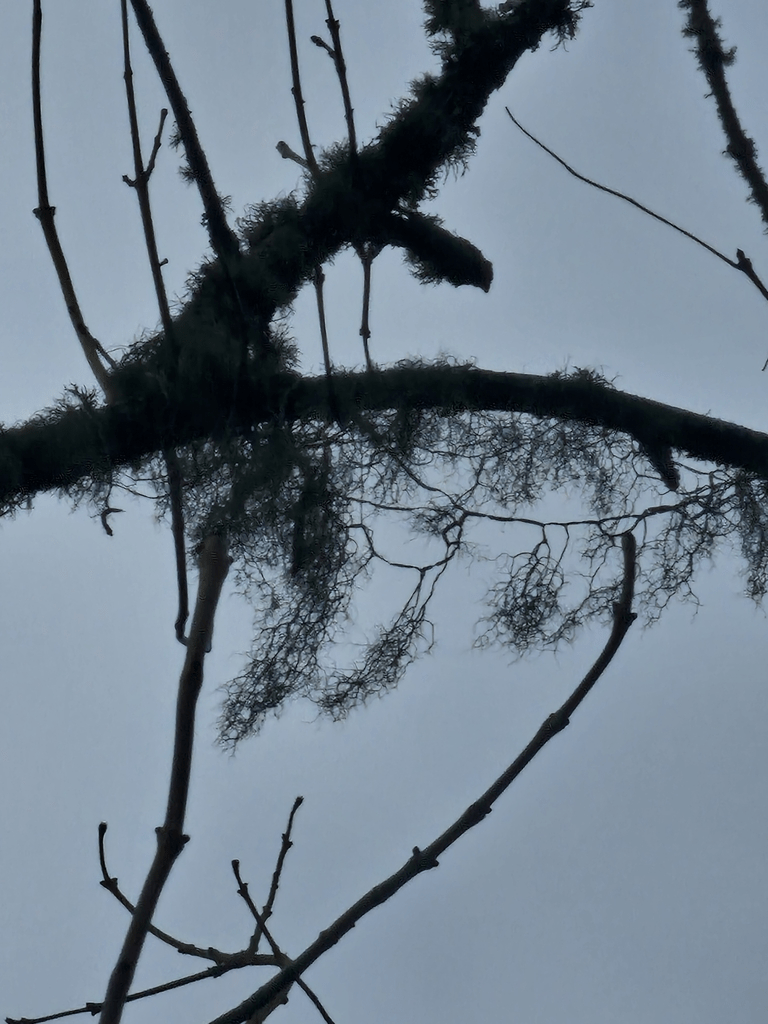
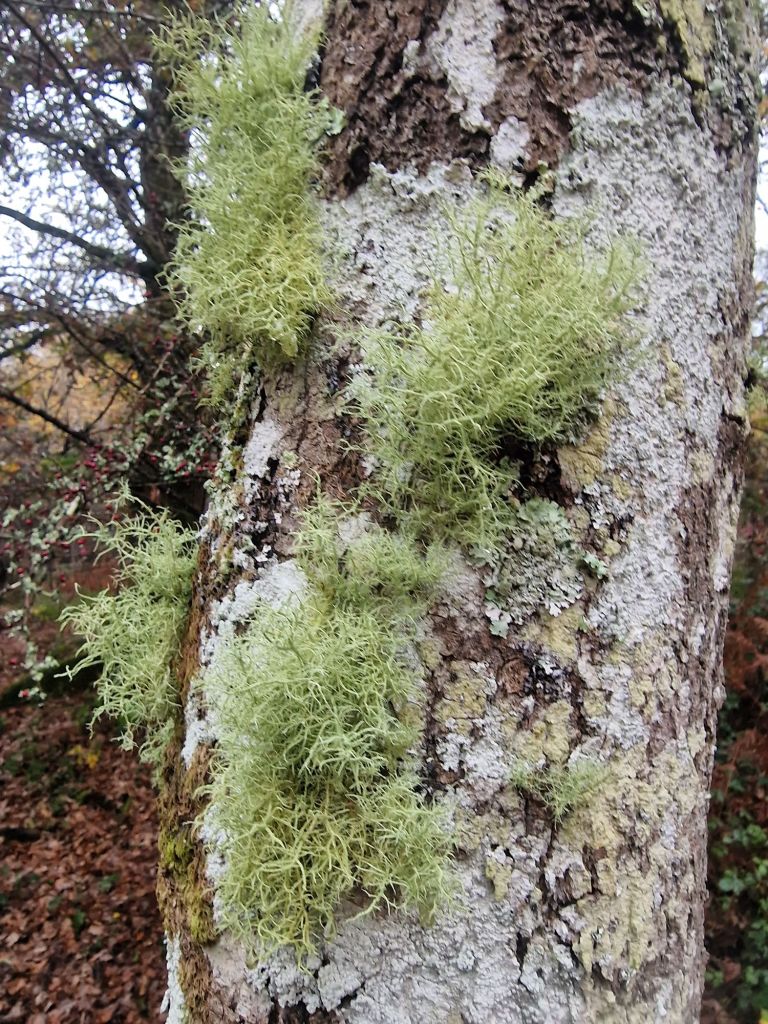
I have trespassed in an SSSI wood owned by one of the above, which the public are denied access to. It has outstanding and rare natural heritage, including this Usnea articulata String-of-Sausages Lichen, extremely rare in Sussex. This wood is regularly used for pheasant shooting. As I was walking around it I saw dead pheasants that had been left on the ground from a hunt of a few days before.
In an ideal world land would not be owned by individuals; but in the absence of a change to the ownership of land, I believe:
(1) there should be a right to roam on private land, as set out by the campaign The Right to Roam / About / What we are campaigning for (accessed 16.11.25)
(2) the ownership of land should be taxed through a Land Value Tax, see: Labour Land Campaign What is Land Value Tax (accessed 16.11.25)
I am not urging you to trespass. If you choose to trespass, please follow the guidelines from the Right To Roam that are cited at the end of this post
The wood that I trespassed a few days ago and its natural wonders
This woodland is a Site of Special Scientific Interest that is believed to have been continuously wooded since medieval times. The wood’s soil is clay; and the wood is dominated by sessile oak, pedunculate oak, hornbeam and hazel with some ash and alder, with an understory of holly and bramble. The hornbeam and hazel have been previously coppiced. The sign on the gate as well as saying the land is private warns of shooting occurring in the wood.
The rides are lined by goat willow, aspen, blackthorn, hawthorn and silver birch
There is a boundary bank and ditch planted mostly with coppiced hornbeam, that exactly follows the parish boundary shown on the OS map
Honrbeam
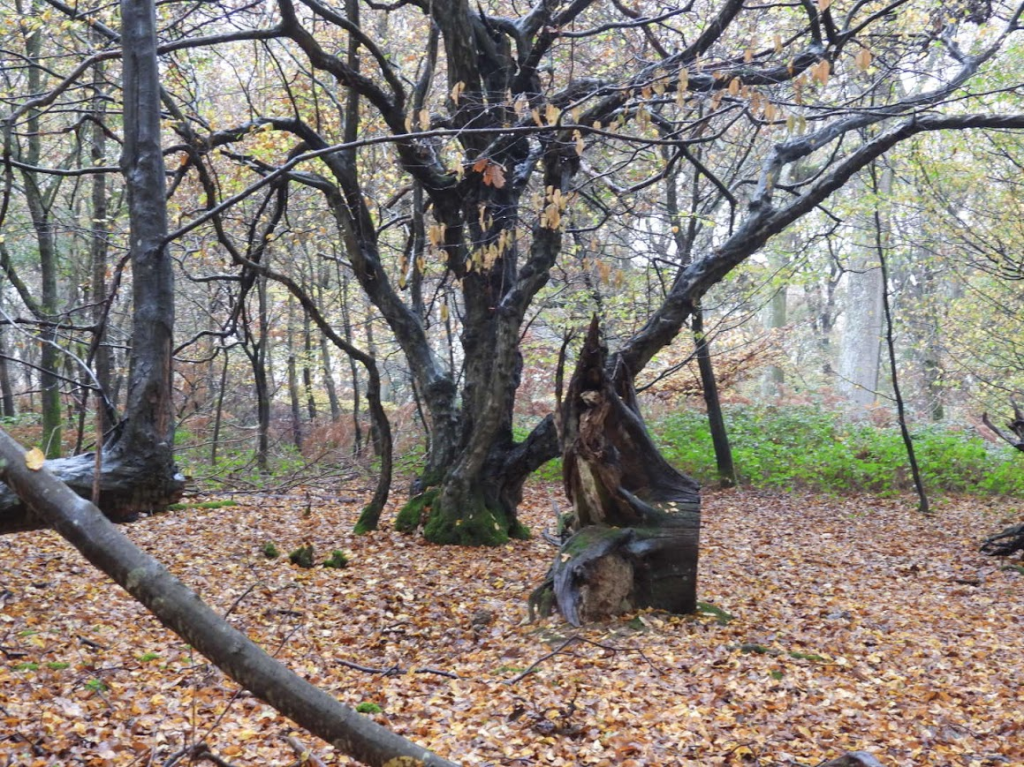
Sessile Oak and Hornbeam
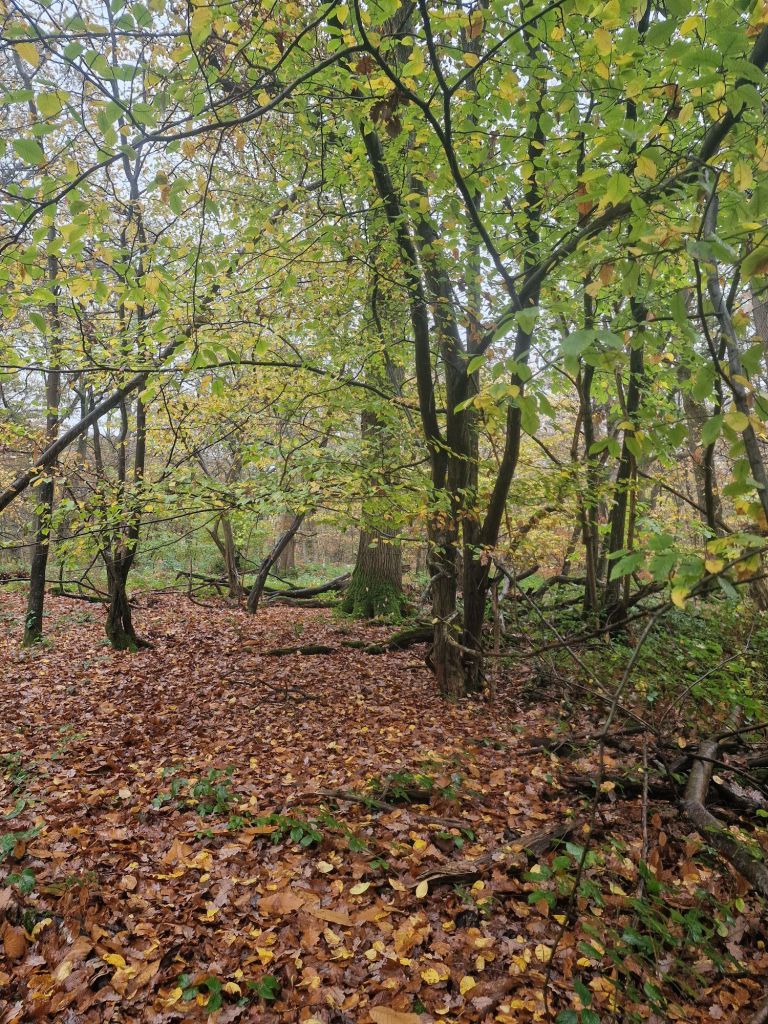
Graphidaceae family lichen possibility Graphis scripta on a Hornbeam
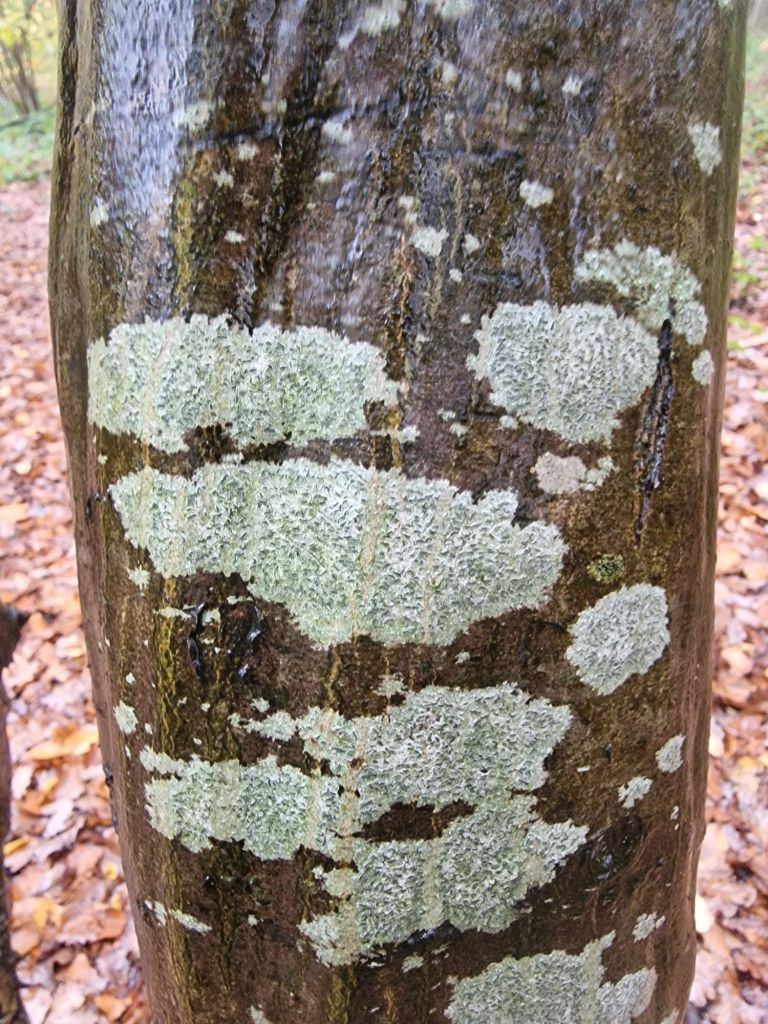
Sessile Oak in “tall forest” woodland
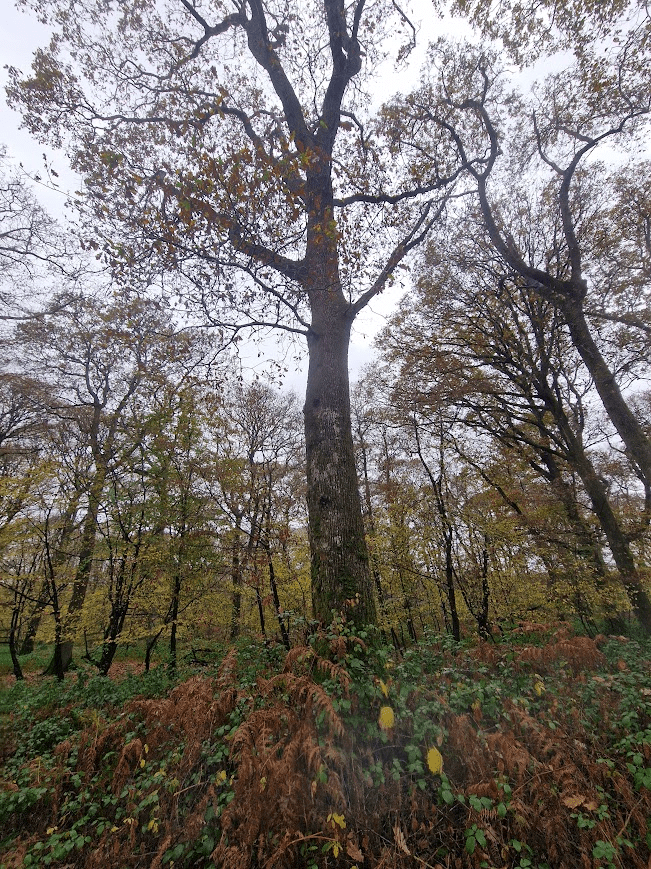
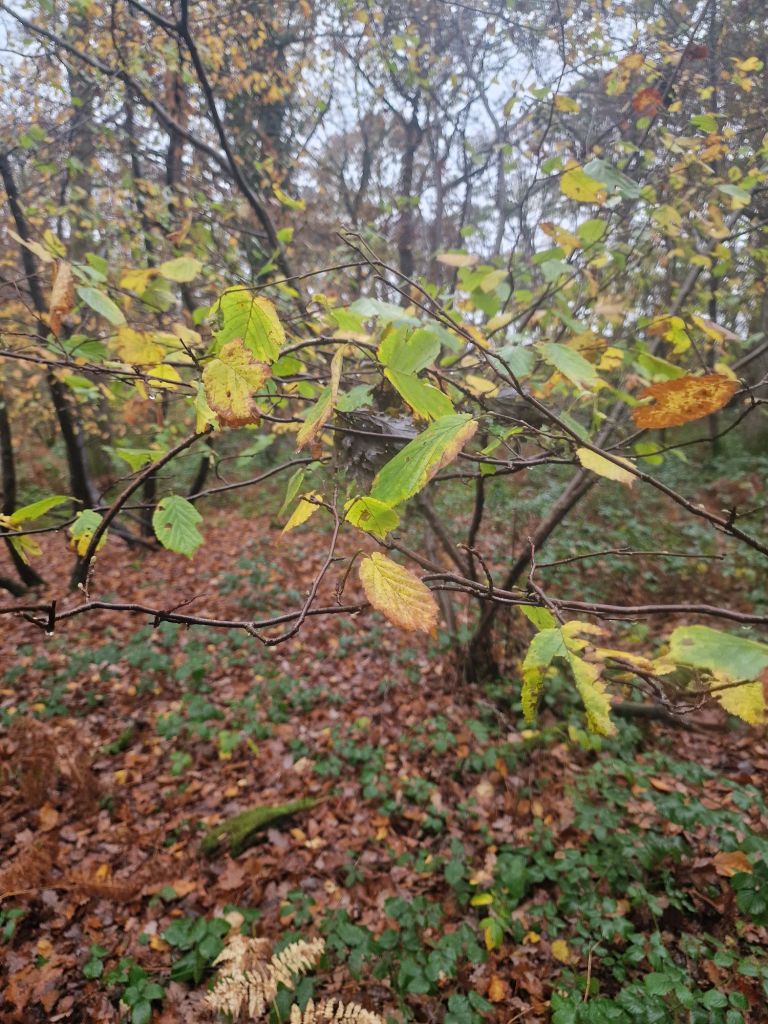
Hazel
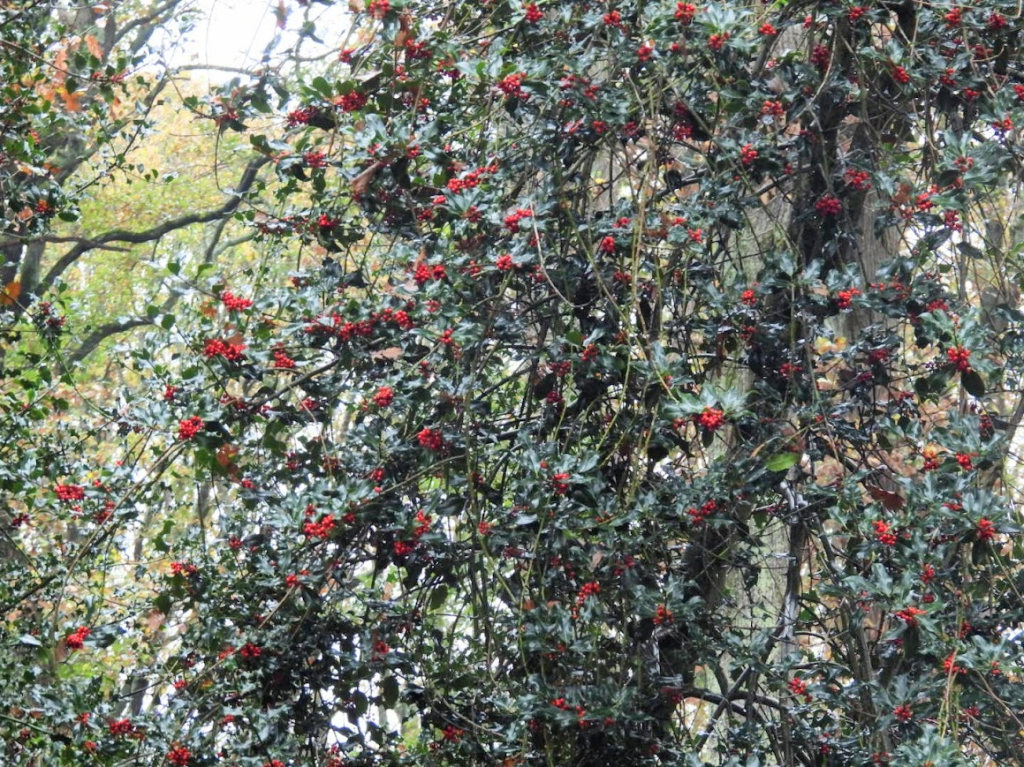
Holly
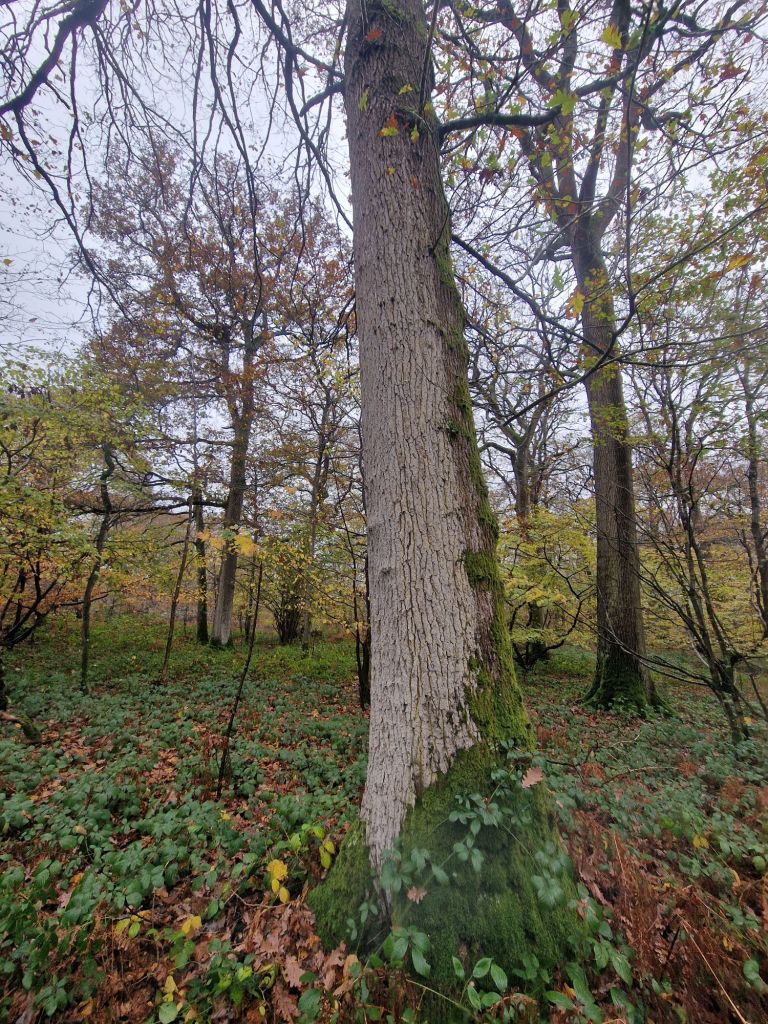
Sessile Oak, with a sheet of the lichen Dendrographa decolorans on the dry side of the tree
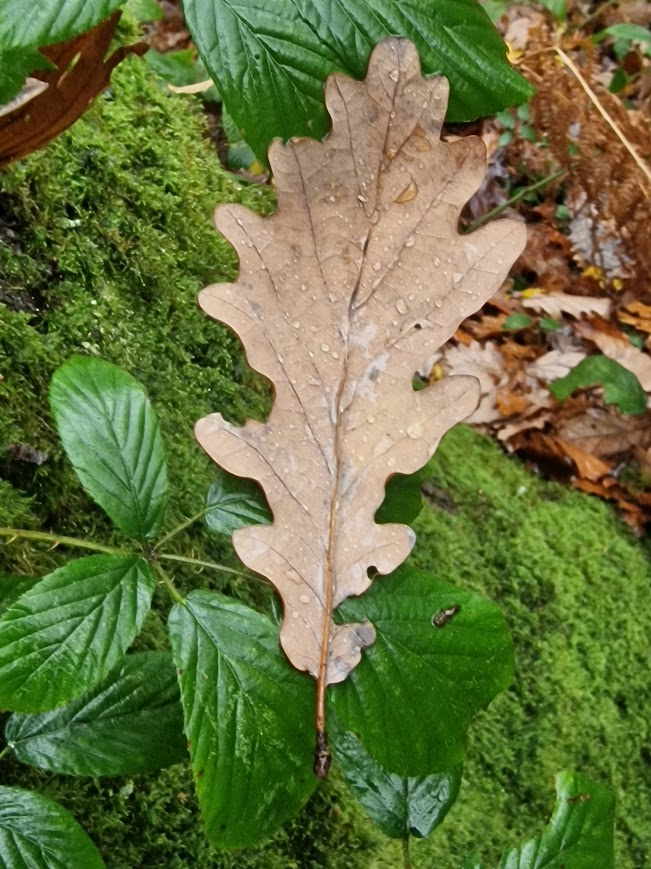
Sessile Oak leaf on the base of the tree above
The lichens Lecanactis abietina (an old tree lichen) and a Chrysothrix sp. (Gold Dust Lichens) on a Sessile Oak
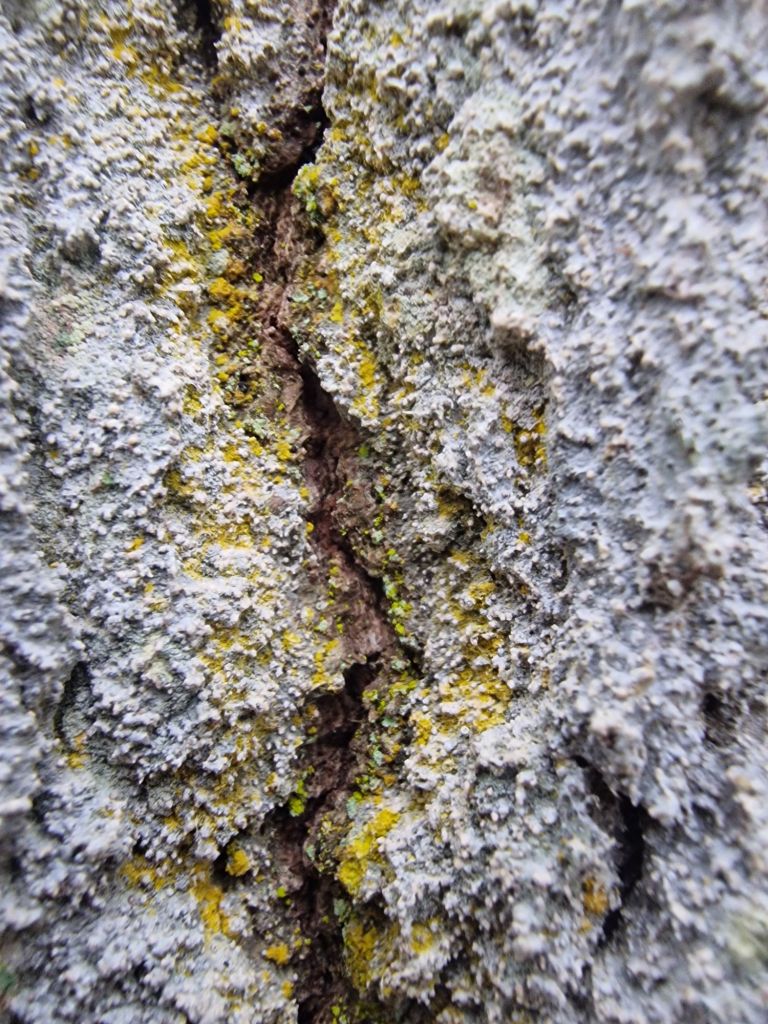
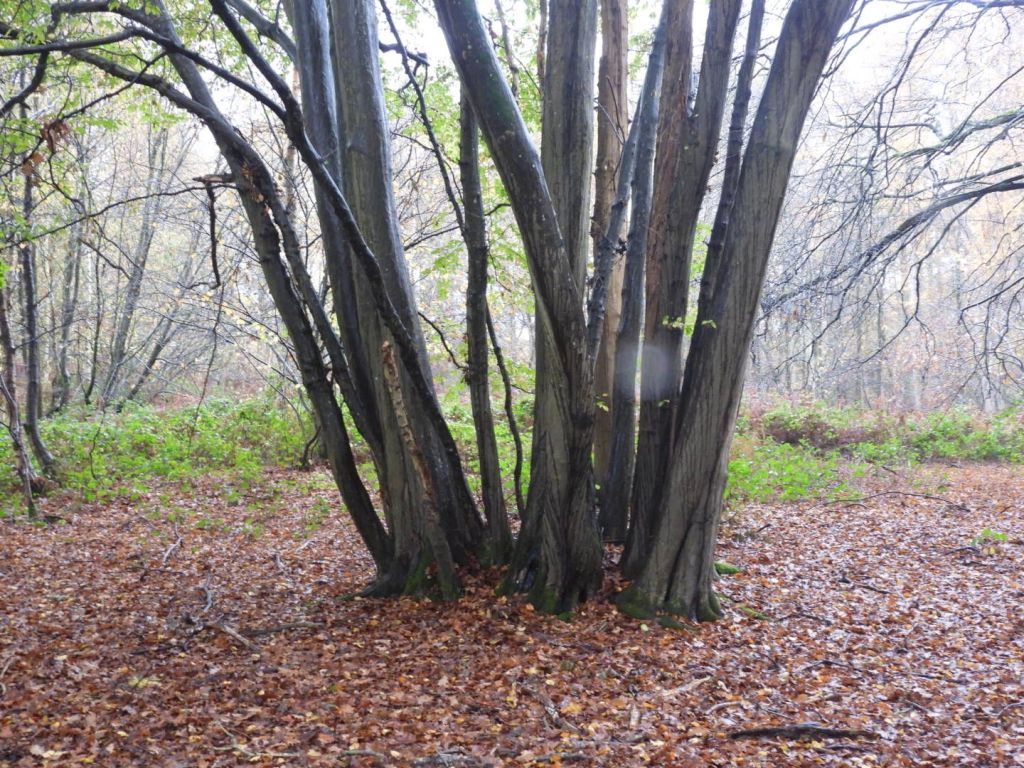
Coppiced Hornbeam

Clouded Funnel fungi
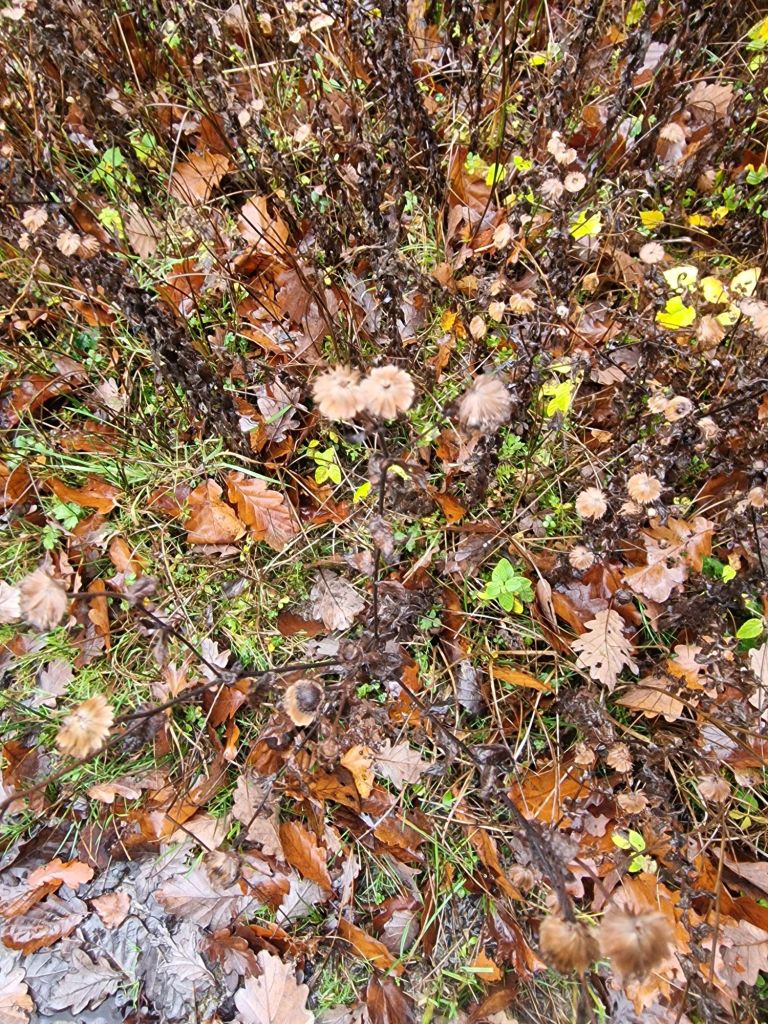
Sessile Oak
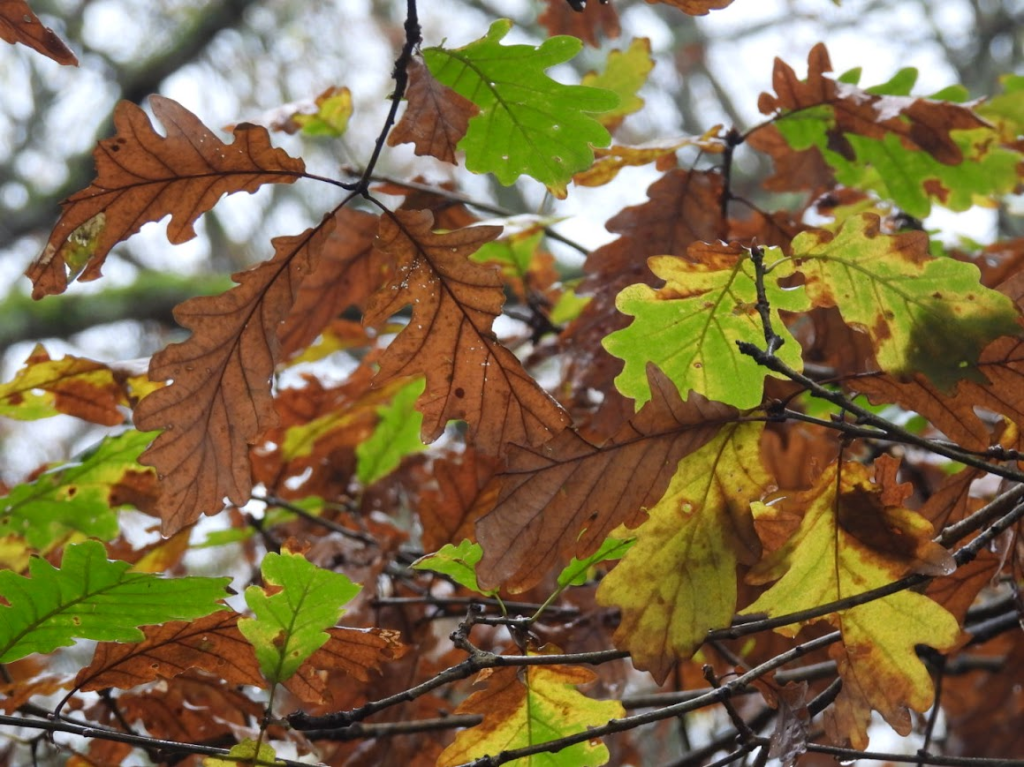
Bark Barnacle Lichen on Sessile Oak
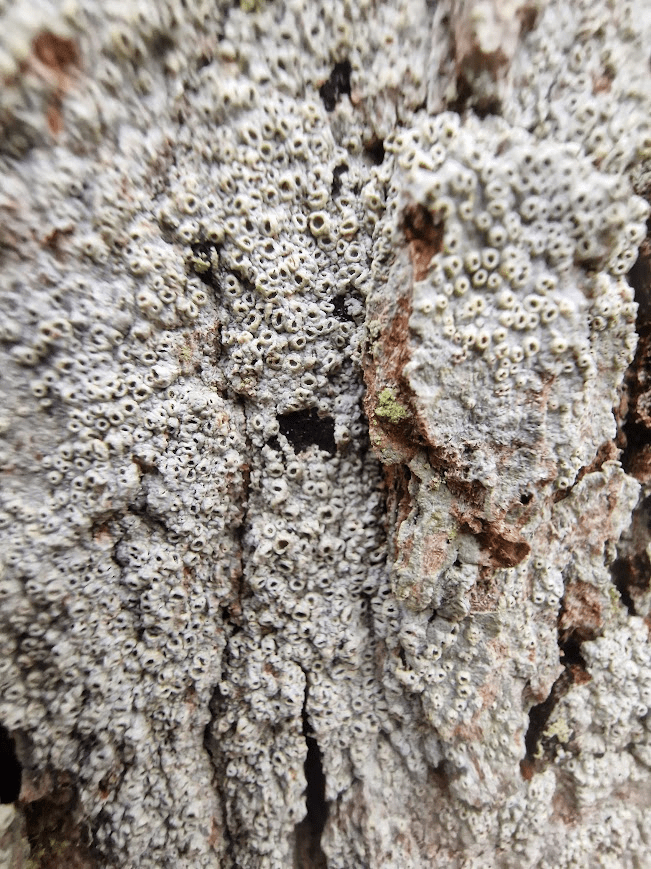
Brnacle lichen is found mainly on the bark of living trees in ancient woods, and it is indicative of longstanding woodland conditions. Woodland Trust Bark Barnacle Lichen
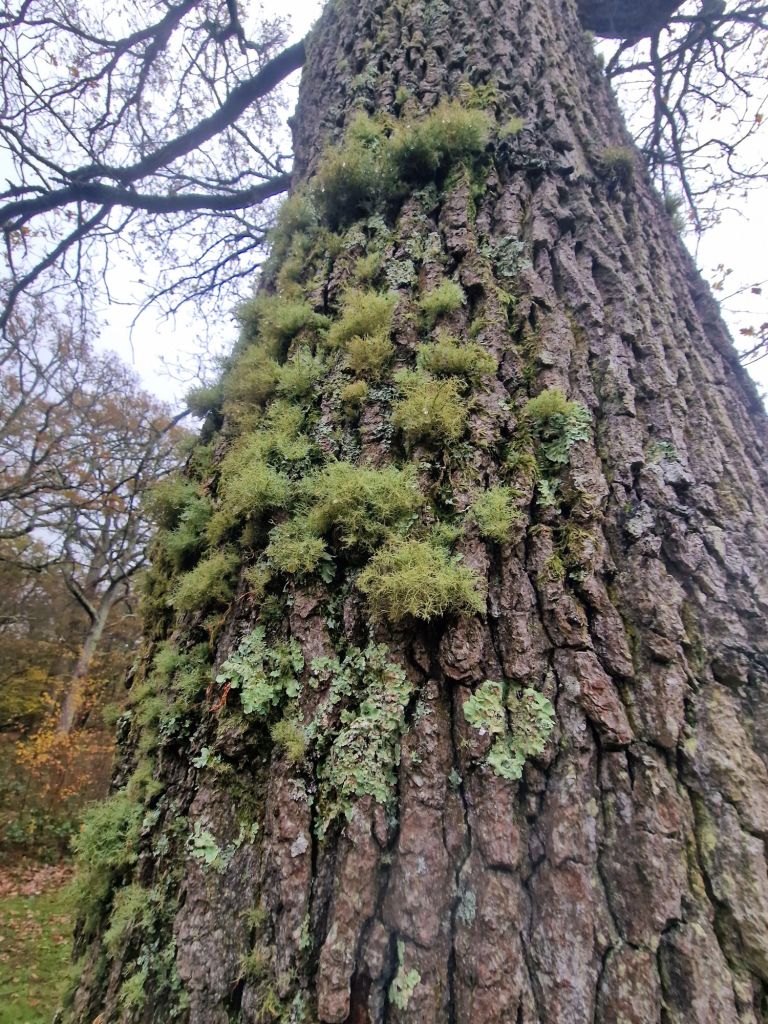
Sessile Oak covered in Usnea cornuta
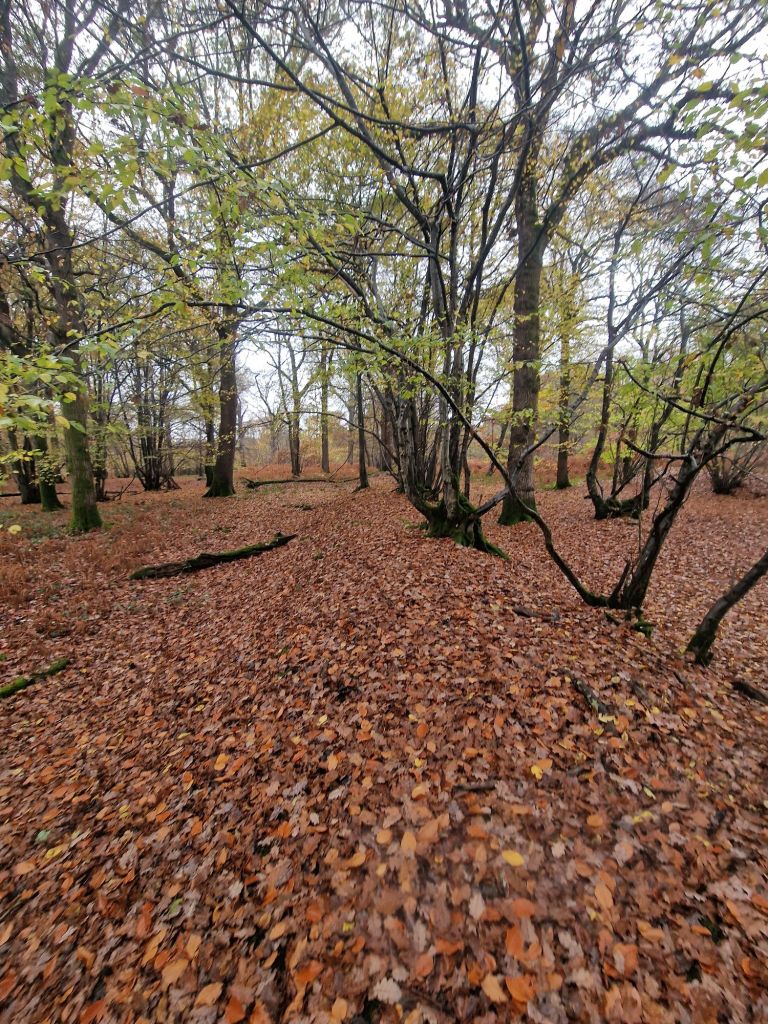
Parish boundary bank with coppiced Hornbeam
A recently pollarded young Hornbeam – showing continuity of ancient woodland management practices
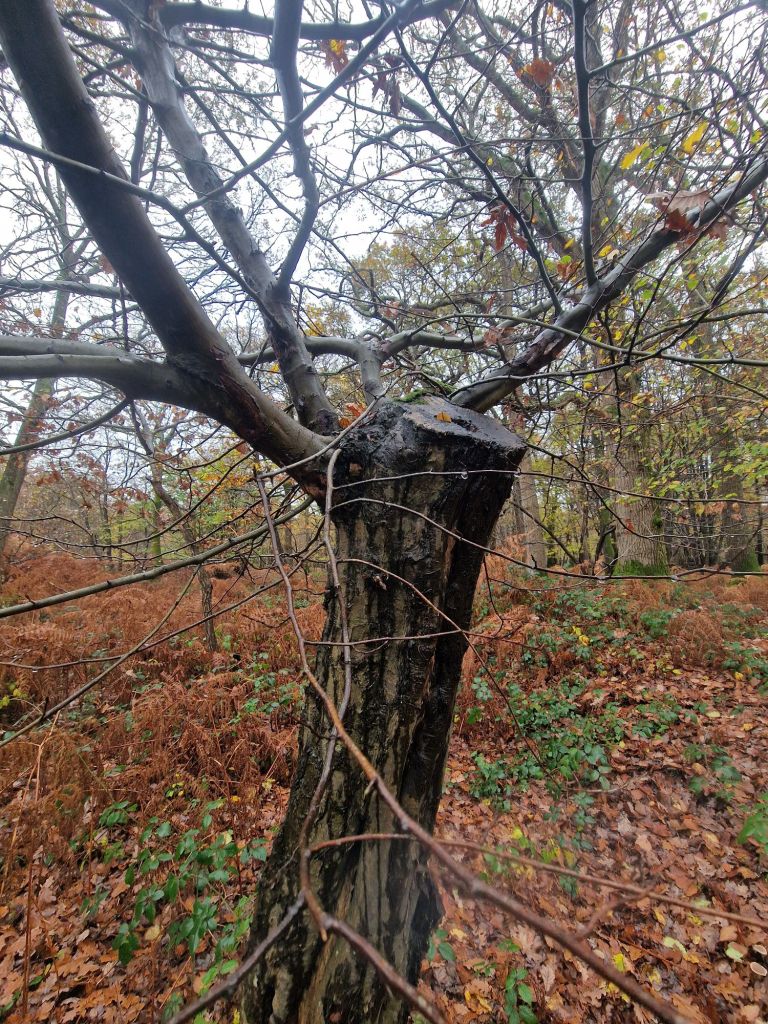
Coppiced Hornbeam
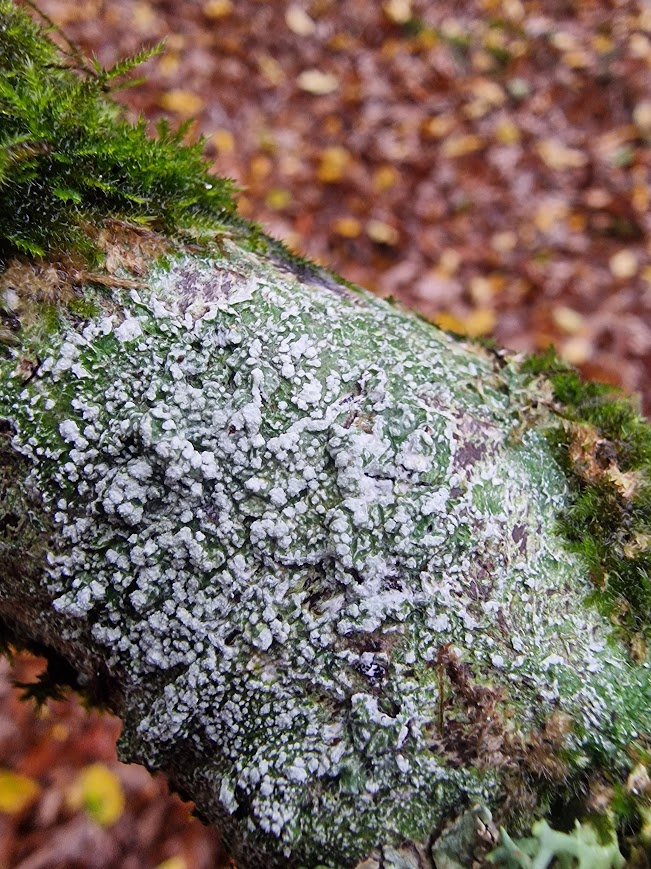
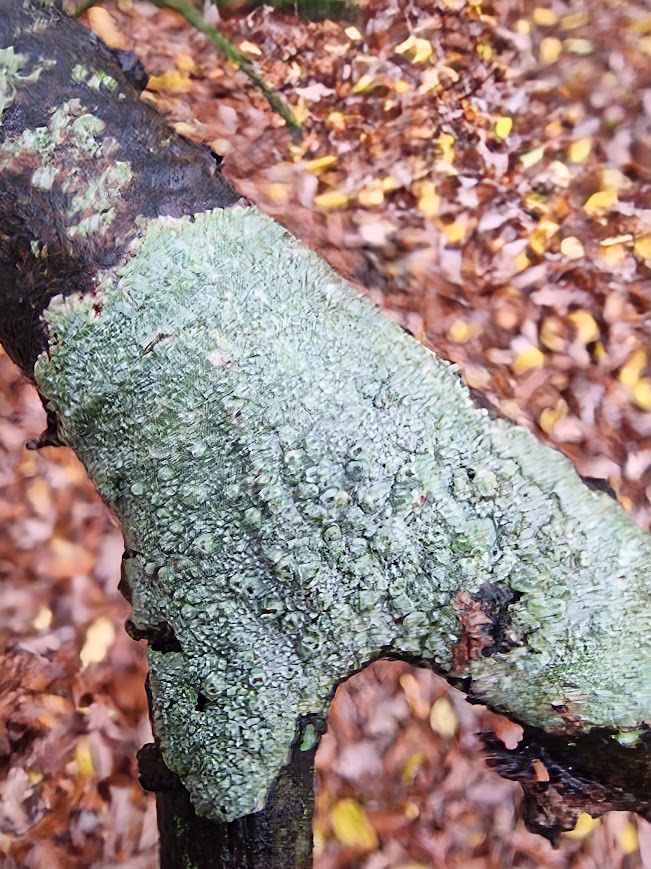
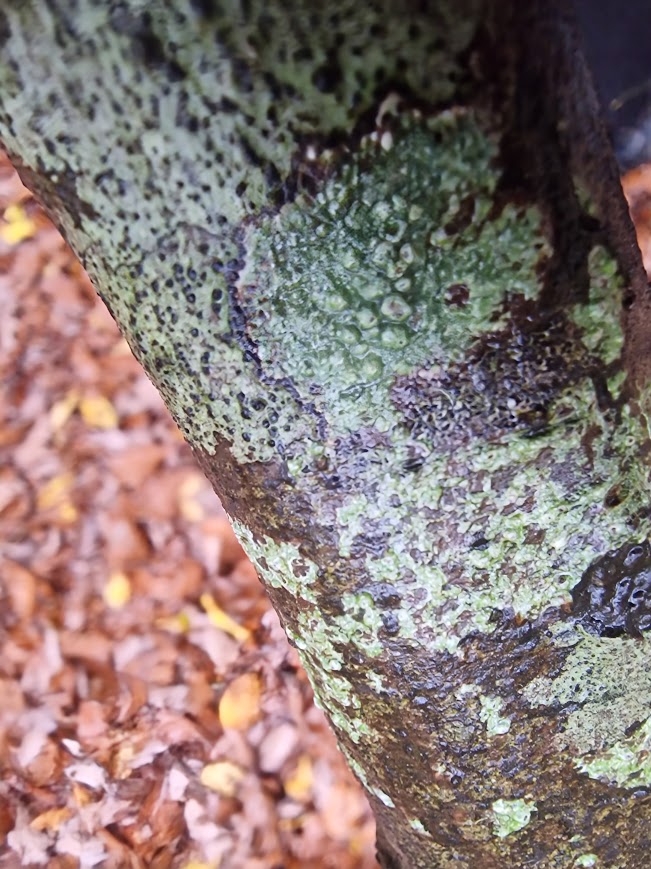
A Hornbeam with a range of Pertusaria spp. Hornbeams often have many genus Pertusaria and family Graphidaceae
Lepra (formerly Pertusaria) amara, Pertusaria pertusa and Pertusaria leioplaca. Terrestrial molluscs love eating the apothecia of Pertusaria. L. leioplaca seems their favourite; it must be their caviar.
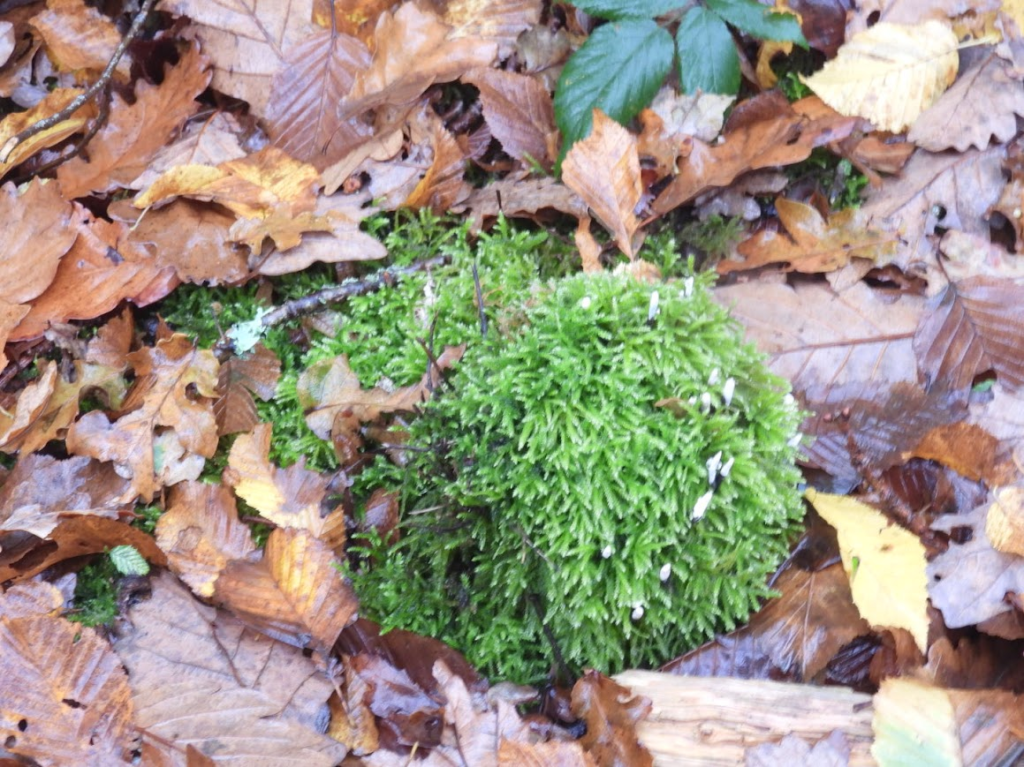
Ball of Common Striated Feathermoss with Candlesnuff fungus,
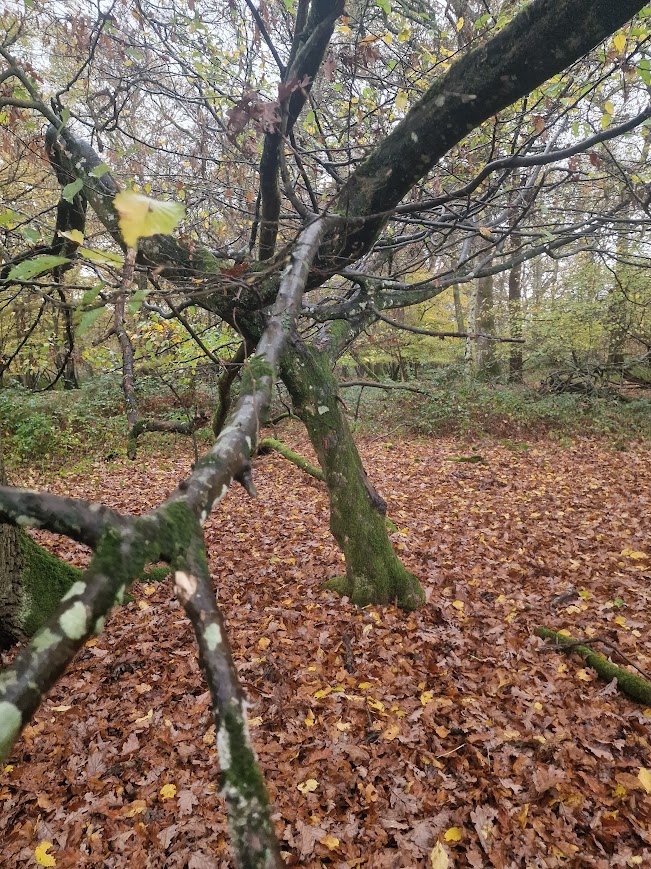
Pedunculate Oak
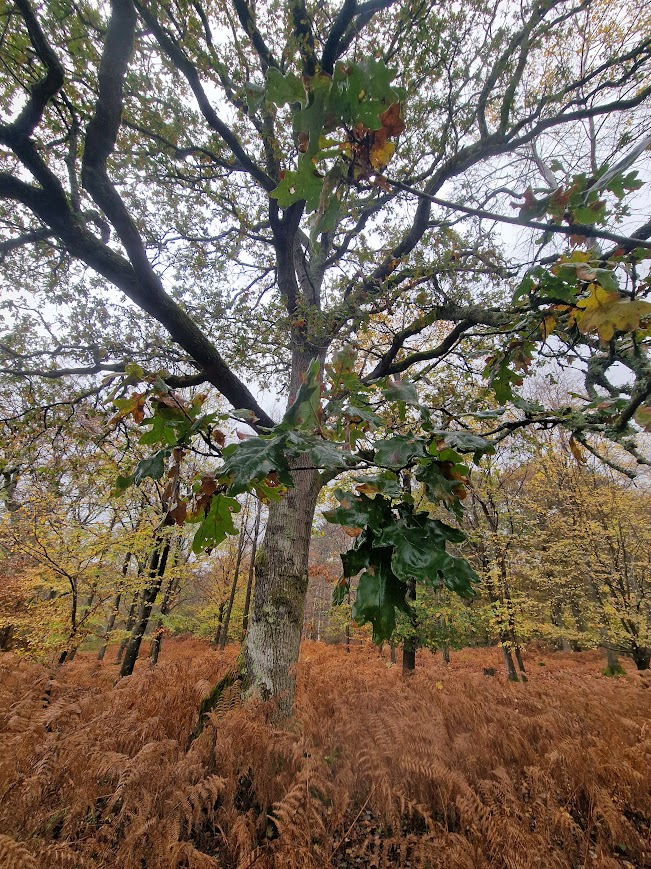
Alder by a stream
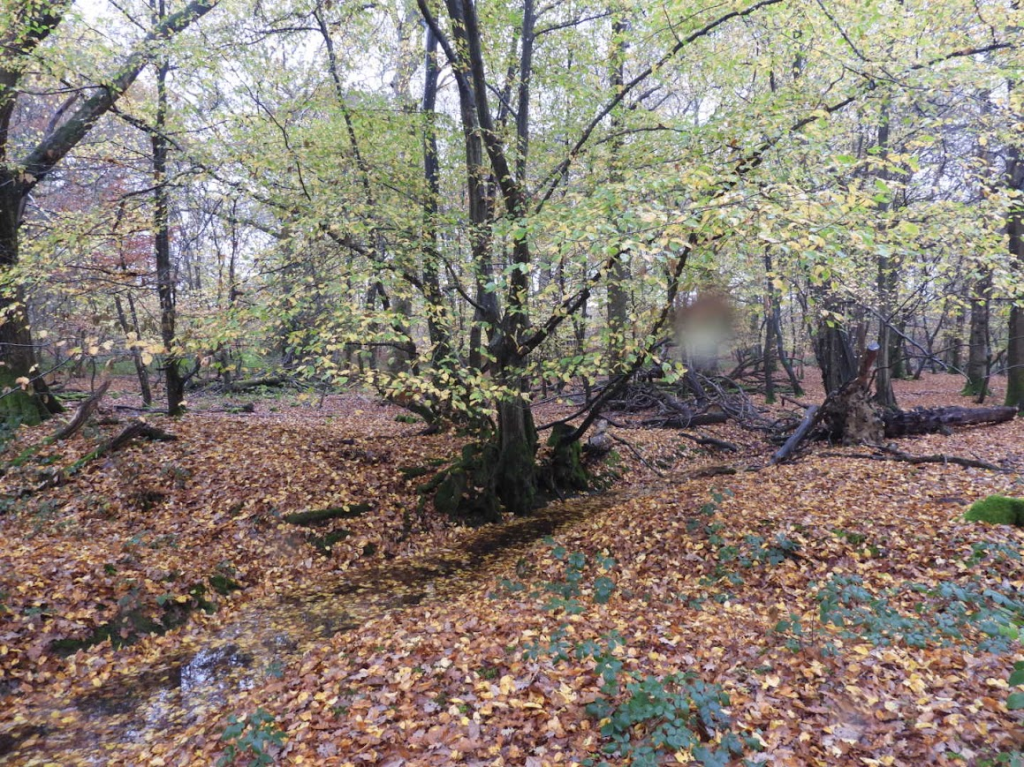
Ash
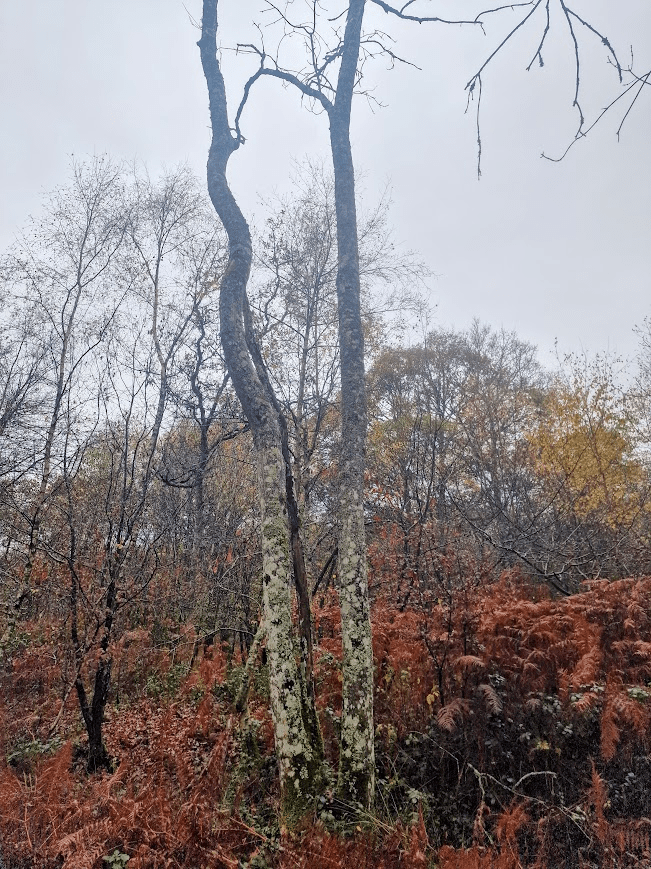
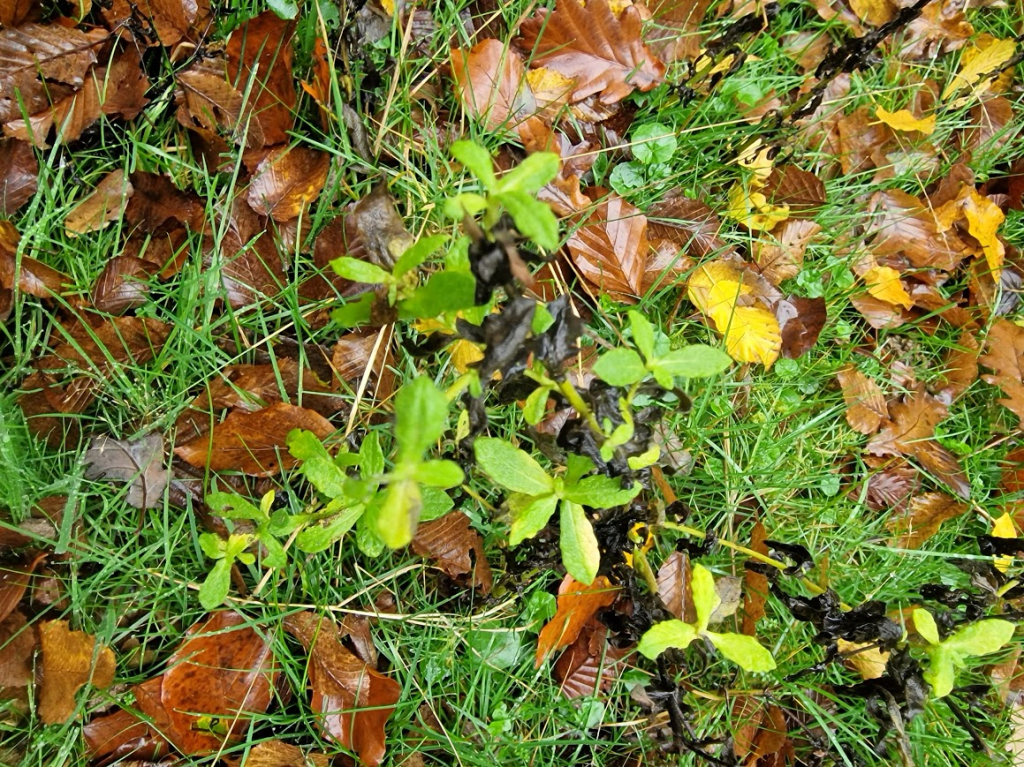
Wild Privet
From Right To Roam:
You’ve all seen signs claiming ‘Trespassers Will Be Prosecuted’. They’re a lie.
In the UK, ‘trespass’ is a civil offence, provided you don’t infringe certain conditions. You cannot face criminal prosecution simply for being on someone else’s land without permission (or away from a designated Right of Way, open access land or land where any bylaws permit public access). The dispute is solely between you and the landowner, and the police cannot get involved.
That landowner could theoretically take you to civil court. But they’d have to know who you are, and it would most likely be a waste of their time.
Likewise, any ‘damages’ would have to be proportionate to the damage you’ve caused, which if you follow our principles of trespass below, should be zero.
However, the legal situation changes if you do any the following when trespassing on land:
- Cause damage to property
- Disrupt lawful activity
- Conduct yourself in a threatening or abusive fashion
- Bring a vehicle, intending to reside & cause damage
- Enter land with special restrictions* (see below)
That would be classed as ‘criminal trespass’, which is a criminal offence, leaving you potentially subject to police enforcement.
*Important Note: there are certain sites with special trespass designations which do make your mere unauthorised presence a criminal offence. The penalty for violation can be serious. Mostly, these are common sense. Avoid military sites, essential infrastructure (e.g. railways, airports, nuclear facilities) and stay away from the sorts of places the King might be having a cup of tea (or the Prime Minister hosting an illegal party).
Right to Roam follow some key principles when accessing land without permission. We do not condone actions which break these rules, as these will simply undermine our campaign.
- Take responsibility for your own actions
- Respect people’s privacy, domestic property and gardens
- Don’t walk where crops are growing (stick to field margins or use alternative routes)
- Avoid places that don’t feel like open countryside (e.g. have buildings or machinery)
- Respect livestock and other animals kept on the land such as ponies and horses (i.e. avoid closed paddocks). Remember that cattle – especially bulls or cows with calves – can be dangerous
- Care for nature (avoid fires, wildlife disturbance or damage to flora)
Since civil trespass (i.e. simply existing on land) is not a criminal offence it is especially important that it does not become associated with criminal activity. Damage nothing. Disrupt no lawful activity. Peacefully enjoy what you came to experience.
Voices from the seventieth century
The gentrye are all round stand up now, stand up now
The gentrye are all round stand up now
The gentrye are all round on each side the are found
Their wisdom so profound to cheat us of our ground.
The Diggers Song, Gerald Winstanley, 1650 True Levellers (Diggers)
 Sim's Nature Notes