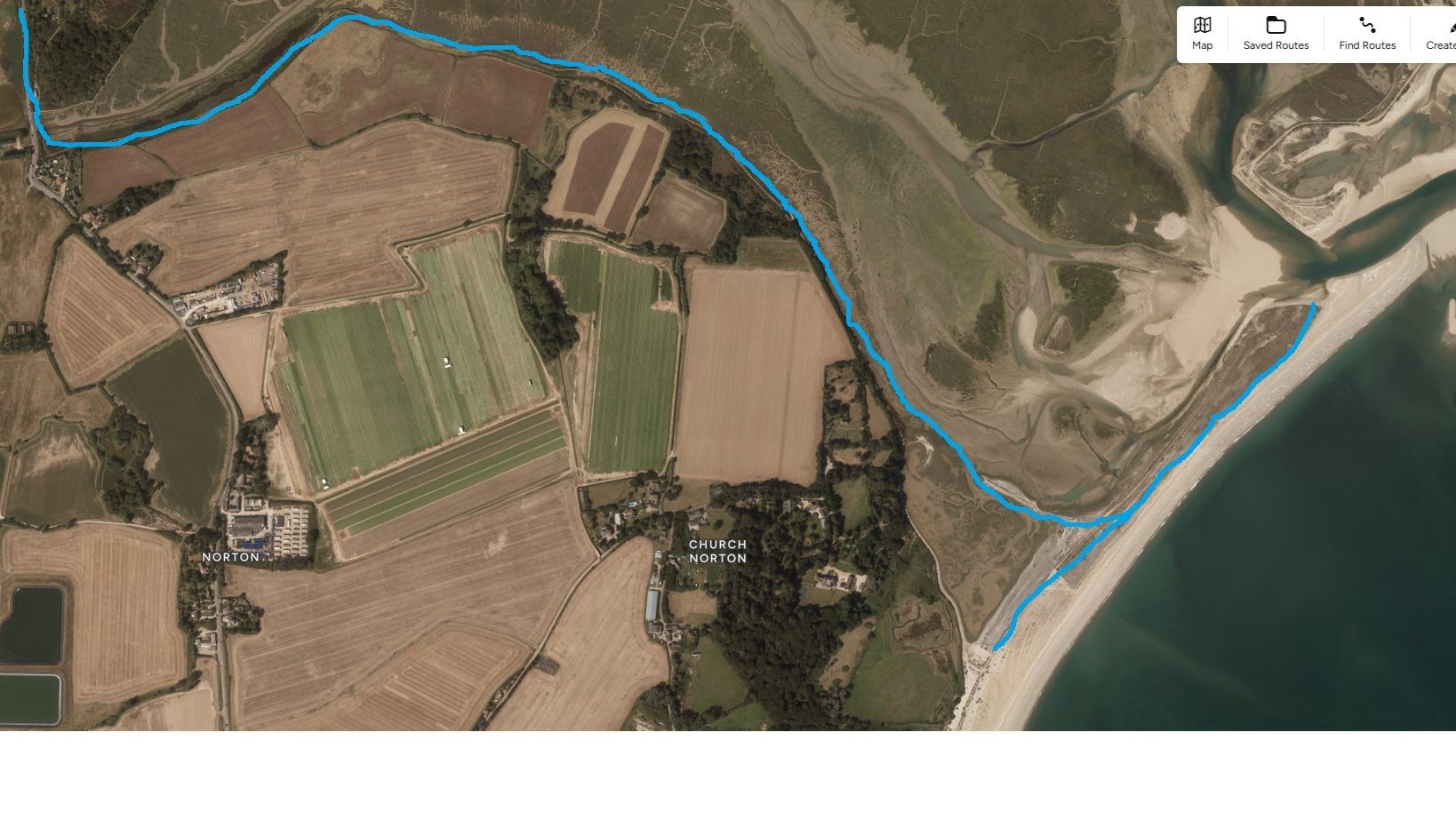
It was a sunny but windy day, and there were many visitors. I chatted to about 45 people. The main objective was to remind visitors that the vegetated shingle part of Church Norton Spit (the harbour side) is now closed to visitors whilst the Ringer Plovers and Oystercatchers are nesting.
RSPB Wild Cards game (until 31st May 2026)
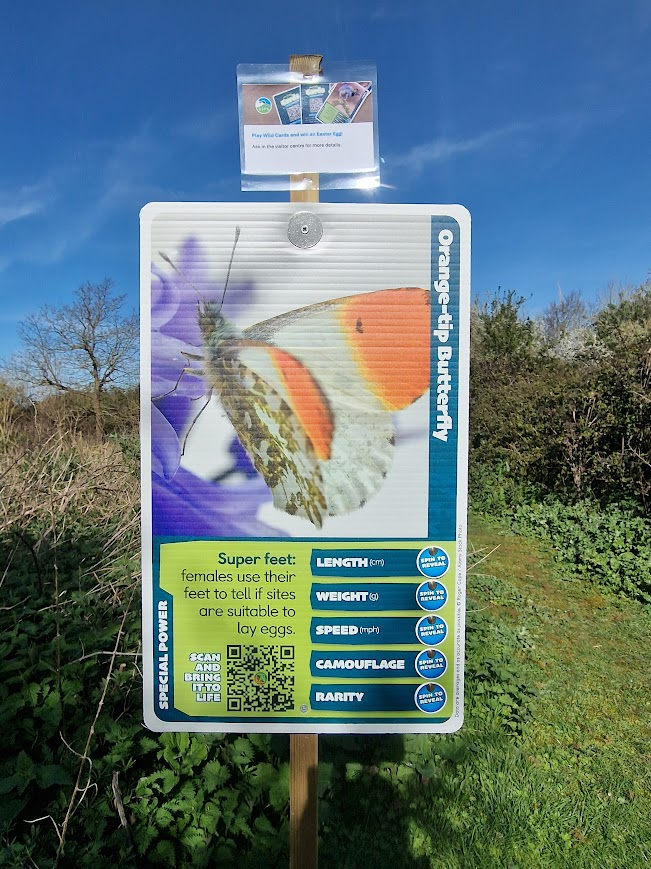
Egg‑splore the great outdoors with our new Wild Cards and uncover the hidden heroes of nature as you explore our nature reserves! From Easter until the end of May, pick up a special pack of playing cards (£3 at the reserve) to take on your adventure and compare the strengths, superpowers and fun facts of some of spring’s most familiar species. Track down the boards, play together to decide which creature will reign as the ultimate spring champion! Don’t forget to scan the codes and watch as amazing animals burst into life through augmented reality right before your eyes. RSPB Events
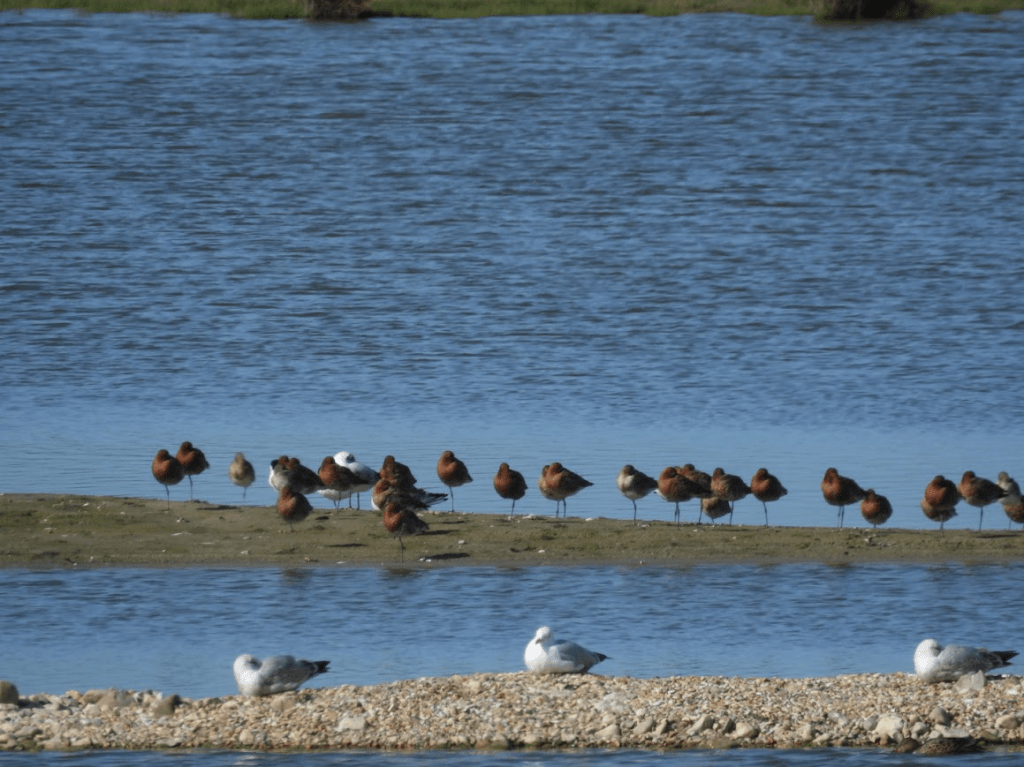
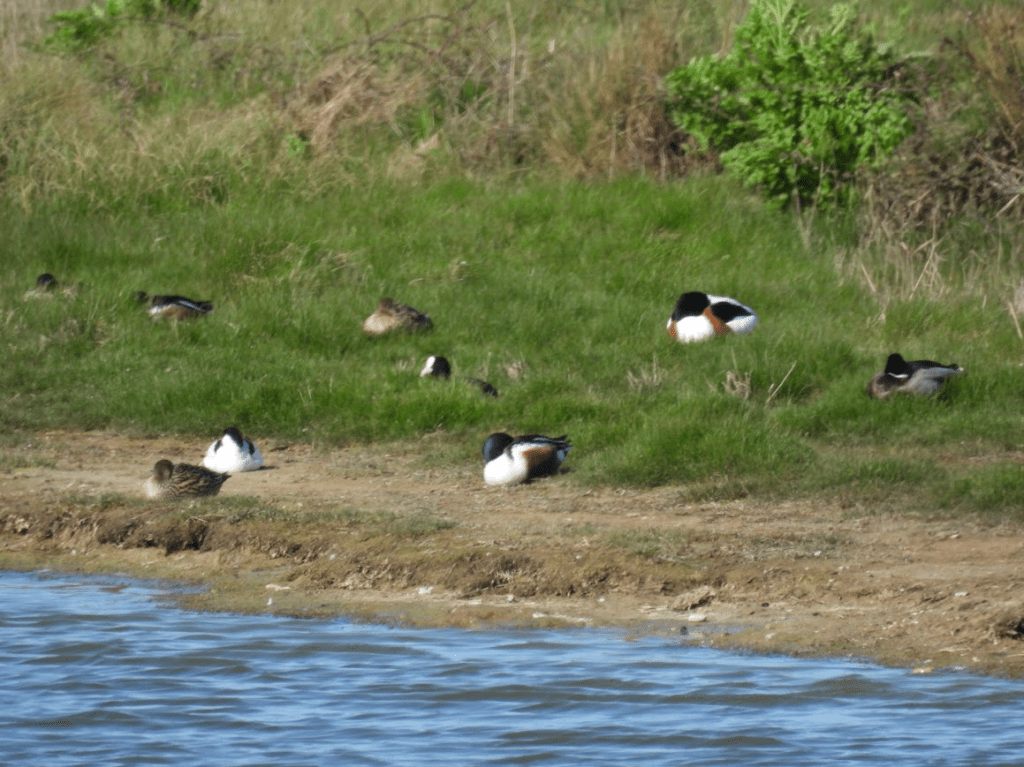
At a brief stop at the Ferry Pool. Black-Tailed Godwits (in blooming plumage ready for their rerun to Iceland), Shelducks, Avocets, Black-headed Gulls, Herring Gulls, and Shoveler Ducks were the most noticeable.
Black-Tailed Godwits & Herring Gulls
Mallards, an Avocet, a Shoveler and a Shelduck
Walking Down the path from the Ferry Pool to Church Norton
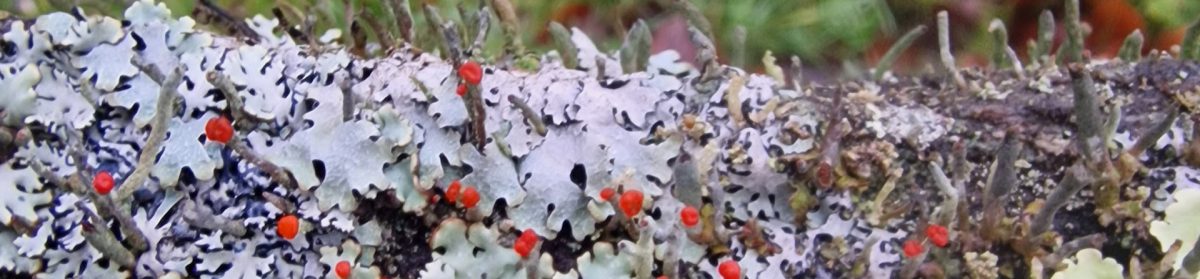
Blackthorn with buds and flowers are very prominent fruticose (dangly) lichens of the Ramalina genus
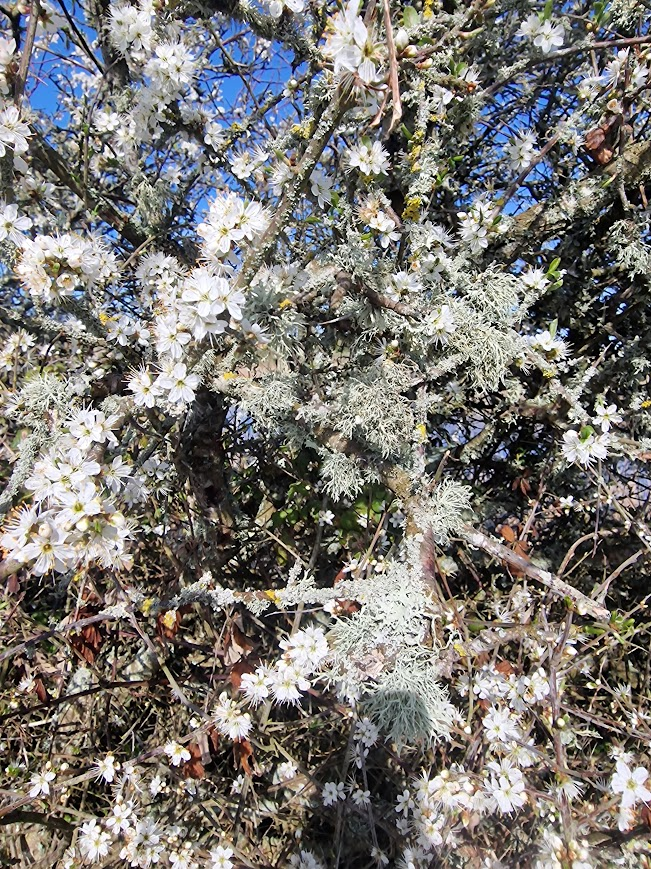
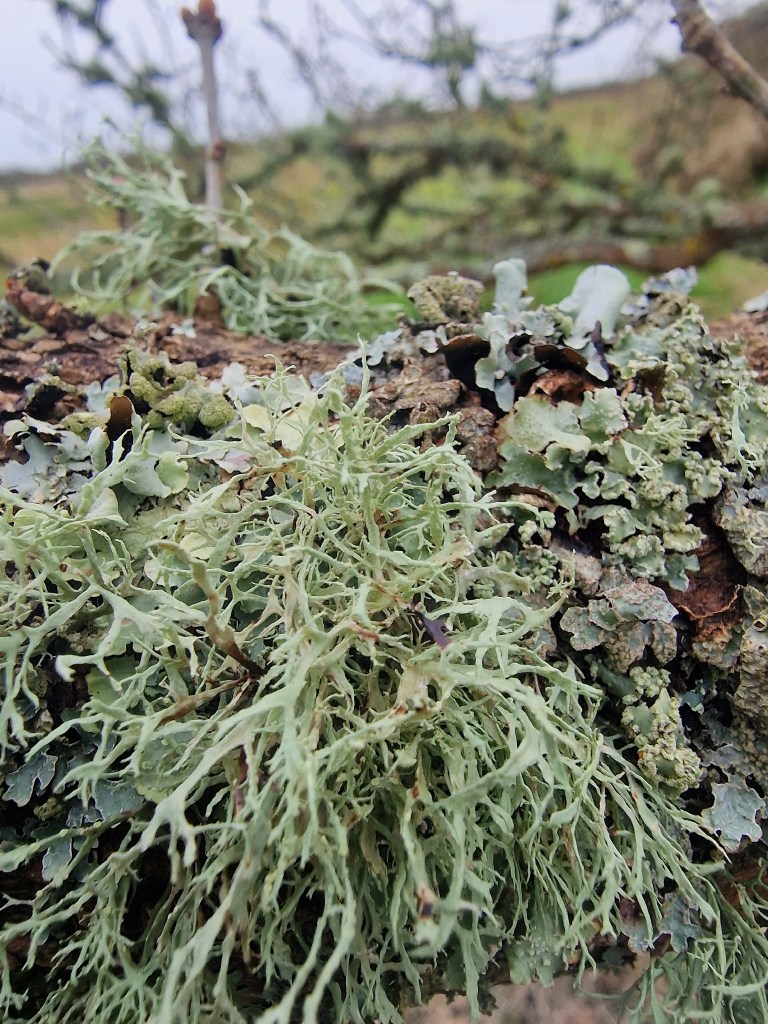
The Ramalina lichens in Blackthorn and Hawthorn are moslty R. farinacea and R. fastigiata – both very common, but easy to differentiate:
R. farinacea has whiteish splodges on their lobes (soredia: vegetative [non-sexual] reproductive propagules consisting of packets of fungal hyphae and the alga)
R. fastigiata has little satellite dishes at the ends of its lobes (apothecia: sexual reproductive propagules containing fungal spores)
(photo 1) R. farinacea; (2) R. fastigiata (3); R. fastigiata with Lecidella eleachroma
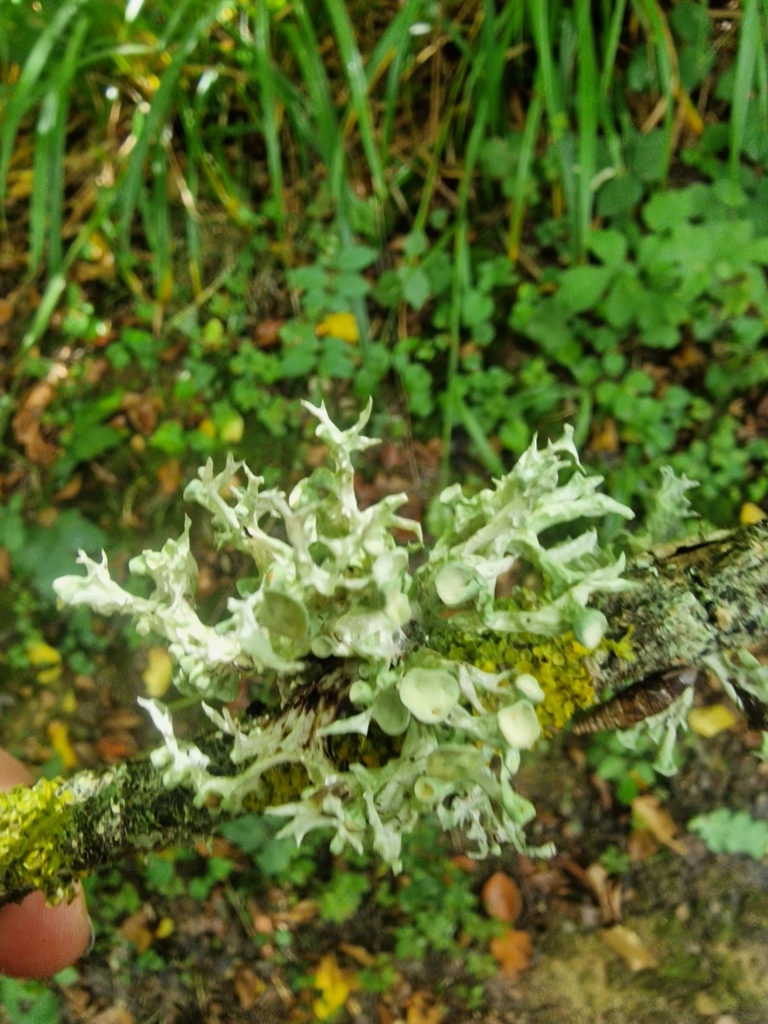
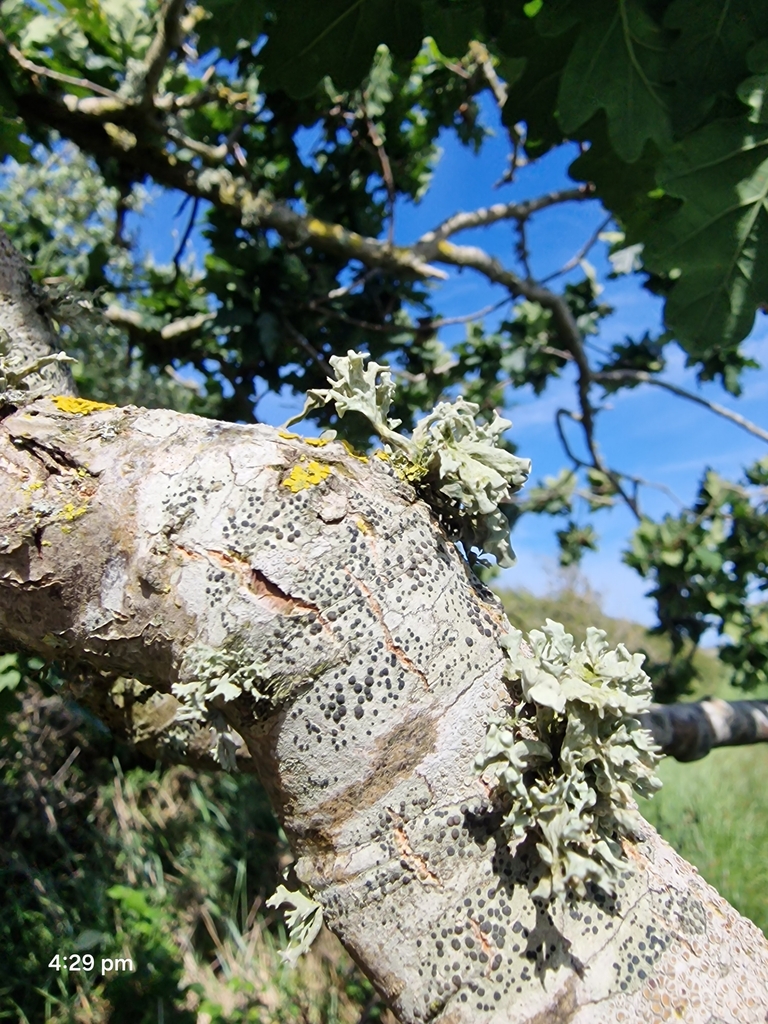
Lecidella eleachroma is extremely common on all Pagham Blackthorns and Hawthorns. It is a crustose lichen (a crust on a truck, branch or twig, although crustose liches grow on rocks/stones too, but not this one) with a pale grey thallus (body of the lichen) and little round black apothecia.
A lichen is not a single organism; it is a stable symbiotic association between a fungus and algae and/or cyanobacteria, called photobionts. The which can produce simple sugars by photosynthesis. In contrast, fungi are ‘heterotrophic’ and require an external source of food. The fungi build the structure of the lichen thallus, within which they provide conditions for a long term, stable association with their photobionts. What is a Lichen? | The British Lichen Society
On the vegetated shingle harbour-side path, before you get to the coastal Oaks:
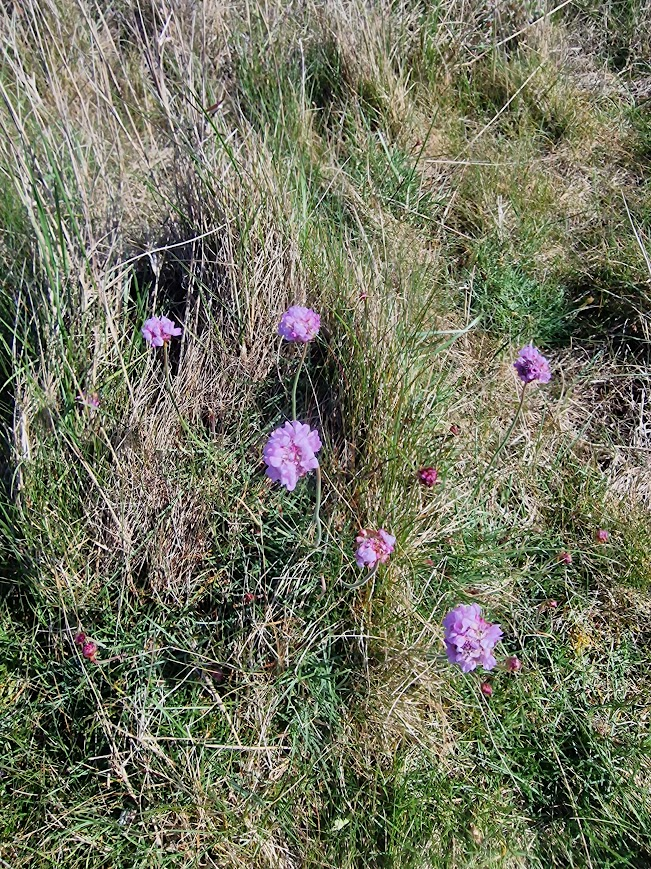
Thrift, clover-like and pink; a maritime plant of cliffs, shingle and sand dunes.
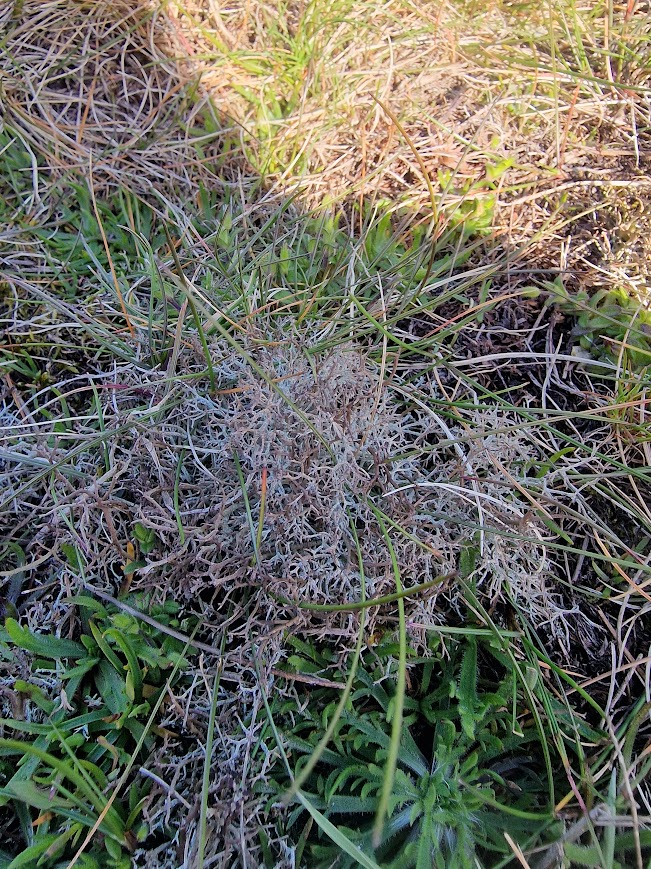
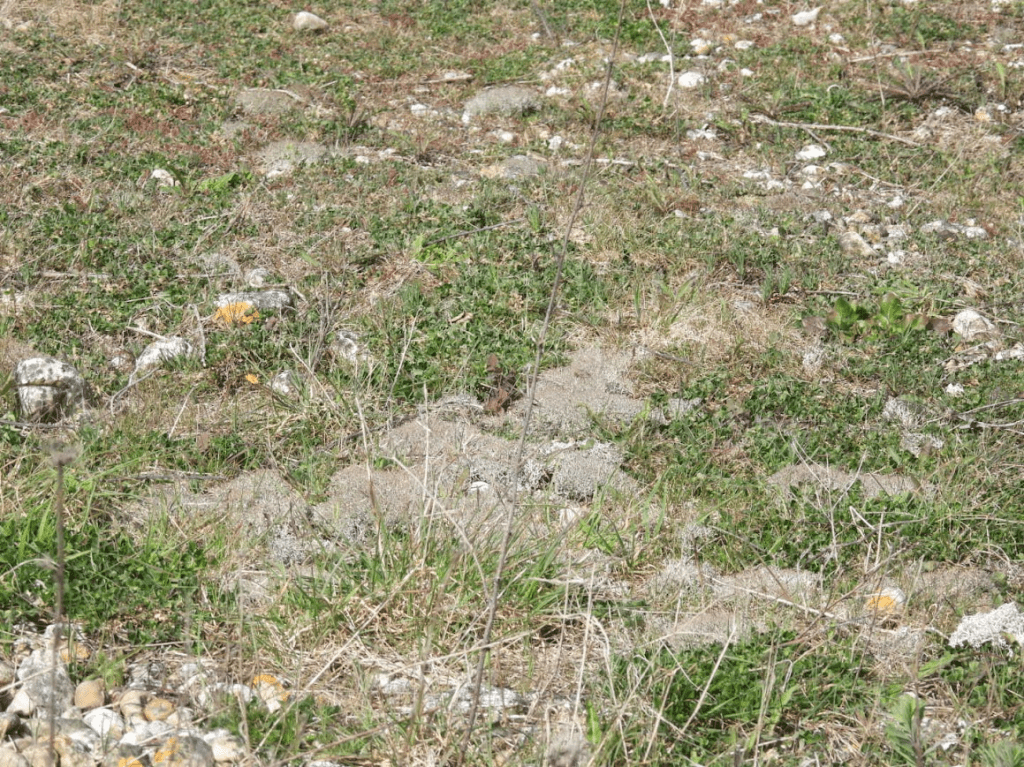
Cladonia rangiformis lichen, a false reindeermoss – looks like dried grass; grows in soil i.e. it is a terricolous lichen
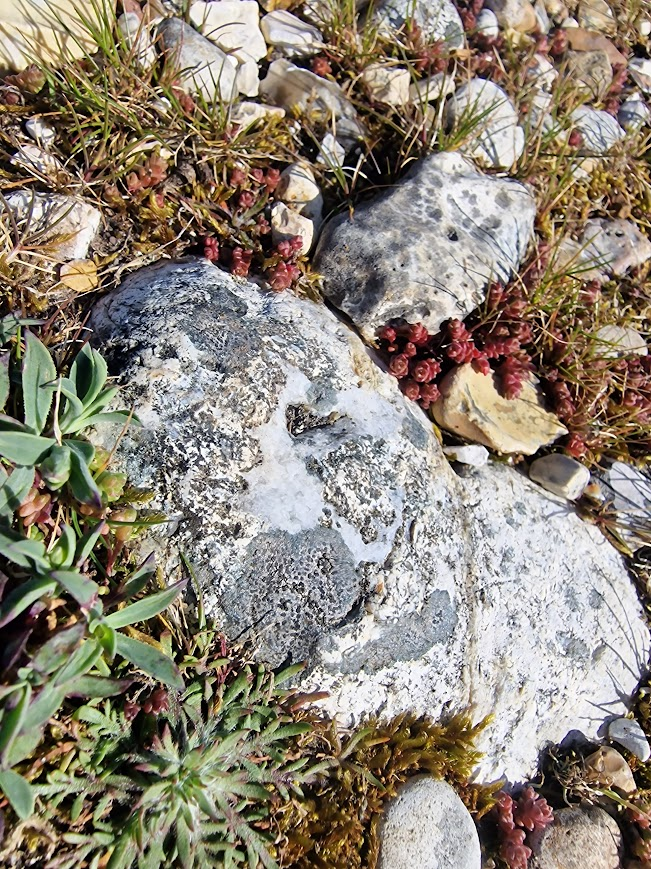
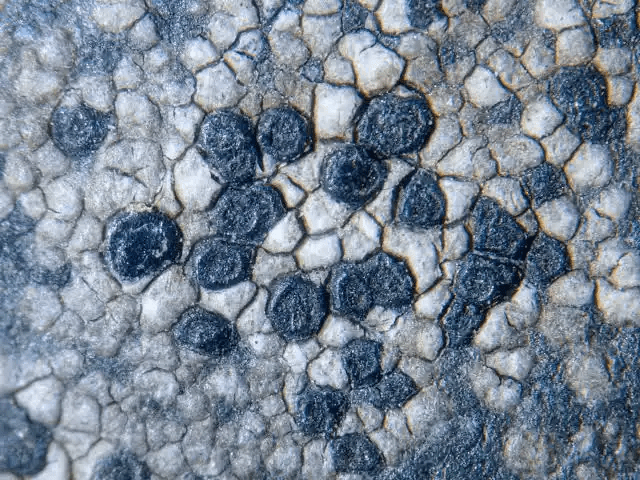
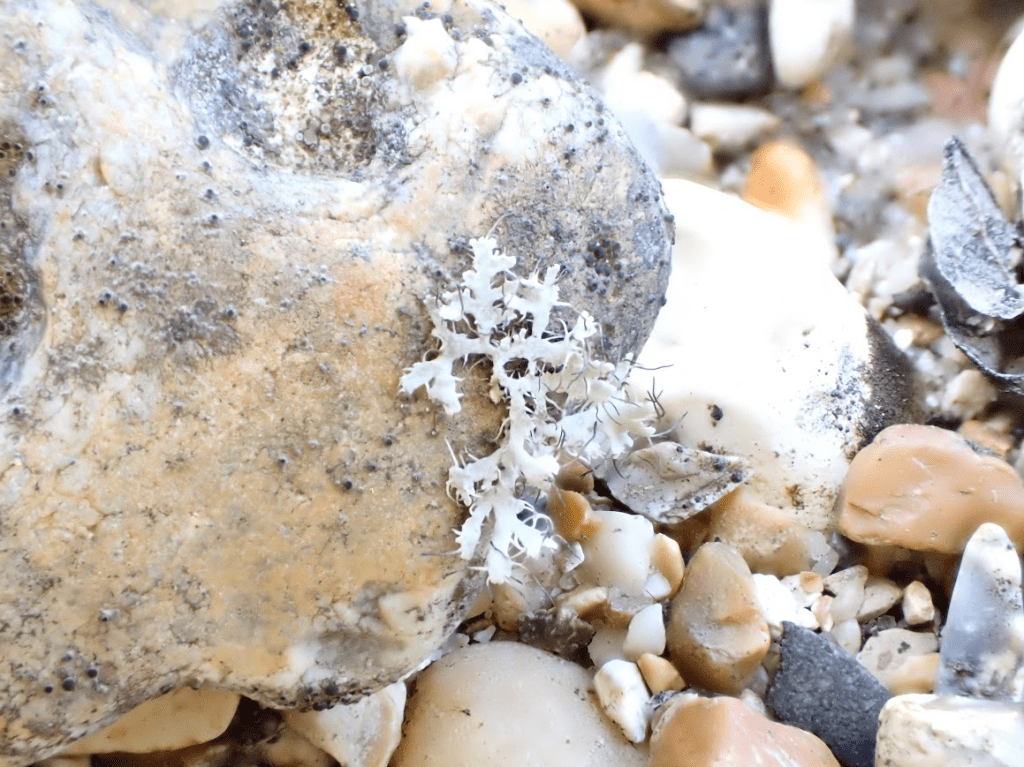
Under our feet at this point are pebbles covered in lichens that few people notice. On these pebbles there is lots of lichen Rhizocarpon reductum (grey thallus with black apothecia); a pioneer species of siliceous rock and pebbles. Flint is highly siliceous, so it gets lichens you would typically see on upland granite.
Detail below (photo from Rhizocarpon reductum – Aspen Ecology). The black blobs are apothecia; fungal fruiting bodies containing spores
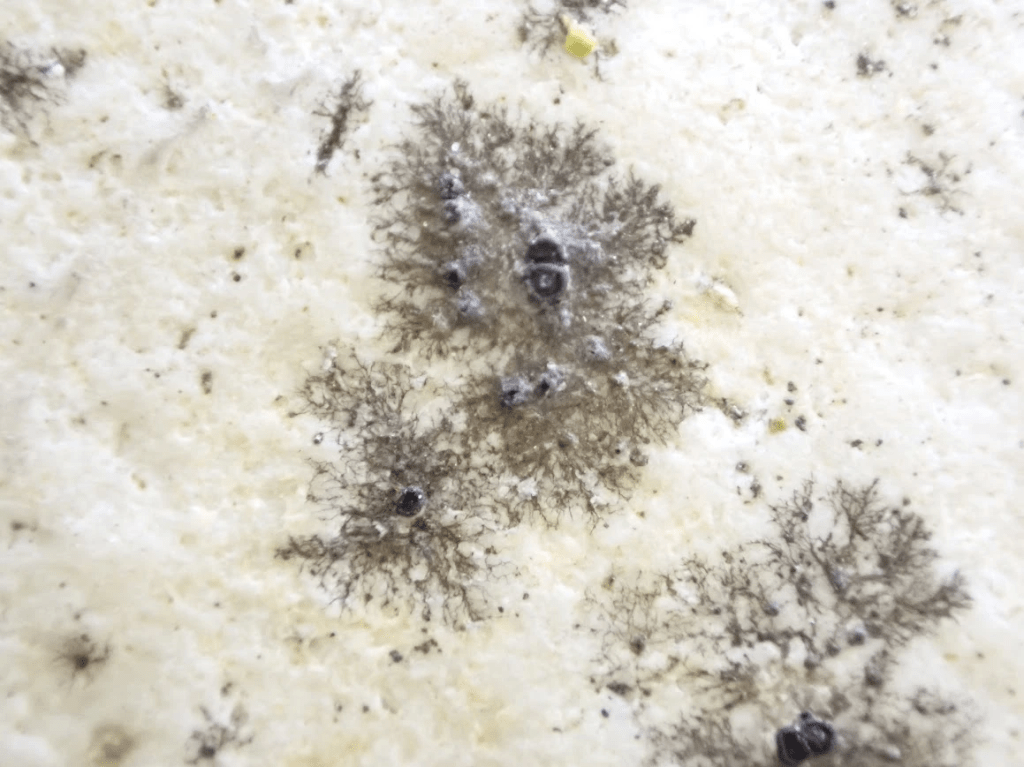
On the pebbles there is a version of this lichen called Rhizocarpon reductum var. fimbriata which consist of mainly a black/dark green web-like prothallus (a thallus that is free of algae; just fungal hyphae) [thallus: the part of a lichen that is not involved in reproduction; the “body” or “vegetative tissue”] connected to apothecia. This is very common at Pagham on pebbles on the vegetated shingle of the paths and Church Norton Spit; but you need to pick up a pebble and look at it with a handlens
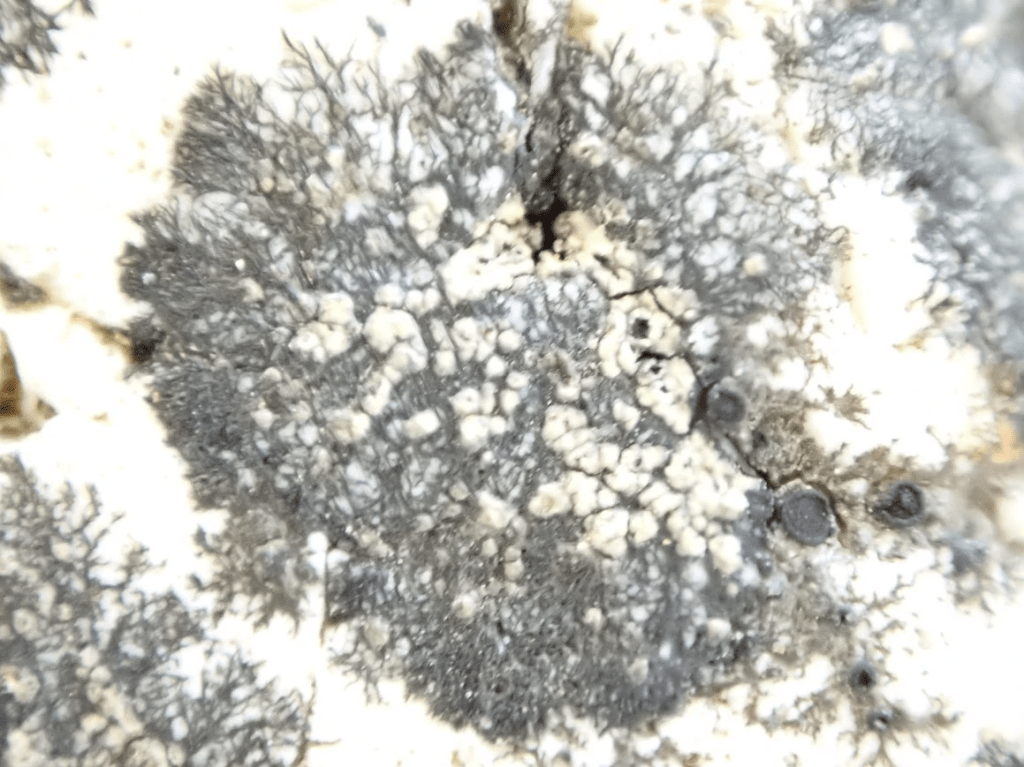
As a long term Dr Who nerd as well as lichen nerd, I wonder whether the designer of the Kaled Mutant in The Eve of The Daleks (2022) based the design on R. reductum var. fimbriata

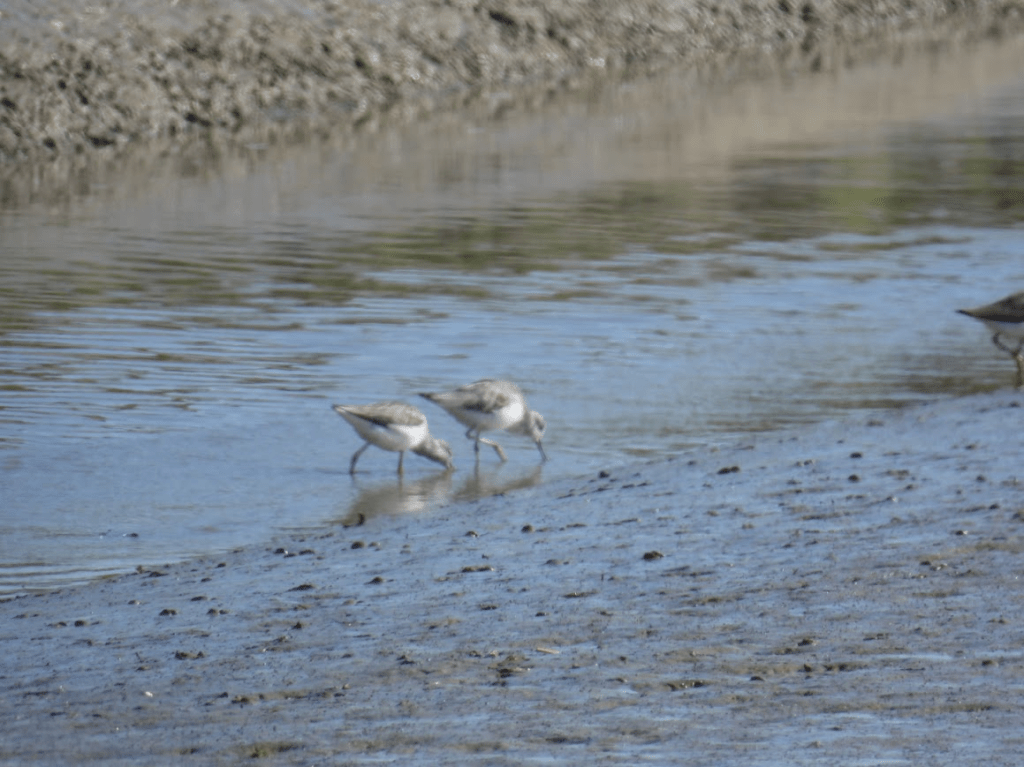
In a creek, some Greenshanks
On the ground just to the west of a gorse, on the path to the coastal oaks, is Cladonia foliacea. In the UK it is a rarer lichen confined to coastal dunes and vegetated shingle. In the Netherlands it is is called Summer Snow lichen, as its squamules (basal leafy lobes) turn over when desiccated revealing their white undersides.
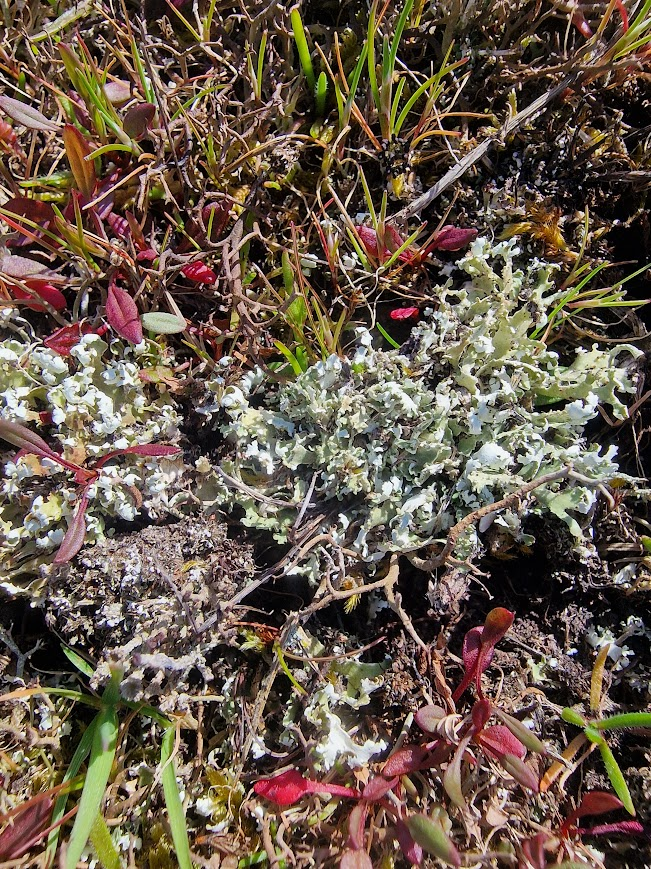
Pixie Cups (lichens of the genus Cladonia) grow in the soils between the pebbles. Probably Cladonia pyxidata Pebbled Pixie Cup. There are many pixie cup species in the genus Cladonia
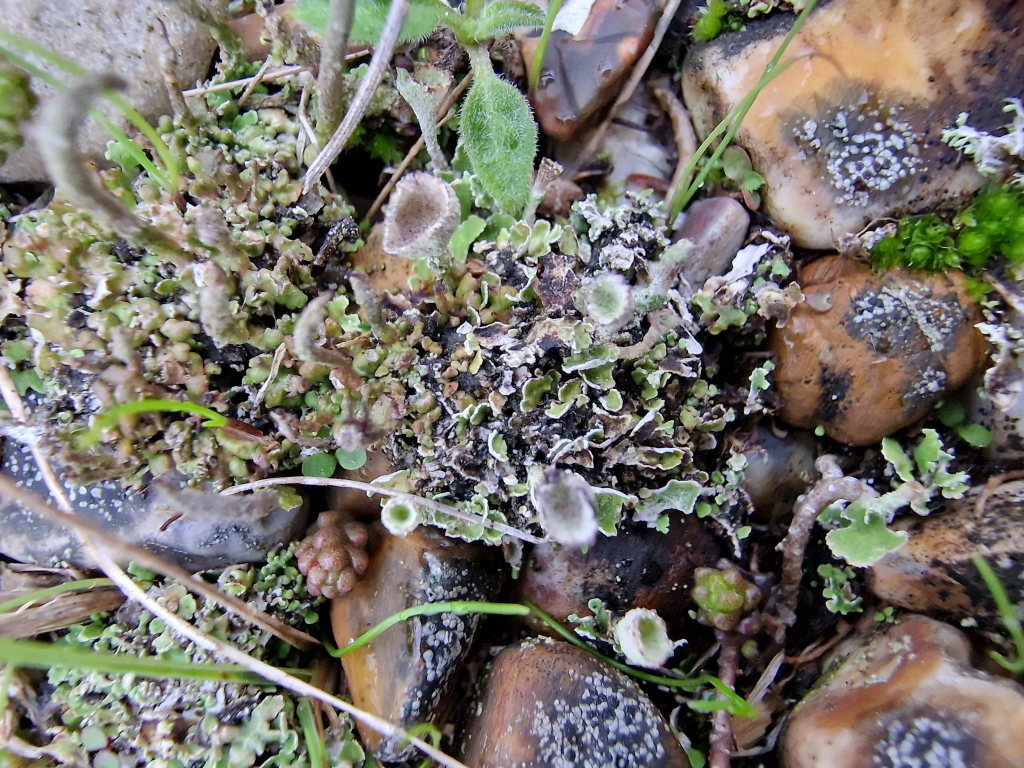
There are several pixie cups you can see at Pagham. I have seenL
- Pebbled Pixie Cup (Cladonia pyxidata): One of the most widespread types, often found on bare soil or old trees. It is characterised by funnel-shaped cups that are typically coated with tiny, granular scales.
- Mealy Pixie Cup (Cladonia chlorophaea): Frequently growing on rotting logs and acidic soil, this species is noted for having a “mealy” or powdery appearance due to fine soredia (reproductive granules) on its surface.
- Gray’s Pixie Cup (Cladonia grayi): Highly similar to the mealy pixie cup but contains grayanic acid, which causes it to glow light blue under ultraviolet light.
- Trumpet Lichen (Cladonia fimbriata): Known for its very slender stalks that flare abruptly into a neat, regular cup at the top, often described as looking like a miniature golf tee.
- Madame’s Cup Lichen (Cladonia coccifera) Distinguished by yellowish to grey-green stalks and bright red fruiting bodies (apothecia) on the rim of the cup.
The above list was created by Google Gemini AI
On Church Norton Spit, in the part currently closed, I have seen Diploschistes muscorum, Cowpie Lichen. This is a lichen that parasitises mostly Pixie Cup lichens and the mosses around them. Parasitic symbiosis is a very rare relationship for lichens, mostly liches get all their energy from their photobiont (alga or cyanobacteria) (mutualistic symbiosis) not from another lichen
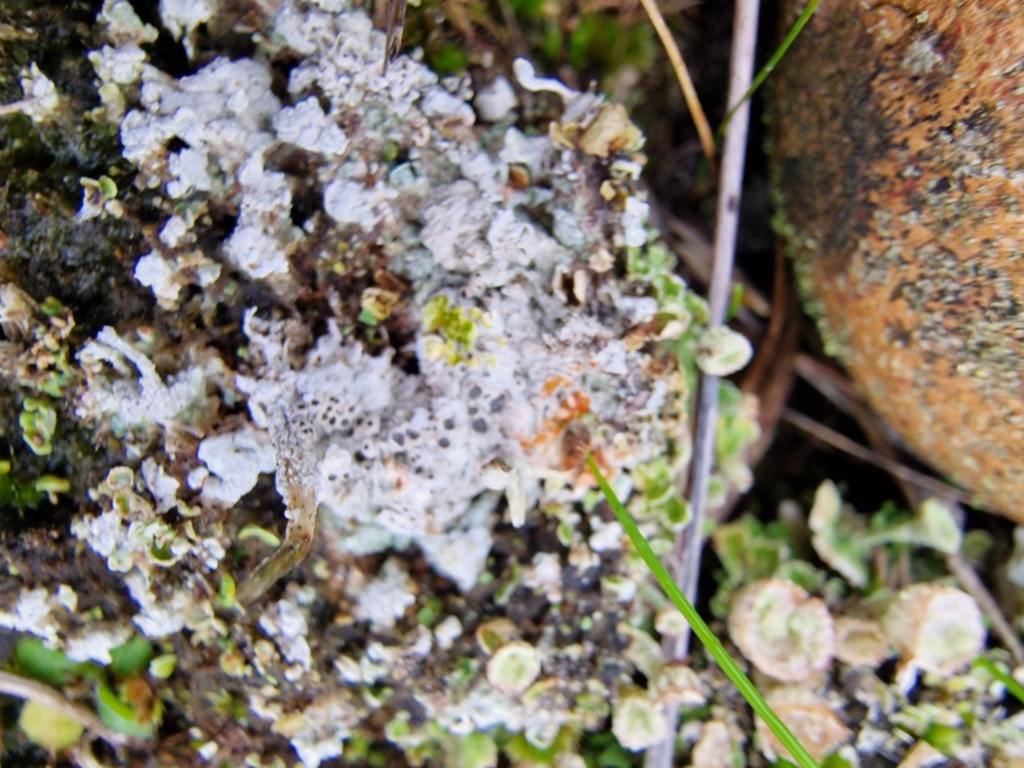
Lichens on the coastal Pedunculate Oaks
Presumably these Oaks started growing on more solid ground and the edge of the harbour has moved to meet them, as they would have got to this size if they started growing next to water.
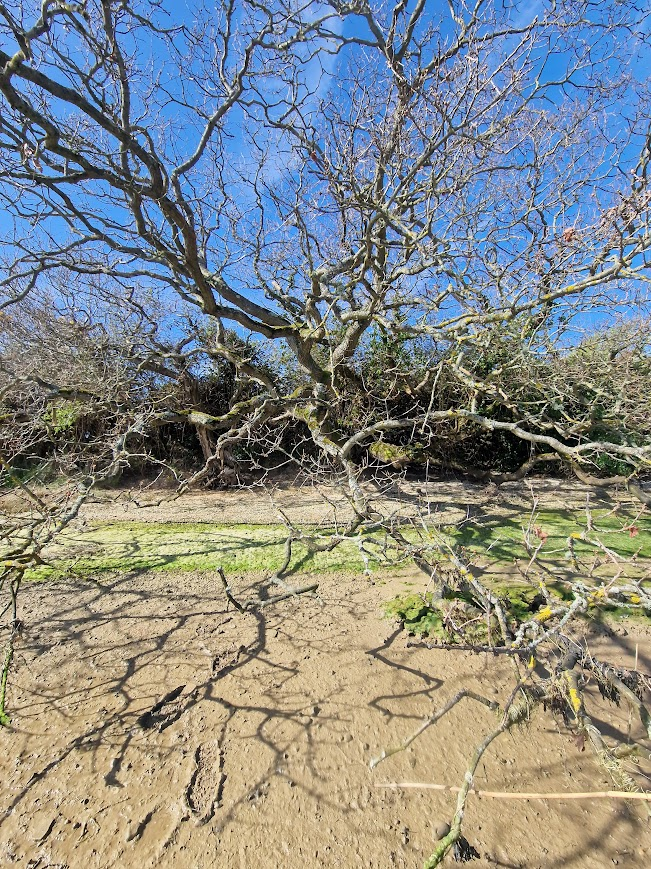
They have the very common lichens of Oak, especially Common Greenshield Lichen (Flavoparmelia caperata) and Black Stone Flower lichen (Parmotrema perlatum); one of the spices in biriyani sauce
Parmotrema perlatum; Flavoparmelia caperata
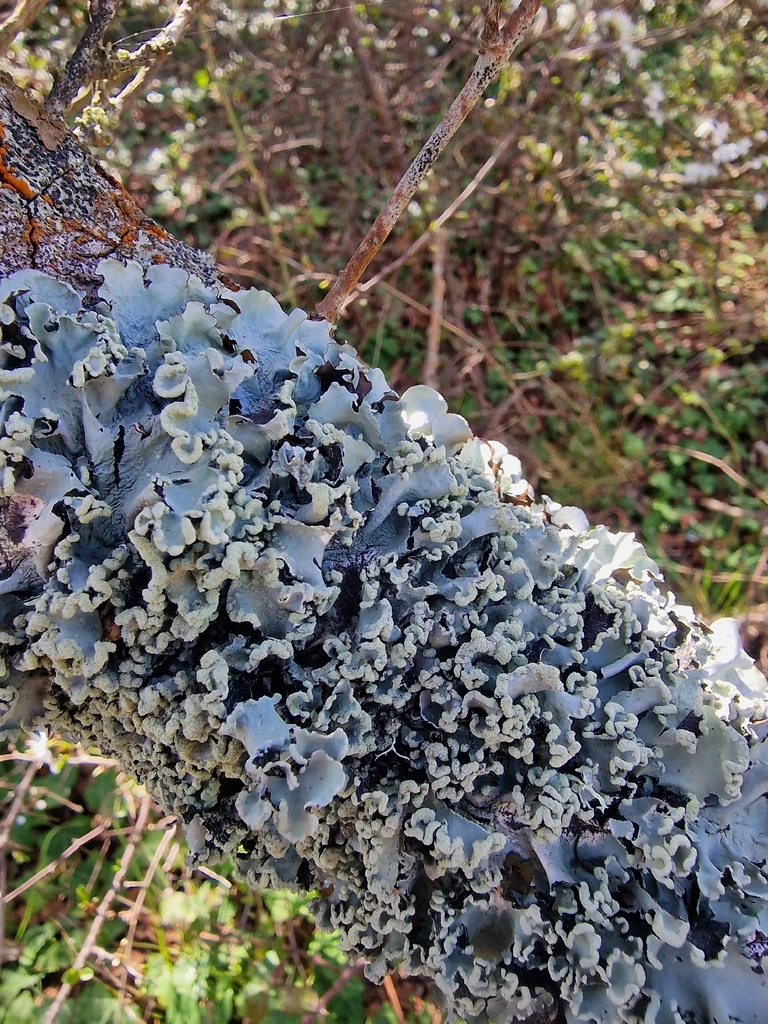
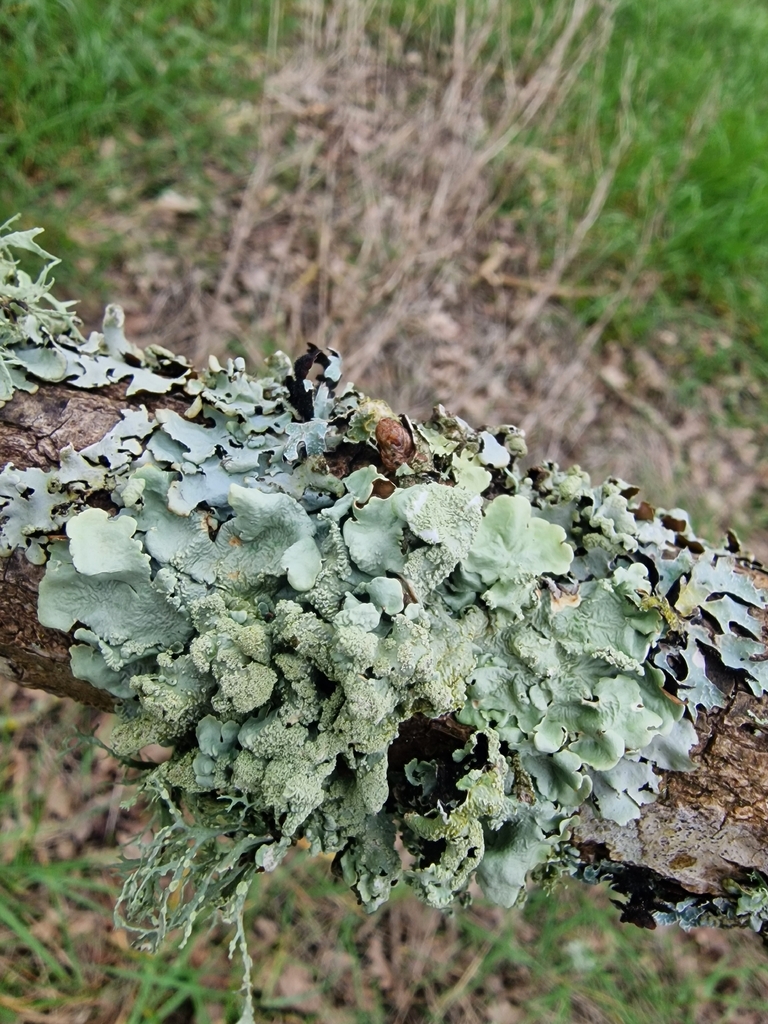
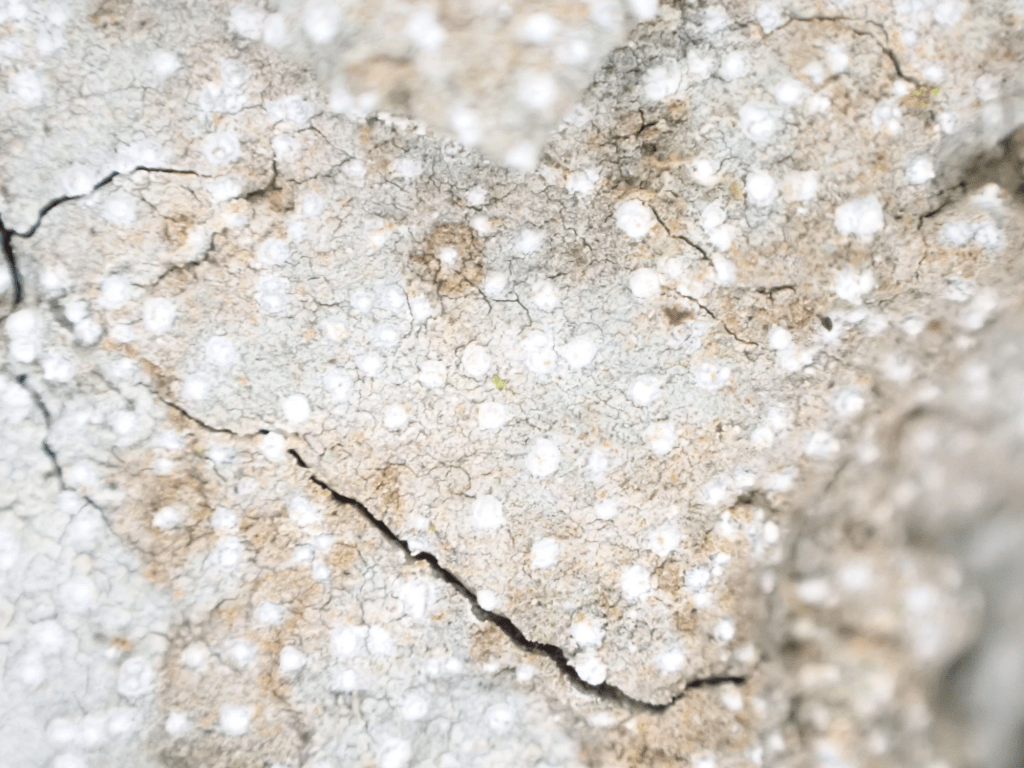
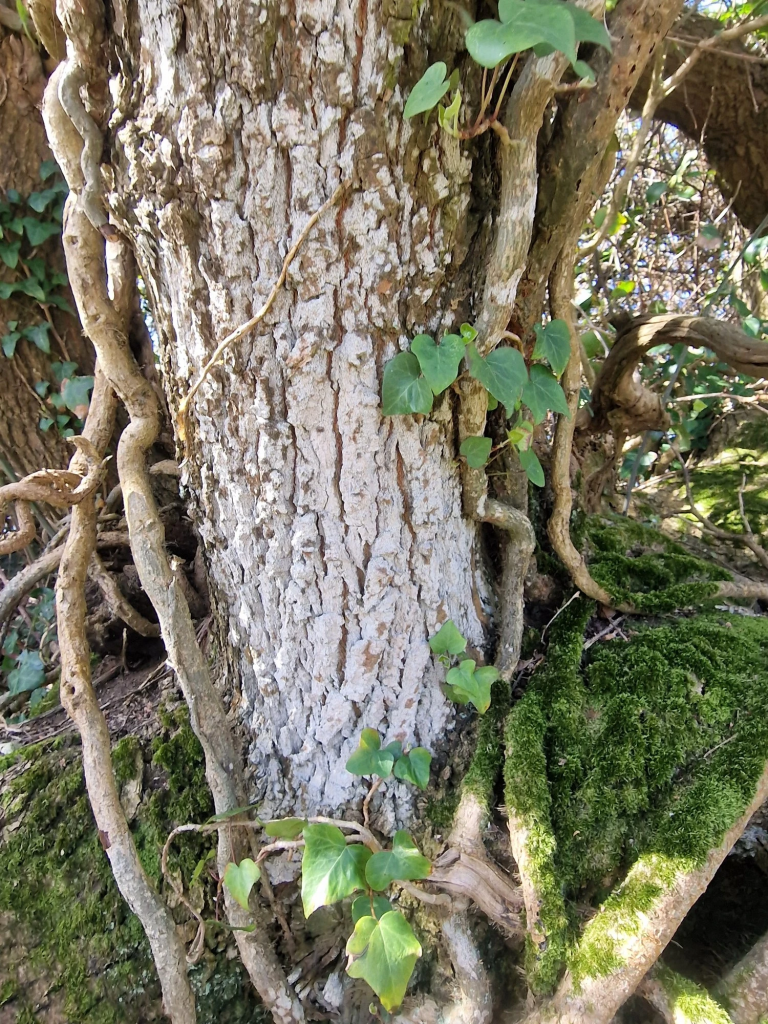
But they also have the very rare Inodema subabietinum on parts of their lower trunks, above the high water mark, and on the stems of the Ivy on the oaks. This rarer lichen can only be separated from other similar species with chemical reagent spot tests of their pycnidial pruina (the “dust” on the pycnidia ‘ pycnidia are small, flask-shaped, asexual reproductive structures produced by the fungal partner (mycobiont), that appear on the lichen surface; they look like acne in Inodema subabietinum & Lecanactis abietina). If the pruina do not go red in response to a drop of sodium hypochlorite, and response to potassium hydroxide turns lemon-yellow, the lichen is Inodema subabietinum not the more common Lecanactis abietina (whose pruina turn red in sodium hypochlorite). It’s distribution is mostly coastal, at the bottom of coastal oaks in the south. It’s an international responsibility lichen i.e. the UK has a significant proportion of the total global population.
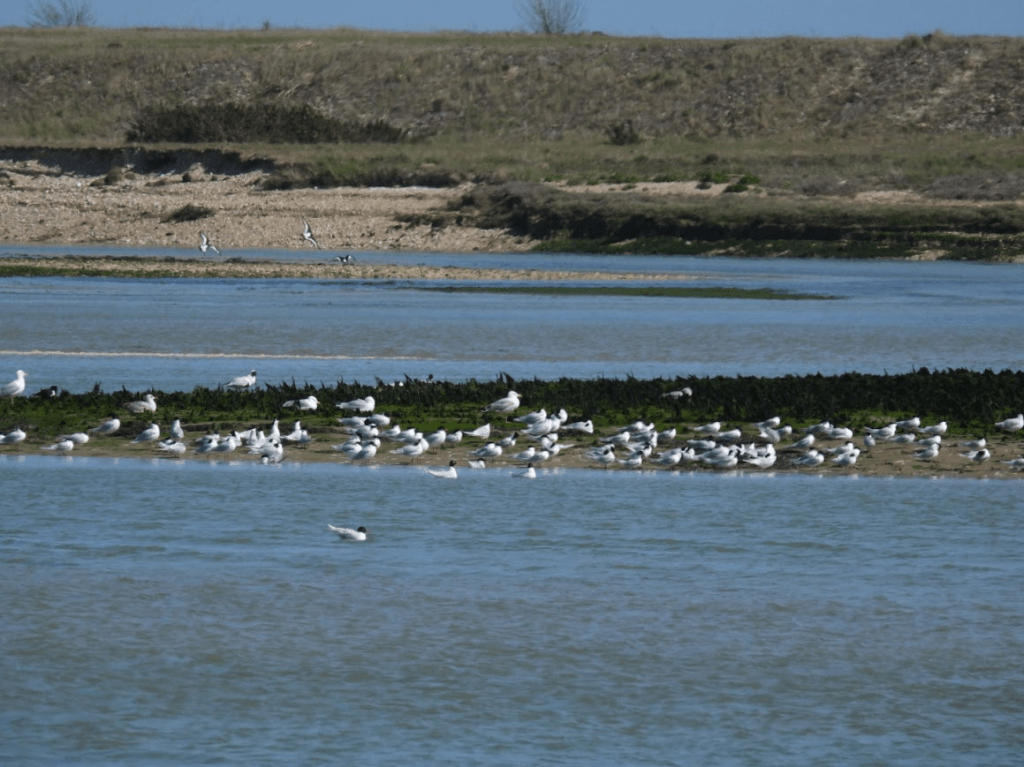
Just inside the harbour mouth I saw quite a few Sandwich Terns and a Little Tern (couldn’t get a photo of the Little Tern)
A collective art project titled ‘Looking Through’.
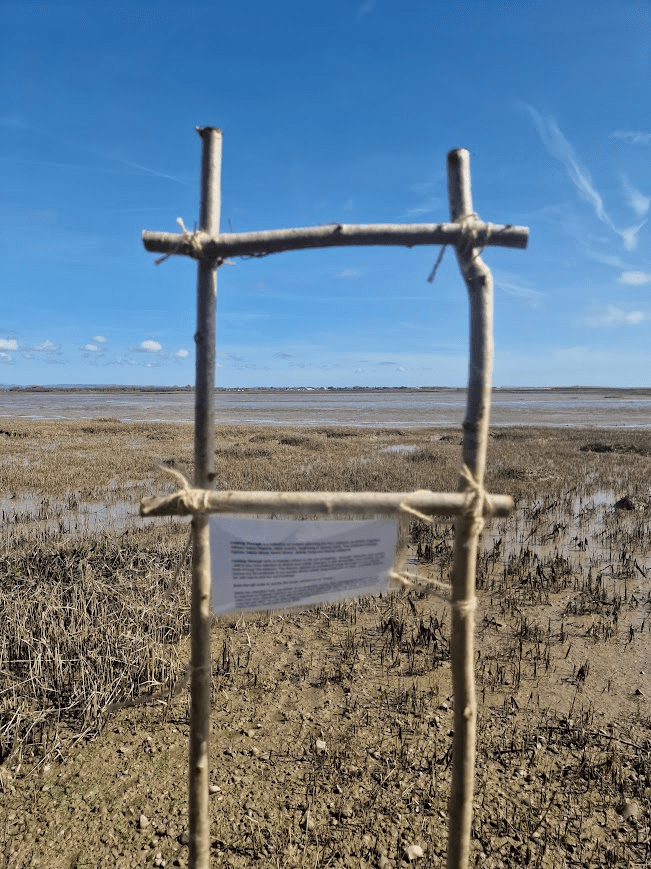
View finding frames have been placed at considered spots throughout the nature reserve, encouraging visitors to pay close attention to the details and subtle changes in the landscape and wildlife as we move through the seasons.
In the education hub, you can meet the four Sussex based artists leading this project. They will be exhibiting drawings, prints, film, photography and music exhibited, all in response to Pagham Harbour’s journey from Winter to Spring.
There will also be free workshops taking place where you can make you own view finders and concertina sketchbooks for keeping visual diaries of your walks around Pagham Harbour. 🎨 Art event at RSPB Pagham Harbour this… – RSPB Pagham Harbour | Facebook
On the spit.
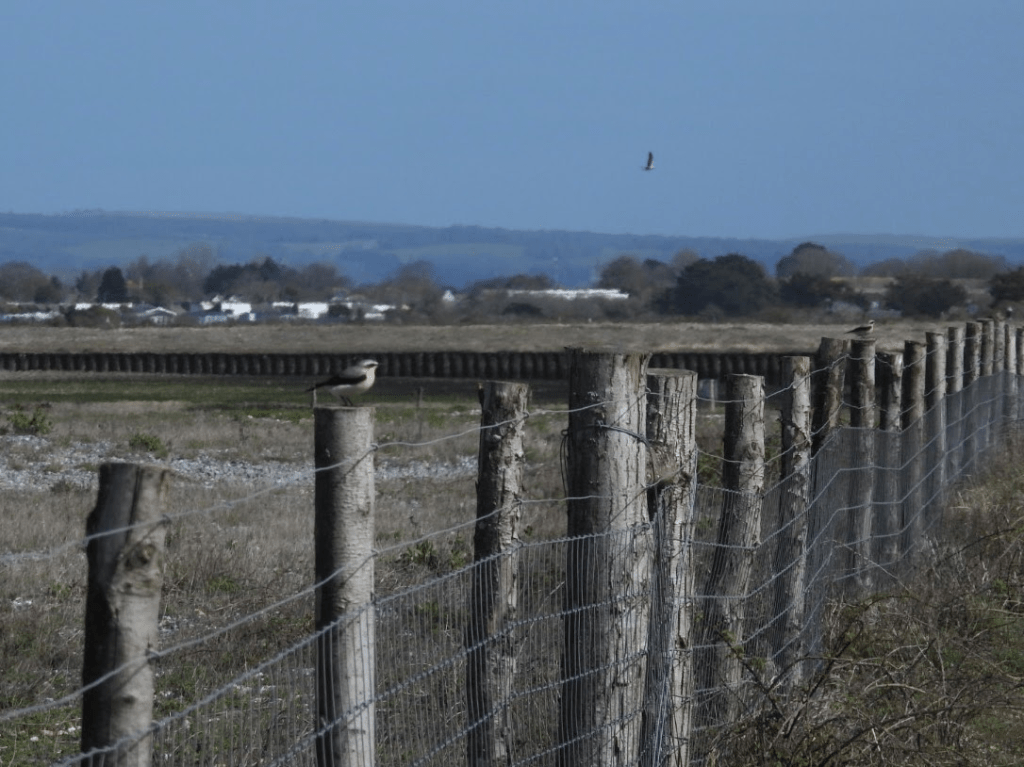
As I walked on the spit to the east of the fenced-0ff area, there were lots of White Arses, Oenanthe oenanthe, on the fence posts. “Wheatear” is a Victorian change to the vernacular name because their historical vernacular name was deemed it too vulgar for polite society.
The bit of the spit that is fenced off is vegetated shingle, which is a very important habitats for lichens. But there is some vegetate shingle outside the exclusion area with many interesting lichens, including:
Oyster Shells on, with Candelariella spp. (Goldspeck) lichens, this is probably C. aurella.
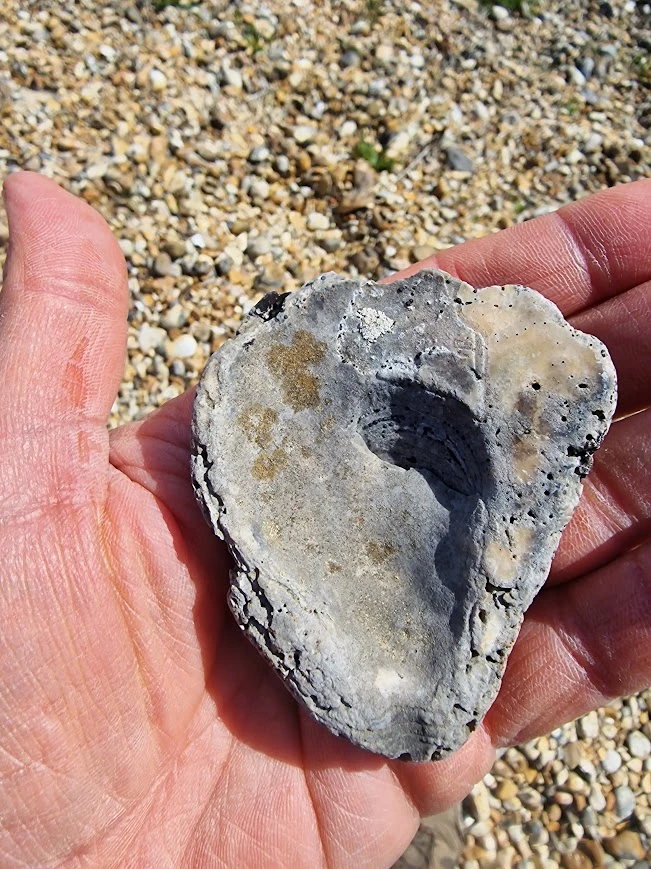
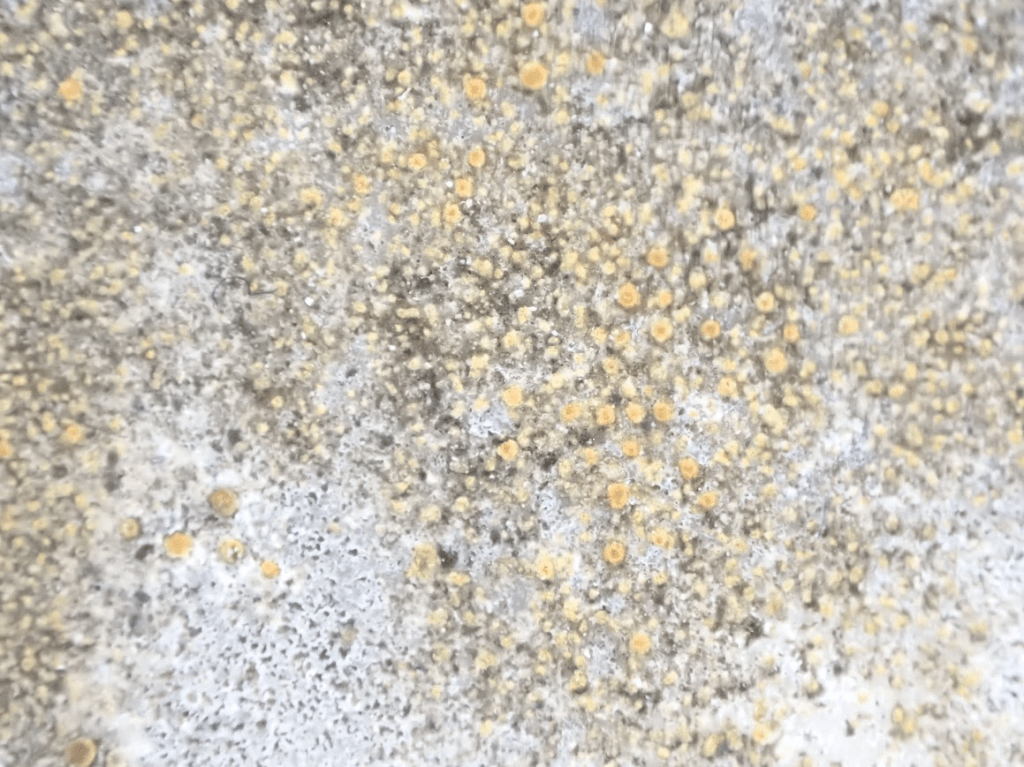
There is also Circinaria contorta on them – handlens needed for these two
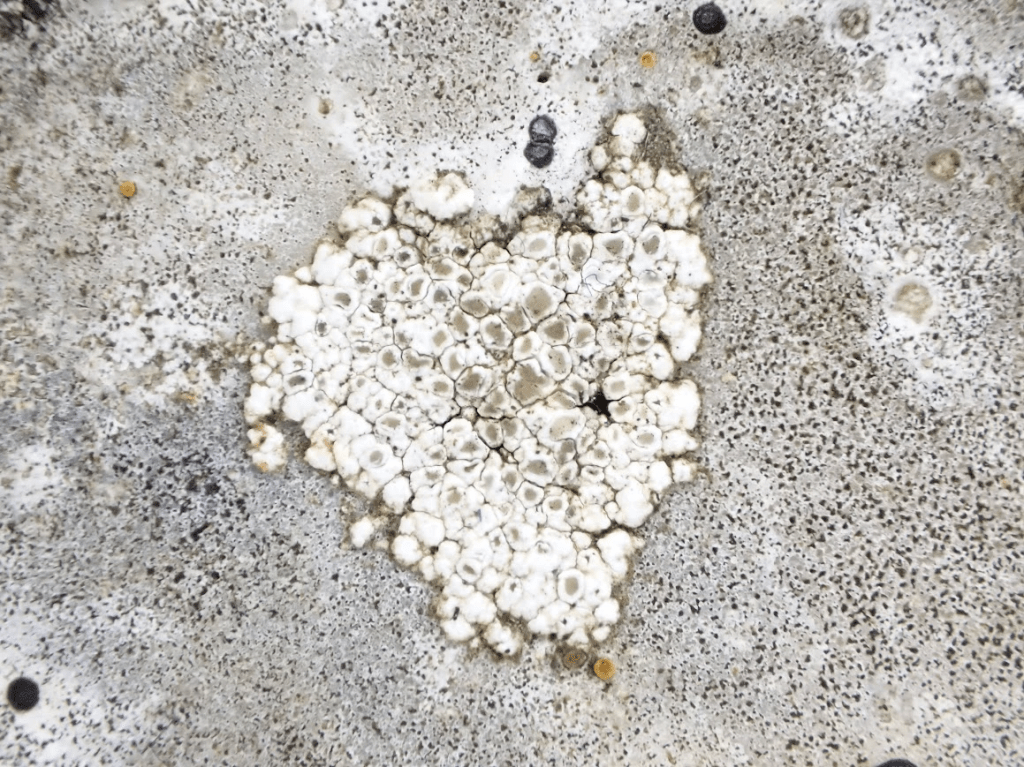
Both lichens are common on calcareous substrates (rocks, concrete etc). Oyster shells are ca. 35% calcium carbonate CaCO3.
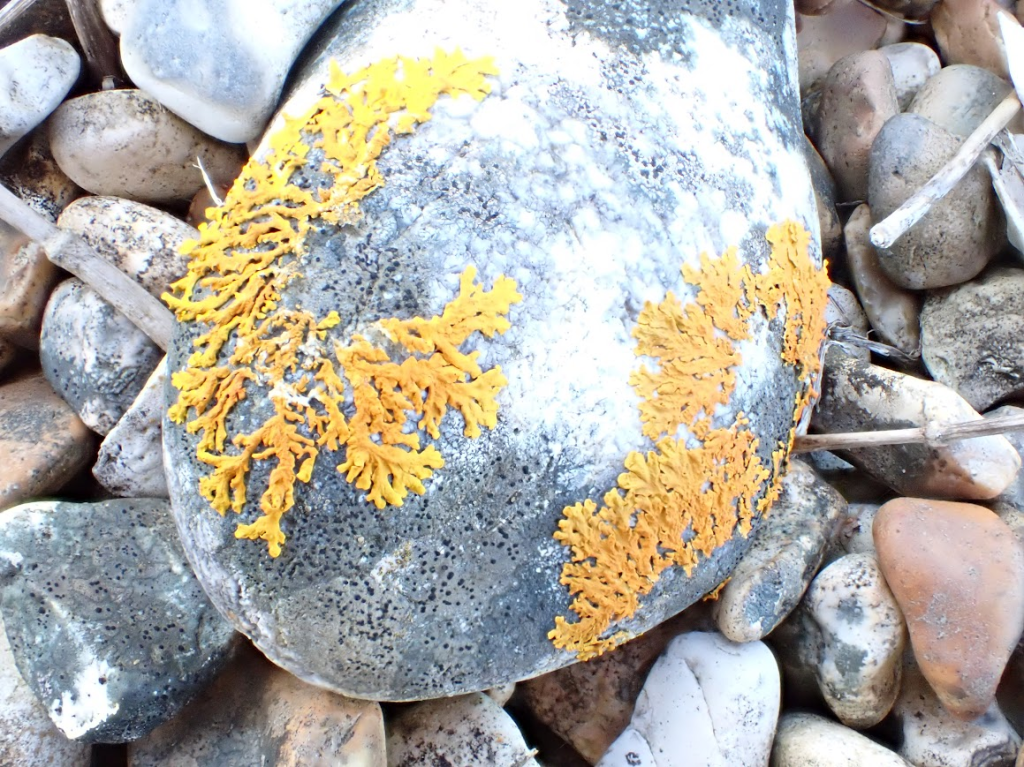
Pebble with Xanthoria aureola Seaside Sunburst Lichen
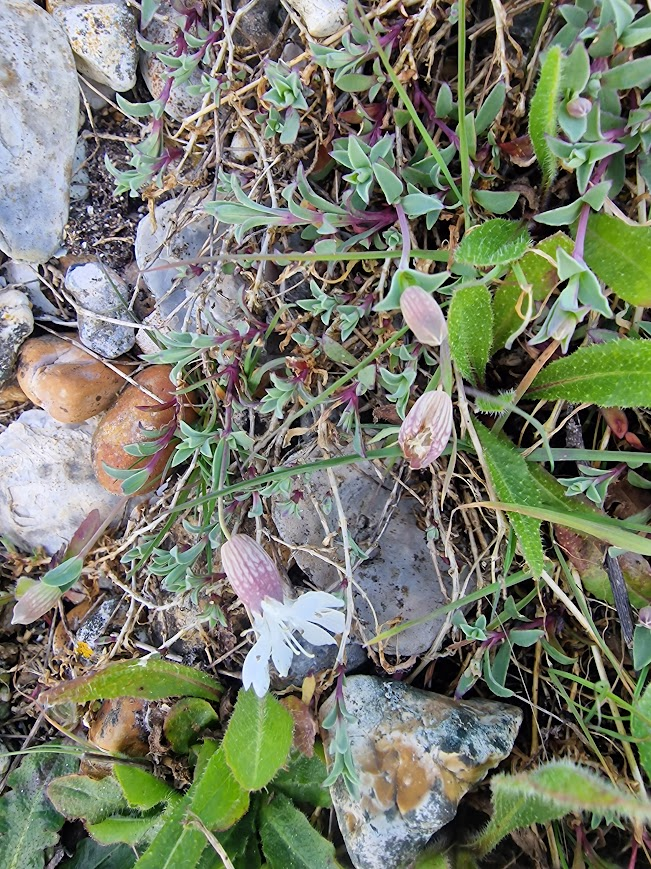
Sea Campion
Physcia adscendens
Typically a corticolous lichen i.e. a lichen of trees but also grows on vegetated shingle.
Purple, orange, black & grey
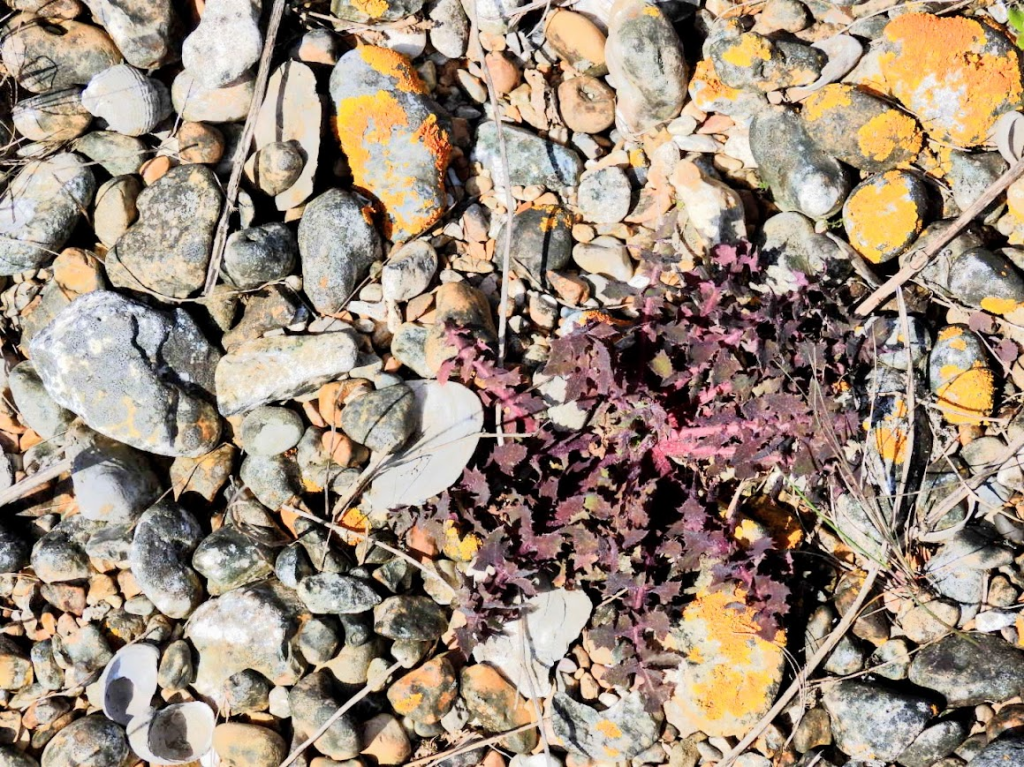
Sea Kale (purple when young), Xanthoria aureola and Rhizocarpon reductum
Sea Kale seems so abundant, as we see it a lot on the shingle of Pagham and Church Norton spits; but is nationally rare and on the Sussex Rare Plant Register
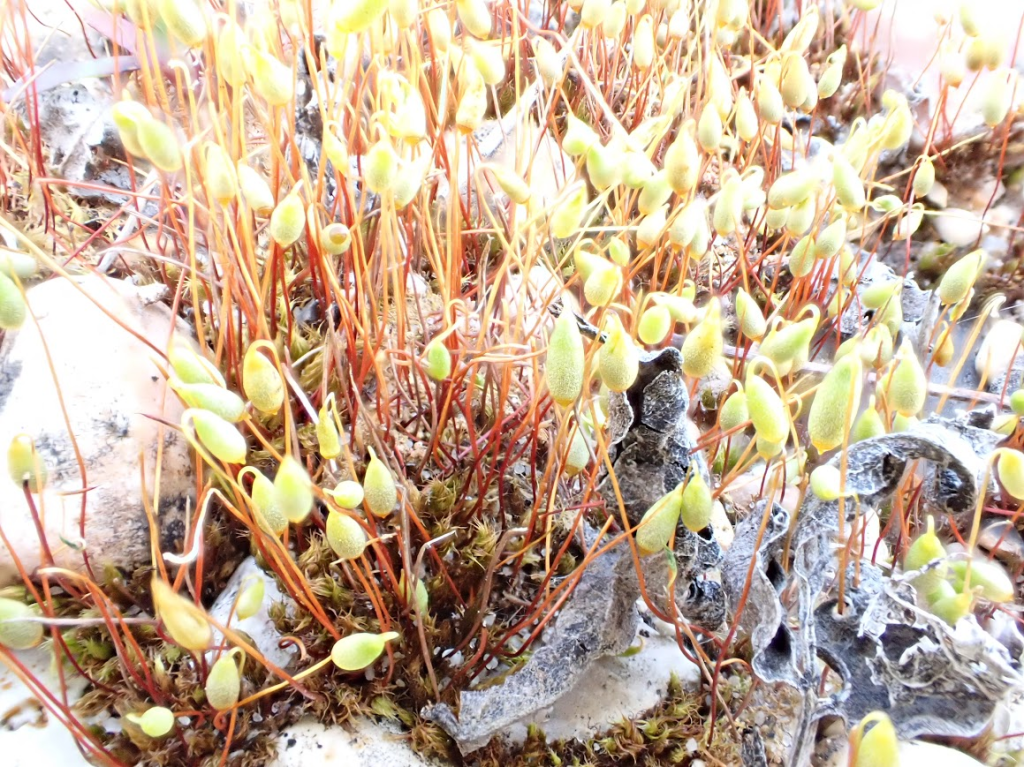
A forest of moss spore capsules on the vegetated shingle; probably a Bryum sp. moss
Balls of Cladonia rangiformis on the beach; they blow in the wind like tumble weed.
The stunted wind-blown Oaks gwoing toward the Severals are covered in lichens
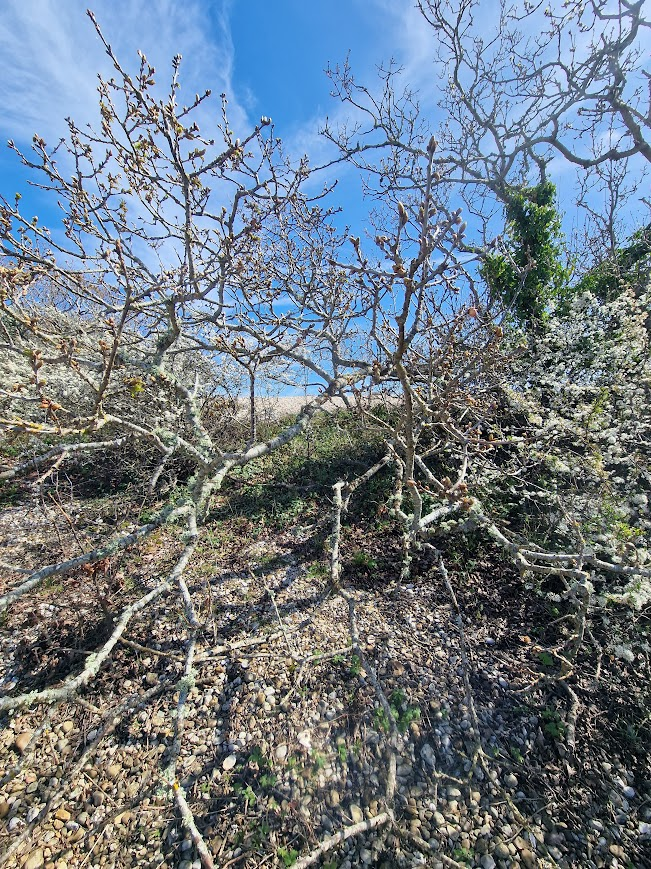
includingL
Ramalina fastigata and Lecanora chlarotera s.l. (s.l. = sensu lato i.e. in the broadest sense, either this lichen or a lichen very similar in the same genus)
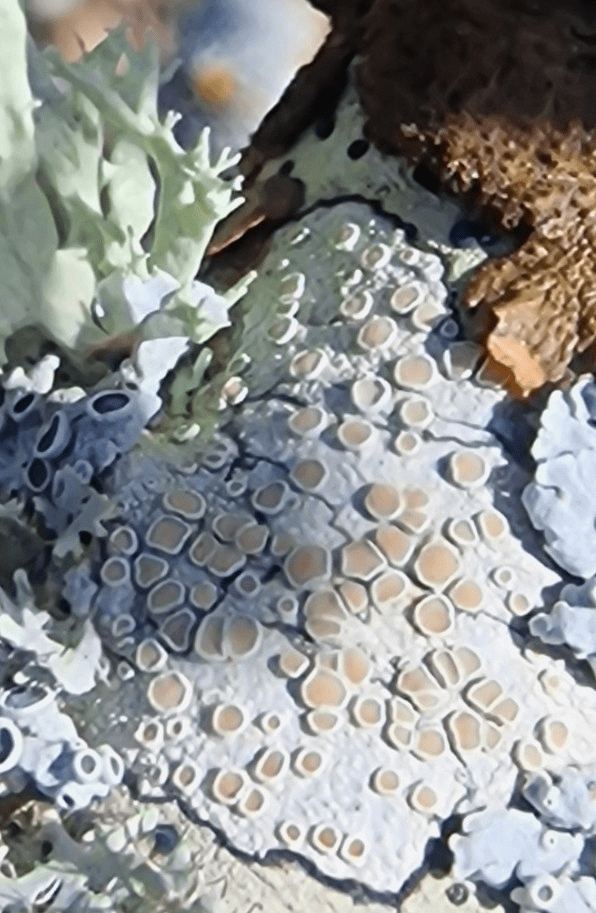
Lecidella eleachroma (with black “button” apothecia) and Physcia adscendens (top)
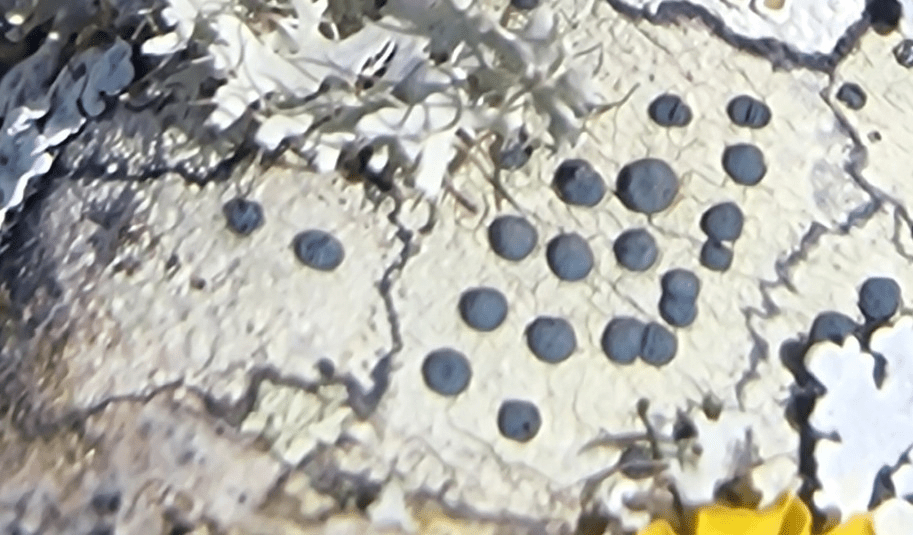
Melanelixia glabratula Polished Camouflage Lichen
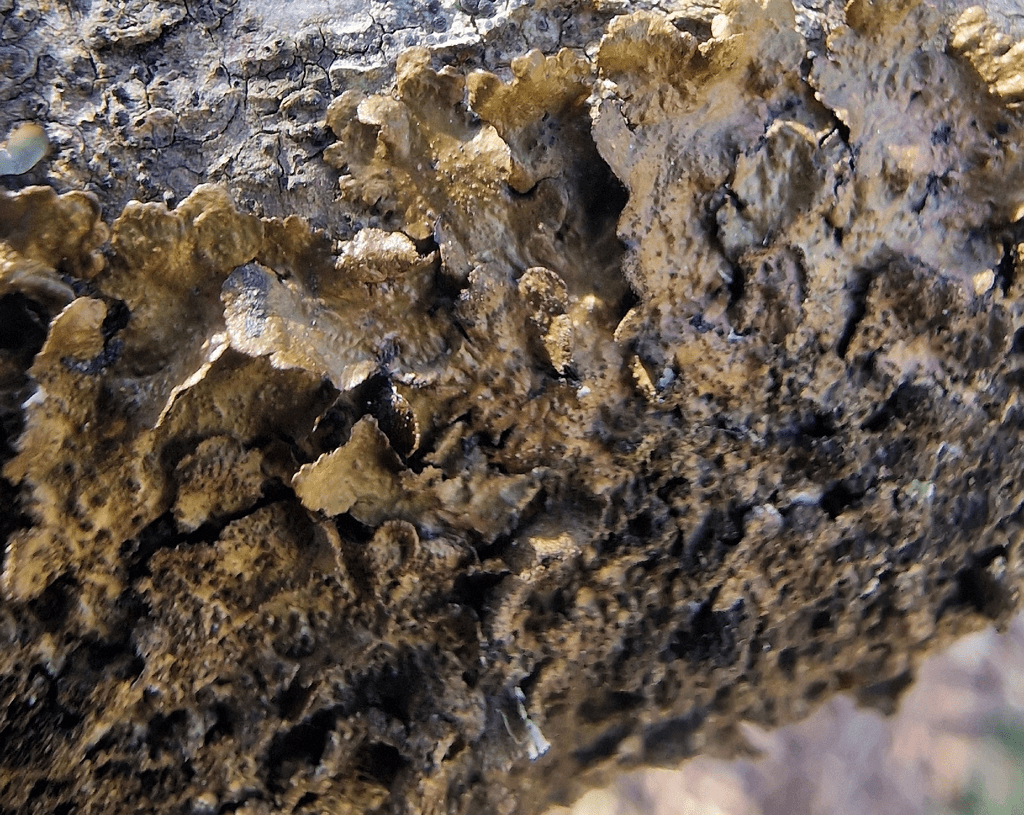
Physcia aipolia and Melanelixia glabratula
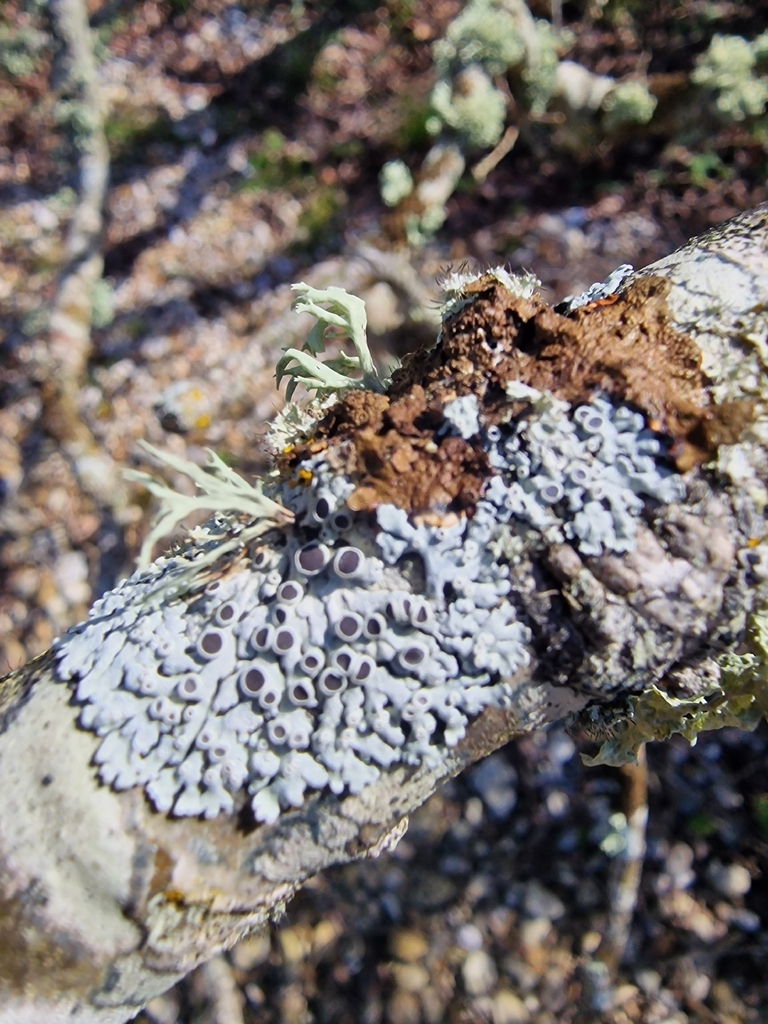
Xanthoria parietina (orange)
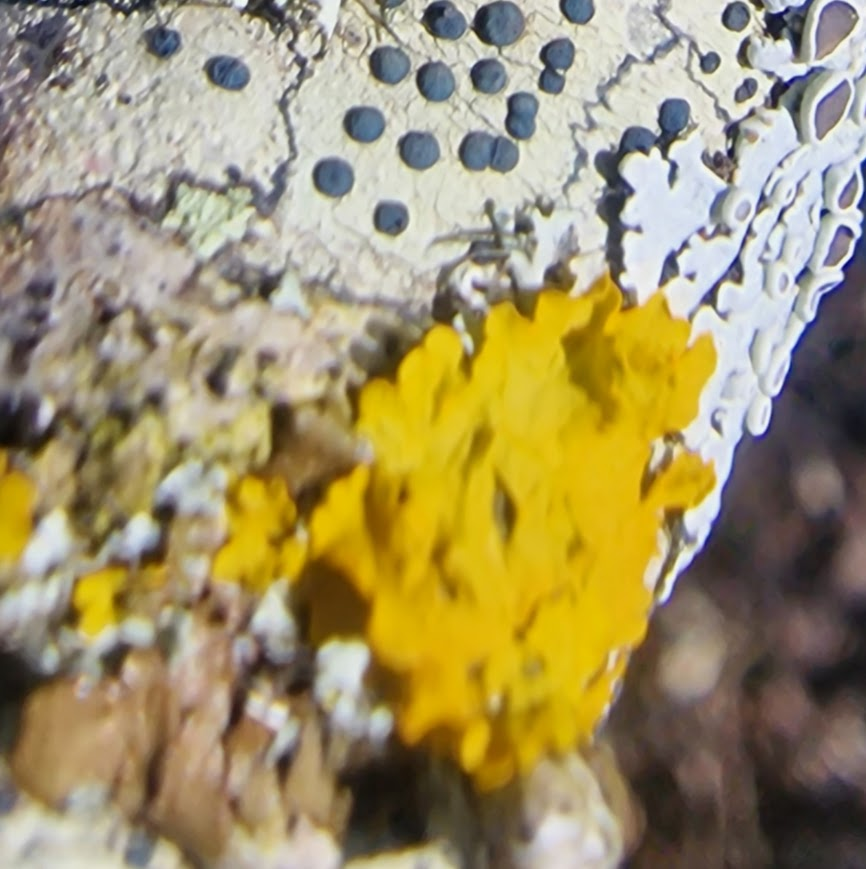
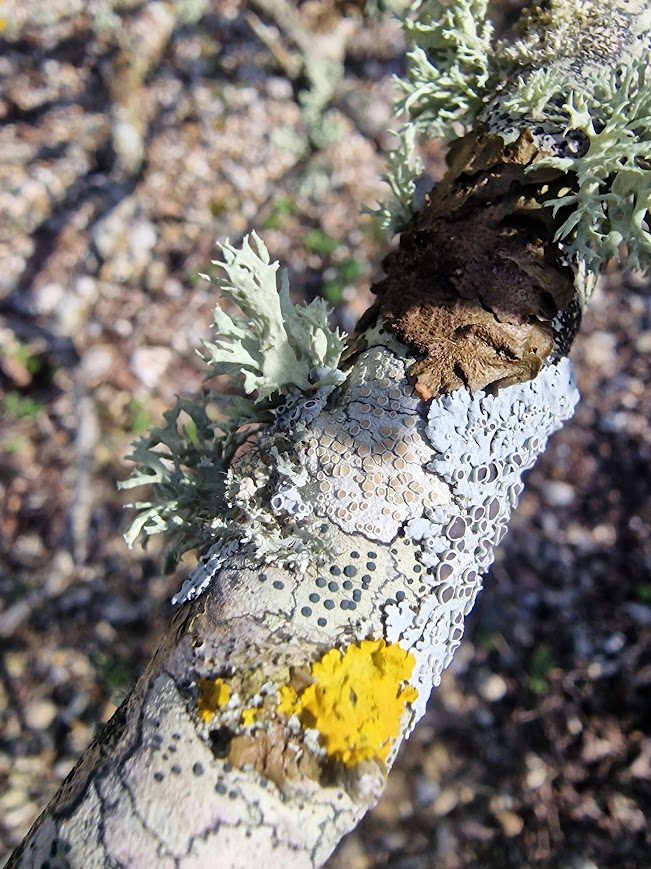
All of the above on one branch
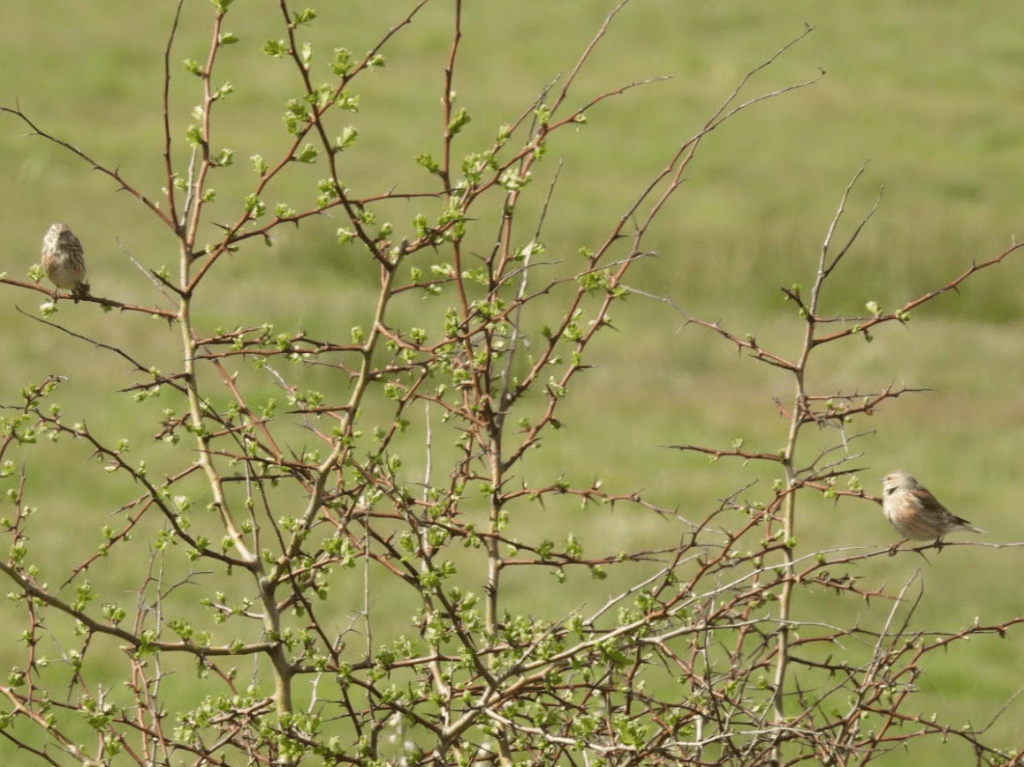
Linnets at the Severals
Walking back from Church Norton to the Ferry Pool
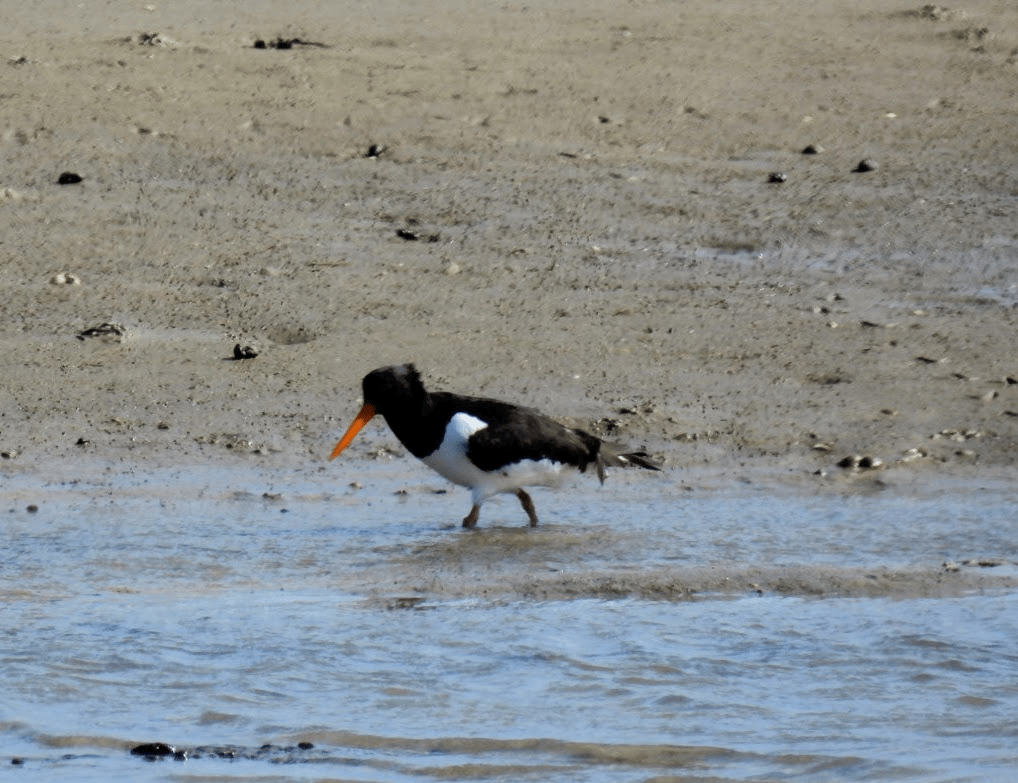
Oystercatcher
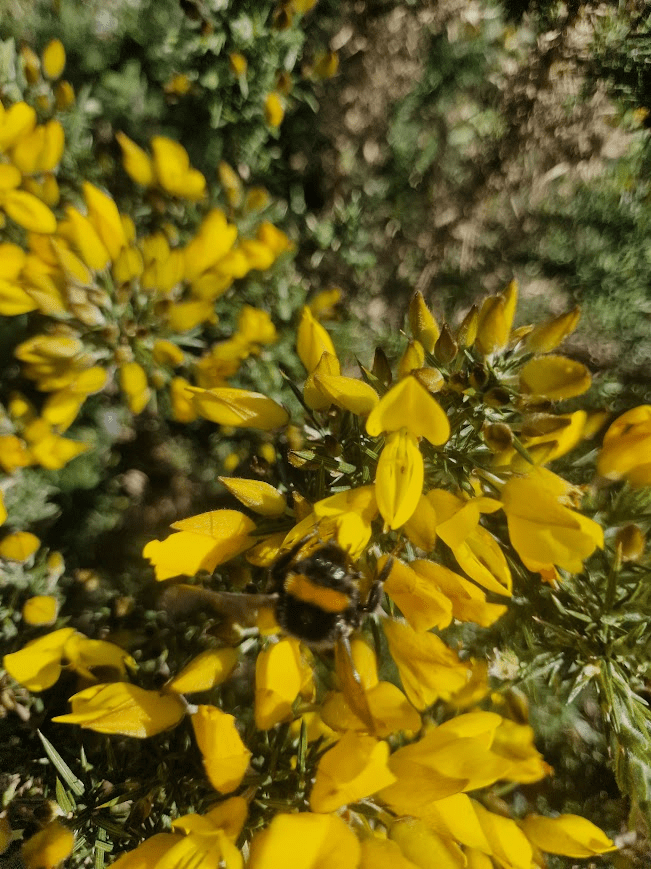
Spot the Buff-tailed Bumblebee on Gorse
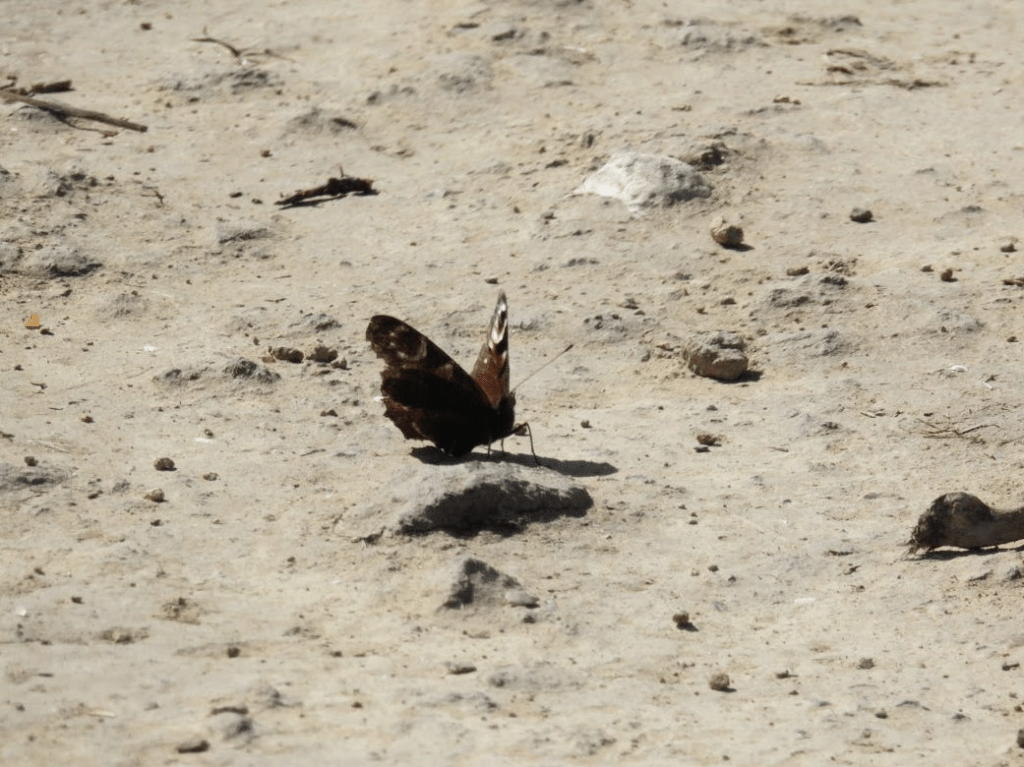
Peacock Butterfly
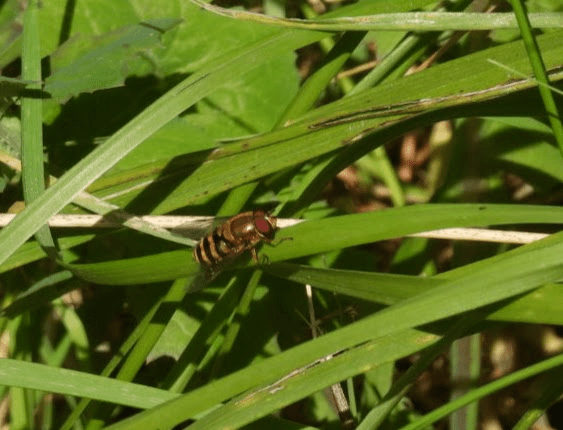
A Hoverfly possibly Syrphus torvus Hairy-eyed Flower Fly
 Sim's Nature Notes