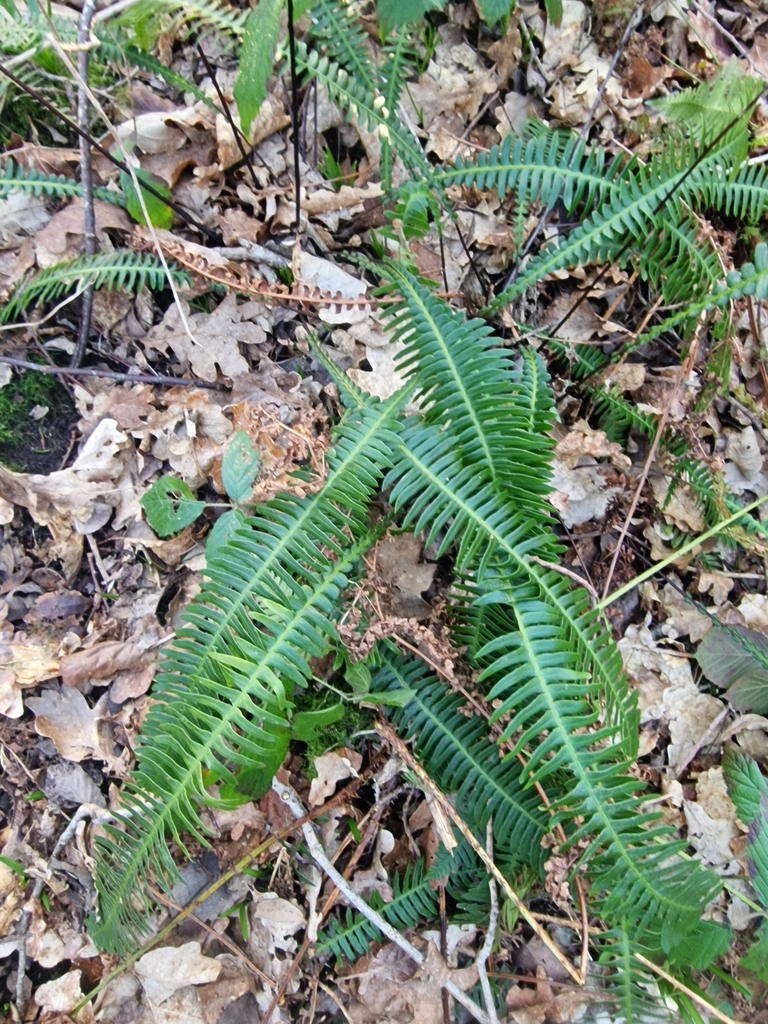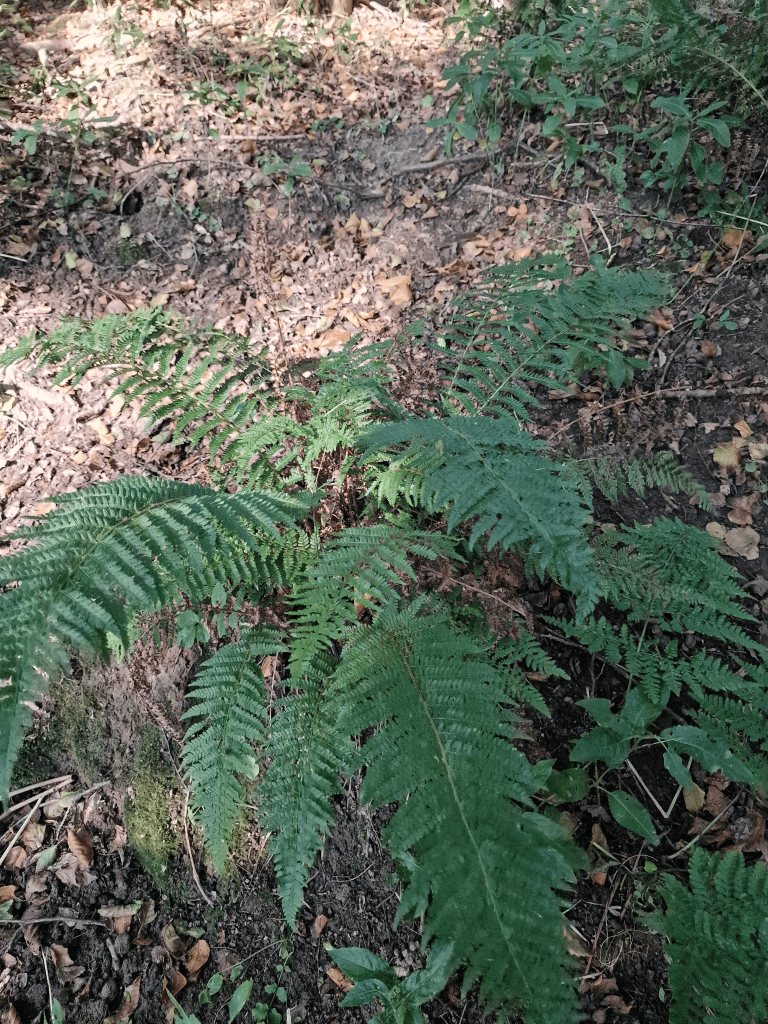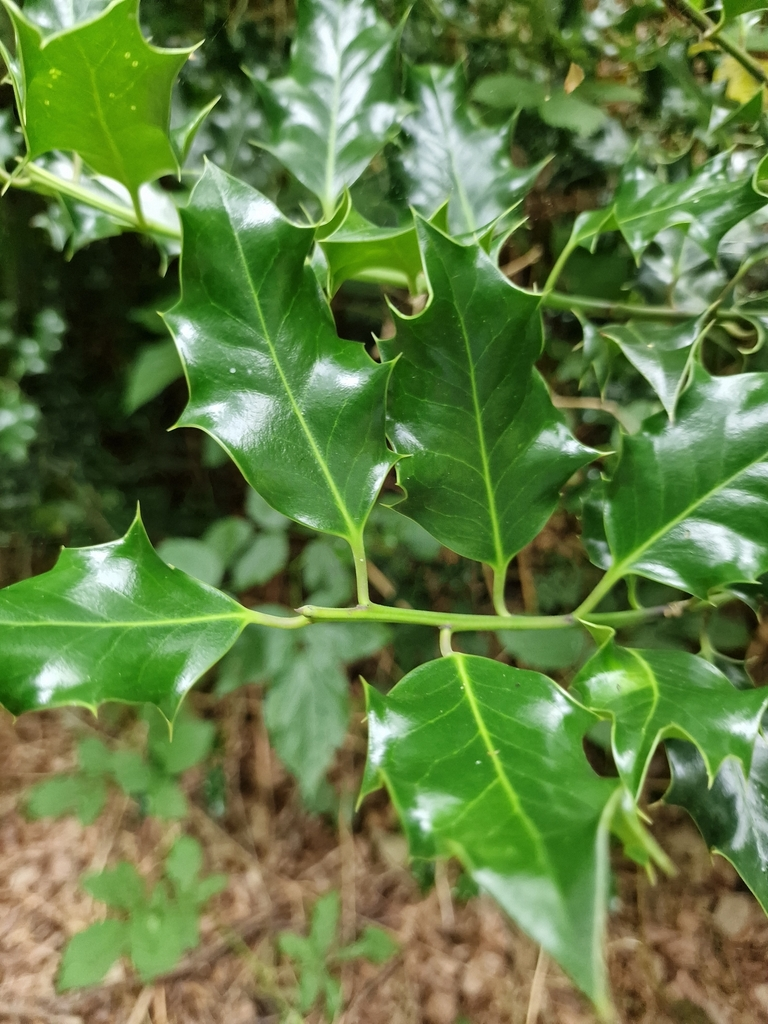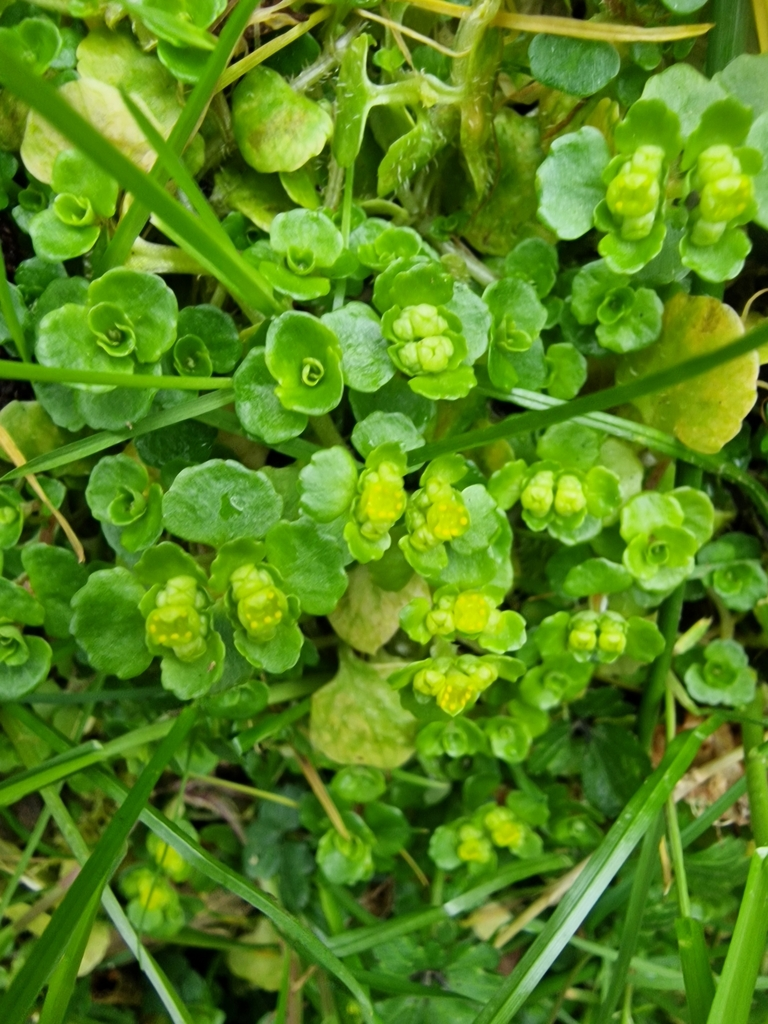
Lichen, bryophytes and vascular plants in Johnny Wood & Bowder Stone Wood (Borrowdale Rainforest NNR) and Cummacatta Wood. 06.11.25

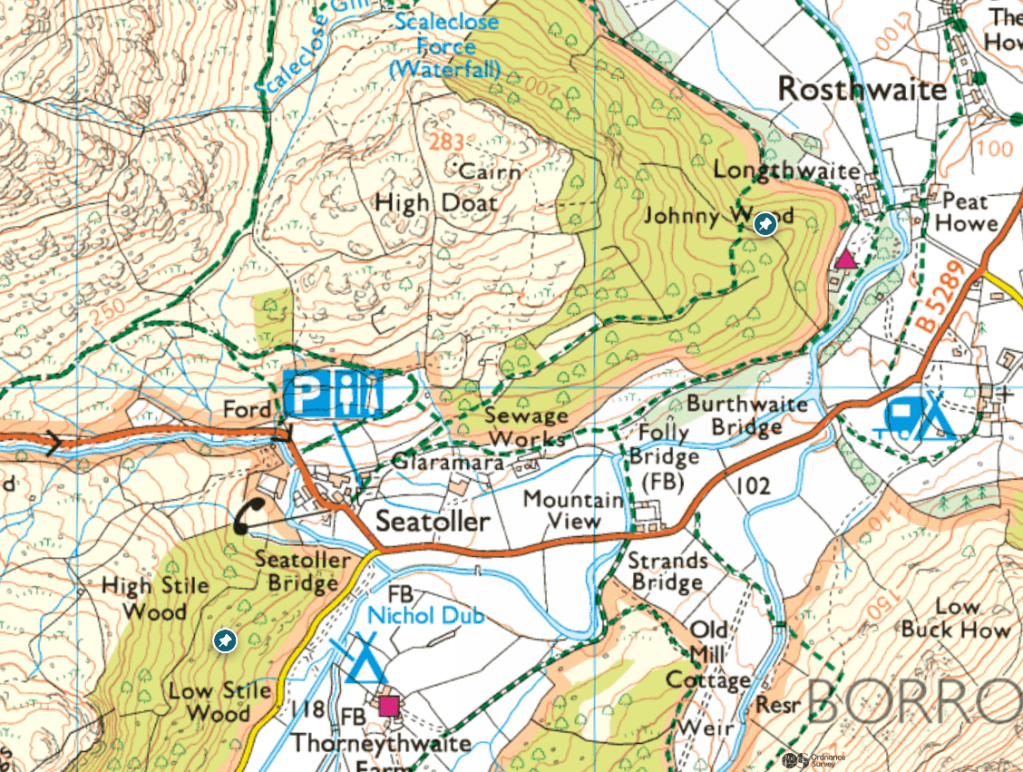
At last the bus 78 to Seatoller was running after the road flooding had subsided! I could visit the woods at the south of the Borrowdale Rainforest NNR that I had intended to visit on 03.10.25

Getting off at Seatoller, I decided to visit some of southernmost woods of the NNR: High Stile and Low Stile Woods; named as “Seatoller Wood” on the Natural England map of ancient woodland, . When I got to these woods they were fenced off with “private” signs, despite them being marked as public access land on the OS map. As I said in my post of 03.11.25, I had had to do lots of research to find where the constituent parts of the NNR are. The National Trust website on the NNR doesn’t have a map of the NNR, and there is no Natural England visitors’ guide, as there is for other NNRs. There is also no information on which parts of the NNR have public access and which don’t. The only way to find out whether or not there is no public access is to visit the woods and find out for yourself, when you have found out where the constituent woods in the Borrowdale Rainforest NNR are.

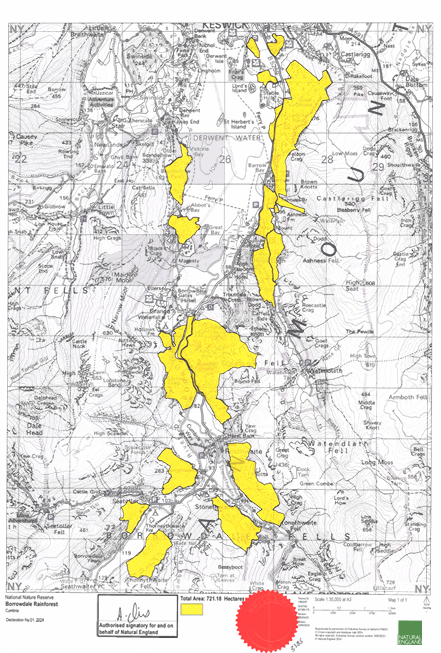
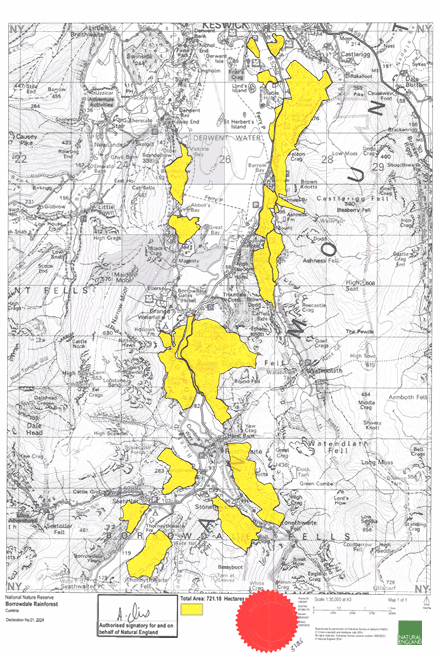
The only way I found out where the constituent woods of the NNR were, was by looking at the declaration of NNR map on the government’s website. I then had to cross reference this map with the OS map to find the names of the constituent woods of the NNR.

I support the right to roam (visit Right To Roam) but in the absence of a right to roam, the very least public bodies administrating NNRs should do is to tell the public where parts of NNRs are and which can be visited
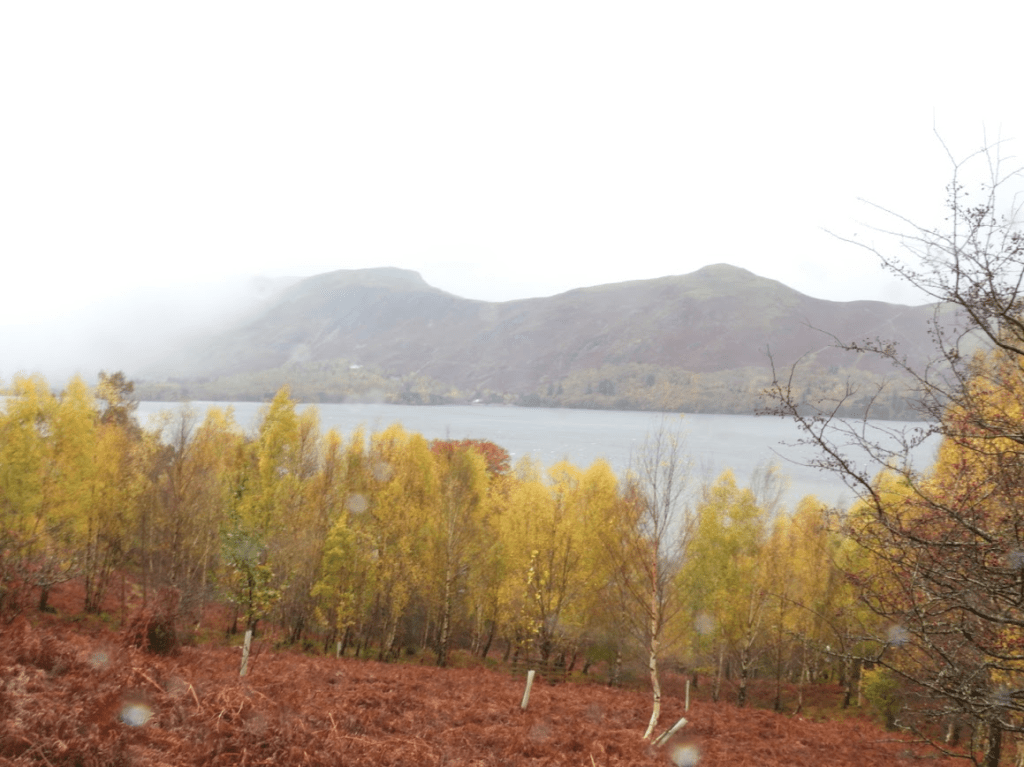
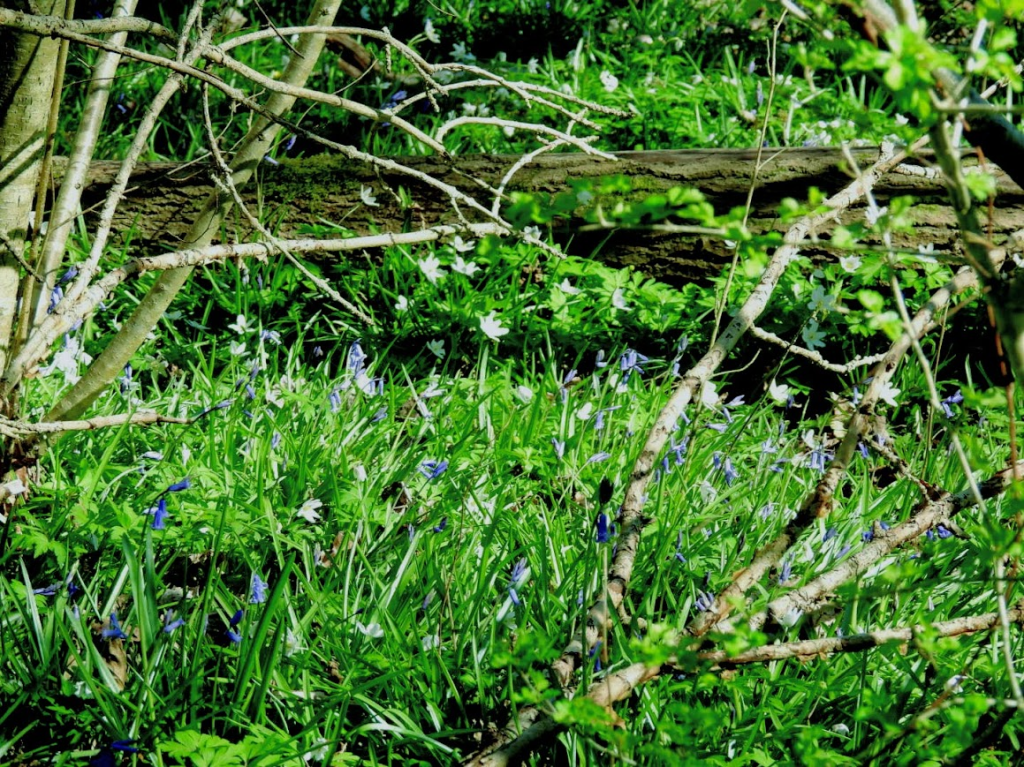
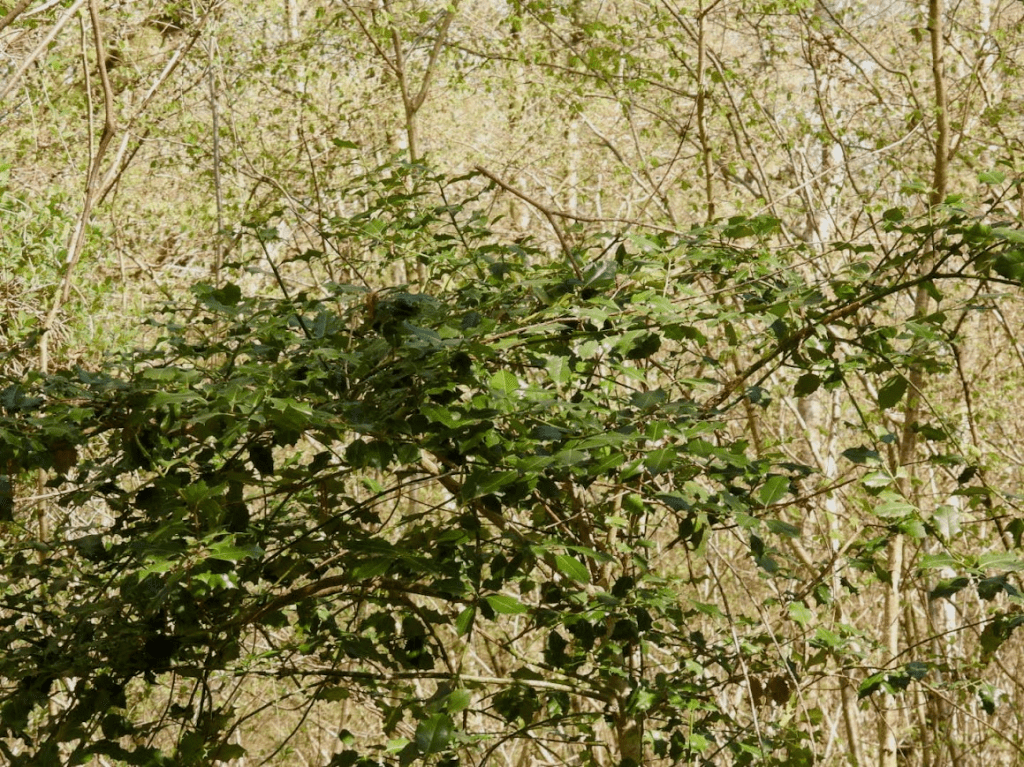
High and Low Stile Woods from Johnny Wood
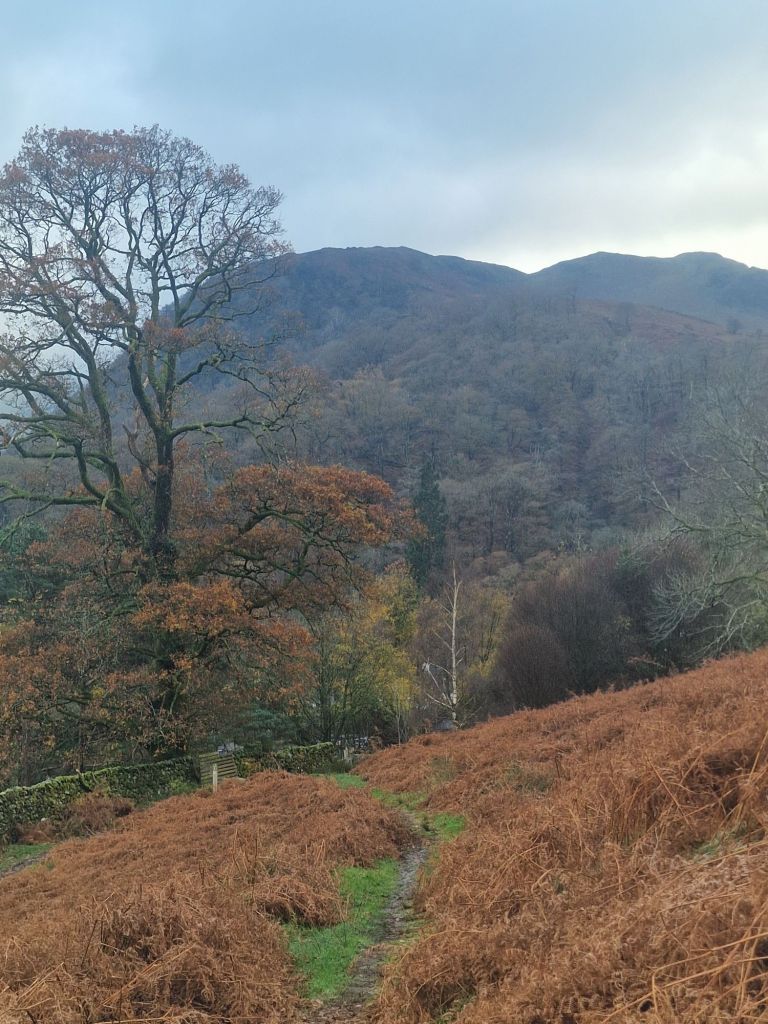
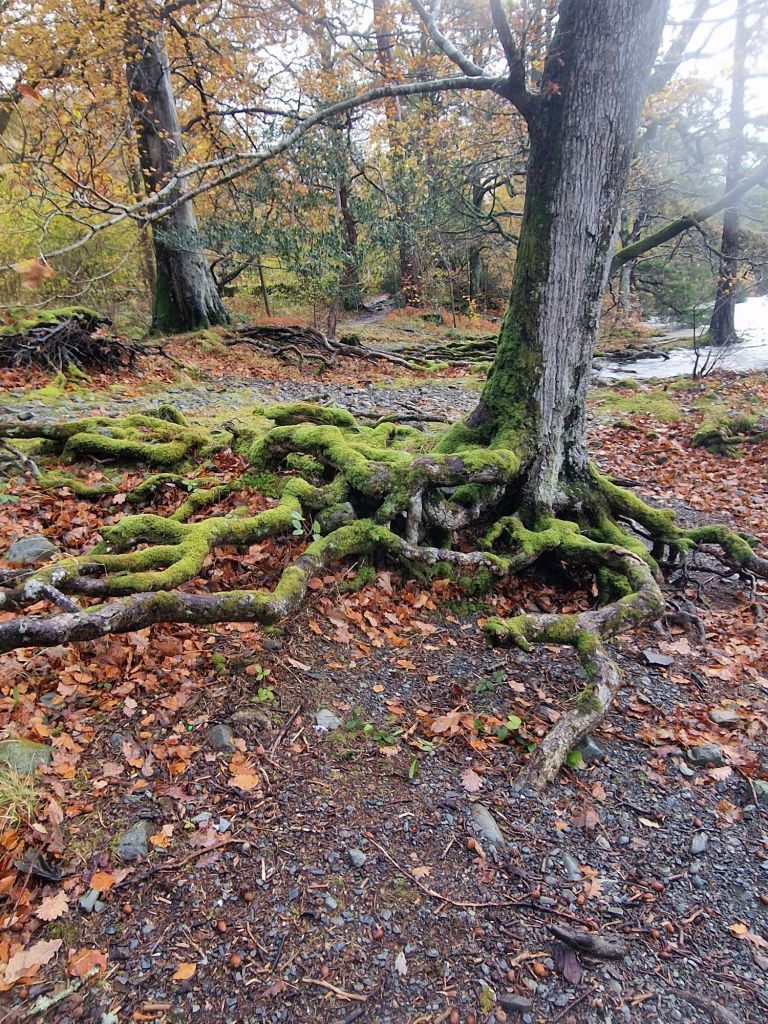
Johnny Wood

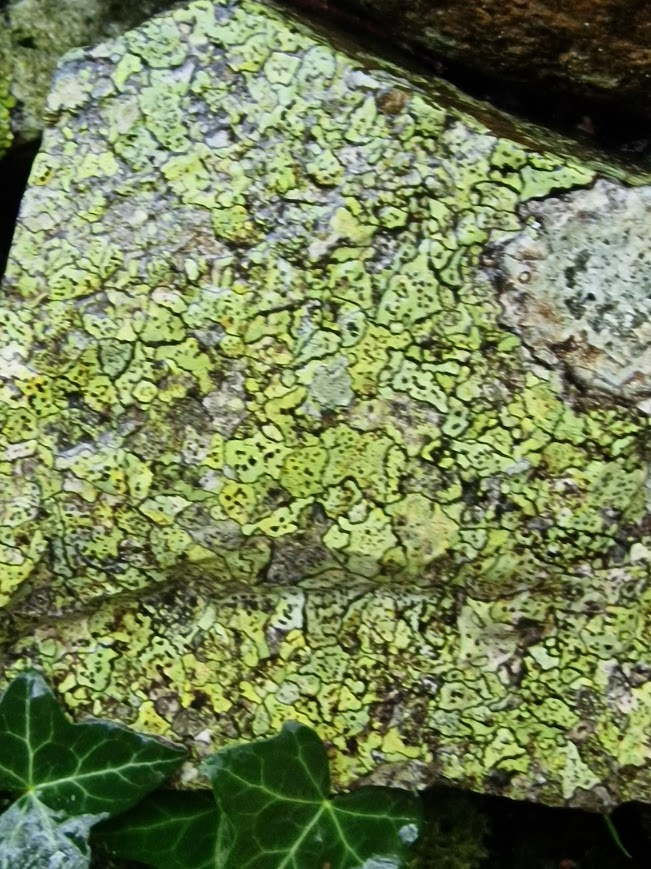
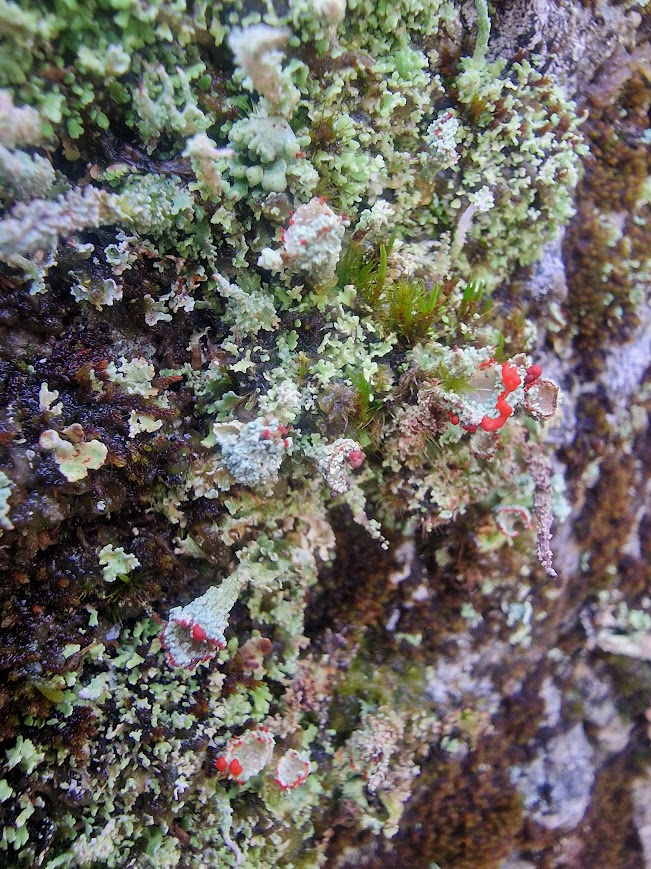
Lichens on a dry stone wall at the beginning of the wood

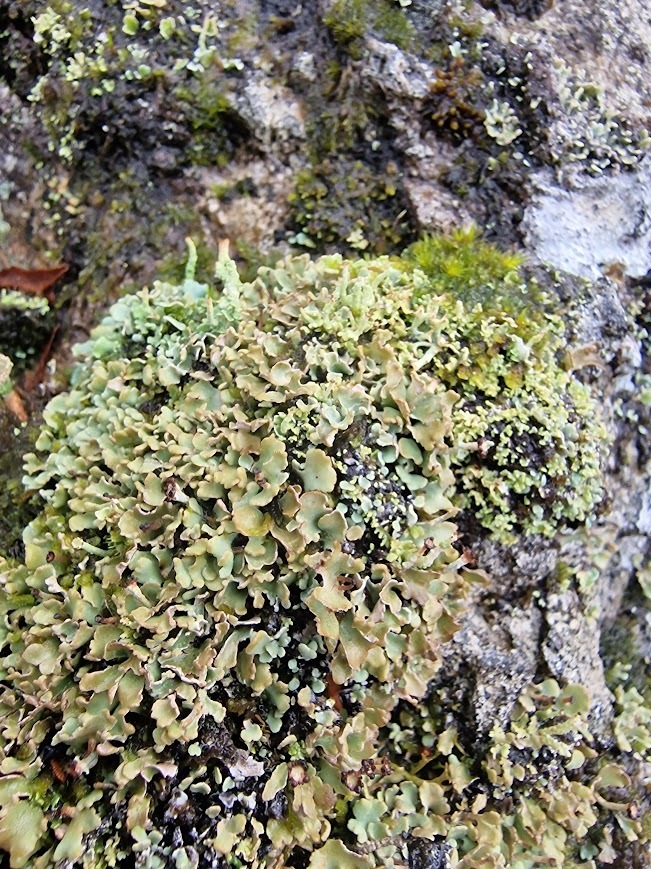
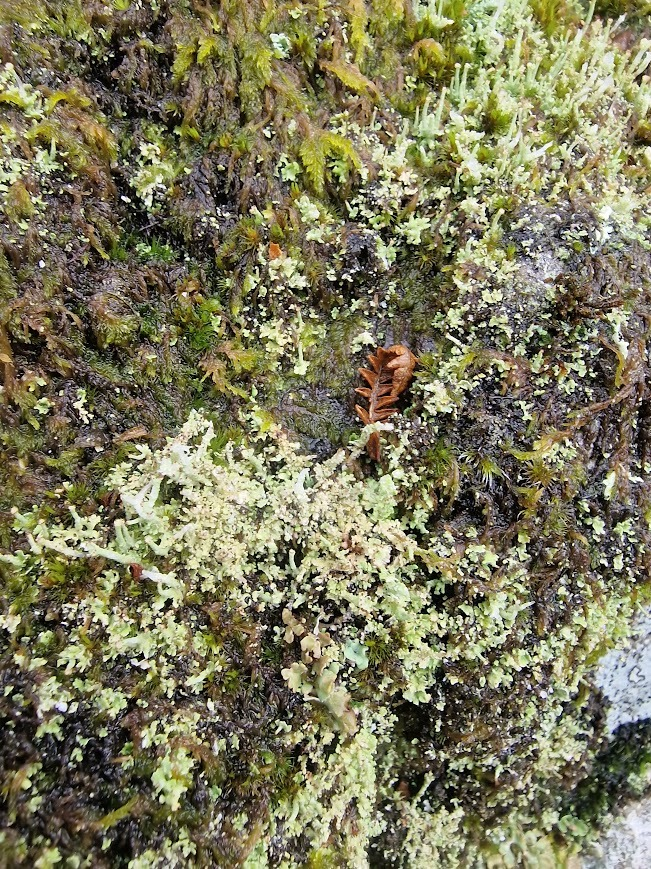
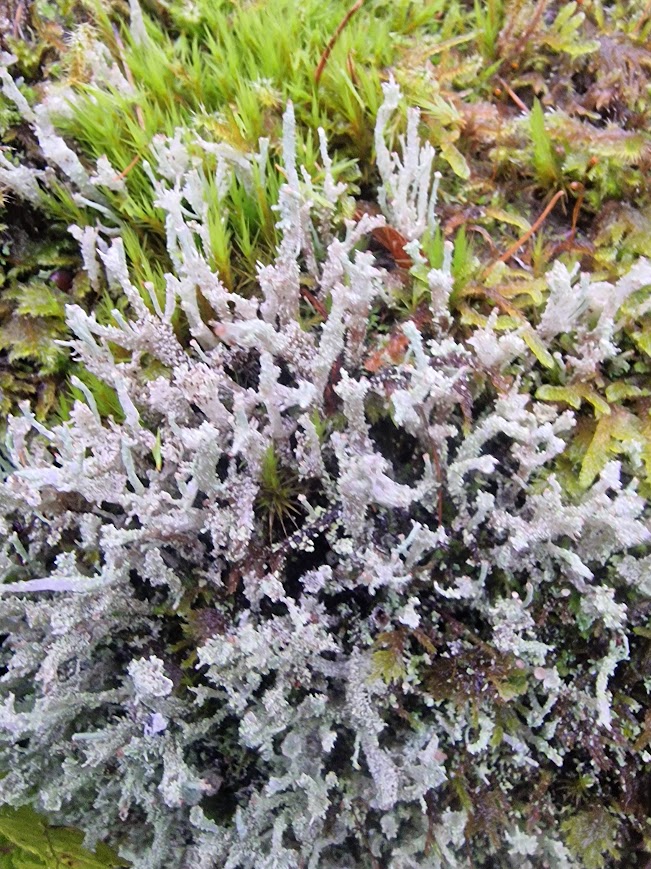
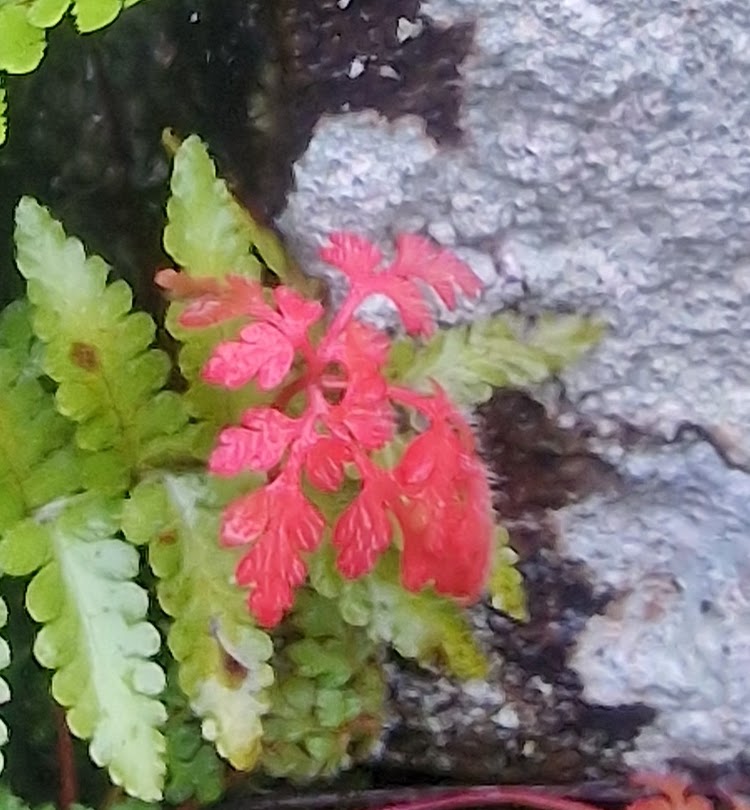
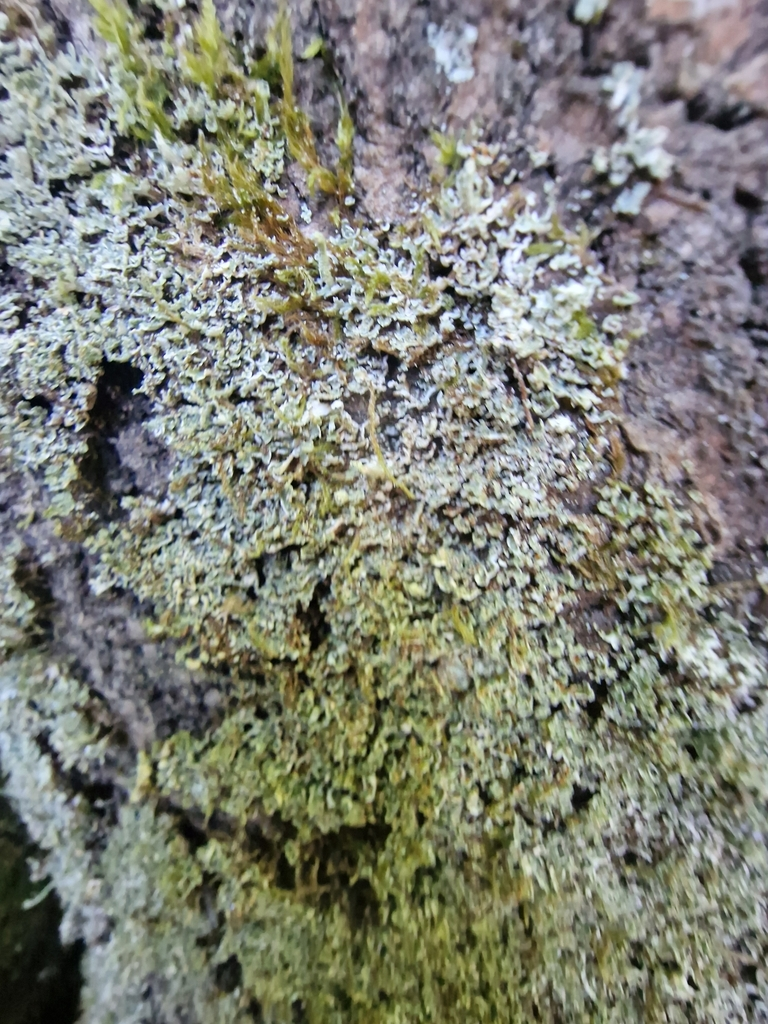
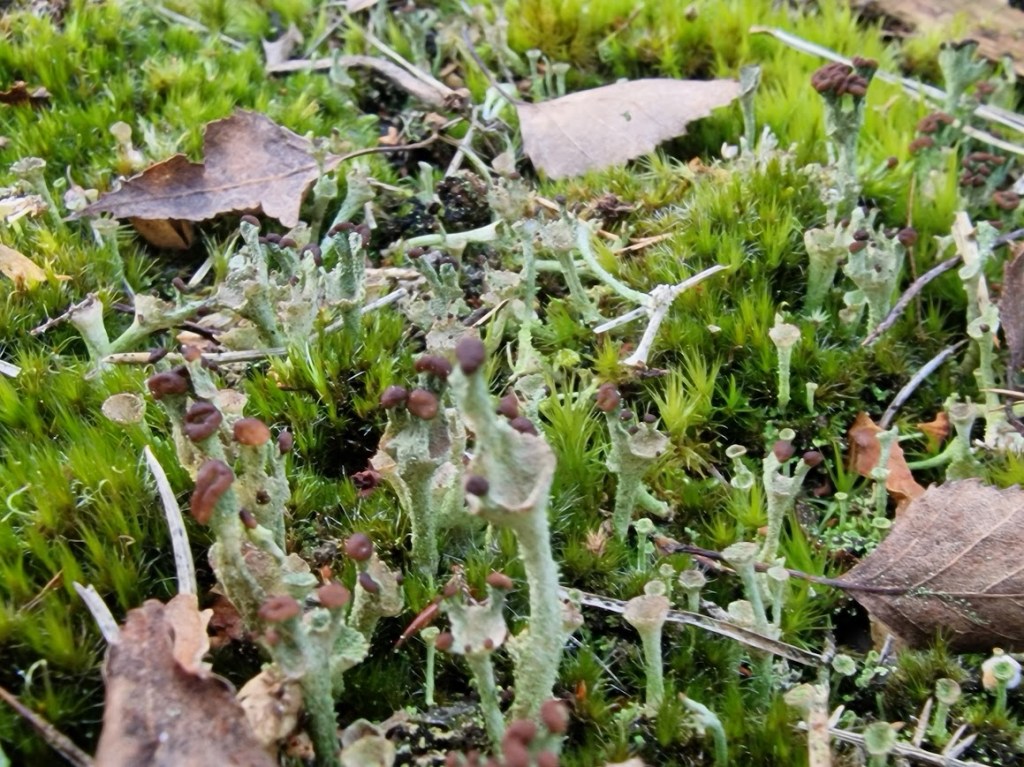
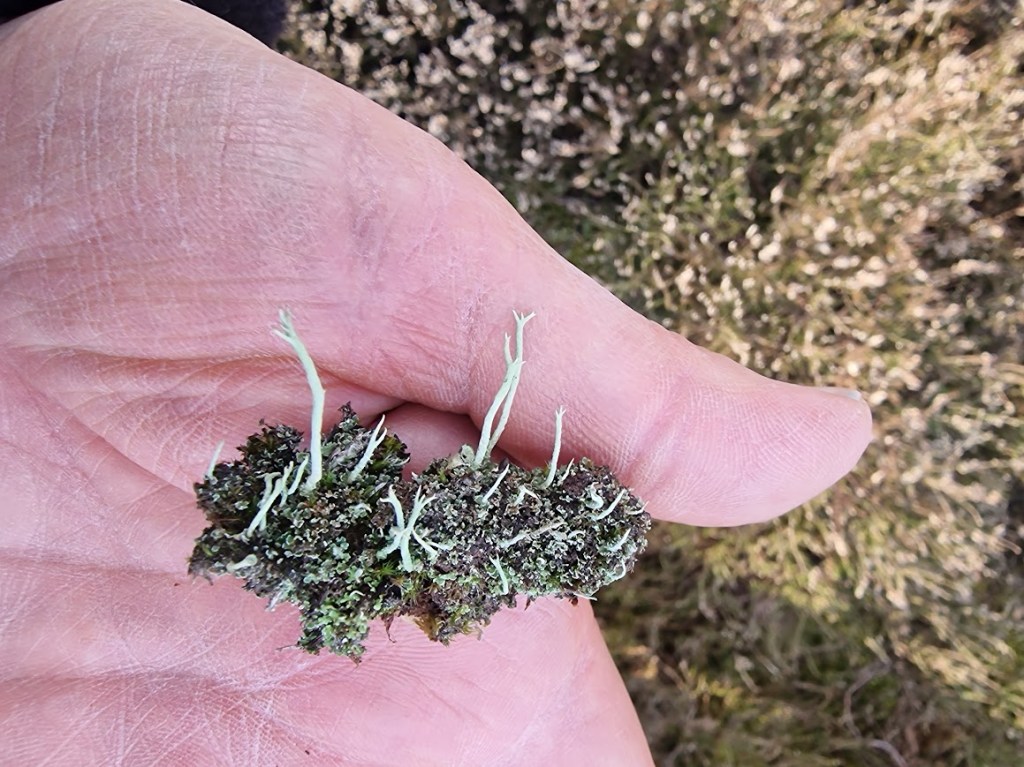
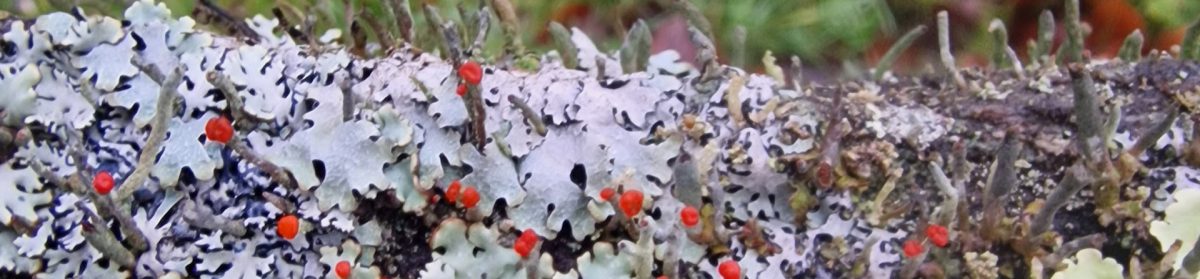
Probably Cladonia polydactyla, with bright red apothecia (fruiting bodies) on the edges of its cups; growing with/on moss
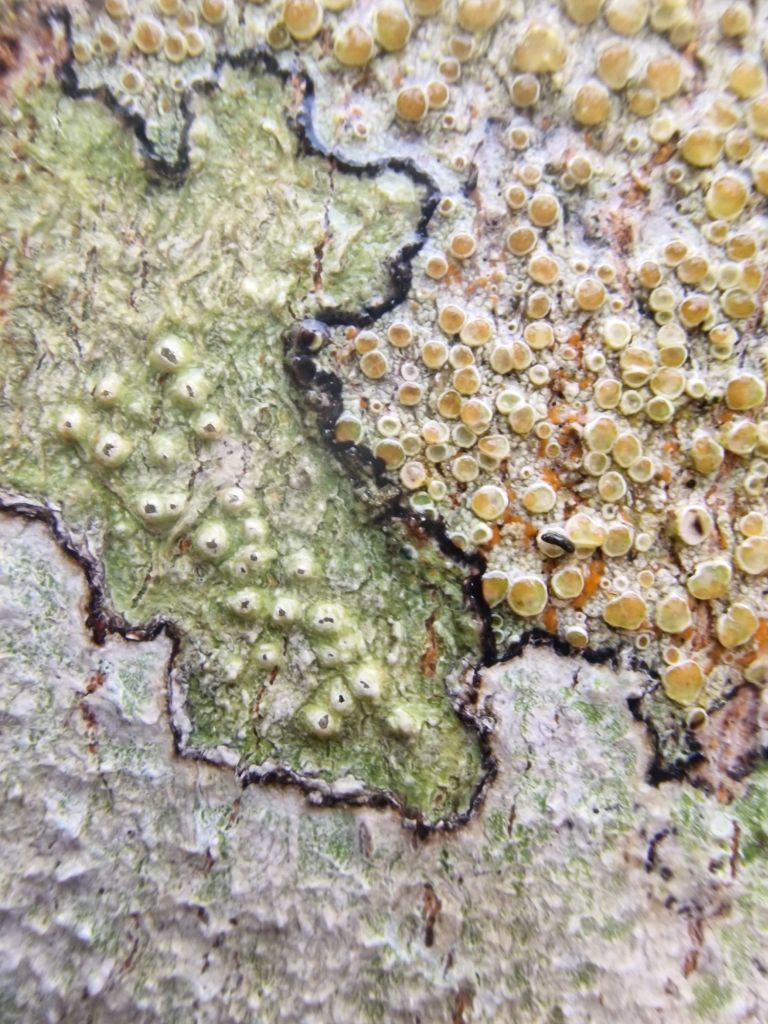
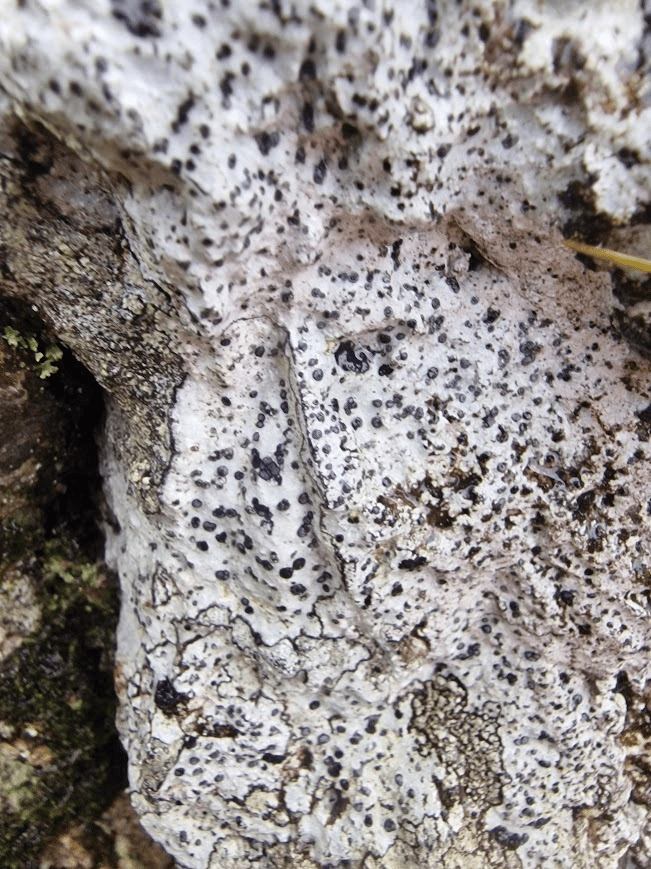
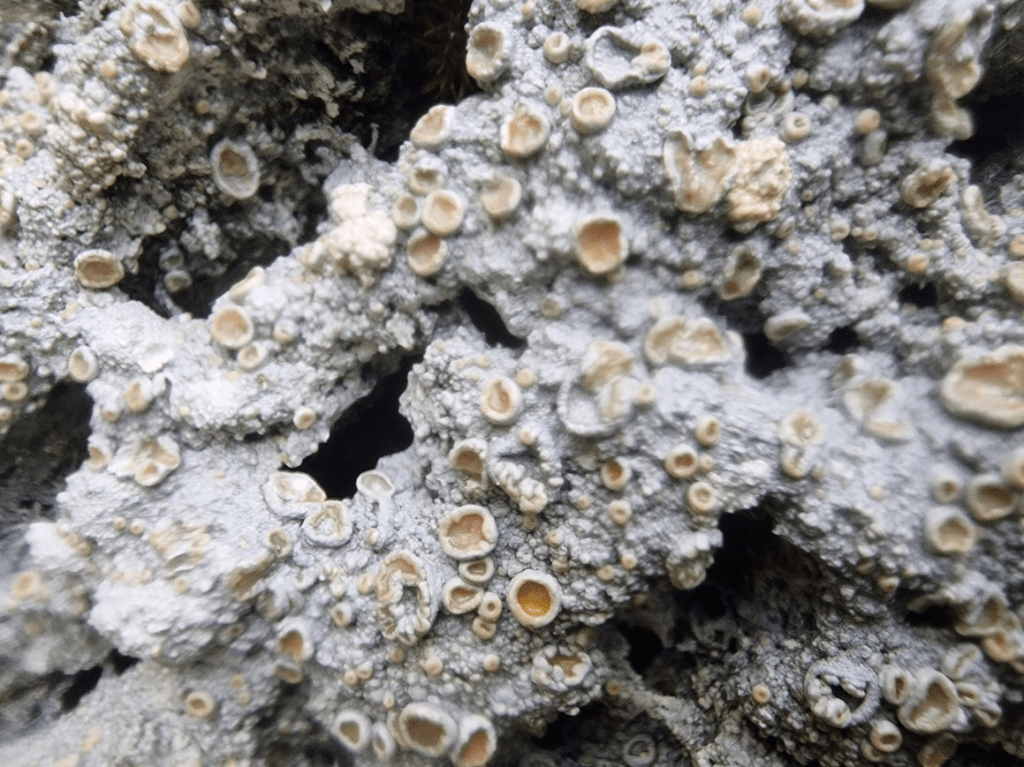
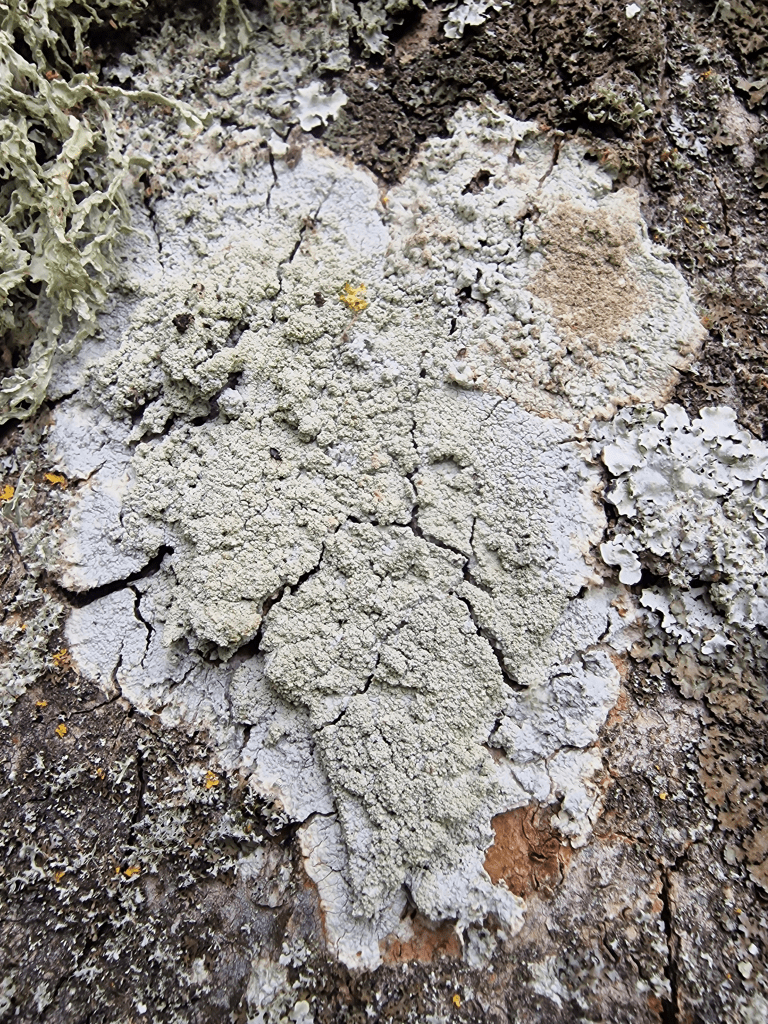
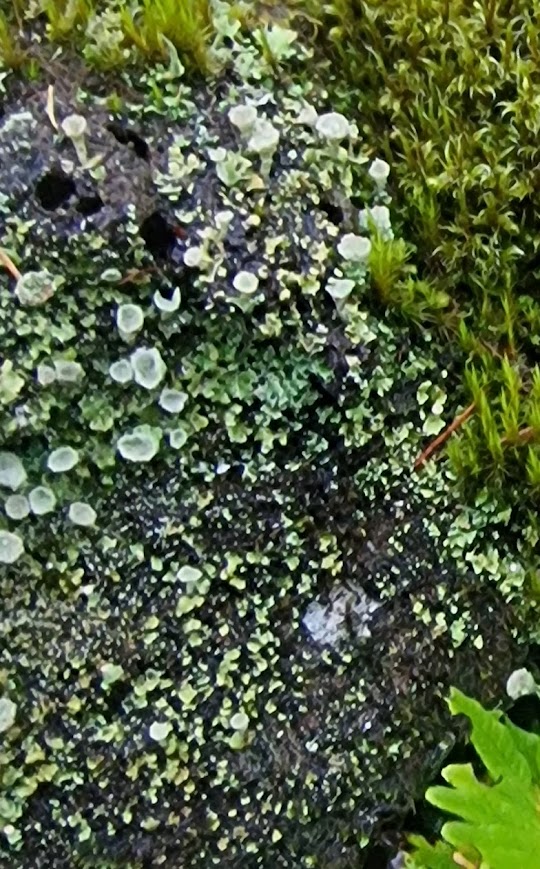
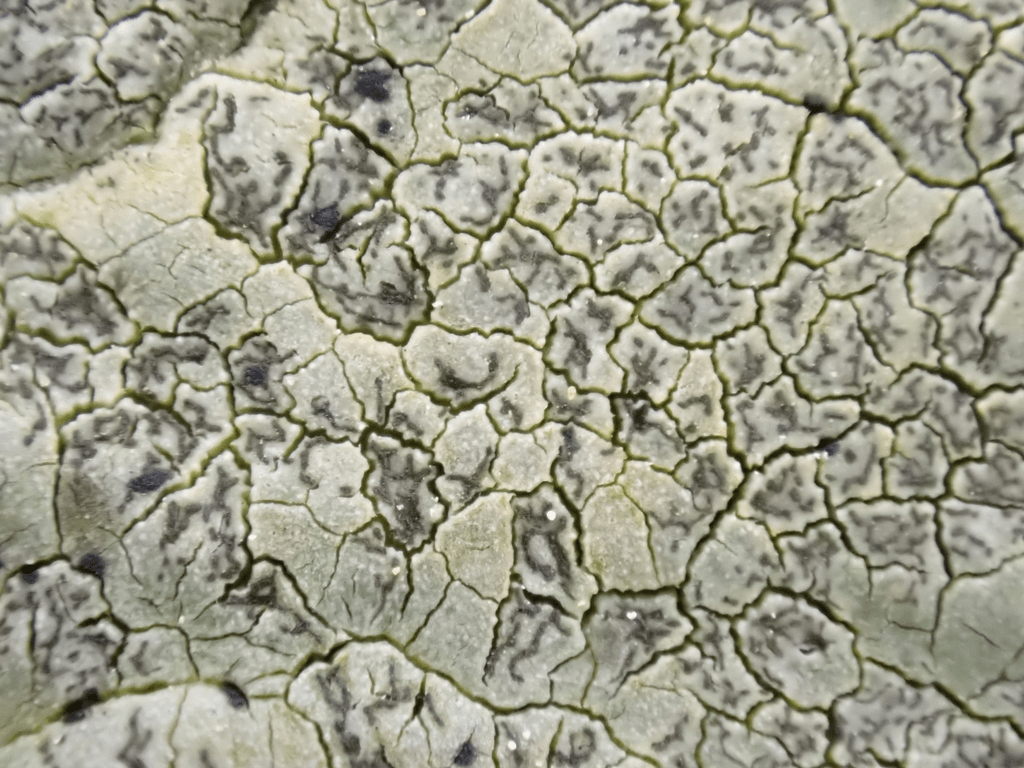
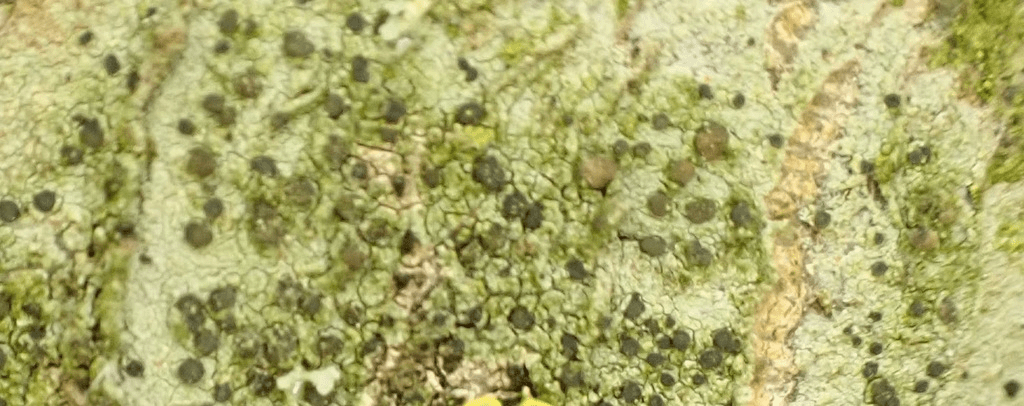
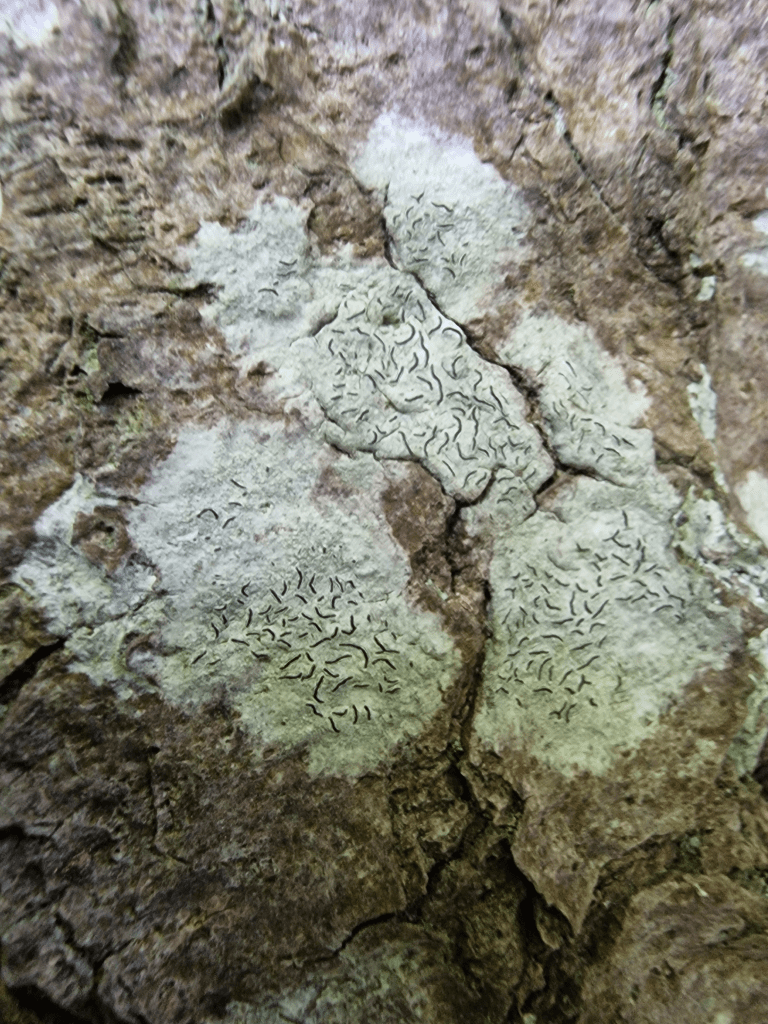
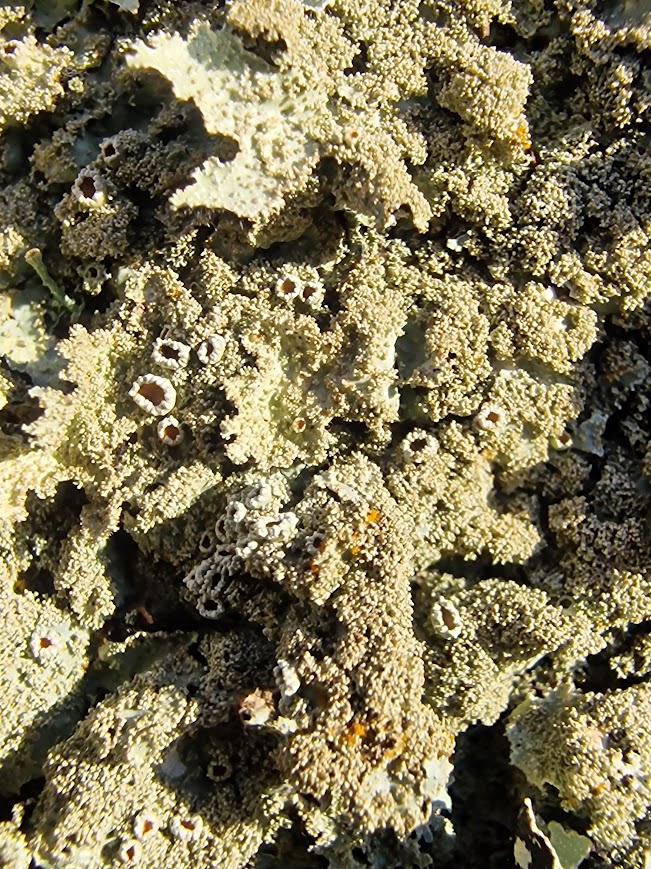
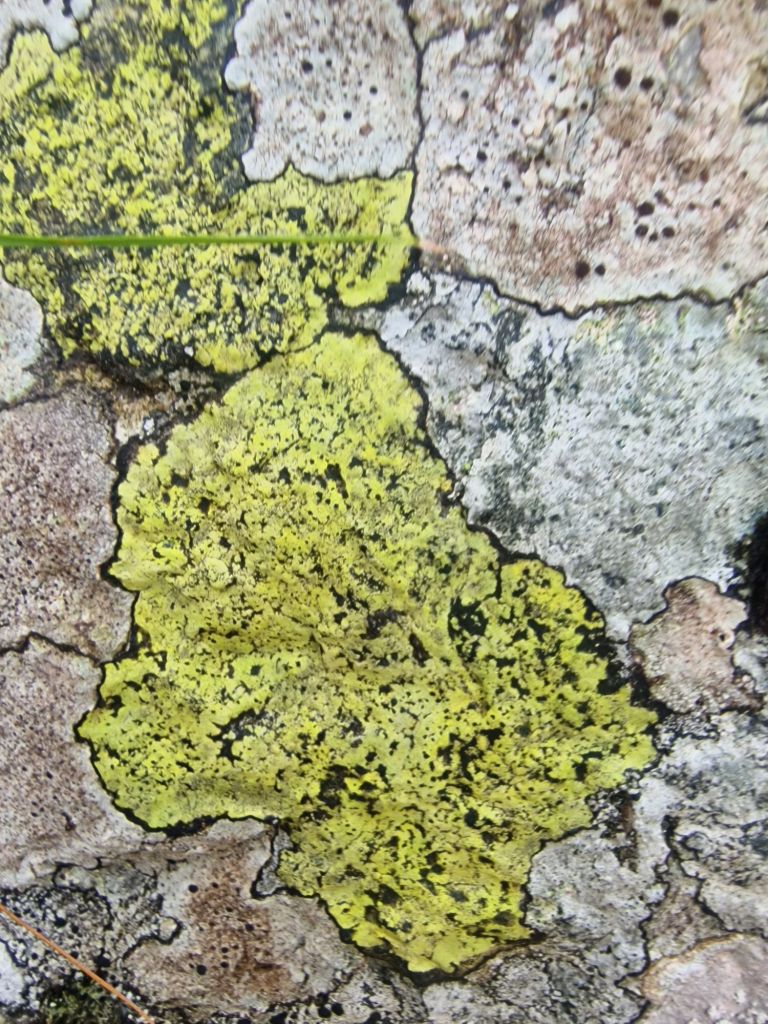
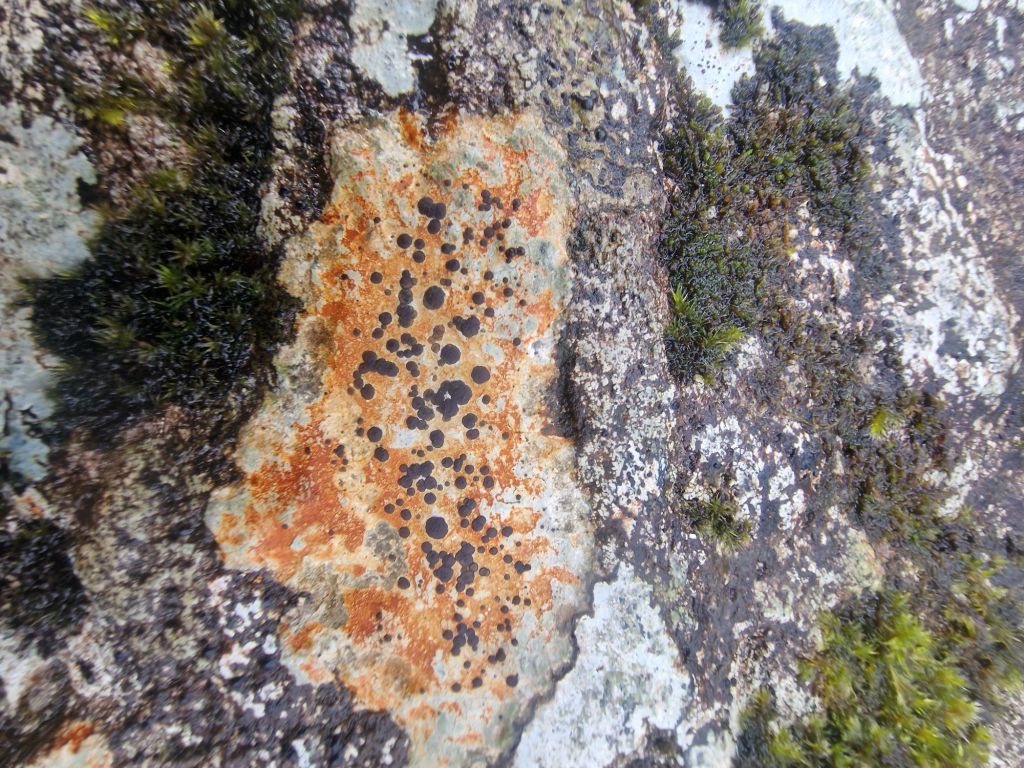
Rhizocarpon geographicum (green and black) in a mosaic with Lecidea lithophila (white thallus with red tinge and black apothecia) and an other lichen

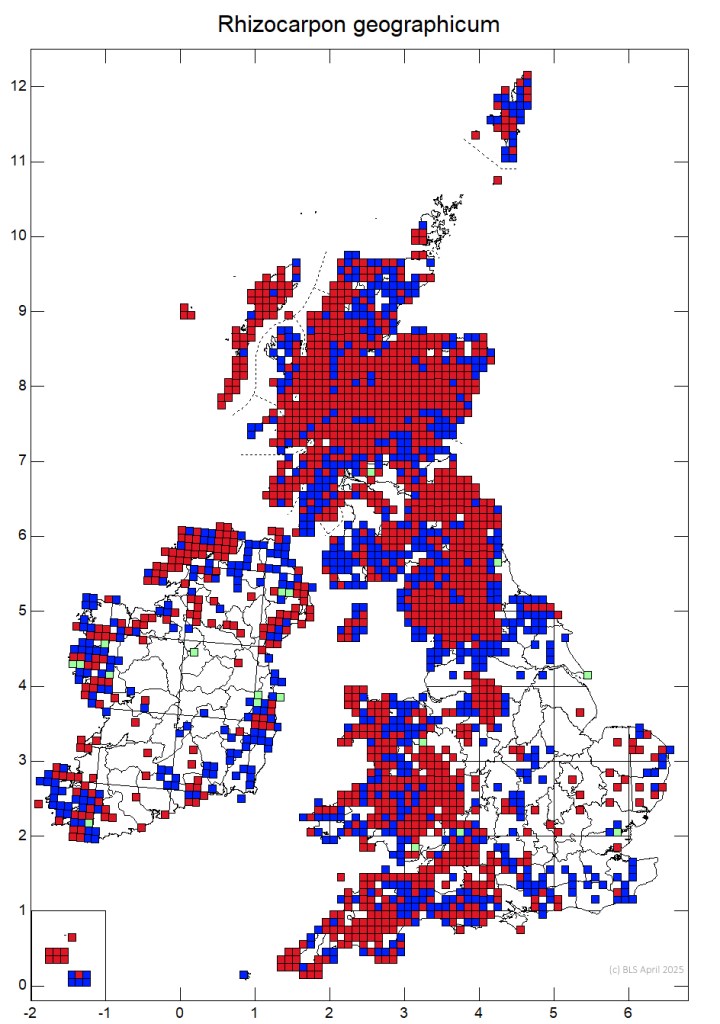
Rhizocarpon geographicum and Lecidea lithophila are extremely common in Borrowdale; in Sussex (where I live) Rhizocarpon geographicum is rare, and restricted to church yards, Lecidea lithophila is non-existent in Sussex. North-West lichen enthusiasts are probably not that excited by seeing these lichens but as a Southerner seeing these was very interesting.
Distribution Maps (British Lichen Society) Lecidea lithophila & Rhizocarpon geographicum
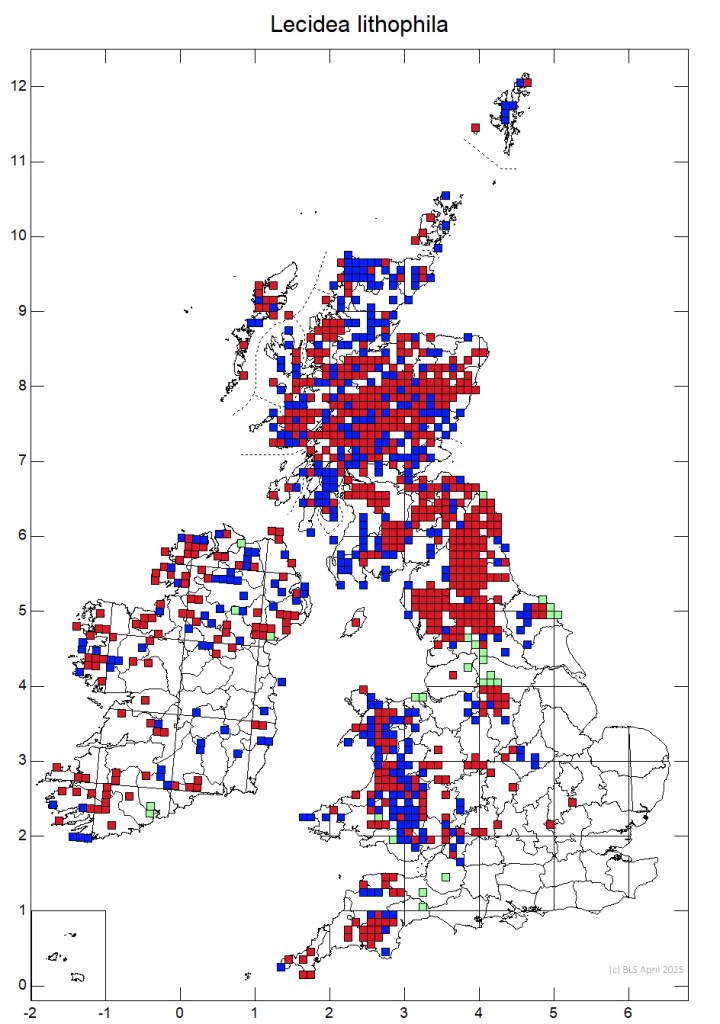
Lecidea lithophila
A dead Sessile Oak
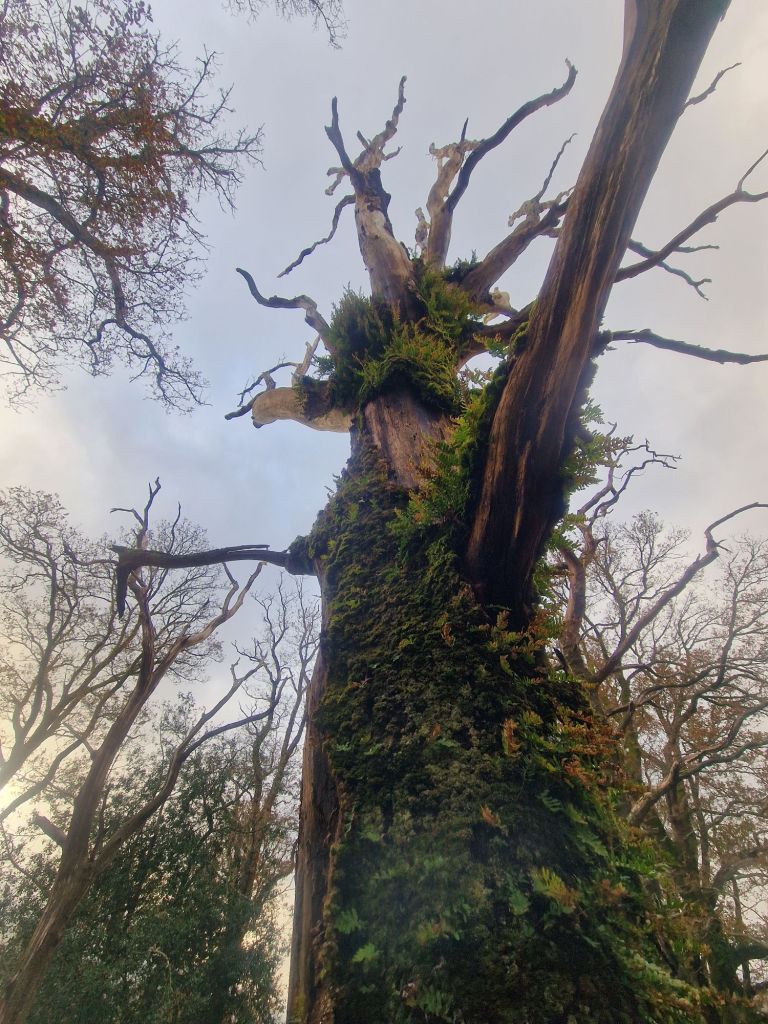
which reminded me of the Statue of Liberty

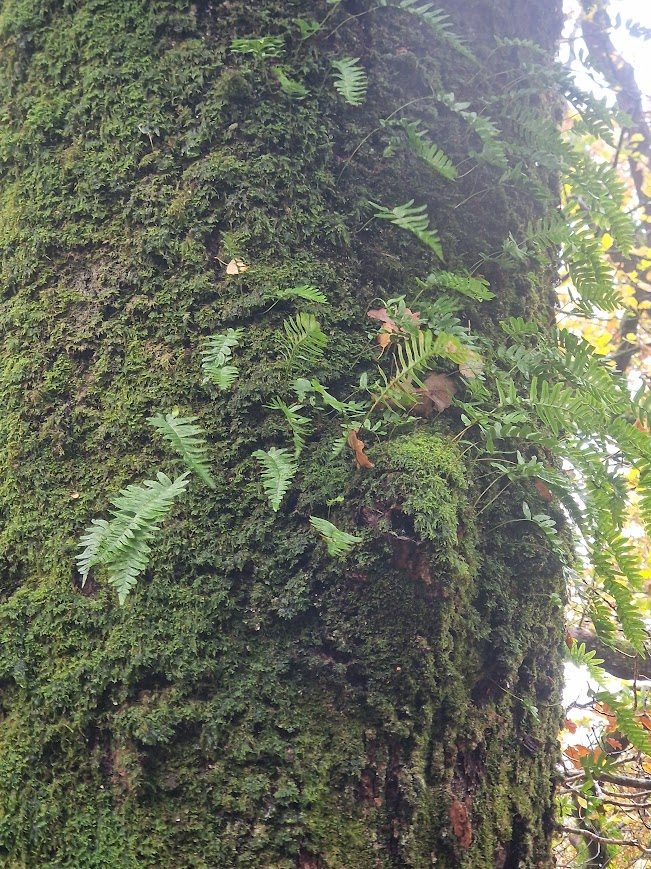
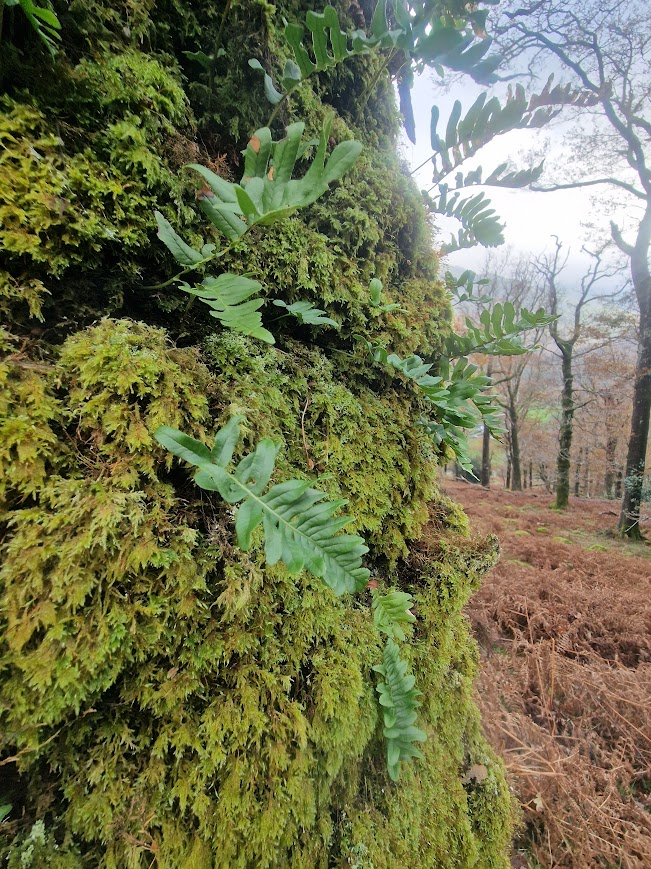
The trunk of this tree is still a viable substrate for epiphytes (because epiphytes take no nutrition from their substrate) including mosses, polypody ferns and lichens
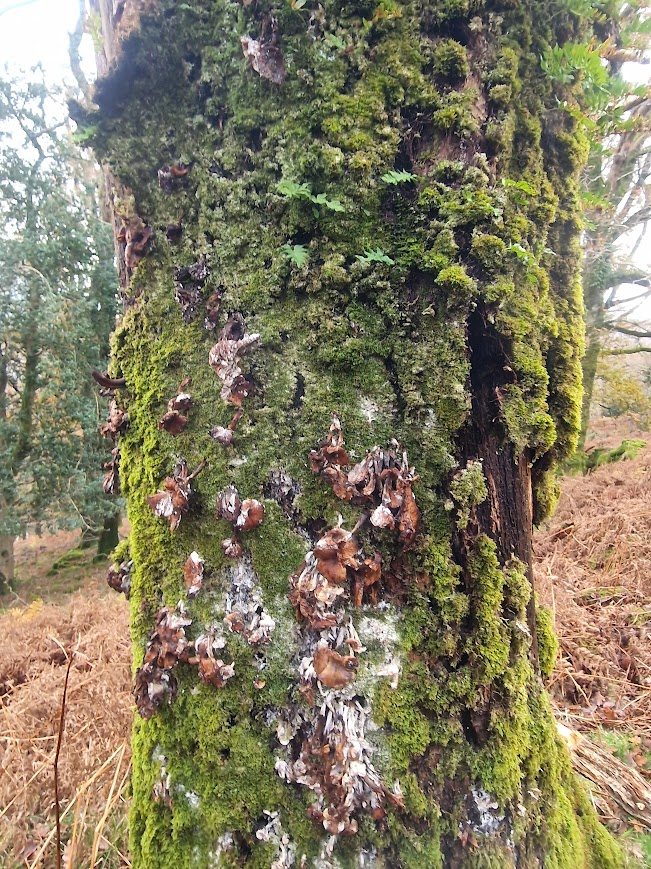
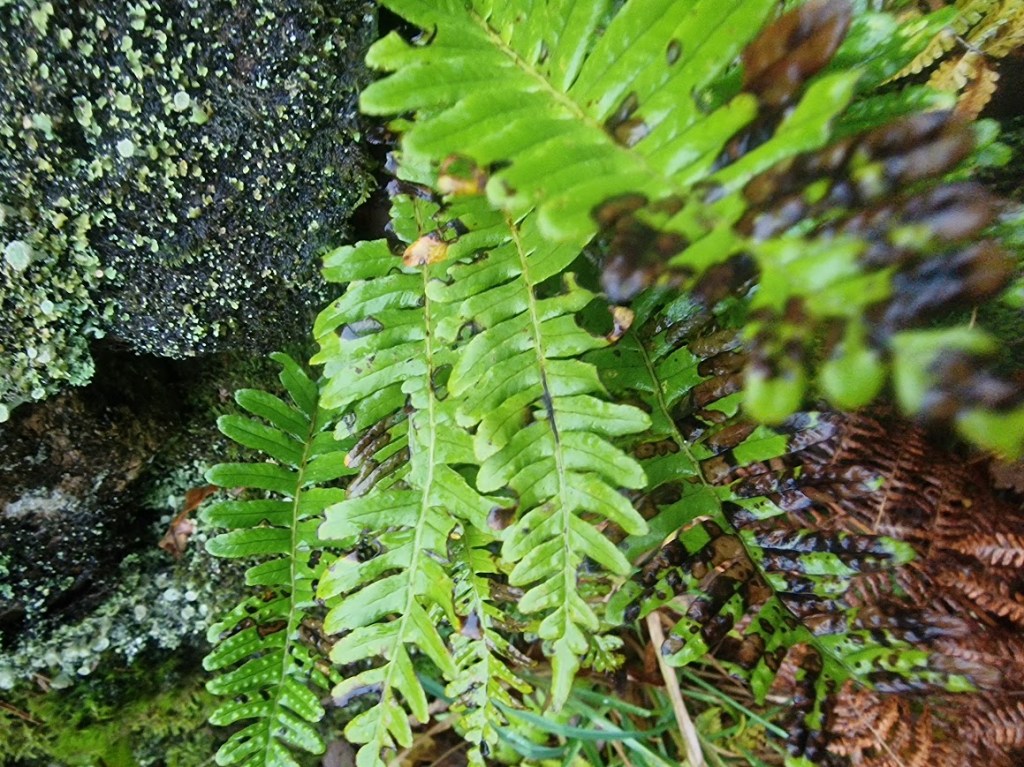
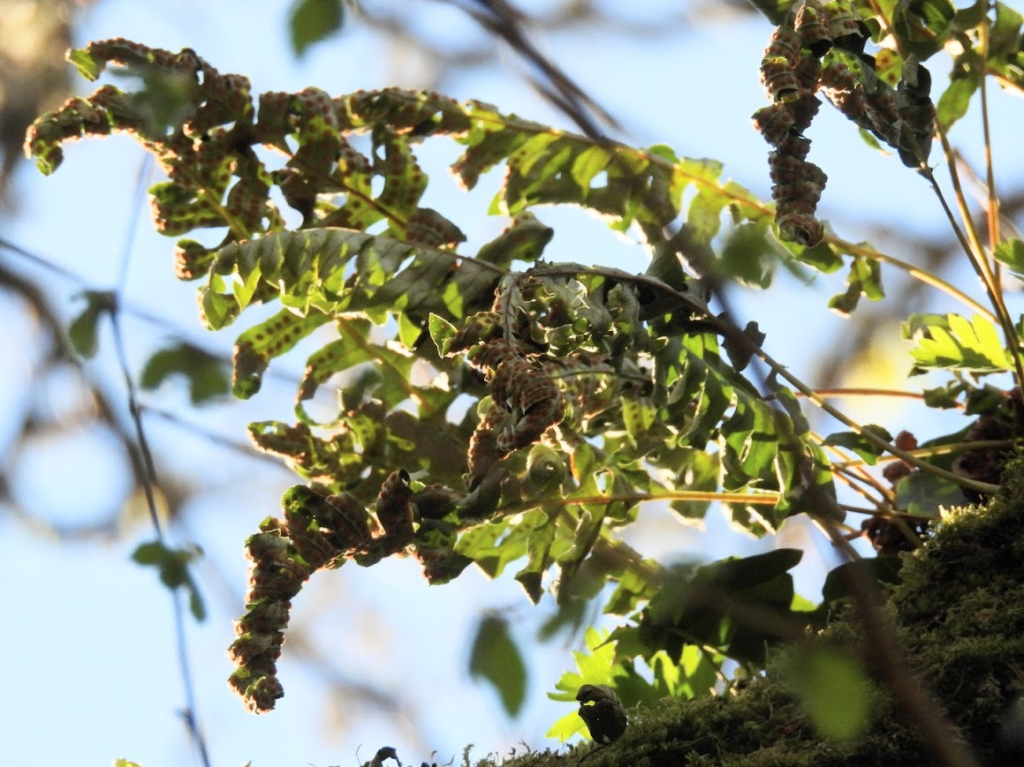
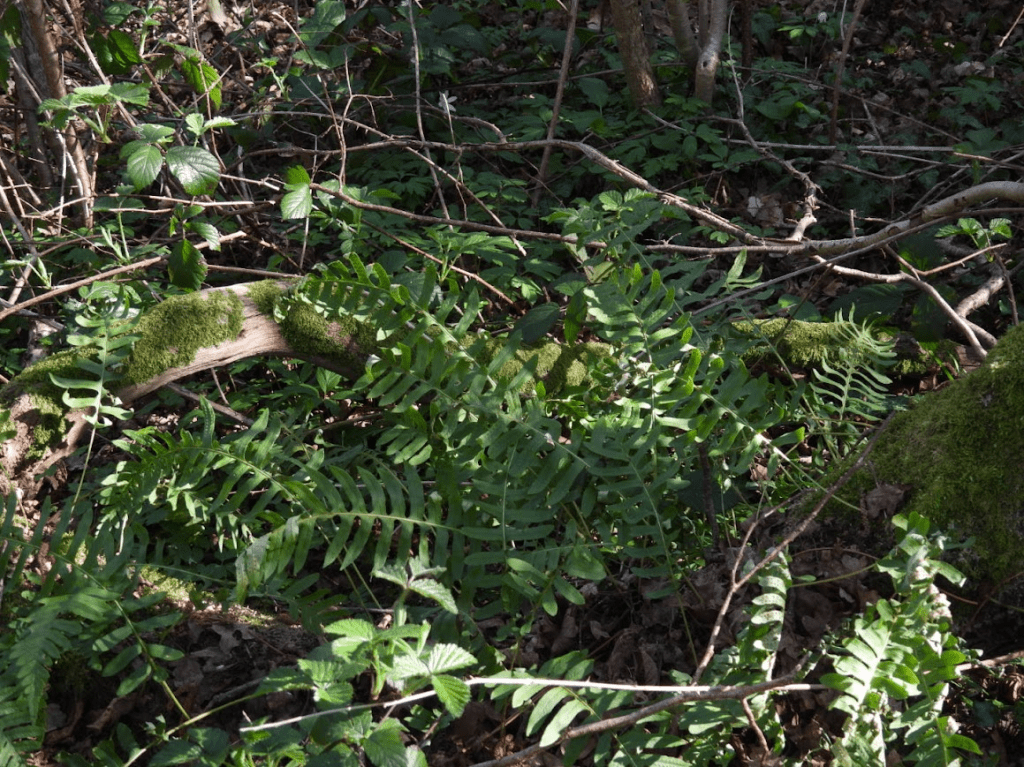
Polypody fern
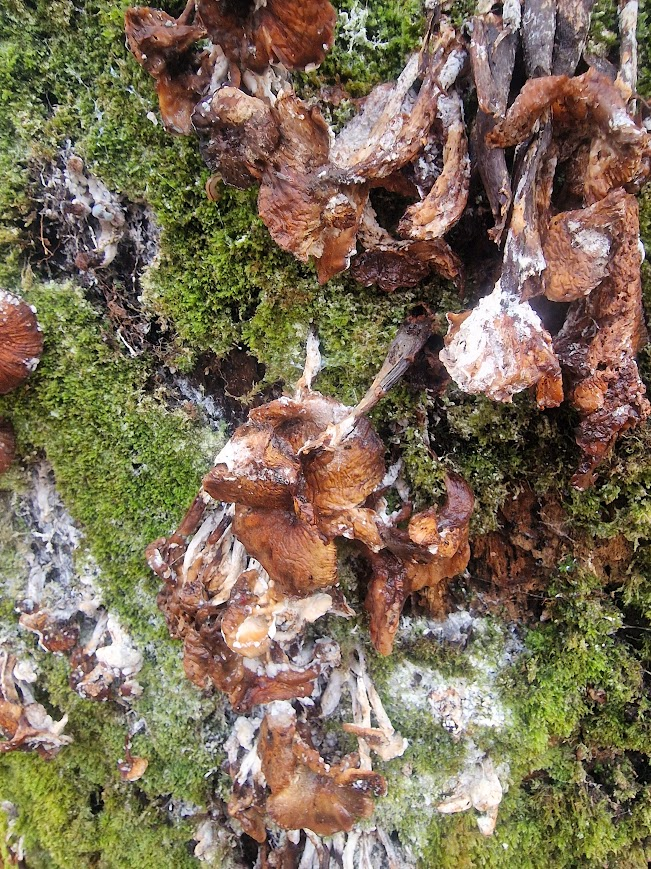
Physalacriaceae family fugus on tree

Physalacriaceae spp. are saprobic; i.e. they obtain nutrients by breaking down dead and decaying organic matter, serving a useful ecological function
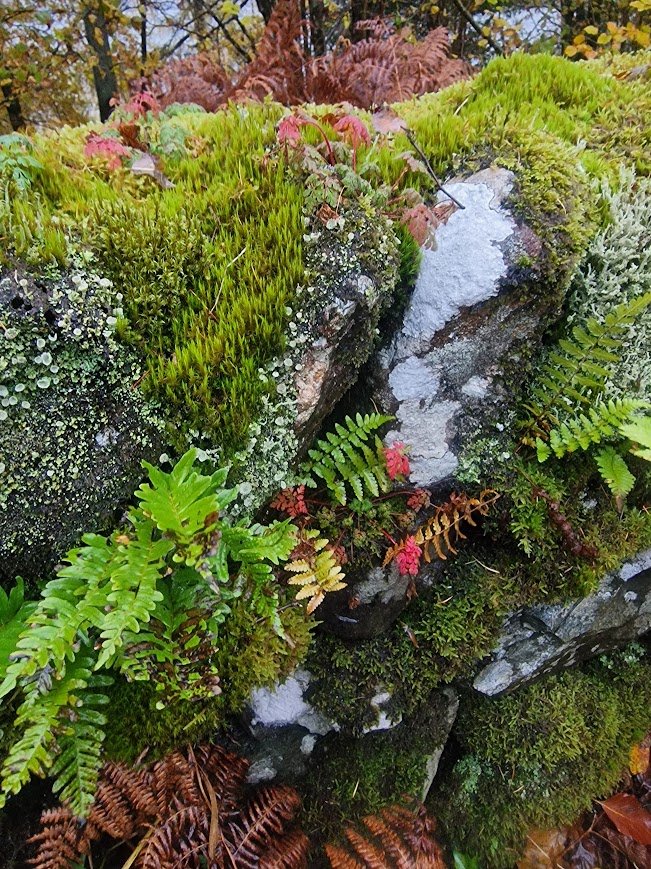
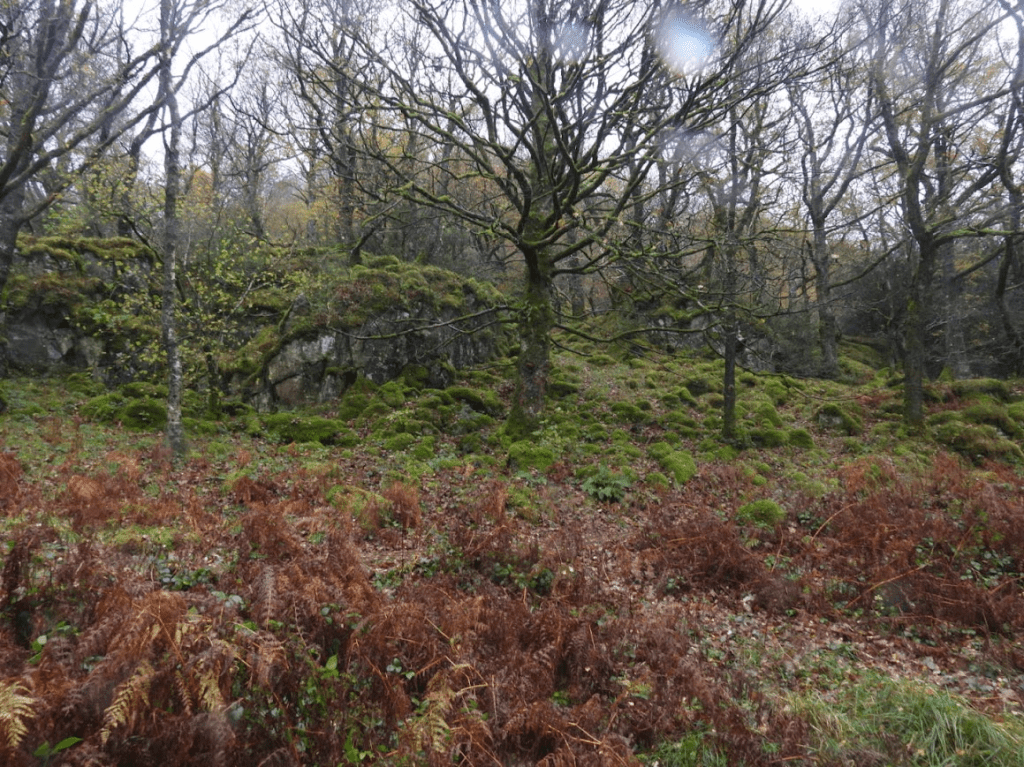
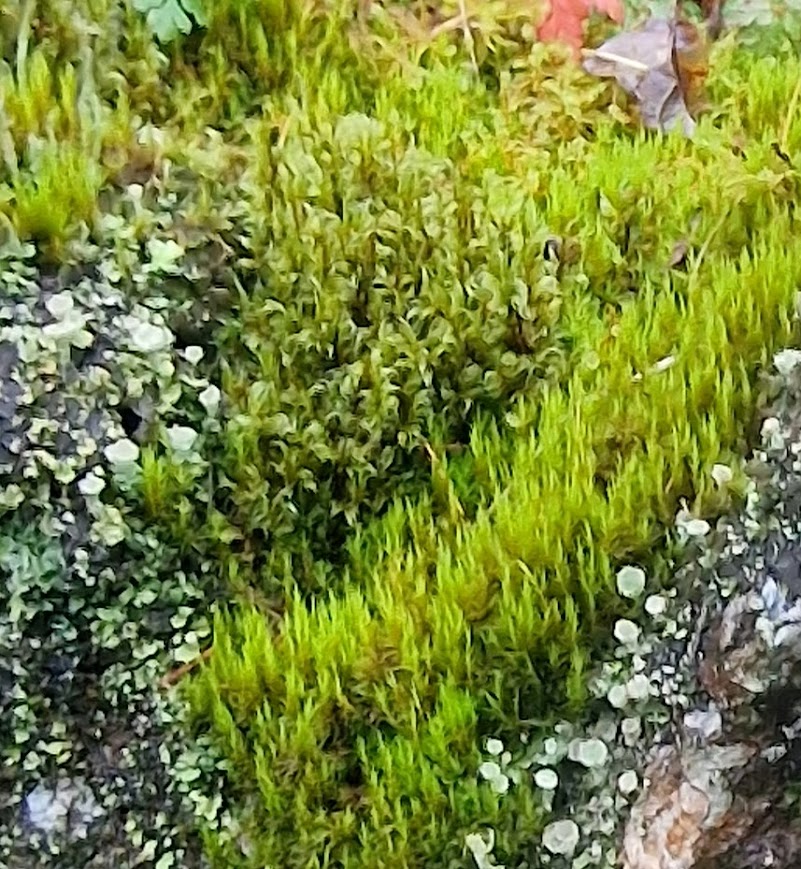
This rocky bank as covered in mosses
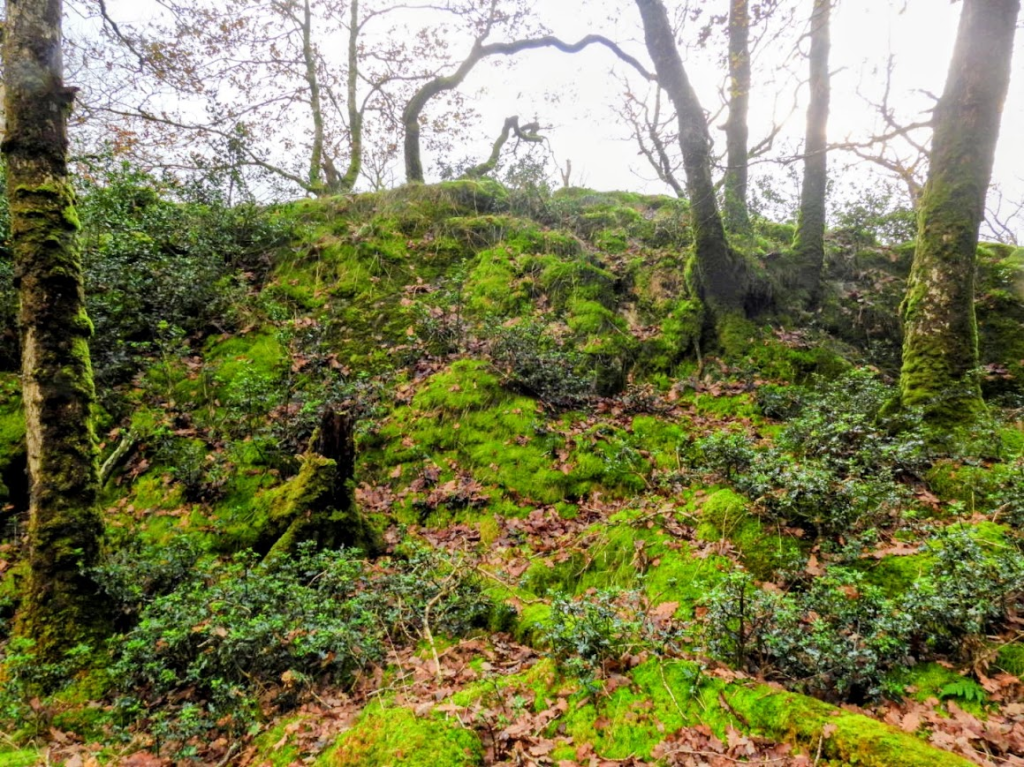
A sphagnum moss probably Sphagnum palustre was at the top of this bank.

The demonstrated the difference between habitat in the south (where I live) & the north-west temperate rainforest. Sphagnum palustre in Sussex is found in bogs and wet flushes with a supply of water from springs or streams. In Borrowdale, it is also at the top of this rocky mound because it rains a lot ; in the south, it doesn’t rain enough for that.

Seathwaite, Borrowdale: This village is the wettest inhabited place in England, receiving around 3,500 mm (138 inches) annually. Visit Cumbria Weather in the Lakes

The average annual precipitation in Sussex is around 914mm (36 inches) Climate Data Sussex
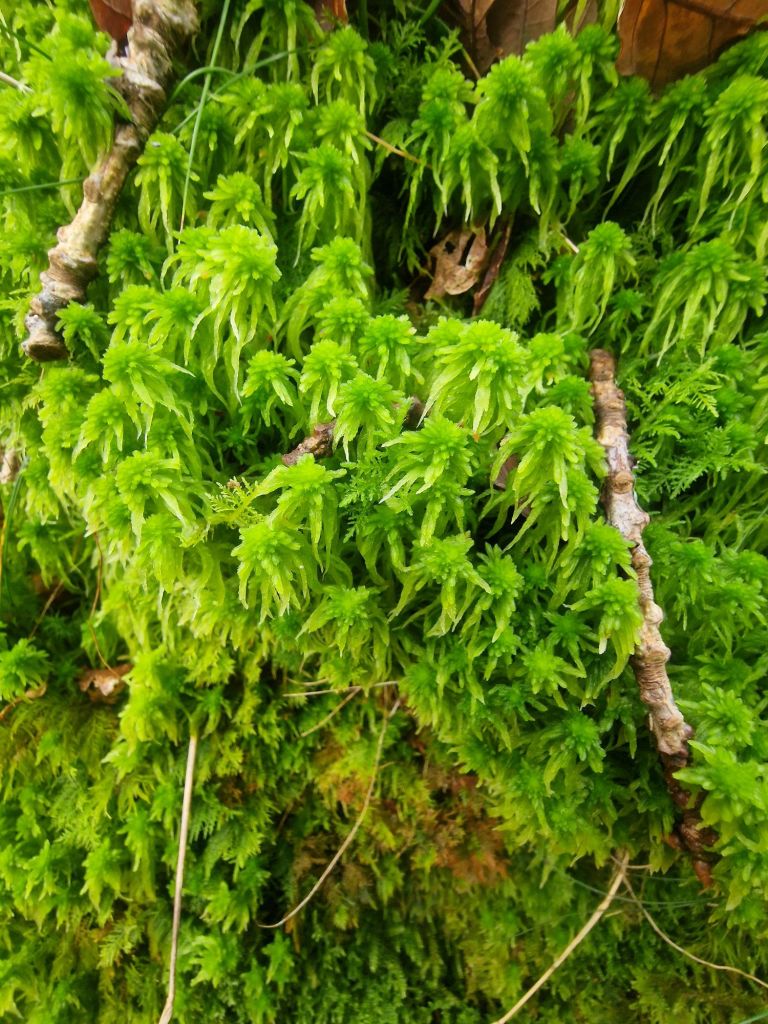
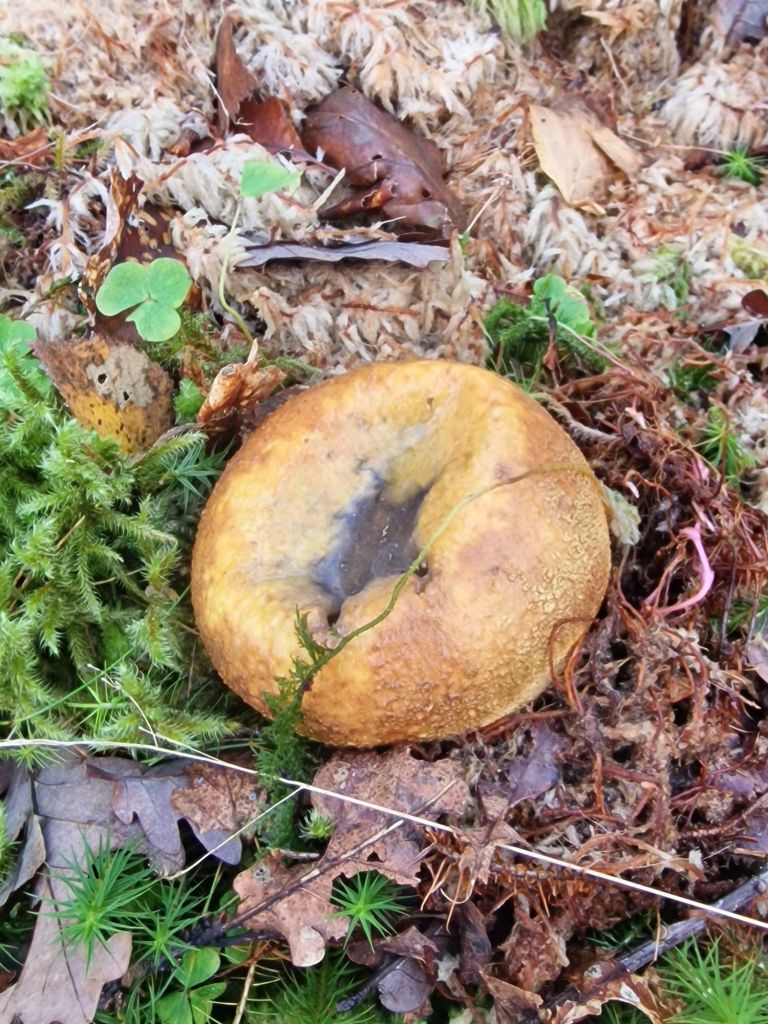
Scleroderma citrinum Common Earthball
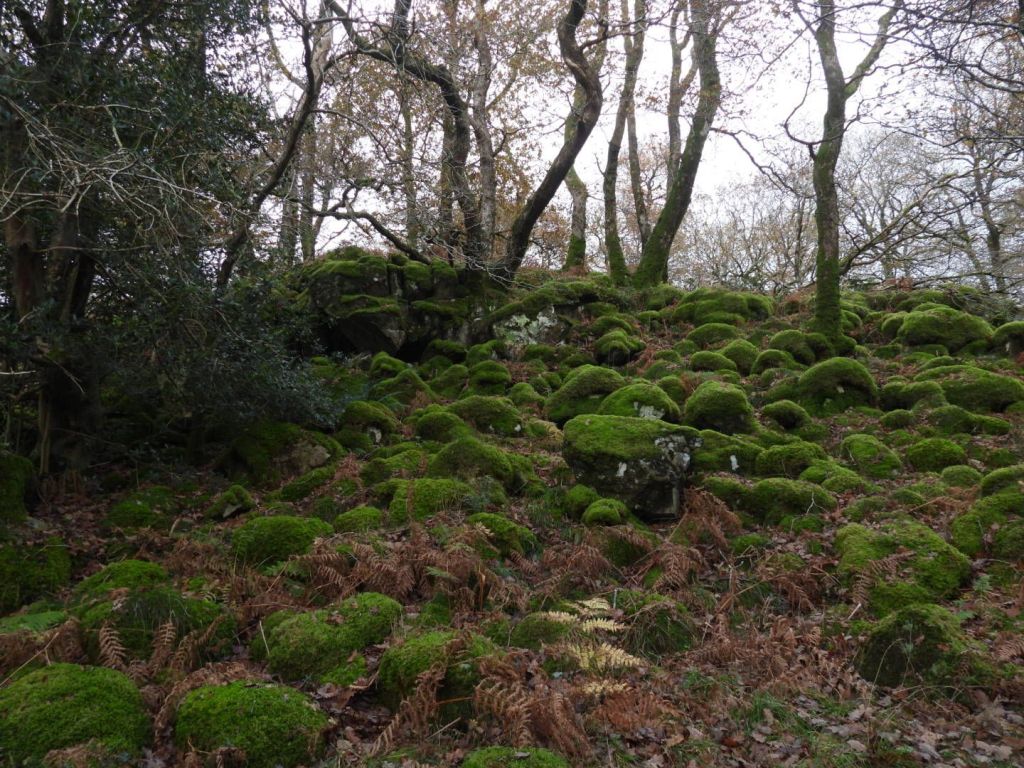
Mossy boulders
In Johnny Wood, Wilson’s Filmy-fern can be found. I have never seen it. So I explored likely filmy-fern outcrops to try and find it.

Filmy Ferns are characteristic of temperate rain forest
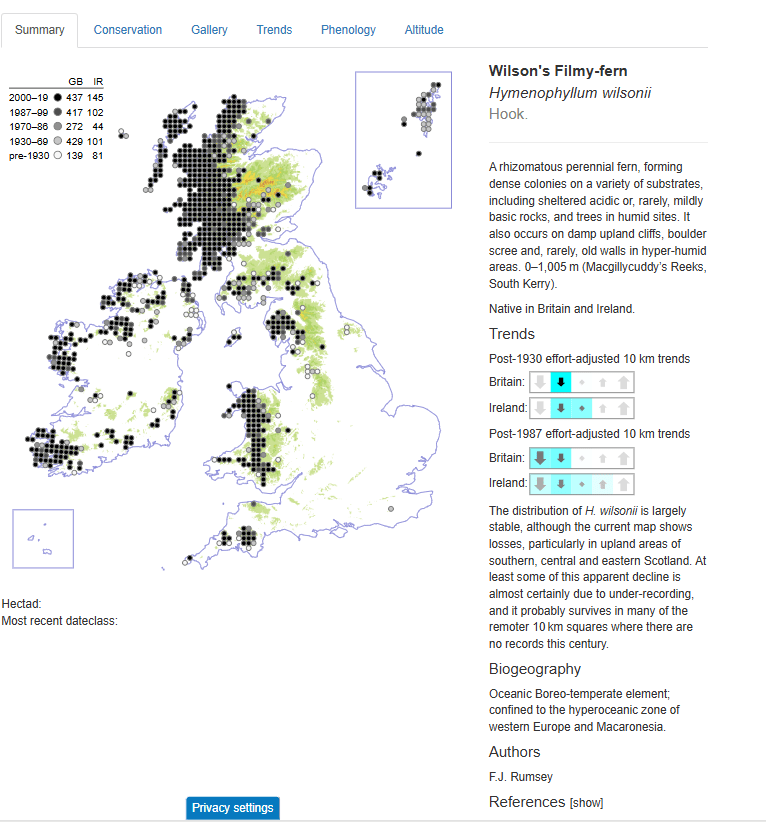
Wilson’s Filmy Fern has a similar distribution to Tunbridge Filmy Fern

Following my success in finding Tunbridge Filmy Fern in the High Weald (an outlier population in the of Sussex  where the These unique geological features of the High Weald produce create a localized, hypo-oceanic microclimate that supports plant species typically of western Atlantic woodland), I explored rock outcrops like those ones I have seen Tunbridge Filmy Fern on for Wilson Filmy Fern, like this one:
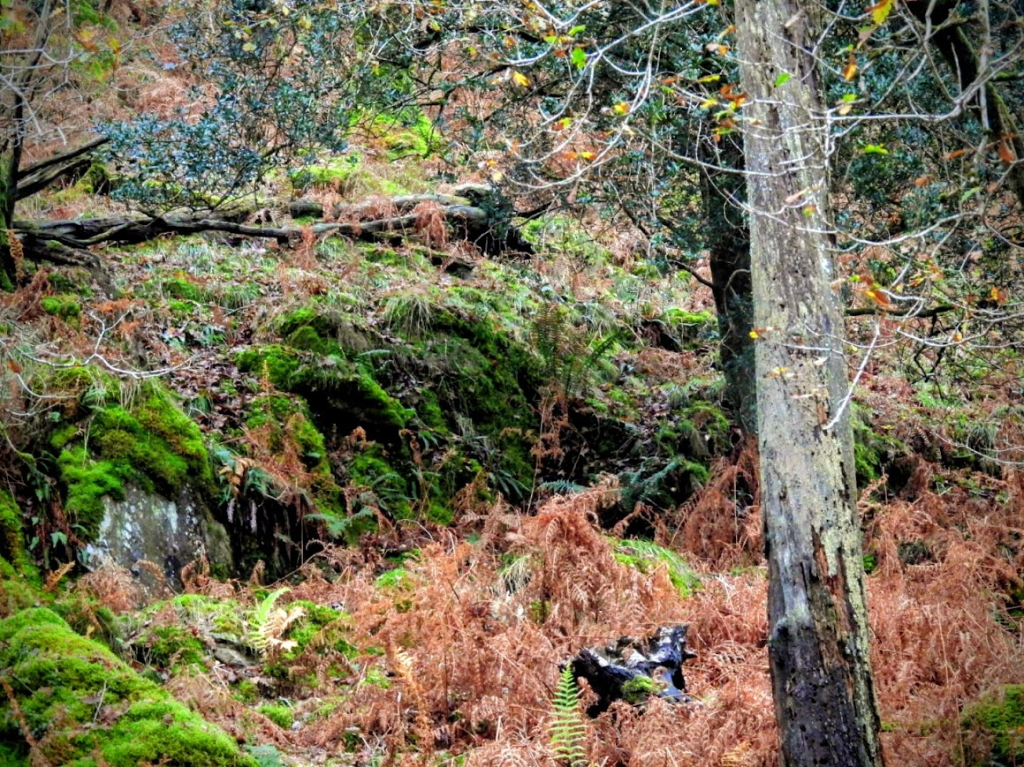
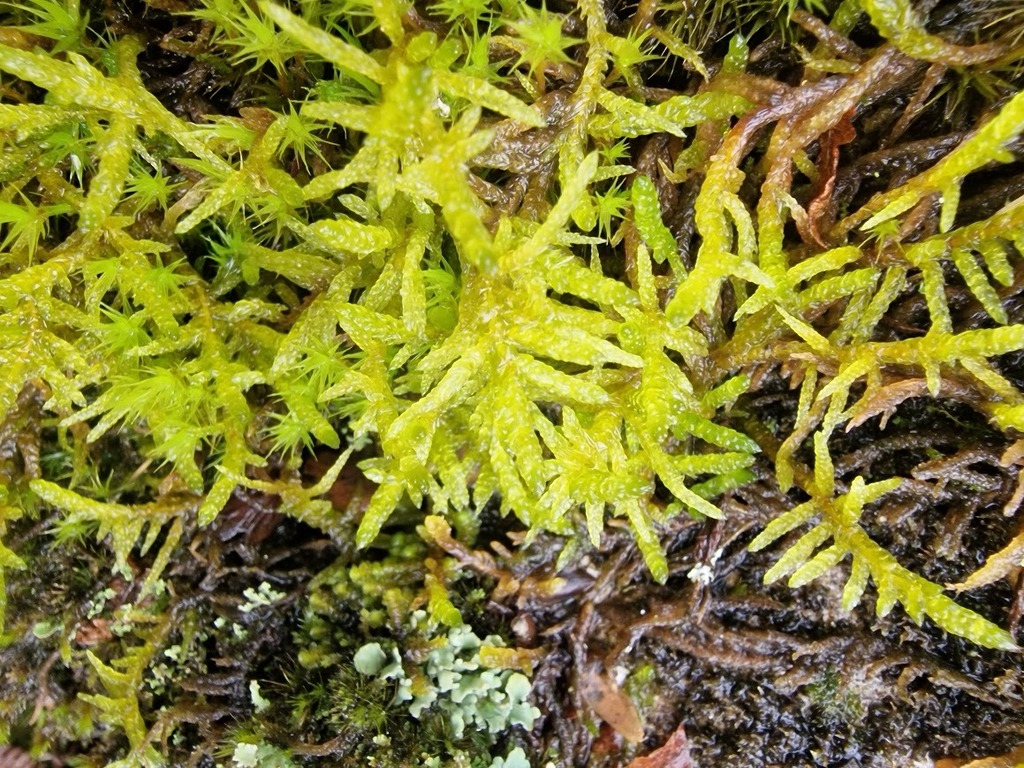
But when I climbed up to this rocky outcrop below, I “only” found common bryophytes e.g. White Earwort & Tamarisk Moss. But many “common” bryophytes are beautiful. I saw no Wilson’s Filmy Fern in any of the rock outcrops I explored.

White Earwort
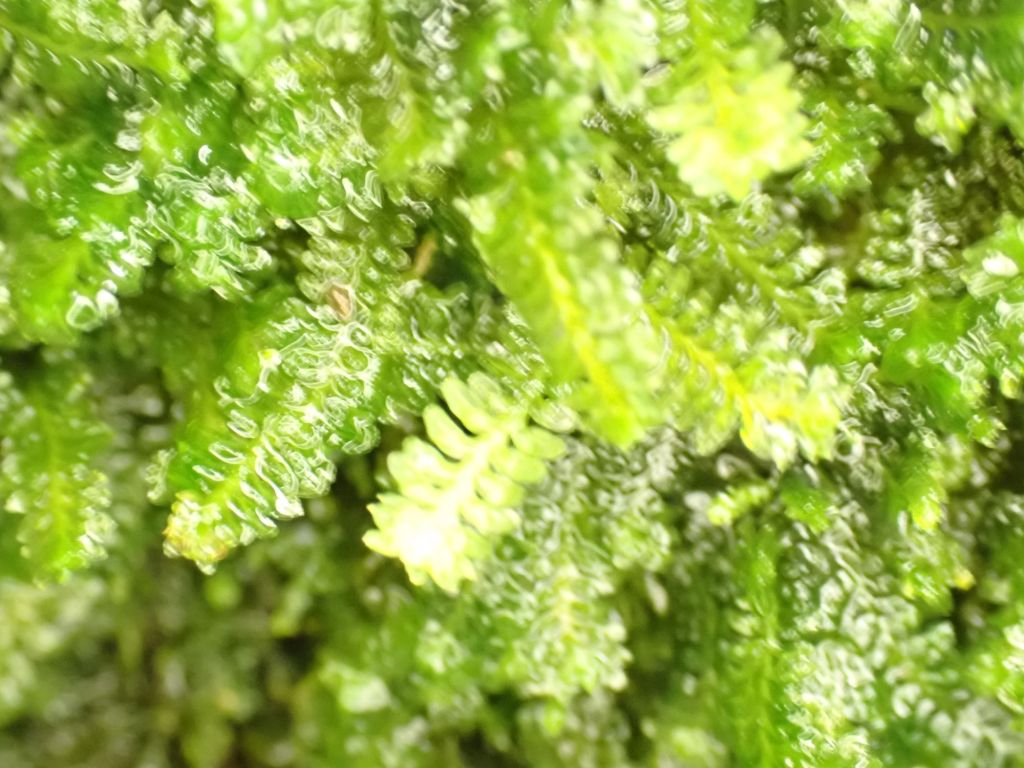
 Common Tamarisk-Moss
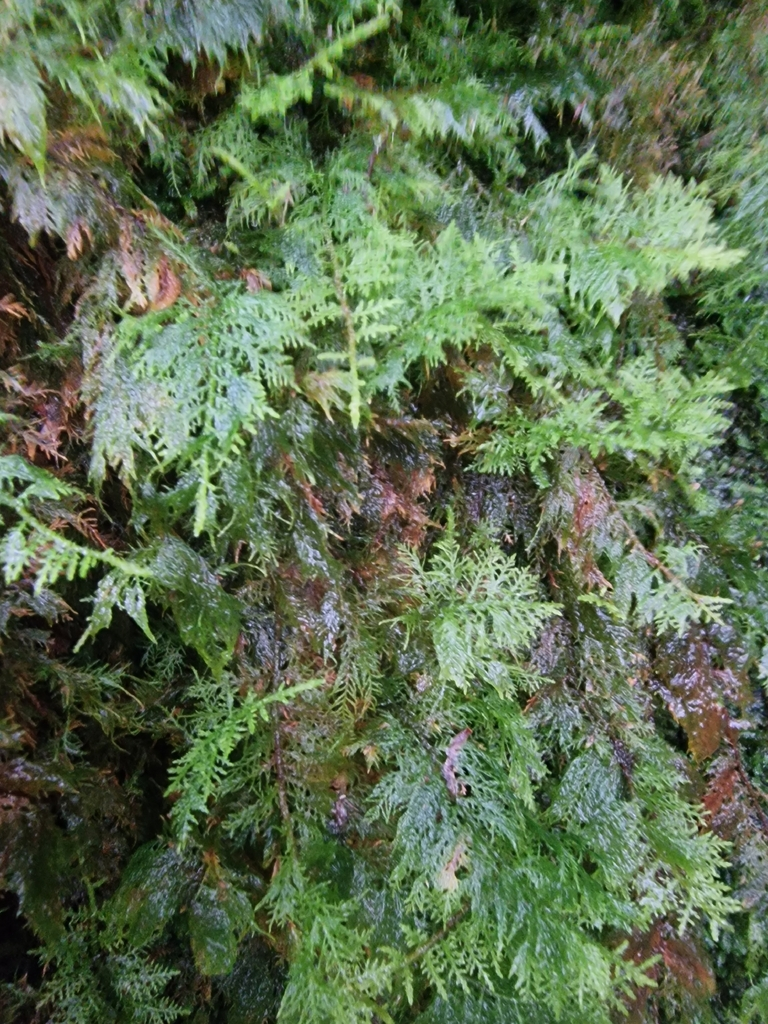
But as I have said before, I am never tire of seeing common beautiful things.

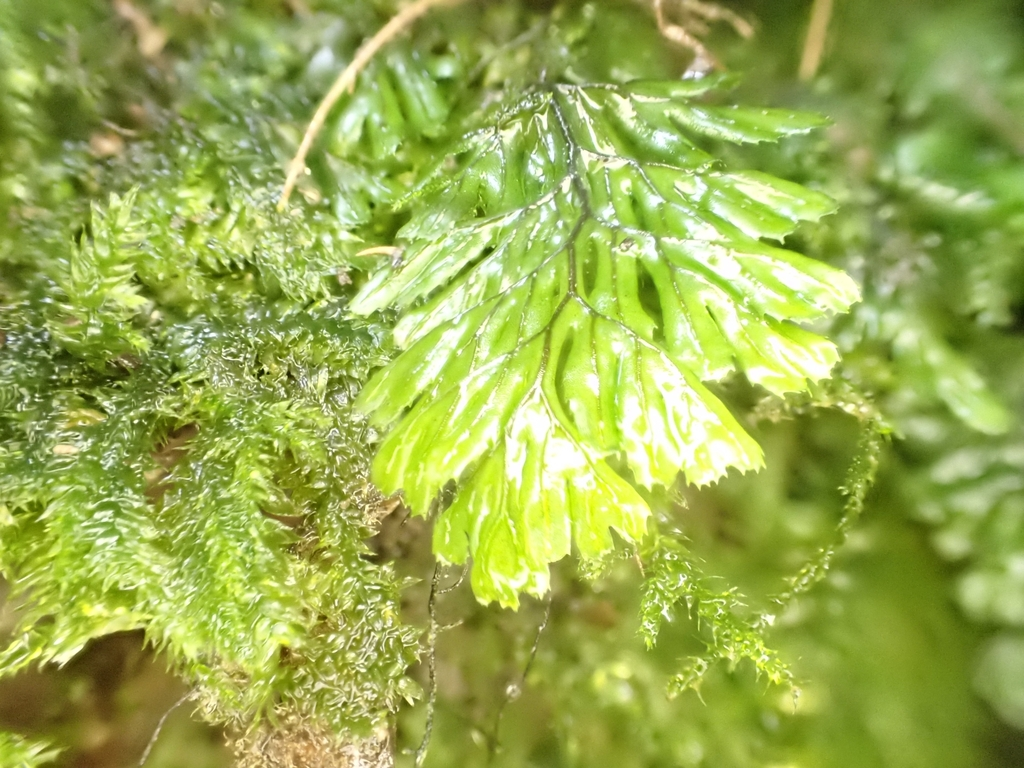
Here is some Tunbridge Filmy Fern I saw in Sussex to give you an idea of what Filmy Ferns look like!
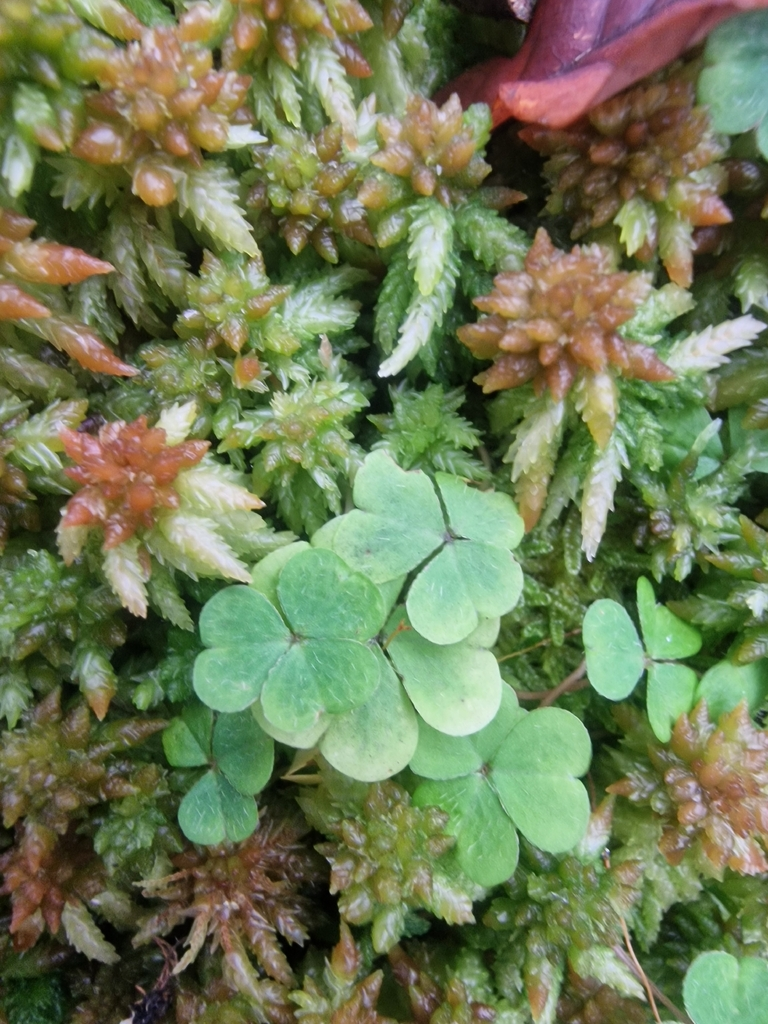
The leaves of Wood-Sorrel, an ancient woodland indicator species, growing though Sphagnum palustre
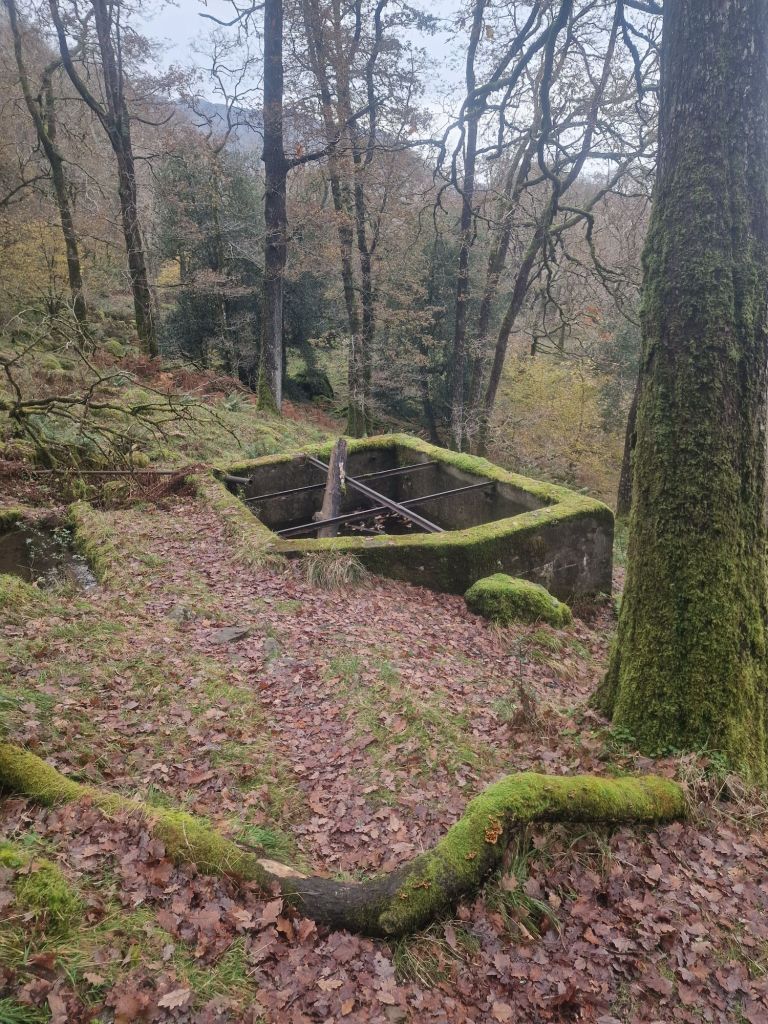
Concrete water reservoir. Ancient temperate rainforest woods in the UK are not untouched by human intervention. Most have always been part of living, changing landscapes formed by human-nature interaction.
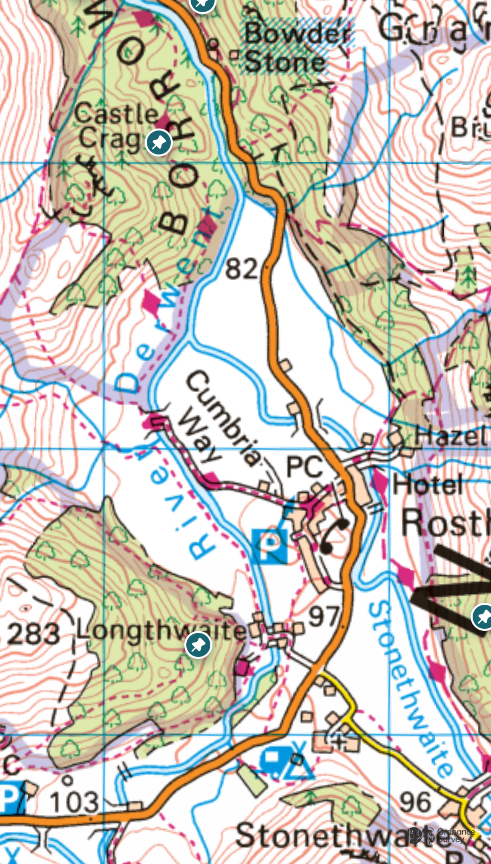
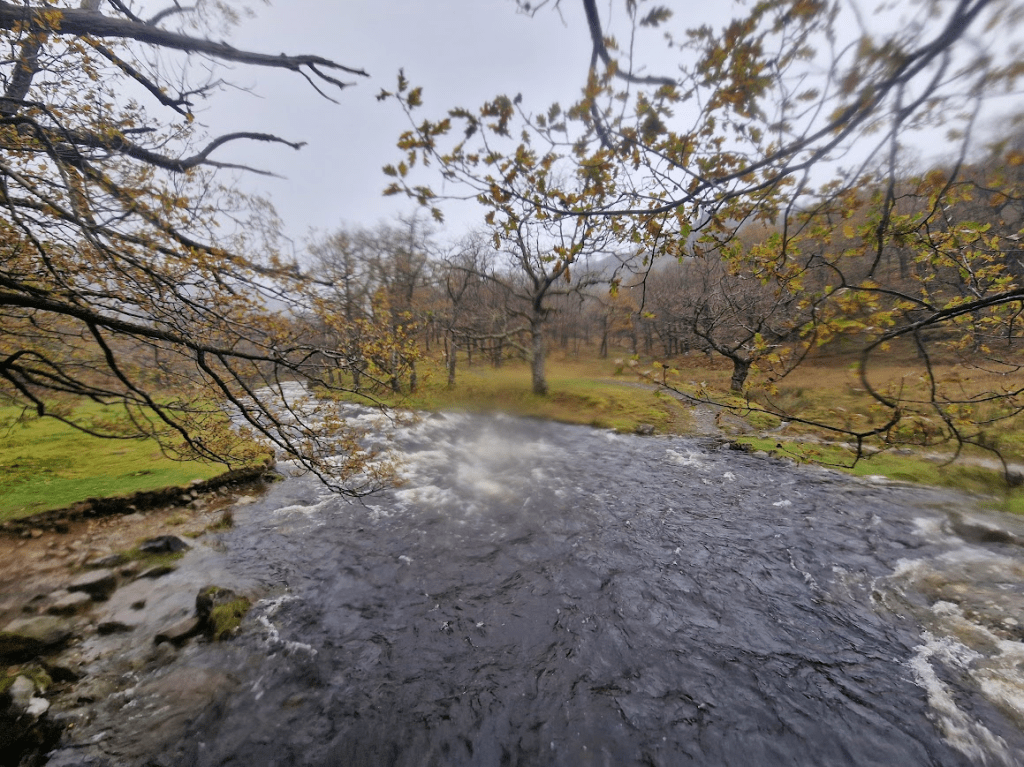
Waling along the River Derwent from Johnny Wood to the Bowder Stone
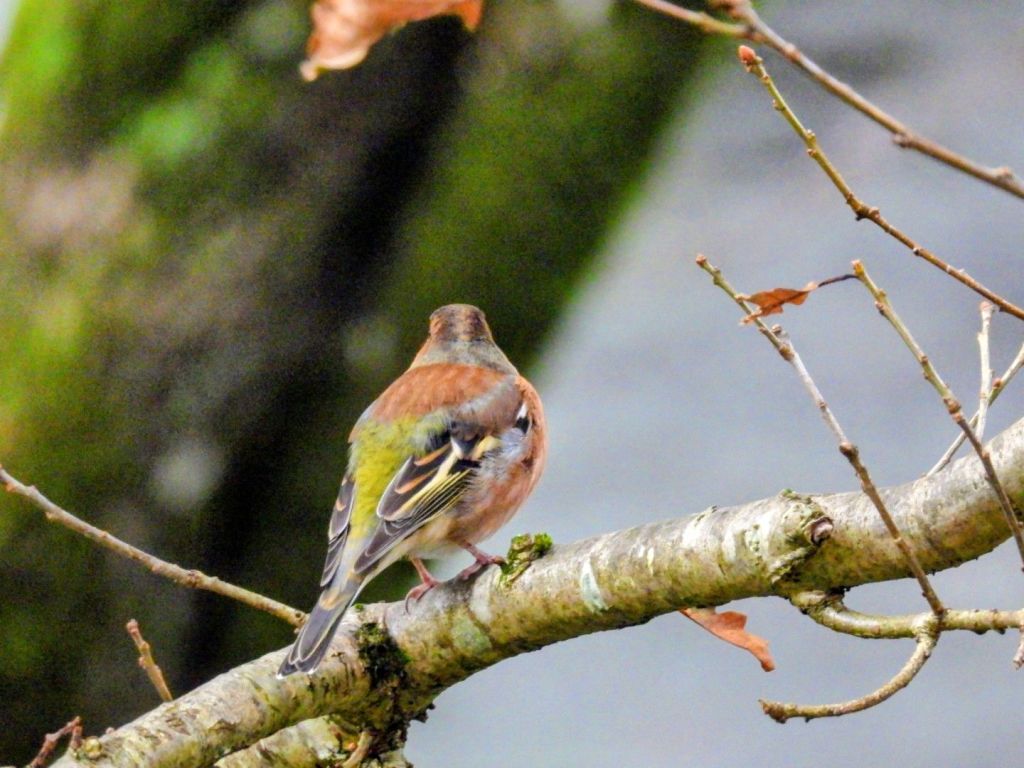
Walking along the Derwent I saw many birds, including this gorgeous juvenile Chaffinch
I also saw two White-throated Dippers dipping the Derwent for food. Both of them were quicky gone so I was unable to get a photo of them

Here is a Dipper I saw in the River North Esk south of Edinburgh in 2023

It is always a thrill to see Dippers

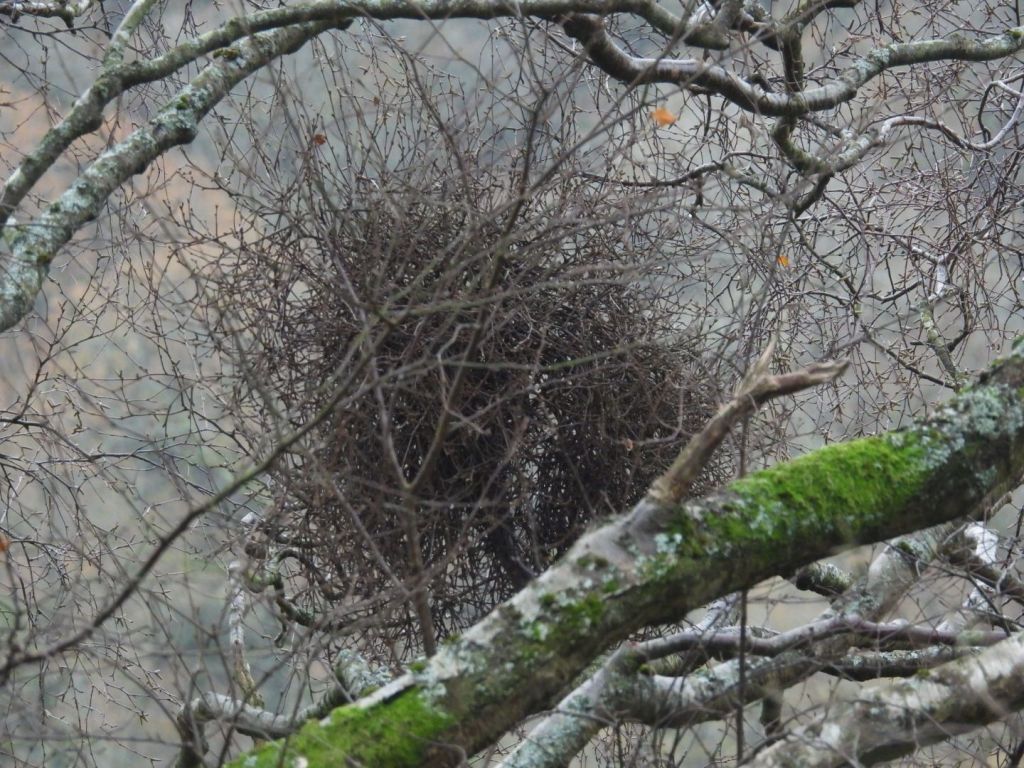
Witch’s Broom – Taphrina betulina (a fungal gall that effects the tree’s growth)
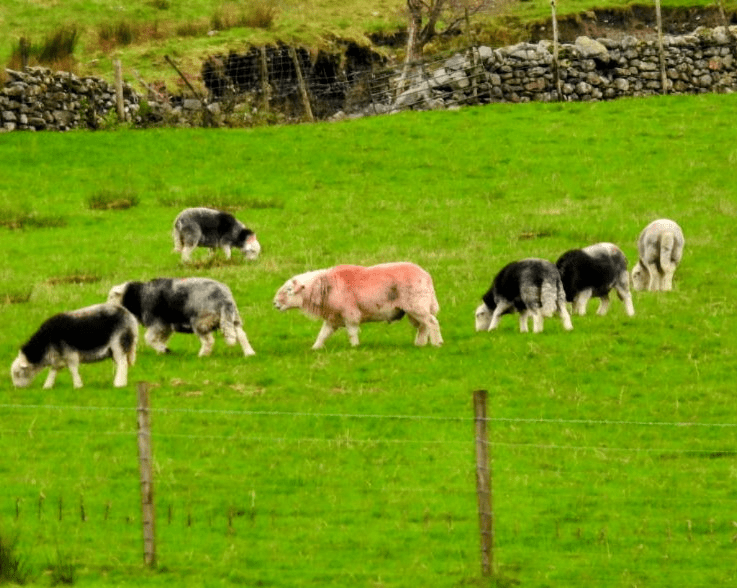
Herdwicks!
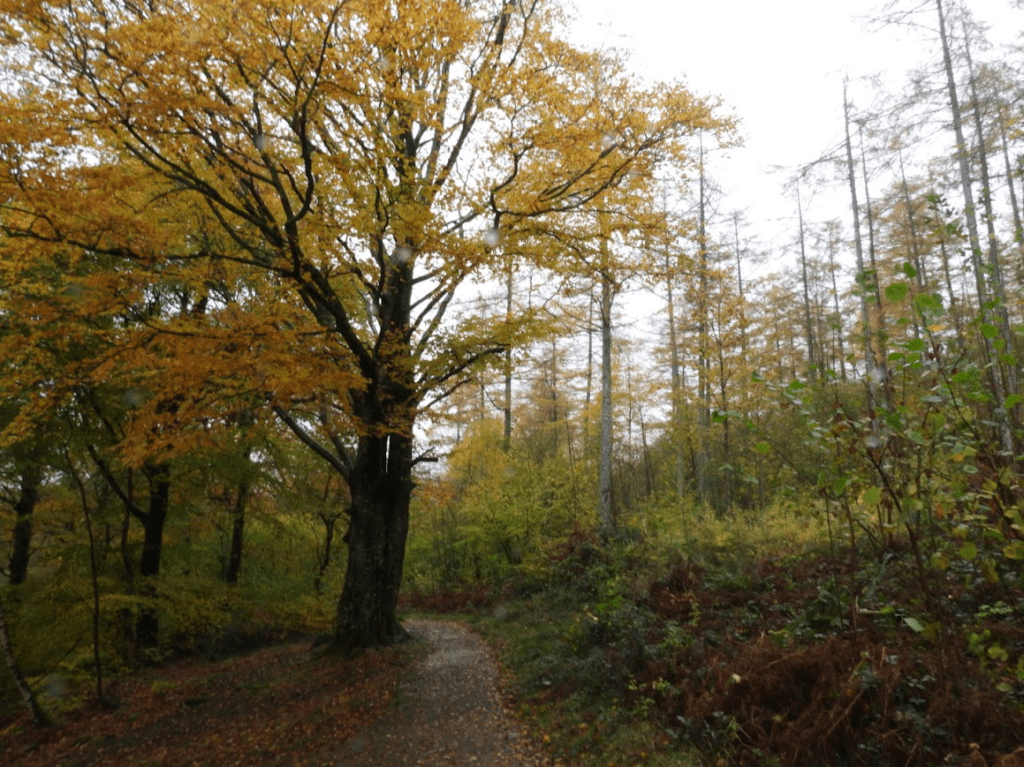
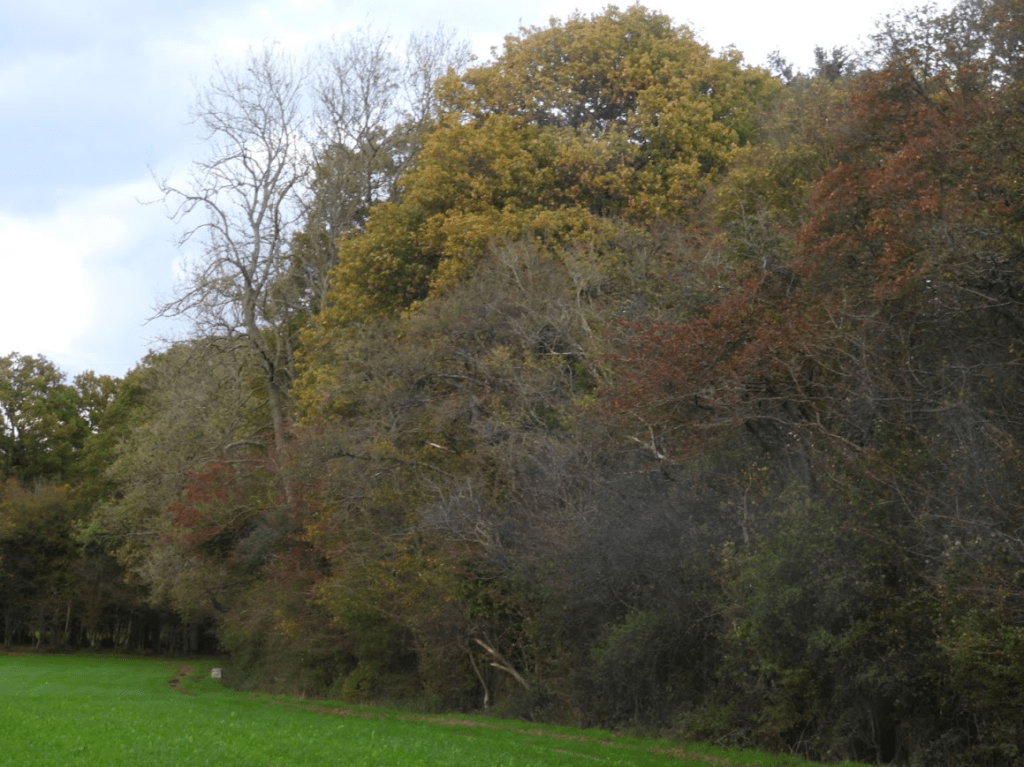
Not all of Borrowdale is Atlantic Oakwood; there is also much secondary woodland. Looking up from the valley, I could see Secondary Beech plantation

and Pine plantations
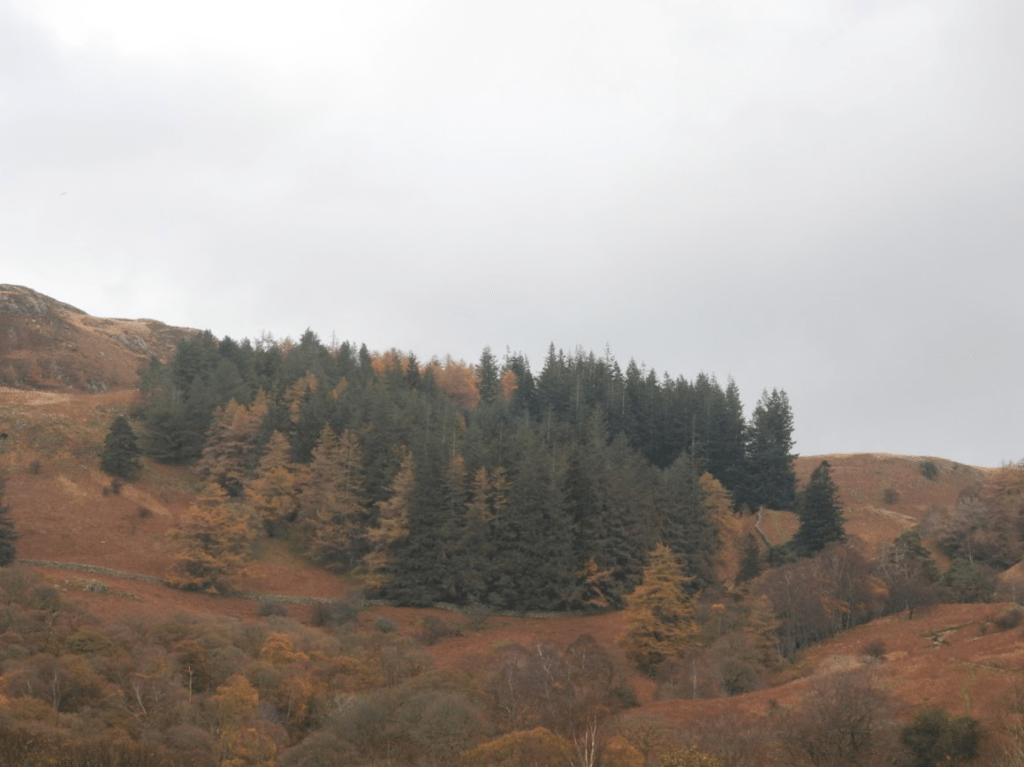
As Guy Shrubsole says: the Atlantic Oakwoods of Borrowdale remain fragmented and under pressure National Trust Borrowdale NNR . Which makes it all the more important that the National Trust and Nature England point out to the public which fragments are Atlantic Woodland (Temperate Rain Forest)

Bowder Stone

In the valley of the river Derwent, in Borrowdale, just north of Rosthwaite in a woodland clearing on the opposite side of the road from the river, stands a huge glacial boulder shaped like a human head that is one of several Cumbrian curiosities and, which has locally been called The Bowder Stone or Balder’s Stone, after the son of the Norse god, Odin (Woden). This ice-borne rock was carried down the valley by a glacier many thousands of years ago and deposited, having been trapped and then dislodged between the two side-slopes of the river valley. The Journal Of Antiquities The Bowder Stone, Rosthwaite, Cumbria
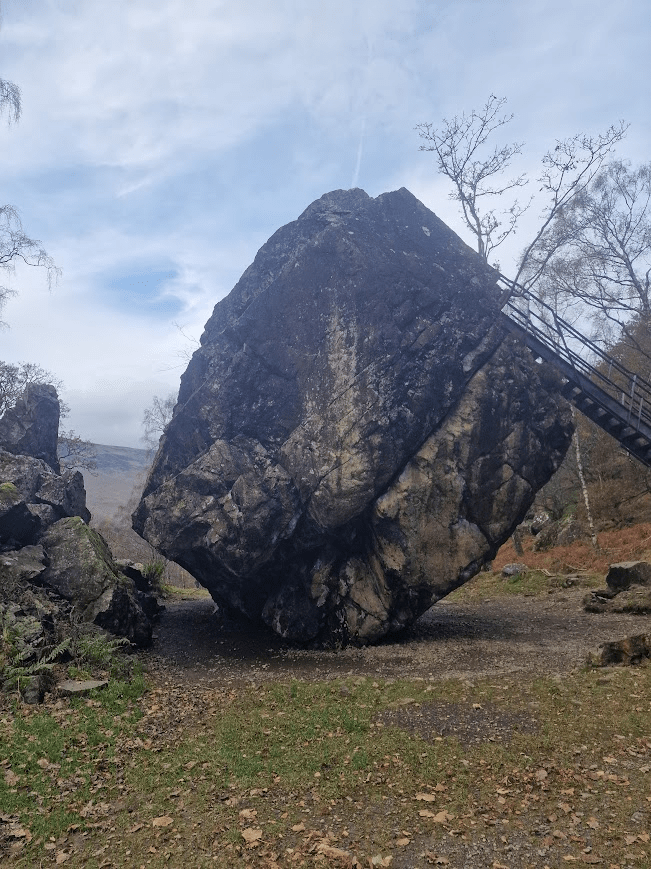
  • The boulder would have nestled deeply in the forests that covered the Lake District after the last ice age – the original ‘wildwood’ that predated human habitation in the Lakes. It stood unmoved through the coming of the people who built the Iron Age hillfort on Castle Crag, the Norse who created the many clearings or ‘thwaites’ along the valley for grazing, and the traditional woodland industries which coppiced and harvested the timber for firewood, building materials and leather tanning.
  • Two hundred years ago, the Bowder Stone was one of the most prominent landmarks in the valley – a huge boulder that awed visitors with its sheer size and mass that stood out against the sky as the road wound towards it .Balanced improbably on one edge, it was popular with Georgian tourists for the ‘pleasurable terror’; they enjoyed wild, romantic scenery and the frisson of experiencing danger from a safe distance. National Trust History on the Borrowdale Valley

Photo of Bowder Stone in nineteenth century from the Borrowdale Story – Geology
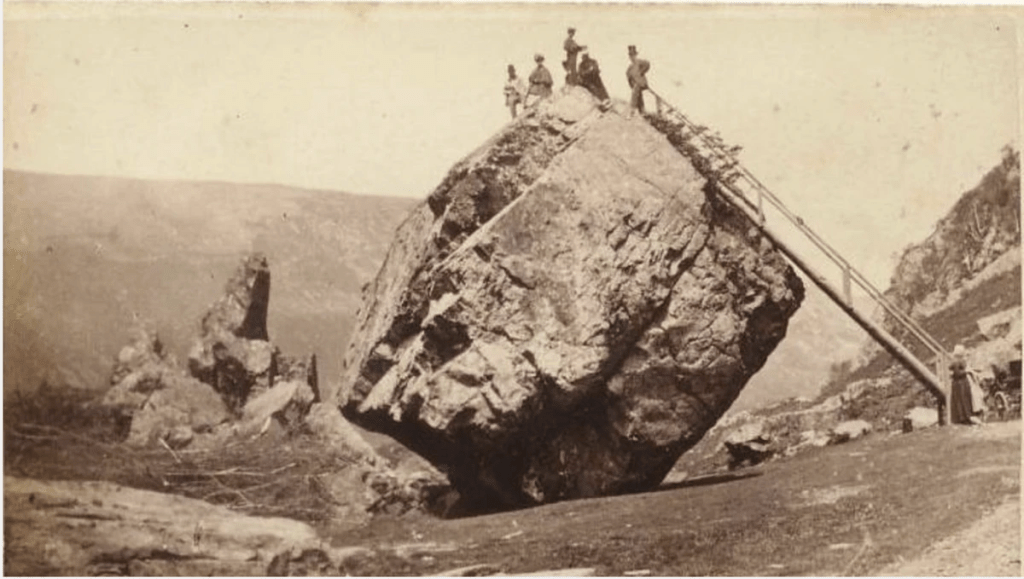
The area around the Bowder Stone is now designated by Nature England and the National Trust ancient (oakwood) rainforest; but the immediate area around the stone has clearly not been continuously wooded

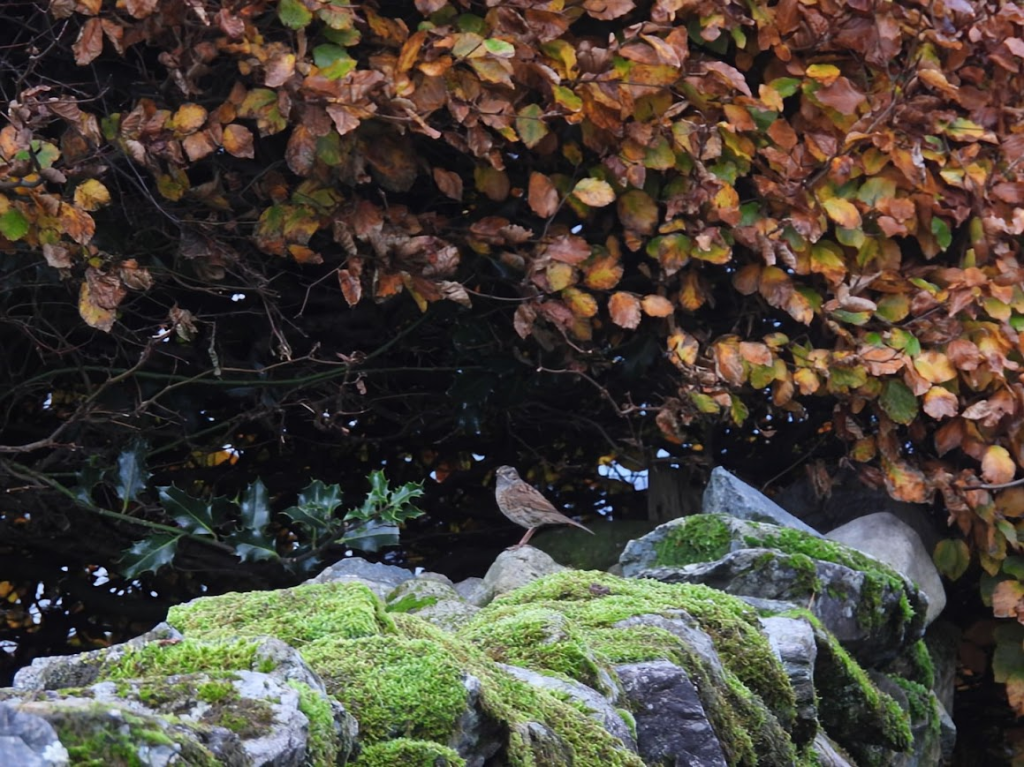
Dunnock on dry stone wall.
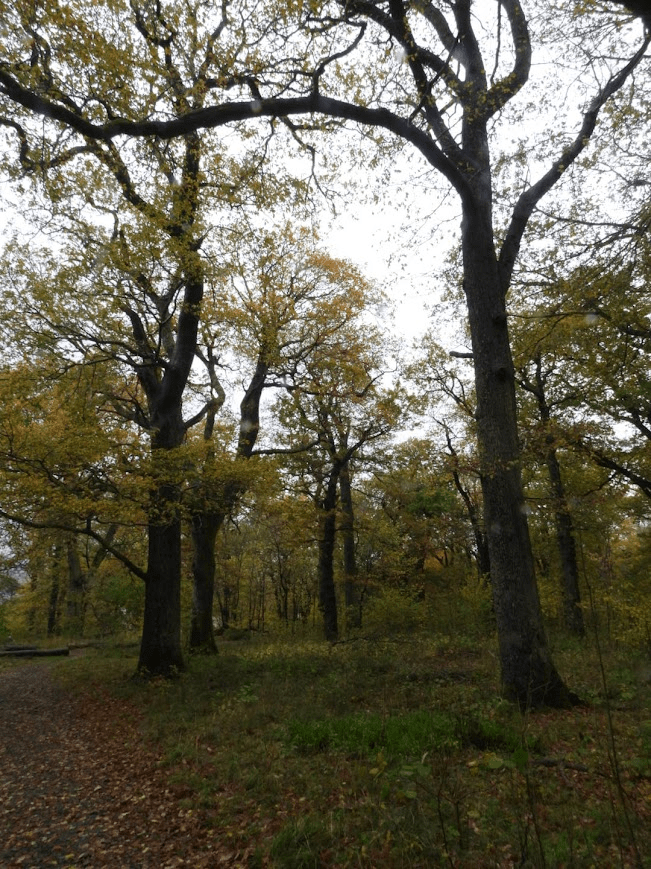
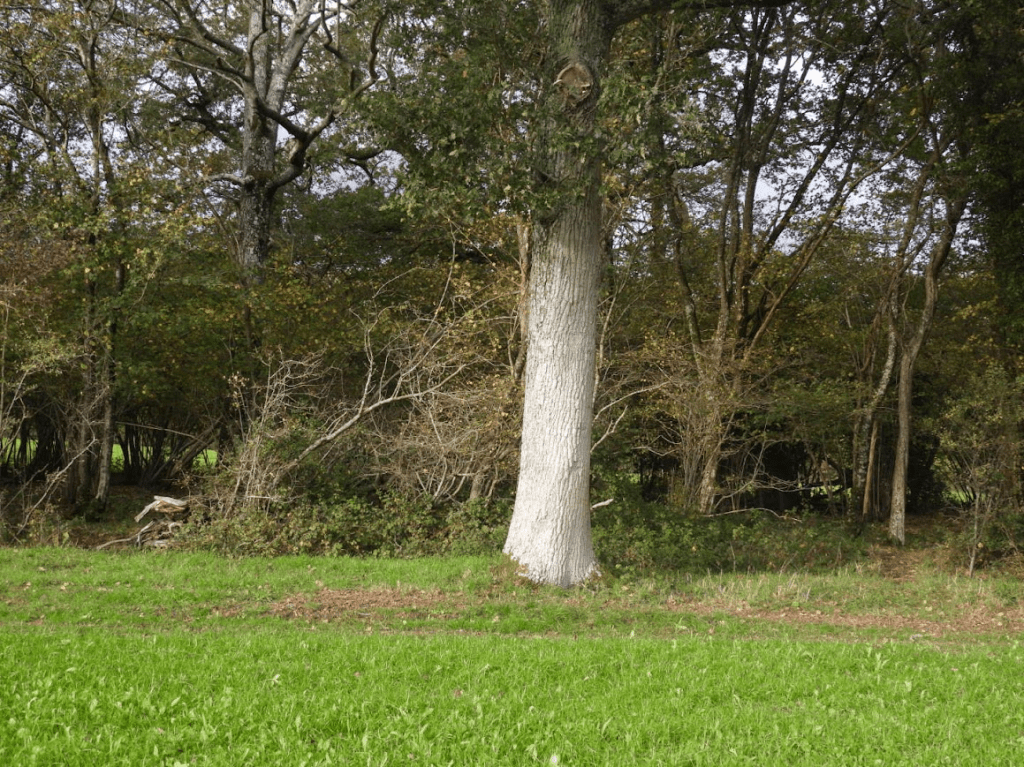
A Sessile Oak with “white” bark from a distance
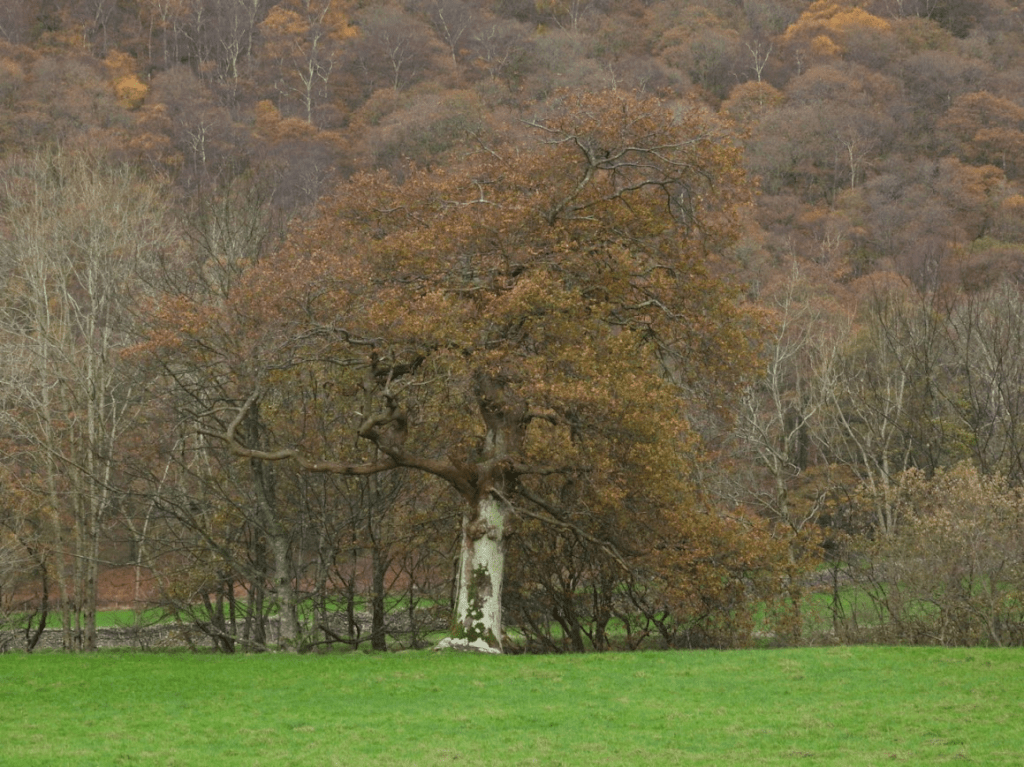
The white bark is probably lichens of the Mesic bark community (the
Pertusarietum). I am very used to this community, as it is common in the south, especially in parkland trees and trees at the edge of woods. I thought it unusual to see this in the Lake District but I did some research and found that whist it is largely southern community in the UK, …. [there is] a very important stronghold in the Lake District Plantlife: Lichens and Bryophytes of Atlantic Woodland in the Lake District

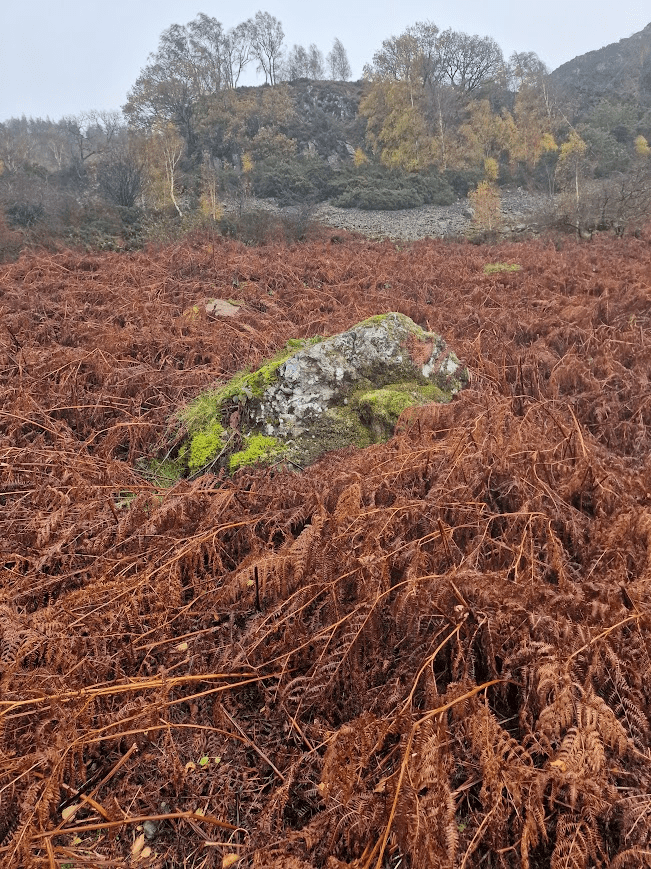
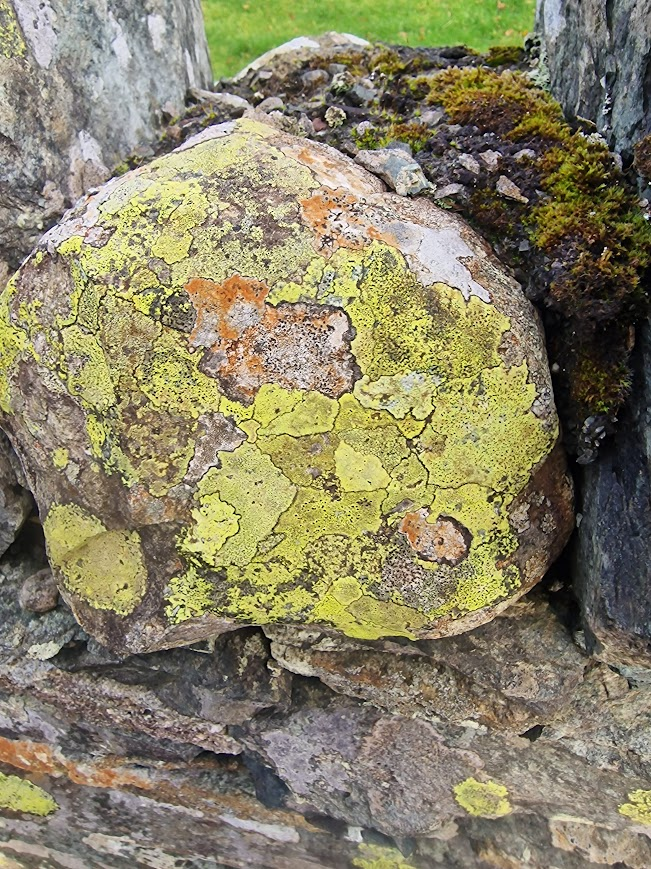
More Rhizocarpon geographicum and Lecidea lithophila on a rock. Whilst I had never come across Lecidea lithophila until Monday, by Thursday I could recognize it at 50m away
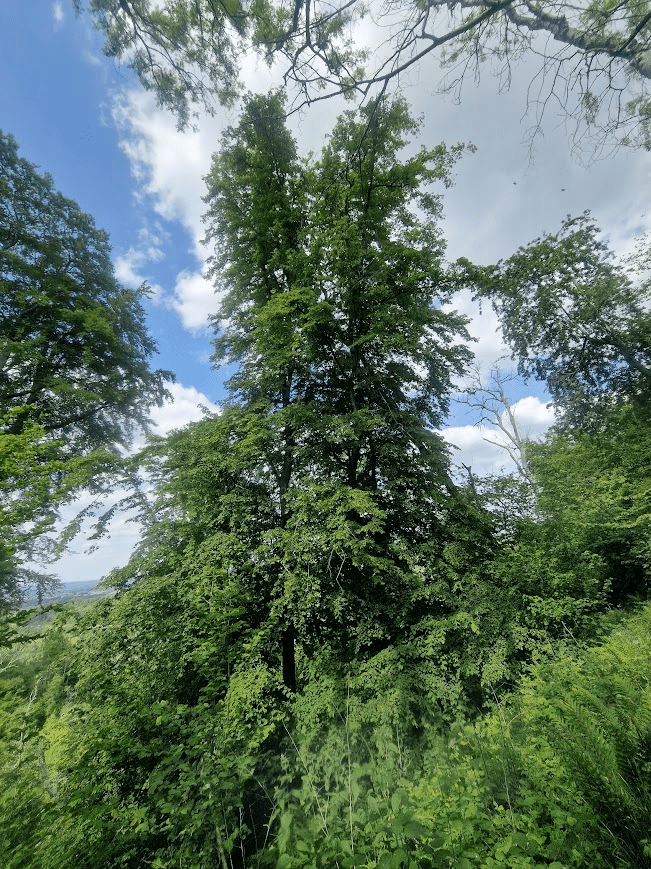
Lots of Silver Birch, Beech and Yew above the Bowder Stone
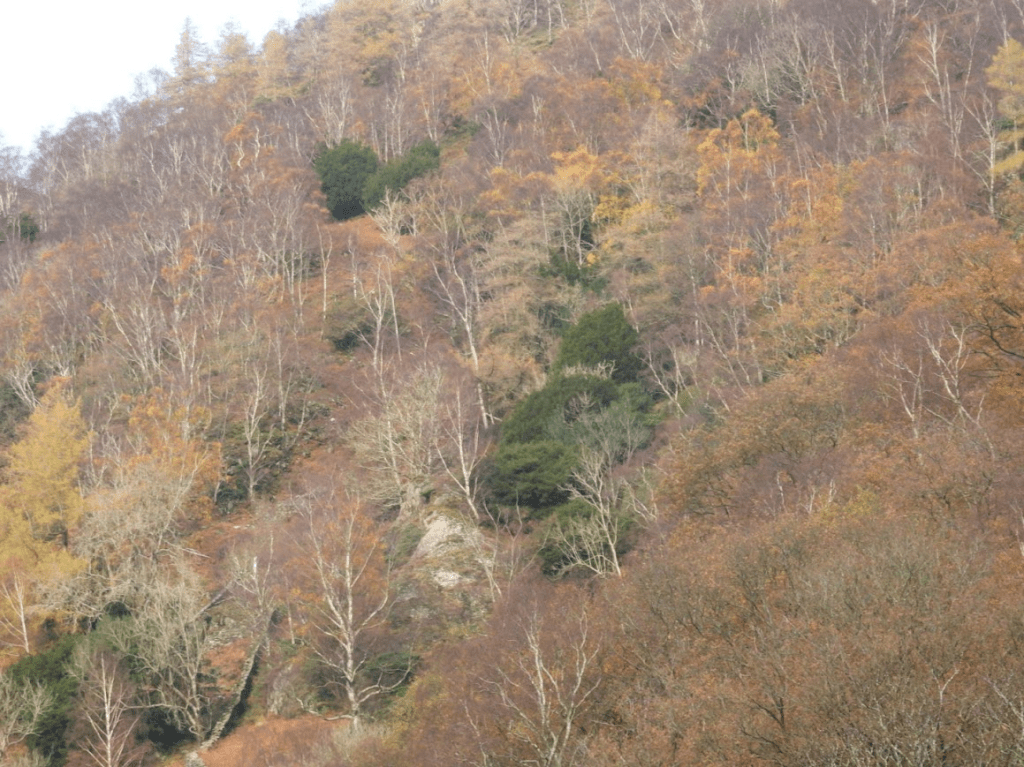
The National Trust says of Borrowdale Rainforest NNR: The Borrowdale Oakwoods are one of England’s largest remaining pieces of temperate rainforest that once spread from the north of Scotland down the west coast of England, Wales and Ireland and are part of a long standing cultural landscape
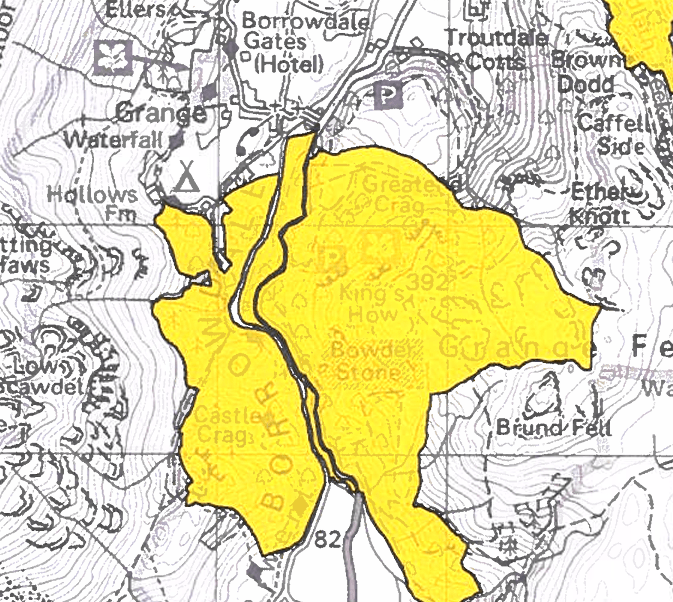
And these Silver Birch, Yew and Beech woodland are within the NNR that is described as Oakwood. But Oakwood is not all Oak

Upland oakwoods are characterised by a predominance of oak (most commonly sessile, but locally pedunculate) and birch in the canopy, with varying amounts of holly, rowan and hazel as the main understorey species. The range of plants found in the ground layer varies according to the underlying soil type and degree of grazing from bluebell-bramble-fern communities through grass and bracken dominated ones to heathy moss-dominated areas. Many oakwoods also contain areas of more alkaline soils, often along streams or towards the base of slopes where much richer communities occur. Elsewhere small alder stands may occur or peaty hollows covered by bog mosses Sphagnum spp. These elements are an important part of the upland oakwood system. The ferns, mosses and liverworts found in the most oceanic of these woods are particularly rich; many also hold very diverse lichen communities. Buglife Upland Oakwood

Cummacatta Wood

Cummacatta Wood is, to me, of very high biological interest (with sparse ancient trees and bog), is not in the designated NNR area, although it is probably of more biological interest than some of the woodland around the Bowder Sone which is in the Borrowdale Rainforest NNR. The danger of having an NRR that is described as a rainforest NRR is that biologically important areas that are not rainforest are not offered the protection that being part of a National Nature Reserve
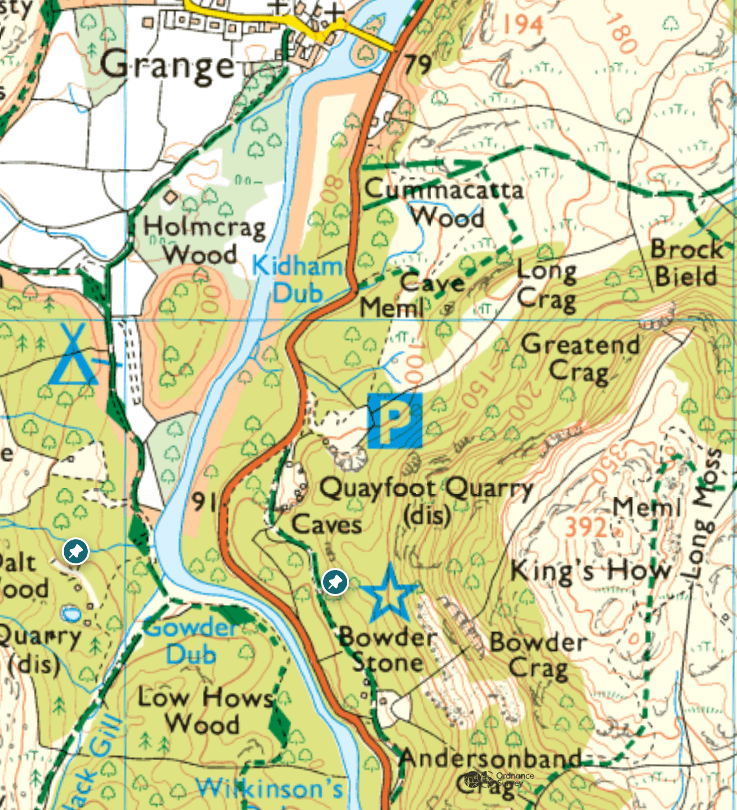
Cummacatta Wood has a physical sign saying it is a National Trust property; however there is no information about it online from the National Trust or any other organisation except for one mention of the wood in a hiking apps.

It is not in the Borrowdale Rainforest NNR but it is in the geographical area of the Lodore-Tri0ttdale Woods SSSI. Although it is not mentioned in its SSSI specification by name; the sentence The site includes a number of interesting non-wooded habitats. Species-rich flushes may include Cummcatta Wood; although it is partially wooded!

The Borrowdale Rainforest NNR according to Nature England contains a number of SSSIs
Armboth Fells SSSI
Castlehead Wood SSSIGreat Wood SSSIHollows Farm Section SSSIJohnny Wood SSSILodore – Troutdale Woods SSSIRiver Derwent and Tributaries SSSIRosthwaite Fell SSSISeatoller Wood, Sourmilk Gill & Seathwaite Graphite Mine SSSIStonethwaite Woods SSSI and The Ings SSSI. The relationship between these individual SSSIs and the legal entity Borrowdale Rainforest NNR is very unclear beyond Natural England says the Borrowdale Rainforest NNR is Legally underpinned by these SSSI

Despite the deafening silence of the internet on Cummacatta Wood of its biological nature, I found it charmingly beautiful and full of biological interest. I have walked through Johnny Wood, the woods around the Bowder Stone and Cummacatta Wood just once and I wasn’t long in any of these areas; so my views on their interest is very impressionistic. I almost certainly missed many interesting species of lichens, bryophytes and vascular plants!

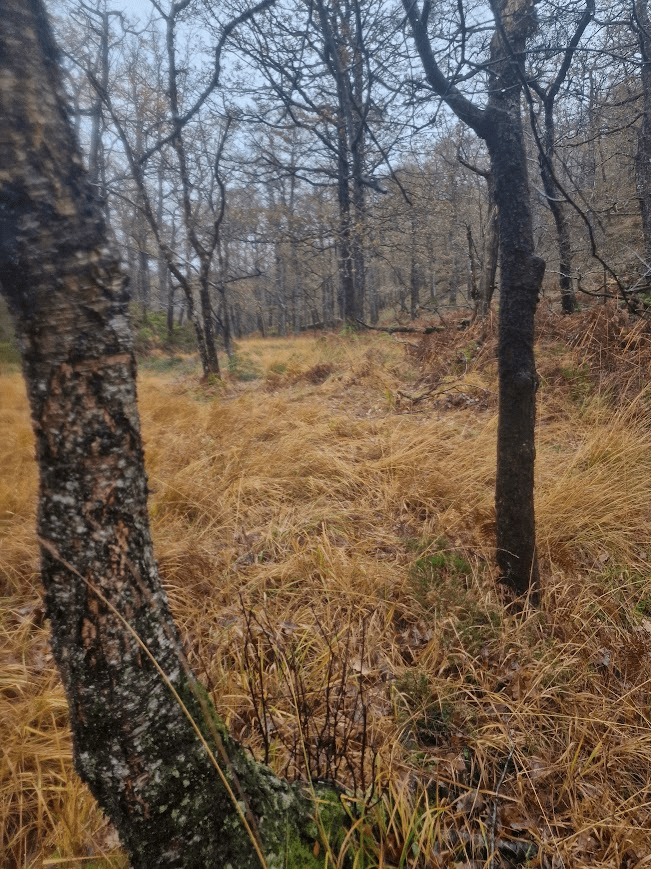
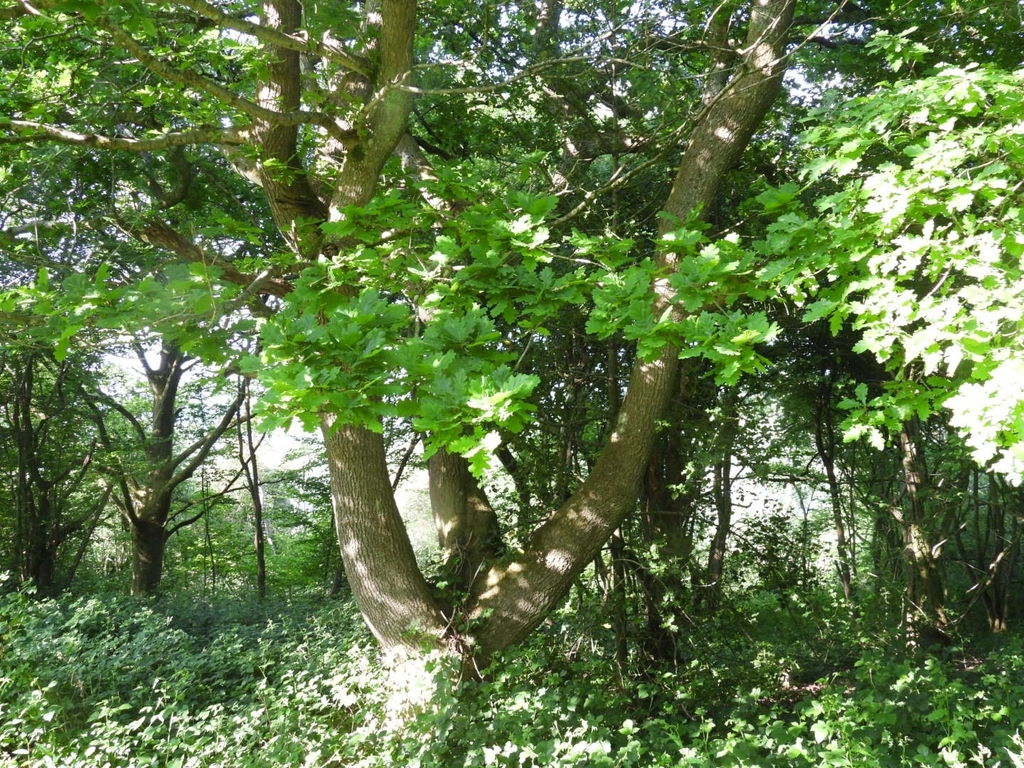
Cummaccatta is sparsely wooded with Sessile Oak, Silver Birch, Hazel, Yew, Juniper and Ash.

Here the beautiful and common (in North West Atlantic Woodland) liverwort Frullania tamarisci
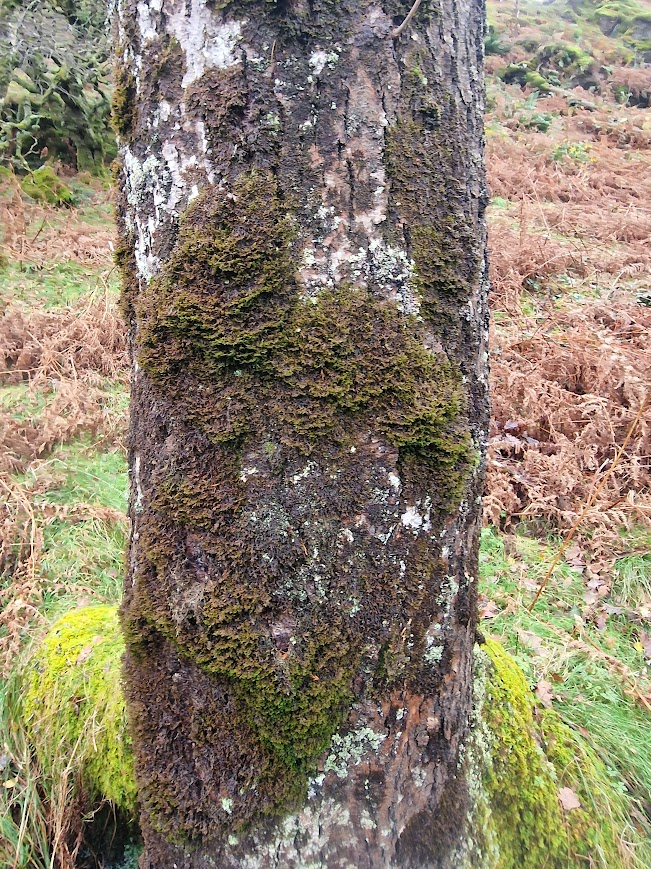
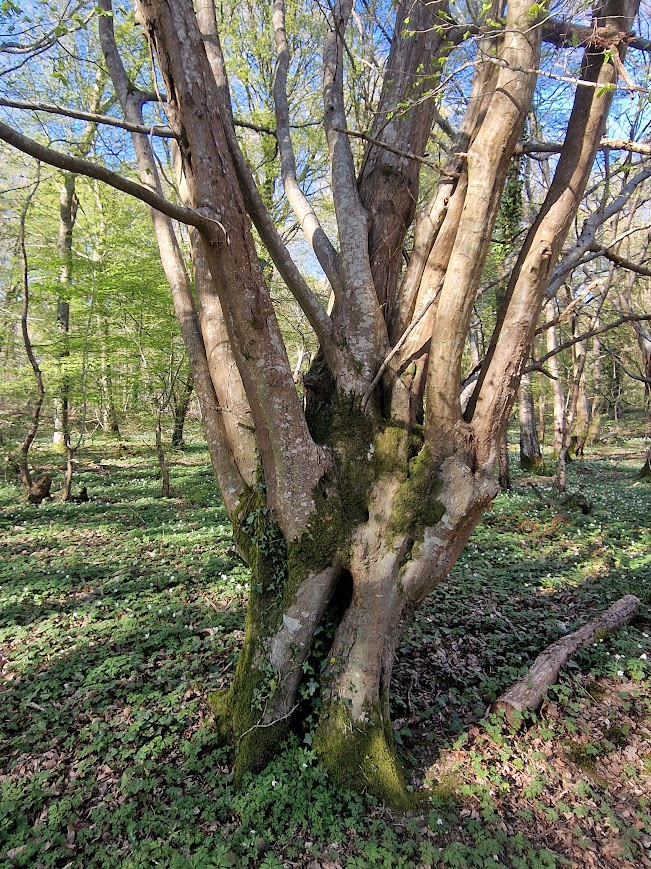
A twisted Sessile Oak

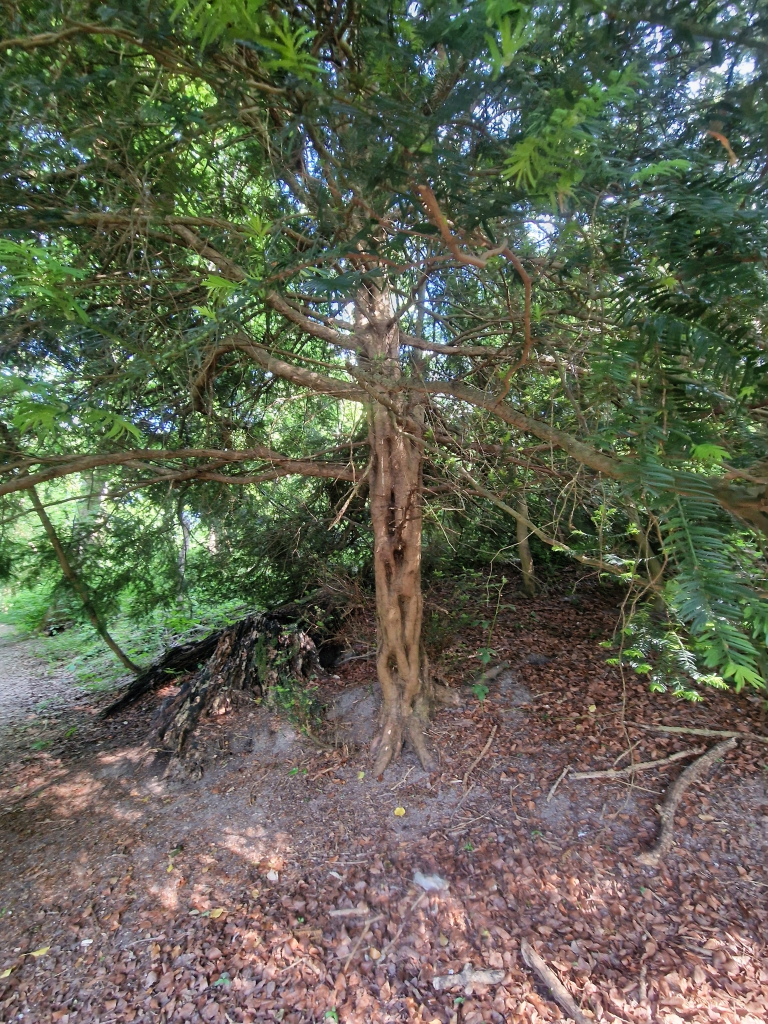
Yew
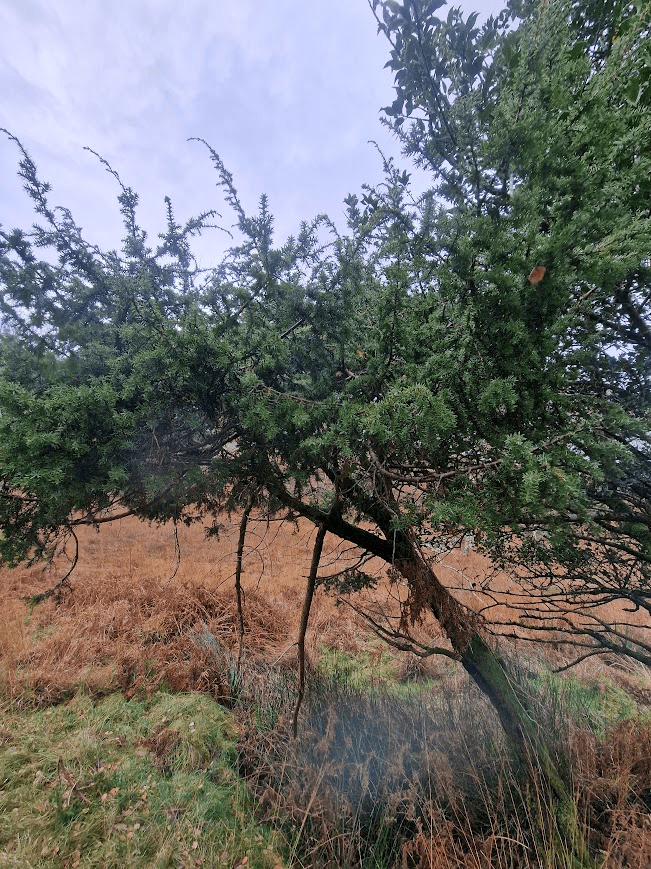
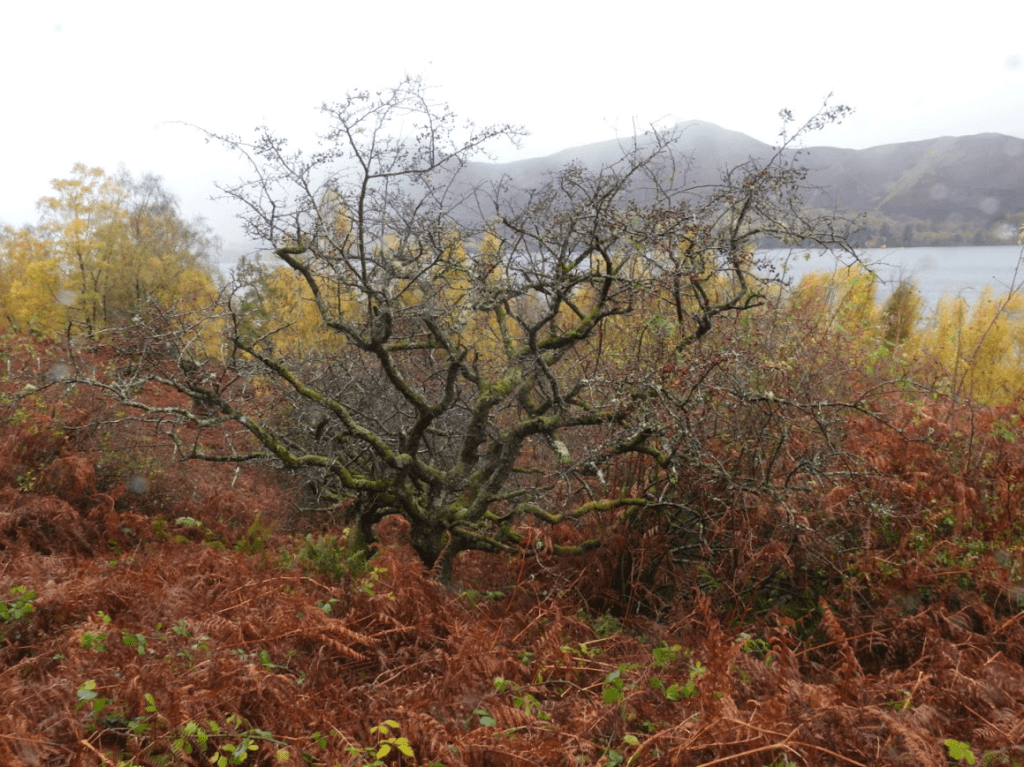
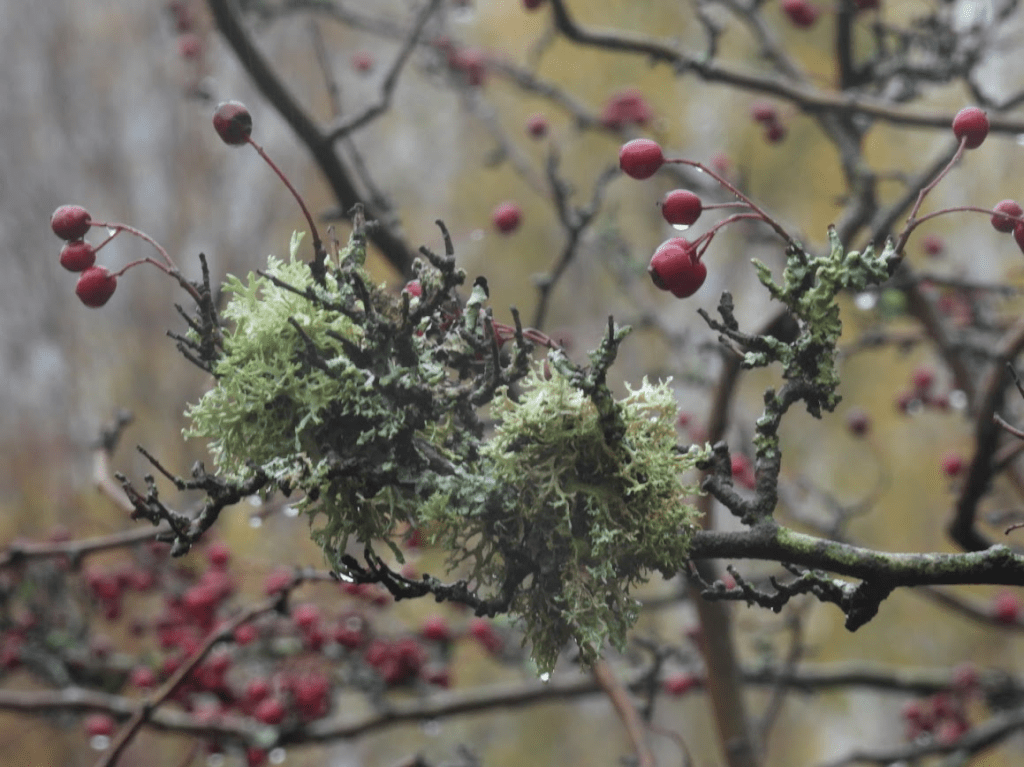
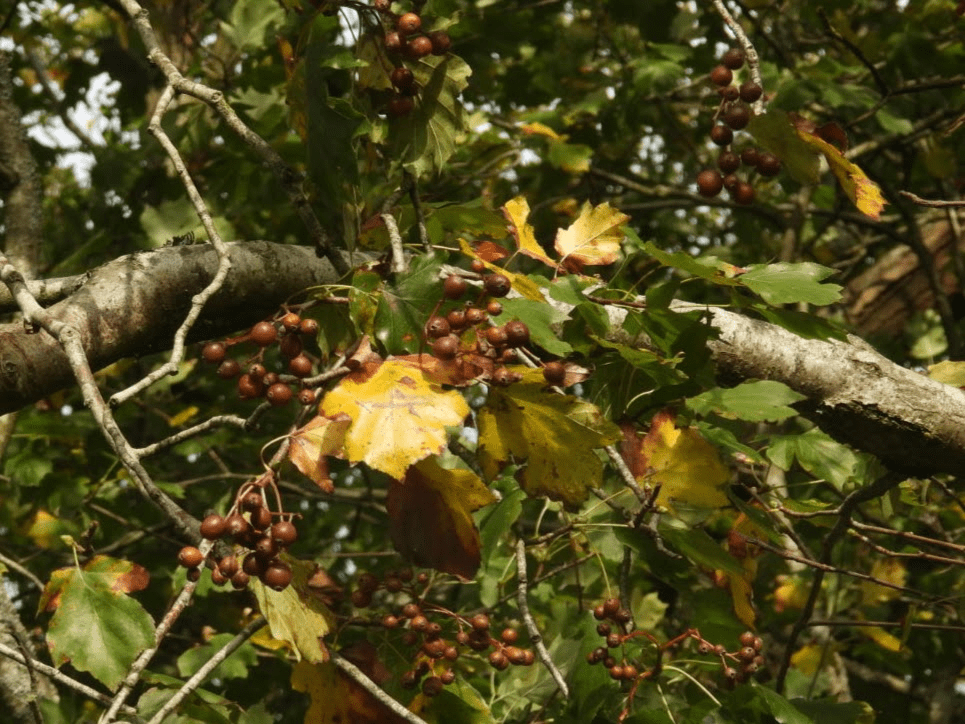
Hawthorns; as in Sussex, often have abundant (bit different) lichen. Sussex Hawthorns are dominated by Ranalina spp. lichens with few or no Usnea spp. Upland north-west Hawthorn often have more Usnea. On these hawthorns Usnea floridana is relatively common; it is very rare on South East hawthorns
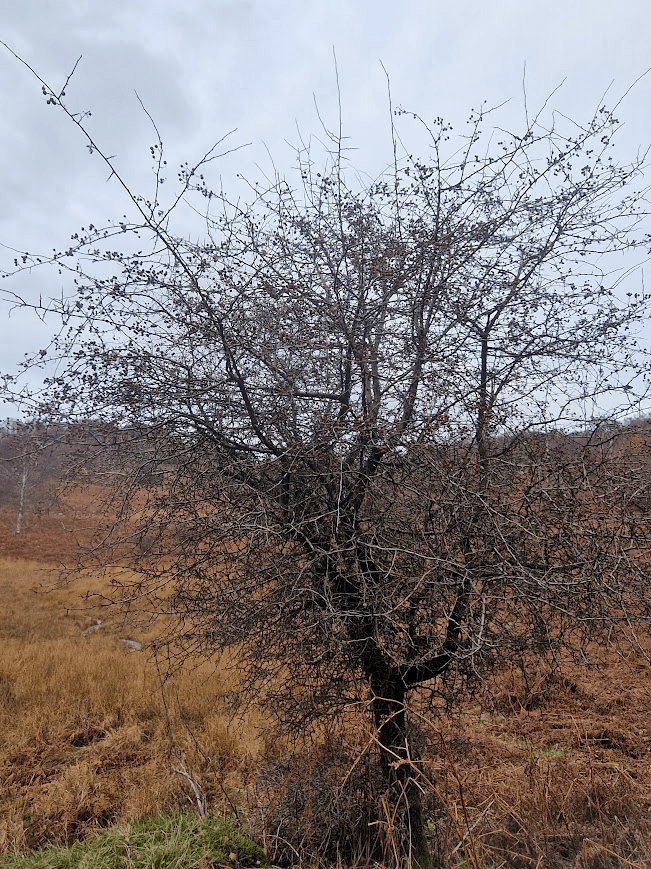
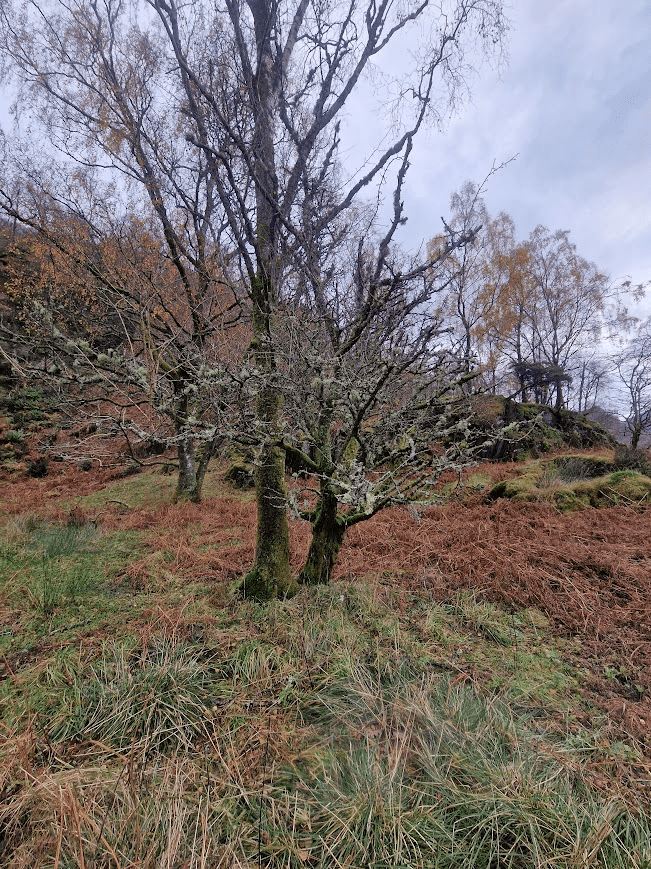
Lichens on these two hawthorns

Hypogymnia physodes
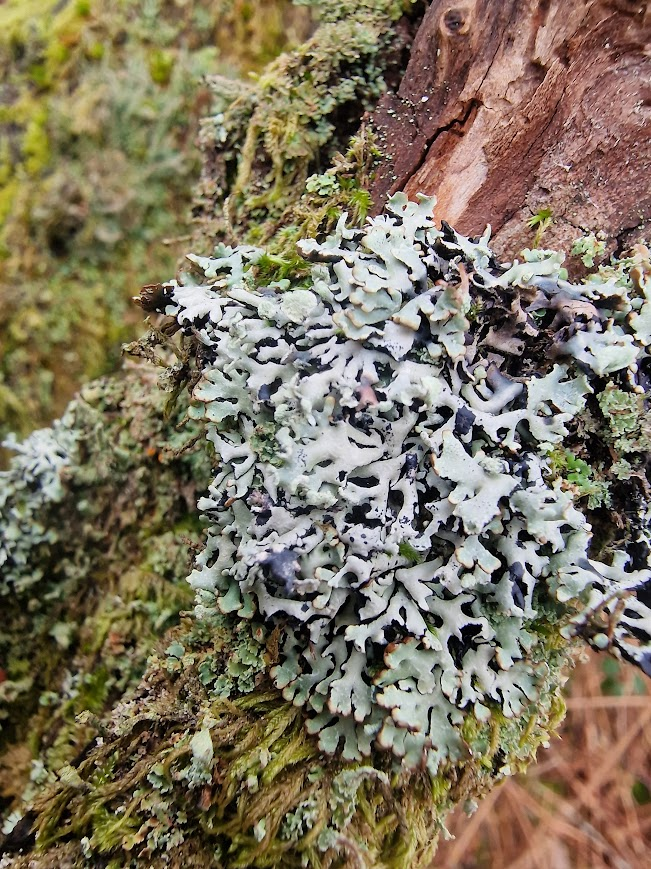
Cladonia polydactyla

A liverwort not a lichen: Frullania tamarisci
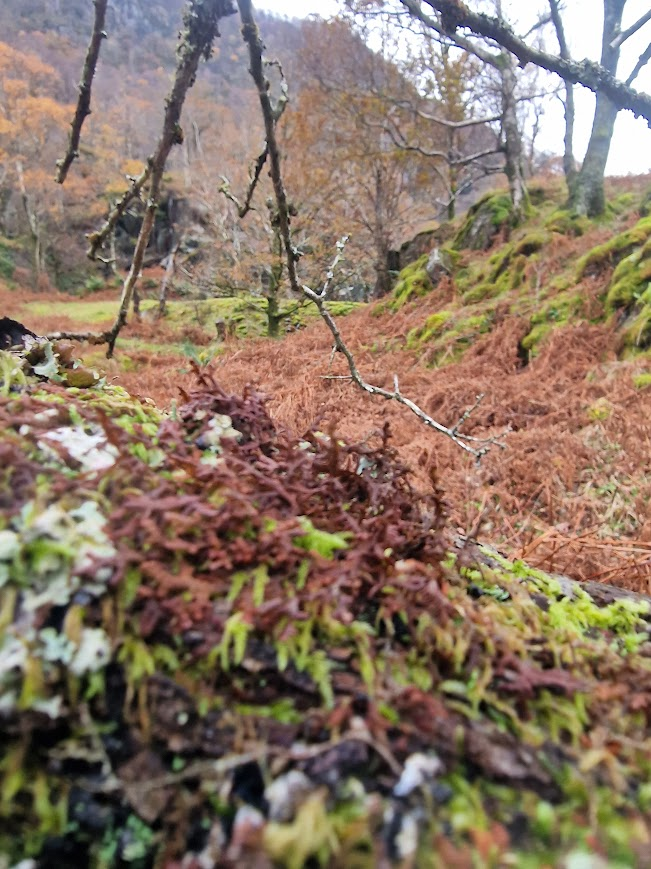
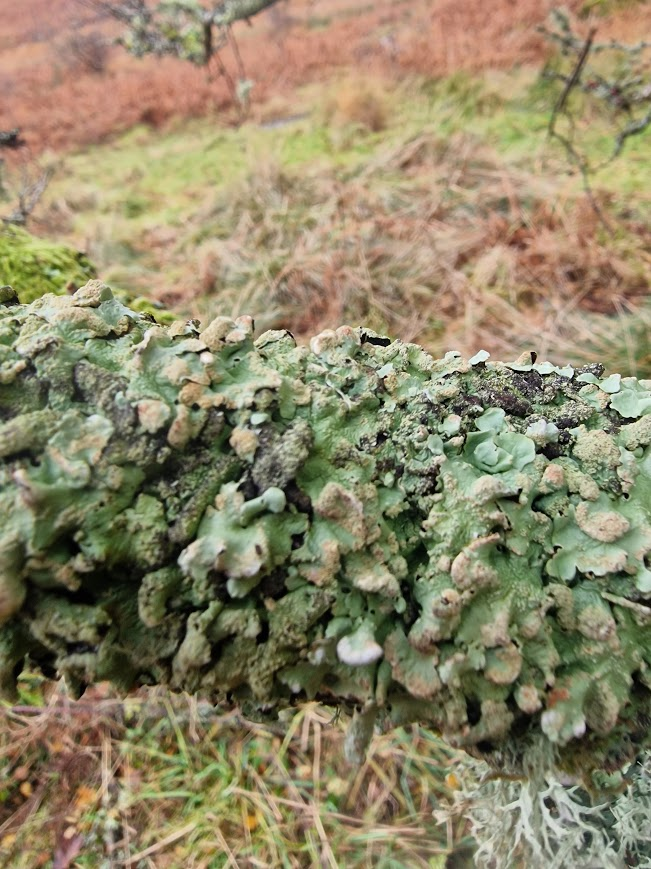
Falvoparmelia caperata
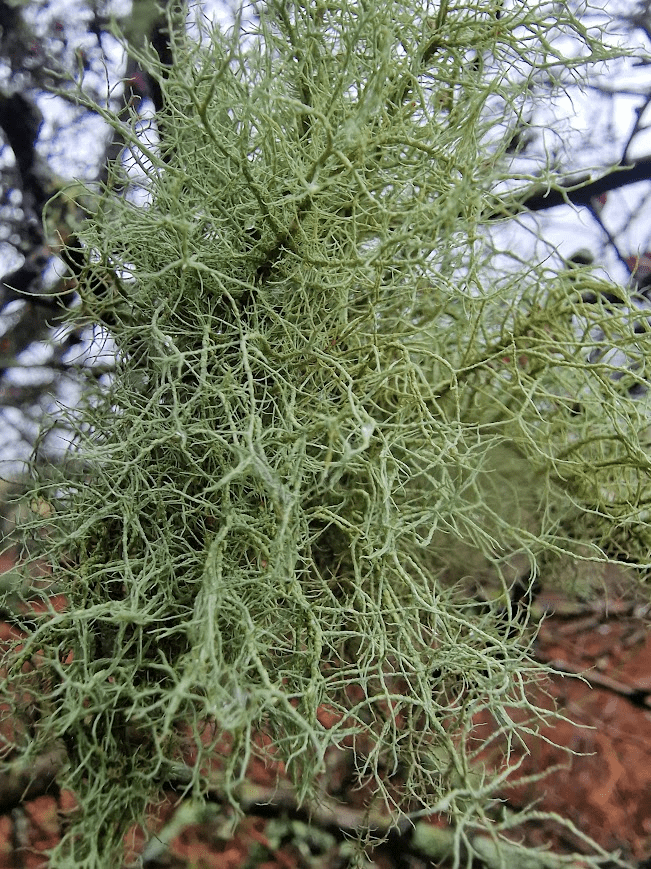
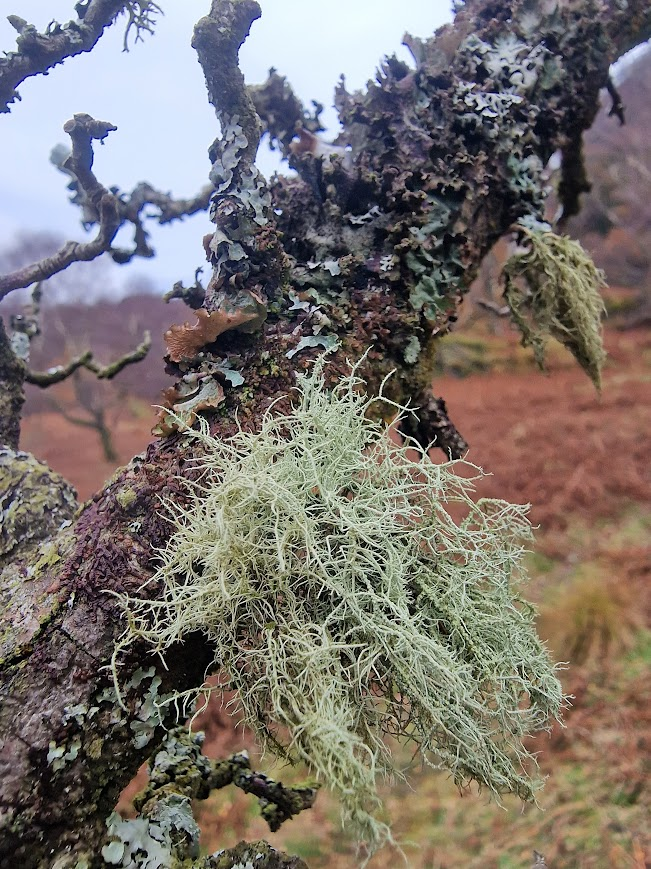
Beard lichen: probably Usnea subfloridana
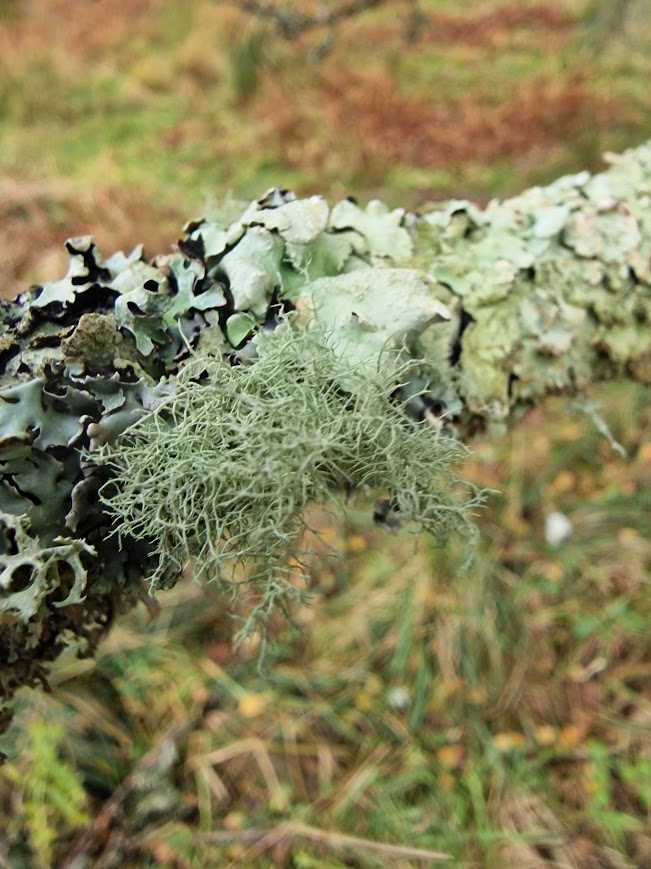
Usnea subfloridana
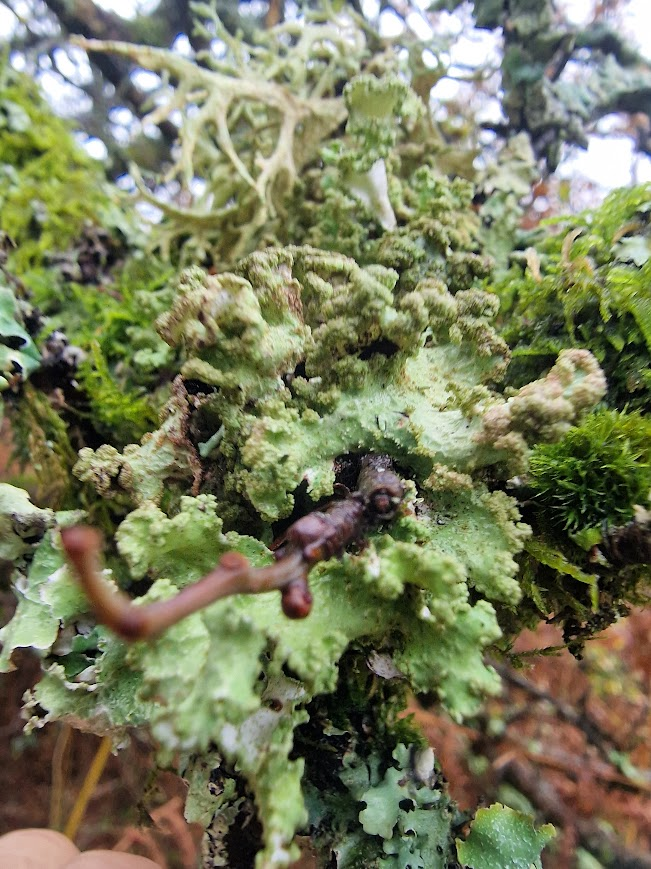
Platismatia glauca 
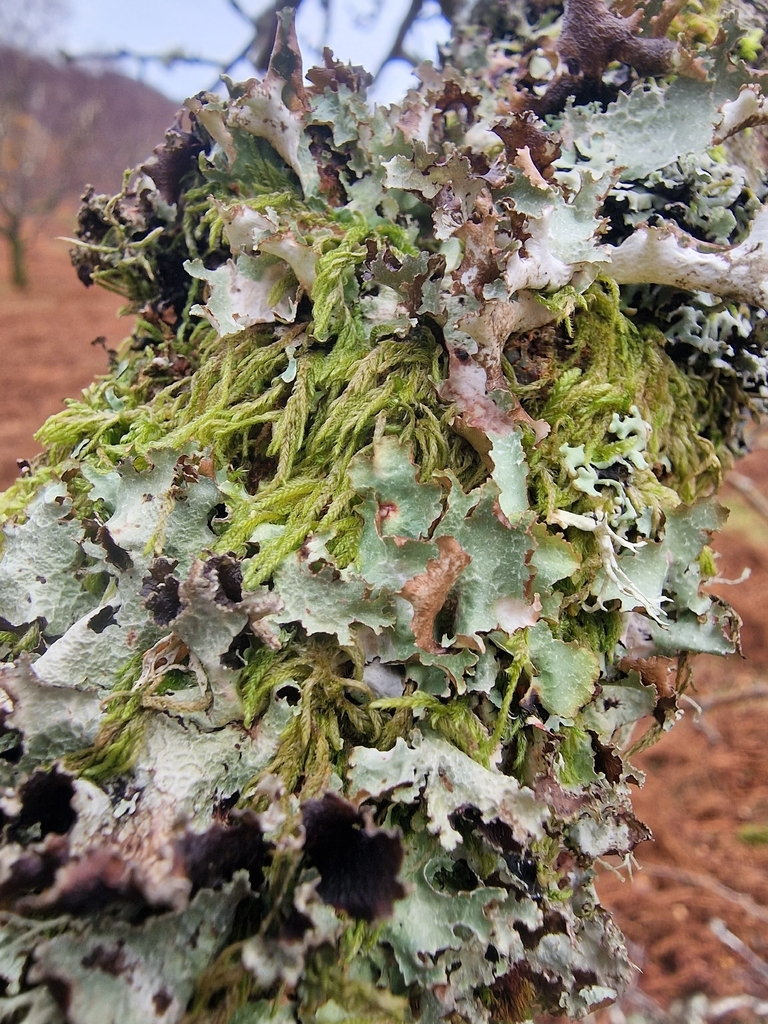
Two stunted Yews
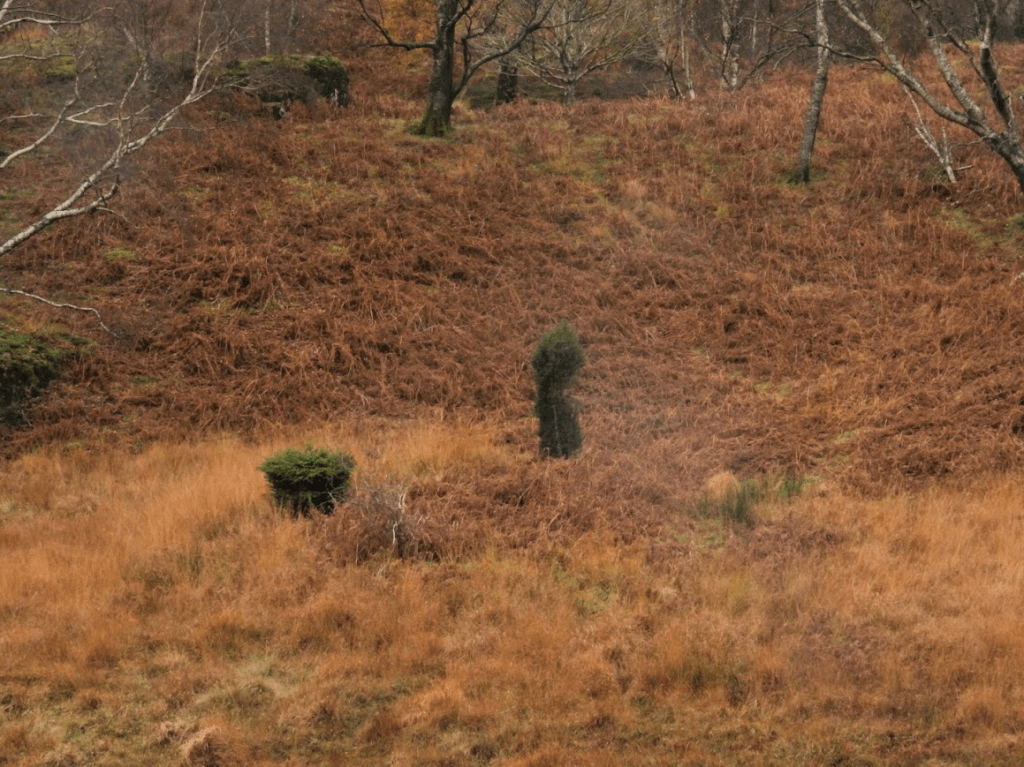
Juniper
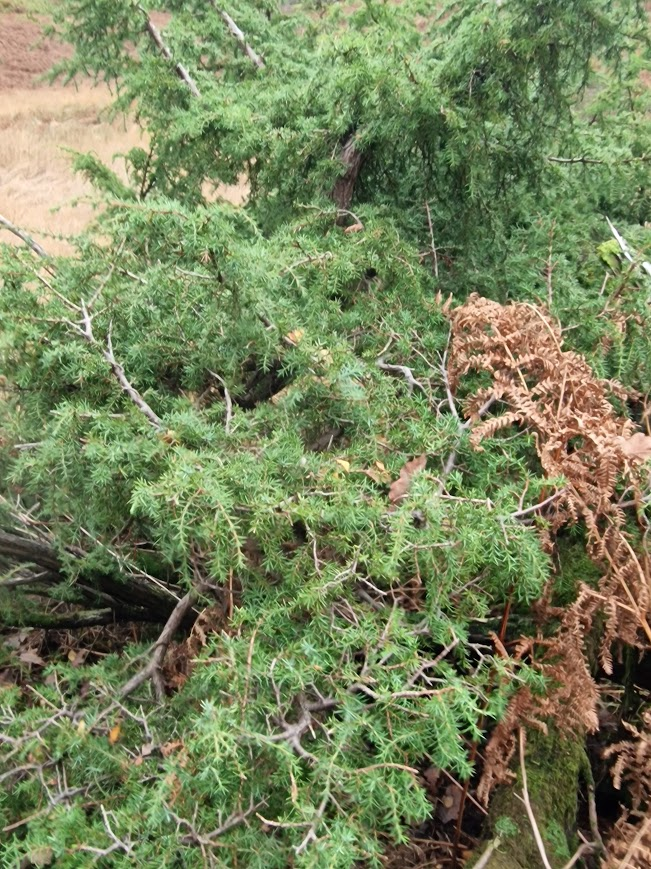
Bog Pond Weed
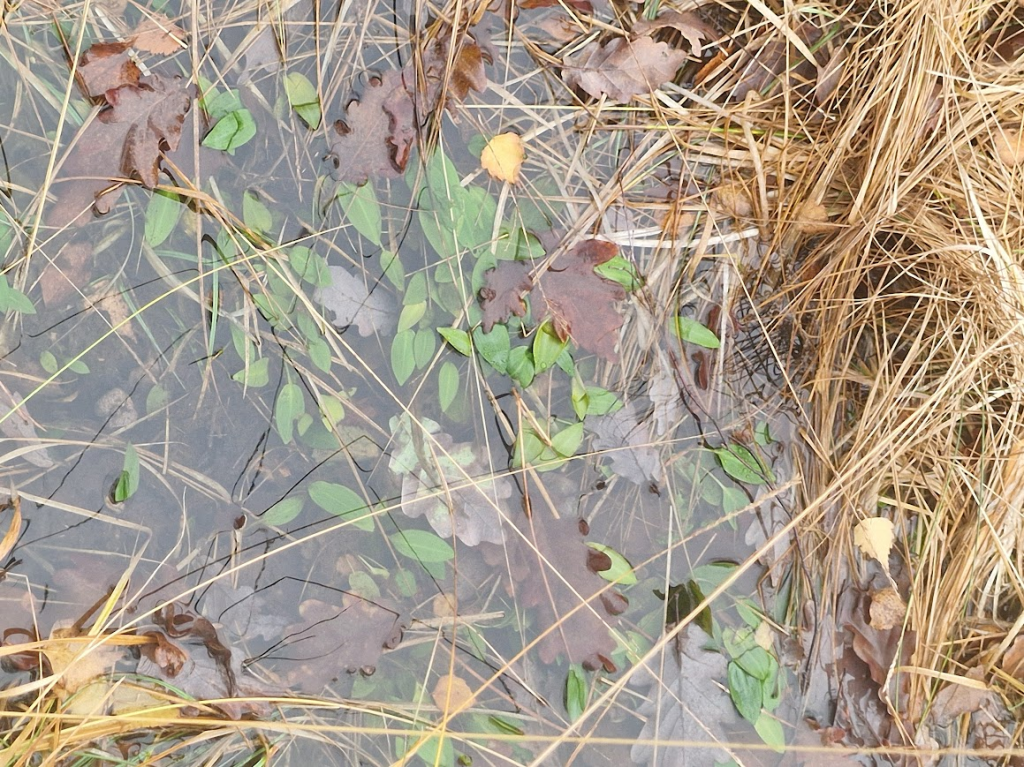
Bog Asphodel
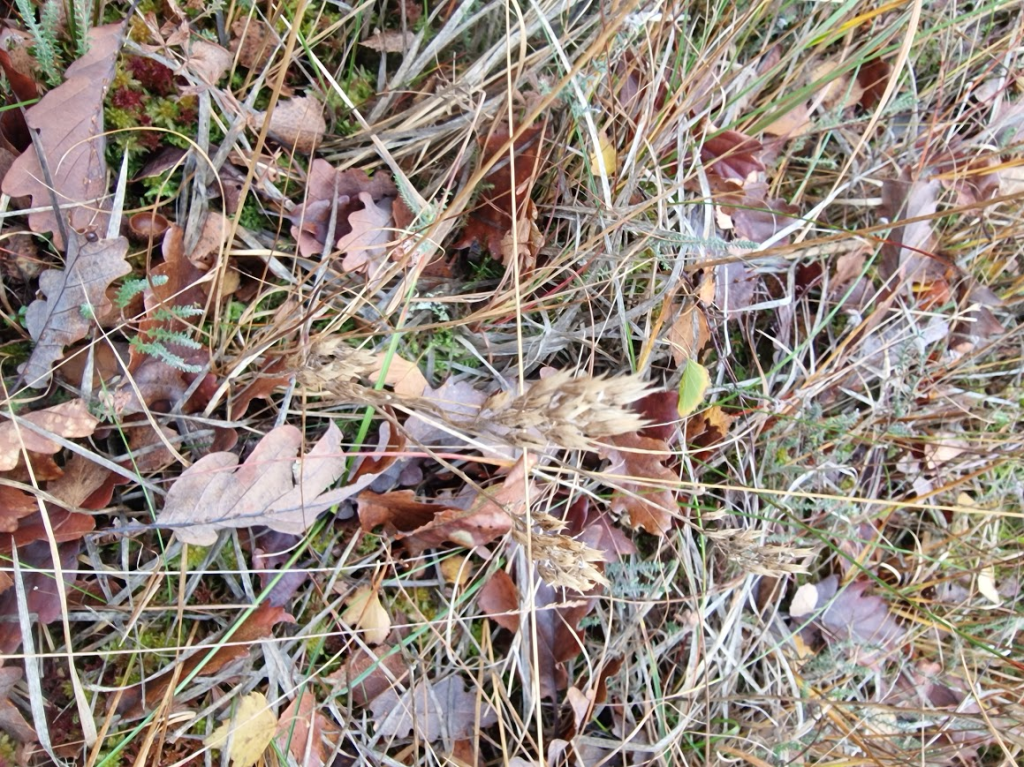
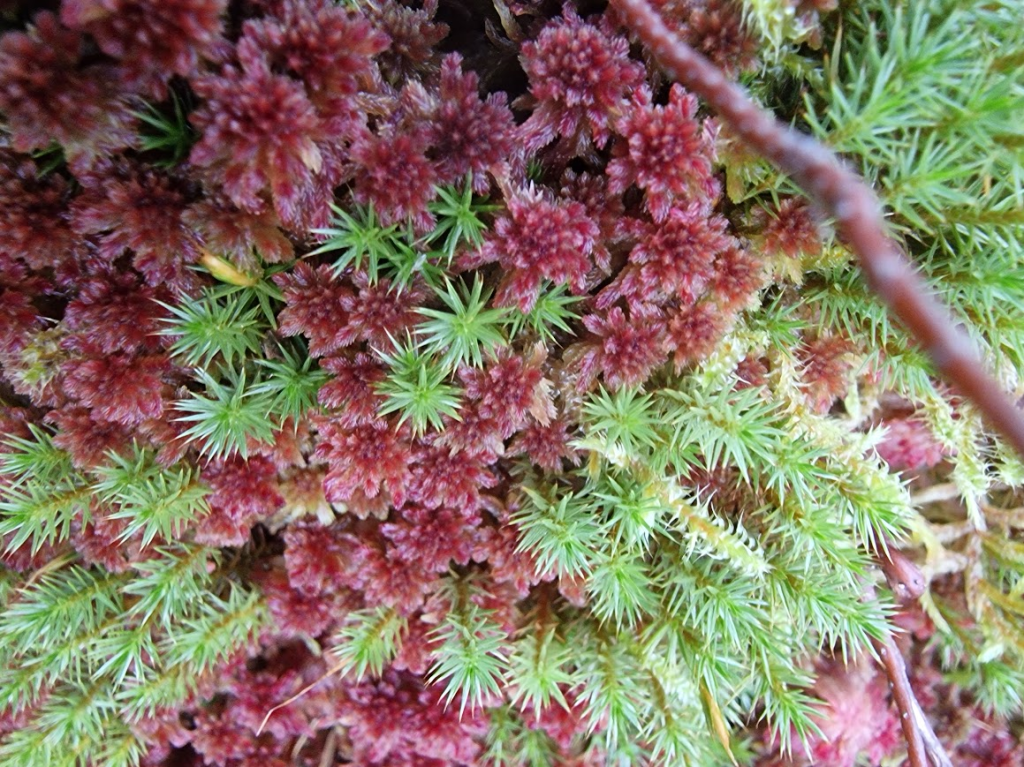
Red: Sphagnum capillifolium subsp. rubellum
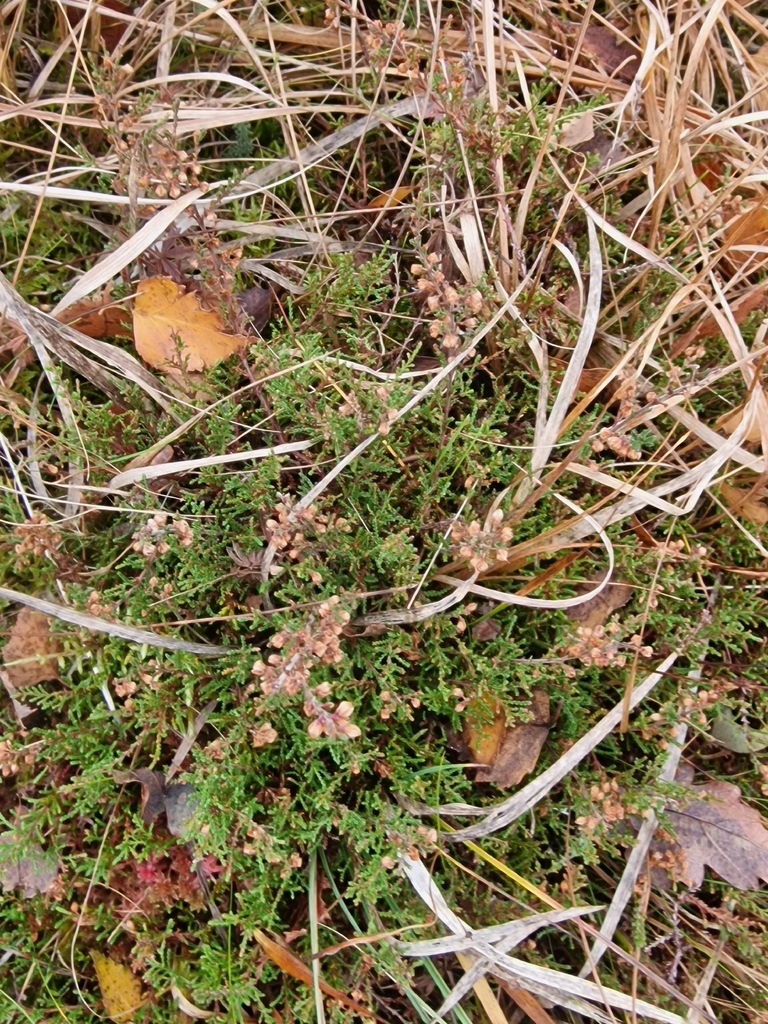
Common Heather
The way in and out of Cummacatta Wood is on the B2859, the Keswick to Seatoller road, along which the Stagecoach 78 bus runs

On the open-top bus back to Keswick

Borrowdale Rainforest National Nature Reserve: Great Wood to Ashness Wood 03.11.25

The first day of my five day holiday in Keswick – three of which I had planned to devote to exploring the constituent ancient woods of the NNR – started with initial disappointment. Due to the unprecedent levels of rain on the days before, the only Borrowdale bus (the Stagecoach 78) which runs between Keswick and Seaotoller) was suspended due to road flooding, and the Derwent Launch services were suspended too, because of the height of the water in Derwent Water; so there way of reaching where I wanted to go, Johnny’s Wood – by bus or boat. So, I decide to walk to Great Wood and Arnees Wood from Keswick. This is a 10 mile return walk – and it rained continuously – but it was worth it.

The footpath from Great Wood to Ashness Wood provided fantastic views of Derwent Water; however, as the footpath was an up-and-down path through the foothills of Castlerigg Fell, the footpath was more like a beck than a path. In some places, the water level was above my boots. However good your “waterproof” socks are, there is nothing to do about a top-down inundation. But once the water between your feet and your waterproof socks has warned up to body temperature, it’s fine, and when you are focusing hard on looking at nature you don’t notice your socks being like little swimming pools!

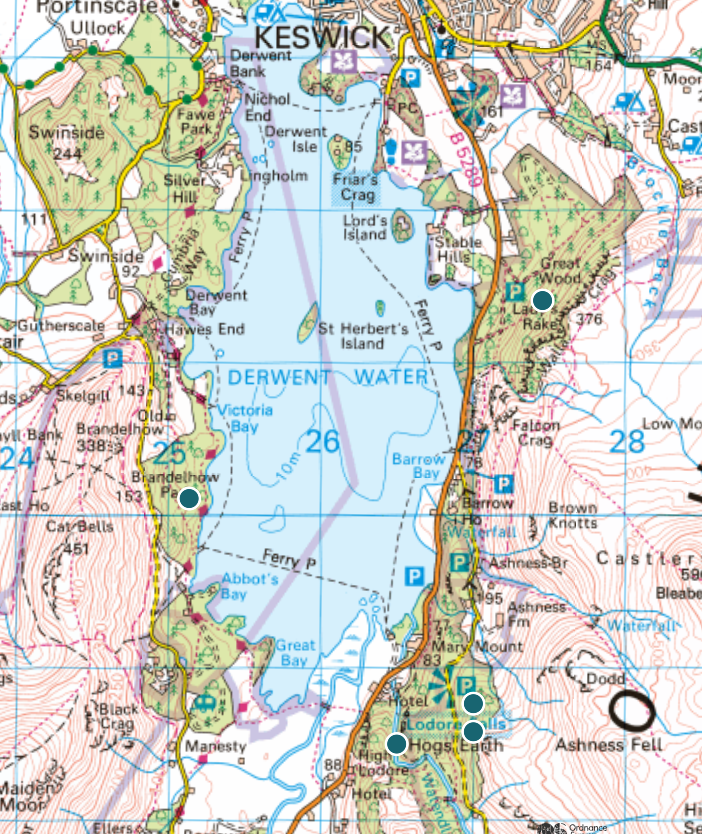
The blue circles mark the constituent woods of the new Borrowdale Rainforest NNR. There are more than those on this map.

The walk along the lake from Keswick to the start of the path up Great Wood.

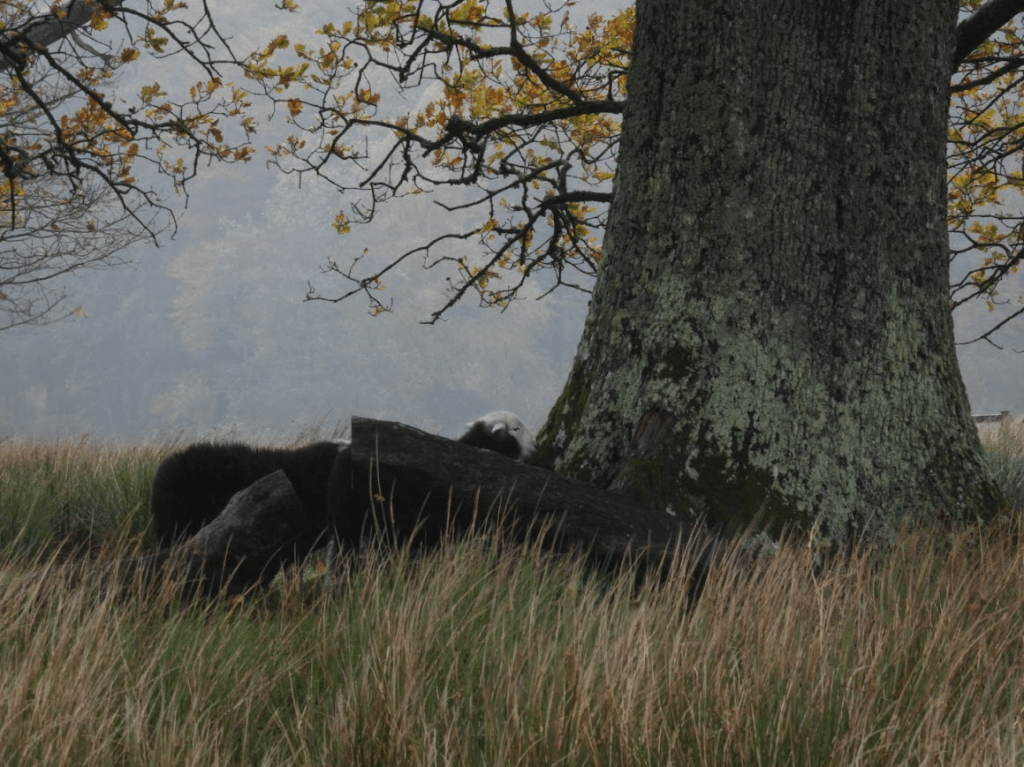
Herdwick sheep sheltering under a pollarded Sessile Oak

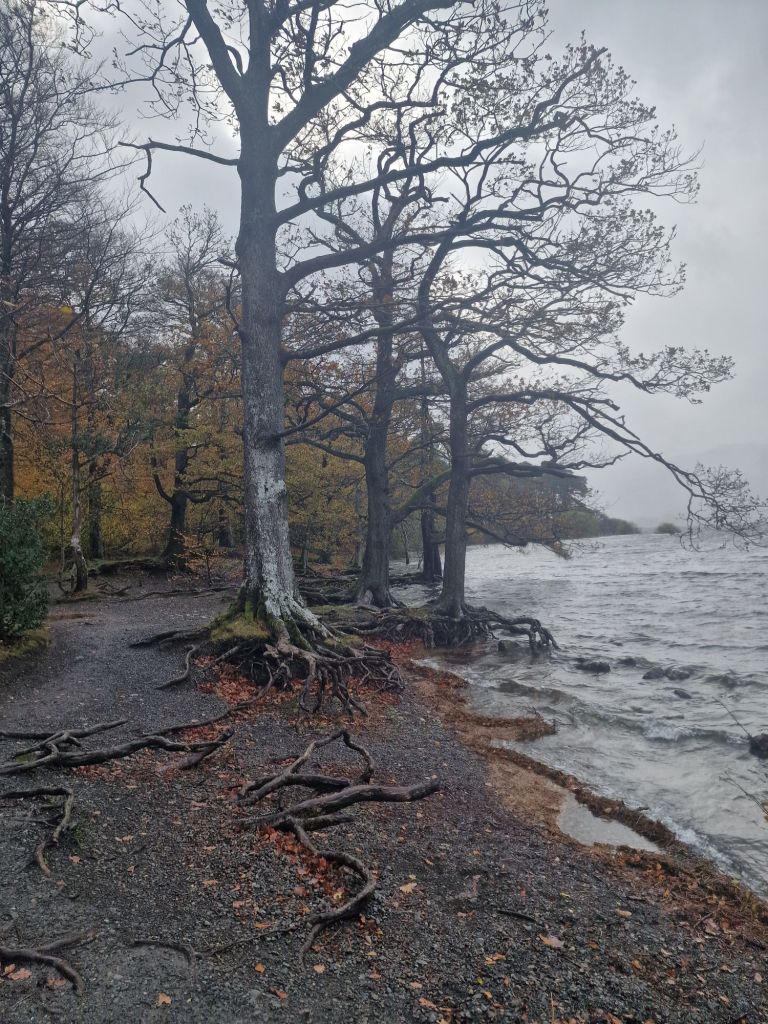
The water level was very high – these Larch were being engulfed by the rising water level

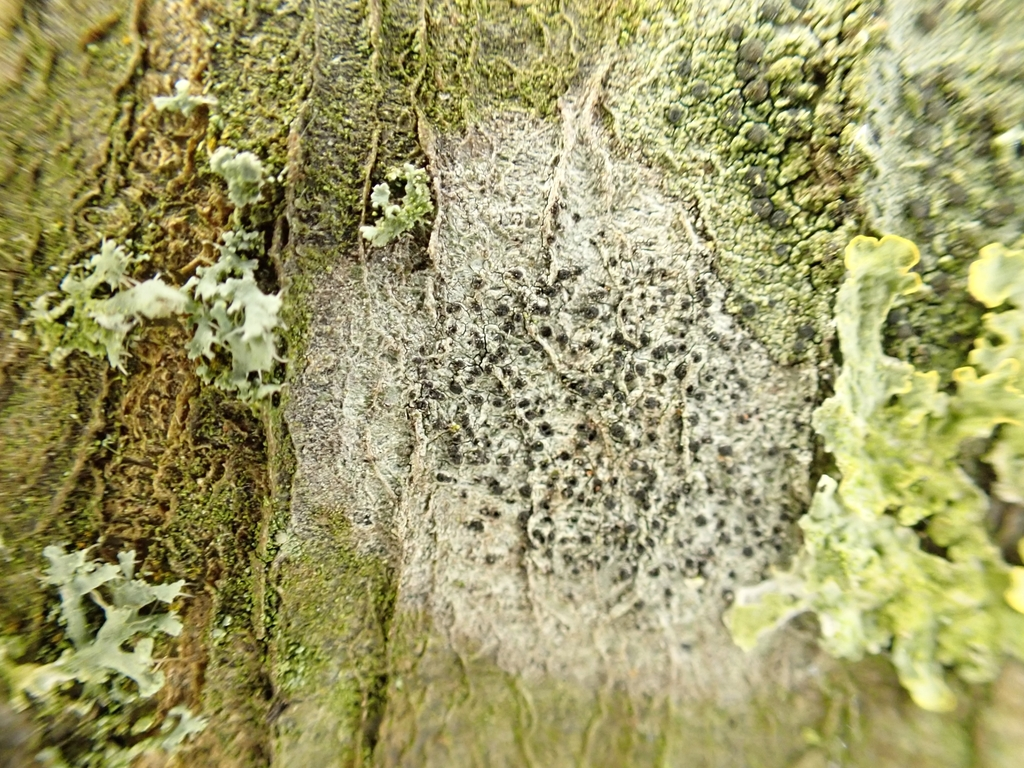
Lichen mosaic on Silver Birch. Lecanora chlarotera/hybocarpa and Putusaria hymenea shows the typical  black lines of the  “zone of antagonism”

Great Wood

Sessile Oaks

Beech

Polypody Fern on Sessile Oak; epiphytic polypody is characteristic of Atlantic woodland (temperate rain forest)

Overflowing beck next to this tree

Map lichen, Rhizocarpon geographicum (map lichen) on andesite outcrop; igneous rocks of the Borrowdale Formation; very common on hard siliceous rocks

Path between Great Wood and Arshess Wood

Silver Birch, looking across to the west side of Derwent Water to the Cat Bells fells

Ancient Hawthorn

Lichens on this Hawthorn

Oak Moss, Evernea prunastri;

Usnea sp., probably U. cornuta

Usnea sp, probably U. subfloridana

Platismatia glauca

Boulders are always worth investigating in areas of upland siliceous volcanic rock as they are often covered in lichens and bryophytes

These are some of the species on this boulder

Cladonia strepsilis Olive Cladonia

Pleurozium schreberi Red-stemmed Feather Moss

Cladonia ramulosa Branched Pixie-cup Lichen

Porpidia tuberculosa Boulder Lichen

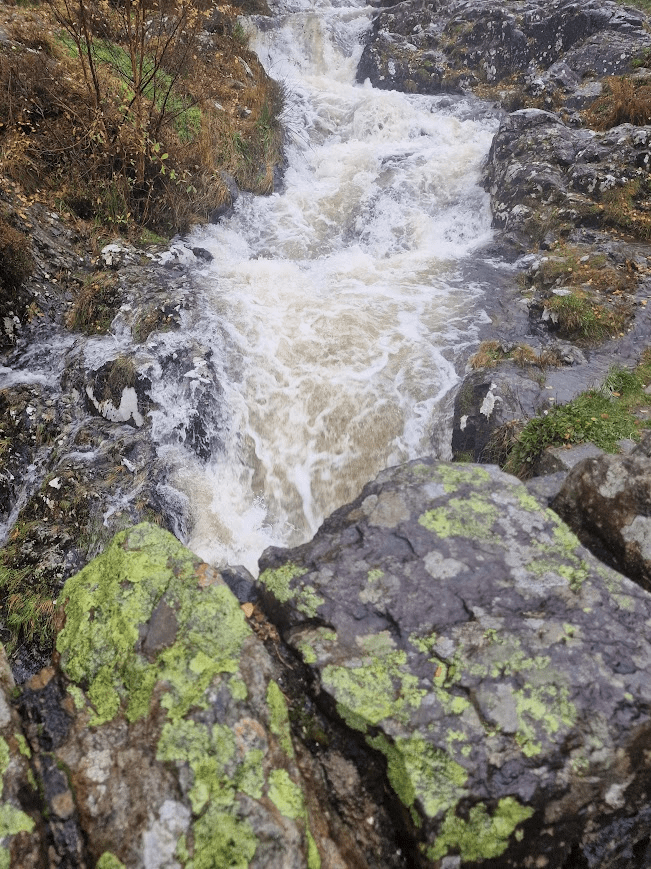
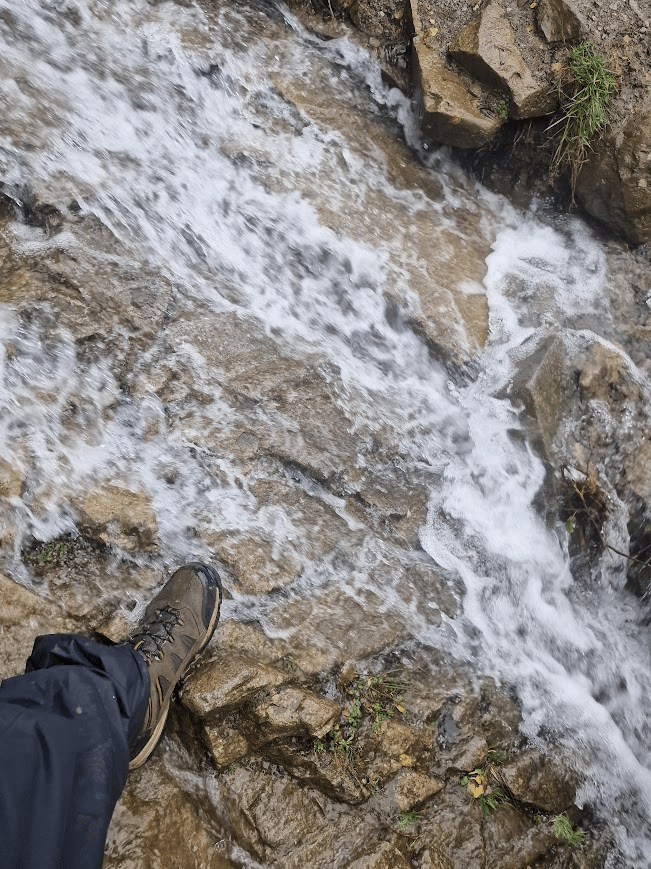
Frequently, it was necessary to cross mini-waterfalls crossing the path that were a consequence of the very high rain over the days proceeding my walk

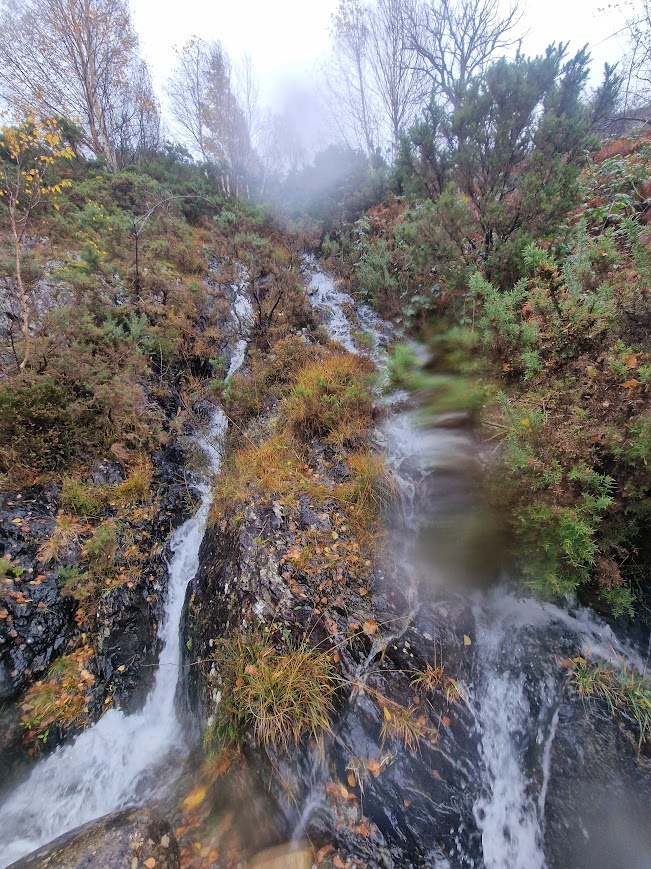
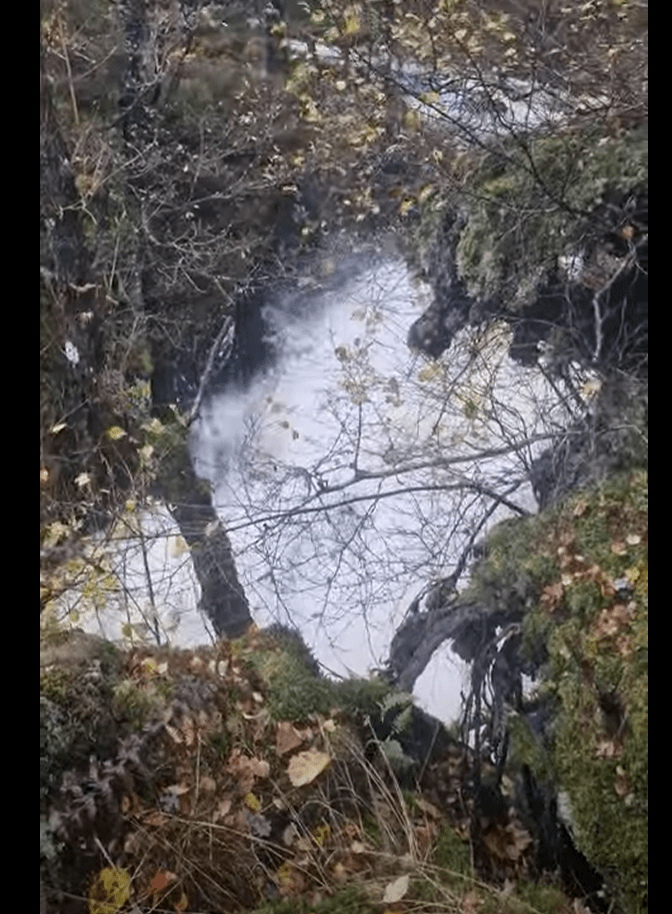
Looking up at temporary waterfalls caused by high rainfall  – image blurred by heavy rain falling on the lens of my camera

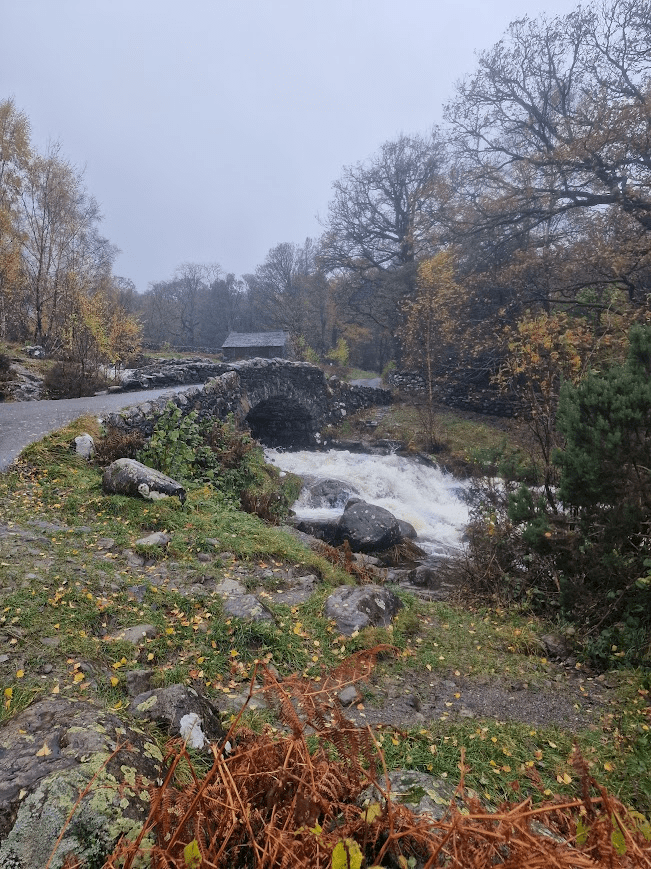
Ashness Bridge

Over Barrow Beck

 Its image is often seen to be adorning biscuit tins and tea towels Visits Keswick

Barrow Beck above the bridge, with the bridge stones covered in Rhizocarpon geographicum; very common on upland igneous rocks

Ashness Wood

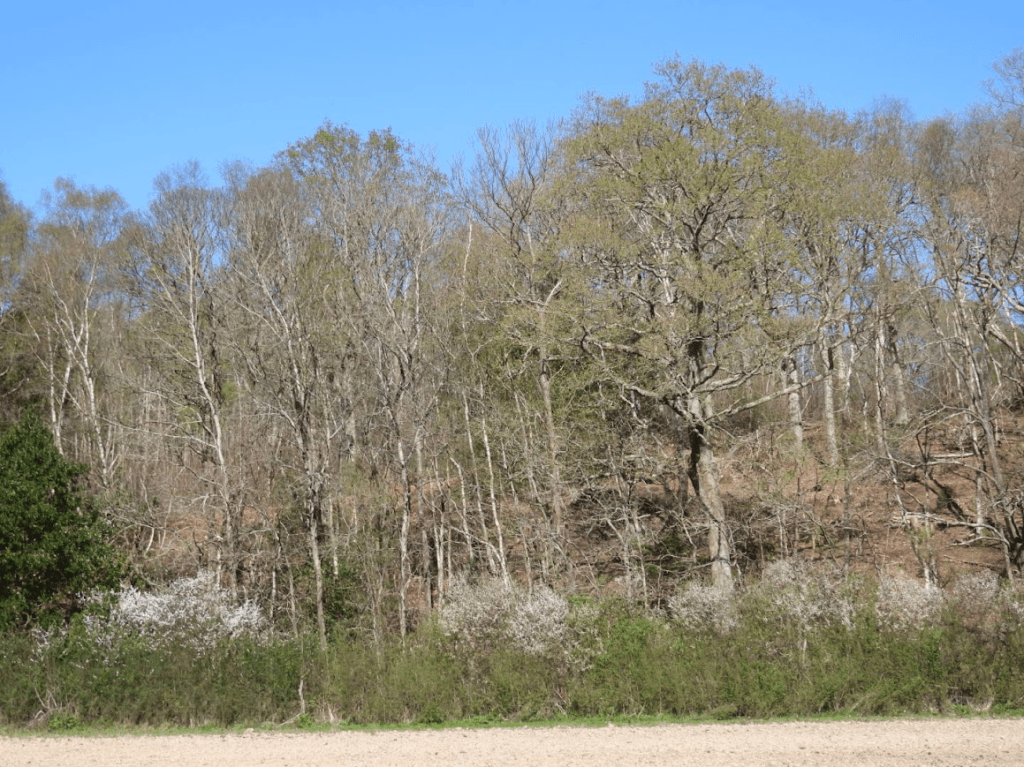
Characterised by Sessile Oak, Quercus petrea and outcrops of Grange Crags Andesite. Igneous bedrock formed between 458.4 and 449 million years ago during the Ordovician period. British Geological Survey Geology Viewer

A large patch of fertile Ochrolechia androgyna with apothecia, on Sessile Oak. Apothecia are usually absent but when present have a pink-orange disc with a pale margin. British Lichen Society. O. androgyna is present it the southeast, but it is always infertile.

Infertile on Pedunculate Oak in Petworth Park, West Sussex

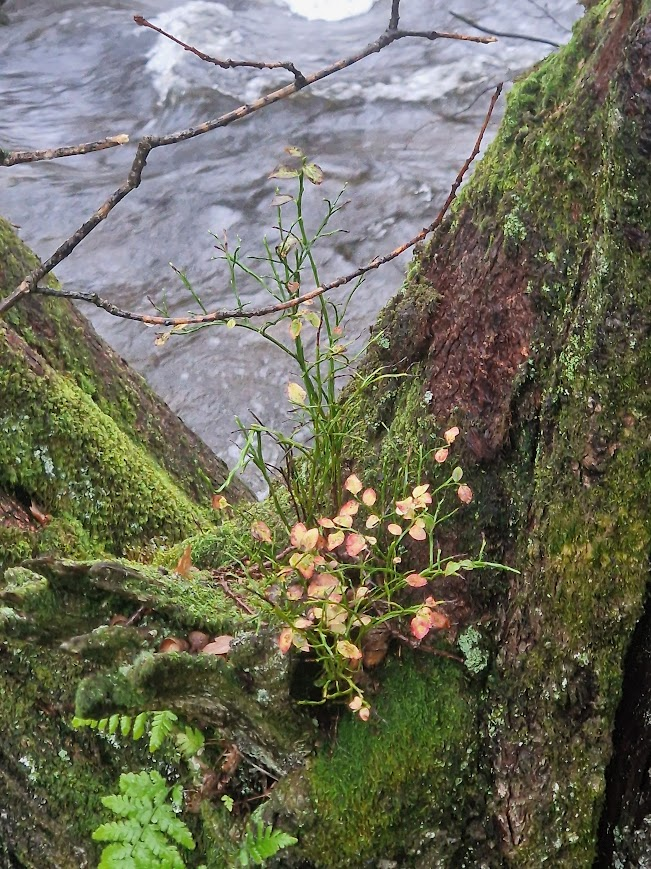
Billbury Vaccinium myrtillus, characteristic of upland heathland type H12 Calluna vulgaris – Vaccinium myrtillus heath British Plant Communities  1992 Cambridge University Press pp. 492 – 503

Billbury growing epiphytically on a coppiced Sessile Oak

Waterendlech Beck, behind the above Oak

Beyond the beck, Ashness Wood becomes Mossmire Coppice. In Cumbria, “moss” can also mean mire or bog as well as a bryophyte

This part of the wood was upland heathland bog

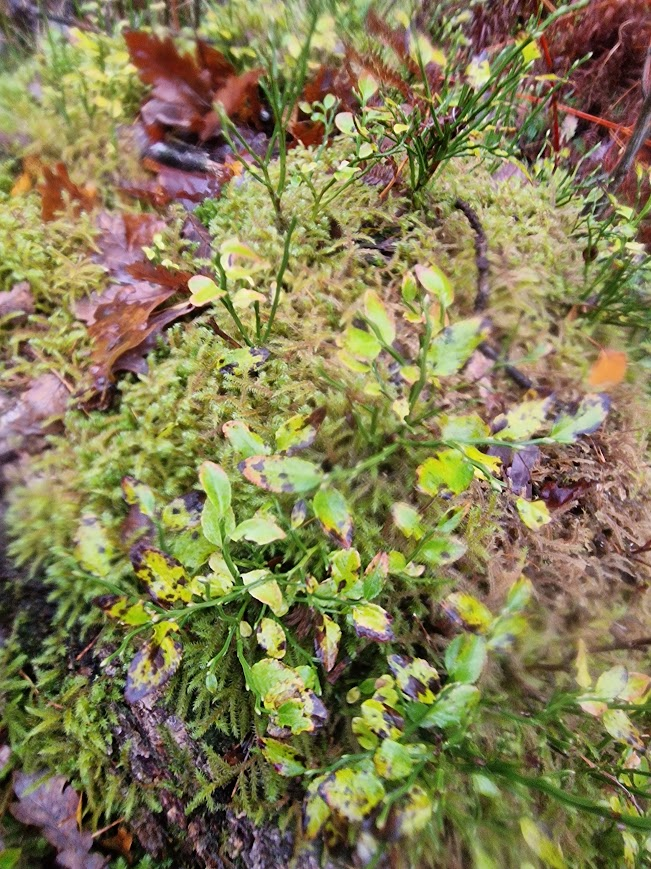
Billbury with Sphagnum Moss possibly  Sphagnum subnitens

Possibly Sphagnum girgensohnii

Bog with trees

The path, like in so many places, had become a beck

Waterendlath Beck at Ladder Brow

Walking back along the lakeside path to Keswick

A path completely flooded

A dry-stone wall at Calfclose Bay, just south of Keswick. Dry stone walls are always worth a look in Cumbria as they often have interesting lichens, bryophytes and ferns growing on them

1 Dicranum scoparium Broom Forkmoss

2 Cladonia squamosa Dragon Horn

3 Cladonia chlorophaea Mealy Pixie Cup

4  Polypodium asp. Polypody Fern

5 Diploschistes scruposus Crater Lichen

6 Dryopteris filix-mas Male Fern

7 Geranium robertianum Herb Robert

8 Bryum pseudotriquetrum Long-leaved Thread Moss (middle) (with Dicranum scoparium)

9 Pteridium aquilinum Common Bracken

I got back to Keswick just as the sun was setting and was very wet. Whilst it was a good day, arriving back in Keswick was not an unalloyed pleasure. Keswick is a simulacrum of former real Lakes town; it consists of 10+ outdoor shops selling overpriced outdoor items; pubs that charge a fortune for food, and tourist shops selling Beatrix Potter and William Wordsworth memorabilia; a triumph of consumerism over the intrinsic value of the beauty and culture of the Lakes. To capital everything about the Lakes is something to sell to tourists while paying retail and hospitality workers a pittance
I didn’t see any of the lichen species that Neil Sanderson, April Windle and Andy Acton (Atlantic Woodlands in Britain & Ireland .Temperate Rainforests and Southern Oceanic Woodlands) cites as typical of upland or lowland rainforest (see below). But I enjoyed what I did see; I like common beautiful things. Scarcity does not equate to beauty or enjoyment to me.

Upland Rainforest

Calicium lenticulare
Cetrelia olivetorum s. lat.
Graphina pauciloculata
Graphina ruiziana
Hypotrachyna endochlora
Hypotrachyna laevigata
Hypotrachyna sinuosa
Hypotrachyna taylorensis
Lecanora alboflavida
Menegazzia terebrata
Micarea alabastrites
Micarea stipitata
Parmelinopsis horrescens
Pertusaria ophthalmiza

Lowland Rainforest
Arthonia ilicinella
Arthopyrenia carneobrunneola
Arthopyrenia nitescens
Arthothelium macounii
Arthothelium lirellans
Bactrospora homalotropa
Crutarndina petractoides
Fissurina alboscripta (Graphis alboscripta)
Fuscopannaria sampaiana
Gabura fascicularis (Collema fasciculare)
Gomphillus calycioides
Leptogidium dendriscum (Polychidium
dendriscum)
Leptogium brebissonii
Leptogium burgessii
Leptogium cochleatum
Leptogium hibernicum
Parmeliella testacea
Pseudocyphellaria citrina
(Pseudocyphellaria crocata)
Pseudocyphellaria norvegica
Pyrenula hibernica
Stenocybe nitida
Thelotrema macrosporum

Some thoughts on the public information about Borrowdale Rainforest National Nature Reserve (NNR). I had to do lots of research to find where its constituent parts are. The National Trust website on the NNR doesn’t have a map and there is no Natural England visitors’ guide as there is for other NNRs. The only way I found out where the parts of the NNR were was by looking at the declaration of NNR map on the government’s website. I then had to cross reference this map with the OS map to find the names of the constituent woods of the NNR.

Borrowdale is a huge geographical area round Derwent and below, that includes ancient woodland, secondary woodland & conifer plantations. I know the difference between ancient woodland, secondary woodland & conifer plantations, but not everyone does. In Keswick Tourist Information, I asked about the Rainforest NNR, they knew nothing about it! The National Trust and Nature England need to get maps and public transport details online & in TICs otherwise few people will visit. You won’t widen participation without adequate information.
Notable vascular plants of medieval woodland shaws north-west of Cowfold, West Sussex. Low Weald. 23.10.25

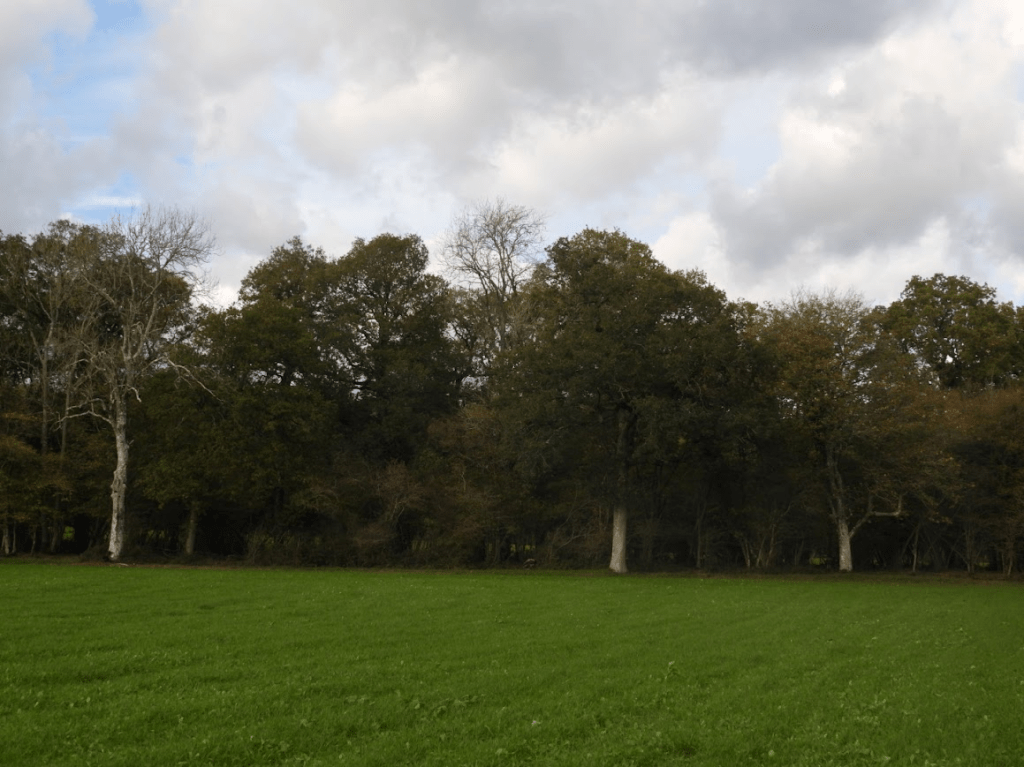
Above: South-facing edge of the east-west rectangle and the weest facing edge of the north rectangle of the L-shaped unnamed shaw

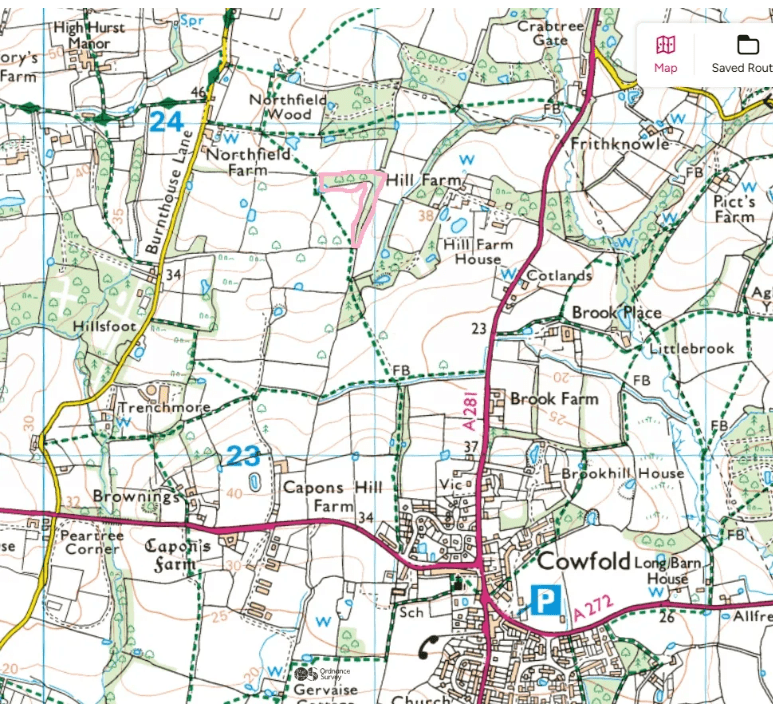
Below: Shaw shown with pink line. OS Maps © Crown copyright as accessed 22/10/25

This shaw has no name. I visit it frequently because it has a special charm; it encapsulates the essence of the small parcels of ancient woodland in the Low Weald; a landscape that has preserved its medieval patten of fields, hedgerows, shaws and woodlands. To get to it I walk through Bushygrove and Bakers shaws, named shaws of a similar character to this unnamed shaw. I take the 17 bus from Brighton to Cowfold to reach it.

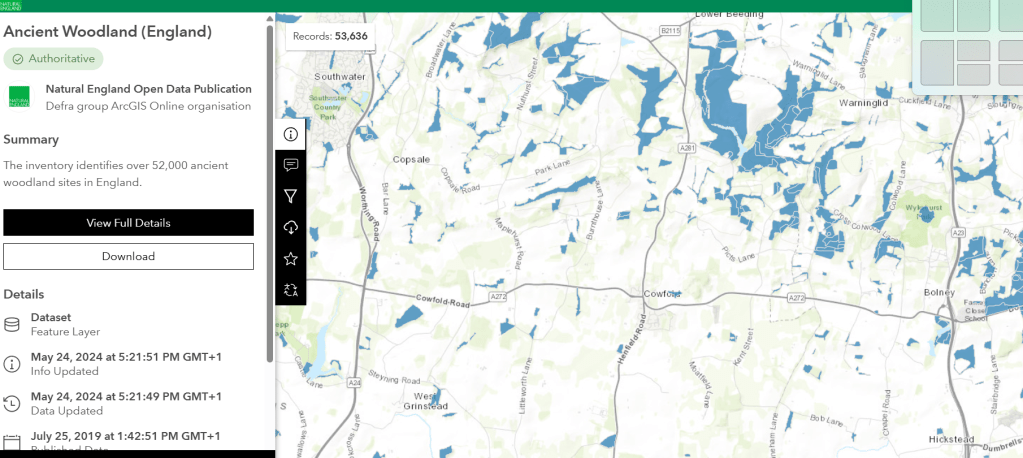
A shaw is a strip of woodland usually between 5 and 15 metres wide. Shaws mostly form boundaries between fields. They are usually composed of semi-natural woodland and often have diverse woodland ground vegetation similar to other semi-natural woodlands in the area. In the Low Weald shaws may be the relicts of former larger woods, or they may have developed from narrower hedgerows. A look at the Natural England map of ancient woodland shows how many shaws in West Sussex are semi-natural ancient woodland

Map from DEFRA Open Data Ancient Woodland

All sections of text in italics are quotations; sources given at the end of the quotes.

Most of the Wealden hedgerows – including shaws (narrow belts of woodland remaining when fields have been cut from woodlands) – are likely to date from the time of medieval assarts (fields derived from the general, unplanned clearance of woodlands and unenclosed commons by individuals). In Mid Sussex, as elsewhere in the Weald, there are relatively few hedgerows stemming from the formal enclosure of fields. The Weald appears to have a significant proportion of species rich/ancient hedgerows, revealed by the frequency of indicator species such as field maple, spindle and hazel. However, the data is not yet available to assess with any degree of accuracy the number, length and type of hedgerows in Sussex and its Districts. Mid Sussex District Council (2005) A Landscape Character Assessment For Mid Sussex.

Shaws are important relicts of long-lost woodland: In 1210 Beeding Manor had outlying farms in Cowfold and in 1256 the Bishop of Chichester’s chase extended down the whole East side of Cowfold Parish across to the Southwest corner and from there to near the centre of the northern boundary of the Parish. By 1257 the Cowfold tenants, customary and free, formed a distinct group. A large proportion of the Parish was woodland or orchards and remained so until the mid 18th century. Cowfold Parish Council. (2024) Cowfold Neighbourhood Plan 2019-2031. p.9

I am writing this post to “big-up” the biological importance of small, especially unnamed, shaws: to draw attention to the beauty of small patches of woodland. They are greatly under threat from development. There are many new housing development in-between the South Downs north of Brighton and the High Weald, in the Low Weald, transacted by the A281 (Pyecombe to Horsham) and the A273 (Pyecombe to Haywards Heath. As I travel on the 17 bus on the A281 or the buses 270,271, or 272 on the A273, I see the continuous building of new housing, and plans for housing are continually presented to planning authorities e.g. The Argus (21/02/25) Plans for dozens of homes near Cowfold are revealed

Sussex sits between two immovable features—the coast of the English channel and Greater London. In many places, it is the only ribbon of truly green land preventing unbroken concrete from connecting the two. we have a legal commitment to net zero, but we are building homes in the middle of nowhere whose occupants are wholly reliant on a car to go anywhere. Andrew Griffith MP Arundel and South Downs Hansard Housing Developments: West Sussex Volume 679: debated on Monday 7 September 2020

The Low Weald lacks the higher level of protection of the South Downs, which is a National Park, and the High Weald, a National Landscape (area of outstanding natural beauty), not that that necessarily offers between protection in practice to the South Downs and High Weald

I became aware of this shaw from a map of Wild Service Trees

in Dave Bang’s excellent book.(2018) The Land of the Brighton Line: A Field Guide to the Middle Sussex and Southeast Surrey Weald 018  ISBN: 978095486382

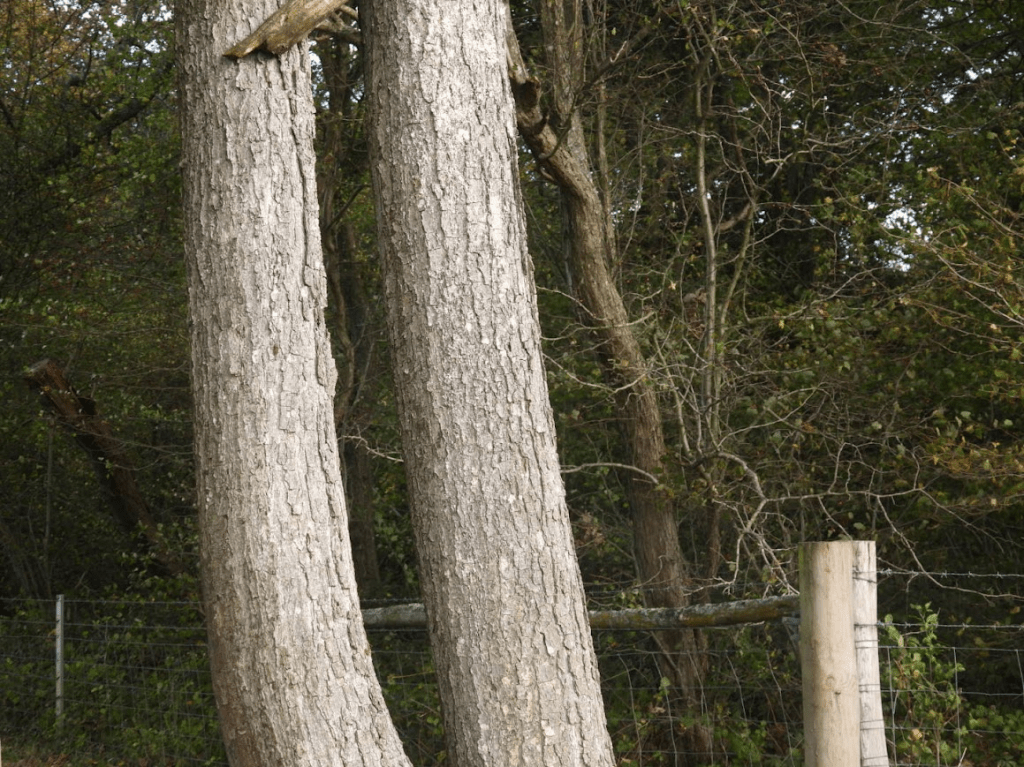
This unnamed shaw has large maiden trees – Wild Service, Pedunculate Oak, and Ash – with an understory of Field Maple, Hazel, Hawthorn, Wild Cherry and Midland Thorn. Wild Service, Midland Thorn and Wild Cherry are ancient woodland indicators.

It’s ground flora includes the ancient woodland indicators Bluebells and Wood Anemone, in the Spring, and Butchers Broom, all year round. In a nearby stand Spurge-Laurel and Wood Spurge can be found.

This blog does not attempt to be a full survey of the vascular plants in this shaw; it is just the things I found particularly noticeable.

Ancient Woodland Indicators visible in Autumn

Sorbus torminalis Wild Service Tree

Trunk. This trunk of a maiden Wild Service Tree is covered in lichen so it hard to see the trunks morphology

Most Wild Service Trees have few lichens from my experience, but on the side which gets most light this tree had abundant lichens.

This trunk in the shaw shows the typical bark of Wild Service Tress; many Wild Service Trees in the Low Weald have been coppiced into two trunks. (e.g. the large Wild Service Tree in Furzefield Wood nr. West Grinstead and the numerous Wild Service Trees of West Wood nr. Burgess Hil)

Leaves and fruit

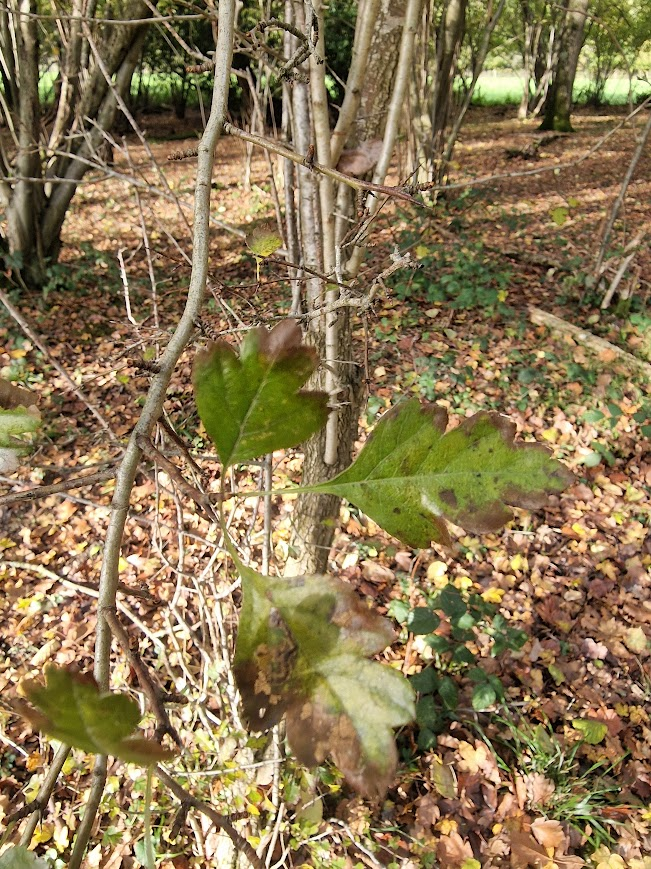
Crataegus laevigata, Midland Thorn

Trunk and leaves

Fruit

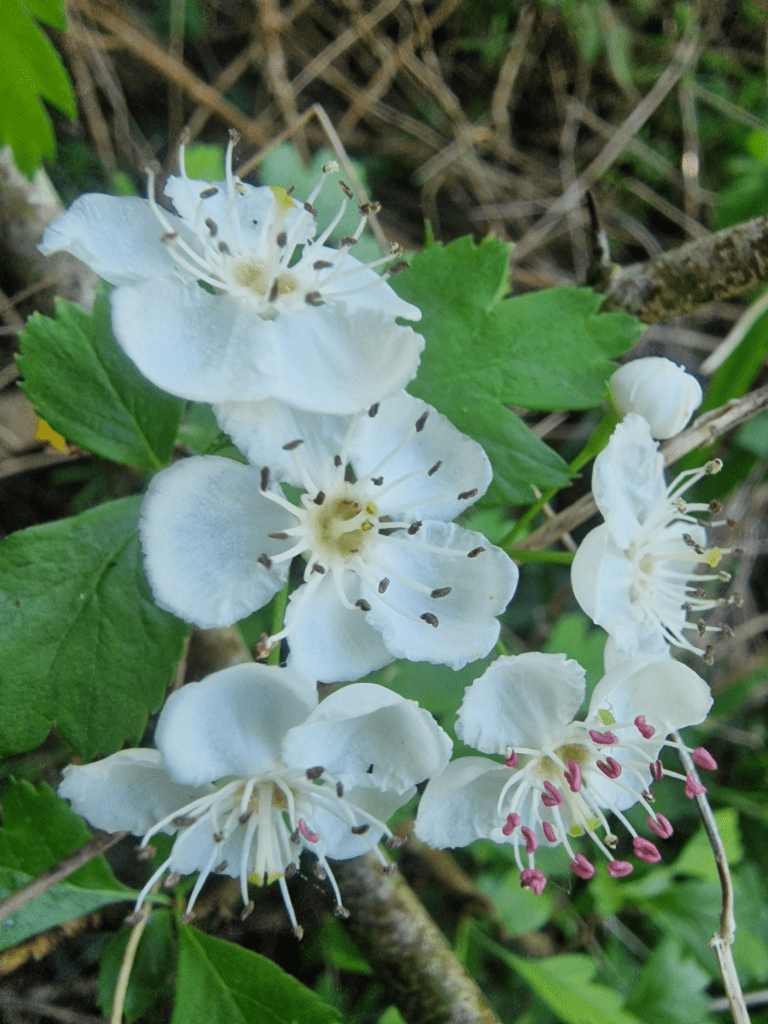
Midland Thorn has two (or more) seeds in their haws, whereas Hawthorns have only one

This Midland Thorn Flower on 29/04/25; with twin stigmas

Prunus avium Wild Cherry

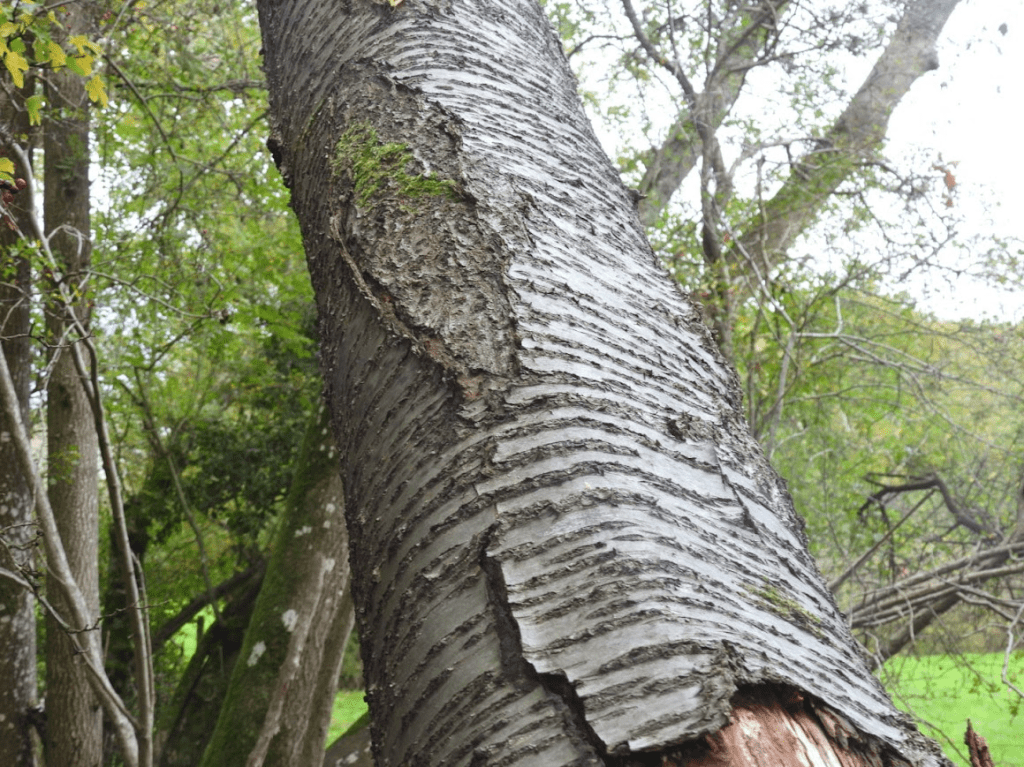
Wild Cherries can be identified just by their trunk morphology which is so characteristic. However, in spring their white flowers are very characteristic; and in summer so are their berries. However, ripe berries are almost immediately eaten by birds; if you are lucky enough to see them, they make a very nice fruity snack on a walk

This species mostly develops single, straight trunks with a thin, smooth purplish-grey bark that becomes grey-brown with horizontal fissuring and peeling when old. Tree species | European Atlas of Forest Tree Species – Prunus avium

Wild Cherry flowers from a tree in Baker’s Shaw; 400m south of this (unnamed shaw) in the Spring

Malus sylvestris, Crab Apple – Fruit.

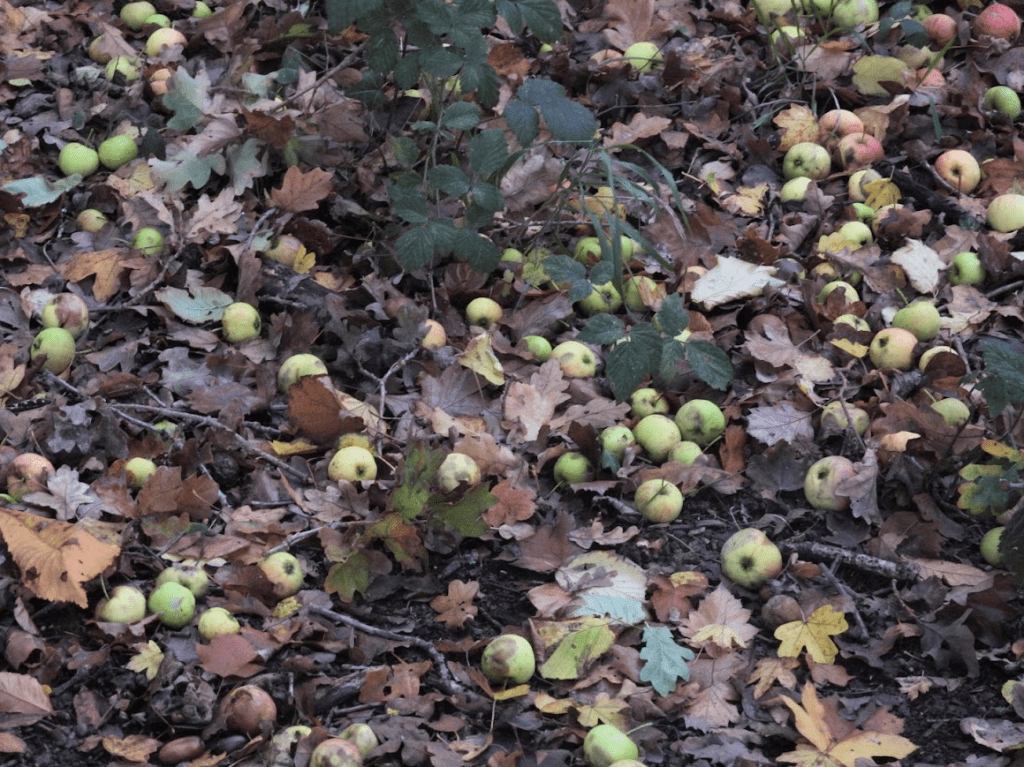
Theses crab apples trees were in Bushygrove Shaw. Crab Apples are easiest to identify in Autumn when their fruits are on the forest floor; just look up and you’ll see the tree(s) they came from. This autumn is a “mast year” when fruits from trees are abundant.

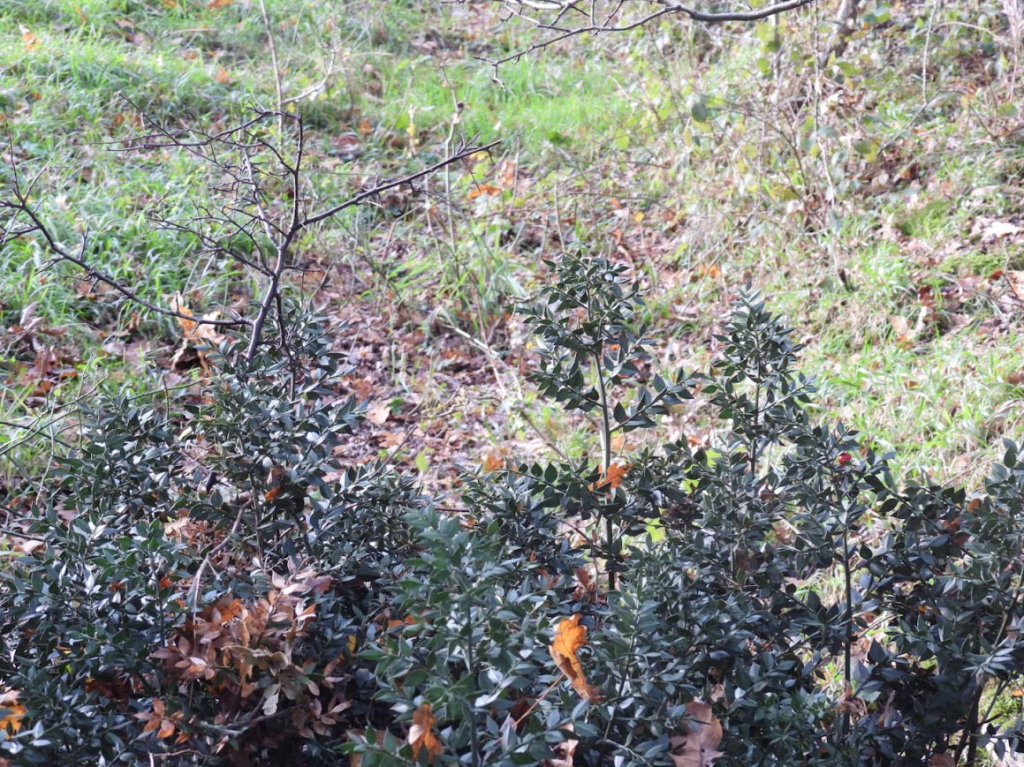
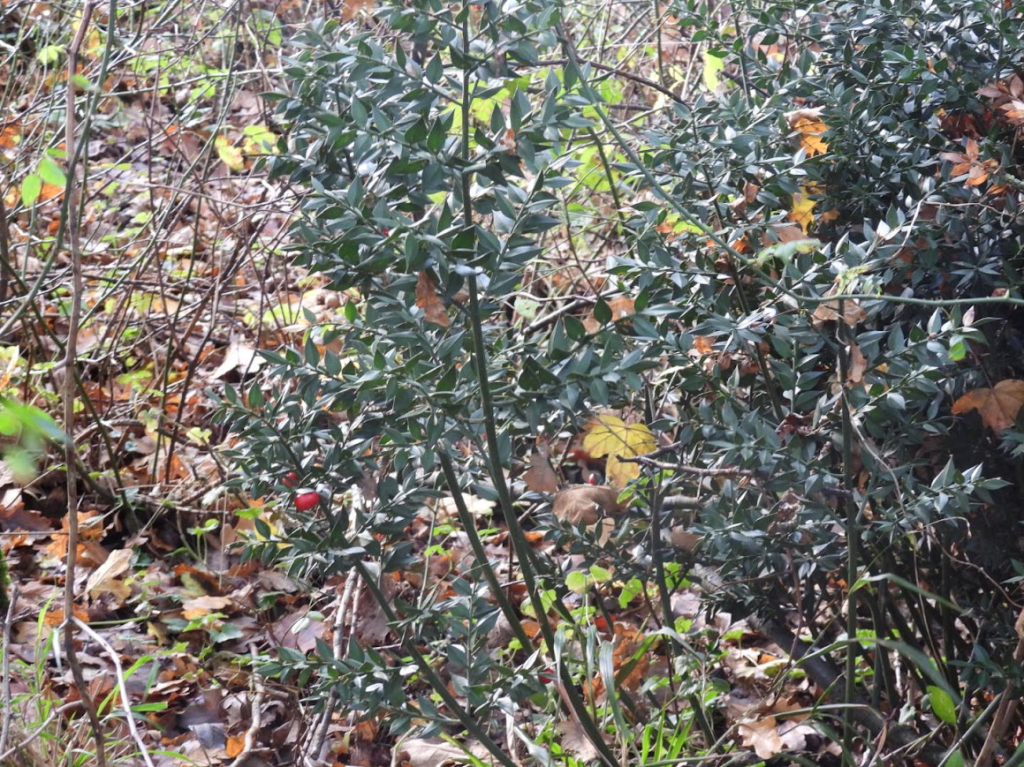
Ruscus aculeatus Butchers Broom

Butchers broom is a shrub which grows under trees in ancient woodlands; it’s leaves and flowers are very characteristic. Butcher’s broom leaves are not true leaves but are actually flattened stems called cladodes, with sharp spikes on the ends of the cladodes. Its flowers bloom in very early spring; and female flowers produce berries in Summer, which persist into Autumn

Butchers broom is known as an ‘ancient woodland indicator’. This is because it doesn’t colonise new habitats or spread easily to new woods; where it is growing, the wood has usually been there for a very long time. … Look beneath the deciduous trees, even in the more shaded areas.

Butchers broom is quite unlike any other British plant. It is a short evergreen bush growing up to about two feet high and all the leaves end in a pointed spike; one of its old English names is ‘knee holly’. In early spring, the tiny, pale green six-petalled flowers sit in the middle of the leaf and show that these leaves are, technically, flattened stems.

Butchers broom was used to scour butcher’s blocks until the nineteenth century. The spiky leaves seem ideal for getting into the cuts of old wooden blocks to clean them. New Forest National Park Butchers Broom

Fruit:

Ancient Woodland Indicators seen on other visits:

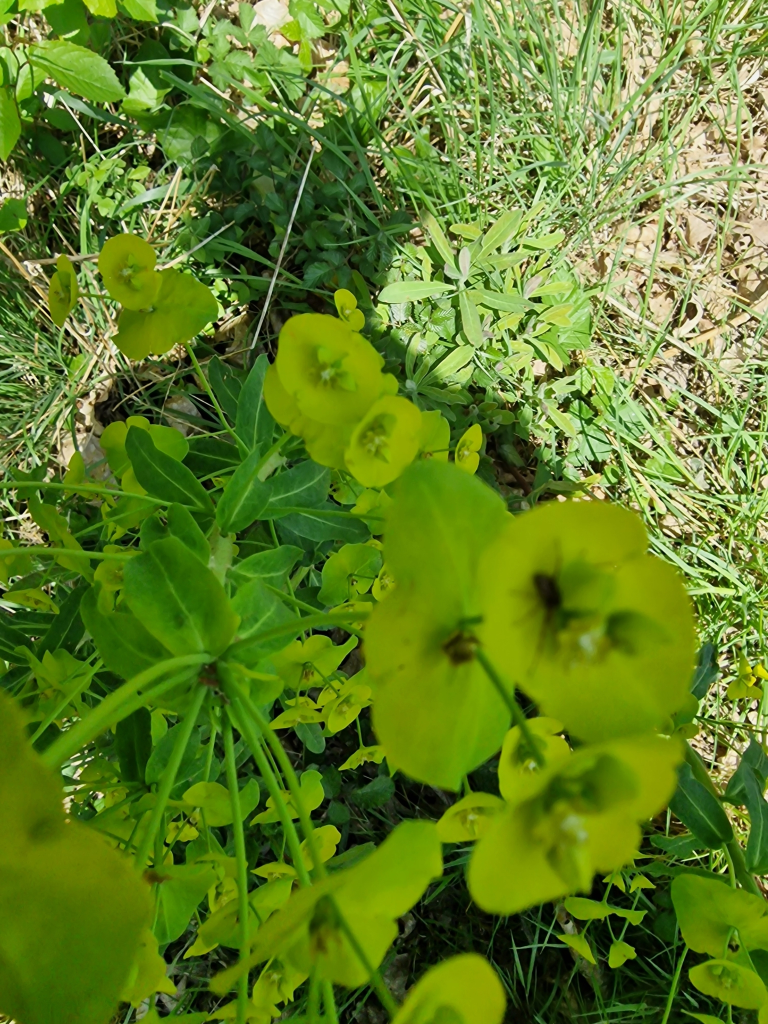
Euphorbia amygdaloides Wood Spurge seen on 29.08.24 in Baker’s Shaw; 400m south of this (unnamed shaw)

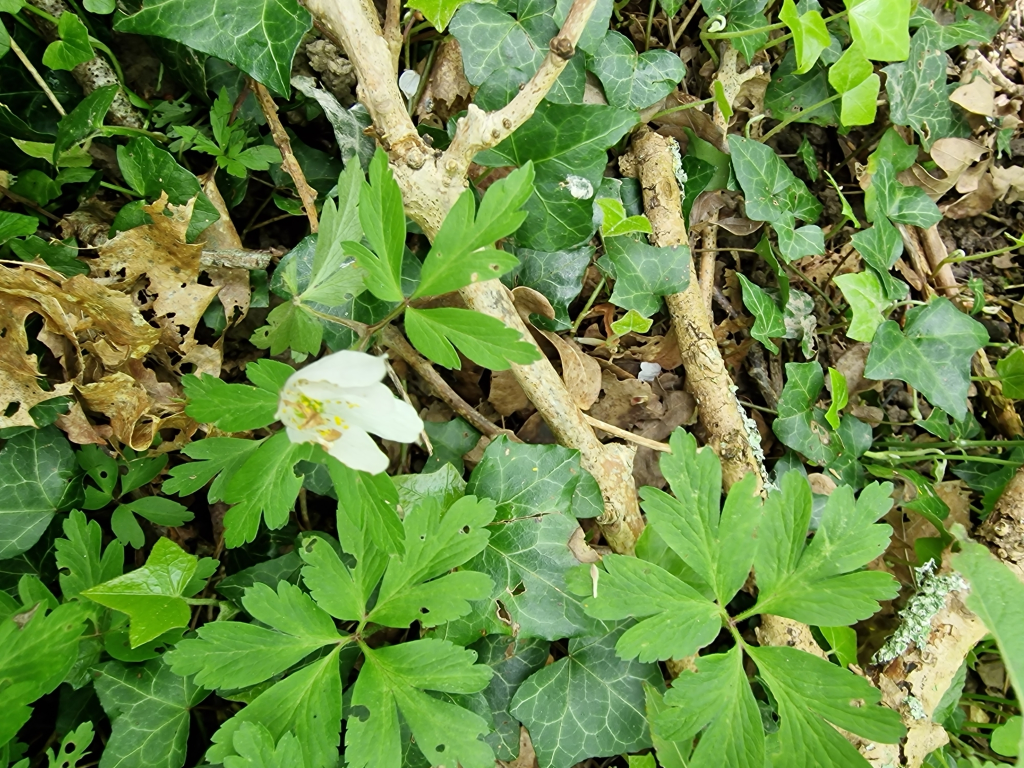
Anemonoides nemorosa Wood Anemone 16.04.25

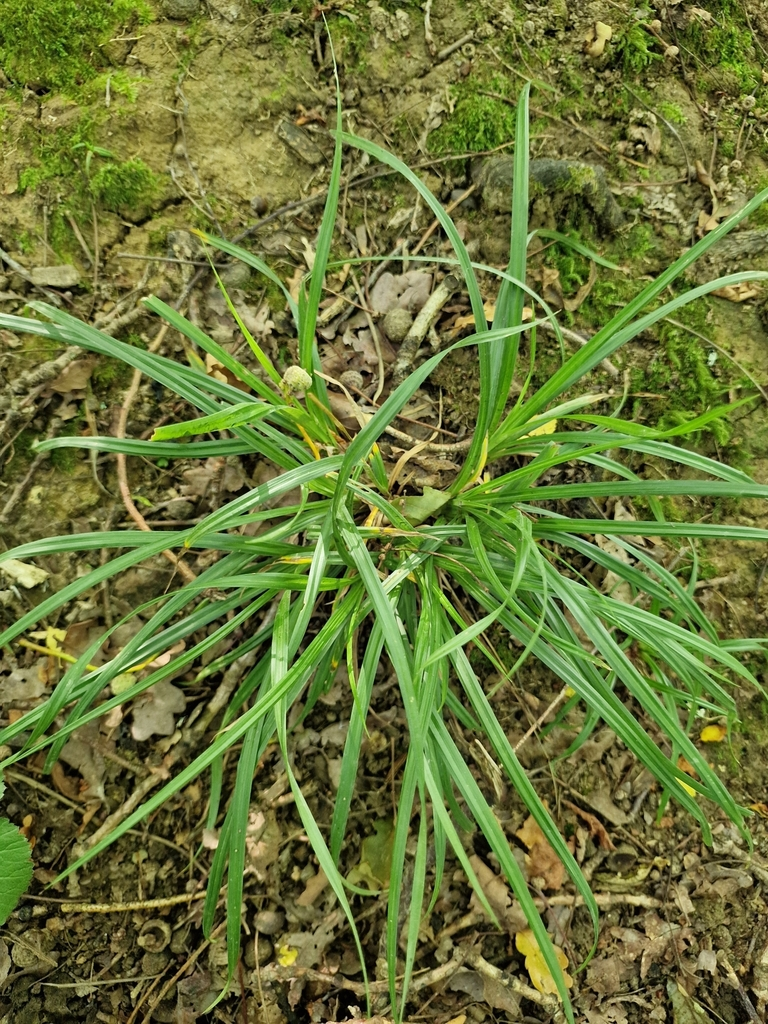
Carex sylvatica Wood Sedge – seen on 29.08.24 in Baker’s Shaw; 400m south of this (unnamed shaw)

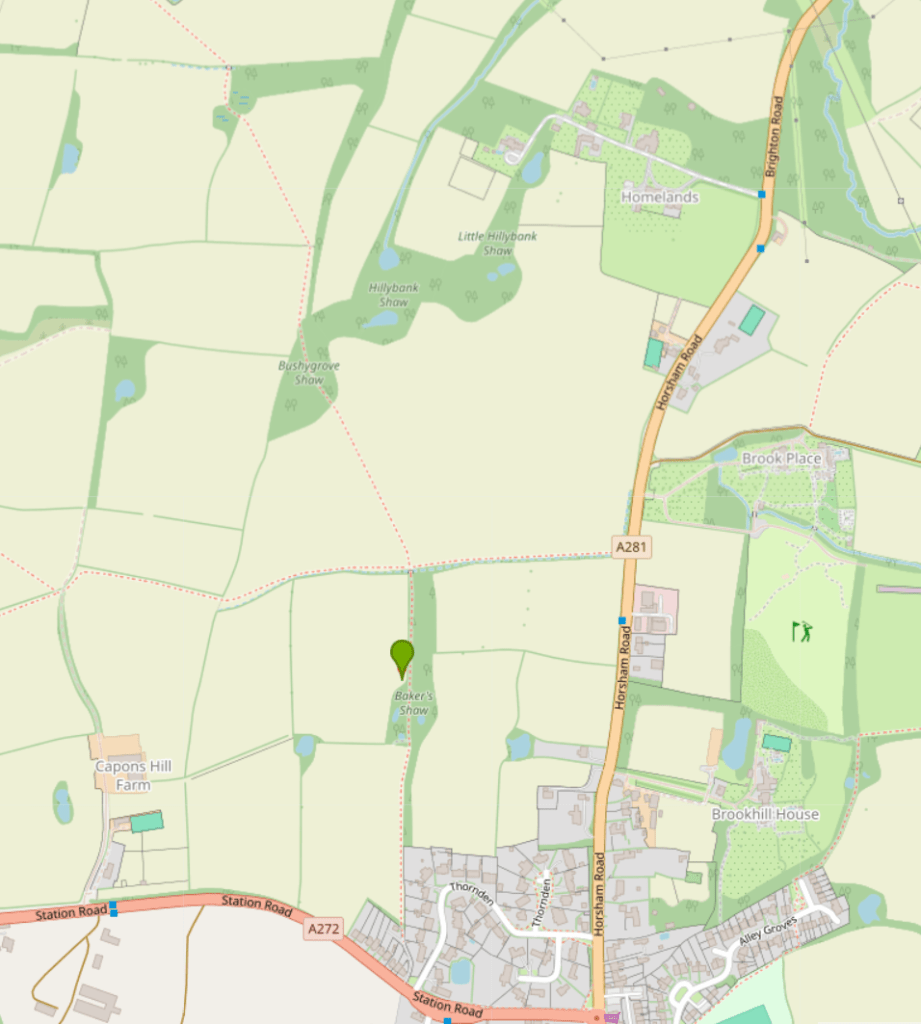
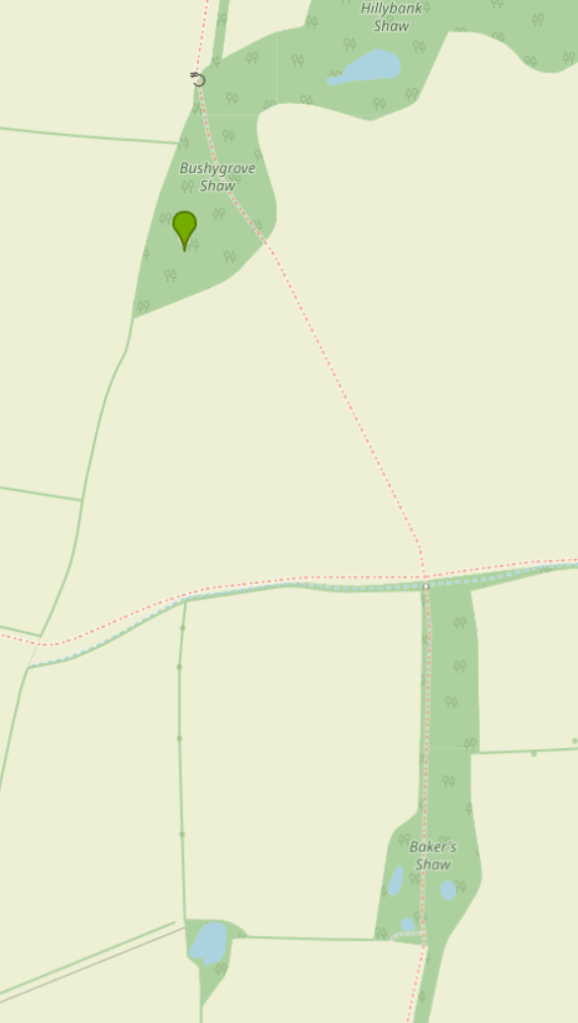
The locations of Bushygrove and Baker’s Shaws

Map above from iNaturalist community. Observation of Euphorbia amygdaloides from Cowfold, Sussex observed on 29/08. Exported from https://www.inaturalist.org on 25.10.25 showing Bushygrove and Bakers Shaw

Detail of Bushygrove and Bakers Shaw

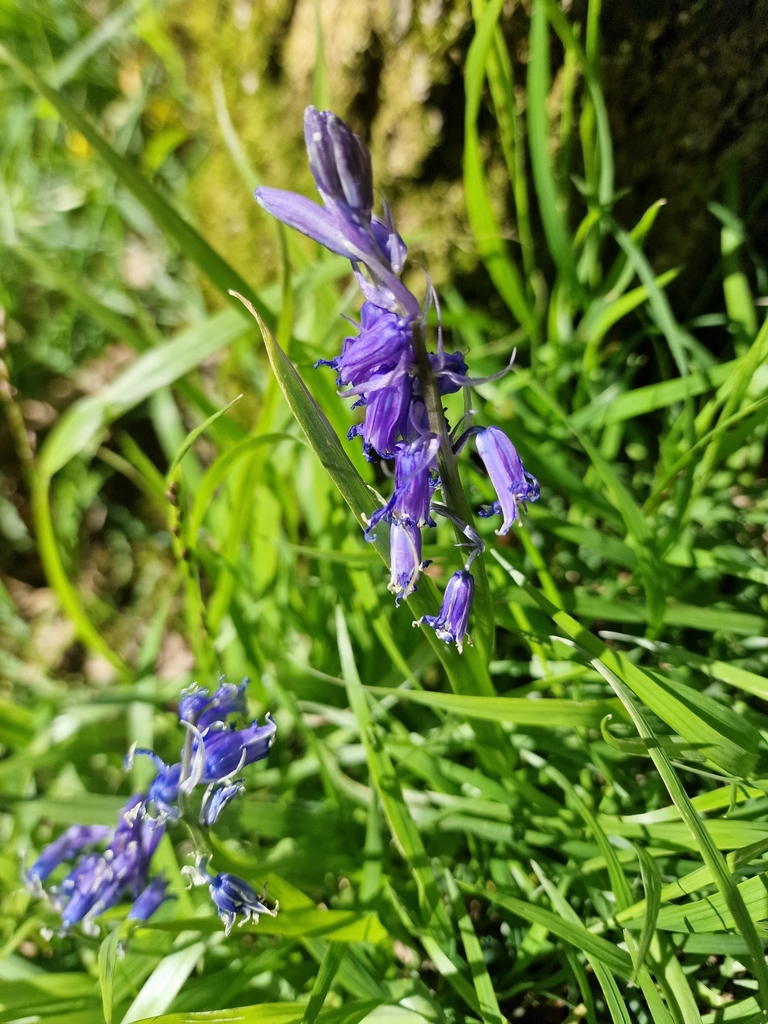
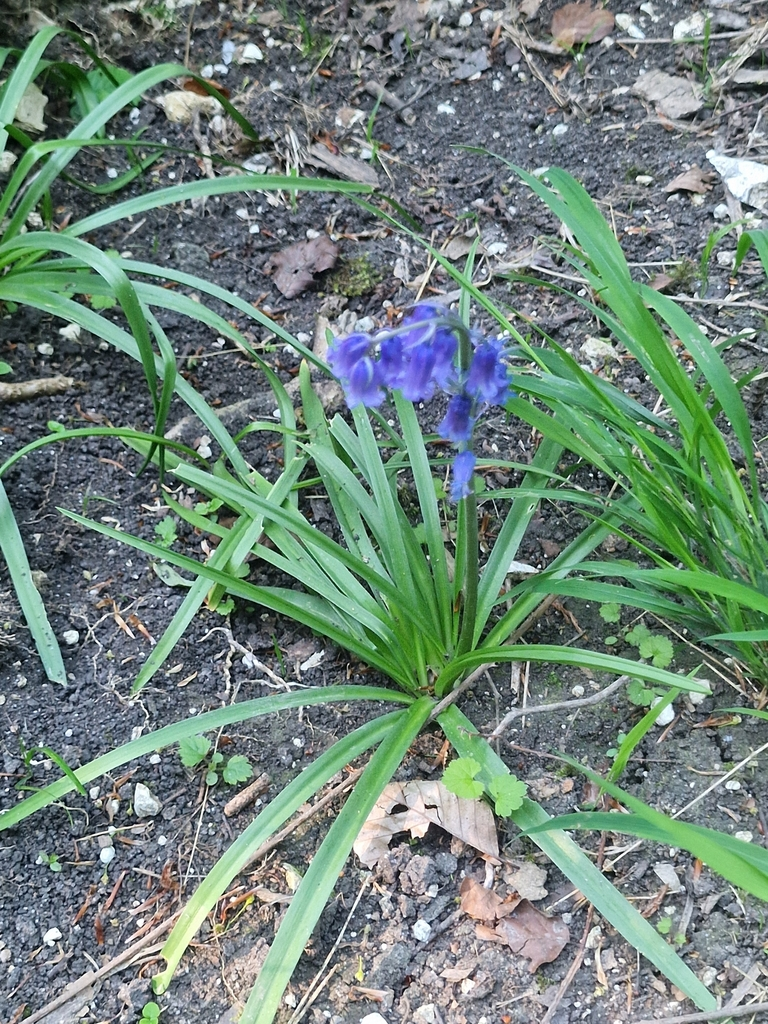
Hyacinthoides non-scripta Bluebell in Spring 29.04.25

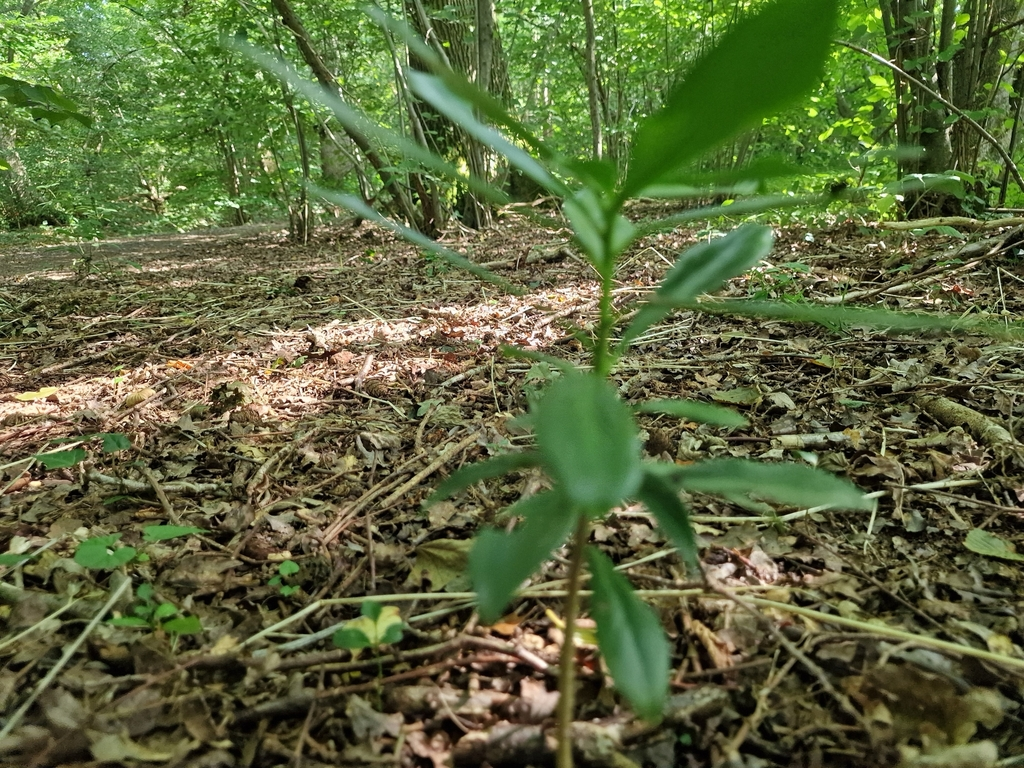
Daphne laureola Spurge-Laurel

In Baker’s Shaw; 400m south of this (unnamed shaw)

Mercurialis perennis Dog’s Mercury – viewed 29.04.25

Other vascular plants in the Shaw

The large maidens, with “white” lichen-covered bark, are Ash, Pedunculate Oak (and Wild Service)

The understory is Hawthorn, Field Maple, Hazel, Holly (and Midland Thorne)

Quercus robur Pedunculate Oak

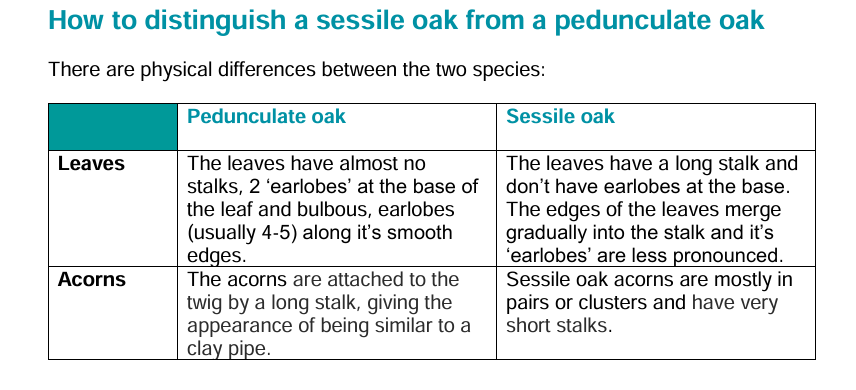
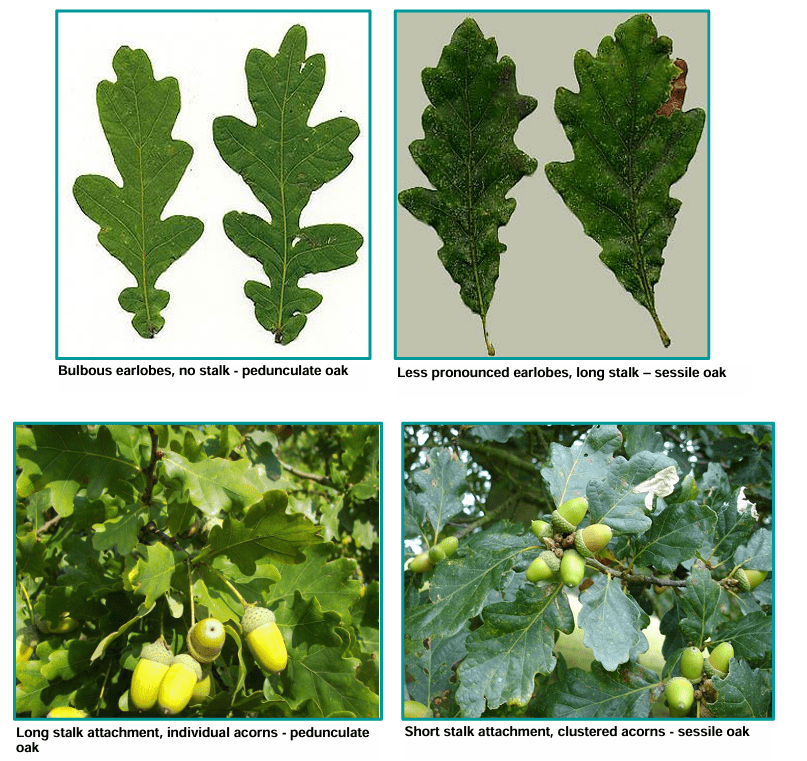
Pedunculate Oaks leaves and acorns in autumn are very distinctive. In some areas of the Low Weald, especially on the Greensand Ridge there are Sessile Oaks, e.g. at Rakes Hanger, near Liss (hanger in West Sussex)

A useful guide from Natural Resources Wales

Pedunculate Oak; tree with yellow-brown leaves

Trunk of Pedunculate Oak. The sides of trunks which receive most light are often covered in lichens. This maiden Oak is on the edge of the shaw

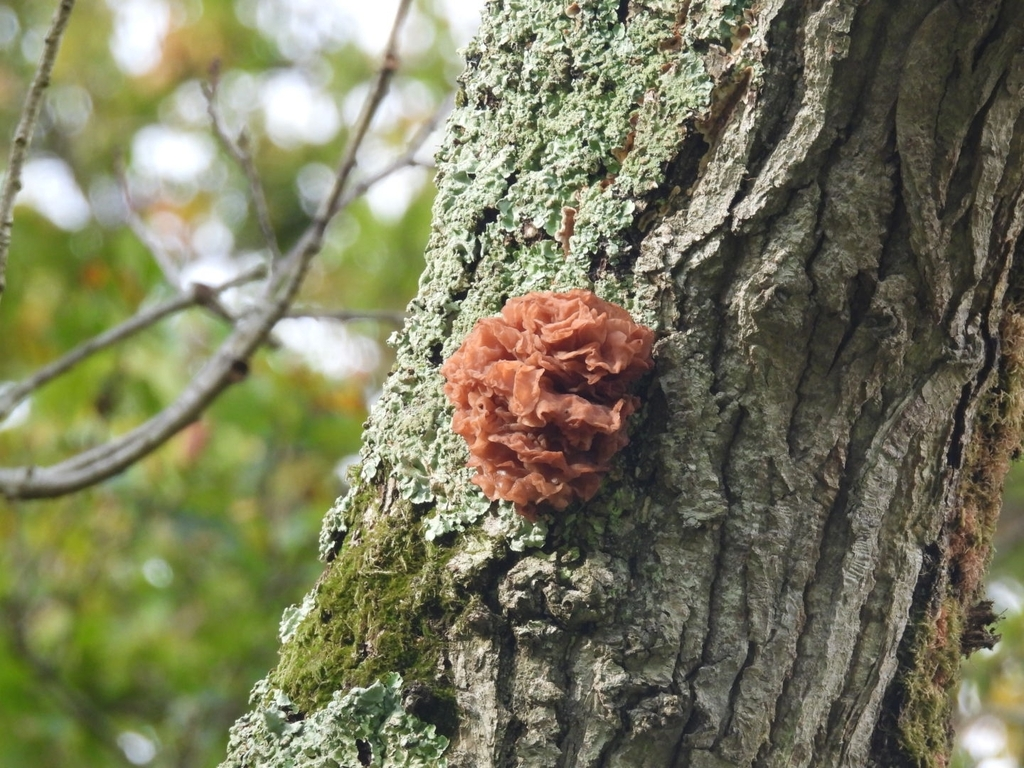
This Oak also has a beautiful fingus growing on it:

Phaeotremella foliacea Leafy Brain

Fraxinus excelsior Ash

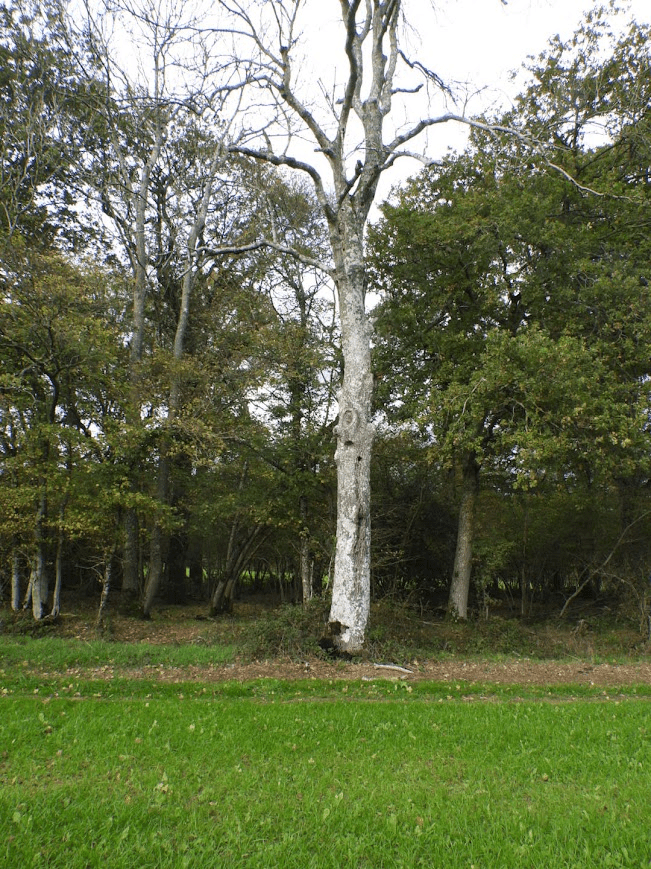
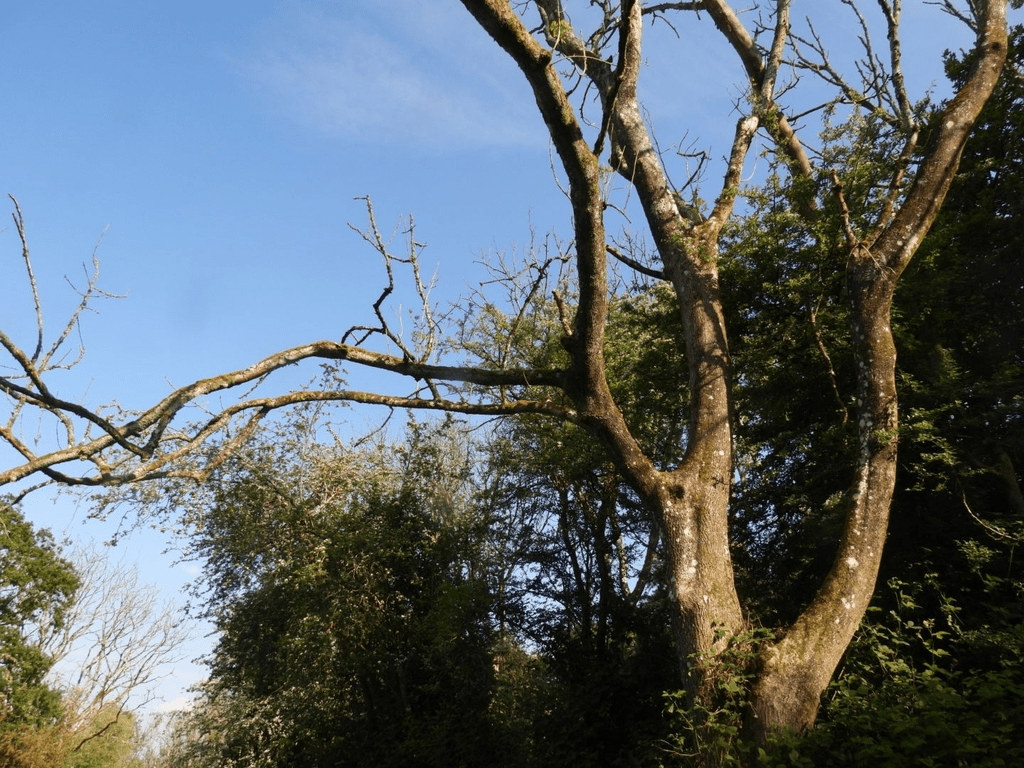
This maiden Ash, on the edge of the Shaw, is typical of an Ash with Ash Dieback Disease, with no leaves (in October, whilst Ash is deciduous, you would except to see some leaves)

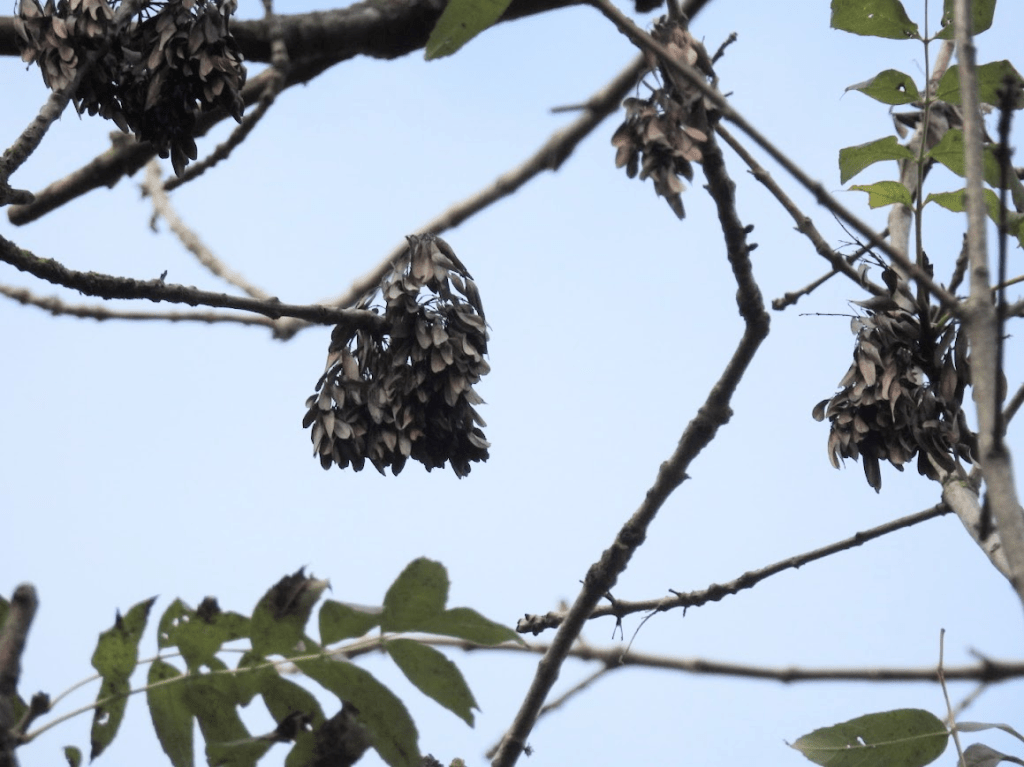
When Ash has leaves their leaves are very characteristic; as are their samaras.

Samaras are the winged, single-seeded fruits, commonly called “ash keys, that can be seen in Autumn and Winter within the shaw were healthier Ash showing these features:

Ash is an extremely important tree for lichens; it is the tree species with the second highest diversity of lichens, according to the British Lichen Society

Ash dieback will kill up to 80% of ash trees across the UK. At a cost of billions, the effects will be staggering. It will change the landscape forever and threaten many species which rely on ash.

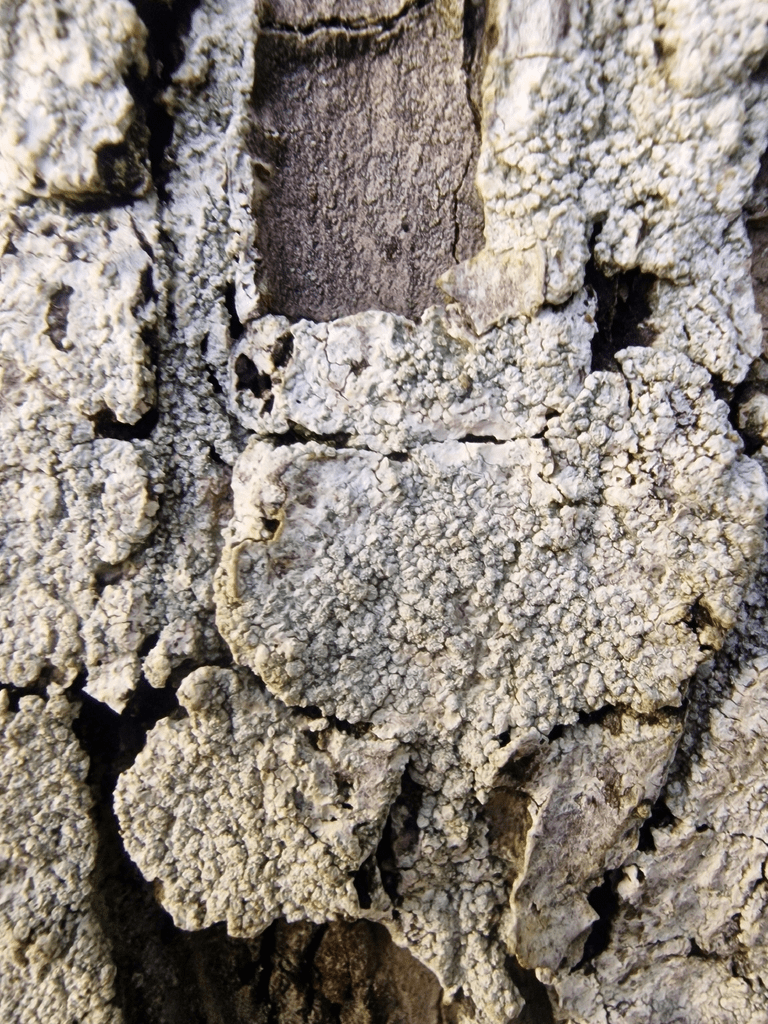
Varicellaria hemisphaerica is a rare UK lichen, and it is on the Ash on the south-facing edge of the shaw; this Ash is dying

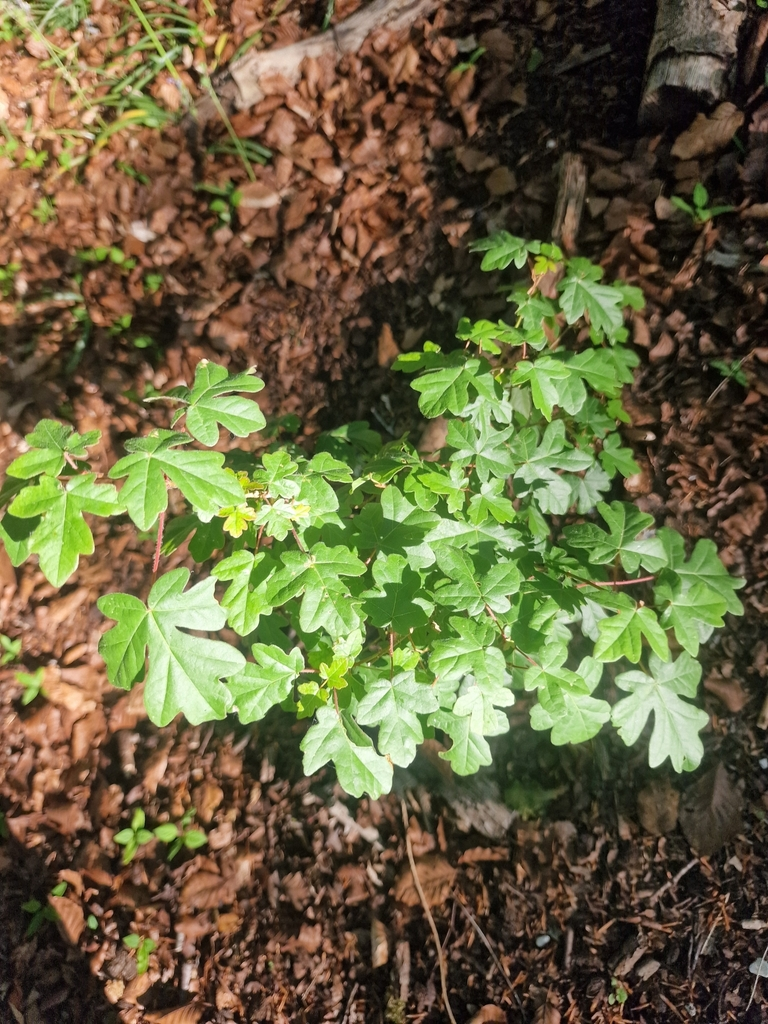
Acer campestris, Field Maple

Crataegus monogyna, Hawthorn

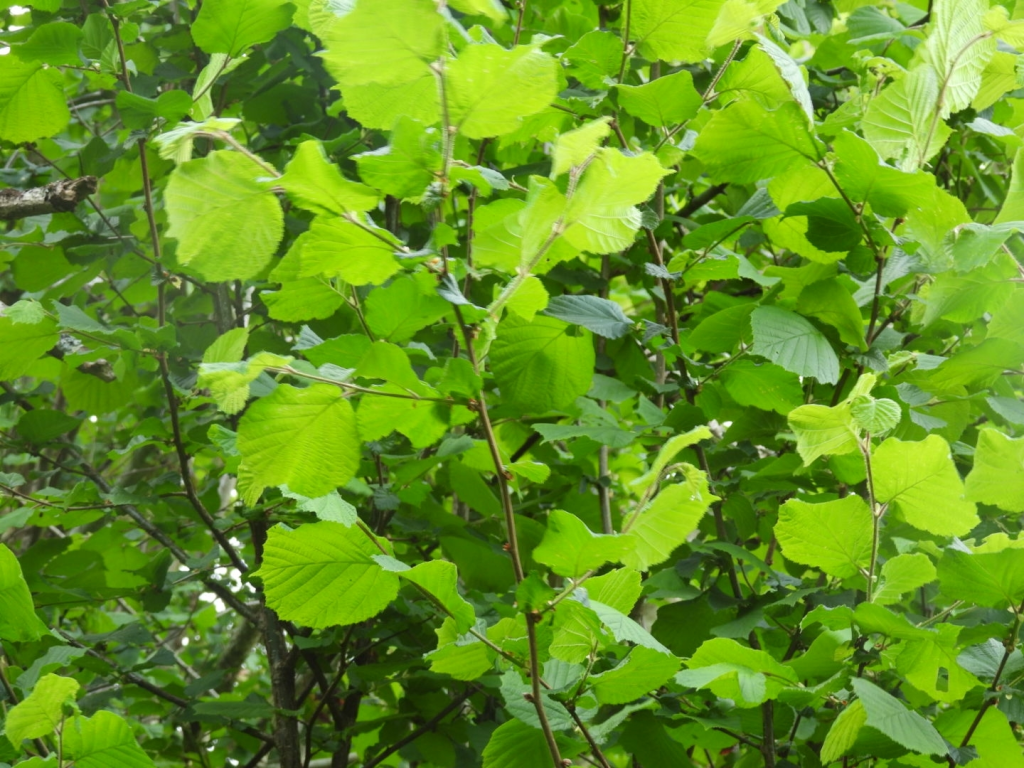
Corylus avellana Hazel

Taxus baccata English Yew, in Baker’s Shaw

Vascular plants and Lichens at Newtimber Holt, South Downs scarp face ancient woodland, West Sussex, nr. Brighton. 17.05.25

Newtimber Holt is a small but very biological interesting area of ancient woodland on Newtimber Hill. It is owned by the National Trust and managed by Saddlescombe Farm. It is probably the most interesting chalk scarp face ancient wood along the eastern South Downs. It is easily reachable by Stagecoach bus 17 stops Newtimber, Redhouse Farm or Newtimber, Beggar’s Lane Stagecoach 17 Timetable

When we think of ancient woodland, many people may think about our Temperate Rain Forest (Atlantic Woodland) in northwest Scotland, north Wales of the West Country. Or we may think of our nationally famous medieval royal deer parks, e.g. the New Forest, Hatfield Forest, or Windsor Great Park (pasture woodland).

Or if we’re in Sussex, we may think of our High Weald ancient Ghyll Woods, which have microclimates similar to Atlantic woodland; or Sussex’s medieval deer parks (pasture woodland) e.g. Parham Park, or the (very rare) chalk dry valley woods, e.g., East Dean Park Wood (itself once a Medieval deer park) or the very rare dip slope ancient woodland of Pad’s Wood. Or perhaps we may think the numerous small ancient woods, some tiny, relict stands, of the Sussex Low Weald; although much ancient woodland in the Low Weald has been lost to development, especially new housing, especially in the Brighton to Crawley corridor of Hassocks, Burgess Hill and Haywards Heath.

The ancient woodland of the scarp slopes of the South Downs relicts of the former wider woodland that covered the South Downs, which was cleared and then grazed by sheep in the distant past, are probably least known ancient woodland in the UK. When we think of the Down’s we think of its historic sheep gazed short calcareous grassland that supports rare vascular plants and invertebrates; it is biologically magnificent and of national ecological importance, and itself rare now that business arable and pastoral farming has taken so much of the short grassland. But “23% of the South Downs National Park is covered by woodland, [but only half of this [11.5%] has been there for over 400 years [ancient woodland]. “ Trees of the South Downs

Only 4% of the South Downs is calcareous short grassland;  almost exactly the same percentage as when the national park came into being. When we think of the South Downs we think of rolling hills of short calcareous grassland; but very little of it is that; most of it is farmed arable land, and 23% is woodland (with only half of that being ancient woodland).

It is important to separate ancient woodland from ancient trees. Woodland classed as Ancient Semi-Natural Woodland, which are mainly made up of trees and other vascular plants native to the site, that have constantly regenerated for over 500 years, some have very few or no ancient trees; they are just areas that have been wooded continuously since at least 1600. Very few trees in ancient woodland are themselves ancient; although some might be.

Many notable, veteran, and ancient trees can be found not in ancient woods but in pasture, former deer parks or hedges. For example, many of the most ancient Pendunculate Oaks, Quercus robur, of the Low Weald are in grazing pasture, probably relicts of former woodland that was cleared for pasture and left for shelter for livestock, or planted as field, parish or other boundaries in hedgerows

At Newtimber Holt there are some magnificent ancient trees in ancient Woodland

This post attempts to refocus our attention  on the ancient woodland of the scarp faces of the South Downs. There are areas of ancient woodland on the dip slopes of South Downs in West Sussex; but most of these are replanted ancient woodland, replanted with conifers or Sweet Chestnut. There are a few notable exceptions, such as Pads Wood (private), which is still ancient and semi-natural woodland.

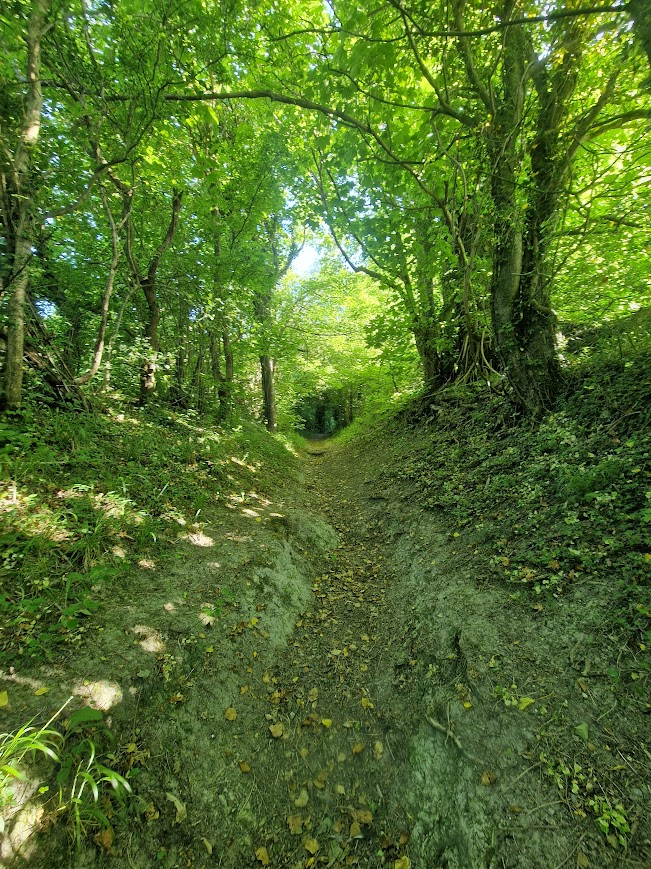
An ancient Drovers Route through Newtimber Holt

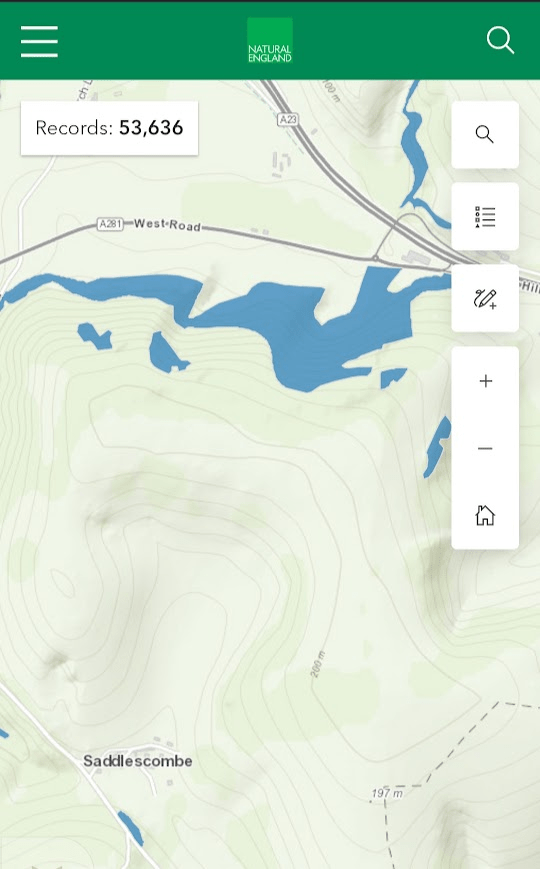
Natural England’s, Ancient Woodland map

from: https://naturalengland-defra.opendata.arcgis.com/datasets/a14064ca50e242c4a92d020764a6d9df

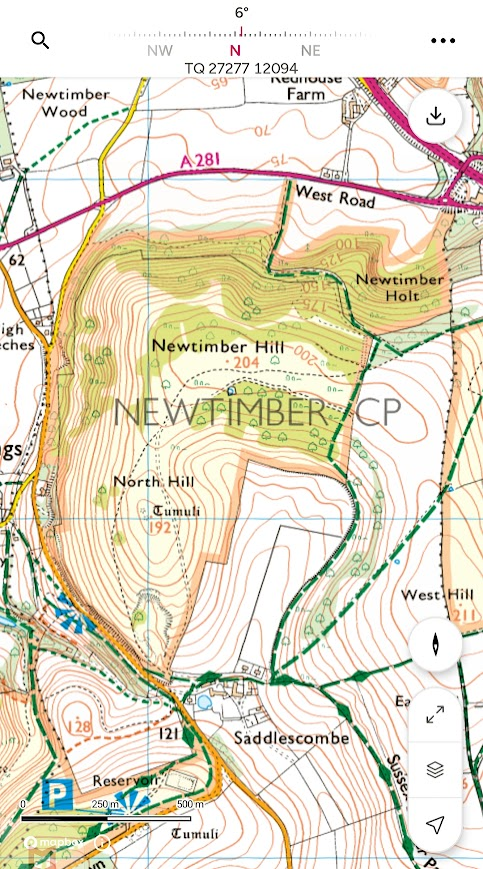
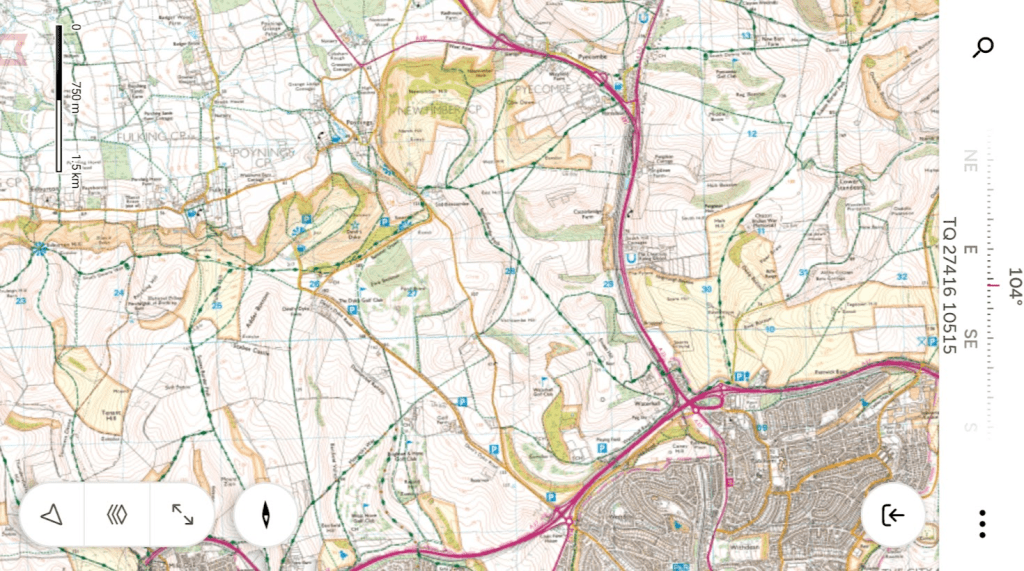
Screen captures Ordnance Survey Map App and Nature England Ancient Woodland online map © Crown Copyright

Ancient Woodland Indicator Vascular Plants at Newtimber Halt

Ancient Woodland Indicator Vascular Plants are listed in Francis Rose Indicators of ancient woodland – the use of vascular plants in evaluating ancient woods for nature conservation, British Wildlife 10.4 April 1999

Acer campestre Field Maple

Allium ursinum Ramsons

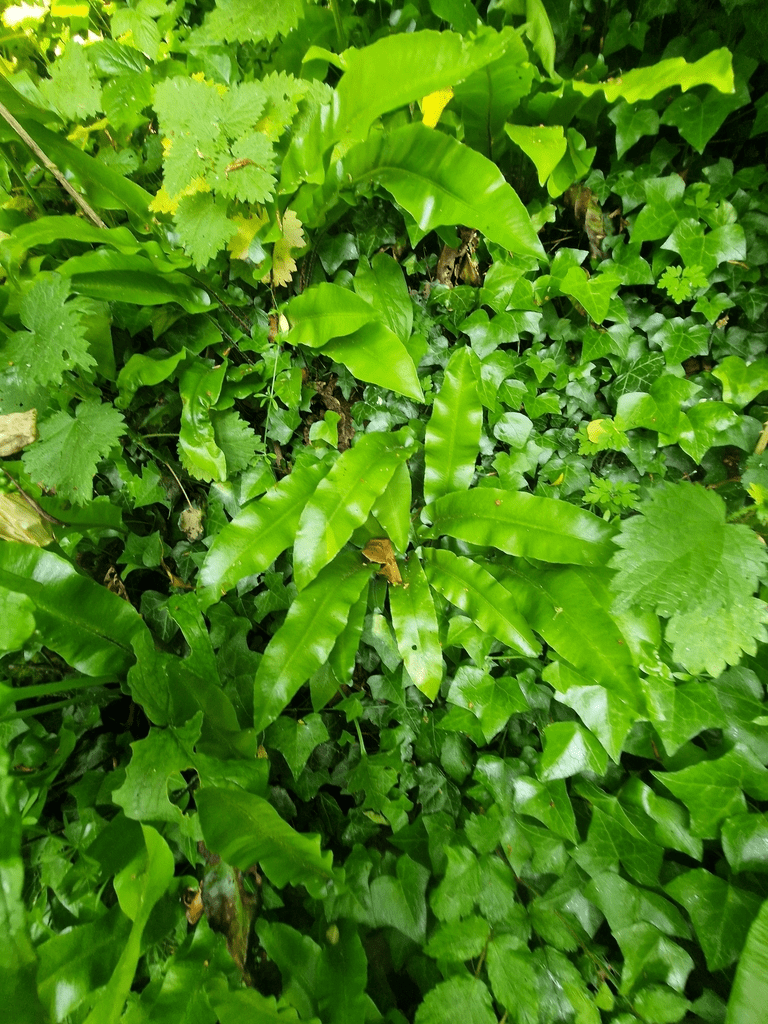
Asplenium scolopendrium Hart’s-tongue Fern

Hyacinthoides non-scripta Bluebell

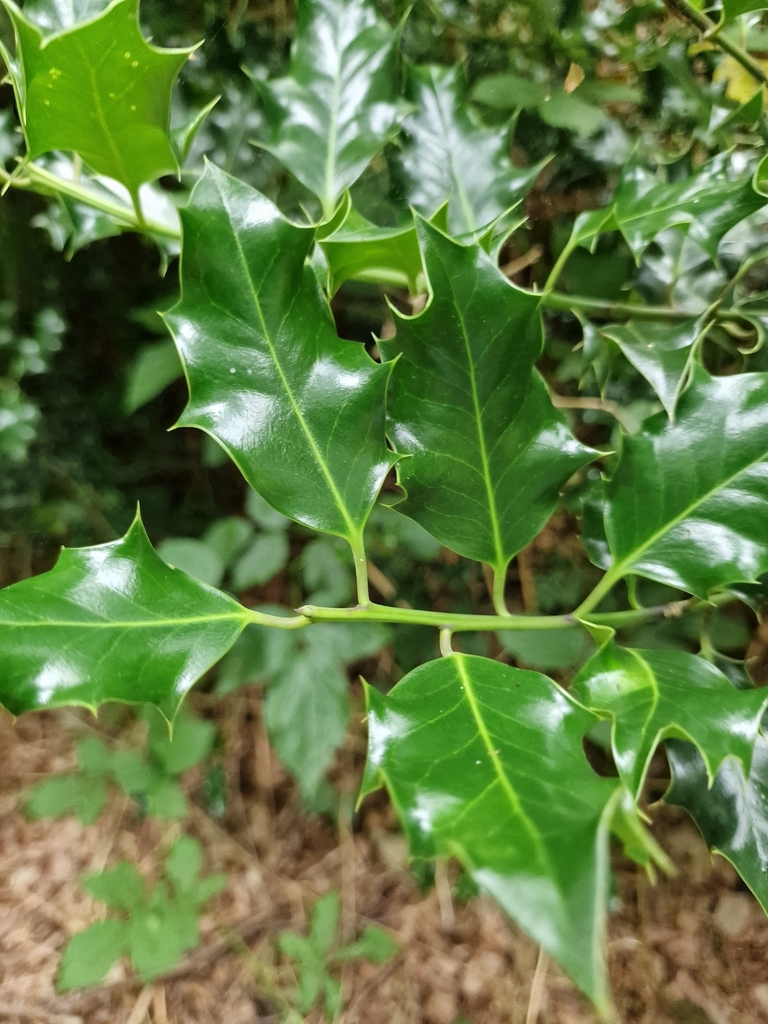
Ilex aquifolium European Holly

Lamium galeobdolon Yellow Archangel

Melica uniflora Wood Melick
Mercurialis perennis Dog’s Mercury

Polystichum setiferum Soft Shield Fern

Sanicula europaea Sanicle

Ulmus glabra Wych Elm

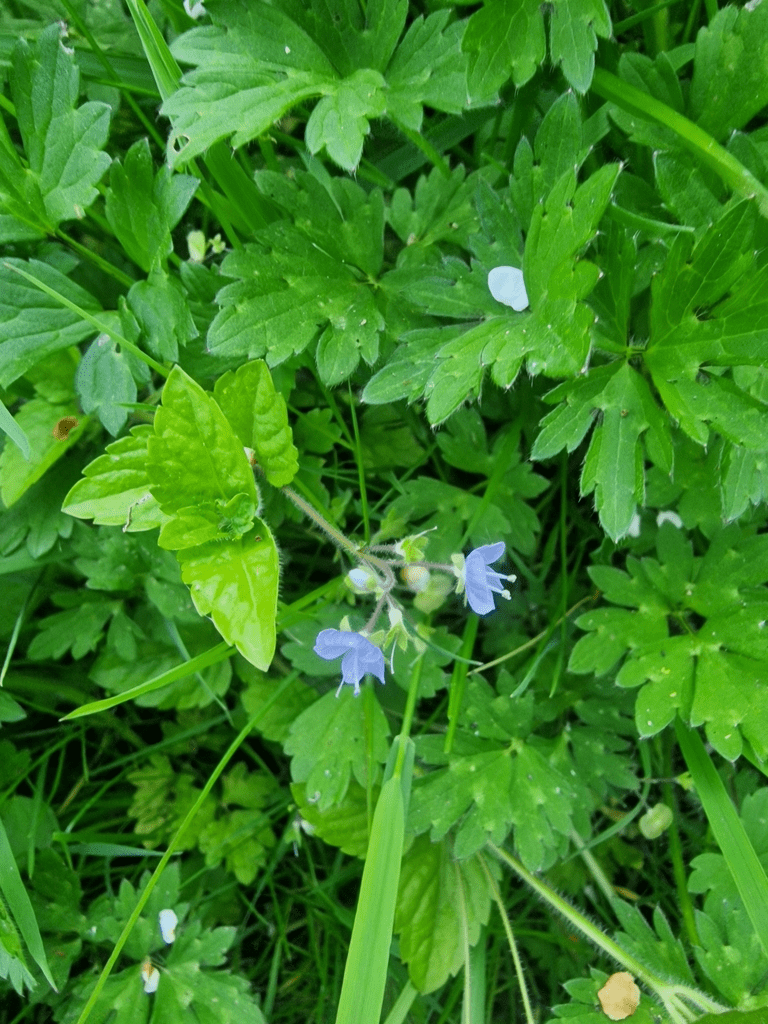
Veronica montana Wood Speedwell

Other vascular plants

Fragaria vesca Wild Strawberry

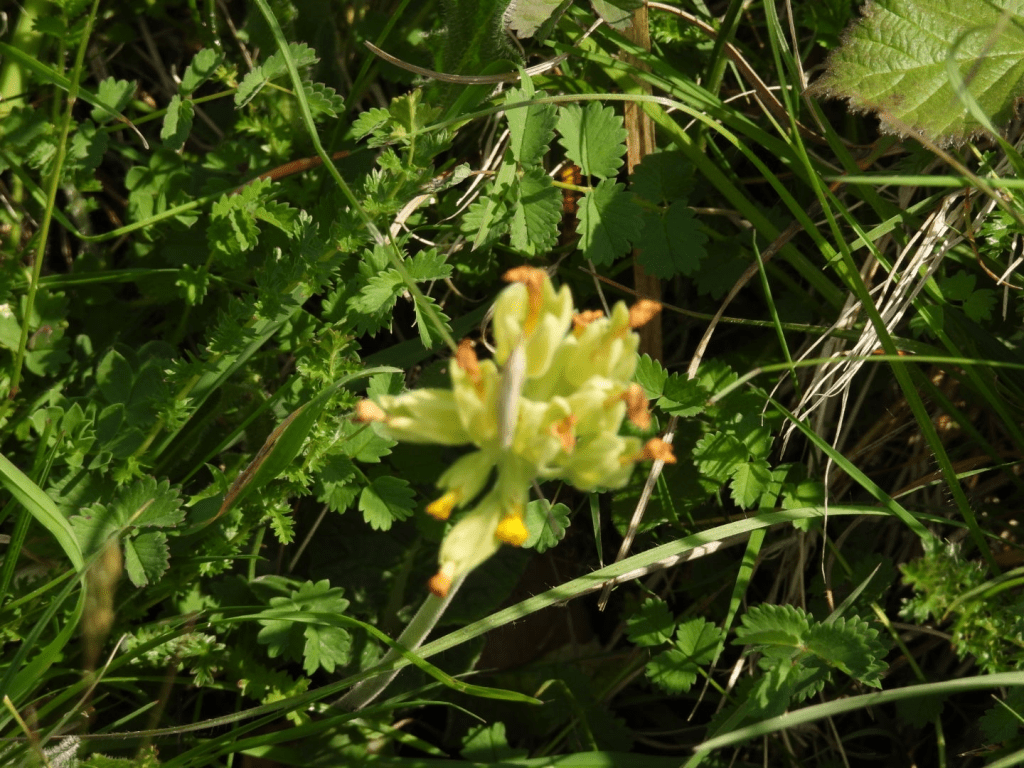
Primula veris Cowslip

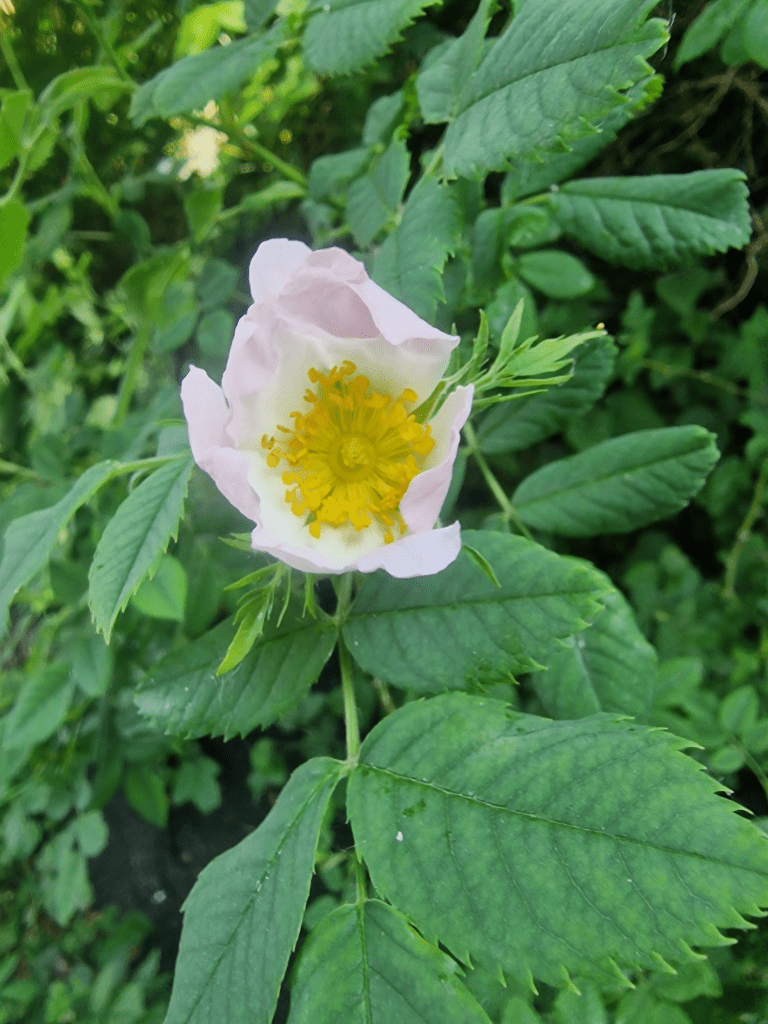
Rosa canina Dog-Rose

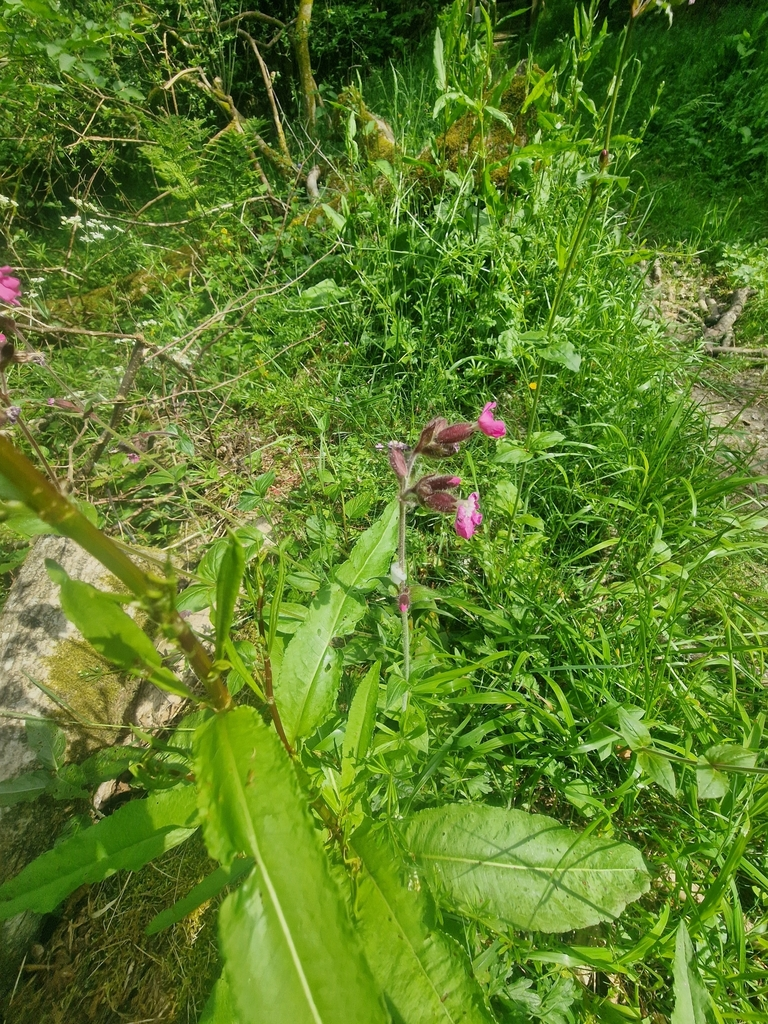
Silene dioica Red Campion

Cardamine flexuosa Wavy Bittercress

Geum urbanum Wood Avens

Ajuga reptans Bugle

Geranium robertianum Herb Robert

Genus Rubus Brambles

Lithospermum officinale Common Gromwell

Veronica chamaedrys Germander Speedwell

Sanguisorba minor Salad Burnet

A view of a woodland glade in Newtimber Holt

Arum maculatum Cuckoo-Pint

Viola riviniana Common Dog-Violet

Carex sylvatica Wood Sedge

Poa trivialis Rough Meadow-Grass

Rumex sanguineus Wood Dock
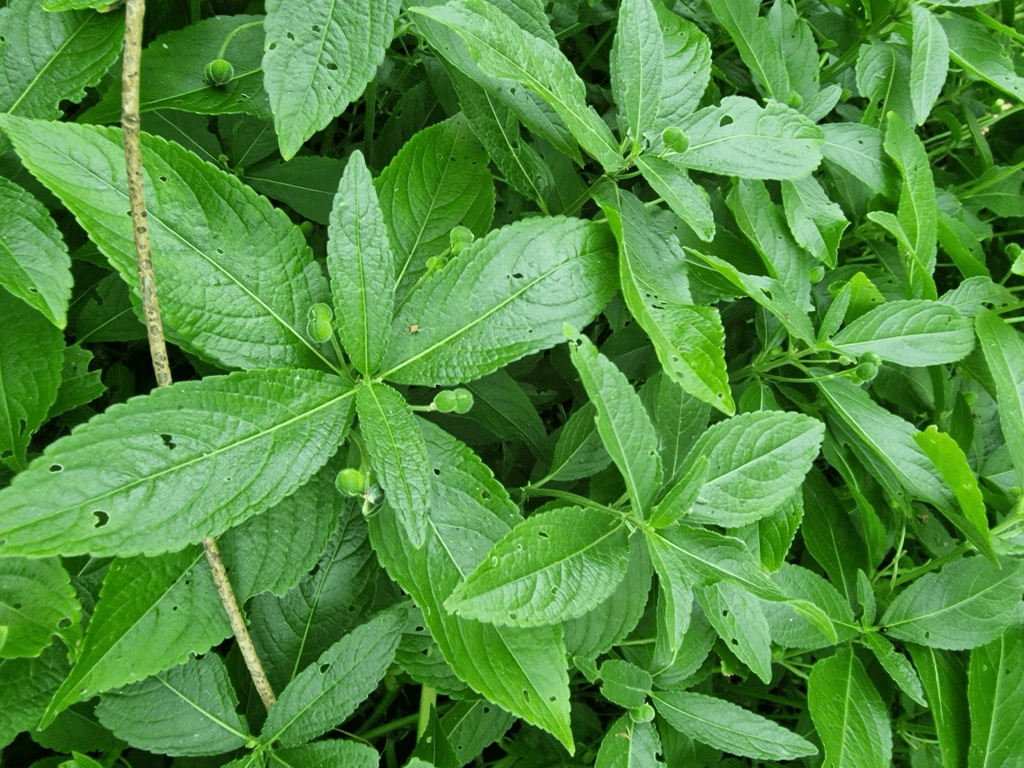
Ranunculus repens Creeping Buttercup

Creeping Buttercup, Wood Dock and Rough Meadow Grass

Trees

Tilia platyphyllos Large-leaved Lime

Large leaved lime is the rarest [of the Limes] and although planted for several hundred years most ancient trees are confined to woodland coppice on chalk or limestone soils. Woodland Trust Ancient Tree Inventory

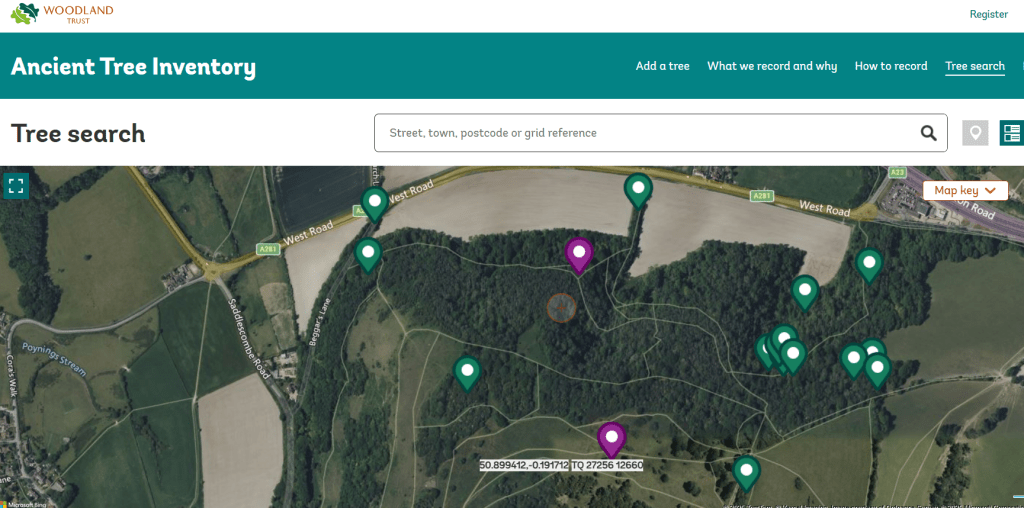
The Woodland Trust Ancient Tree Inventory, shows these veteran (green flags) at Newtimber Hold.

To search the Ancient Tree Inventory for you area, click here.
Screen shot of https://ati.woodlandtrust.org.uk/tree-search/?v=2775353&ml=map&z=16&nwLat=50.90261902476064&nwLng=-0.20810587989501528&seLat=50.89620438008731&seLng=-0.1753185568969684

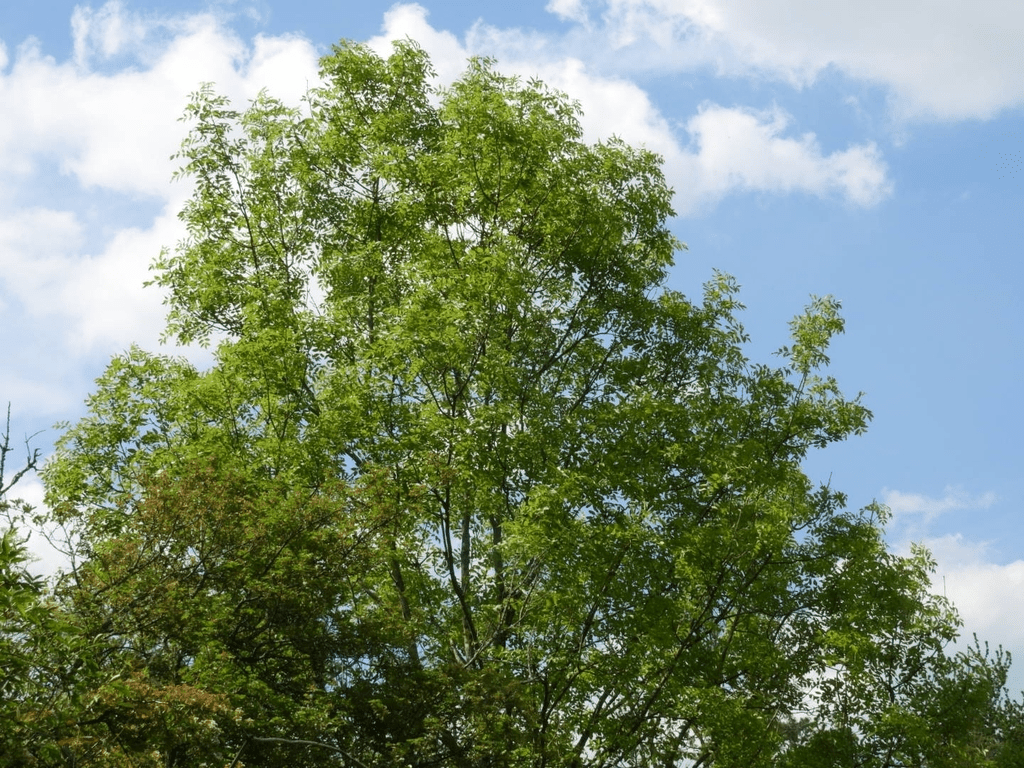
Fraxinus excelsior Ash

Quercus robur English Oak

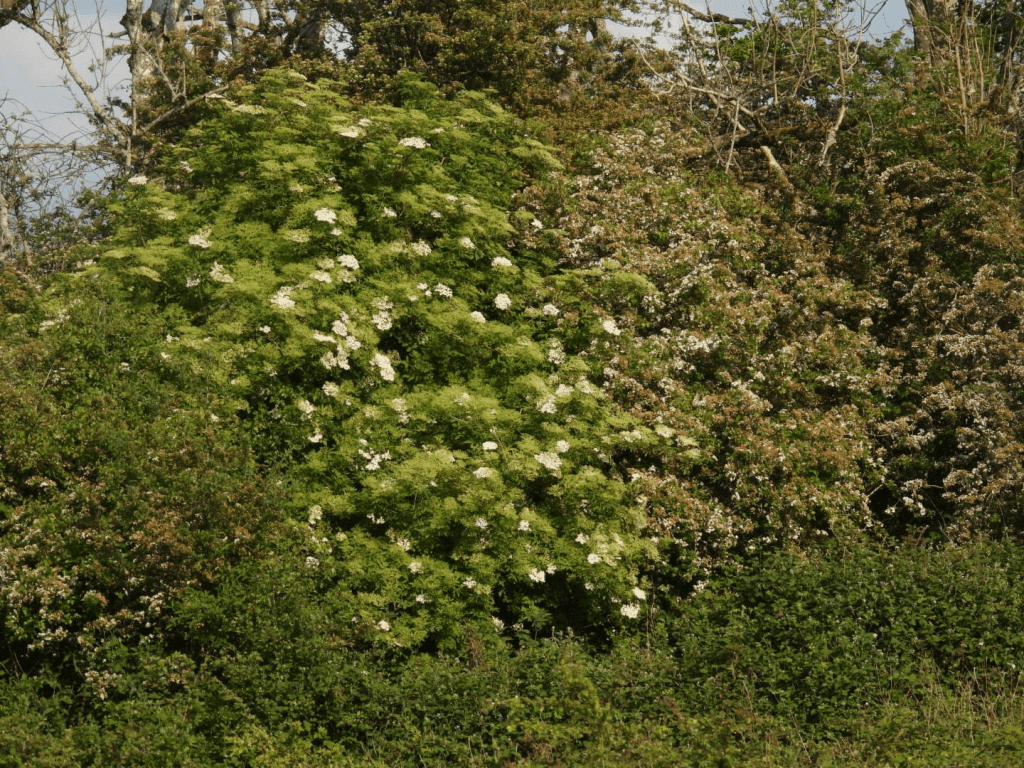
Sambucus, nigra Elder and Hawthorn, Crataegus monpgyna

Corylus avellana Hazel

Taxus baccata English Yew

Fagus sylvatica Beech There are several veteran Beech at Newtimber

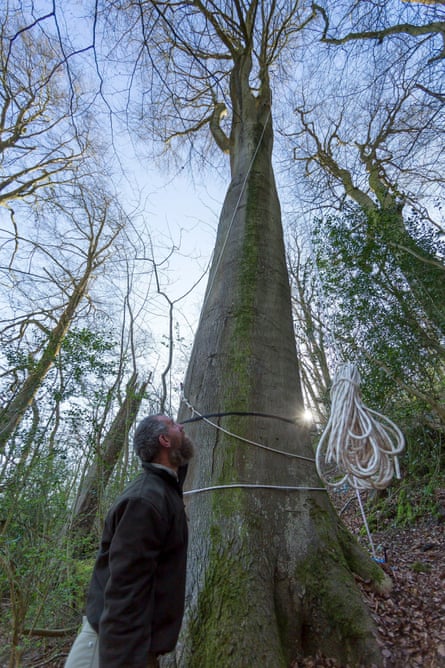
 144ft beech in Sussex named Britain’s tallest native tree

A beech tree on the South Downs in West Sussex is thought to be almost 200 years old and beat the previous champion by 3ft

A beech tree standing 144ft (44 metres) high has been declared the tallest native tree in Britain.

The tree, which is thought to be almost 200 years old, stands in Newtimber Woods on the National Trust’s Devil’s Dyke Estate in West Sussex, in the South Downs landscape.

The discovery of a new record for the tallest native tree title was made by Owen Johnson, the honourable registrar for the Tree Register, a charity which holds records of more than 200,000 exceptional trees in Britain and Ireland.

He was alerted to the possible new champion, one of a clump of trees planted together which has achieved its great height by continued competition to reach the light and being allowed to grow unmanaged for 90 years, by dendrologist Peter Bourne.

Beech tree standing 144 feet (44 metres) high has been declared the tallest native tree in Britain
The full height of Britain’s champion native tree. Photograph: John Miller/National Trust/PA

Dr Johnson said: “I didn’t quite believe Peter when he said the tallest tree in the woods could be 44 metres tall as I know the South Downs so well. When I finally got around to visiting I found my scepticism entirely unjustified. Guardian 15.04.2915 Press Association

Lichens

On Large Leaved Lime

Lepraria finkii Fluffy Dust Lichen

Phlyctis argena Whitewash Lichen

On Beech

Enterographa crassa

Enterographa crassa is often found in the bases of old beech trees, but it is very difficult to see as it is very small. Their Apothecia (fruiting bodies, in this species, tiny black dots are usually very numerous, brown-black, deeply immersed, without a rim, minutely punctiform or ± broadly elliptical in surface view, 0.1–0.25 × 0.05–0.1 mm, often in dotted or thread-like lines British Lichen Society Enterographa crassa
Cladonia caespiticia Stubby-stalked Cladonia

Fuscidea lightfootii

Lecidella elaeochroma Lecidella Lichen

Xanthoria parietina Golden Shield Lichen

On Ash

Flavoparmelia caperata Common Greenshield Lichen

Parmotrema perlatum Black Stone Flower

Punctelia jeckeri Powdered Speckled Shield Lichen

Hypotrachyna afrorevoluta

Parmelia sulcata Netted Shield Lichen

On Hazel

Probably Graphis scripta Common Script Lichen; very common on Hazel and other smooth-barked trees. The Graphidaceae (script lichen) family can only be definitively identified to species level with microscopy of spores.

Arthonia atra

Unknown Tree

Punctelia subrudecta Powdered Speckled Shield Lichen

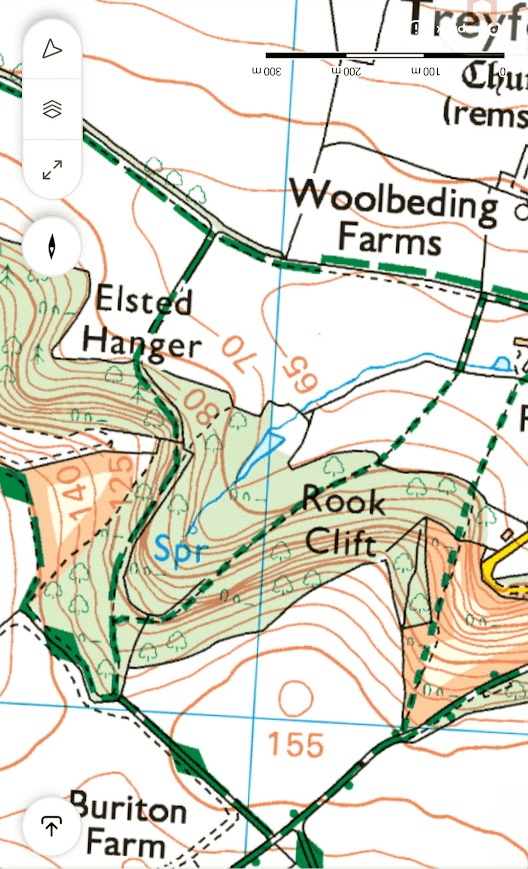
Rooks Clift, Harting Downs, West Sussex. 13.05.25

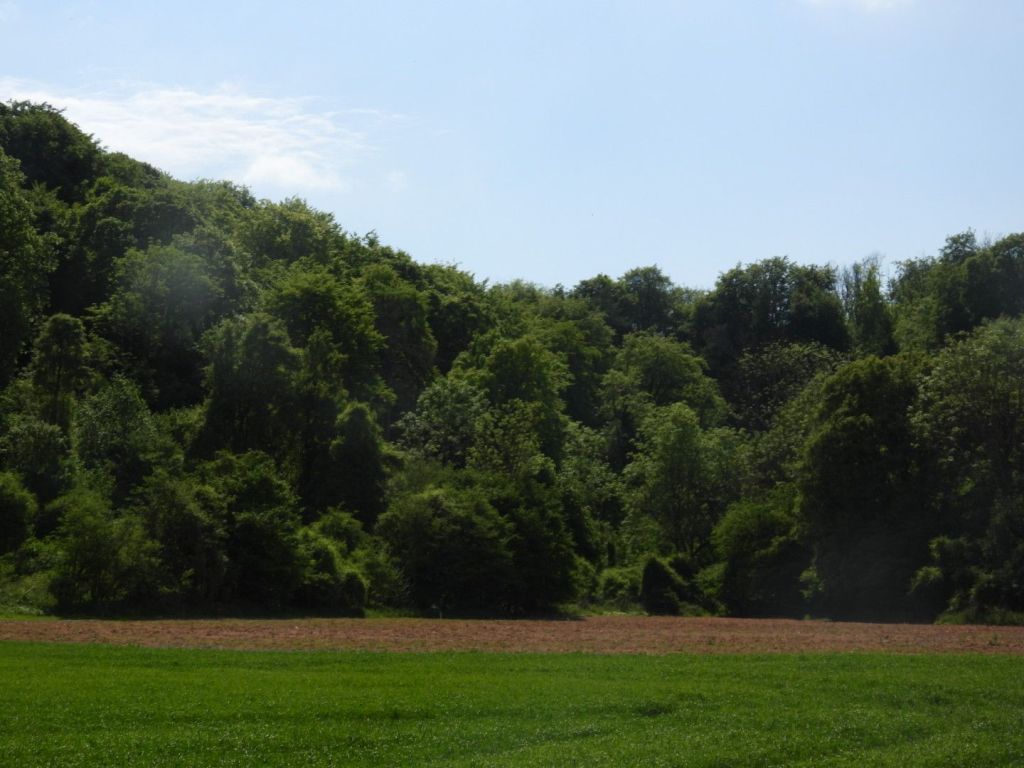
This is the most beautiful area of downland ancient woodland I have ever visited. It is a “hanger wood”; a wood of the steep slopes of an escarpment. Ancient woodland is much rarer on the South Downs than in the Low and High Wealds of Sussex, due to historic sheep gazing; although the short calcareous grassland that supports rare vascular plants and invertebrates because of that grazing is biologically magnificent and of national ecological importance. Sadly, short calcareous grassland makes up only 4% of the South Downs.

Most of the remaining ancient woodland of the South Downs is on the scarp face of the Downs; such as at Newtimber Holt, and the scarp from Steyning to just south of Washington, and Rooks Clift. Although there are some very rare examples of chalk dry valley ancient woodland e.g. East Dean Park Wood SSSI (in the Goodwood Estate, private) and dip slope ancient woodland e.g. Pads Wood SSSI (in the Uppark Estate, private)

The extent of the coppiced Large-Leaved Lime, and ground flora including abundant Solomon’s Seal and Ramsons was extraordinary.

Large Leaved Lime, Tilia platyphyllos

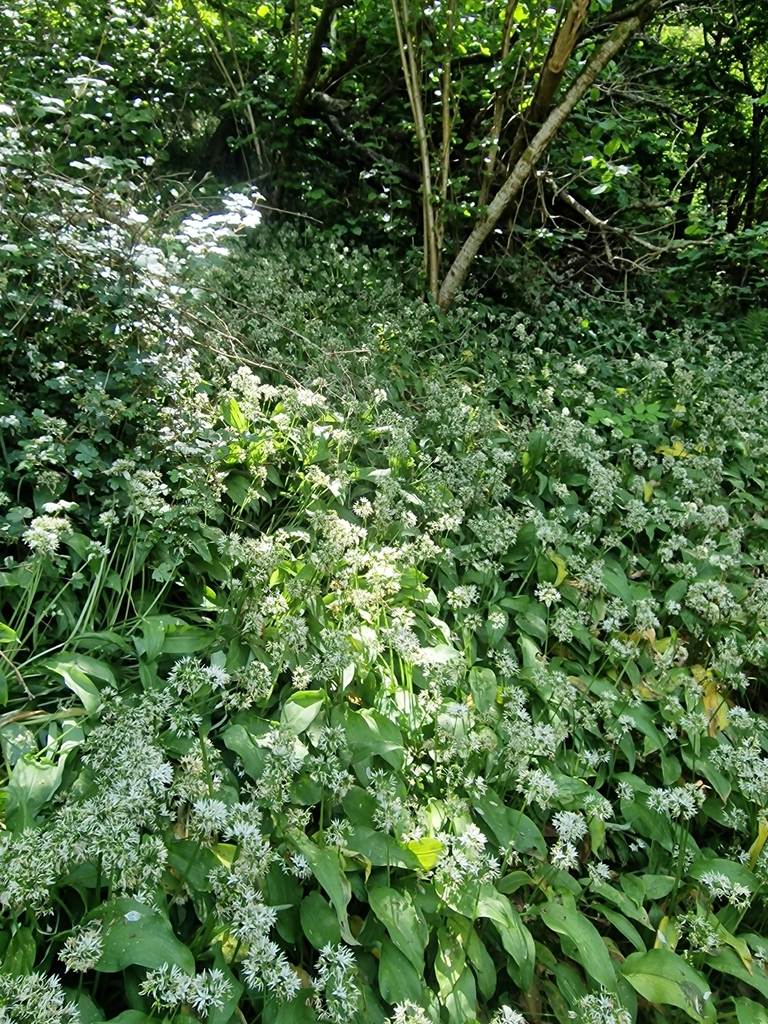
Ramsons, Allium ursinum, and Solomon’s Seal, Polygonatum multiflorum

Rook Clift is a small wooded combe on the scarp slope of the South Downs. …
This site is an ancient woodland which remains in a semi-natural condition. Large leaved lime Tilia platyphyllos dominates the canopy, together with ash Fraxinus excelsior and some beech Fagus sylvatica. Large leaved lime is a nationally scarce tree, with its natural range concentrated on the limestones of the Wye Valley and Peak District. Thus the high concentration of mature coppice stools, occurring on chalk, make this site nationally important and unique within West Sussex and the South Downs Natural Area.

… The field layer is dominated by vernal species such as ramsons Allium ursinum and bluebell Endymion non-scripta, or shade tolerant species including dog’s mercury Mercurialis perennis, spurge laurel Daphne laureola and sanicle Sanicula europaea.

The steep sided valley around the steam is more open with a canopy dominated by ash and wych elm Ulmus glabra. Here the field and ground layers are more developed with stands of hart’s tongue fern Phyllitis scolopendrium and soft shield fern Polystichum setiferum abundant, and opposite-leaved golden-saxifrage Chrysosplenium oppositifolium common the stream side.
Helicodonta obvoluta and several which are indicative of ancient woodland
Rooks Clift Nature England SSSI specification

There are many ancient woodland indicator species in Rooks Clift. Aside from Large-Leaved Lime, Ramsons, and Solomons Seal, I saw Yellow Archangel, Wood Spurge, Wych Elm, and Enterographa Crassa (a relatively common lichen in old Southern woodlands, but on the indices of Ecological Continuity for Scotland). The wood also has Spurge-Laurel; but I didn’t find any.

Yellow Archangel, Lamium galeobdolon

Wood Spurge, Euphorbia amygdaloides

Wych Elm, Ulmus glabra

Enterographa crassa lichen

on Large Leaved Lime

Dog’s Mercury, Mercurialis perennis

Eld Ear Lichen, Normandina pulchella, on the liverwort Forked Veilwort, Metzgeria furcata. Elf Ear lichen always grows on bryophytes (mosses and liverworts)

Looking up at Rooks Clift from the Greensand fields of the Low Weald.

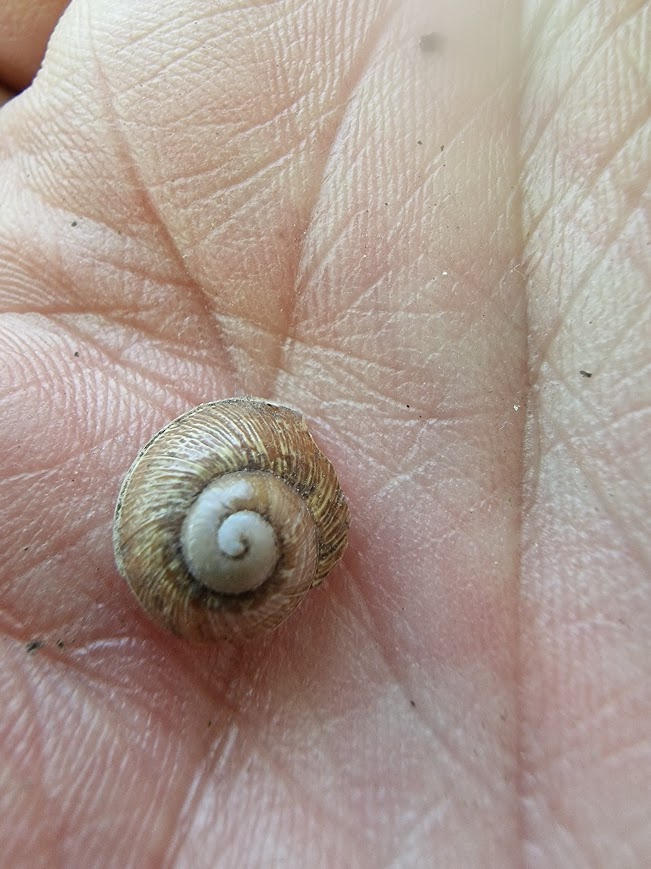
This wood also supports a rich mollusc fauna including the Red Data Book species Helicodonta obvoluta and several which are indicative of ancient woodland. [SSSI specification]. On a visit the week before, focussed on molluscs, with a friend and mollusc expert, we didn’t find Helicodonta obvoluta, but we did find these common snails:

Hairy Snail, Trochulus hispidus Genus Hemicycla;  Round-mouthed Snail Pomatias elegans

Possibly Macrogastra ventricosa  in the family Clausiliidae, the door snails

Looking up to Rooks Clift from the farmland at the bottom (lower greensand of the Low Weald)

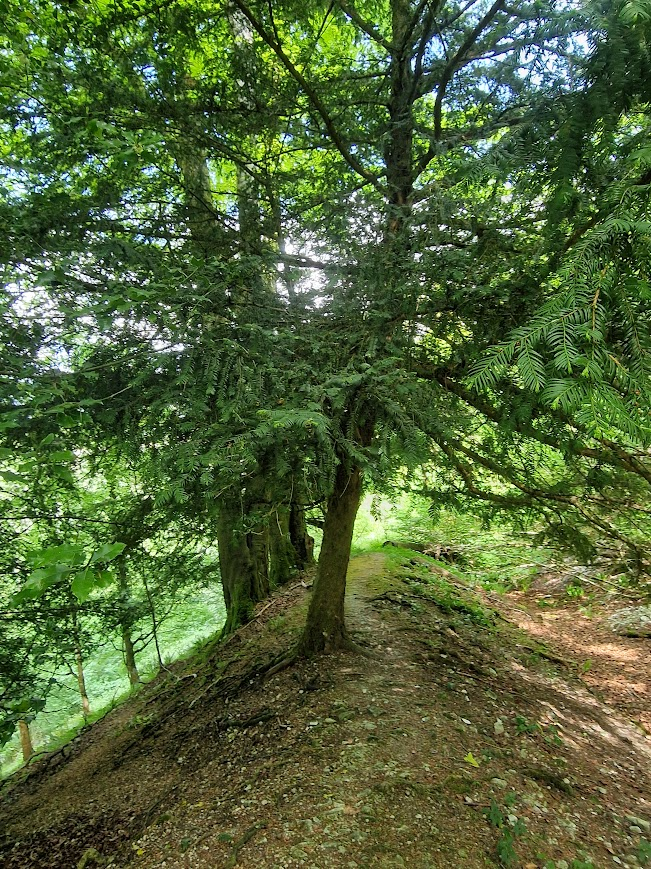
Looking down the footpath, with native Yew Taxus baccata, a native South Downs Tree. The path follows a ancient bostal, a Sussex dialect word referring to medieval track running up the scarp slops in the South Downs, typically diagonally to reduce the gradient.

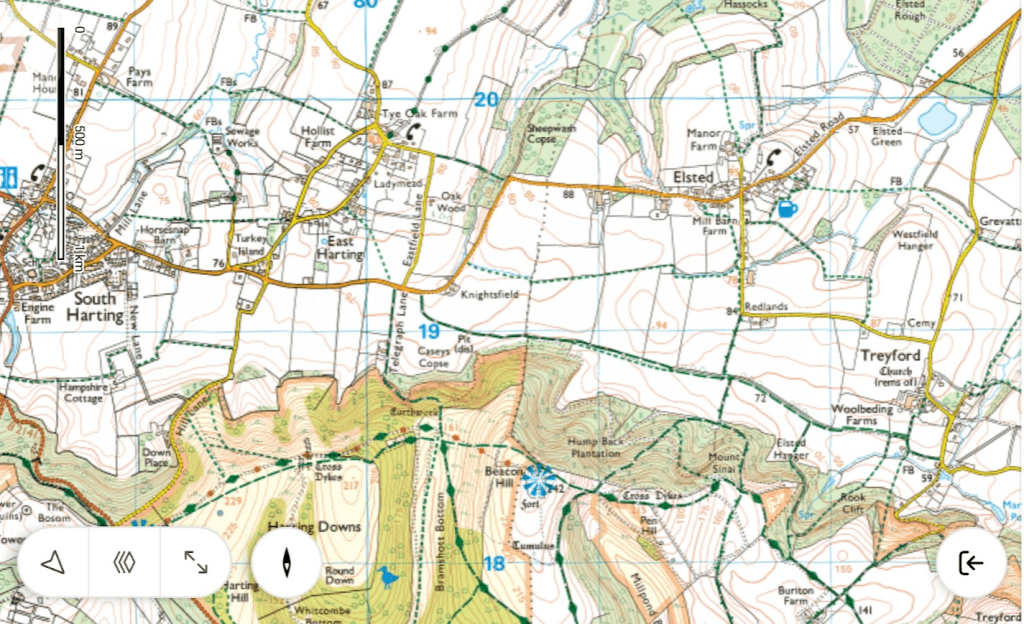
Location: near South Harting, West Sussex, between Chichester and Petersfield

Screen captures Ordnance Survey Map App from the © Ordnance Survey Crown Copyright

I got to Rook Clift by public transport. Train to Chichester then Stagecoach bus to South Harting 54 Bus Timetable It is a very irregular bus service with only 5 busses a day; so plan carefully!

The ancient woodland of the Low Weald and Downs. Looking at plants. How do I know I am walking in ancient woodland? Butcher’s Wood, Lag Wood and Newer Copse (Wolstonbury Hill) 07.04.25

Home to myth and legend, where folk tales began. It fuelled our ancestors and still houses thousands of species. Ancient woodland has grown and adapted with native wildlife, yet what remains only covers 2.5% of the UK. Woodland Trust

This afternoon I walked through the ancient woodland of Butcher’s Wood (Woodland Trust), Lag Wood (private but with permissive access), both just south of Hassocks and Newer Copse (Wolstonbury Hill, National Trust) near Clayton. I am a volunteer with the Woodland Trust and Action for Rural Sussex’s Lost Woods of the Low Weald and Downs project and my particular biological interest is the lichens of woods, and I lead introduction to lichen walks. But in spring, my attention is drawn to the beauty of wild plants in ancient woodland.

This post is written for the general public; especially those new to wild plant identification.

All these woods are a short walk from Hassocks Rail Station or the Jack and Jill bus stop at Clayton (Metrobus 270, 271, 272, 273)

Butcher’s Wood and Lag Wood are woods of the Low Weald (and their underlying geology is the clay of the Gault Formation). Newer Copse, Wolstonbury Hill, is woodland of the South Downs (chalk of the West Melbury Marly Chalk Formation). Underlying geology determines soil type, and this affects which plants grow where. You can find out the geology of anywhere in the the UK by using the British Geology Survey Geology Viewer Viewer

Butcher’s Wood

I could find out if I was in ancient woodland simply by consulting Natural England’s index of ancient woodland; it’s map of ancient woodland can be explored here: Natural England Ancient Woodland; and these three woods are indeed Ancient Woodland (Ancient semi-natural woodland (ASNW))

Natural England classifies ancient woodland thus:

Firstly,  woodland can be calassified as Ancient Semi-Natural Woodland; mainly made up of trees and shrubs native to the site, usually arising from natural regeneration.  They are areas that have been wooded continuously since at least 1600. This does not mean the trees in ancient woodland are themselves ancient; although some might be.

Moreover, ancient trees can be found not in woods. Ancient Pendunculate Oaks, Quercus robur, can be found in Low Weald grazing pasture and hedge rows.  These are probably relics of former woodland that was cleared for pasture and left for shelter for livestock or for ield boundaries.

The oldest trees in Sussex are polllarded pasture Oaks in ancient medieval Deer Parks; those in the Low Weald include Danny Park south of Hurspierpoint and Plashett Park north of Ringmer. There is only limited public access by public footpath to these parks

Alternatively, Natural Englsnd designates ancient woodland as Plantations on Ancient Woodland Sights (or Ancient Replanted Woodland) – replanted with conifer or broadleaved trees (e.g. Sweet Chestnut, Castanea sativa) that retain ancient woodland features, such as undisturbed soil, ground flora and fungi

Another way of determining whether you are in ancient woodland, without looking at the Natural England ancient woodland maps, is to look at the plants growing in the woodland you are walking through. Certain plants indicate that the wood you are walking through may be ancient; as these plants take a bery long time to establish themselves in woods.

This post illustrates the Ancient Woodland Indicator Plants that I found in Butcher’s Wood, Lag Wood and Newer Copse today. Ancient Woodland Indicator Plants are listed in Indicators Of Ancient Woodland – the use of vascular plants in evaluating ancient woods for nature conservation. Francis Rose, British Wildlife 10.4 April 1999, Pages 241-251. At the end of this post is a full list of the ancient woodland indicator plants listed by Rose

Resources that can help you identify wild plants:

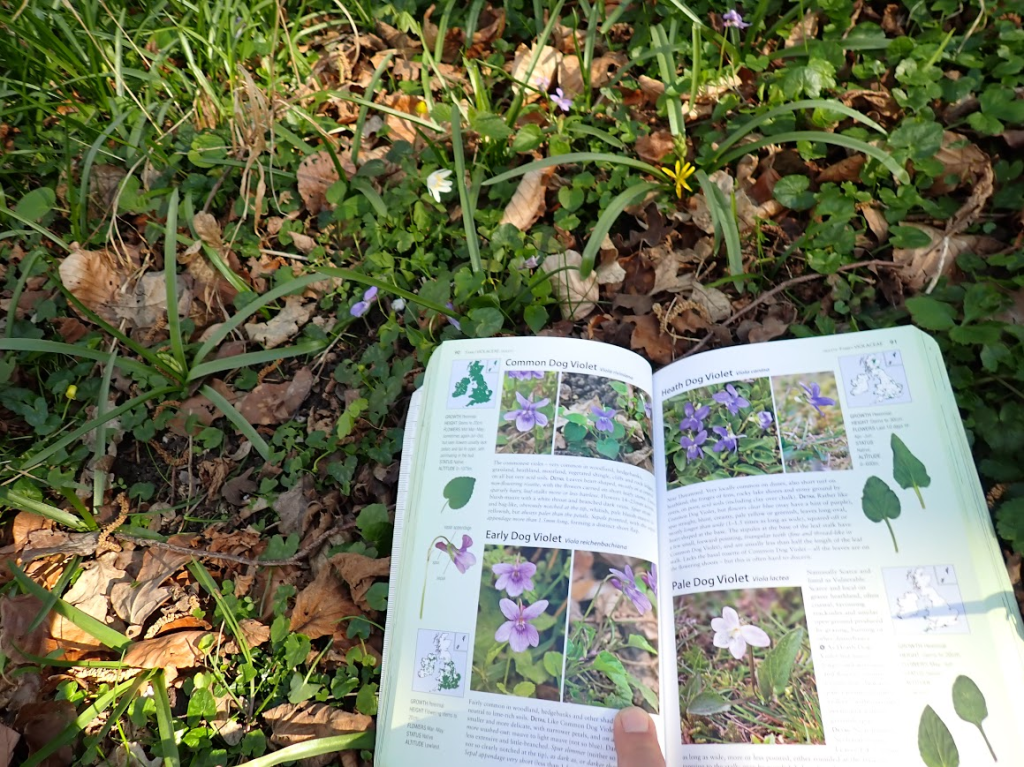
Harrap’s Wild Flowers is an excellent and easy-to-use field guide, that uses photos with key identification features. Simon Harrap: Harrap’s Wild Flowers A Field Guide to the Wild Flowers of Britain & Ireland ( 2nd edition 2015)

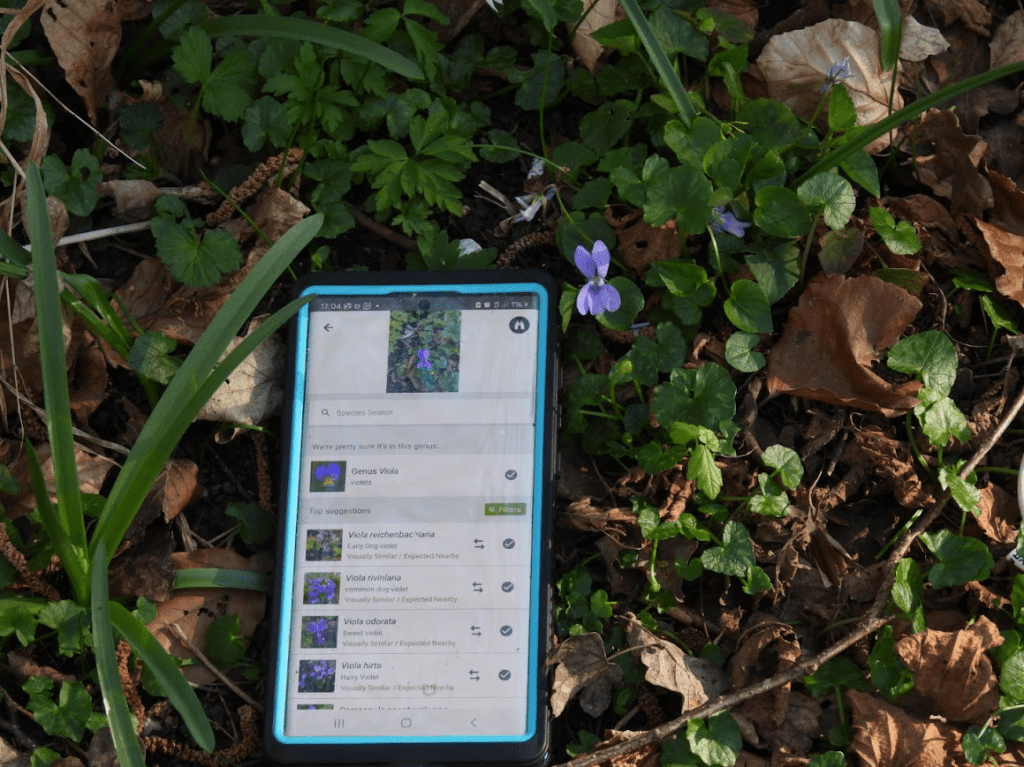
Flora Incognita App

This is the most accurate of AI photo recognition App to support plant identification as it requires photos of the flower, leaves and the whole plant.

iNaturalist App

This also useful for identification and has the added advantage that it records your observations if you want to. Saved onservations are checked by others and records which reach “Research Grade” are submitted to county recorders and if agreed they will be added to the National Biodiversity Network Atlas . There are questions about the reliability of Research Grade verification; but iNaturalist is extremely useful for community projects as your records can be seen by anyone; and can be seen in “projects” e.g. the Henfield Nature Challenge . As you progress with identification, I would recommend that you use iRecord, as your plant records will automatically be seen and checked by the County Recorders for vascular plants and if verified they will be added to the Botanical Society of Britain and Ireland’s database and could appear in the next edition of the Sussex Plant Atlas. iRecord

N.B. AI photo identification gets things wrong at times; always check an AI identification with a field guide or an expert botanist (if you know one!)

All of the photos in this post were taken today (07.04.25) in Butcher’s Wood, Lag Wood or Newer Copse; except for some examples of other indicator plants that can be found in other Low Weald woods (Butcher’s Broom and Wild Service Trees). All the photos in the post were taken by me.

Butcher’s Wood and Lag Wood (Low Weald)

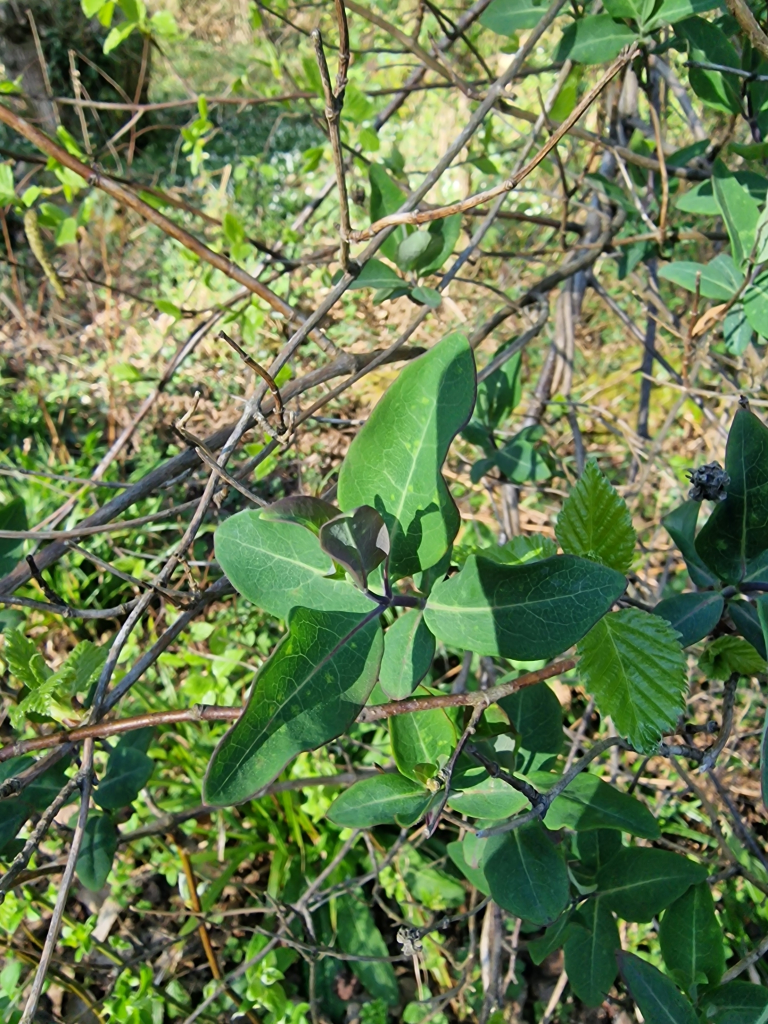
Lonicera periclymenum Honeysuckle (Butchers Wood)

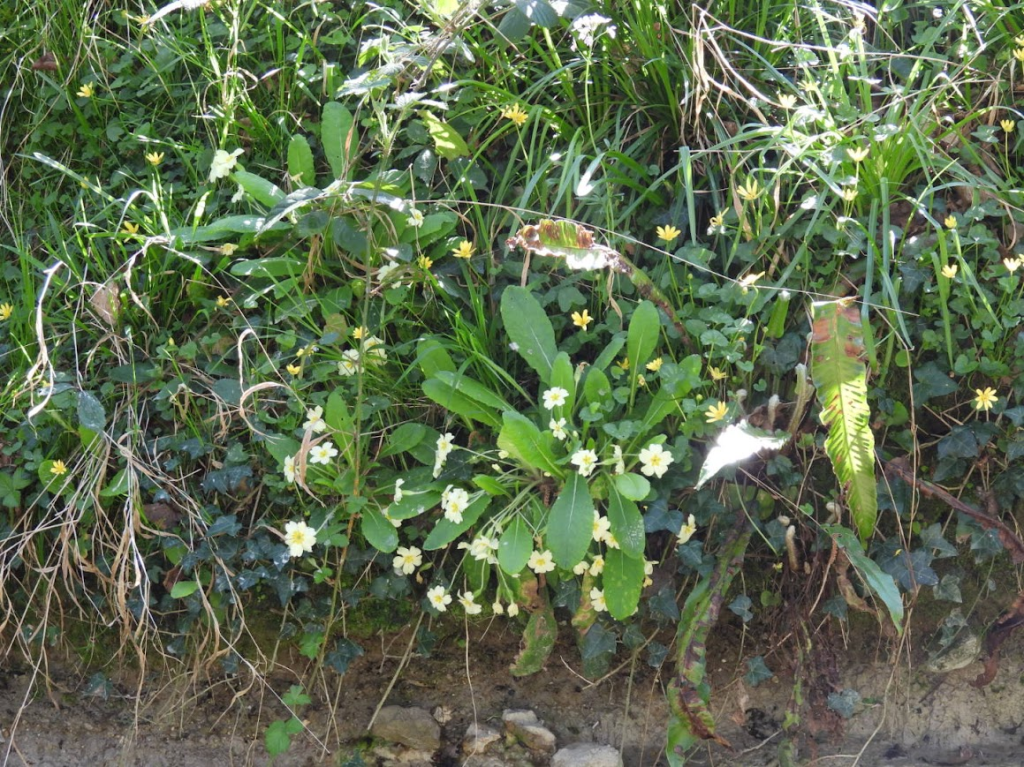
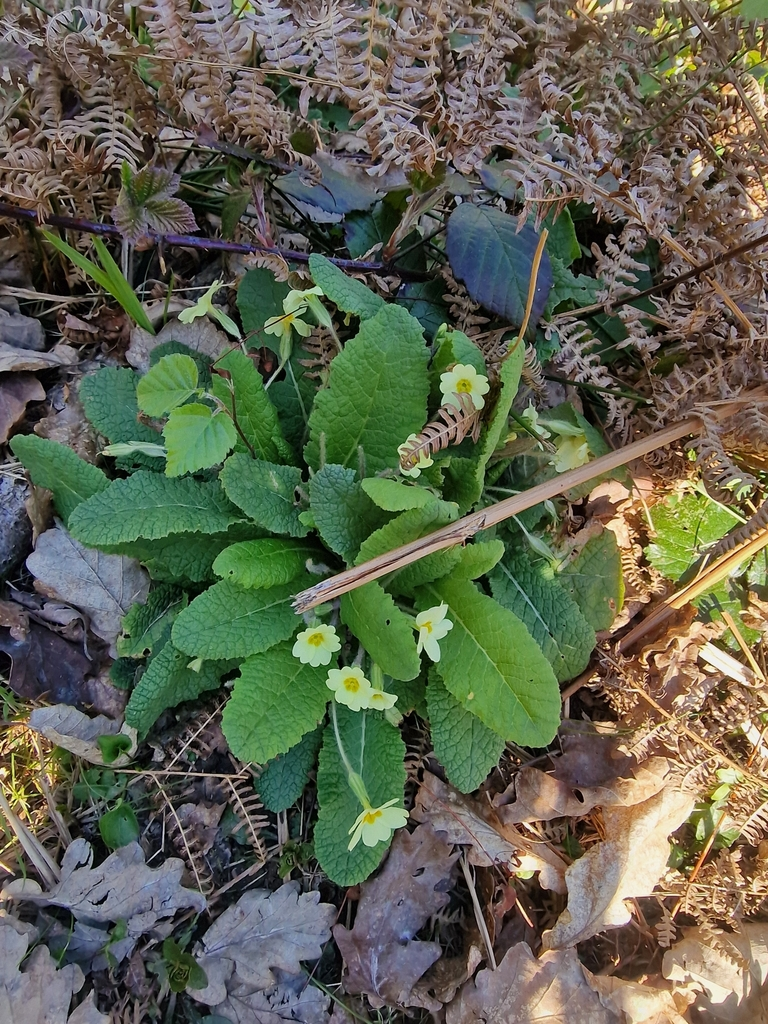
Primula vulgaris Primrose (Lag Wood)

Hyacinthoides non-scripta Bluebell (Butcher’s Wood)

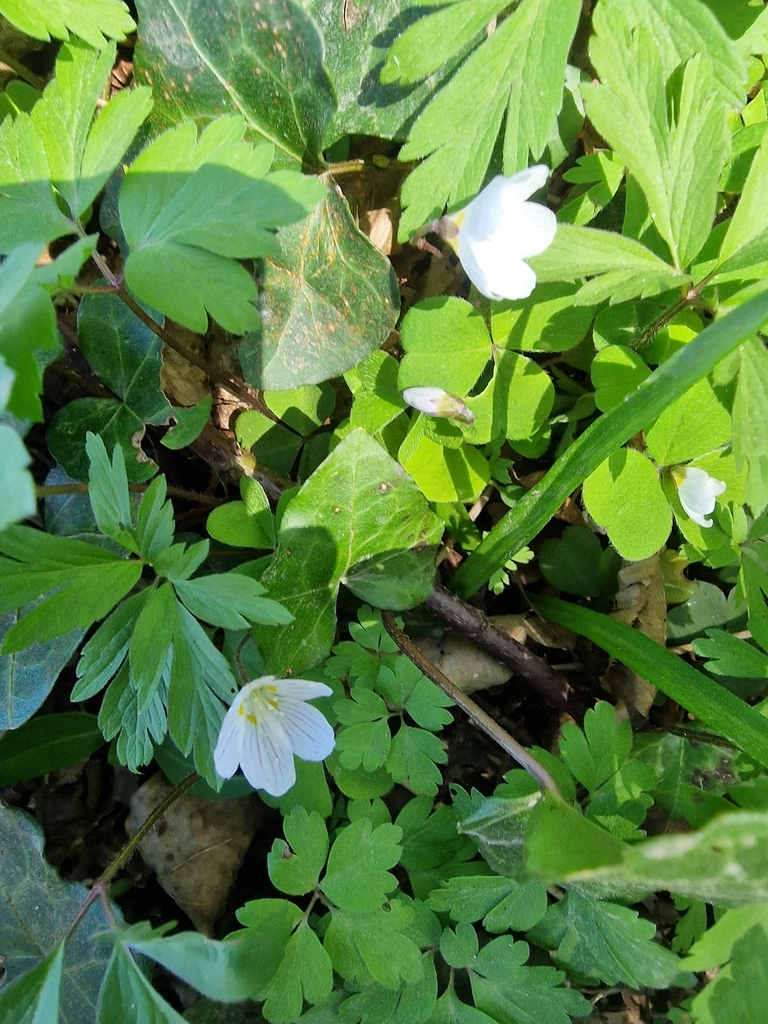
Anemonoides nemorosa Wood Anemone (Butcher’s Wood).

Wood Anemones turn their flowers to the direction of the sun. The yellow flowers are Lesser Celandine, Ficaria verna. It is not an ancient woodland indicator plant but is a very common flowering plant in woodland; and is one of the first flowers to bloom in spring, and so is very important to pollinating insects.

Ilex aquifolium European Holly

An ancient pollarded Carpinus betulus,  European Hornbeam, within Lag Wood. Rose makes it clear in his list that Carpinus betulus should only be considered an ancient woodland indicator only if they occur well within the wood and do not appear to have been planted.

Polypodium sp., Polypody Fern (Lag Wood)

The exact species of polypodies is only determinable by microscopic inspection of their spore; but all species of Polypody Ferns are ancient woodland indicators.

This epiphytic Polypody was growing at the top of a Pendunculate Oak, Quercus robur. It looks a bit shrivelled due to the lack of rain of late, and it is being exposed to the full sun while the Oak has no leaves. A branch had fallen from this tree, with Polypody on it; this look more like what Polypody typically looks like

Carex sylvatica, Wood-sedge (Butcher’s Wood)

Carex pendula, Pendulous sedge (Lag Wood)

Theses sedges are a feature of Low Weald woodland, because clay is a soil type which retains water and these sedges grow in wet woodland.

In Lag Wood an ancient field boundary can be seen, consisting of a bank and coppiced Hornbeam. Ancient (medieval) field and wood boundaries often indicate that woodland is ancient.

Ancient woodland has not been “wild” since the delopment of agriculture; since the Neolithic Revolution, between 3100 and 2900 BC. Ancient woodlands have been coppiced and pollarded for 1000s of years. The beauty and biodiversity of these woods comes from sensitive, appropriate human management.

Newer Copse (Wolstonbury Hill), South Downs

Many of the ancient woodland indicator plants of the clay Low Weald and found growing on chalk Downland and vice versa.

I saw Bluebells, Wood Anemones and Holly, in Newer Copse, but I also saw Early-Dog Violets, Moschatel, Yellow Archangel, Soft Shield Fern and Dog’s Mercury; all ancient woodland indicator plants. On other occasions, I have seen Ransoms, Spurge-Laurel Early Purple Orchids and Spurge-Laurel here, also ancient woodland indicator plants.

Viola reichenbachiana Early-Dog Violets

Early Dog Violets are difficult to separate from Common Dog Violets; the Early Dog-violet has a darker purple spur behind the petals. PlantLife: Early Dog Violet

Adoxa moschatellina Moschatel or Townhall Clock

These are very small; and easy to overlook

Laminate galeobdomon Yellow Archangel, not yet in flower.

Polystichum setiferum, Soft Shield-fern

Ferns are difficult to identify, and differentiating between Soft and Hard Shield Fern is very difficult. But both species are indicators of ancient woodland. The shield ferns have this characteristic “thumb” on the leaflets of the fronds and the spores cover both the leaflets and the thumb – you can just about make this out in one or two of the leaflet British Wild Plants Polystichum setiferum 

Mercurialis perennis Dog’s Mercury

This is a greatly magnified photo; the flowers of Dog’s Mercury are VERY small!

Dog’s Mercury with no magnification.

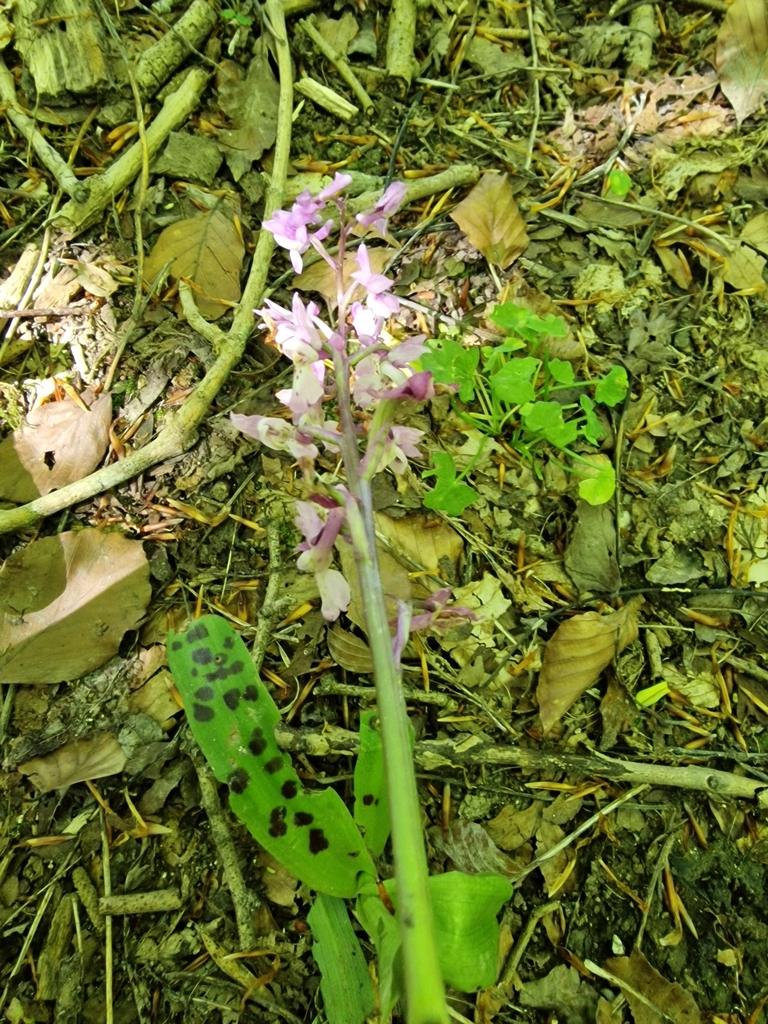
Orchis mascula Early Purple Orchid May 24, 2024 Newer Copse (Wolstonbury Hill)

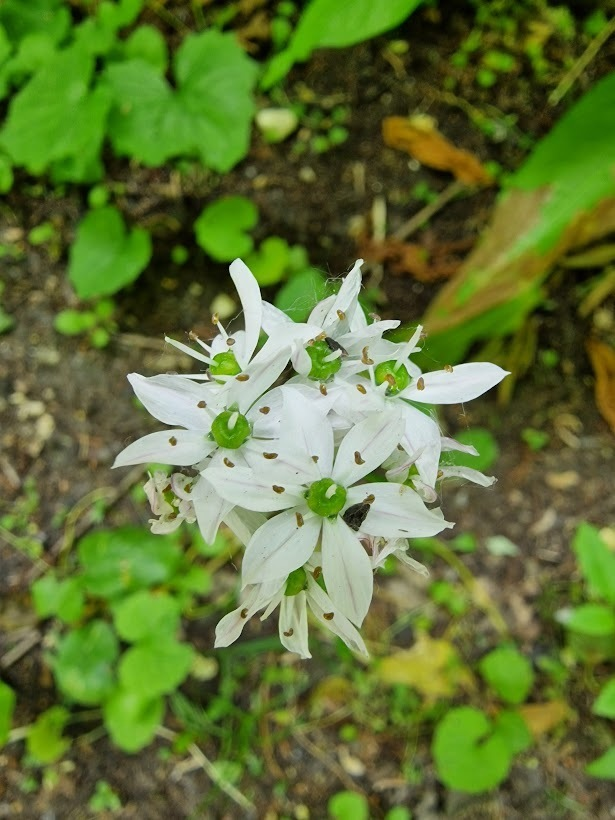
Allium ursinum Ramsons or Wild Garlic 30 May 2023 Newer Copse (Wolstonbury Hill)

Daphne laureola Spurge-Laurel May 24, 2024 Newer Copse (Wolstonbury Hill)

Spurge-Laurel is neither a spurge nor a laurel; it flowers shortly after Christmas.

Newer Copse has a hollowway bostal running up Wolstonbury Hill. Bostals are ancient drover tracks, that generally go up the scarp (steep) slopes of Downs diagonally. It is a Sussex dialect word.

Other Low Weald ancient woodland indicator plants.

I have seen both Butcher’s Broom and Wild Service Trees in Low Weald woods; but not in Butchers Wood or Lag Wood

Ruscus aculeatus Butcher’s-Broom, Ebernoe Common

Butchers broom is uncommon in southern UK and gets rarer the further north you go. … [it] is rare on the chalk.

Butchers broom is known as an ‘ancient woodland indicator’. This is because it doesn’t colonise new habitats or spread easily to new woods; where it is growing, the wood has usually been there for a very long time.

Butchers broom is quite unlike any other British plant. It is a short evergreen bush growing up to about two feet high and all the leaves end in a pointed spike; one of its old English names is ‘knee holly’. In early spring, the tiny, pale green six-petalled flowers sit in the middle of the leaf and show that these leaves are, technically, flattened stems.

Butchers broom was used to scour butcher’s blocks until the nineteenth century. The spiky leaves seem ideal for getting into the cuts of old wooden blocks to clean them. https://www.newforestnpa.gov.uk/discover/plants-fungi/woodland-flowers/butchers-broom/

Torminalis torminalis Wild Service-Tree

A true springtime stunner, it’s not so long ago that you could find wild-service fruit at a market. These days it’s rare and hard to find but it’s still a favourite with wildlife like the wood pigeon, whose gut softens its seeds for propagation.

The fruits, also known as chequers, are said to taste like dates and were given to children as sweets. They can be made into an alcoholic drink and it is thought they influenced the naming of ‘Chequers Inns’, although it is unclear which came first – the name of the fruit or the inns. https://www.woodlandtrust.org.uk/trees-woods-and-wildlife/british-trees/a-z-of-british-trees/wild-service-tree/

This is Francis Rose’s list of Ancient Woodland Indicator Plants (AWVP) for South East Woodland

Acer campestre*, Field Maple

Adoxa mosichatellina, Moschatel

Allium ursinum, Ramsons,

Anagallis minima, Chaffweed

Anemone memorosa, Wood Anemone

Aquilegia vulgaris*, Columbine

Blechnum spicant, Hard Fern

Bromopsis ramosa, Hairy-brome

Calamagrostis epigejos, Wood Small-reed

Campanula latifolia, Giant Bellflower

Campanula trachelium, Nettle-leaved Bellflower

Cardamine amara, Large Bitter-cress

Carex laevigat, Smooth-stalked Sedge

Carex pallescens, Pale Sedge

Carex pendiula*, Pendulous Sedge

Carex remota, Remote Sedge

Carex strigosa, Thin-spiked Wood-sedge

Carex sylvatica, Wood-sedge

Carpinus betulus*, Hornbeam

Ceratocapnos claviculata, Climbing Corydalis

Chrysosplenium oppositifolium, Opposite-leaved Golden-saxifrage

Colchicum autumnale, Meadow Saffron

Conopodium majus, Pignut

Convallaria majalis, Lily-of-the-valley

Crataegus laevigata, Midland Hawthorn

Daphne laureola*, Spurge-laurel

Dipsacus pilosus, Small Teasel

Dryopteris aemula, Hay-scented Buckler-fern

Dryopteris affinis, Scaly Male-fern

Dryopteris carthusiana, Narrow Buckler-fern

Elymus caninus, Bearded Couch

Epipactis helleborine, Broad-leaved Helleborine

Epipactis purpurata, Violet Helleborine

Equisetum sylvaticum, Wood Horsetail

Euonymus europaeus, Spindle

Euphorbia amygdaloides, Wood Spurge

Festuca gigantea, Giant Fescue

Frangula alnus, Alder Buckthorn

Galium odoratum, Sweet Woodruff

Gnaphalium sylvaticum, Heath Cudweed

Helleborus viridis*, Green Hellebore

Holcus mollis, Creeping Soft-grass

Hyacinthoidles non-scripta, Bluebell

Hypericum androsaemum, Tutsan

Hypericum pulchrum, Slender St John’s-wort

Ilex aquifolium, Holly

Iris foetidissima, Stinking Iris

Lamiastrum galeobdolon, Yellow Archangel

Lathraea squamaria, Toothwort

Lathyrus liniifolius, Bitter-vetch

Lathyrus sylvestris, Narrow-leaved Everlasting-pea

Luzula forsteri, Southern Wood-rush

Luzula pilosa, Hairy Wood-rush

Luzula sylvartica, Great Wood-rush

Lysimachia nemorum, Yellow Pimpernel

Malus sylvestris*, Crab Apple

Melampyrum pratense, Common Cow-wheat

Melica uniflora, Wood Melick

Milium effusum, Wood Millet

Moehringia trinervia, Three-veined Sandwort

Narcissus pseudonarcissus*, Wild Daffodil

Neottia nidus-avis, Bird’s-nest Orchid

Orchis mascula, Early Purple Orchid

Ophris purpurea, Lady Orchid

Oreopteris limbosperma, Lemon-scented Fern

Oxalis acetosella, Wood-sorrel

Paris quadrifolia, Herb-Paris

Phyllitis scolopendrium*, Hart’s-tongue

Pimpinella major, Greater Burnet-saxifrage

Platanthera chlorantha, Greater Butterfly-orchid

Poa nemoralis, Wood Meadow-grass

Polygonatum multiflorum

Polypodium spp., Solomon’s-seal

Polystichum aculeatum, Hard Shield-fern

Polystichum setiferum, Soft Shield-fern

Populus tremula, Aspen

Potentilla sterilis, Barren Strawberry

Primula vulgaris*, Primrose

Prunus avium, Wild Cherry

Pulmonaria longifolia, Narrow-leaved Lungwort

Quercus petraea*, Sessile Oak

Radiola linoides, Allseed

Ranunculus auricomus, Goldilocks Buttercup

Ribes nugrum, Black Currant

Ribes rubrum*, Red Currant

Rosa arvensis, Field-rose

Ruscus aculeatus, Butcher’s Broom

Sanicula europaea, Sanicle

Scutellaria minor, Lesser Skullcap

Scirpus sylvaticus, Wood Club-rush

Sedum telephium, Orpine

Serraula tintoria, Saw-wort

Solidago virgaurea, Golden-rod

Sorbus torminalis, Wild Service Tree

Stachys officinalis, Betony

Tamus communis, Black Bryony

Tilia cordata*, Small-leaved Lime

Ulmus glabra, Wych Elm

Vaccinium myrtillus, Bilberry

Veronica montana, Wood Speedwell

Viburnum lantana, Guelder Rose

Vicia sepium, Bush Vetch

Vicia sylvatica, Wood Vetch

Viola palustris, Marsh Violet

Viola reichenbachiana, Early Dog-violet

Wahlenbergia hederacea, Ivy-leaved Bellflower

* Consider these species only if they occur well within the wood and do not appear to have been planted.

It should be noted that when calculating Ancient Woodland Indicator Plants scores:

  • A high AWVP score is a reliable indication of natural diversity.
  • It also indicates ancient woodland, but does not on its own constitute proof.
  • Some woods which are undoubtedly ancient have a low AWVP score. Study of other components of the woodland biodiversity such as lichens, or invertebrates in rotting wood, may give clearer indications of ancient woodland status. Quite often, ancient sites that are rich in AWVP’s will be poor in lichens and rotting wood invertebrates and vice-versa.
  • Not all indicator species are strictly limited to ancient woodlands. For example, where secondary woodland adjoins older woodland, it will acquire species associated with older woods much more quickly than isolated secondary woods.
  • Plants which are also cultivated in gardens (e.g. Wild Daffodil) should be used with great caution.
  • Certain woodlands can credibly be established as being ‘ancient’ through the study of old historical records such as maps and estate records. Observations of landscape features such as banks, ditches and other topographical features within a wood will also give clues to previous land use. By surveying a number of these ‘proven’ ancient woodlands, species which are usually confined to this type of habitat can be identified.  From: Countryside Information Ancient Woodland Indicator Species

Ancient Woodland Indicator Plants in Fore Wood, Crowhurst, East Sussex. 05.03.25

This post illustrates the species of Ancient Woodland Indicator Plants that I found in Fore Wood that are listed in Indicators Of Ancient Woodland – the use of vascular plants in evaluating ancient woods for nature conservation. Francis Rose, British Wildlife 10.4 April 1999, Pages 241-251

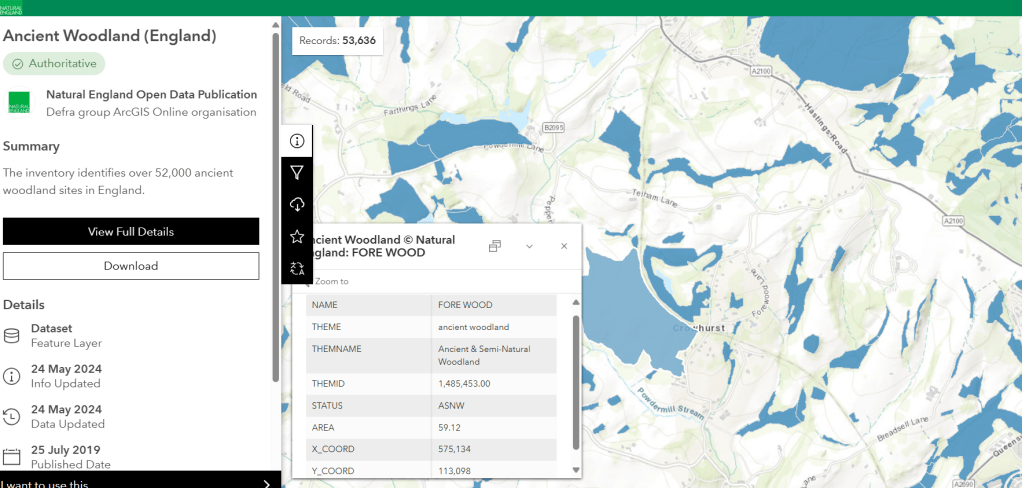
Fore Wood is a High Weald Ghyll Wood

Natural England maintains an index of woodland it has determined is ancient; the map of these woodland sites can be explored here: https://naturalengland-defra.opendata.arcgis.com/datasets/ancient-woodland-england/explore Fore Wood is listed by Natural England as Ancient Woodland (Ancient and Semi-natural Woodland). Here is the map for Fore Wood

Natural England classifies ancient woodland as either:

(a) (ASNW) Ancient Semi-Natural Woodland mainly made up of trees and shrubs native to the site, usually arising from natural regeneration

or

(b) (PAWS) Plantations on Ancient Woodland Sights (or Ancient Replanted Woodland) – replanted with conifer or broadleaved trees (e.g. Sweet Chestnut, Castanea sativa) that retain ancient woodland features, such as undisturbed soil, ground flora and fungi

Fore Wood is designated by Natural England as Ancient Semi-Natural Woodland, but it does have some small areas of planted Sweet Chestnut which the RSPB is removing.

Fore Wood is managed by the RSPB:

Fore Wood is a stretch of peaceful woodland near Crowhurst, dotted by gyhlls – steep-sided little ravines in the sandstone where rare ferns grow and wildlife thrives. In the spring, Fore Wood is a riot of Bluebells and Wood Anemones, with Early Purple Orchids adding to the show, an ideal place for East Sussex walks.

This ancient woodland is a mix of Hornbeam, oak and Sweet Chestnut trees. We carefully manage the woodland for the benefit of the wildlife using coppicing – a traditional woodland management practice. RSPB Fore Wood

Fore Wood is designated as a Site of Special Scientific Interest: SSSI citation

Here are the Ancient Woodland Indicator Plants that I saw:

Lonicera periclymenum Honeysuckle

Oxalis acetosella Wood-Sorrel

Primula vulgaris Primrose

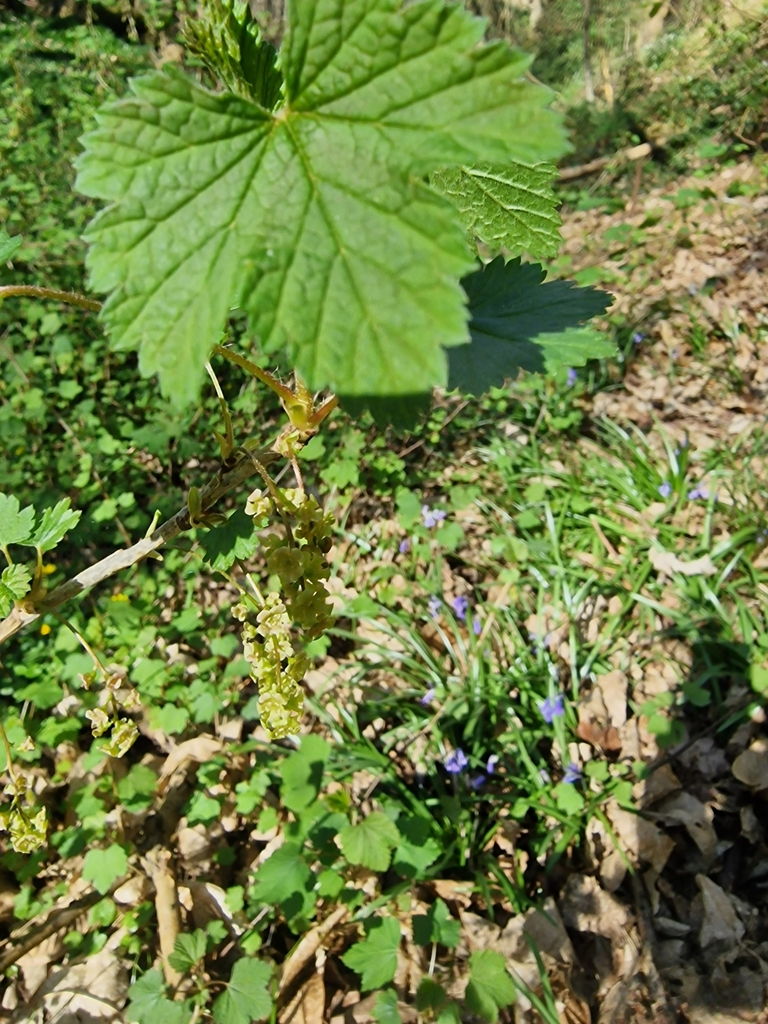
Ribes rubrum Red Currant, by one of the ghylls

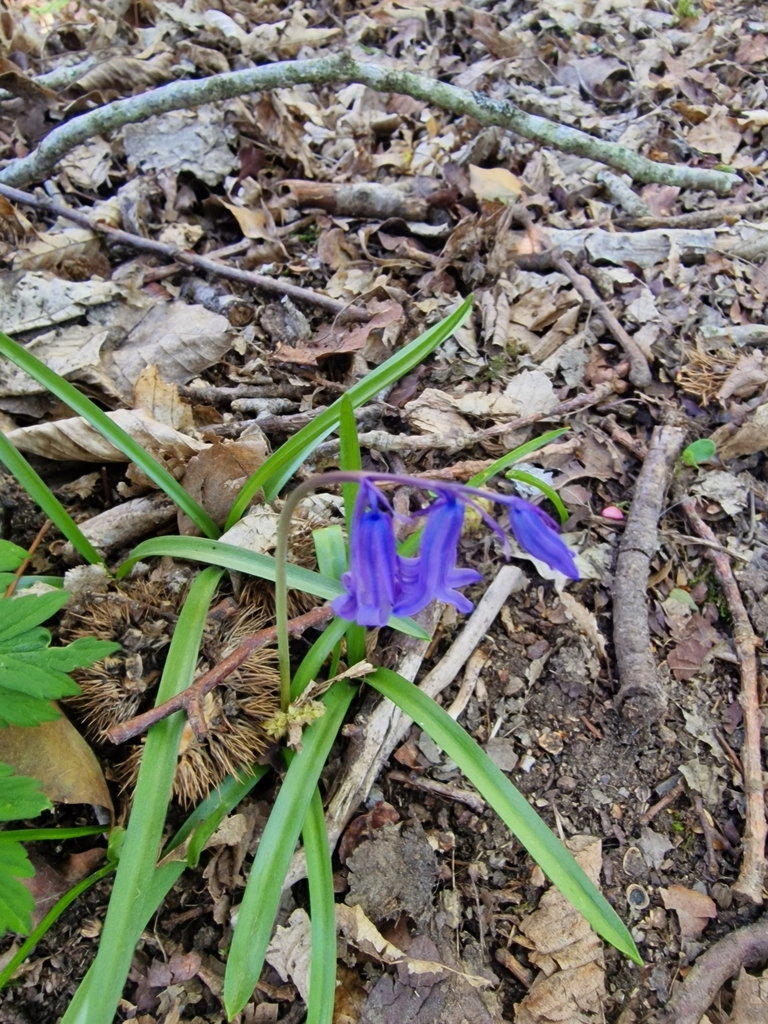
Hyacinthoides non-scripta Bluebell

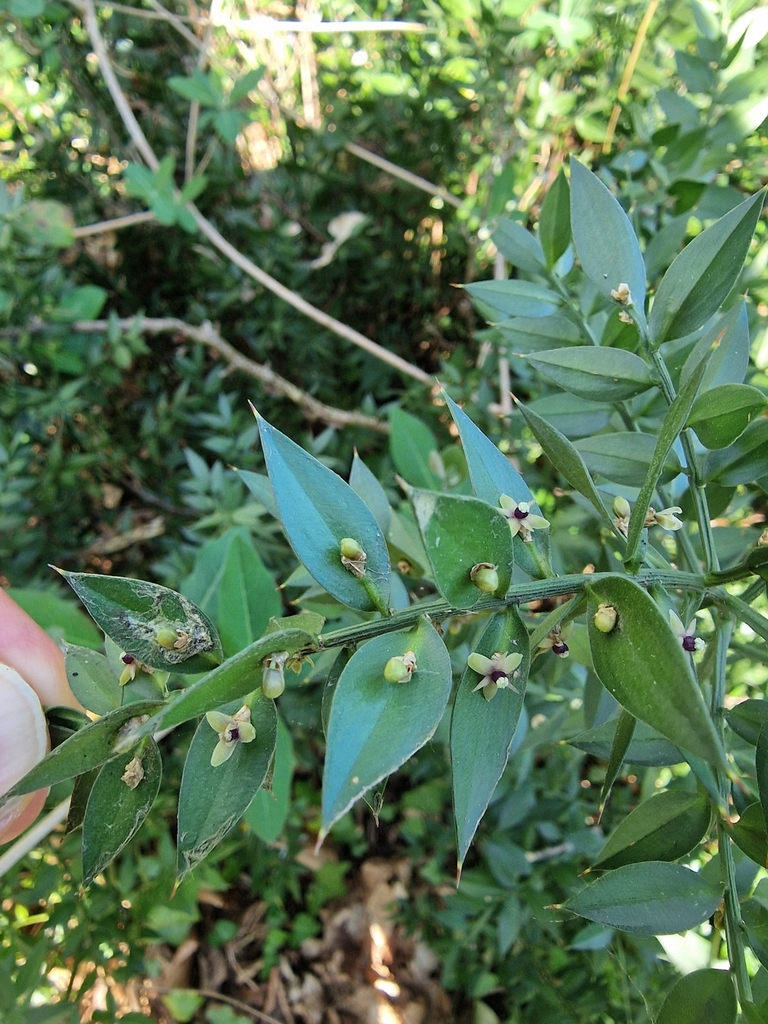
Ruscus aculeatus Butcher’s-Broom

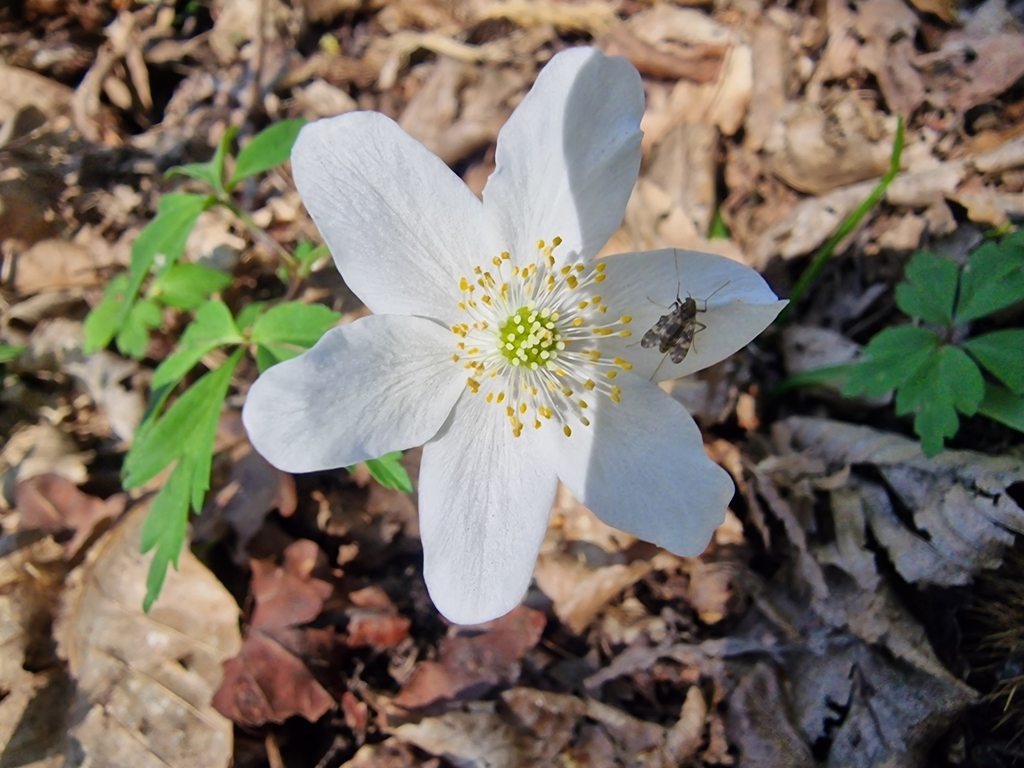
Anemonoides nemorosa Wood Anemone

with Psectrotanypus varius a species of non biting midge.

Struthiopteris spicant Hard Fern

Polystichum setiferum Soft Shield Fern

Ilex aquifolium European Holly

Chrysosplenium oppositifolium Opposite-leaved Golden-Saxifrage

By one of the ghylls;  Opposite-leaved Golden-Saxifrage is mostly a plant of damp stream/ghyll sides, or wet flushes

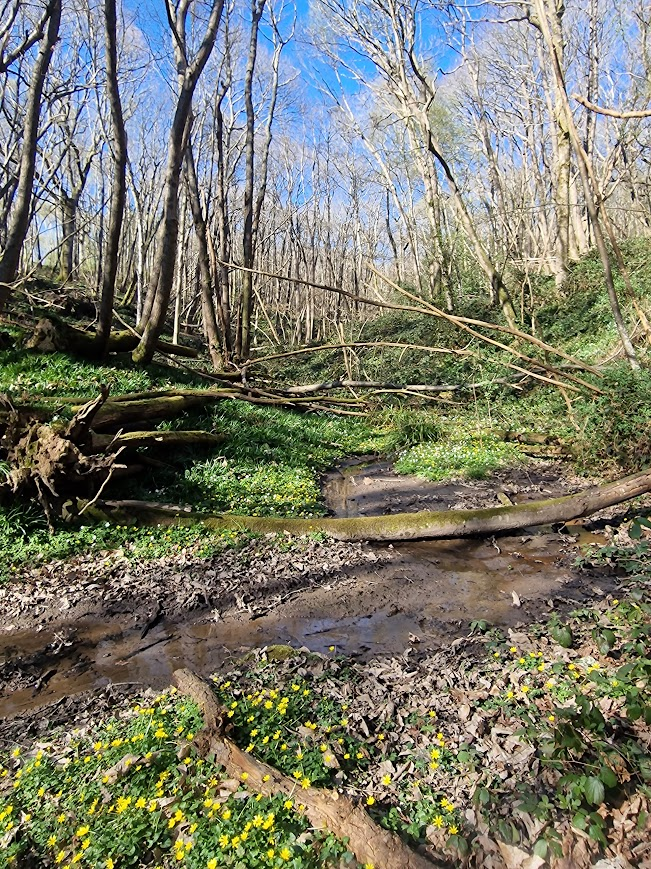
A view of one of the ghylls with Lesser Celandine, Ficaria verna. Lesser Celandine is not an AWVP indicator but it is a very important early source of pollen for pollinators. There are two ghyll is Fire Wood – this one has shallow sides

but the other ghyll has much steeper sides and is more typical of the upper reaches of ghylls in High Weald Ghyll Woods, like Fore Wood.

Ardingly Sandrock can be seen in this photograph. Where the porous Ardingly Sandrock meets the impervious Wadhurst Clay springs are formed that feed the ghylls. Global heating is a great threat to the survival of the internationaly important ghyll wood habitat of the High Weald.

In the south-east of England mean annual temperatures have increased by approximately 1.7°C over the past 50 years,(UKCIP 2013). Average rainfall remained unchanged during the same period, but patterns of precipitation did change with mean rainfall levels decreasing in the spring and summer months, but increasing in the autumn and winter. Over the same period the average annual and seasonal levels of relative humidity fell by up to 5% in the south and east of England (UKCIP 2013).
The presence of regionally and nationally important vascular and non-vascular
plant communities within the Wealden ghylls is attributed to the cool, humid
microclimatic conditions associated with the ghyll valleys (Paton 1956, Ratcliffe 1968, Rose and Patmore 1997). The rising temperature levels coupled with the existence within the ghyll woodlands is closely related to a cool, humid ghyll microclimate.

Andrew Flint, PhD Thesis, 2014, University of Brighton The biodiversity of the Wealden ghyll woodlands: species richness,
abundance and distribution patterns in a rare and fragmented habitat

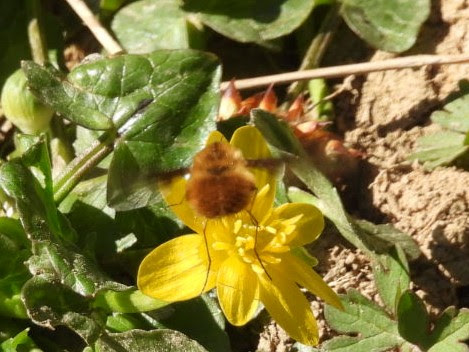
A Dark-edged bee-fly, Bombylius major, on Lesser Celandine. Flies are important pollinators. Natural History Museum: Meet the bee-fly: the cute bee mimic with a dark side

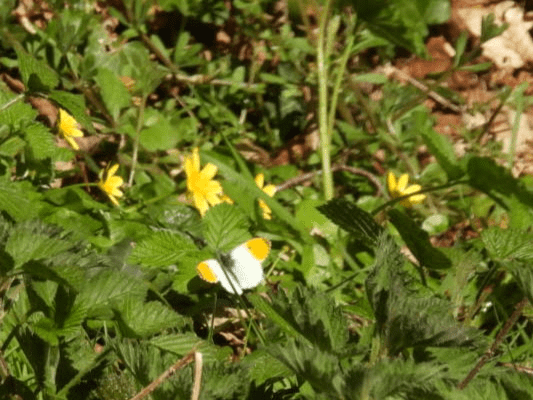
Orange-Tip Butterfly, Anthocharis cardamines, a butterfly of damp places, on Lesser Celandine

Bee-Flies and Orange Tip Butterflies are some of the earliest pollinators to appear in spring; but they have finished in the adult flying form by May/June; although Orange Tip Butterflies sometimes have a second brrod

An ancient pollarded Carpinus betulus European Hornbeam within the wood. Rose makes it clear in his list that Carpinus betulus should only be considered an AWVP indicator only if they occur well within the wood and do not appear to have been planted.

Theses Hornbeams form a boundary around the wood; whilst theses trees as species can not be considered as AWVP indicators; the structure of the ancient boundary (raised bank with coppiced trees) is probably an indicator of ancient woodland.

This is Francis Rose’s list of Ancient Woodland Indicator Plants (AWVP) for South East Woodland

Acer campestre*, Field Maple

Adoxa mosichatellina, Moschatel

Allium ursinum, Ramsons,

Anagallis minima, Chaffweed

Anemone memorosa, Wood Anemone

Aquilegia vulgaris*, Columbine

Blechnum spicant, Hard Fern

Bromopsis ramosa, Hairy-brome

Calamagrostis epigejos, Wood Small-reed

Campanula latifolia, Giant Bellflower

Campanula trachelium, Nettle-leaved Bellflower

Cardamine amara, Large Bitter-cress

Carex laevigat, Smooth-stalked Sedge

Carex pallescens, Pale Sedge

Carex pendiula*, Pendulous Sedge

Carex remota, Remote Sedge

Carex strigosa, Thin-spiked Wood-sedge

Carex sylvatica, Wood-sedge

Carpinus betulus*, Hornbeam

Ceratocapnos claviculata, Climbing Corydalis

Chrysosplenium oppositifolium, Opposite-leaved Golden-saxifrage

Colchicum autumnale, Meadow Saffron

Conopodium majus, Pignut

Convallaria majalis, Lily-of-the-valley

Crataegus laevigata, Midland Hawthorn

Daphne laureola*, Spurge-laurel

Dipsacus pilosus, Small Teasel

Dryopteris aemula, Hay-scented Buckler-fern

Dryopteris affinis, Scaly Male-fern

Dryopteris carthusiana, Narrow Buckler-fern

Elymus caninus, Bearded Couch

Epipactis helleborine, Broad-leaved Helleborine

Epipactis purpurata, Violet Helleborine

Equisetum sylvaticum, Wood Horsetail

Euonymus europaeus, Spindle

Euphorbia amygdaloides, Wood Spurge

Festuca gigantea, Giant Fescue

Frangula alnus, Alder Buckthorn

Galium odoratum, Sweet Woodruff

Gnaphalium sylvaticum, Heath Cudweed

Helleborus viridis*, Green Hellebore

Holcus mollis, Creeping Soft-grass

Hyacinthoidles non-scripta, Bluebell

Hypericum androsaemum, Tutsan

Hypericum pulchrum, Slender St John’s-wort

Ilex aquifolium, Holly

Iris foetidissima, Stinking Iris

Lamiastrum galeobdolon, Yellow Archangel

Lathraea squamaria, Toothwort

Lathyrus liniifolius, Bitter-vetch

Lathyrus sylvestris, Narrow-leaved Everlasting-pea

Luzula forsteri, Southern Wood-rush

Luzula pilosa, Hairy Wood-rush

Luzula sylvartica, Great Wood-rush

Lysimachia nemorum, Yellow Pimpernel

Malus sylvestris*, Crab Apple

Melampyrum pratense, Common Cow-wheat

Melica uniflora, Wood Melick

Milium effusum, Wood Millet

Moehringia trinervia, Three-veined Sandwort

Narcissus pseudonarcissus*, Wild Daffodil

Neottia nidus-avis, Bird’s-nest Orchid

Orchis mascula, Early Purple Orchid

Ophris purpurea, Lady Orchid

Oreopteris limbosperma, Lemon-scented Fern

Oxalis acetosella, Wood-sorrel

Paris quadrifolia, Herb-Paris

Phyllitis scolopendrium*, Hart’s-tongue

Pimpinella major, Greater Burnet-saxifrage

Platanthera chlorantha, Greater Butterfly-orchid

Poa nemoralis, Wood Meadow-grass

Polygonatum multiflorum

Polypodium spp., Solomon’s-seal

Polystichum aculeatum, Hard Shield-fern

Polystichum setiferum, Soft Shield-fern

Populus tremula, Aspen

Potentilla sterilis, Barren Strawberry

Primula vulgaris*, Primrose

Prunus avium, Wild Cherry

Pulmonaria longifolia, Narrow-leaved Lungwort

Quercus petraea*, Sessile Oak

Radiola linoides, Allseed

Ranunculus auricomus, Goldilocks Buttercup

Ribes nugrum, Black Currant

Ribes rubrum*, Red Currant

Rosa arvensis, Field-rose

Ruscus aculeatus, Butcher’s Broom

Sanicula europaea, Sanicle

Scutellaria minor, Lesser Skullcap

Scirpus sylvaticus, Wood Club-rush

Sedum telephium, Orpine

Serraula tintoria, Saw-wort

Solidago virgaurea, Golden-rod

Sorbus torminalis, Wild Service Tree

Stachys officinalis, Betony

Tamus communis, Black Bryony

Tilia cordata*, Small-leaved Lime

Ulmus glabra, Wych Elm

Vaccinium myrtillus, Bilberry

Veronica montana, Wood Speedwell

Viburnum lantana, Guelder Rose

Vicia sepium, Bush Vetch

Vicia sylvatica, Wood Vetch

Viola palustris, Marsh Violet

Viola reichenbachiana, Early Dog-violet

Wahlenbergia hederacea, Ivy-leaved Bellflower

* Consider these species only if they occur well within the wood and do not appear to have been planted.

It should be noted that when calculating Ancient Woodland Indicator Plants scores:

  • A high AWVP score is a reliable indication of natural diversity.
  • It also indicates ancient woodland, but does not on its own constitute proof.
  • Some woods which are undoubtedly ancient have a low AWVP score. Study of other components of the woodland biodiversity such as lichens, or invertebrates in rotting wood, may give clearer indications of ancient woodland status. Quite often, ancient sites that are rich in AWVP’s will be poor in lichens and rotting wood invertebrates and vice-versa.
  • Not all indicator species are strictly limited to ancient woodlands. For example, where secondary woodland adjoins older woodland, it will acquire species associated with older woods much more quickly than isolated secondary woods.
  • Plants which are also cultivated in gardens (e.g. Wild Daffodil) should be used with great caution.
  • Certain woodlands can credibly be established as being ‘ancient’ through the study of old historical records such as maps and estate records. Observations of landscape features such as banks, ditches and other topographical features within a wood will also give clues to previous land use. By surveying a number of these ‘proven’ ancient woodlands, species which are usually confined to this type of habitat can be identified.  From: Countryside Information Ancient Woodland Indicator Species

The edge of Fore Wood, with Blackthorn, Prunus spinosa, in blook, and behind Pedunculate Oak, Quercus robur, Silver Birch, Betula pendula and Holly, Ilex aquifolium

Blackheath Common, Surrey: lichens & Stinking Hellibore. 28.02.25

Blackheath is an example of a formerly more extensive area of dry lowland heath and acid grassland on the Bargate and Folkstone Beds of the Lower Greensand. The area of heathland has suffered a 40% decline in Britain since 1950, but at this site conservation management has maintained open heath, and restored other areas which were becoming partially or totally shaded-out by Scots pine, or birch scrub.

The heathland is dominated by ling Calluna vulgaris with bell heather Erica cinerea, crossleaved heath E. tetralix and dwarf gorse Ulex minor.  Among these plants there are dense growths of bryophytes (mosses) and lichens, including Cladonia spp.” Nature England SSSI specification. 

So you would expect there to be some British Lichen Society or National Biodiversity Network records for Cladonia spp. at Blackheath Common; but there are none.

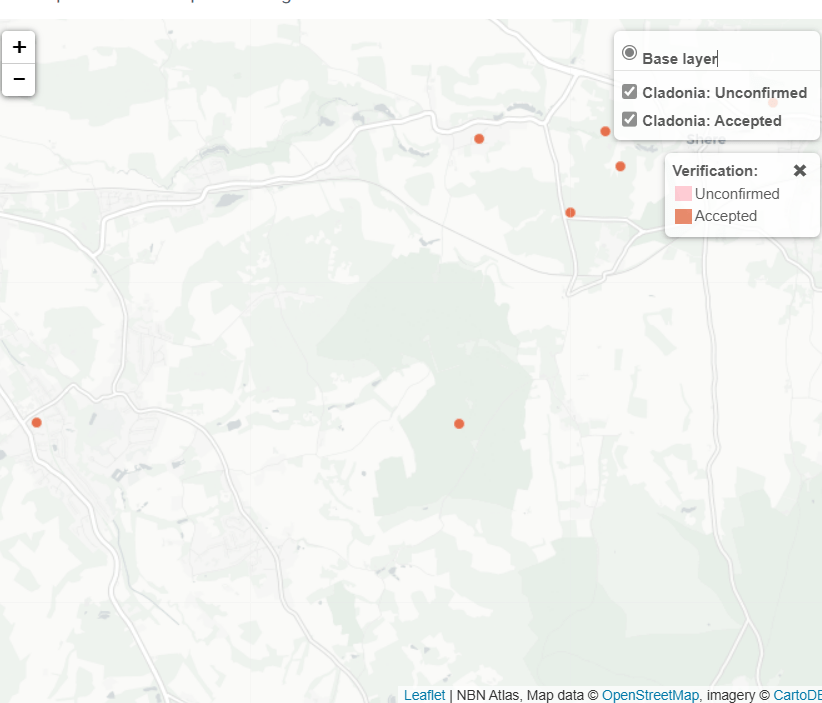
Here are the National Biodiversity Network atlas (Cladonia genus) and British Lichen Society interactive species map (all species) for the Blackheath area and there are no records for Cladonia spp. on either database; in fact there are no lichen records at all for Blackheath Common

British Biodiversity Network Atlas

Lichen Society Interactive Species map

So, my mission yesterday was to record as many lichens as I could, and send them in to the BLS. This what I found:

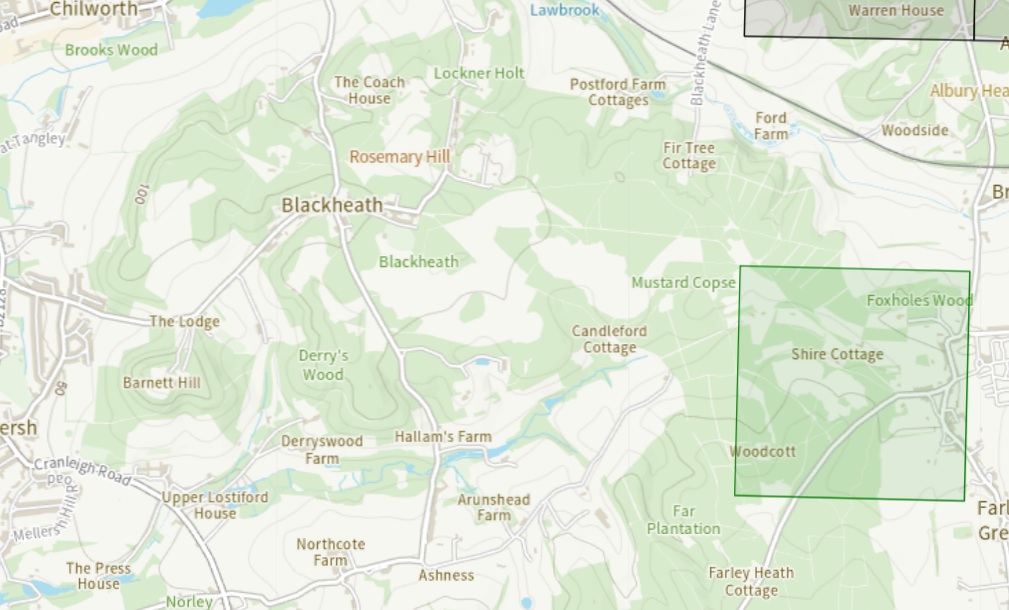
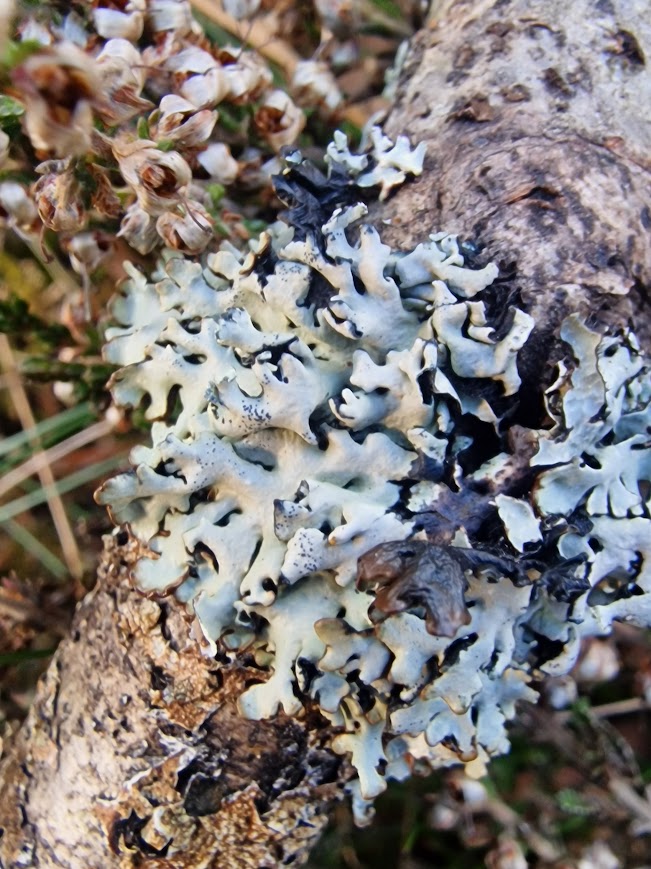
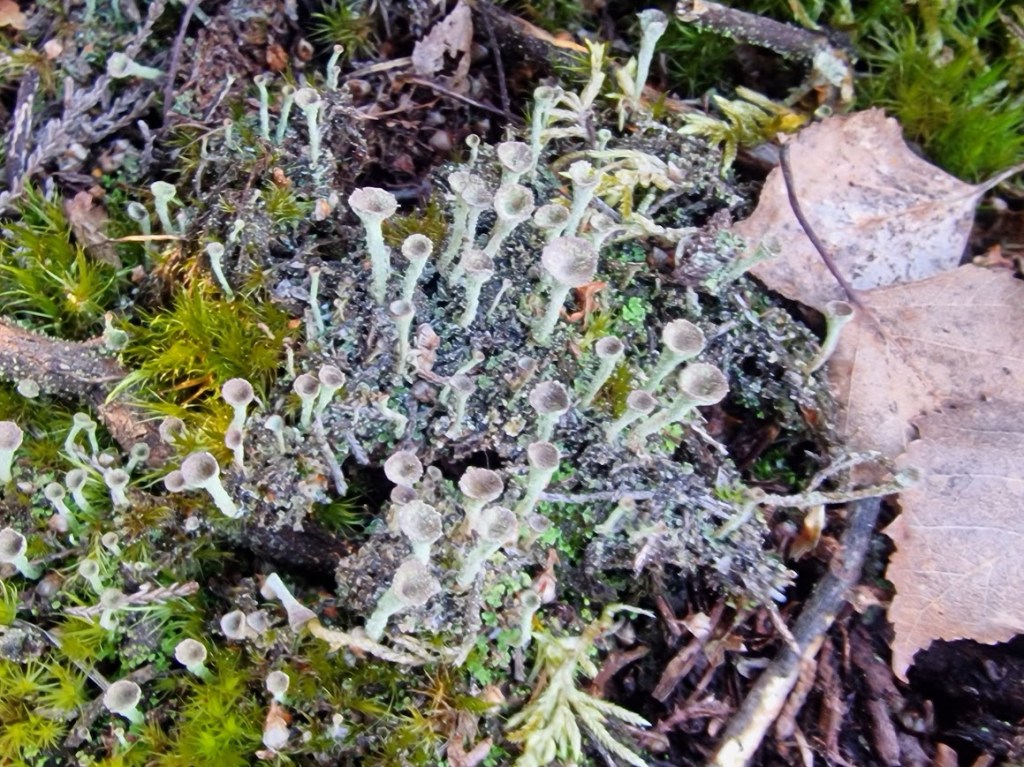
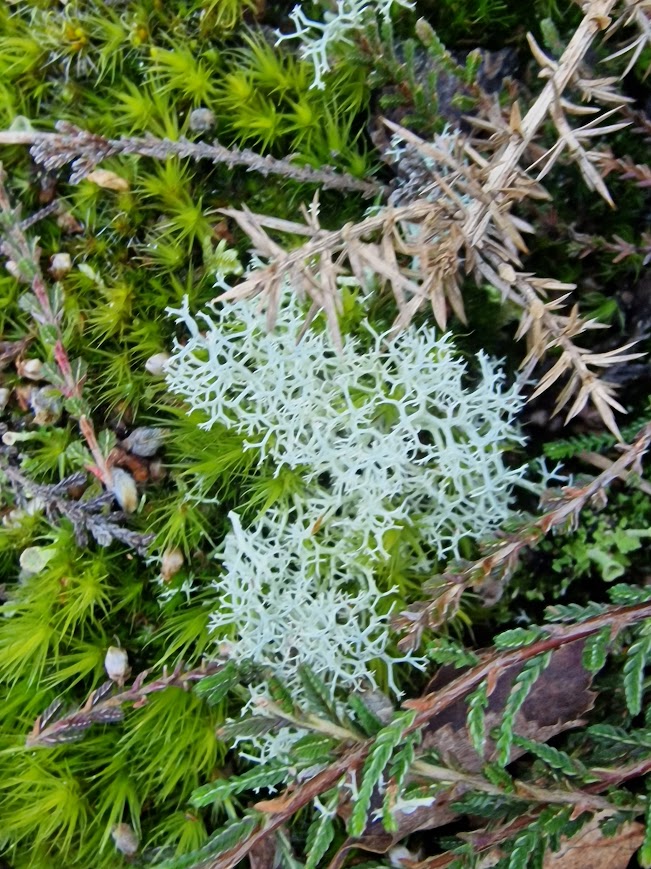
Cladonia fimbriata; Cladonia coniocraea; Cladonia subulata; Caldonia chlorophaea; Cladonia ramulosa;

Lepraria incana; Parmotrema perlatum; Parmelia saxatalis; Flavoparmelia cperata; Parmelia sulcata, Evernia prunastri; Hypogymnia physodes, Hypotrachyna afrorevoluta; Hypotrachyna revoluta

Some photos

Ramalina farinacea; Hypogymnia physodes; Cladonia fimbriata

Cladonia portentosa; Cladonia gracilis; Parmelia saxitalis

Cladonia coniocrea; Everia prunastri; Cladonia subulata

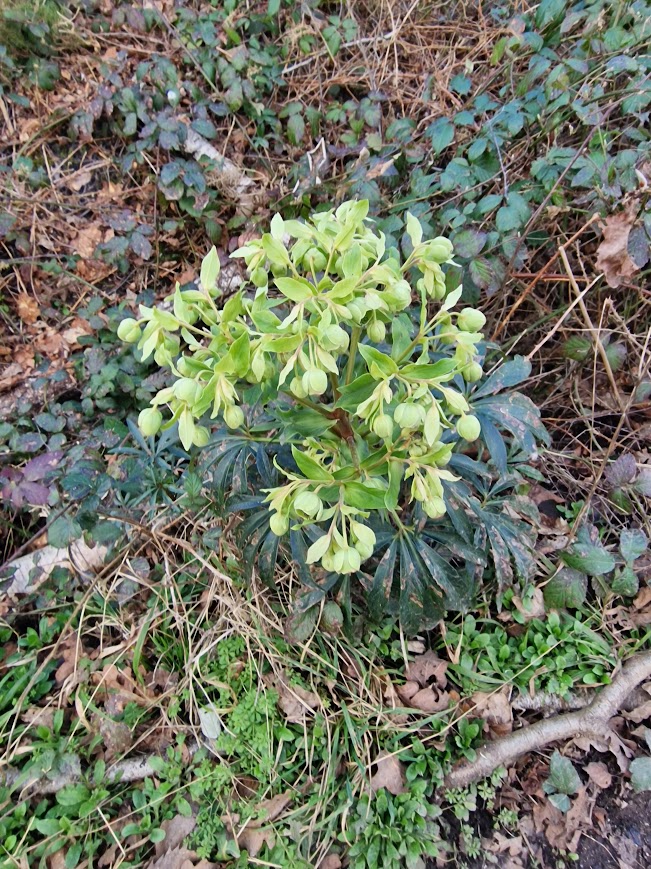
I saw some Stinking Heelibore, Helleborus foetidus. It is a rare plant now in the wild; some “wild” plants are naturalised garden escapees

The green flowers of the Stinking Hellebore can be a pleasant surprise amidst a dusting of snow.

You might think Stinking Hellebore is a garden escapee, but this is not the case! Although populations may have become obscured by such varieties, the Stinking Hellebore is a native through and through.

Be cautious: every part of this wild flower is poisonous and will induce vomiting and delirium if ingested, if not death.

In the past, Stinking Hellebore was used as a hazardous remedy for worms. The 18th century naturalist Gilbert White said this about this “cure”: “Where it killed not the patient, it would certainly kill the worms; but the worst of it is, it will sometimes kill both”.

The name “Stinking” Hellebore could be considered undeserved. Sniffing the flowers won’t make you want to hold your nose, although crushing the leaves can produce an odour often described as “beefy” Plantlife Stinking Helibore