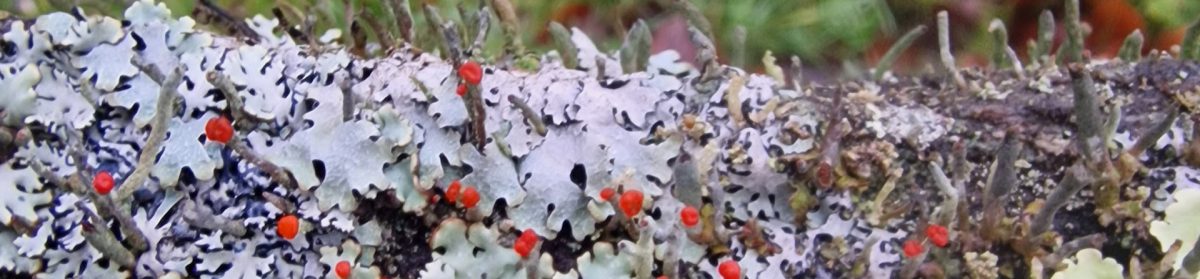

To get to the Wildfowl and Wetland Trust Caerlaverock Wetland Centre, I took the bus from Keswick (where I was staying) to Penrith; then a train from Penrith to Carlisle, then a train from Carlisle to Dumfries. Then I took a bus from Dumfries to the junction on the road to Caerlaverock Castle, where there is a turnoff to the Caerlaverock Wetland Centre. It is about a 45 minute walk from the bus stop to the Wetland Centre. The 6A Bus Service (Houston Couches) only runs five times a day so careful planning is required!
The splendid Gothic Revival / Tudor Revival Carlisle Station. 1847, designed by the architect William Tite.
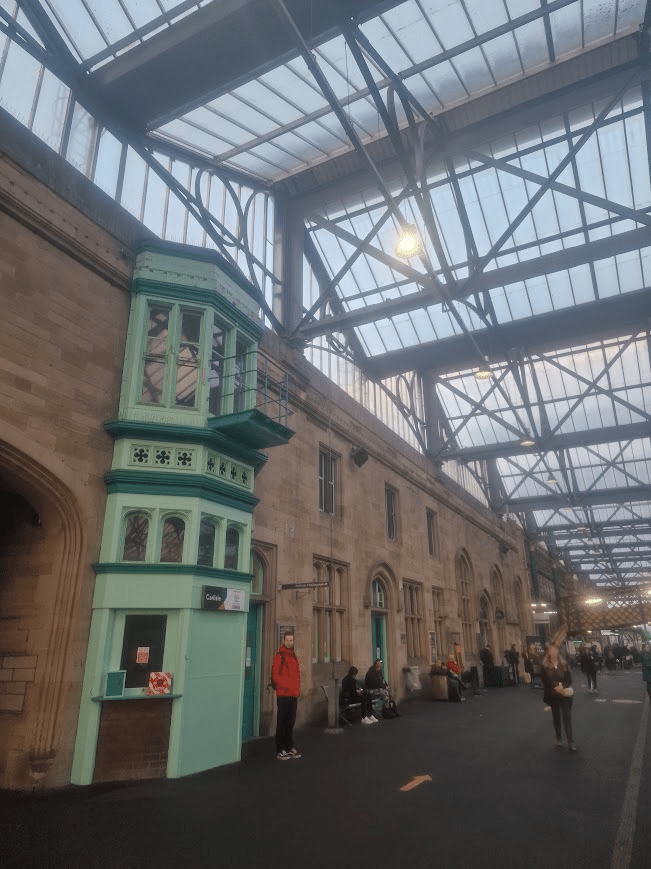
As soon as I got off the bus and started walking down the lane to WWT Caerlaverock, I saw these Pink-footed Geese, Anser brachyrhynchus, in a field next to the lane. They were the only Pink-Footed Geese I saw.
Having spent the brief Arctic summer nesting in central Iceland, pink-footed geese take to open water and spend 25 days afloat, moulting their wing feathers before their flight south. One mid-autumn day, with the wind in the right direction, and temperature and food levels dropping, pink-footed families take off. Into the North Atlantic they fly, making landfall on the Faroe Islands six hours later, resting for a day before taking off again towards British shores. A day later, they land on our coasts. Over 400,000 pink-footed geese spend the winter in the UK [mostly and Scotland and Norfolk] Wildlife Trusts Pink-footed Geese
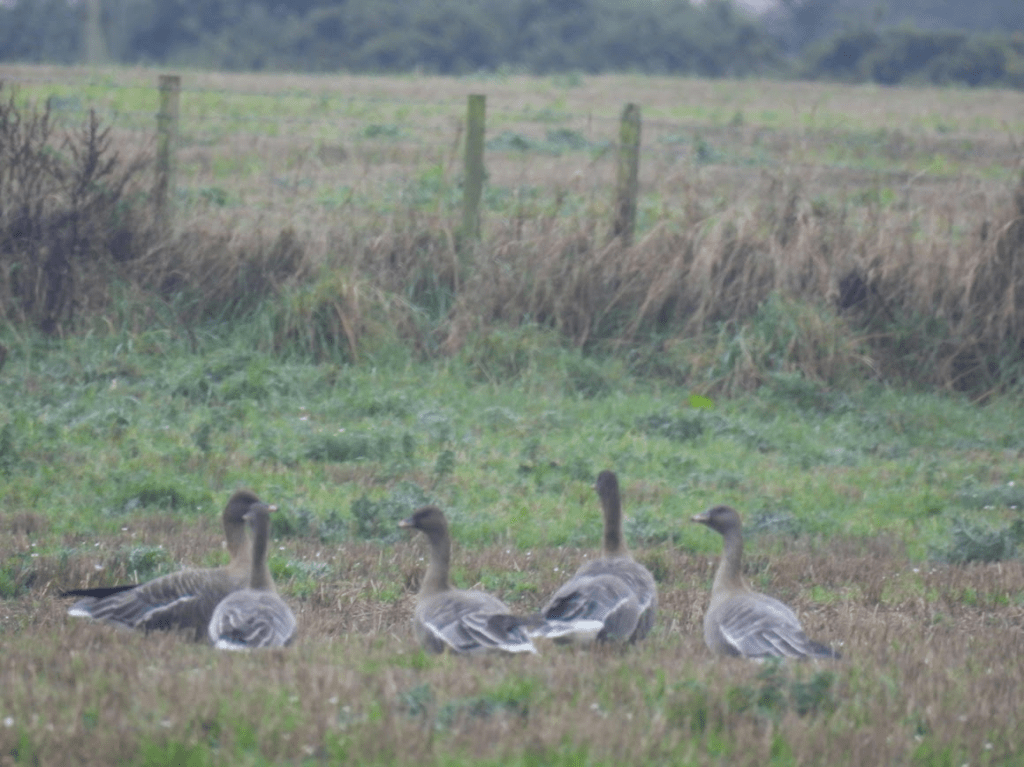
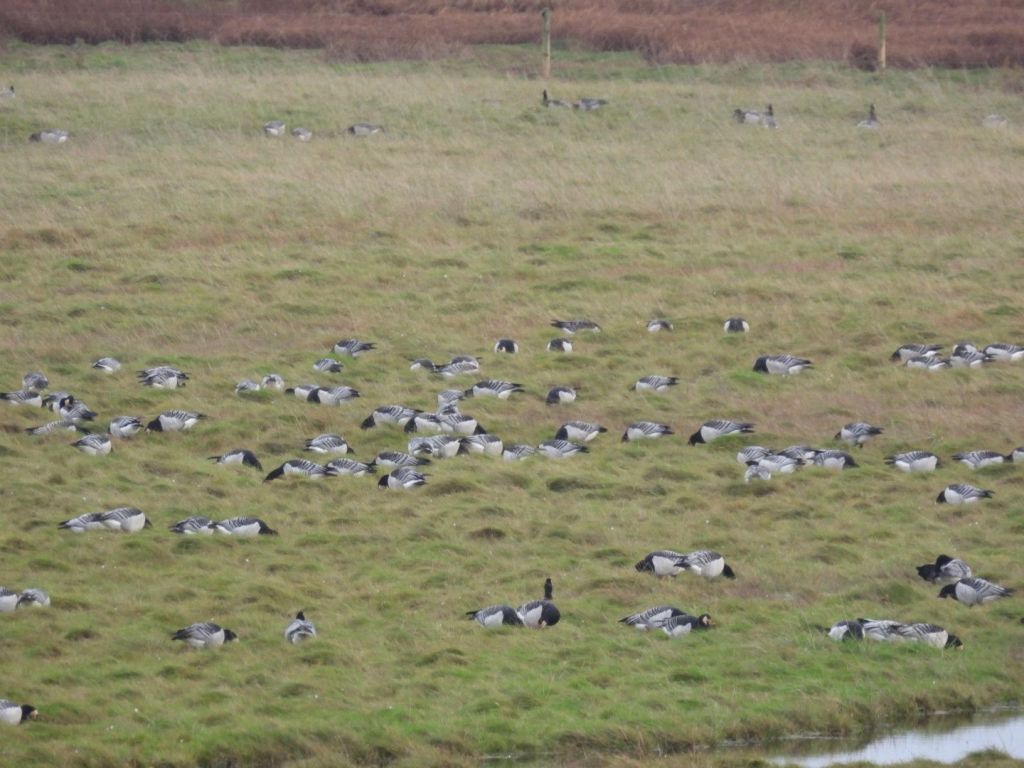
Then, almost immediately, I saw some Barnacle Geese, Branta leucopsis, in the field next door.
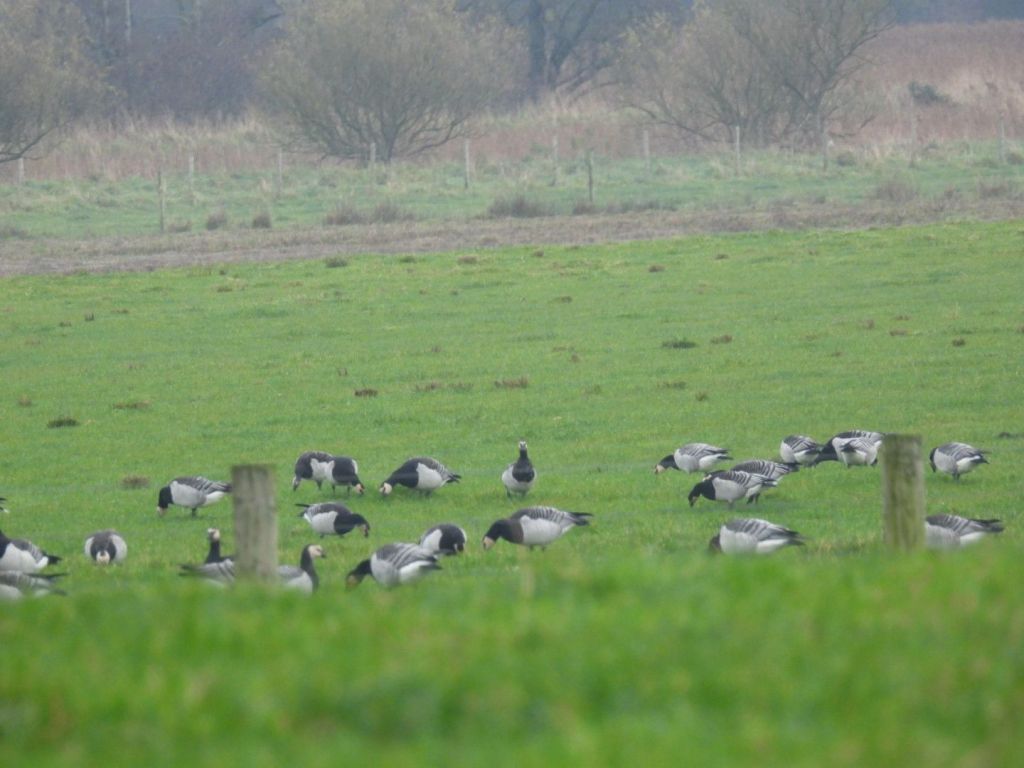
The black-and-white barnacle goose flies here for the ‘warmer’ winter from Greenland and Svalbard. This epic journey was once a mystery to people, who thought it hatched from the goose barnacle at sea! The Wildlife Trusts Barnacle Geese The entire population of Svalbard Barnacle Geese (ca. 20,000) overwinter in the Solway Firth
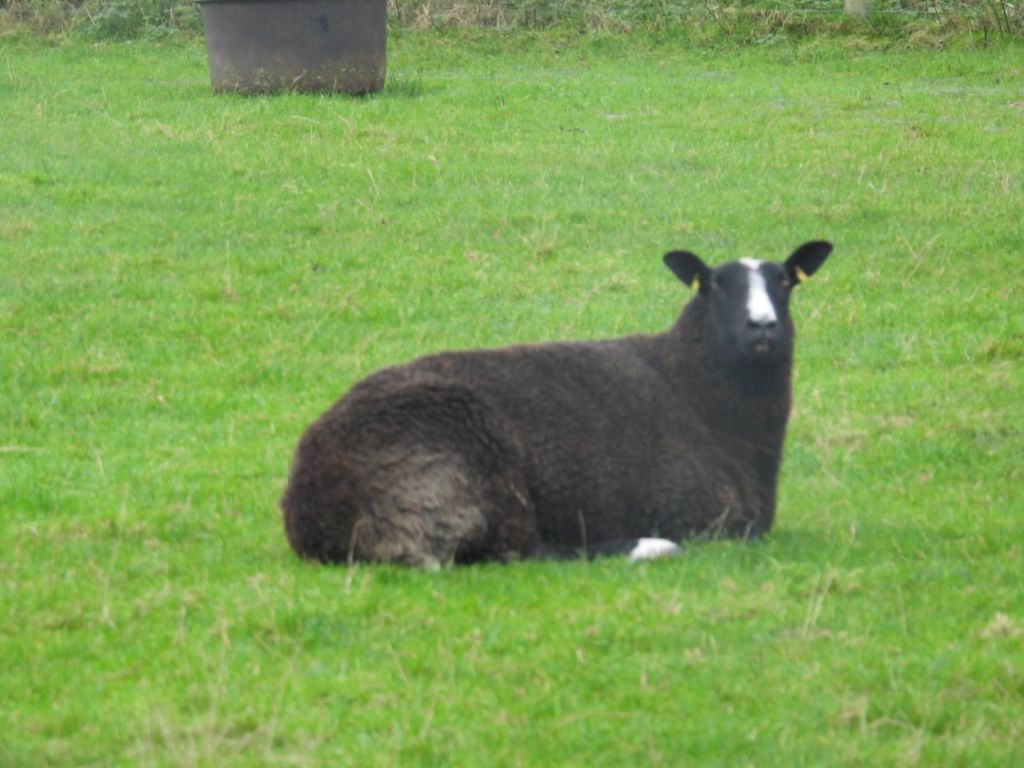
Zwartbles sheep; a breed of domestic sheep originating in the Friesland region of the north Netherlands which are popular in Scotland on the way along the road to the Wetland Centre
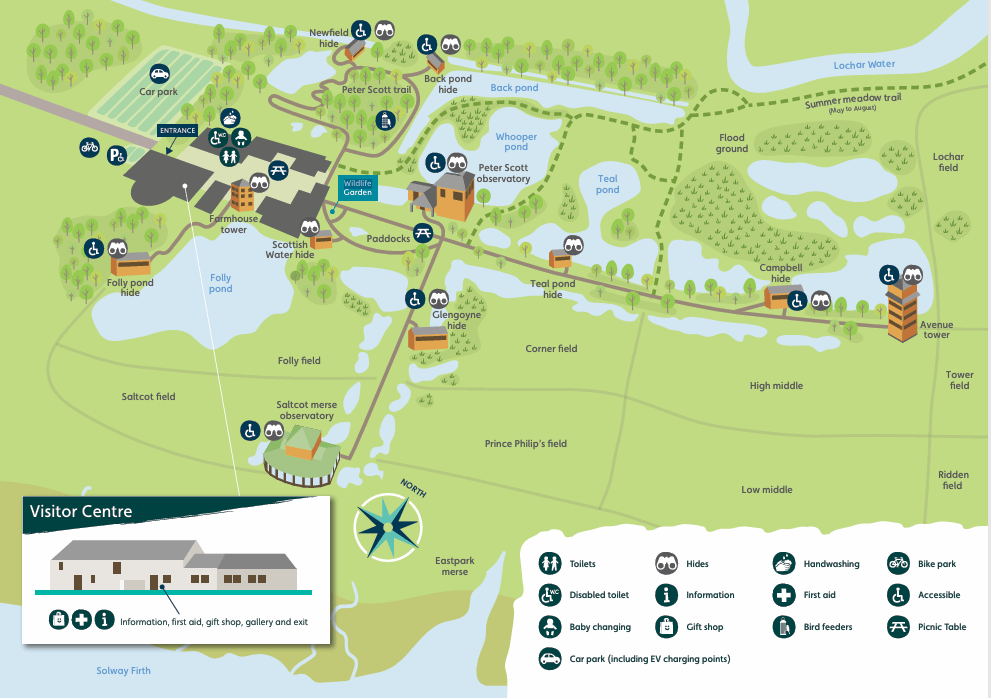
Map of the Wetland Centre.
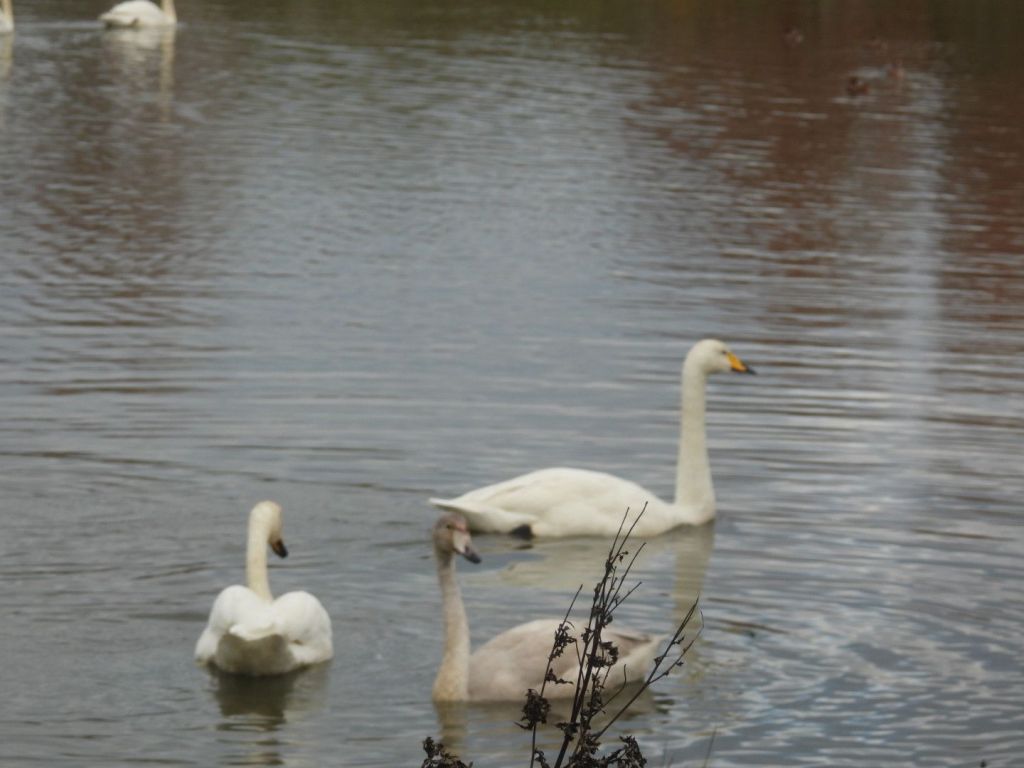
There were about 40 Whooper Swans, Cygnus cygnus, in the Whooper Pool
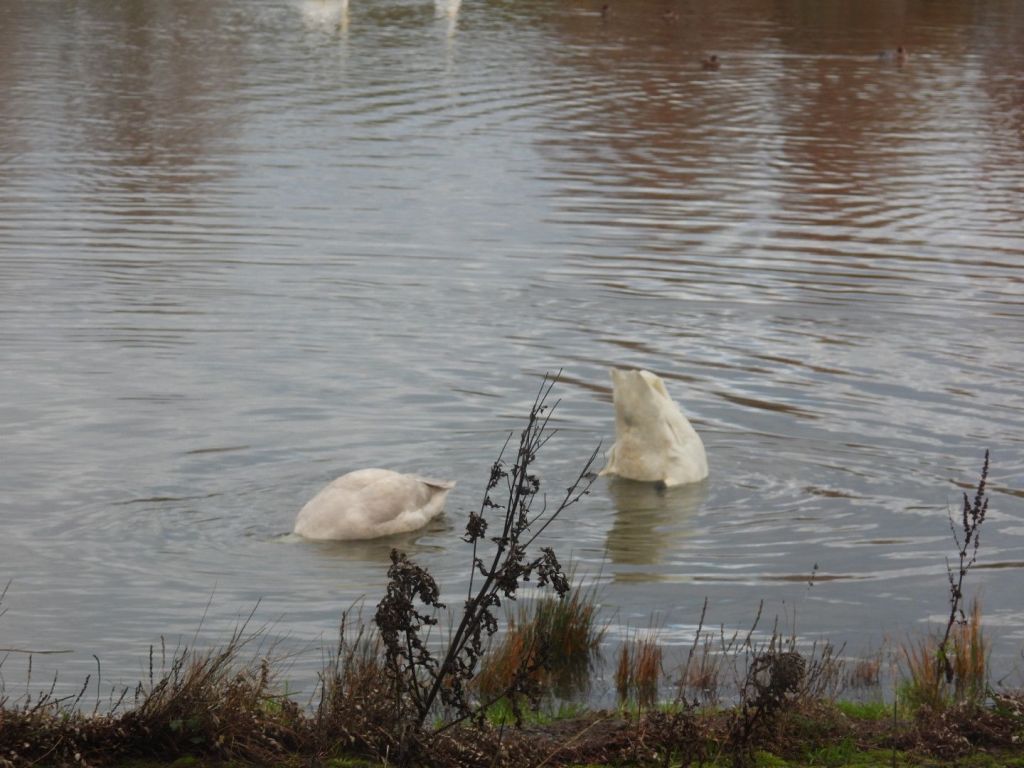
Sibelius saw Whopper Swans flying over him. This inspired the majestic main theme of the last movement of his 5th Symphony; emulating the majesty of swan flight. Here is a Whooper Swan dabbling with bum in the air. If he had seen a Whooper dabbling, with its bum in the air. h is swan theme may be different. Yoi can listen to the Swan theme here: Sibelius: Symphony No. 5 – III. Allegro molto – London Philharmonic Orchestra The first presentation of the Swan Theme is 1:20 mins in (French Horns)
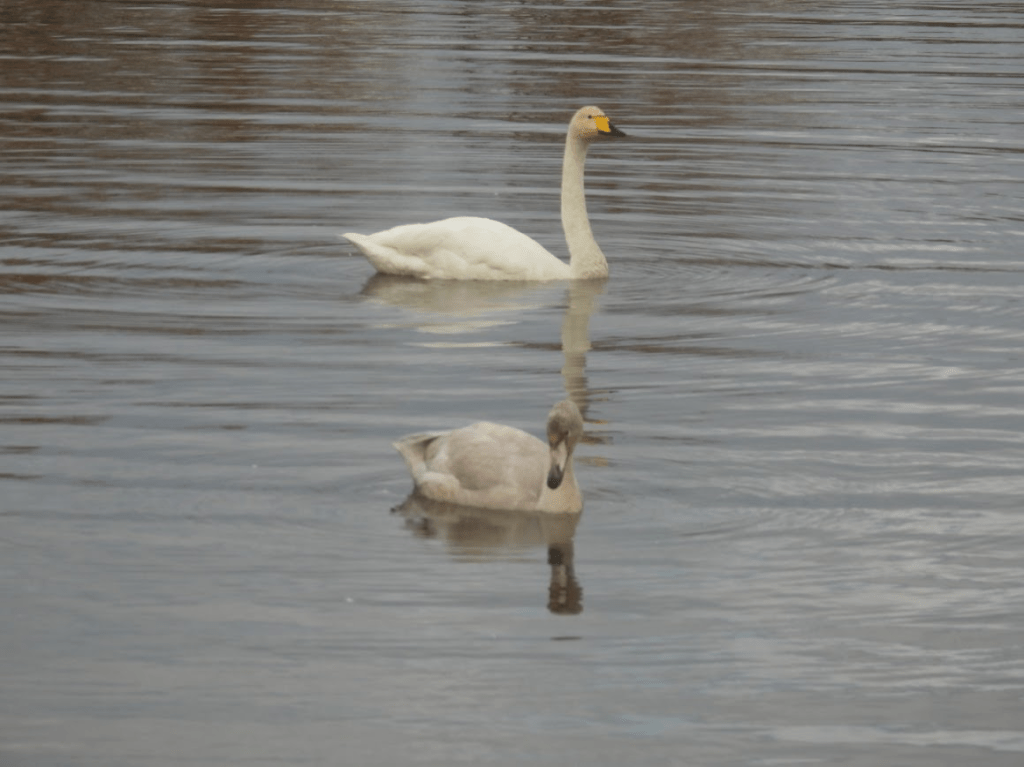
This parent Whooper Swan and its cygnet, were fascinating to watch. The parent did something (e.g. preen, dabble for food), then cygnet did it; learning through mimicry. This cygnet was probably born in Iceland. First time in Scotland.
The Whooper Swan is a large white swan, bigger than a Bewick’s Swan. It has a long neck, which it usually holds erect, and black legs. Its black bill has a large triangular patch of yellow on it. It is mainly a winter visitor to the UK from Iceland, although a small number of pairs nest in the north. The estuaries and wetland it visits on migration and for winter roosts need protection. Its winter population and small breeding numbers make it an Amber List species. It is also a Schedule 1 listed bird, meaning it is illegal to disturb them. RSPB Whooper Swan
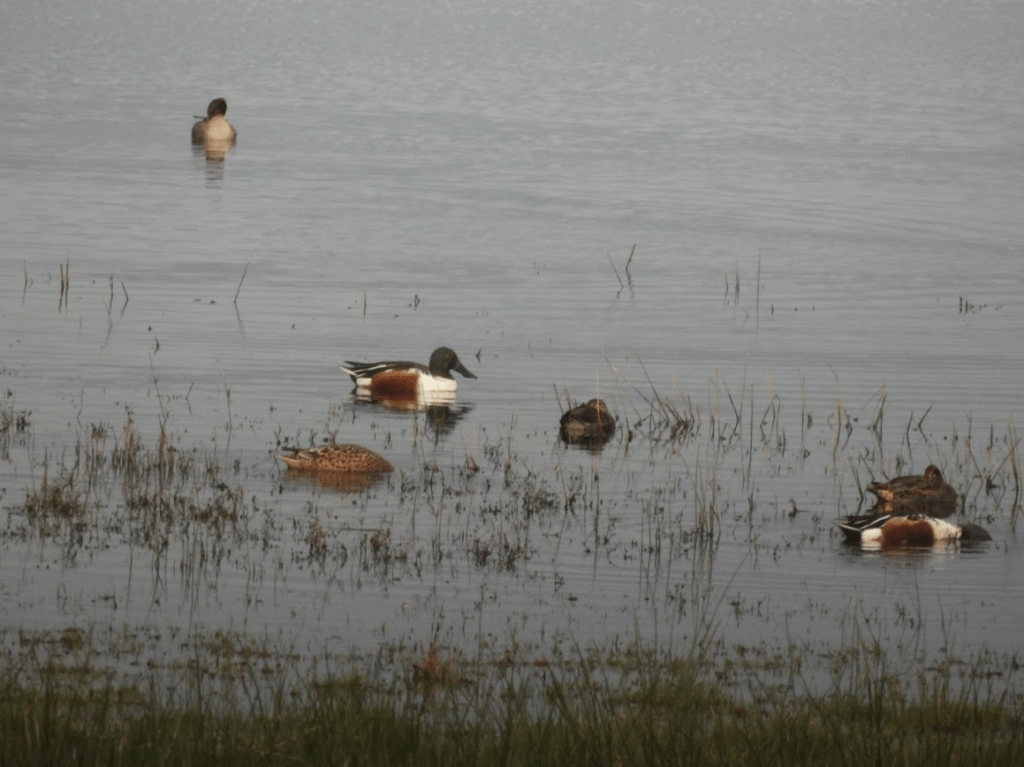
Ducks! Shovelers, Anas clypeata, and Teal, Anas crecca, in the Whooper Pool
As I was walking to a hide I saw a flock of Redwings, Turdus iliacus, and Fieldfare, Turdus pilaris; the UK’s “winter thrushes” that migrate from Scandinavia. They were eating Hawthorn haws.
Fieldfare – along the Avenue

Fieldfares are large, colourful thrushes, much like a Mistle Thrush in size, shape and behaviour. They stand very upright and move forward with purposeful hops. They are very social birds, spending the winter in flocks of anything from ten or twenty to several hundred strong. These straggling, chuckling flocks which roam the UK’s countryside are a delightful and attractive part of the winter scene. RSPB Fieldfare
Tree Sparrows, Passer montanus
This was the first time I have ever seen Tree Sparrows; I have searched for them in their remaining locations in Sussex with no success.
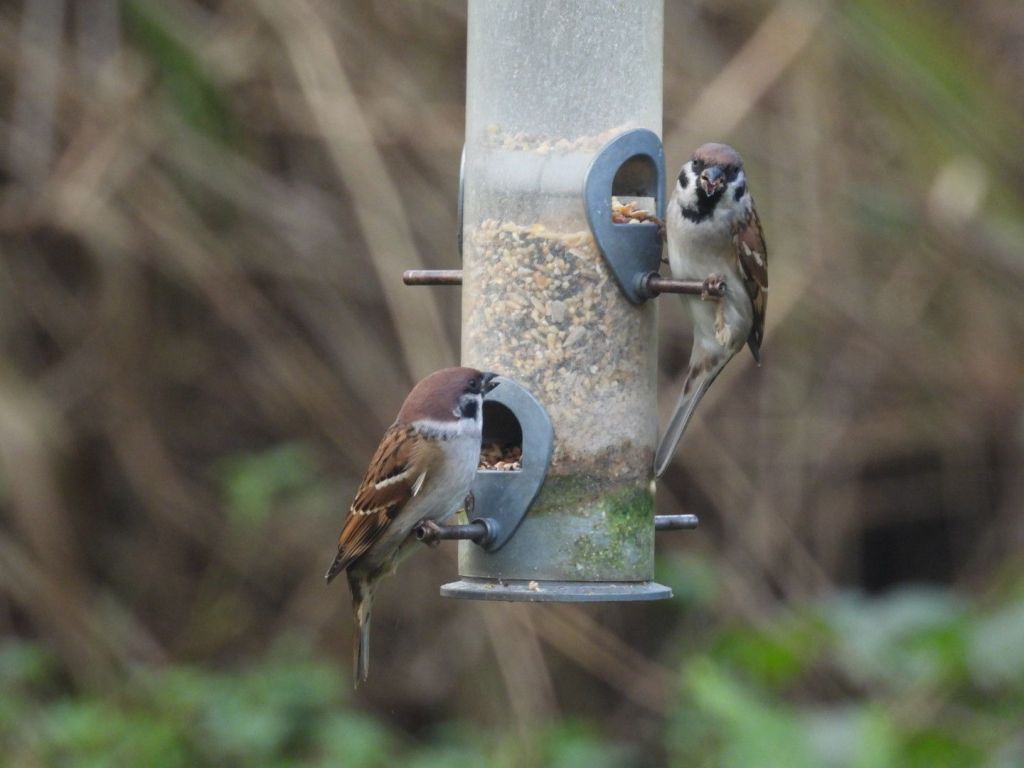
Tree Sparrow Passer montanus
Much declined and now very scarce resident; scarce passage migrant and winter visitor. Red-listed species of high conservation concern. Section 41.
Records were received from only four sites in 2023 as the Tree Sparrow decline continues in Sussex. All the records were from East Sussex. No birds were reported from many former strongholds such as Pevensey Levels, Rye Hbr and Scotney GP.
The first record of the year was from East Guldeford village where a single bird was reported on 22 Jan. The highest count of the year was just four at Camber on 5 Jun. A single bird was photographed in a garden at Northiam on 23 Jul and was seen on three successive days. This sighting was close to an unconfirmed report from the previous month. A Tree Sparrow was seen in the same Northiam garden on 14 Nov. The final sighting of the year mirrored the first, a single bird at East Guldeford village on 28 Dec.
Tree Sparrow continues to slide towards extinction in Sussex. Numbers of this species have fluctuated in the past, which offers some hope, but there is no sign of recovery yet. This is a species of high conservation concern and observers are asked to report all sightings, particularly if breeding evidence is obtained. [RA Black] Sussex Ornithology Society Sussex (2024) Bird Report 2023 p. 176
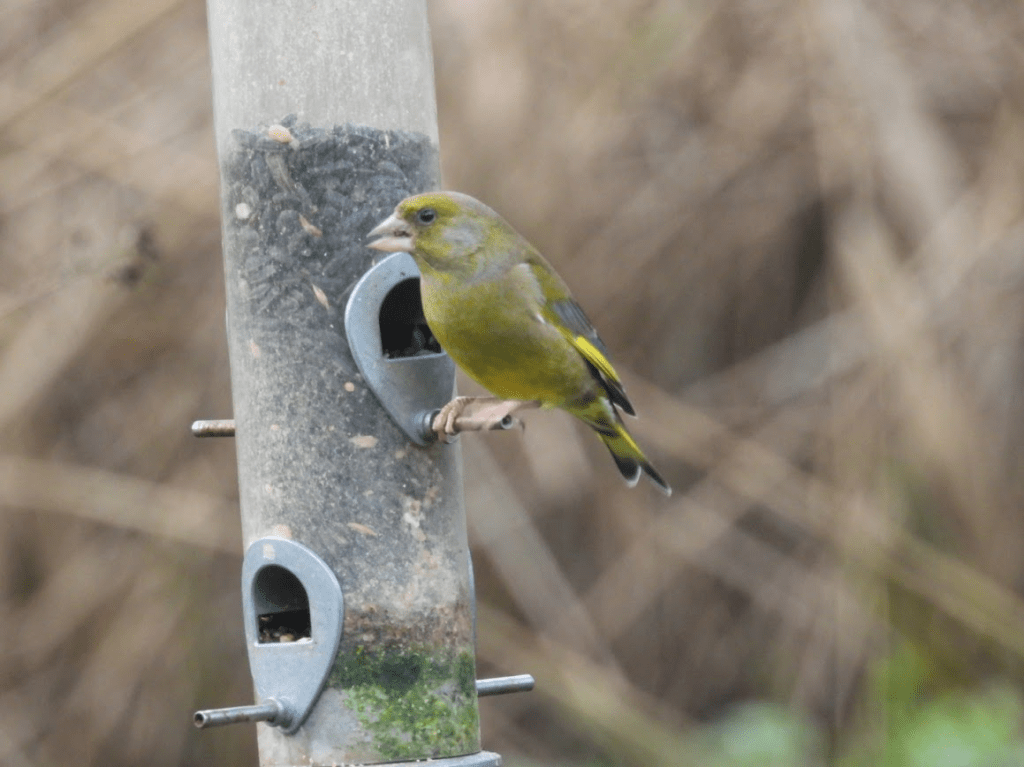
Green Finch, Chloris chloris
Some of the 1000s of Barnacle Geese by the flood planes of the Solway from the Salcot Merse Hide.
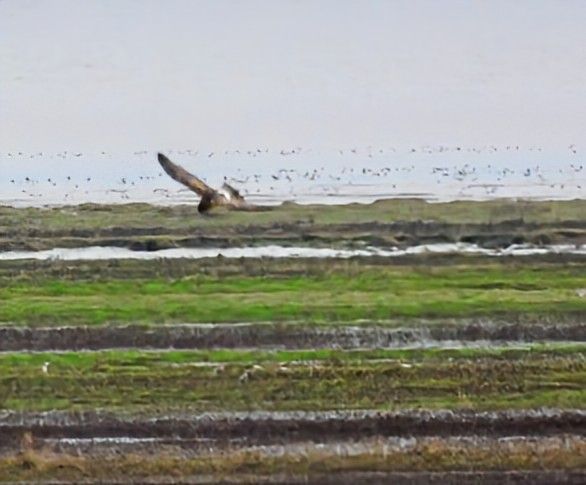
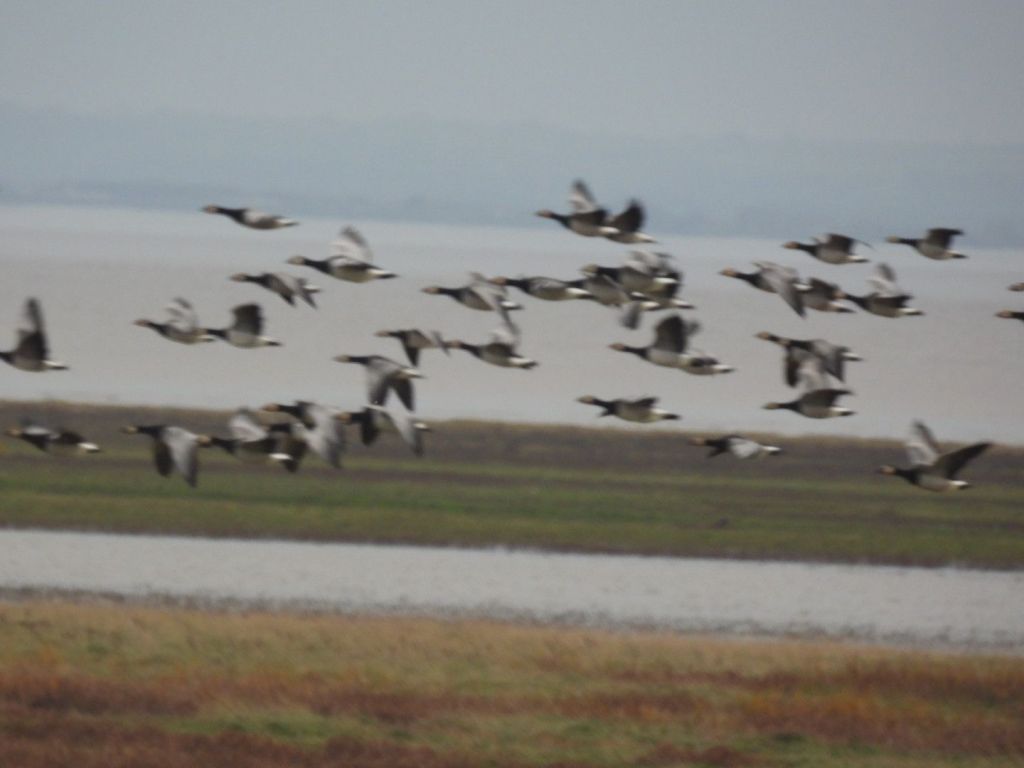
A Hen Harrier attack. A pair of Hen Harriers, Circus cyaneus, were sitting on posts near the Solway. The male flew off – probably to catch a Meadow Pipit or a rodent, and it spooked the Barnacle Geese
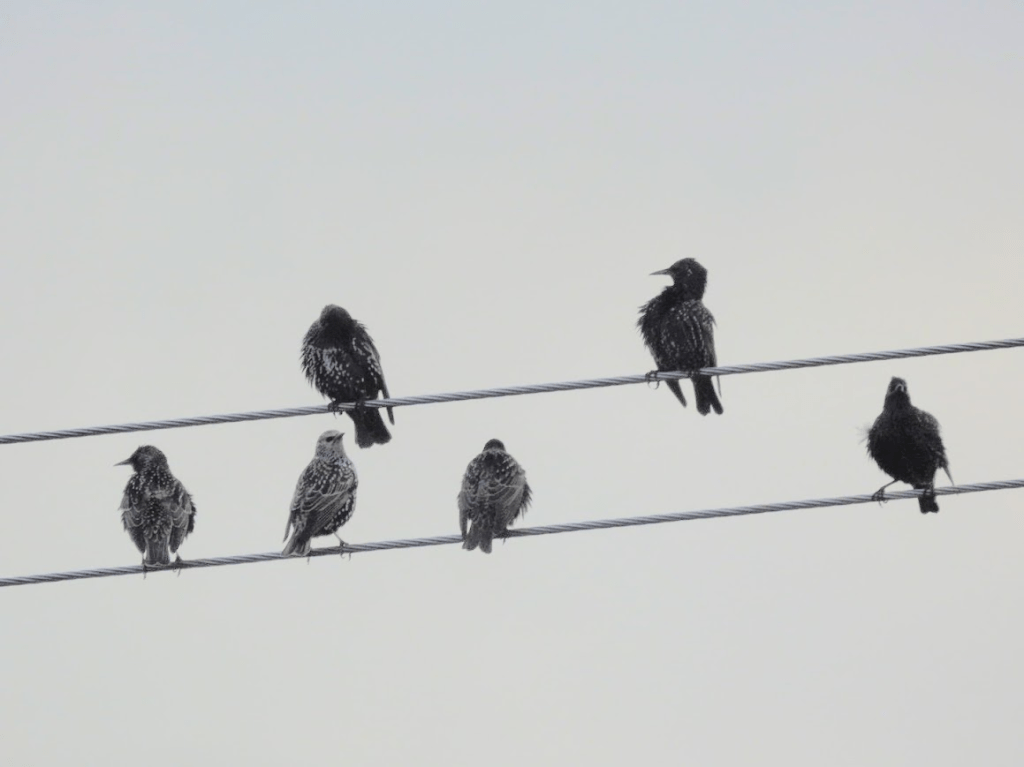
Starlings, Sturnus vulgaris, on a power line; walking back towards the bus stop.
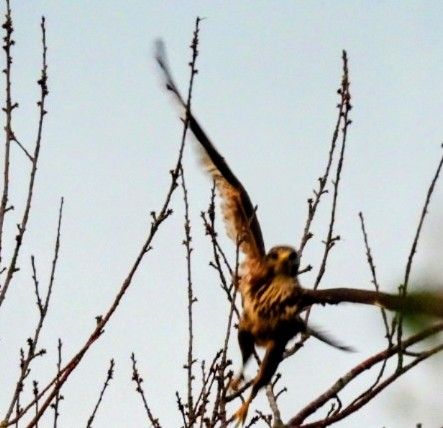
Near the bus stop I saw a raptor flying low across a field. It settled in a Hawthorn for a few seconds and flew up. This was the best shot I got; it’s probably a Buzzard, Buteo buteo
 Sim's Nature Notes