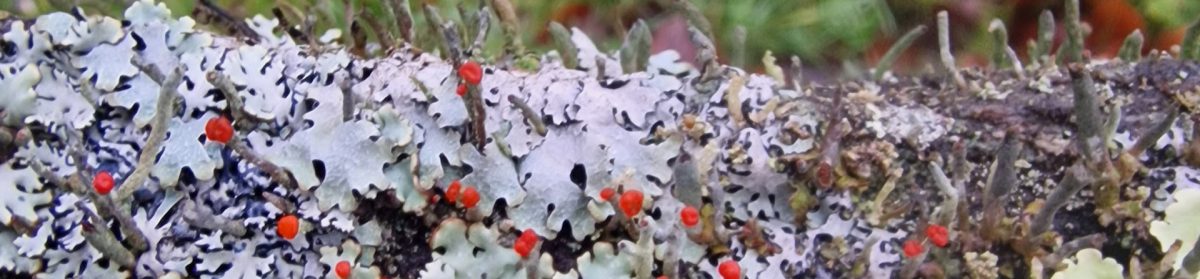
LEAF stands for Laboratory Extension and Fieldwork. I would really recommend the British Lichen Society’s courses, for dates of courses see British Lichen Society Latest News It was a fabulously enjoyable and informative course. Tutors: Nicola Bacciu, Pat Wolseley, Fred Gibson and Lindsay Mahon
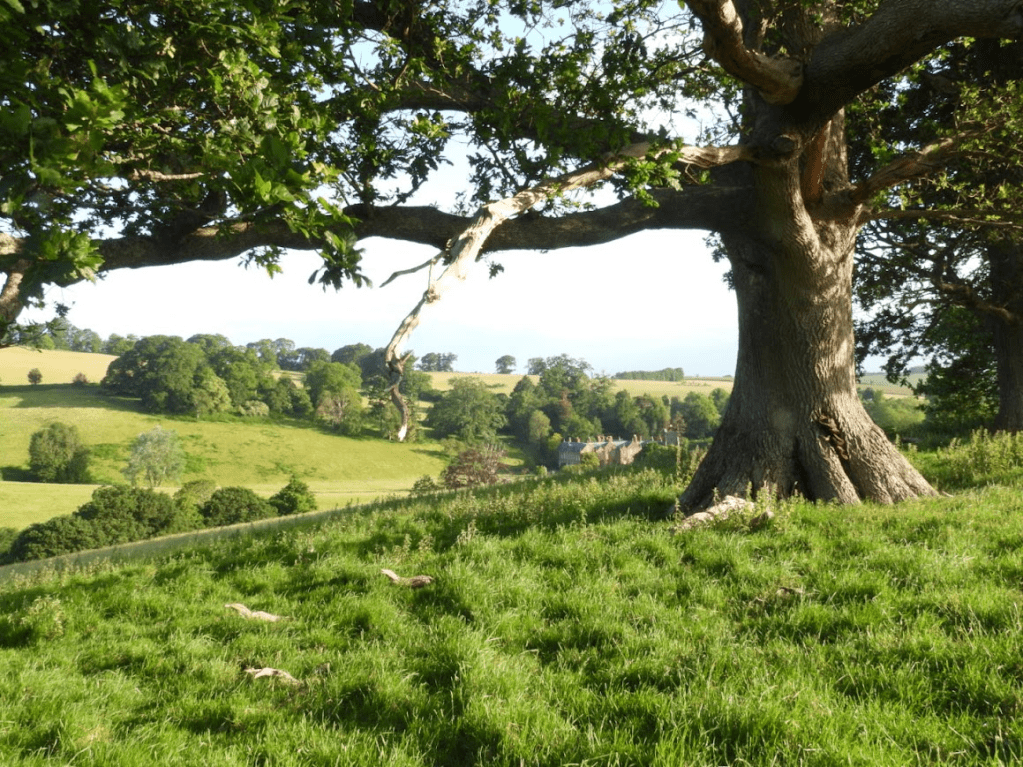
I travelled to Taunton from Brighton on 29.05, and kindly got a lift from one of the course participants to Nettlecombe Court. The court and its parkland is on the fringes of the Brendon Hills, within the Exmoor National Park, Sommerset,
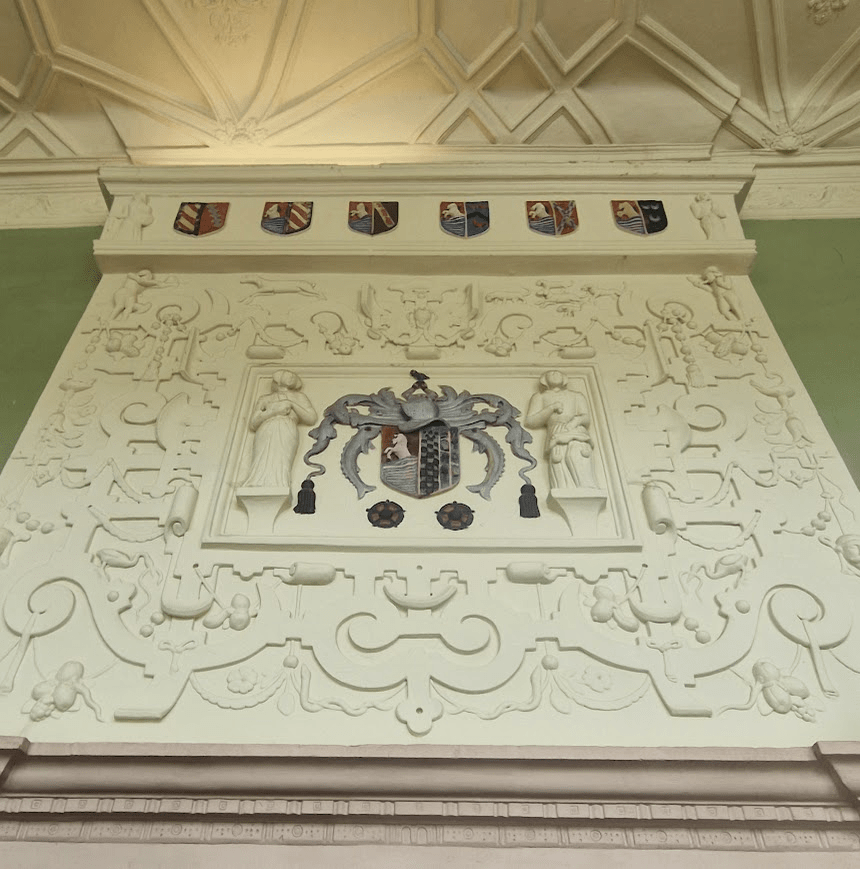
Its a Grade I listed building, see Nettlecombe Court for Historic England’s listing; with a Late medieval hall, cross passage and wing, a 1599 entrance front, porch, great hall and parlour, a circa 1641 addition to rear of great hall, a 1703-7 South West front extended and staircase added in angle, and plasterwork on stair added in 1753.

The court is surrounded by 60 hectares of parkland, once a part of the estate. The park surrounding the house is Grade II listed on the National Register of Historic Parks and Gardens.
In 1066 Nettlecombe was held by Godwin, son of Harold. In 1086 the Domesday Survey described it as held by the King for a knight’s fee. It was granted by the King to Hugh de Ralegh in 1160 and the grant of free warren was made to Simon de Ralegh in 1304. In 1440 the then owner, also Simon de Ralegh, died childless, leaving the estate to his nephew, Thomas Whalesborough. Thomas’ son, Edmund, died during his father’s lifetime and the estate descended to Edmund’s sister, Elizabeth, who was married to John Trevelyan of Cornwall. Since 1440, the Trevelyan family has kept a record of the management of the estate, now held in the Somerset Record Office, Taunton. The first mention of a park at Nettlecombe appears in a survey of 1532, recorded as being of 80 acres (c 33ha) in a later survey of 1556, and deer were first recorded in 1593. Although deer parks are known to have existed at Nettlecombe since the late C16, the first conclusive evidence of a designed landscape appears in an engraving, published in 1787, The park was enlarged with the addition of the Great Park in 1755 and South Park in 1792. National Register of Historic Parks and Gardens Listing
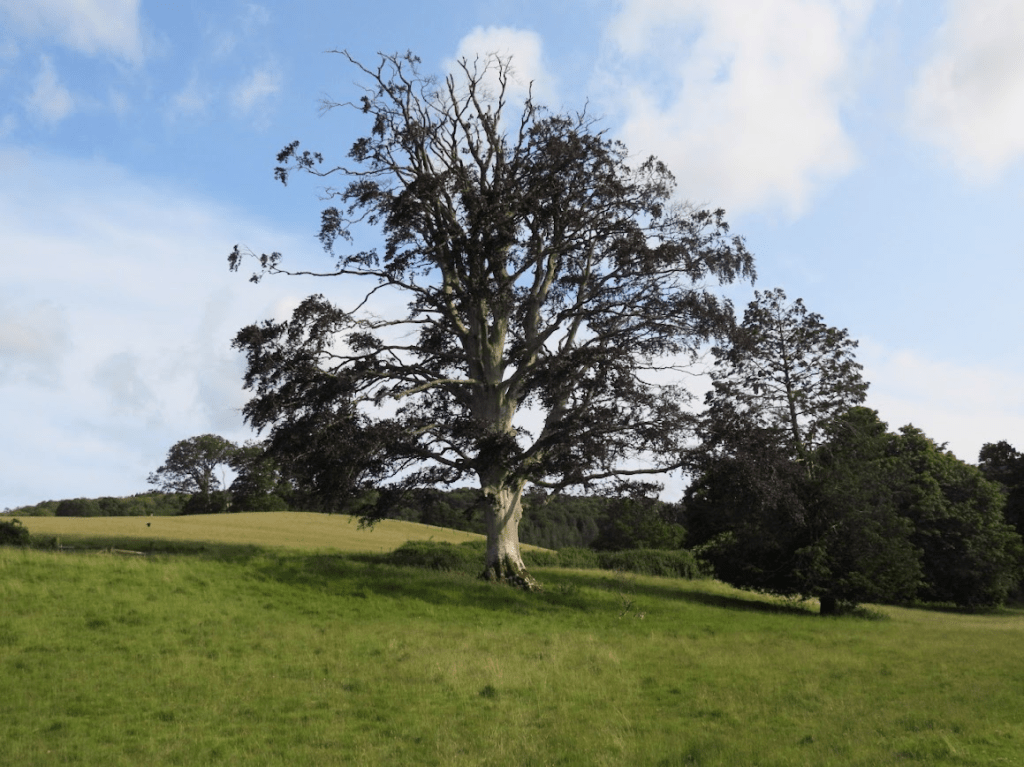
The parkland is an extremely propitious habitat for lichens. Pat Wolseley one of the course leaders, and Francis Rose wrote a fascinating article: Nettlecombe Hall: its history and its epiphytic lichens – an attempt at correlation, in 1984 for the journal Filed Studies. It can be downloaded here: https://www.field-studies-council.org/resources/field-studies-journal/nettlecombe-park-its-history-and-its-epiphytic-lichens-an-attempt-at-correlation/
Here are Lichens we saw (all photos taken by me; Lichens marked * were new-tom-me and were identified by the tutors, Nicola Bacciu, Pat Worsley, Fred Gibson and/or Lindsay Mahon)
One of the main learning points for me was considering lichen communities
The Lobarion pulmonariae community
The Lobarion pulmonaria is composed mainly of large foliose lichens and robust bryophytes and appears to be the natural forest climax community on mature hardwood trees with barks of pH 5.0-6.0 in western Europe outside areas with Mediterranean climates. It is now very much fragmented in distribution due to the felling and management of primeval forests, drainage and various forms of pollution. In drier areas it tends to be confined either to sheltered glades in more open forests where there is more light, or to the upper boughs of trees. James, P.W., Hawksworth, D.L. & Rose, F. (1977) Lichen communities in the British Isles: a preliminary conspectus. In: Lichen Ecology (ed. M.R.D. Seaward): 295-413. Academic Press, London.
Old forest and parkland – (the Lobarion pulmonariae alliance)
The Lobarion pulmonariae alliance includes a mixture of bryophytes and lichens found on basic barked trees more than 150-200 years old, mainly Ash and Oak, but sometimes on Lime, Maple and Sycamore. It is a characteristic community of ancient woodland and parkland and contains many local and rare species.
The large leafy Lobaria pulmonaria and Ricasolia virens are both present and although rare, they locally form luxuriant colonies in ancient woodlands where they are both found fertile. Leptogium lichenoides and Peltigera horizontalis occur rather frequently, but other large leafy lichens with a blue-green photobiont such as Ricasolia amplissima, Nephroma laevigatum, Pannaria conoplea, Parmeliella triptophylla, Peltigera collina, Sticta limbata and S. sylvatica are all now rare. There are many small, crust-forming species associated with this community including Bacidia biatorina, Catinaria atropurpurea, Coenogonium luteum, Gyalecta truncigena, Leptogium teretiusculum, Biatora epixanthoides, Mycobilimbia pilularis, Thelopsis corticola, Pachyphiale carneola, Rinodina roboris and Thelopsis rubella, plus the rarer Agonimia allobata, A. octospora, Lecania chlorotiza, Piccolia ochrophora, Porina coralloidea, P. rosei, Strigula jamesii, S. phaea and Wadeana dendrographa. Bryophytes associated with this community include Homalothecium sericeum, Leptodon smithii, Leucodon sciuroides, Metzgeria furcata, Tortula laevipila and Zygodon baumgartneri. British Lichen Society Document. John Skinner et al. 2024 Revised FG 2025 Rev. 1.2 EPIPHYTIC LICHEN COMMUNITIES NETTLECOMBE – June 2025
We saw most of the following lichens on Quercus petraea and a single Q. cerris in Nettlecomb. In Sussex, where I live, this community is only found in a few places, viz. Paddockurst Estate, Eridge Park, East Dean Park Wood , Parham Park, Ashburnham Park and Pads Wood, but only Eridge Park, still has Lobaria pulmonaria itself.
Lobaria pulmonaria
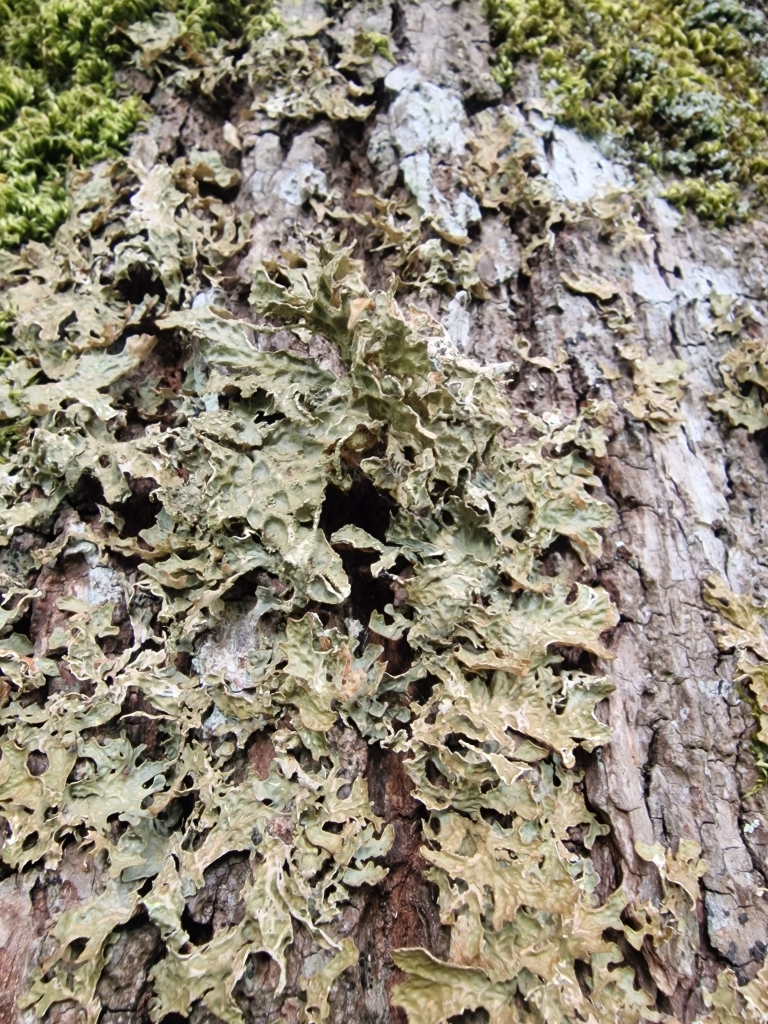
Parmotrema crinitum *
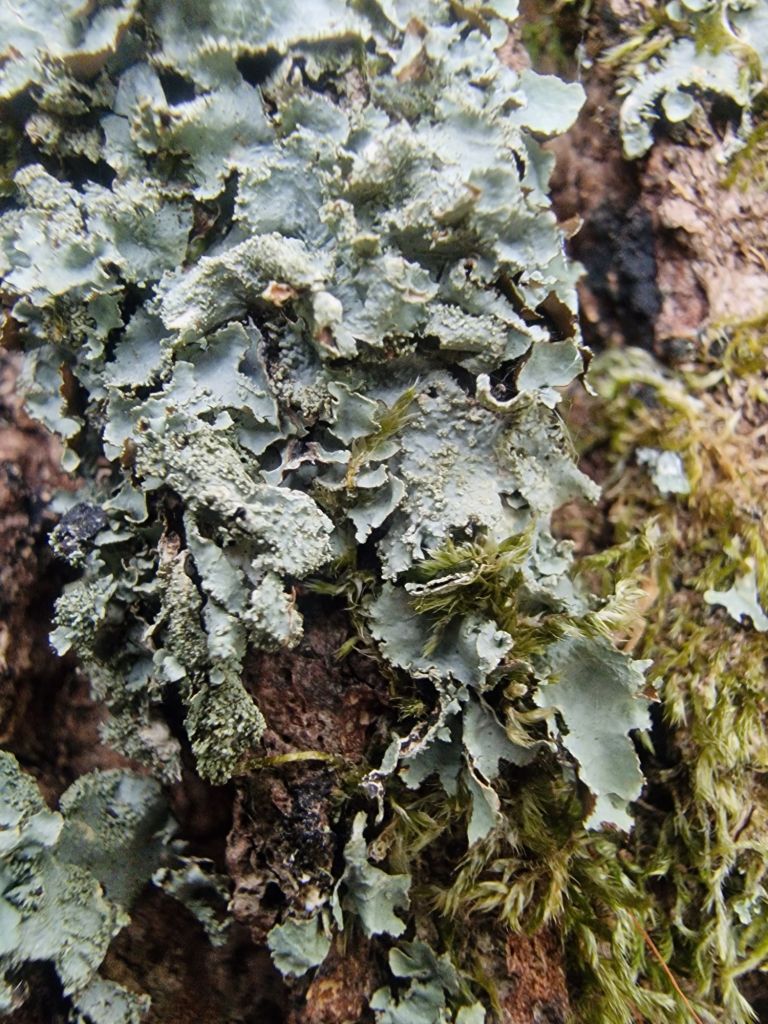
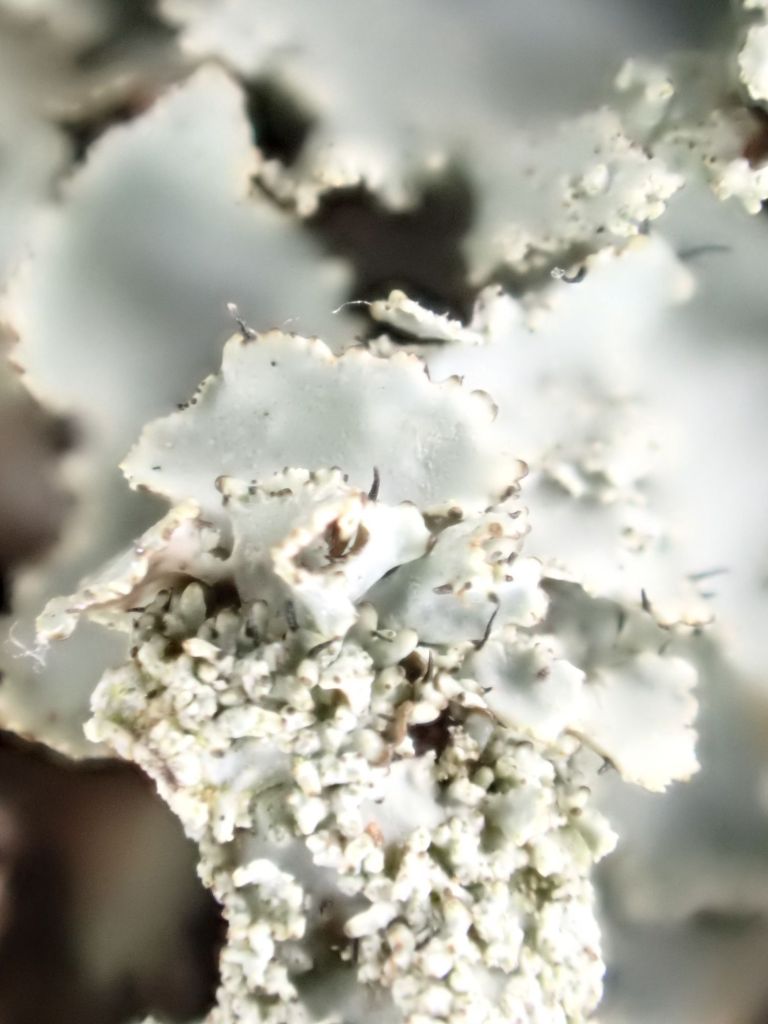
Arthonia vinosa *
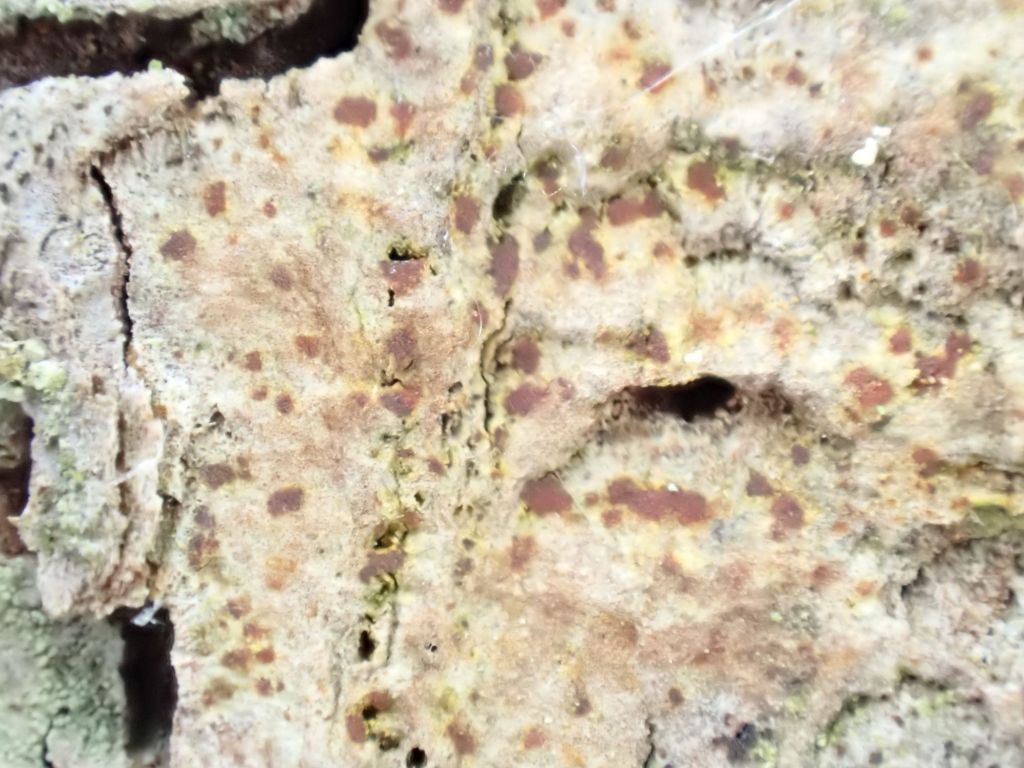
Gyalecta truncigena *
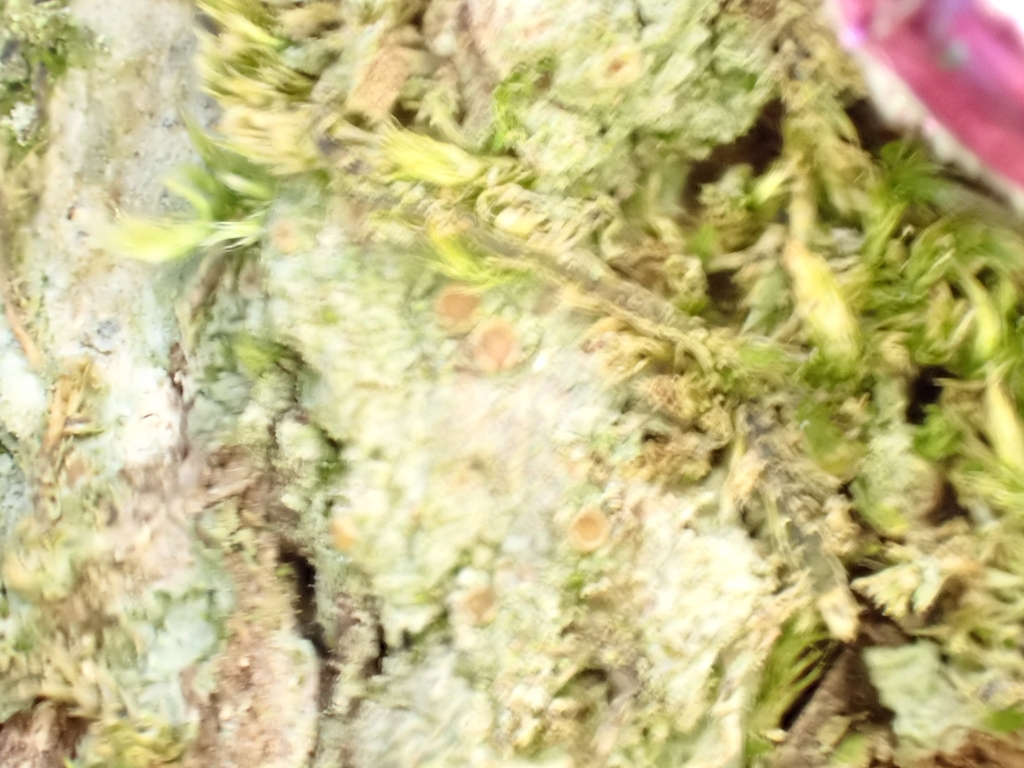
Aquacidia viridifarinosa *
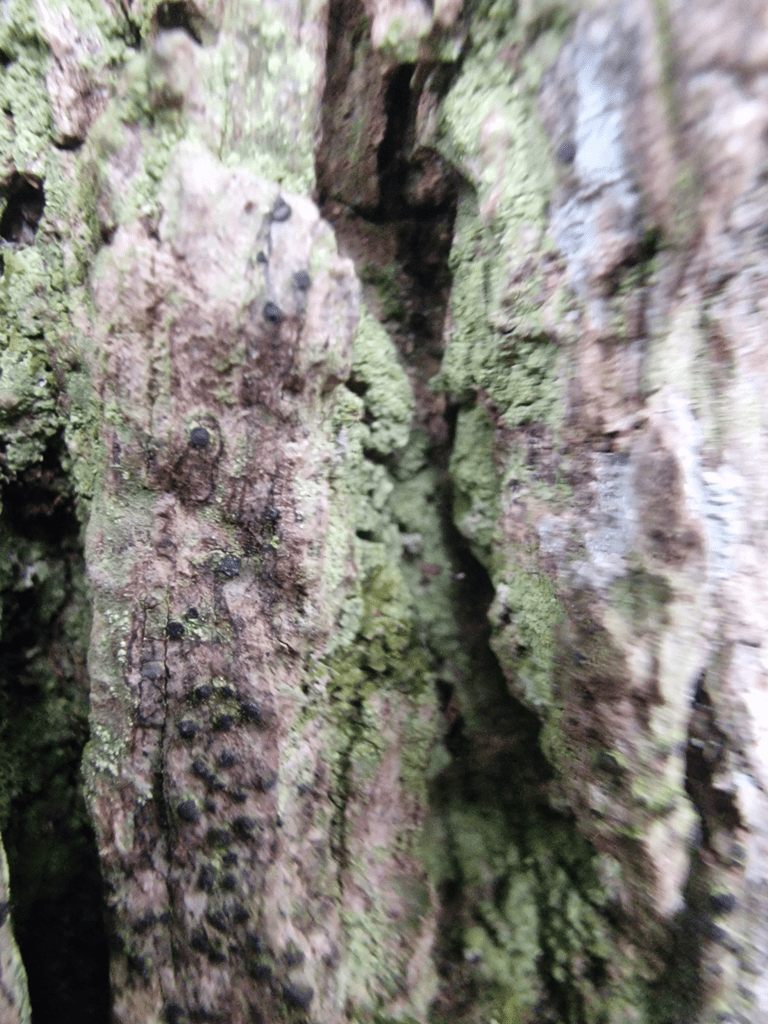
Mature Mesic Bark Community (Pertusarietum amarae)
The Pertusarietum amarae are shade tolerant communities on rougher bark, with Pertusaria species dominant. They are particularly characteristic of Beech and Ash, but also on less damp Oak bark. The basic community is composed of widespread species particularly Pertusaria s. lat. species: Pertusaria albescens, Lepra amara (Pertusaria amara f amara), Pertusaria flavida, Pertusaria hymenea and Pertusaria pertusa along with Phlyctis argena and Ochrolechia subviridis. This is a common community in drier areas but gets displaced by moss dominated communities in strongly oceanic areas. Within old growth stands it can be rich in old woodland species including Arthonia vinosa, Cliostomum flavidulum, Mycoporum antecellens, Phaeographis dendritica, Lepra multipuncta (Pertusaria multipuncta) and Thelotrema lepadinum. The rare taxa include Reichlingia zwackhii (Arthonia zwackhii), Melaspilea amota, Stictographa lentiginosa (Melaspilea lentiginosa), Lepra pulvinata (Pertusaria amara f. pulvinata), Pertusaria pustalata, Varicellaria velata (Pertusaria velata) and Phaeographis lyellii. British Lichen Society Lichen Communities
We saw these lichens on a Nothofagus fusca and mostly Quercus petraea at Nettlecombe. In Sussex this community can be seen at Eridge Park, Parham Park, Petworth Park, Wadhurst Park and Buxted Park in particular
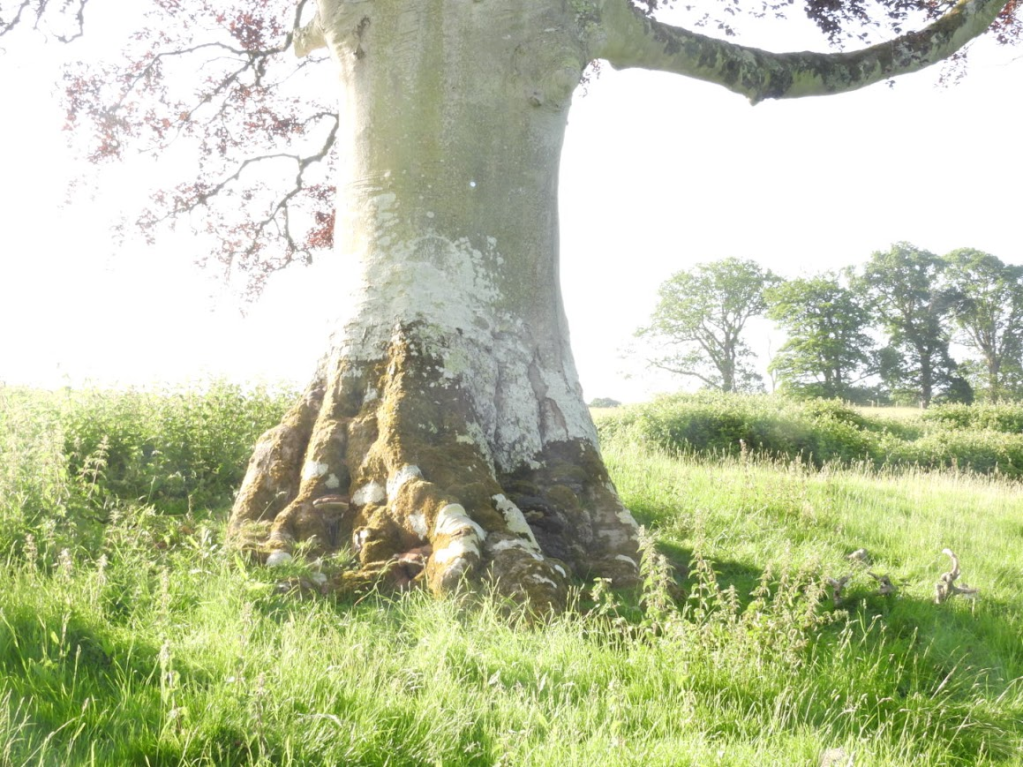
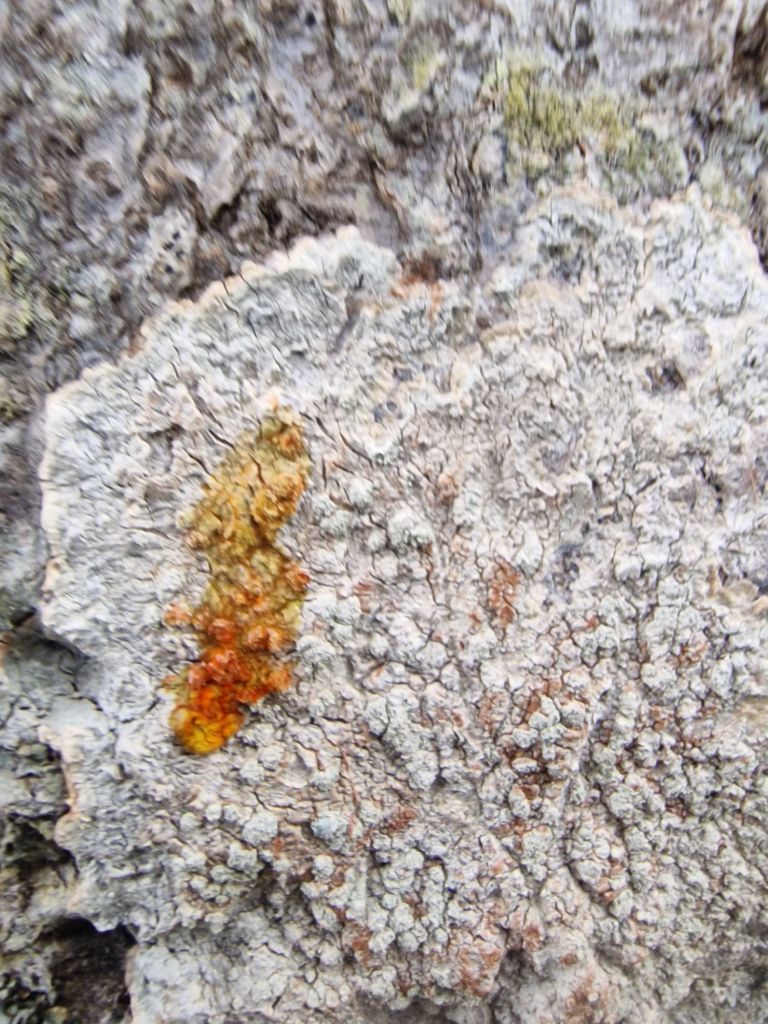
Pertusaria hemisphaerica
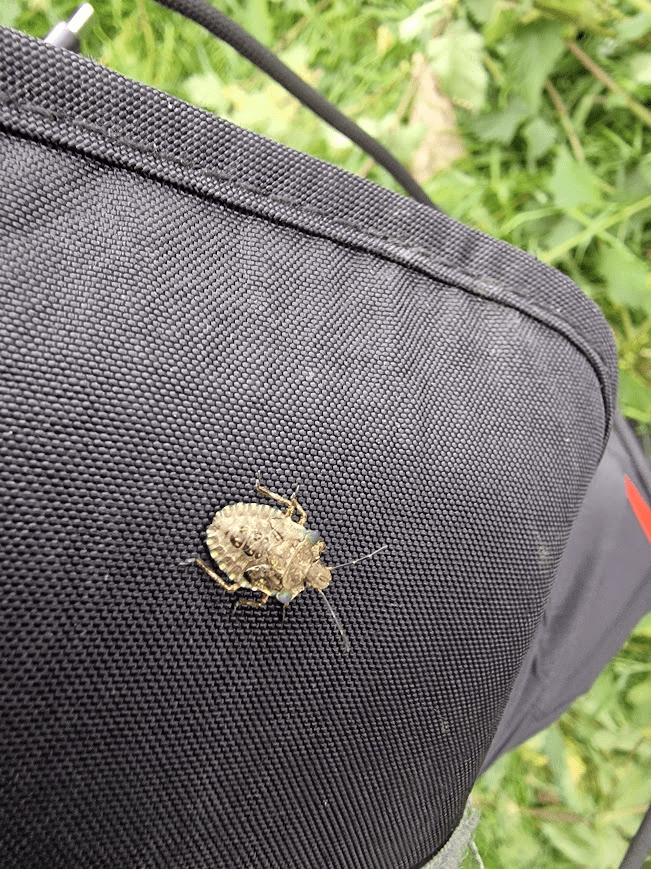
This Pentatoma rufipes Forest Bug fell onto my bag whilst standing under the Nothofagus fusca
Pertusaria coronata *
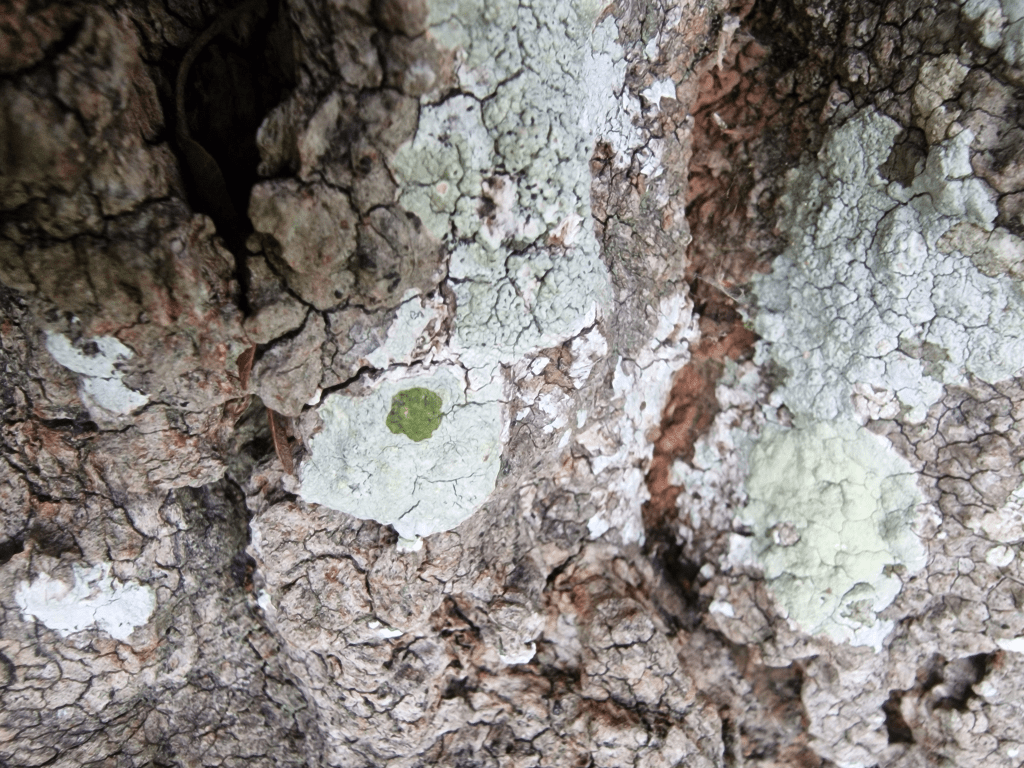
Lepra corallina *
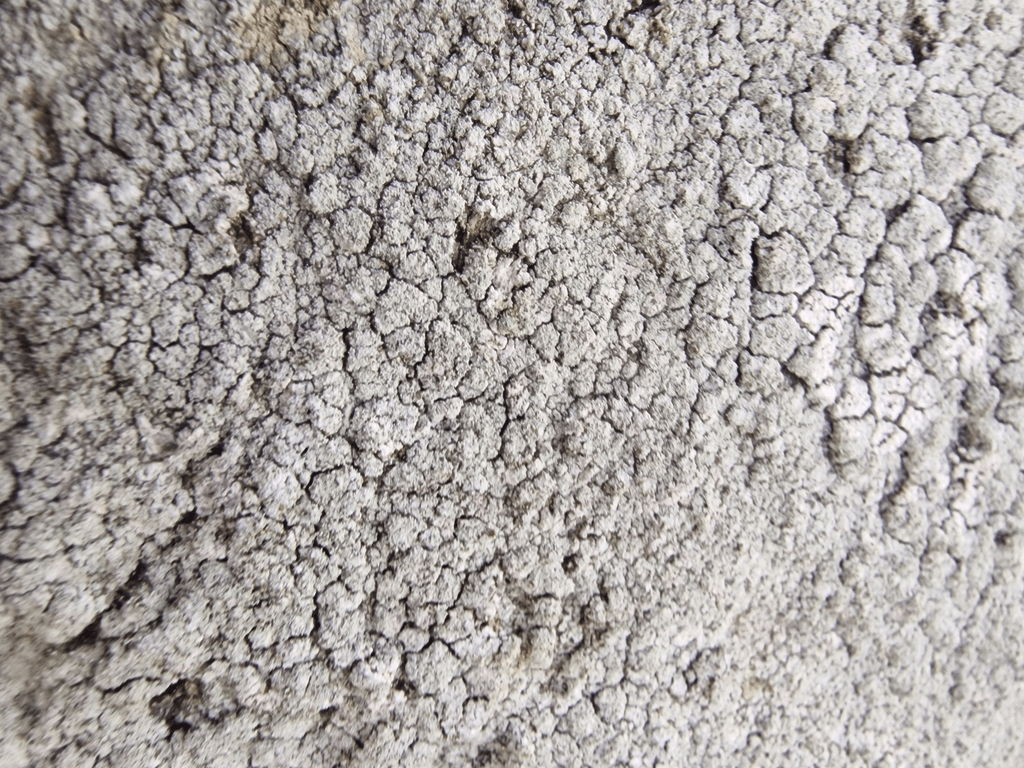
Pertusaria flavida *
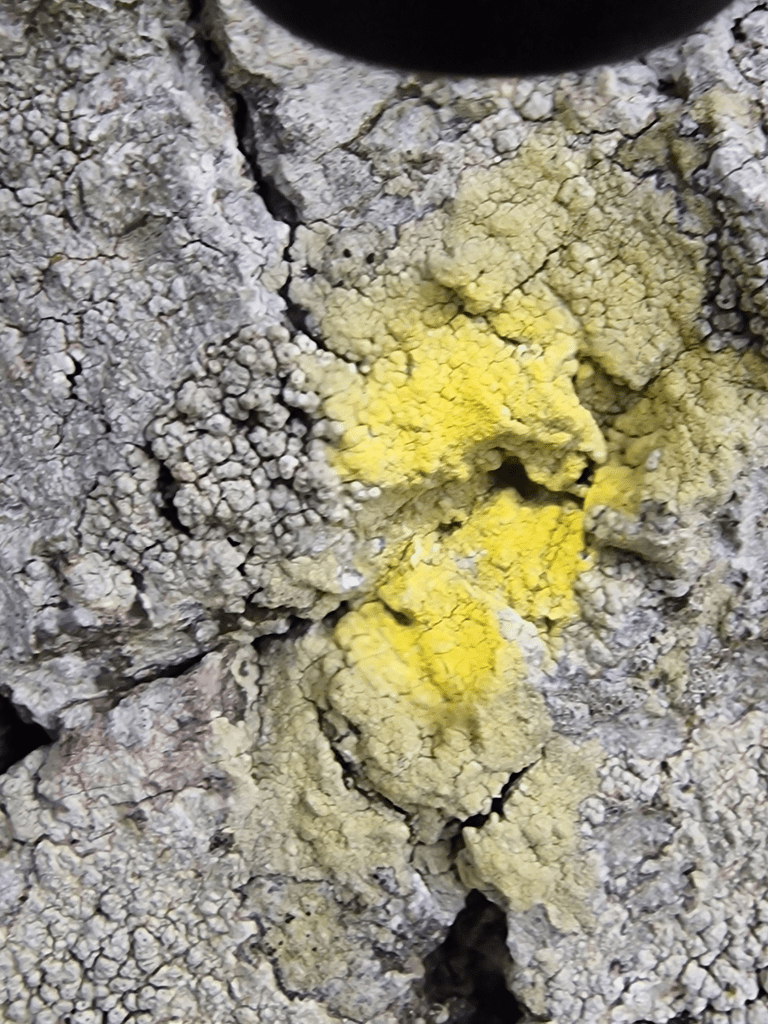
Ochrolechia androgyna *
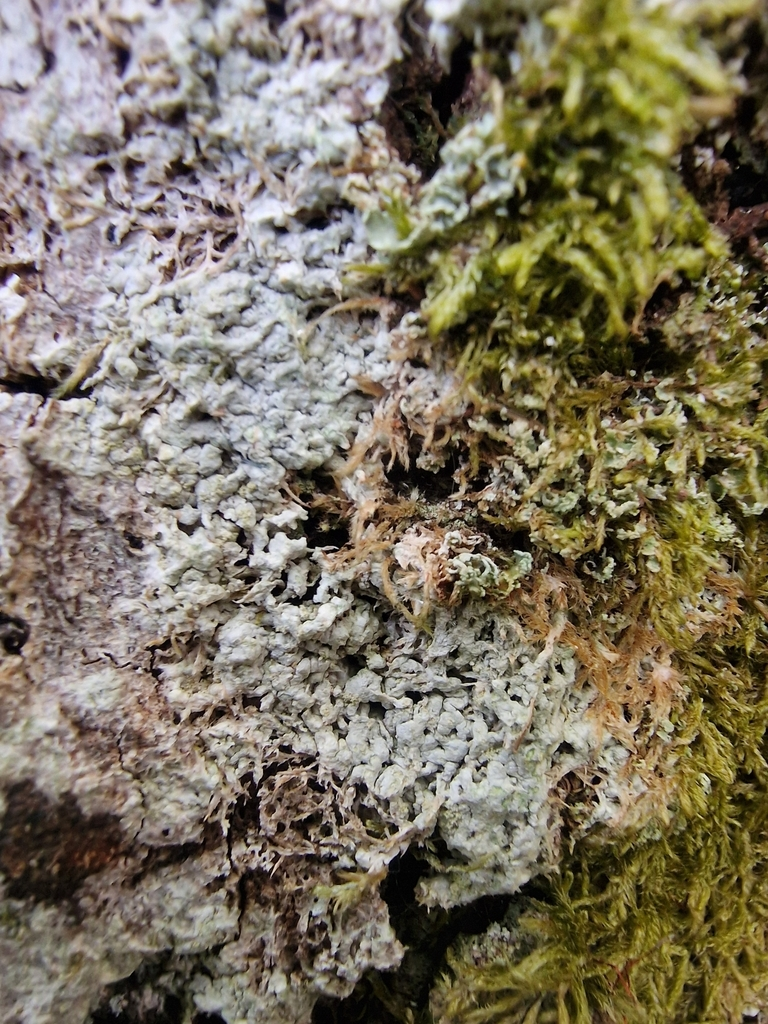
Opegrapha vulgata
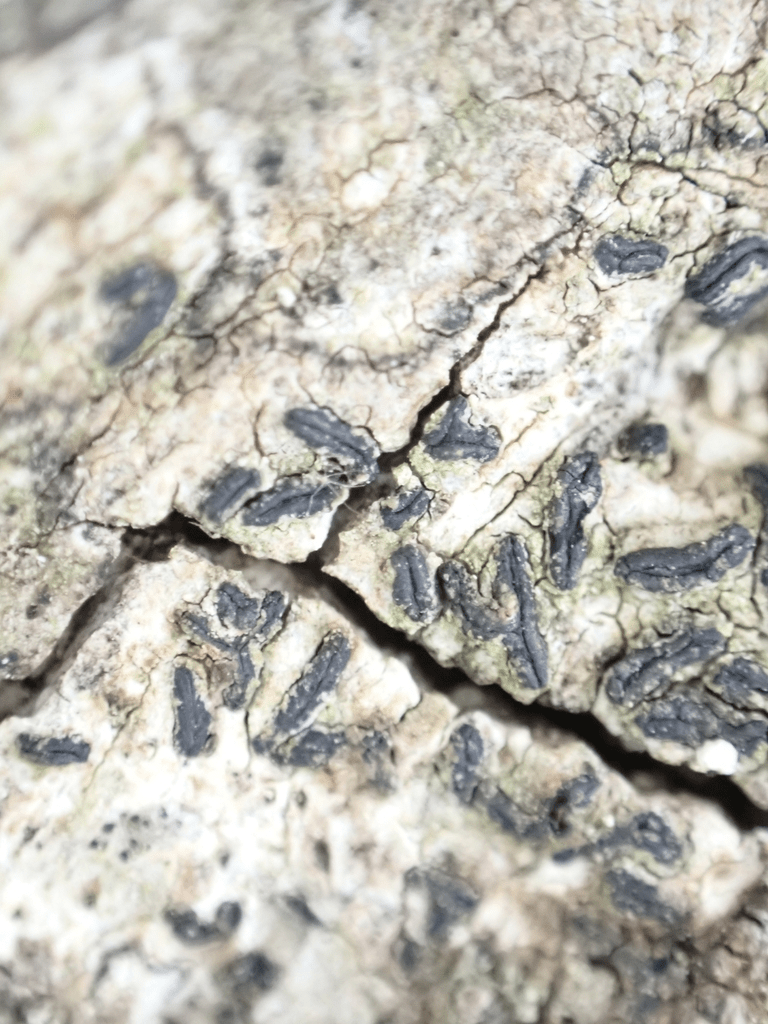
Thelotrema lueckingii *
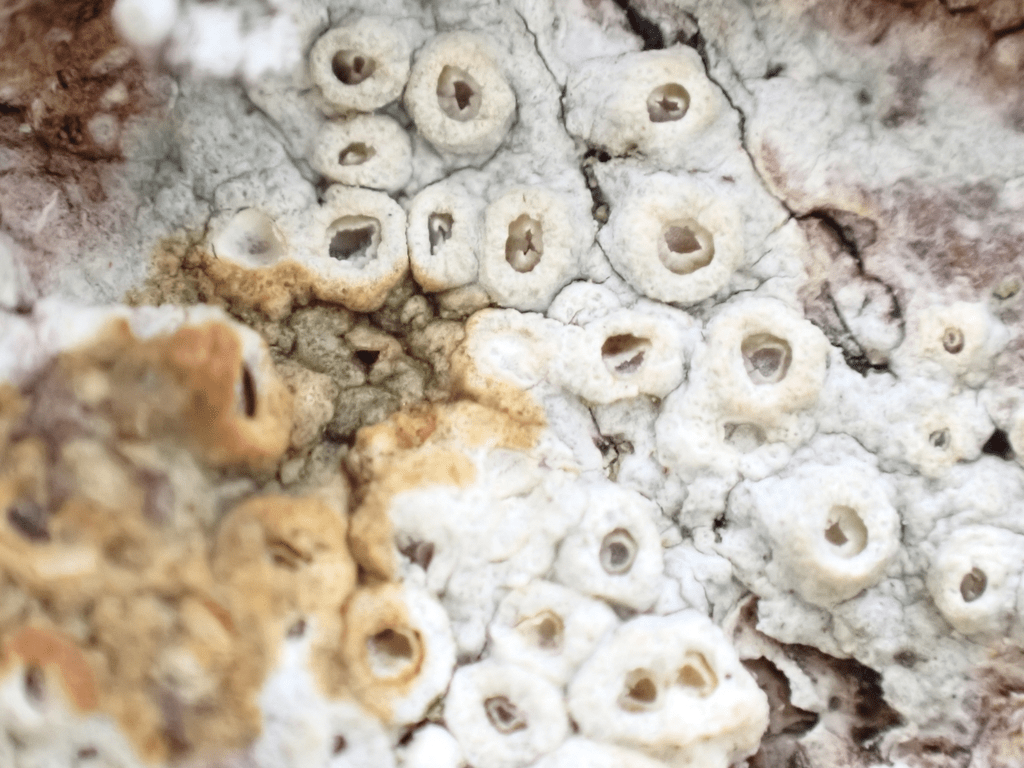
On decorticated lignum (Quercus pretera)
Calicium glaucellum *
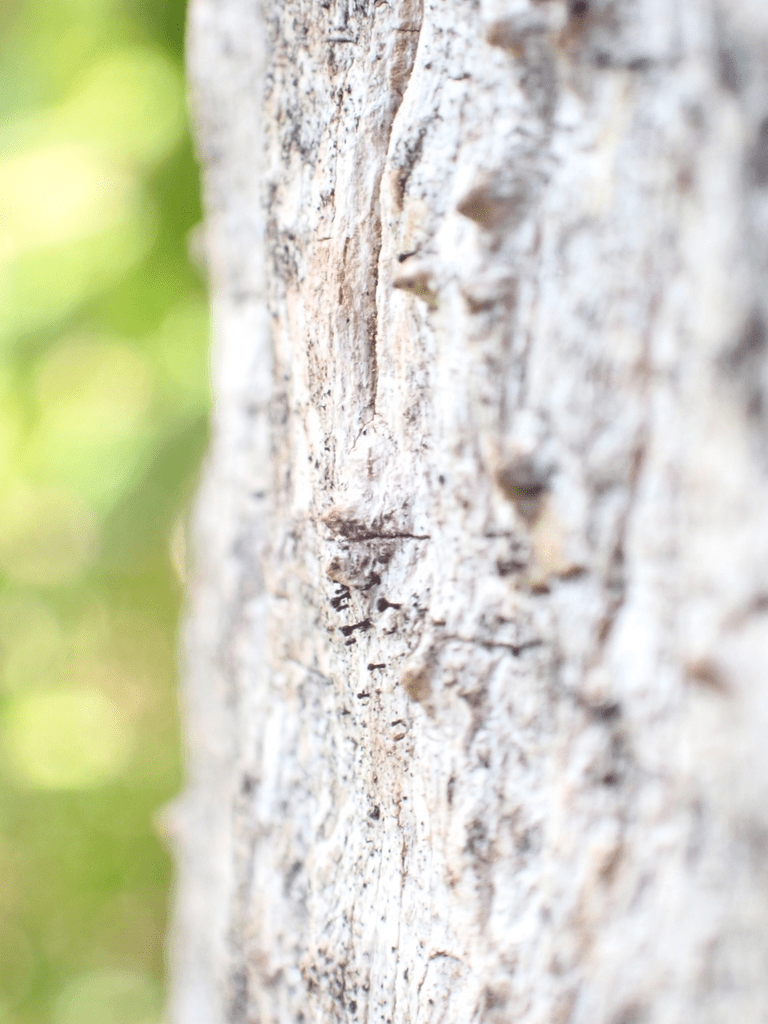
Twig flora community Lecanora chlarotera-Arthonia radiata – the Lecanoretum subfuscae In open grown wood pasture and parkland the canopy is well lit and the twig flora is well developed. The most frequent species are Arthonia radiata, Lecanora chlarotera, L. hybocarpa and Lecidella elaeochroma, with Evernia prunastri, Fuscidea lightfootii, Hypogymnia physodes, H. tubulosa, Melanelixia subaurifera, Parmelia sulcata, Punctelia subrudecta and Physcia aipolia also present. In more exposed sites the presence of Melanohalea laciniatula, Physcia tenella, Xanthoria parietina and X. polycarpa indicates slight levels of ammonia or nitrogen enrichment British Lichen Society Document. John Skinner et al. 2024 Revised FG 2025 Rev. 1.2 EPIPHYTIC LICHEN COMMUNITIES NETTLECOMBE – June 2025
We saw these lichens in the orchard at Nettlecombe. This is a very familiar community to me, as it is the community on Hawthorn and younger trees in Sussex
Physcia aipolia
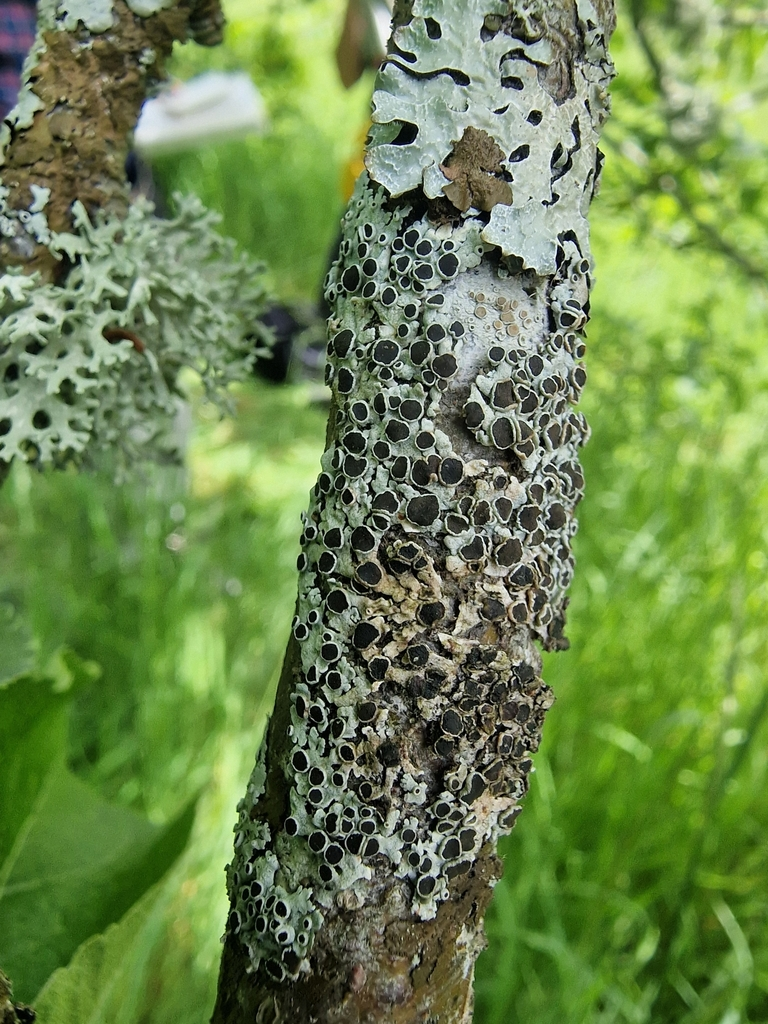
Hypotrachyna revoluta (with Ramalina fastigiata)
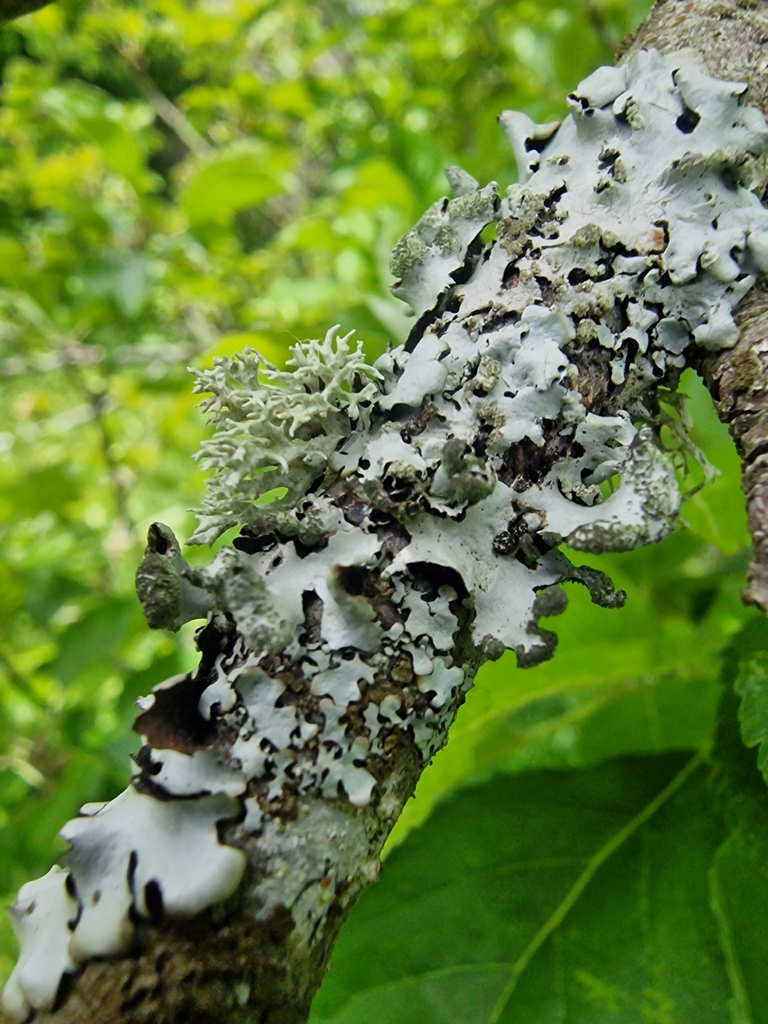
Hypotrachyna afrorevoluta
Glaucomaria carpinea

Ramalina fastigiata with Xanthoria parietina
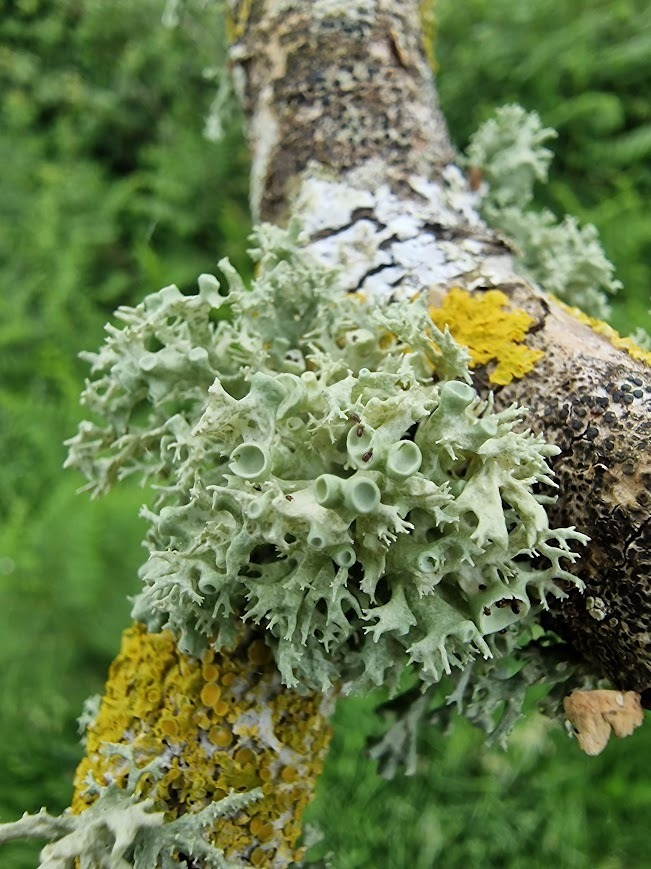
We also saw Ramalina farinacea, Lecanora hybocarpa, Lecidella eleachroma, Usnea cornuta; but I did not photo these.


