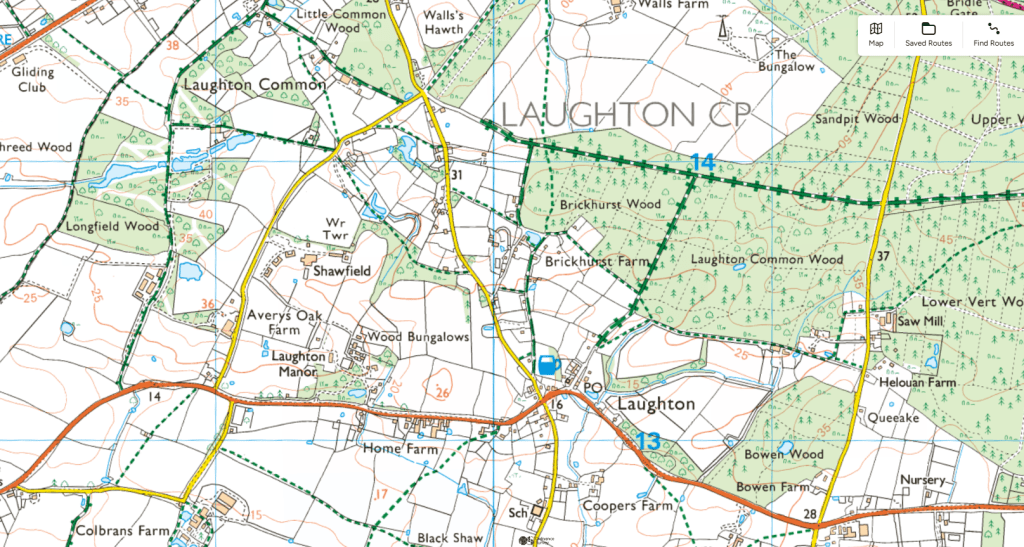
Today I decided to walk though Longfield Wood, Laughton Common, Brickhust Wood, Laughton Common Wood and Bowen Wood in the Broyle; but I didn’t have time in the end to visit Bowen Wood; as I spent a long-time in the unnamed trackway (probably for transporting cattle and pigs to grazing and mast (beech nuts and acorns) through which I passed. I initially thought it was just as access path to Longfield Wood. When you find something beautiful and fascinating, that you hadn’t planned and weren’t expected to see, it a real joy. I got to the Broyle of the half-hourly bus 28 from Brighton
The Boyle was both a deer park and common land, given over by the landowner to local commoner’s use (grazing, pannage, taking timber for building, firewood, and clay for making bricks)
By the second half of the 13th century further assarting [convert woodland to arable use] in the southern part of the manor was restricted, and the remaining forest there was emparked. Three deer-parks (Plashett, Ringmer and Moor Parks) were reserved to the demesne [a piece of land attached to a manor and retained by the owner for their own use] but the Broyle, although also impaled and used as a deer park, served in addition as the common for the tenants in the southern part of the manor. Its functions at this time, described in custumals [medieval documents that stipulates the economic, political, and social customs of a manor] of 1285 and 1331, included the provision of grazing for the tenants’ cattle, beech mast and acorns for their pigs, timber and daub for their houses, firewood for their hearths and clay for their pottery. The Broyle Enclosure, 1767–71 in SUSSEX ARCHAEOLOGICAL COLLECTIONS 138 (2000), 165–89. The full article can be read at: https://archaeologydataservice.ac.uk/archiveDS/archiveDownload?t=arch-285-1/dissemination/pdf/vol_138/11_Kay.pdf
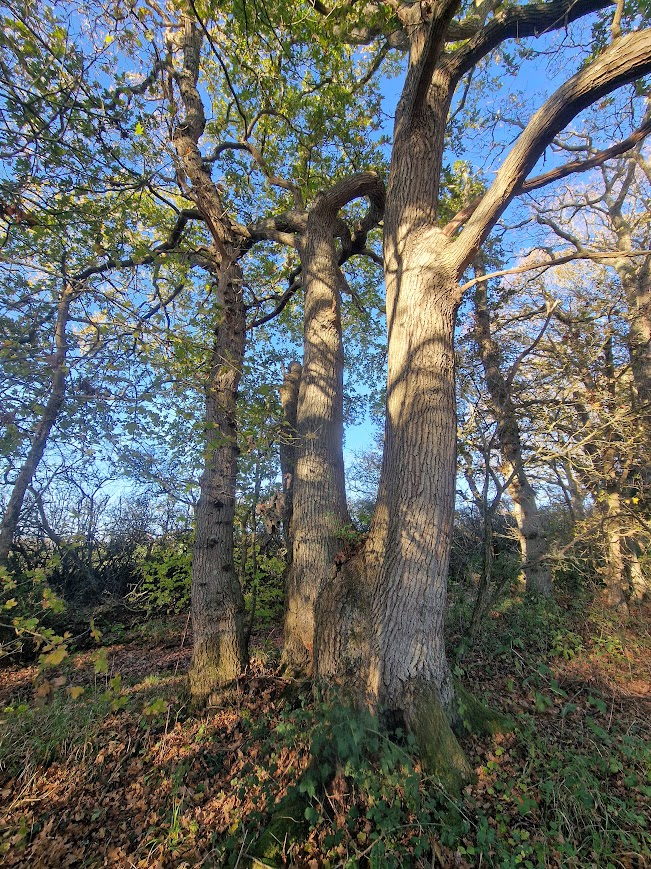
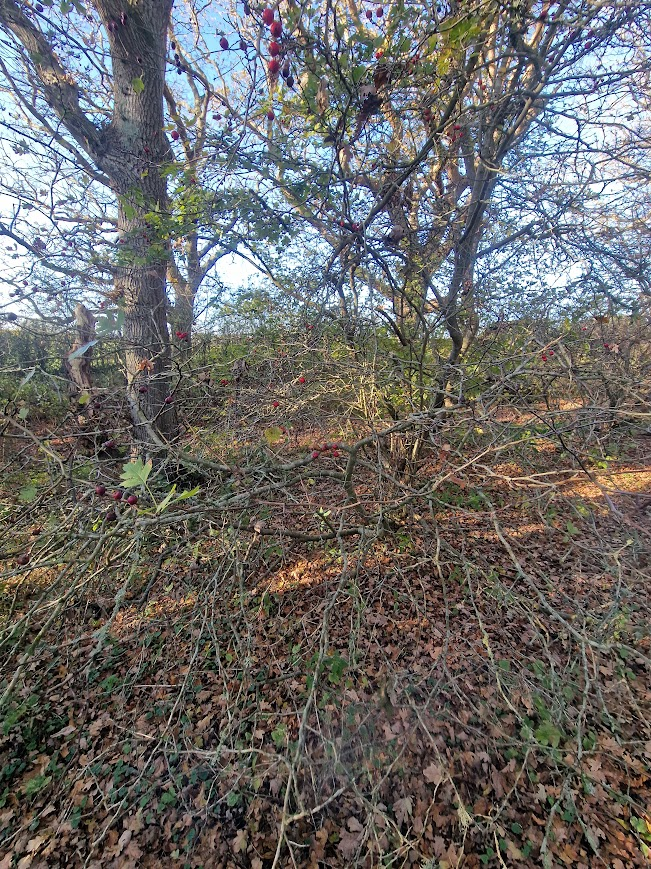
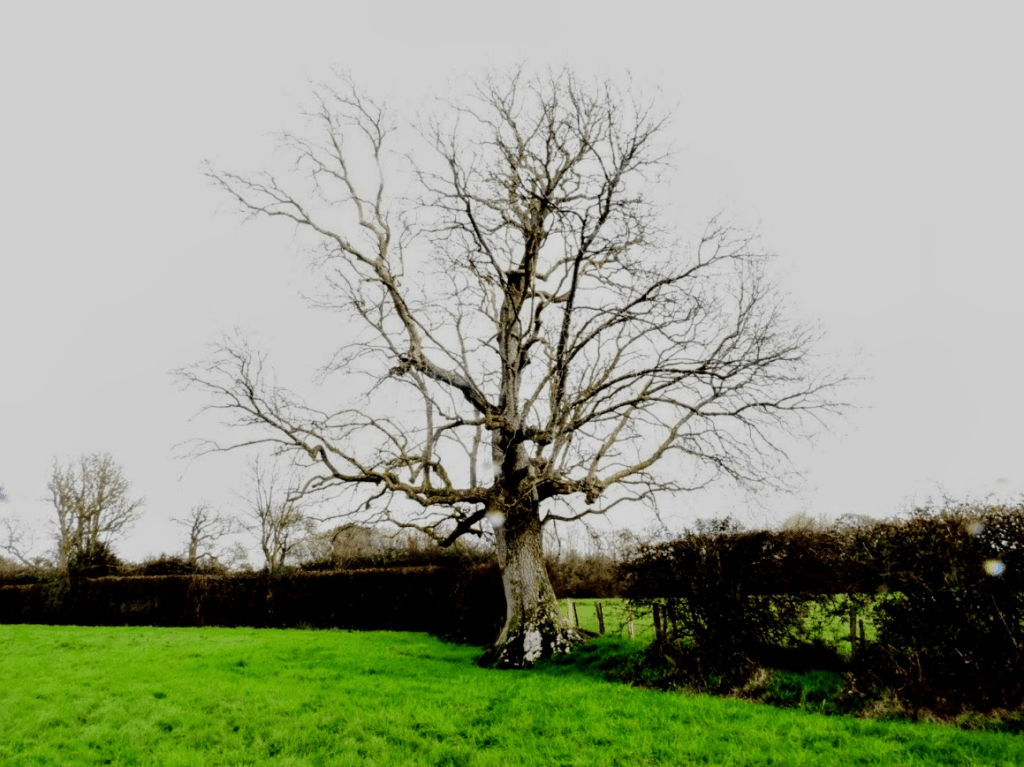
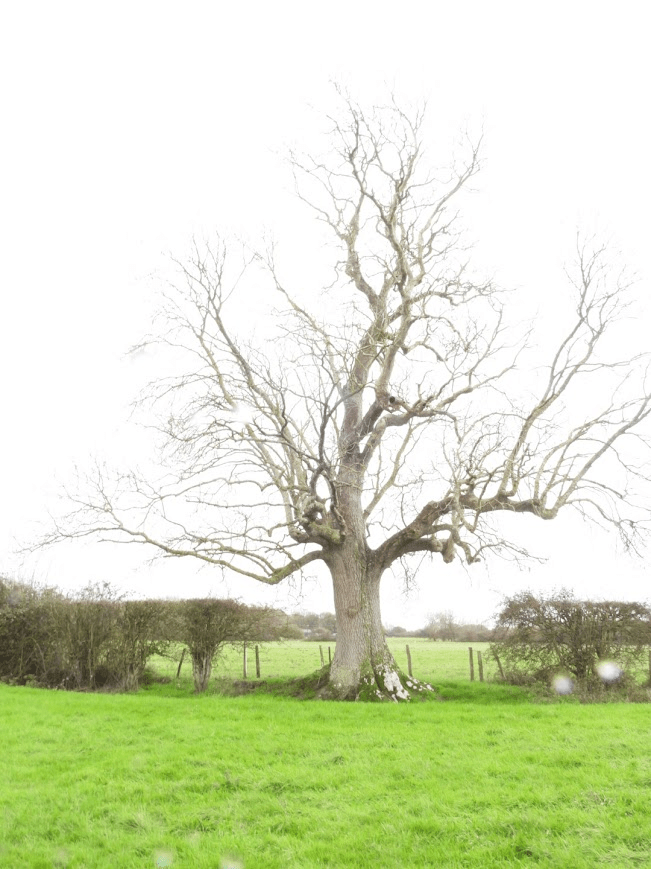
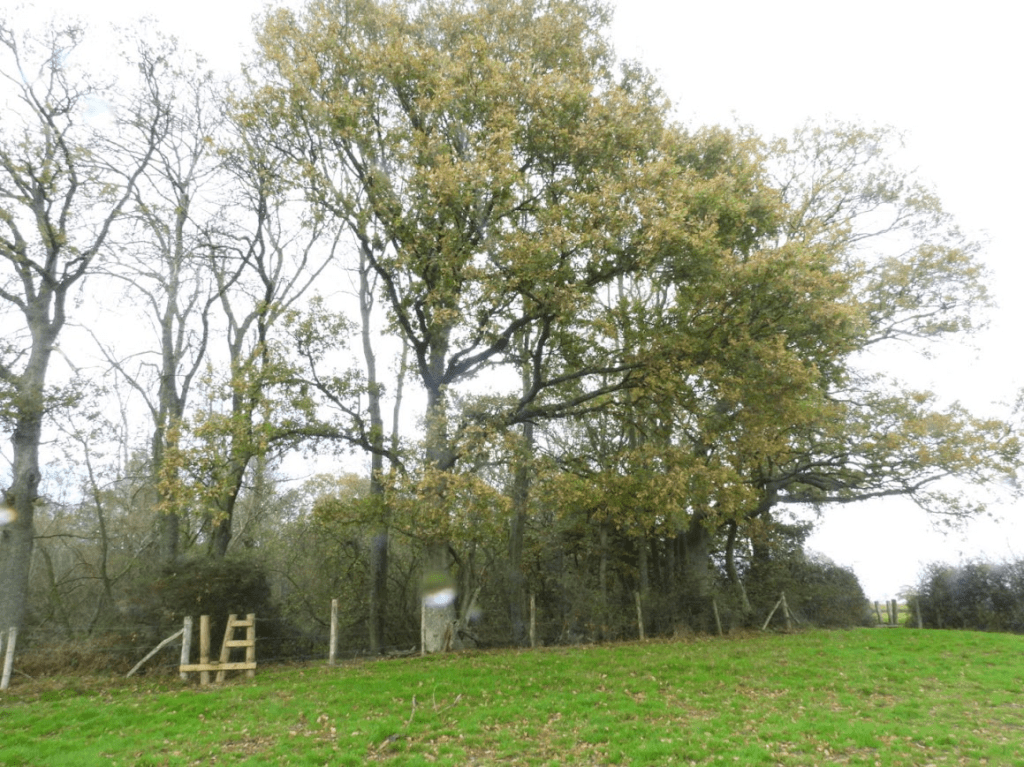
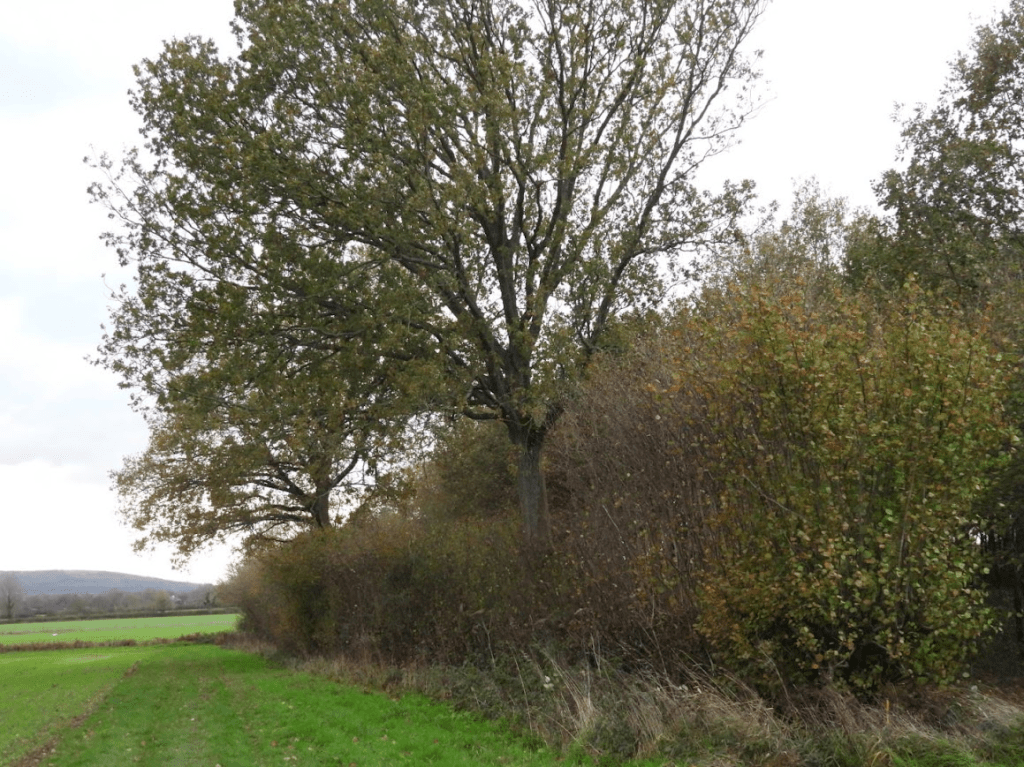
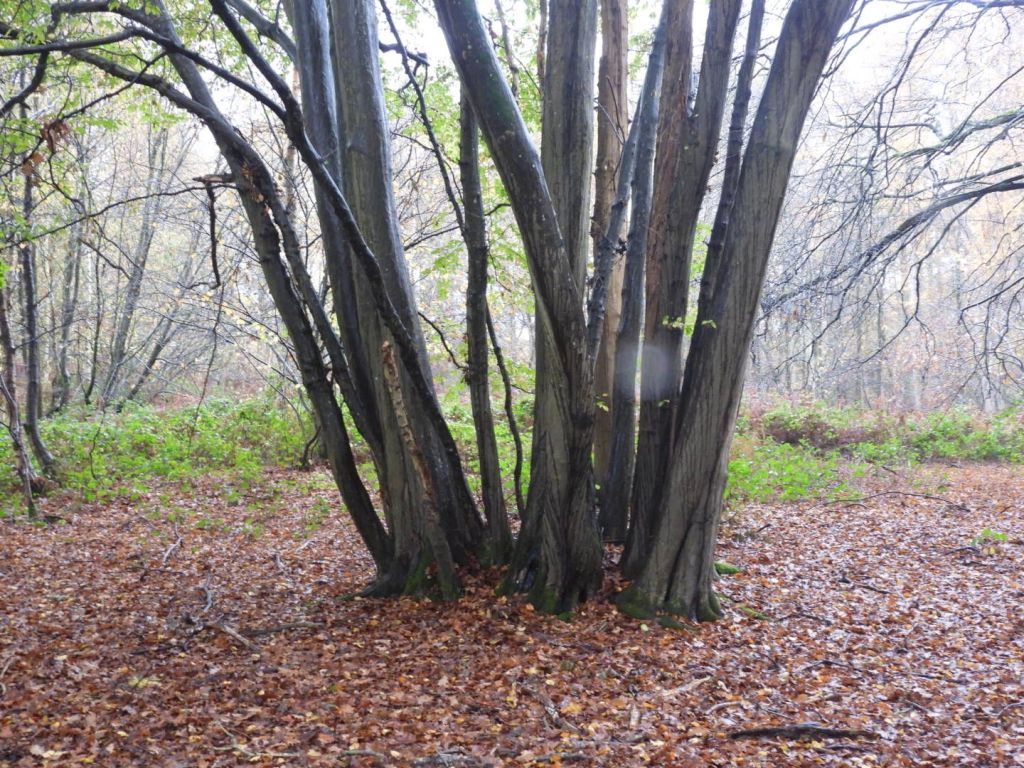
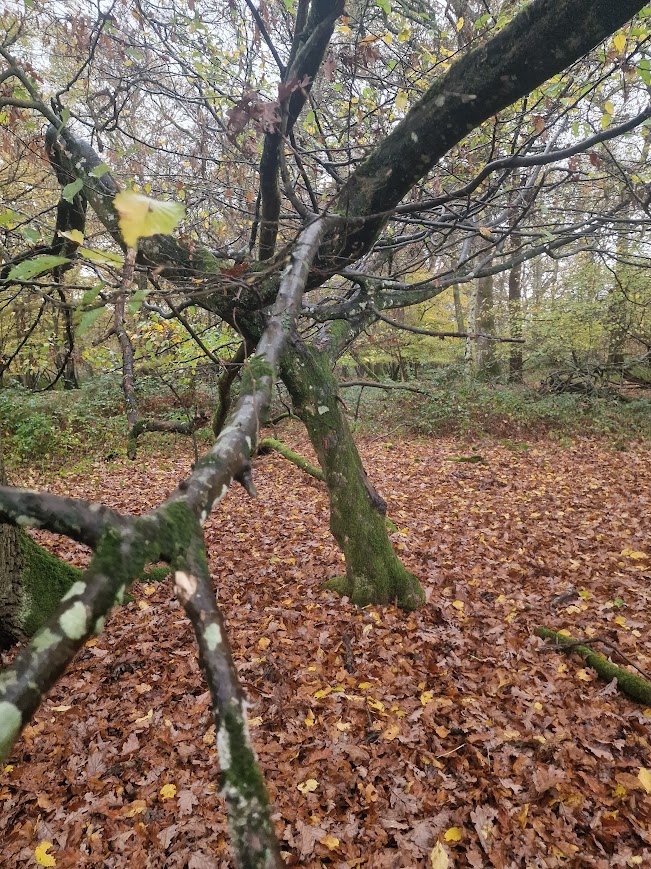
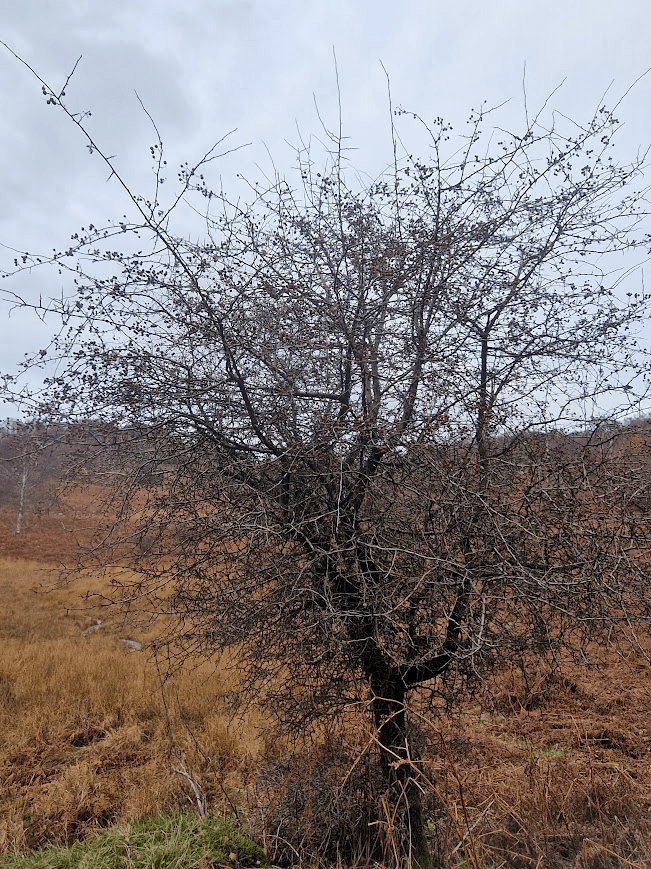
Coppiced Pedunculate Oaks, Field Maple and Midland Thorn along the Trackway
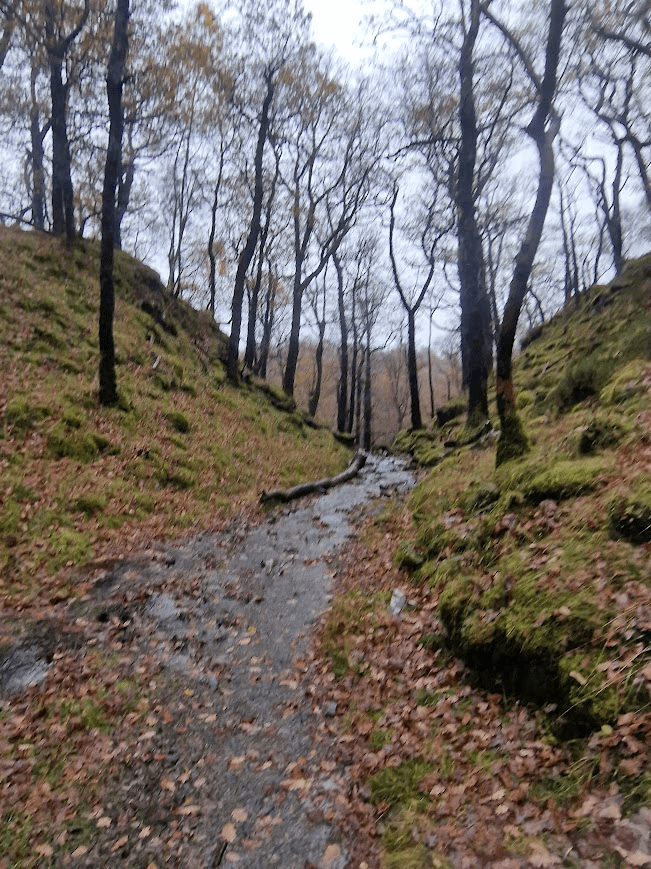
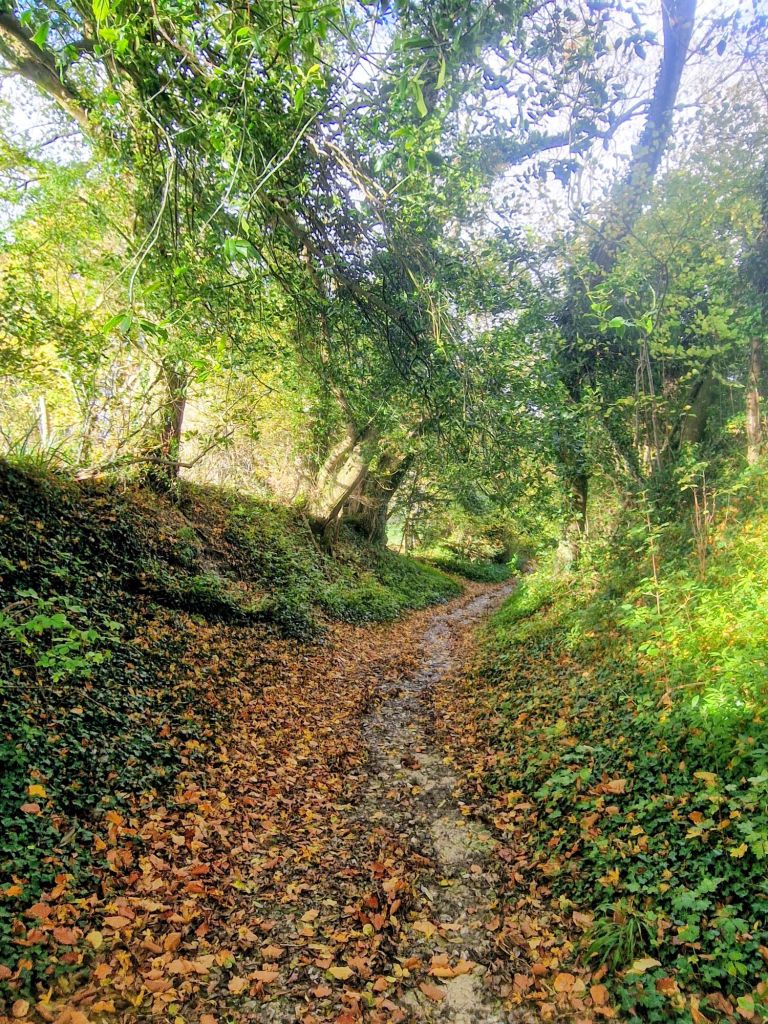
I stumbled across the trackway accidentally. I thought initially that there was a boundary bank on the east of the public footpath; then I noted that there was a trackway between that bank and another bank, further to the east, that I couldn’t seen until I walked over the bank to the right of me into the trackway.
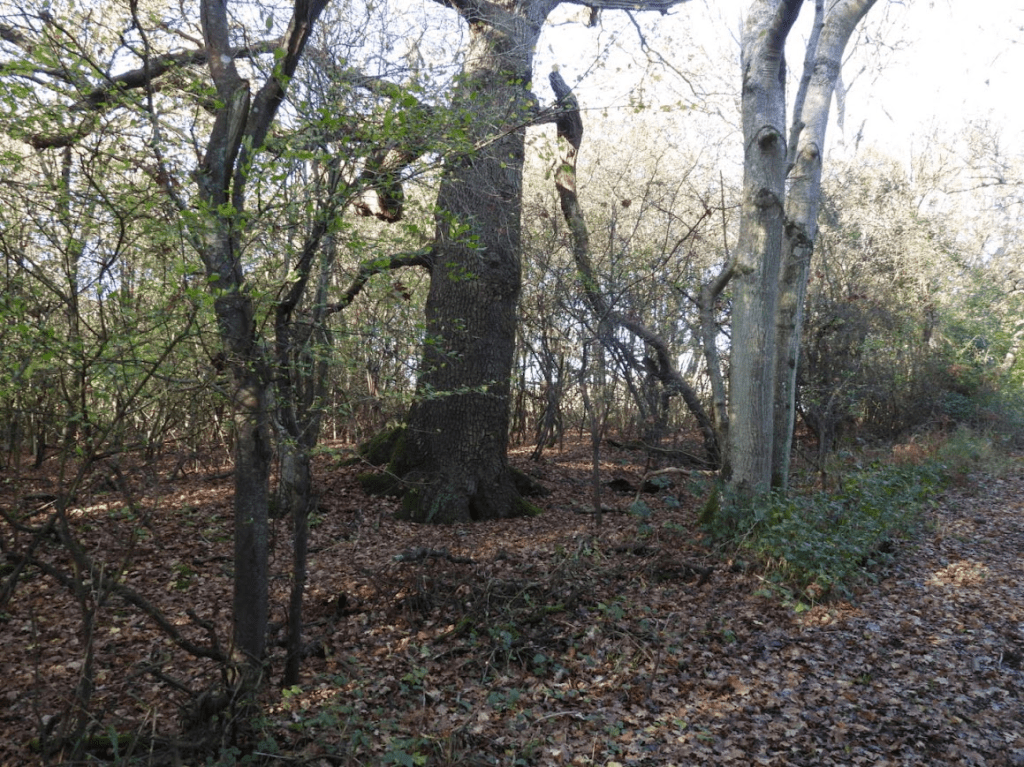
Coppiced Pedunculate Oak is not common in Sussex; but where you see it is coppiced because it is part of a boundary.
Midland Thorn, an ancient woodland indicator species
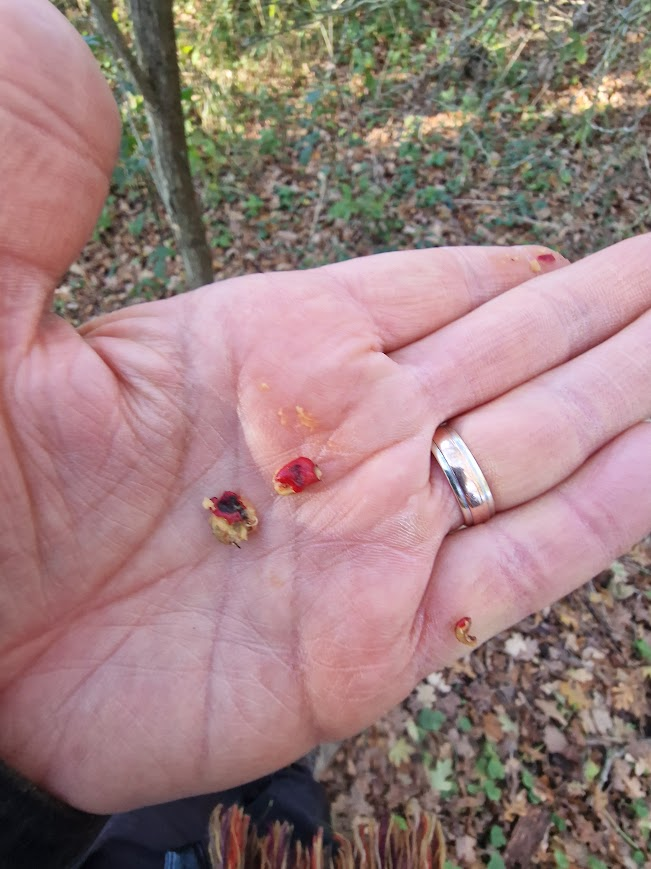
with two pips (seeds)
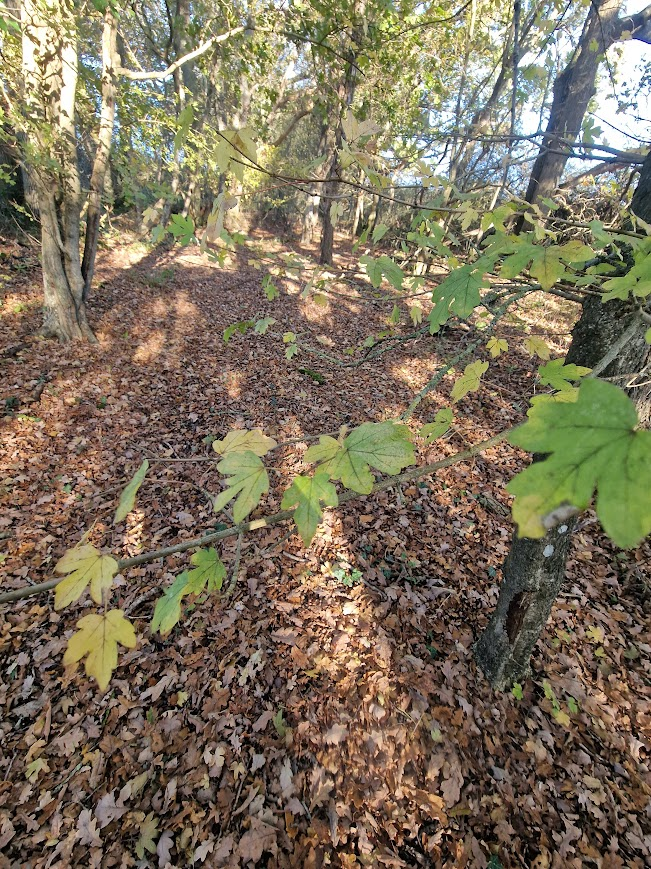
Field Maples
I imagined cows and pigs going up the trackway to Longford Wood
Longford Wood
and the pasture woodland of Laughton Common
Laughton Common
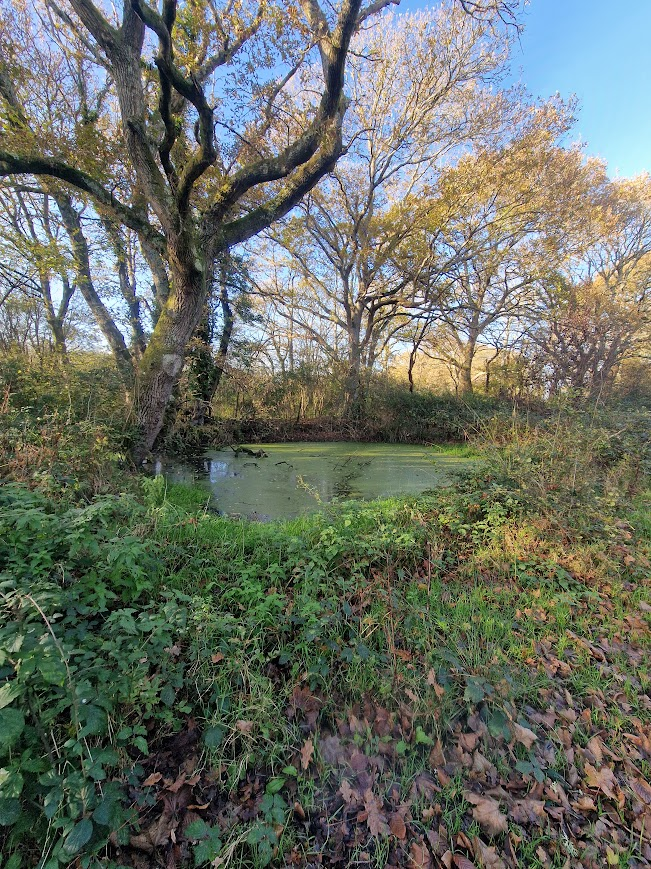
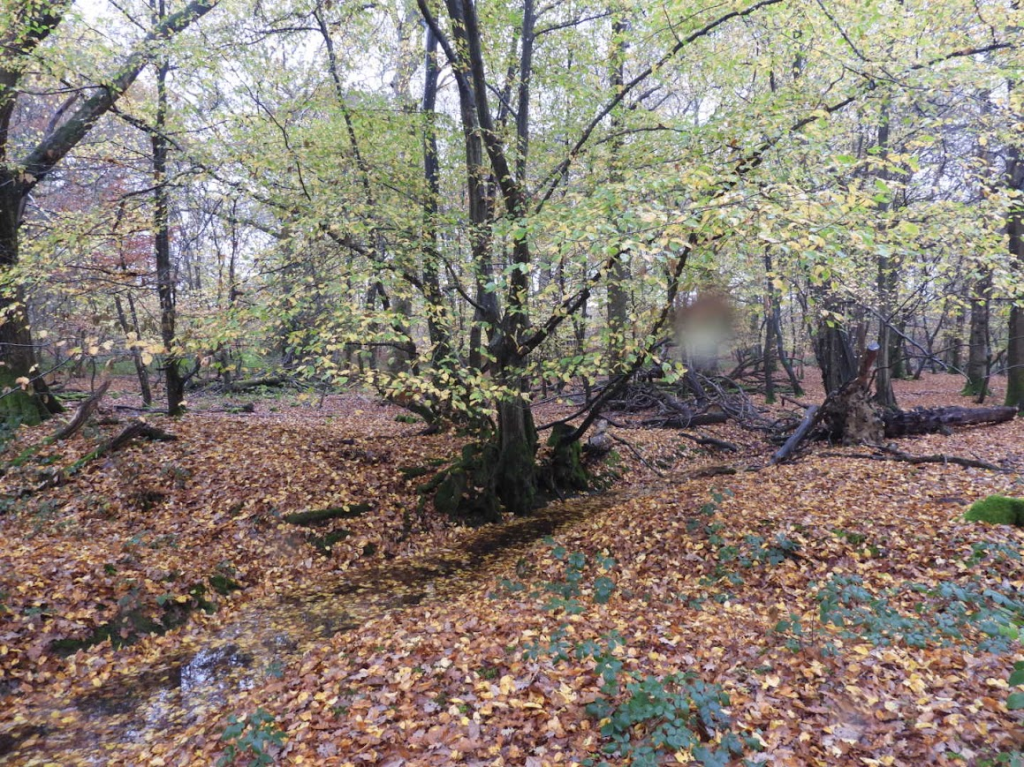
There were many pools like this; probably a relict of clay removal by commoners to make bricks
The enclosure of the Broyle, a large deer-park that also served as the main area of common land for the parishes of Ringmer, Glynde and South Malling, was brought about by a private Act of Parliament of 1767. This was the first Parliamentary Enclosure Act in the county of Sussex and one of the largest. The enclosure was hotly contested and an unusual amount of background information has survived, allowing insight into the exercise of power and influence in this 18th-century rural community and identification of the interest-groups promoting and opposing enclosure. John E. Kay The Broyle Enclosure, 1767–71 in SUSSEX ARCHAEOLOGICAL COLLECTIONS 138 (2000), 165–89.
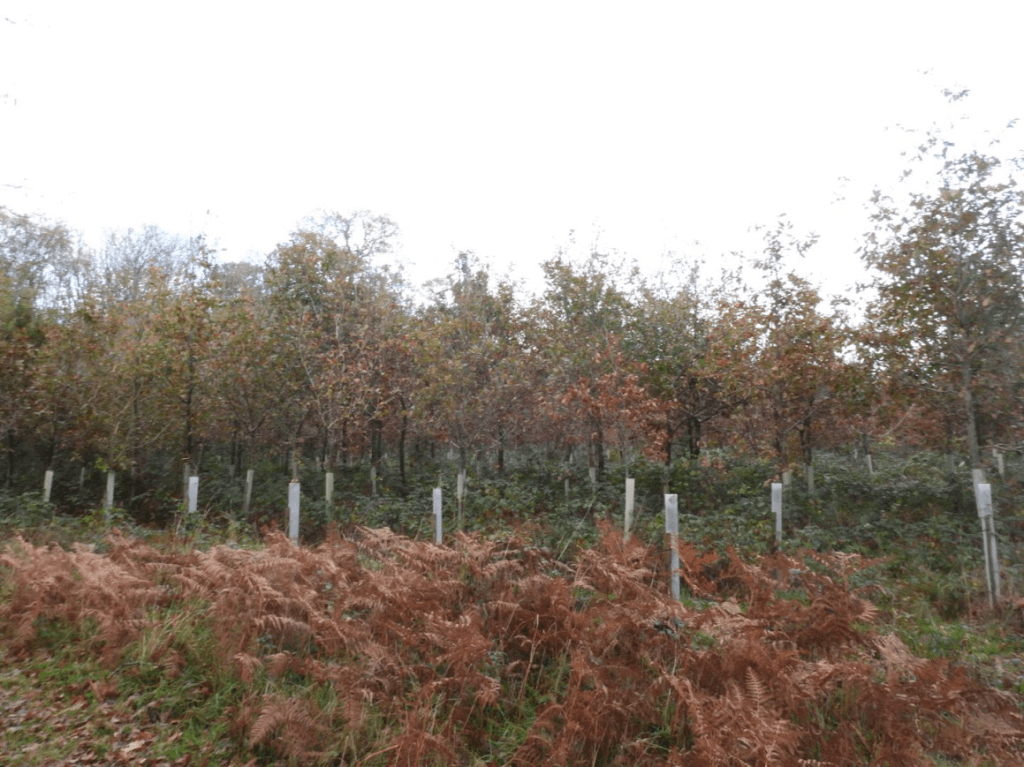
Brickhurst Wood
Probable named after the clay that was taken as a common right to make bricks. Track with boundary bank with Pedunculate Oak going into wood;
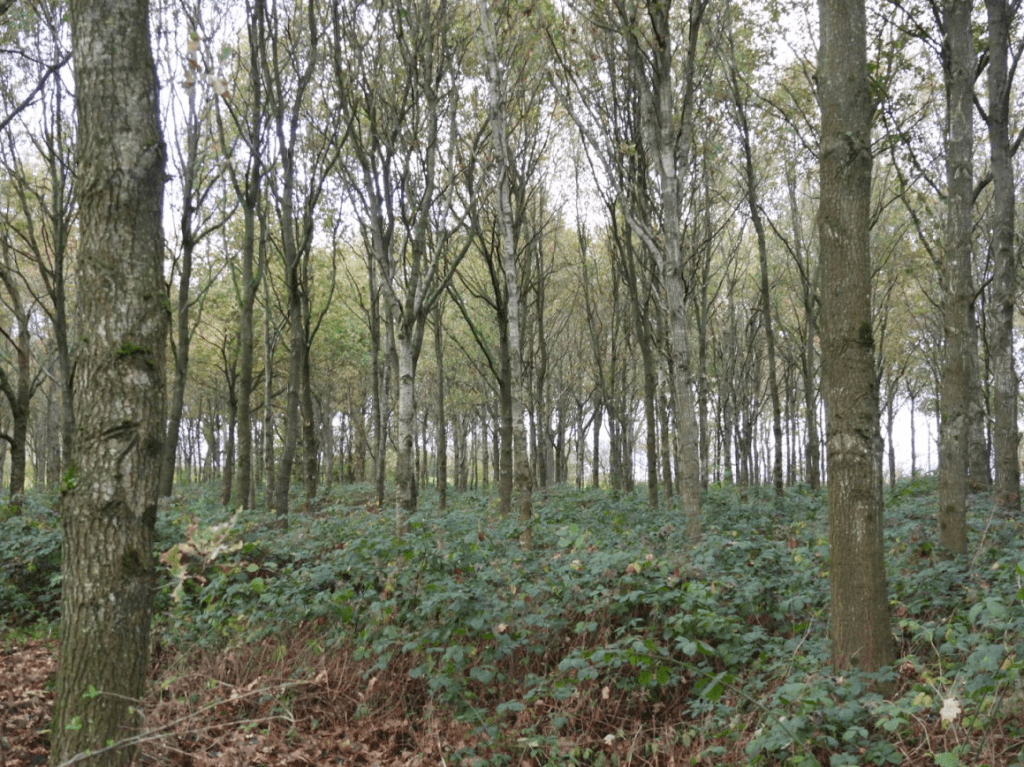
the boundary bank persist with Hornbeam all along the edge of the wood in the wood
Wild Cherry; ancient woodland indicator species
The impact of the enclosure.
The impact of the enclosure on the local economy must have been considerable. …old John Dicker the park-keeper found himself out of a place. John and Jane Dicker and five of their children are found in the parish workhouse in April 1771, and continued to receive parish relief through the early 1770s.62 The long established local brickmaking industry based on clay dug from the Broyle seems to have ceased forthwith and not resumed for another half-century. The brickmaker Thomas Crowhurst moved from the Broyleside Howells Bank Farmhouse to Swingate Cottage by the Plashett Park, but soon afterwards left the parish. William Wisdom tells us that his father, a Glynde carpenter, used to have his timber from the Broyle prior to 1766,64 and he and the other local carpenters and woodmen will presumably also have had to seek wood and work elsewhere after the bonanza [for the Lord of the Manner, the Duke of Dorest] of that year. John E. Kay The Broyle Enclosure, 1767–71 in SUSSEX ARCHAEOLOGICAL COLLECTIONS 138 (2000), 165–89.
E.P. Thompson called it [enclosure] a plain enough case of class robbery. Peter Linebaugh (2014) Stop, Thief! : The Commons, Enclosures, And Resistance . pp144-145
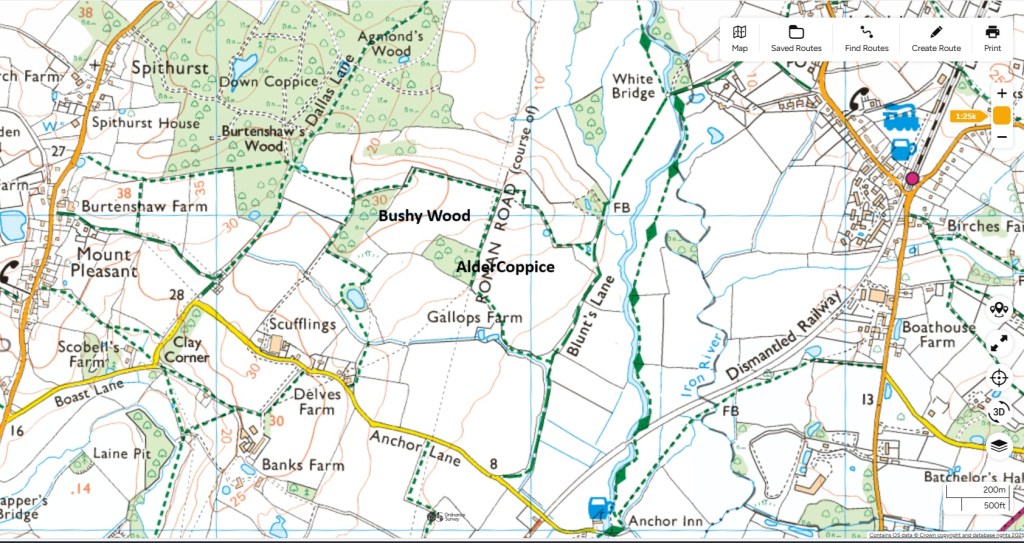
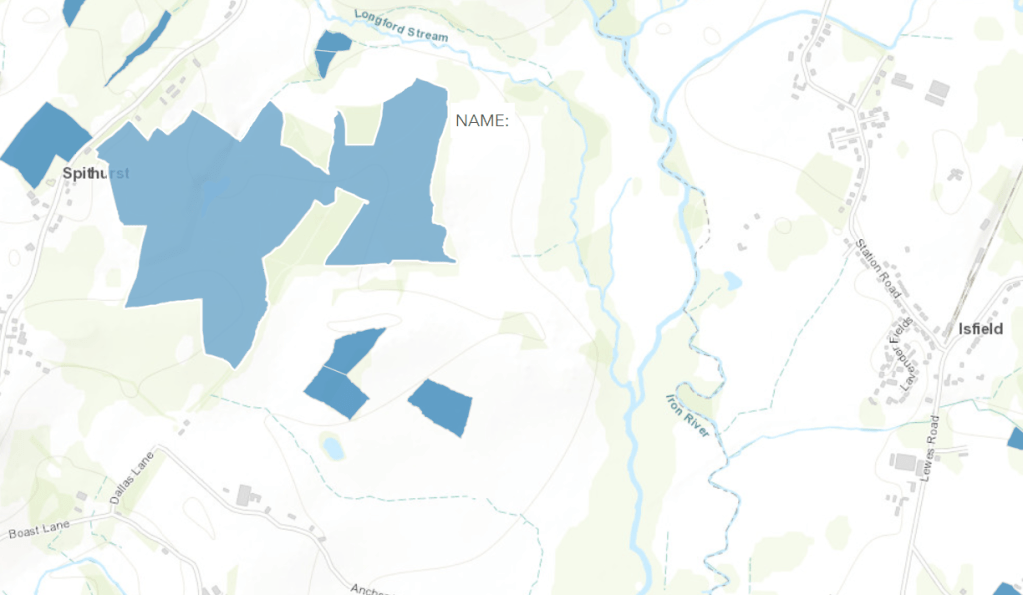
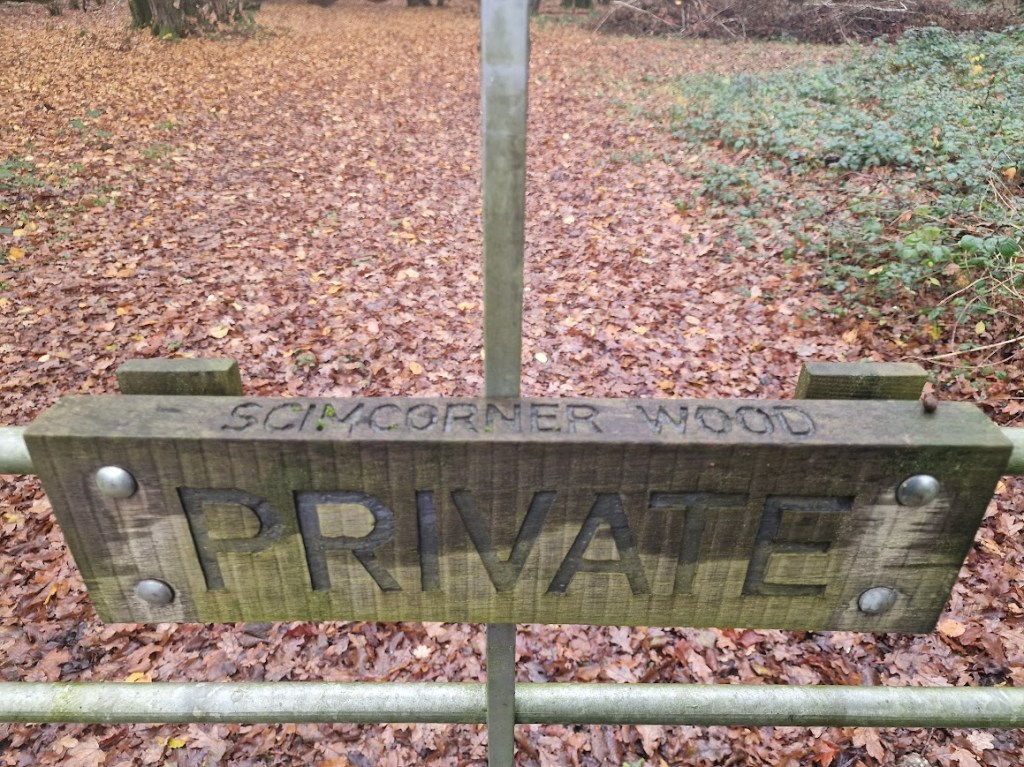
Before walking down the path to the Anchor Inn I walk past Skimcorner Wood (as named by Natural England on their ancient woodland database; but called Clay Hill Wood on the OS map)
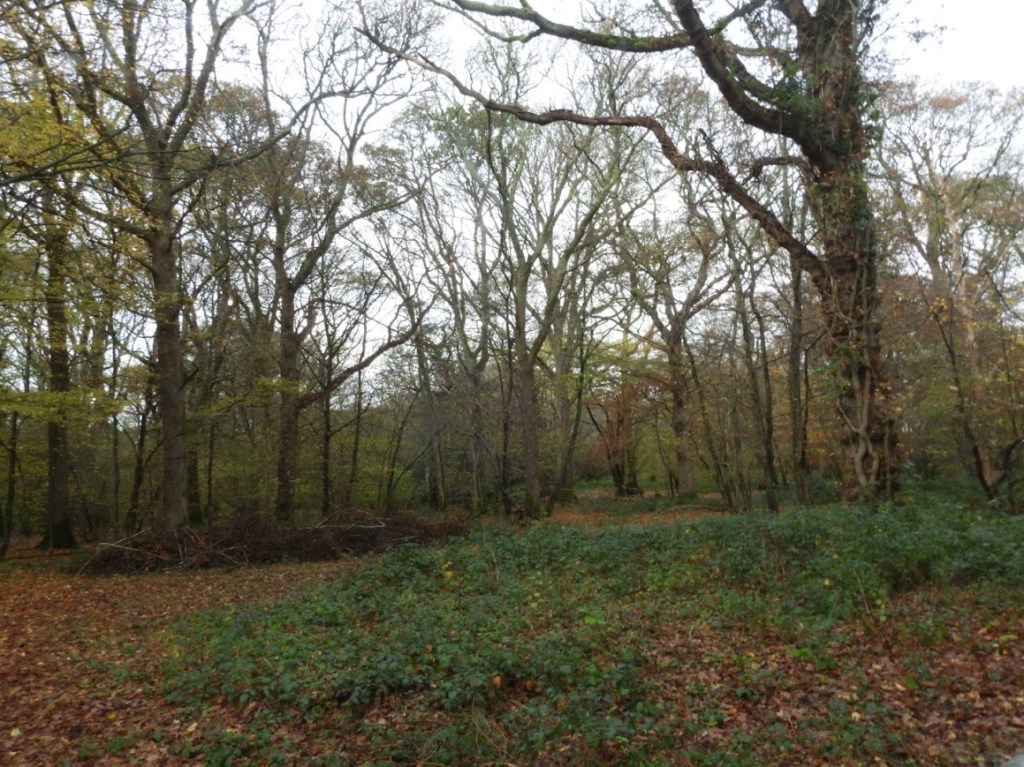
It is a private woodland, and I could only see a little through a gate; but us clearly seminatural ancient woodland with Sessile Oak and Hornbeam; an unusual combination in Sussex.
The hedgerows from Isfield to the Anchor Inn on the River Ouse
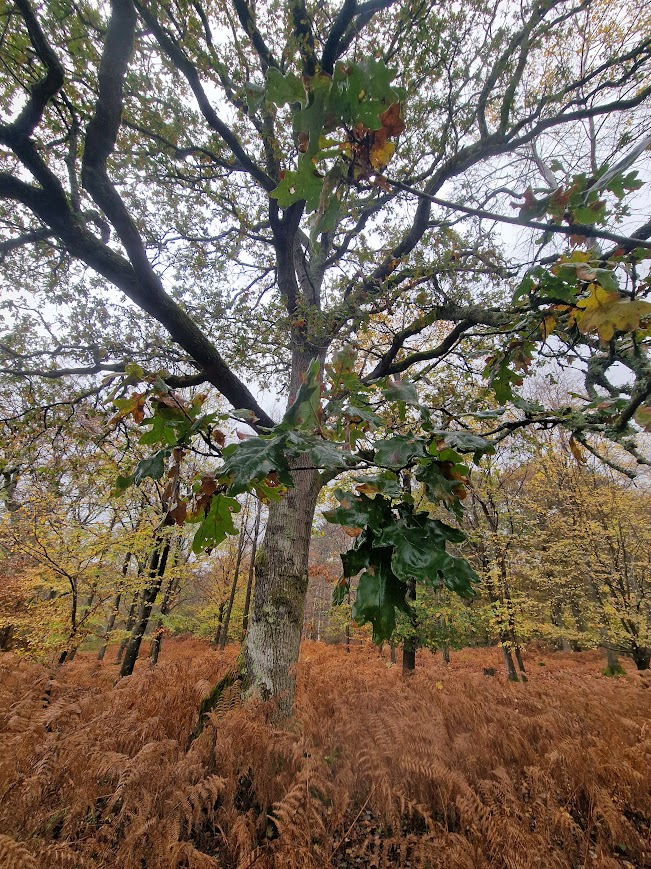
There are many large Quercus robur in hedgerows and shaws along the path to the Anchor Inn
This hedgerow at right angles to the path to the Anchor Inn has superb Oaks.
Oaks in the hedgerow of the field just before the Anchor Inn
This one had much light and many lichens.
On this tree is the rarer lichen Pleurosticta acetabulum
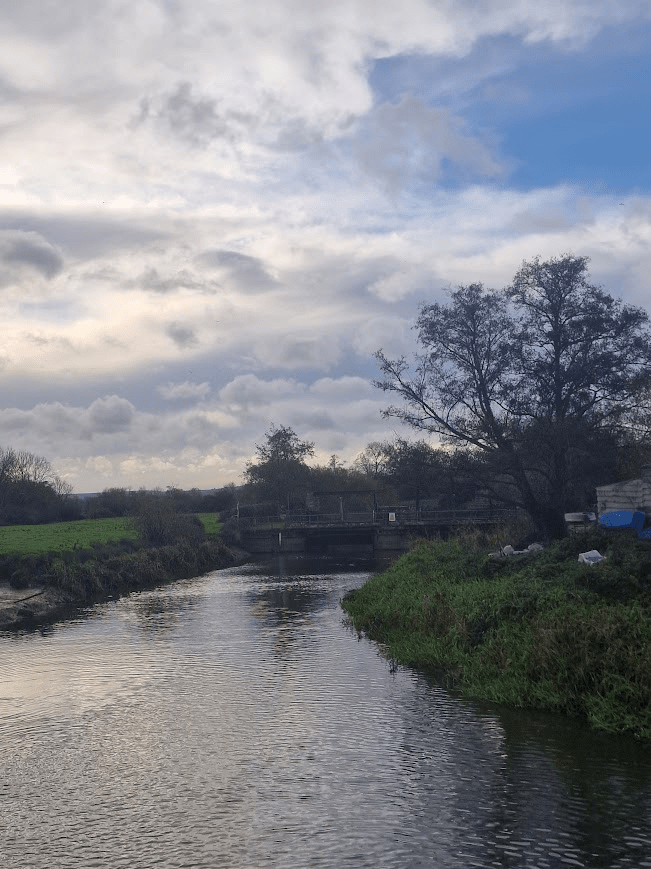
The Ouse and the sluice gates (flood protection) between Barcombe Mills and the Anchor Inn
West of the Ouse
Bushy Wood
Bushy Wood is very disappointing. There are some quite nice maiden Quercus robur on the South Side if the wood.
But most of it has replanted Oaks for commercial purposes. It’s designated by Natural England as Replanted Ancient Woodland
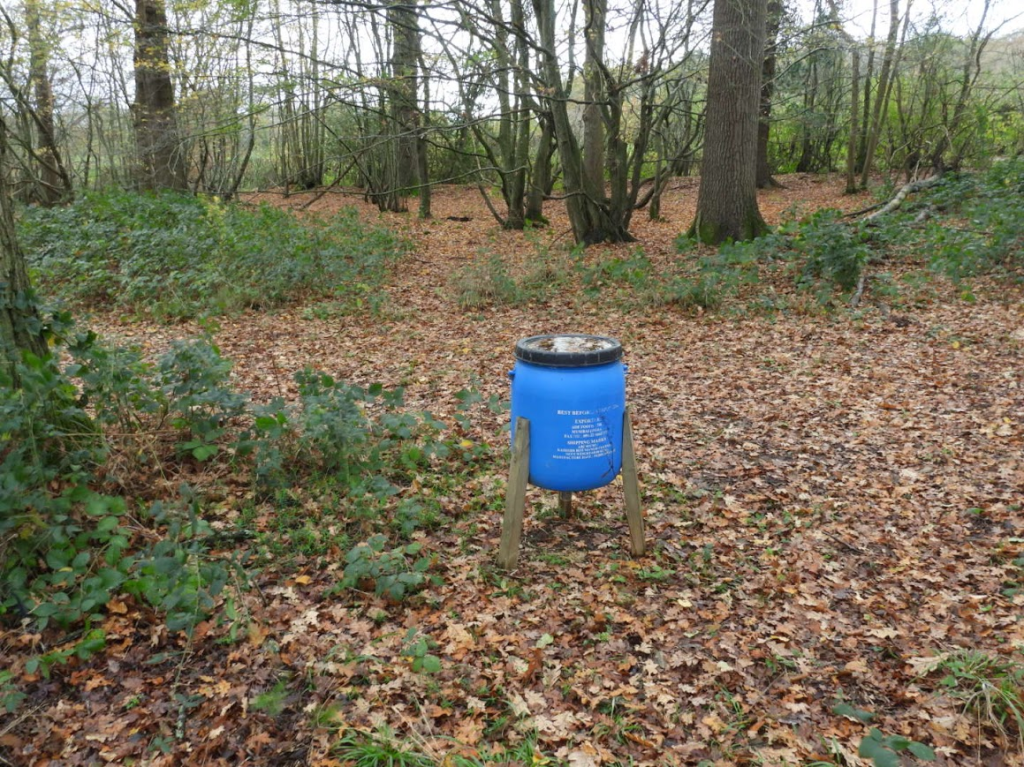
Sadly the Sutton and Newick Estates have pheasant shoots. This is a pheasant feeder. The deliterious effect of pheasant release to nature is well evidenced
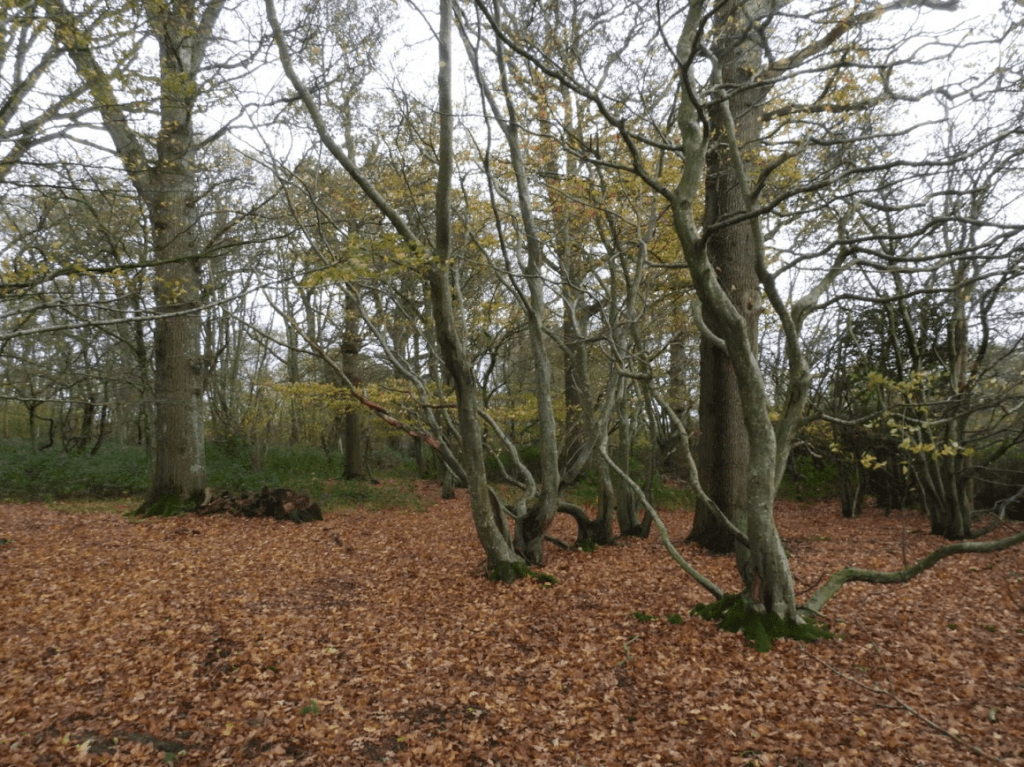
In a tiny corner of this wood these beautiful hornbeams have been left.
Agmonds Wood
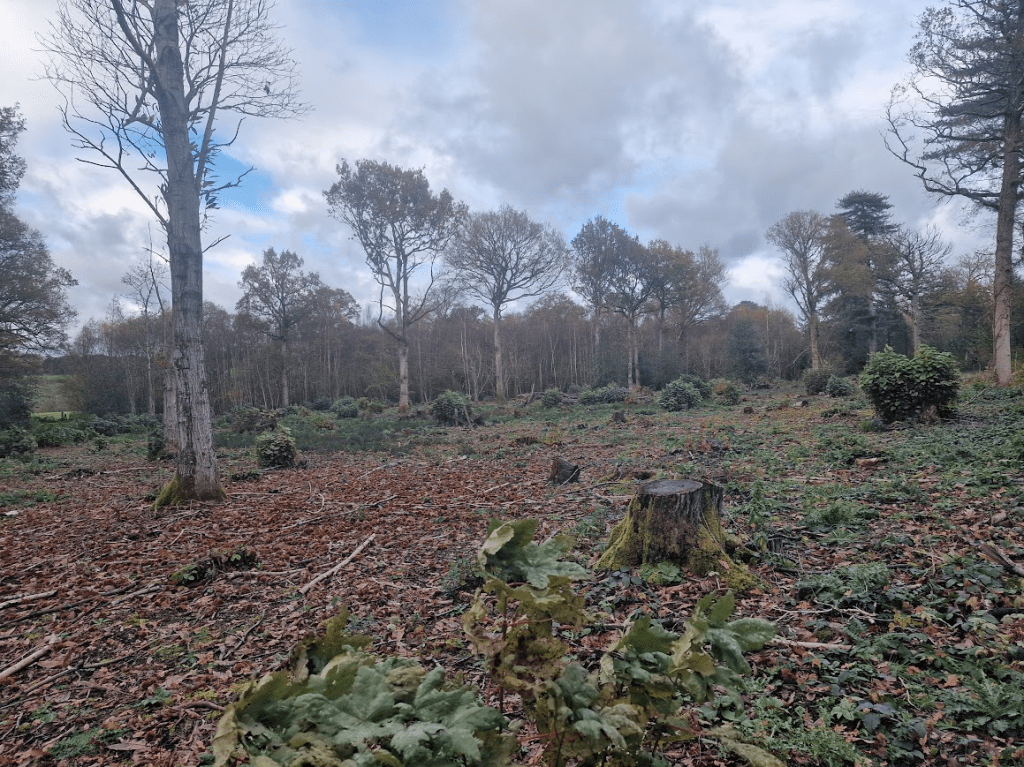
Here are a few maiden Pedunculate Oaks left in a sea of recently felled planted Sweet Chestnut.
A Red Kite over these Oaks at dusk
Alder Copse
Again replanted ancient woodland with a few old maidens round the edge
Gridiron planting of Pendunculate Oak. No. Alder! Horrible
Shaw between Agmond’s Wood and Alder Copse
Beautiful ancient Pedunculate Oak in this shaw
Hedgerow Oak on the bridle way back to the Anchor Inn
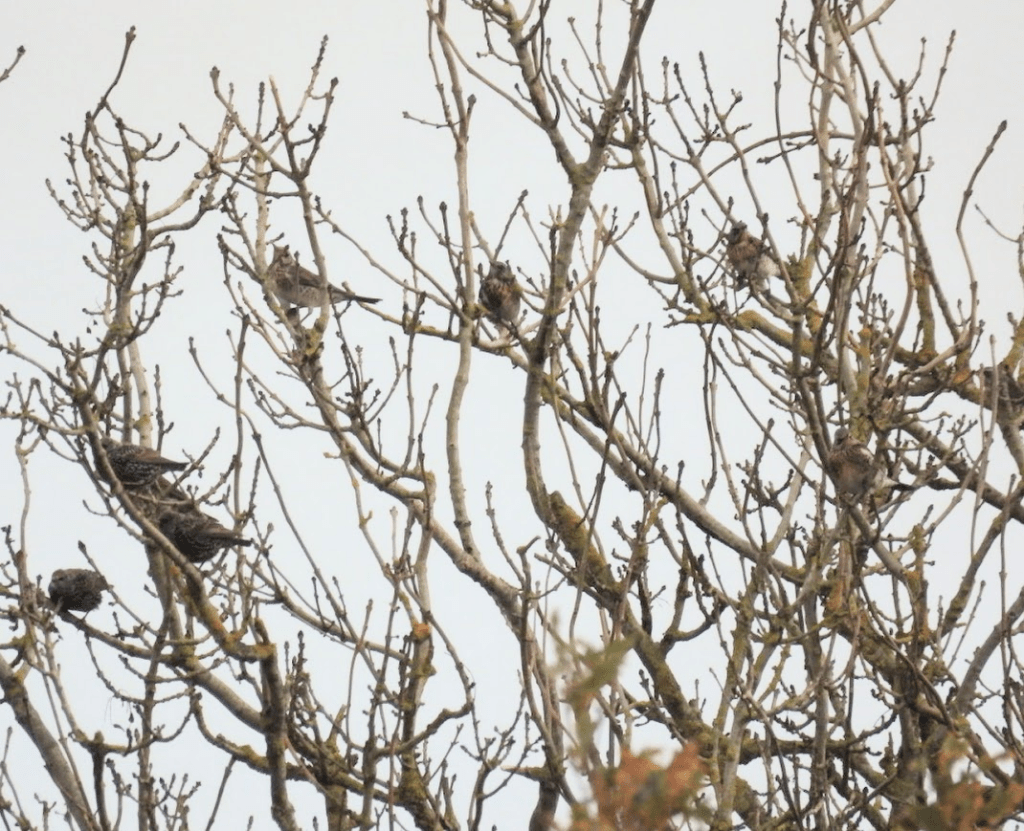
Roosting Starlings
You are much more likely to see ancient oaks in hedgerows than ancient woodlands as the large private owners of Sussex Estates see ancient woidland as an opportunity for cash cropping. However there are smaller average lanf owners who do try to conserve woodland, like the owner of Plashett Wood; except that is private with no public or permissive paths through it6i
I took the photos in this blog post to bring your attention to some marvellous things in nature, in Sussex, that are hidden from the public. I will not name the Sussex wood I trespassed in to take these photos.
If you go down to the woods today, you’re in for a big surprise: a third of England’s woodlands are owned by just a thousand landowners.
That’s the central finding of my new investigation into who owns England’s woods. The analysis also raises questions how private woods are used – with many of them kept off-limits to the general public in order to maintain them as pheasant shoots, despite receiving public subsidies. https://whoownsengland.org/2020/11/02/who-owns-englands-woods/Guy Shrubsole accessed 16.11.15
The ownership of land in Sussex
Much land in Sussex is in private ownership and walking in significant amounts of that land is currently prohibited by signs denying public access; often this is associated with pheasant shooting. But pheasant shooting also effects land with public access as well as private land where shooting occurs. I recently walked through a public-access SSSI scarp-face ancient wood in West Sussex, adjoining a private wood used for pheasant shooting. I saw and heard many pheasants in this wood I was walking through. I had a lunchtime half pint of cider in the nearest pub to the wood, and in the pub there was a group of pheasant shootists there bragging (loudly) about how many pheasants they had shot. The existence of private woodland for pheasant shooting has a negative impact on much woodland – private and public.
For many years, we have been concerned with the impacts of two of the most intensive forms of shooting: driven grouse, and the high-density release of Pheasants and Red-legged Partridge for shooting. Our studies have identified that various key practices are causing particular ecological harm, with implications for both biodiversity and the climate emergency. The big issues: the illegal killing of birds of prey, the use of lead ammunition, the burning of peatland habitats and the release of millions of non-native Pheasants and Red-legged Partridges into the natural environment. RSPB The Facts about Intensively-Managed Game-Bird Shooting. RSPB The facts about intensively-managed gamebird shooting
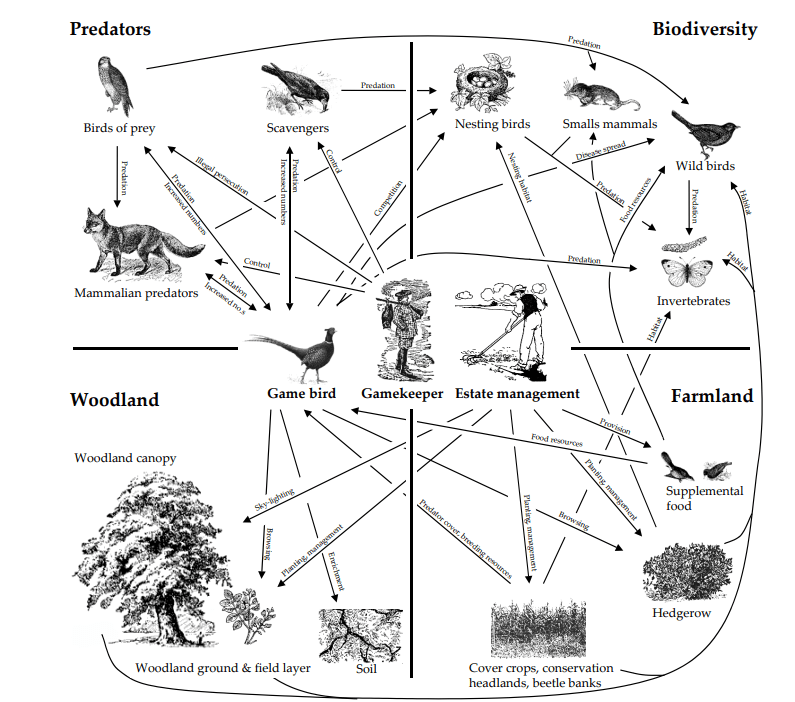
Many of the potential impacts of gamebird releasing are poorly studied and understood, and are often under-represented in the peer-reviewed scientific literature. A common theme emerging from these reviews is that the ecological impacts of gamebird releasing appear to be strongly polarised, withpotential negative effects associated with the released birds (e.g. enhanced predator abundance and predation, increased disease transmission, altered habitat structure, reduced invertebrate abundance. Mason, L.R., Bricknell ,J.E., Smart, J. & Peach, W. J. (2020) The impacts of non-native gamebird releasein the UK: an updated evidence review. RSPB Research Report No, 66 RSPB Centre for Conservation Science, Sandy UK. Downloadable from RSBP Game bird shooting – laws and impact
Screenshot from Mason, et. al (2020)
Here is an indication of how much land is in public ownership in the Western (West Sussex) South Downs. Of the top five owners of land in Sussex by acreage owned, only one is a public body. (The wood that these photos were taken in is not in West Sussex). These data are from Guy Shrubsole & Anna Powell-Smith’s excellent Who Owns England: Who Owns the South Downhttps://whoownsengland.org/2018/02/16/who-owns-the-south-downs/ accessed 16.11.25
… the current 4th Viscount Cowdray … has donated £65,000 over the past decade to UKIP, the Conservatives and Vote Leave …
2) Duke of Norfolk – Arundel & Angmering Estates: 16,000 acres
… “Since William rose and Harold fell, / There have been Earls at Arundel.” So reads a plaque in the shadow of the magnificent Arundel Castle, stronghold of the Earls of Arundel, whose proximity to power down the centuries eventually also earned them the Dukedom of Norfolk. ..
“When the 15th Duke stood on the battlements of his newly repaired keep in 1910, he would have had the satisfaction of knowing that almost everything he could see in all directions belonged to him.” Although the Ducal estate is thought to have diminished in size since then, it is still… The Estate’s origins go back to the Norman Conquest.”
3) National Trust properties across the South Downs: 15,151 acres
…his family estate also includes 3,000 acres in Cumbria ….
5) Duke of Richmond – Goodwood Estate: 11,500 acres
As the [Independent, Sean O’Grady Thursday 30 July 2009. Earl of March: A glorious example of the landed classes; says [The Duke of Richmond] has “leverage[d] Goodwood’s formidable competitive advantages – the things that cannot be replicated elsewhere (except by other landed families, presumably): vast (and beautiful) space and a magnificent stately home”. But these modern businesses depend on owning land inherited down the centuries: “Even if they wanted to, it is difficult to imagine any company, oligarch or Middle Eastern princeling acquiring such an enormous chunk of southern England [nowadays].”
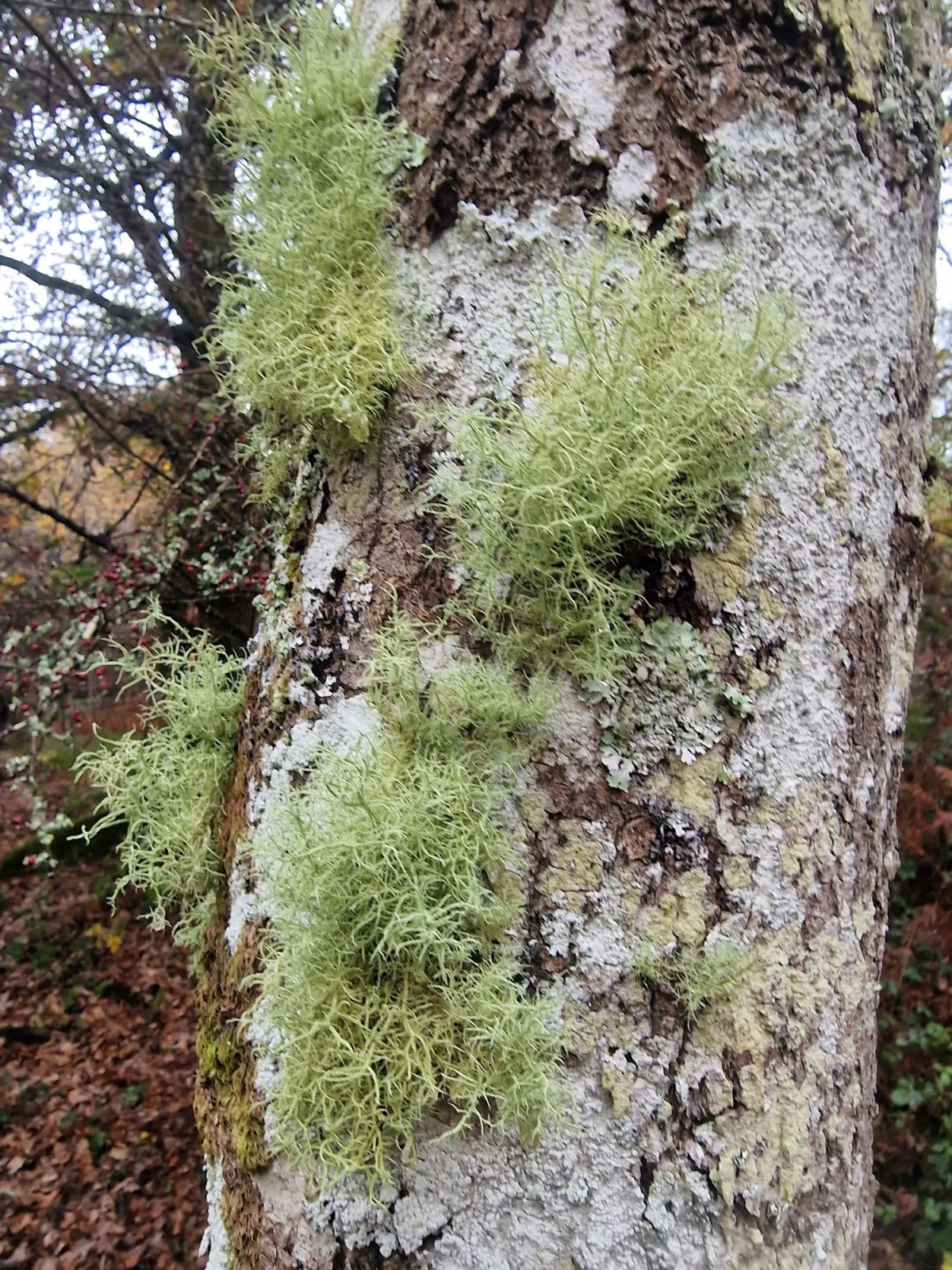
I have trespassed in an SSSI wood owned by one of the above, which the public are denied access to. It has outstanding and rare natural heritage, including this Usnea articulata String-of-Sausages Lichen, extremely rare in Sussex. This wood is regularly used for pheasant shooting. As I was walking around it I saw dead pheasants that had been left on the ground from a hunt of a few days before.
In an ideal world land would not be owned by individuals; but in the absence of a change to the ownership of land, I believe:
(2) the ownership of land should be taxed through a Land Value Tax, see: Labour Land Campaign What is Land Value Tax (accessed 16.11.25)
I am not urging you to trespass. If you choose to trespass, please follow the guidelines from the Right To Roam that are cited at the end of this post
The wood that I trespassed a few days ago and its natural wonders
This woodland is a Site of Special Scientific Interest that is believed to have been continuously wooded since medieval times. The wood’s soil is clay; and the wood is dominated by sessile oak, pedunculate oak, hornbeam and hazel with some ash and alder, with an understory of holly and bramble. The hornbeam and hazel have been previously coppiced. The sign on the gate as well as saying the land is private warns of shooting occurring in the wood.
The rides are lined by goat willow, aspen, blackthorn, hawthorn and silver birch
There is a boundary bank and ditch planted mostly with coppiced hornbeam, that exactly follows the parish boundary shown on the OS map
Honrbeam
Sessile Oak and Hornbeam
Graphidaceae family lichen possibility Graphis scripta on a Hornbeam
Sessile Oak in “tall forest” woodland
Hazel
Holly
Sessile Oak, with a sheet of the lichen Dendrographa decolorans on the dry side of the tree
Sessile Oak leaf on the base of the tree above
The lichens Lecanactis abietina (an old tree lichen) and a Chrysothrix sp. (Gold Dust Lichens) on a Sessile Oak
Coppiced Hornbeam
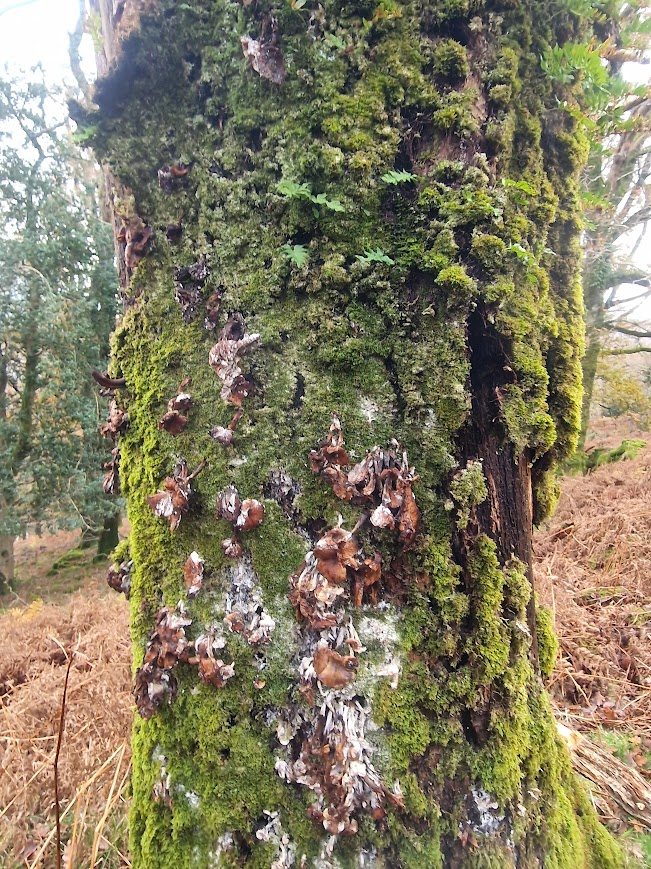
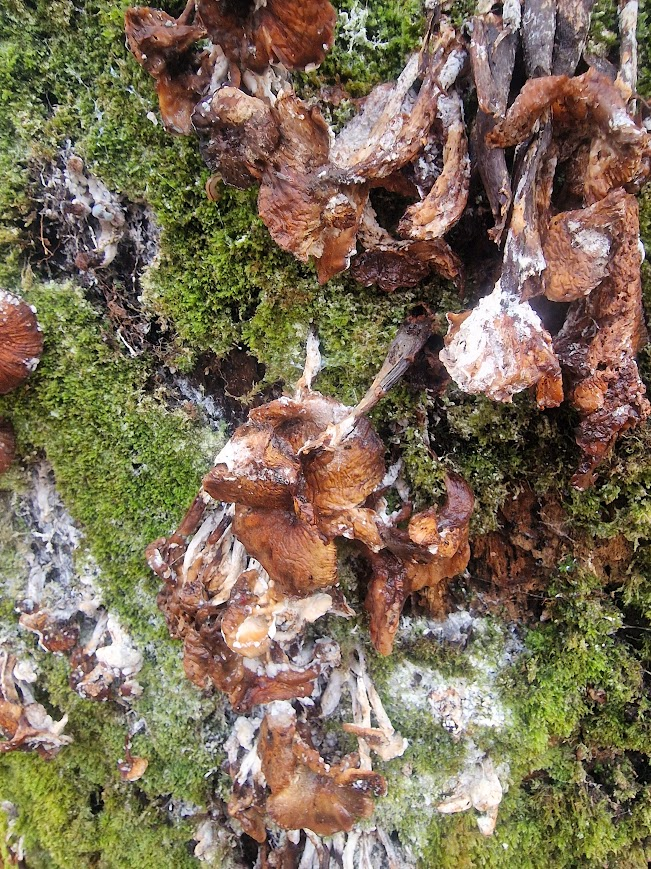
Clouded Funnel fungi
Sessile Oak
Bark Barnacle Lichen on Sessile Oak
Brnacle lichen is found mainly on the bark of living trees in ancient woods, and it is indicative of longstanding woodland conditions. Woodland Trust Bark Barnacle Lichen
Sessile Oak covered in Usnea cornuta
Parish boundary bank with coppiced Hornbeam
A recently pollarded young Hornbeam – showing continuity of ancient woodland management practices
Coppiced Hornbeam
A Hornbeam with a range of Pertusaria spp. Hornbeams often have many genus Pertusaria and family Graphidaceae
Lepra (formerly Pertusaria) amara, Pertusaria pertusa and Pertusaria leioplaca. Terrestrial molluscs love eating the apothecia of Pertusaria. L. leioplaca seems their favourite; it must be their caviar.
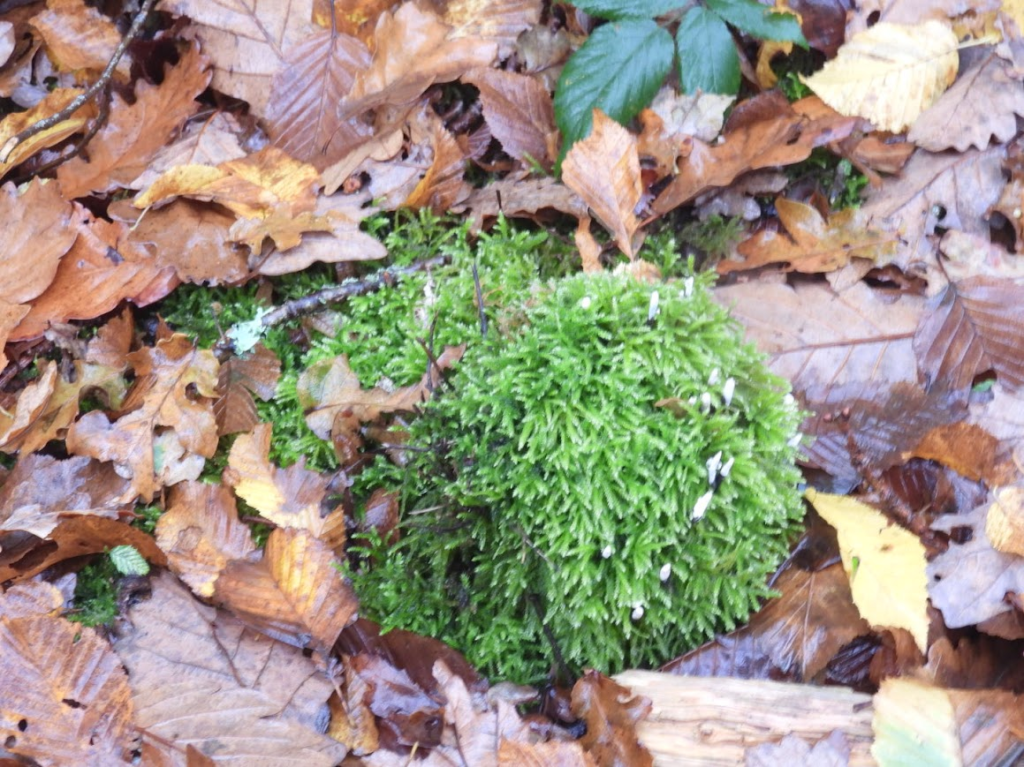
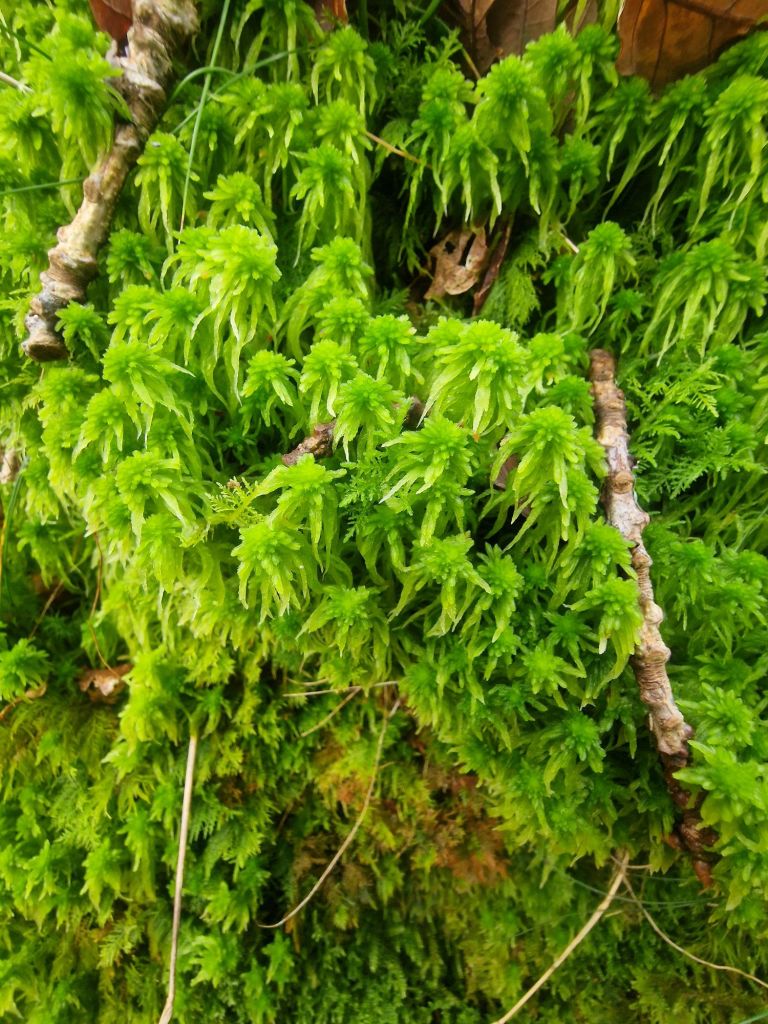
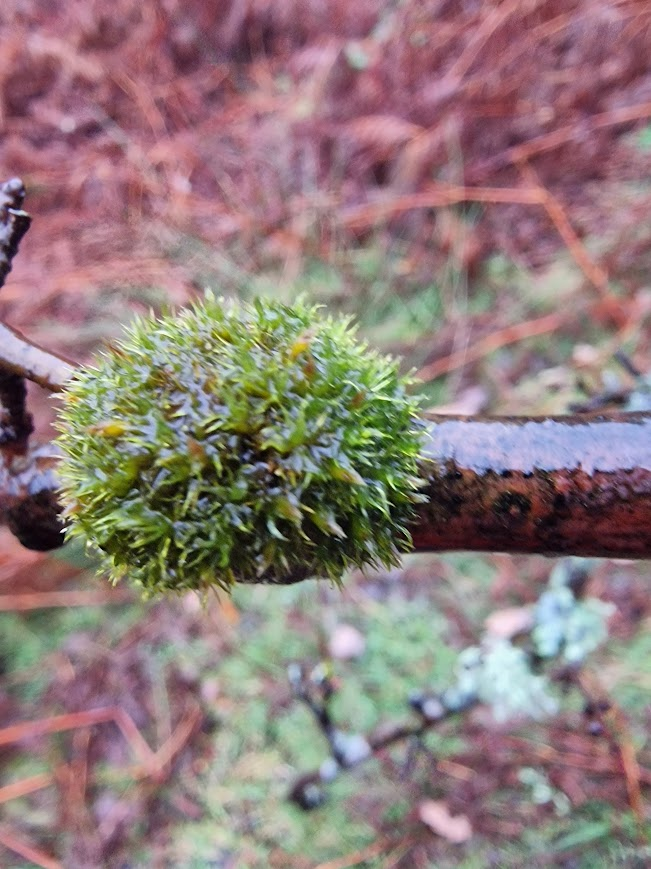
Ball of Common Striated Feathermoss with Candlesnuff fungus,
You’ve all seen signs claiming ‘Trespassers Will Be Prosecuted’. They’re a lie.
In the UK, ‘trespass’ is a civil offence, provided you don’t infringe certain conditions. You cannot face criminal prosecution simply for being on someone else’s land without permission (or away from a designated Right of Way, open access land or land where any bylaws permit public access). The dispute is solely between you and the landowner, and the police cannot get involved.
That landowner could theoretically take you to civil court. But they’d have to know who you are, and it would most likely be a waste of their time.
Likewise, any ‘damages’ would have to be proportionate to the damage you’ve caused, which if you follow our principles of trespass below, should be zero.
However, the legal situation changes if you do any the following when trespassing on land:
Cause damage to property
Disrupt lawful activity
Conduct yourself in a threatening or abusive fashion
Bring a vehicle, intending to reside & cause damage
Enter land with special restrictions* (see below)
That would be classed as ‘criminal trespass’, which is a criminal offence, leaving you potentially subject to police enforcement.
*Important Note: there are certain sites with special trespass designations which do make your mere unauthorised presence a criminal offence. The penalty for violation can be serious. Mostly, these are common sense. Avoid military sites, essential infrastructure (e.g. railways, airports, nuclear facilities) and stay away from the sorts of places the King might be having a cup of tea (or the Prime Minister hosting an illegal party).
Right to Roam follow some key principles when accessing land without permission. We do not condone actions which break these rules, as these will simply undermine our campaign.
Take responsibility for your own actions
Respect people’s privacy, domestic property and gardens
Don’t walk where crops are growing (stick to field margins or use alternative routes)
Avoid places that don’t feel like open countryside (e.g. have buildings or machinery)
Respect livestock and other animals kept on the land such as ponies and horses (i.e. avoid closed paddocks). Remember that cattle – especially bulls or cows with calves – can be dangerous
Care for nature (avoid fires, wildlife disturbance or damage to flora)
Since civil trespass (i.e. simply existing on land) is not a criminal offence it is especially important that it does not become associated with criminal activity. Damage nothing. Disrupt no lawful activity. Peacefully enjoy what you came to experience.
Voices from the seventieth century
The gentrye are all round stand up now, stand up now The gentryeare all round stand up now The gentrye are all round on each side the are found Their wisdom so profound to cheat us of our ground.
The Diggers Song, Gerald Winstanley, 1650 True Levellers (Diggers)
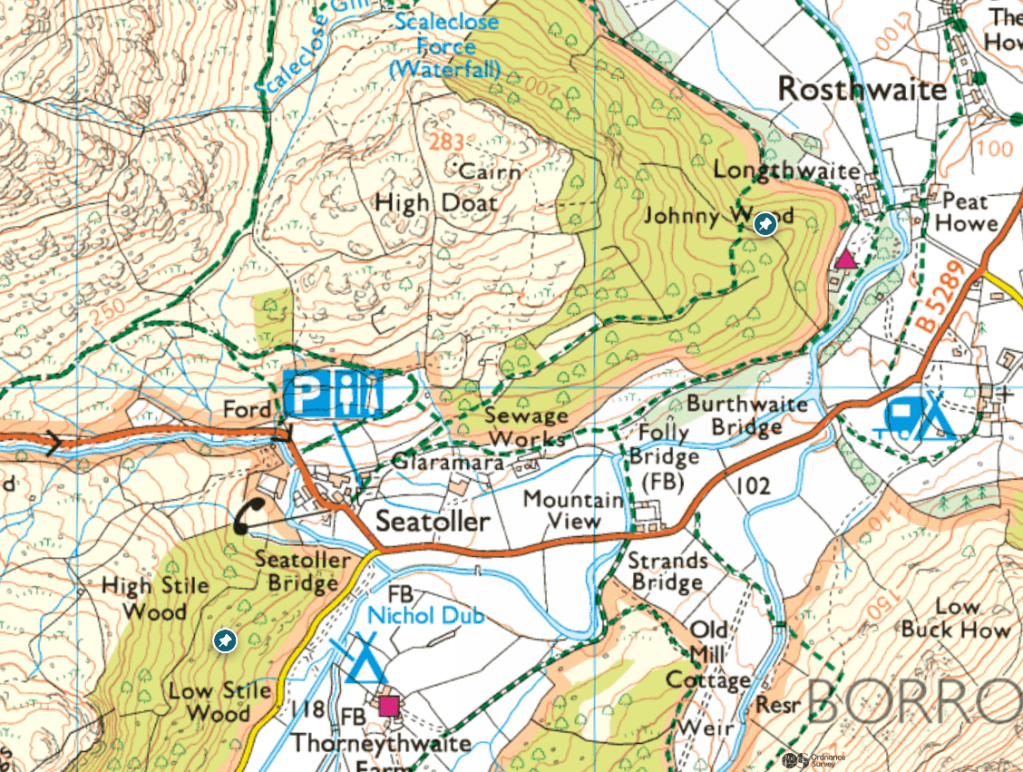
At last the bus 78 to Seatoller was running after the road flooding had subsided! I could visit the woods at the south of the Borrowdale Rainforest NNR that I had intended to visit on 03.10.25
Getting off at Seatoller, I decided to visit some of southernmost woods of the NNR: High Stile and Low Stile Woods; named as “Seatoller Wood” on the Natural England map of ancient woodland, . When I got to these woods they were fenced off with “private” signs, despite them being marked as public access land on the OS map. As I said in my post of 03.11.25, I had had to do lots of research to find where the constituent parts of the NNR are. The National Trust website on the NNR doesn’t have a map of the NNR, and there is no Natural England visitors’ guide, as there is for other NNRs. There is also no information on which parts of the NNR have public access and which don’t. The only way to find out whether or not there is no public access is to visit the woods and find out for yourself, when you have found out where the constituent woods in the Borrowdale Rainforest NNR are.
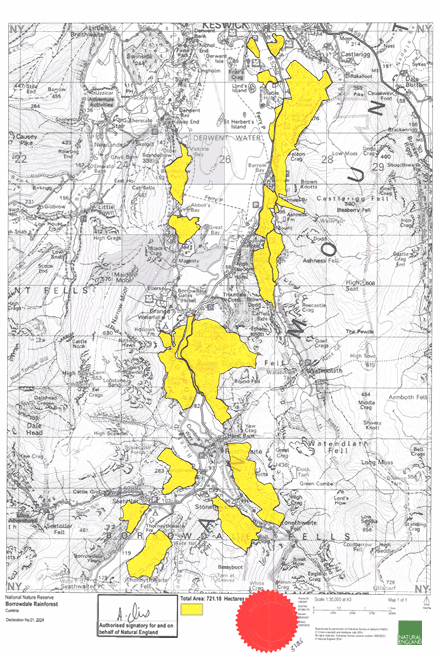
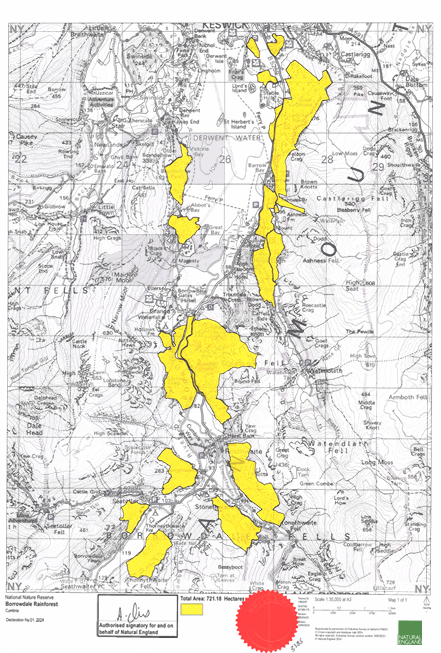
The only way I found out where the constituent woods of the NNR were, was by looking at the declaration of NNR map on the government’s website. I then had to cross reference this map with the OS map to find the names of the constituent woods of the NNR.
I support the right to roam (visit Right To Roam) but in the absence of a right to roam, the very least public bodies administrating NNRs should do is to tell the public where parts of NNRs are and which can be visited
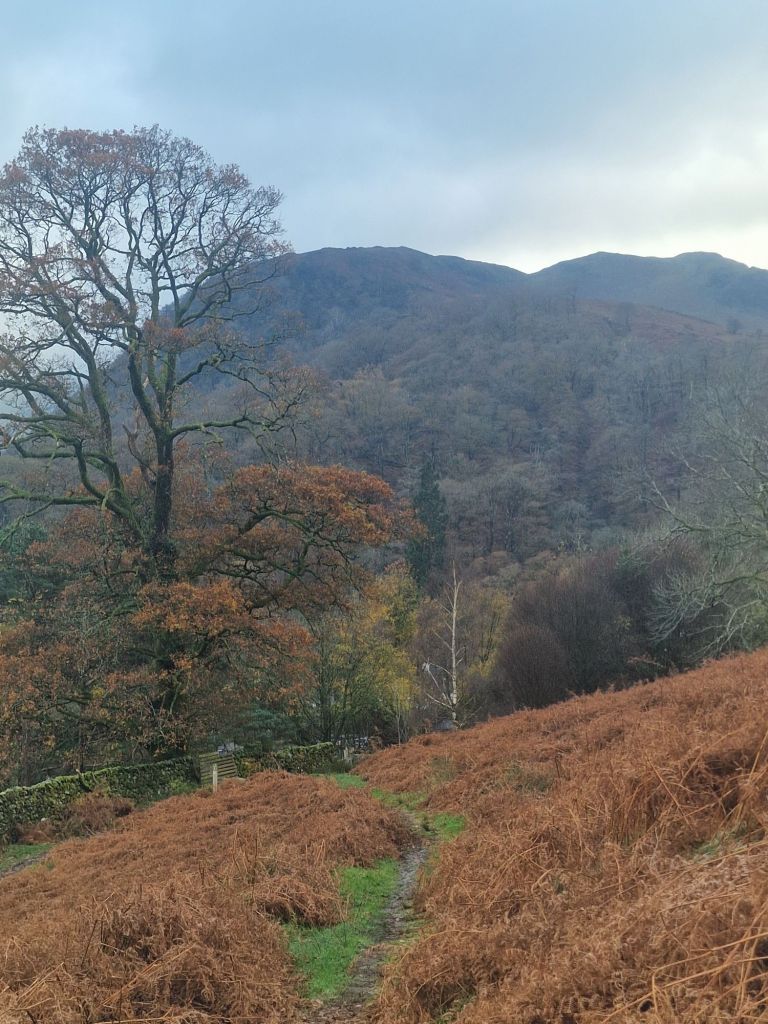
High and Low Stile Woods from Johnny Wood
Johnny Wood
Lichens on a dry stone wall at the beginning of the wood
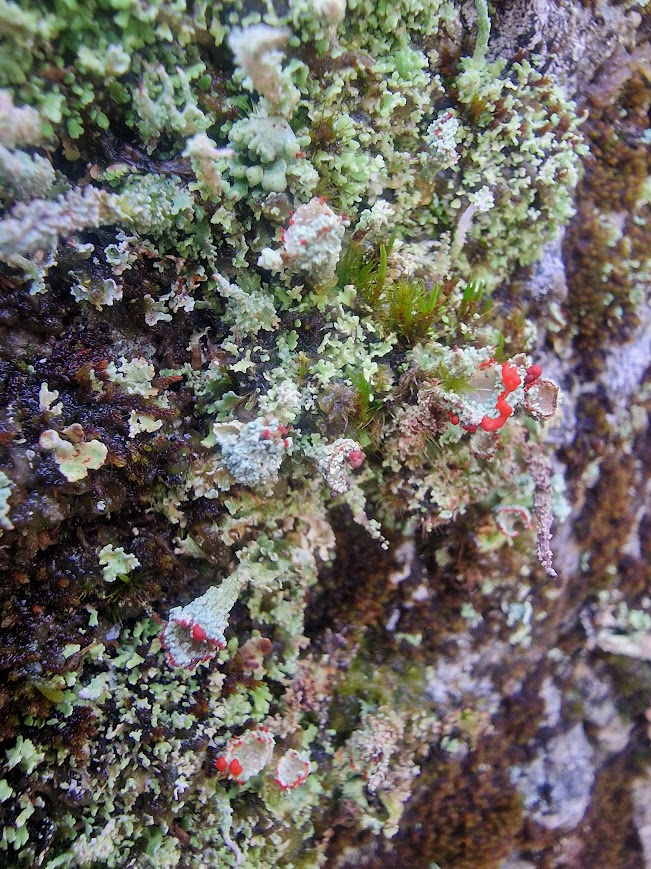
Probably Cladonia polydactyla, with bright red apothecia (fruiting bodies) on the edges of its cups; growing with/on moss
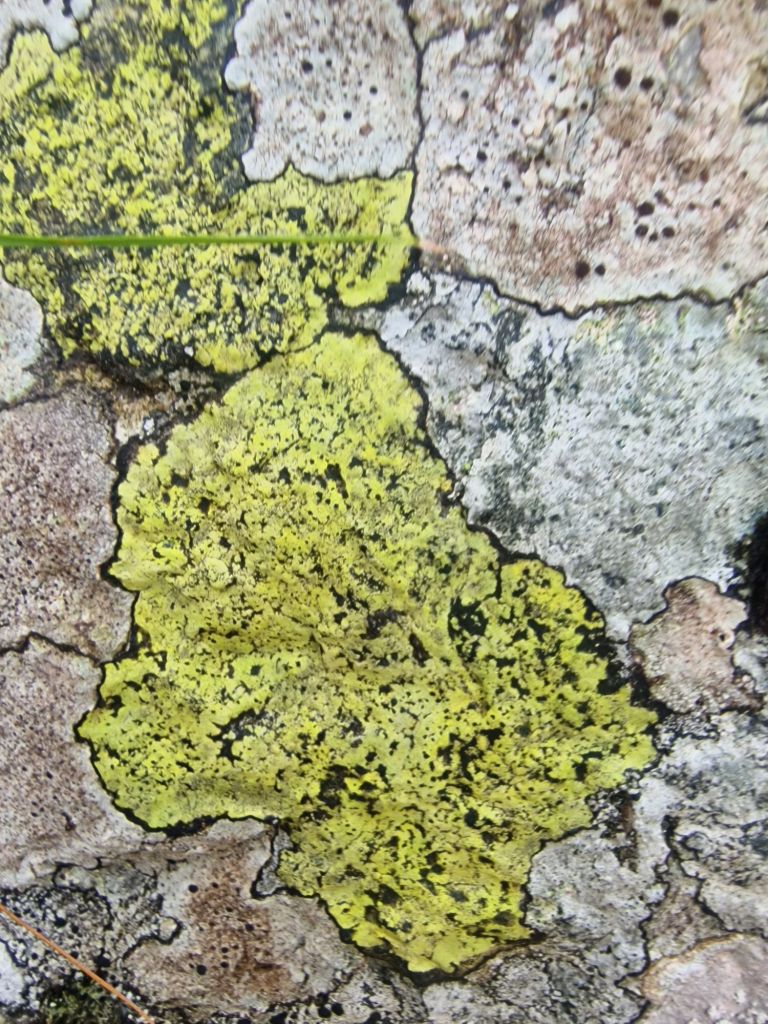
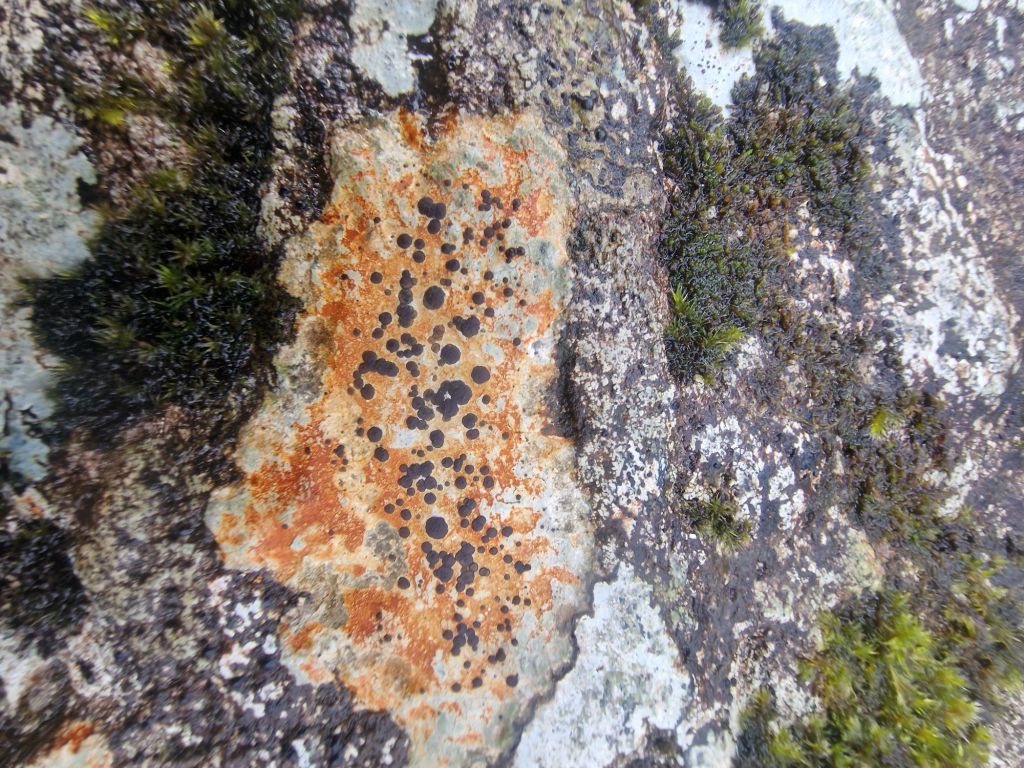
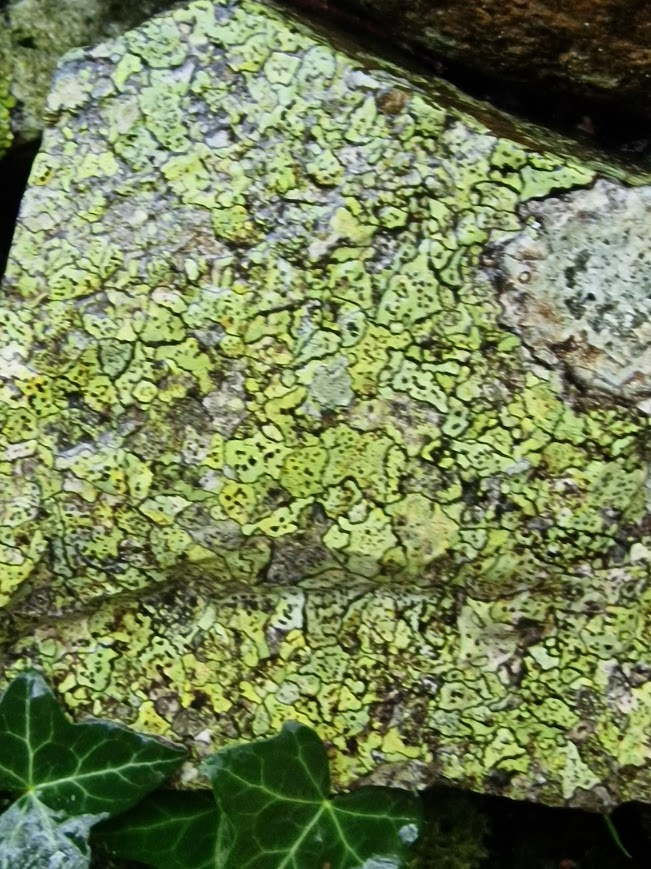
Rhizocarpon geographicum (green and black) in a mosaic with Lecidea lithophila (white thallus with red tinge and black apothecia) and an other lichen
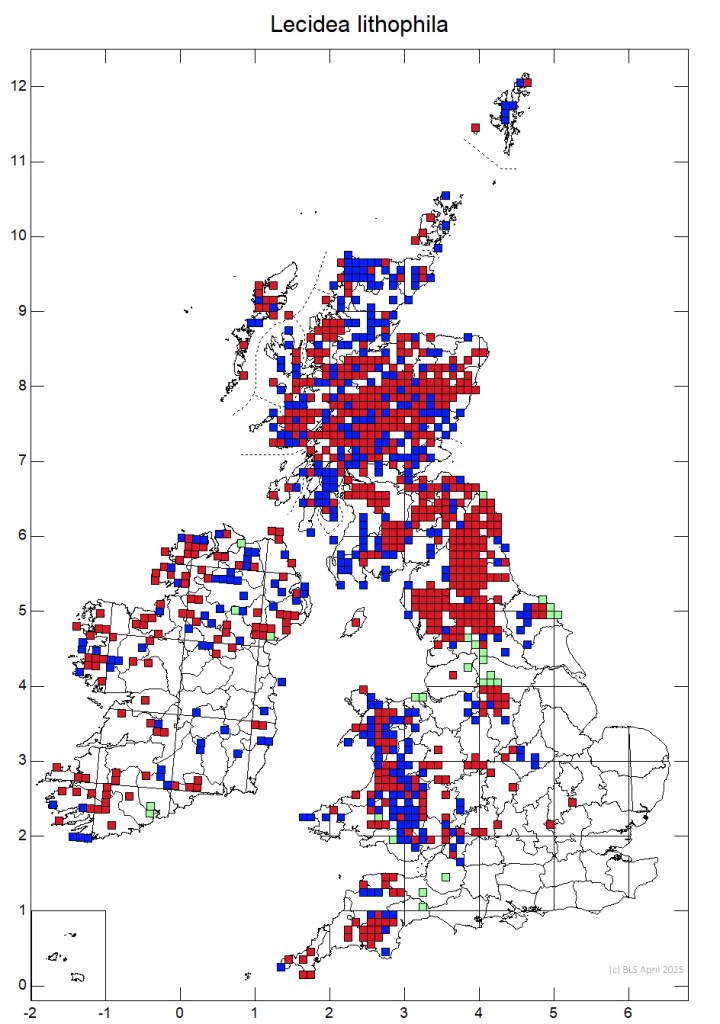
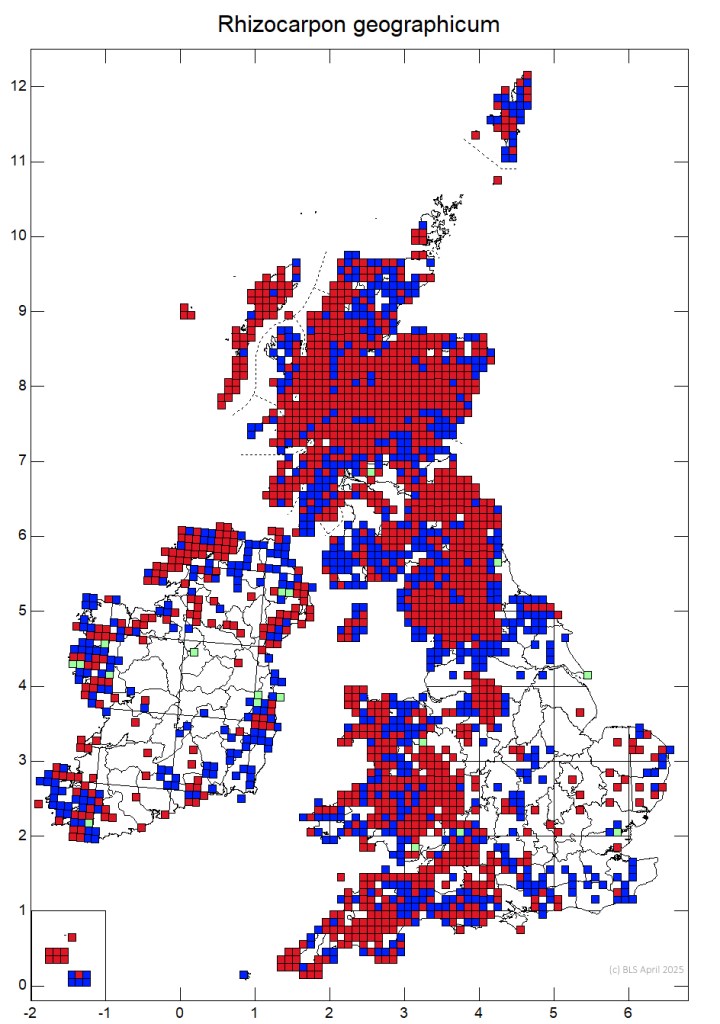
Rhizocarpon geographicum and Lecidea lithophila are extremely common in Borrowdale; in Sussex (where I live) Rhizocarpon geographicum is rare, and restricted to church yards, Lecidea lithophila is non-existent in Sussex. North-West lichen enthusiasts are probably not that excited by seeing these lichens but as a Southerner seeing these was very interesting.
Distribution Maps (British Lichen Society) Lecidea lithophila & Rhizocarpon geographicum
Lecidea lithophila
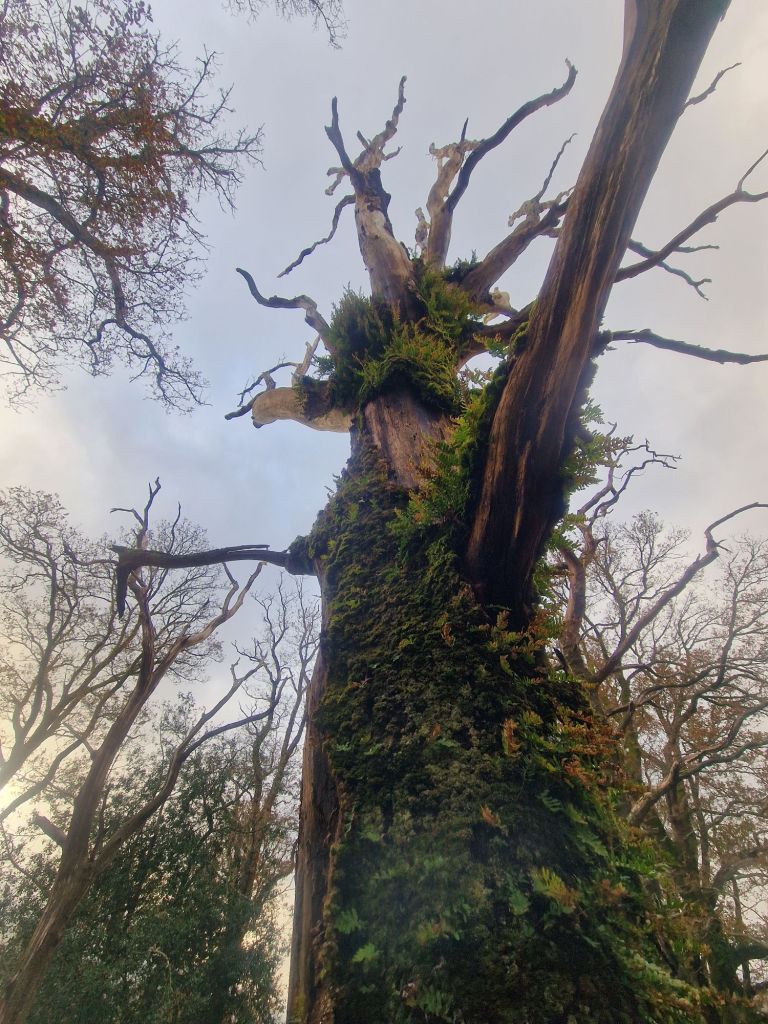
A dead Sessile Oak
which reminded me of the Statue of Liberty
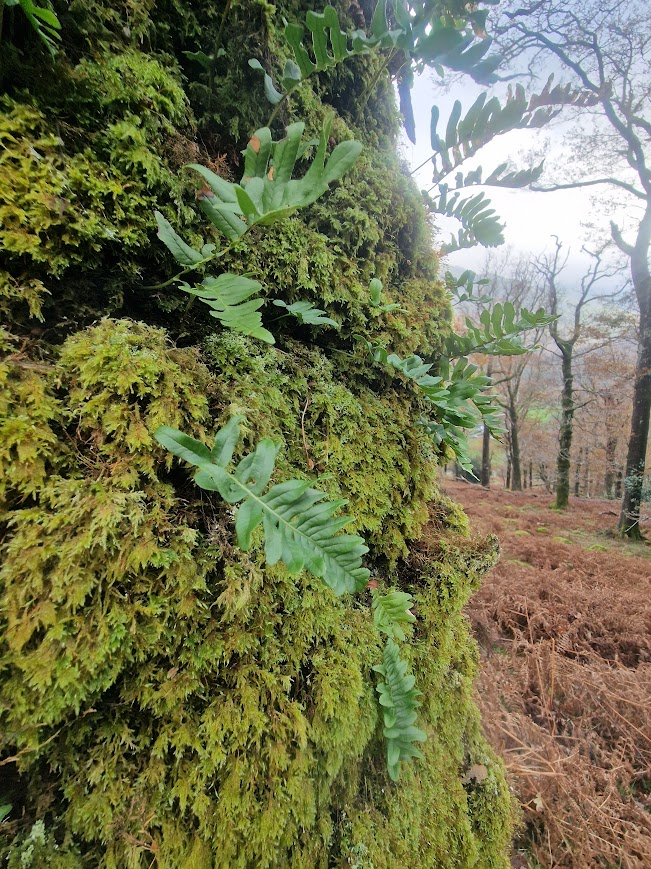
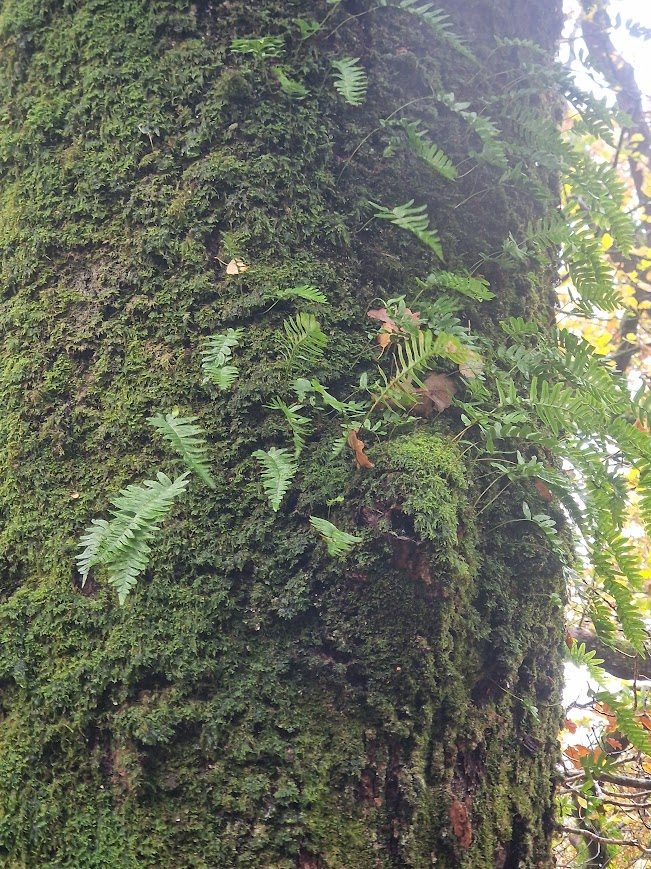
The trunk of this tree is still a viable substrate for epiphytes (because epiphytes take no nutrition from their substrate) including mosses, polypody ferns and lichens
Polypody fern
Physalacriaceae family fugus on tree
Physalacriaceae spp. are saprobic; i.e. they obtain nutrients by breaking down dead and decaying organic matter, serving a useful ecological function
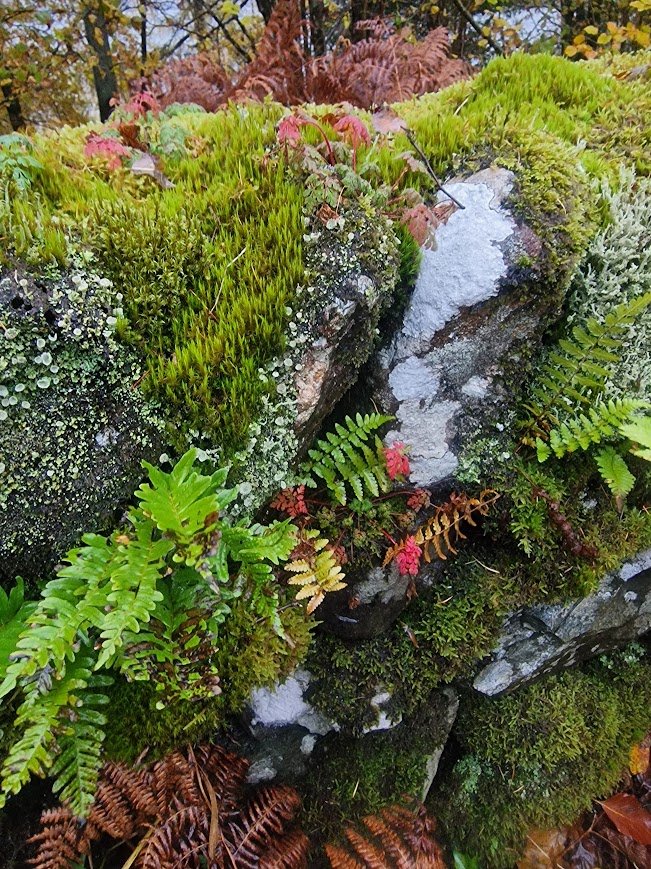
This rocky bank as covered in mosses
A sphagnum moss probably Sphagnum palustre was at the top of this bank.
The demonstrated the difference between habitat in the south (where I live) & the north-west temperate rainforest. Sphagnum palustre in Sussex is found in bogs and wet flushes with a supply of water from springs or streams. In Borrowdale, it is also at the top of this rocky mound because it rains a lot ; in the south, it doesn’t rain enough for that.
Seathwaite, Borrowdale: This village is the wettest inhabited place in England, receiving around 3,500 mm (138 inches) annually.Visit Cumbria Weather in the Lakes
The average annual precipitation in Sussex is around 914mm (36 inches)Climate Data Sussex
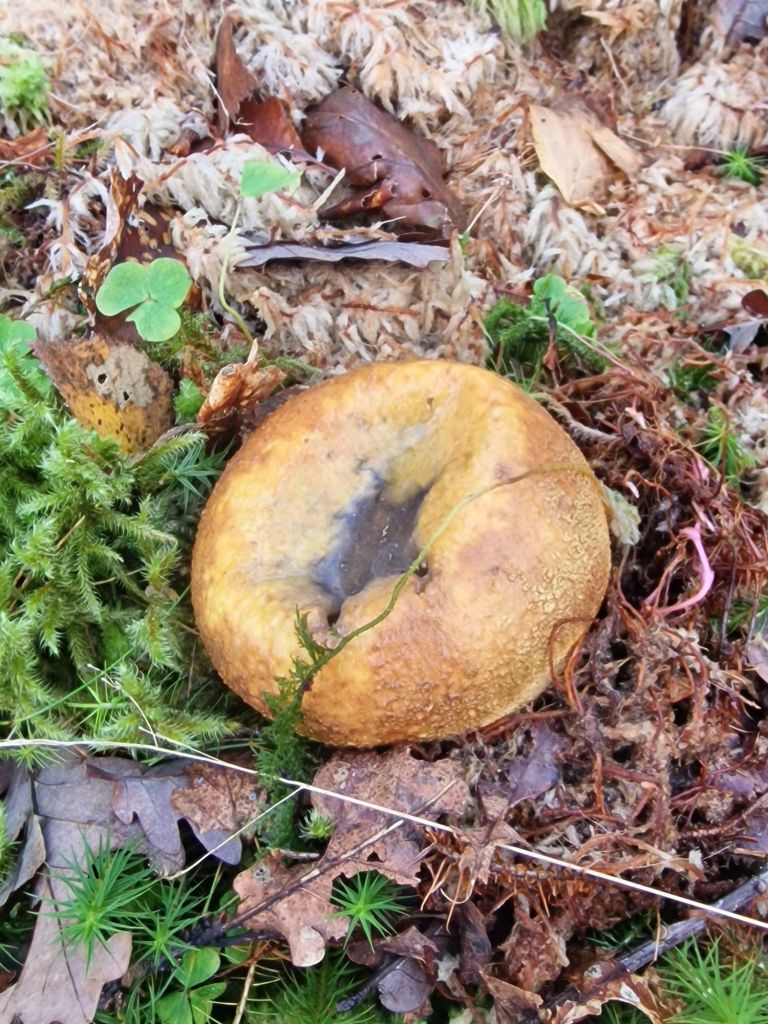
Scleroderma citrinum Common Earthball
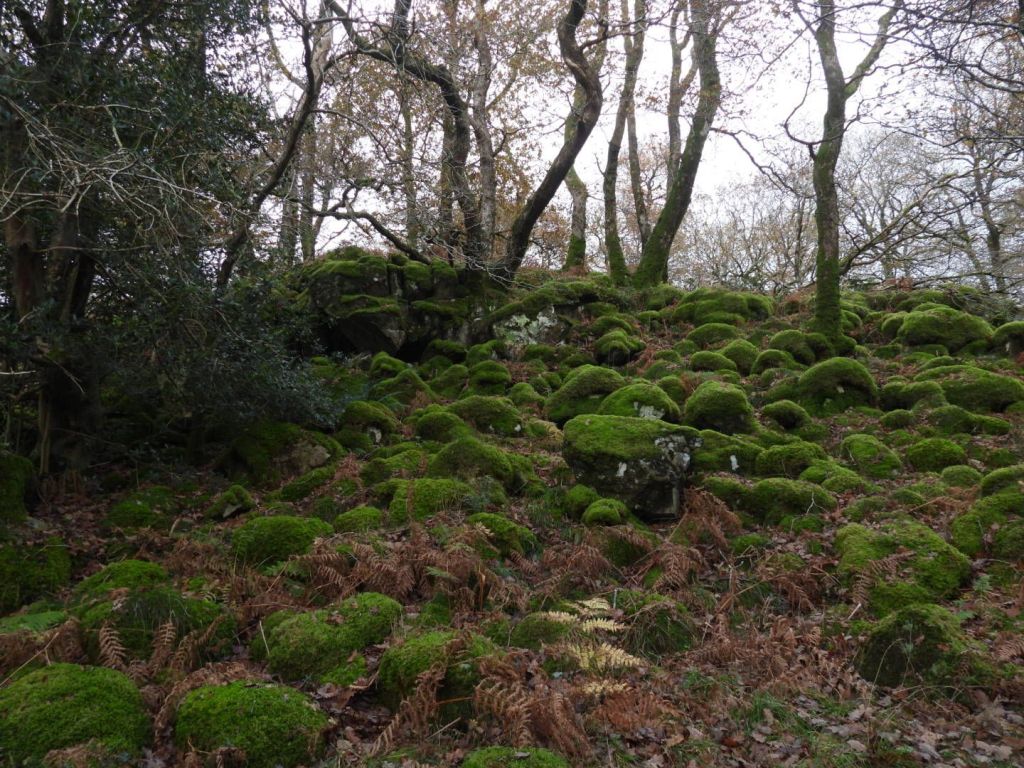
Mossy boulders
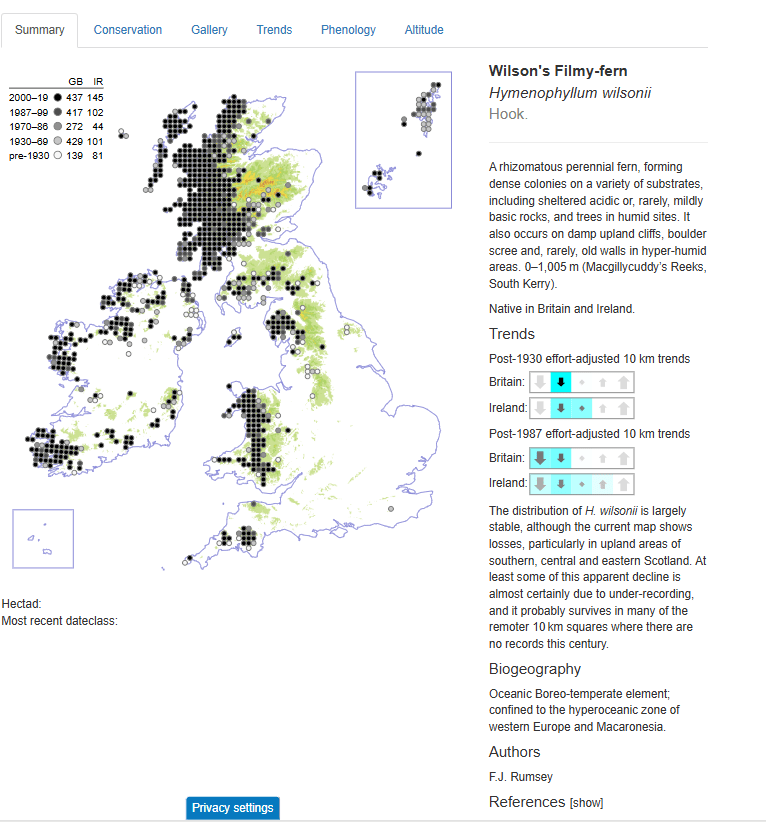
In Johnny Wood, Wilson’s Filmy-fern can be found. I have never seen it. So I explored likely filmy-fern outcrops to try and find it.
Filmy Ferns are characteristic of temperate rain forest
Wilson’s Filmy Fern has a similar distribution to Tunbridge Filmy Fern
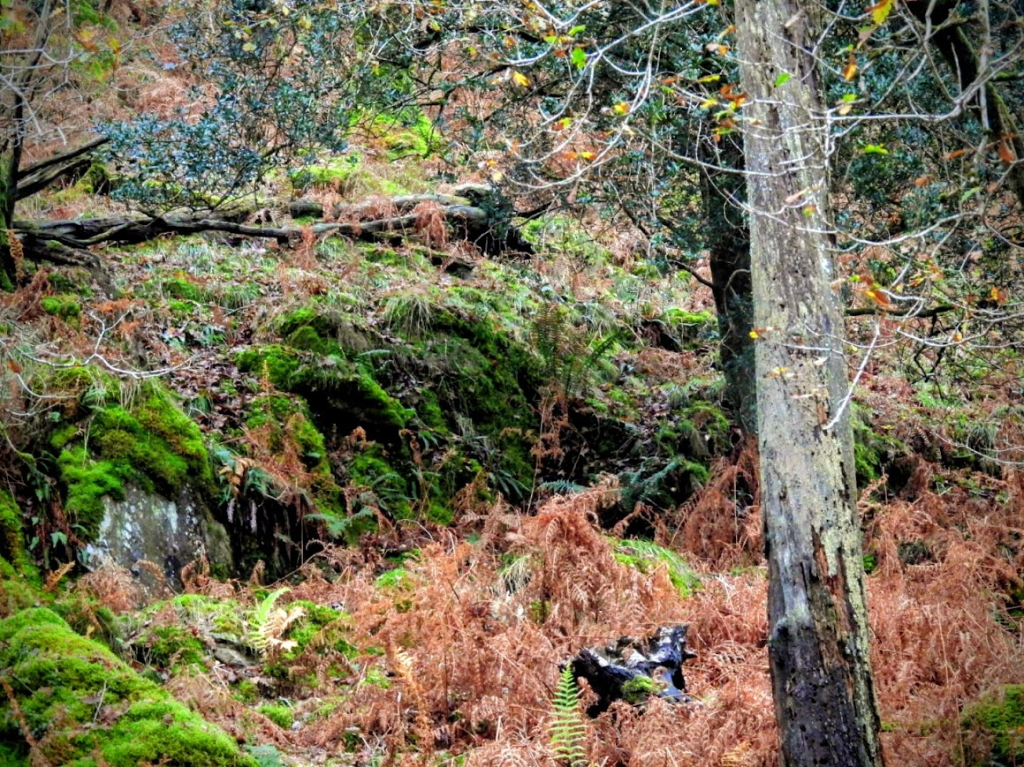
Following my success in finding Tunbridge Filmy Fern in the High Weald (an outlier population in the of Sussex where the These unique geological features of the High Weald produce create a localized, hypo-oceanic microclimate that supports plant species typically of western Atlantic woodland), I explored rock outcrops like those ones I have seen Tunbridge Filmy Fern on for Wilson Filmy Fern, like this one:
But when I climbed up to this rocky outcrop below, I “only” found common bryophytes e.g. White Earwort & Tamarisk Moss. But many “common” bryophytes are beautiful. I saw no Wilson’s Filmy Fern in any of the rock outcrops I explored.
White Earwort
Common Tamarisk-Moss
But as I have said before, I am never tire of seeing common beautiful things.
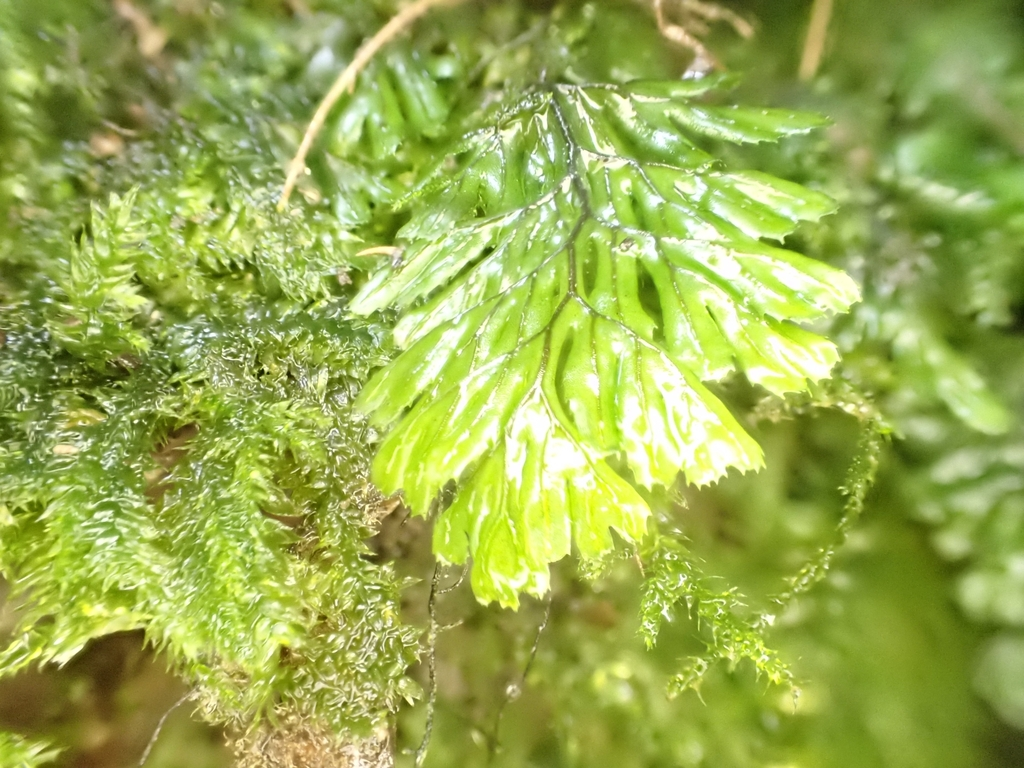
Here is some Tunbridge Filmy Fern I saw in Sussex to give you an idea of what Filmy Ferns look like!
The leaves of Wood-Sorrel, an ancient woodland indicator species, growing though Sphagnum palustre
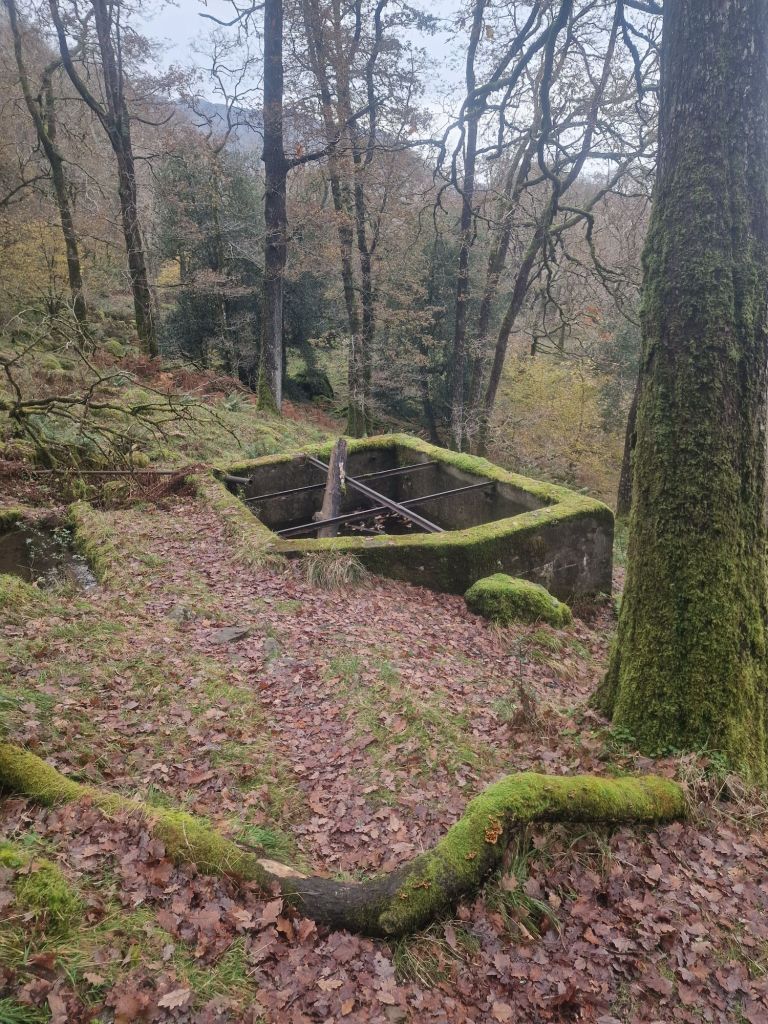
Concrete water reservoir. Ancient temperate rainforest woods in the UK are not untouched by human intervention. Most have always been part of living, changing landscapes formed by human-nature interaction.
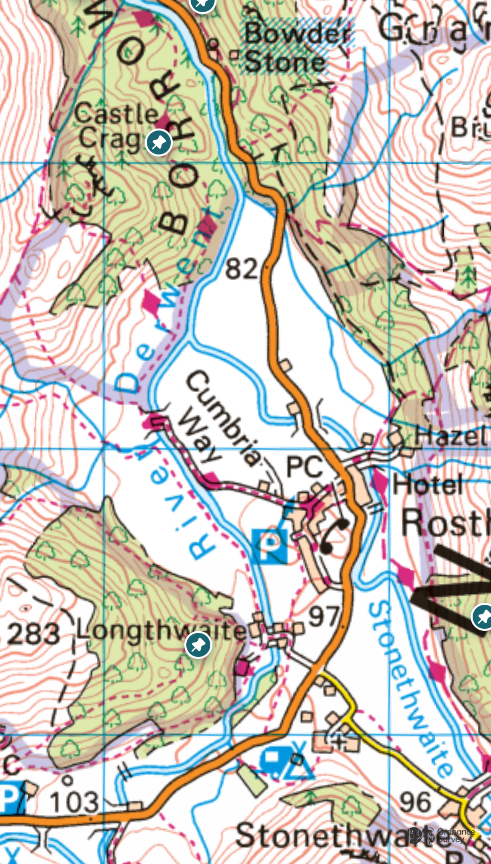
Waling along the River Derwent from Johnny Wood to the Bowder Stone
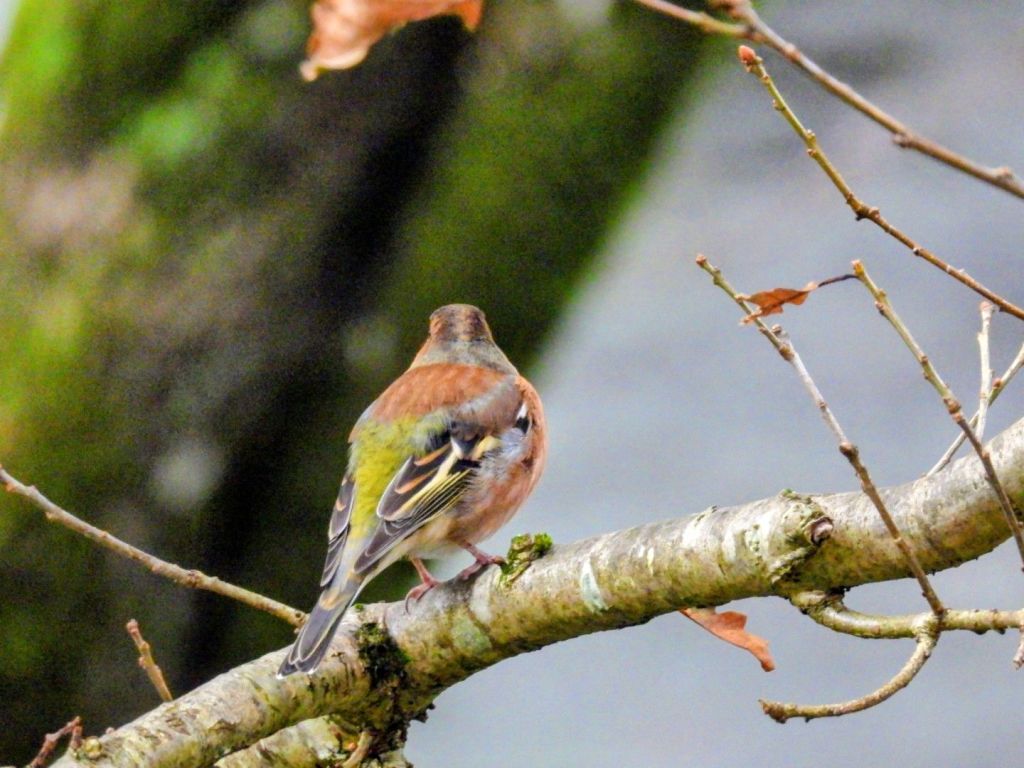
Walking along the Derwent I saw many birds, including this gorgeous juvenile Chaffinch
I also saw two White-throated Dippers dipping the Derwent for food. Both of them were quicky gone so I was unable to get a photo of them
Here is a Dipper I saw in the River North Esk south of Edinburgh in 2023
It is always a thrill to see Dippers
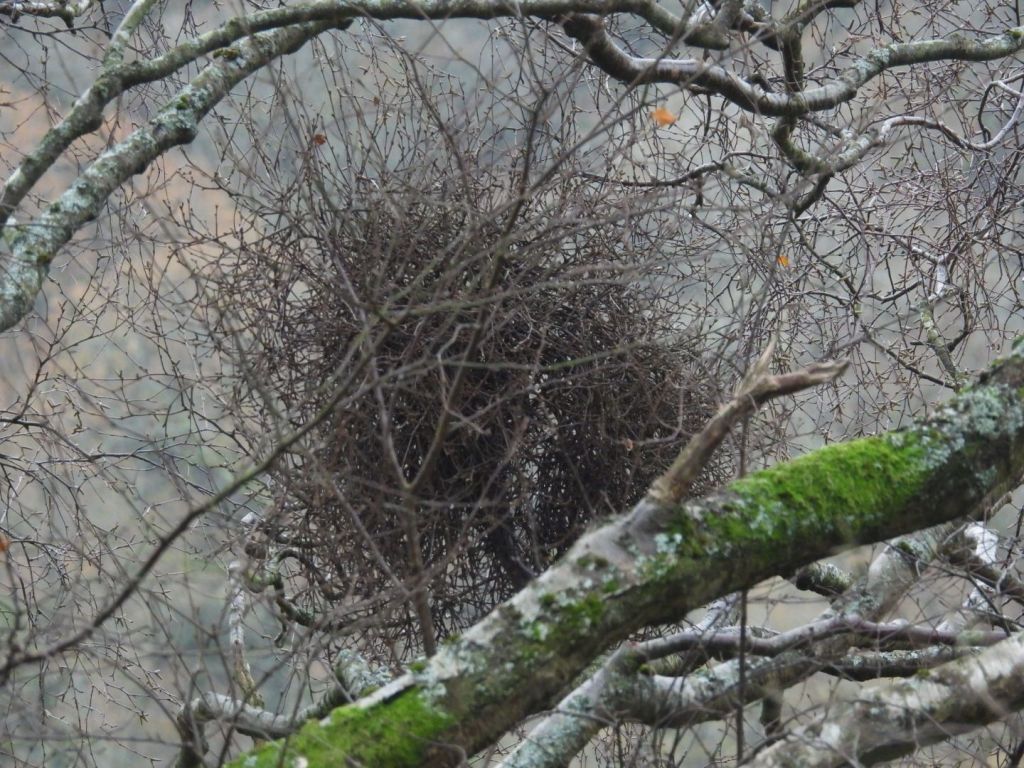
Witch’s Broom – Taphrina betulina (a fungal gall that effects the tree’s growth)
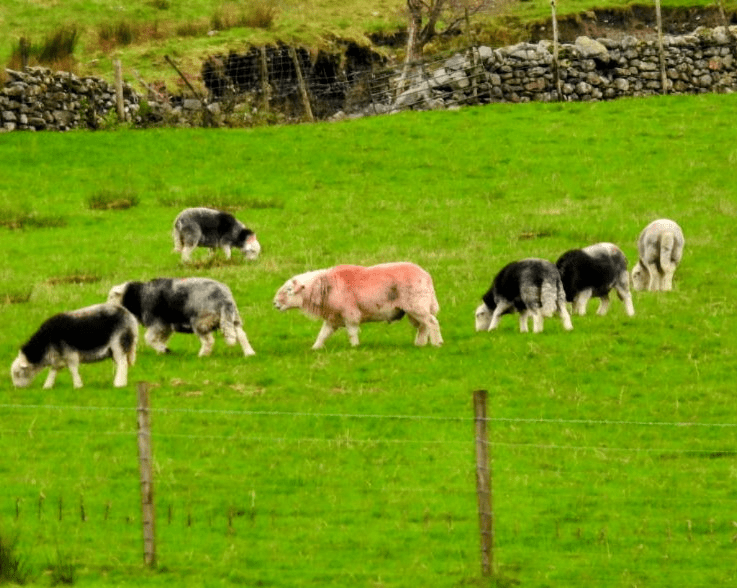
Herdwicks!
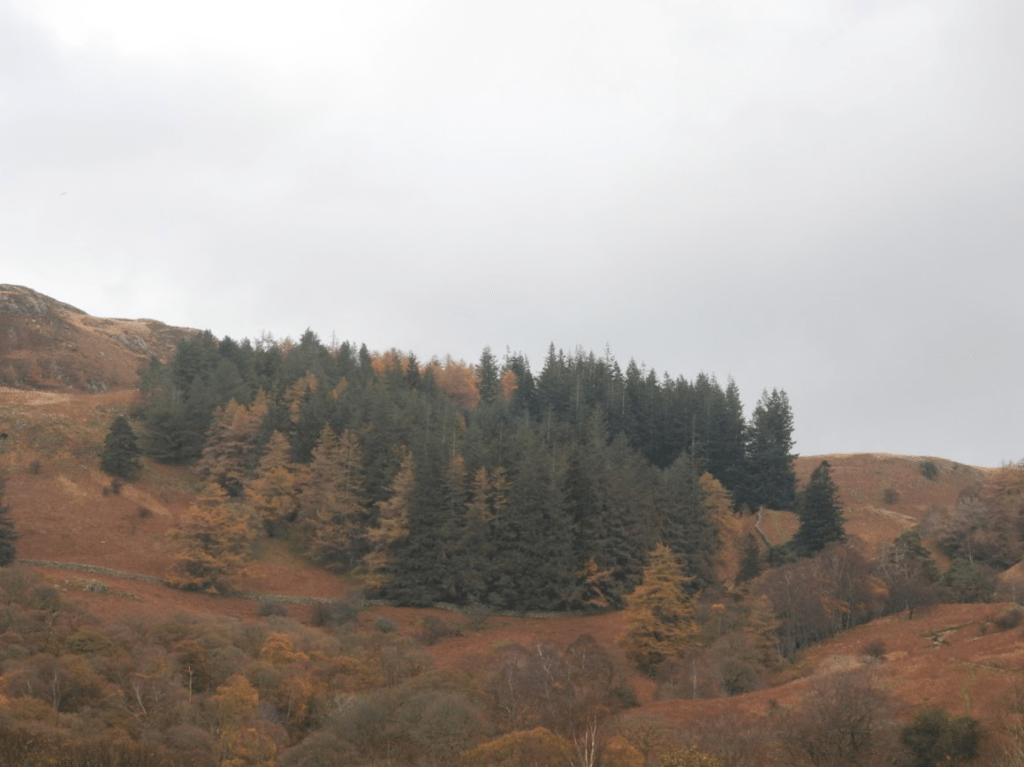
Not all of Borrowdale is Atlantic Oakwood; there is also much secondary woodland. Looking up from the valley, I could see Secondary Beech plantation
and Pine plantations
As Guy Shrubsole says: the Atlantic Oakwoods of Borrowdale remain fragmented and under pressureNational Trust Borrowdale NNR . Which makes it all the more important that the National Trust and Nature England point out to the public which fragments are Atlantic Woodland (Temperate Rain Forest)
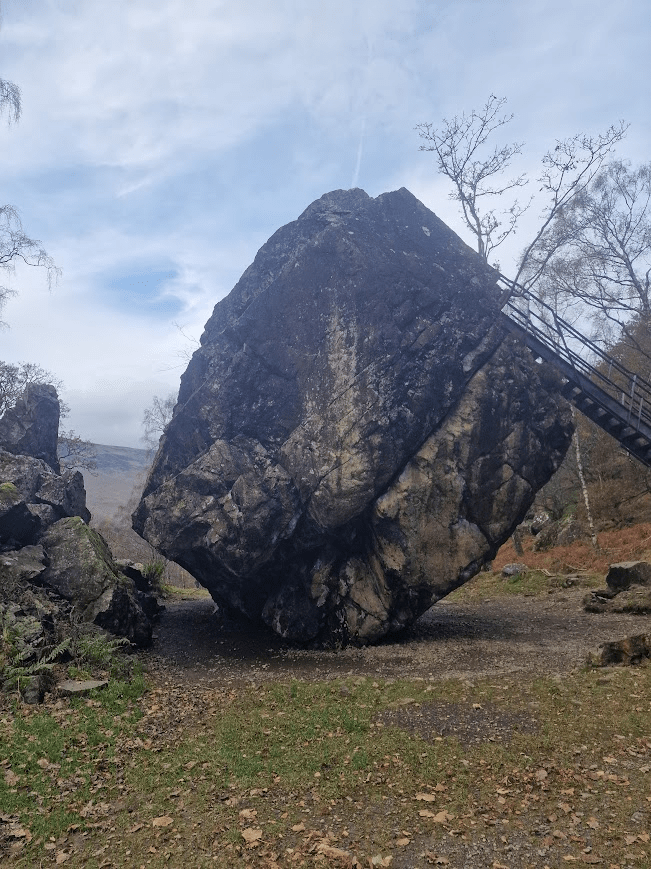
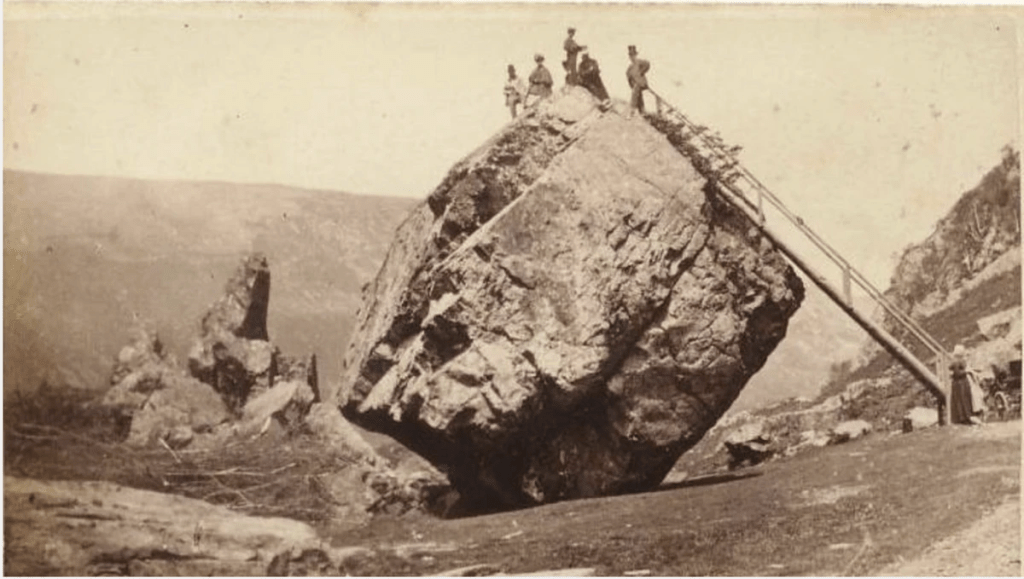
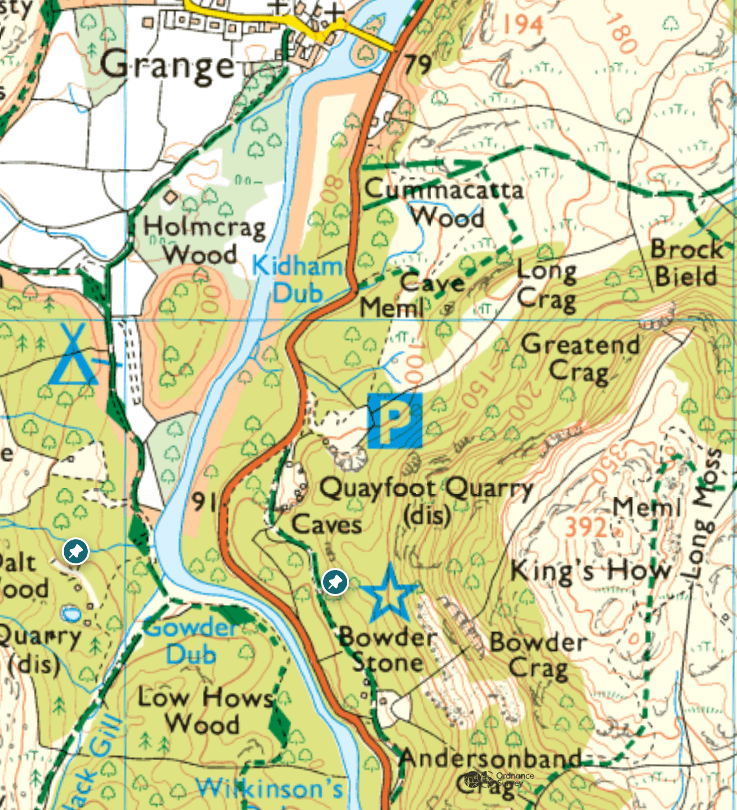
Bowder Stone
In the valley of the river Derwent, in Borrowdale, just north of Rosthwaite in a woodland clearing on the opposite side of the road from the river, stands a huge glacial boulder shaped like a human head that is one of several Cumbrian curiosities and, which has locally been called The Bowder Stone or Balder’s Stone, after the son of the Norse god, Odin (Woden). This ice-borne rock was carried down the valley by a glacier many thousands of years ago and deposited, having been trapped and then dislodged between the two side-slopes of the river valley.The Journal Of Antiquities The Bowder Stone, Rosthwaite, Cumbria
The boulder would have nestled deeply in the forests that covered the Lake District after the last ice age – the original ‘wildwood’ that predated human habitation in the Lakes. It stood unmoved through the coming of the people who built the Iron Age hillfort on Castle Crag, the Norse who created the many clearings or ‘thwaites’ along the valley for grazing, and the traditional woodland industries which coppiced and harvested the timber for firewood, building materials and leather tanning.
Two hundred years ago, the Bowder Stone was one of the most prominent landmarks in the valley – a huge boulder that awed visitors with its sheer size and mass that stood out against the sky as the road wound towards it .Balanced improbably on one edge, it was popular with Georgian tourists for the ‘pleasurable terror’; they enjoyed wild, romantic scenery and the frisson of experiencing danger from a safe distance.National Trust History on the Borrowdale Valley
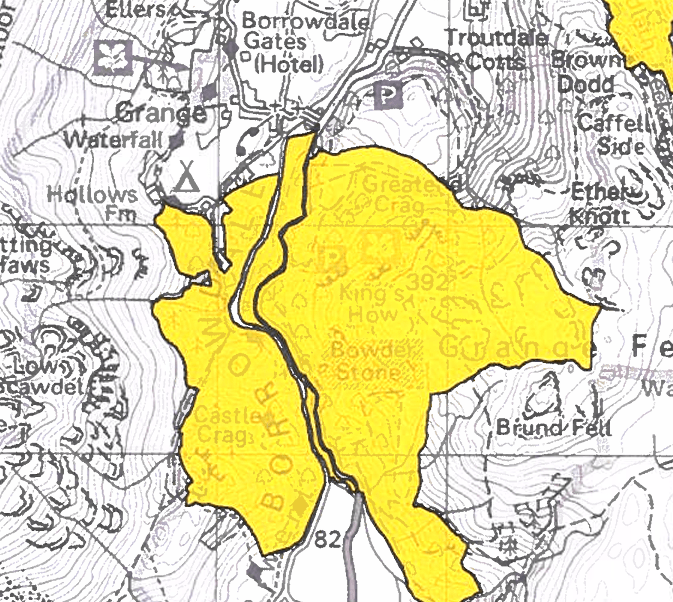
The area around the Bowder Stone is now designated by Nature England and the National Trust ancient (oakwood) rainforest; but the immediate area around the stone has clearly not been continuously wooded
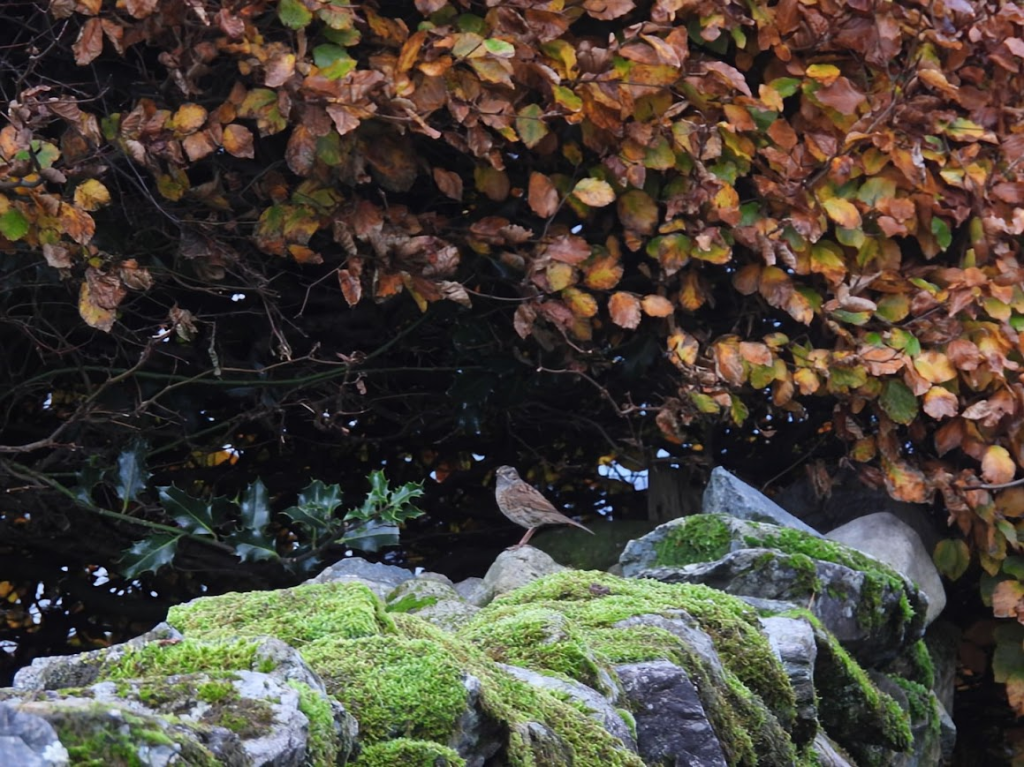
Dunnock on dry stone wall.
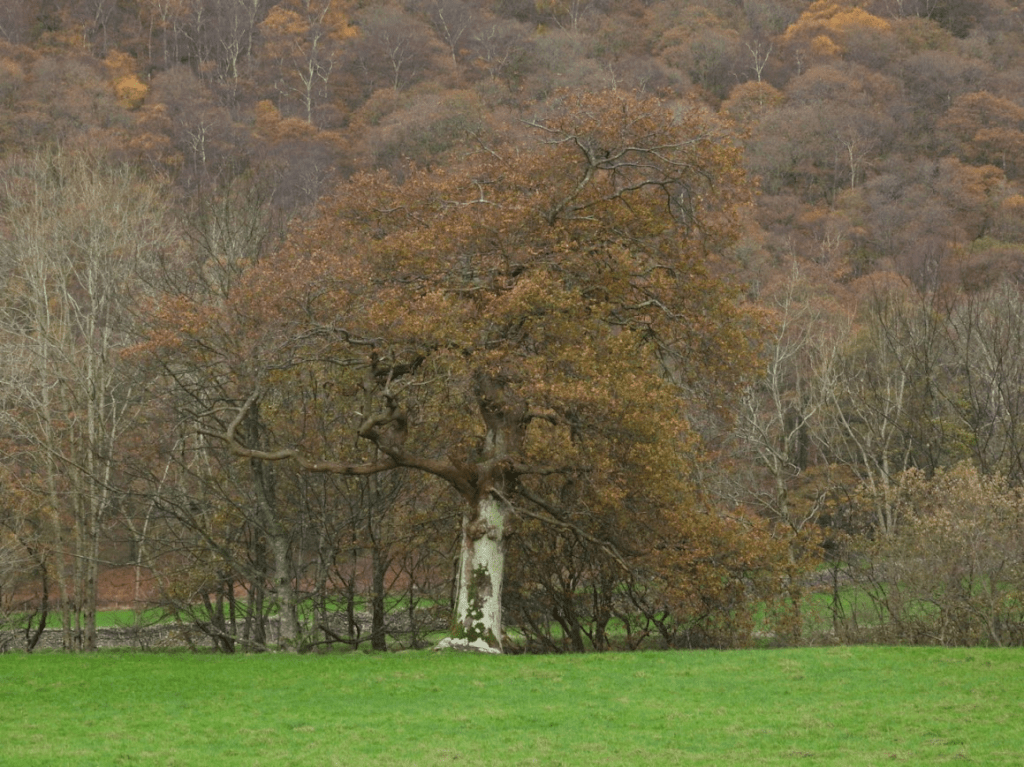
A Sessile Oak with “white” bark from a distance
The white bark is probably lichens of the Mesic bark community (the Pertusarietum). I am very used to this community, as it is common in the south, especially in parkland trees and trees at the edge of woods. I thought it unusual to see this in the Lake District but I did some research and found that whist it is largely southern community in the UK, …. [there is] a very important stronghold in the Lake DistrictPlantlife: Lichens and Bryophytes of Atlantic Woodland in the Lake District
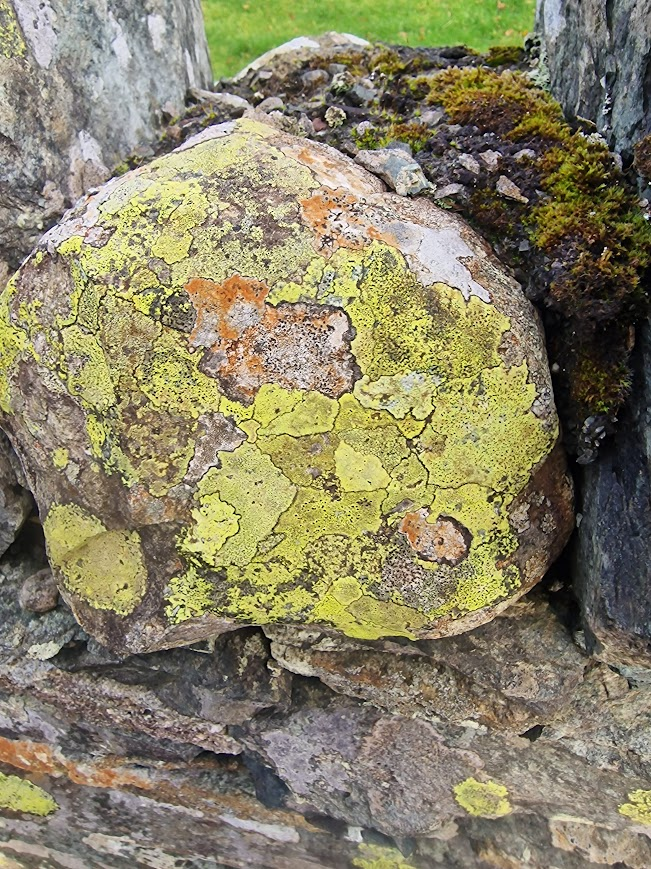
More Rhizocarpon geographicum and Lecidea lithophilaon a rock. Whilst I had never come across Lecidea lithophila until Monday, by Thursday I could recognize it at 50m away
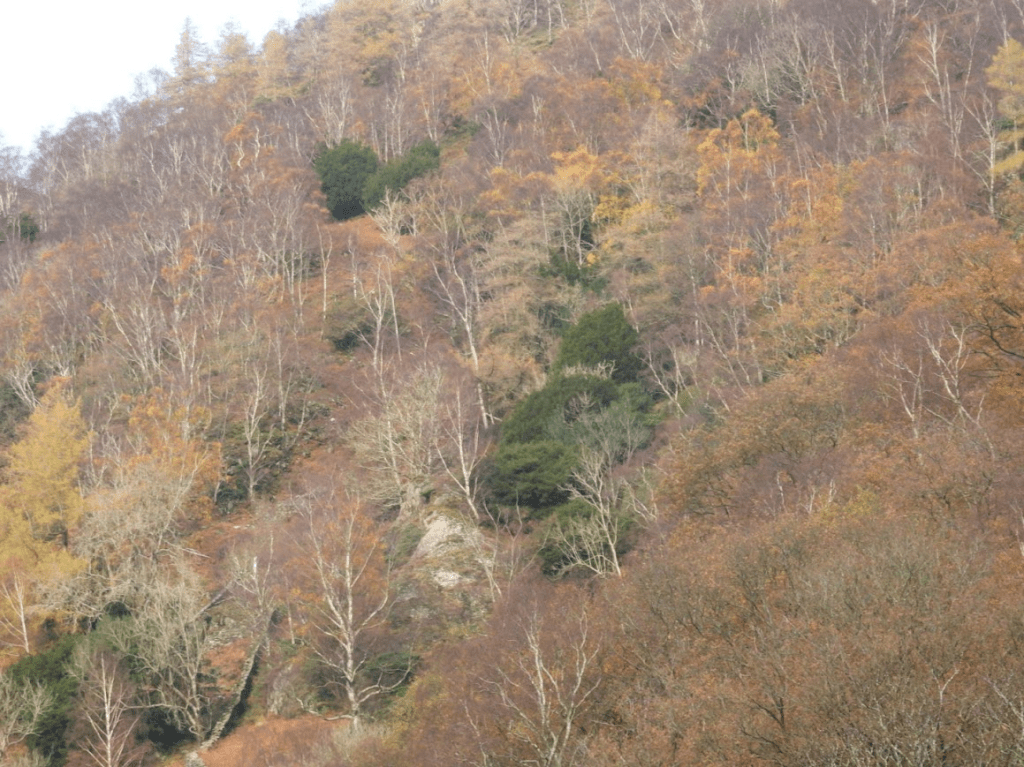
Lots of Silver Birch, Beech and Yew above the Bowder Stone
The National Trust says of Borrowdale Rainforest NNR: The Borrowdale Oakwoods are one of England’s largest remaining pieces of temperate rainforest that once spread from the north of Scotland down the west coast of England, Wales and Ireland and are part of a long standing cultural landscape
And these Silver Birch, Yew and Beech woodland are within the NNR that is described as Oakwood. But Oakwood is not all Oak
Upland oakwoods are characterised by a predominance of oak (most commonly sessile, but locally pedunculate) and birch in the canopy, with varying amounts of holly, rowan and hazel as the main understorey species. The range of plants found in the ground layer varies according to the underlying soil type and degree of grazing from bluebell-bramble-fern communities through grass and bracken dominated ones to heathy moss-dominated areas. Many oakwoods also contain areas of more alkaline soils, often along streams or towards the base of slopes where much richer communities occur. Elsewhere small alder stands may occur or peaty hollows covered by bog mosses Sphagnum spp. These elements are an important part of the upland oakwood system. The ferns, mosses and liverworts found in the most oceanic of these woods are particularly rich; many also hold very diverse lichen communities.Buglife Upland Oakwood
Cummacatta Wood
Cummacatta Wood is, to me, of very high biological interest (with sparse ancient trees and bog), is not in the designated NNR area, although it is probably of more biological interest than some of the woodland around the Bowder Sone which is in the Borrowdale Rainforest NNR. The danger of having an NRR that is described as a rainforest NRR is that biologically important areas that are not rainforest are not offered the protection that being part of a National Nature Reserve
Cummacatta Wood has a physical sign saying it is a National Trust property; however there is no information about it online from the National Trust or any other organisation except for one mention of the wood in a hiking apps.
It is not in the Borrowdale Rainforest NNR but it is in the geographical area of the Lodore-Tri0ttdale Woods SSSI. Although it is not mentioned in its SSSI specification by name; the sentence The site includes a number of interesting non-wooded habitats. Species-rich flushes may include Cummcatta Wood; although it is partially wooded!
Despite the deafening silence of the internet on Cummacatta Wood of its biological nature, I found it charmingly beautiful and full of biological interest. I have walked through Johnny Wood, the woods around the Bowder Stone and Cummacatta Wood just once and I wasn’t long in any of these areas; so my views on their interest is very impressionistic. I almost certainly missed many interesting species of lichens, bryophytes and vascular plants!
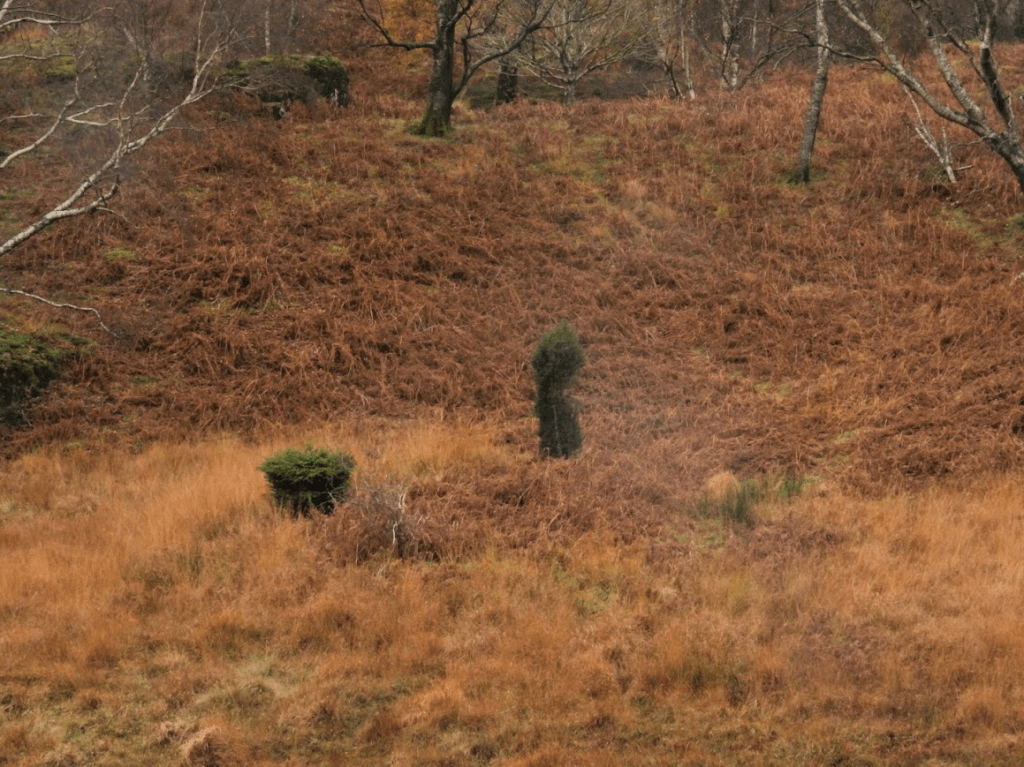
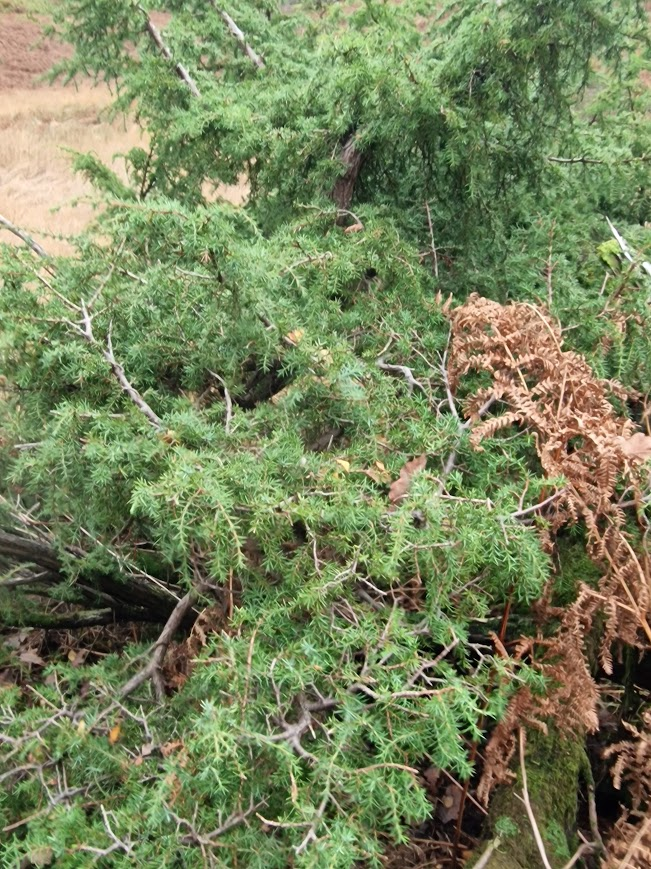
Cummaccatta is sparsely wooded with Sessile Oak, Silver Birch, Hazel, Yew, Juniper and Ash.
Here the beautiful and common (in North West Atlantic Woodland) liverwort Frullania tamarisci
A twisted Sessile Oak
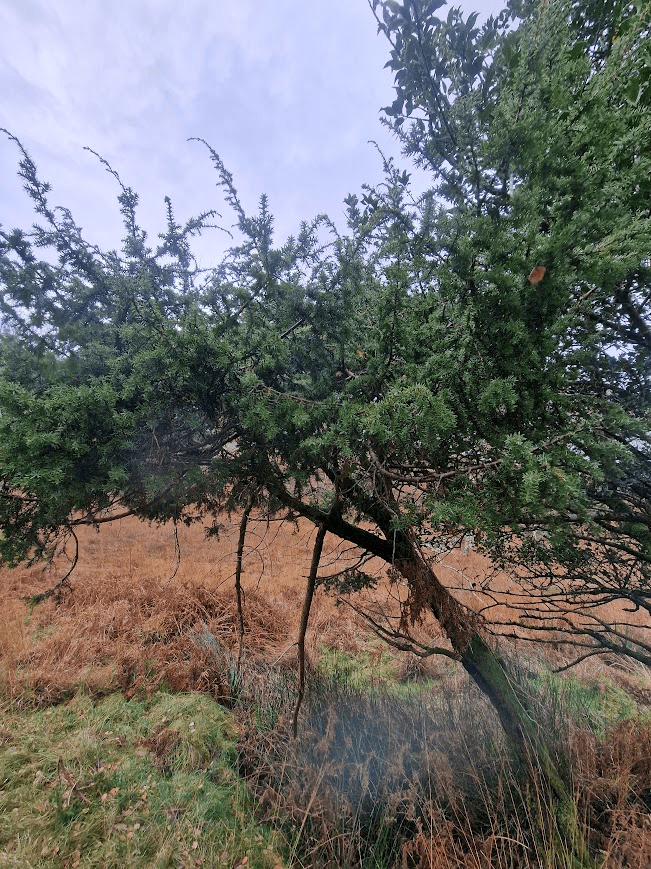
Yew
Hawthorns; as in Sussex, often have abundant (bit different) lichen. Sussex Hawthorns are dominated by Ranalina spp.lichens with few or no Usnea spp. Upland north-west Hawthorn often have more Usnea. On these hawthorns Usnea floridana is relatively common; it is very rare on South East hawthorns
Lichens on these two hawthorns
Hypogymnia physodes
Cladonia polydactyla
A liverwort not a lichen: Frullania tamarisci
Falvoparmelia caperata
Beard lichen: probably Usnea subfloridana
Usnea subfloridana
Platismatia glauca
Two stunted Yews
Juniper
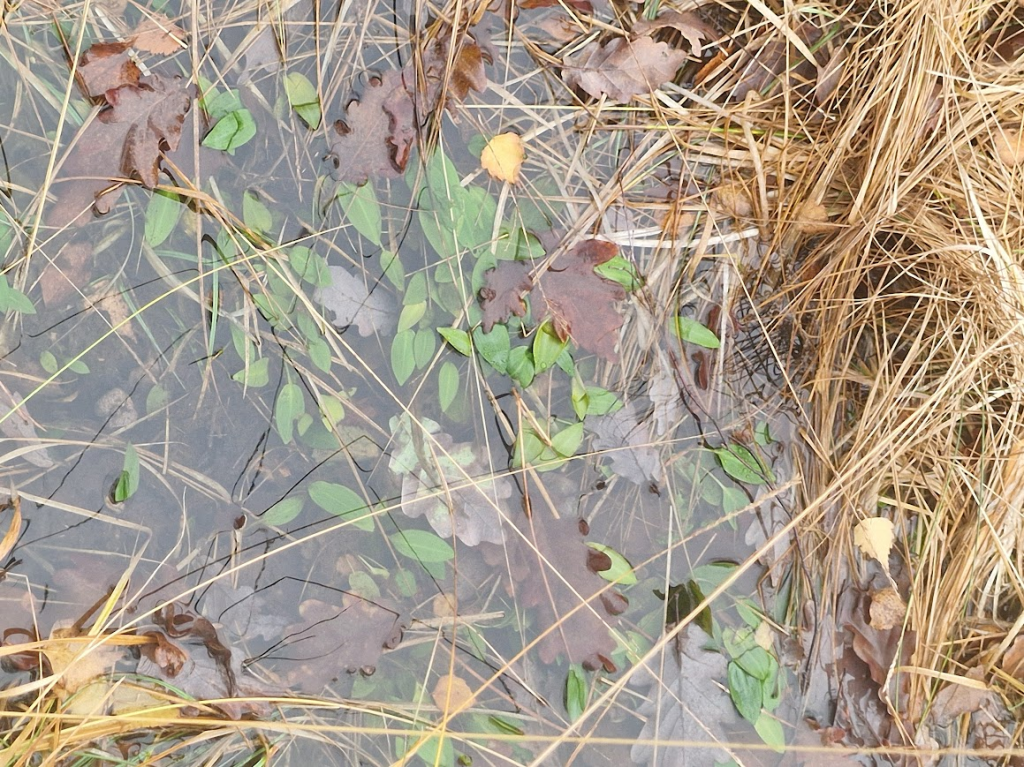
Bog Pond Weed
Bog Asphodel
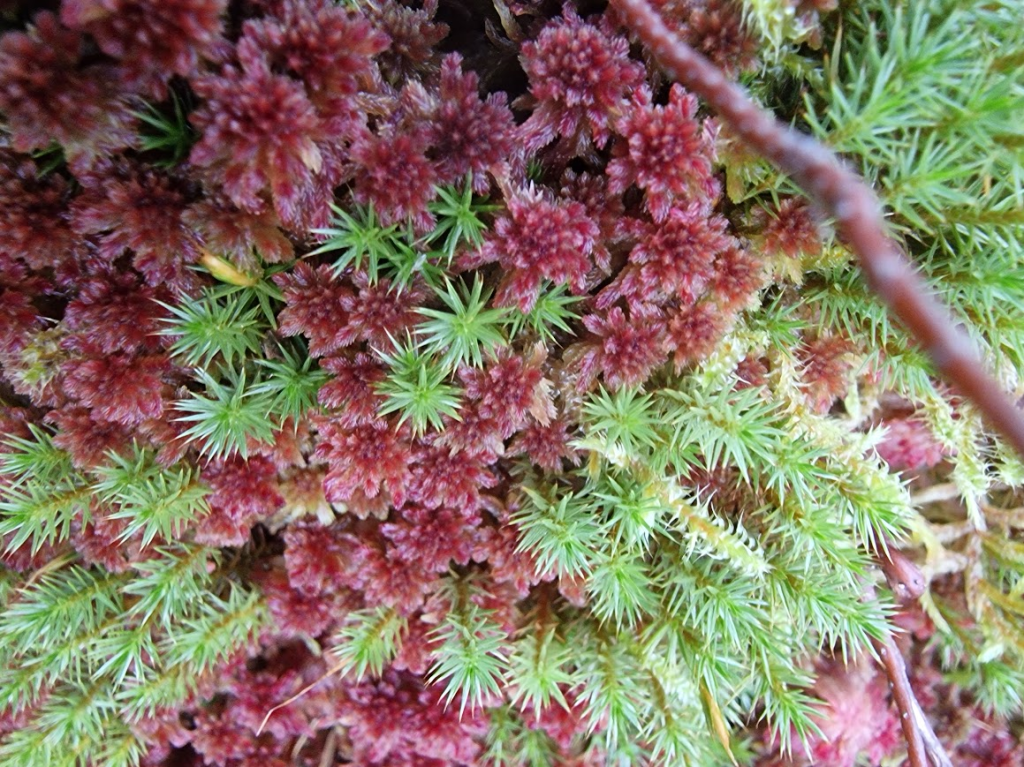
Red: Sphagnum capillifolium subsp. rubellum
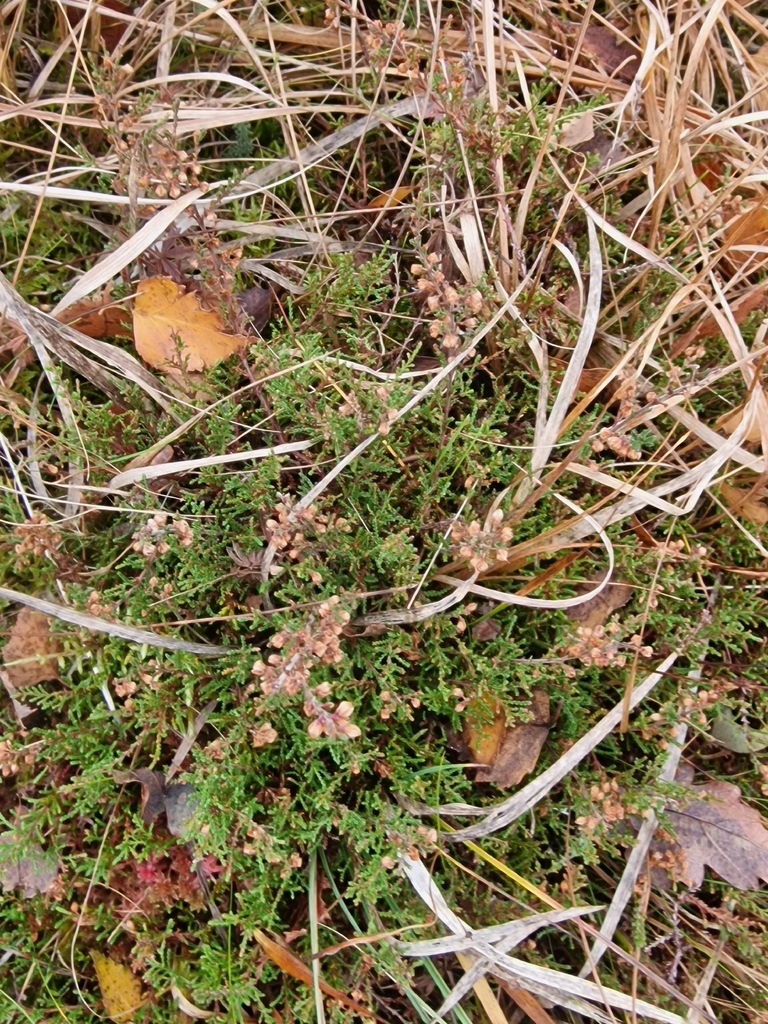
Common Heather
The way in and out of Cummacatta Wood is on the B2859, the Keswick to Seatoller road, along which the Stagecoach 78 bus runs
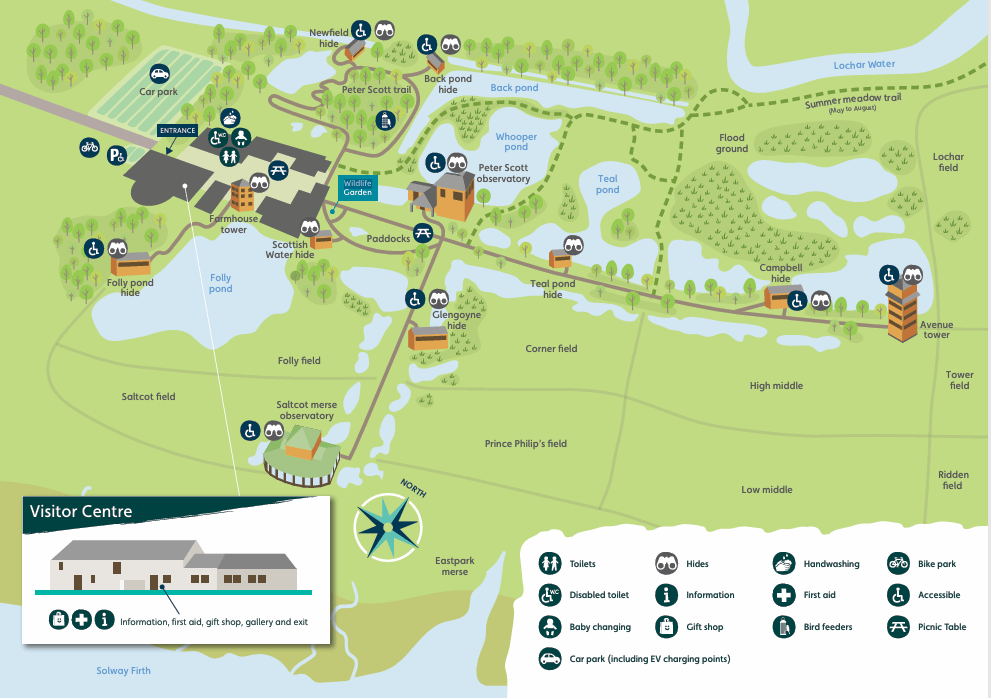
To get to the Wildfowl and Wetland Trust Caerlaverock Wetland Centre, I took the bus from Keswick (where I was staying) to Penrith; then a train from Penrith to Carlisle, then a train from Carlisle to Dumfries. Then I took a bus from Dumfries to the junction on the road to Caerlaverock Castle, where there is a turnoff to the Caerlaverock Wetland Centre. It is about a 45 minute walk from the bus stop to the Wetland Centre. The 6A Bus Service (Houston Couches) only runs five times a day so careful planning is required!
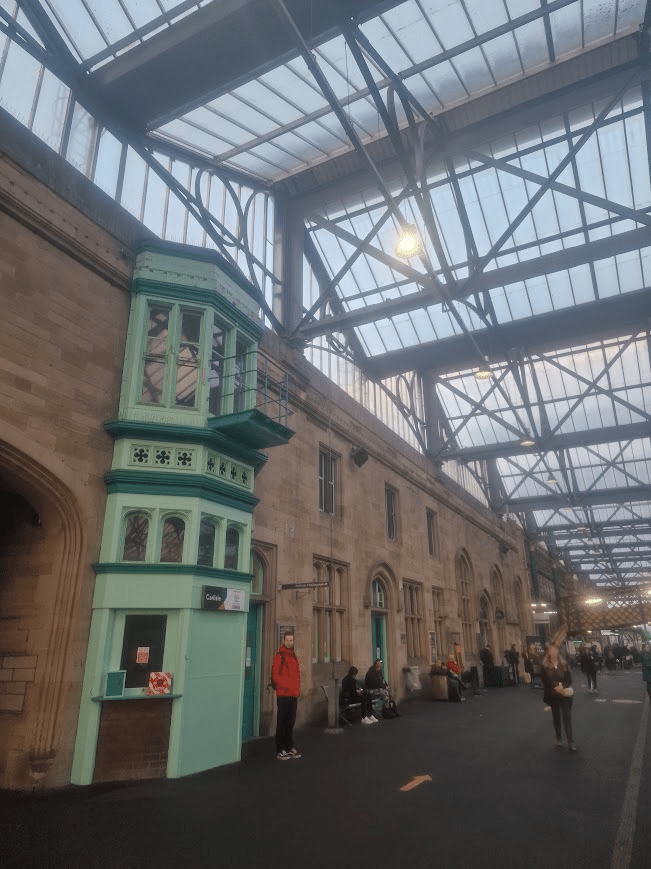
The splendid Gothic Revival / Tudor Revival Carlisle Station. 1847, designed by the architect William Tite.
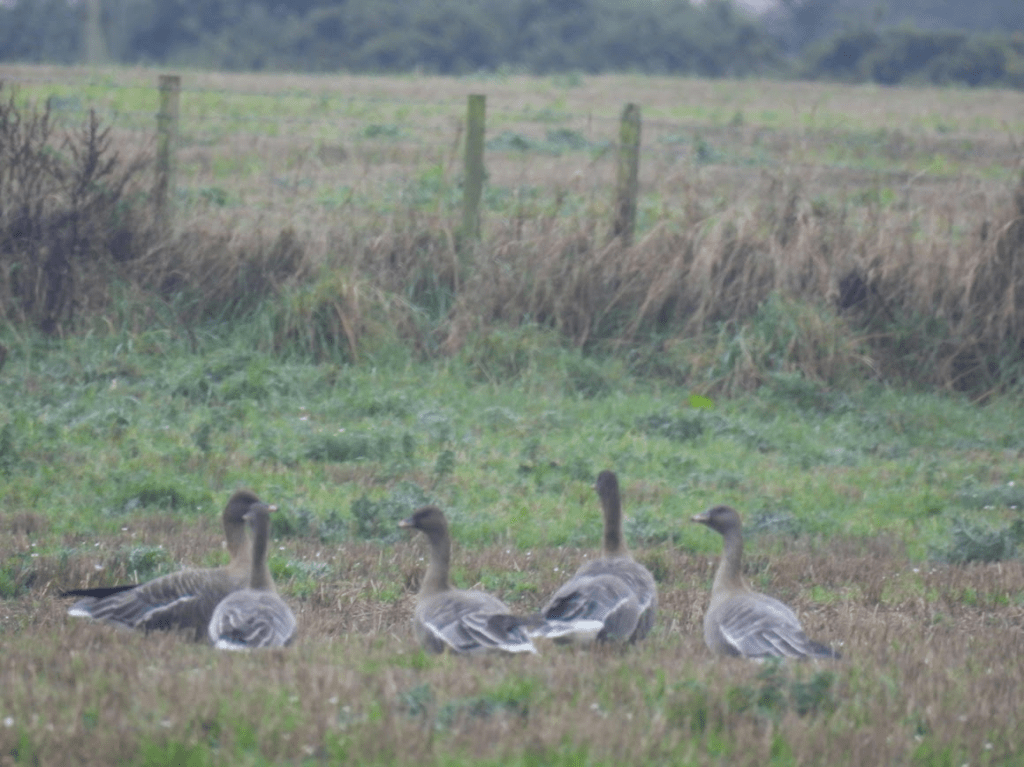
As soon as I got off the bus and started walking down the lane to WWT Caerlaverock, I saw these Pink-footed Geese, Anser brachyrhynchus, in a field next to the lane. They were the only Pink-Footed Geese I saw.
Having spent the brief Arctic summer nesting in central Iceland, pink-footed geese take to open water and spend 25 days afloat, moulting their wing feathers before their flight south. One mid-autumn day, with the wind in the right direction, and temperature and food levels dropping, pink-footed families take off. Into the North Atlantic they fly, making landfall on the Faroe Islands six hours later, resting for a day before taking off again towards British shores. A day later, they land on our coasts. Over 400,000 pink-footed geese spend the winter in the UK [mostly and Scotland and Norfolk] Wildlife Trusts Pink-footed Geese
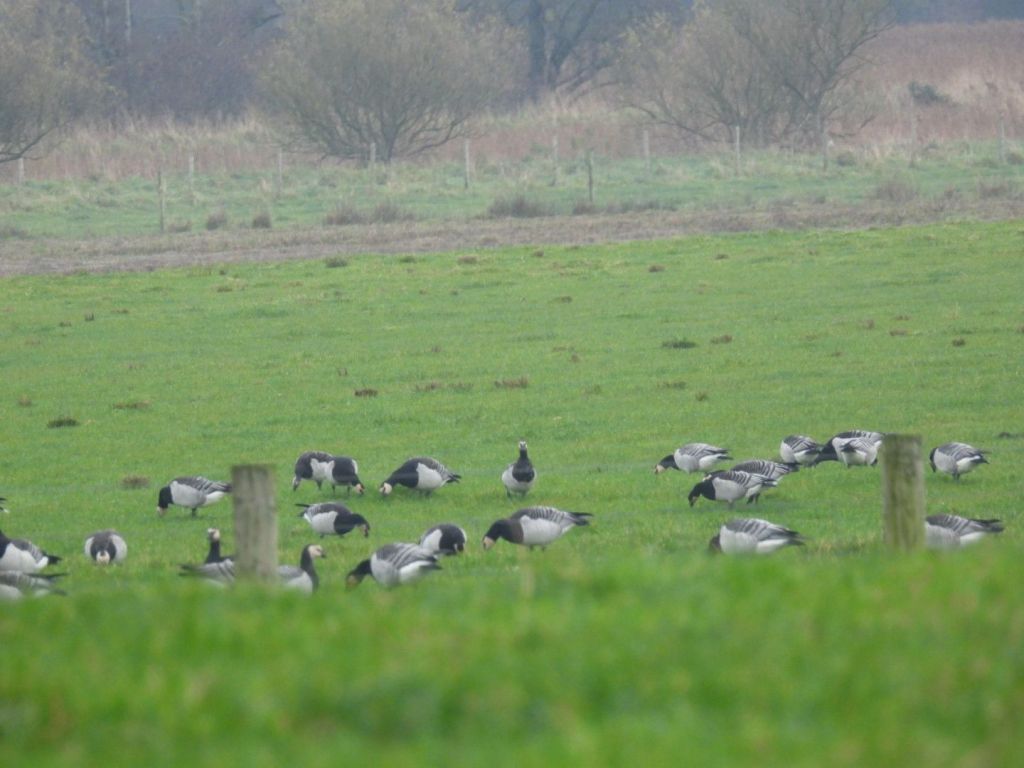
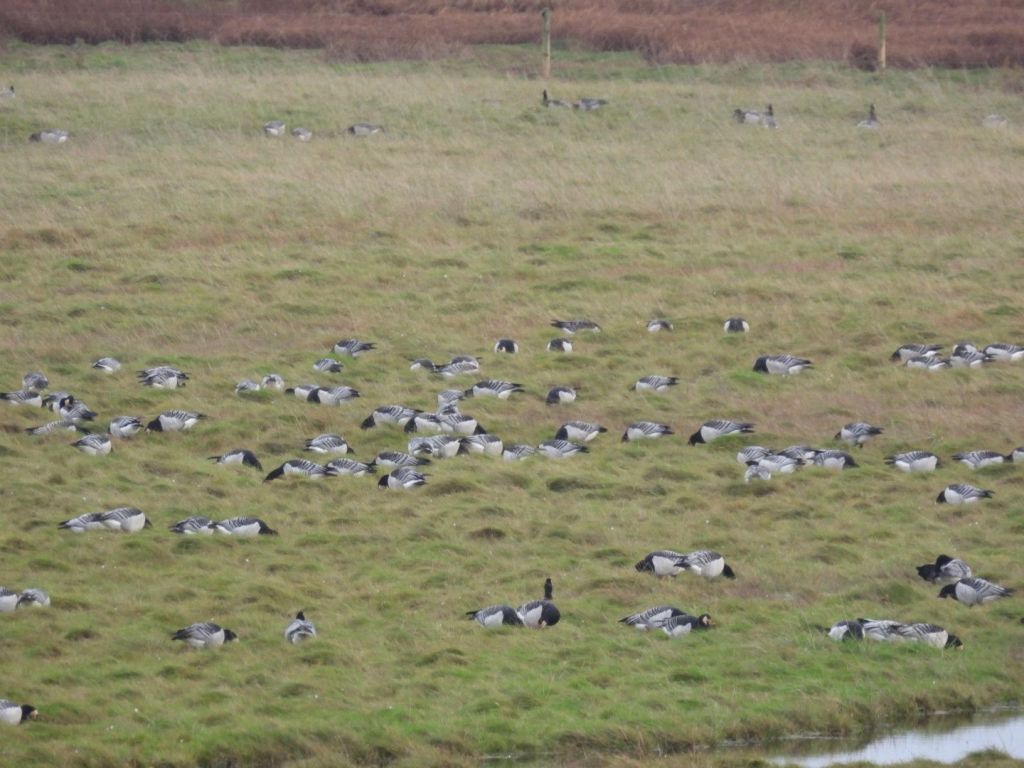
Then, almost immediately, I saw some Barnacle Geese, Branta leucopsis, in the field next door.
The black-and-white barnacle goose flies here for the ‘warmer’ winter from Greenland and Svalbard. This epic journey was once a mystery to people, who thought it hatched from the goose barnacle at sea!The Wildlife Trusts Barnacle Geese The entire population of Svalbard Barnacle Geese (ca. 20,000) overwinter in the Solway Firth
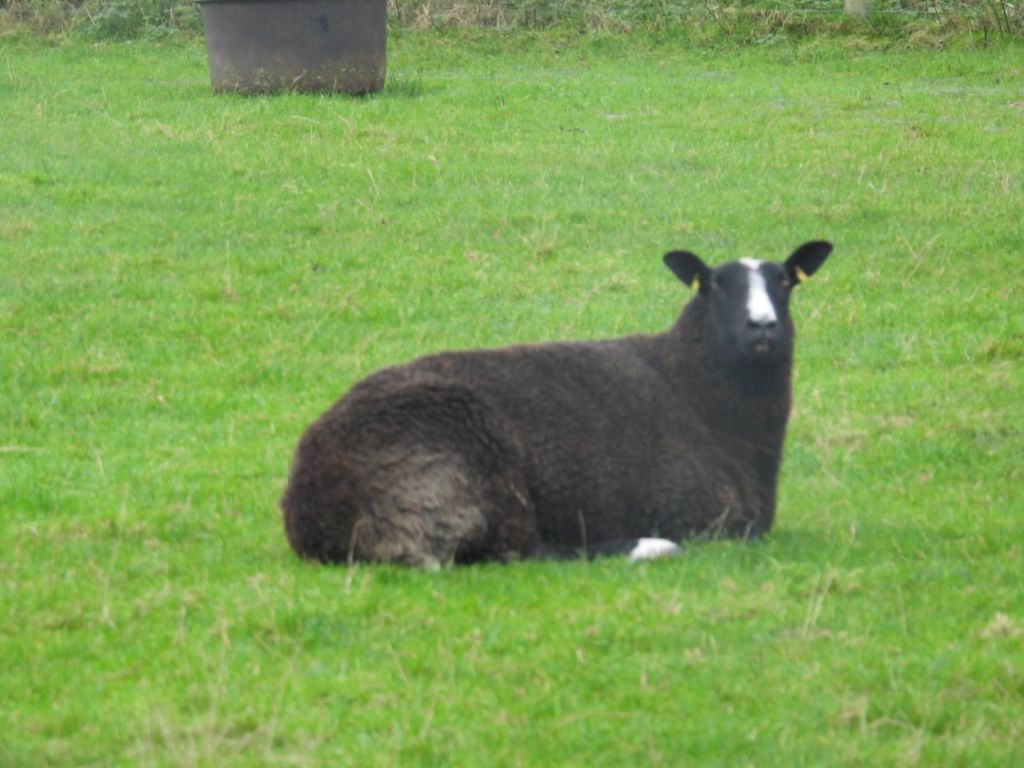
Zwartbles sheep; a breed of domestic sheep originating in the Friesland region of the north Netherlands which are popular in Scotland on the way along the road to the Wetland Centre
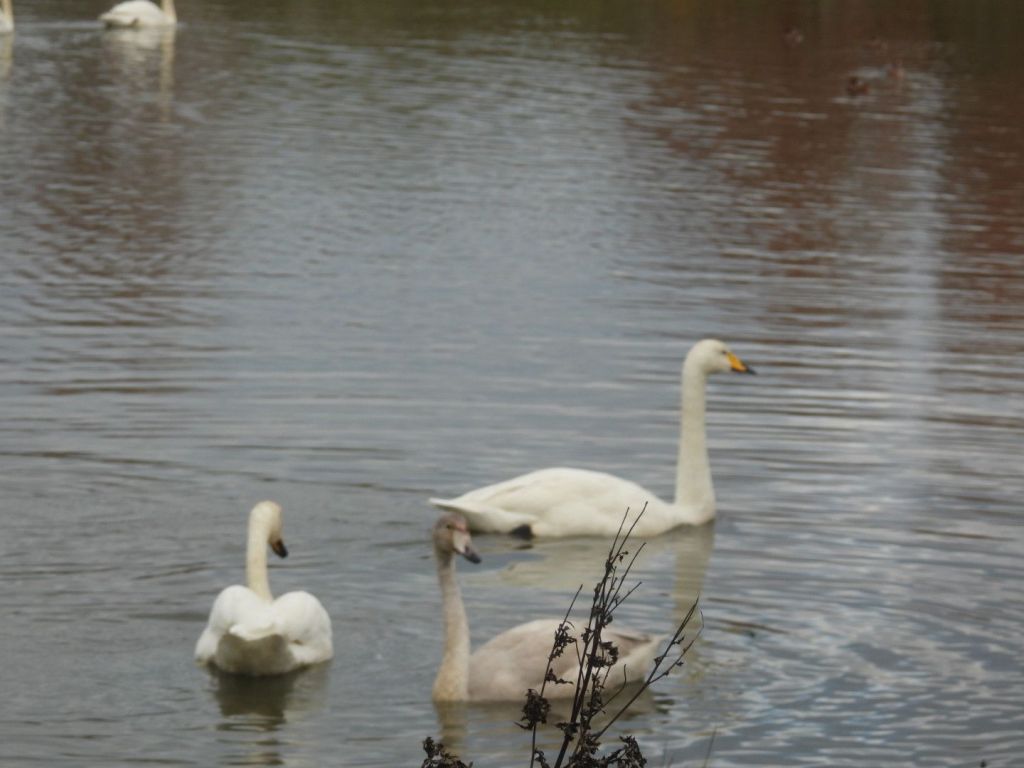
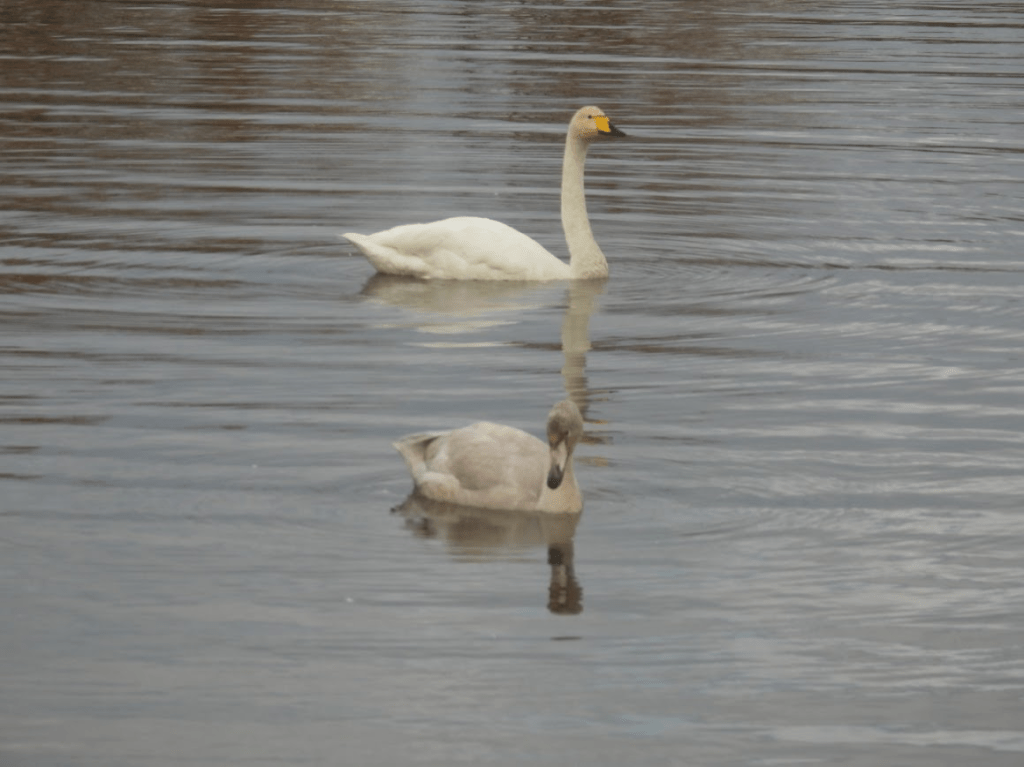
There were about 40 Whooper Swans, Cygnus cygnus, in the Whooper Pool
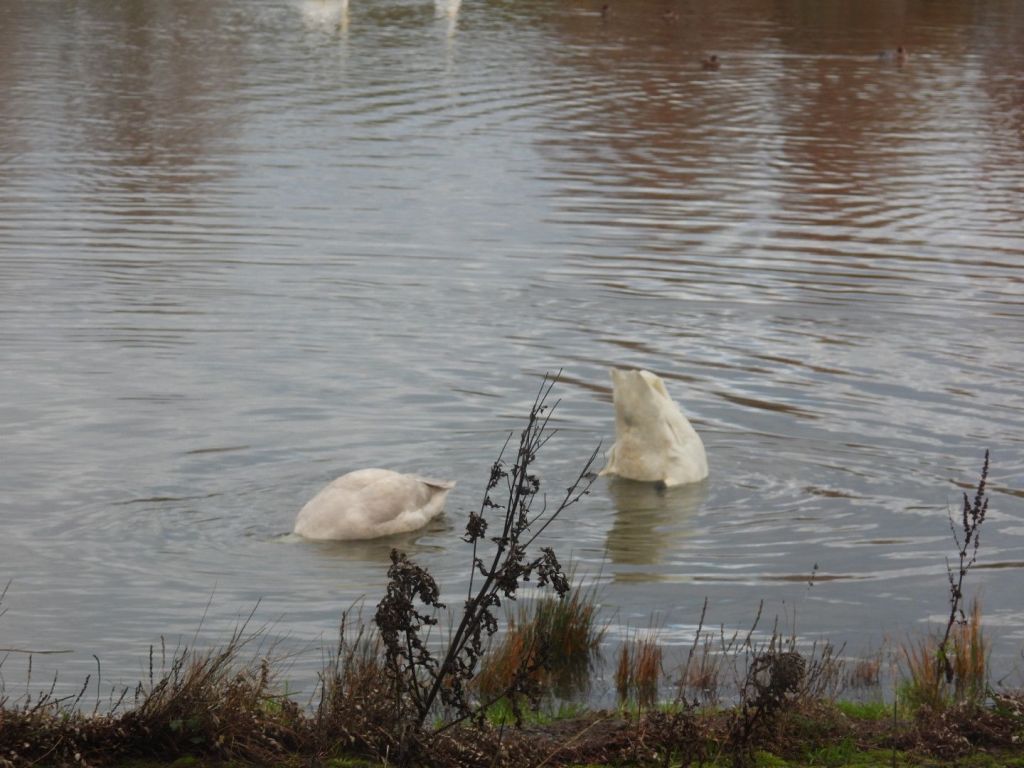
Sibelius saw Whopper Swans flying over him. This inspired the majestic main theme of the last movement of his 5th Symphony; emulating the majesty of swan flight. Here is a Whooper Swan dabbling with bum in the air. If he had seen a Whooper dabbling, with its bum in the air. h is swan theme may be different. Yoi can listen to the Swan theme here: Sibelius: Symphony No. 5 – III. Allegro molto – London Philharmonic Orchestra The first presentation of the Swan Theme is 1:20 mins in (French Horns)
This parent Whooper Swan and its cygnet, were fascinating to watch. The parent did something (e.g. preen, dabble for food), then cygnet did it; learning through mimicry. This cygnet was probably born in Iceland. First time in Scotland.
The Whooper Swan is a large white swan, bigger than a Bewick’s Swan. It has a long neck, which it usually holds erect, and black legs. Its black bill has a large triangular patch of yellow on it. It is mainly a winter visitor to the UK from Iceland, although a small number of pairs nest in the north. The estuaries and wetland it visits on migration and for winter roosts need protection. Its winter population and small breeding numbers make it an Amber List species. It is also a Schedule 1 listed bird, meaning it is illegal to disturb them.RSPB Whooper Swan
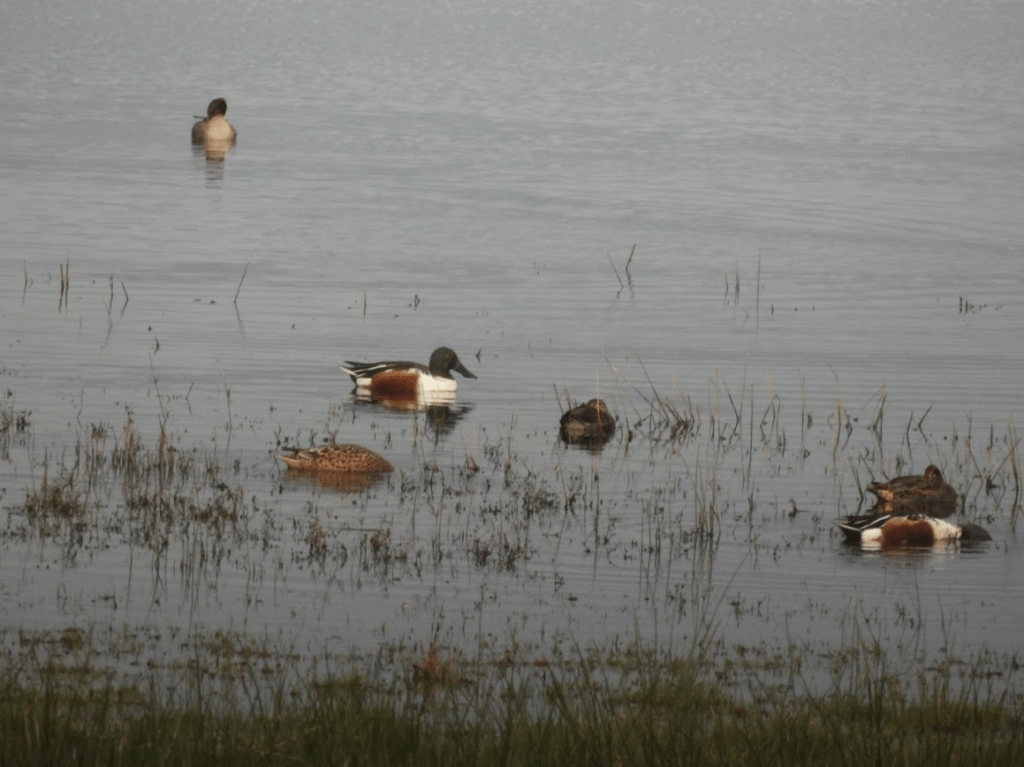
Ducks! Shovelers, Anas clypeata, and Teal, Anas crecca, in the Whooper Pool
As I was walking to a hide I saw a flock of Redwings, Turdus iliacus, and Fieldfare, Turdus pilaris; the UK’s “winter thrushes” that migrate from Scandinavia. They were eating Hawthorn haws.
Fieldfare – along the Avenue
Fieldfares are large, colourful thrushes, much like a Mistle Thrush in size, shape and behaviour. They stand very upright and move forward with purposeful hops. They are very social birds, spending the winter in flocks of anything from ten or twenty to several hundred strong. These straggling, chuckling flocks which roam the UK’s countryside are a delightful and attractive part of the winter scene.RSPB Fieldfare
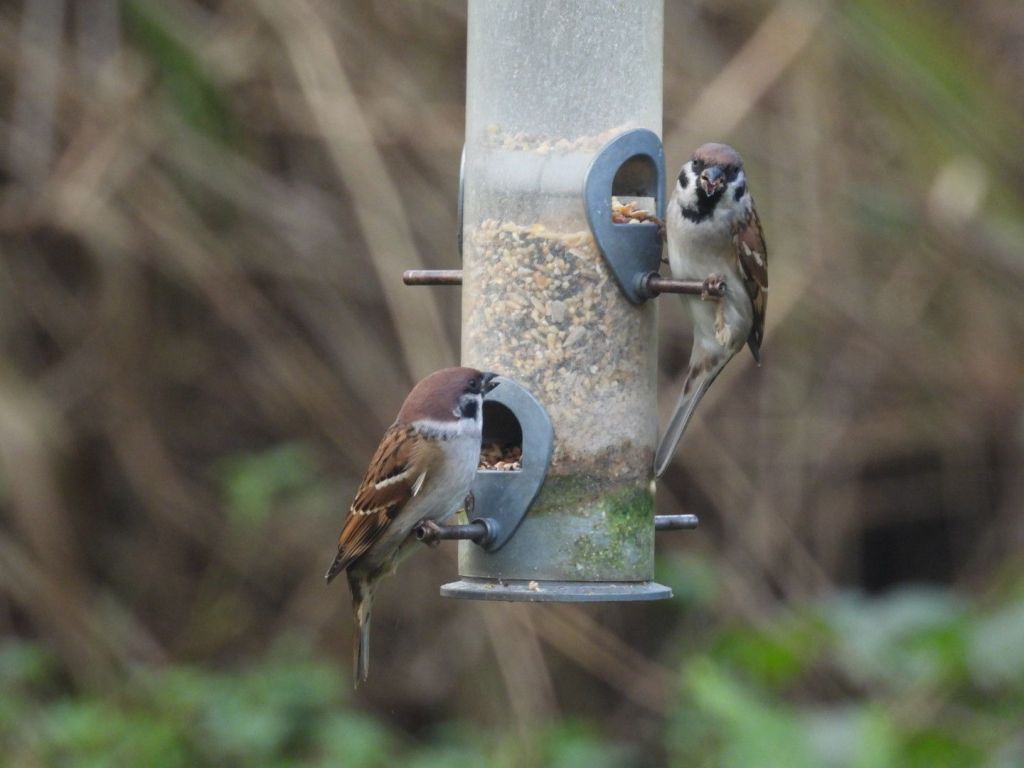
Tree Sparrows, Passer montanus
This was the first time I have ever seen Tree Sparrows; I have searched for them in their remaining locations in Sussex with no success.
Tree Sparrow Passer montanus
Much declined and now very scarce resident; scarce passage migrant and winter visitor. Red-listed species of high conservation concern. Section 41.
Records were received from only four sites in 2023 as the Tree Sparrow decline continues in Sussex. All the records were from East Sussex. No birds were reported from many former strongholds such as Pevensey Levels, Rye Hbr and Scotney GP.
The first record of the year was from East Guldeford village where a single bird was reported on 22 Jan. The highest count of the year was just four at Camber on 5 Jun. A single bird was photographed in a garden at Northiam on 23 Jul and was seen on three successive days. This sighting was close to an unconfirmed report from the previous month. A Tree Sparrow was seen in the same Northiam garden on 14 Nov. The final sighting of the year mirrored the first, a single bird at East Guldeford village on 28 Dec.
Tree Sparrow continues to slide towards extinction in Sussex. Numbers of this species have fluctuated in the past, which offers some hope, but there is no sign of recovery yet. This is a species of high conservation concern and observers are asked to report all sightings, particularly if breeding evidence is obtained. [RA Black] Sussex Ornithology Society Sussex (2024) Bird Report 2023 p. 176
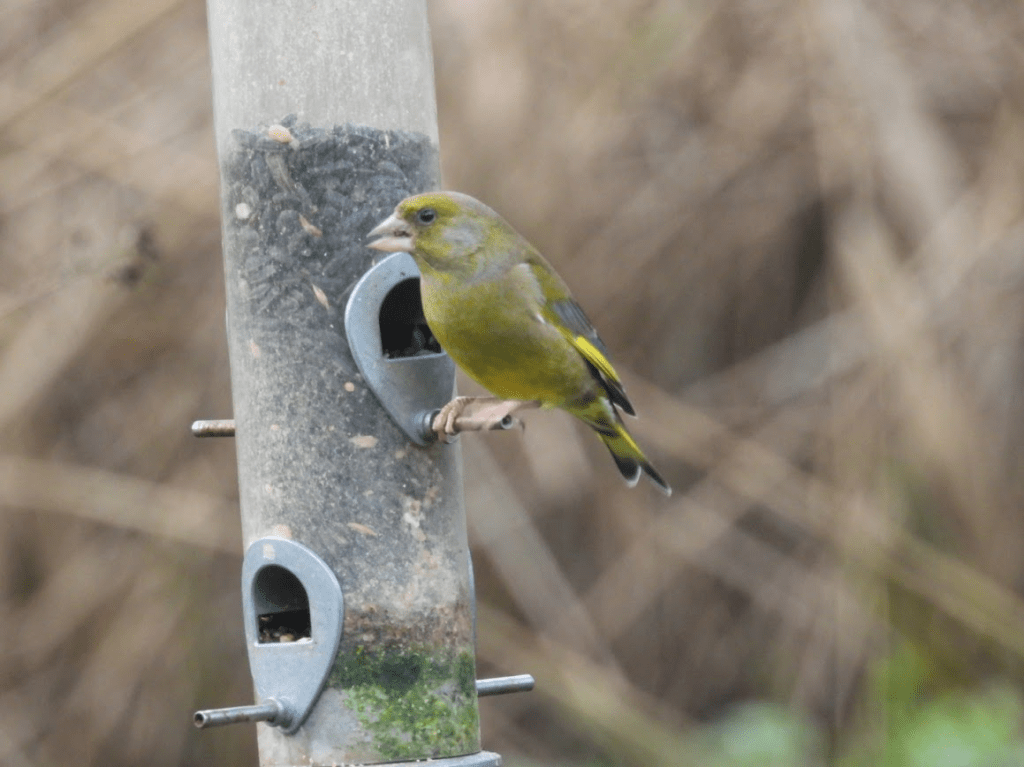
Green Finch, Chloris chloris
Some of the 1000s of Barnacle Geese by the flood planes of the Solway from the Salcot Merse Hide.
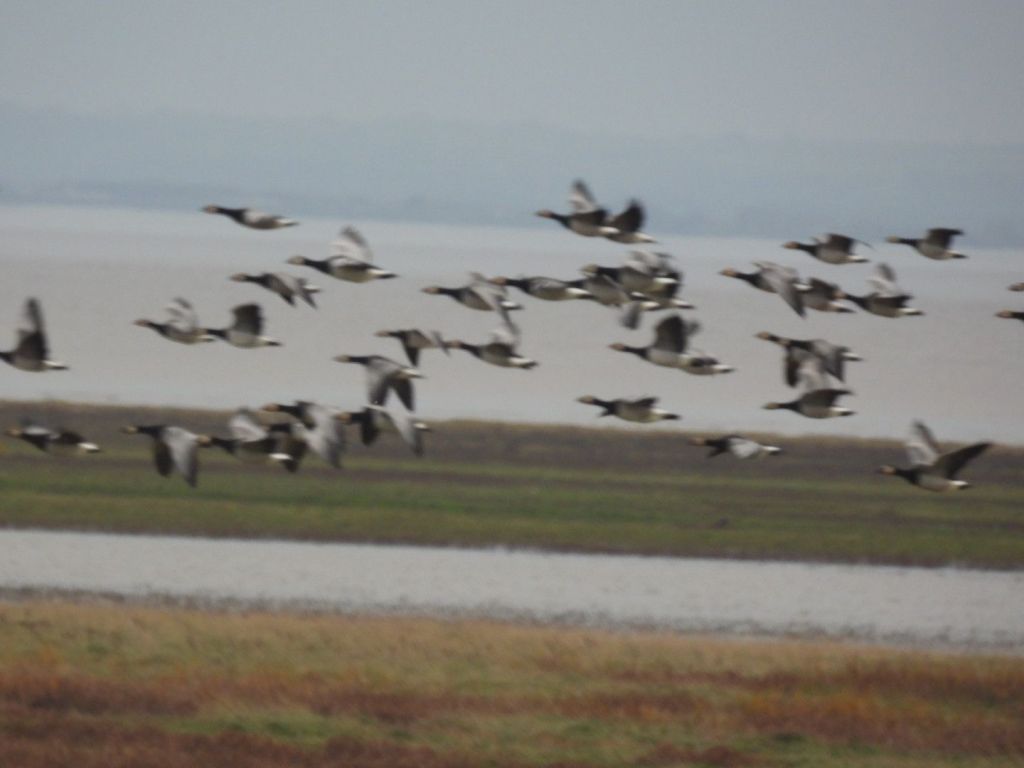
A Hen Harrier attack. A pair of Hen Harriers, Circus cyaneus, were sitting on posts near the Solway. The male flew off – probably to catch a Meadow Pipit or a rodent, and it spooked the Barnacle Geese
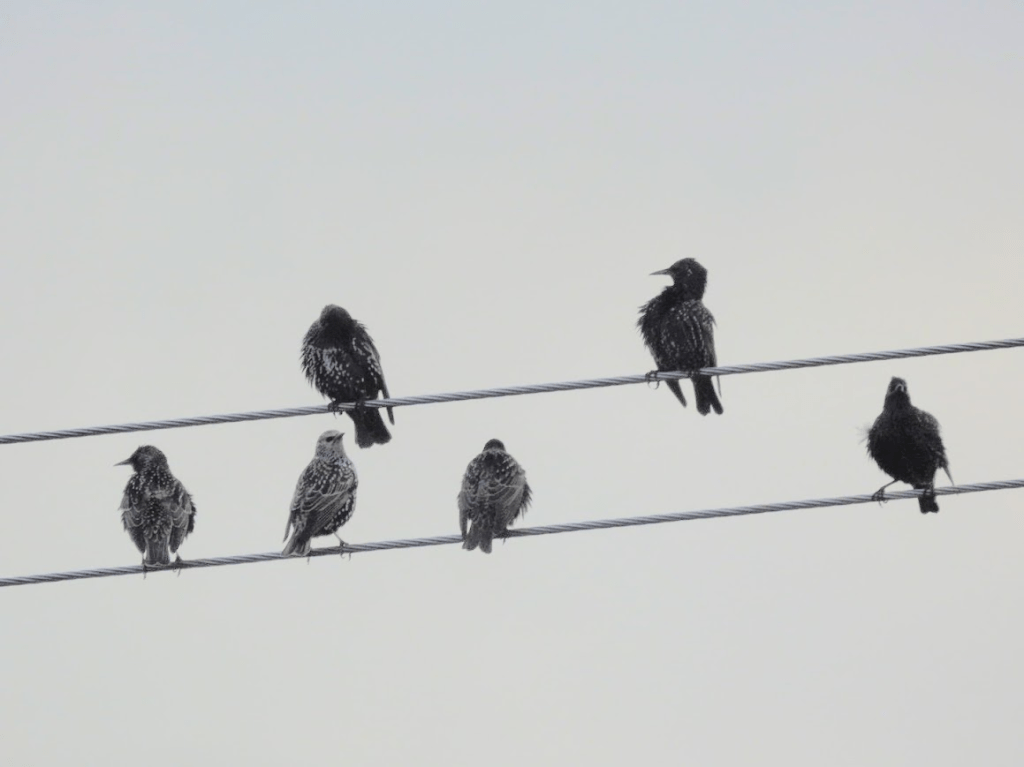
Starlings, Sturnus vulgaris, on a power line; walking back towards the bus stop.
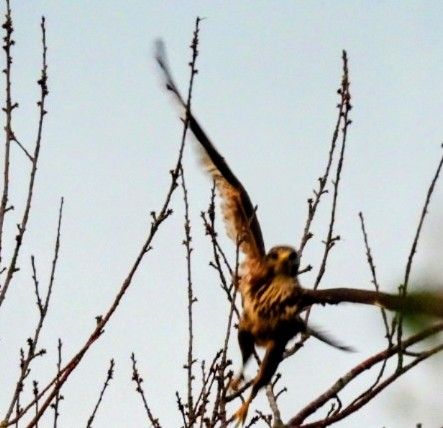
Near the bus stop I saw a raptor flying low across a field. It settled in a Hawthorn for a few seconds and flew up. This was the best shot I got; it’s probably a Buzzard, Buteo buteo
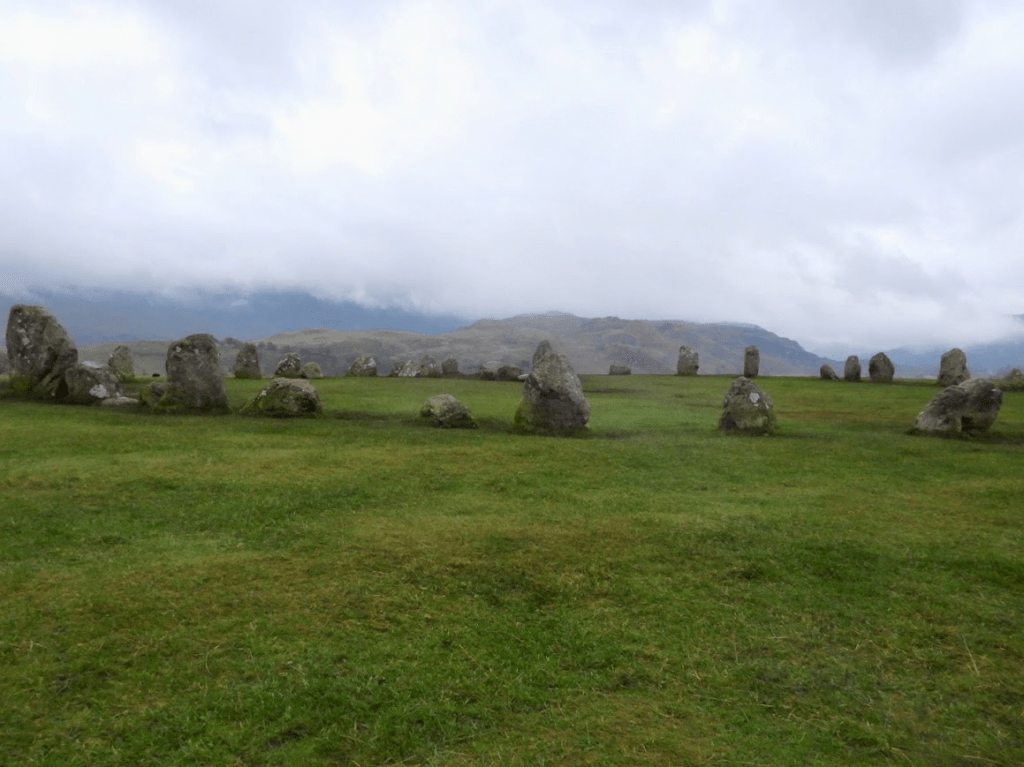
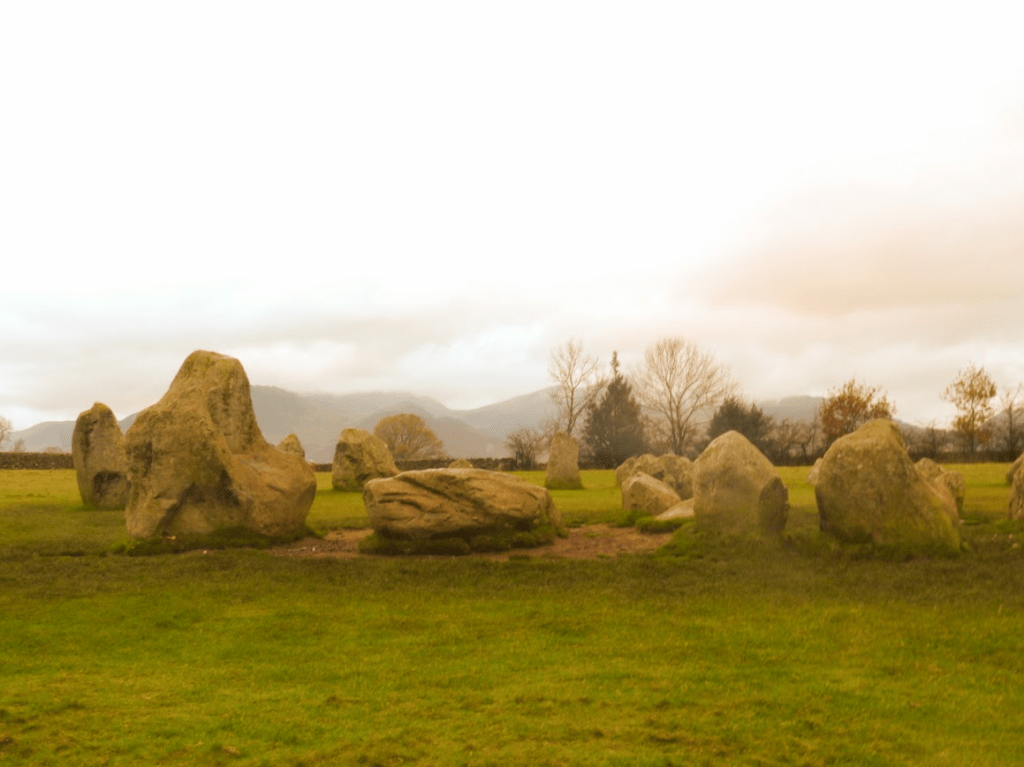
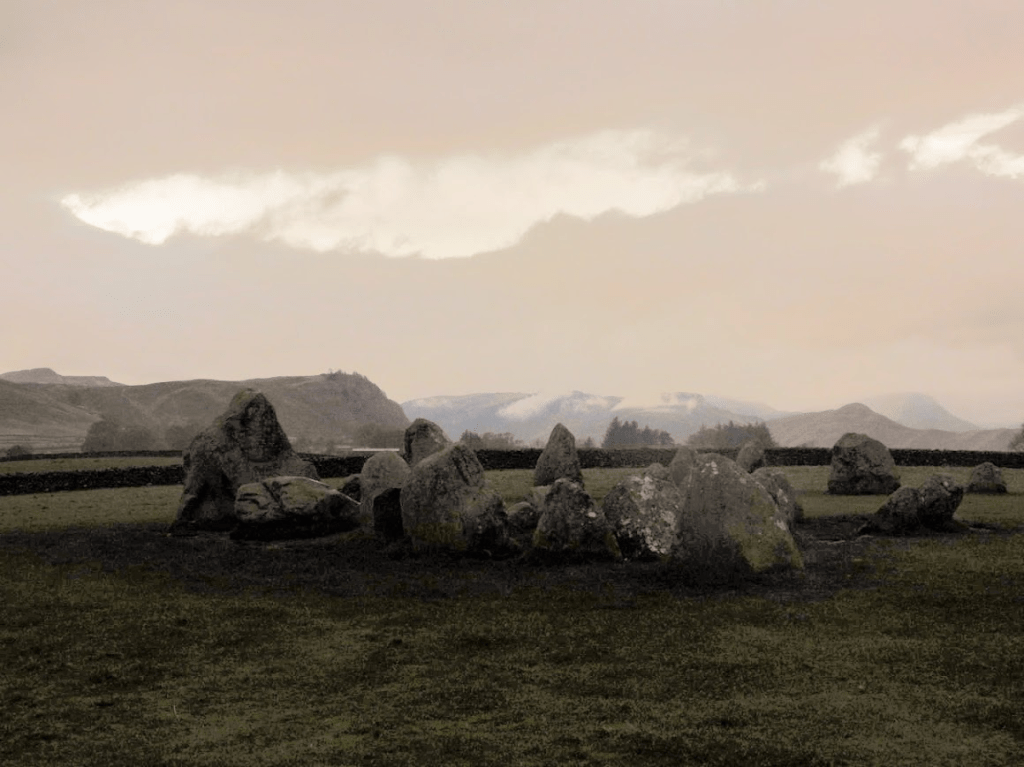
The Castlerigg Stone Circle is 2 miles from the centre of Keswick. I took the bus bus to the nearest bus stop then had to walk a mile along a narrow lane to reach the stones
There are few stone circles in Britain in such a dramatic setting as that of Castlerigg, which overlooks the Thirlmere Valley with the mountains of High Seat and Helvellyn as a backdrop. … Thought to have been constructed about 3000 BC, it is potentially one of the earliest in the country. … Although there are more than 300 stone circles in Britain, the great majority of them are Bronze Age burial monuments (dating from about 2000–800 BC) containing cremations in central pits or beneath small central cairns. By contrast, their Neolithic forebears, such as Castlerigg, Swinside in the southern part of the Lake District, and Long Meg and her Daughters in the Eden Valley, do not contain formal burials. The Neolithic stone circles also differ from those of the later Bronze Age in their generally larger size and often flattened circular shape – as is found at Castlerigg – comprising an open circle of many large stones. Castlerigg is about 97½ ft (30 metres) in diameter, and formerly comprised 42 stones. There are now only 38 stones, which vary in height from 3¼ ft (1 metre) to 7½ ft (2.3 metres).
Neolithic stone circles typically have an entrance and at least one outlying stone. The entrance at Castlerigg, on the north side of the circle, is flanked by two massive upright stones, and the outlier is presently to the west-south-west of the stone circle, on the west side of the field adjacent to a stile; this stone has been moved from its original position. It has been suggested that such outlying stones had astronomical significance – alignments with planets or stars – although examination of those in early stone circles elsewhere in Britain has shown that there are no consistent orientations for them. English Heritage Castlerigg Stone Circle
I arrived at the stone circle just as the sun was rising, I thought I’d have the stones to myself; how wrong I was!
More sun!
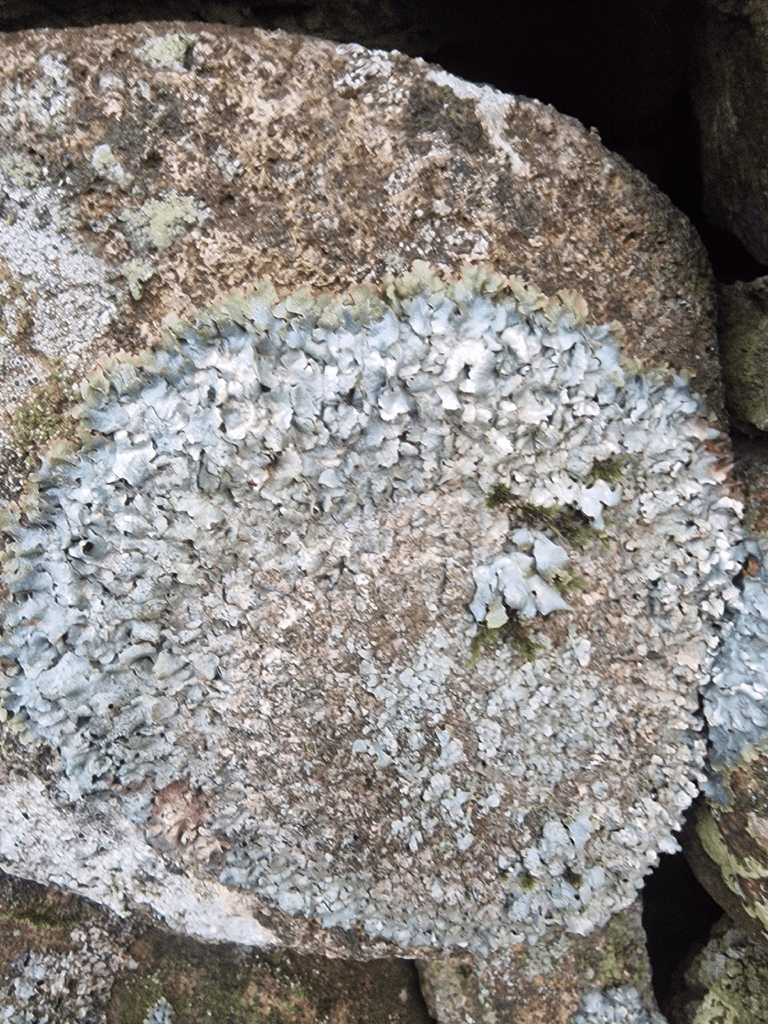
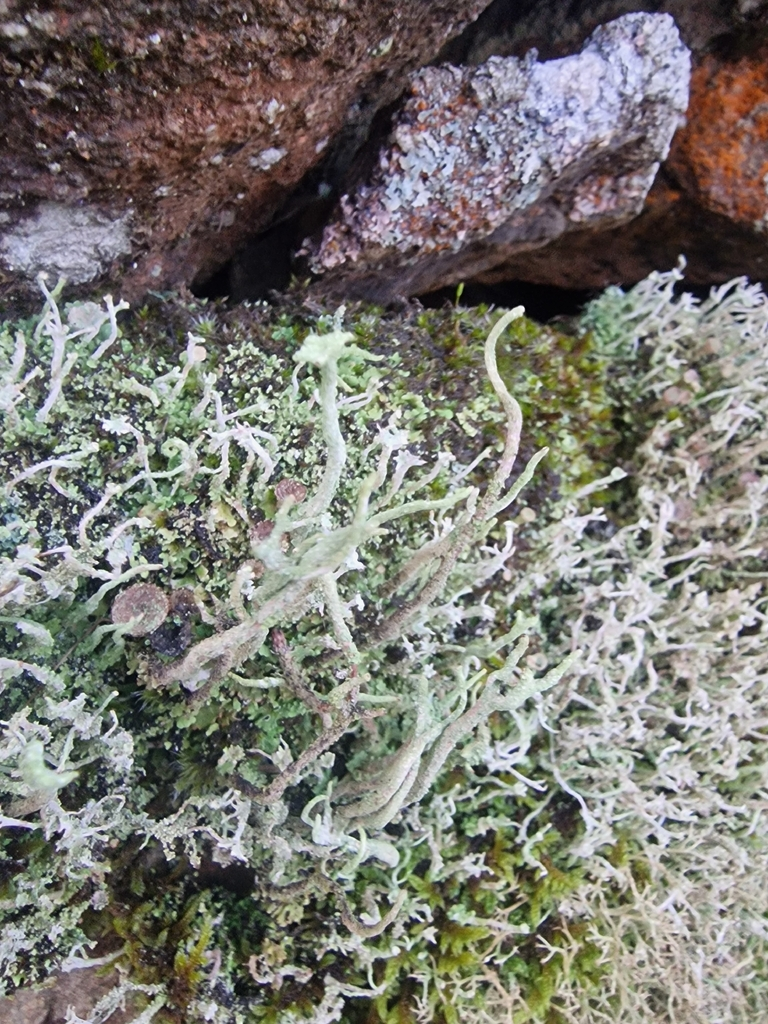
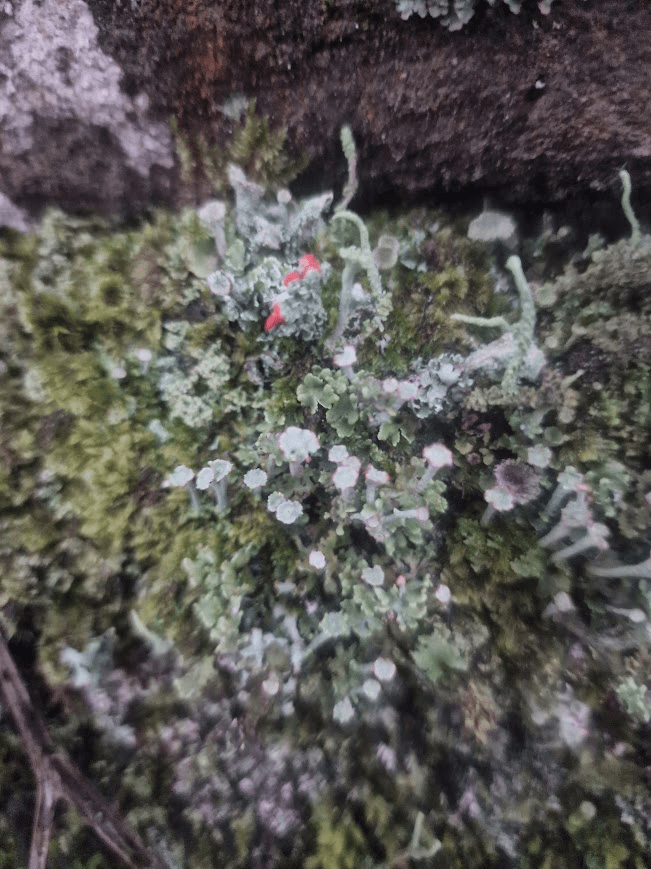
Some of the lichens on the dry stone walls on the tiny lane to Castlerigg .
Parmelia saxatilis Salted Shield Lichen
Cladonia polydactyla
Parmelia omphalodes Smoky Crottle
P. omphalodes was called dark crottle by Scots tweed makers. Gaelic “crotal”: lichens for red/brown dyes.
Stereocaulon vesuvianum
Stereocaulon vesuvianum is a common lichen of upland silicious rock, often on dry stone walls, and I associate it with holidays in the North West. l hadn’t seen it till the last day of my holiday – the last day of my holiday. So I can go home content now! Its pseudopotetia (sticky-up bits) could make you think it’s a Cladonia species
To get to Arnside I took the bus from Keswick (where I was staying) to Penrith; then a train from Penrith to Lancaster then a train from Lancaster to Arnside.
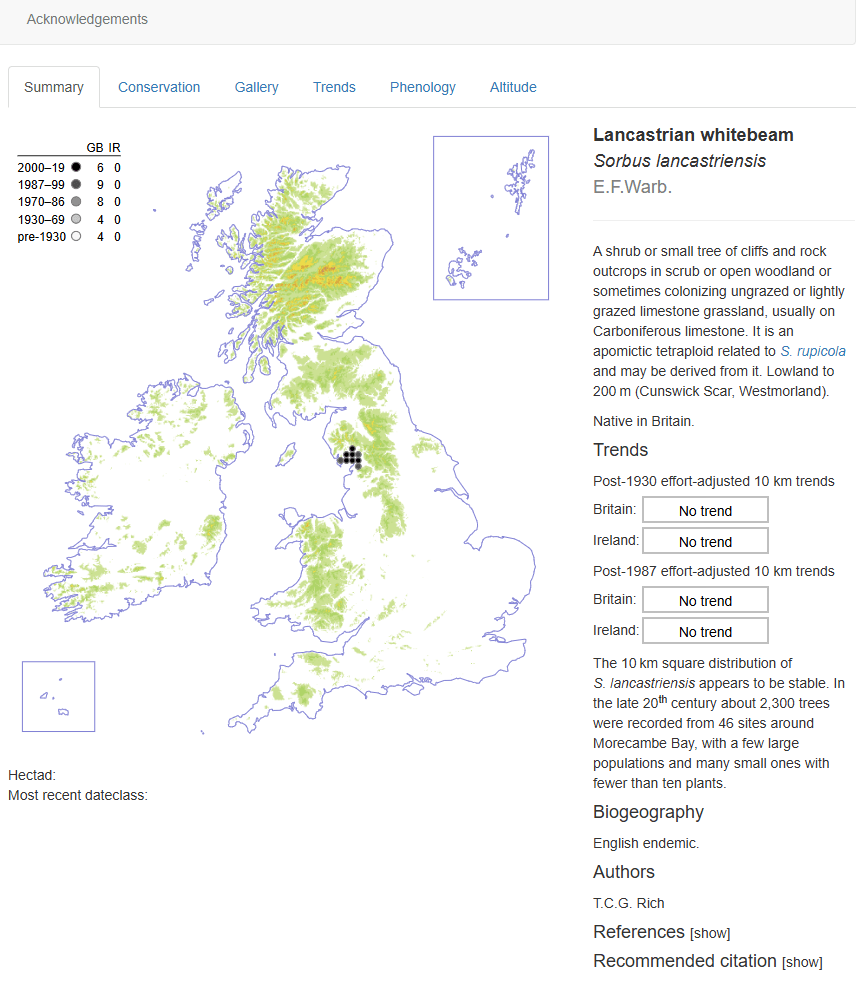
I went to Arnside and Gait Barrows because I knew about Lancaster Whitebeam and wanted to see it; and I wanted to visit a limestone pavement for the first time.
The Arnside and Silverdale area is a National Landscape (Area of Outstanding National Beauty); although I didn’t find that out until after I had visited.
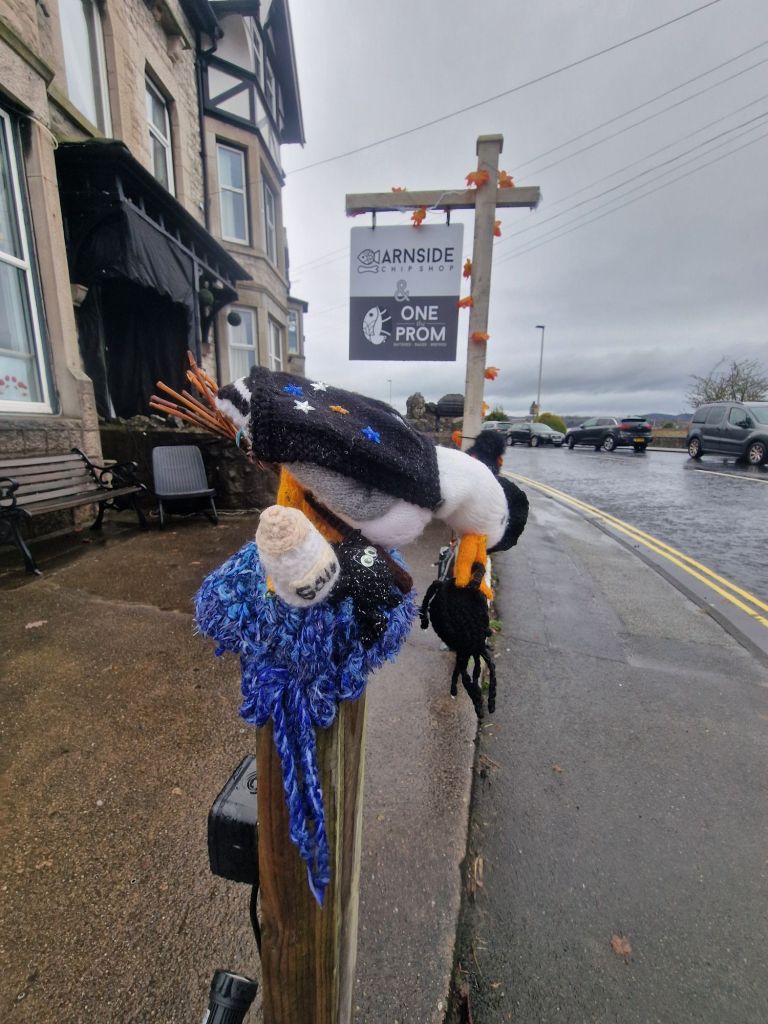
I was welcomed to Arnside by a Herring Gull dressed as a witch eating spiders outside the local chippy.
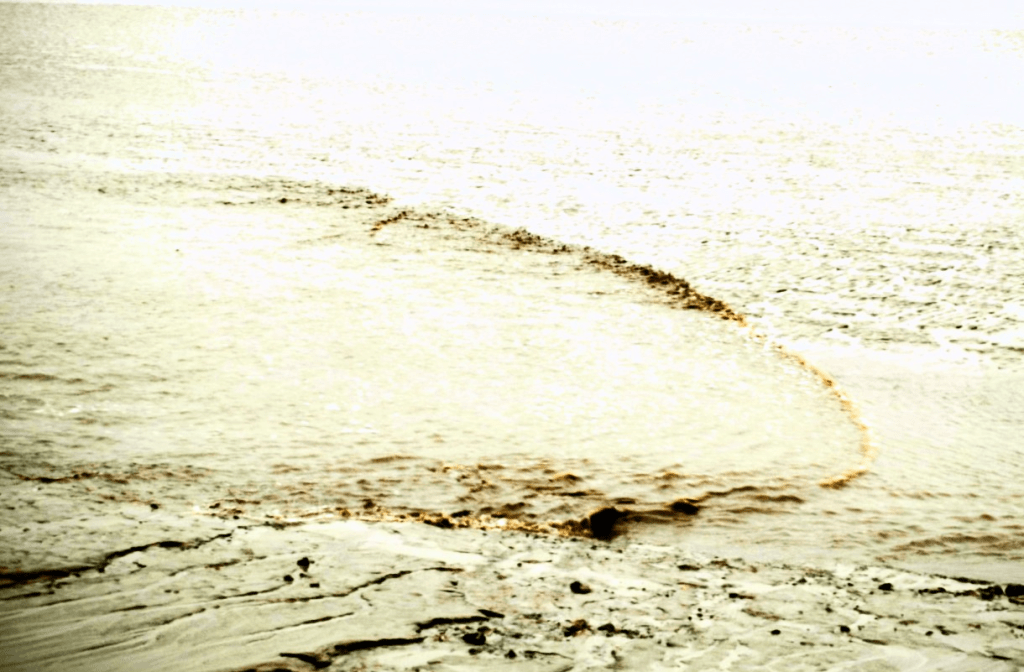
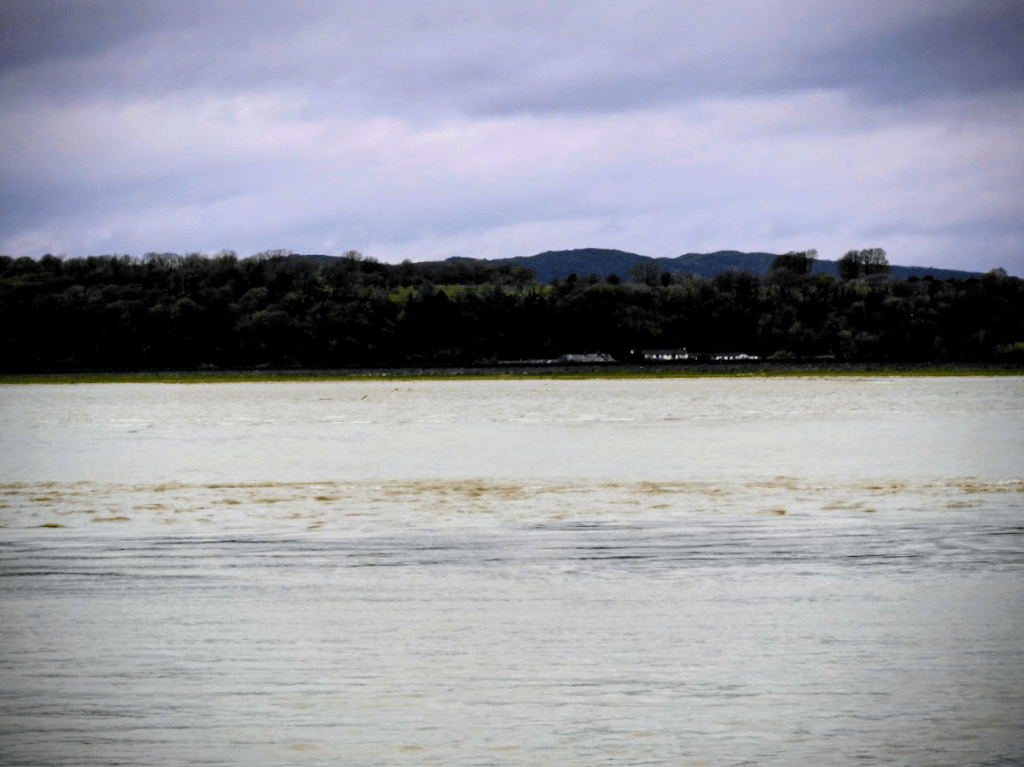
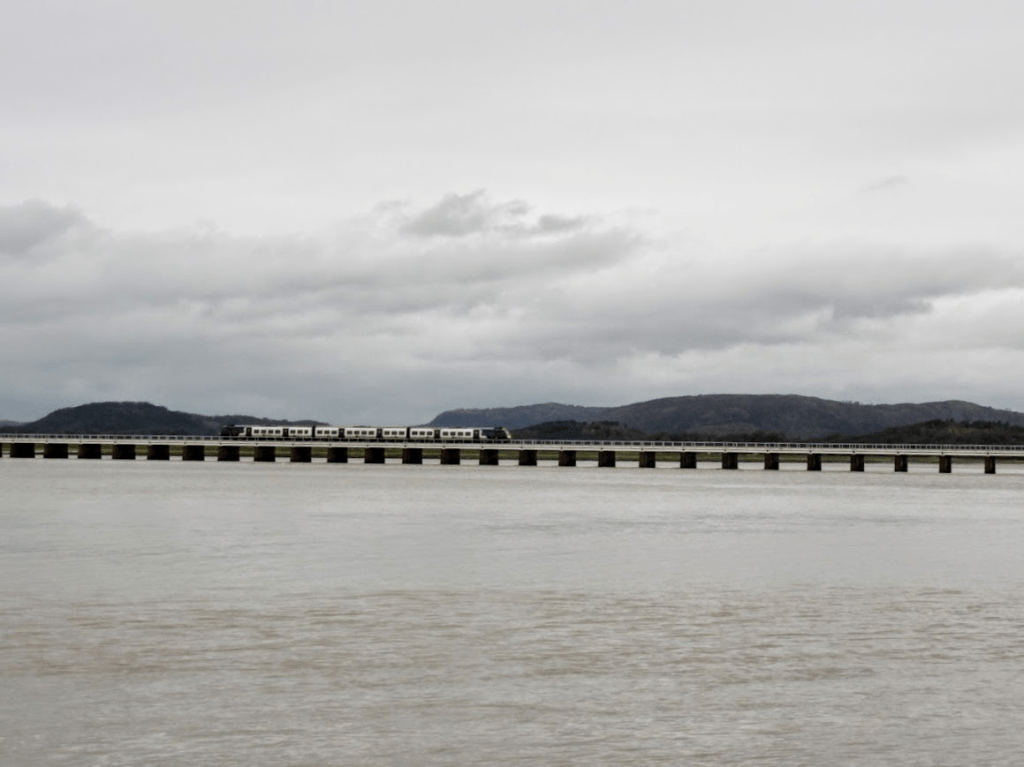
I arrived just before high tide, just as the tidal bore swept up to the Kent Estuary rail bridge. It was fascinating to watch
On the highest tides, a most unusual sight can be seen in the Kent Estuary in Morecambe Bay called the Arnside Bore. This is one of about twenty tidal bores that occurs in the UK and is named after the village of Arnside. It is quite a spectacle and often draws crowds of onlookers.
The source of the Kent is the Kentmere Valley near Ambleside and the river then flows down through Kendal to Morecambe Bay … When conditions are right, the siren also serves as an indication that the Arnside Bore is approaching from Morecambe Bay. The first blast typically occurs about 15-20 minutes before the wave arrives and the second as it passes New Barns Bay near Blackstone Point. The speed and power of the wave can be most impressive to see. Usually it dissipates on reaching the viaduct but sometimes it travels further inland to Sandside and the mouth of the River Bela Meteo Writer The Arnside Bore in Morecambe Bay
Kent Estuary Rail Bridge
Morecombe Bay is extremely dangerous: The combination of fast tides, quicksands, draining rivers, shifting channels and sheer unpredictability has trapped the unwary for centuries. … 19 Chinese cockle pickers drowned when they were caught by the tide as they laboured for a pittance on Red Bank, two and a half miles from the shore near Boulton-le-Sands.The Guardian Why is Morecombe Bay so dangerous.
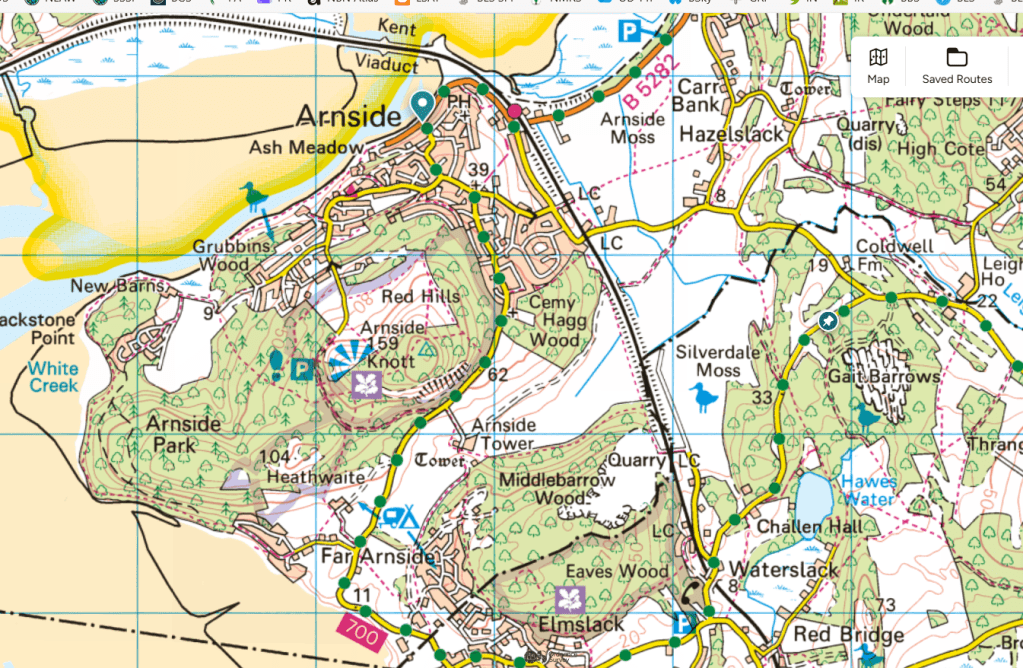
The tide was too high to explore the trees on the shoreline of Grubbins Wood, where the Cumbria Wildlife Trust reports Lancashire Whitebean to be. I had to dive straight inland to the wood. Where I was greeted by some friendly bullocks conservation grazing
The wood is dominated by Yew, Sessile Oak and Hazel
Ancient Yew
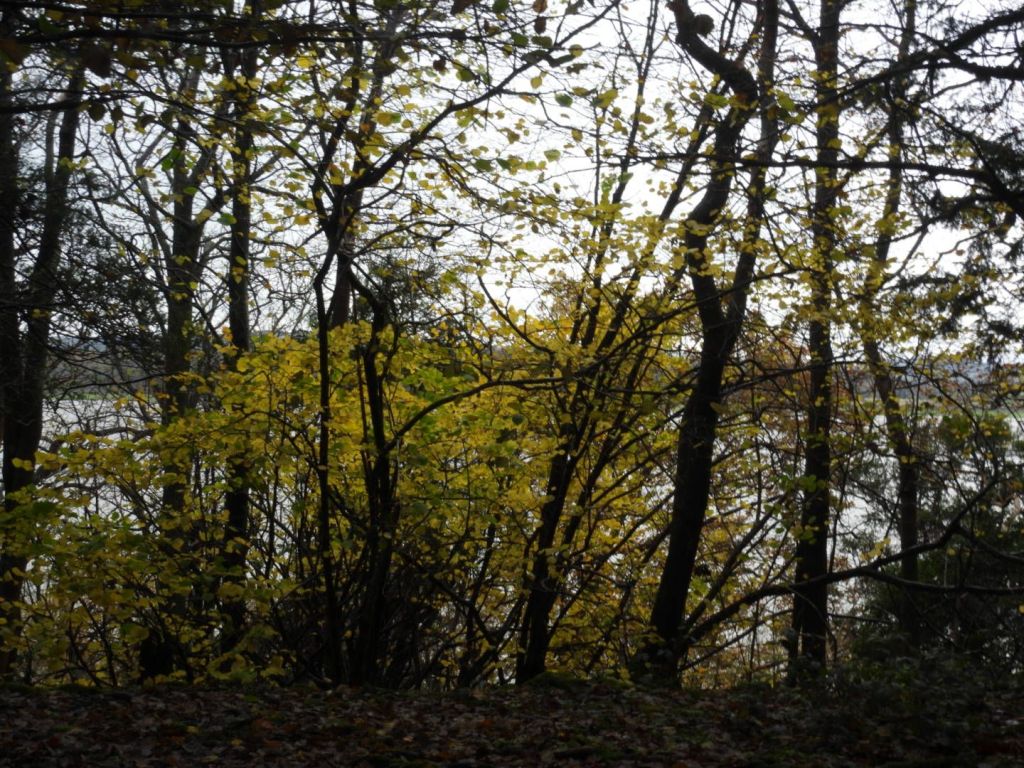
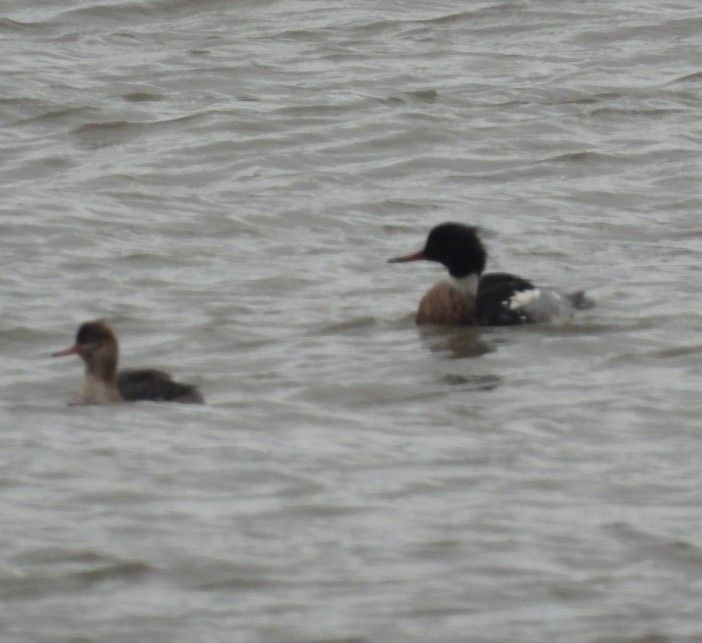
Peeking through the trees, I saw two Red-Breated Mergansers
To get back to the village of Arnside I had to walk through Copridding Woods and Red Hills
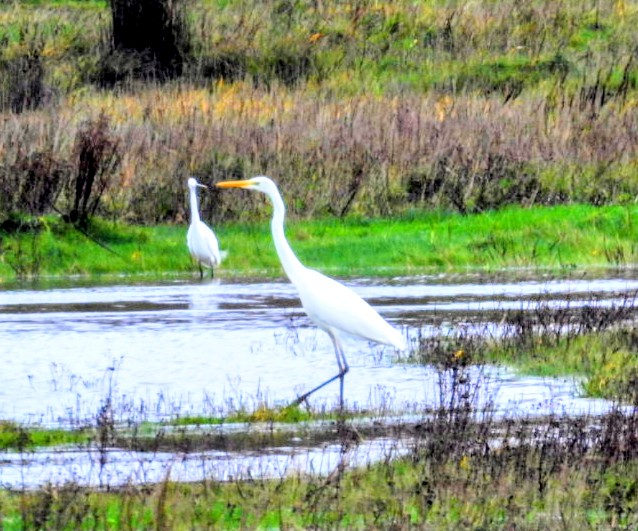
And as I walked out of Grubbins Woods via New Barns, I saw a Great White Egret and Little Egret in foraging in tidal pools
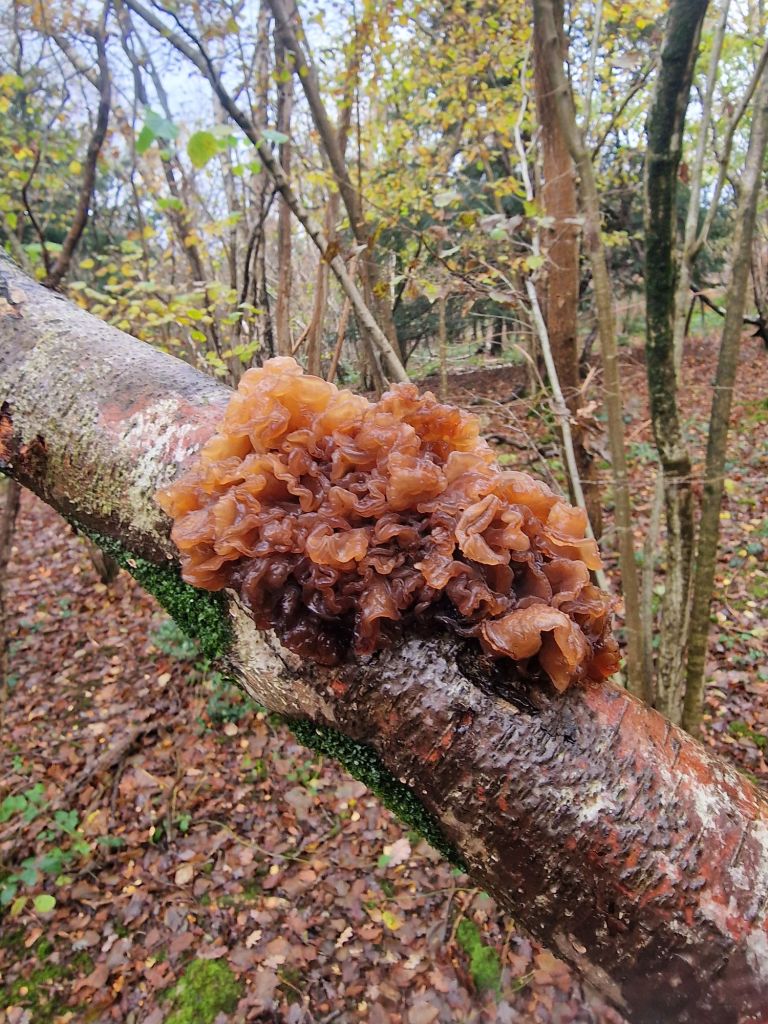
In Copridding Wood, I saw this interesting fungus, Phaeotremella frondosa
Red Hills is acidic limestone heathland with a prodigious number of juniper trees.
After I walked through the woodland to the east of Arnside, I returned to the north of Arnside, where I had initially entered from the train station. By then the tide had receded sufficiently enough for me to walk along the shoreline in front of Grubbins Wood; and I found the Lancaster Whitebeam
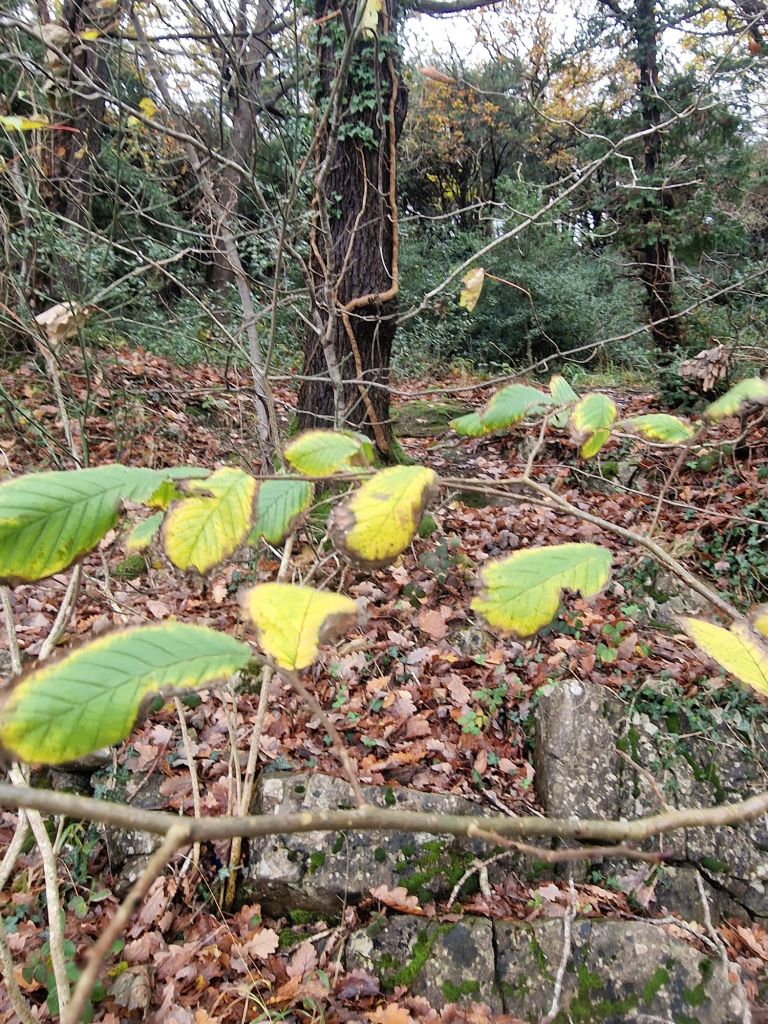
Sorbus lancastriensis Lancaster Whitebeam
Sadly with no fruit, its leaf morphology was key to identification
The leaves are broadly oval with a slightly toothed margin and a distinctive pale underside. They are usually unlobed or only faintly lobed near the base, with around 6–8 pairs of lateral veins. The upper surface is dark green, and the underside is whitish and felted – a key feature of whitebeams. In autumn, the foliage turns a muted yellow or brown before falling. Habitat: Cliffs, rocky places, woodland Wild Flower Web Lancaster Whitebeam
Wild Flower Web blog: Lancaster Whitebeam: A Unique and Endangered Tree:
The Lancaster Whitebeam (Sorbus lancastriensis) is a species of tree that is native to England and Wales. It is a species of whitebeam, a group of trees that are closely related to the rowans or mountain ashes. The Lancaster Whitebeam is unique in its appearance and is easily distinguishable from other whitebeams.
One of the most notable features of the Lancaster Whitebeam is its leaves, which are large, lobed, and have a distinctive, glossy appearance. The leaves are also a rich green color, making the tree a beautiful addition to any landscape. Another distinct characteristic of the Lancaster Whitebeam is its fruit, which are large clusters of orange-red berries that are popular with birds and other wildlife.
Despite its beauty, the Lancaster Whitebeam is a threatened species, and its population has been declining in recent years. The main reason for its decline is habitat loss, as the tree’s natural habitats have been destroyed or altered for human development. The tree is also threatened by diseases and pests, which can weaken its health and reduce its ability to produce fruit.
Conservation efforts are underway to protect the Lancaster Whitebeam and its habitat. The tree has been designated as a priority species under the UK Biodiversity Action Plan, which means that action is being taken to conserve and protect it. This includes planting new trees and restoring habitats, as well as monitoring the tree’s population and health.
The Lancaster Whitebeam is a unique and beautiful species of tree that is in danger of disappearing. Its distinctive appearance, attractive fruit, and importance to wildlife make it a valuable addition to the English and Welsh landscape. With proper conservation efforts, it is possible to protect this tree and ensure that future generations can enjoy its beauty.
In addition to its conservation status, the Lancaster Whitebeam has also been found to have potential medicinal uses. The tree’s leaves and bark have been used in traditional medicine for centuries to treat a variety of ailments, including digestive problems and skin conditions. In recent years, there has been growing interest in the potential health benefits of whitebeam species, including the Lancaster Whitebeam. Studies have shown that the tree’s leaves and bark contain compounds that have anti-inflammatory, antibacterial, and antiviral properties, making it a promising source of natural remedies.
Despite this potential, there is still much to be learned about the Lancaster Whitebeam and its medicinal properties. Further research is needed to fully understand its potential health benefits and to determine the most effective ways to use its compounds in medicine.
In addition to its conservation status and potential medicinal uses, the Lancaster Whitebeam is also an important part of the local culture and heritage in England and Wales. The tree has been associated with folklore and legends for centuries, and is considered a symbol of the region’s history and identity.
Overall, the Lancaster Whitebeam is a fascinating and important species of tree that deserves our attention and protection. Its unique appearance, potential medicinal uses, and cultural significance make it a valuable addition to the natural world, and we should work to ensure that it is preserved for future generations to enjoy.
It’s also worth noting that the Lancaster Whitebeam is not just a valuable species in its own right, but also provides important ecosystem services. As a keystone species, it supports a wide range of other species in its ecosystem, from the insects and birds that feed on its fruit, to the fungi and bacteria that decompose its leaves and bark. By preserving the Lancaster Whitebeam, we are also helping to maintain the overall health and diversity of the ecosystem in which it is found.http://www.wildflowerweb.co.uk/plant/1510/lancaster-whitebeam
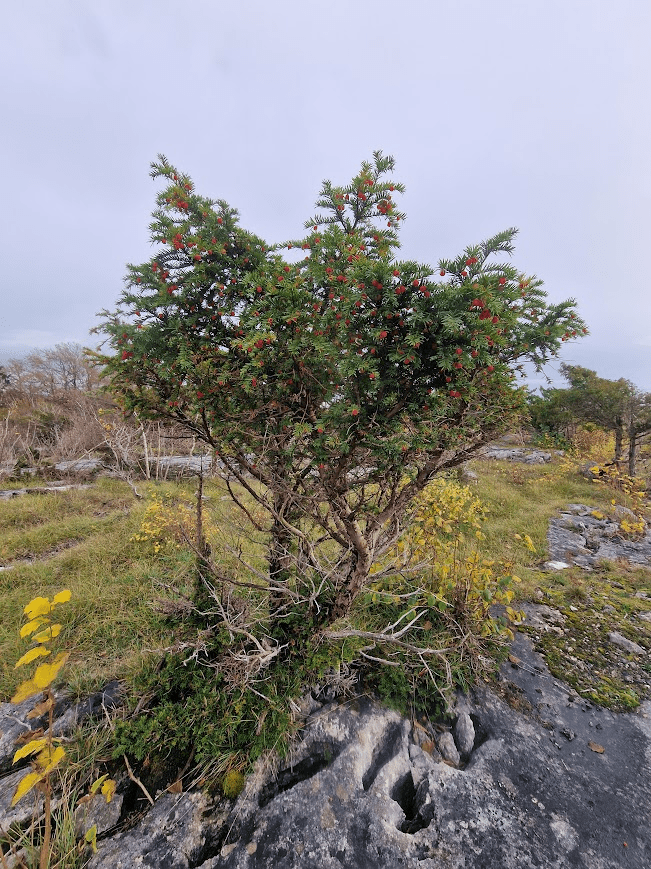
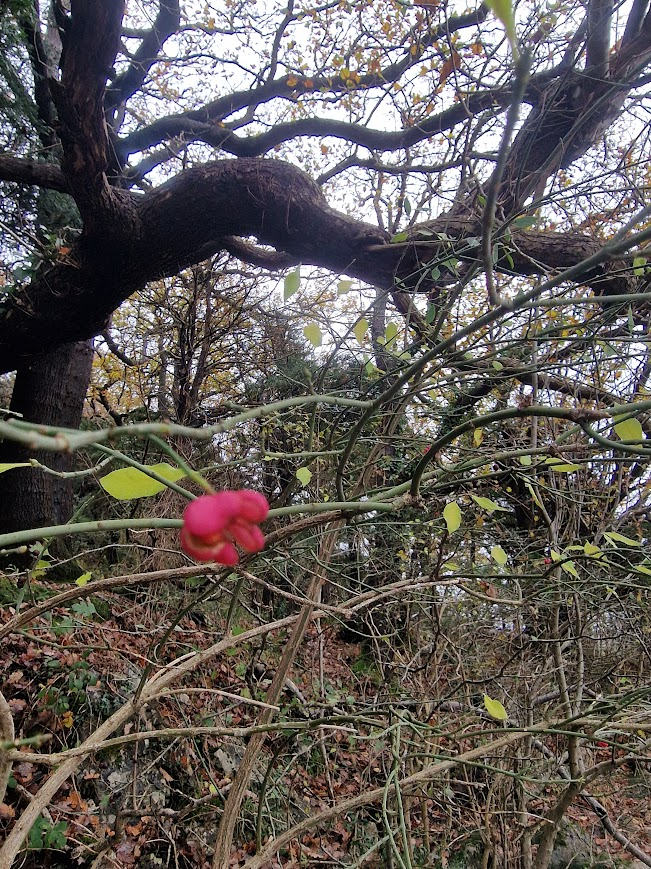
Next to the Whitebeam was a Spindle Tree, an ancient woodland indicator species.
The coastal rocks were covered in lichess
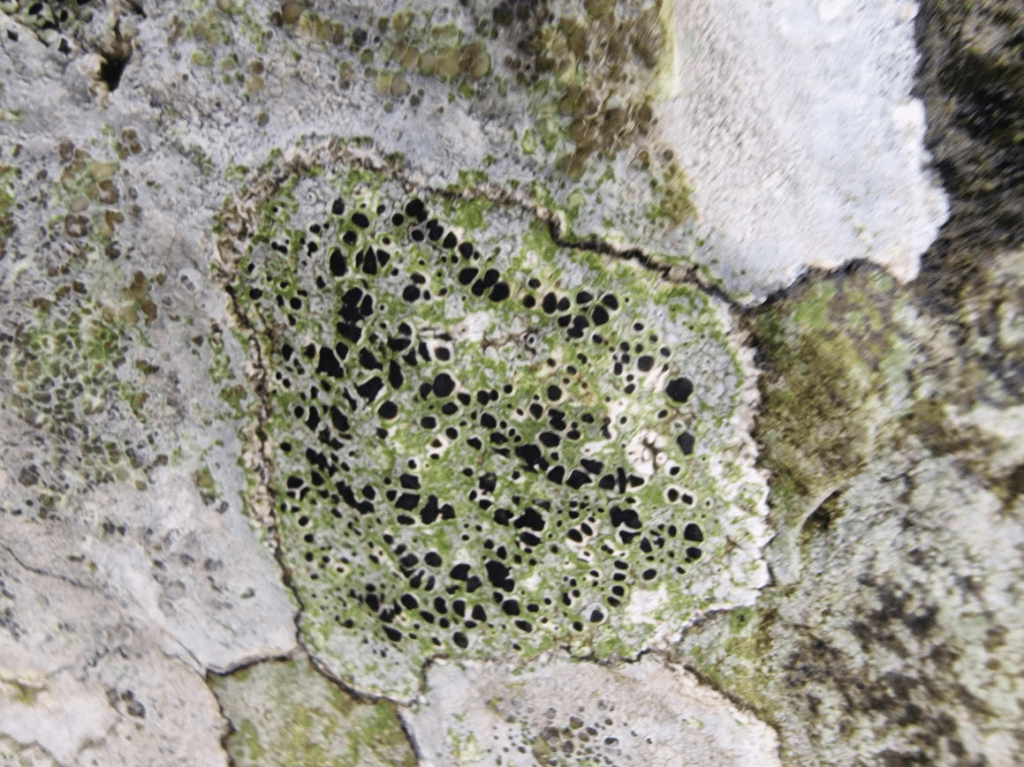
Tephromella atra with free-living aga living on the thallus. Not especially maritime, … but also rather common in the aerohaline zone [the above the area reached by direct wave action.] Lichens Marines
Gait Barrows NNR
I then walked three mikes through lanes to Gait Barrows National Nature Reserve. The lanes I walked through passed several mosses i.e. lowland bogs.
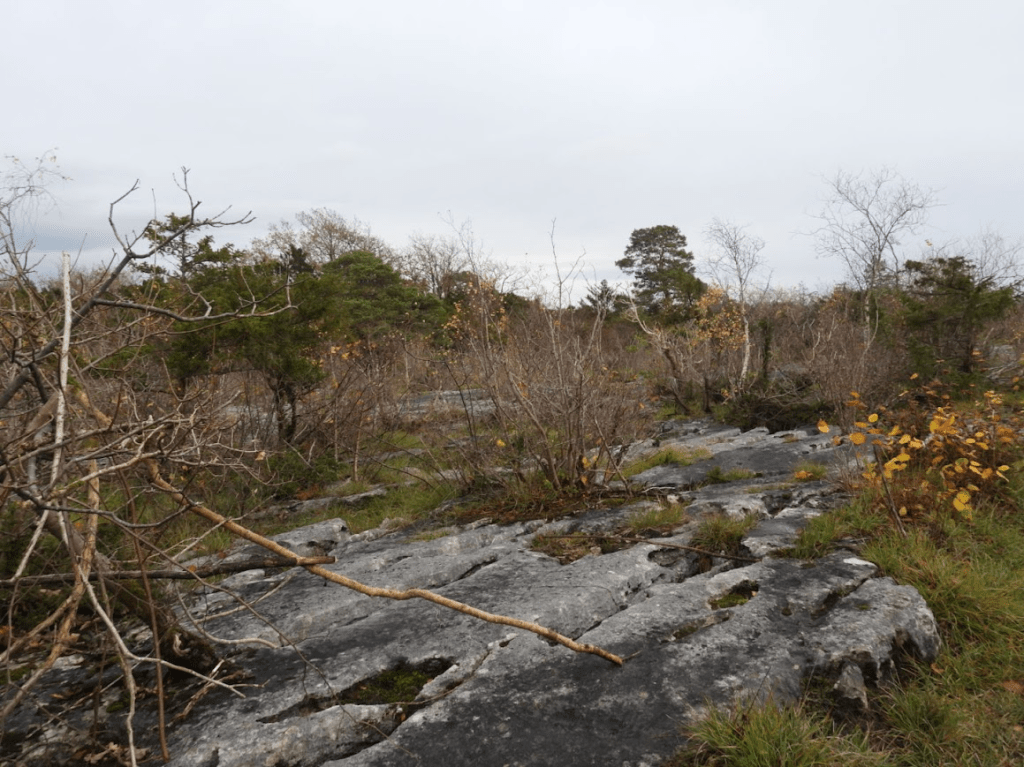
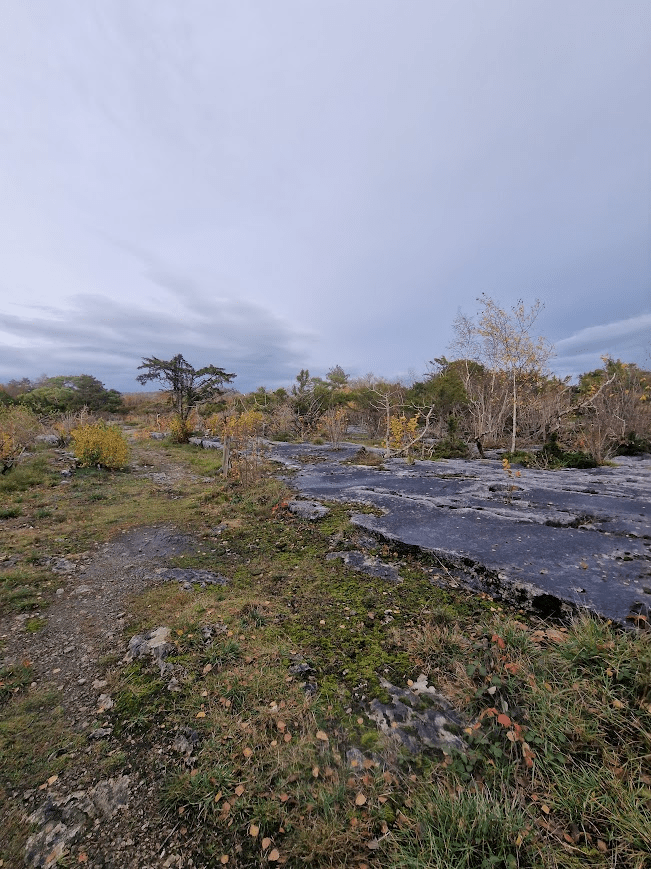
Whilst I studied Limestone Pavements in A level geology in 1978-80 at school in Brighton, we never visited one as to do so would have been too long a field trip. Moreover, as I only use public transport it is not easy to visit the north where they are. I’ve had a forty-five year wait to see a Limestone Pavement. And it was worth the wait.
A landscape moulded by time.
The landscape at Gait Barrows has been shaped over many thousands of years. Much of the nature reserve lies on ancient Carboniferous limestone which was laid down in warm tropical seas some 300 million years ago. With the influence of more recent mountain building periods that created mountain ranges like the Alps, this bedrock has been flexed and uplifted to give the low hills and crags of the limestone landscape that we are familiar with today.
In the last Ice Age some 14,000 years ago, deep ice covered this part of Northern England and Hawes Water Basin was formed by the deeply scouring ice sheet as it passed from what today are the Cumbrian high fells to the Irish Sea. This deep trough in the limestone was then filled with groundwater to create the Hawes Water we know today.
The intricate features of the limestone pavements have been shaped and modified by glacial action in the last Ice Age, and more recently by rainfall and groundwater.
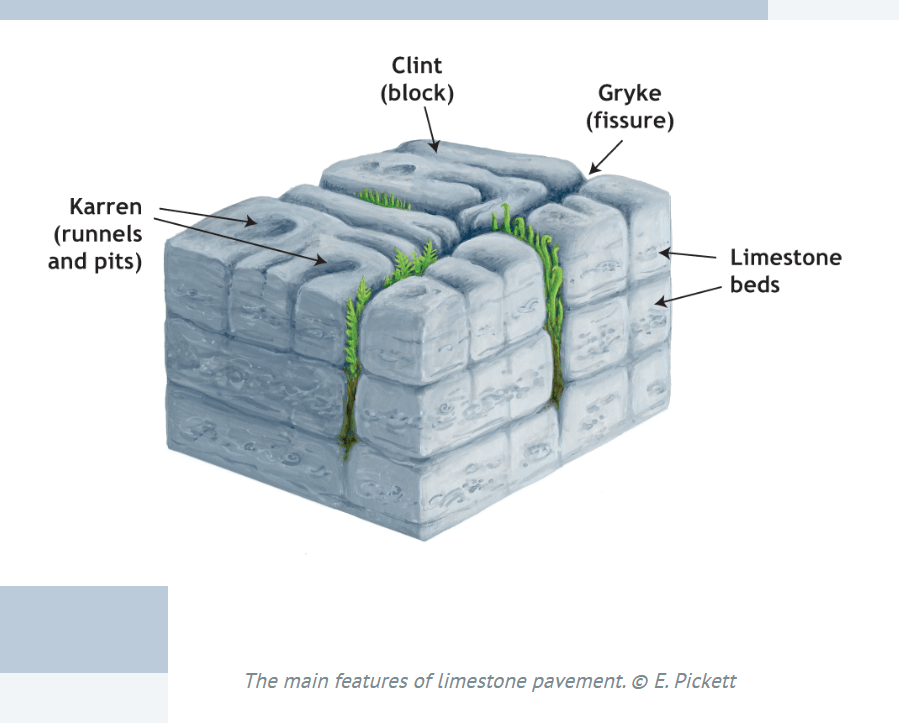
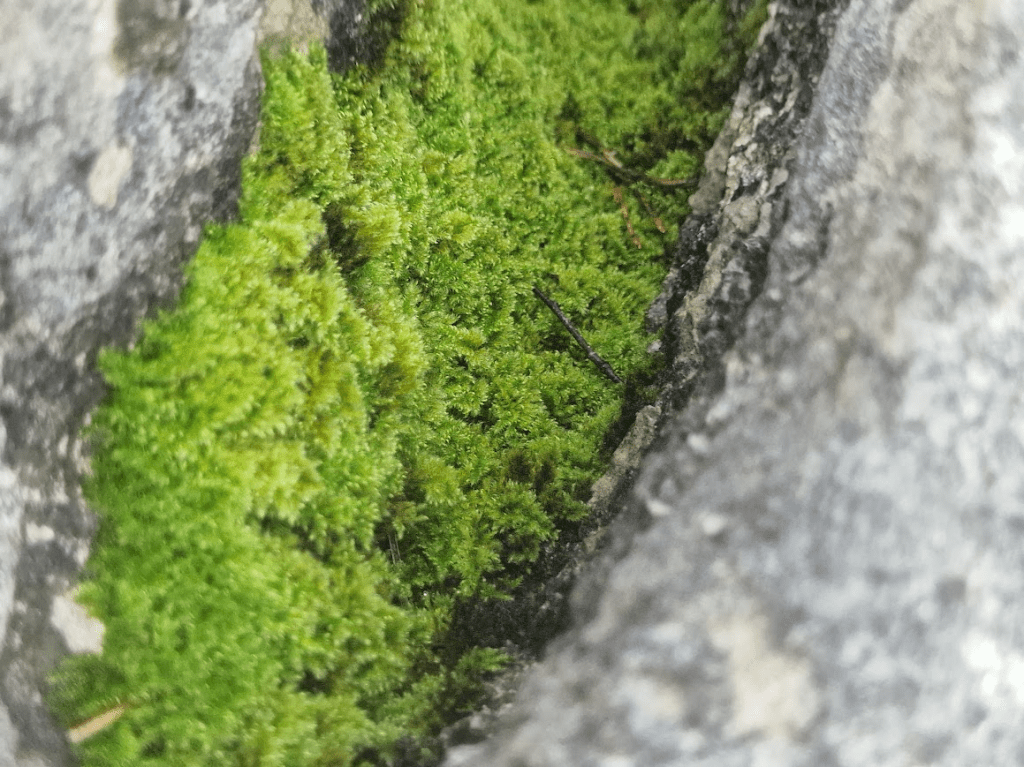
On the open pavements you will see wide flat blocks called clints, separated by deep fissures known as grikes. Lying on the clint surfaces are shallow gutter-like runnels and pan-like solution cups, which collect and funnel rainwater from the rock surface.Nature England Gait Barrows National Nature Reserve
A Yew. Limestone pavement produces stunted trees due to the paucity of soil in the grykes
There was lots of Nostoc commune; a cyanobacteria (blue-green algae), concentrated into brownish or greenish clumps, on the limestone pavement aften around vascular plants
Views at dusk
As the sun began to fade I walked quickly to Silverdale Railway situation to return to Keswick
You need to be careful at Gait Barrows with clints and grikes trying to break your legs and every direction looking the same. Gait Barrows is a great place to get completely lost. Wild Flowers Lancastrian Whitebeam
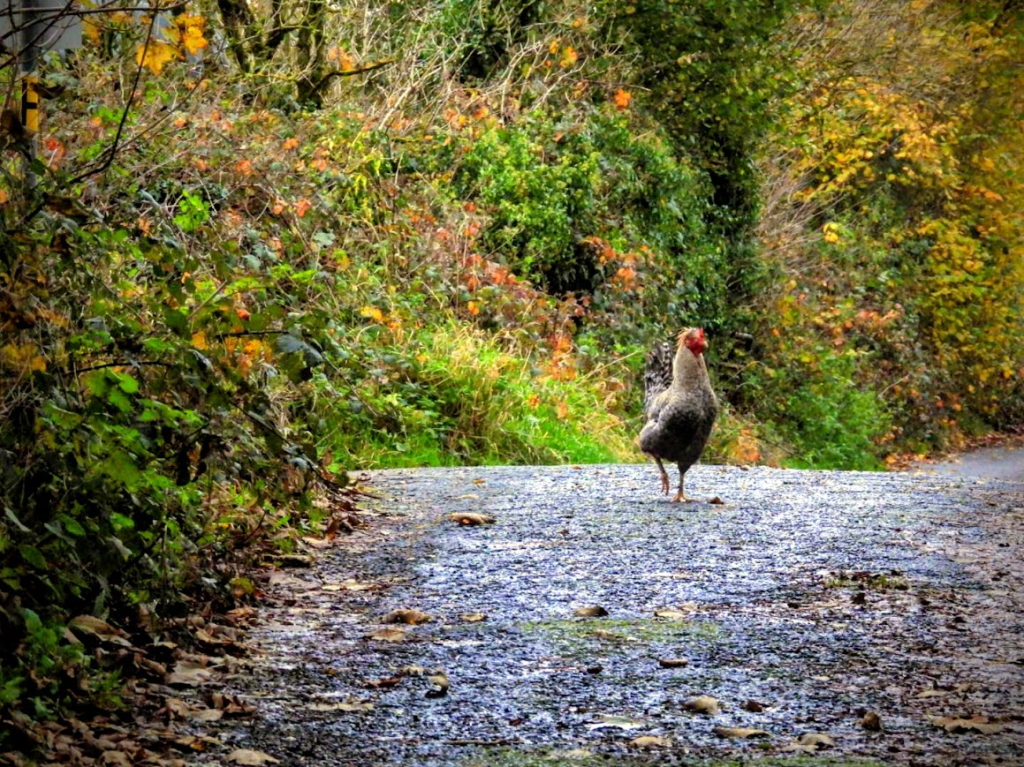
I met this Cockerel on the walk to Silverdale Station!
On this Tuesday, I was expecting to go to the southern Borrowdale woods that I hadn’t been able to see the day before, due to the bus being cancelled all day due to flooding. But the bus to Seatoller was still cancelled again due to flooding, so I decided to take the bus to Ambleside to change busses for Skelwith Bridge, where there was some interesting woods; but the bus to Skelwith Bridge was also cancelled due to flooding. The only place I could go to to see some woods, was to take the bus that goes back to Keswick and get off at Rydal.
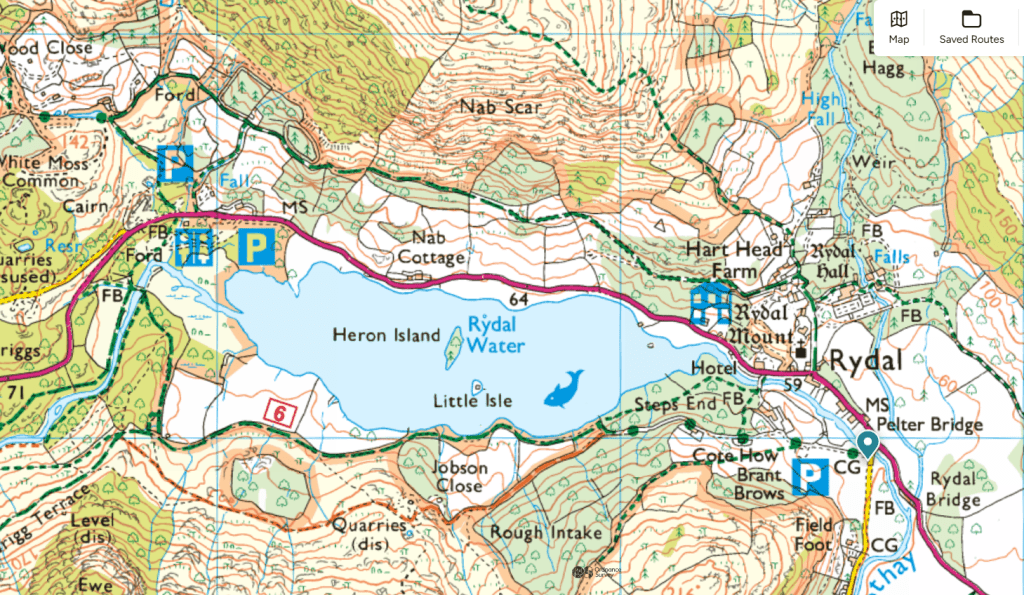
Rydal has Wordsworth’s House, the famous Rydal Falls and some unnamed broadleaf woodlands that I had noted on the OS map that could be interesting. Some of the most beautiful trees I have seen have been in woods unnamed on maps.
First, I visited the National Trust’s Dora’s Field; a field named by William Wordsworth after his daughter who died at a young age.
Next to Rydal Church stands a field known locally as ‘The Rashfield’. This was originally a wet field where rushes (“rashes”) grew and it later became known as ‘Dora’s Field’. The field was purchased in 1825 by William Wordsworth.
Provoked by the threat of eviction by his landlady Lady Anne Le Fleming who planned to replace the Wordsworth family with a member of her own family, Wordsworth bought the Rashfield, drained it and declared that he intended to build on it. … but Lady Anne withdrew the threat of eviction & Wordsworth remained at Rydal Mount until his death there in 1850.
Having already lost two children in infancy Wordsworth and his wife suffered a third blow when Dora, her father’s favourite, died aged 43 of tuberculosis in 1847. The poet never recovered from the loss of this daughter and, after Dora’s death Wordsworth, his wife Mary, sister Dorothy and a gardener planted the daffodils as a permanent memorial. A Rydal Guide: Dora’s Field
Dora’s field contained some beautiful coppiced and pollarded Sessile Oaks
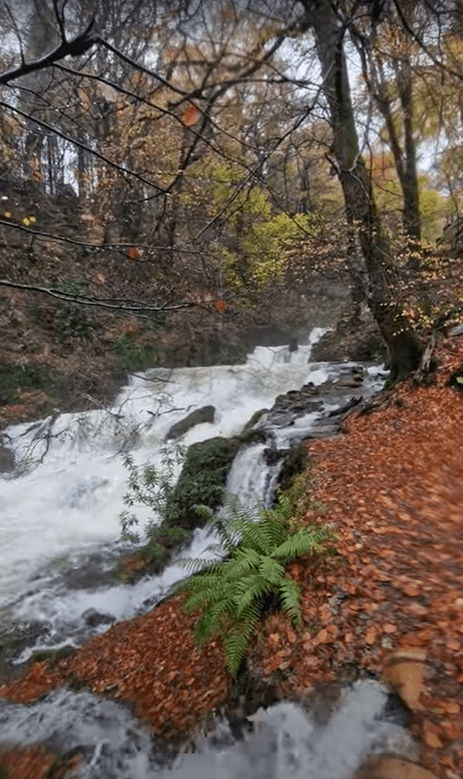
Then I walked about 500m to visit the Rydal Falls; in the woodland behind Rydal Hall. A few meters aways is Rydal Mount, the “cottage” in which Wordsworth lived. Rydal Falls and Rydal Mount were very popular destination for Victorian tourists
There is not anywhere in England a drive so full of that mingled natural and human interest which makes scenery so impressive. It is well-nigh impossible for sensitive minds not to feel something of ‘the light that never was on sea or land’ as they pass the thresholds of the good and great, whose thoughts have helped our England to be pure. In this coach drive to Keswick they not only go by the homes of the thinkers and poets and philosophers, but their foreheads feel the wind and rain that gave such freshness to the seers of the last generation; the sunlight on lake or mountain head that filled their minds with glory fills ours today. The woods and waterfalls that speak to us upon our way spoke also to them. We can in fancy see their familiar forms upon the road, and, as in eastern travels the ‘weli’ or way-side tomb made the journey’s stage rememberable [sic], so we find in this pilgrim stage through poet-land that the great dead lend it a kind of solemn sweetness, and the dust of two laureates hallows the wonder-giving way. Rawnsley, A Coach-Drive at the Lakes : Windermere To Keswick (1891) , pp. 3–4 quoted in Christopher Donaldson, Ian N. Gregory, Patricia Murrieta-Flores, Mapping ‘Wordsworthshire’: A GIS Study of Literary Tourism in Victorian Lakeland, Journal of Victorian Culture, Volume 20, Issue 3, 1 September 2015, Pages 287–307.
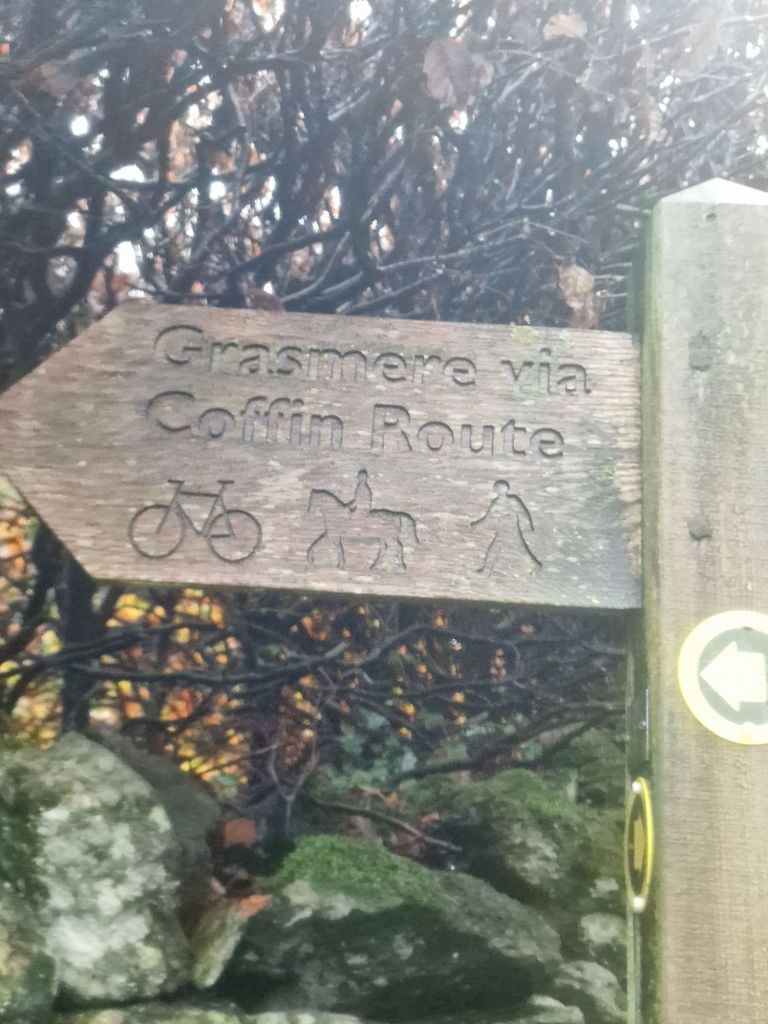
I then took the Coffin Road above Rydal Mount through the unnamed woods.
… at a higher-level running through the meadows of Rydal Park and across the slopes of Nab Scar, is an … [old] track. It dates back a very long time and is called locally, the Coffin Road, due to the fact that the only consecrated ground for burial in the area was the grave yard at St Oswalds in Grasmere and it was therefore used to convey coffins on their final journey.Visit the Lake District – Ambleside to Grasmere – ‘The Coffin Route’
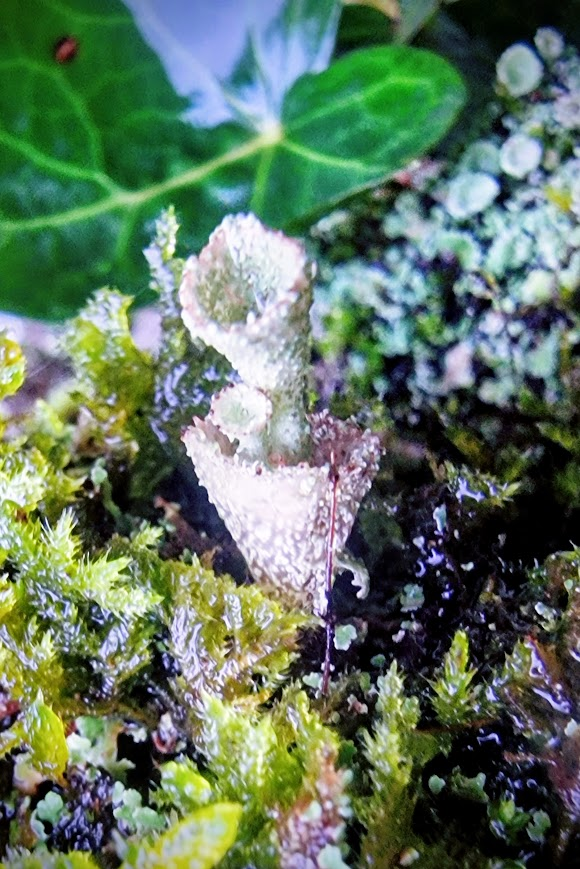
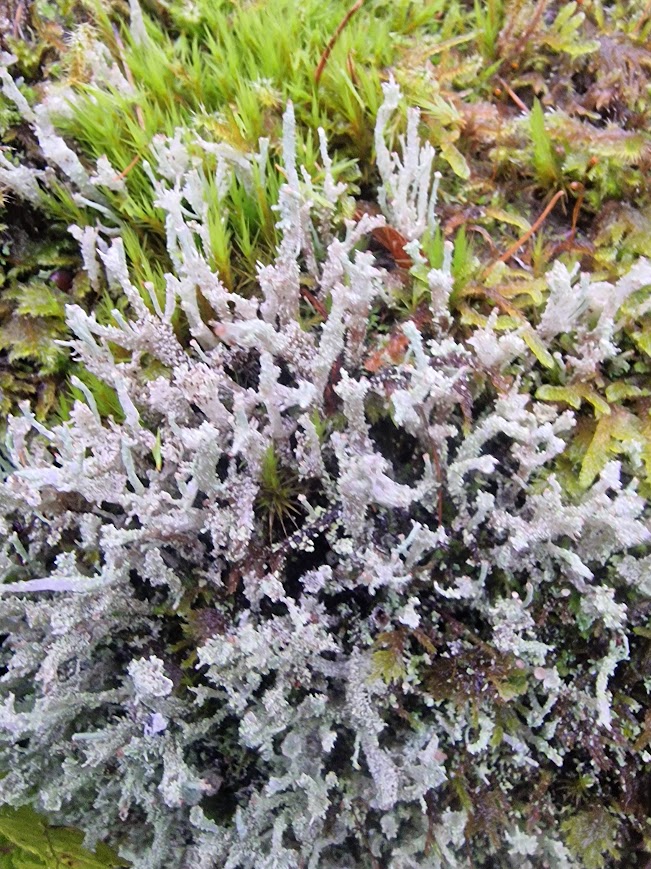
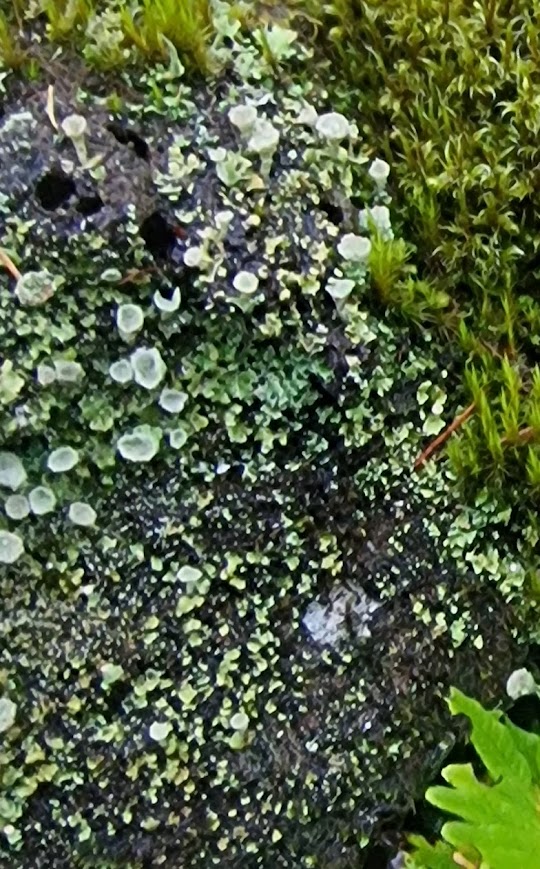
On a drystone wall next to the beginning of the route was this multi-cup “Pixie Cup” Cladonia sp. lichen, possibly C. chlorophaea s.l. (one of the C. chlorophaea aggregate). It was a veritable “Pixie Champagne Fountain”. Maybe a Pixie Wedding occurred there.
The pollarded Sessile Oaks the wood unnamed on the OS map; this looks like pasture woodland but I can find out nothing about this woodland on line
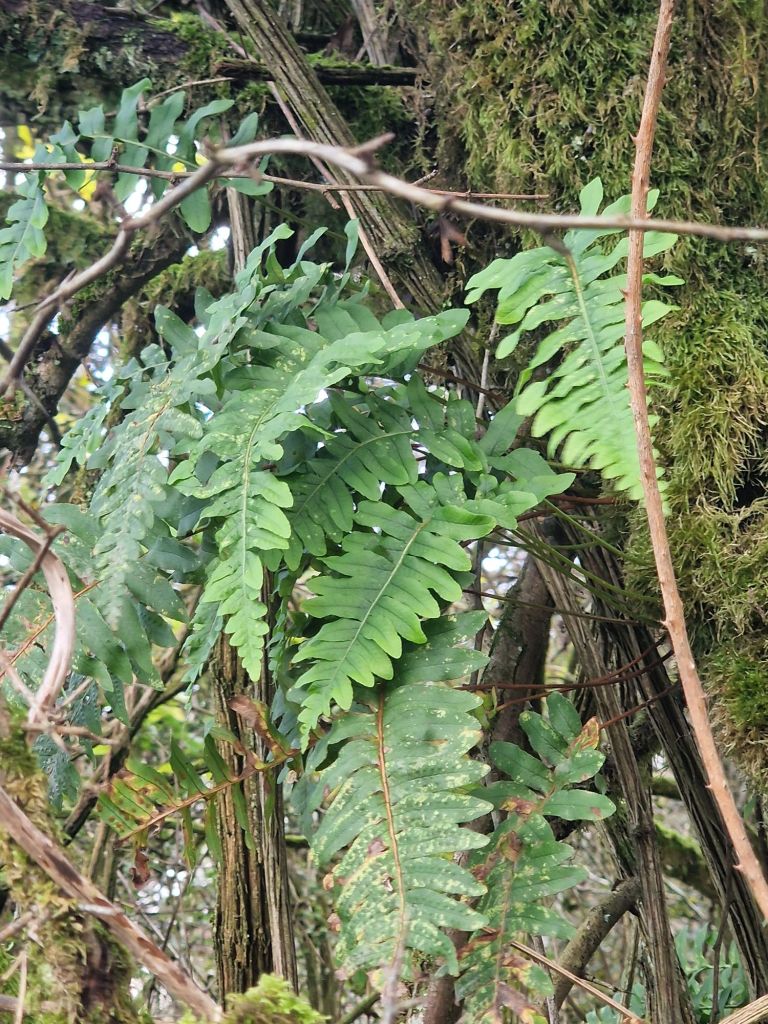
This Hawthorn had epiphytic Polypody fern
and some beautiful epiphytic lichens
Ramalina farinacea
Ramalina farinacea above can look very similar to Usnea (beard) lichens; the way to spot R arinacea is that it has prominent flour-like (farine (French) flour in farinacea) blobs (soredia) on its lobes; Usneas mostly mostly don’t have soredia, but some do, like Usnea subfloridana. Lichen are just hard.
Usnea subfloridana
Usnea ceratina
and this rain-soaked moss, Ulota bruchii. Bruch’s Pincushion
From the path it appeared as if Little Isle in Rydal Water was being engulfed by the rising water of the lake, like the medieval French legend of Ys, which was engulfed by the sea and rises occasionally; beautifully evoked in Debussy’s La Cathedrále Engloutie prelude Click: La Cathedrále Engloutie to listen.
I then walked on further west, along a dry stone wall above woodland (unnamed) under the fell Lord Crag, with fabulous views of Rydal Water
The very red apothecia (fruiting bodies) of this Peltigera sp. lichen, poss. P. horizontalis, really stood out on a dark and rainy afternoon on the very wet dry stone wall
Looking up Lord Crag, pollarded Sessile Oaks. The spots are rain drops on my camera lens
Theses lonely oaks on the foothills of Lords appear “wild”; but pollarding is a human intervention; so even these “wild” veteran trees have been managed across time.
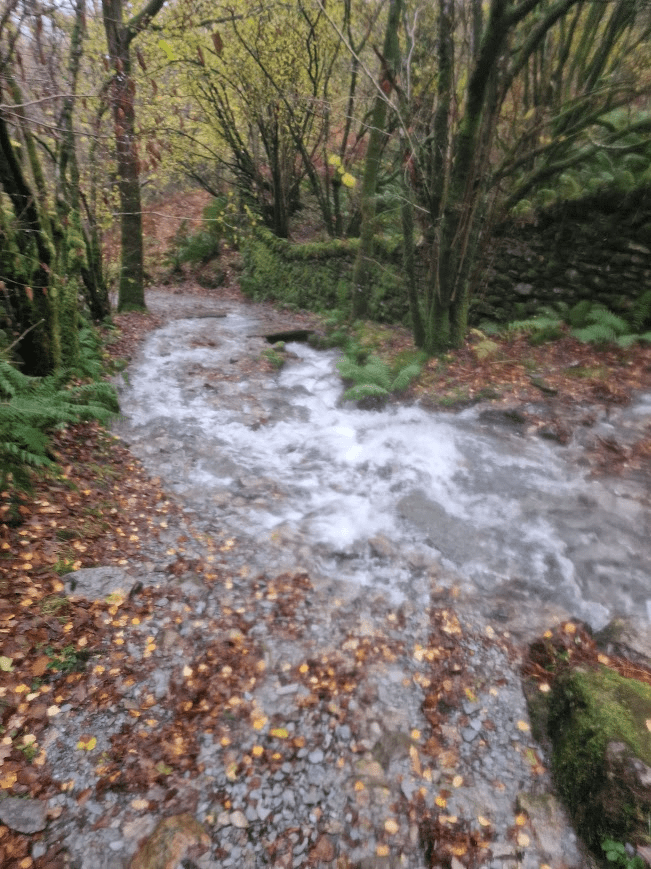
Water pouring over a dry stone wall. It rained all day this Tuesday as it did the day and weekend before
This is the public footpath down to Rydal Water not a waterfall
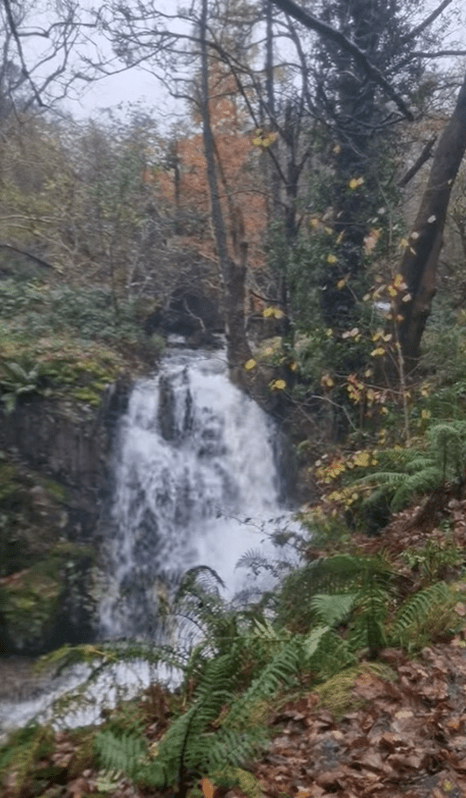
This is a unnamed waterfall just marked on the OS map as “fall”
From the car park next to the waterfall I got the bus back to Keswick
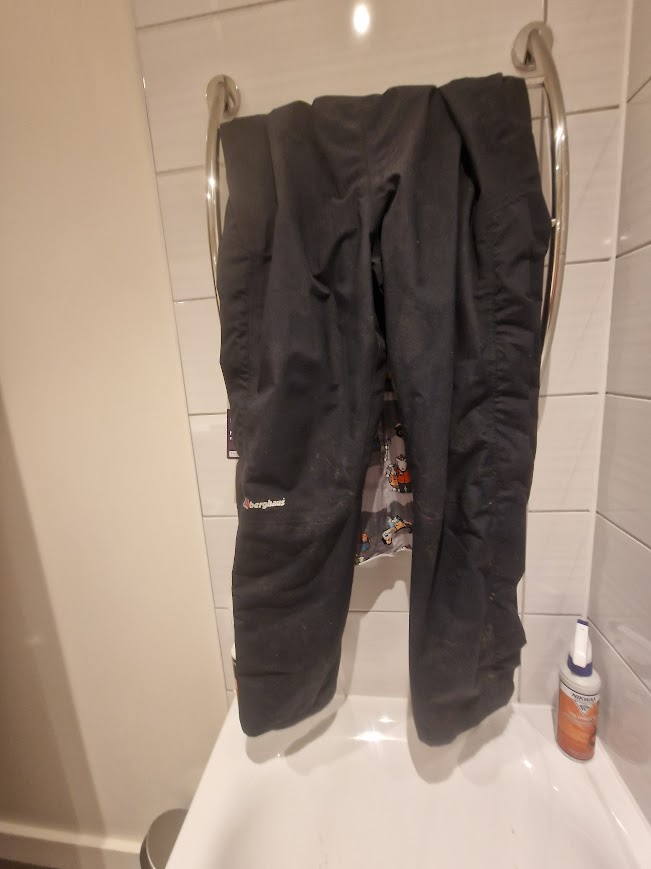
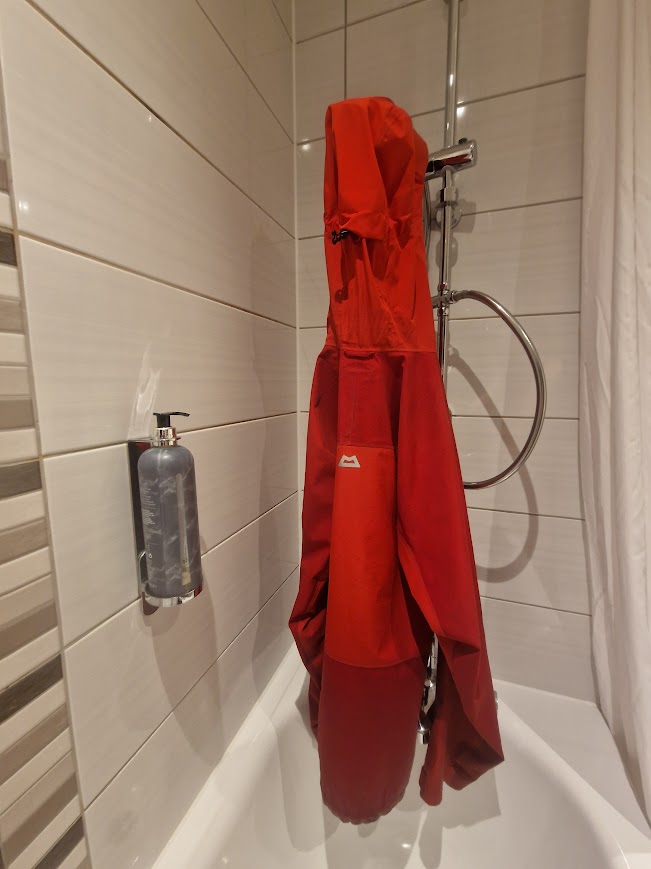
My waterproof trousers and jacket, that had given up repelling water, drying in the hotel room bathroom; after being sprayed with Durable Water Repellent. Durable Water Repellent is available in nearly the gazillion outdoor shops in Ambleside (where I bought mine) and Keswick
The first day of my five day holiday in Keswick – three of which I had planned to devote to exploring the constituent ancient woods of the NNR – started with initial disappointment. Due to the unprecedent levels of rain on the days before, the only Borrowdale bus (the Stagecoach 78) which runs between Keswick and Seaotoller) was suspended due to road flooding, and the Derwent Launch services were suspended too, because of the height of the water in Derwent Water; so there way of reaching where I wanted to go, Johnny’s Wood – by bus or boat. So, I decide to walk to Great Wood and Arnees Wood from Keswick. This is a 10 mile return walk – and it rained continuously – but it was worth it.
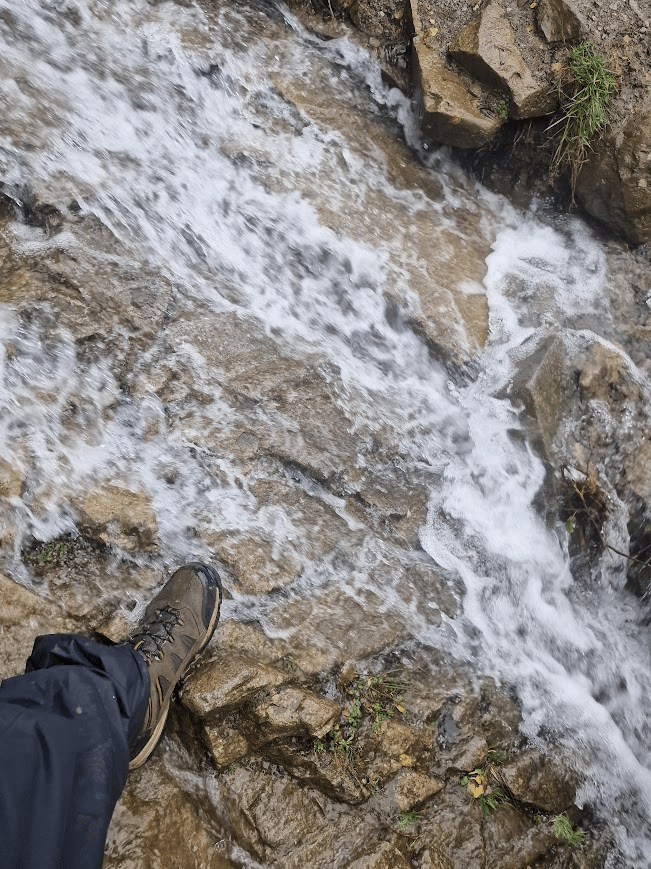
The footpath from Great Wood to Ashness Wood provided fantastic views of Derwent Water; however, as the footpath was an up-and-down path through the foothills of Castlerigg Fell, the footpath was more like a beck than a path. In some places, the water level was above my boots. However good your “waterproof” socks are, there is nothing to do about a top-down inundation. But once the water between your feet and your waterproof socks has warned up to body temperature, it’s fine, and when you are focusing hard on looking at nature you don’t notice your socks being like little swimming pools!
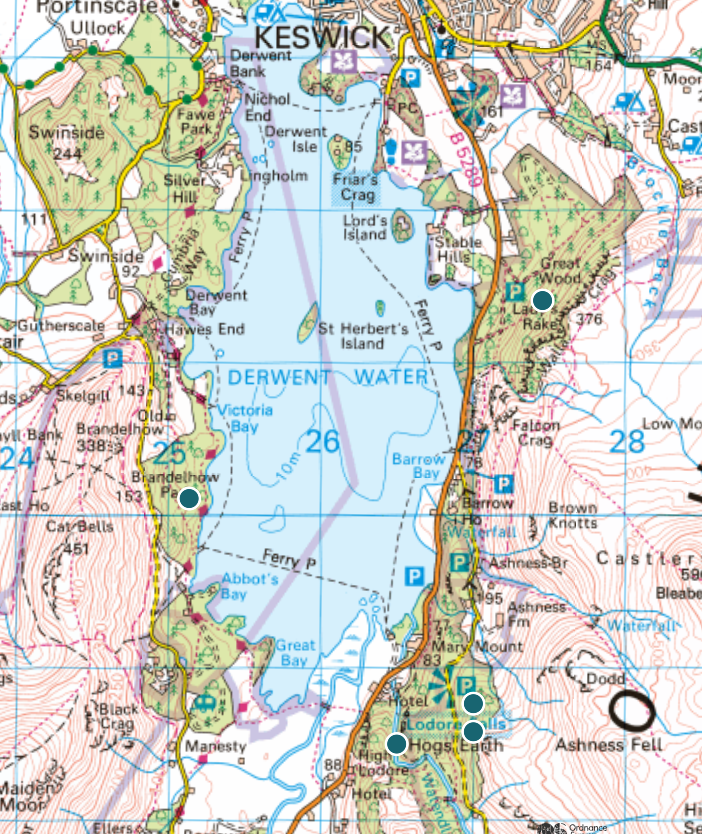
The blue circles mark the constituent woods of the new Borrowdale Rainforest NNR. There are more than those on this map.
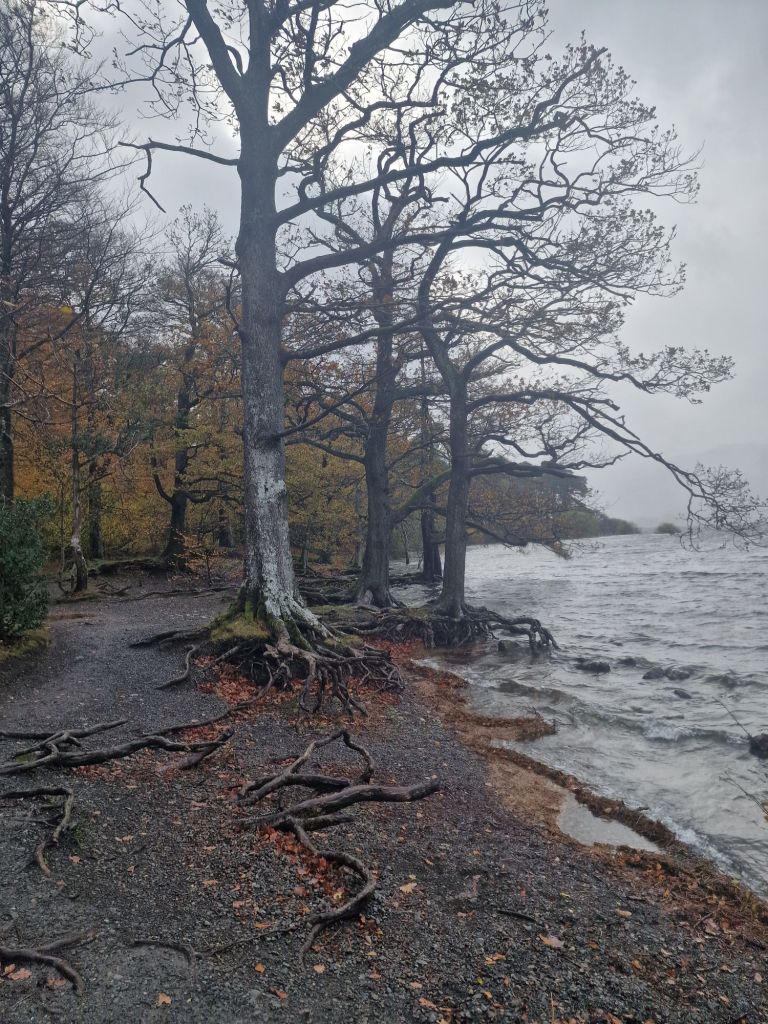
The walk along the lake from Keswick to the start of the path up Great Wood.
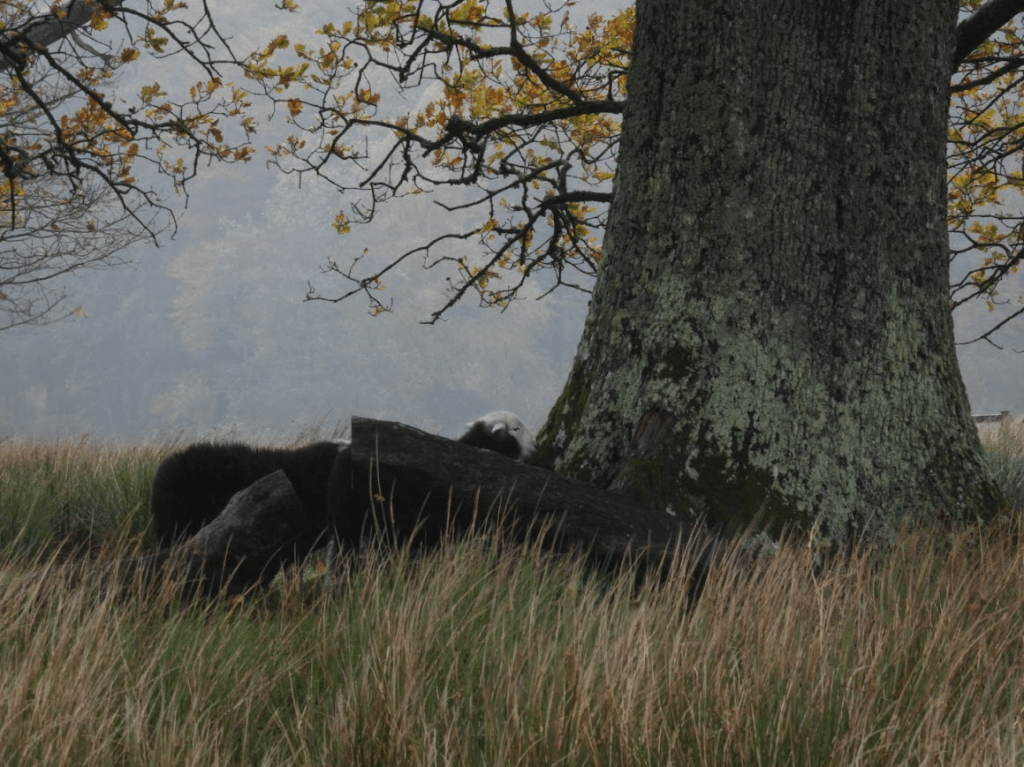
Herdwick sheep sheltering under a pollarded Sessile Oak
The water level was very high – these Larch were being engulfed by the rising water level
Lichen mosaic on Silver Birch. Lecanora chlarotera/hybocarpa and Putusaria hymenea shows the typical black lines of the “zone of antagonism”
Great Wood
Sessile Oaks
Beech
Polypody Fern on Sessile Oak; epiphytic polypody is characteristic of Atlantic woodland (temperate rain forest)
Overflowing beck next to this tree
Map lichen, Rhizocarpon geographicum (map lichen) on andesite outcrop; igneous rocks of the Borrowdale Formation; very common on hard siliceous rocks
Path between Great Wood and Arshess Wood
Silver Birch, looking across to the west side of Derwent Water to the Cat Bells fells
Ancient Hawthorn
Lichens on this Hawthorn
Oak Moss, Evernea prunastri;
Usnea sp., probably U. cornuta
Usnea sp, probably U. subfloridana
Platismatia glauca
Boulders are always worth investigating in areas of upland siliceous volcanic rock as they are often covered in lichens and bryophytes
These are some of the species on this boulder
Cladonia strepsilis Olive Cladonia
Pleurozium schreberi Red-stemmed Feather Moss
Cladonia ramulosa Branched Pixie-cup Lichen
Porpidia tuberculosa Boulder Lichen
Frequently, it was necessary to cross mini-waterfalls crossing the path that were a consequence of the very high rain over the days proceeding my walk
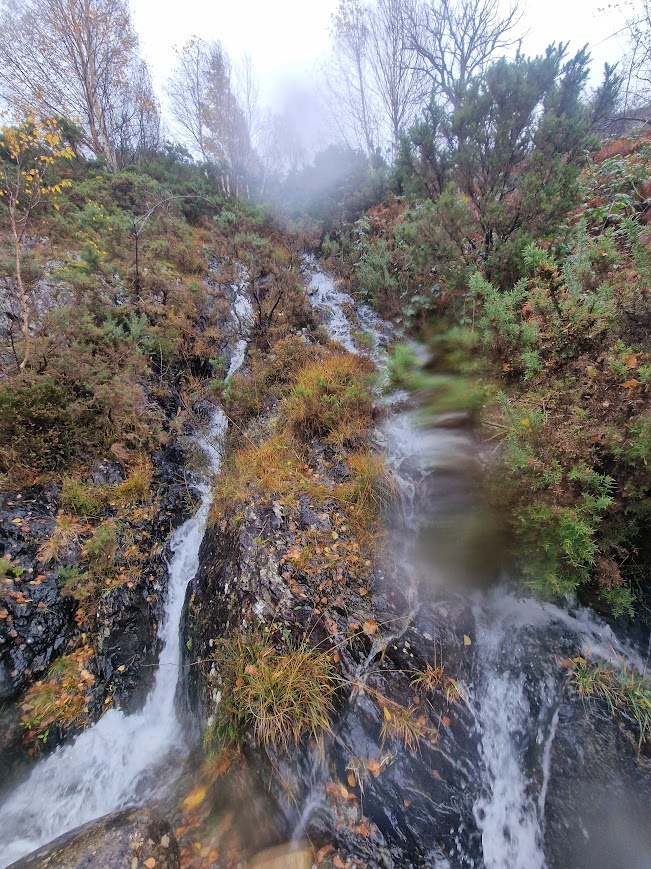
Looking up at temporary waterfalls caused by high rainfall – image blurred by heavy rain falling on the lens of my camera
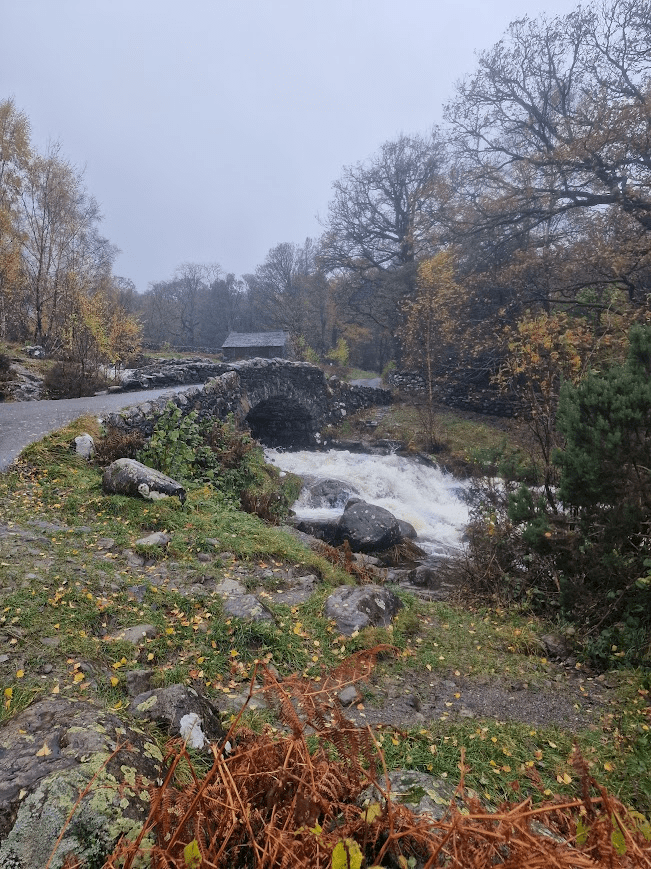
Ashness Bridge
Over Barrow Beck
Its image is often seen to be adorning biscuit tins and tea towelsVisits Keswick
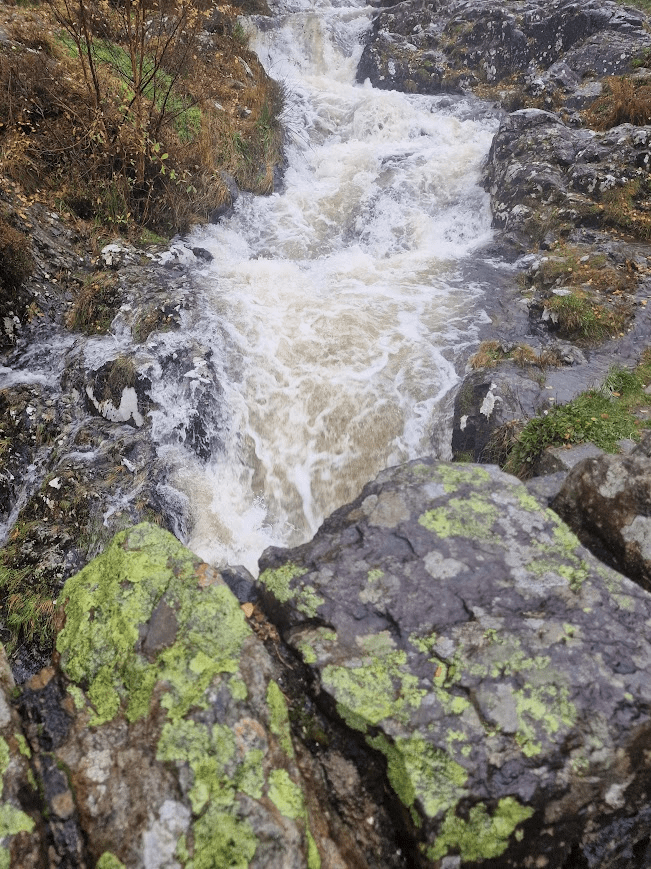
Barrow Beck above the bridge, with the bridge stones covered in Rhizocarpon geographicum; very common on upland igneous rocks
Ashness Wood
Characterised by Sessile Oak, Quercus petrea and outcrops of Grange Crags Andesite. Igneous bedrock formed between 458.4 and 449 million years ago during the Ordovician period. British Geological Survey Geology Viewer
A large patch of fertile Ochrolechia androgyna with apothecia, on Sessile Oak. Apothecia are usually absent but when present have a pink-orange disc with a pale margin.British Lichen Society. O. androgyna is present it the southeast, but it is always infertile.
Infertile on Pedunculate Oak in Petworth Park, West Sussex
Billbury Vaccinium myrtillus, characteristic of upland heathland type H12 Calluna vulgaris – Vaccinium myrtillus heath British Plant Communities 1992 Cambridge University Press pp. 492 – 503
Billbury growing epiphytically on a coppiced Sessile Oak
Waterendlech Beck, behind the above Oak
Beyond the beck, Ashness Wood becomes Mossmire Coppice. In Cumbria, “moss” can also mean mire or bog as well as a bryophyte
This part of the wood was upland heathland bog
Billbury with Sphagnum Moss possibly Sphagnum subnitens
Possibly Sphagnum girgensohnii
Bog with trees
The path, like in so many places, had become a beck
Waterendlath Beck at Ladder Brow
Walking back along the lakeside path to Keswick
A path completely flooded
A dry-stone wall at Calfclose Bay, just south of Keswick. Dry stone walls are always worth a look in Cumbria as they often have interesting lichens, bryophytes and ferns growing on them
I got back to Keswick just as the sun was setting and was very wet. Whilst it was a good day, arriving back in Keswick was not an unalloyed pleasure. Keswick is a simulacrum of former real Lakes town; it consists of 10+ outdoor shops selling overpriced outdoor items; pubs that charge a fortune for food, and tourist shops selling Beatrix Potter and William Wordsworth memorabilia; a triumph of consumerism over the intrinsic value of the beauty and culture of the Lakes. To capital everything about the Lakes is something to sell to tourists while paying retail and hospitality workers a pittance
I didn’t see any of the lichen species that Neil Sanderson, April Windle and Andy Acton (Atlantic Woodlands in Britain & Ireland .Temperate Rainforests and Southern Oceanic Woodlands) cites as typical of upland or lowland rainforest (see below). But I enjoyed what I did see; I like common beautiful things. Scarcity does not equate to beauty or enjoyment to me.
Some thoughts on the public information about Borrowdale Rainforest National Nature Reserve (NNR). I had to do lots of research to find where its constituent parts are. The National Trust website on the NNR doesn’t have a map and there is no Natural England visitors’ guide as there is for other NNRs. The only way I found out where the parts of the NNR were was by looking at the declaration of NNR map on the government’s website. I then had to cross reference this map with the OS map to find the names of the constituent woods of the NNR.
Borrowdale is a huge geographical area round Derwent and below, that includes ancient woodland, secondary woodland & conifer plantations. I know the difference between ancient woodland, secondary woodland & conifer plantations, but not everyone does. In Keswick Tourist Information, I asked about the Rainforest NNR, they knew nothing about it! The National Trust and Nature England need to get maps and public transport details online & in TICs otherwise few people will visit. You won’t widen participation without adequate information.
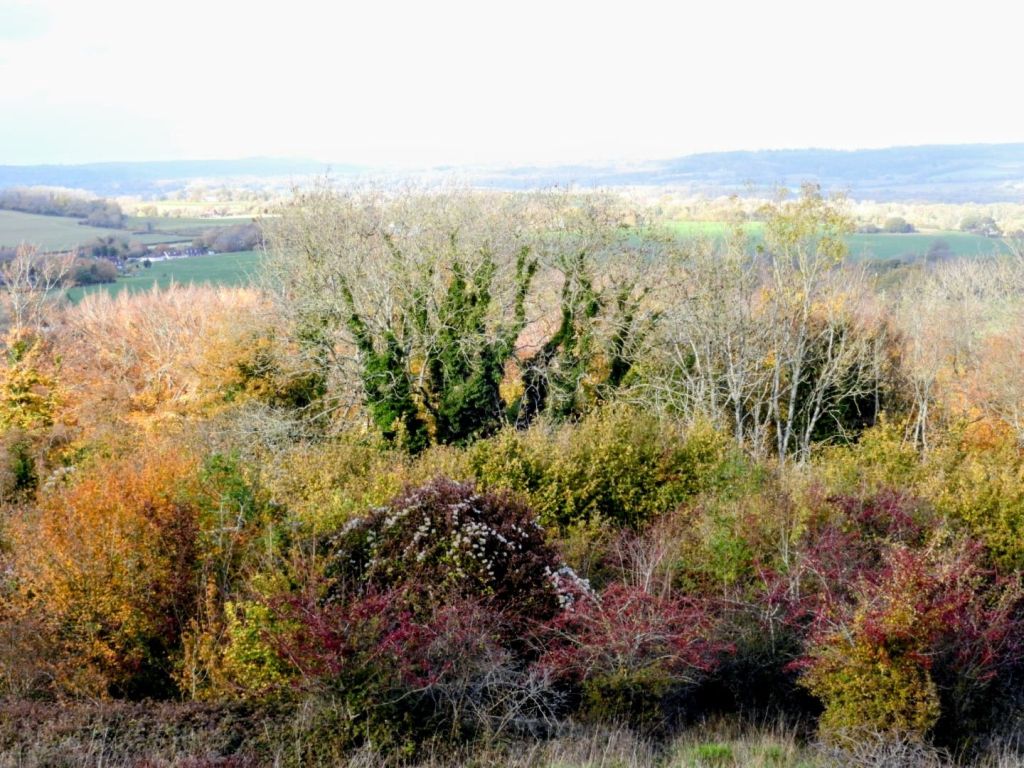
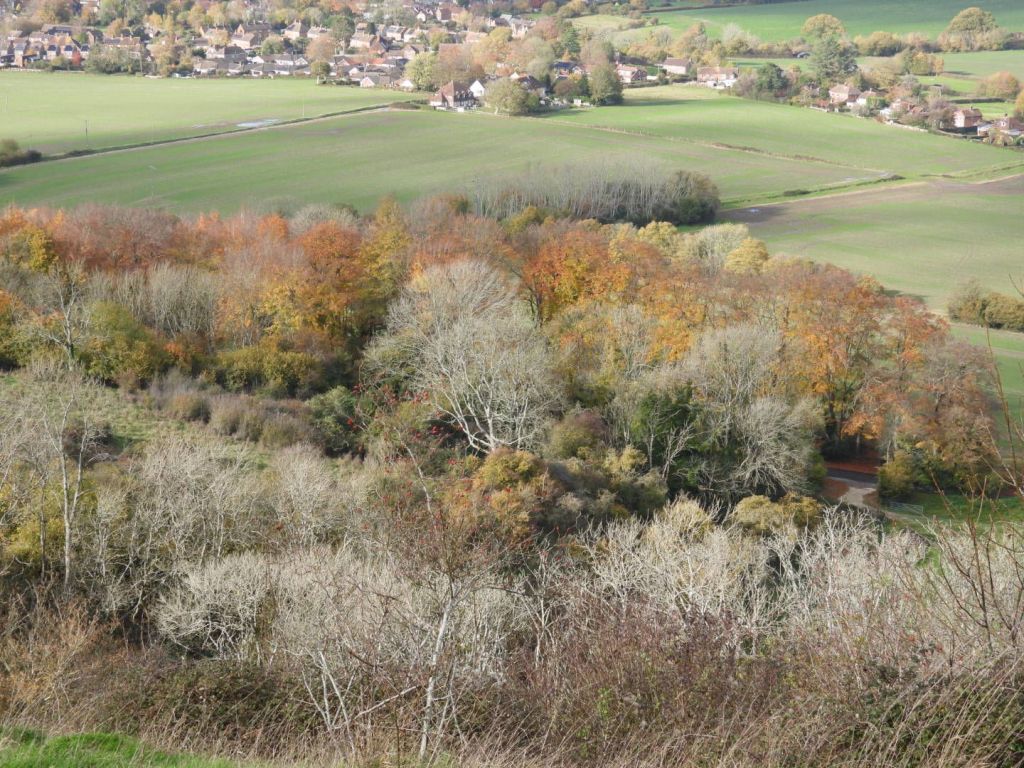
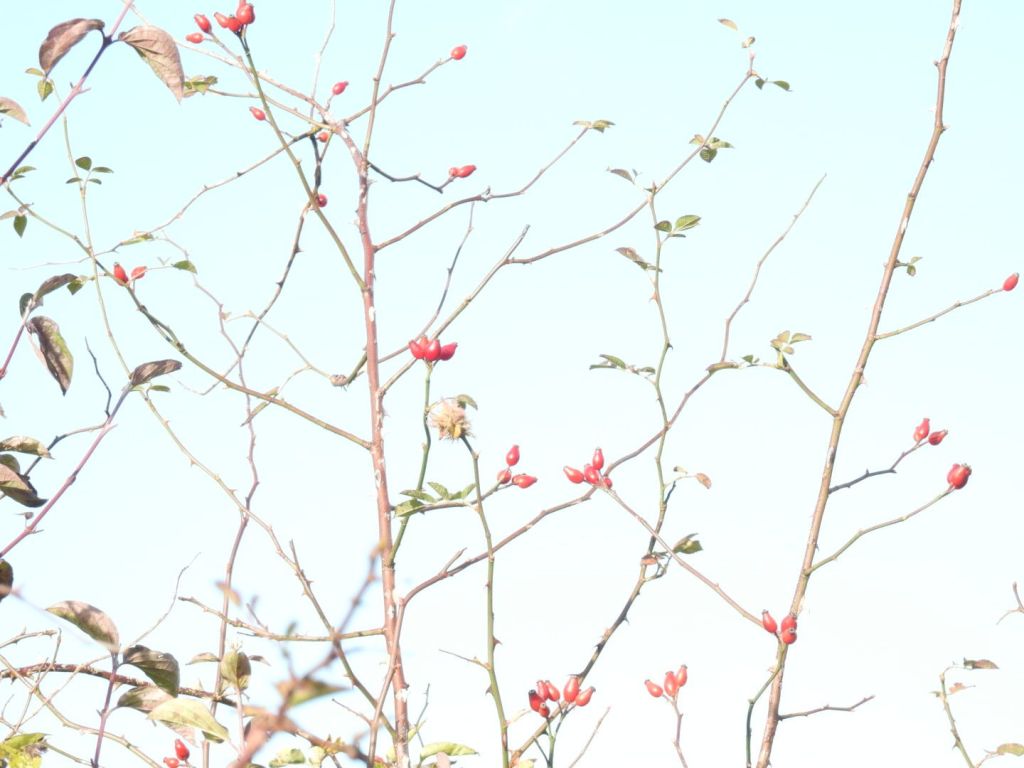
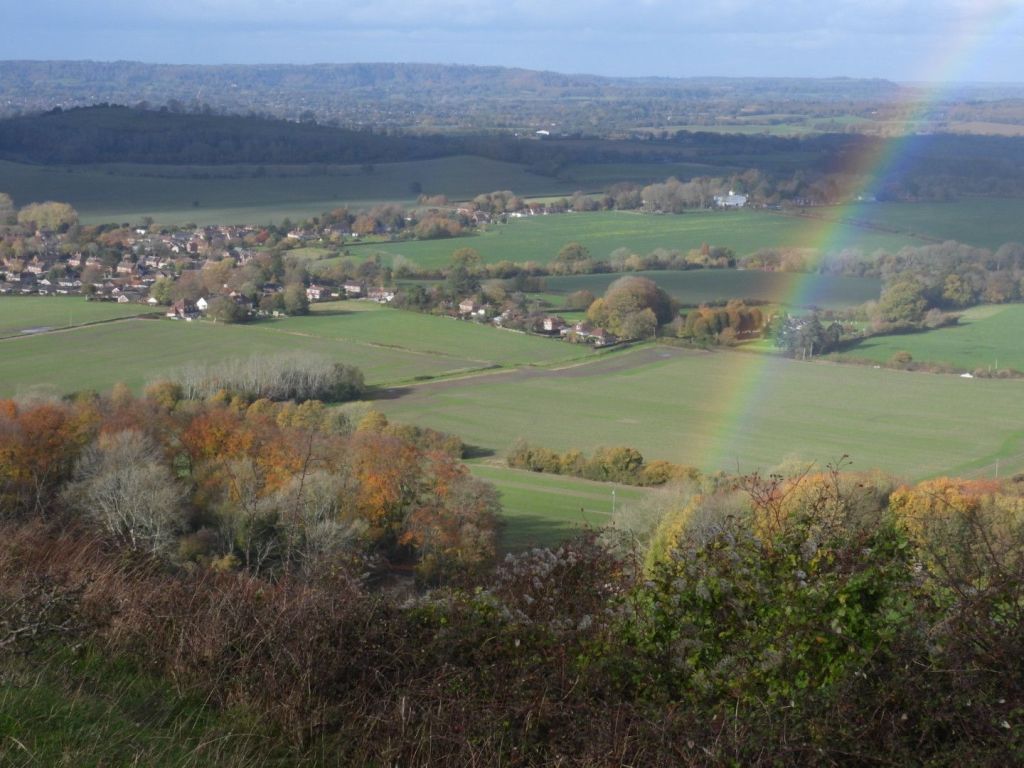
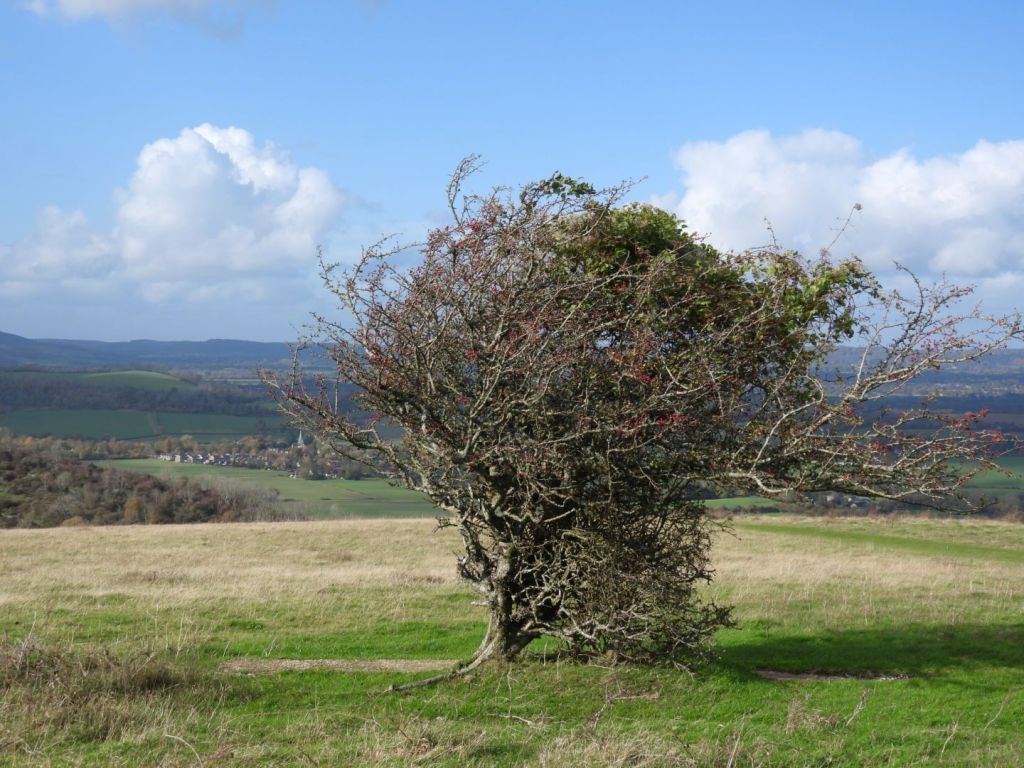
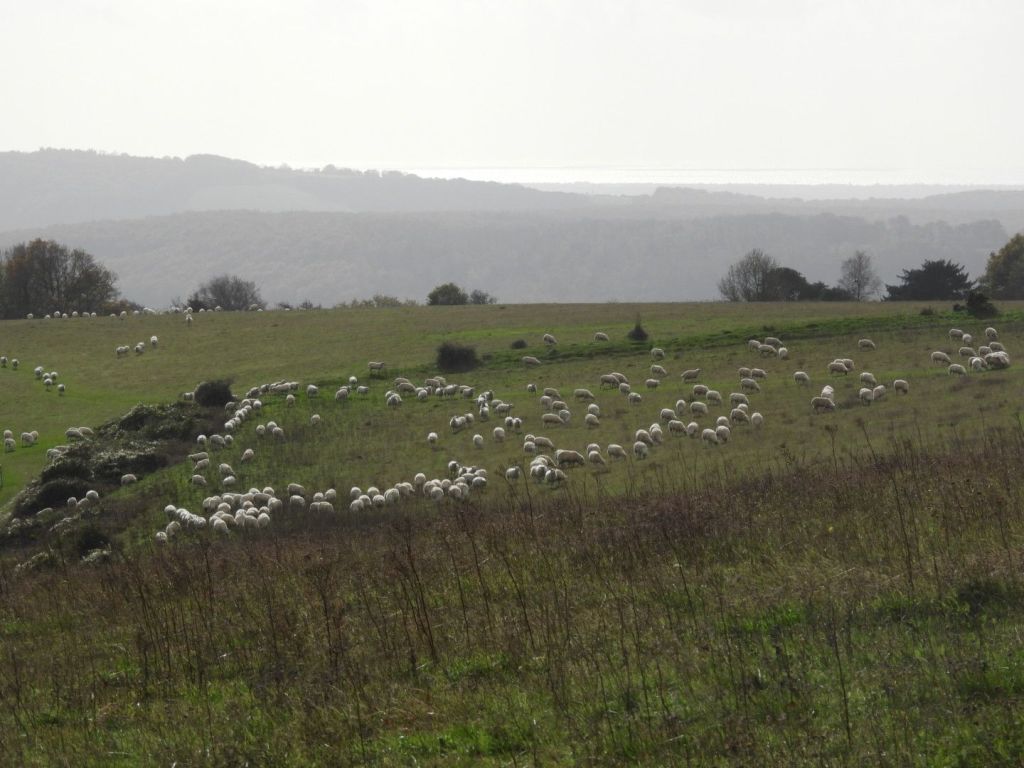
Yesterday on Harting Down, there were beautiful skies; the sun with showers forecast turned out to be mostly sunny. The sky was deep blue, and the sun’s beams lit up the gold, yellow, green and red colours of the autumn leaves.
The bostal path up to Harting Down
Probably Quercus faginea, Portuguese Oak; a non-native introduction to a small estate on the escarpment south of South Harting.
On/From the South Harting SSSI summit/plateau
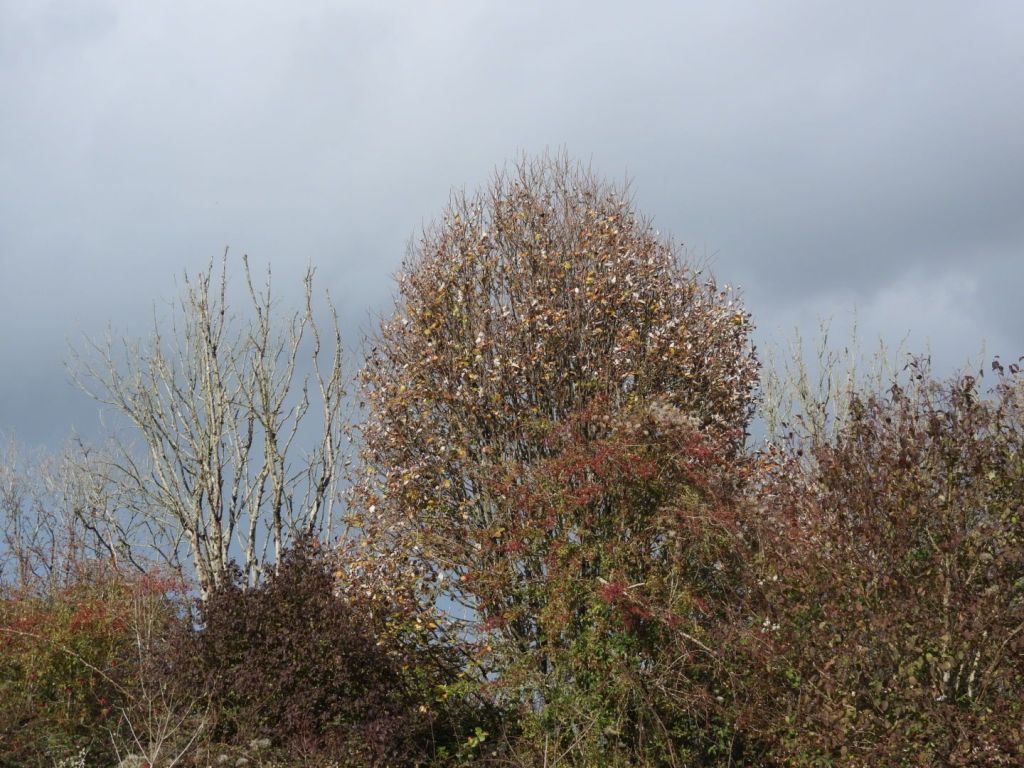
De Stijl Neo-Plasticism. South of South Harting. Green diagonal stripes: Ivy growing up dying Ash. White diagonal stripes: Old Man’s Beard growing up Hawthorn.



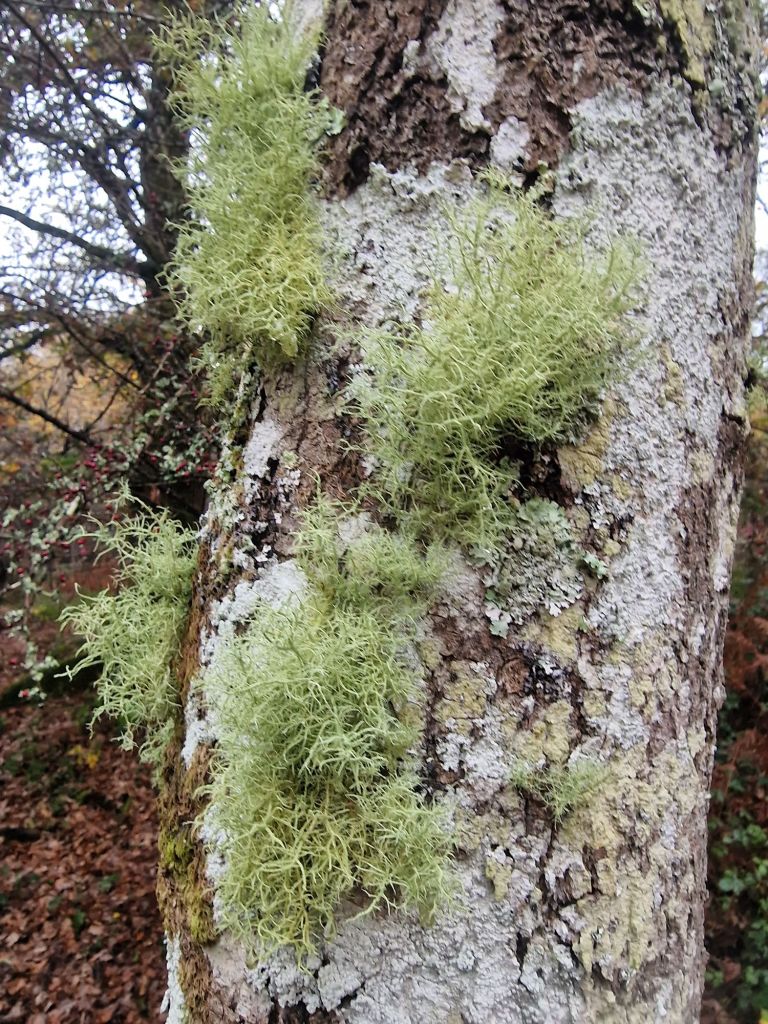
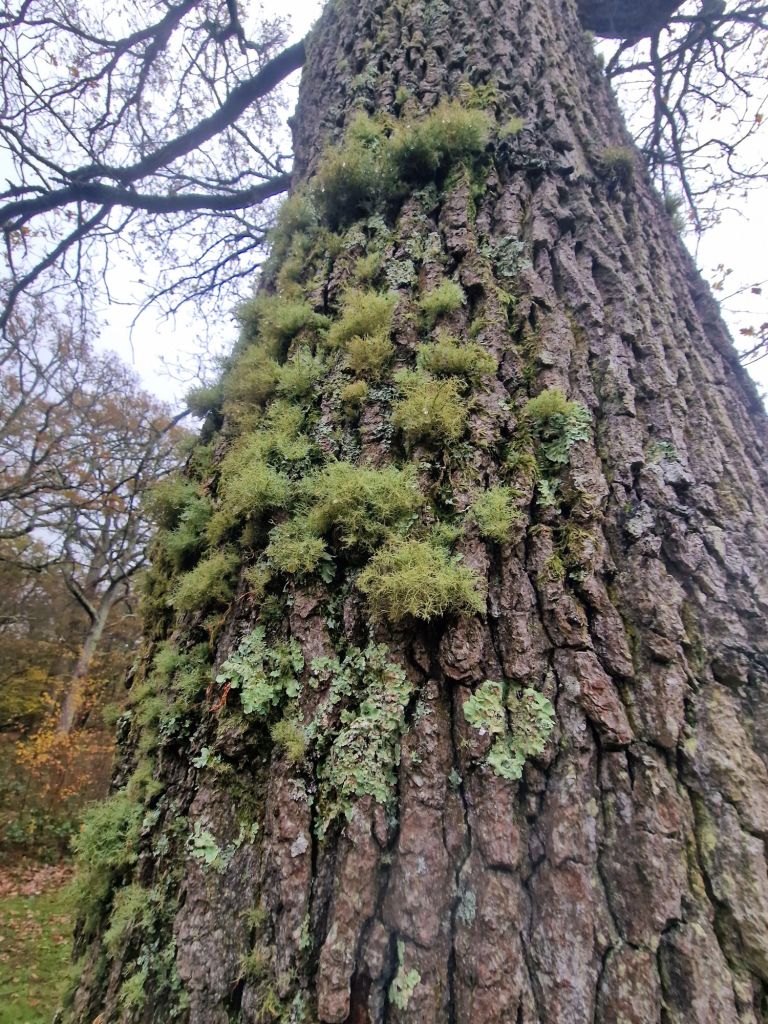
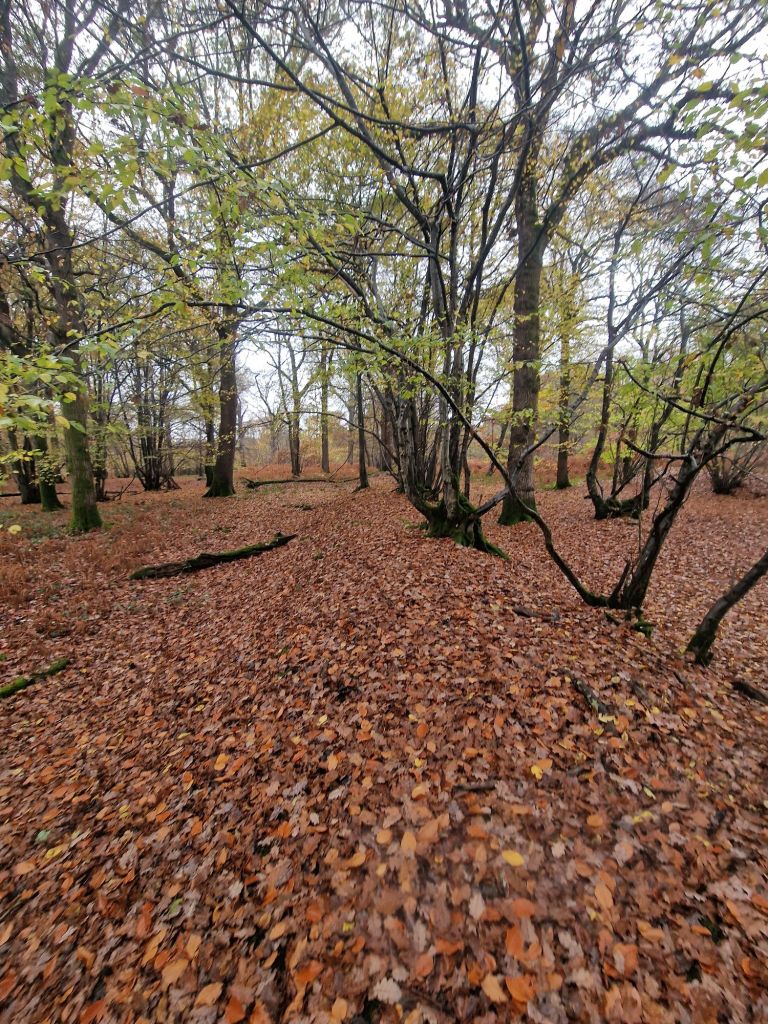
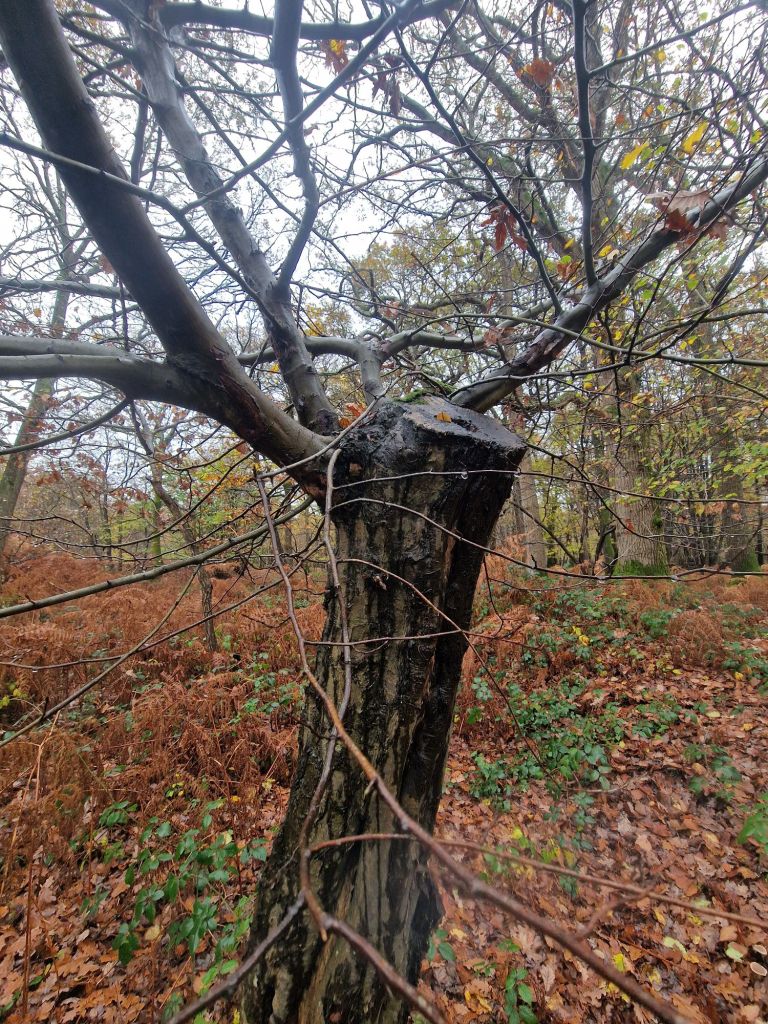

















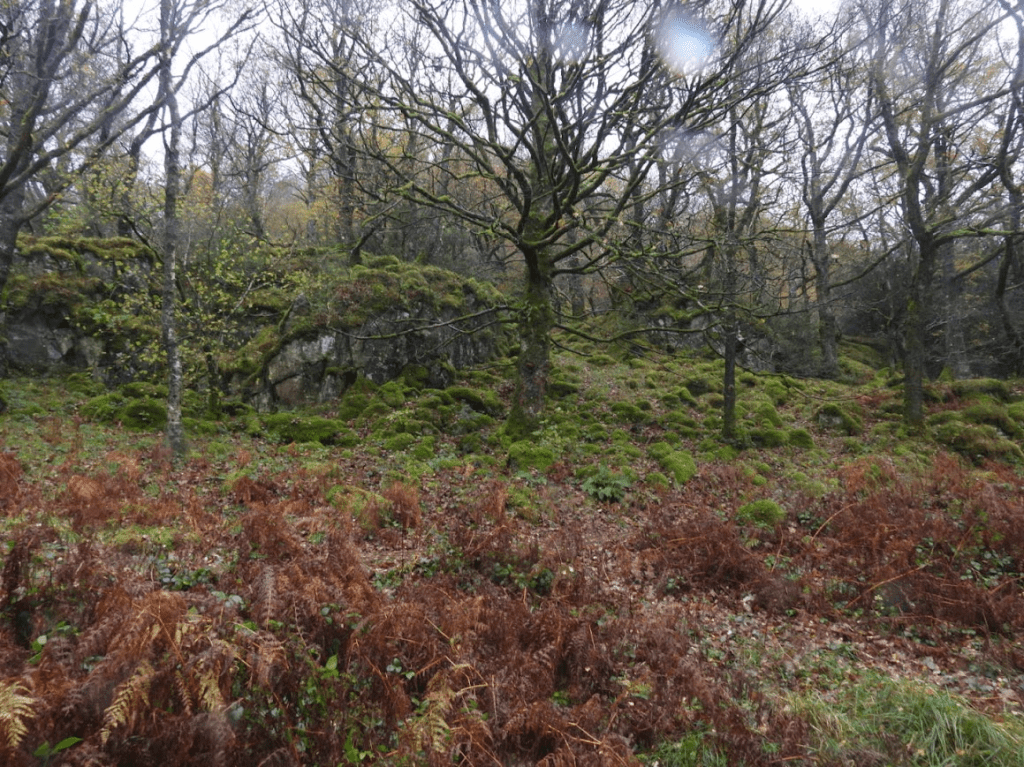
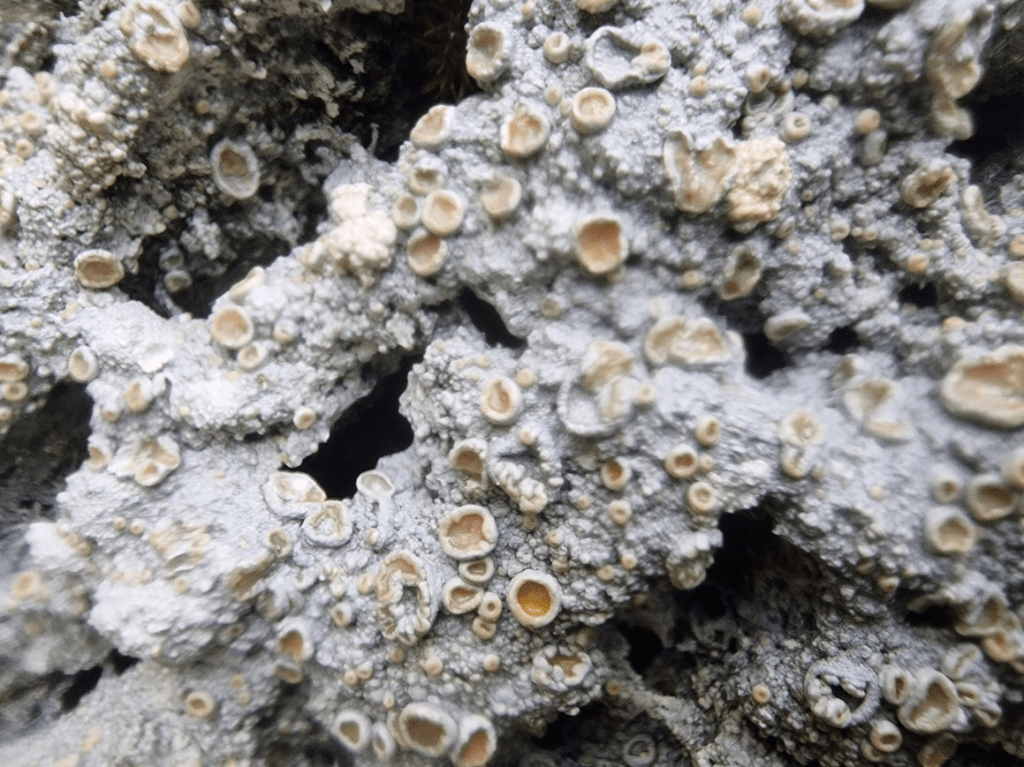
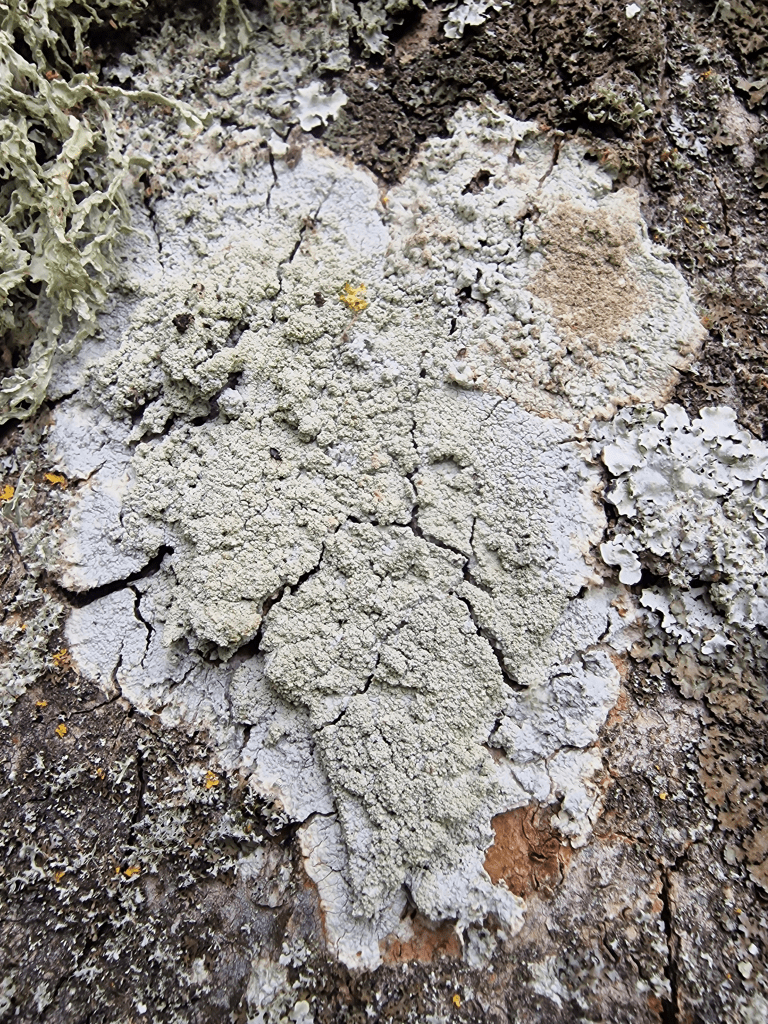
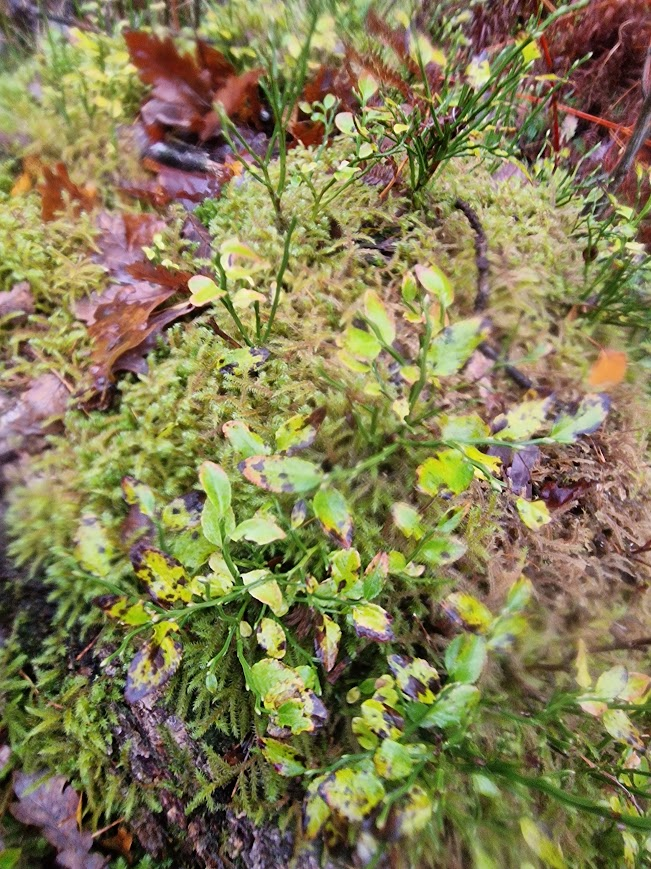









 Sim's Nature Notes