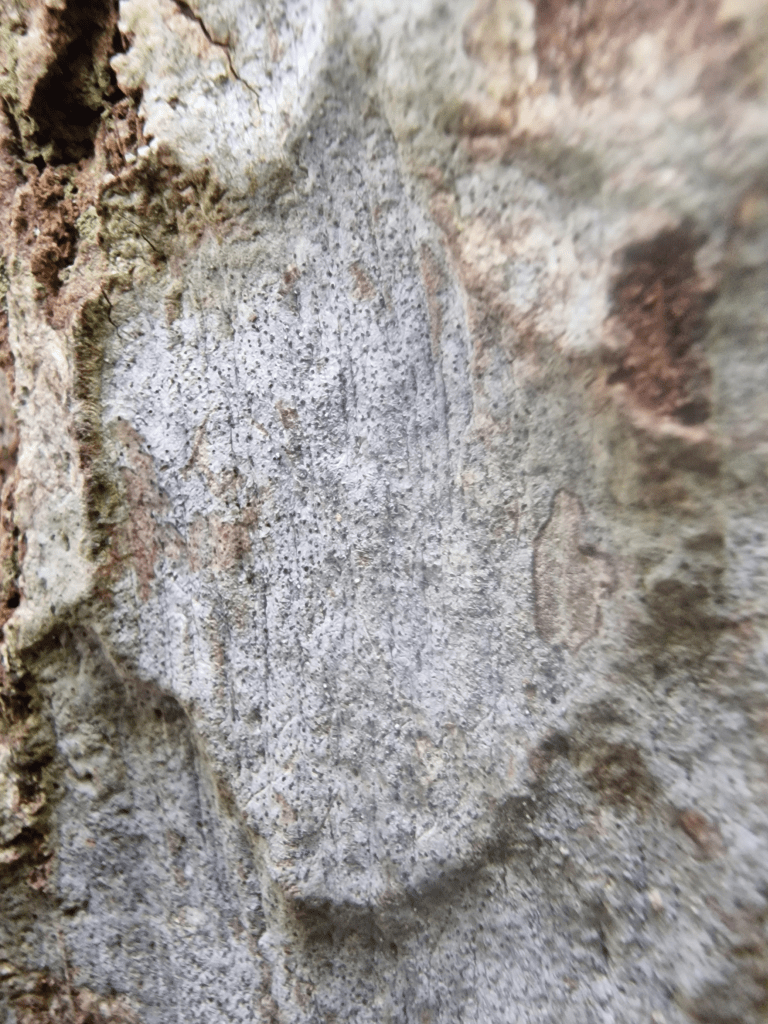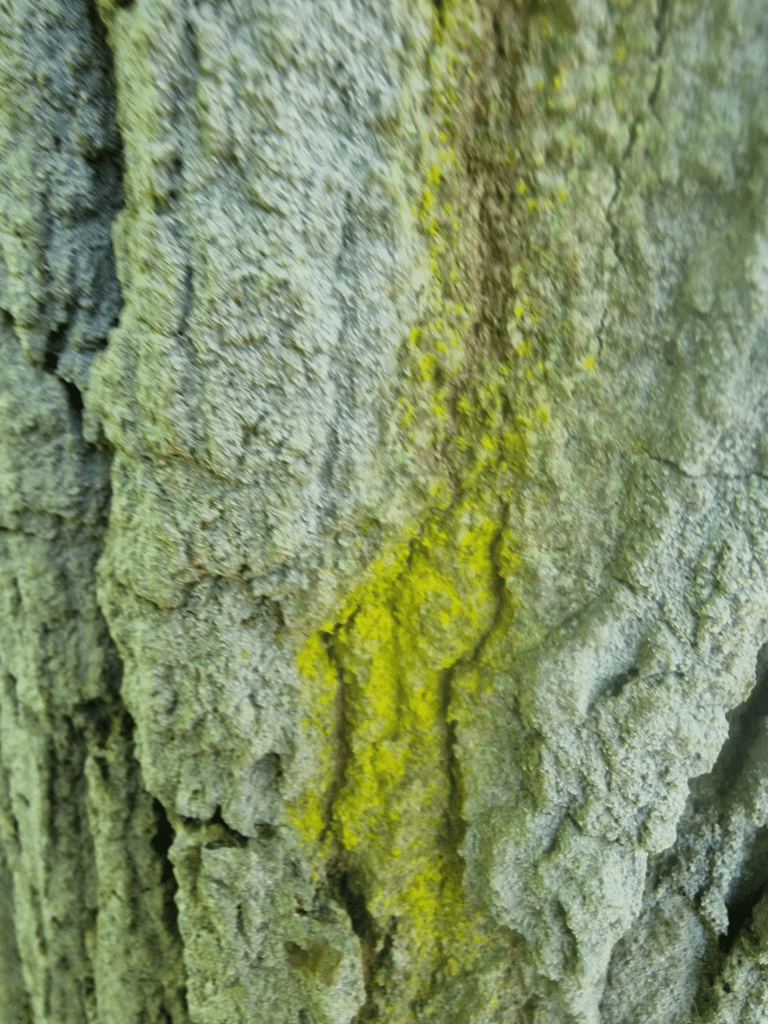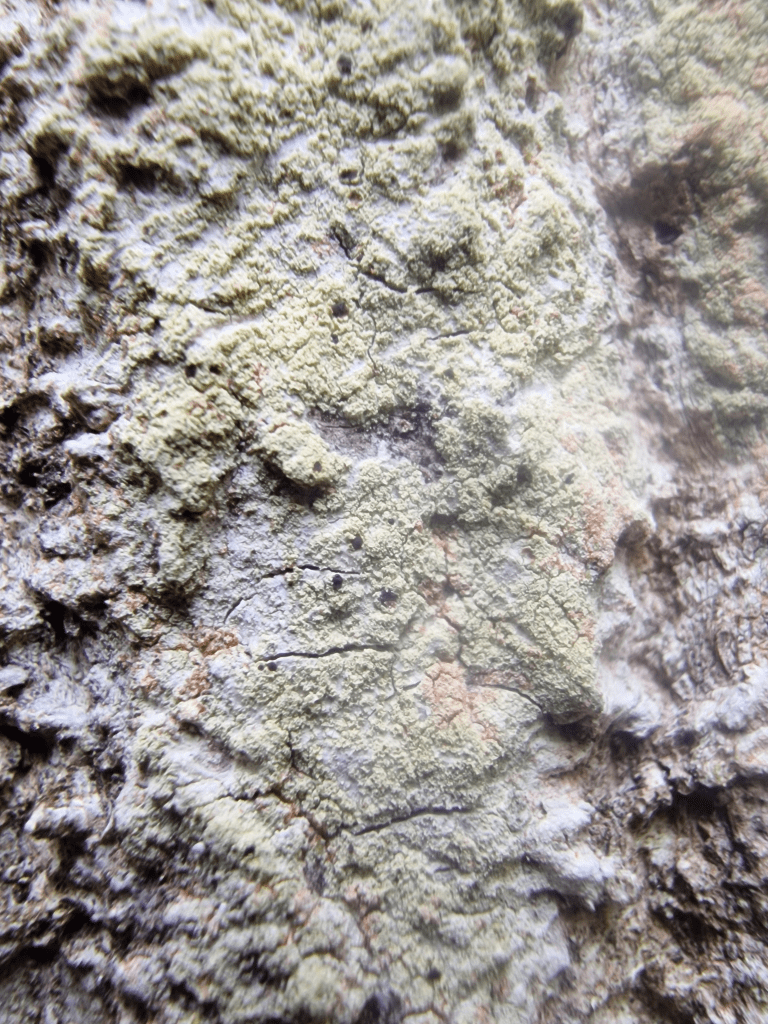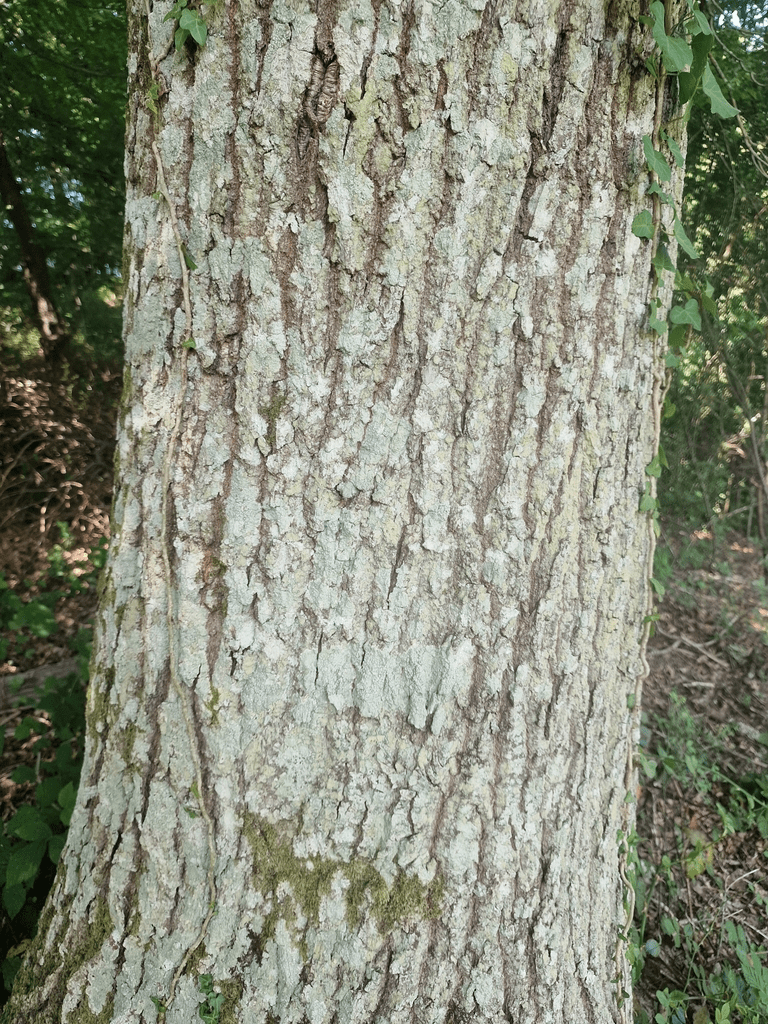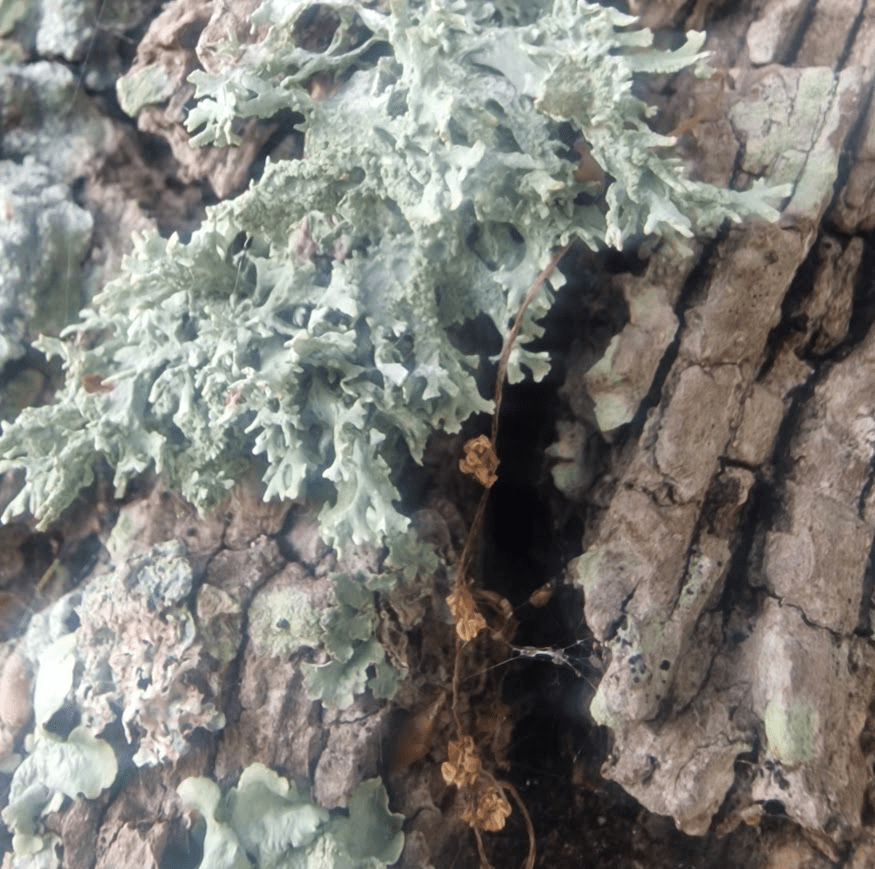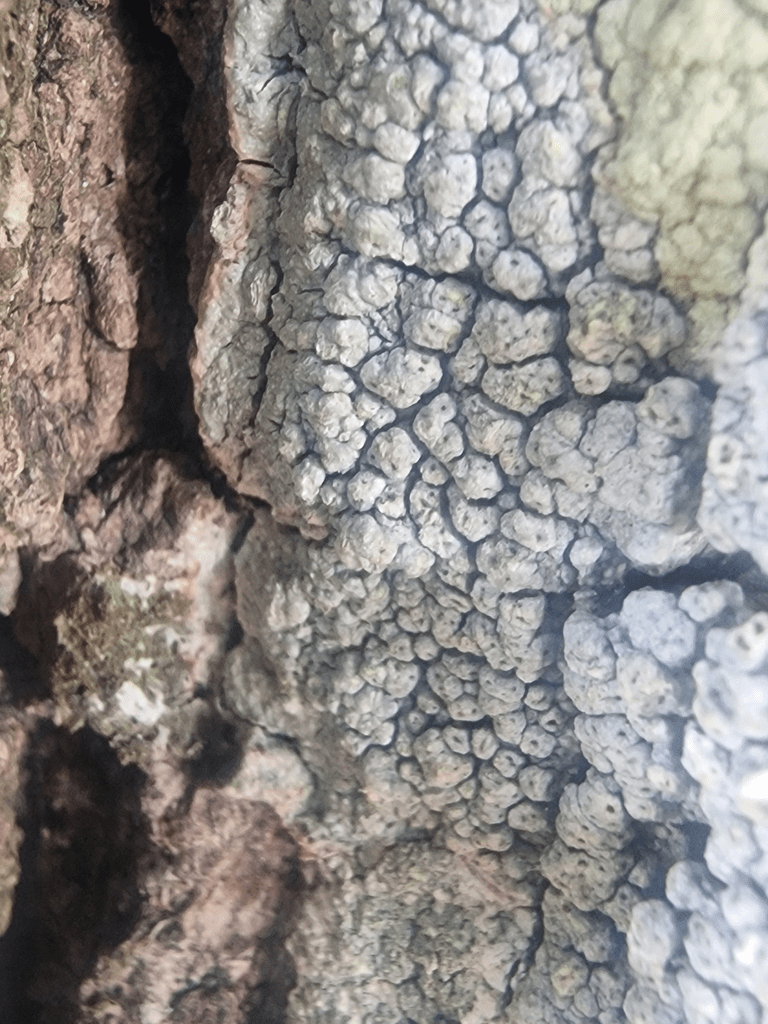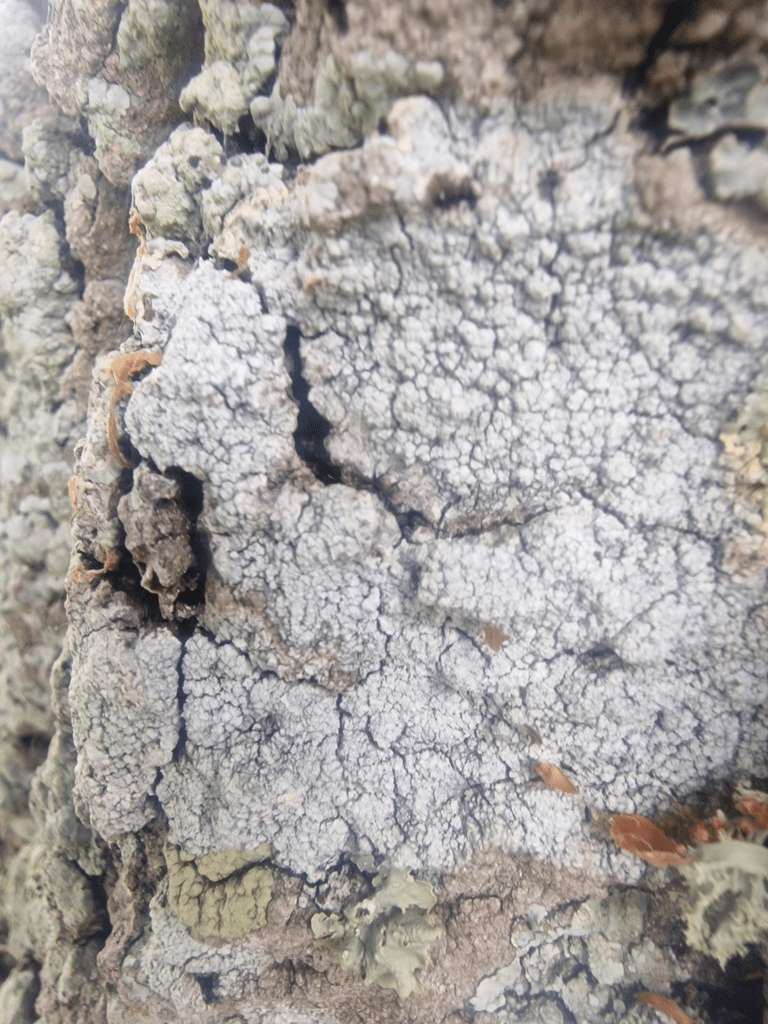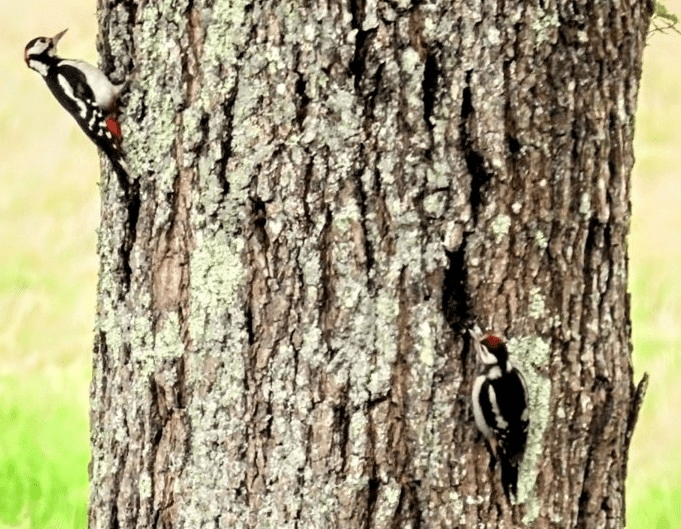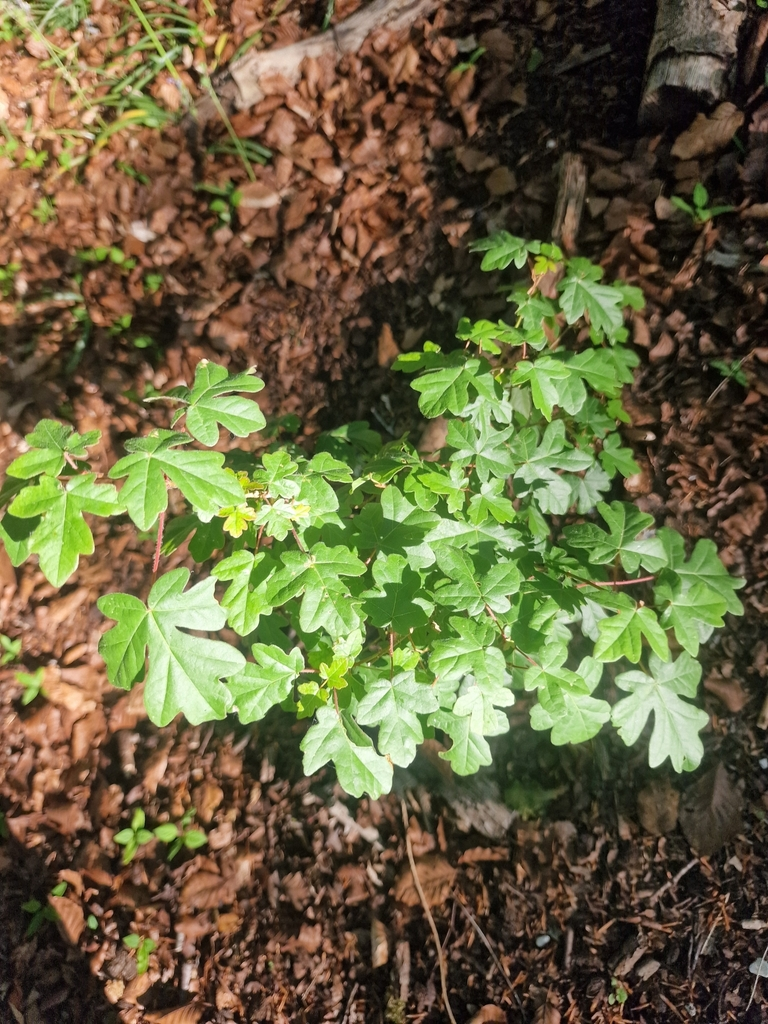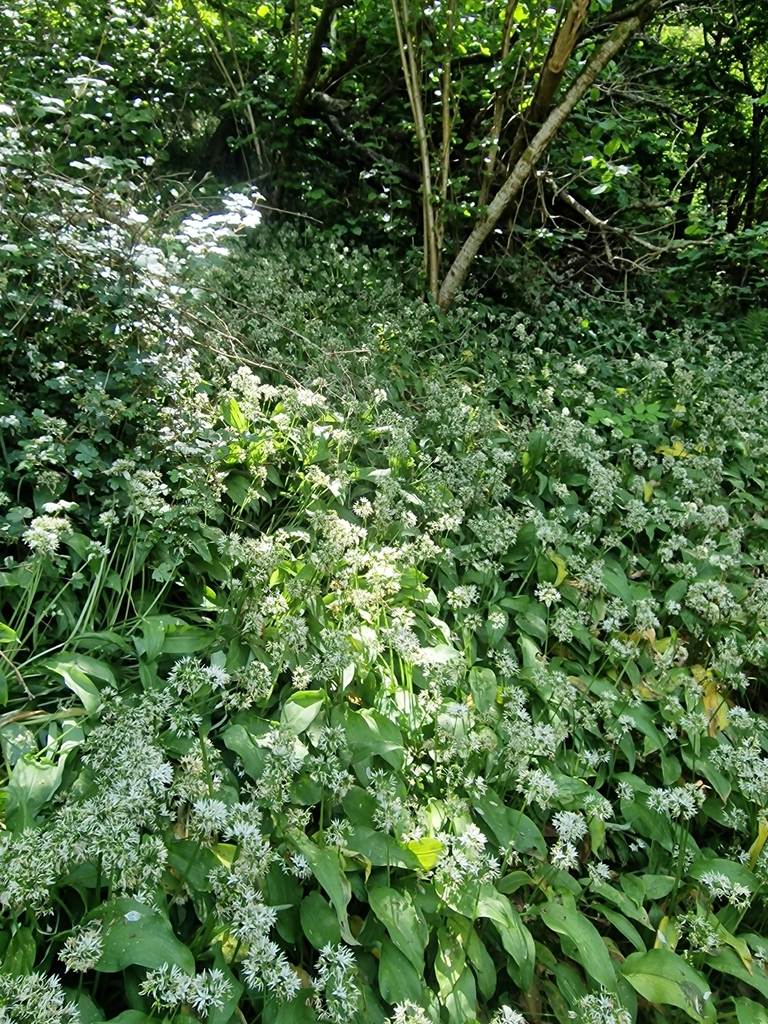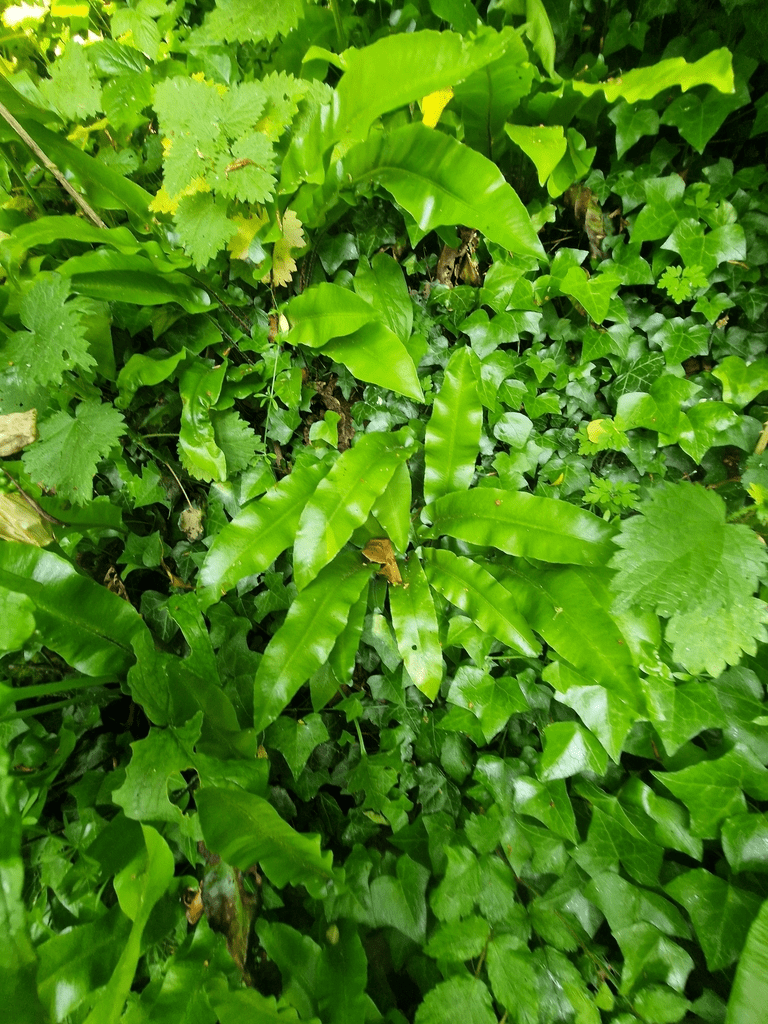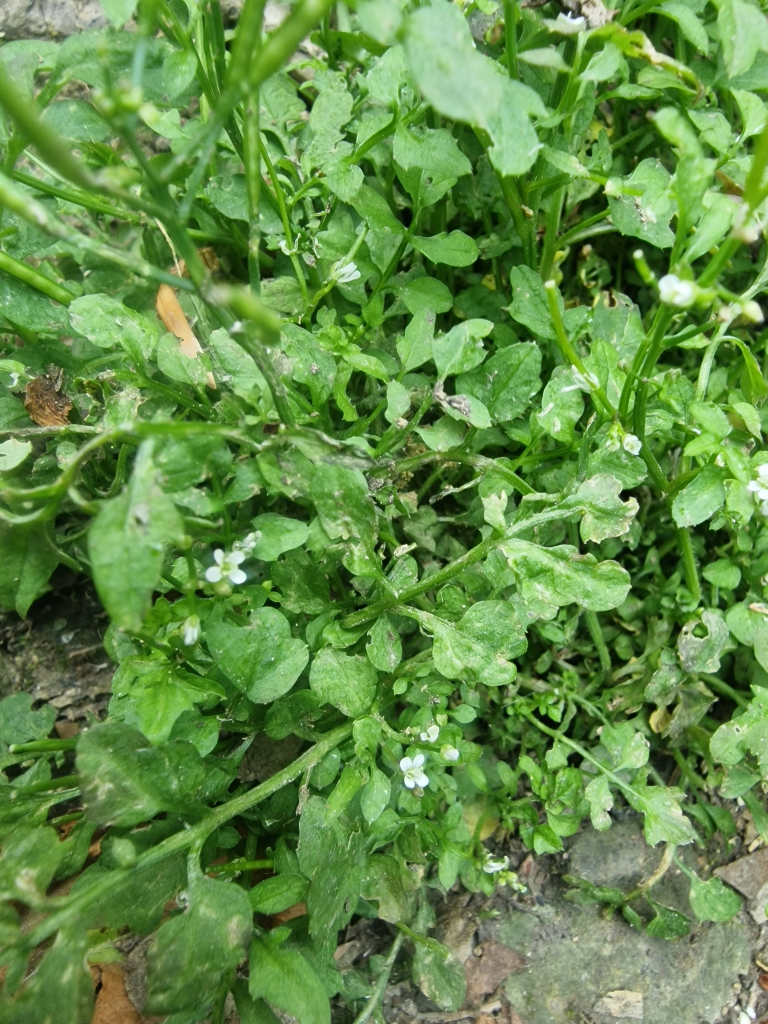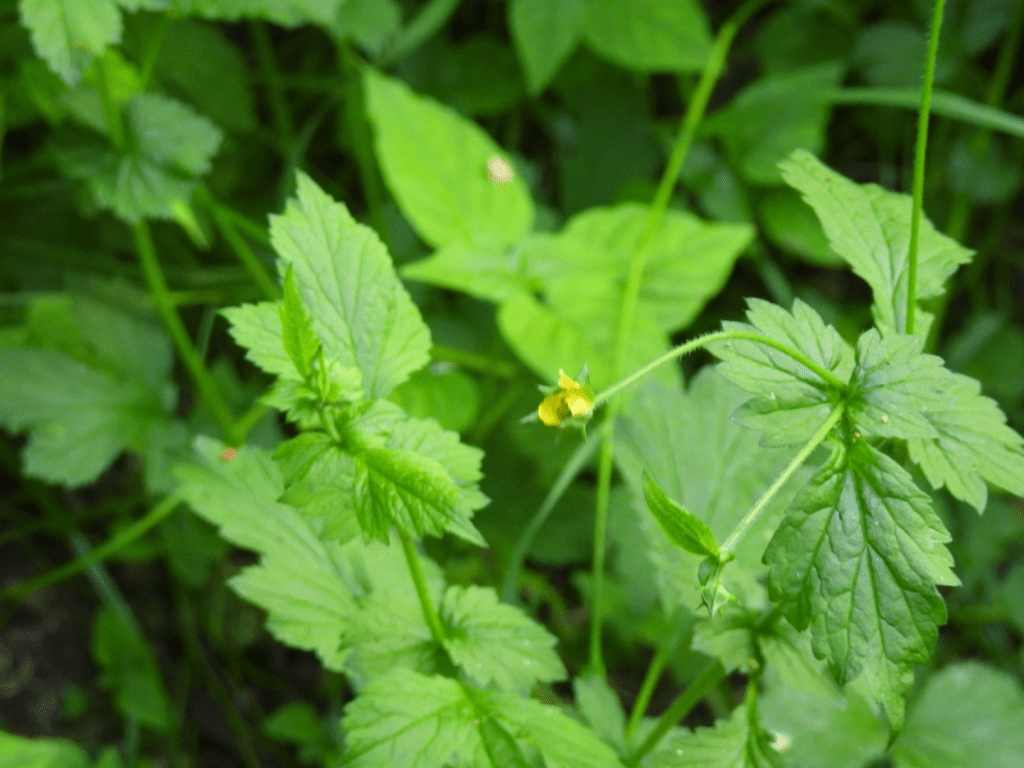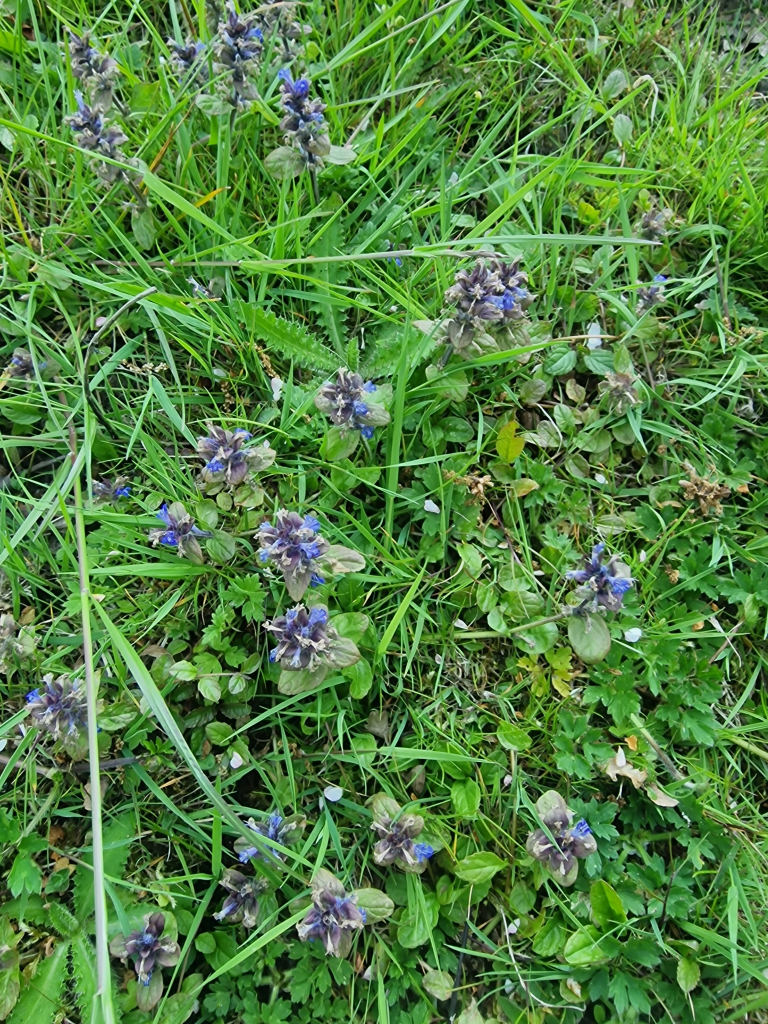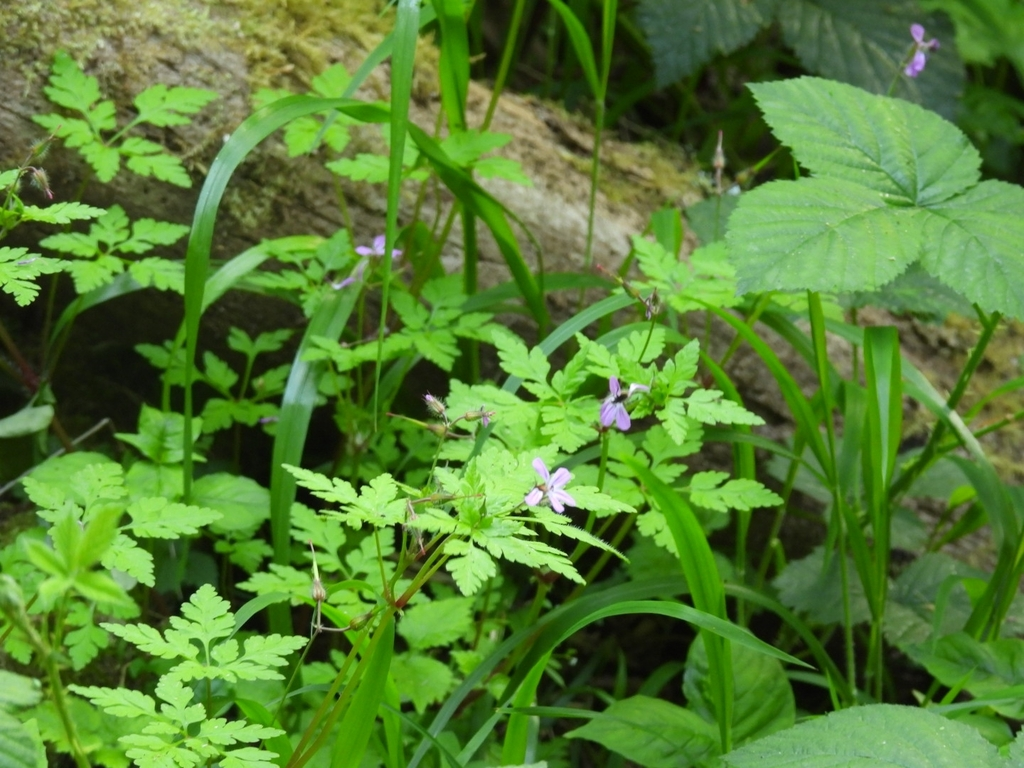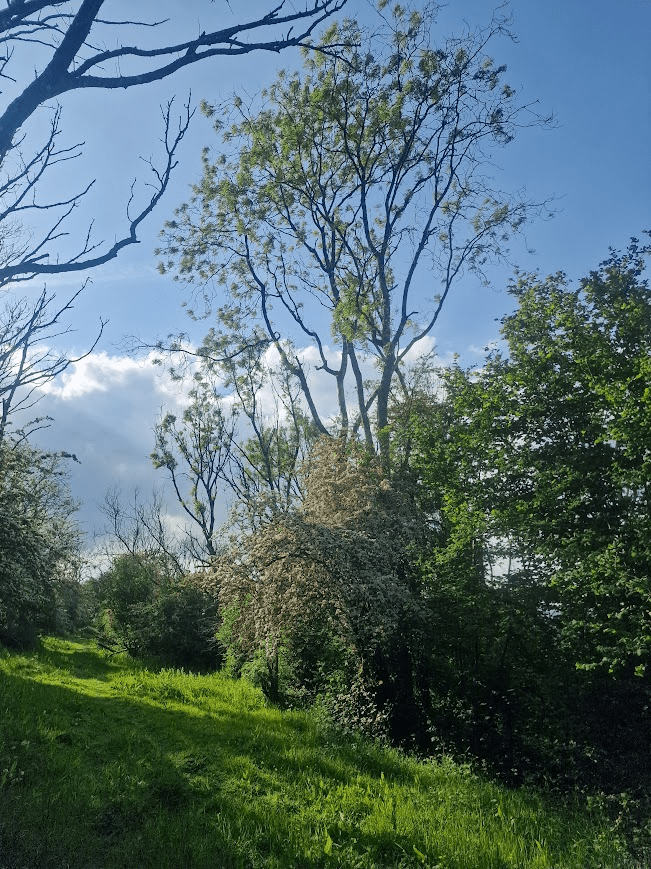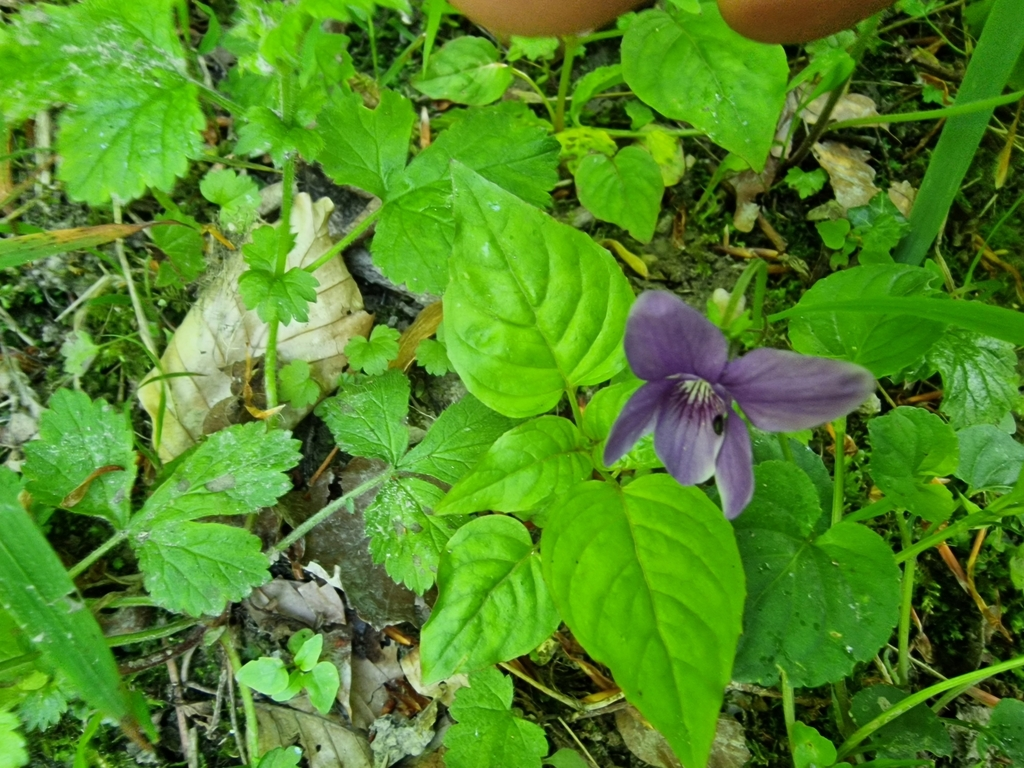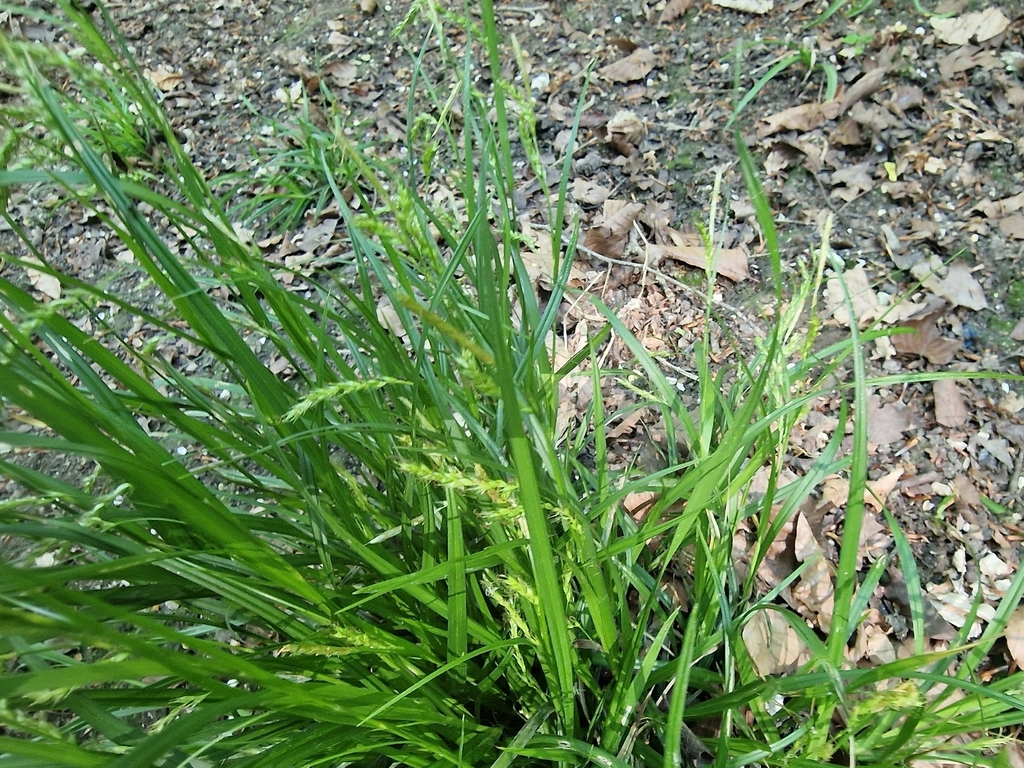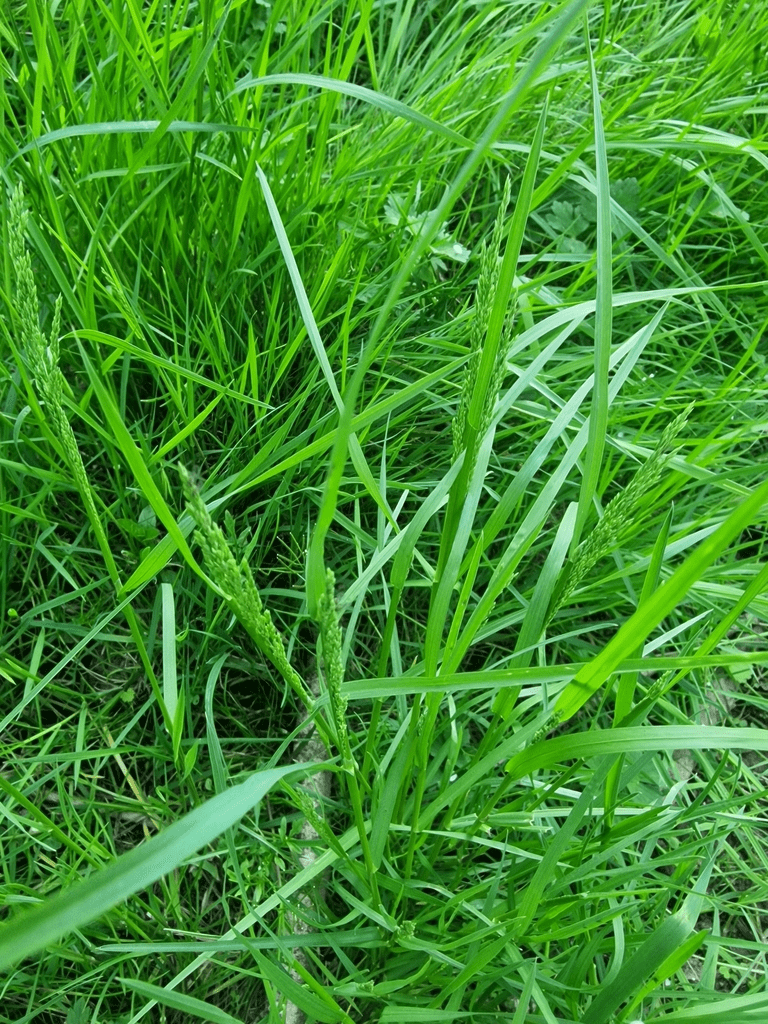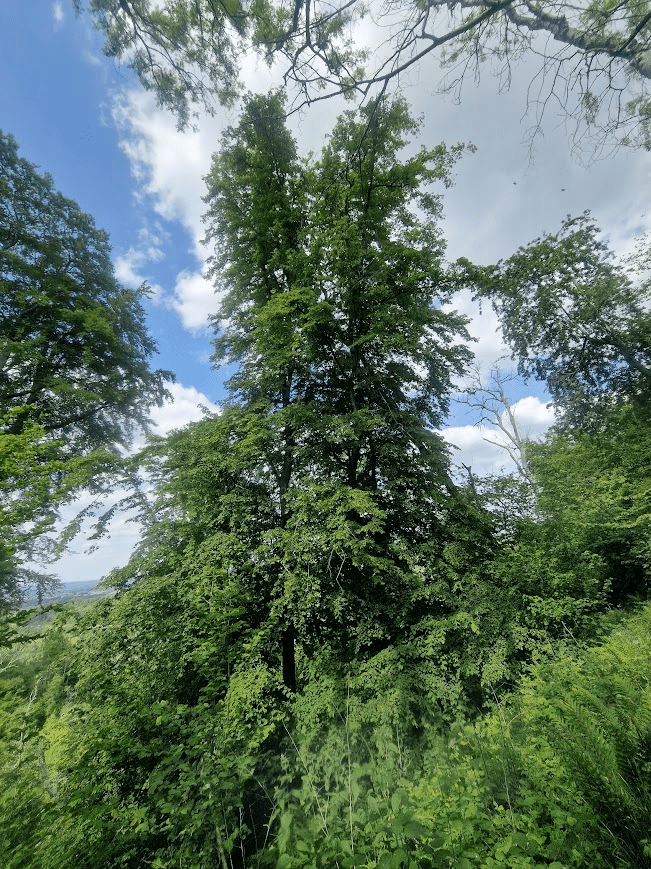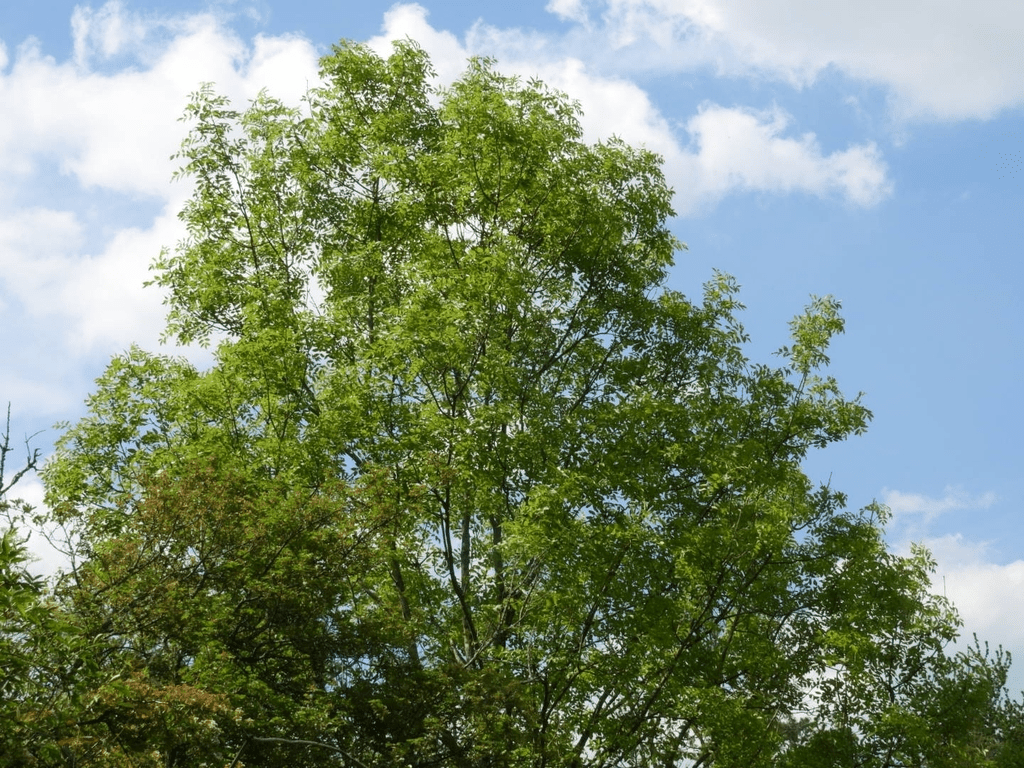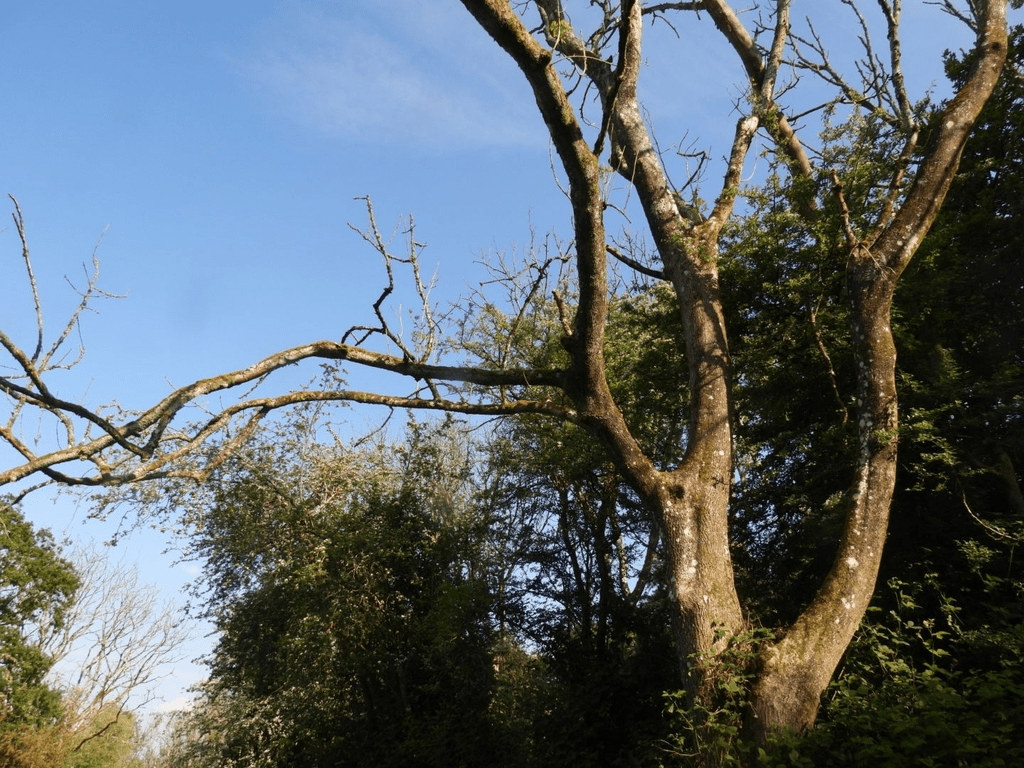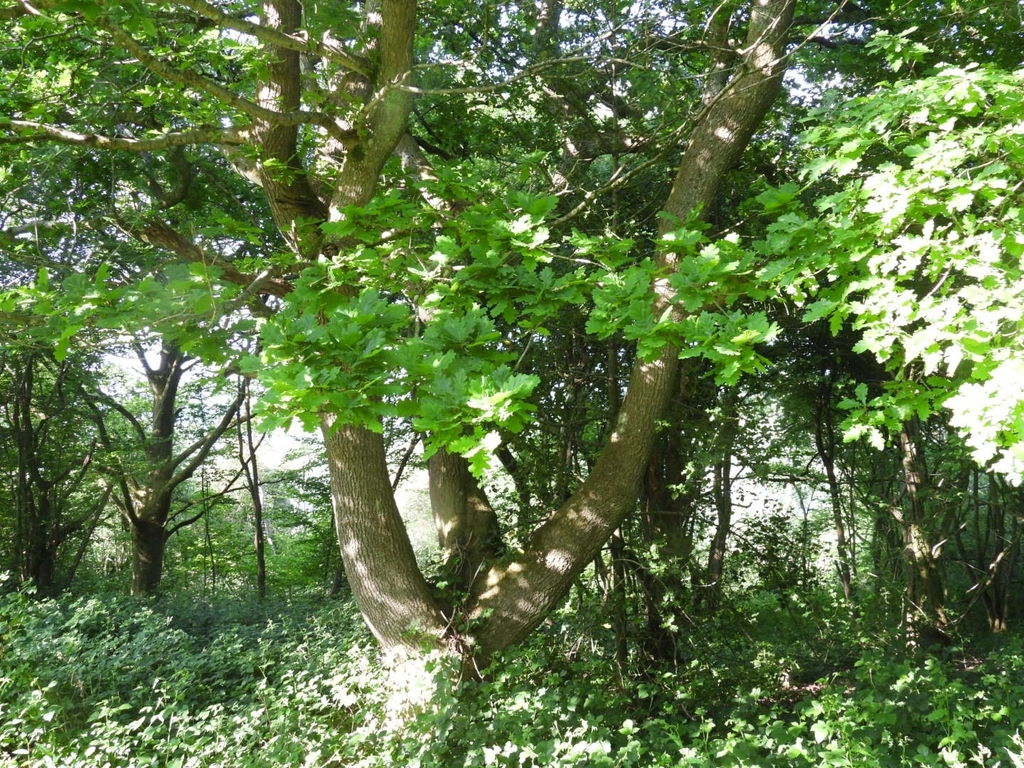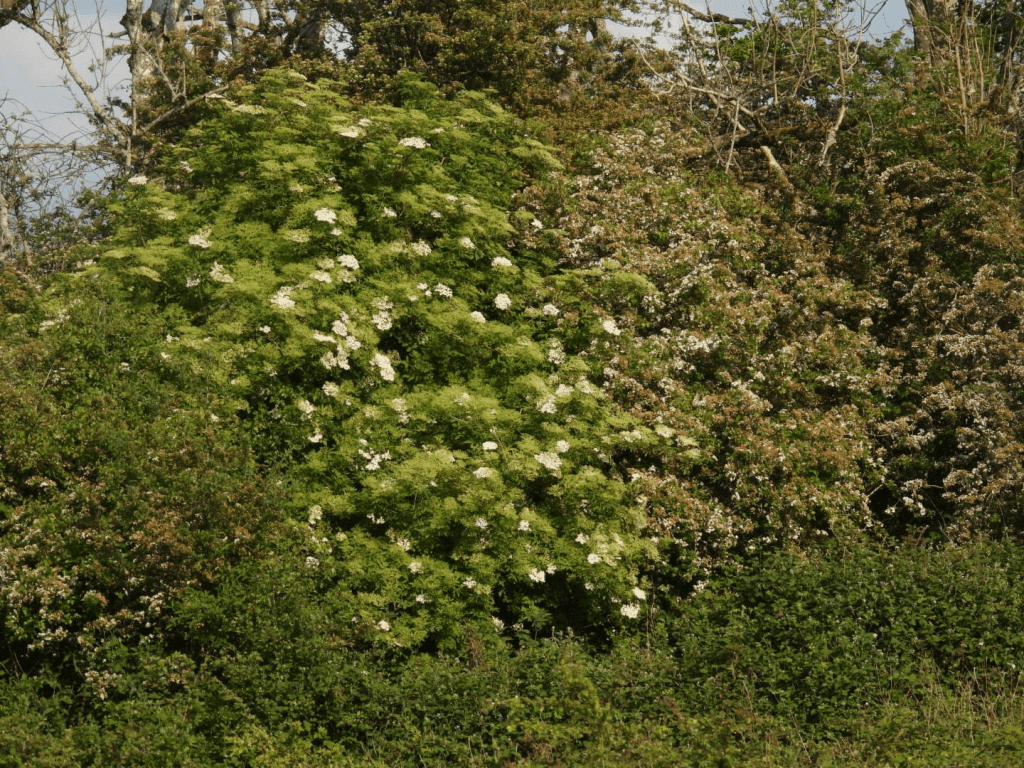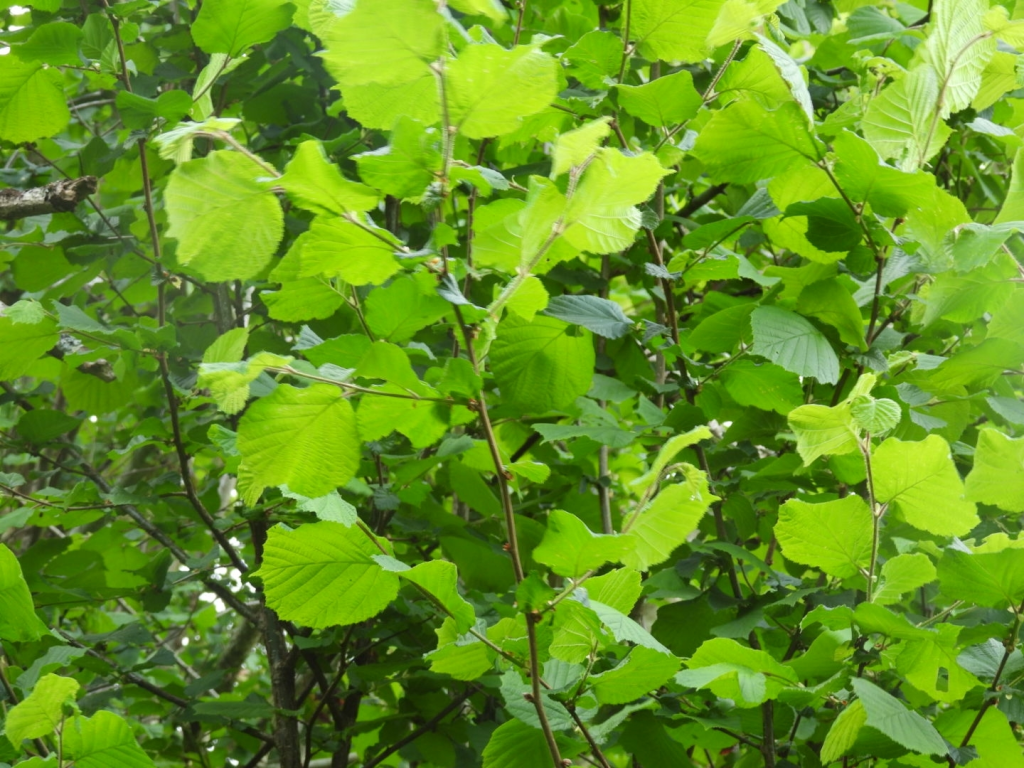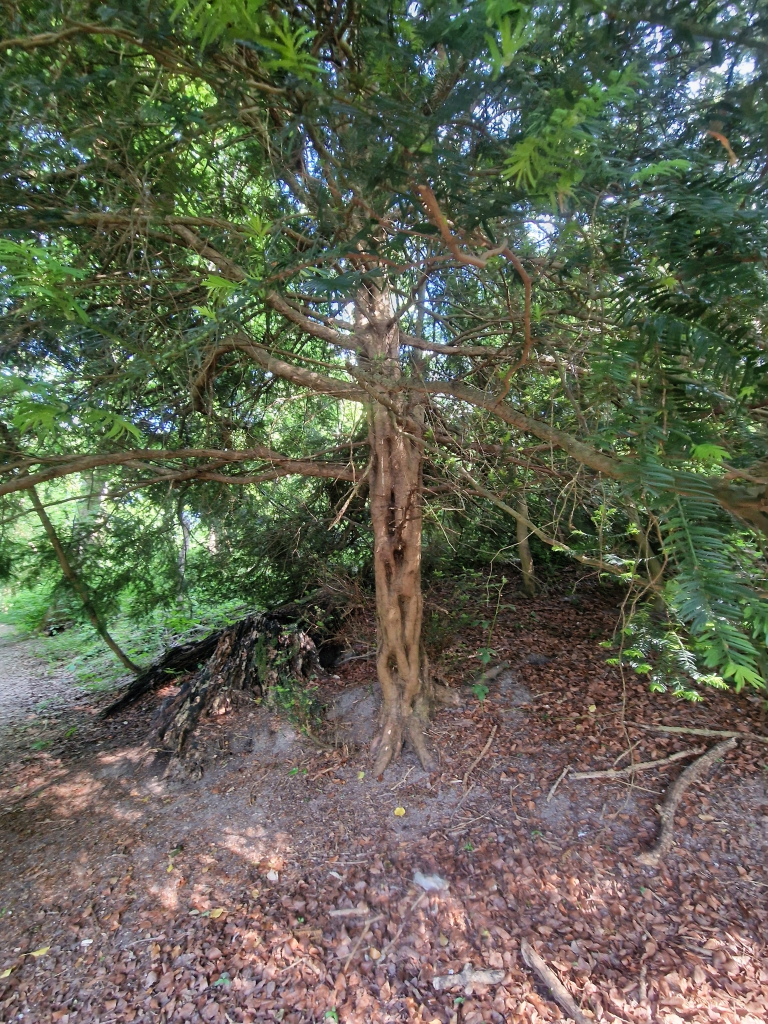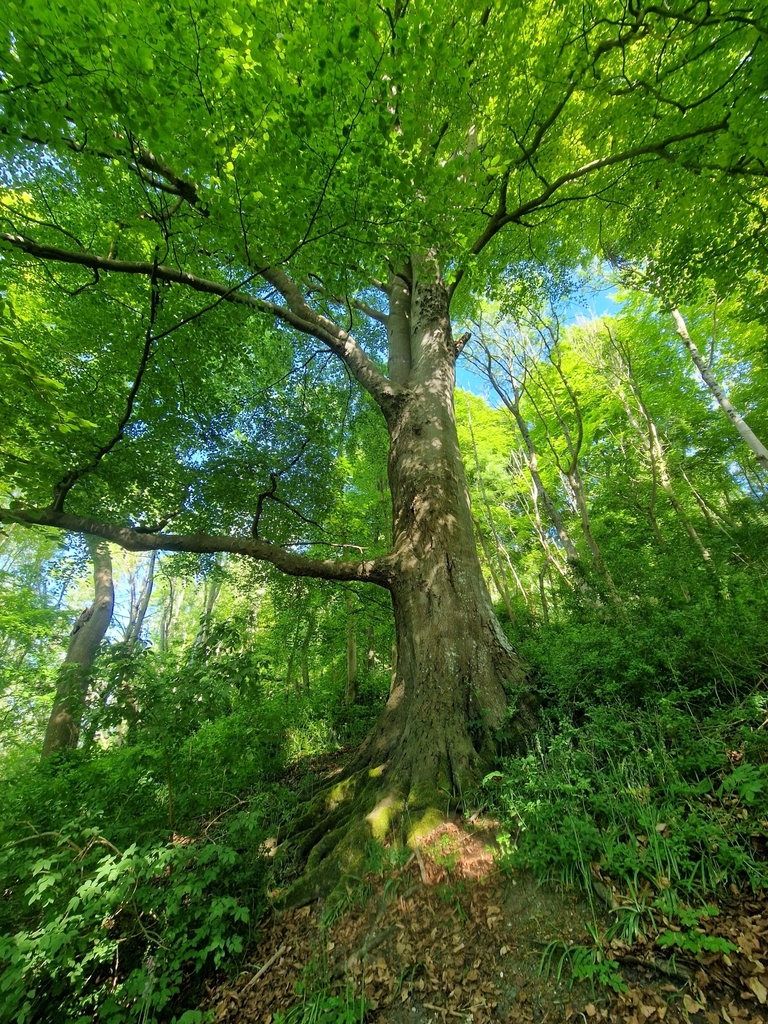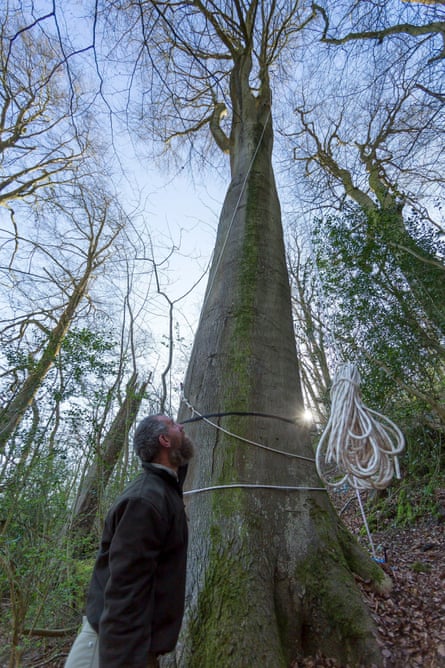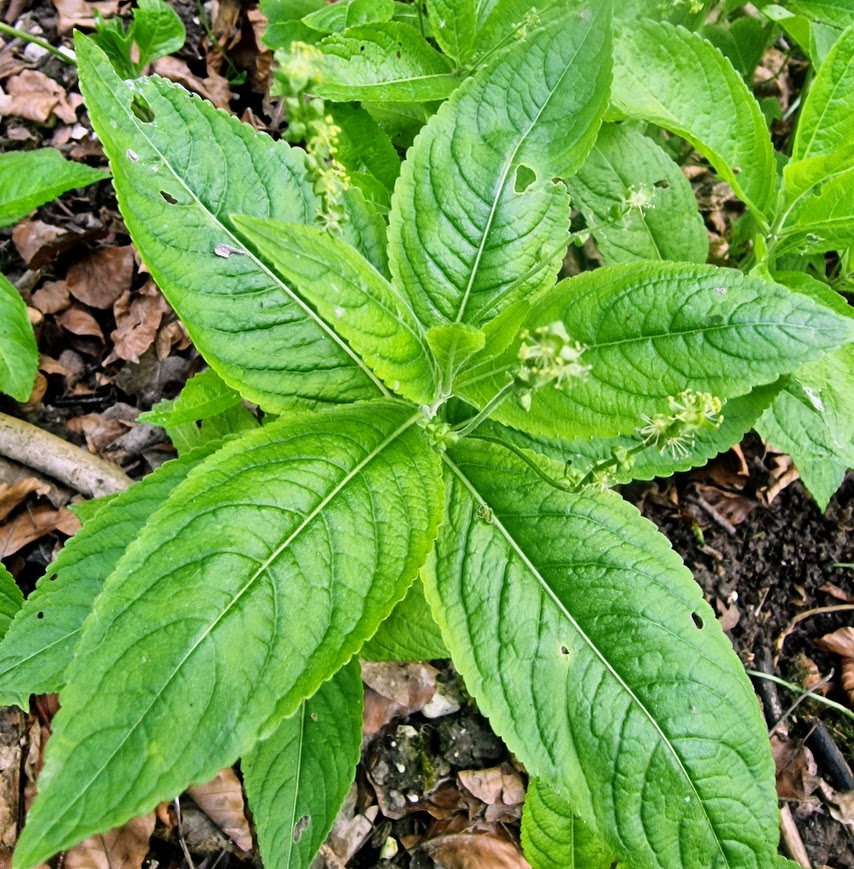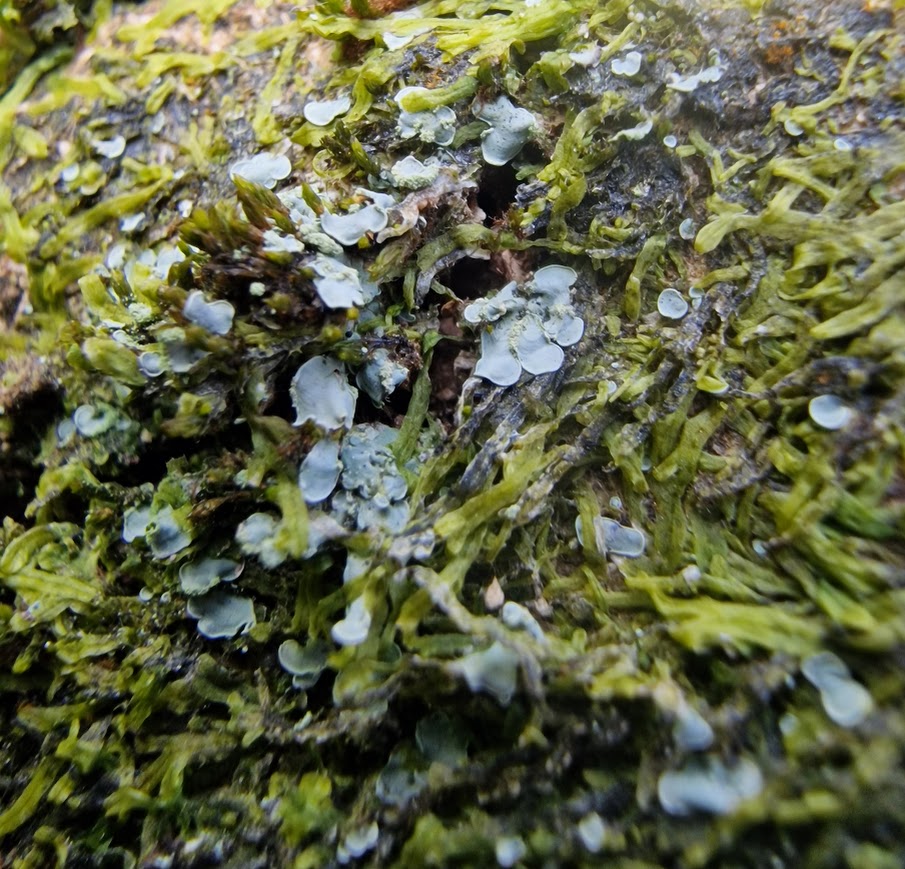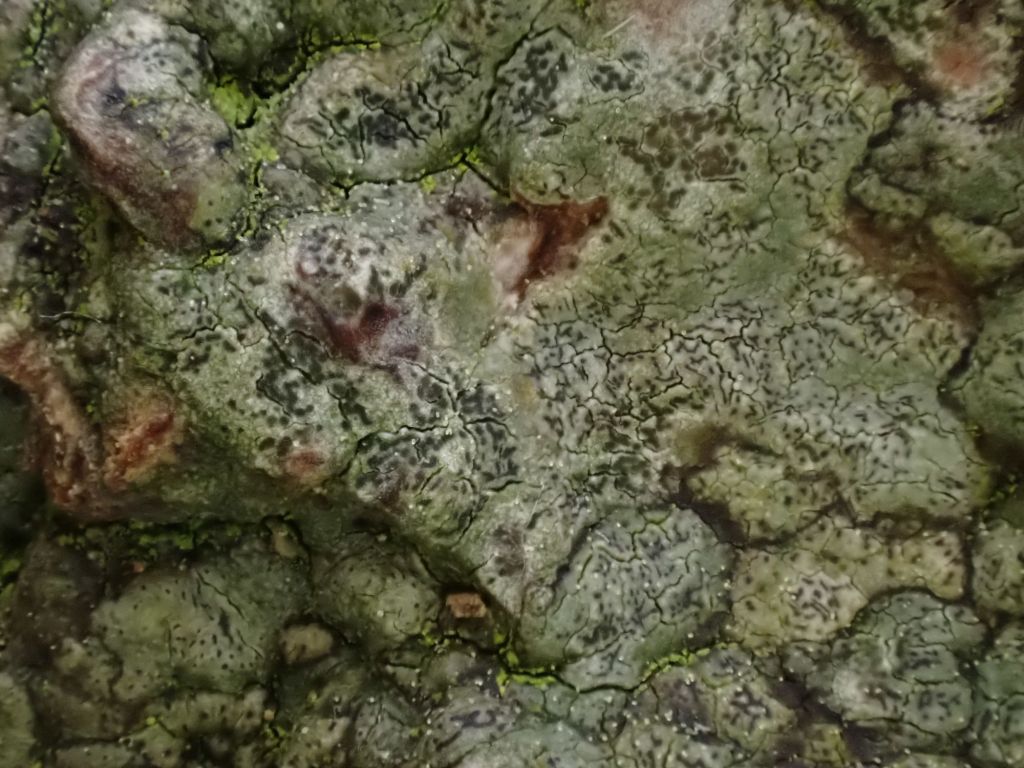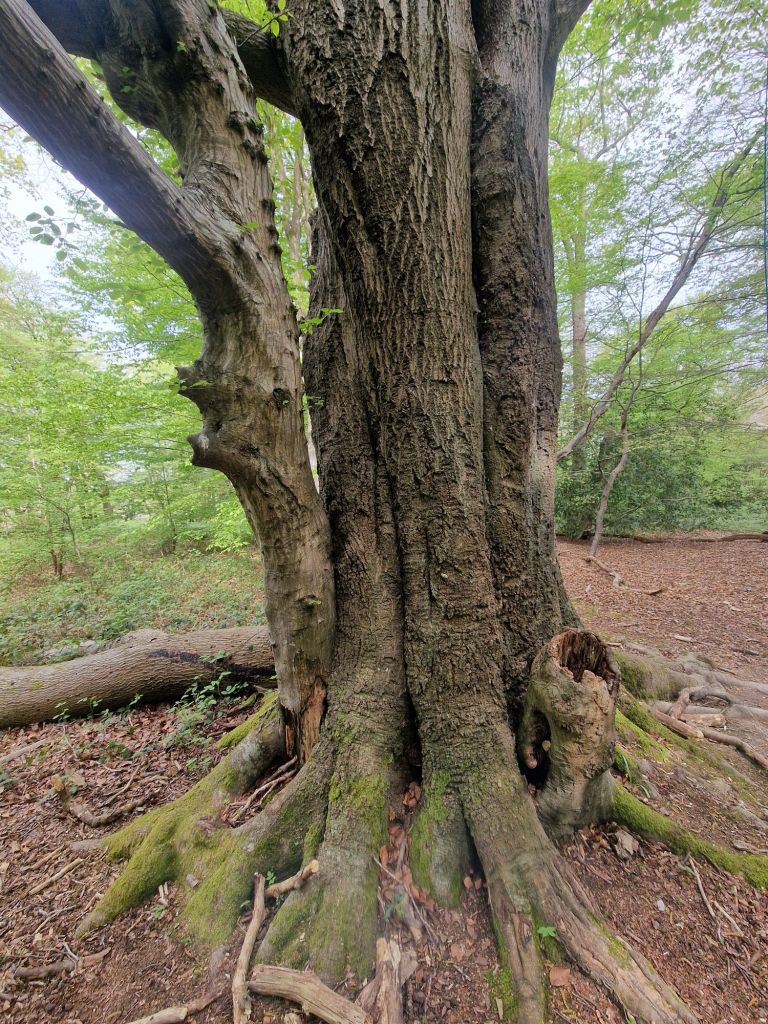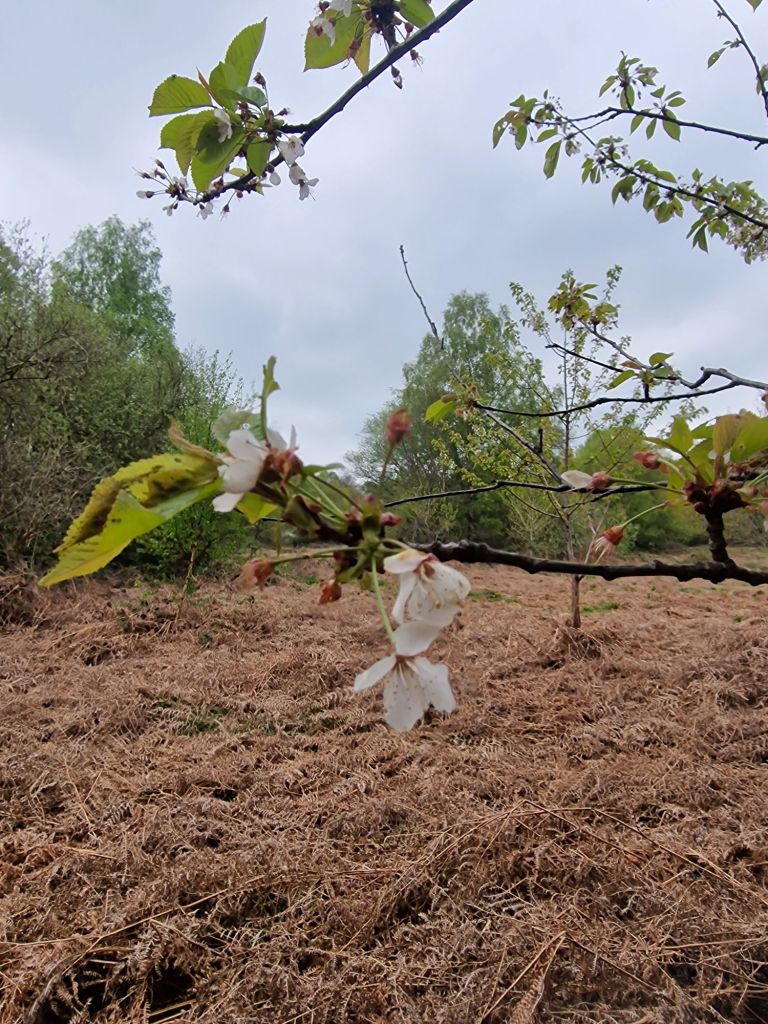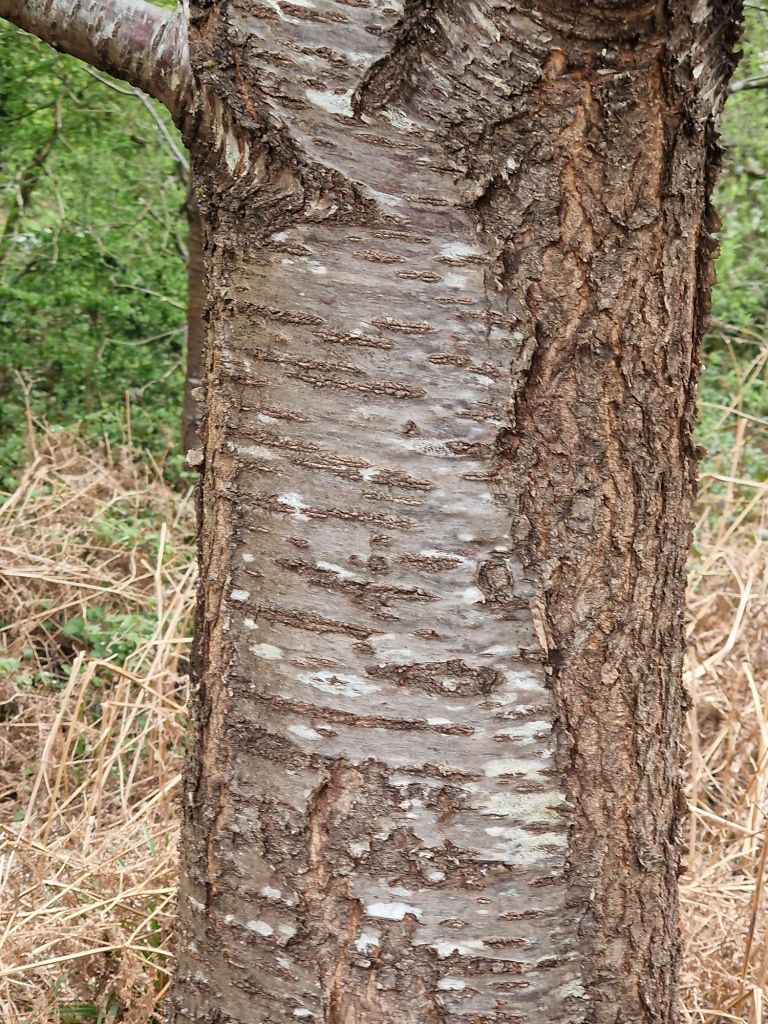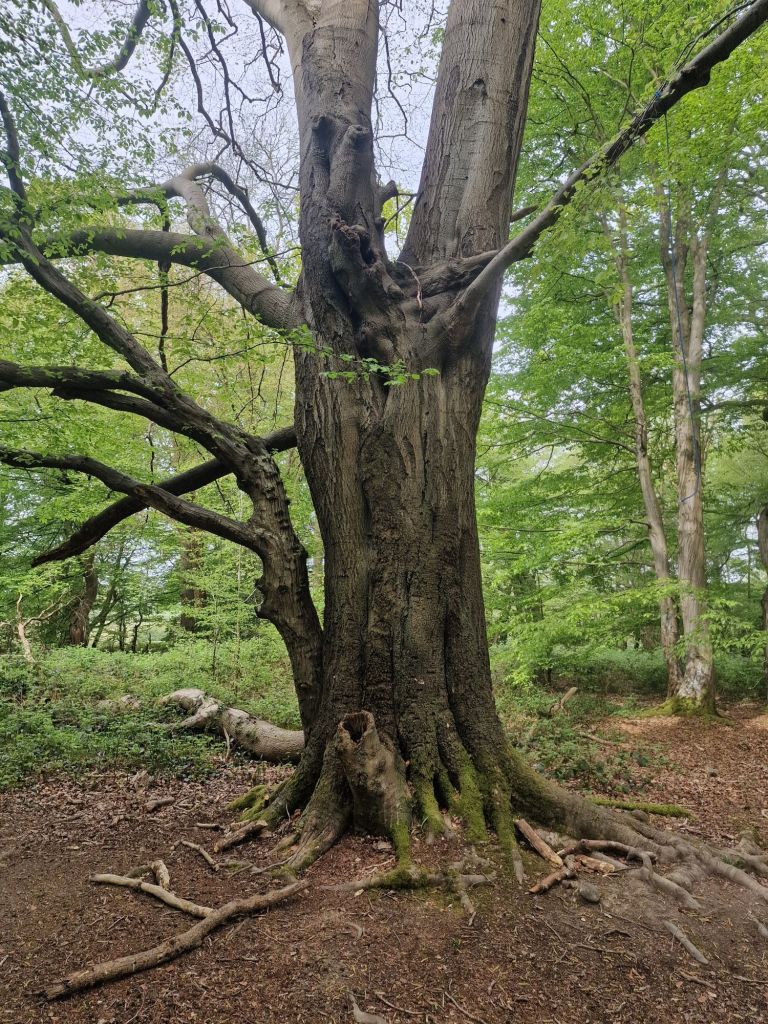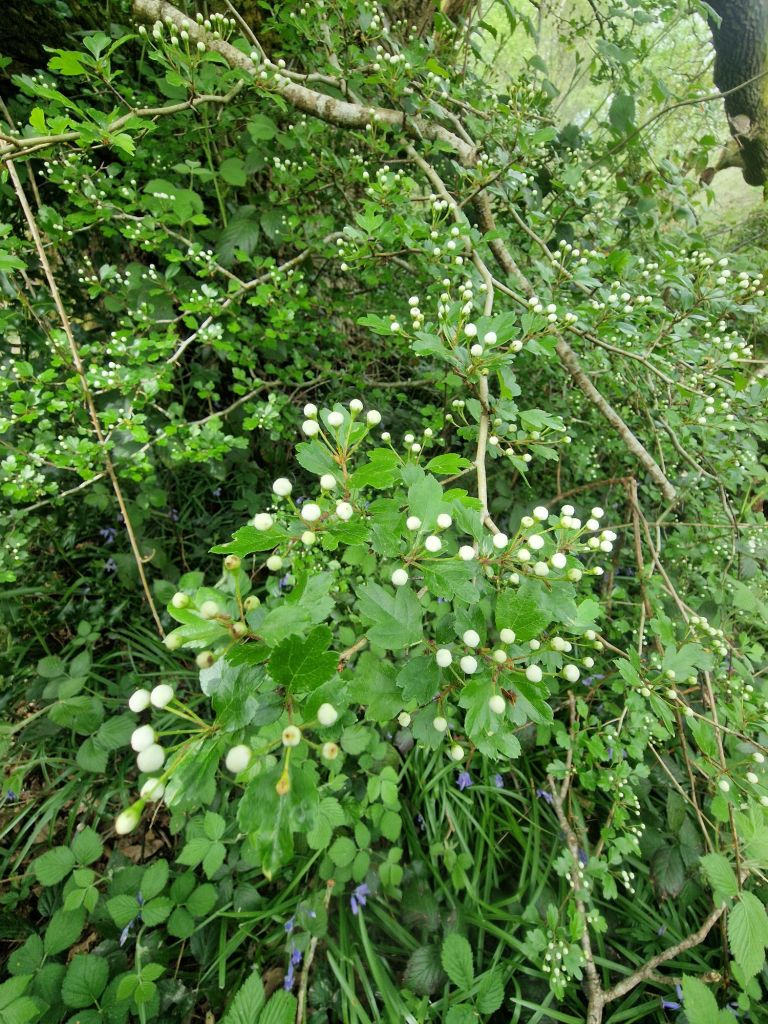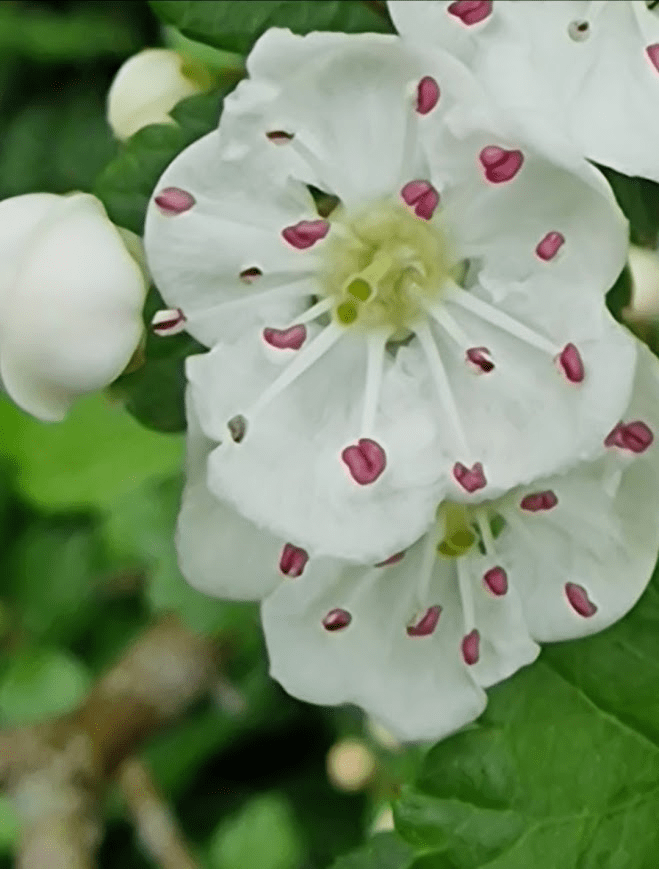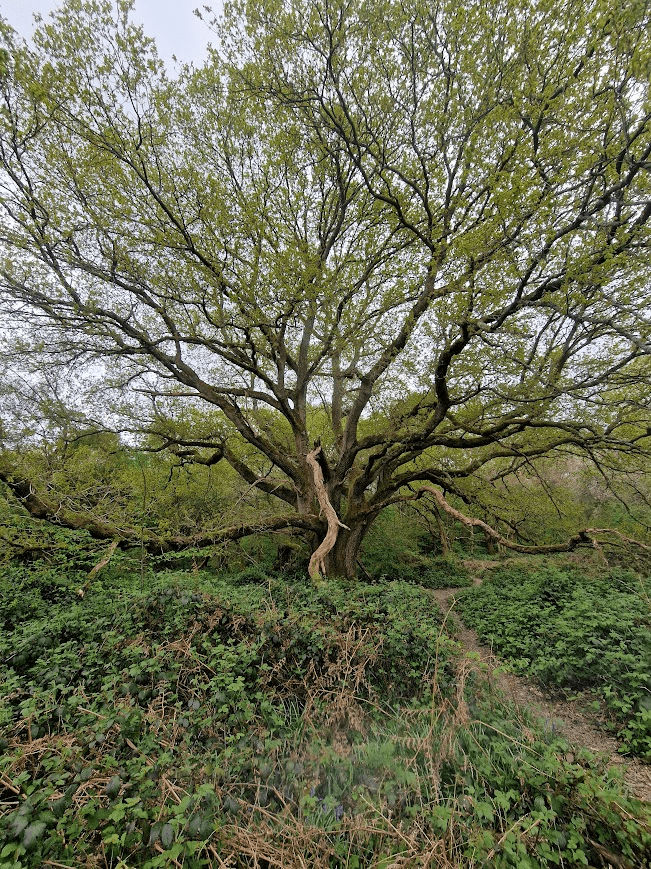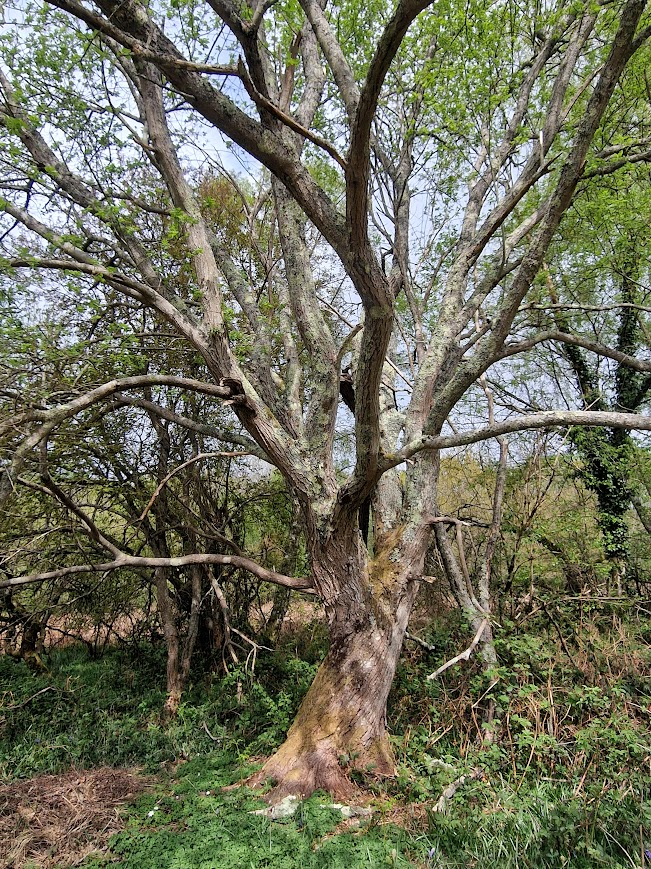
The ancient woodland of the Low Weald and Downs. Looking at plants. How do I know I am walking in ancient woodland? Butcher’s Wood, Lag Wood and Newer Copse (Wolstonbury Hill) 07.04.25

Home to myth and legend, where folk tales began. It fuelled our ancestors and still houses thousands of species. Ancient woodland has grown and adapted with native wildlife, yet what remains only covers 2.5% of the UK. Woodland Trust

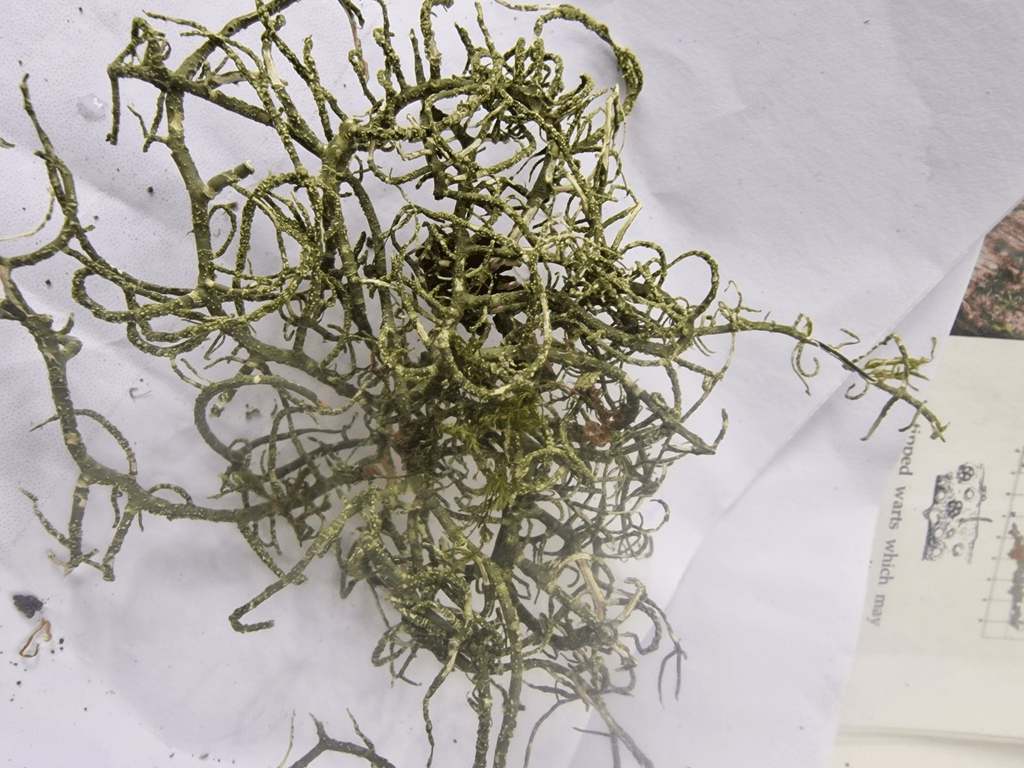
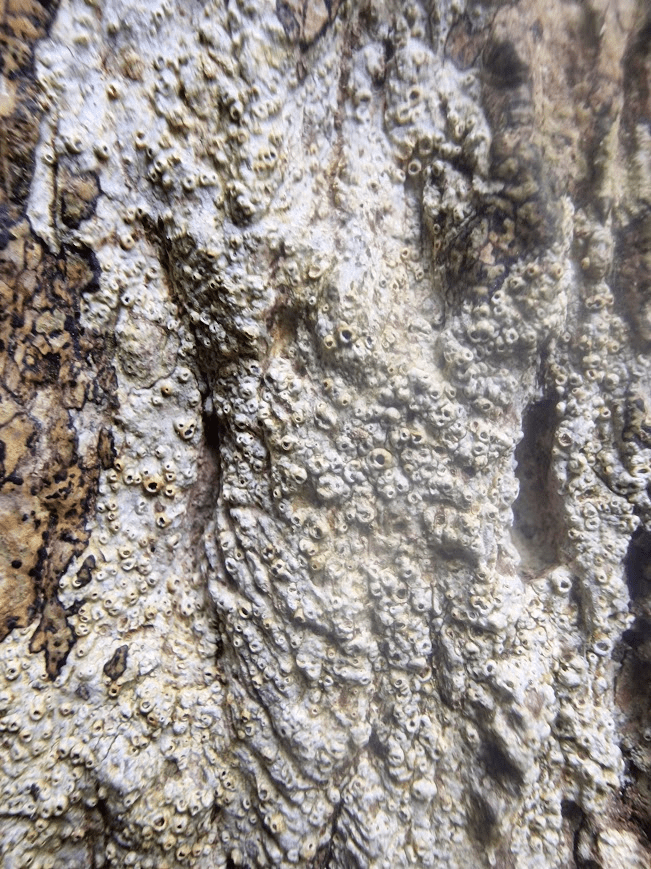
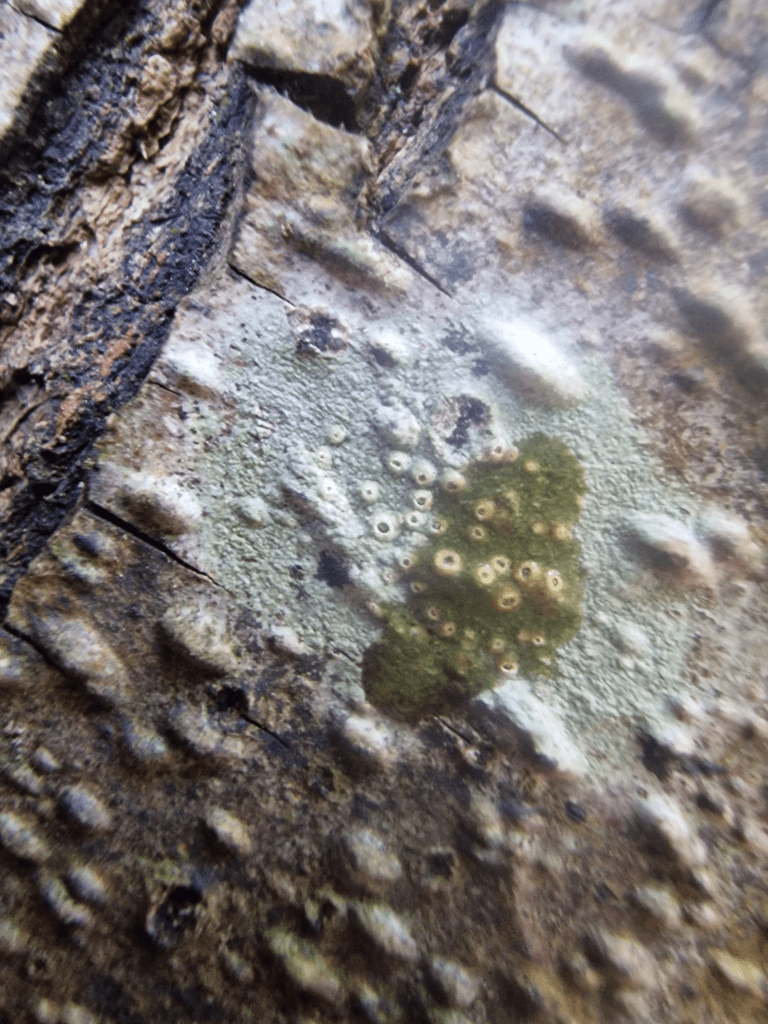
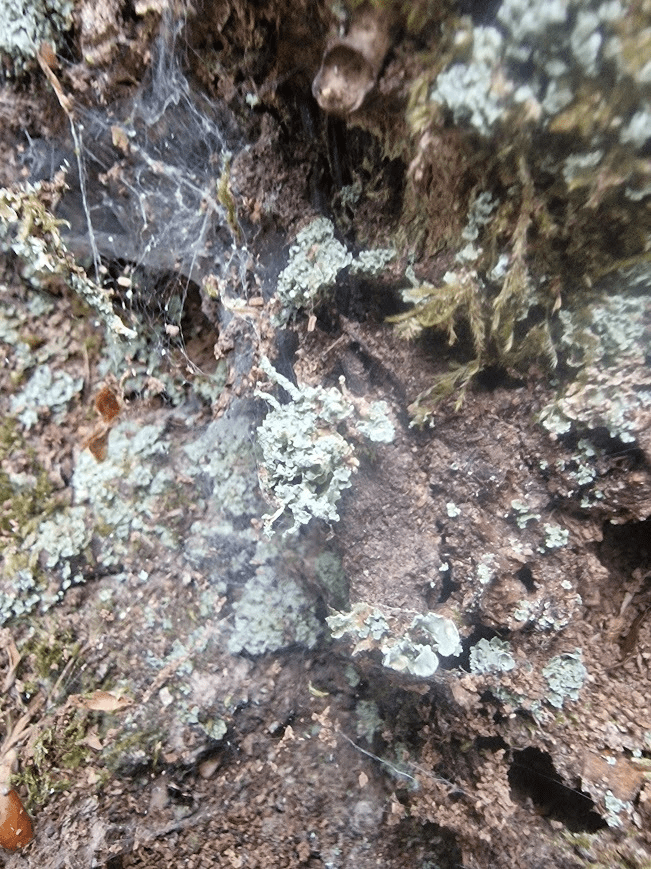
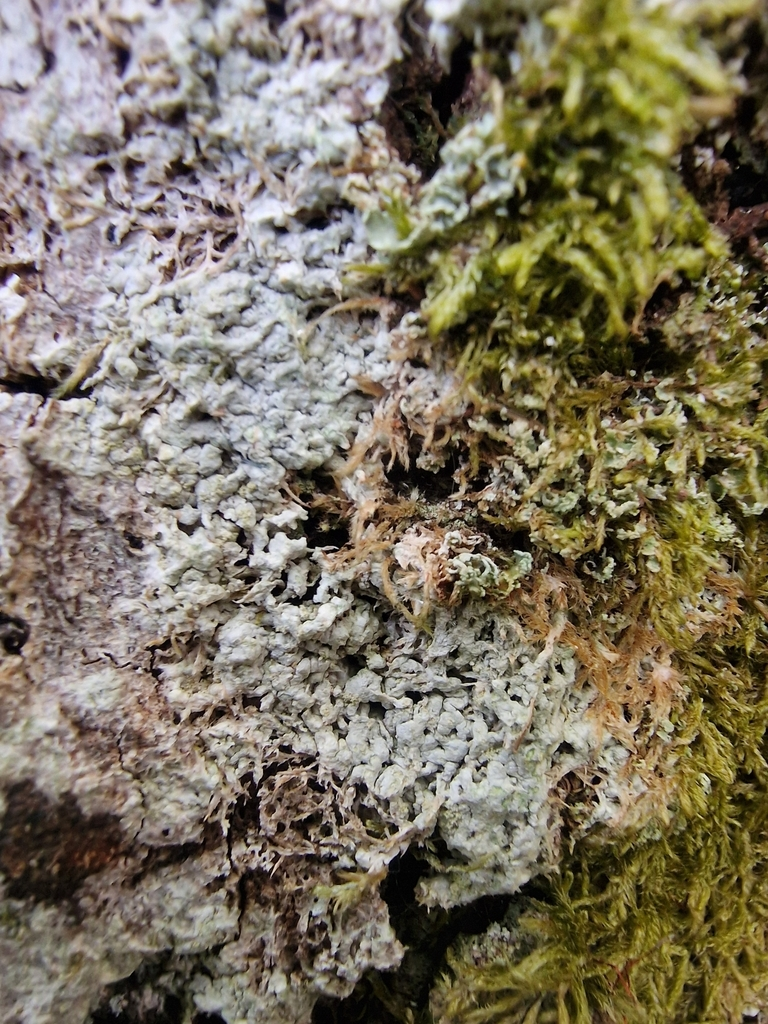
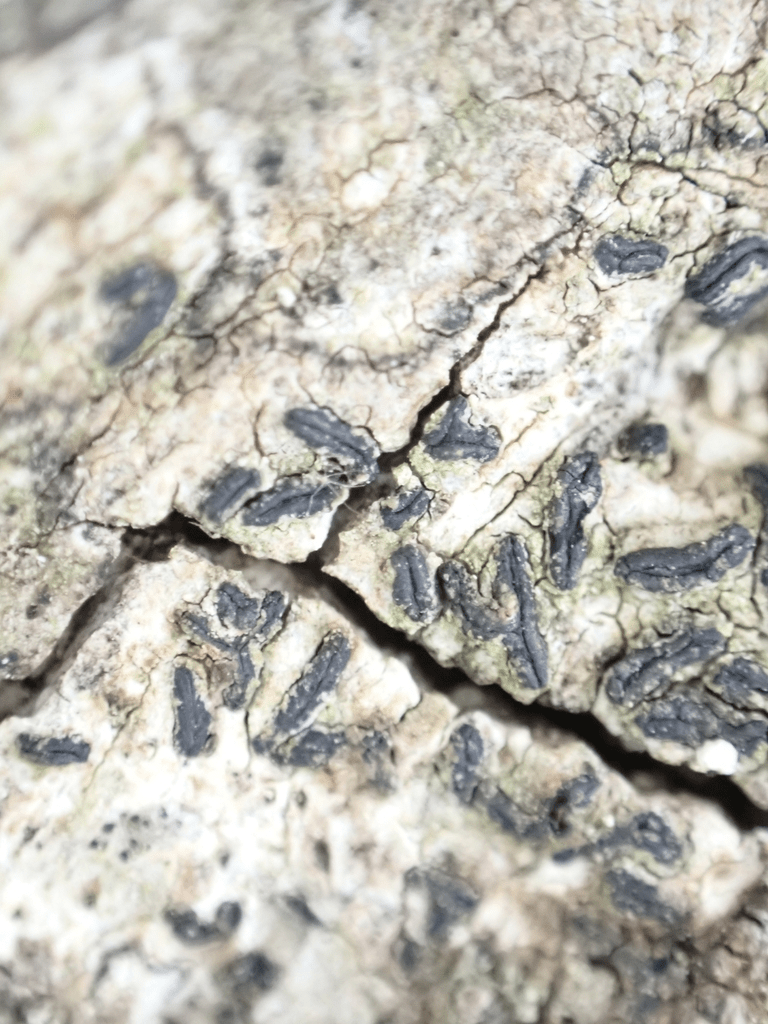
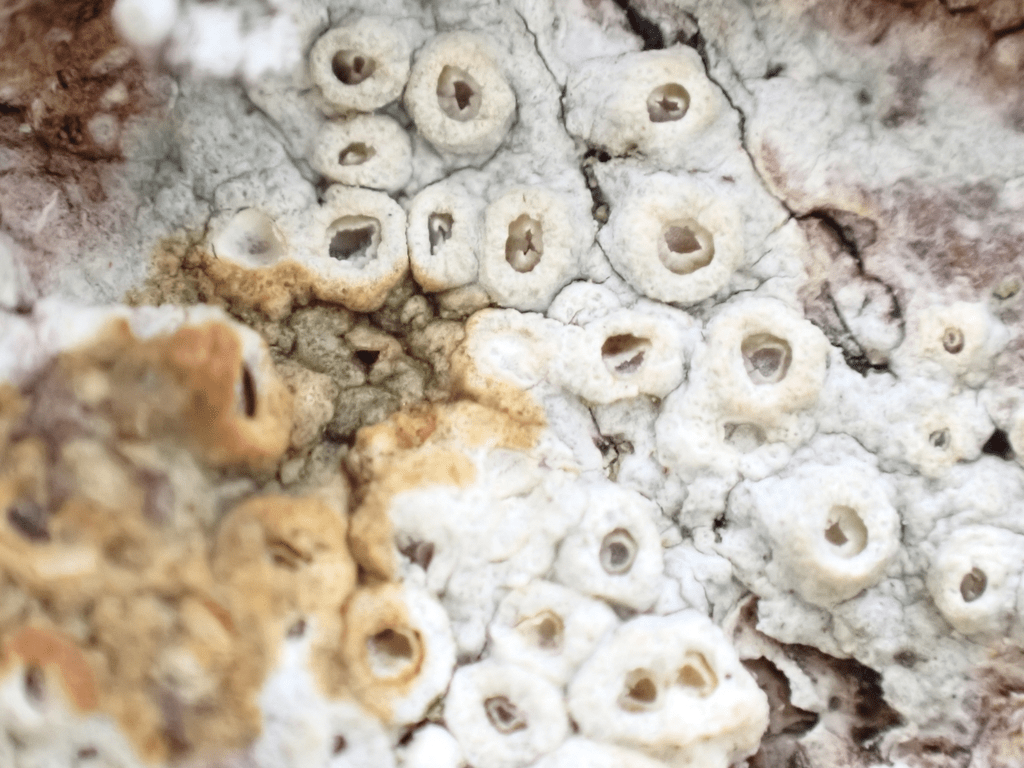
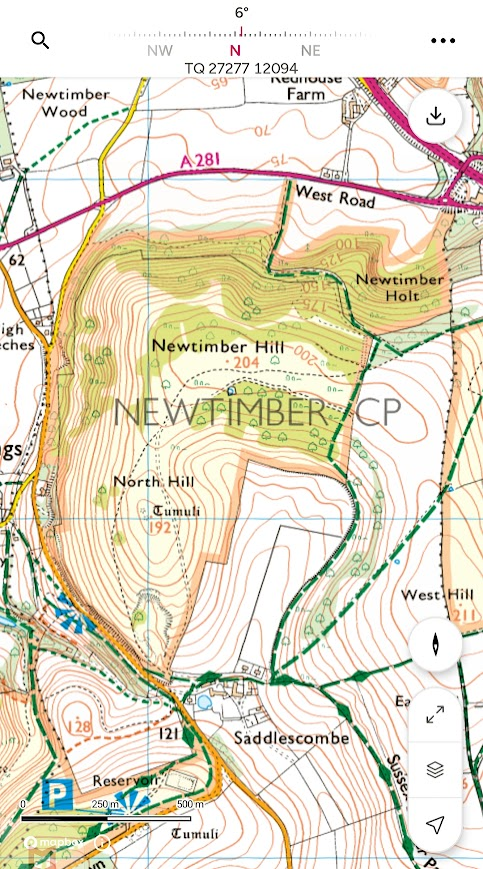
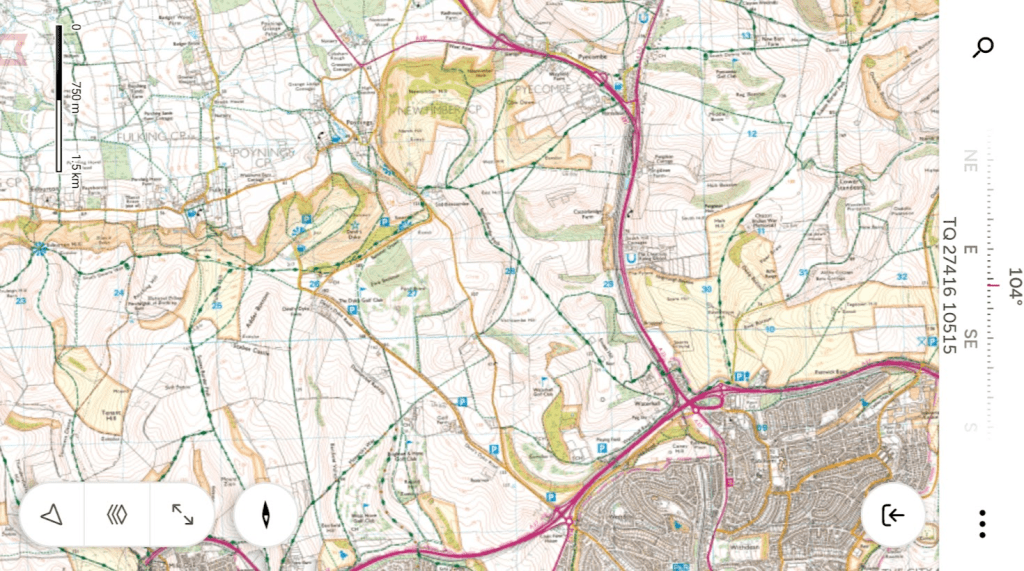
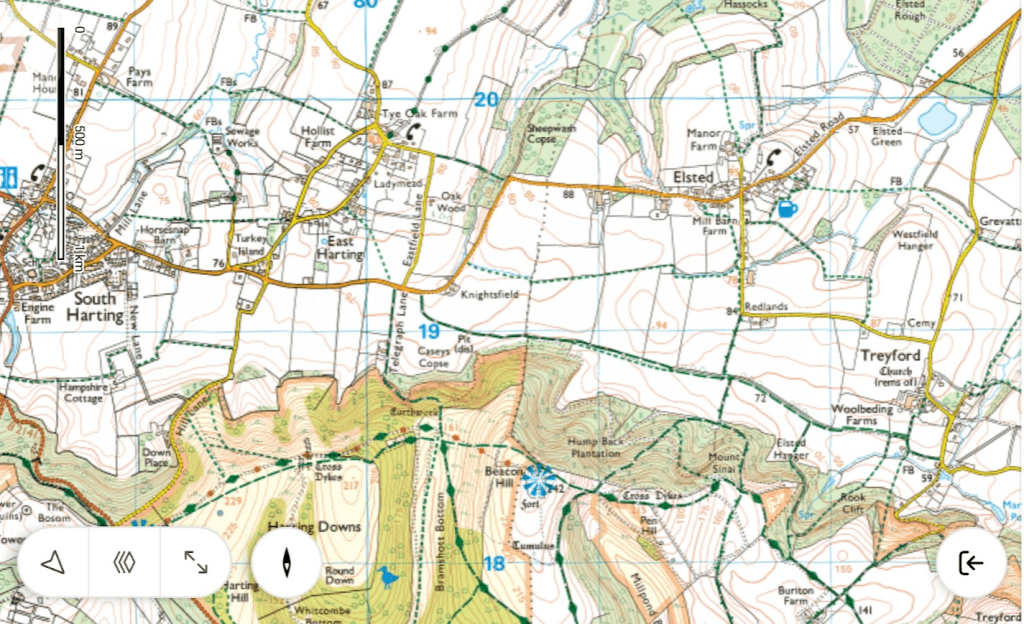
This afternoon I walked through the ancient woodland of Butcher’s Wood (Woodland Trust), Lag Wood (private but with permissive access), both just south of Hassocks and Newer Copse (Wolstonbury Hill, National Trust) near Clayton. I am a volunteer with the Woodland Trust and Action for Rural Sussex’s Lost Woods of the Low Weald and Downs project and my particular biological interest is the lichens of woods, and I lead introduction to lichen walks. But in spring, my attention is drawn to the beauty of wild plants in ancient woodland.

This post is written for the general public; especially those new to wild plant identification.

All these woods are a short walk from Hassocks Rail Station or the Jack and Jill bus stop at Clayton (Metrobus 270, 271, 272, 273)

Butcher’s Wood and Lag Wood are woods of the Low Weald (and their underlying geology is the clay of the Gault Formation). Newer Copse, Wolstonbury Hill, is woodland of the South Downs (chalk of the West Melbury Marly Chalk Formation). Underlying geology determines soil type, and this affects which plants grow where. You can find out the geology of anywhere in the the UK by using the British Geology Survey Geology Viewer Viewer

Butcher’s Wood

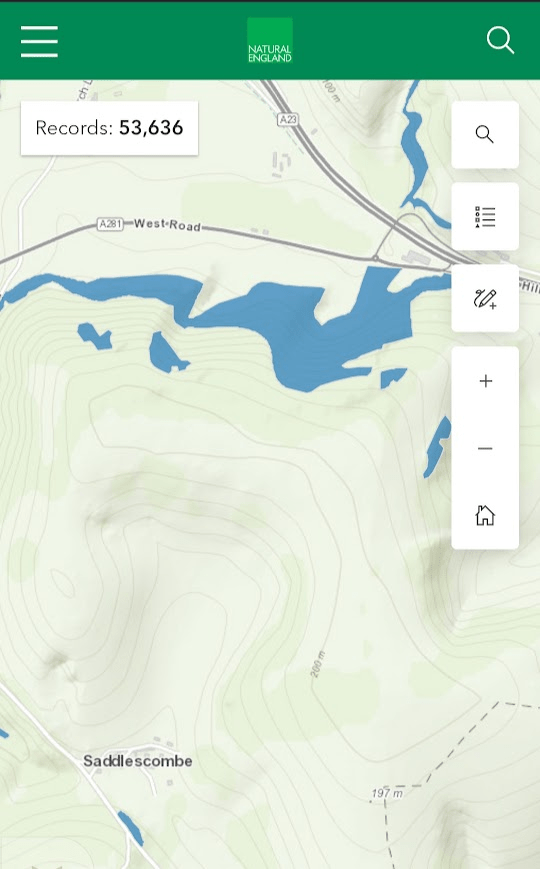
I could find out if I was in ancient woodland simply by consulting Natural England’s index of ancient woodland; it’s map of ancient woodland can be explored here: Natural England Ancient Woodland; and these three woods are indeed Ancient Woodland (Ancient semi-natural woodland (ASNW))

Natural England classifies ancient woodland thus:

Firstly,  woodland can be calassified as Ancient Semi-Natural Woodland; mainly made up of trees and shrubs native to the site, usually arising from natural regeneration.  They are areas that have been wooded continuously since at least 1600. This does not mean the trees in ancient woodland are themselves ancient; although some might be.

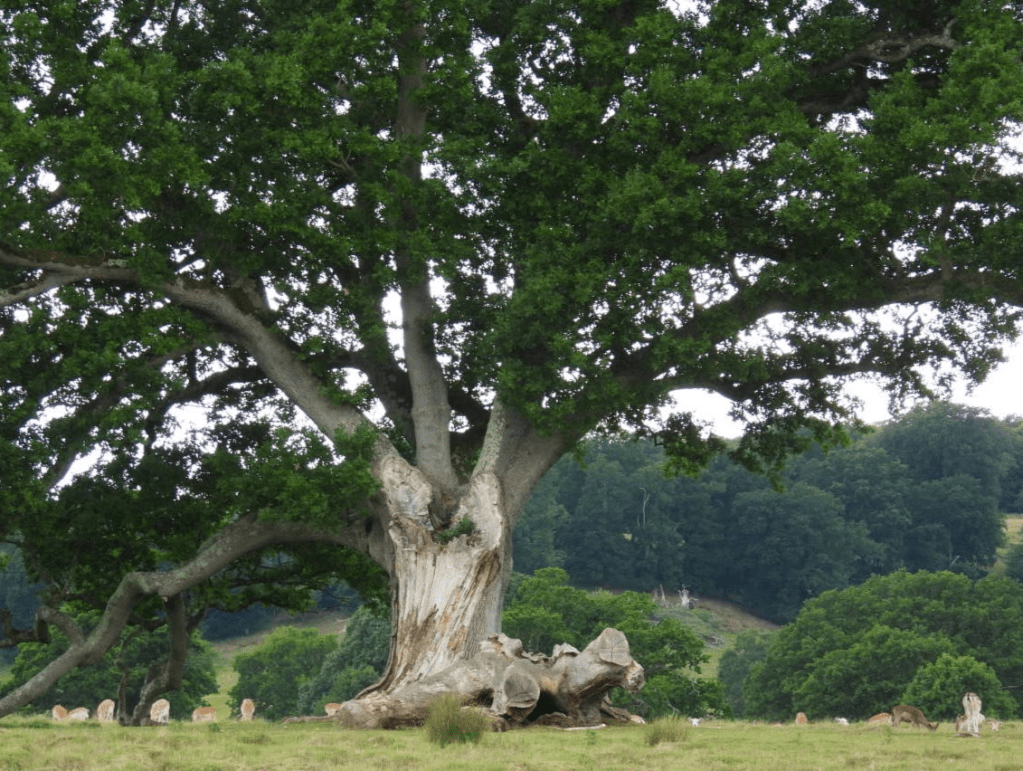
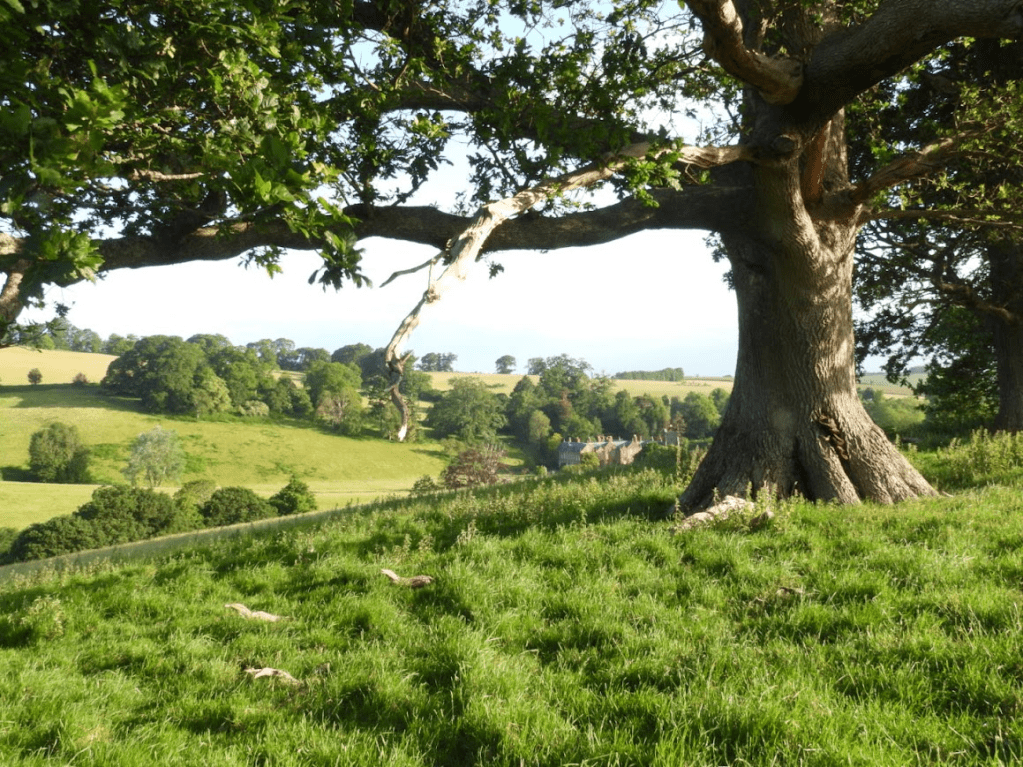
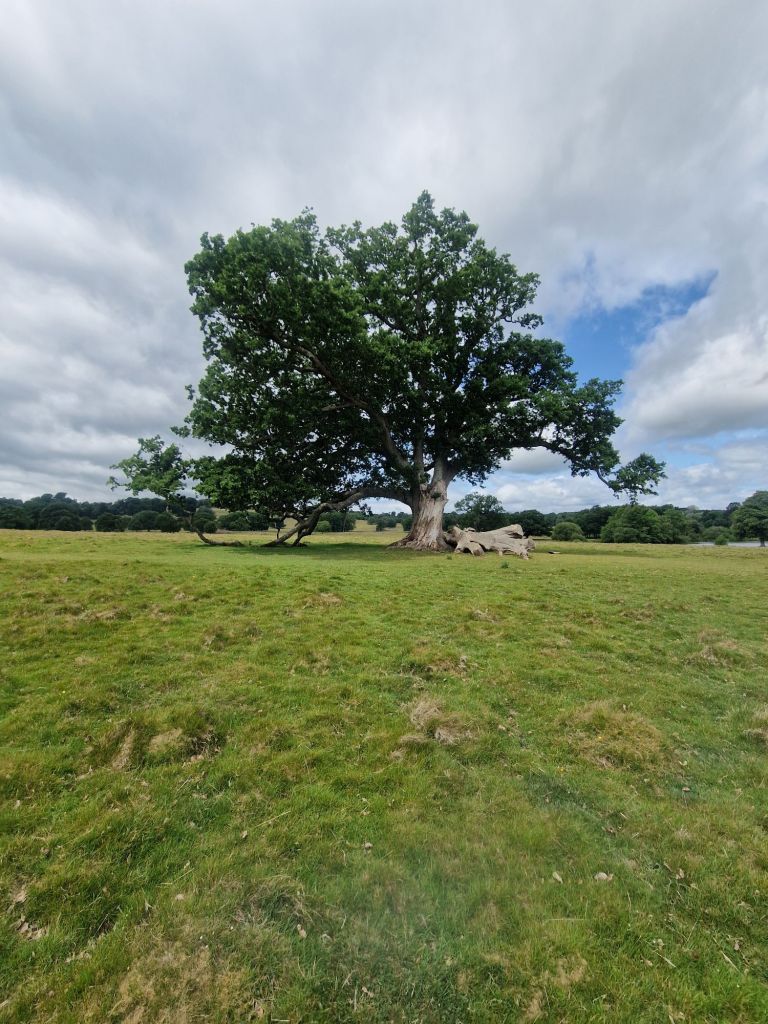
Moreover, ancient trees can be found not in woods. Ancient Pendunculate Oaks, Quercus robur, can be found in Low Weald grazing pasture and hedge rows.  These are probably relics of former woodland that was cleared for pasture and left for shelter for livestock or for ield boundaries.

The oldest trees in Sussex are polllarded pasture Oaks in ancient medieval Deer Parks; those in the Low Weald include Danny Park south of Hurspierpoint and Plashett Park north of Ringmer. There is only limited public access by public footpath to these parks

Alternatively, Natural Englsnd designates ancient woodland as Plantations on Ancient Woodland Sights (or Ancient Replanted Woodland) – replanted with conifer or broadleaved trees (e.g. Sweet Chestnut, Castanea sativa) that retain ancient woodland features, such as undisturbed soil, ground flora and fungi

Another way of determining whether you are in ancient woodland, without looking at the Natural England ancient woodland maps, is to look at the plants growing in the woodland you are walking through. Certain plants indicate that the wood you are walking through may be ancient; as these plants take a bery long time to establish themselves in woods.

This post illustrates the Ancient Woodland Indicator Plants that I found in Butcher’s Wood, Lag Wood and Newer Copse today. Ancient Woodland Indicator Plants are listed in Indicators Of Ancient Woodland – the use of vascular plants in evaluating ancient woods for nature conservation. Francis Rose, British Wildlife 10.4 April 1999, Pages 241-251. At the end of this post is a full list of the ancient woodland indicator plants listed by Rose

Resources that can help you identify wild plants:

Harrap’s Wild Flowers is an excellent and easy-to-use field guide, that uses photos with key identification features. Simon Harrap: Harrap’s Wild Flowers A Field Guide to the Wild Flowers of Britain & Ireland ( 2nd edition 2015)

Flora Incognita App

This is the most accurate of AI photo recognition App to support plant identification as it requires photos of the flower, leaves and the whole plant.

iNaturalist App

This also useful for identification and has the added advantage that it records your observations if you want to. Saved onservations are checked by others and records which reach “Research Grade” are submitted to county recorders and if agreed they will be added to the National Biodiversity Network Atlas . There are questions about the reliability of Research Grade verification; but iNaturalist is extremely useful for community projects as your records can be seen by anyone; and can be seen in “projects” e.g. the Henfield Nature Challenge . As you progress with identification, I would recommend that you use iRecord, as your plant records will automatically be seen and checked by the County Recorders for vascular plants and if verified they will be added to the Botanical Society of Britain and Ireland’s database and could appear in the next edition of the Sussex Plant Atlas. iRecord

N.B. AI photo identification gets things wrong at times; always check an AI identification with a field guide or an expert botanist (if you know one!)

All of the photos in this post were taken today (07.04.25) in Butcher’s Wood, Lag Wood or Newer Copse; except for some examples of other indicator plants that can be found in other Low Weald woods (Butcher’s Broom and Wild Service Trees). All the photos in the post were taken by me.

Butcher’s Wood and Lag Wood (Low Weald)

Lonicera periclymenum Honeysuckle (Butchers Wood)

Primula vulgaris Primrose (Lag Wood)

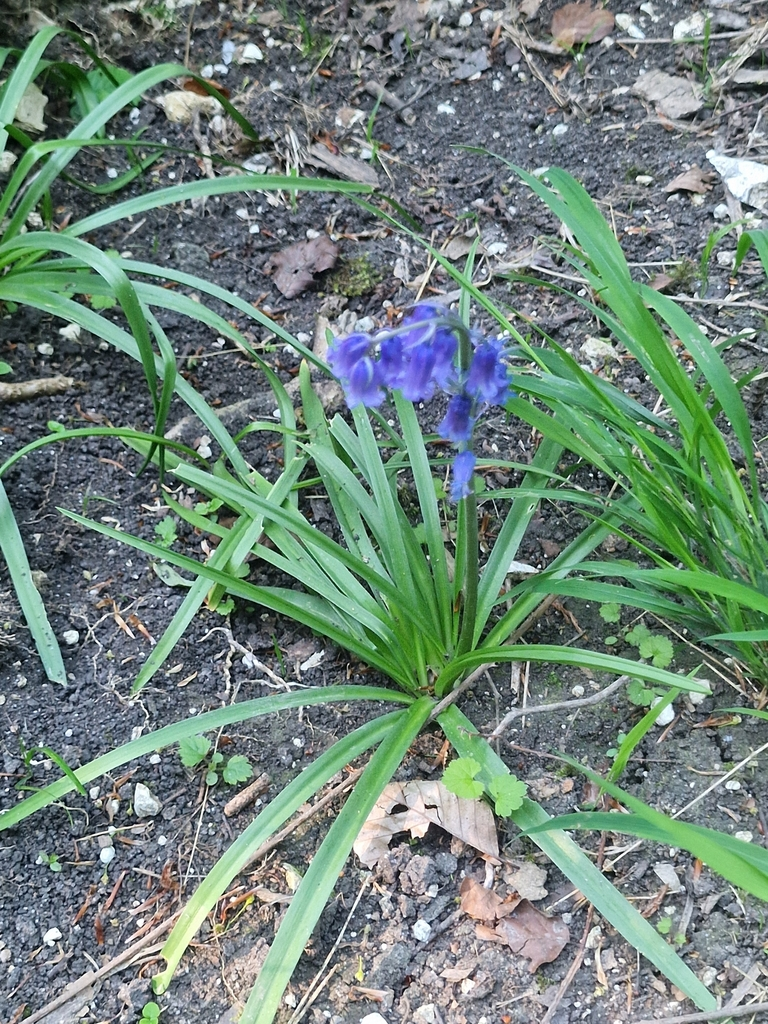
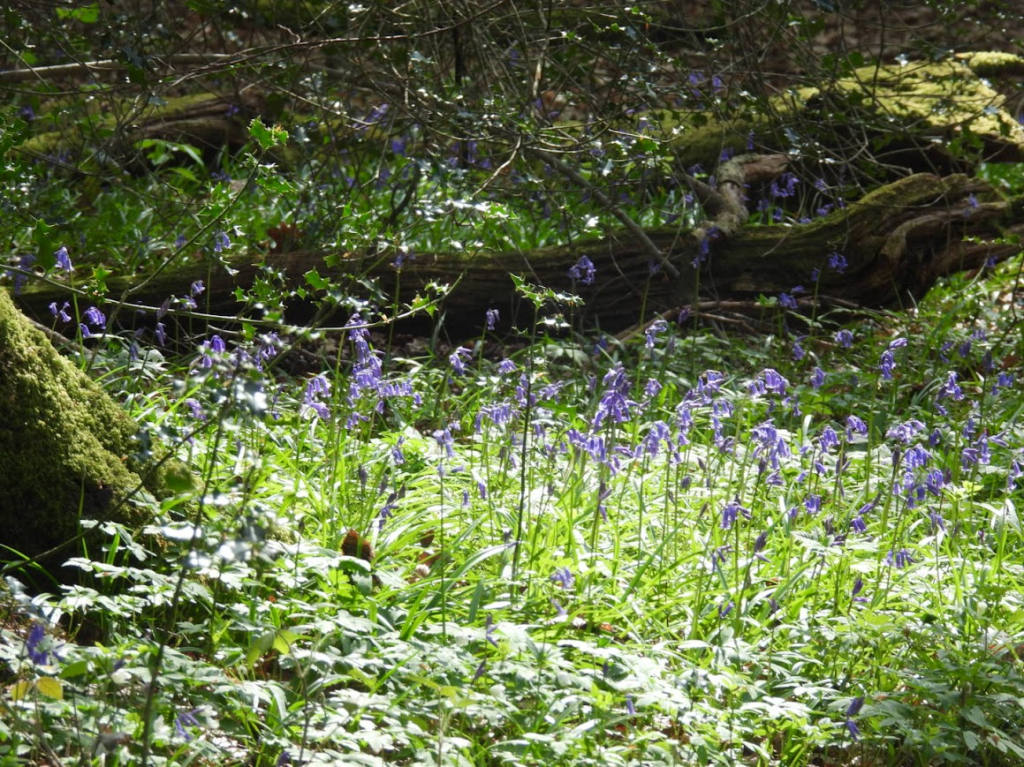
Hyacinthoides non-scripta Bluebell (Butcher’s Wood)

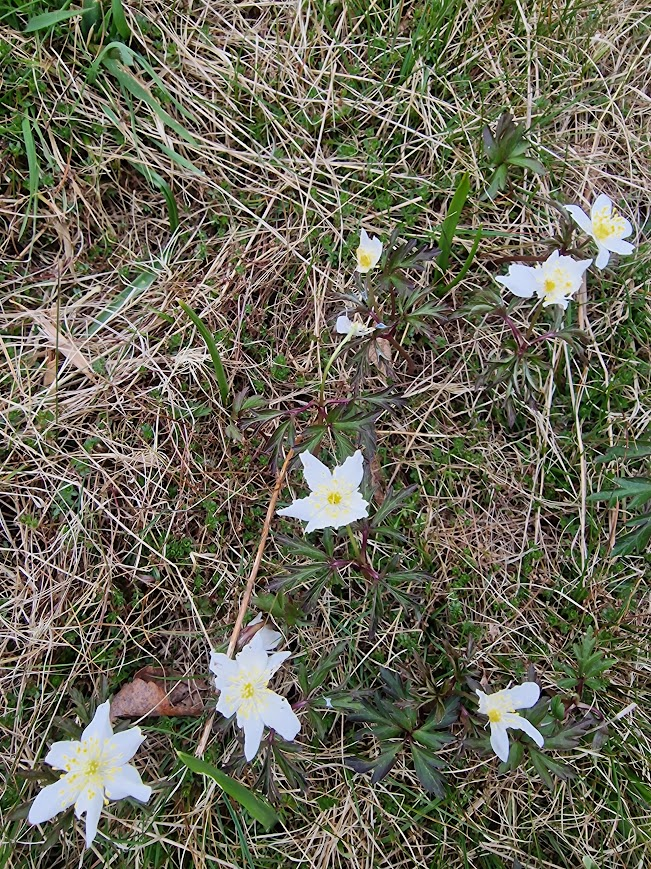
Anemonoides nemorosa Wood Anemone (Butcher’s Wood).

Wood Anemones turn their flowers to the direction of the sun. The yellow flowers are Lesser Celandine, Ficaria verna. It is not an ancient woodland indicator plant but is a very common flowering plant in woodland; and is one of the first flowers to bloom in spring, and so is very important to pollinating insects.

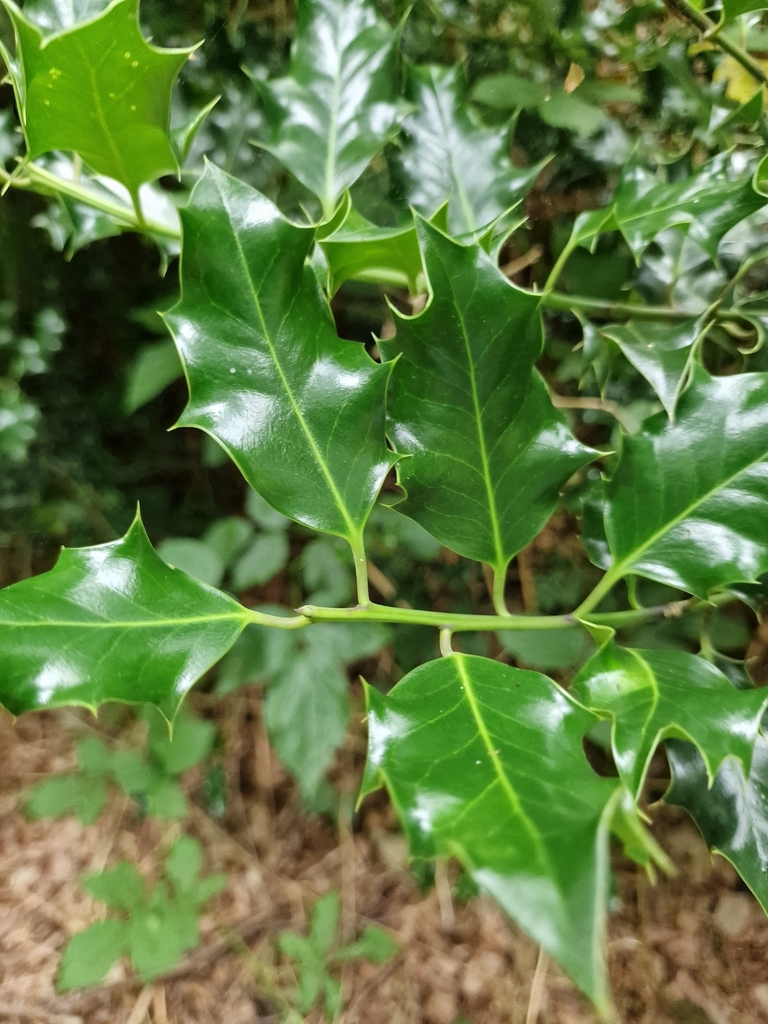
Ilex aquifolium European Holly

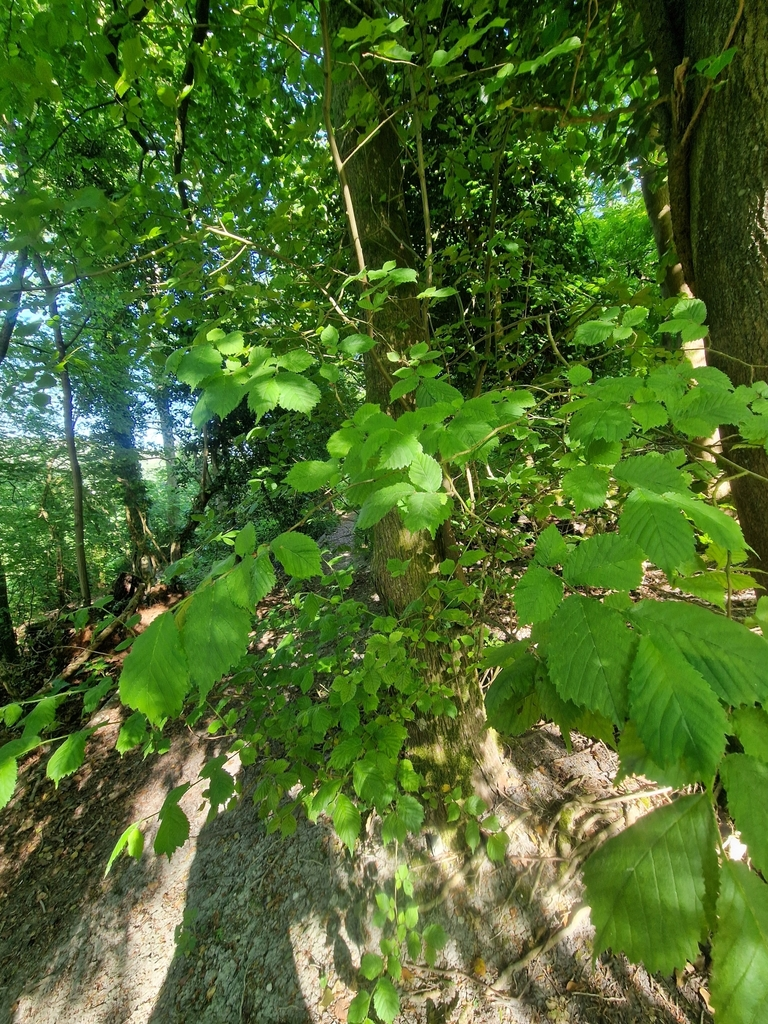
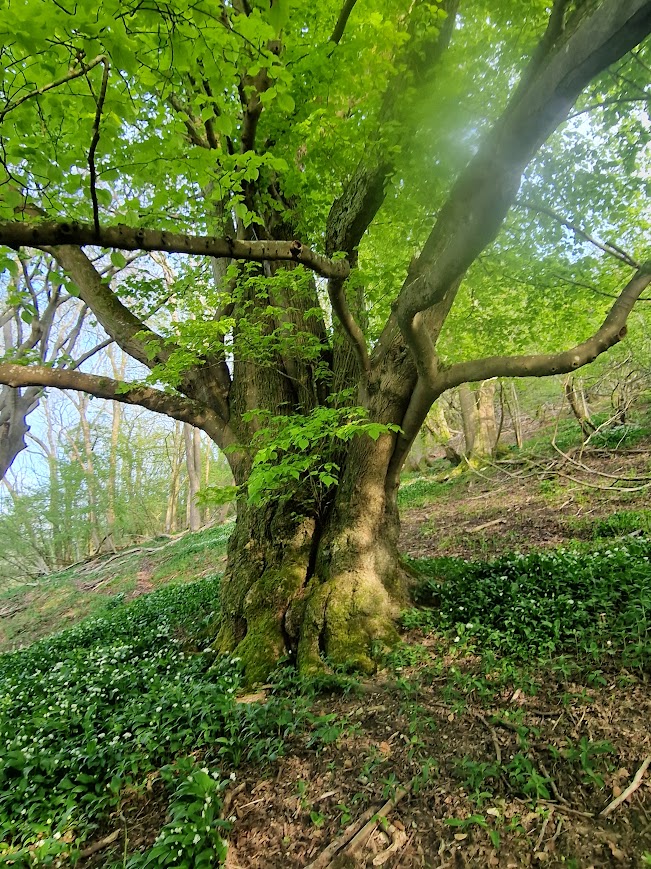
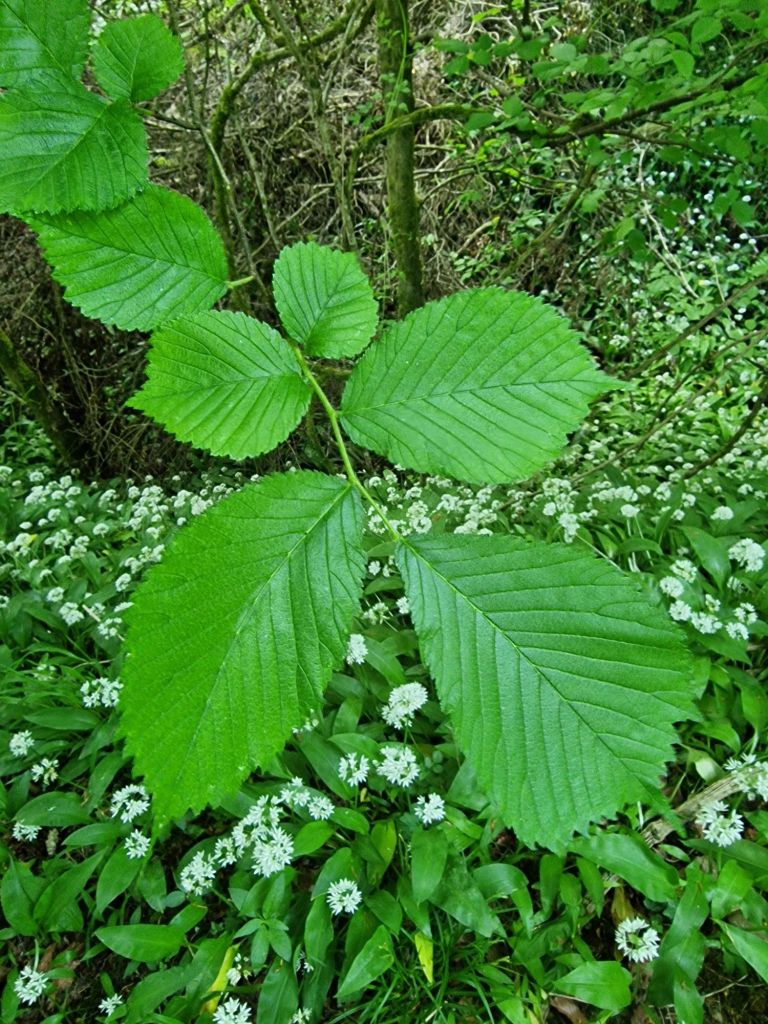
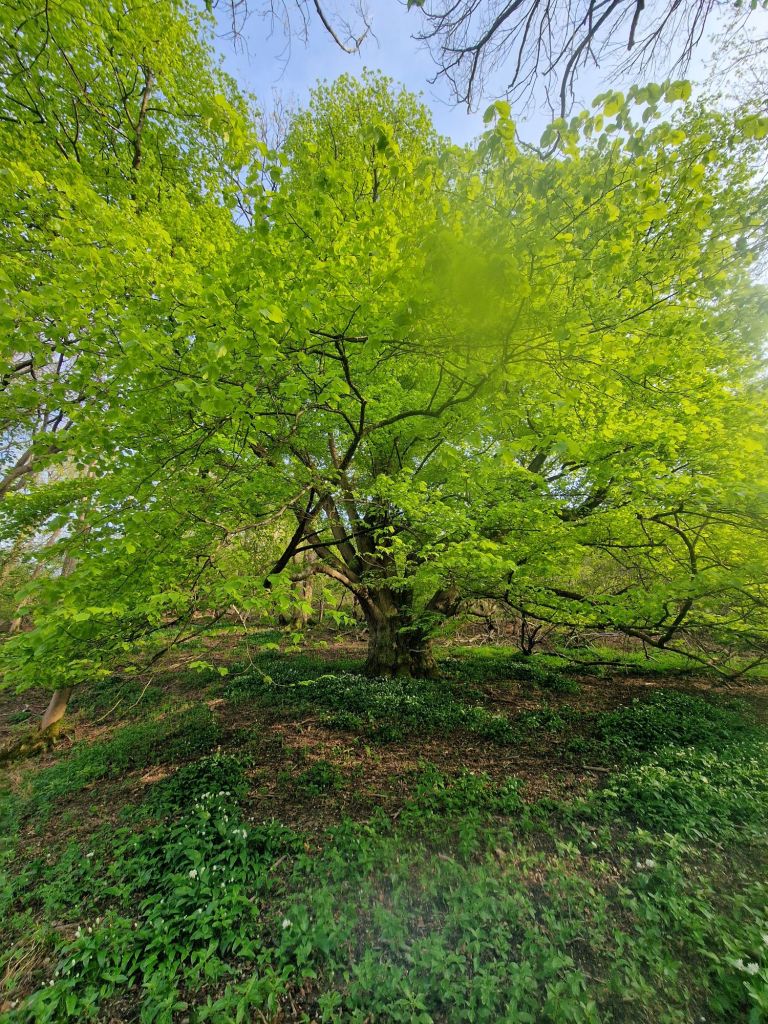
An ancient pollarded Carpinus betulus,  European Hornbeam, within Lag Wood. Rose makes it clear in his list that Carpinus betulus should only be considered an ancient woodland indicator only if they occur well within the wood and do not appear to have been planted.

Polypodium sp., Polypody Fern (Lag Wood)

The exact species of polypodies is only determinable by microscopic inspection of their spore; but all species of Polypody Ferns are ancient woodland indicators.

This epiphytic Polypody was growing at the top of a Pendunculate Oak, Quercus robur. It looks a bit shrivelled due to the lack of rain of late, and it is being exposed to the full sun while the Oak has no leaves. A branch had fallen from this tree, with Polypody on it; this look more like what Polypody typically looks like

Carex sylvatica, Wood-sedge (Butcher’s Wood)

Carex pendula, Pendulous sedge (Lag Wood)

Theses sedges are a feature of Low Weald woodland, because clay is a soil type which retains water and these sedges grow in wet woodland.

In Lag Wood an ancient field boundary can be seen, consisting of a bank and coppiced Hornbeam. Ancient (medieval) field and wood boundaries often indicate that woodland is ancient.

Ancient woodland has not been “wild” since the delopment of agriculture; since the Neolithic Revolution, between 3100 and 2900 BC. Ancient woodlands have been coppiced and pollarded for 1000s of years. The beauty and biodiversity of these woods comes from sensitive, appropriate human management.

Newer Copse (Wolstonbury Hill), South Downs

Many of the ancient woodland indicator plants of the clay Low Weald and found growing on chalk Downland and vice versa.

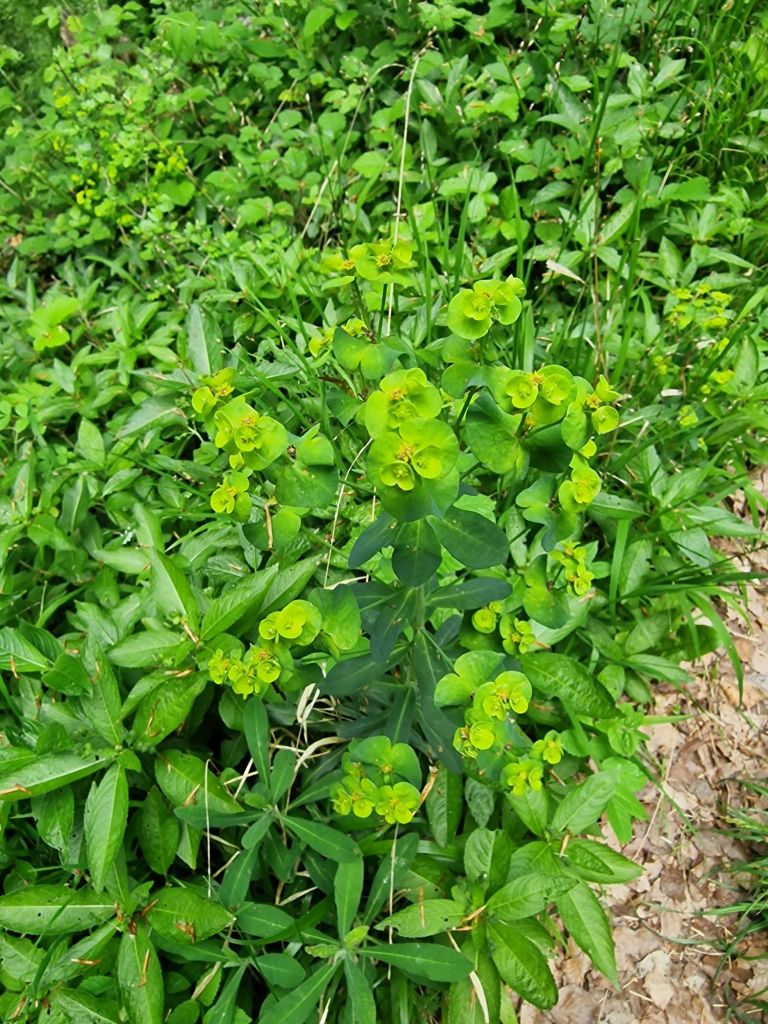
I saw Bluebells, Wood Anemones and Holly, in Newer Copse, but I also saw Early-Dog Violets, Moschatel, Yellow Archangel, Soft Shield Fern and Dog’s Mercury; all ancient woodland indicator plants. On other occasions, I have seen Ransoms, Spurge-Laurel Early Purple Orchids and Spurge-Laurel here, also ancient woodland indicator plants.

Viola reichenbachiana Early-Dog Violets

Early Dog Violets are difficult to separate from Common Dog Violets; the Early Dog-violet has a darker purple spur behind the petals. PlantLife: Early Dog Violet

Adoxa moschatellina Moschatel or Townhall Clock

These are very small; and easy to overlook

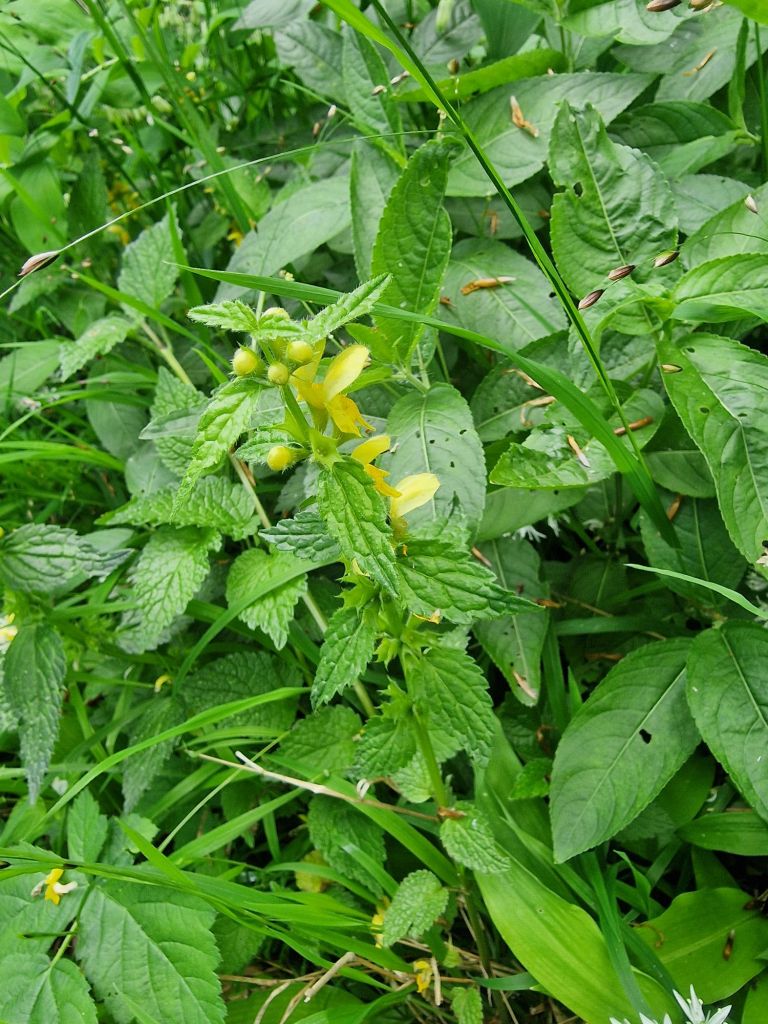
Laminate galeobdomon Yellow Archangel, not yet in flower.

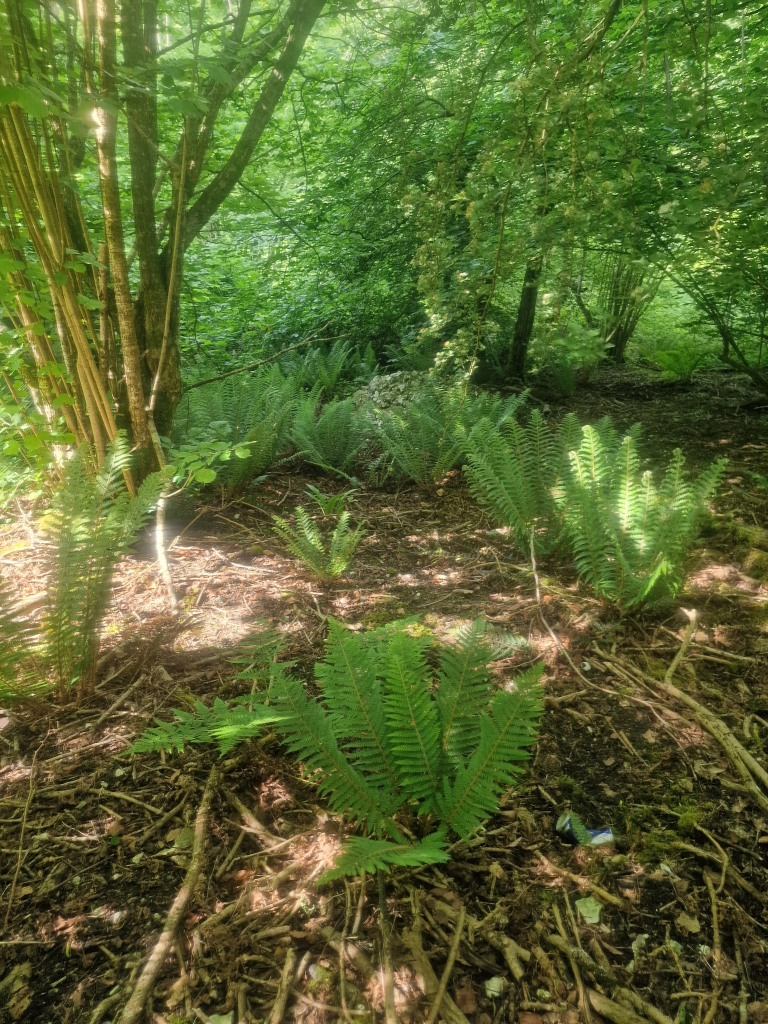
Polystichum setiferum, Soft Shield-fern

Ferns are difficult to identify, and differentiating between Soft and Hard Shield Fern is very difficult. But both species are indicators of ancient woodland. The shield ferns have this characteristic “thumb” on the leaflets of the fronds and the spores cover both the leaflets and the thumb – you can just about make this out in one or two of the leaflet British Wild Plants Polystichum setiferum 

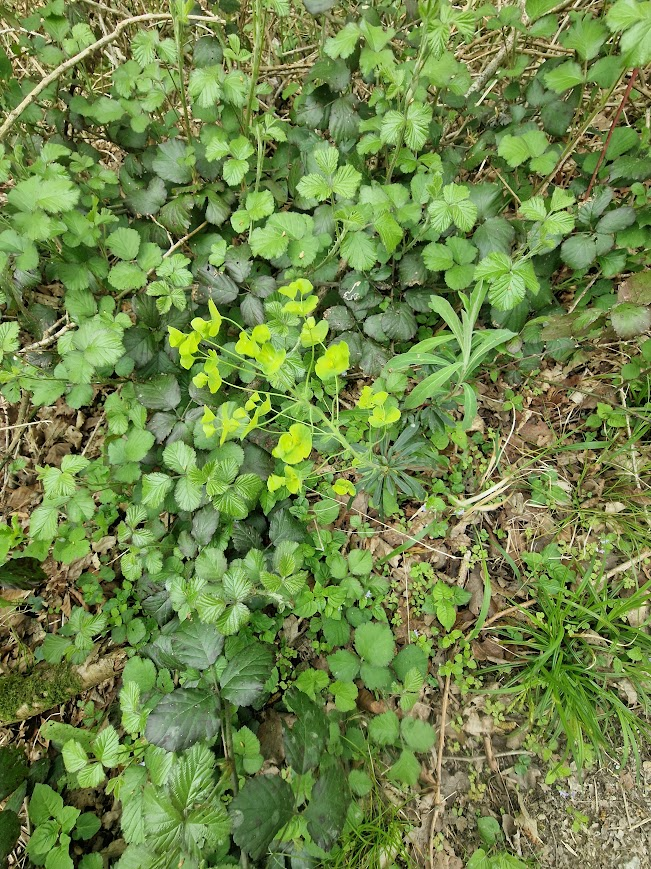
Mercurialis perennis Dog’s Mercury

This is a greatly magnified photo; the flowers of Dog’s Mercury are VERY small!

Dog’s Mercury with no magnification.

Orchis mascula Early Purple Orchid May 24, 2024 Newer Copse (Wolstonbury Hill)

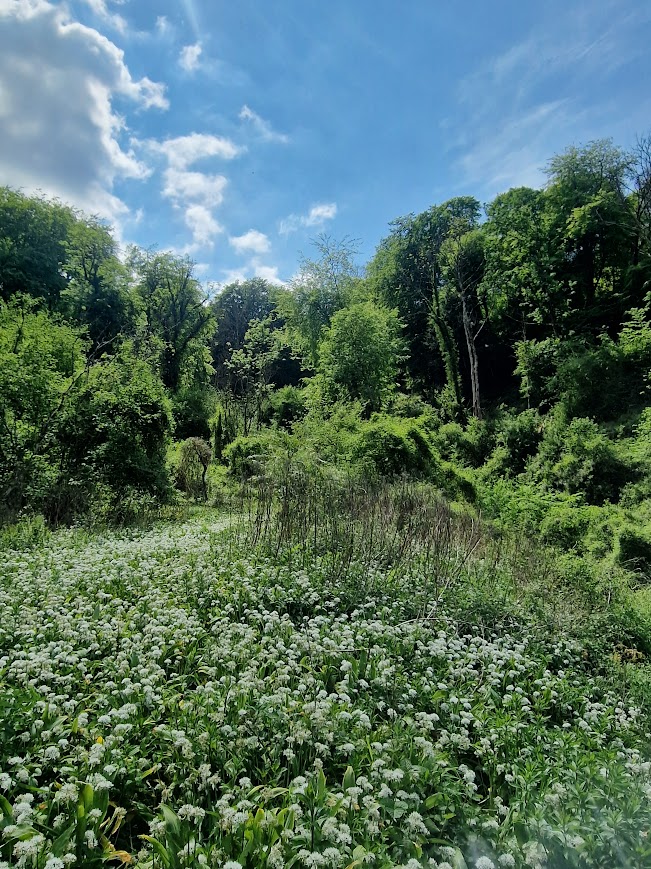
Allium ursinum Ramsons or Wild Garlic 30 May 2023 Newer Copse (Wolstonbury Hill)

Daphne laureola Spurge-Laurel May 24, 2024 Newer Copse (Wolstonbury Hill)

Spurge-Laurel is neither a spurge nor a laurel; it flowers shortly after Christmas.

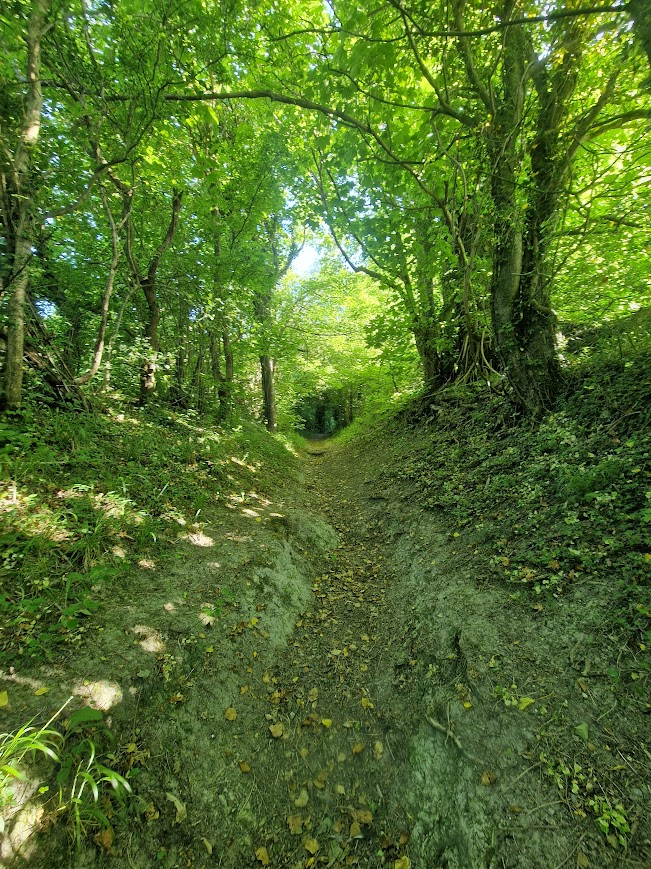
Newer Copse has a hollowway bostal running up Wolstonbury Hill. Bostals are ancient drover tracks, that generally go up the scarp (steep) slopes of Downs diagonally. It is a Sussex dialect word.

Other Low Weald ancient woodland indicator plants.

I have seen both Butcher’s Broom and Wild Service Trees in Low Weald woods; but not in Butchers Wood or Lag Wood

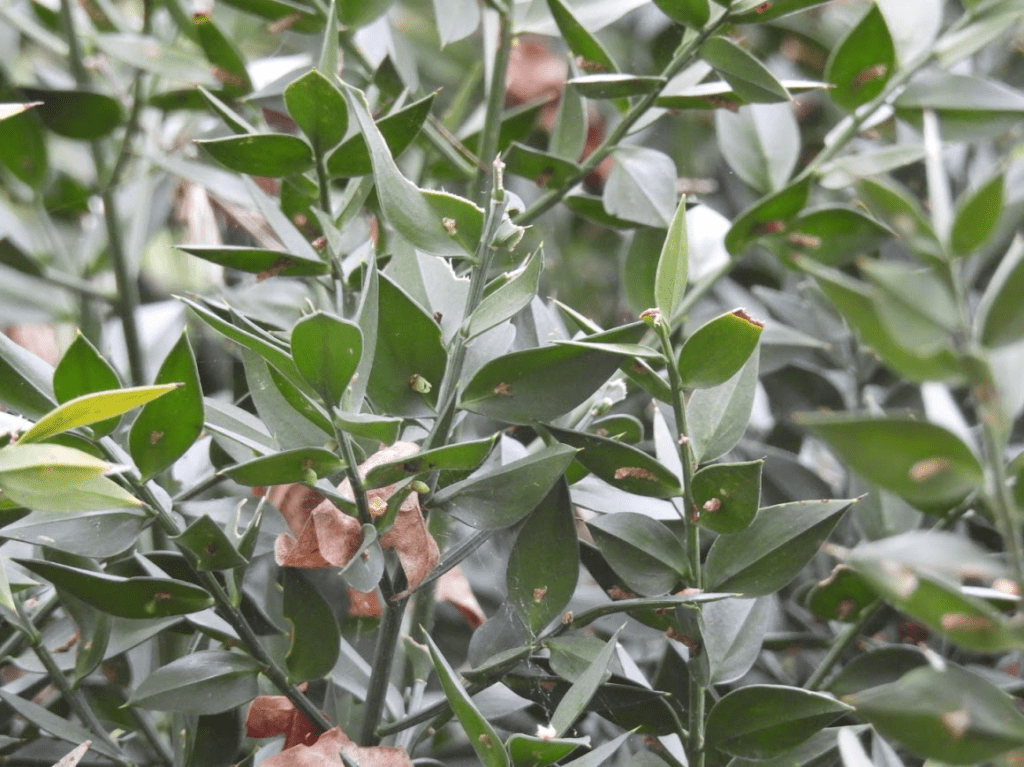
Ruscus aculeatus Butcher’s-Broom, Ebernoe Common

Butchers broom is uncommon in southern UK and gets rarer the further north you go. … [it] is rare on the chalk.

Butchers broom is known as an ‘ancient woodland indicator’. This is because it doesn’t colonise new habitats or spread easily to new woods; where it is growing, the wood has usually been there for a very long time.

Butchers broom is quite unlike any other British plant. It is a short evergreen bush growing up to about two feet high and all the leaves end in a pointed spike; one of its old English names is ‘knee holly’. In early spring, the tiny, pale green six-petalled flowers sit in the middle of the leaf and show that these leaves are, technically, flattened stems.

Butchers broom was used to scour butcher’s blocks until the nineteenth century. The spiky leaves seem ideal for getting into the cuts of old wooden blocks to clean them. https://www.newforestnpa.gov.uk/discover/plants-fungi/woodland-flowers/butchers-broom/

Torminalis torminalis Wild Service-Tree

A true springtime stunner, it’s not so long ago that you could find wild-service fruit at a market. These days it’s rare and hard to find but it’s still a favourite with wildlife like the wood pigeon, whose gut softens its seeds for propagation.

The fruits, also known as chequers, are said to taste like dates and were given to children as sweets. They can be made into an alcoholic drink and it is thought they influenced the naming of ‘Chequers Inns’, although it is unclear which came first – the name of the fruit or the inns. https://www.woodlandtrust.org.uk/trees-woods-and-wildlife/british-trees/a-z-of-british-trees/wild-service-tree/

This is Francis Rose’s list of Ancient Woodland Indicator Plants (AWVP) for South East Woodland

Acer campestre*, Field Maple

Adoxa mosichatellina, Moschatel

Allium ursinum, Ramsons,

Anagallis minima, Chaffweed

Anemone memorosa, Wood Anemone

Aquilegia vulgaris*, Columbine

Blechnum spicant, Hard Fern

Bromopsis ramosa, Hairy-brome

Calamagrostis epigejos, Wood Small-reed

Campanula latifolia, Giant Bellflower

Campanula trachelium, Nettle-leaved Bellflower

Cardamine amara, Large Bitter-cress

Carex laevigat, Smooth-stalked Sedge

Carex pallescens, Pale Sedge

Carex pendiula*, Pendulous Sedge

Carex remota, Remote Sedge

Carex strigosa, Thin-spiked Wood-sedge

Carex sylvatica, Wood-sedge

Carpinus betulus*, Hornbeam

Ceratocapnos claviculata, Climbing Corydalis

Chrysosplenium oppositifolium, Opposite-leaved Golden-saxifrage

Colchicum autumnale, Meadow Saffron

Conopodium majus, Pignut

Convallaria majalis, Lily-of-the-valley

Crataegus laevigata, Midland Hawthorn

Daphne laureola*, Spurge-laurel

Dipsacus pilosus, Small Teasel

Dryopteris aemula, Hay-scented Buckler-fern

Dryopteris affinis, Scaly Male-fern

Dryopteris carthusiana, Narrow Buckler-fern

Elymus caninus, Bearded Couch

Epipactis helleborine, Broad-leaved Helleborine

Epipactis purpurata, Violet Helleborine

Equisetum sylvaticum, Wood Horsetail

Euonymus europaeus, Spindle

Euphorbia amygdaloides, Wood Spurge

Festuca gigantea, Giant Fescue

Frangula alnus, Alder Buckthorn

Galium odoratum, Sweet Woodruff

Gnaphalium sylvaticum, Heath Cudweed

Helleborus viridis*, Green Hellebore

Holcus mollis, Creeping Soft-grass

Hyacinthoidles non-scripta, Bluebell

Hypericum androsaemum, Tutsan

Hypericum pulchrum, Slender St John’s-wort

Ilex aquifolium, Holly

Iris foetidissima, Stinking Iris

Lamiastrum galeobdolon, Yellow Archangel

Lathraea squamaria, Toothwort

Lathyrus liniifolius, Bitter-vetch

Lathyrus sylvestris, Narrow-leaved Everlasting-pea

Luzula forsteri, Southern Wood-rush

Luzula pilosa, Hairy Wood-rush

Luzula sylvartica, Great Wood-rush

Lysimachia nemorum, Yellow Pimpernel

Malus sylvestris*, Crab Apple

Melampyrum pratense, Common Cow-wheat

Melica uniflora, Wood Melick

Milium effusum, Wood Millet

Moehringia trinervia, Three-veined Sandwort

Narcissus pseudonarcissus*, Wild Daffodil

Neottia nidus-avis, Bird’s-nest Orchid

Orchis mascula, Early Purple Orchid

Ophris purpurea, Lady Orchid

Oreopteris limbosperma, Lemon-scented Fern

Oxalis acetosella, Wood-sorrel

Paris quadrifolia, Herb-Paris

Phyllitis scolopendrium*, Hart’s-tongue

Pimpinella major, Greater Burnet-saxifrage

Platanthera chlorantha, Greater Butterfly-orchid

Poa nemoralis, Wood Meadow-grass

Polygonatum multiflorum

Polypodium spp., Solomon’s-seal

Polystichum aculeatum, Hard Shield-fern

Polystichum setiferum, Soft Shield-fern

Populus tremula, Aspen

Potentilla sterilis, Barren Strawberry

Primula vulgaris*, Primrose

Prunus avium, Wild Cherry

Pulmonaria longifolia, Narrow-leaved Lungwort

Quercus petraea*, Sessile Oak

Radiola linoides, Allseed

Ranunculus auricomus, Goldilocks Buttercup

Ribes nugrum, Black Currant

Ribes rubrum*, Red Currant

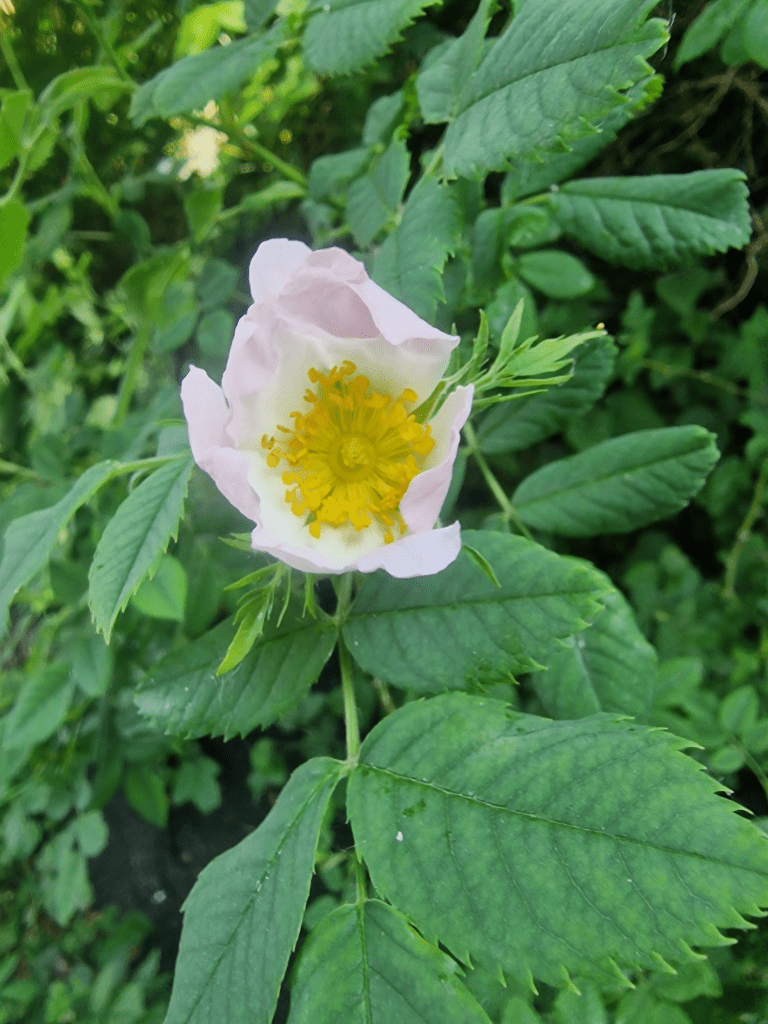
Rosa arvensis, Field-rose

Ruscus aculeatus, Butcher’s Broom

Sanicula europaea, Sanicle

Scutellaria minor, Lesser Skullcap

Scirpus sylvaticus, Wood Club-rush

Sedum telephium, Orpine

Serraula tintoria, Saw-wort

Solidago virgaurea, Golden-rod

Sorbus torminalis, Wild Service Tree

Stachys officinalis, Betony

Tamus communis, Black Bryony

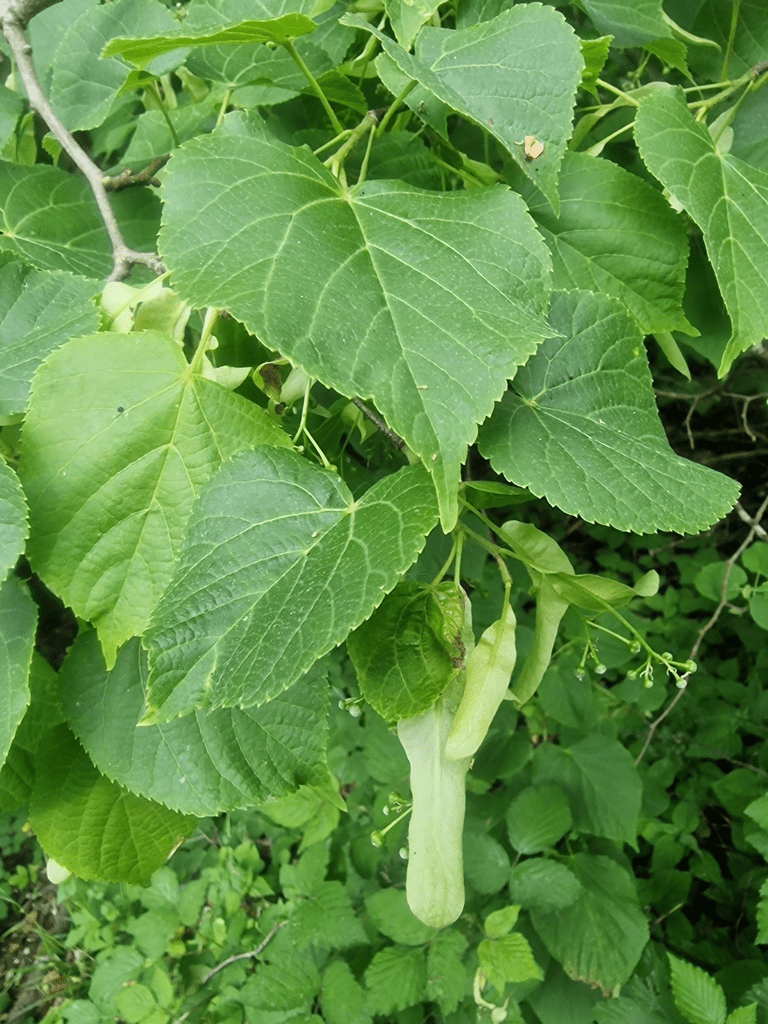
Tilia cordata*, Small-leaved Lime

Ulmus glabra, Wych Elm

Vaccinium myrtillus, Bilberry

Veronica montana, Wood Speedwell

Viburnum lantana, Guelder Rose

Vicia sepium, Bush Vetch

Vicia sylvatica, Wood Vetch

Viola palustris, Marsh Violet

Viola reichenbachiana, Early Dog-violet

Wahlenbergia hederacea, Ivy-leaved Bellflower

* Consider these species only if they occur well within the wood and do not appear to have been planted.

It should be noted that when calculating Ancient Woodland Indicator Plants scores:

  • A high AWVP score is a reliable indication of natural diversity.
  • It also indicates ancient woodland, but does not on its own constitute proof.
  • Some woods which are undoubtedly ancient have a low AWVP score. Study of other components of the woodland biodiversity such as lichens, or invertebrates in rotting wood, may give clearer indications of ancient woodland status. Quite often, ancient sites that are rich in AWVP’s will be poor in lichens and rotting wood invertebrates and vice-versa.
  • Not all indicator species are strictly limited to ancient woodlands. For example, where secondary woodland adjoins older woodland, it will acquire species associated with older woods much more quickly than isolated secondary woods.
  • Plants which are also cultivated in gardens (e.g. Wild Daffodil) should be used with great caution.
  • Certain woodlands can credibly be established as being ‘ancient’ through the study of old historical records such as maps and estate records. Observations of landscape features such as banks, ditches and other topographical features within a wood will also give clues to previous land use. By surveying a number of these ‘proven’ ancient woodlands, species which are usually confined to this type of habitat can be identified.  From: Countryside Information Ancient Woodland Indicator Species

Ancient Woodland Indicator Plants in Fore Wood, Crowhurst, East Sussex. 05.03.25

This post illustrates the species of Ancient Woodland Indicator Plants that I found in Fore Wood that are listed in Indicators Of Ancient Woodland – the use of vascular plants in evaluating ancient woods for nature conservation. Francis Rose, British Wildlife 10.4 April 1999, Pages 241-251

Fore Wood is a High Weald Ghyll Wood

Natural England maintains an index of woodland it has determined is ancient; the map of these woodland sites can be explored here: https://naturalengland-defra.opendata.arcgis.com/datasets/ancient-woodland-england/explore Fore Wood is listed by Natural England as Ancient Woodland (Ancient and Semi-natural Woodland). Here is the map for Fore Wood

Natural England classifies ancient woodland as either:

(a) (ASNW) Ancient Semi-Natural Woodland mainly made up of trees and shrubs native to the site, usually arising from natural regeneration

or

(b) (PAWS) Plantations on Ancient Woodland Sights (or Ancient Replanted Woodland) – replanted with conifer or broadleaved trees (e.g. Sweet Chestnut, Castanea sativa) that retain ancient woodland features, such as undisturbed soil, ground flora and fungi

Fore Wood is designated by Natural England as Ancient Semi-Natural Woodland, but it does have some small areas of planted Sweet Chestnut which the RSPB is removing.

Fore Wood is managed by the RSPB:

Fore Wood is a stretch of peaceful woodland near Crowhurst, dotted by gyhlls – steep-sided little ravines in the sandstone where rare ferns grow and wildlife thrives. In the spring, Fore Wood is a riot of Bluebells and Wood Anemones, with Early Purple Orchids adding to the show, an ideal place for East Sussex walks.
This ancient woodland is a mix of Hornbeam, oak and Sweet Chestnut trees. We carefully manage the woodland for the benefit of the wildlife using coppicing – a traditional woodland management practice. RSPB Fore Wood

Fore Wood is designated as a Site of Special Scientific Interest: SSSI citation

Here are the Ancient Woodland Indicator Plants that I saw:

Lonicera periclymenum Honeysuckle

Oxalis acetosella Wood-Sorrel

Primula vulgaris Primrose

Ribes rubrum Red Currant, by one of the ghylls

Hyacinthoides non-scripta Bluebell

Ruscus aculeatus Butcher’s-Broom

Anemonoides nemorosa Wood Anemone

with Psectrotanypus varius a species of non biting midge.

Struthiopteris spicant Hard Fern

Polystichum setiferum Soft Shield Fern

Ilex aquifolium European Holly

Chrysosplenium oppositifolium Opposite-leaved Golden-Saxifrage

By one of the ghylls;  Opposite-leaved Golden-Saxifrage is mostly a plant of damp stream/ghyll sides, or wet flushes

A view of one of the ghylls with Lesser Celandine, Ficaria verna. Lesser Celandine is not an AWVP indicator but it is a very important early source of pollen for pollinators. There are two ghyll is Fire Wood – this one has shallow sides

but the other ghyll has much steeper sides and is more typical of the upper reaches of ghylls in High Weald Ghyll Woods, like Fore Wood.

Ardingly Sandrock can be seen in this photograph. Where the porous Ardingly Sandrock meets the impervious Wadhurst Clay springs are formed that feed the ghylls. Global heating is a great threat to the survival of the internationaly important ghyll wood habitat of the High Weald.

In the south-east of England mean annual temperatures have increased by approximately 1.7°C over the past 50 years,(UKCIP 2013). Average rainfall remained unchanged during the same period, but patterns of precipitation did change with mean rainfall levels decreasing in the spring and summer months, but increasing in the autumn and winter. Over the same period the average annual and seasonal levels of relative humidity fell by up to 5% in the south and east of England (UKCIP 2013).
The presence of regionally and nationally important vascular and non-vascular
plant communities within the Wealden ghylls is attributed to the cool, humid
microclimatic conditions associated with the ghyll valleys (Paton 1956, Ratcliffe 1968, Rose and Patmore 1997). The rising temperature levels coupled with the existence within the ghyll woodlands is closely related to a cool, humid ghyll microclimate.

Andrew Flint, PhD Thesis, 2014, University of Brighton The biodiversity of the Wealden ghyll woodlands: species richness,
abundance and distribution patterns in a rare and fragmented habitat

A Dark-edged bee-fly, Bombylius major, on Lesser Celandine. Flies are important pollinators. Natural History Museum: Meet the bee-fly: the cute bee mimic with a dark side

Orange-Tip Butterfly, Anthocharis cardamines, a butterfly of damp places, on Lesser Celandine

Bee-Flies and Orange Tip Butterflies are some of the earliest pollinators to appear in spring; but they have finished in the adult flying form by May/June; although Orange Tip Butterflies sometimes have a second brrod

An ancient pollarded Carpinus betulus European Hornbeam within the wood. Rose makes it clear in his list that Carpinus betulus should only be considered an AWVP indicator only if they occur well within the wood and do not appear to have been planted.

Theses Hornbeams form a boundary around the wood; whilst theses trees as species can not be considered as AWVP indicators; the structure of the ancient boundary (raised bank with coppiced trees) is probably an indicator of ancient woodland.

This is Francis Rose’s list of Ancient Woodland Indicator Plants (AWVP) for South East Woodland

Acer campestre*, Field Maple

Adoxa mosichatellina, Moschatel

Allium ursinum, Ramsons,

Anagallis minima, Chaffweed

Anemone memorosa, Wood Anemone

Aquilegia vulgaris*, Columbine

Blechnum spicant, Hard Fern

Bromopsis ramosa, Hairy-brome

Calamagrostis epigejos, Wood Small-reed

Campanula latifolia, Giant Bellflower

Campanula trachelium, Nettle-leaved Bellflower

Cardamine amara, Large Bitter-cress

Carex laevigat, Smooth-stalked Sedge

Carex pallescens, Pale Sedge

Carex pendiula*, Pendulous Sedge

Carex remota, Remote Sedge

Carex strigosa, Thin-spiked Wood-sedge

Carex sylvatica, Wood-sedge

Carpinus betulus*, Hornbeam

Ceratocapnos claviculata, Climbing Corydalis

Chrysosplenium oppositifolium, Opposite-leaved Golden-saxifrage

Colchicum autumnale, Meadow Saffron

Conopodium majus, Pignut

Convallaria majalis, Lily-of-the-valley

Crataegus laevigata, Midland Hawthorn

Daphne laureola*, Spurge-laurel

Dipsacus pilosus, Small Teasel

Dryopteris aemula, Hay-scented Buckler-fern

Dryopteris affinis, Scaly Male-fern

Dryopteris carthusiana, Narrow Buckler-fern

Elymus caninus, Bearded Couch

Epipactis helleborine, Broad-leaved Helleborine

Epipactis purpurata, Violet Helleborine

Equisetum sylvaticum, Wood Horsetail

Euonymus europaeus, Spindle

Euphorbia amygdaloides, Wood Spurge

Festuca gigantea, Giant Fescue

Frangula alnus, Alder Buckthorn

Galium odoratum, Sweet Woodruff

Gnaphalium sylvaticum, Heath Cudweed

Helleborus viridis*, Green Hellebore

Holcus mollis, Creeping Soft-grass

Hyacinthoidles non-scripta, Bluebell

Hypericum androsaemum, Tutsan

Hypericum pulchrum, Slender St John’s-wort

Ilex aquifolium, Holly

Iris foetidissima, Stinking Iris

Lamiastrum galeobdolon, Yellow Archangel

Lathraea squamaria, Toothwort

Lathyrus liniifolius, Bitter-vetch

Lathyrus sylvestris, Narrow-leaved Everlasting-pea

Luzula forsteri, Southern Wood-rush

Luzula pilosa, Hairy Wood-rush

Luzula sylvartica, Great Wood-rush

Lysimachia nemorum, Yellow Pimpernel

Malus sylvestris*, Crab Apple

Melampyrum pratense, Common Cow-wheat

Melica uniflora, Wood Melick

Milium effusum, Wood Millet

Moehringia trinervia, Three-veined Sandwort

Narcissus pseudonarcissus*, Wild Daffodil

Neottia nidus-avis, Bird’s-nest Orchid

Orchis mascula, Early Purple Orchid

Ophris purpurea, Lady Orchid

Oreopteris limbosperma, Lemon-scented Fern

Oxalis acetosella, Wood-sorrel

Paris quadrifolia, Herb-Paris

Phyllitis scolopendrium*, Hart’s-tongue

Pimpinella major, Greater Burnet-saxifrage

Platanthera chlorantha, Greater Butterfly-orchid

Poa nemoralis, Wood Meadow-grass

Polygonatum multiflorum

Polypodium spp., Solomon’s-seal

Polystichum aculeatum, Hard Shield-fern

Polystichum setiferum, Soft Shield-fern

Populus tremula, Aspen

Potentilla sterilis, Barren Strawberry

Primula vulgaris*, Primrose

Prunus avium, Wild Cherry

Pulmonaria longifolia, Narrow-leaved Lungwort

Quercus petraea*, Sessile Oak

Radiola linoides, Allseed

Ranunculus auricomus, Goldilocks Buttercup

Ribes nugrum, Black Currant

Ribes rubrum*, Red Currant

Rosa arvensis, Field-rose

Ruscus aculeatus, Butcher’s Broom

Sanicula europaea, Sanicle

Scutellaria minor, Lesser Skullcap

Scirpus sylvaticus, Wood Club-rush

Sedum telephium, Orpine

Serraula tintoria, Saw-wort

Solidago virgaurea, Golden-rod

Sorbus torminalis, Wild Service Tree

Stachys officinalis, Betony

Tamus communis, Black Bryony

Tilia cordata*, Small-leaved Lime

Ulmus glabra, Wych Elm

Vaccinium myrtillus, Bilberry

Veronica montana, Wood Speedwell

Viburnum lantana, Guelder Rose

Vicia sepium, Bush Vetch

Vicia sylvatica, Wood Vetch

Viola palustris, Marsh Violet

Viola reichenbachiana, Early Dog-violet

Wahlenbergia hederacea, Ivy-leaved Bellflower

* Consider these species only if they occur well within the wood and do not appear to have been planted.

It should be noted that when calculating Ancient Woodland Indicator Plants scores:

  • A high AWVP score is a reliable indication of natural diversity.
  • It also indicates ancient woodland, but does not on its own constitute proof.
  • Some woods which are undoubtedly ancient have a low AWVP score. Study of other components of the woodland biodiversity such as lichens, or invertebrates in rotting wood, may give clearer indications of ancient woodland status. Quite often, ancient sites that are rich in AWVP’s will be poor in lichens and rotting wood invertebrates and vice-versa.
  • Not all indicator species are strictly limited to ancient woodlands. For example, where secondary woodland adjoins older woodland, it will acquire species associated with older woods much more quickly than isolated secondary woods.
  • Plants which are also cultivated in gardens (e.g. Wild Daffodil) should be used with great caution.
  • Certain woodlands can credibly be established as being ‘ancient’ through the study of old historical records such as maps and estate records. Observations of landscape features such as banks, ditches and other topographical features within a wood will also give clues to previous land use. By surveying a number of these ‘proven’ ancient woodlands, species which are usually confined to this type of habitat can be identified.  From: Countryside Information Ancient Woodland Indicator Species

The edge of Fore Wood, with Blackthorn, Prunus spinosa, in blook, and behind Pedunculate Oak, Quercus robur, Silver Birch, Betula pendula and Holly, Ilex aquifolium

The bryophytes of a Ghyll Wood of the Sussex High Weald. 24.03.25

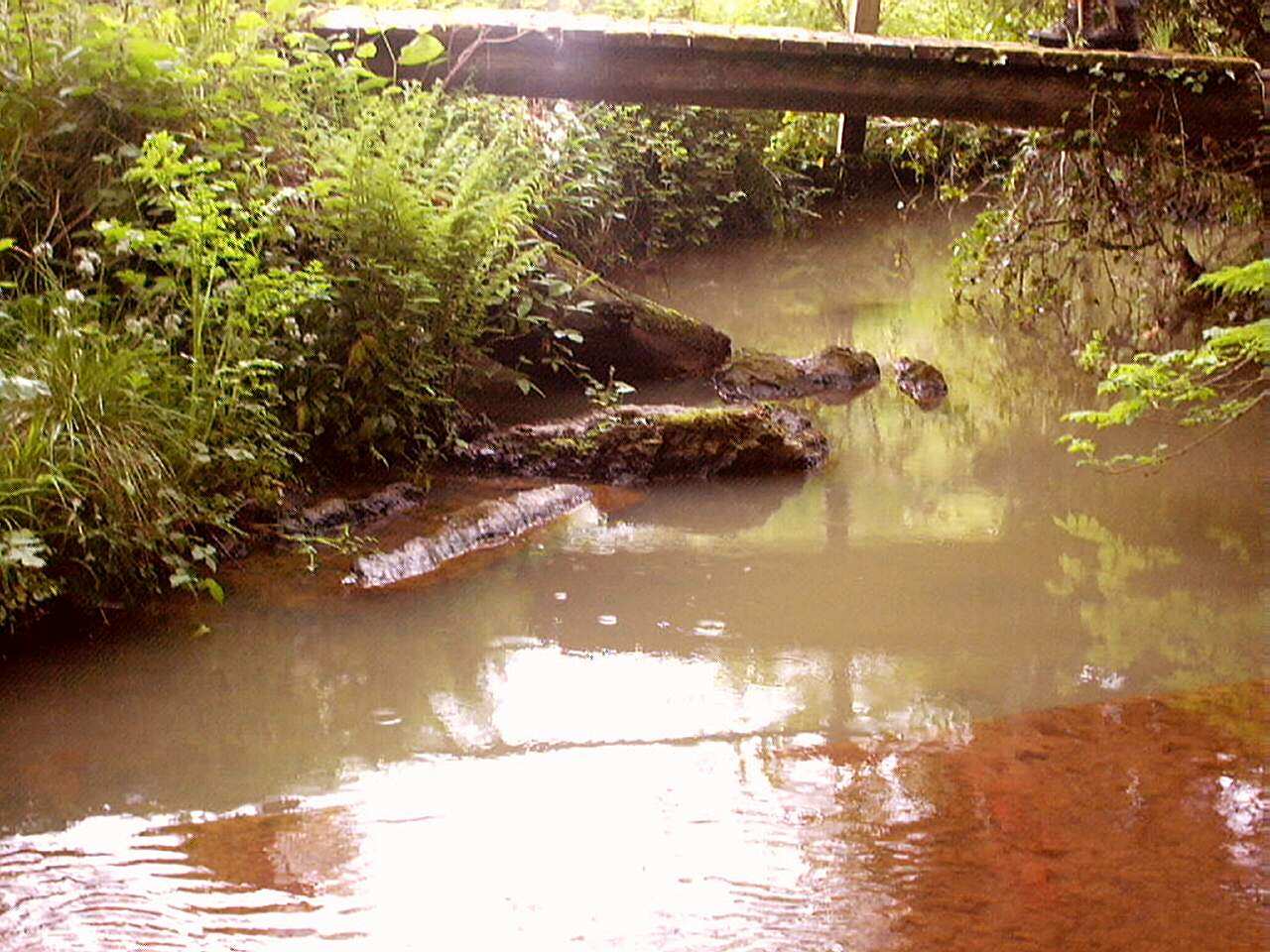
I visited with a friend, and fellow naturalist, a high weald ghyll wood to explores its bryophytes and lichens. This ghyll had the features of most high weald ghyll woods; a ghyll fed by springs from the sides of the ghyll valley. The springs form where the porous Tunbridge Wells sands, meet the Wadhurst Clay, of the impervious Wealden Group. These springs produce wet flushes which are a highly propitious habitats for bryophytes. Ghyll woods often have outcrops of Ardingly Sandrock, where bryophytes, ferns and lichens grow.

Most Ghyll Woodlands have ancient, veteran and notable tress; often Pedunculate Oaks Quercus robur, and Beech, Fagus sylvatica. This wood did, but only around the ghyll; other parts of the ancient woodland have been replanted with pines, often Scots Pines, Pinus sylvestris, and other trees for ornamental purposes and timber. Unfortunately much of the ancient woodland of the High Weald have been replanted either for landscaping or timber.

“Due to their isolation and enclosed nature, Ghylls have a unique microclimate, often rich in bryophytes and other moisture loving plant species. Ghyll woodlands are found in the extreme upper reaches of rivers, where springs and streams first form in small, steep, wooded valleys. The steep sided nature of Ghylls has also ensured that many Ghyll woodlands have remained untouched and undisturbed by human activity. Ghyll woodlands have an unusual micro-climate and they are therefore unique.

The flora found in these sites is very characteristic of former Atlantic conditions – including lush growths of ferns (such as Hay Scented Buckler Fern), mosses and liverworts. Many are likely to be primary woodland sites (potentially dating from the ice-age) and some have received relatively little disturbance, pollution or management. Ghylls provide an important function within the wider river catchment. They help to capture and slow down rainfall and overland run-off which would otherwise have a high capacity for erosion in these steep areas. They also provide shade and protection from sunlight, which provides a kind of ‘thermostatic regulation’ to downstream areas of river by cooling down water temperatures. Cool river temperatures are particularly important for the reproduction of a number of fish species.

Over 6% of the High Weald in Sussex is classed as ‘Ghyll’ woodland. This rare habitat type is a unique landscape feature of this part of Sussex and of the UK. Ghyll woodland in these terms specifically applies to the woodland found in the Sandstone and Hastings beds of the High Weald. There is currently no agreed definition of the riverine/floodplain limits at which Ghyll woodland becomes a floodplain woodland, and as such it is difficult to assign an accurate figure to the known area of Wealden and non Wealden Ghyll woodlands in Sussex.” Sussex Wildlife Trust – Wet Woodland

Bryophytes

Bryophytes are a group of plants that include mosses, liverworts and hornworts. Currently (January 2021), there are 1098 species of bryophyte in Britain and Ireland, which represents around 58 percent of the total European flora. Conversely, our islands have less than 20 per cent of the European flowering plants.

Like the ‘higher’ plants (flowering plants and ferns) the majority of bryophytes make their own food via photosynthesis and because they contain chlorophyll, the majority are green. However, bryophytes lack proper roots, structural strength and an advanced vascular system to move water and dissolved substances around efficiently and so are size-limited.

The mosses, liverworts and hornworts are believed to have evolved from ancestral green algae and are thought to comprise the earliest lineages of plants. Because of their unassuming nature and small stature, bryophytes are easily overlooked or even dismissed as boring, but their beauty and complexity under the microscope easily puts them on a par with their higher plant relatives. British Bryological Society – what are bryophytes

… bryophytes can’t grow very big because they have no way to efficiently move water from their base to the rest of the plant. Instead, they grow close to the ground and absorb water directly from the environment into their cells.

Despite their preference for damp habitats, bryophytes can live for a long time without water. Some plants … survive droughts by storing water, but bryophytes have a different strategy. They go into a state of dormancy, or suspended animation, and simply wait. Water … isn’t just important for hydration. Bryophytes rely on it to reproduce as well. …  bryophyte sperm has to “swim” to an egg cell to fertilize it.

… mosses have a midrib in the middle of each leaf, whereas liverworts have no midrib. Liverworts are relatively flat in comparison to mosses because their leaves are in two parallel rows, whereas mosses tend to have a more spiral shape, with leaves emerging from all sides of the stem. … . Another feature to consider if you’re trying to distinguish mosses and liverworts is the presence of lobed leaves, or leaves with protuberances off the main leaf … Some liverworts (but not all) have lobed leaves, but no mosses do.. With mosses … one of the first questions to ask is whether it’s pleurocarpous or acrocarpous. Pleurocarp mosses … tend to have highly branching stems and grow in sprawling patches. The stems of acrocarp mosses, meanwhile, have little or no branching and grow mostly vertically, often forming tight clumps.

With Liverworts, one of the first question to ask whether its a thalloid of leafy liverwort; thallose liverwort, set apart from so-called leafy liverworts by the presence of thallus (a ribbon-like structure) instead of leaves. … Interestingly, liverworts also have a distinctive smell, sharp and earthy. The scent can be so strong that you might sometimes smell liverworts before you see them. Duke University Research Blog Into the Damp, Shady World of the Bryophytes

Some of the mosses and liverworts of this high weal wood:

Pleurocarp mosses:

Thamnobryum alopecurum Fox-tail Feather-Moss.

Growing at the base of a Pedunculate Oak

A shade-tolerant species which occurs in several distinct habitats. It grows on the ground, on exposed tree roots and tree bases in woodland and on the banks of ditches and sheltered lanes, occurring on mildly acid, neutral or basic soils but in particular abundance in woods over chalk, limestone and calcareous boulder clay. BBS Thamnobryum alepercurum

Acrocarp mosses:

Dichodontium pellucidum Transparent Fork-Moss

D. pellucidum is a moss often growing on rocks by streams and rivers in the North and West (Atlantic Woodlands); but it is also found in the High Weald

Hookeria lucens Shining Hookeria

A plant of shaded, moist, humid sites, found in flushes on woodland banks and on streamsides and riversides, of North and West (Atlantic Woodlands); but it is also found in the High Weald

Those who have not encountered Hookeria before are wowed by its beauty and distinctiveness but because it’s very complanate and quite large, may assume it is a leafy liverwort. However, it lacks complicate-folded leaves, underleaves, trigones, oil bodies and any of the other features that are often present in the leafy liverworts. BBS Hookeria luncens

Orthodontium lineare Cape Thread-Moss

Pogonatum aloides, Aloe Haircap

Although very common in the uplands, the species has declined in C and E England from the loss of suitably open acid substrates, although many of these loses are of long standing. BBS Pognotum aloides

This moss emerges from a low, persistent, vividly green protonemal felt.

The protonema is the first part of the moss that develops from the germinating spore. Its filamentous form is remarkably similar to green algae. This photosynthetic colonizer lies flat against its substrate, making it seem as if the rock or tree it grows on is painted green. University of British Columbia Introduction to moss morphology

Mala Rhizomnium punctatum Dotted Thyme-Moss

Its shoots come in two forms – sterile and fertile. The sterile shoots of Plagiomnium lie flat or low to the ground (procumbent or arcuate) and look somewhat flattened (complanate). Stem leaves are toothed. Sterile shoots of Rhizomnium are erect, and stem leaves are entire. In both genera the fertile shoots are erect.

Plants are dioicous and male plants of R. punctatum are particularly striking and resemble small flowers

Leafy Liverworts

Asperifolia arguta / Calypogeia arguta Notched Pouchwort

Cephalozia bicuspidata Two-horned Pincerwort

Chiloscyphus polyanthos Square-leaved Crestwort

This is one of the commonest leafy liverworts to be found on rocks and other surfaces in watercourses and lakes where it usually grows at least partially submerged. You’re unlikely to find it in chalk or limestone streams or in other base-rich water as it prefers water with a pH of 6.5 or less. BBS Chiloscyphus polyanthos

Diplophyllum albicans White Earwort

Frullania tamarisci Tamarisk Scalewort

Growing on an Oak.

Frullania dilitata, Dilated Scalewort, is very common epiphytic liverwort in Sussex, and can bee seen on may trees in most landscape types in Sussex.

F tamarisci; it is primarily a liverwort of western Atlantic woodland, and is rare in Sussex. F tamarisci has more “body” and grows slight “out” of the tree; whereas F. dilitata grows flat and is adpressed to the tree trunk.

It is a humidity-demanding species and sheltered valley or ravine woodlands in western areas will often have a substantial population on trees and boulders. It’s usually easily picked out from F. dilatata by its glossiness (when dry) and by the way the shoots grow away from the substrate. BBS Frullania tamarisci

Lophocolea bidentata Bifid Crestwort

This is likely to be the first leafy liverwort you will encounter as a beginner, since it is very common and occurs in almost any habitat. Look at it closely, the first few times you find it as it is very beautiful and has some interesting features. All of the leaves are conspicuously bilobed and of a pale green, translucent hue. The underleaves are large, bilobed and with each lobe itself bearing a side-tooth. BBS Lophocolea bidentata

Lophozia ventricosa Tumid Notchwort

Common in Sussex in High Weald ghylls, but not anywhere else in Sussex

Aery common species wherever acid soil or peaty ground is found, so rare only in the more calcareous lowlands of England and Ireland. BBS Lophozia ventricosa

Male Metzgeria furcata Forked Veilwort

Forked Veilwort is an extremely common epiphytic liverwort in Sussex, and can bee seen on many trees in most landscape types in Sussex.

Metzgeria furcata is dioicous and so plants will either be male or female but not both. Reproductive structures are found in bud-like, highly modified branches that more or less enclose the archegonia (female) or antheridia (male) on the underside of the thallus. Male branches have a costa, which gives them a stripy appearance.

Scapania undulata Water Earwort

Solenostoma gracillimum Crenulated Flapwort

Thalloid Liverworts

Conocephalum conicum sensu lato, Great Scented Liverwort

This, along with Pellia epiphylla, Common Pellia and Pellia endiviifolia, Endive Pellia, are extremely common in Sussex often on the banks of ghylls and streams in the low or high weald

The cone shaped structures are the female archegonia, multicellular structure or organ of the gametophyte phase liverworts of certain producing and containing the ovum (female gamete) The corresponding male organ is called the antheridium. . Archegonia are typically located on the surface of the plant thallus. Conocephalum conicum is complex (aggregate) of various similar species.
Pellia epiphylla, Common Pellia

This is hard to distinguish from Pellia endiviifolia, Endive Pellia; it is easier to distinguish between the two in winter when Endive Pellia had “frilly” edges to its thalli.

Pellia endiviifolia, Endive Pellia

This is a picture of Endive Pellia from Tilgate Forest, not the location visited on 23.03.24; because it clearly shows the frilly thalli.

Pellia neesiana Ring Pellia

One of two dioicous species of Pellia – the other is P. endiviifolia – and there is no problem identifying it with confidence when female thalli with more or less untoothed involucral flaps are present, usually in spring.
Male plants are a little more challenging. If antheridial pits extend nearly to the apex of the thallus and there is no involucral flap [after fertilization, the capsule starts to develop and is protected by an involucre] then it is unlikely to be P. epiphylla, our only monoicous species . But how to separate from male P. endiviifolia if the thalli are unbranched? There are two good ways. Firstly, the antheridial pits  [antheridia are haploid structure or organ producing and containing male gametes (sperm)] of P. neesiana always look very conspicuous because there are raised, papilliform cells surrounding the pit aperture (see Claire’s excellent close-up images of this feature below). P. endiviifolia does not have these conspicuous cells and so its antheridial pits are less obvious. BBS Pellia neesiana

N.B. Monoecious bryophytes (and other plants) have have both male and female sex organs. Dioecious species have only one (either male or female) sex organ.

Pellia neesiana is much rarer in Sussex that the other Pellia spp. and is predominantly a liverwort of Western Atlantic woodland; it is only found in Sussex in the high weald.

Older tree relics in replanted ancient woodland: Fittleworth Wood and Chance Copse. 22.03.25
Natural England and the Forestry Commission describes ancient woodland as:
any area that’s been wooded continuously since at least 1600 AD. It includes:

  • plantations on ancient woodland sites – replanted with conifer or broadleaved trees that retain ancient woodland features, such as undisturbed soil, ground flora and fungi
  • ancient semi-natural woodland mainly made up of trees and shrubs native to the site, usually arising from natural regeneration

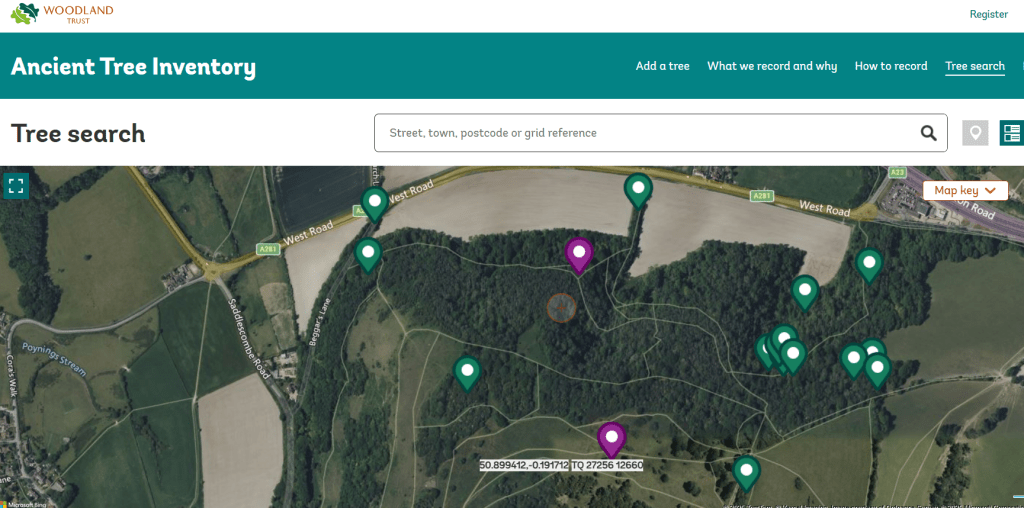
There is only one Ancient, Veteran or Notable tree listed in Fittleworth Wood in the Woodland Trust Ancient Tree Inventory; the “notable” Quercus robur above

but there are other Oaks, Quercus robur, and Beech, Fagus sylvatica, amongst the mostly replanted Sweet Chestnut

Fittleworth Forest is designated by Natural England as mostly ancient semi-natural woodland, with compartments of replanted ancient woodland

Natural England Ancient Woodland Open Data

The smaller compartments are listed as Replanted Ancient Woodland; but all of the woodland looked to have been replanted to me, with a few relics of older trees.

The British Lichen Society has no records for the monads (1k x 1k squares) of Fittleworth Forest

which suggests that it has not been of wood of significance for lichenologists; although there are many monads with no records, not because there of little lichenological interest but because there are very few lichen recorders.

Some of the most beautiful tree relics – of the times before replanting occurred – are some ancient boundary banks of Oak, Quercus robur and Beech, Fagus sylvatica. Theses banks and trees are also a propitious habitat for bryophytes (mosses and liverworts)

There are some more notable Pendunculate Oak surviving amongst the huge area of coppiced Sweet Chestnut Castanea sativa

These Oaks are richer in terms lichens than the Sweet Chestnut; although very old stools of felled coppiced Sweet Chestnut can have rich assemblages of Cladonia spp. lichens; but the Sweet Chestnut in Fittleworth wood is to too young to have much lichen diversity, with only Cladonia coniocraea evident:

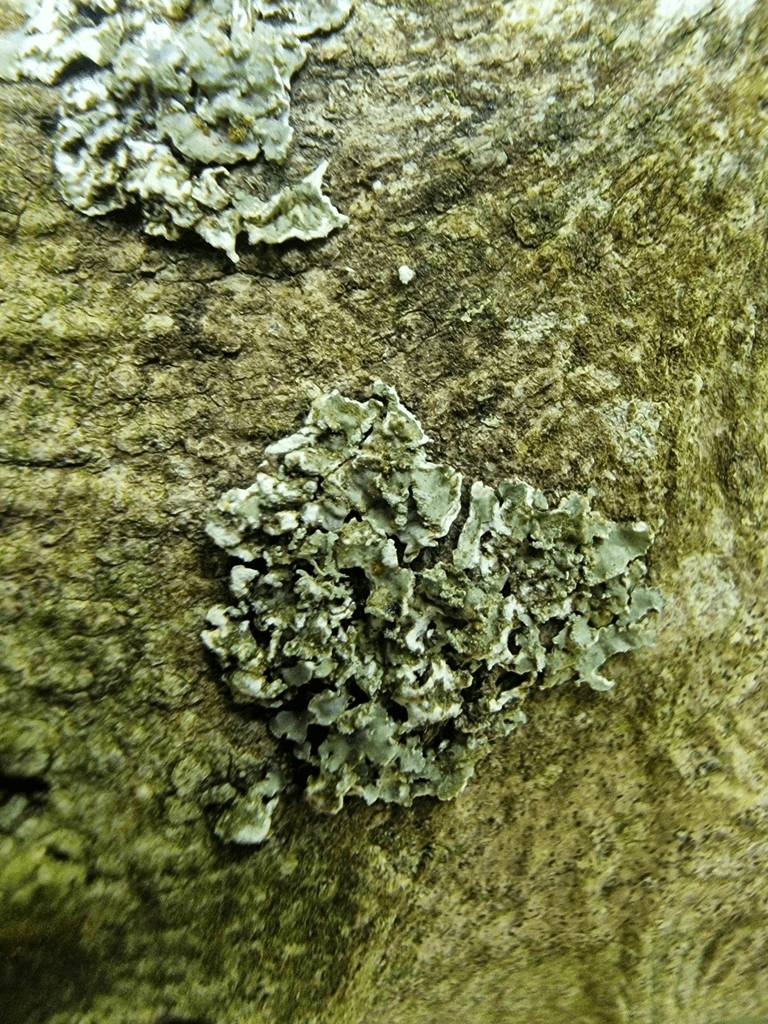
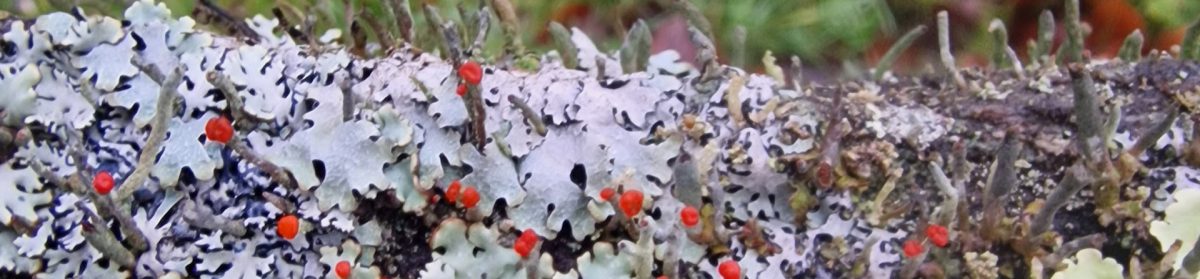
Many of the Oaks have much Common Greenshield Lichen, Flavoparmelia caperata.

Flavoparmelia caperata is in the Parmelion community of lichens that demonstrate that a tree is probably older than 50 years.

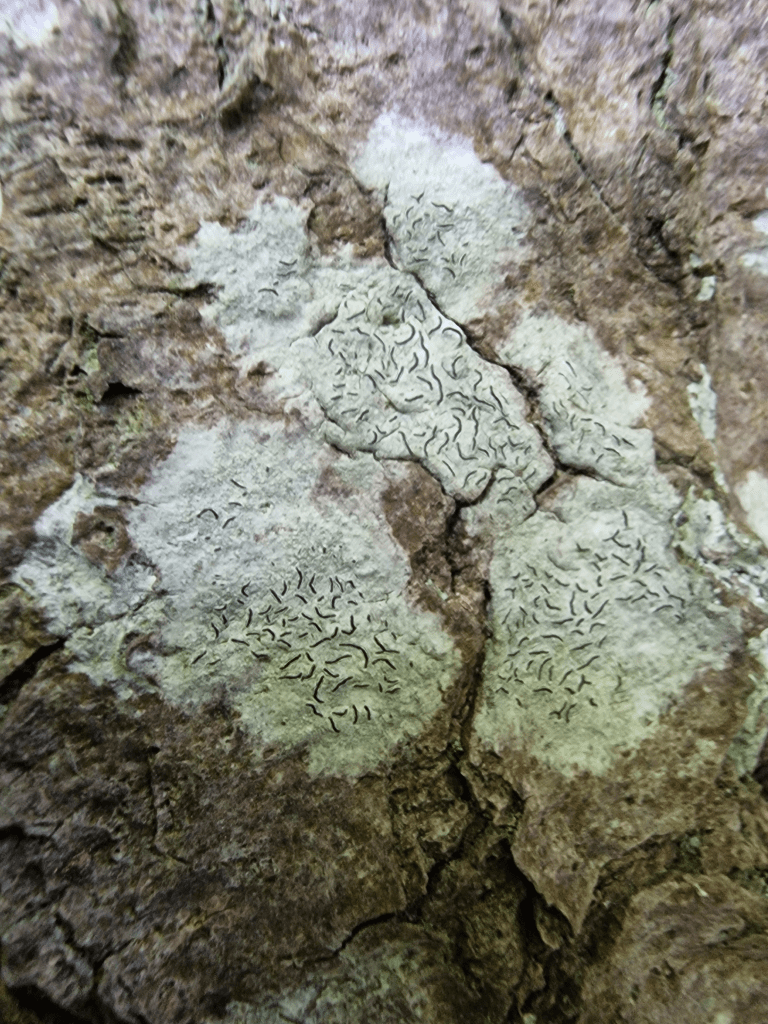
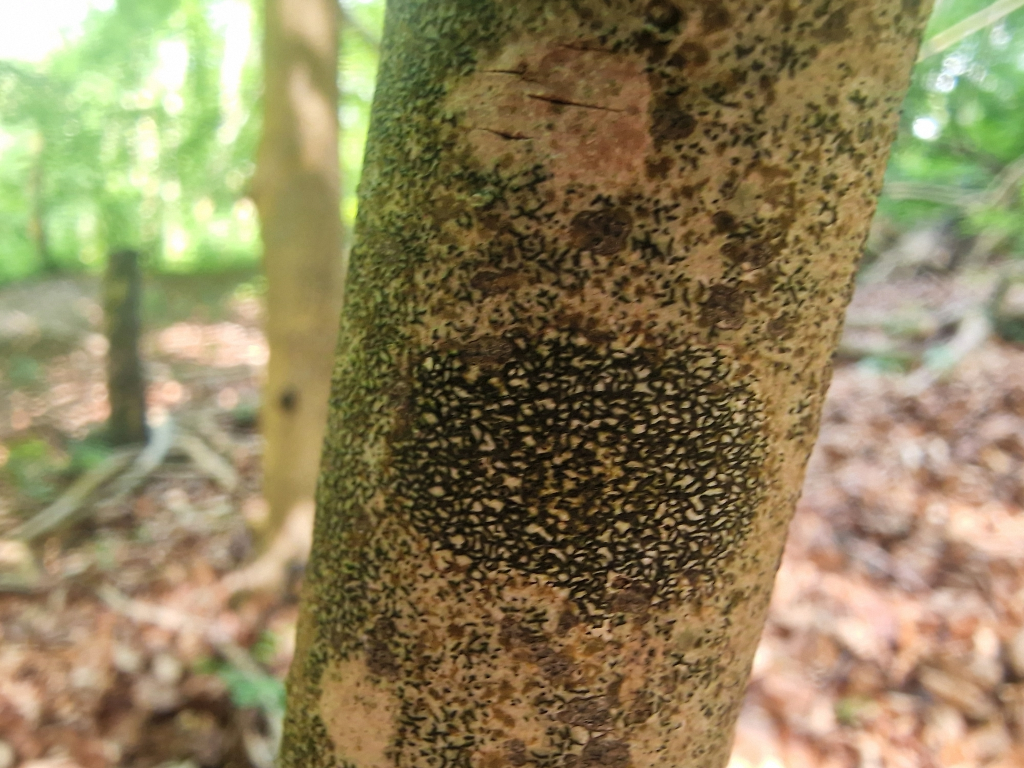
Young coppiced Sweet Chestnut mostly have Pertusaria spp., especially Pertusaria leioplaca, and Graphidaceae family lichens e.g. Graphis sctipta sensu lato.

Sweet Chestnut

Pertusaria leioplaca

Probably Graphis scripta s.l.

Script lichens are of the Graphidion community and start growing toward the end of the first year of a trunk’s life. The Graphidaceae family require spore microscopy to identify to species level.

Amongst the sweet chestnut there were  a lot of Leucobryum spp. mosses

And where felled trees had been and burnt, there were areas of Funaria hygrometrica Bonfire Moss, as would be expected.

Funaria hygrometrica

As I moved eastwards, and down from the higher ground of Fittleworth Wood, into the valley of Chance Copse, the ground flora seemed much more indicative of ancient woodland soil despite the presence still of much replanted woodland, but not dominated by Sweet Chestnut. Large amounts of replanted Sweet Chestnut does not seem propitious for the growth of ancient woodland ground flora from the seed bank of ancient woodland soil.

Plants like Hairy Woodrush, Luzula pilosa; Wildlife Daffodil, Narcissus pseudonarcissus and Primrose, Primula vulgaris in Chance Wood are ancient woodland indictor plants; these were absent in Fittleworth Wood.

The banks of the stream in Chance Copse have many wet flushes arising from springs in the greensand; these are probably a good habitat for rare bryophytes, but I had little time as it was getting dark by the time I got to Chance Corpse I only found a few common bryophytes:

Thuidium tamariscinum

Hesworth Common, Fittleworth. A Lost Woods of the Low Weald and Downs lichen walk. 22.03.25

On Saturday 22.03.25 I led a Lost Woods of the Low Weald and Downs lichen walk for the Sussex Wildlife Trust Storrington and Arun Valley Regional Group at Hesworth Common, Fittleworth. The common is owned and managed by Fittleworth Community & Parish Council who gave their permission to hold the walk there.

Here are some of the lichens we saw:

Hypogyny tubulosa Powder-headed Tube Lichen, on Pendunculate Oak

Cladonia furcata Many-forked Cladonia; growing on the ground of the heathland

Lepraria finkii Fluffy Dust Lichen

For more lichens at Hesworth Common, see: The diversity of lichens on a Pendunculate Oak, Quercus robur, at Hesworth Common, Fittleworth 11.03.25

Bog Beacon, Mitrula paludosa, in a human-made pool in the “Forest Garden” of the Chelwood Vachery.

The prefix Mitr- is a reference to a mitre, cap or headdress (and so, by implication, an indication of the shape of the fertile head or cap of this fungus), while the specific epithet paludosa means of swamp, marsh or bog. First Nature

Chelwood Vachery, a large country house on Ashdown Forest, was built in 1906 by Sir Stuart Samuel (MP). “Vachery” is probably a  Norman French term meaning a dairy or cattle shelter. It is thought that cattle were kept here in Medieval times.

“In 1910, Samuel created a Forest Garden. It had four lakes and ponds, each with a weir and sluice. In 1925, the house was sold to one Nettlefold who engaged a famous landscape designer, Col. Gavin Jones, to construct a “Gorge” using limestone boulders from the Cheddar Gorge. It was to be an extension to the more formal gardens of the house“.  Sussex Exclusive

The derelict remains of the pools and gorge of Gavin Jones’ 1925 landscaping of the Forest Garden, is weird enough without the presence of Bog Beacon, the saprotrophic fungus that has a “will-o’-the-wisp” feel.

“... 200 metres south of the mansion, within Vachery Wood, Gavin Jones’ spring-fed, artificially constructed gorge begins as a small stream between sandstone rocks … The gorge follows a course of around 250 metres via waterfalls and pools, to a string of lakes on the Mill Brook, which forms the site’s south-west boundaryParks and Gardens

There are only 893 records for Bog Beacon in the UK according to the National Biodiversity Centre Atlas

I have only seen Bog Beacon once before: on a ghyll in a High Weald wood. I was very surprised to see it so abundant in a human-made ornamental pool.

The role of these little club-like fungi in the natural world is that of recycler; they feed of rotting leaves and stems, helping to break them down into simple compounds that other plants can feed on. Distribution

Infrequent but widespread in Britain and Ireland, Bog Beacon also occurs throughout most of mainland Europe as well as parts of Asia.

What I can confirm from personal experience is that you will not find Bog Beacon where the habitat is unsuitable, but neither should you assume that where the habitat is suitably boggy with plenty of rotting vegetation this ascomycete will appear: more often than not it doesn’t.First Nature

When I saw Bog Beacon before, in a ghyll wood near Crawley,  I wondered how Bog Beacon stands up in the water, like Excaliburs held up by Ladies in the Lake.

I carefully fished one of the ca. 500 Bog beacons in the pool with a stick, and photographed it. Obvious really: they’re saprobic; so they are anchored by their mycelia to the thing they are digesting. Mine was anchored to a leaf.

Lag Wood. A Lost Woods of the Low Weald and South Downs lichen walk. 20.03.25

On Thursday 20.03.25 I led a walk for the Lost Woods of the Low Weald and South Downs at Lag Wood; this is a private wood, and the owner gave us permission to do so, and she accompanied us. This was part of the National Lottery Open Week; an opportunity for The National Lottery-funded projects to give lottery players a reward; so all the participants had to bring a lottery ticket or scratch card that they had bought!

Here are a few of the many the lichens we saw.:

Normandina pulchella, Elf Ear lichen, growing on Myriocoleopsis minutissima Minute Pouncewort on Ash

Lecanora chlarotera on Pedunculate Oak

Amandinea punctata, Tiny Button Lichen on Hornbeam. Very similar to Lecidella eleachroma; separatable by chemical reagent spot test

Ramalina farinacea on Pedunculate Oak

Pertusaria leioplaca on Hornbeam

The diversity of lichens on a Pendunculate Oak, Quercus robor, at Hesworth Common, Fittleworth. 17.03.25

I met with representatives from the Sussex Wildlife Trust’s Storrington and Arun Valley Region Group to plan the route and risk assessment for a community introduction to lichens walk on Saturday.

We saw some lovely common lichens, see below, and some rarer lichens like Cladonia foliacea, Summer Snow (named thus because the white underside of its squamules turn up when desiccated).

Common lichens are really important on introduction walks; as those are the lichens people are likely to see when they are walking through the countryside on their own. Moreover, knowledge of common lichens is ecologically useful. Common lichens can be used as markers of ecological wellbeing: the effects of climate change, and the outcomes of habitat management of the site, on lichen abundance, if people re-survey and note increases or deceases in abundance of common lichens.

To be able to recognise a common lichen and know its name, even if it’s just a vernacular English name, it is necessary to recognise it’s growth form (crustose, foliose, fruiticose, leprose and cladoniform) and the names of  their parts  e.g. thallus [body], apothecia [fruiting body of fungal spores], soredia [sexual propagules of fungal hyphae and alga/cyanobacterium cells], podetia [tube on a Cladonia], etc. This is the starting point for a love of lichens; add in a hand lens, and you are a budding amateur lichenologist.

Hemsworth Common has trees (mosyly Pendunculate Oak, Silver Birch, Scots Pine) on which there are many corticolous (tree living) lichens, and lowland heath, dominated by heathers and Billbury, amongst which grow many terriculous (ground living) lichens, especially Cladonia species

Two common lichens:

The VERY common Common Greenshield Lichen! Flavoparmelia caperata. But with apothecia, which is rare.

Evernia prunastri, Oak Moss Lichen – not a moss!

And a slightly rarer lichen, but one that really stands out on the bark of a tree: Chrysothrix candelaris, Gold Dust Lichen

and a rarer one:

Cladonia foliacea, Summer Snow

After the joint walk, I stayed on and continued surveying and found a Pendunculate Oak with a particular rich diversity of common lichens:

Lecidella eleachroma (black apothecia) and Lecanora carpinea.

Physcia aipolia (black apothecia) and Ramalina farinacea (with floury soredia on its lobes (straps))

Naetrocymbe punctiformis (central lichen with invisible thallus) this is very hard to identify

Lecanora chlarotera

Pertusaria leioplaca

A fabulous ancient Yew, Taxus baccata; with the lichens Zwackhia prosodea & Opegrapha vermicellifera. St. Giles’ Church, Coldwaltham, West Sussex, 17.03.25

On the way to Hesworth Common, Fittleworth, to undertake a recce for a lichen walk there on Saturday, I took a detour to Coldwaltham from Pulborough (a four mile walk there and back to Pulborough). I went because I knew there was an ancient yew there; famous for being 3000 years old. It is clearly not 3000 years old, but it is a very old yew. I though it was an good candidate to have Zwackhia prosodea growing on it. I have seen Z. prosodea, growing on the ancient yew in East Chilton’s churchyard; it is a very characteristic lichen. I searched the British Lichen Society’s database: there are 174 records of the lichen in East and West Sussex; none of them on this yew; despite the churchyard being surveyed by Francis Rose in 1992.

But it was there!

A very southern lichen of dry bark on veteran trees, mainly Oak, often in mildly nutrient enriched habitats. Characterised by the bulky tall curved to serpentine lirellae with the disk a persistent slit and the dry bark habitat. British Lichen Society – Zwackhia prosodea

The churchyard at Coldwaltham contains a slightly controversial yew tree – slightly controversial because on occasions when experts have suggested the tree may not be quite as old as people believed it to be there has sometimes been a bit of a backlash from the villagers. Part of the reason for this is that the ancient tree is sometimes cited as evidence for a much older church on the current site. Another may be that some people claim that the tree as one of the oldest in the country – either way, it’s a magnificent being. It certainly looks pretty ancient. West Sussex Info Coldwaltham

Entry in the Ancient Yew Group register: Tree ID: 366 Yews recorded: Ancient 7m+ Tree girth: 1049cm Girth height: at 15cm Tree sex: female Source of earliest mention: 1885: Measured by Rev. W.H. Starling (1958 E.W. Swanton)

Under the Zwackhia prosodea was the lichen Opegrapha vermicellifera

Occurs in shaded, dry recesses of basic-barked trees, rare on rock. Smooth greyish thallus, usually sterile with small, prominent pycnidia with white or pale grey pruina. Pycnidia semi-immersed when young, chestnut brown with pale ostiole.  Dorset Lichens – Opegrapha vermicellifera

The Yew was hollow inside

Lichens at Sussex Wildlife Trust’s Selwyns Wood, Cross-in-Hand. 14.03.25

On Friday, I visited Selwyns Wood to help their volunteers identify the lichens in the site. The list of what we found is at the end of this post

It was particularly pleasing to see Coniocarpon cinnabarinum, previously Arthonia cinnaborina, an old woodland indicator species. I see this lichen rarely; not because it is particularly rare, but because it is very difficult to see. “Can be common in old woodlands on shaded, smooth bark of young trees and branches” Dorset Lichens. This lichen is named after Cinnabar, the red ore of mercury.

Another lichen that was good to see was Thelotrema lepadinum, Bark Barnacles, an indicator of ancient woodland

Both of these lichens are indicators of ancient woodland even though they weren’t growing on ancient tress; both were on relatively recent on Sweet Chestnut, Castanea sativa.

In the area of heathland, as one would expect, there were Cladonia spp. growing on lignum, including Cladonia polydactyla

Cladonia caespiticia

and Cladonia squamosa 

On the side of an enormous bundle-planted Beech, there was Elf Ear lichen, Normandina pulchella

These are the lichens that we saw.

Lecidella eleachroma
Fuscidea lightfootii
Flavoparmelia caperata
Parmelia sulcata
Parmotrema perlatum
Ramalina farinacea
Ramalina fastigiata
Lecanora chlarotera
Pyrrhospora quernea
Graphis scripta s. l.
Anthonia atra s.l.
Pertusaria pertusa
Pertusaria hymenea
Pertusaria leioplaca
Thelotrema lepadinum
Normandina pulchella
Coniocarpon cinnabarinum
Cladonia squamosa
Cladonia coniocraea
Cladonia caespiticia
Cladonia polydactyla
Lepraria finkii
Lepraria incana
Lepraria vouauxii
Melanelixia glabratula
Phlyctis argena
Xanthoria parietina
Lecanactis abietina