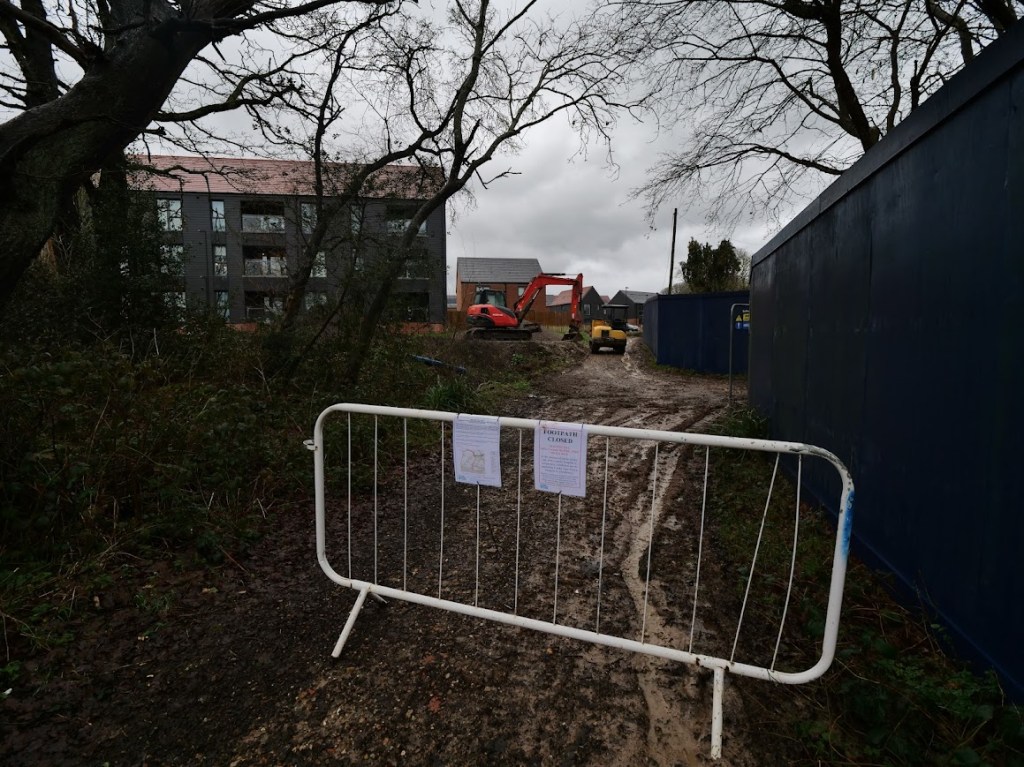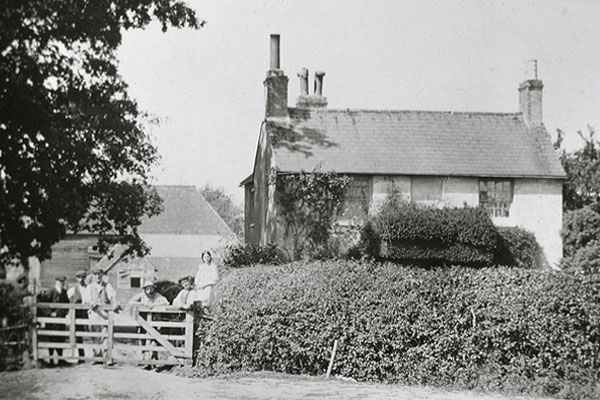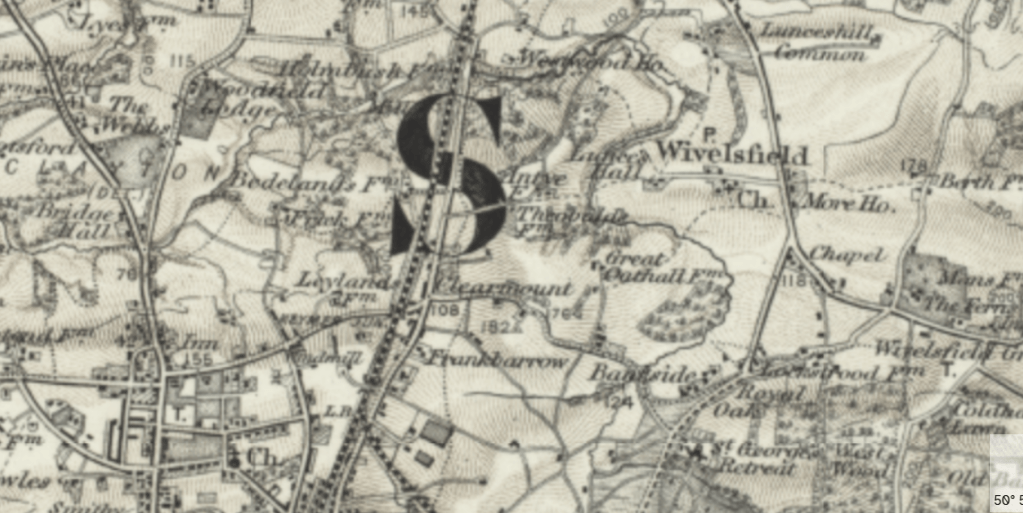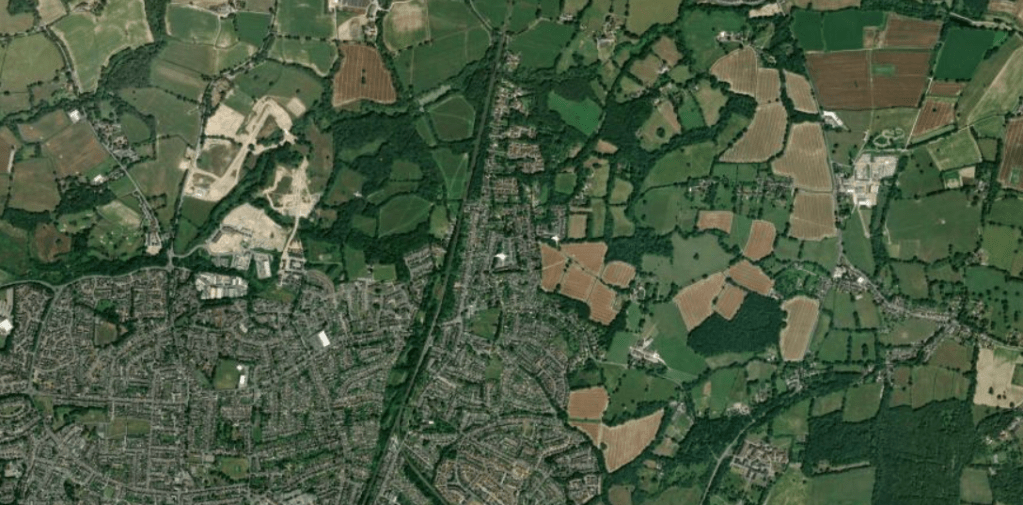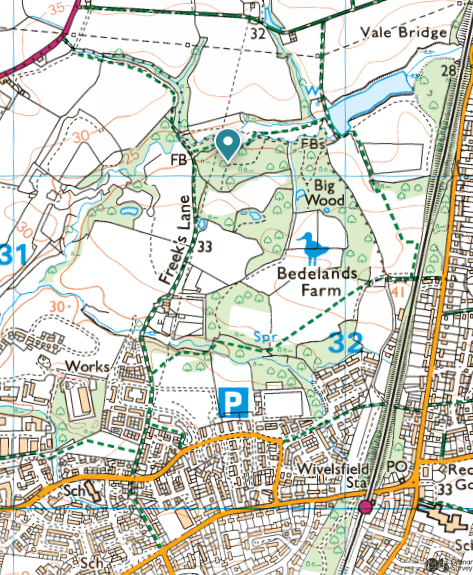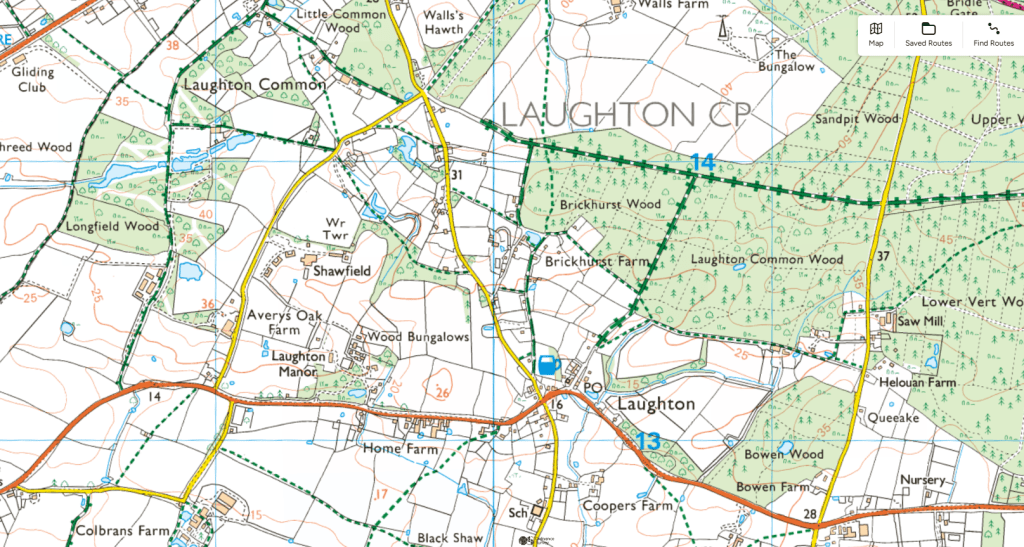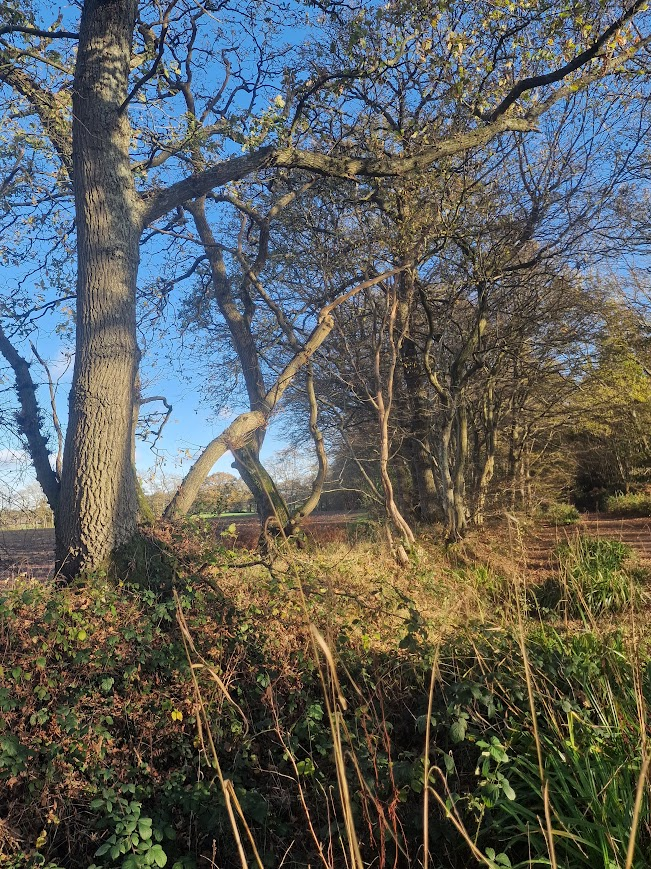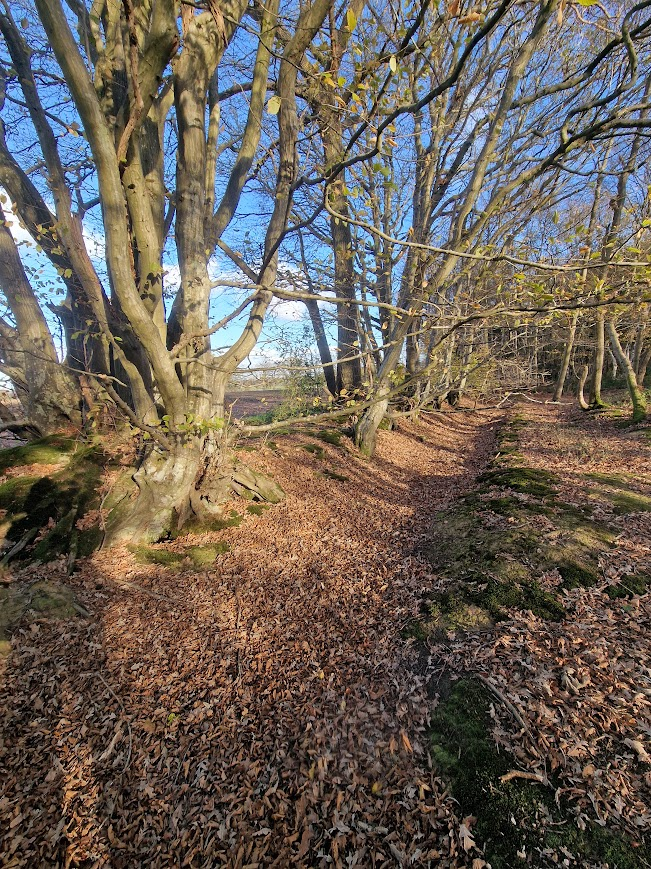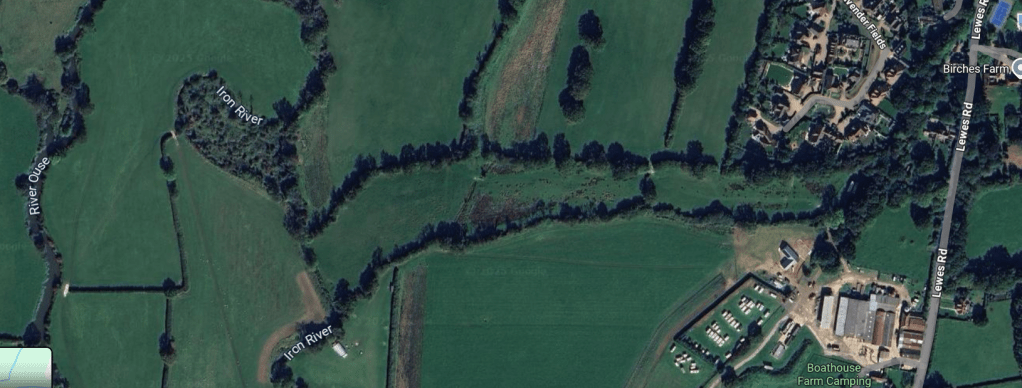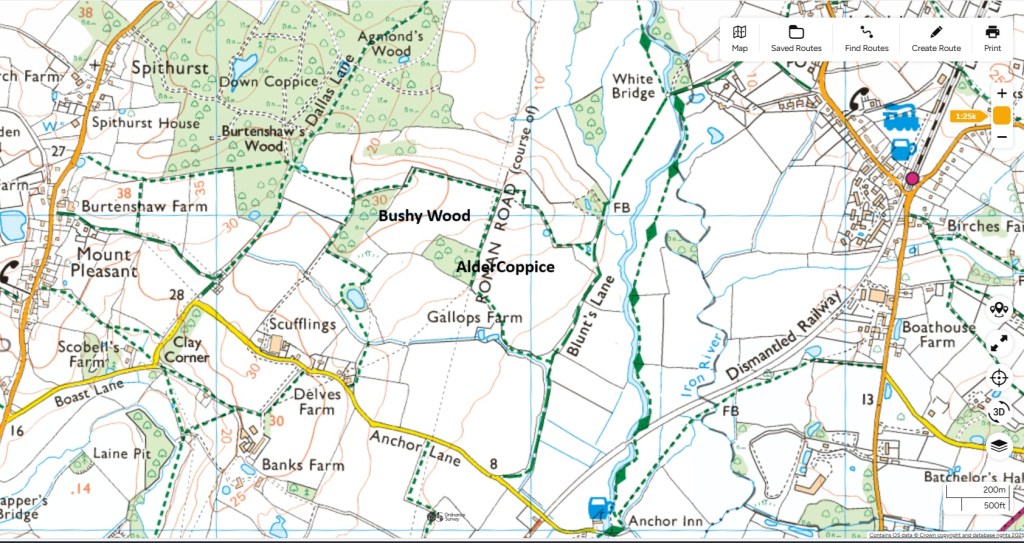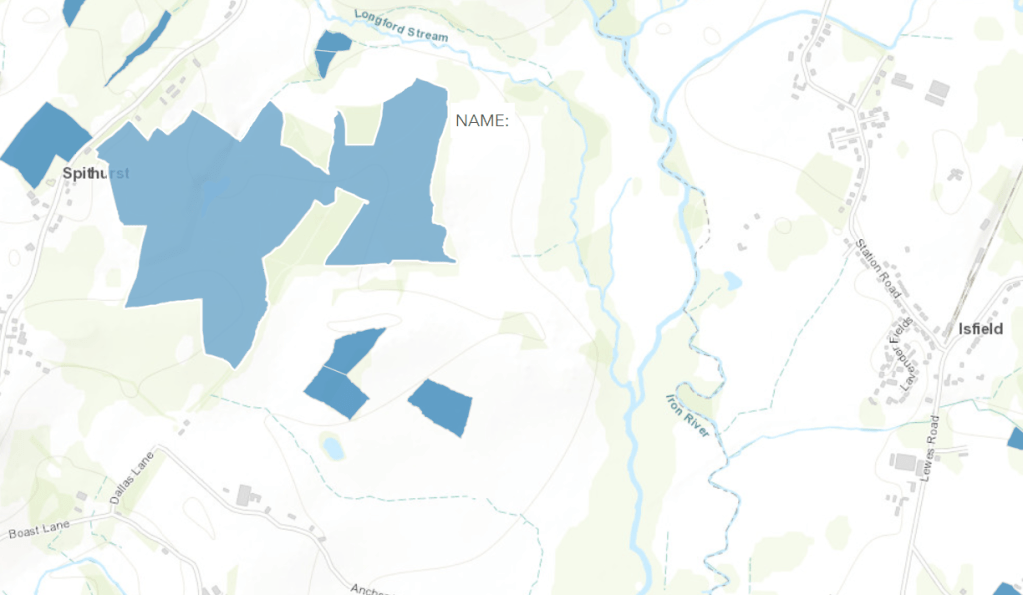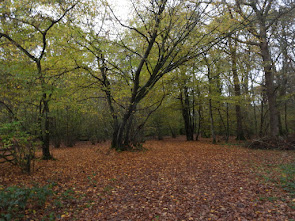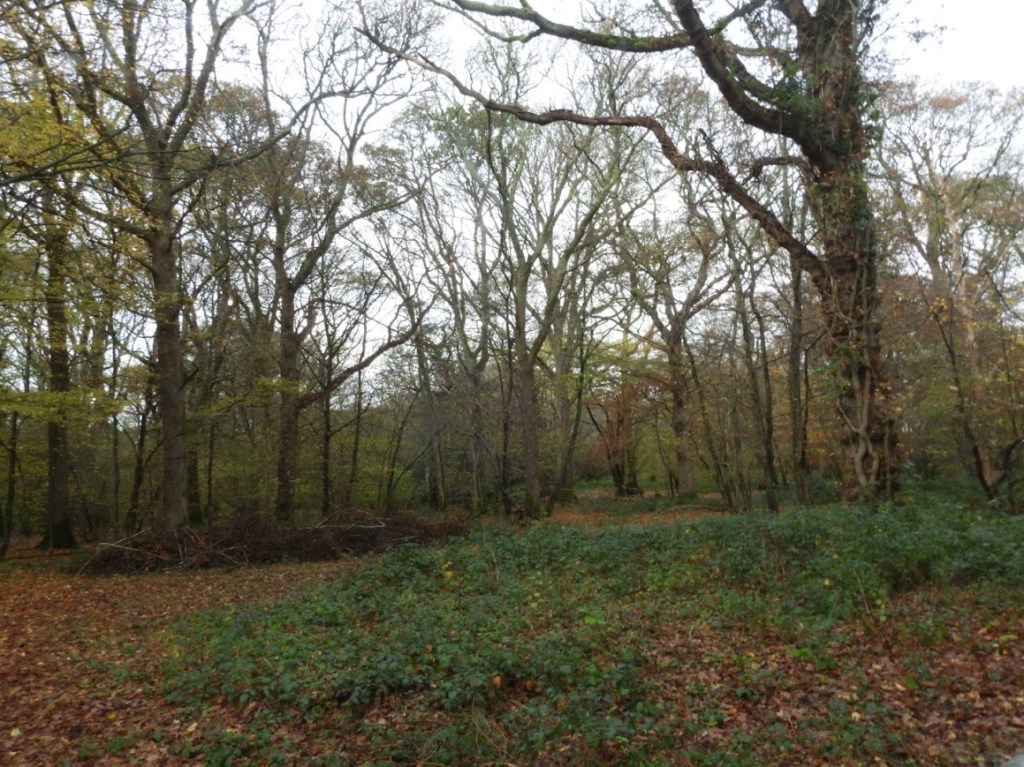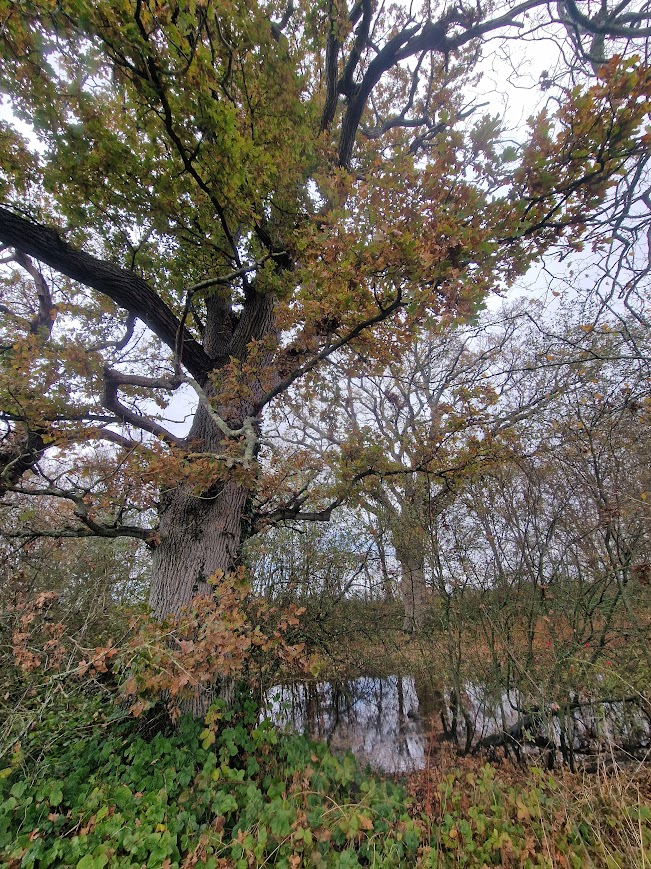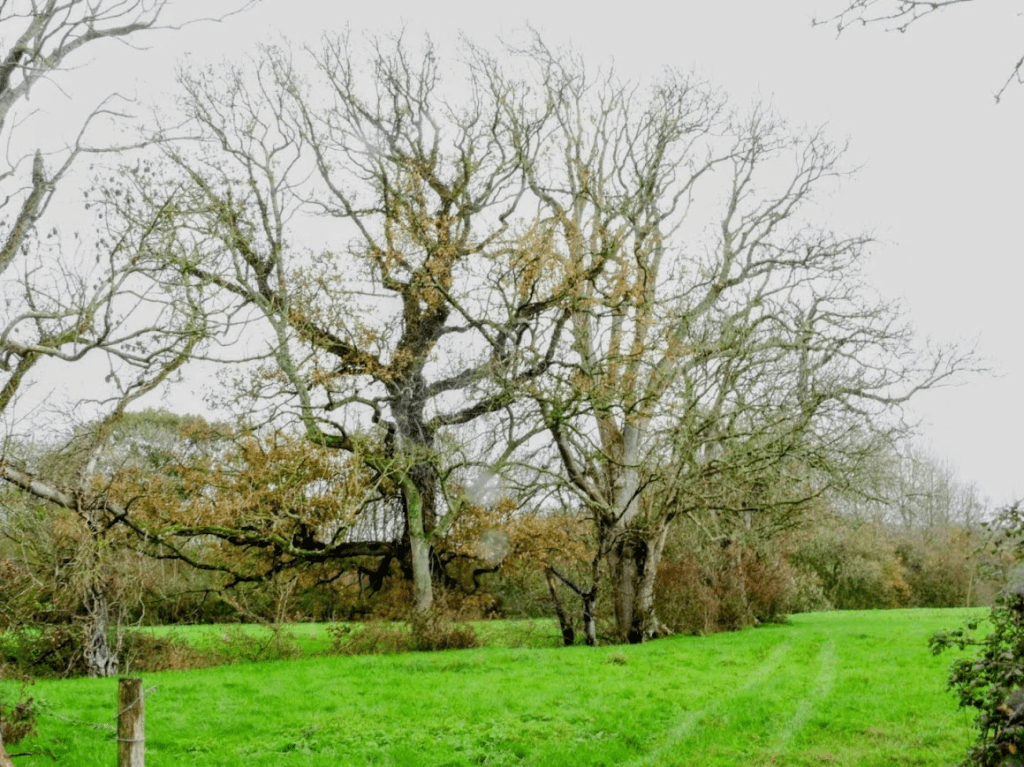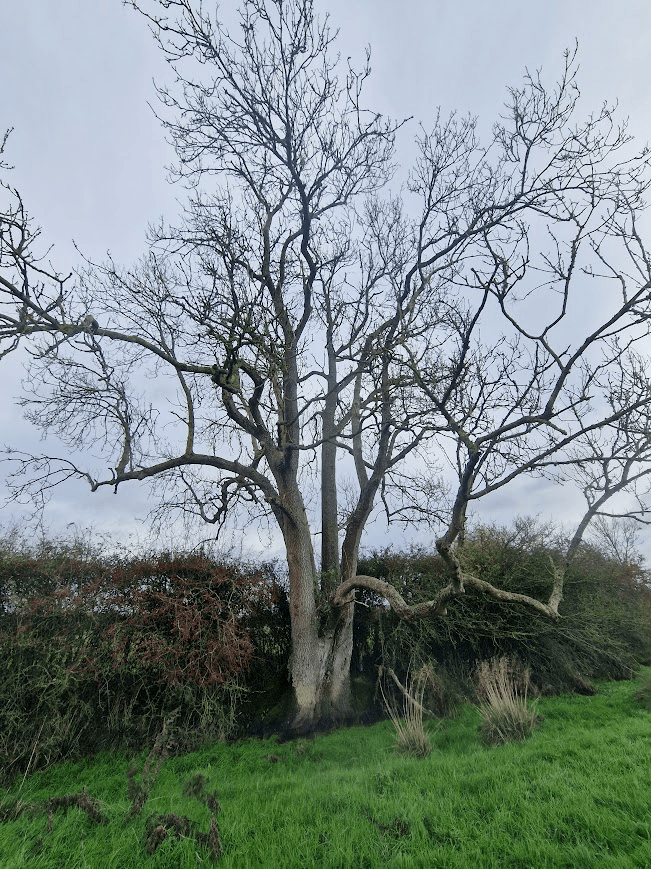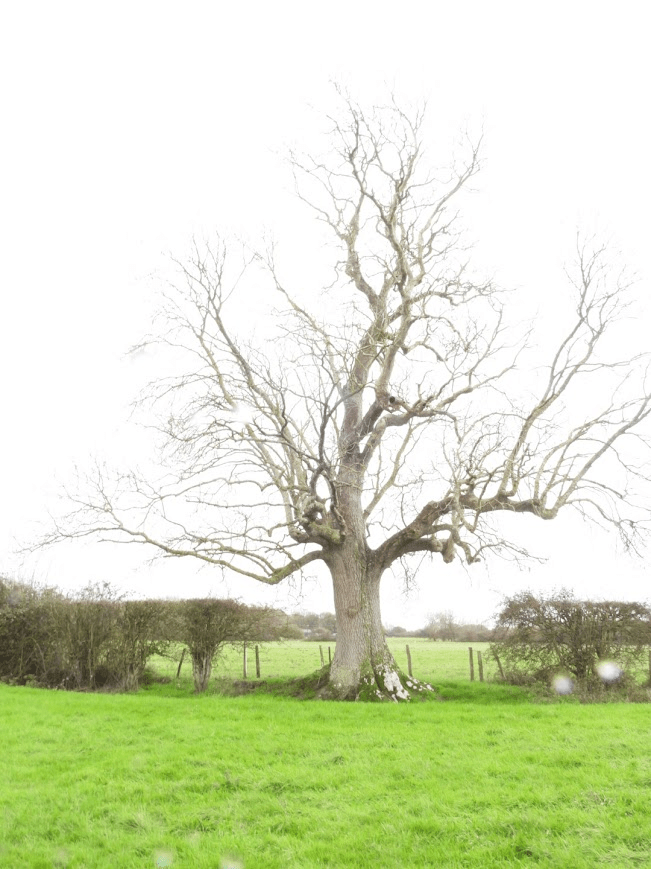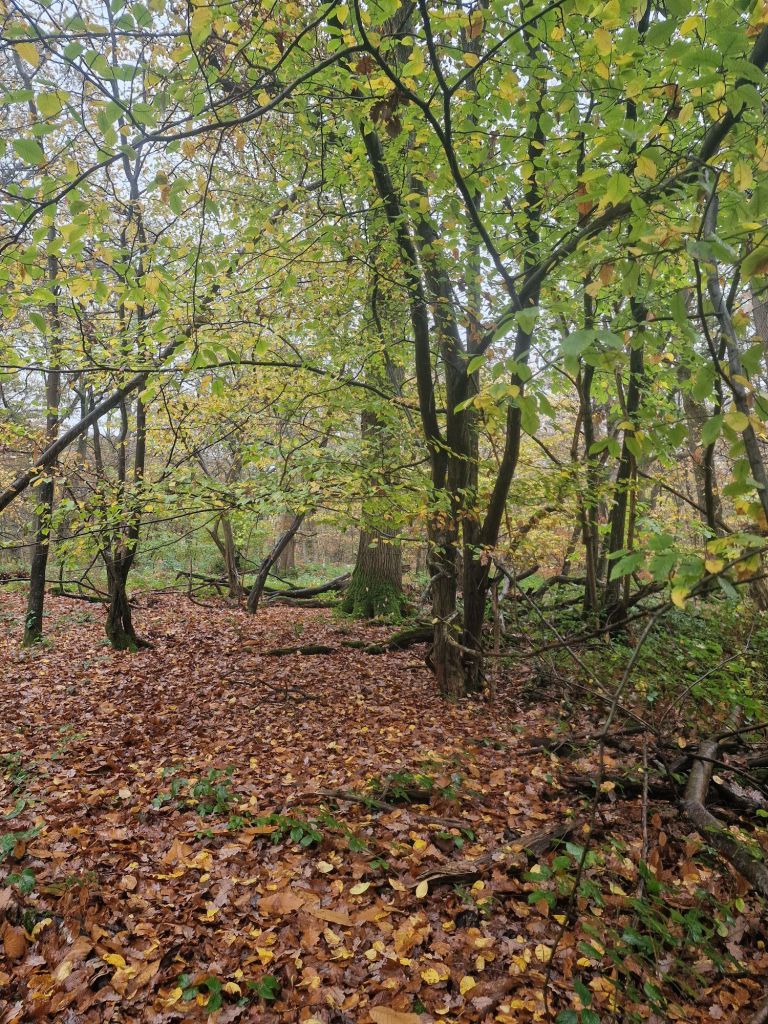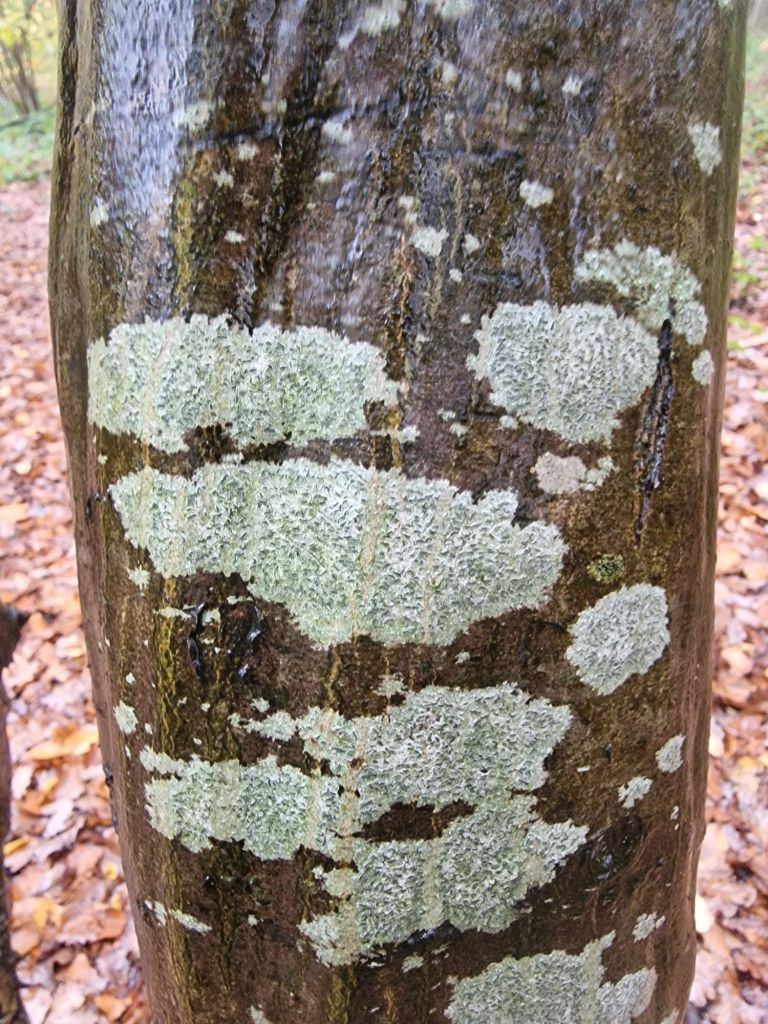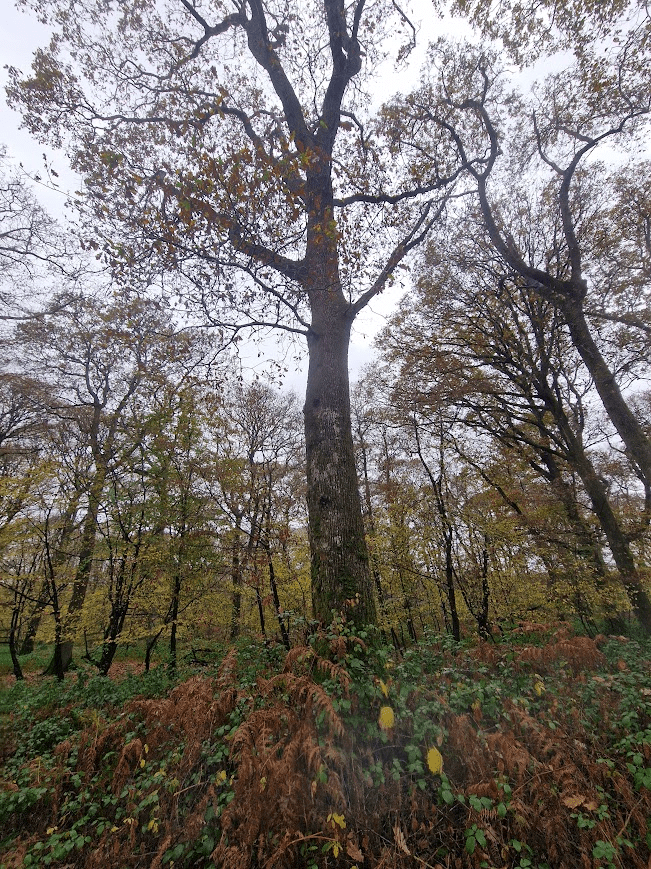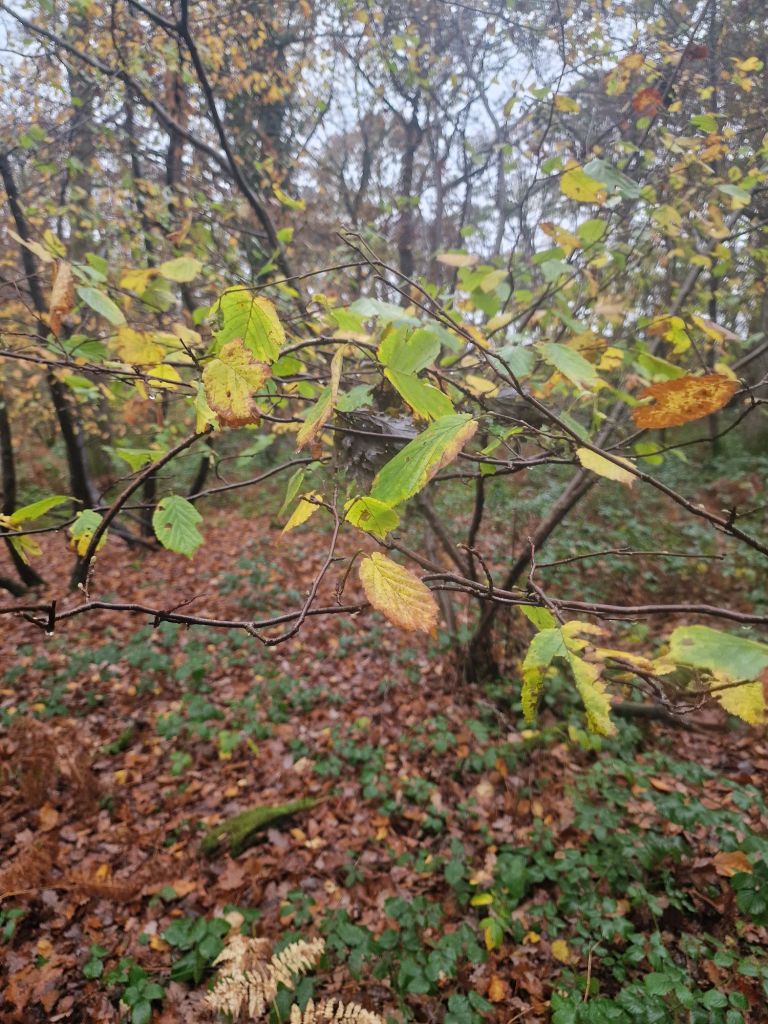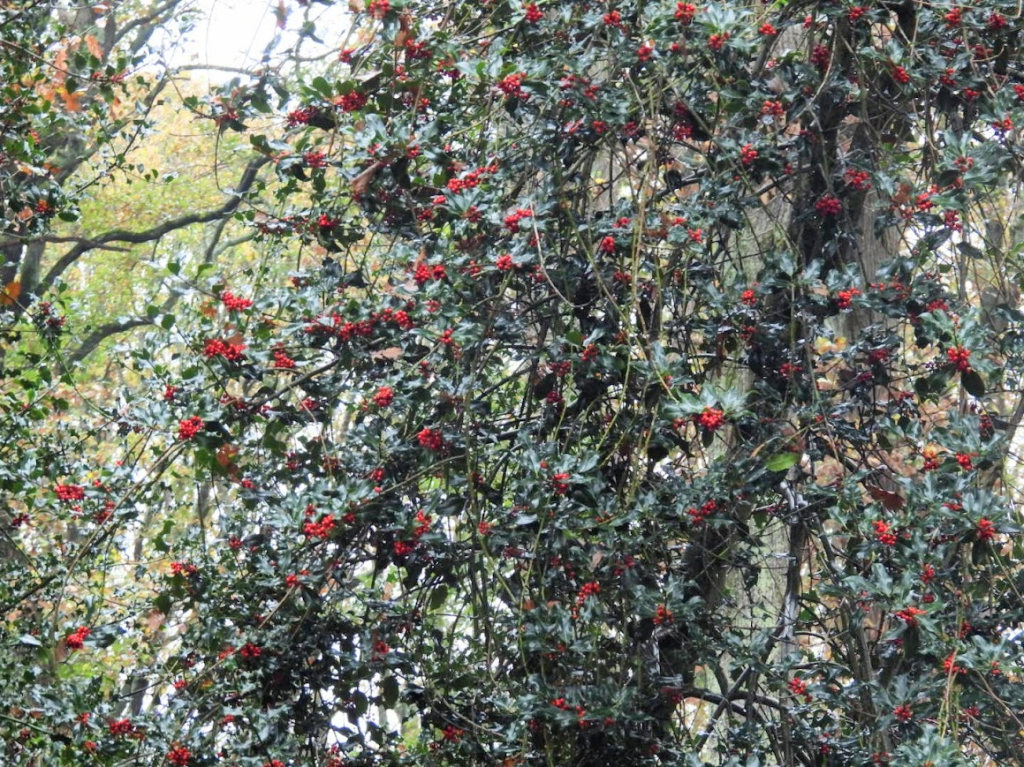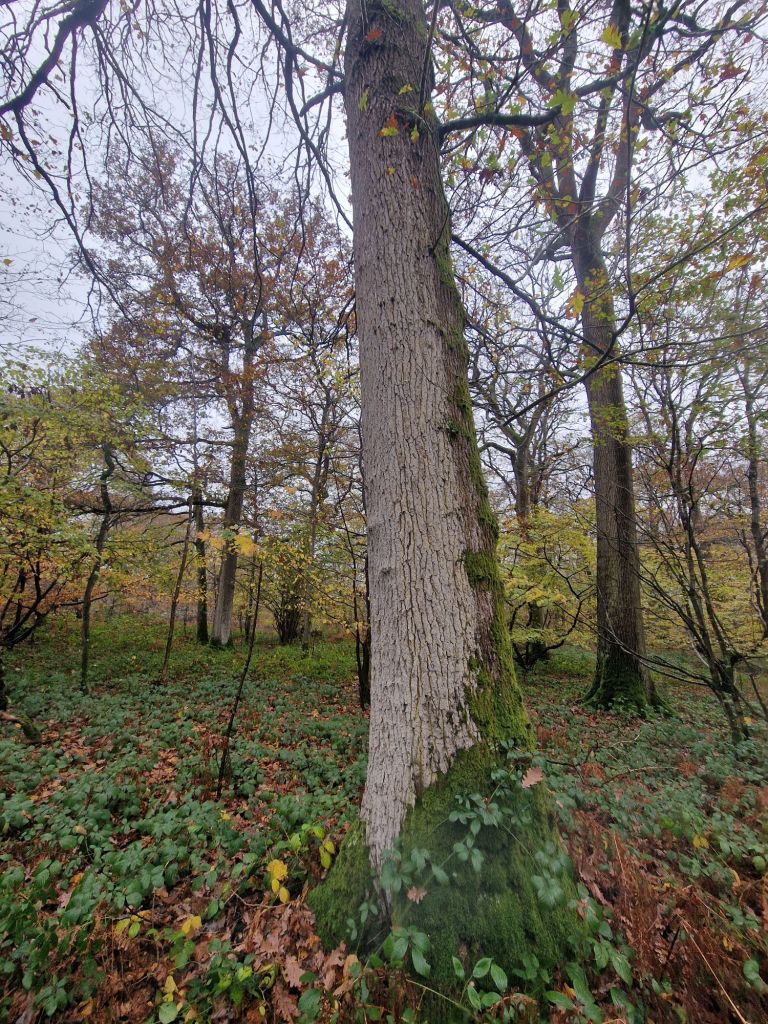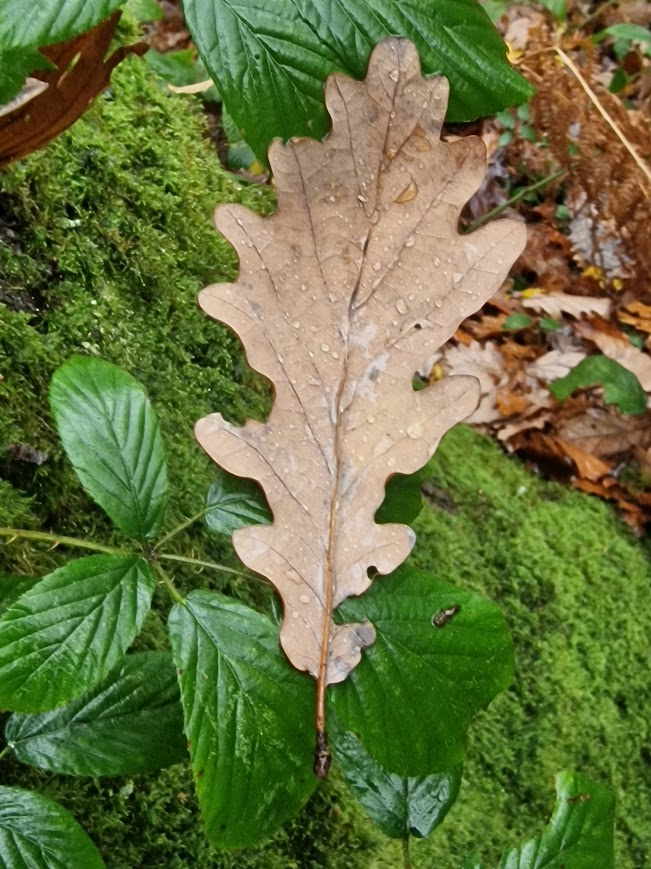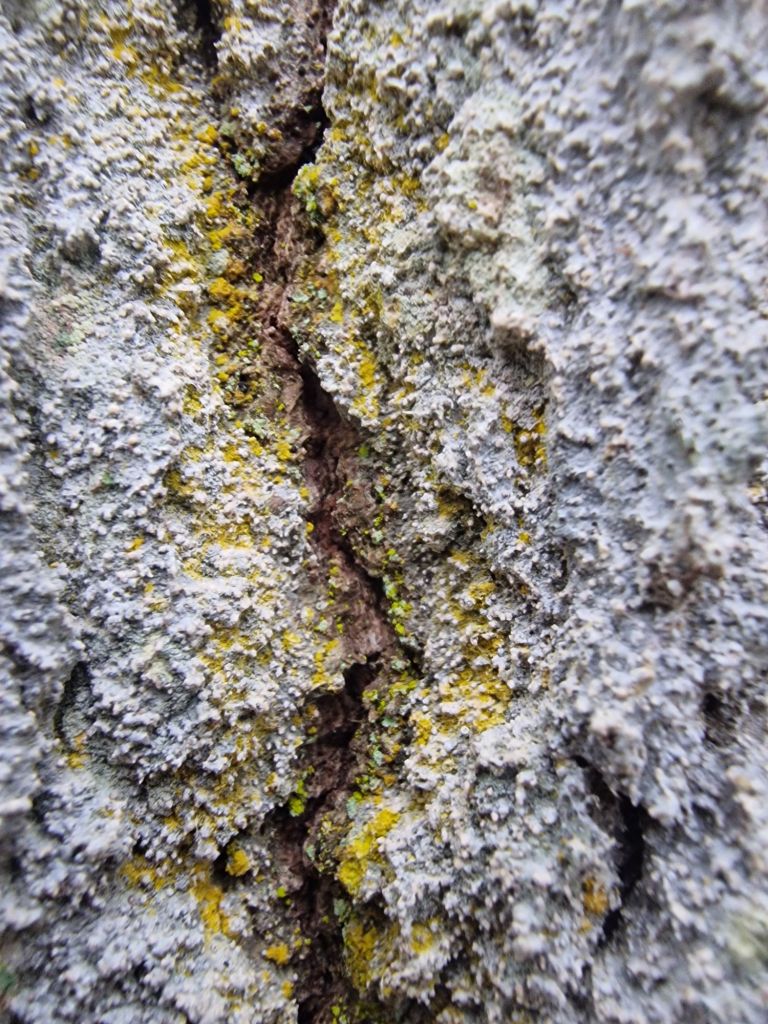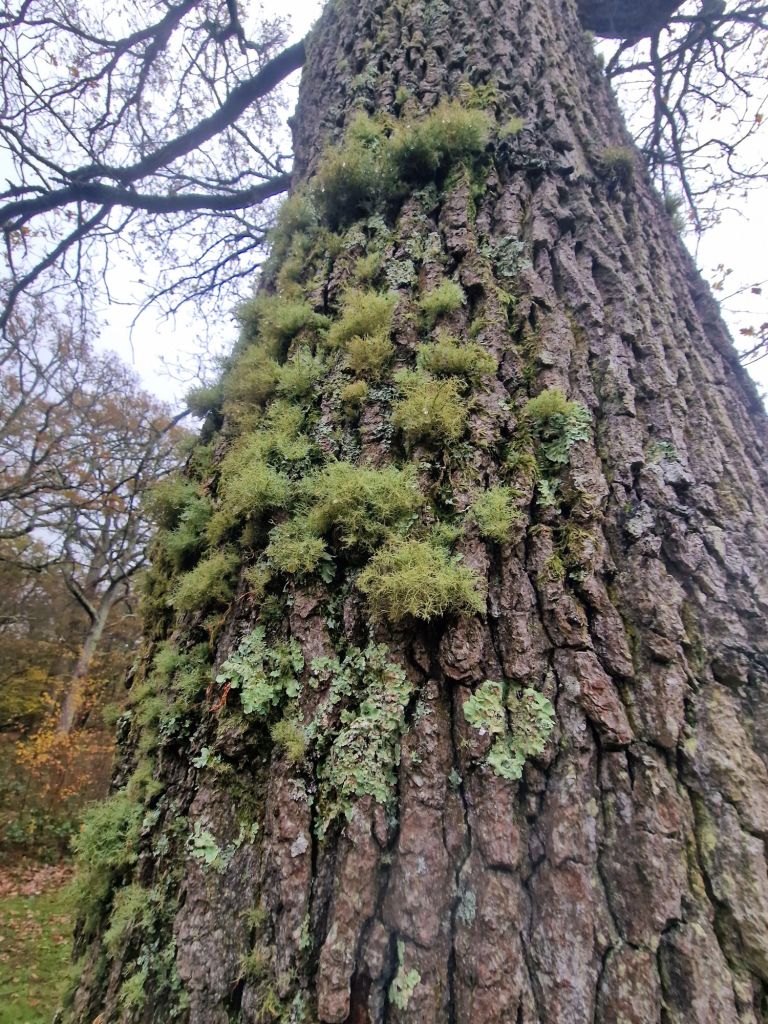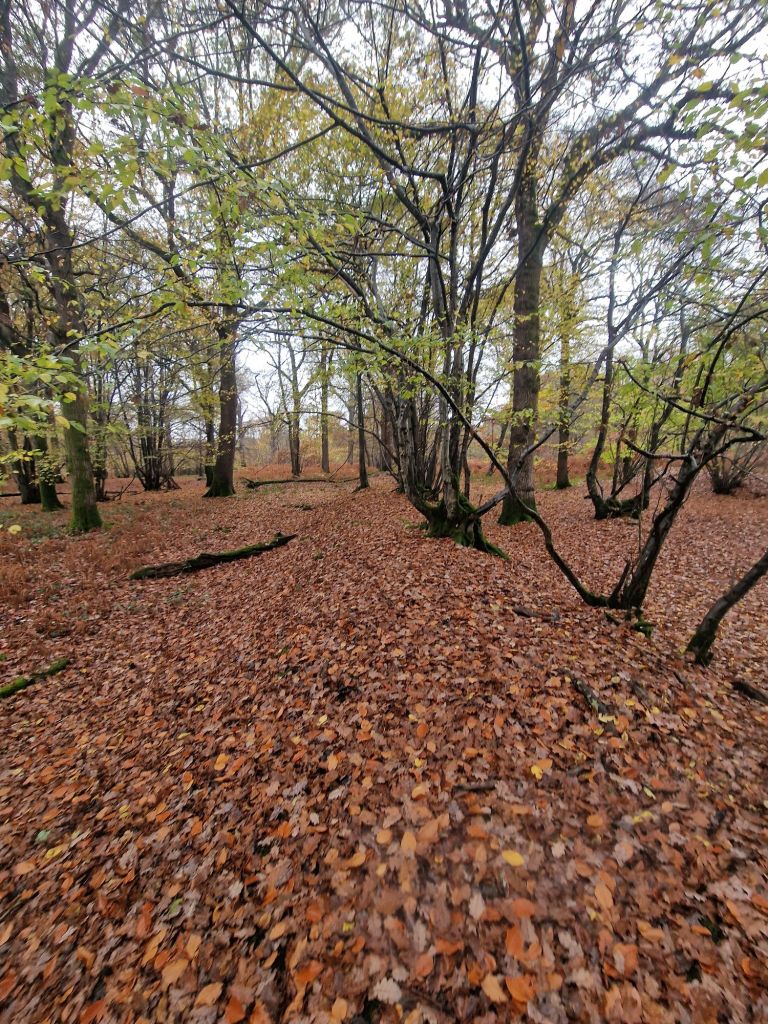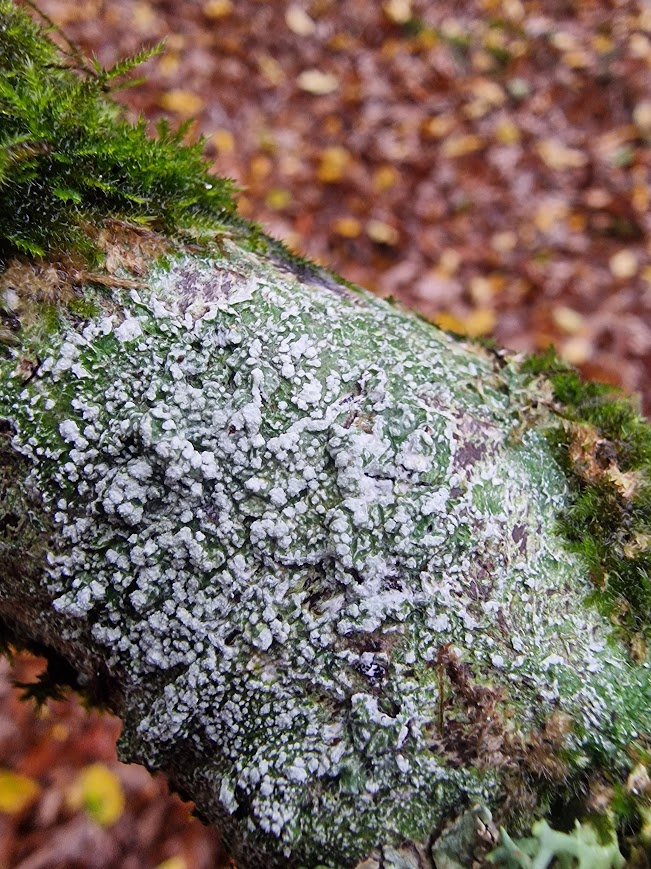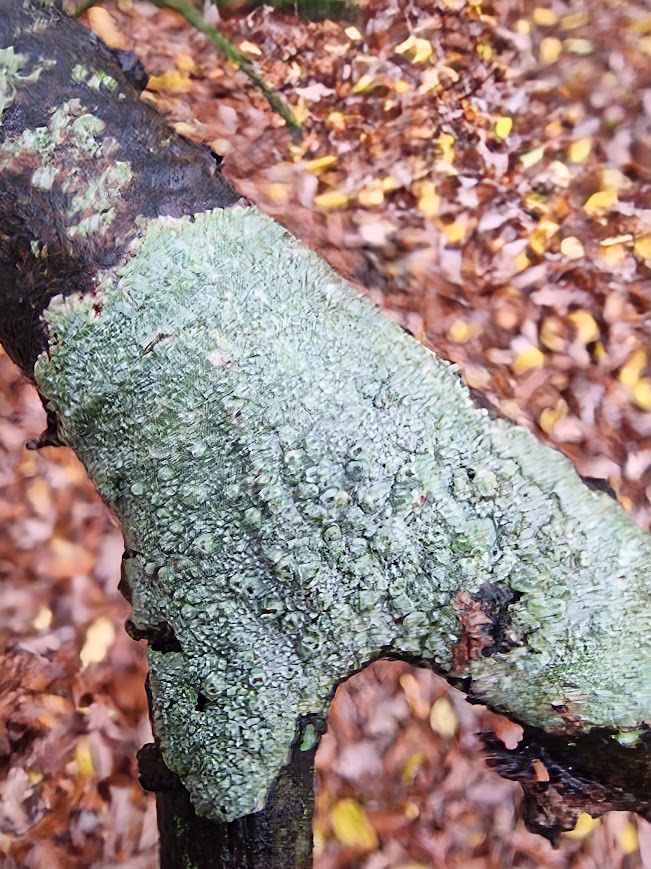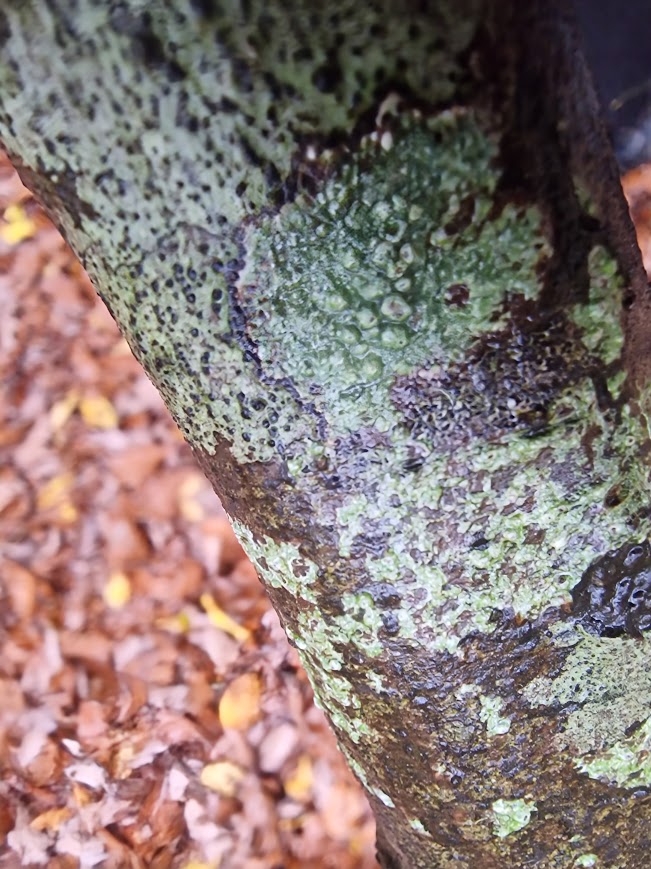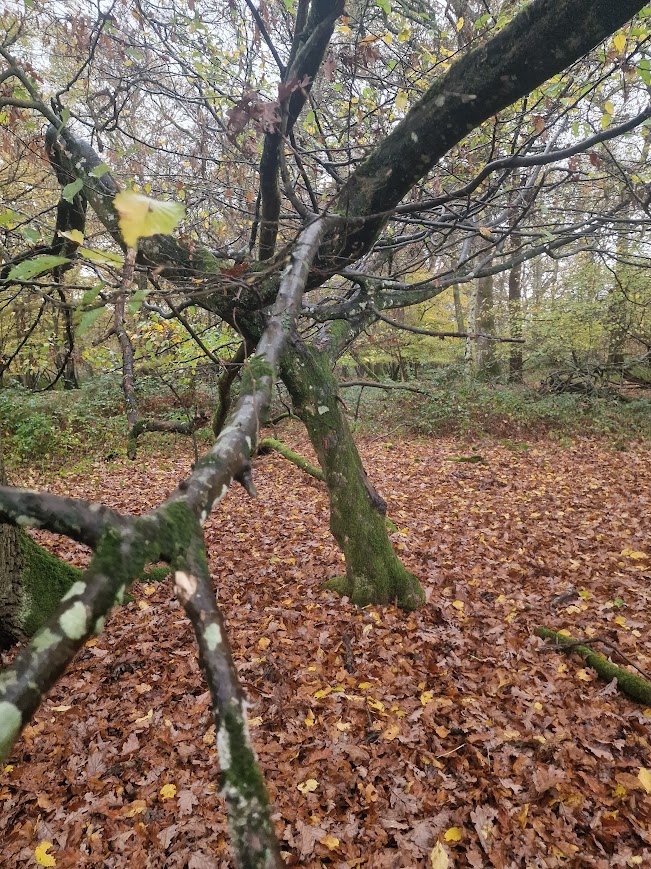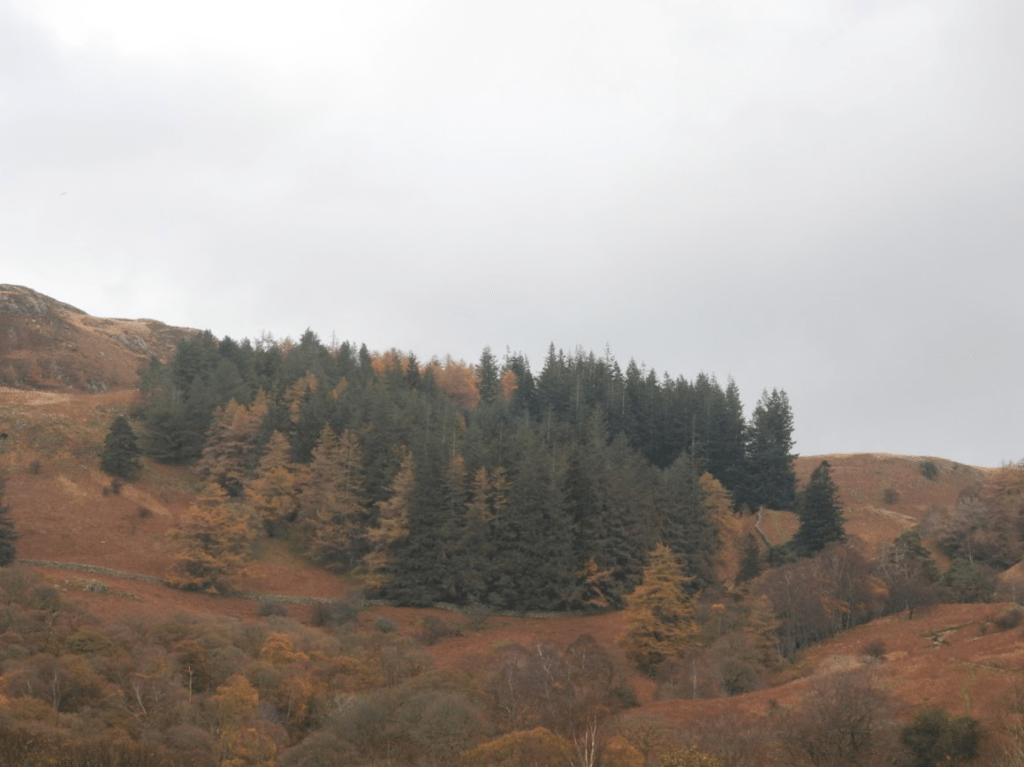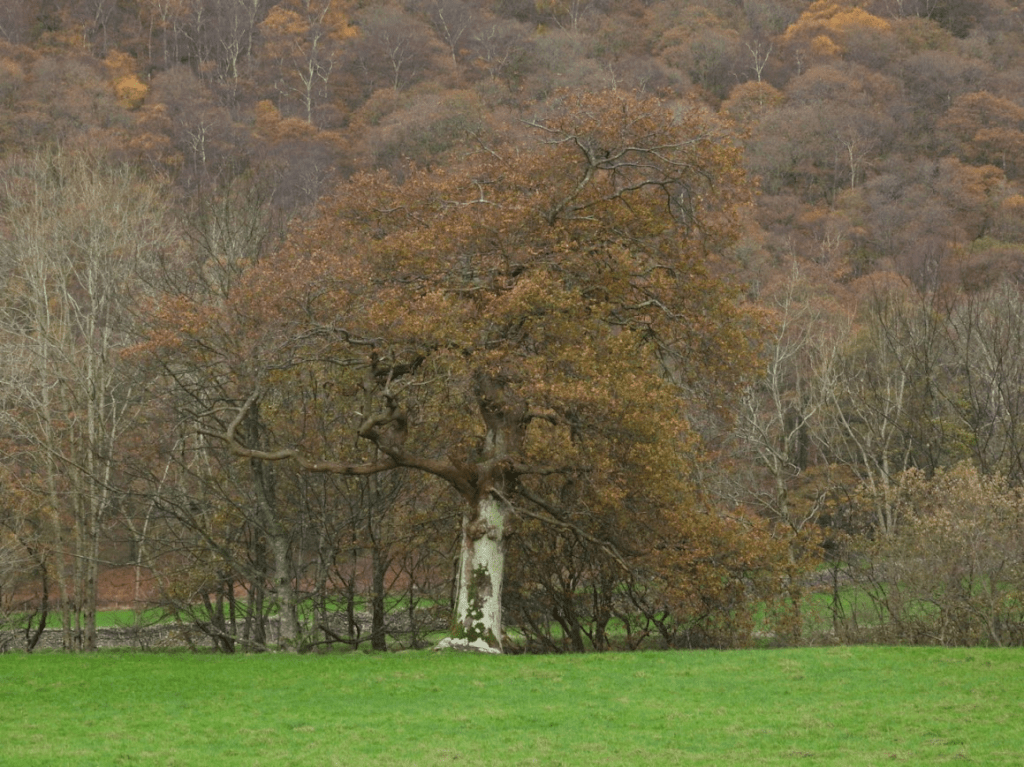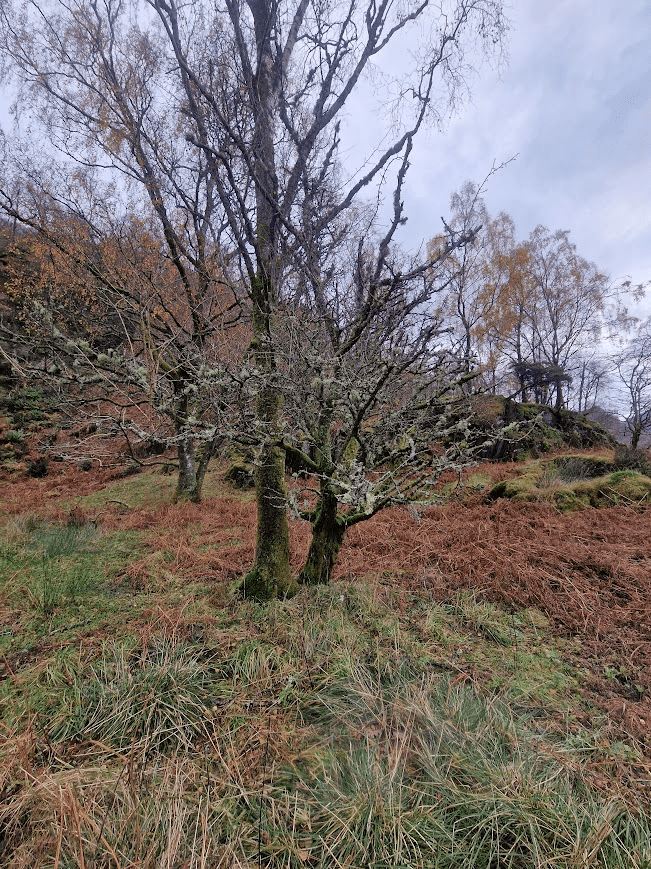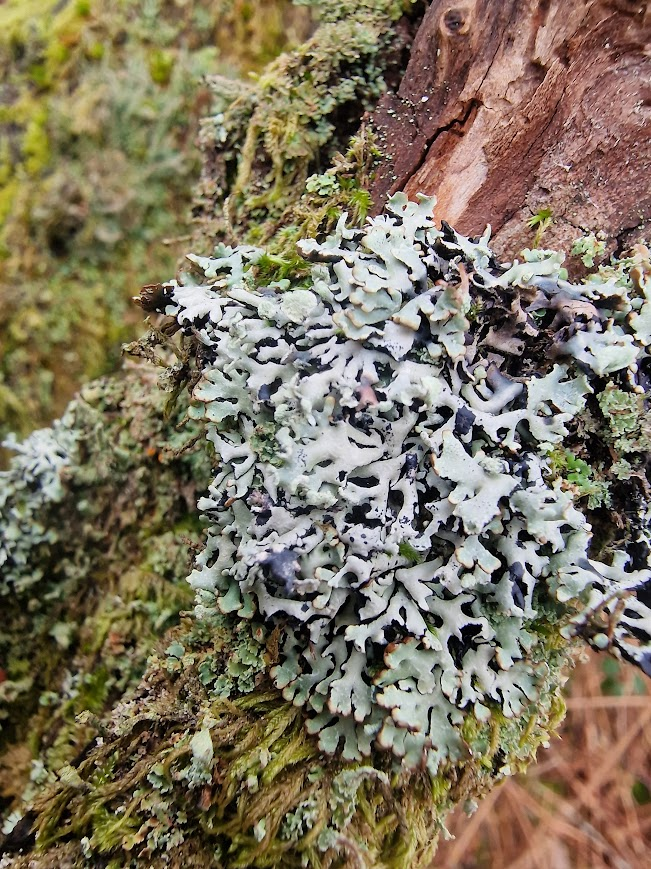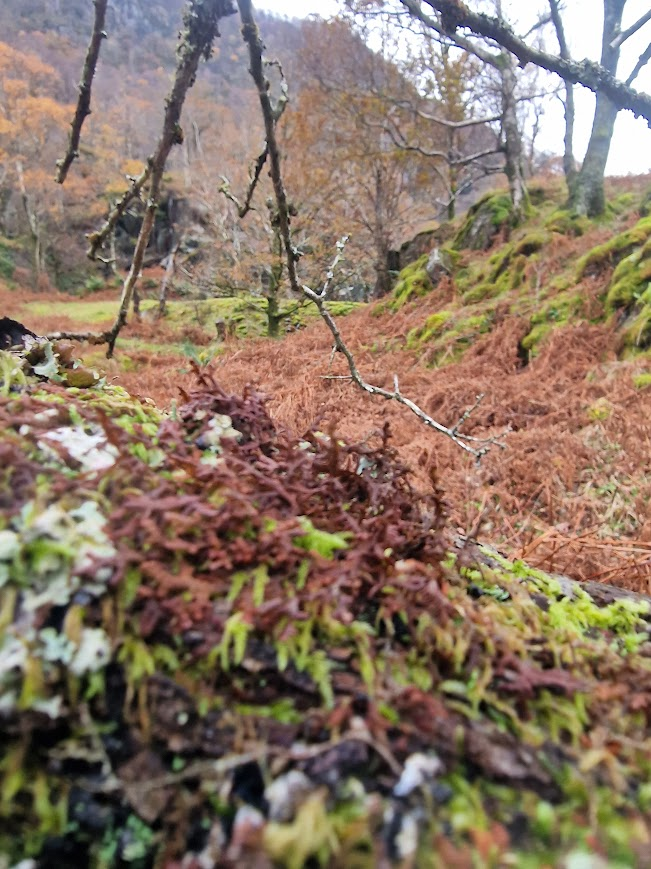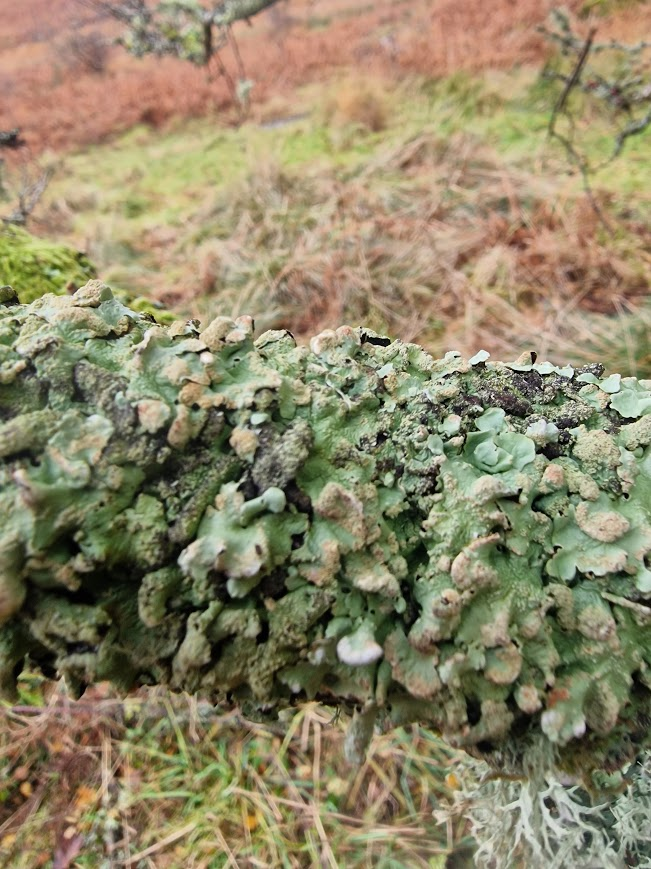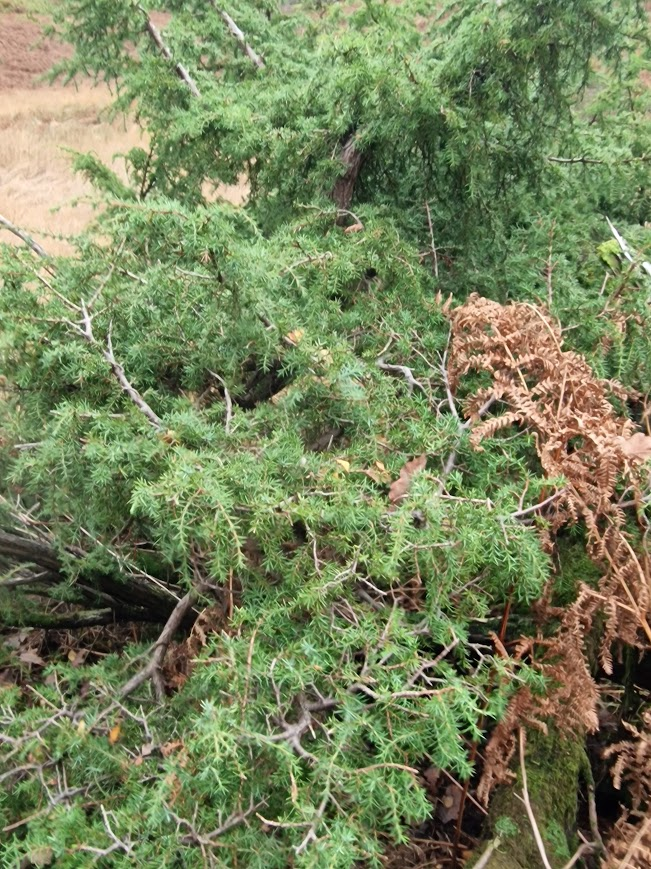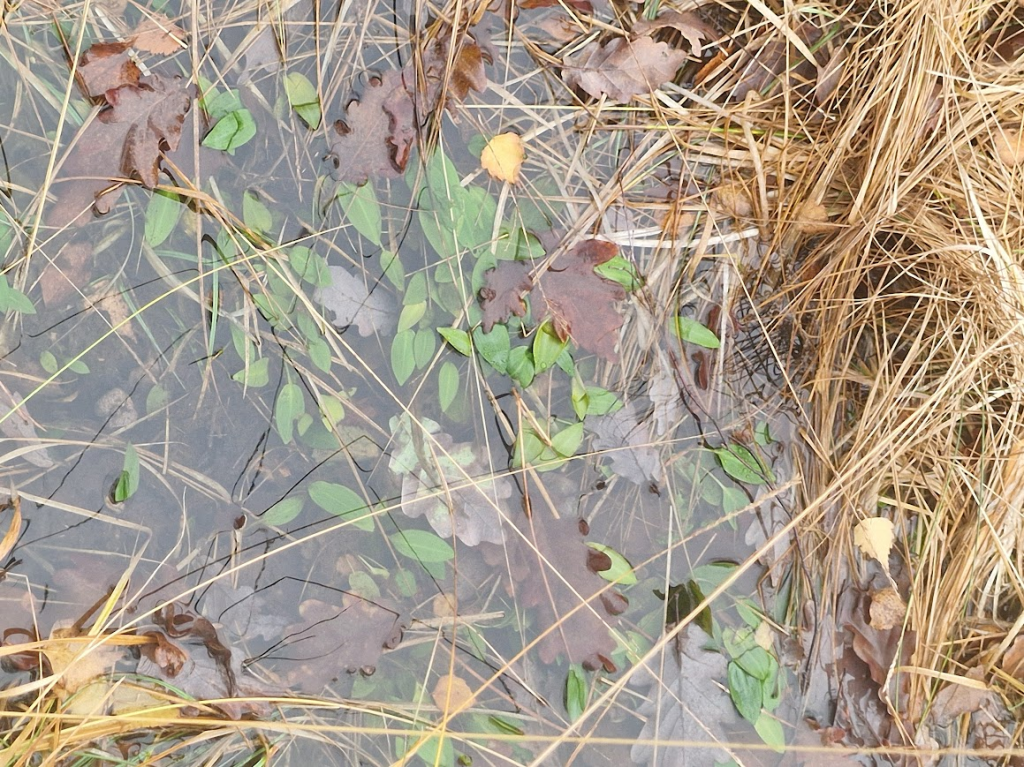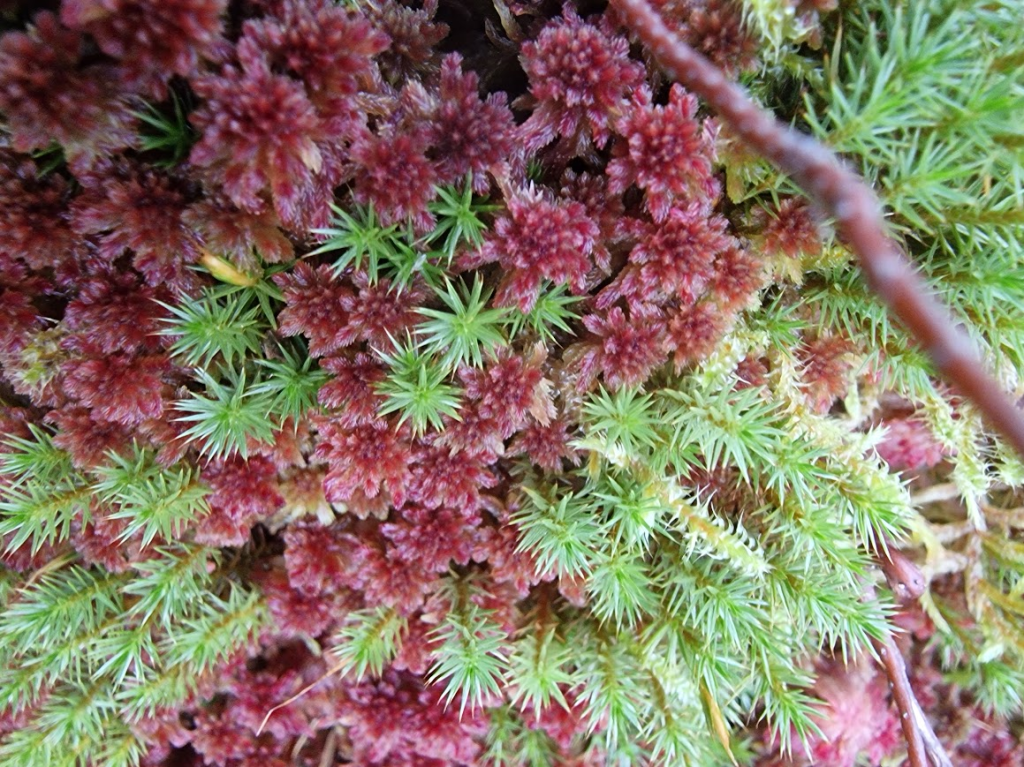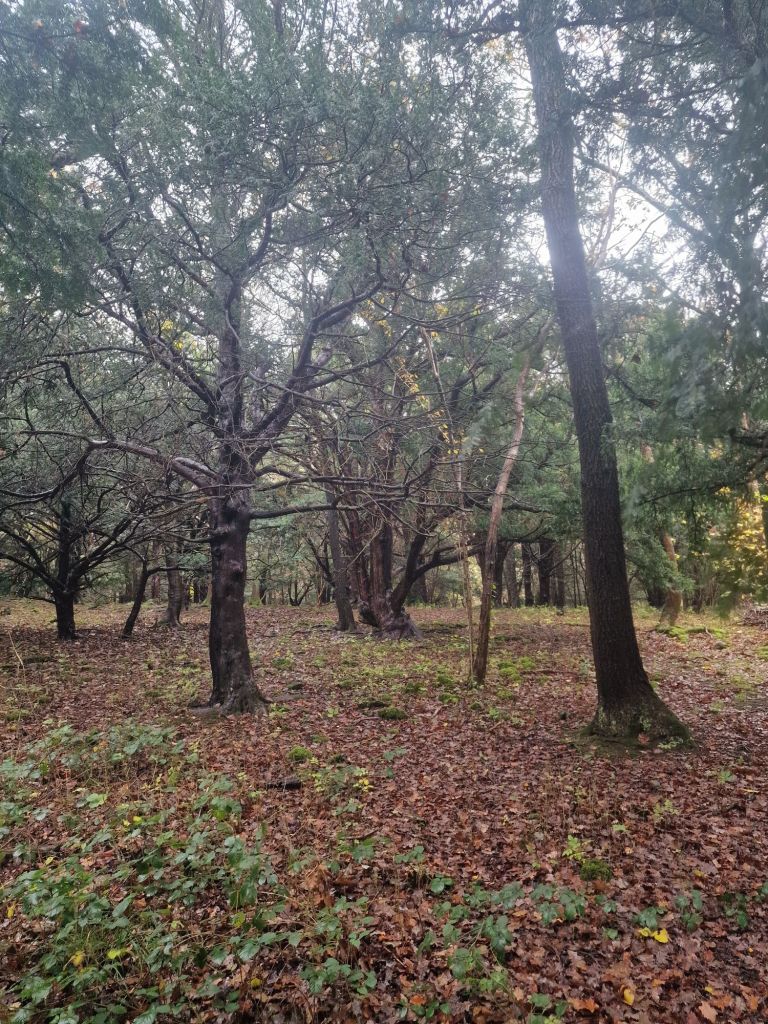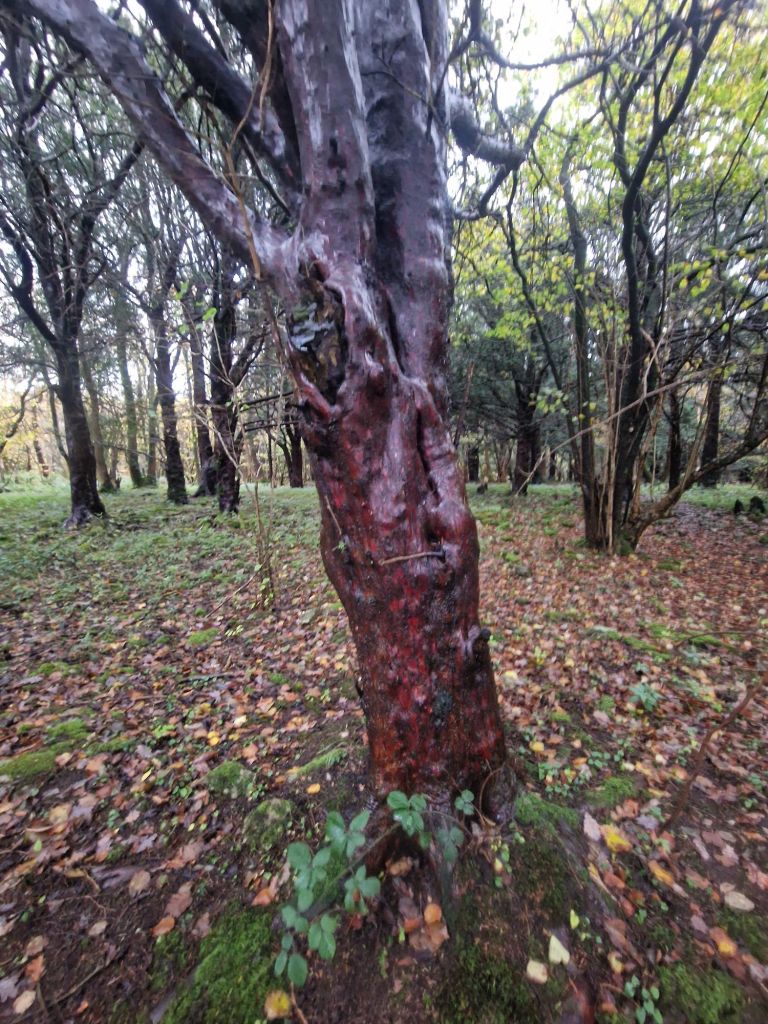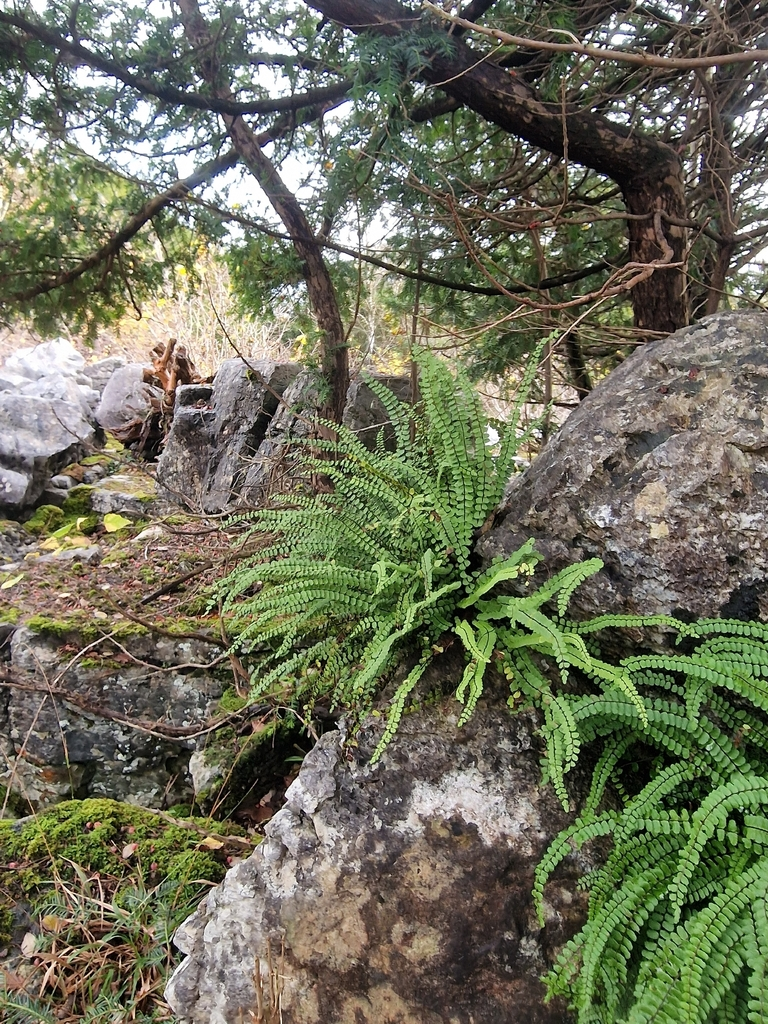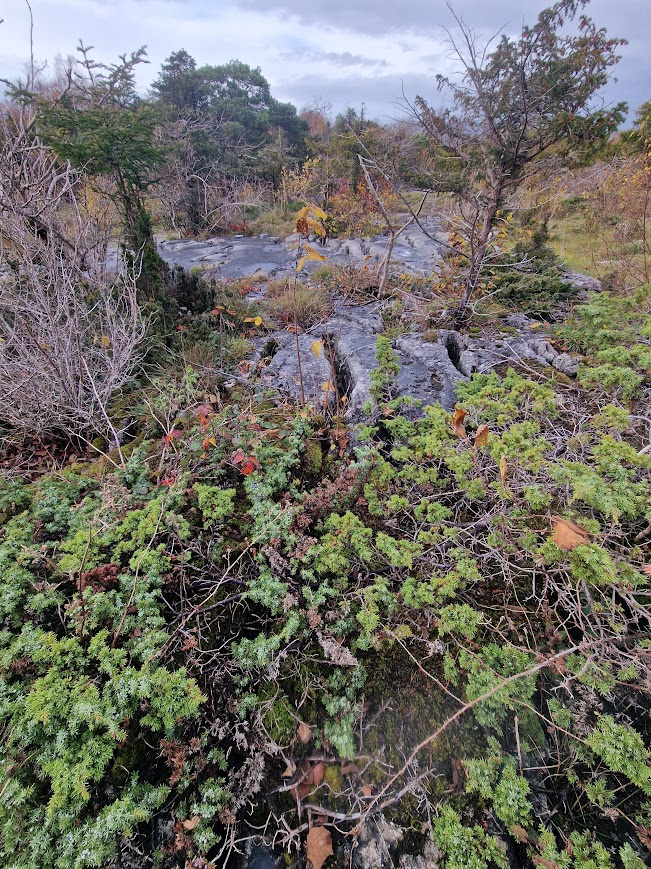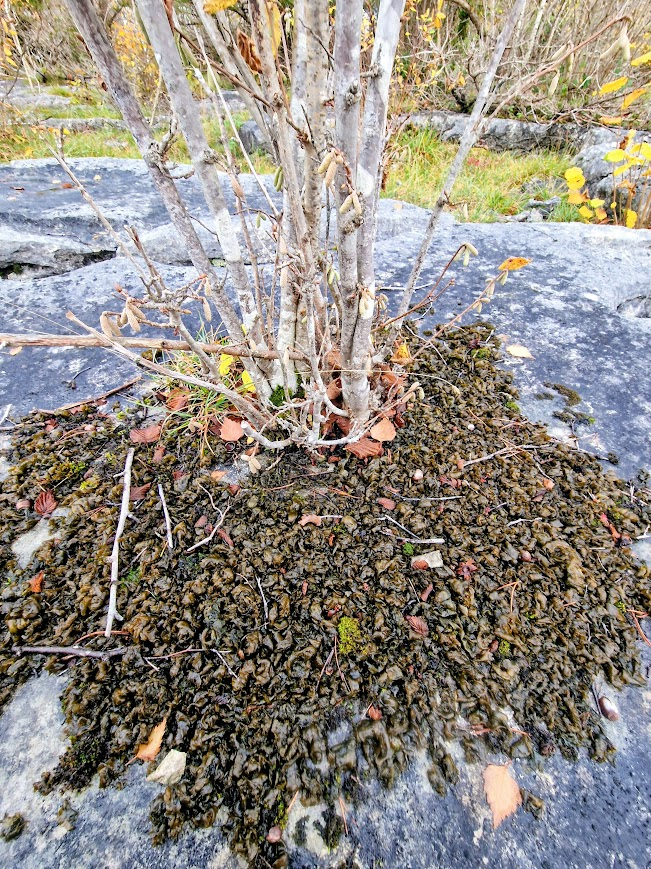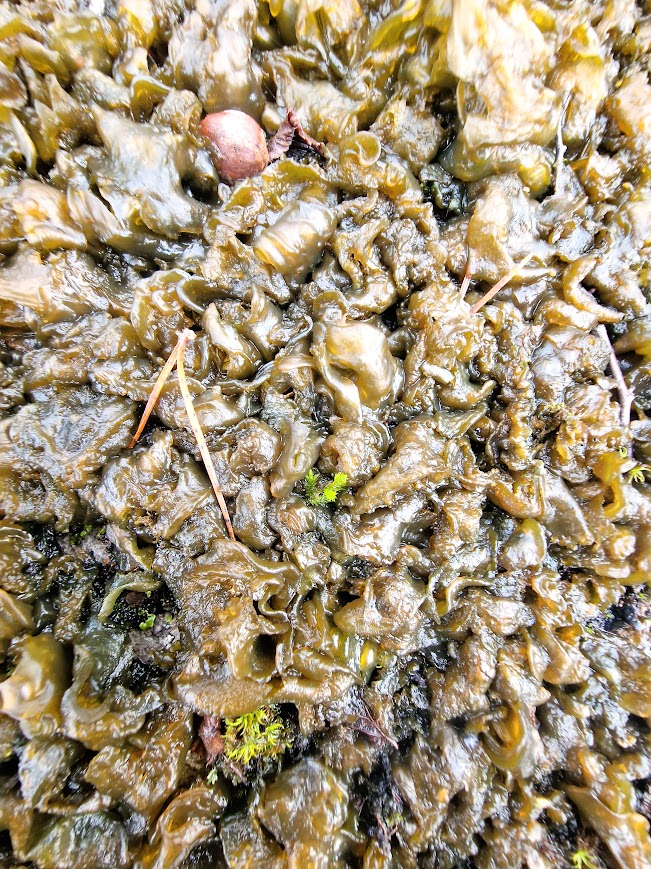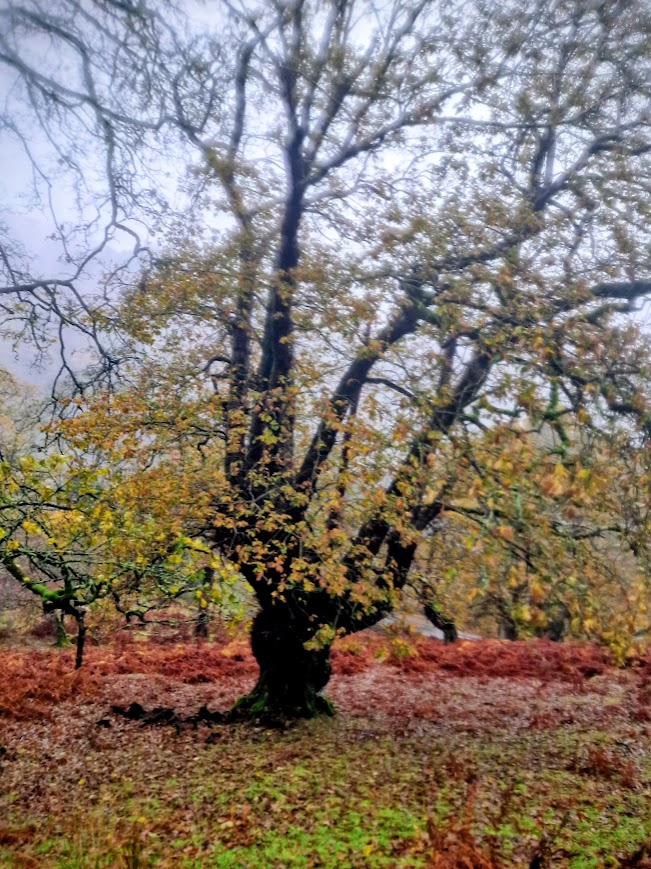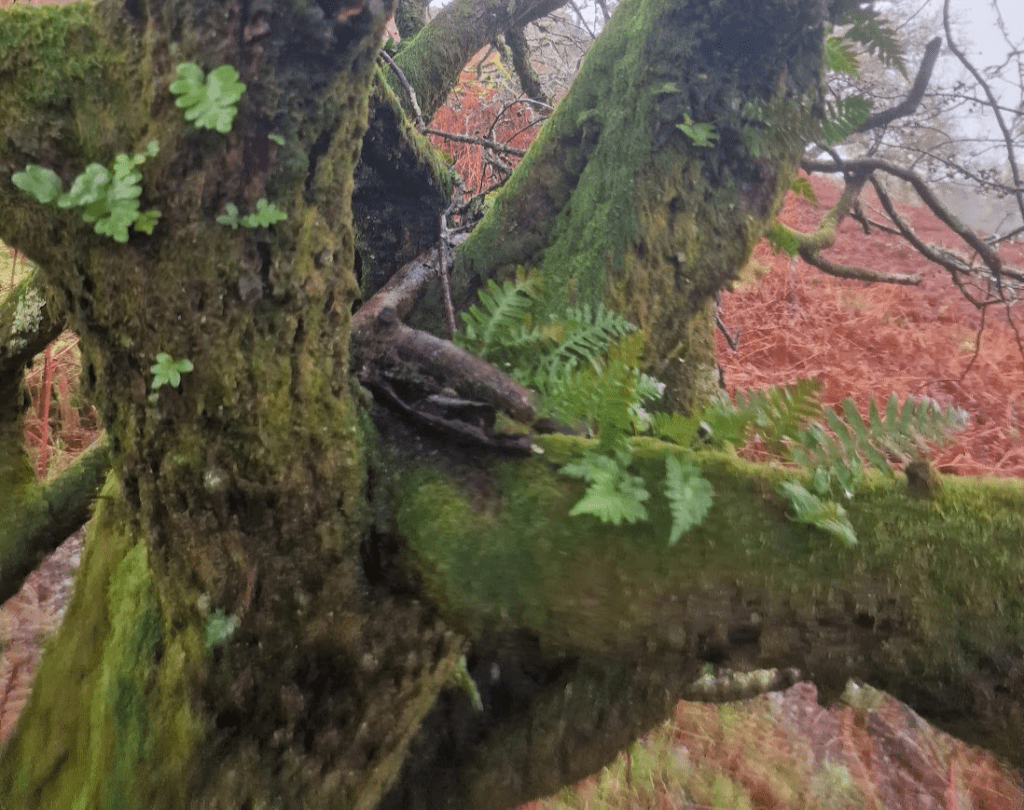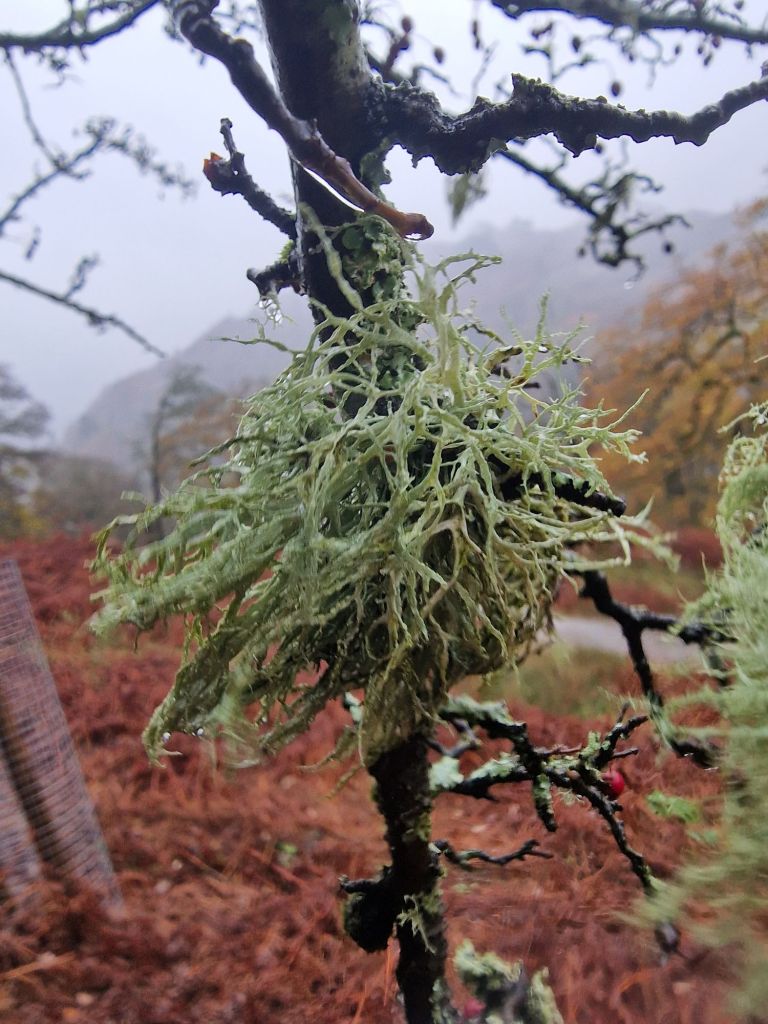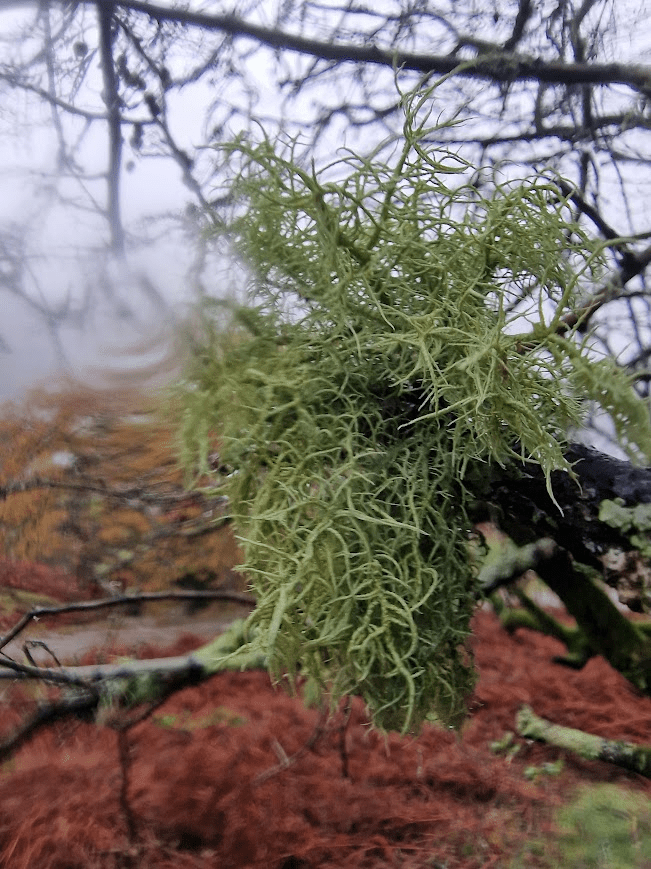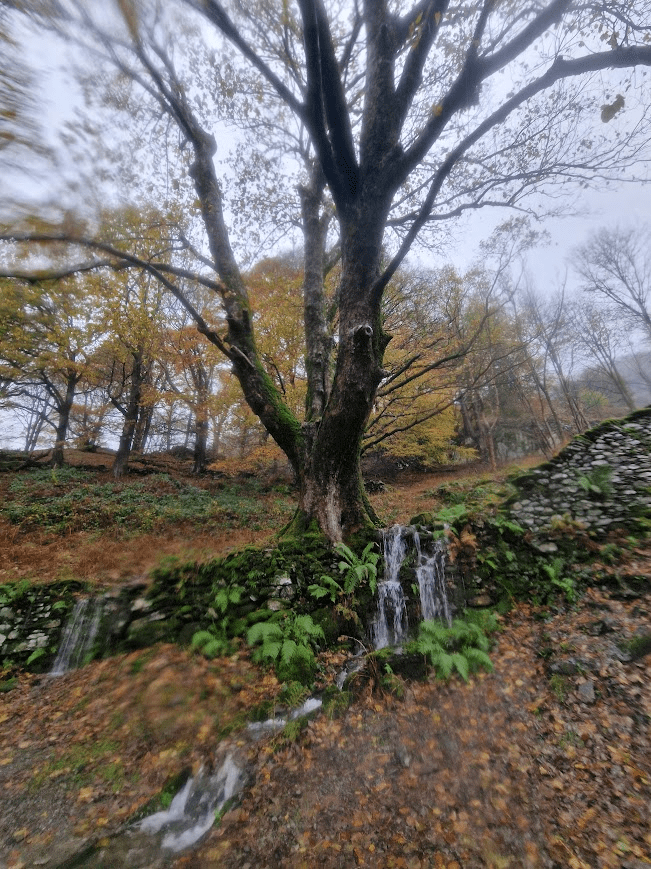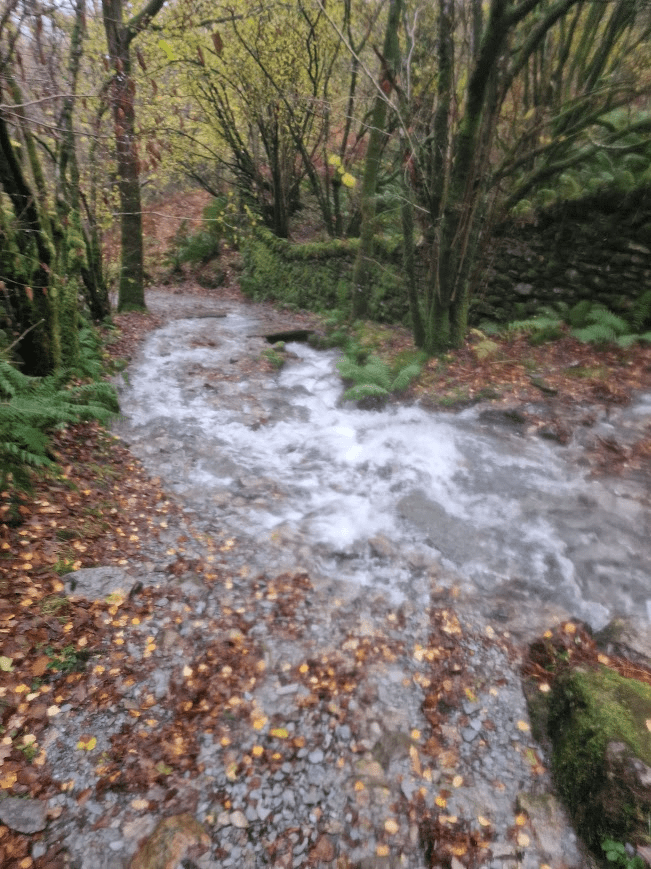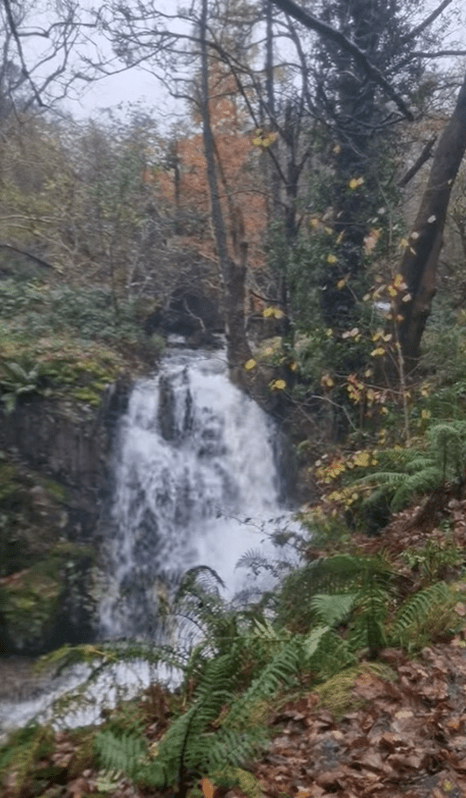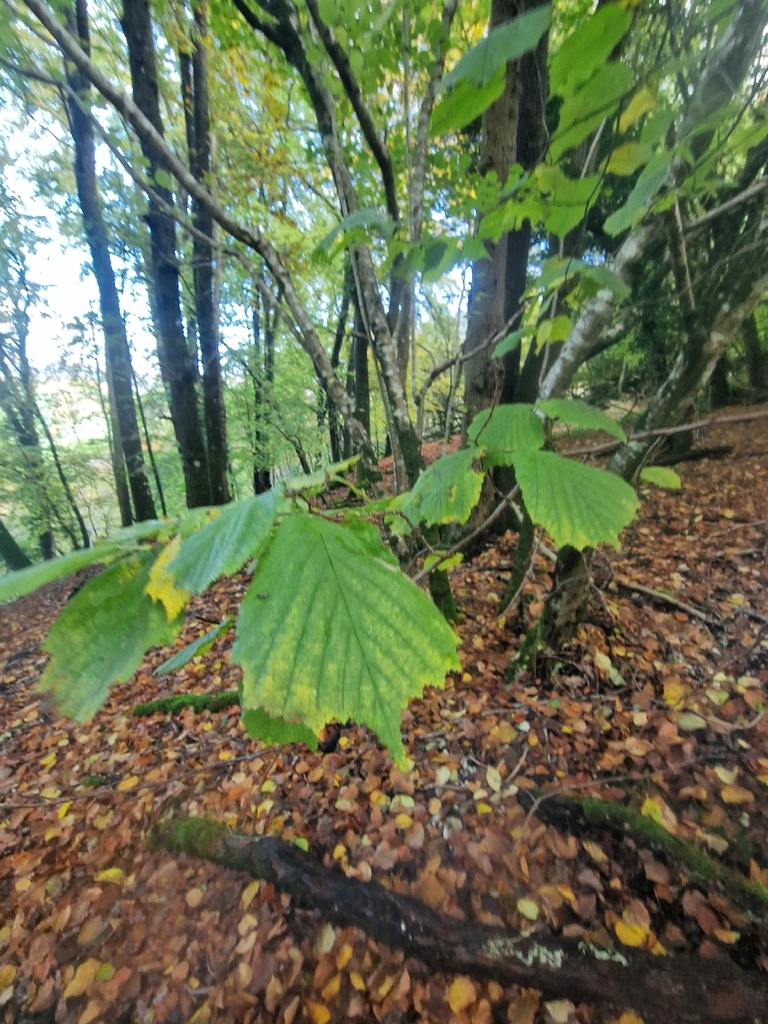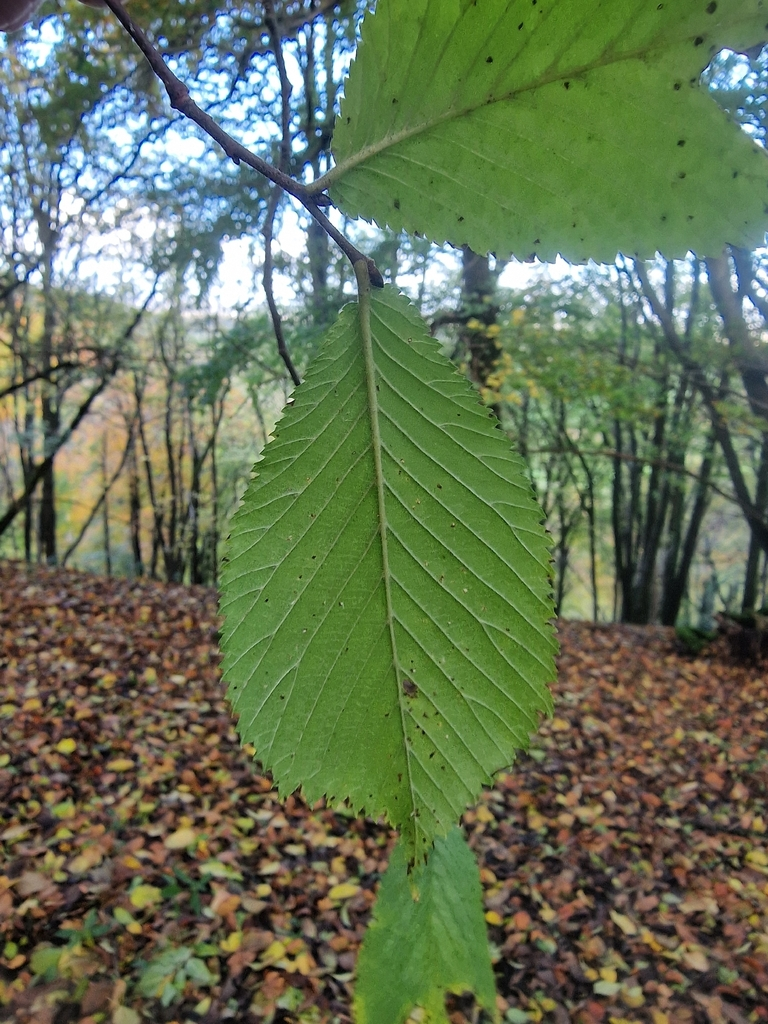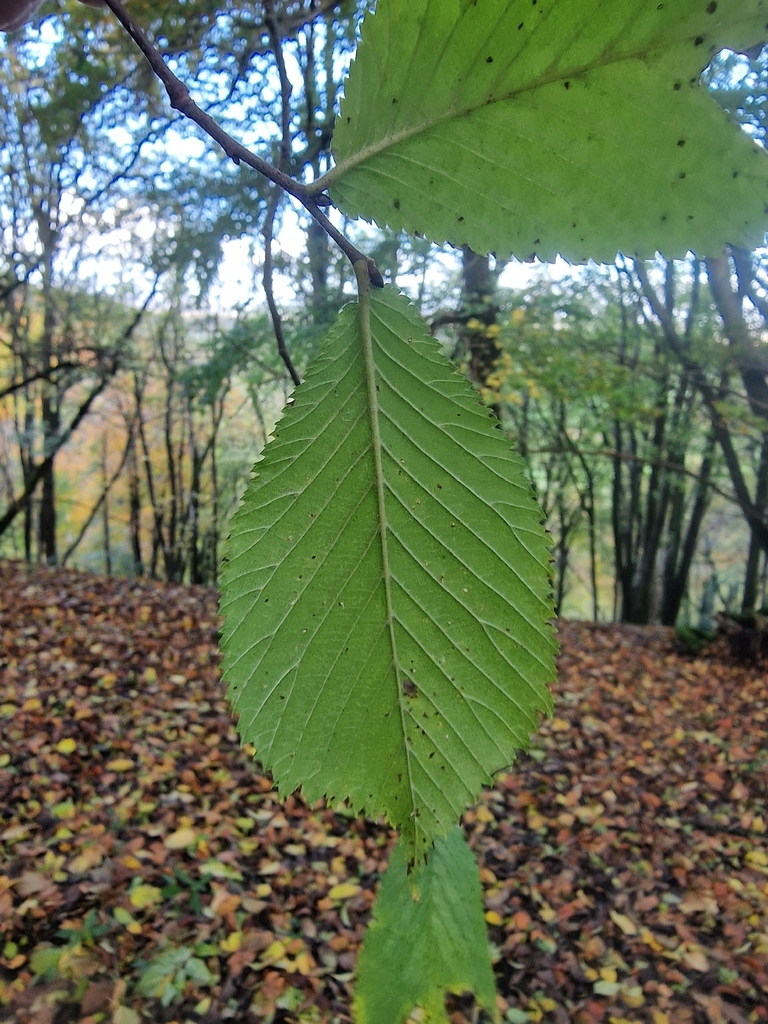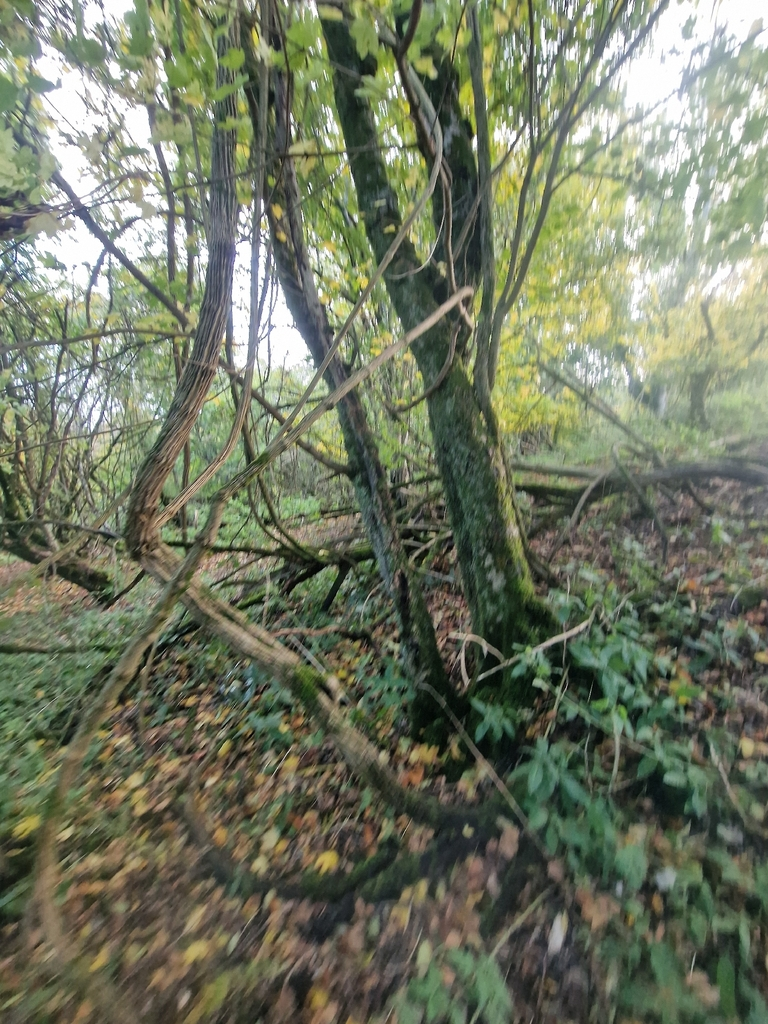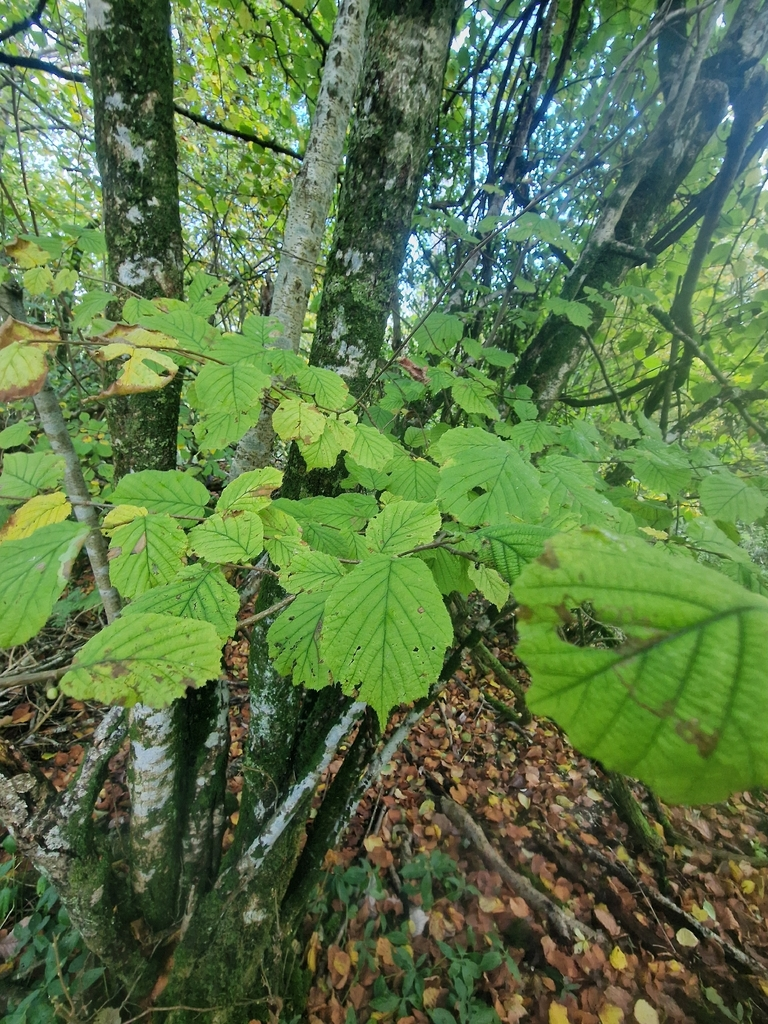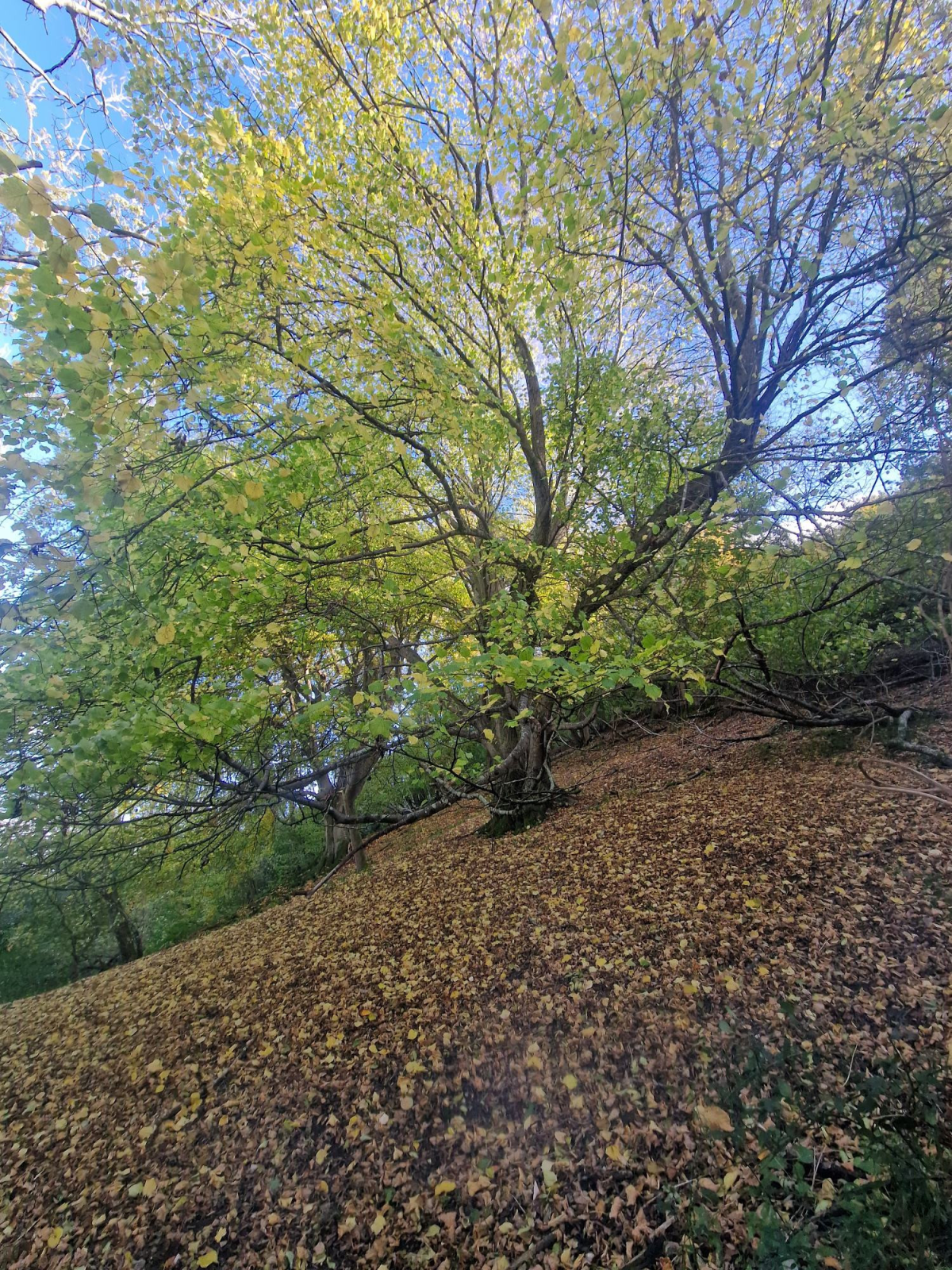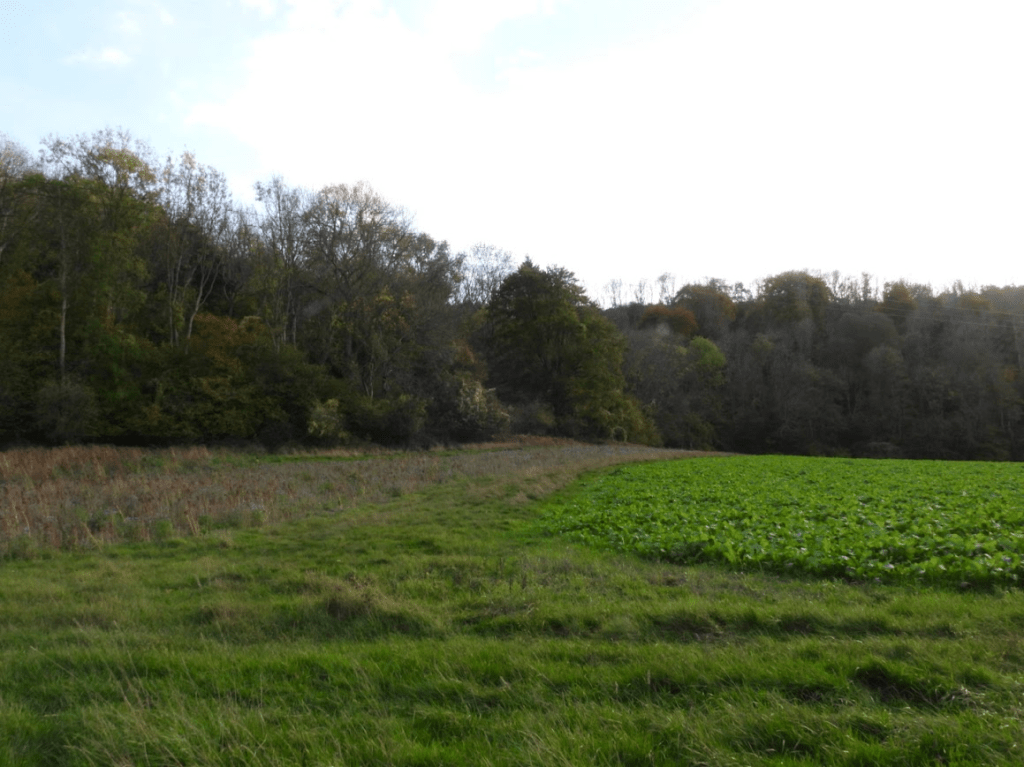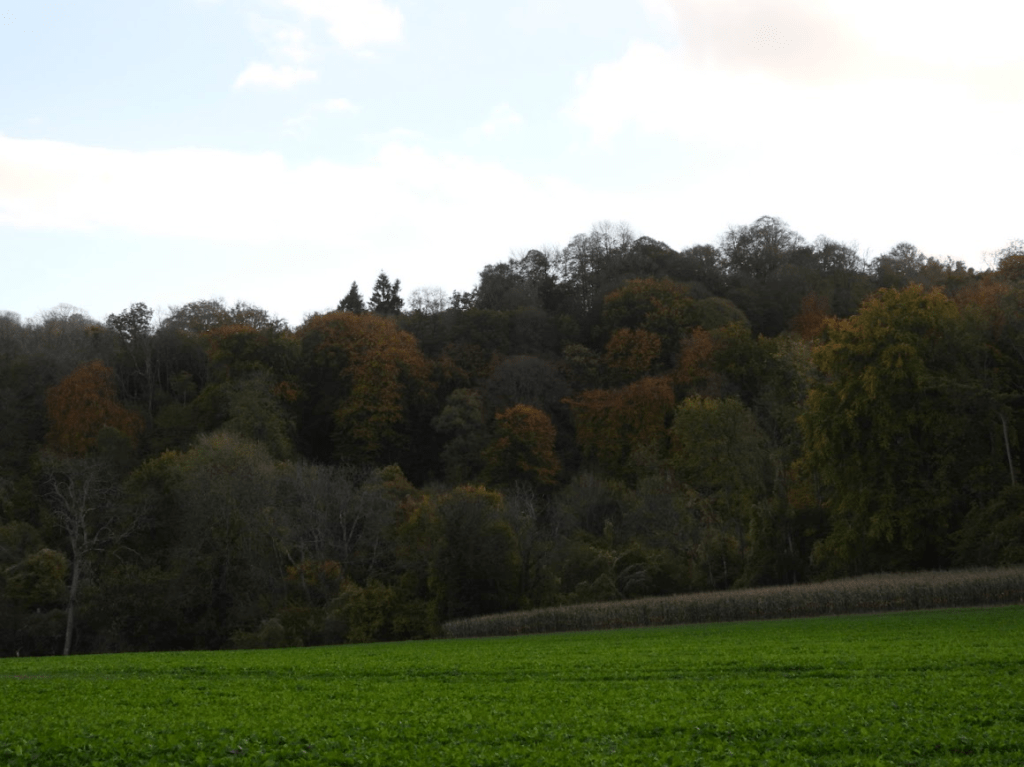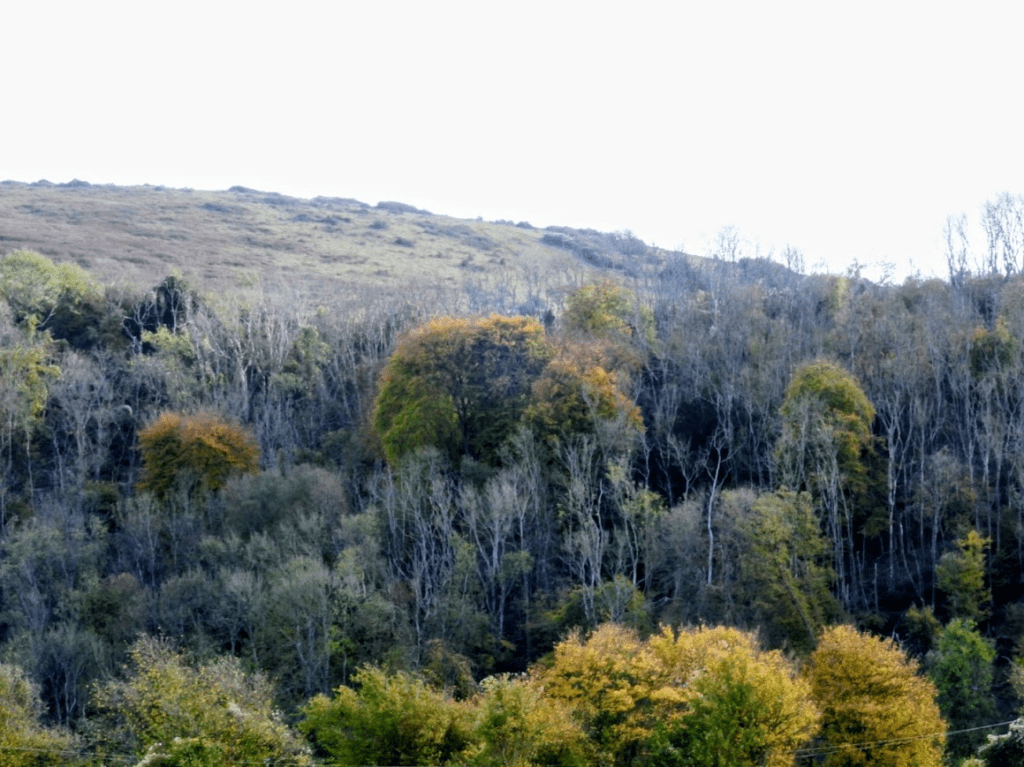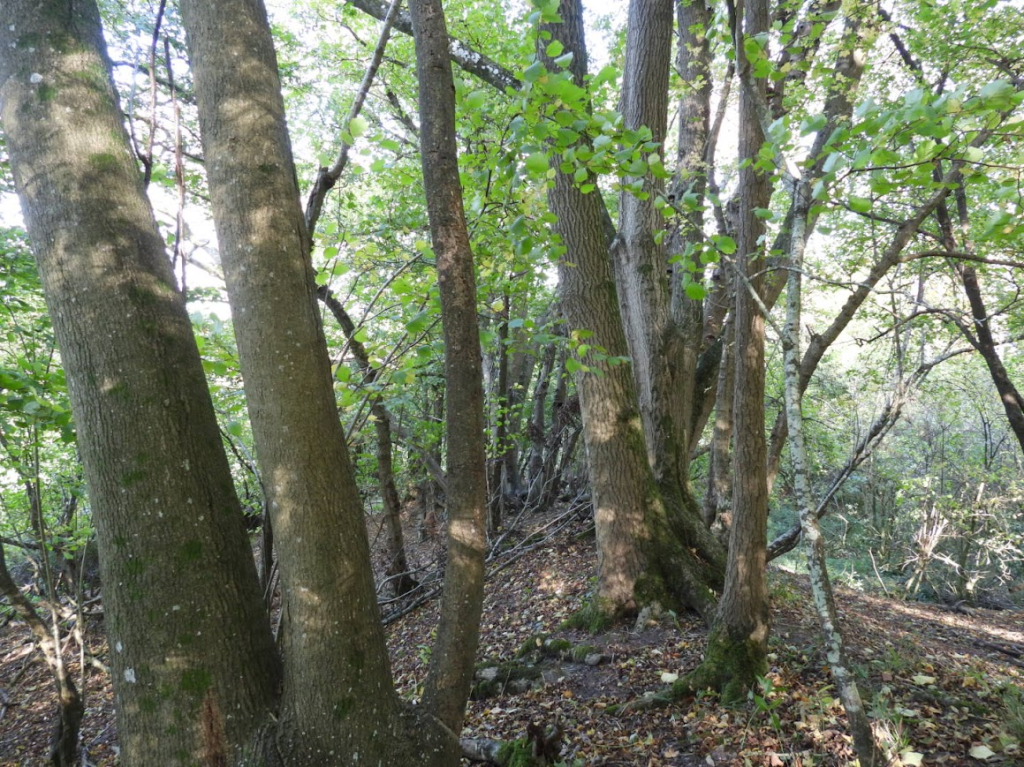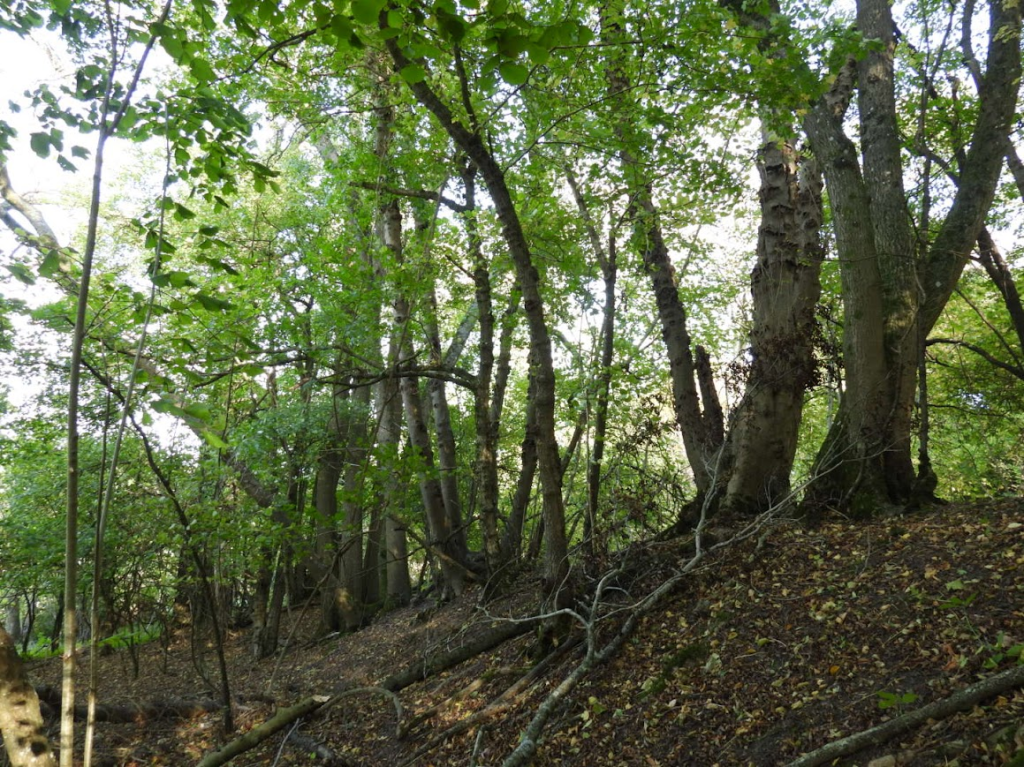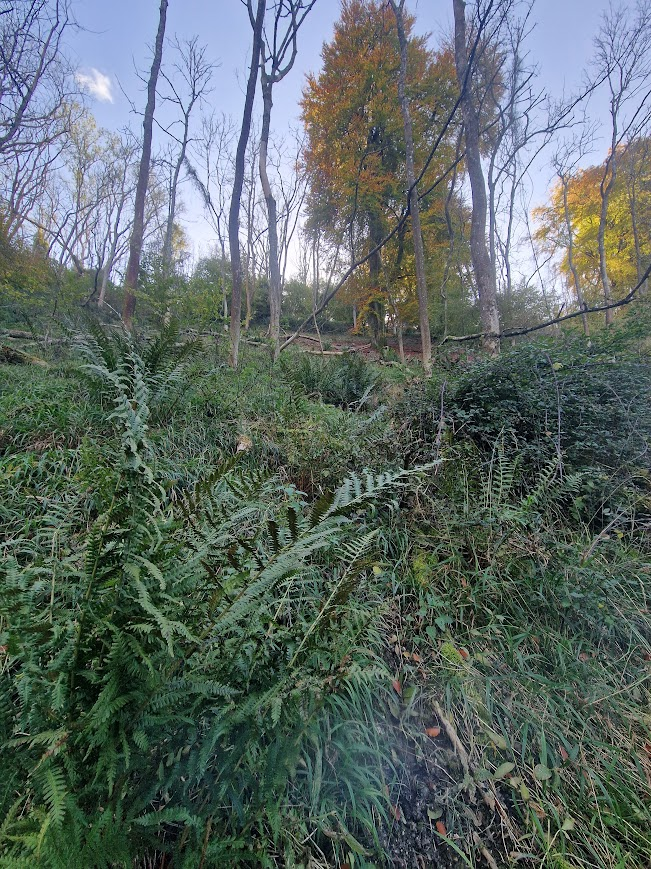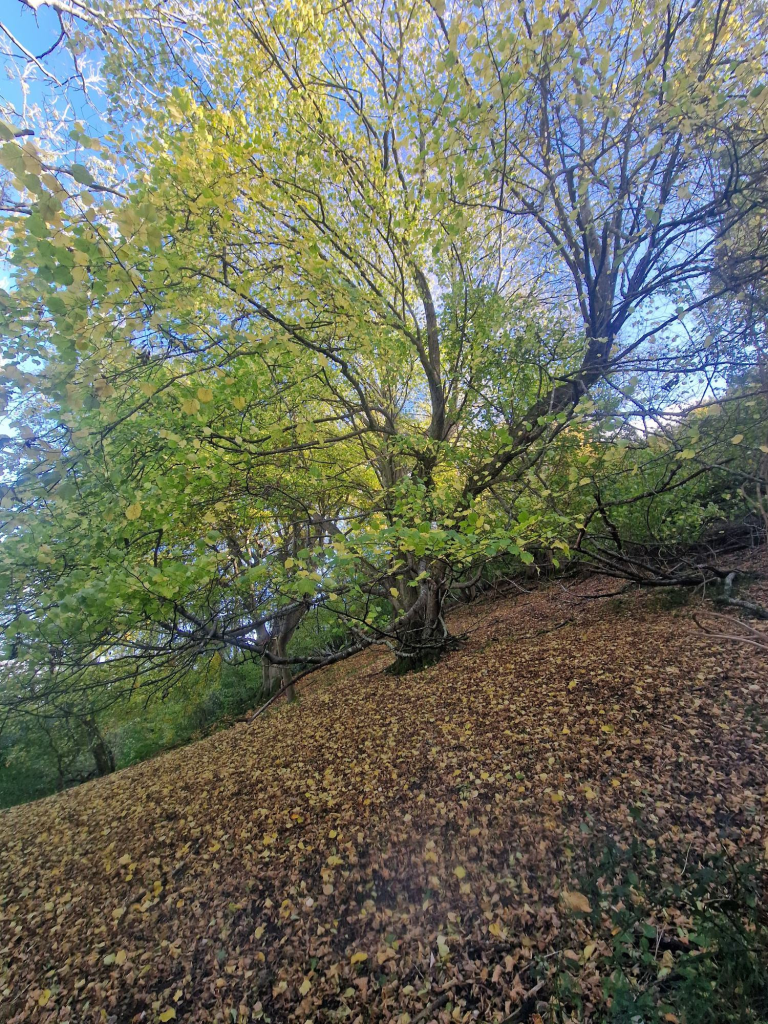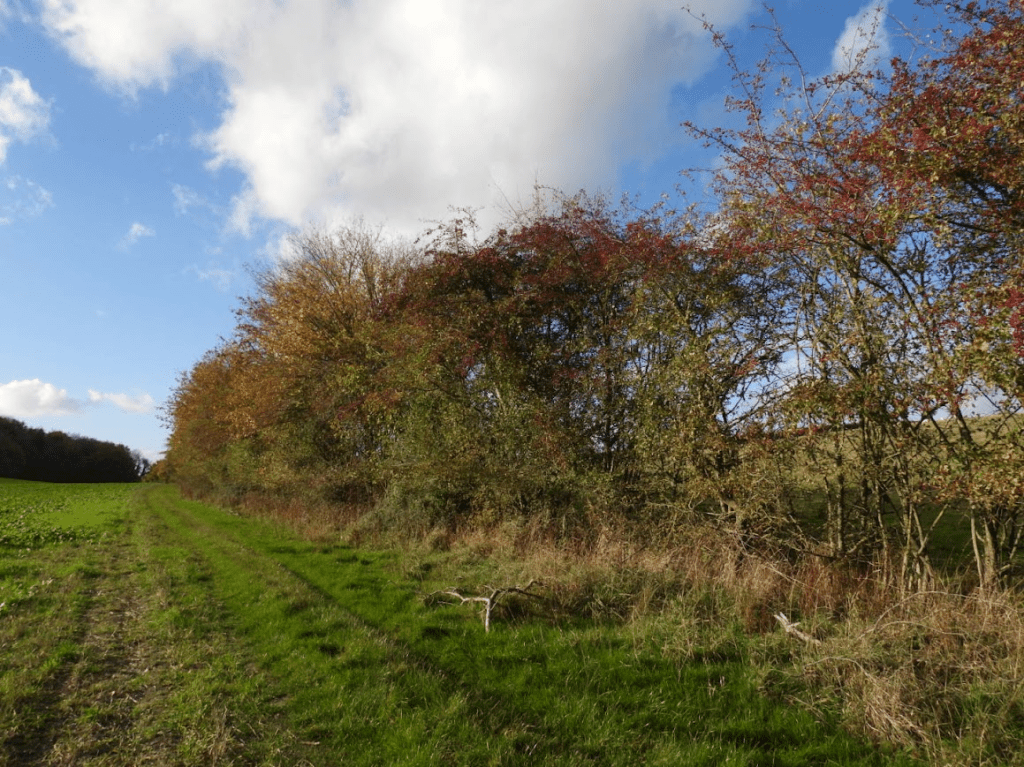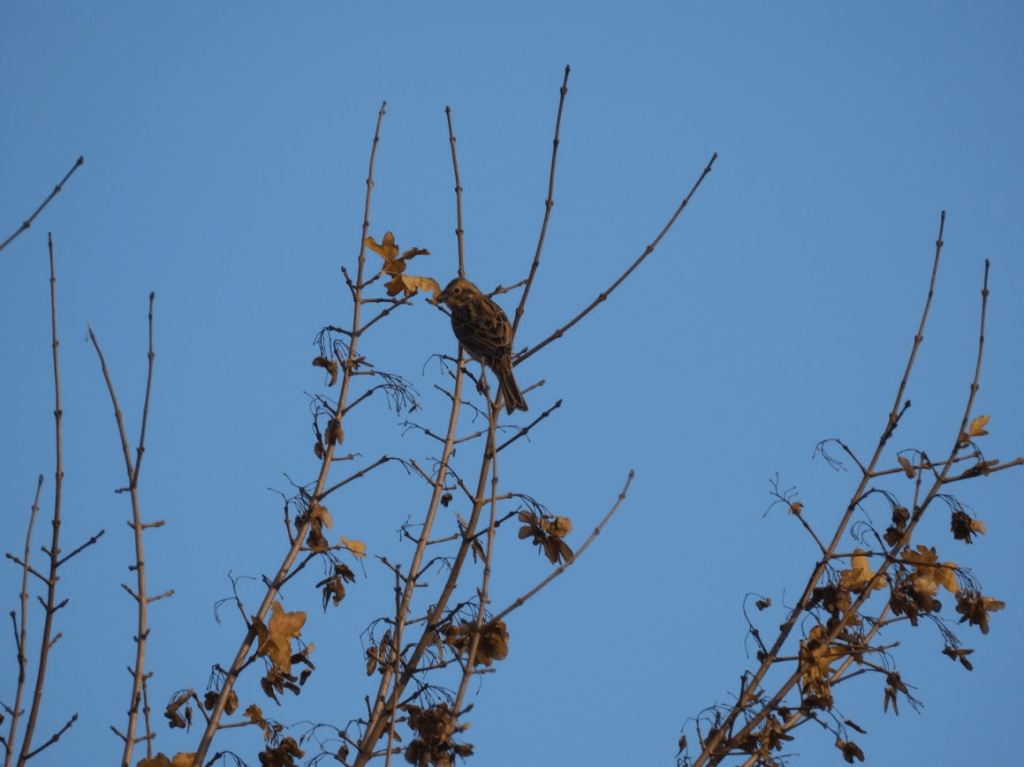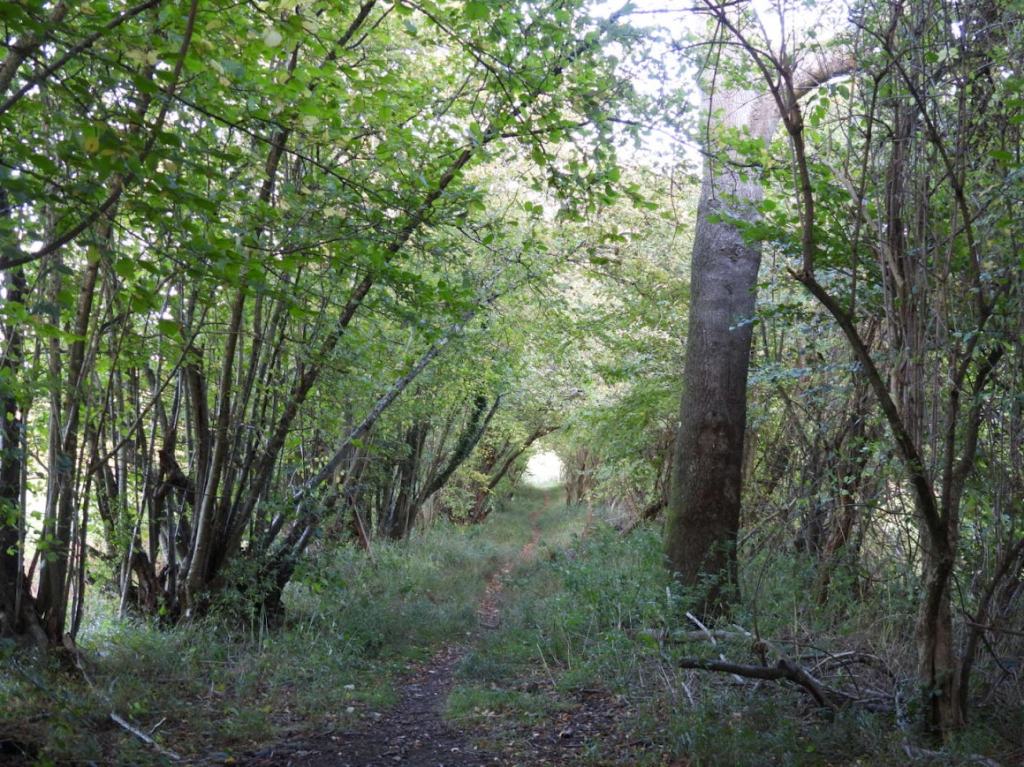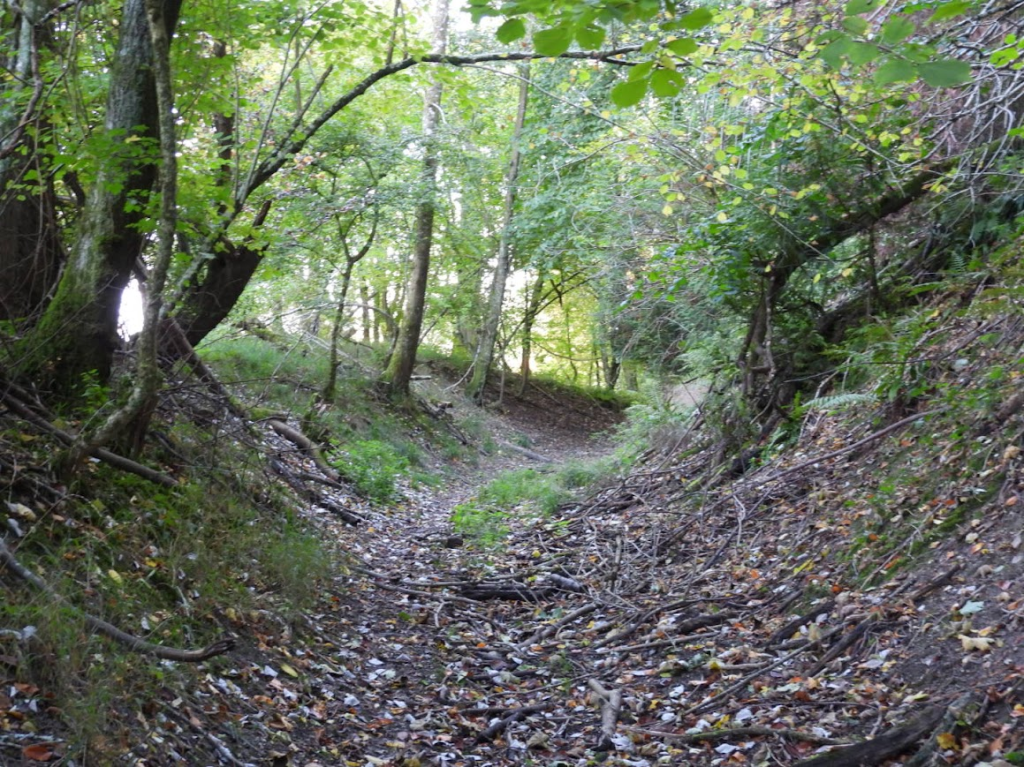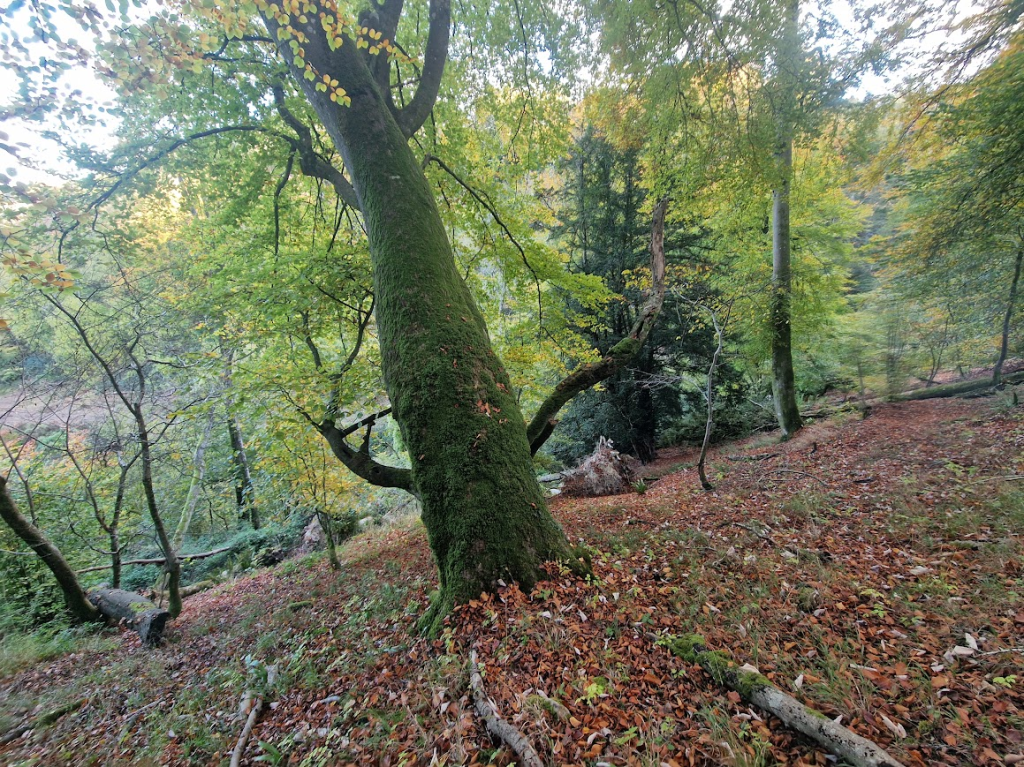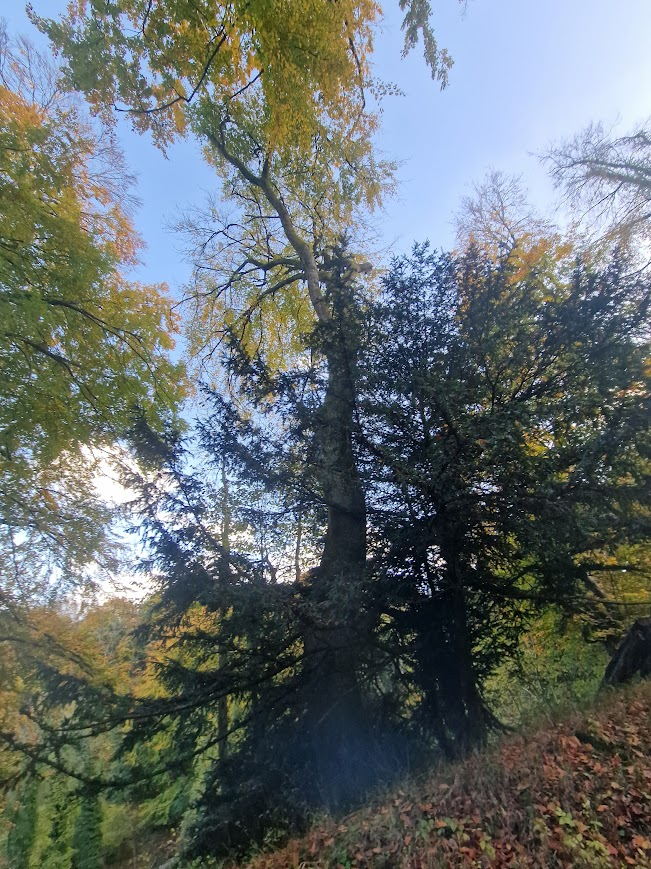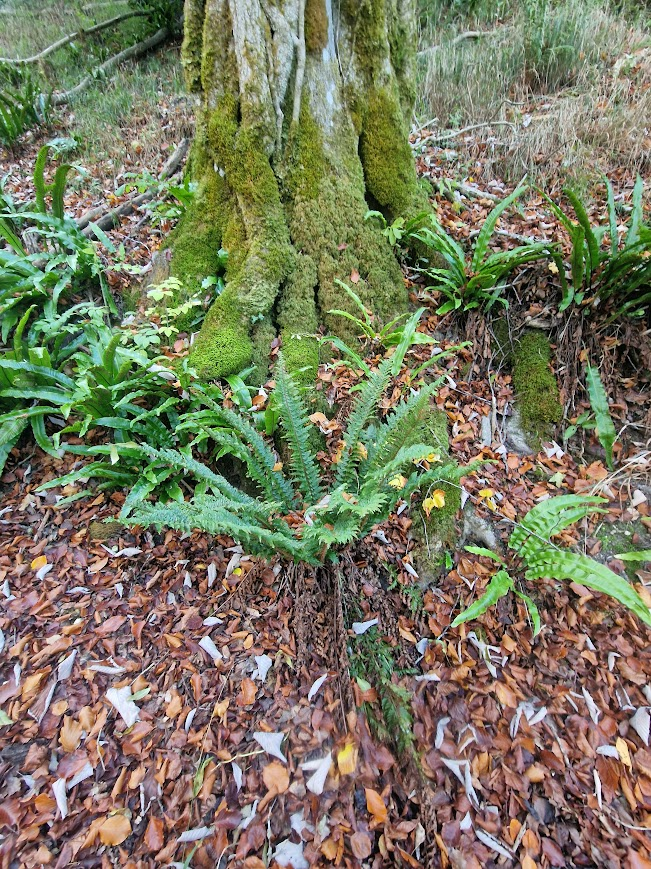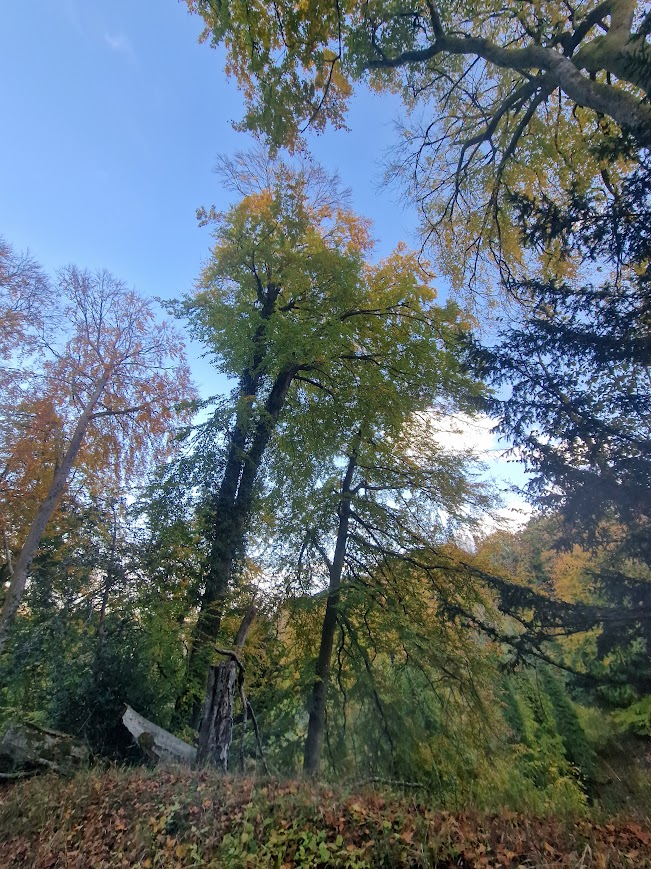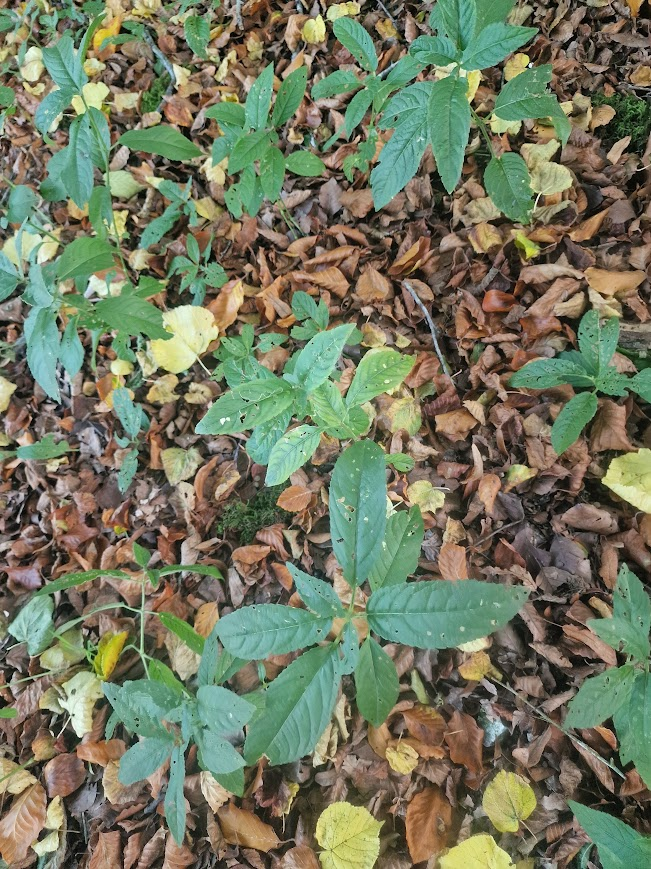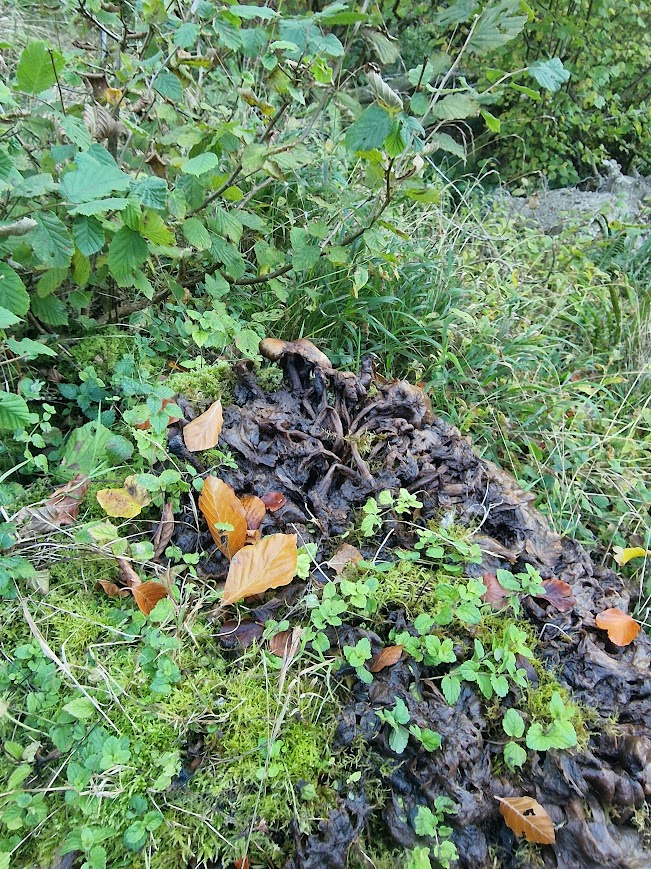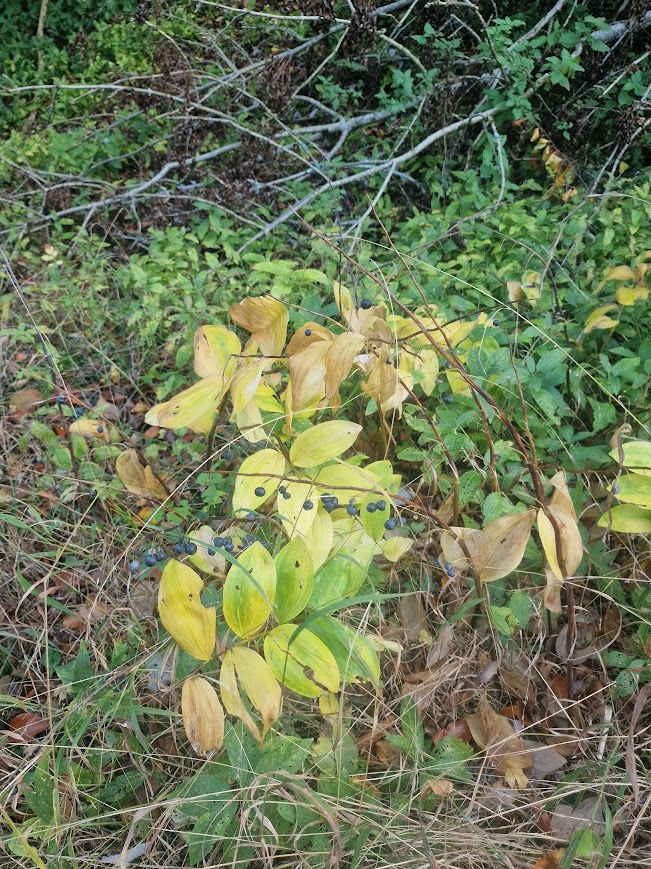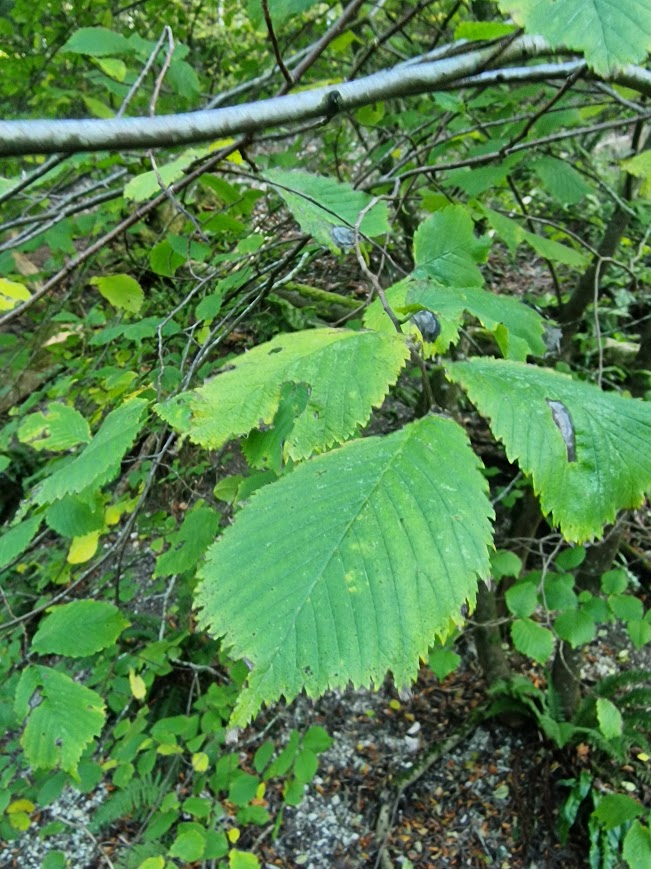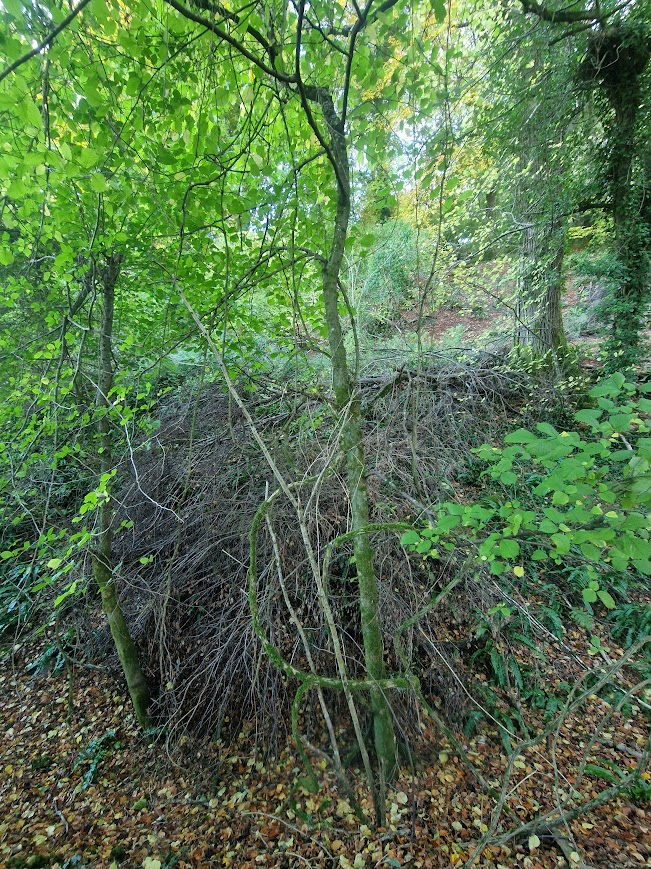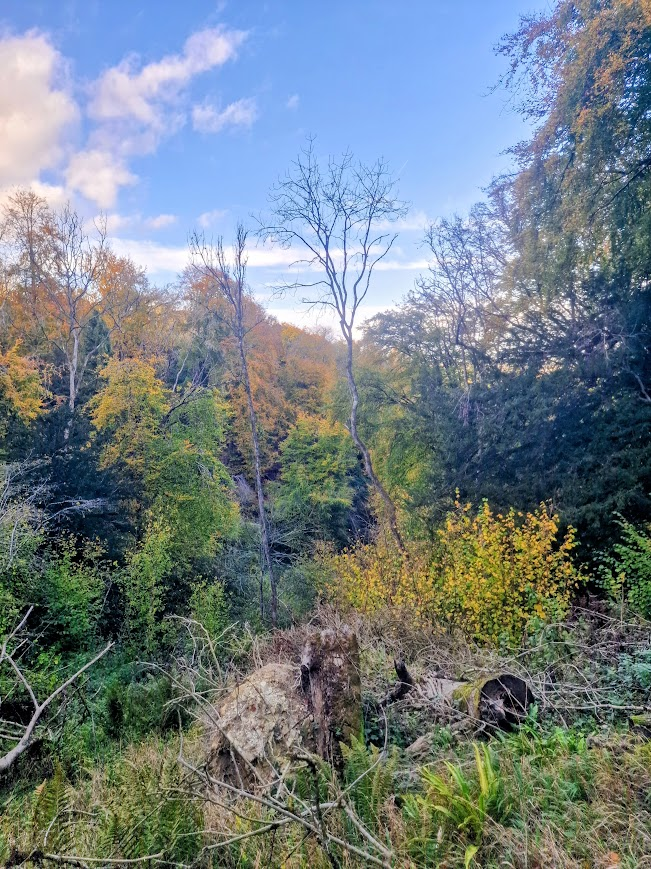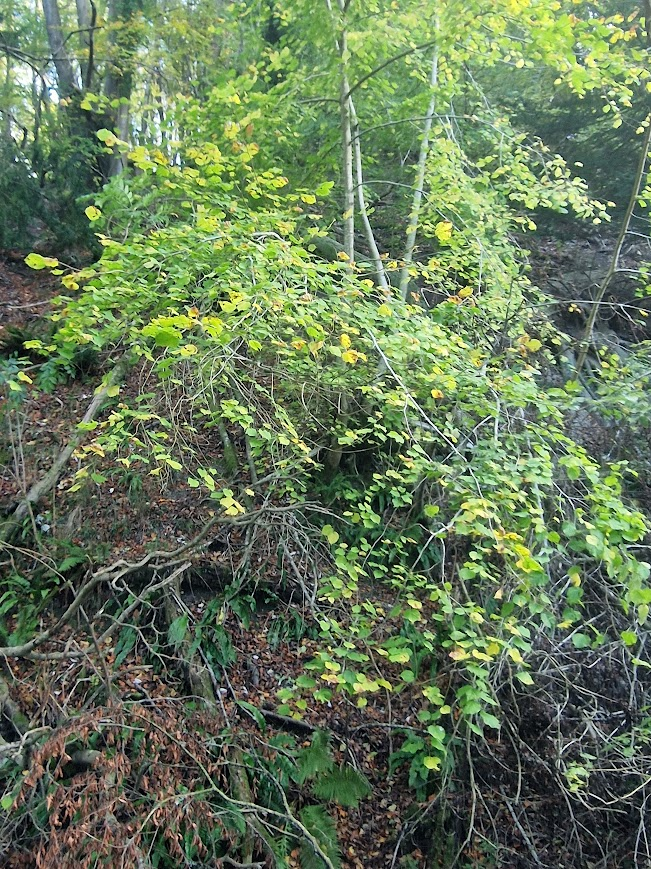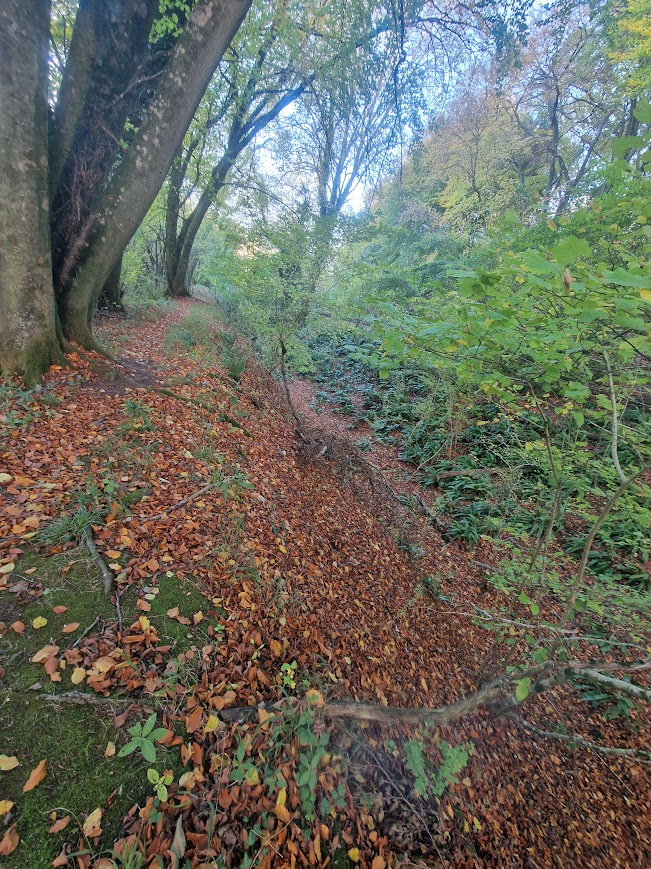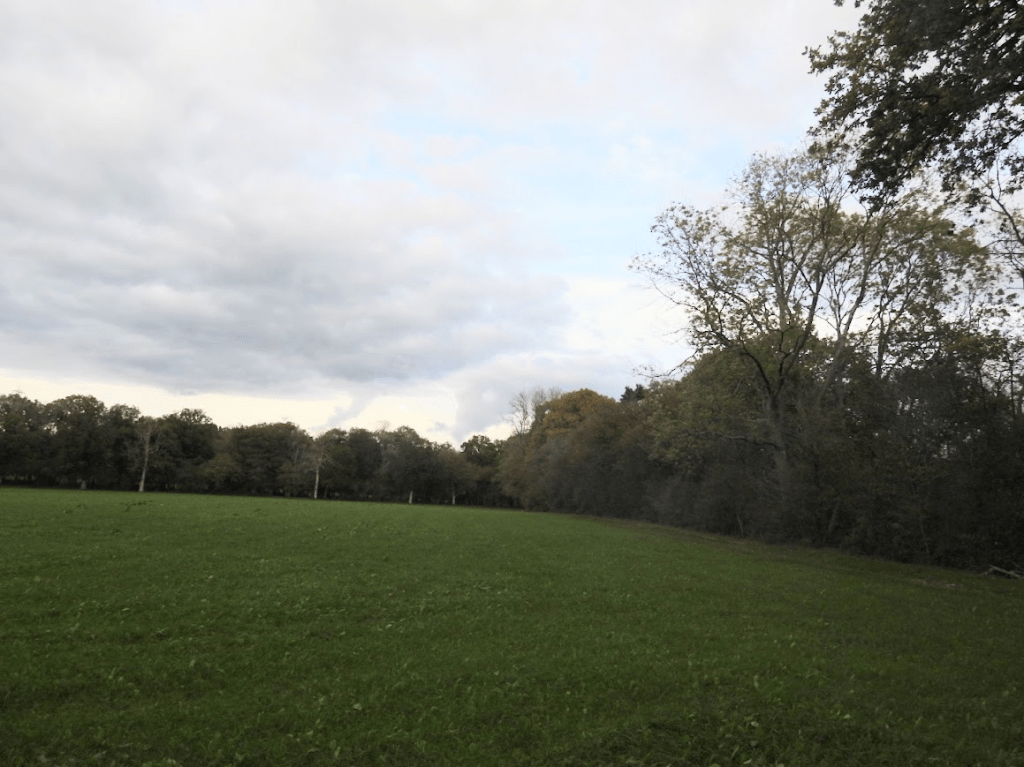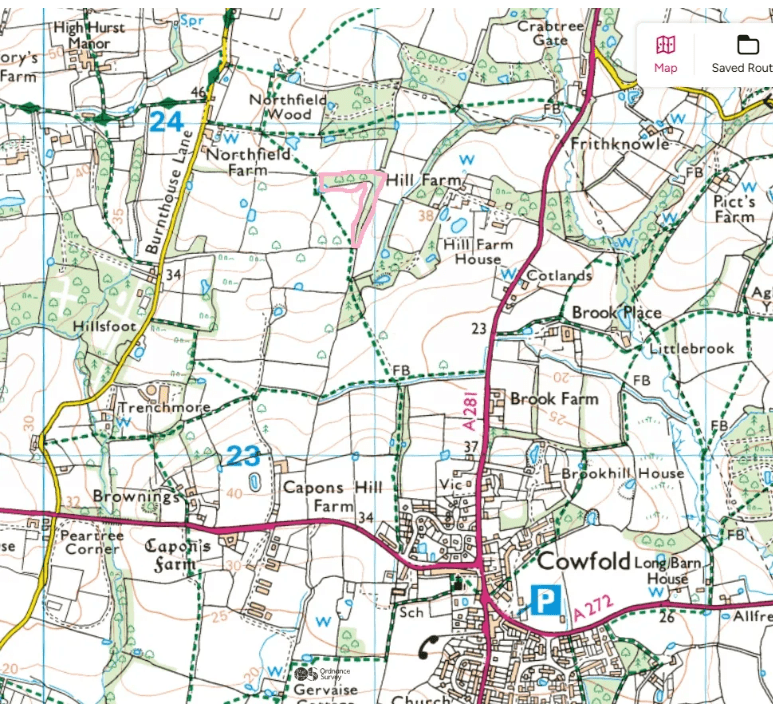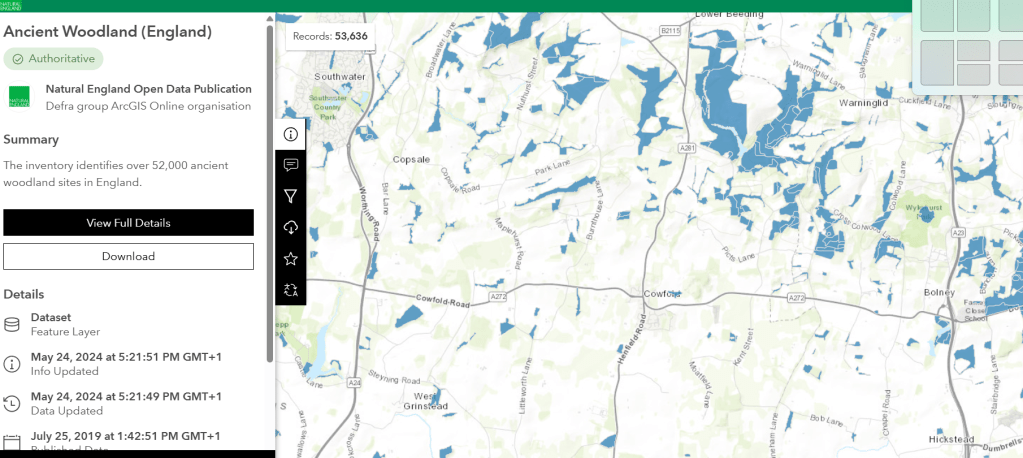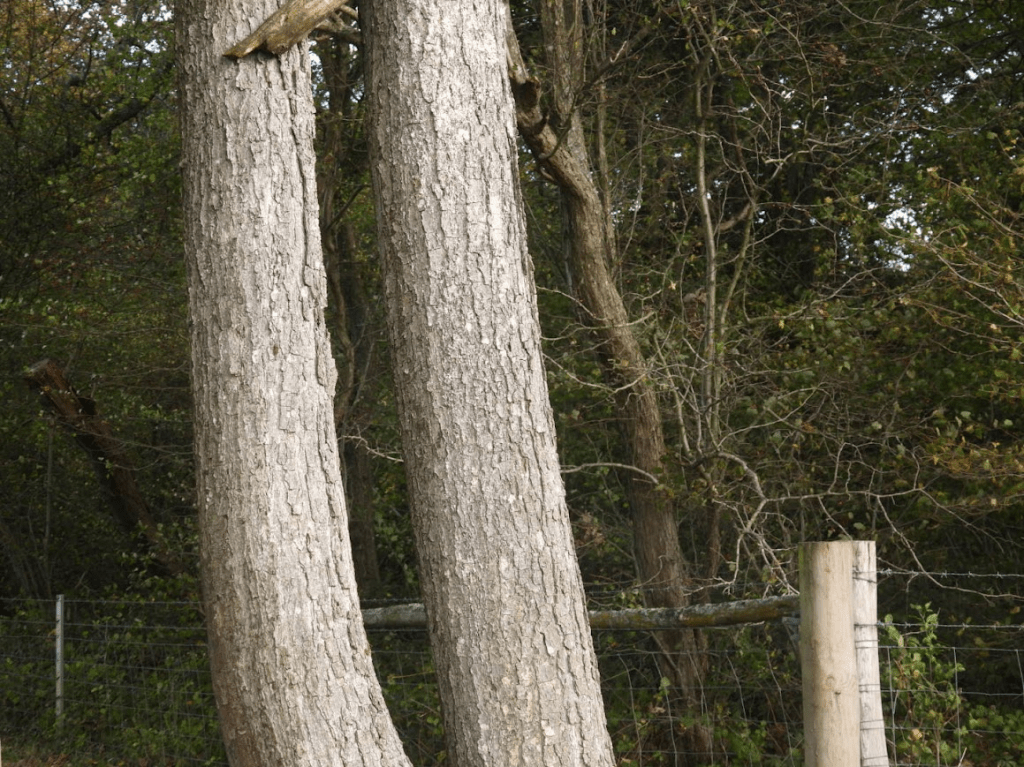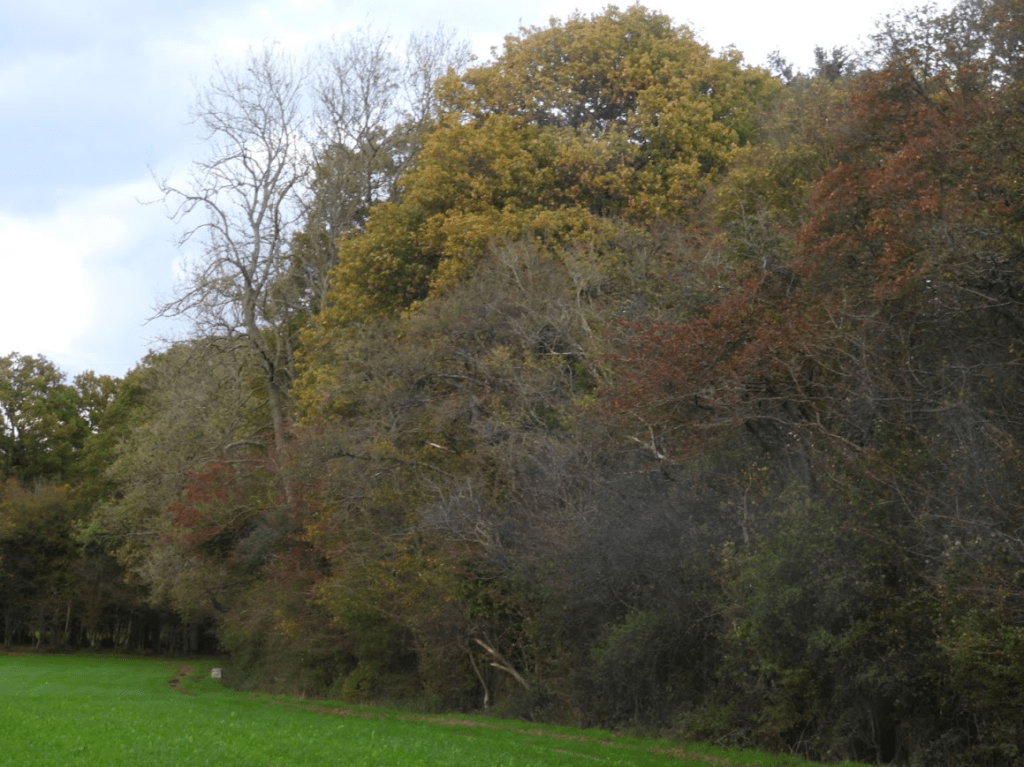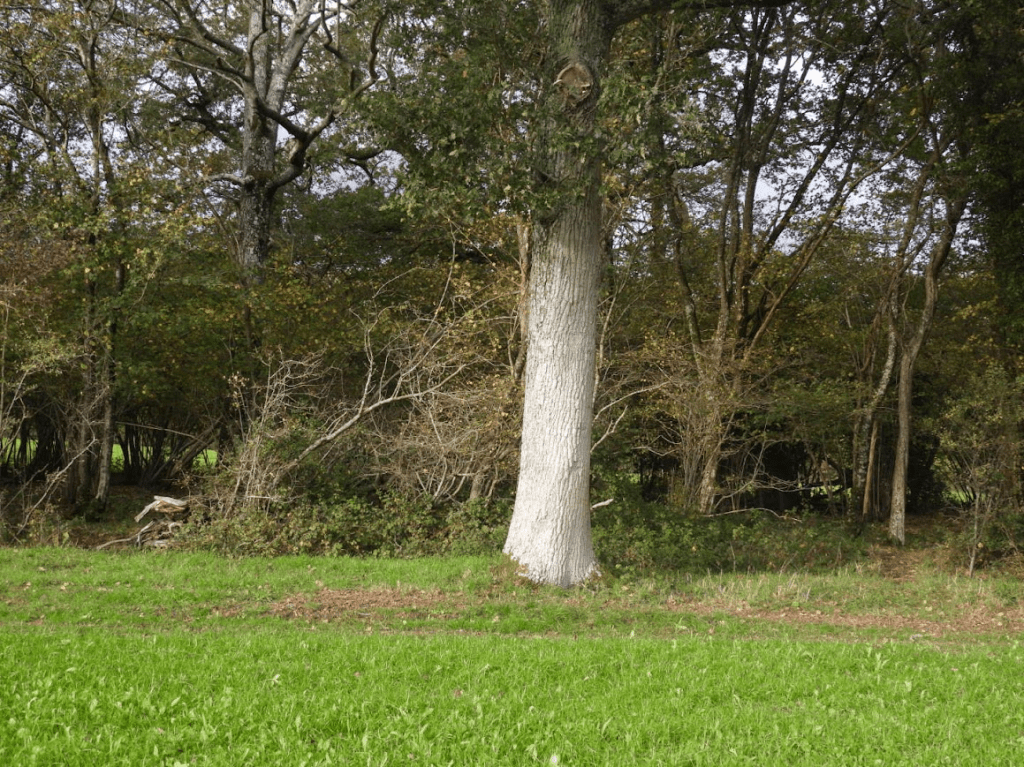
Today I decided to walk though Longfield Wood, Laughton Common, Brickhust Wood, Laughton Common Wood and Bowen Wood in the Broyle; but I didn’t have time in the end to visit Bowen Wood; as I spent a long-time in the unnamed trackway (probably for transporting cattle and pigs to grazing and mast (beech nuts and acorns) through which I passed. I initially thought it was just as access path to Longfield Wood. When you find something beautiful and fascinating, that you hadn’t planned and weren’t expected to see, it a real joy. I got to the Broyle of the half-hourly bus 28 from Brighton
The Boyle was both a deer park and common land, given over by the landowner to local commoner’s use (grazing, pannage, taking timber for building, firewood, and clay for making bricks)
By the second half of the 13th century further assarting [convert woodland to arable use] in the southern part of the manor was restricted, and the remaining forest there was emparked. Three deer-parks (Plashett, Ringmer and Moor Parks) were reserved to the demesne [a piece of land attached to a manor and retained by the owner for their own use] but the Broyle, although also impaled and used as a deer park, served in addition as the common for the tenants in the southern part of the manor. Its functions at this time, described in custumals [medieval documents that stipulates the economic, political, and social customs of a manor] of 1285 and 1331, included the provision of grazing for the tenants’ cattle, beech mast and acorns for their pigs, timber and daub for their houses, firewood for their hearths and clay for their pottery. The Broyle Enclosure, 1767–71 in SUSSEX ARCHAEOLOGICAL COLLECTIONS 138 (2000), 165–89. The full article can be read at: https://archaeologydataservice.ac.uk/archiveDS/archiveDownload?t=arch-285-1/dissemination/pdf/vol_138/11_Kay.pdf
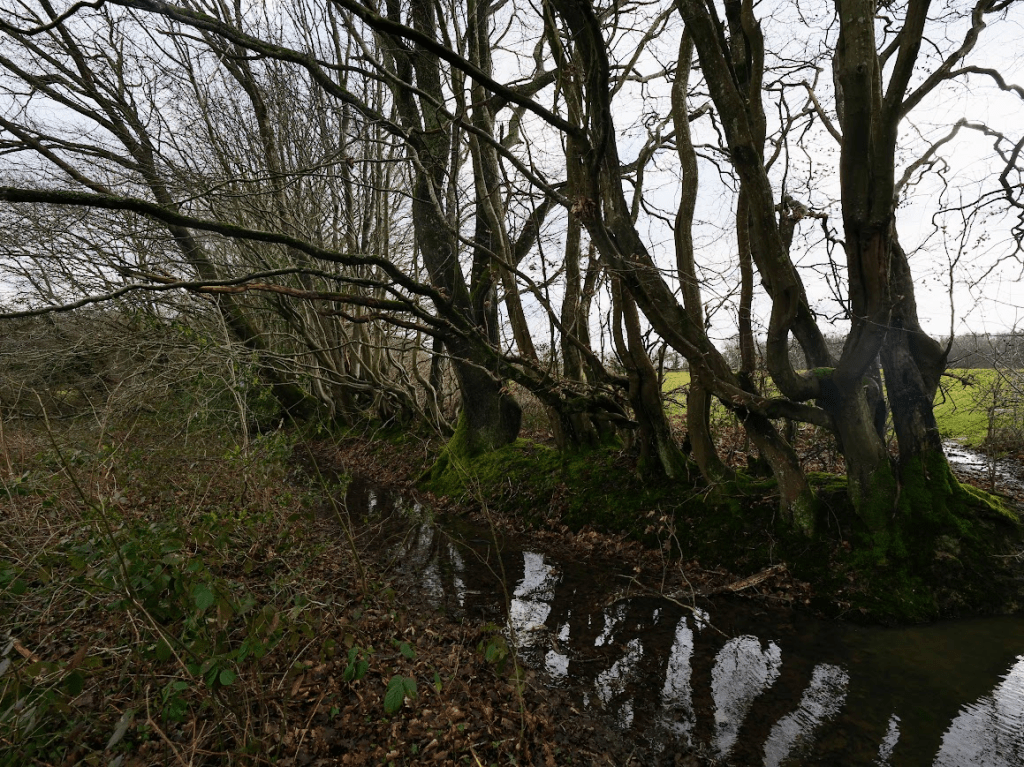
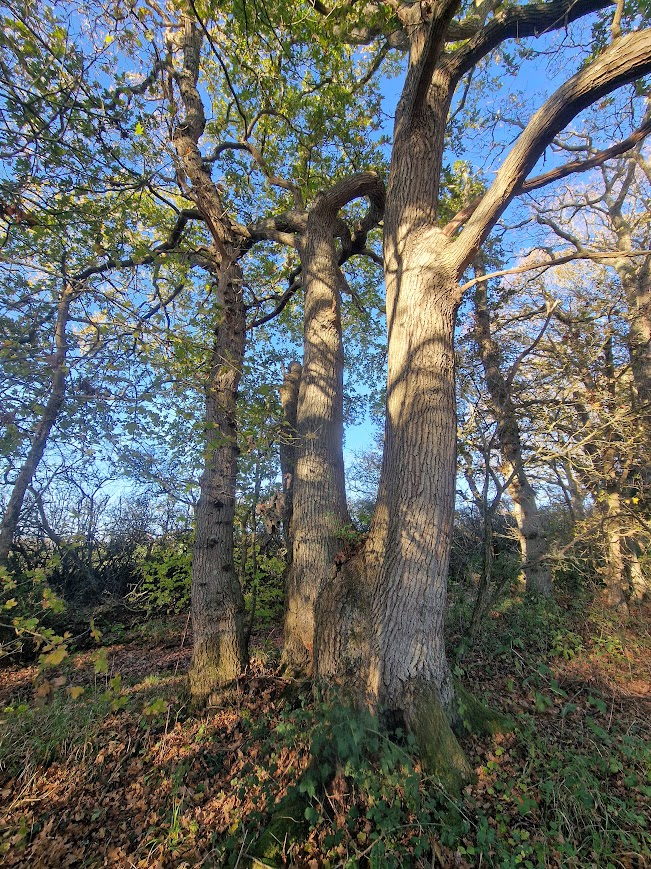
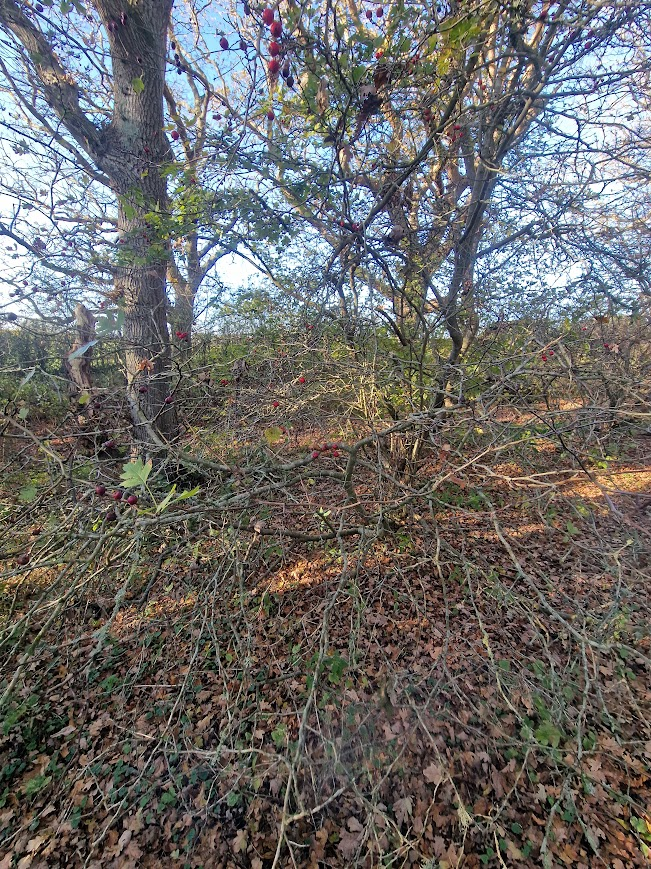
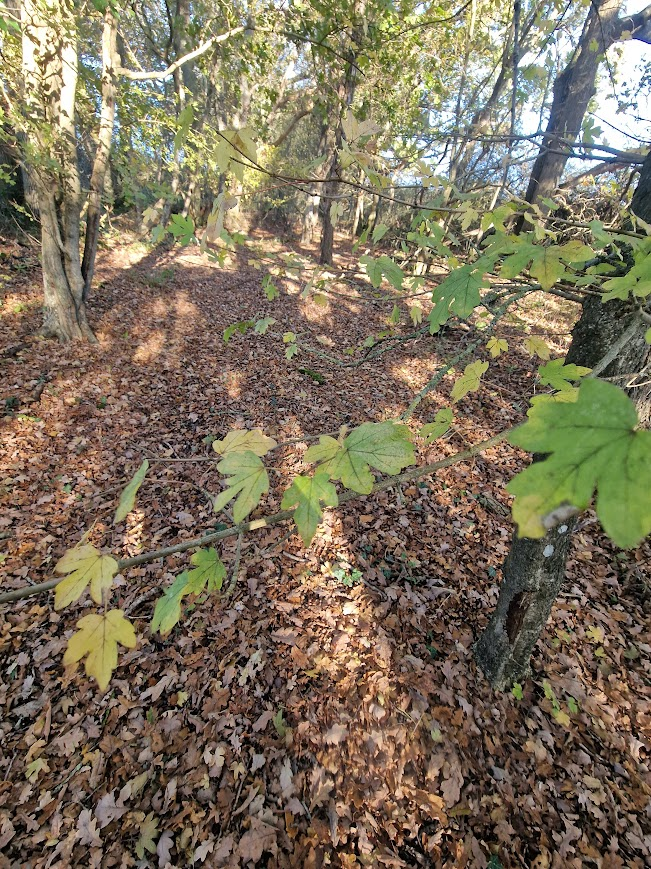
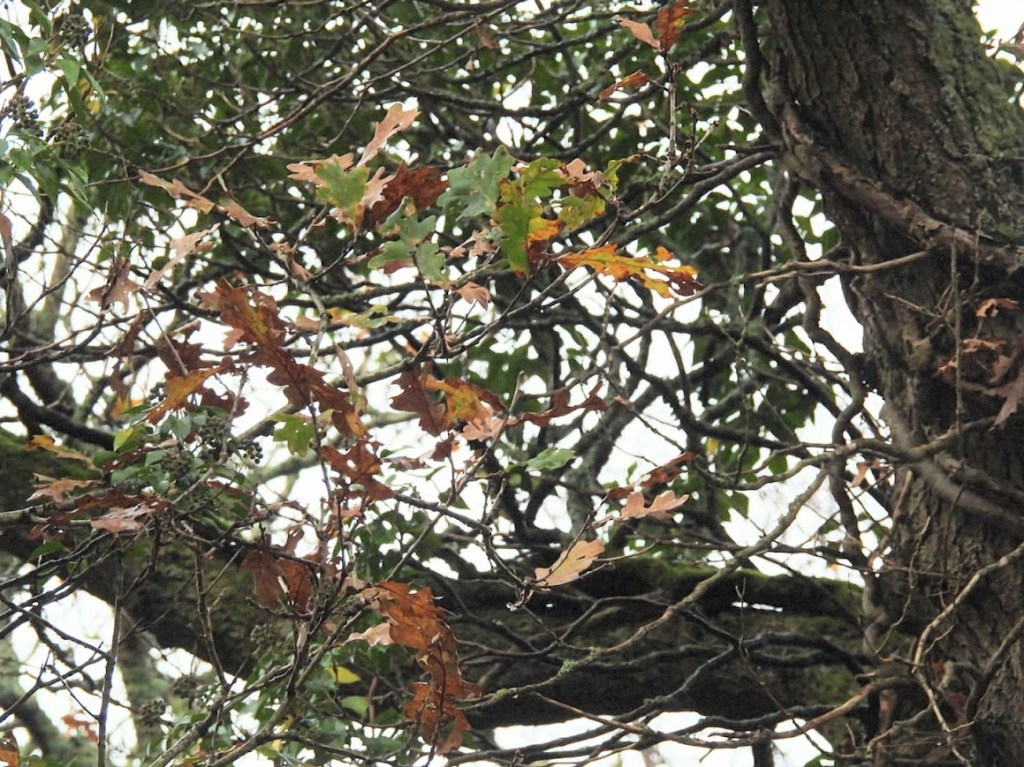
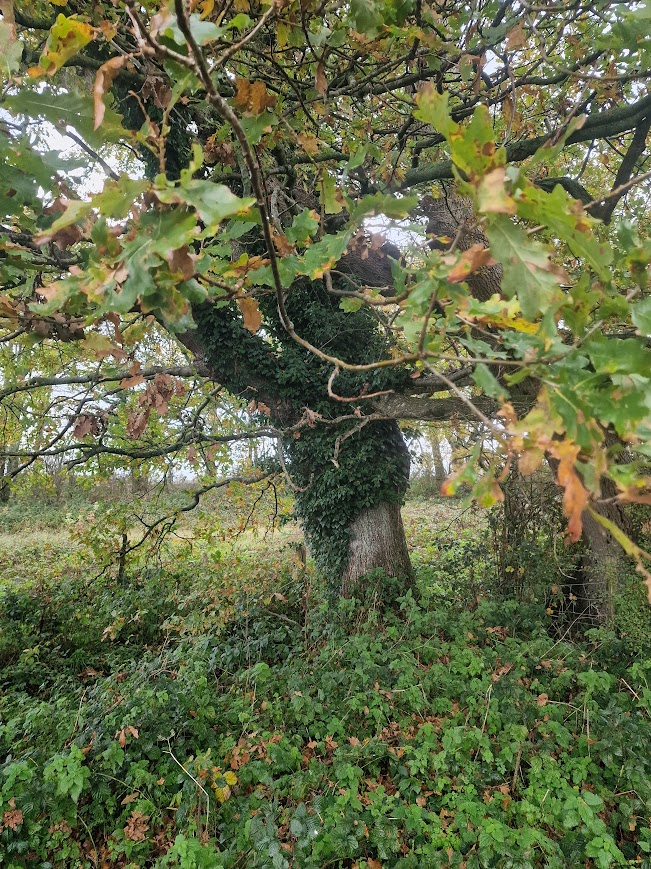
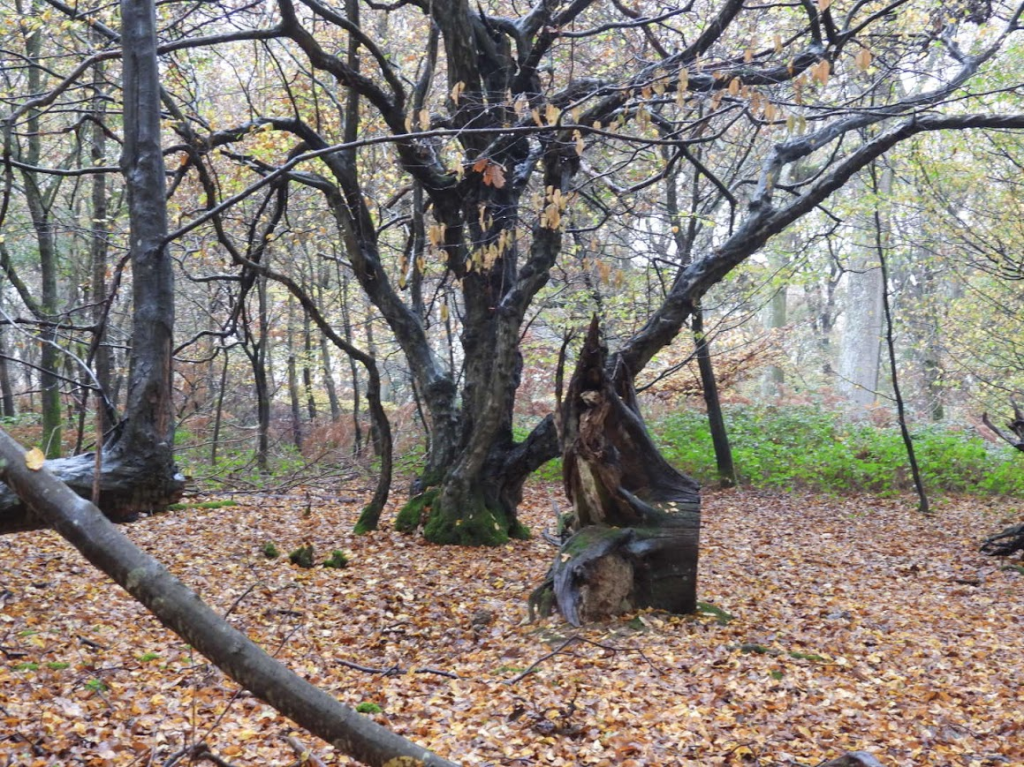
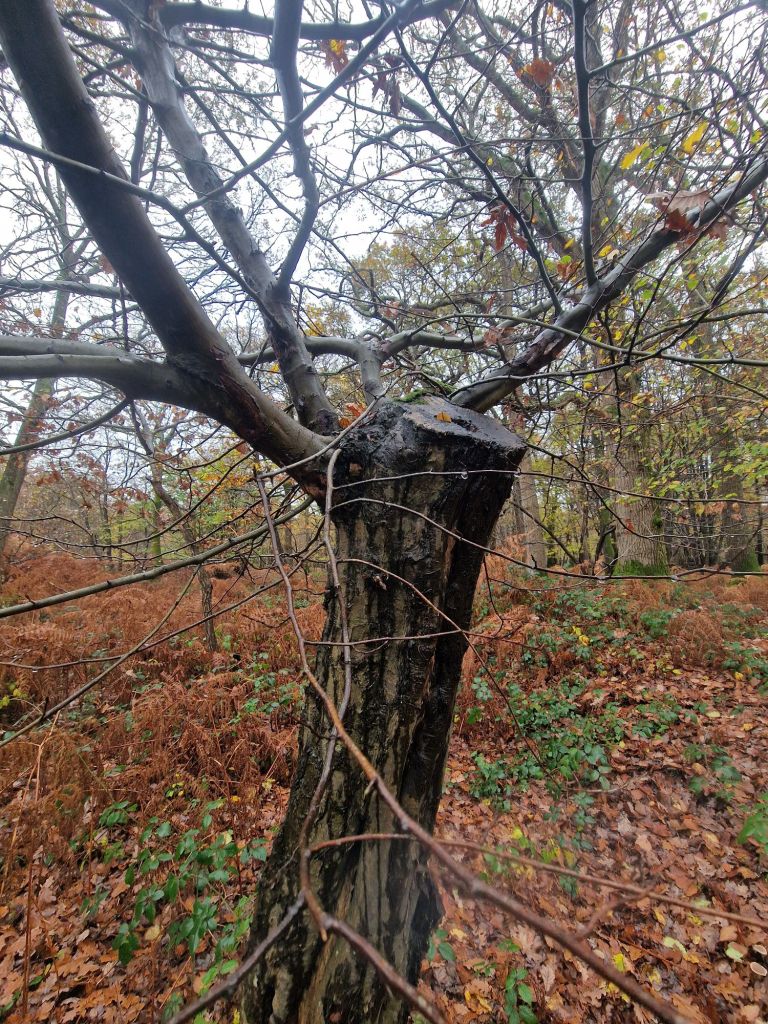
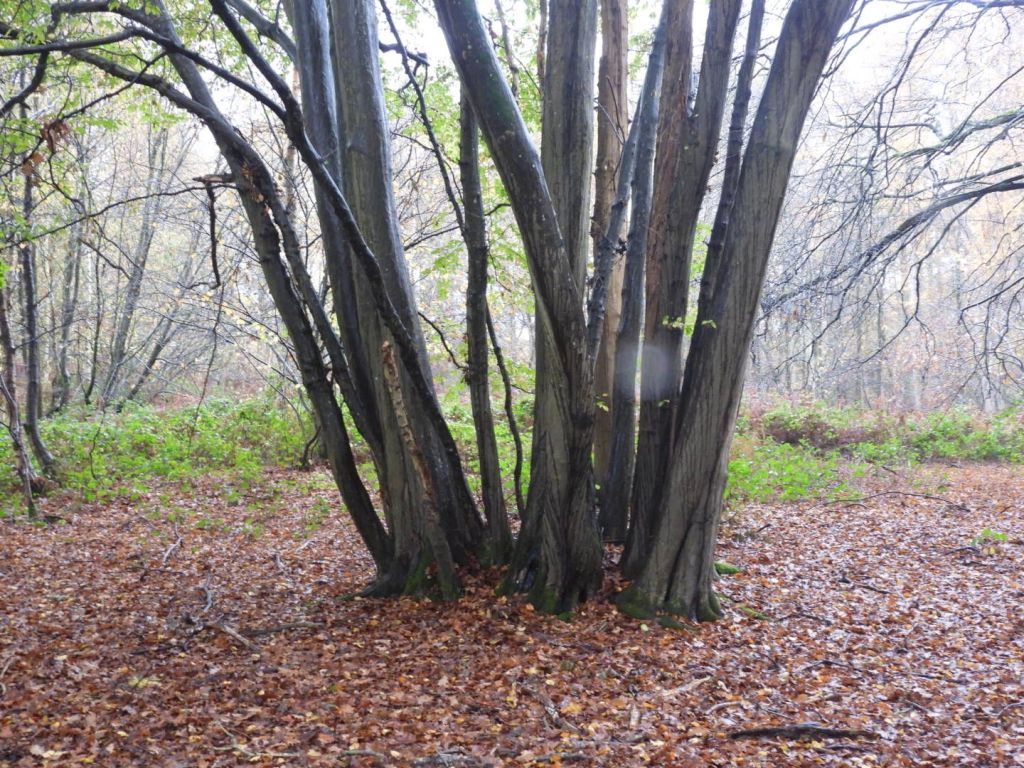
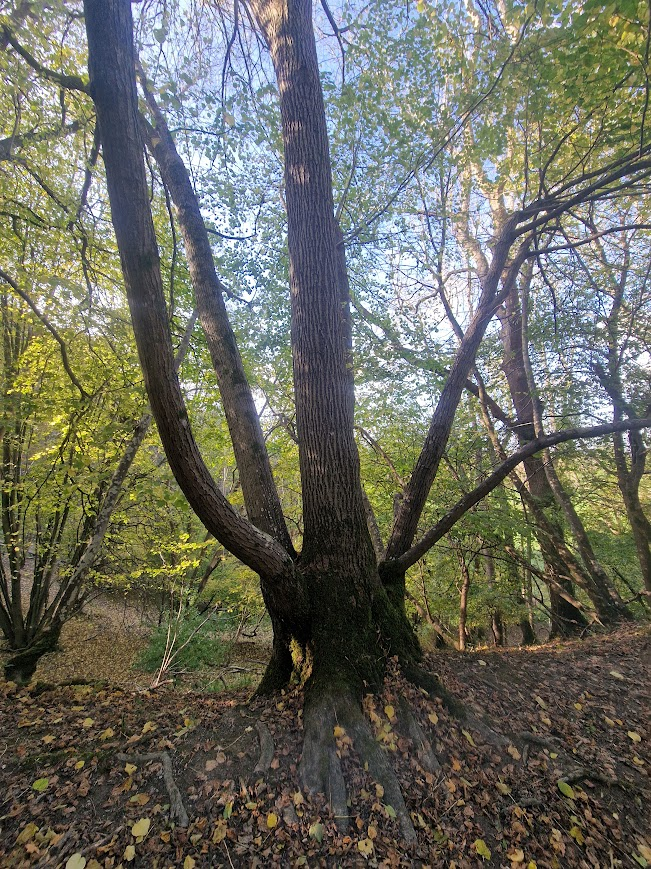
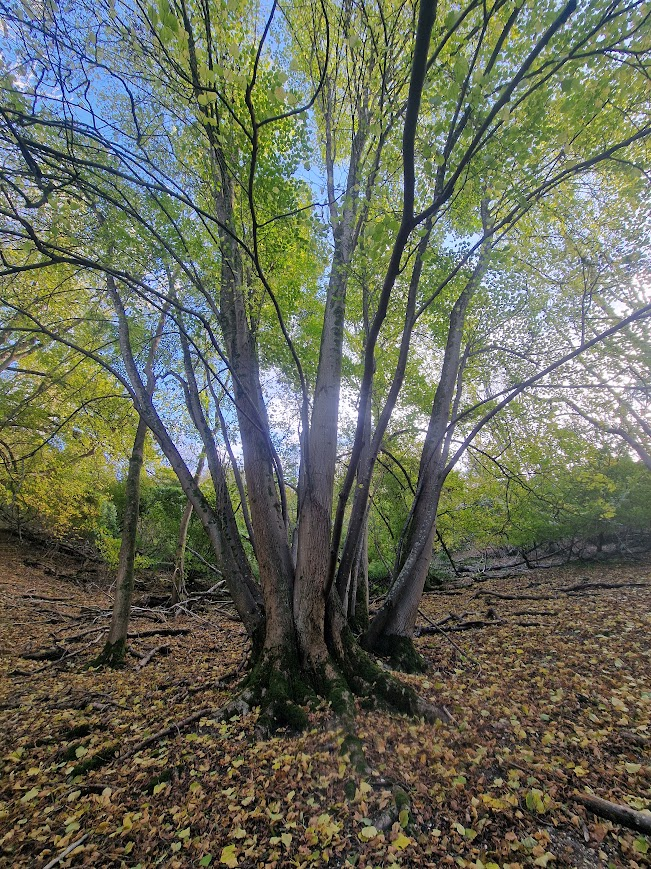
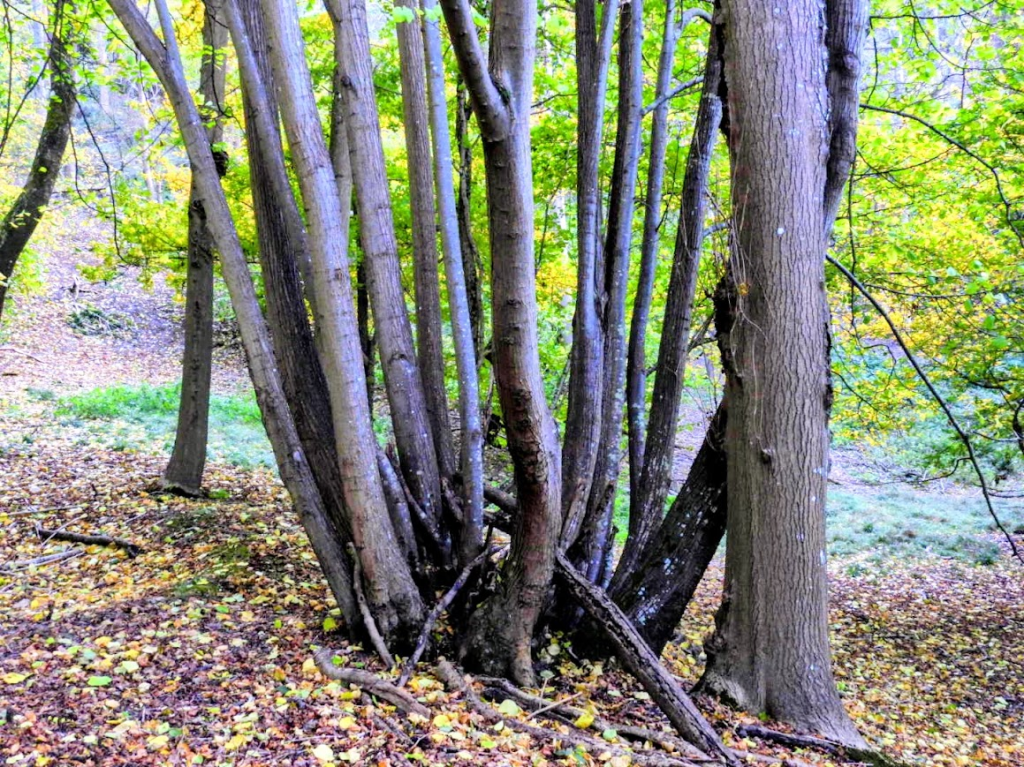
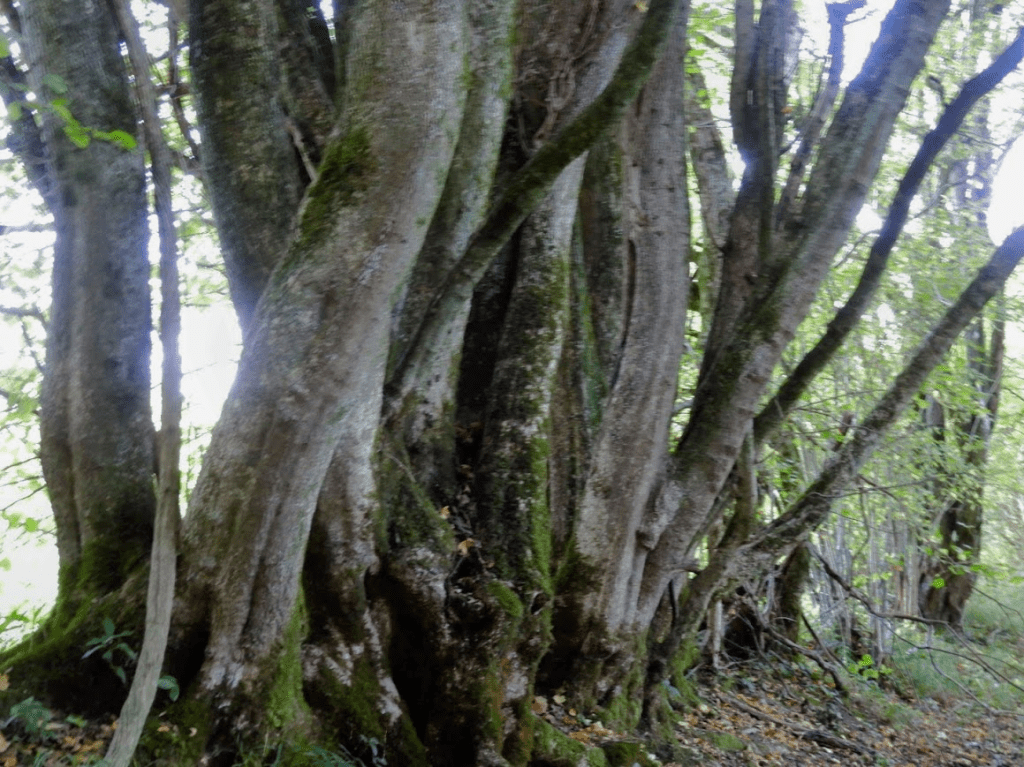
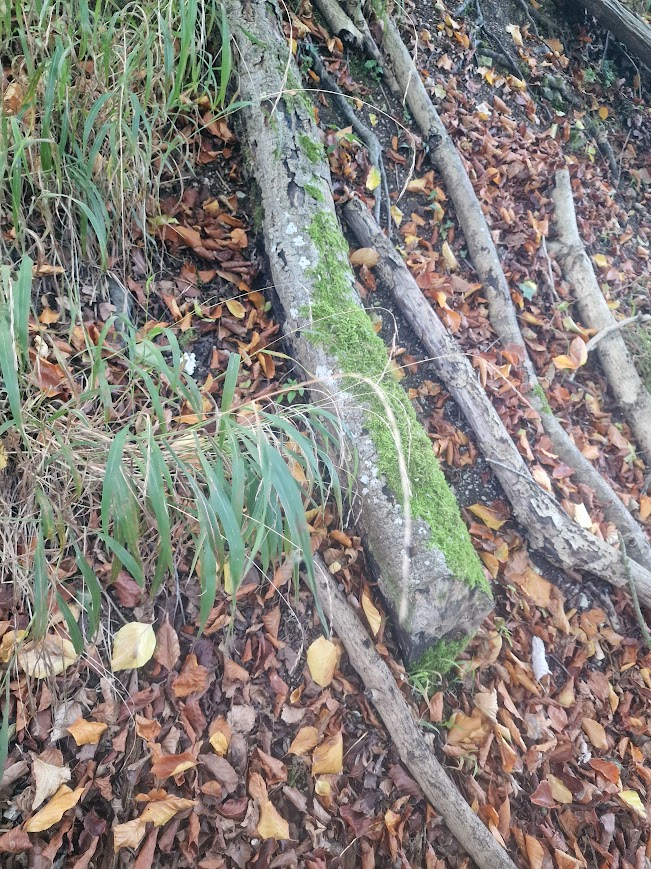
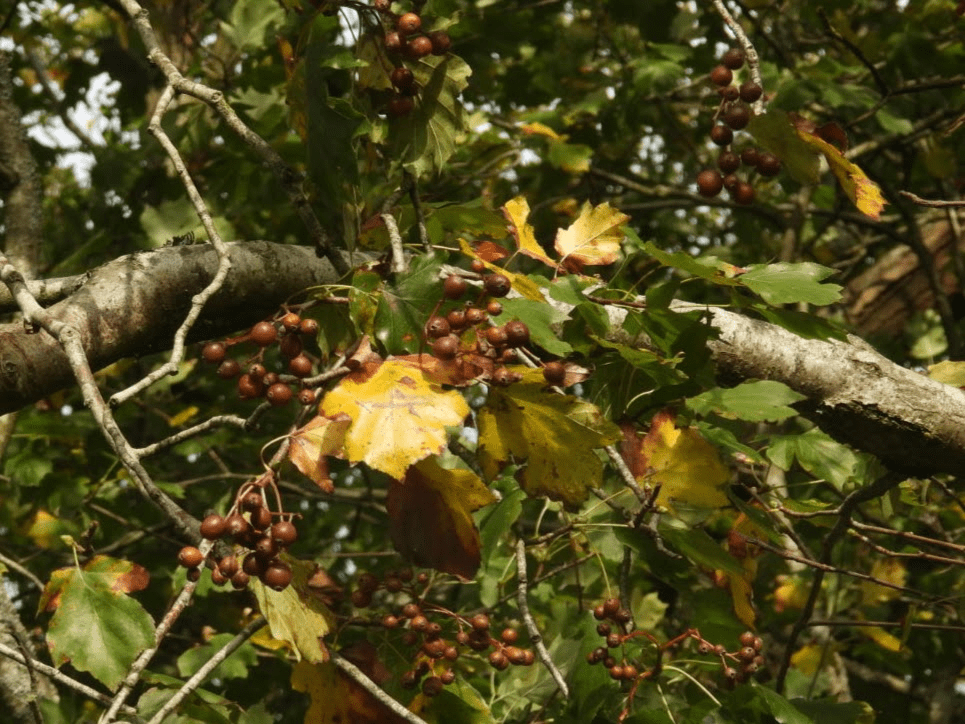
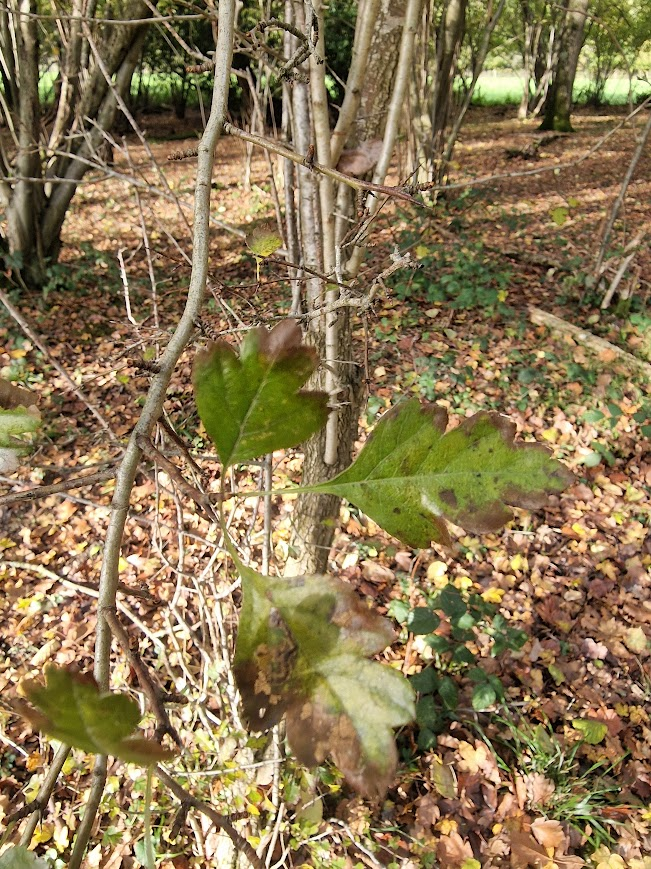
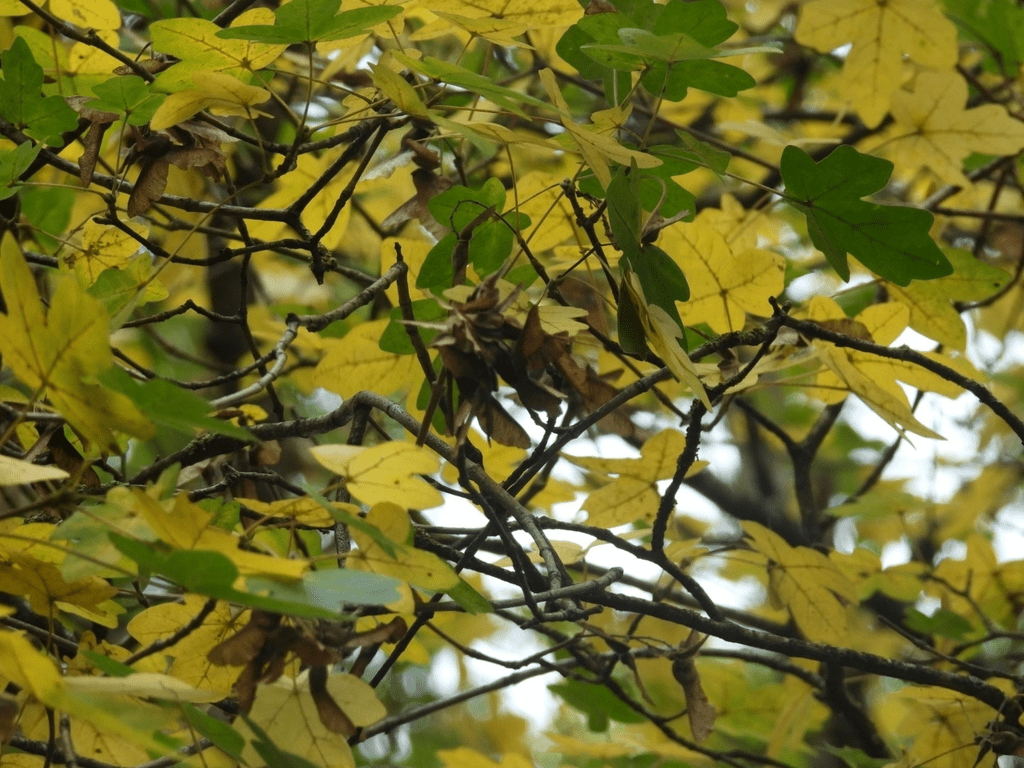
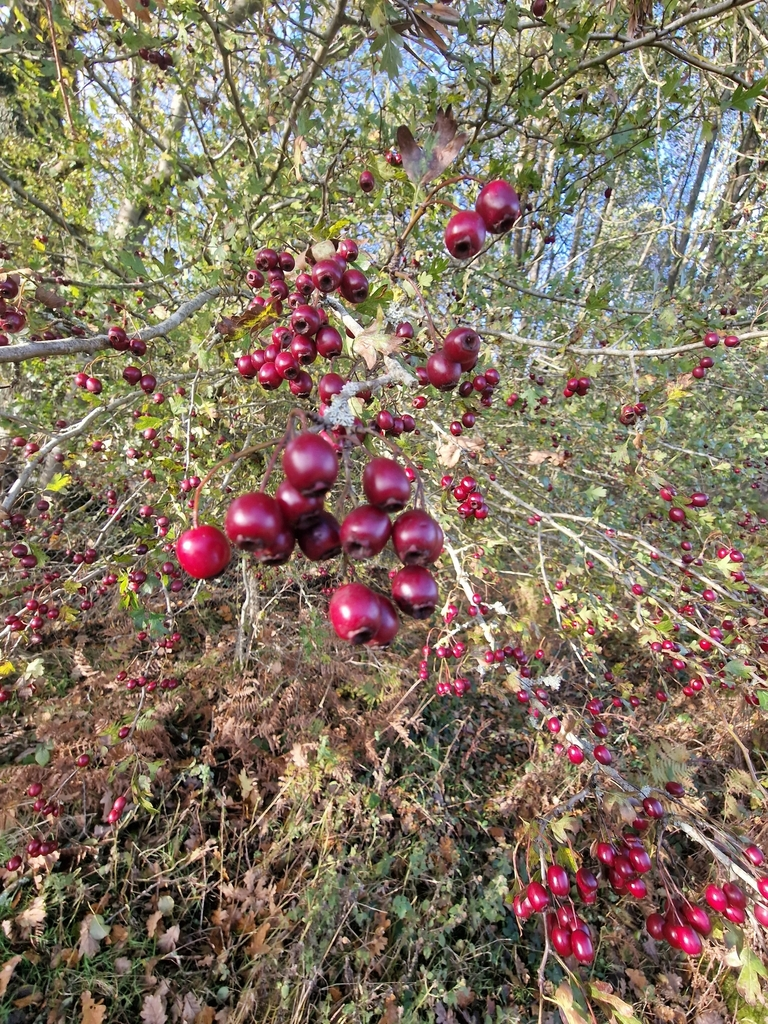
Coppiced Pedunculate Oaks, Field Maple and Midland Thorn along the Trackway
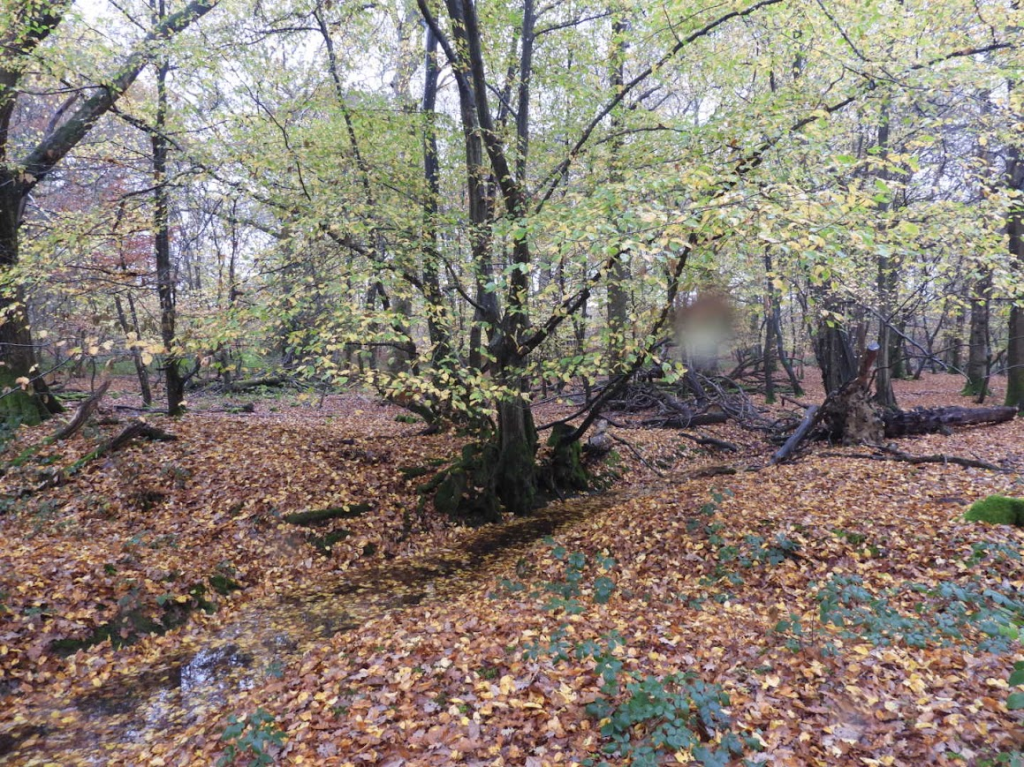
I stumbled across the trackway accidentally. I thought initially that there was a boundary bank on the east of the public footpath; then I noted that there was a trackway between that bank and another bank, further to the east, that I couldn’t seen until I walked over the bank to the right of me into the trackway.
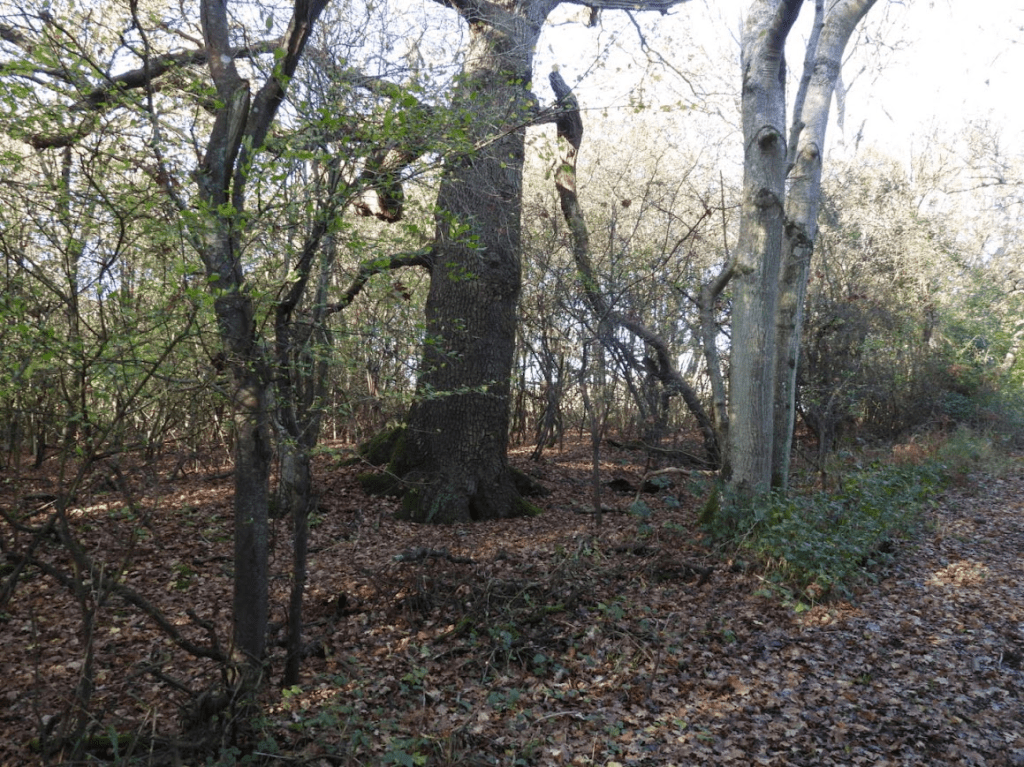
Coppiced Pedunculate Oak is not common in Sussex; but where you see it is coppiced because it is part of a boundary.
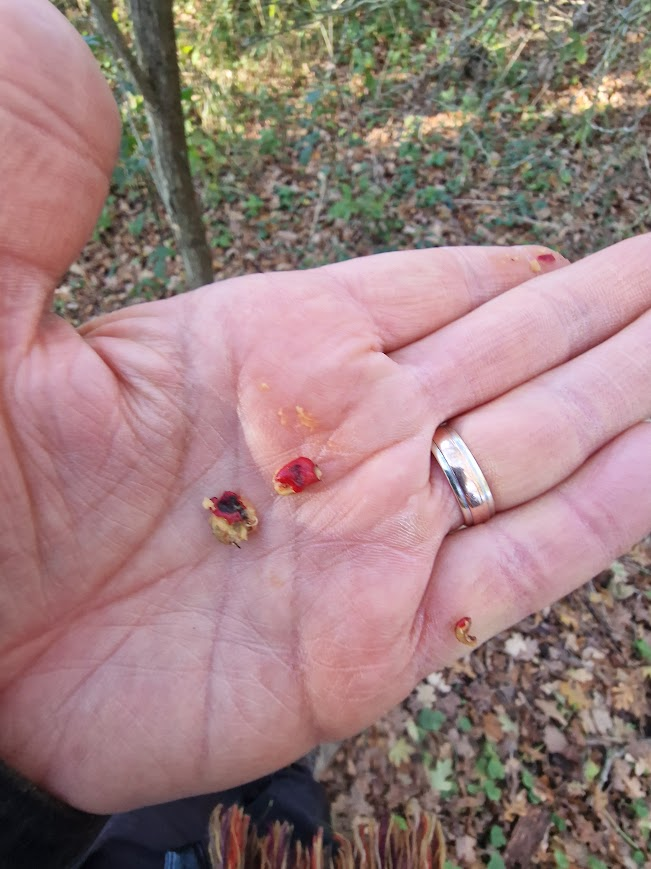
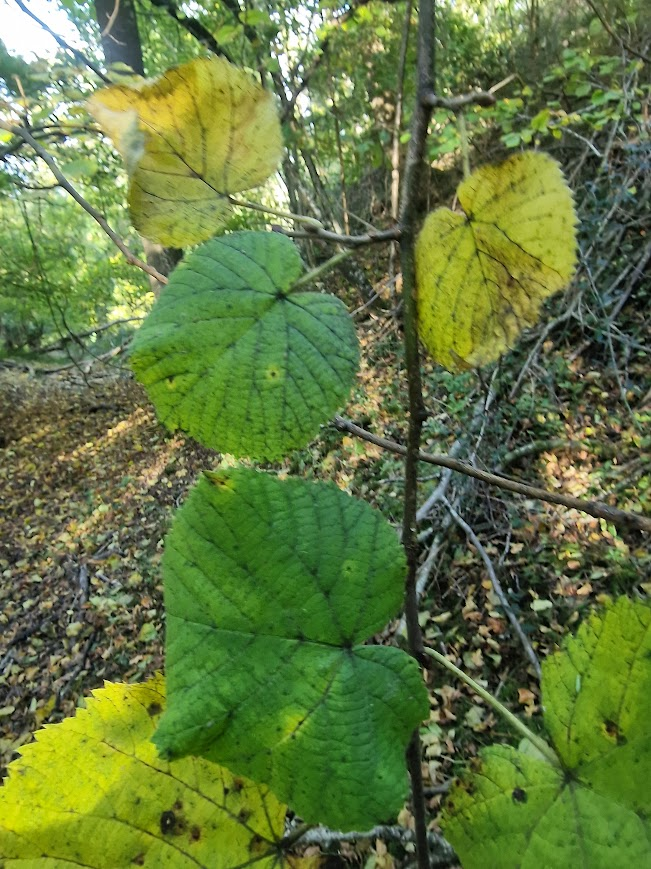
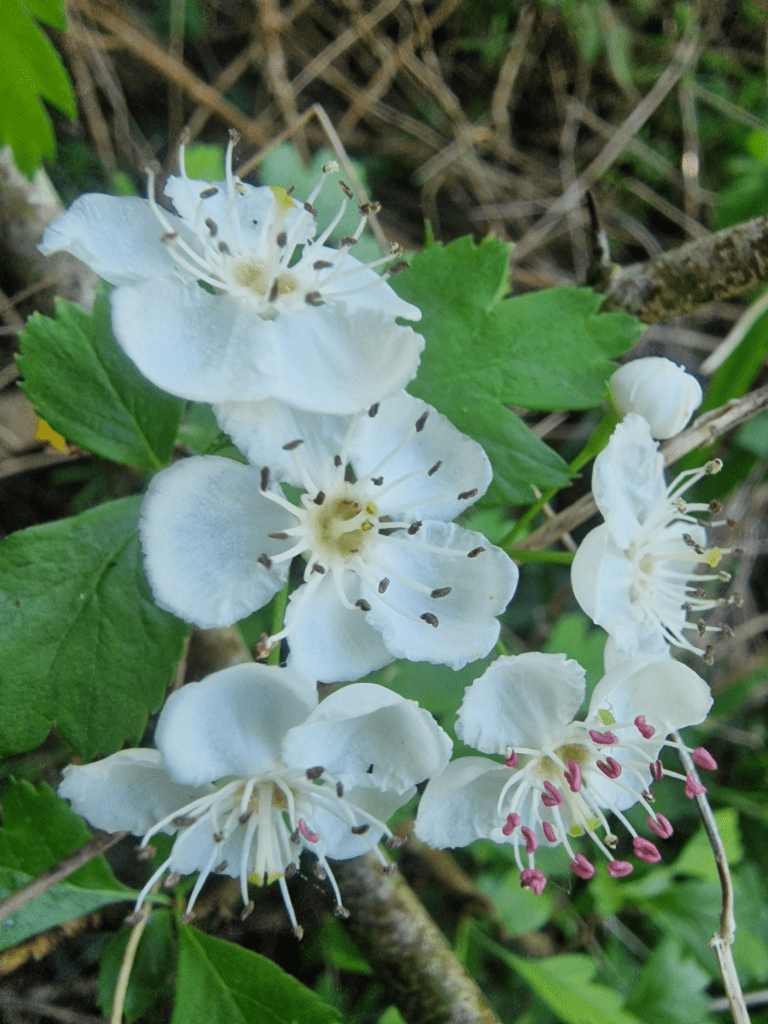
Midland Thorn, an ancient woodland indicator species
with two pips (seeds)
Field Maples
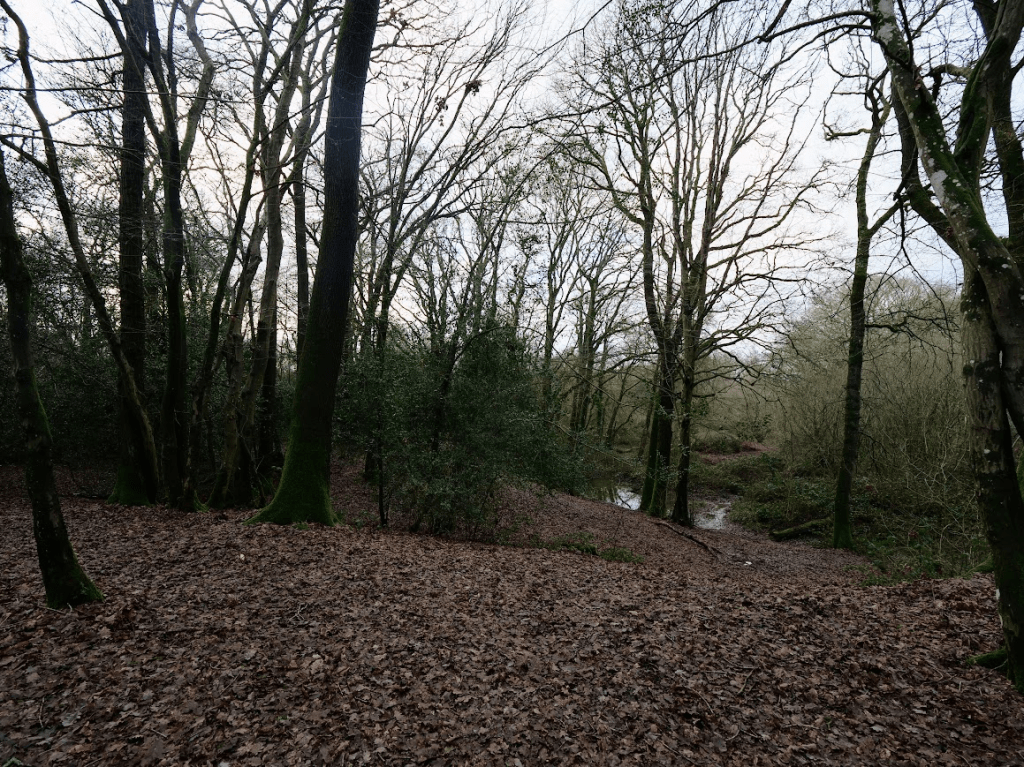
I imagined cows and pigs going up the trackway to Longford Wood
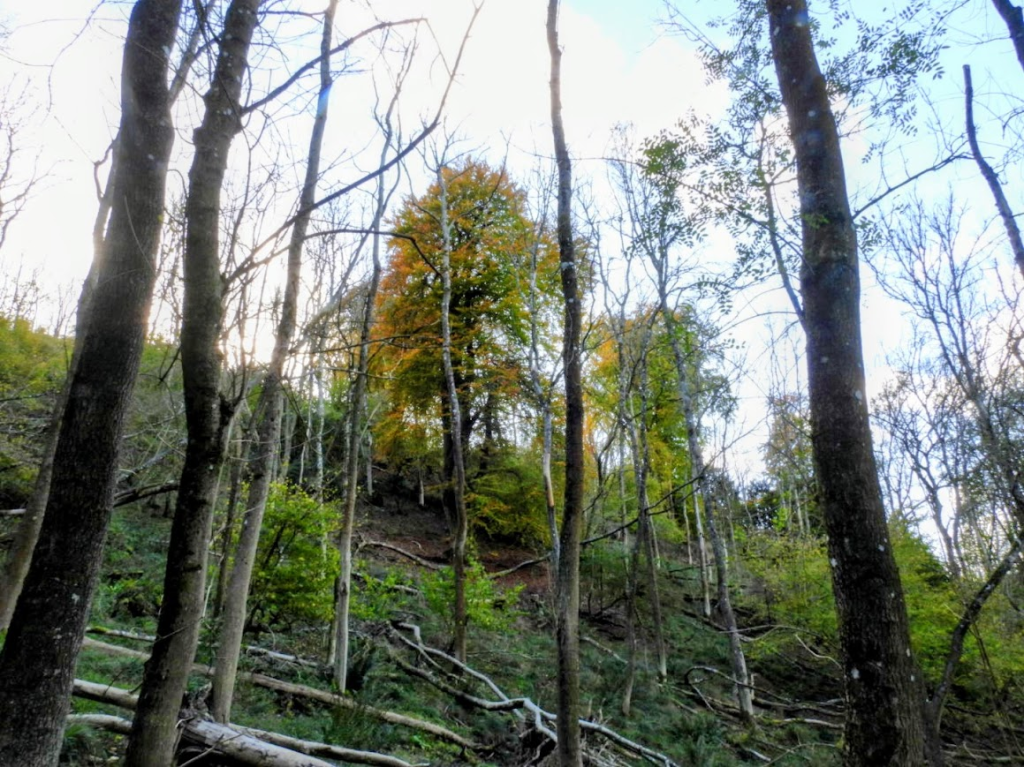
Longford Wood
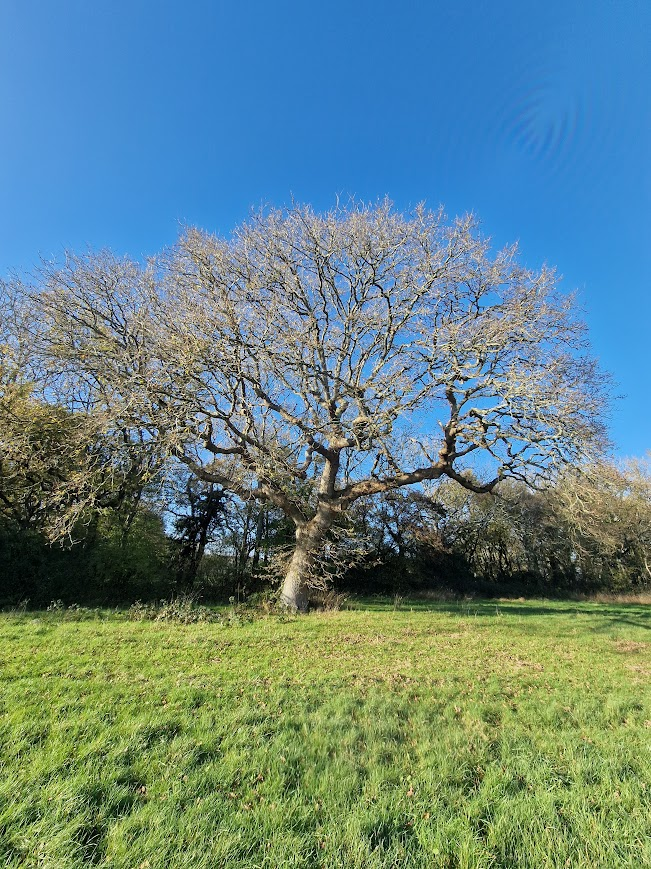
and the pasture woodland of Laughton Common
Laughton Common
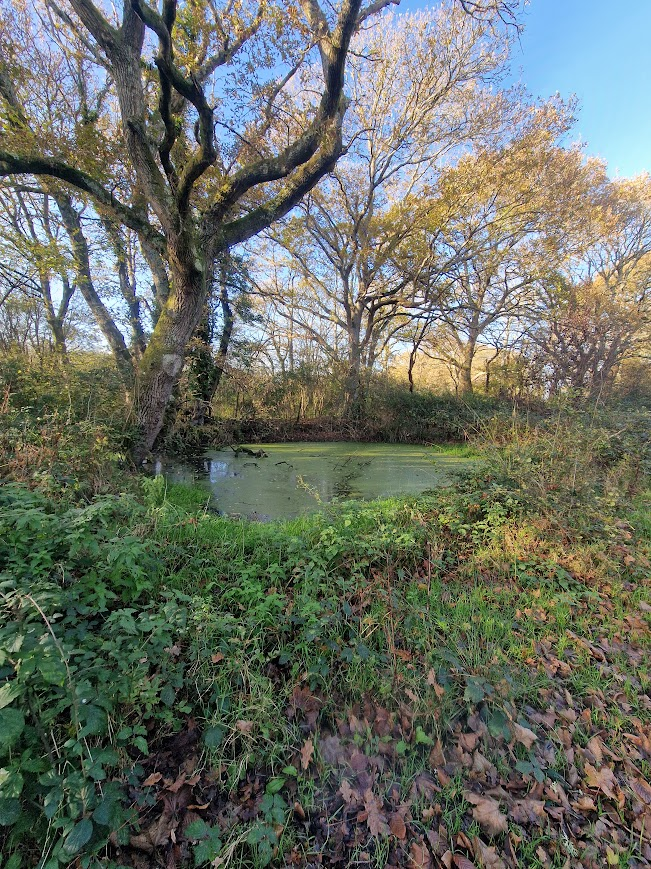
There were many pools like this; probably a relict of clay removal by commoners to make bricks
The enclosure of the Broyle, a large deer-park that also served as the main area of common land for the parishes of Ringmer, Glynde and South Malling, was brought about by a private Act of Parliament of 1767. This was the first Parliamentary Enclosure Act in the county of Sussex and one of the largest. The enclosure was hotly contested and an unusual amount of background information has survived, allowing insight into the exercise of power and influence in this 18th-century rural community and identification of the interest-groups promoting and opposing enclosure. John E. Kay The Broyle Enclosure, 1767–71 in SUSSEX ARCHAEOLOGICAL COLLECTIONS 138 (2000), 165–89.
Brickhurst Wood
Probable named after the clay that was taken as a common right to make bricks. Track with boundary bank with Pedunculate Oak going into wood;
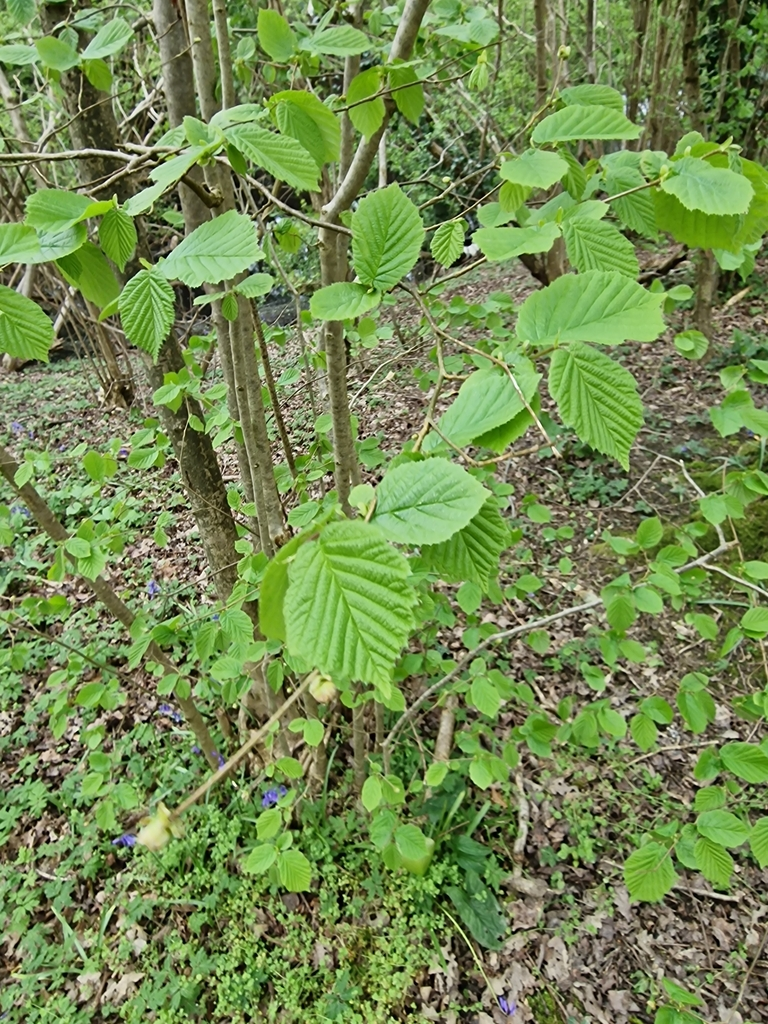
the boundary bank persist with Hornbeam all along the edge of the wood in the wood
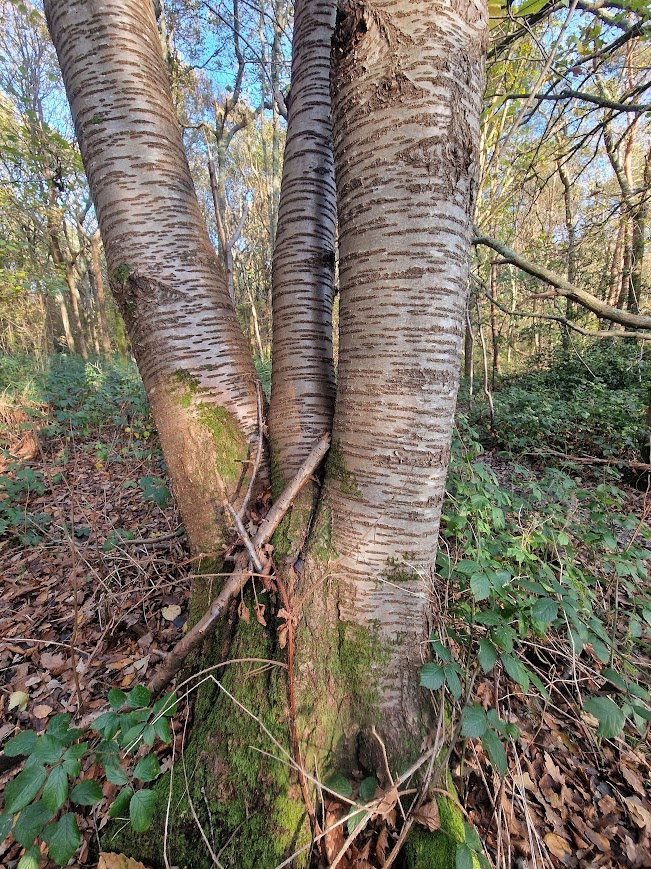
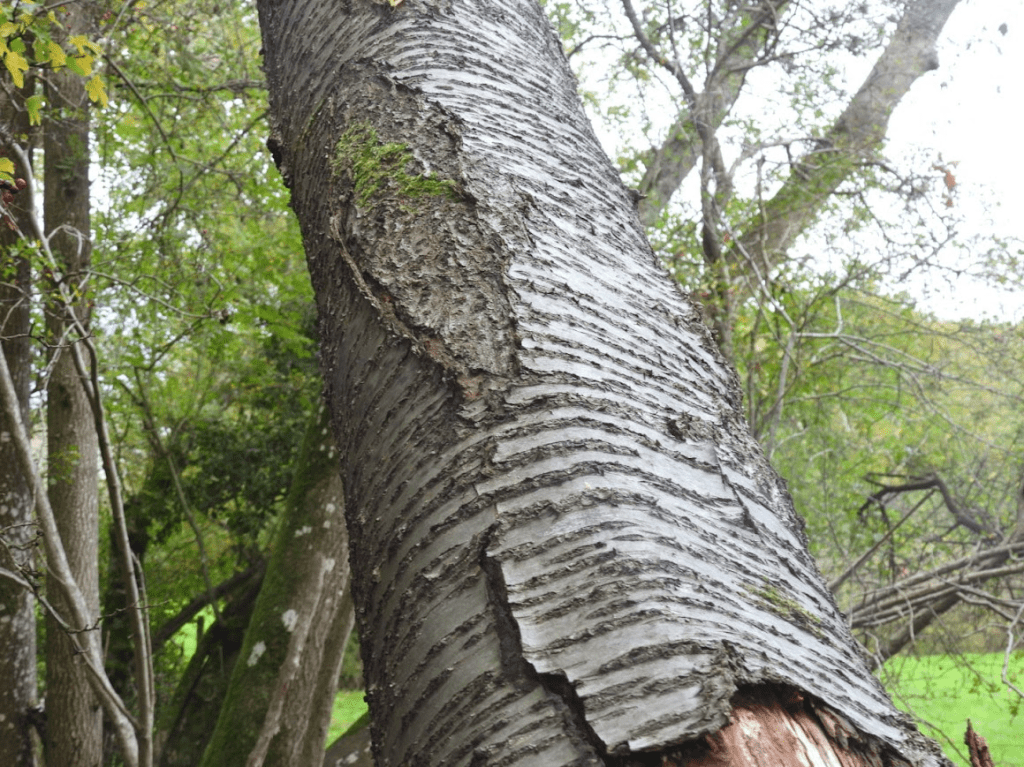
Wild Cherry; ancient woodland indicator species
The impact of the enclosure.
The impact of the enclosure on the local economy must have been considerable. …old John Dicker the park-keeper found himself out of a place. John and Jane Dicker and five of their children are found in the parish workhouse in April 1771, and continued to receive parish relief through the early 1770s.62 The long established local brickmaking industry based on clay dug from the Broyle seems to have ceased forthwith and not resumed for another half-century. The brickmaker Thomas Crowhurst moved from the Broyleside Howells Bank Farmhouse to Swingate Cottage by the Plashett Park, but soon afterwards left the parish. William Wisdom tells us that his father, a Glynde carpenter, used to have his timber from the Broyle prior to 1766,64 and he and the other local carpenters and woodmen will presumably also have had to seek wood and work elsewhere after the bonanza [for the Lord of the Manner, the Duke of Dorest] of that year. John E. Kay The Broyle Enclosure, 1767–71 in SUSSEX ARCHAEOLOGICAL COLLECTIONS 138 (2000), 165–89.
E.P. Thompson called it [enclosure] a plain enough case of class robbery. Peter Linebaugh (2014) Stop, Thief! : The Commons, Enclosures, And Resistance . pp144-145
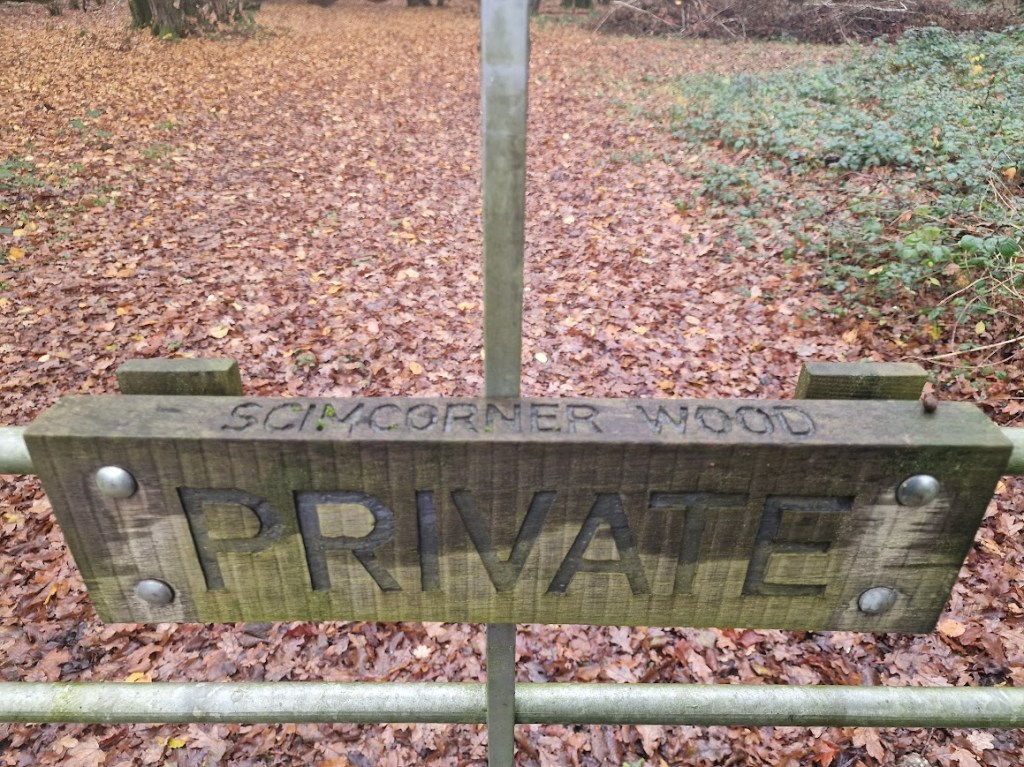
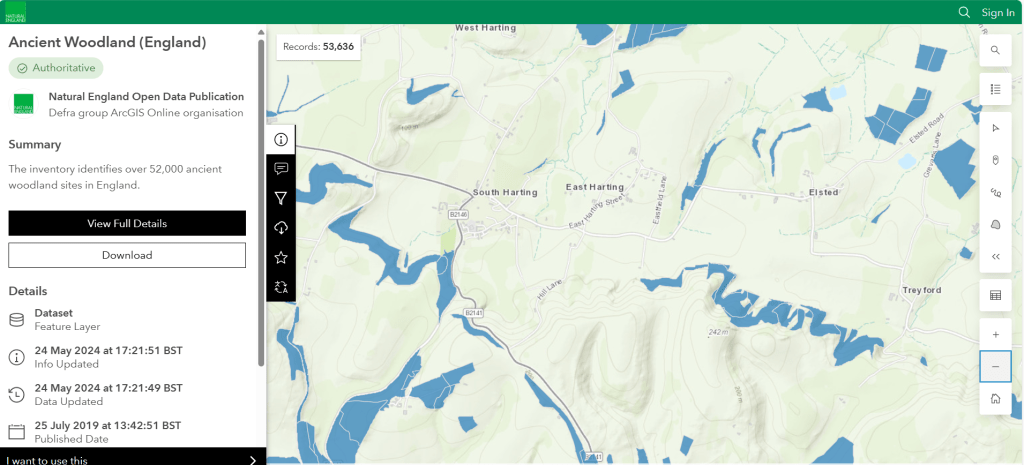
Before walking down the path to the Anchor Inn I walk past Skimcorner Wood (as named by Natural England on their ancient woodland database; but called Clay Hill Wood on the OS map)
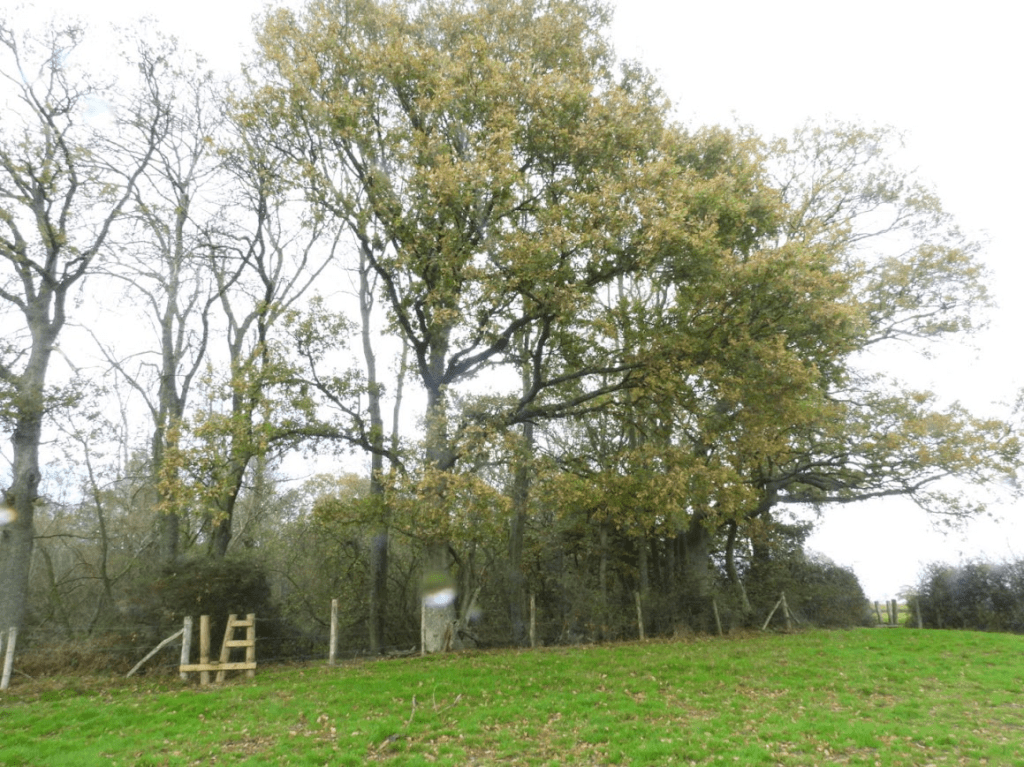
It is a private woodland, and I could only see a little through a gate; but us clearly seminatural ancient woodland with Sessile Oak and Hornbeam; an unusual combination in Sussex.
The hedgerows from Isfield to the Anchor Inn on the River Ouse
There are many large Quercus robur in hedgerows and shaws along the path to the Anchor Inn
This hedgerow at right angles to the path to the Anchor Inn has superb Oaks.
Oaks in the hedgerow of the field just before the Anchor Inn
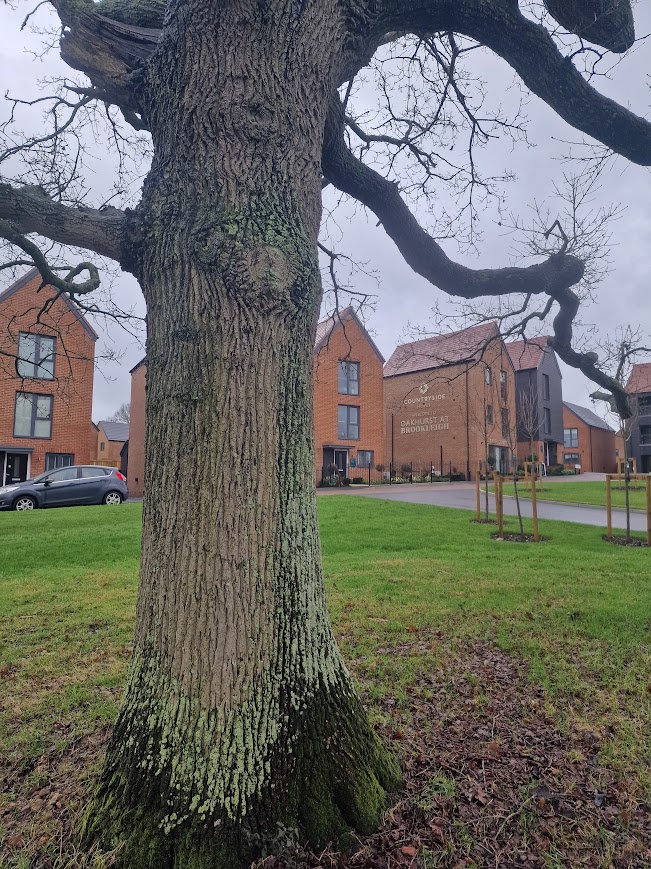
This one had much light and many lichens.
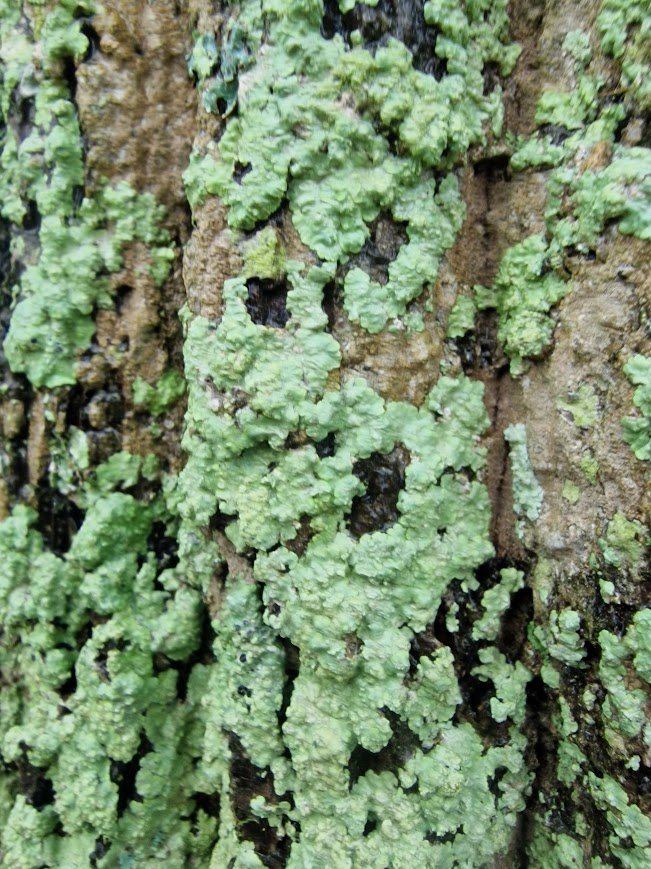
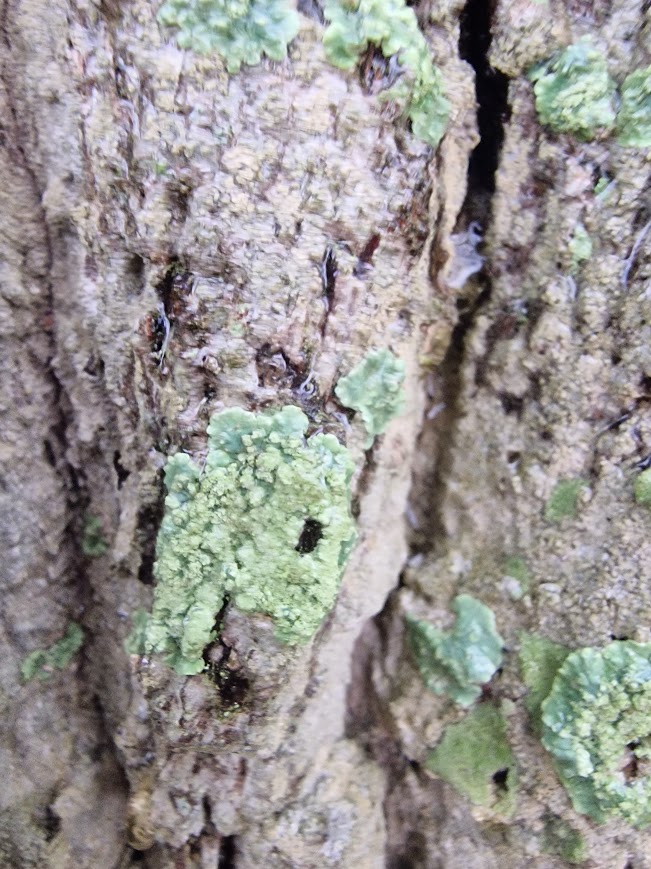
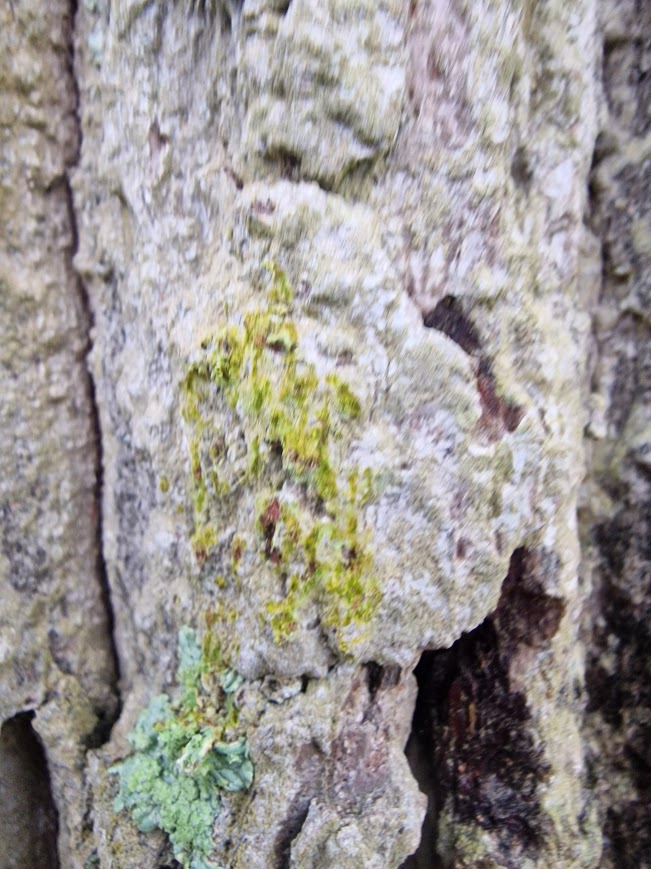
On this tree is the rarer lichen Pleurosticta acetabulum
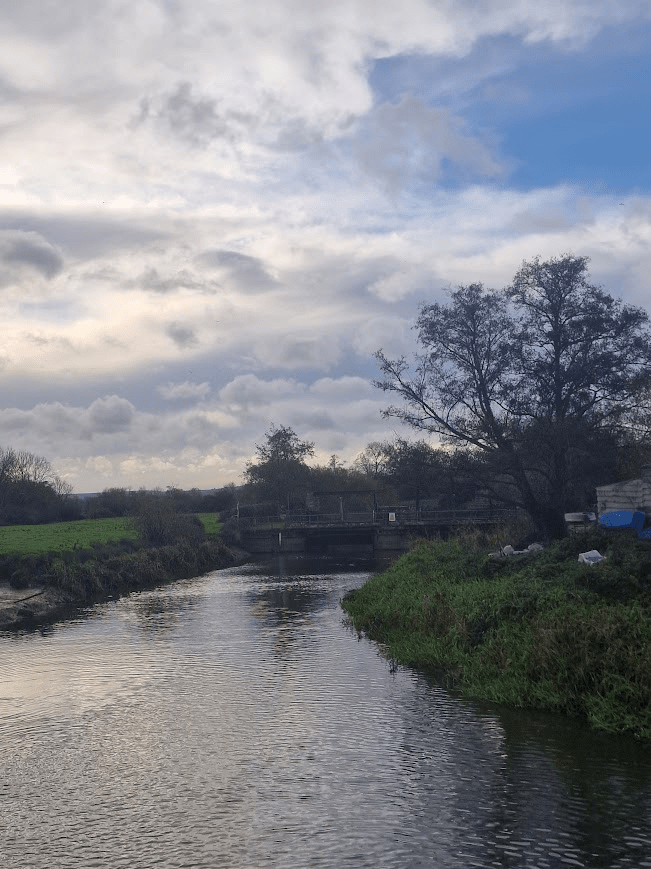
The Ouse and the sluice gates (flood protection) between Barcombe Mills and the Anchor Inn
West of the Ouse
Bushy Wood
Bushy Wood is very disappointing. There are some quite nice maiden Quercus robur on the South Side if the wood.
But most of it has replanted Oaks for commercial purposes. It’s designated by Natural England as Replanted Ancient Woodland
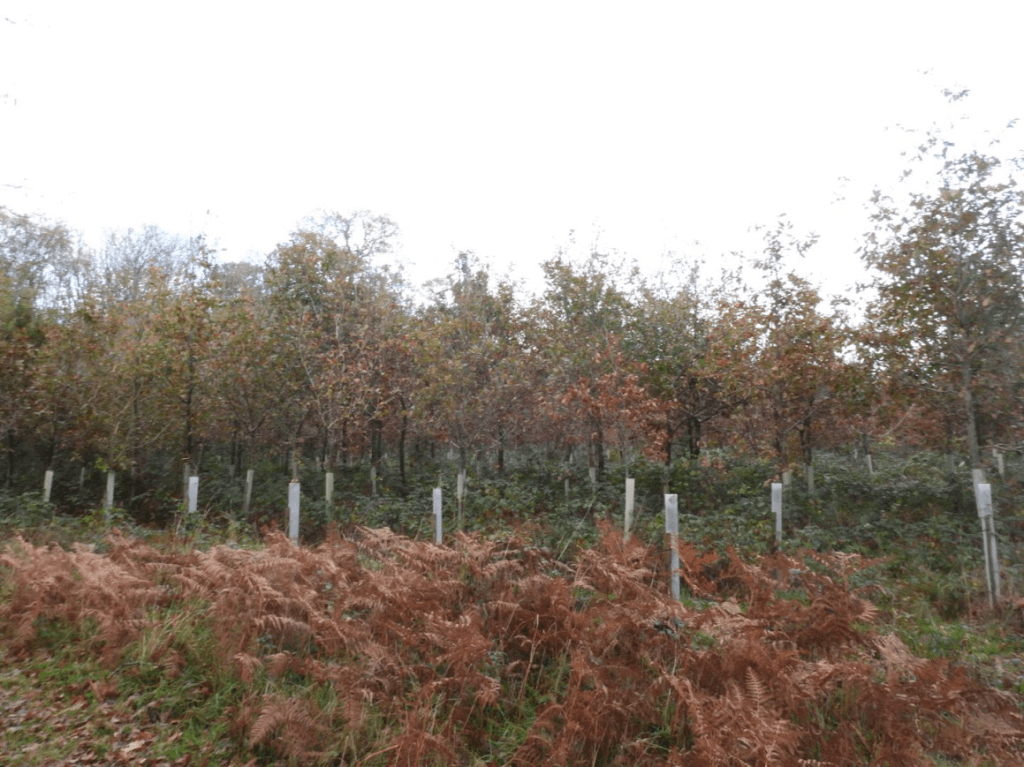
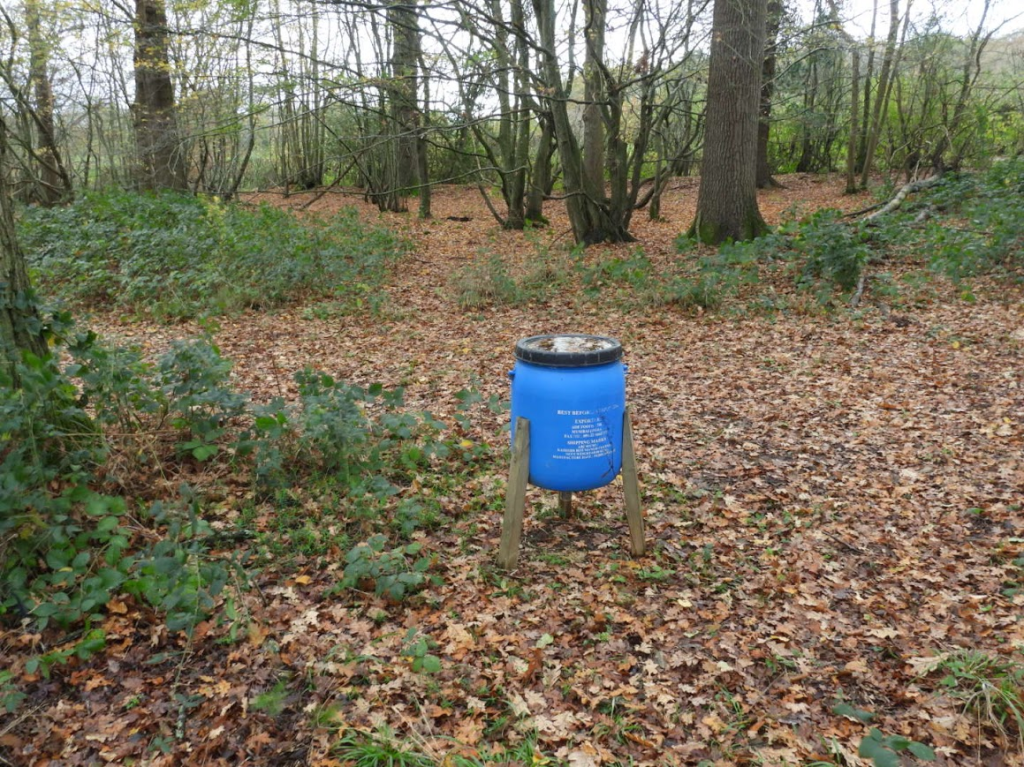
Sadly the Sutton and Newick Estates have pheasant shoots. This is a pheasant feeder. The deliterious effect of pheasant release to nature is well evidenced
In a tiny corner of this wood these beautiful hornbeams have been left.
Agmonds Wood
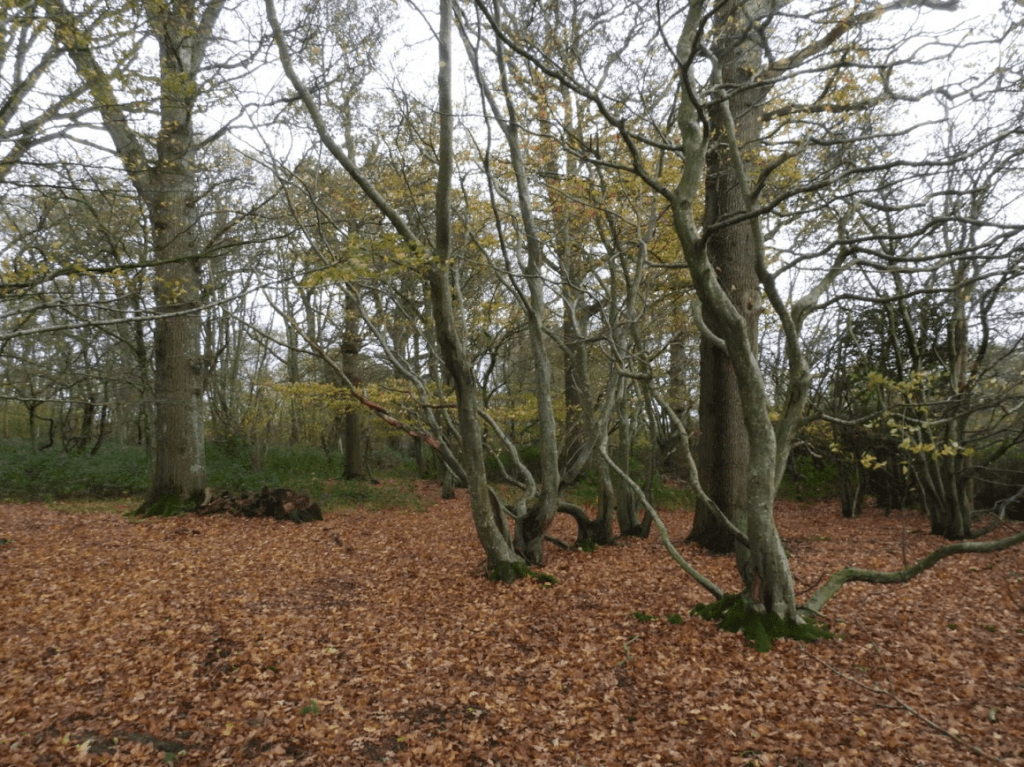
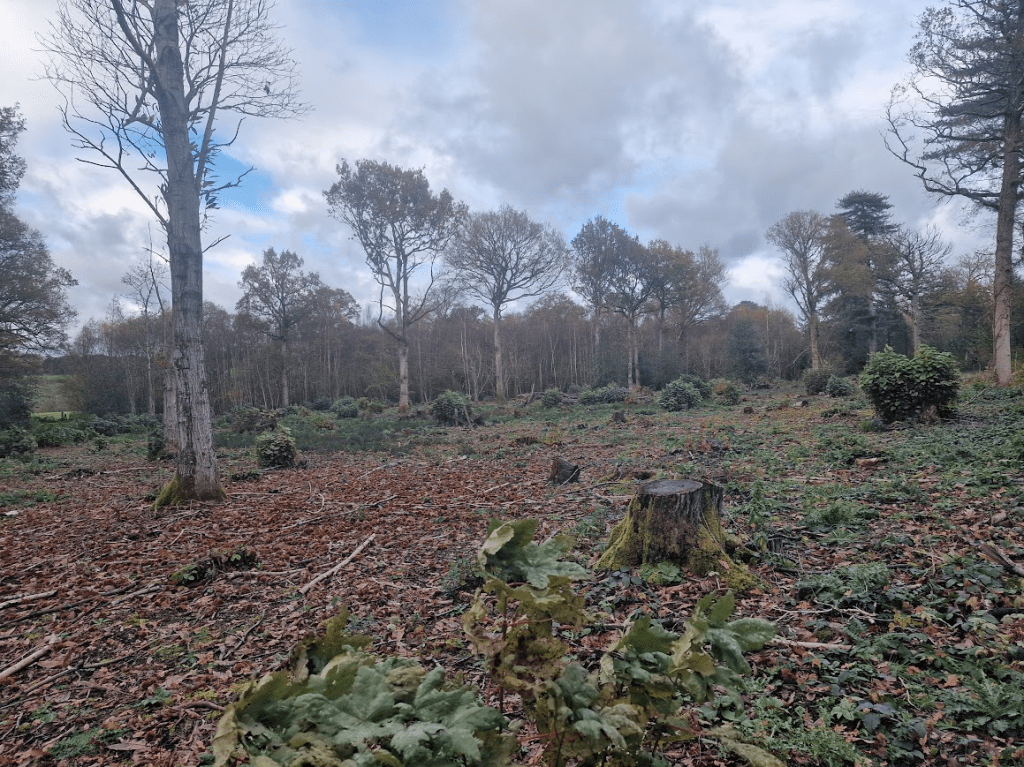
Here are a few maiden Pedunculate Oaks left in a sea of recently felled planted Sweet Chestnut.
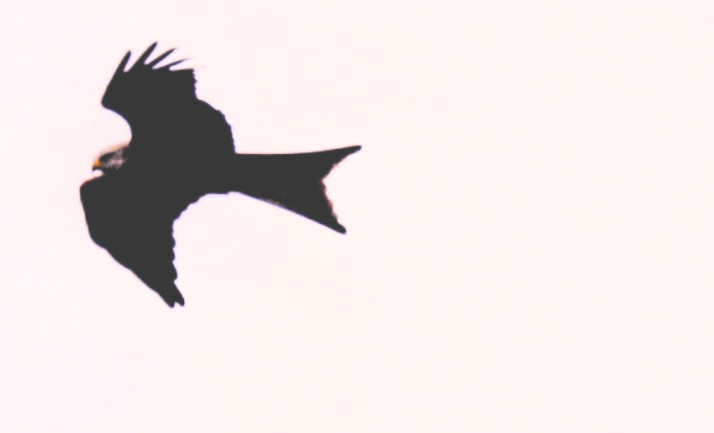
A Red Kite over these Oaks at dusk
Alder Copse
Again replanted ancient woodland with a few old maidens round the edge
Gridiron planting of Pendunculate Oak. No. Alder! Horrible
Shaw between Agmond’s Wood and Alder Copse
Beautiful ancient Pedunculate Oak in this shaw
Hedgerow Oak on the bridle way back to the Anchor Inn
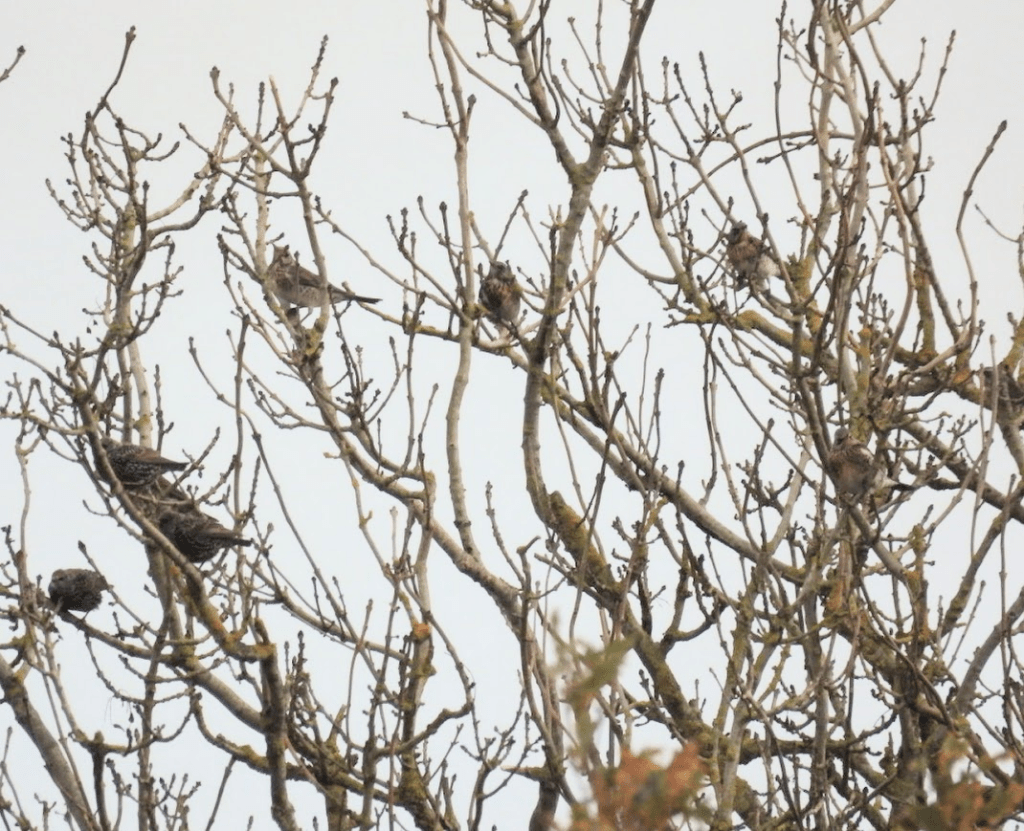
Roosting Starlings
You are much more likely to see ancient oaks in hedgerows than ancient woodlands as the large private owners of Sussex Estates see ancient woidland as an opportunity for cash cropping. However there are smaller average lanf owners who do try to conserve woodland, like the owner of Plashett Wood; except that is private with no public or permissive paths through it6i
I took the photos in this blog post to bring your attention to some marvellous things in nature, in Sussex, that are hidden from the public. I will not name the Sussex wood I trespassed in to take these photos.
If you go down to the woods today, you’re in for a big surprise: a third of England’s woodlands are owned by just a thousand landowners.
That’s the central finding of my new investigation into who owns England’s woods. The analysis also raises questions how private woods are used – with many of them kept off-limits to the general public in order to maintain them as pheasant shoots, despite receiving public subsidies. https://whoownsengland.org/2020/11/02/who-owns-englands-woods/Guy Shrubsole accessed 16.11.15
The ownership of land in Sussex
Much land in Sussex is in private ownership and walking in significant amounts of that land is currently prohibited by signs denying public access; often this is associated with pheasant shooting. But pheasant shooting also effects land with public access as well as private land where shooting occurs. I recently walked through a public-access SSSI scarp-face ancient wood in West Sussex, adjoining a private wood used for pheasant shooting. I saw and heard many pheasants in this wood I was walking through. I had a lunchtime half pint of cider in the nearest pub to the wood, and in the pub there was a group of pheasant shootists there bragging (loudly) about how many pheasants they had shot. The existence of private woodland for pheasant shooting has a negative impact on much woodland – private and public.
For many years, we have been concerned with the impacts of two of the most intensive forms of shooting: driven grouse, and the high-density release of Pheasants and Red-legged Partridge for shooting. Our studies have identified that various key practices are causing particular ecological harm, with implications for both biodiversity and the climate emergency. The big issues: the illegal killing of birds of prey, the use of lead ammunition, the burning of peatland habitats and the release of millions of non-native Pheasants and Red-legged Partridges into the natural environment. RSPB The Facts about Intensively-Managed Game-Bird Shooting. RSPB The facts about intensively-managed gamebird shooting
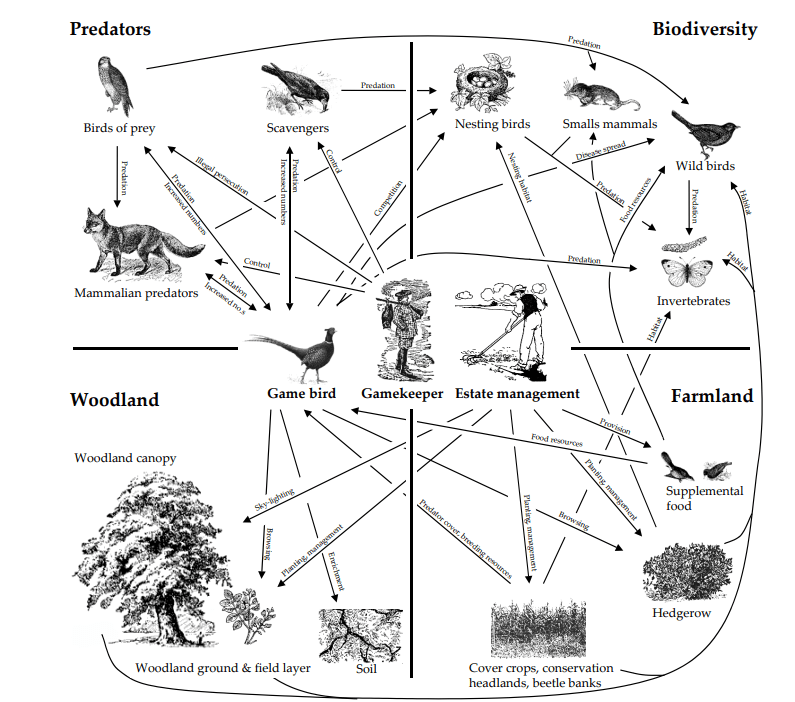
Many of the potential impacts of gamebird releasing are poorly studied and understood, and are often under-represented in the peer-reviewed scientific literature. A common theme emerging from these reviews is that the ecological impacts of gamebird releasing appear to be strongly polarised, withpotential negative effects associated with the released birds (e.g. enhanced predator abundance and predation, increased disease transmission, altered habitat structure, reduced invertebrate abundance. Mason, L.R., Bricknell ,J.E., Smart, J. & Peach, W. J. (2020) The impacts of non-native gamebird releasein the UK: an updated evidence review. RSPB Research Report No, 66 RSPB Centre for Conservation Science, Sandy UK. Downloadable from RSBP Game bird shooting – laws and impact
Screenshot from Mason, et. al (2020)
Here is an indication of how much land is in public ownership in the Western (West Sussex) South Downs. Of the top five owners of land in Sussex by acreage owned, only one is a public body. (The wood that these photos were taken in is not in West Sussex). These data are from Guy Shrubsole & Anna Powell-Smith’s excellent Who Owns England: Who Owns the South Downhttps://whoownsengland.org/2018/02/16/who-owns-the-south-downs/ accessed 16.11.25
… the current 4th Viscount Cowdray … has donated £65,000 over the past decade to UKIP, the Conservatives and Vote Leave …
2) Duke of Norfolk – Arundel & Angmering Estates: 16,000 acres
… “Since William rose and Harold fell, / There have been Earls at Arundel.” So reads a plaque in the shadow of the magnificent Arundel Castle, stronghold of the Earls of Arundel, whose proximity to power down the centuries eventually also earned them the Dukedom of Norfolk. ..
“When the 15th Duke stood on the battlements of his newly repaired keep in 1910, he would have had the satisfaction of knowing that almost everything he could see in all directions belonged to him.” Although the Ducal estate is thought to have diminished in size since then, it is still… The Estate’s origins go back to the Norman Conquest.”
3) National Trust properties across the South Downs: 15,151 acres
…his family estate also includes 3,000 acres in Cumbria ….
5) Duke of Richmond – Goodwood Estate: 11,500 acres
As the [Independent, Sean O’Grady Thursday 30 July 2009. Earl of March: A glorious example of the landed classes; says [The Duke of Richmond] has “leverage[d] Goodwood’s formidable competitive advantages – the things that cannot be replicated elsewhere (except by other landed families, presumably): vast (and beautiful) space and a magnificent stately home”. But these modern businesses depend on owning land inherited down the centuries: “Even if they wanted to, it is difficult to imagine any company, oligarch or Middle Eastern princeling acquiring such an enormous chunk of southern England [nowadays].”
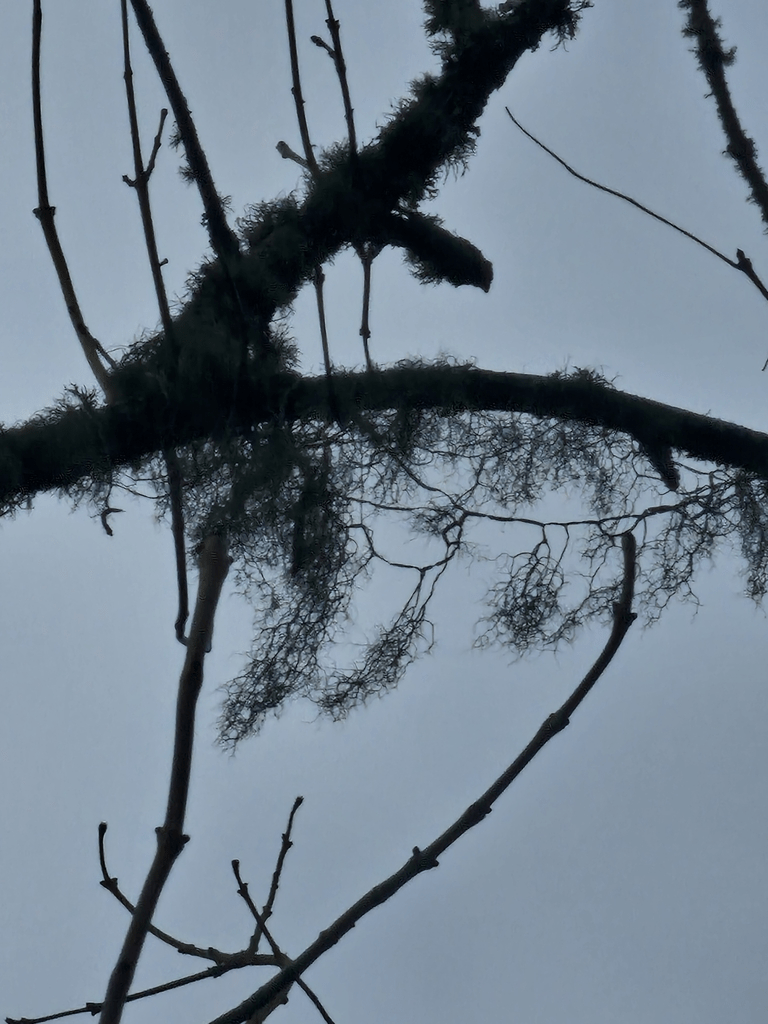
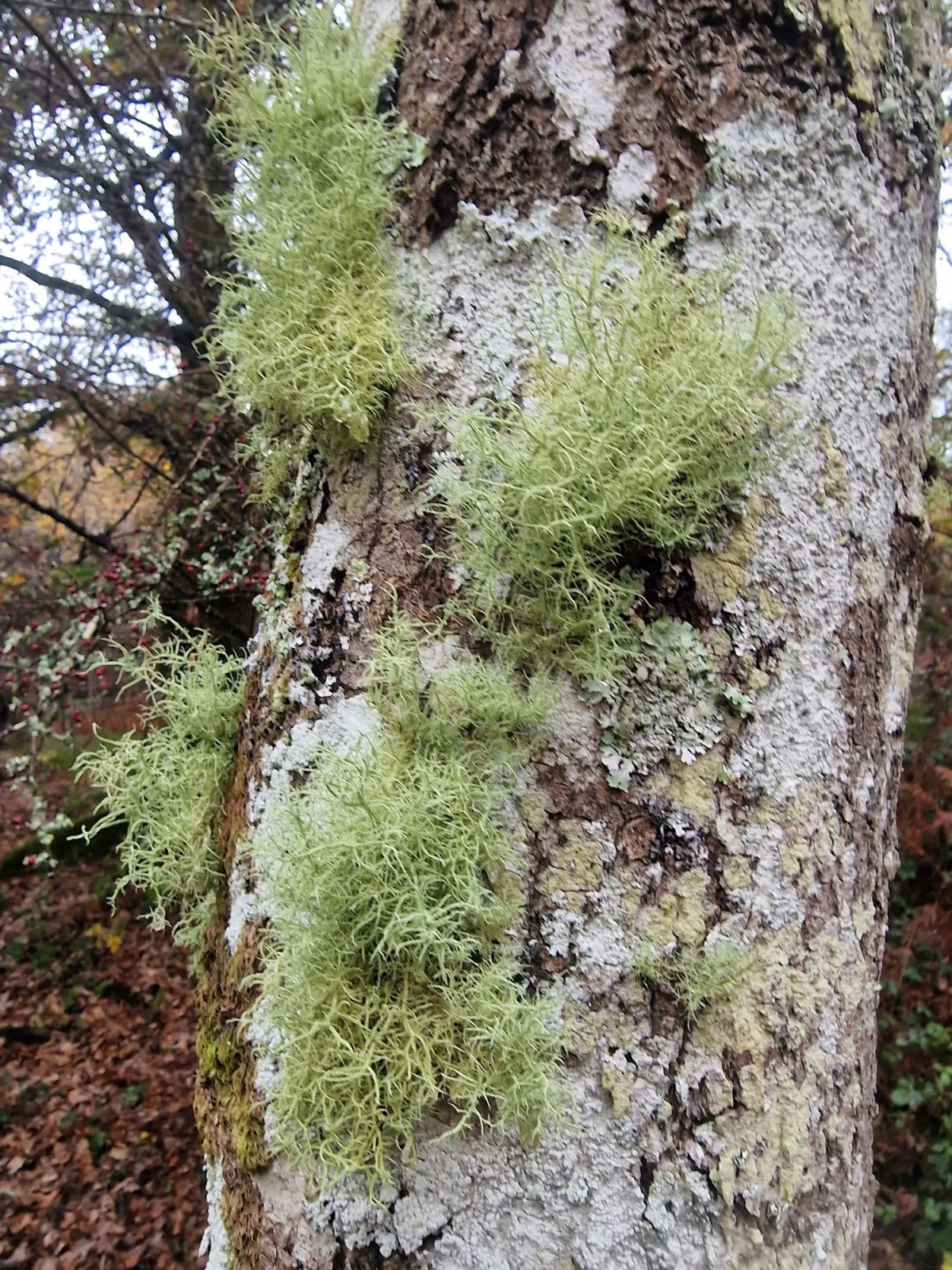
I have trespassed in an SSSI wood owned by one of the above, which the public are denied access to. It has outstanding and rare natural heritage, including this Usnea articulata String-of-Sausages Lichen, extremely rare in Sussex. This wood is regularly used for pheasant shooting. As I was walking around it I saw dead pheasants that had been left on the ground from a hunt of a few days before.
In an ideal world land would not be owned by individuals; but in the absence of a change to the ownership of land, I believe:
(2) the ownership of land should be taxed through a Land Value Tax, see: Labour Land Campaign What is Land Value Tax (accessed 16.11.25)
I am not urging you to trespass. If you choose to trespass, please follow the guidelines from the Right To Roam that are cited at the end of this post
The wood that I trespassed a few days ago and its natural wonders
This woodland is a Site of Special Scientific Interest that is believed to have been continuously wooded since medieval times. The wood’s soil is clay; and the wood is dominated by sessile oak, pedunculate oak, hornbeam and hazel with some ash and alder, with an understory of holly and bramble. The hornbeam and hazel have been previously coppiced. The sign on the gate as well as saying the land is private warns of shooting occurring in the wood.
The rides are lined by goat willow, aspen, blackthorn, hawthorn and silver birch
There is a boundary bank and ditch planted mostly with coppiced hornbeam, that exactly follows the parish boundary shown on the OS map
Honrbeam
Sessile Oak and Hornbeam
Graphidaceae family lichen possibility Graphis scripta on a Hornbeam
Sessile Oak in “tall forest” woodland
Hazel
Holly
Sessile Oak, with a sheet of the lichen Dendrographa decolorans on the dry side of the tree
Sessile Oak leaf on the base of the tree above
The lichens Lecanactis abietina (an old tree lichen) and a Chrysothrix sp. (Gold Dust Lichens) on a Sessile Oak
Coppiced Hornbeam
Clouded Funnel fungi
Sessile Oak
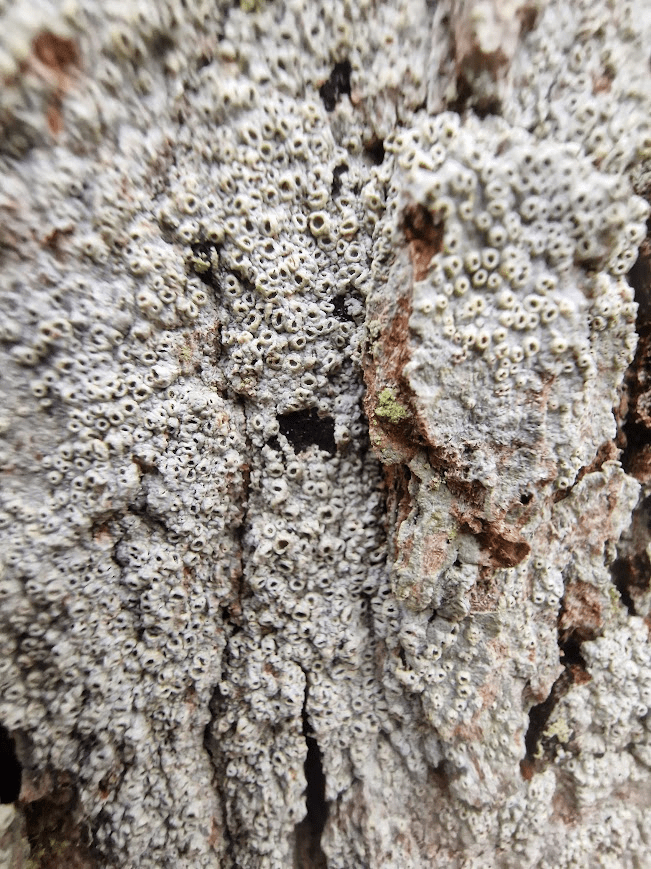
Bark Barnacle Lichen on Sessile Oak
Brnacle lichen is found mainly on the bark of living trees in ancient woods, and it is indicative of longstanding woodland conditions. Woodland Trust Bark Barnacle Lichen
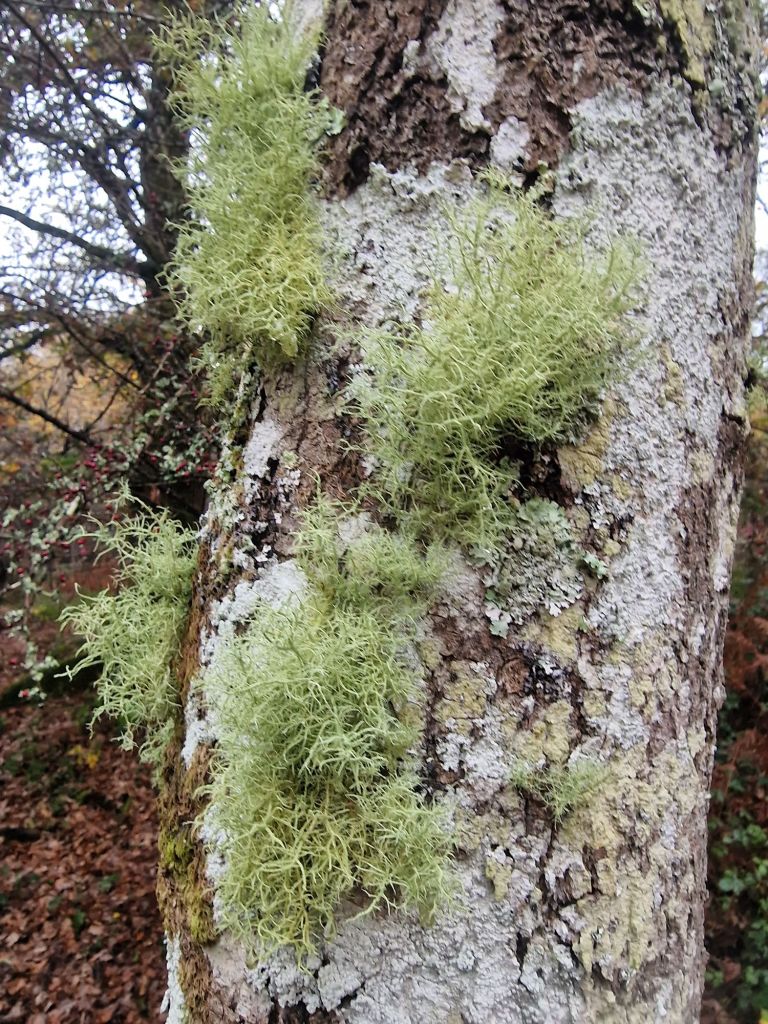
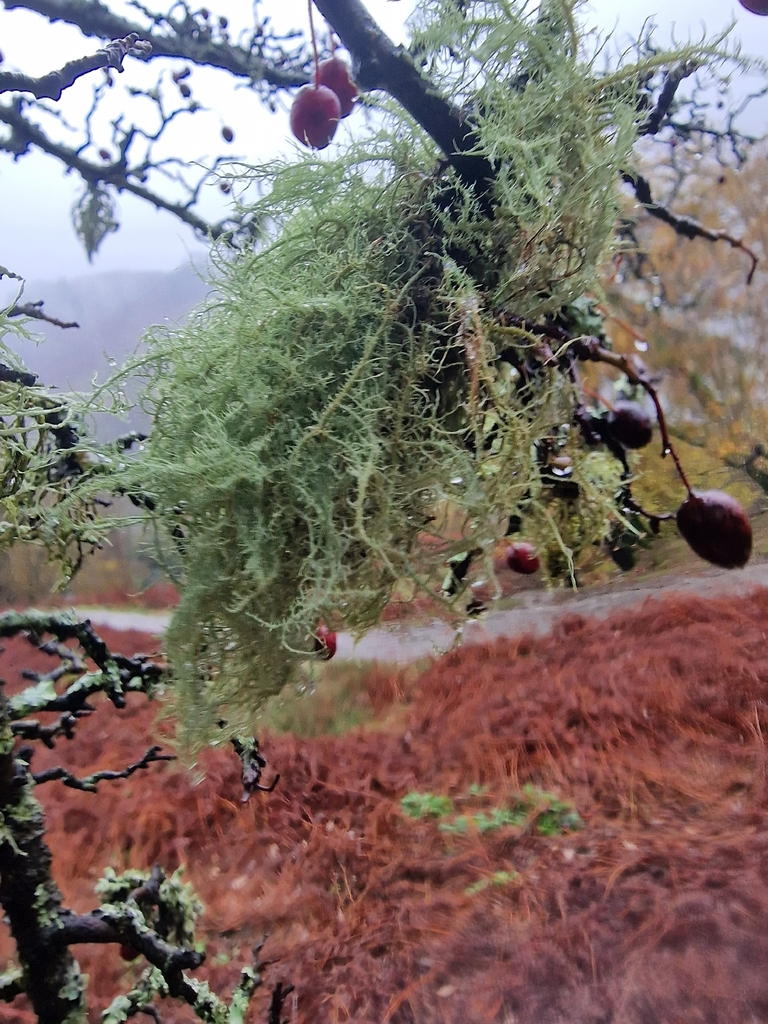
Sessile Oak covered in Usnea cornuta
Parish boundary bank with coppiced Hornbeam
A recently pollarded young Hornbeam – showing continuity of ancient woodland management practices
Coppiced Hornbeam
A Hornbeam with a range of Pertusaria spp. Hornbeams often have many genus Pertusaria and family Graphidaceae
Lepra (formerly Pertusaria) amara, Pertusaria pertusa and Pertusaria leioplaca. Terrestrial molluscs love eating the apothecia of Pertusaria. L. leioplaca seems their favourite; it must be their caviar.
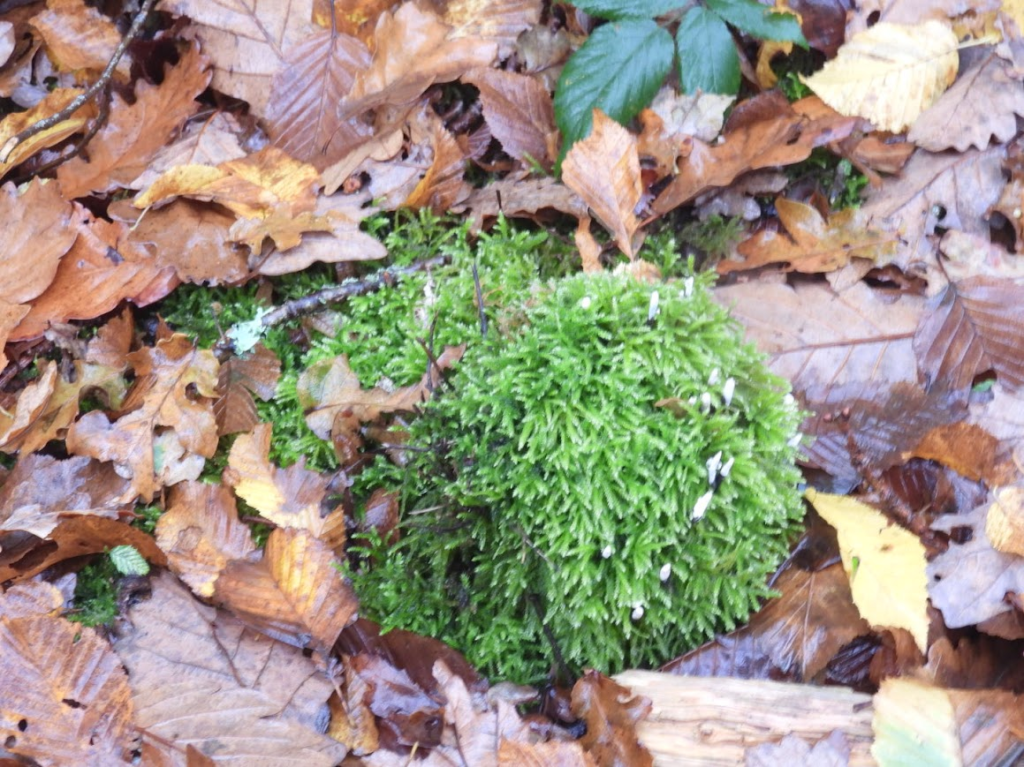
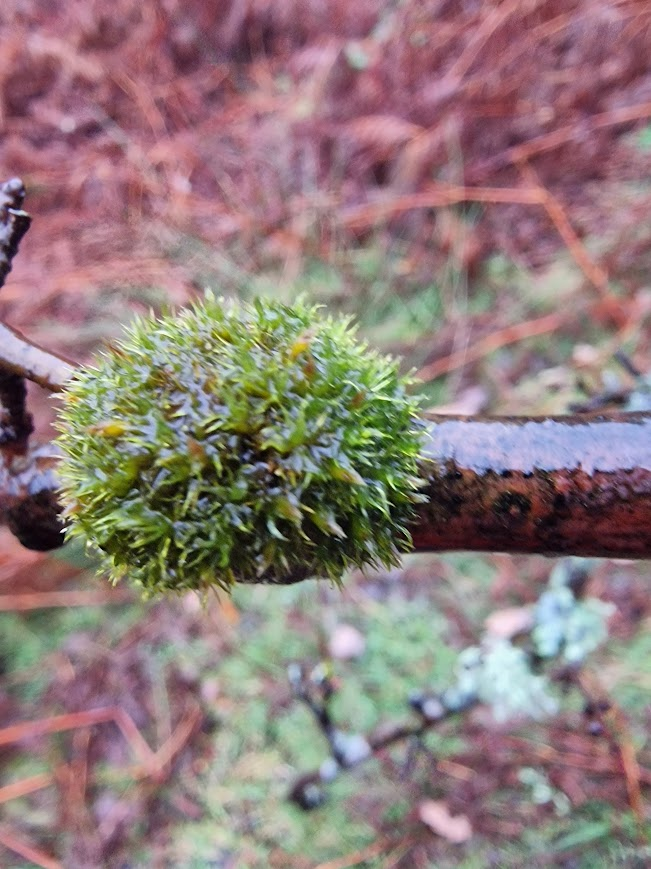
Ball of Common Striated Feathermoss with Candlesnuff fungus,
You’ve all seen signs claiming ‘Trespassers Will Be Prosecuted’. They’re a lie.
In the UK, ‘trespass’ is a civil offence, provided you don’t infringe certain conditions. You cannot face criminal prosecution simply for being on someone else’s land without permission (or away from a designated Right of Way, open access land or land where any bylaws permit public access). The dispute is solely between you and the landowner, and the police cannot get involved.
That landowner could theoretically take you to civil court. But they’d have to know who you are, and it would most likely be a waste of their time.
Likewise, any ‘damages’ would have to be proportionate to the damage you’ve caused, which if you follow our principles of trespass below, should be zero.
However, the legal situation changes if you do any the following when trespassing on land:
Cause damage to property
Disrupt lawful activity
Conduct yourself in a threatening or abusive fashion
Bring a vehicle, intending to reside & cause damage
Enter land with special restrictions* (see below)
That would be classed as ‘criminal trespass’, which is a criminal offence, leaving you potentially subject to police enforcement.
*Important Note: there are certain sites with special trespass designations which do make your mere unauthorised presence a criminal offence. The penalty for violation can be serious. Mostly, these are common sense. Avoid military sites, essential infrastructure (e.g. railways, airports, nuclear facilities) and stay away from the sorts of places the King might be having a cup of tea (or the Prime Minister hosting an illegal party).
Right to Roam follow some key principles when accessing land without permission. We do not condone actions which break these rules, as these will simply undermine our campaign.
Take responsibility for your own actions
Respect people’s privacy, domestic property and gardens
Don’t walk where crops are growing (stick to field margins or use alternative routes)
Avoid places that don’t feel like open countryside (e.g. have buildings or machinery)
Respect livestock and other animals kept on the land such as ponies and horses (i.e. avoid closed paddocks). Remember that cattle – especially bulls or cows with calves – can be dangerous
Care for nature (avoid fires, wildlife disturbance or damage to flora)
Since civil trespass (i.e. simply existing on land) is not a criminal offence it is especially important that it does not become associated with criminal activity. Damage nothing. Disrupt no lawful activity. Peacefully enjoy what you came to experience.
Voices from the seventieth century
The gentrye are all round stand up now, stand up now The gentryeare all round stand up now The gentrye are all round on each side the are found Their wisdom so profound to cheat us of our ground.
The Diggers Song, Gerald Winstanley, 1650 True Levellers (Diggers)
At last the bus 78 to Seatoller was running after the road flooding had subsided! I could visit the woods at the south of the Borrowdale Rainforest NNR that I had intended to visit on 03.10.25
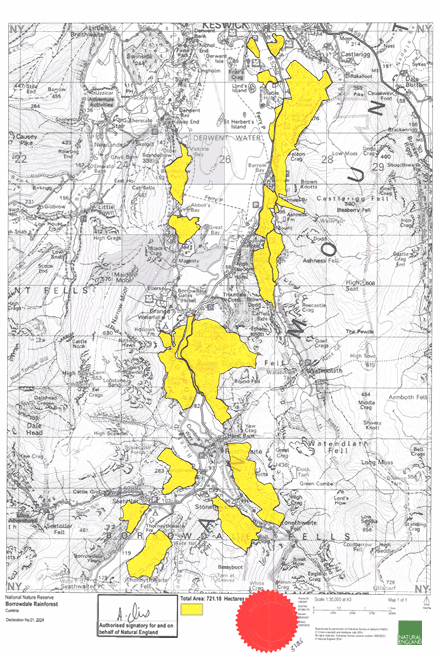
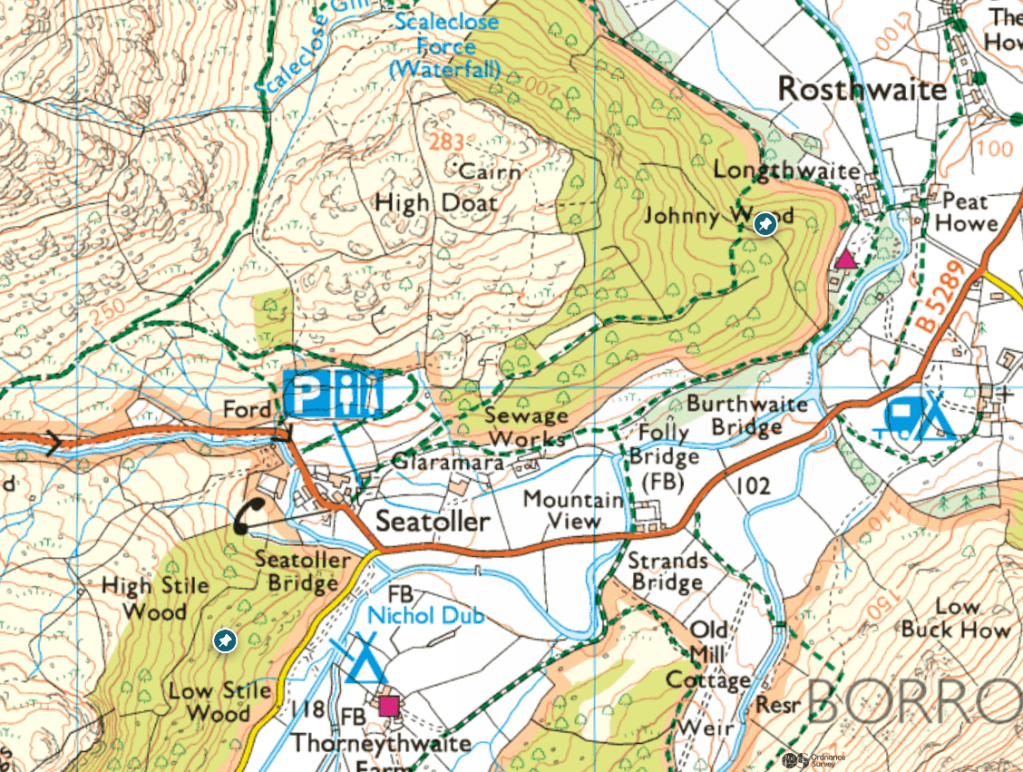
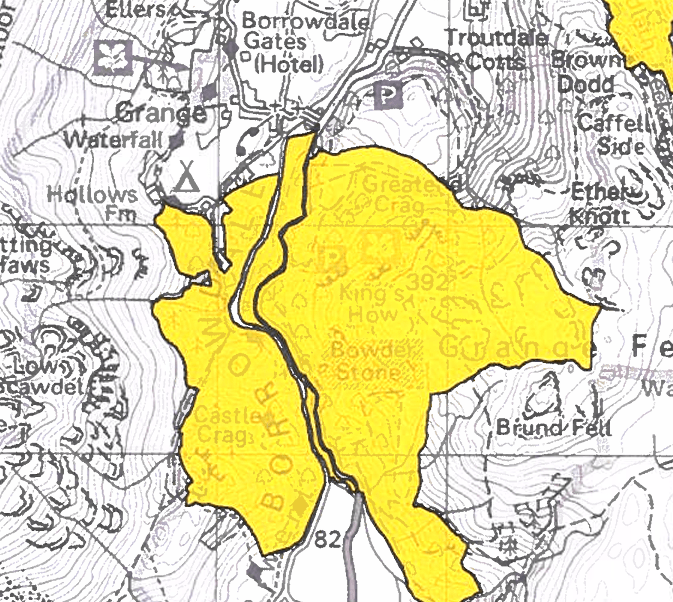
Getting off at Seatoller, I decided to visit some of southernmost woods of the NNR: High Stile and Low Stile Woods; named as “Seatoller Wood” on the Natural England map of ancient woodland, . When I got to these woods they were fenced off with “private” signs, despite them being marked as public access land on the OS map. As I said in my post of 03.11.25, I had had to do lots of research to find where the constituent parts of the NNR are. The National Trust website on the NNR doesn’t have a map of the NNR, and there is no Natural England visitors’ guide, as there is for other NNRs. There is also no information on which parts of the NNR have public access and which don’t. The only way to find out whether or not there is no public access is to visit the woods and find out for yourself, when you have found out where the constituent woods in the Borrowdale Rainforest NNR are.
The only way I found out where the constituent woods of the NNR were, was by looking at the declaration of NNR map on the government’s website. I then had to cross reference this map with the OS map to find the names of the constituent woods of the NNR.
I support the right to roam (visit Right To Roam) but in the absence of a right to roam, the very least public bodies administrating NNRs should do is to tell the public where parts of NNRs are and which can be visited
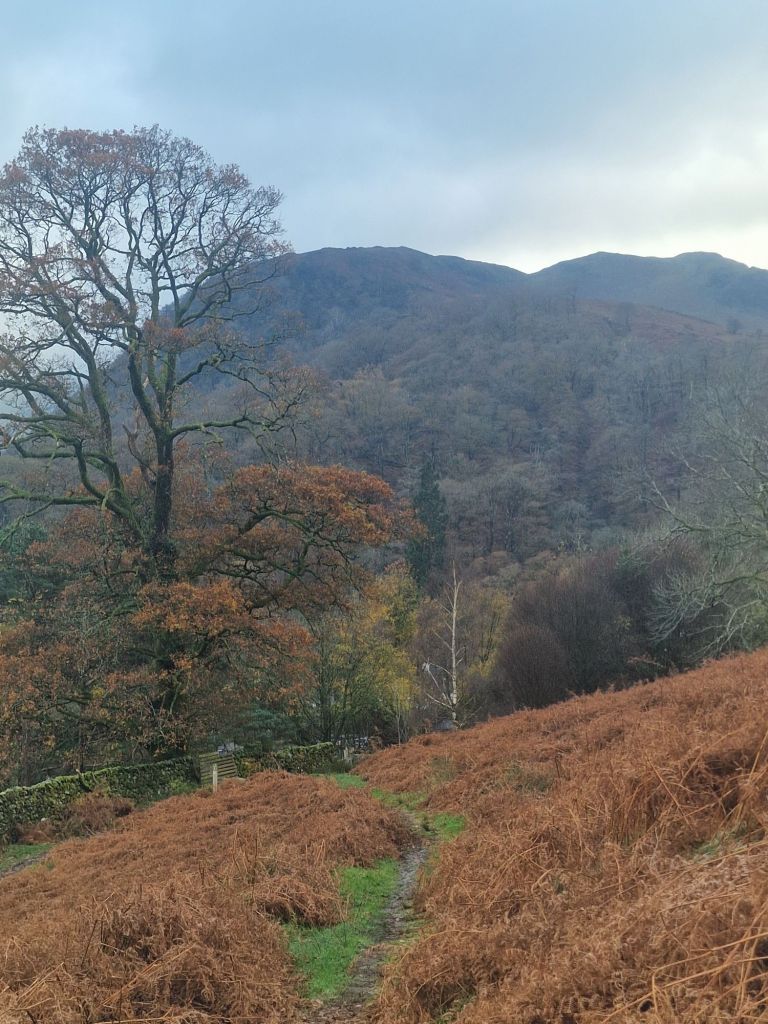
High and Low Stile Woods from Johnny Wood
Johnny Wood
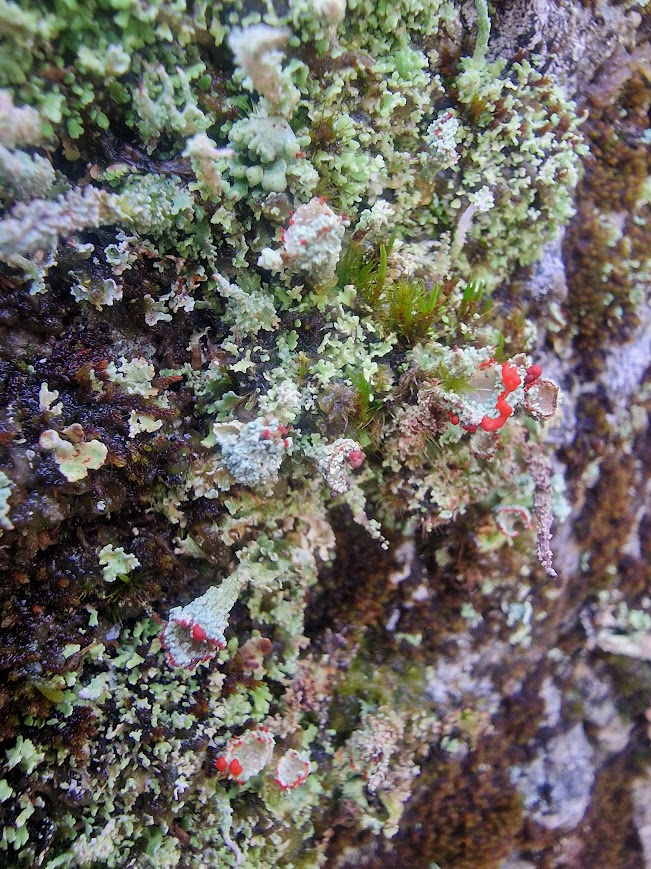
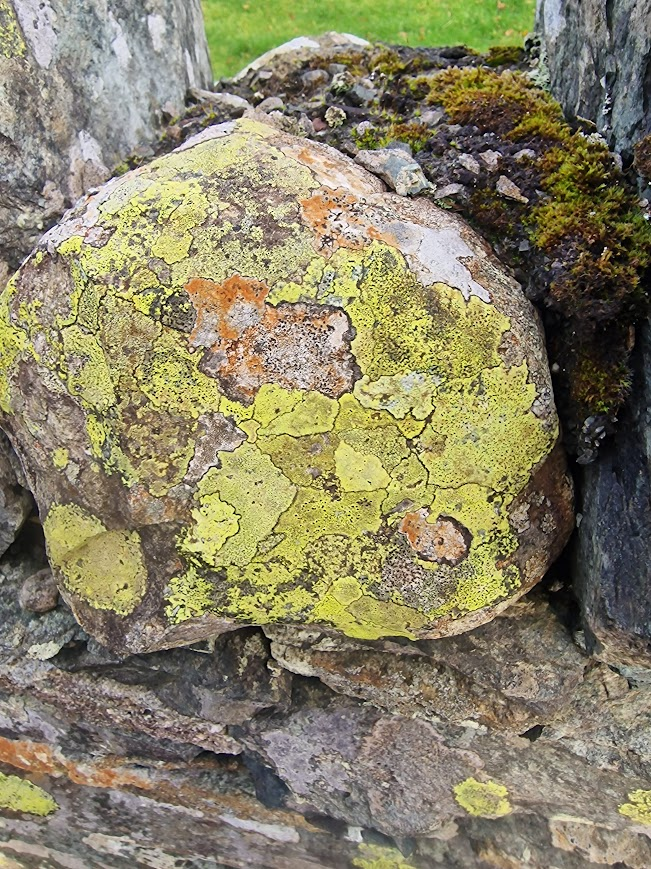
Lichens on a dry stone wall at the beginning of the wood
Probably Cladonia polydactyla, with bright red apothecia (fruiting bodies) on the edges of its cups; growing with/on moss
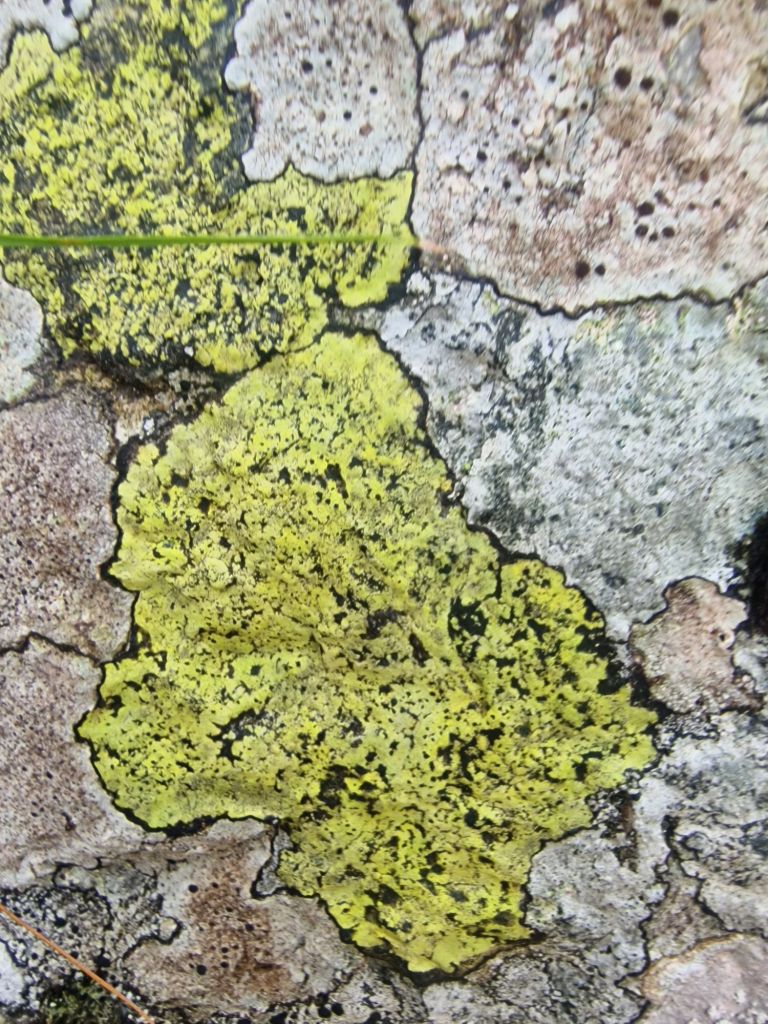
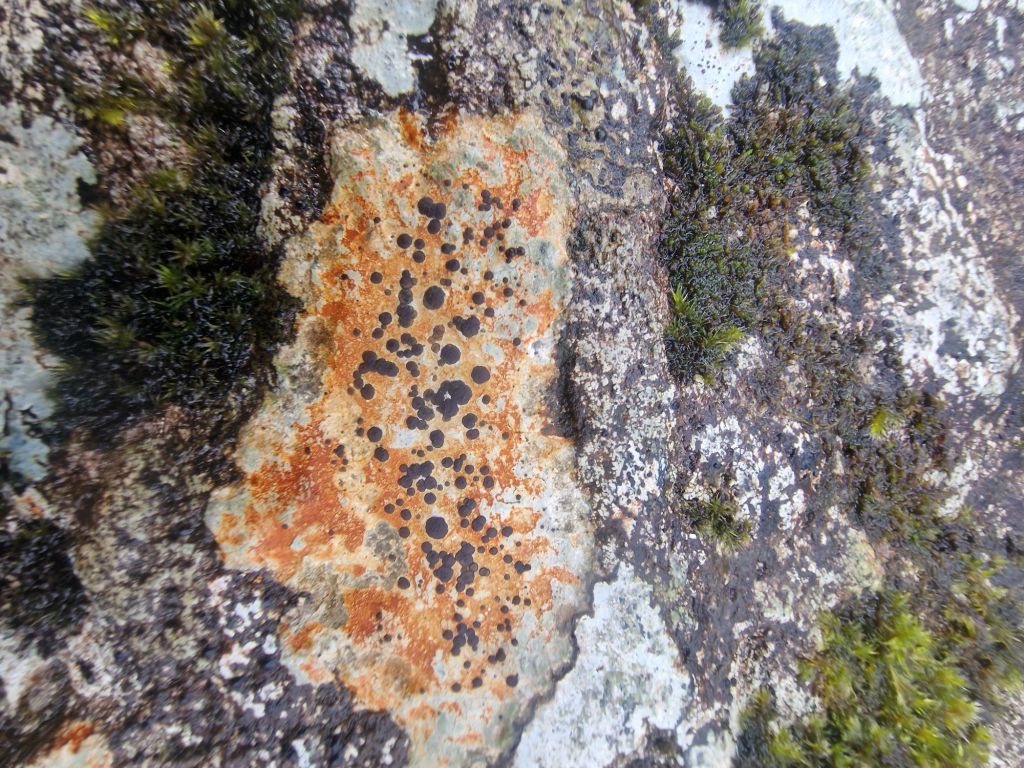
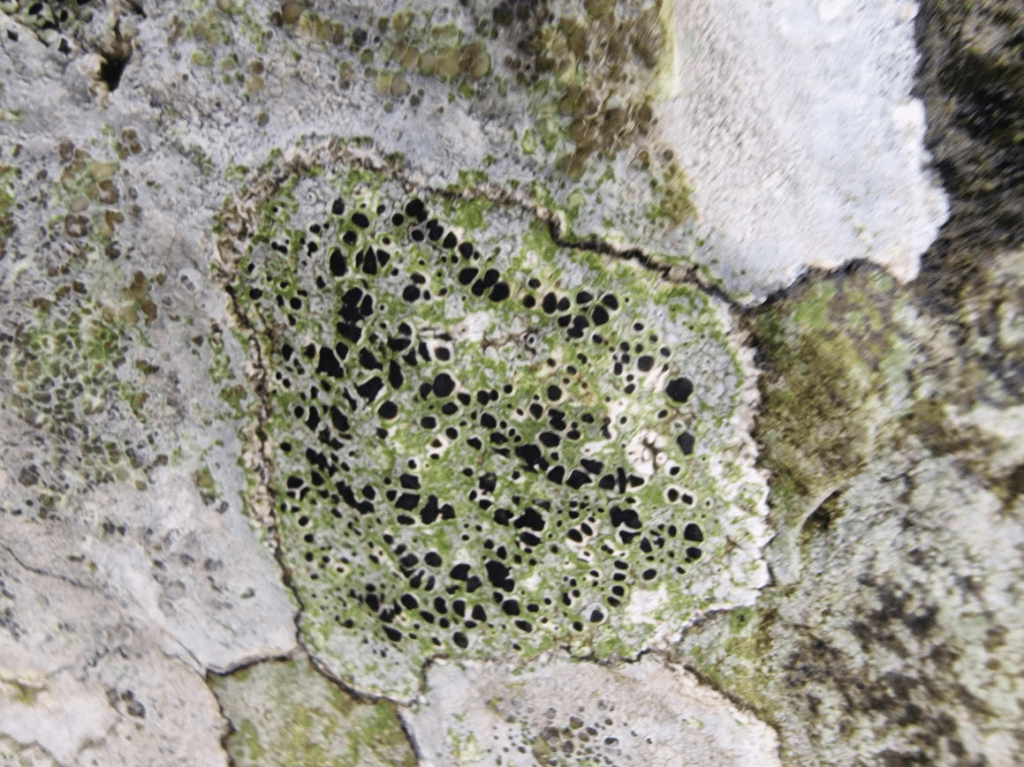
Rhizocarpon geographicum (green and black) in a mosaic with Lecidea lithophila (white thallus with red tinge and black apothecia) and an other lichen
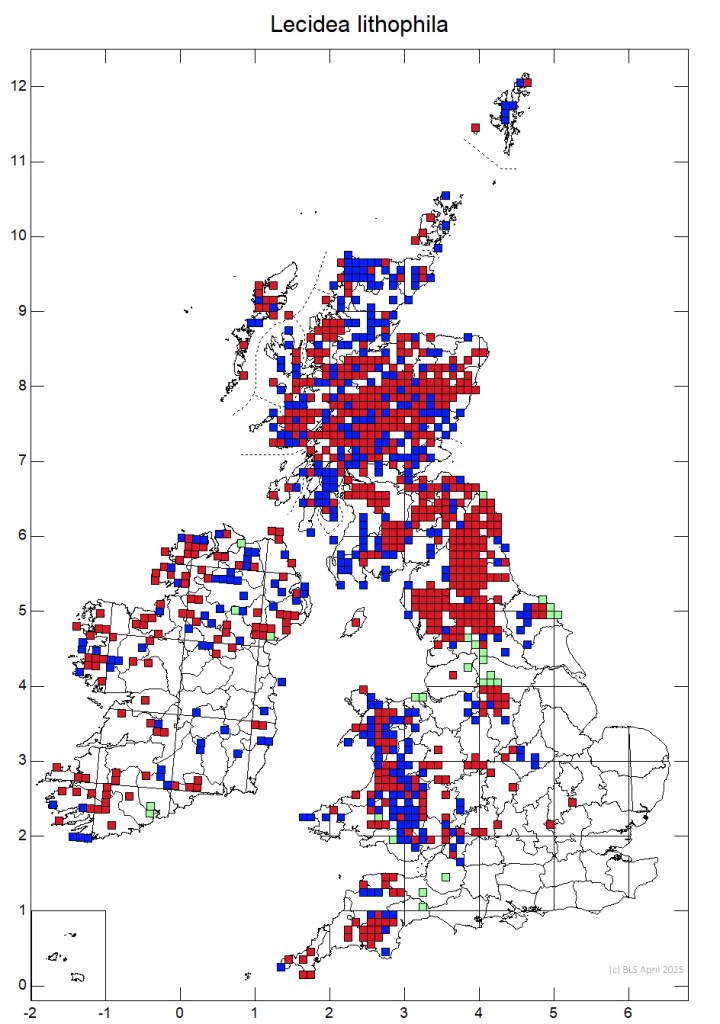
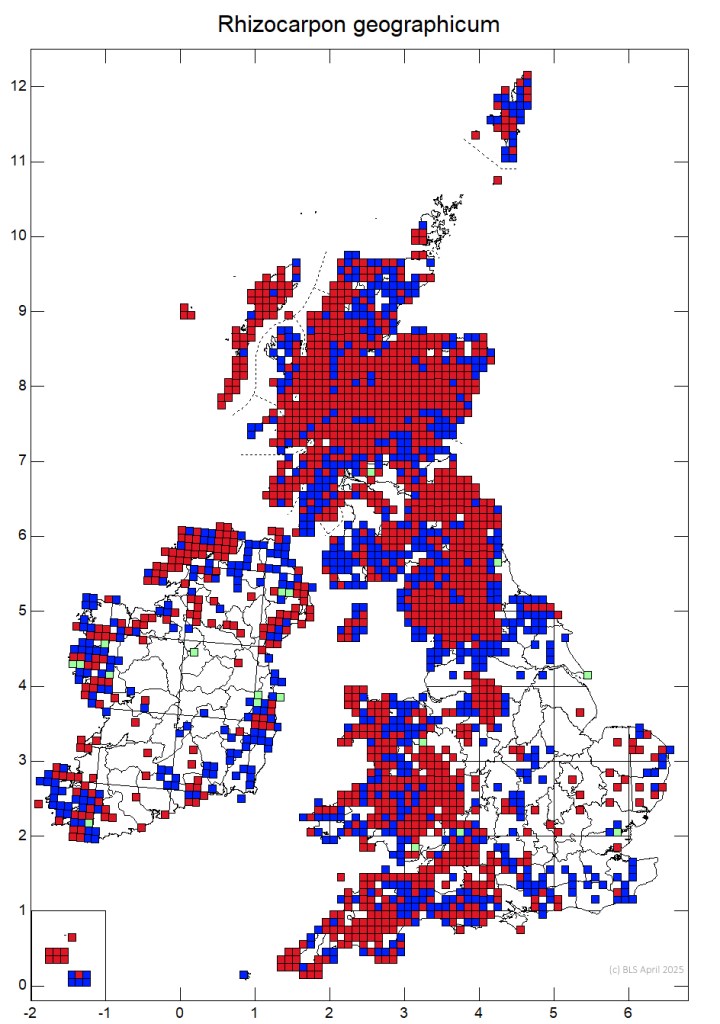
Rhizocarpon geographicum and Lecidea lithophila are extremely common in Borrowdale; in Sussex (where I live) Rhizocarpon geographicum is rare, and restricted to church yards, Lecidea lithophila is non-existent in Sussex. North-West lichen enthusiasts are probably not that excited by seeing these lichens but as a Southerner seeing these was very interesting.
Distribution Maps (British Lichen Society) Lecidea lithophila & Rhizocarpon geographicum
Lecidea lithophila
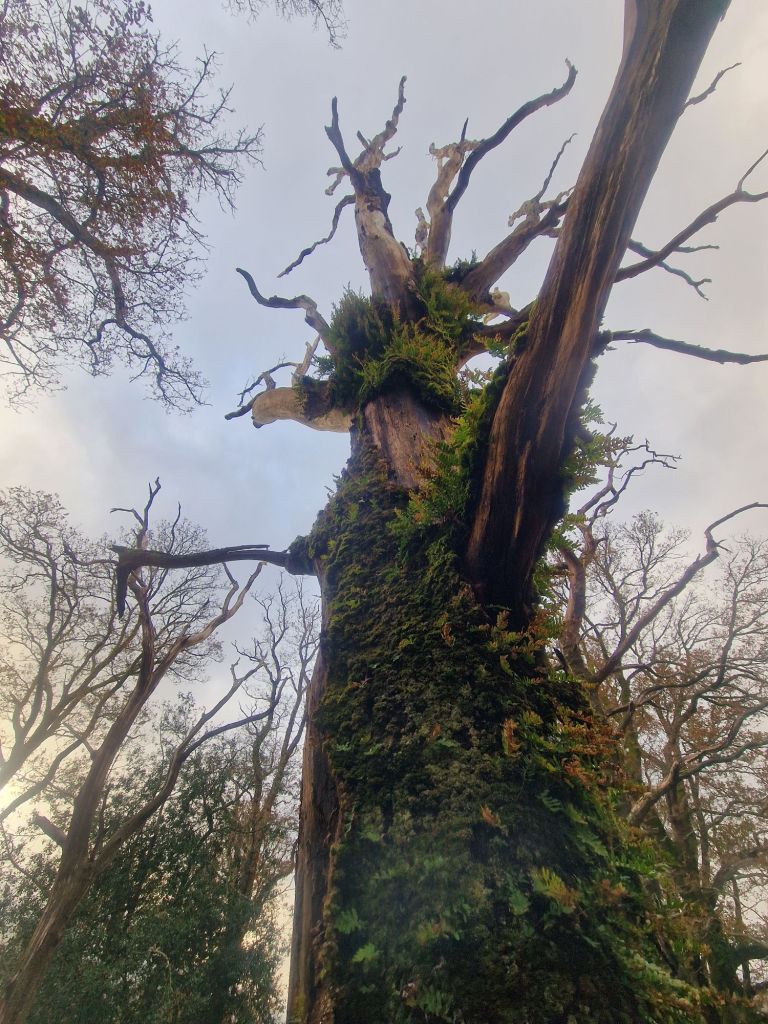
A dead Sessile Oak
which reminded me of the Statue of Liberty
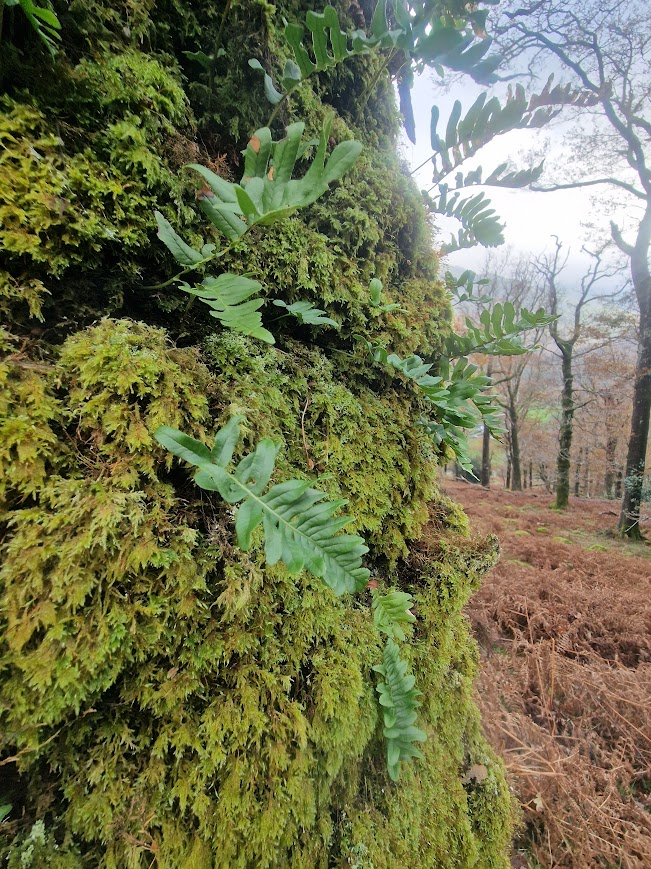
The trunk of this tree is still a viable substrate for epiphytes (because epiphytes take no nutrition from their substrate) including mosses, polypody ferns and lichens
Polypody fern
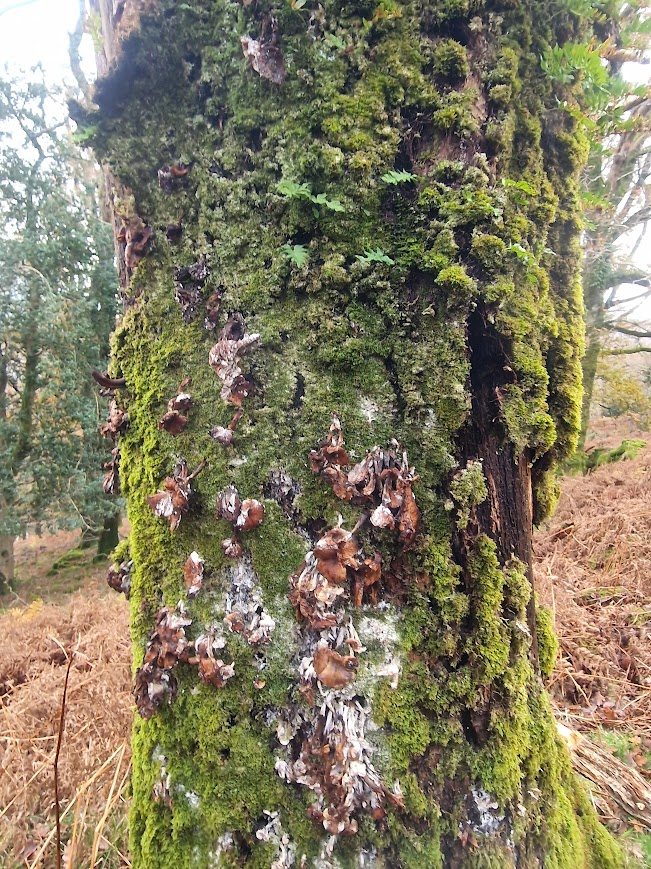
Physalacriaceae family fugus on tree
Physalacriaceae spp. are saprobic; i.e. they obtain nutrients by breaking down dead and decaying organic matter, serving a useful ecological function
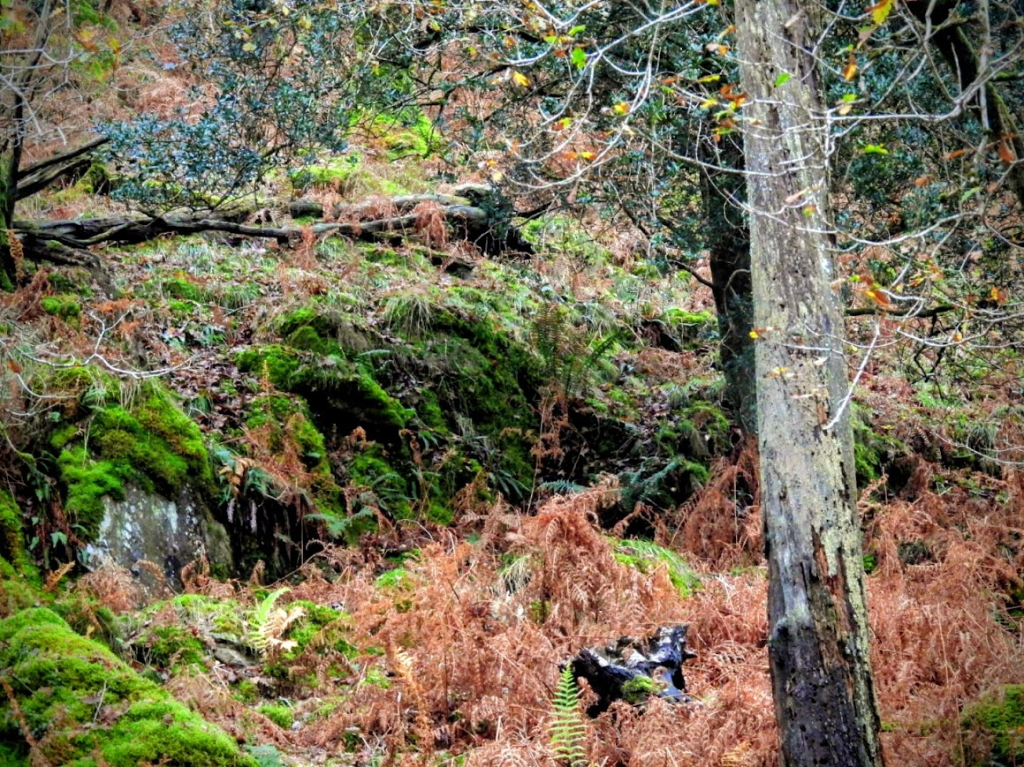
This rocky bank as covered in mosses
A sphagnum moss probably Sphagnum palustre was at the top of this bank.
The demonstrated the difference between habitat in the south (where I live) & the north-west temperate rainforest. Sphagnum palustre in Sussex is found in bogs and wet flushes with a supply of water from springs or streams. In Borrowdale, it is also at the top of this rocky mound because it rains a lot ; in the south, it doesn’t rain enough for that.
Seathwaite, Borrowdale: This village is the wettest inhabited place in England, receiving around 3,500 mm (138 inches) annually.Visit Cumbria Weather in the Lakes
The average annual precipitation in Sussex is around 914mm (36 inches)Climate Data Sussex
Scleroderma citrinum Common Earthball
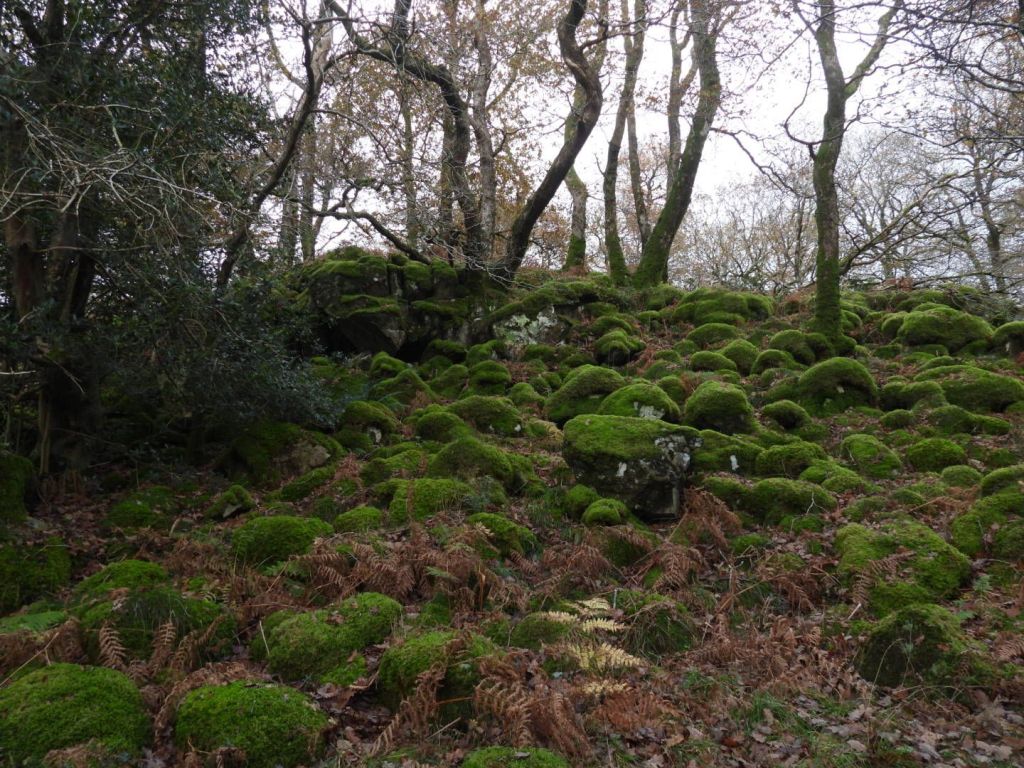
Mossy boulders
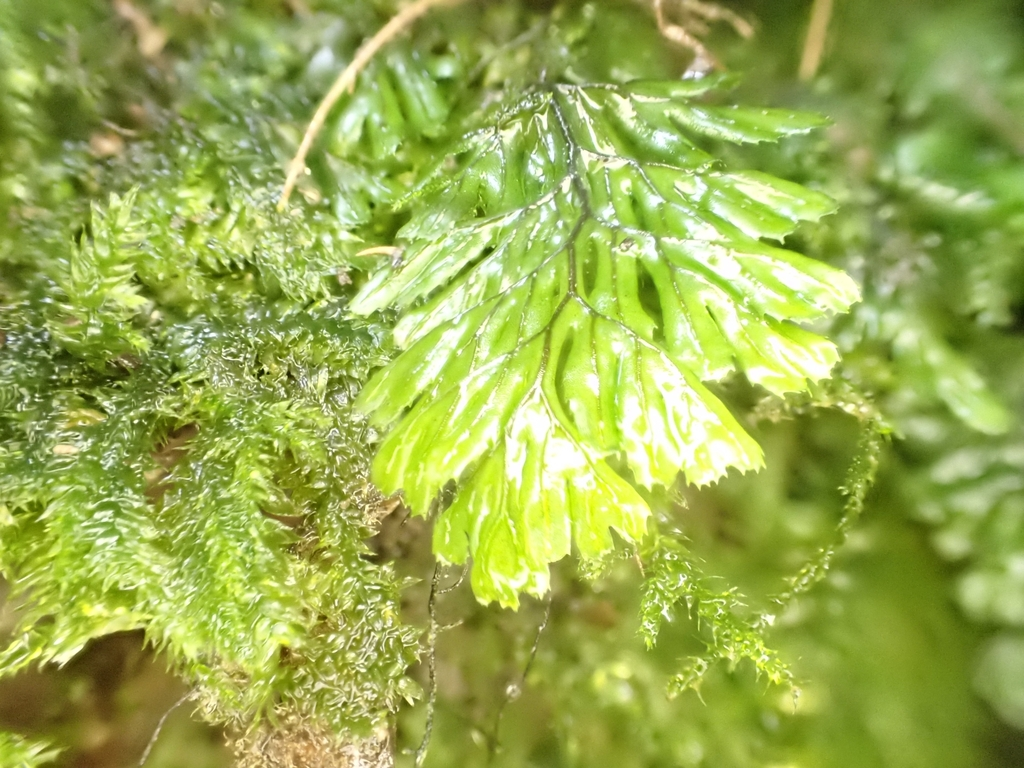
In Johnny Wood, Wilson’s Filmy-fern can be found. I have never seen it. So I explored likely filmy-fern outcrops to try and find it.
Filmy Ferns are characteristic of temperate rain forest
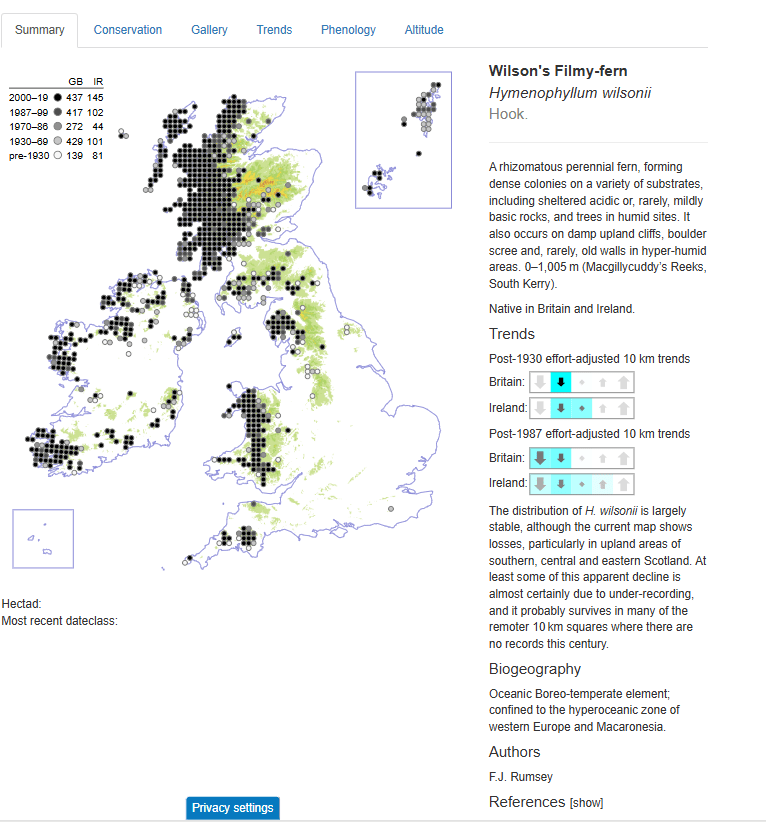
Wilson’s Filmy Fern has a similar distribution to Tunbridge Filmy Fern
Following my success in finding Tunbridge Filmy Fern in the High Weald (an outlier population in the of Sussex where the These unique geological features of the High Weald produce create a localized, hypo-oceanic microclimate that supports plant species typically of western Atlantic woodland), I explored rock outcrops like those ones I have seen Tunbridge Filmy Fern on for Wilson Filmy Fern, like this one:
But when I climbed up to this rocky outcrop below, I “only” found common bryophytes e.g. White Earwort & Tamarisk Moss. But many “common” bryophytes are beautiful. I saw no Wilson’s Filmy Fern in any of the rock outcrops I explored.
White Earwort
Common Tamarisk-Moss
But as I have said before, I am never tire of seeing common beautiful things.
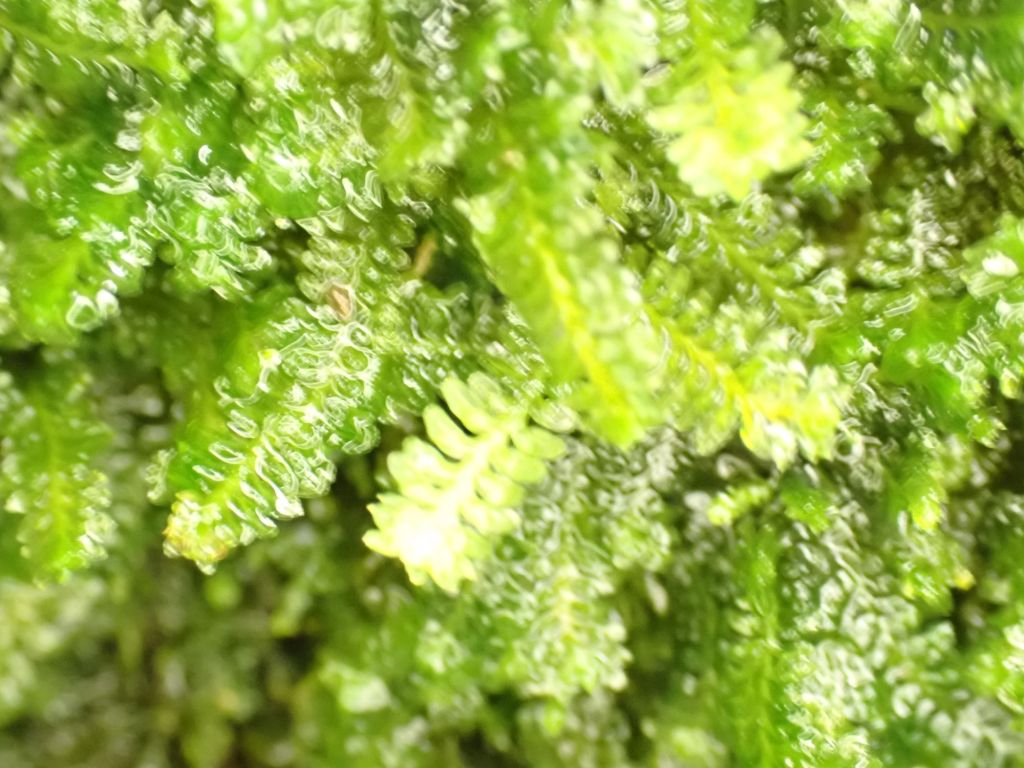
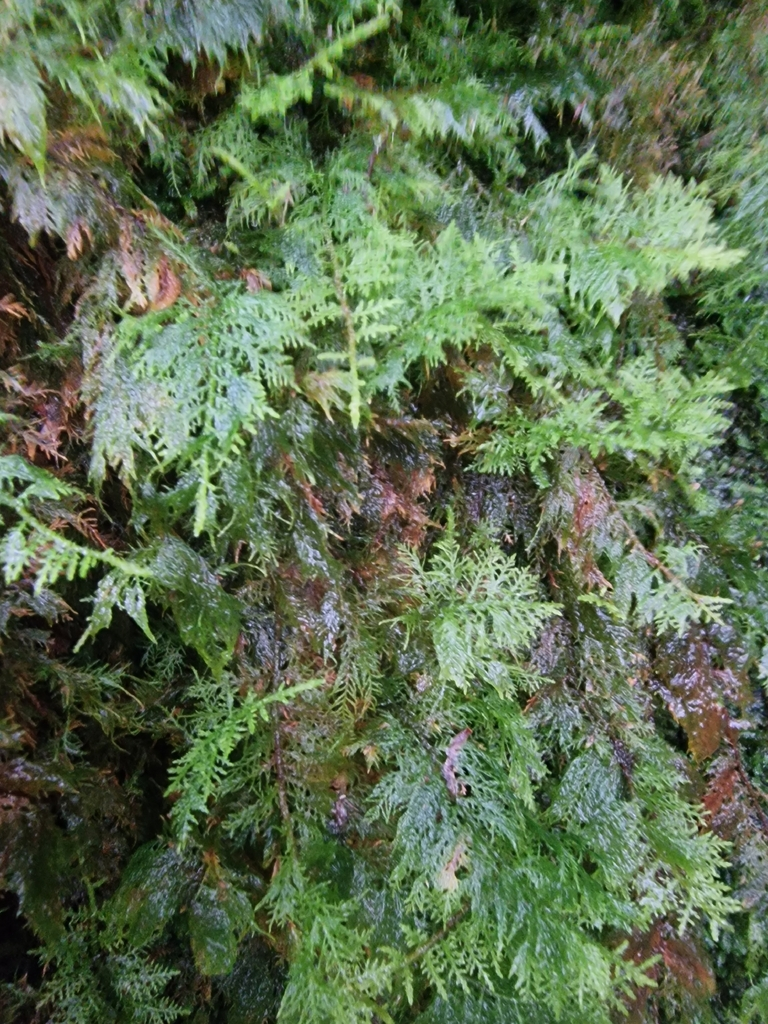
Here is some Tunbridge Filmy Fern I saw in Sussex to give you an idea of what Filmy Ferns look like!
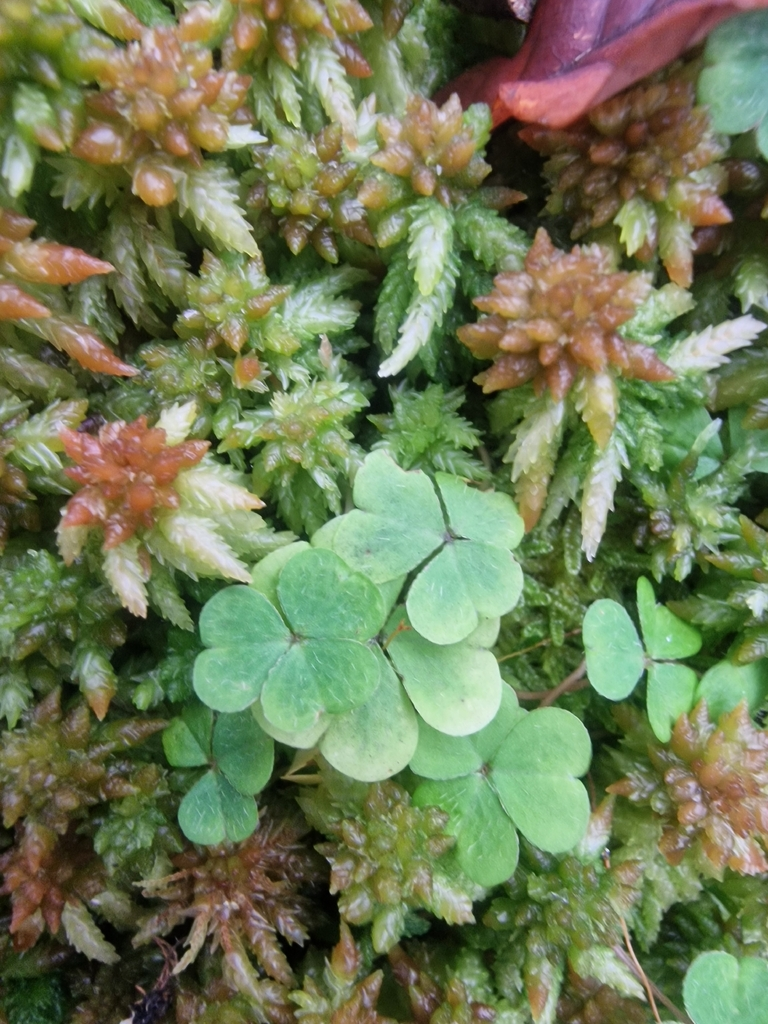
The leaves of Wood-Sorrel, an ancient woodland indicator species, growing though Sphagnum palustre
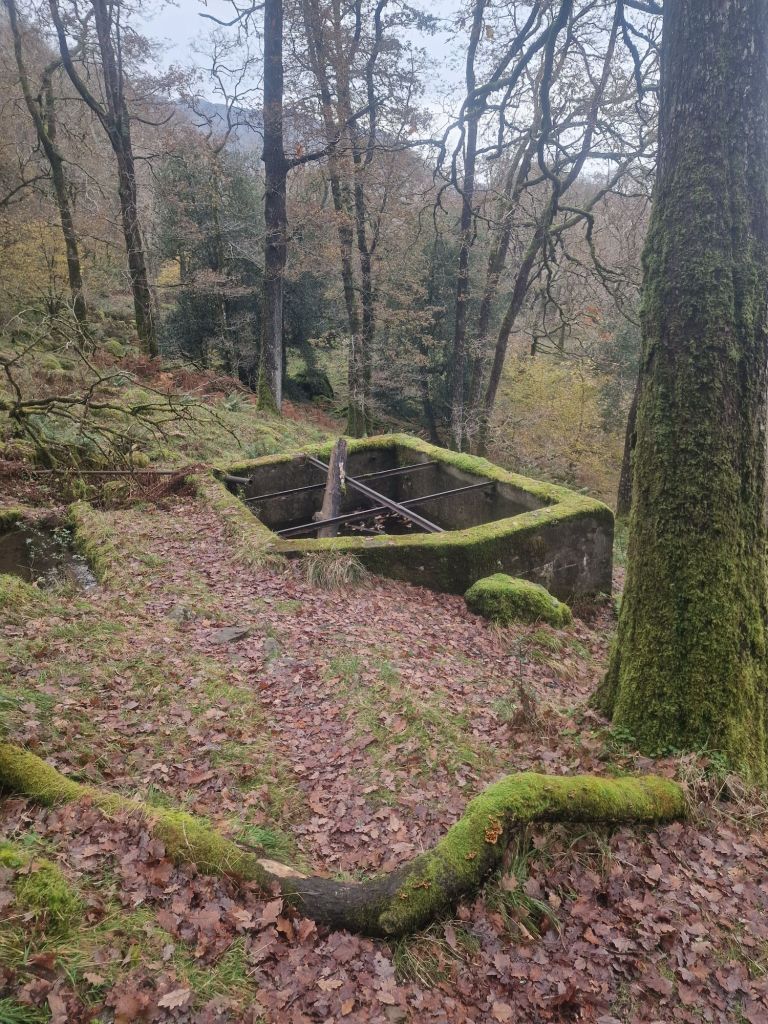
Concrete water reservoir. Ancient temperate rainforest woods in the UK are not untouched by human intervention. Most have always been part of living, changing landscapes formed by human-nature interaction.
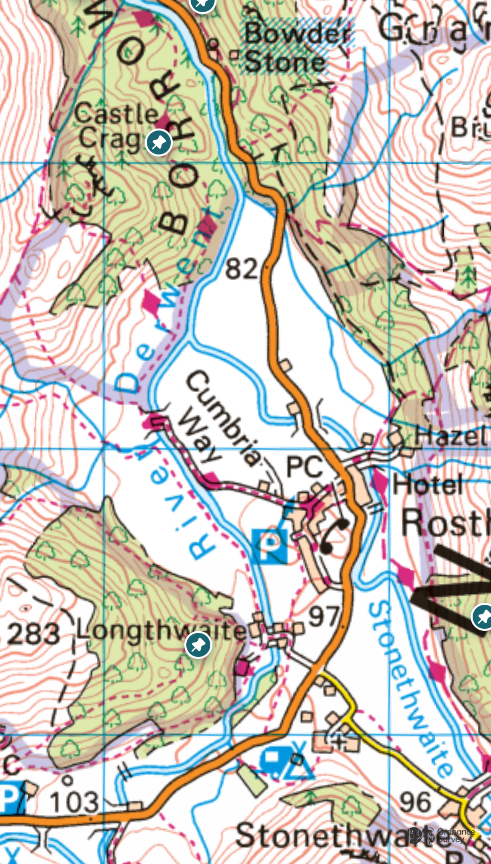
Waling along the River Derwent from Johnny Wood to the Bowder Stone
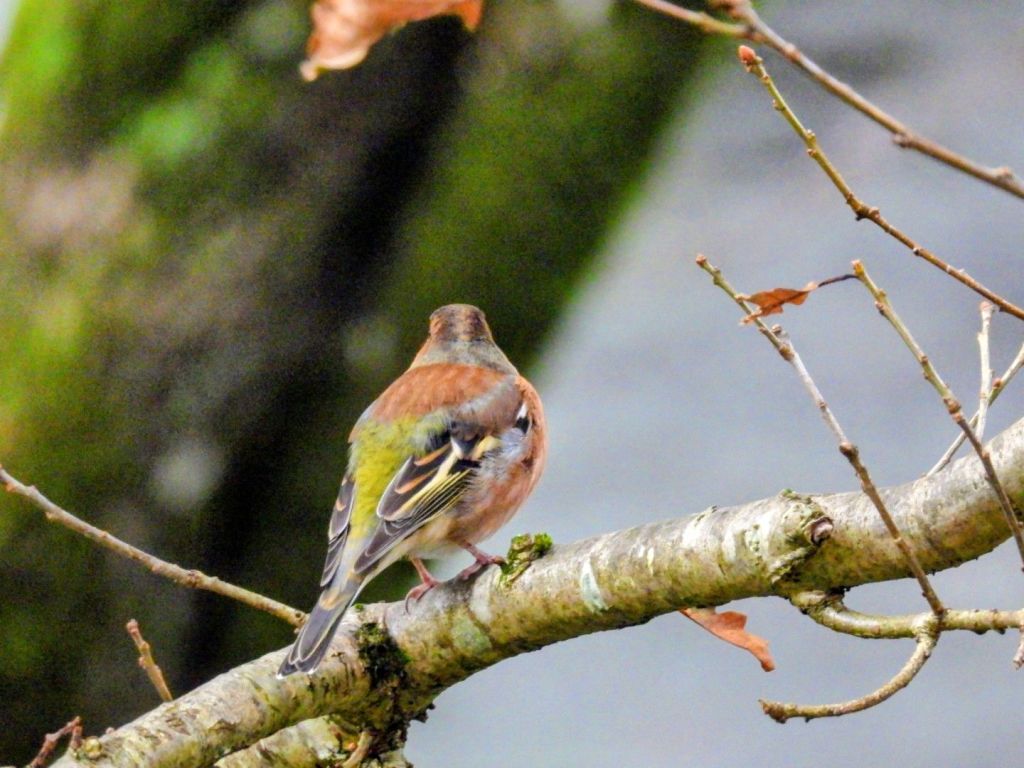
Walking along the Derwent I saw many birds, including this gorgeous juvenile Chaffinch
I also saw two White-throated Dippers dipping the Derwent for food. Both of them were quicky gone so I was unable to get a photo of them
Here is a Dipper I saw in the River North Esk south of Edinburgh in 2023
It is always a thrill to see Dippers
Witch’s Broom – Taphrina betulina (a fungal gall that effects the tree’s growth)
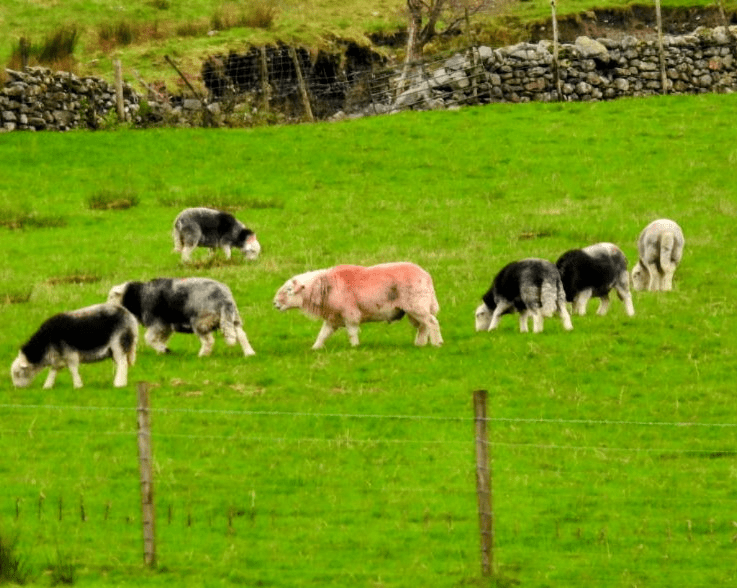
Herdwicks!
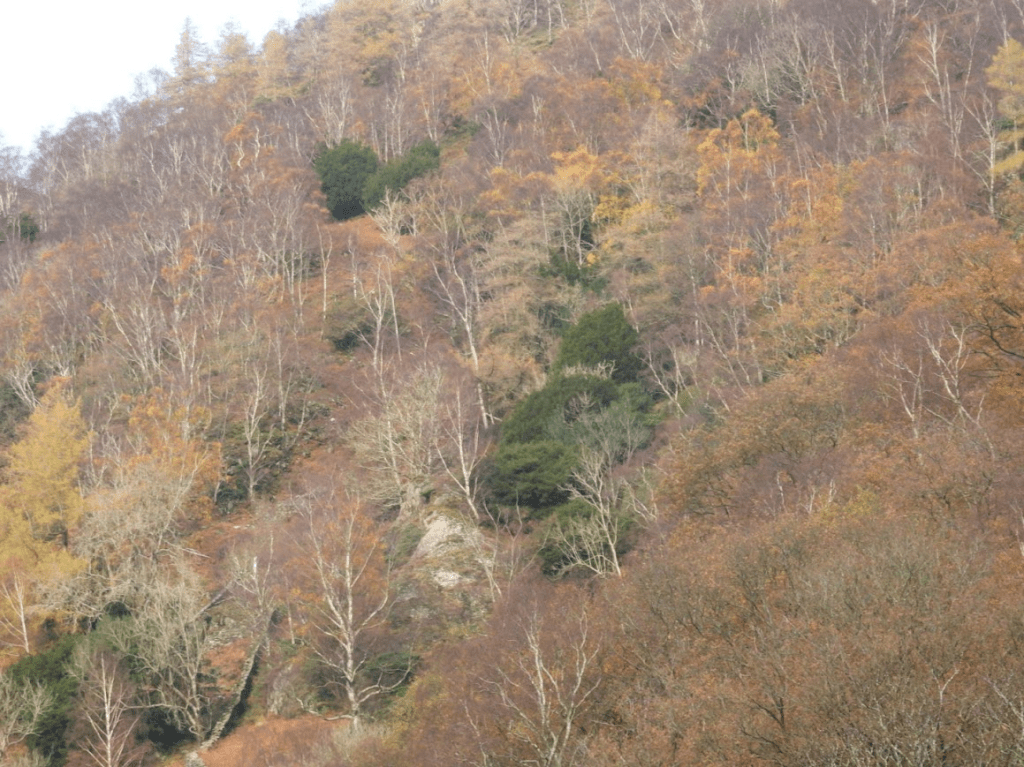
Not all of Borrowdale is Atlantic Oakwood; there is also much secondary woodland. Looking up from the valley, I could see Secondary Beech plantation
and Pine plantations
As Guy Shrubsole says: the Atlantic Oakwoods of Borrowdale remain fragmented and under pressureNational Trust Borrowdale NNR . Which makes it all the more important that the National Trust and Nature England point out to the public which fragments are Atlantic Woodland (Temperate Rain Forest)
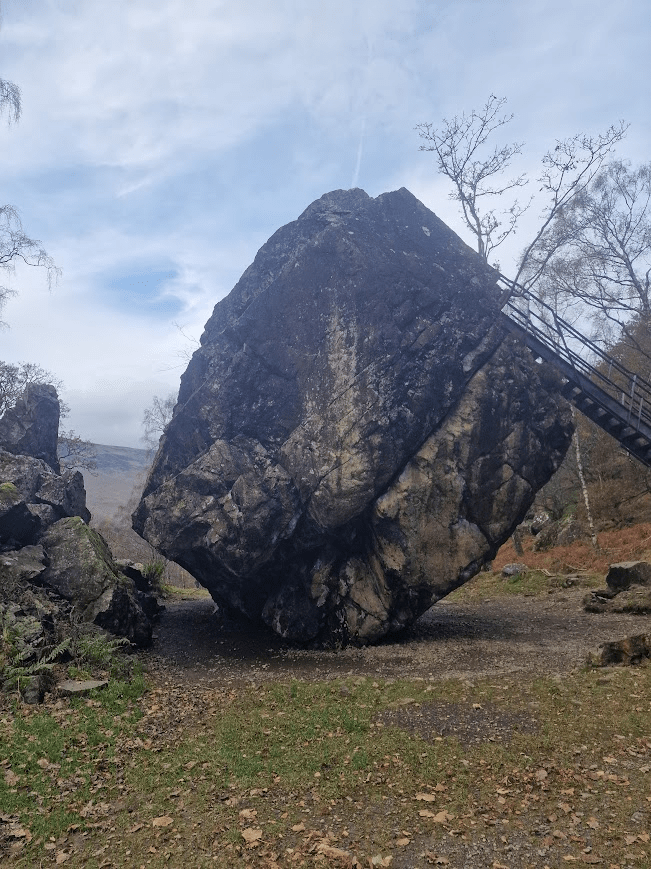
Bowder Stone
In the valley of the river Derwent, in Borrowdale, just north of Rosthwaite in a woodland clearing on the opposite side of the road from the river, stands a huge glacial boulder shaped like a human head that is one of several Cumbrian curiosities and, which has locally been called The Bowder Stone or Balder’s Stone, after the son of the Norse god, Odin (Woden). This ice-borne rock was carried down the valley by a glacier many thousands of years ago and deposited, having been trapped and then dislodged between the two side-slopes of the river valley.The Journal Of Antiquities The Bowder Stone, Rosthwaite, Cumbria
The boulder would have nestled deeply in the forests that covered the Lake District after the last ice age – the original ‘wildwood’ that predated human habitation in the Lakes. It stood unmoved through the coming of the people who built the Iron Age hillfort on Castle Crag, the Norse who created the many clearings or ‘thwaites’ along the valley for grazing, and the traditional woodland industries which coppiced and harvested the timber for firewood, building materials and leather tanning.
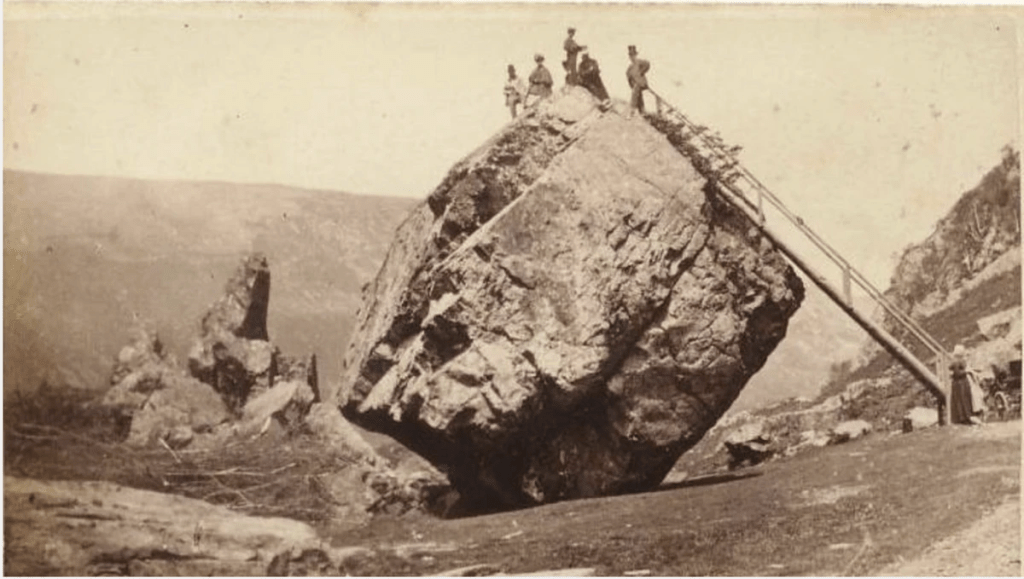
Two hundred years ago, the Bowder Stone was one of the most prominent landmarks in the valley – a huge boulder that awed visitors with its sheer size and mass that stood out against the sky as the road wound towards it .Balanced improbably on one edge, it was popular with Georgian tourists for the ‘pleasurable terror’; they enjoyed wild, romantic scenery and the frisson of experiencing danger from a safe distance.National Trust History on the Borrowdale Valley
The area around the Bowder Stone is now designated by Nature England and the National Trust ancient (oakwood) rainforest; but the immediate area around the stone has clearly not been continuously wooded
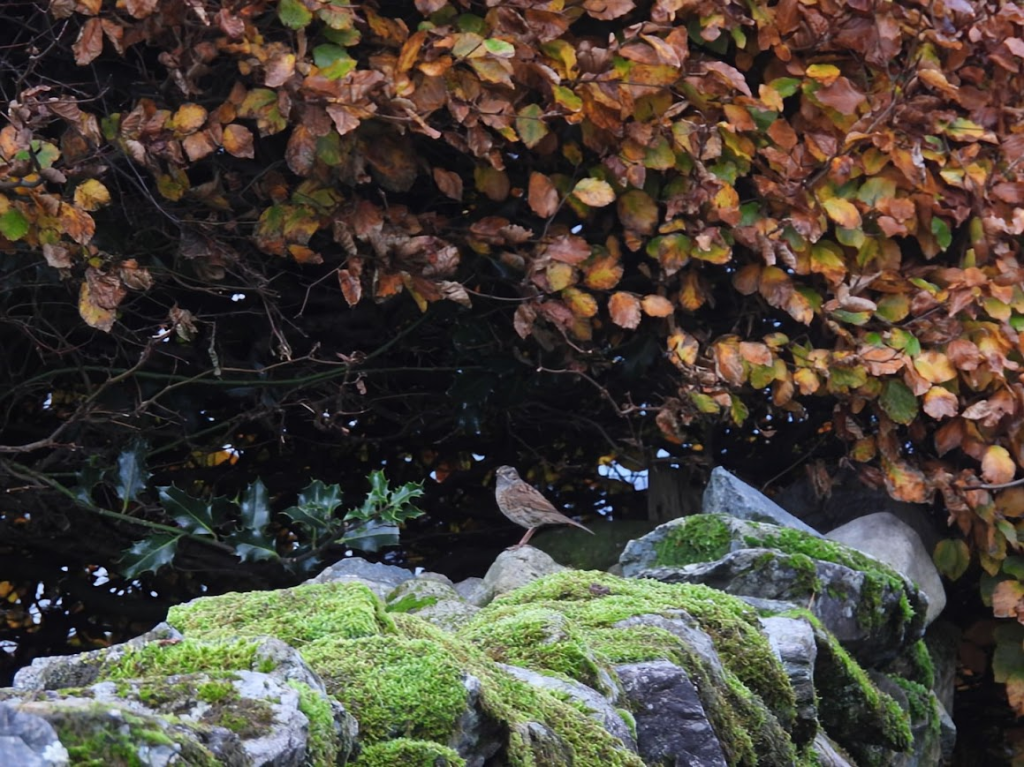
Dunnock on dry stone wall.
A Sessile Oak with “white” bark from a distance
The white bark is probably lichens of the Mesic bark community (the Pertusarietum). I am very used to this community, as it is common in the south, especially in parkland trees and trees at the edge of woods. I thought it unusual to see this in the Lake District but I did some research and found that whist it is largely southern community in the UK, …. [there is] a very important stronghold in the Lake DistrictPlantlife: Lichens and Bryophytes of Atlantic Woodland in the Lake District
More Rhizocarpon geographicum and Lecidea lithophilaon a rock. Whilst I had never come across Lecidea lithophila until Monday, by Thursday I could recognize it at 50m away
Lots of Silver Birch, Beech and Yew above the Bowder Stone
The National Trust says of Borrowdale Rainforest NNR: The Borrowdale Oakwoods are one of England’s largest remaining pieces of temperate rainforest that once spread from the north of Scotland down the west coast of England, Wales and Ireland and are part of a long standing cultural landscape
And these Silver Birch, Yew and Beech woodland are within the NNR that is described as Oakwood. But Oakwood is not all Oak
Upland oakwoods are characterised by a predominance of oak (most commonly sessile, but locally pedunculate) and birch in the canopy, with varying amounts of holly, rowan and hazel as the main understorey species. The range of plants found in the ground layer varies according to the underlying soil type and degree of grazing from bluebell-bramble-fern communities through grass and bracken dominated ones to heathy moss-dominated areas. Many oakwoods also contain areas of more alkaline soils, often along streams or towards the base of slopes where much richer communities occur. Elsewhere small alder stands may occur or peaty hollows covered by bog mosses Sphagnum spp. These elements are an important part of the upland oakwood system. The ferns, mosses and liverworts found in the most oceanic of these woods are particularly rich; many also hold very diverse lichen communities.Buglife Upland Oakwood
Cummacatta Wood
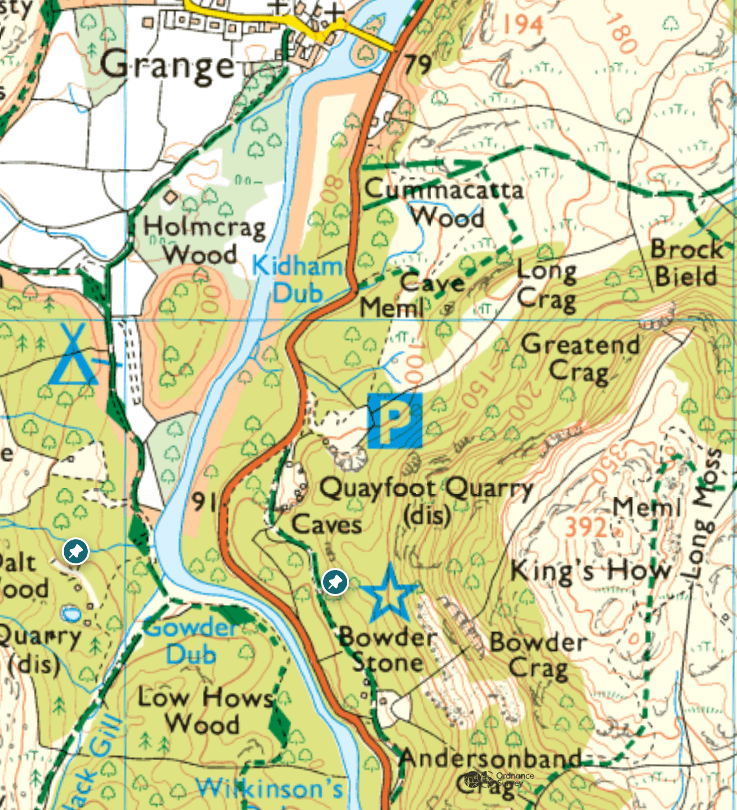
Cummacatta Wood is, to me, of very high biological interest (with sparse ancient trees and bog), is not in the designated NNR area, although it is probably of more biological interest than some of the woodland around the Bowder Sone which is in the Borrowdale Rainforest NNR. The danger of having an NRR that is described as a rainforest NRR is that biologically important areas that are not rainforest are not offered the protection that being part of a National Nature Reserve
Cummacatta Wood has a physical sign saying it is a National Trust property; however there is no information about it online from the National Trust or any other organisation except for one mention of the wood in a hiking apps.
It is not in the Borrowdale Rainforest NNR but it is in the geographical area of the Lodore-Tri0ttdale Woods SSSI. Although it is not mentioned in its SSSI specification by name; the sentence The site includes a number of interesting non-wooded habitats. Species-rich flushes may include Cummcatta Wood; although it is partially wooded!
Despite the deafening silence of the internet on Cummacatta Wood of its biological nature, I found it charmingly beautiful and full of biological interest. I have walked through Johnny Wood, the woods around the Bowder Stone and Cummacatta Wood just once and I wasn’t long in any of these areas; so my views on their interest is very impressionistic. I almost certainly missed many interesting species of lichens, bryophytes and vascular plants!
Cummaccatta is sparsely wooded with Sessile Oak, Silver Birch, Hazel, Yew, Juniper and Ash.
Here the beautiful and common (in North West Atlantic Woodland) liverwort Frullania tamarisci
A twisted Sessile Oak
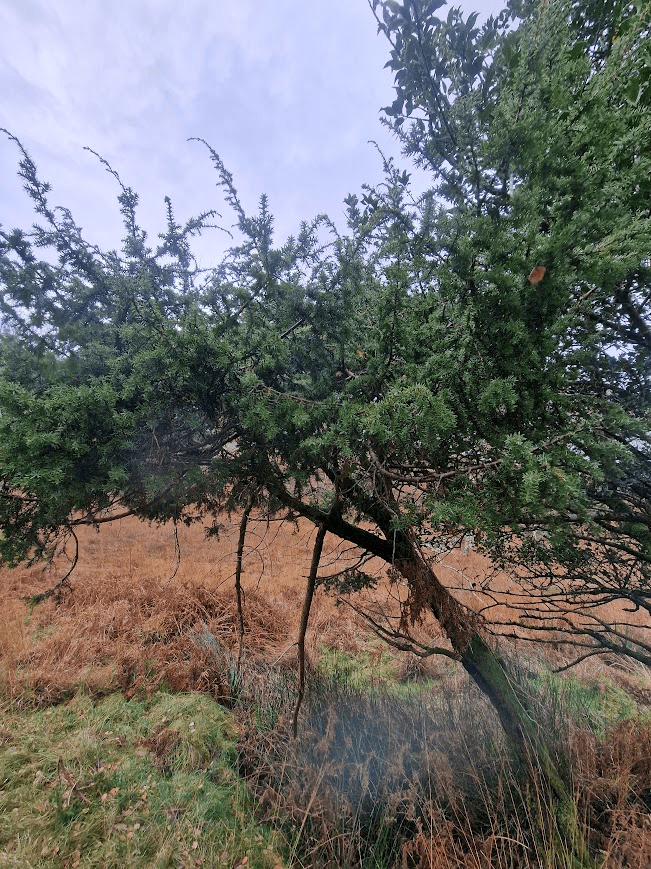
Yew
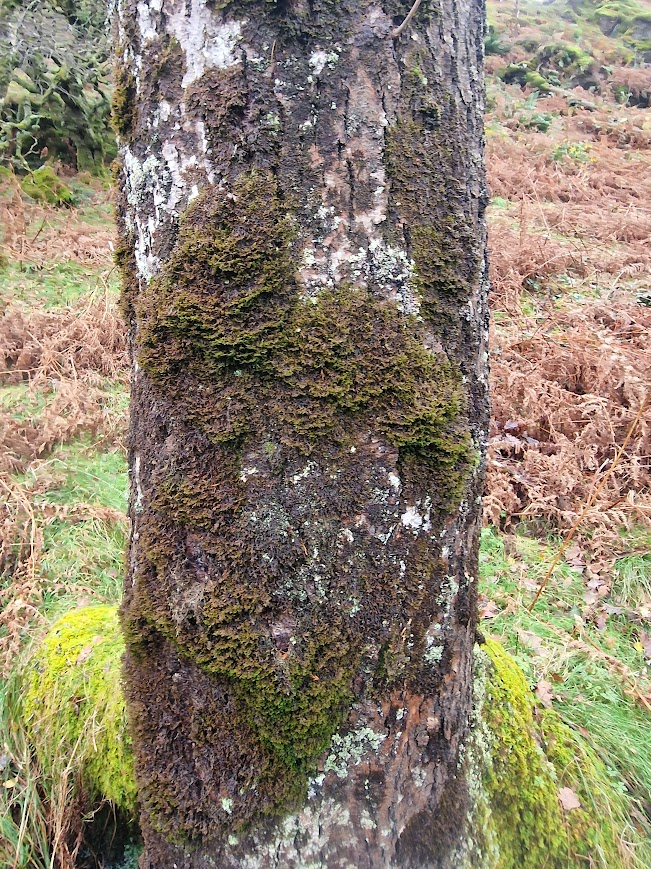
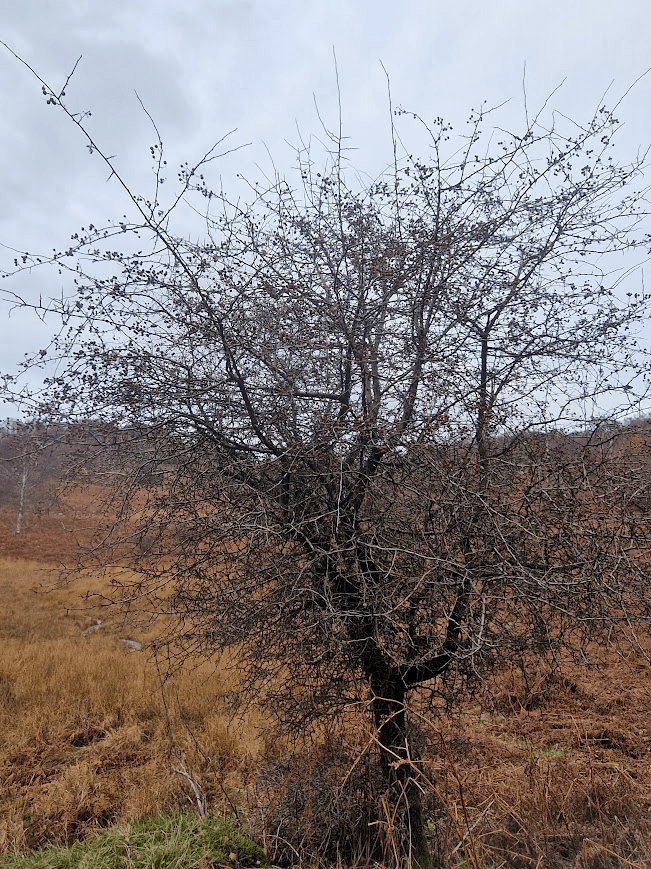
Hawthorns; as in Sussex, often have abundant (bit different) lichen. Sussex Hawthorns are dominated by Ranalina spp.lichens with few or no Usnea spp. Upland north-west Hawthorn often have more Usnea. On these hawthorns Usnea floridana is relatively common; it is very rare on South East hawthorns
Lichens on these two hawthorns
Hypogymnia physodes
Cladonia polydactyla
A liverwort not a lichen: Frullania tamarisci
Falvoparmelia caperata
Beard lichen: probably Usnea subfloridana
Usnea subfloridana
Platismatia glauca
Two stunted Yews
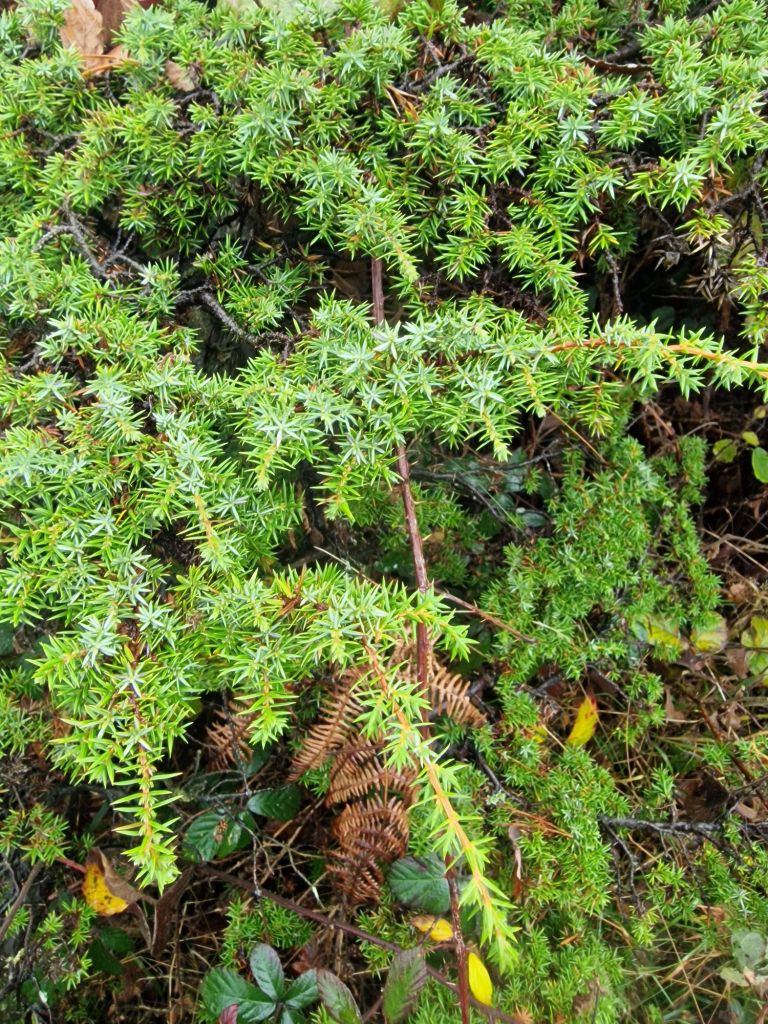
Juniper
Bog Pond Weed
Bog Asphodel
Red: Sphagnum capillifolium subsp. rubellum
Common Heather
The way in and out of Cummacatta Wood is on the B2859, the Keswick to Seatoller road, along which the Stagecoach 78 bus runs
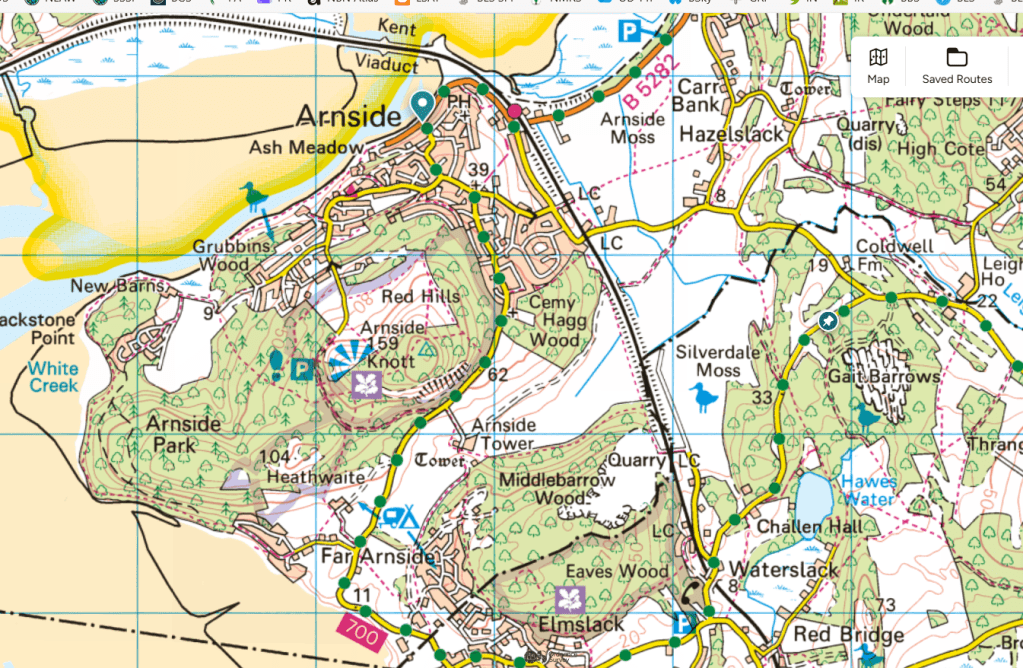
To get to Arnside I took the bus from Keswick (where I was staying) to Penrith; then a train from Penrith to Lancaster then a train from Lancaster to Arnside.
I went to Arnside and Gait Barrows because I knew about Lancaster Whitebeam and wanted to see it; and I wanted to visit a limestone pavement for the first time.
The Arnside and Silverdale area is a National Landscape (Area of Outstanding National Beauty); although I didn’t find that out until after I had visited.
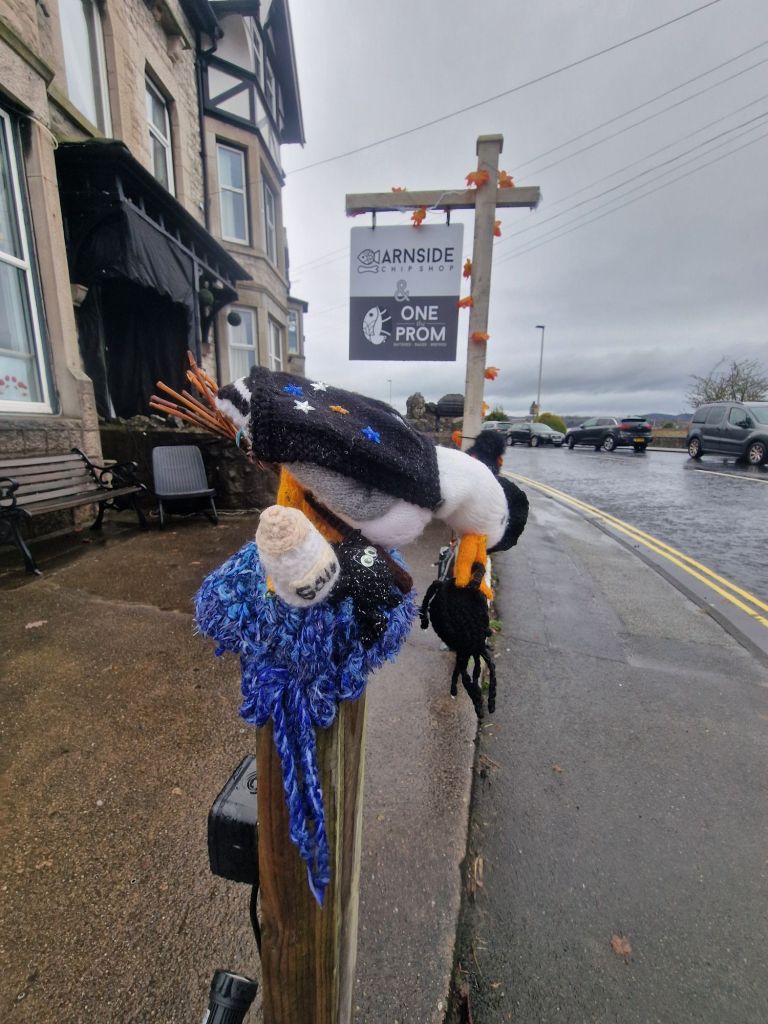
I was welcomed to Arnside by a Herring Gull dressed as a witch eating spiders outside the local chippy.
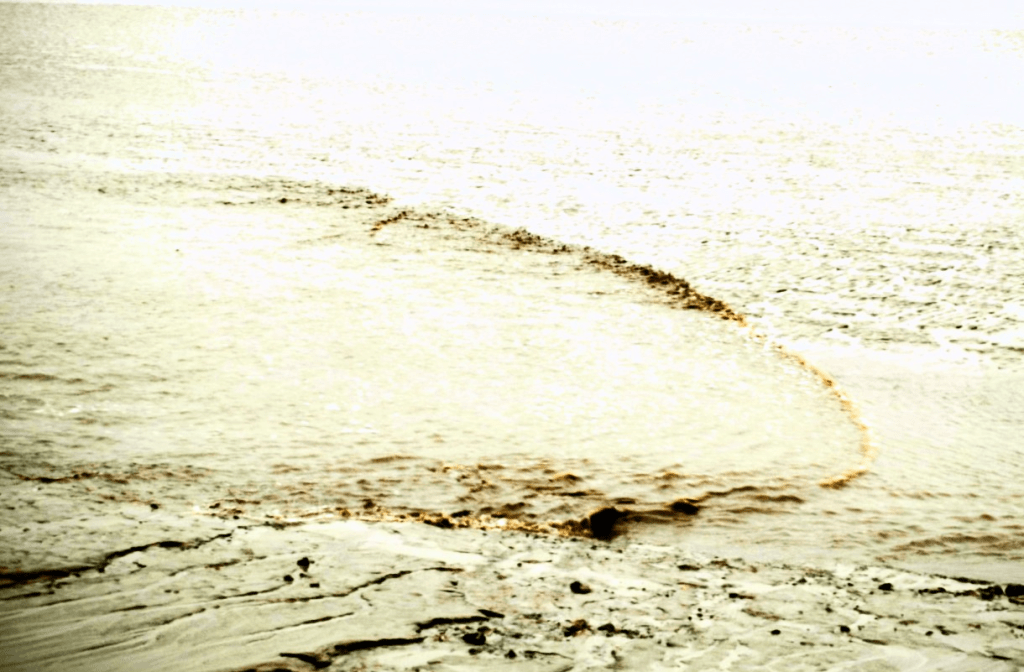
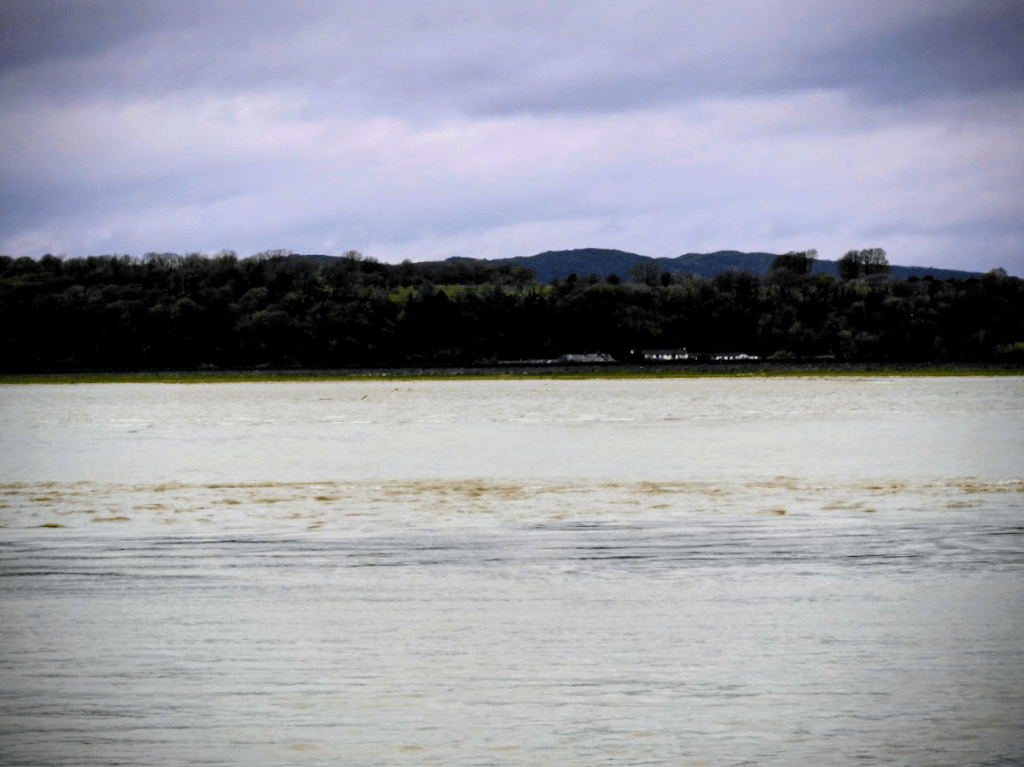
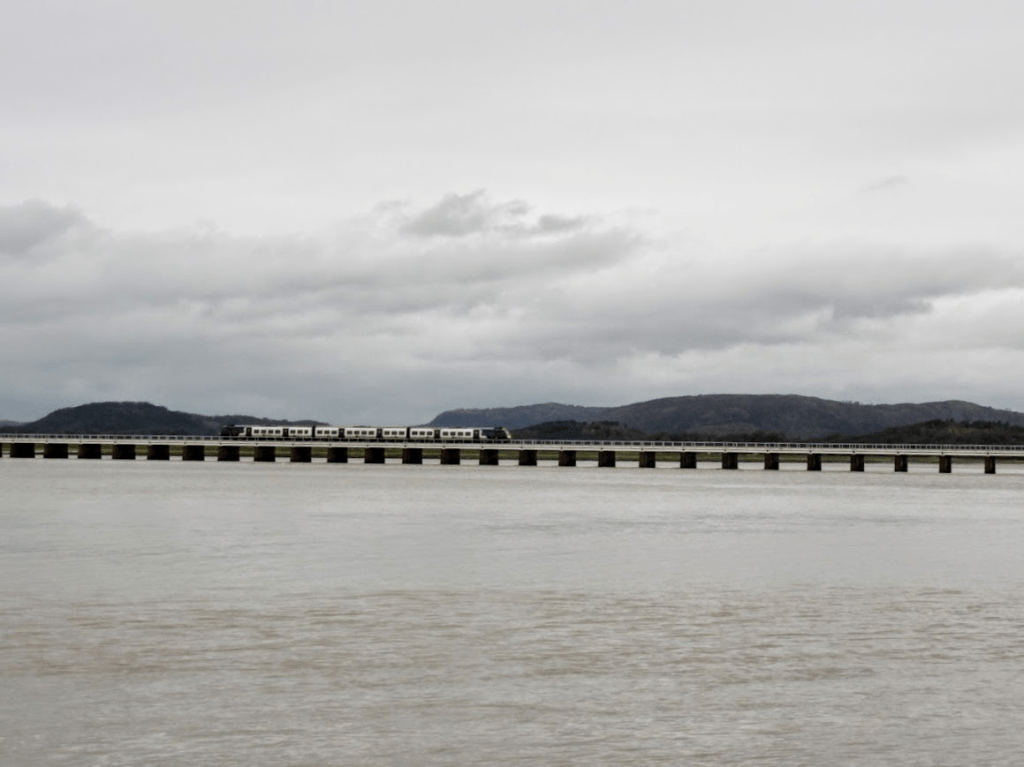
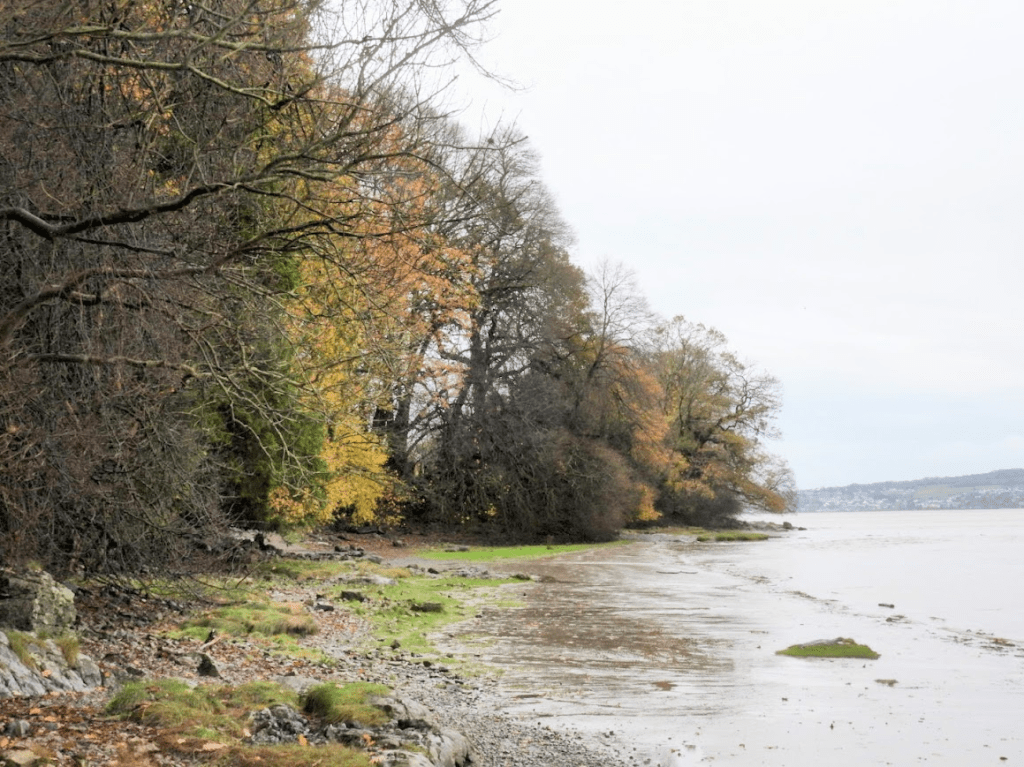
I arrived just before high tide, just as the tidal bore swept up to the Kent Estuary rail bridge. It was fascinating to watch
On the highest tides, a most unusual sight can be seen in the Kent Estuary in Morecambe Bay called the Arnside Bore. This is one of about twenty tidal bores that occurs in the UK and is named after the village of Arnside. It is quite a spectacle and often draws crowds of onlookers.
The source of the Kent is the Kentmere Valley near Ambleside and the river then flows down through Kendal to Morecambe Bay … When conditions are right, the siren also serves as an indication that the Arnside Bore is approaching from Morecambe Bay. The first blast typically occurs about 15-20 minutes before the wave arrives and the second as it passes New Barns Bay near Blackstone Point. The speed and power of the wave can be most impressive to see. Usually it dissipates on reaching the viaduct but sometimes it travels further inland to Sandside and the mouth of the River Bela Meteo Writer The Arnside Bore in Morecambe Bay
Kent Estuary Rail Bridge
Morecombe Bay is extremely dangerous: The combination of fast tides, quicksands, draining rivers, shifting channels and sheer unpredictability has trapped the unwary for centuries. … 19 Chinese cockle pickers drowned when they were caught by the tide as they laboured for a pittance on Red Bank, two and a half miles from the shore near Boulton-le-Sands.The Guardian Why is Morecombe Bay so dangerous.
The tide was too high to explore the trees on the shoreline of Grubbins Wood, where the Cumbria Wildlife Trust reports Lancashire Whitebean to be. I had to dive straight inland to the wood. Where I was greeted by some friendly bullocks conservation grazing
The wood is dominated by Yew, Sessile Oak and Hazel
Ancient Yew
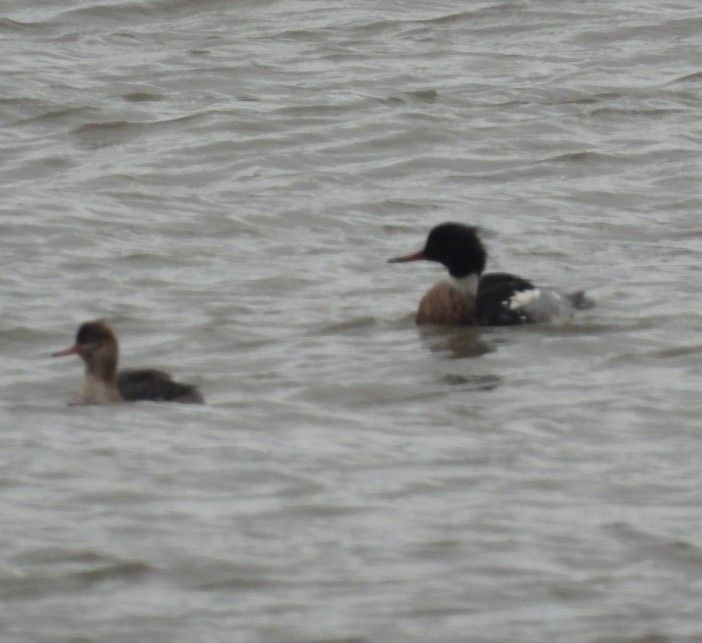
Peeking through the trees, I saw two Red-Breated Mergansers
To get back to the village of Arnside I had to walk through Copridding Woods and Red Hills
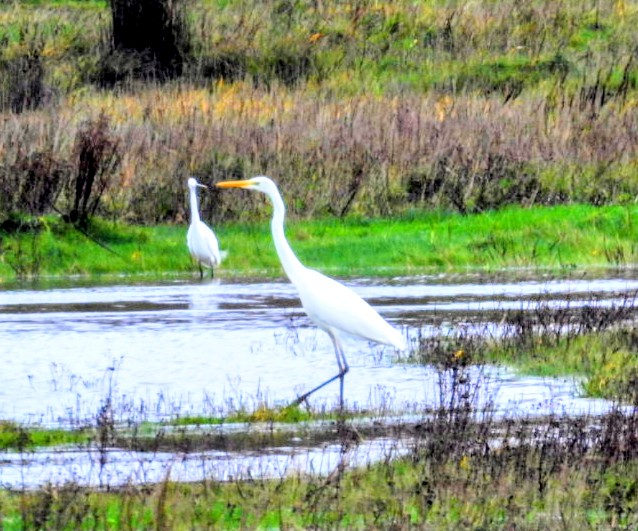
And as I walked out of Grubbins Woods via New Barns, I saw a Great White Egret and Little Egret in foraging in tidal pools
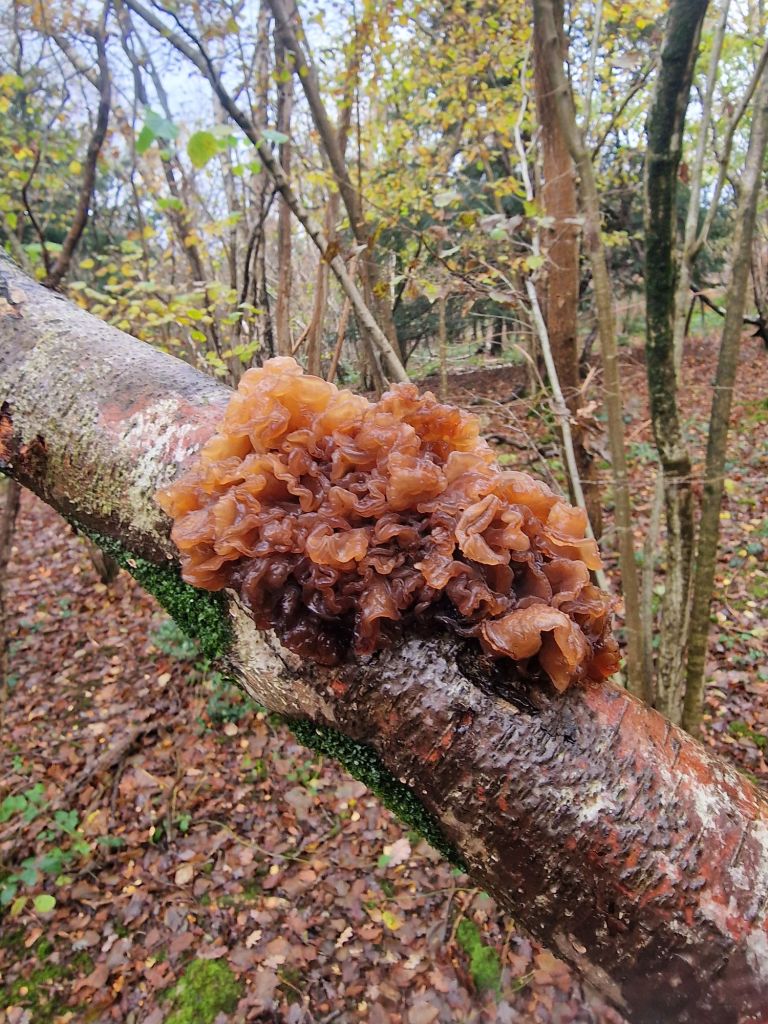
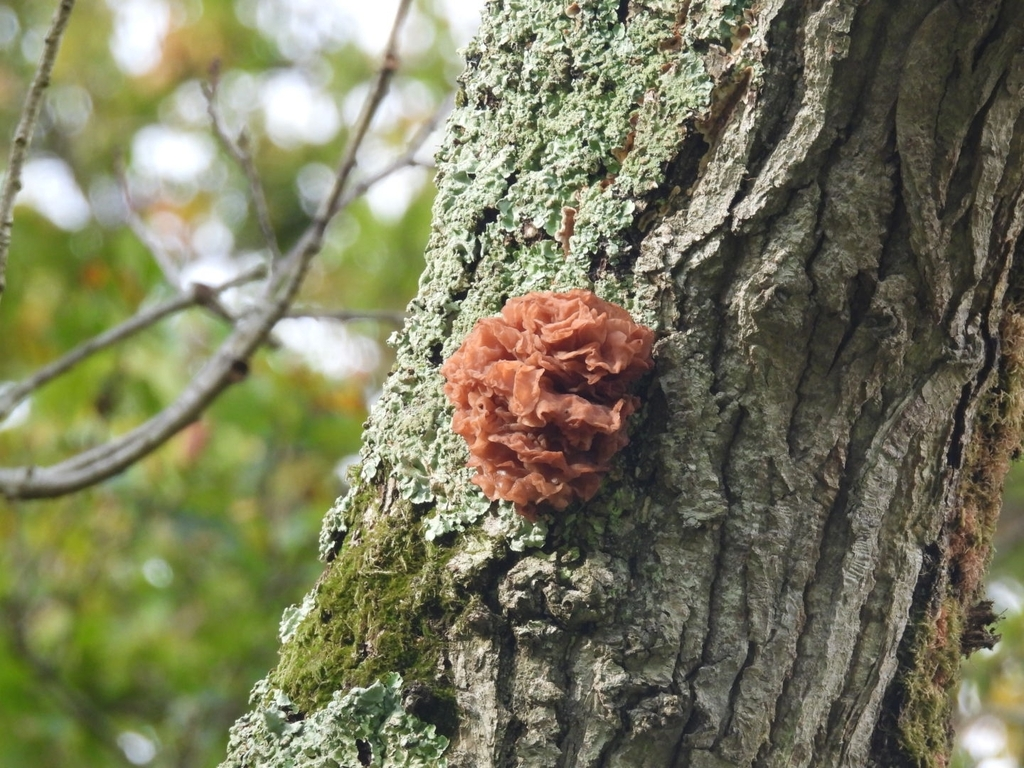
In Copridding Wood, I saw this interesting fungus, Phaeotremella frondosa
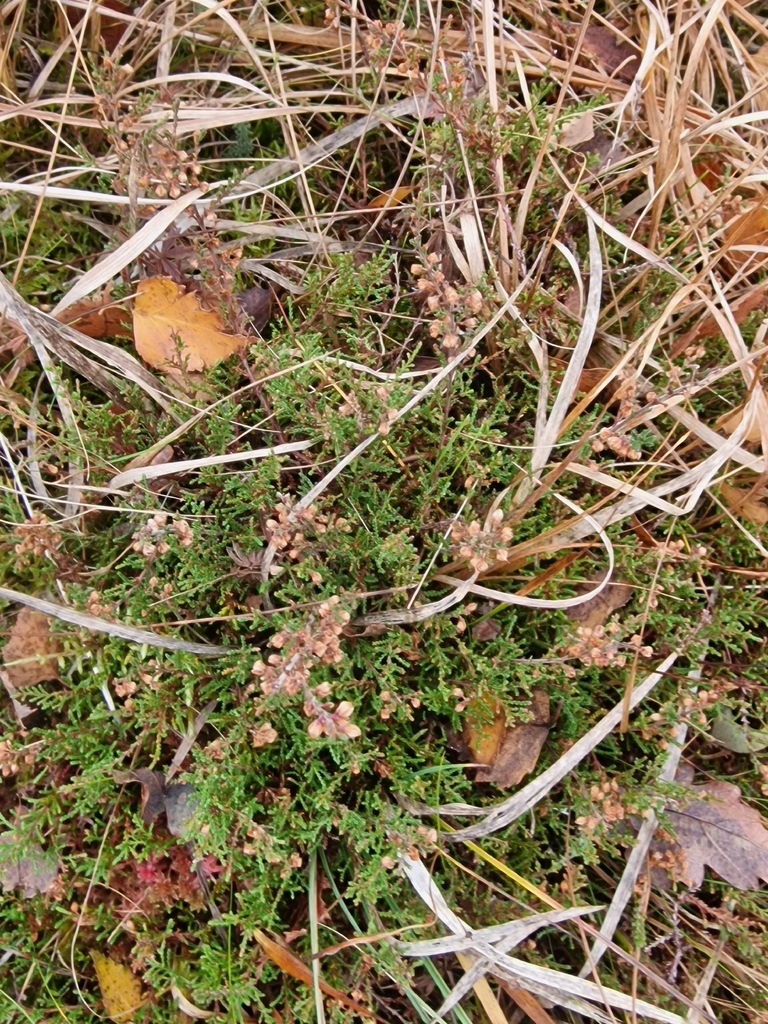
Red Hills is acidic limestone heathland with a prodigious number of juniper trees.
After I walked through the woodland to the east of Arnside, I returned to the north of Arnside, where I had initially entered from the train station. By then the tide had receded sufficiently enough for me to walk along the shoreline in front of Grubbins Wood; and I found the Lancaster Whitebeam
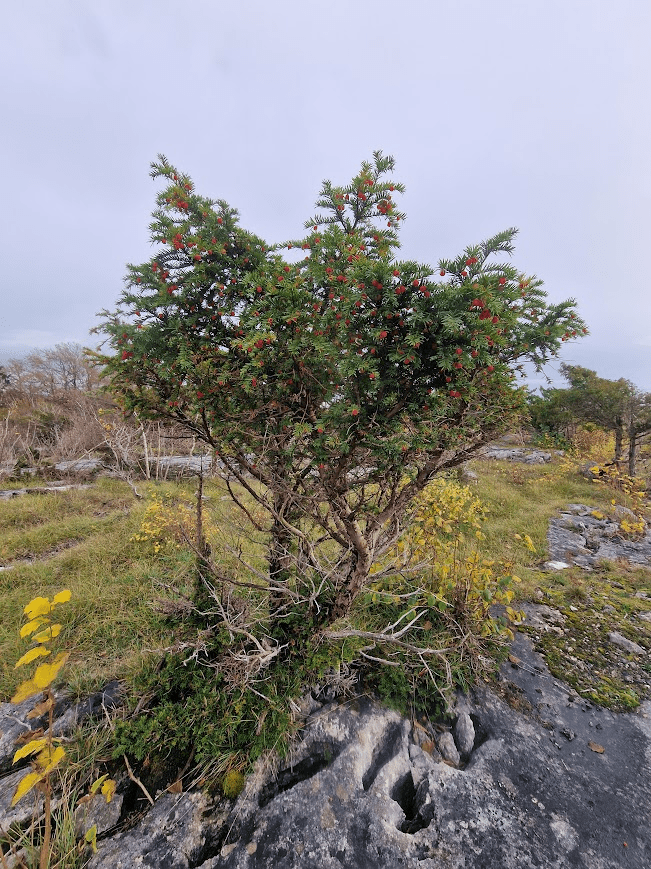
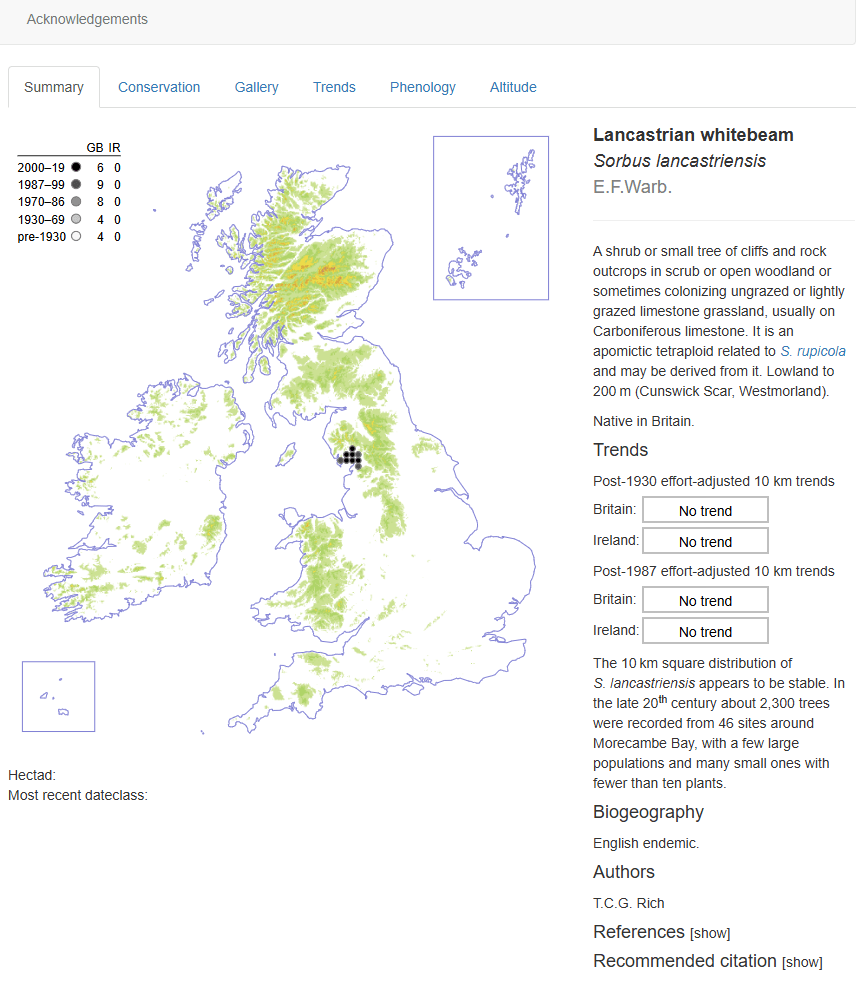
Sorbus lancastriensis Lancaster Whitebeam
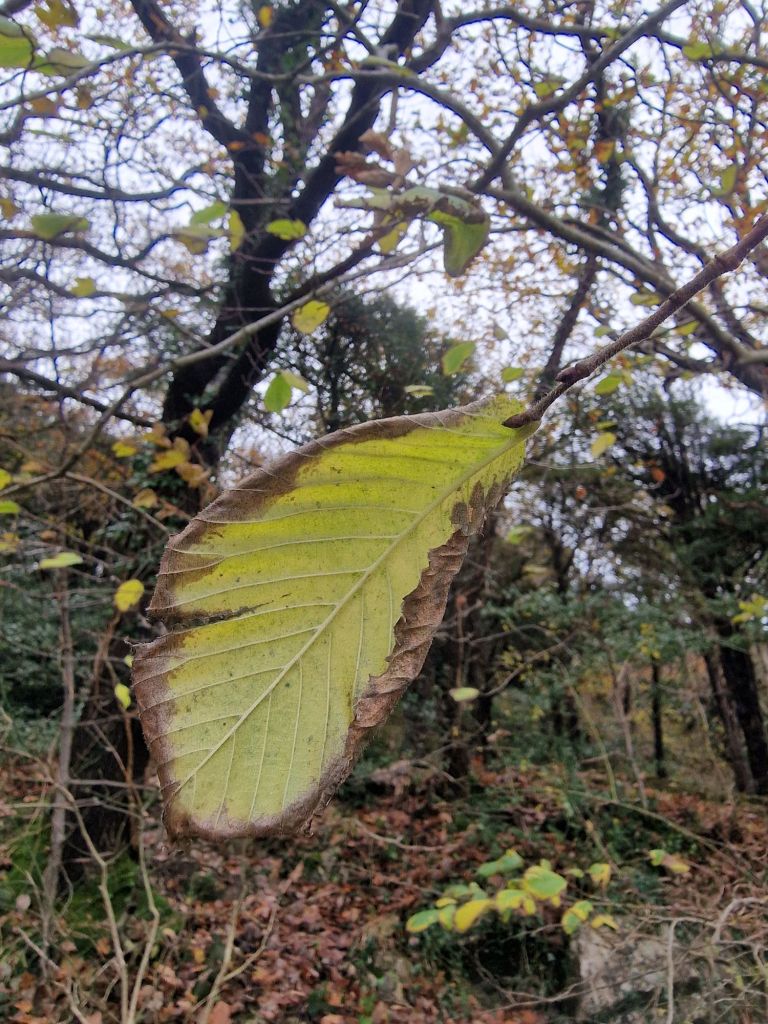
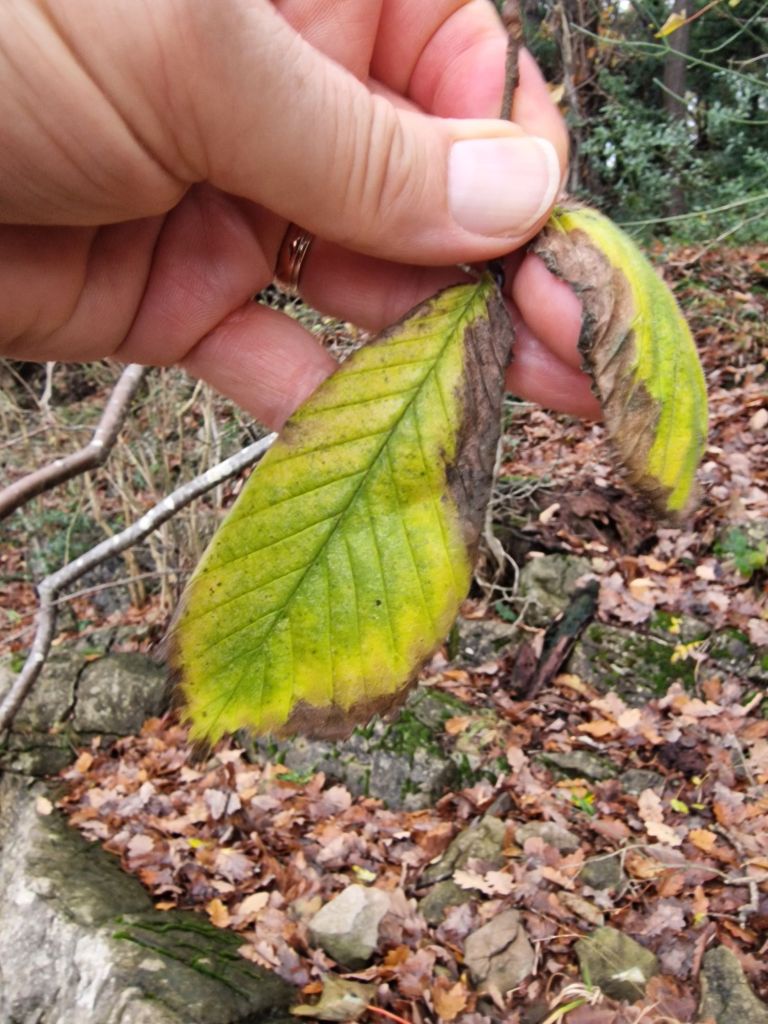
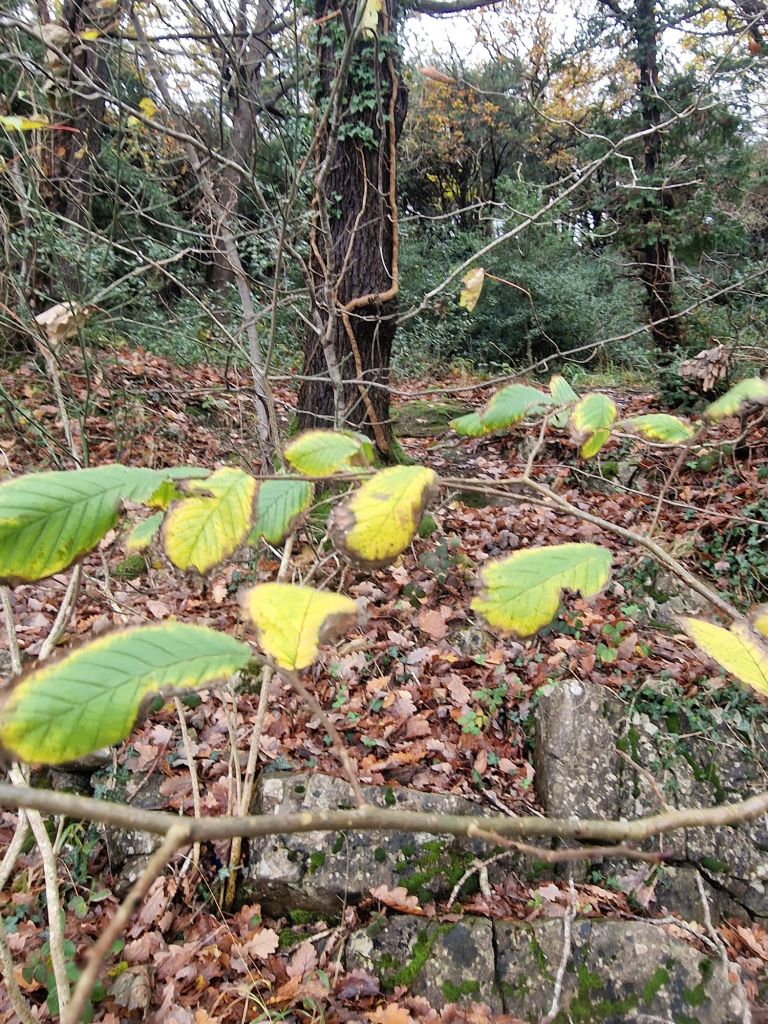
Sadly with no fruit, its leaf morphology was key to identification
The leaves are broadly oval with a slightly toothed margin and a distinctive pale underside. They are usually unlobed or only faintly lobed near the base, with around 6–8 pairs of lateral veins. The upper surface is dark green, and the underside is whitish and felted – a key feature of whitebeams. In autumn, the foliage turns a muted yellow or brown before falling. Habitat: Cliffs, rocky places, woodland Wild Flower Web Lancaster Whitebeam
Wild Flower Web blog: Lancaster Whitebeam: A Unique and Endangered Tree:
The Lancaster Whitebeam (Sorbus lancastriensis) is a species of tree that is native to England and Wales. It is a species of whitebeam, a group of trees that are closely related to the rowans or mountain ashes. The Lancaster Whitebeam is unique in its appearance and is easily distinguishable from other whitebeams.
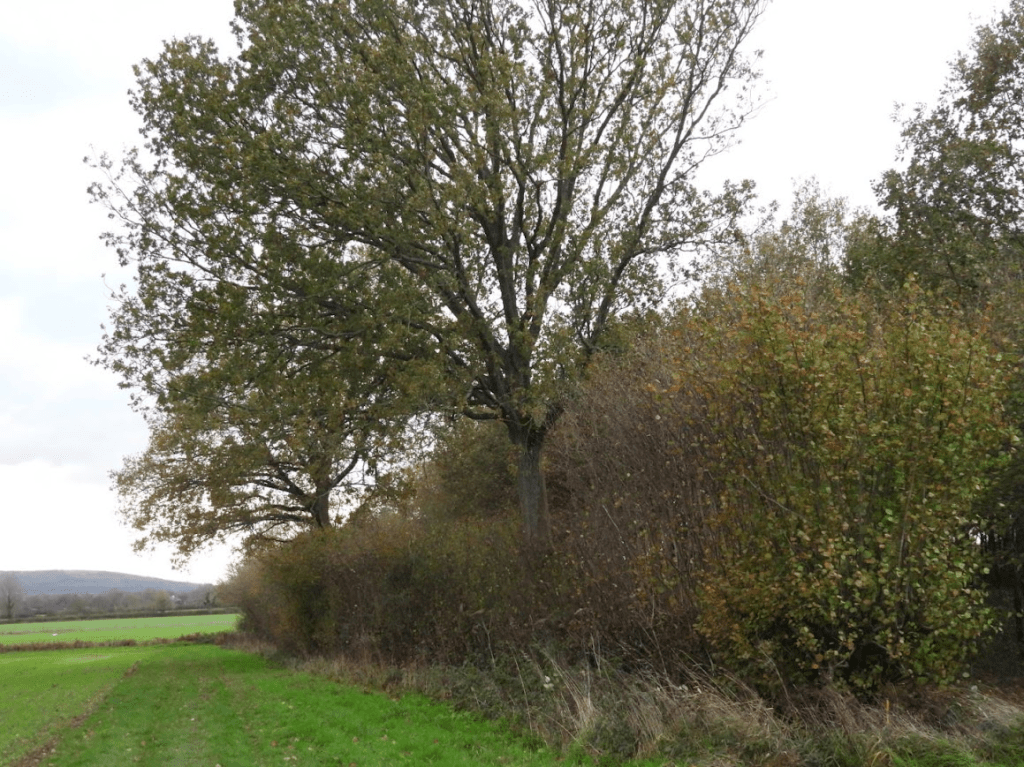
One of the most notable features of the Lancaster Whitebeam is its leaves, which are large, lobed, and have a distinctive, glossy appearance. The leaves are also a rich green color, making the tree a beautiful addition to any landscape. Another distinct characteristic of the Lancaster Whitebeam is its fruit, which are large clusters of orange-red berries that are popular with birds and other wildlife.
Despite its beauty, the Lancaster Whitebeam is a threatened species, and its population has been declining in recent years. The main reason for its decline is habitat loss, as the tree’s natural habitats have been destroyed or altered for human development. The tree is also threatened by diseases and pests, which can weaken its health and reduce its ability to produce fruit.
Conservation efforts are underway to protect the Lancaster Whitebeam and its habitat. The tree has been designated as a priority species under the UK Biodiversity Action Plan, which means that action is being taken to conserve and protect it. This includes planting new trees and restoring habitats, as well as monitoring the tree’s population and health.
The Lancaster Whitebeam is a unique and beautiful species of tree that is in danger of disappearing. Its distinctive appearance, attractive fruit, and importance to wildlife make it a valuable addition to the English and Welsh landscape. With proper conservation efforts, it is possible to protect this tree and ensure that future generations can enjoy its beauty.
In addition to its conservation status, the Lancaster Whitebeam has also been found to have potential medicinal uses. The tree’s leaves and bark have been used in traditional medicine for centuries to treat a variety of ailments, including digestive problems and skin conditions. In recent years, there has been growing interest in the potential health benefits of whitebeam species, including the Lancaster Whitebeam. Studies have shown that the tree’s leaves and bark contain compounds that have anti-inflammatory, antibacterial, and antiviral properties, making it a promising source of natural remedies.
Despite this potential, there is still much to be learned about the Lancaster Whitebeam and its medicinal properties. Further research is needed to fully understand its potential health benefits and to determine the most effective ways to use its compounds in medicine.
In addition to its conservation status and potential medicinal uses, the Lancaster Whitebeam is also an important part of the local culture and heritage in England and Wales. The tree has been associated with folklore and legends for centuries, and is considered a symbol of the region’s history and identity.
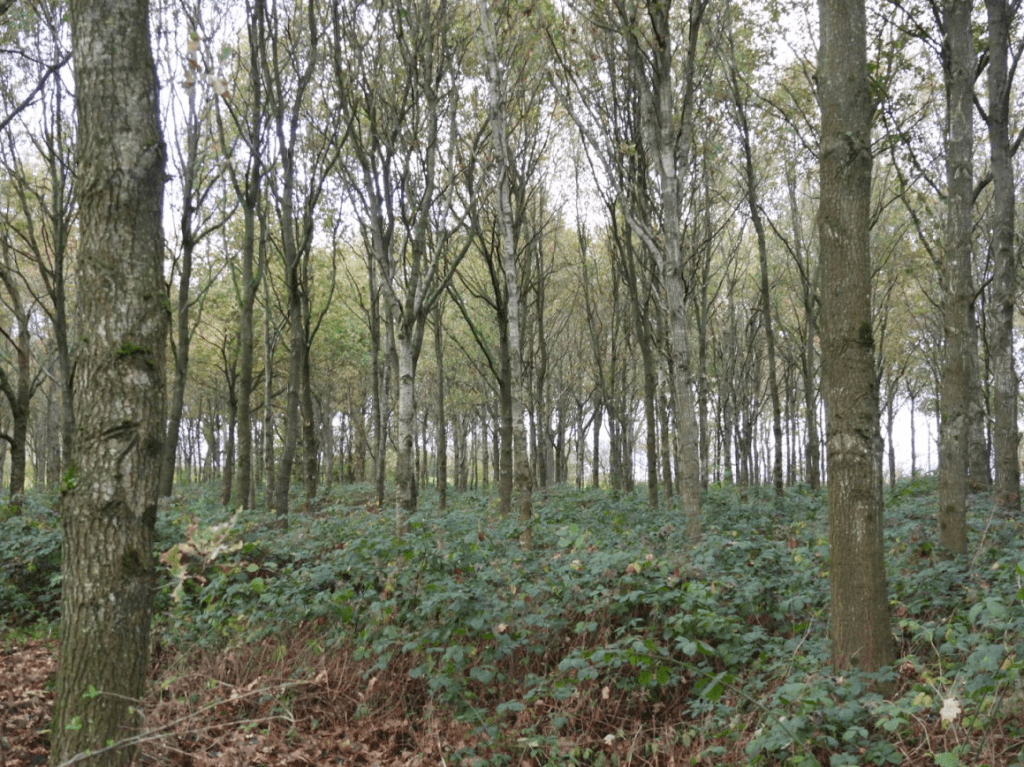
Overall, the Lancaster Whitebeam is a fascinating and important species of tree that deserves our attention and protection. Its unique appearance, potential medicinal uses, and cultural significance make it a valuable addition to the natural world, and we should work to ensure that it is preserved for future generations to enjoy.
It’s also worth noting that the Lancaster Whitebeam is not just a valuable species in its own right, but also provides important ecosystem services. As a keystone species, it supports a wide range of other species in its ecosystem, from the insects and birds that feed on its fruit, to the fungi and bacteria that decompose its leaves and bark. By preserving the Lancaster Whitebeam, we are also helping to maintain the overall health and diversity of the ecosystem in which it is found.http://www.wildflowerweb.co.uk/plant/1510/lancaster-whitebeam
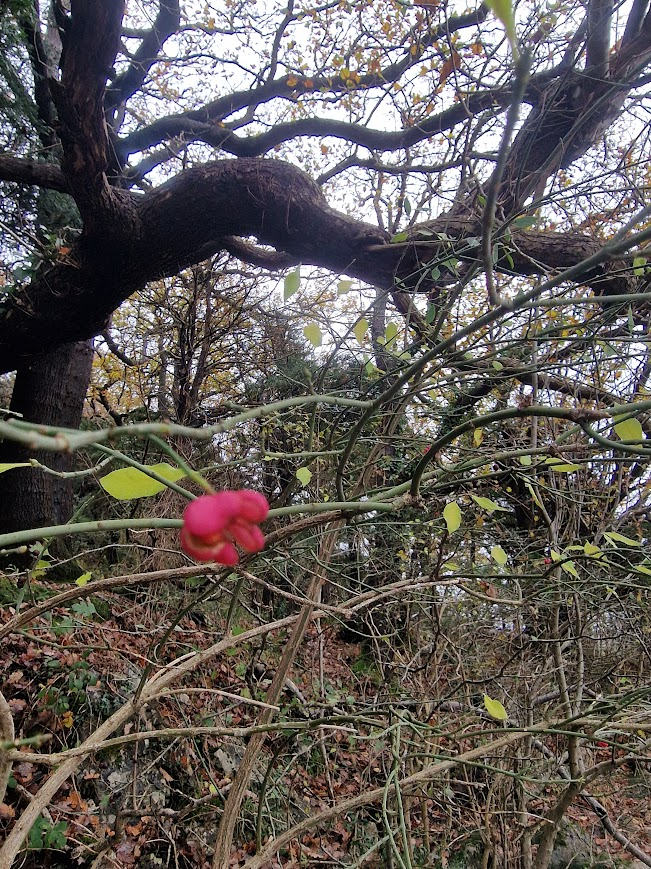
Next to the Whitebeam was a Spindle Tree, an ancient woodland indicator species.
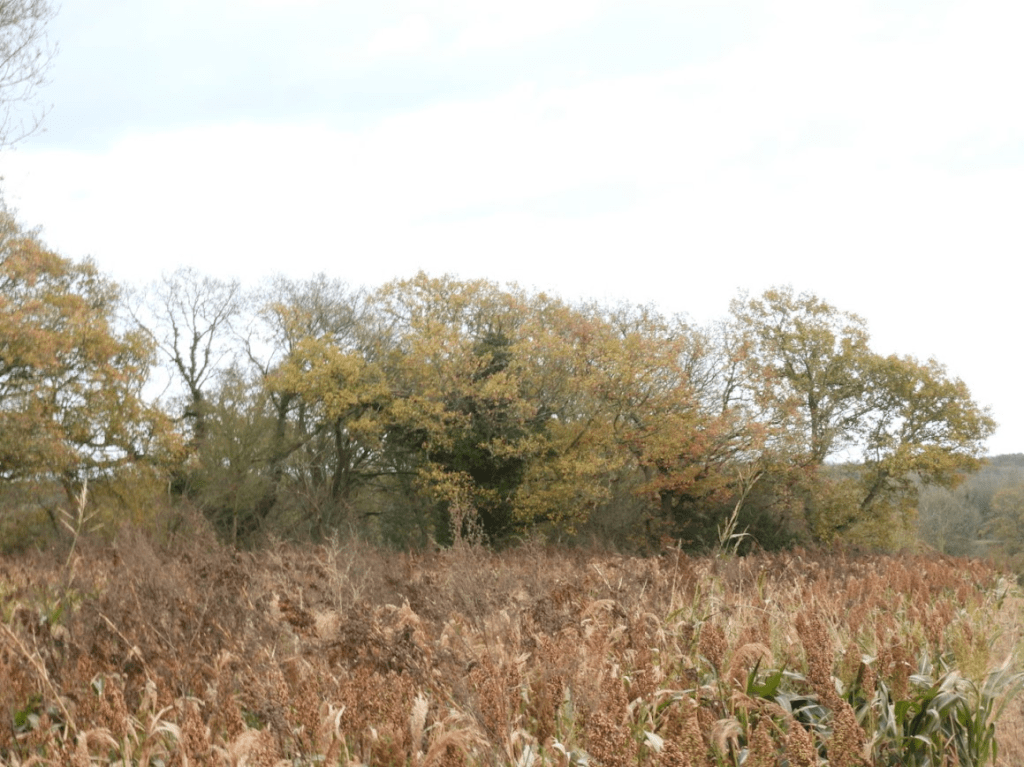
The coastal rocks were covered in lichess
Tephromella atra with free-living aga living on the thallus. Not especially maritime, … but also rather common in the aerohaline zone [the above the area reached by direct wave action.] Lichens Marines
Gait Barrows NNR
I then walked three mikes through lanes to Gait Barrows National Nature Reserve. The lanes I walked through passed several mosses i.e. lowland bogs.
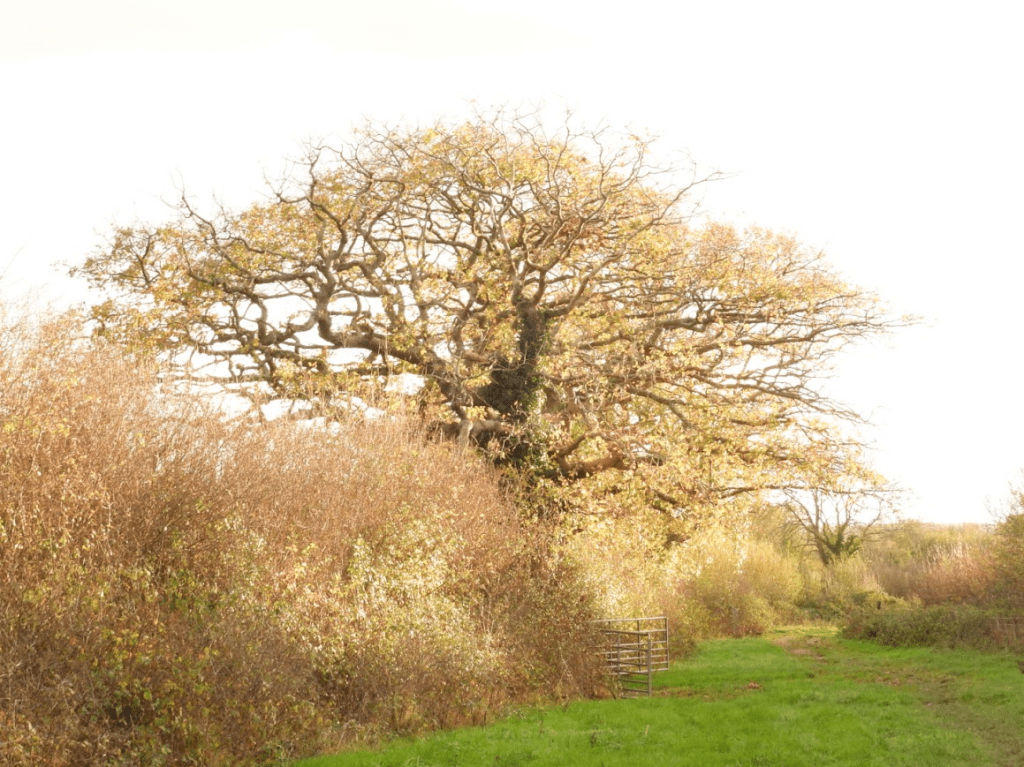
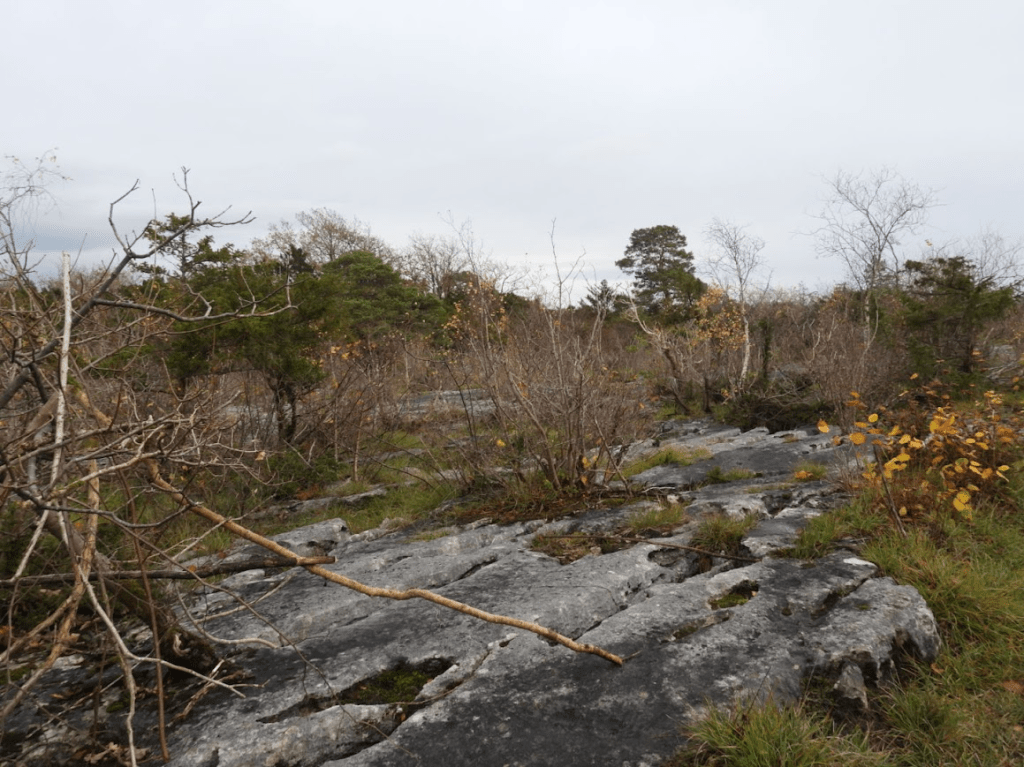
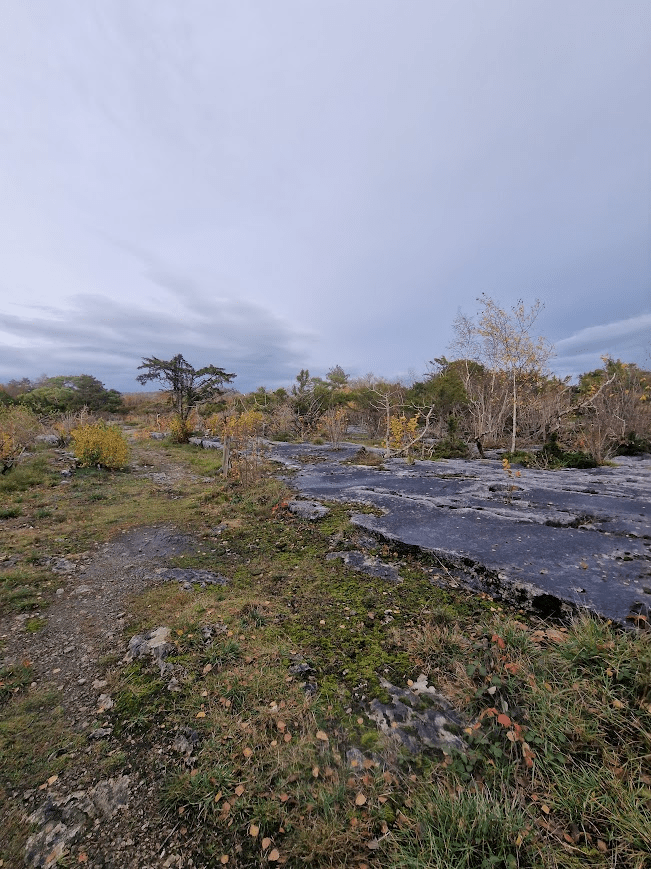
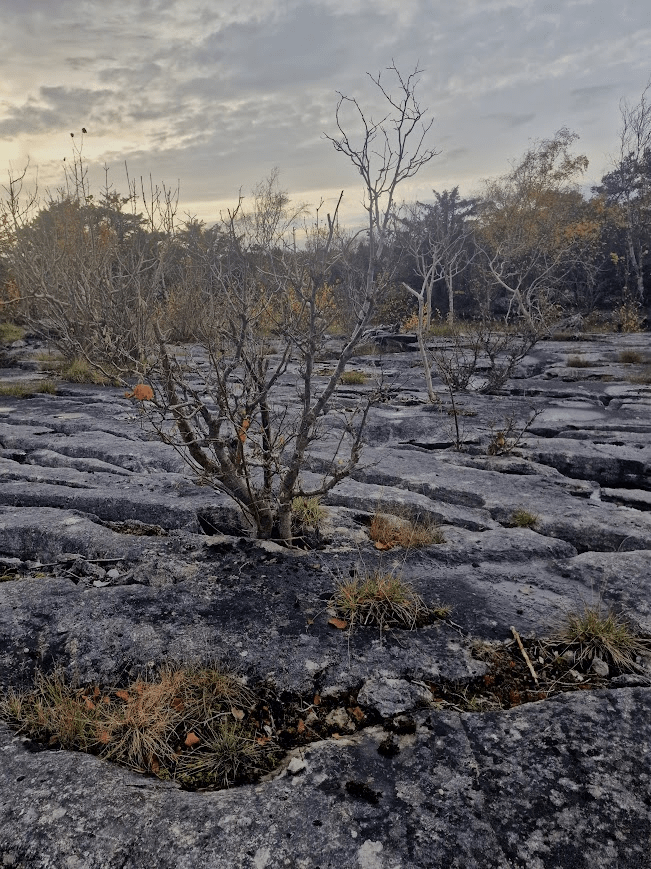
Whilst I studied Limestone Pavements in A level geology in 1978-80 at school in Brighton, we never visited one as to do so would have been too long a field trip. Moreover, as I only use public transport it is not easy to visit the north where they are. I’ve had a forty-five year wait to see a Limestone Pavement. And it was worth the wait.
A landscape moulded by time.
The landscape at Gait Barrows has been shaped over many thousands of years. Much of the nature reserve lies on ancient Carboniferous limestone which was laid down in warm tropical seas some 300 million years ago. With the influence of more recent mountain building periods that created mountain ranges like the Alps, this bedrock has been flexed and uplifted to give the low hills and crags of the limestone landscape that we are familiar with today.
In the last Ice Age some 14,000 years ago, deep ice covered this part of Northern England and Hawes Water Basin was formed by the deeply scouring ice sheet as it passed from what today are the Cumbrian high fells to the Irish Sea. This deep trough in the limestone was then filled with groundwater to create the Hawes Water we know today.
The intricate features of the limestone pavements have been shaped and modified by glacial action in the last Ice Age, and more recently by rainfall and groundwater.
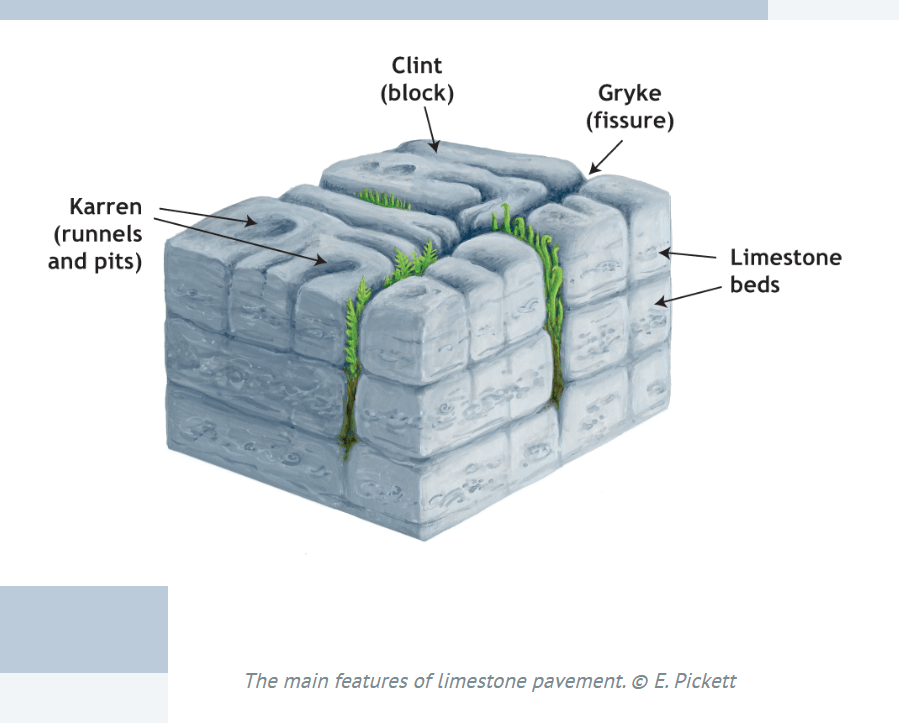
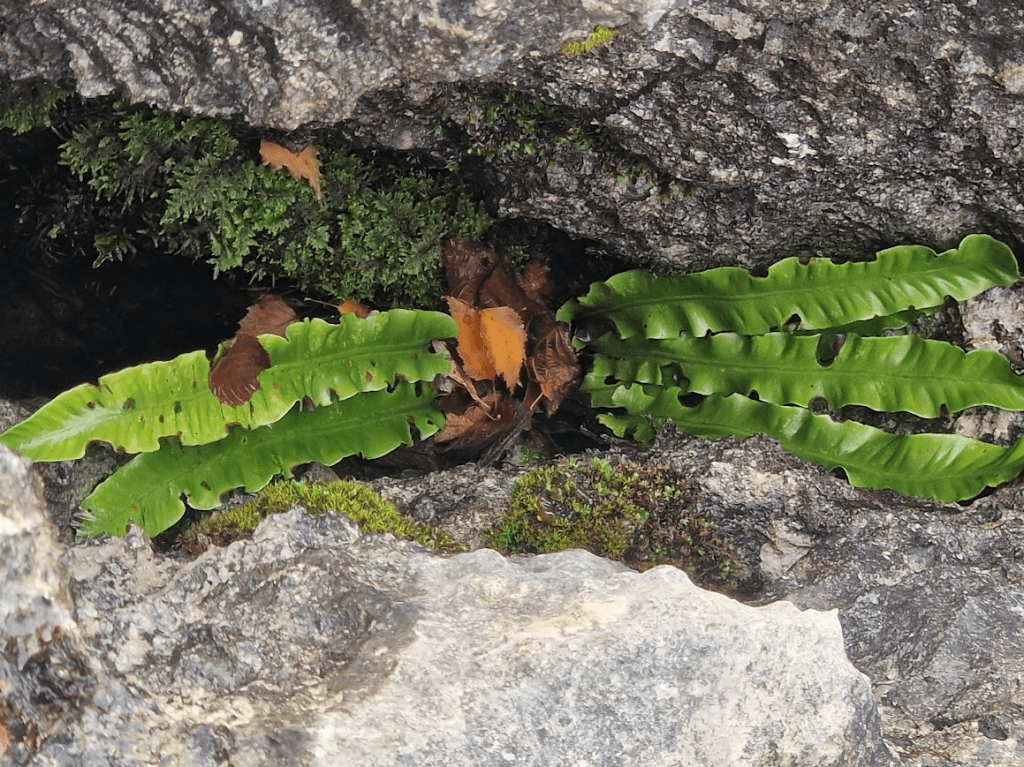
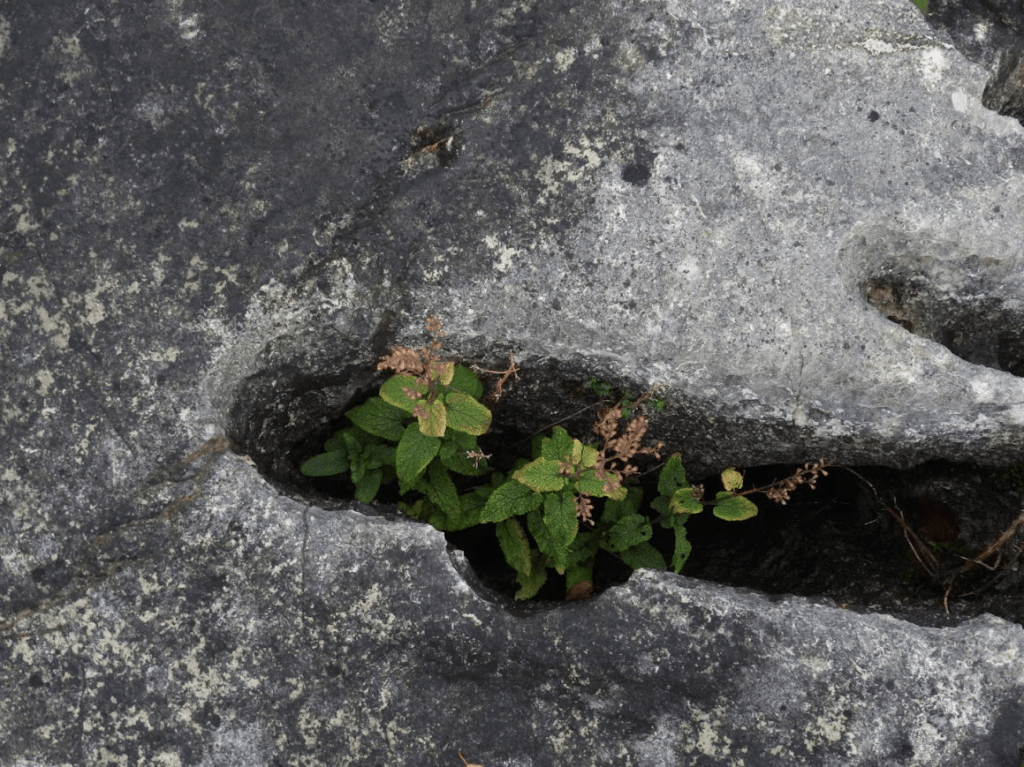
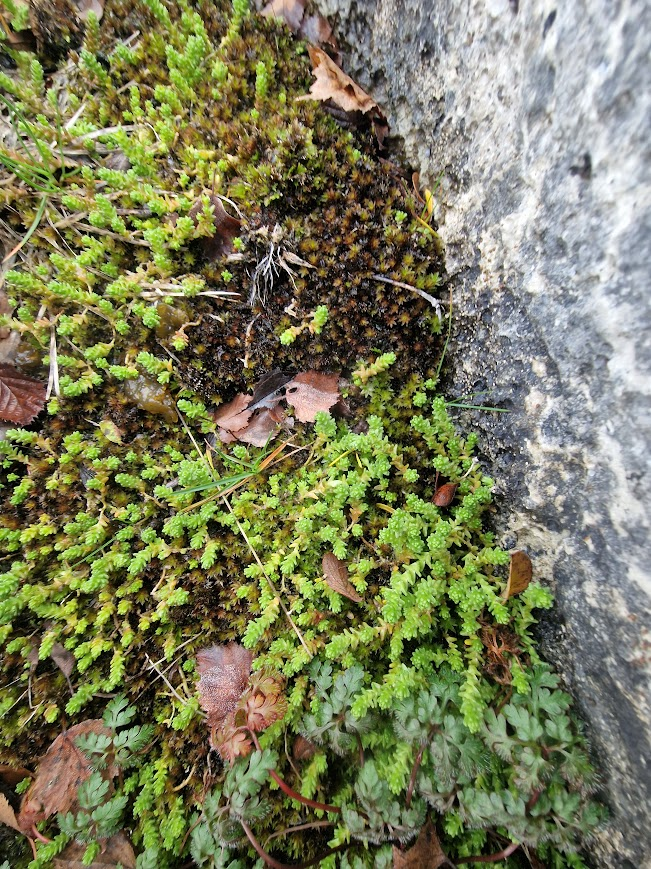
On the open pavements you will see wide flat blocks called clints, separated by deep fissures known as grikes. Lying on the clint surfaces are shallow gutter-like runnels and pan-like solution cups, which collect and funnel rainwater from the rock surface.Nature England Gait Barrows National Nature Reserve
A Yew. Limestone pavement produces stunted trees due to the paucity of soil in the grykes
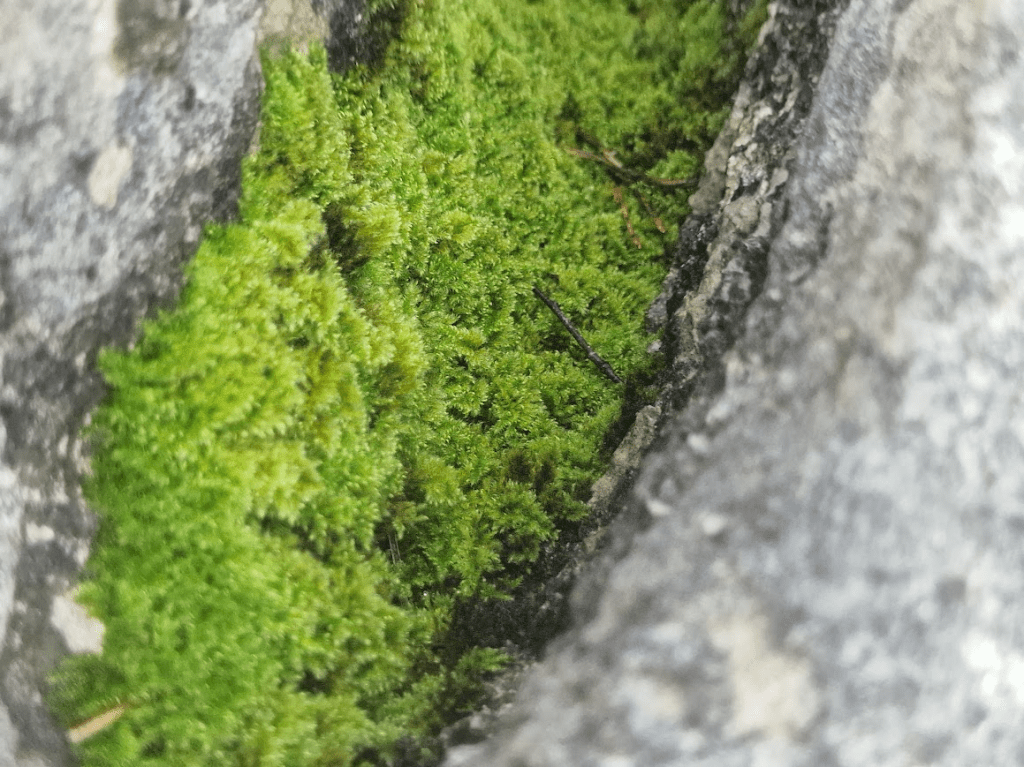
There was lots of Nostoc commune; a cyanobacteria (blue-green algae), concentrated into brownish or greenish clumps, on the limestone pavement aften around vascular plants
Views at dusk
As the sun began to fade I walked quickly to Silverdale Railway situation to return to Keswick
You need to be careful at Gait Barrows with clints and grikes trying to break your legs and every direction looking the same. Gait Barrows is a great place to get completely lost. Wild Flowers Lancastrian Whitebeam
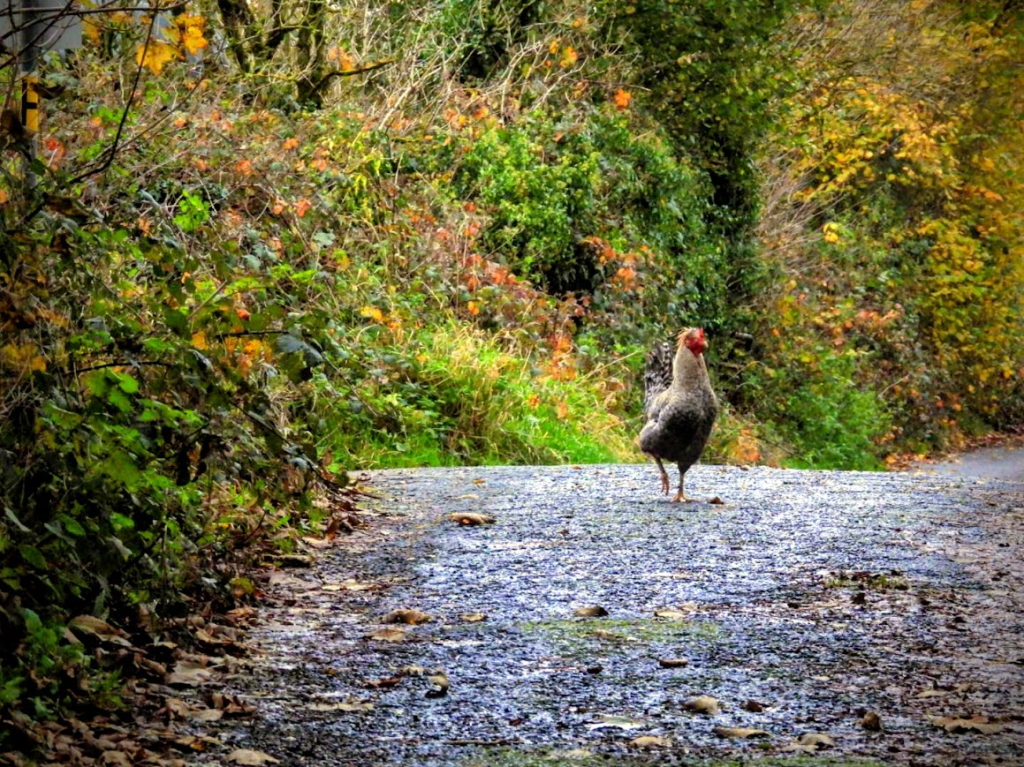
I met this Cockerel on the walk to Silverdale Station!
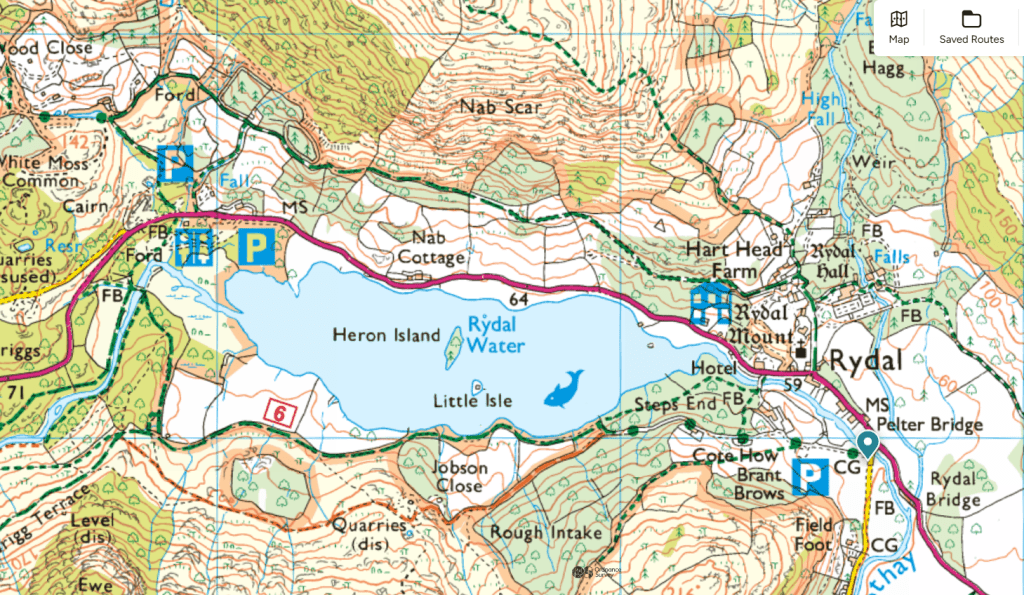
On this Tuesday, I was expecting to go to the southern Borrowdale woods that I hadn’t been able to see the day before, due to the bus being cancelled all day due to flooding. But the bus to Seatoller was still cancelled again due to flooding, so I decided to take the bus to Ambleside to change busses for Skelwith Bridge, where there was some interesting woods; but the bus to Skelwith Bridge was also cancelled due to flooding. The only place I could go to to see some woods, was to take the bus that goes back to Keswick and get off at Rydal.
Rydal has Wordsworth’s House, the famous Rydal Falls and some unnamed broadleaf woodlands that I had noted on the OS map that could be interesting. Some of the most beautiful trees I have seen have been in woods unnamed on maps.
First, I visited the National Trust’s Dora’s Field; a field named by William Wordsworth after his daughter who died at a young age.
Next to Rydal Church stands a field known locally as ‘The Rashfield’. This was originally a wet field where rushes (“rashes”) grew and it later became known as ‘Dora’s Field’. The field was purchased in 1825 by William Wordsworth.
Provoked by the threat of eviction by his landlady Lady Anne Le Fleming who planned to replace the Wordsworth family with a member of her own family, Wordsworth bought the Rashfield, drained it and declared that he intended to build on it. … but Lady Anne withdrew the threat of eviction & Wordsworth remained at Rydal Mount until his death there in 1850.
Having already lost two children in infancy Wordsworth and his wife suffered a third blow when Dora, her father’s favourite, died aged 43 of tuberculosis in 1847. The poet never recovered from the loss of this daughter and, after Dora’s death Wordsworth, his wife Mary, sister Dorothy and a gardener planted the daffodils as a permanent memorial. A Rydal Guide: Dora’s Field
Dora’s field contained some beautiful coppiced and pollarded Sessile Oaks
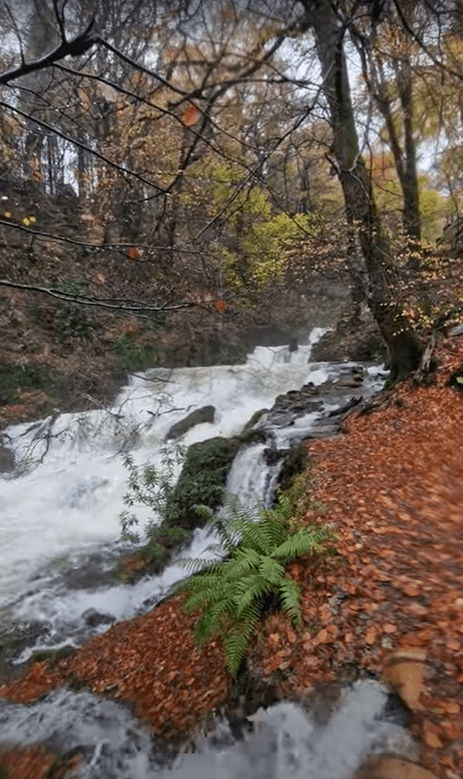
Then I walked about 500m to visit the Rydal Falls; in the woodland behind Rydal Hall. A few meters aways is Rydal Mount, the “cottage” in which Wordsworth lived. Rydal Falls and Rydal Mount were very popular destination for Victorian tourists
There is not anywhere in England a drive so full of that mingled natural and human interest which makes scenery so impressive. It is well-nigh impossible for sensitive minds not to feel something of ‘the light that never was on sea or land’ as they pass the thresholds of the good and great, whose thoughts have helped our England to be pure. In this coach drive to Keswick they not only go by the homes of the thinkers and poets and philosophers, but their foreheads feel the wind and rain that gave such freshness to the seers of the last generation; the sunlight on lake or mountain head that filled their minds with glory fills ours today. The woods and waterfalls that speak to us upon our way spoke also to them. We can in fancy see their familiar forms upon the road, and, as in eastern travels the ‘weli’ or way-side tomb made the journey’s stage rememberable [sic], so we find in this pilgrim stage through poet-land that the great dead lend it a kind of solemn sweetness, and the dust of two laureates hallows the wonder-giving way. Rawnsley, A Coach-Drive at the Lakes : Windermere To Keswick (1891) , pp. 3–4 quoted in Christopher Donaldson, Ian N. Gregory, Patricia Murrieta-Flores, Mapping ‘Wordsworthshire’: A GIS Study of Literary Tourism in Victorian Lakeland, Journal of Victorian Culture, Volume 20, Issue 3, 1 September 2015, Pages 287–307.
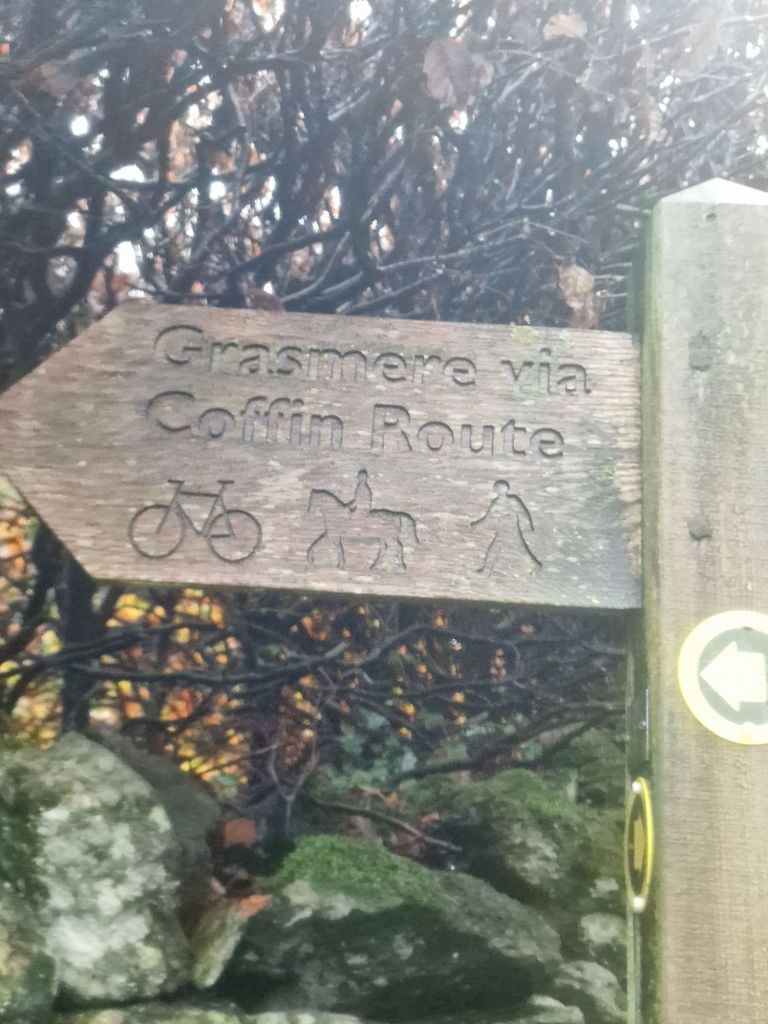
I then took the Coffin Road above Rydal Mount through the unnamed woods.
… at a higher-level running through the meadows of Rydal Park and across the slopes of Nab Scar, is an … [old] track. It dates back a very long time and is called locally, the Coffin Road, due to the fact that the only consecrated ground for burial in the area was the grave yard at St Oswalds in Grasmere and it was therefore used to convey coffins on their final journey.Visit the Lake District – Ambleside to Grasmere – ‘The Coffin Route’
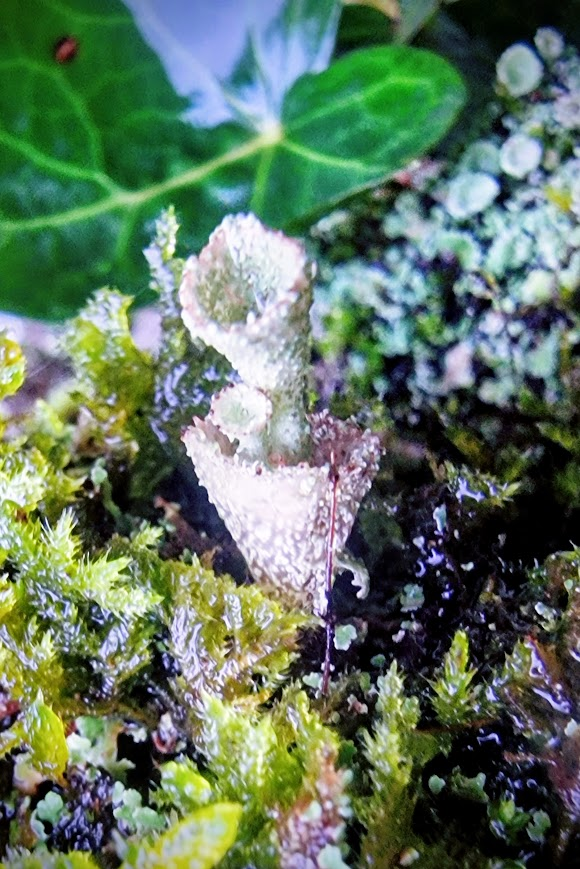
On a drystone wall next to the beginning of the route was this multi-cup “Pixie Cup” Cladonia sp. lichen, possibly C. chlorophaea s.l. (one of the C. chlorophaea aggregate). It was a veritable “Pixie Champagne Fountain”. Maybe a Pixie Wedding occurred there.
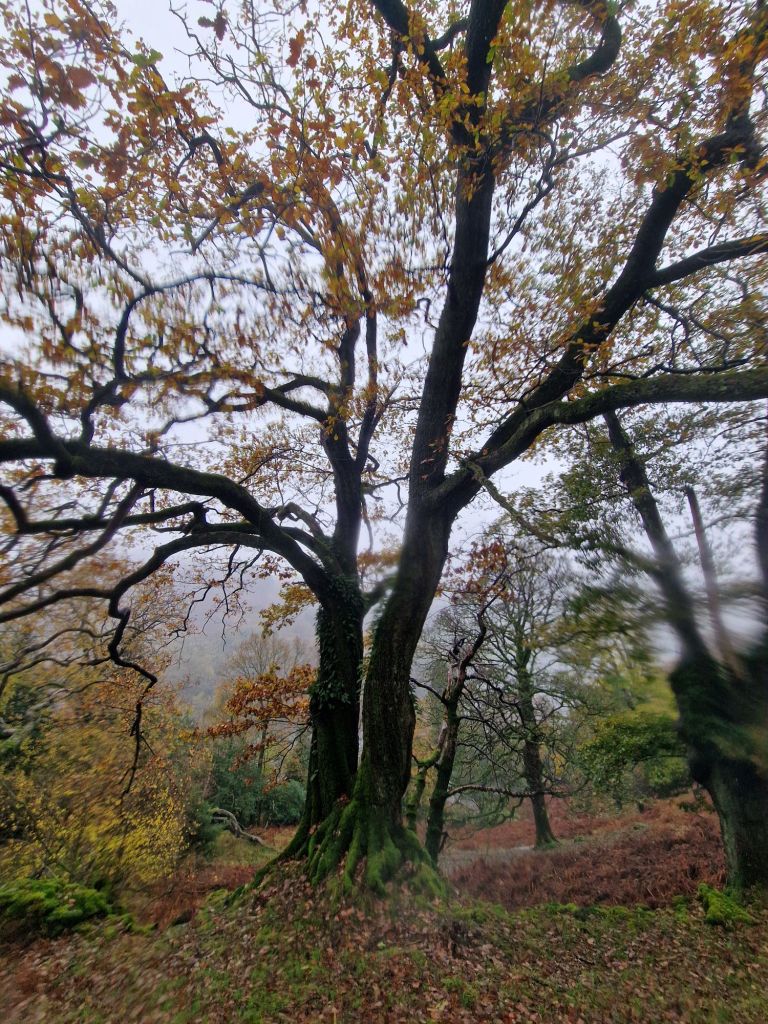
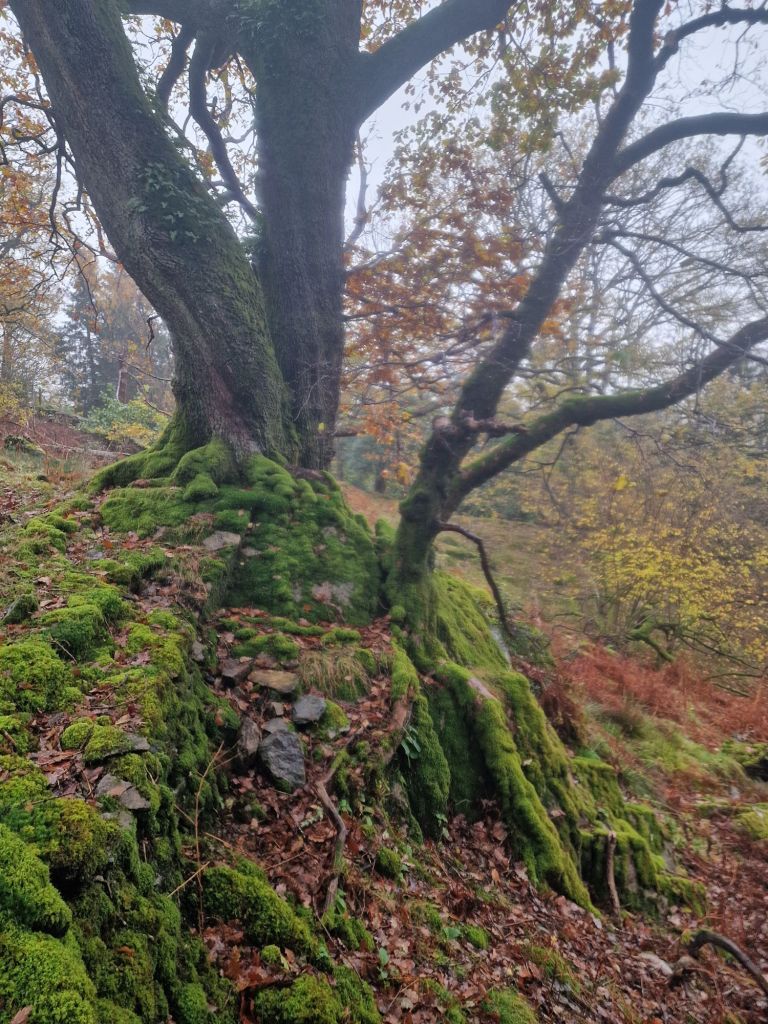
The pollarded Sessile Oaks the wood unnamed on the OS map; this looks like pasture woodland but I can find out nothing about this woodland on line
This Hawthorn had epiphytic Polypody fern
and some beautiful epiphytic lichens
Ramalina farinacea
Ramalina farinacea above can look very similar to Usnea (beard) lichens; the way to spot R arinacea is that it has prominent flour-like (farine (French) flour in farinacea) blobs (soredia) on its lobes; Usneas mostly mostly don’t have soredia, but some do, like Usnea subfloridana. Lichen are just hard.
Usnea subfloridana
Usnea ceratina
and this rain-soaked moss, Ulota bruchii. Bruch’s Pincushion
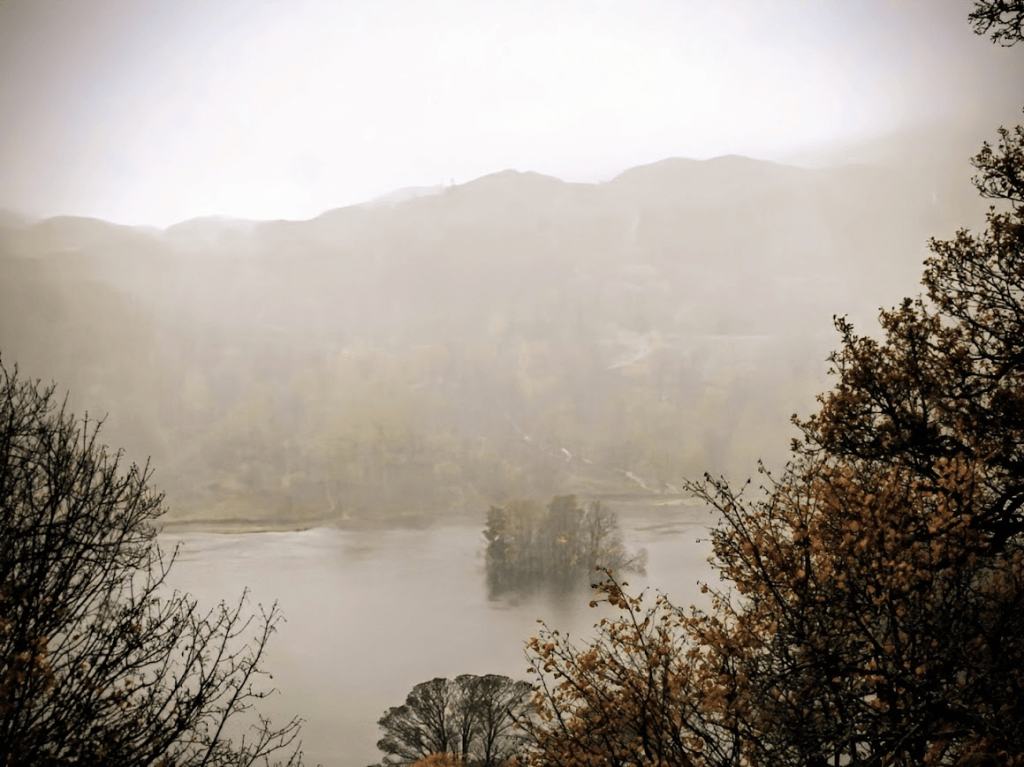
From the path it appeared as if Little Isle in Rydal Water was being engulfed by the rising water of the lake, like the medieval French legend of Ys, which was engulfed by the sea and rises occasionally; beautifully evoked in Debussy’s La Cathedrále Engloutie prelude Click: La Cathedrále Engloutie to listen.
I then walked on further west, along a dry stone wall above woodland (unnamed) under the fell Lord Crag, with fabulous views of Rydal Water
The very red apothecia (fruiting bodies) of this Peltigera sp. lichen, poss. P. horizontalis, really stood out on a dark and rainy afternoon on the very wet dry stone wall
Looking up Lord Crag, pollarded Sessile Oaks. The spots are rain drops on my camera lens
Theses lonely oaks on the foothills of Lords appear “wild”; but pollarding is a human intervention; so even these “wild” veteran trees have been managed across time.
Water pouring over a dry stone wall. It rained all day this Tuesday as it did the day and weekend before
This is the public footpath down to Rydal Water not a waterfall
This is a unnamed waterfall just marked on the OS map as “fall”
From the car park next to the waterfall I got the bus back to Keswick
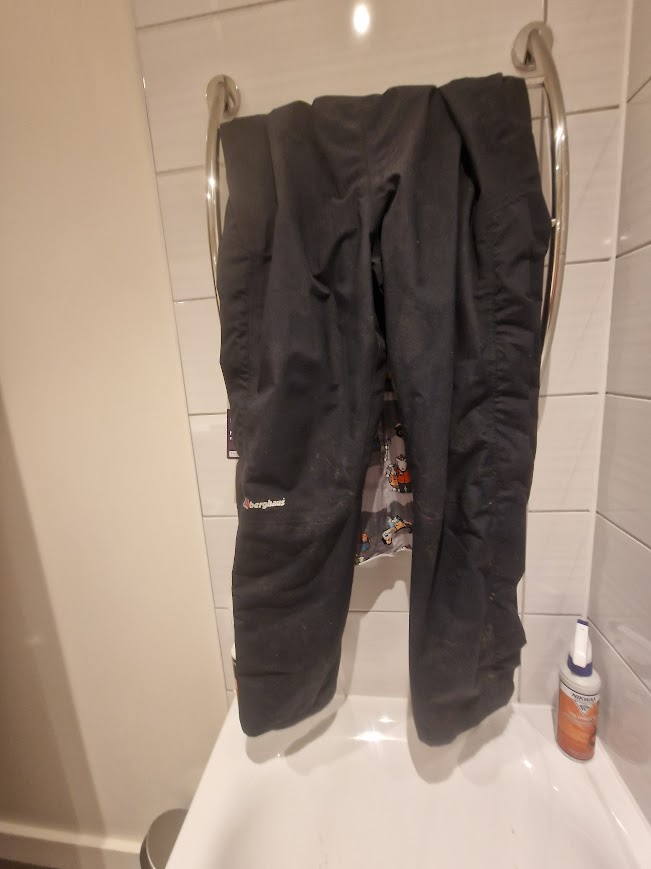
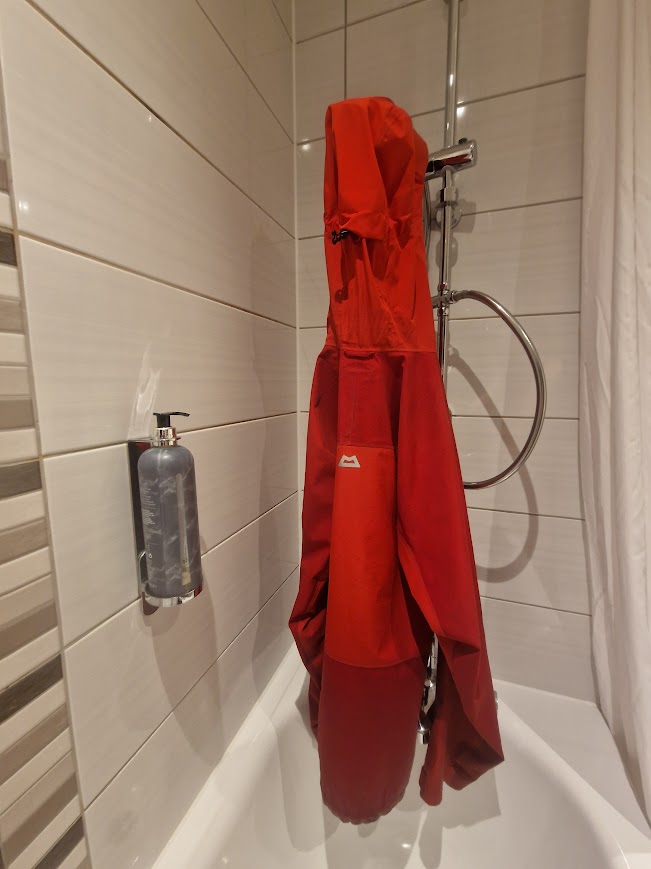
My waterproof trousers and jacket, that had given up repelling water, drying in the hotel room bathroom; after being sprayed with Durable Water Repellent. Durable Water Repellent is available in nearly the gazillion outdoor shops in Ambleside (where I bought mine) and Keswick
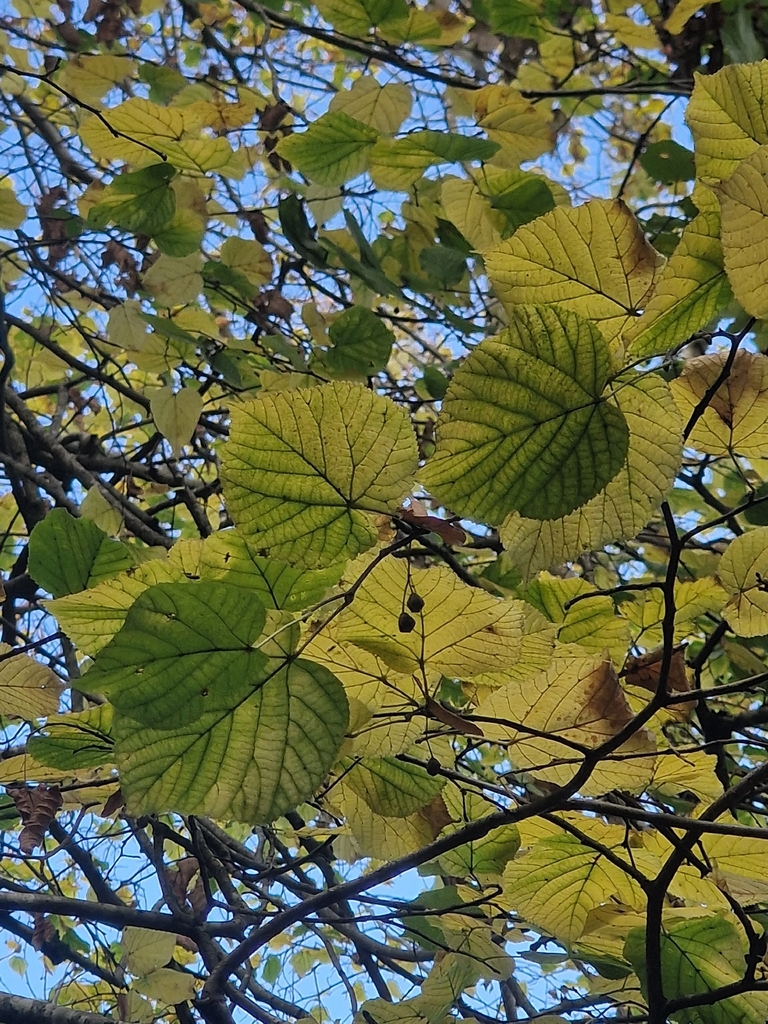
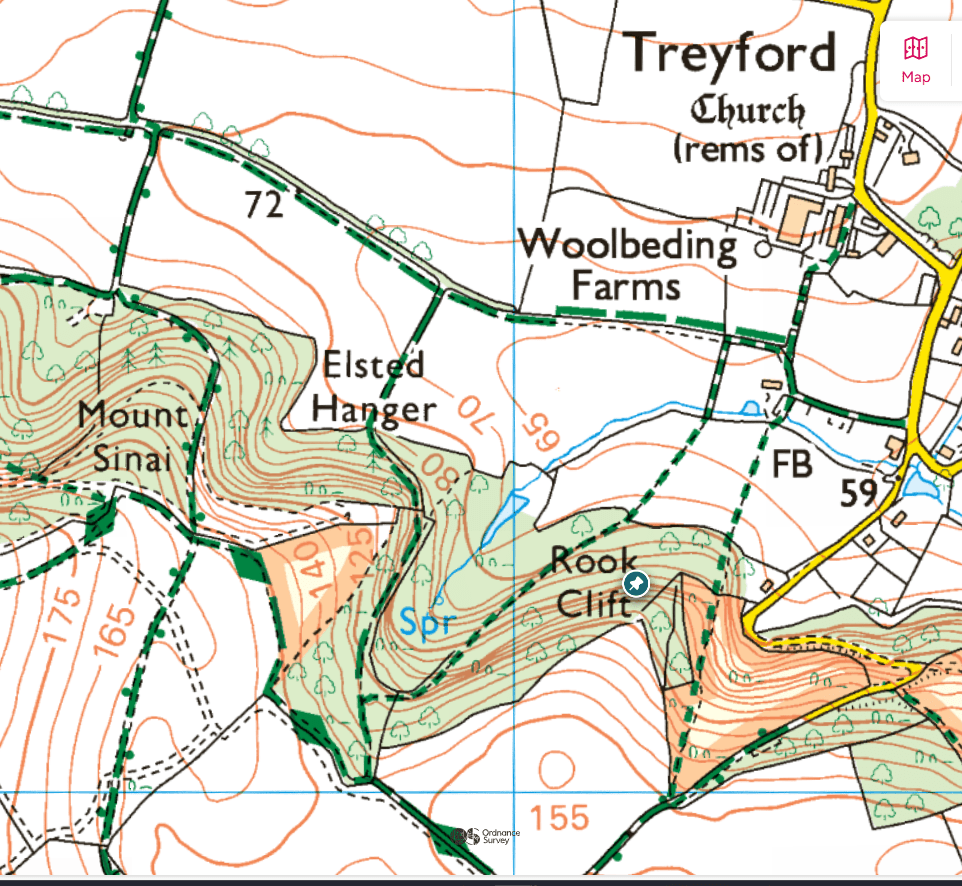
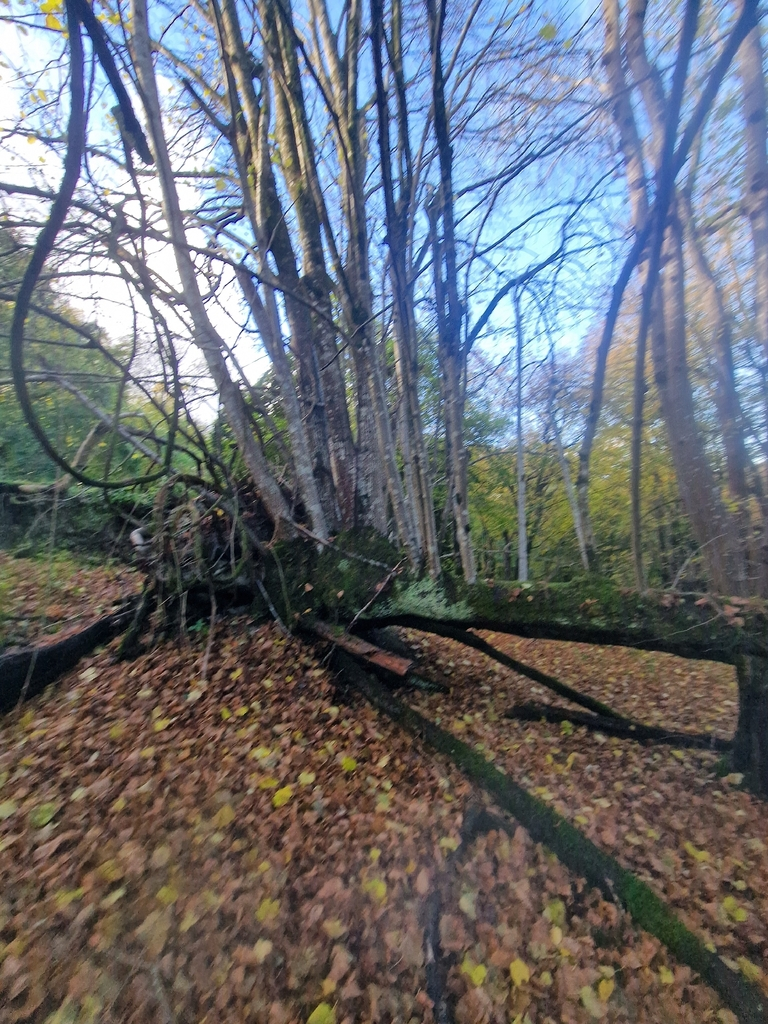
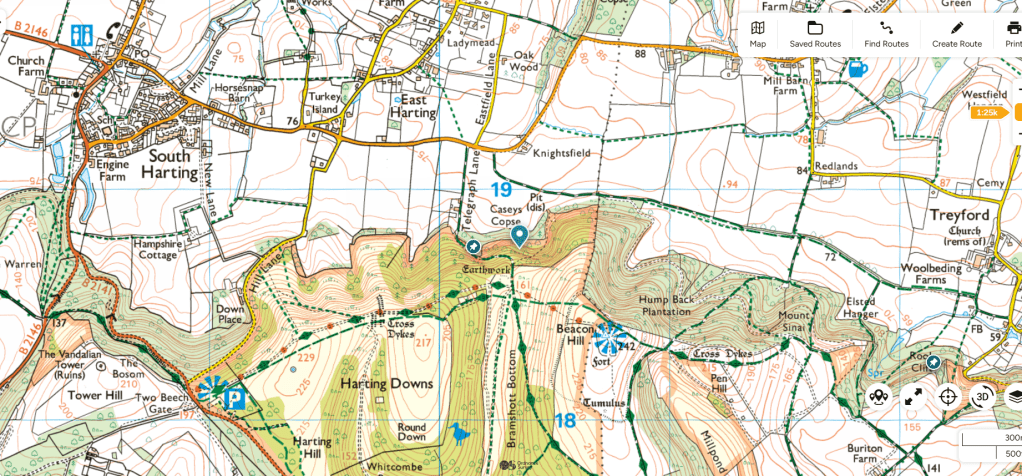
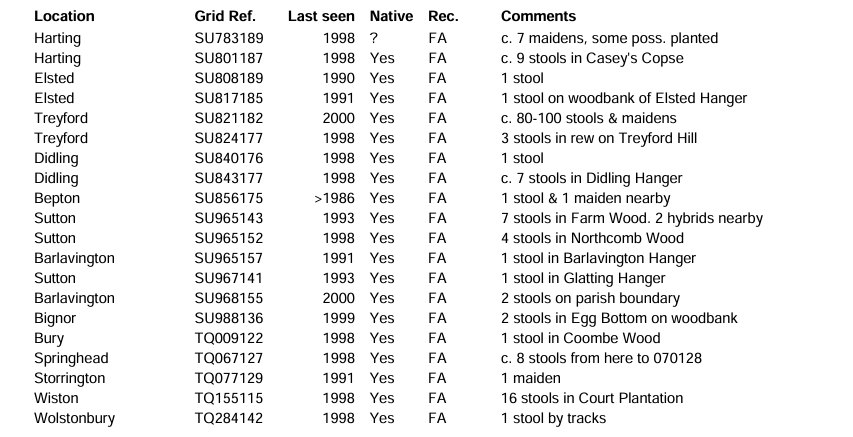
This is the follow up to my post of 28.10.25 Large-leaved Lime and Wych Elm at Casey’s Copse and Rook Clift, nr. South Harting, West Sussex. Part I Today I visited the group of Large-Leaved Limes at Rook Clift at SU821182 that I didn’t have time to visit on 28.10.25; listed in the Sussex Rare Plant Register as ca. 80-100 stool and maidens, at SU 822183, in agreement with Rose’s 1991 enumeration. They are to the east of the main path. But it is necessary to walk nearly to the the top of the main path, then walk east then north above the main path. There is a large ditch with a very steep slope between the main path and where the cluster of Large-leaved Limes are.
The pin shows the location of the cluster.
I could not find anywhere near 80-100 Large-Leave Limes; I found far less. There may have been much change since they were first recorded, or may be I didn’t see the extent of the stand
It is worth quoting all of what Francis Rose says of Large-leaved Lime in The Habitats and Vegetation of Sussex (1991) Booth Museum of Natural History, Borough of Brighton
Tilia platyphyllos is now known to occur in at least 16 separate populations along the lower part of the escarpment of the western South Downs, from the Hampshire border (where one ancient tree exists on the actual bank of the ancient county boundary at the Miscombe) east to Springhead Hill southwest of Storrington (TQ 070127), in ten tetrads. It occurs always in ancient, former coppice woodlands, within ancient boundary banks along the lower part of the scarp, never in the (often quite mature) secondary woodland on what was former opensheepwalk. Most of the trees are ancient coppice stools, though on a few sites, what look like ancient pollards occur. Dr Donald Pigott, the authority on Tilia, has visited several of the populations with me, and says that the trees have the characters of the native form of T. platyphyllos, and some of the huge stools may be upwards of 1000 years old. Tilia cordata appears to be absent from the Sussex Chalk scarp in natural situations (though it does occur further west on the Hampshire Chalk).
The best locality so far discovered for T. platyphyllos is at Rook Clift, south of Treyford (SU 822183) where between 50 and 80 trees occur in an almost pure stand, alongside Wych Elm (Ulmus glabra), Field Maple (Acer campestre), Hazel (Corylus avellana) and Whitebeam (Sorbus aria). There is little Ash (Fraxinus excelsior) and Beech and Yew are rare and marginal. This type of Tilia-Ulmus-Acer-Corylus woodland was possibly the dominant tree cover of the South Downs escarpment and of other Chalk scarps in southern England in early, perhaps pre-Neolithic times, though then of course, as high forest not coppice; pollen evidence strongly suggests that the present abundance of Beech is comparatively recent and much of it on the Chalk scarps today may derive from earlier plantings.
Whilst there was little Ash, Beech and Yew within the stand of Long-leaved Lime, Wych Elm, Field Maple; there is much Ash, Beech and Yew within the wider area of Rook Clift. I saw no Whitebeam within the stand. From my experience there is little Whitebeam in the lower parts of ancient scarp-face woodland; it is now mostly towards the top of scarp-face woodland and as isolated trees or small groups on the short-grass pasture on the summit areas of the west South downs.
I have visited Casey’s Copse and Rook Clift several times this year; in the Spring, the Summer and now the Autumn. Theses sites were new discoveries for me this year. They will join my list of favourite sites in Sussex, that I love so much, I visit them every season every hear e.g. The Mens, Ebernoe Common, Eridge Rocks, Eridge Park, Newtimber Holt. I first visited Casey’s Copse with a friend who knew the site.
I reached these woods by bus and train. I get the train to Chichester and then the 54 bus to South Harting. The South Harting bus only goes 5 times a day; so careful planning is needed! It is about an hour walk from South Harting to the bottom of Rooks Clift; I walk along the footpaths and trackways along the flat arable fields of the scarp foot (from road just before Knightsfield). It is possible to reach Rooks Clift along he South Downs Way, but that takes about three hours as the walk is extremely undulating. The 54 bus will drop you off where the B2141 crosses the South Downs Way; whilst it is not an official stop most drivers will drop you off there.
These sites are west South Downs escarpment ancient woodland. Some of these western scarp wood appear to be very old, possibly primary, from such evidence is available. South-East of East Harting ancient woodland (with Ash, Wych Elm and Large Leaved Lime …) occur. Francis Rose (1995) The Habitats and Vegetation of Sussex. The Booth Museum of Natural History, Brighton Borough Council p.9
Rose’s comment that these scarp woods are possibly primary, suggested that this woodland may have been part of the “wildwood” that covered the Downs until the dip slope woods were cleared for sheep farming, from the neolithic (ca. 5000-4000 BCE) onwards. see: Peter Brandon (1998) The South Downs
Until the late 1980s Large-leaved Lime was regarded as introduced in Sussex, but is now thought by Francis Rose and others to be native on the downland scarp in West Sussex. … Since 1987, when coppiced T. platyphyllos stools were discovered at Springhead as detailed in Briggs (1990), around 30 sites have been found on the scarp in Hampshire and W. Sussex. Most trees are within ancient copses surrounded by wood banks towards the foot of the scarp. Some border old tracks and a number perch upon ancient parish boundaries. The Sussex Rare Plant Register of Scarce & Threatened Vascular Plants, Charophytes, Bryophytes and Lichens (2001) Mary Briggs, Paul Harmes and Alan Knapp et. al pp. 100-101 Available on line Sussex Botanical Recording Society
List of native Large-Leaved Limes from the Sussex Rare Plant Register:
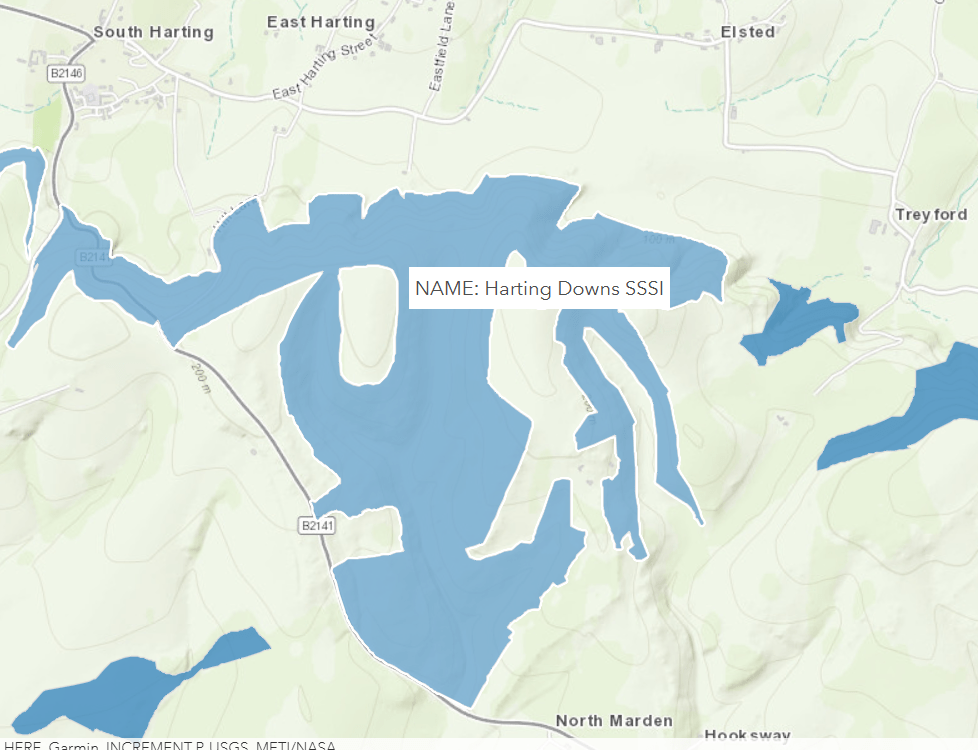
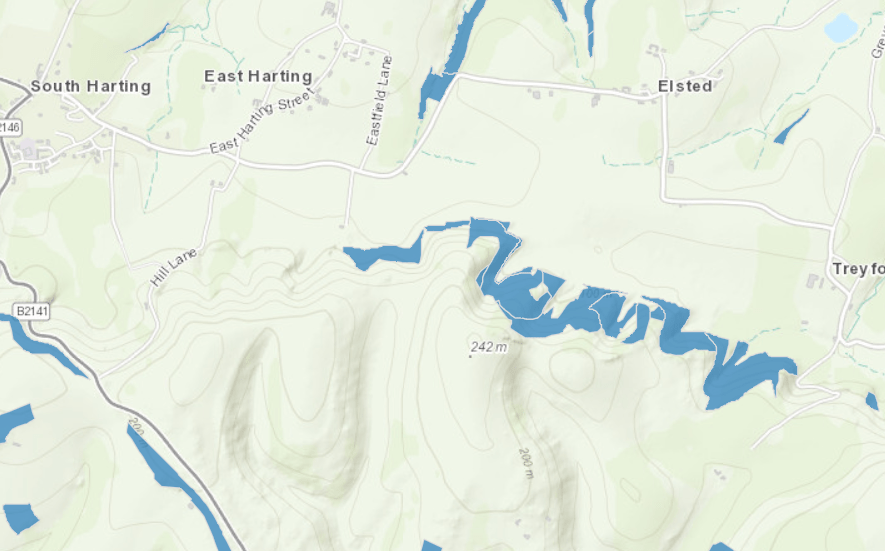
Casey’s Copse is within the Harting Down SSSI; Rook Clift is its own SSSI, just to the east of Harting Down SSSI near Treyford
The SSSI citation for Harting Down does not mention the presence of Large-Leaved Lime; but the citation was last revised in 1980; 45 years ago. Many SSSI specifications are very old now, and don’t represent current knowledge of sites. The Rooks Clift citation is much more accurate, and is more recent (1997); although it misses out the huge amount of Solomon’s Seal on the slopes of the stream valley.
From South Harting SSSI specification: Longer-established woodland occurs throughout the site, with a varied composition according to soil type and aspect. Beech Fagus sylvatica is common and becomes dominant on the scarp-face and valley sides. Oak Quercus robur and ash occur with yew on the deeper valley loams. The ground flora is quite sparse beneath the densest canopies, but elsewhere includes bramble Rubus fruticosus, ivy Hedera helix, dog’s mercury Mercurialis perennis and false-brome Brachypodium sylvaticum.
From the Rook Clift SSSI specificationRook Clift is a small wooded combe on the scarp slope of the South Downs. The soils are predominantly calcareous in nature, overlying the chalk of the Downs. Deeper soils occur at the foot of the slope, and also the course of a stream, arising within the wood. This site is an ancient woodland which remains in a semi-natural condition. Large leaved lime Tilia platyphyllos dominates the canopy, together with ash Fraxinus excelsior and some beech Fagus sylvatica. Large leaved lime is a nationally scarce tree, with its natural range concentrated on the limestones of the Wye Valley and Peak District. Thus the high concentration of mature coppice stools, occurring on chalk, make this site nationally important and unique within West Sussex and the South Downs Natural Area. The canopy of large leaved lime, together with some beech casts a heavy shade, and as a result the shrub layer is poorly developed with scattered whitebeam Sorbus aria and yewTaxus baccata.
The field layer is dominated by vernal species such as ramsons Allium ursinum and bluebell Endymion non-scripta, or shade tolerant species including dog’s mercury Mercurialis perennis, spurge laurel Daphne laureola and sanicle Sanicula europaea. The steep sided valley around the steam is more open with a canopy dominated by ash and wych elm Ulmus glabra. Here the field and ground layers are more developed with stands of hart’s tongue fern Phyllitis scolopendrium and soft shield fern Polystichum setiferum abundant, and opposite-leaved golden-saxifrage Chrysosplenium oppositifolium common along the stream side.
Both Casey’s Copse and Rooks Clift are designated by Nature England as ancient and semi-natural woodland. Looking at the Nature England ancient woodlands maps, it is clear that ancient woodland on the South Downs is mostly confined to the escarpments. There is much woodland in the Harting Down SSSI, but the dip slope woodland is not ancient.
Looking up to the scape-slope woodland before reaching Casey’s Copse, green-orange Beech and dark green Yew stand out from the dying Ash.
Casey’s Copse
The boundary bank at the scarp foot of mostly coppiced Ash. Scarp foot coppiced Ash seems to be less effected by Ash dieback than the maidens on the scarp slopes. Features like this tell us that most ancient woodland included much human intervention
Some of the coppiced Large-Leaved Limes:
Looking through dead/dying Ash maidens toward Beech:
Coppiced lime with a maiden Ash next to it
Looking though Soft Shield Fern at Beech
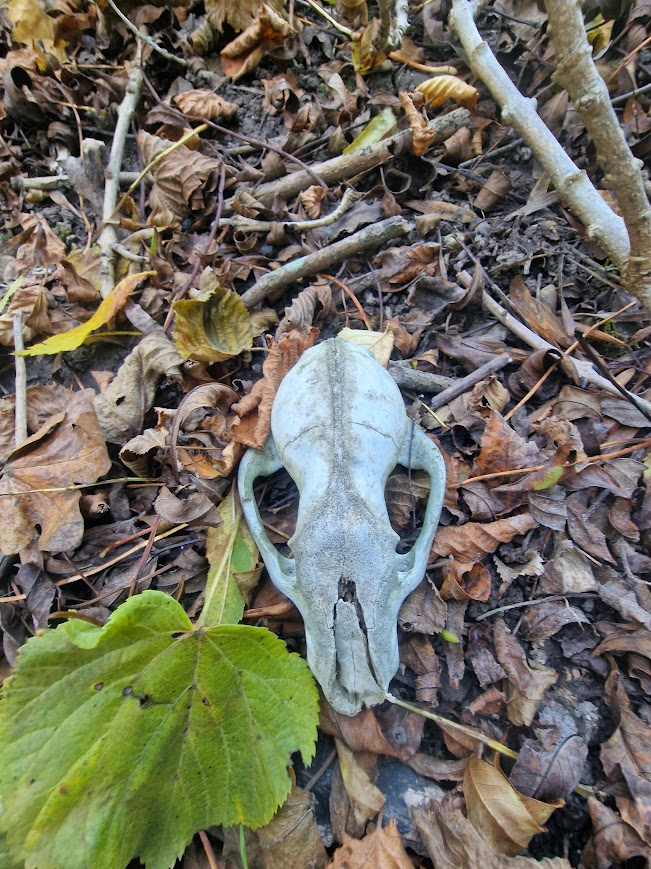
A Fox Skull next to a Long-leaved Lime leaf. In English folklore Long-Leaved Limes are associated with love, fertility, and justice. I hope the fox had lots of cubs!
A seemingly very ancient coppiced Long-Leaved Lime
Some of the lichens on this lime: Pertusaria leioplaca, Graphis scripta s.l. (Writing Lichen); Pertusaria pertusa (Pepper Pot Witing). All of these are common on smooth-barked trees like Beech, Sweet Chestnut and Lime
Walking along a hollow-way trackway at the foot of the downs, on gault clay. Trees: Hawthorn, Field Maple, Hazel
Hedgerow, from when the hollow-way ends.
One of a flock of about eight Yellow Hammers in the hedgerow
Path to the base of the bostal up Rooks Clift
Coppiced Ash along the path
Rooks Clift
Trackway up the north side pf the clift (variant of cleft, geographical: meaning a fissure or break)
Beech on the edge of the steep slope into the valley (clift) formed by a stream fed by a chalk spring
Yew
Soft Shield Fern
Beech
False Brome
Dogs Mercury
Fungus (probably Armillaira sp.) in the process of deliquescing
Going down the south side of the clift
Solomon’s Seal – extremely abundant
At this point if I had turned south and walked on I would have come to the grove of ca. 80 Long-Leaved Limes; but if I had done that I would have had to have walked back to South Harting as it got dark; that did not feel safe, so I am returning to Rook Clift on Saturday – watch out for Part II of this post!!!
Wych Elm
young Wych Elm tree (leaves to left; leaves on right, Hazel))
View from the south side f Rooks Clift to the north side: Beech and dying Ash
Hazel
Sunken trackway bedside the path on south side of clift
full of Harts-tongue Fern; extremely abundant, as in many South Downs hanger woods
Bank of sunken trackway with coppiced Beech
Back to the scarp foot path
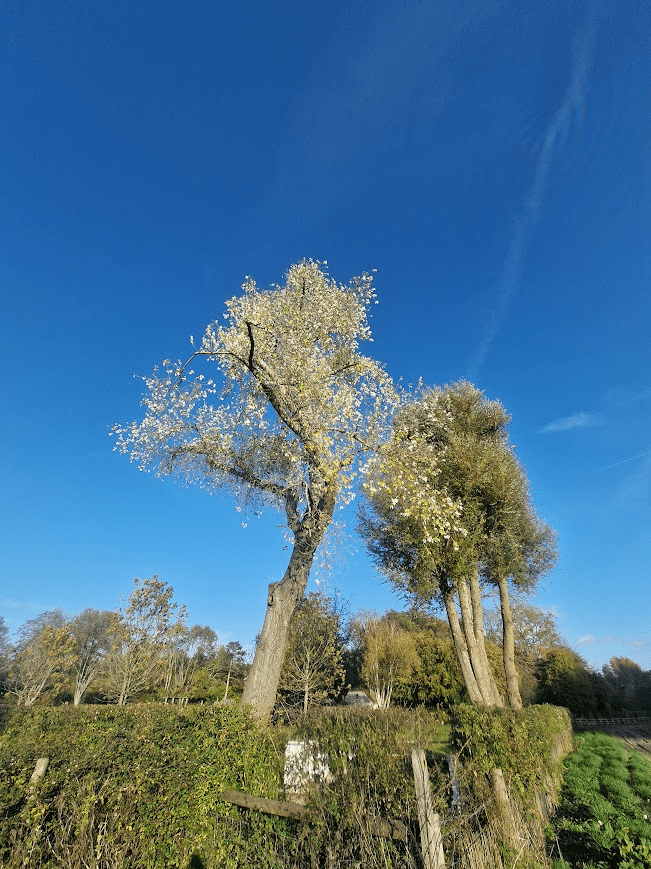
White Poplar
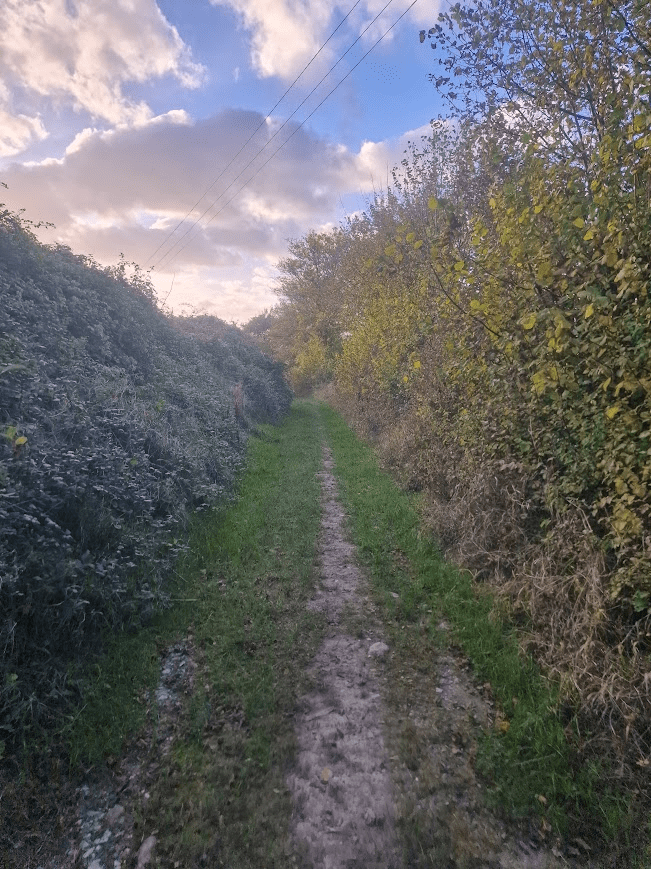
Getting dark – back along the hedged trackway
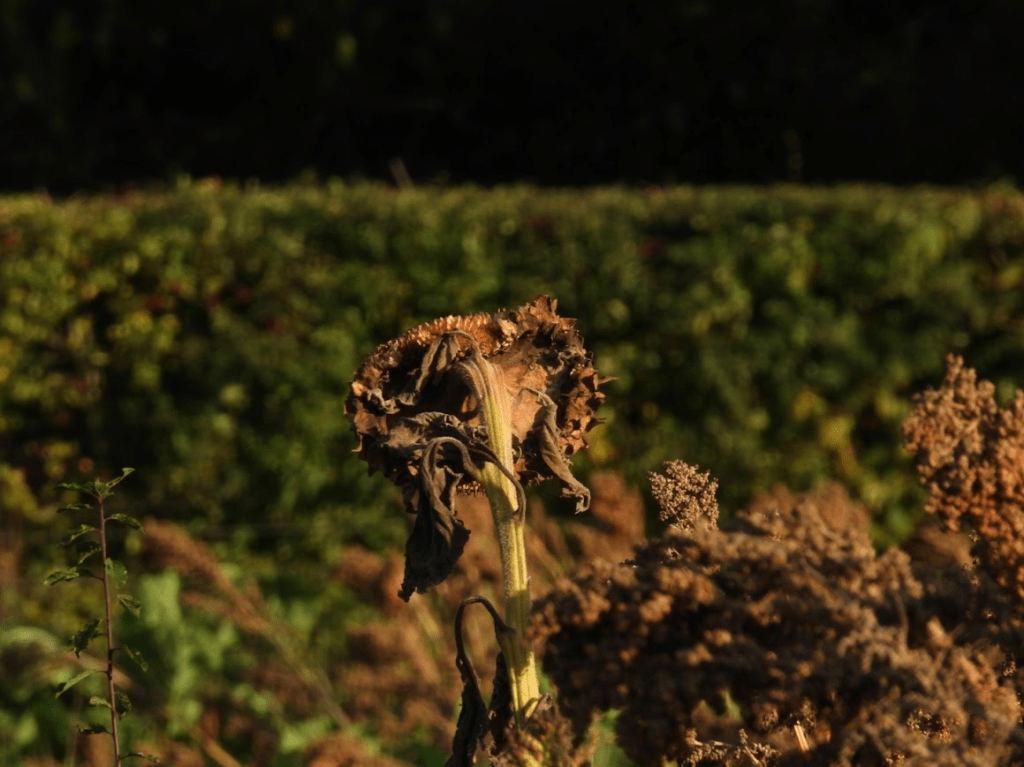
Getting darker -past a field of Sunflowers
Terrible photo of a Raven at dusk
For most of the afternoon I had heard Ravens kwaaking overhead; it gave Rooks Clift a more Poe-like Ravens Clift feel!
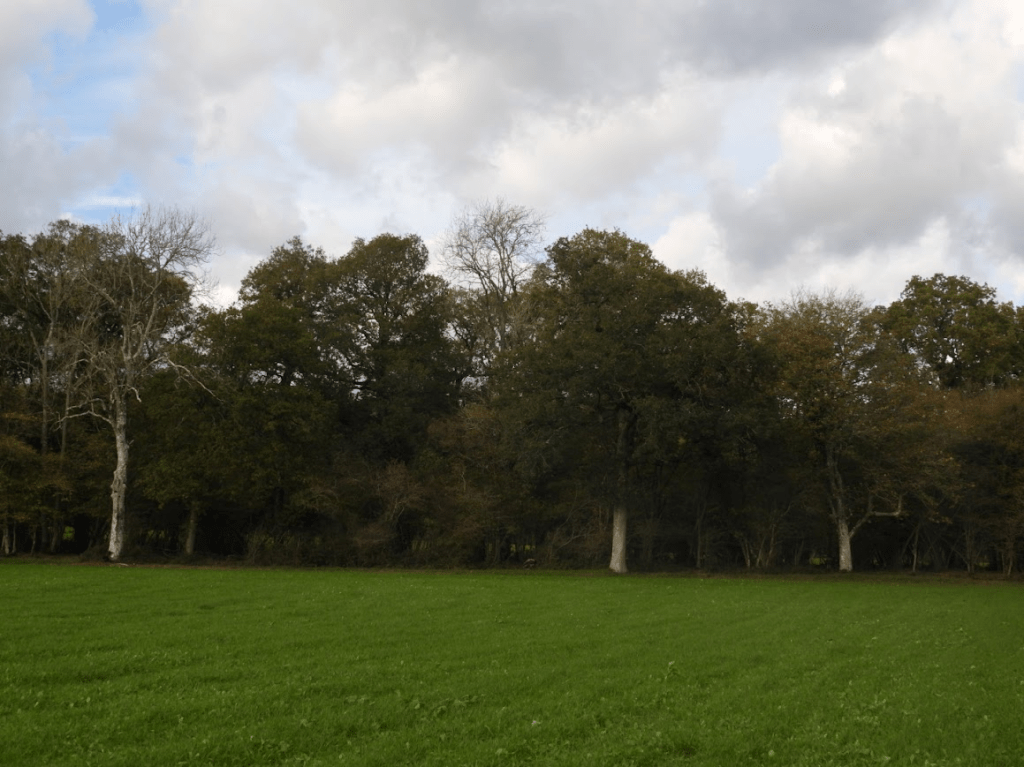
This shaw has no name. I visit it frequently because it has a special charm; it encapsulates the essence of the small parcels of ancient woodland in the Low Weald; a landscape that has preserved its medieval patten of fields, hedgerows, shaws and woodlands. To get to it I walk through Bushygrove and Bakers shaws, named shaws of a similar character to this unnamed shaw. I take the 17 bus from Brighton to Cowfold to reach it.
A shaw is a strip of woodland usually between 5 and 15 metres wide. Shaws mostly form boundaries between fields. They are usually composed of semi-natural woodland and often have diverse woodland ground vegetation similar to other semi-natural woodlands in the area. In the Low Weald shaws may be the relicts of former larger woods, or they may have developed from narrower hedgerows. A look at the Natural England map of ancient woodland shows how many shaws in West Sussex are semi-natural ancient woodland
All sections of text in italics are quotations; sources given at the end of the quotes.
Most of the Wealden hedgerows – including shaws (narrow belts of woodland remaining when fields have been cut from woodlands) – are likely to date from the time of medieval assarts (fields derived from the general, unplanned clearance of woodlands and unenclosed commons by individuals). In Mid Sussex, as elsewhere in the Weald, there are relatively few hedgerows stemming from the formal enclosure of fields. The Weald appears to have a significant proportion of species rich/ancient hedgerows, revealed by the frequency of indicator species such as field maple, spindle and hazel. However, the data is not yet available to assess with any degree of accuracy the number, length and type of hedgerows in Sussex and its Districts. Mid Sussex District Council (2005) A Landscape Character Assessment For Mid Sussex.
Shaws are important relicts of long-lost woodland: In 1210 Beeding Manor had outlying farms in Cowfold and in 1256 the Bishop of Chichester’s chase extended down the whole East side of Cowfold Parish across to the Southwest corner and from there to near the centre of the northern boundary of the Parish. By 1257 the Cowfold tenants, customary and free, formed a distinct group. A large proportion of the Parish was woodland or orchards and remained so until the mid 18th century. Cowfold Parish Council. (2024) Cowfold Neighbourhood Plan 2019-2031. p.9
I am writing this post to “big-up” the biological importance of small, especially unnamed, shaws: to draw attention to the beauty of small patches of woodland. They are greatly under threat from development. There are many new housing development in-between the South Downs north of Brighton and the High Weald, in the Low Weald, transacted by the A281 (Pyecombe to Horsham) and the A273 (Pyecombe to Haywards Heath. As I travel on the 17 bus on the A281 or the buses 270,271, or 272 on the A273, I see the continuous building of new housing, and plans for housing are continually presented to planning authorities e.g. The Argus (21/02/25) Plans for dozens of homes near Cowfold are revealed
Sussex sits between two immovable features—the coast of the English channel and Greater London. In many places, it is the only ribbon of truly green land preventing unbroken concrete from connecting the two. … we have a legal commitment to net zero, but we are building homes in the middle of nowhere whose occupants are wholly reliant on a car to go anywhere. Andrew Griffith MP Arundel and South Downs Hansard Housing Developments: West Sussex Volume 679: debated on Monday 7 September 2020
The Low Weald lacks the higher level of protection of the South Downs, which is a National Park, and the High Weald, a National Landscape (area of outstanding natural beauty), not that that necessarily offers between protection in practice to the South Downs and High Weald
I became aware of this shaw from a map of Wild Service Trees
in Dave Bang’s excellent book.(2018) The Land of the Brighton Line: A Field Guide to the Middle Sussex and Southeast Surrey Weald 018 ISBN: 978095486382
This unnamed shaw has large maiden trees – Wild Service, Pedunculate Oak, and Ash – with an understory of Field Maple, Hazel, Hawthorn, Wild Cherry and Midland Thorn. Wild Service, Midland Thorn and Wild Cherry are ancient woodland indicators.
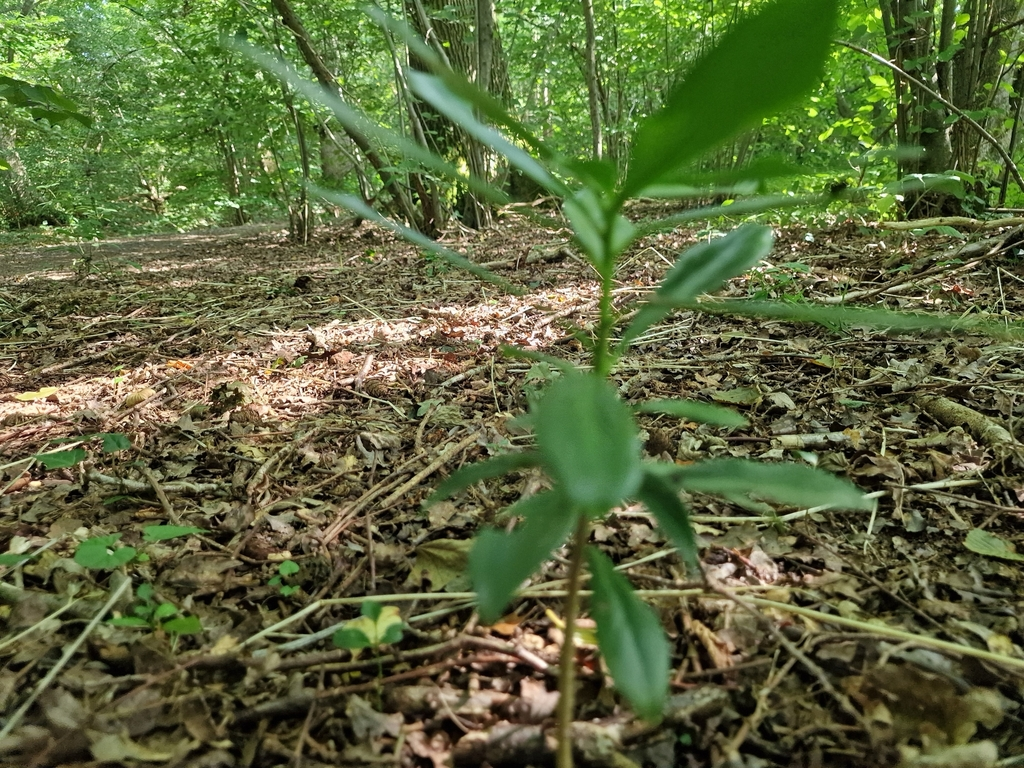
It’s ground flora includes the ancient woodland indicators Bluebells and Wood Anemone, in the Spring, and Butchers Broom, all year round. In a nearby stand Spurge-Laurel and Wood Spurge can be found.
This blog does not attempt to be a full survey of the vascular plants in this shaw; it is just the things I found particularly noticeable.
Ancient Woodland Indicators visible in Autumn
Sorbus torminalis Wild Service Tree
Trunk. This trunk of a maiden Wild Service Tree is covered in lichen so it hard to see the trunks morphology
Most Wild Service Trees have few lichens from my experience, but on the side which gets most light this tree had abundant lichens.
This trunk in the shaw shows the typical bark of Wild Service Tress; many Wild Service Trees in the Low Weald have been coppiced into two trunks. (e.g. the large Wild Service Tree in Furzefield Wood nr. West Grinstead and the numerous Wild Service Trees of West Wood nr. Burgess Hil)
Leaves and fruit
Crataegus laevigata, Midland Thorn
Trunk and leaves
Fruit
Midland Thorn has two (or more) seeds in their haws, whereas Hawthorns have only one
This Midland Thorn Flower on 29/04/25; with twin stigmas
Prunus avium Wild Cherry
Wild Cherries can be identified just by their trunk morphology which is so characteristic. However, in spring their white flowers are very characteristic; and in summer so are their berries. However, ripe berries are almost immediately eaten by birds; if you are lucky enough to see them, they make a very nice fruity snack on a walk
Wild Cherry flowers from a tree in Baker’s Shaw; 400m south of this (unnamed shaw) in the Spring
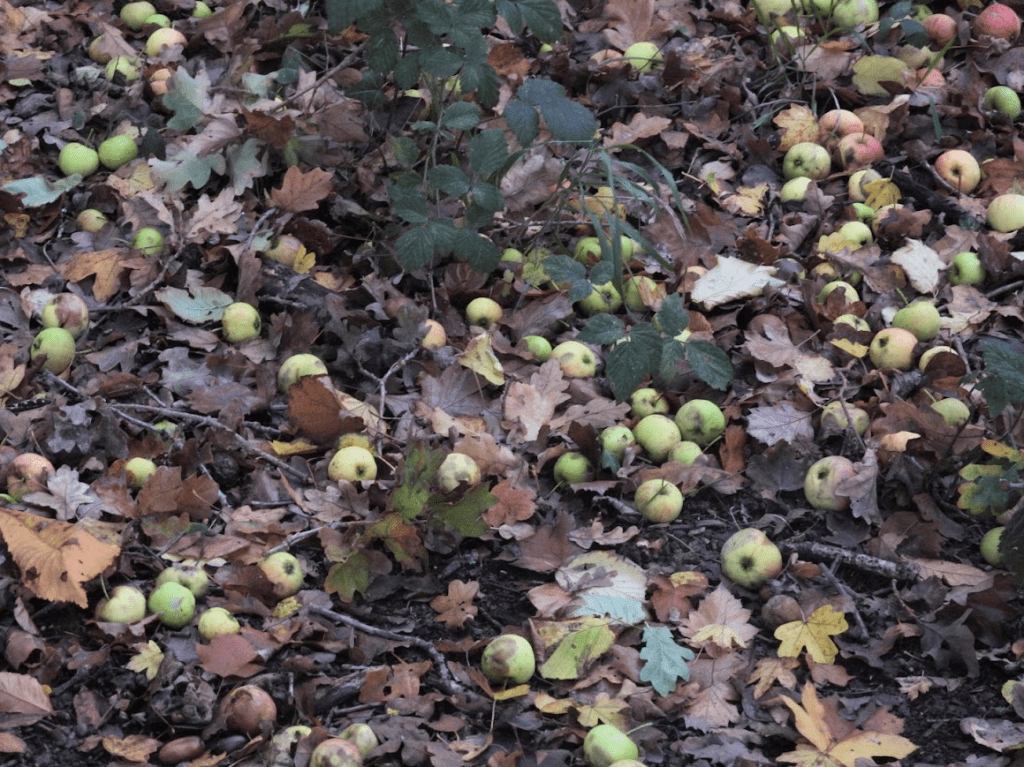
Malus sylvestris,Crab Apple – Fruit.
Theses crab apples trees were in Bushygrove Shaw. Crab Apples are easiest to identify in Autumn when their fruits are on the forest floor; just look up and you’ll see the tree(s) they came from. This autumn is a “mast year” when fruits from trees are abundant.
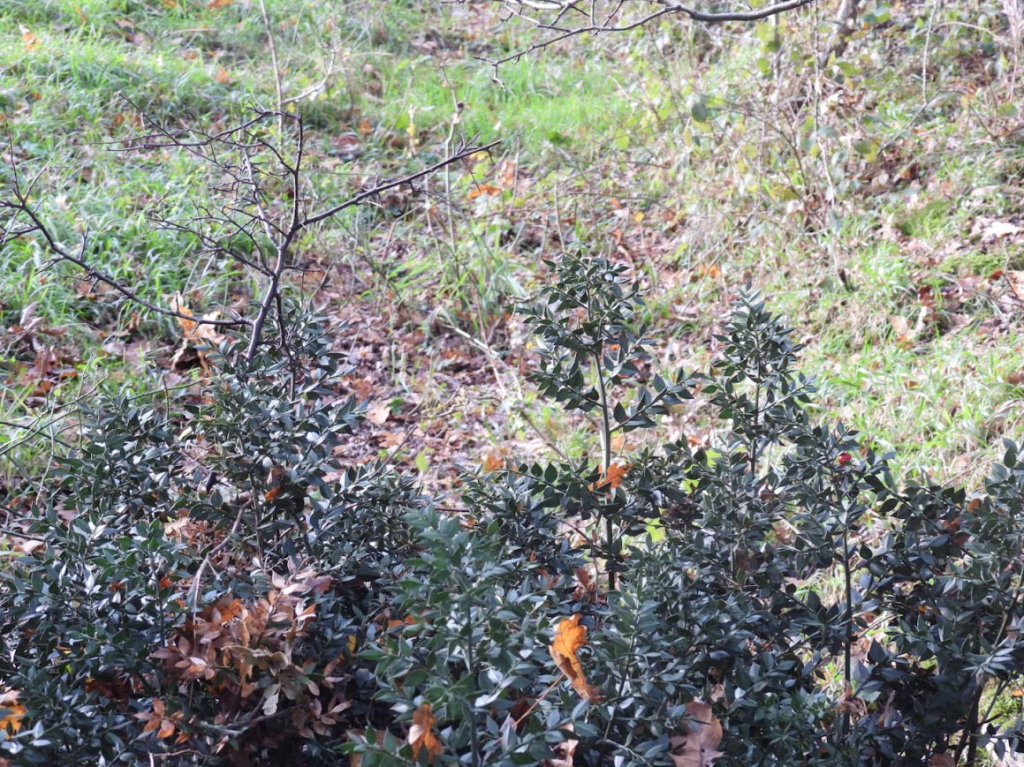
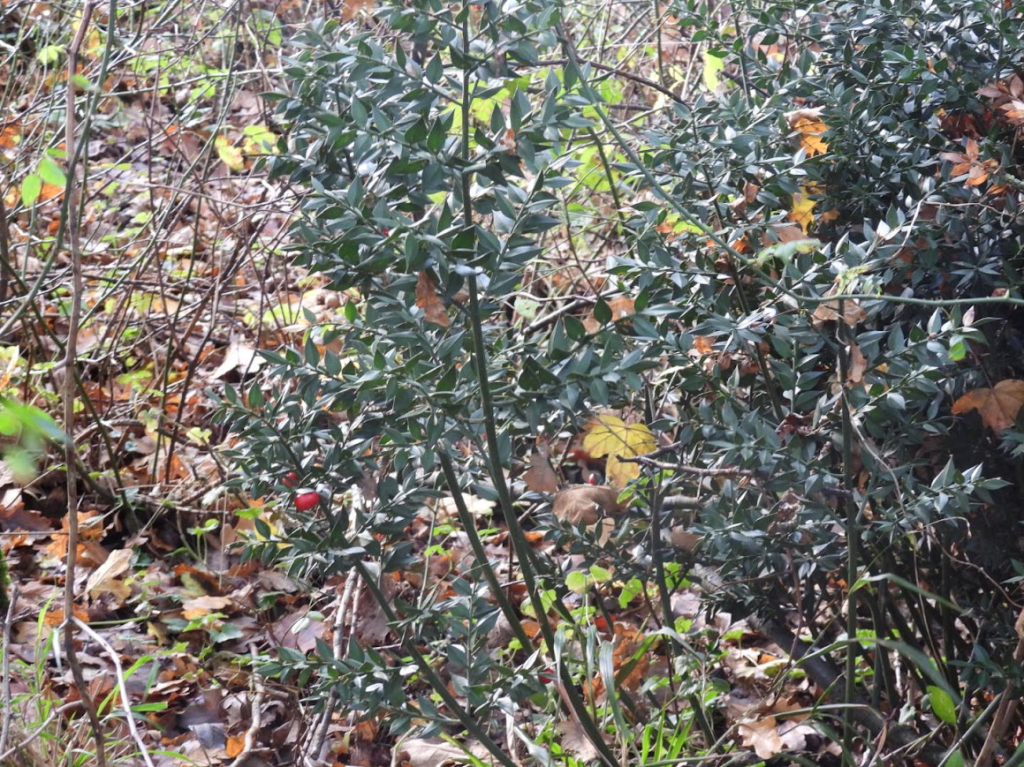
Ruscus aculeatusButchers Broom
Butchers broom is a shrub which grows under trees in ancient woodlands; it’s leaves and flowers are very characteristic. Butcher’s broom leaves are not true leaves but are actually flattened stems called cladodes, with sharp spikes on the ends of the cladodes. Its flowers bloom in very early spring; and female flowers produce berries in Summer, which persist into Autumn
Butchers broom is known as an ‘ancient woodland indicator’. This is because it doesn’t colonise new habitats or spread easily to new woods; where it is growing, the wood has usually been there for a very long time. … Look beneath the deciduous trees, even in the more shaded areas.
Butchers broom is quite unlike any other British plant. It is a short evergreen bush growing up to about two feet high and all the leaves end in a pointed spike; one of its old English names is ‘knee holly’. In early spring, the tiny, pale green six-petalled flowers sit in the middle of the leaf and show that these leaves are, technically, flattened stems.
Butchers broom was used to scour butcher’s blocks until the nineteenth century. The spiky leaves seem ideal for getting into the cuts of old wooden blocks to clean them.New Forest National Park Butchers Broom
Fruit:
Ancient Woodland Indicators seen on other visits:
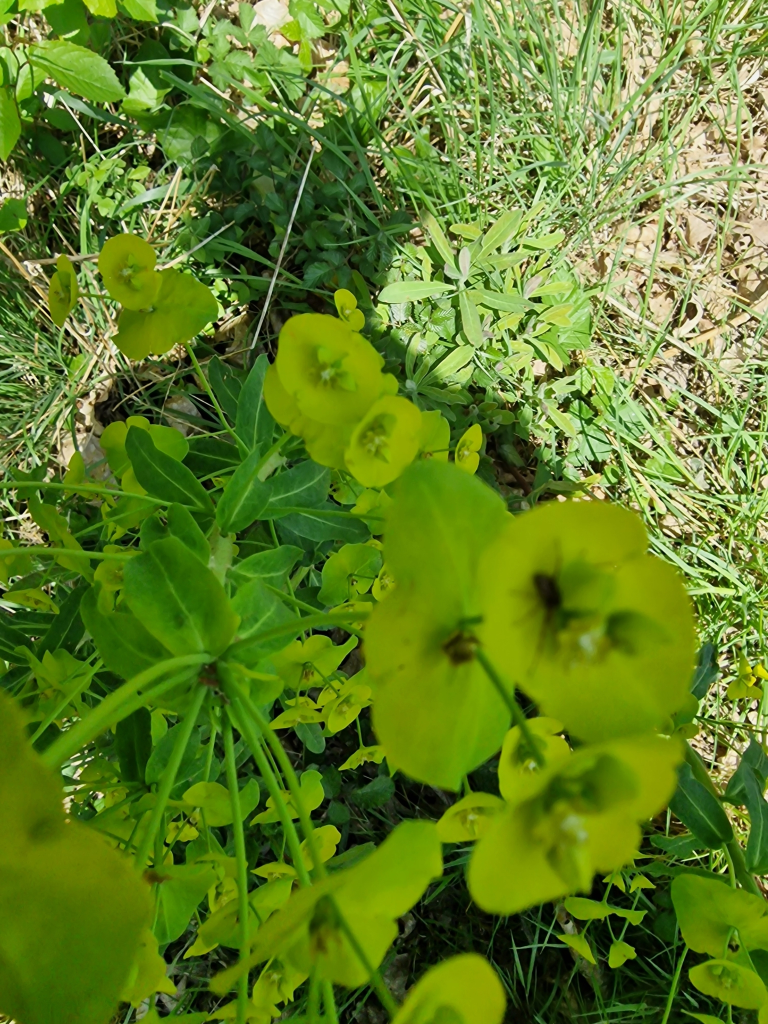
Euphorbia amygdaloides Wood Spurge seen on 29.08.24 in Baker’s Shaw; 400m south of this (unnamed shaw)
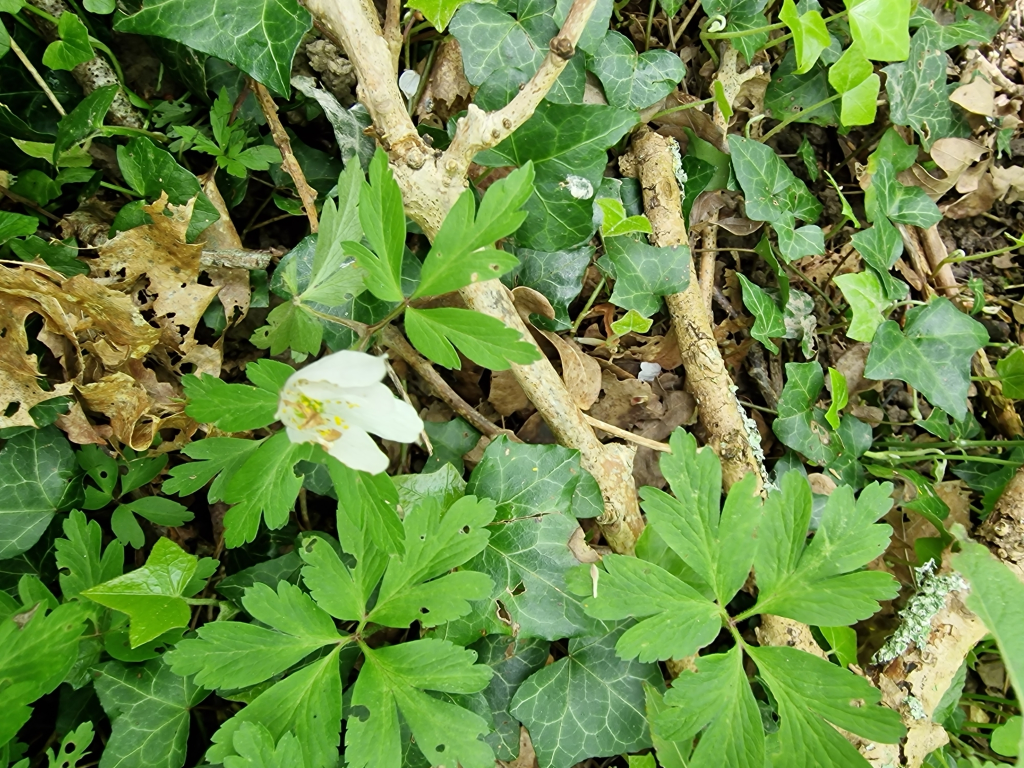
Anemonoides nemorosaWood Anemone 16.04.25
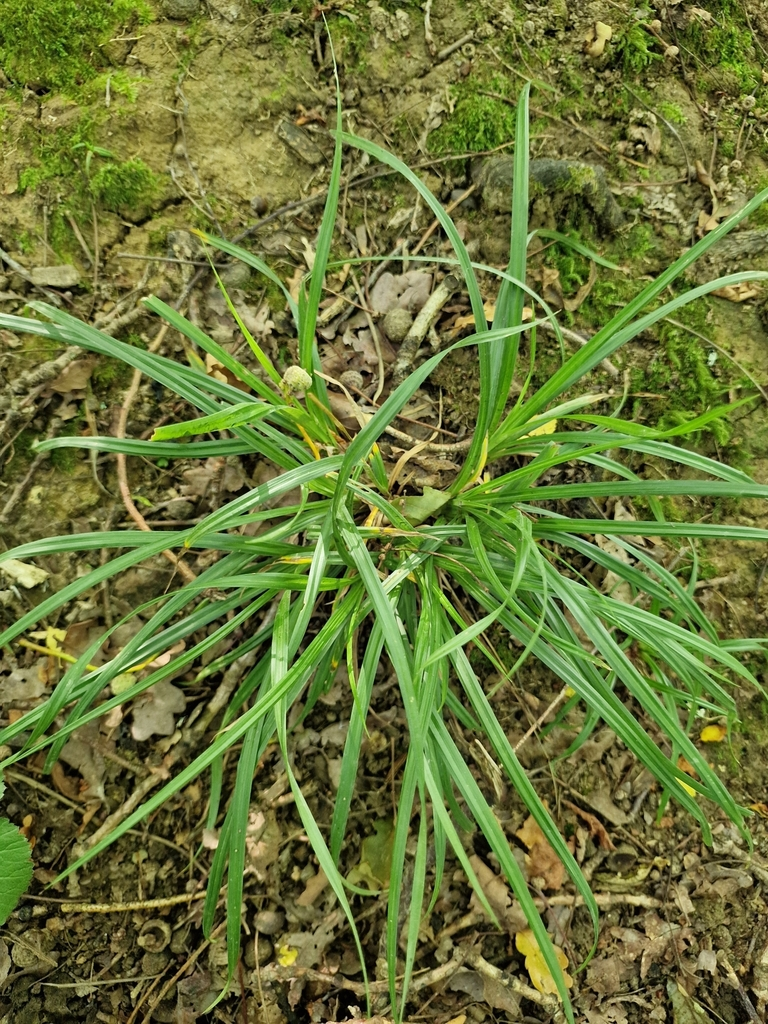
Carex sylvatica Wood Sedge – seen on 29.08.24 in Baker’s Shaw; 400m south of this (unnamed shaw)
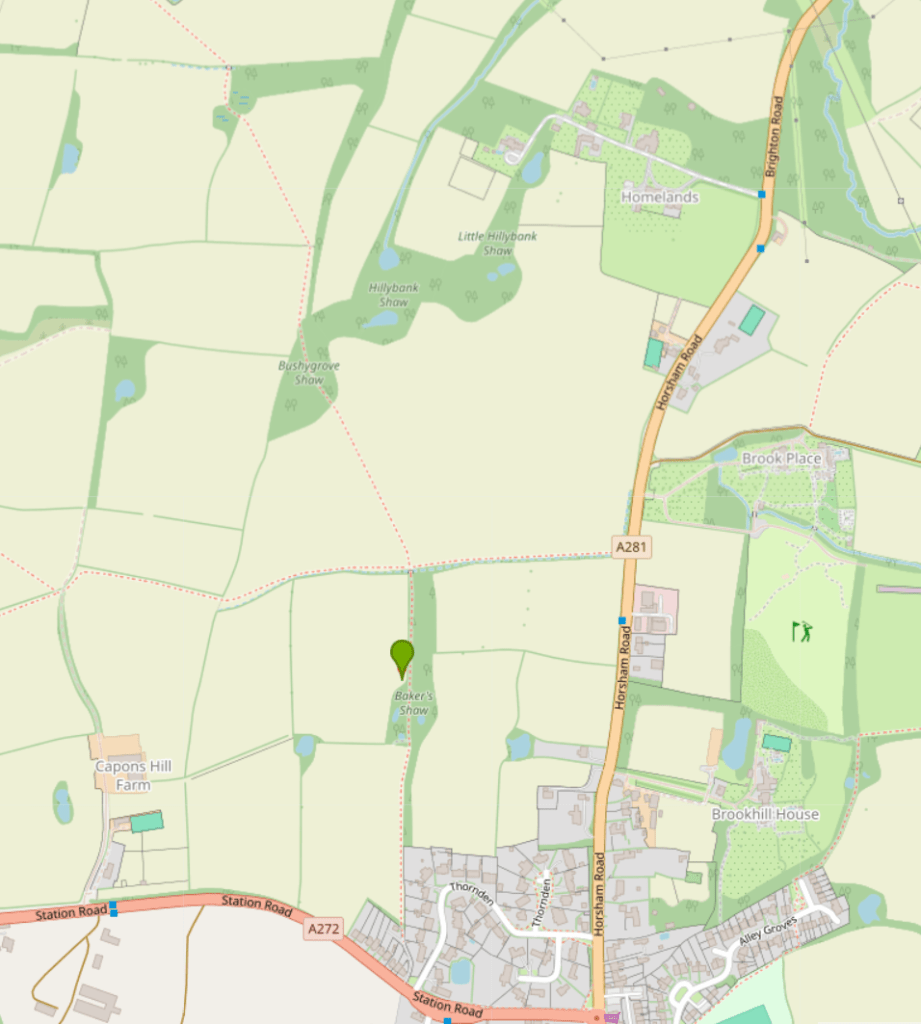
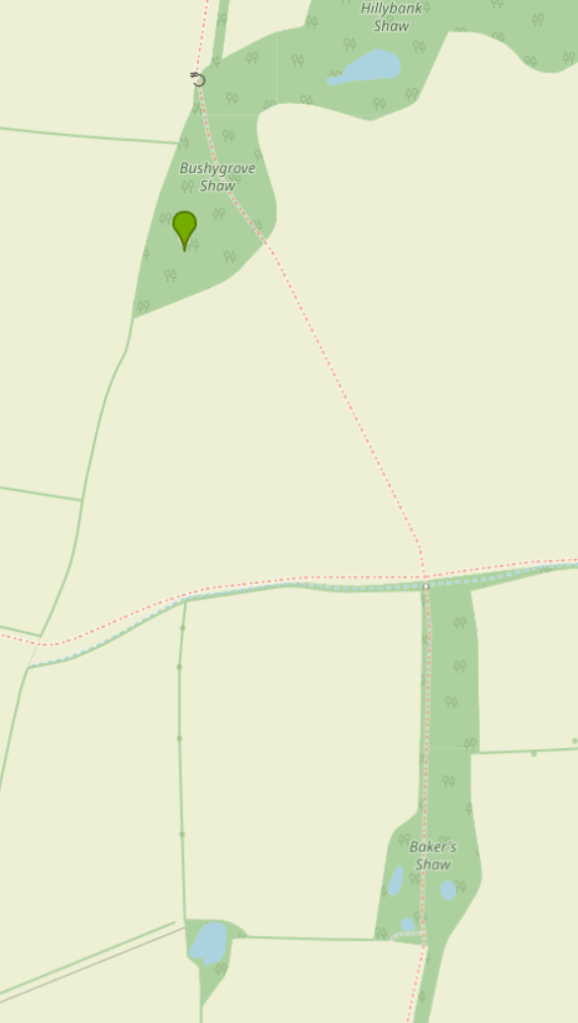
The locations of Bushygrove and Baker’s Shaws
Map above from iNaturalist community. Observation of Euphorbia amygdaloides from Cowfold, Sussex observed on 29/08. Exported from https://www.inaturalist.org on 25.10.25 showing Bushygrove and Bakers Shaw
Detail of Bushygrove and Bakers Shaw
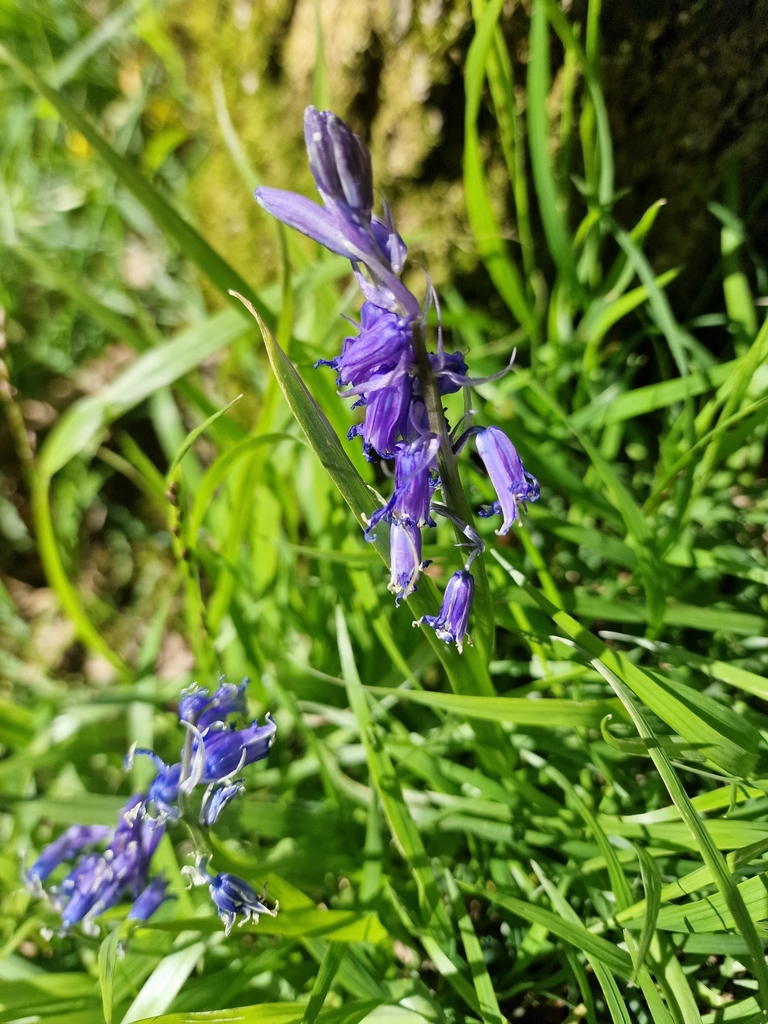
Hyacinthoides non-scripta Bluebell in Spring 29.04.25
Daphne laureola Spurge-Laurel
In Baker’s Shaw; 400m south of this (unnamed shaw)
The large maidens, with “white” lichen-covered bark, are Ash, Pedunculate Oak (and Wild Service)
The understory is Hawthorn, Field Maple, Hazel, Holly (and Midland Thorne)
Quercus roburPedunculate Oak
Pedunculate Oaks leaves and acorns in autumn are very distinctive. In some areas of the Low Weald, especially on the Greensand Ridge there are Sessile Oaks, e.g. at Rakes Hanger, near Liss (hanger in West Sussex)
Trunk of Pedunculate Oak. The sides of trunks which receive most light are often covered in lichens. This maiden Oak is on the edge of the shaw
This Oak also has a beautiful fingus growing on it:
Phaeotremella foliacea Leafy Brain
Fraxinus excelsior Ash
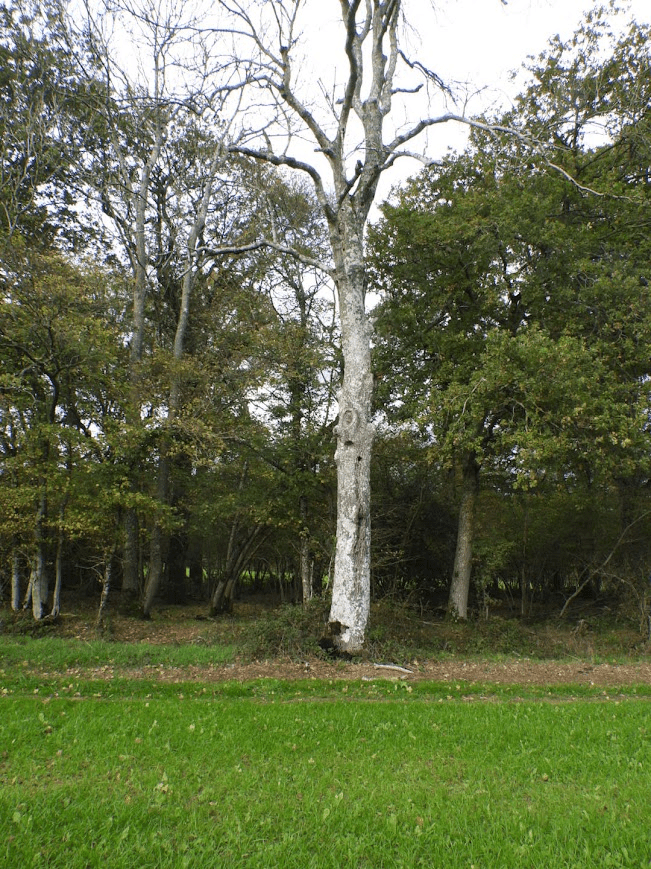
This maiden Ash, on the edge of the Shaw, is typical of an Ash with Ash Dieback Disease, with no leaves (in October, whilst Ash is deciduous, you would except to see some leaves)
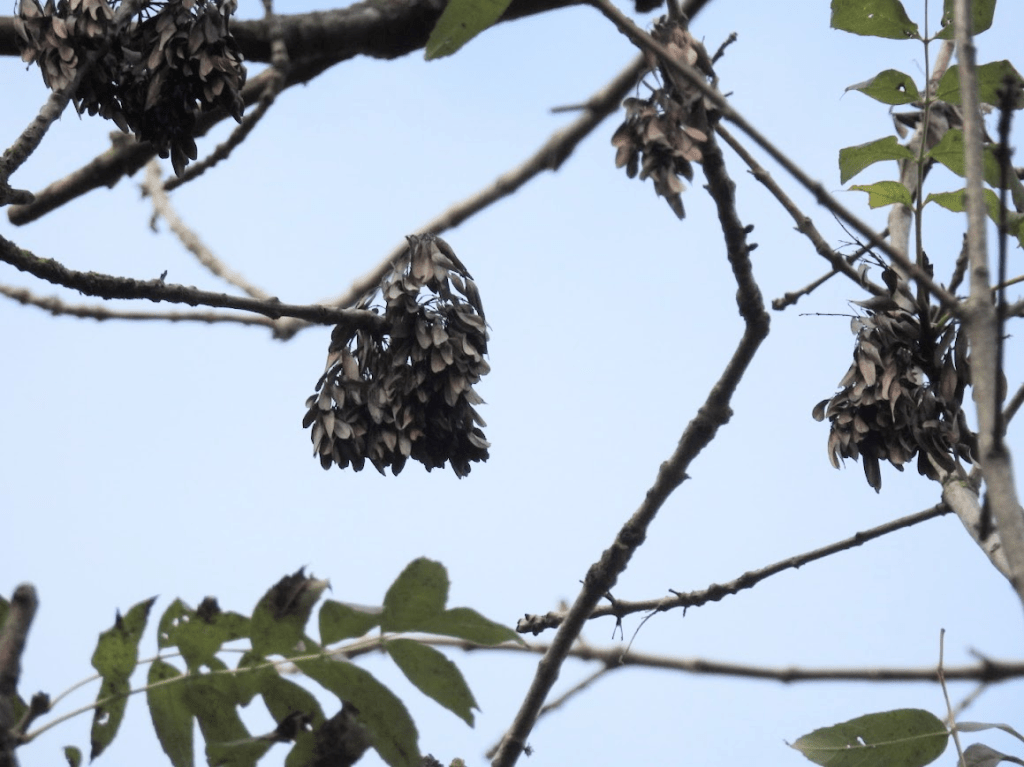
When Ash has leaves their leaves are very characteristic; as are their samaras.
Samaras are the winged, single-seeded fruits, commonly called “ash keys, that can be seen in Autumn and Winter within the shaw were healthier Ash showing these features:
Ash is an extremely important tree for lichens; it is the tree species with the second highest diversity of lichens, according to the British Lichen Society
Ash dieback will kill up to 80% of ash trees across the UK. At a cost of billions, the effects will be staggering. It will change the landscape forever and threaten many species which rely on ash.
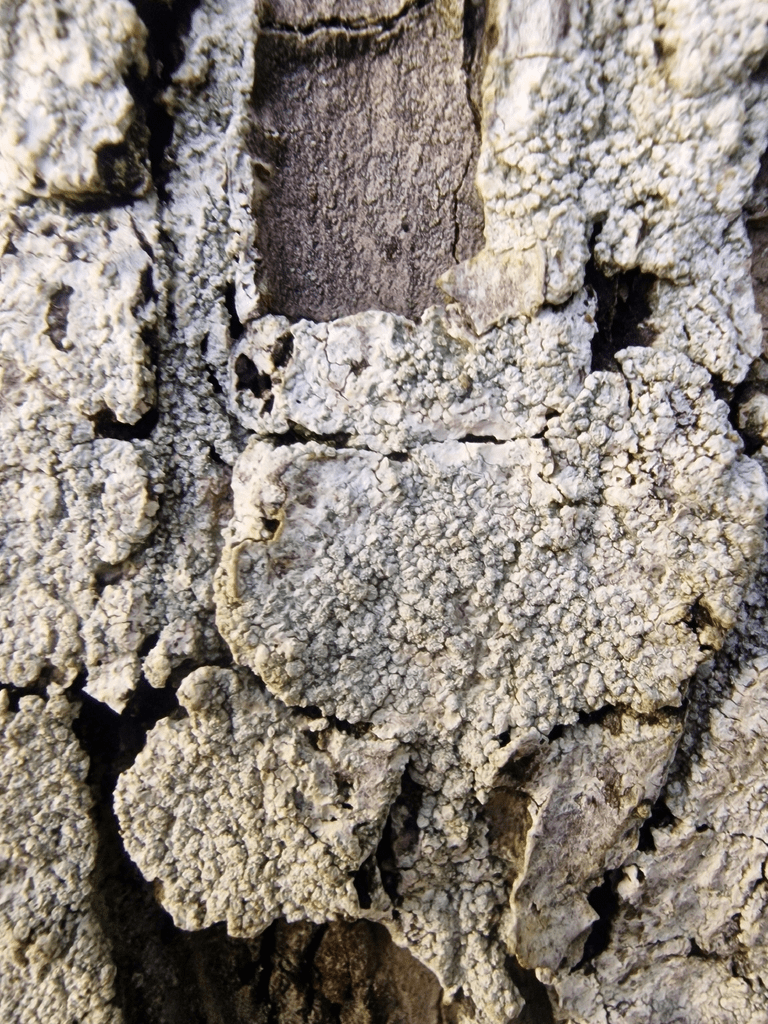
Varicellaria hemisphaerica is a rare UK lichen, and it is on the Ash on the south-facing edge of the shaw; this Ash is dying
I walked this route twice; once on my own (4/10/25) and once with a friend (13/10/25). The first time I got the 29 bus from Brighton and got off at Perryman’s Lane and got on at Barnsgate manner.
The sighting I enjoyed most (on 13/10/25) was a Minotaur Beetle, Typhaeus typhoeus, on Devil’s-Fingers, Clathrus archeri, under Bracken beside the path. Clathrus archeri is also called Octopus Stinkhorn because is stinks of rotting organic matter, which attracted the Minotaur Beetle (a dung nettle) who then obligingly propagated the fungus’ spores. I had read about Clathrus archeri‘s ability to attract spore-disseminators through scent; but it was great to see this in the field. Minotaur beetles emerge as adults in the autumn. Males like this one, die after mating
Clathrus archeri is not native; it was accidentally introduced from New Zealand in materials sent to Britain from New Zealand for ANZAC stationed in the UK during WWI
The route we took is marked in pink. The route passes through the southern part of Ashdown Forest. British Geological Survey: Ashdown Formation – Sandstone and siltstone, interbedded. Sedimentary bedrock formed between 145 and 133.9 million years ago during the Cretaceous period. Rocks Wood, Furnace Wood, Payne’s Hill and Campfields Rough is designated by Nature England as Ancient and Semi-Natural Woodland
The yellow-green areas on the map are Access Land and are the parts of Ashdown Forest that still is common land. The resistance of the commoners to the enclosure of Ashdown Forest in the 17th century resulted in almost half the original Forest remaining as common land
The website First Nature – Fungi is extremely useful for identification and for information about UK fungi
This is not a complete list of all the fungi we saw; it is a list of the fungi I took a reasonable photo of!
04/10/25
Russula claroflava, Yellow Swamp Brittlegill, under Silver Birch
Lactarius quietus Oakbug Milkcap, under a Pendunculate Oak Oakbug milkcap is an important mycorrhizal species for oak trees, forming cooperative relationships with oak roots.Woodland Trust
Amanita muscaria Fly Agaric. Very common, often associated with Birch
This Fly Agaric has contorted to form a goblet shape (13/10/25)
Siberian use of fly agaric may have played a part in the development of the legend of Santa Claus too. At midwinter festivals the shaman would enter the yurt through the smoke hole and down the central supporting birch pole, bringing with him a bag of dried fly agaric. After conducting his ceremonies he would leave the same way he had come. Ordinary people would have believed the shaman could fly himself, or with the aid of reindeer which they also knew to have a taste for fly agaric. Santa is now dressed in the same colours as the fly agaric, carries a sack with special gifts, comes and goes via the chimney, can fly with reindeer and lives in the ‘Far North’.Trees for Life: Fly Agaric Folklore
Coprinus comatus Shaggy Inkcap
A somewhat sketchy sketch of a Shaggy Inkcap (Coprinus comatus) drawn using the ink produced by a fellow Shaggy Inkcap! by Jane Baxter
Amanita rubescens Blusher
Blushers are mycorhizal with hardwood and softwood trees; they are particularly abundant in many conifer forests on poor acidic soils, where they occur in small groups more often than singly. First Nature
Leccinum aurantiacum Orange Bolete
Widespread and abundant in Scandinavia and in Scotland, but it is increasingly rare further south, especially in lowland areas. … All Leccinum species are ectomycorrhizal, and most are found only with one tree genus. Leccinum aurantiacum is mycorrhizal most commonly with poplars and aspen (Populus species) and with oak trees (Quercus species); less often it occurs with other broadleaf trees including beech and birches.First Nature
Cortinarius violaceus Violet Webcap
In Britain and Ireland, where it is a very rare find, the Violet Cortinarius grows … rich woodland habitats mainly under Beeches and other broadleaf trees but also very occasionally with conifers. This is a mushroom of late summer and autumn.First Nature Red data list: near threatened. A mycorrhizal mushroom found in deciduous woodland
Amanita fulva Tawny Grisette
Initially egg-shaped, the cap expands to become flat but with a small raised central area (an umbo). The edge of the cap is striated (with comb-like radial ridges). Amanita fulva is mycorhizal with hardwood and softwood trees; it is commonly found beside woodland paths. First Nature
Amanita phalloides Deathcap
It is said that Agrippina murdered her husband, Roman Emperor Claudius, by mixing deathcap juice with Caesar’s mushrooms (Amanita caesarea). He died of poisoning a few days after the meal. Voltaire claimed that Charles VI died by deathcap poisoning.Woodland Trust
13.10.25
Clavulina cinerea Grey Coral Fungus. In leaf litter in Furncae Wood (Hornbeam, Oak a and Scots Pine) Considered to be mycorrhizal; on the ground beneath deciduous trees as well as conifers; usually where there is a build up of leaf litter. First Nature
Boletus edulis Penny Bun.
Weighty, fat cap like a crusty, well-baked bun. It is slugs (including the scarce lemon slug (Malacolimax tenellus), several species of mushroom fly, as well as other insects and their larvae. Mythology and symbolism. … In folklore it is said that the best time to hunt for penny bun and other ceps is when it’s a full moon. … They are called porcini (little pigs) in Italy, cep (trunk, because of the fat stem) in France and Steinpilz (stone mushroom) in Germany.Woodland Trust
Lactarius quietus Oakbug Milkcap, under Oak (Quercus robur)
Mycorrhizal with oak trees. Although Lactarius quietus could be confused with several other medium-sized pale brown milkcaps, the fact that it occurs only under oak trees is a great help in identifying this speciesFirst Nature
When identifying fungi, what trees thet are near too is very important to identification.
Lactarius torminosus Woolly Milkcap
Mycorrhizal, found under birch trees nearly always in damp places.First Nature
Datronia mollis Common Mazegill
Datronia is a genus of poroid crust fungi Datronia mollis fungi cause a white rot in broadleaf trees. It is saprobic fungus. saprobic fungus. Its is not a parastic fungis which live on or in a living host, and eventually kill it; saprobic fungi feed on dead material. Saprobic fungi play a major role in breaking down and recycling wood and other forest debris, creating healthy soil, and freeing up nutrients for microbes, insects, and growing plants. Mount Rainier Park Service
Mycena rosea Rosy Bonnet
Like many other species in the genus Mycena, the Rosy Bonnet is reported to be bioluminescent, emitting a weak green light (wavelength in the region of of 520 to 530 nanometres). … Saprobic, among leaf litter in deciduous woods and mixed woodland.First Nature
Suillellus queletii Deceiving Bolete
Occasional in southern Britain but increasingly rare further north. … Suillellus queletii is an ectomycorrhizal fungus; it is usually found growing on alkaline soil beneath hardwood trees, notably oaks but also beech and limesFirst Nature
Ectomycorrhizal fungi … are intimately associated with the roots of most temperate tree species. Hyphae, the thread-like filaments of fungi, wrap around the root tips of the tree and through them water uptake and nutrient exchange take place. The hyphae are also known to provide trees with a degree of resistance from drought and also serve as a protective barrier from diseases.
Ectomycorrhizal (ECM) fungi are intimately associated with most temperate tree species and have demonstrated important and rapid shifts in species composition and abundance in response to a range of environmental stresses (e.g. droughts, eutrophication and/or acidification of forest soils).
Monitoring of changes in ECM fungal communities might, as a result, serve as a sensitive early warning indicator of environmental change that has the potential to be disruptive to trees. This might develop where environmental change, such as the eutrophication of forest soils, interferes with the varied functional roles of ECM, including the vital roles of facilitating carbon, nutrient and water uptake in trees. Forest Research
Laccaria amethystina Amethyst Deceiver
During dry spells the caps and stems of Laccaria laccata become much paler and eventually almost white. The specimen seen here is not yet completely dry; its cap is becoming paler from the centre. Eventually, Amethyst Deceivers become pale buff, as do the common Deceivers. This makes identification of old specimens even more difficult. … Among leaf litter in all kinds of woodland but particularly plentiful under beech trees, with which it is ectomycorrhizal. First Nature
“Mycorrhizal” is a broad term for a symbiotic relationship between fungi and plant roots, while ectomycorrhizal is a specific type of mycorrhizal relationship where the fungus forms a sheath outside the root cells and does not penetrate them. The other main type, endomycorrhizal (also called arbuscular), involves the fungus penetrating and entering the root cell. sThe other main type, endomycorrhizal (also called arbuscular), involves the fungus penetrating and entering the root cells. Wenchen Song (2024) Ectomycorrhizal fungi: Potential guardians of terrestrial ecosystems
Paxillus involutus Brown Roll-Rim
Brown Rollrim is classified as a gilled member of the order Boletales, and like the boletes themselves it forms ectomycorrhizal relationships with tree. First Nature
Russula nigricans Blackening Brittlegill
Russula nigricans, the Blackening Brittlegill, is a very variable species in terms of its size, shape and colour: it changes in each of these respects quite markedly as it matures, eventually becoming black all over. … The Blackening Brittlegill is, like other Russula species, ectomycorrhizal.