I went to Ashburnham Park with two lichen friends to look at its lichens. Ashburnham Park is a top site in Sussex for epiphytic lichens. This is not necessarily a representative account of the lichen diversity at Ashburnham as we only had time to walk around part of the SSSI; further visits to this outstanding site are required. All the identifications were made collaboratively and are based on morphological features. Lichens marked # require spore microscopy to confirm identification. Thus, some of these identifications are provisional
Ashburnham is a former medieval deer park lying on Tunbridge Wells Sandstone and Wadhurst Clay. The ancient woodland is one of the largest remaining areas of its kind in the country and contains many overmature trees with outstanding lichen floras.
Pedunculate oak Quercus robur andbeech Fagus sylvatica woodland covers the majority of the site including all of the northern outlier. It varies from a closed high forest to a very open woodland with holly Ilex aquifolium and birch Betula species and a shrub layer of bracken Pteridium aquilinum and bramble Rubus fruticosus. Mature Scots pines Pinus sylvestris occur throughout.
Overmature oaks and beeches occur throughout and support a great variety of epiphytic lichens with over 160 species recorded from the site as a whole. Holly is also an important host supporting a number of particularly interesting species which are not common this far east of the New Forest.
Ash Fraxinus excelsior is more frequent on calcareous soils in the west of the site while damp alder Alnus glutinosa woodland occupies the stream valleys and lake margins. Areas of coppiced hazel Corylus avellana, hornbeam Carpinus betulus and sweet chestnut Castanea sativa occur throughout the site, and there are also small mixed plantations and many scattered exotic species.
Woodland corticolous lichens
Usnea ceratina
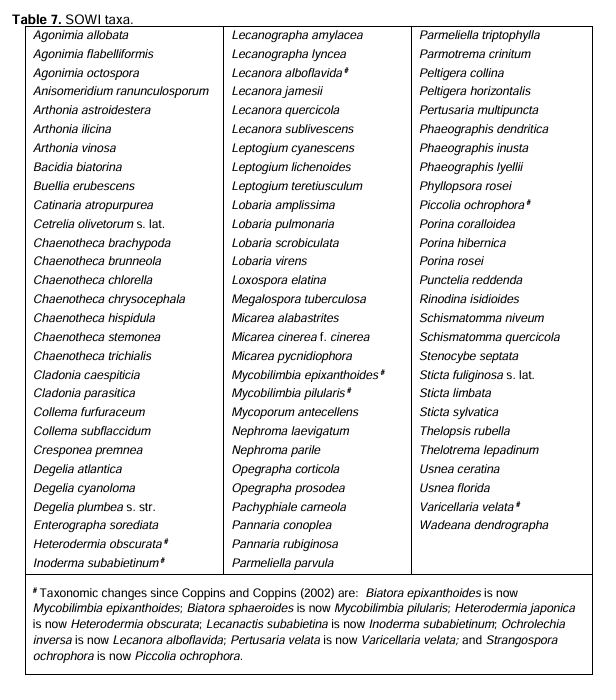
Fallen from a Quercus robur (Pedunculate Oak), U. ceratina is one of the Southern Oceanic Woodland Index (SOWI) lichens of ecological continuity used to asses the quality of woodland sites for lichens (including determining which site might become SSSIs). At the end of this post is a table of all the SOWI lichens. Other SOWI lichens are marked SOWI.
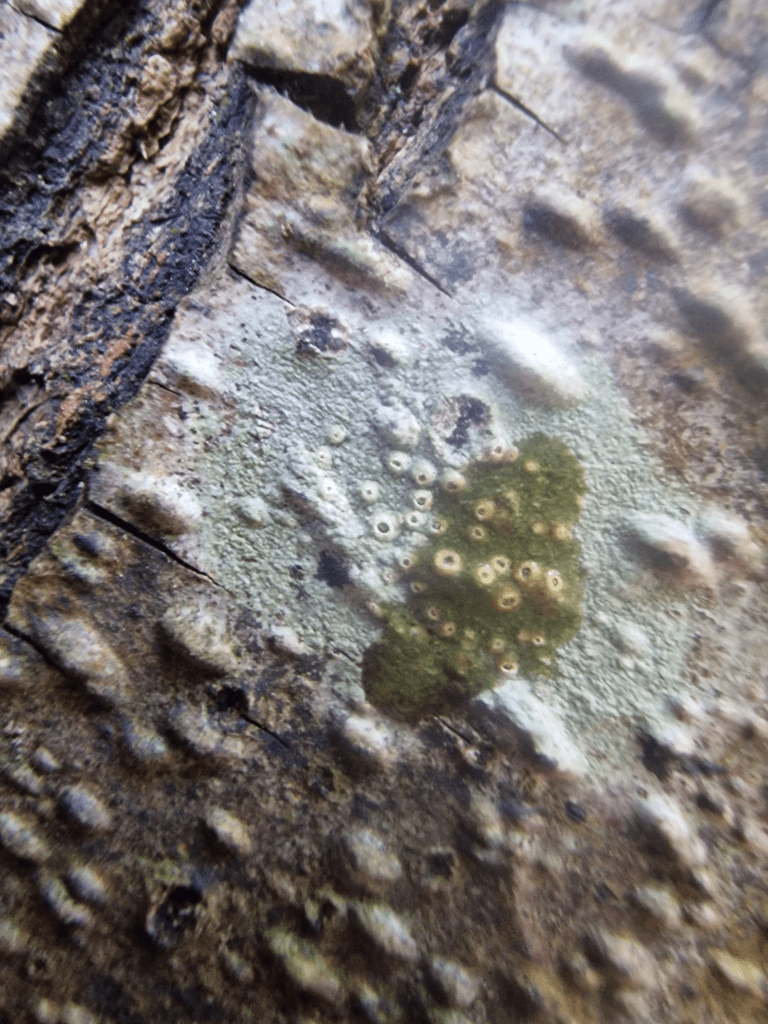
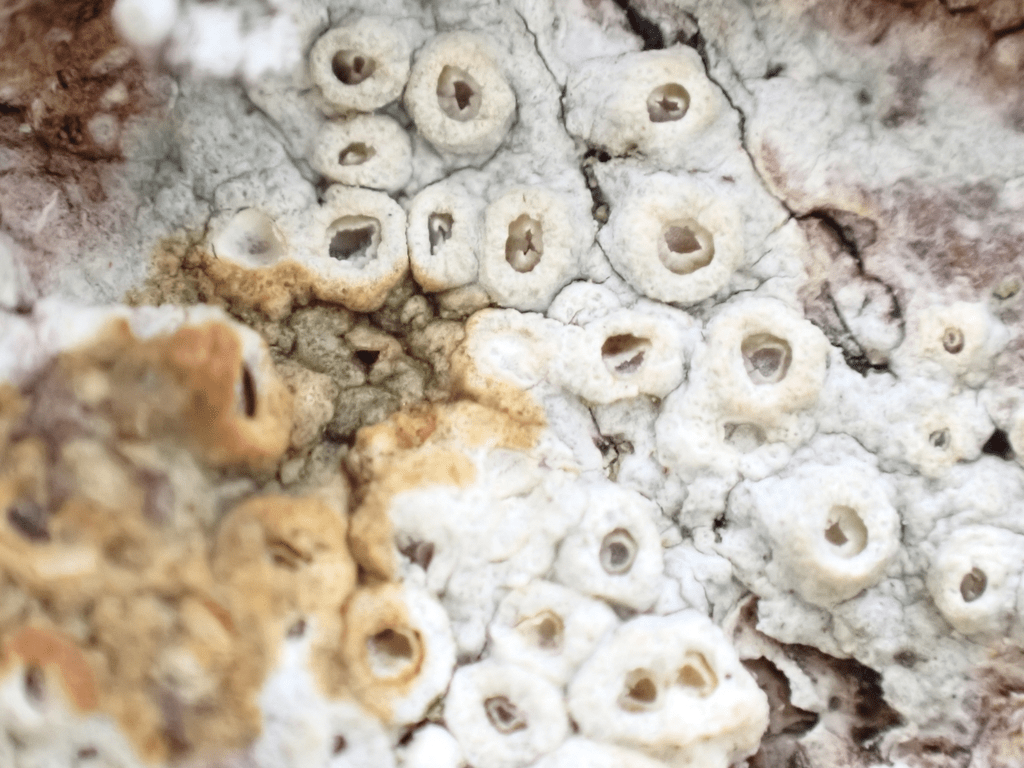
A Quercus robur covered in Thelotrema sp. Bark Barnacle Lichen (SOWI). In the past there was only one Thelotrema sp., T. lepadinum but not it has been subdivide into two: T. lepadinum and
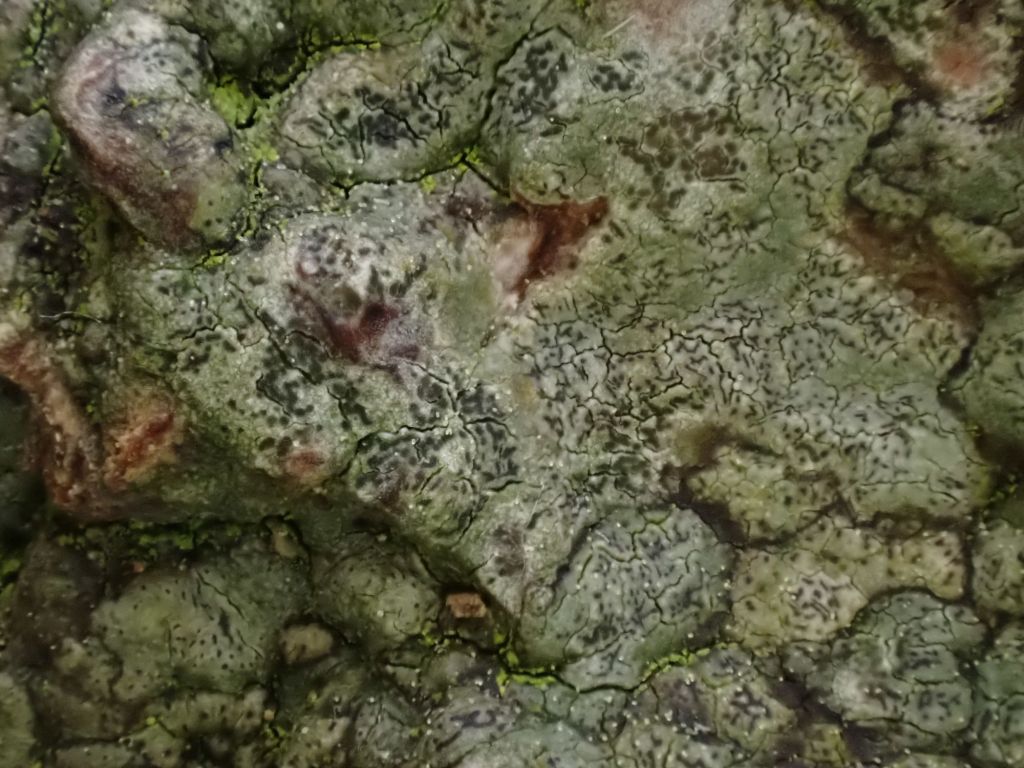
This is probably Thelotrema lueckingii SOWI, and Pertusaria leioplaca., on a Sweet Chestnut, Castanea sativa; one of a few planted in Ashburnham Park. When C. sativa is the main tree in replanted ancient woods it has only Graphidaceae lichens & Pertusaria spp. mostly P. leioplaca. But in here in semi-natural ancient woodland it is joined by a Thelotrema sp.
Similar to Thelotrema lepadinum in almost all details but deviating by the partly citrine yellow medulla (especially in the warts); the pigment reacts K+ red and darkens to an more orange colour when exposed. British Lichen Society Thelotrema luekingii
This is probably Cladonia floerkeana on lignum; red apothecia on podetia difficult to see in this photo
Cladonia caespiticia (SOWI) on Quercus robur
Cresponea premnea (SOWI) on Quercus robur
The dominant species of the Ancient Dry Bark Communities in souther oceanic woodlands (Lecanactidetumpremneae) on dry bark on old trees, often with Lecanographa lyncea
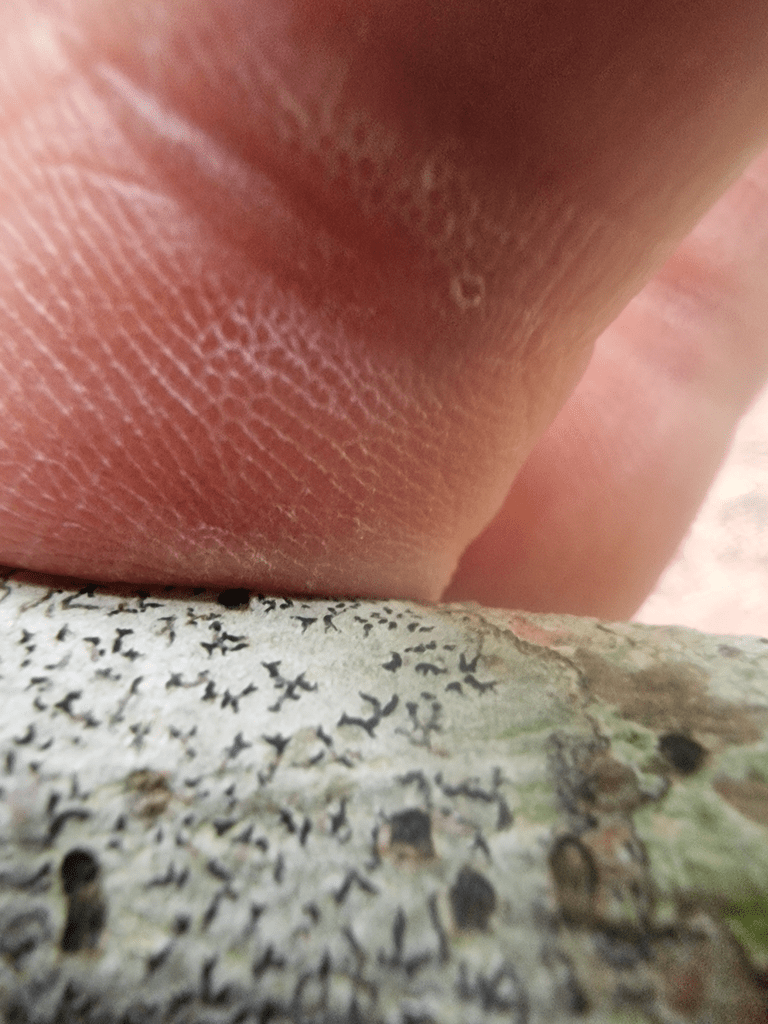
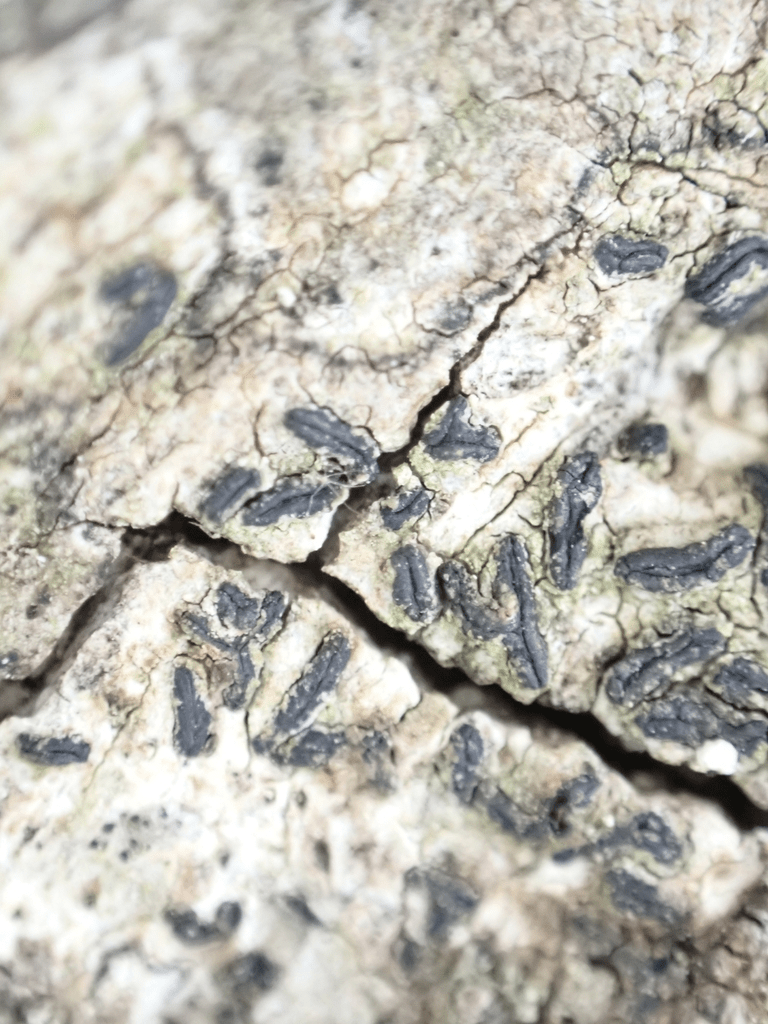
Lecanographa lyncea (SOWI) on Quercus robur
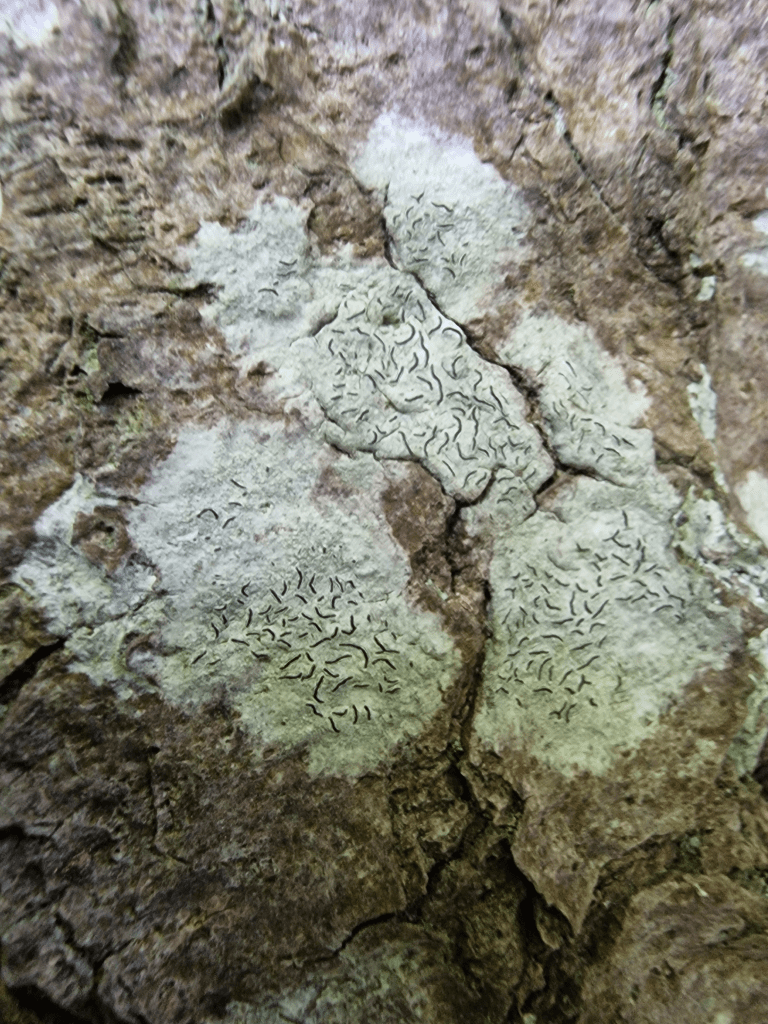
Enterographa crassa meeting Cresponea premnea on a smooth patch of Quercus robur. It is possible, but unlikely that this is Enterographa sorediata (SOWI)
Arthonia radiata # on Quercus robur
Phaeographis dendritica # (SOWI) on Quercus robur with Thelotrema sp.
Possibly Phaeographis smithii # on oak twig.
Chaenotheca ferruginea
Anisomeridium sp. # probably: A. biforme
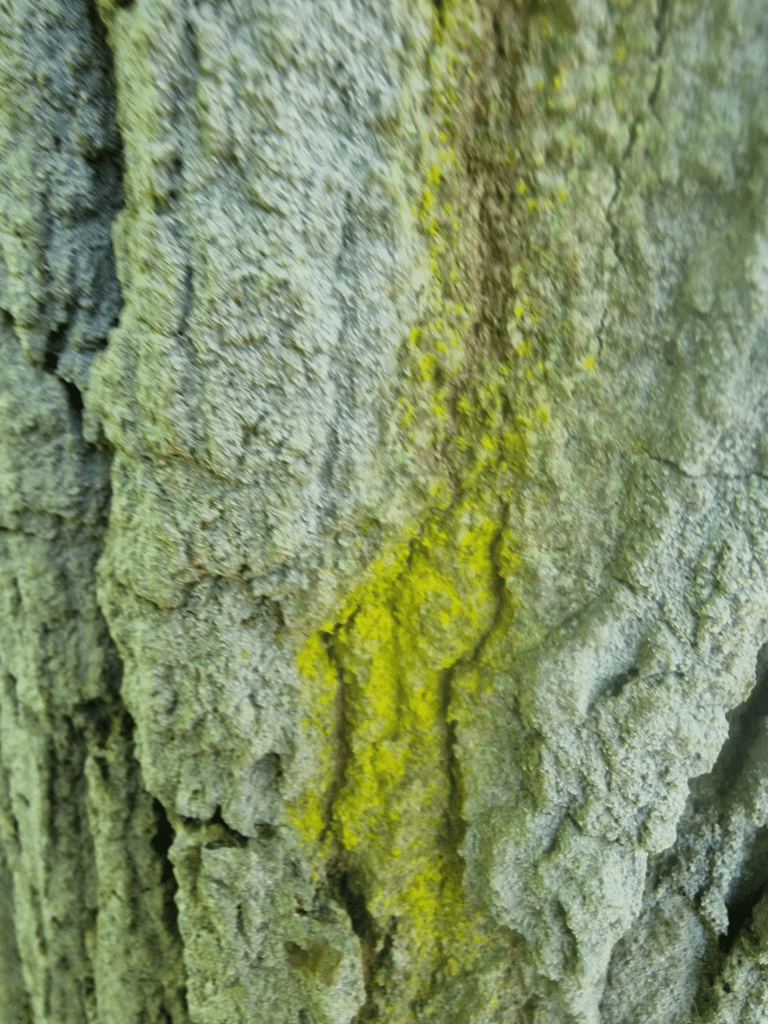
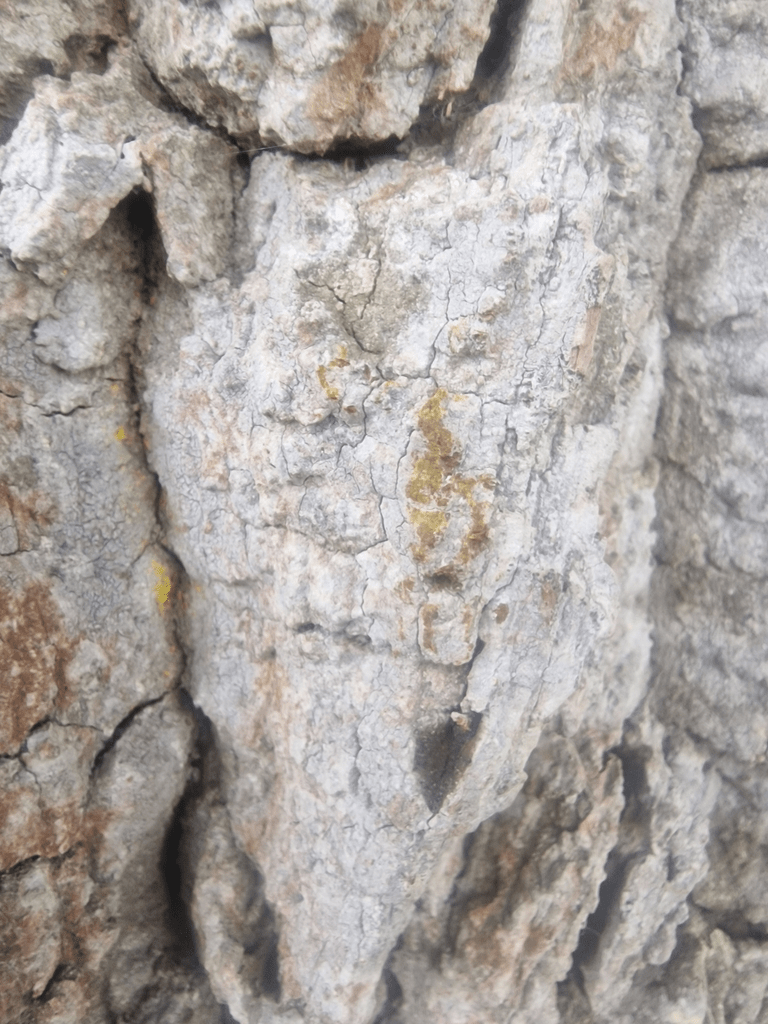
Chrysothrix candelaris Gold Dust Lichen
Pyrrhospora quernea, on Quercus robur
Lecanactis abietina, on Quercus robur
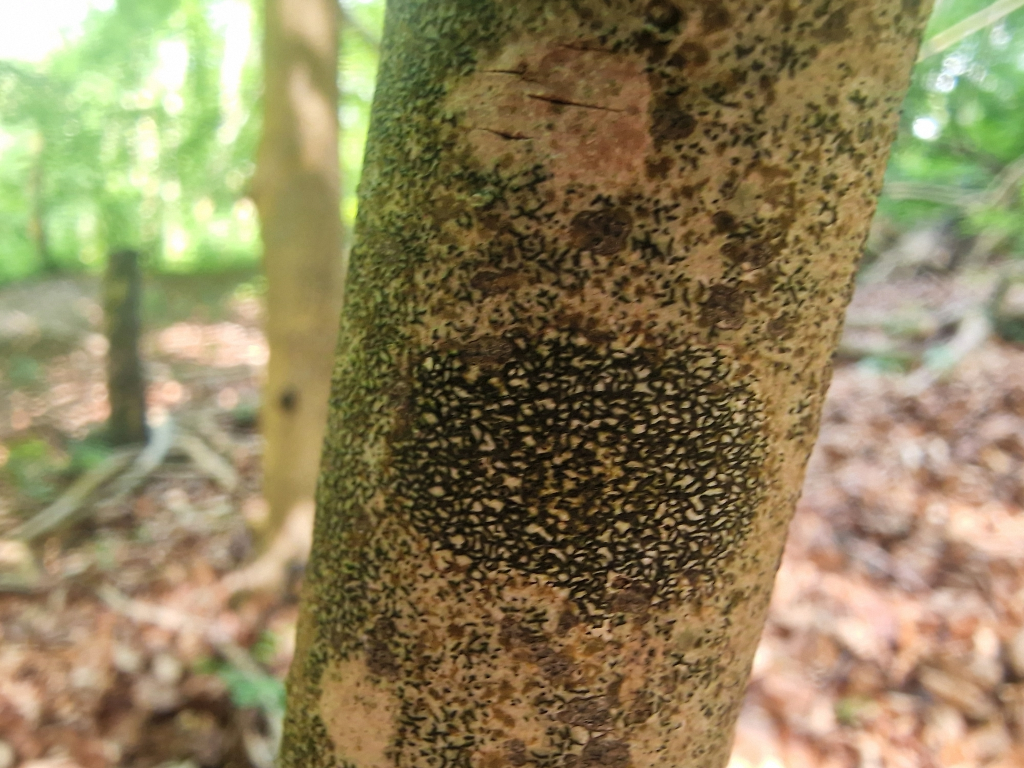
Graphis scripta # on Castanea sativa
Saxicolous Lichens on Capability Brown Bridge
Tephromela atra Black-eye Lichen
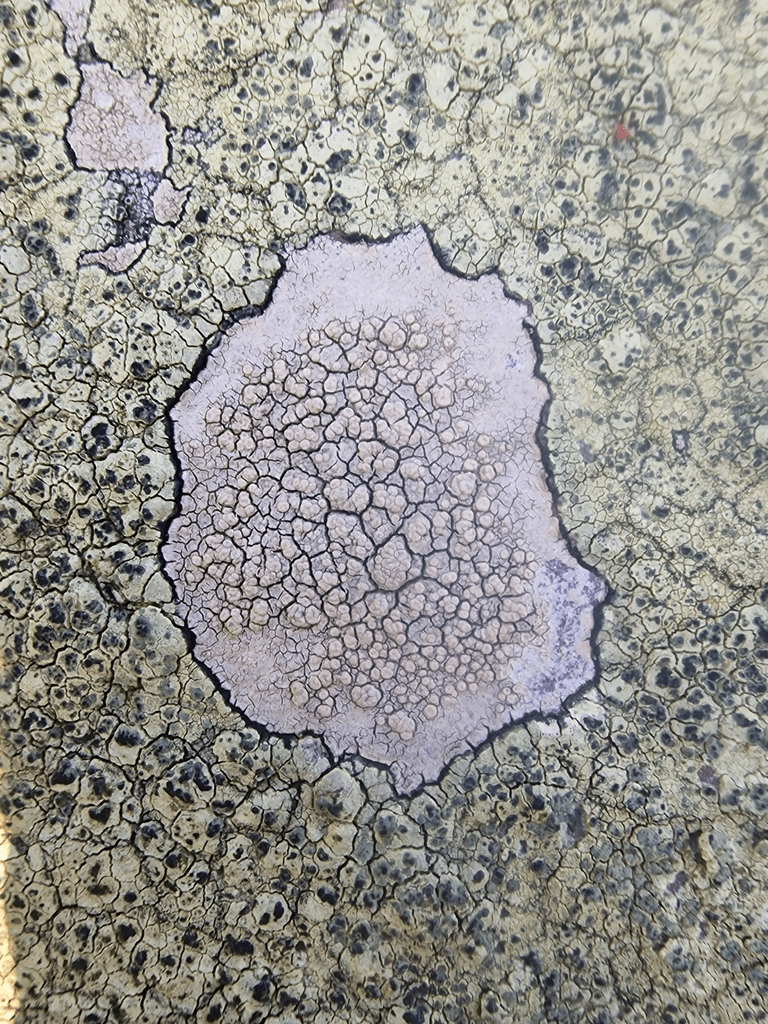
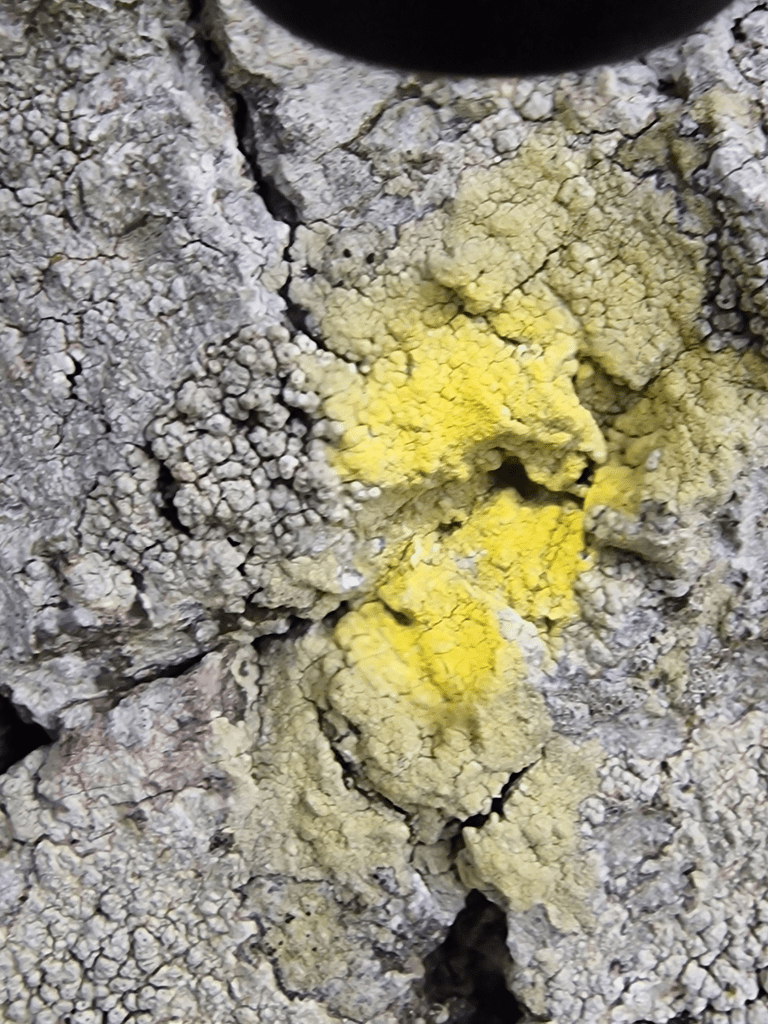
Glaucomaria (lecanora) sulphurea
Lecanora sulphurea parasitising Tephromela atra . Very few lichens are parasitic but L. sulphurea is very fond of T. atra.
Saxicolous lichens on walls of church and gravestones of Ashburnham, St Peter
Blastenia crenularia
Calogaya (Caloplaca) decipiens (yellow) and to the right (pits) Verrucaria hochstetteri
Verrucaria muralis
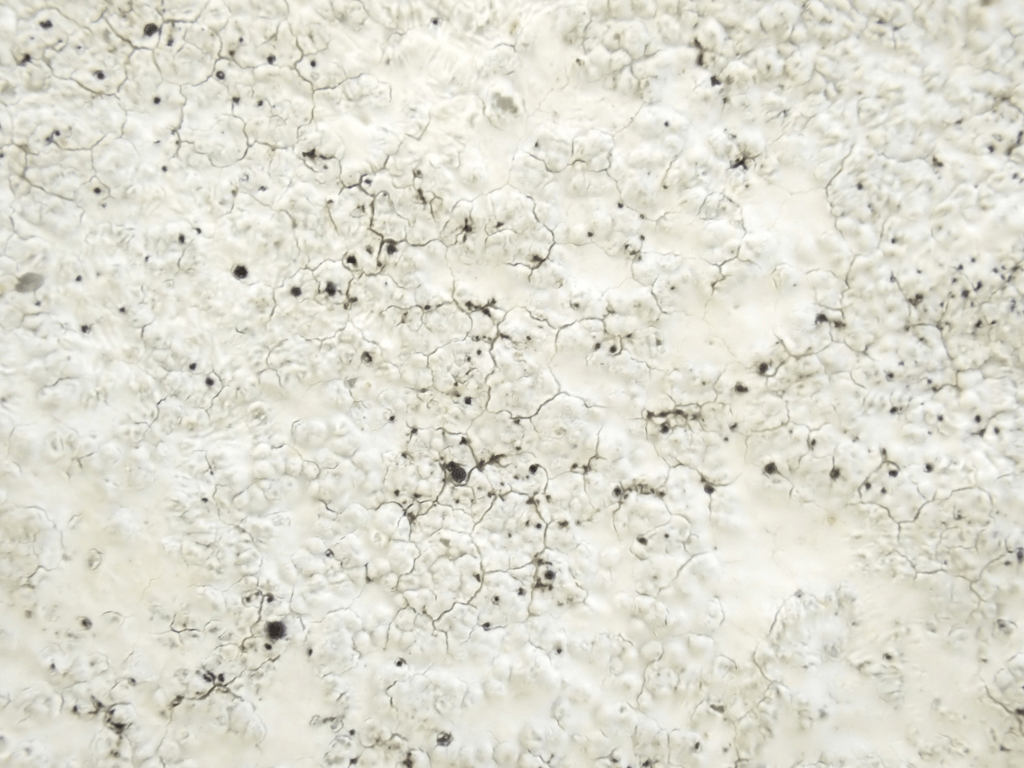
Myriolecis (Lecanora) albescens
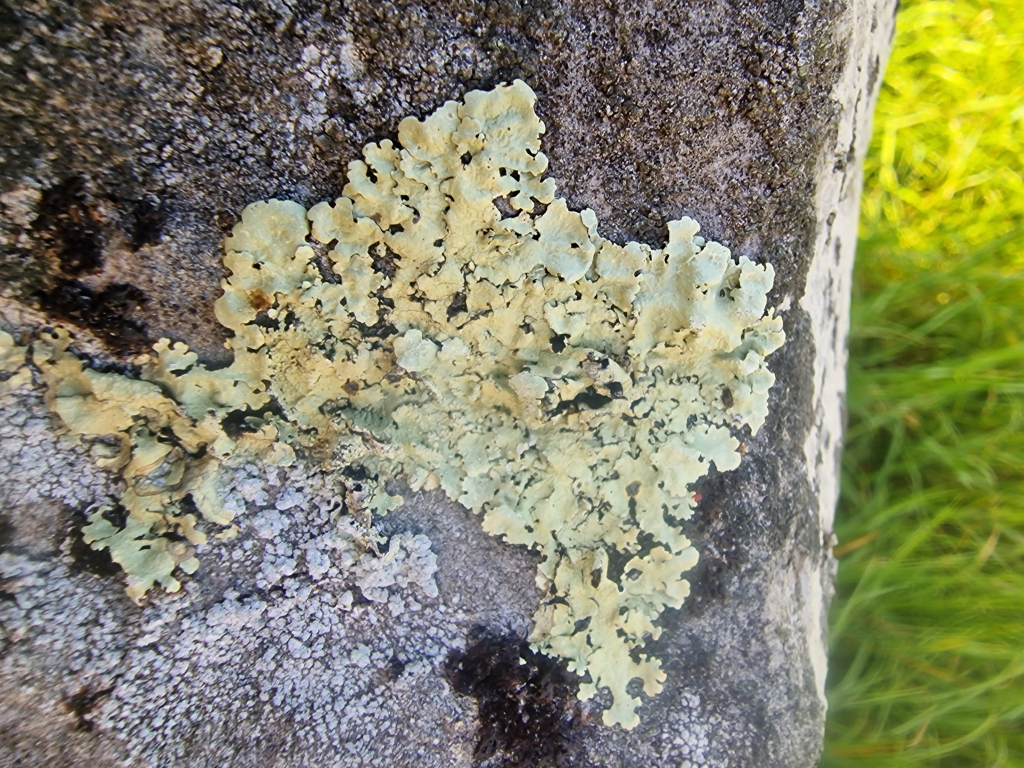
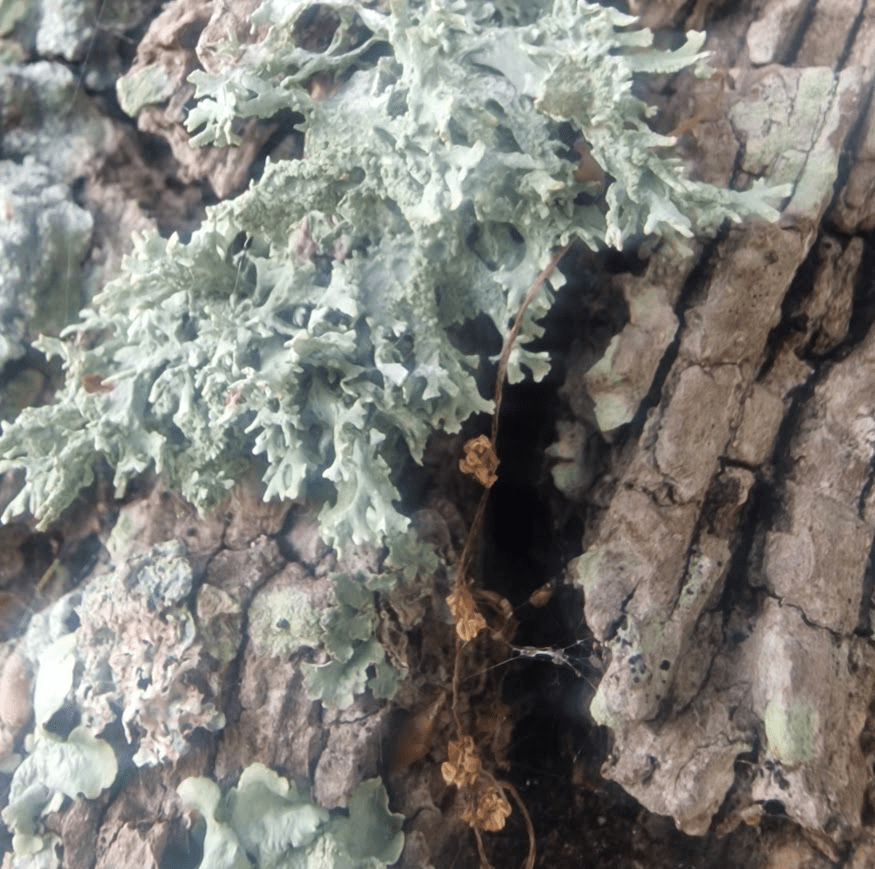
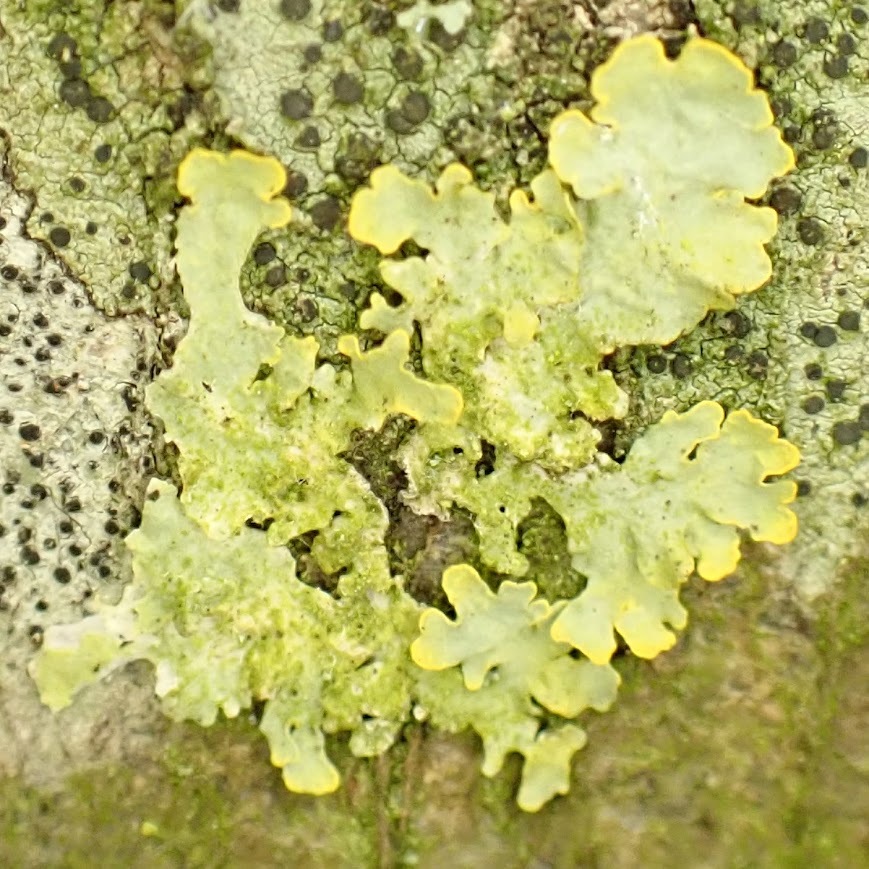
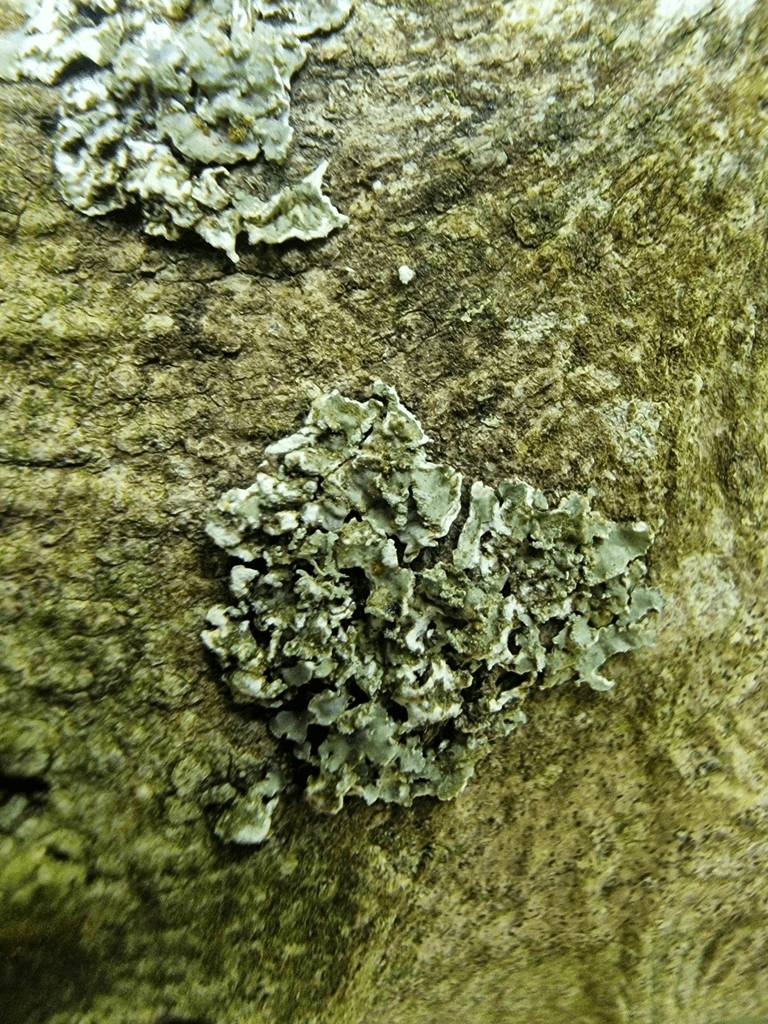
Flavoparmelia caperata Common Greenshield Lichen
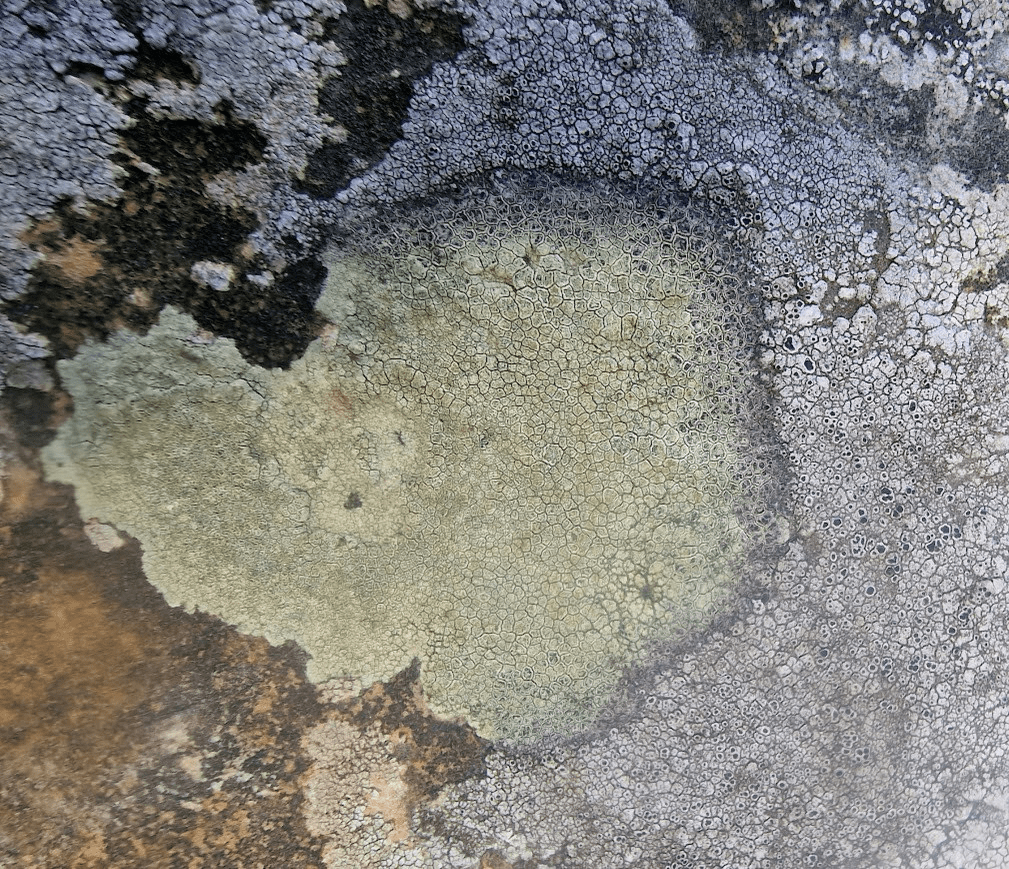
Ochrolechia parella, surrounded by Glaucomaria (Leanora) sulphurea
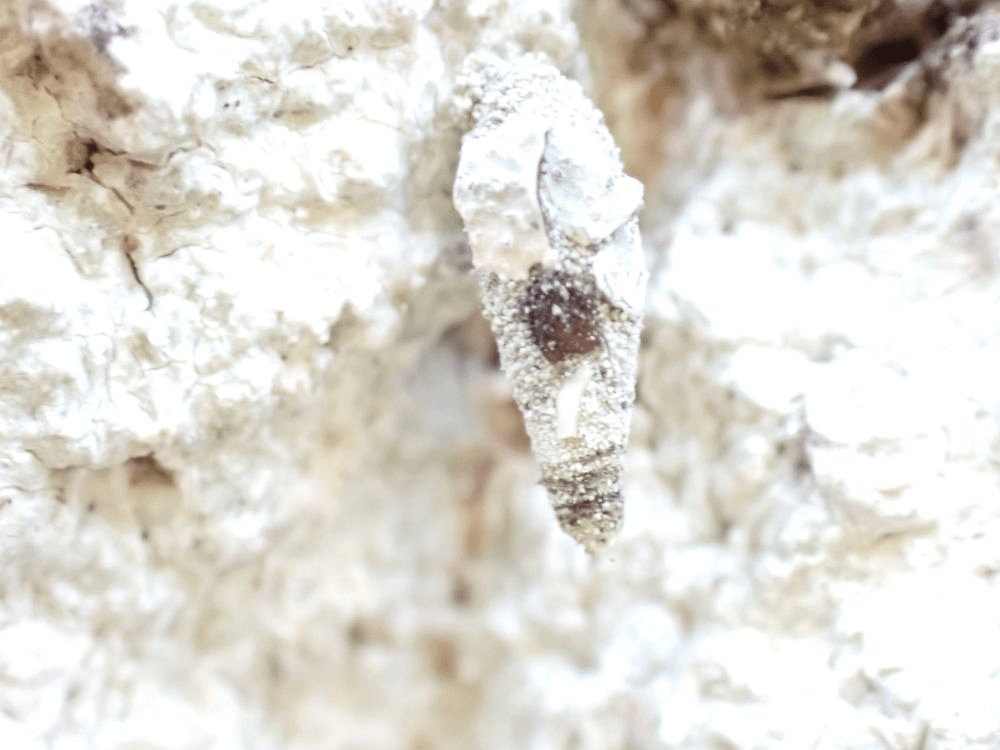
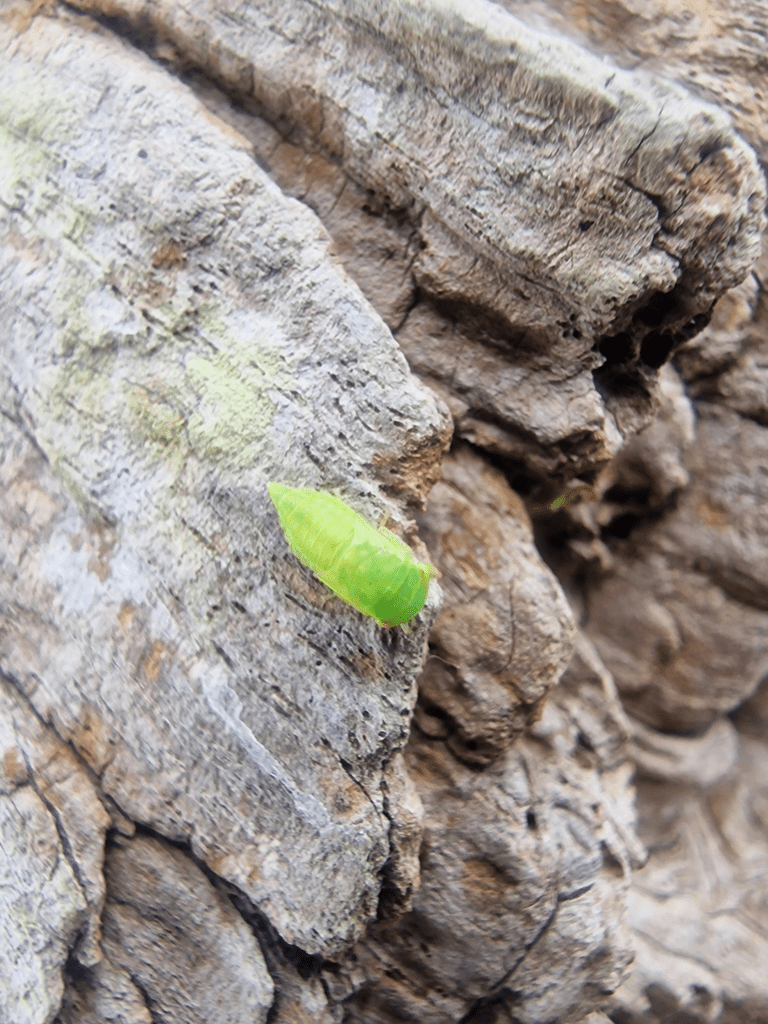
Not a lichen but a moth lava surrounded by lichen! Probably Luffia lapidella, one of the bagworm moths, whose larvae make cases out of lichen, and eat lichen.
If you are interested in the class structure of the Sussex landscape and how that interacts with lichen distribution, lichen conservation and public access to nature, and the historic relationship between pasture woodland, tall forest woodland and coppicing for charcoal production for the iron furnaces of the weald, see Lichens of Ashburnham Park SSSI, East Sussex. 12.06.25. Part 2: The impact of the class structure of the Sussex landscape on lichen distribution, conservation and access to the public. 25/https://simelliottnaturenotes.blog/2025/06/13/lichens-of-ashburnham-park-sssi-east-sussex-12-06-25/
Whilst this post specifically addresses issues concerning the impact of class structure of the Sussex landscape on lichen distribution, conservation, and access to nature, class structure of the landscape impacts on the conservation of and access to all nature.
The existence of “high quality” old woodland lichens and access to them are partly a function of the class structure of the Sussex landscape. The “best” (or what is considered as best) corticolous/epiphytic (tree) lichens in Sussex are often in places that were owned, and in some places, are still owned, by the aristocracy; often descendants of the feudal barons who were allocated land by William the Conqueror in exchange for military service and loyalty.
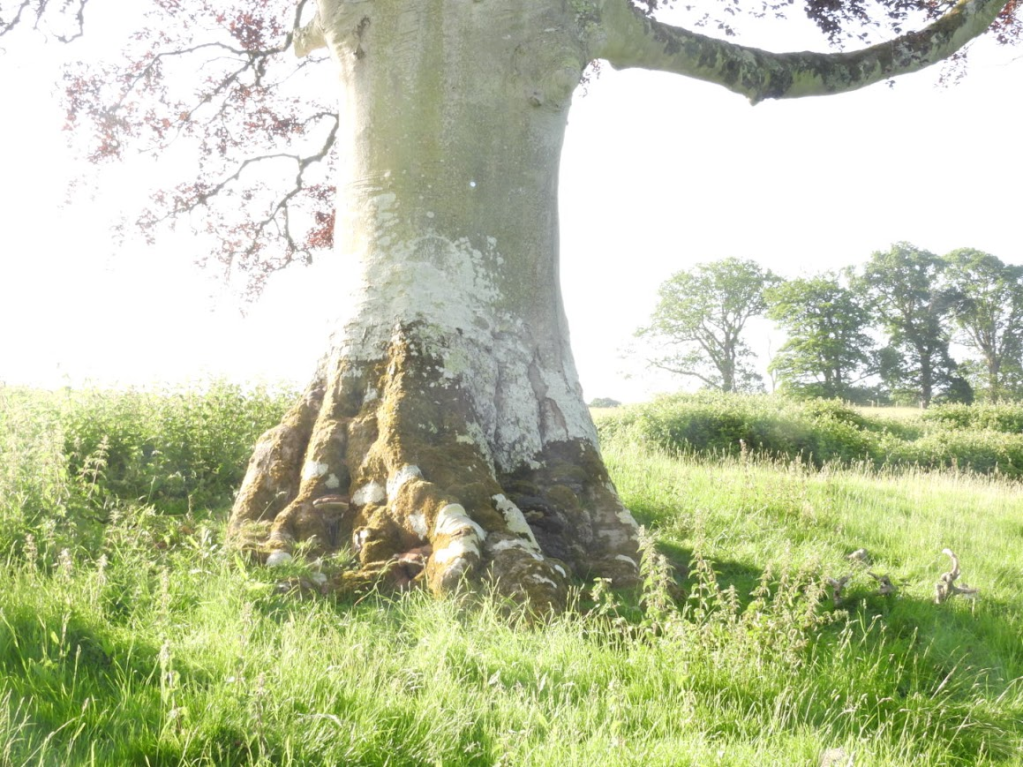
The distribution of lichens in Sussex, and current access to see them, is intrinsically linked to that class structure of the landscape. Old parklands (deer parks) of pasture woodland, and ancient tall forest woodland, like Ashburnham Park, and ancient coppiced woodland (coppice with standards) are some of the best places to see old woodland lichen species. Aristocratic medieval deer parks (the larders of the rich) entailed pollarding; pollarded pasture oaks live longer, thus have long ecological continuity, and have lots of light, which is propitious for lichen growth and survival. Having a deer park was a function of wealth, and intrinsically linked to the feudal class structure of the mediaeval and early modern periods. Tall forest ancient woodland in aristocratic estates are also good for old woodland lichens because of the length of ecological continuity, although many former ancient broadleaved woodlands have been replanted with Sweet Chestnut or pines, were profit trumped conservation of ancient woodland. The part of Ashburnham we visited was ancient tall forest woodland; we have yet to visit the parts of the SSSI which were pasture woodland.
The survival of pasture woodland, tall forest ancient woodland and coppice with standards woodland in the modern period is dependent on the actions of aristocrats, or of the new rich landowners who bought aristocratic land holdings. Many historic park woodlands and ancient tall forest woodland have been partially or completely destroyed by cash cropping i.e., the replanting of ancient woodland with Sweet Chestnut (e.g. Flexham Park and Fittleworth Wood) or conifers (e.g. Worth Forest), or sold for development (as nearly happened at Old House Warren). Once vast [ancient woodland] now cover just 2.5% of the UK. Around half of what remains has been felled and replanted with non-native conifers and even more is under threat of destruction or deterioration from developmentWoodland Trust
Moreover, access to remaining historic ancient pasture woodland, tall forest ancient woodland and coppice with standard woodland is dependent on the ownership of the Sussex landscape. Some woodlands have public access; some of those are in public ownership but local authorities or the ownership of conservation charities e.g. Bexhill Highwoods (coppice with standards), Petworth Park (pasture woodland), and Marstakes Common and Ebernoe Common (pasture woodland and high forest woodland). Marstakes and Ebernoe Commons’ pasture woodland are not related to keeping deer but pre-enclosure commoners’ rights to common grazing, often pig grazing (pannage), which still, though, entailed the largesse of aristocratic land owners. Common land was “manorial waste” and was poor quality land within a manor that was not cultivated or enclosed, and over which tenants and other individuals had rights of common, such as grazing or gathering resources.
Much woodland in Sussex landowners is still owned by it original aristocratic families; some have partial access on limited public footpaths e.g. Eridge Park and Buckhurst Park, and some have no public access e.g. Paddockhurst Wood, Pads Wood and East Dean Park Wood; the latter due to its use for shooting for profit, the curse of public access to woodland in Sussex. Ashburnham Park is an anomaly; it is owned by a Christian trust, for study and retreats, and is currently pretty permissive of public access through a network of private footpaths on the estate. Long may that remain!
The Ashburnham family were lords of the village of Ashburnham, and elsewhere, for some 800 years. The village itself was Esseborne in Domesday Book (1086) and Esburneham in the twelfth century; the name is thought to mean ‘meadow by the stream where ash-trees grow’. By about 1120 the family had taken its name as their own. It may be that the first of them may have been the feudal lord of Ashburnham in 1086 – Peter de Creil or Criel or Crull, a Norman immigrant awarded land by the Conqueror. For almost all of the remaining time up to living memory – with two intermissions – the Ashburnham estate was owned by this one family. The second such intermission led to a peerage; the first (1611 to 1640) resulted from disastrous financial management.Battle and District Hisotrical Society Archive, George Kiloh, 2016,
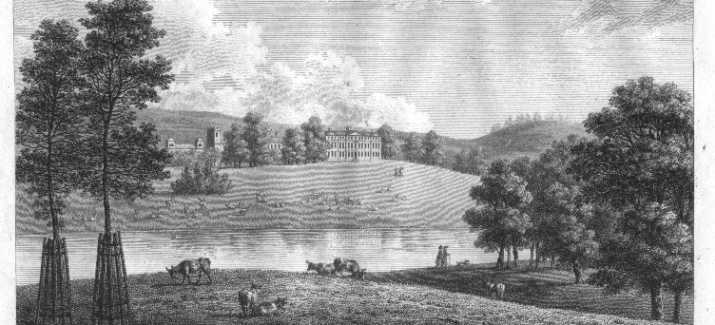
In 1665, John Ashburnham built a new house on the site of the present mansion, replacing an older house. He died in 1671. His nephew was created Baron Ashburnham, the baronetcy becoming an earldom in 1731. The second Earl reconstructed and enlarged the house between 1759 and 1763 and commissioned Lancelot Brown (1716-83) in 1767 to lay out a new park and gardens around the house of which the lakes and much of the planting structure survive.
The third Earl succeeded in 1812, his additions between 1812 and 1817 including the terraces to the south and east of the house and the bridge across Front Water. The sixth Earl died in 1924 and the line ended with the death of his niece, Lady Catherine Ashburnham in 1953. The Rev J Bickersteth, a grandson of the sixth Earl, inherited the estate and in 1960 gave Ashburnham Place and 89ha, including the main gardens and pleasure grounds, to the Ashburnham Christian Trust.
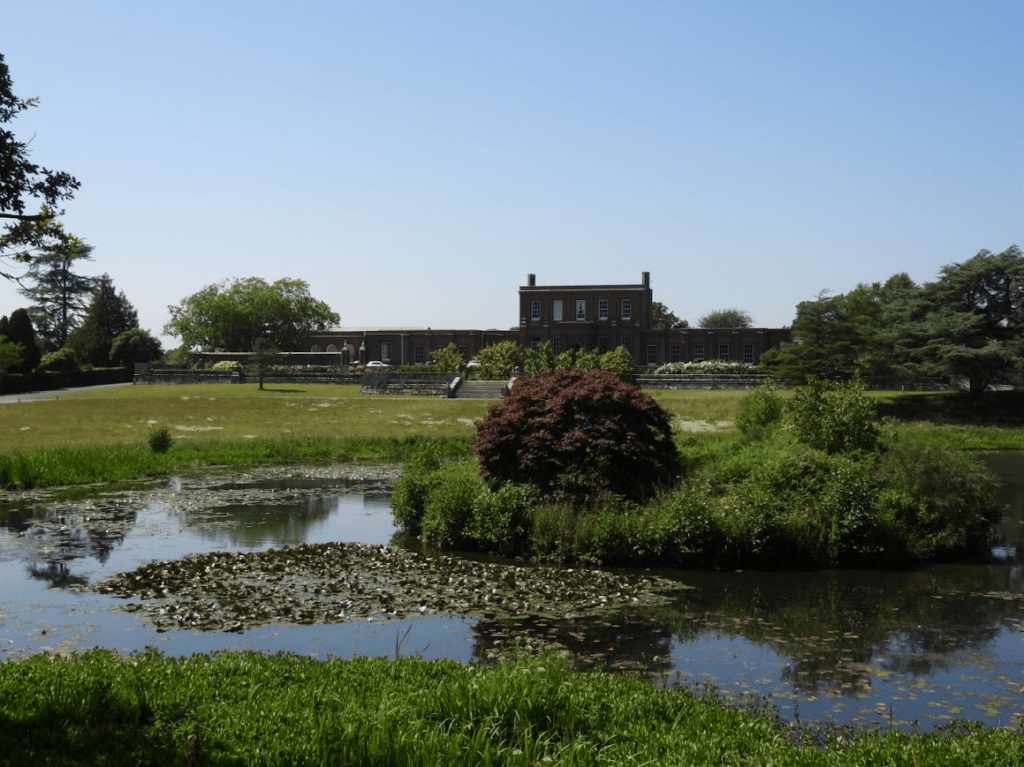
Ashburnham Place (listed grade II), with St Peter’s church (listed grade I) immediately to its west sits on the north-west slope of the valley, overlooking the chain of lakes and the park woodland beyond. Although the house is truncated from its C18 form, with the church (rebuilt to its present form in 1665) and the stable block (built between 1720 and 1730 and listed grade II*) a visually cohesive group of buildings is created. The house was built in 1665 and enlarged to its final form by 1763 with the addition of the domestic wing facing the church, the long range of state rooms which made up the south front. Brown’s greenhouse, with seven bays (now the Orangery, listed grade II), stands attached on the west side. The brick house was refaced twice, once in 1813 by George Dance and again in 1850 with the present red and grey brick. The house had reduced to a state of decay by the mid C20. It is now about three-quarters of its former size, the remainder having been demolished in 1959. The present (1990s) owners have made considerable additions from the 1960s onwards, on and around the house’s previous ground plan. Brown’s Orangery survives intact .
The Ashburnhams’ wealth came from rents from their extensive land holdings; but also from the Wealden iron industry, including the manufacturing of arms. This is a feature of many other Wealden aristocratic estates, and had a significant impact on woodland in Sussex. The High Weald wasn’t always a pastoral/arable landscape (or the leisure landscape of middle-class wealth that it is now); the High Weald was an industrial landscape in the Tudor and Stuart periods (as it partly been during Roman exploitation of iron in the Weald). Iron ore was dug out of the weald clays, and wood was cut to make charcoal for the iron furnaces. The mill ponds (hammer ponds), which powered the hammers of the furnaces, were sometimes then converted into landscape features, such as ornamental lakes, e.g. at Leonardslee. Visiting the relict hammer ponds in Sussex is fascinating. The website Hammer Ponds details them. However, many of them can not be visited as they have been turned into private fishing ponds. The lakes at Ashburnham are not converted hammer ponds but creations of Lancelot “Capability” Brown who charged a lot to posh-up your estate and make it appear an arcadian paradise. Capability Brown’s work at Ashburnham Place involved significant costs, with direct payments to Brown totalling £7,296 (1753). Landscape Institute: Capability Brown: Ashburnham equivalent to £960,992.20 today.
It cost the the 2nd Earl of Egrement a pretty penny too to get Capability Brown to landscape the Petworth deer park, and turn it into a simulacrum of the faux antique landscape paintings of Claude and Poussin, which hung in the Earl’s painting collection inside the neo-Palladian Petworth House. Capability Brown received five contracts from Lord Egremont between 1753 and 1765, totalling £5,500 (1773). Landscape Institute: Capability Brown: Petworth This is equivalent to over £1,051,136.88 in 2025.
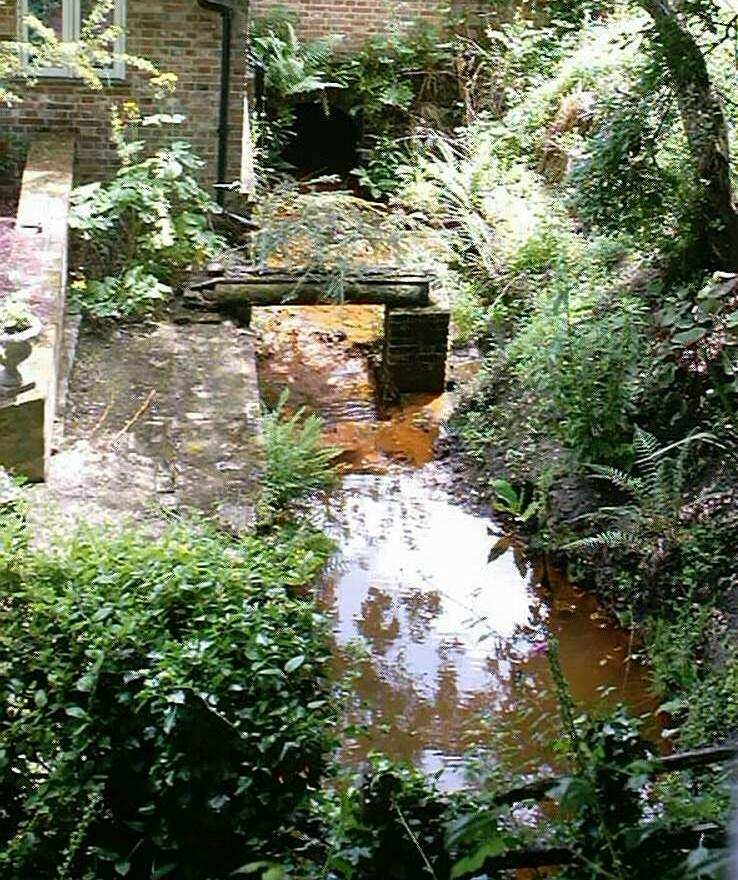
Part of the forge pond survives just to the west by a road on private land at 684161, with a modern weir. Looking down east from the bridge here, a rusty channel can clearly be seen far below, running under the conservatory of Forge Cottage. Hammer Ponds: Ashburnham Forge
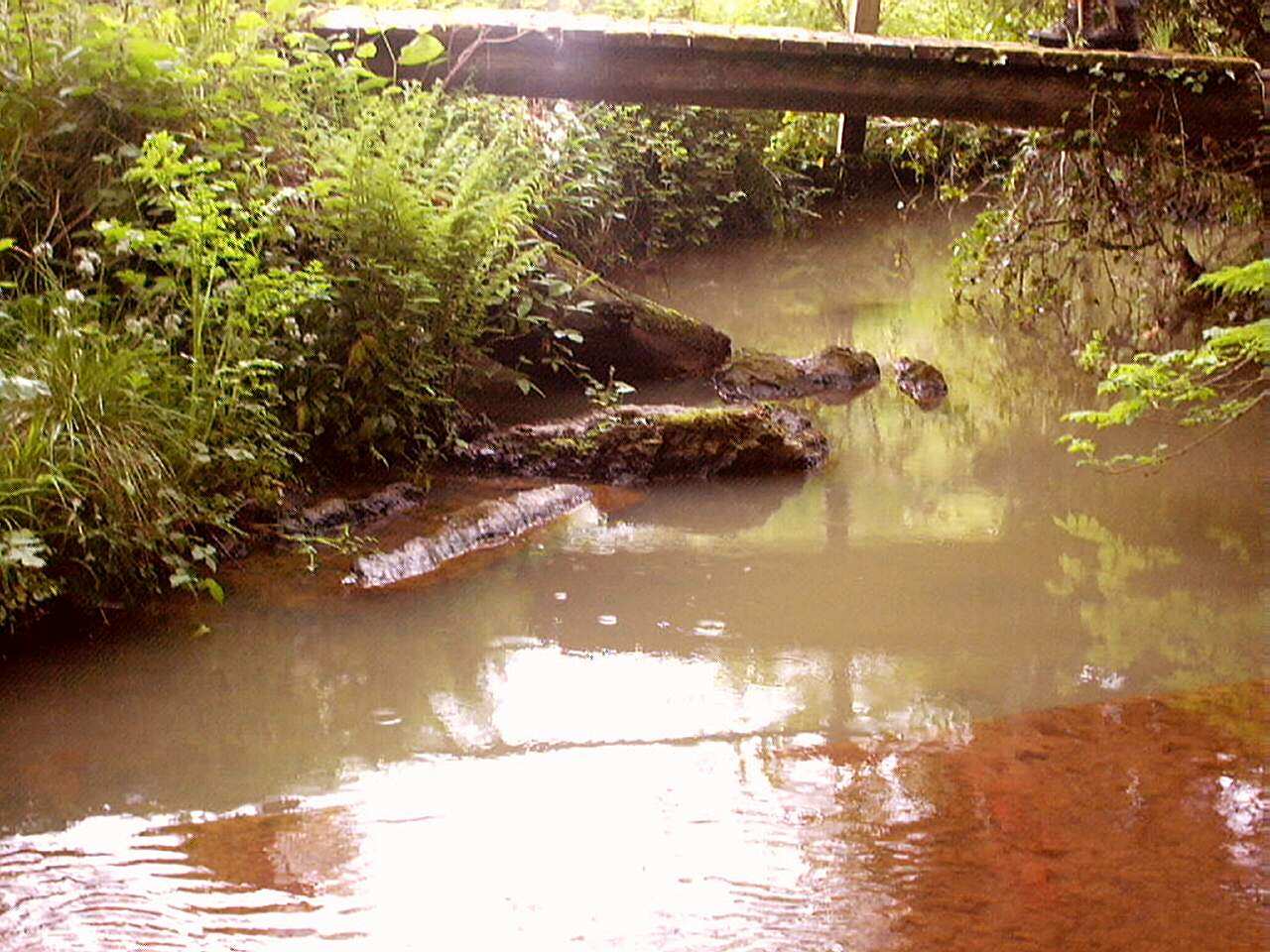
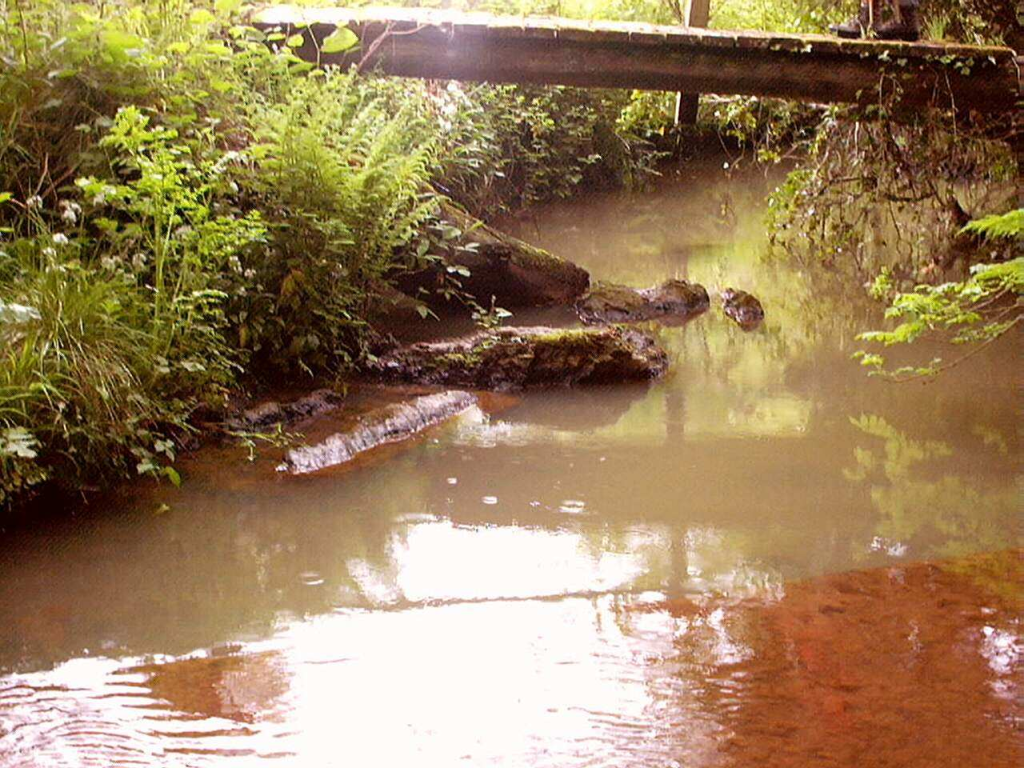
North along the track down a detour right at the path fork (685172) there is a footbridge over a rusty ford with several large reddish ‘bears’ in the stream: a bear is a rock of imperfectly smelted ore and iron. Slightly further along, left in a private meadow, a high bank is visible. This is the old furnace bay, and the furnace pond, now dry, lay beyond it. This is now a low field. The old spillway is roughly halfway along the bay and still serves a stream – depending on the overgrowth, this may be seen as well as heard. Hammer Ponds: Ashburnham Forge
Ashburnham was an important Wealden complex of furnace, forges and boring mills, built by John Ashburnham before 1554, and the last Wealden furnace to close in 1813, although the forge continued until the late 1820s. The sites worked together during the Civil War, the premier Wealden ordnance suppliers until about 1760, and later produced guns and shot for the Dutch Wars. The main furnace pond is now dry, but a secluded pen pond survives on private land just north of the furnace site in Andersons Wood (685173). [The Ashburnham iron furnaces supplied arms to the Royalists during the civil war.]
An unmade road, heavily metalled with waste iron slag, runs about half a mile between this remaining furnace pen pond and the dry site of Ashburnham (Upper) Forge. Known originally as the ‘sow track’, this not only took sows and guns from the furnace down to the forge and boring mill but also extended up past Robertsbridge to Sedlescombe, where iron goods were shipped to London via the river Brede.”
Ashburnham forge was “…the most persistent of the Sussex works were those at Ashburnham, extending into the next parish of Penhurst, and obtaining fuel supplies from Dallington Forest. The furnace, which is mentioned in 1574 and was probably established much earlier, lasted till 1811, and the forge continued working until 1825. Mary Cecilia Delany, 1921; The Historical Geography Of The Wealden Iron Industry available online
As well as tall forest woodlands, there are many relict coppiced woodlands, some with relict with charcoal hearths across, the weald. Coppice with standards was the typical coppicing practice; and the standard (maiden) Oaks of these relict coppiced woodlands are important for lichens. Charcoal was critical to the production of iron. Coppiced wood (mainly oak, alder and hornbeam) was used to make the charcoal in round ‘clamps’ of 4-5 metres which were often constructed on levelled ground. The presence of nearly black soil and small pieces of charcoal can confirm past use [of land as charcoal hearths.High Weald National Landscape: Archaeology
The peaceful pleasure of walking through relict coppices belies one of the reason why those coppices were there: the Wealden ironmasters began to concentrate increasingly on gun founding, and examples can be found all over the world, wherever Britain fought or traded. Eventually, the onset of the Industrial Revolution took heavy industry north to the coalfields, and the last furnace in the Weald, at Ashburnham, closed in 1813.Wealden Iron: History. The Wealden coppices fuelled the furnaces that made the weapons the made Britain’s early modern imperial colonialism possible
Cast-iron guns were particularly needed by the government at this time. … There are many references to Levett’s deliveries of guns and shot to the Crown in the 1540s. In 1546 he was paid £300 for making iron guns, and typical of his trade in ammunition is an order of 1545 for 300 shot for cannon. The Iron Industry of the Weald. Henry Cleere and David Crossley with contributions from Bernard Worssam and members of The Wealden Iron Research, Second Edition Edited By Jeremy Hodgkinson Merton Priory Press 1995. Available online
Coppiced woodland in the weald was not only used for charcoal to produce the iron that produced munitions, in places Oak was planted to be cut later for ship building. The thick multi-stems of relict coppiced Sessile Oak at Highwoods near Bexhill, provides the only opportunity to see lichens on coppiced Sessile Oak (Quercus petraea) in Sussex. But these Sessile Oaks were not planed for their beauty, or to be a substrate for liches, they were planted to build Henty VIII’s navy. Ship building has always had a strong reliance on natural resources and Britain would not have been able to conquer the seas without the abundance of wood that was available to construct its mighty vessels. … Overall, Britain built its place in the world through the power of its maritime endeavours, and in this way, the forests of Britain helped to build the nation that it became. This quotation from Rural History obscures the fact that the nation that the UK became because of its exploitation of oak woods for its naval ships, was a nation that ruthlessly subjugated people to colonial slavery.
A postscript: another class-based use of Wealden iron from Ashburnham:
I saw quite a few insects coincidentally at Petworth as I was searching for lichens. It made me realise that my knowledge of insect orders is quite sketchy; so this post presents the insects I saw classified in to orders. I used the website of the Amateur Entomologists Society to learn more. This is an excellent resource for amateur entomologists.
The class insect (Insecta) are part of the phylum Arthropoda
The Arthropoda are a Phylum of invertebrates (animals without backbones) that have a joined exoskeleton. The Arthropods include the arachnids, crustaceans, insects and others.
The arthropod body is supported by an hard outer layer. This acts as an external skeleton – or exoskeleton. The body muscles are attached to the inside of this exoskeleton. It is made up of rings (called segments) which are attached to one another by flexible membranes. This allows movement of the body to take place. The name arthropod refers to their jointed limbs, which are their chief characteristic. (Arthros = joint, Podium = foot).AMS: Arthropod
2 compound eyes, usually situated on either side of the head.
The Insects (Class Insecta) are divided into a number of Orders. These are grouped together into two sub-classes called the Apterygota (wingless insects) and the Pterygota (winged insects) – In addition to the Class Insecta there are three other classes of invertebrates that have six legs, these three classes are known as non-insect hexapods.
This list of insect orders comes from from the Amateur Entomological Society’s page on Insect Orders Clicking on the links will take you to pages of Amateur Entomological Society’s website giving more information on the orders.
[Division] Endopterygota The word Endopterygota refers to the development of the wings inside the body. Insects that develop in this way are said to show complete metamorphosis.
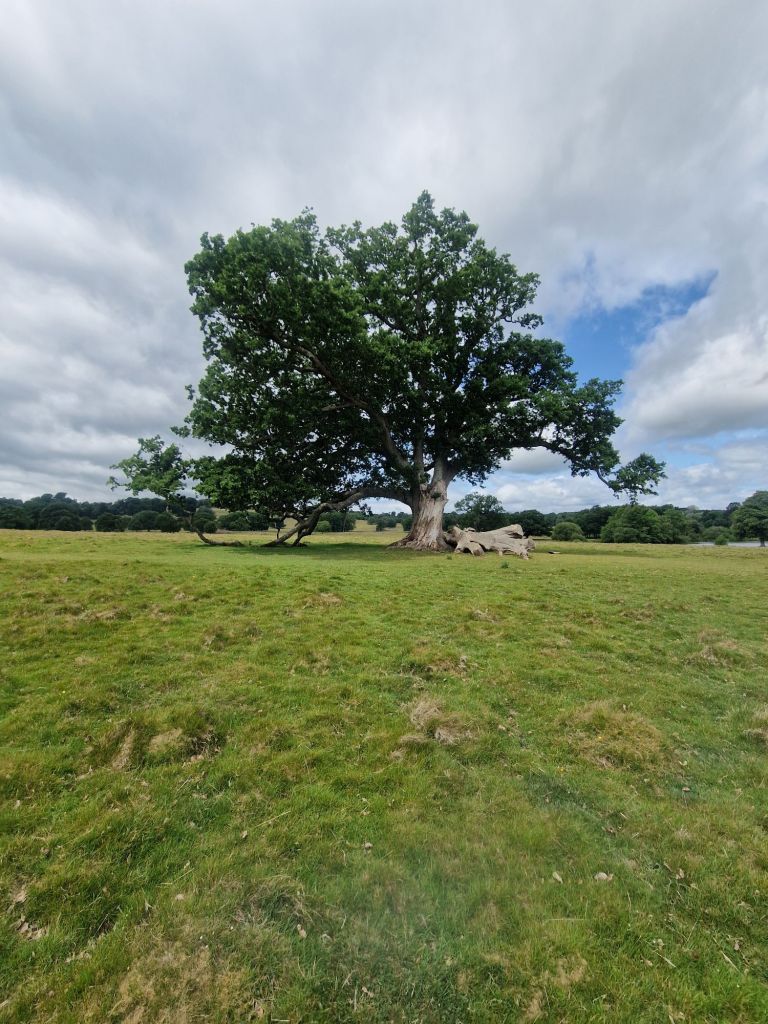
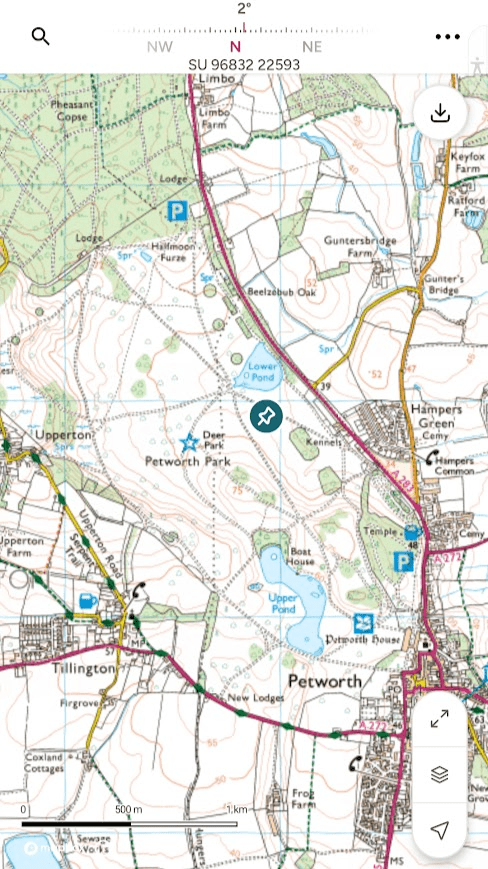
All the photos in the post were taken by me on one day (10.06.25). apart from the Great Spotted Woodpeckers, all the species photographed in this blog were living on, in or under a single Pendunculate oak at SU 96936 22927
I approached this Oak from a distance, walking through the pasture woodland of Petworth Park. Wood pasture is classified as a mosaic habitat valued for individual park-like trees particularly veteran and ancient, and the fauna, flora and fungi it supports, including a number of species that only occur in wood pasture and parkland. Grazing animals are fundamental to the habitats existence and many sites are also important historic landscapes. Woodland Trust Wood Pasture
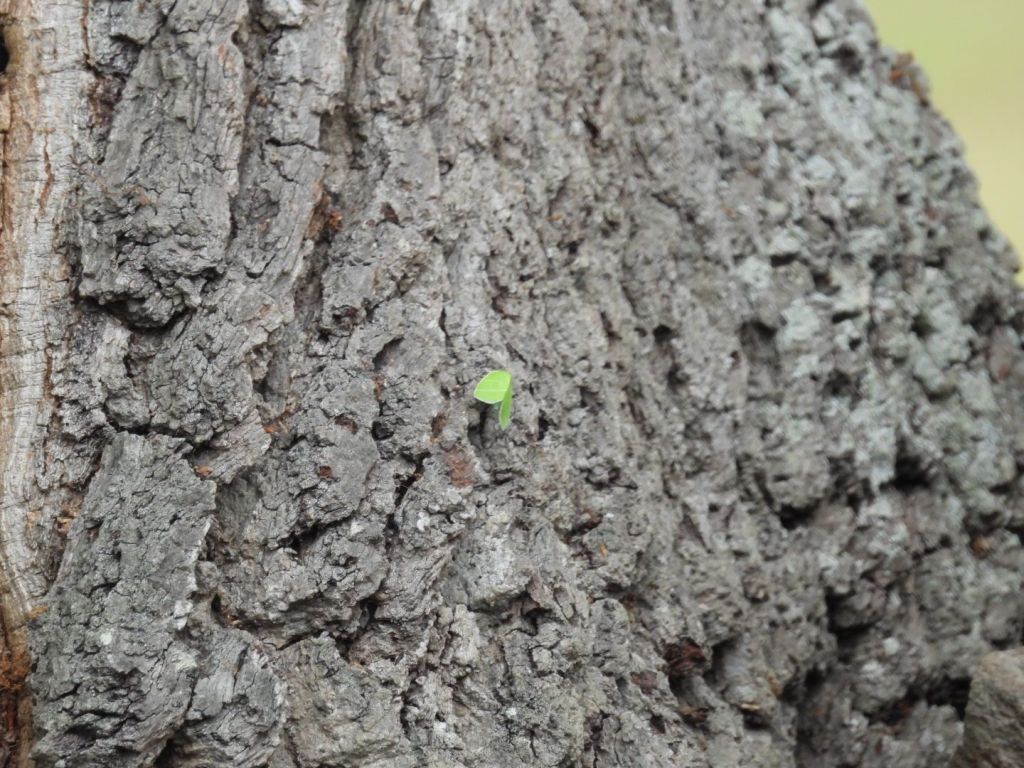
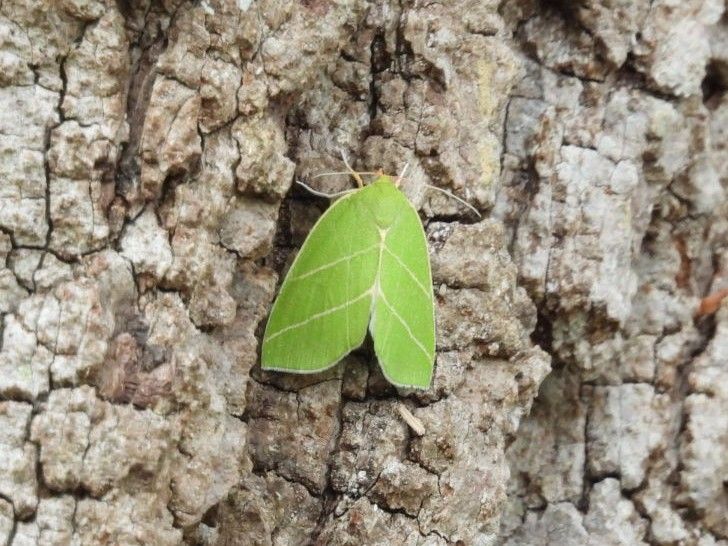
As I got near, I realised that there was a bright green shape on the trunk, highlighted by the grey of the oak’s trunk. As I got closer I realised it was a beautiful moth.
I used the Obsidenity App to make a preliminary identification in the field as I hadn’t seen this species of moth before. I then checked this identification in my field guide later. I used Obsidentify for all the invertebrates I saw around this Oak, and checked the observations with field guides at home. It is a Scarce Silver-lines Moth, Bena bicolorana. The caterpillars feed on the leaves of oak (Quercus).
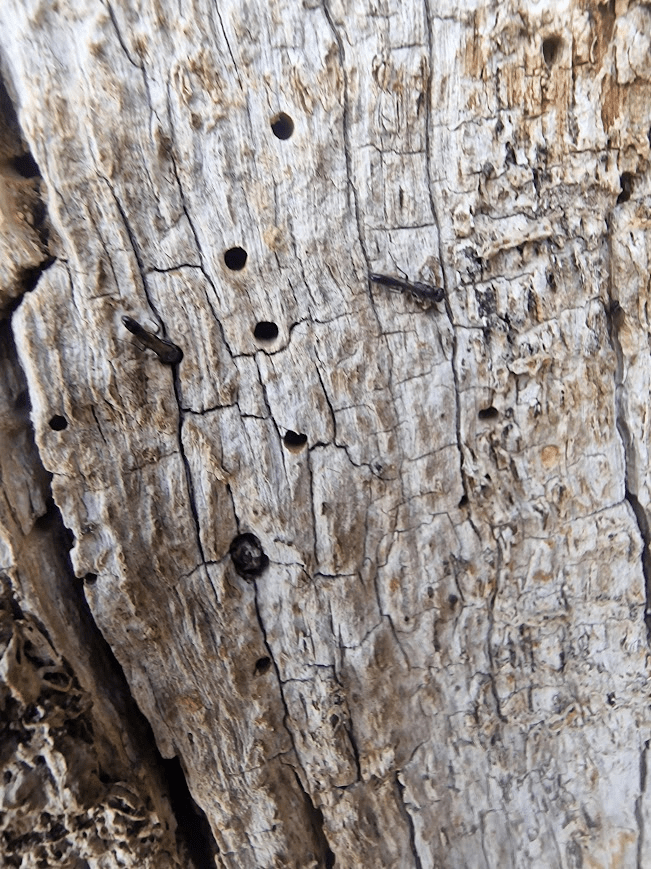
When I reached the Oak I could see that part of it was dead; this part appeared to have been killed, probably by heart-rot fungi. This is the way most Quercus robur die, but the process of dying is long. The decorticated decomposing heart wood had many holes.
Most of the known species dependent on oak trees are invertebrates, and a majority of these interact with the fungi in the tree in some way. Many make their homes and find their food where heart-rot decay fungi have been in action, leaving partially decayed material that is physically broken down by insects, creating mounds of composting wood mulch that creates further habitat for other invertebrates.Oaks and fungi in the UK. R. Wright, J. Finch & N. Brown. 31/05/2022
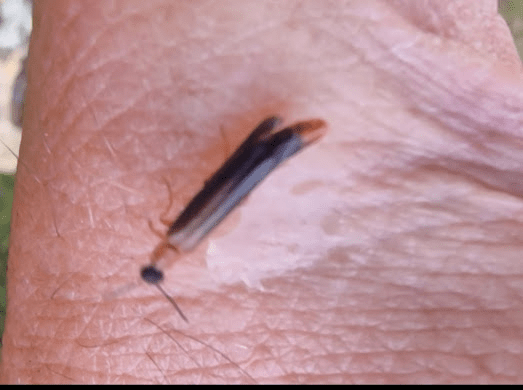
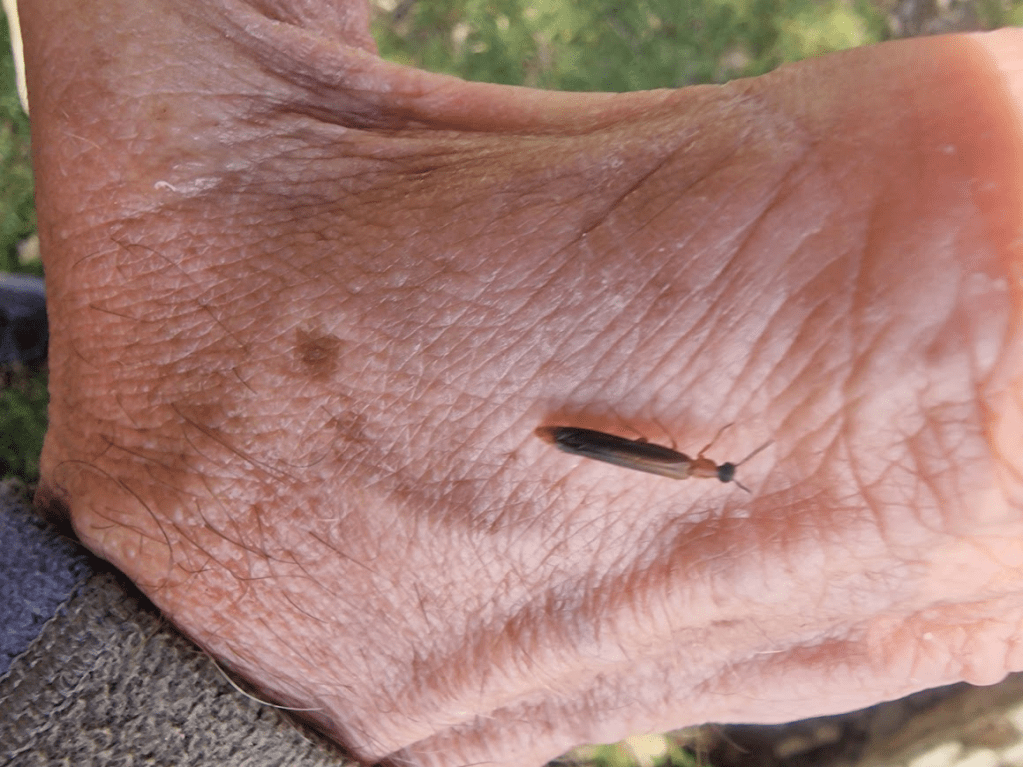
An insect landed on my hand. A believe it is a Lymexylon navale. A beetle belonging to the family Lymexylidae. The size of this beetle can vary a lot, between 8-15mm. Its yellow with black head and orange pronotum. The larval development take place in fresh oak wood in parts lost the bark. Saproxylic beetles
Saprolyxic organisms, especially insects, that are directly or indirectly dependent on dead or decaying wood for at least part of their lifecycle. Buglife: Saprolyxic Invertebrates
Lymexylon navale, commonly known as the ship-timber beetle, is a type of wood-boring beetle that is associated with wood structures, including ships, houses, and trees. Specifically, its larvae are wood-boring and can damage both sapwood and heartwood in living and decaying trees, as well as timber structures like ships.
An uncommon beetle in Britain it is which is currently designated as Red Data Book 2 (vulnerable).Nature Spot Lymexylon navale
The larvae of Lymexylon navale bore into wood, which can weaken and damage ship and other wooden structures. Lymexylidae, including Lymexylon navale, have a symbiotic relationship with certain fungi. The larvae create tunnels in the wood, and the fungi grow within these tunnels, providing a food source for the larvae. Ship-timber beetles have been found in ancient shipwrecks, indicating their long-standing association with human-made wooden structures. Lymexylidae also play a role in the ecosystem by helping to break down wood and are an important food source for other animals. Sources: Sônia A. CasariLarva of Atractocerus Brasiliensis (Lepeletier & Audinet-Serville, 1825) (Lymexylidae, Atractocerinae) Universidade de São Paulo, Museu de Zoologia , São Paulo, São Paulo, Brazil; Cletus P. Kurtzman, Christie J. Robnett (2013) Alloascoidea hylecoeti gen. nov., comb. nov., Alloascoidea africana comb. nov., Ascoidea tarda sp. nov., and Nadsonia starkeyi-henricii comb. nov., new members of the Saccharomycotina (Ascomycota). FEMS Yeast Research 13: 423–432. doi: 10.1111/1567-1364.12044 (published in Spanish and English) and Piper, Ross 2007 Extraordinary animals : an encyclopaedia of curious and unusual animals.
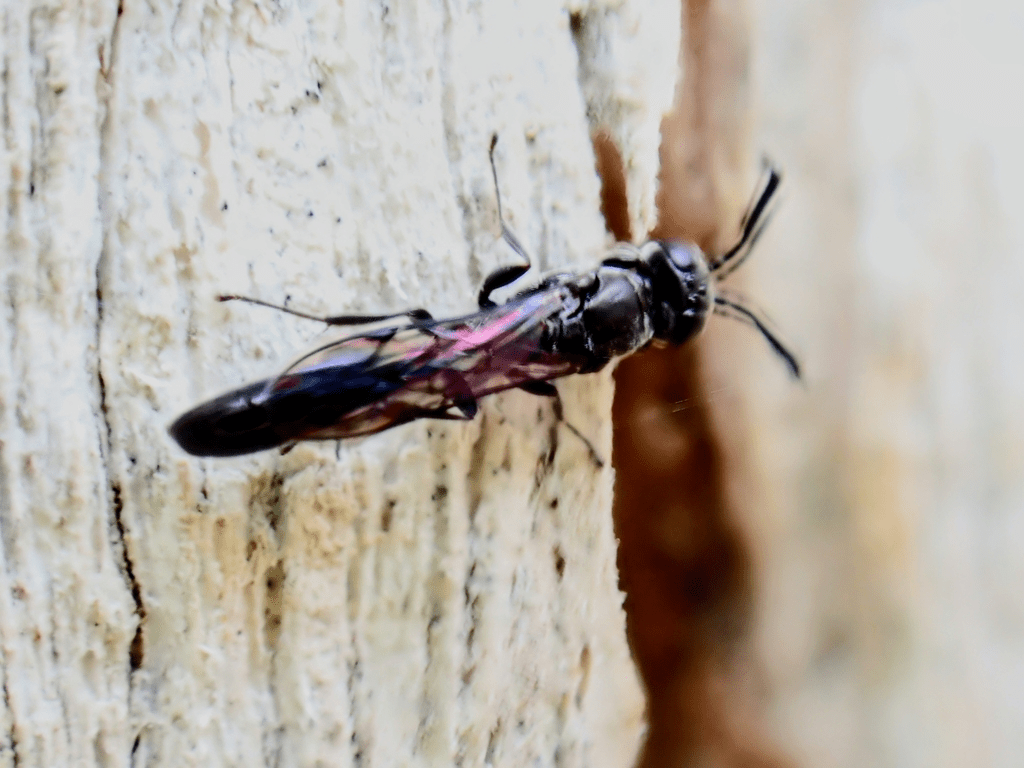
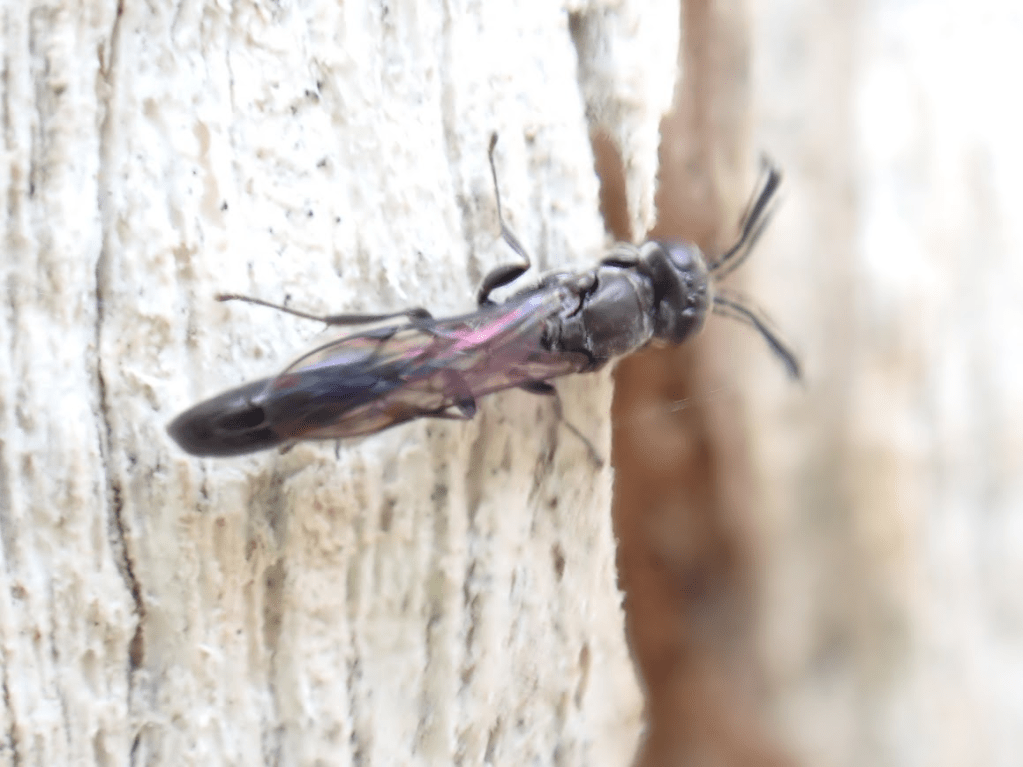
This Lymexylon navale (and its many mates) may have made the holes into which I saw, what I believe to be Trypoxylon attenuatum.
A widely distributed species recorded from much of Britain, including the Scilly Isles and the Channel Islands. … Has been recorded from a variety of habitats including woodland, parkland, gravel pits, sandy sites, chalk grassland and heathland. … On the wing between mid-May and mid-September… Nest burrows are stocked with small spiders such as Tetragnatha (Tetragnathidae) (Lomholdt, 1984).Nests are constructed in pre-existing cavities. Richards (1980). … Richards (1980) gives a generalised overview of Trypoxylon nesting sites such as “Anobium burrows, cut stems, hollow roots, rarely in small holes in vertical earth-faces”, but T. attenuatum seems to nest “exclusively in hollow plant stems” (Lomholdt, 1984). Nests are constructed in cavities 2-4 mm in diameter (Tormos et al., 2005).Bees Wasps and Ants Recording Society Trypoxylon attenuatum..
So it sounds as if Oaks may not be a typical nesting sites for this solitary wasp.
I then moved on to looking at lichens – the primary purpose of my trip to Petworth Park.
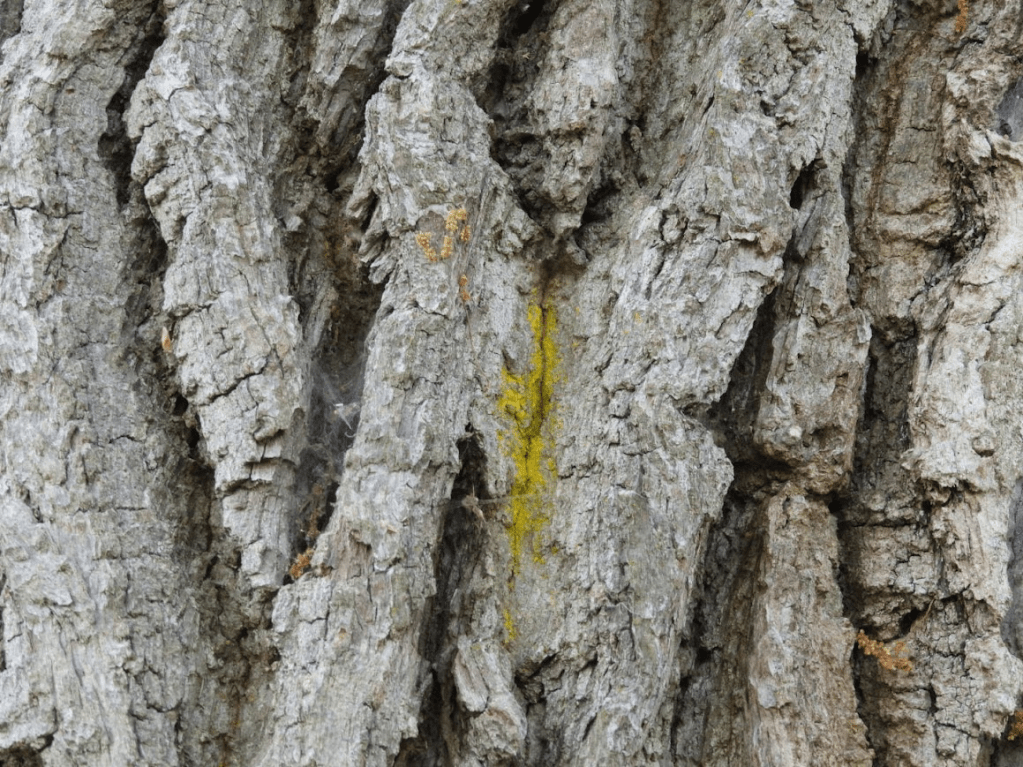
First I saw Gold Dust Lichen, Chrysothrix candelaris
I initially got very excited because I thought it may be the rare pin lichen Chaenotheca chrysocephala; which had been recorded on a specific Quercus robur nearby, but it wasn’t!
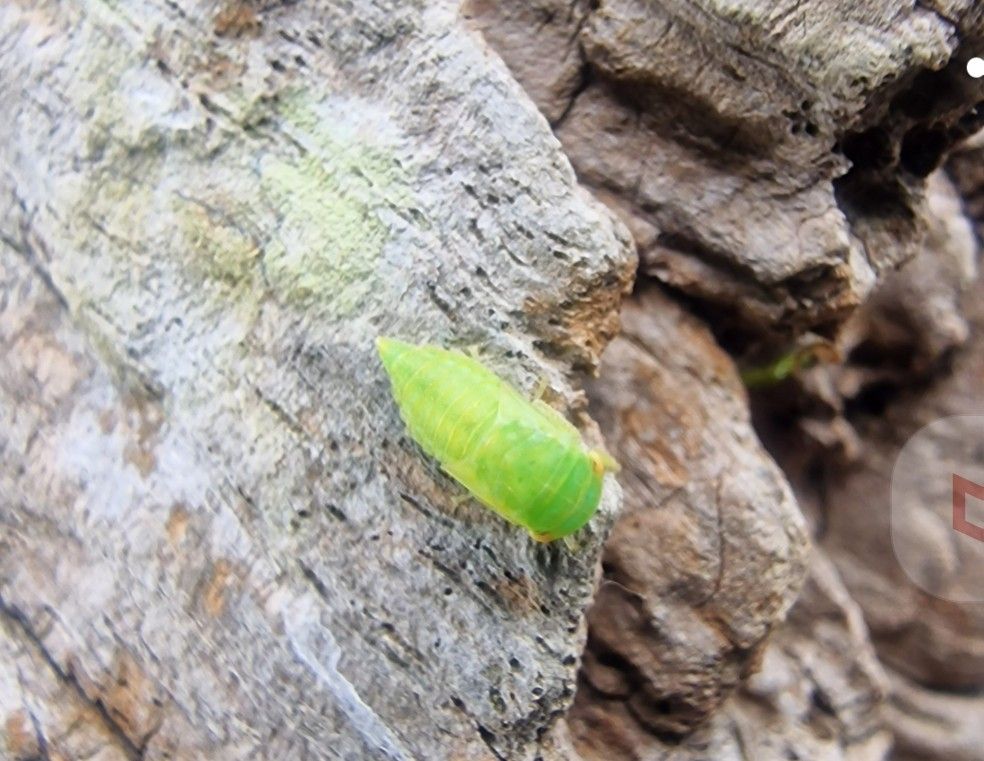
When I was looking at lichens on the bark I saw two more invertebrates. One on the bark next to a lichen I was examining, and one which fell on my jumper.
The one on the bark was Oak Leafhopper nymph, Iassus lanio. Leafhoppers are [sap sucking] insects belonging to the family Cicadellidae in the order Hemiptera. They are recognized by their piercing-sucking mouthparts and by the presence of rows of spine-like setae (hairs) in their hind tibiae. Dietich Leaferhopper Lab
The relatively short and broad form of this genus is characteristic; the head is wide (equal to the width of the pronotum) and the sides of the pronotum are shorter than the eye.In I. lanio the forewings vary in colour from green to pale brown and the vertex, pronotum and scutellum are heavily dark-mottled. The vertex is rounded and uniformly narrow from above. …common on oak across the UK.Adult: June to OctoberLength 6.5-8 mmBritish Bugs: Iassus lanio
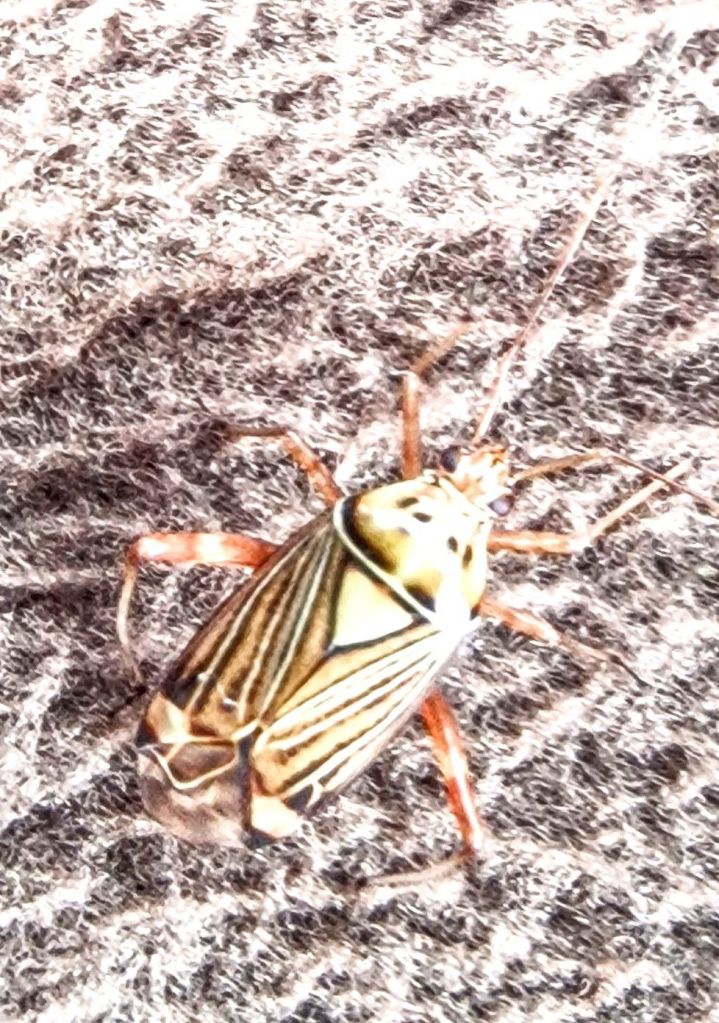
The insect that fell on my jumper:
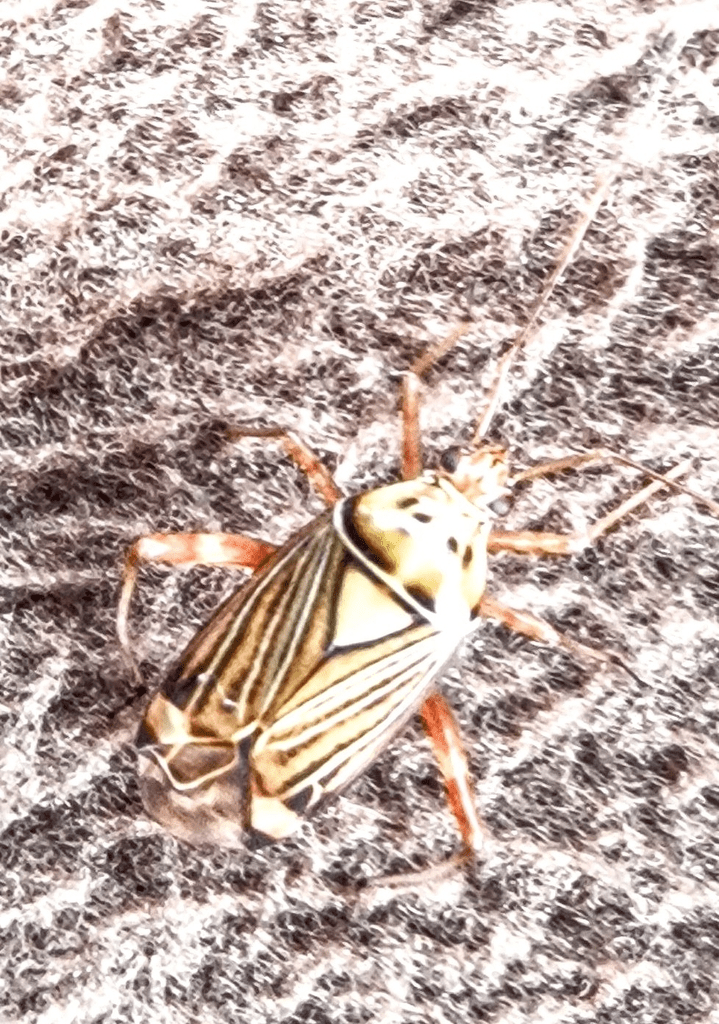
was a Striped Oak Bug, Rhabdomiris striatellus
A very striking bug which is frequently found on or near oak across Britain, but particularly in the south. Females are usually paler then males. The only possible confusion risk is the larger and more elongate Miris striatus, which has a completely yellow/orange cuneus and an entirely dark head. Overwintered eggs hatch in April, the larvae feeding on unripe catkins and becoming adult from mid-May onwards. Adult: May-JulyBritish Bugs: Rhabdomiris striatellus
There were many lichens on the Oak; here are few of them:
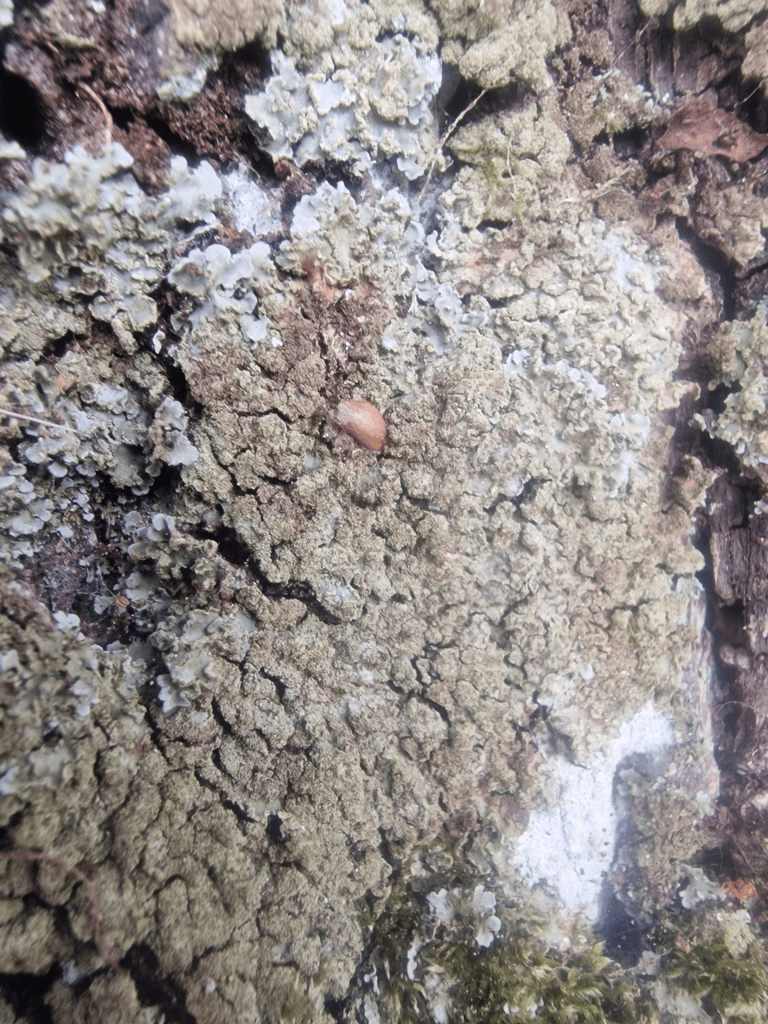
Physconia grisea Grey Frost Lichen
Dendrographa decolorans.
Thin whitish, lilac-grey or pinkish-grey thallus. When the surface (fungal hyphae) of the thallus is scratched, its photobiont (an alga of the orange Trentepohlia) is revealed.
Evernia prunastri. The vernacular name of this lichen is Oak Moss; even though it is not a moss! It is very common on Oaks, but it is common on other trees too.
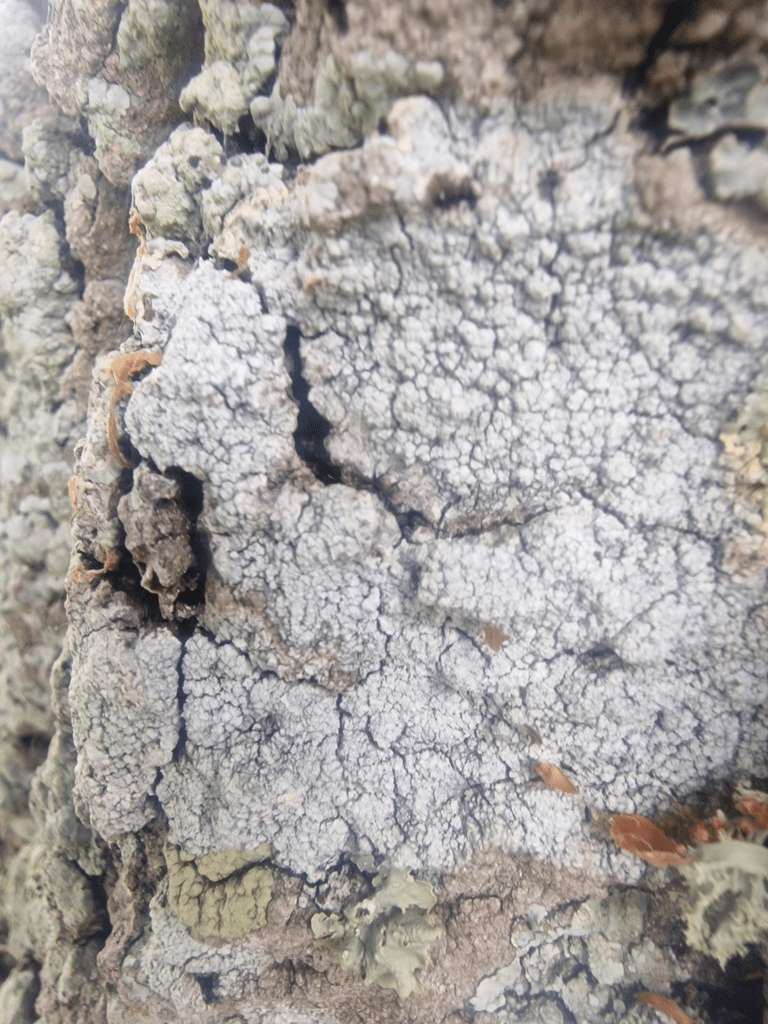
Most of the lichens on this oak were of the Mature Mesic Bark Community (Pertusarietum amarae); shade tolerant communities on rougher bark, with Pertusaria species dominant. They are particularly characteristic of Beech and Ash, but also on less damp Oak bark. The basic community is composed of widespread species particularly Pertusaria s. lat. speciesBritish Lichen Society Lichen Communities
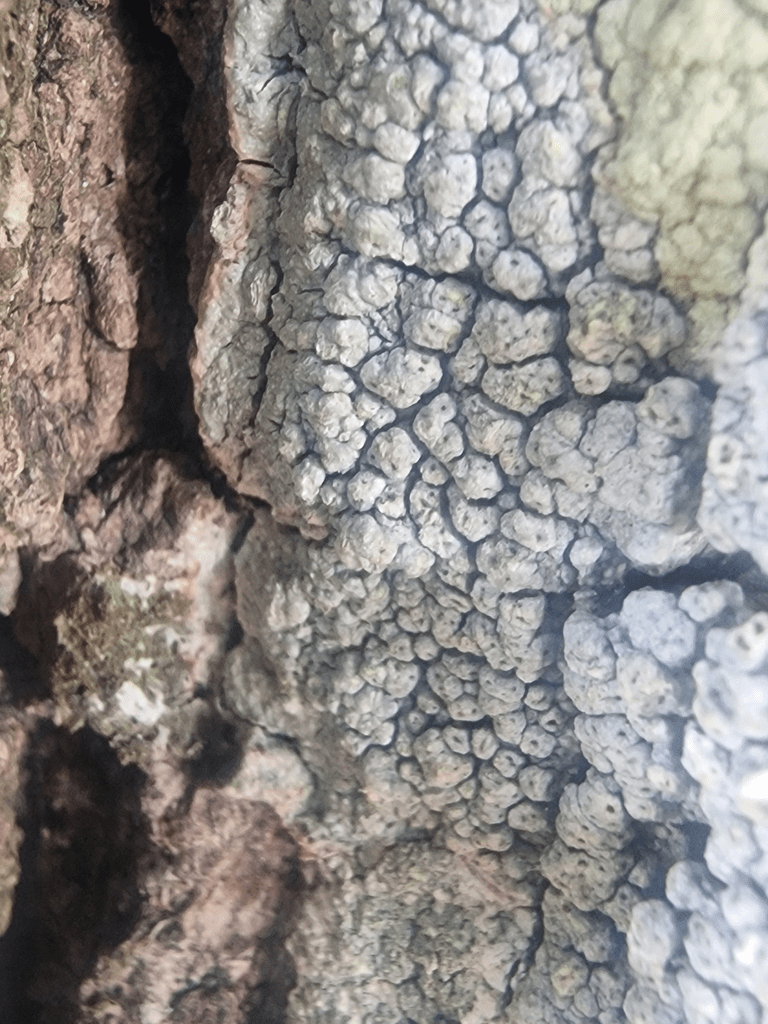
Pertusaria pertusa Sometimes called Pepper Pot lichen, for obvious reasons.
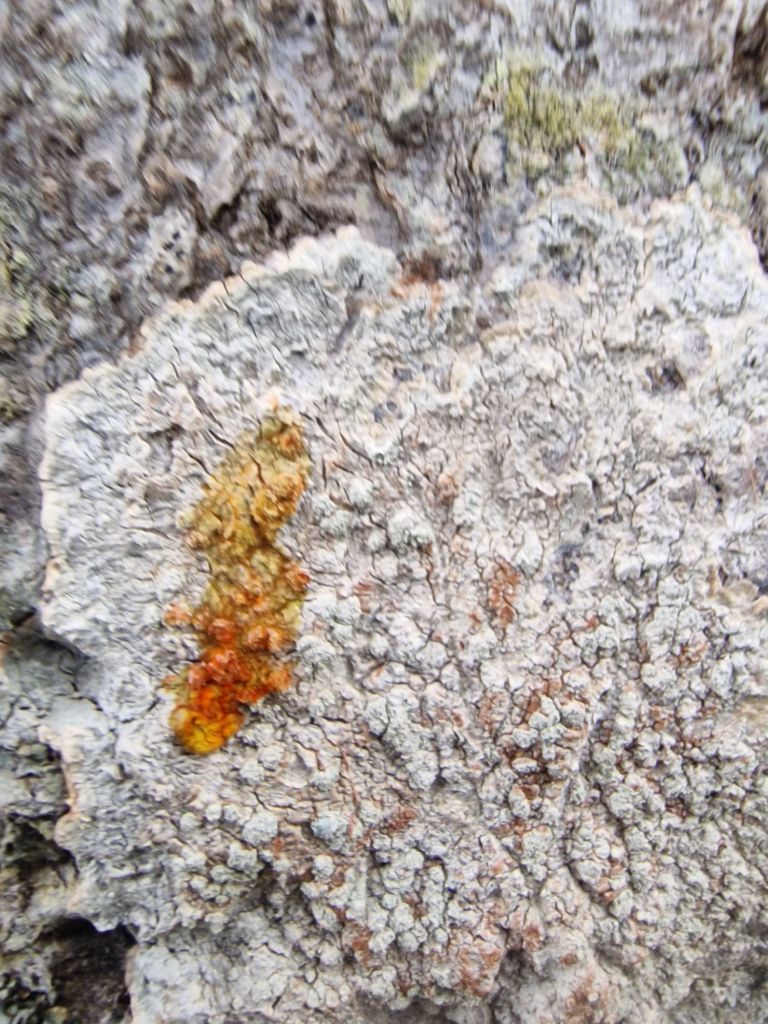
Pertusaria flavida; the orange part of this photo, which can only be identified (by turning orange) with UV light and/or a chemical spot reagent test, which reacts to lichen substances (mostly secondary metabolites). I did both the UV and the reagebts tests in the filed
Lepra amara The vernacular name of this lichen is Bitter Wart Lichen, because it tastes very butter if licked. I do not lick it to confirm its identification!
As I was identifying these lichens I head a Crow, Corvus corone, directly above my head. When I looked up a parent crow was feeding a juvenile. Here is the juvenile
Crows can nest almost anywhere, but they prefers well-covered trees with broad branches and solid tree forks, like Oaks
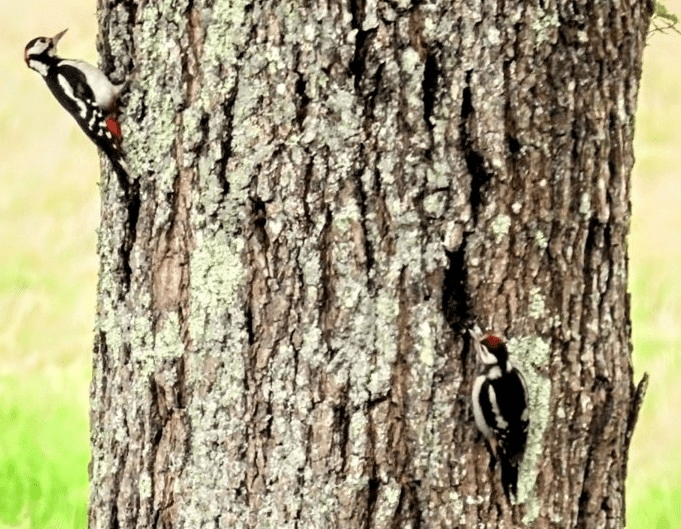
Crows are not the only birds to use Oaks. Earlier in the day I saw two Great Spotted Woodpeckers, Dendrocopos major, drumming on the trunk of another Pendunculate Oak. Great spotted woodpeckers can be found across mainland Britain, but are limited to the west of Ireland. Mature broadleaved woodland is prime habitatWoodland Trust Great Spotted Woodpeckers
At this point I walked into Petworth to get a coffee. When I came back I could see Fallow Deer under the tree. A social, elegant species with a signature speckled coat and mighty palmate antlers. First introduced by the Romans, fallow deer became extinct in Britain until they were reintroduced before the Norman Conquest around the year 1,000.Woodland Trust Fallow Deer
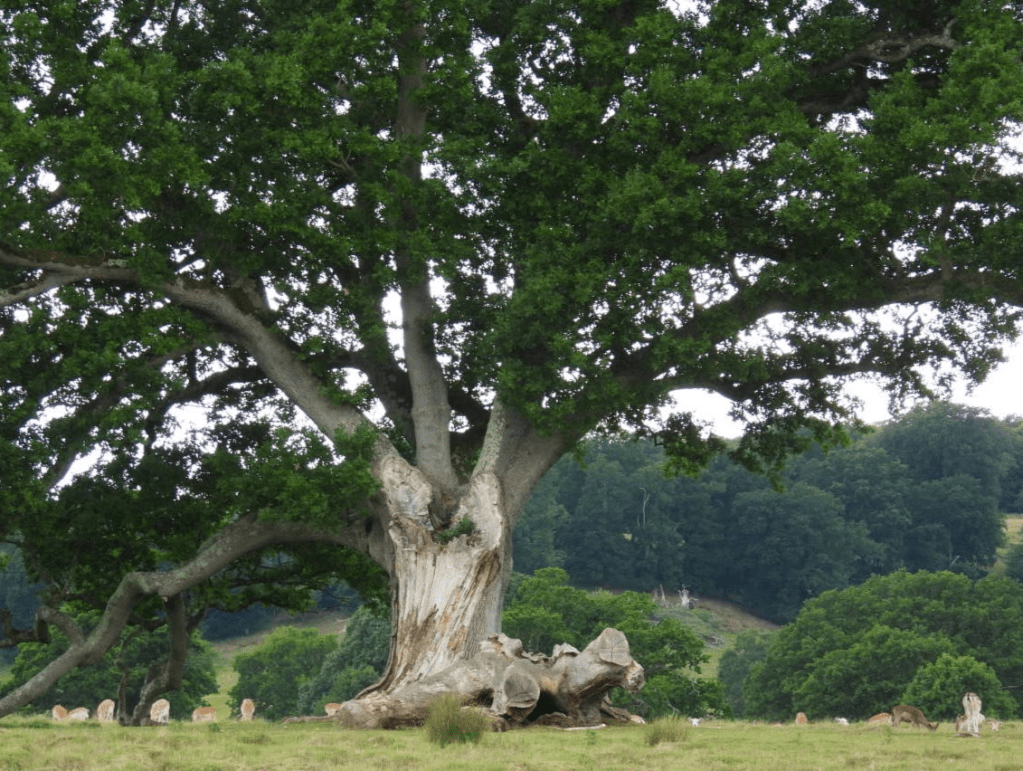
The herd of Fallow Deer have been at Petworth Park, according to the National Trust, for 500 years. The magnificent herd of fallow deer have called Petworth Park home for over 500 years; they were reportedly hunted by Henry VIII on his visit to Petworth in the 1520s.National Trust Petworth Park. There were probably Fallow Deer in the park since the land was gifted by Henry I (the fourth son of William the Conqueror) to Joscelin de Louvain, a Norman feudal baron. The pasture oaks of the deer park have provided shade for Fallow Deer for nearly 1000 years; this ancient oak has been shading deer for probably 400 years. The Fallow Deer I saw today are johnny-come-latelys!
LEAF stands for Laboratory Extension and Fieldwork. I would really recommend the British Lichen Society’s courses, for dates of courses see British Lichen Society Latest News It was a fabulously enjoyable and informative course. Tutors: Nicola Bacciu, Pat Wolseley, Fred Gibson and Lindsay Mahon
I travelled to Taunton from Brighton on 29.05, and kindly got a lift from one of the course participants to Nettlecombe Court. The court and its parkland is on the fringes of the Brendon Hills, within the Exmoor National Park, Sommerset,
Its a Grade I listed building, see Nettlecombe Court for Historic England’s listing; with a Late medieval hall, cross passage and wing, a 1599 entrance front, porch, great hall and parlour, a circa 1641 addition to rear of great hall, a 1703-7 South West front extended and staircase added in angle, and plasterwork on stair added in 1753.
The court is surrounded by 60 hectares of parkland, once a part of the estate. The park surrounding the house is Grade II listed on the National Register of Historic Parks and Gardens.
In 1066 Nettlecombe was held by Godwin, son of Harold. In 1086 the Domesday Survey described it as held by the King for a knight’s fee. It was granted by the King to Hugh de Ralegh in 1160 and the grant of free warren was made to Simon de Ralegh in 1304. In 1440 the then owner, also Simon de Ralegh, died childless, leaving the estate to his nephew, Thomas Whalesborough. Thomas’ son, Edmund, died during his father’s lifetime and the estate descended to Edmund’s sister, Elizabeth, who was married to John Trevelyan of Cornwall. Since 1440, the Trevelyan family has kept a record of the management of the estate, now held in the Somerset Record Office, Taunton. The first mention of a park at Nettlecombe appears in a survey of 1532, recorded as being of 80 acres (c 33ha) in a later survey of 1556, and deer were first recorded in 1593. Although deer parks are known to have existed at Nettlecombe since the late C16, the first conclusive evidence of a designed landscape appears in an engraving, published in 1787, The park was enlarged with the addition of the Great Park in 1755 and South Park in 1792. National Register of Historic Parks and Gardens Listing
Here are Lichens we saw (all photos taken by me; Lichens marked * were new-tom-me and were identified by the tutors, Nicola Bacciu, Pat Worsley, Fred Gibson and/or Lindsay Mahon)
One of the main learning points for me was considering lichen communities
The Lobarion pulmonariae community
The Lobarion pulmonaria is composed mainly of large foliose lichens and robust bryophytes and appears to be the natural forest climax community on mature hardwood trees with barks of pH 5.0-6.0 in western Europe outside areas with Mediterranean climates. It is now very much fragmented in distribution due to the felling and management of primeval forests, drainage and various forms of pollution. In drier areas it tends to be confined either to sheltered glades in more open forests where there is more light, or to the upper boughs of trees. James, P.W., Hawksworth, D.L. & Rose, F. (1977) Lichen communities in the British Isles: a preliminary conspectus. In: Lichen Ecology (ed. M.R.D. Seaward): 295-413. Academic Press, London.
Old forest and parkland – (the Lobarion pulmonariae alliance)
The Lobarion pulmonariae alliance includes a mixture of bryophytes and lichens found on basic barked trees more than 150-200 years old, mainly Ash and Oak, but sometimes on Lime, Maple and Sycamore. It is a characteristic community of ancient woodland and parkland and contains many local and rare species.
The large leafy Lobaria pulmonaria and Ricasolia virens are both present and although rare, they locally form luxuriant colonies in ancient woodlands where they are both found fertile. Leptogium lichenoides and Peltigera horizontalis occur rather frequently, but other large leafy lichens with a blue-green photobiont such as Ricasolia amplissima, Nephroma laevigatum, Pannaria conoplea, Parmeliella triptophylla, Peltigera collina, Sticta limbata and S. sylvatica are all now rare. There are many small, crust-forming species associated with this community including Bacidia biatorina, Catinaria atropurpurea, Coenogonium luteum, Gyalecta truncigena, Leptogium teretiusculum, Biatora epixanthoides, Mycobilimbia pilularis, Thelopsis corticola, Pachyphiale carneola, Rinodina roboris and Thelopsis rubella, plus the rarer Agonimia allobata, A. octospora, Lecania chlorotiza, Piccolia ochrophora, Porina coralloidea, P. rosei, Strigula jamesii, S. phaea and Wadeana dendrographa. Bryophytes associated with this community include Homalothecium sericeum, Leptodon smithii, Leucodon sciuroides, Metzgeria furcata, Tortula laevipila and Zygodon baumgartneri. British Lichen Society Document. John Skinner et al. 2024 Revised FG 2025Rev. 1.2 EPIPHYTIC LICHEN COMMUNITIES NETTLECOMBE – June 2025
We saw most of the following lichens on Quercus petraea and asingle Q. cerris in Nettlecomb. In Sussex, where I live, this community is only found in a few places, viz. Paddockurst Estate, Eridge Park, East Dean Park Wood , Parham Park, Ashburnham Park and Pads Wood, but only Eridge Park, still has Lobaria pulmonaria itself.
Lobaria pulmonaria
Parmotrema crinitum *
Arthonia vinosa *
Gyalecta truncigena *
Aquacidia viridifarinosa *
Mature Mesic Bark Community (Pertusarietum amarae)
The Pertusarietum amarae are shade tolerant communities on rougher bark, with Pertusaria species dominant. They are particularly characteristic of Beech and Ash, but also on less damp Oak bark. The basic community is composed of widespread species particularly Pertusaria s. lat. species: Pertusaria albescens, Lepra amara (Pertusaria amara f amara), Pertusaria flavida, Pertusaria hymenea and Pertusaria pertusa along with Phlyctis argena and Ochrolechia subviridis. This is a common community in drier areas but gets displaced by moss dominated communities in strongly oceanic areas. Within old growth stands it can be rich in old woodland species including Arthonia vinosa, Cliostomum flavidulum, Mycoporum antecellens, Phaeographis dendritica, Lepra multipuncta (Pertusaria multipuncta) and Thelotrema lepadinum. The rare taxa include Reichlingia zwackhii (Arthonia zwackhii), Melaspilea amota, Stictographa lentiginosa (Melaspilea lentiginosa), Lepra pulvinata (Pertusaria amara f. pulvinata), Pertusaria pustalata, Varicellaria velata (Pertusaria velata) and Phaeographis lyellii.British Lichen Society Lichen Communities
We saw these lichens on a Nothofagus fusca and mostly Quercus petraea at Nettlecombe. In Sussex this community can be seen at Eridge Park, Parham Park, Petworth Park, Wadhurst Park and Buxted Park in particular
Pertusaria hemisphaerica
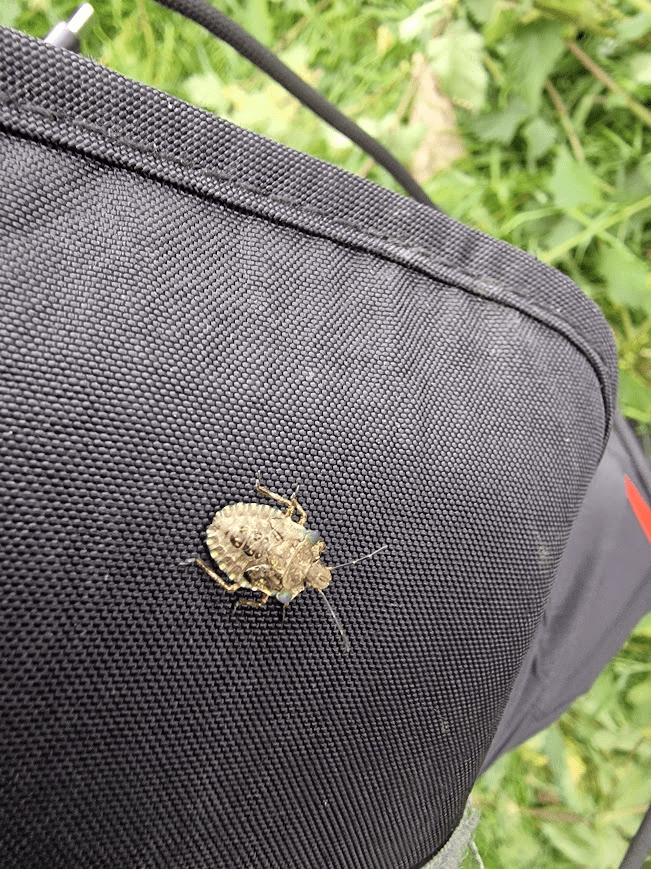
This Pentatoma rufipes Forest Bug fell onto my bag whilst standing under the Nothofagus fusca
Pertusaria coronata *
Lepra corallina *
Pertusaria flavida *
Ochrolechia androgyna *
Opegrapha vulgata
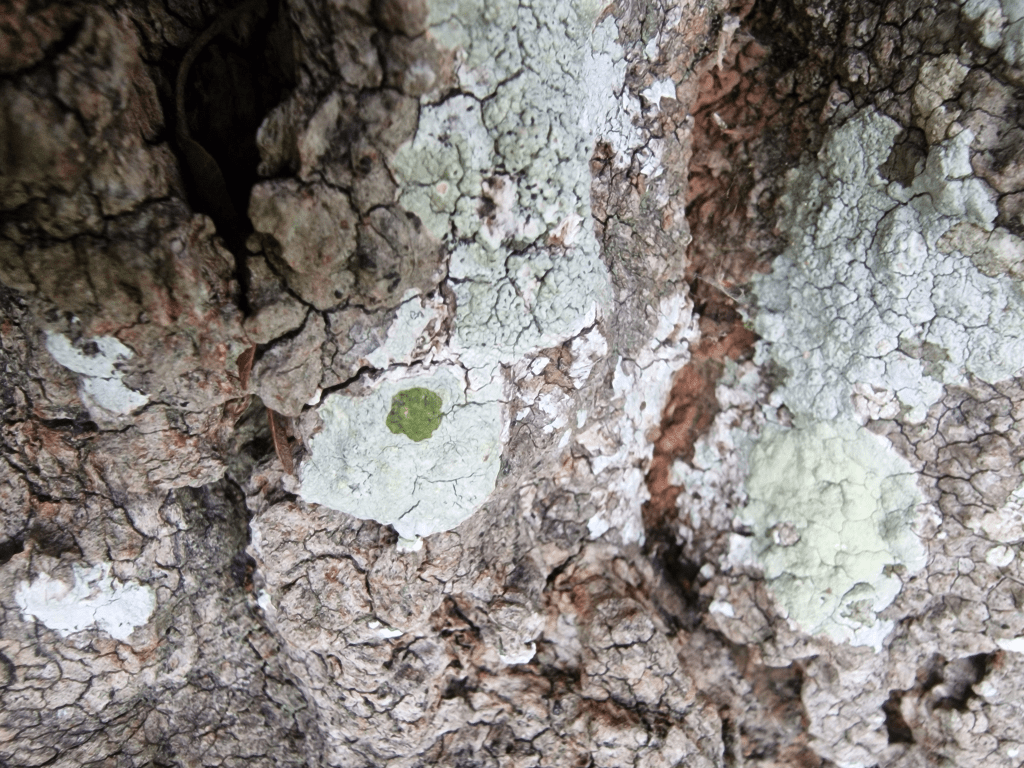
Thelotrema lueckingii *
On decorticated lignum (Quercus pretera)
Calicium glaucellum *
Twig flora community Lecanora chlarotera-Arthonia radiata– the Lecanoretum subfuscae In open grown wood pasture and parkland the canopy is well lit and the twig flora is well developed. The most frequent species are Arthonia radiata, Lecanora chlarotera, L. hybocarpa and Lecidella elaeochroma, with Evernia prunastri, Fuscidea lightfootii, Hypogymnia physodes, H. tubulosa, Melanelixia subaurifera, Parmelia sulcata, Punctelia subrudecta and Physcia aipolia also present. In more exposed sites the presence of Melanohalea laciniatula, Physcia tenella, Xanthoria parietina and X. polycarpa indicates slight levels of ammonia or nitrogen enrichment British Lichen Society Document. John Skinner et al. 2024 Revised FG 2025Rev. 1.2 EPIPHYTIC LICHEN COMMUNITIES NETTLECOMBE – June 2025
We saw these lichens in the orchard at Nettlecombe. This is a very familiar community to me, as it is the community on Hawthorn and younger trees in Sussex
Physcia aipolia
Hypotrachyna revoluta (with Ramalina fastigiata)
Hypotrachyna afrorevoluta
Glaucomaria carpinea
Ramalina fastigiata with Xanthoria parietina
We also saw Ramalina farinacea,Lecanora hybocarpa,Lecidella eleachroma,Usnea cornuta; but I did not photo these.
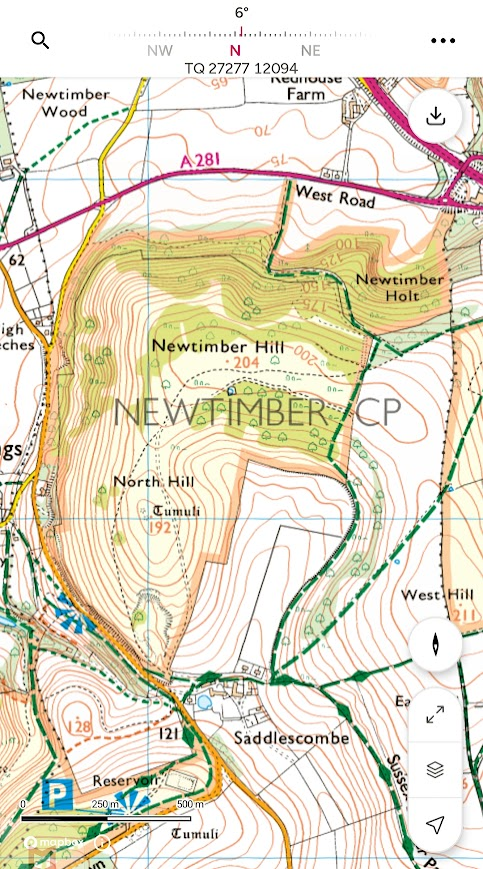
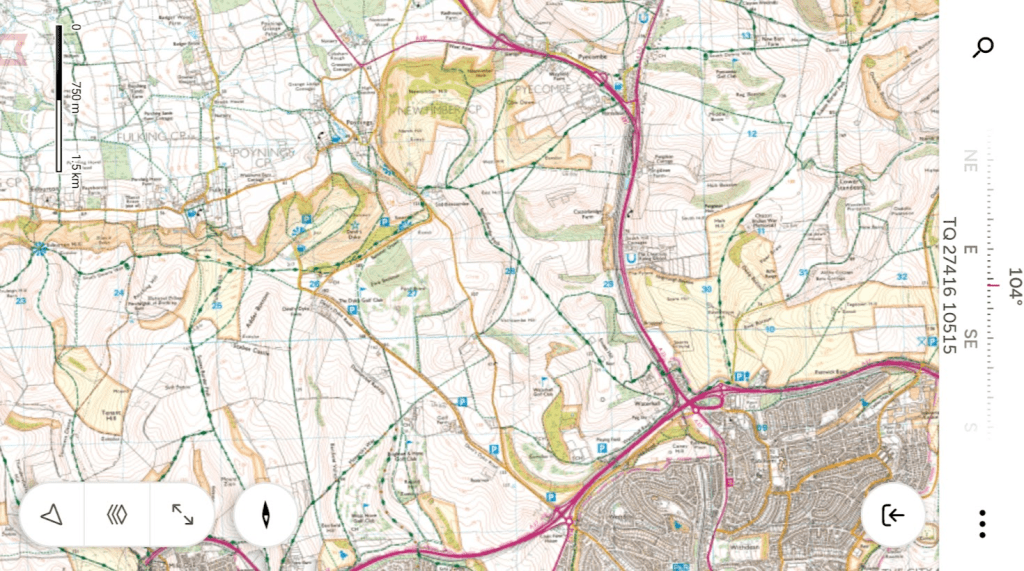
Newtimber Holt is a small but very biological interesting area of ancient woodland on Newtimber Hill. It is owned by the National Trust and managed by Saddlescombe Farm. It is probably the most interesting chalk scarp face ancient wood along the eastern South Downs. It is easily reachable by Stagecoach bus 17 stops Newtimber, Redhouse Farm or Newtimber, Beggar’s Lane Stagecoach 17 Timetable
When we think of ancient woodland, many people may think about our Temperate Rain Forest (Atlantic Woodland) in northwest Scotland, north Wales of the West Country. Or we may think of our nationally famous medieval royal deer parks, e.g. the New Forest, Hatfield Forest, or Windsor Great Park (pasture woodland).
Or if we’re in Sussex, we may think of our High Weald ancient Ghyll Woods, which have microclimates similar to Atlantic woodland; or Sussex’s medieval deer parks (pasture woodland) e.g. Parham Park, or the (very rare) chalk dry valley woods, e.g., East Dean Park Wood (itself once a Medieval deer park) or the very rare dip slope ancient woodland of Pad’s Wood. Or perhaps we may think the numerous small ancient woods, some tiny, relict stands, of the Sussex Low Weald; although much ancient woodland in the Low Weald has been lost to development, especially new housing, especially in the Brighton to Crawley corridor of Hassocks, Burgess Hill and Haywards Heath.
The ancient woodland of the scarp slopes of the South Downs relicts of the former wider woodland that covered the South Downs, which was cleared and then grazed by sheep in the distant past, are probably least known ancient woodland in the UK. When we think of the Down’s we think of its historic sheep gazed short calcareous grassland that supports rare vascular plants and invertebrates; it is biologically magnificent and of national ecological importance, and itself rare now that business arable and pastoral farming has taken so much of the short grassland. But “23% of the South Downs National Park is covered by woodland, [but only half of this [11.5%] has been there for over 400 years [ancient woodland]. “Trees of the South Downs
Only 4% of the South Downs is calcareous short grassland; almost exactly the same percentage as when the national park came into being. When we think of the South Downs we think of rolling hills of short calcareous grassland; but very little of it is that; most of it is farmed arable land, and 23% is woodland (with only half of that being ancient woodland).
It is important to separate ancient woodland from ancient trees. Woodland classed as Ancient Semi-Natural Woodland, which are mainly made up of trees and other vascular plants native to the site, that have constantly regenerated for over 500 years, some have very few or no ancient trees; they are just areas that have been wooded continuously since at least 1600. Very few trees in ancient woodland are themselves ancient; although some might be.
Many notable, veteran, and ancient trees can be found not in ancient woods but in pasture, former deer parks or hedges. For example, many of the most ancient Pendunculate Oaks, Quercus robur, of the Low Weald are in grazing pasture, probably relicts of former woodland that was cleared for pasture and left for shelter for livestock, or planted as field, parish or other boundaries in hedgerows
At Newtimber Holt there are some magnificent ancient trees in ancient Woodland
This post attempts to refocus our attention on the ancient woodland of the scarp faces of the South Downs. There are areas of ancient woodland on the dip slopes of South Downs in West Sussex; but most of these are replanted ancient woodland, replanted with conifers or Sweet Chestnut. There are a few notable exceptions, such as Pads Wood (private), which is still ancient and semi-natural woodland.
Ancient Woodland Indicator Vascular Plants at Newtimber Halt
Ancient Woodland Indicator Vascular Plants are listed in Francis Rose Indicators of ancient woodland – the use of vascular plants in evaluating ancient woods for nature conservation, British Wildlife 10.4 April 1999
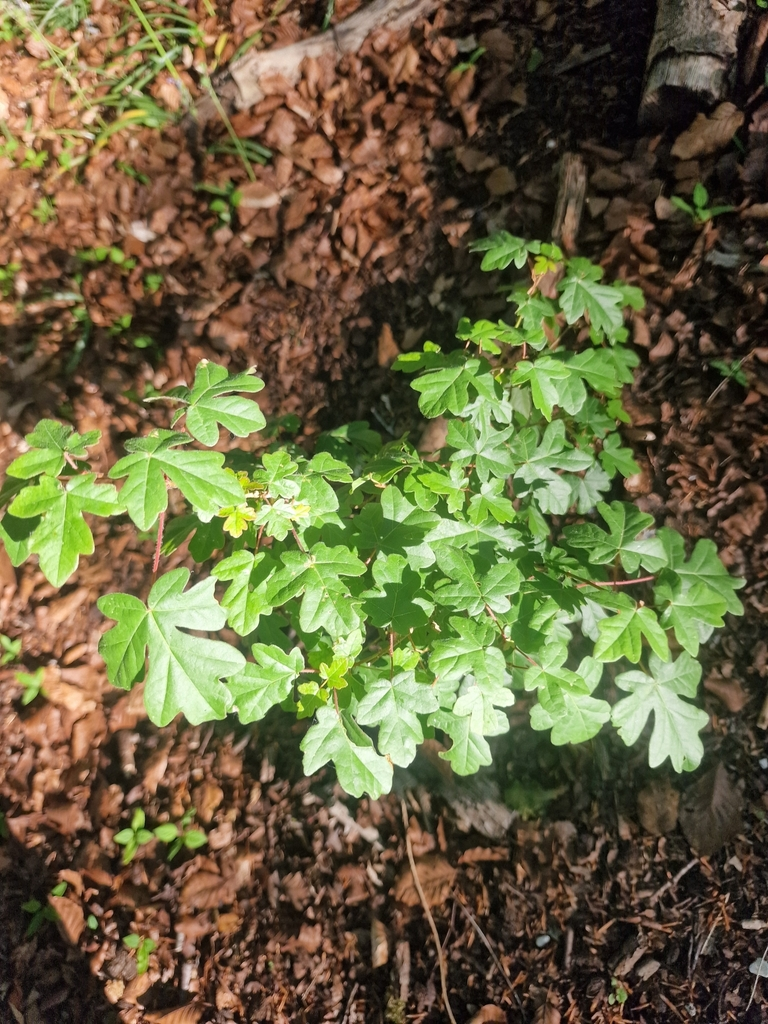
Acer campestre Field Maple
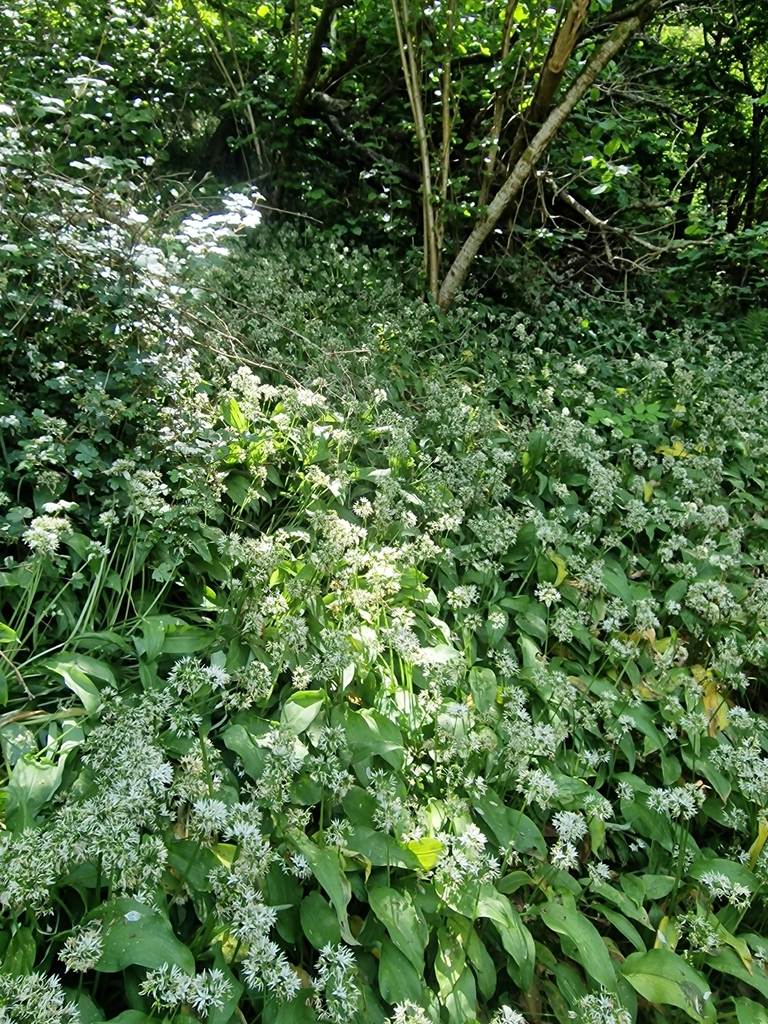
Allium ursinum Ramsons
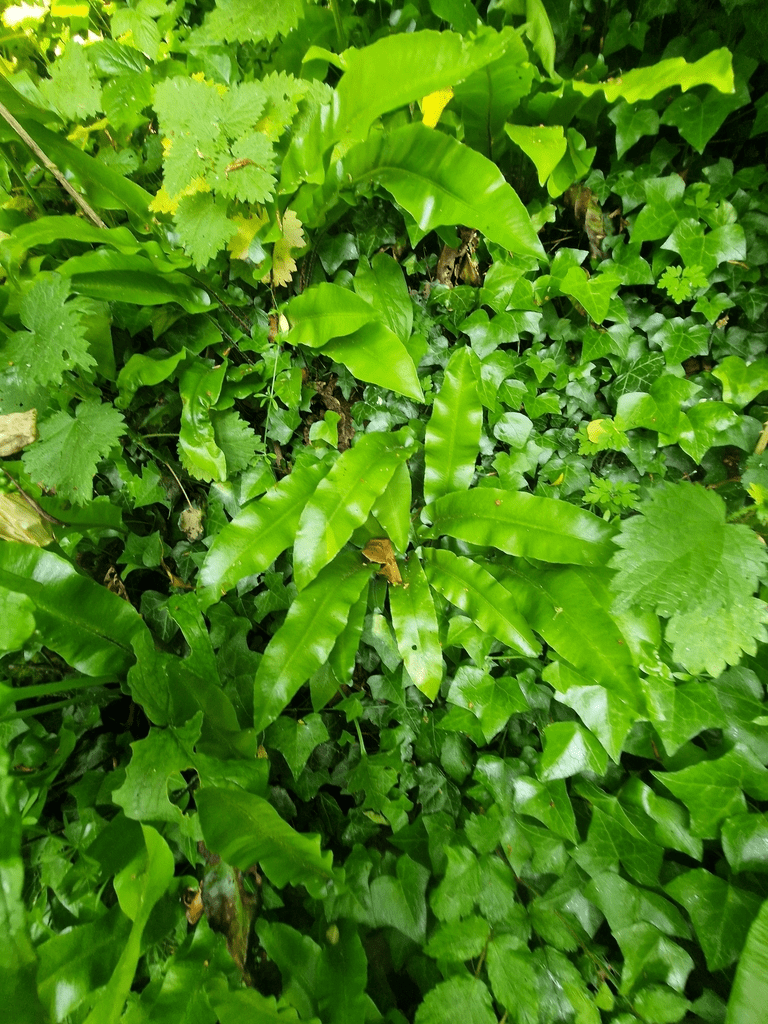
Asplenium scolopendrium Hart’s-tongue Fern
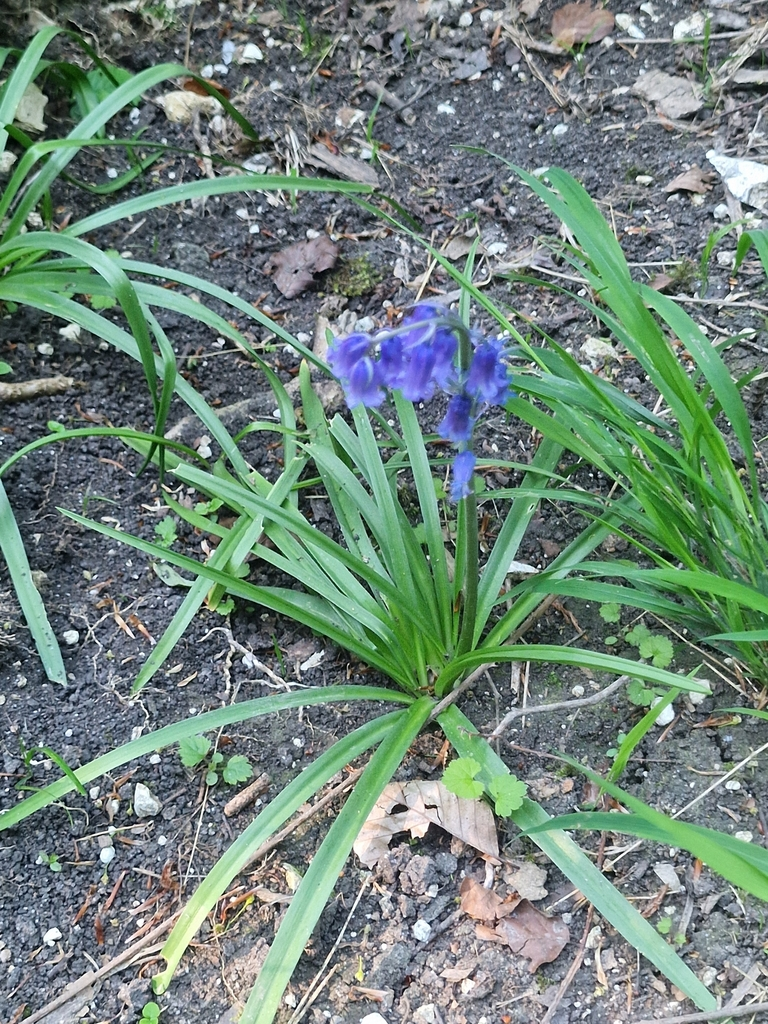
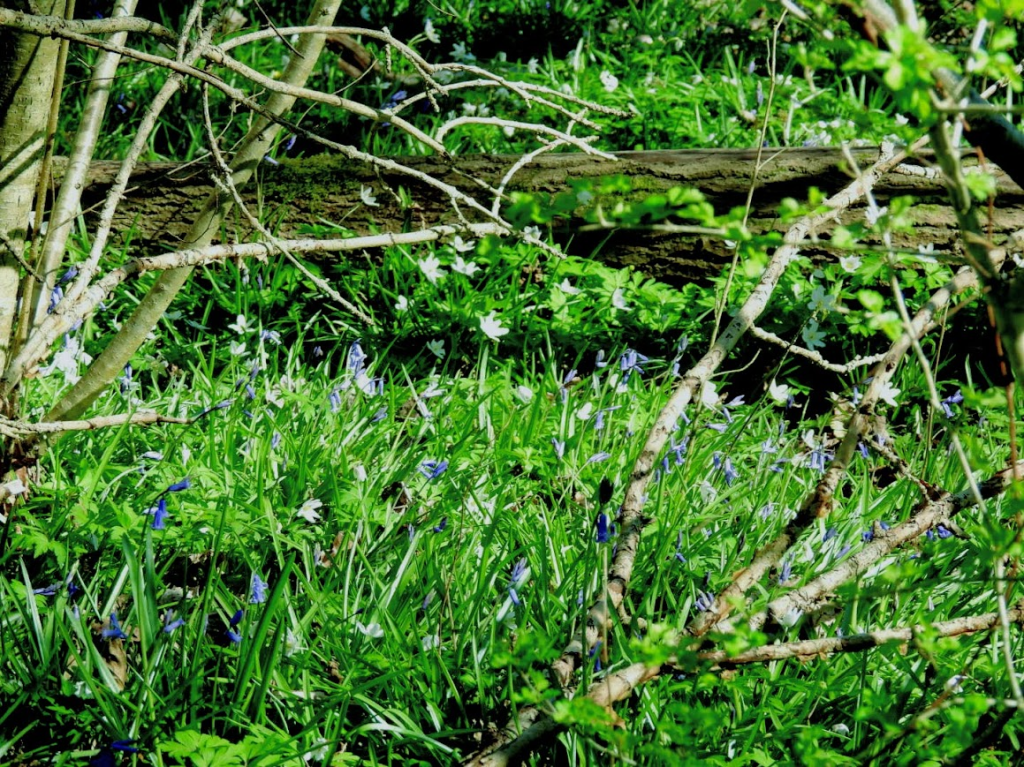
Hyacinthoides non-scripta Bluebell
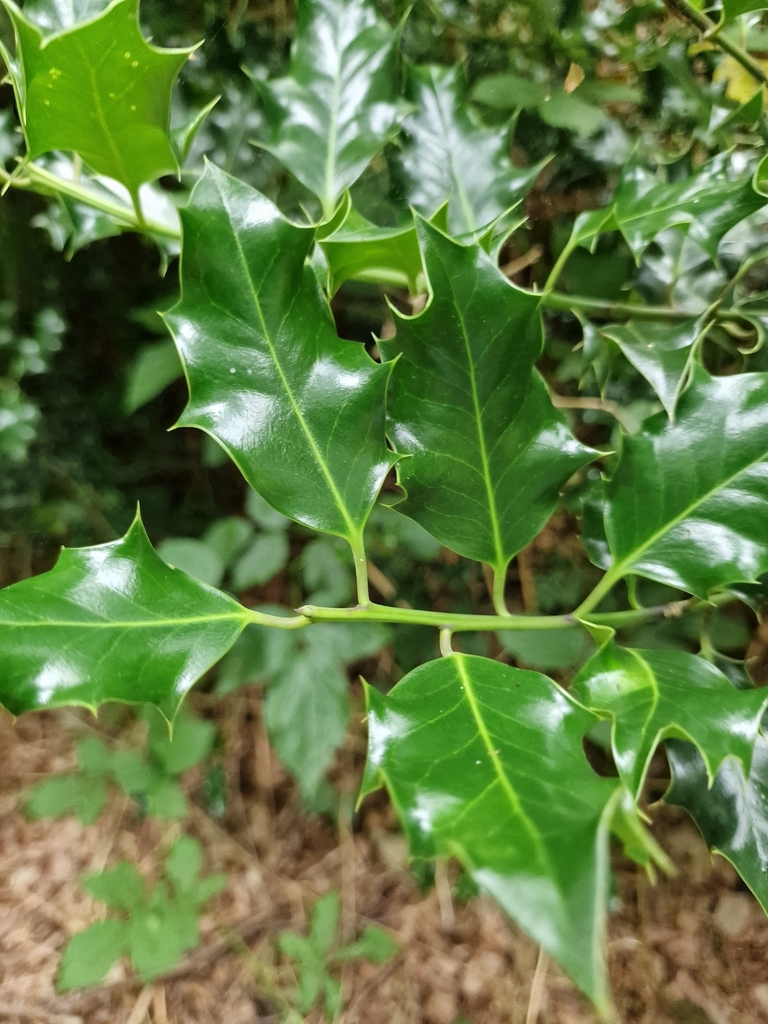
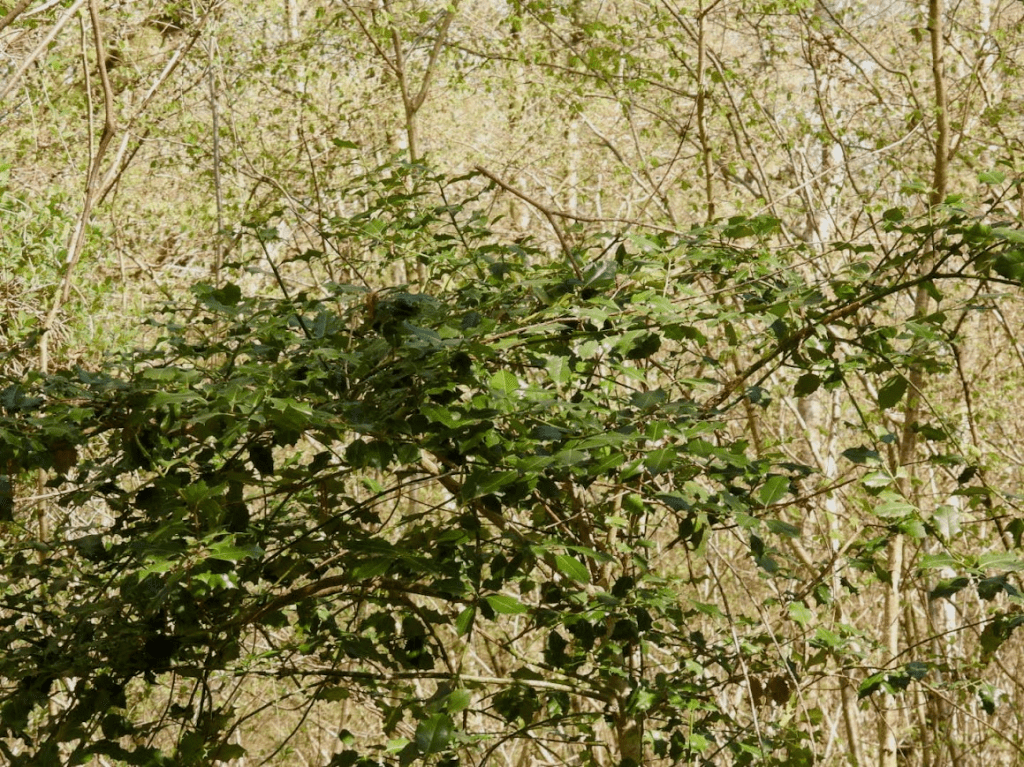
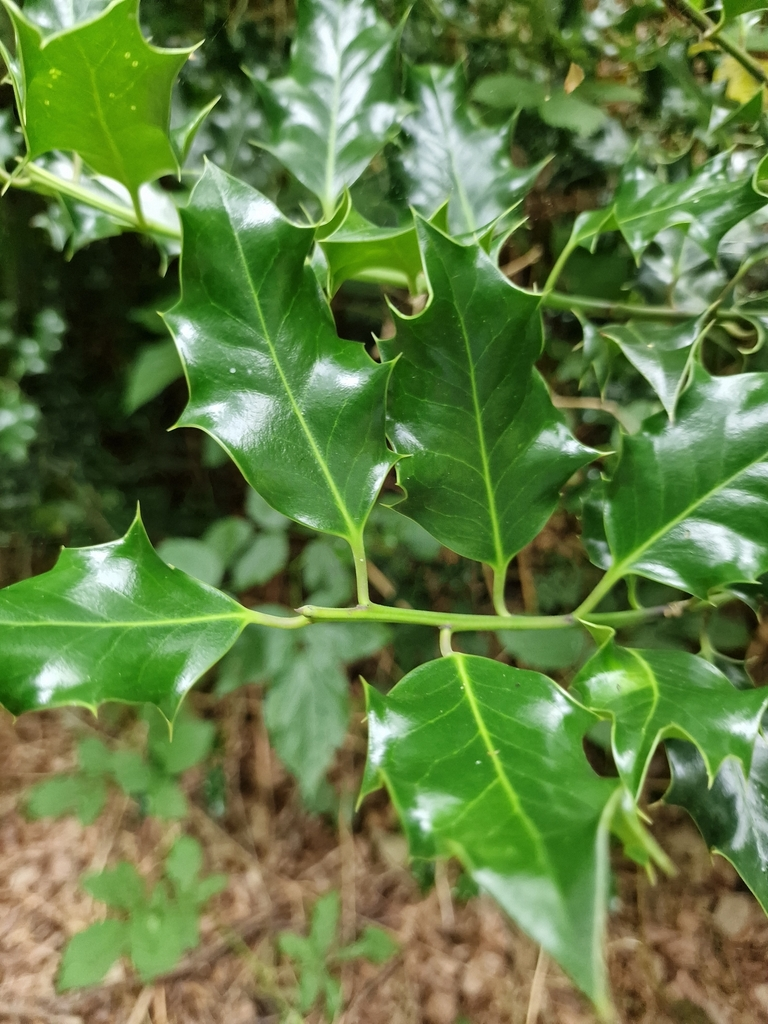
Ilex aquifolium European Holly
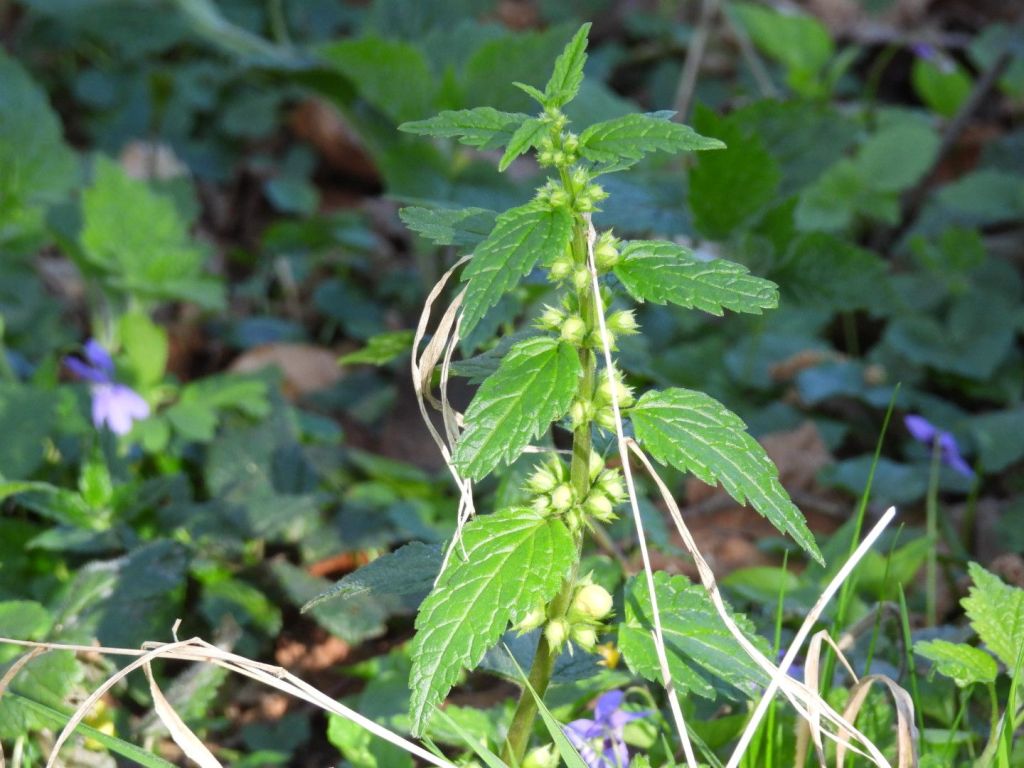
Lamium galeobdolon Yellow Archangel
Melica uniflora Wood Melick
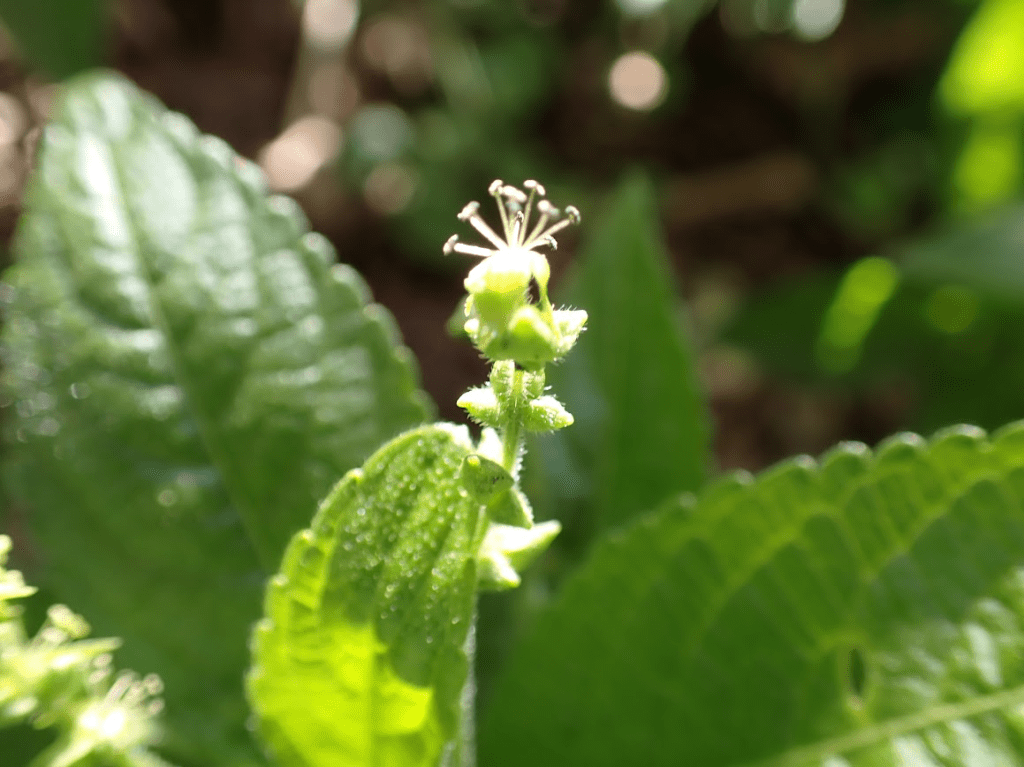
Mercurialis perennis Dog’s Mercury
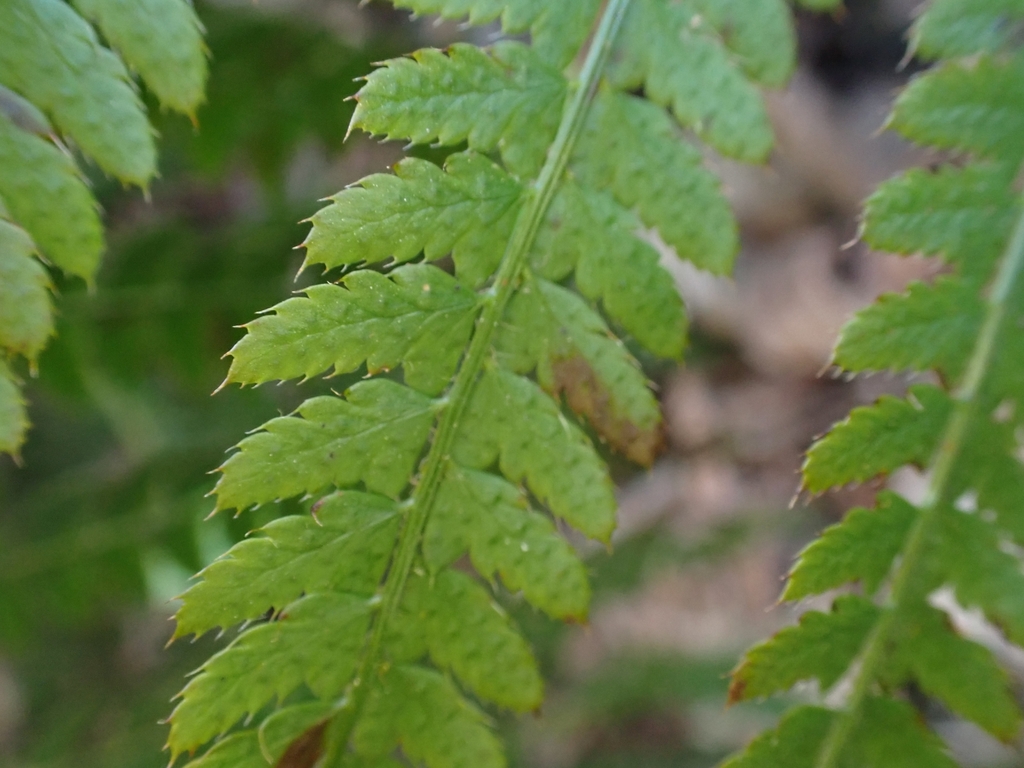
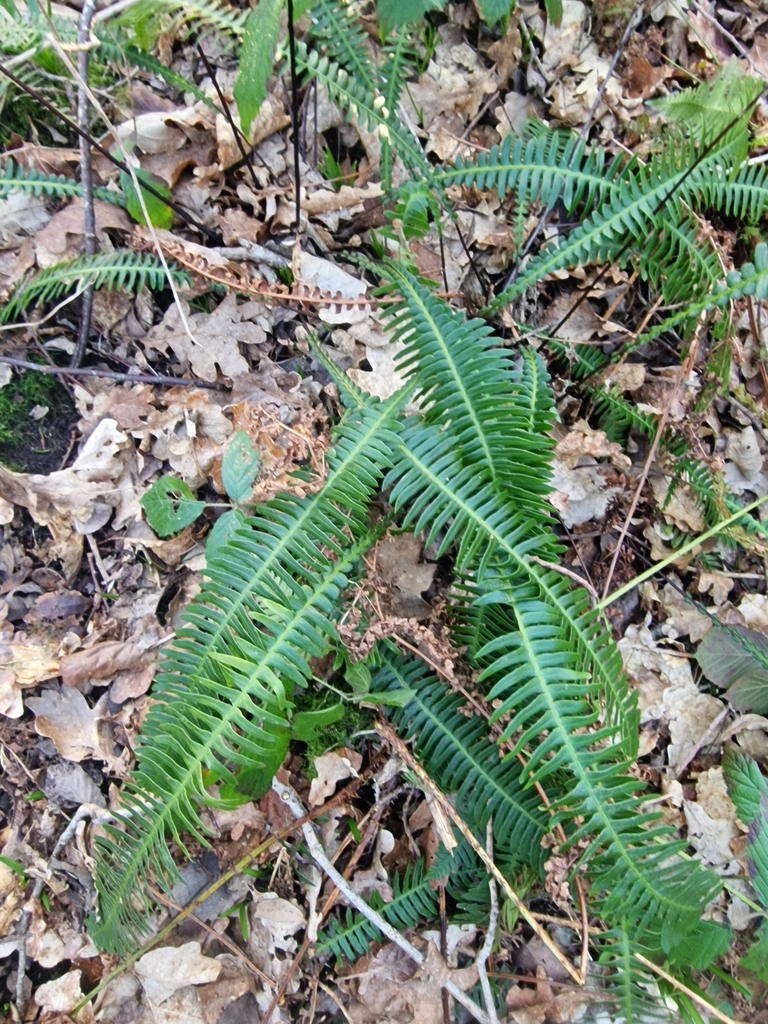
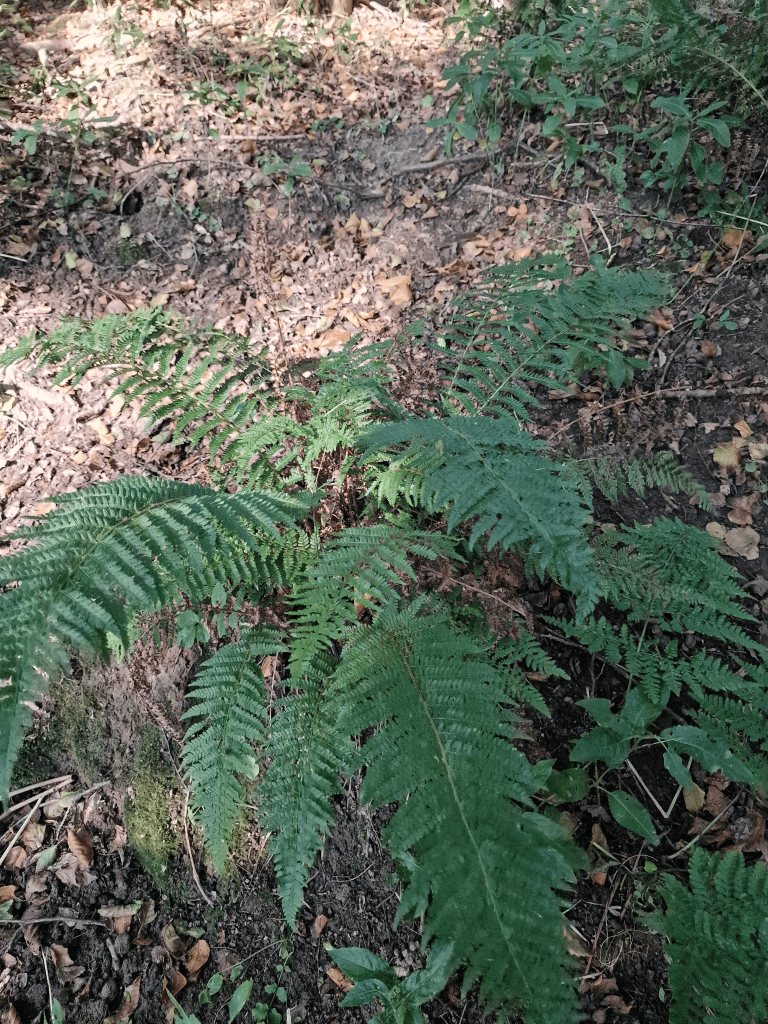
Polystichum setiferum Soft Shield Fern
Sanicula europaea Sanicle
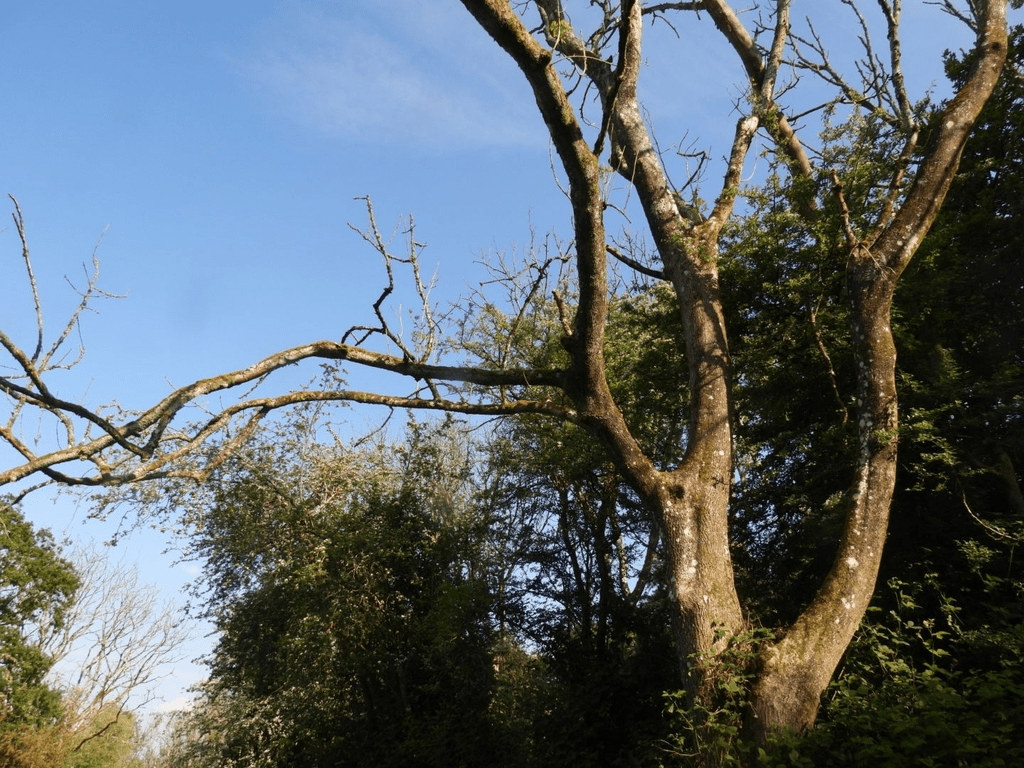
Ulmus glabra Wych Elm
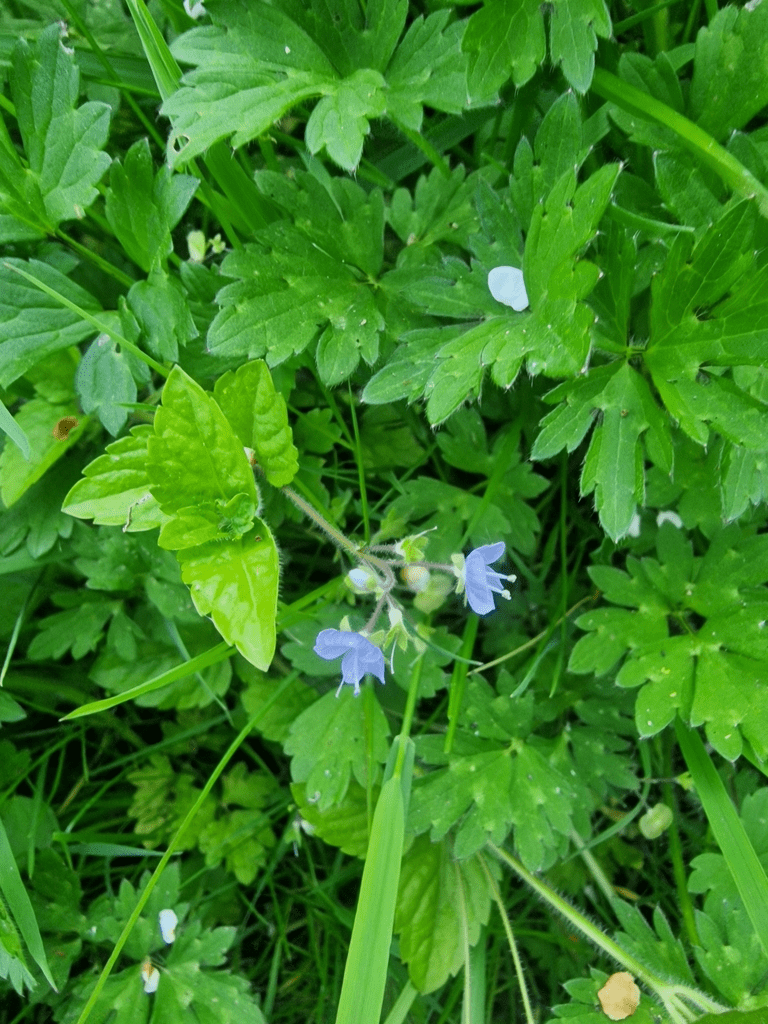
Veronica montana Wood Speedwell
Other vascular plants
Fragaria vesca Wild Strawberry
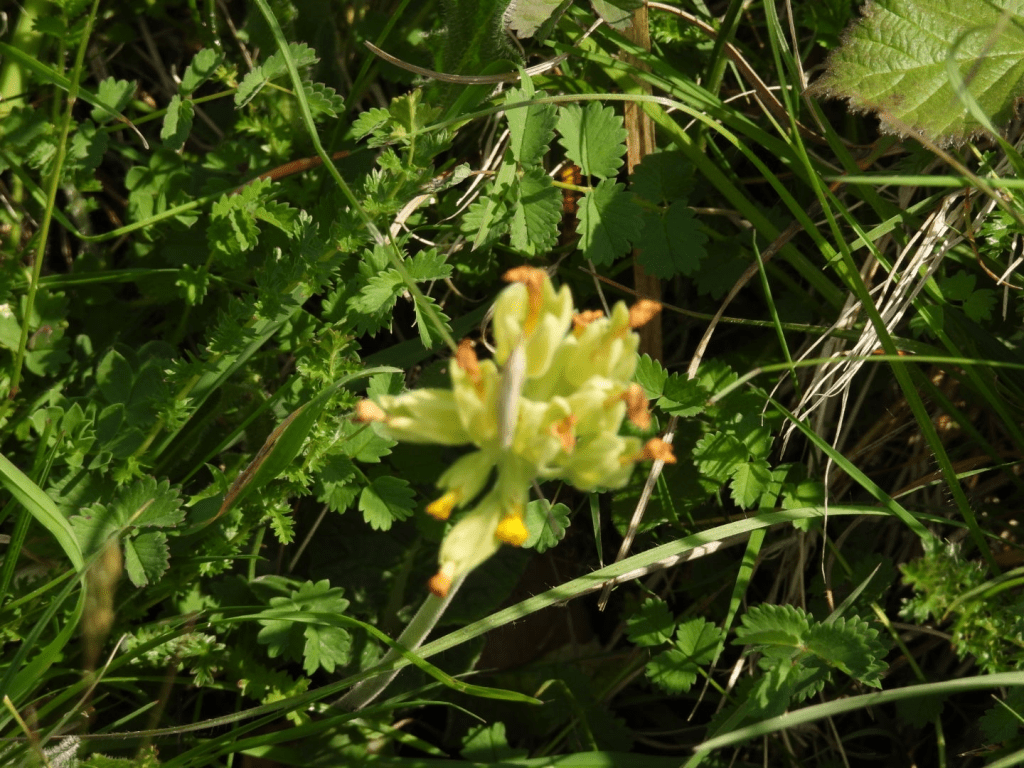
Primula veris Cowslip
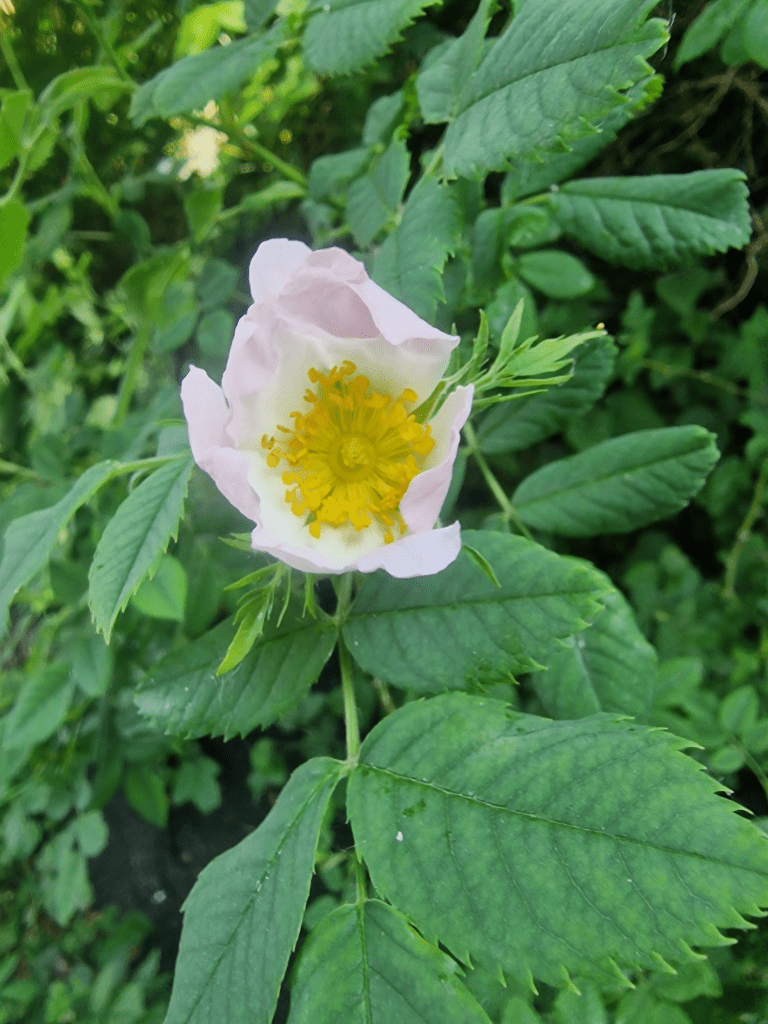
Rosa canina Dog-Rose
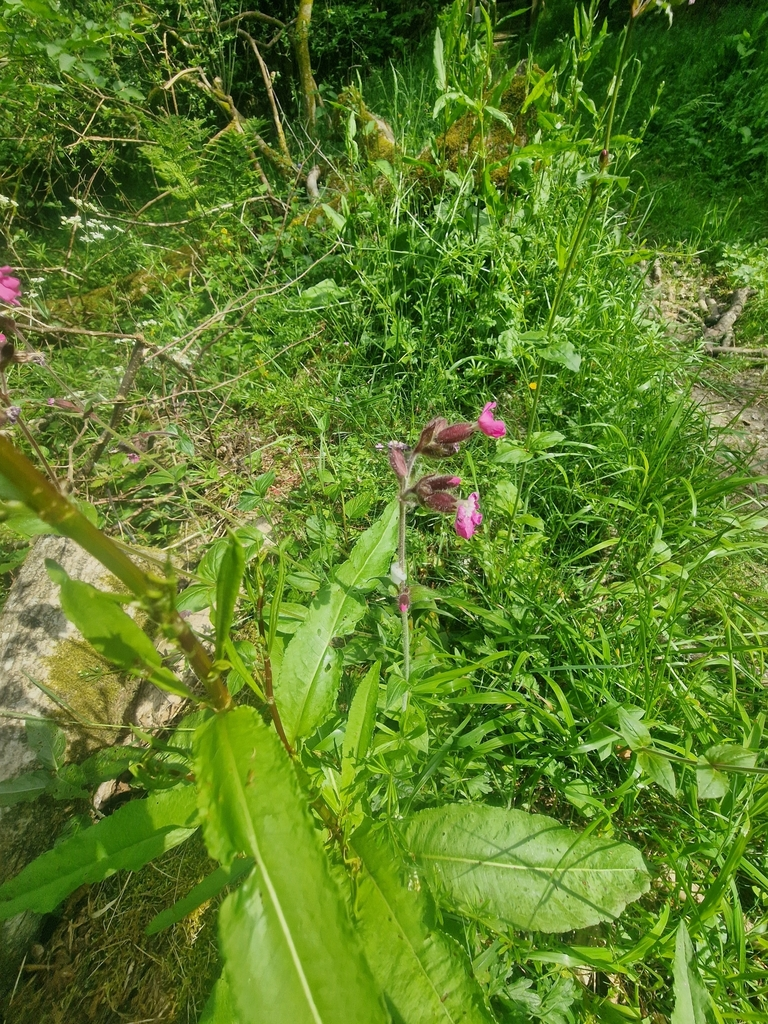
Silene dioica Red Campion
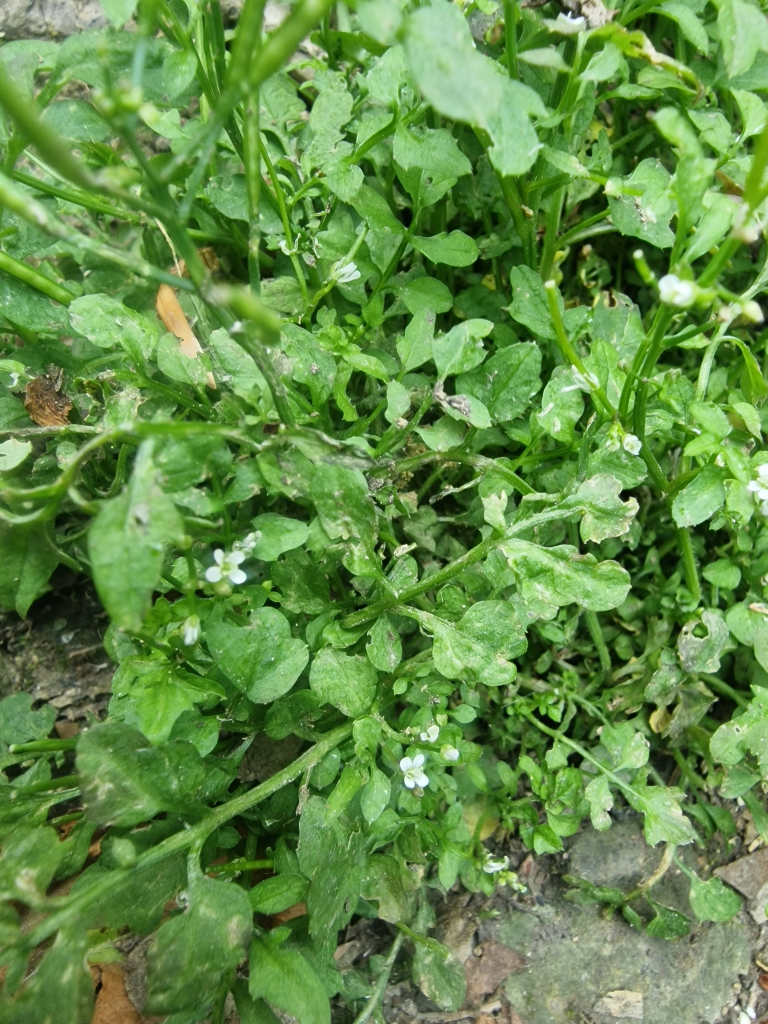
Cardamine flexuosa Wavy Bittercress
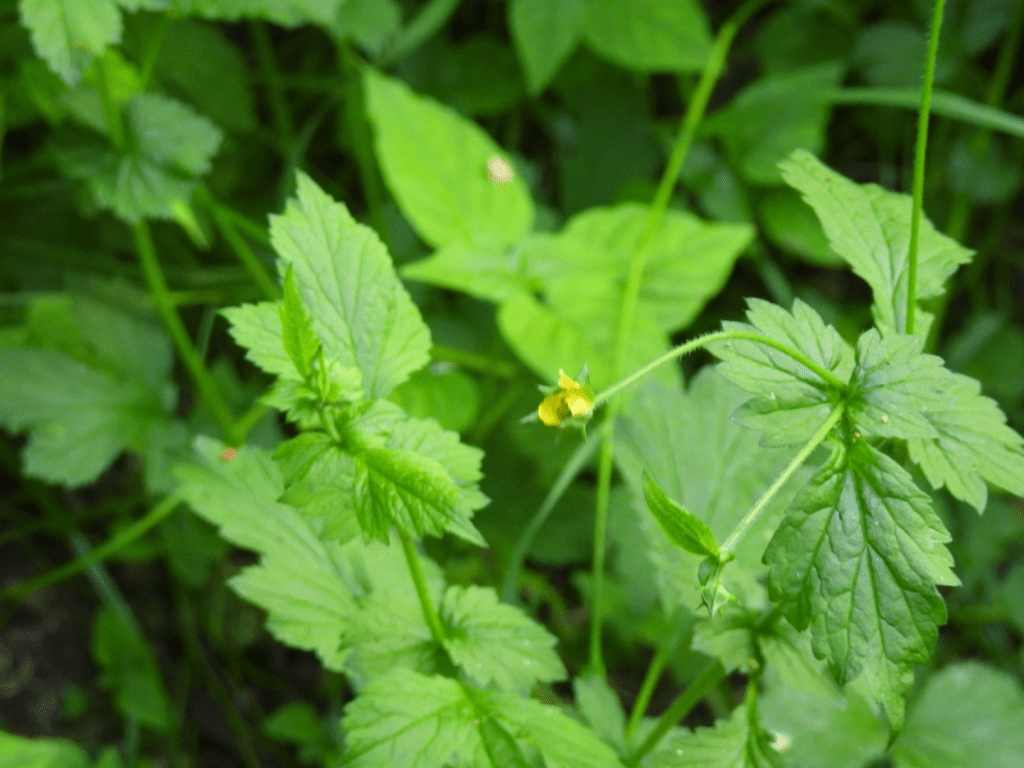
Geum urbanum Wood Avens
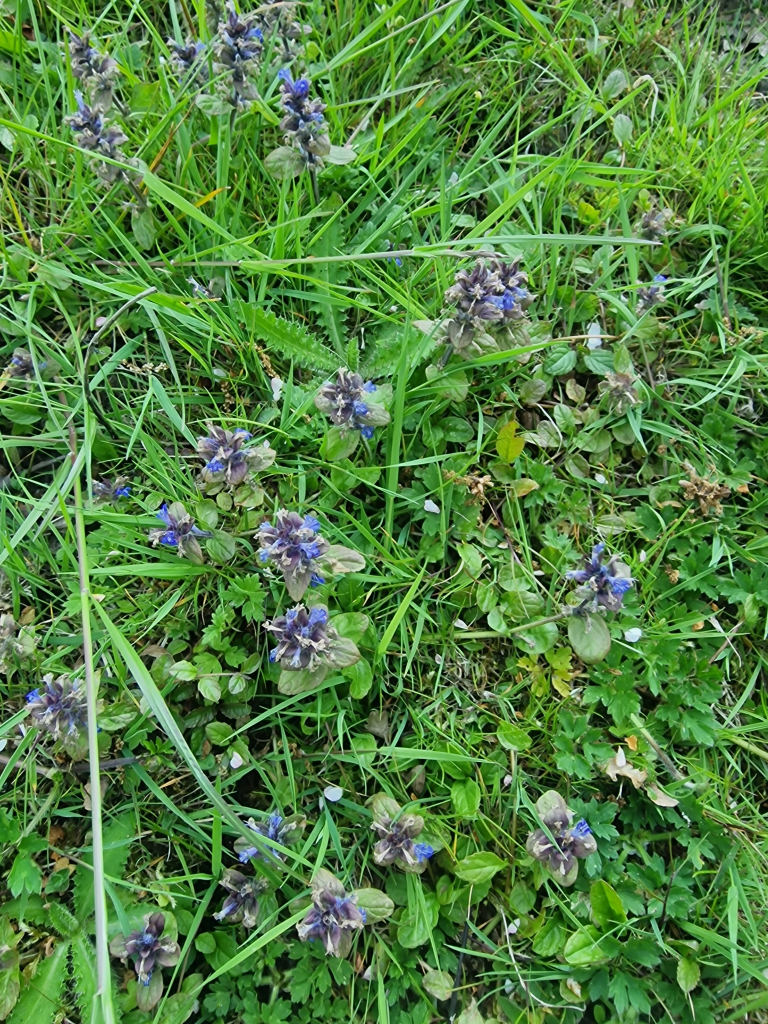
Ajuga reptans Bugle
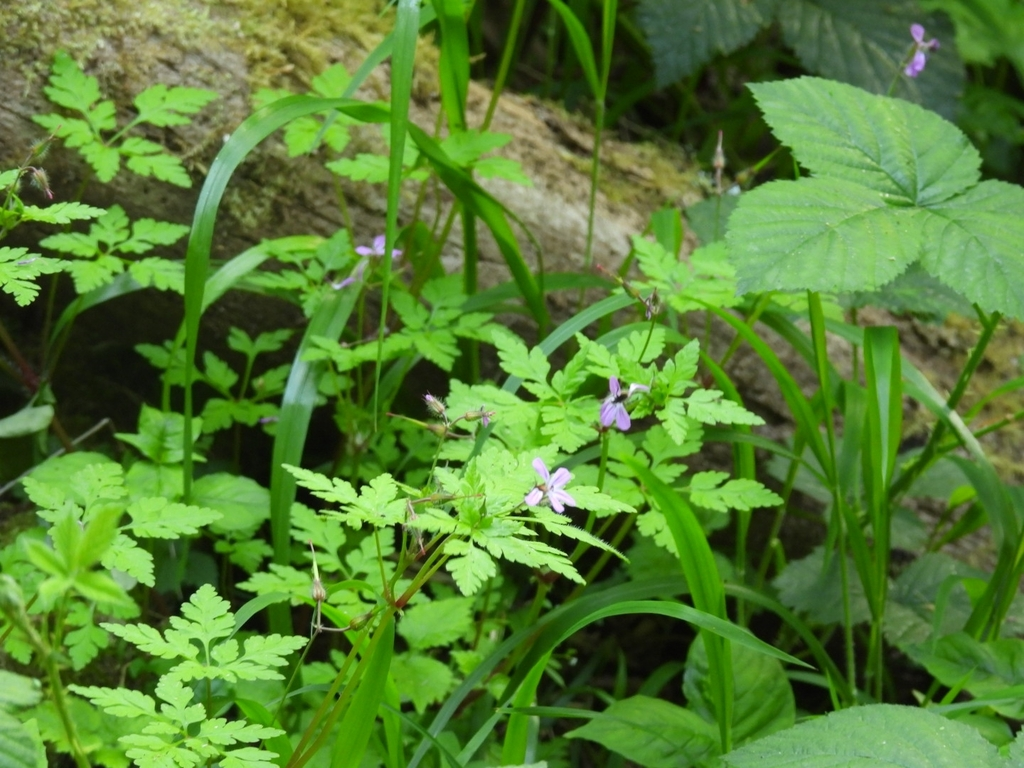
Geranium robertianum Herb Robert
Genus Rubus Brambles
Lithospermum officinale Common Gromwell
Veronica chamaedrys Germander Speedwell
Sanguisorba minor Salad Burnet
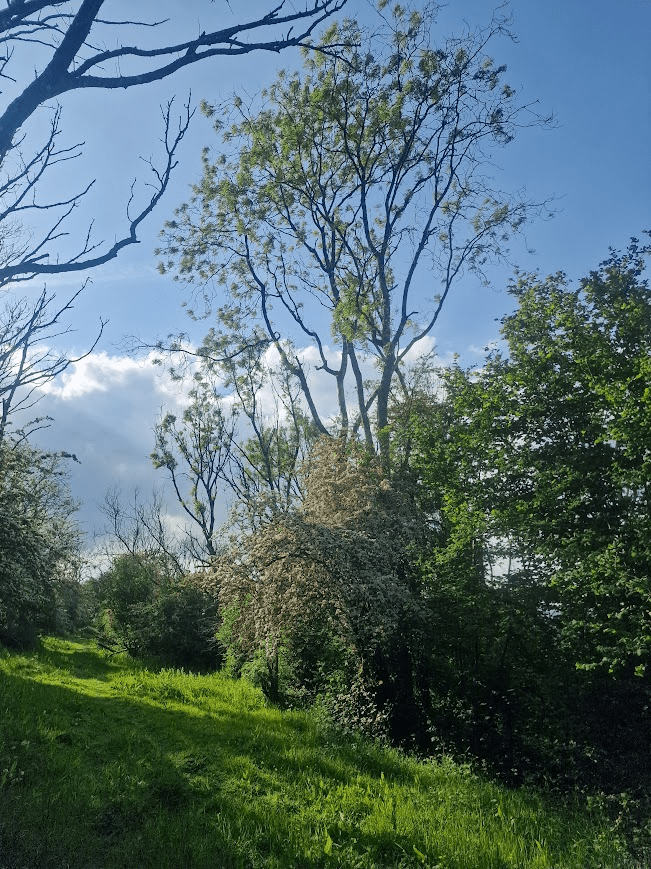
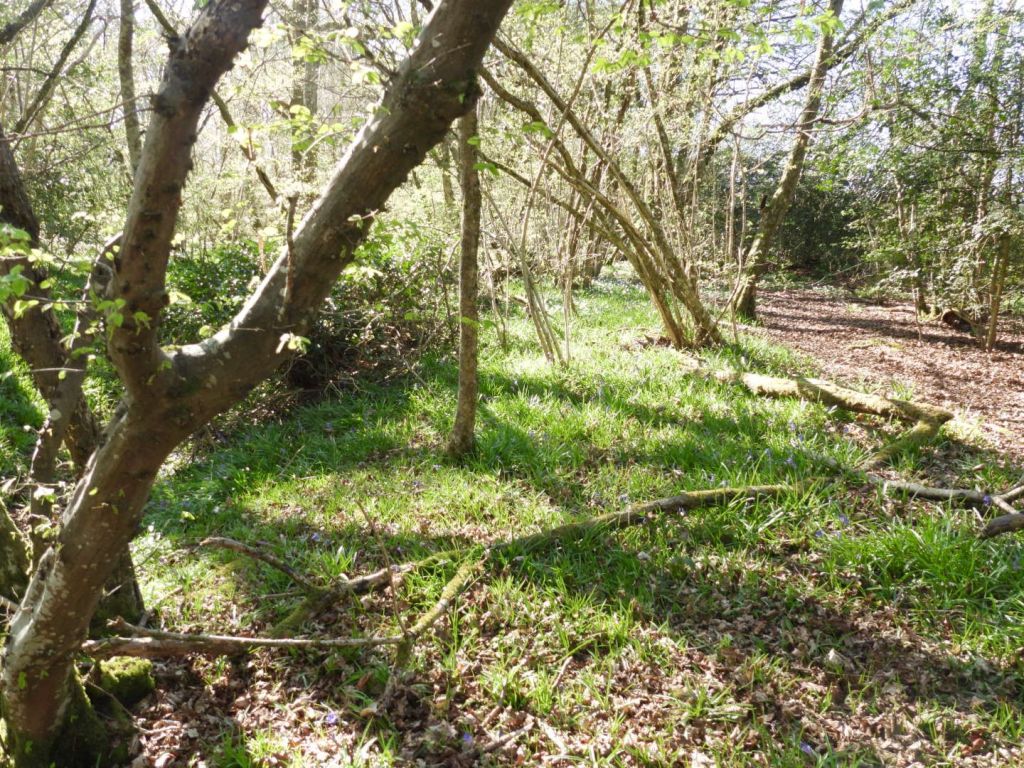
A view of a woodland glade in Newtimber Holt
Arum maculatum Cuckoo-Pint
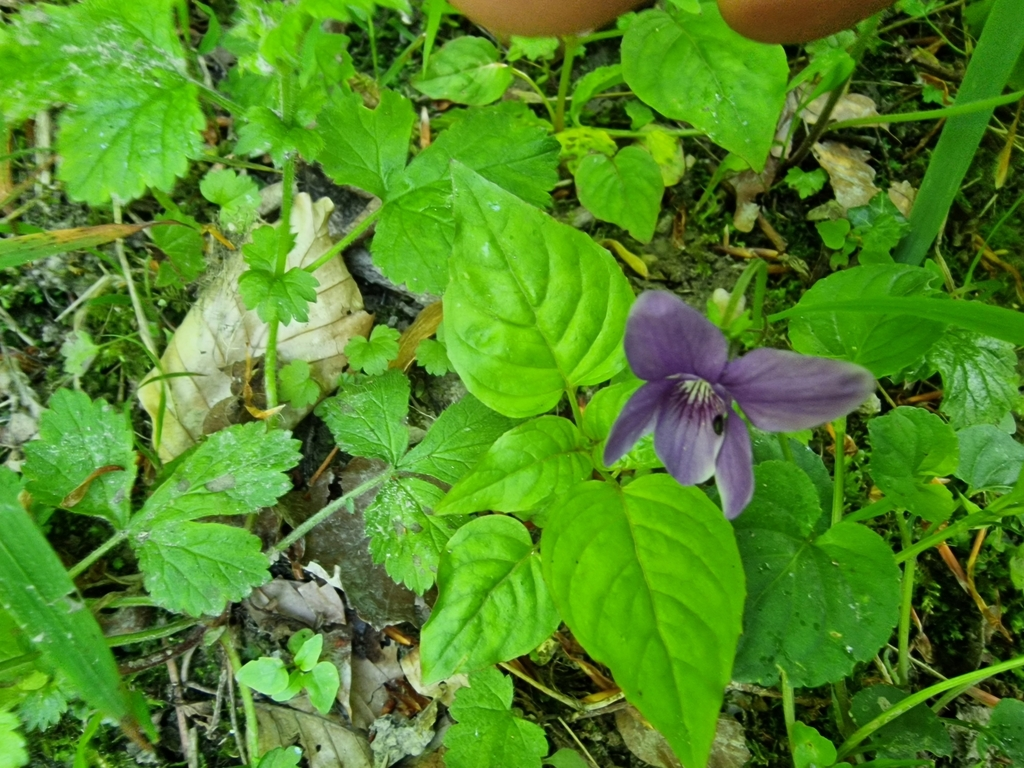
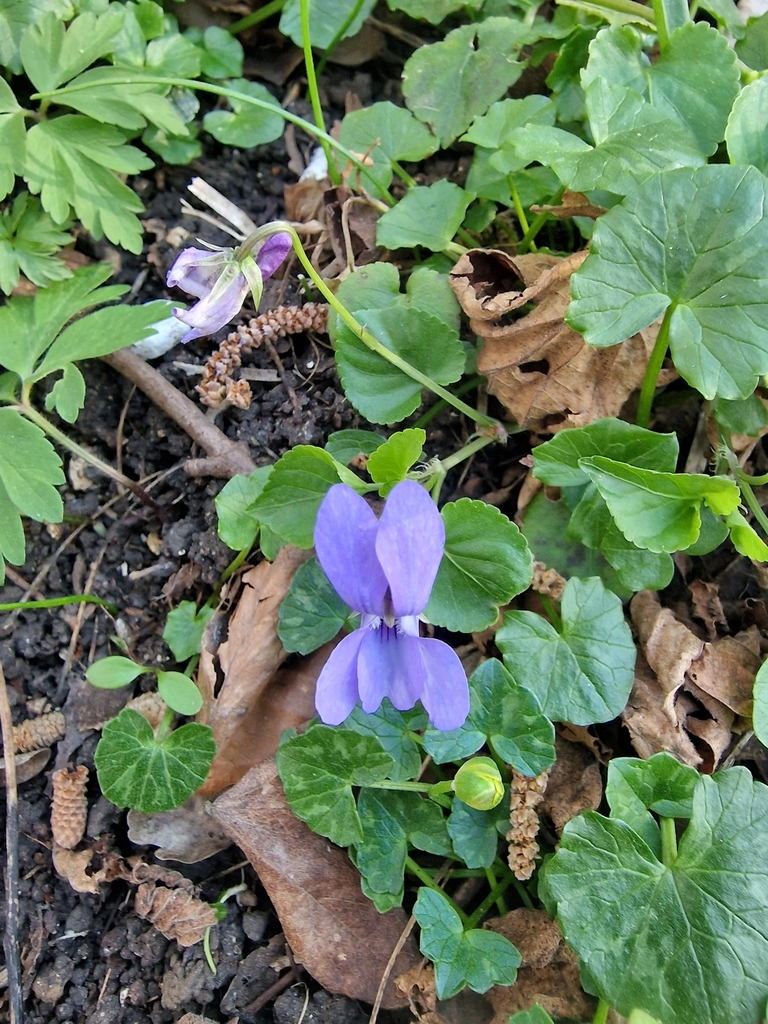
Viola riviniana Common Dog-Violet
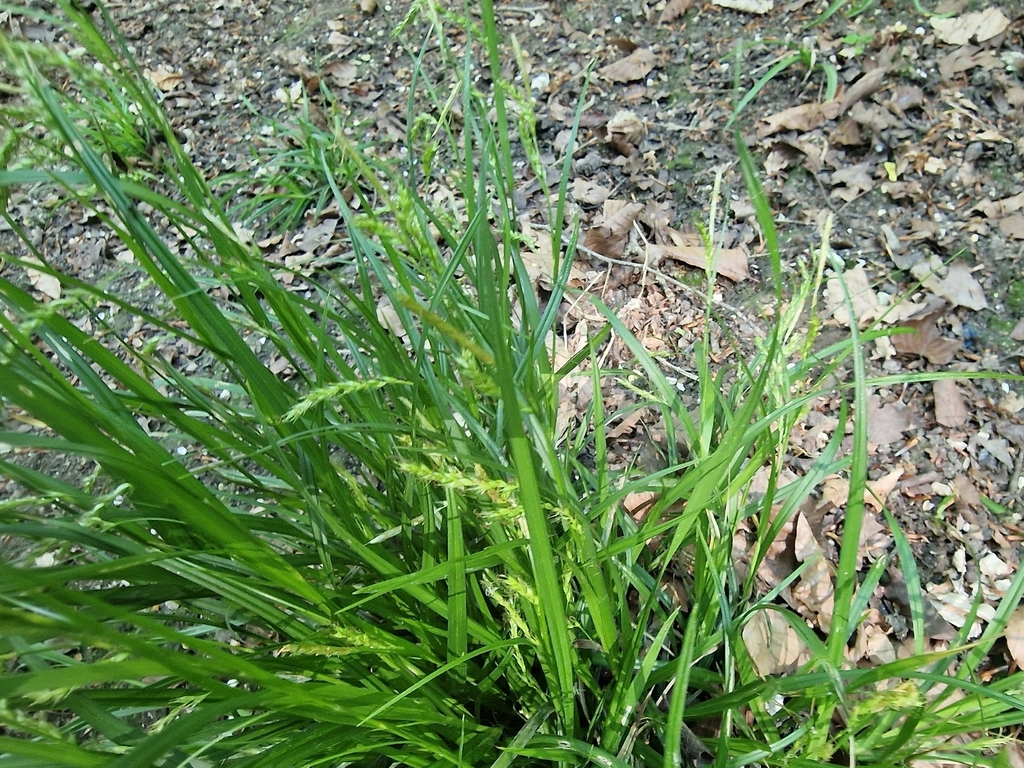
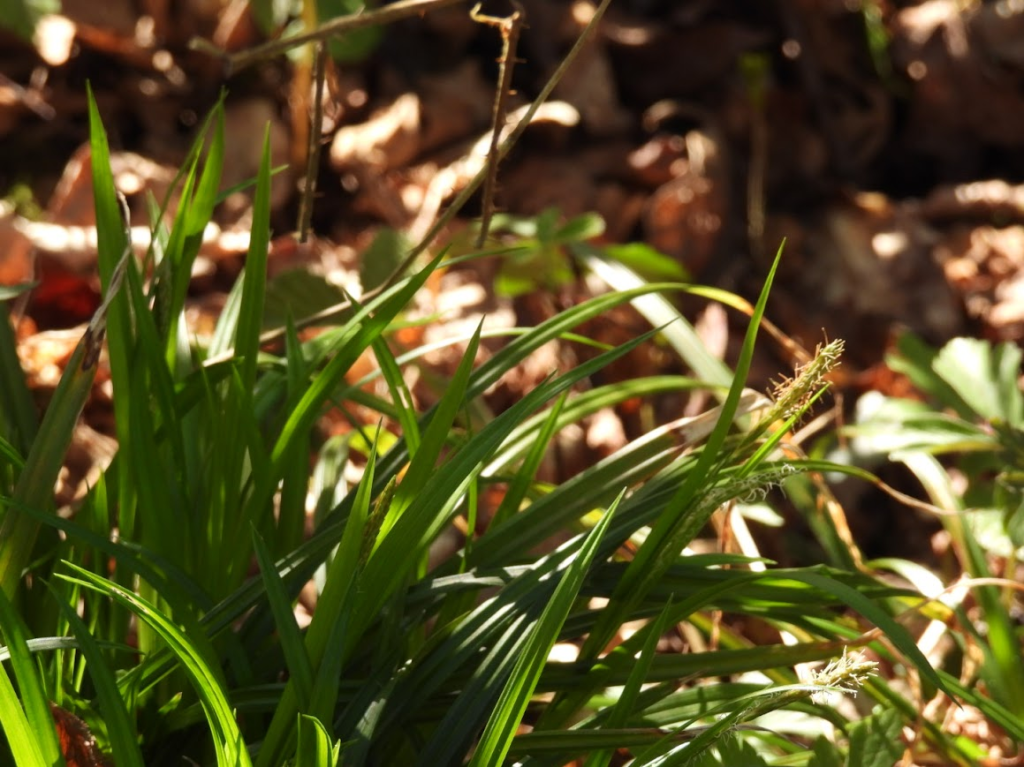
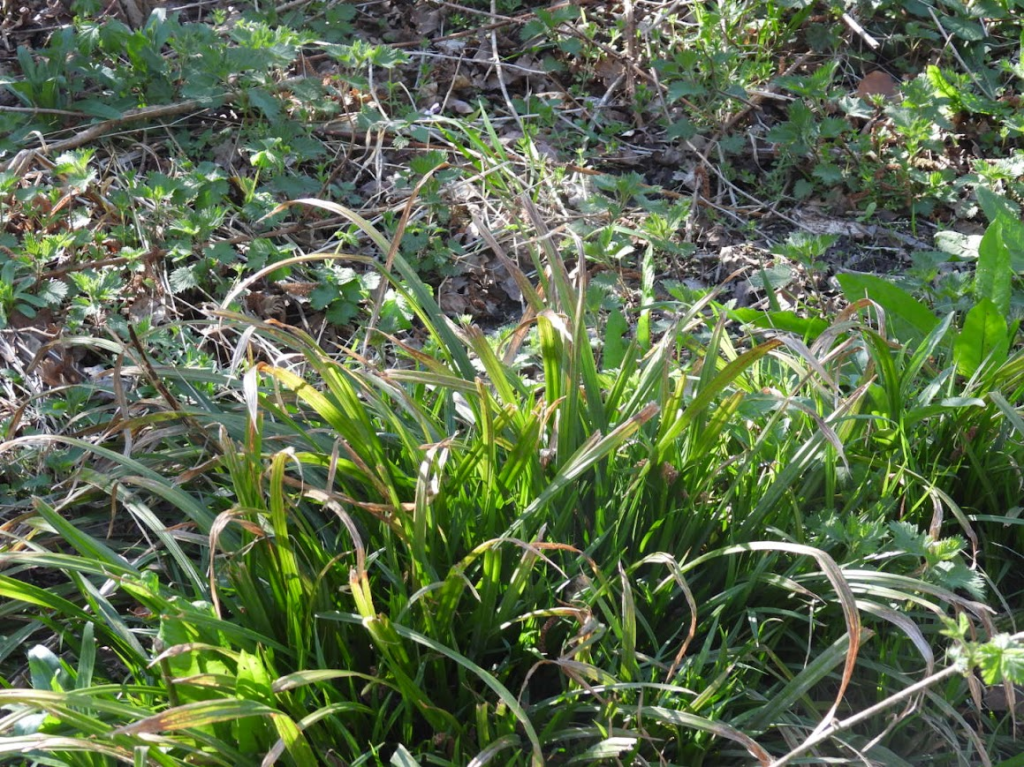
Carex sylvatica Wood Sedge
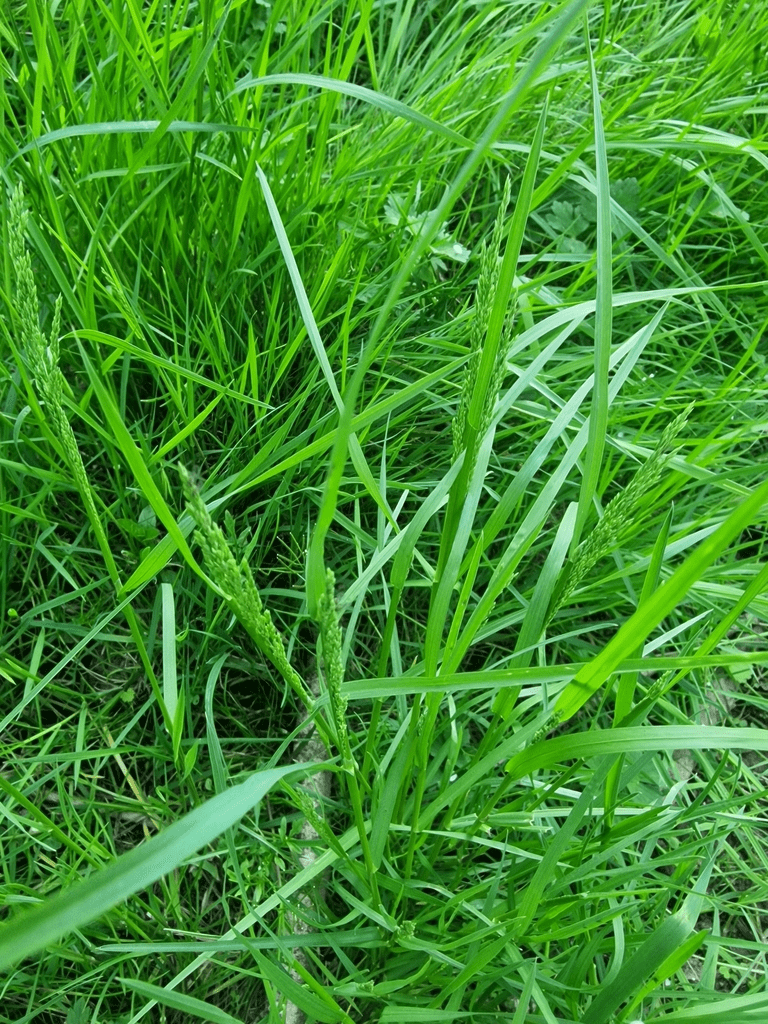
Poa trivialis Rough Meadow-Grass
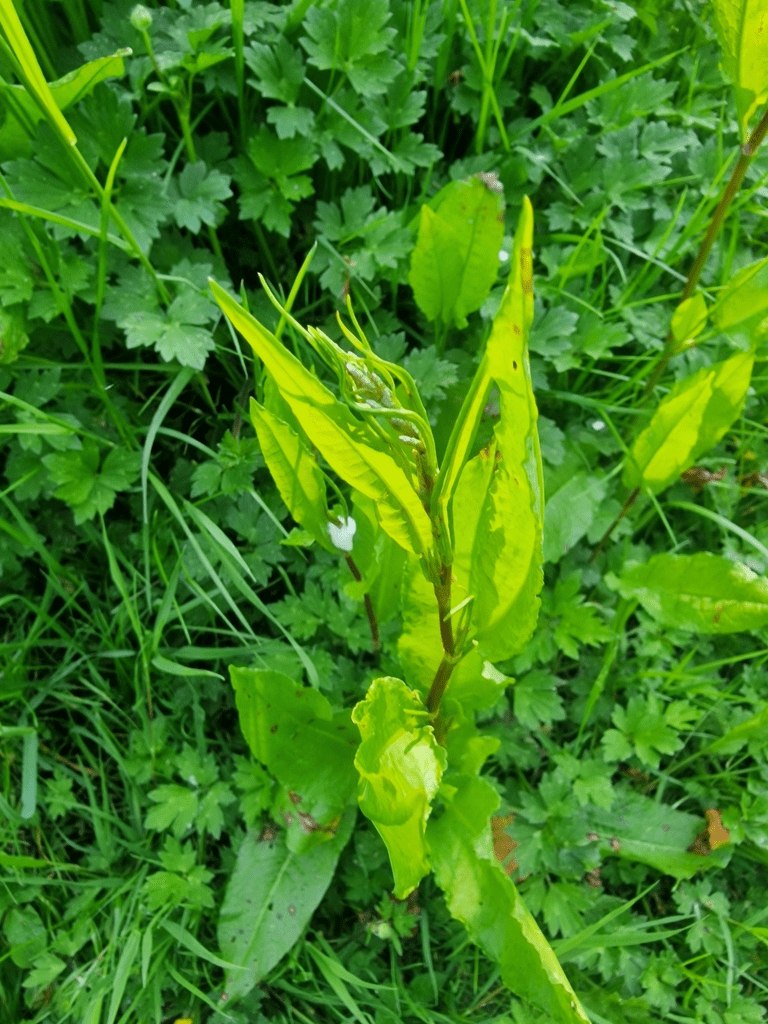
Rumex sanguineus Wood Dock
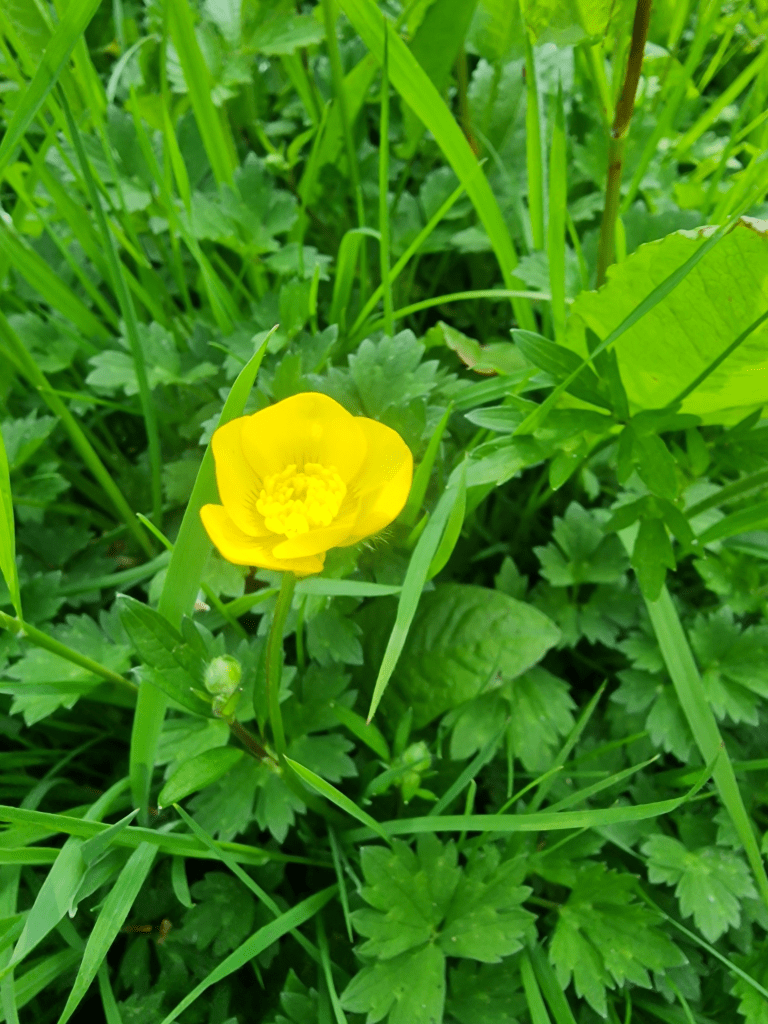
Ranunculus repens Creeping Buttercup
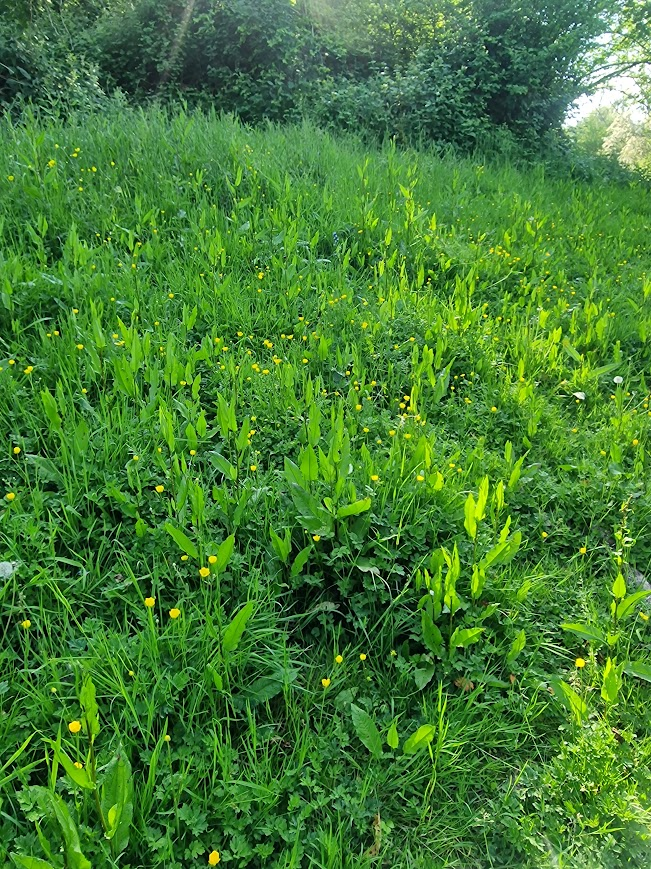
Creeping Buttercup, Wood Dock and Rough Meadow Grass
Trees
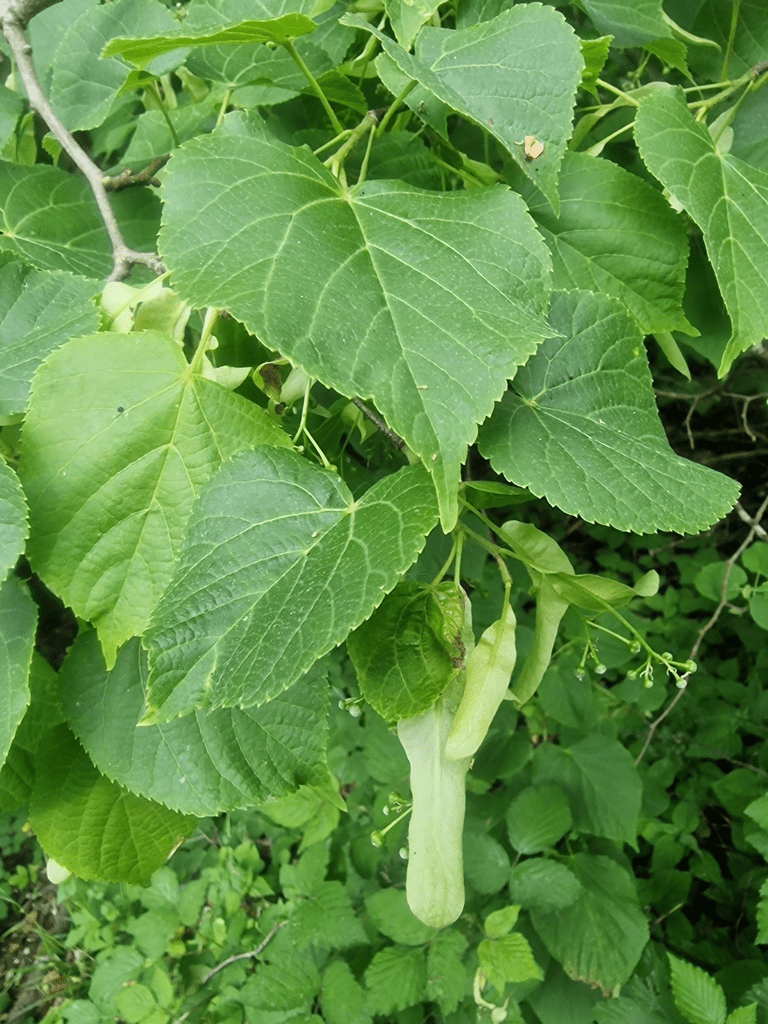
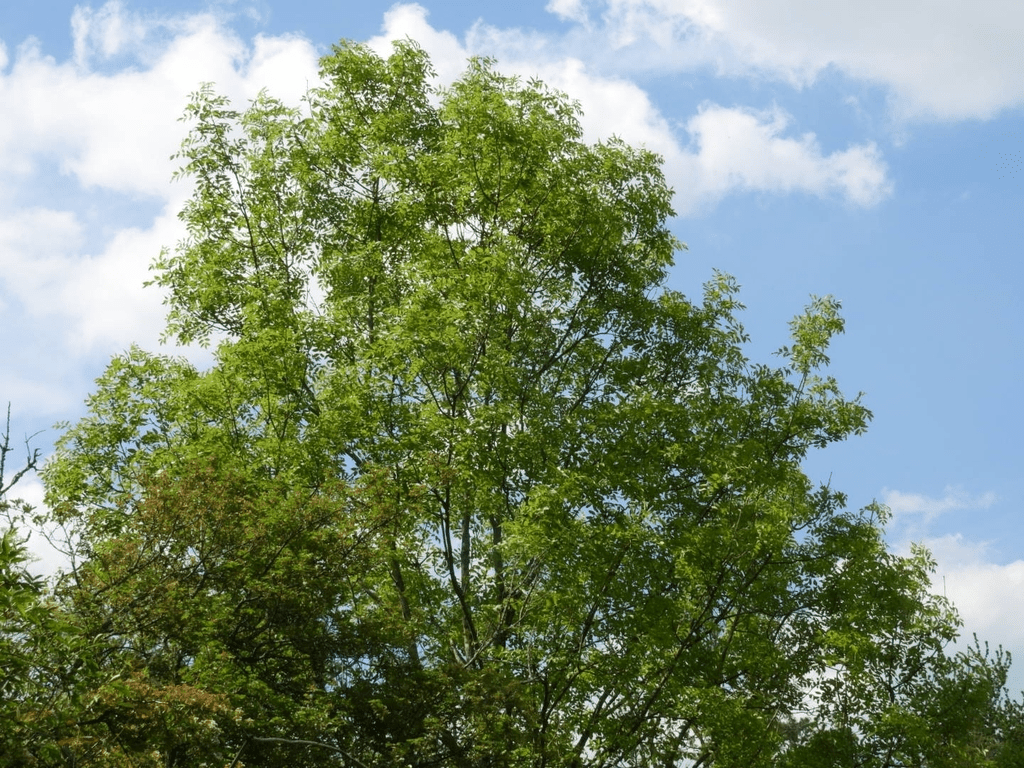
Tilia platyphyllos Large-leaved Lime
Large leaved lime is the rarest [of the Limes] and although planted for several hundred years most ancient trees are confined to woodland coppice on chalk or limestone soils. Woodland Trust Ancient Tree Inventory
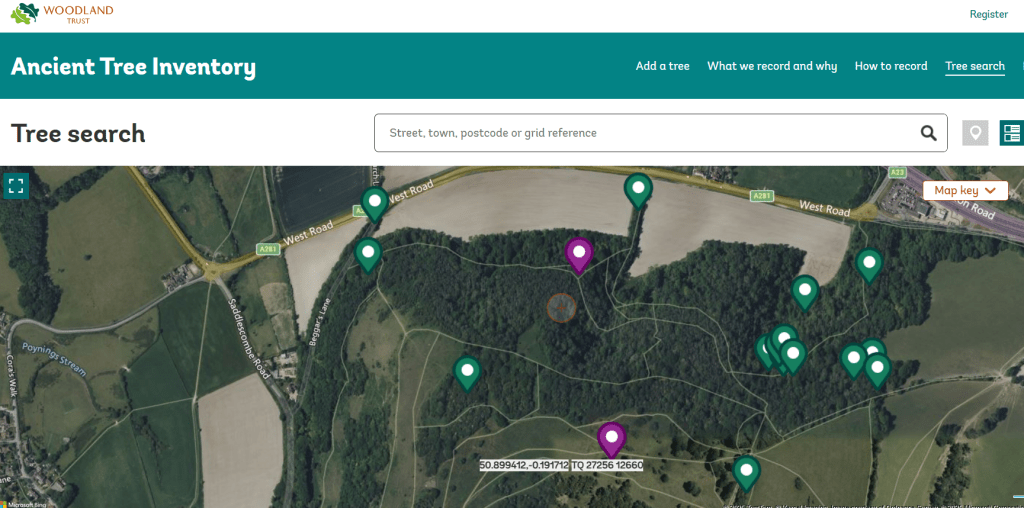
The Woodland Trust Ancient Tree Inventory, shows these veteran (green flags) at Newtimber Hold.
To search the Ancient Tree Inventory for you area, click here.
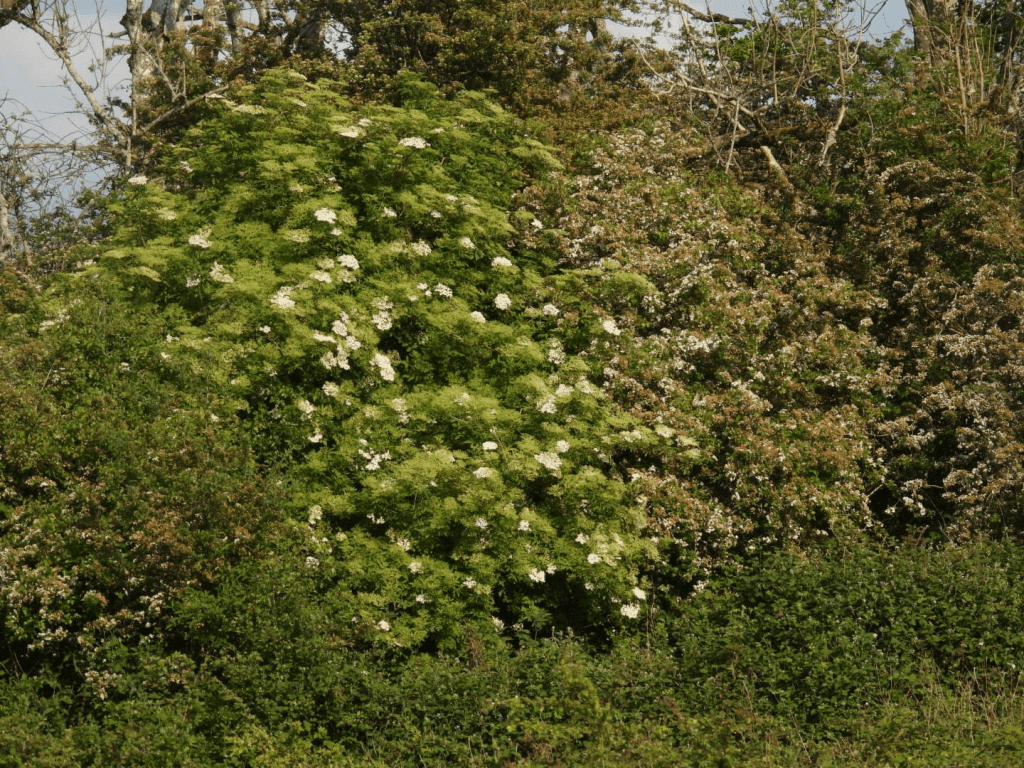
Sambucus, nigra Elder and Hawthorn, Crataegus monpgyna
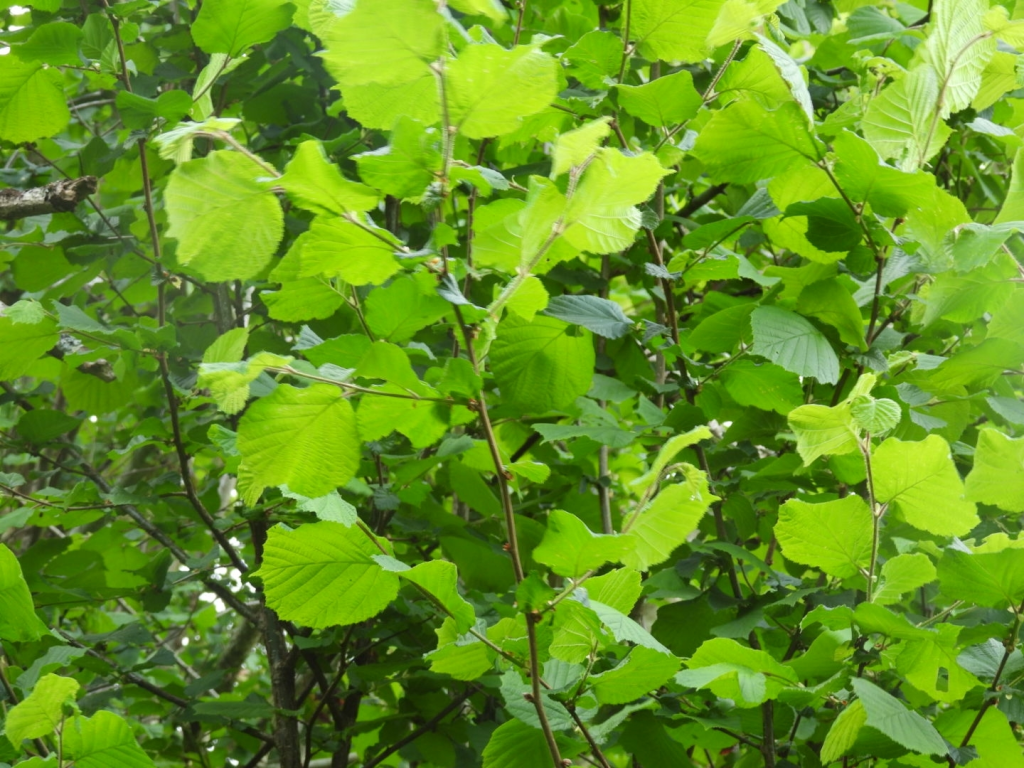
Corylus avellana Hazel
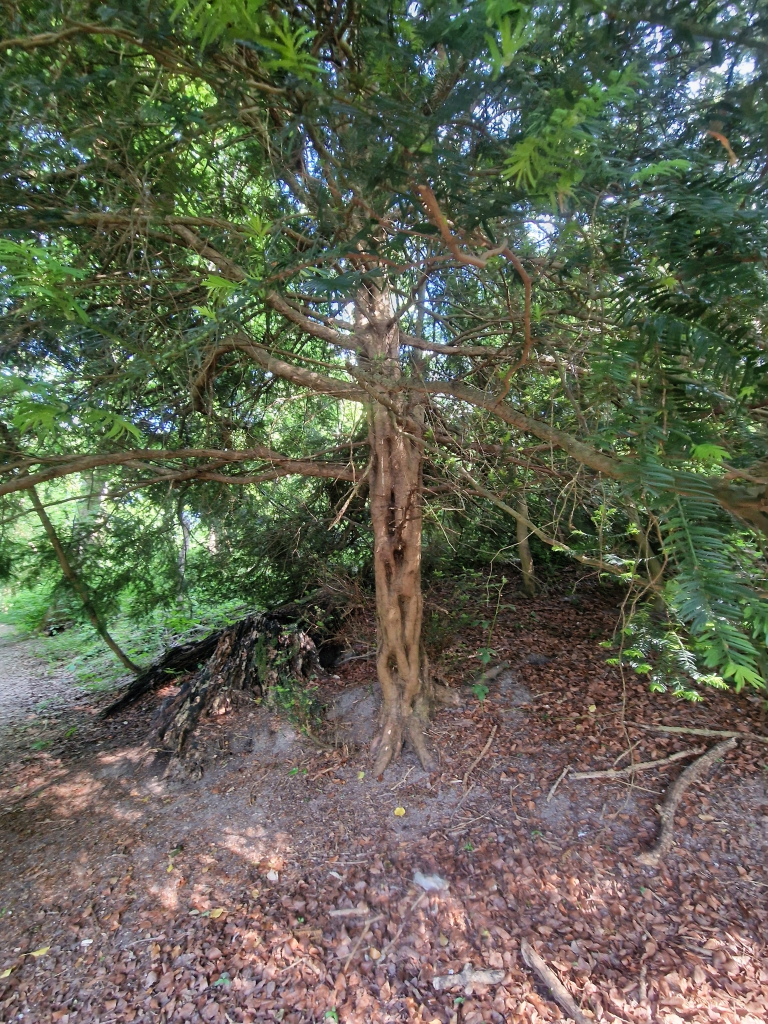
Taxus baccata English Yew
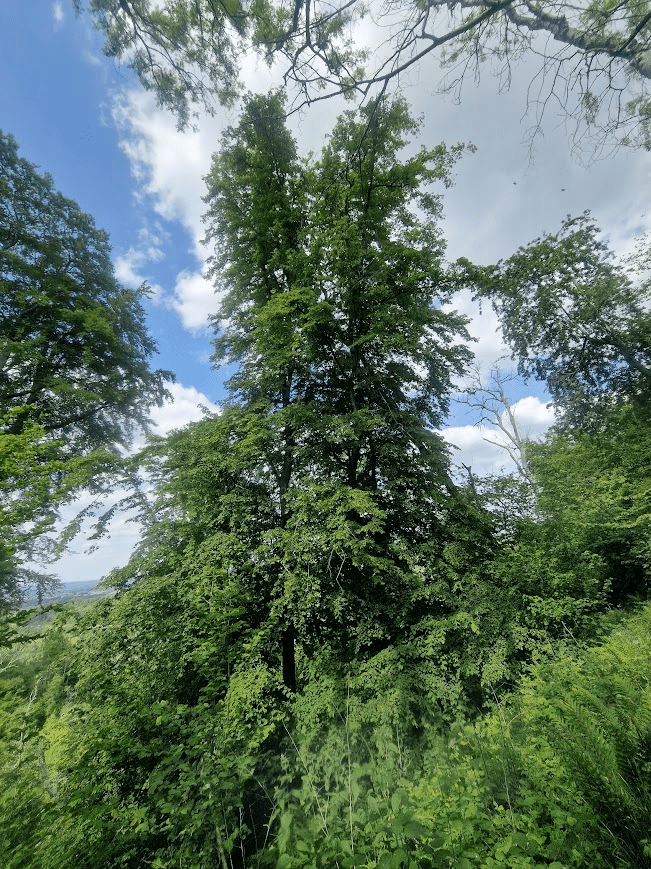
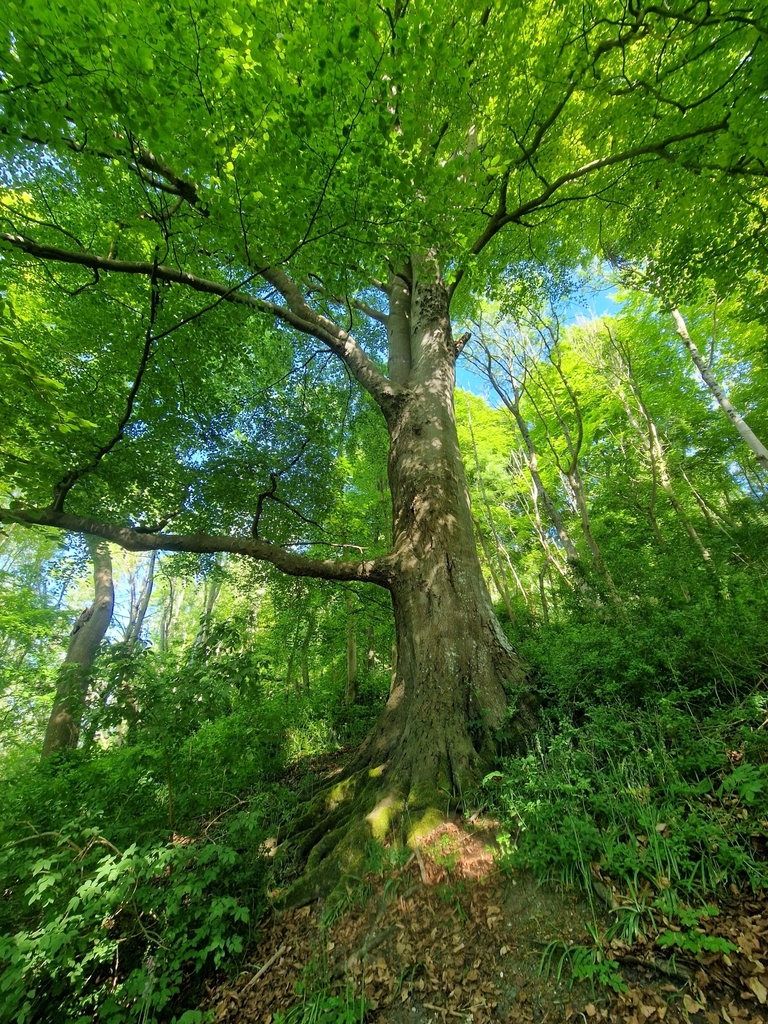
Fagus sylvatica Beech There are several veteran Beech at Newtimber
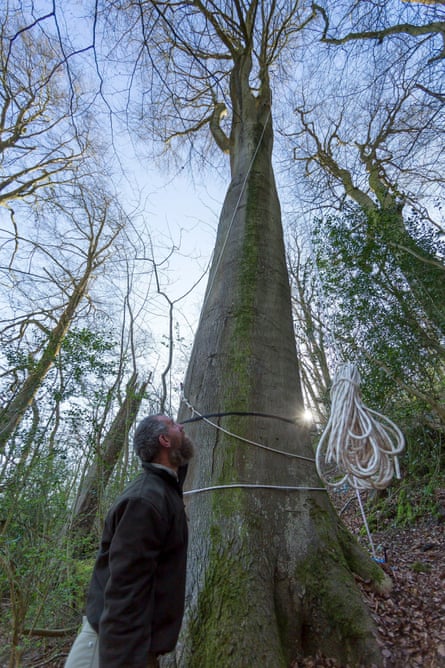
144ft beech in Sussex named Britain’s tallest native tree
A beech tree on the South Downs in West Sussex is thought to be almost 200 years old and beat the previous champion by 3ft
A beech tree standing 144ft (44 metres) high has been declared the tallest native tree in Britain.
The tree, which is thought to be almost 200 years old, stands in Newtimber Woods on the National Trust’s Devil’s Dyke Estate in West Sussex, in the South Downs landscape.
The discovery of a new record for the tallest native tree title was made by Owen Johnson, the honourable registrar for the Tree Register, a charity which holds records of more than 200,000 exceptional trees in Britain and Ireland.
He was alerted to the possible new champion, one of a clump of trees planted together which has achieved its great height by continued competition to reach the light and being allowed to grow unmanaged for 90 years, by dendrologist Peter Bourne.
The full height of Britain’s champion native tree. Photograph: John Miller/National Trust/PA
Dr Johnson said: “I didn’t quite believe Peter when he said the tallest tree in the woods could be 44 metres tall as I know the South Downs so well. When I finally got around to visiting I found my scepticism entirely unjustified. Guardian 15.04.2915 Press Association
Lichens
On Large Leaved Lime
Lepraria finkii Fluffy Dust Lichen
Phlyctis argena Whitewash Lichen
On Beech
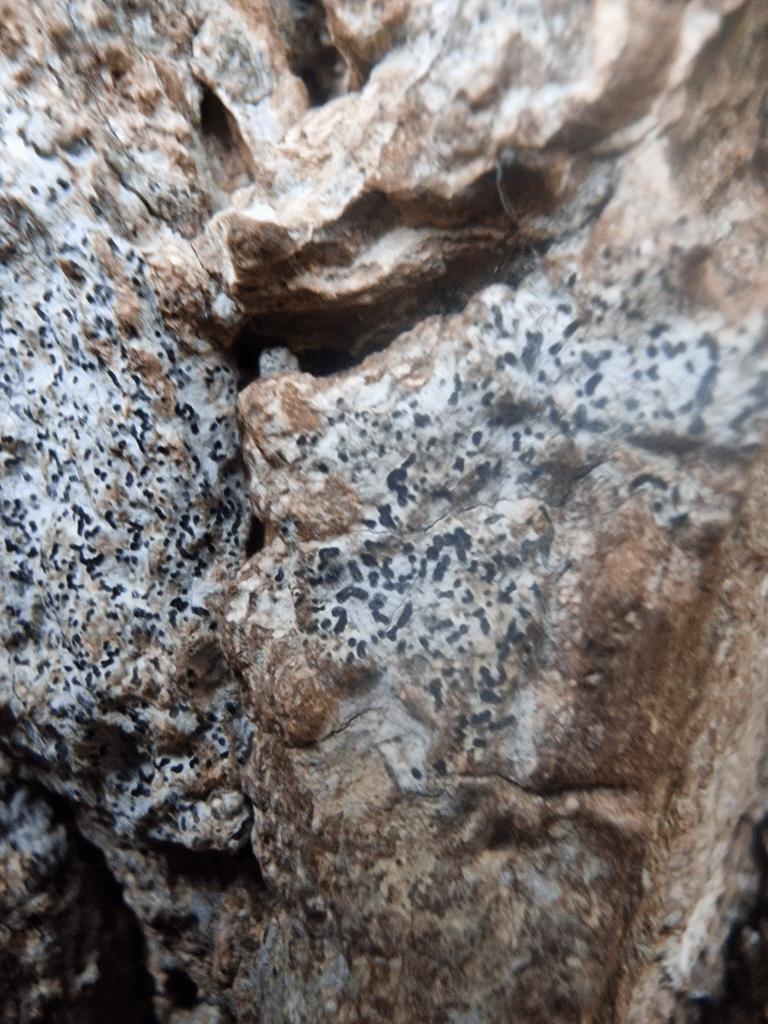
Enterographa crassa
Enterographa crassa is often found in the bases of old beech trees, but it is very difficult to see as it is very small. Their Apothecia (fruiting bodies, in this species, tiny black dots are usually very numerous, brown-black, deeply immersed, without a rim, minutely punctiform or ± broadly elliptical in surface view, 0.1–0.25 × 0.05–0.1 mm, often in dotted or thread-like linesBritish Lichen Society Enterographa crassa
Cladonia caespiticia Stubby-stalked Cladonia
Fuscidea lightfootii
Lecidella elaeochroma Lecidella Lichen
Xanthoria parietina Golden Shield Lichen
On Ash
Flavoparmelia caperata Common Greenshield Lichen
Parmotrema perlatum Black Stone Flower
Punctelia jeckeri Powdered Speckled Shield Lichen
Hypotrachyna afrorevoluta
Parmelia sulcata Netted Shield Lichen
On Hazel
Probably Graphis scripta Common Script Lichen; very common on Hazel and other smooth-barked trees. The Graphidaceae (script lichen) family can only be definitively identified to species level with microscopy of spores.
This is the most beautiful area of downland ancient woodland I have ever visited. It is a “hanger wood”; a wood of the steep slopes of an escarpment. Ancient woodland is much rarer on the South Downs than in the Low and High Wealds of Sussex, due to historic sheep gazing; although the short calcareous grassland that supports rare vascular plants and invertebrates because of that grazing is biologically magnificent and of national ecological importance. Sadly, short calcareous grassland makes up only 4% of the South Downs.
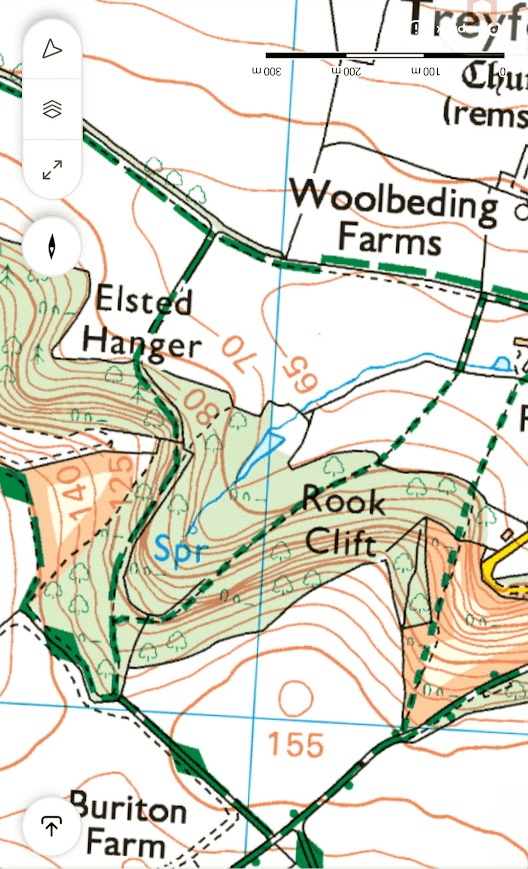
Most of the remaining ancient woodland of the South Downs is on the scarp face of the Downs; such as at Newtimber Holt, and the scarp from Steyning to just south of Washington, and Rooks Clift. Although there are some very rare examples of chalk dry valley ancient woodland e.g. East Dean Park Wood SSSI (in the Goodwood Estate, private) and dip slope ancient woodland e.g. Pads Wood SSSI (in the Uppark Estate, private)
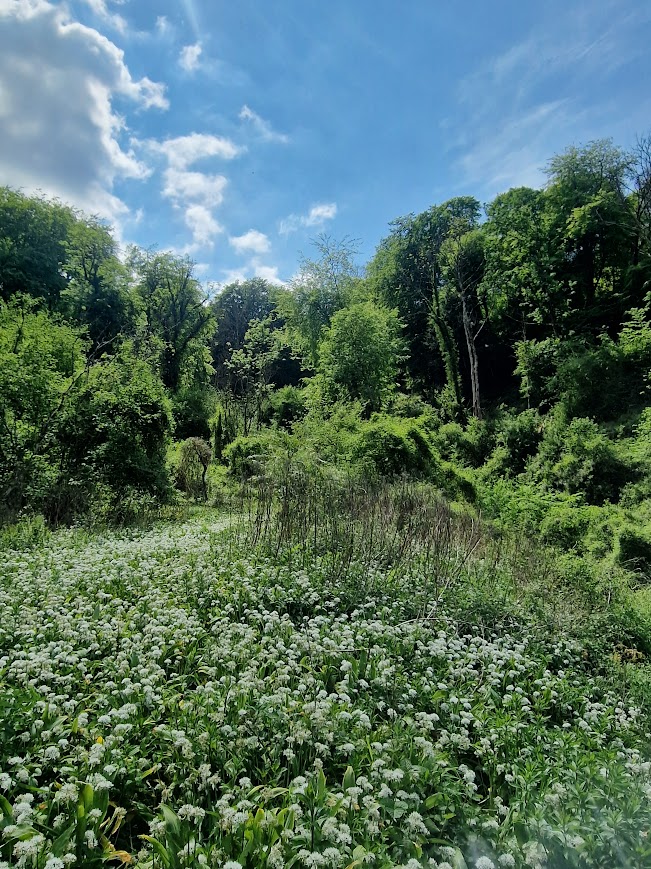
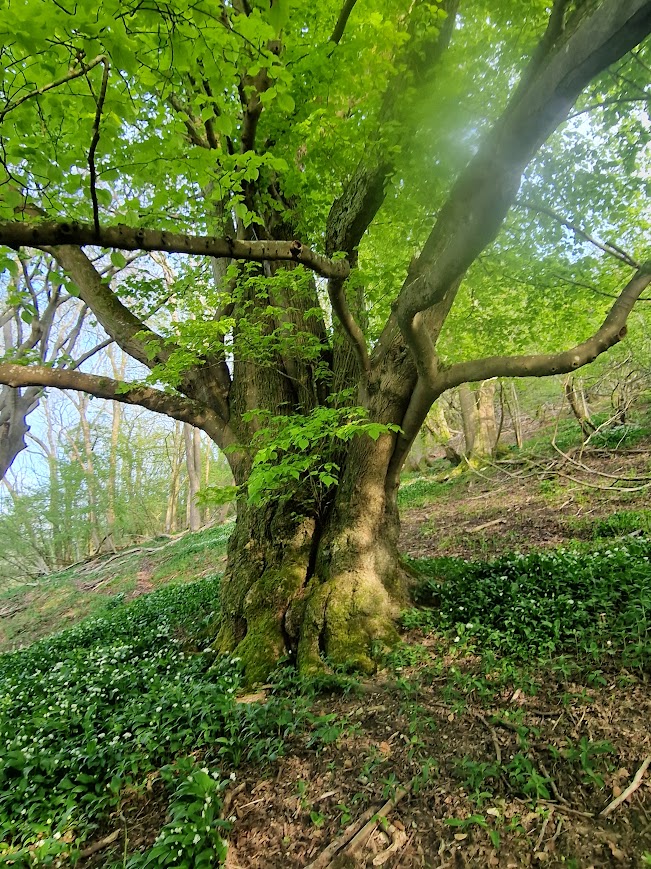
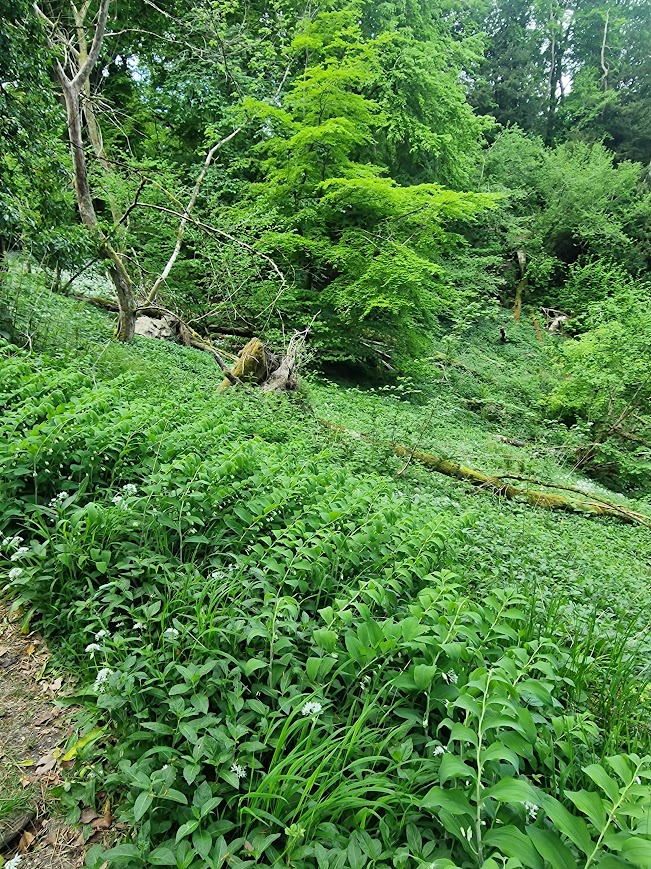
The extent of the coppiced Large-Leaved Lime, and ground flora including abundant Solomon’s Seal and Ramsons was extraordinary.
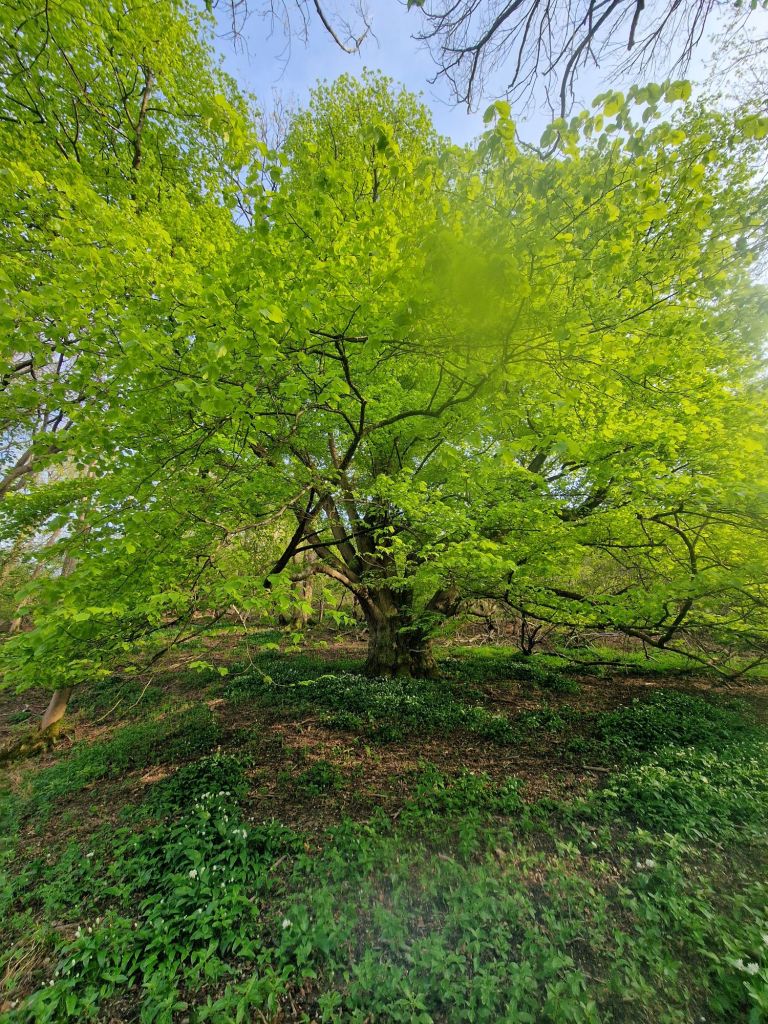
Large Leaved Lime, Tilia platyphyllos
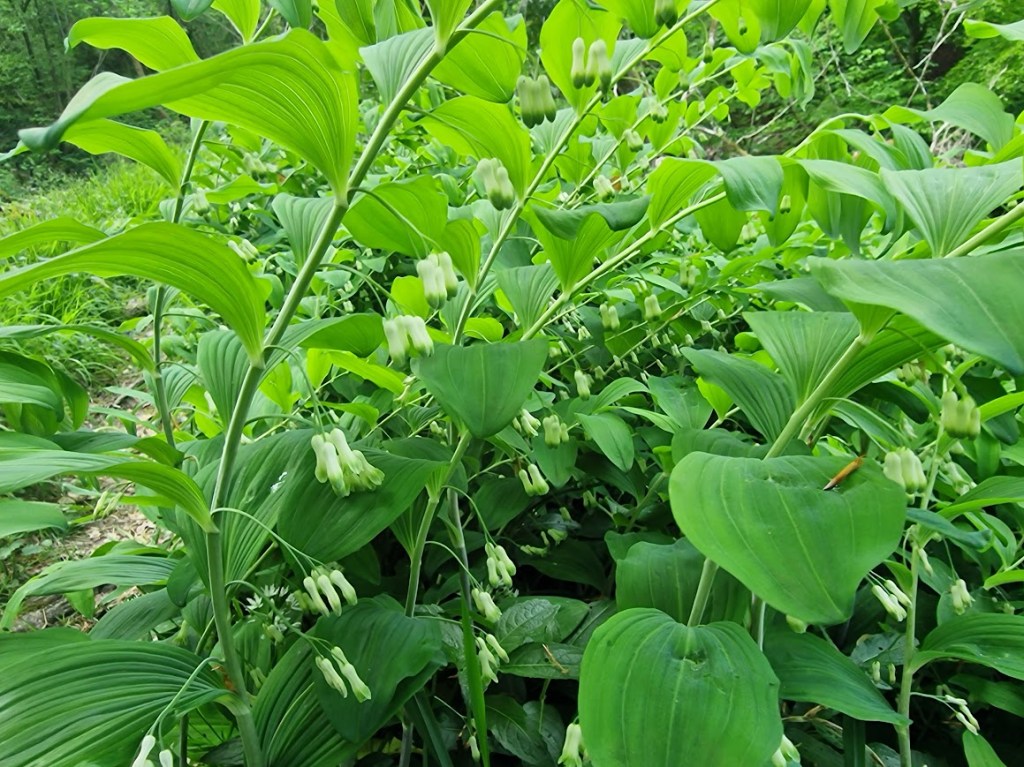
Ramsons, Allium ursinum, and Solomon’s Seal, Polygonatum multiflorum
Rook Clift is a small wooded combe on the scarp slope of the South Downs. … This site is an ancient woodland which remains in a semi-natural condition. Large leaved lime Tilia platyphyllos dominates the canopy, together with ash Fraxinus excelsior and some beech Fagus sylvatica. Large leaved lime is a nationally scarce tree, with its natural range concentrated on the limestones of the Wye Valley and Peak District. Thus the high concentration of mature coppice stools, occurring on chalk, make this site nationally important and unique within West Sussex and the South Downs Natural Area.
… The field layer is dominated by vernal species such as ramsons Allium ursinum and bluebell Endymion non-scripta, or shade tolerant species including dog’s mercury Mercurialis perennis, spurge laurel Daphne laureola and sanicle Sanicula europaea.
The steep sided valley around the steam is more open with a canopy dominated by ash and wych elm Ulmus glabra. Here the field and ground layers are more developed with stands of hart’s tongue fern Phyllitis scolopendrium and soft shield fern Polystichum setiferum abundant, and opposite-leaved golden-saxifrage Chrysosplenium oppositifolium common the stream side. Helicodonta obvoluta and several which are indicative of ancient woodlandRooks Clift Nature England SSSI specification
There are many ancient woodland indicator species in Rooks Clift. Aside from Large-Leaved Lime, Ramsons, and Solomons Seal, I saw Yellow Archangel, Wood Spurge, Wych Elm, and Enterographa Crassa (a relatively common lichen in old Southern woodlands, but on the indices of Ecological Continuity for Scotland). The wood also has Spurge-Laurel; but I didn’t find any.
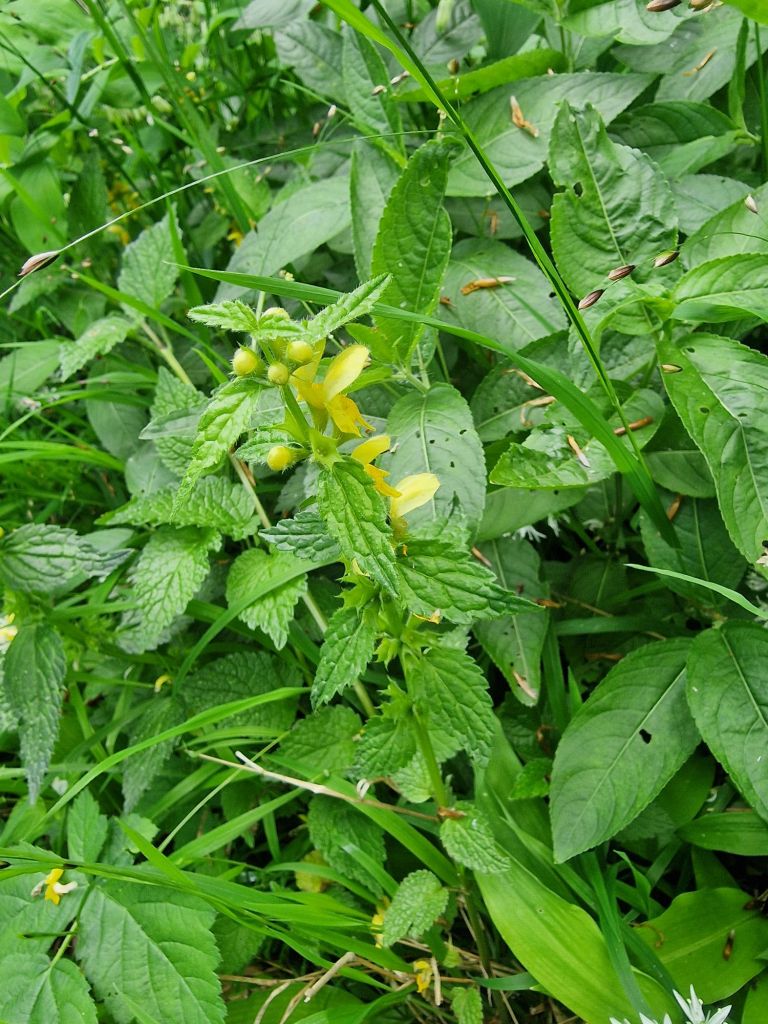
Yellow Archangel, Lamium galeobdolon
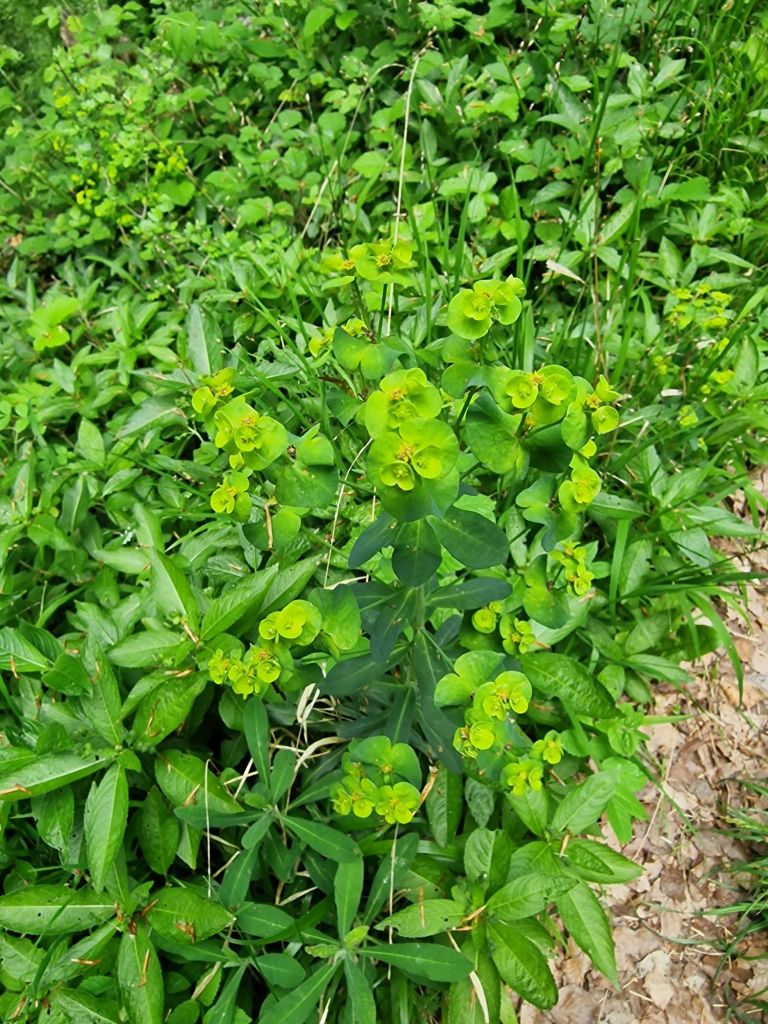
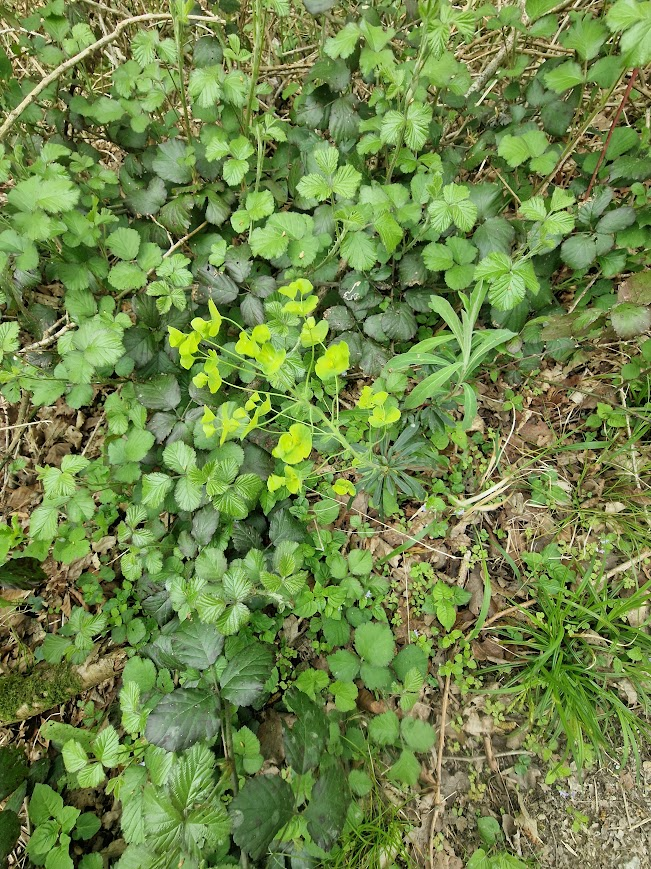
Wood Spurge, Euphorbia amygdaloides
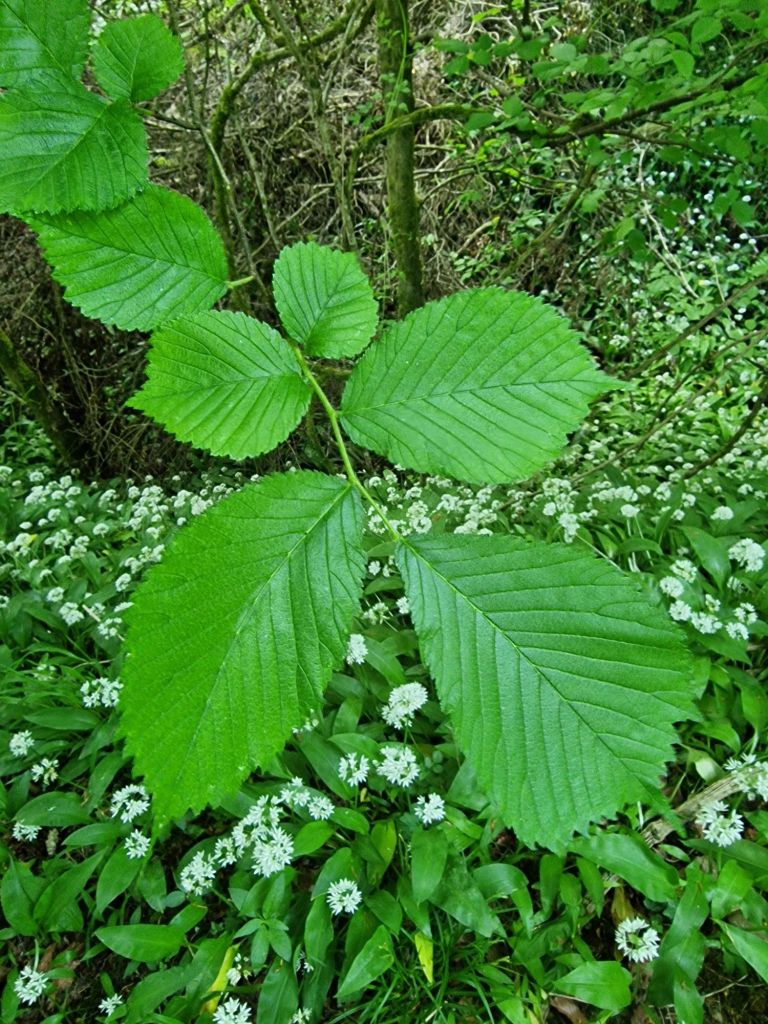
Wych Elm, Ulmus glabra
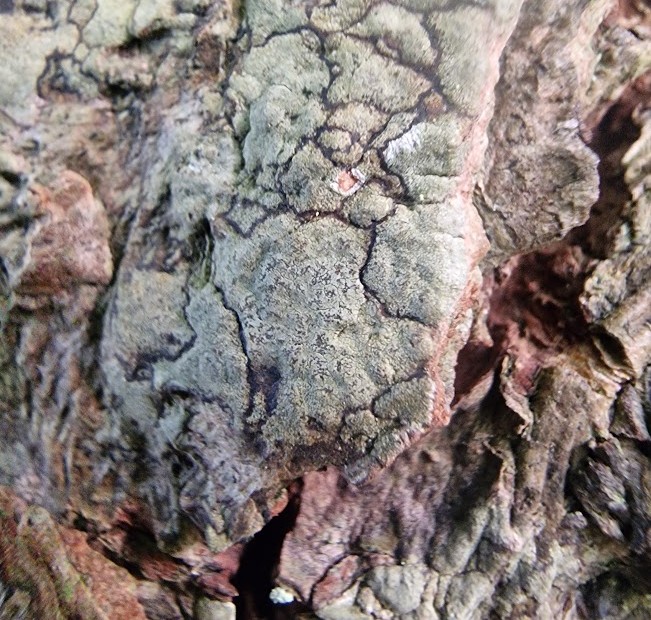
Enterographa crassa lichen
on Large Leaved Lime
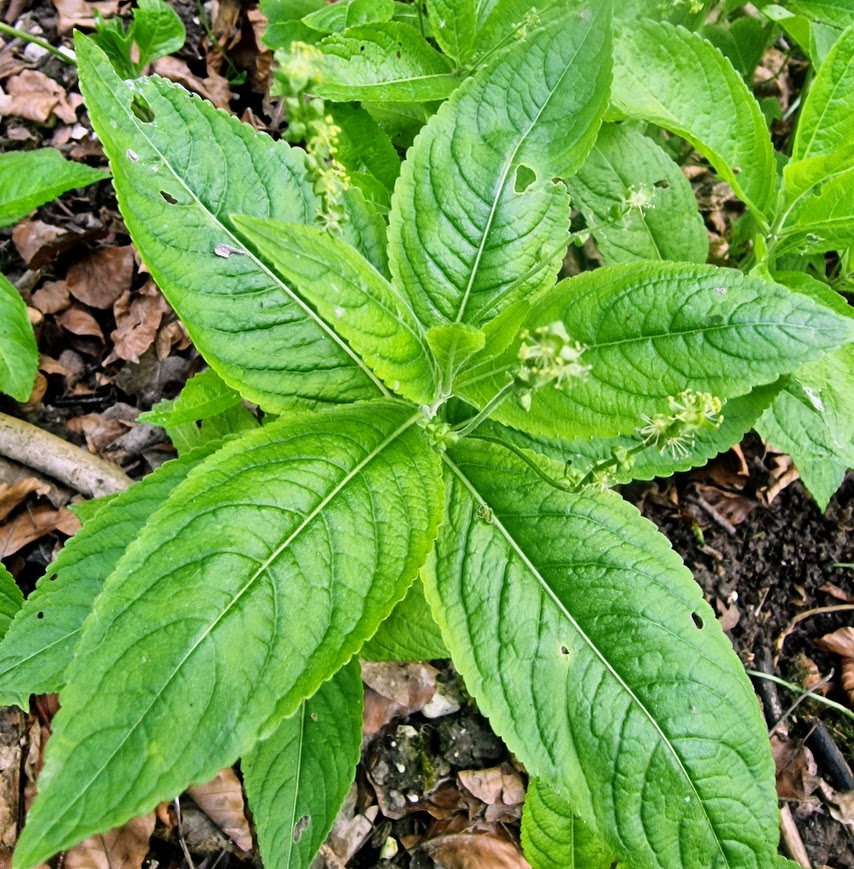
Dog’s Mercury, Mercurialis perennis
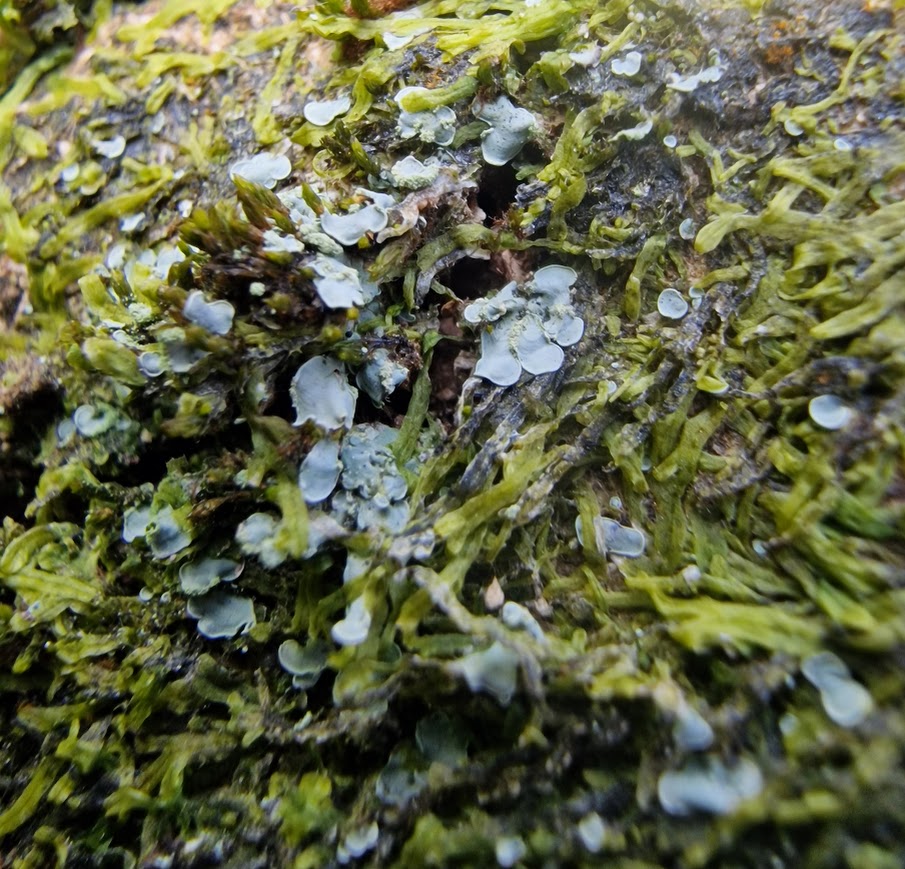
Eld Ear Lichen, Normandina pulchella, on the liverwort Forked Veilwort, Metzgeria furcata. Elf Ear lichen always grows on bryophytes (mosses and liverworts)
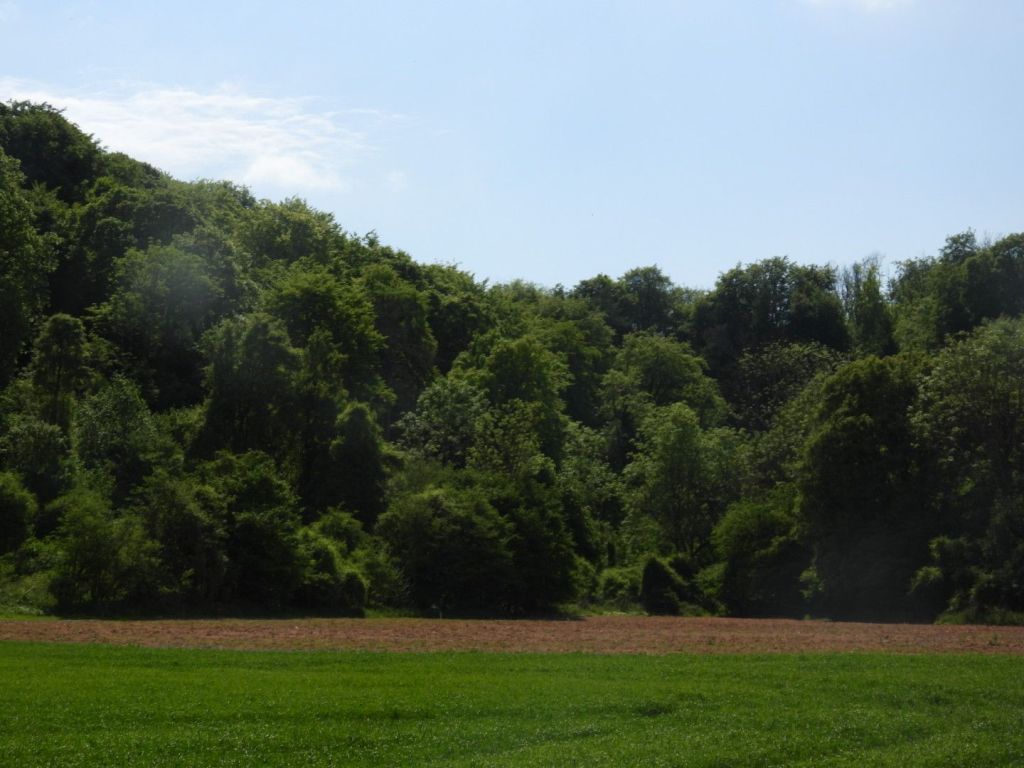
Looking up at Rooks Clift from the Greensand fields of the Low Weald.
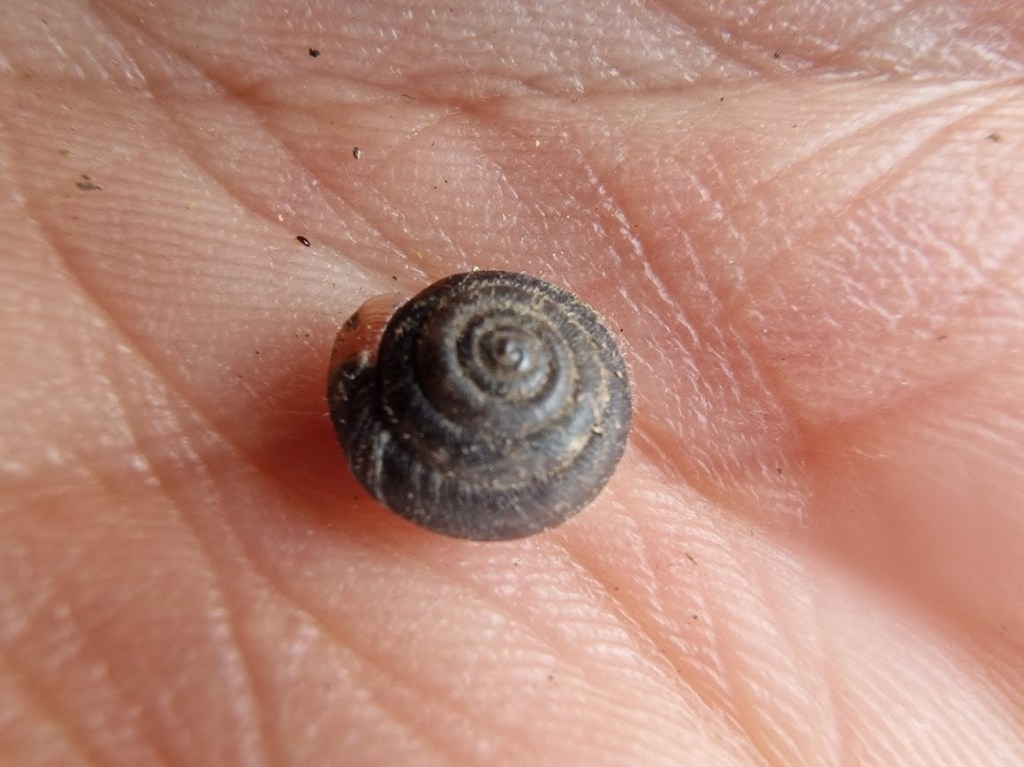
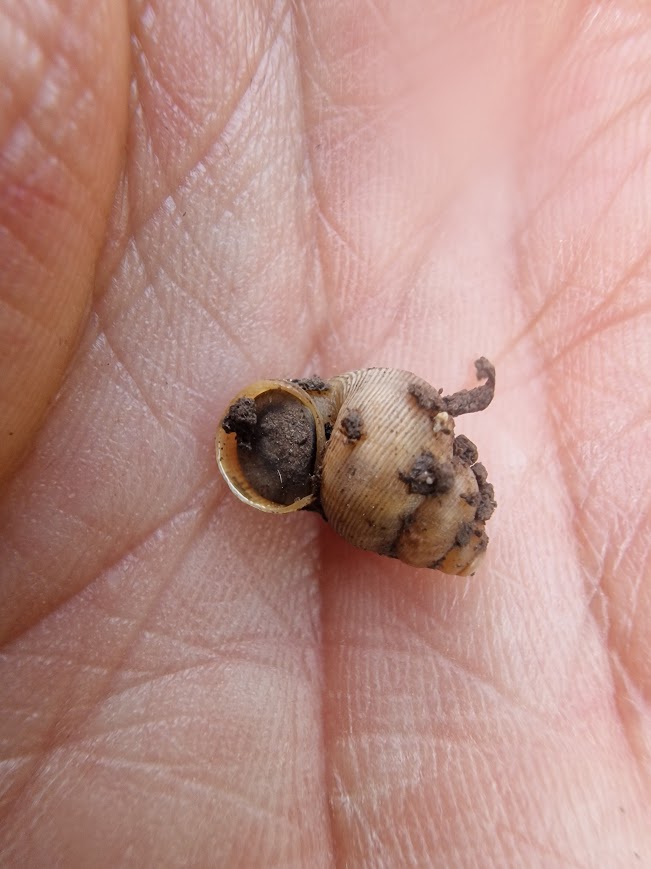
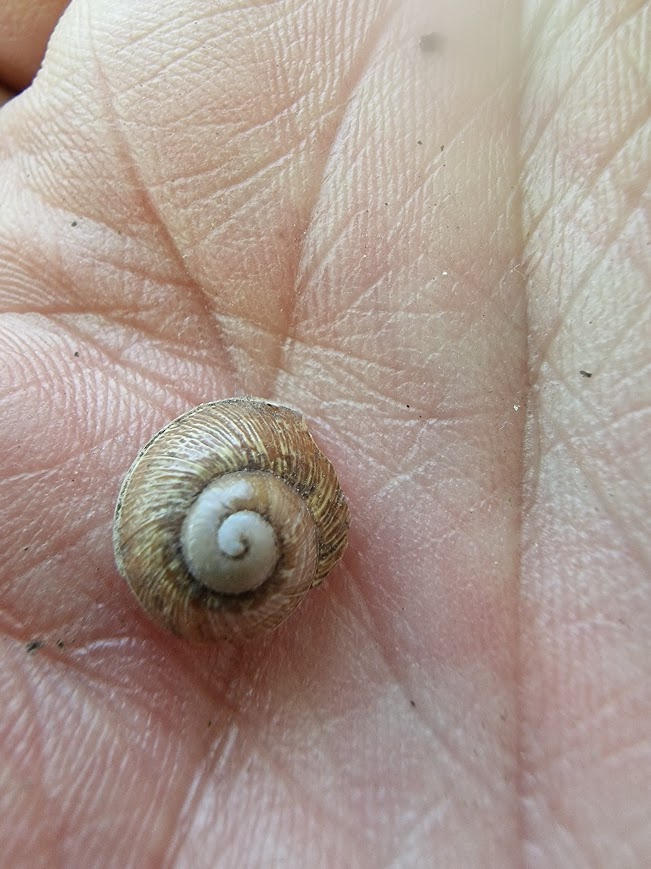
This wood also supports a rich mollusc fauna including the Red Data Book species Helicodonta obvoluta and several which are indicative of ancient woodland. [SSSI specification]. On a visit the week before, focussed on molluscs, with a friend and mollusc expert, we didn’t find Helicodonta obvoluta, but we did find these common snails:
Hairy Snail, Trochulus hispidus Genus Hemicycla; Round-mouthed Snail Pomatias elegans
Possibly Macrogastra ventricosain the family Clausiliidae, the door snails
Looking up to Rooks Clift from the farmland at the bottom (lower greensand of the Low Weald)
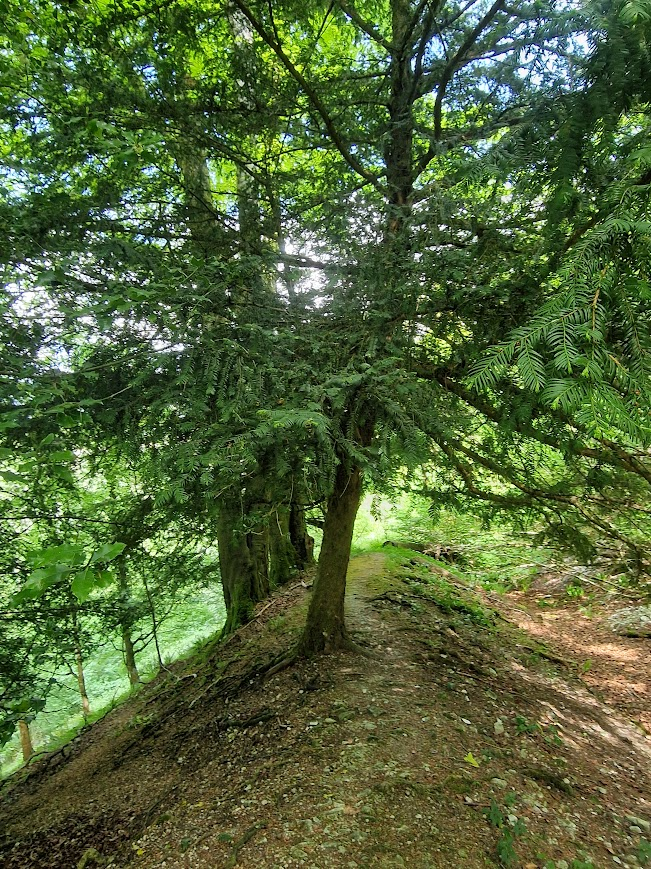
Looking down the footpath, with native Yew Taxus baccata, a native South Downs Tree. The path follows a ancient bostal, a Sussex dialect word referring to medieval track running up the scarp slops in the South Downs, typically diagonally to reduce the gradient.
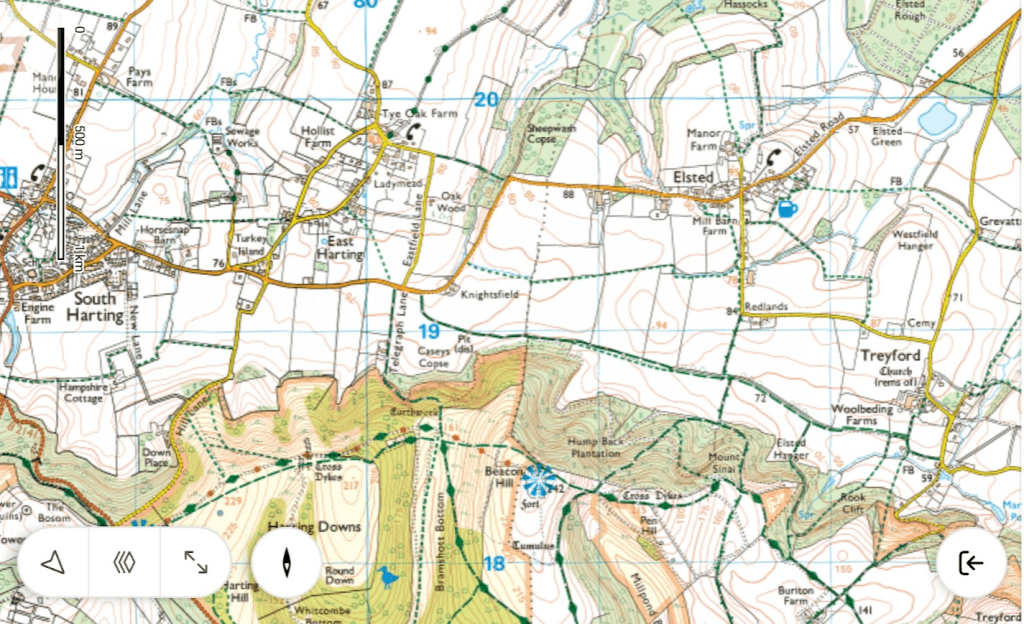
Location: near South Harting, West Sussex, between Chichester and Petersfield
I got to Rook Clift by public transport. Train to Chichester then Stagecoach bus to South Harting 54 Bus Timetable It is a very irregular bus service with only 5 busses a day; so plan carefully!
“Markstakes Common is a small nature reserve with a mix of landscapes; grassland, ancient woodland, wood pasture and mire. Past use is likely to have been bracken harvesting, rough pasturage and ad hoc extraction of timber” Friends of Markstakes Common
Marstakes us a wonderful location with much biological interest; this post focusses only on lichens and vascular plants.
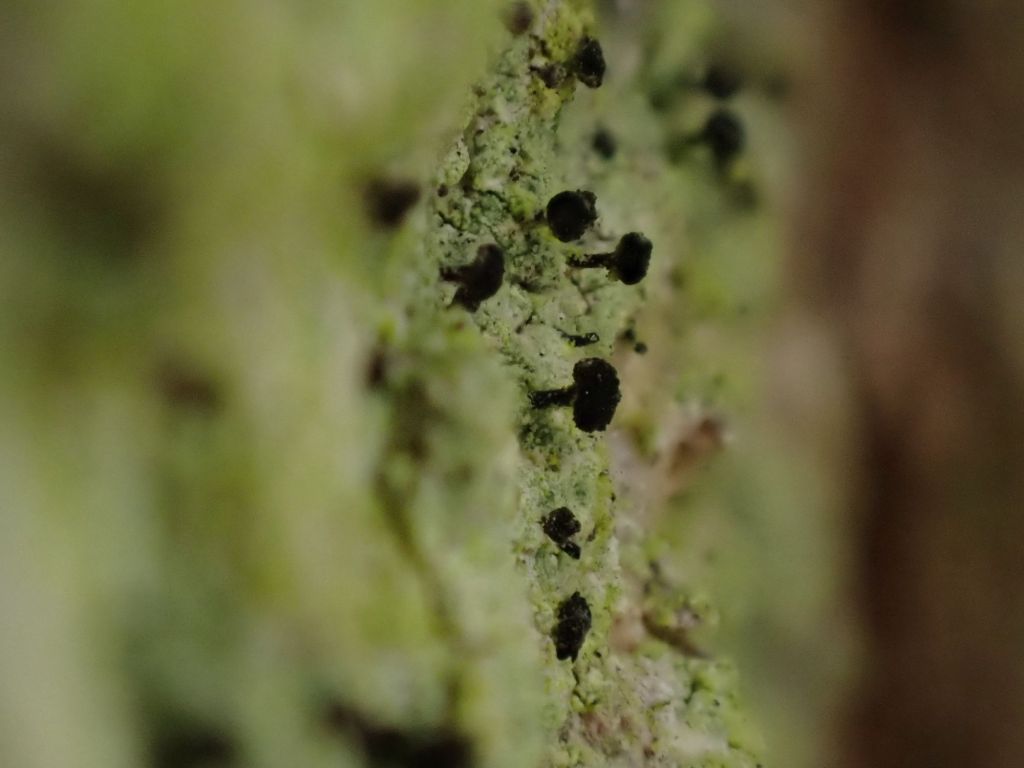
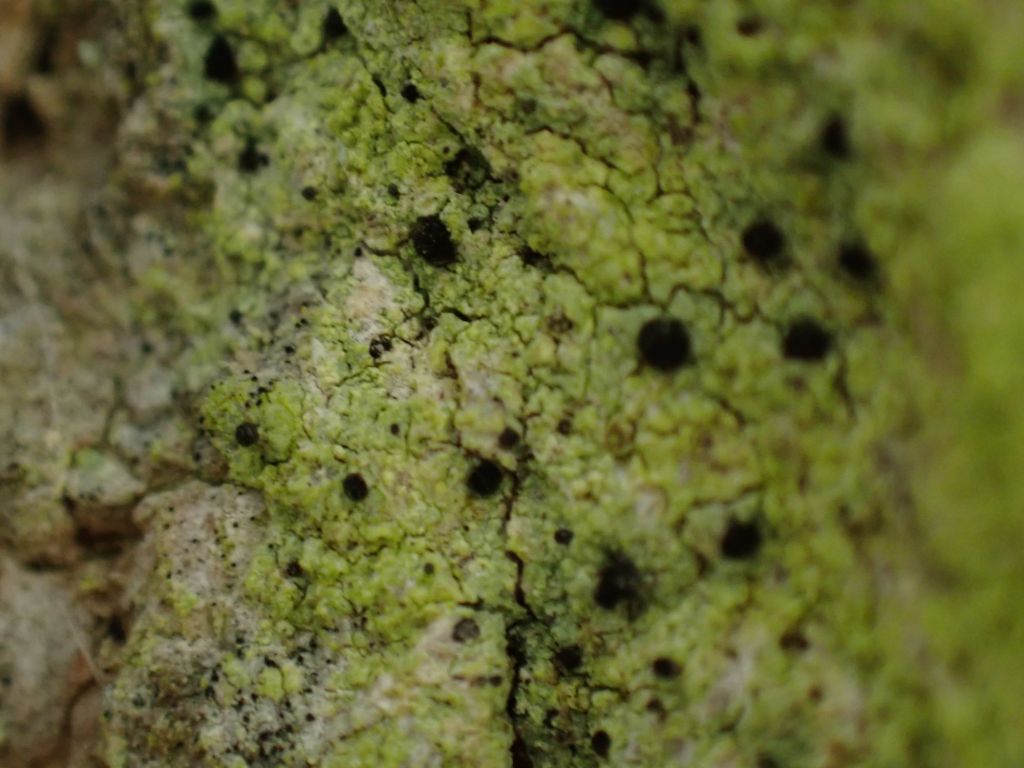
The most interesting thing I saw was Calicium viride; a pin lichen, growing on Oak. I saw it just outside the boundary of the commons in ancient woodland between It’s apotothecia is ca. 1-2mm long and is pin shaped. Theoretically “common” but incredibly difficult to see. On acid barked broad leaved trees in ancient woodland. Look out for bright green granular thallus – looks like Psilolechia lucida, but P. lucida on grows on rocks. So, if you see something like P. lucida on a tree, it might be C. viride. Pin 1-2mm long so probably need 20x hand lens or macro camera.
Soon after entering Marstakes Common, I saw a huge ancient birch, Fagus sylvatica. On it was the tiny lichen, Enterographa crassa
“A distinctive species often dominating large areas of trunk in pure mosaics of small interlocking waxy brown thalli, spotted with small dot like apothecia, which often line up in dendritic patterns. Very common in south western and Irish woodlands on humid shaded trunks. Rare to the north and east”British Lichen Society Enterographa crassa
Enterographa crassa is very difficult to see, as it is the colour of bark. It often occurs in large patches. It’s tiny apotothecia form in lines that look like lirrelate apothecia (writing-like apothecia), but they are lines of dots 0.1-0.2mm across.
Marstakes has many beautiful trees, including Ancient Oaks, Birches, Hornbeam, Wild Cherry and Midland Hawthorn. Hornbeam (when in the middle of woods, not a boundary tree), Midland Hawthorns and Wild Cherry are ancient woodland indicator plants.
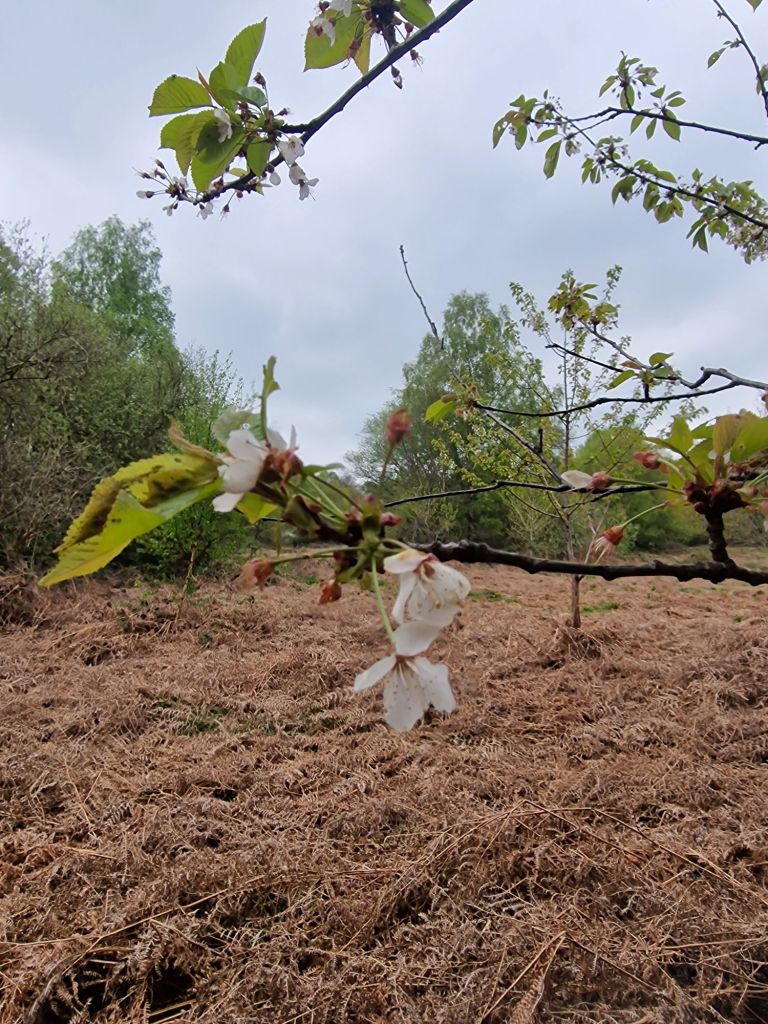
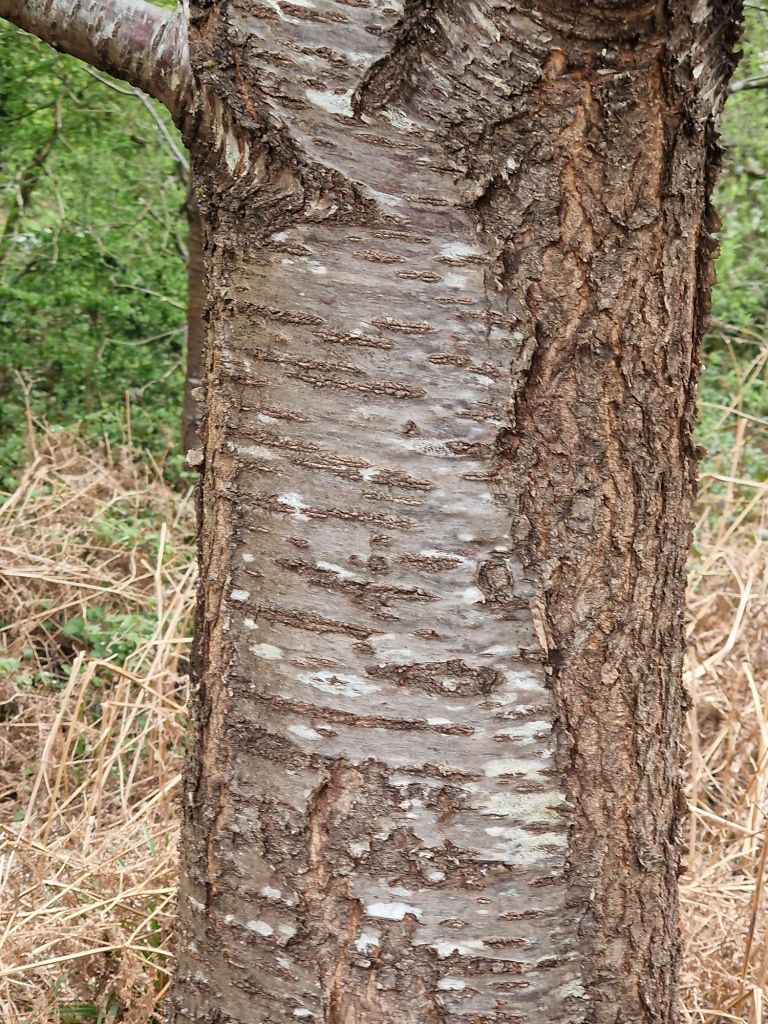
Wild Cherry (Gean), Prunus avium
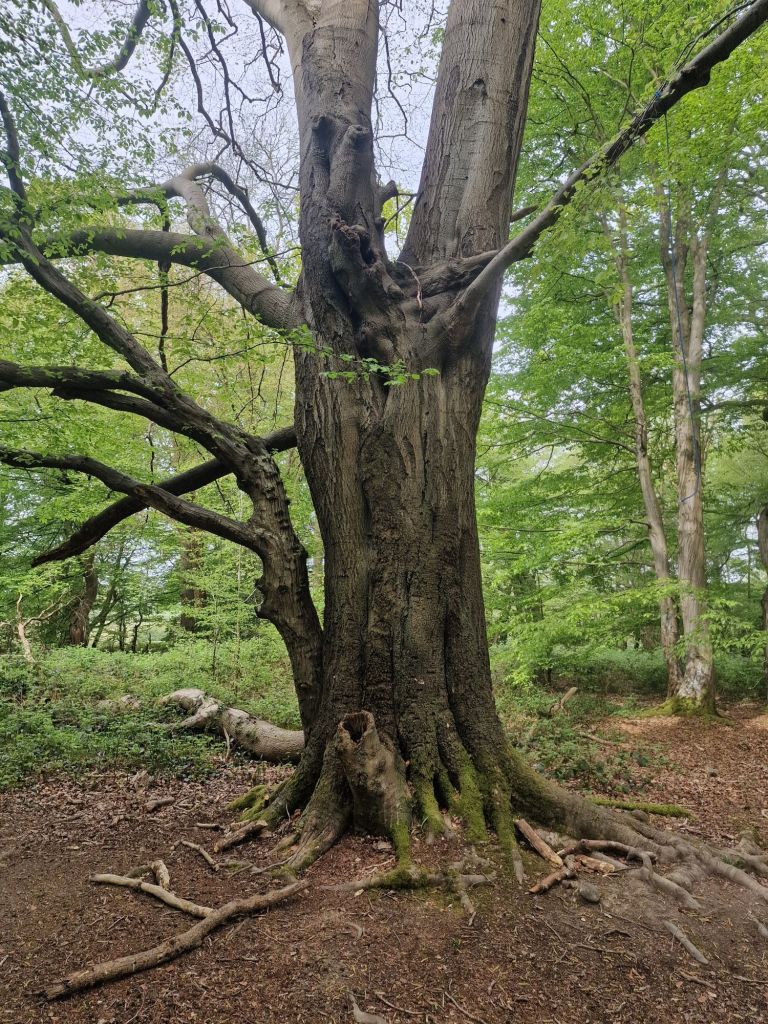
Ancient Hornbeam, Carpinus betulus
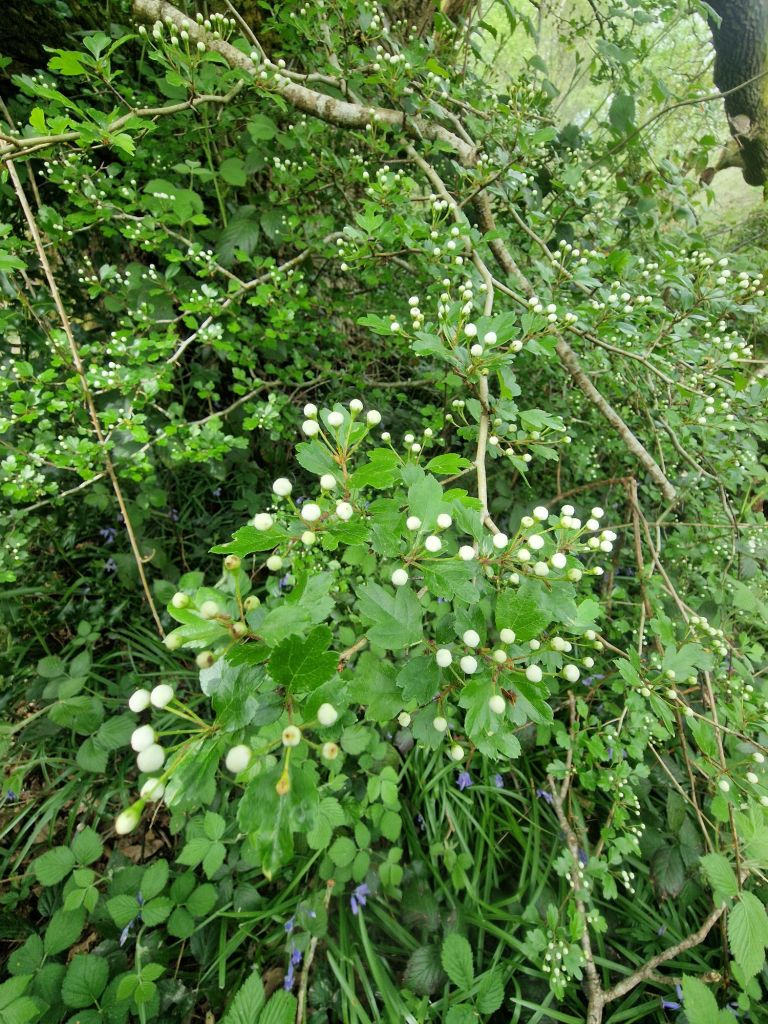
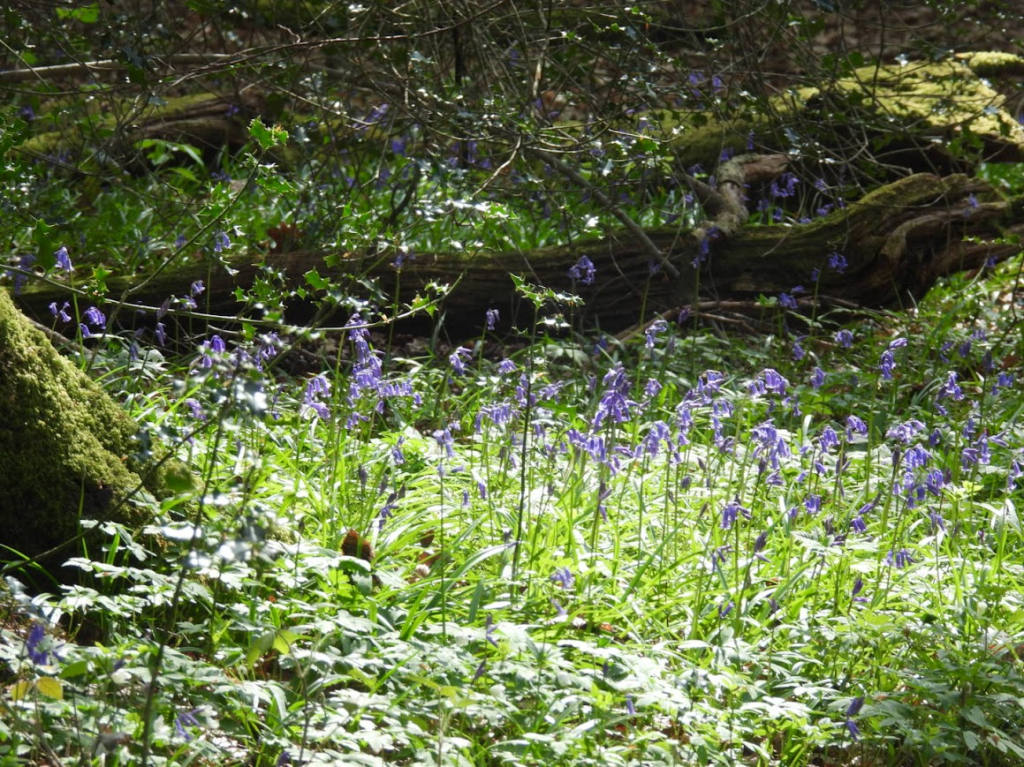
Midland Hawthorn, Crataegus laevigata, with Bluebells, Hyacinthoides non-scripta, another Ancient Woodland Indicator Plants
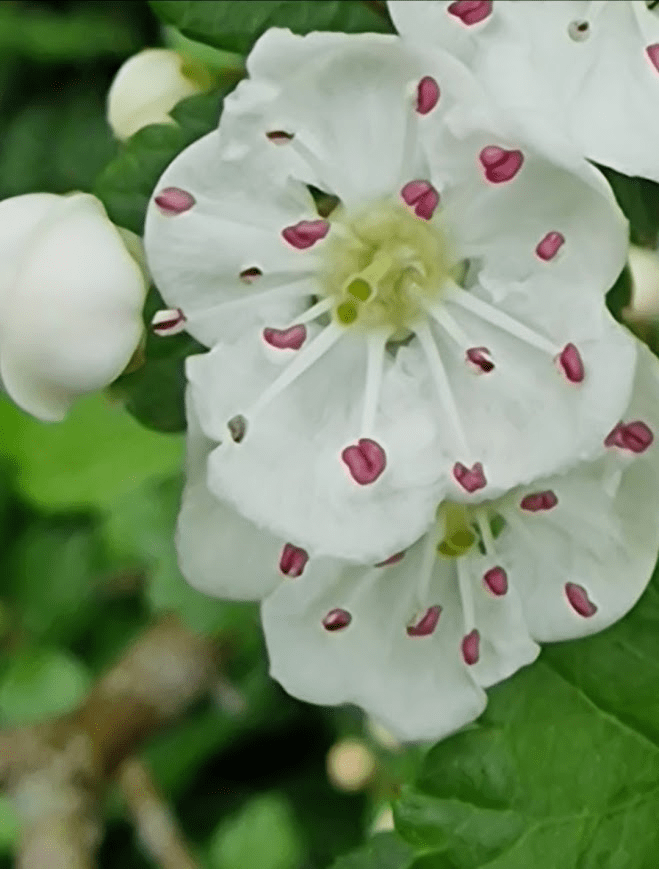
Flowers of another Midland Hawthorn
Midland Hawthorn has two styles; ordinary Hawthorn only has one. A style of an flower is an organ of variable length that connects the ovary to the stigma.
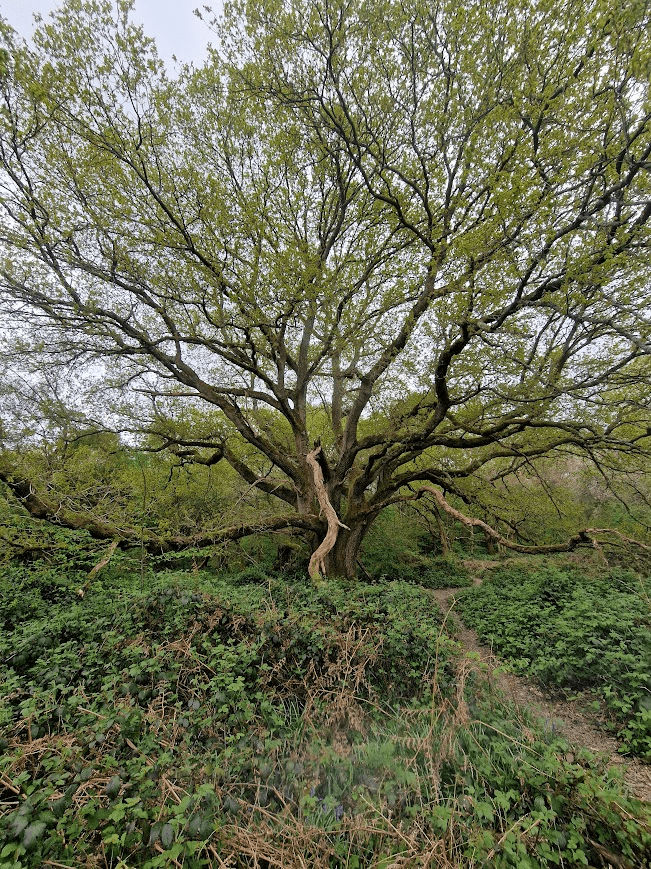
A stunning ancient Pendunculate Oak
and a huge Goat Willow, Salix caprea
Marstakes Common and its adjacent wood Grantham’s Rough; had a variety of ancient woodland indicator plants
Home to myth and legend, where folk tales began. It fuelled our ancestors and still houses thousands of species. Ancient woodland has grown and adapted with native wildlife, yet what remains only covers 2.5% of the UK.Woodland Trust
This afternoon I walked through the ancient woodland of Butcher’s Wood (Woodland Trust), Lag Wood (private but with permissive access), both just south of Hassocks and Newer Copse (Wolstonbury Hill, National Trust) near Clayton. I am a volunteer with the Woodland Trust and Action for Rural Sussex’s Lost Woods of the Low Weald and Downs project and my particular biological interest is the lichens of woods, and I lead introduction to lichen walks. But in spring, my attention is drawn to the beauty of wild plants in ancient woodland.
This post is written for the general public; especially those new to wild plant identification.
All these woods are a short walk from Hassocks Rail Station or the Jack and Jill bus stop at Clayton (Metrobus 270, 271, 272, 273)
Butcher’s Wood and Lag Wood are woods of the Low Weald (and their underlying geology is the clay of the Gault Formation). Newer Copse, Wolstonbury Hill, is woodland of the South Downs (chalk of the West Melbury Marly Chalk Formation). Underlying geology determines soil type, and this affects which plants grow where. You can find out the geology of anywhere in the the UK by using the British Geology Survey Geology Viewer Viewer
Butcher’s Wood
I could find out if I was in ancient woodland simply by consulting Natural England’s index of ancient woodland; it’s map of ancient woodland can be explored here: Natural England Ancient Woodland; and these three woods are indeed Ancient Woodland (Ancient semi-natural woodland (ASNW))
Natural England classifies ancient woodland thus:
Firstly, woodland can be calassified as Ancient Semi-Natural Woodland; mainly made up of trees and shrubs native to the site, usually arising from natural regeneration. They are areas that have been wooded continuously since at least 1600. This does not mean the trees in ancient woodland are themselves ancient; although some might be.
Moreover, ancient trees can be found not in woods. Ancient Pendunculate Oaks, Quercus robur, can be found in Low Weald grazing pasture and hedge rows. These are probably relics of former woodland that was cleared for pasture and left for shelter for livestock or for ield boundaries.
The oldest trees in Sussex are polllarded pasture Oaks in ancient medieval Deer Parks; those in the Low Weald include Danny Park south of Hurspierpoint and Plashett Park north of Ringmer. There is only limited public access by public footpath to these parks
Alternatively, Natural Englsnd designates ancient woodland as Plantations on Ancient Woodland Sights (or Ancient Replanted Woodland) – replanted with conifer or broadleaved trees (e.g. Sweet Chestnut, Castanea sativa) that retain ancient woodland features, such as undisturbed soil, ground flora and fungi
Another way of determining whether you are in ancient woodland, without looking at the Natural England ancient woodland maps, is to look at the plants growing in the woodland you are walking through. Certain plants indicate that the wood you are walking through may be ancient; as these plants take a bery long time to establish themselves in woods.
This post illustrates the Ancient Woodland Indicator Plants that I found in Butcher’s Wood, Lag Wood and Newer Copse today. Ancient Woodland Indicator Plants are listed in Indicators Of Ancient Woodland – the use of vascular plants in evaluating ancient woods for nature conservation. Francis Rose, British Wildlife 10.4 April 1999, Pages 241-251. At the end of this post is a full list of the ancient woodland indicator plants listed by Rose
Resources that can help you identify wild plants:
Harrap’s Wild Flowers is an excellent and easy-to-use field guide, that uses photos with key identification features. Simon Harrap: Harrap’s Wild Flowers A Field Guide to the Wild Flowersof Britain & Ireland ( 2nd edition 2015)
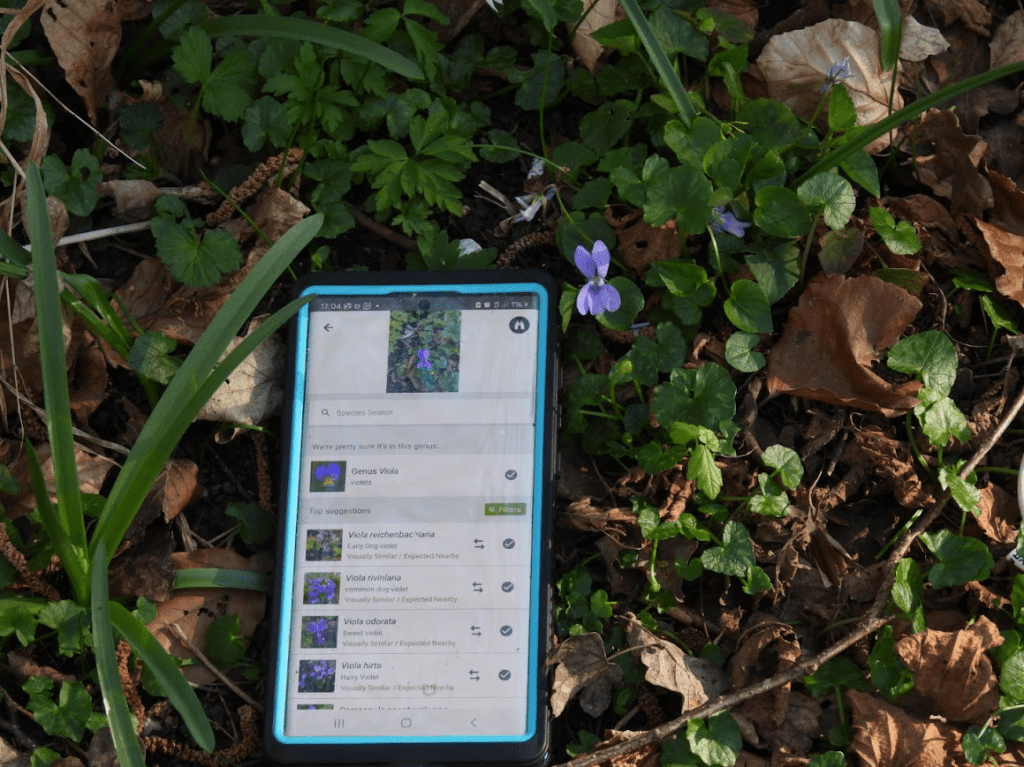
This also useful for identification and has the added advantage that it records your observations if you want to. Saved onservations are checked by others and records which reach “Research Grade” are submitted to county recorders and if agreed they will be added to the National Biodiversity Network Atlas . There are questions about the reliability of Research Grade verification; but iNaturalist is extremely useful for community projects as your records can be seen by anyone; and can be seen in “projects” e.g. the Henfield Nature Challenge . As you progress with identification, I would recommend that you use iRecord, as your plant records will automatically be seen and checked by the County Recorders for vascular plants and if verified they will be added to the Botanical Society of Britain and Ireland’s database and could appear in the next edition of the Sussex Plant Atlas. iRecord
N.B. AI photo identification gets things wrong at times; always check an AI identification with a field guide or an expert botanist (if you know one!)
All of the photos in this post were taken today (07.04.25) in Butcher’s Wood, Lag Wood or Newer Copse; except for some examples of other indicator plants that can be found in other Low Weald woods (Butcher’s Broom and Wild Service Trees). All the photos in the post were taken by me.
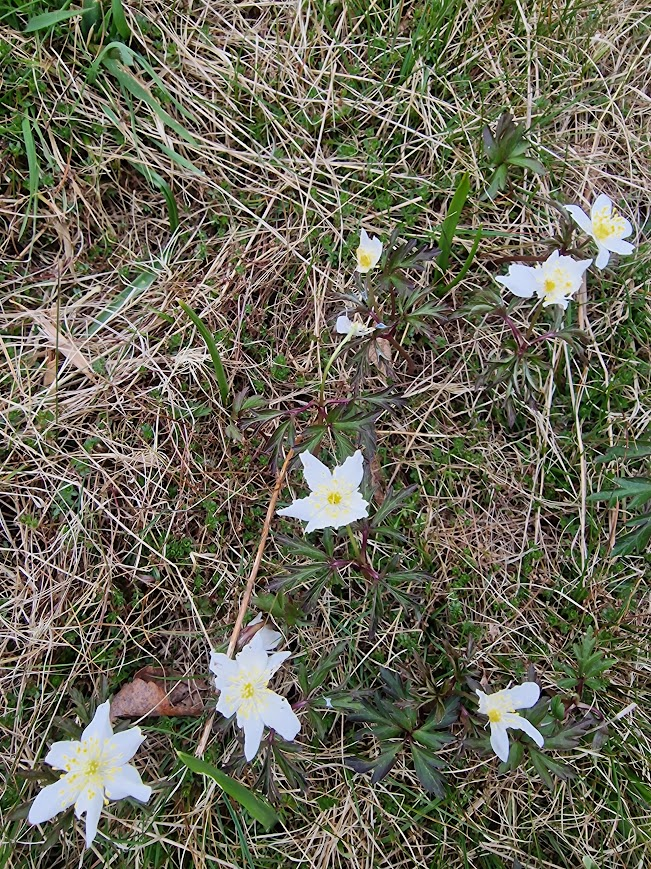
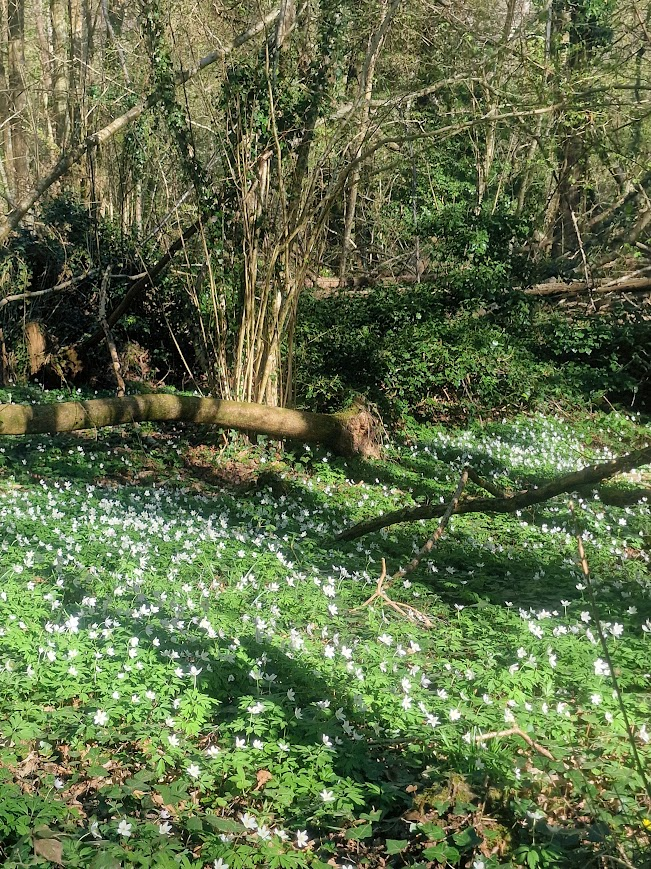
Wood Anemones turn their flowers to the direction of the sun. The yellow flowers are Lesser Celandine, Ficaria verna. It is not an ancient woodland indicator plant but is a very common flowering plant in woodland; and is one of the first flowers to bloom in spring, and so is very important to pollinating insects.
Ilex aquifolium European Holly
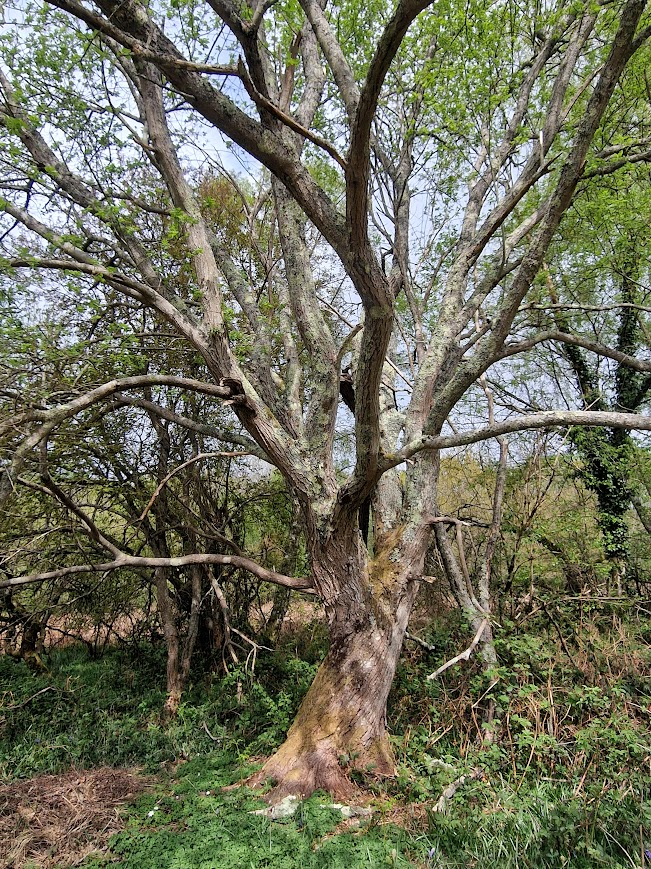
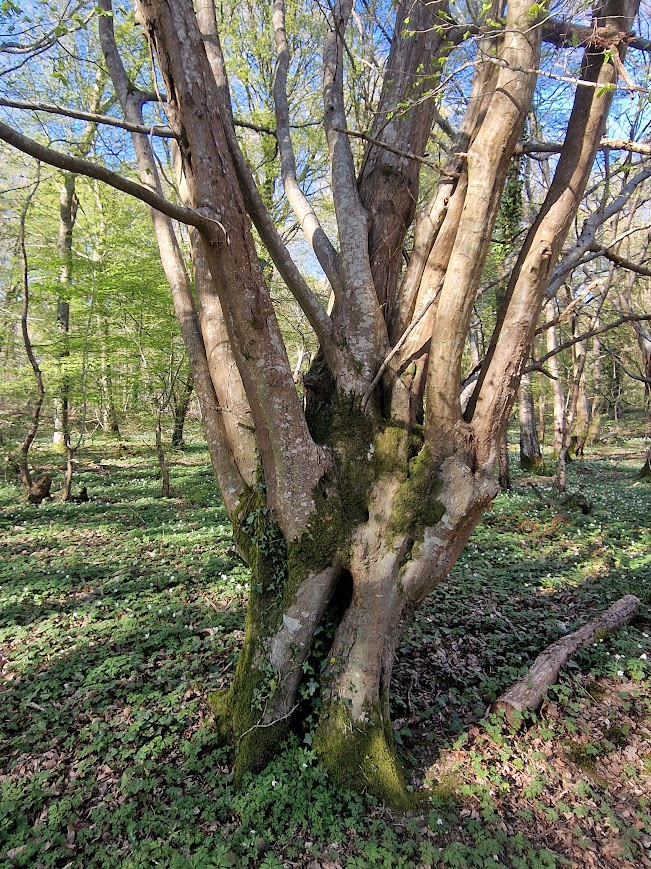
An ancient pollarded Carpinus betulus, European Hornbeam, within Lag Wood. Rose makes it clear in his list that Carpinus betulus should only be considered an ancient woodland indicator only if they occur well within the wood and do not appear to have been planted.
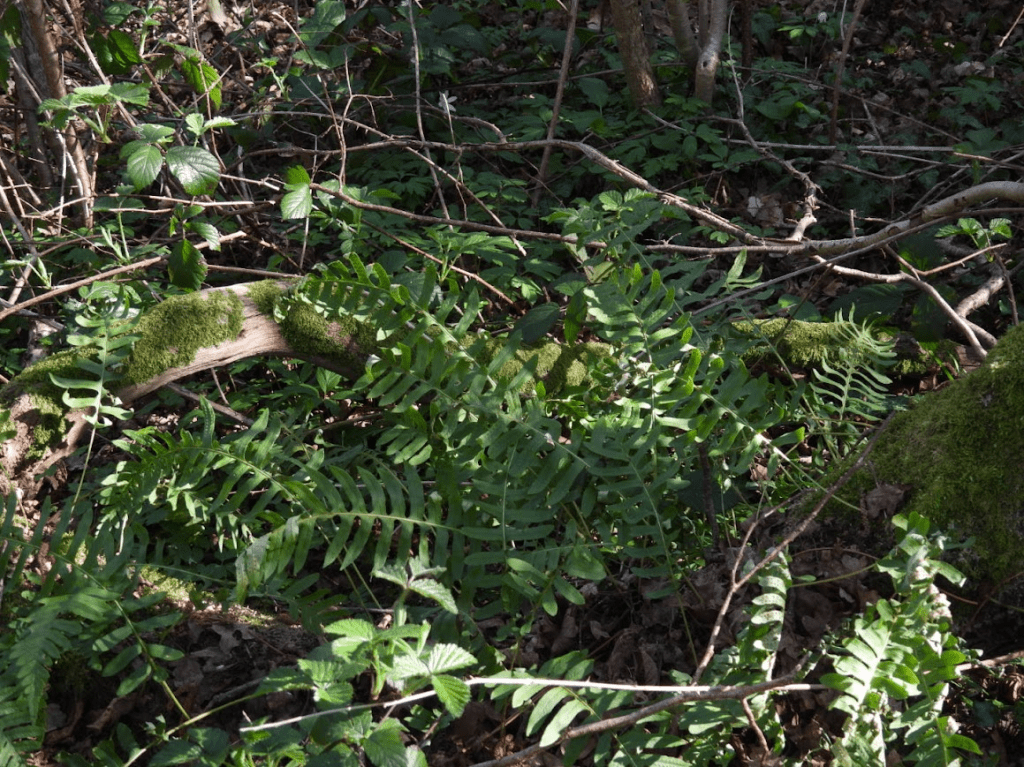
Polypodium sp., Polypody Fern (Lag Wood)
The exact species of polypodies is only determinable by microscopic inspection of their spore; but all species of Polypody Ferns are ancient woodland indicators.
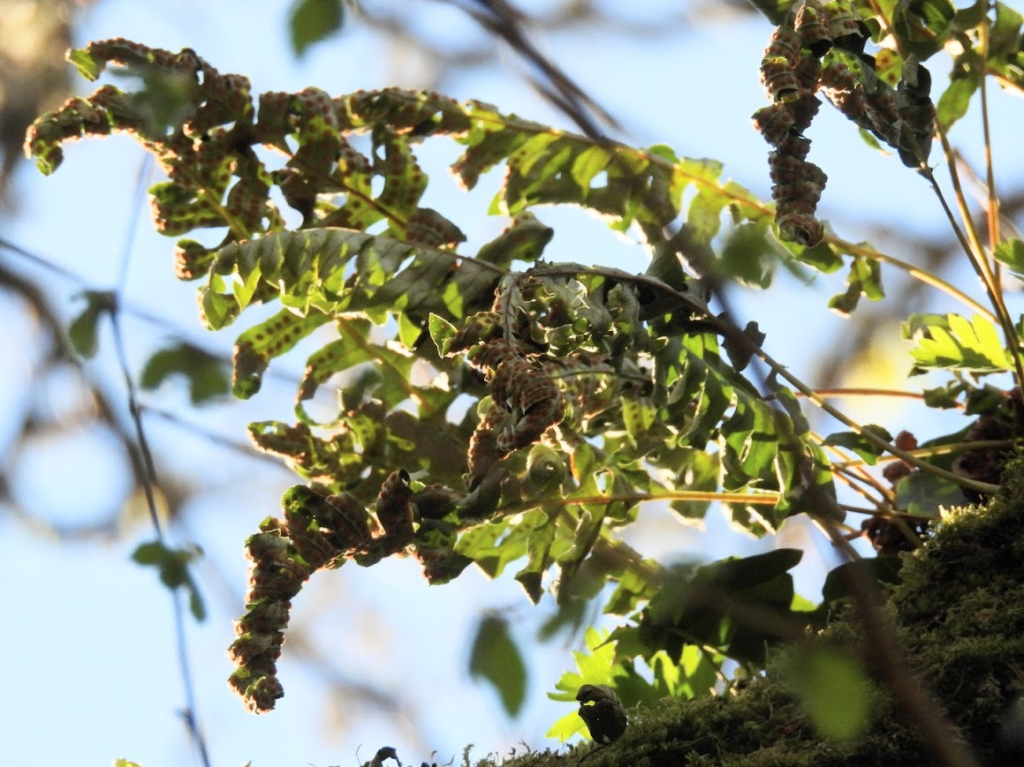
This epiphytic Polypody was growing at the top of a Pendunculate Oak, Quercus robur. It looks a bit shrivelled due to the lack of rain of late, and it is being exposed to the full sun while the Oak has no leaves. A branch had fallen from this tree, with Polypody on it; this look more like what Polypody typically looks like
Carex sylvatica, Wood-sedge (Butcher’s Wood)
Carex pendula, Pendulous sedge (Lag Wood)
Theses sedges are a feature of Low Weald woodland, because clay is a soil type which retains water and these sedges grow in wet woodland.
In Lag Wood an ancient field boundary can be seen, consisting of a bank and coppiced Hornbeam. Ancient (medieval) field and wood boundaries often indicate that woodland is ancient.
Ancient woodland has not been “wild” since the delopment of agriculture; since the Neolithic Revolution, between 3100 and 2900 BC. Ancient woodlands have been coppiced and pollarded for 1000s of years. The beauty and biodiversity of these woods comes from sensitive, appropriate human management.
Newer Copse (Wolstonbury Hill), South Downs
Many of the ancient woodland indicator plants of the clay Low Weald and found growing on chalk Downland and vice versa.
I saw Bluebells, Wood Anemones and Holly, in Newer Copse, but I also saw Early-Dog Violets, Moschatel, Yellow Archangel, Soft Shield Fern and Dog’s Mercury; all ancient woodland indicator plants. On other occasions, I have seen Ransoms, Spurge-Laurel Early Purple Orchids and Spurge-Laurel here, also ancient woodland indicator plants.
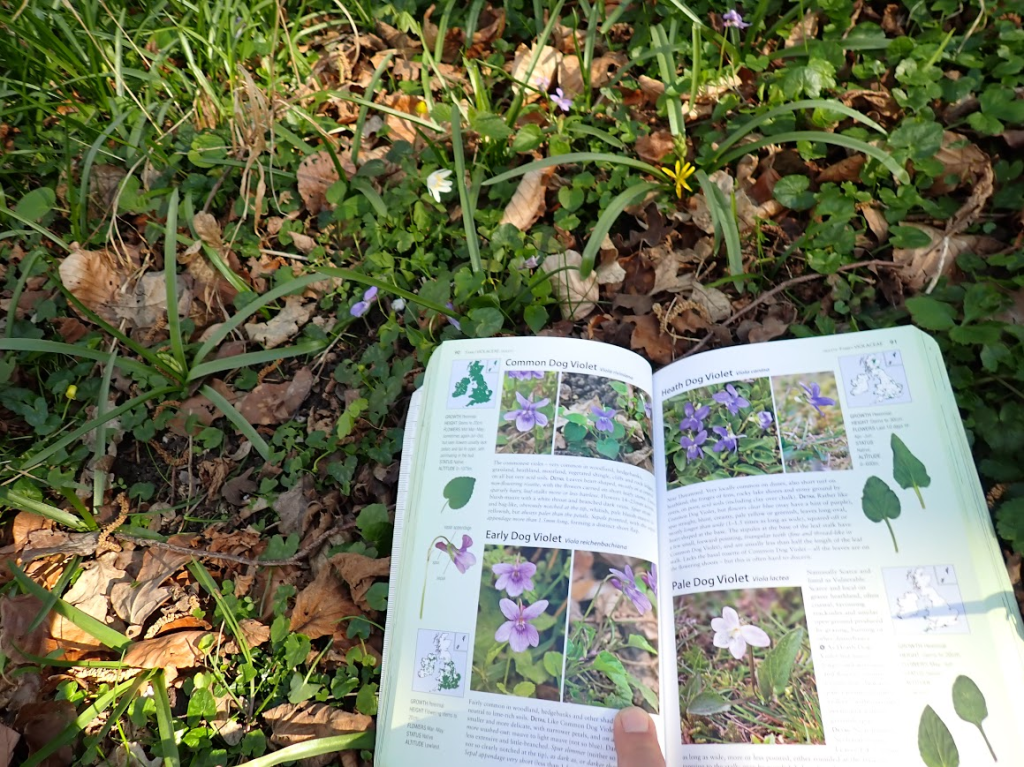
Viola reichenbachiana Early-Dog Violets
Early Dog Violets are difficult to separate from Common Dog Violets; the Early Dog-violet has a darker purple spur behind the petals. PlantLife: Early Dog Violet
Adoxa moschatellina Moschatel or Townhall Clock
These are very small; and easy to overlook
Laminate galeobdomon Yellow Archangel, not yet in flower.
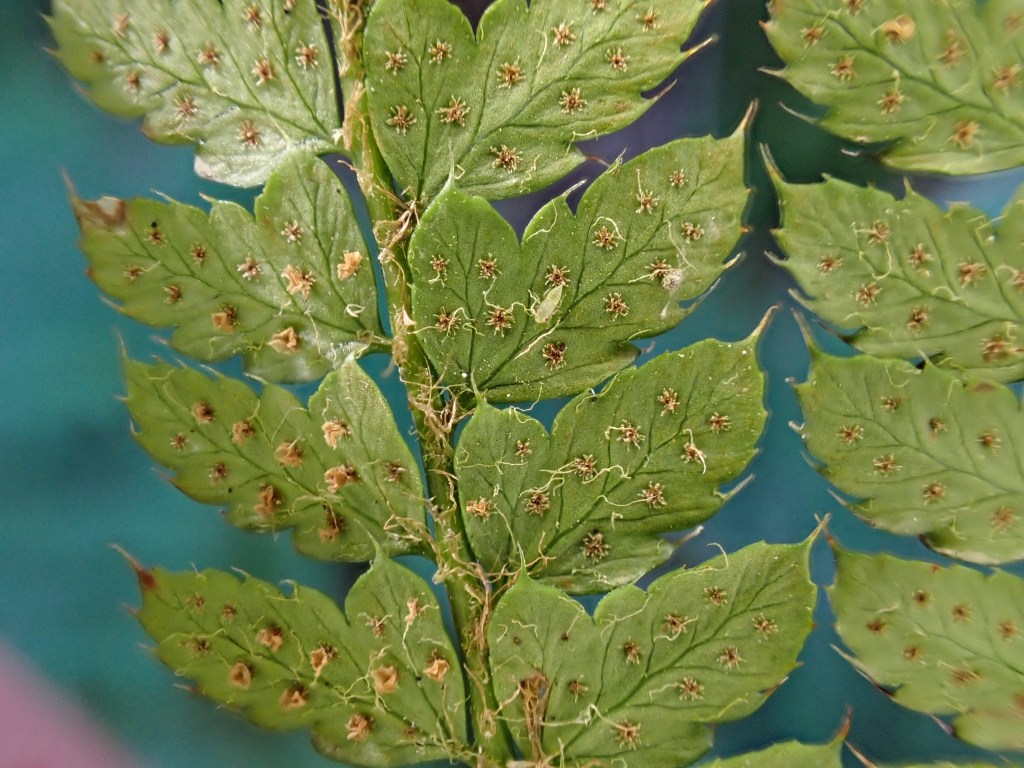
Polystichum setiferum, Soft Shield-fern
Ferns are difficult to identify, and differentiating between Soft and Hard Shield Fern is very difficult. But both species are indicators of ancient woodland. The shield ferns have this characteristic “thumb” on the leaflets of the fronds and the spores cover both the leaflets and the thumb – you can just about make this out in one or two of the leaflet British Wild Plants Polystichum setiferum
Mercurialis perennis Dog’s Mercury
This is a greatly magnified photo; the flowers of Dog’s Mercury are VERY small!
Dog’s Mercury with no magnification.
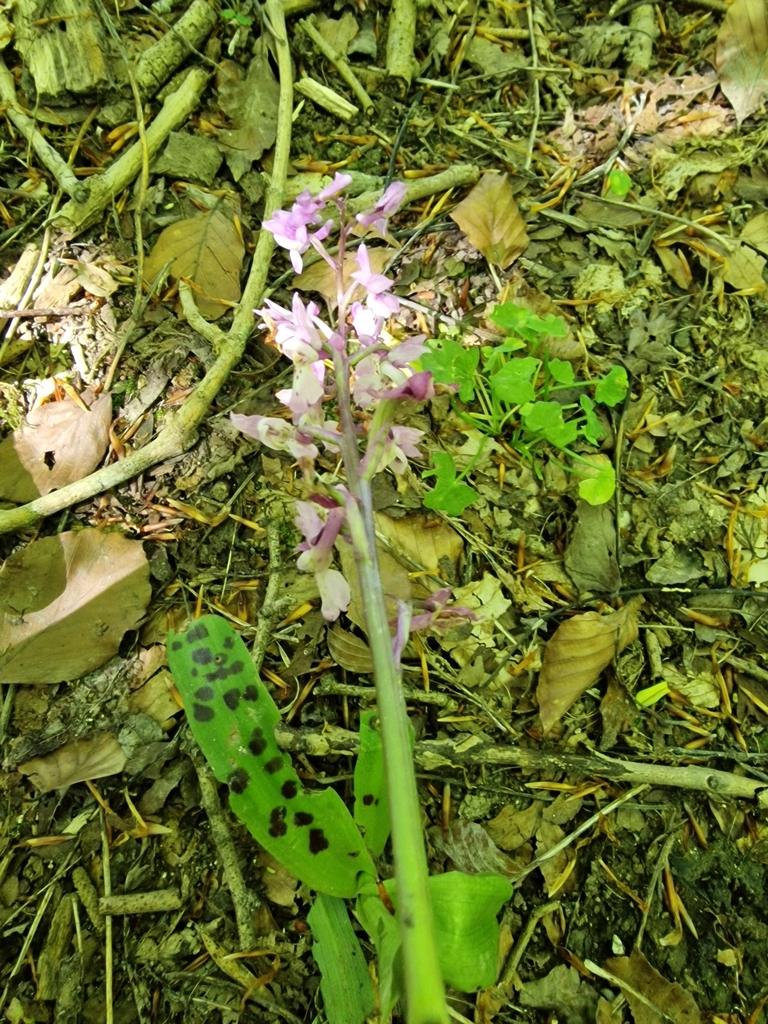
Orchis mascula Early Purple Orchid May 24, 2024 Newer Copse (Wolstonbury Hill)
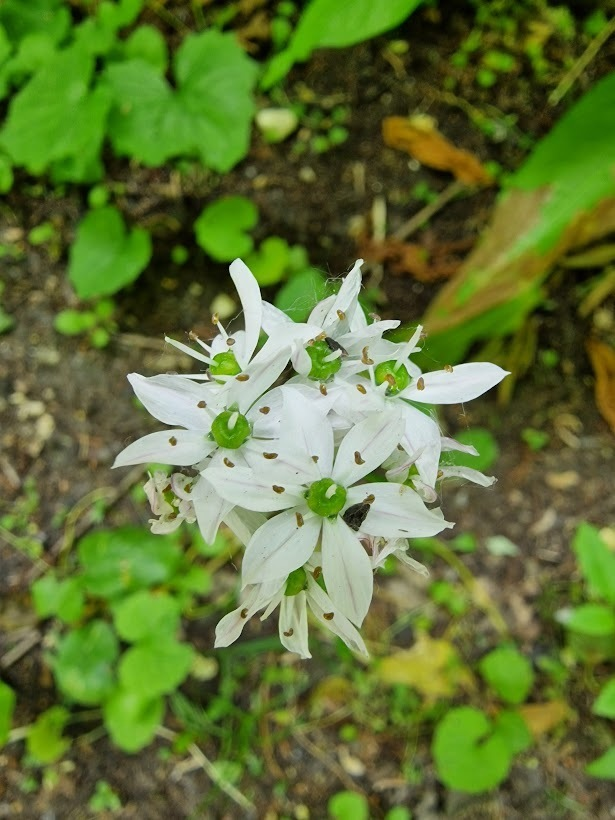
Allium ursinum Ramsons or Wild Garlic 30 May 2023 Newer Copse (Wolstonbury Hill)
Daphne laureola Spurge-Laurel May 24, 2024 Newer Copse (Wolstonbury Hill)
Spurge-Laurel is neither a spurge nor a laurel; it flowers shortly after Christmas.
Newer Copse has a hollowway bostal running up Wolstonbury Hill. Bostals are ancient drover tracks, that generally go up the scarp (steep) slopes of Downs diagonally. It is a Sussex dialect word.
Other Low Weald ancient woodland indicator plants.
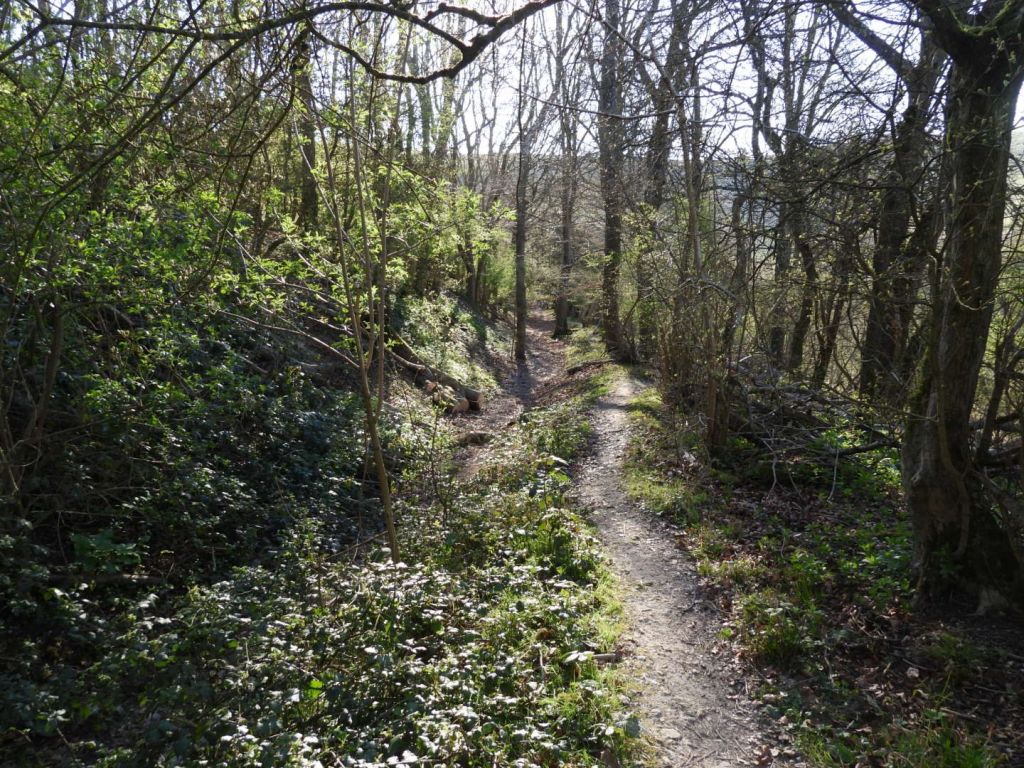
I have seen both Butcher’s Broom and Wild Service Trees in Low Weald woods; but not in Butchers Wood or Lag Wood
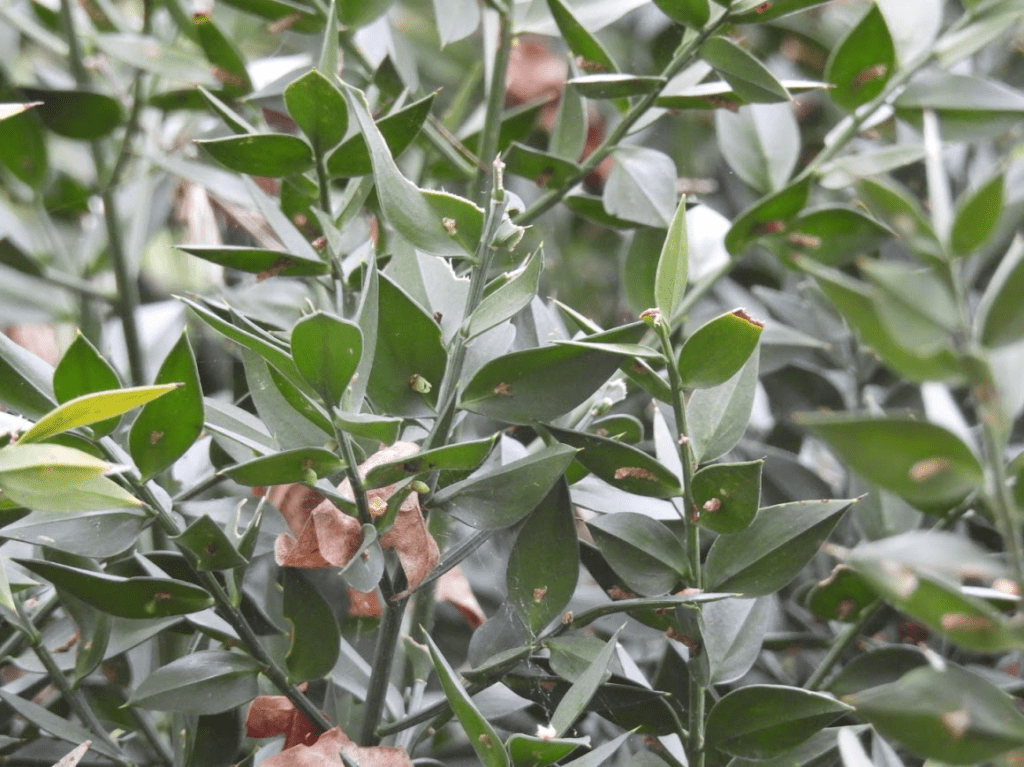
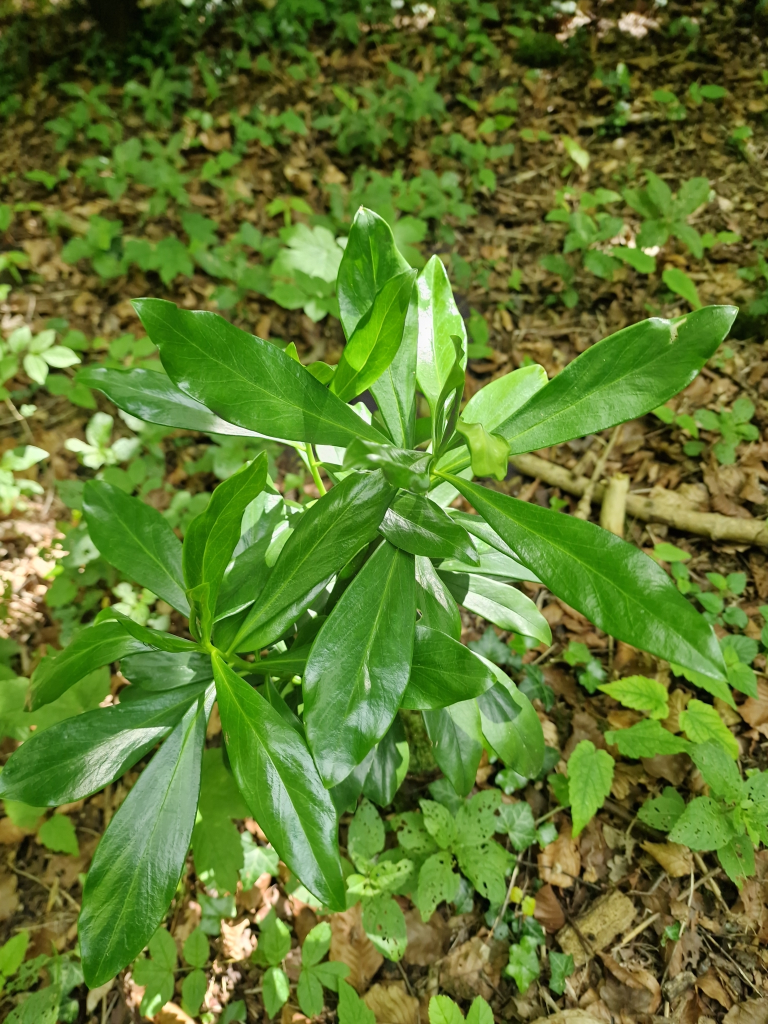
Ruscus aculeatus Butcher’s-Broom, Ebernoe Common
Butchers broom is uncommon in southern UK and gets rarer the further north you go. … [it] is rare on the chalk.
Butchers broom is known as an ‘ancient woodland indicator’. This is because it doesn’t colonise new habitats or spread easily to new woods; where it is growing, the wood has usually been there for a very long time.
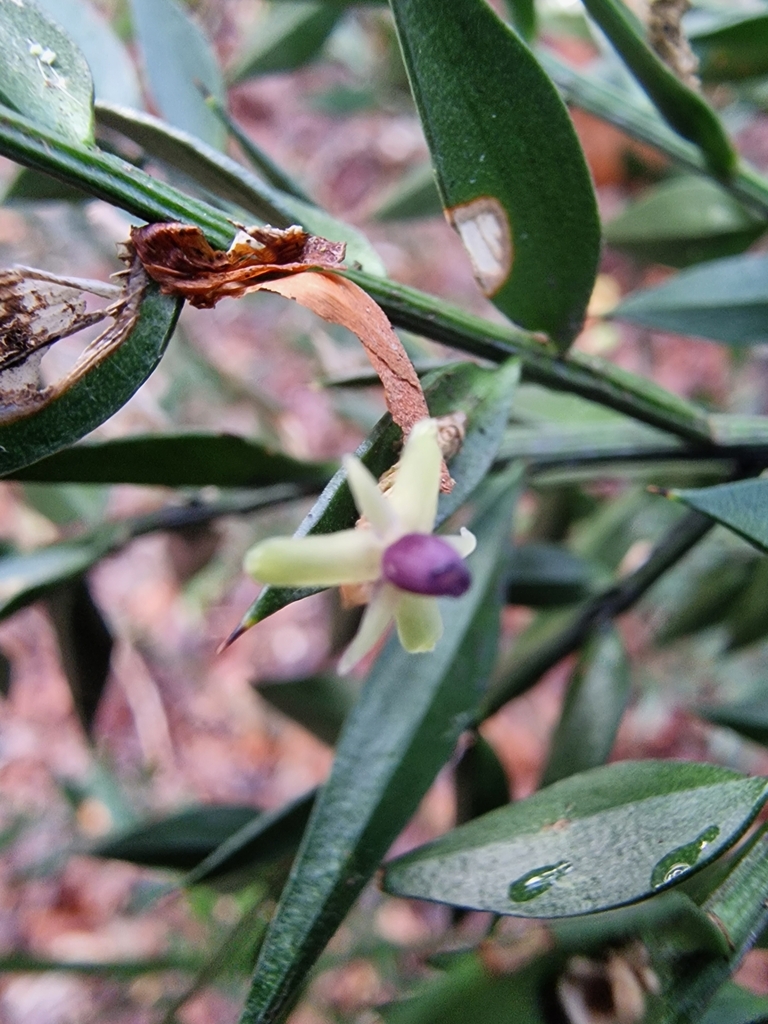
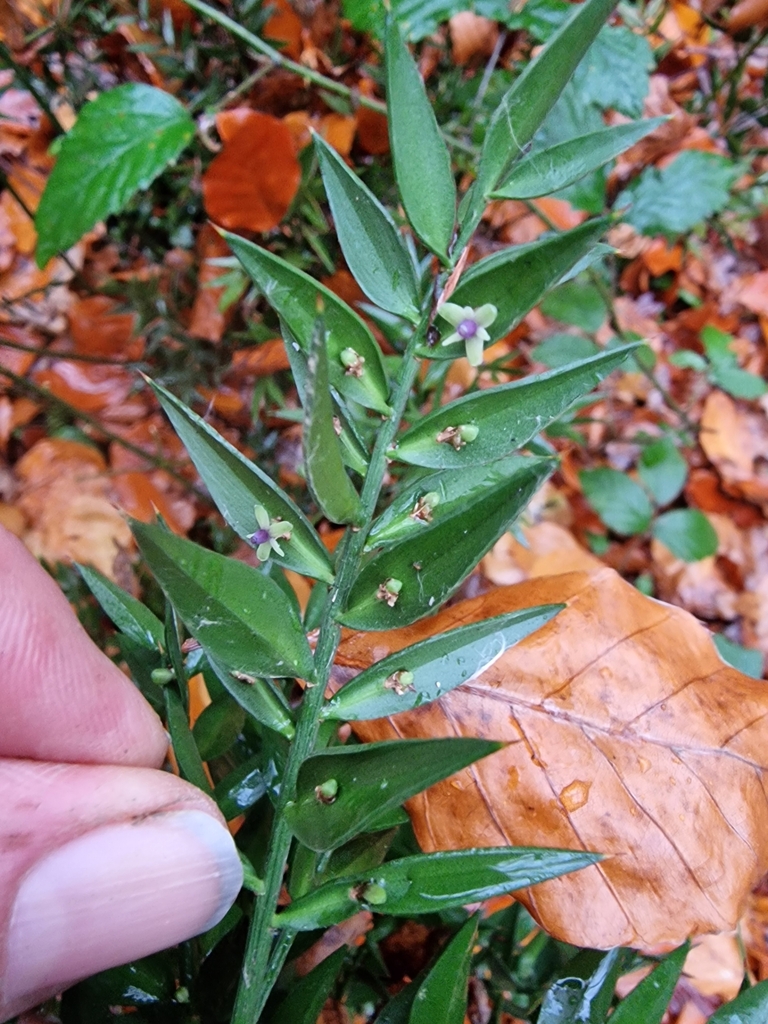
Butchers broom is quite unlike any other British plant. It is a short evergreen bush growing up to about two feet high and all the leaves end in a pointed spike; one of its old English names is ‘knee holly’. In early spring, the tiny, pale green six-petalled flowers sit in the middle of the leaf and show that these leaves are, technically, flattened stems.
A true springtime stunner, it’s not so long ago that you could find wild-service fruit at a market. These days it’s rare and hard to find but it’s still a favourite with wildlife like the wood pigeon, whose gut softens its seeds for propagation.
* Consider these species only if they occur well within the wood and do not appear to have been planted.
It should be noted that when calculating Ancient Woodland Indicator Plants scores:
A high AWVP score is a reliable indication of natural diversity.
It also indicates ancient woodland, but does not on its own constitute proof.
Some woods which are undoubtedly ancient have a low AWVP score. Study of other components of the woodland biodiversity such as lichens, or invertebrates in rotting wood, may give clearer indications of ancient woodland status. Quite often, ancient sites that are rich in AWVP’s will be poor in lichens and rotting wood invertebrates and vice-versa.
Not all indicator species are strictly limited to ancient woodlands. For example, where secondary woodland adjoins older woodland, it will acquire species associated with older woods much more quickly than isolated secondary woods.
Plants which are also cultivated in gardens (e.g. Wild Daffodil) should be used with great caution.
Certain woodlands can credibly be established as being ‘ancient’ through the study of old historical records such as maps and estate records. Observations of landscape features such as banks, ditches and other topographical features within a wood will also give clues to previous land use. By surveying a number of these ‘proven’ ancient woodlands, species which are usually confined to this type of habitat can be identified. From: Countryside Information Ancient Woodland Indicator Species
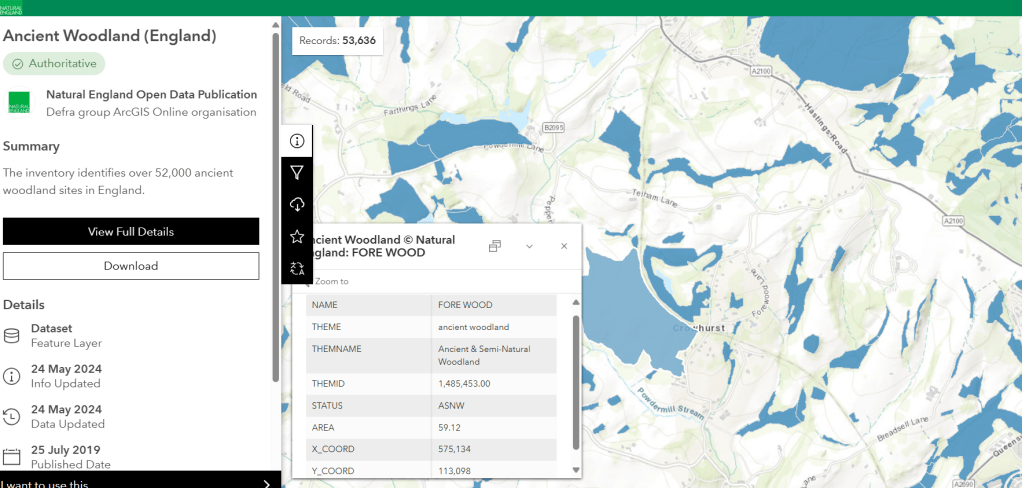
This post illustrates the species of Ancient Woodland Indicator Plants that I found in Fore Wood that are listed in Indicators Of Ancient Woodland – the use of vascular plants in evaluating ancient woods for nature conservation. Francis Rose, British Wildlife 10.4 April 1999, Pages 241-251
Natural England classifies ancient woodland as either:
(a) (ASNW) Ancient Semi-Natural Woodland mainly made up of trees and shrubs native to the site, usually arising from natural regeneration
or
(b) (PAWS) Plantations on Ancient Woodland Sights (or Ancient Replanted Woodland) – replanted with conifer or broadleaved trees (e.g. Sweet Chestnut, Castanea sativa) that retain ancient woodland features, such as undisturbed soil, ground flora and fungi
Fore Wood is designated by Natural England as Ancient Semi-Natural Woodland, but it does have some small areas of planted Sweet Chestnut which the RSPB is removing.
Fore Wood is managed by the RSPB:
Fore Wood is a stretch of peaceful woodland near Crowhurst, dotted by gyhlls – steep-sided little ravines in the sandstone where rare ferns grow and wildlife thrives. In the spring, Fore Wood is a riot of Bluebells and Wood Anemones, with Early Purple Orchids adding to the show, an ideal place for East Sussex walks.
This ancient woodland is a mix of Hornbeam, oak and Sweet Chestnut trees. We carefully manage the woodland for the benefit of the wildlife using coppicing – a traditional woodland management practice. RSPB Fore Wood
Fore Wood is designated as a Site of Special Scientific Interest: SSSI citation
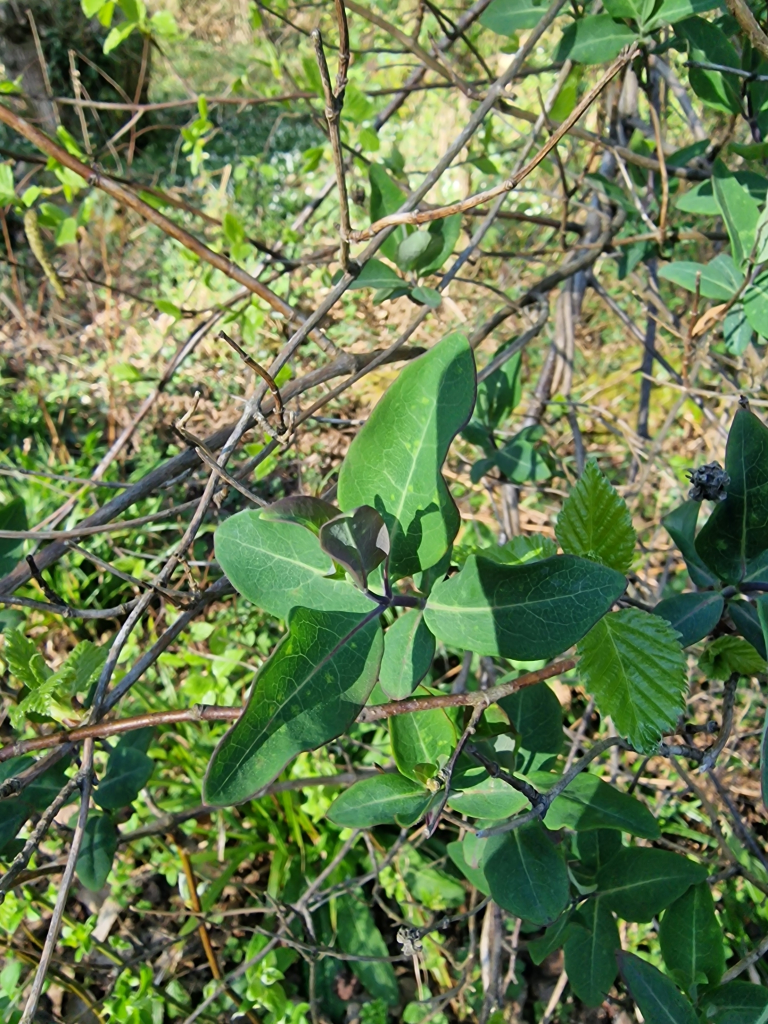
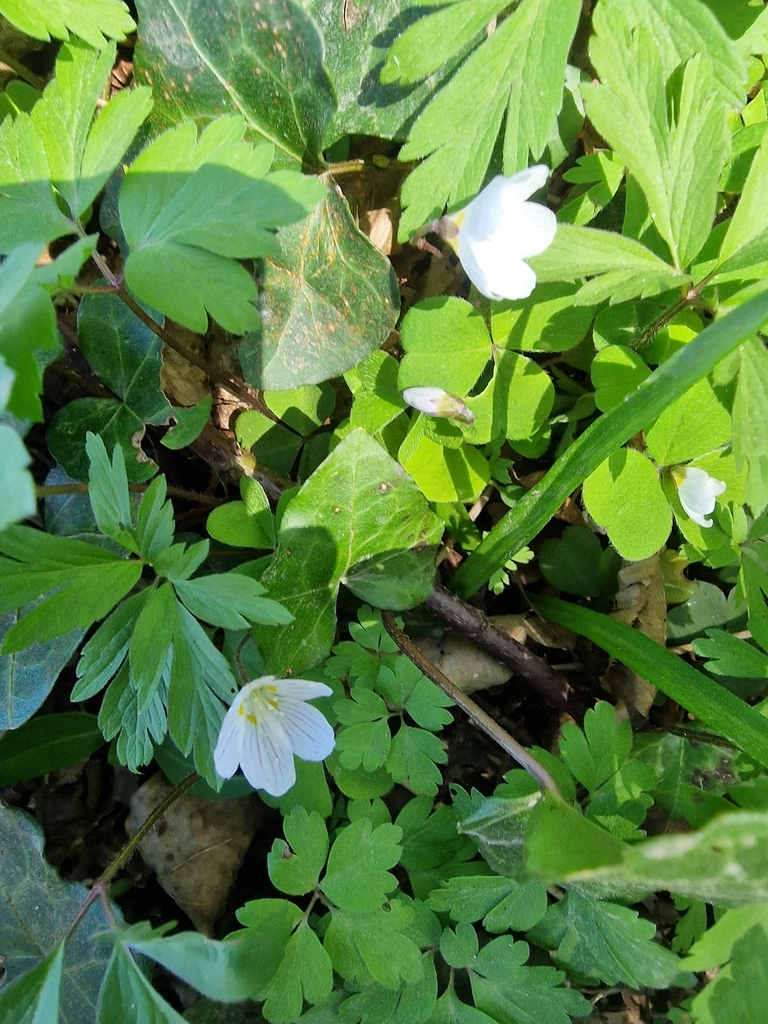
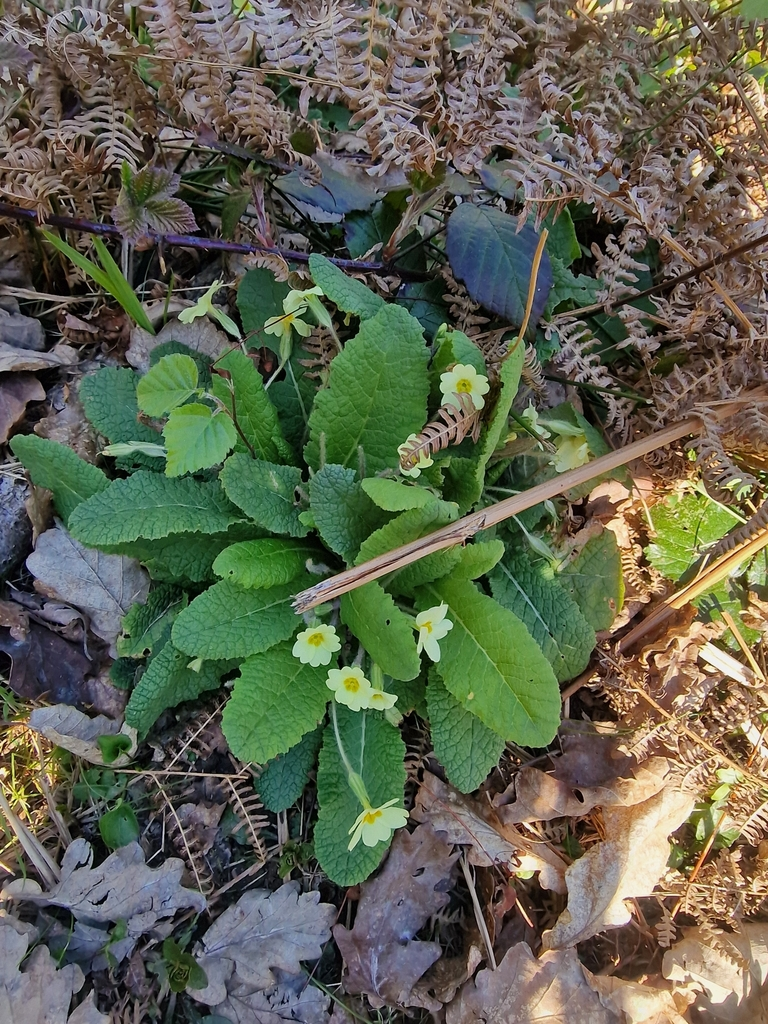
Here are the Ancient Woodland Indicator Plants that I saw:
Lonicera periclymenum Honeysuckle
Oxalis acetosella Wood-Sorrel
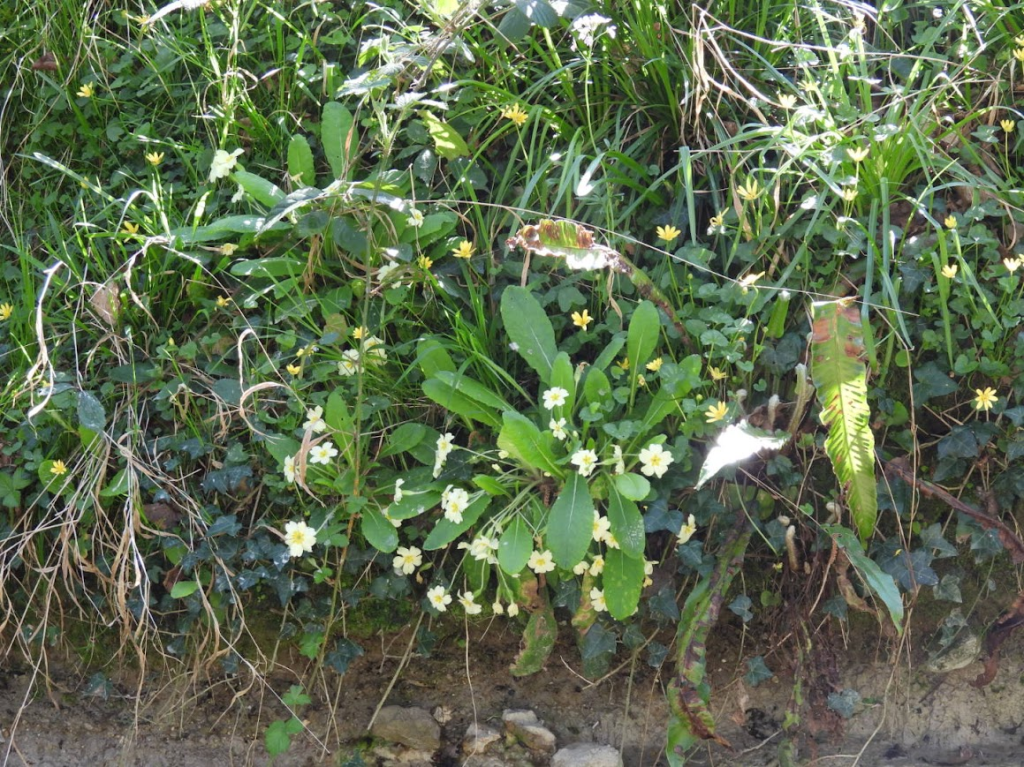
Primula vulgaris Primrose
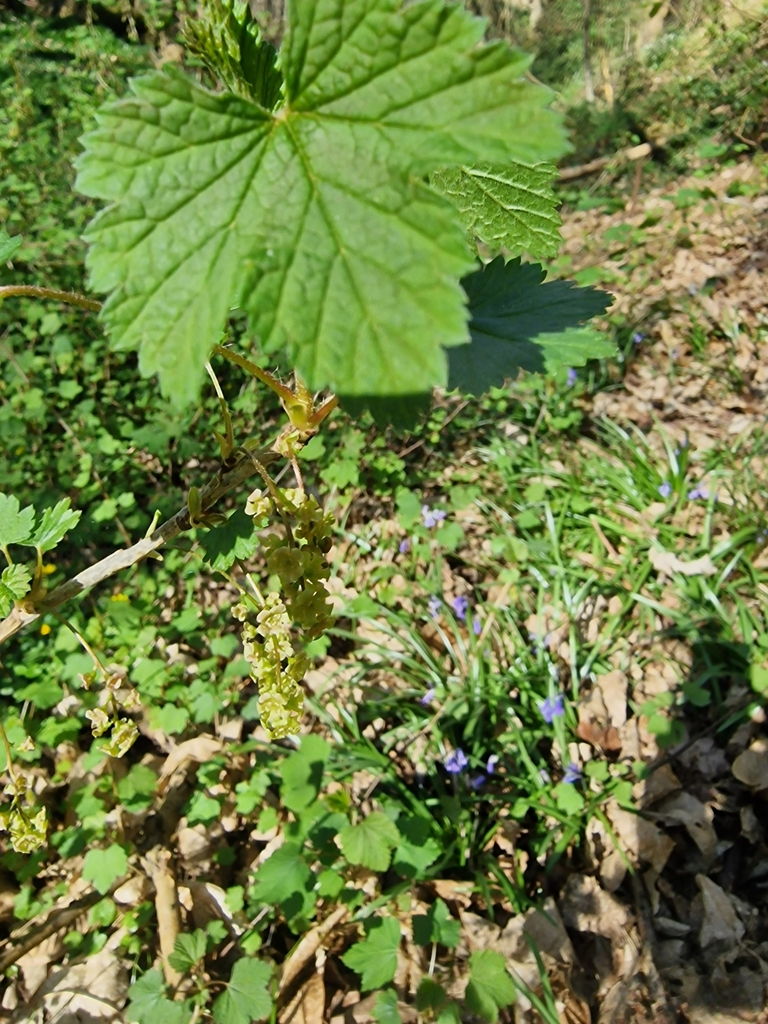
Ribes rubrum Red Currant, by one of the ghylls
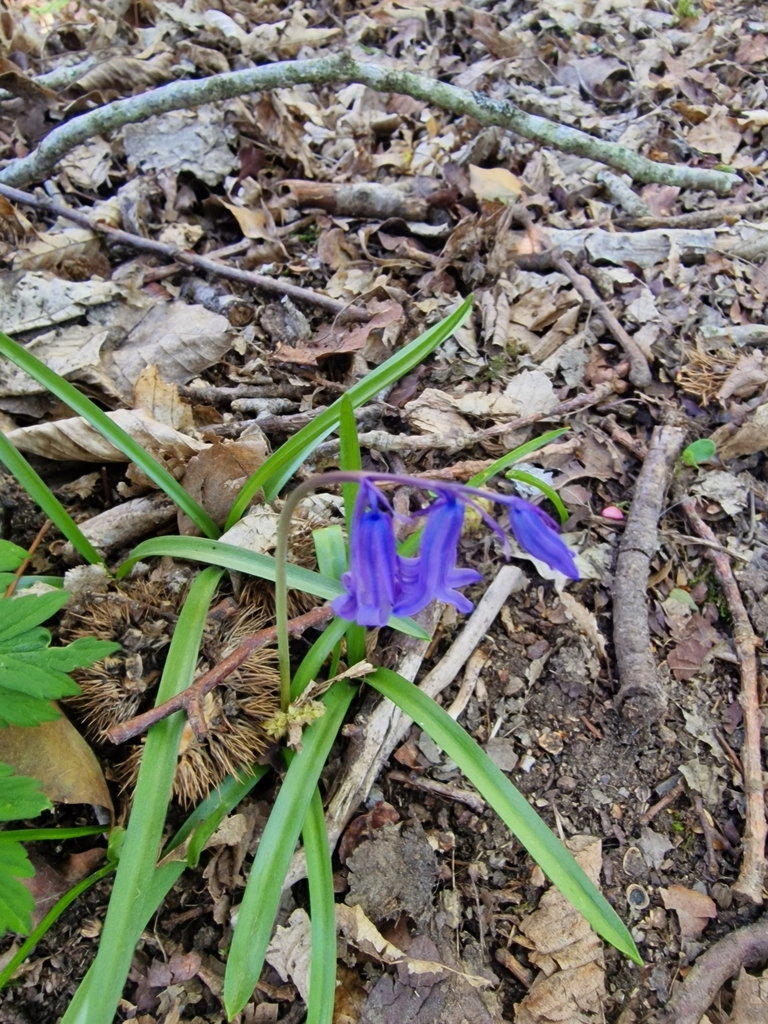
Hyacinthoides non-scripta Bluebell
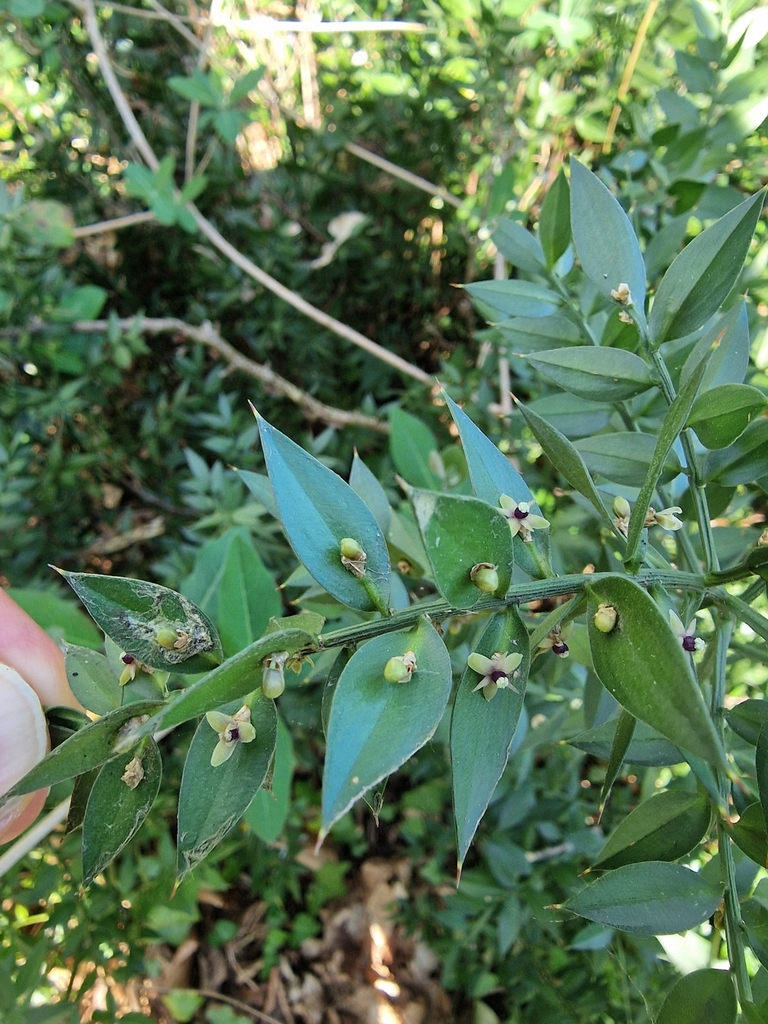
Ruscus aculeatus Butcher’s-Broom
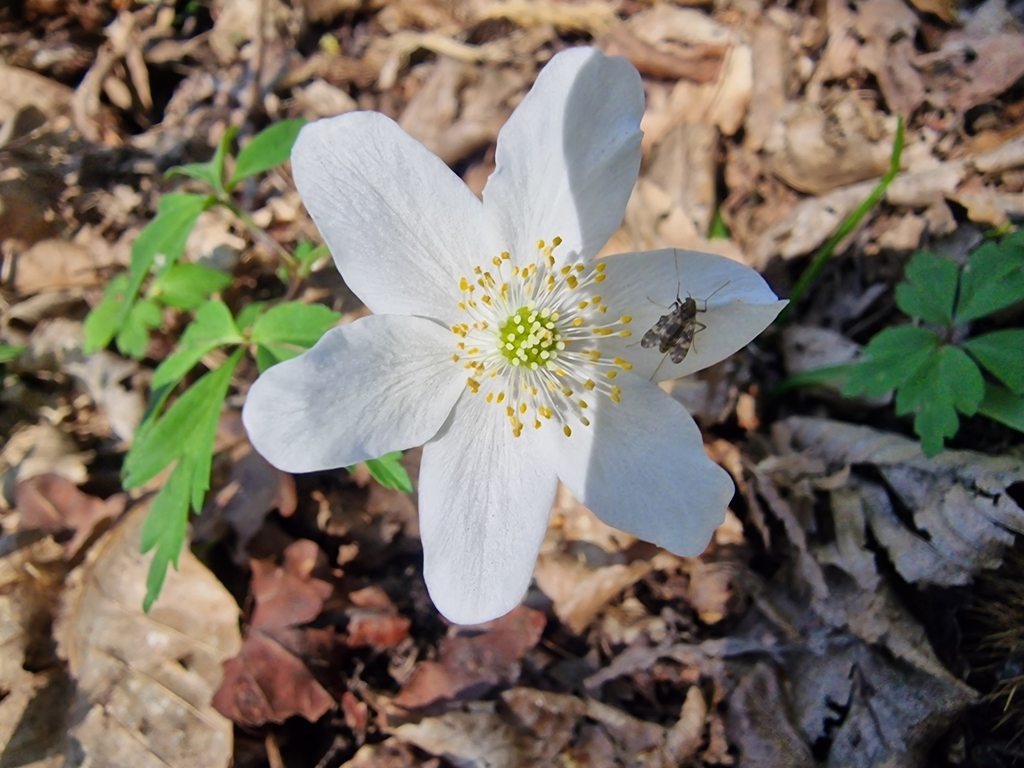
Anemonoides nemorosa Wood Anemone
with Psectrotanypus varius a species of non biting midge.
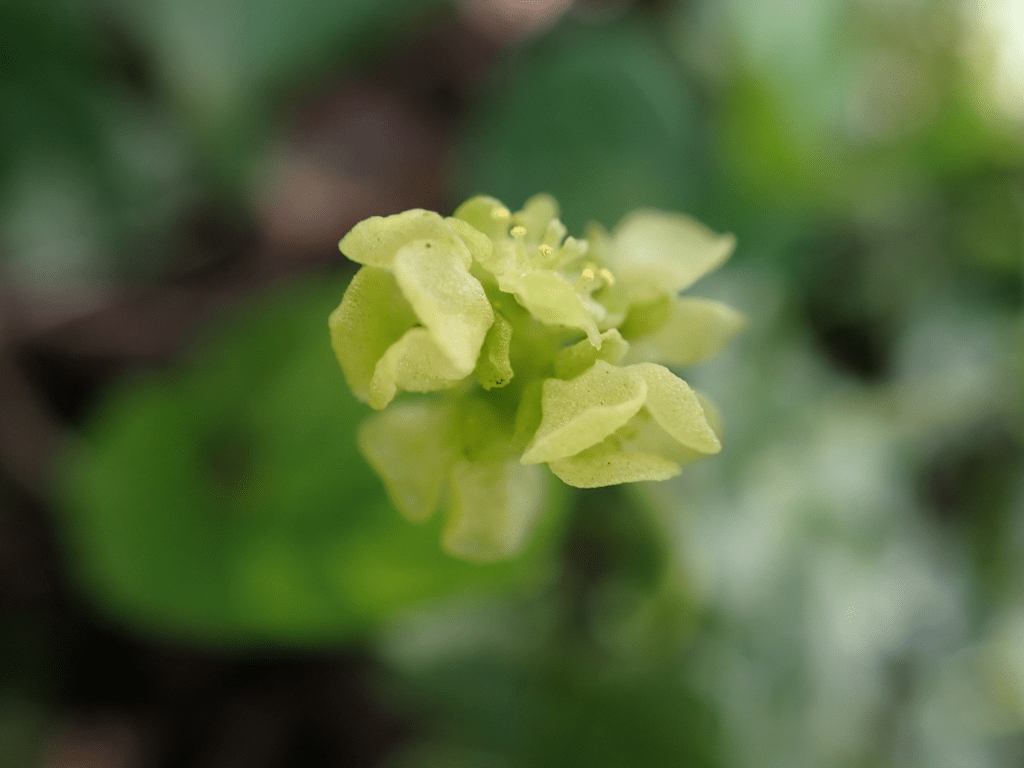
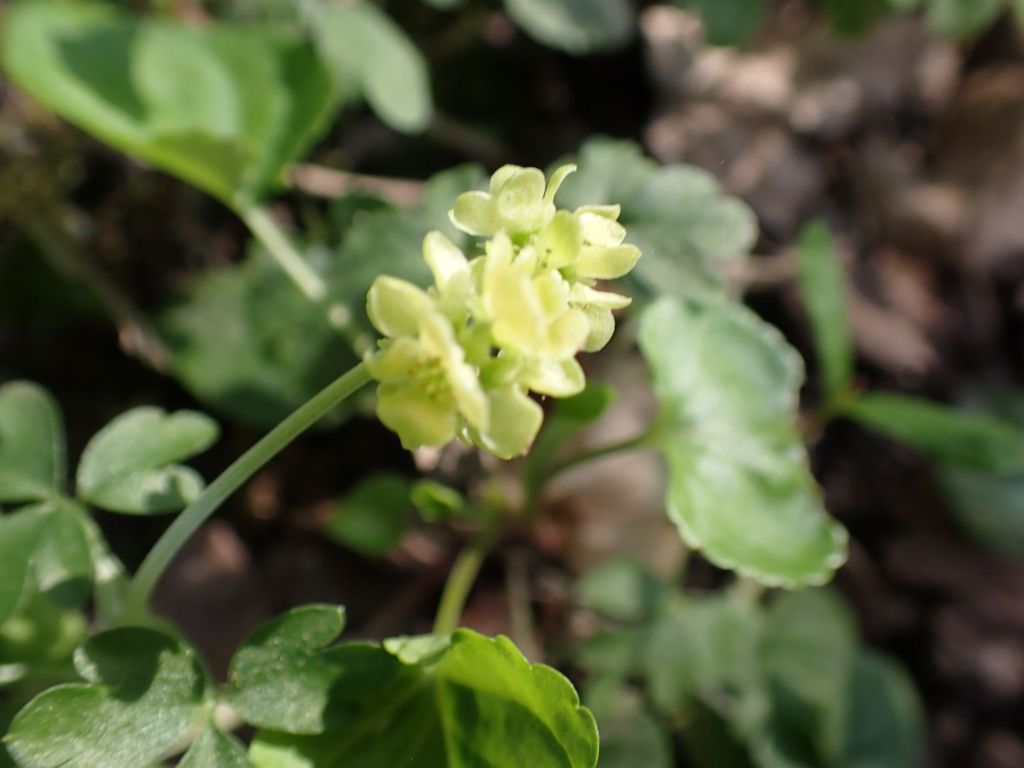
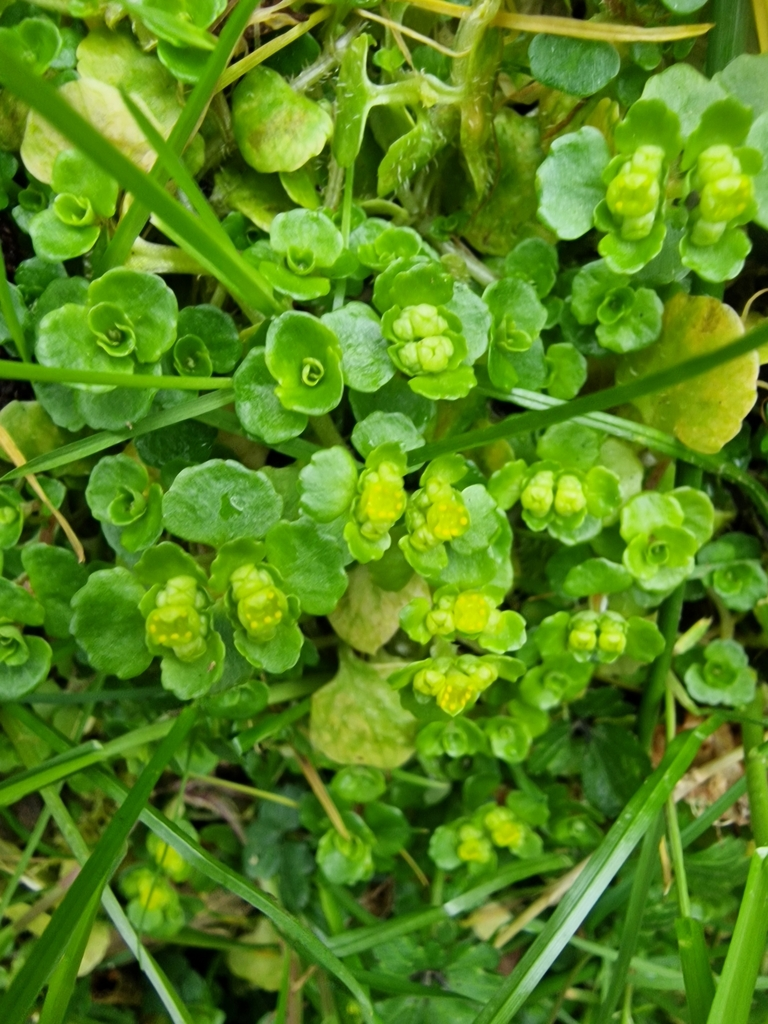
By one of the ghylls; Opposite-leaved Golden-Saxifrage is mostly a plant of damp stream/ghyll sides, or wet flushes
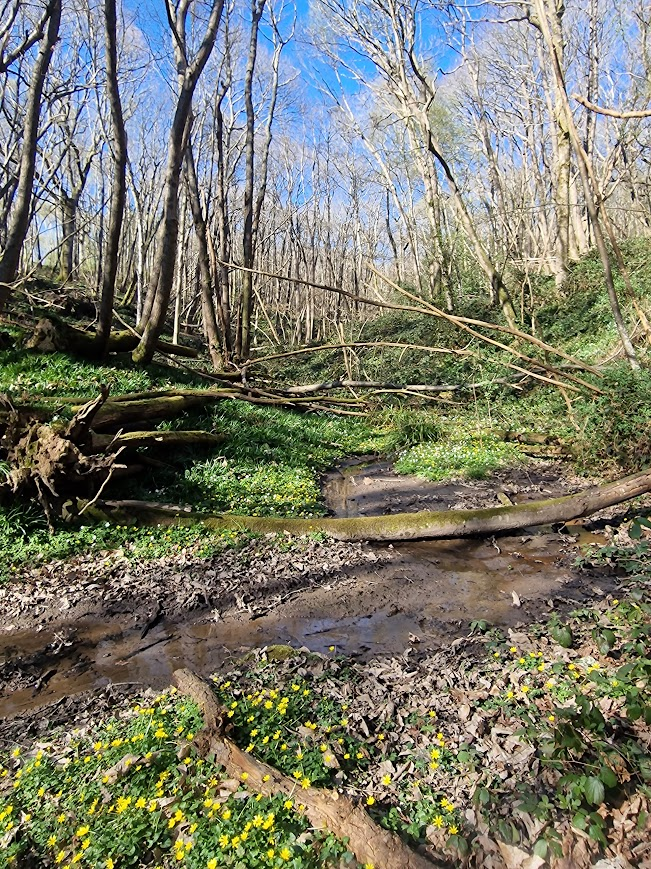
A view of one of the ghylls with Lesser Celandine, Ficaria verna. Lesser Celandine is not an AWVP indicator but it is a very important early source of pollen for pollinators. There are two ghyll is Fire Wood – this one has shallow sides
but the other ghyll has much steeper sides and is more typical of the upper reaches of ghylls in High Weald Ghyll Woods, like Fore Wood.
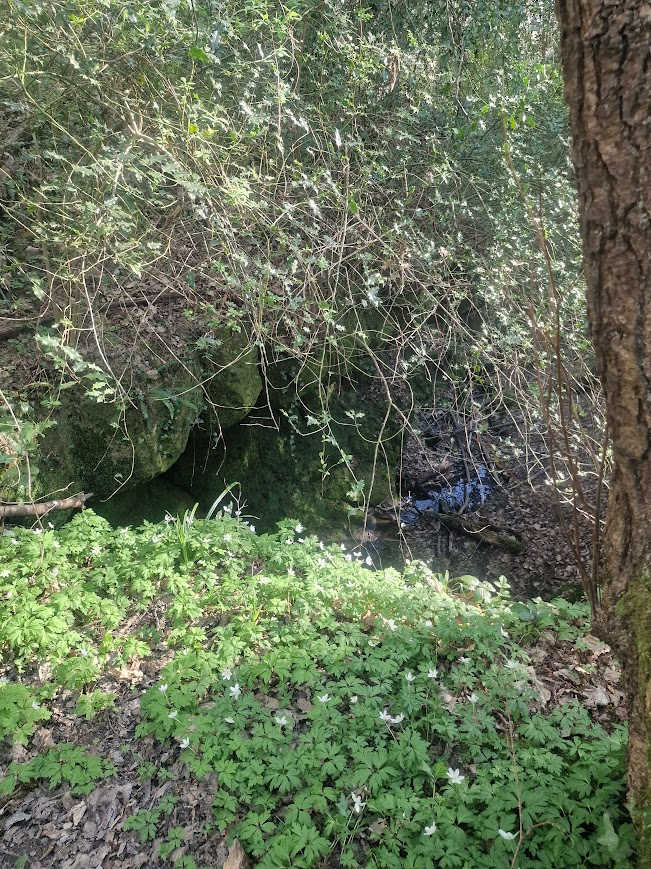
Ardingly Sandrock can be seen in this photograph. Where the porous Ardingly Sandrock meets the impervious Wadhurst Clay springs are formed that feed the ghylls. Global heating is a great threat to the survival of the internationaly important ghyll wood habitat of the High Weald.
In the south-east of England mean annual temperatures have increased by approximately 1.7°C over the past 50 years,(UKCIP 2013). Average rainfall remained unchanged during the same period, but patterns of precipitation did change with mean rainfall levels decreasing in the spring and summer months, but increasing in the autumn and winter. Over the same period the average annual and seasonal levels of relative humidity fell by up to 5% in the south and east of England (UKCIP 2013). The presence of regionally and nationally important vascular and non-vascular plant communities within the Wealden ghylls is attributed to the cool, humid microclimatic conditions associated with the ghyll valleys (Paton 1956, Ratcliffe 1968, Rose and Patmore 1997). The rising temperature levels coupled with the existence within the ghyll woodlands is closely related to a cool, humid ghyll microclimate.
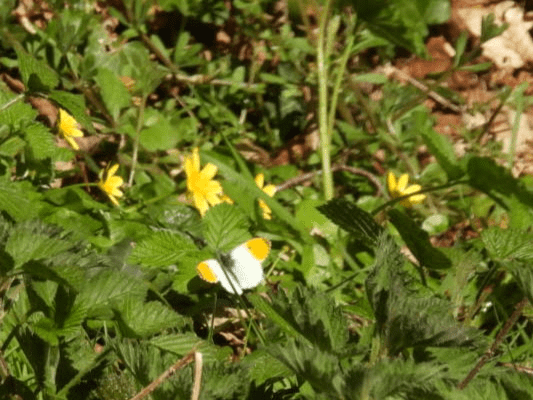
Orange-Tip Butterfly, Anthocharis cardamines, a butterfly of damp places, on Lesser Celandine
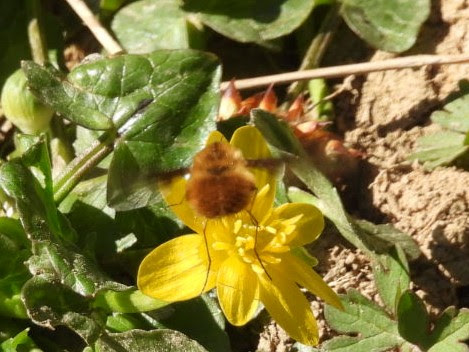
Bee-Flies and Orange Tip Butterflies are some of the earliest pollinators to appear in spring; but they have finished in the adult flying form by May/June; although Orange Tip Butterflies sometimes have a second brrod
An ancient pollarded Carpinus betulus European Hornbeam within the wood. Rose makes it clear in his list that Carpinus betulus should only be considered an AWVP indicator only if they occur well within the wood and do not appear to have been planted.
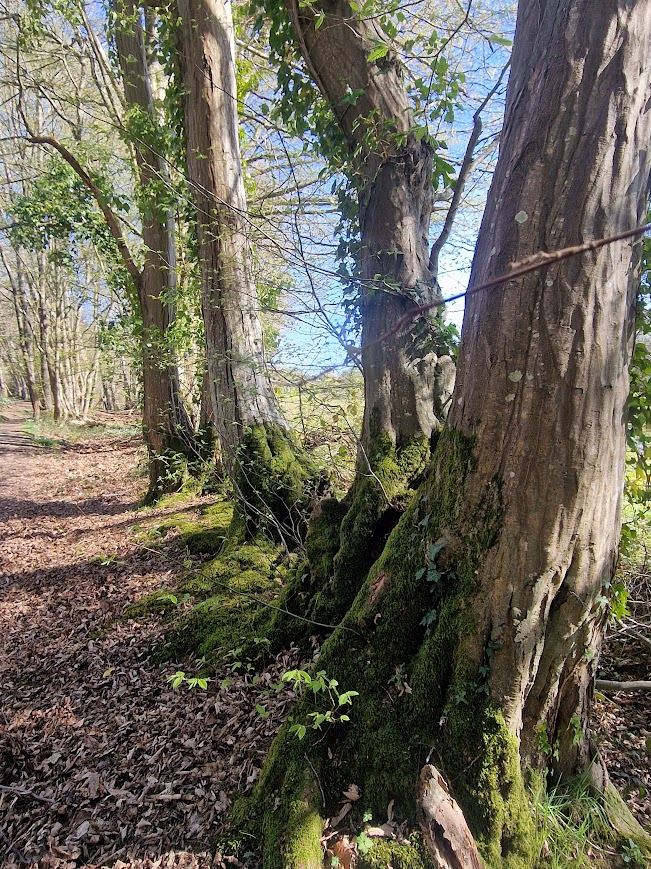
Theses Hornbeams form a boundary around the wood; whilst theses trees as species can not be considered as AWVP indicators; the structure of the ancient boundary (raised bank with coppiced trees) is probably an indicator of ancient woodland.
This is Francis Rose’s list of Ancient Woodland Indicator Plants (AWVP) for South East Woodland
* Consider these species only if they occur well within the wood and do not appear to have been planted.
It should be noted that when calculating Ancient Woodland Indicator Plants scores:
A high AWVP score is a reliable indication of natural diversity.
It also indicates ancient woodland, but does not on its own constitute proof.
Some woods which are undoubtedly ancient have a low AWVP score. Study of other components of the woodland biodiversity such as lichens, or invertebrates in rotting wood, may give clearer indications of ancient woodland status. Quite often, ancient sites that are rich in AWVP’s will be poor in lichens and rotting wood invertebrates and vice-versa.
Not all indicator species are strictly limited to ancient woodlands. For example, where secondary woodland adjoins older woodland, it will acquire species associated with older woods much more quickly than isolated secondary woods.
Plants which are also cultivated in gardens (e.g. Wild Daffodil) should be used with great caution.
Certain woodlands can credibly be established as being ‘ancient’ through the study of old historical records such as maps and estate records. Observations of landscape features such as banks, ditches and other topographical features within a wood will also give clues to previous land use. By surveying a number of these ‘proven’ ancient woodlands, species which are usually confined to this type of habitat can be identified. From: Countryside Information Ancient Woodland Indicator Species
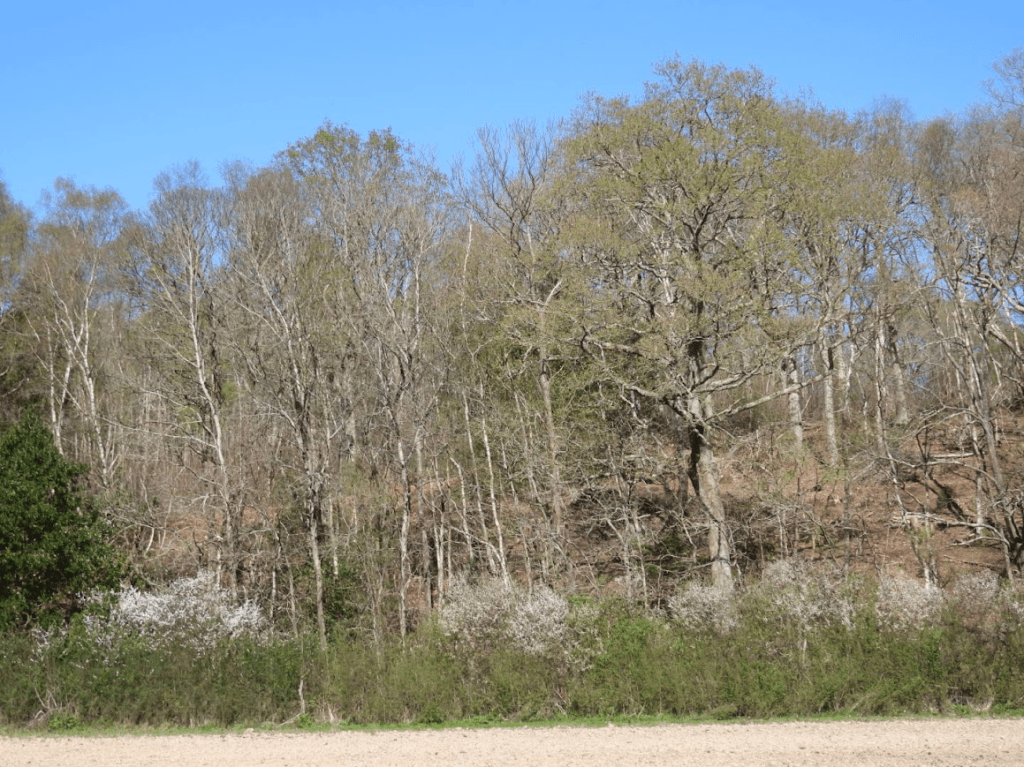
The edge of Fore Wood, with Blackthorn, Prunus spinosa, in blook, and behind Pedunculate Oak, Quercus robur, Silver Birch, Betula pendula and Holly, Ilex aquifolium


















 Sim's Nature Notes