This was a joint trip of three friends; we identified together.
Plumpton Mill Stream
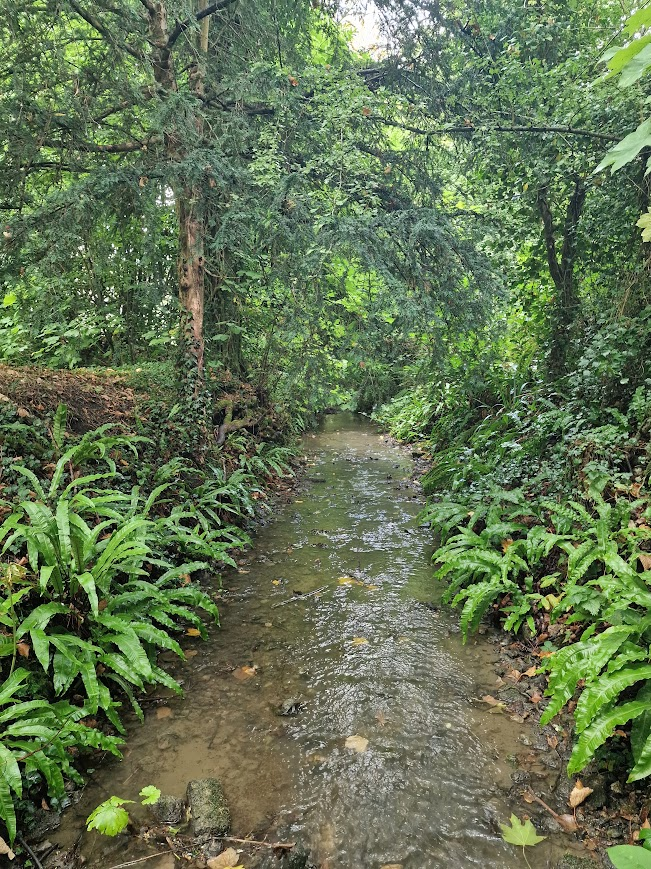
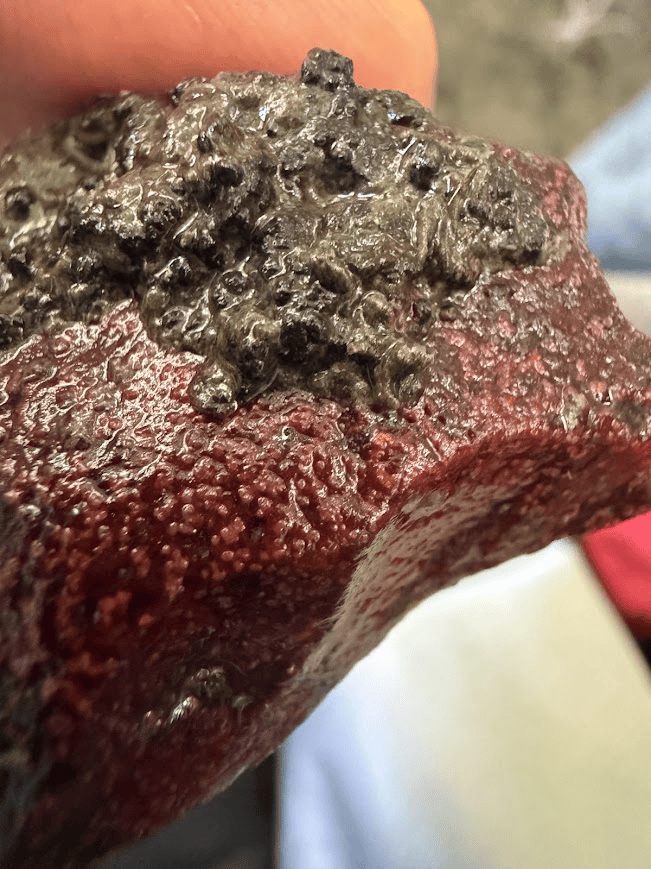
In the mill stream, where the public footpath crosses the stream, which is fed from the South Downs springs nearby, we found Hildenbrandia rivularis a species of freshwater red algae. It forms red, crusty thalli on stones submerged in water, typically in streams and rivers. Not identified by me. The alga was on tufa on a rock of Wealden sandstone. Tufa is a variety of limestone formed when carbonate minerals precipitate out of water in rivers or lakes.
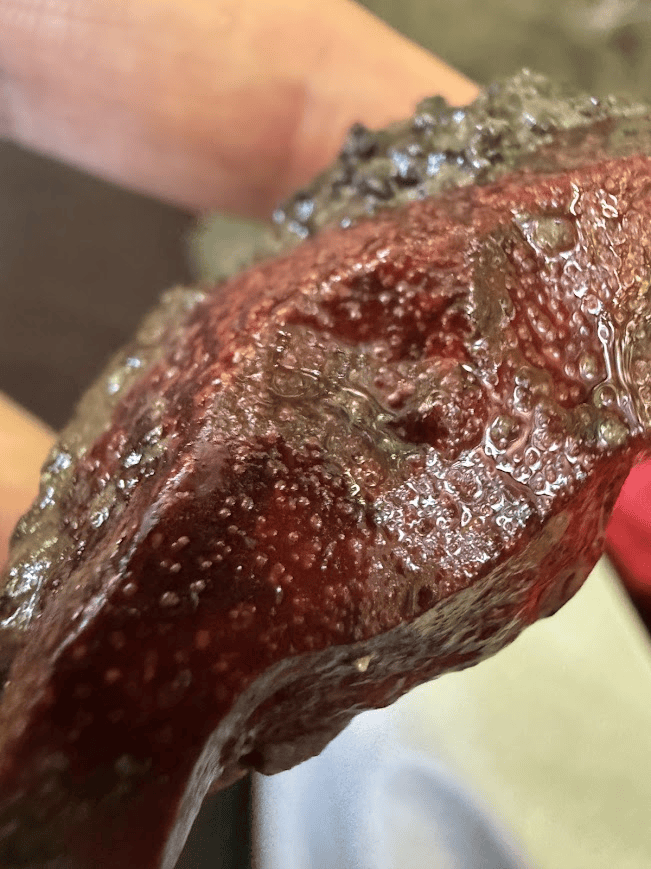
Hildenbrandia rivularis … is a freshwater red alga growing on hard natural and artificial substrates, e.g., stones or concrete and steel structures. The thalli are crustose, bright red, and strongly attached to the substrate. Sometimes, wart-like protuberances are visible on the surface of the thalli, but most often, the thallus is smooth to the touch. The thallus consists of two layers of cells: (i) a basal layer firmly adhering to the substrate and (ii) a pseudoparenchymatic layer built from erect filaments. The basal layer is thin and formed by branched filaments densely aggregated laterally. In contrast, erect filaments are formed by cubic or short-cylindrical cells (Fig. 1). In freshwater ecosystems, sexual reproduction and the presence of tetrasporangia have not been confirmed. Asexual reproduction proceeds by gemmae, consisting of small and dense packets of filaments that release and germinate into new crusts. Vegetative reproduction by fragments of older thalli is predominant Emilia Jakubas-Krzak, Maciej Gąbka, Piotr Panek, Wojciech W. A. Kowalski, Daniel Lisek, Michał Smoczyk, Andrzej S. Rybak,
The red alga Hildenbrandia rivularis is a weak indicator of the good ecological status of riverine habitats, Ecological Indicators, Volume 147, 2023,109918,
ISSN 1470-160X, https://doi.org/10.1016/j.ecolind.2023.109918.
In the stream there was also the liverwort Greasewort Aneura pinguis. When I looked at it I thought it was the liverwort Riccardia chamedryfolia at first
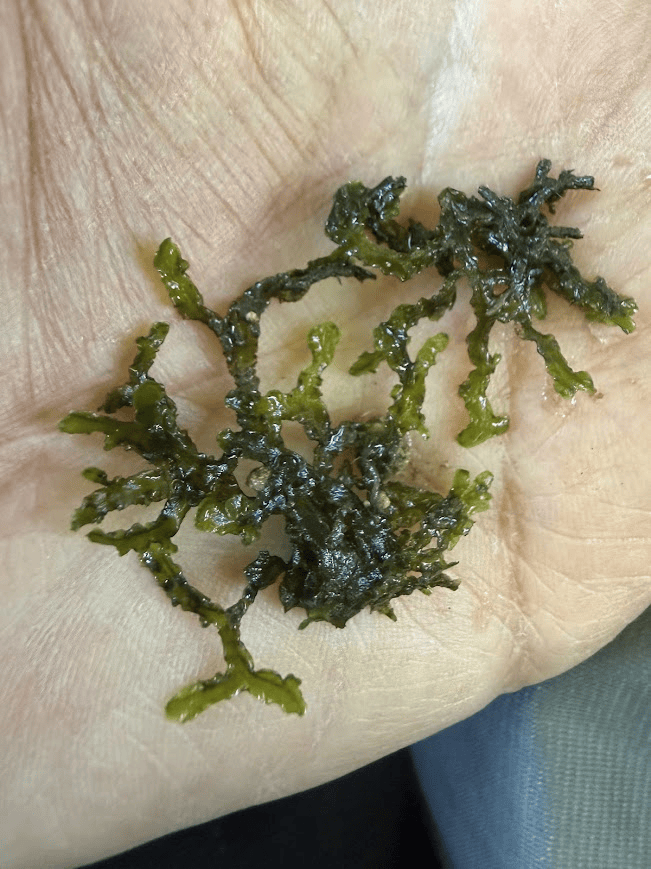
The smallest examples of A. pinguis can be confused with Riccardia chamedryfolia and R. multifida but the mid-green colour is usually sufficiently different from the pale brownish-green of Riccarda British Bryological Society Aneura pinguis to differentiate between Abeura and Riccardia
The distribution of Aneura pinguis (commonly known as Greasewort), in the Low Weald of South East England is localized, and scattered. The Low Weald is geologically dominated by heavy, poorly draining clays; Aneura pinguis relies on very specific damp microhabitats
On the sides of the stream was Alder a swamp-dweller, water-lover. The wood of this tough tree doesn’t rot when waterlogged, instead turning stronger and harder. Alder (Alnus glutinosa) – British Trees – Woodland Trust
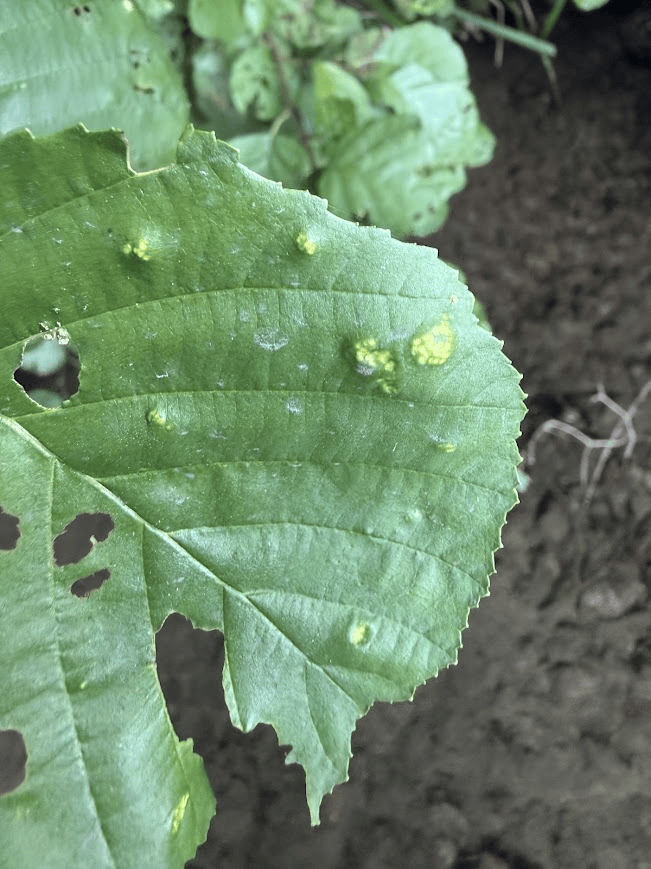
The leaves showed the galls of Acalitus brevitarsus; a mite that causes blister like galls to form on the leaves of Alder. Like many mite galls, the leaf is made to grow clusters of hairs, called erineum, among which the mites live. On the underside of the leaf these galls have a shiny pale brown appearance. The galls are seen more often than the mite. Acalitus brevitarsus | NatureSpot
In the shallow parts of the stream there were lots of Mussels Musculium lacustre . Populations of these are frequently recorded in slow-moving margins or backwaters of major Sussex river systems, such as the River Ouse, River Arun, and River Adur.
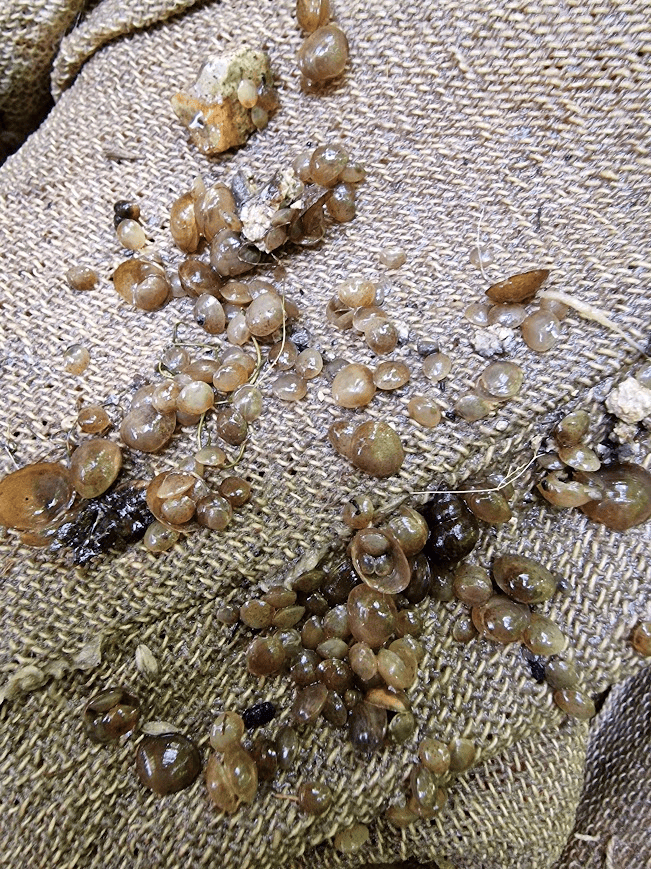
Low Weald streams can experience dramatic seasonal flow variations, sometimes drying up or turning into stagnant pools during hot summers.
M. lacustre can tolerate low oxygen levels and survive periods of drought by aestivating deep within the damp mudThe lake orb mussel is a small bivalve mollusc which can live in a variety of freshwater habitats, but prefers small, temporary, stagnant or impoverished places. It is tolerant of enriched and de-oxygenated conditions, possibly because of an ability to crawl up plants to reach higher oxygen levels near the surface. … This species releases larvae in the spring which settle to the bottom and either continue growing to maturity in late summer, then reproduce before the winter, or aestivate and over-winter as sub-adults. Individuals live for just over a year and reproduce only once in their life-time. Musculium lacustre lake (or capped) orb mussel :: Northern Ireland’s Priority Species ::
Habitat degradation, agricultural practices, invasive species, and climate shifts are their main threats. As a freshwater bivalve that inhabits lowland ditches, drainage networks …, ponds, and slow-flowing rivers, its survival is heavily dependent on the health of local wetlands. Ditch Management & Habitat Loss is a major threat to these molluscs … grazing marshes, drainage ditches require periodic dredging or mechanical clearing to prevent succession. If clearing is done too aggressively, too frequently, or across an entire ditch network simultaneously, it can decimate local populations of Musculium lacustre. Watson, A., Ormerod, S. The distribution and conservation of threatened Sphaeriidae on British grazing marshland. Biodivers Conserv 14, 2207–2220 (2005). https://doi.org/10.1007/s10531-004-4670-4
A Sand Pit
Sands of the Folkestone Formation, Lower Greensand Group
Quarrying for sand has long been a feature in the small strip of soil known as the greensand that lies between the chalk downs and the clays of the Low Weald. Small scale quarrying for sand to use for building and glass making was a regular feature
Major mineral extraction at this site first occurred in 1949 and continued into the 1960s before stopping then briefly resuming again in the 1990s before the pit was finally exhausted with the lakes in view having formed by the base of the quarry being lower than the water table.
Abandoned Quarry Abandoned and Derelict Abandoned and DerelictAbout Abandoned And Derelict Photography Journal Website
The sand pit is no longer a quarry and there are no longer any current plans for building development there. But governments often talks of brownfield sites as having little ecological value, thus suitable for housing development; but many brownfield sites are very important for invertebrates; see Brownfield Hub – Buglife
I saw a huge agglomeration of Ivy Bees, Colletes hederea, nests, perhaps over a 1000 solitary bee,s making individual nests and furnishing them with nectar and pollen for their progeny, in the sand pit. Ivy Bees are a vital part of the late-season succession. They emerge in September specifically to forage on autumn-flowering ivy, marking the very end of the UK’s wild bee calendar. Some of the males had formed mating balls around females to compete
Sand pits and other brownfield sites are important for mining bees. e.g
Sandpit Mining Bee (Andrena barbilabris)
Pantaloon Bee (Dasypoda hirtipes)
Vernal Mining Bee (Andrena vaga)
Tawny Mining Bee (Andrena fulva)
Ashy Mining Bee (Andrena cineraria)
Mating balls
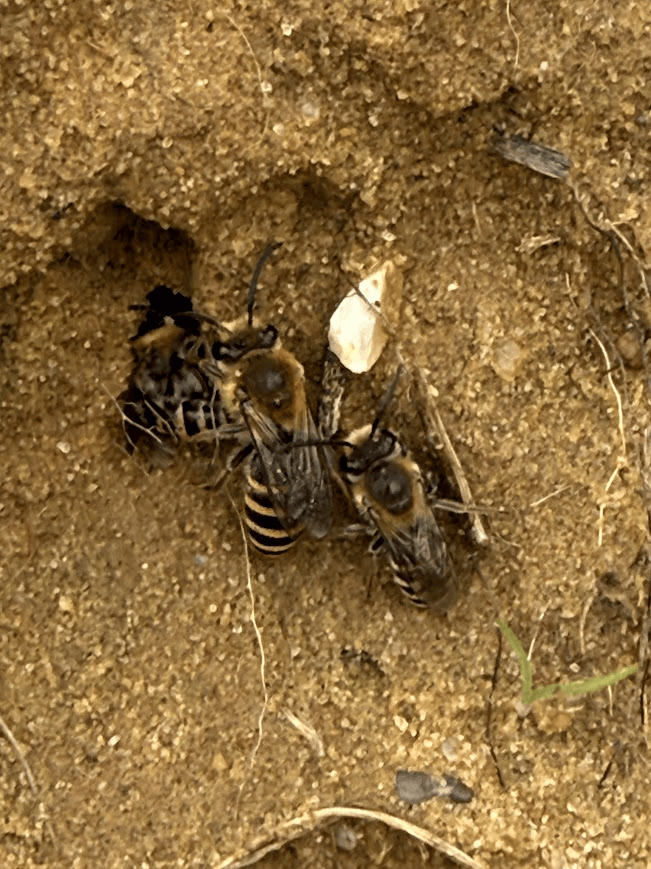
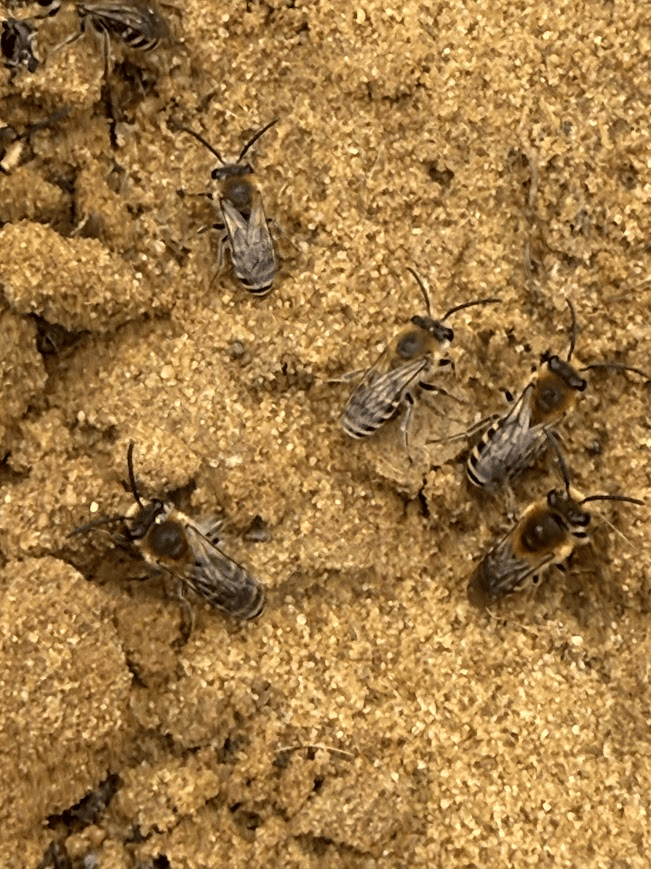
At the beginning of September, male bees emerge about two weeks before females, when scores of males can be seen flying low over the ground with an audible hum, much like honeybees around a hive. They are waiting for the first females to emerge. When one does, all the male bees try to mate with her, and this is when you might see a mating ball … When a male succeeds in getting a female, they often fly off together, leaving the rest of the males to seek another female.
After mating, the female digs out a nest tunnel of around 30cm deep. which has side chambers. She supplies each of these chambers with pollen and nectar, then lays a single egg in each.
The females gather pollen exclusively from Ivy flowers, but will take nectar from other flowers as well. Female bees can be seen foraging on Ivy flowers before returning to their nest tunnels with yellow Ivy pollen on their hind legs.
The egg hatches into a larva, which eats the pollen and nectar which was provided by the female bee. Male bees do not contribute to nest building or provisioning.
As the larva grows, it sheds its skin several times, like a caterpillar. It eventually turns into a pupa and then undergoes metamorphosis to become a bee, like a caterpillar turning into a moth or butterfly.
The new bee emerges from the nest tunnel the following September and the cycle starts all over again. The life cycle of Ivy Bees – Sussex Wildlife Trust
A Wall Brown butterfly nectaring
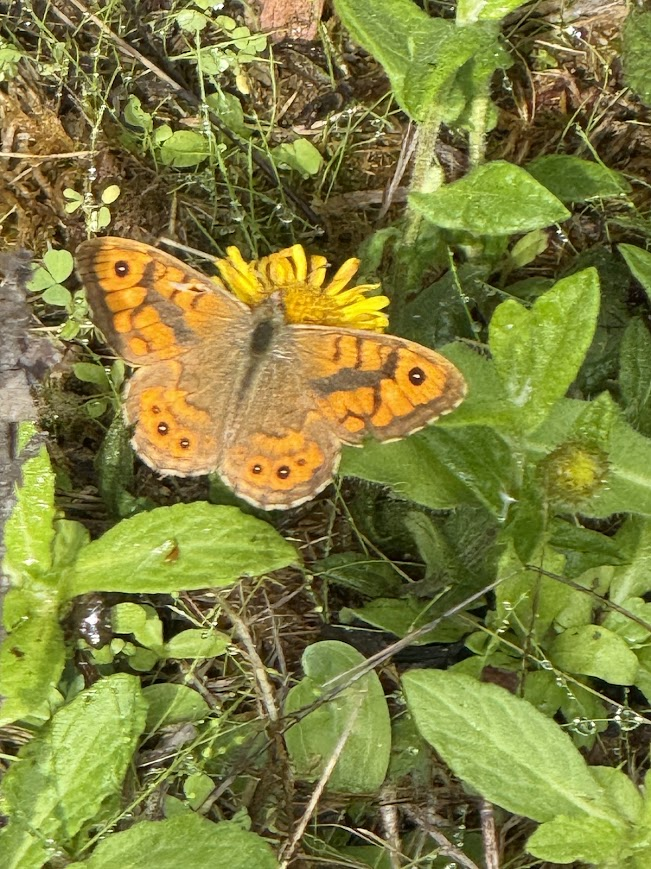
- Butterfly Conservation priority: High
- Section 41 species of principal importance under the NERC Act in England (widespread but rapidly declining)
- GB Red List (2022): Endangered
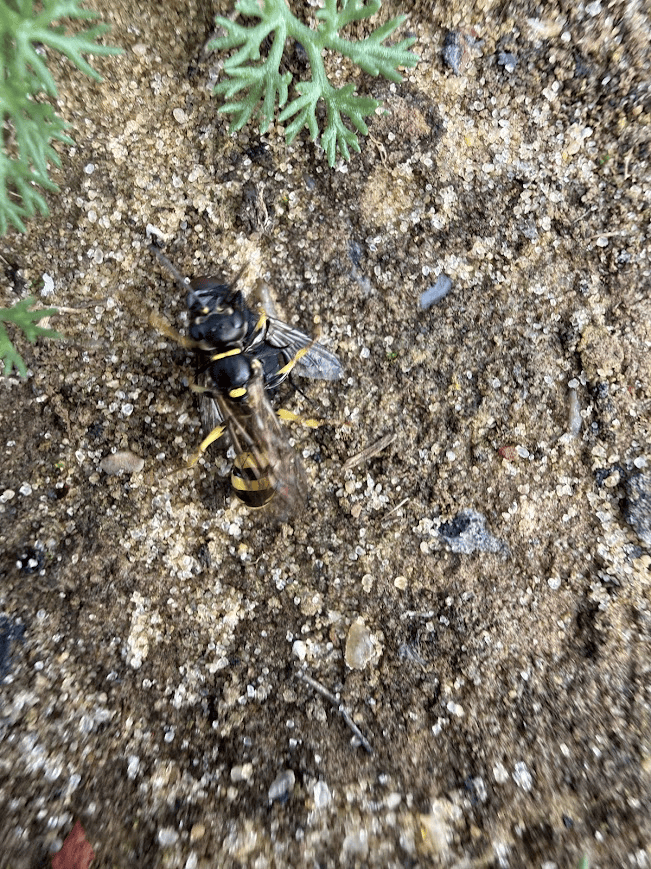
Sand pits are also important for solitary digger wasps.
Mellinus arvensis, Field Digger Wasp
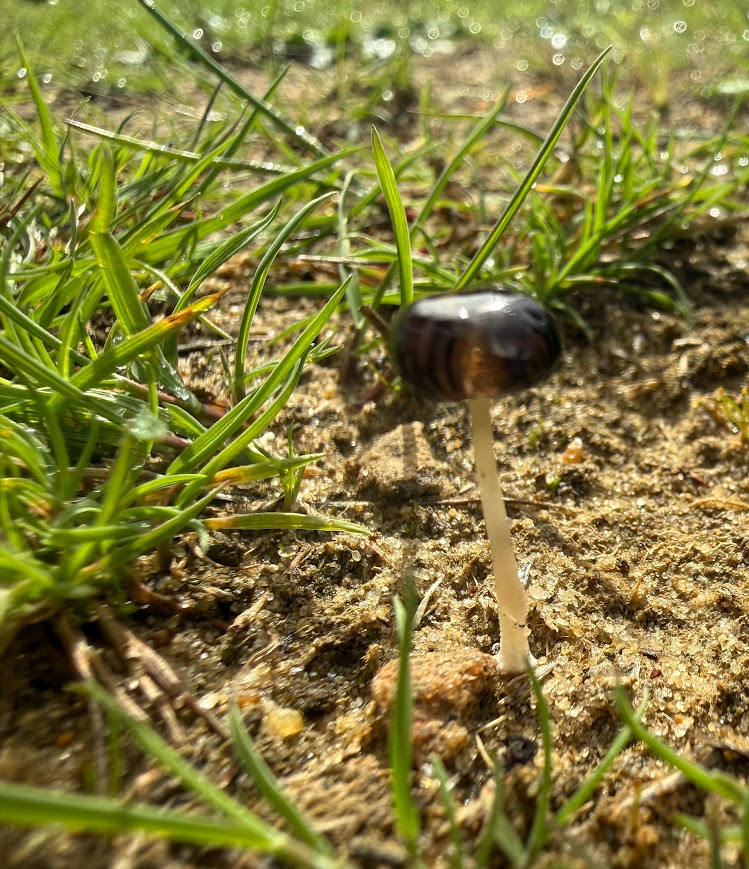
Possibly Panaeolus foenisecii Brown Brittlestem
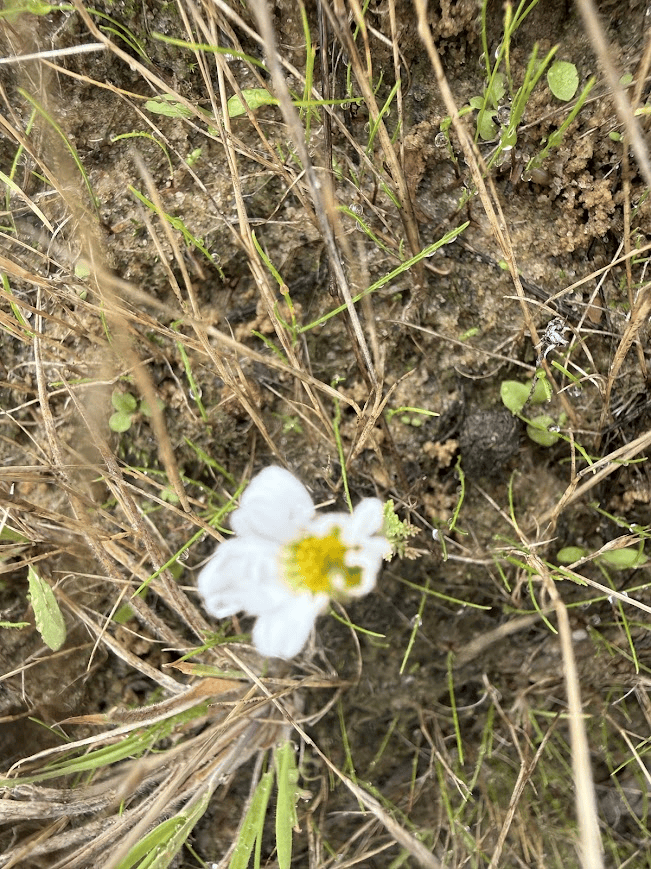
Ranunculas aquatilis Common Water Crowfoot
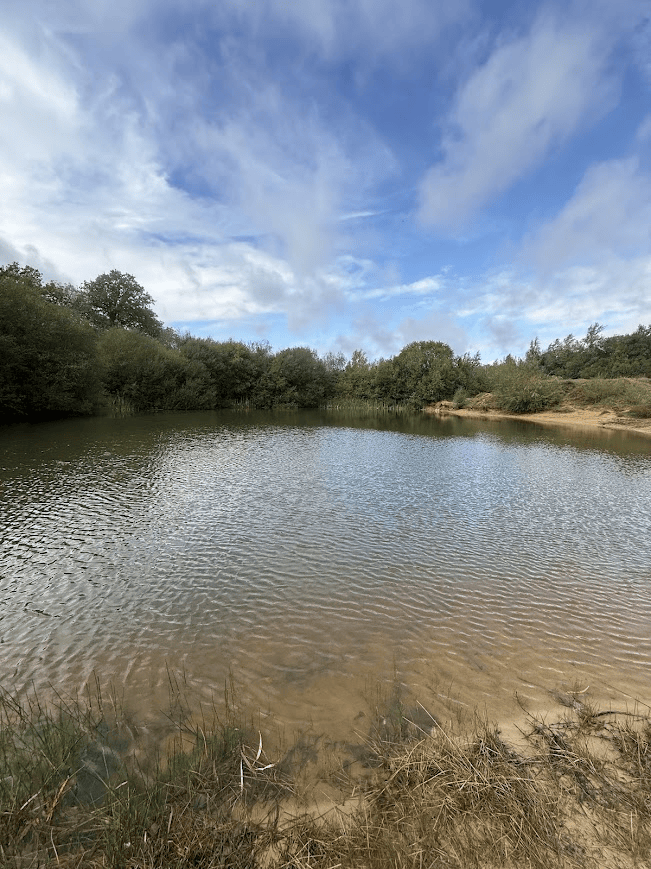
The sandpit is wet and has a marshy feel as water collects in the low dugout sand pits and forms small ponds
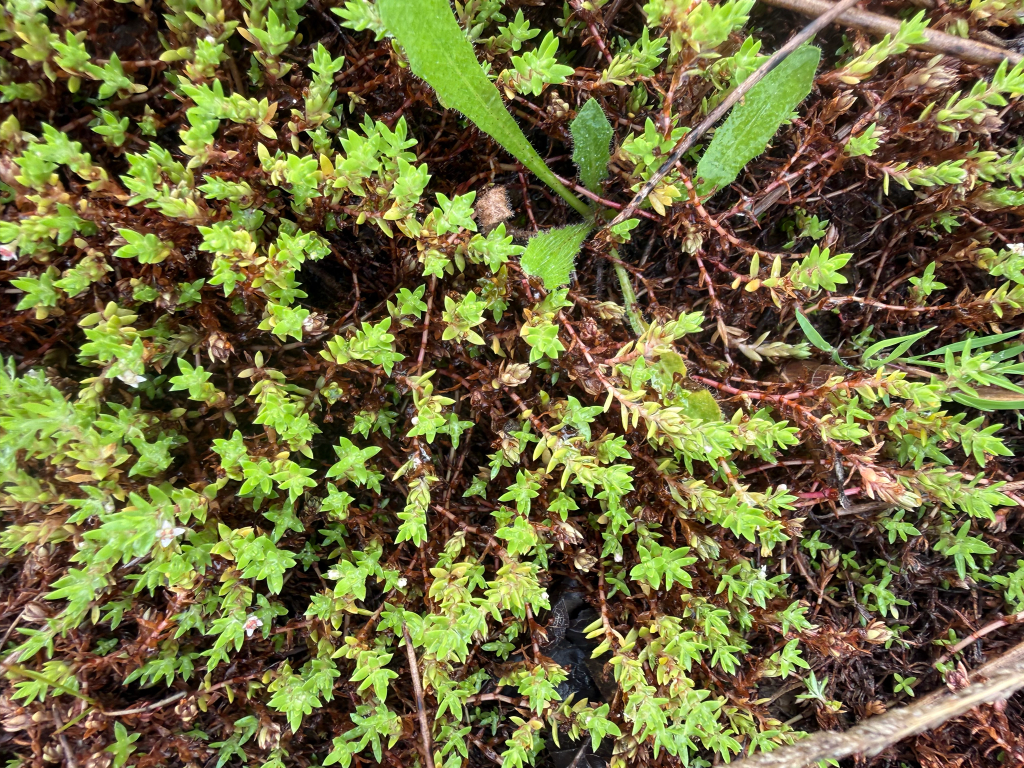
New Zealand pigmyweed, also known as Australian swamp stonecrop, Crassula helmsi) was originally sold in garden centres as an ‘oxygenating plant It grows all year round and can quickly smother native vegetation. New Zealand Pigmyweed Invasive Species | Canal & River Trust
A ditch at the edge of meadow at the foot of the downs
This is an SSSI with some rare species; so I am not going to disclose its exact location. (None of the species below are rare; they are common in Sussex freshwater watercourses)
Volvox sp. green alga
Volvox sp. alga are found in in still or slow-moving freshwater habitats worldwide, such as ponds, shallow puddles, ditches, and quiet lakes.
Even though complex multicellularity evolved several times in eukaryotes, in most lineages it is quite challenging to investigate its molecular background because the transition happened too far in the past and, in addition, these lineages evolved a large number of cell types.
However, the situation appears different for volvocine green algae, n which multicellularity is a relatively recent innovation. In terms of cellular composition, Volvox sp is about as simple as a multicellular organism can be, yet it shares many features that characterize the life cycles and developmental histories of much more complex, higher organisms.
[Volvox species] only has two cell types: 2000-4000 small, terminally differentiated, biflagellate somatic cells near the surface of the spheroid, and approximately 16 large, potentially immortal reproductive cells just internal to the somatic cell layer. More than 95% of the volume of such a spheroid consists of a complex, but transparent extracellular matrix.
Not collected by me; but my photos:
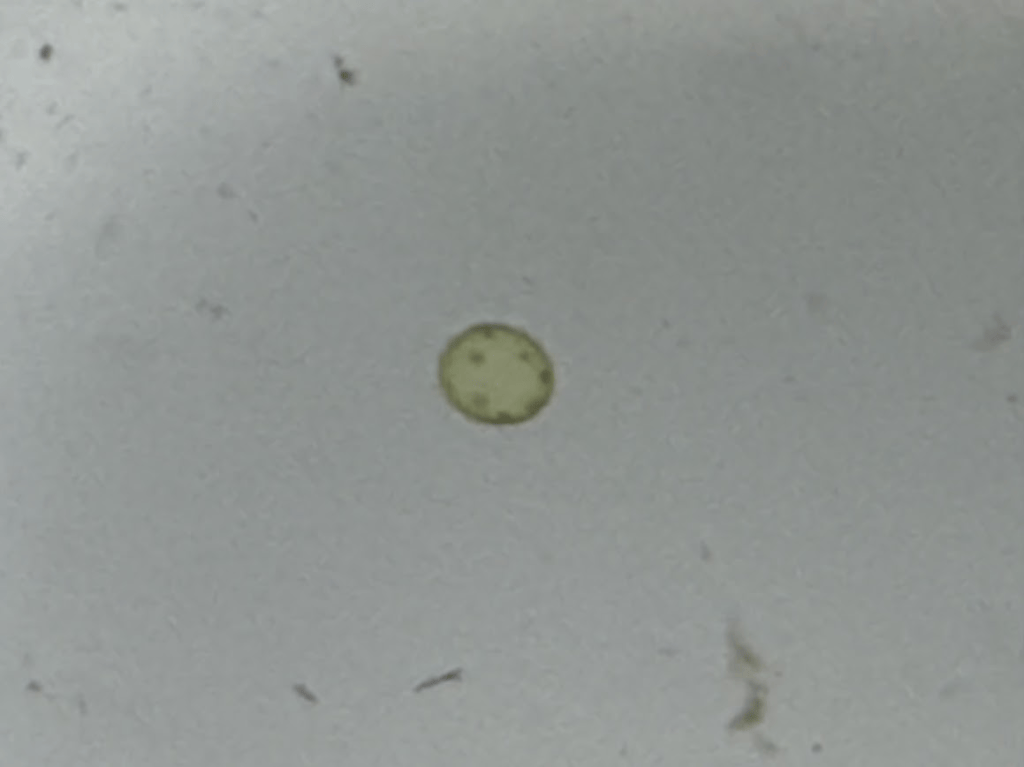
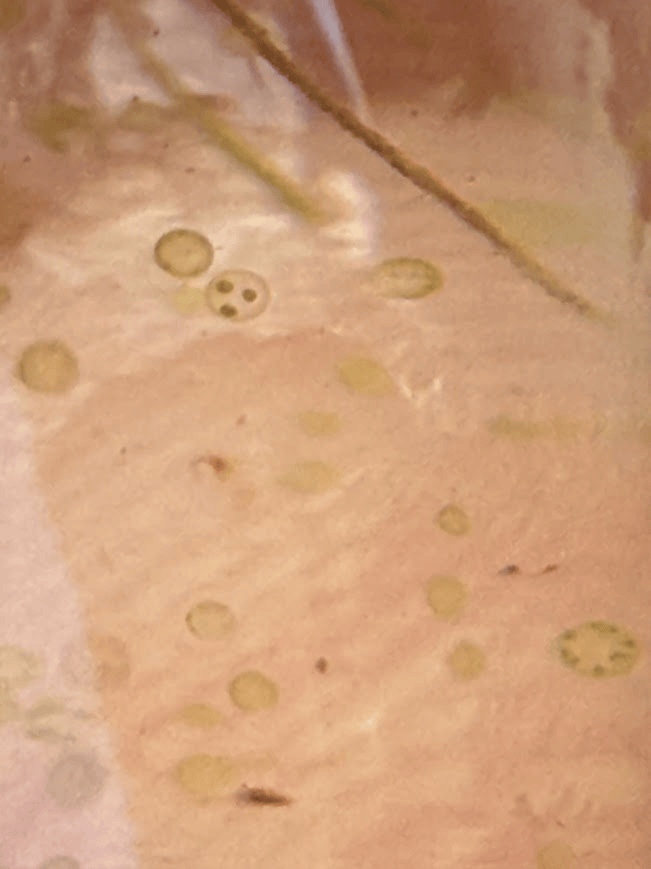
Volvox are primary producers of oxygen in freshwater ecosystems by generating oxygen through photosynthesis and they as a key food source for microscopic aquatic organisms
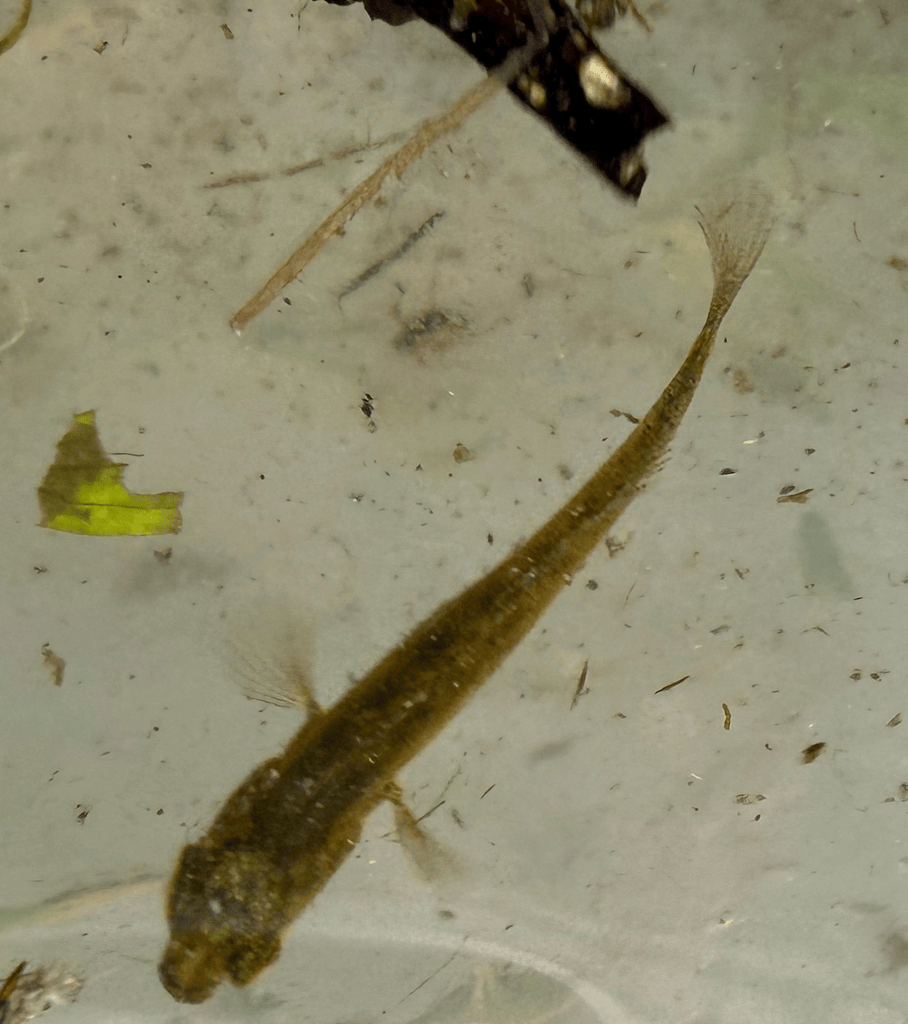
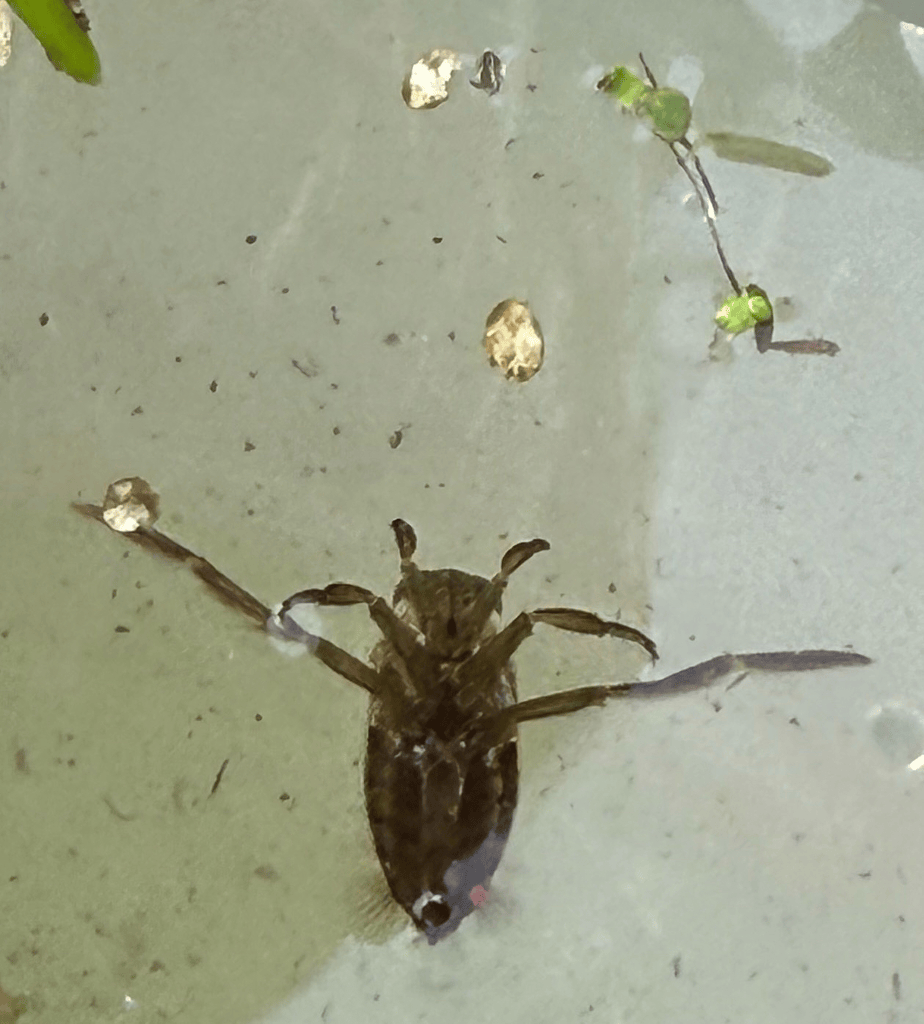
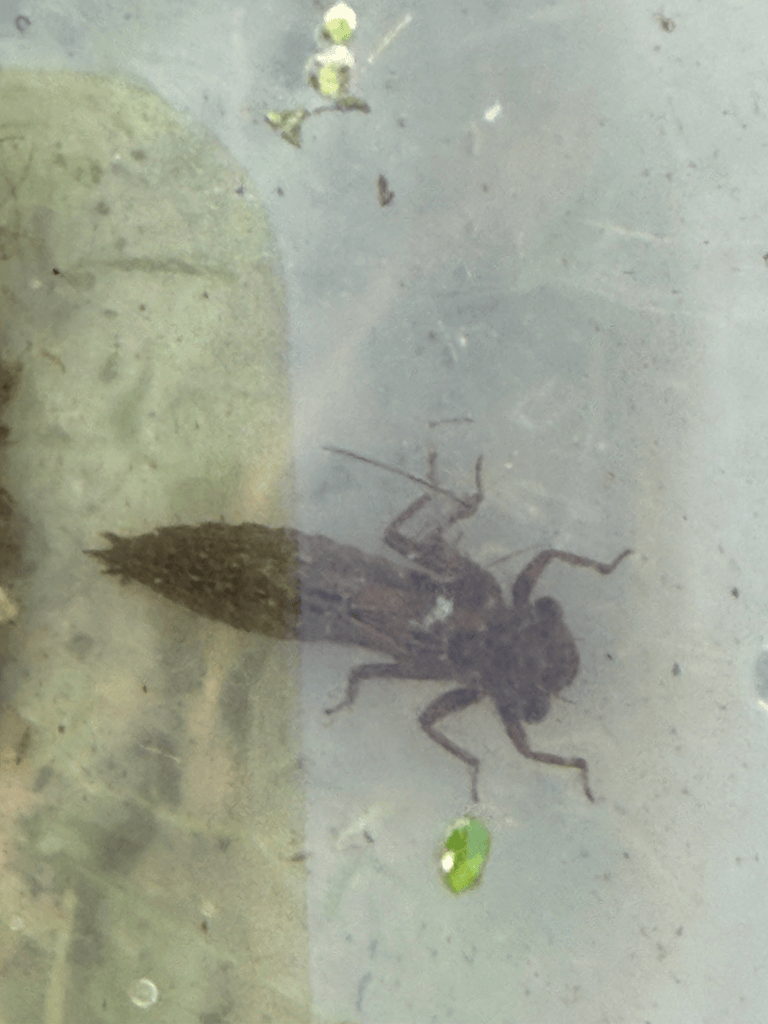
From pond dipping with a net; all species retuned to the stream
Gasterosteus aculeatus, Threespine Stickleback
Genus Notonecta, Backswimmers or Water-boatmen
A dragonfly nymph, possibly Cordulegaster boltonii Golden-ringed Dragonfly

 Sim's Nature Notes